“Wow. I devoured Personality Not Included, frequently shouting ‘yes!’as I followed Rohit’s spot-on analysis of a fundamental truth: being faceless doesn’t work anymore. Personality in both people and companies is what customers get passionate about and drives seemingly unlimited success. This is one of those rare books to purchase by the case so you can give copies to employees and investors. But make sure to keep a few for yourself to read and reread so you don’t miss a thing. Bravo!”
—David Meerman Scott, bestselling author of The New Rules of Marketing and PR
“Personality Not Included breaks down the old barriers between marketing, advertising, and PR and shows people how to nail the single objective of it all: creating powerful conversations with your customers and getting them to choose you over the rest.”
—Timothy Ferriss, top blogger and #1 New York Times bestselling author of The 4-Hour Workweek
“There are two types of small business owners—ones who know they are in the business of marketing and those who don’t.For either, Personality Not Included is an eyeopening look at what really matters when it comes to delighting your customers. If you want a guide to being more than ordinary, get this book.”
—John Jantsch, award-winning blogger and author of Duct Tape Marketing
“Just being pretty isn’t enough anymore, today a brand also needs a strong personality to survive. In PNI, Rohit gives you the techniques and tools to help your brand go from wallflower to social butterfly.”
—Laura Ries, bestselling author of 22 Immutable Laws of Branding, and cofounder of Ries & Ries
“Authenticity in products and personality is the new hallmark of corporate success— Rohit shows us why the days of faceless corporate spin are over and points us in an exciting new direction.”
—Lucas Conley, Fast Company writer and author of Obsessive Branding Disorder: The Business of Illusion and the Illusion of Business
“Filled with powerful insights, yet written like a collection of stories—you don’t see many business books that are this tough to put down. If you believe that great marketing is about creating powerful experiences, then you need to get Personality Not Included. Rohit goes beyond how to effectively engage the customer and explains how to continue an intelligent dialogue with the customer after a brand already has their attention. The brands that learn from this book will be the ones kept from being
Continued on next page
thrown into the wastebasket of commoditization. Read this book—then read it again— it’s that good!”
—Erik Hauser, founder, Experiential Marketing Forum; director, International Experiential Marketing Association; founder and executive creative director, Swivel Media
“Generation Y demands both authenticity and personality in a brand. It’s why brands like Apple and Adidas continue to top lists of brands young people trust and respect even in an increasingly crowded media landscape where everyone is vying for young people’s attention and loyalty. Personality Not Included acknowledges the real challenges for brands created by social media while reminding us that it’s ‘personality’ that ultimately inspires your customers to not just like you, but to truly LOVE you. Rohit goes beyond the theoretical and includes lots of company stories as well as practical advice on how to bring out your brand’s personality. As a blogger who has built a brand based on personality, I found Rohit’s book to be an essential addition to my library.”
—Anastasia Goodstein, founder, Ypulse.com and author of Totally Wired: What Teens and Tweens Are Really Doing Online
“Finally. The road map to marketing in the era of social media, which we’ve all so desperately needed. With Personality Not Included, Rohit defines the power of brand personality in a world of instantaneous, ubiquitous storytelling and gives marketers the practical knowledge and tools they need to transform their brands and marketing approaches with the secret weapon of personality. If there is one book I recommend every client and every agency person read right now, it’s Personality Not Included. Every chapter gives you new ways to navigate an increasingly complex marketing landscape with clarity, nimbleness, and pragmatism. Invest in reading it—the dividends will be enormous for your brand and your business.”
—Carla Hendra, chairman, Ogilvy New York and co-chief executive officer, Ogilvy North America
“No one talks about boring brands. With bountiful ideas and insights, Rohit Bhargava deftly explains how to present a brand’s personality in a way that will get people talking and believing.”
—Jackie Huba, coauthor of Citizen Marketers and Creating Customer Evangelists
“The secret to free marketing: give people a reason to talk about you. How? Have a personality. This fantastic book will teach you.”
—Andy Sernovitz, Word of Mouth Marketing: How Smart Companies Get People Talking
Memorization ofthe full text in any language is permissible.Ifyou manage to do it, let us know and we will send you a free copy...though you probably won’t need it.
ISBN-13:978-0-07-154521-1
MHID:0-07-154521-2
This publication is designed to provide accurate and authoritative information in regard to the subject matter covered.It is sold with the understanding that neither the author nor the publisher is engaged in rendering legal,accounting,or other professional service.Iflegal advice or other expert assistance is required,the services ofa competent professional person should be sought.
—From a Declaration ofPrinciples jointly adopted by a Committee ofthe American Bar Association and a Committee ofPublishers
Read a secret alternate introduction to this book online at: www.personalitynotincluded.com/alternateintro
McGraw-Hill books are available at special quantity discounts to use as premiums and sales promotions,or for use in corporate training programs.Special reprints of PNI with custom bonus content from the author are also available.To contact a representative please visit the Contact Us pages at www.mhprofessional.com.
No chickens were harmed in the writing,printing,or distribution ofthis book.
00 (i-xvi-001-016) fm-intro 3/4/08 8:50 PM Page v
For my two little personalities,Rohan and Jaiden and to Chhavi,my accomplice in raising them.
Note to Readers 1 Introduction
chapter 1 Sign Here to Read This p. 19 How Organizations Lose Their Personality
chapter 2
The Accidental Spokesperson p. 41 How Unlikely Voices Are Shaping Your Brand
chapter 3
A Signature Is Not Enough p. 73 How to Define Your Organization’s Personality
chapter 4
Lessons from the Storytellers
p. 101 Crafting a Backstory People Care About
chapter 5
Conquering the Fear Factor
p. 135 Getting Your Organization to Embrace Personality
chapter 6 Add Personality and Stir p. 159 Finding and Using Personality Moments
page 182
Introduction
Techniques
Guides & Tools
Putting Personality into Action
The Butler Was a Marketer p. 185
New Styles of Marketing p. 188
viii Contents
Overview of Techniques
Curiosity Marketing
Karmic Marketing
Participation Marketing
Un-Whatever Marketing
Sensory Marketing
Anti-Marketer Marketing
Fallibility Marketing
Insider Marketing
Useful Marketing
Incidental Marketing
Taking Theory Further p. 234
Master List of Guides and Tools by Chapter
chapter 1 Guides & Tools
chapter 2 Guides & Tools
chapter 3 Guides & Tools
chapter 4 Guides & Tools
chapter 5 Guides & Tools
chapter 6 Guides & Tools PART TWO INTERMISSION
p. 285
ix Contents 00 (i-xvi-001-016) fm-intro 3/4/08 8:50 PM
APPENDICES
Bibliography Not Included
p. 287 A Note on Research Or How to Claim a Vacuum Cleaner on Your Tax Return
p. 289 Index
p. 297
Acknowledgments
p. 301 Meet the Author
Foreword
My mantra (as opposed to mission statement) is “empower people,” and part ofmy day job is listening to people’s ideas for new business. There are two big things I wish every entrepreneur knew.The first is that creating an “insanely great”product or service is a necessity.Without this,entrepreneurship is difficult,ifnot impossible.With it,you have a fighting chance,which is more than most companies have.
But what ifyour great product is competing with someone else’s great product? Sometimes,having a great product is only the first step. Personality Not Included is about the second thing that every entrepreneur should know:Your company/product/service must have a personality.
Rohit’s mantra is “personality matters.”It matters for what products or services people buy,and how many others they tell about them.It matters because it can help get the best out ofa team ofemployees.And it matters because it humanizes your brand and your products.This book explains the what,how,and why ofbrand personality.
Ifthat isn’t enough,here are three real-world reasons why you need to read this book:
• Personality is the über-trend. The long tale can get pretty tiring when it comes to books. For every niche marketing book about a specific subtopic of marketing, the amount of reading you need to do to keep up keeps growing. Thankfully, personality is an über-trend— one that is important to almost every business.
• PNI is low on bullshiitake. If, like me, you’ve read or skimmed dozens of business books you know bullshiitake when you smell it. Instead of focusing on theory, PNI has hundreds of examples, real stories, and a readable style.
• People have tested PNI’s ideas. This book is about ideas that work because they have worked for businesses already. And it doesn’t hurt that Rohit’s experience comes from working on building hundreds of brands instead of a single success story.
Beginning with the über example ofuber examples,Apple,building brand personality has been a big part ofmy career.To a large degree,it was unwritten because no one had quite found a way to speak or write tangibly about its importance.Now you’re holding the solution in your hands.Take the lessons here and apply them to your business.Find a way to humanize your brand,use your personality,and take your brand from good to great.The first step is to believe that personality matters. The second is to read this book.
Guy Kawasaki Garage Technology Ventures January 2008
xii Foreword
Note to the Reader
The Nonobvious Way to Read This Book
Wet hair.Lather.Rinse.
—Directions on bottles of shampoo
You don’t needme to tell you to start at page one and read until the end.That would be the obvious way to read this book—and ifyou choose to read it like that,you won’t be disappointed.The nonobvious way,however,is what makes this book different.
The “formula”for most business books is to present a big idea,which is usually revealed in dramatic fashion by Chapter 3.The rest ofthe book offers further proof.The problem with this approach is that usually by Chapter 6,you get it.I have more than 100 marketing and business books on my shelf,and in most ofthem Chapter 6 is the sweet spot.Pick up your favorite marketing or business book and flip to Chapter 6;you’ll see what I mean.
After that chapter,even great books often become repetitive.How many marketing books have you read cover to cover? It’s not that they aren’t good;it’s just that after a certain amount ofexplanation,you understand the concept.The challenge you are usually left to figure out is how to apply it to your business.
If Personality Not Included were that type ofbook,there would probably be 12 chapters (or more).As you might have noticed by now,there are only six.Instead ofthose last few chapters where I could have tried to prove to you with different words how personality matters and why
your organization needs one,I’ve added techniques,guides,and tools focused on helping you create a realistic plan for putting the theory of this book into action.
The best way to read the book is entirely up to you.You can flip between Part One and Part Two,read the book in the order in which it was written,or just skip directly to the sections that you find are the most useful at any particular time.
As an extension ofthe book,you can also see a full library ofexamples,Internet links,and extended research materials that went into the preparation ofthe book,at www.personalitynotincluded.com.Personality is a living thing and this site will reflect that reality over time and with a speed that is regrettably still impossible in a printed book.
xiv Note to the Reader
You now have to decide what image you want for your brand. Image means personality.Products,like people,have personalities, and they can make or break them in the marketplace.
—David Ogilvy
Introduction
In 2005, Apple was about to introduce a product that everyone thought was too small to succeed.Coming offthe phenomenal success ofthe first iPod launches back in early 2000,Apple’s marketing team was working on promotions for what was going to be the smallest iPod yet—the new iPod Shuffle.Shaped like a stick ofchewing gum and targeted at the music lover on the go (or gadget hound),the Shuffle was the smallest MP3 player ever created.After defining the portable MP3 player market with the iPod and its scroll wheel interface,this newest iPod broke with convention again by removing the screen altogether.Judging from the reviews from early testers—concluding that consumers would never buy an iPod without a screen—it was clear the marketing for this little product had to be different.
The most important and talked about feature ofthe Shuffle was its size.It was probably going to be too small for some people.So,in the first shipment ofiPod Shuffles in the United States,attentive enthusiasts were surprised to find a hidden four-word joke at the bottom ofthe instructions shipped with the Shuffle:“Do Not Eat iPod.”1
Word spread as Apple enthusiasts who purchased the product told others about it.Soon a debate raged online about whether it was a joke or a real disclaimer required by Apple’s lawyers (not a far-fetched idea if you have ever had to deal with Apple’s lawyers).Blogs featured images of the packaging.International consumers talked about why Apple had chosen not to include the line on packaging for the product in their country.Those four words got people talking about the product in an unexpected way.
1 Published as “Do Not Chew iPod”in the UK. Apparently, people in the UK are already smart enough not to eat it.
1
Usually the disclaimer is the one part ofmarketing language that seems untouchable.Yet for the Shuffle,an unexpected product with a gamechanging interface,the tag fit.It was a small demonstration ofthe personality ofthe product,and a reflection ofthe entire personality ofApple. The sad truth is that most companies today would never allow this type ofmoment ofpersonality to happen.Blame endless legal reviews or a corporate culture offear ifyou like (we’ll talk more about these barriers later in the book),but whatever the reason,most companies are adept at removing any sense ofindividuality or human connection from how they communicate.We commonly describe these companies as faceless. They are large inhuman blobs that do not listen or ask for our feedback, have incomprehensible policies,and use automated responses instead of real people to address our concerns.
These faceless organizations are all around us.As consumers,we can spot them right away,and we universally dread our interactions with them. Think about the last time you had to endure a 10-minute series ofrobotic questions from an automated call center in order to speak to a real person.There are dozens ofvideos on YouTube ofcustomers who tried to cancel their service and couldn’t,spent hours on hold,or were somehow otherwise treated like a number instead ofa person.The media loves to tell these tales ofcorporate stupidity too,publishing them with headlines like “Woman Gets 300-Page Bill for iPhone”(a real headline from a USA Today article in August 2007).
Personality Matters
Clearly,being faceless doesn’t work anymore.The problem is that many organizations today are stuck dealing with their customers,partners,and employees in a faceless way.Some don’t realize it and others are too paralyzed to change.The biggest challenge most organizations today face is
2 *Personality not included
discovering how to go from a brand that people consume to one that they are passionate about.Every company has a different solution to this challenge,from focusing on product design and innovation to renewing focus on better branding in order to better tell the story ofa product or service.
The theory of Personality Not Included is that personality is the answer. Personality is the key element behind your brand and what it stands for, and the story that your products tell to your customers.Every element of your business,from your interactions with your customers to the packaging ofyour product is an element ofyour brand personality,and these are the elements that inspire delight or indifference among your customers. In short, personality matters
Ofcourse,just telling you that doesn’t make it true,so read on to learn more about what I mean by personality,what the elements are,and how you can tackle the most difficult question ofall:how can you find a way to inject personality into your brand when the majority ofmarketing conventions today focus on helping you shield your personality from the world? The first step is changing your perception ofwhat marketing can or should do.
Marketing Is Not about Selling
Apple’s disclaimer may have been a small element in a sea ofmarketing, but it manifested an identity that consumers already associated with the Apple brand.The disclaimer was irreverent,different,and nontraditional, just like Apple.The power ofApple’s brand is about more than putting out innovative products.Speak to any Apple enthusiast and you will understand that the real reason Apple succeeds is that it is telling a story that its customers get passionate about,and,more important,tell others about.The real genius ofSteve Jobs’s legendary keynote product announcements is how
the announcement itselfwhips Apple’s most vocal customers into a frenzy deep enough to tell everyone else they know about Apple’s new products. What Apple knows about great marketing is that it is about more than selling.Selling will usually take care ofitselfifyou have something decent to sell at a reasonable price.Ifyou want to create marketing focused on selling,all you need to do is answer four simple questions for your consumer:
1. Features. What does your product do for me and why is it different and/or better than others?
2. Benefits. How will my life be different/better/changed if I purchase it?
3. Price. Why it is worth what you are charging?
4. Action. Where can I get it?
Ifyou consistently provide good answers to these questions with your marketing,I guarantee you will be able to sell whatever you are trying to sell.Ofcourse,ifit was that easy no companies would ever fail.Answering these four questions with good answers is not necessarily a simple thing,but the formula this creates for selling anything is very straightforward.The problem with focusing on only these four is what Fred Reichheld,author of The Ultimate Question,called “bad profits.”These are the profits that you earn without keeping the customer happy. Personality Not Included is for marketing and sales professionals who believe that marketing needs to do more than generate this type ofprofit.It is for companies that want to be loved instead ofliked.It is for organizations that want to be iconic instead ofordinary.
Every company that consumers are passionate about already understands that sharing an authentic identity inspires loyalty and belief.If you’re a fan ofplaying “buzzword bingo,”then congratulations on your
4 *Personality not included
first hit.2 Buzzword bingo is a Dilbert-esque way ofdrawing attention to overhyped buzzwords as they are unleashed in conversation by yelling “bingo”to cause extreme embarrassment for the offending buzzword user. And since authenticity is most definitely a buzzword,you can go ahead and yell “BINGO!”now.
Luckily,this is not just a book about being more authentic (or about how to play buzzword bingo).Authenticity is part ofthe story,but it is only one element ofsomething bigger and not an end goal in itselfas many people may be tempted to assume today.I do want to help you make your business more authentic,but focusing on that alone is not enough. Your customers want to believe in an authentic brand,but they need the right incentive. Personality is that incentive
Defining Personality
Personality is a loaded term today,which for many conjures up images of endless multiple-choice questions leading up to a formulaic four-letter description ofyour personality.For years,it was these tests that defined how we thought about personality.Raise your hand ifyou are an ENFP.3 Those types oftests have their uses,but to think about personality within marketing,we need a new definition for personality—one that goes beyond scientific scoring methods or quick answers to online surveys.
A search on Amazon.com will yield dozens ofbooks dedicated to helping you understand your personality so you can achieve spiritual oneness,find your perfect mate,understand your work colleagues better,or be a better parent.Understanding personality seems to be the key to emotional intelligence.
2 If you are unfamiliar with this game, visit http://www.personalitynotincluded.com/bingo to download a custom version.
3 ENFP is my Meyers-Briggs personality score. Your results may vary.
5 Introduction
This book is not about emotional intelligence.It’s not that I don’t care about you achieving a spiritual understanding ofyourself.I’m Indian and all for that (and good luck with your journey,by the way).But the big idea of my book is that personality is the key to creating an inspiring brand.
Personality is the unique, authentic, and talkable soul of your brand that people can get passionate about.
Personality is not just about what you stand for,but how you choose to communicate it.It is also the way to reconnect your customers,partners,employees,and influencers to the soul ofyour brand in the new social media era.
Wait, Is This Really an Era?
Ifcalling where we are now an era seems like a stretch to you,let’s try an experiment.Without going online or asking someone smart:define an era.Ifyou agree with the current definition on Wikipedia,an era is a “long period oftime.”Okay,sounds pretty simple.Now name an era from the past 500 years.Any one will do.
Did you come up with any? The Meiji era in Japan from 1868 to 1912 was also known as the Age ofEnlightenment,during which the country embraced modernization and replaced the rule ofthe Samurai warriors with a representative government.In the UK,the Victorian era from 1837 to 1901 resulted in similar enlightenment during which time Darwin wrote his famous Origin ofSpecies,the first World’s Fair was held, and England introduced free education for all children.The point is,eras are pretty significant.
6 *Personality not included
Based on these examples,I think a more complete definition for an era could be “a finite period oftime during which some kind ofsignificant enlightenment happens.”That’s where we are now,and the population becoming “enlightened”is your consumers.
Power is shifting from businesses to individuals,and it is fundamentally changing how marketing works.When I walk into a car dealership to look at a car today,I already know the bottom price I should ask for, what the dealer’s margin is,and what all the options are.When is the last time a car salesman was able to sell rust-proofcoating? This empowerment through information is happening all over the world.
Farmers in Kenya are using their cell phones to check crop prices and run their businesses,saving wasted trips and even conducting banking through mobile transactions.Hollywood movies can no longer rely on a big opening weekend for a subpar movie to cover the production costs. Word is out by early Friday night.I call this the “window ofsuckiness” (i.e.,how long a movie is able to suck before everyone knows about it), and it means a big opening weekend is no longer guaranteed.There are hundreds ofways to buy the same product today,online or offline.Along with growing access to information and increasing choices,technology is also putting consumers in control with tools like DVRs and pop-up blockers help consumers filter out marketing messages.
Enlightenment is happening right now.People are moving from simply consuming content to creating it.RSS feeds,blogs,wikis,social networks,and media online and on demand are giving people more ways than ever to control the content they choose to watch,read,or interact with. The Internet is evolving too,shaping itselfaround the people who access and contribute to it,rather than a directory ofpages about topics.That’s Web 2.0 and we all know it’s here.
7 Introduction
Consumers are enlightened because they have the power to decide what to buy,where to buy it,how much to pay for it,and what marketing messages to believe about it.They are powerful because they have the ability and desire to share their voices with others.
This is the social media era,where all forms ofmedia are portable, personal,and filtered—where brands have fewer secrets and have their identities shaped by perception as much as communication.We are in an era,and that era means you need to think differently about how you market your products and services.
The Case for Personality
Thinking differently requires focusing less on marketing your products and benefits,and more on understanding how to use the personality behind your brand to build a relationship with your customers.Talk to any brand that has found a passionate customer base and you will see the same elements come forth.The power ofpersonality is something that I have slowly realized over more than a decade ofhelping hundreds of brands ofall sizes create marketing strategies that works.Every company is trying to solve the same challenge:how to stand out from its competitors and build a relationship oftrust with its customers.
Whether you are a large multinational technology company or a small dental surgery practice,the power ofpersonality is equally important. Personality inspires trust and trust builds loyalty.It is a very simple progression that most people intuitively understand.Throughout this book, you will see more than a hundred examples ofcompanies and influential individuals who have all uncovered the power ofpersonality as a core element oftheir success.You will understand how personality can often be the secret weapon driving great companies to build the kind of customer loyalty their competitors envy.To do that,we need to first
8 *Personality not included
become comfortable with what could be the most dangerous word in marketing:truth.
Finding Your Yoga
Truth is a loaded word.Marketing is not about the search for truth,and we all know it.Ifit were,no one would believe that a bottle ofwater shipped halfway across the world with an image ofa Swiss mountain on it was any more healthy than one bottled in a Coca-Cola plant in Connecticut.To compensate for having a less than interesting “truth”behind their products,brands often invent a truth.IfI told you the number of times I have been in meetings where people debated whether we should use the word healthful or healthy to describe a product,you’d understand the pain involved in trying to find a truth.Maybe you feel it already. The truth behind your product is not the terms you are legally allowed to use.Instead,truth is something deeper.In a manifesto written for the Web site ChangeThis.com,Piers Fawkes and Simon King,authors ofthe popular marketing blog PSFK.com,shared the idea offinding your “yoga.” Yoga,they wrote,was “the truth which people want to see,stripped to the core.Ifyou are going to tell the truth,then you have to be sure that at the centre ofyour brand there is a bit ofYoga going on (and that it’s the truth).”4
In the context oftheir manifesto,yoga was what brands should aim for,the ultimate truth ofyour product or service that you share with the world.Ofcourse,businesses tend not to do well when it comes to telling the truth.It is part ofthe reason why storytelling is such a popular concept in marketing today.Indeed,marketing guru Seth Godin famously titled his book on the necessity for marketers to tell stories All Marketers Are Liars.Ofcourse,he used the title to entice you to open and buy the book,
4 ChangeThis Manifesto—Is Truth the Next Big Truth? (http://www.changethis.com/13.Truth)
9 Introduction
but it raises an important point.All marketers do need to create a story that consumers can believe and associate with based on their view ofthe world.And in their quest to do so,marketers often stretch the truth.
Part ofthe power ofpersonality is that it can help you bring your marketing closer to the truth,because it requires you to rely on many messengers to tell your story for you.It is nearly impossible to continue in a lie,no matter how well crafted,when you are relying on others to spread the message for you.
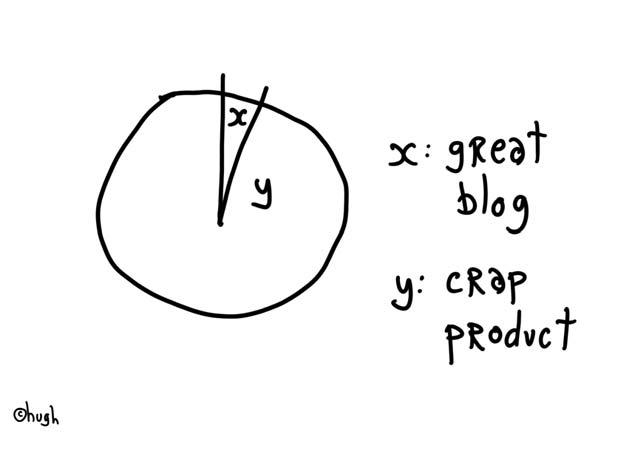
Bad Ideas Don’t Get Better with Personality
You will find a lot ofideas in this book for how personality can be used to reinvent your marketing and how your customers perceive and relate to you.Before getting too deep into these ideas,I should probably let you
Personality Can’t Save Crap
10 *Personality not included
know the one thing personality can’t do for you.Personality can’t turn a bad idea into gold,and it can’t compensate for a product or service no one wants.This is not a book about how to create a great product or find the right business to start.There are several insightful books on this topic that I highly recommend,including Guy Kawasaki’s Art ofthe Start and Blue Ocean Strategy by W.Chan Kim and Renée Mauborgne.
Each will help you to craft a product or service that stands apart,has a strong business reason for existing,and has a unique value.Guy’s suite ofgreat books on the subject will even teach you the all-important job ofgetting your revolutionary idea funded.The job ofmarketing should not be to trick unsuspecting customers by creating a false need or promoting a substandard product.
By picking up PNI,I suspect you believe that your product or service is more than a pig in need ofa makeover.This is where most businesses are:they have something marketable,but have trouble taking the next step.As a result,they are under constant threat from competitors and struggle to maintain their slight success.
Whether you have a new idea that you believe will change an entire industry,or are stuck in a commodity business where you are forced to compete on price,the lessons in this book are all about helping your business stand out.Personality is the reason consumers love one product more than another.It is what sets great companies apart and it is about more than having a game-changing product.Ifevery product you plan to launch is the next iPhone,then you have a great head start.But that is not a necessity.Personality can help you go from good to great.
Why You Need This Book
The question you need to ask yourselfis what do you want your marketing to do? Ifyou are like most businesses,you want your marketing to
tell people who you are and inspire them to buy whatever you are selling. It’s that simple.I mentioned how marketing is not about selling but about building a relationship.The traditional way to look at marketing is by the four Ps.Ifyou have ever taken a marketing course,gone to business school,or met someone who has,you will know these well.Product,price, promotion,and place were seen for decades as the core elements ofall marketing.Guess what I think the fifth “P”should be?
Personality is the missing ingredient keeping most organizations from becoming great.The real reasons that you should read this book are not only so that you can outpace your competitors (you can),make more money than them (you should),or inspire your customers to be more passionate about your brand (they will be).Those are the reasons you would read any business book,aren’t they?
There are four simple things that set PNI apart.
1. Personality is the macro trend. The three hottest topics in business today are how to do more with social media (blogs, social networks, etc.), using word-of-mouth marketing (the number one source of influence according to just about every international study), and interacting more authentically with customers. Personality is the theme that incorporates all of these topics.
2. I still have a day job. I work at one of the biggest marketing agencies in the world, with a client list that includes some of the world’s largest and fastest-growing brands. When companies work with us, they buy time from people like me. People who lead the strategy meetings and actually figure out what to do.
12 *Personality not included
I am not a professional theorist. Every idea in this book is one that I am using for real clients to get real results every day.
3. Stories, stories, and more stories. As you read, you will notice that there are lots of company stories. Throughout the book there are more than 100 examples of people, organizations, or products that are using personality in some way to market a product. Just about every point is made with a company as an example, in order to bring the ideas to life and demonstrate that the idea of putting personality into your business is more than just a theory.
4. PNI progress from theory to action. Giving you another book with just a big idea and leaving you on your own to implement it is not useful. I know because I’ve read too many books like that. For that reason, PNI has two parts. The first reveals the theory of personality and the second is all about putting the theory into action. I want to help you understand why personality matters, and also give you the tools and action plans to use it immediately in your business.
Inside Part One: The Theory
To take you inside the book in more detail,here is an overview ofwhat you will learn in each chapter and section.
The first section is all about personality and its role in marketing. Consider this part the theory.
Chapter 1 delves into how being faceless used to work and how it led many organizations to make choices designed to hide their authenticity and identity from their customers.It also addresses the common
Introduction
myth that only large companies are faceless and introduce the real secret to building a personality that most companies don’t know.
Chapter 2 looks at how social media is fundamentally changing the way that organizations communicate.I introduce the idea of“accidental spokespeople”and how they are often the unofficial voices that are reinventing how consumers view companies and brands.You will learn about the key types ofspokespeople and how accidental spokespeople are creating an entirely new way oflooking at who speaks for your brand.
Chapter 3 returns to the definition ofpersonality introduced at the start ofthe book and takes you through a new framework ofthinking about your brand and products called the UAT Filter that will help you to understand the personality ofyour organization and products and how to translate this into a communications strategy to drive your marketing.
Chapter 4 explores the concept ofa marketingbackstory and takes you through a range ofreal examples ofproducts and companies that have crafted these backstories to great success.Going through these cases,you will learn all the elements ofa good backstory and a process for creating yours based on the little-known techniques that screenwriters in Hollywood pioneered and still use today to create a compelling story line.
Chapter 5 talks about the common situation every ambitious person is likely to encounter at least once no matter where he or she works:the roadblocks.Drawing on case studies ofpeople who have managed to overcome personal and organizational resistance,this section will teach you how to navigate the roadblocks that prevent us from using personality, obstacles that are created by bosses,peers,investors,and lawyers,without getting fired or flamed.
Chapter 6 (the last in Part One) introduces the idea of“personality moments”and how to recognize what these are in order to put your personality to work.Based on examples ofthe types ofsituations where per-
14 *Personality not included
sonality can make a difference,this chapter will offer a guide for evaluating these moments and the right way to take advantage ofthem.A bridge to the second part ofthe book,this section will lay the framework for putting your personality into action.
Inside Part Two: The Action
In Part Two you’ll find a collection ofmaterials designed to help you take the ideas and theories from Part One and put them into action.It is divided into two key sections.
TECHNIQUES
Ideas and insights
These are methods ofmarketing and new ideas that you can use to put your personality into action in order to devise new forms ofmarketing and communications.While these do introduce new ideas,each comes with a practical step-by-step implementation strategy that allows you to immediately put the idea into action.
GUIDES & TOOLS
How-tos that are related to each chapter in Part One
These are a collection ofguides,checklists, question forms,printable resources,sample text for ideas,and more.Essentially,these are all the practical step-by-step lessons that relate to each chapter to help you move from theory to action.
Introducing Visual Bookmarking
To help relate the theories in Part One to the associated action in Part Two and let you go quickly between them, this book uses an idea called visual bookmarking.The guides and tools in Part Two are organized by chapters and each chapter has a small tab on the side ofthe page whose vertical positioning corresponds to the guides and tools associated with that chapter in Part Two.
Visual bookmark is a small shaded box bleeding to the edge.
Getting Started
Every product and company has a personality.The problem is that businesses today have gotten extremely good at hiding it behind carefully scripted disclaimers and processes.The future ofbusiness means building real connections with customers.That future requires you to rediscover the personality ofyour organization and use it to bring more humanity to the way you interact with customers.
To get started,we need to take a page from the techniques ofcounselors who help people with all sorts ofissues.The first thing they always do is get their clients to admit they have a problem.The problem with business is facelessness,and the first step is to admit that you have a problem and to recognize why it exists.
16 *Personality not included
Lessons from the Storytellers
Crafting a Backstory People Care About
Did you know that every banana has an untold story? It is not that anyone tries to keep it a secret,but as most bananas make their journey from the farm where they were grown to the local store near you,the story behind how they arrived there is usually lost.Most fruits are like this, making their way anonymously from around the world to your local market.Fruit is faceless.
Ifyou are like most people,you probably just pick up your bananas, make sure they are not overripe or dented,and then buy them.Bananas are commodity products.You don’t have a deep emotional attachment to bananas,you are just buying something you need.This is the problem with commodity products:they are low involvement.When you have a product like this,how can you differentiate yourselffrom your competitors,who make almost exactly the same thing? You might argue that taste or quality is the way to stand out,but who can really taste the difference between two ofthe same variety ofbananas? Remember,we’re talking about a low-involvement product here.
There is one interesting fact about bananas,though,that makes them different from many other fruits.People have some brand associations with bananas,which means they are not as completely faceless as other fruits may be.Chiquita,Dole,and Del Monte are all household names ofbrands that sell bananas.Why do bananas have these brand associations while most other fruits don’t? Chiquita deserves much ofthe credit for this,as they were the first to start branding bananas back in the 1940s with an iconic brand character called Miss Chiquita,a catchy jingle,and recognizable stickers on all its bananas.At a time when most fruit was sold anonymously,these stickers were a big deal.They attached a brand to a commodity product and made people aware that they were buying a Chiquita banana.
For decades,Miss Chiquita kept Chiquita at the top ofthe banana category,but then in the 1970s Chiquita’s market share started to slip for a variety ofreasons,including the EU Banana Regime of1993.1 Nearly a decade later,another series ofevents and small controversies led to Chiquita filing for Chapter 11 bankruptcy and opened the door further for competitors to gain even more ground.Today,Miss Chiquita is still the face ofthe brand,but the company is fighting several legal battles,facing a fading brand relevancy,and suffering a loss ofits market share to Dole,the company’s biggest competitor.
What allowed Chiquita to rule the banana market for decades was not just its ability to produce bananas people liked (most producers can do that),but its ability to put the recognizable face ofMiss Chiquita on them.The reason for the slippage,as we might have expected with this icon based on what we learned in Chapter 2,is that with a character spokesperson there are some real limitations in a world where con-
102 *Personality not included 1This is a really interesting story, but not really relevant to marketing. To see the full story, search Google for “EU Banana Regime.”
sumers are demanding more authenticity.Miss Chiquita is no longer enough.But could any other brand really do better than her to create an emotional bond between a consumer and something as perishable as a banana?
Bringing Bananas to Life
Dole has found an innovative answer to this question by connecting their customers to a very unlikely place,a farm called Don Pedro located deep in the arid plains ofLa Guajira in northern Colombia.This farm,like hundreds ofothers like it,is part ofDole’s Certified Organic Banana Program.There are real farmers working on this farm,living real lives that are affected by the way that they interact with Dole and grow the bananas that the company ships around the world.In itself,this arrangement is not unique;however,what usually happens is that the human story behind the growing,picking,packaging,and shipping offruit is lost as the fruit travels from a real farm somewhere in the world to a two-level display unit in a grocery store in suburbia.
Dole has found a way to humanize this scenario.Each banana produced as part ofDole’s program has a three-digit “farm code”printed on it that allows anyone to go online and see details about the farm that grew the banana.As Frans Wielemaker,director ofsourcing for Dole describes it,the program was built to “increase transparency and thus consumer confidence.”The Certified Organic Banana Program brought the story behind Dole’s bananas to life in a much more powerful way than any fictional character wearing bananas on her head ever did.
Proofofthe results ofthe program came in a small way in June 2007,when Dole published the following excerpted letter to the employees ofDon Pedro Farm (and their response) on the companion blog to the program.
103 Lessons from the Storytellers
05/24/2007 12:58 PM
From: Amanda Shepard
Country: USA
Comments: Thank you for what you are doing. Thank you for giving consumers the opportunity to provide aid and hope with our choices. Thank you also for this site that allows us to get a glimpse of the lives of those growing the bananas and the beautiful land on which the bananas are grown. I will think of the people and the beautiful landscape at Don Pedro Farm every time I eat a Dole organicbanana. Be so proud ofwhat you are doing!
To: Amanda Shepard
With all our appreciation: Finca Don Pedro, Colombia
Ms. Shepard:
Today, at 6:05 AM, I personally read your e-mail to all our employees in Don Pedro Farm in La Guajira Colombia. They are very happy and very proud about your words. It was a different way to start their working day, somebody from a foreign country, thousands of miles north of their home town sending a beautiful and inspiring message to them, was reason enough to consider today as their better day at workever.
Luis Monge, Organic Program, DFFI
The rest ofthis blog post features real responses from more than a dozen workers at Don Pedro Farm,including photos ofeach worker and
104 *Personality not included
a personal note ofthanks.It is a powerful testimonial to Dole’s authenticity and its decision to show the consumer there are real people who are affected by the purchase decisions we all make.The farm codes and these stories humanize the bananas from Dole,and provide a reason for customers to care about the brand sticker on their bananas.Buying a Dole banana now means that you are helping to support these real people in Colombia who grow them.It is now an emotional choice as much as a practical one.This is the power ofcreating a compelling backstory; it can give your customers a reason to believe in your brand beyond the products or services themselves.
The Real Power of the Backstory
A backstory is the history behind an organization and how it became what it is today.It is not a timeline ofaccomplishments or the boilerplate history that can often be found on company Web sites.The backstory is something more meaningful.It has real characters and a believable tale ofhow these characters had to evolve and overcome challenges in order to make their business successful.In Dole’s case,this backstory is the real story of the many people who work together to grow,package,and ship their bananas around the world.Forget the old ideas ofpublishing a company history or even an “about us”page on a Web site.This chapter will offer you a new way to think about how you describe where your company comes from. Using stories to bring brands or products to life is not a new idea. There are many models describing how marketing can be influenced by storytelling principles.Books like Made to Stick,All Marketers Are Liars, and The Elements ofPersuasion are all,to some degree,about storytelling. Each offers a smart point ofview about the elements ofa story,how to craft one that works,and the triggers that make stories memorable.So what’s different about a backstory?
105 Lessons from the Storytellers
Stories help marketers to put product benefits or values into emotional terms,which is a key ingredient in a backstory.What is different about a backstory is that its only goal is to create a foundation ofcredibility.It is not about putting product virtues into human terms or telling a story that may persuade someone to purchase something.Though a credible story may influence purchase,the best way to think about the backstory is this:Iftelling stories about your product or service is the main dish in your marketing meal,then creating a backstory is the appetizer.
The backstory is the foundation from which you can build your business.In Chapter 3,we learned about the model for understanding the personality by using the UAT Filter.Recall that the first principle of personality we discussed is to have a human voice.To use that voice for crafting your backstory,the first step is to master the rhythm ofdialogue (the one thing many marketers forget to do).
Your Marketing Is Not the Titanic (We Hope)
To understand dialogue,screenwriting is a good place to start.Not that every movie has mastered the art ofrealistic human dialogue (we’ll see a tragic example ofwhere it goes wrong a bit later),but screenwriting and the related art ofplaywriting are forms that are meant to capture the distinctive rhythm ofhuman dialogue.Lines in a screenplay or play are written to be spoken out loud,not read silently.
As an exercise to show how your marketing writing is unlike natural human dialogue,I want you to try a simple experiment.Take the first few lines ofyour company’s “about us”description from your Web site or any other printed materials and force yourselfto read it out loud. By the way,make sure you are alone because most likely you are about to sound like a fool.Can you imagine anyone ever saying those lines in
106 *Personality not included
a real conversation? Is that how you describe your company to strangers? Ifit wasn’t before,it is probably now painfully obvious to you that the way in which companies describe themselves and their history is often indecipherable.You need to lose the buzzwords.
No one knows this better than Brian Fugere.Brian is a consultant with Deloitte Consulting and a self-described “jargonaholic.”In 2003, Deloitte offered a tool to clients called the “Bullfighter,”which plugged into Microsoft Word and PowerPoint.It measures the number ofjargon words and generates a score called the “Bull Composite Index.”The Bullfighter was a viral success,and the tool and philosophy behind it even inspired a book called Why Business People Speak Like Idiots.In the book, Brian and his coauthors describe this change:
There is a gigantic disconnect between these real, authentic conversations and the artificial voice of business executives and managers at every level. Their messages lack humanity in a world that craves more of it. Between meetings, memos, and managers, we’ve lost the art of conversation. Bull has become the language of business.
Even screenwriters lapse into their share of“bull”;however,for a screenwriter it is usually called a cliché.A good example oflosing the rhythm ofdialogue comes from a string ofpain-inducing clichés from the aptly named movie, Titanic.
1.“A woman’s heart is a deep ocean of secrets.”
2.“Our love was endless like the ocean.”
3.“He saved me in every way that a person can be saved.”
4.“He exists now, only in my memory.”
Lessons from the Storytellers
Okay,I made up one ofthese four lines—but I bet you can’t tell which one.2 The movie was filled with lines like this and as a result the dialogue suffered.It wasn’t real.But it did win lots ofawards and make hundreds ofmillions ofdollars.So ifit did so well,how can I use it as an example ofsomething that doesn’t work? Simple—because my point is about being real and authentic.
When you go to see a movie like Titanic, what you are buying is melodrama and special effects in the form ofentertainment.You know this before you walk into the theater,so the movie would have been a failure ifit didn’t deliver on both.Clearly,it did,and ended up thanking the Academy a record 11 times for the awards the film took home in 1997. The lesson in this is unless your business is selling melodrama,do not let your marketing sound like the dialogue in Titanic
Backstories and the Dharma Initiative
Lost is a television show that features a group ofsurvivors ofa plane crash trapped on an island and battling for their survival while trying to solve the many mysteries they are confronted with.One ofthose mysteries is the secretive Dharma Initiative,which was once a settlement on the island.Ofcourse,finding characters in overly dramatic situations that they must fight their way out ofis nothing new in television,right? Yet as any fan ofthe show will tell you,it is the unique narrative model focused on the backstory through flashbacks (and “flashforwards”) that J.J.Abrams created for the series that has as much as anything else been a large part ofthe show’s success and loyal following.The show attracts more than 16 million viewers per episode and a survey of20 countries by Informa Telecoms and Media in 2006 concluded that Lost was the second most viewed TV show in the world (after CSI:Miami).
2The second one is made up. Several recent scientific studies have uncovered that the ocean isn’t actually endless.
108 *Personality not included
The power of Lost is that it took this standard on-screen convention in television and movies,and expanded it with a new idea:focusing an entire episode on one character’s backstory.Each subsequent episode of the show focused on another character.The resulting format offered a fast-paced forward and backward look at each character in the show,one per week.The format allowed viewers to more deeply bond with each character,and decide whether or not they liked her or him,because the viewer spent an entire hour (minus commercials) watching a story about a character’s past intertwined with the present action,which gave each character depth.
Lessons from Lost—Why a Backstory Works
•Provides more reasons to care about each character.
•Offers context for characters’current actions.
•Creates mystery by allowing audience to know details that characters themselves do not.
The challenge with any story is to create empathy,and Lost has met this challenge by its use ofthe backstory.Empathy means that the audience relates somehow to the main character and cares what happens to him or her.This is not about liking a character.It is possible to like someone but not care about what happens to her or him and to care deeply about a flawed character who is not necessarily likeable.Creating empathy is about building an emotional investment in a character,so that viewers will care about what happens to this character regardless ofwhether or not they like the character.Getting an audience to go from complete unfamiliarity to empathy means you need to establish hooks in a character’s story very early.Here is a quick fictional example.
A single dad who is also working is shown in an early scene singing to his daughter over the phone to put her to sleep as he is stuck at a shift job at a desk late at night. You see on his face that it pains him that he’s not there—while around him you see mounds of papers stacked up that he clearly still needs to go through before he can leave.
The premise established in less than 10 seconds:he’s a good but overworked father.Now as a viewer you’re emotionally invested in him.You want him to succeed,even though you don’t know anything about him or the situation he will soon face.That’s how rapid character development works.Now let’s focus on how this applies to your business.
Thinking Like a Screenwriter
The lesson in the success of Lost is that the backstory works as a tool to build an emotional connection.This is why crafting a backstory is the important first element in demonstrating the personality ofyour brand.Of course,the format I describe above works great for television and movies, but how does it apply to marketing and promoting your business?
This is not about telling a visual message on screen.It is important, however,to tell your story visually.To understand this point,let’s consider a few ofthe things that good screenwriters must do.
1.Establish characters and stories quickly.
2.Create scenes and moments rather than prose and descriptions.
3.Always write with natural human language.
4.Foster an emotional connection with no basis of knowledge.
5.Weave these elements into a compelling story with a beginning, middle, and end.
110 *Personality not included
Sound familiar? The challenges are no different than those you face in telling your backstory.The mediums are different,as your end goal is not necessarily to create something watchable on a screen,but you must establish your characters and story to foster an emotional connection.You need to think like a screenwriter.
The BArc Model
The story arc is a common phrase used to describe the changes that happen to a main character from the beginning to the end ofany story (not just a screenplay).It goes from low points to high points,while introducing conflict to raise the stakes ofthe story.When it comes to applying these conventions ofstorytelling to your backstory,the best way to approach it is to use something called the Backstory Arc (BArc).
The BArc is the progression that your backstory must take in order to build an emotional investment.There are five key elements in the BArc Model.
• Characters—Who are the people in the story that your customers must associate with?
• Challenge—What is the key question or need they are trying to answer?
• Vision—What was the unique idea or premise that they embarked upon?
• Conflict—Who or what stands in the way of their success?
• Triumph—How are they (or will they) overcome this conflict?
To create a successful backstory for your brand,you must always address these five elements (though you don’t always need to have an answer for each).
Lessons from the Storytellers
111
In researching the many types ofbackstories that are presented by companies,it became clear that several specific types ofbackstories are repeated over and over again.When I first discovered this,I went looking for a model for these stories in one ofthe hundreds ofmarketing or business books on my office shelf,and found none.I did,however,find a similar insight about story patterns in a brilliant book about screenwriting,by screenwriter Blake Snyder,called Save the Cat!
Snyder breaks down just about every Hollywood film into 12 distinct story types and maps out for the aspiring screenwriter how to create a story in each type.The pattern that emerged from my research into many company backstories can be summed up in five key models that you should consider as you start to craft your own backstory.The rest ofthis chapter is dedicated to taking you through these five types ofstories,showing you examples ofwho uses each type,and helping you to determine which may be right one for your organization.
How to Use the Backstory Model Picker
GO TO GUIDE p. 259
To help you get started,there is a tool called the Backstory Model Picker in Part Two that can help you choose among these five models.As you will see as you read through the picker,most backstories actually draw upon elements from multiple models.For this reason,the tool is meant to help you choose a primary story model.As you delve more deeply into your particular organization,you may find that the other models offer supporting evidence or other story elements worth using as well.
Alternatively,you might find that a single story model is ideal without any support from another model.Either way,the chart below should help you to compare and contrast the different story models,and focus on the one that makes the most sense for your business.
112 *Personality not included
Backstory Type
The Passionate Enthusiast
The Inspired Inventor
What’s the Story?
A driven individual takes a personal passion and builds it into a successful business.
A tireless inventor creates something new and different by not giving up on his/her vision.
The Smart Listener
The Likeable Hero
A new company is created as a result oflistening to customers,partners,or others.
A dedicated individual overcomes all odds to make his/her idea work.
Who Uses It?
•MOO.com (this chapter)
•Storyville Coffee (this chapter)
•Moleskine (Chapter 2)
•Dyson Vacuums (this chapter)
•Molecular Gastronomy (this chapter)
•Apple (Chapter 1)
•Google (this chapter)
•Stacy’s Chips (this chapter)
•Dell (Chapter 5)
•Kiva.org (this chapter)
•Mission Bay Community Church (this chapter)
•Innocent Drinks (Chapter 6)
(continued on page 114)
Lessons from the Storytellers
113
(continued from page 113)
Backstory Type
The Little Guy vs. the Big Guy
What’s the Story?
An underdog company takes on a seemingly unbeatable,established adversary.
Who Uses It?
•Under Armour (this chapter)
•Bugaboo Strollers (this chapter)
•Oil Can Henry’s (Chapter 3)
To better understand the five types ofbackstories and which may make sense in relation to your company’s situation,and how it can help you build a foundation ofcredibility for your brand,let’s explore some examples ofeach type ofbackstory and some brands that are using them. For each type,there is an associated guide in Part Two that shows how you can use the BArc Model to craft that particular type ofstory for your business.
Passionate Enthusiast Story: The Cure for Printing Paralysis
Do you suffer from printing paralysis? This is a brilliantly descriptive term that I first encountered during a brainstorming session at which someone described increasingly common trend ofpeople no longer printing their digital photos (in effect,“trapping”them on the computer).The rise ofdigital photography has all but displaced film,and many ofthe children born in the last five years will never even know a time when cameras used film.The downside ofthis move to everything digital is that more and more people are just sharing images online and never printing them
114 *Personality not included
out.The satisfaction ofholding a printed photo in your hands,or creating a physical photo album or scrapbook is slowly becoming a rare thing.
Yet these physical interactions with the images ofour lives still have a certain magic associated with them.When you hold a print in your hands or share it with someone else in a physical way,it makes it more real.There is a corresponding pleasure in seeing your image that you created printed onto a product,or a card,or a T-shirt,or just about anything else you can imagine.MOO.com is a company that was originally created to help you have more ofthose magic moments.
The first time I heard ofMOO was at a conference where a colleague handed me what he called his MOOCard.It was a half-sized business card printed on a beautiful coated card stock and had a full-color image taken by my colleague on one side ofit.Clearly this was done by someone who knew printing.I later learned that someone turned out to be Richard Moross,an entrepreneur based in London who saw a worldwide market for a new type ofbusiness card with personality.As his team describes it on their site:
Our first product, MiniCards, came about when we realized that sometimes, we wanted to hand out details of our personal sites, and we just didn’t have a nice way to do it. A business card was too cheesy, too serious, or too. . .businessy, and didn’t represent us the way we really are. A hastily scribbled piece of paper is more personal, but who ever has paper or a pen when you want it? We needed something else.
The MiniCards were born and became a sensation among fast movers and new media mavens.The cards were profiled in top blogs like Boing Boing,Cool Hunting,GigaOm,and in a BusinessWeek article.They were even described as the “unbusiness card ofchoice at many new media
Lessons from the Storytellers
115
unconferences.”3 By using smart linking with existing social media sites like Flickr and Facebook to let people upload their images,Moo has created a series oftools that make printing fun and necessary again.The passion they have for printing has awakened the same passion among many oftheir customers.
The partnership with Flickr is perhaps the one place where the passion ofMoo customers (or the MOOvment as they are collectively known) is most visibly on display.Some customers collect cards,while others create wall-sized posters out ofthem.There are photos ofone user who sewed a “MOOPocket,”which she now sells to keep your cards in,and another user (a teacher) demonstrates how she uses the cards as index cards to teach her class.There are even groups ofpeople who have started collecting and trading MOOCards with one another.MOO may have started as a labor oflove from printing enthusiasts,but it has quickly grown to create a community based on people who have similar passions.
Passionate Enthusiast Story: Saving the World— One Cup at a Time
Storyville Coffee is another company founded by passionate enthusiasts, and describes its mission as “saving the world,one cup at a time.”Storyville’s method ofsaving the world has to do with first saving all ofus from bad coffee,which they only halfjokingly refer to as “acid rain.”For Storyville,its backstory comes down to first changing people’s perceptions ofcoffee by sharing two facts.
1.Coffee expires because it has natural oils.
2.Most coffee is burned to get rid of oils and help it last longer.
3 “A Business Card for Your Avatar”http://www.businessweek.com/smallbiz/content/jul2007/ sb2007076_772566_page_2.htm
116 *Personality not included
Storyville’s coffee,unlike many others,has an expiration date.The company also offers only two varieties (regular and decaf),which means you will still have to get your caramel mint pumpkin spiced skim decaf no-foam latte from somewhere else.
The Storyville experience strips coffee down to its essence:ground beans and water.Yet its coffee is more than just great quality coffee beans. There is a ritual associated with making the perfect cup that includes every small detail.You can see it in the tutorial videos offered on the Storyville site,as well as the story ofthe company’s custom-designed coffee mug, which it commissioned after an unsatisfying search for the perfect coffee mug led them to design it themselves.What Storyville Coffee is really selling is what it calls the ultimate coffee experience.
What do Storyville Coffee and Moo.com have in common? They both have built their brands on the passion oftheir founders and employees for what they are selling.In the process,they have each created a unique backstory their customers can believe in.
GO TO GUIDE p. 261
Inspired Inventor Story: Innovation That Really Sucks
When David Oreck,founder ofthe $100 million Oreck Corporation,was asked about his decision to name his vacuum cleaner business after himself,he responded by saying,“I felt there was a facelessness and namelessness to this business,and I felt that I would have an advantage if people knew who they were doing business with.”4 Ironically,today the vacuum cleaner brand best known for succeeding based on the personality ofthe founder is not Oreck,but a company founded much later than Oreck by a man who spent the early 1970s selling crazy inventions like the “sea truck”(a cross between a pickup truck and a whaler) and the 4 www.industryweek.com/ReadArticle.aspx?ArticleID=10058
Lessons from the Storytellers
“ballbarrow”(a wheelbarrow that used an easy to maneuver ball instead ofa wheel).
That inventor’s name is James Dyson and in the late 1980s he found his true calling by setting out to create the perfect vacuum cleaner that would not lose suction.The process took more than five years and more than 5,000 prototypes,but in 1986,in Japan,Dyson released his very first bagless suction vacuum cleaner,called the “G Force.”It cost $2,000 and became an instant status symbol in Japan.
Dyson’s original intention was to sell the technology to an existing manufacturer,but no one was willing to cannibalize their revenue from replacement bags with Dyson’s bagless concept.So after his hit in Japan, he used the funds from that success to finance the development ofa model for the United States.He patented as his “Root Cyclone”technology and defended it vigorously (he sued Hoover in a UK court for copying his design,and won).
The bagless vacuum itselfwas a powerful idea,but it did not find a truly passionate following until Dyson released a series oftelevision and print ads featuring himselftalking honestly about how hard he had worked to create the perfect vacuum cleaner and pledged that “nothing gets clogged,ever.”He was believable,likeable,and offered an authentic story that consumers responded to.He was the ultimate inspired inventor.
Today,customers rave about their Dyson vacuums online (just take a look at any ofthe hundreds ofpositive reviews on Amazon.com) and credit Dyson himselfwith forging a bond with his customers.Some women thanked him for creating a product that made the men in their lives want to clean.Others talked about the pride they take in their vacuums and how they cannot help talking to others about the vacuum cleaner.The brand itselfstands for innovation,even going so far as to offer advice on their corporate Website for aspiring inventors about how
118 *Personality not included
to patent their inventions and sell them.Dyson himselfpublished his own autobiography in 2003,about innovation,invention,and the secrets behind the Dyson patented model.He called it Against the Odds.
Inspired Inventor Story: The Secret of the Best Restaurant in the World
When we talk about invention,we are usually referring to a new product or technology,as in Dyson’s case.Invention can come in different forms, though,especially when it comes from mixing two disciplines that usually have little to do with one another.One ofthe most interesting examples ofthis is a type ofcuisine inspired by physics and chemistry that takes center stage at what Restaurant magazine has rated the Best Restaurant in the World for the past two years running.
The restaurant is El Bulli,an uncommon destination located offa winding mountain road in Roses on the Costa Brava about two hours north ofBarcelona.The head chef,Ferran Adrià,began his career as a dishwasher and now travels six months out ofthe year (during which time the restaurant is closed) developing his trademark 30-course tasting menu. He was recently named by Time magazine as one ofthe most innovative thinkers ofthe twenty-first century.
What makes El Bulli—despite its being closed six months out of the year to allow the chefs to travel and redefine the menu—the best in the world? The answer is a technique pioneered by Adrià called molecular gastronomy, which helps him and his team oftop chefs create food that seems inspired by science fiction to those who sample it.Adrià dislikes the term molecular gastronomy,instead referring to his creations as “deconstructionist”for how they break down flavors independently.His techniques include creating something called “culinary foam,”which is described as taking natural flavors,mixing them with a gelling agent such
Lessons from the Storytellers
119
as agar,and putting them through a whipped cream canister equipped with N2O cartridges.Ifit sounds complicated,it should.Only a handful ofrestaurants in the world use this method.
One ofthem belongs to José Andrés,a former disciple in Adrià’s kitchen,and now a winner ofthe prestigious James Beard Foundation Award and owner ofa range ofrestaurants in Washington,D.C.One of his restaurants is the iconic “minibar,”often spoken ofby locals (including me) as the most unique dining experience in D.C.The restaurant offers its own 30-course molecular gastronomy tasting menu in a small bar that seats just eight tucked upstairs at the back ofCafé Atlantico restaurant in downtown Washington.The entire experience ofbeing presented with each dish as the team offour chefs behind the counter prepare it and describe it for you is one ofa kind.You simply cannot dine at minibar without telling people about it.
ChefWylie Dufresne’s WD-50 restaurant on the Lower East Side in Manhattan offers a similarly talkable experience.ChefWylie was even a finalist on the popular television show Iron Chef in 2006.At WD-50, guests with a party 14 can schedule a private dining session in the kitchen with Wylie himselfas your guide through the meal.In May 2006, Fast Company magazine also ran a cover story on this new science ofcuisine, featuring a chefnamed Homaru Cantu and calling him “Edison ofthe Edible.”Cantu’s Moto restaurant in Chicago is regularly on the list of hottest up and coming restaurants and his mission,as he described it in the Fast Company piece,is to “change the way humansperceive food.”5
Clearly the idea ofmolecular gastronomy captures the imagination offoodies and travelers everywhere.It may be the most innovative new trend in cuisine ofthe past 50 years.Just about every restaurant ever
opened is the result ofsomeone somewhere who is passionate about food. What each ofthese inspired chefs have managed to do is tell a story of invention that makes their restaurants more than just places to eat.They are now destinations.
Similarly,Dyson has made his story central to how he sells his product.What all ofthese scientific chefs and James Dyson were able to do was think differently about their business or industry and use their inspiration and enthusiasm to create something new. Regardless ofthe culture,people respond to inventors and innovations.They create wonderful things,and we can’t help sharing their stories with others.
Smart Listener Story: Google’s Art of Failing Wisely
Smart listening is not about focus groups,pilot programs,or other formalized ways to test ideas.Those all have their place,but the idea ofsmart listening is something more fundamental.Insight may come from these scripted efforts,but listening is not the same as product or prototype testing.The stories ofsmart listeners are the ones about organizations that are listening to their customers in order to understand their needs and the gaps that they can fill with a product or service.The companies that fit the story model for smart listeners are the ones that create their business or products based on listening to what people want.
Google does this extremely well.Perhaps more than any other company,Google has embraced a policy oflistening to people,putting an idea out there and letting individuals play with it,and then using the early feedback to improve it.In October 2007,Matt Glotzbach,product management director for Google Enterprise gave a keynote speech at the Interop IT Conference and Exposition in New York.During the speech,he shared that a core part ofGoogle’s strategy when launching new products was to
“fail wisely”and that the practice ofsitting on a new product for years while testing was outdated.
Anyone who has followed Google’s approach to launching new products knows that the way the company approaches this is very focused on user feedback,but not in a closed way.Open beta versions ofnew products are launched almost every week.Those ideas that work are further revised,and those that don’t are quickly abandoned.Ifsmart listening involves fast response to what customers are saying,then Google has one ofthe best models in the world to capture relevant feedback and act on it. This approach is a key part oftheir backstory and what makes their brand one that people routinely rate as one ofthe most innovative in the world.
Smart Listener Story: Stacy’s Sidewalk Pita Cart
Another smart listener who used customer feedback to launch her own successful business in a slightly different way was Stacy Madison.When Stacy first decided to leave her career in social work and follow her dream of entering the food business,she did it by buying a sidewalk cart serving allnatural pita sandwiches on the street in downtown Boston with her business partner,Mark Andrus.The idea ofa social worker reinventing her life to try something new is a character story most people can relate to.
At the original Stacy’s D’lites cart,the sandwiches were so popular that she soon had lines around the block.To keep the customers happily waiting,she decided to bake pita chips and hand them out to people as they waited in line.After some time spent watching her customers and listening to their pleas for her to start selling these chips,she starting doing exactly that and Stacy’s Pita Chips was born.
As with many regional products like this,people loved the product but it was only likely to travel so far.In early 2007,the company decided to focus on creating a buzz through word ofmouth by taking its back-
122 *Personality not included
story and retelling it to a new audience across America.The idea was to send boxes ofpita chips to more than 100,000 people named “Stacy”so they could build a group ofenthusiasts and introduce new people to the product based on the uniting factor that they all had the same first name. The campaign worked,generating a huge buzz online:photos were posted on blogs from Stacys who received the mailing;hundreds ofe-mails with positive feedback turned up in Stacy’s inbox,and the brand attracted many new customers.
Although Google and Stacy’s Pita Chips have taken slightly different approaches to how they listen to their customers,each has the concept of“smart listening”at the heart ofthe growth of its business.
Likeable Hero Story: Microlending to Change Lives
Premal Shah is a good example ofa likeable hero;he is the soft-spoken president ofKiva.org—a Web site that is changing the world through its pioneering approach to microfinance.Meeting him is like meeting a brilliant but obsessed inventor who is always considering new ways to improve his inventions.For Premal,the obsession is finding more ways to make Kiva.org more efficient in its mission oflending money in “microloan” amounts to entrepreneurs in third world countries.
Microfinance and microlending are the Nobel Prize–winning concepts from Muhammad Yunus that introduced the idea ofoffering small “micro”loans oftens or hundreds ofdollars to empower third world entrepreneurs.Kiva.org,along with Yunus’s own Grameen Bank,are two leading organizations in this field,offering up millions ofdollars in loans each year.The real power ofKiva.org,however,is that it is a platform for you as an individual to loan a certain amount ofmoney directly to an entrepreneur.This was never before possible.
123 Lessons from the Storytellers
The old model ofaid where large international organizations throw billions ofdollars toward large projects while corrupt governments siphon offlarge percentages ofthe aid no longer works.That model has come under considerable criticism recently through talks by leading thinkers at influential events like the Technology Entertainment Design (TED) conference and World Economic Forum,books like Globalization and Its Discontents by Joseph E.Stiglitz (another Nobel Prize winner).Fighting corruption is a major priority now at some ofthe top international banking institutions,including the International Monetary Fund (IMF),Asian Development Bank,and World Bank.6
Smarter solutions that empower people are needed.Kiva.org is one ofthe sites that offers solutions like this—and is based on a powerful insight.When you loan money to Kiva,the first thing you realize is that it is a loan and not a donation.The power ofthis idea is vast.You are not offering charity to someone;you are giving them a chance to make an idea they have into a reality.The most interesting thing about this model is the importance ofrepayment.
The reason this is so significant is that it allows recipients ofhelp to keep the one thing that is so often taken away from them:pride.When someone is able to pay you back for funds that you helped them with, their pride is intact.Accepting charity means swallowing your pride and doing what you need to do because you have no alternative.Offering people pride leads to empowerment and empowerment leads to real change.The story ofKiva.org is one ofoffering empowerment and what the site realizes is that this is the one thing that people in developing countries need above all else.
6 My father, a longtime leader at the World Bank, even wrote a book on this called Challenging Corruption in Asia
124 *Personality not included
The site itselfis a collection ofbackstories from people who are in need offunds to make their ideas happen.Browsing these real stories is a humbling experience,as you learn firsthand just how much someone halfway across the world could do with just a few hundred dollars.It is enough to make you consider returning your brand-new Dyson vacuum cleaner in favor ofputting the money toward a more noble use.
The power ofthe Kiva.org story is not just in the idea or the technology,but in the story ofthe founding and the team members,from Premal to others,who decided to do something to change the world.Everyone who lends money through Kiva.org knows this backstory,and it is a key part ofwhy they choose to support the site.
Likeable Hero Story: A Pastor with Personality
In case you haven’t noticed,religion has a pretty severe branding problem.From Jehovah’s Witnesses knocking on doors trying to convert people,to the violence across the world inflicted by people ofone faith on those ofanother in the name ofreligion—most religions come with some sort ofbias from those who believe,or those who refute it.Yet all these polarized opinions when it comes to religion are often the result ofignorance or a lack ofpersonal interaction with individuals who could bring those religions to life.
Religion is as much about faith as it is about the people that you associate with,whether they are the leaders ofa religion or your fellow believers.It may sound crass to look at it in this sense,but faith needs personality just as much as any business does.
One blogger who knows this well is a San Francisco native named Bruce Reyes-Chow.His blog is an exploration ofspirituality and faith and could fit well into any list ofreligiously oriented blogs (ofwhich there are thousands).Bruce,however,is also an ordained Presbyterian minister
125 Lessons from the Storytellers
and leads a congregation at the Mission Bay Community Church (MBCC).His blog is all about his weekly sermons,and his self-described life as a “pastor,geek,dad,and follower ofChrist.”Blogging may seem like an odd thing for a pastor to do religiously (pun intended),but what is even more unique about Bruce’s blog is just how openly he shares his thoughts and ideas.
Once,after a particularly tough Sunday sermon,Bruce called his own sermon a “one way ticket to sucksville”and apologized for confusing his churchgoers and promised to do better the following week.This is not the kind ofrelationship most people expect to have with a preacher.Bruce is real,engaging,open and honest,and the community responds on his blog with loyalty and words ofencouragement for his rare moments of confusion.The blog is a core part ofthe experience at MBCC.Bruce himselfnotes that the blog “allows folks to get to know a little bit more about me before taking the risk ofcoming to church on Sunday...and about 75% ofthe people who visit our church have read my blog before ever setting foot in our church.”
To understand how unique this experience is,let’s look at a national institution in the Philippines called the “Iglesia Ni Cristo,”ironically bearing the acronym INC.The name (loosly translated) means “Church ofChrist,”translated into Tagalog and across the Philippines you will hardly be able to go to any city without spotting dozens ofIglesia Ni Cristo churches spread out across the city,which are located as strategically as one might find fast food restaurants in America. One look at the ubiquitous yellow-topped chain ofchurches and you could be forgiven for thinking that these help take religion to a new level ofstandardization.Bruce’s vision for the MBCC is a clear contrast,and offers his congregation a far different experience.Along the way,Bruce offers a backstory that is easy to become engaged with,no matter what your religion.
126 *Personality not included GO TO GUIDE p. 266
Little Guy versus Big Guy Story: Taking on the Biggest Brand in the World
Back in 1996,Kevin Plank was promoting his new brand ofathletic sportswear called Under Armour by doing exactly what his biggest competitor did more than 30 years earlier.Driving his Ford Explorer to college football games,he sold his unique brand ofapparel to college football athletes,including many ofhis own former teammates at the University ofMaryland.Ironically reminiscent ofhow Phil Knight once sold sneakers to runners from the trunk ofhis car to start Nike,Plank realized early that the best endorsement for his products was to get athletes to wear them and tell others about it.
His challenge was huge—to take on the firmly entrenched sports apparel leaders in Nike and Adidas in an industry that many thought would be impenetrable.To do it,he used word-of-mouth marketing and sampling.As a former college athlete,he had many relationships with universities in his local area and started by supplying players at his former team at the University ofMaryland with his distinctive undershirts,which he sold under the brand Under Armour.
His vision came from a dual understanding ofwhat he had to sell. The first and most logical product benefit was a brand ofunderwear that was specifically designed to be worn under football pads,not absorb sweat like cotton did,and dry much faster.The second element was far more important.His line ofshirts were tight and bore a distinctive logo on the chest,making the wearers part ofa club.This was not the typical Nike swoosh that every athlete knew.Plank had something different and it began to mean something to the athletes who wore it.This was an entirely new category ofperformance apparel.
The conflict in this story,ofcourse,is that Nike and Adidas and Reebok and all the other sports companies making apparel saw the trend
127 Lessons from the Storytellers
Under Armour started and moved quickly to take advantage ofit.In the years since Under Armour has taken off,each ofthe big competitors has launched its own line ofultradry,moisture-repelling fabrics designed for exactly the same uses as Under Armour.Under Armour was the little guy taking on all the big guys,but still has managed to win because it has been able to tell a convincing backstory that engages consumers and builds a relationship with loyal customers.
The company’s triumph comes not only from having existed for more than 10 years and continued to grow its business,but for its willingness to take on Nike and its other largest competitors head-on.The underlying message in this story is that this is a brand not afraid to fight.In 2006, UA even launched its own brand offootwear,moving beyond apparel. Clearly,people love an underdog.
Little Guy versus Big Guy Story—Bugaboo Strollers and Hip Moms
It may seem like there is an inverse relationship between being a parent and having style.Though becoming a parent may have something to do with it,a more likely culprit is that most products for new parents are just not that fashionable.The leader by all accounts in the baby product industry is one whose Web site describes it as focused on “product safety, quality,reliability and convenience.”Style or fashion are not high on the list.Yet this company,called Graco,has been around for more than 60 years making cribs,strollers,car seats,highchairs,swings,bouncers,activity centers,and just about any other baby-related product you can imagine.Along the way,the company developed several product innovations, including the baby swing and the now-common car seat travel system that allows you to take out a car seat with young babies in it while leaving the base in the car.
128 *Personality not included
Taking on the dominance ofGraco in the baby products industry seems like it would be an impossible feat,particularly when the company is so singularly focused on the one element that they believe is most important to parents—safety.As it turns out,there is another concern for many urban new parents that had been going unfulfilled.That need was perfectly illustrated by the character Miranda on the popular show Sex in the City in 2002.Despite her new status as a parent,her life still revolved around being an urban professional in Manhattan,which meant she was not ready to abandon all fashion and enter the bonds ofstyleless parenthood.As part ofher rebellion,she pushed around the streets ofManhattan a new stroller that few had ever seen before that program aired.
The stroller was called the Frog made by a Dutch company with a funny name:Bugaboo.This Bugaboo stroller looked like a cross between an art piece and a pushcart.It also looked unlike any other stroller on the market,and made an obvious statement for any parent pushing it down the street.The stroller was an instant hit,becoming the ultimate symbol ofurban cool for city-dwelling parents in cities around the world.Many parents describe it as the major “splurge”in their baby-related purchases, and it certainly qualifies with most models retailing for more than $500 (and some well over the $1,000 mark).
Despite its superpremium positioning,Bugaboo started as a small challenger brand in Holland,never intending to take on the world’s largest baby products maker or become the company behind the must-have product for upwardly mobile new parents everywhere.The company began as a partnership between designer Max Barenbrug and his brother-in-law, physician Eduard Zanen.The original goal was to sell the idea ofthe stroller to one ofthe big guys.After trying unsuccessfully to find a buyer, Barenbrug decided to commission it himselfby “opening the yellow pages for Taipei and looking under stroller manufacturers”as the Bugaboo Web
129 Lessons from the Storytellers
site describes only partly in jest.As Barenbrug noted in an interview several years after the Bugaboo arrived in the United States,“Most companies are toofocused on the products ofother companies...they focus on a cost rather than a vision.” 7
At Bugaboo,unlike many other small companies,its heritage is not dominated by the founders,but by the many people who work at the company headquarters in Holland and share its passion.The company’s corporate philosophy stresses being different,and team members are encouraged to share their opinions and take responsibility for their roles and actions.While most other stroller makers focus their marketing on features,safety ratings,or how washable their covers are,Bugaboo focuses its marketing on the lifestyle and freedom that its strollers can provide for “adventure-seeking parents.”
The product marketing has lived up to this positioning,with smart efforts such as a series of22 commissioned artist-produced downloadable maps with kid-friendly walking tours in cities around the globe called “Bugaboo Daytrips,”as well as a wonderfully creative Broadway dance show–style film created by their ad agency,72andSunny,to introduce the new lightweight Bugaboo Bee stroller.The video and Daytrips sites were both viral hits,getting sent around from parent to parent and both managing to do the one thing that few baby products manage to effectively do—target fathers as well as mothers.
Even their product launch strategy abandons the big chain stores in favor ofworking with small independent baby stores like Genius Jones in Miami,a store which focuses on carrying baby products that are welldesigned.As further example ofits status appeal,Bugaboo strollers are now the product ofchoice for celebrity moms to wheel their tots around
in,including Madonna,Gwyneth Paltrow,Sarah Jessica Parker,and a growing list ofother stars.
Seeing the strollers on the street inspires other parents or potential parents to look at those strollers with envy.The backstory Bugaboo managed to tell was one ofpassionate European designers who set out to add an element ofstyle to the decidedly unstylish life ofa parent.This story perfectly matched the ones their customers wanted to tell about themselves.Parents who pushed a Bugaboo stroller around town were still hip and cool,despite being parents.Most important,it gave regular parents the chance to believe they were part of an elite group by having the most luxurious stroller you could buy,just like the celebrities.
What ties all these stories together? They all follow the BArc Model, but even more important,they offer a reason to believe.Storyville Coffee customers subscribe because they believe that coffee expires and that
A Reason to Believe
Lessons from the Storytellers
a quality cup ofcoffee is worth some effort.Athletes who wear Under Armour do so because ofthe feature benefits ofthe clothing,but also because they believe in the story behind the company that was built by athletes for athletes.A marketing backstory gives your customers a reason to believe in your brand.
One thing you may have noticed about these stories is that they offer many overlaps.Dyson may have been an inspired inventor,but he was also a little guy versus a big buy.Google is a smart listener as well as an inspired inventor.The idea ofthese models ofbackstories is not that they must be mutually exclusive.It is always possible for a company’s story to take on aspects ofany story.The point is that there is one story that offers the best description ofwhat defines your organization.The real trick is to understand which one this is and to develop your backstory from there.
The theme that each ofthese stories shares is the focus on on the people behind the products or services that are the purpose for the company’s existence.Backstories are a way ofbringing out the human story behind your brand.This is not a product development story or “company history”in the strictest sense ofhow a company moves.Think ofit less as a company history and more as a family history.Family histories are highly personal and involve people who bring each generation to life.
Creating a backstory requires a different way ofthinking about the foundation ofyour organization,but is not likely to cause any serious resistance within your company.The reason is that you are usually just changing the way that the story behind your company is described.This is the basis ofpersonality,but it is where you go from here that will require the most significant change in your communications.From now on,this is where you will likely find the most roadblocks—I’ll focus on how to contend with the roadblocks in Chapter 5.Once we discuss how to navigate
132 *Personality not included
these roadblocks,you’ll be ready to really start using your personality for marketing.
The Sellevator Pitch
A backstory offers a reason for your customers to believe in your brand. There are five key models ofbackstories:the passionate enthusiast,the inspired inventor,the smart listener,the likeable hero,and the little guy versus the big guy.
Lessons from the Storytellers
133
Chapter 4 Guides & Tools
The Primary Backstory Picker
In Chapter 4,we learned about the different types ofbackstories that companies can use,and how they can do it effectively in order to offer a credible heritage that their customers can believe in.The guide below offers some more detail on how to pick the story that would serve best as the primary story for your business.This backstory is not meant to serve as the complete description ofyour business,but to offer you a starting point.The other story models can work as secondary narratives backing up the primary one.
Common Industries
•Niche retail
•Social networks
•Family businesses
Use It as Your Primary Story If …
Your business could be described as a labor of love,your founders are experts in your industry, and your business has grown mainly through word ofmouth.
Backstory Type
The Passionate Enthusiast
G & T Chapter 4
Backstory Type
Common Industries
•Technology/ electronics
•Pharmaceutical
•Fashion
The Likeable Hero
•Food and CPG
•Travel
•Consulting
Use It as Your Primary Story If …
Your business is based on a new invention different enough from the rest ofthe world to be considered “inspired”(and is most likely patented).
Your business was founded as the result oflistening to customers,partners,or others and continues to rely on customer opinions to evolve.
•Nonprofits/ advocacy
•Health care
•Green/ environmental
260 *Personality not included
Your business was started by an individual with a big idea to do something to change the world and could reasonably be called a “hero.”
The Inspired Inventor
The Smart Listener
Backstory Type
The Little Guy vs. Big Guy
Common Industries
•Food/dining
•Travel
•Retail
•Any industry with dominant players
Use It as Your Primary Story If …
Your business has a product or service that is designed to take on the dominant competitor (preferably faceless) in an industry and succeed in part based on its role as an “underdog.
Creating the “Passionate Enthusiast”Backstory
To learn about this story model and examples ofbrands that use it,turn to page 114.
To see when it may be the right story model for your brand,use the backstory picker on page 113.
THE PASSIONATE ENTHUSIAST BACKSTORY: A driven individual takes a personal passion and builds it into a successful business.
Characters Establish the expertise and passion ofthe founders for the business by sharing stories oftheir credentials and stories ofhow and why they are enthusiasts.
261 Chapter 4 Guides & Tools
Challenge Describe how other enthusiasts need what your company offers and why no other enthusiasts have been able to do it in the same way that your organization has.
Vision
Outline the bold idea and vision ofyour business and how it offers a product or service for other enthusiasts that they have wanted,but not had until now.
Conflict Share the arguments ofthe naysayers who did not believe in the idea and why they felt that way.
Triumph Return your focus to today,and demonstrate how your business connects with other enthusiasts and succeeds based on word ofmouth.
Elements of the “Inspired Inventor”Backstory
To learn about this story model and examples ofbrands that use it,turn to page 117.
To see when it may be the right story model for your brand,use the backstory picker on page 113.
262 *Personality not included
THE INSPIRED INVENTOR BACKSTORY: A tireless inventor creates something new and different by not giving up on his or her vision.
Characters
Challenge
Associate the common qualities ofinventors (perseverance,passion,creativity) with the individuals working at your business and the original founders.
Talk about the industry you are in and the barriers that have existed before now in relation to smart invention,and how true inspiration has been difficult to achieve in the past.
Vision In this story,the vision is crucial because it describes what was “inspired”about the inventors’process.
Conflict
With every great invention,something always stands in the way.Whether it is people or the process ofgetting it to market,the conflict is the story ofthe struggle to overcome the mishaps and barriers that almost killed the invention.
Triumph The triumph,ofcourse,is the invention itselfand how it becomes successful as others discover it and the inventors realize their dreams.
Note:Though this story uses the term “inventor,”you should not think ofit solely as describing product inventions.An inspired inventor can be a designer,an artist,a writer,or an architect.The point is that not every inspired inventor gets her start coding software in a garage or blowing offhis eyebrows in a lab.
Elements of the “Smart Listener”Backstory
To learn about this story model and examples ofbrands that use it,turn to page 121.
To see when it may be the right story model for your brand,use the backstory picker on page 113.
THE SMART LISTENER BACKSTORY:A new company is created as a result of listening to customers, partners, or others.
Characters
Smart listening and innovation based on it can come from anyone.Because ofthis, setting up the characters for this type of backstory means also establishing that your corporate culture is one that values listening and acts on it.
264 *Personality not included
The key challenge that smart listening companies face is that there can be many barriers to acting on knowledge gained from smart listening,particularly at a time when many businesses demand analytics,or feasibility analysis,or other scientific methods ofconfirming what is learned through listening.
The vision in your story comes from a select group ofindividuals who believe in doing what they hear your customers asking for and having a way to do it that they know can satisfy people who want it.
Overcoming the more analytical minds and taking a risk on an idea that is largely based on what some people may consider “a hunch” is a big step and is usually the central conflict to be navigated in a Smart Listener backstory.
The triumph is when the listening pays off and the product or service that was launched turns out to be exactly what the customers were asking for.The added benefit is that this triumph usually makes naysayers and other companies look foolish for not doing it themselves or supporting it.
Chapter 4 Guides & Tools
Elements of the “Likeable Hero”Backstory
To learn about this story model and examples ofbrands that use it,turn to page 123.
To see when it may be the right story model for your brand,use the backstory picker on page 113.
THE LIKEABLE HERO BACKSTORY: A dedicated individual overcomes all odds to make his or her idea work.
Characters
Challenge
The character behind the Likeable Hero backstory is the most crucial element as the story is usually based on the vision of that person.It needs to be someone who has motives beyond profit and who could reasonably be considered a “hero.”
A hero usually has a big challenge to face, and it is not related to competition.The challenge in this type ofstory is some sort ofcrisis or issue that needs to be solved.It could be something as big as global poverty,or something as personal as a rebirth ofindividual faith.
Vision
266 *Personality not included
The vision ofthe likeable hero is to transform people and lives in some way through what their organization does.
Conflict
Triumph
The most common obstacles ofthis type ofstory are people who do not believe in the mission or doubt that it can succeed.
The triumph is in the likeable hero persevering and building a successful business that people can get passionate about.The idea discussed earlier in the “Techniques”section ofthis book about karmic marketing can also factor into this type ofbackstory.
Elements of the “Little Guy vs. Big Guy”Backstory
To learn about this story model and examples ofbrands that use it,turn to page 125.
To see when it may be the right story model for your brand,use the backstory picker on page 113.
THE LITTLE GUY VS. BIG GUY BACKSTORY: An underdog company takes on a seemingly unbeatable big adversary.
Characters
The main character in this story is a founder with courage and the drive to take on a big competitor that has dominated a field and seems unbeatable.
Chapter 4 Guides & Tools
Challenge
This element is relatively obvious,a large competitor that virtually owns an industry or type ofproduct is the adversary in your story and presents the most significant challenge.
Ultimately,it is the vision that your business can succeed despite going against the big guys that makes this story work.The vision should define what makes your business different and better than the big guys you are taking on and why your business deserves to grow.
Conflict
268 *Personality not included
Having a big established industry player against the new little guy is one ofthe oldest storytelling conflicts.In your backstory,this conflict usually leads to the increase in popularity ofyour business.
Triumph does not mean overtaking the big guys.In most cases,that doesn’t happen. Instead,the triumph ofthe little guy is to be able to capture enough market share from the big guys to cause them to worry, and to create a niche for your business that your bigger rivals are unable to contest.
Vision
Triumph
Add Personality and Stir
Finding and Using Personality Moments
He entered the elevator.“Ground floor,please,”he said. He sounds nice,she thought,but he wouldn’t notice me. He noticed.He noticed her standing there,eyes straight ahead.
But he didn’t blame her.
Nice perfume,he thought as they parted, he lightly stroking his disfigured face, she counting the steps to the waiting van.
—Chris Macy, “Like Two Ships”
In the late 1980s a fellow named Steve Moss,who published a regional paper called the New Times in San Luis Obispo County,California, decided to launch a contest.A self-described lover ofwords,he called his annual writing challenge the Fifty-five Fiction Contest,because every story entered had to contain exactly 55 words.After nearly a decade of accepting submissions from writers and publishing a winner each year,
Moss published a collection ofthese winning stories in 1995 and called the compilation The World’s Shortest Stories.In that year,I first read “Like Two Ships”and more than 10 years later the story has stuck in my head. What made this story so memorable? Is it the romance oftwo star-crossed lovers,one blind and the other disfigured,who would never meet? The fact that the story contained only 55 words? Actually,it was something far more basic.
The story was memorable because it captured and brought it to life a poignant,subtly dramatic moment that we can all recognize.Who can admit to never having had such a moment in an elevator with someone and thinking “What if?”Now consider this in relation to your business. There are similarly powerful moments that happen every day as you run your business,when you have a chance to build a deeper relationship with your customers,but often the moment passes unnoticed.It is the classic situation offorgetting about the little things while focusing instead on the continual quest for more sales and profits.Ifall your effort only amounts to selling something and cashing in on the sale,you have a problem.This chapter is about learning to spot the moments in between.Those hidden chances are your personality moments.
Understanding Personality Moments
A personality moment is a trigger.It is a point in time when you have the chance to build your relationship with your customer,or when you are in danger oflosing it.There is a reason I am introducing the idea ofpersonality moments in this chapter,just before we get to Part Two.So far,we have talked about all the elements that make up your company’s personality.We’ve seen the range ofpeople that can be spokespeople for your brand, and the importance ofcreating a strong backstory.These are all big things.
160 *Personality not included
Personality moments are the opposite.They are the dozens ofsmall occurrences that happen during an interaction between you and your customer,both before and after you make a sale or provide a service.The fact that these events are small doesn’t make them insignificant;it only makes them easier to miss.This collection ofsmall things is what builds the perception ofyour brand.The last stage oflearning to inject more personality into your brand is understanding how to effectively spot and use your personality moments.
All ofthe examples ofcompanies that I have shared thus far demonstrate the importance ofdoing this.Oil Can Henry’s knows that letting its customers watch while mechanics work on their cars is a personality moment.SCOTTEVEST knows that the moment you get your multipocketed vest and start unzipping and looking in every pocket is a personality moment.Stacy Madison understood that her personality moment was when customers were waiting in line at her fledgling sandwich cart—and taking advantage ofthe moment actually led to the birth ofher company. Personality moments are all around us and they represent pivotal moments in which you can build customer loyalty and stand apart from competitors.So let’s talk about how you can get better at spotting them.
Desperately Seeking Attention
Another way to define a personality moment is as any moment when you have the attention ofa customer or potential customer.This includes when they are researching products or about to purchase from you.It encompasses the time they spend unpacking your product when they get home, and the time they spend reading about it online before buying.You need to have the attention ofa customer before you can do anything else.
Ofcourse,attention is the prize that most companies are seeking from their customers or potential customers.In fact,attention is the prize everyone seems to be seeking,which has led to the common pronouncement that we are in an attention economy.The brands that dominate our lives and do the best are the ones that are able to capture attention the longest. It is no accident that when we talk about getting someone’s attention,we usually talk of“capturing”it.Attention is seen as something to be chased. As we will see later in this chapter,this is exactly the view we need to get away from.Before we talk about that,however,let’s take a closer look at how most organizations chase attention today.
The Three Methods of Getting Attention
Every idea you can think offor getting the attention ofyour customers will fall into one ofthree broad categories: shock,sex, or relevance.It may seem too simplistic to narrow it down to just these three things,but if you think about it every other method comes from these.Think ofthem as you do primary colors.Every way to get attention comes from some combination ofthese three elements.To say that shock and sex are popular ways ofcapturing attention today is probably a gross understatement. Everywhere you turn,sex is being used to promote just about everything from fashion and beauty products (just about 100 percent ofthem) to more surprising uses like the recent campaign from the People for the Ethical Treatment ofAnimals (PETA) for vegetarianism,featuring print images ofa naked Alicia Silverstone,and other stars.
The best examples ofusing sex to capture attention are those that manage to merge it with a message ofrelevance.One great example of this is the now-famous series ofonline videos developed by my colleagues at Ogilvy & Mather in Toronto for Dove skin-care products.The videos were part ofDove’s Campaign for Real Beauty and showed young girls being assailed by images ofsupermodel perfection.The ads still used sex,
162 *Personality not included
but merged it with a message ofrelevance,which was (from a tagline used in the second video called “Onslaught”) to “speak to your daughter before the beauty industry does.”
When it comes to shock,one ofthe most riveting examples in recent memory is the series ofsafety-focused ads for Volkswagen developed by Crispin Porter & Bogusky,in which jarring images ofpeople walking away from split-second accidents were used to show the safety ofVW cars. Ofcourse,shock is seldom used this perfectly.Few would argue with the fact that there is no shortage ofshock or sex being used today in media or marketing.
In each ofthese examples ofthe successful use ofsex and shock,the reason for their success is that the sex ofshock is coupled with a relevant message.Relevance is the key factor that transforms something from good entertainment to good and entertaining marketing.In most cases,ifyou manage to entertain your audience but do not generate a benefit for your brand then you have essentially engaged in public service,not a marketing campaign.To a degree,this is what the annual advertising lovefest surrounding the Super Bowl has become—a chance for brands to entertain consumers with questionable linkages back to their brands.
There are thousands ofexamples ofmarketing efforts that fit this category.The brands using them manage to capture attention for a moment,but lose it quickly after that.Ofthe three methods for capturing attention,relevance is clearly the unifying factor that makes a message more than something that simply captures attention for a moment and squanders it after that.
Relevance Is the Key
A perfect illustration ofthe power of relevance is online keyword marketing.Every artfully written haiku-style text ad for Google is aimed at the same goal—to get someone to click a link.That click is generated through
relevance.It is also how effectiveness is typically measured.Click through rates (CTR) are the industry standard for performance ofan online campaign.Once a user has clicked that link,he or she comes to a superoptimized “landing page,”which should be tailor-made for what we believe they were interested in,and from then on the experience is focused on conversion.This is a typical model for what most businesses would likely consider good marketing.Relevance is usually expected to lead to conversion.
The struggle to be relevant,though,is tricky business.Reaching the right person at the right time with the right message is notoriously difficult.Ifit were easy,you would never need to read a book about how to do it.What is often forgotten is that there is one way to get your customers’attention through relevance that doesn’t require you to “capture” it.Before you start using personality moments effectively,you need to know what this method is and the paradox that leads to it.
The Attention Paradox
Herbert Simon,the late Nobel laureate economist famously said,“A wealth ofinformation creates a poverty ofattention.”1 When it comes to most marketing messages,this is certainly true.An interesting result ofour constantly dealing with this wealth ofinformation is that we are all getting better at filtering out information that we don’t care about. The point is not that we have less attention to give,but that we are far more selective with how we spend it.
Now let’s look at this selective attention and apply it to something most businesses will be familiar with:the buying cycle.This is a cycle of activities that typically happens between the moment when consumers are deciding what to buy and the point when they use it and start the process
1 H. A. Simon, “Designing Organizations for an Information-Rich World,”in Martin Greenberger, Computers, Communication, and the Public Interest, 1971, pp. 40–41.
164 *Personality not included
over again.With slight variations,it is usually a very similar diagram. Here’s my view ofwhat the buying cycle today looks like:
Today’s
Buying Cycle
Before I go into detail about each phase,I should note that ifyou think about our “poverty ofattention,”it is largely based on looking at the first stage ofthis cycle:research.This is the stage where the majority ofmarketing dollars are spent.Brands try to buy ads in places where consumers are likely to look as they seek a particular product or service. Keyword ads on Google are targeted to keywords in searches that people use to research.Public relations efforts focus on media that a target audience is assumed to consume.Whether you realize it or not,the bulk of your time,effort,and budget in marketing is being spent on just one phase ofthe buying cycle:the first one.
Kill the Silos
You can probably already see where this is going.Ifthe latter three phases ofthe buying cycle are left largely untouched by marketing dollars,then the natural questions to focus on are why this is and what to do about it.The obvious reason most marketing focuses on just the research stage is that
the other phases are handed offto other departments or seen as the responsibility ofdifferent teams within an organization (fulfillment,customer service,tech support,etc.).Ifyou have ever worked in an organization with departments like this,you will understand what I mean when I say “kill the silos,”meaning,break down the barriers between departments and roles.
When your customer gets to the next stage ofpurchasing your product or service,she has already made a decision to interact with you and is either in the act ofbuying it or waiting to buy it.This is followed by the moment when she gets a product or service,opens it,and first uses it.Often concurrently,she is also sharing this experience with others or providing feedback to you.
This is the paradox ofattention—that the moment when you have your customer’s nearly undivided attention is the same moment when the relationship with the customer moves from marketing to other areas ofthe business.None ofthese three moments after research suffers from a paucity2 of attention.Yet it is often wasted.The real question you need to answer is: how can you start to better focus on those moments where you already have your customer’s attention and use those to demonstrate your personality?
Forget the Thrill of the Chase
To do this,you first need to forget the thrill ofthe chase.This is a chase most ofus know well,in which consumers are hapless “targets”—and we use every militaristic term we can muster (guerrilla,campaign,target,capture,etc.) to describe the ways in which we try to hunt them down.Yet for all the time organizations spend on this chase,it is almost always a difficult task,because it requires us to find ever-new ways to capture consumers’attention.What ifyour local pizza delivery chains didn’t have to come up with
2I know I talked about simplicity in writing in Chapter 4, but this is too cool of a word to pass up. I dare you to say it out loud and not be just a little impressed with yourself.
166 *Personality not included
one more new way to stuffdouble the cheese into some new orifice ofa pizza crust in order to “reinvent”pizza? The world would be a simpler place.
In fact,home pizza delivery offers a great example ofthe dangers of this chase.In recent years the product has been overdramatized by new “innovations”that seem to emerge every few months.These pizza makers are all competing in the research phase ofyour buying cycle,when you are making your choice about which one to call.What about the moment when the pizza is delivered to you,or when you are eating it,or when you are ordering your next one? These are the forgotten moments in the pizza delivery process,and the ones that are ripe for using personality.
As we will see in the rest ofthis chapter,the secret to being able to use personality moments effectively is having a good eye for spotting when you have captured your customer’s attention and have a chance to do more with it.Your goal should be to more efficiently turn every such situation into a personality moment.The brands that do this successfully are the ones that develop personality.
Throughout the rest ofthis chapter,you will read examples ofbrands that are successfully using their personality moments across more than one phase ofthe buying cycle.We will also look at some case studies ofbrands that have managed to find and use their personality moments to great effect.In many cases,these brands are focusing on the moments when they have their customer’s attention.A few also find a way to stand out from competitors at the point ofresearch and even before purchase or before their brand or products are ever considered.In either case,the ideal method for learning how to recognize personality moments is to study how some ofthese brands do it—starting with an unlikely choice, one that doesn’t really offer a product or a service.The example is a southern rock and roll band that has built a passionate following offans who they affectionately call the Hazelnuts.
A Rock Boat for Hazelnuts
A rock band is a great place to start exploring how personality moments work,because bands have so many opportunities to have them.Music is an emotional and usually deeply personal experience for people when they truly love a certain kind ofmusic or band.Sister Hazel is a band that knows this better than most.In fact,the band has created such an effective model for building its fan base that its lead singer and manager were invited to participate in a session during the Word ofMouth Marketing Association (WOMMA) Summit in late 2007 to discuss how they do it.
In case you aren’t familiar with the band,they have played a unique style ofacoustic guitar and southern rock for more than a decade and describe their music as “solid and satisfying,comfortable and easy,like old friends and family.”Aside from creating great music,Sister Hazel is a potent example ofa brand that cultivates its personality moments;it does this by maintaining an unwavering focus on building a relationship with its fans (whom they call Hazelnuts).
Early in its career,to build a fan base,the band would give away two cassettes for every one that it sold.It created a program called Hazel Virgins,which allowed fans to bring a friend who was not a regular listener to a show for free.In 2002,after many requests from fans for more intimate shows in venues other than megastadiums,Sister Hazel founded the Rock Boat,which became (and still is) the largest floating music festival in the world,attracting hundreds offans and up to 30 bands performing over the four- to five-day cruise every year.
Yet for all their innovative ways offostering a relationship with their fans,the most powerful example is a story that lead singer Ken Block shared at the WOMMA event,describing how the band would order pizza and play a few songs for fans who were lined up in the cold waiting to get into a show.Having customers waiting in line for hours is a perfect
168 *Personality not included
example ofa personality moment that most brands let pass without taking advantage of.For Sister Hazel,it was just another chance to demonstrate how much they cared for and appreciated their fans.
Yet with all ofthe things that the band does,from Rock Boat to smaller shows and even a snowboarding music festival they pioneered, the story that most people tell and retell,and one that demonstrates what makes this band so different,is the one about the band standing outside in the cold alongside its fans,feeding them and making sure they had something to listen to while they waited.
Ofcourse,you might be thinking that the music industry lends itself to using personality more readily than in your communications.After all, there is never going to be another band that makes exactly the same music as they do,right? So let’s look at a completely different category where having a personality seems like the ultimate oxymoron—banking.
ING Direct
Direct banking online is a relatively new trend that is helping millions of people around the world to more easily save money.One ofthe pioneers of direct banking is ING Direct,which created its first offering back in 1997. Today,ING Direct services are offered in nine different countries to more than 16 million customers.In case you haven’t jumped into it yet and opened your own account,direct banking is essentially a method by which banks can offer a savings account online at a higher than usual interest rate as a trade-offfor the bank typically not having any physical branches or tellers.
Ifthe cynic in you thinks that this is just another way for banks to save money while still making money from your money,you are probably right on some level.ING Direct,however,has been taking a different approach.Arkadi Kuhlmann is not the typical banking CEO either. He describes his service in a different way than most banks do.
169 Add Personality and Stir
Banking feels like going to the dentist. Life doesn’t have to be that complicated. We’re not a bank the way you usually think of a bank. The way you interact with us is the way you interact with any retailer you know. Banks have always said the customer is always right, we’ll do what the customer wants. You know what that means? That means it costs everyone a bundle. Making savings cool is what we’re about. That’s what we want to accomplish. There is nothing more empowering than some money you consider to be your own.
Does this sound like the usual description ofwhat a bank can do for you? The stated aim ofING Direct is to make banking easy and help you save your money.Kuhlmann does a good job ofdemonstrating the personality ofthe bank to customers,but the real personality moments for the bank come through its interactions with its customers.
The bank is a sponsor ofmany smart marketing campaigns,including offering free transit to a day to commuters in cities like Washington, D.C.,and San Francisco.It also sponsors the New York City Marathon and many other regional events,which helps position the brand as more than just virtual.
In several cities,you might even find an ING Café—a retail destination designed to look nothing like the branch ofa bank.Every touch,from the décor to the chairs is designed like a café.Early on,ING realized that despite running a virtual banking business,customers still wanted to see something physical;hence the café concept was born. What ING Direct manages to do with every interaction is treat it as a moment to exhibit the company’s personality,which is irreverent,open, friendly,and genuine.In short,everything that you would never expect from a bank.
170 *Personality not included
As a result,ING boasts a stunning 96 percent customer satisfaction rate (unheard ofin the banking industry) and continues to acquire more and more customers every day.ING Direct proves that even in a business as staid as banking,there is a place for personality.
Personality Hotels
Aside from a few exceptions like ING Direct,most consumers would place financial services companies at the bottom ofthe list ofindustries whose brands develop personality effectively.Hotels would likely be at the opposite end ofthe list.In the past 10 years,the personality ofa hotel has become more and more ofa motivating factor in people’s choice ofwhere to stay.A major sign ofthis trend was a small paperback book called Hip Hotels published in 1999,which generated worldwide sales far beyond all expectations.
As its title suggests,the book was dedicated to profiling cool hotels around the world for people seeking a unique,nonstandardized hotel experience.As it turned out,that group ofconsumers was bigger than anyone expected.The book turned into a series,and then into a Web site. To date,the series includes more than 14 books,has sold more than 2 million copies,and the books have been translated into 10 languages. The Web site for the books features custom photographs ofeach ofthe profiled hotels (containing images much clearer than the usual blurry amateur photographs found on most small-hotel Web sites) and the site features a link whereby you can search for hotels that have been profiled in the book and directly make a reservation at any one ofthem around the world.
Ifyou happened to be searching for hip hotels in San Francisco,one particularly interesting one comes up,the Hotel Diva.The Diva is part
ofa group ofsix hotels all clustered around Union Square in downtown San Francisco.Each ofthese six hotels has a distinct personality and character all its own.These personalities,in fact,are so central to what each hotel has to offer that it is reflected in the name ofthe entire group: Personality Hotels.
For anyone who has stayed at a Personality Hotel,there are a few features that will likely stand out.At the Hotel Diva,there are four customdesigned suites that you can tour and a distinctly intimate ambiance throughout the hotel.At the Hotel Union Square (built in 1913 and one ofthe oldest art deco hotels in San Francisco),you can stay in the same suite where author Dashiell Hammett used to stay.Each hotel has a distinct personality that will not appeal to everyone.But it works for Personality Hotels.
One ofthe most talked about personality moments at the Hotel Diva, however,has nothing to do with the design or décor.Instead it involves the way that the hotel adds its own twist to something few hotel guests ever pay attention to (unless something goes wrong)—the comment card. At all Personality Hotels,this is known as the Picasso Comment Card and each ofthese includes a drawing ofa stick figure that you can customize to your own specifications while you answer a few simple questions.(See page 173.)
Everything about the experience at Personality Hotels is meant not only to demonstrate the personality ofthe brand,but also to help you find and explore your own personality.As the dozens ofcomment cards they have posted online demonstrate,people have an experience at the hotels that they are unable to stop talking about and sharing with others.
Hundreds ofother “hip hotels”as well as hotels that may not have made this list are also projecting personality worldwide,using their individuality as a competitive advantage.Starwood,one ofthe largest hotel
172 *Personality not included
brands in the world,has long used design at their W Hotel chain to express a personality that is different from what you might expect from a chain.Aside from a distinctive design using dark browns,blues and reds, some locations also feature Chinese checkers boards in some rooms,and green apples in the front lobby.Starwood’s soon-to-be launched new hotel brand,called “aloft,”first tested its concept and personality in virtual world Second Life in 2006 and is set to open near Boston and in Beijing in July 2008.Even the Doubletree brand,which would rarely be mistaken for a hip hotel,has created its own personality moment by offering guests a fresh-baked chocolate chip cookie on arrival.
So far you may have noticed that the examples ofSister Hazel,ING Direct,and Personality Hotels all feature physical presences and real moments in which employees are interacting with customers and there are face-to-face moments when these brands can demonstrate their personalities.Although personality moments do frequently happen in person,they can just as often happen online as well.To understand how,we can look at an example ofa company that uses the time customers spend visiting their Web site and shopping online to create its own personality moments.
Selling Bike Messenger Personality
More than a decade ago,an obnoxious bigoted cast member ofone ofthe first-ever reality TV shows inspired thousands ofkids to dream ofbecoming bike messengers.As any member ofGeneration X will likely remember, The Real World on MTV was a hallmark moment in television.It put seven strangers into a house together and taped their experience.Though the program still runs today,its third season in 1994 remains the one that most people will remember,because oftwo unforgettable characters.The first was Pedro Zamora,an openly gay,Cuban-American HIV-positive
174 *Personality not included
AIDS educator whom President Bill Clinton once credited with humanizing and putting a face on the disease ofHIV and AIDS at a time when there was little understanding about the condition.The second was an insensitive,slovenly San Francisco bike messenger named David “Puck”Rainey.
By all accounts,Puck could very well have been the most disgusting human anyone had ever seen on television.He picked his nose and scabs all the time,and farted with pride.Still,his casting in the program was a brilliant choice as he made compelling television with the conflicts he created.His insanely dangerous bike rides weaving through San Francisco traffic inspired a generation ofkids to look at the job ofbike messenger as the ultimate way to get paid for an adventurous job.In part, due to the popularity of The Real World,the popularity ofthe urban bike messenger culture took offas well.
One ofthe most popular pieces ofgear from the bike messenger was the messenger bag—a one-strap alternative to the dorkier two-strap backpacks everyone had been using for decades.Around the same time that Puck was darting through traffic and almost getting run over,a small company was producing durable bags for bike messengers out ofa warehouse in San Francisco and was starting to get a reputation among young urbanites for its hip and authentic bags.
The company was called Timbuk2 and its distinctive three-panel design and swirl logo on its messenger bags quickly became a fashion icon in the Bay Area far beyond the subculture ofbike messengers.Today,the personality ofthe brand is evident in how it describes itself.
Timbuk2 is more than a bag. It’s more than a brand. Timbuk2 is a bond. To its owner, a Timbuk2 bag is a dependable, everyday companion. We see fierce, emotional attachments form between Timbuk2
customers and their bags all the time. A well-worn Timbuk2 bag has a certain patina—the stains and scars of everyday urban adventures.
The most interesting aspect ofTimbuk2,however,is not this description on its Web site or even the authentic heritage ofthe brand,but rather how it uses the online medium to demonstrate its personality as part of its buying process.This happens as soon as someone makes it to the Timbuk2 site and sees the messages about the rugged durability ofthe bags and bike messenger heritage that led to the company’s founding.
To engage its customers,the site offers a “People Powered Customer Service”option whereby customers can answer one another’s questions or interact directly and immediately with Timbuk2 staffduring a purchase. The company hand stitches its bags in San Francisco,and shares openly online that it had to move production ofits laptop bags offshore because they are more complex to make.Everything about the experience online with Timbuk2 is designed to bring you into the personality ofthe brand and interact with it.
Ofcourse,we cannot discuss the purchasing cycle without also looking at the moment ofevaluation during which consumers are comparing one product with another.Nowhere is this comparison more pronounced than in a grocery store,where products are put on display right next to one another within reach ofconsumers,who can see and read everything about the product.This is the market in which Innocent Drinks,a maker offruit smoothies in the UK,has managed to create their own memorable personality moment.
Innocent Drinks
Ifyou walk into a Sainsbury retail grocery store in the UK during the winter,you will see a curious type ofproduct lining the shelves in the
176 *Personality not included
chilled beverage section.All ofthe bottles offruit smoothies made by a company called Innocent Drinks will be wearing small woolen hats—all with different designs.Look a bit closer and you will find that those hats are knitted by volunteers and that ifyou buy any ofthose bottles with the small hat on top,a donation will be made to a charity called Age Concern.Why these curious hats and this strange choice ofcharity for Innocent Drinks? As cofounder Richard Reed describes it,the brand “simply wanted to develop a product where the image matched the product.”
Clearly,the image ofInnocent Drinks was meant to be something out of the ordinary.
The drinks are called innocent because they are fresh,use real fruits, and have no added sugar or concentrates.In a series ofpowerful TV spots, Innocent Drinks shows a pile offruit next to a bottle ofits product and the fruit disappears to demonstrate that the entire pile offruit (and nothing else) goes into one oftheir smoothies.The product clearly has a story that people can associate with,but the experience it manages to create only begins with the product.Its Web site invites consumers to “pop in for a cup oftea and a chat”—and it is clear they mean it.
It was this openness toward chatting with customers that led to the idea ofthe Big Knit in 2003.This is a project that has knitters from around the UK taking up the challenge ofknitting little woolly hats to be sold for 50 pence each to raise money for Age Concern,a charity dedicated to helping older people across the UK stay warm in the winter.In 2006,knitters donated more than 230,000 hats and the target for 2007 was 400,000 (which was passed in late November).The Big Knit allows Innocent Drinks to take advantage ofits retail personality moment sitting on the shelfat the store waiting to be purchased.
Another way the company takes advantage ofthe retail environment is by offering chillers covered in artificial grass and daisies to retailers.In
177 Add Personality and Stir
the description ofthese,it promises that there is “no lawn mower required (and guaranteed not to attract any cows).”The rest oftheir Web site features similar jokes.As Richard Reed notes,“our drinks are totally natural and as a business,we pride ourselves on always being ourselves—open, honest and natural.Our brand voice is a direct reflection ofthe way we speak and who we are.”
This beliefis evident in every way that Innocent Drinks communicates.Even its disclaimer for the product’s tendency to ferment ifleft out (remember,it’s fresh) is unique.
Warm smoothies just don’t cut the mustard, so as a reminder to those of you who’ll be buying our little drinks, please make sure they’re kept chilled. If you leave them out of the fridge, they will eventually start to ferment. This is a completely safe, natural process but it means the smoothie goes fizzy.
Sometimes, in cases of rapid fermentation, there will be a build up of gas. Our caps are designed to vent this excess gas, but in some rare occasions, the bottle becomes hard or bloated. In that case, we wouldn’t advise opening the bottle in your car, at your desk or in your best cashmere sweater, as it may misbehave and squirt smoothie all over you. Instead, please open over a sink with the cap pointing away from you.
In very rare cases, the cap has been known to pop off all on its own and this can cause a bit of a mess in your fridge. Please let us know immediately if this happens and we will of course help clean up the mess.
As their disclaimer proves,aside from taking advantage ofpersonality moments in retail with their little hats,Innocent Drinks also creates
178 *Personality not included
its own unique moments in unexpected places.Another way it does that is through a fleet ofCow Vans and Grass Vans (both decorated vans that employees drive around cities and from which they sell or give away products).Every year toward the end ofsummer,the brand also puts on an outdoor festival in London’s Regent’s Park called “FruitStock.”
Perhaps the most significant personality moment that Innocent gets right is evident from its customers’response to the last question on a page offrequently asked questions on its Web site,which reads:“I have a question and need a human being to answer it.”The company’s response is to contact Charlotte from its team,and her contact details are provided.
The Fifth Phase: Indifference
One ofthe things that you may have noticed about the Innocent Drinks story is that a key personality moment for the brand (when its bottles are on a shelfwearing little woolly hats) is not easily described by one ofthe four phases ofthe buying cycle:ifsomeone visiting her local Sainsbury is not looking specifically to buy some type ofbeverage.The four-phase buying cycle accurately reflects what it is meant to,the phases of buying. There is a phase,however,that comes before buying,research,and even before consideration—the phase ofindifference.
This phase includes all the moments when someone is not in the buying cycle at all.They are indifferent because they don’t care about you or what you have to offer.They are simply not in the market for what you are selling.As common wisdom goes in marketing,this group ofconsumers who is not in the market for what you have to offer is the toughest to reach.In the past,marketers have done their best by using interruptive marketing messages,but enlightened brands today already understand this will not work.So,what do you do in this fifth stage,where relevance is hardest to inject because it cannot be applied to a specific
179 Add Personality and Stir
need? To answer that question,let’s look at one ofthe most watched viral videos on YouTube for a product from the past year,a simple series ofvideos asking a surprisingly compelling question:will it blend?
The company behind these videos was Blendtec and the videos feature a guy in a white lab coat who takes all kinds ofproducts like CDs, iPods,chickens,iPhones,and more,and sticks them into a Blendtec blender to answer the question ofthe program—will it blend? The videos are one ofthe most popular branded video series on YouTube and,more important,they have created a need among some people to get a new blender from Blendtec,even though they may not have realized the need before. The personality moment for a Blendtec blender comes at some point while you are watching it slice through the casing ofan iPhone and the smoke is rising.By the way,they suggest you don’t try that at home.
The Science of Personality Moments
So far in this chapter,we have seen many examples ofbrands or businesses that are using their personality moments effectively.One question that may have come up in reading about this diverse range ofexamples 180 *Personality not included
is,what ties them all together? Your first clue can probably be taken from the drawing,on page 180,which points to one ofthe central truths of marketing.Creating something talkable inherently empowers your product or service.Remember the lesson I shared in the Introduction about what personality can and cannot do for your business? It cannot create a star out ofa product or service that no one wants.As we have seen,talkability can come from more than just a product itself.There are some products,like the Nintendo Wii or the Apple iPhone,that tend to generate this type oftalkability on the sheer power oftheir innovation.
As consumer evangelists become more common,brands need to find a way to create talkable hooks that inspire these evangelists to discuss the brand.When consumers demand more authenticity,the only way to respond is to find ways to share the real story behind your product or brand.This is not about getting bigger or getting smaller.This is not even about finding something to stand for.This is about understanding what the underlying personality ofyour brand is,and finding the right moments to use it.
The Sellevator Pitch
Focusing on personality moments means making better use ofthe times when you already have your customers’attention (during and after purchase) as well as using your personality to attract attention during the other phases.