OUR VISION
To elevate the leader in everyone.
OUR MISSION
To be the leading source and teacher of wilderness skills and leadership that serve people and the environment.
OUR VISION
To elevate the leader in everyone.
OUR MISSION
To be the leading source and teacher of wilderness skills and leadership that serve people and the environment.
EDITOR
Kathryn Miles
EDITORIAL TEAM
Jennifer Eriksen, Kelli Lusk
Anne McGowan, Lindsay Turner
DESIGN
Jennifer Eriksen, Angelica Kennedy
NOLS PRESIDENT
Sandy Colhoun
The Leader is a magazine for alumni and friends of NOLS. The Leader welcomes article submissions and comments and is available online at www.nols.edu/leader. Please address all correspondence to communications@nols. edu. To inquire about NOLS courses, please visit www.nols.edu or contact info@nols.edu.
BOARD OF TRUSTEES
John Babcock, Chair
Sarah Hiza, Vice Chair
Brad Hirsch, Treasurer
Marc Randolph, Secretary
Kate Williams, Asst. Sec.
Scott Briscoe
Elaine Carney
Bill Carr
Joyce Choi
Lesford Duncan
Neil Fiske
John Grunsfeld
David Lee
Deane Malott
Ethan Meers
JK Nicholas
Alan Townsend
Gretchen Warner
TRUSTEES EMERITI
Greg Avis
Joan Chitiea
Howard P. Colhoun
Fred Kleisner
Doug Luke
Herbie Ogden
Michael Schmertzler
Gene Tremblay
ADVISORY COUNCIL
Tracy Baynes, Co-Chair
Dave Hanaman, Co-Chair
Leith Barry
Patricia Cameron
Caleb Harty
Jack Huffard
Betsy Jaffe
Eric Jonsson
Nadine Lehner
Martinique Lewis
Hank Mannix
Will Northrop
Ethan Schmertzler
Eric Schwartz
Talbott Simonds
Eric M. Swanson
Laura Sweet
Adele Taylor
Bernard van der Lande
Greg Wright
EXECUTIVE TEAM
Sandy Colhoun, President
Jayme Blackburn, Chief of Staff
Melissa Gray, Vice President of Wilderness Medicine
Cody Kaemmerlen, Vice President of Advancement
Rich Majerus, Vice President of Expeditions
Jen Sallwick, Director of Expeditions
Francis Van De Beuken, Vice President of Sales and Marketing
Bryan Wall, Vice President of Finance and Chief Financial Officer
Dear NOLS Community,
For more than sixty years, NOLS has believed in something simple and powerful: wilderness teaches leadership in ways no classroom ever could.
Our story began in 1965, when Paul Petzoldt’s vision for an outdoor leadership school was born in Sinks Canyon, Wyoming. In the decades since, NOLS has grown to become a global leader in wilderness education with campuses reaching from Alaska to New Zealand, from Tanzania to Patagonia. Six decades later, our purpose hasn’t changed. We remain committed to fostering leadership in the backcountry and beyond. We believe wilderness is a teacher like no other.
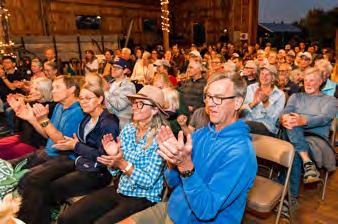
These principles matter now more than ever. In September, more than 750 students, instructors, staff, alumni, friends, and trustees gathered in Lander to celebrate six decades of leadership in wilderness education. As you’ll see in the pages of this magazine, there was much to celebrate. The shared meals and Faculty Rendezvous were characterized by broad, sun-dappled smiles and warm embraces as old friends reconnected. And whether it was presentations by Astronaut John Grunsfeld, legendary climber Alex Honnold and Black Diamond Equipment founder Peter Metcalf, or an evening of storytelling, you could feel the joy and laughter flowing, along with the shared belief that NOLS’s brightest chapters are ahead of us.
At the anniversary celebration, I posed a question to members of our community: What does the world most need now? The answer feels clear. The world needs more NOLS leaders, more people who can listen with empathy, navigate disagreement, work as a team, and make sound decisions when it matters most. These are not abstract skills. They are the habits of leaders who learn by doing, who make mistakes, who grow in real time surrounded by mountains, rivers, ice, and sky.
Every NOLS course is a reminder that leadership isn’t about power or position. It’s about awareness, humility, and courage. As Brené Brown, the researcher and author of Strong Ground reminds us, we must all dare to lead, to step forward with vulnerability and conviction, to show up when it’s hard, to do the brave thing even when no one is watching. That’s the kind of leadership the wilderness teaches.
This issue of The Leader captures a school on the move, a community with extraordinary momentum defined by remarkable student outcomes, increasing demand for our Wilderness Medicine offerings, record fundraising, new partnerships, rising demand, and an unwavering commitment to inclusion and risk management.
We also know this truth: our classrooms are wild places, and they need our care. The health of our planet is the foundation of everything we do. Protecting wilderness is not just part of our mission; it is what sustains it.
As we step into the next sixty years, I believe our best and most vital work is still ahead. Because what we find in the wilderness is not just beauty or challenge, it is a reflection of ourselves. And when we return, we bring that clarity home.
Thank you for believing in NOLS and in the power of the wild to teach, to test, and to transform.
Onward!
Sandy Colhoun President
By Kathryn Miles
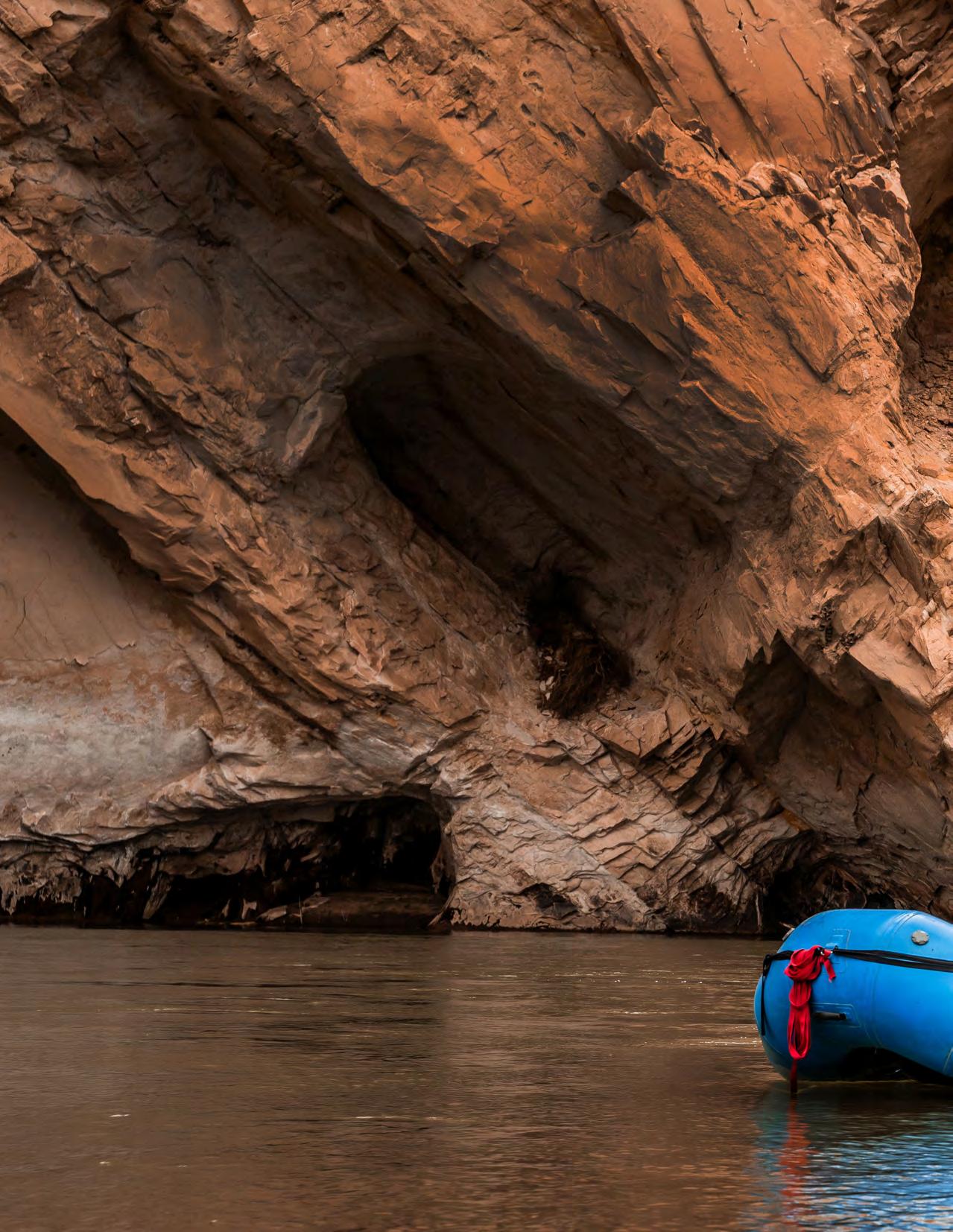
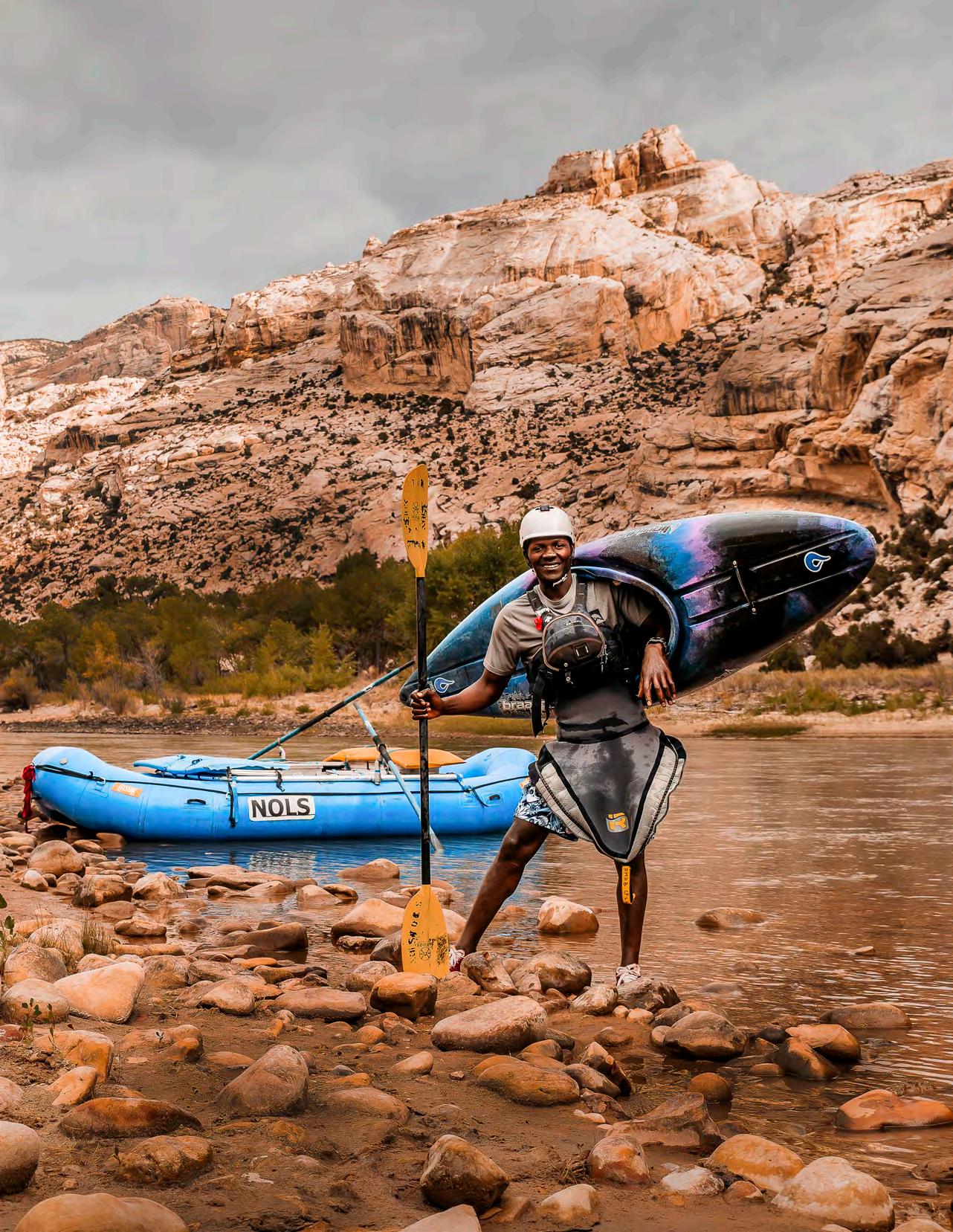
For NOLS instructor Elikisawsi “South” Osinde, whitewater is more than recreation—it’s in his DNA. Born in Jinja, Uganda, Osinde grew up on the banks of the White Nile, a gnarly branch of the world’s largest river. His father, a subsistence fisherman, so loved its rapids he became the first in their village to own a kayak.
That same whitewater claimed his father’s life in 1995, when South was two. Already struggling, the family faced greater hardship. And so despite his mother’s fears that the White Nile would take her son as well, Osinde turned to the river. By the time he was eight years old, he had already begun fishing to feed his family.
“Even if you still look very young, you grow up fast when you realize it’s up to you to find something to eat,” says South today. “Where I come from, finding food means finding yourself.”
For Osinde, 31, that meant finding the courage to paddle the same rapids that took his father. As he did, he befriended some of the region’s pioneering whitewater guides. That confluence of resilience, courage, and connection soon propelled him toward a lifelong commitment—to become one of the world’s best paddlers and one of Uganda’s most beloved outdoor ambassadors.
Uganda’s whitewater story began in 1996, when New Zealander Cam McLeay scouted eighty miles of rapids between Lakes Kyoga and Victoria. The Nile’s volume, gradient, and power eclipsed anything McLeay had before seen. Yet for all its force, the river was also remarkably forgiving—warm, deep, and runnable year-round. With steady equatorial weather and no flooding, it felt like the perfect paddling river.
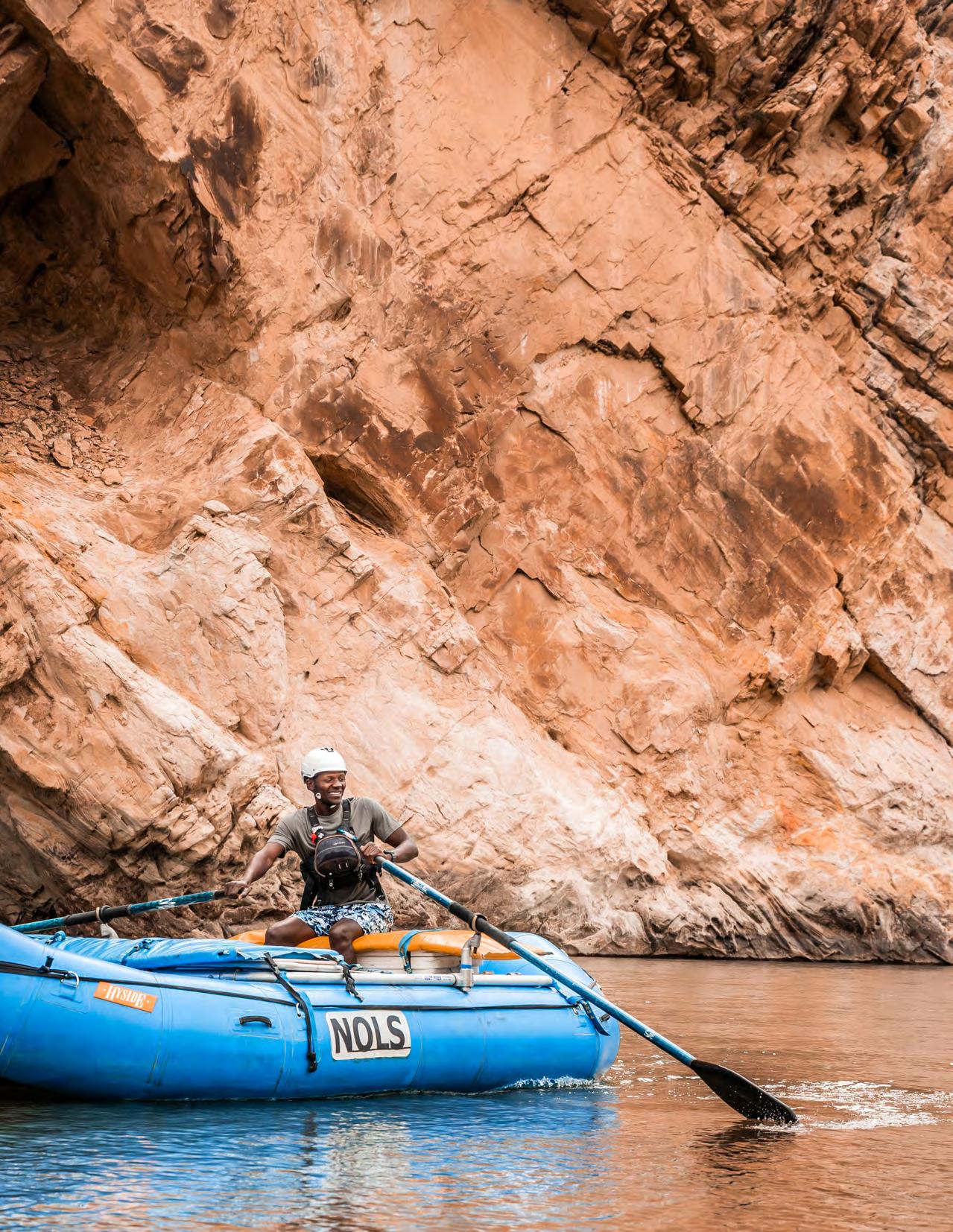
McLeay launched Adrift, Uganda’s first rafting company, and began training local guides, proving this stretch of river could anchor adventure tourism. Early trips showcased rapids like Overtime, Bujagali Falls, and The Nile Special— widely considered one of the world’s best waves.
Within a decade, Jinja had become a whitewater hub, bringing new jobs and prosperity.
“When we started the first commercial rafting operation in July 1996, there was virtually no employment in the area,” says McLeay. “From the outset, we deliberately chose to employ and empower staff from the local villages along the riverbanks.”
The trickle-down effect was immediate. Soon, local guides and support staff were opening bank accounts and investing in their communities. They set up family members in adjacent businesses, which further bolstered the local economy.
In that growing adventure market, South found his calling. South says that, while wealthier kids went to school, he and a friend spent mornings fishing, then ferried a battered canoe across the rapids. They’d hide near lunch stops used by rafting companies, waiting until tourists left to scavenge leftovers.
“We were naked, didn’t speak English, and were very shy,” says South. “Eventually, the guides decided it was easier to befriend us.”
The guides taught him English and kayaking. They outfitted him with used gear. Soon after, he says, they began inviting him on trips. And then they offered him a job.
By then, Uganda was a premier paddling destination.
Events like The Nile River Festival and Red Bull’s Unleashed drew top athletes. South was captivated.
“I saw how much fun kayakers were having,” he says. “I wanted to join them.”
As his skills grew, Osinde began teaching others. When an American from a local outing club wanted an instructor, a mutual friend suggested South. They brokered a trade— backpacking for kayaking—and became friends. When the American returned home, he urged South to apply as an instructor at NOLS.
South hoped to arrive in 2020, but the pandemic delayed him. Two years later, he flew to Vernal, Utah, for his NOLS Instructor Course.
“Everything felt new and intimidating,” says South. “But the NOLS community helped me feel comfortable right away. I soon felt like I was home.”
River Base Director Ana Didyk Souza immediately saw his gifts.
“His technical skills are remarkable,” she says. “But more importantly, South brings joy, kindness, and an open heart to every situation.”
That care was returned to him in kind. Soon after arriving at the River Base campus, says South, his mother was in a serious motorcycle accident. “It was the most challenging time of my life,” he says. “She broke her femur and was in tremendous pain.” To raise money for her surgery, he sold his kayak and gear. It wasn’t enough—so Souza and her team fundraised to help.
“Ana and the River Base team were my heroes,” says South. “The NOLS community supported me through every moment of my mom’s injury and recovery.”
They also encouraged his competitive rise. In 2023, Osinde won an event at The Nile River Festival. That same year, he represented Uganda at the ICF Freestyle World Championships in Georgia, the only African paddler competing.
“The best part of these competitions is that you get connected with people all over the world,” says South. “You share skills. You support one another.”
Since then, Osinde has taught more than twenty courses across the River Base, Teton Valley, Rocky Mountain, and East Africa campuses.
“Every time I teach, I learn,” he says. “The NOLS community makes me better.”
Back in his native Uganda, Osinde dreams of becoming the first paddler to bring home a world kayaking championship. It’s an ambition made more challenging each year.
By global economic metrics, Uganda is one of the poorest countries in the world. Without sponsorship, paddlers there lack the capital needed to travel and train for major competitions. In 2015, members of the newly formed Uganda Freestyle Kayak Team made history as the nation’s first competitors at the ICF Freestyle World Championships, a milestone made possible only because of grassroots crowdfunding. Since then, the team has consistently struggled to raise necessary funds. South says that, this past summer, he was once again invited to compete at the world championships. Financial constraints prevented him from attending.
“South’s curiosity and eagerness to learn stand out. He has strong observational skills, especially when it comes to group dynamics. He is honest and transparent with both the instructor team and students, and he holds respect as a core value. His care for the well-being of others is evident in everything he does.”
- ANA DIDYK SOUZA NOLS River Base Director
Ana Didyk Souza and South Osinde first met during his NOLS instructor course in 2022. Since then, they’ve become close colleagues and friends, both on the river and back at the River Base campus. “Ana has supported me in so many ways,” says South. “She’s the best kind of mentor.”
Meanwhile, threats to the White Nile have gutted the local outdoor economy. Two controversial hydroelectric dams—Bujagali (2012) and Isimba (2019)—flooded much of the world-famous whitewater and displaced hundreds of Ugandans.
“The dams destroyed the best whitewater I’ve ever seen,” says McLeay. “The Nile rafting scene is now a shadow of its former self.”
International paddling legends like McLeay have tried to help by placing islands in conservation easements, but he says it’s a Band-Aid fix on a much larger problem.
“Without better and more consistent environmental policy, the river’s future remains fragile,” says McLeay. “And so are the local economies that have come to depend upon it.”
South Osinde agrees. He’d like to see more protections for the fragile ecosystems—both natural and built—that rely upon rivers like the White Nile. He believes the kind of leadership taught at NOLS is key.
“One of the things I most love about NOLS is feedback,” he says. “I want to export it back to Uganda and our policymaking there. That kind of leadership has the power to change people’s lives.”
He dreams of a Uganda where management of the Nile is truly sustainable, where local culture can thrive and where the next generation of paddlers can learn on the same waves that first taught him courage.
“The river took my father, but it also gave me everything I am,” says Osinde. “We need to offer it the same generosity it has given to people like me.”
CAMPUS SPOTLIGHT
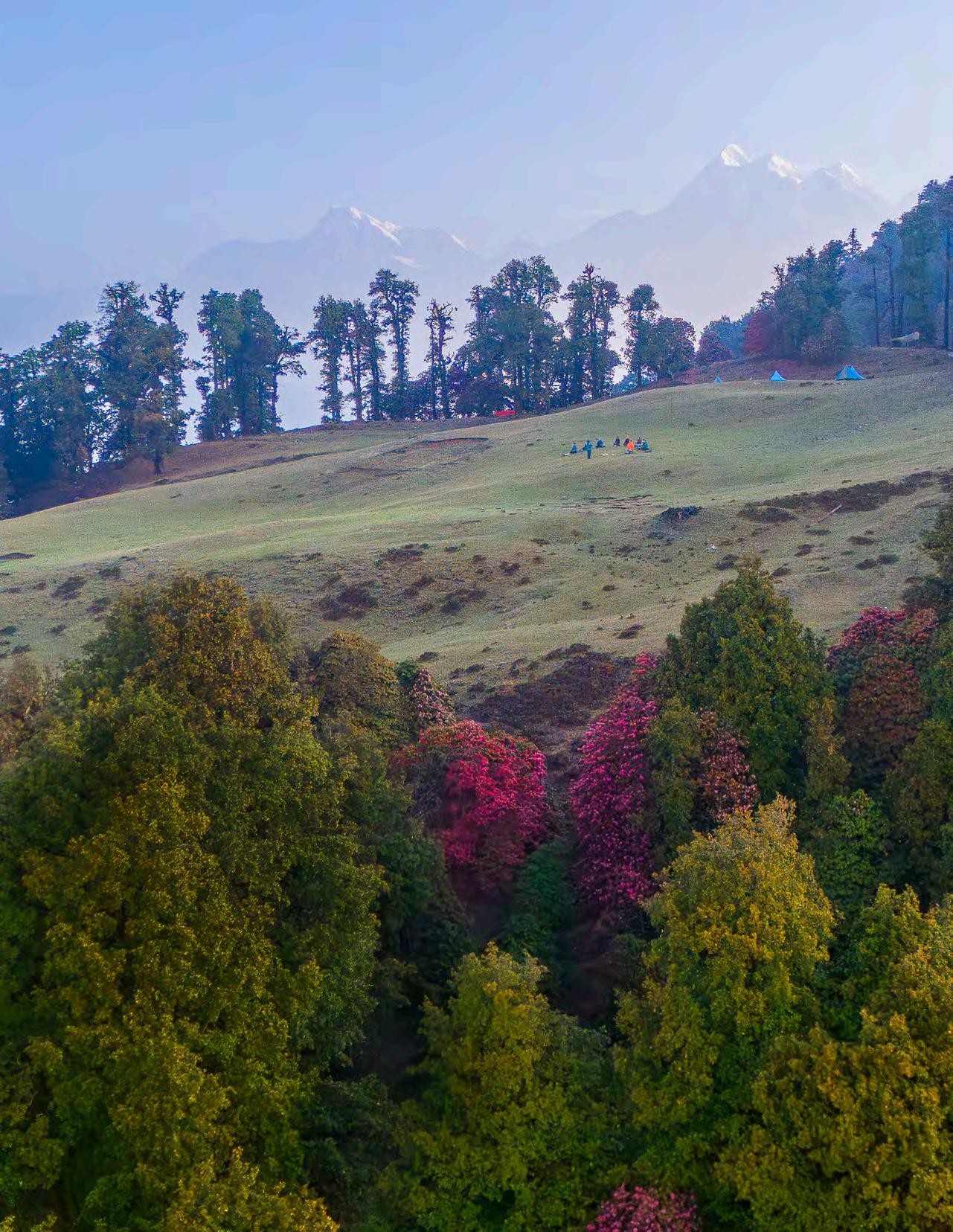
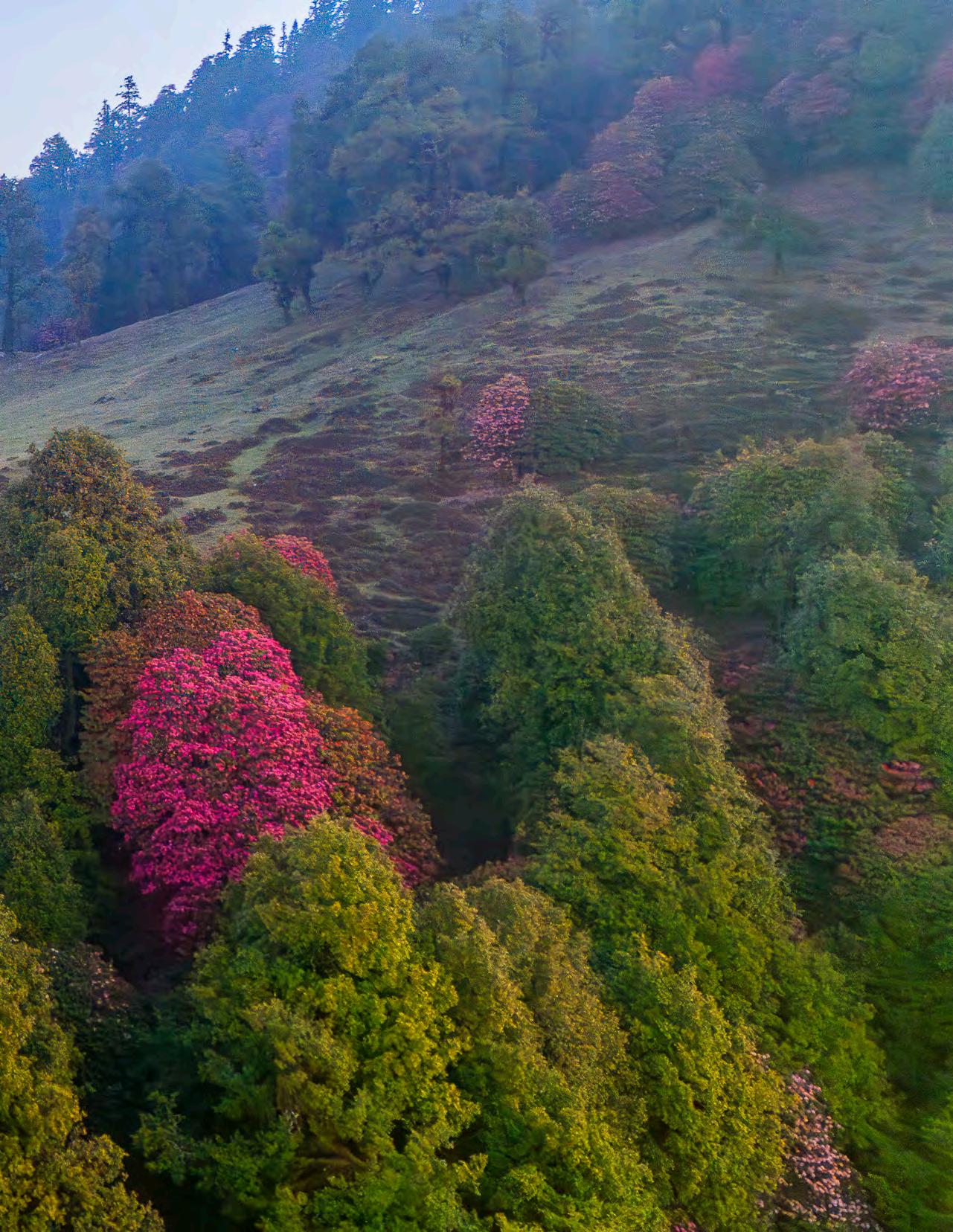
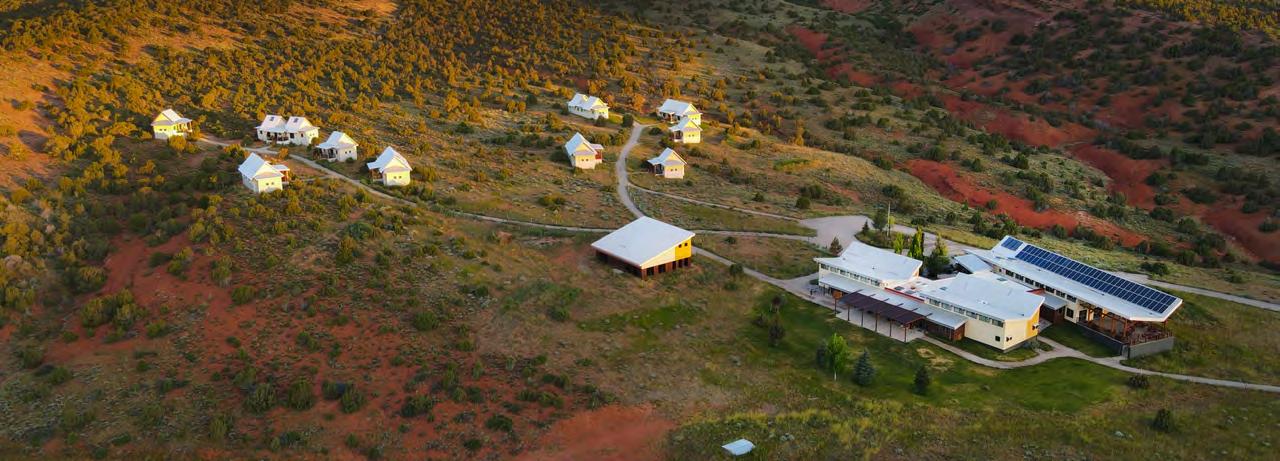
In 2001, and after a decade of expeditions across the Himalayas, NOLS opened its India campus. The multibuilding complex sits in the shadow of Nanda Devi, a 26,000-foot peak and UNESCO World Heritage Site. From their dorms, students look out over a wide swath of the Greater Himalayas, stretching from the Kumaon region into western Nepal. That view is just the beginning. Expeditions include mountaineering and backpacking, along with rafting on the River Kali, one of India’s most pristine—and culturally significant—rivers. Along the way, participants experience a wide variety of built and natural environments, from the thrum of Delhi, to the quiet lushness of the Corbett Tiger Reserve, where sightings of both tigers and elephants are common. Expedition students also experience homestays in remote mountain villages like Majkali.
“Students have a nonstop smile while they are there,” says Ravi Kumar, Campus Director. “They experience a local
economy based not on the GDP or the World Bank, but on happiness. That, along with the grandeur of the landscape and our rich biodiversity, is the best concoction for a totally mindblowing, wow-inducing experience.”
In addition to traditional expedition courses, NOLS India also offers subsidized educational opportunities for India’s outdoor educators as well as a variety of wilderness medicine courses, which are heavily subscribed by Indian healthcare professionals as well.
“Thanks to the generosity of donors, NOLS is able to contribute to India’s outdoor education and recreation industries in very significant ways,” says Ravi.
That kind of outreach, he says, will help ensure that future cohorts of students and travelers will have even greater access to the rich environmental and cultural opportunities the Himalayas have to offer.
80%: Number of Indian graduates who get jobs in the field after graduation
18,000 feet: Highest elevation reached during mountaineering course
7: Average number of languages spoken by staff
Animals seen on expeditions: Bengal tiger, fox, black panther, Indian elephant, Himalayan black bear, Himalayan tahr, bharal (blue sheep), and barking deer
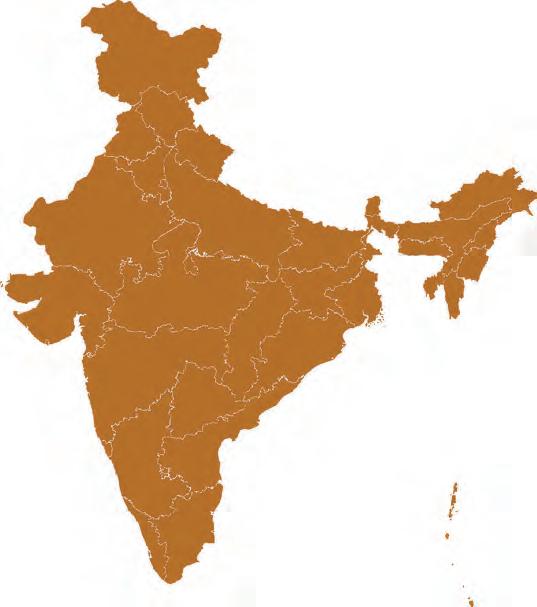
Location: Almora District, Uttarahkand
Elevation: 6,132 feet
Certifications offered: WEMT, EMT, CPR, WFA, WFR
“We’re not just teaching wilderness skills; we’re teaching compassion and humility. Students at NOLS India build personal resilience, grounding, and a larger sense of purpose. That is the true skillset for new leadership, and it’s one we all need.”
– RAVI KUMAR, NOLS India Campus Director
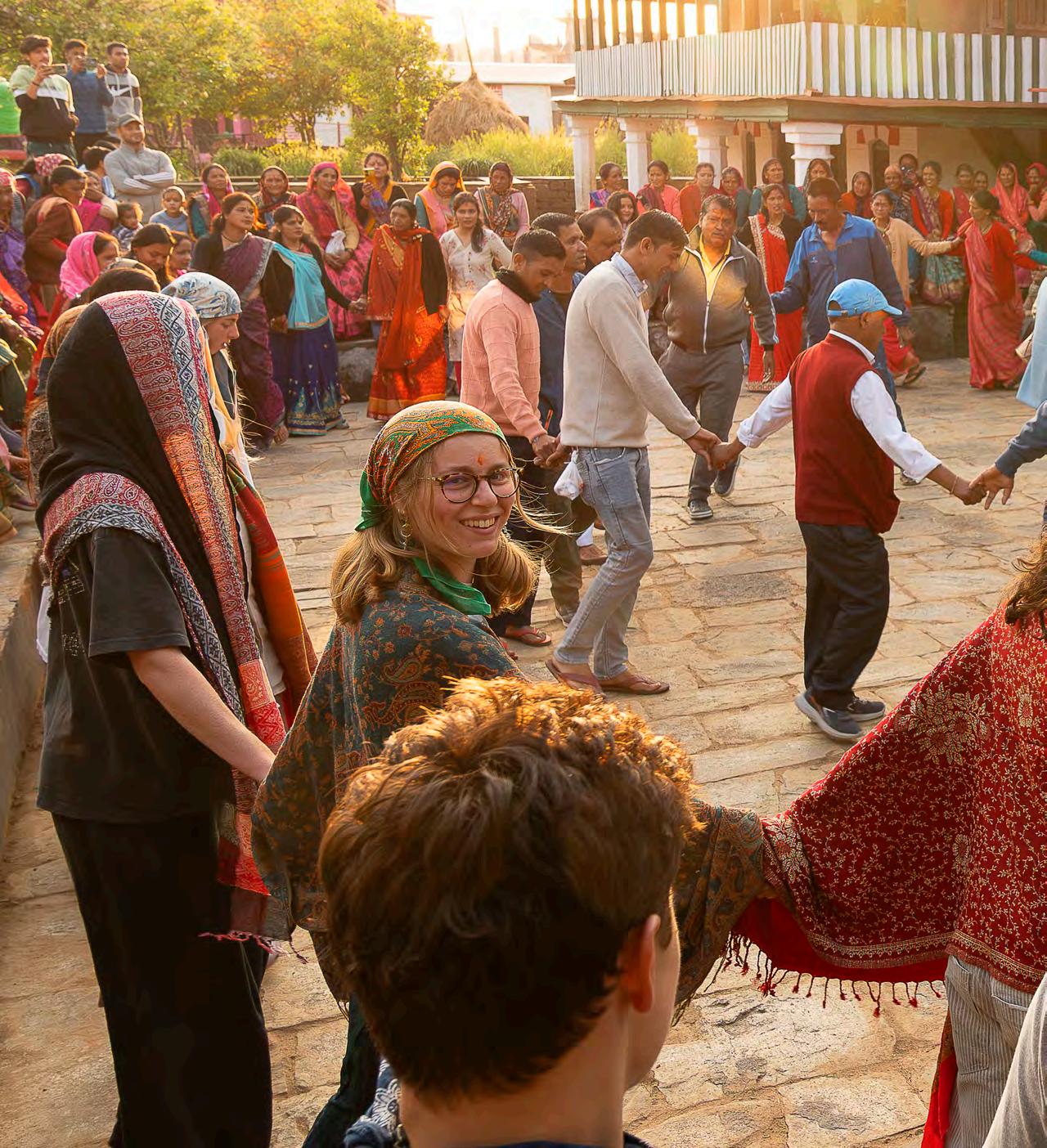
Recent expedition students arrived in the village of Majakali at the start of a spring harvest festival. Their homestay families donated traditional clothing so that the students could fully participate in the celebration.
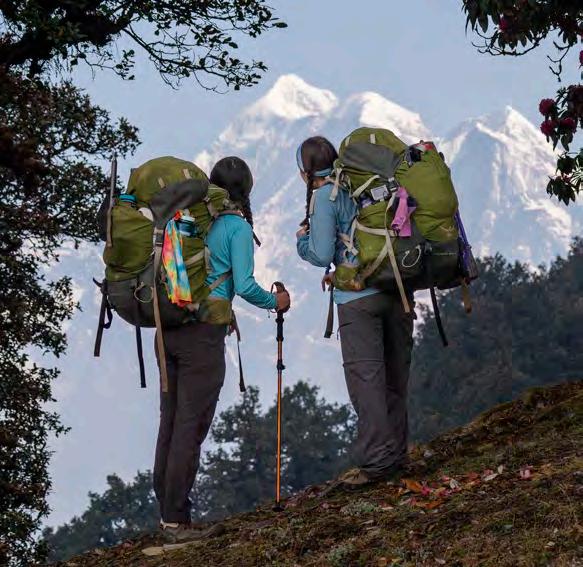
Backpacking in the Great Himalayas offers stunning views of some of the earth’s highest mountains, including the Trisul (or Trishul) peaks, said to resemble the trident of Shiva, one of Hinduism’s principle deities.
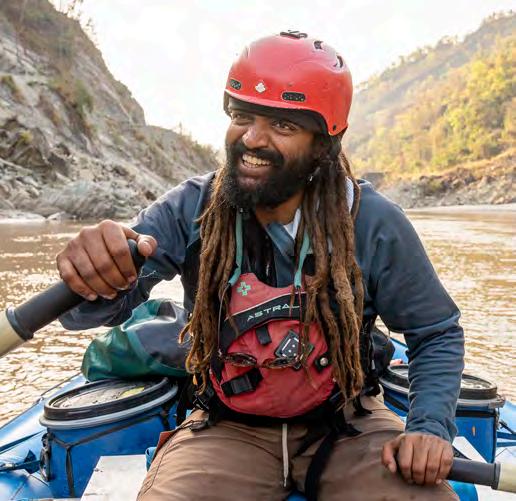
Instructor Varun Kamat pilots a raft down the Kali River, which borders India and Nepal. Whitewater trips typically last 15 days. While camping on the river banks, it’s not uncommon to see wildlife including leopards and the white-bellied heron, a critically endangered species.
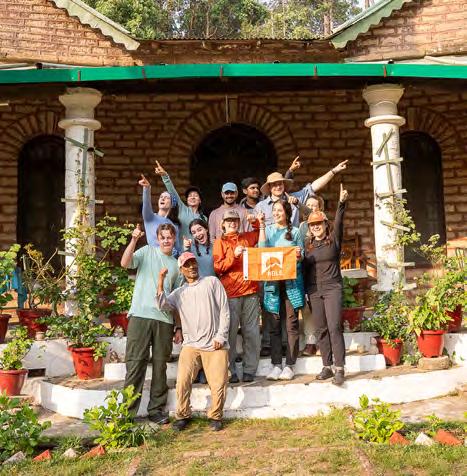
India campus.
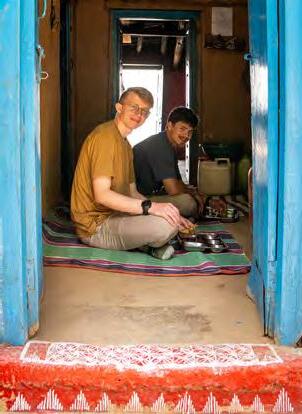
Learning about the regional landscape through its foodways and the ritual of a meal.
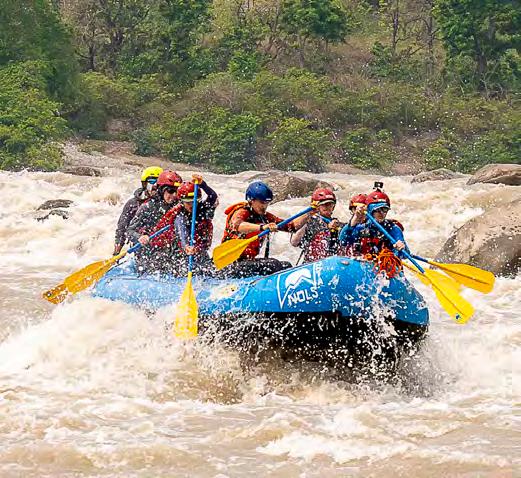
Navigating Chuka, one of the Kali’s largest— and most legendary— rapids.
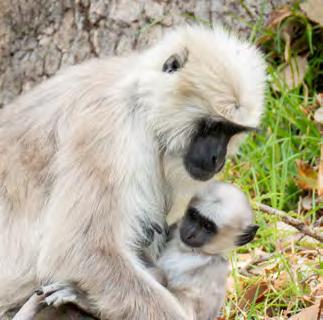
Ten different species of langur monkeys call the Himalayas home. Gregarious leaf eaters, they are a favorite of many expedition students.
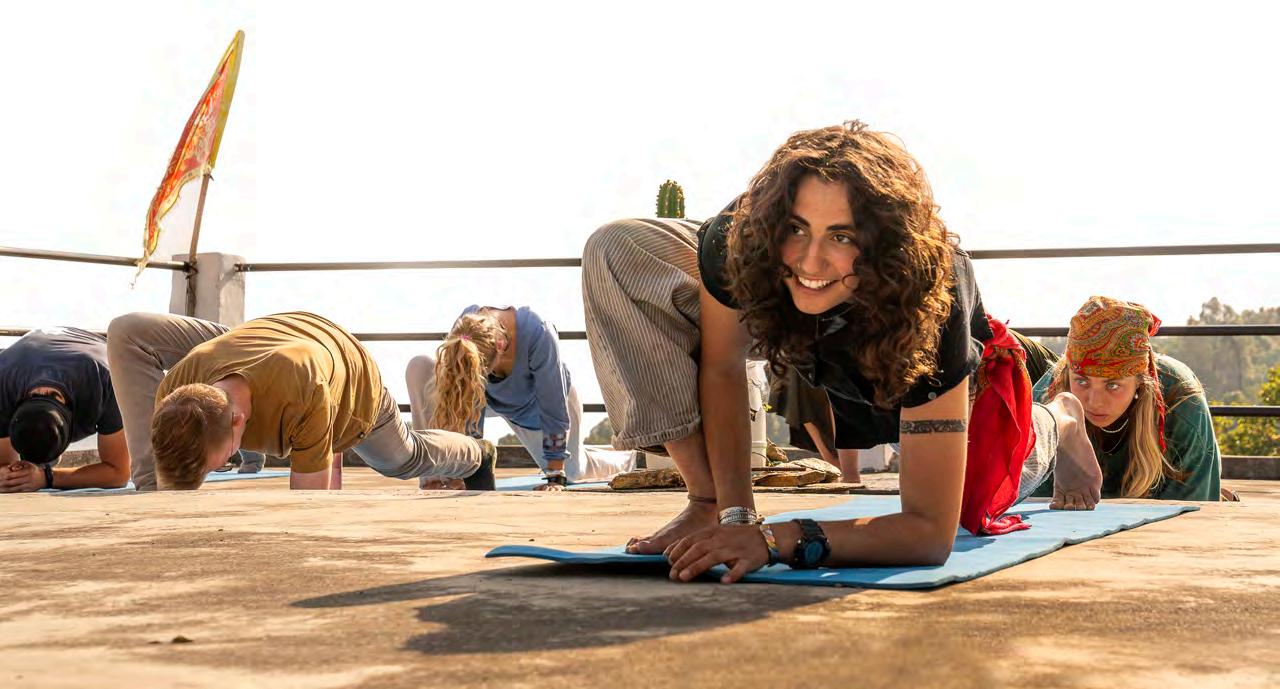
During the cultural section of a semester-long course, students practiced yoga on the roof of their homestay accommodations.
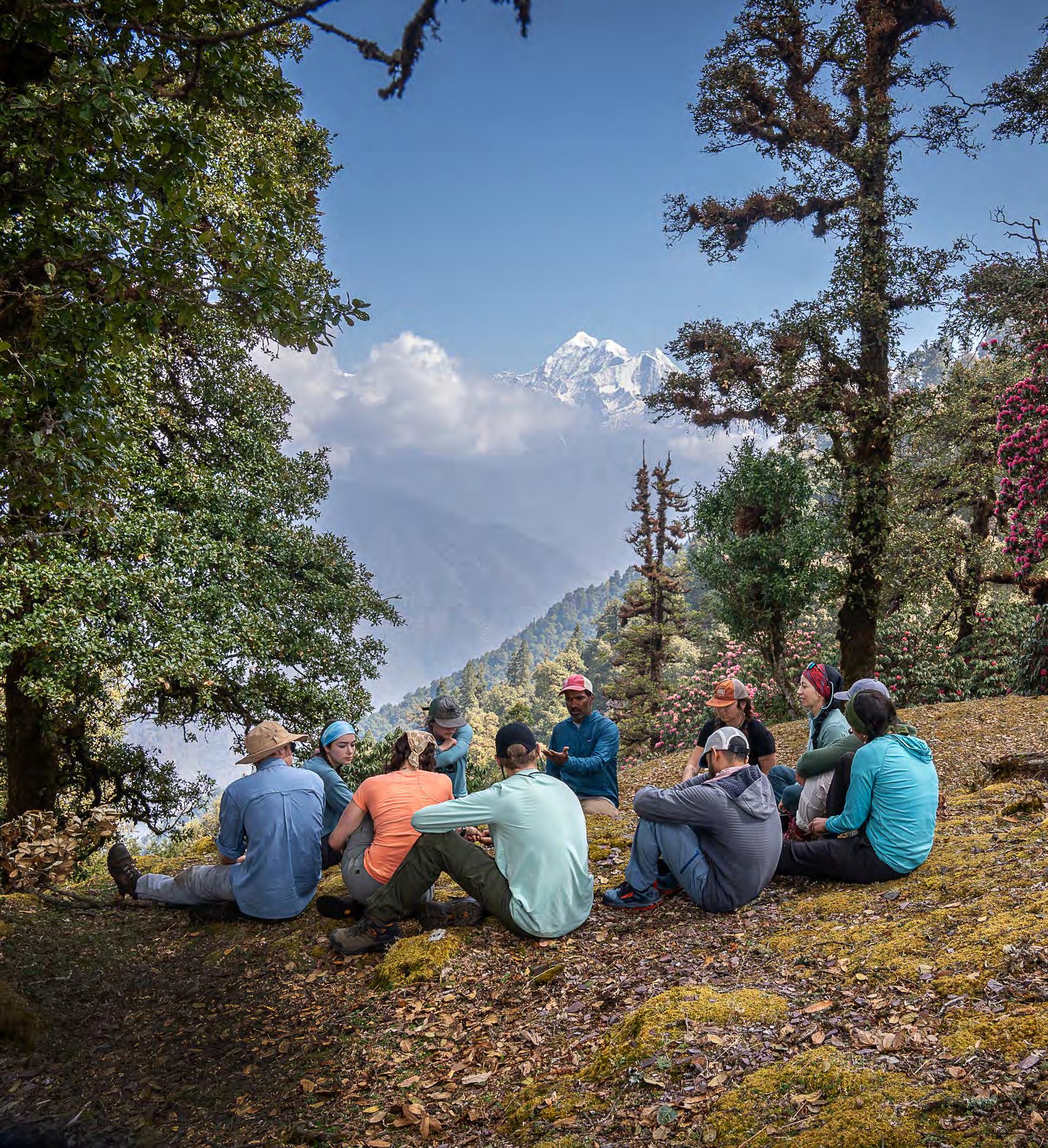
Instructor Prani Manchaiah teaches students about the unique ecosystem of the
Himalayas, located in northern India.
By Kathryn Miles
In the remote wilds of Chilean Patagonia, a small group of gauchos and one photographer set out to relive a centuryold journey along the Baker River—a forgotten trade route that once helped shape the southern frontier of a nation.
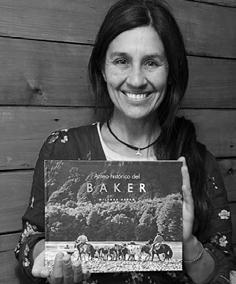
For Milenka Heran, the photographer and author of Arreo Histórico del Baker, the journey was the culmination of two decades spent apprenticing herself to the folkways of traditional Patagonian farmers and ranchers.
“I’ve always had a passion for remote people and far-away places,” says Milenka. “I really value their commitment to a simpler, more sustainable life.”
A graphic designer at the Catholic University of Chile and instructor of NOLS Wilderness Medicine, Heran took her first NOLS course as an undergraduate.
“It really changed my life in every way,” she says today.
That course also inspired her to become an instructor for NOLS. During early expeditions, Milenka saw the inspiration her students found by spending time with
pobladores (homesteaders of the remote Patagonian ranchlands). She began spending her free time in those same remote locations, learning poblador folkways and documenting their lives.
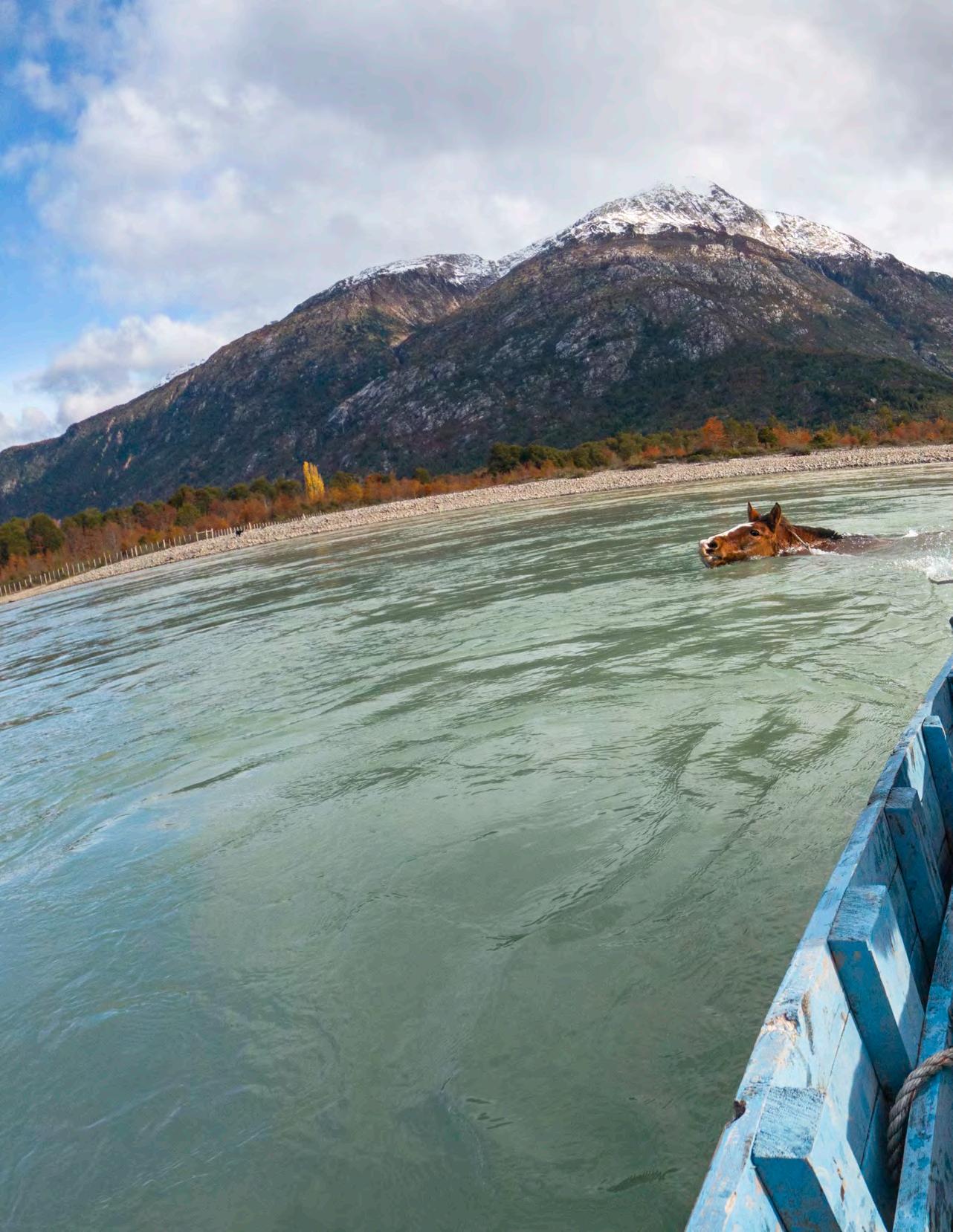
It was there she also learned about the historic Baker Route. Traversed primarily by gauchos on horseback, the strategic corridor stretched 220 kilometers through some of South America’s most formidable terrain, linking inland settlements to a port on the river’s mouth.
Inspired by the 1922 photographs of E. Lucas Bridges, an Anglo-Argentine explorer and cattleman who documented a mule-driven wool caravan moving through the Baker Range, she committed to retracing the steps of that caravan a century later.
“Other than those early photographs, I couldn’t learn much more about the history of the Baker Route,” says Milenka. “The culture that once relied upon it is quickly disappearing. The idea that their history might be lost as well made this feel like an especially important mission.”
“Milenka has a unique ability to genuinely portray the closeness and warmth of people who live surrounded by wild nature. That work has led her to forge authentic connections with many people from distant and remote territories, including families who have hosted many of our NOLS Patagonia students over the past 35 years. It’s been wonderful to see the recognition she has received from her peers, colleagues, and the entire NOLS community.”
– FRANCISCO JOSE VIO GIACAMAN, NOLS Patagonia Campus Director
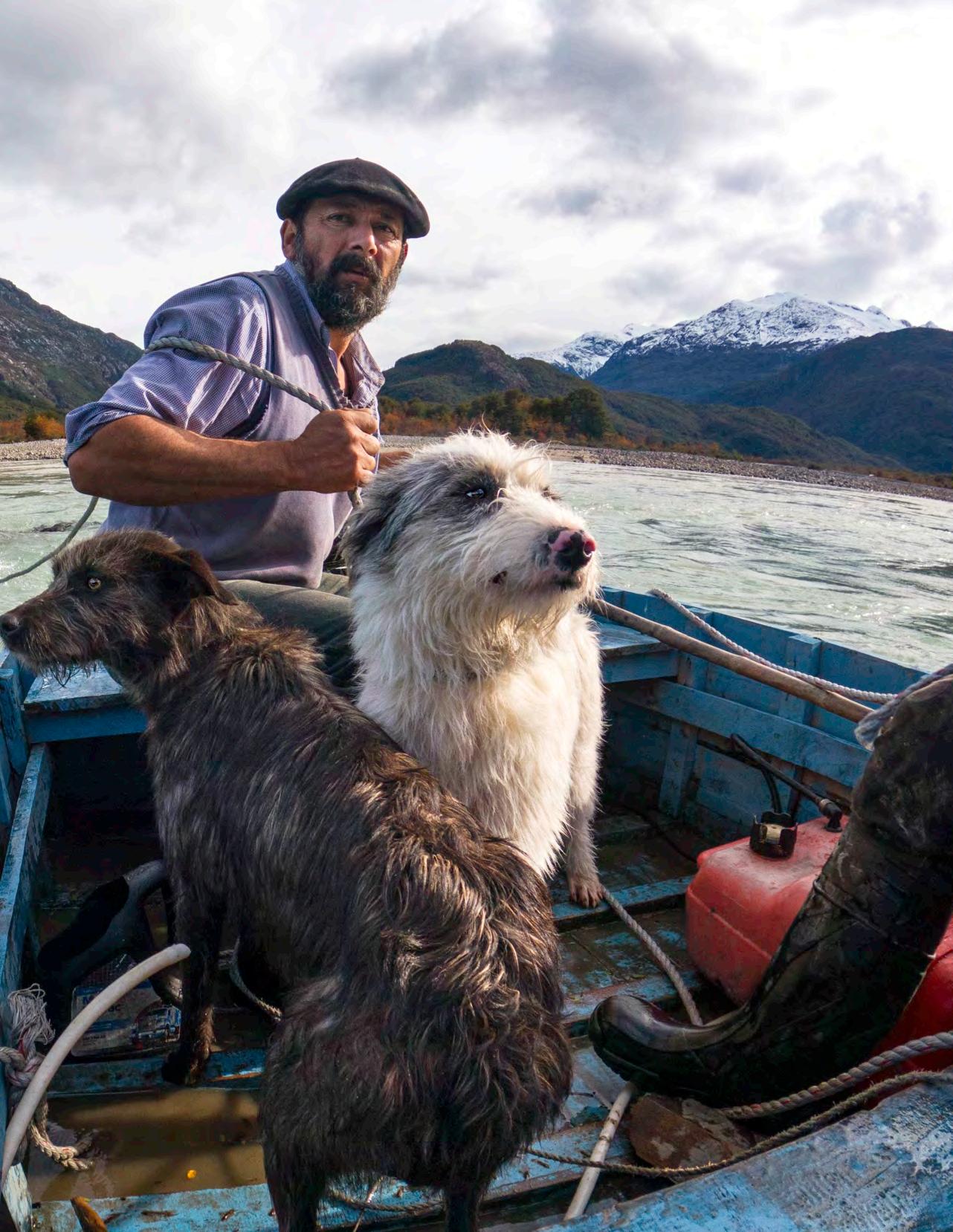
To complete the project, she enlisted the help and expertise of three local gauchos, including Lautaro Arratia, who had delivered NOLS expedition rations for many years.
“Lautaro was invested,” says Milenka. “He really values the older way of life, and he wanted to make sure we did everything the traditional way. Our project gained a lot because of his care.”
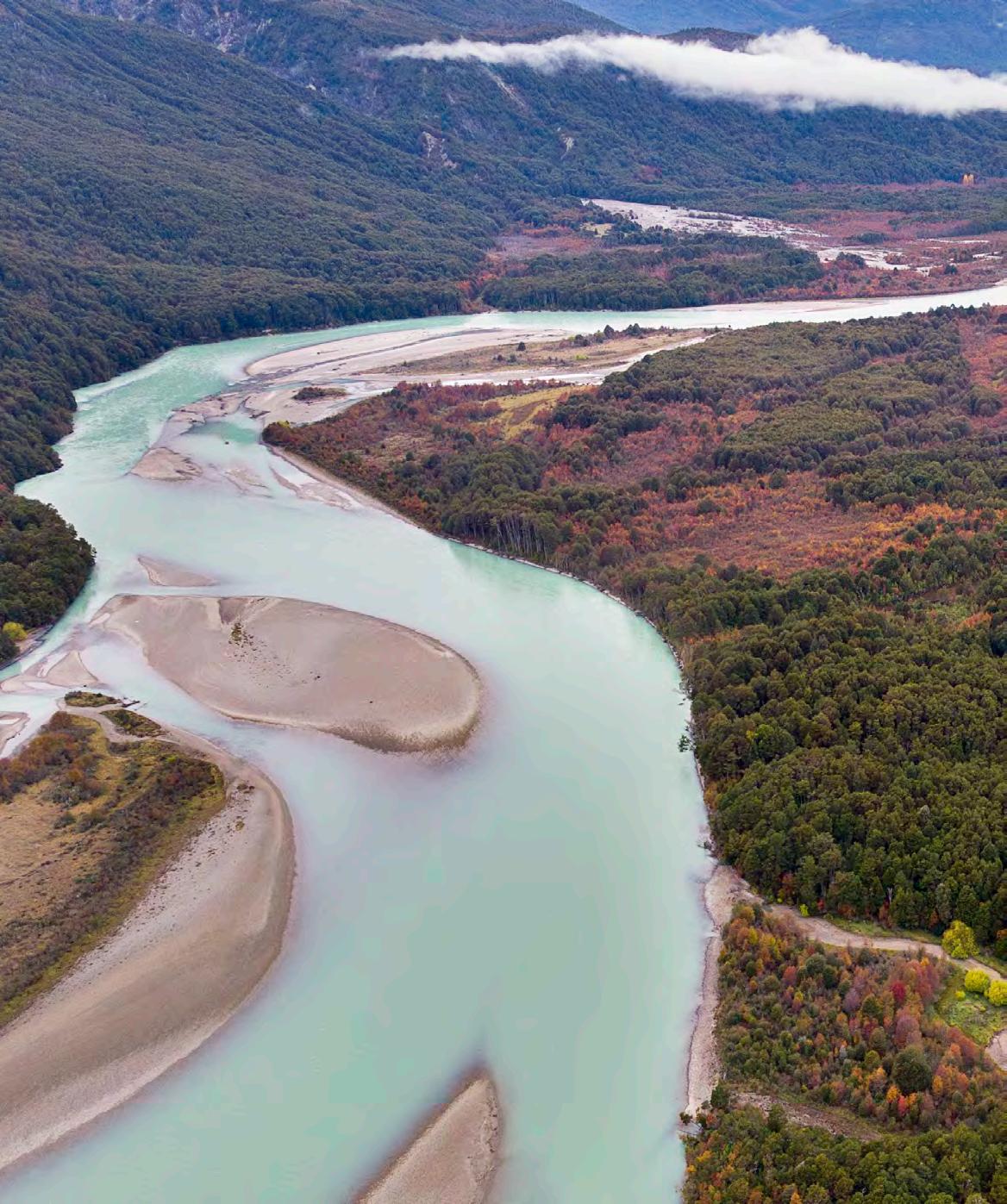
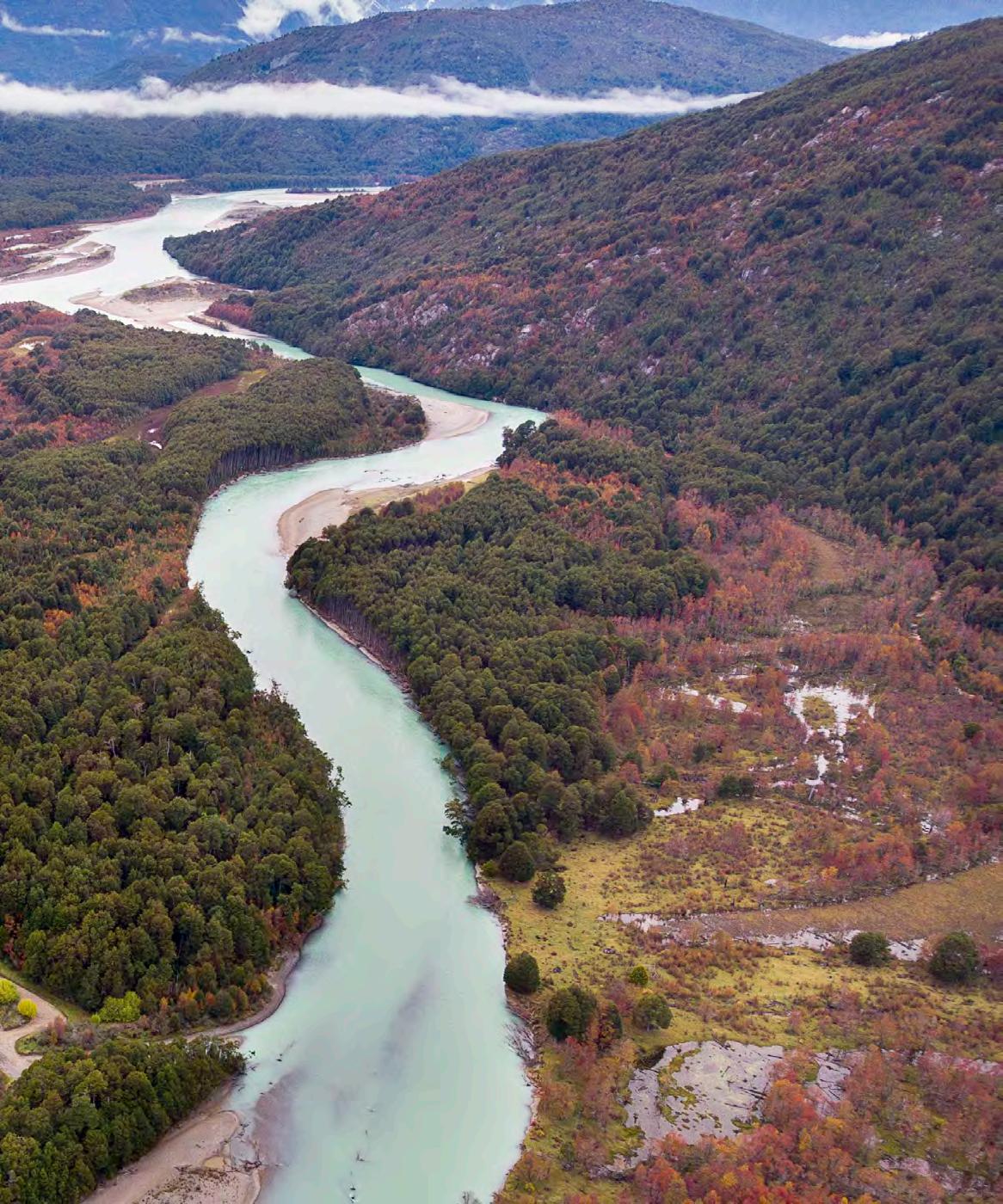
Glacial fed, the Baker River is one of Patagonia’s largest watersheds and most vital freshwater resources. Its waters are known for their dangerous currents and daunting waterfalls. Beginning in the early 1900s, the Baker trade route followed and crisscrossed this river: gauchos brought their wool and cattle west; groceries and supplies came east. To bypass an especially dangerous section of the Baker, the Chilean government built the Paso San Carlos—a narrow trail blasted into a sheer cliff high above the river. For decades, it was a vital artery for frontier life.
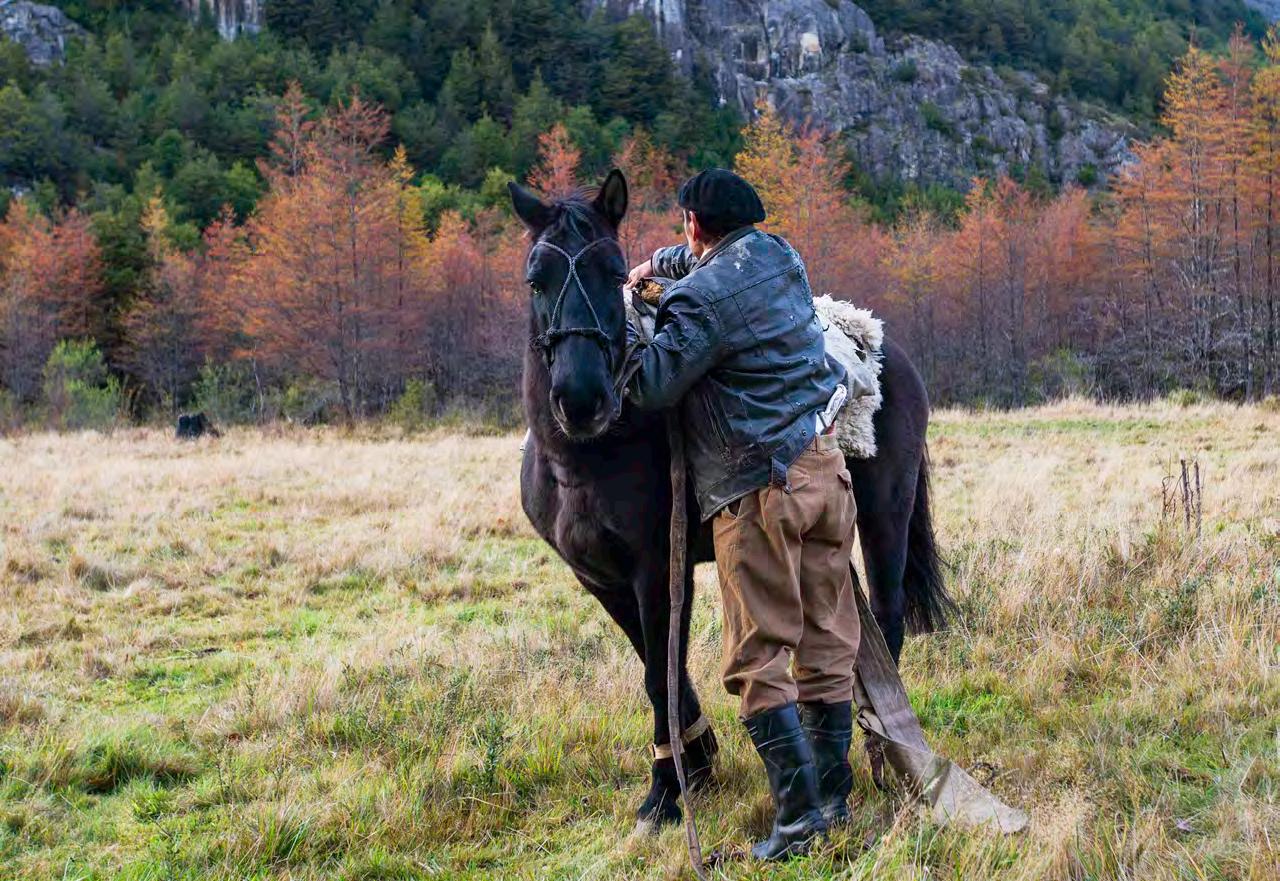
Preparation to recreate this route was an expedition in itself. Horses were lassoed and trained, some after years without a rider. The gauchos handcrafted reins, saddles, and chiguas—traditional leather-and-wire frames used to carry goods. They butchered a sheep and assembled a small herd of cattle for the journey
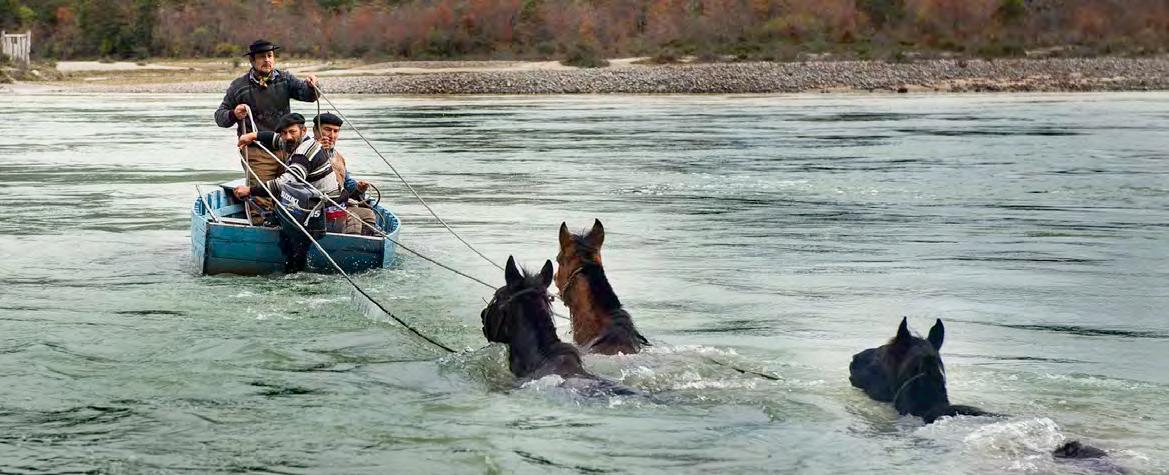
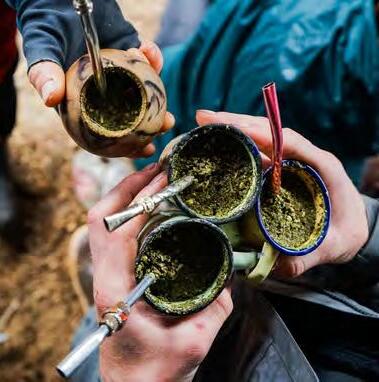
The expedition set off in May—the cusp of Patagonian winter. Most mornings began before dawn, sipping mate around a fire. Meals were simple: fire roasted mutton and torta frita, a traditional Patagonian frybread kneaded on sheepskin and deep fried in cow fat. After breakfast, the team groomed their horses and packed their loads. Then, they spent their remaining daylight hours navigating forests, cliffs, and river crossings. The current was so strong that timing and teamwork were essential—if misjudged, the animals would drift far off course or never make it across.
Even more harrowing was the San Carlos pass. The precipitous trail remains as precarious today as it was
a century ago. There, the team was forced to dismount, unload the chiguas, and carry their loads by hand. Even the cattle were guided carefully through the pass, their hooves just inches from its edge.
“It’s not just physically challenging,” says Milenka today. “It’s emotional. You feel the weight of history on that trail. And when you look down into the river gorge, you realize how much people risked to build lives there.”
By the end of their journey, Milenka had amassed over 7,000 photographs, along with a detailed understanding of the Baker Route and its history. After three months of editing, she published her photography book online. But Lautaro and the remaining settlers couldn’t access it—no internet, no computers. She returned with her laptop and shared the photos personally. Still, she knew more could be done. So she applied for funding to create a printed book that could be given to surviving families and published to educate others.
The project—entitled Arreo Histórico del Baker represents a bridge between generations and cultures— and a model for how immersive, experiential education can foster connection.
“So many NOLS students arrive in Patagonia tethered to their screens and not knowing where their food comes from,” says Heran. “Then they spend time with people who value simplicity, who plant when it’s time to plant and rest when it’s time to rest. It expands their vision.”
Many students, she says, return to these fading communities after their course, eager to reunite with their host families. Some have even brought their own families back with them.
“That kind of experience nurtures students culturally and ethically,” Milenka adds. “It shows them what can be gained when we value rhythm, patience, and place.”
Milenka Heran is a senior Wilderness Medicine instructor and photographer for NOLS. The Leader readers are invited to download the free digital edition of Arreo Histórico del Baker at www.pobladoresaustrales.com. To purchase the printed book, contact Milenka Heran at milenkaheran@gmail.com.
To celebrate the 60th anniversary of NOLS, we began collecting some of the many things to love about NOLS. This special feature highlights just a small fraction of what you shared. Far from a ranked list, this collection pays homage to the many facets and faces of NOLS.

People aren’t just the special sauce at NOLS; you are at the heart of everything we do.
The NOLS community are leaders at home and in the field: ambassadors and astronauts; educators and executives; pastors and paramedics, all dedicated to the greater good, to building a better future for all.
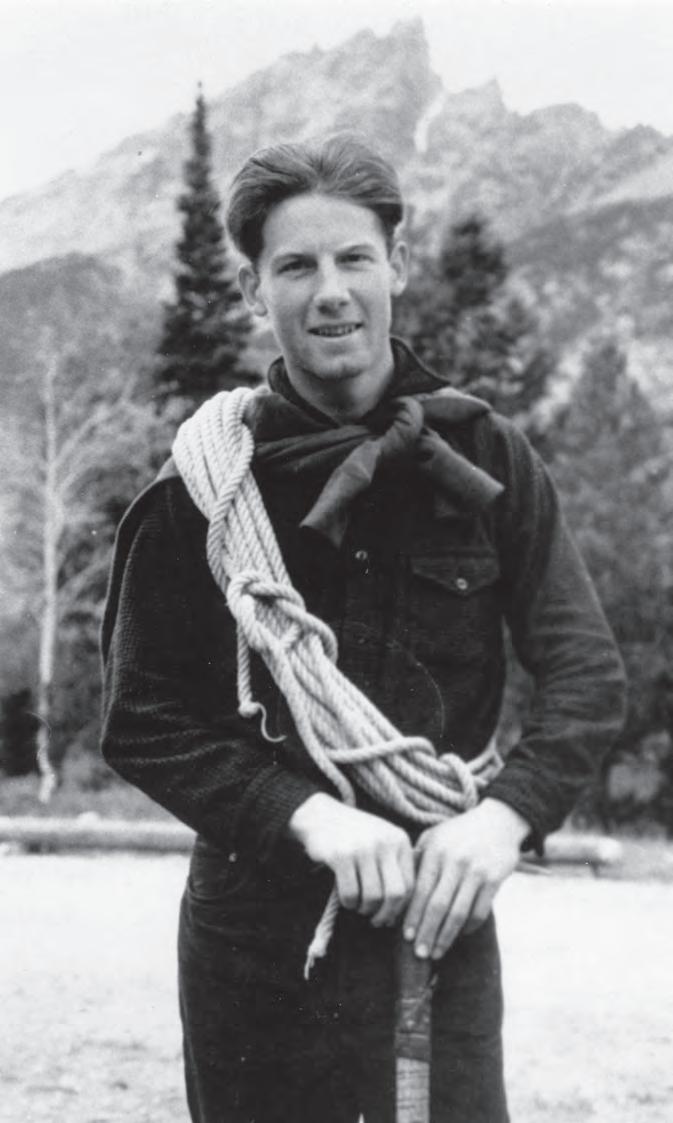
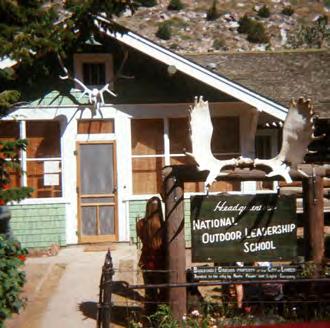
Our school began in a small cabin in Sinks Canyon, Wyoming in 1965 as the National Outdoor Leadership School. At that time, we were primarily an outdoor skills school, doing our work in local mountain ranges and exploring what it meant to teach leadership in the backcountry.
Paul’s vision, birthed to reality by Rob Hellyer’s organizational skills and know-how, created a school that changed lives and created people with the knowledge, competence, and confidence to safely equip and lead a mountain expedition on their own.”
- Neil Short, Attorney
NOLS 1970 Alum, Former NOLS Instructor, and NOLS Board of Trustees Member
“I never dreamed that the silence from my email, Facebook, and cell phone would be so refreshing or that the enjoyment of sitting and talking with strangers and slowly learning each and every one of their stories could be so pleasurable.”
Conor Sullivan
“NOLS teaches people how to save lives, especially our own.”
- Tori Murden McClure
World Record Holding Explorer, NOLS 1985 Alum, NOLS Former Board of Trustees and Advisory Council Member

“NOLS gave me confidence to share my love of exploring with my friends, family and colleagues-both on and off the planet.”
- John Grunsfeld Physicist, former U.S. Astronaut, NOLS Board of Trustees Member, and NOLS 1974 Alum
"Of all that I learned in the Wind River Mountains, the most important was the value of being present.”
- Zelle Richardson NOLS 2014 Alum
“Life in the Himalayan mountains is simple and hard. You have to bring your house with you, carry your food, find your own bathroom and soon you start to forget all the things you called problems at home: these simple but deep lessons need to be lived for people to understand.”
- Alexandre Alvares NOLS India 2013 Alum
10
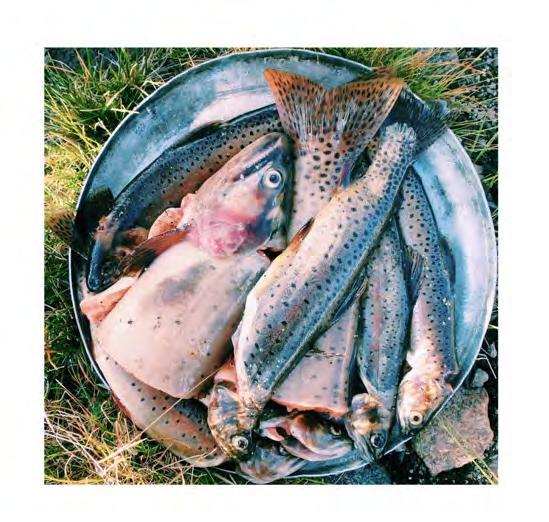
“Learning to fly fish, catching large cutthroat trout, and mastering dutch oven bread baking in a frying pan on the coals.”
- Peter Metcalf
Co-founder, President and CEO of Black Diamond, and NOLS 1971 Alum
58
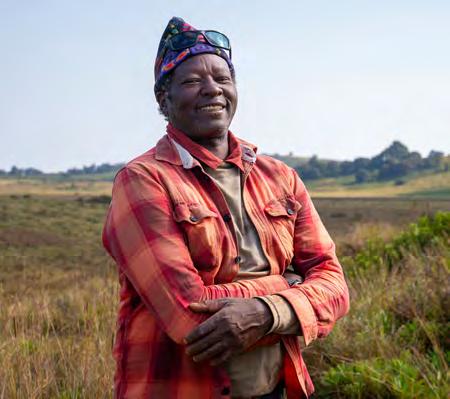
“Sharing the NOLS experience with generations that follow.”
A NOLS course is the one place i see the great progress of students becoming better people in a very short amount oF time.”
- James Kagambi (K.G.)
NOLS Senior Instructor with nearly 1,000 weeks in the field
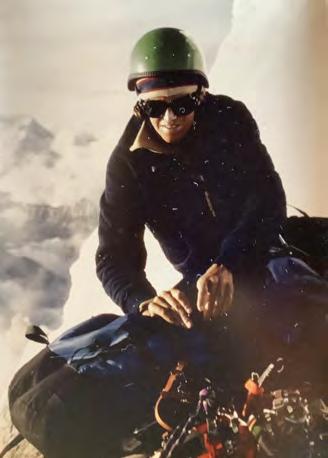
-Doug Luke CEO, HL Capital Inc., NOLS Board of Trustees Emeritus, Former NOLS Advisory Council Member, NOLS 2002 Alum, and NOLS Parent NOLS graduates have one of the highest pass rates on the National EMT exam 14 12 NOLS 1974 Alum, Longtime instructor, and Member of the 1980 American Women’s Expedition to Dhaulighiri
“NOLS taught me how happy I could be living out of a 4x4x4 locker in the basement of the Noble Hotel for nearly 20 years.”
- Lucy Smith
16
“The lessons of economy of energy, along with an appreciation for teammates and our environment have always been my NOLS guiding star.”
- Jim Steinbaugh NOLS 1973 Alum, US Navy retired
4+7+1
LEADERSHIP MODEL
“On my NOLS trip, we lived by the rules: Safety of the individual and the group. Care and preservation of the equipment. Care and preservation of the environment.” 17
– Steve Goryl
“NOLS changed the trajectory of my life, and I have been living in and protecting the outdoor world ever since.”
-
Phil Powers Former NOLS instructor, author, and former CEO of the American Alpine Club

“You leave NOLS ready to find new challenges in many activities. You can plan a trip, know how to execute your plan, and have fun doing it.”
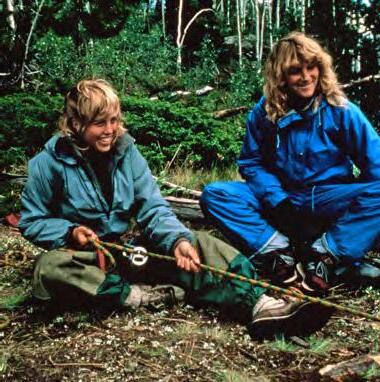
- Mary Jo Newbury NOLS 1970 Alum, NOLS Former Instructor, and Former Co-director of NOLS East Africa and NOLS Pacific Northwest 27 An education in empathy
“More than ever, the world needs empathetic leaders. NOLS teaches the importance of working together with people who think and look differently than we do, the ability to solve problems together, and the importance of living and laughing together.”
- Marc Randolph
Co-founder and first CEO of Netflix, NOLS Board of Trustee Member, and NOLS 1972 Alum
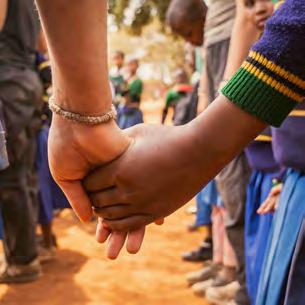
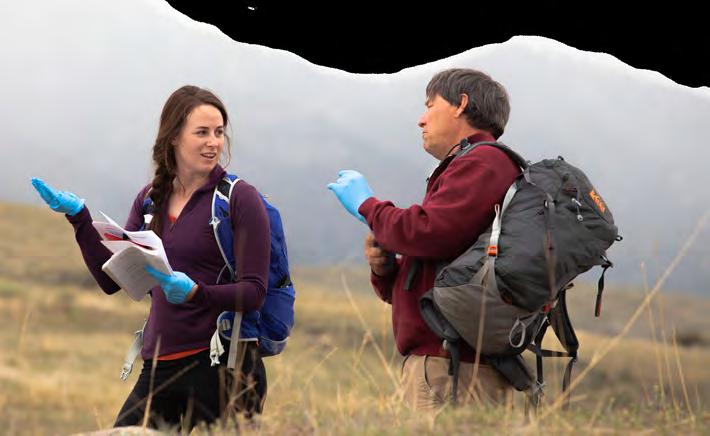
Students worked alongside East African instructors, Maasai hikers, and faculty from Wyoming colleges to design and implement their own research studies on the slopes of Mt. Kilimanjaro and in Maasai Land in northern Tanzania.
30 Tanzania Scientific Research Expedition
“My family jokes that I am now forever camping. I’m content with what is on hand; eager to work with what is available. Leave No Waste.”
- Patty Nicholas Trautman
Member of the first female NOLS expedition
Beginning of partnership between the U.S. Forest Service and NOLS to create national "Leave No Trace" standards.
ALL THOSE WILDERNESS MEDICINE ACRONYMS: MOI, PAS, ABCDE, CSM, LOR, SAMPLE, VS, CPR, SOAP, PLB, AVPU, BEAM, CVA, FSA, GSUs, ICP, HR, RR, BP, OPQRST, NSAID, OTC, PFA, RX, HX, SCTM, SOB, SPF, TIA, ToSTOP
"As a scholarship student at NOLS Patagonia, I experienced a life-changing experience. Since becoming an employee, I have seen how our courses, along with the guidance, dedication and professionalism from our instructors, can change and transform how our students see the world and how they can become better leaders for our society."
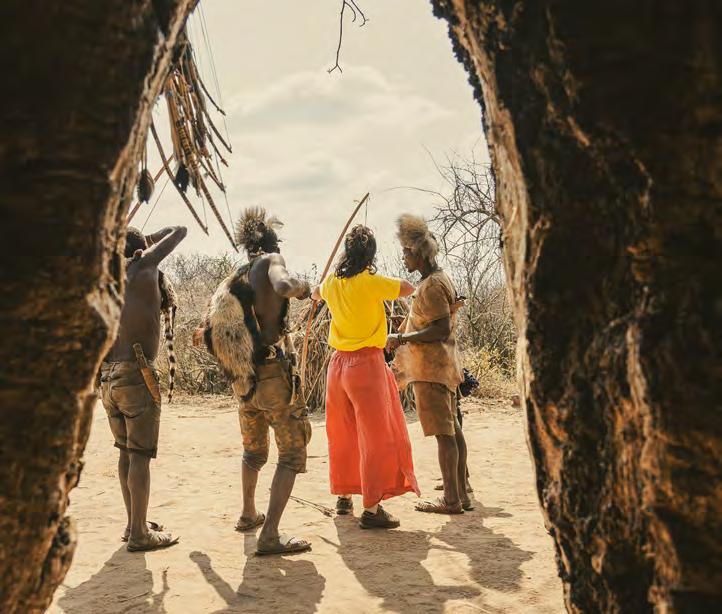
“Every day on a NOLS course in East Africa is a cultural experience.”
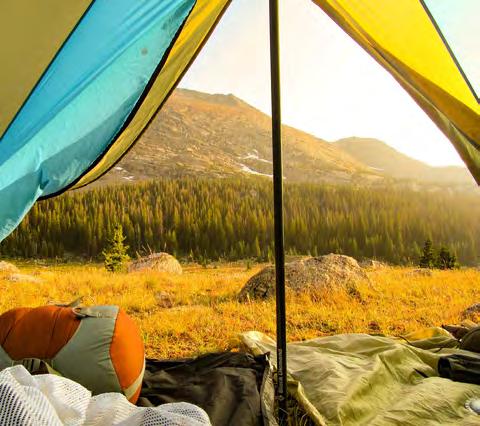
“The spirit of adventure, the cold air, big days, early mornings, unknown terrain, the magic of watching a team find its stride.
I love the quiet tenderness that emerges, sometimes slowly and sometimes all at once, when a group of strangers confronts challenges far from home.”
- Willy Oppenheim
NOLS Instructor, NOLS 2003 Alum, and Founder and Executive Director, Omprakash
Realizing what you thought was cinnamon in your oatmeal is actually cayenne
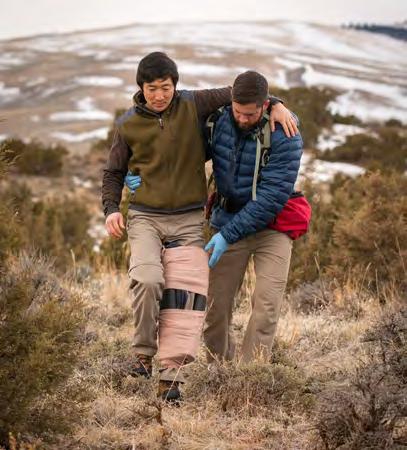
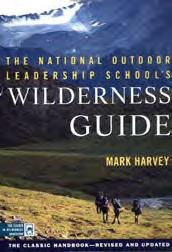
We literally wrote the book on
“Having the opportunity to take a NOLS WFR course improved not only my medical skills, but also my interpersonal skills, communication, and decision-making skills. Having these skills has made me a better member of society.”
- Reagan Bleasdell
NOLS 2019 Alum
“NOLS Mexico gave me the tools for leadership, group dynamics, and decision-making that help me in both my work and personal life.”
- Mario Leal Castro
NOLS 2016 Mexican Educator Course graduate and CONANP ranger
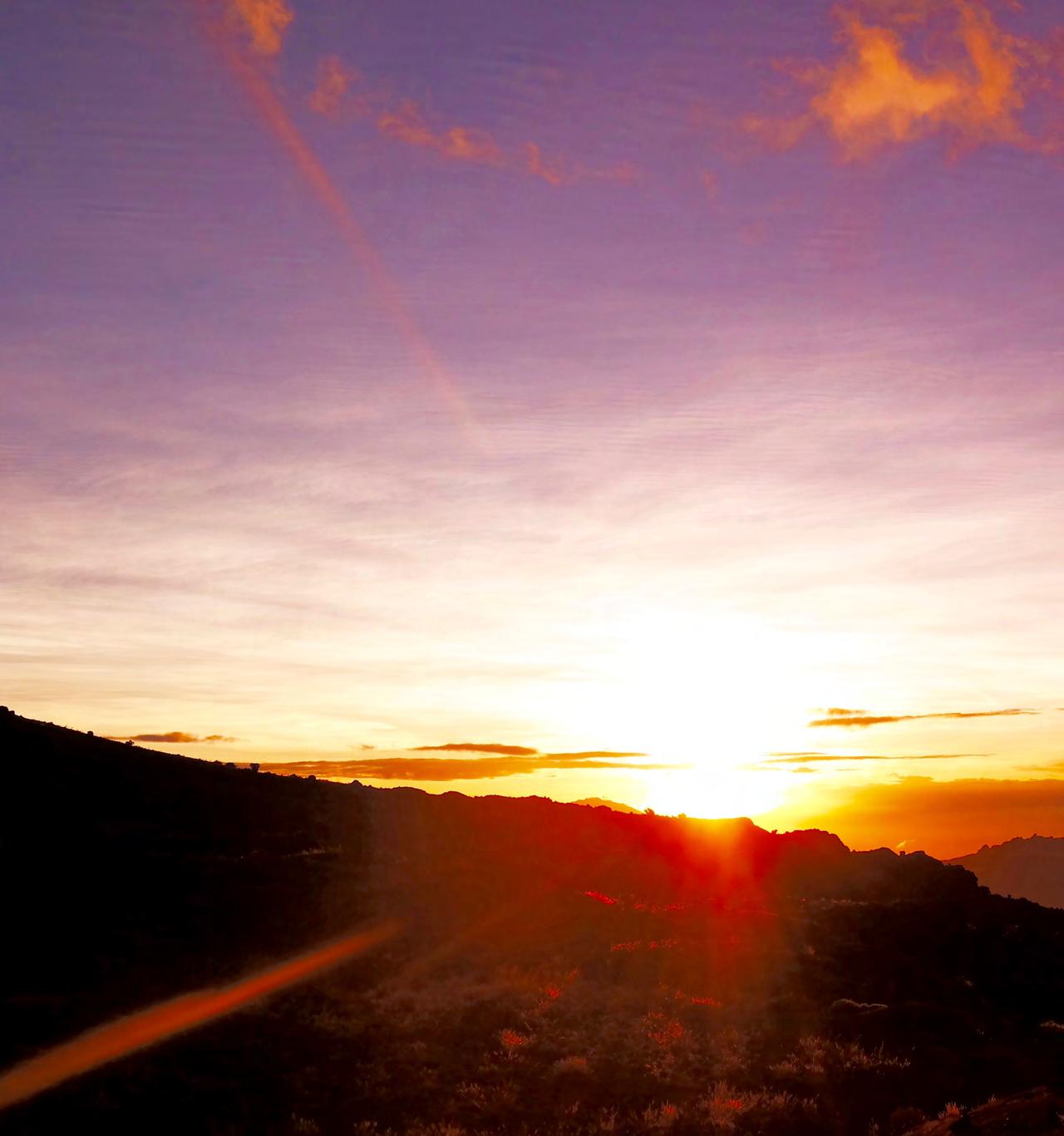
4:00 a.m.
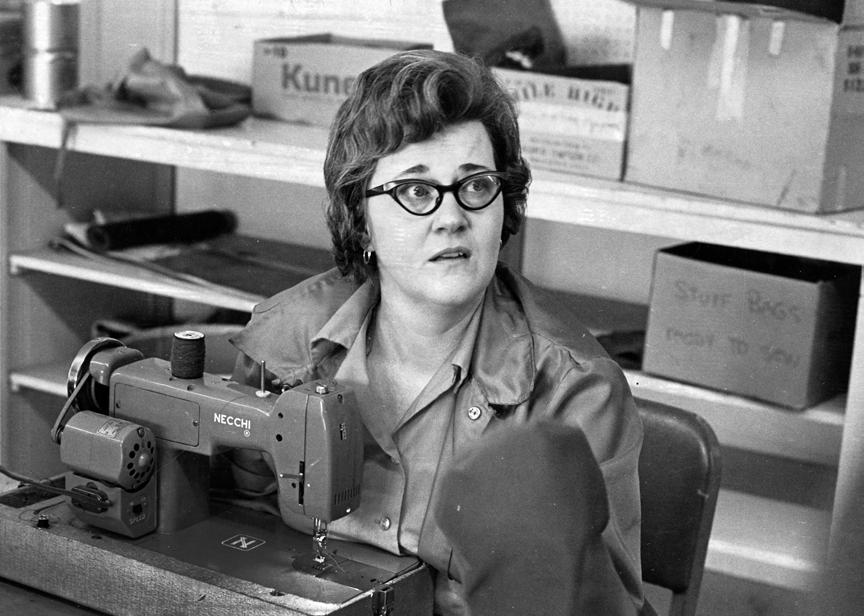
“New branches were starting overnight. Wool pants with knee patches and double sweaters were in. The Noble had a Chinese restaurant in the back.”
- George and Paula Hunker Former NOLS Instructors
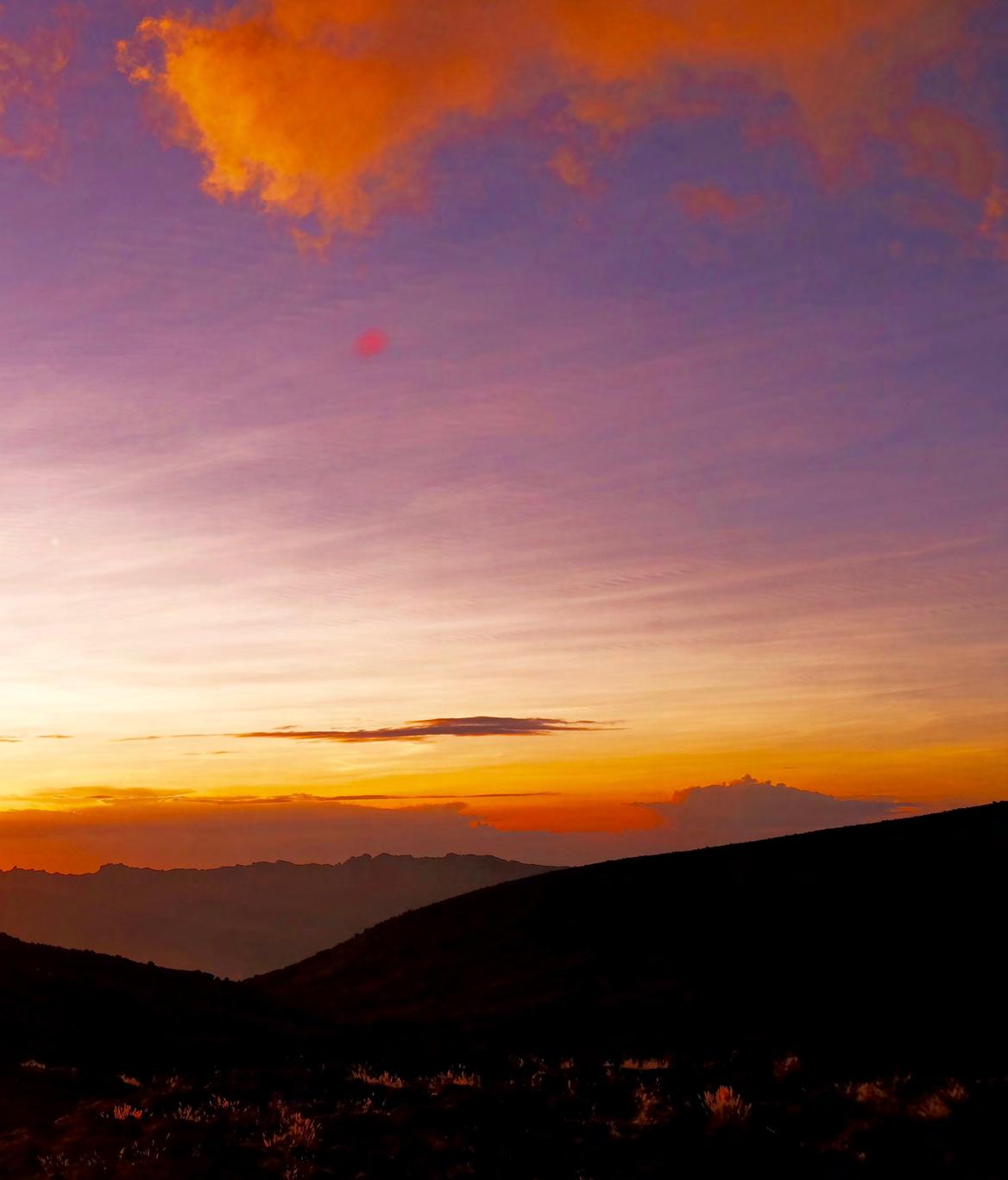
Middle-ofthe-night wilderness medicine scenarios so realistic you’d swear they were
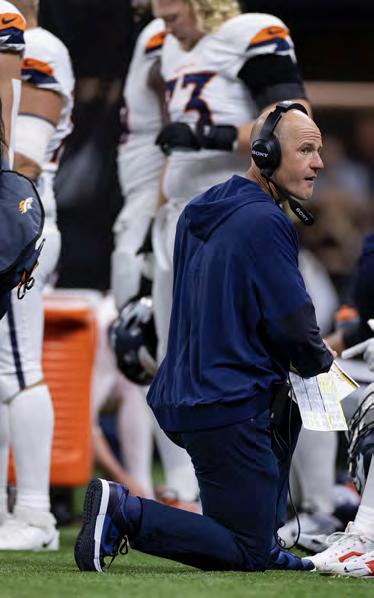
“I can’t possibly express how similar the lessons, protocols, and challenges are between NOLS and highlevel football organizations. The leadership curriculum; accountability taught and learned through expedition behavior; and the reallife lessons all guide my teaching today.”
“I believe in the
and what can happen there.”
-
“NOLS transforms people, not just into leaders of wilderness expeditions, but as leaders in life, grounded in humility, intention, and care.”
- Ximena Carrión
“I found the true power of NOLS in the in-between moments, which offered space for personal ritual and the creation of positive habits.”
- Abigail Hunter NOLS Instructor and NOLS 2017 Alum
PERFORMANCE
NOLS fiscal year 2025 was one of stabilization and realignment. We outperformed deficit reduction predictions and decreased spending, proving that the school’s financial soundness continues to grow in positive directions.
Our total revenue for fiscal year 2025 was $38.3 million. The decision to suspend or reduce operations at three campuses resulted in an overall decrease in revenue from fiscal year 2024. Although we did see positive pockets of growth at our open campuses, we did not achieve the overall enrollment benchmark set for this year. Consequently, NOLS missed our revenue target by approximately $2.6 million for fiscal year 2025. However, a strong focus on cost control enabled us to further limit expenses: not only did we end the fiscal year 2025 with a $2.3 million reduction in expenses from
fiscal year 2024, but we also reported end-of-year expenses $3.5 million below what was budgeted, exceeding our net operating target for the fiscal year.
These efforts allowed NOLS to further reduce our operating deficit to about $2.5 million for fiscal year 2025–a notable decrease from the $3.5 million deficit reported in 2024.
In keeping with the Second Summit Strategic Plan, NOLS continues to spend approximately $1.3 million annually on transformational enhancements to our technology. This includes investing in the replacement of outdated systems in order to support critical infrastructure needs for the future. This spending activity is expected to subside significantly by fiscal year 2027, further reducing our expenses and moving us closer to a balanced budget.

$3.9 Urestricted Contributions
(in millions and excluding investment returns)
Fiscal Year Ending August 31, 2025*
$13.8
$3.8 Restricted Contributions
$38.3M TOTAL OPERATING REVENUE
$1.6
$40.8M TOTAL OPERATING EXPENSE
NOLS saw further deficit reduction in fiscal year 2025, reducing the school’s operating losses to approximately $2.5M, down from about $3.5M in fiscal year 2024 and about $7.5M in fiscal year 2023.
(in millions)
Fiscal Year Ending August 31, 2025*
Program revenue has grown steadily from fiscal year 2020 through fiscal year 2024, but saw a slight dip in fiscal 2025 due to the campus closures in the Pacific Northwest and Southwest. Excluding the suspended campuses, NOLS saw marginal growth in fiscal 2025.
*Preliminary results not yet final for fiscal year 2025 at the time of publishing.
NOLS saw an $8 million total increase in net assets in fiscal year 2025, driven by a strong lift in pledges and endowment contributions. The school had another remarkable year for philanthropy, setting a new record in fundraising. Further support from a favorable market return on our investments of approximately 10% in fiscal year 2025 contributed to a 4th consecutive year of growth in our endowment.
Our teams have been busy laying the groundwork for a successful fiscal year 2026 through enhanced marketing, partnership building and focused fundraising efforts. The
outlook for fiscal year 2026 is strong with anticipated increased enrollment in the Fall as compared to fiscal year 2025.
Support from our generous donors, which has fueled the endowment, will be a catalyst for NOLS to continue to grow Financial Aid support for student enrollment. This, in effect, will increase NOLS tuition revenue and leverage our costs to improve our net operating performance. Our path forward remains concentrated on student growth and fiscal control to improve our financial health and eliminate our deficit by fiscal year 2028 or sooner.

(in millions)
Fiscal Year Ending August 31, 2025*
BALANCE SHEET
ASSETS
Cash (Unrestricted & Restricted)
Investments
Endowment
Receivables
Pledges Receivable
Prepaid Expenses
Merchandise
Other
Property, Plant & Equipment
TOTAL ASSETS
LIABILITIES & NET ASSETS
Accounts Payable Student Deposits
Total Liabilities
Net Assets
TOTAL LIABILITIES & NET ASSETS
Fiscal Year Ending August 31, 2025* 2025 7,060,348 23,870,547 59,098,566 1,372,646 4,522,578 489,407 1,090,918 992,560 25,381,870 $123,879,441 3,767,457 5,412,647 $9,180,104 $114,699,337 $123,879,441 2024 5,716,619 23,652,506 54,142,109 875,821 1,275,298 673,060 1,158,957 992,560 27,506,442 $115,993,371 3,713,268 5,577,497 $9,290,764 $106,702,607 $115,993,371
*Preliminary results not yet final for fiscal year 2025 at the time of publishing.
For the third year in a row, NOLS received recordbreaking contributions from generous donors who believe in the necessity of our mission, including the largest single gift ($3.1 million) in the school’s 60-year-history. Thanks to these contributions, NOLS finished fiscal year 2025 with strong momentum and nearly $11.8 million in new commitments and gifts.
This sustained support reflects deep belief in our mission and expands our ability to transform lives through wilderness education. Because of the generosity of our friends and supporters, NOLS is now able to significantly expand financial aid, ensuring that more young people have access to wilderness leadership development, regardless of their financial means.
These contributions also deepen the NOLS Fund, our annual fund and the engine that powers everything we
do–from advancing our most ambitious strategic priorities to meeting urgent, real-time needs. Unlike endowment or legacy gifts, contributions to the NOLS Fund provide immediate, flexible resources that allow us to respond quickly, driving the quality of our programs and our ability to innovate.
Driven by your generosity, NOLS has made meaningful progress towards achieving the overarching priorities established in the Second Summit, our strategic plan. Your support also advances our work in sustainability, Leave No Trace education, curriculum innovation, and medical research—enhancing both our mission and longterm impact. Together, we are ensuring NOLS remains a global leader in wilderness education and leadership development for generations to come.
“NOLS remains firmly committed to its core mission and values while also shifting momentum towards renewed strategic, operational, and financial sustainability and strength.”
- JK Nicholas NOLS Board of Trustee Member and Chair of the NOLS Advancement Committee
OVER FY21
$11,761,000
RECORD-BREAKING FISCAL YEAR
FY25 HIGHLIGHTS
• $3.1 million gift—the largest single donor commitment in NOLS history
• $3.25 million combined gift from two foundations
• $750,000 investment in Wilderness Medicine
• Nearly $4 million to the NOLS Fund
• $1.4 million in scholarships awarded to 589 students.
By Lucero Cruz Santa Ana
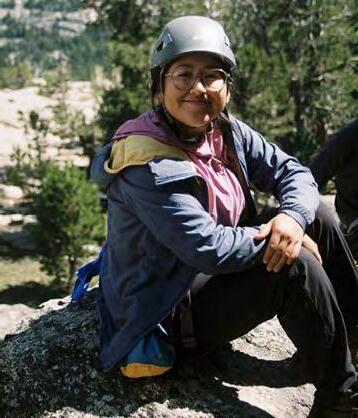
In 2017, I was accepted to C5LA, a program that partners with NOLS to create wilderness leadership opportunities. The second summer of the program, I embarked on my first backpacking trip. It was a powerful experience. One of my instructors, Felipe, often gave me grace during rough patches and became somebody I strived to emulate. At one point, friction arose in my cook group, and my attitude was not the best. I was ready to go home, but just when I felt “over it,” we stopped at a lake, and I found peace: the water was dark blue, the sun was setting, and we enjoyed dinner along the shore.
This summer I returned to NOLS, thanks to a scholarship. My expedition instructors came from India, New Jersey, and Canada. My peers hailed from Alaska, Washington,
Colorado, Virginia, and Connecticut. Many of us had heritage from various countries like Mexico, Kenya, China, the Philippines, and Argentina. Because of our diversity, I had the opportunity to listen to different perspectives and stories from places I didn’t expect.
Since my first NOLS expedition, I’ve spent quite a bit of time outdoors building my wilderness skills. However, this expedition remained a formidable journey. Even simple tasks became more involved, whether that meant purifying water or finding two other people willing to go to the restroom with you (because we were in bear country). Eventually, these tasks felt like a breeze. We’d learned that relying on each other was necessary.
Our instructors took the time to know each of us: they wanted to understand who we were in our worlds; they wanted us to flourish into leaders who could succeed. They reminded us to be kind, to advocate for ourselves, to learn from each other, and to communicate effectively. These sound like simple behaviors, but an expedition tests your patience and reactions to unexpected hardships. Sometimes knowing how to execute these skills isn’t enough; putting them into practice becomes a choice.
“Our instructors took the time to know each of us: they wanted to understand who we were in our worlds; they wanted us to flourish into leaders who could succeed.”
- LUCERO CRUZ SANTA ANA
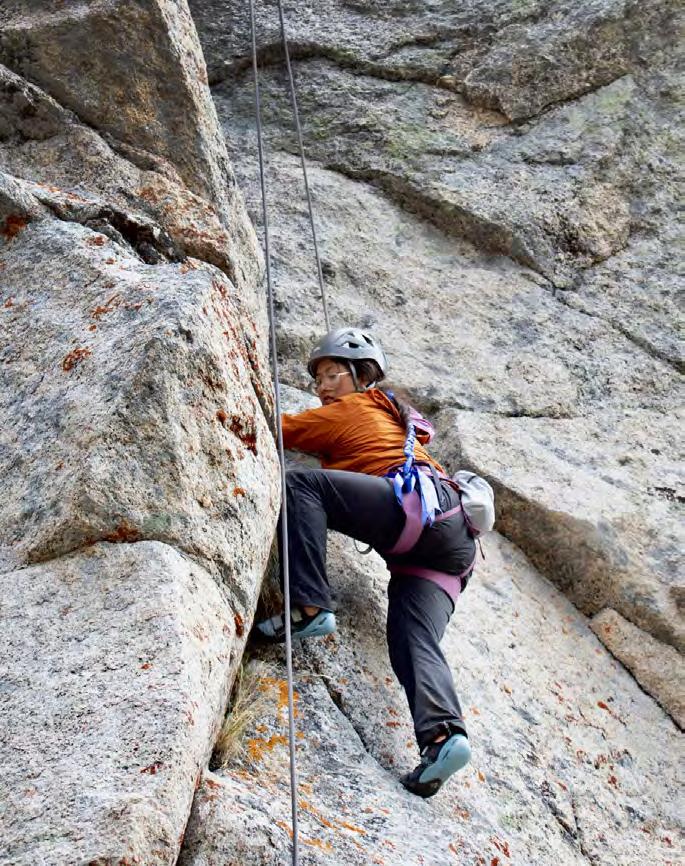
During the course, our instructors also taught us the skills required to multi-pitch climb. I worried I wasn’t skilled enough. However, when I was finally on the wall, moving from one hold to another, I thought, “I’m scared as hell. And I’m actually doing it!” I savored the fear of falling, the wind, and the raindrops. I didn’t even notice my fingers bleeding
until I finished. We all came back from our first multi-pitch climb notably different: some were calmer than usual, others were still buzzing with adrenaline.
Each time I’ve completed a course, I have left knowing I have grown during my trek, but also that I have much more to learn. It works like a mirror for me: I keep reflecting on my experience well after it’s happened. I’ve also found that the people I meet during NOLS courses cement themselves as individuals I will think about forever. I carry the lessons and memories they’ve gifted me in a toolbox I open often.
AUTHOR BIO:
Lucero Cruz Santa Ana was born and raised in the vibrant community of South East Los Angeles, where she has cultivated a deep appreciation for her cultural identity as a proud Oaxacan Chicana. Lucero is an alum of both NOLS and C5LA, programs that have enriched her enthusiasm for outdoor exploration and leadership. In her leisure time, she enjoys climbing, snowboarding, and backpacking adventures in the backcountry.
EACH NOLS STUDENT HAS A POWERFUL STORY OF CHALLENGE, GROWTH, AND DISCOVERY.
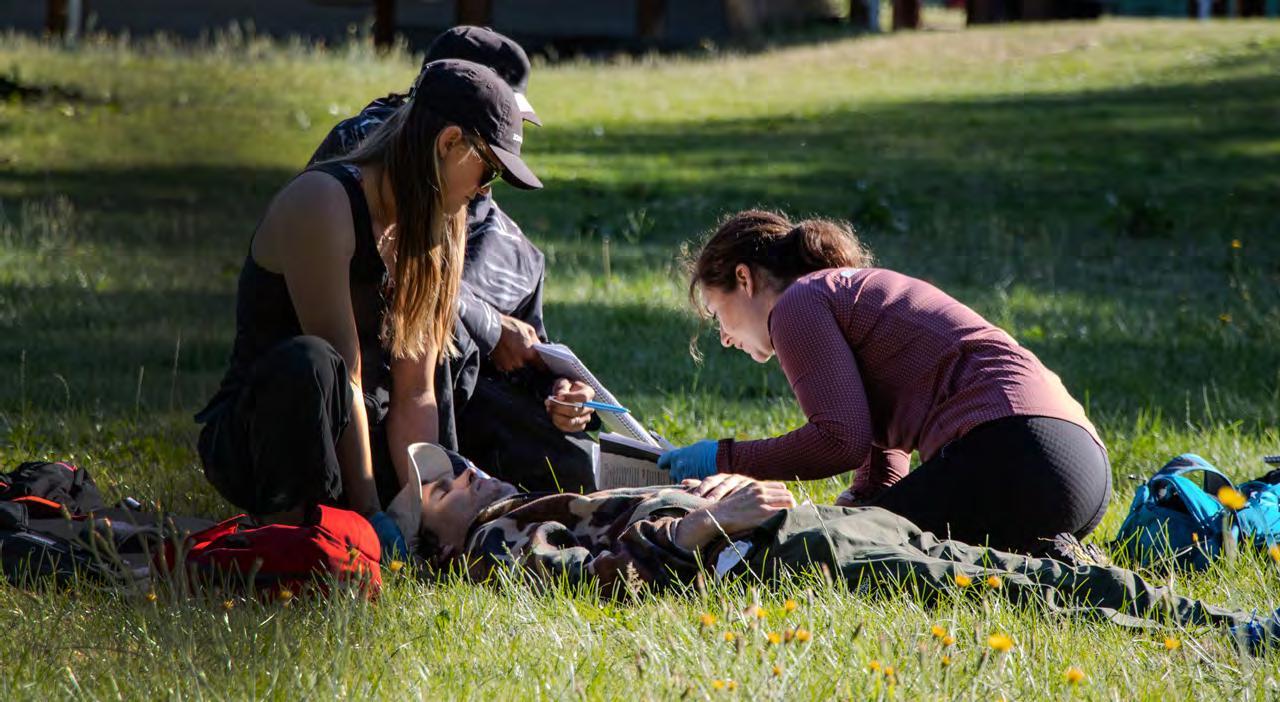
NOLS Wilderness Medicine students gain the confidence, competence, and resilience to act when others need help. Your gift to the NOLS FUND helps more students learn lifesaving skills and builds a pathway to a global community of exceptional care.

EXPLORATION FUND
In 2022 David Rothberg and Nan Birdwhistell established the Rothberg-Birdwhistell Exploration Fund to support NOLS instructors in planning and executing remote wilderness expeditions that embody NOLS’ values of adventure, teamwork, and resilience. As passionate explorers themselves, the duo has participated in 22 NOLS expedition courses and alumni trips.
By Jesi Crawford, NOLS Instructor
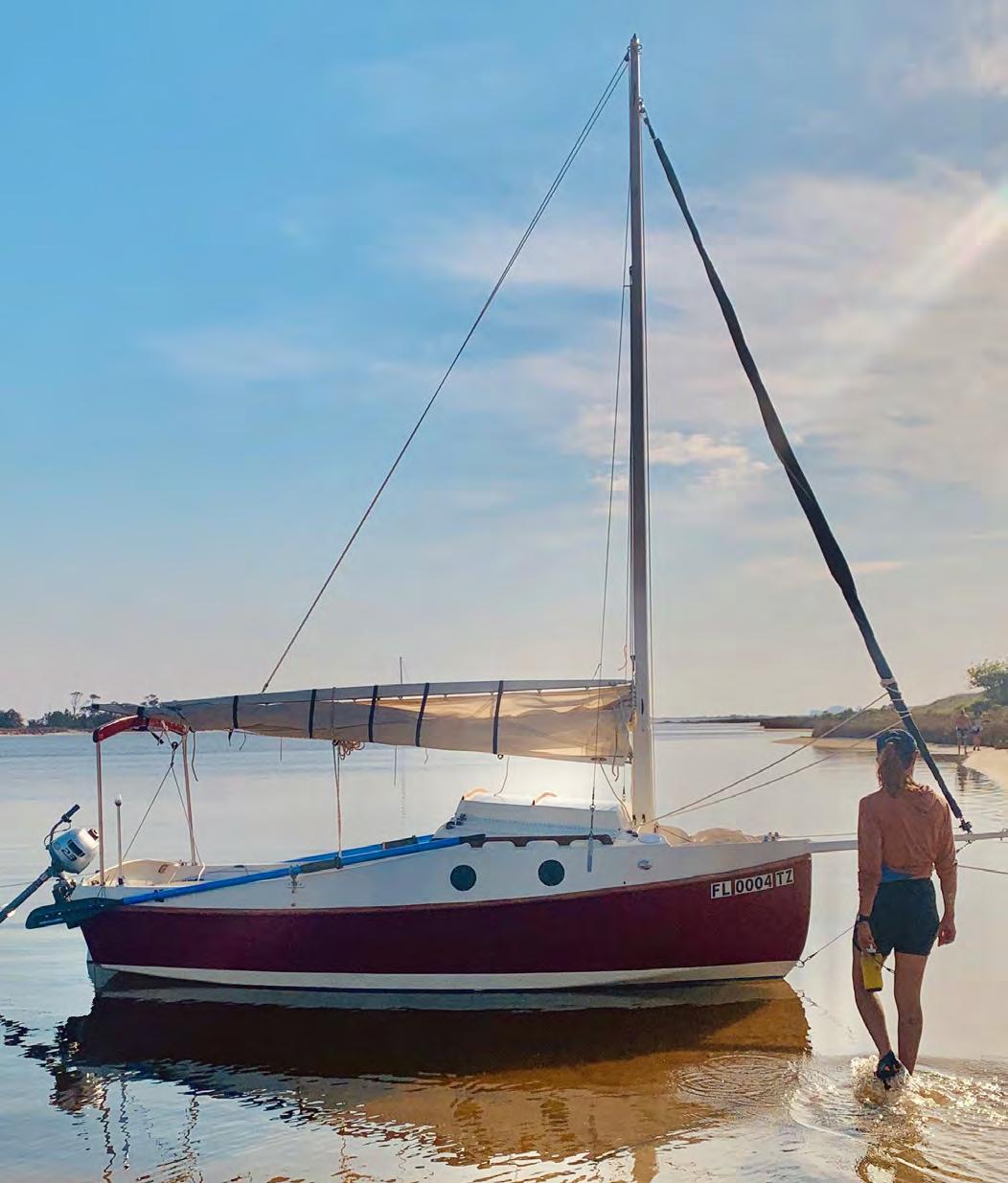
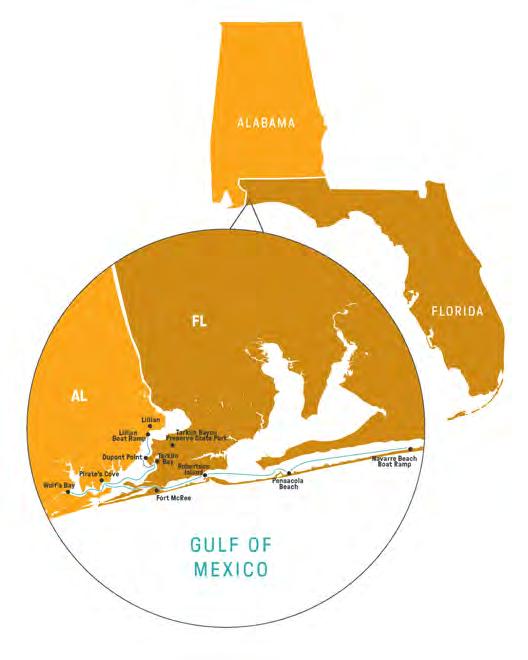
In spring 2020, I made an impulsive purchase: a 14’10” Chesapeake Light Craft PocketShip, a hand-built plywood sailboat reinforced with fiberglass. I wasn’t looking for a boat, but with my wedding plans postponed due to COVID, I’d decided to put some of that money toward a different kind of adventure.
in Camden, Maine. Over that year, I gained hands-on experience with woodworking, electrical and mechanical systems, fiberglass, and more. I also gained more confidence in my own hands and a willingness to venture into a new type of unknown.
After the purchase, I sailed the PocketShip on lakes and reservoirs in Colorado and Wyoming. It was a pretty boat, but I was disappointed by how it handled on the water. The boat couldn’t point into the wind well and felt constantly unbalanced. Meanwhile, hardware began ripping out of the deck, the electrical system failed, and the motor died. The boat needed a complete overhaul, but I didn’t have the skills or resources.
As a NOLS sailing instructor, I was used to minor maintenance and repairs, but this level of renovation felt beyond me. I wanted to do it right, and I saw how a deeper understanding of boat construction and systems could benefit my broader sailing career. In 2023, I left Wyoming to attend the Marine Systems program at IYRS School of Technology & Trades in Newport, Rhode Island, and then worked as a Marine Systems Technician for Lyman-Morse
When I returned home to Wyoming, I saw the PocketShip with new eyes.
In fall 2024, I submitted a proposal to NOLS requesting instructor development funds to transform this little boat into a capable expedition cruiser. I was honored to receive the award making it possible. Soon after, the boat and I were on the road from Wyoming to my parents’ driveway in Florida, in search of a warmer workspace.
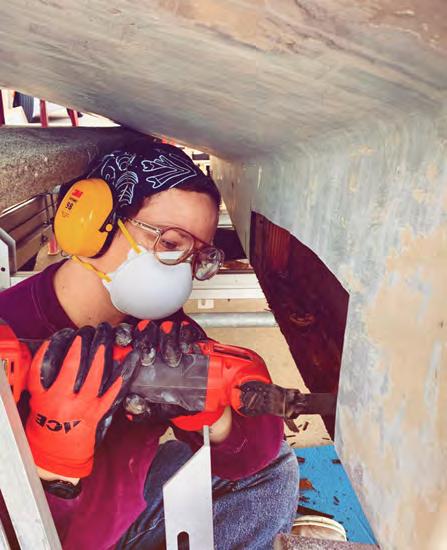
Once there, I stripped the boat to a bare hull and removed all rigging, hardware, and wiring. Then I began a survey to look for rot and water damage. Using an infrared camera and a metal pick, I inspected each section, noting damage with a red wax pencil. It didn’t take long before those marks peppered much of the boat’s surface. A week later, I took a breath and cut the first large hole. Then another. And then five more.
Restoring the boat quickly became its own expedition with setbacks, weather delays, and team dynamics to navigate. I stayed focused on what I could control, studied each night, and planned repairs carefully. Friends and family pitched in with projects and long days of labor. There were moments when I didn’t think I could finish in time, but I held onto a fragile hope. At one point, I told coworkers, “I think I can make the boat float in time and maybe sail okay, but it won’t be pretty.”
I was wrong: not only did we finish, but the boat is beautiful and sails like a dream.
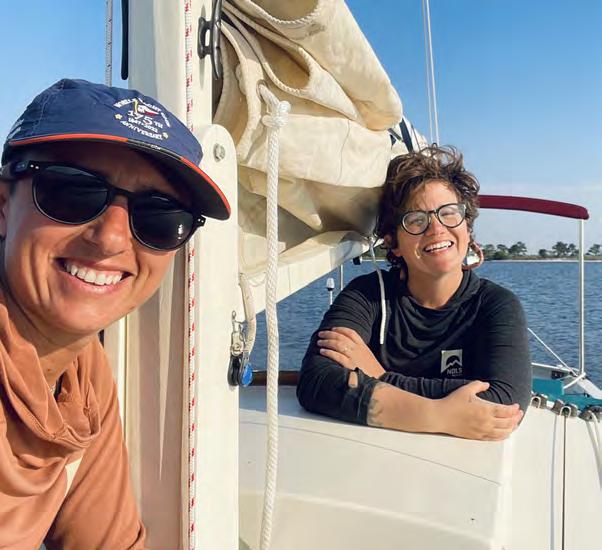
To mark its transformation, I renamed the boat Pixie, a playful nod to its tiny size and nimble spirit. We had been through a lot together and were finally ready for a celebratory adventure. I invited people who helped with the renovation to join for a leg of the trip, including Jackie Smith, a friend from my NOLS instructor course, and Sarah Everhart, a fellow NOLS sailing instructor. My dad, Ralph Crawford, who first taught me to love sailing, joined for the final three nights.
“Here’s to fair winds, following seas, and explorations that teach us more than we ever expect.”
- JESI CRAWFORD, NOLS Instructor
This trip wasn’t about a destination. It was about exploring while testing the boat, connecting with people I care about, and celebrating the collective effort that made it all possible. Over eight days, we sailed more than 65 nautical miles through the Intracoastal Waterway in a hand-built wooden boat shorter than most sea touring kayaks. My rotating crew and I explored sun-drenched coastlines, tucked into protected anchorages, and kept learning as we pushed the boat in high winds, rowed in calm waters, and experimented with new ways to anchor. We shared problem-solving, laughter, and awe, soaking in the scenery and quiet evenings while savoring the joy of accomplishing something that once felt out of reach.
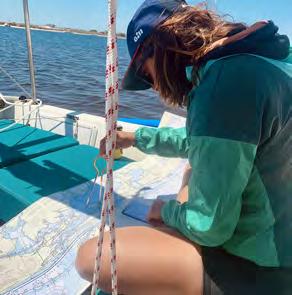
At NOLS, we teach students to be thoughtful and resilient in unfamiliar terrain. Restoring and sailing Pixie was an opportunity for me to do the same. This vulnerable and transformative process reconnected me with the joy of sailing, strengthened my technical skills, sharpened my judgment, and reminded me of the power of community support. I’m endlessly grateful to the RothbergBirdwhistell family for making this dream possible and to NOLS for fostering a culture where learning by doing, even when it’s messy and ambitious, is celebrated.
Jesi Crawford has worked for NOLS since 2012, taking on roles both in town and in the field as a senior sailing and hiking instructor. Whether under sail, on the trail, or tinkering with a spreadsheet, Jesi has found joy in big questions, shared stories, and learning through challenges.
By Jeremy Cronon NOLS Partnerships Director
Photos by Fiona McLeod
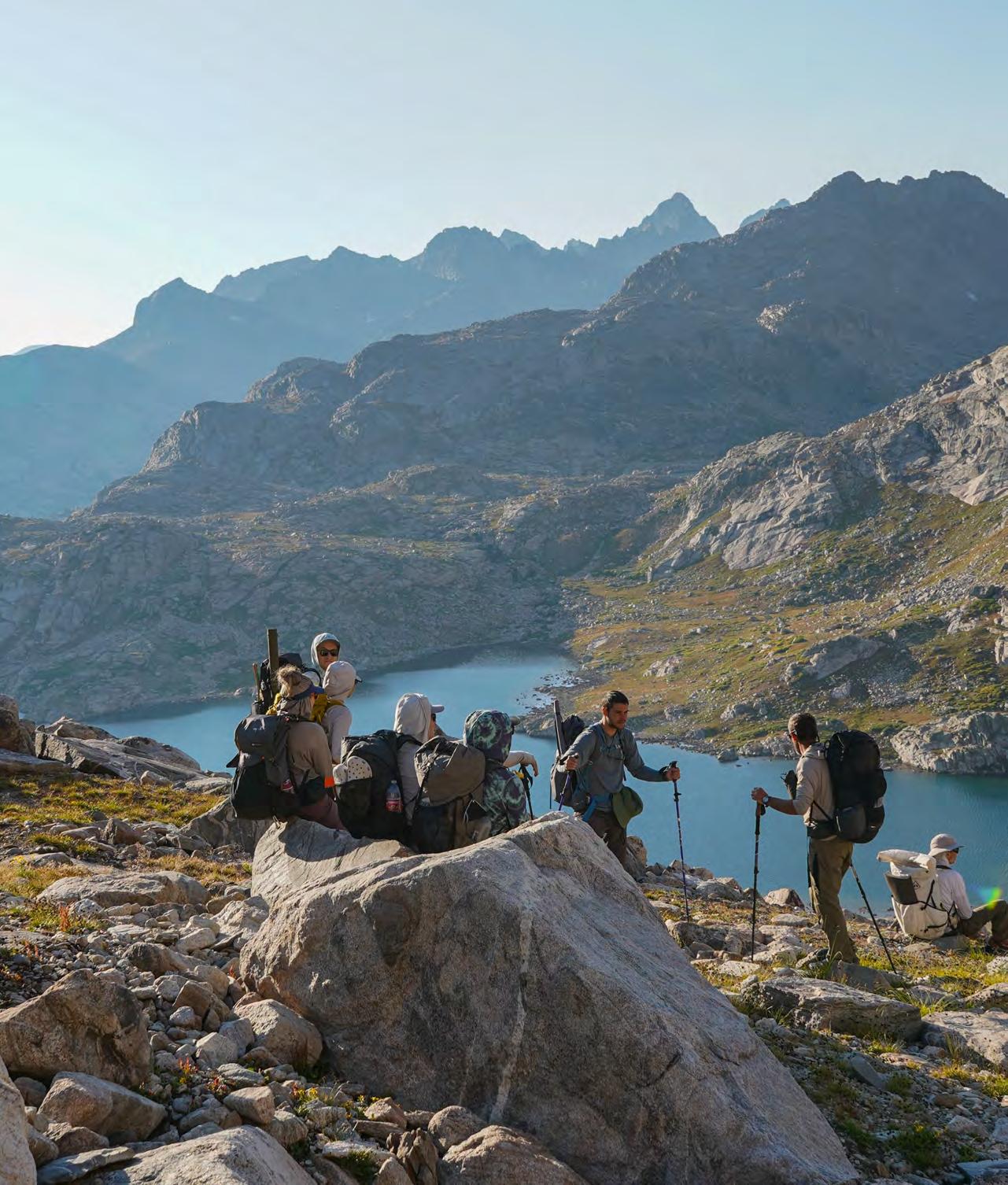
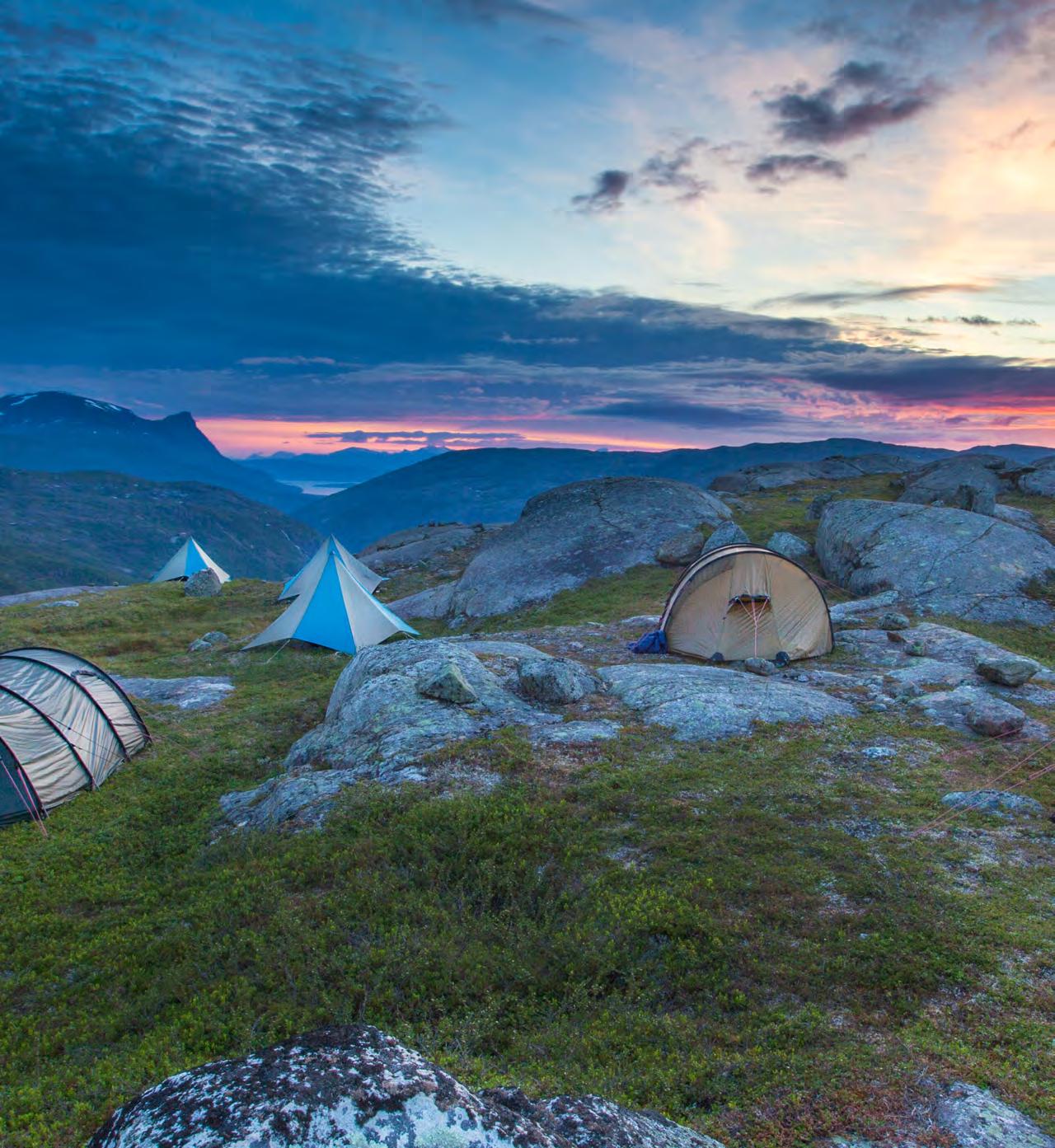
On the morning of August 24, twelve hikers emerged from Wyoming’s Wind River Range with packs that weighed, on average, just twelve pounds. Over eleven days, their route had covered 100 miles of rugged terrain. Along the way, they’d endured rain, hail, and unrelenting sun. They’d also found beauty in the challenge of long days in the mountains carrying lightweight gear in their packs.
This expedition marked the return of NOLS’s Lightweight Backpacking program—extending the school’s long
tradition of thoughtful wilderness travel while exploring new ways to adapt and grow.
For much of its 60-year history, NOLS taught leadership and wilderness travel with packs that often weighed at least 45 to 60 pounds. The logic was that weight built strength and allowed for redundancy and security. Those miles with heavier packs also taught generations of students teamwork and the value of caring for one another—lessons that remain at the core of the NOLS experience today.

As the outdoor world shifted toward cottage-industry gear makers and lightweight experimentation, NOLS expanded its toolkit. Rather than replacing one approach with another, the school began exploring how both traditional and lightweight styles could complement each other in the curriculum.
In 2005, NOLS launched its “Light and Fast” program with GoLite and Backpacking Light, early leaders in the lightweight movement. The resulting courses embraced a new mindset, while staying rooted in NOLS’s leadership principles. Whether carrying 60 pounds or 16, the essentials of judgment, communication, and leadership remained the same. From 2006-2019, Light and Fast students learned to question systems, trim excess, and engage deeply with their environment.
This program reshaped how I instructed all my courses. It pushed me to think critically about outcomes: not just what we carried, but what students carried away. We weren’t stripping things down merely to go lighter. Instead, we were cultivating self-sufficiency, creativity, and the willingness to adapt. In many ways, those lessons extended far beyond gear, becoming lessons in judgment, resilience, and leadership—the very core of NOLS’s mission.
The revival of lightweight backpacking at NOLS continues these lessons. It also built partnerships across the outdoor industry—collaborations that have reshaped how NOLS can outfit and inspire students. Small, innovative companies have continued to lead the way with new materials and ideas; we knew our curriculum could provide a framework for both. All we needed were allies to help us bring that vision to life.
Hyperlite Mountain Gear became a cornerstone of that effort. Their iconic white packs, ultralight quilts, and shelters provide the backbone of our new systems, while their generosity—from donating equipment to establishing a scholarship—ensures that access extends beyond gear.
For Scott Christy, a longtime NOLS instructor with deep roots in the lightweight backpacking program, this partnership felt like true serendipity.
“For me, lightweight backpacking isn’t about ounces; it’s about creating more freedom, enjoyment, and leadership opportunities in the backcountry,” says Scott. “I’m excited
to see NOLS teaching this style again and proud that Hyperlite can play a part in making it happen.”
Good To-Go Meals has brought fresh energy to expedition dining, donating student favorites like Peanut Chicken Salad and Mushroom Risotto and proving that lightweight food can be both practical and delicious. Garage Grown Gear has amplified the program’s reach, giving us a platform to connect with a community of lightweight enthusiasts and innovators. Black Diamond and Cascade Designs have offered steady, ongoing support to ensure students have reliable gear. Together, these partners have also extended discounts to participants, making sure students show up with dependable systems from the start.
The result is more than a refreshed packing list. It is a collaborative effort across the outdoor industry, blending innovation, trust, and a shared belief in NOLS mission.
At the start of our August course, students completed a wilderness first aid course, learned rations planning, and trimmed their personal and group gear. This was no accident. Unlike traditional courses, leadership on a lightweight expedition begins long before the trailhead. Decision-making is front-loaded, which supports student ownership, group cohesion, and the development of judgment.
Before beginning their trek, students also debated stove systems and shelters. They learned to think in systems: how a quilt might reduce the need for heavy insulating layers, how environmental awareness of water availability and purification influences how much you carry, how cooking styles affect kitchen gear. By the time they set foot on the trail, the group’s packs averaged 19.8 pounds and included six days of food—well under half the weight carried by many NOLS Rocky Mountain students that summer. The decisions made in town had already shaped the trip.
Once in the field, lighter loads translated into freedom. Participants, ranging in age from 23 to 65, found themselves hiking farther than they expected. They experimented with layering systems, navigation techniques, and managing the cadence of meals. They discovered the rhythm of walking light—from approaching passes without dread, to sharing the joy of covering ground efficiently.
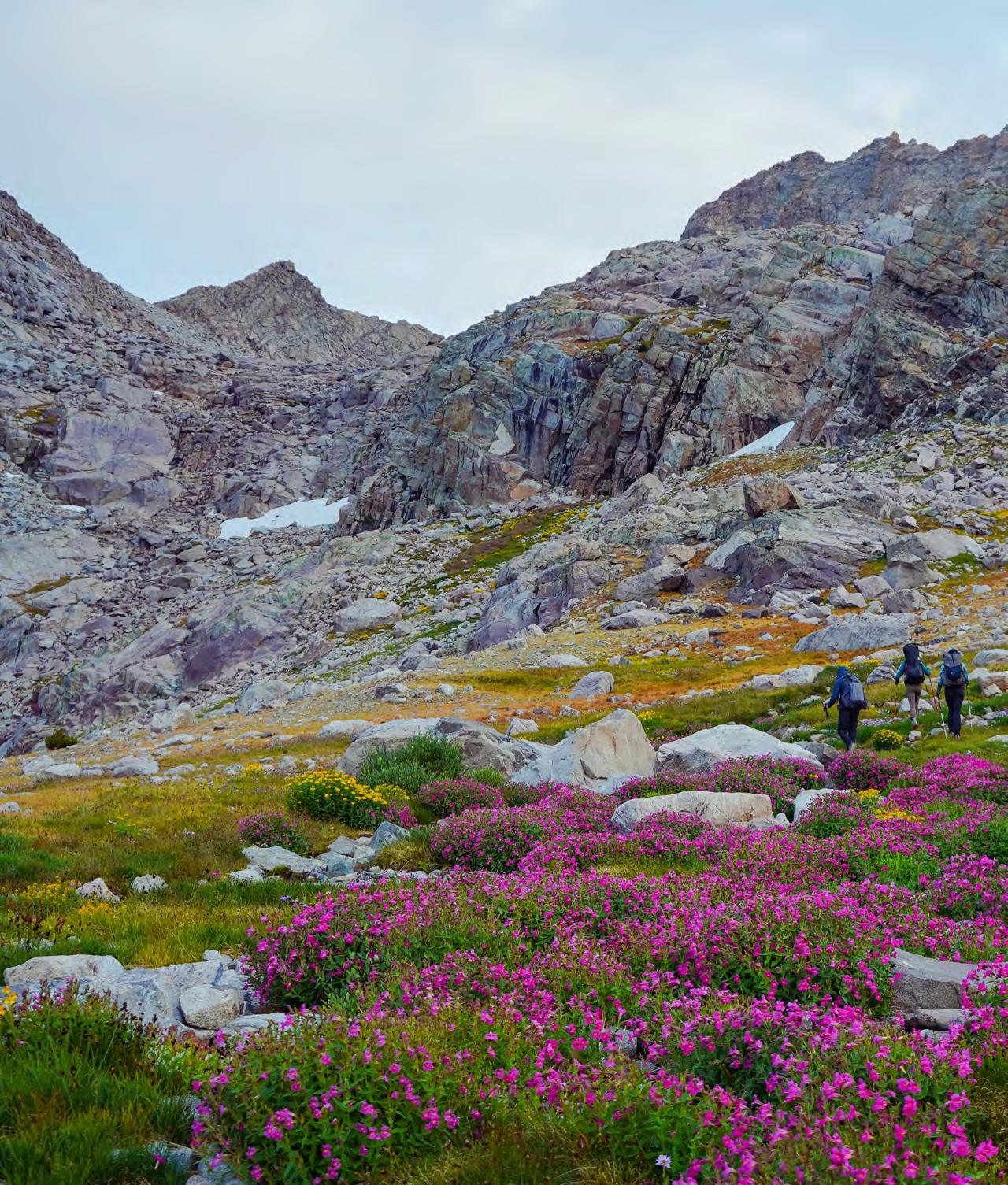
They also learned the boundaries of “light.” A sudden hailstorm reminded the group why sturdy shelters matter. A cold night below Elephanthead Peak underscored the value of layering systems and reading your environment. But these experiences were not failures; they were lessons in judgment, risk management, and adaptability. These reminders underscored something longtime NOLS instructors know well: that traditional expedition systems, tested over decades, continue to provide safety, community, and a foundation for growth.
At its heart, the Lightweight Program has always been about fostering a greater reliance on the collective skills and knowledge within a group. In the mountains, experiences are defined less by what’s in a pack than by the people who carry it: their leadership, their mindset, and the ways they support one another. Skills weigh nothing, and yet they prove decisive, whether that’s navigating without a GPS, improvising repairs, or reading weather in alpine basins.
Lighter packs can also mean broader accessibility, opening the door both for a wider age range of students and those who might not otherwise consider carrying
50 pounds. Partnerships with the industry mean our curriculum evolves in conversation with technology. And by experimenting with new systems, we demonstrate how tradition and innovation can walk side by side—that the enduring strengths of NOLS backpacking remain relevant, even as new tools and philosophies expand the way we teach.
As our summer expedition members hiked out through fields of fireweed, one participant paused to reflect. The packs were lighter, yes. But more than that, the experience carried lessons in judgment, trust, and adaptation.
It was a fitting environment for this reflection. Just as fireweed helps a forest heal and grow, these lighter systems create openings: for accessibility, for experimentation, and for new voices to join the conversation. NOLS’s roots remain deep in tradition, but the bloom of fireweed reminds us that growth often comes after change—and that renewal is not about leaving the past behind but, rather, carrying it forward into the future.
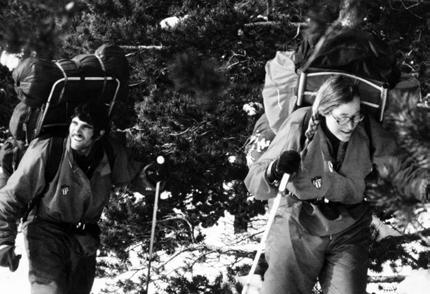
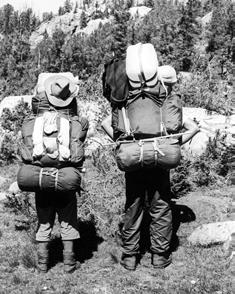
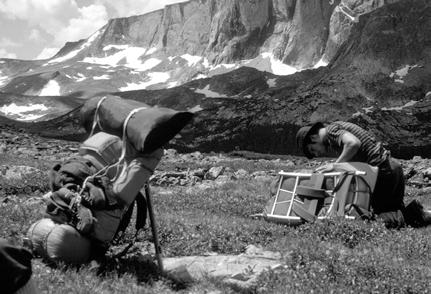
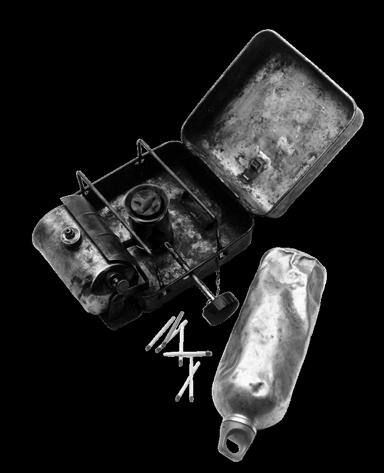
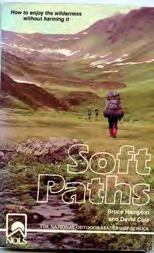
When NOLS was founded in 1965, most backpackers favored heavy, external-frame packs like the ones shown here. These early packs, often built out of aircraft aluminum and parachute fabric, were spacious but cumbersome and weighed 50 pounds or more when filled. Recent shifts towards internal frame packs and lightweight gear has made backpacking more accessible and less labor intensive for students of all ages.

76,201 DAYS IN FIELD
321 COURSES
EXPEDITION
3259 EXPEDITION STUDENTS
512 INSTRUCTORS EXPEDITION
In fiscal year 2025, NOLS expeditions educated over 3,000 students ranging in age from 14 to 84. These courses spanned in duration from a weeklong Baja coastal sailing trip to a year in Patagonia.
NOLS field courses, led by our world class team of instructors, continue to create positive and transformative student outcomes. Of the graduates who completed a post-course survey, 95% said they would recommend a NOLS course to a friend or colleague. When they were asked what they found most rewarding about their expedition experience, graduates cited the opportunity to successfully overcome challenges, along with experience practicing teamwork, gaining leadership and technical skills, and forging greater connection with the natural world.
Overall, expedition enrollment for both semester and year-long programs was up slightly in fiscal year 2025; however this gain was counterbalanced by a decrease in summer enrollment.
In the coming year, our work at NOLS headquarters will continue to focus on growing enrollment at the school and providing access to a NOLS experience to students.
Fiscal year 2026 enrollment is off to a good start, including fall semester enrollment that exceeds predictions. We still have work to do in order to rebound from our pandemic year lows, but we are building positive momentum and correcting a declining enrollment trend that began fifteen years ago. We are working to reverse this trend in several ways, such as a significant expansion of financial aid and student recruitment, including additional enrollment staff and more resources for their travel. We are also building the benefits of a NOLS field course through the creation of the NOLS Fundamentals of Leadership Certificate, which also speaks to a growing demand for microcredentials across higher education.
“Our world-class instructors create genuine experiences that teach people from different backgrounds how to work together as an interdependent group. Through that experience, students learn to work together and accomplish goals they couldn’t achieve by themselves.”
- RICH MAJERUS, Vice President of Expeditions
WILDERNESS MEDICINE
NOLS+CROSSING LATITUDES BRINGS WILDERNESS MEDICINE TO EUROPE —AND BEYOND
By Kathryn Miles

When Lena and Tim Conlan launched Crossing Latitudes in 1995, they envisioned more than just outdoor expeditions. The couple—both longtime NOLS field instructors—wanted to combine the thrill of paddling and trekking adventures with cultural exchange and widen the European adventure market. From their base in Lena’s native Scandinavia, they led global trips, helping thousands experience the outdoors in a deeper way.
But by the late 1990s, they noticed something missing. Many of their guides lacked training in wilderness medicine, and no such courses existed near their headquarters. So in 2000, Lena began introducing NOLS Wilderness Medicine curriculum to their instructors.
“It felt like an obvious choice,” recalls Lena. “NOLS is the leader in experiential education for good reason. No one else offers this caliber of realistic medical scenarios while also proving that learning first aid can be really, really fun.”
By 2008, the Conlans shifted Crossing Latitudes exclusively to wilderness medicine, steadily building courses across Europe, Asia, and North America. What started as a staff need grew into a mission to bring NOLS Wilderness Medicine to new corners of the world.
In late 2024, Lena passed the leadership of European operations to Xuan Ming, a fellow NOLS instructor with a deep background in wilderness medicine. “I felt proud to have made NOLS Wilderness Medicine courses the standard within the outdoor community in Scandinavia and Europe,” Lena says. “It was time for new leadership. Ming is a great practitioner, instructor, and manager. Most importantly, she has a huge heart.”
Today, under Ming’s leadership, Crossing Latitudes is an international organization that delivers NOLS Wilderness Medicine courses in fifteen countries, including multiple polar locations. Trusted by guides, scientists, and medical practitioners, the organization has trained more than 7,000 participants over 24 years.
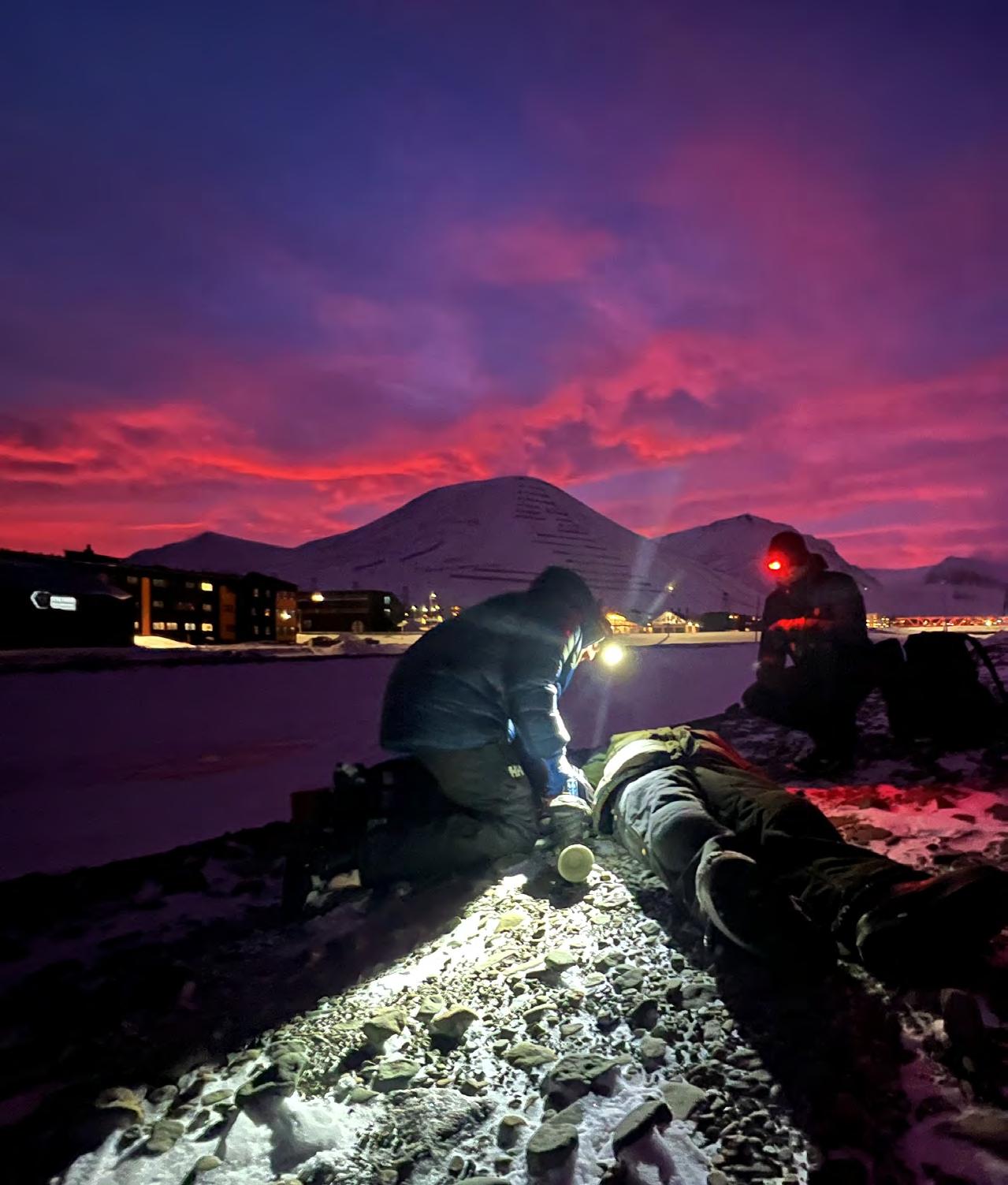
What sets the courses apart are their place-based realism. In Arctic Norway or Sweden, students practice scenarios
involving full snowmobile gear and while battling darkness and ice. At sea, they train in how to accommodate dry suits and shipboard limitations.
“We want participants to learn in the conditions they might actually face,” says Ming.
Equally important, she adds, is the curriculum itself. Rooted in evidence-based medicine, NOLS’s Wilderness Medicine curriculum is constantly updated to reflect the latest science and field realities. Ming also highlights the program’s willingness to tackle topics often overlooked in traditional training: stress injuries, psychological first aid, and reproductive health. “NOLS normalizes conversations that people often shy away from,” she says. “That’s not just good medicine—it’s good culture.”
“Learning
first aid is an incredibly empowering experience. Feeling confident to help out in a medical situation trickles down, echoing and impacting every other aspect of our lives as well.”
- XUAN MING, Crossing
Latitudes Co-owner
Crossing Latitudes courses are often transformative in ways participants never expected. Learning wilderness medicine builds not only technical skill but also confidence and compassion. “A first aid course disrupts the norm,” says Ming. “It lowers the threshold for stepping up to help. That ripple effect reaches far beyond the wilderness.”
With ten NOLS instructors, Crossing Latitudes continues to expand access to this essential knowledge.
“Teaching wilderness medicine isn’t just about saving lives. It’s about empowering people everywhere to meet challenges with confidence, responsibility, and heart,” says Ming.

WILDERNESS MEDICINE
91,800 DAYS CLASSROOM
18,090 800
WILDERNESS MEDICINE COURSES
WILDERNESS MEDICINE
WILDERNESS MEDICINE STUDENTS
198 SPONSORS
CREATING A COMMUNITY OF COMPETENT CARE PROVIDERS ACROSS THE GLOBE
NOLS Wilderness Medicine celebrated 35 years this past summer, and demand for our courses reflects the premier quality of our faculty. From two-day wilderness first aid to 200-hour WEMT preparation, we offered hundreds of courses to outdoor leaders, educators, and medical professionals. As a result of these offerings, in 2025, over 18,000 students in 37 U.S. states and 22 individual countries were introduced to the skills needed to step in and help when help is needed most.
This past year, the Wilderness Medicine Education team rolled out version 3.0 of the Hybrid Wilderness First Responder. We also updated the online platforms for our other blended learning opportunities, which expanded access to NOLS programming across the U.S. This past fiscal year over 7,600 students engaged in a blended learning experience at NOLS.
Demand for our Wilderness EMT program continues to outstrip our capacity. Our waitlisted WEMT program is poised for expansion, supported by generous philanthropic gifts designed to support faculty training in this specialist program. We are especially excited about our new Global Healthcare Semester beginning at Wyss Campus and extending to global locations in 2026.
“Whether it’s someone applying first aid to a loved one at home or stepping in to help in a public space, our graduates are living proof that knowledge gained at NOLS has the power to make a difference in times of crisis and positively impact lives.”
- MELISSA GRAY, Vice President Wilderness Medicine
25 years of experience in
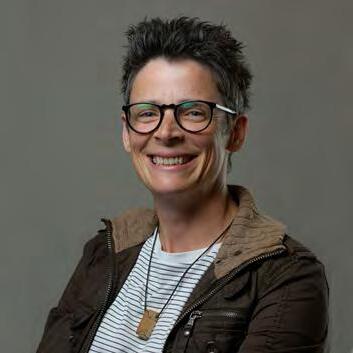
A celebrated scholar, she is the director of Risk Resolve, a risk management consulting firm. Dallat is also a recipient of the Wilderness Risk Management Conference’s (WRMC) Reb Gregg Award, given for exceptional leadership, service, and innovation in wilderness risk management. We sat down at the recent WRMC to discuss her many contributions, along with emerging trends in risk management.
Could you explain this field for a lay audience?
For me, risk and crisis management in outdoor programs is the foundation that allows organizations to deliver their aspirational outcomes. In practice, it means being crystal clear about your goals, and then carefully and collaboratively considering the foreseeable risks in how programs are designed, planned, and delivered. Just as important is recognizing that, even with the best preparation, things can still go wrong, which is why organizations need practical, human-centered, and wellrehearsed plans to support and care for everyone involved.
You’ve written about the diminishing opportunities for young people to experience well-managed risk exposure. How do you see outdoor leadership programs like NOLS serving as a corrective?
Outdoor leadership programs like NOLS play such a vital role. They create and deliver intentionally designed programs where young people can navigate uncertainty and build resilience with fit-forpurpose safety management systems and skilled leaders around them. They remind us that well-managed risk isn’t something to be eliminated; instead, it can be profoundly educational. These experiences develop the confidence, tools, and perspective to engage with adversity in life well beyond their experience on the trail or river.
Talk about some of the trends in risk management you’ve seen over your career.
Early on, the focus was very much on field hazards, such as equipment, weather, and terrain. Over time the lens has widened to include how we design programs, how organizations lead, and how organizational culture influences safety. There’s also been
a shift toward more openly sharing incident data and insights so that others can learn. More recently, important topics like mental health, inclusion, climate change, and even the challenges of social media have been increasingly examined and discussed, demonstrating the adaptability of our field and a willingness to better navigate and understand emerging risks associated with our work in a rapidly changing and complex world.
What should someone look for in risk and safety management when considering adventure programs?
One of the first questions I’d ask is when senior staff members were last out in the field. This indicates whether leaders really know how their programs run and how well staff are being supported. I’d want to see how the organization responds to incidents and near misses: do they blame the people directly involved, or do they look more broadly at all the factors that played a part?
That kind of holistic approach creates a culture of learning, where staff feel empowered to share their perspectives and the whole organization gets better at understanding and managing risk. I’d also look for openness: are they willing to explain how they manage safety, and do they welcome questions? That will often tell you more than any policy document ever could.
The annual Wilderness Risk Management Conference is a forum to learn and share common practices in wilderness risk management and contribute to a culture of open dialogue about risk. It is a decades-long collaboration between NOLS, Outward Bound USA, and the Student Conservation Association, in partnership with WRMC Steering Committee.

At NOLS, we understand risk is inherent in the remote locations where we travel. One way we monitor our risk management performance and support a healthy risk culture is by tracking, analyzing, and reporting out on incidents that happen during our courses. Afterwards, all incidents are reviewed and analyzed for learning.
During fiscal year 2025, there were no fatalities or disabling injuries on any of our programs. This seems like a simple statement, but it is actually a critical accomplishment that reflects tremendous skill, judgment, and care from staff across the organization.
In our field programs, most medical issues were minor and managed in the field. The types, severity, and volume of injuries and illnesses were similar to historical trends. Medical evacuation numbers were slightly below average, and there were no concerning trends. As usual, athletic and soft tissue injuries, minor allergies, and gastrointestinal illness were the most common medical problems. We experienced one serious injury (a student was struck by a tree during a windstorm) and five serious illnesses. We are grateful all of these individuals fully recovered. Additionally, there were fewer challenging behavior issues than we have seen in recent years, allowing more students to stay in the field and complete their courses.
When emergent issues did arise, our campus teams and trusted partners around the world responded well and employed established emergency procedures. Helicopters, motorboats, fixed wing aircraft, horses, and snowmobiles occasionally provided expedited evacuation support for our global operations.
Climate change is evident across our operating areas, with staff in multiple locations managing some close-call environmental events and increasingly dynamic conditions. Actual events or threats of floods, volcanoes, tsunamis, and wildfires impacted both Expedition and Wilderness Medicine courses in fiscal year 2025. Looking ahead, organizational climate resilience will be an essential area of risk management focus.
“We are a learning organization, and our learning from incidents informs our program. Our people are the heart of NOLS, and our risk management record reflects their deep commitment to our mission.”
- KATIE BAUM METTENBRINK, Risk Management Director
*Rates are calculated per 1,000 program days to account for fluctuations in program size over time. Medical incidents are injuries/ illnesses. A program day is one person (student or instructor) in the field for one day.
Rates do not include
which are largely conducted in frontcountry settings with student contact time limited to class hours. Wilderness Medicine courses experience few incidents relative to our program size, and most incidents that do occur are unrelated to course activities.
CUSTOM EDUCATION IMPACT
NOLS+UNIVERSITY OF COLORADO+AMERICAN RIVERS PARTNERSHIP

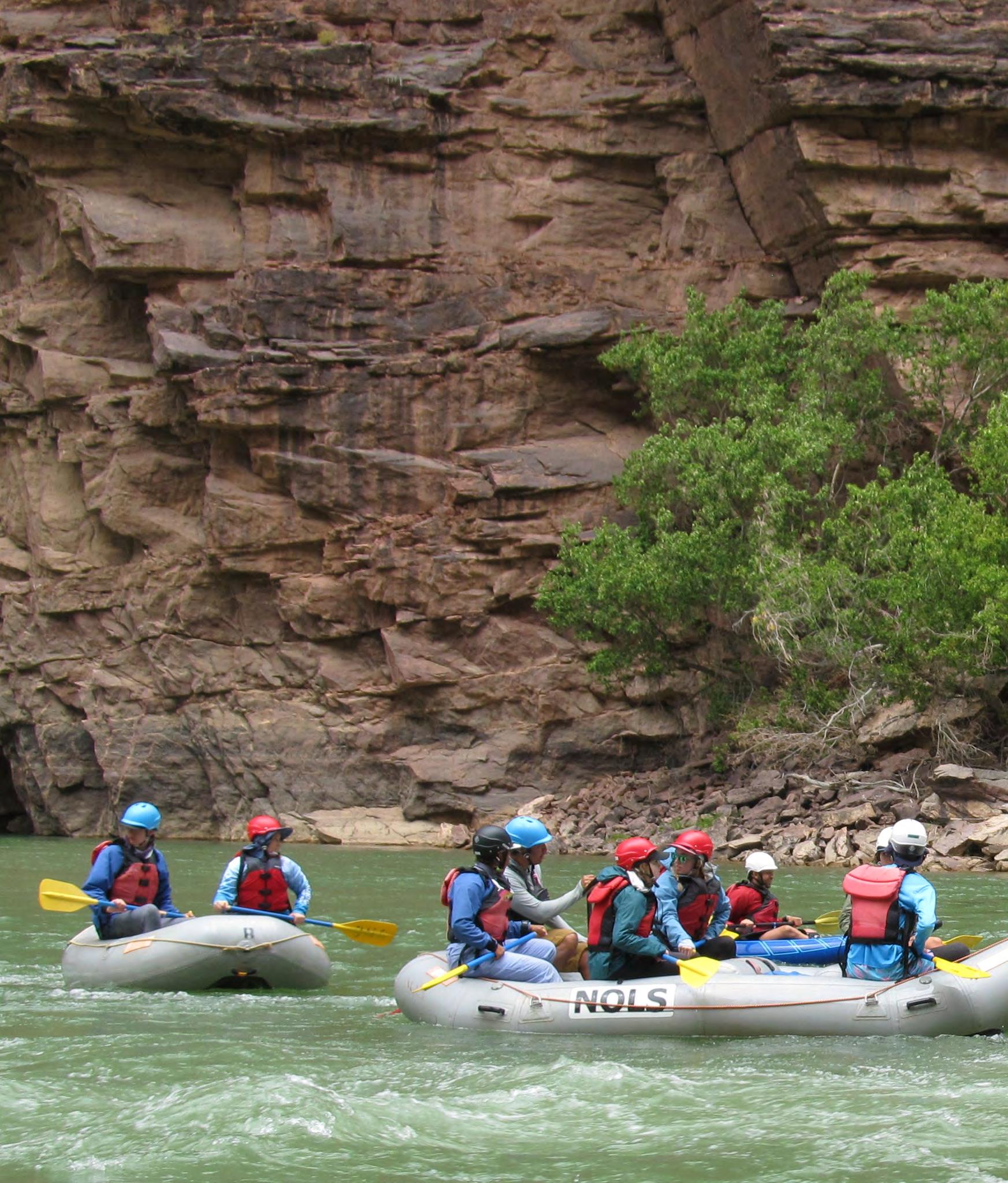
This past summer, twelve University of Colorado Boulder students left the classroom for a week on Utah’s Green River. The River Conservation Leadership Expedition— organized by CU Boulder’s Center for Leadership in partnership with American Rivers and NOLS—combined backcountry training with lessons in environmental leadership.
Over the course of the trip, students practiced paddling and river safety skills, but the focus extended beyond technical training. Through daily leadership rotations and structured discussions, they examined how water rights, climate change, and Indigenous perspectives are shaping the future of conservation in the American West.
Seth Webb, academic director at CU’s Center for Leadership, said the goal was to prepare students for both the local and global challenges they will face in the decades ahead.
“Here in the drought-stricken American West, there is an imperative to combine leadership with sustainability,” Webb said. “We need to prepare students across industries and communities to lead in ways that the earth and its increasingly complex issues demand.”
The Colorado River Basin provided a particularly poignant backdrop for that experience. Persistent drought and overuse have depleted its flows, placing stress on the river system that supports 40 million people and crucial food production. Webb said conducting the expedition on the Green River allowed students to see those pressures up close.
Working with NOLS and American Rivers added real depth to that experience, said Webb. NOLS brought its wellestablished leadership framework, which asks participants to rotate through roles as designated leaders, peer leaders, self-leaders, and active followers. Students managed decisions such as how to scout rapids, set up camp, and divide responsibilities. Meanwhile, staff from American Rivers connected the group’s experiences on the water to
broader conservation challenges. Mike Fiebig, director of the group’s Southwest River Protection Program and a former NOLS instructor, joined the expedition.
“We sometimes forget that we all live in a watershed,” Fiebig said. “When we lose sight of that, it’s too easy to become disconnected from each other and ourselves. Courses like this connect the dots and show the interconnectedness of the future of our society, our economy, and our planet.”
“Partnering with NOLS and utilizing the organization’s expertise is a natural way to encourage our students to understand themselves better—both as individual leaders and as members of a group, whether that’s in an expedition setting or beyond.”
- SETH WEBB, University of Colorado
Each evening, the group gathered on the riverbank to discuss case studies and controversies: why certain dams were built or removed, what it means to restore free-flowing rivers, and how Indigenous knowledge can shape decision-making. Students also explored how best to adapt their leadership practices to address real-world environmental issues.
Corrina Schell, a senior studying Economics and Environmental Studies, said the expedition demonstrated just how connected contemporary questions of conservation and leadership are in the 21st century.
“With so much change happening in the world, leaders need to be flexible, have an open mind, and be ready to pivot,” she said. “Not only did we experience working and living together as a group, but we also learned how to accommodate change and adapt to any new circumstance. Those are going to be especially important skills for tomorrow’s leaders.”
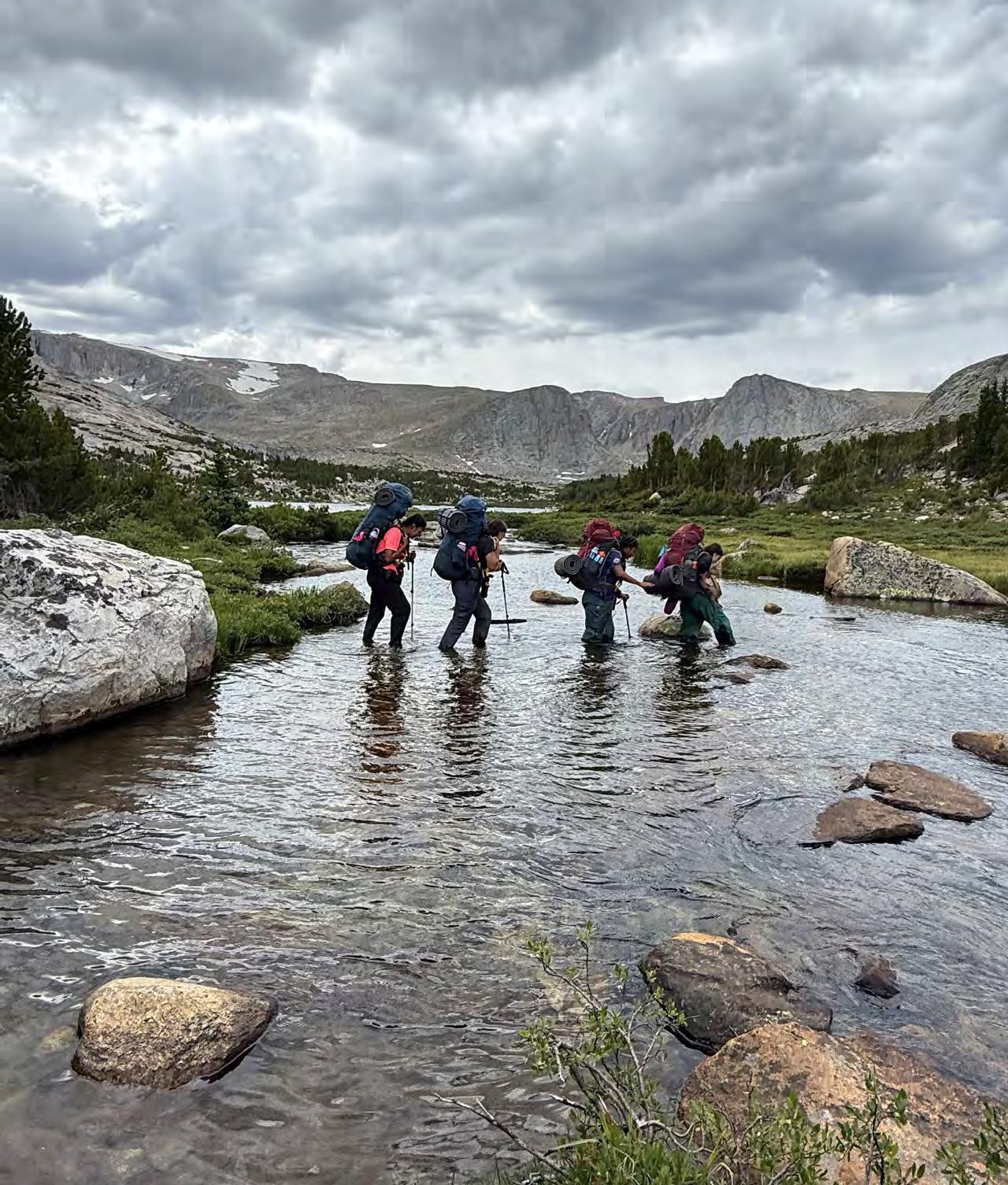
In 2025, NOLS received a $75,000 SMBC Building Resilient Futures grant to expand access to our Peak Scholars program, part of the broader Access Partner initiative. The funding provided ten additional full-tuition scholarships, including two for C5 alumni, along with support for new partner organizations.
CUSTOM

Joy Flores
CUSTOM EDUCATION
711 FIELD STUDENTS FIELD COURSES DAYS IN FIELD FY25
8,444
72
NOLS Custom Education partners with teams to create transformative wilderness expeditions that develop leadership, communication, and resilience. These expeditions, from backpacking in Wyoming’s Wind River Range to sea kayaking in the Prince William Sound of Alaska to trekking and homestays in Tanzania, immerse students in remote environments where they grow through challenge, teamwork, and self-discovery.
During this past year, NOLS continued deep and valued partnerships with schools and organizations, including Pittsburgh Youth Leadership (whose students ride their bikes from the east coast to Lander, before embarking on a backpacking expedition). We also partnered with Alaska’s North Slope Borough, the northernmost municipality in the United States, in order to support fourteen Alaska Native students on an expedition in the Talkeetna Mountains. We continue to work with university scholar programs, including Robertson, Morehead Cain, and Levine Scholars from North Carolina universities.
Fiscal year 2025 also marked our tenth anniversary working with the Association of C5 Youth Programs, a nonprofit organization that supports emerging teen leaders from under-resourced communities. We’ve supported over two thousand C5 students on wilderness expeditions to date. In addition to running multiple C5 courses this year, we were also able to support two C5 alumni on 21-day NOLS expeditions, thanks to generous scholarship contributions.
“Our students return from expeditions with a deeper understanding of themselves and others. Through hands-on learning and awe-inspiring adventures, NOLS Custom Education equips the next generation of leaders to thrive—in the outdoors and beyond.”
- LAURA HANSEN, Director of Custom Education and Field Instructor
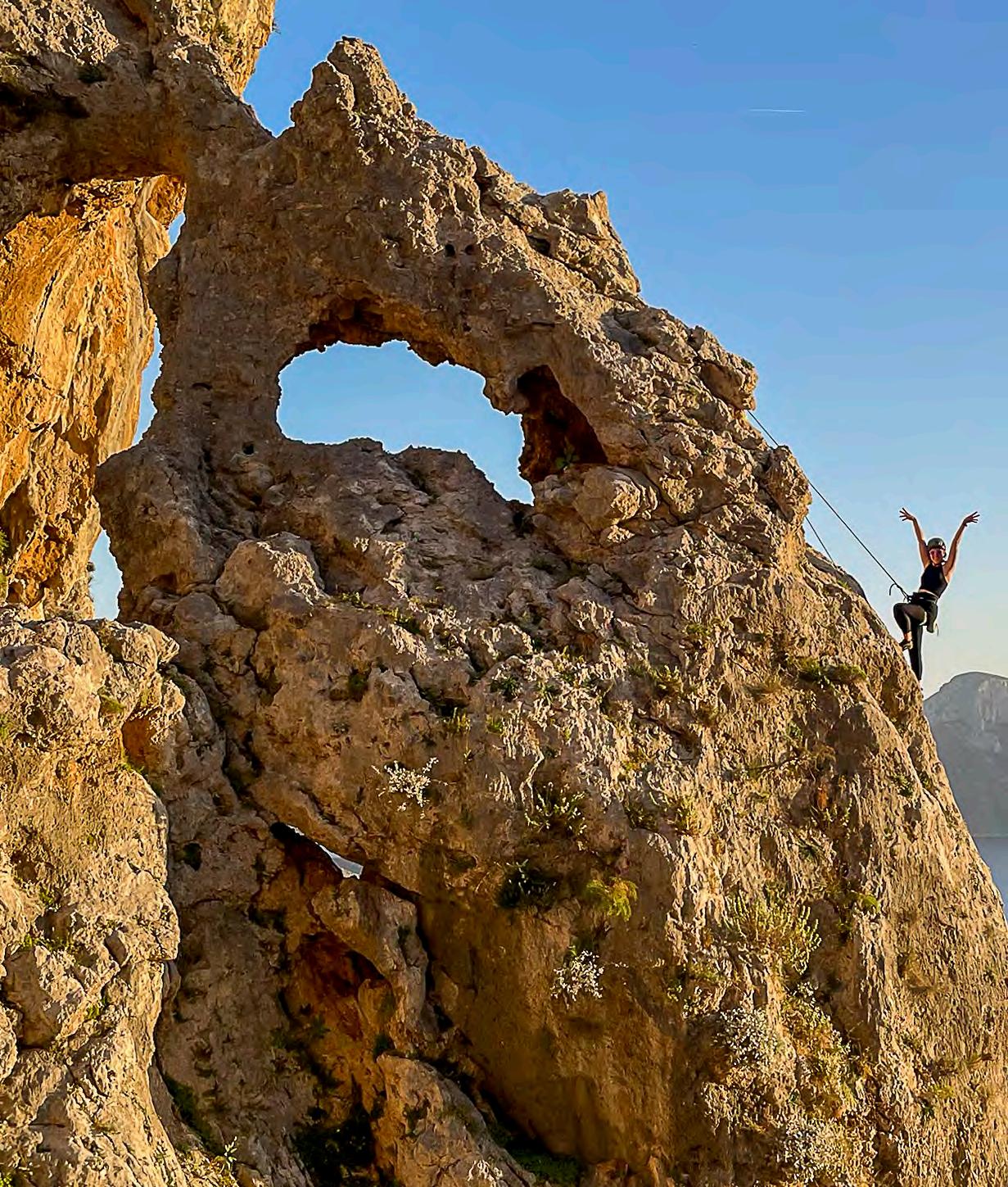

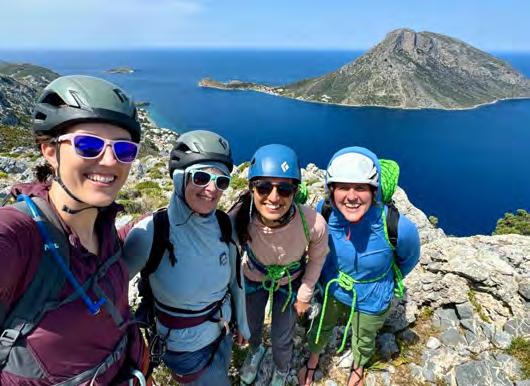
For sport climbers, Kalymnos, Greece, is a dream destination. Its limestone cliffs tower above the turquoise waters of the Aegean and include features rarely seen elsewhere. Off belay, the island’s small-town vibe offers visitors a unique opportunity to enjoy traditional Greek culture in a way that feels particularly rich and authentic.
This spring, NOLS offered its first alumni climbing trip to Kalymnos: eight days of skill-building, community, and unforgettable landscapes, led by veteran instructors Jackie Smith and Liz Tuohy.
Participants stayed in the village of Masouri, where narrow streets lined with tavernas and coffee shops are shadowed by some of the world’s best crags. The group explored a different region of the island each day, practicing knots, belaying, and lead climbing. Instruction focused on building confidence and technical competence. The bolting ethic on Kalymnos, which is well suited for lead climbers of all abilities, meant participants could safely test their limits, all while experiencing an iconic Mediterranean landscape.
“Climbing took us to places that I don’t think a normal tourist would find themselves,” says instructor Jackie Smith. “It’s a very cool way to see an island, especially one as distinct as this one.”
For centuries, Kalymnos’s economy was based on the sea sponge trade. However, a confluence of climate change and a rise in synthetic sponges dried up the industry, leaving the island teetering on depression. In the 1990s, an intrepid Italian climber changed all of that by creating a series of
bolted pitches. Soon news spread, making Kalymnos the hub of European sport climbing. Today, the island boasts over 4,500 different routes.
“From a NOLS support standpoint, it’s easy to give people high outcomes in a short amount of time in an environment like this,” says Liz Tuohy. “The ethic of sport climbing in Europe is super family oriented—it’s very accessible, it’s easy to manage risk, and it brings together a global community with a shared conservation ethic.”
“In addition to being beautiful, Kalymnos offers world class climbing, really great food, and small town hospitality.”
- JACKIE SMITH, NOLS Instructor
Downtime on the island reflects those same values. While neighboring islands thrum with late-night clubs, here the busiest spots are bakeries serving baklava and restaurants featuring local seafood. Most mornings, the NOLS group stopped at a roadside stand to buy homemade spinach pies before continuing to their first climb. At the end of the day, they’d dip in the sea, then spend their evenings befriending local cats and dining alfresco.
“It seemed like just the right sweet spot between being on a NOLS expedition and a really great vacation,” says Liz. “Participants could benefit from all of the personal development you get on a NOLS course while also enjoying some luxurious recreation as well.”
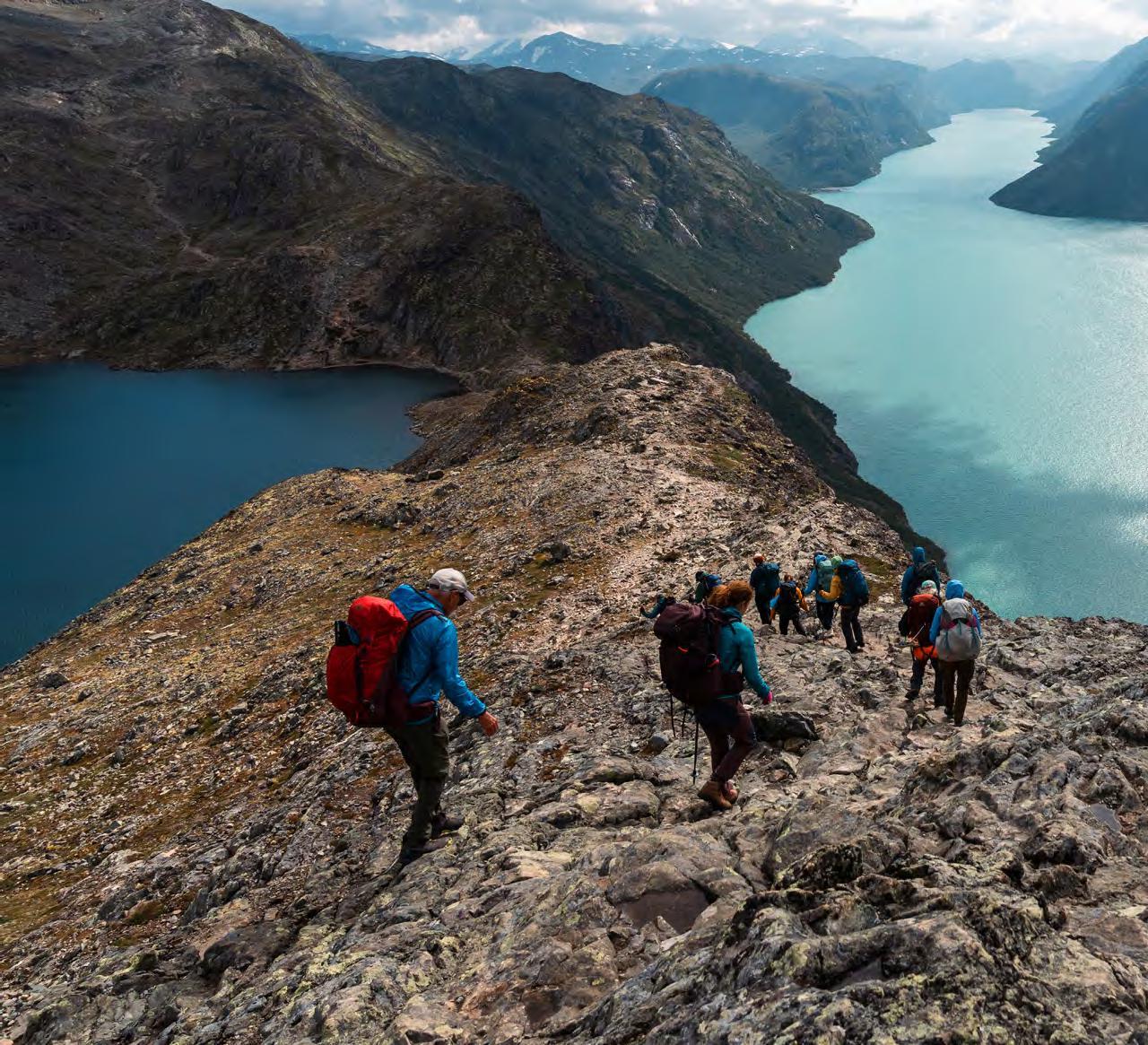
Alumni trips combine the best of travel with the reliability of NOLS planning. We take you to incredible destinations, handle all the logistics, and bring knowledgeable, engaging instructors. Best of all, you’ll be joining a group of like-minded individuals. Our trips are seamless, professionally run, embedded in adventure—and a whole lot of fun.
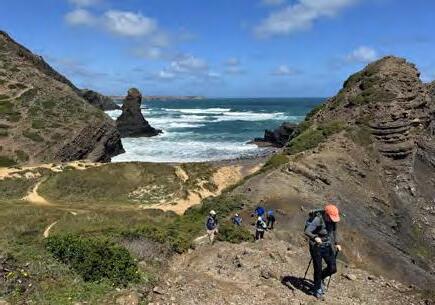
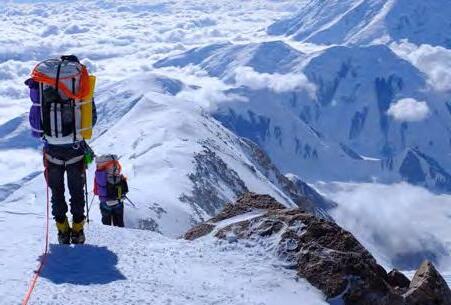

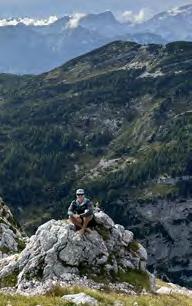
ALUMNI TRIPS
FY25
64
ALUMNI TRIPS 513
ALUMNI PARTICIPANTS
20 COUNTRIES VISITED
This year, NOLS alumni and their companions shared in a spirit of adventure that stretched across continents. Six custom private trips and five brand-new itineraries made this year one of our most dynamic yet: participants backpacked across Nepal, went on safari in Tanzania, and skied off-piste in Japan.
Alumni trips, usually a week long, are more than vacations—they are living classrooms. Through a mix of information instruction, a refresh on technical skills, and opportunities for cultural explorations, participants can deepen their knowledge while also forging new friendships. The mix of participants, from twenty-somethings to seventy-somethings, creates a rare, cross-generational community that travelers consistently celebrate as a highlight.
In the coming year, we’re excited to offer trips ranging from climbing the cliffs of Greece and skiing under Sweden’s Northern Lights, along with our most ambitious journey yet: a three-month Inside Passage kayaking expedition from Washington to Alaska spanning May through August 2026.
“Alumni trips are the best way to continue your connection with NOLS—to keep pushing your limits and grow your global community of fellow adventurers.”
- KELLSIE FORBES, Alumni Trips Director
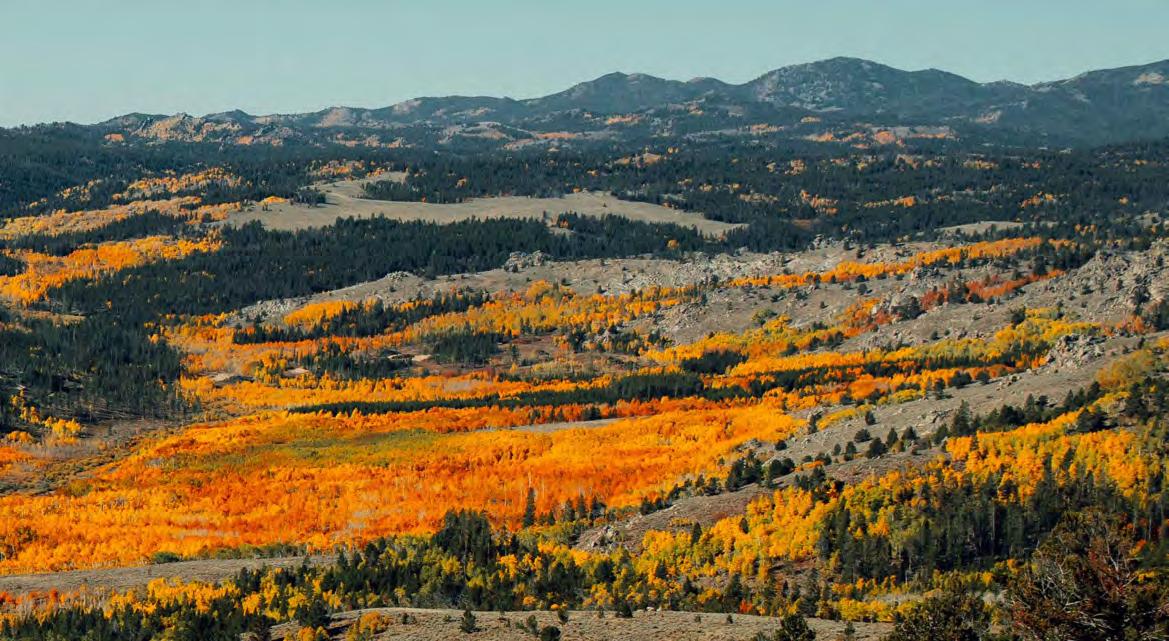
Photos by Reece Robinson
NOLS’s 60th Anniversary celebration in Lander, Wyoming, brought together over 750 members of our community, including alumni from our very first course and current students in the midst of their own semester expedition. The multi-day gathering captured the essence of NOLS: connection, reflection, and a shared commitment to leadership and wilderness education.
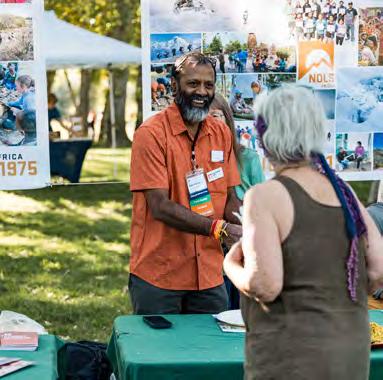
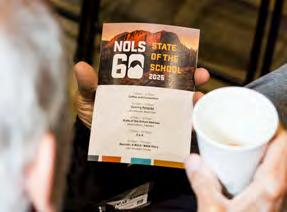
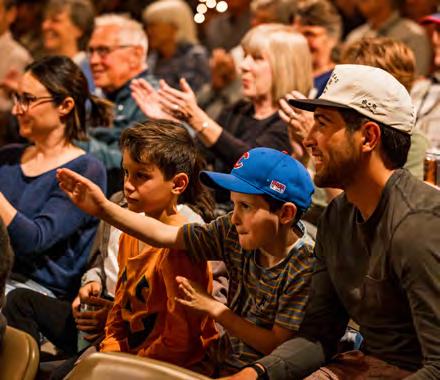
1 | Ravi Kumar, Director of NOLS India, greeted friends at Trail Mix.
2| Programming included talks by outdoor leaders, along with faculty awards, a state of the school presentation, and plenty of time for laughter and reminiscence.
3 | Lander’s own Pushroot Brewing Company created our signature brew.
4 | A new generation of NOLSies share in the fun.
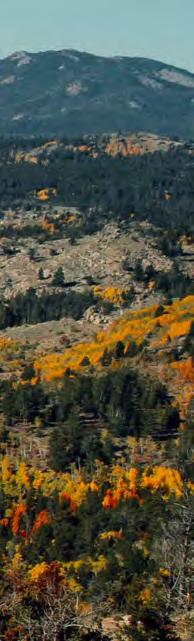
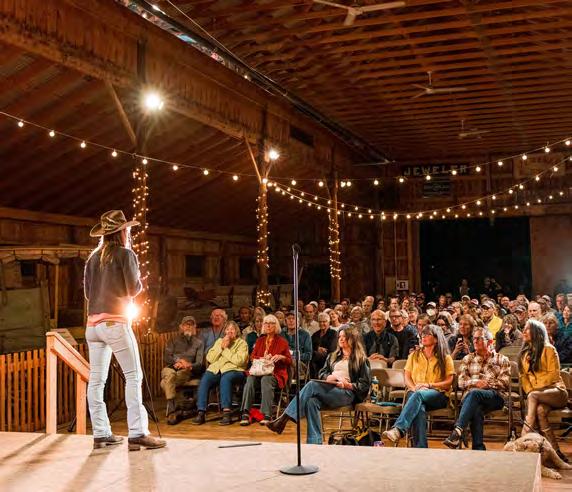
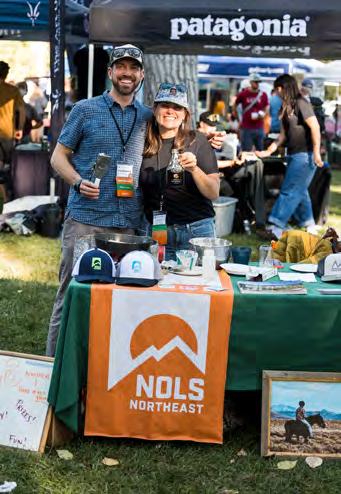
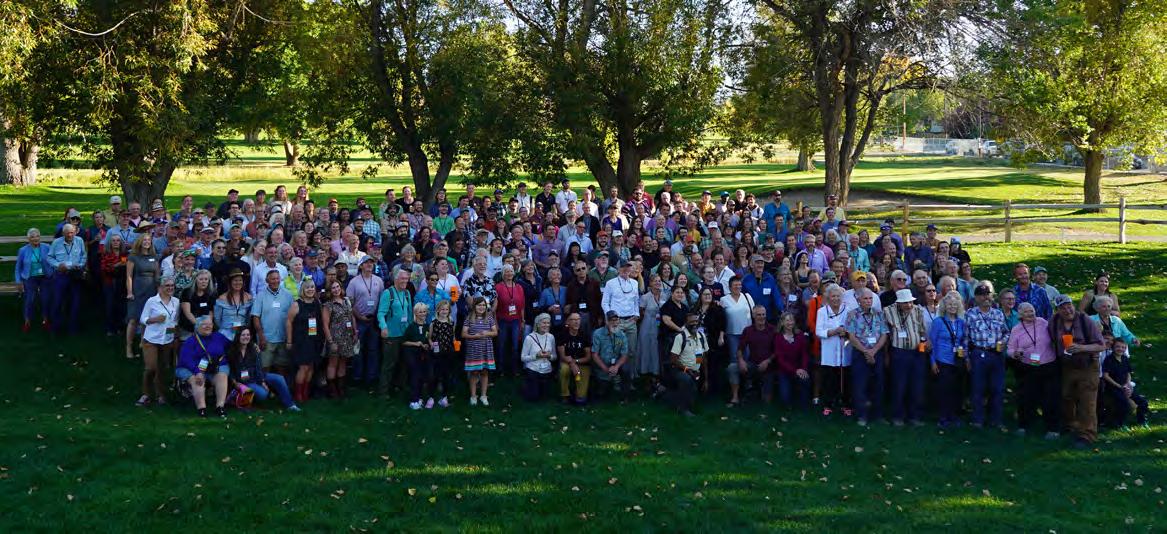
During their state of the school presentation, NOLS board chair John Babcock and president Sandy Colhoun shared notable milestones in the school’s history as well as opportunities for future growth.
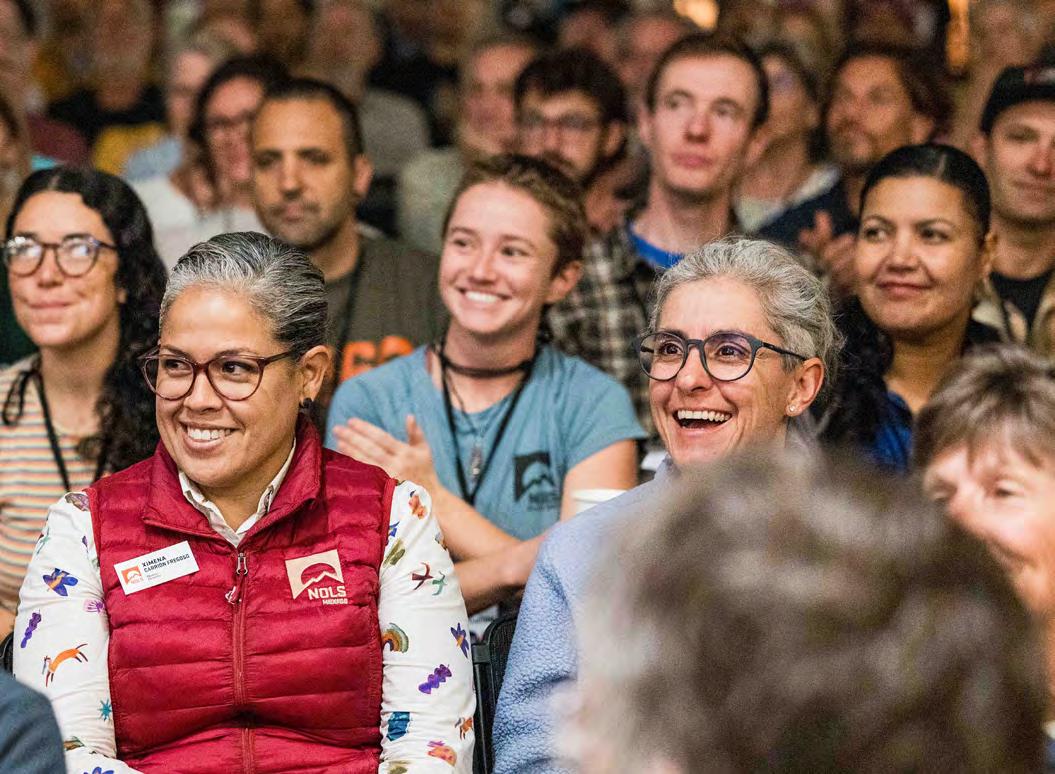
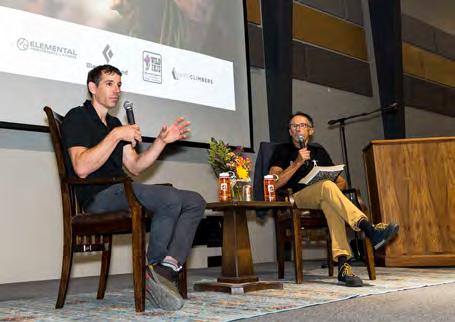
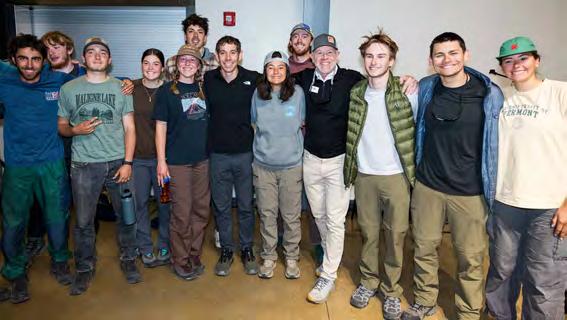
In a plenary session, legendary climber Alex Honnold and Black Diamond co-founder Peter Metcalf discussed the world of rock climbing and emerging trends in outdoor recreation. Afterwards, they were joined by President Sandy Colhoun, along with current NOLS students.
BE LIKE BILL. AT 78, HE’S STILL CLIMBING. PROOF THAT NOLS LESSONS LAST A LIFETIME. HIS LEGACY GIFT ENSURES OTHER STUDENTS GET THE SAME CHANCE.
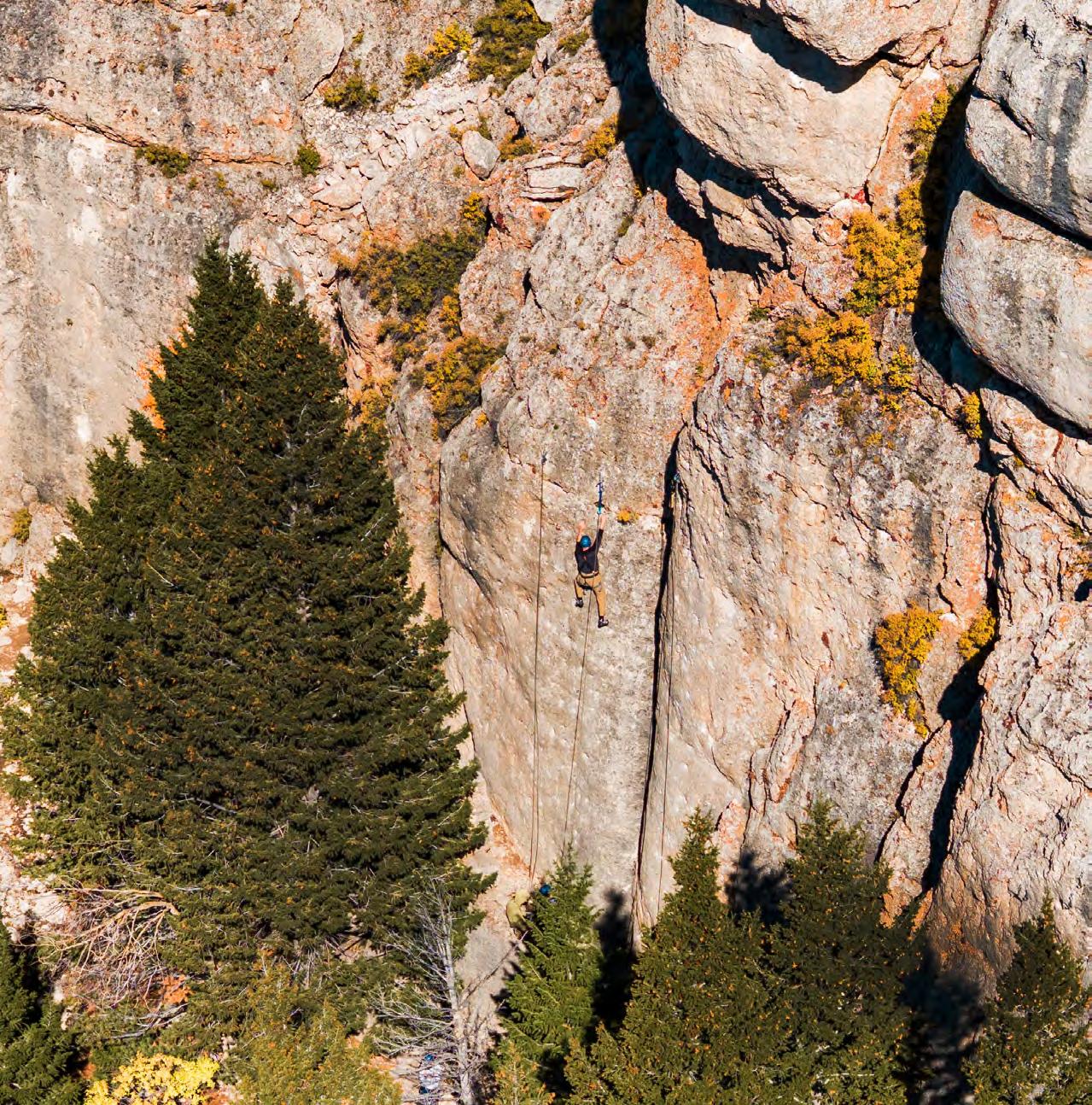
PLANNED GIVING TO NOLS
By making a planned gift to NOLS, you help future leaders discover confidence, character, and connection through wilderness education. Include NOLS in your estate or retirement plans to create a legacy that endures for generations.
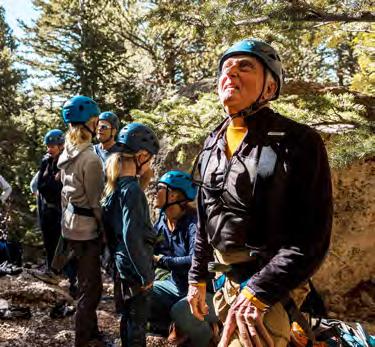
“NOLS shaped how I approach challenge and joy. Decades after my first course in ’84, I’m still learning with NOLS. Supporting future students feels like coming full circle.”
- BILL ABNEY NOLS 1984 Alum
By Anne McGowan
innamon rolls are a delight anytime, but while camping they can seem especially indulgent. Ask former NOLS expedition students what they most remember from their experience, and many will recall the joy of biting into a warm and gooey roll, redolent of sugar and cinnamon: the perfect start to a long day paddling, climbing, or on the trail.
However, cinnamon rolls haven’t always been a delight for all: food sensitivities, such as to gluten and dairy, have increased worldwide in recent years, and that’s been true for NOLS students as well. John Sims, Rations Manager at NOLS Rocky Mountain’s Gourmet Gulch, estimates close to 30 percent of current students and instructors report dietary restrictions. The organization, he says, is committed to ensuring no one misses out on special treats or compromises their nutrition while on a course.
“At NOLS, we want to make sure everyone going into the field feels safe and cared for,” says Sims. “Food is such a foundational element to how we show up in the world, and we believe in making sure everyone has the opportunity to participate without feeling limited by what they can eat.”
With over two million meals prepared in the wilderness, NOLS speaks with authority on the art of backcountry cooking.
To accommodate the rise in food sensitivities, NOLS has adapted many of our most beloved recipes, including our legendary cinnamon rolls. Here we offer both the traditional and gluten-free recipe. Either can be made dairy free by substituting margarine and plant-based powdered milk.
Want to harness 60 years of expertise from tens of thousands of NOLS instructors? Check out the NOLS bookstore. Our award-winning publications are steeped in research, field-tested, and support every stage of adventure, from learning to planning to emergency decisions in the field.
Traditional frontcountry books offer deep dives: how to research and plan your next expedition, where to find quality information for wilderness navigation, or technical skills (transitioning from the climbing gym to real rock, canoeing in ice, etc.). Our pocket guides are ideal for lightweight travel. All NOLS publications help readers grow in self-sufficiency and decision-making skills. Incorporate NOLS knowledge into your next trip.
CHECK OUT THE NOLS LIBRARY!

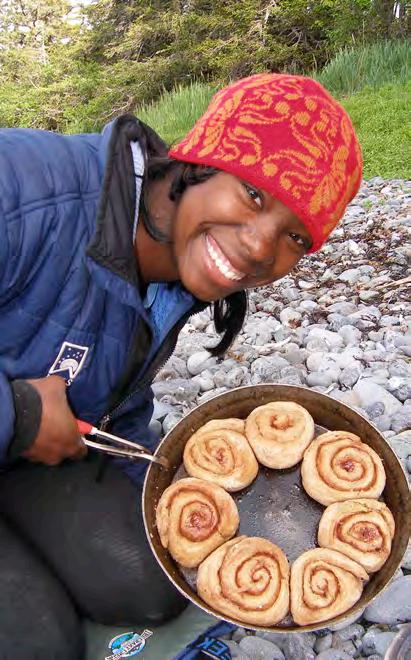
STEP 1
Dissolve yeast in lukewarm water with sugar and salt.
STEP 2
Cover and let sit in a warm spot for five minutes or until mixture froths.
STEP 3
To the yeast mixture, add oil and half of the flour, along with baking powder (if following the GF recipe). Mix thoroughly.
STEP 4
FOR TRADITIONAL DOUGH:
1 tablespoon yeast (1 packet)
1 ½ cups lukewarm water
2 teaspoons salt
2 tablespoons butter or oil
½ cup sugar
3 ½ cups flour
FOR GLUTEN FREE DOUGH:
2 tablespoon yeast (2 packets)
1 tablespoon baking powder
½ cup lukewarm water
2 teaspoons salt
3 ½ - 4 cups gluten free flour mix
½ cup sugar
FOR THE FILLING:
4 tablespoons butter
1 cup brown sugar
1 tablespoon cinnamon
FOR THE ICING:
1 cup melted butter
4 tablespoons milk powder or coconut milk powder
1 cup cold water
2 tablespoons dried lemon powder
1 teaspoon baking powder
1 teaspoon vanilla
Slowly add remaining flour (dough should be firm and only slightly sticky). Turn onto a floured surface and knead until uniform and springy.
STEP 5
Cover dough and let rest for 30 minutes or until dough has doubled in size.
STEP 6
While the dough is rising, prepare the filling by mixing butter, brown sugar, and cinnamon until creamy.
STEP 7
In a small pot, combine all icing ingredients and cook, stirring constantly, until mixture is melted and smooth. Remove from heat.
STEP 8
After the dough has risen, punch it down, and roll out into a large rectangle, approximately ½ inch thick. Spread the filling evenly over the dough.
STEP 9
Roll up the rectangle “jellyroll” style, pinching the dough’s edge closed to contain the filling. Slice roll into 1-inch slices and place the slices in a greased pan (dental floss works well for slicing).
STEP 10
If cooking outside on a twiggy fire, cover and bake for 25-30 minutes OR cook on one side for a few minutes, then flip to the other side. (Recipe can be modified for indoor cooking by first placing rolls in a greased 9x13 inch pan and then baking at 375 °F for approximately 30 minutes).
STEP 11
Once rolls have cooled slightly, top with icing and serve.
Dear NOLS Community,
This is my first message as board chair, and I want to begin with gratitude: for the school that has shaped so many lives (including my own), and for all the people who make that experience possible.
Several months ago, members of the Board of Trustees traveled to Alaska to experience a NOLS course firsthand. We sea kayaked through breathtaking fjords. We endured days and days of rain, yet still found joy in being together on remote pebble beaches. It was a profound experience that brought back memories of my first NOLS expedition.
After graduating college in 1991, I enrolled in a semester-long NOLS course in the American Southwest. The experience transformed me: I learned to listen, hike, cave, and climb—and to persevere. Most of all, I found that communities living by the code of Expedition Behavior bring out the best in one another.
Thirty-five years later, I am honored to take the helm of this extraordinary school. NOLS is beginning an exciting new chapter, one shaped by innovation, investment, and vision. It’s a future built on the shoulders of giants, including individuals like Dr. Stuart Harris, my predecessor. For three years Stuart framed every issue with the question, “Does it serve the NOLS Mission?” That clarity guided NOLS through challenges and created a path for future growth and opportunity.
As we look towards the next six decades of the school, it is with the awareness that our mission is more essential than ever. In an era where many young people are being raised to avoid any risk, where their connections are often virtual but not meaningful, NOLS remains committed to something different. Something tangible. Something real.
I’m glad to be a part of that mission. And I’m humbled by the people who make it possible. Thank you to President Sandy Colhoun and his leadership team. Their energy, creativity, and focus produced another record fundraising year and real promise for the future. Our staff, instructors, and donors are the continued heartbeat of the school: their dedication and hard work changes lives and ensures that the next generation of students can have the same transformative opportunities that so shaped me.
The world needs NOLS. The world needs more of the leaders it graduates every year. And NOLS needs all of you.
With appreciation and optimism,
John Babcock Board Chair
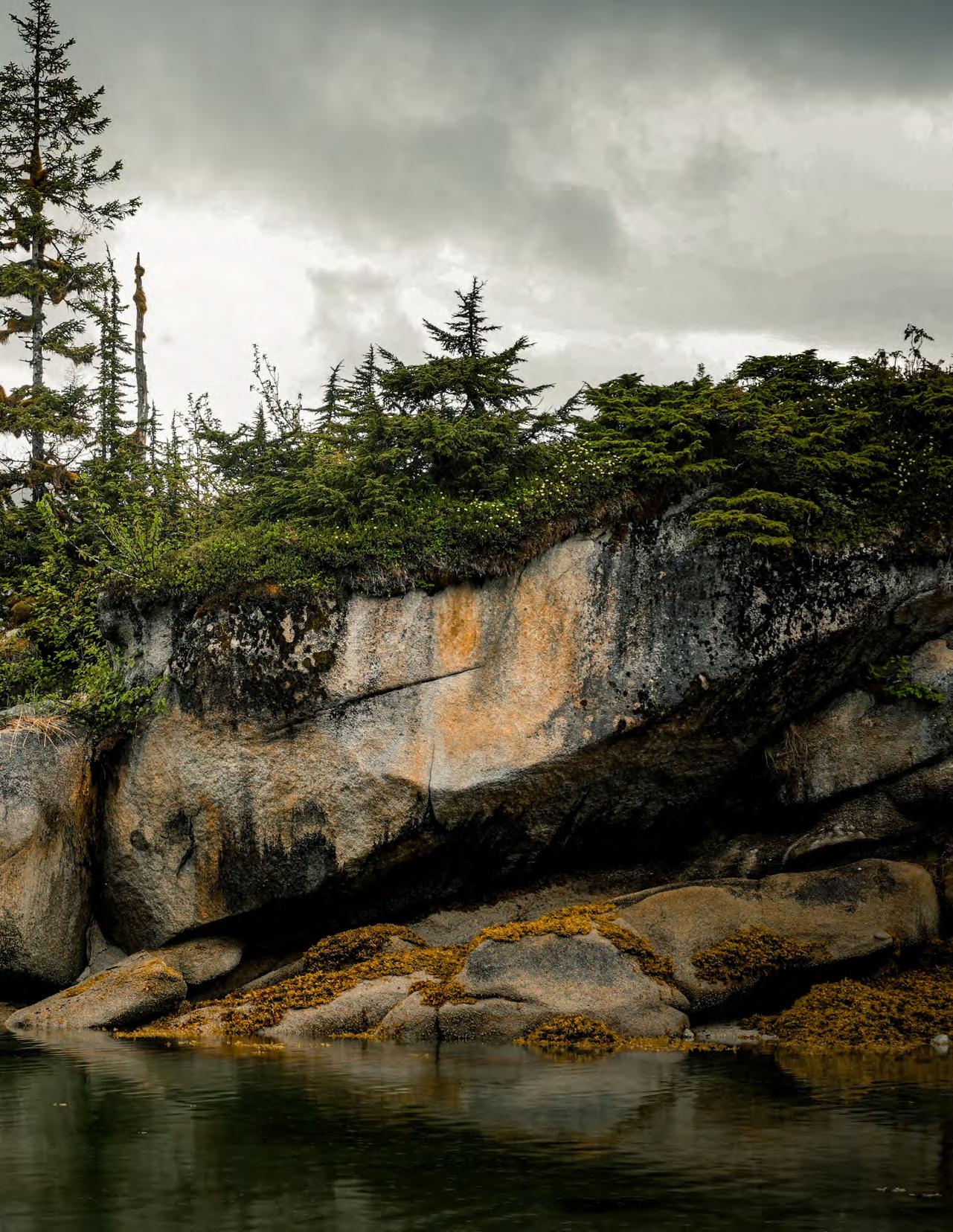
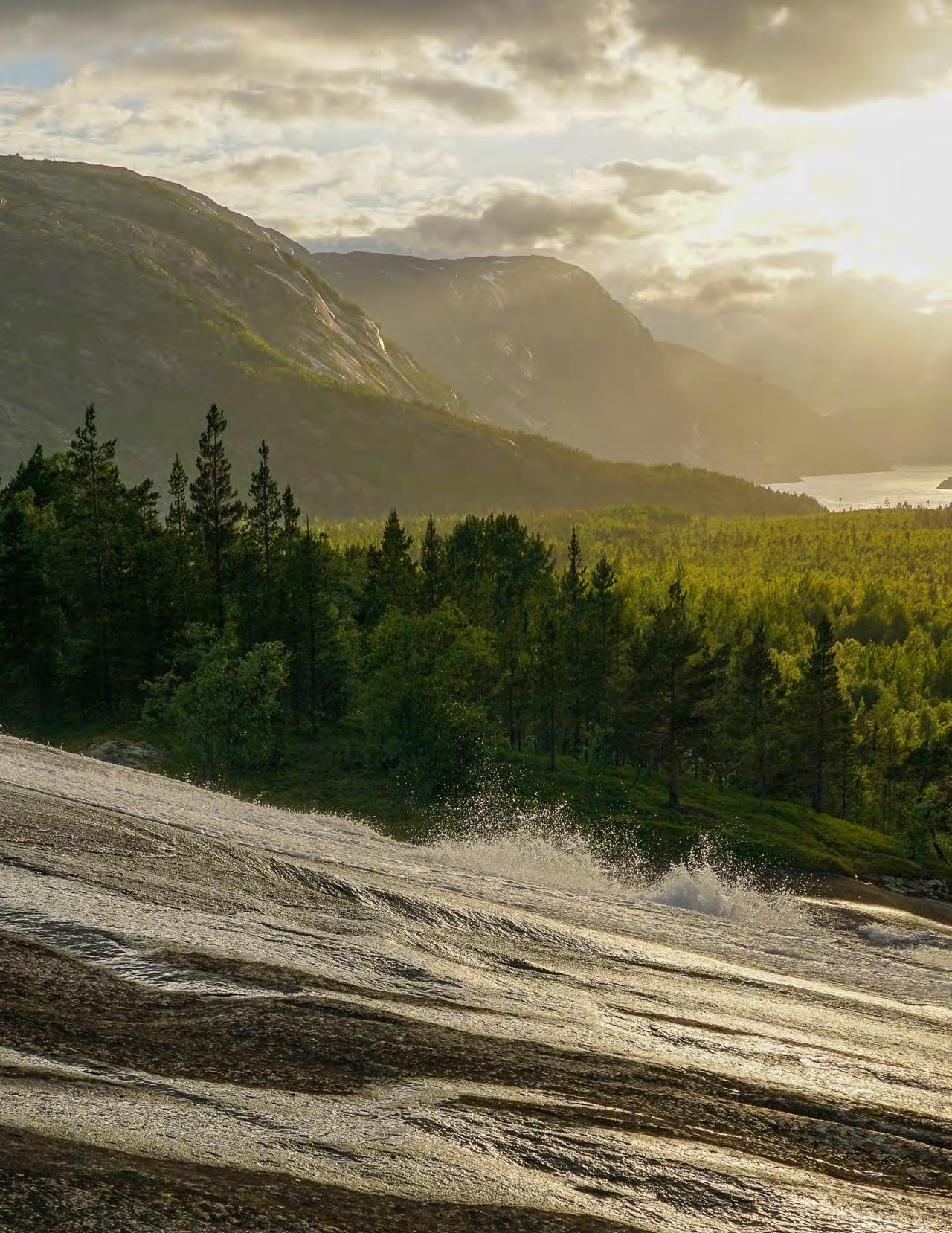
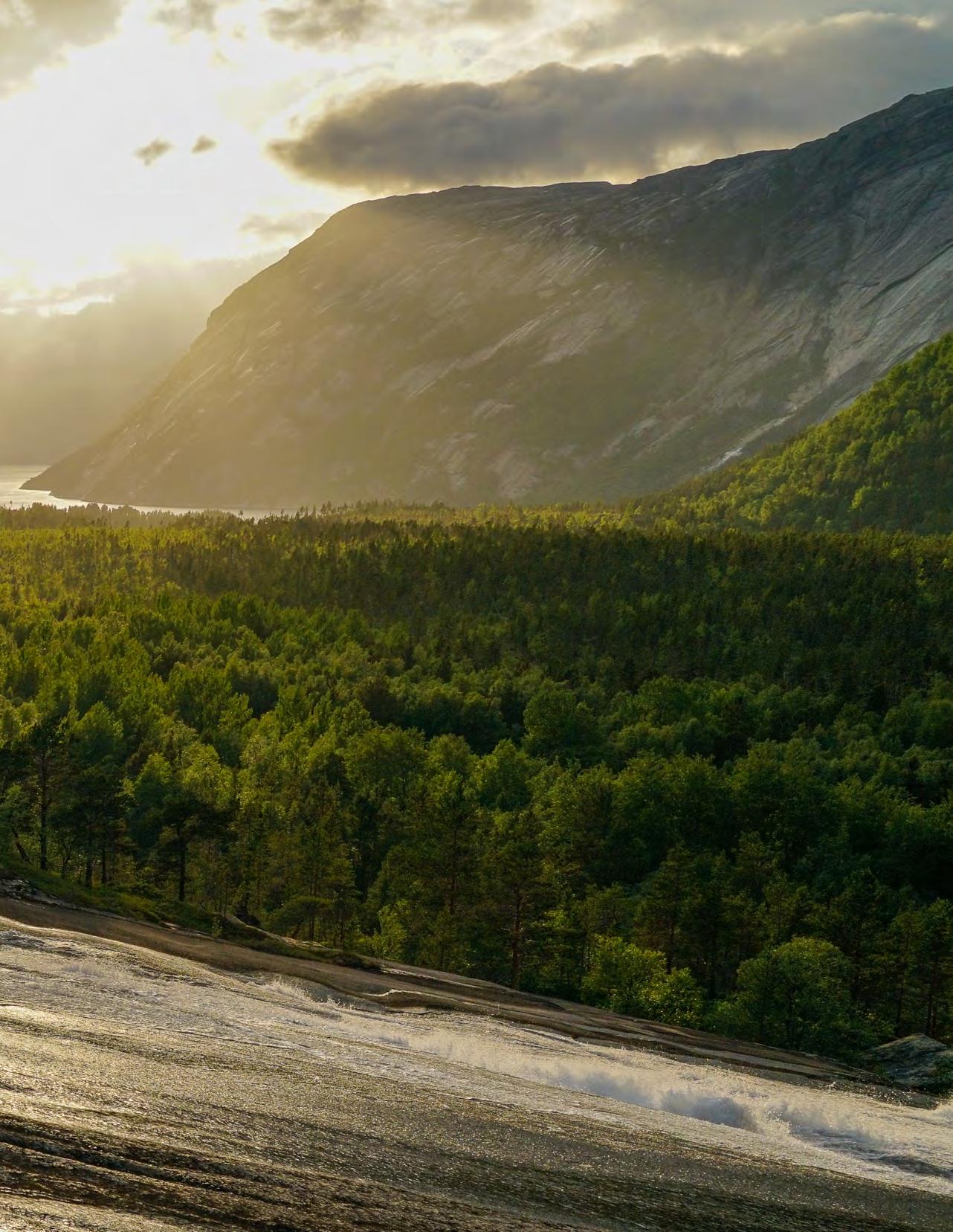
“In a world that moves all too quickly, wilderness slows us down. It reminds us that leadership begins with awareness, connection, and courage. These are the values that define NOLS.”
– SANDY COLHOUN, NOLS President
284 LINCOLN ST. LANDER, WY 82520, USA
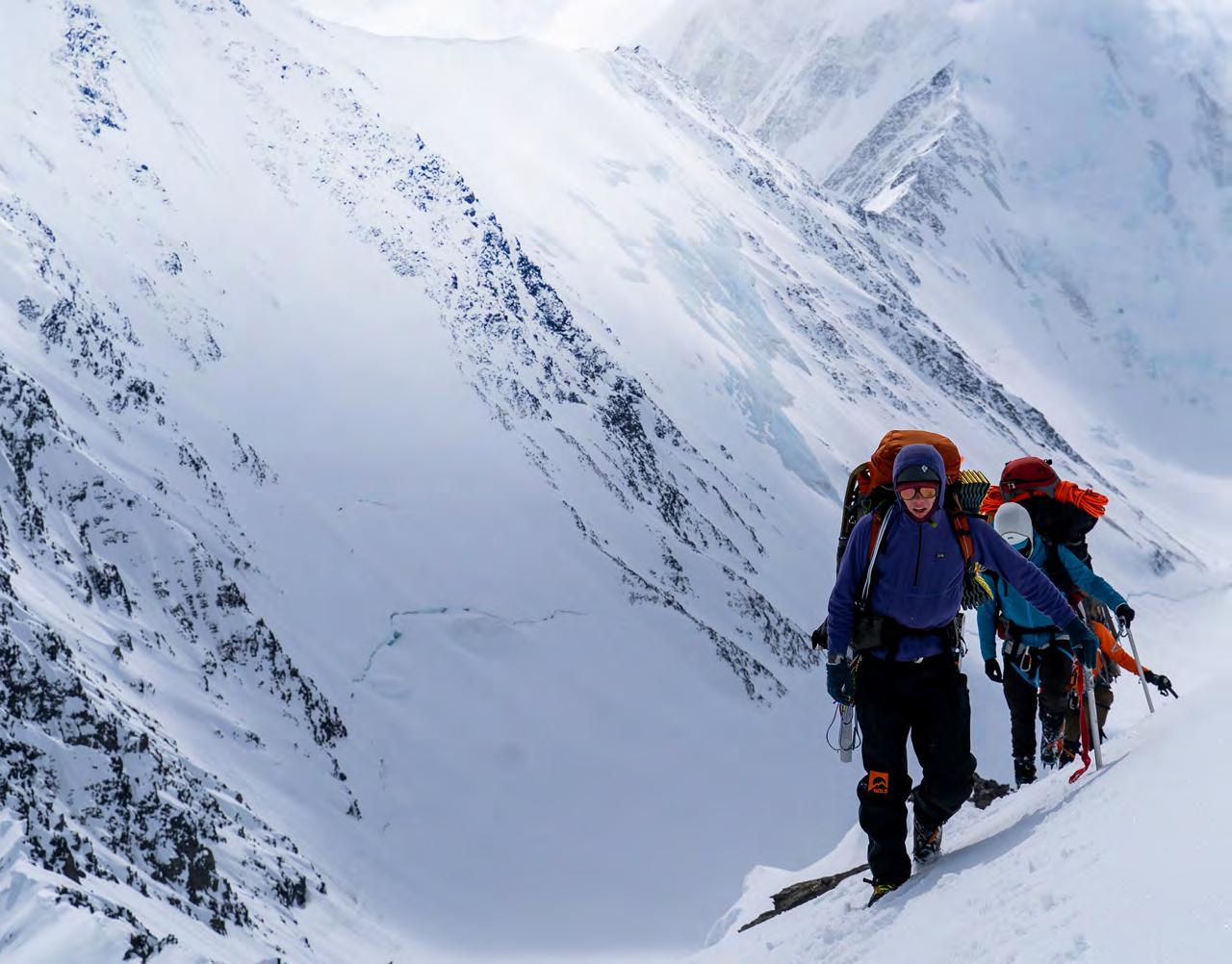
The wilderness is a catalyst for leadership.
In today’s complicated and often divisive world, the need for NOLS leadership has never been greater.
Our graduates step into communities, workplaces, and civic life as leaders who can work through conflict, remain resilient in the face of challenge, and bring grit and tolerance for adversity to every situation. When you invest in the NOLS FUND, you help prepare a generation of leaders who know how to navigate uncertainty and build stronger communities.
• Scan the QR code
• Make an online gift at nols.edu/donate
• Mail a check to 284 Lincoln St, Lander, WY 82520
• Call us at 1.800.332.4280