NM Stockman | 03-2025

Page 1


NEW MEXICO

STOCKMAN

P.O. Box 7127, Albuquerque, NM 87194

505-243-9515 Fax: 505-349-3060

E-mail: caren@aaalivestock.com

Official publication of ...

n New Mexico Cattle Growers’ Association nmcga20@gmail.com

P.O. Box 850, Moriarty NM 87035 Office: 505.247.0584 , Fax: 505.842.1766

Physical Location: 809 First Street, Moriarty NM 87035 President, Bronson Corn

n New Mexico Wool Growers, Inc. nmwgi@nmagriculture.org

P.O. Box 850, Moriarty NM 87035 Office: 505.247.0584 , Fax: 505.842.1766

Physical Location 809 First Street, Moriarty NM 87035 President, Antonio Manzanares

n New Mexico Federal Lands Council newmexicofederallandscouncil@gmail.com 3417 Avenida Charada NW, Albuquerque, NM 87107

President, Ty Bays

EDITORIAL & ADVERTISING

Publisher: Caren Cowan

Publisher Emeritus: Chuck Stocks

Advertising Representatives: Chris Martinez Melinda Martinez

Contributing Editors: Carol Wilson Callie Gnatkowski-Gibson Howard Hutchinson Lee Pitts

PRODUCTION

Production Coordinator: Carol Pendleton

Editorial & Advertising Design: Kristy Hinds

ADVERTISING SALES

Chris Martinez at 505-243-9515 or chris@aaalivestock.com

New Mexico Stockman (USPS 381-580)

is published monthly by Caren Cowan, P.O. Box 7127 Albuquerque, NM 87194

Subscription price: 1 year hard copy and digital access $50, Digital access $30 Single issue price $10, Directory price $30 Subscriptions are non-refundable and may be purchased at www.aaalivestock.com

POSTMASTER: Send address changes to New Mexico Stockman, P.O. Box 7127, Albuquerque, NM 87194. Periodicals Postage paid at Albuquerque, New Mexico, and additional mailing offices. Copyright© 2015 by New Mexico Stockman. Material may not be used without permission of the publisher. Deadline for editorial and advertising copy, changes and cancellations is the 10th of the month preceding publication. Advertising rates on request.

DEPARTMENTS

10 NMCGA President’s Message by Bronson Corn, President

12 Just the Facts ... & Then Some by Caren Cowan, Publisher New Mexico Stockman

14 New Mexico CowBelles Jingle Jangle

24 In Memoriam

28 New Mexico’s Old Times & Old Timers by Don Bullis

33 New Mexico Beef Council Bullhorn

38 News Update: Meat Production; Broiler Eggs; Mexican Cattle Imports

45 Food & Fodder by Deanna Dickinson McCall

54 New Mexico Federal Lands News by Jerry Schickedanz

55 Riding Herd by Lee Pitts

60 Marketplace

62 Seedstock Guide

65 Real Estate Guide

72 View from the Backside by Barry Denton

96 In The Arena by Sage Faulkner

98 Advertisers’ Index

FEATURES

18 Building Blocks: Why Commercial Cattlemen Should Consider Santa Gertrudis by Jessica Wesson, Santa Gertrudis Source Contributing Writer

22 Heritage Buckle Contest Applications Are Open

22 NMCGA Allied Industry Committee to Host College Interns at 2025 Mid-Year Meeting

24 New Beef Origin Labeling Gets Mixed Reception by Frank Fuhrig, meatingplace.com

26 Brangus Genetics Dominate 34th Annual San Antonio Livestock Show & Rodeo Sale

30 Berlier Wins Olin Sims Conservation Leadership Award

35 Limousin Leads Way in Collecting Carcass Data by the North American Limousin Foundation

18 Building Blocks

46 Emerging Data Begins to Quantify Value... Beef & Dairy Crossbred Cattle Bring to US Beef Supply Chain

Source: CoBank

47 Conservation Easements: The Land Grab That Must Be Stopped by Tom DeWeese, American Policy Center

50 Fix Our Forests Act: Strengthening Wildfire Resilience Through Fireshed Management by Nick Smith, Healthy Forests Healthy Communities

51 Social License to Operate: Negotiating With People Who Seek Our Demise

Source: Western Justice

55 Sweet Molasses Feed Key to Understanding Grazing Behavior in Cattle

Source: morningagclips.com

58 The Return of the CTA: FinCEN Confirms that Beneficial Ownership Information Reporting Requirements are Back in Effect with a New Deadline of March 21, 2025 by Nika Palama, Jeff Gardner, Monica M. Youssef & John Herbstritt / corporatesecuritieslawblog.com

60 Deadline for Public Comment on Three Potential National Interest Electric Transmission Corridors Extended Through April 15, 2025

76 Kenzie Acuna New Mexico Junior High School Rodeo Association

Story and photos by Julie Carter

78 Death Tax Repeal Bills Introduced in Congress: A Legislative Showdown Looms

Source: jdsupra.com

81 Secretary Rollins Rolls Out Robust Strategy to Deliver Affordable Eggs

84 Mel Potter Passes Away by Kendra Santos, Reprinted courtesy of the Team Roping Journal

86 Ace Whitson, NM High School Rodeo Association Story and photos by Julie Carter

88 Wells Fargo Drops Net Zero Targets Vilified by Trump Government Bloomberg News By Alastair Marsh

90 Congress Kills Biden Era Methane Fee on Oil, Gas Producers

Source: Reuters

92 A Review of Feedlot Structure and 2024 Marketings

40 Reproductive Strategies by Bob Larson, DVM, PhD, Reproductive Hysiologist and Epidemiologist, Beef Cattle Institute, KSU

43 Abandon Net Zero, Rescue the Economy by Alan Moran, Regulatory Review

Derrell S. Peel, Oklahoma State University Extension Livestock Marketing Specialist

94 Secretary Rollins Names Tom Schultz Chief of the U.S. Dept. of Agriculture’s Forest Service MARCH 2025

“Rough Country” by Mikel Donahue. “Cowhands and horses are those of the Babbitt Ranch, Flagstaff, Arizona.” For more information on this and other works by Mikel

Reserve Grand Champion Polled Bull, 2025 Fort Worth Stock Show. Reserve Division, 2025 National Western Stock Show.

K JCS HANDSOME JACK 4815

4/10/24 • AHA P44563652 • Polled

Green JCS Makers Mark 229G ET x JCS Marie Laveau 2441 ET

CED +3.5, BW +2.9, WW +64, YW +100, SC +1.5, MILK +26, REA +.65, MRB +.08, BMI +436, BII +516, CHB +130

JCS 1479G DOMINATOR 4803

2/9/24 • AHA 44591521 • Horned

SR Dominator 1479G x JCS 240 Dominette 2306

CED –2.3, BW +2.5, WW +57, YW +99, SC +1.4, MILK +36, REA +.47, MRB +.35, BMI +428, BII +522, CHB +124

Division Champion, 2025 National Western Stock Show, and Reserve Division, 2025 Fort Worth Stock Show.

AHA 44586835 • Horned Churchill High Noon 8339F ET x JCS Maureen 0879 ET

CED +0.7, BW +3.8, WW +64, YW +99, SC +0.9, MILK +31, REA +.85, MRB +.05, BMI +439, BII +515, CHB +127

JCS JENNINGS 4817 ET

JCS 8341 DOMINO 4802

3/18/24 • AHA 44589115 • Horned K Jennings 138 ET x JCS 240 Dominette 5910

CED +9.2, BW +0.6, WW +50, YW +80, SC +1.7, MILK +34, REA +.62, MRB +.35, BMI +403, BII +485, CHB +136

2/9/24 • AHA 44588997 • Horned

JCS Mark Domino 8341 x JCS Miss Dominator 2407

CED +10.3, BW –0.6, WW +50, YW +77, SC +1.5, MILK +36, REA +.54, MRB +.53, BMI +442, BII +538, CHB +140

Arrowquip mineral feeder ($350.00 value) with purchase of an Arrowquip chute while in

M-1500

This manual chute utilizes traditional closure with a long lever arm for secure fast operation.

S-1500 SELF CATCH CHUTE

Features easy-use headgate that allows automatic headcatch with simple adjustments for different size animals.

and ArrowlockArrowquipimproved chutes in stock. We also have the new Easylock 33 series Arrowquip economy priced chute!

Bronson Corn President Roswell

Tom Paterson President-Elect Luna

Dave Kenneke NW Vice President Cimarron

Jeff Decker SE Vice President Lovington

Roy Farr SW Vice President Datil

Cliff Copeland NE Vice President Nara Visa

Becky King-Spindle Vice President at Large Moriarty

Shacey Sullivan Secretary/Treasurer Peralta

Loren Patterson Immediate Past President Corona

Randell Major Past President

Your NMCGA team is earning their pay. It has been a very busy 2025 so far! Session started off with a bang and has to be one of the most aggressive sessions we’ve seen in a long time! Tom, Michelle, Abby, and Jenny are doing a great job. It takes a lot for our team to have to drink from a fire hose and it’s been a lot! In the middle of having Session going, we also have an elbow deep in the Department of Energy’s National Interest Electric Transmission Corridor (NIETC). For those of you that do not know what that is, I will explain.

The NIETC is scheduled to be the largest land grab in our state’s history being just under 1,900,000 acres. DOE is wanting to take this ground and put it into a transmission corridor in the name of human welfare. They claim there is a huge energy shortage that they are trying to fix. Are these lines really needed? Since when can the federal government do anything cheaper, better, or faster than private industry? The answer to that question is they absolutely cannot do anything cheaper, better, or faster than private industry! The corridor is going to be 5 to 15 miles wide and have the ability at their discretion to expand to 125 miles.

Within this corridor, they can do as many energy projects as they see fit. I want to make something clear, NMCGA is not in opposition to transmission lines, but we are very much in opposition of the corridor and the way they plan to acquire that ground. Easements have been needed to move electricity since electricity was created. The way that they have done it in the past is by acquiring easements through the private property landowner. Do not get me wrong, they can still use eminent domain to complete the projects that they want. Typically, when eminent domain is utilized to put in critical infrastructure, the land is returned once the project is completed.

That is where this corridor differs from a traditional easement acquisition. Once they establish the footprint of this corridor, DOE will be able to put as many projects in that 5- to 15-mile wide corridor as they see fit! You may have heard that they need the corridor just so they can plot out the path for the transmission line. Don’t you think if that was the case that the Department of Energy would have contacted landowners by now? Once the corridor goes through, they will do everything they can to get a blanket Environmental Impact Study (EIS) to do as they please. The corridor is not needed for the transmission line infrastructure. The reason the corridor exists is to give private contractors an incentive to do the project enticing them with $2 billion for which they can apply.

I encourage you to write comments about how this corridor is going to affect you and your family. How is it going to affect your property values? How is it going to affect the aesthetic view that you were used to? How is it going to affect your neighbor? How is it going to affect you to have a battery storage site next to your property? Hell, you can even write about how these tall structures will be detrimental to the recovery of the Prairie Chicken recovery.

We just need your comments to be turned into the DOE. If you are having problems finding out where to submit comments, contact the office and they will get you lined out. I feel like we stepped on a green broke colt, tied on, and roped a 2000 lb. bull! God’s got a plan; we are just hanging on and trying to not to get jerked over! Thank you for all for your support! If you get a chance to say a prayer of encouragement for your team that is in Santa Fe, I know it would be graciously accepted!

God Bless and “ Ya’ll Have a Good’en”

Bill King - 505-220-9909

Tom Spindle - 505-321-8808 Give us a call to schedule

BillKingRanch.com

At least part of the country has been up in arms over the waste, fraud and deceit that is being discovered in the federal government. We knew it was bad, we had no idea how bad.

The February 11 Lonesome Report (lonesomelands.com) with Shad Sullivan and Jim Mundorf reported on a few agricultural groups, organizations or business on the receiving end of many of those millions. One of those is Farm Journal who was awarded at least $40 million. There is no way to know if the money has changed hands.

I joined many others in being outraged. It isn’t hard to be the biggest if you can collect that kind of money from the government.

Then I did some homework. The money was for a Climate-Smart Commodities project and it went to Trust In Food™, the sustainability division of Farm Journal. The purpose of the funds was to test and evaluate

Your Money, the Government and Agriculture

a producer-centric model for accelerating the adoption of data management practices to help farmers and ranchers participate in climate-smart agriculture and reduce greenhouse gas emissions.

The Farm Journal website contains this information and more. Trust In Food™ “is a purpose-driven division of Farm Journal dedicated to mainstreaming and accelerating the transition to more sustainable and regenerative ag practices, making every dollar invested in conservation agriculture more impactful. We bring business intelligence to agricultural production behavior change: helping farmers understand, want and feel capable of undertaking practice change through data science, social research and strategic communications deployed through the Omnichannel Farm Journal platform in collaboration with our partners.

About itself, Farm Journal says “Farm Journal is the nation’s leading business information and media company serving the agricultural market. Started 146 years ago with the preeminent Farm Journal magazine, the company serves the row crop, livestock, produce and retail sectors through branded websites, eNewsletters and phone apps; business magazines; live events including conferences, seminars, and tradeshows; nationally broadcasted television and radio programs; a robust mobile-text-marketing business; and an array of data-driven, paid information products.

Farm Journal also is the majority shareholder of the online equipment marketplace, Machinery Pete LLC. In 2010, the company established the non-profit, public charity, Farm Journal Foundation, dedicated to sustaining agriculture’s ability to meet the vital needs of a growing population through edu-

cation and empowerment.

The company has 23 publications, web based newsletters, including the Drovers Journal, PORK, MILK, radio programs, events and organizations. Additionally there are a dozen trusted partnerships to drive relationships and revenue. Eleven of these are agriculture businesses, but Ducks Unlimited sticks out like a sore thumb.

Interestingly enough, Ducks Unlimited is also a hefty recipient of government funding, to the tune of more than $373 million.

I am still outraged. While the money went to a division of Farm Journal, there is no way that the money and the project didn’t impact editorial in the publication. Those of us depending upon sales and subscription revenues are well behind.

If you’d like to find out how much your favorite business or organization have received visit usaspending.gov or datarepublican.com.

Federal Layoffs

There is also a huge uproar about government layoffs. I admit the numbers are dramatic and impact agriculture as well. But it can be quickly remedied when need is demonstrated.

Panic hit Mexican wolf country when it was learned that the USDA Animal & Plant Inspection Service’s Wildlife Services employs were part of the layoff. These are the folks that assist with wolf depredation identification. It didn’t take long to build a coalition work on the issue.

Some were quicker to point out to USDA APHIS was in charge of fighting bird flu and the employees were back on the job in days. That doesn’t mean all is well.

We still must educate APHIS on real depredation identification to obtain adequate compensation for those depredations. In the past couple of weeks 22 head, many of them

cows, were killed by a pair of Mexican wolves in Cochise County, Arizona. Only four were confirmed as wolf kills.

Another group complaining about cuts was the conservation community, including those in agriculture. Some of those groups took to the street in Santa Fe with the northern New Mexico congresswoman rallying against USDA.

Talk about biting the hand that feeds you… The conservation funds have been restored. Do I hear any apologies?

The Trump Administration is not the first to come into office with layoffs in an attempt to control spending.

In his 1981 inaugural address, President Reagan famously said: “Government is not

the solution to the problem; government is the problem.”

He promised to “curb the size and influence of the federal establishment” and followed up with a federal hiring freeze and plans to abolish two behemoth agencies: the Energy and Education departments according to E & E News by Politico.

In March 1981 President Reagan announced that he was replacing his temporary hiring freeze with ‘’new permanent ceilings’’ that were to reduce Federal employment by 37,000 jobs by Sept. 30, 1982, at a two-year saving of $1.3 billion, according to the New York Times ▫

Titles

If I could title the last month and a half it would be “On the Road Again”. It has been such a blessing to get to be on the road meeting so many people and representing New Mexico CowBelles. From the ANCW meeting in San Antonio, Texas to Ag Fest in Santa Fe.

In these adventures there are so many different titles and names I have been introduced to. From Senators to association presidents and everyone in between. One thing I do know is that if we take the titles away, we are all just people out here doing what we are called to do. Each in different areas. Each heading one way or the other. But all for certain purposes or gains.

One thing we are working towards this year as an organization is the fact that no matter the title we hold, we all have the same common goal. Promote Beef and Educate those who don’t know about the industry we hold dear to our heart. Together we can make the difference.

Our District Workshops are coming up, March 29– Artesia hosted by Yucca CowBelles and April 5– Silver City hosted by Copper CowBelles. We are looking forward

to seeing you at one or both of them. Registration information is coming soon. See y’all down the trail. Blessings,

– Corrina Casler

NMCB President ▫

The Yucca CowBelles and Wool Growers held their monthly meeting Tuesday, January 28 at 10:00 at CVE in Artesia. Joan Kincaid served as hostess. Thirteen members were in attendance and one guest. President Joan Kincaid called the meeting to order. The Pledge of Allegiance was led by Riki Lopez, and Karen Patterson read the CowBelle Creed. Minutes were read and approved. Tricia Monk gave the Treasurer’s report. Correspondence was shared. Sandi Wilkie introduced the guest, Ria Lewis, Noxious Plant Specialist with the Soil and Water Conservation Office in Carlsbad. Monthly donations to Grammy’s house were to be delivered after the meeting. A discussion was had concerning door prizes, and it was agreed to continue that practice. The Yearbook for 2025 was distributed and edited by those in attendance for corrections and additions for phone numbers, email addresses etc. Michelle Brown gave a report on her husband Darrell’s continuing Ag Education in the classrooms that he plans to continue and will include speaking with demonstrations in home schools and School for the Blind. Tricia Monk gave a report on Artesia FFA accomplishments in which our Junior members were participating. Swayze Folmar was on the “Conduct of Meeting” Team that won 1st place and will be going to Nationals. Swayzee also placed first in Greenhand.

Jenna Marbach on the 8th grade team that placed 1st in District “Opening and Closing Ceremonies”. In the District Quiz Bowl, Makayla Monk was on the 5th place team. Eddy County 4-H are the State Champions in Parliamentary Procedure. Riki Lopez reported for Carlsbad FFA and 4-H and said that Loving has a new Ag Teacher. Meeting adjourned at 11:00. The program given by Tina Kincaid was a presentation on “Thinking and Voting Biblically” that is in the nation’s history and how God and the Bible were a part of the mindset of the Forefathers and Founders that produced the greatest nation, in the history of the world, and how that can help preserve it for future generations. Respectfully submitted, Tina Kincaid Secretary

Mesilla Valley CowBelles met January 28 at Andele’s with five members present and President Lindsay presiding. The usual intro business occurred. Discussion of the upcoming Ag in the Classroom Stew for a Few with the Dr. Seuss Steak for Supper book January 30 at Dona Ana Elementary. Thank you, Mary Esther and Fita! Next up is Cowboy Days at the Farm and Ranch Heritage Museum on March 7. Additional discussion regarding what was done last year and plans for this year’s. Educational models will be researched for hands-on activities. Mary Esther brought her Branding curriculum to the meeting to be duplicated for the Ag Explorer trailer as will be the By-Products box divided into a second kit. More discussion of other such curriculum kits including the Ranching box and the Soil to Hamburger that can be built and donated to the Ag Explorer trailer. Meeting adjourned. Submitted by Janet Witte

Chamiza CowBelles’ February meeting was called to order by Vice President Kelton Henderson at 12:05 p.m. in Johnny B’s Restaurant with nine members physically present and one member present via Zoom. Sherry led the Pledge of Allegiance, Prayer and Creed. The February agenda was approved. Destiny read November and January minutes, being approved as presented. No December minutes due to having a social December meeting. Sherry read the Treasurer’s report, which was approved as presented. Sharon is currently in Santa Fe at the legislative meeting, she will provide an update during the March meeting. She is nominating Julian Marta as “Man of the Year.” It was mentioned that Jeni Neeley should have all the documents to do so. The scholarship committee will meet to discuss the requirements and steps to approve a scholarship as well as narrow down what can

be voted on by the committee and by the organization. If members have any questions or suggestions, attendance is highly recommended. Shonda was the first “business at hand” topic. Last year’s Beef raffle was discussed and Shonda informed the group that member Sissy Olney will be donating beef to the organization so this does not happen again. The group decided that it would be more cost-effective for the organization. Shonda gave a quick recap of the ANCW meeting that she attended. She said the minds there are amazing, but if you aren’t for sitting in long meetings to not attend. Discussion of ideas for the County Fair donation. In past years the group has given the kids t-shirts and would like to stop. There was mention of water bottles, towels, jerky, etc. Please send ideas to group email as soon as possible to be decided at the June meeting so Cowbelles can inform the County Extension office as soon as possible. The 2025 beef raffle discussion was tabled. The next meeting is March 6, 2025, 12 p.m. at Johnny B’s Restaurant. Remember to bring Bullocks receipts and a friend! Great things are happening, and all’s involvement is key! The meeting was adjourned at 12:34 p.m.. Lindsay Coil won the door prize. Submitted by Destiny Sanders, Secretary

The Powderhorn CattleWomen of De Baca and Guadalupe Counties met at the ranch home of Nancy Shade on February 13, 2025, with Joan Key as co-hostess. Nine members participated. After the opening ceremonies of prayer, Pledge of Allegiance and CowBelle Creed, January minutes and treasurer’s report were approved. Announcements included the birth of Joan Key’s new great-grandson and the passing of Powderhorn’s long-time member, Yetta Bidegain. A donation to the Pat Knowlin Memorial Scholarship will be made in Yetta’s memory. Sandy McKenna reported that the previous years’ account books were audited and were accurate. Membership yearbooks for 2025 were distributed. Thanks go to Kari Henry for compiling and Sandy for printing. Yearbooks for members not present will be hand delivered or mailed. An order of “Beef” license plates has been received and will sell for $10 apiece. They serve as both fund raising for Powderhorn and advertising for the New Mexico beef industry and will be available at future meetings. An in-depth discussion took place to work out the details of our local’s next fundraising and beef advertising project. Powderhorn CattleWomen will offer for sale brand new and greatly missed brand napkins. The goal is to have them ready to use and sell at Old Fort

Days BBQ in June. Joan and Sandy reported on details so far. For further clarification during the meeting, Mary McClain was on calls with Sara Fitsgerald who was attending a New Mexico Beef Council meeting. Sara will be the facilitator of the project. She will create a proof and oversee production. The 150 brand spots available on the napkins will be priced at $50 per brand for members and $75 for non-members which will include a year’s membership in Powderhorn CattleWomen. Sizes and prices of napkin bundles will be determined after receipt of the order. Please contact members of Powderhorn CattleWomen of De Baca and Guadalupe counties to place brand orders. The next

meeting will be March 6 after attending Yetta Bidigain’s Celebration of Life in Tucumcari. The meeting was adjourned for a meal provided entirely by hostesses, breaking the usual potluck tradition. Thank you, thank you Nancy and Joan. Every member present received a door prize. Respectfully submitted, Karen Kelling

New Mexico CowBelles: Thank you to all who have submitted their news to Jingle Jangle. Please send minutes and/or newsletters by the 15th of each month to Jingle Jangle, Janet Witte, 1860 Foxboro Ct., Las Cruces, NM 88007 or email: janetwitte@msn.

RED HOT

CLOSEOUT EMBRYO FLUSH OPPORTUNITY

Building Blocks

Why Commercial Cattlemen Should Consider Santa Gertrudis

The building blocks of any structure must be strong. They serve as a foundation upon which the rest of the structure is built and must stand the test of time. As with anything, creating a robust commercial cattle herd has to start with the right ingredients.

The Hefte Ranch in South Texas has raised purebred Santa Gertrudis cattle since the 1970s, and Kathryn Hefte has been involved in the operation since childhood.

“We sell cattle to other seedstock producers and commercial cattlemen,” Hefte says. “Some of the commercial cattlemen who buy from us will often have elite programs, and we also sell to local producers around South Texas. We run the whole gamut of producers.”

She says commercial cattlemen should consider building their herds on the Santa Gertrudis breed, especially as the weather tends to get warmer year after year.

“Unfortunately, it’s a scientific fact that the earth is getting warmer, and Bos indicus cattle are adaptable in the humid, hot climates,” Hefte says. “However, Santa Gertrudis cattle thrive in colder environments like British Columbia, Canada. They can thrive in the extreme environments and adapt.”

Environment-Hardy Cattle

The Santa Gertrudis breed was developed in South Texas on the King Ranch in the early 20th century. The ranch needed an animal that could withstand the harsh environment and produce efficiently.

The King Ranch started crossing Shorthorn cattle with Brahman, and they pivoted toward a cross of 3/8 Brahman and 5/8 Shorthorn as the most advantageous combination of the two breeds. The ranch continued breeding this combination until it gained popularity and was officially recognized in 1940 in the United States.

Chris McClure, executive director of Santa Gertrudis Breeders International (SGBI), says the breed is still known today for its heat tolerance.

“I’ve had commercial producers tell me

that they will watch other breeds go to shade or the pond while the Santa Gertrudis-influenced cattle will continue grazing,” McClure says. “They can handle the heat much better because of their Bos indicus influence, red hide and thick skin. They radiate heat better than Bos taurus cattle, and are more parasite and disease resistant.”

Some producers may have concerns about the breed’s infamous droopy ears and excessive dewlap. However, the breed has progressed significantly in addressing those challenges.

“If you look at the breed today, it’s not the same breed our grandparents knew,” McClure says. “The modern Santa Gertrudis has a clean underline and no excess skin. They were developed in the brush country of South Texas and can withstand thorns and rough country.”

As Hefte mentioned, Santa Gertrudis cattle are not only found in hot, dry climates. They are also successful in colder, wetter climates.

“Utah State just did a study comparing Angus, Santa Gertrudis and crossbred cattle with influences from both breeds,” McClure says. “They found that the Santa Gertrudis and crossbred calves had more cold tolerance based on their initial trial. This breed can adapt to any environment or conditions and thrive.”

Exceptional Mothers

Santa Gertrudis cattle not only thrive in extreme environments but can also raise a calf in one. This is partly because the breed was developed on the King Ranch.

“South Texas is not an area where you can intensely manage cattle,” Hefte says. “Cows are turned out and worked maybe once each year. If they have trouble calving, they won’t be around next year. In this climate, it’s survival of the fittest, and only the best survive.”

This method has refined the breed’s genetics to allow only the best mothers to continue their bloodlines, which is imperative for commercial herds.

“The Santa Gertrudis mother can raise an extremely large calf in the summer heat of South Texas, where the heat index can reach more than 120 degrees,” McClure says. “The heifers on the King Ranch have one chance to bring a live calf and raise it well or else she’s culled. It’s a natural selection to prioritize the most fertile and maternal females.”

support her offspring, even in severe conditions.

“Santa Gertrudis are such excellent milkers that we have to closely monitor them when they have a calf on their side,” Hefte says. “We have limited resources, and Santa Gertrudis cows will put immense energy into milking. We have to ensure she has enough energy to keep her body condition up to breed back the next year.”

A Santa Gertrudis female can calve long after other breeds, which increases the overall draw for commercial breeders who want dependable, calf-producing mothers.

“Some of these cows can reach 18 to 20 years and still produce a calf year after year,” McClure says. “It’s common to see active cows in a herd that are 12 to 15 years old. Typically, the Bos taurus breeds produce four calves in their lifetime, but the Santa Gertrudis females can easily produce more than 10 calves.”

Impressive Sires

Strong maternal traits are important in a commercial herd, but producers cannot underestimate the importance of a Santa Gertrudis bull. Producers can choose from two types of bulls: terminal bulls and maternal bulls.

“The maternal bull sounds like an oxymoron, but they pass on the maternal traits,” McClure says. “The offspring from a maternal bull will wean at a higher weight than most breeds, making them fantastic mothers.

This breed will produce enough milk to continued on page 20 >>

The terminal bull passes on traits like growth, weaning weight, marbling ability, ribeye area and others.”

Arlin Taylor serves on the SGBI Board of Directors as the vice president of breed improvement, and he says Santa Gertrudis bulls are top-performing.

“A lot of progressive breeders have done a lot of hard work to create bulls for the commercial industry,” Taylor says. “These bulls will perform at a high level under harsh conditions and be fertile. The Santa Gertrudis breed is also self-sufficient and will be

able to forage where other breeds may not.”

Their longevity is another perk of adding a Santa Gertrudis bull to the commercial operation.

“When you spend a lot of money on a sire, you don’t want them to only last one breeding season,” Taylor says. “The hardiness of these bulls ensures they will be servicing your herd for several breeding seasons in the future.”

Hybrid Vigor

Adding hybrid vigor is one of the most significant advantages of utilizing Santa Gertrudis cattle in a commercial operation.

“Producing cattle in a commercial operation is all about how many pounds you can produce on a given amount of land,” McClure says. “The most challenging part of raising cattle is facing limited resources such as water and land. They need to sustainably produce as much beef as possible, and the Santa Gertrudis breed does that extremely well.”

The original genetics of the Santa Gertrudis breed lend themselves to creating crossbreeds that stand out in a crowd.

“If you breed Santa Gertrudis to Bos taurus breeds like Angus, you’ll get to reap the benefits of both breeds,” Taylor says. “You’ll have the fertility, heat tolerance and mothering instincts of the Santa Gertrudis and the best traits from the other breed. It also allows commercial cattlemen to enter their animals in crossbreeding programs like the STAR 5 program.”

The STAR 5 program allows Santa Gertrudis breeders to upgrade their non-Santa Gertrudis herd. It begins with a STAR 5 Recordation Certificate, which is recognized throughout the cattle industry as representing a percentage of Santa Gertrudis genetics. Progeny can advance to purebred status through multiple generations of breeding back to registered Santa Gertrudis cattle.

Feed Efficient

According to McClure, Santa Gertrudis is gaining popularity in the commercial business because of its feed efficiency and performance in a feedlot.

“I have seen recent numbers from closeouts, where the animals gained 3.9 pounds per day and converted 5.2 pounds of dry feed,” McClure says. “For most breeds, it could be anywhere from 5.7 to 6.5 pounds of feed required to convert to 1 pound of beef. Santa Gertrudis gain fast and convert feed efficiently.”

However, sometimes, there needs to be a longer feeding period.

“Sometimes we don’t understand the growth profile of Santa Gertrudis cattle,” McClure says. “We have to grow them long enough to reach their optimum quality. If we do that, the cattle will grade 85 to 95 percent Choice or better.”

These cattle also excel health-wise in a feedlot situation when many others will fall prey to sickness.

“Not only are they feed efficient, but the Santa Gertrudis cattle also stay healthier than other breeds when they go to the feedyard,” McClure says. “I have feedlots tell me these cattle resist the pathogens and stay healthy. They have minimal health issues out

of the Santa Gertrudis animals.”

The Future of the Breed

The future of Santa Gertrudis has never been brighter, and breeders are working to advance Santa Gertrudis to the next level and keep it in high demand.

“There is an extremely high demand for crossbreds with maternal traits,” McClure says. “We need to produce animals to feed the demand for the F1 crossbreds because operations are hungry for them. I’ve had producers comment that they can’t get their hands on any because they sell so fast.”

Hefte says it is all about education and breed promotion.

“We have to get the word out about how this breed has modernized and the work we’ve done to make Santa Gertrudis desirable,” Hefte says. “These cattle will thrive

anywhere you put them, but people don’t know that. We have an excellent product, and now it’s about getting people familiar with it.”

She believes data is the best way to prove the breed’s value in a commercial setting.

“We utilize the latest technology at Hefte Ranch by using genomics and feed efficiency tests,” Hefte says. “We also use ultrasound to scan our animals to determine intramus-

cular fat and ribeye area. We keep detailed records that are labor intensive because we want to continue bringing quality, consistent animals to the table every time.”

Individual breeders are not the only ones working hard to improve the breed’s quality and demand in the industry. SGBI is also making strides to improve the breed.

“We created a new EPD for fertility, and we are always looking to create viable EPD measurements,” Taylor says. “Our goal is to remain a frontrunner in the newest technology and create programs that benefit producers. We are lucky to have the support of the breeders willing to work with us to propel Santa Gertrudis to the next level within the beef industry.”      ▫

CORRECT BUILDING BLOCKS ARE CRITICAL

SANTA GERTRUDIS ARE FOUNDATIONAL

NMCGA Allied Industry Committee to Host College Interns at 2025 Mid-Year Meeting

The New Mexico Cattle Growers’ Association (NMCGA) Allied Industry Committee is excited to announce the internship opportunity at the upcoming 2025 Mid-Year Meeting in Ruidoso, NM. The committee will welcome college interns at this convention through its Allied Industry Mentorship (AIM) program.

NMCGA President Bronson Corn of Roswell emphasizes, “Our AIM program is designed to help students build valuable connections with industry professionals and cattlemen across New Mexico. We understand that finding the right career path can be challenging for young people, and this internship offers a unique chance to explore various sectors within agriculture through a single, comprehensive experience.”

Interns will shadow NMCGA leadership, staff, and Allied Industry Partners, gaining first-hand insight into their chosen fields while engaging directly with peers and industry leaders. Reflecting on her internship experience, 2023 AIM intern Rayleigh Carter shared, “Serving as an AIM intern has been incredibly valuable for both my academic and professional development. I’m grateful for the chance to interact with industry leaders and tackle important issues.”

The AIM program also allows businesses to infuse new ideas and energy into their operations, identify emerging talent, and potentially create a pipeline for future full-time employees. The convention will feature over 15 agriculture-related sectors at the trade show.

Kristin Drake, Chair of the NMCGA Allied Industry Committee, adds, “The AIM internship not only offers exceptional opportunities for college students but also allows industry leaders to engage with and influence the next generation of agriculturists.” Applications for the AIM program are due by April 1, 2025. For more information, please get in touch with the NMCGA office at (505)247-0584.       ▫

Heritage Buckle Contest Applications are Open

The New Mexico Cattle Growers’ Association Promotion and Marketing committee is excited to announce the 5th Annual “NMCGA Heritage Buckle” contest. Award winners will receive a buckle and a one-year youth membership to NMCGA.

Contest Rules:

1. Must be between age 9 and 15 years old

2. Essay must be 200 to 500 words explaining “What new innovative technologies or practices would you implement to address the current or future needs of agriculture?”

3. Deadline: All Essays MUST be received in the NMCGA office NO LATER than May 9, 2025

4. Applicants understand any essay received may be used by NMCGA for publication.

5. NMCGA board members, county fair board members and the sponsor will determine the award recipient. Winners selected by response to the written essay prompt.

6. Buckles and one-year membership will be awarded at your county fair. Winners are automatically entered in the overall state winner contest for a chance at a $1,000 scholarship.

7. Previous year winners cannot apply. Winners must wait 1 year to enter again.

Submit Essays to: NMCGA, P.O. Box 850, Moriarty, NM 87035 or nmcgaheritage@gmail.com. Call the NMCGA office today (505-247-0584) to sign up as a sponsor or if you have any questions.      ▫ As

BAR T BAR RANCHES FIELD DAY

“Looking to the Future and Honoring the

9:00 a.m. Trade Show and Bull Viewing Begins

12 noon Lunch • Complimentary, but please RSVP

2:00 p.m. Speaker Presentations

Jim Sprinkle, Ph.D. • University of Idaho

Grazing Behavior of Efficient and Inefficient Cattle on Rangeland

Dan Bell, ZZ Cattle Co. • Drew McGibbon, Santa Rita Ranch

The Future of Virtual Fence

Dave Daley, Ph.D. • Public Lands Council Board of Directors & 5th Generation California Rancher

The Challenges and Opportunities of Public Land Grazing

Kent Anderson, Ph.D. • Zoetis

The Future of DNA and Economically Relevant Traits

Moderator: Lee Leachman • CEO, Leachman Cattle

5:00 p.m. Social with Heavy Hors d’oeuvres

6:00 p.m. Centennial Customer Awards

Utilize the most proven database in the industry for traits that go directly to your bottom line and give you a

$RANCH

• All sale bulls’ averages rank in top 12%.

• Mothers calve every year in 45 days or they are gone.

• All sale bulls’ averages rank in top 15% for Fertility.

• All sale bulls’ averages rank in top 18% for Teat and Udder.

$PROFIT

• All sale bulls’ averages rank in top 5%.

• Balanced trait selection for Life Cycle Efficiency, moderate size, post weaning growth, carcass merit and low PAP.

$FEEDER

• All sale bulls’ averages rank in top 6%.

• Feed Efficiency Testing since 2010.

• Every bull feed efficiency tested.

New Beef Origin Labeling Bill Gets Mixed Reception

The Meat Institute cited past problems with mandatory country-of-origin labeling (MCOOL) in response to

Yetta Kohn Hoover Bidegain, 97, passed away peacefully on February 7, 2025, in her longtime home in Tucumcari - just a short distance from her birthplace in Montoya, New Mexico. Born on May 2, 1927, her love for the land and her family remains her most enduring legacy.

Yetta graduated from Tucumcari High School in 1943. She attended the University of Arizona where she met Phillip Bidegain studying agriculture. Yetta graduated with a BS in Animal Husbandry. They married on April 9, 1948, and made their home in Montoya on the T4 Cattle Company.

Yetta and Phillip had two children, and in 1952 took over management of the T4. Yetta was a loving and involved mother and a true partner with Phillip; making management decisions, keeping records of registered cows and horses, and cooking for the “crew” during branding and weaning seasons. Yetta officially retired after Phillip’s passing in 2016, having led T4 for nearly 64 years.

Throughout Yetta’s life, she was very active in the community, taking on leadership roles in organizations including the New Mexico Cattle Growers’ Association, Wagonwheel CowBelles (President), Tucumcari Historical Society and Museum, Mesa Country Club, the Farm and Ranch Heritage Center, and the Quay County Arts and Humanities Council. She directly supported the Quay County Fair, 4-H programs, and Boys and Girls Ranches. Yetta created numerous agricultural scholarships at local and state colleges.

She is survived by her daughter Yetta Julee Coffman, her son Phillip Howard Bidegain and his wife Laurie Bidegain, her four grandsons Donnie Bidegain, Scott Bidegain, Louis Carman, Dana Coffman, and six great-grandchildren Haylie, Blake, Connor, Addison, Kiptyn, and Tenli.

newly proposed federal legislation, while some ranchers voiced support for the American Beef Labeling Act.

The measure would reinstate mandatory

In lieu of flowers, donations may be made in Yetta’s name to the Cattlegrowers Foundation at cattlegrowersfoundation. org

Celebration of life will be at 10:00 a.m. on March 6 at the Center Street Methodist Church, Tucumcari.

Johnnie Herbert Frie, 77, Virden, New Mexico, departed this life on February 3, 2025, in Tucson, Arizona. Johnnie was born in Santa Fe, New Mexico to Roy Henry Frie and Thelma Lee Stamp. The love for his family, service to his community, his love for horses and being a larger than life cowboy, will always be remembered.

Johnnie retired from Duncan Unified School District after 39 years of service as the Director of Operations. He served for 33 years as a director of Duncan Valley Electric’s Cooperative Board where he made many friends and nurtured a passion for the cooperative world and serving the DVEC members. He enjoyed his retirement ranching and teaching his grandkids the ropes of ranch life.

Johnnie is survived by: his wife of fifty years, Cynthia Lu; children, John Micheal (Renee), Meghan (Kenny), Leanna, Shelley (Robert); and his three top hand grandkids, Eli, Reiner, and River.

Johnnie loved the youth and was a 4-H leader for 30 years in Hidalgo County. In lieu of flowers, the family suggests donations in Johnnie’s honor be made to the Hidalgo County Council, 1226 E. 2nd Street, Lordsburg, NM 88045.

Editor’s Note: Email caren@aaalivestock.com. Memorial donations may be sent to the Cattlegrowers’ Foundation, a 501(c)3, tax deductable charitable foundation serving the rights of ranch families and educating citizens on governmental actions, policies and practices. Cattlegrowers Foundation, Inc., P.O. Box 7517, Albuquerque, NM 87194. The New Mexico Stockman runs memorials as a courtesy to its readers. If families & friends would like to see more detail, verbatim pieces must be emailed to us, & may be printed at 10¢ per word.

country of origin labeling (MCOOL) for beef, despite a 2014 World Trade Organization ruling that such meat labeling discriminates against Canadian and Mexican livestock producers, in violation of U.S. international trade obligations.

Introduced in the Senate by a bipartisan group of sponsors — led by Majority Leader John Thune (R-S.D.) and Senator Cory Booker (D-N.J.), with cosponsors John Fetterman (D-Pa.), Martin Heinrich (D-N.M.), John Hoeven (R-N.D.), Cynthia Lummis (R-Wyo.) and Mike Rounds (R-S.D.) — the bill would direct the Office of the U.S. Trade Representative (USTR), consulting with the USDA, to find a WTO-compliant means to reimpose country-of-origin labeling for beef.

If not implemented within 12 months, the previously overturned MCOOL rule would be reinstated for beef. The current language does not impose such labeling for other meats.

“The Meat Institute and its members support voluntary country of origin labeling (COOL). Previous attempts to mandate COOL were found to be trade distorting and to have violated the United States’ World Trade Organization obligations,” Sarah Little, Meat Institute vice president of communications, told Meatingplace. “USDA studies have shown mandatory COOL drives up prices for consumers, with no identifiable benefits, and adversely affects producers.”

Thune called for “a fair labeling system that provides consumers with basic information on the origin of their beef.” He said the legislation “would promote the viability of cattle ranching across our country and provide full transparency for American consumers.”

Booker called for “more transparency” in labeling and hailed the support for the proposal across partisan lines. “For too long, the big meatpackers have been misleading people with deceptive labeling,” he said.

Ranchers-Cattlemen Action Legal Fund United Stockgrowers of America (R-CALF USA) was joined by the South Dakota Farmers Union and United States Cattlemen’s Association (USCA) in supporting the legislation. USCA President Justin Tupper said that “restoring truth to labeling is a critical step toward ensuring transparency for U.S. consumers in the marketplace.”      ▫

Brangus Genetics Dominate 34th Annual San Antonio Livestock

Show & Rodeo Sale

Brangus genetics took center stage at the 34th Annual San Antonio Livestock Show and Rodeo All Breed Bull and Commercial Female Sale on February 12 in San Antonio.

A panel of judges evaluated the entries, and when the final results were tallied, Brangus bulls claimed both the grand and reserve overall rankings. Additionally, a pen of five Brangus females was awarded the overall grand champion pen of the event.

McMurtry Brangus of Troy, Texas, offered two standout bulls that bested over 40 competitors from five different breeds. MB Tradition 924L2, a February 2023 son of CB Tradition 468F16, was named grand champion. He recorded an impressive spread, starting at 73 pounds at birth and reaching 1,271 pounds at weaning. MB Big Lake 268L5, a son of BWCC Big Lake 111F4, secured the reserve grand champion title, weighing in at 88 pounds at birth and 1,315 pounds as a yearling. The top-ranked bull sold for $10,000, while the reserve brought in $14,000—both well above the sale’s average of $8,065 across 42 bulls.

pen of five Brangus females with 30-60 day old Angus-sired calves earned the overall grand champion title. As longtime consignors to the event, they have claimed this prestigious honor before. Their pen set a record price of $8,250, helping establish a sale average of $4,795 across 188 pens of pairs.

Held on the stock show grounds, the sale drew a standing-room-only crowd and provided an exceptional platform to showcase the superiority of Brangus genetics. ▫

McMurtry Brangus claimed the overall grand and reserve grand champion bull honors at the San Antonio Livestock Show and Rodeo All Breeds Bull Sale. Pictured (l to r) Shane Bentke, with Capital Farm Credit, event sponsor, Rick Cozzitorto, International Brangus Breeders Association executive vice president, Brad McMurtry, and Pat Schiel, Capital Farm Credit.

International Brangus Breeders Association to Convene in Houston

BJasik Hay Farms of Pleasanton, Texas, continued their legacy of success, as their

rangus breeders from across the nation will gather in Houston, Texas, from March 5-8 for the International Brangus Breeders Association’s (IBBA) annual meetings, international show, and related activities. Held in conjunction with

PARKER BRANGUS

Private Treaty Sales at the Ranch

Registered & Commercial

“Brangus Raised the Commercial Way”

DIANE & LARRY PARKER

P.O. Box 146, 1700 N. Parker Rd., San Simon, AZ 85632

Diane’s Cell: 520-403-1967 • Bus: 520-845-2411

Email: jddiane@vtc.net • parker_brangus@yahoo.com

the Houston Livestock Show and Rodeo, this event plays a pivotal role in shaping the future of the breed through committee initiatives and strategic planning and decision making by the board.

The meetings will commence at noon on Wednesday, March 5, beginning with the IBBA Show and Finance Committee meetings, concluding with the IBBA Breed Improvement meeting.

On Thursday, March 6, the IBBA Board of Directors will meet at 8 a.m., followed by the IBBA General Membership meeting at 2 p.m. During this session, new officers and board members will be installed, and distinguished breeders will be recognized with awards. The International Brangus Auxiliary will convene at 4 p.m. on the same day.

“Your input drives our direction. Please plan to join us for these important meetings, as this format allows breeders to be involved and to influence the decisions that shape our future,” said Rick Cozzitorto, IBBA executive vice president.

The International Brangus Show will feature the bull division on Friday, March 7, at 9 a.m., judged by Harrison Smith. Female entries will be evaluated at 8 a.m. on Saturday, March 8. This year’s show will showcase Brangus, Red Brangus, and Ultrablack cattle, highlighting the breed’s quality and diversity.

Saturday evening at 6 p.m., the International Brangus Breeders Foundation (IBBF) will host a social, followed by the highly anticipated Genetic Edge Sale. This event includes the International Junior Brangus Breeders Association (IJBBA) Legacy Heifer Auction, a long-standing fundraising effort supporting young Brangus breeders. Breeders will also have the opportunity to support the IBBF through select embryo lot sales and raffle ticket purchases. The sale offering includes outstanding breeder consignments from across the country.

Following a yearlong celebration of the breed’s 75th anniversary, enthusiasm for Brangus continues to grow. Breeders and enthusiasts are encouraged to participate in these Houston events, helping to shape the future of the breed.

The Hilton Houston Plaza/Medical Center will serve as the event’s hotel headquarters. To reserve a room, call 713-313-4000 and use the code “IBBA.” For more information, meeting room details, and updates, visit gobrangus.com and click on the news tab or contact the IBBA office at 210-696-8231 or info@gobrangus. com.      ▫

“An Ever-present Menace… ”New Mexico’s Territorial Prison

Lionel Allen Sheldon (1828-1917) became territorial governor of New Mexico in May of 1881. That meant that he was the sitting governor when Pat Garrett killed Billy the Kid in mid-July of that year. Within a historical context, not much is made of that fact, which is also true of his four-year tenure in office. He was just one more participant in the Santa Fe Ring and is credited with helping that group take control of the territorial judicial system. After he left office in 1885, the local press was complimentary of him by noting that “… he was one of the best poker players that ever came to the territory.”

Sheldon does get credit for one thing: he

took the lead in establishing a territorial penitentiary. The territory did not have a prison of its own prior to then and didn’t have many county jails, either. What few detention facilities existed were “…small, filthy, frail and insecure,” according to Sheldon. “Escapes are almost as easily made as from a paper band-box,” he added.

“There is no reason why a penitentiary in New Mexico should not be self-sustaining. Convict labor can be employed,” he said in his 1884 message to the legislature. His main concern seemed to be that the territory was spending more than $10,000 every year to house prisoners in Kansas and Iowa, and even as far away as Illinois. Sheldon added that a prison would serve as “an ever-present menace, and would prove of itself one of the strongest and most effective deterrents [to crime] which we could employ.”

The legislature agreed and authorized the issuance of $150,000 in ten-year bonds to build the prison in Santa Fe. It would be located at the corner of St. Francis Drive and Cordova Road. It was to be 56 feet wide and 76 feet long, and four stories high, generally modeled after prisons in Joliet, Illinois and Ossining (Sing Sing), New York. The wall was to be two feet thick and 20 feet high. Construction began in July 1884.

Northern New Mexico High Altitude Bull Sale

In February 1885, in what may have been a harbinger of things to come, four convicts, while engaged in quarrying stone for the prison, managed to escape custody by taking guns away from their guards. Two of the escapees were recaptured and the other two, so far as is recorded, never returned to New Mexico.

The governor fired the guards.

If that wasn’t embarrassing enough, in August 1885, just one week before the facility was to be inspected and approved by the Prison Board, three more men escaped and were not recaptured. Thus, before the New Mexico Territorial Penitentiary ever officially opened, before it housed a single inmate, five men escaped from it.

Prisons of the time were designed and operated for the purpose of punishment. Rehabilitation was not a part of the program. The rules in the Santa Fe prison were strict. Letters could be written and visitors received by inmates only once per month. Talking was held to a minimum, and only between cellmates. Conversations with prisoners in other cells were not permitted. Guards of the time were armed and given wide latitude regarding the use of firearms to maintain order. Indications are that guards frequently shot first and asked questions later.

For several years after the prison opened, escapes were not a problem. The trouble was with the administration. As one observer noted, “For the first few years of its existence, more crime was committed by prison officials than by inmates.”

Lionel Sheldon was living in California by then.

M Hat Angus, Belen, NM

Vigil Angus , Espanola, NM

Cornerstone Ranch Inc.

Fort Sumner, NM

Hartzog Angus, Bovina, TX

Catalina Gomez, Las Vegas, NM

Walking Spear Land & Cattle Roswell, NM

Salazar Ranches, Española, NM CONSIGNORS

Valigura Simmental, Estancia, NM

Diamond Cut Ranch, Chambers, Arizona

The first warden, James E. Gregg, lasted less than a year. He was accused of charging the territory 43¢ per day per prisoner when the actual cost was about 30¢. Thomas Gable was next and he lasted fewer than two years. He was accused of purchasing supplies on the open market rather than by contract at prices 40 to 50 percent higher than necessary. Cost under his administration rose to $1.56 per day per prisoner. Col. E. H. Bergmann was named warden in July of 1891, and for a few years the institution was free of embarrassment. But that didn’t last.

Sometime around mid-decade, Bergmann and his son were accused of entering into a conspiracy with a prisoner to poison Governor Miguel Otero II (1859-1944). No motive for the crime was ever discovered and the charges were “quietly discharged” sometime later.

Governor Otero appointed Holm O.

Bursum (1867-1953) of Socorro as warden. Bursum was generally well regarded but at last he too was accused of liability for a shortage of $7,500. He denied responsibility, but repaid the amount to the territory, under protest. The matter dragged on for several years until George Curry (1861-1947) became governor. In 1907, when it finally reached a courtroom, Bursum was exonerated of all charges against him, and his $7,500 was returned.

There were prisoner disorders, too. In July 1922 an incident of “disobedience” occurred and tower guards felt it necessary to open fire on inmates. One prisoner was killed and four others were seriously injured. The Santa Fe New Mexican editorialized that penitentiary management should be professionalized and taken out of politics.

Another incident occurred in 1953. Observers at the time couldn’t agree as to the nature of it. One suggested that it was an escape attempt while others reported that it was a protest against the policies of Deputy Warden Ralph H. Tahash who was considered “too tough” on inmates. Whatever the cause, Tahash became the man in the center ring.

The prisoners, armed with knives from the kitchen, took him prisoner. He was able to get away from his captors and reach an external window. State Police officers were hiding nearby and gave him a gun which he used to kill two of the disorder’s leaders. Tahash was uninjured.

In 1956 the state built a new modern prison south of Santa Fe. Beginning on the morning of February 2, 1980, it was the site of one of the bloodiest prison riots in the history of the United States. Thirty-three inmates died at the hands of other inmates in a 36-hour period. “What was left of the prison was almost rubble,” according to one eyewitness. At the time of the riot, the facility housed more than 1,100 prisoners in space designed to accommodate 800.

The 1956 prison, which came to be called the “Old Main,” was closed in 1998 as other correctional facilities were constructed around the state: Estancia, Grants, Las Lunas, Las Cruces, Roswell, and elsewhere.

With apologies to Governor Sheldon, no one thinks any of them can be “self-sustaining” and they don’t seem to be much of a menace.

Berlier Wins Olin Sims Conservation Leadership Award

Jim Berlier is a rancher, entrepreneur, mentor, motivator and leader. He has served in almost every aspect of the New Mexico Association of Conservation Districts for more than 20 years and has been very involved in NACD for many years.

Jim has been a constant for conservation in New Mexico. He has dedicated many years to improving his grazing operation and sharing his knowledge broadly. Jim is currently a member of the NACD Soil Health Champions Network, something not easily attained in the arid rangelands of New Mexico.

Jim has also been an amazing friend to NRCS, serving as a mentor to new employees and also allowing his ranch to be a training location time and again showcasing the positive impacts that good grazing management can have in our arid environment.

Jim has been showcased in videos by the Western Landowners Alliance, and held field days with partners like the Quivira Coalition and the Bird Conservancy of the Rockies. Simple acts like this have significantly increased the view of what ranchers, especially in the West, are doing to improve the rangelands and not just take from the land.

Jim began serving on the East Torrance Soil and Water Conservation District (SWCD) Board quite a few years back and has served as the NMACD Vice President and President and has also served as the Southwest NACD Region Executive Board Member.

Jim has stepped away from leadership positions in NMACD and NACD but continues to serve as a mentor and is ever present at all events. Jim always lends an ear to listen to issues of concern and will continually be a voice for conservation.

He has always been and will always be a leader who demonstrates excellence in promoting and leading conservation on private lands.

A rancher, entrepreneur, mentor, partner, motivator and leader – Jim Berlier is the consummate practitioner of natural resource conservation. Jim’s leadership skills include the ability to communicate openly and freely his conservation values and ethics, garnering the respect of many.      ▫

Villanueva •

HEIFERS 2 Horned 8 Polled 9 Angus

AVAILABLE PRIVATE TREATY

• 2-year-old Registered Angus Bulls raised on forage based diet, or developed on cake and grass. Strong bulls ready for heavy service.

• Truck load of Registered Angus Heifers. Bred to low birth weight bull. Call today for more information.

• Select group of 3-year-old Registered Cows. They have weaned their first calf and are bred back for their 2nd. Add these fertile young females to your herd.

UPCOMING EVENTS

• TUCUMCARI BULL TEST & SALE

March 8, 2025, NMSU Science Center

DVAuction or join us for lunch

OFFERING:

17 head of performance & efficiency tested bulls

ALSO OFFERING REPLACEMENT HEIFERS:

8 registered Angus Heifers

Open, ready to breed to Bull of your choice

4 registered Angus Heifers

Bred to low birthweight Connealy Emerald son for spring calving.

• NEW *HIGH ALTITUDE BULL TEST & SALE

March 22, 2025 NMPA Livestock Facility, Abiquiu, NM

OFFERING:

2-year-old Registered Angus Bulls

Performance and PAP tested

Beef Culinary Workshop: A Day of Learning and Delicious

On February 11, 2025, the New Mexico Beef Council were guest speakers in Chef Danielle Young’s Food Quantity Class at New Mexico State University. The event was a perfect blend of lectures and hands-on activities, offering students a comprehensive understanding of beef cooking and consumer insights.

Nutritional Insights

Dietitian Kate Schulz led the attendees in a discussion on the nutritional components of beef. She highlighted that beef is a naturally nourishing and sustaining food, providing 25 grams of protein per serving along with 9 other essential nutrients. Kate then dived into consumer insights and trends, providing valuable knowledge on how beef fits into the current market and consumer preferences.

Hands-On Learning

This year, the class chose to feature a Steak Pesto Caesar Salad in their 100 West Cafe but faced a challenge in deciding on the best cut of beef. Chef John Young stepped in with a hands-on demo and discussion on the differences between chuck steak and round eye steak. He shared tips and tricks for cooking, menu decision-making, plating, and presentation, ensuring students left with practical skills to enhance their culinary creations.

Visit 100 West Café

We encourage those in Las Cruces and the surrounding area to visit the new 100 West Café located in Gerald Thomas Hall at NMSU. The café is open each Friday from February 14 to May 2, from 11 AM to 1 PM.

New

We are telling the stories behind the beef in New Mexico. Scan the QR code to listen to “Behind the Burger” on your favorite podcast app.

1209

(505) 841-9407 NMBEEF@NMBEEF.COM

Beef Class at West Mesa High School

Over 20 students in the Culinary Arts Program learned about where the beef they eat comes from, cooking methods and degrees of doneness, and about what the New Mexico Beef Council (NMBC) does. NMBC Executive Director, Carollann Romo, gave a brief introduction on the checkoff dollars and how they are spent on beef promotions, research, marketing, information and communication. She shared a map of New Mexico with pin locations for all the schools that were participating in the Beef Grant program this school year and examples of billboards, social media, sports and grocery store beef advertising. Carollann asked the class how they liked their steaks cooked and received some good responses. The class instructor, Chef Robert Miera, asked about grass vs. grain finished and a brief discussion took place. Chef Jon Young demonstrated the difference between strip and top sirloin steak. He seared them for different lengths of time while explaining temperatures of medium-rare to well-done. Chef Jon brought a demi-glace and bearnaise that he had already prepared and taught the students how to make a hollandaise. The class concluded with the students each building their own steak slider sandwich on a green chile cheddar biscuit with their sauce of choice.

Limousin Leads the Way in Collecting Carcass Data

Carcass trait EPDs for Limousin and Lim-Flex® cattle are now among the most accurate and predictable in the industry, thanks to a cooperative effort between the North American Limousin Foundation (NALF), Aurora, CO, International Genetic Solutions (IGS), Bozeman, MT and Riverview LLP/Wulf Cattle, Morris, MN.

The leap forward comes with the inclusion of more than 300,000 actual harvest data phenotype records from pedigreed Limousin and Lim-Flex-influenced cattle into the IGS national cattle evaluation. This project began initially in 2021 with nearly 45,000 head and has grown to over 300,000 head in the last 4 years.

“Incorporating this amount of actual carcass data, directly into the National Cattle Evaluation at IGS, is unparalleled,” says Mark Anderson, NALF Executive Director.

“The carcass phenotypes generated will greatly enhance accuracy, not only on the EPDs of sires in the NALF herdbook but also on related cattle throughout their pedigreed bloodlines. This will also greatly enhance carcass progeny equivalents when genomically enhancing cattle and will result in improved predictability in the mating decisions our breeders make, especially as it relates to highly heritable carcass traits.”

Wulf Cattle, Morris, MN made the inclusion of the unprecedented number of carcass phenotypes possible. Wulf Cattle is one of NALF’s largest producers of Limousin and Lim-Flex cattle. Besides producing seedstock, the operation also feeds cattle in commercial yards throughout the central United States.

Wulf Cattle has long made a significant commitment to capture carcass records from fed beef cattle purchased from commercial cow/calf operators using their Limousin and Lim-Flex bulls. This same commitment applies to collecting carcass records from the firm’s BeefBuilder™ cattle1.

Other NALF members engaged in cattle feeding also provide carcass phenotype records for the genomically enhanced genetic evaluation.

“With the initial data set and the current large monthly flow of new records from the

BeefBuilder™ program, Limousin and LimFlex cattle are among the best-characterized carcass genetics on the planet,” says Robert Weaber, Ph.D. of Kansas State University, a noted industry geneticist. He worked with the IGS science team to usher in this new era of carcass evaluation for NALF and Limousin breeders.

Weaber explains each Wulf Cattle bull in the genetic evaluation represents at least several hundred progeny carcass records, with some having 1,000 or more.

“The carcass evaluation provides Limousin and Lim-Flex breeders the information necessary to make more precise and predictable breeding and selection decisions than ever before as they continue their quest to increase profitability throughout the beef value chain,” Weaber says.

“Enhanced data sets like the one we’re creating, enable our breeders to not only

CreekRunningRanch

create better cattle at an accelerated rate, but provide more consistency and predictability to commercial cow/calf operators and the entire beef value chain,” says Austin Hager, NALF President, a Limousin Breeder from Karlsruhe, ND. “This effort is a win for the beef industry and will certainly help solidify our breed’s long-standing position as the Carcass Breed,” Hager says.

“The current marketplace demands cattle

that can hit consumer-driven targets in terms of quality grade while achieving a higher percentage of Yield Grade 1-3 carcasses that deliver improved red meat yield,” Anderson says. “As importantly, current market signals are asking us to do that while simultaneously taking cattle to larger outweights without sacrificing feed efficiency.”

1BeefBuilder™ cattle from Wulf Cattle are the result of crossbreeding proven Limousin and Lim-Flex® bulls with Holstein and Jersey cows. BeefBuilders are highquality grading, consistent, beef-typ ▫ 2-Year

Limousin Internships

The North American Limousin Junior Association (NALJA) is offering TWO paid show internships for the duration of the National Junior Limousin Show & Congress (NJLSC) June 28 to July 5, 2024.

Applicants cannot be exhibitors or competitors at the 2025 NJLSC. Applicants are expected to be in Perry, GA from June 18 – 26, 2025.

The application deadline is March 15, 2025!

More details located here: https://nalf. org/.../2025/02/2025-NJLSC-internship.pdf

Interested applicants, please fill out an application here: https://form.jotform.com/240384654225052.

If you have any questions, please get in touch with Mallory Blunier or Tammy Anderson.      ▫

■ Homes, Mobile Homes

■ Scheduled Equipment, Hay, Cattle, Horses

■ Autos, Pickups, RVs, Motorcycles, Boats, Jet Skis, Four Wheelers

■ Personal/Commercial Liability, Umbrellas, Bonds

■ Corporate & Personal Ranches, and more!

ROSWELL LIVESTOCK AUCTION SALES, INC. &

ROSWELL LIVESTOCK AUCTION TRUCKING, INC.

900 North Garden · P.O. Box 2041

Roswell, New Mexico 88201

575-622-5580

www.roswelllivestockauction.com

CATTLE SALES: MONDAYS • HORSE SALES

BENNY WOOTON CELL 575-626-4754

SMILEY WOOTON CELL 575-626-6253

Producers hauling cattle to Roswell Livestock New Mexico Receiving Stations need to call our toll-free number for a Transportation Permit number before leaving home. The Hauling Permit number 1-800-748-1541 is answered 24 hours a day, 7 days a week.

Trucks are available 7 days a week / 24 hours a day

Roswell livestock Auction Receiving stAtions

ATTENTION RECEIVNG STATION CUSTOMERS,

To be able to schedule trucking, all cattle need to be permitted by 1:00 p.m.

LORDSBURG, NM

20 Bar Livestock Highway #90 at NM #3 – East side of highway. Receiving cattle for transport 2nd & 4th Sunday of each month. Smiley Wooton, 575-622-5580 office, 575-626-6253 cell.

PECOS, TX

Jason Heritage is now receiving cattle every Sunday. For information to unload contact Jason Heritage 575-840-9544 or Smiley Wooton 575-626-6253. Receiving cattle every Sunday.

VAN HORN, TX

800 West 2nd, 5 blocks west of Courthouse. Bob Kinford, 432-284-1553. Receiving cattle 1st & 3rd Sundays.

MORIARTY, NM

Two blocks east and one block south of Tillery Chevrolet. Smiley Wooton 575-622-5580 office, 575-626-6253 mobile. Receiving cattle every Sunday

SAN ANTONIO, NM

River Cattle Co. Nine miles east of San Antonio on U.S. 380. Receiving cattle for transport 2nd & 4th Sunday of each month. Smiley Wooton 575-626-6253.

ANTHONY, NM

108 W. Afton Road, La Mesa, NM 88044. Receiving Cattle 2nd & 4th Sunday of each month. Call in advance for details & consignments. Smiley Wooton 575-626-6253 or Genea Caldwell 575-543-5736

US Red Meat Production Rose in January from Year-Ago Levels by Chris Scott, meatingplace.com

Commercial red meat production increased last month by two percent compared with levels in January 2024, according to the latest USDA data.

U.S. red meat producers tallied 4.89 billion pounds last month, versus 4.77 billion pounds produced in January 2024, USDA’s National Agricultural Statistics Service (NASS) reported. Beef production reached 2.37 billion pounds, up 4 percent from the previous year, even as cattle slaughter head count declined by 1 percent from year-ago levels. Veal production dropped by 37 percent to a total of 2.5 million pounds as calf slaughter also declined by 40 percent to 13,600 head, the NASS report showed. Pork production totaled 2.5 billion pounds, 1 percent higher than in January 2024 with hog slaughter reaching 11.5 million head. Lamb and mutton production rose 3 percent from year-ago levels to 10.9 million pounds, and sheep slaughter advanced by 1 percent compared with one year ago to 173,500 head.

Both months contained 23 weekdays, including two holidays and four Saturdays, the report noted. Among individual states, Florida posted the largest increase for commercial red meat production in the two Januarys, climbing 128 percent year over year to 5.5 million pounds versus 4.3 million pounds one year ago, according to NASS. Iowa posted the largest individual figure for red meat production among U.S. states with 816.8 million pounds processed in January 2025.       ▫

NCC Urges FDA to Allow Broiler Eggs to Fight Inflation

The National Chicken Council (NCC) petitioned the Food and Drug Administration (FDA) to reverse or modify a regulation that requires the broiler industry to discard safe, nutritious eggs amid record egg prices driven by the ongoing highly pathogenic avian influenza (HPAI) outbreak.

“With government risk assessments affirming their safety, and the fact that surplus broiler hatching eggs would be pasteurized, we respectfully request FDA to immediately exercise its enforcement

discretion to allow these eggs to be sent for breaking, helping to ease costs and inflationary pressures for consumers,” said Ashley Peterson, NCC senior vice president of scientific and regulatory affairs.

NCC previously petitioned the FDA during the current HPAI outbreak, but the Biden administration rejected the request in 2023. The council estimated that granting the exemption would release nearly 400 million eggs annually into the egg-breaking supply, preserving table eggs for consumer use.

Peterson said the move would not immediately lower egg prices but could help stabilize supply. “It’s just common sense we shouldn’t be throwing away eggs at a time like this, especially when the government says they’re safe,” she said.

NCC expressed willingness to work with the Trump administration to advance policies that address inflation and high food prices, including an exemption to the FDA’s Shell Egg Rule.      ▫

APHIS Makes Decision on Mexican Cattle Imports Amid Latest Screwworm Discovery

USDA’s Animal and Plant Health Inspection Service (APHIS) is moving forward with plans to resume imports of cattle from Mexico following a ban imposed in November stemming from the discovery of the often deadly New World screwworm pest in a cow.

The agency will not take additional

action after the Feb. 1 lifting of the ban from last fall, despite the confirmation of a screwworm in a cow in the state of Tabasco in Mexico recently, USDA officials announced.

“The comprehensive pre-clearance inspection and treatment protocol is now in place and will ensure safe movement of cattle and bison into the United States and mitigate the threat of New World screwworm,” USDA said in a statement. The pest’s maggots burrow under the skin of living animals, infecting them and causing serious damage, including people in rare cases.

U.S. cattle supplies are at their lowest levels in 74 years and consumers are paying higher beef prices after U.S. ranchers reduced their herds last year after continuous drought lowered the amount of land available for grazing.

Reproductive Strategies

Having a highly productive herd that optimizes reproductive efficiency and forage and feed resources should be the goal of every cow-calf operation. Achieving this goal requires attention to many aspects of herd management including: heifer development, bull management, breeding soundness examinations of both bulls and heifers, forage management, forage supplementation strategies, and control of diseases that can cause infertility, early embryonic death, abortions, or the birth of weak calves.

When a fertile bull mates a fertile cow, many times a live calf is not born from that mating. If the bull and female are both fertile (i.e. producing fertile eggs and sperm), nearly 100 percent of matings will result in the start of a new embryo. But reproduction is complex and there are many opportunities for problems to arise that halt the normal progression of the pregnancy. In fact, it is estimated that about 30-40 percent of

embryos are lost very early in pregnancy. If the pregnancy is lost in the first 14 days, the cow will usually be in heat again 21 days after her last heat and if the bull is still in the breeding pasture, she will be bred again and have another 60 to 70 percent likelihood to initiate and maintain a pregnancy. This early loss is considered unavoidable and is due to the complexity of reproduction and the loss of imperfect embryos.

Because only 60 to 70 percent of fertile matings will result in the birth of a live calf, it is important that all or most of the cows in the herd have the opportunity to be bred three times before the bulls are removed from the breeding pasture. Using a 65-day breeding season as an example, cows that cycle within the first three weeks of the breeding season have the opportunity to re-cycle by day 42 if they lose an early pregnancy from the first mating and again by day 63 if they lose a second pregnancy – resulting in three opportunities to get pregnant and maintain a pregnancy all the way to calving. In contrast, cows that do not start cycling until the second 21 days of the breeding season only have one more opportunity to

be bred if they lose the first pregnancy early enough to re-cycle. Using an average of 65 percent successful births of a live calf from fertile matings, 95 percent of cows that have three opportunities to become pregnant will give birth to a live calf. In contrast, only 88 percent of cows that only have two opportunities to become pregnant are predicted to give birth to a live calf.

To ensure that a high percentage of cows with calves at-side and first-calf heifers are cycling at the start of the breeding season, it is critical that they calved early in the calving season in good body condition. Remember that pregnancy in cattle lasts about 283 days; which leaves only 82 days between the birth of a calf and a mating that results in a successful pregnancy for next year’s calf if the cow is to maintain a one-year calving interval. Although there are herd-to-herd and year-to-year variations, most herds require about 50 to 70 days after calving for a majority of mature cows in good body condition to resume cycling. First-calf heifers require more time to resume fertile cycles after their first calf than mature cows – often about 80 to 100 days. Both first-calf heifers and

mature cows require additional days after calving to resume cycling if they are less than a body condition score of 5 on a 9-point scale. Once cows begin lactating, it is very difficult to add body condition; therefore, if cows are thin during gestation, you must adjust their diet so that weight is added before they calve. Careful attention to body condition during late pregnancy is critical so that necessary ration changes such as giving access to high-quality forage or lower-quality forage supplemented to meet protein and energy needs can be accomplished to guarantee good body condition at calving.

Because heifers take longer to resume fertile cycles after their first calf than after later pregnancies, it is nearly impossible for a group of heifers to have an average calving date for their second calves as three-year olds that is as early as the average date for their

first calving as two-year olds. This problem can be addressed by scheduling the heifer breeding season so that heifers will calve before the cows begin calving; or at the latest, during the first few weeks of the calving season. In order to make sure that heifers reach puberty prior to their first breeding season, herd managers should measure body weight periodically from weaning to the start of breeding and make adjustments to the diet to ensure that an adequate number of heifers in the replacement pool have reached the herd-specific target weight for puberty (usually 55 to 65 percent of mature weight). Additionally, prior to the breeding season, a veterinarian can palpate the reproductive tract of all potential replacement heifers to determine if nearly all the heifers have palpable corpus luteum (CL) and a mature uterus indicating sufficient maturity to

become pregnant to an A.I. mating or early in the breeding season. If estrous synchronization and A.I. are utilized, palpating reproductive tracts to ensure that nearly all the heifers are cycling before the time and expense of synchronization and A.I. are sunk will help protect against disappointing results.

Bulls must be able to breed all the cows that are in heat each day of the breeding season in order to achieve good reproductive efficiency. It is critical that bulls be examined for breeding soundness before the start of the breeding season. A complete breeding soundness examination will evaluate the bulls’ health, ability to move freely, and semen quality. Bulls that fail any of these criteria should not be used for breeding. In addition to a breeding soundness examination before the start of the breeding season,

bulls must be observed closely the first few days of the breeding season. Some bulls have problems with movement, mounting, or breeding that are difficult or impossible to detect in a squeeze chute or small pen. Therefore, even bulls that pass a breeding soundness must be evaluated closely in the breeding pasture to make sure that they successfully breed the cows showing heat. Both bulls and cows should be examined throughout the breeding season to make sure that fewer cows are showing heat as the breeding season progresses indicating successful establishment of pregnancy, and that bulls do not develop any visible problems with feet,

legs, penis, testicles, or body condition that impair breeding performance. A number of diseases can cause cows to fail to become pregnant or to lose the pregnancy before a live calf is born. Different diseases that cause pregnancy loss act in different ways. Some attack very early in pregnancy, others are more likely to cause problems in mid- or late-pregnancy. Some are spread to pregnant cows from other cows, calves, or bulls in the same herd or from cattle in adjacent pastures. Other diseases expose the herd through contaminated feed. A plan to use available vaccines, isolation of the herd away from high-risk cattle, proper

We Know Agriculture...

Please call Colten Grau to arrange a visit. He’s working hard for our ag community and he’s eager to go to work for you!

Give us a chance to compete for your land and operating loans!

feed harvesting, storage and delivery, and appropriate use of diagnostic tests should be developed with your veterinarian to address the most important risks to your herd.

Herds that have excellent reproductive efficiency do so because herd managers and their veterinarians and other advisors address many details that affect heifer development, cow body condition, bull fertility, and disease control. The result of a reproduction management strategy that prioritizes all these aspects of animal husbandry is a herd that has early calving replacement heifers, cows that enter the calving season in good body condition, nearly all the cows resuming fertile cycles within the first 21 days of the breeding season, bulls that are fertile and able to breed all the cows that come into heat, and little or no loss of pregnancies due to disease.

Mac Langford, President/CCO
Gordon Morris, Chairman of the Board/EVP
Colten Grau, Vice President

Abandon Net Zero, Rescue the Economy

‘To rescue our economy,’ Trump signed day-one orders ‘to end all Biden restrictions on energy production, terminate his insane electric vehicle mandate, cancel his natural gas export ban, reopen ANWR in Alaska (the biggest site potentially anywhere in the world), and declare a national energy emergency.’

Trump terminated Biden’s Green New Deal, pulled out of the Paris Accord, and castigated the Davos elitists who could do nothing more than acquiesce in his triumphant procession. Among the measures is a freeze on $280 billion for green energy ($50 billion was already committed) said to have ‘a very negative effect’.

Renew Economy, the green energy industry’s house journal, reports views ranging

from defeatist to those hoping that procedural issues will slow down Trump’s intended dismantling of the subsidies that are the industry’s lifeblood.

The Wall Street Journal has declared ‘climate change ideology is dying’ and the corporate world is reacting. Woodside has abandoned its green energy projects in Australia and Oklahoma. Rio Tinto praised the Australian government for its subsidy scheme to compensate aluminum smelters

as they transition to renewable energy by 2036. This follows similar retreats from renewables announced by BP, Shell and big banks.

Labor is moving in the opposite direction from Trump in announcing a further $2 billion in green subsidies through the Clean Energy Finance Corporation. Peter Dutton, while not setting 2035 emission reduction targets, refuses to follow Trump in abandoning Net Zero. He claims that doing so would

harm trade and employment.

It is hard to see trade being affected when the EU is the only jurisdiction still contemplating – and not for long – any action penalizing carbon-intensive imports. As for employment, Dutton should get some better advice and be informed that any jobs in building renewables are far more than offset by jobs lost because of their intrinsically higher costs and lower reliability.

Labor is also providing $2 billion to the nation’s four aluminum smelters conditional on them greening their energy; this comes on top of existing subsidies for them to get cheap coal-generated electricity. The alumi-

num smelter subsidy stems from Albanese’s recognition that more than doubling energy costs in a business that has energy comprising a third of total costs means sudden death. He is gambling on the mirage of an unattainable breakthrough that would see wind/solar costs eventually falling below those of coal, gas and nuclear.

But the focus on aluminum also demonstrates his misunderstanding about how market capitalism works. Mr. Albanese rejects compensation for steel and cement where energy costs are 10-15 percent of total costs, judging that they can absorb the costs. And so, they might, until the firms’ ‘fixed’ capital needs replacement.

When it does, the replacement decision is in the hands of the shareholder, the residual beneficiaries, who get paid only after everyone else has been recompensed. If equity shares comprise 40 per cent of a firm’s capital and capital constitutes 20 per cent of total

FIBERGLASS TANKS

costs, shareholders who formerly got eight percent of the products’ value make losses where energy costs are doubled.

Even when energy costs are only three percent of total costs, the arithmetic leaves the equity holder with 3/8ths less profit, bringing tremendous incentives to shareholders (including superannuation funds) to find alternative locations.

The capitalist system is remorseless in pursuit of profit, and it is this that drives efficiency. Mr. Albanese has spent his life railing against that system and has never understood how it has driven our present living standards – and how rejecting the system for the top-down planning he favors has brought poverty to Cuba, Venezuela, and other failed states and is seriously reducing living standards in Australia, Germany, the UK and other nations that have gone the Full Monty on replacing hydrocarbon fuels with renewables. The outcome in energy prices is indisputable.

Of course, if the whole world were to follow a de-carbonization agenda, while serious losses would follow, they would be spread across all nations. As it stands, Australia in joining the EU and UK in a climate crusade, confronts the 80 per cent of the world economy, now including the US as well as China and India, that has backed away from seriously subsidizing renewables. Those nations now have a considerable comparative advantage, and it is the climate crusaders’ economies that are being nailed to the cross.

Under Peter Dutton, the Liberal Party is avoiding the sort of radical deviation from the Woke dirigiste policies that had, preTrump, become the conventional approach of mainstream conservatives. This may be enough to win power, but it would hardly justify a claim of a mandate for the change required. Other Anglosphere politicians –Poilievre in Canada and Farage (and arguably Badenoch) in the UK – like Trump, have confronted socialistic policies boldly and persuasively. This has been accompanied by both greater enthusiasm from their base support and decisive leads in public opinion.

Originally published in The Spectator, January 2025.

RANCH FOOD & FODDER

Chocolate covered cherries. Maraschino cherries in a sweet creamy cordial covered in either milk or dark chocolate. You either love them or hate them, it seems. My own family is mixed, with two out of three of our kids disliking them. I will blame it on a DNA glitch. My grandparents always had boxes of them around during the holidays, including Valentines Day and Easter. I think any celebration was an excuse to have them. I am a big fan of them, and so when I had my first kids, (I had twins) my Grannie had my Dad bring two boxes to me in the hospital. I rated getting two boxes since I had twins. And they are the two out of three who dislike them!

Friends and I often made chocolate covered cherries along with other candies at Christmas and Easter when I was a young wife and mother. It was a lot of work, and very time-consuming. But it was an econom-

ical way to give candy for gifts. I had just begun to realize if I wanted something special then I had better learn to make it myself since ranch jobs didn’t pay for more expensive food or treats.

When we lived in Nevada, Mars Candy founder Forrest Mars, opened a boutique-type candy business named after his mother. Ethell M’s Candies was based in Henderson, a suburb of Las Vegas, Nevada. They used Ethell’s original recipes with real ingredients like butter, fruit and used no preservatives. Real liqueurs were used in their adult versions of their candies. All of the candies were delicious and very high quality.

When I found this easy and simple cake recipe, I decided I wanted a different frosting than what was suggested. I had no clue the taste would be so reminiscent of chocolate covered cherries! I made it on one of our game nights and it was an instant hit, even for those who weren’t chocolate lovers. No mixer is needed, it all comes together quickly and easily.

CHOCOLATE CHERRY CAKE

Cake Ingredients:

1 box deep chocolate or fudge chocolate

cake mix

3 eggs

1 can cherry pie filling

1 tsp almond extract

Icing Ingredients:

½ cup butter

1/4 cup milk

4 TBSP dry unsweetened cocoa

1/2 tsp salt

1 tsp almond extract

2 or more cups of powdered sugar

Slivered almond lightly toasted

Cake Directions:

Preheat oven to 350 degrees

Grease or spray a 9x13-inch pan

Place the cherry pie filling in a small size bowl. Open the cake mix and add about ½ to 1 cup of the cake mix to the pie filling. Mix it well. In a larger bowl place 3 eggs and lightly break and mix them. Add the remainder of the dry cake mix, extract and the contents of the small bowl. Stir and beat until well mixed.

Pour into a greased pan and bake for 35 to 40 minutes, until a toothpick comes out

continued on page 46 >>

clean.

Cool cake completely.

Icing Directions:

Place room temperature butter, cocoa, salt and milk in a medium size saucepan over medium to low heat. Cook and stir allowing butter to melt. Boil for 1 minute. Remove from heat and gradually add the powdered sugar, beating to mix with a wooden spoon. You can control the consistency by adding additional milk to thin or adding powdered sugar to thicken. I use a wire whip to make sure there are no lumps, then add the almond extract and stir well. Pour the warm icing over the cake, quickly spread it out evenly. Sprinkle the almonds over the icing. Cover and refrigerate any leftover cake.

Emerging Data Begins to Quantify Value

... Beef and Dairy Crossbred Cattle

Bring to US Beef Supply Chain

Source: Co-Bank

New data from the USDA Agricultural Marketing Service is beginning to shed light on the impact of beef and dairy crossbred cattle on the beef supply chain. While limited in scope, the data collected to date suggests the growing number of beef-on-dairy animals is contributing to higher cattle prices for producers and delivering added value to feedlots and processors.

The practice of using beef genetics in dairy reproductive programs, commonly referred to as “beef on dairy” within the industry, has steadily increased as the U.S. beef cow herd has contracted. Historically, cattle market analysts had limited pricing data to quantify the impact of beef-on-dairy on the cattle market. That changed in March 2024 when USDA began tracking beef-ondairy animals sold at public auctions.

According to an analysis outlined in a new CoBank Knowledge Exchange report, the slaughter auction prices for beef-ondairy cattle were slightly higher than for beef

cattle and significantly higher than for dairy cattle. The weight of beef-on-dairy animals fell between the ends of the beef and dairy cattle spectrum.

“The data also showed that beef-on-dairy cattle maintained the largest proportion of their value from feeder price to slaughter cattle auction price on a per hundredweight basis,” said Abbi Prins, livestock analyst with CoBank.

“That’s an important financial metric for feedlots. We’ll have to see if these patterns hold over time as additional data becomes available. But preliminarily, it reaffirms the value proposition beef-on-dairy brings to the wider beef sector.”

The U.S. beef cow herd is at historically low levels due to prolonged drought and poor grazing conditions. Tight supplies amid robust consumer demand for beef have pushed cattle prices to record highs. Dairy producers are capitalizing on the opportunity to capture higher prices and an additional revenue stream by producing more beef-on-dairy calves for sale into the beef market.

While beef-on-dairy breeding is not a new phenomenon, additional opportunities to track and analyze these animals using performance metrics throughout their life will enhance efficiencies and profitability in the cattle sector, Prins added.

Beef Quality is Surging

U.S. beef quality has undergone a near complete transformation over the last decade. Prime beef production has increased 140 percent to reach more than two billion pounds annually. Production of Choice grade beef, which makes up over three-quarters of the market, grew 20 percent with nearly 16 billion pounds produced in 2024. Meanwhile, production of lower-grade meat like Select decreased 37 percent since 2014 to land at 3.17 billion pounds in 2024.

While the dairy industry’s contributions to meat quality are not easily discernible from publicly sourced data, many of the animals from dairy programs that utilize native beef genetics such as Angus can now qualify for branded premium programs.

“Purebred beef cattle will remain the dominant source of the U.S. beef supply, and that’s not going to change,” said Prins. “But considering the added value crossbred dairybeef animals are bringing to market for all participants in the supply chain, it is unlikely the trend will slow any time soon.”

Read the report, Beef-on-Dairy Data Suggests Opportunity for Feedlots and Processors at cobank.com/web/cobank/knowledgeexchange/a

Conservation Easements: The Land Grab That Must Be Stopped

President Trump is surging at full speed to expose and stop the deep state’s drive to destroy the American culture of free enterprise, private property, and limited government. For over three decades climate change and environmental protection have led the lies to trick Americans into voluntarily surrendering their liberties. American farmland has been, and continues to be, one of the leading targets in the agenda as more and more land is being subjected to eminent domain takings by private developers.

However, there are self-appointed heroes rushing to the farmers’ rescue. Private non-governmental land trusts are pouncing on farmers to assure their land can be saved and protected – to be farmland forever! Their tool of choice? Conservation Easements! Say proponents, “A conservation easement is a voluntary perpetual agreement that restricts non-agricultural uses such as mining and large scale residential and commercial development.” They boldly promote the easements by promising that “the landowner continues to own, live on, and use the land.” They even promise that the land can be passed down to heirs, along with generous tax credits. What’s not to like? Desperate farmers are flocking to the pitchman’s wagon to buy his life-saving potion.

All a farmer must do, promise the land trusts, is sign such an easement controlled by them, and no developer can ever take their land. If it were politically correct to do so,

one might actually hear “God Bless America” playing in the background as the promises to save the family farm roll off the land trust’s pitchman’s tongue.

However, as H.L Mencken once warned, “A plan to save humanity is almost always a false front for the urge to rule.” Or, as another

famous pitchman, P.T Barnum, once said, “There’s a sucker born every minute.” Farmers beware the slick talker who has the answers to your woes. His answers may well be your demise – and your farm’s. It’s wise to read the fine print of a conservation easement agreement.

Here are some facts. In a typical conservation easement, the private land trust purchases some or all, of the property owner’s rights to control the land. That gives the land trust the ability to overrule the owner’s choice of how to use the property, including banning new buildings or even renovating old ones. It may also include con-

South Ranch: Hwy 104 - 14 miles East of Las Vegas, NM North Ranch: Hwy 434 - 7.5 miles North of Mora, NM

trolling which fields may be used to plant or even dictating which crops can be grown and how they are grown.

This comes from the environmental protection agenda every land trust follows. “Sustainable” is the rule over every decision. It all comes about because once the farmer signs the easement “in perpetuity,” making the easement in control “forever,” the owner’s rights are legally subservient to his new partner – the land trust.

Before signing any conservation easement, the property owner must ask some very specific questions and had better get some satisfactory answers from the land trust or run in the opposite direction!

Here’s the first question. If the farmer owns the land and doesn’t want to sell, why can’t he just say no and be allowed to live in peace? It’s his land.

The answer is that local governments have fallen into the trap of believing that they are obligated to follow the dictates of appointed boards, non-elected regional councils, and land trusts to create comprehensive development plans to prepare for future growth. That means that future growth can include the need to install wind and solar farms, carbon capture pipelines, or massive data centers that cover multiple

acres of land.

Once the comprehensive plan is in place all that’s then needed is a signed order for taking by eminent domain. It’s all for the common good! Individual property rights no longer count, conservation easement or not.

Second question: Why would the land trust want to pay to control my land? Where did that money come from and what does the land trust get out of the purchase? Conservation easements are a profitable commodity for land trusts. While the farmer must sign one agreement that puts his land in the easement in “perpetuity” meaning forever, such a control does not apply to the land trust.

They are free to buy, sell, and trade land trusts with other such organizations, or even with the federal government. Your conservation easement becomes the land trusts profit center.

Third question: If land trusts are concerned with protecting agriculture, then what have they done to alleviate these real pressures of government takings? Nothing. The real purpose of the conservation easement is to act as a tool, first to steal the land and then to push rural residents off their land and into cities to live under the Smart

Cattlemens Livestock

Growth policies in order to control energy use, development, and human populations. That’s how the land trusts serve the false climate change agenda.

Conservation Easements are little more than a land grab promoted through scare tactics that farmers are going to lose their land unless they comply. The fact is, if you DO comply, that’s when you lose the land. With the conservation easement in place the market value of the land is rendered worthless. There is nothing left to your family, as the easement stays in place forever.

What should honest local governments do to protect farmers and the farming industry? Conservation Easements should not be issued in perpetuity – forever. Instead, if issued at all, they should come with some form of opt-out for either party – perhaps after a period of five years. In that amount of time, the property owner can fully test to see if it is a desirable situation or not. If not, the farmer regains complete control of his property.

Above all, the main consideration under any such policy must be that private property ownership and its inherent rights are not negated or sacrificed. Private property rights are the most important of all American rights. Without the right to stand on our own property, it is very difficult to declare our first, second, or even 4th amendment rights.

As rancher Wayne Hage famously said when the Bureau of Land Management (BLM) waged war on his property rights, “Either you have the right to own and control private property or you are property.”

Finally, some action is being taken to stop the theft. President Donald Trump signed a memorandum on February 6th ordering a review of funding to nongovernmental organizations (NGOs) that receive money from federal agencies. That must include the practices of land trusts and their conservation easements. President Trump is determined to protect the rights of all Americans in the face of a deep state that seeks to destroy and control us.

Appropriately, some state legislatures are finally beginning to take action to protect farmers. In Montana, State Senator Tony Tezak filed Senate Bill 209 limiting the term for conservation easements in his state so that no easement could be taken “in perpetuity.”

Specifically, section 4 of the bill stated” “Conservation Easements may be granted for a term of not less than 15 years and no more than 40 years. That would give all parties, including landowners, plenty of time to decide if it was a workable plan. If not, they could pull out to protect the family’s owner-

ship and control.

However, the bill was pulled by Senator Tezak after the land trusts rushed into the legislative hearing to declare that the bill would damage property rights. Some property owners have been misdirected to believe the land trusts are their friends and stood with them in opposition to the bill. That’s an interesting tact considering that it’s the conservation easements that are the true threat. Local government representatives must be aware of the relentless drive by these green forces. They refuse to back down.

No matter, the Montana bill was well written and offered a reasonable approach to the easement threat. It should still serve as model legislation for other states to follow. But to succeed in protecting property rights they’ve got to have a strong backbone to stand up to the power of the land trusts.

I have been engaged in this battle for more than 40 years. I have held the hands and shared the tears of a lot of Americans who were victims of these and other oppressive government policies and determined NGO groups. A property owner who wants to conserve his land should not be punished by the very program he sought to help him protect it.

Clavel Herefords

Fix Our Forests

Act: Strengthening Wildfire Resilience Through Fireshed Management

As wildfires grow increasingly destructive across the nation, the Fix Our Forests Act (FOFA) takes action to mitigate fire risks in the most vulnerable areas called “firesheds.” This bipartisan legislation defines firesheds and introduces a comprehensive strategy to enhance forest management, streamline wildfire prevention efforts, and protect critical forestry projects from obstructive lawsuits.

What Are Firesheds?

Under FOFA, firesheds are large, landscape-scale areas where wildfire risks are high due to fuel loads, climate conditions, and proximity to communities. The bill specifically identifies and prioritizes the top 20 percent of firesheds at greatest risk as Fireshed Management Areas, ensuring

federal, state, and local efforts focus on reducing wildfire exposure where it matters most.

These areas are determined using data from the Fireshed Registry and the Wildfire Crisis Strategy, considering factors such as wildfire exposure to communities, including risks to homes and critical infrastructure; threats to municipal watersheds that supply drinking water; and the likelihood of forest conversion due to severe wildfires.

How the Fix Our Forests Act Increases Forest Management & Wildfire Risk Reduction

FOFA prioritizes proactive land management within firesheds to reduce fuel loads and lower wildfire risks. Key provisions of the bill include:

Ї Expanded hazardous fuels management – Allows for mechanical thinning, prescribed burns, timber harvesting, and strategic fuel break construction in Fireshed Management Areas.

Ї Streamlined environmental reviews – Enables faster approval of urgent wildfire prevention projects by increasing acreage allowances under existing Categorical Exclusions (CEs).

animal & range sCienCes

ANIMAL & RANGE SCIENCES

The Department of Animal & Range Sciences is part of the College of Agricultural, Consumer & Environmental Sciences

The Department of Animal & Range Sciences is part of the College of Agricultural, Consumer & Environmental Sciences

Four on-campus animal facilities house: beeF CaTTle/horses/swine/sheep

Students can major in Animal or Rangeland Resources and are provided with the very best of “hands on” academic instruction by our faculty. Fully equipped labs allow students access to cutting-edge research in:

LIVESTOCKNUTRITION / GENETICS / PHYSIOLOGY / ENDOCRINOLOGY / MEATSCIENCE / WOOL / TOXICOLOGY / WATERSHED & RANGELANDECOLOGY / WEED & BRUSHCONTROL / PLANTSYSTEMATICS / GRAZINGMANAGEMENT

The Department also offers pre-veterinary studies –our graduates have a high acceptance rate into veterinary medicine programs. We offer graduate degrees at the Master of Science and Doctor of Philosophy levels. The M.S. or Ph.D. in Animal Science can emphasize nutrition or physiology, and offers a Ph.D. in Range Science to study range management, range ecology and watershed management.

Ї Interagency Coordination through the Fireshed Center – A new federal office will integrate data, enhance fire behavior prediction models, and unify decision-making across multiple agencies, ensuring a more effective response to wildfire threats.

Ї Shared Stewardship Agreements –FOFA promotes cross-boundary collaboration between federal, state, and tribal governments, ensuring that land managers work together on fireshed management projects.

By emphasizing science-driven wildfire risk reduction, FOFA ensures that efforts are focused on at-risk communities and critical infrastructure while preserving forest health.

Preventing Frivolous Lawsuits Against Essential Forestry Work

One of the biggest obstacles to effective wildfire mitigation has been legal challenges that delay or block forest management projects. FOFA protects fireshed management efforts from frivolous lawsuits by:

Ї Limiting injunctions – Courts can only halt a fireshed project if it poses a “proximate and substantial environmental harm” with no alternative remedy available.

Ї Restricting legal claims – Plaintiffs can no longer derail projects over minor procedural concerns. Instead, if a court finds an issue, it may remand the project back to agencies with a 180-day deadline for correction, allowing essential forestry work to continue in the meantime.

Ї Preventing endless delays – The bill prohibits courts from setting aside or vacating fireshed management projects unless they meet strict environmental harm criteria.

• The Chihuahuan Desert Rangeland Research Center (The College Ranch) –64,000 acre ranch just outside of Las Cruces

• The Corona Range & Livestock Research Center – 28,000 acre ranch & facilities in Corona, NM

• Student organizations, including a Block & Bridle Club, Pre-Vet Club, Range Club, Horsemen’s Association, Therapeutic Riding Club, & Judging Teams

• Clayton Research Center hosts research on shipping protocols, particularly evaluating the health and performance of newly received cattle, and nutrition and management from feedlot to slaughter

Dr. John Campbell –575/646-6180 / Dr. Dennis hallford –575-646-2515

http://aces.nmsu.edu/academics/anrs/

These legal safeguards ensure that critical wildfire prevention work moves forward swiftly, protecting lives, property, and ecosystems from catastrophic wildfires.

The House of Representatives passed the Fix Our Forests Act in January with bipartisan support, but the Senate has yet to act. We need your voice to urge the Senate to pass this bill without delay and send it to the President’s desk! Please take two minutes to send a message from https://healthyforests.org/ action-center      ▫

Social License to Operate: Negotiating With People

Who Seek Our Demise

Social license to operate (SLO) refers to society’s perception and acceptance of an industry, with the central belief that an industry must have society’s permission to operate. It is an ideology that demands public approval for specific activities whether or not the public has any expertise or understanding of those activities.

When it comes to animal ownership and utilizing animals, from showing horses to raising livestock, SLO allows animal rights groups a voice and the ability to claim a seat at the table when their ideology is to seek our demise.

We Cannot Forget the Recent Victories of Social License to Operate

One does not have to look far to see the very real effects of complying with the ideology of SLO. The last decade has seen several examples of SLO leading to the demise of various animal enterprises and, with them, several significant animal welfare efforts.

Ї Ringling Brothers Circus and the closure of their Center for Elephant Conservation.

Ї Seaworld and the impact of the movie Blackfish has led to the great reduction of facilities doing research on marine mammals and the ability to provide care for endangered animals

Ї Closing down 98 percent of Greyhound racetracks has led to the closure of a state-of-the-art facility providing blood transfusion products for dog owners across America.

Equine Associations Have Been Compromised and Are Risking Our Livelihood

While ostensibly aimed at ensuring the humane treatment of horses and, therefore,

public approval of equestrian activities, SLO poses a significant threat to the autonomy and future of horse-related pursuits. The welfare of horses has always been a priority for ethical horsemen, and breed and show associations have programs and rules in place to ensure our equine partners are treated humanely. However, under SLO even the experience and expertise of life-long horsemen can be disregarded for the sake of public perception.

Even though the general public has little to no experience with horses, SLO allows their ideas to dictate what are and are not acceptable practices. The pressure to conform to shifting public opinions may lead to abandoning long-standing equestrian traditions and practices, even when they are humane and integral to the sport’s heritage.

It should be no surprise that animal rights extremist groups work feverishly to influence public perception of equestrian events, deliberately skewing reality to advance their agenda and, at the same time, empowering the mob rule of SLO.

Social License to operate sets a perilous precedent to allow extremist groups with agendas completely antithetical to eques -

trian activities and animal ownership in general—a seat at the table. The entirely subjective moral judgments of animal extremists should not trump the objective standards established by experienced horsemen—but that’s exactly what SLO does.

The American Horse Council –Aligned with HSUS and ASPCA

The Americn Horse Council (AHC) has long been propped up as an umbrella organization advocating for the best interests of the horse industry. However, the truth is much different. They have sold out to animal rights ideology by allowing animal rights groups on their committees and by involving them in significant issues impacting the horse community.

The AHC was a vocal supporter of the Prevent All Soring Tactics (PAST) Act, even sending horse industry youth to Washington, DC, to lobby for it. The PAST Act was legislation written, marketed, and promoted by animal rights groups the Humane Society of the United States (HSUS) and the American Society for Prevention of Cruelty to Animals (ASPCA).

This unnecessary legislation was aimed primarily at the Tennessee Walking Horse industry. The PAST Act is unnecessary

because the 1970 Horse Protection Act (HPA) already made intentional soring illegal. NOTE: HSUS has recently rebranded as Humane World for Animals.

The United States Equestrian Federation – Aligned with HSUS

The United States Equestrian Federation (USEF) is deeply aligned with the Humane Society of the United States. It started publicizing support for SLO in 2023 with statements such as “if you can’t explain what you’re doing to someone in the middle of Central Park, you actually can’t do it.”

In December 2024, the USEF expanded a rule applying to abuse, neglect, or otherwise unethical horse treatment. Prior to December, the rule only applied to actions on competition grounds. However, rule GR838 now applies anywhere USEF members raise, board, practice, train, or otherwise use horses, including home facilities.

The USEF does not have the authority to make site visits to private property and relies entirely on reporting of alleged incidents, but in accordance with SLO principles, anonymous reporting is allowed. The USEF also directs people to contact the HSUS if they suspect animal abuse or neglect on private property. The HSUS is an NGO, and it has

no law enforcement authority.

The AQHA and APHA Are Aligning with Social License to Operate

It is incredibly disheartening to see the tentacles of SLO reaching further into the horse industry. An increasing number of major breed and show associations are heedlessly allowing representatives of animal rights extremist groups on various boards and committees and are integrating SLO into their rule-making.

The American Quarter Horse Association (AQHA) is the largest breed association in the world, and recently promoted a workshop about SLO and published an article about its SLO efforts as well. The American Paint Horse Association recently sent out a statement showing alignment with the American Horse Council which subscribes to SLO.

The equestrian community must recognize the insidious nature of SLO and the threat it poses to traditional, humane practices and the rights of horse owners. It is imperative to reject the undue influence of animal rights organizations that seek to impose their ideology under the guise of public approval. By standing firm against SLO, horse enthusiasts can preserve their

heritage and protect their constitutional rights from erosion by external agendas.

Where did Social License Operate Come From?

The concept of SLO first emerged in 1997 regarding mining and its environmental impacts. SLO’s application to horse-centered activities began in Europe with the Federation Equestre International (FEI) approximately 10 years ago. It was first embraced here by the United States Equestrian Federation (USEF) and by the American Horse Council (AHC). It is now metastasizing into an alarmingly deeper swath of the American horse industry, with potentially devastating repercussions.

We Must Not “Compromise Away” Our Horse Industry

Source: Western Justice

Don’t get us wrong, we believe informing the public about the care horses receive is beneficial. However, informing the public is NOT the same as subscribing to a social license to operate. Promoting the welfare of horses should not come at the cost of surren dering control to groups with ulterior motives.

Not only is it ridiculous to give the inex perienced and largely misinformed public power over an industry they know nothing about, but it is also completely unnecessary to ensure the true welfare of horses. Further, it is a blatant undermining of constitutional and private property rights.

Subscribing to a social license to operate means that we must seek permission to own horses. This is simply a ridiculous philoso phy. We do not need to “seek permission” to own and utilize horses. Horse ownership has been an integral part of human society for thousands of years. Subscribing to SLO means opening up a seat at the table for animal rights extremism and their claims of being “stakeholders”. Why should we allow a fringe group of society to claim they are stakeholders when their ultimate goal is to remove horses from human care?

The equestrian community must remain vigilant and proactive in safeguarding its practices and rights against the encroach ment of SLO and the animal rights extremist ideologies that drive it.

EPA’s Endangerment Finding is in Danger

The flurry of executive actions and Department of Government Efficiency (DOGE) activity during the first three weeks of the Trump administration makes clear that we have moved away from the radical progressive direction of the previous four years toward a reform agenda.

Our focus includes hallmark deep dives into federal agencies’ rulemaking decisions to expose overreach and flawed directives. This work is already bearing fruit. On January 20, President Trump instructed new

ered itself to set stringent fuel economy standards for the auto industry and an array of climate policies for the nation. This authority was never delegated to the agency by Congress.

Proponents argue that the endangerment finding is based on evidence. That scientific evidence is paper thin and outdated. Mainly, the EPA’s finding is based on speculative, unreliable climate models using exaggerated estimates for the social cost of carbon. During the past 15 years, actual evidence varies widely from the projections made by the EPA models. Regulations should be based on the latest and best available science and data, yet continued reliance on the 2009 endangerment finding for the EPA’s recent greenhouse gas regulations ignores this basic principle.

We have consistently exposed the flaws of the EPA’s endangerment finding through

Heads Up

The views and opinions expressed do not represent those of the Regents of New Mexico State University

The inauguration and celebration in Washington, D.C. is over and a new Sheriff rode into town. I feel a sense of hope and enthusiasm for those of us who live in the flyover lands of middle America. I will discuss just a few of the Executive Orders that have been signed by President Trump and discuss some of that hope and enthusiasm.

I have been following and providing comments on the valuation of ecosystem/ environmental services and natural assets that the Office of Management and Budget have been pushing. The latest President

Trump issued an Executive Order, Unleashing American Energy, which among other items revoked Biden’s Executive Order 14072 to create natural capital accounts. Because the policy has not been enacted, this program should be dead.

The former Biden Administration signed on to the climate accord narrative and that solicited on a worldwide basis that countries permanently protect 30 percent of their land and water by the year 2030. The administration directed all Federal Agencies to incorporate into their mission the concept of 30x30 land and water protection.

President Trump rescinded on day one of his term, the Biden Executive Order 14008 which ordered the 30x30 land grab. Now that we have cheered the elimination of the executive order, a harsh reality sets in because it does not stop all of the programs that embedded the 30x30 concept throughout all of the land and water managing agencies.

The necessary follow up steps will be for new agency heads appointed by President Trump to take a deep dive into the regulations and policies, to eliminate the 30x30 concept within their respective agency.

The signing of the National Energy Emergency Executive Order requires the

activation of a little known “Endangered Species Act Committee” which in common language is known as the “God Squad.” The directive ordered the God Squad to meet quarterly and to determine if there were projects that might be stopped under the Endangered Species Act Section 7 Consultation and to provide recommendations to the President.

This provision may have far reaching impacts when dealing with endangered species and their protection or non-protection in major federal actions. With the current news about problems with the Delta Smelt, wildfires and water allocation in California, I predict that there will be a renewed interest in amending the Endangered Species Act to a more reasonable way to protect fauna and flora.

Companion bills have been introduced into both the Senate and House Chambers “Ending Presidential Overreach on Public Lands”. Congress gave Presidents the authority to establish National Monuments in the 1906 Antiquities Act.

The intent of the Antiquities Act was to stop pot hunters and looters from stealing Native American Artifacts. However, it was not long before the Act was abused by establishing large National Monuments with the stroke of the President’s pen. The recently introduced bills in Congress would remove the ability of the President to establish National Monuments and the authority would remain only with Congress to establish new National Monuments.

This will stop non-local groups from getting political support for a national monument and allowing the President to designate the land withdrawal. We will have to wait and see what Congress wants to do with this authority.

There are many balls in the air right now and it is difficult to determine what balls will be caught and how many will fall to the ground. But I can guarantee that if you keep your eyes on the horizon, you will find some reason for hope of a better future.      ▫

RIDING

We are told that consumers want to know everything about the food they eat, from the time its was planted or impregnated until the time it reaches their plate. I think we have to be very careful in how we meet the consumers’ wishes or it could backfire on us.

Follow along with me now as we join the Wilson family as they are gathered around the dinner table to enjoy a scrumptious prime rib. Instead of saying grace before dinner Mrs. Wilson scanned a bar code on the beef package so they could put a face to the food they were about to enjoy.

A computer screen came to life and as music faded away there appeared on the screen a black-faced calf that said, “Hi, I’m Blizzard and I was born in North Dakota in the middle of a blizzard. I survived but my mother didn’t.”

The youngest Wilson girl dabbed her eyes with a napkin and said, “Oh, the poor thing. He’s so cute.”

Blizzard continued, “I never knew my father and my mother didn’t either because she got raped repeatedly by several brutish thugs at the time of my conception. I’d have given anything to have known my father, to have him explain the birds and the bees, or show me where to hide when the cowboys came to gather us all up. But like many modern American males these days, he skipped town wanted nothing to do with his offspring.”

Suddenly what was a joyous Wilson family dinner now turned into a soap opera. As they were about to dig into the prime rib one by one the family members put their forks down and sat in rapt attention as Blizzard continued with his autobiography. “Here I am in the bathtub of the family that owned the ranch I was born on. They are pouring hot water on

me to warm me up. For the first weeks of my life I lived in close proximity with this kind family of five who bottle fed me at all hours of the night. There I am curled up in front of their fireplace. I lived in the barn until I was turned out with the herd. The rest of the calves called me names like “dogie” and I felt lonely a lot. Occasionally I’d try to sneak a drink off the other cows when they weren’t looking but I grew tired of being kicked in the head. Then the rest of the calves were weaned off their mothers and it was their turn to cry. But I had no mother to cry for and I had long ago lost the urge to suckle.”

Mr. Wilson looked at his prime rib and wondered if this wasn’t a case of TMI... too much information.

“For the most part,” continued Blizzard, “I was treated well except when they gave me shots, branded and castrated me. There’s a photo of me sprawled on the ground as some cowboy took away my manhood. It didn’t hurt as much as you’d think but I did lose all interest in heifers from then on.”

“Here I am being loaded on a truck with the other calves, bound for a feedlot in Nebraska. Life at the feedlot was like living in a commune with a cafeteria that was open 24 hours a day and we could eat all we wanted. Being the runt of the litter I had few friends in my pen, except for the cowboy who rode through the pen on frequent checks to make sure we were all okay. There was lots of gossip about where we were going next, some cattle concentration camp it was rumored, but I didn’t believe them. If you are eating me now I guess the rumors were true.”

As Blizzard’s story came to a close the Wilson’s turned their attention back to the prime rib but they’d lost their appetite for beef so someone in the family called and ordered a take-out pizza. A vegetarian pizza! And the next day someone removed all the packages of Blizzard’s beef from the freezer figuring the poor calf had enough cold weather for one lifetime. From then on whenever Mrs. Wilson bought beef, if she bought it at all, she made sure it was from Uruguay or Australia that she knew absolutely nothing about.

Sweet Molasses Feed Key to Understanding Grazing Behavior in Cattle

The findings by animal scientists at the University of California, Davis, and published in the journal Scientific Reports, offer a low-cost way for ranchers and others to identify the best cows for their landscapes to optimize grazing while meeting the nutritional needs of cattle.

Source: morningagclips.com

Researchers tempted grazing cattle with sweet molasses feed to discover whether cows would roam far and wide to graze or stick close to the herd, water supplies and feed stations.

The findings by animal scientists at the University of California, Davis, and published in the journal Scientific Reports, offer a low-cost way for ranchers and others to identify the best cows for their landscapes to optimize grazing while meeting the nutritional needs of cattle.

Water quality, soil health and habitats can be degraded by cattle grazing unevenly or concentrated in specific areas. A herd with animals that wander around a landscape to graze can benefit the landscape by distributing grazing areas and defecation sites while also reducing fuel loads for wildfires.

Routine checks yield grazing personality

The research took place from June to August over two years at the UC Sierra Foothill Research and Extension Center in Browns Valley. Horback and others tracked 50 pregnant Angus and Hereford beef cows wearing GPS collars across the 625-acre site, which is a mix of grassland and treed areas. The elevation ranged from 600 to 2,028 feet.

Researchers were able to predict cows’ likely grazing personalities by analyzing behavior in situations such as pregnancy checks or vaccinations, which require the cows to walk through chutes or narrow

HERD

JANUARY — Wildlife; Gelbvieh; Joint Stockmen’s Convention Results

FEBRUARY — Beefmasters; Texas Longhorns

MARCH — Limousin; Santa Gertrudis

APRIL — Dairy MAY — News of the Day

JUNE — Sheepman of the Year

JULY — Directory of Agriculture

AUGUST — The Horse Industry

SEPTEMBER — Charolais; Fairs Across the Southwest

OCTOBER — Hereford; New Mexico State Fair Results

NOVEMBER — Cattleman of the Year; Joint Stockmen’s Convention Preview; Angus, Brangus, Red Angus

DECEMBER — Bull Buyers Guide

If you would like to see your breed featured email caren@aaalivestock.com

To Reserve Advertising Space email chris@aaalivestock.com or call Chris at 505.243.9515, ext. 2

passageways.

At the end of the chutes, the cows had two choices: go one direction to join the herd or another direction to pursue sweet molasses feed placed at different distances. The animals that moved slowly through the chutes and would go out of the way for the feed were consistently the grazing wanderers.

“They were the ones on range that would go far and wide, that would also not really be that motivated to be closely, tightly packed with the rest of the herd,” Horback said.

The homebodies consistently sought out the herd.

“They would not choose that sweet molasses,” Horback said. “They would go right back to the herd as quickly as they could, and then on range, they would just stay together. They have their social group there.”

Future generations

Next up in the research is to see if grazing personalities pass down to later generations. Horback is looking at the female calves of the studied cows to see if they pick up on the same patterns as their moms.

“If there are any calves who are fostered off to another cow, do they pick up the

grazing patterns of their birth mom or their adopted mom?” Horback said. “There’s no guarantee that genetics alone will determine the grazing behavior of a cow, but it could increase the likelihood that a cow is a hillclimber or a bottom-dweller.”

She is also working with colleagues in New Zealand and New Mexico to analyze blood samples from the cows that were tracked as part of related studies to see if genetic testing can provide some insight into behavior.

UC Davis emeritus professor Juan Medrano published research a decade ago about genetic markers in cows that could indicate either hill-climbers or bottom-dwellers.

“I hope to build on that knowledge with a larger, international dataset to understand whether grazing personalities are heritable,” Horback said.

Maggie Creamer, who earned her Ph.D. in animal behavior at UC Davis, contributed to the research, which was supported by the Russell L. Rustici Rangeland and Cattle Research Endowment.      ▫

2025 Horse Sale and Open House

Standing at NMSU Spanky D Cat

AQHA Stallion sired by Palo Duro Cat (full brother to Sophisticated Cat), out of an own daughter of Docs Oak.

April 26, 2025 Open House 9am - 10:30am Sale Preview 10:30am - 12pm Sale at 1pm

Catalog and Pictures will be posted to NMSU Horse Farm on Facebook and on Animal and Range Sciences Website

Offering includes:

• 1 - 3-year-old broke gelding

• 6 - 2-year-old geldings

• 3 - 2-year-old fillies

• 2 - broodmares

• Lots of color in this year’s sale

Follow us on Facebook at www.facebook.com/NMSUHorseFarm

The Return of the CTA

FinCEN Confirms that Beneficial Ownership Information Reporting Requirements are Back in Effect with a New Deadline of March 21, 2025

On February 19, 2025, the Financial Crimes Enforcement Network (“FinCEN”) announced that beneficial ownership information reporting requirements under the Corporate Transparency Act (“CTA”) are back in effect with a new deadline of March 21, 2025 for most reporting companies. This announcement came in response to the decision made on February 17, 2025 by the U.S. District for the Eastern District of Texas in Smith v. U.S. Department of the Treasury, No. 6:24-cv-336-JDK, 2025 WL 41924 (E.D. Tex.) to stay (lift) the preliminary injunction on enforcement of the CTA.

Tiner, Regional

A reliable business partner is difficult to come by. Contact Radale Tiner to locate Angus genetics, select marketing options tailored to your needs, and to access American Angus Association® programs and services. Put the business breed to work for you.

Regional Manager Radale Tiner: Cell: 979-492-2663

In addition to the deadline extension of 30 calendar days from February 19, 2025, FinCEN notably stated that “in keeping with Treasury’s commitment to reducing regulatory burden on businesses, during this 30-day period FinCEN will assess its options to further modify deadlines, while prioritizing reporting for those entities that pose the most significant national security risks. FinCEN also intends to initiate a process this year to revise the BOI reporting rule to reduce burden for lower-risk entities, including many U.S. small businesses.”

FinCEN did not provide any further details regarding how or when the BOI reporting rule would be revised. However, FinCEN did note that it would provide an update before the March 21, 2025 deadline “of any further modification of this deadline, recognizing that reporting companies may need additional time to comply with their BOI reporting obligations once this update is provided.” The full notice from FinCEN can be read here: FinCEN Notice, FIN-2025-CTA1, 2/18/2025.

Meanwhile, in Congress, several bills have been proposed that, if signed into law, would push the reporting deadline out still further. On February 10, 2025, the Protect Small Business from Excessive Paperwork Act of 2025, H.R. 736,

co-lead by U.S. Representatives Zachary Nunn (R-IA), Sharice Davids (D-KS), Tom Emmer (R-MN) and Don Davis (D-NC), unanimously passed by the House. This bill, if passed into law, would modify the deadline for filing of initial BOI reports by reporting companies that existed before January 1, 2024 to not later than January 1, 2026.

On February 12, 2025, the Protect Small Business Excessive Paperwork Act of 2025 – companion legislation in the Senate that would likewise extend the filing deadline until January 1, 2026 –was introduced by U.S. Senators Katie Britt (R-AL) and Tim Scott (R-SC) and referred to the Committee on Banking, Housing and Urban Affairs.

Additionally, on January 15, 2025, another bill – the Repealing Big Brother Overreach Act – was introduced by U.S. Senator Tommy Tuberville (R-AL) in the Senate and re-introduced by U.S. Representative Warren Davidson (R-OH) in the House. This bill, if passed into law, would repeal the CTA entirely.

As noted above, the CTA landscape remains volatile. The Sheppard Mullin CTA Task Force will continue to monitor the various court cases, both in Texas and in other jurisdictions around the country, as well as the legislative bills that are making their way through the House and Senate, and will continue to provide updates as they become available. In the meantime, reporting companies are advised to comply with the law as it currently stands and, barring any further updates from FinCEN, should begin filing BOI reports again if they have not already done so.      ▫

Power of Angus.

Tom Robb Sons

Registered & Commercial &

Tom 719-688-2334

719/456-1149

34125 Rd. 20, McClave, CO robbherefords@gmail.com

CLINTON CLARK 32190 Co. Rd. S., Karval, CO 80823 719-446-5223 • 719-892-0160 Cell cathikclark@gmail.com www.ClarkAnvilRanch.com Reg. Herefords, Salers & Optimizers BULL SALE - APRIL 9, 2025 La Junta Livestock – La Junta, CO

42ndAnnual NMSU

Cattle Sale & Horse Expo & Sale

BULL SALE in April 12, 2025

•  We will be offering 20 yearling Angus bulls that boast some of the lowest birth weight EPDs in the industry along with some of the highest $EN

•  A handful of 2-year-old Angus bulls will also be available

•  Prior to the sale, bulls can be viewed in the pens next to the Bull barn off Knox St and Stewart St.

•  Bull Sale will be held at the Landmark Mercantile Livestock Auction in Mesquite, NM — Noon on April 12, 2025.

• Bull Sale preview on Friday and the morning of the sale.

• Lunch will be provided

•  See Department website for animal data and pictures as they become available

HORSE SALE and OPEN HOUSE: April 26, 2025

• Open house starts at 9:00am NMSU Horse Center, 400 W. Union, Mesilla Park, NM

• Opportunity to visit with Equine program faculty and students and check out educational facilities, stallions, and learn more about our horse program

•  One 3-year-broke Gelding, Six 2-year Geldings, Three 2-year Fillies, Two Broodmares …. Lots of color in this year’s sale

•  Horse Sale preview 10:30am to 12:00pm

•  Horse Sale will start at 1:00pm

•  Check out NMSU Horse Farm Facebook for updates

FOR CATTLE INFO CONTACT

Cattle viewing: ejs@nmsu.edu Angus: Eric Scholljegerdes 575-646-1750 ejs@nmsu.edu

priest@nmsu.edu

Deadline for Public Comment on Three Potential National Interest Electric Transmission Corridors

Extended Through April 15, 2025

DOE Seeks Public Input on Proposed Public Engagement Framework and Possible Scope of Analysis for Areas in Phase 3 of Designation Process The U.S. Department of Energy (DOE) will re-open the deadline for public comment on the three potential National Interest Electric Transmission Corridors (NIETCs) included in phase three of the designation process. The public comment period was initiated to solicit comments on DOE’s proposed public engagement framework and possible scope of analysis of the potential NIETCs, including environmental, cultural, or socioeconomic effects should DOE designate any of the potential NIETCs.

A NIETC is an area of the country where DOE has determined the lack of adequate

transmission harms consumers and the development of transmission would advance important national interests in that area, such as increased reliability and reduced consumer costs. DOE recently established a four-phase process for NIETC designation; the potential NIETCs moved to Phase 3 of the designation process are:

– Lake Erie-Canada Corridor, including parts of Lake Erie and Pennsylvania – Southwestern Grid Connector Corridor, including parts of Colorado, New Mexico, and a small portion of western Oklahoma – Tribal Energy Access Corridor, including central parts of North Dakota, South Dakota, Nebraska, and five Tribal Reservations

Initiated on December 16, 2024, Phase 3 of the designation process is the public and governmental engagement phase, during which DOE will continue to refine geographic boundaries; determine the appropriate level of environmental review for each NIETC, if any, and conduct any

Age and Source

NHTC

TT-AN3

TT-Grass Raised

processedverified.usda.gov

required environmental reviews under the National Environmental Policy Act (NEPA) and other applicable federal statutes; conduct robust public and governmental engagement; and prepare draft designation reports. Additional public engagement will occur after this initial comment period.

After the close of the public comment window on April 15, 2025, DOE will review comments and create tailored public engagement plans for each potential NIETC. DOE will determine its obligations under applicable environmental laws in Winter and Spring 2025, and then proceed to conduct any required environmental reviews. DOE will continue to accept meeting requests, public comments, and questions on the potential NIETCs throughout Phase 3. After further evaluation during Phase 3, DOE will release any draft NIETC designation report(s) and any required draft environmental document(s) and intends to request public comments on both.

Verification Premium Opportunities

www.technitrack.com

bartramcoby@gmail.com

Complete Compliant Compatible

John Sparks 602-989-8817

Agents Wanted

www.harrisonquarterhorseranch.com

THOMPSON RANCH

Tanya Yaste – Associate Broker Cell: 575-703-1417 • Office: 575-748-1311 tyastecre@gmail.com • www.carsonrealestate.net

THE SAND CAMP RANCH

The election is over and there is optimism in the ranch real estate and cattle markets. It is time to invest in a quality cattle ranch. The Sand Camp Ranch fits the bill with an excellent grass cover and above average very functional improvements. It has been blessed with abundant moisture and is in excellent condition. Located in southern Chaves County east of the productive Pecos River Valley. The ranch is comprised of 2,380 +/- deeded acres, 6,074 NM State Lease Acres, 23,653 Federal BLM Lease Acres and 480 acres Uncontrolled, 32,107 +/- total acres (50.17 Sections). Grazing Capacity set by a Section 3 BLM grazing permit at a realistic 405 Animal Units Yearlong. The ranch is watered by five primary wells and an extensive interconnected pipeline system. This ranch is ready to go, no deferred maintenance. Price: $3,672,000 This is one of the better ranches in the area. It is nicely improved and well-watered. You won’t find anything comparable for the price. Call or email for a brochure and an appointment to come take a look.

Chip Cole

14 e. Beauregard Ave., Suit e 201 San Angelo, texas 76903-5831 ofc.: 325/655-3555

Milky Ranch – Apache County, Arizona: 450 AU including 37,518 deeded acres with an additional 7,680 acres of Arizona State grazing lease located between Holbrook and Saint Johns, Arizona. The ranch is located directly off of US Highway 180 including seven miles of highway frontage. All access to the ranch is via private property and is contained behind locked gates and provides one-of-a-kind privacy with vast views of the National Park. Also included is an additional 7,270 deeded acres located outside the ranch fence. Price: $14,000,000

Hay Hollow Property – Navajo County, Arizona: 19,458 deeded acres located between Holbrook and Snowflake, Arizona along the Little Colorado River. Stunning views of painted desert scenery accessible by County roads yet great privacy and the feeling of seclusion. This could be a great investment or development property for solar, wind or residential use. Price: $6,500,000

80- Acre Mountain Retreat – Apache County, Arizona: 80 deeded acres located in the foothills of the White Mountains and overlooking the town of Eagar. Numerous building sites with amazing views over 100 miles & mountain side privacy yet only 5- minutes from town shopping and dining. The White Mountains provide year-round recreation including winter activities such as snow skiing and snowmobiling. Spring, summer and fall provide opportunities for hiking, fishing, camping & hunting. Property also includes 160-acres of Arizona State Lease land used for livestock grazing. Price: $799,000

RANCHES/FARMS

*SOLD* 472+/- Acre Organic Apple Orchard offered in 5 Tracts

Tract 1 – 158+/- Acre with approximately 131 ac of trees, 24,075+/- s.f. of apple processing facilities, cold storage, retail center, two homes, & wells.

Tract 2 – Spacious 3 BR, 2 Bath residence on 1.7+/- Acre Tract 3 – 6 6+/- Acre w/new well. Tract 4 – 145 +/- Acre, with mfg home, and well.

Tract 5 – 100+/-Acre, w/well.

Farm - Apache Grove, AZ –335+/- total acres along the scenic Gila River. 120+/- acres of decreed water rights. Pivot and pastures planted in Bermuda. Owner runs 150 head. One bedroom apartment over garage/ office, 30’ x 150’steel barn, plus smaller steel barn, shop/ feed room/tack room, excellent corrals, with squeeze chute, calf table and scale. Must see! $2.5M

*SOLD* 1883.45+/- Acres, McNeal, AZ – Frontier Roads. Good access, 2 registered wells, dirt tanks, fully fenced. Current owner runs 80+/- head seasonally $941,725 Reduced to $847,552 Call Paul Ramirez 520-241-3333.

on Ash Creek Pearce, AZ –Excellent potential for agricultural development, qualifies for organic farming, cleared of Mesquites in 2010, good prospect for pecans, wine grapes, corn, cotton, hay. FAA approved landing strip, two domestic wells, fenced and cross fenced. Ask about the solar options available with this property.

$457,000

*SOLD* 98+/- Deeded Acre Farm, Bonita, AZ – Great farm in a picture-perfect setting! Two small pivots with 35 acres of water rights. 3 BR, 2 BA Shultz mfg home; 3-sided hay/machine shed, 1,560+/- s.f. shop, hay shed, Connex box, nice set of guardrail and steel corrals with crowding tub, squeeze and scale. 250 gpm irrigation well with 20 HP motor and 13,500+/- gallons of storage. Runs about 40 head of cattle. $750,000

Brad DeSpain

520-429-2806

Paul Ramirez 520-241-3333

home with 900+/- s.f. detached 3-car garage. This property will sell at Auction starting November 3, 2024. The online only auction will continue through December 3, 2024 and will start closing at 5:00 p.m.

SOLD SOLD SOLD SOLD

*SOLD* 200-300 Head Cattle Ranch, Marana, AZ – 112.8 +/- Deeded ac; 150+/- ac of pasture, 3,700+/- ac of sublease, 14 +/- ac of farm fields, HQ on State Land. 2nd mfg home on deeded. 2 sets of good steel pipe corrals $1.9M

HORSE PROPERTIES/LAND

150+/- Acre Farm, Willcox, AZ

– 120 Acre full circle pivot with two wells. Ideal location for hay, pecans, pistachios, wine grape cultivation or other crops. Good water, productive soil. Convenient access to I-10. $525,000

*SOLD* 305+/- Acres of Land

SOLD SOLD SOLD SOLD

*SOLD* Auction 19+/- Ac, 3-BR, 2.5-BA, 2,220+/- s.f. Mountaintop Estate, Sonoita Hwy, Vail AZ –This estate comes complete with 360-degree wrap-around porches with million-dollar views of the surrounding mountains and city lights below. Open floor plan with soaring vaulted wood plank ceilings, granite countertops, solid wood doors, fireplace, all steel Kodiak

*REDUCED* Tranquil Desert Retreat with Home and Horse Facilities on 22+/- Acres, SW of Tucson, AZ – This 1,560+/- s.f. authentically western home on 22+/- acres comes complete with landscaped gardens, horse arena and pens, chicken coop, workshop and equipment shed and is the perfect get away for those wanting the convenience of services nearby but the privacy of being in rural AZ. $550,000 $495,000

*SOLD* Auction 10+/- Acre Country Estate in Scenic Sonoita, AZ – This country estate comes complete with a hilltop home, stunning mountain and grassland views, horse stable, large shop, orchard, chicken coop and water features and is the perfect sustainable property. This property sold as a result of our accelerated marketing program. Ask Paul Ramirez about that program today.

*SOLD * ONLIN E AUCTION , Pearce, AZ - Four offerings located in the grasslands at the foot of the beautiful Dragoon Mountains. Sold prior to Auction Lot 1 featured stunning, custom 3 BD, 2 BA territorial style home on 5.5 +/-. Sold Prior to Auction Lots 3, and 4 included 3 vacant, 1+ acre land parcels for a total of 3+/- acres each. Sold at Auction Lot 2 – 3- 1+/- acre lots for a total of 3+/- acres.

■ QUAY COUNTY ALFALFA AND LIVESTOCK – 255.474 ± acres a few miles southeast of Tucumcari, NM in Quay County. A total of 112.3 ± acres irrigated, 107 ± acres of native grassland, and 40 ± acres of dry farmland is combined with a 20’ x 80’ shop with concrete flooring and electricity.

■ TELL TX HALF SECTION – 320 ± acres just a few miles south of Tell, TX on the northern end of Cottle County. With the majority of the ranch being native pasture, it lends itself to grazing opportunities, hunting or recreational use. Along with perimeter and interior fencing, a 60 ± acre portion of the property is tilled ground.

■ UNION CO., NM – divided into three tracts for rotational grazing of 1,822 ac. +/- enrolled in the new Grasslands Conservation Reserve Program & 120 ac. +/- of the property in the standard CRP program. GCRP can be grazed year-round each year. Excellent fencing, one mile of hwy. frontage together with all-weather roads on the remainder, equipped with almost new set of steel working pens with scale, a second set of almost new working pens, watered by subs on electricity with pipelines furnishing water for drinkers in each pasture. Gramma & buffalo grasses. Broker owned.

■ UNION CO., NM – Just out of Clayton, a large feedyard w/four circles irrigated by ¼ mile sprinklers, six irr. wells & just across the hwy. an 800 ac. grass lease.

■ MULESHOE HOME AND FARM – Irrigated farm of 160 ± acres with a 2017 built home in Bailey County 4.5 miles west of Muleshoe on FM 1760. The home has 3 br, 2 ba and an office. Other improvements on the property include a 4,032 sq.ft. pole barn with attached shed housing horse pens and cattle working pens. A 5 tower Zimmatic center pivot irrigates approximately 70 acres with three irrigation wells equipped with submersible pumps producing a total of approximately 150 GPM.

■ PRICE REDUCED! CHOICE 320 ac.+/-, irrigated farm, w/pivot sprinklers, irrigation wells & an older home which would be liveable or could be moved. Located on pvmt. in prime farming area of Castro Co., TX.

■ PRICE REDUCED! DALLAM CO, TX – 1,216.63 ac. +/- of CRP/ranchland w/ irrigation, re-development potential, wells & pipelines already in place.

■ PRICE REDUCED! COLFAX COUNTY NM GETAWAY – 1,482.90 ac.+/- grassland (1,193.59 ac. +/- Deeded, 289.31 ac. State Lease), great location near all types of mountain recreation.

■ COCHRAN CO., TX. – 160 ac. +/- native grass, existing oil production. The tract is located roughly 21 miles north of Plains, Texas and 32 miles southwest of Whiteface, Texas. Mule deer in the area. Good small hunting, grazing ranch.

■ CASTRO CO., TX – 3 farms with good water, owner will sell and cash lease back: 1,319 ac. +/-, 2 half mile pivots; 1,715 ac. +/-, drip irrigated; 1,440 ac. +/-, drip irrigated.

■ KB RANCH – Kenney Co., TX – KB Ranch is a low fenced 802 +/- acre property that is surrounded by large ranches. The ranch has abundant whitetail and is also populated with turkey, dove, quail, hogs and varmint species. Axis are in the area and have been occasionally seen. The ranch lies approximately 9 miles south of Bracketville on TX 131 and is accessed by all weather Standart Road.

■ ANGUS, NM – 250 +/- acres with over a 1/2 mile of NM 48 frontage. Elevations from 6,800 to 7,200 feet. Two springs along a creek. Ideal for future development or build your own getaway home.

■ CLAYTON, NM. – 44 acres located approx.. 2 miles south of Clayton, NM on Hwy 87 on the East side of the highway. This property has about ½ mile of highway frontage and would be great for residential housing, commercial development or addtl. RV development (adjoins the 16.75 ac. RV park).

■ CLAYTON, NM – 9 ac. +/- located on pvmt. behind a large convenience store on which has been partially begun infrastructure for an RV park. This property will also lend itself well as a large development such as new or existing businesses expanding their company.

■ DALLAM CO., TX – 480 acres in native grass in northeastern Dallam County. Possible wind potential.

■ PALO DURO CREEK TREASURE – 941 acres +/- in Randall Co. NW of Canyon, Tx. STUNNING VIEWS OVER LOOKING PALO DURO CREEK. Turn key cow/calf operation w development potential. Property includes: 3/3/3 ranch style home, 4 wells, large shop plus shed, enclosed livestock working facility w/hydraulic chute, livestock pens & shed, miles of 5 & 6 barbed wire fence & over 7000’ of pipe fence. YOU

NEW LISTING! PARKER RANCH/GANADO ALLOTMENT

– PARKER, AZ The Parker Farm consists of +/-364.41 acres of irrigable farmland near Parker Arizona. The farm is located on state land secured by a long-term ag lease serviced by a 1,700 gpm well serviced by natural gas. The Ganado allotment is contiguous to the farm with a carrying capacity of 153 CYL on a 86,800 acre BLM allotment. The allotment has eight wells and is secured by a base water which transfers upon sale. Priced at $1,750,000 Submit all offers.

SOLD ! PINEVETA RANCH – ASH FORK, AZ

The Pineveta Ranch is a working cattle ranch consisting of a total of +/- 23,680 acres of deeded, state lease, and private lands with a grazing capacity of 300+ cattle. The acreage includes +/- 483.64 deeded acres; 5,640.27 acres of ASLD Lease; and 17,556 acres of deeded grazing and mineral rights on adverse private properties. This one pencils out with gentle country, good feed, good water and excellent access. Some cattle are available through private treaty. Offered at $2,500,000

UNDER CONTRACT! BUCKHORN RANCH IN WICKENBURG, AZ – The Buckhorn Ranch located 15 miles East of Wickenburg, Arizona is a 251 cow, plus 5 horse permit. With 359 deeded acres plus State and BLM leases totals 20,500 +/- of prime Sonoran Desert grazing. Abundant water, workable facilities and diverse feed make this ranch a cattleman’s paradise. $2,000,000

UNDER CONTRACT! RK RANCH IN PRESCOTT, AZ – The RK Ranch is a smaller working cattle ranch located approximately 25 miles north of Prescott, Arizona. The RK Ranch encompasses approximately +/-6,736 total grazing acres supporting up to 45 CYL. With 110 deeded acres surrounded by USFS this little ranch is truly a gem of a gentleman’s ranch. Equipment and cattle

SOLD! RANDALL RANCH IN ASH FORK, AZ – !This well-watered, working cattle ranch includes 85.88 deeded, non-contiguous acres, 5,749 leased acres from the State of Arizona and 12,000 acres of adverse grazing. The current owner operates a cow-calf operation. The ranch historically runs 250 mother cows producing high quality Angus calves with weaning weights between 500 to 550 pounds. $1,250,000

SOLD! RAWHIDE RANCH IN AGUILA, AZ – The Rawhide Ranch is a well appointed working cattlemen’s ranch. Located in Salome Az. 255 AU comprised of State Lease, BLM permit and adverse land as well as 10 acres of deeded. Functional headquarters with APS power and CAP water rights. Offered fully stocked with located desert cows and Charolais bulls. $1,800,000

BROKEN HORN D RANCH IN PRESCOTT, AZ – The Broken Horn D Ranch provides a unique turn-key opportunity to own a remarkable cattle ranch/beef business property nestled in the picturesque Williamson Valley, Arizona. This distinctive offering is the perfect balance between seclusion and accessibility. With 77 acres of deeded land including 50 acres irrigated pasture, state and private leases this ranch runs 130-180 cattle. Equipment and cattle included. $3,389,000

SOLD! TRIANGLE C RANCH IN RESERVE, NM – This working cattle ranch is located east of Reserve, New Mexico in prime grazing lands. Carrying 625 CYL the ranch is located in gentle, rolling grasslands consisting of 2,320 +/- deeded acres, a private lease and a 25,055 acre BLM grazing allotment. Many improvements including two homes, bunk house, hanger, air strip, large shops and working facilities. $4,895,000

SOLD! – FX RANCH IN DEWEY, ARIZONA – With a carrying capacity of 250 CYL, the FX offers an opportunity to raise quality cattle close to all amenities and near the desirable communities of Prescott and Sedona. The headquarters parcel consists of over 12 acres with a beautiful log home, a manager’s house, a barn and corrals. Cattle and brand included. $2,690,000

SOLD! COTTONWOOD SPRINGS RANCH IN RED ROCK, NEW MEXICO – The Cottonwood Springs is a beautiful, high desert working cattle ranch located approximately 28 miles north of Lordsburg, New Mexico in Grant County. With a carrying capacity of +/-250 CYL, the ranch is well improved with two homes, shop, corrals, interior and exterior fences, working cattle facilities and exceptional water improvements. $2,550,000 Check out our website!

O’NEILL LAND, llc

P.O. Box 145, Cimarron, NM 87714 • 575/376-2341 • Fax: 575/376-2347 land@swranches.com • www.swranches.com

MAXWELL PLACE, 39.65 +/- deeded acres, 3 bedroom, 2 bathroom 2 story home. Property is off pavement with big views of the mountain range, mature cottonwood trees, 1 apricot tree, irrigation rights, domestic water meter, older well, barns, useable outbuildings, including root cellar compliment this property. 461 Elm Tree Rd. Maxwell NM 87728

$499,00

COLFAX COUNTY VIEW, 83.22 +/- deeded acres 5 bedroom 3.25 bathroom 3,174 sq ft heated and cooled modern home built 2002 and remodeled since, on hill located 3 miles east of the Colfax Tavern and Diner. Huge barn and many other features. 910 HWY 505 Maxwell NM 87728. $850,000

UTE PARK DREAM, 3 bedroom 2 bathroom 2,321 sq ft home built 2009 with amazing back covered porch and attached garage. 29665 HWY 64 Ute Park, NM 87729

$599,000 $549,000

MIAMI 80+/- ACRES, 3 bedroom, 2 bathroom home with water shares,

roping arena, steel barn with shop. Other historic barns, Pipe corrals. Far enough off road to be private. Includes 80 shares of irrigation 2350 SHW 21, Miami NM 87729. $565,000

MIAMI DREAM, 14.70 +/- deeded acres. Approx 1,583 sq ft 2 bedroom 1 bath home. Real country living with barn wood siding, porches, recent remodel for remote workspace. Irrigation and horse facilities, 57 Wampler St., Miami, NM $370,000 $335,000

BAR LAZY 7 RANCH, Colfax County, Moreno Valley 594.38 +/- deeded acres, accessed off blacktop between Eagle Nest and Angel Fire. Historic headquarters. Currently used as summer grazing, pond and trees accessed off county road on rear of property as well. Presented “ASIS” New Survey, $4,000,000 $3,800,000

SPRINGER VIEW, 29.70 +/- deeded acres. Large house being remodeled, shop, trees, old irrigation pond. All back off highway with great southern aspect. 311 Hwy 56, Colfax County. $209,000 $205,000

CONTRACT PENDING

GUADLALUPE COUNTY

Located Southeast of Las Vegas and Northwest of Santa Rosa and joins the Pecos River. A small-medium sized Ranch that is in good condition and can be operated as a cow-calf operation or a yearling operation or a combination. It contains 7,483 (ALL) Deeded Acres or 11.69 Sections. Water is provided by four Wells and a pipeline water system with storage tank and many livestock water troughs. Fences are in good to new condition. The country varies from almost level to shallow mesas and to a major canyon which forms some natural boundary in the Northwestern part of the Ranch. The Northern Boundary is the center of the Pecos River for about 2.5 miles; which is fenced off so no grazing along the River is available. There has been a lot of Juniper and Pinon Trees pushed. The soils include sandy clay loams, clay soils and gravelly-rocky along the mesas. Building Improvements include a log home in good condition, a older corrugated barn and shop, corrals with a small scale and a brand new pro-panel-metal barn/airplane hanger with concrete floors. This Ranch provides lots of scenic views, both on the Ranch and the surrounding views of area mesas and Mountains. Santa Fe and Albuquerque are about 1.5 hours away.

GREAT WESTERN RANCH | QUEMADO, NM

Great Western Ranch offers 225,582± deeded acres, 279,219± leased acres, totaling 504,801± combined acres. A world-class, hybridized livestock and big game ranch that is well-watered and expertly managed. Approximately 790± square miles in size. Reduced to $115,000,000

LAKE SUMNER RANCH | FORT SUMNER, NM

Lake Sumner Ranch is a diverse 19,907± total acre working livestock ranch situated between Fort Sumner and Santa Rosa. Set along the Pecos River and Lake Sumner, it provides wildlife habitat and a unique grazing operation with supplement income. $13,900,000

LAND OF ENCHANTMENT RANCH | LAS VEGAS, NM

Land of Enchantment Ranch offers 12,700± deeded acres of diverse topography and numerous canyons, is heavily wooded, and is adjacent to the Santa Fe National Forest. Located ten miles southwest of Las Vegas and an hour from Santa Fe. $13,250,000

WARREN FARMS | GAINES COUNTY, TX

Warren Farms is a 3,393± deeded acre farming operation in eastern Gaines County, with 13 center pivots irrigating 1,364± acres and 1,270± acres of dry cropland. All cultivated acres are certified organic with good cotton and peanut yields. $12,795,000

VIEW FROM THE BACKSIDE

IThe Gulf of America

t just seems good that we finally have a leader that genuinely likes our country. What a complete contrast this has been, and in a very short period. Someone was telling me that they did not know if they could get used to calling it the Gulf of America as it had been the Gulf of Mexico their entire life. I understand what they are saying, but I also understand it is part of the America First agenda. I see that even Google has changed and taken to it already.

In more good news Secretary of Agriculture nominee Brooke Rollins has been confirmed by the Senate. Anyone that has anything to do with farming or cattle ought to know her.

She has been a very visible leader for several years now and doing what makes sense for farmers and ranchers. She is so accomplished and connected, compared to many that we have had in the past.

The best thing is that her whole family is involved in agriculture. She will be good for you and I. Hopefully; she will rattle the cage of the presently woke United States Forest Service and get some cattle back grazing on more national forest. In addition, I hope she will start improving the way they manage forest fires.

Let’s talk about that group of folks in Washington that they call the Senate. They are just hilarious and pathetic at the same time.

Allegedly they get elected because they have the best ideas that appeal to the most voters at election time. However, when it comes to making intelligent decisions after the election they ask the stupidest and most indecent questions of these cabinet nominees.

Mazie Hirono of Hawaii and Tim Kaine of Virginia must be the worst of all. They seem to be obsessed with questions regarding sex. I do not quite understand where that subject pertains to someone being the Interior Secretary or the Defense Secretary.

It just made no sense at all and was disrespectful. If I had voted for either of those two senators, I would have been terribly embarrassed that I had been duped. Had I been one of the senators questioning, I would like to have known what the nominees had in mind if they got the job.

D.O.G.E. is a very interesting outfit to me. Finally, someone that wants to tackle government waste and federal employees that enjoy throwing your hardearned tax dollars away.

Recently Department of Homeland Security head Kristi Noem fired 4 FEMA employees trying to give away 59 million dollars to New York luxury hotels housing illegal immigrants. Is that not the height of stupidity?

This is the same FEMA that ran out of money helping the citizens of North Carolina after the disastrous Hurricane Helene. DOGE seems to be heading to each department to start the cleanup operation.

I do not know of any farmer or rancher that doesn’t work hard for their money. The DOGE may just save us in the long run.

I notice that the leftist Mexican President Claudia Sheinbaum likes to carry on about President Trump, but when threatened by tariffs, backs right off and agrees with him. That has been fun to watch.

I expect that she will be changing to the Gulf of America soon. She was educated in American universities in Mexico so she knows how it all works. Since I’ve been looking for a new place to go for a vacation, I think I will enjoy heading down to the Gulf of America!

Establishing a New World Screwworm Sterile Fly Barrier Zone in Mexico

The U.S. Department of Agriculture’s Animal and Plant Health Inspection Service (APHIS) is adjusting its New World screwworm (NWS) sterile fly dispersal strategy to push this devastating pest away from the United States and back toward the previously established biological barrier in Panama. APHIS is shifting its dispersal efforts to Mexico—the northernmost point of the outbreak—using scientifically proven eradication model. They successfully implemented this approach in previous eradication efforts, and it remains the most effective strategy.

APHIS identified two locations for sterile fly dispersal centers in Mexico. As APHIS transitions to these sites, we will continue operations using dispersal centers outside of Mexico to ensure program continuity. By adjusting dispersal locations, we ensure the greatest number of sterile flies are released in the critical areas.

While sterile fly dispersal will shift north, APHIS remains committed to working closely with Nicaragua, Honduras, and regional partners to support on-the-ground outbreak response activities, including surveillance, animal health outreach, and early detection efforts.

Acuna

New Mexico Junior High School Rodeo Association

ancy is her name and on December 22, she stumbled and fell in the arena while Kenzie Acuna was warming her up to do some roping. Until that day, she had served as Kenzie’s Goat

Tying horse and a backup for anything else. “I love her because she really tries hard, and now, I just really love her even more,” said Kenzie. “If it hadn’t been for her, things would have been different.”

When Fancy fell, the impact of hitting the ground triggered seizures in the Capitan 8th grader. Her parents, Brett and Candra, were with her and after a med-flight to El Paso, it was determined Kenzie had a baseball-sized tumor (pilocytic astrocytoma) at the back of her skull.

Most can only imagine what the family actually lived through from that day until she came through a very long but successful surgery (in Arizona) on January 6th. Heaven was bombarded with prayers from far and wide and the family supported in every way possible while they navigated the crisis.

“I will always believe that God pushed that horse down so we could find this and take care of it,” said Candra. “It was benign, slow

April Equipment Auction: April 12, 2025 - 8:30am 507 Boundary Court SE, Albuquerque NM 87105 Accepting consignments until April 5, 2025

growing so she’d had it a long time and until this happened, we had no way of knowing.”

Kenzie, who just turned 14, will continue to be monitored with intermittent MRIs, but she was back in school only one week after brain surgery. She was able to finish her basketball season with the Capitan Tigers and then jump right into FFA judging, qualifying for state in Wool and Veterinary Science at the first contest. She’s also started track practice and will compete in the 200- and 400-meter races.

And yes, she returned to the rodeo arena both for practice sessions and is entered in the first spring Junior High Rodeo in Lovington later in March. She and Fancy will sit out the Goat Tying this spring, just to avoid any possible trips/fall on Kenzie’s part, but the Breakaway, Team Roping and Ribbon Roping (with younger brother Graden is her partner) events are all in her sights. She rides 15-yearold Julie as her head horse and 5-year-old Buster for the breakaway.

Kenzie does all this while being an exceptionally good student who is in a Language Arts gifted program, in Junior Honor Society, the Academic Quiz Bowl and on the A-Honor Roll. Her hobbies are quilting and reading.

Brett is Kenzie’s roping teacher and coach. “We started during Covid just for something to do,” Kenzie said. “At first I didn’t much want to do it but then I really loved it and we just got going from there.”

Referring to the miraculous comeback Kenzie has made, Candra shared. “Her testimony is still a work in progress, but our love and gratitude for everyone including our large, loving rodeo family is unmeasurable. God was right there for all of it. We were overwhelmed with all the support from so many that we had.”

(above) Kenzie Breakaway Roping. (left) Kenzie on Fancy in the Goat Tying.

Death Tax Repeal Bills Introduced in Congress

A Legislative Showdown Looms

Source: jdsupra.com

New legislation to repeal the federal estate tax, often referred to as the “death tax,” has been introduced in Congress. Senator John Thune (R-SD) and Representative Randy Feenstra (R-IA) have introduced companion bills in the 119th Congress—the Death Tax Repeal Act of 2025—seeking to eliminate the estate and generation-skipping transfer (GST) taxes. This move, while long a Republican priority, faces significant political hurdles, particularly as it does not appear to be a primary focus of President Trump’s tax agenda, which has so far focused more on middle-class relief than benefits for high-net-worth individuals.

What is the “Death Tax”?

The estate tax is a federal tax imposed on the transfer of wealth at death, applying to estates exceeding the exemption threshold, which is set at $13.99 million per individual in 2025. Advocates for repeal argue that the tax imposes a burden on family-owned businesses and discourages investment, while

opponents contend that it primarily affects high-net-worth individuals and serves as a mechanism for reducing wealth concentration. The broader debate over the estate tax is closely tied to discussions on economic fairness, revenue generation and tax policy.

What the Bills Say

Both the Senate and House versions of the Death Tax Repeal Act aim to: Ї 1. Fully repeal the federal estate tax—

taxation on inherited wealth for estates exceeding the current exemption ($13.99 million per individual in 2025).

Ї 2. Terminate the generation-skipping transfer tax, which currently applies to certain wealth transfers designed to bypass an intermediate generation.

Ї 3. Modify but retain the gift tax, capping the lifetime exemption at $10 million (indexed for inflation) while keeping existing marginal rates (18%-35%).

Ї 4. Provide a transition period for Qualified Domestic Trusts (QDOTs)— granting a 10-year tax-free window for distributions to surviving spouses of noncitizens previously subject to estate taxation.

Key Differences Between the Senate and House Bills

While substantially similar, the two bills differ slightly in structure and legislative approach:

Forecasting the Bill’s Chances: A Moderate-to-Low Likelihood of Passage

While Republican control of Congress and the White House may increase the likelihood of an estate tax repeal, several factors

Leadership in Quality Herefords

complicate its path forward:

1. Competing Tax Policy Priorities

Current tax policy discussions have largely centered on proposals aimed at middle-class workers rather than estate tax relief for the ultra-wealthy. Among the key tax measures being considered:

• Eliminating federal taxes on tips

• No federal tax on overtime pay

• Increasing taxes on billionaire professional sports team owners

Given these priorities, passing a massive estate tax repeal, which would most significantly impact high-net-worth individuals, may not align with broader legislative goals.

2. The Senate Is More Moderate Than the House—Even on the GOP Side

While the House is expected to pass the bill with ease, the Senate is a different story:

Ї Moderate Republicans in swing states (e.g., Susan Collins of Maine and Lisa Murkowski of Alaska) may hesitate to vote for an estate tax repeal, particularly if Trump’s economic message is focused on middle-income workers.

Ї Concerns about the estimated $20-30 billion per year in lost federal revenue may lead some fiscally conservative lawmakers to reconsider a full repeal, especially if additional tax cuts are also on the table.

3. A Likely Bargaining Chip for Other Tax Policy Moves

Rather than passing estate tax repeal outright, Republicans may use the bill as a negotiating tool in broader tax reform talks.

Ї The 2017 Tax Cuts and Jobs Act (TCJA) increased the estate tax exemption from $5.49 million to $11.18 million (now $13.61 million due to inflation adjustments). That provision expires in 2025.

Ї Republicans could use the repeal bill as leverage to push for making the TCJA exemption increase permanent rather than a full repeal of the tax.

Ї If estate tax repeal becomes a sticking point in Senate negotiations, expect it to be scaled back or restructured rather than fully enacted.

Even if outright estate tax repeal doesn’t pass, 2025 is shaping up to be a critical year for estate planning:

Ї If the TCJA exemption expires, the estate tax exemption drops back to pre-2017 levels, dramatically increasing tax exposure for high-net-worth

Bulls Available Now!

families.

Ї Estate planners will need to closely monitor legislative developments, as a permanent TCJA fix or a negotiated estate tax reduction could drastically affect future strategies.

Secretary Rollins Rolls Out Robust Strategy to Deliver Affordable Eggs

relief for affected farmers, and $100 million for vaccine research, action to reduce regulatory burdens, and exploring temporary import options.

“The Biden administration did little to address the repeated outbreaks and high egg

A mother’s health goes beyond gestation

Breeder feeds formulated with 100% hydroxy chelated and amino acid complex trace minerals, supporting year-round supplementation and lifetime performance.

Wildlife Biosecurity Assessments to producers across the nation, beginning with egg-layer facilities, to safeguard farms from the cause of 83 percent of HPAI cases: transmission from wild birds. These additional safety measures have proven to minimize flu cases; the approximately 150 facilities that follow these protocols have had only one outbreak.

Ї Biosecurity audits will be expanded. Free biosecurity audits will continue for all HPAI-affected farms. Shortcomings for HPAI-affected farms must be addressed to remain eligible for indemnification for future infections within this outbreak. Biosecurity audits will be encouraged and made available to surrounding, non-affected farms.

Ї USDA will deploy 20 trained epidemiologists as part of its increased biosecurity audits and Wildlife Biosecurity Assessments to provide actionable and timely advice to producers on how to reduce HPAI risk at their facilities. These experts will help improve current biosecurity measures to focus on protecting against spread through wild birds in addition to lateral spread.

Ї USDA will share up to 75 percent of the costs to fix the highest risk biosecurity concerns identified by the assessments and audits, with a total available investment of up to $500 million. Increase Relief to Aid Farmers and Accelerate Repopulation

Ї APHIS will continue to indemnify producers whose flocks must be depopulated to control the further spread of HPAI.

Ї New programs are being explored to aid farmers to accelerate the rate of repopulation, including ways to simplify the approval process to speed recovery.

Ї Up to $400 million will be available to support these costs for the remainder of the fiscal year.

Remove Unnecessary Regulatory Burdens on the Chicken and Egg Industry to Further Innovation and Reduce Consumer Prices

Ї USDA is working alongside our partners at the U.S. Food and Drug Administration to examine strategies to safely expand supply in the commercial market for eggs.

Ї USDA will minimize burdens on individual farmers and consumers who harvest homegrown eggs.

Ї USDA will work with farmers and scientists to develop innovative strategies to limit the extent of depopulations in HPAI outbreaks.

Ї USDA will educate consumers and Congress on the need to fix the problem of geographical price differences for eggs, such as in California, where recent regulatory burdens, in addition to avian flu, have resulted in the price of eggs being 60% higher than other regions of the country.

Explore Pathways toward Vaccines, Therapeutics, and Other Strategies for Protecting Egg Laying Chickens to Reduce Instances of Depopulation

Ї USDA will be hyper-focused on a targeted and thoughtful strategy for potential new generation vaccines, therapeutics, and other innovative

solutions to minimize depopulation of egg laying chickens along with increased bio-surveillance and other innovative solutions targeted at egg laying chickens in and around outbreaks. Up to a $100 million investment will be available for innovation in this area.

Ї Importantly, USDA will work with trading partners to limit impacts to export trade markets from potential vaccination. Additionally, USDA will work alongside the U.S. Department of Health and Human Services to ensure the public health and safety of any such approaches include considerations of tradeoffs between public health and infectious disease strategy.

Ї USDA will solicit public input on solutions, and will involve Governors, State Departments of Agriculture, state

veterinarians, and poultry and dairy farmers on vaccine and therapeutics strategy, logistics, and surveillance. USDA will immediately begin holding biweekly discussions on this and will also brief the public on its progress biweekly until further notice.

Consider Temporary Import-Export Options to Reduce Costs on Consumers and Evaluate International Best Practices

Ї USDA will explore options for temporarily increasing egg imports and decreasing exports, if applicable, to supplement the domestic supply, subject to safety reviews.

Ї USDA will evaluate international best practices in egg production and safety to determine any opportunities to increase domestic supply.

Selling Bulls at Tucumcari and Abiquiu

Lot 5-26 Tucumcari ASA #4376470, HA Justice Son
5-17 Tucumcari ASA #4363609, Kangaroo Son 168 Feed Efficiency Ratio
Lot 5-28 Tucumcari ASA #4376464, LCDR Reserve Son

Mel Potter Passes Away

There has never been a cowboy who loved his family, rodeo and good horses more than Mel Potter. This legendary Wisconsin native, who roped calves at the first National Finals Rodeo ever held in 1959 and has called Marana, Arizona home most of his life, headed to Heaven today, February 22, at 90.

Some called Mel the cowboy cranberry farmer, and he was proud to wear both hats. His grandfather started their booming family business back in 1880, and thanks to work ethic being a trait all Potters are famous for they are to this day one of the largest producers for the Ocean Spray growers’ co-op.

ProRodeo Hall of Famer Mel and the love of his life, Wendy, raised two real-deal cowgirls in two-time National High School Rodeo Association All-Around Cowgirl Jo

Lynn Alexander and four-time World Champion Barrel Racer Sherry Cervi. Mel’s asthma forced him to a drier climate for much of his life. His mom took him to his first rodeo—La Fiesta de los Vaqueros in Tucson, Arizona— when he was 9.

Potter joined the Rodeo Cowboys Association at 16,

Mel Potter called PC Frenchmans Hayday, aka “Dinero,” his alltime favorite horse. Potter Family Photo

Rangeland

when RCA Team Roping Director Fred Darnell told the tall, lanky kid it was time. Mel was an all-around hand, but his favorite event as a young cowboy was calf roping. And he was clearly good at it, winning Odessa, Denver, Calgary and Tucson, to name a few.

“I won the fifth go round (at that inaugural NFR in Dallas in 1959) in 14.4, and it paid $434,” Mel told me one time. “We roped 400pound crossbred Brahmas that weren’t like the little goats they rope today.”

Mel learned how to pilot a plane that same year, and it allowed him to split his time between the cranberry bogs of Wisconsin and his beloved Potter Ranch in Arizona.

“Learning how to fly an airplane allowed me to live two lives,” said Mel, who graduated from the University of Arizona in Tucson. “I could take care of my business in Wisconsin, and still make some good rodeos in the West. When I got home from the Finals in 1959, I had a worn-out station wagon, needed new tires for my horse trailer and one of my two calf horses was crippled. I knew I needed to learn to raise cranberries.”

Back in Mel’s prime, all the big rodeos in Arizona had team tying instead of dally team roping, which started in California. Mel headed for the likes of Dale Smith, Eddie Schell and Cliff Whatley in the team tying. Mel entered his first dally team roping at the Clovis (California) Rodeo with World Champion Steer Wrestler Harley May. They won

second.

Mel’s rodeo repertoire also included the role of stock contractor with his Rodeos Inc. The outfit owned four straight Saddle Broncs of the NFR in Tea Trader (1966), Sheep Mountain (1967), and Major Reno (1968-69).

Mel started roping when he was 13, and loved it for 70 years. Even having the shoulder on his roping arm replaced couldn’t stop him. Father Time finally told him it was time to hang up his ropes, but Mel followed the cowboy sport with his last breath and truly loved it. Mel roped at his last Great Lakes Circuit Finals when he was 75 in 2010. Always a consummate competitor, he won his last team roping check 10 years ago at 80.

The Potter Ranch horse program is based on Driftwood bloodlines.

“One drop of Driftwood blood is all it takes to make a great one,” Mel always said. “As Walt Arnold put it, ‘Those Driftwoods are so natural they’ll make you think you’re a horse trainer.’”

In one of our most recent visits, I made Mel name his all-time favorite horse.

“The most famous is that little mare of Sherry’s, Stingray,” he said. “Her sire, Dinero, is the best horse I ever bought. He’s raised a whole bunch of them, including Hailey Kinsel’s palomino mare, Sister. Dinero’s had 18 horses go to the Finals in three events— barrel racing, team roping and steer wrestling. Sherry and Cory won $400,000 on Dinero.”

Mel’s rodeo accolades are many, and in addition to being inducted into the ProRodeo Hall of Fame in Colorado Springs as a rodeo notable in 2022, he was honored at the National Cowboy & Western Heritage Museum in Oklahoma City with induction and the prestigious Ben Johnson Memorial Award in 2005. Potter was inducted into the Cheyenne Frontier Days Hall of Fame in 2003, and named the 2015 Legend of Pro Rodeo.

Mel is survived by his wife of 67 years, Wendy; daughter Jo Lynn Alexander, her husband, George, and their three kids, Patsy, Ryan and Roy (Patsy is named after Mel and Wendy’s first-born daughter, Patty, who died when she was 4); and daughter Sherry Cervi and her World Champion Team Roper husband, Cory Petska.      ▫

CONNIFF CATTLE CO. LLC

Ace Whitson

New Mexico High School Rodeo Association

He took his interview phone call while in Crested Butte, Colorado waiting to hit the slopes on a snowboard while on the weeklong Dallas Scottish Rite for Children Amputee Ski Trip. If you didn’t know that Ace Whitson does all he does with a prosthetic right leg (from below the knee), you can now be inspired by this young man who starts everyday believing he can do anything he decides to do.

He was only 13 when life, as he knew it, changed forever. Ace broke his leg while helping to build a fence, but after the break, suffered from undiagnosed and untreated compartment syndrome in New Mexico. The journey for treatment landed him in Dallas where his doctor (who was with him on this ski trip) brought the finality of his situation to a close.

“When the doctor told me what needed to be done, he also told me I would be able to do anything I had already been doing. I just took that little bit of hope and ran with it,” Ace said. “I probably took it better than most people would have, but I believed him.”

A month after surgery, he got his prosthetic leg and began the tedious process of learning how to walk again. In two weeks, he could walk across the room and in three months he was able to get back on a horse.

His freshman year, Ace, although he roped at the ranch and team roped, he had not ever been a tie down calf roper. Distant neighbors and high school rodeo friends, Rylan and Dacien Montoya were learning the event and decided Ace needed to try it. “I could rope,” he said, “but it was the getting off that I had to figure out. I have to get off a little backwards, and kind of roll my foot out of the stirrup, but then it’s business as usual.”

Ace just turned 18, is a junior at San Jon High and a regular competitor in the NMHSRA Team Roping, Tie Down Roping

and Trap Shooting. “A friend of Dad’s got me to try the shotgun and I liked it and then I found it really did help with my balance on my new leg, so I just kept doing it” he said. Ace has qualified for Nationals in Trap Shooting the past two years and last year ended up 14th in the nation.

Ace calf ropes off a 7-year old Palomino named Diablo they had bought in a sale when 11-time NFR qualifier Brent Lewis gave them an endorsement nod on Diablo. His backup is a 4-year-old bay roan mare he calls Honey and his go-to for team roping is Pitzer-bred 12-year-old Bully, trained by his dad.

As in much of New Mexico, everything is a “ways” away. School is 30 minutes down the road from the ranch where he lives with his parents Wade and Becky and his older sister Gracie. His practice schedule is a “when he can” set up.

His dad helps him with the calf roping at home or he’ll go rope with the Montoyas’ or at the college in Tucumcari. He has some buddies in Logan (an hour away) where goes to shoot Trap with them. In his spare time, Ace likes to wakeboard at the lake and is taking a Blacksmithing class at Mesalands

“ When the doctor told me what needed to be done, he also told me I would be able to do anything I had already been doing. I just took that little bit of hope and ran with it.”

Community College in Tucumacari.

Quick to acknowledge help and support Ace said, “My parents have helped me in every way the whole way, have been such great support. And a roping school at Texas Tech, then Marty Mathis and Wes Mack have helped me so much in the arena, I’m forever grateful.”

This very inspirational cowboy gives you the secret to his success when you ask him what his strongest personality trait is. “I’d say it is my ability to make negative things positive.” Ace lives that right out in front of the world every single day of his life.

(right) Ace on Diablo. (top) Ace shooting trap.

Wells Fargo Drops Net Zero Targets

Vilified by Trump Government

Wells Fargo & Co. has formally abandoned its net zero commitment, walking away from an industry wide climate objective that has been attacked by the administration of US President Donald Trump.

“As of today, we are discontinuing our sector-specific 2030 interim financed emissions targets and our goal to achieve net zero by 2050 for financed emissions,” the bank said.

The announcement comes as some of the world’s biggest banks recalibrate their approach to climate finance in response to growing headwinds against the strategy. In the US, the Trump administration has launched a full-throated attack on net zero policies, leaving a whole array of Biden-era measures in shreds. Outside the US, banks are also adjusting. In the UK, for example,

HSBC Holdings Plc says it’s time to stop restricting capital for fossil-fuel clients.

Wells Fargo’s announcement comes just months after it quit the world’s biggest climate coalition for banks — the Net-Zero Banking Alliance — together with the rest of its US peers.

“When we set our financed emissions goal and targets, we said that achieving them was dependent on many factors outside our control,” Wells Fargo said in its statement. Those factors include public policy, consumer behavior and technology changes that it expected would help clients move to lower-emitting operating models, the bank said.

However, “many of the conditions necessary to facilitate our clients’ transitions have not occurred,” Wells Fargo said.

Since the November 5 election returned Trump to the White House, US banks that just four years ago pledged to align their businesses with the net zero goals enshrined in the Paris climate accord have mounted a major retreat. Many point to the disconnect between pursuing targets aligned with 1.5C of global warming, when the planet is on track for roughly 3C.

Climate finance is struggling to right itself from the combined headwinds of political backlash in the US, an energy crisis

THOMPSON RANCH

fueled by war, and higher interest rates that have proved particularly painful for green startups relying on big up-front investments.

Wells Fargo said its decision to abandon its targets for financed emissions — a measure that refers to the carbon footprint of lending and bond underwriting — doesn’t affect its ambitions to continue investing in low-carbon activities.

“Wells Fargo has long been a leading bank in the energy sector, financing conventional and low-carbon energy solutions,” it said. And “Wells Fargo can play a role in supporting our clients’ climate-related efforts.”

The bank had set interim decarbonization targets to reduce the emissions from its lending in several sectors, including oil and gas, steel and aviation. Those targets were slated for achievement in 2030 and also included automotive manufacturing.

However, the bank also emphasized its contribution to financing energy clients more broadly. As of December 31, Wells Fargo had about $55 billion of outstanding commitments to oil, gas, pipeline companies, and utilities, it said. It has also provided more than $20 billion of renewable tax equity since 2006, it added.

Over the past three years, Wells Fargo has “deployed $178 billion of sustainable finance,” it said. That includes $16 billion in renewable energy and over $15 billion in clean transportation finance, the bank said.

“We are adjusting our approach to focus on doing what banks do best,” Wells Fargo said. And that is “providing financing and expertise to help clients pursue their own objectives.”

The bank will maintain its $500 billion 2030 sustainable finance goal, as well as its 2030 operational sustainability goals and its 2050 goal for Wells Fargo’s own operational emissions.

“We will continue to serve clients’ energy needs, meeting them where they are in their chosen energy and transition strategies,” it said. “And we will work to meet the rising energy demands of the clients, customers, and communities we serve.”      ▫

Congress Kills Biden Era Methane Fee on Oil, Gas Producers

The U.S. Senate on February 27 voted on a resolution that would overturn the Biden administration’s proposed fee on methane emissions, one of the previous Environmental Protection Agency’s final measures to force big oil and gas producers to slash emissions of the powerful greenhouse gas.

The Senate passed the resolution under Congressional Review Act process, which allows Congress to reverse new federal rules with a simple majority, effectively overturning the escalating charge on oil and gas producers set by the agency they have called a tax.

It follows passage of a similar resolution by the House the day before.

The methane fee was mandated by the 2022 Inflation Reduction Act, which directed the EPA to set a charge on methane emissions for facilities that emit more than 25,000 tons per year of carbon dioxide equivalent.

Methane is the most prevalent greenhouse gas after carbon dioxide that tends to leak into the atmosphere undetected from drill sites, gas pipelines and other oil and gas infrastructure.

The fee started at $900 per metric ton of methane emitted in 2024, and increased to $1,200 in 2025, and $1,500 for 2026 and beyond.

The EPA last year finalized methane emission and reporting standards for the oil and gas sector, which faced less opposition from oil and gas companies.

Industry groups applauded the passage of the resolutions in the House and Senate and urged President Donald Trump to quickly sign the legislation.

“The Biden administration and Democrats in Congress passed the methane tax to single out and punish the oil and natural gas industry despite its already burdensome EPA regulatory framework,” said Independent Petroleum Association of America President Jeff Eshelman.

Connealy National 7179

Connealy Reformed

KG Justified 3023

Connealy King Air

SAV Rainfall 6846

Connealy Legendary

Tehama Patriarch FO28

Tehama Tahoe B767

A Review of Feedlot Structure and 2024 Marketings

The latest USDA-NASS Cattle on Feed report pegged the February 1 feedlot inventory at 11.716 million head in feedlots with 1,000+ capacity, down 0.7 percent year over year. January marketings were 101.4 percent of one year ago and placements were 101.7 percent of last year. The report was well anticipated with values close to pre-report estimates.

The February report also contained a summary of 2024 feedlot production and the structure of the feedlot industry coming into 2025. The total U.S. feedlot inventory on January 1, 2025 was 14.297 million head, including 2.474 million head in feedlots with capacity less than 1,000 head (Table 1). Since cattle inventories peaked in the mid-1970s, feedlot inventories have represented a growing percentage of cattle inventories (Figure 1). Feedlot inventories represented 16.5 percent of total cattle inventories on January 1, 2025, down fractionally from the

peak of 16.6 percent last year.

This graph has the month on the top “January 1”. On the left are the percentages from 7.0% to 18.0%. On the bottom are the years from 1972 to 2026. A blue line for cattle feed inventory spans across the graph.

Table 1 shows the size distribution of feedlots and their contribution to total feedlot production. A total of 2105 feedlots with capacity of 1,000+ head (included in monthly Cattle on Feed reports) accounted for 82.7 percent of the January 1 feedlot inventory and 87.2 percent of total feedlot production in 2024. A total of 24,000 feedlots with less than 1,000 head capacity accounted for 17.3 percent of feedlot inventory on January 1 and 12.8 percent of total feedlot marketings in 2024. Feedlots with capacity over 50,000 head made up 3.8 percent of feedlots over 1,000 head capacity but accounted for 34.8 percent of inventory and 35.1 percent marketings last year. Over 50 percent of feedlot inventories on January 1 and annual marketings in 2024 were in

feedlots over 32,000 head of capacity, 6.9 percent of feedlots with 1000+ head.

The estimated total feedlot capacity (1,000+ head) on January 1, 2025 was 17.2 million head, up fractionally from the previous year. Total feedlot capacity has not changed significantly in recent years and has averaged 17.13 million head since 2011. Figure 2 shows the January 1 feedlot inventory as a percentage of feedlot capacity.

This graph has “>1000 Head Capacity, January 1” on top. On the left are the percentages from 60.0% to 74.0%. On the bottom are the years from 1999 to 2025. A blue line for >1000 head capacity spans across the graph with a red-dotted horizontal line in the middle of the graph.

The cattle on feed percentage of feedlot

capacity on January 1, 2025 was 68.7 percent, down from 69.8 percent in 2024 and from the recent peak of 70.4 percent in 2022. For the past fifteen years, feedlot inventories have averaged 66.7 percent of the feedlot capacity (red dotted line). The percentage dropped significantly from 2014-2017 during herd expansion. Ever tighter feeder cattle supplies and the prospect of heifer retention for herd rebuilding mean that the percentage is likely to decrease in the future.

Secretary Rollins Names Tom Schultz Chief of the U.S. Department of Agriculture’s Forest

U.S. Secretary of Agriculture Brooke Rollins has announced Tom Schultz will serve as the 21st chief of the U.S. Department of Agriculture (USDA) Forest Service (USFS).

“Tom is the right person to lead the Forest Service right now, and I know he will fight every day to restore America’s national forests,” said Secretary Rollins. “Together, Tom and the incredible employees at the Forest Service will work to execute the agenda of President Donald J. Trump to make America’s forests healthy and productive again.”

Upon being sworn in, Schultz will replace Chief Randy Moore, who recently announced his retirement in a message to all Forest Service employees after serving the agency for over four decades.

“I’m incredibly grateful for the opportunity to be the next chief of the Forest Service. I will work tirelessly to further support and protect our rural communities. Working with our partners, we will actively manage national forests and grasslands, increase opportunities for outdoor recreation, and

suppress wildfires with all available resources emphasizing safety and the importance of protecting resource values,” said incoming Forest Service Chief Tom Schultz.

“Chief Moore has been a diligent public servant and has demonstrated his steadfast commitment to stewarding our national forests and grasslands. We thank him for his dedication and leadership.”

Kristin Sleeper, Deputy Under Secretary for the Natural Resources and Environment mission area at USDA, added, “Schultz is a respected leader, who has more than 25 years of land management experience in the West and the South. I am excited to work closely with Secretary Rollins and him as we optimize our workforce and return to our fundamental mission of caring for the land and serving people.”

“Working to further healthier forests and a better Forest Service on behalf of the American people has been the honor of my life,” retiring Forest Service Chief Randy Moore said. “I am confident that Tom will continue to take steps to ensure the longevity, productivity, and splendor of our national forests

and grasslands.”

The Forest Service Chief is responsible for the leadership and success in accomplishing the mission of the Forest Service. Established in 1905, the Forest Service manages 154 national forests and 20 grasslands across 43 states and is the foremost leader in federal forest management, research and development and wildland firefighting.

Schultz previously served as vice president of resources and government affairs at Idaho Forest Group, where he led timber procurement operations and managed relationships with government officials at all levels. A former U.S. Air Force officer, Schultz also served as director of the Idaho Department of Lands, overseeing the management of several million surface acres of endowment lands and minerals. He held leadership roles in Montana’s Department of Natural Resources and Conservation, managing the Trust Lands and Water Resources Divisions.

Schultz holds a bachelor’s degree in government from the University of Virginia, a master’s degree in political science from the University of Wyoming, and a master’s degree in forestry from the University of Montana.

CIMARRON ANGUS

Your Best Advertising value in the west and beyond

The Stockman covers some 37 states from Maine to Hawaii and Florida to Washington. The Stockman mails to nearly 6,000 households ... and we are told that many issues are passed on to others for a total readership of 24,000.

Our website is averaging nearly 6,000 unique views.

Our Facebook page is read by 10 countries around the world. Advertising rates from $50 an inch to $2000 for special placement.

Rodeo Roundup

Thanks, Cains!

TIN THE ARENA

here are a lot of families that participate in junior high and high school rodeo in New Mexico. I’d be willing to bet, almost all of us know Dr. Brenda Mack and her family. She and her husband, David Cain, have some fiercely competitive young ladies, Dalli and Macklee. Most of the youth rodeo crowd have enjoyed listening to Brenda squeak with nerves during one of her kids’ runs, smiled at David’s precise pole placement for the pole bending in the arena each season, and have appreciated their family commitment to the sport. That support runs deep for both David and Brenda, and I wanted to acknowledge their efforts. In addition to the rodeo parent role, Dr. Brenda also willingly shares her veterinary expertise when an emergency arises at a weekend high school rodeo. Owner and operator of Valencia Animal Clinic in Belen, she is a veterinarian and doesn’t turn her phone off when she travels across the state for her family’s rodeos.

A few years ago, my oldest daughter made friends with a young lady whose family was new to rodeo. They pulled in one morning for competition to find their horse drenched in sweat and possibly colicking. The mom went to try and call their vet, the young lady started walking the horse and I just happened to walk by. I immediately texted Brenda. She came and helped without fail. Her daughter was fixing to be in the arena, but the sick horse and terrified young lady were all that Brenda focused on at that moment.

I interrupted a family dinner one evening several months later after we unloaded a horse for my great-niece that suddenly started to show signs of being sick. She walked away from her food and family time without hesitation to help us. She also calmed my very worried great-niece who was in tears. Another time, after an aggressive shoer sored up my great-nieces horses, both Brenda and David came and helped us.

At another rodeo, Brenda dropped everything to go stitch up a horse that had injured itself on arrival for another family. She sometimes asks for one of us to video her kids upcoming run so she can watch it after her work is done. She never com plains, instead, she assures the young competitors and their family that it is all okay. She sees more than just the needs of the animal and can ease worries with clarity and sincerity.

The quick vet assistance stories above really aren’t even a drop in the bucket. Brenda and David have helped countless families, countless times, and their girls just know that mom may need to drop everything to go help someone else at a rodeo. But more than that, Brenda sees every kid and their efforts. She knows when a kid is struggling and when hard work is fixing to pay off. She is quick to hand out a pat on the back, but they are genuine pats, and always filled with respect for the work it takes to do the sport. Her sense of humor is appreciated across the bleachers, whether it is old granddads or shy teenagers. Everyone is fair game, and Brenda is not afraid to use herself as the punchline if a giggle is needed.

And then, there is the cheerleader side of Brenda. I have watched her scream with joy for any kid making a good run. She carries her New Mexico flag across the nation and will wave it for everyone. She sits through every round when she travels to the national High School or Junior High School finals. Brenda is a great veterinarian, a wonderful rodeo mom, and an asset to all of us in New Mexico. When I talk about rodeo family, the Cains always come to mind. Thanks for all you do for the rodeo kids in New Mexico, Cain Family!

Above: Brenda & Kollins Griggs
Left: David Cain Far left: Brenda Below: Brenda gives vet assistance
Facing page: Macklee, David Brenda, & Dalli

A Lazy 6 Angus Ranch 30, 63

Ag Lands Southwest 69

AgTrust Farm Credit 2

American Angus Assoc 58

American Heritage Bank / Colten Grau . . . . 42

American Int’l Charolais 64

Bar G Feedyard 39

Bar M Real Estate 65, 66

Bar T Bar 22, 23

Beaverhead Outdoors . . 67

Bill King Ranch . . . . 11

BJM Sales & Service Inc 61

Border Tank Resources 61

Bradley 3 Ranch, Ltd 63

Brinks Brangus / Westall Ranch, 25, 64

Brownfield Ranch & Farm

Properties . . . . . 66

Brushmaster 60

C Bar Ranch 63

Campbell Simmentals 94

Carson Real Estate Inc 65

Carter Brangus . . . 63, 85

Carter’s Custom Cuts . . 90

Casey Beefmasters 63

Casper Baca Rodeo 97

Cattlemen’s Livestock

Auction Co 48

Cauthorn & Griffin Insurance 5

Caviness Packing Co ., Inc . 51

Chas S Middleton & Son . 66

Chip Cole Ranch Real Estate 66

Cimarron Angus 94

Clark Anvil Ranch 59, 64

Clavel Herefords 49

Clovis Livestock Auction . 41

Conniff Cattle Co ., LLC . 63, 86

Copeland & Sons Herefords, LLC 6

Cornerstone Ranch 29

Corvus, LLC

(formerly Aerotech) . . 84

Cox Ranch Herefords . . 62

D-K

Desert Scales & Weighing

Equipment 61

Dexter Livestock Commission77

Diamond Seven Angus 62

Domenici Law Firm, PC 90

Evans Beefmasters . . . 62

Express Scales Services . . 15

Farmway Feed Mill 43

FBFS / Larry Marshall 74

FBFS / Monte Anderson 90

Five States LS Auction, 46

4 Rivers Equipment . . . 9

4G Mountain Angus . . 47, 63

Genex / Candy Trujillo 62

Grau Charolais 62

Grau Ranch 63, 99

Harrison Quarter Horses 60

Hartzog Angus Ranch 32, 63

Hayhook Limousin . . . 35

Headquarters West / Traegen Knight 66

Headquarters West Ltd / Sam Hubbell 65

Henard Ranch 90

Hi-Pro Feeds / Sendero . . 7

Hinkson Ranch . . . . 93

Hooper Cattle Company 31

Hubbell Ranch 62, 91

Hudson Livestock

Supplements 40

Hutchison Western . . . 98

Insurance Services of New Mexico . . . . 37

Integrated Breeders Service Plus 14

Isa Beefmasters 62, 79

J & J Auctioneers 76

J-C Angus Ranch . . . . 12

James Sammons III . . . 65

Kaddatz Auctioneering & Farm Equipment 61

L-N

L & H Manufacturing 58

Lavender Brangus 82

Lazy D Ranch Red Angus . 64

Lazy J&G Sales . . . . . 61

Lonestar Stockyards, LLC . 53

Lyssy & Eckel Feeds 81

Manzano Angus 63

McPherson Heifer Bulls 63

Mesa Tractor, Inc 45, 61

Monfette Construction Co . 61

National Animal Interest Alliance 92

NM Beef Council 33, 34

NM Federal Lands Council 13

NM Purina Dealers 100

NMS Advertising . . . . 95

NMSU Animal & Range Sciences . 36, 50, 52, 57, 59

North American Limousin Foundation 36

Northern NM High Altitude Bull Sale 28

O-T

O’Neill Land . . . . . 70

Old Mill Farm & Ranch Supply 8

Olson Land and Cattle 62

Perez Cattle Company 62

Pinnacle Solar Power, LLC 82

Pratt Farms . . . . . . 84

Red Doc Farm . . . . 16-17

Redd Ranches 3

Republic Ranches, LLC 72

Rio Grande Scales & Equipment LLC 61, 82

Rocky Mountain Santa Gertrudis . . . . . . 19

Roswell Livestock Auction 38

Running Creek Ranch 36, 64

Rusty’s Weigh Scales & Service 86

Salazar Ranches 59

Santa Gertrudis Breeders Int’l . . . . 21

Santa Rita Ranch 63

Scott Land 68

Select Sires Member Cooperative 64

Sidwell Farm & Ranch

Realty, LLC . . . . . 66

Siler Santa Gertrudis Cattle 21

Skaarer Brangus 56, 62

T & S Manufacturing 75

TechniTrack, LLC 60

Terrell Land & Livestock Co 65

Texas Alliance Sale . . . 20

The Ranches 56

Thompson Ranch 64, 88

Tom Robb & Sons 59, 64

2 Bar Angus 62, 73

U-Z

United Country Real Estate / Stockmen’s RE 68

United Fiberglass, Inc 44 USA Ranch 64

Valigura Simmental 83

Verde Real Estate . . . . 70

Virden Perma Bilt Co . . 61

W&W Fiberglass Tank Co . 74

Walking Spear Land & Cattle 35

West Star Herefords 62, 80

Western Tank & Trailer 78

Western Trading Post (Olson)76

Williams Windmill, Inc . 54, 60

Women in Ag Leadership Conference 80

WW - Paul Scales 52

Zia Real Estate 70

GRAU GRAU RANCH RANCH

THEY’RE BETTER BECAUSE THEIR SIRES & GRANDSIRES ARE GRAU RANCH BRED

Grau Ranch bull sired the Grand Champion Carcass steer in San Antonio in the production division with 87 head entered. The calf was a purebred Charolais steer.

STATISTICS ARE:

Quality Grade: Prime plus

Yield Grade: 2.3

These kinds of calves weigh more and bring more money than the others. NEW CROP OF BULLS AND HEIFERS AVAILABLE FOR INSPECTION NOV 1 ST PICK THEM AND WE’LL GROW THEM OUT FOR YOU

Ribeye: 16.5

Fat thickness: .4

Dressing %: 62%

The Calf was fed and entered by Andrew Louis Jones from Cal Farley’s Boys Ranch.

A part of Purina’s Sustained® Nutrition program, Wind and Rain® Storm® Cattle Mineral is built on research-proven intake consistency and unsurpassed weather resistance, making it the best option to support health and enhance reproduction and growth performance in your cattle.

Contact your Purina Animal Nutrition dealer or visit purinamills.com/cattle to learn more.

Bunks Feed

Hobbs, NM

Jim Selman • 575-397-1228

Case & Co. Tucumcari, NM

Luke Haller • 575-403-8566

Cowboy’s Corner Lovington, NM

Wayne Banks • 575-396-5663

Creighton’s at The Fort Fort Sumner, NM

Garland Creighton, 575-760-6149

Creighton’s Town & Country Portales, NM

Garland Creighton, 575-356-3665

Dickinson Implement Co. Tucumcari, NM

Dwight Haller, 575-461-2740

Double D Animal Nutrition

Artesia, NM

Don Spearman • 575-302-9280

Lincoln County Mercantile Capitan, NM

Rance Rogers, 575-354-4260

One Stop Feed, Inc. Clovis, NM

Austin Hale • 575-762-3997

Purina Animal Nutrition

Eastern NM

Steve Swift, 575-760-3112

Purina Animal Nutrition

Western NM

Joram Robbs, 520-576-8011

Roswell Livestock & Farm Supply

Roswell, NM 575-622-9164

©2015 Purina Animal Nutrition LLC. All rights reserved.

Turn static files into dynamic content formats.
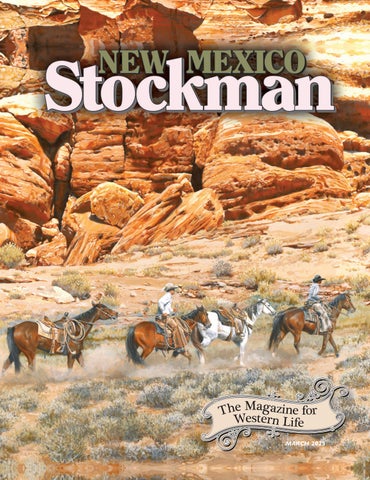
Create a flipbook
Issuu converts static files into: digital portfolios, online yearbooks, online catalogs, digital photo albums and more. Sign up and create your flipbook.