NM Stockman | 12-2024

Page 1


NEW MEXICO STOCKMAN

P.O. Box 7127, Albuquerque, NM 87194

505-243-9515 Fax: 505-349-3060

E-mail: caren@aaalivestock.com

Official publication of ...

n New Mexico Cattle Growers’ Association nmcga20@gmail.com

P.O. Box 850, Moriarty NM 87035 Office: 505.247.0584 , Fax: 505.842.1766

TCEDC Opens Applications for 2025 Regenerative Ranching Mentorship

46 Mexico Notifies United States of New World Screwworm Detection

47 Mexican Cattle Imports Suspended After New World Screwworm Detected

Physical Location: 809 First Street, Moriarty NM 87035 President, Bronson Corn

n New Mexico Wool Growers, Inc. nmwgi@nmagriculture.org

P.O. Box 850, Moriarty NM 87035 Office: 505.247.0584 , Fax: 505.842.1766

Physical Location 809 First Street, Moriarty NM 87035 President, Antonio Manzanares

n New Mexico Federal Lands Council newmexicofederallandscouncil@gmail.com 3417 Avenida Charada NW, Albuquerque, NM 87107

President, Ty Bays

EDITORIAL & ADVERTISING

Publisher: Caren Cowan

Publisher Emeritus: Chuck Stocks

Advertising Representatives: Chris Martinez Melinda Martinez

Contributing Editors: Carol Wilson Callie Gnatkowski-Gibson Howard Hutchinson Lee Pitts

PRODUCTION

Production Coordinator: Carol Pendleton

Editorial & Advertising Design: Kristy Hinds

ADVERTISING SALES

Chris Martinez at 505-243-9515 or chris@aaalivestock.com

New Mexico Stockman (USPS 381-580)

is published monthly by Caren Cowan, P.O. Box 7127 Albuquerque, NM 87194

Subscription price: 1 year hard copy and digital access $50, Digital access $30 Single issue price $10, Directory price $30 Subscriptions are non-refundable and may be purchased at www.aaalivestock.com

POSTMASTER: Send address changes to New Mexico Stockman, P.O. Box 7127, Albuquerque, NM 87194. Periodicals Postage paid at Albuquerque, New Mexico, and additional mailing offices. Copyright© 2015 by New Mexico Stockman. Material may not be used without permission of the publisher. Deadline for editorial and advertising copy, changes and cancellations is the 10th of the month preceding publication. Advertising rates on request.

51 Maintaining the Standard of the Past & Herding the Future by Avery Feldman, Texas A & M Agricultural Media and Communication Student, Raton, New Mexico

53 Communities At Risk From Wildfires Can Now Apply For Funding

54 Feedlot Inventories and Heifer Dynamics by Derrell S. Peel, Oklahoma State University Extension Livestock Marketing Specialist

58 King Ranch Institute Names Endowed Chair

59 What to Know About Brooke Rollins, Trump’s Choice for Agriculture Secretary by Linda Qiu, New York Times

60 Fort Worth Stock Show & Rodeo Schedule

64 Farmers Face Cliff as Working Capital Disappears by John Hintze, ABA Journal

66 Arizona National Livestock Show Schedule

68 October Proves To Be Monster Month for Meat Retail Sales by Anne-Marie Roerink of 210 Analytics LLC

74 Environment Ranks Low in Motivating Americans’ Meat Choices by Frank Fuhrig, meatingplace.com

76 Class I of the Linda Davis Young Cattlemen’s Leadership Academy

92 New Mexico Rodeo Association Secretary Bobbie Sower by Julie Carter

96 New Mexico High School Rodeo Association –Kassidy Lightfoot by Julie Carter

100 Nine Northern New Mexico Youth Rodeo Competitors Headed to 2024 Vegas Tuffest Jr. World Championship

Offering some very fancy, functional foundation Angus females!

RANCH RAISED. PERFORMANCE SELECTED.

James Henderson • (940) 585-6171, cell

Mary Lou Bradley-Henderson • (940) 585-6471, cell

John Gardner • (806) 777-2799, cell

Minnie Lou Bradley

• Large offering of 16-18 month old Registered Bulls.

• Fertility tested bulls selling with 1st season breeding guarantee.

• All cattle being offered in sale, have been DNA tested, for parentage and genomic value.

• Total bull purchases over $10,000 delivered free to central location, no delivery will cost more than $250 per bull.

• Buying made easy, sight unseen guarantee, leave a bid, buy over the phone through Superior Livestock.

• 60+ years of time tested cattle program, proven ranch to rail results.

Bill King - 505-220-9909

Tom Spindle - 505-321-8808 Give us a call to schedule

BillKingRanch.com

Bronson Corn President Roswell

Tom Paterson President-Elect Luna

Dave Kenneke NW Vice President Cimarron

Jeff Decker SE Vice President Lovington

Roy Farr SW Vice President Datil

Cliff Copeland NE Vice President Nara Visa

Becky King-Spindle Vice President at Large Moriarty

Shacey Sullivan Secretary/Treasurer Peralta

Loren Patterson Immediate Past President Corona

Randell Major Past President

This is the time of year that is so important to many of us for so many reasons, but two things that come to mind are Thanksgiving and the birth of our Lord and savior Jesus Christ. Thanksgiving is that time of year that brings up so many emotions and really makes you reflect on your life.

Take a minute to think about your year and all of those folks that helped you get through it. Think about those times that you were dang sure in a pickle and needed some help, and one of your kids or your spouse just popped out of thin air to help save the day.

Or every time branding, weaning, and preg checking comes around, who do you call? Your neighbors? Your Friends? Your Family? Take stock in your life of those who carry you along, those folks in your life that are always there anytime you need something. Sometimes a simple thank you goes a long way!

I had a friend tell me a while back that NMCGA needed to recognize our current and past board members, and man was he right! The Board Members of our organization are the bread and butter of why, how, and what we do through NMCGA!

This is where I get my direction, information, and help! To my current Board Members, I would like to thank you for your willingness to step up and help. You are the pillars of your communities, and we all thank you for your dedication to help us fight for our future.

To our past Board Members, I would like to say thank you for your years of support, dedication, and camaraderie! If it wasn’t for your sacrifice’s to help this organization, we would not be where we are today! There have been a lot of tough situations in the last decade, and you were there to help us through, so THANK YOU!!

I was told by another friend that NMCGA needs to do a better job of tooting its own horn! I’m not gunna lie, this is tough for me. Not because we haven’t accomplished things to toot that horn, but because we are a humble organization! We don’t do what we do for an “Atta Boy”! We are here to do what’s right!

I guess if you chalk up enough good things then maybe we should toot our own horn every now and again. Did you know that we sued the US Forest Service and made them admit they were wrong about a good portion of their actions on shooting cattle? Do you have any idea how hard it is to get them to admit they are wrong about anything?

Did you know that we were awarded a Promote NM grant by one of our legislators? She told us that we deserved the grant because there was no other organization that gets more done with so little. Did you know that the only way that NM has a platform to fully compensate ranchers for Mexican Gray Wolf depredations is because of NMCGA? Did you know that we have donated well over $45k in the last couple years to fire and flood victims?

I am proud and humbled to have the opportunity to lead and be a part of this organization. This ain’t no “Good Ol Boy” club. We are the tip of the spear that is fighting for every cattle operator in our state. Whether you have 10hd or 10,000hd, we are here to help!

Colossians 3:17 And whatever you do, whether in word or deed, do it all in the name of the Lord Jesus, giving thanks to God the Father through him.

“Yall Have a Good’en”      ▫

Bronson Corn,

Value of Feed Efficiency Tucumcari Bull Test Sale — Sat., March 8, 2025

VALUE OF FEED EFFICIENCY ASSUMPTIONS:

• Assuming these bulls (actual data from 2021 test) were steers in feedlot, grown from 700 -1400 lbs (700# Gain)

• Cost of feed $185/ton, 62% DM, yardage at $0.25/head/day

• Bull will sire 100 calves in lifetime, calf crop is 50% his genetics, 40% Heritability of FE

• Assumes a bull at 80% ratio for FE does not add any value, other bulls compared to him

• This does not include value of keeping females who are more feed efficient

This chart just shows the added value of keeping calves through the feedlot out of proven

JUST THE FACTS ... & THEN SOME

What a difference a Day (or 10) Makes.

On November 5 Americans went to bed with a pretty good idea of who the 47th President of the United States would be. There wasn’t one media outlet that

was going to call the presidential election very early in the evening.

Two states waited for four and five days to call the election, although it was clear who had won the race when Wisconsin called their race early Wednesday morning. When all was said and done Donald Trump handily won the race with 312 Electoral College votes and the reddest map this country has seen in maybe ever.

While at least one left-wing media outlet, CNN, wouldn’t say there had been a landslide in Trump’s way, they did admit “A rightward shift in election results gives him a mandate to start trying to remake the US government like he promised he would.”

In all 63.7 percent of eligible voters turned out for the 2024 election. That was slightly lower than the 66 percent turnout in 2020. However the top five voting states turned out well over 70 percent of their voters. The bottom five turned a little above 50 percent.

According to BALLOTPEDIA, New Mexico turned out 57.9 percent, shy of the

61.1 percent from 2020. These numbers are disappointing and demonstrate that elections can go either way if people would just engage in their future at the ballot box. Republicans did pick up one seat in the state house and senate.

An interesting turn of events (or something) took place in Arizona. Turnout was down a full five percent in 2024 from 2020. There were expectations that the state legislature could turn from Republican to Democrat. Instead the Republicans shored up their numbers.

Thus the presidential race and the legislature were red while a Democrat won the US Senate Race. Go figure.

Now comes the fun…

President Elect Trump started making appointments with jet-speed. His cabinet was full before Thanksgiving and some top roles in the White House. He hasn’t slowed down yet.

There is plenty of speculation on how Senate Confirmation will go and one designee has already stepped down and been replaced.

While every cabinet position has an impact on agriculture, the Department of the Interior and the Department of Agriculture are the first ones we worry about. During the Republican Primary (the only one we had) we got to see Interior nominee Doug Burgum, Governor of North Dakota. It is not often that you see a presidential candidate espouse the virtues of 4-H and FFA on a national stage. I was sold and I thought he might be most suited to the Department of Ag.

For the Department of Agriculture Trump chose a “policy” person, Brooke Rollins. You might wonder what her credentials are for the job. If you ask any Texas Aggie, she is a graduate of Texas A & M University, that’s all you need to know. She has an undergraduate degree in agricultural development. To be diverse in her home state, she also graduated from the University of Texas Law School.

Even better than that, she grew up in the small town of Glen Rose, Texas, population 2,957, southwest of Fort Worth, where cattle and crops grow. Rollins was a member of the 4-H and FFA and was a state FFA officer. While at TAMU she was student body president, the first woman to hold that office.

Hopefully there will be some New Mexicans or friends in high places in the government.    ▫

New Mexico Stockman

Another Country Joins HPAI List

New Zealand confirmed its first case of highly pathogenic avian influenza (HPAI) over the weekend.

According to Biosecurity New Zealand, the H7N6 subtype was detected in chickens in a commercial egg farm. Although officials believe the strain is unrelated to the H7N8 and H7N3 cases in Australia a few months ago,

Biosecurity New Zealand deputy director-general Stuart Anderson stated the case “may have happened as part of a spillover event, where laying hens who were foraging outside of the shed were exposed to a low pathogenic virus from wild waterfowl.”

In response to the positive case, New Zealand has suspended all poultry exports, depopulated the birds on the property and established a 10-kilometer buffer zone.

Transitions

Fall is here and we’re making our way to winter. Fall is a time of change, of transitions. The days are shorter, the nights cooler. Football is giving way to basketball, and our kids are looking forward to Christmas Break. For the majority of us, we have weaned calves to ship, so we can get ready for the next round of babies for our mama cows to raise.

We’re getting ready as an organization to make a transition, too. Come December there will be a change in leadership. I can say with all confidence that this change will be good. We have an excellent team lined up for the coming year. These ladies are passionate, knowledgeable, diligent, and creative. They will continue the work that has been laid out before them, as well as bring new ideas to the table for the betterment of our organization. I’m so excited for them to lead the charge.

The ladies who have come before me have inspired me. Your commitment to the work with which we are charged, and your caring spirit for the western way of life is unmatched. To have my name listed among yours will be a true honor.

The last four years serving on the executive board culminating with my presidency have been the most challenging and rewarding time spent with a volunteer organization. I have learned so much about you all, and your passion for this organization and our beef industry in my time serving CowBelles. You are a powerful, positive force- and I am so proud to be one of you.

As I sign off for the last time as your president for the Jingle Jangle, I want to say thank you. Thank you for trusting me to lead you and for pushing me to make sure we met our mission as an organization. You challenged me to be better, to seek answers, and strengthen our partnerships with like minded organizations. As I get ready to hand this over to Corrina and team, it will be with pride. They will take you into the future in a big way, and I can’t wait to see how bright it is.

Many blessings for you all as we make these transitions, – Michelle Greeman, NMCB President

The Yucca CowBelles & Wool Growers held their October meeting Tuesday October 22, 2024, at Central Valley Electric in Artesia at 10:00 a.m. with 13 members in attendance. Stephanie Tilton was hostess. Meeting was called to order by President Joan Kincaid. We were reminded that dues need to be paid. Pledge of Allegiance was led by Karen Patterson and Lauren Marbach read the CowBelle Creed. Ande Marbach reported on the August swim party that was held at the home of Becky Waldrop, in which all junior members and other children of members attended and received gifts from members. The young people all loved the pillows they received that were made for them by Carol Guiterrez. Becky Waldrop reported on the September activities at the Ag Science Center Field Day. It was very well attended, and no food was left. Karen Patterson gave a brief report on the State and Eastern NM State Fair. There were 18 young people showing in the State Fair this year. Artesia FFA did very well. Bailey Trujillo is the National FFA Creed Speaking Champion. Artesia FFA received the 1 Star National Chapter Award. It was voted to donate to Artesia FFA to help with competition expenses. Correspondence was shared. Lauren reported on the flooding in Dexter and the need for food and donations of money and/or supplies. She will be helping coordinate efforts to bring assistance to the folks in Dexter. The group was invited to attend the Christmas Tree lighting and Craft Fair in Pinon, December 6th at 3:30 to 7:00 p.m. and all will meet in November for lunch in Roswell and attend the Christmas Showcase. The Christmas party is scheduled for December 3rd at 10:00 a.m. at CVE. The group will have a Christmas ornament and cookie exchange and will meet for lunch at La Fonda. Meeting adjourned at 10:40 a.m. Program was a Pine Cone craft project presented by Tina Kincaid. Everyone made a Turkey out of a pinecone, to add to their personal Fall/Thanksgiving décor. Some enjoyed lunch together afterward at La Fonda. Respectfully submitted, Tina Kincaid, Secretary

The November meeting of the Powderhorn CattleWomen was called to order at 10:30 a.m. at the De Baca County Extension office by President Ann Sleep. Joan Key led the Invocation, Sandy McKenna led the Pledge of Allegiance, and Karen Kelling led the Creed. Nine members were present. Mary McClain read the minutes of the JINGLE

October 10th meeting. There were no corrections. Carol Thorpe gave the Treasurers report. Twenty sets of dues came in after the postcard was sent out. ANCW has started a group they call the Golden Women. Cards for Yetta Bidigain and Carolyn Bedford were sent around to be signed. Joan Key will follow up with Nancy Phelps about getting Napkins. Also, it was decided to get five license plates to sell. Beef Council has offered to manage the sales of CowBelle items at no charge. Nothing has happened yet. The new Beef Council address is nmbeef.com There is a tab on it called Cattleman’s Corner where you can get up-to-date information. Also, an Apparel Corner with Beef Branded items. Beef Council is working with grocery stores and meat markets to get “Beef, it is What’s for Dinner” back out in front of people along with recipes they can pick up and try. In addition, they are talking with Dion’s Pizza about a New Mexico Beef Brisket Pizza. Members elected the following slate of officers: President Mary McClain, Vice President Judy Byrd, Secretary Karen Kelling with Brenda Copeland’s help and Treasurer Joan Key. Submitted by Mary McClain Mesilla Valley CowBelles met October 29, 2024. Discussion regarding NMSU/ NMDA Ag Day commenced. Janet will contact Ag in the Classroom for use of a game and build a By-Products learning game with it. The props can be offered as an Ag Explorer box to remain in the trailer. Other curriculum was discussed to make available for the Ag Explorer trailer such as “Soil to Hamburger”, “Beef By-Products” items to display and discuss and “Everyday life of a Rancher”. Fita and Mary Esther will take the first shift at Ag Day and Gretchen and Jody the 2nd. Discussion was held regarding a generous donation from a new member, and what we wanted to direct it towards. It was decided to pursue beef education program material including some “hands on” activity models. NMDA Marketing has several Agriculture activity models and will assist in locating. The New Mexico Grown Event will be November 23-24, 2024, at the Farm and Ranch Heritage Museum, MVCB will purchase a tree and decorate for the 4-H Christmas tree drawing. Please contact Mary Esther if you can help with decorating the tree on Friday, November 22. Submitted by Gretchen Lindsay

New Mexico CowBelles: Thank you to all who have submitted their news to Jingle Jangle. Please send minutes and/or newsletters to Jingle Jangle, Janet Witte, 1860 Foxboro Ct., Las Cruces, NM 88007 or email: janetwitte@msn.com by the 14th of every month.

GUIDE 2024Bull Buyers

Calf prices are high … make sure they are the best they can be. Call now for the best selection!

G Feedyard

Cuts

40

Cattlemen’s Livestock Auction (Belen) .

55

Clovis Livestock Auction . . . 44

Select Sires Member Coop . 80

Five States Livestock Auction

AKAUSHI

Bar Angus

65

Fort Worth Stock Show . 57, 60

Genex / Candy Trujillo . . 70, 78

Integrated Breeders Service

Lonestar Stockyards, LLC

98

. 51

McPherson Heifer Bulls 70, 79

NMSU Animal & Range

54, 56, 61

Punchy Cattle Co

37

. 98

57, 68

Roswell Livestock Auction .

36 Tucumcari Bull Test

JANUARY

JANUARY

MARCH 19, 2025

2 Bar Angus Bull Sale, Hereford, Texas

11

17, 81 4 G Mountain Angus

Lazy 6 Angus

Angus

73

20, 78

Black Angus “Ready for Work” Bull Sale

Bar Ranch

49, 80 Candy Ray Trujillo’s Black Angus

Angus

73

46 Conniff Cattle Co . LLC . 34, 79

MAY 10, 2025 TAA Spring Spectacular, Salado, Texas

OCTOBER 4, 2025 Prime By Design Sale, Hereford, Texas Hosted with Goode Angus

OCTOBER 11, 2025 TAA Autumn Classic, Salado, Texas

Cornerstone Ranch

Diamond Seven Angus

Heartstone Angus

19

13, 79

47

Hooper Cattle Company .

Hubbell Ranch

J-C Ranch

Laflin Ranch

Lazy S Ranch

Lust Angus

M-Hat Ranch

Manzano Angus

58

78, 97

26

73

73

73

72

23, 79

McKenzie Land & Livestock 18

New Mexico Angus & Hereford Bull & Heifer Sale

21

NMSU Animal & Range Sciences

54, 56, 61

Olson Land & Cattle

Perez Cattle Company

Salazar Ranches

Thompson Ranch

Tucumcari Bull Test

U Bar Ranch

Weaver Ranch

Widner Angus Ranch

BARZONA

Raymond Boykin

BEEFMASTER

Beefmaster Breeders United

73, 79

3, 79

68

22, 81

11

46

24

72

CJ Beefmasters

Casey Beefmasters .

Evans Beefmasters

Major Beefmasters

BRAHMAN

49

49, 78

49, 79

20

American Brahman Breeders Association

Flyng W Ranch

NMSU Animal & Range Sciences

Pratt Farms

BRANGUS

49

25

. 49

91

54, 56, 61

48, 80

Brinks Brangus / Westall Ranches LLC .

Carter Brangus .

. 5, 81

69, 79

International Brangus Breeders Association

33

GUIDE 2024Bull Buyers

Lack-Morrison Brangus 50, 107

NMSU Animal & Range Sciences

54, 56, 61

Parker Brangus

Lavender Brangus

Ramro LLC / RJ Cattle Co

Rio Hondo Land & Livestock Co

50

50

31

51 Robbs Brangus

Townsend Brangus . . . 50, 107 UBAR Brangus

Westall Ranches LLC / Brinks Brangus

Braunvieh

Tucumcari Bull Test

CHAROLAIS

American International Charolais Association

Bill King Ranch

Bradley 3 Ranch

C Bar Ranch

CORRIENTE

5, 81

11

GELBVIEH

8

6, 80

49, 80

Grau Charolais Ranch . . . 15, 79

Grau Ranch

107

51 Roswell Brangus Breeders Coop

Skaarer Brangus

. . 52, 79

Villanueva

TWENTY-FIRST NEW MEXICO ANGUS ASSOCIATION

< > Bull and Heifer Sale Bull Heifer Sale

Monday’ March 3’ 2025

ROSWELL LIVES TOCK AUCTION, ROSWELL, N.M.

Sale time 1:00 p.m.

Bulls will be Graded & Tested For Fertility & Trich

* 70 REGISTERED ANGUS BULLS *

Cattle available for viewing, Sunday, March 2, 2025

All Bulls & Registered Heifers will have 50K or Angus GS Genetic Testing

* PLUS*

a nice selection of Registered and Commercial Heifers

Registered heifers at the New Mexico Angus March sale in Roswell are eligible for the New Mexico Bred Angus Show at the New Mexico State Fair

Candy Trujillo 480-208-1410

Greg Carrasco 575-649-5268

GUIDE 2024Bull Buyers

Rancho de Santa Barbara . . 58

Salazar Ranches

68

Texas Hereford Association . 58

Tom Robb & Sons .

USA Ranch

70, 80

81

West Star Herefords . . . 35, 78

White Mountain Herefords .

North American Limousin Foundation

53

Running Creek Ranch . . . 60, 81

Walking Spear Land & Cattle 52

LimFlex

Walking Spear Land & Cattle 52

RED ANGUS

Ferguson Ranch

Lazy D Ranch Red Angus

K2 Red Angus

60, 81

32

Clark Anvil Ranch . . . . . 68, 80 Tucumcari Bull Test Sale . . . . 11

SANTA GERTRUDIS

Siler Santa Gertrudis Cattle 70

SIM-ANGUS

Simmentals

Bull

SIMMENTAL

Simmentals

62

26, 79 LIMOUSIN Hayhook Limousin

Limousin

. 60

60

79 Tucumcari Bull Test Sale

SALERS American Salers Association

THOMPSON RANCH

11

48

Sonsray Expands Reach with Acquisition of Goodman AG Group

Sonsray, a leading distributor of construction, agriculture, and transportation equipment, proudly announces its acquisition of the Goodman AG Group, a trusted name in agricultural equipment sales and service across New Mexico, Texas, and Arizona. This strategic acquisition significantly strengthens Sonsray’s footprint in the Southwest region while enhancing its ability to serve the agri-

cultural community with best-in-class products and services.

“This acquisition marks an exciting chapter for Sonsray as we expand our operations into three key agricultural states,” said Matthew Hoelscher, Founder and CEO of Sonsray. “Goodman AG has built a stellar reputation for customer service and expertise. We are committed to preserving their legacy while bringing our industry-leading

solutions and resources to farmers and ranchers in the Southwest.”

Goodman AG Group’s portfolio, which includes leading agricultural brands such as Case IH and Kubota (Las Cruces, NM), will now integrate into Sonsray Machinery’s extensive offerings. Customers can expect an expanded range of equipment, enhanced service capabilities, and a seamless transition to Sonsray’s innovative customer experience initiatives.

Expanding Regional Support

With the addition of Goodman AG Group’s locations, Sonsray now operates in over 40 locations across the Western United States and the East Coast, providing superior equipment solutions for the construction and agricultural and transportation industries. This acquisition underscores Sonsray’s mission to empower its customers with reliable machinery, unmatched service, and ongoing innovation.

Commitment to Excellence

Sonsray Machinery is dedicated to maintaining the high standards set by Goodman AG Group while introducing enhanced tools, such as Sonsray Signature Service offerings, streamlined parts delivery systems, and increased access to training and support. Customers in New Mexico, Texas, and Arizona will benefit from expanded resources and the company’s deep commitment to building lasting partnerships within the agricultural community.

About Sonsray Machinery

Sonsray Machinery is the largest distributor of CASE Construction and CASE IH Agriculture equipment and Thermo King transport temperature control systems, in the western United States and the East Coast. Known for its customer-first approach, Sonsray offers sales, service, rentals, and parts for construction, agriculture, and transportation industries, along with tailored financing solutions.

About Goodman AG Group

Goodman AG Group has been a cornerstone of the agricultural industry in the Southwest for over two decades, providing top-quality equipment and services that farmers and ranchers have relied on to grow their businesses.

THE BEEFMASTER CALVES WE HAVE MARKETED APPEAR TO OUTPERFORM OUR STRAIGHTBRED CALVES ABOUT 75 TO 100 LBS. THAT’S LIKE GETTING ABOUT AN EXTRA CALF FOR EVERY EIGHT CALVES YOU PRODUCE- FOR FREE! WE’VE BEEN REAL PLEASED WITH THAT ON THE STEER CALVES WE GO TO TOWN WITH.

Beefmaster cattle do more with less. Studies show Beefmasters to be the most efficient and they convert feed well. They are also reproductively and maternally superior, producing marketable calves that can help the industry become more sustainable overall.

J-C Angus Ranch

The Breeding Bull

Your Herd’s Ultimate Athlete

LeBron James. Tom Brady. Usain Bolt. These names bring with them a certain performance standard.

Each season, fans expect these athletes to be in top form, to perform and to achieve results no one else is capable of. You expect the same of your breeding bulls each season but are you treating them like the athletes that they are?

Bulls need to remain sound and active for the duration of the breeding season. One way you can help prepare them as athletes is by conditioning them.

If bulls are too thin at the start of breeding season, they might not hold condition and perform. At the same time, too much condition could be detrimental. Excess weight can affect structure, soundness and the bull’s ability to remain in active form.

Gradually condition bulls

The ultimate goal should be to achieve ideal bull condition and start far enough in advance so it’s not a sprint to attain it. It’s ideal to have a body condition score (BCS) of 6 going into breeding but it should be achieved gradually.

A single point change in BCS equals 80 to 100 pounds of weight. That means for a bull to go from a BCS 5 to a BCS 6, it would require gaining 100 pounds. To achieve that score increase takes time and monitoring. Start monitoring bulls four to five months before breeding season.

Early monitoring allows for gradual changes to be made over time, versus trying to make drastic weight changes quickly. Allowing a bull to gain 1 pound per day over 100 days, as opposed to pushing him to gain 3 pounds per day over 30 days, will be much more conducive to the longevity and performance of the bull.

An early start to bull preparation also helps ensure bulls have high-quality semen going into breeding. Sperm production takes 60 days and is impacted by the nutrition a bull receives pre-breeding season.

Balancing BCS with nutrition

Yearling bulls and bulls up to two or three years of age are still growing and need a diet that meets those requirements. Young bull requirements differ from what more mature

The Darnells Continue a 131-Year-Old Family Tradition of Raising Good-Doin’ Hereford Cattle Jim, Sue, Jeep, Meghan & Jake Darnell

TEXAS/NEW MEXICO RANCH 5 Paseo De Paz Lane, El Paso, TX 79932 Jim 915-479-5299 Sue 915-549-2534

Email: barjbarherefords@aol.com

OKLAHOMA RANCH Woods County, Oklahoma

For details, contact Chris Martinez chris@aaalivestock.com or 505.243.9515, ext. 2

bulls need to gain or maintain condition and the two groups should be developed and fed in separate facilities if possible.

If you have multiple bulls in a group, ensure they have ample bunk space or freechoice supplementation to help reduce displays of dominance at the feed bunk. Supplements with intake control properties encourage snack eating, causing bulls to eat smaller meals more consistently throughout the day versus aggressively trying to consume all their feed in one meal.

Supplements can also help keep bulls in prime condition by maintaining or improving BCS and can help balance any nutritional deficiencies of forages.

Developing bulls on the range or in a pasture situation where they can exercise can be advantageous. Exercise and reducing the energy fed in the diet can also help over-conditioned bulls get closer to BCS 6.

Quality mineral nutrition is also essential because minerals support the development of a growing bull’s structure and feet. Minerals can support health and sperm quality as well. Consider using a highly available trace mineral source so that bulls get the most benefit from the minerals consumed.

Monitor during and after cattle breeding season

Once bulls are turned out with cows for the breeding season, continue monitoring their body condition. If bulls fall below a BCS 4, replace those bulls to ensure your cows are getting bred.

At the end of breeding season, bulls will need some extra attention again. Bulls often end the breeding season in a BCS 4 or 5. At that point, younger bulls that are still growing will need more than a maintenance diet to regain condition and allow for growth.

Purchasing bulls is a significant initial investment, but trying to cut corners during bull development won’t do your herd any favors.

To maximize your investment and use a bull to his full potential, continue developing him with a high-quality nutrition and animal health program.

Think of bull development as a marathon rather than a sprint. The goal is to optimize gain and maintain the structural and breeding soundness of a bull for as many years as possible.

Prepare bulls now for an all-star breeding season later. Prepare them for greatness.

Learn more about key times to pay attention to cattle body condition scores.

Does your nutrition program stack up?      ▫

MAKE YOUR CROSSBREEDING COUNT

Producing rugged, deep sided, thick made, easy doing, range ready bulls like this sire.

Annual Bull

Sale March 31, 2025

Selling 50 plus Hereford Bulls both Horned & Polled.

Rural Voices Can No Longer Be Ignored

Rural voters turned out in record numbers in the 2024 election and were a decisive factor in the presidential race.

Rural voters sent a strong message: Our voices can no longer be ignored in Washington, DC.

Spring 2024 Bull & Heifer Calves For Sale

For years, our timber communities have pleaded for active forest management to protect their homes from wildfire; keep nearby national forests green and healthy; provide timber to support local economies; and to maintain safe access to their local public lands.

It’s reasonable to expect the new Trump administration, combined with the new Congress, to respond by prioritizing active forest management and restoring the federal agencies’ traditional mandate to manage public lands for multiple uses.

Maybe the new administration will continue President Biden’s Wildfire Crisis Strategy that aims to double the current rate of forest health treatments in areas most susceptible to severe wildfires, pests, and diseases.

It is likely the new administration will reverse the Biden policies that directly undermined the strategy. This includes the political and self-defeating “Old Growth” rule that would have made it even more costly and bureaucratic to properly manage national forests and sustain older stands of trees.

Protecting our forests and communities through active forest management is not a partisan issue.

As we have previously written, the Fix Our Forests Act recently passed the U.S. House with strong bipartisan support.

Even Nancy Pelosi voted for it.

The Fix Our Forests Act restores forest health, increases resiliency to catastrophic wildfires, and protects communities by expediting environmental analyses, reducing frivolous lawsuits, and increasing the pace and scale of forest restoration projects.

The new Congress should put the Fix Our Forests Act back on the agenda when it convenes in January.

Doing so will be one way to honor the millions of rural voters who showed up to vote in November and made such a big difference in shaping the future of our country.      ▫

Heads Up

The views and opinions expressed do not represent those of the Board of Regents of NMSU or the New Mexico Stockman

In the fable of Chicken Little, who was walking in the woods when an acorn fell and hit her on the head. She panicked and said, “The sky is falling, we must tell the king”. She and her friends were led to their demise by Foxy Loxy. The moral of the story “Don’t form incorrect conclusions from insufficient data”.

In my estimation, “The sky is falling” type of incorrect conclusion being spread by the Climate Change Catastrophe leaders, that we have only six years left if we don’t reduce the CO2 emissions. In addition, we must protect 30 percent of the land and water by 2030 in the United States.

We need to remember the long series of failed predictions and bogus prognostications of gloom and doom that began with first 1970 Earth Day. Harvard Biologist, George Wald reported “Civilization will end within 10 or 30 years unless immediate action is taken.” The first warning was that global cooling was going to occur, and we would descend into a new ice age.

It was alleged that deforestation was going to increase the reflectivity of the Earth’s surface, causing light from the sun to bounce back into space without heating the earth and emissions of particulates from industrial smokestacks, was going to block the light before it even got here. Temperatures did decline from about 1940 to 1970, and the predictions were that the world temperature would be four degrees colder in 1990 and eleven degrees by 2020.

Well, that didn’t pan out and now the predictions are completely opposite from the Ice Age to Global Warming which transitioned to Climate Change.

The cry now is Climate Change is being enhanced by CO 2 increases and methane escaping into the atmosphere and caused by man’s activities. The Climate Change predictions come from computer models and many of these models contradict each other.

CONNIFF CATTLE CO. LLC

Something to remember is “Models are not Data.” You must feed data into the model to make the predictions, and you have also heard “Garbage in and Garbage out”.

Reliable data is hard to come by describing the temperature changes through the centuries because of the lack of thermometers and the size of the globe from the Ice Ages until now. It wasn’t until the 1970s that we had the use of satellites for measuring temperature and other environmental reading in the oceans and lands mass across the world.

The advocates of immediate action on climate change are trying to scare the public so that we need to act fast on pumping millions of dollars into unsound proposals for obtaining net zero CO 2 emissions. The Climate Emergency is being challenged by over 1600 International scientists in their declaration that “there is no climate emergency.” Mass media doesn’t print, and some academic journals reject information that doubts climate emergency.

However, new scientific research information is being developed daily. A recent study just published reveals that plants worldwide are absorbing 31 percent significantly more CO 2 than scientists have estimated before and used in models to predict the effects of CO2

This finding points out the inaccurate conclusions that have been made using the old CO2 levels. This has major implications on the role of plants in sequestration and utilization of CO2 .

Another major finding is the absence of the effect of cloud cover in the predictive models. The models assumed no cloud cover and the cooling effect that clouds have on the earth’s surface temperature.

Scientists have not been able to model the percentages of cloud cover more than a few days. The predictive models that predict temperature increases are not accurate, and the information is incomplete and insufficient.

These are but just a few of the new research studies that make a scientific basis for refuting the emergency of climate change and its impact on future living conditions worldwide. We must continue to question the validity of climate change catastrophe. We will clarify and solve the problem, but it may take some time to get it right through solid scientific studies and interpretation.

Continue to keep your eyes on the horizon.      ▫

ROSWELL LIVESTOCK AUCTION SALES, INC. &

ROSWELL LIVESTOCK AUCTION TRUCKING, INC.

900 North Garden · P.O. Box 2041

Roswell, New Mexico 88201

575-622-5580

www.roswelllivestockauction.com

CATTLE SALES: MONDAYS • HORSE SALES

BENNY WOOTON CELL 575-626-4754

SMILEY WOOTON CELL 575-626-6253

Producers hauling cattle to Roswell Livestock New Mexico Receiving Stations need to call our toll-free number for a Transportation Permit number before leaving home. The Hauling Permit number 1-800-748-1541 is answered 24 hours a day, 7 days a week.

Trucks are available 7 days a week / 24 hours a day

Roswell livestock Auction Receiving stAtions

ATTENTION RECEIVNG STATION CUSTOMERS,

To be able to schedule trucking, all cattle need to be permitted by 1:00 p.m.

LORDSBURG, NM

20 Bar Livestock Highway #90 at NM #3 – East side of highway. Receiving cattle for transport 2nd & 4th Sunday of each month. Smiley Wooton, 575-622-5580 office, 575-626-6253 cell.

PECOS, TX

Jason Heritage is now receiving cattle every Sunday. For information to unload contact Jason Heritage 575-840-9544 or Smiley Wooton 575-626-6253. Receiving cattle every Sunday.

VAN HORN, TX

800 West 2nd, 5 blocks west of Courthouse. Bob Kinford, 432-284-1553. Receiving cattle 1st & 3rd Sundays.

MORIARTY, NM

Two blocks east and one block south of Tillery Chevrolet. Smiley Wooton 575-622-5580 office, 575-626-6253 mobile. Receiving cattle every Sunday

SAN ANTONIO,

NM

River Cattle Co. Nine miles east of San Antonio on U.S. 380. Receiving cattle for transport 2nd & 4th Sunday of each month. Smiley Wooton 575-626-6253.

ANTHONY, NM

108 W. Afton Road, La Mesa, NM 88044. Receiving Cattle 2nd & 4th Sunday of each month. Call in advance for details & consignments. Smiley Wooton 575-626-6253 or Genea Caldwell 575-543-5736

NEWS UPDATE by

Shop Local: New Mexico Taste the Tradition Holiday Lookbook

This holiday season, give the gift of New Mexico’s culture and traditions with the third edition of the New Mexico Taste the Tradition Holiday Lookbook. Presented by the New Mexico Department of Agriculture (NMDA), this 34-page online guide highlights a variety of locally grown and crafted products—perfect for everyone on your list.

From indulgent treats like Krack Korn Puffs to flavorful margarita mixes, the lookbook celebrates the Land of Enchantment’s farmers, ranchers and artisans. It also offers exclusive holiday recipes from NEW MEXICO—Taste the Tradition Chef Ambassadors Jon Young and Jordan Isaacson to inspire your seasonal cooking.

“NMDA is pleased to present the 2024 New Mexico Taste the Tradition Holiday Lookbook,” said Jeff Witte, New Mexico Secretary of Agriculture. “This year’s edition showcases the incredible talent of local businesses that are the heart of New Mexico’s economy. Whether you’re shopping for a loved one or hosting a holiday feast, the lookbook offers endless inspiration to make your season magical while supporting our community.”

The lookbook, which includes businesses that were featured in this year’s New Mexico State Fair Country Store, has already proved to boost small business visibility and sales.

“Riptide Spice House, part of NMDA’s Taste the Tradition program for seven years, has seen an increase in sales after participating in the lookbook,” said owner Sue Lucero. “Programs like this are essential for small businesses like ours. We are grateful for the opportunity to connect with new customers.”

Starting on Thanksgiving Day, the lookbook can be viewed on the Elevate New Mexico Agriculture website (elevatenmag. com)

Iowa Can’t Block SNAP Users from Buying Alt-Meat

The USDA denied an Iowa Department of Health and Human Services’ waiver request, seeking to block Iowans on federal food assistance programs from buying lab-grown meat and egg substitute products with the funds.

In its request, the state department said cultivated protein and egg substitute products “may not” be as nutritious as meat and eggs. Iowa lawmakers in favor of the measure said the policy would help protect Iowa’s livestock farmers and poultry producers.

In denying the request, the USDA said the request “does not provide information on how the project would raise levels of nutrition or how the State would evaluate the effects of the project.”

The decision was handed down to the Iowa Department of Health

and Human Services in July 2024, but a copy of the decision letter was provided to The Gazette, a local Iowa newspaper. The law allowing the government to seek the waiver was part of broader legislation signed into law by Iowa Gov. Kim Reynolds in May. The bill also regulates alt-meat labels and prohibits cultivated meat products from being used in school lunches.

The 2024-2025 American Angus Association Newly Elected Leadership

The American Angus Association 141st Annual Convention of Delegates gathered early in November in Fort Worth, Texas. Five members were elected to the Board of Directors. They are Paul Bennett (second term), Red House, Va.; John Dickinson (second term), Auburn, Calif.; Ron Hinrichsen, Westmoreland, Kan.; Mark

Johnson, Orlando, Okla.; and Danny Poss, Scotia, Neb. The delegation also elected new officers; Jonathan Perry, Fayetteville, Tenn., president and chairman of the Board; and Jim Brinkley, Milan, Mo., vice president and vice chairman of the Board. Darrell Stevenson, White Sulphur Springs, Mont., will serve as the treasurer for the 2024-25 term.

“We have got to continue to make the American Angus Association relevant to its

breeders and its members,” Perry says. “We have got to embrace diversity. We have got to continue to create tools that touch every member. The diversity of our breeders and our breed is our greatest strength.”

Directors can serve up to two, three-year terms on the board and, if elected, they serve an additional one-year term in office as president/chairman and/or vice president/vice chairman.

Pictured from left to right: Vice President Jim Brinkley, President Jonathan Perry and Treasurer Darrell Stevenson.

2025 Southwest Hay & Forage Conference to Address Growers’ Challenges, Potential Solutions

Forage growers in the Southwest face a number of challenges, including drought, pests and weeds, among other issues that threaten crops. The 2025 Southwest Hay and Forage Conference, hosted by New Mexico State University’s College of Agricultural, Consumer and Environmental Sciences and the New Mexico Hay Association, will provide more information to address those challenges.

The conference will take place January 22 through 24 at the Ruidoso Convention Center, 111 Sierra Blanca Drive, in Ruidoso, New Mexico. Among the topics to be presented at the conference include “Alfalfa and Drought: Mitigating Profit Losses,” “Alfalfa IPM and Pesticide Loss,” “Late Season Decline: A New Disease in Corn,” Sorghum Grass Herbicides and Other Technologies,” “Stem Nematode in New Mexico,” and “Economics of Good Soil Health: What it Costs Your Operation NOT to Test.” Additional

topics include “Regenerative Agriculture: Separating Fact from Fiction,” and “Alfalfa-Corn Interseeding: Can it Work?” There will also be industry updates, and participants will have the opportunity to speak directly to consultants, industry representatives, researchers and specialists.

NMSU Extension forage specialist Mark Marsalis said pests in the form of insects, weeds and vertebrate pests cost New Mexico hay growers millions of dollars each year.

“This year’s conference will address some of those issues and provide updates on other problems growers are facing,” Marsalis said. “Overall, this conference is a great opportunity for growers to learn more about these issues and network with experts who may be able to provide potential solutions.”

Five New Mexico Pesticide Applicator Continuing Education Units, or CEUs, have been approved for the conference. Texas, Arizona and Certified Crop Adviser CEUs will be requested.

The conference will also feature a trade show and its popular Ace-in-the-Hole

Casino Party and fundraiser following dinner January 23, as well as the Paint Party with Peggy Krantz that afternoon.

Pre-registration is $150 per person before December 31. Attendees may register after December 31 or at the door for $175. Annual membership dues to the New Mexico Hay Association are $55.

For more information, including a full agenda, visit www.nmhay.com or orages.nmsu.edu. Registration, payment, sponsorship and vendor information is available online at www.nmhay.com.     ▫

RANCH FOOD & FODDER

Yep, Christmas is almost here.

We’re always busy, taking care of stock that usually involves breaking ice, feeding, and often moving them around. I bet it is about the same for most of you, as well. But, then there’s the social side, even when you live way out, and town and even your neighbors are miles away, plus family get togethers in addition to your Christmas Eve or Christmas Day dinners.

For most folks Christmas means more cooking and baking and adding special touches to make things a bit more festive. Even every day, mundane things seem to need a little pizzazz. Like putting a star on the old barn that very few people will even see, bows and ribbons on a lot of things that probably don’t need bows. Kids wanting to put wreaths on their animals. But it is a way of celebrating, sharing the joy of the giving season. Even some of the old grinches have to occasionally smile.

We often dig a little deeper in our pockets to help those in need and give to charities we support. We may put our differences aside when invited by our neighbors to attend different denominational church services that we’ve never attended. It is rural America and we’re proud of being able to give, in addition to producing food for our country.

The fresh colors of Christmas are so festive and inviting when winter can be rather dismal. The recipe below has some of those bright colors and adds freshness to the many heavy foods we tend to consume during the holidays. It goes great with about any meal, including roast beef and lamb. It also fits right in with the popular small plate meals and is a welcome change at any covered dish or potluck.

Tomato Salad Platter

Salad Ingredients:

5 medium size tomatoes, different colors like heirloom varieties if you can find them

1 cup of mixed colored cherry tomatoes

1 dozen kalamata olives

1 ear of corn (frozen

and thawed will work, but use 2 of them)

Grated Asiago cheese ¼ cup of finely diced green chile

Fresh basil sprigs or leaves

Garlic salt

Black pepper

Sea salt flakes

Dressing Ingredients:

½ cup of virgin olive oil

¼ cup of red wine vinegar

3 tsps. of light honey

1 tsp of table salt

1 tsp of mustard

Freshly ground pepper

Salad Directions:

Cut 2 the medium tomatoes into wedges and the remaining ones into slices

Lay the slices evenly around the perimeter of the platter and then place the wedges on top of the slices

Then cut half of the cherry tomatoes in half, and slice half of the olives in half

Scatter both the cut and uncut tomatoes and olives on top of the bigger tomato pieces, sprinkle with garlic salt

Cut the kernels off the corn cob and sprinkle them over the top, letting them fill in any

spaces on the platter

Sprinkle the green chile and basil leaves over the platter, then sprinkle the grated

Asiago and add the fresh black pepper

Salad Dressing Directions:

Combine the olive oil, vinegar, honey, table salt, mustard, and pepper in a jar and seal it tight. Shake until it is all mixed and the oil is emulsified.

Drizzle the dressing over the salad before serving. I do sometimes make this a few hours ahead and cover it, letting it rest in the fridge until ready to serve it. You can wait to add the green chile, basil and dressing if you want a fresher version, or you can assemble it and let the flavors marinate until ready to serve.

Service Seeks Public Comment on Proposed Listing and Critical Habitat for Pecos Pupfish

The U.S. Fish & Wildlife Service (FWS) seeks data and comments on the proposal to list the Pecos pupfish as

threatened with an accompanying 4(d) rule and on the proposal to designate critical habitat under the Endangered Species Act. The proposed rule also serves as the Service’s 12-month finding on a petition to federally protect the Pecos pupfish. The proposed rule is now available in the Reading Room for public inspection and will be posted in the Federal Register tomorrow, opening a 60-day public period through Jan. 21, 2025.

The Pecos pupfish is a desert fish endemic to the Pecos River Basin. The fish occurs in diverse water environments, both still and running water, including wetlands, sinkholes, streams, springs and the Pecos River

We Know Agriculture...

mainstem. Historically the species was found in the Pecos River and adjacent floodplain from Chaves County, New Mexico to Terrell County, Texas. Now the species’ range is limited to Chaves County, New Mexico and an isolated population in Salt Creek in Reeves County, Texas.

The biggest threat to the Pecos pupfish is the non-native fish, sheepshead minnow, introduced into the rivers in the 1970s and 1980s. The Pecos pupfish and the sheepshead minnow readily hybridize. The hybrid fish is larger, grows faster and outcompetes the Pecos pupfish species for resources. Additional threats to the Pecos pupfish are the impacts of climate change , which lead to the loss and decline of surface-waters and the degradation of water quality.

“The best available data indicate that the Pecos pupfish is threatened, facing multiple risks to its survival,” said Amy Lueders, the Service’s Southwest Regional Director. “The most secure populations of the species are found across public lands in New Mexico and Texas. In fact, if you get close to the sinkholes at Bottomless Lake State Park in New Mexico, you may get a chance to see the rare pupfish.”

The fish is small, no bigger than two inches and varies in color from gray to-brown to shiny blue. Individuals of the species vary in their appearances, which may provide adaptation advantages in the various, isolated occupied habitats. For instance, Pecos pupfish found in sinkholes have larger heads with mouths found lower on their heads compared to those found in marshland habitats. These differences in body shapes allows for more efficient feeding.

Please call Colten Grau to arrange a visit. He’s working hard for our ag community and he’s eager to go to work for you! Give us a chance to compete for your land and operating loans!

facebook.com/americanheritagebanknm instagram.com/ahbclovis

The Service is proposing 136 river miles and 26,555 acres of five occupied units of critical habitat for the Pecos pupfish in Chaves and Eddy counties, New Mexico, and Culberson and Reeves counties, Texas. The river miles are lands surrounding the river and the proposed acres are numerous isolated sinkholes and wetland areas, representing a mix of federal, state, and private lands. Three of the units overlap with existing critical habitat for six other federally listed species.

Critical habitat identifies geographic areas containing features essential for the conservation of a threatened or endangered species, and which may require special management considerations or protection. Designation of critical habitat does not affect land ownership, nor does it establish a refuge or preserve, and designation has no impact on private landowners taking actions on their land that do not require federal funding

Mac Langford, President/CCO
Gordon Morris, Chairman of the Board/EVP
Colten Grau, Vice President

A black and white map of southeastern New Mexico and West Texas that indicates the five units of proposed critical habitat for the Pecos pupfish. Unit 1 to 4 are in New Mexico and Unit 1 is labeled Upper Pecos River, Unit 2 is labeled Salt Creek Wilderness, Unit 3 is labeled Bitter Lake and Unit 4 is labeled Bottomless Lake/ BLM Overflow Wetlands. Unit 5 is in Texas and labeled Salt Creek. Photo by/Credit: USFWS

or federal permits.

The proposed 4(d) rule would provide for the conservation of the Pecos pupfish by focusing on captive propagation in Texas, enhancing the genetic security of the pupfish in Salt Creek, Texas, and allowing the Texas Parks and Wildlife Department to conduct research on and relocate captive reared Pecos pupfish in Texas. A 4(d) rule is one of many tools in the Endangered Species Act (ESA) that provides tailored protections for threatened species

to facilitate recovery and prevent further decline.

The Service is committed to collaborative conservation, transparency, and science-driven ESA findings. Supporting materials, such as the species status assessment report, are available on the Service’s website at ecos.fws.gov/ ecp/species/5162, at regulations. gov at Docket No. FWSR2-ES-2024-0143, or both. The Service invites comments or information from other governmental agencies, Native American Tribes, the scientific community, industry, or any other interested parties concerning this proposed rule. The public comment period runs through Jan. 21, 2025.

Native aquatic ecosystems contain some of the highest levels of biodiversity in the Southwest. Their protection and conservation are critical to the survival of many species of aquatic insects, fish, amphibians, reptiles, waterfowl and other wildlife, as well as humans. When the health and stability of aquatic habitats is improved, it benefits all life that depends on these water resources.

Shiny tan and yellow fish with pink and blue coloration.

NEW MEXICO’S OLD TIMES & OLD TIMERS

Lawrence Gustave Murphy was born in Wexford, Ireland, in 1831. Not much is known about his youth except that he graduated from Maynooth College, a Roman Catholic institution that prepared young men for the priesthood. Murphy was no priest. He arrived in the United States as a young man and joined the U. S. Army and served in the 5th Infantry for about ten years, attaining the rank of sergeant. He arrived in New Mexico about 1860 and in 1861 he joined the 1st New Mexico Volunteers at Fort Union as a lieutenant.

He served under Col. Kit Carson in the western New Mexico campaign against the Navajo in 1863-64 and after the Indians surrendered and were relocated at Bosque Redondo, near Fort Sumner, he served there briefly as Indian agent. By 1866 he was the quartermaster at Fort Stanton, near the town of Bonito—later Lincoln—and held the rank of major. He left the army later that year

The following year, Murphy and another former army officer, Lt. Col. Emil Fritz, were in business as post sutlers at Fort Stanton, and Murphy also served as postmaster. Their business, L. G. Murphy & Company, went far beyond selling notions and incidentals to soldiers. The basis of the enterprise was contracts with the army for supplies of all kinds.

Records indicate that the company did well from the beginning. For 1867, Murphy reported sales of $22,000, upon which he paid $22.00 in taxes. Since barter was used as often as cash money in commercial transactions, it is impossible to determine the amount of business the company really did. In September 1867, Murphy received a “supply as needed” contract with Fort Stanton for the delivery of beef on the hoof. Such contracts called for payment of top dollar, but no record found shows how much beef was actually delivered, or how much the army paid for it.

The following year, Murphy & Company received a contract for well over $9,000 to supply lumber to the fort, and in 1869 another for nearly $8,000 for the delivery of 250,000 pounds of corn. Murphy and Fritz also served as subcontractors for other Fort Stanton suppliers, and indications are that Murphy, using his old Quartermaster connections, siphoned off military supplies to

Lawrence G. Murphy, Entrepreneur

his own inventory. He was once accused of taking 26 sacks of flour that had been consigned to the fort commissary but nothing came of the allegation.

During the two- or three-year period from 1867-69, Murphy and Fritz built a store building on land belonging to Fort Stanton. It amounted to 7,000 square feet of floor space and contained some 18 rooms. Murphy offered to sell it to the army for $12,000 in 1870. The army declined. Observers can only speculate as to how much of the lumber, mentioned above, went into construction of the store.

In 1869, with the creation of Lincoln County, Murphy was elected probate judge, an important position at the time, as a Democrat. Indications are, however, that he maintained a close working relationship with Thomas B. Catron, one of the Republican leaders of the so-called Santa Fe Ring. Even so, Murphy had problems along the way, not the least of which was that his authority as post trader at Fort Stanton was not renewed in 1870. He did the logical thing: he took control of the situation. Some traders who were awarded the position to replace him never showed up at all, and those who did were promptly bought out by Murphy & Company. Murphy may not have been the post trader as a matter of fact, but he owned the building and remained the man in charge. Besides, in the same year, he had seven contracts, worth more than $40,000 for supplies to Fort Stanton, and in the following year the value of them increased to about $45,000.

By 1871, Murphy was responsible for delivering provisions to the Mescalero Apache Indian Reservation and for actually issuing them to individual tribal members. The original estimate of the number of Indians to be supplied—as provided by A. J. Curtis, the Mescalero Indian agent—was 325. Using Murphy’s accounting methods, that number increased to 2,679 in just 16 months! Murphy’s billings increased accordingly. His first voucher, for June 1871, was for less than $160.00. His voucher for May to July, 1872, was for $12,418.42. Average monthly billings for the 16-month period from June 1871 to September 1872 reached nearly $3,500.

Indian Agent Curtis didn’t seem to be bothered by the exponential growth of the Mescalero population. During his tenure in

that office—something less than two years— government purchases from L. G. Murphy & Company amounted to around $125,000.

During this time, Murphy & Company branched out. Sam Wortley’s hotel and restaurant in Lincoln became Murphy properties. Murphy owned the Rio Bonito beer brewery located near Fort Stanton. Murphy & Company also served as the bank for Lincoln County. The company erected a large store building in Lincoln. It came to be known as “The House,” as in “The House of Murphy.” It is still there yet today, on Lincolns’ main street.

Murphy also consolidated his power, political and otherwise. Major William Brady, with whom Murphy had served in the army, was elected Lincoln County Sheriff in 1876. Murphy also took on J. J. Dolan as bookkeeper and he was nearly as ruthless as Murphy himself.

The result of all this was that Murphy literally ruled Lincoln County. Because he held the supply contracts with Fort Stanton, he was the only market for livestock and other agricultural commodities produced by area farmers and ranchers. Because he controlled mercantile and banking interests, and held the paper on virtually all outstanding credit, he controlled the economy. As probate judge, he was the highest-ranking elected official in the county, and Sheriff Brady was indebted to the House of Murphy.

So self-assured was Murphy that he said this to one of his political opponents, for all the public to hear: “You might as well try to stop the waves of the ocean with a fork as to try and oppose me!”

That was the situation in Lincoln County when John Henry Tunstall (1853-1878), a young Englishman, arrived in 1876. The famed Lincoln County War broke out soon after that when Tunstall set out to oppose Murphy’s mercantile monopoly.

William H. Bonney “Billy the Kid” was a product of that conflict.

Richard Alvin Reed, 71, Duncan, Arizona passed away on November 15, 2024, in Tucson. Richard was born in Morenci, Arizona on May 2, 1953, to Alla Pearl and Robert Reed.

Richard was a true cowboy and lifelong horseman. He trained and cared for countless horses that went on to compete, ranch, and bring joy to riders near and far. Richard loved passing his knowledge of horses and roping to anyone willing to listen and work hard.

Though he was known for his tough exterior, he loved and cared deeply for his friends and family. He especially enjoyed watching his children and grandchildren play sports, always the loudest and proudest on the sidelines. Richard was loved and respected by many. He will be dearly missed.

Richard is survived by: his loving wife of 50 years, Jana; daughters Lisa (Howdy) Bigelow, and Lindsey (Jacob) Robbins; his ten grandchildren; sister, Sharon Gray; stepmother, Doris Reed; step siblings, Joe (Terry),

Don (Donna) Goodman, Lynda (Marion) Call; and several nieces and nephews.

Editor’s Note: Email caren@aaalivestock.com. Memorial donations may be sent to the Cattlegrowers’ Foundation, a 501(c)3, tax deductable charitable foundation serving the rights of ranch families and educating citizens on governmental actions, policies and practices. Cattlegrowers Foundation, Inc., P.O. Box 7517, Albuquerque, NM 87194. The New Mexico Stockman runs memorials as a courtesy to its readers. If families & friends would like to see more detail, verbatim pieces must be emailed to us, & may be printed at 10¢ per word. ▫

TCEDC Opens Applications for 2025 Regenerative Ranching Mentorship Program

The Taos County Economic Development Corporation (TCEDC) has announced applications for the 2025 Regenerative Ranching Mentorship Program are now being accepted. This six-month, 40-hour program is designed to connect beginning ranchers with experienced mentors in Northern New Mexico, offering hands-on and in-class learning in regenerative and climate-smart ranching practices.

Set to run from March through July 2025, the program offers a unique, community-based opportunity for aspiring ranchers aged 16 and older to gain invaluable skills and insights within a supportive and collaborative environment.

Compensation Package for Mentees

Accepted mentees will receive a comprehensive package valued at over $1,150, including:

Ї A $550 stipend, plus a $600 gas stipend for travel costs

Ї Access to free educational workshops and events hosted by TCEDC, including meals

Ї Publicity for ranch/business operations through TCEDC channels

Ї 30 hours of on-ranch, hands-on training with experienced mentors

Ї Possibility of employment with mentors post-mentorship

While mentors and mentees are welcome to exceed the required 30 ranch hours, mentees should note that extra hours do not come with additional pay through the Mentorship Program.

Mentee Requirements

The program seeks motivated individuals passionate about integrating regenerative practices into their ranching operations. Mentees must:

Ї Must be 16 years of age or older

Ї Attend 10 hours of trainings and workshops

Advertise in the upcoming Wildlife Issue of

For details, contact Chris Martinez chris@aaalivestock.com or 505.243.9515, ext. 28

Ї Attend 30 hours of on-ranch work over 5 months (March-July 2025)

Ї Be interested in integrating regenerative ranching practices into their own beginning or future ranching operation.

Ї Be organized, patient and open to collaboration.

Ї Open to giving and receiving constructive feedback.

Ї Attend an in-person orientation at TCEDC.

Ї Attend 3 workshops about regenerative ranching, agricultural business, and marketing. If a Mentee cannot attend one of the required workshops, they must watch a recording of the session in the TCEDC Resource Center to graduate from the program.

Ї Create and share a final presentation at program graduation, covering learnings and plans for integrating regenerative agriculture into their operation.

Ї Keep a detailed record of activities in collaboration with Mentors. This program offers a unique opportunity for beginning ranchers to enhance their skills and knowledge within a supportive community. We encourage all interested individuals to apply for the 2025 cohort. To apply, please visit tcedc.org.

The Regenerative Ranching Mentorship Program is supported by USDA’s Beginning Farmer and Rancher Development Program, Alianza Agri-Cultura de Taos, and Taos County Economic Development Corporation.

Mexico Notifies United States of New World Screwworm Detection

USDA Takes Action to Prevent Spread to U.S. Animals

On November 22, 2024, the Chief Veterinary Officer of Mexico notified the United States Department of Agriculture’s Animal and Plant Health Inspection Service (APHIS) of a positive detection of New World screwworm (NWS) in Mexico. The NWS was found in a cow in the southern Mexico state of Chiapas, at an inspection checkpoint close to the border with Guatemala. NWS are fly larvae that infest living tissue of warm-blooded animals, causing infection.

“Given the northward movement of NWS, APHIS has in recent months stepped up its efforts in Central America to partner with impacted countries to push this pest out of newly affected areas,” said Dr. Rosemary Sifford, Chief Veterinary Officer of the United States. “With this latest find in Mexico, we will further intensify this work

to protect American agriculture and reestablish the barrier in Central America.”

Given the severity of the threat from NWS, APHIS is restricting the importation of animal commodities1 originating from or transiting Mexico effective immediately and pending further information from Mexican veterinary authorities on the size and scope of the infestation. A complete list of regions APHIS recognizes as affected by screwworm and well as more detailed information on trade restrictions can be found on the USDA APHIS Animal Health Status of Regions website.

NWS maggots can infest livestock and other warm-blooded animals, including people. They most often enter an animal through an open wound and feed on the animal’s living flesh. While they can fly much farther under ideal conditions, adult flies generally do not travel more than a couple of miles if there are suitable host

CIMARRON ANGUS

animals in the area.

APHIS is working with partners in Mexico and Central America to stop the spread of NWS into the United States and asking all producers along the southern border to watch their livestock and pets for signs of NWS and immediately report potential cases.

Screwworm infestations are difficult to detect at first. Check your pets and livestock for draining or enlarging wounds, and signs of discomfort. Also look for screwworm larvae or eggs. Screwworm eggs are creamy and white and are deposited near the edges of superficial wounds. If you suspect your animal is infected with screwworm, contact your veterinarian.

While not common in humans, if you notice a suspicious lesion on your body or suspect you may have contracted screwworms, seek immediate medical attention.

Since 2006, APHIS has collaborated with Panama to maintain a barrier zone in eastern Panama, working to prevent the northward movement of NWS from South America to NWS-free areas in Central and North America. In the last two years, screwworm has spread north of the barrier throughout Panama and into Costa Rica, Nicaragua, Honduras, Guatemala and now Mexico. This

U BAR RANCH

Producing southwestern Angus cattle that “Fit the Bill”

•Performance in

•Raising quality Registered Angus cattle since 1991.

•Bulls available private treaty or at the annual Black Angus “Ready for Work” Bull Sale – March 2025 - Belen, NM

increase is due to multiple factors including new areas of farming in previous barrier regions for fly control and increased cattle movements into the region. APHIS is releasing sterile flies through aerial and ground release at strategic locations throughout Central America.

APHIS will continue working with partners in Mexico and Central America to eradicate NWS from the affected areas and to reestablish the biological barrier in Panama.

To learn more about NWS, visit the APHIS website.

1 Live cattle and bison are the animal commodities impacted by this restriction. New world screwworm on a leaf ▫

Mexican Cattle Imports Suspended After New World Screwworm Detected

The United States Department of Agriculture’s Animal and Plant Health Inspection Service (APHIS) announced that a New World screwworm (NWS) was detected in Mexico in late November, causing the agency to pause animal imports from the country.

The U.S. chief veterinary officer said a NWS was discovered in a cow at an inspection checkpoint close to Mexico’s border with Guatemala.

“Given the northward movement of NWS, APHIS has in recent months stepped up its efforts in Central America to partner with impacted countries to push this pest out of newly affected areas,” Dr. Rosemary Sifford said.

“With this latest find in Mexico, we will further intensify this work to protect American agriculture and reestablish the barrier in Central America,” she added, according

to the release.

NWS are fly larvae that infest living tissue of warm-blooded animals, including humans, causing infection, according to the department. The worms often enter animals through open wounds and don’t travel more than a couple of miles — unless suitable animals are hard to find in the area, officials explained.

“Screwworm infestations are difficult to detect at first. Check your pets and livestock for draining or enlarging wounds, and signs of discomfort,” the release states. “Also look for screwworm larvae or eggs.”

“Screwworm eggs are creamy and white and are deposited on near the edges of superficial wounds,” it continues. “If you suspect your animal is infected with screwworm, contact your veterinarian.”

The agency said it will continue working with Mexico and Central America to respond to the infestation.

Do Reserves Help or Hurt the Auction Process?

Maximizing Success Through Competitive Bidding

In the auction industry, one of the most common questions we get is whether or not to set a reserve price on consignments. Reserves, or minimum price thresholds, are sometimes put in place to prevent an item from selling below a certain amount.

The underlying intention is to protect a seller’s interest. However, in practice, we believe reserves often backfire, limiting bidder interest and lowering overall final sales prices. Though this may seem counterintuitive, here’s why avoiding reserves can

actually lead to a more successful auction process.

Understanding Bidder Psychology

Setting a reserve, especially a high or undisclosed one, can discourage participation by making bidders feel the item is overpriced, or that there is no “Chance of a deal.” High opening bids or starting prices have a similar effect.

We often peruse auctions with starting prices close to, or even above, what we would want to pay for an item, and in these cases, we (and many others) don’t even sign up to participate. The auctioneer has unknowingly created a perception of items being out of reach, which reduces bidder interest before the auction even starts.

On the flip side, bidders are enticed by opportunities that feel accessible and possibly rewarding (the allure of a deal). Low starting bids with no reserves invites everyone to sign up, signaling, “This item could be yours for a bargain.”

Consequently, once bidders are engaged, they are more likely to stay involved, which in turn, actually increases final sales prices. The transparency of no-reserve auctions “dangles the carrot” needed to encourage participation. It’s common sense, a smaller

pool of interested buyers undermines the competitive nature needed to drive prices.

Competition Drives Prices

In auctions, it is competition (or the lack thereof) which drives prices. Naturally, the more bidders there are, the greater the chance of higher bids as participants get invested in “winning” the item. Seeing other bidders actively engaged also validates the item’s value and desirability, fueling further interest.

The competitive bidding process with numerous bidders helps achieve true market value (whatever that result may be). This is why auctions with low starting bids and no reserves often result in higher overall prices, because more people sign up, resulting in more competition.

Low starting bids and no reserves also creates a sense of excitement and accessibility that encourages people to participate. No other method of selling is more exciting than a live auction with a good auctioneer. Once live bidding begins, many become committed to the process of winning. This progression allows the item’s true value to emerge, often exceeding initial expectations.

Can Reserves Harm Sellers?

A seller who is overly protective of an item’s minimum price may inadvertently end up selling it for less than they could have (due to low competition), or in some cases, not selling it at all. Now-a-days, with the prevalence of auctions being available on the internet, sellers have the advantage of access to a vast pool of potential buyers worldwide. As noted, a high volume of interested bidders is what it takes to realize true market value through healthy competition.

However, undisclosed or high reserves can undermine the bidder pool, discouraging bidders from participating at all. No reserve auctions with low starting bids always attract a more extensive and enthusiastic bidding base, creating a unique environment where fair market value is determined naturally — the exact opposite of what sellers get from a high reserve, high

opening bid auction.

Special Circumstances for Special Items

While we generally recommend no reserves in most cases, there are exceptions for rare or high-value items where a reserve might be warranted. But if you can “Google” your item and find several of them, either for sale, or that have been sold recently, then your item is not rare, and likely does not warrant a reserve.

However, there are certain one-of-a-kind items which do not trade regularly on the open market. In these cases, auctioneers and sellers should work together to set reasonable expectations that don’t deter potential bidders. Keeping in mind that it’s important to remember that too high of expectations can limit an item’s potential and possibly hurt the final outcome.

Devil’s Advocate

Some might ask, “What about the times

CBar RANCH

when an item sells for less than what is it worth?” We have two responses to that: First off, in a well advertised auction with hundreds or even thousands of interested bidders signed up and bidding — the item actually brought what it was worth that day on an open market. Perhaps seller expectations were just too high? Market values can and do change all the time.

The second response to an item selling below perceived value is: No big deal! If an item didn’t sell for less than perceived value once in a while, the “allure of a deal” would not be as present. We counsel sellers all the time that they need to keep the overall big picture in mind.

Most of our sellers have multiple items in

CHAROLAIS

More pounds, more profit.

Charolais genetics deliver more pounds at weaning, with added red-meat yield and conversion. Contact your AICA fieldman for assistance in finding Charolais bulls, females, and to learn about CharAdvantage feeder calf marketing premiums. Visit www.charolaisusa.com to learn more.

RANCH MANAGER: Steven & Tyler Townsend P.O. Box 278, Milburn, OK 73450 C 580-380-1968

Patti Townsend

P.O. Box 278, Milburn, OK 73450 H 580/443-5777 cgtpattownsend@yahoo.com

an auction. Some items will do better than expected, some will do worse than we thought, and most will do about what they should have. In the end, a seller’s average is what’s best to focus on, not that odd item here and there that sold for less than perceived value.

By cultivating an open, competitive marketing environment through a no-reserve strategy, sellers gain access to a larger pool of motivated bidders who compete freely and enthusiastically. This is typically the most reliable way to discover an item’s true worth on an open market. For most items, avoiding

reserves is the best way to achieve fair — and often better than expected — market values because, ultimately, it is the bidders who determine value.

Take a look at the highest-rated and most successful auction companies in the world, and you will find that few take consignments with high reserves. The results speak for themselves: as long as an auction is properly marketed, no-reserve auctions with low starting prices are the proven path to a successful auction and achieving true market value.

PARKER BRANGUS

DIANE & LARRY PARKER

P.O. Box 146, 1700 N. Parker Rd., San Simon, AZ 85632

Diane’s Cell: 520-403-1967 • Bus: 520-845-2411

Email: jddiane@vtc.net • parker_brangus@yahoo.com

Maintaining the Standard of the Past & Herding the Future

Bison roam the range, flowing along the terrain like a river, reflecting the images of the Wild West and beyond. The Castle Rock bison herd, maintained by Vermejo Park Ranch, are home to northern New Mexico’s diverse land, bringing a piece of the past into the future.

Vermejo Park Ranch, located 40 miles west of Raton, New Mexico, is home to 1,350 bison. Brought from Yellowstone in the 1920s, the bison now call Castle Rock Park home and wander the vast land of Vermejo Park Ranch.

This unique cow-calf operation has been active since the purchase of the land by Ted Turner in 1996, and preserves some of the oldest DNA for the bison industry.

Why raise bison in a nation known for its

cattle production? The reason is simple, according to Gus Holm, the General Manager of Vermejo Park Ranch. The answer is Preservation.

“Ted Turner wanted to run bison. He knew it was North America’s indigenous herbivore,” Holm said. “He had an interest in them and wanted to help protect the species. He found the best way to do it was to build a business model around it.”

The preservation efforts at Vermejo have done exceptionally well, becoming one of a few privately held “foundation genetic herds” with genes from three of the six foundation herds. Their specifications have allowed them to isolate their genes and continue their work of true preservation.

The Castle Rock herd, despite all bison having cattle introgression in their nuclear DNA, shows no sign of cattle mitochondrial DNA introgression, which allows them to

the cattle market. We run about one bison per 80 acres. We try to maintain a stocking rate of a three-year drought,” Turner said. “It is not easy for us to destock on a bad year, or stock up easily on a good year with a lot of grass.”

While the industry is similar to the cattle market, Turner brings into perspective the size of the niche but growing market.

“There are more cattle slaughtered in a day than bison in a year. The size of the bison market is still pretty small but it’s growing and continuing to grow,” he said.

The growth of the industry relies on the interest of consumers. Vermejo specifically contributes to the market, not only through genes, but also through the unique experiences it provides visitors by sparking interest and understanding of the importance of bison.

“People need to see the animals to appre

Ranches has over 40,000 bison, almost 10 percent of the bison in North America. Turner Ranches has helped the bison industry become a more common protein choice in restaurants around the nation.

While the stigma of cattle and bison production still exist, it is important to realize that they are different but similar in more ways than what meets the eye. Understanding the key differences between bison and cattle will ultimately allow both industries to grow and complement each other in the market.

The future of the bison industry is bright and has seen an increase in involvement over the past decade. Vermejo is a strong example of what persistence and passion can do to an industry. Highlighting how preservation can contribute to the greater picture, allowing the future to see the past in the diverse North American Landscape.      ▫

Experience the Excitement of the Auction Method and Cheer on Competing Auctioneers on February 2

Join us for the Lone Star Open (LSO) Auctioneer Championship, set to take place on Sunday, February 2, alongside the Fort Worth Stock Show and Rodeo (FWSSR).

This exciting event will feature a $20,000 prize, custom saddle and buckle for the grand champion auctioneer, as well as insightful presentations on the auction method of marketing and the dynamic auctioneering profession.

Now in its eighth year, the LSO is an open contest that attracts auctioneers of all ages from across the nation. Competitors will participate in a preliminary round, culminating in a finals round with the top five contestants.

“If you’re curious about the auctioneering

profession or considering an auction yourself, come see us. The Texas Auctioneers Association (TAA), sponsor of this event, will have members available to discuss all aspects of the business,” said Troy Robinett, TAA officer and co-founder of the LSO Championship.

The contest begins at 4:30 p.m. in the Roundup Inn at FWSSR, and admission to the Stock Show includes entry to this event. Attendees can also register to bid on more than 100 items offered by contestants and the TAA.

The LSO annually awards a full-tuition scholarship to a young person aspiring to attend auctioneer school. This scholarship covers all tuition costs at the recipient’s school of choice, offering a launchpad into the dynamic field of auctioneering.

Eligible applicants must be either high school seniors, undergraduates, or graduate students enrolled at an accredited college, university, or technical school. Applications are due by January 15, 2025.

For more details on events and scholarship, visit texasauctioneers.org. Join us at the FWSSR for a lively competition among auctioneers specializing in cars, cattle, estates, benefits, and more—all vying for the $20,000 prize and championship title!      ▫

Communities At Risk From Wildfires Can Now Apply For Funding

The U.S. Department of Agriculture’s Forest Service is accepting applications for the Community Wildfire Defense Grant program to assist at-risk communities, including tribes and Alaska Native Corporations, with planning for and mitigating wildfire risks. Now in its third year, this competitive program is funded by the Bipartisan Infrastructure Law as part of the Biden-Harris Administration’s Investing in America Agenda.

Out of the up to $200 million available, individual grants of up to $250,000 can be used to develop and update community wildfire protection plans, while individual grants of up to $10 million can be used for wildfire resilience projects that implement community wildfire protection plans. Projects must be completed within five years of the award. The number of projects selected will be determined by available funding, which is up to $200 million.

Notices of funding opportunities are available on Grants.gov. Applications will be accepted until 11:59 p.m., Eastern Standard Time on February 28, 2025. Applicants are strongly encouraged to develop proposals in consultation with state or Forest Service regional cooperative fire contacts listed in the Notices of Funding Opportunity.

About the Community Wildfire Defense Grant Program

In the first two years of the program, the Forest Service awarded $467 million to 259 projects across 36 states, two territories and 18 tribes. These projects directly support the agency’s 10-year “Wildfire Crisis Strategy” to treat up to 20 million acres of national forests and grasslands and 30 million acres of other federal, state, tribal and private lands to reduce wildfire risk to communities, infrastructure and natural resources.

The Forest Service is working with underserved communities, tribes and community-based organizations to provide equitable access to this funding opportunity. Partners, including American Indian Alaska Native Tourism Association, Coalitions and Collaboratives Inc., First Nations Development Institute, Hispanic Access Foundation, the Federation of Southern Cooperatives and the Watershed Research and Training Center,

are working with the Forest Service to increase awareness of this funding opportunity, help complete grant applications, comply with post-application financial and reporting requirements, and build community capacity to do this work independently in the future.

The Community Wildfire Defense Grant program prioritizes at-risk communities that are in an area identified as having high or very high wildfire hazard potential, are low-income, and/or have been impacted by a severe disaster, declared, designated or recognized by a government authority as having caused damage, loss or destruction to an extent and scale that an unusual or

abnormal increase in wildfire risk or hazard potential to a community has occurred. The program also helps communities in the wildland urban interface meet the three goals of the “National Cohesive Wildland Fire Management Strategy” to maintain resilient landscapes, create fire-adapted communities, and improve wildfire response.

Applicants are strongly encouraged to view one of the two-hour applicant webinars about the grant application process. Webinar dates and information will be posted on the Community Wildfire Defense Grant webpage. Recordings will be posted once available. All webinars cover the same content; however, the webinar on Dec. 4 will be more focused on tribal applications. You can register for these webinars in advance at www.fs.usda.gov/managing-land/fire/grants/cwdg Previous applications, including raw scores, can be viewed at cwdg.forestrygrants.org

More information is available on the Community Wildfire Defense Grants webpage.      ▫

Feedlot Inventories and Heifer Dynamics

The latest Cattle on Feed report showed that feedlot inventories on November 1 were 11.99 million head, equal to one year ago. Feedlot inventories have been about equal to the previous year for each of the past 14 months.

October feedlot placements were 105.3 percent of year-ago levels, slightly higher than pre-report expectations. Placements in October were likely enhanced by early movement of feeder cattle in October.

In Oklahoma, October auction volumes were up by 45.2 percent over year-earlier levels. Auction volumes dropped sharply in November. The larger, earlier fall run of calves likely means that auction volumes will be smaller for the remainder of the year.

Total feedlot placements this year have been 1.1 percent less year over year.

Feedlot marketings in October were 104.7 percent of last year. However, October 2024 had one additional business day compared to last year so daily average feedlot marketings were equal to one year ago. Total feedlot marketings this year have been down slightly, just 0.1 percent less than last year.

Recent slaughter data for October showed that heifer slaughter was 32.5 percent of total cattle slaughter for the month. The 12-month moving average of heifer slaughter was 31.8 percent of total slaughter for the past year. With just two months of data left in 2024, this is a good estimate of the annual value of heifer slaughter as a percent of total cattle slaughter. The 2024 heifer percentage of total cattle slaughter is likely to be the highest level since 2004.

Cattle cycle herd dynamics depend on the dynamics of female cattle including both cull cows and heifers. Declining cull cow rates is often the leading indicator of producer herd rebuilding intentions. Beef cow slaughter is down 17.9 percent year over year in the first 45 weeks of 2024.

This is projected to result in an annual culling rate of about 10 percent, roughly equal to the long-term average and down

from the recent high of over 13 percent in 2022. During herd expansion the cow culling rate typically drops below 9 percent for 3-4 years.

The biggest component of herd expansion is heifer retention. The heifer slaughter rates indicate that no heifer retention is occurring yet. Heifer retention usually lags changes in cow culling. Herd expansion results in decreased heifer slaughter rates similar to the 1991-96 and the 2014-17 periods. Current heifer slaughter rates suggest that the beef cow has continued to decrease in 2024 and that prospects for herd expansion in 2025 are very limited.      ▫

The Tinkerer

I’m a tinkerer. Please note I said tinkerer, not thinker. BIG difference. Before I tell you about some things I’ve built from scrap I should state that I’m not an inventor. BIG difference. One of my best friends is an inventor and he spends most of his time in high level talks with lawyers, model makers, professors and his income tax team. A tinkerer consults with no one and makes no money so he doesn’t require the services of H & R Block, let alone an entire team.

A tinkerer never knows what he’s making until it’s finished. That was certainly the case with my first creation at the age of ten. I thought I’d just built the world’s first automatic dog feeder but there was only one problem: my dog wouldn’t eat out of it. Turns out I’d just invented the world’s best automatic squirrel feeder instead.

My next creation was the chicken lasso. I hate to admit this but 60 years ago we raised a lot of layers and when they got old we’d catch them, dress them out and gag them down in soup. The accepted method to catch chickens back then was to take a wire coat hanger, double up the end to make it stronger and then bend it in the shape of a hook. Then you tried to snare the chicken’s foot with it. I suppose it worked okay but it could hardly

be considered fun or morale building. So one day I was messing around and cut one of the cotton ropes off my mom’s clothesline, (For you Gen Zer’s and millennials this is how we dried our clothes back in the dark ages). For lack of any calves to rope, I started roping chickens. Talk about fun! I was thinking about selling a few chicken lariats until my mom discovered I’d already reduced the capacity of her clothesline by 25 percent.

I’m pretty sure I’m the first person to come up with truck reins which allowed me to steer the truck from the pickup bed while feeding cows and standing on hay stacked three bales high while in granny gear. I wrapped some rope around the steering wheel in the two o’clock position and ran it out the driver’s side window leaving enough slack so I could hold the reins on top of the haystack from the rear of the vehicle, before putting the lariat through the passenger side window and attaching it to the steering wheel in the ten o’clock position. That way before I was about to enter one of the many rock piles on the ranch I tugged on my reins which turned the truck thus avoiding the rocks pile. Believe it or not this worked with some adjustments. (The eleven o’clock and one o’clock position worked much better).

Everything was fine and dandy until I

was too late one time and I got tangled up in the rocks, the reins were jerked from my hands and I sailed off the truck like a rodeo cowboy off the back of a bull. Needless to say, “I didn’t stick the landing.” Lying there on the rocks I realized I sprained my ankle real bad so I had to hop as fast as I could to stop the truck before it entered the slow lane of the highway that bordered the ranch.

The contraption I’m most proud of is my Water Pik®-like device. My teeth are slowly rotting out because of all the nasty drugs the docs gave me and I’ve had thirteen teeth pulled so far. OUCH! My dentist suggested that maybe we could slow down the rot if I used a Water Pik®. When I found out how much they cost I figured I could make my own using my airbrush and my shop compressor. I set my compressor at 125 psi, put some toothpaste in the paint cup and pulled the trigger on my airbrush. I think I may have set the pressure too high because it knocked me on my butt and dislodged two teeth, roots and all.

At $595 apiece, the going rate in my neck of the woods to have a tooth pulled, I figure my Pitts Pik already saved me $1,200 and I think I may have just accidentally invented the world’s fastest and least painful way to pull teeth!

Cattlemens Livestock

Common Sense America

That was an incredible election that needed to happen. There was just too much going awry in this country and it did not make any sense.

I have never seen a group so determined to undermine the United States Constitution, religion, freedom, and everything else that makes America great. Don’t forget that these folks are still around and will continue their barrage of hopelessness and chaos.

However, at least they are no longer in power for the most part. I was a little disillusioned by the Senate electing Mitch McConnell’s number two-man, John Thune

as majority leader. You would have thought that after 18 years of McConnell they would want to get away from all that.

The best thing about President Trump is that he is an independent thinker and no one’s patsy. As we all know, most politicians are under someone’s thumb these days.

Here in the Southwest we still have lots of work to do even with the change in Washington, DC. We are still stuck with leftist democrat governors and senators in Arizona and New Mexico.

I’m sure you have noticed their complete disregard for anything that makes sense for agriculture. However, Governor Grisham did join ranchers to oppose the shooting of feral cattle in the Gila Wilderness by the United States Forest Service. The USFS still went through with the slaughter despite the opposition.

It just astounds me how much the US government enjoys shooting cattle anytime they can. Remember the slaughter of Cliven Bundy’s cattle in Nevada just a few years ago? Doesn’t it make you wonder about the dough head cowboys that were hired to help the government with that operation? Who would sign up to ride against a fellow rancher?

Hopefully most of this government con-

tempt for agriculture will come to an end with the new administration. Heads rolling at the USFS, EPA, and some law enforcement agencies should greatly improve the lives of hard-working ranchers and farmers across the west.

I know President Trump is announcing lots of picks for department heads, but I have not yet heard who the Secretary of Agriculture will be. I know that Sarah Frey, “America’s Pumpkin Queen” is one of the candidates and Charles Herbster the Nebraska cattle farmer is another.

No telling who will end up with it. There are probably other considerations that I am not aware of.

This should be a very positive administration regarding fuel. Hopefully, we once again become the world’s leader in fuel production, and it will send our own fuel prices south.

Taking away a mountain of foolish regulation should create a surge in production, which will mean cheaper prices for American consumers. Farmers and ranchers know exactly what they spend on fuel each year. This should be a huge boon to them.

Then stop and think what great help it will be to the trucking industry. The cost of consumer goods will have to fall eventually.

The other thing that I suspect will end are these ridiculous subsidies to wind and solar projects. Why are we propping up an industry as old and ineffective as wind power is beyond me?

Granted it may work in a few areas or in a few specific applications, but I do not see any industrial plants opting for it. Can you imagine a windmill providing 3 phase power? That’s why we have nuclear power folks. It is clean, safe, and very efficient.

My guess is that the climate change movement will fold up and go away. Now you won’t have to worry about paying an emissions tax on your cattle. That’s about as absurd as it could get.

The stock market is going crazy with anticipation as is most of America. This is the dawning of a new day in America. Enjoy the upcoming ride!      ▫

Texas Hereford Association

King Ranch Institute Names Endowed Chair

King Ranch® Institute for Ranch Management is pleased to announce the addition of Robert S. Wells, Ph.D., PAS, as the Paul C. Genho Endowed Chair in Ranch Management. Dr. Wells is a South Texas native who has spent his career consulting with ranchers to meet their ranch management and profitability goals across the Southern Great Plains and internationally.

Dr. Wells worked as a Livestock Consultant for the Samuel Roberts Noble Foundation, subsequently Noble Research Institute in Ardmore, Oklahoma for 19 years. His areas of emphasis include: forage-based beef cattle production and cow/calf nutrition, herd health programs, improving herd genetics, stocker health and nutrition, marketing and value-added calf programs.

He is the Executive Director of the Integrity Beef Alliance which is a value-added calf marketing program dedicated to improving the sustainability, genetics and profitability of member ranches. Prior to working for the Noble Foundation, Wells spent two years as the Assistant General Manager and Operations Manager for the Rio Grande Valley Livestock Show and Rodeo, Inc. in Mercedes, TX, and he spent seven years as the Beef Cattle Research Coordinator at the University of Illinois.

He earned a bachelor’s degree in Animal Science from Stephen F. Austin State University, his Master of Science degree with a focus on ruminant nutrition from Texas Tech University, and his Ph.D. from the University of Illinois in beef cattle management and ruminant nutrition in 2004. He is a registered Professional Animal Scientist.

Dr. Wells is a member of numerous industry organizations, including the Oklahoma Cattlemen’s Association, Texas and Southwestern Cattlemen’s Association and National Cattlemen’s Beef Association, and American Quarter Horse Association (AQHA). He is also involved in several scientific organizations including American Society of Animal Sciences, and Association of Professional Animal Scientists.

What to Know About Brooke Rollins, Trump’s Choice for Agriculture Secretary

President-elect Donald J. Trump rounded out his cabinet selections picking Brooke Rollins as his agriculture secretary.

A lawyer from Texas, Ms. Rollins, 52, served in the White House during Mr. Trump’s first term and has spent more than two decades promoting conservative policies as the leader of influential think tanks.

Here’s what to know about her.

She is a veteran of Texas’ conservative movement.

Ms. Rollins’s conservative bona fides run deep. A 2012 profile of Ms. Rollins — who grew up in Glen Rose, Texas, southwest of Fort Worth, and participated in the youth agriculture programs FFA and 4-H — noted that her “commitment to conservative principles began when she was 8 years old, watching, transfixed, as Ronald Reagan took the oath of office in 1980.”

Ms. Rollins graduated from Texas A&M University and worked for Gov. Rick Perry, according to a biography from the Texas Public Policy Foundation, a conservative think tank. She joined the think tank in 2003 as its president and chief executive, leading it for 15 years.

During her tenure at the think tank, she wrote opinion columns decrying “free-spending lawmakers and irresponsible choices,” urging the state to resist federal overreach and expressing support for school choice.

She was named one of Texas’ most powerful 25 people by Texas Monthly in 2011, and her think tank was once labeled the “most influential” in the state by The Texas Observer.

She played a role in the Trump administration’s criminal justice reform efforts.

In 2018, Ms. Rollins joined the White House as assistant to the president in the Office of American Innovation. Jared Kushner, Mr. Trump’s son-in-law, who was senior adviser at the time, said upon her selection that he had worked closely with Ms. Rollins on prison reform, which the Texas Public Policy Foundation also supported.

When Mr. Trump endorsed the First Step Act, a revision to sentencing and prison laws, in 2018, he noted that Texas had passed criminal justice reform.

After the bill became law, Ms. Rollins called it “a transformational effort to change our criminal justice system at the federal level, following what many of the red states around the country have been doing for about a decade, including my Texas.”

She directed policy in the White House.

Mr. Trump named Ms. Rollins his acting director of the Domestic Policy Council, which oversees the president’s domestic agenda, just days before protests over the police killing of George Floyd roiled the nation in 2020. At the time, Ms. Rollins said that Mr. Trump was “laser-focused” on safety and security and that the White House was working on a list of solutions to unify

the country.

In that role, Ms. Rollins conducted interviews with the news media and appeared in official White House videos to explain and promote Mr. Trump’s policies.

As Mr. Trump sought re-election, Ms. Rollins assured a Catholic news service that Mr. Trump was committed to “pro-life policies for the sanctity of life, for protecting religious freedom.”

She founded a pro-Trump think tank.

After Mr. Trump left the White House, in 2021, Ms. Rollins, along with other Trump loyalists, started the America First Policy Institute; she served as its chief executive.

Staffed by some Trump administration veterans, the institute, a conservative think tank, is likely to be incredibly influential in Mr. Trump’s second term. The group’s transition project, a rival to the more famous Project 2025 by the Heritage Foundation, includes nearly 300 drafts of executive orders waiting for Mr. Trump’s signature.      ▫

A Heartfelt Thank You from Jeff Bilberry

Iam deeply humbled and profoundly grateful to have been named New Mexico Cattleman of the Year. This honor is beyond anything I could have imagined, and it is truly overwhelming to see my name listed alongside the legendary cattlemen and women who have shaped our industry.

My deepest gratitude to my family and to my employer, Singleton Ranches, for their unwavering support and encouragement. This is their achievement as much as mine.

“This is my commandment, that you love one another as I have loved you. Greater love has no one than this, than to lay down one’s life for his friends.” — John 15:12-13

55784 Holly Road Olathe, CO 81425 970-323-6833 www.bowkranch.com

Schedule

THURSDAY, JAN. 16

9:00 AMAQHA Ranching Heritage Challenge, AQHA Versatility Ranch Horse Show - Coliseum, AQHA Versatility Ranch Horse Show - John Justin

FRIDAY, JAN. 17

8:00 AM AQHA Versatility Ranch Horse Show

9:00 AM AQHA Versatility Ranch Horse Show

3:00 PM Jr. Ag Mechanics Tractors on Parade

HAYHOOK Lim Flex

6:30 PM Holly Tucker - Michelob Ultra Roadhouse

7:30 PM “Best of the West” Ranch Rodeo

SATURDAY, JAN. 18

8:00 AM AQHA Ranch Trail and Ranch Riding Classes, Jr. Ag Mechanics Project Show, Sheep Dog Trials

9:00 AM Mariachi Competition, Pigeon

Show, Poultry ShowOpen Division

10:00 AM Invitational Ranch Horse Sale

- AQHA Best of the Remuda Sale - Select Quarter Horse Sale, Mo the Buffalo presented by Plains Capital Bank

11:00 AM Eddie Wood Cowtown Classic Longhorn Sale, Stock Show “All Western” Parade

12:00 PM Goat Judging Contest - 4-H & FFA

5:30 PM Celebrity Goat Milking Contest

7:30 PM “Best of the West” Ranch Rodeo

9:30 PM Dusty Moats - Michelob Ultra Roadhouse

SUNDAY, JAN. 19

7:30 AM Dairy Cattle Judging ContestIntercollegiate, 4-H and FFA

8:00 AM Dairy Goat Show, Texas M.A.D.E. Competition, Working Cow Horse Show - AQHA & NRCHA

9:00 AM Cowboy Church, Pigeon Show, Poultry Show - Open Division

11:00 AM Boer Goat Show, Sunday Funday

12:00 PM Equine Public Speaking Challenge, Longhorn Cattle Show – TLBT Youth Division 2:00 PM Awards Presentation - Agricultural Mechanics Show & Texas M.A.D.E.

3:00 PM Dairy Cattle Shows - Ayrshire & Milking Shorthorn Classes

4:00 PM Braford Cattle Show

5:00 PM Braunvieh Cattle Sale

7:30 PM Best of Mexico Celebración

9:30 PM Latin Express - Michelob Ultra Roadhouse

MONDAY, JAN. 20

8:00 AM Dairy Cattle Show - Brown Swiss & Guernsey, Working Cow Horse Show - AQHA & NRCHA

9:00 AM Beefmaster Cattle Show, Dairy Goat Show, Equine I.Q. Contest, Longhorn Cattle Show - Open Haltered, Wildlife Contest - 4-H & FFA

10:00 AM Santa Gertrudis Cattle Show

11:00 AM Boer Goat Show

12:00 PM Dairy Cattle Show – Open Jersey

1:00 PM Legacy 4 - Michelob Ultra Roadhouse

2:00 PM Cowboys of Color Rodeo

3:00 PM Dairy Cattle Show - Holstein, Longhorn Cattle Show - Open - Non-Haltered

4:00 PM Braunvieh Cattle Show

TUESDAY, JAN. 21

Dickies Day

8:00 AM Dairy Cattle Show - Junior

- Brown Swiss & Jersey

8:30 AM Horse Judging Contest

- 4-H, FFA & TQHYA

9:00 AM Brahman Cattle Show, Reining Horse Classes - AQHA & NRHA

11:00 AM Braunvieh Cattle Show - Youth

12:30 PM Braunvieh Cattle Show - Open

1:00 PM Dairy Cattle Show - Holstein - Junior

7:30 PM PBR’s Last Cowboy Standing

9:30 PM Chancey Williams - Michelob Ultra Roadhouse

WEDNESDAY, JAN. 22

Limited Livestock On Exhibit

9:00 AM Cutting Horse Classes - NCHA

4:00 PM Sip & Shop Wine Tasting

7:30 PM PBR’s Last Cowboy Standing

9:30 PM Race Ricketts - Michelob Ultra Roadhouse

THURSDAY, JAN. 23

Texas A&M Day

9:00 AM Miniature Horse Show

10:00 AM Mustang Magic Classes

12:00 PM Livestock Appreciation Day Luncheon presented by AgTrust Farm Credit (Ticket Required)

7:30 PM CLINT BLACK with Pug Johnson, Kid Rock’s Rock N Rodeo Qualifer

Ferguson Ranch

- Please Note: does not include a Kid Rock concert

9:30 PM Brandon Rhyder - Michelob Ultra Roadhouse

FRIDAY, JAN. 24

8:00 AM Sheep Show - Open Dorper, Delaine-Merino, Rambouillet

9:00 AM Miniature Horse Show

10:00 AM Mustang Magic Classes

12:30 PM Angus Bull Sale

2:00 PM Heifer Superintendent’s Beef Challenge

7:00 PM Horses and Horsemen of the World - Mustang Champions Prod.

7:30 PM FWSSR PRO RODEO Tournament - FWSSR RODEO Tournament

9:30 PM The Rich Girls - Michelob Ultra Roadhouse

SATURDAY, JAN. 25

8:00 AM Jr. Beef Heifer Show - Brangus Jr. Beef Heifer Show - Charolais Jr. Beef Heifer Show - Shorthorn, Sheep Show - Open Divisions

9:00 AM Donkey and Mule Show, Poultry Show - Youth

10:00 AM College Ag Day, Mo the Buffalo presented by Plains Capital Bank,

ANIMAL & RANGE SCIENCES

The Department of Animal & Range Sciences is part of the College of Agricultural, Consumer & Environmental Sciences

Department of Animal & Range Sciences is part of the College of Agricultural, Consumer & Environmental Sciences

Students can major in Animal or Rangeland Resources and are provided with the very best of “hands on” academic instruction by our faculty. Fully equipped labs allow students access to cutting-edge research in: LIVESTOCKNUTRITION / GENETICS / PHYSIOLOGY / ENDOCRINOLOGY / MEATSCIENCE / WOOL / TOXICOLOGY / WATERSHED & RANGELANDECOLOGY / WEED & BRUSHCONTROL / PLANTSYSTEMATICS / GRAZINGMANAGEMENT

The Department also offers pre-veterinary studies –our graduates have a high acceptance rate into veterinary medicine programs. We offer graduate degrees at the Master of Science and Doctor of Philosophy levels. The M.S. or Ph.D. in Animal Science can emphasize nutrition or physiology, and offers a Ph.D. in Range Science to study range management, range ecology and watershed management.

• The Chihuahuan Desert Rangeland Research Center (The College Ranch) –64,000 acre ranch just outside of Las Cruces

• The Corona Range & Livestock Research Center – 28,000 acre ranch & facilities in Corona, NM

• Student organizations, including a Block & Bridle Club, Pre-Vet Club, Range Club, Horsemen’s Association, Therapeutic Riding Club, & Judging Teams

• Clayton Research Center hosts research on shipping protocols, particularly evaluating the health and performance of newly received cattle, and nutrition and management from feedlot to slaughter

Dr. John Campbell –575/646-6180 / Dr. Dennis hallford –575-646-2515 http://aces.nmsu.edu/academics/anrs/

Mustang Magic Classes

12:00 PM Range and Pasture Plant ID Contest - 4-H & FFA

12:30 PM Angus Cattle Sale

1:00 PM Jr. Beef Heifer Show - Beefmaster Jr. Beef Heifer Show - Polled Hereford & Hereford

1:30 PM Dorper Sheep Show - Youth Division, Jr. Beef Heifer Show - Maine Anjou

3:00 PM Donkey and Mule Show - Hunters’ Mule Jumping

4:00 PM Limousin Cattle Show - Lone Star Shootout

6:00 PM FWSSR Mustang Magic Top 10 Finals

7:30 PM FWSSR RODEO Tournament

SUNDAY, JAN. 26

Classic Jumping Show and Rodeo Grand Prix Dia de la Familia

8:00 AM Equine Jumping Exhibition, Jr. Beef Heifer Show - Limousin, Jr. Beef Heifer Show - Red Angus Sheep Show - Junior Division - Finewool

9:00 AM Donkey and Mule Show, Poultry Show - Youth Division

10:00 AM Cowboy Church Swine Show - Open Division

11:00 AM Sunday Funday

1:00 PM Jr. Beef Heifer Show - Angus, Jr. Beef Heifer Show - Santa Gertrudis

2:00 PM FWSSR PRO RODEO Tournament - FWSSR RODEO Tournament

3:30 PM FWSSR Fiddle Showdown

5:00 PM Grand Prix Equestrian Event

MONDAY, JAN. 27

8:00 AM Jr. Beef Heifer Show - Brahman Jr. Beef Heifer Show - Simmental

9:00 AM CAA Youth Art Workshop, Team Roping Classes - AQHA & APHA

10:00 AM Swine Show - Open Division

12:00 PM Cowboy Campfire - Western Music & Cowboy Poetry

1:00 PM Jr. Beef Heifer Show - Other Recorded Heifers, Jr. Beef Heifer Show - Simbrah

5:00 PM Team Roping - Timed Event Challenge

7:30 PM FWSSR RODEO Tournament

9:30 PM Neon Prophets - Michelob Ultra Roadhouse

TUESDAY, JAN. 28

Stock Show Goes Pink Day

8:30 AM POA Horse Show

9:00 AM Tie Down Roping Classes - AQHA & APHA, Women’s Breakaway Roping

CAMPBELL SIMMENTALS

12:00 PM Cowboy Campfire - Western Music & Cowboy Poetry

5:00 PM Tie-Down Roping - Timed Event, Challenge Women’s Breakaway Roping Finals

7:30 PM FWSSR RODEO Tournament

9:30 PM The Taylor Party - Michelob Ultra Roadhouse

WEDNESDAY, JAN. 29

8:30 AM POA Horse Show

10:00 AM Cowboy Mounted Shooting

12:00 PM Cowboy Campfire - Western Music & Cowboy Poetry, Jr. Wether Lamb Show

3:30 PM Wine Camp - Educational Experience

4:00 PM Sip & Shop - Wine Tasting

5:30 PM Wine Camp - Educational Experience

7:30 PM FWSSR RODEO Tournament

9:30 PM Lowdown Drifters - Michelob Ultra Roadhouse

THURSDAY, JAN. 30

TCU Day

9:00 AM Paint Horse Show - Ranch Horse and Western Riding Classes

10:00 AM Stock Show Bowl Varsity Equestrian Competition - TCU vs. South Dakota St. Univ.

12:00 PM Jr. Wether Lamb Show

7:30 PM FWSSR PRO RODEO Tournament - FWSSR RODEO Tournament, Jim Gaffigan - “Everything Is Wonderful!” Tour

9:30 PM Dustin Massey - Michelob Ultra Roadhouse

FRIDAY, JAN. 31

7:30 AM Jr. Ag Robotics Challenge - Junior Division

8:00 AM Jr. Wether Goat Show, Paint Horse Show - Performance Classes

9:00 AM Floriculture Contest - 4-H & FFA

12:00 PM Hereford Cattle ShowCommercial Heifers, Simmental and Simbrah Cattle Show

1:00 PM Chianina Cattle Show - Youth Division

1:30 PM Jr. Ag Robotics Challenge - Senior Division

2:00 PM FWSSR PRO RODEO Tournament

3:00 PM Charolais Cattle Sale, Chianina & Chiangus Cattle Show - Open Division, Rabbit Show - Open Division

7:30 PM FWSSR PRO RODEO Tournament, Jim Gaffigan - “Everything Is Wonderful!” Tour

9:30 PM Caroline Woodfill - Michelob Ultra Roadhouse

SATURDAY, FEB. 1

8:00 AM Rabbit Show - Open Division

9:00 AM Escaramuza & Charro Cala Competition - Youth Paint Horse Show - Performance Classes

10:00 AM Angus Cattle Show - Open Division Charolais Cattle Show, Mo the Buffalo presented by Plains Capital Bank

11:00 AM FWSSR RODEO Tournament

12:00 PM Rabbit Auction

1:00 PM Hereford Cattle Sale

3:00 PM Shorthorn Cattle Show - Open Division

4:00 PM Limousin Cattle Show - Open Division

6:00 PM Paint Horse 101 Educational Event

6:30 PM Charro Cala Clinic

7:30 PM FWSSR PRO RODEO Tournament - FWSSR RODEO Tournament, Jim Gaffigan - “Everything is Wonderful!” Tour

9:30 PM Poo Live Crew - Michelob Ultra Roadhouse

SUNDAY, FEB. 2

8:00 AM Rabbit Show - Open Division

9:00 AM Paint Horse Show - Halter and Showmanship Classes

10:00 AM Cowboy Church, Escaramuza and Charro Cala Competition, Maine-Anjou Cattle Show - Open Division

11:00 AM Bubbles & Bites - Wine & Food Pairings, Kids Gone Wild, Sunday Funday

1:00 PM Red Angus Cattle Show - Open Division

2:00 PM FWSSR RODEO Tournament

4:30 PM Lone Star Open Auctioneer Championship

MONDAY, FEB. 3

Limited Livestock on Exhibit Military Appreciation Day

8:00 AM Hereford Cattle Show - Open Division, Polled Hereford Cattle Show - Open Division

9:00 AM Barrel Racing Classes - AQHA & APHA

12:00 PM Veterans Expo

5:00 PM Barrel Racing - Timed Event Challenge

7:30 PM FWSSR PRO RODEO Tournament

TUESDAY, FEB. 4

Texas Tech Day

9:00 AM Barrel Racing Exhibitions

1:00 PM Barrel Race - Open 5D

7:30 PM FWSSR PRO RODEO Tournament

9:30 PM Squeezebox Bandits - Michelob Ultra Roadhouse

WEDNESDAY, FEB. 5

Cook Children’s Day

9:00 AM Bridles & Brains Collegiate Ranch Horse Competition, Jr. Barrow Show

3:30 PM Wine Camp

- Educational Experience

4:00 PM Working Cow Horse Fence Challenge

5:30 PM Wine Camp

- Educational Experience

7:30 PM Aaron Lewis and The Stateliners FWSSR PRO RODEO Tournament

9:30 PM Rob Leines - Michelob Ultra Roadhouse

THURSDAY, FEB. 6

8:00 AM Jr. Steer Show

9:00 AM Bridles & Brains Collegiate Ranch Horse Competition, Jr. Barrow Show

1:00 PM Quarter Horse Trail Warm Up

3:00 PM Rabbit Show - Youth Division

7:30 PM FWSSR PRO RODEO Tournament

9:30 PM Joey Green - Michelob Ultra Roadhouse

FRIDAY, FEB. 7

7:30 AM Livestock Judging Contest - Intercollegiate

8:00 AM Jr. Steer Show, Rabbit ShowYouth Division

9:00 AM Quarter Horse ShowPerformance Classes

9:30 AM Commercial Heifer Show

7:30 PM Chris Janson - Chris Jansen, FWSSR PRO RODEO Tournament

9:30 PM Gone Country – Alan Jackson Tribute Band - Michelob Ultra Roadhouse

SATURDAY, FEB. 8

8:00 AM Rabbit Show - Youth Division

9:00 AM Jr. Sale of Champions - Livestock Auction, Quarter Horse ShowHalter and Showmanship Classes

10:00 AM Mo the Buffalo presented by Plains Capital

1:00 PM High School Scholarship Rodeo - NTHSRA

3:00 PM Commercial Heifer Sale

7:30 PM FWSSR PRO RODEO Tournament

9:30 PM Walker Montgomery - Michelob Ultra Roadhouse

FIBERGLASS TANKS

Farmers Face Cliff as Working Capital Disappears

Inflation had ramped up costs across the board for farmers by the start of 2023, whether for equipment, seeds, fertilizer, crop insurance premiums or other key inputs. But in November 2023 when an economist asked Caleb Hopkins, loan production officer at First Dakota National Bank, about the burn rate of farmers’ working capital, he responded that his customers had accumulated sufficient working capital to weather the storm for a couple of years, even with commodity prices already starting to dip somewhat

“When the same economist asked that question in January of this year about farmers’ capital, my response was, ‘It’s gone,’” Hopkins said.

He added that soon after producers renewed their 2023 operation loans, corn dropped from $6-to-$7 per bushel down to $4-or-$5 by year-end, and if farmers had not already sold their crops, their working capital disappeared and they were struggling just to stay afloat.

“It depleted those working capital levels, which is a farm producer’s first line of defense in adverse times,” Hopkins said.

Bankers see warning signs

Those adverse times are here for many if not most farmers. Bankers typically are first to see the economic challenges that farmers are likely to face, because they underwrite the annual operating loans farmers use to purchase their supplies.

During renewals early this year, it became clear that farmers had not made as much money the year before as anticipated, due largely to rising costs, so bankers saw a profit margin squeeze already starting to happen. Then global prices for corn, soy, wheat and other commodities were projected to plummet.

“Bankers were seeing that early in the year, so we brought up the issue with Congress,” says Ed Elfmann, SVP for agricultural and rural banking policy at the American Bankers Association.

That push by the ABA and various farmers associations resulted in Congressional hearings and energized efforts to pass the Federal Agriculture Risk Management Enhancement and Resilience Act of 2024, commonly called the Farm Bill.

Last passed in 2018, the five-year-duration law provides a significant safety net for farmers during difficult times and sets national agriculture, nutrition, conservation and forestry policy. The most recent iteration of the law was extended in 2023 for one year and faces an uncertain future this fall.

Without significant changes that update the law to align it more closely to today’s

economic environment and significantly higher prices, “Bankers believe they may be ‘looking over a cliff, in regard to the agricultural economy,” said Tony Hotchkiss, chair of the ABA’s Agricultural and Rural Bankers Committee, in testimony on July 23 before the House Committee on Agriculture.

Loan renewal challenges ahead

Todd Welch, VP for agricultural loans at Oklahoma’s Gateway First Bank, says that earlier this year he recommended to every client that they sell their winter wheat crops as soon as possible, and most did. Some producers, however, did not heed his advice, perhaps because they had yet to experience a severe drop in wheat prices or suddenly higher costs.

Those costs now include skyrocketing property and casualty insurance premiums and higher interest rates, Welch said, adding that political talk about retail price controls has raised concerns about any such measures ultimately squeezing farmers.

“I assume we’re going to see more stress on working capital as we get into renewals this winter,” he says.

As farmers’ working capital dwindles, it becomes harder for banks to renew annual operating loans and farms may have to resort to applying for longer term debt that requires putting up their property as collateral. A farmer might take out a $200,000 loan over 10 years, to bolster operations, Hopkins says, but annual payments must still be made.

“Once that card has been played too many times and there’s no equity left, that’s when you start to see foreclosures and bankruptcies,” Hopkins says. “We’re starting to see that in the Southeast right now.”

David Kohl, professor emeritus of agricultural finance and small business management and entrepreneurship at Virginia Tech, says that his numerous discussions with farmers and their lenders indicate some producers’ mid-year financials revealed significant losses.

“Coming into renewal this winter, the biggest requests are likely to be for refinancing operating money into longer-term debt, and that will require pledging land and producers will have to have a plan,” Kohl says, adding that lenders and regulators alike will scrutinize the plan details much more closely.

Livestock producers buck the trend

While many crop farmers see tough times ahead, livestock producers’ profit margins and capital are holding up better. Nevertheless, they face rising costs, too, especially in states such as Montana and Idaho where land prices have risen significantly, fueled in part by remote workers decamping coastal cities in the wake of the pandemic.

“We’re not on the cliff’s edge but if cattle prices were to fall, then we’ll be in the same situation facing crop producers right now,” says Heather Malcolm, VP at Bank of the Rockies in Livingston, Montana. She adds that cattle prices are cyclical and bound to fall at some point, putting pressure on ranchers if costs remain high.

Farm Bill to the rescue?

Passing a new Farm Bill could relieve or at least lessen the challenges the agricultural industry faces. The bill has 12 titles covering a range of areas, with the credit title particularly relevant to agricultural producers and their bankers. It includes critical components such as the USDA’s loan guarantee program, which the House bill would increase to $3.5 million to buy land, and $3 million for operations, from a $2.2 million guarantee in the current law. Such an increase would help farmers accommodate today’s inflated costs.

Another provision would increase statutory reference prices that trigger payments to farmers from the USDA’s Price Loss Coverage program when the national average market value of a commodity falls below the reference price. Among numerous other provisions, the bill would increase the crop

Lone Star Open Auctioneer Championship Awards Scholarships for Auctioneer School

The Lone Star Open (LSO) Auctioneer Championship annually awards a full-tuition scholarship to a young person aspiring to attend auctioneer school. This scholarship covers all tuition costs at the recipient’s school of choice, offering a launchpad into the dynamic field of auctioneering.

Eligible applicants must be either high school seniors, undergraduates, or graduate students enrolled at an accredited college, university, or technical school. Applications are due by January 15, 2025, and full details can be found under the

LSO tab at www.texasauctioneers.org.

The scholarship recipient will be announced at the upcoming Lone Star Open on Sunday, February 2, at the Roundup Inn on the grounds of the Fort Worth Stock Show & Rodeo. The event will showcase 25 top auctioneers from across the U.S. competing for a $20,000 grand prize, along with a custom saddle, buckle, and the distinguished LSO title. The public is invited to attend, enjoy the spirited bidding, and purchase from over 100 items on offer.      ▫

make this magazine possible Please patronize them, and mention that you saw their ad in

Reg. Herefords, Salers & Optimizers Private Treaty BULL SALE La Junta Livestock – La Junta, CO

CLINTON CLARK

32190 Co. Rd. S., Karval, CO 80823 719-446-5223 • 719-892-0160 Cell cathikclark@gmail.com www.ClarkAnvilRanch.com

October Proves to Be Monster Month for Meat Retail Sales

law

p.c. Oil and Gas Development Issues Water Rights/Water Quality/Water Disposal OCD Hearings

Title/Boundary Disputes

Easements/ Access issues

Right-of-Way/Condemnation

Permitting/ Leasing BLM, Forest Service, State Lands Mineral Development Business Dissolution/ Probate Ranch Sales/ Leases/ Purchases Wind & Solar Leases/ Pollution/ Environmental Gas

Pete V. Domenici, Jr., Esq. 320 Gold Avenue SW – Suite 1000 Albuquerque, NM 87102 505/883-6250 • 505/884-3424 Fax www.DomeniciLaw.com

Hay Wagon
Loading
Chute
Hay Saver Spider Storage Tank

Ї October sales were heavily disrupted in the substantial Southeast region, where hurricanes Helene and Milton left millions of people without power for varying amounts of time. While boosting the sales of some center-store categories, the net result for fresh categories varied widely in the Southeast.

Ї The Consumer Sentiment Index by the University of Michigan remained relatively stable at 70.5 in October 2024. The early November readings show some consumer optimism. The overall sentiment index increased to 73 in the first week of November 2024 — the highest in seven months. The expectations index soared to 78.5, the highest since July 2021 and expectations over personal finances climbed by 6 percent.

Ї Circana’s monthly survey of primary shoppers found that 88 percent of all meals are home-prepared, whereas the share who have gotten takeout in the past few weeks is down a bit (49 percent), just like meal delivery (15 percent). On the other hand, 50 percent of consumers have gone to a restaurant over the past few weeks.

Ї The vast majority of purchases continue to happen in-store, with only 12 percent of consumers in the Circana survey indicating they purchase most or all groceries online. Another 24 percent purchase some or a little online, leaving 64 percent of consumers who

purchase groceries in-store exclusively. Ї 79 percent of consumers in the Circana survey report they will celebrate Thanksgiving the usual way.

Inflation Insights

In October 2024 (the five weeks ending 11/3/2024), the price per unit across all foods and beverages in the Circana MULO+ universe stood at $4.29. This reflects an increase of 2.2 percent over October 2023. While fresh food (+2.8 percent) increased more than center-store (+2.0 percent) prices, the gap narrowed in October compared to the last few quarters. Compared to the pre-pandemic baseline, the average price per unit of $4.29 is 37.0 percent higher than the 2019 average of $3.13. October inflation also accelerated a bit in comparison to the third quarter of the year, when prices increased 1.8 percent across all food and beverages.

The average price per pound in the meat department across all cuts and kinds, both fixed and random weight, stood at $4.67 in October 2024, up 1.9 percent year-on-year. Processed meat prices rose the least in October, at a mere +0.1 percent.

October brought a mix of price movements. Beef and hot dogs increased further, but it was fresh exotic (which includes bison) that had the highest price increase in October, at +6.8 percent over last year’s October. Several proteins experienced price decreases, including lamb, bacon and processed chicken.

Meat Sales

Meat department sales were on a roll in

October, with fresh meat sales driving 8.0 percent gains to lead the department to an overall 5.4 percent increase over October 2023. The five October weeks generated $10.0 billion, with $7.1 billion for fresh meat. While inflation played a role, pound sales increased by 3.4 percent, also driven by strong gains in fresh meat.

In the 52-week view, dollars trended 4.3 percent ahead of last year. This increase reflects a combination of mild price increases and pound gains of 2.0 percent. Importantly, pound sales are also easily ahead of two years ago, at +1.7 percent.

All October weeks experienced dollar growth in comparison to year-ago levels, with a big bump for the week ending October 6th. During this week, dollar sales increased 10.0 percent over the same week in 2023 and volume rose 9.7 percent.

Volume sales stayed ahead of last year during the October weeks, but fell slightly behind in the final week ending November 3rd, at -2.4 percent.

With October delivering another strong performance, the year-to-date meat department sales reached $87.0 billion, which reflects an increase of 4.7 percent. Year-to-

WIDNER

ANGUS FARM

date pound sales reached 18.6 billion, which is up 2.4 percent over the same period last year.

Assortment

Meat department assortment, measured in the number of weekly items per store, averaged 425 SKUs in October 2024. That number has been very steady all year and it will be interesting to see where the number will net out once the full holiday set is up.

Fresh Meat Sales by Protein

Most proteins grew year-over-year dollar sales in October, led by beef and lamb. While inflation played a role, beef also grew pound sales by 7.5 percent in October, which was well ahead of the gains seen in chicken and pork. Lamb, at +11.5 percent, had the highest growth in October in comparison to October 2023. In the full-year view, lamb also had the highest year-on-year pound increases, at +14.4 percent, followed by exotic (mostly bison), and beef.

Processed Meat

While September brought improved pound sales for processed meat with a strong Labor Day performance, pounds declined year-over-year in October, albeit by a mere 0.6 percent. Packaged lunchmeat pound sales were down 2.3 percent year-over-over and smoked ham sales are off to a slower start of the holiday season. As holiday purchase patterns continue to change, moving back closer to the holiday week, this is likely to self-correct in November. See the “What’s Next?” section for the 2023 Thanksgiving trends. In the full-year view, processed meat dollar and volume sales remained very close to last year’s levels.

Grinds

Ground beef had another enormous month, with $1.6 billion in sales during the five October weeks. This was an increase of 8.5 percent in dollars and 4.6 percent in pounds versus October 2023. Ground pork

and veal were the only grinds that lost ground year-over-year.

What’s Next?

The two biggest holidays of the year are upon us. Here are some of the big takeaways from Thanksgiving 2023:

Ї Thanksgiving is the second-largest holiday of the year, behind only Christmas. The two weeks leading up to Thanksgiving 2023 reflected a sales lift of $2.4 billion (+6 percent) versus the average weekly sales throughout the year.

Ї The week leading up to and the week of the holiday account for 82 percent of the Thanksgiving sales uplift. Yet, early purchases can lead to repeat purchases and incremental items.

Ї Retailers increased the number of promotions for typical Thanksgiving basket items, but the depth of the discounts in 2023 was just a few percentage points higher than the discounts seen throughout the year. Leveraging secondary locations can help optimize the purchase.

Ї Nearly 80 percent of the main Thanksgiving meal is completely homemade, and 34 percent of respondents in Circana’s survey of

primary shoppers say they expect to pay more for Thanksgiving groceries but will purchase the same amount this year?

Ї Today’s prices for the typical Thanksgiving basket compared to 2023 point to approximate 2 percent inflation. However, today’s typical Thanksgiving ring will be around 26 percent higher than 2020 prices. For their everyday shop, consumers are

visiting more stores capitalizing on sales promotions, underscoring the importance of capturing the most or all of the important Thanksgiving cart. The next performance report in the Circana, 210 Analytics and Hillphoenix

by

Photo
Fred Wilkinson

Environment Ranks Low in Motivating Americans’ Meat Choices

Anewly published study of Americans found environmental sustainability and animal welfare ranked at the bottom for importance on a list of factors in deciding their animal protein consumption.

Published in the latest issue of Appetite, an international research journal of influences on eating decisions, the nationally representative sample of more than 1,200 U.S. adults found 85 percent said that quality was important in their decisions about meat, followed by taste at 84 percent.

Respondents in the survey, collected in 2021, could rate each factor offered as important, somewhat important or not very important. Health at 63 percent important, price at 61 percent and availability at 59 percent made the top five factors in the

Power of Angus.

is difficult to come by. Contact Radale Tiner to locate Angus genetics, select marketing options tailored to your needs, and to access American Angus Association® programs and services. Put the business breed to work for you.

survey. Familiarity followed at 48 percent with convenience at 44 percent.

Environmental sustainability was rated important by 29 percent of respondents, with animal welfare at 28 percent. Environmental sustainability was rated somewhat important by 36 percent and not very important by 30 percent of respondents. Animal welfare was rated somewhat important in their choices by 32 percent of survey participants, with 36 percent rating it not very important.

“There’s a disconnect between the mounting evidence on meat’s environmental footprint and what’s actually driving consumer behavior,” said lead author Professor Shauna Downs of the Rutgers School of Public Health.

“Our findings suggest that messaging focused solely on sustainability may not resonate with most U.S. consumers regarding meat choices.”

Among respondents, 70 percent said they had reduced their consumption of red meat and 64 percent cut back on processed meat in the previous year, citing health and price as top reasons, with environmental sustainability and animal welfare rated less important.

The online sample was collected during 2021 price disruptions during the later phases of the pandemic. The study was conducted by researchers from Rutgers University, Columbia University’s Climate School, Cornell University and the International Food Policy Research Institute.

insurance subsidies and policy coverage levels.

“From a bankers’ standpoint, we care about crop insurance because it’s risk management,” Elfmann says. “If 60 percent of a farmer’s crop is guaranteed, then just the remaining 40 percent is where the risk will be.”

Whether the Farm Bill is signed into law this year or is extended for another year remains to be seen, and major challenges remain. Elfmann says that the House Agriculture Committee is working behind the scenes to move the bill along, and in September the agriculture industry and its lender groups met with legislators and their staff.

A key argument for signing the bill into law rather than another extension, he says, will be that the cost environment has changed dramatically since 2018, requiring the laws various financial provisions in turn to be adjusted.

“A one-year extension basically extends 6-year-old policies,” Elfmann said. “The world won’t end and farms will be OK, but not as good as they would be under a new 5-year law.”

Meet

Class I of the

Linda Davis Young Cattlemen’s Leadership Academy!

We can’t wait to embark on an opportunity to enhance industry knowledge, network with professionals, and develop the skills needed to succeed in the cattle industry with these six young cattle industry professionals.

Join us at Joint Stockmen’s Convention for induction of the inaugural class of the program at the Family Luncheon, Thursday, December 12, 2024!

Court Upholds Far-left Emissions Rules

The New Mexico Court of Appeals, which is composed entirely of Democrat judges, has upheld a contentious set of emissions regulations targeting the oil and gas industry in one of the nation’s most productive energy states.

This decision reflects a broader push by environmentalists to undermine the industry, even as experts point out the lack of tangible or scientific evidence that such measures provide meaningful public benefits, whether measurable or otherwise.

The case focused on a 2022 regulation requiring operators to monitor and reduce emissions of pollutants like nitrogen oxides and volatile organic compounds (VOCs). These chemicals can contribute to groundlevel ozone, or smog, under certain conditions, claim eco-leftists.

Proponents argue that high ozone levels can exacerbate respiratory problems, including asthma and chronic bronchitis. New Mexico’s oil-producing regions are well within federal standards, casting doubt on the necessity of these regulations, not to mention the science used to attempt to correlate them.

Governor Michelle Lujan Grisham’s administration has pushed these rules as part of its agenda to combat “climate change.” This agenda is driven by political ideology rather than practical necessity, say many. Also interesting is that half of the judges on the Court of Appeals were appointed by the governor.

Lujan Grisham’s Environment Secretary, James Kenney, celebrated the court’s ruling, declaring that the regulations were developed with “substantial evidence” and urging the industry to cease legal challenges and focus on compliance.

“These rules aren’t going anywhere,” Kenney stated, signaling the administration’s unyielding stance against the industry.

The Independent Petroleum Association of New Mexico challenged the rule, contending that it disproportionately affects small, family-owned operators in New Mexico while allowing larger corporations to shoulder the costs more easily.

The group highlighted how these burdens are part of an ongoing “death by a thousand cuts” approach that threatens the survival of

independent businesses in the state. Its executive director, Jim Winchester, expressed frustration with the administration’s hostility toward local operators and indicated that the group is exploring further legal options.

The court dismissed arguments that counties such as Chaves and Rio Arriba should be excluded from the rule. Judges concluded that these counties were part of larger regions that reached the ozone threshold, though critics argue that including these areas stretches the scientific justification for the rule’s geographic application.

This reasoning, some say, underscores a broader lack of concrete evidence supporting the regulation’s purported environmental and health benefits.

The regulations require operators to invest significant resources in monitoring emissions and repairing leaks, with substantial costs that critics contend will yield negligible improvements in air quality. The burden falls hardest on smaller operators, potentially driving them out of business and consolidating power within larger corporations—an outcome that contradicts claims of supporting local communities and economies.

While supporters frame these regulations as essential for addressing climate change and protecting public health, detractors argue they are more about political posturing than achieving real-world results.

The oil and gas industry remains a vital part of New Mexico’s economy, providing jobs and revenues that sustain the state. Policies that weaken this sector without clear, evidence-based benefits risk harming New Mexico more than helping it.

The court’s decision, celebrated by environmental advocates, is a stark reminder of how far ideological motivations can drive regulatory efforts. For an industry that plays such a critical role in New Mexico’s economic health, this ruling represents yet another hurdle—one that seems more aligned with far-left political priorities than with any demonstrable benefit to public health, the environment, or the state’s residents.      ▫

SKAARER BRANGUS

DOUBLE BAR R RANCH, NOGALES, AZ — 110 deeded, w/12,224 NF

SOLD SOLD

Grazing land, runs 380 yearlong, Great improvements, high rain area. Priced at $3,500,000

TYLER RANCH/FARM — York Az, 544 deeded with 173 irrigated, along with 14,000 state and Blm lease land. 300 head mother cows yearlong. Priced @$2,300,000

I have many qualified Buyers looking for Ranches. Give me a call

If you are looking to Buy or Sell a Ranch or Farm in Southwestern NM or Southern AZ give us a call ...

Sam Hubbell, Qualifying Broker 520-609-2546

THE SAND CAMP RANCH

The election is over and there is optimism in the ranch real estate and cattle markets. It is time to invest in a quality cattle ranch. The Sand Camp Ranch fits the bill with an excellent grass cover and above average very functional improvements. It has been blessed with abundant moisture and is in excellent condition. Located in southern Chaves County east of the productive Pecos River Valley. The ranch is comprised of

2,380 +/- deeded acres, 6,074 NM State Lease Acres, 23,653 Federal BLM Lease Acres and 480 acres Uncontrolled, 32,107 +/- total acres (50.17 Sections). Grazing Capacity set by a Section 3 BLM grazing permit at a realistic 405 Animal Units Yearlong. The ranch is watered by five primary wells and an extensive interconnected pipeline system. This ranch is ready to go, no deferred maintenance. Price: $3,672,000 This is one of the better ranches in the area. It is nicely improved and well-watered. You won’t find anything comparable for the price. Call or email for a brochure and an appointment to come take a look.

SCOTT MCNALLY, QUALIFYING BROKER • BAR M REAL ESTATE, LLC

P.O. Box 428, Roswell, NM 88202 • Office: 575-622-5867 Cell: 575-420-1237

Website: www.ranchesnm.com

te

SCOTT MCNALLY www ranchesnm com

575/622-5867

575/420-1237

Ranch Sales & Appraisals

2024 SALES

■ BERRENDA CREEK RANCH

ARREY, NM — 51± section cattle ranch carrying capacity 231 AYL, Priced at $1,432,200 SOLD

■ CAPROCK MOUNTAIN

— VAN METER RANCHES

— LORDSBURG, NM — 75 +/Sections carrying capacity is 546 AYL plus 5 horses. SOLD

■ SMITH RANCH — ROAD FORKS, NM CATTLE RANCH & FARM 336± acres of farmland, 21 Sections 180 AYL Priced at $2,300,000 SOLD

■ PECAN TREE ORCHARD ON McCAN ROAD — DEMING, NM — 322 total acres, two irrigation wells 168 acres of mature pecan trees List price of $3,200,000 SOLD

O’NEILL LAND, llc

P.O. Box 145, Cimarron, NM 87714 • 575/376-2341 • Fax: 575/376-2347 land@swranches.com • www.swranches.com

MAXWELL PLACE, 39.65 +/- deeded acres, 3 bedroom, 2 bathroom 2 story home. Property is off pavement with big views of the mountain range, mature cottonwood trees, 1 apricot tree, irrigation rights, domestic water meter, older well, barns, useable outbuildings, including root cellar compliment this property. 461 Elm Tree Rd. Maxwell NM 87728

$499,00

COLFAX COUNTY VIEW, 83.22 +/- deeded acres 5 bedroom 3.25 bathroom 3,174 sq ft heated and cooled modern home built 2002 and remodeled since, on hill located 3 miles east of the Colfax Tavern and Diner. Huge barn and many other features. 910 HWY 505 Maxwell NM 87728. $850,000

UTE PARK DREAM, 3 bedroom 2 bathroom 2,321 sq ft home built 2009 with amazing back covered porch and attached garage. 29665 HWY 64 Ute Park, NM 87729

$599,000 $549,000

MIAMI 80+/- ACRES, 3 bedroom, 2 bathroom home with water shares,

roping arena, steel barn with shop. Other historic barns, Pipe corrals. Far enough off road to be private. Includes 80 shares of irrigation 2350 SHW 21, Miami NM 87729. $565,000

MIAMI DREAM, 14.70 +/- deeded acres. Approx 1,583 sq ft 2 bedroom 1 bath home. Real country living with barn wood siding, porches, recent remodel for remote workspace. Irrigation and horse facilities, 57 Wampler St., Miami, NM $370,000 $339,000

BAR LAZY 7 RANCH, Colfax County, Moreno Valley 594.38 +/- deeded acres, accessed off blacktop between Eagle Nest and Angel Fire. Historic headquarters. Currently used as summer grazing, pond and trees accessed off county road on rear of property as well. Presented “ASIS” New Survey, $4,000,000 $3,800,000 SPRINGER VIEW, 29.70 +/- deeded acres. Large house being remodeled, shop, trees, old irrigation pond. All back off highway with great southern aspect. 311 Hwy 56, Colfax County. $209,000 $205,000

www.scottlandcompany.com

Ben G. Scott – Broker

Krystal M. Nelson – NM QB

800-933-9698

5:00 a.m./10:00 p.m.

RANCH & FARM REAL ESTATE

We need listings on all types of ag properties large or small!

■ NEW LISTING! COCHRAN CO., TX – 160 ac. +/- native grass, existing oil production. The tract is located roughly 21 miles north of Plains, Texas and 32 miles southwest of Whiteface, Texas. Mule deer in the area. Good small hunting, grazing ranch.

■ PRICE REDUCED! MULESHOE RANCH – 1,074.18 ac.+/- grassland, great access conveniently located outside of Muleshoe, TX.

■ PRICE REDUCED! CHOICE – 320 ac.+/-, irrigated farm, w/pivot sprinklers, irrigation wells & an older home which would be liveable or could be moved. Located on pvmt. in prime farming area of Castro Co., TX.

■ PRICE REDUCED! DALLAM CO, TX – 1,216.63 ac. +/- of CRP/ ranchland w/irrigation, re-development potential, wells & pipelines already in place.

■ PRICE REDUCED! COLFAX COUNTY NM GETAWAY – 1,482.90 ac.+/- grassland (1,193.59 ac. +/- Deeded, 289.31 ac. State Lease), great location near all types of mountain recreation.

■ CASTRO CO., TX – 3 farms with good water, owner will sell and cash lease back: 1,319 ac. +/-, 2 half mile pivots; 1,715 ac. +/-, drip irrigated; 1,440 ac. +/-, drip irrigated.

■ UNION CO., NM – divided into three tracts for rotational grazing of 1,822 ac. +/- enrolled in the new Grasslands Conservation Reserve Program & 120 ac. +/- of the property in the standard CRP program. GCRP can be grazed year-round each year. Excellent fencing, one mile of hwy. frontage together with all-weather roads on the remainder, equipped with almost new set of steel working pens with scale, a second set of almost new working pens, watered by subs on electricity with pipelines furnishing water for drinkers in each pasture. Gramma & buffalo grasses. Broker owned.

■ UNION CO., NM – Just out of Clayton, NM, 2 sections +/- located on pvmt. complete with two large circles containing 398.4 ac. +/- & 452.94 ac. +/- irrigated by pivot sprinklers w/five irrigation wells & accompanying irr. equipment, on pvmt. together w/a lease of 800 ac. +/- of Kiowa National Grassland.

■ UNION CO., NM – Just out of Clayton, a large feedyard w/four circles irrigated by ¼ mile sprinklers, six irr. wells & just across the hwy. an 800 ac. grass lease.

■ KB RANCH - Kenney Co., TX – KB Ranch is a low fenced 802 +/acre property that is surrounded by large ranches. The ranch has abundant whitetail and is also populated with turkey, dove, quail, hogs and varmint species. Axis are in the area and have been occasionally seen. The ranch lies approximately 9 miles south of Bracketville on TX 131 and is accessed by all weather Standart Road.

■ CLAYTON, NM – 9 ac. +/- located on pvmt. behind a large convenience store on which has been partially begun infrastructure for an RV park. This property will also lend itself well as a large development such as new or existing businesses expanding their company.

■ ANGUS, NM – 250 +/- acres with over a 1/2 mile of NM 48 frontage. Elevations from 6,800 to 7,200 feet. Two springs along a creek. Ideal for future development or build your own getaway home.

■ CLAYTON, NM – 44 acres located approx.. 2 miles south of Clayton, NM on Hwy 87 on the East side of the highway. This property has about ½ mile of highway frontage and would be great for residential housing, commercial development or addtl. RV development (adjoins the 16.75 ac. RV park).

■ PALO DURO CREEK TREASURE – 941 acres +/- in Randall Co. NW of Canyon, Tx. STUNNING VIEWS OVER LOOKING PALO DURO CREEK. Turn key cow/calf operation w development potential. Property includes: 3/3/3 ranch style home, 4 wells, large shop plus shed, enclosed livestock working facility w/hydraulic chute, livestock pens & shed, miles of 5 & 6 barbed wire fence & over 7000' of pipe fence. YOU WILL NOT WANT TO MISS THIS! Canyon School District.

RANCHES/FARMS

*SOLD* 472+/- Acre Organic Apple Orchard offered in 5 Tracts Tract 1 – 158+/- Acre with approximately 131 ac of trees, 24,075+/- s.f. of apple processing facilities, cold storage, retail center, two homes, & wells. Tract 2 – Spacious 3 BR, 2 Bath residence on 1.7+/- Acre

Tract 3 – 6 6+/- Acre w/new well. Tract 4 – 145 +/- Acre, with mfg home, and well.

Tract 5 – 100+/-Acre, w/well.

Farm - Apache Grove, AZ –335+/- total acres along the scenic Gila River. 120+/- acres of decreed water rights. Pivot and pastures planted in Bermuda. Owner runs 150 head. One bedroom apartment over garage/ office, 30’ x 150’steel barn, plus smaller steel barn, shop/ feed room/tack room, excellent corrals, with squeeze chute, calf table and scale. Must see! $2.5M

*SOLD* 1883.45+/- Acres, McNeal, AZ – Frontier Roads. Good access, 2 registered wells, dirt tanks, fully fenced. Current owner runs 80+/- head seasonally $941,725 Reduced to $847,552 Call Paul Ramirez 520-241-3333.

*PENDING* 150+/- Acre Farm, Willcox, AZ – 120 Acre full circle pivot with two wells. Ideal location for hay, pecans, pistachios, wine grape cultivation or other crops. Good water, productive soil. Convenient access to I-10.

$525,000

*SOLD* 305+/- Acres of Land on Ash Creek Pearce, AZ –Excellent potential for agricultural development, qualifies for organic farming, cleared of Mesquites in 2010, good prospect for pecans, wine grapes, corn, cotton, hay. FAA approved landing strip, two domestic wells, fenced and cross fenced. Ask about the solar options available with this property.

$457,000

*SOLD* 98+/- Deeded Acre Farm, Bonita, AZ – Great farm in a picture-perfect setting! Two small pivots with 35 acres of water rights. 3 BR, 2 BA Shultz mfg home; 3-sided hay/machine shed, 1,560+/- s.f. shop, hay shed, Connex box, nice set of guardrail and steel corrals with crowding tub, squeeze and scale. 250 gpm irrigation well with 20 HP motor and 13,500+/- gallons of storage. Runs about 40 head of cattle. $750,000

*SOLD* 200-300 Head Cattle Ranch, Marana, AZ – 112.8 +/- Deeded ac; 150+/- ac of pasture, 3,700+/- ac of sublease, 14 +/- ac of farm fields, HQ on State Land. 2nd mfg home on deeded. 2 sets of good steel pipe corrals

$1.9M

HORSE PROPERTIES/LAND

*NEW* Auction 19+/- Ac, 3-BR, 2.5-BA, 2,220+/- s.f. Mountaintop Estate, Sonoita Hwy, Vail AZ –This estate comes complete with 360-degree wrap-around porches with million-dollar views of the surrounding mountains and city lights below. Open floor plan with soaring vaulted wood plank ceilings, granite countertops, solid wood

doors, fireplace, all steel Kodiak home with 900+/- s.f. detached 3-car garage. This property will sell at Auction starting November 3, 2024. The online only auction will continue through December 3, 2024 and will start closing at 5:00 p.m.

Tranquil Desert Retreat with Home and Horse Facilities on 22+/- Acres, SW of Tucson, AZ–This 1,560+/- s.f. authentically western home on 22 +/- acres comes complete with landscaped gardens, horse arena and pens, chicken coop, workshop and equipment shed and is the perfect get away for those wanting the convenience of services nearby but the privacy of being in rural AZ. $550,000

*SOLD* Auction 10+/- Acre Country Estate in Scenic Sonoita, AZ – This country estate comes complete with a hilltop home, stunning mountain and grassland views, horse stable, large shop, orchard, chicken coop and water features and is the perfect sustainable property. This property sold as a result of our accelerated marketing program. Ask Paul Ramirez about that program today.

*SOLD * ONLIN E AUCTION , Pearce, AZ - Four offerings located in the grasslands at the foot of the beautiful Dragoon Mountains. Sold prior to Auction Lot 1 featured stunning, custom 3 BD, 2 BA territorial style home on 5.5 +/-. Sold Prior to Auction Lots 3, and 4 included 3 vacant, 1+ acre land parcels for a total of 3+/- acres each. Sold at Auction Lot 2 – 3- 1+/- acre lots for a total of 3+/- acres.

Rural Media Group Announces the Sale of The Cowboy Channel & The Cowgirl Channel

Rural Media Group has sold The Cowboy Channel and the Cowgirl Channel to Teton Ridge

The Cowboy Channel began as a dream, inspired by a passion for Western sports and a commitment to ensure that rodeo, rural America’s favorite sport, receives equal airtime as all other major sports in this country. In just over seven years, the network has revolutionized Western sports, reaching millions of homes and connecting people across the country daily to the Western way of life.

For Rural Media Group, this sale allows them to strategically refresh and focus on our flagship network, RFD-TV, as it approaches its 25th anniversary, with the goal to expand our presence across multiple platforms.

Teton Ridge had previously purchased The American Rodeo from Rural Media.

New Mexico Rodeo Association Secretary

Bobbie Sower

Anew era in New Mexico Rodeo Association (NMRA) history begins, yet in a way has come full circle when Bobbie Sower stepped into the position as State Secretary, filling the ever-enduring capable footsteps laid down by 20-year-veteran of the job, Janice Aragon who retired in October.

Bobbie was born the year NMRA was created, so in saying she was literally raised in the organization is no stretch of the truth. In those early days, her mother Leslie Sower was the Central Entry manager, and her dad Carl Sower was a pickup man, judged some rodeos and was also a regular source for the trophy buckles he made.

As a Contract Specialist for Presbyterian Behavioral Health, Bobbie works from her home office. Taking on the NMRA position fit well with that set up, allowing her the

freedom of handling both from a single location.

She retired in 2018 from Cattlemen’s Livestock Auction in Belen after spending 15 years working for and with, as she put it, “the man himself, Charlie Meyers.” Bobbie said during that time she worked just about every facet of the business, inside and outside, even though her title was “clerk.”

Bobbie joins new NMRA President Justin Wilson in implementing some new ideas in guiding NMRA in a positive direction.

“I’m looking forward to working with Justin. He’s going to be very active in working with committees, furthering the communication with all the entities and getting contestants more involved in the success of NMRA,” Bobbie said. Details of those plans were to be formulated at the next board meeting bringing the old and new board members together for the first time.

Currently, Bobbie’s goals are to continue with the administrative duties including the bookkeeping, marketing, social media and website presence. “We’re going to expand our marketing greatly,” she said, “to the extent that we can.”

She will also work on the membership tracking, which comes with great help from Central Entry Secretary Amber Gillreath.

She will coordinate the meetings, be a support system for the directors, and work directly with committees and contractors for the scheduling of rodeos. And of course, seeking sponsorship is a major part of the job.

Bobbie says the challenges are the same ones faced every year by every rodeo board, especially expanding the number of sanctioned rodeos for the new season.

“The amount of work that goes on behind the scenes for that to happen is huge,” she said. “But it’s a challenge I’m looking forward to.” She has put in some training time with Janice, and even spent the last couple years helping take entries and timing a few big rodeos thanks to Amber. “I know more of the contestants than they know me, but it did help me familiarize myself with names and their events.”

With great organizational skills, new energy and a very positive outlook for NMRA, Bobbie is excited for her new position and for the future of the New Mexico Rodeo Association.

Check out the NMRA website at newmexicorodeoassociation.org and their Facebook page under the Association’s name.      ▫

New Tariffs May Provide Financial Boost for U.S. Food Producers: Analyst

The incoming Trump administration’s plans to impose a 25 percent tariff on all products imported from our closest North American neighbors and China could ultimately benefit U.S. producers, according to a food industry analyst.

While the conventional outlook is that tariffs will spark a return to inflation in the U.S. economy that will increase food prices, retaliatory tariffs also could result in a tailwind for U.S. producers who are likely to pay lower operational costs, according to J.P. Morgan analyst Ken Goldman.

For example, if retaliatory tariffs on U.S. corn increase, global demand could fall, which would reduce the price of corn for U.S. buyers who theoretically could see a positive effect on their bottom lines, Goldman notes in a report to investors.

The tariffs announced by President-elect Donald Trump include an extra 10 percent tariff on all goods from China, which is expected to potentially affect retailers of goods other than food products. However, if the potential retaliatory tariffs on food producer imperatives like corn, soybeans and wheat leads to lower prices in the wake of a decline in demand, U.S. food producers ultimately could benefit financially, Goldman said.

He noted that because U.S. manufacturers are not reliant on corn, soybeans or wheat from foreign trading partners, the benefits to their bottom lines from that tailwind could offset potential tariff headwinds.

Sonsray Machinery is pleased to announce the acquisition of Goodman Ag, the CASE IH Agriculture equipment dealerships of New Mexico, Texas, and Arizona.

510 E Main Fabens, TX

2555 W Amador Las Cruces, NM

2700 W Hwy 70 Thatcher, AZ

New Mexico High School Rodeo Association –Kassidy Lightfoot

Nearing the halfway point of her final year of high school, Corona’s Kassidy Lightfoot is using up every minute working toward her goals and doing the things she loves – volleyball, basketball and rodeo (six events). They overlap with each other in seasons and run parallel with her academics making time management critical. That’s where her reputation determination and “tough competitor”

Rodeo Roundup

JOIN TODAY!

skills come in. Those that know Kassidy say that everything she does is always accompanied by her kind sweet smile and willingness to help others.

During the seasons of high school sports, it was not uncommon to find the Lightfoot’s (parents RoeAnne and Travis) with a “divide and conquer” plan in order to be several places on the same weekend at different times to accommodate not just Kassidy’s sporting events, but her younger sister Lindy’s as well. Kassidy’s abbreviated school schedule allows for morning rodeo practice giving way to after school practice in gym.

This year Kassidy is competing in Breakaway, Barrels, Poles, Team Roping, Cutting, and Trap. She just finished Volleyball and has begun gym time for her final Basketball season.

“I’ve always loved sports,” she said. “When I was really little, I’d watch football with my dad and during commercials we’d throw the football. As long as I can remember he taught me to play basketball left-handed, even though I’m right-handed, and those skills came in handy a lot of times.” Travis and her grandfather Rogene Alford taught her the fundamentals of roping.

In the early days, her rodeo centered around gymkhana play days until she was an 8th grader when she qualified for Junior High Nationals in goat tying and breakaway, ending up 9th in the world with her rope. High school rodeo was “rough and intimidating” she recalls. “I worked Barrels, Poles, Goats, Breakaway and Trap, but didn’t qualify for Nationals. I also played Volleyball, Basketball and was in FFA.”

It wasn’t until her Junior year that she qualified for High School Nationals (in

Kassidy with string of rodeo horses.
photo by Julie Carter

Connealy National 7179

Connealy Reformed

KG Justified 3023

Connealy King Air

SAV Rainfall 6846

Connealy Legendary

Tehama Patriarch FO28

Tehama Tahoe B767

Custom Slaughtering & Custom Processing

Breakaway, Trap) but not without a challenging year. She broke her leg at a 4-H Rodeo in June prior, a serious compound fracture just above her twisted ankle forcing recovery time and a late start with all her sports

“I was able to ride only one week before the first fall rodeo and I could only do Breakaway, Poles and Trap. I couldn’t stand in my saddle, and it was awkward for me sit to rope. I worked those events all year, but in the spring, I added Cutting. That was fun and a little scary but I got a lot of help, thanks to Jimmy Corliss.”

Kassidy said she couldn’t have made the year without the comforting emotional support from Erica and Bobby Valdez. “It made a big difference for me,” she said. In recapping the year, she proudly added “And we also made it to state in Basketball and made it to the second round with only eight girls on the team.”

Aside from her athletic skills, Kassidy is artistically award-winning. At the 2024 High School Nationals she won two scholarships (1st and 2nd place) for her mosaic wood art pieces she entered in the Western Lifestyle Trade Craft Showcase hosted by the Western Horseman . She also has excellent leatherworking skills as evidenced by pieces you see in her possession including custom covered rope cans.

Kassidy’s senior year finds her hauling her string of horses: Chocolate, 19, for Breakaway; Bull’s Eye, 23, for Poles; Cruiser, 18, for Cutting; Junior 17, for Team Roping; and Donna, 16, for Barrels and Poles. If she had to pick just one event, Kassidy said it would be Breakaway. “It’s fun to be fast, be on the barrier just right.”

Kassidy said the driving force that keeps her moving forward is her determination. Nothing has come easy but she’s always willing to work for it. “I never want to let an obstacle stop me. I want to be able to get past problems and be successful.”

(left) Kassidy Lightfoot on Chocolate at the Socorro HS Rodeo. (above) At the 2024 High School Finals Kassidy won two scholarships for her mosaic wood art pieces she entered in the Western Lifestyle Trade Craft Showcase.

Rodeo Roundup

Nine Northern New Mexico Youth Rodeo Competitors Headed to 2024 Vegas Tuffest Jr. World Championship

Nine of Northern New Mexico’s finest youth rodeo competitors will be competing in the upcoming 2024 Vegas Tuffest Jr. World Championship to be held at THE EXPO at the World Market Center in downtown Las Vegas Nevada. This year’s event will see more than 1,300 entries with competitors coming from across the United States and Canada, for the event spanning December 3 through 10.

There were roughly 50 qualifying rodeos/ events across the United States and Canada to give the rodeo youth an equal chance to make it to Las Vegas and the opportunity to win their share of $1.5 million+ in cash and prizes.

The championship event offers barrel racing, goat tying, double mugging, breakaway roping, tie-down roping and team roping. Each Vegas Tuffest Jr. World Champion will take home between $5,000 and $30,000 in cash, which is one of the highest

stakes payout for youth rodeo athletes. New Mexico competitors are:

Ї Elise Martinez, a 7th grader at Chama Middle School that lives in Chama, NM; competing in the 12u boys & girls goat tying.

Ї Keelin Faulkner, a senior at Escalante High School that lives in Los Ojos; competing in the 19u girls breakaway roping.

Ї Waylan Valdez, a 7th grader at Pojoaque Middle School that lives in Medanales; competing in the 15u team roping (heeler).

Ї Aleyana Baca, a sophomore at Los Alamos High School that lives in Espanola; competing in the 15u girls

continued on page 103 >>

IN THE ARENA

NMHSRA/ NMJHSRA

Artesia Results

Artesia, NM October 4-6, 2024

High School Results

All Around Cowboy Dacian Montoya

All Around Cowgirl Caydence Roberts

Bull Riding Noah Gonzales

Saddle Bronc Colt Lewis

Tie Down Gunnar Tipton

Team Roping Jeremiah Logan/ Aldrian Ramone

Barrels Hayslee Fair

Pole Bending Jorianne Mirabal

Goat Tying Teagan Trujillo

Breakaway Avery Henard

Girls Cutting Caydence Roberts

Boys Cutting Chris Carson

Reined Cow Horse Ellie Powell

Light Rifle Zoey Cline

Trap Lane Helmer & Caleb Thompson/Tie

Junior High School Results

Boys All Around Catch Roberts

Girls All Around Macklee Cain

Steer Bareback Jace Wild Green

Steer Saddle Bronc Catch Roberts

Bull Riding Catch Roberts

Tiedown Rayce Griggs

Team Roping Macklee Cain/ Brody Encinias

Girls Breakaway Macklee Cain

Girls Goat Tying Macklee Cain

Pole Bending Cylee Jo Roberts

Barrel Racing Taylor Armenia

Boys Breakaway Jayden Padilla

Ribbon Roping Graden Acuna/ Kenzie Acuna

Boys Goat Tying Rayce Griggs

Light Rifle Macklee Cain

Far Right (top) Hazel Haynes
Far Right (middle) Jaret French
Right (top) Colton Gonzales Right (middle) Jase Burris
(Bottom) Aresia Light Rifle JH & HS Light Rifle Shooters with Eddy County Officials at their new shooting range.
Photos by Julie Carter

Far Left (top) Haxton & Hazle Haynes

Far Left (middle) Noah Higgins

Far Left (bottom) Colt Lewis

Left (top) Hayslee Fair

Left (middle) Magdalena Hazel

Left (bottom) Reno Scribner

goat tying. Aleyana was selected to be on the sponsor Team Re-Vita Equine.

Ї Paige Trujillo, a 7th grader at Los Alamos Middle School that lives in Abiquiu; competing in the 12u boys & girls goat tying. Paige was selected to be on the sponsor Team Re-Vita Equine.

Ї Reed Trujillo, a Freshman at Los Alamos High School that lives in Abiquiu; competing in the 15u team roping (header). Reed was selected to be on the sponsor Team Wrangler.

Ї Stetson Trujillo, a Junior at Los Alamos High School that lives in Abiquiu; competing in the 15u team roping (heeler) and 15u boys tie-down roping. Stetson was selected to be on the sponsor Team Spalding Laboratories.

Ї Teagan Trujillo, a Freshman at Los

Alamos High School that lives in Abiquiu; competing in the 15u girls goat tying.

Ї Wacey Trujillo, a Junior at Los Alamos High School that lives in Abiquiu; competing in the 15u and 19u girls goat tying and 15u girls breakaway roping.

Paige, Teagan and Wacey are also competing in the girls goat tying “Team Match” competition with three other NM High School/Junior High School teammates as Team Boujee Bandits. The team match is a tournament style goat tying competition that will be held on December 3 where two girls from each age group (12u, 15u and 19u) compete against other regional teams for a chance to win their share of an additional $30,000.

The world championship event is free to attend, starting each morning at 8:15 a.m. at The Expo World Market Center Las Vegas located at 435 South Grand Central Parkway in Las Vegas, Nevada. The event will also be live webcasted, details can be found at www.johnsonsportline.com/events

Above - Tammy Moon
Above (top) Ivor Rathjen
Photos by Julie Carter

A Lazy 6 Angus Ranch 20, 78

Aero Tech, Inc. 86

AgTrust Farm Credit 2

American Angus Assoc. 74

American Brahman Breeders Assoc.. . .

. . . . . 49

American Gelbvieh Assoc. 28, 80

American Heritage Bank / Colten Grau 40

American International Charolais

American Salers Assoc.

. 49

. 48

B & H Herefords 30, 78

Bar A Ranch 49

Bar G Feedyard 37

Bar J Bar Herefords 27, 78

Bar M Real Estate 82

Beaverhead Outdoors . . . . . 83

Beefmaster Breeders United . 25

Bill King Ranch 8

BJM Sales & Service Inc. 77

Black Angus “Ready for Work” Bull Sale 45

Border Tank Resources

Bow K Ranch

77

60

Bradley 3 Ranch, Ltd. 6, 80

Brinks Brangus / Westall Ranch 5, 81

Brownfield Ranch & Farm Properties

Brushmaster

C Bar Ranch

82

78

49, 80

Candy Ray Trujillo’s Black Angus 73

Carter Brangus 69, 79

Carter’s Custom Cuts 98

Casey Beefmasters

Casper Baca Rodeo

CJ Beefmasters . .

. . 49

Clark Anvil Ranch 68, 80

Clavel Herefords 35

Clovis Livestock Auction 44

Coleman Herefords 71

Conniff Cattle Co., LLC . . 34, 79

Copeland & Sons

Herefords, LLC 29

Corn Ranches 26

Cornerstone Ranch 19

Cox Ranch Herefords 71, 78

Coyote Ridge Ranch

CS Cattle Co.

Decker Herefords

. . 70

. . 58

. . 30

Denton Photography 103

Desert Scales & Weighing Equipment 77

Diamond Seven Angus 13, 79

Domenici Law Firm, PC

Evans Beefmasters . .

68

. . 49, 79

Express Scales Services 94

Farmway Feed Mill 38

FBFS / Larry Marshall 64

FBFS / Monte Anderson 68

Ferguson Ranch

Five States Livestock Auction

61

65

Flying W Diamond Ranch 91

Fort Worth Stock Show 57

4 Rivers Equipment 9

4G Mountain Angus 73

Genex / Candy Trujillo

Grau Charolais

70, 78

15, 79

Grau Ranch 80, 106

Harrison Quarter Horses 78

Hayhook Limousin 60

Headquarters West Ltd. / Sam Hubbell

49, 78

. 103

Cattlemen’s Livestock Auction 55

Cauthorn & Griffin Insurance 93

Chas S. Middleton & Son 82

Cimarron Angus .

. 46

Heartstone Angus, LLC

Henard Ranch

82

47

58, 80

Hi-Pro Feeds / Sendero 7

Hooper Cattle Company 58

Hubbell Ranch 78, 97

Hudson Livestock Supplements 41

Hutchison Western 105

Integrated Breeders Service Plus 98

International Brangus Breeders

33

J & J Auctioneers 92

J-C Angus Ranch 26

James Sammons III 81

Jeff Bilberry 59

K2 Red Angus

Kaddatz Auctioneering & Farm Equipment

O’Neill Land . .

32

77

Keeton Limousin 60

L-Z

L & H Manufacturing 77

Lack-Morrison Brangus 50

Laflin Ranch

Lavender Brangus

73

50

Lazy D Ranch Red Angus 61, 81

Lazy J&G Sales 78

Lazy S Ranch Willcox LLC 73

Lonestar Stockyards, LLC 51

Lust Angus 73

Lyssy & Eckel Feeds

M-Hat Angus .

105

72

Major Cattle List

Manzano Angus 23, 79

McKenzie Land & Livestock 18

McPherson Heifer Bulls 70, 79

Mesa Tractor, Inc. . . . . . . 39, 77

Monfette Construction Co. . . 77

National Animal Interest Alliance 67

New Mexico Angus Bull & Heifer Sale 21

NM Federal Lands Council 96

NM Purina Dealers

. . . . 108

NMSU Animal & Range Sciences 54, 56, 61

North American Limousin Foundation 53

GRAU GRAU RANCH RANCH

THEY’RE BETTER BECAUSE THEIR SIRES & GRANDSIRES ARE GRAU RANCH BRED

Grau Ranch bull sired the Grand Champion Carcass steer in San Antonio in the production division with 87 head entered. The calf was a purebred Charolais steer.

STATISTICS ARE:

Quality Grade: Prime plus

Yield Grade: 2.3

These kinds of calves weigh more and bring more money than the others. NEW CROP OF BULLS AND HEIFERS AVAILABLE FOR INSPECTION NOV 1 ST PICK THEM AND WE’LL GROW THEM OUT FOR YOU

Ribeye: 16.5

Fat thickness: .4

Dressing %: 62%

The Calf was fed and entered by Andrew Louis Jones from Cal Farley’s Boys Ranch.

A part of Purina’s Sustained® Nutrition program, Wind and Rain® Storm® Cattle Mineral is built on research-proven intake consistency and unsurpassed weather resistance, making it the best option to support health and enhance reproduction and growth performance in your cattle.

Contact your Purina Animal Nutrition dealer or visit purinamills.com/cattle to learn more.

Bunks Feed

Hobbs, NM

Jim Selman • 575-397-1228

Case & Co. Tucumcari, NM

Luke Haller • 575-403-8566

Cowboy’s Corner Lovington, NM

Wayne Banks • 575-396-5663

Creighton’s at The Fort Fort Sumner, NM

Garland Creighton, 575-760-6149

Creighton’s Town & Country Portales, NM

Garland Creighton, 575-356-3665

Dickinson Implement Co. Tucumcari, NM

Dwight Haller, 575-461-2740

Double D Animal Nutrition

Artesia, NM

Don Spearman • 575-302-9280

Lincoln County Mercantile Capitan, NM

Rance Rogers, 575-354-4260

One Stop Feed, Inc. Clovis, NM

Austin Hale • 575-762-3997

Purina Animal Nutrition

Eastern NM

Steve Swift, 575-760-3112

Purina Animal Nutrition

Western NM

Joram Robbs, 520-576-8011

Roswell Livestock & Farm Supply

Roswell, NM 575-622-9164

©2015 Purina Animal Nutrition LLC. All rights reserved.

Turn static files into dynamic content formats.
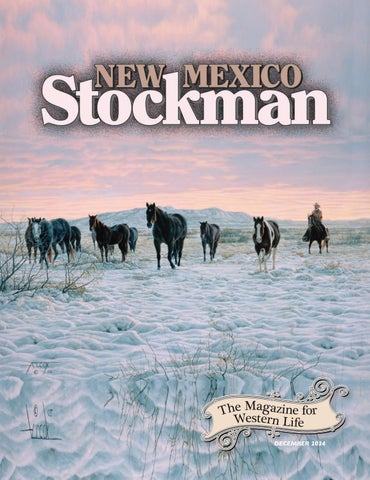
Create a flipbook
Issuu converts static files into: digital portfolios, online yearbooks, online catalogs, digital photo albums and more. Sign up and create your flipbook.