NM Stockman | 08-2025

Page 1


Pérez Cattle Company

Selling the Entire Spring-Calving Herd! ET Heifers, Bred Heifers, Bred Cows with Heifer Calf Splits, Bred Cows and Proven Donors Join us on August 30th for a presale dinner and live music by The Jake Hooker Band

NEW MEXICO STOCKMAN

P.O. Box 7127, Albuquerque, NM 87194

505-243-9515

Fax: 505-349-3060

E-mail: caren@aaalivestock.com

Official publication of ...

n New Mexico Cattle Growers’ Association nmcga20@gmail.com

P.O. Box 850, Moriarty NM 87035 Office: 505.247.0584 , Fax: 505.842.1766

Physical Location: 809 First Street, Moriarty NM 87035

President, Bronson Corn

n New Mexico Wool Growers, Inc. nmwgi@nmagriculture.org

P.O. Box 850, Moriarty NM 87035 Office: 505.247.0584 , Fax: 505.842.1766

Physical Location 809 First Street, Moriarty NM 87035

President, Antonio Manzanares

n New Mexico Federal Lands Council newmexicofederallandscouncil@gmail.com 3417 Avenida Charada NW, Albuquerque, NM 87107

President, Ty Bays

EDITORIAL & ADVERTISING

Publisher: Caren Cowan

Publisher Emeritus: Chuck Stocks

Advertising Representatives: Chris Martinez Melinda Martinez

Contributing

Editors: Carol Wilson

Callie Gnatkowski-Gibson

Howard Hutchinson Lee Pitts

PRODUCTION

Production Coordinator: Carol Pendleton

Editorial & Advertising Design: Kristy Hinds

ADVERTISING SALES

Chris Martinez at 505-243-9515 or chris@aaalivestock.com

New Mexico Stockman (USPS 381-580)

is published monthly by Caren Cowan, P.O. Box 7127 Albuquerque, NM 87194

Subscription price: 1 year hard copy and digital access $50, Digital access $30 Single issue price $10, Directory price $30

Subscriptions are non-refundable and may be purchased at www.aaalivestock.com

POSTMASTER: Send address changes to New Mexico Stockman, P.O. Box 7127, Albuquerque, NM 87194. Periodicals Postage paid at Albuquerque, New Mexico, and additional mailing offices. Copyright© 2015 by New Mexico Stockman. Material may not be used without permission of the publisher. Deadline for editorial and advertising copy, changes and cancellations is the 10th of the month preceding publication. Advertising rates on request.

23 Horse Feature

DEPARTMENTS

10 NMCGA President’s Message by Bronson Corn, NMCGA President

12 Just the Facts ... & Then Some by Caren Cowan, publisher, New Mexico Stockman

20 Collector’s Corner Jim Olson

30 News Update: Cattle Numbers; IJBBA Supporter

33 In Memoriam

39 View from the Backside by Barry Denton

42 Food & Fodder by Deanna Dickinson McCall

43 Riding Herd by Lee Pitts

50 New Mexico’s Old Times & Old Timers by Don Bullis

50 Marketplace

52 Seedstock Guide

55 Real Estate Guide

61 Clem Henson Ranch by a Sandhills Vet in the Tradition of Baxter Black

62 New Mexico Beef Council Bullhorn

66 New Mexico Federal Lands Council by Jerry Schickedanz, PhD

70 From The Arena by Julie Carter

76 Advertisers’ Index

FEATURES

19 2025 New Mexico State Fair Rodeo & Concert Lineup

25 Top Qualities of a Ranch Horse by Emily Foughtn, yourhorsefarm.com

26 Wrangler Women of Influence Nominations Open

28 While Doctors Flee NM, Radical Group Fights to Keep Crisis Going by Piñon Post

32 Trump’s DOT Drops Speed Limiter Plans / by Jeremy Wolfe, FleetOwner

38 Common Myths About Cooking with Beef Tallow Source: cookingwithtallow.com

40 Perez Twins Take Junior Hereford National by Storm

44 How to Prevent and Treat Pink Eye in Cattle by Brandon Scharping, Lena Veterinary Clinic / Vita Plus

45 Every Day is a Good Day to Repeal the Jones Act by Paige Lambermont, and Ryan Young, Competitive Enterprise Institute

46 Weighing the Pros & Cons of 5 Common Calf Weaning Approaches by Purina

47 NMCGA 2025 Fall Scholarship Applications Are Open

48 Online Realtor’s “Climate Risk Assessment” Attracts Suspicion by Kevin Mooney, Restoration News, Energy & Environment

62 Judge Dismisses Case Aimed at Stopping Utah from Reviving Its Public Land Lawsuit by Kyle Dunphey, Utah News Dispatch

64 Drug-Resistant Parasites Threaten Ranched Bison Herds by Courtney Price, Texas A&M University College of Veterinary Medicine and Biomedical Sciences

68 NM Cattle Growers’ Awards Graduate Scholarships

“Brothers” by JaNeil Anderson depicts the cowboy life at play. For this and other work by JaNeil contact her at 263 Anderson Road, Redrock, NM 88055, 575-542-9752 • www.janeilanderson.com janeil.anderson56@gmail.com

Bill King - 505-220-9909

-

BillKingRanch.com

BRANGUS ANGUS RED ANGUS

Arrowquip mineral feeder ($350.00 value) with purchase of an Arrowquip chute while in

This manual chute utilizes traditional closure with a long lever arm for secure fast operation. S-1500 SELF CATCH CHUTE

Features easy-use headgate that allows automatic headcatch with simple adjustments for different size animals.

Remaining inventory of AQ hydraulic and AQ Q catch chutes on sale for 10% OFF!

stock round bale feeders, 1 ton square bale feeders, livestock panels, gates and tanks.

Bronson Corn President Roswell

Tom Paterson President-Elect Luna

Dave Kenneke NW Vice President Cimarron

Jeff Decker SE Vice President Lovington

Roy Farr SW Vice President Datil

Cliff Copeland NE Vice President Nara Visa

Becky King-Spindle Vice President at Large Moriarty

Shacey Sullivan Secretary/Treasurer Peralta

Loren Patterson

Immediate Past President Corona

Randell Major Past President

As I am running around in the feed truck this morning, it dawned on me. I may be a little bit crazy; I have more green grass than I have seen in years, and I am still feeding cows. Life lessons have taught me in the past, but it is cheaper to keep a fat than it is to play catch-up! That same type of principle can also guide you through life, for example:

It is funny how when things are not going our way we spend a lot of time praying that God will step in and intervene, but when everything is going our way, we get lots of rain, and life is good with him to fall off and not thanking for what he has given us! There is a saying that I truly love “hard times create hard men, hard men create soft times, soft times create soft men, soft men create hard times!”

There is something to be said about staying prepared for all aspects of our lives, whether it is spiritual life, personal life or your business life. Once you get caught off guard, it is hard to get back up. We have tools now to help us stay on guard with the high cattle prices, high land prices, high interest rates, and succession planning to ensure that our next generation has a chance to flourish.

New things can be very scary; there is no doubt about it. Tradition is one of the biggest killers of family ranches, I am not talking about the traditional way of working your livestock or taking care of your livestock. I am talking about the traditional way of dealing with the obstacles that we face, such as a prolonged drought or a volatile market, all the while having to satisfy long term debt and operational goals.

There is something I was taught many years ago– just because that is the way you were taught, and that is the way your granddad did it and your father did it, doesn’t always mean that’s the only way to do it. The blinders that those of us in the cattle industry can put on just to see the things we want to see can and will destroy us in a time where we have a unique opportunity to pay off long term debt.

Thus, to give our families the ability to continue living on and operating these generational ranches. We are currently living in the time in history that has seen the highest cattle prices ever recorded, this is both exciting and terrifying all at the same time!

How many times have you seen calf prices go from being really really good to really really bad as you are trying to sell your calves? There are many of you who have been selling cattle a lot longer than me, but I know I have seen it multiple times in the last 15 years that I have been marketing calves.

I want to make sure you understand. I am not pushing any PRF or LRP insurance companies, but when there is a tool that is available to help producers, I want to make sure they understand the beneficial side of it. If you do not have a pasture range forage, or a livestock risk protection policy, I encourage you to do some homework.

Anytime you have the ability to contract your calves at high prices before they are even born to ensure that your ranch will be profitable at the end of the year is a win in my book! Whether you are a cow/calf operation, or a stocker operator, this is a tool to help give you some peace of mind.

I love the tradition of ranching and the families keeping those traditions alive, but there are some of the traditional ways of doing business that are not as much help as they once were. The cattle ranching industry has changed; I just don’t want anyone to get caught flat footed in a sprint!

God Bless you and your family and I pray that you get rain!

“Ya’ll have a Good’en!”

Bronson Corn

USDA Reorganization

Much has been made in the last week about the proposed reorganization of the US Department of Agriculture (USDA). The Secretary’s memorandum states that:

The reorganization consists of four pillars:

Ї Ensure the size of USDA’s workforce aligns with available financial resources and agricultural priorities.

Ї Bring USDA closer to its customers.

Ї Eliminate management layers and bureaucracy.

Ї Consolidate redundant support functions.

The plan is to move much of the agency out of Washington, DC, to five hubs across

the country:

Raleigh, North Carolina

Kansas City, Missouri

Indianapolis, Indiana

Fort Collins, Colorado

Salt Lake City, Utah

In addition to these five hubs, USDA will maintain two core administrative support locations: Albuquerque, New Mexico and Minneapolis, Minnesota. These two locations have substantial concentrations of human resources staff that support the delivery of critical public safety functions.

USDA will continue to maintain critical service centers and laboratories including agency service centers in St. Louis, Missouri; Lincoln, Nebraska; and Missoula, Montana.

The US Forest Service (USFS) will phase out the nine Regional Offices over the next year and implementation activities will take into consideration the ongoing fire season. The agency will maintain a reduced state office in Juneau, Alaska and an eastern service center in Athens, Georgia.

The current stand-alone Research Stations will be consolidated into a single location in Fort Collins, Colorado. The USFS will retain the Fire Sciences Lab and Forest Products Lab - the former, vital for protection from forest fires and the latter, critical for assessing market development opportu-

nities for timber and other forest products and related industries.

The Agriculture Research Service will eliminate its Area Offices. Residual functions will be performed by its Office of National Programs. The National Agricultural Statistics Service will consolidate its 12 existing regions into five USDA Hubs over a multi-year period. The Natural Resources Conservation Service will align its regional structure with the five USDA hub locations.

There are a multitude of other details that will effectuate the memorandum.

However, there is little known about how the rest of the USFS hierarchy will function. Hopefully it will do away with the judge, jury and executioner model that has been so tough on ranchers and their families.

Heretofore, a district ranger could take action against an allotment owner. The only course of appeal was to the regional supervisor. If the action was upheld by the regional supervisor --- and who expected them not to uphold it --- the final appeal was to the regional office. Again, there has been little relief at that level either.

The option of a court case is there, but

Cowan, Publisher New Mexico Stockman

JINGLE JANGLE

Does anyone else feel like time is going too fast? We are closer to the end of the year than the beginning and that just doesn’t seem possible,

I know many of you are gearing up for County Fair. Showcasing the animals that have been your whole life for months. Blessings to all of you and your families and your commitment to agriculture.

As you attend your County Fairs, we invite you to visit your local New Mexico CowBelles booths. These ladies work hard to schedule and plan so they can talk to you and get to know you. If you have thought about joining, please stop by. I bet most of them are raffling off a great quilt or maybe even a cowhide.

And, if you have a business or would just like to join us without being an active member, it is a great time to become an Associate Member, too. It may be a contest, so help them out if you can-wink, wink.

See you down the trail, – Corrina Casler

New Mexico CowBelles President

Yucca CowBelles and Wool Growers met Tuesday, June 24, at 10:00 a.m. at CVE in Artesia. Nine members were attending. Karen Patterson was hostess. Meeting was called to order by President Joan Kincaid. Pledge of Allegiance was led by Trisha Monk and CowBelle Creed was read by Tina Kincaid. The minutes were read and approved, and Tricia Monk gave Treasurer’s report. Rosemary Casabonne spoke of the State CowBelle meeting in Ruidoso. Dues are going up to $30 and Jr. Dues to $5. Karen Patterson reported on the Brand Quilt. It has been displayed in Carlsbad at Double D Feed Store and Bennies Western Store. It will be moved and displayed at Bennies in Artesia until the Fair. Tickets for the Quilt Raffle were distributed, and the Fair Schedule was presented. Everyone is asked to sign up for a shift in booth. Members reminded that only those who purchase quilt tickets would be allowed to enter the drawing for the cowhide

donated by David Darnell, the Wine Glass Cowboy.

There will be a “Spice Party” July 8th at 9:30 in Duncen where some of the Ladies will make a Beef Rub to sell at the Fair. Grammy’s House items donated were Shampoo, Conditioner and Baby Shampoo. Meeting adjourned. The program was presented by Jenell Taylor, Licensed Clinical Social Worker, and Regional Director of the Permian Basin Counseling and Guidance. Janell is committed to expanding access to high-quality, affordable mental health care in rural communities. These services are available at Bull Dog Wellness Center in the Artesia Schools. Services are also available in Carlsbad, Hobbs and Jal as well. Treatment for Loss & Grief, Addictions, Chronic Pain, Relationship issues and other Behavioral issues are among much-needed services offered to Students, Families, Couples, Veterans and Individuals. It was a very interesting and informative program. Respectfully submitted, Tina Kincaid, Secretary

Eight members of the Powderhorn CattleWomen met at the ranch home of April May, July 10, 2025, with April and Mary McClain as hostesses. President Mary led the meeting. It was noted that new members’ contact information needed to be included in meeting and activity notices. Carol Thorpe’s treasurer’s report was the main topic of business since it contained income and expenses from the annual Old Fort Days Beef BBQ. Although fewer plates were served than previous years, it was considered an overall success in tradition and beef outreach. Plenty of CattleWomen turned out to help prepare, serve and clean up after the BBQ at the Fort Sumner Schools cafeteria and homemade desserts were plentiful. Children picked sacks of beef coloring books and mothers perused recipes and brochures. Beef Council would like locals to request materials needed for county fairs. Several packages of brand napkins with the Powderhorn CattleWomen of De Baca and Guadalupe Counties logo were sold. The leftover meat was sold to members with glowing complements to the chef, Shane Adams. After outstanding checks get collected and bills

paid the event will fund a good portion of next year’s scholarships. A poster listing the last five years’ scholarship winners will be displayed at future BBQs. Future menu suggestions were brought up and will be discussed in full at a later date. New Mexico CowBelles associate membership drive contest was discussed. The contest runs from July 1st until October 1st. The Local collecting the most new associate members will receive a credit toward NMCB merchandise. The individual selling the most will receive free 2026 dues. A card of support was signed for Nancy Schade’s daughter, Katie Vaporis, for her upcoming surgery. Oftentimes member producers need our understanding and love as we state in our Creed at every meeting. A gourmet lunch was enjoyed while April told stories attached to her extensive and unusual antique collection. The September meeting will be at the home of Joan Key. Respectfully submitted, Karen Kelling Mesilla Valley CowBelles met July 22, 2025 with five members and one guest at Andele’s. All the meeting formalities were completed, and business began. A possible fundraiser was discussed regarding Bingo activity. The group would find prizes and collect money from the night. The ladies will plan a time to go and watch the dynamics of it all. Looking at everyone’s schedules, this will have to happen after the fair. Associate member drive was discussed and members made suggestions of possibles. Ag Explorer at the fair will be September 24-25 for 3rd graders and September 26 for the STEM AG Career Fair Day. LCPS will be back in session and some teachers are asking about the field trip and logistics. MVC will have at least one presentation, assist with logistics and work on contacting the NMSU folks. Contents for several presentation boxes to be added to the Ag Explorer trailer were discussed. Boxes to be finished and included by Fair time. Fair booth also discussed. Next meeting may have to be a virtual one prior to fair cleanup. More to come.

New Mexico CowBelles thank you to all who have submitted their news to Jingle Jangle. Please send minutes and/or newsletters to: Jingle Jangle, Janet Witte, 1860 Foxboro Ct., Las Cruces, NM 88007 or email: janetwitte@msn.com by the 15th of each month.

Friday, September 12, 2025 at 5:00 PM

Saturday, September 13, 2025 at 10:00 AM

Saturday, September

Dunlap Livestock Auction | Dunlap, Iowa

520 | ANGUS

Sire: PVF INSIGHT 0129

Dam: CHERRY KNOLL RICHTA 1190

MGS: CONNEALY FINAL PRODUCT

Due to calve 2/25/26 to BNWZ Dignity 8017 ♀

M105 | PB SIMMENTAL

Sire: W/C BET ON RED 481H

Dam: HALLS BE STEEL MY HEART

MGS: SVF STEEL FORCE S701

Due to calve 1/10/26 to FRKG Marvel 271M

M416 | PB SIMMENTAL N010 | 3/4 SIMMENTAL

Sire: FRKG CLASSIC 948K

Dam: HALLS BE STEEL MY HEART

MGS: SVF STEEL FORCE S701

40+ Rugged age advantaged bulls will sell!

M012 | PB SIMMENTAL

Sire: W/C CYCLONE 385H

Dam: PSCS IN ALLEY’S IMAGE 702J ET

MGS: W/C FORT KNOX 609F

Due to calve 1/1/26 to RP/BCR Eminence H005

Sire: STCC TECUMSEH 058J

Dam: BFJV FOREVER SAM L133

MGS: JSUL SOMETHING ABOUT MARY 8421

230+ ET and AI sired heifer calves will sell!

M79 | PB SIMMENTAL

Sire: W/C BANKROLL 811D

Dam: MISS SHANIA 6D

MGS: MR CCF VISION

Due to calve 1/14/26 to FRKG Classic 948K

100% AI BRED - NO BULL EXPOSURE

SIMMENTAL, SIMANGUS™, ANGUS, MAINE-ANJOU, CHIANINA & CLUB CALF FEMALES!

The most elite set of cattle we have ever offered! Countless ET heifers from the most prominent cow families at Bruhn Cattle Company. They sell bred to the hottest AI sires in the business with conventional & sexed ♀ semen! Join us for a steak dinner on Friday night... breakfast and lunch served on Saturday!

Al Bruhn: (712) 880-2639

Calvin Bruhn: (712) 208-0058

Dr. Jared Bruhn, DVM: (712) 880-9995

Collin Grove: (712) 269-8961

Matt Woolfolk: (731) 694-6469 BRUHNCATTLE.COM

Graham Blagg: (530) 913-6418

Jered Shipman: (806) 983-7226

Tim Anderson: (605) 682-9343

INNOVATIONAGMARKETING.COM sale management by:

New Mexico CowBelles Recognize Scholarship Winners

The New Mexico CowBelles awarded three $500 scholarships to two graduating high school seniors and one college upperclassmen at the New Mexico Cattle Growers’ Mid-Year Conference in Ruidoso, New Mexico. The Pat Nowlin Memorial Scholarship honors the memory of Pat Nowlin, the first president and founder of the New Mexico CowBelles organization.

Karleigh Erramouspe, Corona, was selected as the CowBelles upperclassman scholarship winner this year. Erramouspe completed her freshman year as an Oklahoma State University (OSU) student majoring in agriculture communications with a minor in ethical leadership. She is pursuing a career in agricultural journalism or policy in hopes to bridge the gap between livestock producers, lawmakers and consumers.

This summer Erramouspe is working as an intern with the Oklahoma Farm Report to learn about delivering the latest agricultural news, market and commodity reports, and weather information to farmers and ranchers in the area. A previous summer internship with the NMCGA allowed her to meet with legislators in Santa Fe and Washington, DC to further advocate for our industry.

While at OSU, Erramouspe was named to the President’s Honor Roll with a 4.0 GPA and served as a student ambassador for the Ferguson College of Agriculture. Other leadership roles included: OSU Agriculture Communicators of Tomorrow committee member, volunteer for the Stillwater Humane Society and the OSU Cowboy-thon fundraising event, and leader for feedlot and purebred beef center tours as a member of the OSU Block and Bridle Club.

Kagan Bequette, Fort Sumner, and Natalie Smith, Mills, each received $500 as winners of the scholarships for graduating high school seniors.

Bequette is the daughter of Tanya Bequette and is a recent graduate of Fort Sumner High School with plans to enroll in

the San Juan College on-line veterinary technician program based in Farmington. The time spent working on her family ranch raising Hereford and Angus cattle and alfalfa, gave her the inspiration for her chosen career path.

Bequette has already acquired her New Mexico and National Beef Quality Assurance certifications and has completed a veterinary science certificate program which will enhance her plans to become further certified in pregnancy checking, artificial insemination and embryo transfer in cattle. Her beef promotion and education activities include beef industry presentations for elementary students and beef cattle workshops at the De Baca County Ag Days. Bequette says, “Agriculture has taught me to be resilient and to never give up even when things get hard.”

Bequette has also received numerous awards and leadership opportunities in 4-H and FFA which include, 2024 National 4-H Record Book winner, 2024 State FFA SAE entrepreneurship award winner in breeding cattle, swine production, goat production and diversified livestock, 2023 NM State 4-H high point sewing individual, as well as officer positions in her local 4-H club and county council.

Natalie Smith, daughter of Brandon and Becky Kelling Smith, graduated from Roy High School and plans to attend Clarendon Junior College in Clarendon, Texas as a member of the college’s livestock judging team. Her goal is to obtain two associates degrees in agricultural communications and agriculture economics before transferring to Texas Tech University in Lubbock, Texas to major in agriculture communications and minor in political science as she prepares for law school. While at TTU she also plans to participate in the agricultural legislative intern program in Washington, DC.

Smith says, “Becoming an attorney in the area of agriculture will allow her to help agriculturists like her family to fight tough issues that are detrimental to the very people that are producing the food and fiber of our nation.” She also subscribes to the biblical principle that “evil prevails when good men do nothing” and wants to set herself up to be in a position of authority to contribute to the solution rather than the problem as she serves the industry she knows and loves.

Beef promotion and education activities have included: NM Beef Council Grass Fed Beef Smack Down event, NM Farm and Livestock Bureau Ag Day volunteer at the Isotopes baseball game, creating a promotional video explaining the benefits of beef

to athletes while also playing in the NM State Girls Basketball Tournament, and serving as the 2024-2025 NM CowBelle Beef Ambassador.

Smith has attained a wide range of honor and achievements during her time in high school, some of which include, the Final Drive Jackpot Grand Champion Market Beef (2025), Leon H. Harms Memorial Award for Beef Exhibitors (2024), NM State Fair Reserve Champion Simmental Market Steer (2024), NM State 4-H Conference 1st place livestock judging team and 4th high individual overall as well as high point individual in prepared public speaking in 2023 and 2024. Additionally, Smith received 4th high point individual honors at the Casper College Livestock Judging Contest in Casper, WY and attained her NM State FFA Degree in 2024. The NM Cattle Growers Association also named Smith as the Williams Ranch Supply Spring Scholarship winner of $1000.

Smith’s outstanding athletic achievements included, 2025 1A Girls NM State Basketball State Champions in 2021, 2023 and 2025, NM All Star Basketball Team selectee and 1st place All-State Team in 2025, All District Basketball Player for three years and the NM Activities Association “Together We Rise” Award winner. She also excelled in track and field, volleyball, 4-H, FFA, and high school academics with many additional awards and honors.

The CowBelles wish to congratulate our scholarship winners and extend thanks to the Crown, Pinon, Powderhorn and Silver Spur CowBelle locals that endorsed our scholarship applicants this year. Appreciation is also extended to the many individuals and CowBelle locals who donated funds throughout the year to the CowBelle Pat Nowlin Memorial Scholarship in memory or honor of family members or loved ones.

Should individuals or groups wish to donate to the scholarship, contact the NM CowBelle scholarship chair: Shelly Hathorn, 4706 Alamocito Ct., Amarillo, TX 79124, shporter@nmsu.edu, 575-447-7447      ▫

THURSDAY, SEPTEMBER 4

9:00 a.m. Wool Show Fleece Arrival Begins 5:00 p.m. Wool Show Fleece In Place

FRIDAY, SEPTEMBER 5

REMINDER: NO TACK OR ANIMALS ALLOWED ON GROUNDS BEFORE FRIDAY!

8:00 a.m. Jr. Market, Jr. Breeding & Dairy Livestock arrival beginsALL barns

8:00 a.m.

Jr. Rabbit/Cavy/Poultry Arrival Begins

9:00 a.m. Wool Show - JLP

9:30 a.m. Sheep to Shawl - JLP **Demonstrations daily from 9:30 a.m. – 5:30 p.m.

10:00 a.m. Milking Demonstrations, - JLP

7:00 p.m.

Jr. Rabbit/Cavy/Poultry In Place

SATURDAY, SEPTEMBER 6

8:00 a.m. Open Angus, AOB & Hereford Cattle Arrival Begins

8:00 a.m. Agriculture Public Speaking Contest - AAPAC Building

8:00 a.m. Agriculture Science Fair - AAPAC Building

9:00 a.m. Jr. Rabbit/Cavy Show - Rabbit/Poultry Building

9:30 a.m. Sheep to Shawl - JLP **Demonstrations daily from 9:30 a.m. – 5:30 p.m.

10:00 a.m. Jr. Poultry Show - Rabbit/Poultry Building

10:00 a.m. Milking Demonstrations - JLP

12:00 p.m. Jr. Market Goats/Jr. Wether Does In place - JLP

12:00 p.m. ALL Jr. Market Swine MUST be in place***

1:00 p.m. Jr. Market Goats/Wether Does - Weights due

3:00 p.m. Wool Lead Show - Swine Barn

4:00 p.m. Flowers & Finances - Youth Hall Courtyard

4:00 p.m. Jr. Market Swine - Weights Due***

5:00 p.m. Jr. Market Sheep & Jr. Commercial Ewes In place - JLP***

5:00 p.m. Jr. Market Beef/Jr. Market Heifers/Jr. Breeding Heifers - In place JLP***

SUNDAY, SEPTEMBER 7

9:30 a.m. Jr. Wether Doe Show - JLP

9:30 a.m. Sheep to Shawl - JLP **Demonstrations daily from 9:30 a.m. – 5:30 p.m.

10:00 a.m. Milking Demonstrations - JLP

11:00 a.m. Jr. Market Goat Show - JLP

1:00 p.m. Open Angus, AOB & Hereford Cattle Arrival

1:00 p.m. Jr. Market Swine Showmanship - Swine Barn

4:00 p.m. Classify Jr. Market Lambs - Weights will be due 30 minutes after the conclusion of classification- JLP***

MONDAY, SEPTEMBER 8

8:00 a.m. Jr. Market Swine Classification & Show - Swine Barn

8:00 a.m. Replacement Dairy -Check In: ONLY between 8 - 5 - Beef Barn

9:30 a.m. Sheep to Shawl - JLP **Demonstrations daily from 9:30 a.m. – 5:30 p.m

10:00 a.m. Classify/Check in Jr. Market Beef/Market Heifers/ Weights Due - JLP

10:00 a.m.

Milking Demonstrations - JLP

12:00 p.m. Jr. Breeding/AOB/ Commercial Heifer - Check In Due & Weights Due - JLP

12:00 p.m. Open Angus, AOB & Hereford Cattle Arrival/Check In Ends - Beef Barn***

5:00 p.m. Replacement Dairy must be in place -Check In by 5:00 p.m. - Beef Barn

TUESDAY, SEPTEMBER 9

8:00 a.m. Open Rabbit Arrival Begins

9:00 a.m. Jr. Commercial Ewe Show - JLP

9:00 a.m. Open Angus Cattle Show – Beef Barn***

9:30 a.m. Sheep to Shawl - JLP **Demonstrations daily from 9:30 a.m. – 5:30 p.m

10:00 a.m. Jr. Market Lamb Show - JLP

10:00 a.m. Open AOB Cattle Show - Beef Barn***

10:00 a.m. Milking Demonstrations - JLP

11:00 a.m. Open Hereford Cattle Show – Beef Barn***

1:00 p.m. Jr. Replacement Dairy Heifer Show - Beef Barn

7:00 p.m. Open Rabbits must be In Place

WEDS, SEPTEMBER 10

9:00 a.m. Open Rabbit Show - Rabbit/Poultry Building

SCHEDULE OF EVENTS SEPTEMBER

4-14

*Schedule & Rules are Subject to Change*

9:00 a.m. Jr. Market Steer/Jr. Market Heifer Show - JLP

9:30 a.m. Sheep to Shawl - JLP **Demonstrations daily from 9:30 a.m. – 5:30 p.m

10:00 a.m. Open/Jr. Dairy Cattle Show – Beef Barn

10:00 a.m. Milking Demonstrations - JLP

2:00 p.m. Jr. Breeding Heifer Show – JLP (Or following the Jr. Market Steer/Heifer show)

THURSDAY, SEPTEMBER 11

9:30 a.m. Sheep to Shawl - JLP

**Demonstrations daily from 9:30 a.m. – 5:30 p.m

10:00 a.m. Milking Demonstrations - JLP

10:00 a.m.

Livestock Judging Contest – JLP

1:00 p.m. Jr. & Open Dairy Goat Show arrival - JLP***

1:00 p.m. Open Breeding Sheep Show arrival - JLP***

7:00 p.m. Parade of ChampionsTingley Coliseum

FRIDAY, SEPTEMBER 12

9:30 a.m. Sheep to Shawl - JLP

**Demonstrations daily from 9:30 a.m. – 5:30 p.m

10:00 a.m. Milking Demonstrations - JLP

11:00 a.m. Junior Livestock Sale Registration opens - Horse Arena

12:00 p.m. Open Poultry Arrival Begins

12:00 p.m. Texas Longhorns Move in - Beef Barn

1:00 p.m. Open Breeding Sheep Show in place - JLP***

1:00 p.m. Junior Livestock Sale – Horse Arena

7:00 p.m. Open Poultry must be In Place

5:00 p.m. Texas Longhorns must be In Place

SATURDAY, SEPTEMBER 13

9:00 a.m. Open Poultry Show – Rabbit/Poultry Building

9:00 a.m. 4-H Cooking Challenge – Off Grounds

9:30 a.m. Sheep to Shawl - JLP

**Demonstrations daily from 9:30 a.m. – 5:30 p.m

10:00 a.m. Table Top Serama Chicken Show – Poultry Building 10:00 a.m.

Milking Demonstrations - JLP

10:00 a.m. Texas Longhorn Open & Junior Show – Beef Barn

10:00 a.m. Jr. Dairy Goat Show/ Showmanship - JLP

Open Jr. Dairy Goat Show, Youth Sr. Dairy Goat Show, Open Sr. Dairy Goat Show

1:00 p.m. Navajo Sheep Show followed by the Open Sheep Shows - JLP***

SUNDAY, SEPTEMBER 14

9:30 a.m. Sheep to Shawl - JLP **Demonstrations daily from 9:30 a.m. – 5:30 p.m 10:00 a.m. 4-H Dog Show - JLP***

10:00 a.m. Texas Longhorn Open & Junior Show – Beef Barn***

10:00 a.m.

Milking Demonstrations - JLP

1:00 p.m. Rooster Crowing Contest – Rabbit/Poultry Building

Junior Livestock Pavilion- JLP

who can afford it and with three strikes already against you, why bother? Additionally, under current federal law a federal employee may do anything they please as long as they think it is furtherance of their duties.

The Center for Biological Diversity (CBD) immediately issued a statement on the USFS moves:

“Scrapping the Forest Service’s Southwestern region will drain conservation capacity from Arizona and New Mexico’s already stressed national forests and biodiversity,” said Taylor McKinnon, Southwest director at the Center for Biological Diversity. “Our region’s frequent-fire forests and rich biodiversity need stronger boots-on-the-ground leadership, not its elimination by the Trump administration.”

If you want to talk about fire...

Let’s talk about the Luna Fire in Northern New Mexico. The fire was ignited on June 25 by a lightning strike.

TIRE WATER TROUGHS

In a tired old statement, fire managers with the Santa Fe National Forest said they planned to manage the low-intensity fire, which was burning in an area previously thinned and treated with prescribed burns, in an effort to bring fire back to its historic role in the forest ecosystem. What they did was allow well over 16,000 acres to burn and kill or maim cattle on a family ranch and grazing allotment.

The Vigil family, which has been ranching in the area since the 1800s, grazes cattle on a Forest Service allotment that was originally part of the San Joaquín Land Grant, according to the Santa Fe New Mexican. They feel they didn’t have sufficient warnings to rescue their cattle.

Now let’s talk about the Grand Canyon

This headline on an opinion piece in the azcentral.com by Frank Carroll sums it up: Blame National Park Service, not climate change or Trump, for Grand Canyon fire

Although the online news outlet and the author present conflicting views on the origin of the fire, lightning strike or controlled burn, there is no dispute about the outcome. A 170-acre fire has been backburned into a 44,000 acre plus fire burning

2025 New Mexico State Fair

Rodeo & Concert

Lineup

FRIDAY, SEPTEMBER 5

Wynonna Judd with Chevron PRCA Xtreme Bulls

SATURDAY, SEPTEMBER 6

Cypress Hill with Chevron PRCA Xtreme Bulls

WEDNESDAY, SEPTEMBER 10

Chevron PRCA Rodeo

THURSDAY, SEPTEMBER 11

Chevron PRCA Rodeo

FRIDAY, SEPTEMBER 12

Grupo Marca Registrada with Chevron PRCA Rodeo

SATURDAY, SEPTEMBER 13

Clay Walker with Chevron PRCA Rodeo

SUNDAY, SEPTEMBER 14

Chevron PRCA Rodeo – Matinee

Purchasing a concert and rodeo ticket includes admission to the 2025 New Mexico State Fair. Visit the New Mexico State Fair’s official website for more information on the rodeo-concert series and other events at statefair.exponm.com

The 2025 New Mexico State Fair, presented by Chevron, is scheduled to run from September 4 through 14, 2025.

The State Fair promises to be a magical event highlighting the culture, agriculture, art and beauty of New Mexico, including top-quality music and entertainment.

EASTERN NEW MEXICO STATE FAIR

COLLECTORS CORNER

The Hidden Cost of Getting a Deal

We recently went to pick up a collection from a longtime customer—someone we’ve known and done business with for years. As we started sorting through things, it quickly became clear: this was a mixed bag—and then some. There were

some quality pieces tucked in here and there, and also some average, middle-of-the-road type of items. But the bulk of it was lower-end stuff that honestly, wasn’t worth much at all.

As we continued going through things, and I recalled how this guy bought in the past, it hit me: this particular collector didn’t build his collection with quality in mind—he had built it around the price of the item. If something looked like a good deal, he bought it. Highend or low-end, it didn’t matter. If he could get it for half price or less, he was all in. And while he certainly got plenty of “deals,” the end result was a collection that lacked focus, consistency, and long-term value.

The Thrill of the Hunt

Let’s be honest, we all love getting a deal. The thrill of the hunt is half the fun of collecting. Scouting out items can be exciting. And there’s a certain rush in snagging an item for a fraction of its suggested retail price. Then sometimes, yes, you do stumble across a real treasure at a bargain. But those occasions are the exception, not the rule. It’s been said that if you calculated all of the time, gas and effort spent tracking down a “bargain,” that you actually paid more for it than you would have for a dozen others you passed up along the way.

The Problem With “Cheap”

Chasing bargains can become a trap. That $20 item you picked up for $10 might feel like a win in the moment. But when you go to resell it, you may find it’s really only worth $2—or worse, there’s no market for it at all.

Here’s the truth: cheap things are always cheap, no matter how much you paid for them. It doesn’t matter if you got it at 80 percent off—if there’s little value to begin with, the resale market won’t be kind later. In fact, it can be unforgiving.

On the flip side, quality generally retains value. Well-made, rare, historically significant, or artistically desirable items tend to hold their own, even in fluctuating markets. They also tend to attract more attention from serious collectors when it’s time to sell. A focused, quality-based collection almost always outperforms the bargain-buy assortment.

Buy With Purpose, Not Just Price

One of the most important lessons we can learn as collectors is to buy with purpose. Ask yourself:

Ї Does this item have historical or cultural significance?

Ї Is it a good example of the artist’s or maker’s work?

Ї Is it in very good to excellent condition?

Ї Is there a market for this item down the road?

Ї Does it enhance or align with the theme of my collection?

If the answer is “no” across the board, even a deep discount shouldn’t sway you. Because collecting isn’t just about accumulation—it’s about curation.

Building Value, Not Just Volume

The most respected and valuable collections didn’t happen by accident. They were built with intention, expertise, and restraint. They tell a story. They reflect the collector’s passion, knowledge, and commitment to quality over quantity.

Buying indiscriminately because something is “a deal” can dilute your collection and make it harder to sell later. Buyers (especially experienced ones) can tell when a collection was assembled thoughtfully versus opportunistically. The final difference in value can be huge.

Our Takeaway From the Visit

As we finished up with the customer’s collection, we did our best to price things fairly—giving more weight to the better pieces of course. But the truth is, a large portion of the collection simply didn’t have much value—and we left it there. The “deals” he thought he was scoring ended up being more of a burden than a benefit. It was a stark reminder that not all deals are created equal, and that quality matters just as much (if not more) than the price tag.

Final Thoughts: Quality Over Quantity

There’s nothing wrong with being budget-conscious. Smart buying is part of smart collecting. But remember: cheap isn’t always smart, and value isn’t always tied to price.

So when you’re out hunting for that next piece, whether it’s a vintage saddle, a turquoise bracelet, or a rare old Colt, pause and ask yourself: Am I buying this because it’s cheap, or because it’s worth adding to my collection? The answer could save you more than just a few headaches in the long term.

Last 3-5 years longer than other breeds

20-25% WW boost with Brangus cross

93% grade choice or higher

MONTOYA CD

MONTOYA

STYLISH LITTLE CD

by Docs Stylish Oak out of Sweet Little CD We will be offering their Fillies For Sale this Fall

Top Qualities of a Ranch Horse

Praised for their versatility, these horses are capable of working on real ranches and competing in ranch classes.

More and more people are looking for ranch horses. It’s not necessarily because they live on large cattle ranches, but rather these horses are incredibly versatile and have winning personalities. Classes like ranch riding, versatility ranch horse, and ranch trail are growing tremendously in popularity. They allow you to challenge your horse in a fun and rewarding way!

Some may be wondering what exactly is a ranch horse, and what qualities create one. The answer may vary from ranch to ranch, but you’re likely to hear a few specific traits over and over again. Without these qualities, you don’t have a good ranch horse.

Ranch Horse Traits

Ї Simply put, these animals can work efficiently on a working cattle ranch. That’s their true purpose, whether they make it there or not.

Ї This horse will have a balanced conformation, hardy feet, and sizeable bone.

Ї They’re obedient, quiet, and attentive. A ranch horse is ready for their rider’s next move. They listen and put up no resistance.

Ї In the face of danger or the unknown, they remain level-headed and don’t panic or take off.

Ї These horses also must be highly athletic! Not only may they be ridden for hours, but the tasks can be physically draining.

Ї Some basic maneuvers they should be able to do include a roll back, sliding stop, and spin. These aren’t just for performance’s sake… These maneuvers are used on actual ranches.

Ї Other requests of these horses range from changing leads easily to moving forward quickly and coming back when asked.

Ї They’re expected to ground tie and be comfortable with hobbles.

Ї On many occasions, ranch horses will need to go over and through obstacles. That might be anything you’d find out in the wilderness – water, logs, rocks, under tree branches, etc.

Ї Dragging things like a fence post or calf is another request they should be capable of managing. They shouldn’t have a fear of ropes touching their sides or legs.

Ї And of course, these horses have good cow sense. They can easily separate one from the herd and send it in any direction.

Ї They will even be able to use their bodyweight to hold a cow once the rider has caught it.

Many will agree that any breed of horse is capable of the job. The most common ranch horse is a Quarter Horse though. Some even prefer those with foundation bloodlines. A few of the more common AQHA bloodlines include Shining Spark, Doc Bar, Driftwood, Colonel Freckles, High Brow Cat, Joe Hancock, Peppy San Badger, and many others! These names are famous because of not only their accomplishments, but of their offsprings’ too.

Other breeds like American Paint Horses, Mustangs, Appaloosas, and Morgans may occasionally be spotted on ranches. Many breed associations also offer ranch classes, which allows riders to compete against similar horses. Ultimately, a good ranch horse isn’t a breed, rather a type!

It takes the right training and temperament to be a ranch horse. Not every horse is capable of the job! Whether you’re looking for a horse for a real ranch or just want a competition horse, they’ll be expected to have many of the traits listed!

Wrangler Women of Influence Nominations Open

The Wrangler Women of Influence Award, presented by The American Quarter Horse Journal , recognizes six women within AQHA and the American Quarter Horse industry whose positivity, perseverance and integrity have impacted the Association and industry.

“Innovation, courageous individuality

be a woman who works at a lesson barn, manages a 4-H horse program or a regional AQHA racing experience and encourages young people to join the American Quarter Horse Youth Association; a ranch manager or ranch woman who makes sure all of their American Quarter Horses are registered and that the horses she breeds are enjoyed by the industry; a woman who is a cheerleader for AQHA, its mission and programs; or a researcher who has received American Quarter Horse Foundation scholarships and/ or grant money to focus her research on equine-related diseases, conditions or therapies.

Nominations opened on July 21, 2025 and close on August 22, 2025. For nomination guidelines and rules, and to submit a nomination, go to www.aqha.com/ wrangler-women-of-influence.

“These women aren’t always visible, as

they respect everyone. These are the women who are doing the heavy lifting when it comes to making sure that anyone and everyone appreciates the world’s most versatile horse – the American Quarter Horse – and our western heritage.”

A panel of judges will select six winners, who will each be highlighted in an issue of the Journal throughout 2026, on aqha.com and on AQHA social media platforms. The winners will also receive prize packages from AQHA’s generous corporate partners.

New Mexico Horseperson of the Year

Mariah Wilson has been a passionate advocate for youth in the horse industry for over 20 years, combining her roles as a trainer, riding instructor, coach, and owner of Platinum Performance Horses with deep leadership involvement in the equine community. As President of the Arabian Horse Association of New Mexico (AHANM) and a board member of AHA Region 8, she has supported youth development through scholarships, programming,

Her innovative and generous spirit shines through her efforts to make horses accessible

Organized visits with a miniature horse to children’s hospitals and

Brought horses to a homeless shelter so children could interact with them Led a youth-focused Arabian program that earned AHANM the 2023 AHA

In 2024, Mariah led a transformative revitalization of the New Mexico State Fair horse events, coordinating breed and discipline shows, 4-H involvement, educational clinics, a draft horse pull, sponsorships, and volunteer efforts. Her leadership reenergized the horse activities at the state fair, attracting new participants and fostering greater com-

Known for her enthusiasm, inclusiveness, and tireless dedication, Mariah is praised for uniting equestrians across disciplines and generations. Whether teaching young riders, helping scout troops earn badges, or mentoring future leaders through NMHC, she consistently promotes access, education, and joy in horsemanship. Mariah Wilson truly embodies the spirit of the Horseperson of the Year.

New Mexico Horseperson of the Year

Chantelle Lewis, Mora, New Mexico, is a lifelong horsewoman and tireless advocate for youth equine education. With a background in Horse Management from the University of Minnesota and professional experience as a trainer, instructor, and animal care provider, Chantelle has dedicated the past eight years to the youth of Northern NM’s horse community. Her contributions include:

Ї Leading the Mora County Ghost Riders 4-H Horse Club

Ї Organizing and managing horse shows and rodeo events for the San MiguelMora County Fair

Ї Hosting and instructing at Mora County Horse Camp

Ї Providing comprehensive horsemanship instruction—from groundwork and showmanship to rodeo events and English riding

Ї Encouraging youth to combine practical horse skills with academic presentations to deepen equine knowledge

Chantelle is known for her unmatched dedication, selflessness, and individualized

support for each child and horse team, going above and beyond to bring in diverse resources and opportunities. Her efforts in 2024 alone include leading clubs, attending fair board meetings, organizing educational activities, and facilitating inclusive equine experiences that empower every child to explore and pursue their unique horsemanship interests.

Her work is entirely volunteer-driven, community-focused, and fueled by a genuine passion for youth development and the betterment of equine education in rural New Mexico.

While Doctors Flee NM, Radical Group Fights to Keep Crisis Going

In a fiery new op-ed, Think New Mexico Executive Director Fred Nathan is taking aim at a secretive, left-wing dark money group accused of undermining desperately needed reforms to New Mexico’s collapsing health care system. The group, called “New Mexico Safety Over Profits” (NMSOP), is now the subject of a lawsuit from the New Mexico Ethics Commission for allegedly violating campaign finance laws by failing to disclose its donors while spending tens of thousands of dollars on efforts to kill medical malpractice reform.

At the center of the controversy is Senate Bill 176 — a bipartisan attempt led by Think New Mexico to modernize the state’s outdated and lopsided medical malpractice laws. These reforms aim to make New Mexico more hospitable to doctors and health care providers who are fleeing the state in alarming numbers. Between 2019 and 2024, New Mexico was the only state in the nation to lose physicians, while every other state saw increases.

Think New Mexico’s report identified the state’s uniquely hostile malpractice environment as a significant factor. Unlike other states, New Mexico has no cap on attorneys’ fees, no limit on punitive damages, and the lowest legal threshold in the nation for awarding those damages. “This statute is great for trial lawyers,” Nathan wrote, “but not so great for folks trying to find a doctor.”

According to investigative reporting from Searchlight New Mexico, NMSOP has close ties to the New Mexico Trial Lawyers Association, whose members have a direct financial interest in preserving the current system. Searchlight exposed a pattern of unethical tactics used by the group to deceive the public and silence reformers. Rather than disclose their funding sources as required by law, NMSOP told reporters, “We certainly

will not be disclosing our donors.”

The Ethics Commission wasn’t buying it. It sued the group, stating plainly, “New Mexicans have a right to know who is funding lobbying campaigns.”

Now, in what appears to be a desperate smokescreen, NMSOP is launching political attacks on Think New Mexico — a nonpartisan think tank that has successfully championed reforms ranging from ending predatory lending to repealing the food tax. NMSOP claims Think New Mexico is doing the bidding of corporate health interests, citing two local independent foundations that provided grant funding but were originally seeded through the sale of health care companies years ago.

Nathan called the accusation misleading and hypocritical, noting that Think New Mexico is fully transparent about its donors and publishes its financials online every year. In contrast, NMSOP refuses to reveal even a single name behind its funding while spending large sums to protect the status quo.

The truth, according to Nathan, is that trial lawyers and their dark money allies are scared — and for good reason. SB 176 may have failed in committee by a razor-thin 5–4 vote, but it earned 24 bipartisan co-sponsors, and Governor Michelle Lujan Grisham backed reform in both her State of the State address and post-session remarks.

“The tide is turning,” Nathan wrote. “And the desperation of those trying to stop reform only proves how necessary it is.”

With New Mexico facing a health care access crisis, the question now isn’t who’s funding the reform effort — it’s why the groups fighting it are so determined to keep their own donors hidden.      ▫

Joe B, Josh, Rusty & Ed Armstrong

Tight Supplies, Record Prices Fueling Beef Market Uncertainty

The beef sector is entering a prolonged period of tight supplies and sustained high prices, and any meaningful herd expansion remains elusive, according to Texas A&M Agricultural Economist David Anderson.

Speaking at the Southwest Meat Association’s 69th Annual Convention this weekend, Anderson said that calf prices have reached record levels, with 500- to 600pound steers in the Southern Plains averaging $4 per pound, but instead of retaining heifers to grow the herd, producers are largely “taking the money and running.”

“We’re still on the edge of expansion. It’s really hard to say that it’s actually started in

a big way,” Anderson said, noting that feed costs and rainfall have improved but have not yet sparked large-scale retention.

The shift toward expansion, when it happens, could lead to a temporary sharp decline in beef production, as fewer heifers are sent to feedlots. Anderson pointed to the upcoming Cattle on Feed report, which will include a quarterly update on heifers versus steers on feed, as a key signal.

Another headwind for beef production is the ongoing closure of the U.S.-Mexico border to imported feeder cattle due to screw worm concerns. Anderson said the loss of 26,000 head per week is equivalent to four percent of the U.S. calf crop and about 18 percent of feeder placements in the South-

helped offset declining numbers in recent years, Anderson expects weights to dip below 2024 levels due to shorter feeding periods and fewer days on feed.

That dynamic of fewer cattle and lower weights will continue to tighten beef supplies and support high prices, Anderson said. Prices for 50 percent lean trimmings have reached record highs amid strong demand for ground beef.

While retail prices typically dip after summer highs, Anderson said overall price levels will remain elevated. He forecast quarterly declines in beef production through 2026, citing fewer calves, a smaller cow herd and the absence of imported feeders.

Even if herd expansion begins now, Anderson said, the biology of the cattle cycle means any supply increases are years away.

2026 Horse Sale TBA end of April/early May Expected to sell ~ 5 - two year old geldings

“We’re already talking four years out before you even see increases in beef production,”

NMSU would like to thank the buyers from the 2025 Annual Horse Sale. The sale averaged $7,290 on 11 head sold! Thank you for your support. We look forward to seeing you next year!

"Spanky D Cat"

2012 AQHA Stallion

6 panel N/N

Sire: Pa/o Dura Cat (son of High Brow Cat)

Dam: Oaks Little 5is (daughter of Doc's Oak)

Breeding fee for 2026 $1,000 LFG For more information on Breeding please contact Joby Priest, priest@nmsu.edu 575-202-3646 Follow us on Facebook at: facebook.com/ANRS.NMSU

ROSWELL LIVESTOCK AUCTION SALES, INC.

& ROSWELL LIVESTOCK AUCTION TRUCKING, INC.

900 North Garden · P.O. Box 2041 Roswell, New Mexico 88201 575-622-5580 www.roswelllivestockauction.com

CATTLE SALES: MONDAYS • HORSE SALES

BENNY WOOTON CELL 575-626-4754

SMILEY WOOTON CELL 575-626-6253

Producers hauling cattle to Roswell Livestock New Mexico Receiving Stations need to call our toll-free number for a Transportation Permit number before leaving home. The Hauling Permit number 1-800-748-1541 is answered 24 hours a day, 7 days a week.

Trucks are available 7 days a week / 24 hours a day Roswell livestock

Auction Receiving stAtions

ATTENTION RECEIVNG STATION CUSTOMERS, To be able to schedule trucking, all cattle need to be permitted by 1:00 p.m.

LORDSBURG, NM

20 Bar Livestock Highway #90 at NM #3 – East side of highway. Receiving cattle for transport 2nd & 4th Sunday of each month. Smiley Wooton, 575622-5580 office, 575-626-6253 cell.

PECOS, TX

Jason Heritage is now receiving cattle every Sunday. For information to unload contact Jason Heritage 575-840-9544 or Smiley Wooton 575-6266253. Receiving cattle every Sunday.

VAN HORN, TX

800 West 2nd, 5 blocks west of Courthouse. Bob Kinford, 432-284-1553. Receiving cattle 1st & 3rd Sundays.

MORIARTY, NM

Two blocks east and one block south of Tillery Chevrolet. Smiley Wooton 575-622-5580 office, 575-626-6253 mobile. Receiving cattle every Sunday

SAN ANTONIO, NM

River Cattle Co. Nine miles east of San Antonio on U.S. 380. Receiving cattle for transport 2nd & 4th Sunday of each month. Smiley Wooton 575-626-6253.

UPDATE

TUnited States Cattle Inventory Report

here were 94.2 million head of cattle and calves on U.S. farms as of July 1, 2025, according to the Cattle report published today by the U.S. Department of Agriculture’s National Agricultural Statistics Service (NASS). This is the first July cattle inventory report since July 2023.

Other key findings in the report were:

Ї Of the 94.2 million head inventory, all cows and heifers that have calved totaled 38.1 million.

Ї There are 28.7 million beef cows in the United States as of July 1, 2025.

Ї The number of milk cows in the United States is 9.45 million as of as of July 1, 2025.

Ї U.S. calf crop was estimated at 33.1 million head.

Ї All cattle on feed were at 13.0 million head.

To obtain an accurate measurement of the current state of the U.S. cattle industry, NASS surveyed over 17,900 operators across the nation during the first half of July. Surveyed producers were asked to report their cattle inventories as of July 1, 2025, and calf crop for the entire year of 2025 by internet, mail, or telephone.

The Cattle report and all other NASS reports are available online at nass.usda.gov/Publications.       ▫

International Junior Brangus Breeders Association Recognizes Supporter of the Year

The International Junior Brangus Breeders Association (IJBBA) has named Dr. Michael and Jennifer Allen of Crockett, Texas, as the recipients of the 2025 Georganne Myers Supporter of the Year Award. This prestigious recognition honors individuals who demonstrate outstanding dedication and unwavering support to the

IJBBA and its junior members. The honor was bestowed during the recent 2025 National Junior Brangus Show in West Monroe, Louisiana.

Named in memory of Georganne Myers, an enduring advocate and champion for the IJBBA, the award celebrates those who go above and beyond to advance the mission and values of the organization, while supporting and helping the members.

Dr. Allen currently serves as chairman of the IJBBA Advisory Committee, and he and Jennifer are tireless advocates for Brangus youth. From leadership and mentorship to their generosity as platinum sponsors of the National Junior Brangus Show, the Allens’ influence is seen and felt across all aspects of the junior program.

Together with their daughters, Cleavie and Katherine, the family operates Allen Cattle Company and exemplifies servant leadership within the breed. Their continued commitment and example make them true pillars of support for the next generation of Brangus breeders.      ▫

The Department of Animal & Range Sciences is part of the College of Agricultural, Consumer & Environmental Sciences

Students can major in Animal or Rangeland Resources and are provided with the very best of “hands on” academic instruction by our faculty. Fully equipped labs allow students access to cutting-edge research in:

/ MEATSCIENCE / WOOL / TOXICOLOGY / WATERSHED & RANGELANDECOLOGY / WEED & BRUSHCONTROL / PLANTSYSTEMATICS / GRAZINGMANAGEMENT

The Department also offers pre-veterinary studies –our graduates have a high acceptance rate into veterinary medicine programs. We offer graduate degrees at the Master of Science and Doctor of Philosophy levels. The M.S. or Ph.D. in Animal Science can emphasize nutrition or physiology, and offers a Ph.D. in Range Science to study range management, range ecology and watershed management.

John Campbell

• The Chihuahuan Desert Rangeland Research Center (The College Ranch) –64,000 acre ranch just outside of Las Cruces

• The Corona Range & Livestock Research Center – 28,000 acre ranch & facilities in Corona, NM

• Student organizations, including a Block & Bridle Club, Pre-Vet Club, Range Club, Horsemen’s Association, Therapeutic Riding Club, & Judging Teams

• Clayton Research Center hosts research on shipping protocols, particularly evaluating the health and performance of newly received cattle, and nutrition and management from feedlot to slaughter

Trump’s DOT Drops Speed Limiter Plans

The yearslong project to forcibly limit heavy vehicles’ maximum speed has officially perished: the Department of Transportation’s Federal Motor Carrier Safety Administration (FMCSA) and the National Highway Traffic Safety Administration (NHTSA) are withdrawing the proposed speed limiter mandate.

DOT previously announced that it would withdraw the proposal in late June as part of a series of initiatives to fulfill an executive order from President Donald Trump.

“This was expected and is consistent with the administration’s deregulatory agenda,”

Dan Horvath, COO of the American Trucking Associations, said. “We believe USDOT can successfully balance deregulatory actions while enforcing sensible regulations

that are on the books, in line with its safety mission.”

The move concludes a contentious, decades-long issue for the industry.

Why FMCSA, NHTSA are withdrawing the speed limiter mandate

“NHTSA and FMCSA’s research and analyses contained significant data gaps regarding potential safety benefits and economic impacts, and the information obtained through the public comment process did not provide the information necessary to proceed to the final rule,” the withdrawal’s authors said.

The agencies pointed to recent advancements in other crash avoidance technologies (such as NHTSA’s plans for automatic emergency braking requirements), the impact of speed differentials on crash rates, and the social and economic burden of slower trucks. In addition, they argued, setting a speed limiter to any of the speeds previously suggested (60 to 68 mph) would conflict with states’ own decisions on speed limits commonly reaching 70 mph or greater.

The history of the speed limiter mandate

The federal government expressed

support for CMV speed limiters as far back as the ‘80s. The Truck and Bus Safety and Regulatory Reform Act of 1988 directed DOT to conduct a study on the benefits of speed limiters for heavy-duty trucks.

The study, published in 1991, supported the idea of speed limiters—but also warned that the benefits were likely very small. Speeding trucks were much less likely to cause crashes than passenger vehicles and tended to cause fewer crashes. The potential for speed limiters to reduce crashes was “uncertain” and, the report concludes, “the benefits of mandatory speed limitation are questionable.” The department estimated that speed limiters could reduce about 30 fatalities a year.

The industry changed significantly in the following decades—the population of heavy trucks continued to grow while the cost of speed-limiting technology shrank dramatically. In 2006, the American Trucking Associations, Road Safe America, and others petitioned federal agencies to implement a speed limiter requirement for vehicles with a GVWR greater than 26,000 pounds, renewing federal interest in speed limiting. The petitions proposed a maximum speed of 68 miles per hour.

In 2007, NHTSA and FMCSA followed

ATA’s suggestion and requested industry comments on the petition. In 2011, the agencies announced they would begin the rulemaking process to implement a speed limiter mandate. The agencies did not specify a speed, but NHTSA was considering 60, 65, and 68 mph as the maximum speeds.

The agencies published the first notice of proposed rulemaking in 2016 and issued an advance notice of supplemental proposed rulemaking in 2022. In 2023, FMCSA suggested the SNPRM would establish a maximum speed of 68 mph, but the agency quickly reversed its stance, stating an exact limit would be determined later.

When Trump entered the White House in January, he issued two executive orders that supported withdrawing the speed limiter proposed rule: “Unleashing Prosperity Through Deregulation” and “Enforcing Commonsense Rules of the Road for America’s Truck Drivers.” DOT leadership announced in June that it would withdraw the speed limiter mandate as part of the ProTrucker Package, following Trump’s orders.      ▫

Robert “Dink” Miller was born June 15, 1940, to B.F. and Florence Miller, Portales. He passed away peacefully May 25, 2025, surrounded by loved ones, three weeks short of his 85th birthday.

Dink spent many years farming, ranching, and working in the aviation business in the Portales area. In 1982, he married the love of his life Mitzi (Bass) and together they lived in the Floyd area in a house Dink had built with the help of a few neighbors. He thoroughly enjoyed camping in the mountains, raising peanuts and wheat, riding horses, and tending to his herd of Angus cattle.

A lifelong resident of the Portales and Floyd area, Dink had been a member of the Floyd School Board, Treasurer of the New Mexico Peanut Commission, and a board member of the New Mexico Angus Association. For years he was a member of the Floyd Lions Club and enjoyed the Floyd Jamborees.

Additionally, Dink and Mitzi were voted

the 1991 Citizens of the Year, presented by the Floyd Lions Club. In his last few years as a Lion member, he organized the Sunday Gospel Programs. Dink always loved country western music and enjoyed dancing. He supported his son Ronnie in his musical ambitions as well as multiple nieces and nephews in their music.

He was the number one fan of the Sandhill Country Band (Randy, Nancy, Gary, Janie, Tommy, and Mitzi). He always looked forward to going to the Back Porch Picker jams and the Amarillo and Beaver, Oklahoma music events.

Dink could build almost anything he needed to use on the farm or in his aviation maintenance shop. He created many specialty tools which served only one purpose during an aircraft engine overhaul or a special project for one of his tractors.

Dink enjoyed sketching out designs and fabricating some of his own equipment to be used on the farm. Kyle always thought Dink was “just like McGuyver – he could build

Dink learned to fly, earning a private pilot license, continuing to commercial license, instrument, flight instructor, multi-engine, and airline transport pilot ratings, an airframe and powerplant maintenance license, and an aircraft inspector license. Eventually turning his passion into a job, he pioneered the rigging of the first airplane using cameras and crew to measure cropland in the U.S. for the ASCS offices and later installed cameras in planes for other vendors flying the same type of jobs.

Towards the end of his ASCS flying, he learned to use a computer program stitching the aerial photos together, creating a map from which any farm within that county could be measured. In addition to agricultural photography, he and Mitzi ran an aerial spraying business for many years. He had accumulated almost 12,000 flight hours when he finally had to hang up his wings due to Parkinson’s Disease.

Dink is survived by his wife Mitzi, brother Dale Miller, sister Edith Chandler, son Kyle, daughter-in-law Alicia, his grandchildren Tina, Tanya, Amy, Chris, Holly, Hannah, Tyler, McKenzie, Justin, and his great-grandchildren, as well as numerous nieces and nephews all of whom he loved dearly.

Annette N. Lasater, 87, San Angelo, Texas,

died on June 21, 2025. She was born in Colorado Springs, Colorado, the second daughter of Ruth and Edgar Nixon, on June 20, 1938, and lived her life in Colorado until she married Laurence “Laurie” M. Lasater.

She attended the University of Northern Colorado and University of Colorado, receiving a B.S. degree in Business Management with a Teaching Certificate in Secondary Education. Annette was inducted into a business honorary fraternity in 1958. After graduation and until their marriage, Annette lived in Denver, Colorado, and had executive secretarial positions at Continental Airlines and Continental Oil.

Annette and Laurie were married in Laredo, Texas, on November 21, 1964. They lived and ranched in northern Mexico, in the state of Coahuila, near the town of Múzquiz, for 10 years. Both of their children, Laurence “Lorenzo” M. Lasater, Jr., and Annette Isabel, were born in Piedras Negras, Coahuila, Mexico.

They returned to the United States in 1972, where they lived and ranched in San Angelo, Texas, for more than 50 years.

Annette is the author of four books: Two to Mexico, a memoir of their 10 years living in Mexico; and three children’s books, Lorenzo and Don Clemente; Granddad’s Farmhouse ; and School Days and Book

Learnin’

She was an Elder of the First Presbyterian Church of San Angelo and served on the Tom Green County Library board and the regional library board, as well as various committees and charity volunteer work.

Annette is survived by a son, Lorenzo, and his wife, Leslie, and their daughter, Isabel, and her husband, J.C. Hernandez. She is survived by five grandchildren, Watt and Beau Lasater, and Luke, Benjamin, and Sabella Hernandez, and three great-grandchildren, Jaxon and Elizabeth Lasater and Emma Lasater. She is also survived by her sister, Dixie Nixon, of Tucson, Arizona, and several nieces and nephews.

“Mom A” was a beloved wife, mother, and grandmother whose fierce family devotion and loving heart touched many. She will be truly missed.

Laurence Matthews Lasater, 85, a longtime rancher, died on July 2, 2025. Laurie was born October 21, 1941, in San Antonio, Texas, the eldest child of Thomas and Mary Casey Lasater, founders of the Beefmaster breed of cattle.

He graduated from the eighth grade in Simla, Colorado, and attended Fountain Valley School near Colorado Springs and Lawrenceville School in Lawrenceville, New Jersey, graduating in 1953. Laurie graduated

with honors from Princeton University in Princeton, New Jersey, in 1963.

After military service, he married Annette Nixon in 1964. They moved to Coahuila, Mexico, where they introduced the Beefmaster breed and lived until 1972. Both of their children, Laurence M. “Lorenzo” Lasater, Jr., and Annette Isabel Lasater were born in Piedras Negras, Coahuila, Mexico.

In 1972, the Lasaters moved to San Angelo, where he founded and was chairman of Isa Cattle Co., Inc., which markets Beefmaster genetics worldwide.

Laurie authored four books: The Lasater Philosophy of Cattle Raising in 1972, which was published by The University of Texas-El Paso and is now in its 17th printing and translated into Spanish and Russian; Welcome to the New Cattle Industry; Tailwind Both Ways; and Great Cattlemen I Have Known

A fourth-generation rancher, Laurie served as a director of Texas and Southwestern Cattle Raisers Association, National Cattlemen’s Beef Association, and Nolan Ryan Beef. He also served as president of Foundation Beefmaster Association, and in 2000 he was honored as Beefmaster Breeders United’s Breeder of the Year. Laurie was inducted into the BBU Hall of Fame in 2016 and the Texas Heritage Hall of Honor in 2020 in recognition of his contributions to the state’s agricultural heritage.

In San Angelo, he served as elder of the First Presbyterian Church, chairman of the United Way Allocations Committee, and board president of the Samaritan Counseling Center.

Laurie is preceded in death by his wife of 60 years, Annette. He is survived by their son, Lorenzo, and his wife, Leslie, as well as their daughter, Isabel, and her husband, J.C. Hernandez. He is also survived by five grandchildren: Laurence M. “Watt” Lasater, III, and his wife, Addison; Beau Cameron Lasater and his wife, Paige; and Luke Laurence, Benjamin Lasater, and Sabella Ivy Hernandez; three great-grandchildren: Jaxon James and Elizabeth Wren Lasater and Emma Marie Lasater; and two of his siblings, Lane Lasater and Sally Lasater.

Although known for his many ranching accomplishments, “Dad L” was devoted to his family and cherished spending time with them. His larger-than-life persona touched many, and he will be deeply missed.

A combined memorial service for Laurie and Annette will be held at 10:00 a.m. on Saturday, August 9, 2025, at First Presbyterian Church. In lieu of flowers, the family requests gifts to the Beefmaster Educational Endowment Foundation (www.beefmaster-

foundation.org) or the charity of your choice.

Robert A. Funk, a prominent businessman, philanthropist, beloved father and friend to many, went to be with the Lord on July 15, 2025.

Born in Duvall, Washington, he was a trailblazing entrepreneur who loved the American West and lived true to its values of honesty, respect, loyalty, self-reliance, and hard work. These principles guided his every decision and action, shaped his remarkable life and inspired those around him.

Affectionately known as ‘Bob,’ he was instrumental in the success of Express Employment Professionals, which he

co-founded in 1983 in Oklahoma City, Oklahoma, alongside Bill Stoller. He served as the company’s first CEO for 35 years and remained deeply involved as Executive Chairman of the Board until his passing, guiding its growth with vision for more than four decades. His unwavering commitment to creating job opportunities and providing hope through employment helped build Express into one of America’s top staffing franchisors. His innovative leadership championed localized staffing solutions tailored to the unique needs of each community, helping businesses grow and connecting millions of people with meaningful work.

We Know Agriculture...

WE’RE HONORED TO BE YOUR HOMETOWN BANKERS.

Please call Colten Grau to arrange a visit. He’s working hard for our ag community and he’s eager to go to work for you! Give us a chance to compete for your land and operating loans!

Mac Langford, President/CCO
Gordon Morris, Chairman of the Board/EVP
Colten Grau, Vice President

Bob’s expertise and leadership extended beyond business. He served as Chairman of the Federal Reserve Bank of Kansas City from 2006 to 2007, a distinction that brought him great pride. His expertise was frequently sought on economic and business matters across the United States. In 2007, he also served as Chairman of the Conference of Chairmen for the Federal Reserve Bank System.

His contributions to the staffing industry were widely recognized, including his induction into the American Staffing Association Hall of Fame in 2023, the Staffing 100 Hall of Fame by Staffing Industry Review in 2017, and the International Franchise Association Hall of Fame in 2010.

Bob deeply cherished his family, holding a special place in his heart for his beloved grandchildren, with whom he shared his time generously and joyfully. Whether telling stories at the Ranch, playing games at the state fair, or enjoying a great steak, Bob was often found laughing, joking, and creating lasting memories with those he loved most. His presence was a constant source of warmth and joy, and his legacy will live on through the moments he so thoughtfully created with his grandchildren and family.

Beyond his entrepreneurial ventures, Bob was a successful cattleman, globally renowned for his Angus operations. His love for land and cattle started at an early age, growing up milking cows with his cousin on a small family farm in Washington. His cattle operations were not merely a business but a testament to his deep connection to the American West and his desire to advance the beef industry. His innovative breeding tech-

niques and commitment to quality set new industry standards and made American beef more competitive on the global stage.

His passion for cattle led him to acquire the Briscoe Farm in Yukon, Oklahoma, in 1991, laying the foundation for the Express Ranches enterprise. Bob also established the world champion Express Clydesdales as a global brand ambassador for Express, showing them across the country and internationally. Today, Express Ranches is the largest seedstock cattle operation in the United States. Bob was proud of the outstanding team at the Ranch, led by his dear friend, the late Jarold Callahan.

Giving back and paying it forward was a cornerstone of Bob’s life and legacy. As a devout Christian and former minister, his faith drove his passion for philanthropy and his mission to create opportunity for others. This motivation led him to give generously of both time and resources to support young people, especially in agriculture.

Bob founded the Express Ranches Progressive Junior Scholarship Program 30 years ago, through which he donated $5 million in scholarships, helping more than 500 students graduate from college.

One of Bob’s greatest joys was the Oklahoma Youth Expo (OYE), because he believed wholeheartedly in growing future leaders. He generously donated to create scholarships, purchase animals, and fund the organization’s permanent headquarters at the Oklahoma State Fairgrounds. As Chair of the OYE Board, his leadership earned him deep respect and admiration across the state.

In recognition of his lasting contributions to Oklahoma through his businesses and

community engagements, Bob was inducted into the Oklahoma Hall of Fame in 2017, the state’s highest honor.

Bob also loved the National Cowboy & Western Heritage Museum and believed sincerely in its mission to preserve, educate, and celebrate the rich history of the great American West. His lifestyle aligned perfectly with the museum’s mission, and his contributions in terms of time and money were transformative, advancing the institution’s mission and values he held dear.

In 2023, Bob was inducted into the prestigious Hall of Great Westerners in honor of his service to the museum, which included serving as Board Chair. This recognition was a testament to his deep understanding and appreciation of Western heritage and his significant contributions to its preservation and celebration. His induction into the Hall of Great Westerners was a crowning achievement in his lifelong dedication to this cause.

Bob’s legacy, a testament to his enterprising spirit and commitment to his values, will continue to thrive through the businesses he founded, the organizations he supported, and the countless lives he impacted. He loved people. One of the most cherished memories for many was his infectious laugh and pure joy as he hosted the annual Christmas dinner for Express employees, where he would personally hand out gifts, recognize their contributions, and express his heartfelt gratitude.

Bob’s kindness knew no bounds. He had a genuine gift for making others feel seen, heard, and valued. He was the kind of man who paused to shake your hand, share a story, listen with intention, or offer help without hesitation. Bob lived with an open heart, and in doing so, he left a lasting mark on everyone he met. He was a source of love, and he was deeply, truly loved. All who knew Bob will feel his absence deeply, but his spirit will continue to inspire.

Bob always said: “I believe you’re only as successful as the last person you help in life.” There is no doubt that his legacy has impacted countless people across the world and will be felt for generations to come.

Well done, good and faithful servant.

— Matthew 25:23

Bob is lovingly survived by his family: son Bob Funk, Jr. and his wife Kim Garrett-Funk, his daughter Julie Bridges and her husband Chris Bridges, his beloved grandchildren, Bailey Morgan and her husband Tyler, Bowen Bridges, Deacon and Olive Funk, and their grandmother Nedra Funk. He is also survived by his sister Joanne Benton, his niece Terri Weldon, husband Darrel, their children Zach and Kelly, their daughter Ella; and son

Jeremy Weldon. Niece Jodi Strum, husband Kevin; their children Trent Strum, wife Ivonne, daughter Hadley, and son Travis Strum. Nephew Cory Benton and wife Bethany; their children Luke Benton, Preston Fansher, Julius Wilson, Davis Benton, Jayden Fansher and Journey Benton. Cousins: Ed, Beth and Bob Pease and Dick Trim.

He is also survived by his companion, Janine Regier and her family: Mary Loughridge, Caleb, Katherine and Henry Bills, Jared, Sara and son Ezekiel Bills.

Bob is survived by countless beloved friends, colleagues and employees that he loved dearly.

Peter Andrew Groseta, 74, passed away peacefully on July 22, 2025 at home with his family after a courageous battle with pancreatic cancer. Andy, as he was known, was born September 27, 1950 in Cottonwood, Arizona the oldest son of Peter and Katherine (Maglich) Groseta Jr.

A proud descendant of Croatian heritage he has fond memories with his grandparents Peter and Antonia Groseta Sr. and George and Anna Maglich. Whether stomping grapes for homemade wine or taking turns with cousins to rotate the lamb over a spit he cherished those childhood memories with large Croatian family gatherings. Every night before bed he would say Laku noć (good night in Croatian) to his kids and grandchildren.

Andy took pride in being the third generation in his family to ranch in the Verde Valley. He went to Clemenceau Elementary and in third grade his teacher told him, “Andy go get your Dad’s cows off the front lawn.” His favorite childhood horse was Biscuit.

He was one of the last classes to attend Mingus Union High School when it was still in Jerome. FFA and his Ag Teacher were influential in his life and he served as a State FFA Officer his senior year. After graduation in 1968 he headed to the University of Arizona and received his B.S. in Animal Science as well as Agricultural Education in 1972.

Upon graduation he became an Ag Teacher at Amphitheater High School and pursued his Master’s Degree in Agricultural Education completing it in 1978. He loved teaching and did so for eight years but he also began selling ranch real estate in 1978; he made it his full-time work along with managing ranches in 1980 for Western Farm Management. In 1983 he became a partner in Headquarters West and continued to be a premier ranch realtor in Arizona until his passing.

Andy met Mary Beth Meyers when she

came to Tucson for a warm winter and thankfully she never returned to Montana. On one of their first dates at the ranch while headed to Prescott they had to pull a cow that was stuck in a mud tank. They wed May 10, 1980 and had three children before moving back to the ranch in Cottonwood in 1986. Together they raised kids and cattle and built a life they were proud of.

Andy had a passion for serving his community and the cattle industry. His awards and accolades are many and include: serving as the President of the National Cattlemen’s Beef Association, President of the Arizona Cattle Grower’s Association, Chair of the Catholic Community Foundation and on the MUHS School Board. He was inducted into the Arizona Farming & Ranching Hall of Fame, has received the ACGA Cattleman of the Year Award and holds an Honorary Doctorate from the University of Arizona.

Andy believed wholeheartedly in God being first, family a close second and then hard work. Some would even say his “love language” was hard work. He instilled in his children and grandchildren that anything worth doing is worth doing right the first time. Ever the optimist, he lived life with the approach that the glass was always half full.

Once an Ag Teacher, always an Ag Teacher he would quiz his children on names of mountains, canyons and washes; in addition, he taught them about the native grasses

and plants on the ranch as he rode his favorite horse, Roosevelt. He was never one to shorten a workday, but when his beloved Arizona Wildcats were playing you could find him in his recliner or in McKale cheering them on.

Known as a friend, mentor, leader but most honored to be called Husband, Dad and Grandpa he is survived by his wife of 45 years, Mary Beth. His three children Paul (Gretchen), Katy (Kelly), Anna (Bass) and eleven grandchildren: Jacob, Dylan, Grace, Peter, Brandy, HB, Katherine, Richard, Basilio, Andy and Perry. He is also survived by his brother George and many loving cousins.

In lieu of flowers donations can be made to the Catholic Community Foundation Immaculate Conception Endowment Fund. www.ccfphx.org.

Editor’s Note: Email caren@aaalivestock.com. Memorial donations may be sent to the Cattlegrowers’ Foundation, a 501(c)3, tax deductable charitable foundation serving the rights of ranch families and educating citizens on governmental actions, policies and practices. Cattlegrowers Foundation, Inc., P.O. Box 7517, Albuquerque, NM 87194. The New Mexico Stockman runs memorials as a courtesy to its readers. If families & friends would like to see more detail, verbatim pieces must be emailed to us, & may be printed at 10¢ per word.

Common Myths About Cooking with Beef Tallow

Source: https://www.cookingwithtallow.com/

Beef tallow has been used for centuries as a versatile and nutrient-rich cooking fat, but modern misconceptions have caused many people to overlook its benefits. Myths about health risks, flavor, and usability have kept this traditional fat out of kitchens, despite its resurgence in popularity. In this blog, we’ll debunk some of the most common myths about cooking with beef tallow and reveal why it deserves a place in your pantry.

Myth 1: Beef Tallow Is Unhealthy

The Truth

Beef tallow is a natural fat packed with health benefits, especially when sourced from grass-fed cattle. Unlike hydrogenated oils and trans fats, beef tallow:

Ї Supports Nutrient Absorption: It contains fat-soluble vitamins A, D, E, and K, which help your body absorb essential nutrients.

Ї Contains Healthy Fats: Grass-fed tallow is rich in omega-3 fatty acids and CLA (conjugated linoleic acid), known for their anti-inflammatory and metabolic benefits.

Ї Promotes Energy: As a saturated fat, tallow provides a stable source of long-lasting energy.

Beef tallow’s bad reputation stems from outdated research that demonized saturated fats. Modern studies show that natural fats like tallow can be part of a balanced diet.

Myth 2: Beef Tallow Tastes Like Beef

The Truth

High-quality beef tallow has a mild, neutral flavor with subtle savory undertones. It enhances the taste of your dishes without overpowering them.

Ї Cooking Applications: Tallow’s flavor complements roasted vegetables, seared

meats, and fried foods.

Ї Storage Tip: Properly rendered tallow should not have a strong or unpleasant smell. Grass-fed tallow often has a cleaner flavor compared to grain-fed versions.

Myth 3: Beef Tallow Is Difficult to Use

The Truth

Beef tallow is one of the most versatile cooking fats. Its high smoke point (400420°F) makes it ideal for a wide range of cooking methods:

Ї Frying: Achieve perfectly crispy fries, chicken, and tempura.

Ї Roasting: Coat vegetables or meats for caramelized perfection.

Ї Baking: Substitute tallow for butter or shortening in savory baked goods like biscuits or pie crusts.

Tallow is also easy to store and use. It remains stable at room temperature and melts quickly for convenience in the kitchen.

Myth 4: Beef Tallow Is Only for Frying

The Truth

While beef tallow is exceptional for frying, its uses go far beyond the fryer:

Ї Searing: Use tallow to achieve a flavorful crust on steaks or burgers.

Ї Basting: Brush melted tallow onto poultry or roasts for added moisture and flavor.

Ї Bulletproof Coffee: Add a spoonful of tallow for a creamy, keto-friendly coffee.

Its versatility makes it a valuable addition to any kitchen, from everyday meals to gourmet recipes.

Myth 5: Beef Tallow Is Bad for the Environment

The Truth

Beef tallow aligns with sustainable and zero-waste principles:

Ї Byproduct Utilization: Tallow is derived from suet, a byproduct of beef production, reducing waste.

Ї Grass-Fed Cattle: Sourcing tallow from regenerative farms supports environmentally friendly practices like carbon sequestration and soil restoration.

Ї Biodegradable: Unlike processed oils, tallow is natural and breaks down without harming the environment. Choosing locally sourced or grass-fed tallow further minimizes its environmental impact.

Myth 6: Beef Tallow Is Outdated

The Truth

While tallow fell out of favor during the rise of hydrogenated oils in the mid-20th century, it’s making a strong comeback. Why?

Ї Health Trends: Natural fats like tallow are favored in keto, Paleo, and low-carb diets.

Ї Flavor and Versatility: Chefs and home cooks are rediscovering its unmatched performance in high-heat cooking.

Ї Sustainability: Consumers are seeking eco-friendly, zero-waste cooking solutions.

Beef tallow isn’t just a relic of the past— it’s a modern staple with timeless appeal.

FAQs About Cooking with Beef Tallow

Q: Is beef tallow healthier than vegetable oils?

A: Yes! Unlike processed vegetable oils, tallow is free from trans fats and highly stable under high heat, making it a healthier option for cooking.

Q: Does tallow go bad quickly?

A: No. Properly rendered and stored tallow has a long shelf life, lasting months at room temperature or up to a year in the fridge.

Q: Can I use tallow for baking sweet dishes?

A: While tallow is best suited for savory recipes, it can be used in sweet baked goods like pie crusts and cookies for a flaky texture.

Beef tallow is a versatile, nutrient-rich fat that has been unfairly misunderstood. By debunking these myths, it’s clear that tallow is a healthy, sustainable, and practical choice for modern kitchens. Whether you’re frying, roasting, or exploring creative recipes, beef tallow offers unmatched flavor and performance. Embrace this traditional fat and rediscover its incredible benefits.      ▫

VIEW FROM THE BACKSIDE

Freedom Versus Taxes

In June 2024 Denmark passed a law that will take effect in 2030 and it will tax its farmers for producing food. Farmers that raise cows, sheep, and pigs will be targeted. This is the first country to pass a “cow tax”.

The Associated Press claims that farmers will pay $43 per ton of carbon dioxide by 2030 and it will go up to $108 by 2035. If you are hearing this for the first time you may be laughing at the stupidity, but my thought is to beware.

The European Union is claiming that in 2018 livestock produced 502m tons of carbon dioxide and all the EU vehicles only produced 656m tons.

Their argument is that at least the vehicle manufacturers are making a concerted effort to clean up their act and the farmers have made none. My assessment behind the propaganda and the fake science are probably some of the evilest on earth. The problem is that we have too many Americans that fall right into their trap.

There are several groups in the United States pushing the same narrative about animal agriculture. To begin with People for The Ethical Treatment of Animals, Physicians Committee for Responsible Medicine, CNBC, and the BBC are pushing for a meat tax in the United States.

Bloomberg Media has been referring to a tax on meat as a “sin tax”. The Center for Biological Diversity (CBD) wants a 90 percent reduction in beef consumption and a 50 percent cut in consumption of other animal products. The problem is that some of these misaligned groups are good at extorting big money from corporations.

While none of this is new, I want you to realize that it is still ongoing. Don’t go to sleep on these issues. They may have lost some steam, but the strange people that push these ridiculous agendas are still out there.

I’m sure that you have noticed President Trump is on a crusade against taxes. Finally, someone gets it. Do you realize that there was never an income tax until 1912? How did America stay afloat 136 years without income taxes? Primarily tariffs.

Look who’s bringing back tariffs. Did you see that in the first six months the tariffs brought in over 23 billion to the nation’s treasury and we now have a budget surplus?

This is the first one since 2005. My guess is that if tariffs work the way they should that it will remove some of the tax burden from the American people.

How does that relate to the American farmer or rancher? The bottom line is more freedom. The worst part of taxes in the first place is that it destroys your freedom.

The less you are forced to pay the government the more freedom you will have to spend your money on what you want to spend it on. The Big Beautiful Bill already helped service workers with taxes on tips, so I think tariffs may help several of our ranchers and farmers by eliminating some taxes down the road.

Stop and think about it. You work all your life to pay off your place, only to be taxed for owning it. Many politicians abuse the tax monies they are charged with protecting with no accountability.

It looks like the BBB helped solve taxes on Social Security for most senior citizens. Why do we ever vote for someone that proposes to raise taxes?

That is stupid in my book when there are several other ways to raise revenue. The point is that many elected officials are not intelligent enough to raise revenue without raising taxes.

We ranchers and farmers do not seem to be appreciated any longer for supplying food to the nation. This war on common sense needs to stop now.      ▫

HEREFORD BULLS FOR SALE

575/760-0816

Perez Twins Take Junior Hereford National by Storm

Libby and Peyton Perez, Nara Visa, New Mexico, took 12 head to the VitaFerm® 2025 National Junior Hereford Expo in Louisville, Kentucky, July 12 through 18. They walked away as Junior Premier Exhibitors out of 700 youngsters and 2100 entries.

In the final analysis, Peyton beat Libby by 1 point, which boiled down to first place vs second place. They decided to share the honor. The Hereford Youth Foundation of America (HYFA) provided the Premier award.

The showring wins they chalked up on the way to the Premier honor were:

Ї Grand Champion Cow-Calf Pair

Ї Champion Bred and Owned Cow-Calf Pair

Ї Reserve State Group of 3: New Mexico

Ї Champion Produce of Dam

Ї *Fall Heifer Calf Division Champion

In addition to showing cattle, contests at the event ranged from the future professionals and Hereford bowl to cattle judging and fitting. Thanks to the HYFA, these educational and scholarship opportunities are made possible.

The National Junior Hereford Association (NJHA) and HYFA hosted hybrid skills-based speaking contests, illustrated speaking

Peyton and Libby share the Junior Premier Exhibitor Award
Champion Bred-and-Owned Cow-Calf Pair, PCC New Mexico Lady 1107 ET, a March 20, 2021, daughter of JDH AH Standout 16G ET. She was shown alongside a November bull calf, by KSU Land Grant 153 ET.
Peyton gets a handshake from the judge.
Reserve Grand Champion State Group of three
Grand Champion Produce-of-Dam Group: Libby & Peyton Pérez, Nara Visa, NM

and advanced speaking. These contests allow HYFA and NJHA to conduct their joint mission of promoting leadership and education.

The illustrated speech contest encourages public speaking, leadership abilities and develops character in Hereford youth. The contest builds the skills needed for NJHA members to promote both the beef industry and Hereford breed. The National Hereford Women (NHW) partners with the NJHA to sponsor this contest.

Libby won first in the Junior Illustrated Speech Contest.

These two worked their tails off all week, getting up at 2:30 in the morning to rinse cattle and prepare for days full of competition. It paid off.      ▫

Peyton and Libby made sure people knew New Mexico was there in the introduction of states.

Peyton and Libby’s awards piled up.

(above)
(left)

August seems to be the beginning of

the tail end of summer and if you have a garden you know it is winding up for the year. Especially if you live in the higher elevations where frost comes early. It is time for freezing or canning, maybe even drying some herbs. I started planting herbs in my garden several years ago. Some herbs I had never even tasted. It has been a great way to discover new flavors and flavor combinations. It is also a good way to save money since both fresh and dried herbs are pricey. Now I don’t have to go try to find some herb the local grocery store likely doesn’t have, especially in the fresh form.

It has been interesting to see the changes in foods and flavors made by the various nationalities who have come to our country. Growing up most of us wouldn’t have known what Thai, German, Korean and Greek, etc, food was. If someone told me 20 years ago, I’d be eating a dish with beef with basil and mint, I wouldn’t have believed them.

I am always on the lookout for beef recipes. I want good ones, ones that might appeal to folks who may not eat as much beef as we’d like them to eat. This is one that appeals to a lot of folks after tasting it.

Since August can be hectic with school starting, livestock marketing and preparations for Fall, this recipe can help you save time and be on the table in a hurry. It can be made ahead of time for a busy night, the dressing/marinade can be in the frig, and the meat can be cooked, too, if you want an allcold dish. You will only have to arrange the greens on the plate.

Beef Thai Salad

Ingredients:

1 cup lime juice

2 TBS cooking oil

1/2 cup chopped fresh cilantro, plus more for garnish

¼ cup rough cut basil

1/2 cup chopped fresh mint leaves

½ cup white sugar

⅓ cup fish sauce

2 TBS oyster sauce

2 green onions, chopped

Directions:

Mix lime juice, cooking oil, cilantro, basil, mint leaves, sugar, fish sauce, oyster sauce, green onions, and chili sauce together in a large bowl until sugar is dissolved. Adjust the flavor, if desired, by adding more sugar and/or fish sauce; divide in half and place the half aside.

Preheat an outdoor grill for high heat and lightly oil the grate.

Cook steak on the preheated grill until it begins to firm and is hot and slightly pink in the center, about 4 to 6 minutes per side. An instant-read thermometer inserted into the center should read 140 degrees F (60ºC).

1 TBS sweet chili sauce

1 ½ pounds thin steak (sirloin, skirt steak, etc)

1/2 head leaf lettuce

- rinsed, dried and torn into bite-size pieces

1 handful of baby spinach

½ cucumber, diced

1 pint cherry tomatoes, halved

Transfer steak to a chopping board and slice into thin strips; add steak and its juices into the bowl with ½ herb mixture. Cover and refrigerate for at least 3 hours.

Place lettuce and spinach on a platter; arrange cucumber on top. Add steak and pour all of the herb mixture on top. Scatter cherry tomatoes over salad and garnish with fresh cilantro leaves.

Alternative method if you want warm meat. Make the dressing/marinade. Place the unsliced, raw meat in a resealable bag with one half of the dressing and refrigerate overnight.

Grill the meat, discarding the marinade. Slice the meat thinly, place on salad and pour remaining dressing over salad.      ▫

Am I Crazy?

In this column I’m going to reveal a secret that may destroy my career as a cow columnist. It’s so bad that my fellow cowboy friends may boot me from their ranks. My wife says I should just hobble my lip and never reveal my secret but I think I’m being dishonest in not leveling with you.

So here goes.

I can’t eat beef that I raised. Just can’t do it. No, I’m not a vegetarian or a vegan and I’ve never eaten a Beyond Beef burger or a fake piece of Impossible beef. No cheeseburgers without beef for me. Here’s the thing: I could always eat lambs and hogs I raised and in fact, I quite liked them. One of my biggest projects in the FFA was raising cute little white bunny rabbits for meat and I had no trouble whacking them on the neck and I found them to be quite tasty. I’m NOT kept awake at night by nightmares of those bunnies looking at me with their cute little pink eyes.

In FFA I even raised a couple Mallard ducks that I named Chester and Charley. I know the old adage that says you’re not supposed to name an animal you intend to eat but those two ducks were the best comedians in the barnyard and they gave me many hours of enjoyment just watching them. A smile comes to my face even now when I think of them. And yet I had no trouble gobbling them down and let me tell you, beef is

the only thing better than duck with a little orange sauce.

I hate to admit this but we also raised lots of chickens both for their meat and for their eggs but this isn’t the big admission I mentioned at the start of this column. I gagged down the tough hens but I refused to eat their eggs. To this day if I see someone break the yellow yoke of an egg and mix it with perfectly good potatoes, ham and pancakes, it’s enough to make me spew.

I’ve gobbled down trout I caught and had no trouble eating anything I hunted but I do admit that I don’t relish eating deer meat. It’s not because I melt like a snowflake when I gaze into deer’s sad eyes, it’s just that I don’t care for venison. To me it’s almost as bad as eating liver which is the single worst tasting thing I’ve ever eaten in my life except for lima beans. Yuck!

As a kid I was raised on one acre of ground which I transformed into a huge garden. While I’m not a big fan of radishes, beets and turnips I didn’t hear them scream when I jerk them from the ground. And I don’t dislike every tuber as I absolutely LOVE potatoes. And to this day I still have a wonderful taste left in my mouth by home-grown sweet corn, cantaloupe, broccoli and green beans. There’s no better refresher in the world than

home-raised cold tomatoes with salt on them.

Yet I couldn’t eat any of the steers I raised... and I absolutely love beef. Even as a rancher later in life I much preferred my neighbor’s beef to that of my own and I think there’s something wrong with me psychologically that I can’t enjoy beef from cattle I raised. Is it just because I’m a big old pansy or is there something mentally wrong with me? Could I be I crazy?

I decided to seek professional help. I’ve never understood the difference between a psychologist and a psychiatrist but I took advantage of the fact that a psychologist moved close by. One day I casually asked her about my beef-eating problem but she said she was not the one to ask as this was beyond her realm of study. “But based on what I’ve observed just watching you from afar,” she said, “and now hearing this about you, my professional opinion is that yes, you are nuttier than a wood rat and belong in an insane asylum. And not just because you can’t eat your own beef. But just to make sure I think you should see a psychiatrist.”

“But what’s the difference between a psychiatrist and a psychologist?” I asked.

“About $150 an hour,” she replied.      ▫

How to Prevent and Treat Pink Eye in Cattle

Pink eye is a painful disease for livestock and a frustrating disease for cattle producers. The economic impact of pink eye in the cattle industry results from a loss in profitability due to increased costs for medical treatments, reduced weight gain, decreased milk production, and devaluation of sale animals due to eye disfigurement. Prevention of pink eye can be difficult because it is a multifaceted disease that can be caused by different strains of Moraxella bovis, Moraxella bovoculi or Mycoplasma bovoculi . However, various preventative health and management factors can reduce the risk of pink eye in your herd.

Fly control

Applying fly tags and using pour-on fly control products can limit face fly exposure. To effectively use fly tags, it is recommended to rotate tag type yearly based on the type of chemical in the tag. This can help prevent insecticide resistance from developing in flies on your ranch. It is recommended to use

two fly tags per animal. If fly tags are applied too early in the spring, you could lose fly tag efficacy toward the end of summer. Wait to apply fly tags until as close to the beginning of fly season as possible.

Multiple pour on fly products can be applied directly to cattle over the back and along the top of the head. Dust bags and oilers can also be used in places where cattle frequently visit, such as waterers, feeders, or alleyways.

Shade and pasture management

Excessive sunlight and tall grass can irritate the eyes and cause cattle to have watery eyes. Scratches in the cornea and increased tear production provide the perfect opportunity for a bacterial infection of the eye to occur. Eye discharge can attract flies and allow flies to spread the pink eye bacteria rapidly. Providing a source of shade and mowing tall grass and weeds can prevent eye irritation.

Vaccination

A high degree of diversity among pili genes between the various bacteria that cause pink eye is likely responsible for why some herds might see a benefit from vaccination while other herds do not. Therefore, if a pink eye vaccine does not seem to work for your

herd, your veterinarian can take an eye swab of an infected animal before it receives any antibiotics and use that bacterial isolate in an autogenous vaccine. Pink eye vaccines are a killed bacterin; therefore, animals need a booster vaccine in about four to six weeks if it has never been previously vaccinated. Autogenous implant vaccines are available that can be administered at one time and still provide a booster immunization. These autogenous implants have a quick-release pellet and a slow-release pellet that acts as a booster vaccination a month later.

Treatment of pink eye

Long-acting antibiotics with label claims for pink eye include oxytetracycline (LA200®) and tulathromycin (Draxxin®) given at the labeled dosage for bodyweight via a subcutaneous injection in the neck. As soon as you notice tear stains on the face and/or a cloudy eye, treatment should be initiated. Active pink eye infections will have sensitivity to light and eye tearing.

For severely infected eyes with a corneal ulcer, your veterinarian can inject subconjunctival penicillin and suture the third eyelid to act as a flap to cover the eye. The third eyelid flap allows serum from the third eyelid to help repair the cornea and speed up the healing process.      ▫

Every Day is a Good Day to Repeal the Jones Act

Senator Mike Lee (R-UT) has introduced a bill that would repeal the Jones Act, a 1920 shipping law that requires all goods moved between two US ports to be US-owned, US-built, US-crewed, and US-registered. It was intended to protect the American shipbuilding industry, but over the course of decades, it has backfired immensely.

America’s shipbuilding industry accounts for just .04 percent of the global shipbuilding industry. For context, the United States accounts for roughly a quarter of the world’s GDP. The Jones Act has all but destroyed America’s shipbuilding industry.

Fewer than 100 Jones Act-compliant ships exist because they cost at least triple what comparable foreign-made ships cost to build. As a result, Jones Act ships tend to be older and smaller than other ships.

Shipping rates on Jones Act ships are similarly expensive and can’t compete outside the protected US market. The only business some US shipbuilders can get is from government contracts.

That’s bad news for a shipping industry that could thrive if regulators allowed it to compete in a free market like other industries. The Jones Act also has harmful spillover effects on the rest of the economy, especially in places that are difficult to access, such as Alaska and Hawaii, and for goods that are more difficult to transport, such as liquefied natural gas (LNG).

Senator Lee’s bill, the Open America’s Waters Act, would repeal the Jones Act’s American-owned, -built, -crewed, and registered requirements. All vessels that meet appropriate safety and security standards would be allowed to engage in coastal trade. Rep. Tom McClintock (R-CA) has introduced companion legislation in the House.

The Jones Act makes it nearly impossible to move US LNG to some parts of the country. There are no Jones Act-compliant LNG tankers in the US, and there are very few smaller vessels that qualify under the law.

This is why New England, located just up the coast from an LNG terminal in Cove Point, Maryland, struggles to fuel its power plants during every winter.

That isn’t something tariffs can change. There isn’t enough pipeline capacity to provide sufficient gas on the coldest New England days, and it can’t receive LNG from another US port by tanker. As a result, on the coldest days, New England power plants often burn fuel oil, which is less efficient and more expensive to use. Some New Englanders use Canadian gas utilities, defeating the Jones Act’s Buy American mission.

Alaska, Hawaii, and Puerto Rico are even more remotely located. The Jones Act makes living there artificially expensive, reduces access to goods and services, and denies people economic opportunities.

For example, the Alaska LNG Project, headed by Glenfarne, is currently working to construct an 800-mile pipeline leading to an LNG export terminal on the coast. The project is being developed to export LNG to markets largely in Asia. If the Jones Act requirements were removed, it would also be possible to transport this LNG to other parts of the United States. This would lower prices and prevent shortages.

It isn’t just natural gas. Hurricane season is harder than it needs to be for US territories like Puerto Rico and Guam. Only Jones Act-compliant ships are allowed to deliver disaster aid, and there just aren’t very many ships to go around. Non-Jones Act ships are forced to wait offshore, filled with supplies that they may not be allowed to deliver to the people who need them. While Congress typically passes temporary waivers after storms strike, this process consumes valuable time and requires a political consensus that can be difficult to achieve.

The Jones Act’s original national security purpose is long since obsolete. Woodrow Wilson signed the bill in 1920 in part so that the Navy, fresh off World War I, would have a ready supply of commercial ships it could commandeer in an emergency.

Jones Act ships are older, smaller, and lower-tech than other civilian ships. Military needs have also changed. An aging cargo ship is no substitute for a modern aircraft carrier.

Editor’s Note: The Jones Act has been a huge detriment to Hawaiian cattlemen. To ship cattle to the US for feeding or packing, the animals must first be shipped to Canada and trucked into the US.      ▫

Weighing the Pros & Cons of 5 Common Calf Weaning Approaches

Weaning sets calves up for the next phase in the production cycle –whether that’s grazing as stockers, heading to a feedlot or preparing to be breeding stock. But, much like all of cattle production, there is no one-size-fits-all approach.

You have to choose the approach that works best for you, while meeting key goals that set calves up for performance, including:

• Limiting stress

• Helping calves adapt to a new diet

• Promoting optimal health

Consider the pros and cons of these five primary calf weaning practices:

1. Pasture fenceline weaning

Ї How it works: Uses a physical barrier between cows and calves while still allowing nose-to-nose contact and visibility. Typically, a barbed wire or woven wire fence is used to separate pastures.

Ї Benefits: Stress is limited since the cow and calf can still bond during the

initial days of weaning. Calves can easily acclimate to their surroundings because the cows are nearby.

Ї Drawbacks: If fences aren’t well maintained, calves will crawl through to nurse from their mother, extending the weaning process. Cows may also cross the fence to find their calves. Maximizing feed intake can also be challenging since calves must get accustomed to eating supplements in a pasture.

2. Drylot weaning

Ї How it works: Moves calves from a pasture to a drylot for weaning. Feed may be delivered to calves in a bunk or self-feeder, potentially along with free-choice hay. In most cases, cows aren’t present. However, keeping cows in adjacent pens or pastures can capture the benefits of fenceline weaning.

Ї Benefits: In comparison to pasture weaning, putting calves in a confined lot stops them from walking off too much energy and allows for closer

proximity to feed; this encourages optimal growth performance. You can monitor calves for health issues like respiratory disease more easily, and calves become accustomed to eating from a bunk before entering a feedlot.

Ї Drawbacks: Separating calves from cows with no ability to see or make nose-to-nose contact causes calves to vocalize more.

3. Nose flap/Silent weaning

Ї How it works: Nose flaps eliminate a calf’s ability to nurse a cow but allows calves to still graze and eat supplements. The nose flap usually stays in for at least a week. Then it is removed, and you can separate calves from cows to wean.

Ї Benefits: This is a low-stress way to gradually wean calves and allow the cow/calf pair to maintain a maternal bond. Using nose flaps can be combined with other weaning strategies.

Ї Drawbacks: Nose flaps need to be purchased if you haven’t done this type of weaning before and cost approximately $2-3 each. Calves might lose their nose flaps and be able to nurse on cows. Additional labor is required to put nose flaps in and remove them.

4. Early weaning

Ї How it works: Calves are typically 205 days (or seven months) old when

they’re weaned. Early weaning is anything ahead of this for your oldest calves. You can wean calves as soon as 90 to 120 days old.

Ї Benefits: Early weaning reduces cow nutritional needs since cows aren’t nursing calves and is typically situational. Two examples include early weaning to spare forage during a drought or capturing sale premiums by marketing lighter calves at an earlier date.

Ї Drawbacks: Lost opportunity to efficiently put more weight onto calves while nursing on pasture. Younger calves tend to have a more naïve immune system and a more immature rumen compared to conventionally weaned calves. Early weaned calves also need a higher energy density and higher protein diet than traditionally weaned calves to account for lower feed intakes.

5. Abrupt/Truck/Unweaned

Ї How it works: This approach is used when calves are shipped directly to a sale barn or new operation without a formal weaning process performed.

Ї Benefits: Lower input costs.

Ї Drawbacks: Abrupt weaning is high stress and causes calves to lose potential performance and succumb to health challenges. Calves tend to have more shrink when abruptly weaned.

Buyers may discount calves based on a lack of adequate management due to limited health and nutrition information.

Starting them right with nutrition

No matter which calf weaning method you choose, getting calves off to a good start begins with quality nutrition.

When selecting a weaning program for your operation, consult with a veterinarian. Your local veterinarian can help select the ideal health protocols to help bolster your calves’ immune system.

Online Realtor’s “Climate Risk Assessment” Attracts Suspicion

Coordinated attack on property value and landownership?

Property owners of large estates looking to sell should make routine check ins with their listings to make sure climate

activists have not sabotaged the real value of what they are offering. Otherwise, they could be victimized by misinformation that discourages potential buyers. That’s one of the key lessons a real estate broker learned after her clients advised her of an unsettling bit of info that appeared to be inserted on the sly and then later removed.

Here is their story.

Just a half hour or so after Stephanie Cross sent an email to an online real estate marketplace company to dispute the “climate risk assessment” the company attached to a multimillion-dollar property in North Carolina, Cross received an inquiry she views as “suspicious” and worthy of further investigation.

The intrigue began sometime back in February of this year when the online realtor known as Zillow, headquartered in Seattle, began including climate risk data with its listing for the property in question. Cross, who is a licensed real estate broker herself in North Carolina and Tennessee, told Restoration News in an interview that it was her clients who first took notice of the climate data linked with their property on Zillow’s site. Cross is attempting to sell the $6.2 million estate on behalf of an elderly couple who would like to relocate to Georgia so they can be closer to their children.

The problem, Cross explained, is that Zillow included what she says is an “inaccurate and misleading” 9 out of 10 “flood risk” rating with the listing for the North Carolina estate on their online page, citing a recommendation for flood insurance. The rating originates from a third-party vendor called First Street Foundation, a government-funded organization pushing climate risk data to platforms like Zillow, Realtor. com, and Homes.com. But since the property is not in the Federal Emergency Management Agency’s (FEMA) floodplain, and was not affected by Hurricane Helene, the deadly tropical storm that ravaged parts of North Carolina last year, Cross is making the argument that the First Street flood rating makes no sense. So, what’s really happening?

“What I see is a coordinated attack on property value and land ownership,” Cross said. “With these arbitrary climate risk assessments, properties suddenly become undesirable, undervalued, and uninsurable. Sellers are being worn down and pressured to carry unnecessary insurance or forced to sell at a loss.”

The 6.2 million estate sits on 128 acres with a natural water source, rolling pasture, and an 8,000 sq ft home. The property had been highly coveted, Cross recalls, when it first went on the market. But that’s not the case now.

FEMA Records in Conflict with Climate Data

“Since this risk assessment, interest in the property has dramatically slowed,” she said.

“After I sent several emails and forwarded the information to different media platforms, the very next day, Zillow changed the report to “off market,” dropped the property value to $401,010, and removed the climate risk data from First Street entirely. “ The new link to the Zillow’s listing for the property does not include the climate assessment.

The email Cross sent to Zillow on March 24, 2025, appeared to be what spurred the changes to Zillow’s site even though she never received a response from Zillow. Cross made several critical points in her message to the online realtor.

She informed Zillow that not only wasn’t the property in FEMA’s flood zone, but that FEMA’s Flood Risk Information System (FRIS) confirms there is no flood risk. But from here it gets worse. Cross makes the critical point that Homes.Com uses the same First Street data as Zillow but lists the property as having a minimal flood risk. How can that be? How can the same vendor give two completely different risk assessments?

“We are not just talking about bad data,” Cross said. “It’s misleading and damaging. How can it be legally possible to post inaccurate information? I’d lose my license if I misrepresented data.”

Inquiry Raises Suspicions

That inquiry Cross received about a half hour after she emailed Zillow on March 24 came from someone name David Wintrode, who identified himself as an employee with Civilization Research Institute, previously known as the Consilience Project. In an email message to Cross, Wintrode expressed his interest in the property and Cross promptly called him.

“He asked me if it was possible to build multiple buildings on the property,” Cross said. “I told him yes and told me that he wanted it to be a headquarters for his company. But I then explained to him that it’s in a rural area, and it’s not really a good place for a company headquarters.”

The Civilization Research Institute website is somewhat lacking in information about the company, but Cross views it as an environmental activist group. The institute’s LinkedIn page is a bit more detailed and says that the institute “works to support the emergence of a mature global civilization capable of wisely stewarding the unprecedented power of exponential technologies, in concert with an enduringly healthy biosphere, while avoiding the twin failure modes of catastrophes and dystopias.”

Try Disputing the Climate Data and Be Prepared to Jump Through Hoops

First Street, headquartered in New York, describes itself on LinkedIn as “the standard for climate risk financial modeling.” The five areas of risk displayed on Zillow listings are: flood, wildfire, wind, heat, and air quality. Cross has had just as much difficulty trying to get in touch with First Street as she has with Zillow. As she explains it, First Street’s Frequently Asked Questions (FAQ) page states that if you’re a seller or broker disputing their data, they will not respond unless you submit an official FEMA flood certificate.

Meanwhile Cross is still working to sell the property for what it is worth. But she remains concerned about the machinations of climate activists who have burrowed into widely read online platforms that either motivate or discourage potential buyers.

One More Early Territorial Governor: William Carr Lane

In last month’s column we looked at the tribulations of New Mexico’s first territorial governor, James S. Calhoun of Georgia. He left in 1852 without finding solutions and died before he reached his home in Georgia.

He was replaced by William Carr Lane (1789-1863), a medical doctor and native of Pennsylvania. Lane had moved to St. Louis in 1818 and served in the Missouri legislature and on the faculty of Kemper College. Lane was elected the first mayor of St. Louis and served a total of nine years in office between 1823 and 1840. A Jacksonian Democrat when he was elected to the Missouri legislature in 1826, he switched affiliation to the Whig party after he became disgruntled with President Andrew Jackson by 1830. President Millard Fillmore appointed Lane territorial governor of New Mexico in 1852 and he arrived in Santa Fe on September 9 of that year. While history records that he was quite successful as an administrator while serving as mayor in St. Louis, the same could not be said for his term of office in New Mexico.

In December 1852, only three months into his term, he prepared a “Message to the Legislative Assembly of The Territory.” It ran to ten pages when it was published by the Santa Fe Gazette. He began with, “It cannot be denied that the first aspect of things in this Territory is discouraging.” In brief he made the following points:

Ї “We are surrounded by barbarians, of doubtful faith….”

Ї “The population…is widely scattered, through distant vallies [sic], over an area so immense, that 20 companies of U. S. troops are insufficient for its protection….”

Ї “Agriculture and stock-raising are depressed….”

Ї “Your high-ways [sic] are in bad condition….”

Ї “…The school-master is rarely seen amongst you….”

Ї “The country is overrun with Red and White thieves and robbers.”

Ї “Your Revenue Laws are so defective, that sufficient funds are not provided for the ordinary purposes of the government.”

Ї “Business amongst you languishes….”

Governor Lane concluded his remarks with, “And to crown all, unreasonable jealousies and bickering exist, between the natives of the country, and the immigrants.” He then spent eight pages postulating cures for the territory’s ills, none of which seemed to have gained much traction with territorial lawmakers.

On top of his other troubles, Governor Lane was soon confronted by another one: a dispute with Mexico over New Mexico’s southern, and Mexico’s northern, boundary in the Mesilla Valley and elsewhere. Chihuahua Governor Angel Trias asserted that the Mesilla Valley was by tradition a part of Mexico, and the international boundary should be placed north of it. Governor Lane demurred, and to demonstrate his interest in the matter, he visited the disputed area in March 1853, accompanied by some 30 Dragoons. On March 13, 1853, he issued a proclamation which read in part:

“From the year 1824…until the year 1851, this portion of the Territory was acknowledged to be within the limits of New Mexico; but in the year 1851 the state of Chihuahua, assumed jurisdiction over the same, without producing any authority for this act…. I, William Carr Lane, Governor of the Territory of New Mexico…do hereby, in [sic] behalf of the U. S., retake possession of the said disputed territor…and I do hereby require all Civil and Military Officers of the U. S. and the Territory…to execute the Laws of the U. S. and of the Territory of New Mexico, in and over the Territory aforesaid….”

Strong words, to be sure.

Mexican officials were shocked and angered by Governor Lane’s brash announcement. Since Lane could not muster a military force to back-up his invasion threat—Colonel Edwin Vose Sumner (c. 1797-1863), New Mexico’s military commander, flatly refused to support Lane, or any other governor, in this, or any other matter—the proclamation became mostly bluster.

A new president assumed office in Washington in 1853. Franklin Pierce (1804-1869), a Democrat, soon became concerned about the prospect of a diplomatic, if not military, confrontation with Mexico. To obviate that possibility, he asked Lane to resign,which the governor did. The fact that President Pierce was a Democrat and Governor Lane a Whig, might have had something to do with the

governor’s early departure, too. With the appropriate political spin, however, Lane claimed that he resigned so that he could run for congressional representative from New Mexico, which he did. In spite of having the support of Bishop Jean Baptiste Lamy and others in the Anglo community, that effort was unsuccessful and he lost to José Manuel Gallegos (1815-1875), a former priest, later in 1853.

Lane left New Mexico late in the same year and returned to St. Louis where he died ten years later. Few, if any, of New Mexico’s problems had been addressed in any meaningful way.

One historian noted: “The post (governor of territorial New Mexico) was just about as undesirable as one could be. So far as Washington was concerned, New Mexico might just as well have been on another planet, and no one there took the slightest interest in its voteless inhabitants, white or red.”

David Meriwether (1800-1893) assumed office later in 1853. His administration will be considered next month.      ▫

REAL ESTATE GUIDE

FARMS FOR SALE IN PECOS VALLEY

AMPLE AMOUNT OF WATER

480 ACRES WITH 337.15 ARTESIAN WATER RIGHTS WITH 106.6 SHALLOW WATER RIGHTS, CLOSED DAIRY FACILTY, PENS STILL IN EXISTENCE, PECAN ORCHARD, OLD PRIORITY DATES. WELLS PUMP OVER 4500 GALLONS PER MINUTE.

PERFECTION IN EVERY WAY. GORGEOUS LANDSCAPING. HORSE FACILITIES. SHOP. ALMOST LIKE LIVING IN TOWN BUT IN THE COUNTRY. 700 ACRES WEST OF ROSWELL. KNOWN AS THE ANTELOPE SPRING PROPERTY. BEAUTIFUL VIEW OF THE MOUNTAINS.

60 ACRE HORSE FACILITY WITH 40 ACRES ARTESIAN WATER RIGHTS. OLD PRIORITY DATES, HORSE PADDOCKS, AMPLE STALLS, 3,166 SQUARE FOOT HOME, SMALL FEEDYARD ON DRYLAND

Contact Cherri Michelet Snyder – 575-626-1913 or Jan “JJ’’ Graham – 806-782-1986

For More Information, Michelet Homestead Realty, Roswell, NM

Cherri Michelet Snyder Qualifying Broker 920 East 2nd, Roswell, NM 88201 • 575-623-8440

SPECIALIZING IN FARMS, RANCHES AND LUXURY HOMES

MORE HUSTLE, LESS HASSLE

OUR BROKERS: RUIDOSO — 575-258-8656 • FT. SUMNER — 575-355-2855

Keli Cox • 575-937-4616

Nick Cortese • 575-760-3818

Kelly Sparks • 575-760-9214

Rye Richardson • 575-430-0777

Jymmy Kay Cox • 512-921-8877

Donda Richardson • 575-937-1056

Jackie Higgins • 806-787-5814

Jenna Lawrence• 575-937-8849

Dixie Brown • 575-937-1049

www.scottlandcompany.com

Ben G. Scott – Broker

Krystal M. Nelson – NM QB 800-933-9698

5:00 a.m./10:00 p.m.

RANCH & FARM REAL ESTATE

We need listings on all types of ag properties large or small!

■ Escape to wide-open freedom on the Old Route 66 Ranch — 1,540 acres of rolling hills, native pastures, and rugged beauty nestled halfway between Santa Rosa and Tucumcari, New Mexico. Just minutes off I-40 near Newkirk, perfect for ranchers, hunters, and outdoor lovers alike, this Guadalupe County gem offers room to run cattle, space to roam, and unforgettable views in every direction. Sheltering terrain draws in wildlife, making this property the real deal for those who crave privacy, purpose and the outdoors. Privacy, potential, and panoramic skies — give us a call to walk the land and make it yours.

■ UNION CO., NM – divided into three tracts for rotational grazing of 1,822 ac. +/- enrolled in the new Grasslands Conservation Reserve Program & 120 ac. +/- of the property in the standard CRP program. GCRP can be grazed year-round each year. Excellent fencing, one mile of hwy. frontage together with all-weather roads on the remainder, equipped with almost new set of steel working pens with scale, a second set of almost new working pens, watered by subs on electricity with pipelines furnishing water for drinkers in each pasture. Gramma & buffalo grasses. Broker owned.

■ UNION CO., NM – Just out of Clayton, a large feedyard w/four circles irrigated by ¼ mile sprinklers, five irr. wells, one domestic well for office & feedyard & just across the hwy. an 800 ac. grass lease.

■ QUAY COUNTY ALFALFA AND LIVESTOCK – 255.474 ± acres a few miles southeast of Tucumcari, NM in Quay County. A total of 112.3 ± acres irrigated, 107 ± acres of native grassland, and 40 ± acres of dry farmland is combined with a 20’ x 80’ shop with concrete flooring and electricity.

■ TELL TX HALF SECTION – 320 ± acres just a few miles south of Tell, TX on the northern end of Cottle County. With the majority of the ranch being native pasture, it lends itself to grazing opportunities, hunting or recreational use. Along with perimeter and interior fencing, a 60 ± acre portion of the property is tilled ground.

■ MULESHOE HOME AND FARM – Irrigated farm of 160 ± acres with a 2017 built home in Bailey County 4.5 miles west of Muleshoe on FM 1760. The home has 3 br, 2 ba and an office. Other improvements on the property include a 4,032 sq.ft. pole barn with attached shed housing horse pens and cattle working pens. A 5 tower Zimmatic center pivot irrigates approximately 70 acres with three irrigation wells equipped with submersible pumps producing a total of approximately 150 GPM.

■ PRICE REDUCED! CHOICE 320 ac.+/-, irrigated farm, w/pivot sprinklers, irrigation wells & an older home which would be liveable or could be moved. Located on pvmt. in prime farming area of Castro Co., TX.

■ PRICE REDUCED! DALLAM CO, TX – 1,216.63 ac. +/- of CRP/ranchland w/irrigation, re-development potential, wells & pipelines already in place.

■ COCHRAN CO., TX – 160 ac. +/- native grass, existing oil production. The tract is located roughly 21 miles north of Plains, Texas and 32 miles southwest of Whiteface, Texas. Mule deer in the area. Good small hunting, grazing ranch.

■ ANGUS, NM – 250 +/- acres with over a 1/2 mile of NM 48 frontage. Elevations from 6,800 to 7,200 feet. Two springs along a creek. Ideal for future development or build your own getaway home.

■ CLAYTON, NM – 44 acres located approx. 2 miles south of Clayton, NM on Hwy 87 on the East side of the highway. This property has about ½ mile of highway frontage and would be great for residential housing, commercial development or addtl. RV development (adjoins the 16.75 ac. RV park).

■ CLAYTON, NM – 9 ac. +/- located on pvmt. behind a large convenience store on which has been partially begun infrastructure for an RV park. This property will also lend itself well as a large development such as new or existing businesses expanding their company.

■ DALLAM CO., TX – 480 acres in native grass in northeastern Dallam County. Possible wind potential.

■ PALO DURO CREEK TREASURE – 941 acres +/- in Randall Co. NW of Canyon, Tx. STUNNING VIEWS OVER LOOKING PALO DURO CREEK. Turn key cow/calf operation w development potential. Property includes: 3/3/3 ranch style home, 4 wells, large shop plus shed, enclosed livestock working facility w/hydraulic chute, livestock pens & shed, miles of 5 & 6 barbed wire fence & over 7000’ of pipe fence. YOU WILL NOT WANT TO MISS THIS! Canyon School District.

James Sammons III

Texas, New Mexico, Arkansas, Oklahoma & Missouri Broker 214.701.1970

jamessammons.com

jsammons@briggsfreeman.com 3131 Turtle Creek Blvd. | 4th Floor Dallas, Texas 75219

Milky Ranch – Apache County, Arizona: 450 AU including 37,518 deeded acres with an additional 7,680 acres of Arizona State grazing lease located between Holbrook and Saint Johns, Arizona. The ranch is located directly off of US Highway 180 including seven miles of highway frontage. All access to the ranch is via private property and is contained behind locked gates and provides one-of-a-kind privacy with vast views of the National Park. Also included is an additional 7,270 deeded acres located outside the ranch fence. Price: $14,000,000 Contact Traegen Knight

Buggy Wheel Ranch – Coconino County, Arizona: 446 deeded acres located between Flagstaff and Williams, north of I-40 in the Pittman Valley. Surrounded by tall ponderosa pine the property has access to electrical service and includes paved access along Buggy Wheel Ranch Road. Tremendous privacy being surrounded by National Forest land on three sides, yet only minutes to I-40 access. Price: $9,500,000 Contact Traegen Knight

80-Acre Mountain Retreat – Apache County, Arizona: 80 deeded acres located in the foothills of the White Mountains and overlooking the town of Eagar. Numerous building sites with amazing views over 100 miles & mountain side privacy yet only five minutes from town shopping and dining. The White Mountains provide year-round recreation including winter activities such as snow skiing and snowmobiling. Spring, summer and fall provide opportunities for hiking, fishing, camping & hunting. Property also includes 160-acres of Arizona State Lease land used for livestock grazing.

Price: $799,000 Contact Traegen Knight

Burro Springs Ranch – Grant County, New Mexico: 423 AU with 1,073 deeded acres, state and blm leases located north of Lordsburg. Abundant old feed as ranch has been rested for two years. Livestock water supplied by four wells serving over twelve miles of pipeline. Nice set of shipping corrals located just off the improved county road with great access. Price $3,100,000 Contact Traegen Knight

Riding for the brand... is our time-honored tradition.

PENDING Farm - Apache Grove, AZ

335+/- total acres along the scenic Gila River. 120+/acres of decreed water rights. Pivot and pastures planted in Bermuda. Owner runs 150 head. One bedroom apartment over garage/ office, 30’ x 150’steel barn, plus smaller steel barn, shop/ feed room/tack room, excellent corrals, with squeeze chute, calf table and scale.

Must see! $2.5M

*NEW* 160 +/- Acre, San Simon Pistachio Orchard

50 Acres of third leaf Pistachio trees and 110 acres of second leaf trees. Planted and developed with best farming practices. USDA compliant. Irrigation well capable of producing 1,000+ gpm. Well currently equipped with an 8” submersible producing 625 gpm from 350’. $2,610,000.

Call Harry Owens.

JUST SOLD Hale Ranch, Patagonia, AZ

218+/- Acres and 60 Head USFS Grazing Allotment. Sold prior to auction.

RECENTLY SOLD

Ranches/Farms

472± Acre Organic Apple Orchard (5 Tracts)

Horse Properties/Land

19± Acres – Vail, AZ (Mountaintop Estate)

Includes processing facilities, retail center, two homes, wells, and apple trees. Sold at auction.

1883.45± Acres – McNeal, AZ

2 registered wells, dirt tanks, fenced. Ran 80± head seasonally. Sold following auction.

305± Acres – Ash Creek, Pearce, AZ

Organic potential, cleared of mesquites, FAA landing strip, two wells, fenced/cross-fenced.

98± Deeded Acres – Bonita, AZ

2 small pivots, 35 ac water rights, shop, hay shed, 3BR/2BA home, corrals, irrigation well.

200–300 Head Cattle Ranch –Marana, AZ

112.8± deeded acres, pastures, farm fields, HQ on state land, two homes, two sets of steel corrals.

3BR/2.5BA home with 360° views, wrap-around porch, steel home, detached garage. Sold at auction.

10± Acre Country Estate –Sonoita, AZ

Hilltop home with mountain views, stable, shop, orchard, water features. Sold at auction.

Pearce, AZ – Four Offerings at the Foot of Dragoon Mountains

Lot 1: 3BR/2BA custom territorial-style home on 5.5± acres. Lots 3 & 4: Three vacant 1± acre land parcels. Sold prior to auction.

Lot 2: Three 1± acre lots (total 3± acres). Sold at auction.

Auctions are gaining momentum like never before—delivering faster results, competitive prices, and real-time excitement. We’re seeing more buyers, more sellers and more success with every auction! Feel free to call us if we can help you accelerate the selling process.

SERVING THE RANCHING INDUSTRY SINCE

Nancy Belt, Broker 520-221-0807

Harry Owens

602-526-4965

Paul Ramirez 520-241-3333

McKeen Farm & Ranch

Alma, New Mexico

The historic McKeen Farm and Ranch has been owned and operated by the same family since 1900. Located on the banks of the San Francisco River, the ranch offers a rare opportunity to own one of the finest small cattle ranches in western New Mexico. Consisting of almost 500 acres of deeded land and the USFS Cedar Breaks grazing allotment, the McKeen Farm & Ranch is easily accessible from highway 180 approximately 2.5 miles north of Alma, New Mexico. The property has been operated as a cattle ranch and hay farm but offers multifaceted opportunities.

• Parker Ranch/Ganado Allotment

Seller and Buyer Representative

• Hay Hook Ranch

Buyer Representative

• Witch Well Ranch

Seller and Buyer Representative

• Big Bug Ranch

Seller and Buyer Representative

• Pineveta Ranch

Seller and Buyer Representative

• Buckhorn Ranch

Seller and Buyer Representative

• RK Ranch

Seller and Buyer Representative

• Randall Ranch

Seller and Buyer Representative

• Tom Lockett Ranch

Seller and Buyer Representative

Sold without Hitting the Market

• Triangle C Ranch

Seller Representative

• Fossil Creek Allotment

Buyer Representative

• Agua Blanca Ranch

Buyer Representative

Sold without Hitting the Market

• Triangle M Ranch

Buyer Representative

• Crooked H Ranch

Buyer Representative

• Sacaton Ranch San Manuel AZ

Buyer Representative

O’NEILL LAND, llc

P.O. Box 145, Cimarron, NM 87714 • 575/376-2341 • Fax: 575/376-2347 land@swranches.com • www.swranches.com

MIAMI 80+/- ACRES, 3 bedroom, 2 bathroom home with water shares, roping arena, steel barn with shop. Other historic barns, Pipe corrals. Far enough off road to be private. Includes 80 shares of irrigation 2350 SHW 21, Miami NM 87729. $569,999

MIAMI PRIVATE 80, Located ¼ mile off blacktop with dedicated easement, 80 +/- deeded acres, large barn, small sleep out, buried utilities, domestic water meter, 80 shares of irrigation and septic able to handle a 3 bedroom home. Some of the best views in Miami. 2050 HWY 21, Miami NM 87729.$559,000

BAR LAZY 7 RANCH, Colfax County, Moreno Valley 594.38 +/- deeded acres, accessed off blacktop between Eagle Nest and Angel Fire. Historic headquarters. Currently used as summer grazing, pond and trees accessed off county road on rear of property as well. Presented “ASIS” New Survey, $3,800,000 $3,629,000

MAXWELL FARM, 320 +/- Deeded acres, 180.80 Irrigable acres, center pivot, mid 2000’s modular home, two water meters, two barns and one large insulated shop on concrete slab. $848,000

SIERRA MADRE RANCH PATAGONIA, AZ

Consisting of 50 deeded acres and 21,607 acres of Coronado Nat. Forest grazing acres. 350 head yearlong, beautiful owners home, and Improvements. High Rainfall area. Live water, Many improved springs. Priced at $4,950,000

I have many qualified Buyers looking for Ranches. Give me a call If you are looking to Buy or Sell a Ranch or Farm in Southwestern NM or Southern AZ give us a call ... Sam Hubbell, Qualifying Broker 520-609-2546

342 CR B41E, RIBERA, NM – Located right on the Pecos River is a 2,000 sf home w/3 bedrooms, 2 baths and 2 kitchens. Back porch looks out onto the cottonwood tree lined river and the farm. The home can be a duplex or easily turned into a single family home. Baseboard heat, a mini-split and a wood stove heat & cool the unit. There is a small fenced garden, perimeter & cross fencing and apple trees, raspberry and blackberry bushes next to a green house. Two storage sheds, one a shop, a chicken coop, goat shed and animal pens are located near the main home. The 5+ acre farm is irrigated with 4.57 acre feet of Acequia de los Trigos ditch water w/partial underground delivery. Much potential exists for raising vegetables, alfalfa, hemp, etc. Currently the farm is planted w/pasture grass. There is John Deere farm equipment that goes with the sale. List Price is $549,900 I’M LOOKING FOR RURAL LISTINGS & RANCH PROPERTY Office: 505/989–7573 • Mobile: 505/490–0220 Email: kahler@newmexico.com

Clem Hansen Ranch

Spring of 1969 was a welcome relief after a brutal winter. Many calves were born, especially from first-calf heifers, including a group owned by 87-year-old Clem Hansen, a retired rancher living near the Niobrara River. That area, much like the Rio Grande, is lined with canyons, springs, and trees.

Clem called me to help deliver a calf. His son had returned from the Merchant Marines the previous fall and bought 20 bred heifers—then disappeared a month before calving season. I told Clem to call me whenever he needed help.

That morning was sunny, headed toward 50°F. Just as I was about to head out, a new drug salesman stopped by. He was young, overly talkative, and clearly new to ranch life—dressed in a suit and shiny shoes, a poor match for the muddy terrain. His company had told him he might get some hands-on experience riding along with vets.

I handed him some coveralls and said, “Let’s go, son.” During the 21-mile drive, he chatted non-stop.

Mr. Hansen met us at the corral. He was frail, with a shaking palsy that made walking hard. The corral was well-built—80x80 feet, high wooden planks—but now filled with a foot of mud and water. In the middle stood an unhappy little black heifer, feet of a calf sticking out behind her.

I suited up in my rubber OB gear and gave the salesman a pair of coveralls. He asked, “How can I help?” I told him I’d rope the heifer and bring the rope over the fence, and then he could halter her so we could pull the calf.

The roping went fine. The kid climbed into the corral and carefully walked toward the heifer holding the halter. She had all the rope slack—about 25 feet worth—and Clem,

tugging at my sleeve, whispered, “Doc, she’s gonna...” I just nodded. Sure enough, like a bolt of lightning, she charged. The kid was launched in a perfect arc over her head. When the rope tightened, he kept going, landing hard in the mud.

I tied off the rope, haltered the heifer, and called out, “You weren’t supposed to play with her—just halter her!” I pulled the calf, treated the cow, and let them go. Clem was still wiping tears from his eyes, trying not to laugh.

Back at the truck, I had to put plastic bags on the seats—junior was soaked in mud. Unlike the drive out, the ride back was quiet.

He thanked me for the experience, got in his car at the clinic, and left.

Two days later, the CEO of the vet supply company called. “Are you unhappy with our service?” he asked. I said no—his new guy wanted experience, so I brought him along. “Nice kid.”

The CEO then told me the young man had come back to the office, turned in all his equipment, and quit without a word.

“Too bad,” I said. “He seemed like a good kid. Glad we could help.”

by a Sandhills Vet in the Tradition of Baxter Black

Judge Dismisses Case Aimed at Stopping Utah from Reviving Its Public Land Lawsuit

Ajudge has dismissed a lawsuit from environmentalists that argued Utah’s now-failed petition to the U.S. Supreme Court to gain control of millions of acres of federal land was unconstitutional, which would have prevented the state from bringing a similar case forward in the future.

Recently, 3rd District Court Judge Thaddeus May dismissed the lawsuit from the Southern Utah Wilderness Alliance, siding with the state in a case that stems from Utah’s 2024 petition to wrest control of 18.5 million acres of Bureau of Land Management, or BLM, land.

But since the U.S. Supreme Court declined to hear Utah’s case, May said the environmental group’s argument is now moot.

“The non-existence of that suit is fatal,” May wrote, while also finding the group’s

“statements about any future action to be too vague to be redressable.”

The Southern Utah Wilderness Alliance, or SUWA, disagreed with the ruling — since Utah leaders, including Gov. Spencer Cox, have suggested they will try to re-file the lawsuit in a lower court, they still have a case, the group said.

Utah filed its lawsuit with the country’s high court in August of last year, arguing that it’s unconstitutional for the BLM to hold “unappropriated land” — land that lacks a formal designation — in perpetuity. Unappropriated land does not include national parks, monuments, or forests. It’s often used for cattle grazing or wildlife habitat, with much of it found in Utah’s west desert.

SUWA filed a lawsuit in December arguing the petition violated the Utah Constitution. Utah, the constitution reads, must “forever disclaim all right and title to the unappropriated public lands.”

But not long after SUWA filed its lawsuit, the U.S. Supreme Court declined to hear Utah’s case, which the state was attempting to bring directly before the high court. State leaders, including Utah Gov. Spencer Cox, said they might try filing a similar lawsuit in a lower court.

SUWA then filed an amended complaint,

based on Cox and other leaders’ comments, in an effort to prevent the state from trying to revive its lawsuit.

In a recent hearing, May heard arguments for and against keeping the lawsuit going. During the hearing, May seemed to suggest it would be easier for SUWA to sue Utah once they actually re-filed their complaint.

“If the suit is unknown, why is it not better to wait for that suit to be filed in federal court and then have a reaction? Why does this court have to preempt that decision or that lawsuit?” May asked.

In a statement, SUWA’s legal director Steve Bloch said he disagreed with the ruling, and was considering “potential next steps.”

“We’re disappointed with today’s decision but grateful that the true intent of the state’s lawsuit has been made clear: to force the sale of millions of acres of public lands to the highest bidder and not to acquire these lands for the state, as its deliberately misleading media campaign suggests,” Bloch said.

“It’s our position that with the repeated statements made by Governor Cox — doubling down on the state’s intent to refile its lawsuit in federal district court — Judge May had what he needed to proceed with our case and conclude that Utah’s constitution prohibits the state from bringing a lawsuit like this in the first place.”      ▫

Drug-Resistant Parasites

Threaten Ranched Bison Herds

Parasitic worms are a pervasive problem in United States agriculture, affecting large and small ruminants such as sheep, goats and cattle. These worms — also called gastrointestinal nematodes or roundworms — feed on their host, weakening the animals’ immune system and, in certain cases, causing death.

Drug resistance in parasites has become increasingly problematic for herd owners seeking to protect their animals, and a new study led by Texas A&M University and the University of Calgary researchers has revealed that the problem also extends to ranched bison.

“Using new molecular sequencing techniques, we identified several different species of parasites in samples from 16 ranched bison herds in Texas and Oklahoma, including the three most economically important, which are also problematic in other ruminants,” said Kaylee Kipp, a doctoral

candidate at the Texas A&M College of Veterinary Medicine and Biomedical Sciences (VMBS).

Those three parasite species are Haemonchus contortus , commonly known as the barber’s pole worm; Haemonchus placei, a similar nematode species primarily found in cattle; and Ostertagia ostertagi, commonly known as the brown stomach worm.

“In every herd sampled, we found genetic mutations within the parasites’ DNA that are associated with drug resistance. These mutations had an average relative frequency of 68 percent resistance in O. ostertagi samples and 70 percent resistance in H. contortus and H. placei across bison in all 16 ranches,” Kipp said. “In the case of O. ostertagi, the levels we found were significantly higher than in any previous reports, which are typically studies of cattle.”

While the average frequency of drug resistance mutations was around 70 percent, the researchers found that parasite populations from some of the herds had much higher levels of resistance.

“In some samples of O. ostertagi, the parasites had 80 to 100 percent drug resistance,” Kipp said. “We found similarly high resistance — up to 80 to 90 percent — in some samples of H. contortus, a parasite that is common in sheep and goats.”

These findings point to a greater need for

research on ranched bison as well as new treatment strategies for parasites.

“Ranched bison are growing in popularity in U.S. agriculture but are understudied compared to other ruminants,” said Dr. Guilherme Verocai, an associate professor in the VMBS’ Department of Veterinary Pathobiology and director of the Parasitology Diagnostics Laboratory. “Our findings are significant not only for bison but also for other ruminant species because of the high possibility of parasite transmission between them.”

Understanding Drug Resistance

Antiparasitic drugs are often the primary way for herd owners to protect their animals — and through them, their own livelihoods — from poor health and herd loss caused by parasites.

Gastrointestinal parasites are common in grazing animals because the parasite larvae are shed in feces and then spread to the grass that the animals eat. The goal of treatment is not to eliminate all parasites but, rather, to keep infection levels low enough that the animals do not experience disease.

In bison — as well as cattle, sheep, and goats — there are three main broad-spectrum antiparasitic drug classes used to treat

gastrointestinal nematodes. The recent study — which focused on the most common class, called benzimidazoles — shows that they are losing their effectiveness.

“If bison herd owners migrate to the other existing antiparasitics, then it is likely only a matter of time before the parasites become resistant to those drugs, too. In fact, there is already evidence of resistance to other drug classes,” Kipp said. “Unfortunately, increased or indiscriminate drug use actually gives the parasites more opportunities to develop resistance.”

To avoid a situation in which antiparasitic drugs are no longer effective, researchers recommend several solutions.

“First, we need to develop better management strategies for controlling parasites that don’t involve whole-herd drug treatment or put such selective pressure on the parasite

populations, potentially causing them to mutate,” Verocai said. “For example, some bison herd owners also own cattle and they may rotate them through the same pastures, which may allow for increased parasite transmission between livestock species. These are practices we must reconsider, along with overgrazing and overcrowding.

“Additionally, it’s important for owners to avoid trying to get their parasite population down to zero because that leads to overuse of the drugs and can backfire and cause drug resistance,” he said. “In some cases, a veterinarian may decide to give dewormer to only young animals who are more vulnerable to the damage caused by parasites or to those with a high parasite egg count in their feces. This can slow the process of drug resistance and saves the producers money.”

Continuing The Investigation

The researchers plan to investigate parasite drug resistance in bison herds across the U.S. to get a better understanding of how geography and climate may affect owners’ management decisions.

“Here in Texas, we don’t have hard winters, so we have almost year-round parasite problems,” Kipp said. “We suspect that this plays a role in how often herd owners choose to treat their animals for parasites.”

The researchers are also investigating parasite populations in wild bison from six conservation sites to understand how they differ from ranched bison. Herd owners who would like help tracking parasite levels in their herds can visit the Parasitology Diagnostics Laboratory website for more information about testing services.      ▫

PRIVATE TREATY BULLS FOR SALE NOW AT THE RANCH!

PARKER BRANGUS

Our bulls and females are performance, easy-calving, low-birthweight, great disposition, rock-footed, drought & heat tolerant bulls and females that will perform in any type of country.

PARKER BRANGUS – DIANE PARKER Cell: 520-403-1967

Jacob Brown cell: 520-780-7937 P.O. Box 146, 1700 N. Parker Road San Simon, AZ 85632

Diane’s email: jddiane@vtc.net

Visit our Facebook business page at PARKER BRANGUS facebook.com/people/Parker-Brangus/100057362833686

Heads Up

The views and opinions expressed do not represent those of the Regents of New Mexico State University nor the New Mexico Stockman

The news lately has been full of concern of dire gloom with the Trump administration’s announcement of reducing the size of the federal workforce. Federal Judges are following up by issuing injunctions on whether the administration has the power to fire federal employees which is causing major chaos. The size of the federal government has not been questioned by most former presidents and very few have attempted and been successful in reducing the workforce.

To be hired by a federal agency has, in the past, been almost guaranteed a lifetime job and little concern that one would be fired or laid off. This has been, in my estimation, a reason for sloppy work habits, poor accountability, inefficiency and low productivity in many agencies.

I am familiar with some of the Agriculture and Interior Departments that deal with land management. Agriculture producers that deal with these agencies have been concerned about the phenomenal growth in employees in the last 30

The agencies in their years were staffed with first generation employees that grew up on the land they were now authorized to manage. The employee numbers did not seem to grow much until the 1960s, which was also the beginning of many environmental laws that were passed by congress. Regulations were promulgated for managing the public lands under preservation vs conservation ideal or use vs non-use.

This caused distrust and suspicion by both parties, which has led producers to call for a reduction in the workforce.

Many producers remember when the federal office was staffed by far fewer employees and managed the same number of acres.

I was reminded of some of the animosity that occurs between producers who have been on the land for several generations in dealing with a federal agency. A strict interpretation of the regulations with no allowance for local evaluation and possible correction of a decision was the conclusion when I attended a local meeting with the agency administrators.

The question that was being discussed centered around what was the percentage of forage loss that had occurred due to the lingering drought conditions in the southwest and southern New Mexico. The decision that had been finalized made a difference in what monetary distribution to the producers was rendered.

During the discussions it was pointed out, the severity of the long-term drought conditions, that the destocking of livestock was initiated in an effort to reduce the impacts to the turf, and that the growing season and monsoonal moisture was drastically below long-term averages by 70 to 80 plus percentage.

The previous decision that had been formulated was that the forage loss was around 50 percent, and the producers did not agree with the decision. The producers wanted to appeal the decision and were informed that the decision was final and no avenue for reversal was available.

The resolution by the agency administrator was that we hear your concerns and sympathize with your problem and we promise to do better next year. This amounted to waving a red banner at a fighting bull.

It is no wonder that these types of interactions imply the only route is through the judicial process and litigation and that tempers flare and political solutions are sought.

In flyover America small town coffee shop talk is that there are too many federal employees and they would welcome a reduction in force in the federal agencies. This may not solve the issue but is supported by those who have suffered from these types of decisions. Keep your eyes on the horizon, as there may be help over the hill.      ▫

Rodeo Roundup

New Mexico Shines at Nat’l Jr. High School Finals

Cylee Jo Roberts, Las Cruces, topped the National Junior High School Association Finals (NJHFR) list of young female competitors with 1,170 points to win the girls All-Around June 22-28, 2025, in Des Moines, IA. She was a full 190 points ahead of the next competitor and earned those points in the pole bending, barrel racing, goat tying, and ribbon roping. She is also the 2025 Reserve Pole Bending Champion and placed 8th in the average in Ribbon Roping with partner, Hayden Wheeler.

Cylee Jo rode her twenty-year-old mare, Blazey, in the poles and said that she loves the mare, she always tries her heart out. Cylee Jo and her family knew she had some points built up going into the short go for the all-around but said she didn’t know for sure how many she needed to win it. She sat through the entire awards ceremony, and at 1:00 in the morning, she heard her name announced as the girl’s all-around champion.

She said she was both happy and proud, and tells me, “I want to thank Hayden Wheeler, he is a big part of my all-around points, so I want to thank him and his family, and my parents.” Congratulations Cylee Jo!

Taylor Armenta (14) of Bloomfield, and her mount Hes Got Cat Style swept the NJHFR barrel racing. She won the first go with a 14.713, the second go with a 14.625 and the finals with a 14.621. Her time of 43.959 on three runs won the aggregate by more than a second and she left the Iowa State Fairgrounds as the National Junior High Rodeo Association World Champion Barrel Racer. Additionally, she won $5,335 in jackpot money plus a $1,500 bonus bringing her total for the week to $6,835. Rayce Griggs, House, is the world Boys Goat Tying Champion. His 4th place finish in the first go-round and his win during the short go pulled him into the lead. Rayce also impressively made the short go and

(right) Brody Bisetti, Reserve Saddle Bronc Riding Champion (below l to r) Qualifiers: Cylee Jo Roberts, Bristol Shiver, Macklee Cain, Hayden Wheeler, Rayce Griggs, Jace Wild Green, Brody Bisetti, Taylor Armenta (below bottom) Team NM (opposite top left) Cylee Jo Roberts and Hayden Wheeler, Ribbon Roping (opposite top right) : Cylee Jo Roberts, World Champion All Around & Reserve Pole Bending (opposite bottom left) Taylor Armenta, World Champion Barrel Racer (opposite bottom right) Rayce Griggs, Boys Goat Tying, Tie Down Roping

Rodeo Roundup

finished 14th in the boys Tie Down Roping. Additionally, he won $2,049 in combined jackpot earnings.

Brody Bisetti, Clovis, is the world Reserve Saddle Bronc Riding Champion! He had an impressive finals, winning both his performances in each round and placing third in the first round, with a second-place finish in the short go. The 70-point ride in the short go clinched his reserve spot, and he covered a hard bucking steer with style! Brody says he is both happy and grateful to end up where he did.

Amongst the New Mexico contestants that qualified in the short go and finished with the top contestants in the world are Jace Wild Green, placing 10th in Steer Bareback Riding. Bristol Shiver finished 10th in girls Goat Tying, and Macklee Cain was 11th in the girls Goat Tying. Hayden Wheeler/Cylee Jo Roberts finished 8th in the Ribbon Roping.

All-Around Boys Rookie standings include Jace Wild Green, Dexter, who earned a 6th place standing with 355 points. Rayce Griggs finished the boys All Around standings in 10th place with 970 points.

The American Quarter Horse Association Horse of the Year had two New Mexico horses on the roster. Drifty War Chant (Luke) owned and competed on by Macklee Cain, placed 7th. Ima Little Big Step (TicTac) also owned and competed on by Macklee Cain, placed 16th.

Overall, Team New Mexico placed third in team standings, with the girls’ team also finishing third. The boys’ team finished tenth. Team New Mexico was first in the division 3 standings, one of the five divisions that groups teams according to similar contestant base and size.

Apply Now for Lallemand’s 11th Annual Scholarship

Five agricultural scholarships available for North American students

Lallemand Animal Nutrition, a global leader in microbial solutions for animal health and forage management, announces the opening of its 11th annual Lallemand Scholarship Program. This initiative supports outstanding students pursuing careers in agriculture, veterinary medicine, and related disciplines.

For Sydney Wyman, a 2024 scholarship recipient studying Animal Science at Morehead State University, the scholarship has been a game-changer in her academic journey. “Lallemand’s scholarship is a privilege that allows me to continue my education and achieve my master’s degree and give back to the industry that has given so much to me,” said Wyman.

“It’s a direct example of how agriculture invests in its future leaders and helps further the development of our industry.”

Since its inception, the scholarship program has awarded nearly $140,000 in

scholarships to 50 students across North America, empowering the next generation of agricultural professionals.

“At Lallemand, we believe advancing agriculture starts by investing in education and fostering curiosity in the next generation of professionals, scientists, nutritionists, and veterinarians,” said Erin Carter, Marketing Manager for Lallemand Animal Nutrition, North America. “This scholarship program is one way we help empower students who will lead our industry toward a more sustainable, productive future.”

2025 Scholarship Opportunities

Lallemand is proud to offer five scholarships for students pursuing agricultural degrees:

Ї Two $2,500 USD scholarships for undergraduate students

Ї One $3,000 USD scholarship for a master’s student

Ї One $3,000 USD scholarship for a doctoral candidate

Ї One $3,000 USD scholarship for a Doctor of Veterinary Medicine (DVM) student

Applications for the 2025 Lallemand Scholarship are now open and will close October 3.

Interested students must be full-time students enrolled in agriculture-related programs at accredited institutions in the United States, Canada, or Mexico. Applications will be evaluated based on academic achievement, leadership qualities, commitment to the agricultural industry and an essay submission that highlights creativity, originality, and forward-thinking perspectives.

Learn more about eligibility and to apply by visiting the Lallemand Animal Nutrition website at: connect. lallemandanimalnutrition.com/en/united-states/ lallemandscholarship      ▫

Brisket Deviled Eggs

8

Ingredients:

1/2 cup cooked (Leftover) Smoked

Beef Brisket, chopped, divided

6 hard-boiled eggs, peeled and halved

1/4 cup reduced-fat mayonnaise

1 tablespoon yellow mustard

1 teaspoon water

1/8 teaspoon garlic salt

1 jalapeno pepper, seeded and chopped

1/2 teaspoon smoked paprika

Preparation:

Step 1

Reserve 2 tablespoons brisket; set aside.

Step 2

In a large mixing bowl, combine the egg yolks, mayonnaise, mustard, water and garlic salt until smooth. Stir in remaining brisket and jalapeno.

Step 3

Divide mixture evenly and spoon into egg whites. Top with reserved brisket and sprinkle with paprika. Refrigerate, covered, until serving.

*Cooking Tip: Mix it up! Use pickled red onion or pickle relish as a colorful garnish.

Nutrition information per serving, 2 halves: 142 Calories; 94.5 Calories from fat; 10.5g Total Fat (3.2 g Saturated Fat; 0.2 g Trans Fat; 2 g Polyunsaturated Fat; 2.6 g Monounsaturated Fat;) 198 mg Cholesterol; 310 mg Sodium; 2 g Total Carbohydrate; 0.2 g Dietary Fiber; 1 g Total Sugars; 10 g Protein; 0.4 g Added Sugars; 28 mg Calcium; 0.9 mg Iron; 115 mg Potassium; 1.1 mcg Vitamin D; 0.3 mg Riboflavin; 1.4 mg NE Niacin; 0.1 mg Vitamin B6; 0.6 mcg Vitamin B12; 92 mg Phosphorus; 0.6 mg Zinc; 16.5 mcg Selenium; 148.6 mg Choline. Nutrition Tip: This recipe is an excellent source of Riboflavin, Vitamin B12, Selenium, and Choline.      ▫

Is It Time to Pull Bulls?

The old rule of subtracting three months and adding seven days to the current date on the calendar is good to remember when deciding if it’s time to pull herd bulls from breeding pastures. If we pulled bulls today, on 07/14/2025, we could expect calving to potentially last until 04/21/2026. Short breeding seasons equate to short calving seasons. Short calving seasons offer the benefit of a more uniform and accordingly more valuable calf crop at weaning. Short breeding seasons are the goal; however, most breeding seasons fall into a range of 45 – 90 days. There are several factors to consider when making this management decision.

Ї Bull management and proper care can be accomplished more effectively after bulls are removed from cows. Younger bulls that are still growing will benefit by going back into a dry lot management scenario where it is easier

to provide supplemental feed and gain back body condition lost during breeding season. This is the equivalent of re-charging a battery to get them on track for the next breeding season. If using multiple bulls in a pasture, it is logical to leave an older bull (or bulls) on the job while pulling out the younger bulls.

Ї When is the date of your latest calf born? Typically, cows need 60 – 75 days post-partum to be prepared to breed back. Two year old cows nursing their first calf are typically the greatest rebreeding challenge.

Ї Pregnancy checking can be done sooner when bulls are pulled earlier. Identifying and culling open cows in a timely fashion saves forage and capitalizes on cull cow value now as opposed to lower values moving later into fall.

Ї What is your plan for open cows at pregnancy check? Cull open cows are at record high prices. That being said, a bred cow has more value than an open cow. Do you have a fall calving herd to roll opens into?

Ї If a high percentage of cows return to heat after 40 days of breeding, have bulls rechecked for fertility and cows and bulls examined for reproductive diseases by your veterinarian. Change bulls, if necessary, and re-evaluate the previous year’s nutrition program.      ▫

Ag Lands Southwest 59

AgTrust Farm Credit . . 13

American Charolais . . 54

American Heritage Bank / Colten Grau 35

Animal Health Express 73

Armstrong Equine Services 28

B&R Construction 50

Baca 41

Bar G Feedyard 31

Bar M Real Estate . . . 55

Beaverhead Outdoors . . 57

Bill King Ranch . . . . 5

BJM Sales & Service Inc 51

Black Angus “Ready For Work” Bull Sale 46

Border Tank Resources 47

Bradley 3 Ranch, Ltd 52

Brinks Brangus / Westall Ranch, . . . 6, 54

Brownfield Ranch & Farm Properties 58

Bruhn Cattle 15

Brushmaster 51

C Bar Ranch 53

Carter Brangus 52

Carter’s Custom Cuts . . 68

Casey Beefmasters . . . 53

Casper Baca Rodeo . . . 73

Cattlemen’s Livestock Auction Co 43

Cauthorn & Griffin Insurance 79

Chas S Middleton & Son 58

Clark Anvil Ranch 54

Clovis Livestock Auction . 27

Conniff Cattle Co ., LLC . . 52

Cox Ranch Herefords . . 53

Denton Photography 36

Depot Farm & Ranch 3

Dexter Livestock 76

Diamond Seven Angus 52

Domenici Law Firm PC 51

Eastern NM State Fair . . 19

Express Scales Services . . 67

Farmway Feed Mill . . . 32

FBFS / Larry Marshall 48

Five States Livestock Auction28

4 Rivers Equipment 11

Fort Sumner Processing 64

4-H Foundation 41

Genex / Candy Trujillo . . 52

Grau Charolais . . . . 52

Grau Ranch . . . . 53, 78

Hargrove Ranch Insurance 75

Harrison Quarter Horses 25, 51

Hartzog Angus Ranch 53

Headquarters West / Traegen Knight 56

Headquarters West Ltd . / Sam Hubbell . . . . 60

Henard Ranch . . . . 39

Hi-Pro Feeds / Sendero 7

Hubbell Ranch 53

Hudson LS Supplements 34

Hutchison Western 77

InoSol Castrator 20

Int’l Brangus Breeders . . 22

J & J Auctioneers . . . . 74

James Sammons III . . . 56

Kaddatz Auctioneering & Farm Equipment 51

Ken Ahler Real Estate 60

L-M

L & H Manufacturing 47

Landmark Mercantile LS . 66

Lavender Brangus 52

Lazy D Ranch Red Angus 54

Lazy J&G Sales 51

Lonestar Stockyards, LLC 26

Lyssy & Eckel Feeds . . . 77

Manzano Angus . . . . 53

Matlock & Associates . . 69

McKenzie Land & Livestock 9

McPherson Heifer Bulls 53

Mesa Tractor, Inc 33, 51

Mesalands Community College 24

Michelet Homestead Realty 55

Monfette

Construction Co . . 25, 50

N-R

National Animal Interest Alliance 49

Nelson’s Meats 19

NM Beef Council 62

NM Federal Lands Council . 64

NM Horse Breeders Assoc . 25

NM Purina Dealers . . . 80

NM State Fair 17

NMSU Animal & Range Sciences 29, 31, 42, 44

O’Neill Land 60

Old Mill Farm & Ranch Supply 8

Olson Land and Cattle . . 52

Parker Brangus . . . 54, 65

Perez Cattle Company . 2, 52

Pratt Farms 39

R L Cox Co mpany 18, 51

Rafter G Ranch Supply 48, 67 Redd Summit Rangeland Insurance 68

Republic Ranches, LLC . . 55

Rio Grande Scales

S-Z

Grau Ranch Bulls Add to your Pay Weight!

Bunks Feed

Hobbs, NM

Jim Selman • 575-397-1228

Case & Co. Tucumcari, NM

Luke Haller • 575-403-8566

Cowboy’s Corner Lovington, NM

Wayne Banks • 575-396-5663

Creighton’s at The Fort Fort Sumner, NM

Garland Creighton, 575-760-6149

Creighton’s Town & Country Portales, NM

Garland Creighton, 575-356-3665

Dickinson Implement Co. Tucumcari, NM

Dwight Haller, 575-461-2740

Double D Animal Nutrition Artesia, NM

Don Spearman • 575-302-9280

Lincoln County Mercantile Capitan, NM

Rance Rogers, 575-354-4260

One Stop Feed, Inc.

Clovis, NM

Austin Hale • 575-762-3997

Purina Animal Nutrition

Eastern NM

Steve Swift, 575-760-3112

Purina Animal Nutrition

Western NM

Joram Robbs, 520-576-8011

Roswell Livestock & Farm Supply Roswell, NM 575-622-9164

Turn static files into dynamic content formats.
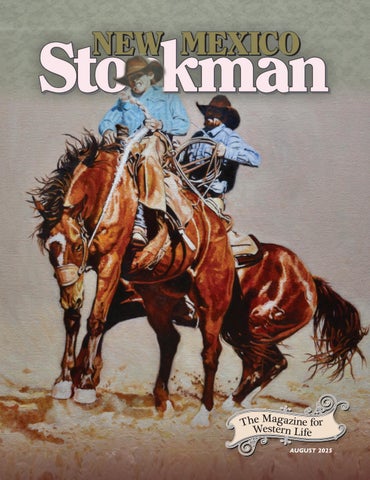
Create a flipbook
Issuu converts static files into: digital portfolios, online yearbooks, online catalogs, digital photo albums and more. Sign up and create your flipbook.