

FOR KOOLINA Hale
Optatur alignis et essit accaepe rferum sequias eume dolorrore cus adit ressunt litis re plignih icidem. Ut omnime plaborporum hil intiat.Dus inctate vollaci mporers piduciet fuga. Ore consenecte as et, te sant quis eri ommolup tature est, untis repudan dunturibus rerferi arum faccullant ape erum verum elignih ilicatem. Nam aliquo te vollacerovit ra imoluptat. Periae earchilibus debis doluptat. Saepe parumet aspitat empore minimet quam quassequam que et adigeni hilitis nones pa dia qui sitatusam dolesciis re culpari unt.Aped quid magnist que et oditasi ut estis aut verum qui dis etur? Ga. El moluptatest, omnis volorpor
カマカクオカラニ・ハワイアンスタディーズ・センターは、そのすべ てだといえるでしょう。1997年にハワイ大学マノア校にオープンし たこのセンターは、ワイキキに見られるトロピカルなエスケーピズ ムとも、プランテーション時代のコロニアル様式とも違う、ネイティ ブハワイアンの文化を体現する初めての近代建築の一つになりま した。丘のふもと、再現されたタロ畑の隣りに建つセンターは、モ ノリスのような溶岩の壁と、傾斜の急な銅板葺きの屋根を持ち、見 る人に伝統的なハワイアンのハレ(家)を思い起こさせるデザイン で、大学キャンパスにあるほかのモダニズム建築からは明らかに一 線を画しています。ドアの素材は古代ハワイ社会で珍重されていた コア材です。
In the Hawaiian language, hale (pronounced huh’-leh) translates to “house” or “host.” Hale is an intimate expression of the aloha spirit found throughout the islands and a reflection of the hospitality of Ko Olina. In this publication, you will find that hale is more than a structure, it is a way of life. Ko Olina celebrates the community it is privileged to be a part of and welcomes you to immerse yourself in these stories of home.
Optatur alignis et essit accaepe rferum sequias eume dolorrore cus adit ressunt litis re plignih icidem. Ut omnime plaborporum hil intiat.Dus inctate vollaci mporers piduciet fuga. Ore consenecte as et, te sant quis eri ommolup tature est, untis repudan dunturibus rerferi arum faccullant ape erum verum elignih ilicatem. Nam aliquo te vollacerovit ra imoluptat. Periae earchilibus debis doluptat. Saepe parumet aspitat empore minimet quam quassequam que et adigeni hilitis nones pa dia qui sitatusam dolesciis re culpari unt.Aped quid magnist que et oditasi ut estis aut verum qui dis etur? Ga. El moluptatest, omnis volorpor
カマカクオカラニ・ハワイアンスタディーズ・センターは、そのすべ てだといえるでしょう。1997年にハワイ大学マノア校にオープンし たこのセンターは、ワイキキに見られるトロピカルなエスケーピズ ムとも、プランテーション時代のコロニアル様式とも違う、ネイティ ブハワイアンの文化を体現する初めての近代建築の一つになりま した。丘のふもと、再現されたタロ畑の隣りに建つセンターは、モ ノリスのような溶岩の壁と、傾斜の急な銅板葺きの屋根を持ち、見 る人に伝統的なハワイアンのハレ(家)を思い起こさせるデザイン で、大学キャンパスにあるほかのモダニズム建築からは明らかに一 線を画しています。ドアの素材は古代ハワイ社会で珍重されていた コア材です。



FEATURES
52
Across the Universe
For celestial aficionados, the leeward coast offers prime stargazing opportunities courtesy of its distance from O‘ahu’s urban core.
64
A Hula Unearthed
With one of hula’s most athletic and ancient dances, a male hula hālau excavates the fundamentals of the form’s multi-layered tradition.
78
The Language of Moana
It took heart, mind, intellect, and passion to translate Disney’s Moana into the Hawaiian language.
92
The Waterman’s Olympics
A surf journalist discovers the heart and soul of Mākaha at the annual Buffalo’s Big Board Surfing Classic.
106 Heavy Metal Master
Drawn to the spiritual and elementary energy of Hawai‘i, copper artist Sooriya Kumar sculpts large-scale pieces with peaceful messages.
14

Mālama Mākua
Wai‘anae High School’s Marine Science Learning Center
Mākeke Market VOICES
Leeward Kai Canoe Club
Angela Morales
Kahunui Foster
LIFE 28
38
44
122
132
138
16
 LETTER FROM JEFFREY R. STONE

Aloha e,
A community is defined by more than a shared location. As a community, we are also united by collective values and a collective sense of purpose.
This is my 20th year crafting a vibrant Ko Olina community that each and every one of our families—employees, residents, and guests—can be proud of. While I am honored to reach this great milestone, I am also honored to celebrate the successes of our brand partners who have joined me in creating an extraordinary legacy and who are providing countless opportunities for future generations to prosper.
Our resort commitments are unwavering. We will continue to be responsible stewards of this special place, to care for our environment and its abundant resources; to perpetuate the unique culture of Hawai‘i, through ‘ōlelo Hawai‘i, music, and dance; and to embrace Hawai‘i’s common values of mālama and aloha in all we do.
We hope you enjoy our newest collection of West Side stories. Each offers an inspiring legacy of its own.
I reflect back over the past two decades with wonder and gratitude. And I look to the journey ahead with optimism and hope, for all of us and for our shared community of Ko Olina.
A hui hou,
Jeffrey R. Stone Master Developer, Ko Olina Resort18

Hale is a publication that celebrates O‘ahu’s leeward side—a
place rich in diverse stories and home to Ko Olina Resort.
The leeward coast of O‘ahu has bountiful traditions of gathering resources from the sea and land, and an abundance of cultural stories from the people who call this place home. In this issue, start near the shoreline and delight in the spirited camaraderie of a popular West Side surf contest, and then learn about a skillful hula step once thought lost to history. Follow along as we visit a renowned copper artist, a bustling farmers market, and a sacred valley. Then gaze upward as we marvel over a majestic starscape and the legends that glitter among it. Riches prevail here. Its people, places, and stories are endless treasures.
ABOUT THE COVER
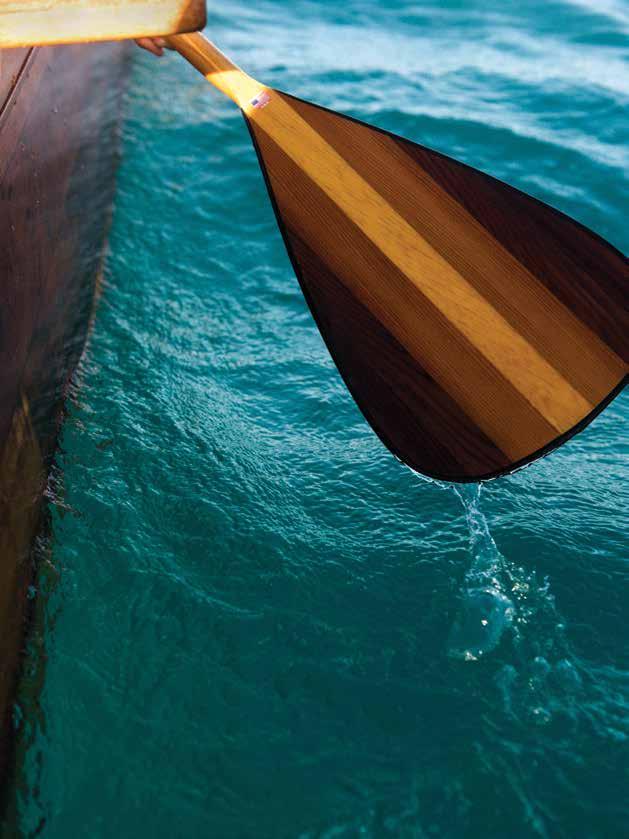
The cover image of a koa outrigger canoe and a paddler was photographed at the annual Father’s Day Regatta in Nānākuli by John Hook, an O‘ahu-based photographer . This canoe, or wa‘a, belongs to Leeward Kai Canoe Club.
20

CEO & Publisher
Jason Cutinella
Web Developer Kimi Lung
Advertising
Aulani, A Disney Resort & Spa aulani.com
Four Seasons Resort O‘ahu at Ko Olina fourseasons.com/oahu
Marriott’s Ko Olina Beach Club marriott.com
Beach Villas at Ko Olina KoOlina.com/accommodations
Oceanwide Resort
Ko Olina Golf Club koolinagolf.com
Ko Olina Marina koolinamarina.com
Ko Olina Station + Center koolinashops.com
The Resort Group theresortgroup.com KoOlina.com
Chief Creative Officer Lisa Yamada-Son lisa@NMGnetwork.com
Creative Director Ara Feducia
Editorial Director
Matthew Dekneef
Senior Editor
Rae Sojot
Associate Editor
Anna Harmon
Photography Director
John Hook
Photo Editor Samantha Hook
Designers
Michelle Ganeku Mitchell Fong
Editorial Assistant Eunica Escalante
Translations Yuzuwords
Media
Lead Producer Gerard Elmore
Video Producer Kyle Kosaki
Video Editor Shaneika Aguilar
Network Marketing Coordinator Aja Toscano
Group Publisher Mike Wiley mike@NMGnetwork.com
Marketing &
Advertising Executives
Chelsea Tsuchida Helen Chang
Sales Assistant Kylee Takata
Marketing & Sales Coordinator Hunter Rapoza
Operations
Chief Revenue Officer Joe V. Bock joe@NMGnetwork.com
VP Accounts Receivable Gary Payne gpayne@NMGnetwork.com
Operations Administrator Courtney Miyashiro
©2018 by Nella Media Group, LLC. Contents of Hale are protected by copyright and may not be reproduced without the expressed written consent of the publisher. Hale is the exclusive publication of Ko Olina Resort. Visit KoOlina.com for information on accommodations, activities, and special events.
22

 Image by Josiah Patterson
“The valley is a mama. It’s about remembering our ancestors, our kūpuna, wherever they may be.”
Lynette Cruz, activist, Mālama Mākua
Image by Josiah Patterson

E
I F
マクアへの帰郷
Makua
Homecoming
Text by Matthew Dekneef Images by Elyse Butler and Josiah Pattersonオアフ島屈指の豊かな伝説に彩られた谷、マクア・ヴァレー。ボランティアグループの 人びとは、その文化的な重要性がより広く再認識されることを願っています。
With each visit, a volunteer organization hopes to reawaken the larger community to the cultural power of one of O‘ahu’s most legendary of valleys.
It is overcast on this early morning in Mākua Valley. A heavy cloud lingering over the surrounding peaks and ridges releases showers of mist onto the valley’s foothills. In a wide, grassy clearing, six tents are pitched around an open pavilion. Inside the structure, men, women, and children of all ages and ethnicities wrap rocks and seashells in tī leaves to present as ho‘okupu, or offerings, to the valley. By the site’s entrance, a Hawaiian flag flaps in the wind.
“This is really special here,” says Vince Kana‘i Dodge, who is standing barefoot at the edge of the pavilion looking toward the mountains and the cloudy scene they have harnessed. Dodge considers the land to be a shared ancestor. “You almost never see her like this.” In a valley that has been a hot zone of native land rights disputes, the ominous weather is a cool respite for the eldest
早朝のマクア・ヴァレーは曇り空でした。周辺の山の背や頂きを重 い雲が覆い、谷あいの山すそに霧雨を降らせています。広々とした 草原にはパビリオンがあり、そのまわりにテントが6つ設営されて いました。パビリオンでは、年齢も人種もさまざまな男女と子ども たちが石や貝殻をティーリーフで包んでいます。これは「ホオクプ」 と呼ばれる、谷への捧げものです。敷地の入り口にはハワイ州の旗 が風になびいています。
「ここはとても特別な場所なんです」と、ヴィンス・カナイ・ドッジさ んはパビリオンの端に裸足で立ち、雲をまとった山々と向き合い ながら説明してくれました。彼にとってこの谷は、人びとに共通の 先祖のような存在です。「こういう光景はめったに見られません」 とドッジさんは語ります。マクア・ヴァレーは、ハワイアンの土地の 権利をめぐるホットな論争の中心でもあります。どんよりとした空 模様も、非営利団体「マラマ・マクア」の最高齢メンバーであるド ッジさんにとっては、つかの間の涼しさと休息を意味しているよう です。マラマ・マクアは、ここの「ワヒ・パナ」(ハワイアンの聖なる土
28
Life

The nonprofit group Mālama Mākua was created in 1996. For two days a month and two overnight stays a year, the U.S. Army allows its volunteers to organize access tours and cultural experiences of Mākua Valley, like Makahiki ceremonies that recognize the Hawaiian new year.

members of Mālama Mākua, a nonprofit dedicated to ensuring community access to what many consider a wahi pana, or sacred place, in Hawaiian culture. According to legend, it’s where man was born.
Since forming in 1996, Mālama Mākua and its members have engaged in heated battles over the land’s usage with the Mākua Military Reservation, a U.S. Army facility that oversees the military’s 4,200 acres. The most significant of these disputes—a lawsuit filed in 1999 by the organization with Earthjustice attorney David Henkin—resulted in the temporary halting of live-fire training in the valley, commitments to more transparent environmental impact assessments by the Army, and a judicial order to clear unexploded ordnance from the region. The Army also spends upwards of $4 million
地)へ地域の人が立ち入る許可を得るために活動しています。ここ は、ハワイの伝説によれば、人間が生まれた土地なのです。
1996年の設立足以来、マラマ・マクアのメンバーたちは、米国陸 軍が管理する約1700ヘクタールの「マクア軍事保留地」の土地 利用をめぐって激しい論争をくり広げてきました。なかでも重要な 意味を持つのが、1999年に環境問題訴訟に特化した非営利公 益団体「アース・ジャスティス」のデイビッド・ヘンキン弁護士ととも にマラマ・マクアが起こした訴訟です。その結果、マクア・ヴァレー における実弾演習の一時中止、軍による透明性の高い環境影響 評価の実施、一帯からの不発弾の撤去を指示する裁判所命令を 勝ち取りました。さらに米陸軍は、マクア・ヴァレー一帯に生息す る40種を超える絶滅危惧種の保護のために年間400万ドル以上 の予算を投入し、50人以上の生物学者を雇用して繊細な生態系 を管理しています。
30 Ma-kua Homecoming
annually to protect the 45-plus endangered species in Mākua Valley, utilizing 20 field biologists and specialists to manage the frail ecosystem.
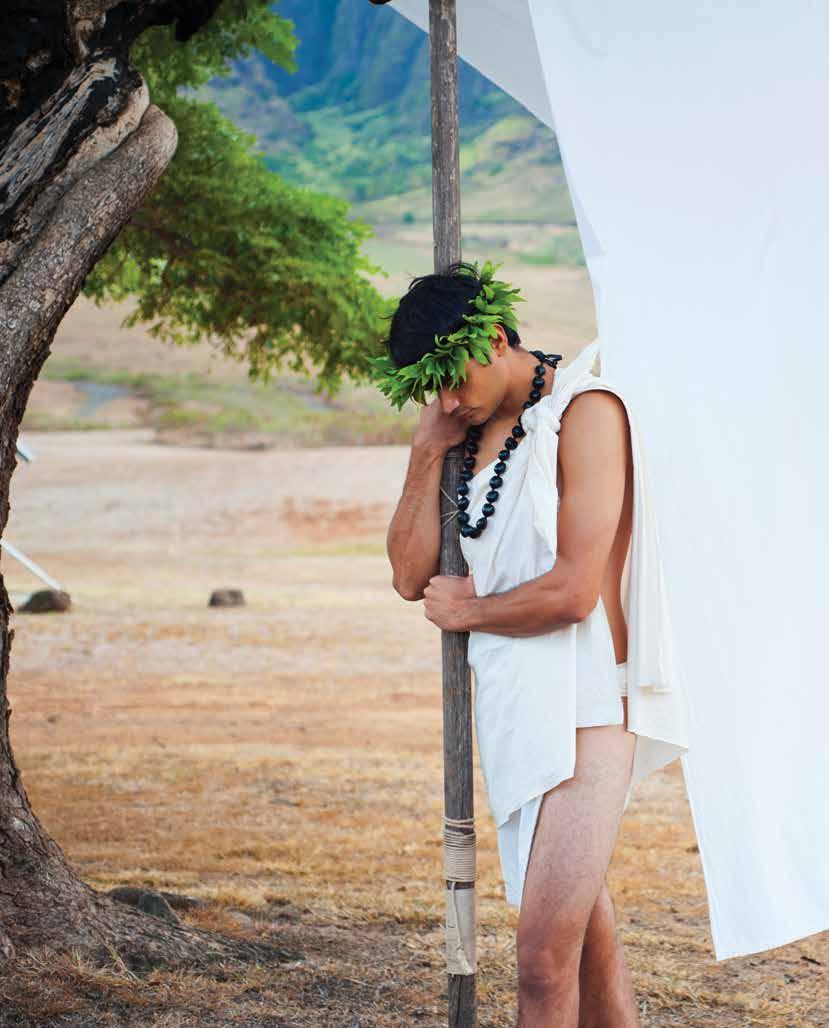
Both parties also agreed on partnering on a cultural access program—visits with the intent of sharing the valley’s historical and archaeological significance—to Mākua’s sacred sites for two days a month and two overnight stays a year. At their most formal, these free, reservation-only visits organized by Mālama Mākua with the assistance of the Army honor ceremonies like the Makahiki, or Hawaiian New Year, with reverant practitioners wearing traditional regalia like kīhei and malo (capes and loincloths). On other visits, like today, the curriculum is intentionally unstructured, with a few hikes through the valley and time spent huddled together in the pavilion playing card games, participants dressed in rainjackets and ponchos. “Cultural access days are our days,” Dodge says. “For us, it’s like visiting family. We bust out the ‘awa, play music, and just hang out.”
All these activities are practiced under the Army’s watchful eye—an officer in camouflage fatigues is always within sight and a certified unexploded ordnance technician accompanies each group visit. Safety is the primary concern, as the military fired munitions ranging from artillery shells to 1,000-pound bombs throughout the area. It was after the Pearl Harbor attack in 1941 that the Army quickly seized thousands of additional parcels in and around the valley for training, evicting ranchers who had been working and living there. Its mountainous, coastal terrain was also considered comparable to Japanese, Korean, and Okinawan beaches, which made the area
また、マラマ・マクアと軍は、マクア・ヴァレーの歴史的・考古学的 な意義を広めることを目的に、文化アクセスプログラムを共同で 実施することにも合意しました。マクア・ヴァレーの聖地を月に2 回訪問し、年に2回は夜通しで滞在するプログラムで、事前の予 約が必要ですが、無料で参加できます。マラマ・マクアが主催する これらのプログラムのうちもっとも正式なものは、ハワイの新年を 祝う「マカヒキ」などの行事で、ハワイアンの聖職者がキヘイ(ケー プ)やマロ(腰布)などの伝統的な衣をまとって執り行います。その ほかの時には、今日のようにあえて自由で型にはまらないカリキュ ラムが組まれます。参加者たちは雨合羽やポンチョに身を包み、谷 のハイキングを楽しんだり、パビリオンに集ってトランプに興じて いました。「私たちは、文化アクセスプログラムの日を心待ちにして います」と、ドッジさん。「私たちにとっては、親戚を訪ねるようなも のです。アヴァ(植物から作る飲みもの)を手に、音楽を演奏したり してのんびり過ごすのです」
これらの活動はすべて軍の監視のもとで行われ、近くには必ず迷 彩服の将校の姿があります。何よりも重視されるのは安全性です。
なにしろ、砲弾から500キロの爆弾まで、ありとあらゆる弾薬がこ の一帯に投下されてきたのですから。1942年、真珠湾攻撃の直 後に、すぐ、米軍はマクア・ヴァレーの数千区画の土地を演習用に 接収し、周辺の牧場で暮らしていた人々を立ち退かせました。山が ちな海岸線の地形が日本や韓国、沖縄に似ていたため、1970年 代初頭まで、もっぱら戦闘訓練に使われたのです。人口が比較的 少なく、都会とは隔離されたエリアなので、軍は今も模擬訓練の 場所としてマクア・ヴァレーを重視しています。
マラマ・マクアの支援者は、軍とは違う視点でこの谷を見ていま す。長年のメンバーであるリネット・クルーズさんは、「マクア・ヴァ レーは、お母さんのようなものです」と語ります。「ここは、クプナ、 つまり先祖に思いをはせる場所なのです。先祖たちがどこにいる にしても」。軍の司令官の目には仮想の敵の姿が映っていたのかも しれませんが、マラマ・マクアのメンバーは、この谷そのもののなか に、生きている家族の姿を見ているのです。今こうして軍の協力を 得て実施されるようになった文化プログラムは、ハワイアンにとっ て大切な先祖との結びつきを深めることを目的としています。
32
Ma-kua Homecoming

Ma-kua Homecoming Located inside the valley is a heiau called Kumuaku‘ōpio, though nothing remains of the structure except a sand platform 120 by 100 feet that is about 20 feet higher than the surrounding land. The valley contains over 100 archaeological and historic sites. The Army has reopened access to 13 of them.

useful for training scenarios for combat readiness, until the early ’70s. The valley is still valued by the military for its insulation from urban sprawl, which enables the simulation of training scenarios.
Supporters of Mālama Mākua see things differently. “The valley is a mama,” says Lynette Cruz, a longstanding member of the organization. “It’s about remembering our ancestors, our kūpuna, wherever they may be.” Where Army commanders may have seen a passive target, Mālama Mākua members always saw a living family member. Moving forward, these cultural visits, in cooperation with the Army, aim to strengthen this native connection.
After members and volunteers perform a welcome oli (chant) and present their ho‘okupu at an ahu (ceremonial shrine), they
歓迎のオリ(チャント、詠唱)を唱え、アフ(祭壇)の上にホオクプを 捧げた後、マラマ・マクアのメンバーとボランティアの人びとは、軍 の将校たちとともに、近くにある「クムアク・オーピオ」に向かいま した。これは、谷あいにあるヘイアウ(宗教的意義を持つ建造物) で、数十年にわたる演習で破壊されてしまったものと思われてい ました。古いペトログリフが刻まれた丈高い石灰岩に、石組みの 壁がつづいています。人びとは少し離れたところに立ち、岩に刻 まれた犬、トカゲ、人などの形に見入っていました。そのうちのい くつかは、挑むように両手を高く上げた人の姿をしています。まる で、数百年後にくりひろげられる論争に、抗議の意を表している かのように。
34

In a Hawaiian legend, Mākua Valley is linked to Papa (the earth-mother) and Wākea (the skyfather), who gave birth to the first man. The region has long been considered a sacred place to its people.

head with Army officials to Kumuaku‘ōpio. This heiau, a religious structure once thought to have been destroyed during the decades of military training, is situated in a gulch. The complex of rock walls reveals itself, starting with a towering slab of limestone riddled with ancient petroglyphs. The group stands at a distance and surveys the chiseled surface of dogs, lizards, and human figures with awe. A few of these carvings appear to be people with arms raised, as if in defiance, resisting thousands of years later.
36
Ma-kua Homecoming

海藻の守り手 Life
Stewards of Seaweed
Text by Lindsey Kesel Images by
Josiah PattersonOgo is the catch of the day at
Wai‘anae High School’s Marine Science Learning Center,
where students practice aquaculture to save seaweed.
ワイアナエ高校の海洋科学学習センターでは、生徒たち がオゴの養殖と保護に取り組んでいます。

In the coastal town of Wai‘anae, almost everything is within a stone’s throw of the ocean. In 1990, this logistical convenience inspired an epiphany from high school teacher Susan Lum: What better spot for young minds to learn the sea-farming techniques of ancient Hawai‘i than a high school hugged up against the Pacific?
With funding from the state legislature and site-strategy assistance from Oceanic Institute, the Wai‘anae High School Marine Science Learning Center was built, complete with aquatic tanks and a saltwater well that taps seawater from
ワイアナエは海辺の町。町のほとんどどこからでも、石を投げれば 届くほどの距離に海があります。この地の利が、1990年、高校教 師、スーザン・ラムさんに名案をもたらしました。古代ハワイの水 産養殖技術を学ぶのに、太平洋に抱かれるように建つこの高校ほ どふさわしい場所があるでしょうか?
ほどなく、州政府と州議会からの資金援助を得、近隣の研究所オ ーシャニック・インスティテュートからも施設プランについての支 援を得て、ワイアナエ高校海洋科学学習センターが建設されまし
38

the canal below the campus. Now, nearly three decades later, junior and senior students collaborate and problem-solve as they explore aquaculture, one of the most successful traditional Hawaiian practices.
At the learning center, students who have chosen marine science as their majors run saltwater, freshwater, and brackish water experiments year-round in the indooroutdoor lab and classroom facility. Dana Hoppe, the program coordinator, guides student-scientists through inquiry projects to test environmental variables that help the edible red seaweed known as Gracilaria parvispora, or ogo, thrive. While the students are also responsible for shrimp, mullet, and taro, ogo is the vital vehicle Hoppe uses to deliver her aquaculture curriculum.
Native to Hawai‘i and used in popular Hawaiian and Japanese dishes, this ogo— which is short for “ogonori,” the Japanese word for a large amount of “ocean moss”— makes a convenient study subject since it can reproduce asexually, or via vegetative propagation. At one point, the plant was so prolific in the learning center’s effluent water (the water recycled from the tanks back to the canal) that students were able to fund their field trips and workshops by selling it to stores and at farmers markets. But lately, warmer temperatures, overpicking, and pollution have left the ogo vulnerable to invasive seaweed.
“Having the invasives introduced has been a boon to the program because it gives the kids a drive and a goal,” Hoppe says. Now students have their brains trained on figuring out how to “bioremediate the seed stock,” or save the seaweed. In 2017, they removed a layer of sediment and plant life in one section of the canal, then reseeded it with ogo. Their hypothesis that the invasives would steer clear of the sandy bottom was spot on: The ogo grew unencumbered for
た。センターには水槽のほか、キャンパスの下に設けられた水路 を通して海水を取り込む生け簀も備えられています。それから30 年近く。現在では高校の11年生と12年生が養殖技術を学びなが ら、協力しあって問題解決に取り組んでいます。海洋養殖は、古代 ハワイでもっとも成功した技術の一つでした。
海洋科学専攻の生徒たちは、センターにある室内と屋外の研究室 や教室で、海水、淡水、汽水を使って1年中実験を行っています。プ ログラム・コーディネーターのダナ・ホッピさんは、高校生たちを 指導し、一般に「オゴ」として知られる食用の赤い海藻(学名グラ シラリア・パーヴィスポラ)が健康に育つ環境を探る調査プロジェ クトを実施しています。生徒たちは海老、ボラ、タロにも取り組んで いますが、養殖技術カリキュラムの中で重要な役割を果たすのは、 やはりオゴだそうです。
ハワイアン料理や日本料理の食材としてよく使われるオゴは、ハワ イ原産で、無性生殖(栄養繁殖)で増えるため、とても便利な研究 対象です。学習センターの排水(タンクから水路へとリサイクルさ れる水)内のオゴは非常に繁殖力が強く、一時は生徒たちが研究 室のオゴを店やファーマーズマーケットで売り、遠足とワークショ ップの資金を作ることができたほどでした。しかし近年では、温暖 化と乱獲、そして水質汚染により、オゴは侵略的外来種の海藻に 脅かされるようになりました。
「侵略種が現れたことで、このプログラムは活気づきました。生 徒たちが夢中で取り組める目標が出来たのですから」とホッピさ んは語ります。生徒たちは現在、「バイオレメディエーション(生物 的浄化)」によって種芽を守り、オゴを保護する方法を研究してい ます。2017年には、生徒たちは水路の一部から堆積物と植物を 取り除き、そこにオゴを再び植え付けてみました。侵略的外来種 は砂地を避けるのではないかという仮説は的中し、その後2か月 間、オゴは邪魔者なしに育ちました。最終的に侵略種はまた戻っ て来たものの、生徒たちは永続的に侵略種の生育を妨げる方法 を見つけようと、今年はいくつかの調節を加えて再び同じ実験を 行う予定です。
「オゴは、ワイアナエのコミュニティにとってとても価値のあるも のですし、海の中にオゴを取り戻せれば、サンゴや原生種の魚たち
40 Stewards
of Seaweed

“Ogo is valuable to our Wai‘anae community, and being able to restore it in the ocean will bring back coral and native fish,” says former student Alex Totman-Rodrigues, who studies marine science at Leeward Community College and mentors classes at the learning center. Stewards of Seaweed

two months. Though the invasives eventually returned, this year, students intend to redo the experiment and adjust a few variables in hopes of permanently impeding the unwanted growth.
Next, Hoppe will be teaching students how to take mullet through their larval stages so the center can start a capture and release program. “Wai‘anae—our name comes from the ‘anae, the full-grown mullet,” Hoppe says. “Just like the ogo, our waters used to be rich with mullet.”
Hoppe aims to have her charges leave the Marine Science Learning Center with a heightened sense of their roles as stewards of their coast, their community, and the world at large. In the process, they collectively improve the marine environment.
For more information, visit whsmarinescience.wixsite.com/mslc or @waianaemslc on Instagram.
も呼び戻すことができます」と語るのは、現在はリーワード・コミュ ニティ・カレッジで海洋科学を学びながら学習センターで後輩の 指導をしている卒業生のアレックス・トットマン=ロドリゲス君。ま た、12年生のショーン・フィッツジェラルド君は、有性生殖を通し て新しい遺伝物質を生成する研究チームを率いて、研究に使った り販売するためのオゴの供給源を確保しようと試みています。
ホッピさんは次にはボラを幼魚から成魚へ育てる方法を生徒たち に教え、センターで魚を捕獲して放流するプログラムを開始しよう と計画しています。「ワイアナエという名前は、ボラの成魚をさす 『アナエ』から来ているんですよ。オゴと同じく、昔はここの海はボ ラでいっぱいだったのです」とホッピさん。
ホッピさんは、海洋科学学習センターの生徒たちが、この海辺と コミュニティ、そして広くは世界に貢献する守り手としての役割 を自覚し、志を高く持つように願っています。そのプロセスを通し て、コミュニティが海洋環境の改善に向けて力を合わせていくこ とでしょう。
センターについての詳細はwhsmarinescience.wixsite.com/ mslc またはインスタグラムで@waianaemslc をご覧ください。
42

食の復活
A Food Makeover
Text by Martha Cheng Image by Josiah Pattersonウエストサイドのファーマーズマーケット「マーケケ・マーケット」は、
コミュニティに健康で心楽しい食を届けるために活動しています。
The Mākeke Market, a farmers market on the West Side, supplies the community with a healthier and happier diet.
“How can we be a food desert and be a food basket at the same time?” asks Alicia Higa. In Wai‘anae, getting access to fresh fruits and vegetables is difficult, and yet the region grows produce to feed the rest of the island. “It doesn’t make sense for it to be that way. It’s our job to figure out ways to keep more of our food out here and get our community healthier.” Higa is the director of health promotion and disease prevention at the nonprofit Waianae Coast Comprehensive Health Center. It’s a daunting role. In the state, the Wai‘anae population has one of the highest incidences of obesity, diabetes, and heart disease, all illnesses which can be partially attributed to a poor diet. Enter the Mākeke Market in Wai‘anae, which WCCHC began in 2008 to feed the community better.
In the decade since its inception, the farmers market has grown from 12 vendors to almost 40. On a recent Saturday morning, the joyful strumming of an ‘ukulele emanated from the heart of the market, set up in the parking lot of Waianae Mall. Locals, some with children in tow, gathered to shop and eat, picking up poi from Pomai
「食の砂漠でありながら同時に食糧のいっぱい詰まった籠である って、どういうことだと思う?」と、アリシア・ヒガさんは疑問を投げ かけます。ワイアナエでは島のほかの地域に出荷される作物が作 られているにもかかわらず、新鮮な果物や野菜を入手するのが困 難です。「そんなの本当におかしいでしょう。だから私たちの仕事 は、ここで作っている食糧をもっとこの地域内にとどめて、コミュニ ティをもっと健康的にすることなんですよ」とヒガさん。ヒガさんの 仕事、非営利団体ワイアナエコースト・コンプリヘンシブ・ヘルスセ ンター(WCCHC)の健康促進・疾病予防担当ディレクターという のは、きわめて困難な役割です。ワイアナエはハワイ州内でももっ とも肥満、糖尿病、心臓病が多い地区の一つ。そういった病気は 食事にも原因の一端があります。そこで、コミュニティによりよい 食を提供しようとWCCHCは2008年にワイアナエのファーマー ズマーケット「マーケケ・マーケット」を設立しました。
それ以来10年が経ち、ベンダーの数は創設時の12軒から40軒 近くに増えています。土曜日の朝、バーガーキングとスターバック スの間にあるワイアナエモールの駐車場にマーケットが設置され ると、その真ん中あたりから陽気なウクレレの即興演奏が聞こえ てきます。子どもたちを連れた地元の人々が集まり、「ポマイ・クロ ロ」のポイや地元農場「ネイキッド・カウ・デイリー」のチーズを買っ たり、「ビッグウェーブ・デイヴズ・ケサディーヤ」で行列を作ってい ます。(マーケットの野菜とすぐ近くのマイリ・モア農場で採れた卵
44
Life

A Food Makeover
Kūlolo, and locally made cheese from Wai‘anae’s Naked Cow Dairy, and lining up at Big Wave Dave’s Quesadillas, which folds vegetables from the market and eggs from nearby Maili Moa farm into its tortillas. The venison steaks quickly disappeared from the cooler of Forage Hawaii, which sells fish and grass-fed meats, all locally sourced. A number of farmers offered produce harvested in Wai‘anae, ranging from mangoes to salad greens.
Locally grown food in Hawai‘i is known to be more expensive than mainland imports because of economies of scale. But this Wai‘anae market was the first farmers market on the island to accept SNAP/EBT (formerly known as food stamps), and it doubles people’s EBT when they purchase fresh fruits, vegetables, meats, and poi, effectively making the purchase of such produce “buy one, get one free” while farmers get paid full price. This is a win-win for farmer and consumer, making healthy food more affordable for the economically disadvantaged while farmers still get a fair amount for their efforts.
There’s a lot to be proud of in Wai‘anae, and the markets are a showcase of this. Take MA‘O Farms, a vendor here since the beginning, which sells salad greens and vegetables like fennel and Hakurei turnips. The farm is a nonprofit with an innovative model that offers high-schoolers college scholarships in exchange for on-the-farm training, simultaneously growing food, growing health, and growing youth.
Mākeke Wai‘anae at Waianae Mall, Saturdays from 8 a.m. to noon. Mākeke Kapolei at Kapolei High School, Thursdays from 3 to 6:30 p.m.
をトルティーヤにはさんだケサディーヤが人気です。)すべて地元 産の魚と牧草飼育の肉を売る「フォレージ・ハワイ」の屋台では、 鹿肉のステーキがあっという間に売り切れていました。農家もたく さん屋台を並べ、マンゴーからサラダ用グリーンまで、ワイアナエ で収穫した作物を販売しています。
ハワイの地元産食材はスケールメリットが小さいため、米国本土 から運んだものよりも高価になることで知られています。そこで、ワ イアナエのこのマーケットは、ファーマーズマーケットとしてはオア フ島でもっとも早くSNAP/EBTカード(以前は「フードスタンプ」 と呼ばれていた政府による食費支援用のカード)を使えるように しました。また、消費者がEBTを使って新鮮な果物、野菜、肉、ポイ を買うと、1つ分の値段で2つ購入でき、一方でベンダーには商品 の値段全額が支給される仕組みも導入しています。経済的に恵ま れない人々に健康的な食材をより求めやすく提供しながら、農家 にも努力に見合った正当な価格が支払われるというわけで、農家 にとっても消費者にとっても嬉しいシステムです。
マーケケの目標は、健康的な食材の流通だけにとどまりません。 カポレイでもファーマーズマーケットを開催し、リーワードのコミ ュニティ全体に力を与えていこうと計画しています。マーケケ・カ ポレイは、ウエストオアフを基盤とする非営利団体「マーラマ学習 センター」と提携して、サステイナビリティとハワイ文化のアクティ ビティを提供するほか、カポレイ高校の生徒たちが自分たちのビ ジネスプランを実地に試してみる場ともなっています。マーケケ・ ワイアナエにはワイアナエ高校のプログラム「シーライダー・プロ ダクションズ」が屋台を出店し、ワイアナエのロゴつきグッズを販 売していますが、これが大変な人気で、ときには新製品の発売を 目当てに前の晩から泊まり込む人もいるほどです。ヒガさんもワイ アナエ高校卒業生ですが、自分が高校に通っていた20年以上前 にはウエストサイド出身というのはあまり自慢にならなかったので 「地域が誇りを取り戻したのを見ると、鳥肌が立つほど嬉しいで すね」と語ります。
マーケケ・ワイアナエはワイアナエモールで土曜日の朝8時から正 午まで開催。マーケケ・カポレイはカポレイ高校にて、木曜日の午 後3時から6時半まで開催。ミニマーケットのマーケケ・イキは、ワ イアナエコースト・コンプリヘンシブ・ヘルスセンターにて火曜日 の午前10時から午後1時まで開催。
46


 Pear, gorgonzola & walnut pizza with béchamel & honey
Experience bistro-style comfort food for a healthy lifestyle. Also located in Kailua Beach 808 262 4359 Kailua Town 808 262 3354 Visit us on social media and at kalapawaimarket.com. We pride ourselves on craftsmanship and quality local ingredients. Located in Kapolei at 711 Kamokila Blvd. 808 674 1700
*Lemongrass Shrimp - Spring mix with pickled daikon & carrot, cucumber, tomato, and puffed rice noodle, topped with Vietnamese-style dressing.
 Image
Image
by IJfke Ridgley

“We are on the map and it shows that it is important for our ‘ōlelo to be heard across the world.”
Auli‘i Cravalho, actress and voice of Moana
Image by Josiah Patterson

F A U T R E E S
星空を横切るライン
For celestial aficionados, the leeward coast offers prime stargazing opportunities. Once west, the only thing left to do is look up.
星空を愛する人にとっては、オアフ島西部、リーワードの 沿岸は理想的なスターウォッチングの舞台。ここに着いた ら、あとは夜空を見上げるだけです。
Textby Rae Sojot Images by John Hook
52
Across the Universe

Features

For millennia, Polynesians navigated the Pacific Ocean by its swells, cues from nature, and the celestial bodies above. Hawaiian starlines, or star families, of today were created by modern voyagers drawing from the deep ancestral knowledge left by their Polynesian predecessors, explains NASA ambassador Greg McCartney, owner of guided stargazing tour Stars Above Hawaii.
古代ポリネシア人たちは、千年にもわたって、太平洋のうねり、自然 現象の中のさまざまな兆候、そして天体の位置を徹底的に研究し、 その知識にもとづいて太平洋を航海していました。現代のハワイに は、祖先から伝わったその深い知識をもとに作られた、夜空を区切 る「スターライン」(または「スターファミリー/星の家族」)があるの だと、NASAのアンバサダーであり、「Stars Above Hawaii」のオ ーナーでもあり、ポリネシア航海協会のメンバーでもあるグレッグ・ マッカートニーさんが説明してくれました。
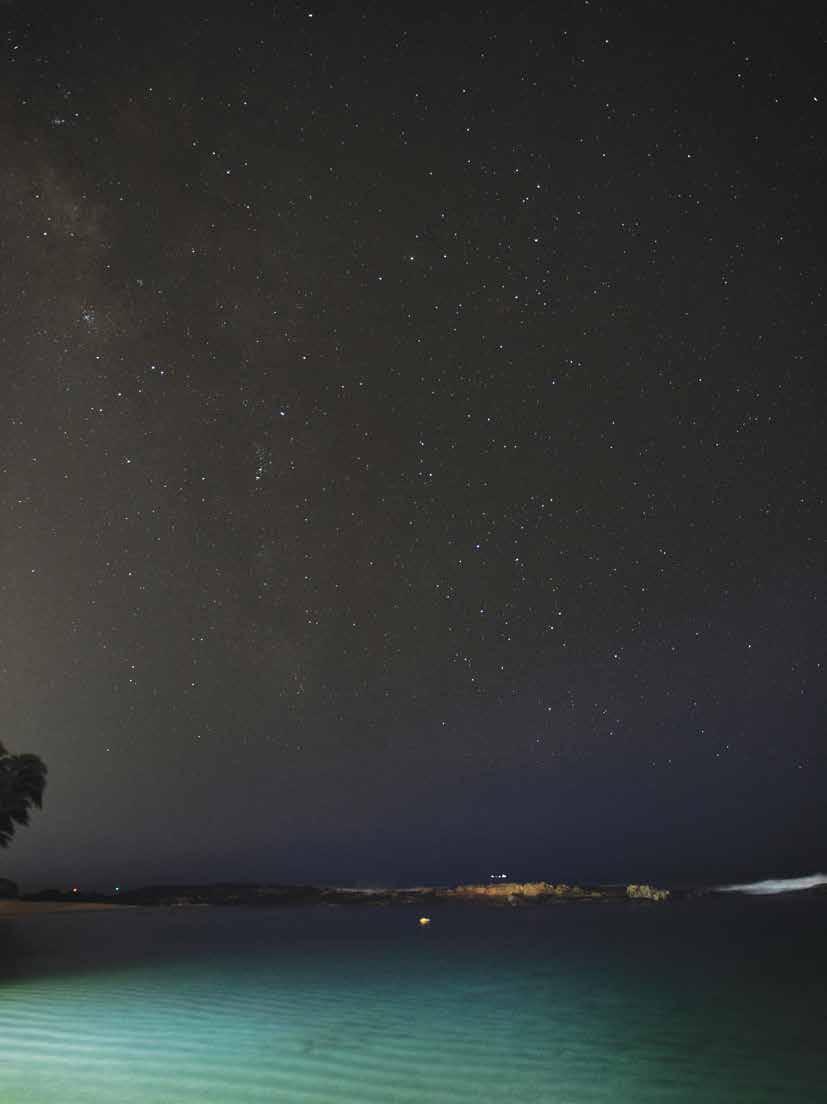


One starline, named Kaiwikuamo‘o, or the Backbone, runs from Hōkūpa‘a (the North Star) to Hānaiakamalama (the Southern Cross). With it, today’s voyagers determine the latitude of the Hawaiian Islands. “Imagine in 400, 500 A.D. how many lives were lost voyaging out on the ocean during open-ocean storms,” says McCartney, who is also a member of the Polynesian Voyaging Society. “This starline is in honor of all the ancestors who made that journey from other islands to Hawai‘i.”
そうしたスターラインの一つは「カイヴィクアモオ」または「背骨」と 呼ばれ、ホクパア(北極星)からハナイアカマラマ(南十字星)まで 伸びる壮大なラインです。空に引かれたこのラインを使って、航海 士たちはハワイ諸島の緯度を計測します。「西暦400年から500 年頃に、どれだけ多くの人が太平洋の嵐のなかで命を落としたこと か、考えてみてください」とマッカートニーさんは語ります。「このス ターラインは、ほかの島々からハワイへ旅してきた祖先たちを讃え ているのです」。

Like the Greeks and Romans, Polynesians shaped stories from the stars. One such tale features the brave feats of Kaulu, whose brother Kaeha had been abducted by a malevolent king. Enduring numerous battles, Kaulu reaches the king and demands the whereabouts of his brother. The king tells Kaulu to seek out Kukamaulunuiakea, the Chief of the Sharks, who in turn offers Kaulu a sinister invitation: Kaehu is inside his stomach—would Kaulu like to join him?
ギリシャやローマの人びとと同じように、ポリネシアの人びとも星 々の中に物語を紡ぎました。その一つが、勇敢な兄弟カウルとカエ フのお話です。意地の悪い王様に誘拐された弟カエフを救い出そ うと、カウルはいくつもの戦いを切り抜け、ついに王様に対面して弟 の居所はどこだと迫ると、サメの酋長のところだと言われます。カウ ルがサメの酋長を探し出すと、酋長は、カエフは俺の腹の中にいる、 と言うのでした。

Knowing better than to be eaten by the great shark, Kaulu seizes the Chief of Sharks by the jaws and wrenches them wide, allowing his brother to escape the bowels of the beast. Kaulu then grabs the Chief of Sharks and hurls him against the sky. When the shark’s body hits the heavens, he shatters into a million glittering pieces. The luminous, white streak left behind is called Lalani, also known as the Milky Way.
しかし、カウルはみすみす大ザメに食べられてしまう代わりに、サメ の顎をぐいっと捕らえるとねじって口をこじあけ、弟を救い出しまし た。そしてカウルはサメ酋長を空に放り上げたのです。サメの酋長 の体は天にぶつかると、百万ものかけらになって砕け散りました。 そのあとにはきらきら輝く流れが残され、その川がホクノホアウプニ (天の川)と呼ばれるようになったといいます。


Though stars are essentially spheres of gas radiating heat and light, they have long been sources of creative inspiration, exquisite intersections between poetry and science. During its lifetime, a star fuses hydrogen to helium, and then turns this helium into oxygen and carbon, and so forth down the periodic table, potentially even producing heavier elements like gold, copper, and zinc along the way. When it collapses, the resulting explosion seeds the universe with those elements, including the ones found in the human body. For those who delight in the romance of science, take note: In essence, humans are made of stardust. Says McCartney, “We are children of the stars.”
星々は燃えさかる巨大なガスの球体ですが、太古の昔から人びと のインスピレーションの源であり、詩と科学の交差する場所に、輝 きを放ちながら存在し続けています。星はその一生を通して水素と ヘリウムを燃やし、酸素、炭素、そしてさらに重い金、銅、亜鉛などの 元素を生成します。最後に星が崩壊し、爆発すると、それらの元素 が宇宙空間に散らばります。私たちの身体の組織もそういった元素 から出来ています。科学のロマンに心躍らせる方ならご存知か もしれません。人体はいわば、星屑でできています。つまり、私たち は星の子どもたちなのです。
A Hula Unearthed
With one of hula’s most athletic and ancient dances, the men of Ke Kai O Kahiki excavate the fundamentals of the form’s multi-layered tradition.
最も動きが激しく歴史の古いフラの一つを通して、ケ・カイ・ オ・カヒキの男性ダンサーたちは、フラが持つ重層的な伝統の 根幹をよみがえらせました。
Text by Matthew Dekneef Images by IJfke Ridgley64 現代に蘇ったフラ

Features
A hand slices through the air. In concert with the foot, leg extended and parallel to the arm, it thrusts forward in a precise, singular movement. Matching the hollow thud of a wooden gourd, hands and feet travel to the absolute reaches of their limbs, return to center across the mouth and groin, then repeat. Suddenly, the hula dancers, all men and all in recline, rise from the ground in a single sweeping motion, bodies hovering and balanced on a single arm and foot. Uprooted, they sway, accelerating to a crescendo of eruptive backbends, as their sculpted bodies quake like mountains of their own making.
This is hula ‘ōhelo, a brisk and energetic dance that is rarely seen today.
At Lanikūhonua, a parcel of land on O‘ahu’s West Side where Ke Kai O Kahiki trains, the male hālau performs its impressive and peculiar movements to the percussive chant “Tū ‘Oe.” The kāne aim to perfect the pulsing rhythm of this ‘ōhelo, the distinctive “seesaw” of the dance (also the meaning of the word, ‘ōhelo), before progressing into more complex floor work. One doesn’t have to be fluent in hula’s nuances to gather that it is an especially difficult and disciplined dance.
When Ke Kai O Kahiki first performed “Tū ‘Oe,” for the kahiko night of the
手がぴしりと空を切り、足とともに前へ突き出されま す。脚と腕を平行に伸ばす動きには寸分の乱れもあり ません。ひょうたん製打楽器の軽やかな音に合わせ、 腕と脚をいっぱいに伸ばしては口もとと鼠径部に戻す 動作が繰り返されていきます。フラダンサーは全員が 男性。横座りで仰向けになった姿勢から突然、一斉に すばやく体を持ち上げ、片腕と片足の上でバランスを 保ちながら舞を続けます。上体を起こすと身体を揺ら し、次第に速さを増しながら上体を後ろへそらし、鍛え 上げた身体を、まるで生まれ出ようとする山のように 震わせます。
これが、「フラ・オーヘロ」。今日ではほとんど見られな くなった、きびきびとした動きのエネルギッシュなダン スです。
オアフ島西部の一区画、ラニクーホヌアに「ケ・カイ・ オ・カヒキ」の練習場があります。男性だけで構成され るこのハーラウでは、打楽器を用いたチャント「ツー・ オエ」に合わせ、印象的で独特なダンスを踊ります。ダ ンサーの目標は、特徴的なシーソー・ダンス(「オーヘ ロ」といいます)の脈打つようなリズムに息をぴったり と合わせること。それを達成してから、より複雑なフロ アワークに進みます。フラの細かなニュアンスに精通し ている人でなくても、これがとても難易度が高く、厳し い訓練を要するダンスであることがわかります。
ケ・カイ・オ・カヒキが初めて「ツー・オエ」を披露したの は、2009年のメリー・モナーク・フェスティバルの「カ ヒコ・ナイト」でのことでした。運動量の多い勇ましい 動きを見せつけ、フラにまつわるありきたりな固定観念 とイメージを吹き飛ばしたのです。このパフォーマンス によって、ハーラウはコンテストで旋風を巻き起こし、
A Hula Unearthed 66

AT KO OLINA GOLF CLUB. 92-1220 ALI'INUI DR, KAPOLEI, HI 96707. CALL FOR RESERVATIONS (808) 676-7697
dare to indulge
Chef Roy Yamaguchi's Misoyaki Butterfish with Forbidden Black Rice, Sweet Ginger Wasabi Beurre Blanc & Lomi Tomato
Merrie Monarch Festival, the famed hula competition held annually on Hawai‘i Island, in 2009, it blew open casual notions about what hula is and what it looks like by employing explicitly athletic, masculine motions. With it, the hālau swept the competition, winning the year’s overall title and becoming an instant Merrie Monarch classic. It is watched and rewatched by hula enthusiasts the world over to this day—an online search for it is easy to find (it’s the video with more than 1.5 million views on YouTube). More notable, though, is how it reveals an excavation of dance movements many spectators had not even known existed in the canon of hula.
“The motions were so unusual, learning it for the first time was like wiping the slate clean,” says La‘akea Perry, who was the lead dancer during that performance nine years ago. Even with two decades of hula experience to his name, all spent under the tutelage of Ke Kai O Kahiki and the late O’Brian Eselu, its founding kumu hula, Perry initially found the ‘ōhelo strange and uncomfortable. The unfamiliar steps, strung into exacting sequences and requiring constant refinement, test both agility and strength. “We trained one year for that ‘ōhelo,” Perry remembers. “In all my hula learning, the dance and its movements were something I’d never done before, and
その年の総合優勝を果たすと、一躍メリー・モナークの トップスターとなりました。そのビデオはインターネッ ト検索で簡単に見つかり、今日も世界中のフラ愛好家 によって繰り返し視聴されています(YouTubeの視聴 回数は150万回以上)。しかし、さらに注目すべきは、こ れまでフラの世界でもほとんど存在さえ知られていな かった舞いを発掘し、観客に披露したことでした。
「動きがとてもユニークなので、これを初めて覚える時 はすべてを忘れて一から学ぶような感じでした」と語る のは、9年前のパフォーマンスでリードダンサーを務め たラアケア・ペリーさんです。ケ・カイ・オ・カヒキと、そ の創設者であるクムフラである故オブライアン・エセル さんの指導の下、約20年にわたってフラを学んできた ペリーさんでさえ、オーヘロの第一印象は奇妙でしっ くりしなかったそうです。なじみのないステップを正確 に刻み、常に磨き上げていくには、敏捷さとパワーの両 方を試されます。「オーヘロを1年間特訓しました。長 年フラを学んできましたが、オーヘロの動きはそれまで とはまったく違うものでした。今ではもう絶対に忘れま せんけどね」とペリーさんは振り返ります。
メリー・モナークに登場したこのフラ・オーヘロが、そ の前に最後に公の場所で演じられた記録は、150年 以上前にさかのぼると見られています。歴史家ナサニ エル・B・エマーソンが著書『Unwritten Literature of Hawaii(ハワイの文字なき文学)』の短い一章の中 で、1856年のエワでの公演について、あまりはっきり しない記述を残しているのです。その公演は「メレ・マ イ」(生殖を祈るチャント)を伴奏に、後世のアリイの繁 栄を祝うものでした。しかし、そうした知識がなくても、 見る人はこのダンスのジェスチャーが表す子孫繁栄の テーマに惹きつけられることでしょう。男性たちが最低
68 A
Unearthed
Hula


now I’ll never forget how to do.”
Prior to its Merrie Monarch debut, the last documented public performance of hula ‘ōhelo may have been more than 150 years prior. In a brief chapter in Unwritten Literature of Hawaii, historian Nathaniel B. Emerson describes a vague account of its display to the year 1856 in ‘Ewa. It is accompanied by a mele ma‘i, or a procreation chant, which celebrates the proliferation of future generations of ali‘i. But, even without this awareness, the viewer is coaxed toward the dance’s fertility themes by the gestures themselves: the men, minimally clothed, are in recline; the leaned body pushes, prods, thrusts; the finale peaks with a tantric climax.
限の衣を身にまとい、地面に横たわり、引き締まった身 体を押し出し、突き出し、突き上げます。そして最後に は性をたたえるクライマックスで頂点を迎えます。
フラ・オーヘロの歴史をたどれば、再発見されたという より、蘇ったという言葉のほうが適切かもしれません。
宣教師の影響下で抑圧されていた多くのハワイの風 習と同じく、フラも人々のゆるぎない決意によって、秘 密裏に存続し続けました。フラの神聖で儀式的な性格 が、当時の新しい社会勢力がかかげていた保守的な価 値観とは相いれず、常に消失の危機にさらされていた のです。性的な意味合いが強いフラ・オーヘロの類は、 なおさら危ういものでした。加えて、その様式はきわめ て古風なものだったので、世代を追うごとに簡潔な踊 りへと変わっていきました。
70 A
Unearthed
Hula


Reawakened is perhaps a more suitable word than rediscovered when tracing hula ‘ōhelo’s trajectory. Like many Hawaiian customs suppressed under missionary authority, hula continued to persist secretively through unwavering practitioners. Its spiritual and ritualistic nature, incongruent with the conservatism of the century’s new societal influence, left hula at constant risk of erasure. Because of its strong sexual connotations, the genus of hula ‘ōhelo was even more vulnerable. With each passing generation, its movements grew increasingly austere.
When Eselu first heard of hula ‘ōhelo, he was determined to learn it, then teach it. His guiding vision
エセルさんはフラ・オーヘロについて初めて知った時、 それを覚え、広めようと決心しました。エセルさんは、自 ら率いる男性だけのハーラウを通して、フラを踊る男性 についての壁や偏見を取り払いたいというビジョンを 持っていました。その思いは、流れるような腰の動きに 「アイ・ハア」(床すれすれに腰を低く落とし、ときに完 全にしゃがみこむ体勢の力強い踊り方)を組み合わせ て強調した、このハーラウのフラ・オーヘロに結実して います。「私たちのスタイルはオーバーアクションだとよ く言われます。いかにも戦士風だと」とペリーさん。今 ではケ・カイ・オ・カヒキのクムフラとなり、エセルさん から引き継いだこのダンスの伝統を守り続けています。
激しい踊りである一方で、フラ・オーヘロは何よりスト ーリーを重んじます。その見事な踊りが観客を沸かせ るのは、フラが象徴や比喩的イメージを肉体を通して 具現化し、非常に細やかに表現された神々や自然、人 々の姿が、見る人の前に次々とあらわれてくるからで
74
A Hula Unearthed

for his all-male troupe was to push the boundaries and biases about men who practice hula—a sentiment that culminates in the hālau’s hula ‘ōhelo, which emphasizes fluid hip movements combined with ‘ai ha‘a, an emphatic style that involves dancing very low to the floor, often in a fullsquat position. “Our style is often described as bombastic,” says Perry, now the kumu hula of Ke Kai O Kahiki. “Very warrior-like.”
Despite its arduousness, hula ‘ōhelo prides, above all else, a story. Its rousing athleticism enlivens its audience, because hula is in itself a physical embodiment of symbols and metaphoric imagery, inundating the viewer with richly detailed accounts of gods, of nature, of its people. The dance—no step, bend, nod, or sway is arbitrary or ornamental—is more than mere choreography. It gives literal shape to the oral tradition on which it is based and is a connection of the Hawaiian people to a sacred realm and identity elemental to the soul of the islands. Under this context, consciously or unconsciously, hula ‘ōhelo electrifies what makes hula so affecting at its core in this present day: to witness the power and poetry of reclamation in motion.
す。フラは単なる振り付けではなく、飾りは一つもあり ません。ステップを踏む、上体を後ろに倒す、うなずく、 揺れるといった動作には全て意味があります。フラは その基盤となっている口頭伝承に形を与え、ハワイの 人々と神聖な世界をつなぎ、アイデンティティーをつな ぐものであり、この島々の魂にとって欠くべからざるも のなのです。こうした背景のもと、フラ・オーヘロは、意 識的にも無意識的にも、今この時代にこれほど私たち を惹きつけるフラの本質に鮮やかな力を与えています。
その本質とは、動きの中に表現される力と優美さを目 にすることなのです。
76 A Hula Unearthed

The Language of Moana
It took heart, mind, intellect, and passion to translate Disney’s Moana into the Hawaiian language.
長編アニメーション映画として初めてハワイ語に翻訳・吹き替えさ れたディズニー映画『モアナと伝説の海』。その翻訳作業には、多く の人々の真心と知性と情熱がこめられています。
Textby Jade Snow
Images by Michelle Mishina and Skye Yonamine78 モアナの言葉

Features
The
Language of Moana

Eighty-one years after Walt Disney Animation Studios released its first feature film, its Polynesian-inspired Moana set new records with the most global translations of any Disney film. Among the 46 translations are Spanish, German, French, te reo Māori, and, for the first time, ‘ōlelo Hawai‘i, the Hawaiian language. For many of the players involved in the translation, the task was a daunting challenge, the first of its kind. After decades of cultural oppression that forced the Hawaiian language to be spoken in hushed whispers, ‘ōlelo Hawai‘i found its voice
ウォルト・ディズニー・アニメーション・スタジオが最初 の長編映画を発表してから81年後。ポリネシア文化に インスピレーションを得た航海の映画『モアナと伝説 の海』が、ディズニー史上もっとも多くの言語に翻訳さ れた映画として新しい記録を打ち立てました。バージ ョンは全部で46言語。スペイン語、ドイツ語、フランス 語などの他、マオリ語、そして史上初めて「オレロ・ハワ イ」、つまりハワイ語版が制作されたのです。『モアナ』 がポリネシア文化を描いていることを考えれば、この 映画がその文化圏の言語に翻訳されるのは当然の成 り行きだったといえるでしょう。翻訳作業に携わった多 くの人々にとって、それはまったく新しい、困難な挑戦 でした。長いあいだ抑圧され、こっそりと隠れて小声で 話されていたハワイ語は1970年代にその声を再び取
Left, Chris Lee, executive producer. Right, Kamakakēhau Fernandez, voice of Tamatoa. Previous page, Kalehua Kawa‘a, voice of Gramma Tala.
80

The Language of Moana
in the 1970s, and is reaching new heights through outlets like Moana. For Chris Lee, the executive producer of the translated film, this was exactly the kind of project he envisioned when he returned home to O‘ahu after 27 years in Hollywood and established University of Hawai‘i’s Academy for Creative Media System. “Moana is the epitome of a project coming together across the system,” he says. “We had students, faculty, and cast from five different UH campuses and worked with five different programs to translate, manage, cast, record, and mix this film.”
Created as an educational project to perpetuate ‘ōlelo Hawai‘i, the translation brought together local producers, educators, and actors to breathe new life into the film. Tammy Haili‘ōpua Baker, co-founder of Hawaiian-language theater group Ka Hālau Hanakeaka, oversaw casting and directed dialogue for the film. She explained that while voicing animation was new to most of the cast members, all had performance experience through theater, hula, or singing, and many had finessed their acting skills and fluency in ‘ōlelo Hawai‘i through Ka Hālau Hanakeaka plays.
The translation process itself was led by Puakea Nogelmeier, director of
り戻し、「ハワイアン・ルネッサンス」運動によりさらに 力を得てきました。そして今、『モアナと伝説の海』のよ うな成果を通して新しい高みに到達しています。
翻訳プロジェクトを指揮したエグゼクティブプロデュ ーサー、クリス・リーさんにとって、これはまさに長年温 めていたビジョンの実現でした。リーさんは27年間ハ リウッドで活躍した後、故郷のオアフ島に戻り、ハワイ 大学マノア校にクリエイティブ・メディア学科を創設し たプロデューサーです。「『モアナ』は、組織をあげて取 り組んだプロジェクトの理想的な例になりました。ハワ イ大学の5つのキャンパスから学生、教員、キャストが 集まり、5つの学科プログラムが協働して、翻訳、管理、 キャスティング、録音、ミキシング、グレーディングを行 ったのです」とリーさんは語ります。
この翻訳プロジェクトはハワイ語を永続させるための 教育事業として生まれ、ハワイ最高のプロデューサー、 教育者、俳優が力をあわせて映画に新しい生命を吹き 込みました。キャスティングを統括し、会話のパートを 監督したのは、ハワイ語演劇グループ「カ・ハーラウ・ハ ナケアカ」の共同創設者であるハイリオープア・ベイカ ーさん。キャストの多くにとってアニメーション映画の 声を演じるのは初めてではあったものの、全員が舞台 俳優、フラダンサー、または歌手として経験を積み、カ・ ハーラウ・ハナケアカでの活動を通して演技とハワイ 語を磨いてきた人ばかりだったそうです。
プロジェクト中もっとも困難だったのは脚本の翻訳プ ロセスでした。翻訳の指揮を取ったのは、ハワイ大学マ ノア校ハワイ語研究所のディレクター、プアケア・ノー ゲルマイヤーさんとハワイ語専攻の大学院生4名から
82

The Language of Moana
UH Mānoa’s Institute of Hawaiian Language Research and Translation, and a team of four Hawaiian-language graduate students. The translation required a rigorous process that reflected the nuance of the language. In four short months, the team translated more than 10,000 words through several drafts. The first was the immediate Hawaiian translation, which they re-drafted to match the English script’s syllabic count. It was redrafted a final time to match the characters’ lip movements onscreen. Throughout the process, any particular scene could require their team to immediately pause and debate wording. Before each draft was completed, they wrestled with the social and cultural implications of their decisions. For some translations, they had 40 options for a particular number of syllables, and they ruminated for hours to decide the best fit.
“It becomes the New York Times crossword puzzle without a light on,” Nogelmeier says with a laugh. Musical compositions were equally challenging for Nogelmeier and UH West O‘ahu ethnomusicologist Aaron Salā, who served as musical director. “Part of the challenge was not only maintaining the integrity of the preexisting musical score, but to also maintain the integrity of Hawaiian music,”
なるチームです。ノーゲルマイヤーさんが監修した脚 本の翻訳には、ハワイ語が持つニュアンスを正確に活 かすための難しい作業が要求されました。翻訳チーム は1万語以上ある脚本に取り組み、わずか4か月の間 にいくつもの草稿を作成しました。最初の草稿はハワ イ語への訳だけで作成し、次にそれをもとに英語の音 節数に合わせてセリフを調節した脚本を作成。さらに そのセリフを画面上のキャラクターの口の動きに合わ せて書き直す作業を経て、脚本を完成させました。この すべての段階を通して、翻訳チームは何度も作業の手 を止め、言葉の選択についてディスカッションを繰り返 しました。また、各段階の草稿が完成する前に、選んだ 言葉の持つ社会的な意味や文化的な意味についても 考慮を重ねました。ある部分では、音節に合わせた翻 訳に40通りもの選択肢があり、その中からどれを選ぶ かを何時間もかけて熟考したこともあるそうです。
「まるで、真っ暗な中でニューヨーク・タイムズのクロ スワードパズルを解くようなものでしたよ」とノーゲル マイヤーさんは笑って振り返ります。ハワイ大学ウエス トオアフ校の音楽民族学者、アーロン・サラーさんが 翻訳部分の音楽監督としてノーゲルマイヤーさんと共 に担当した作曲のパートも、同様に困難でした。 「難しかったことの一つは、映画の音楽との間に一貫 性を保つだけでなく、ハワイアンミュージックとしての 統合性をどう保つかということでした」とノーゲルマイ ヤーさん。ことに頭を悩ませたのは、オリジナル版では ドウェイン・ジョンソンが歌い、ヒットソングにもなった 曲「You’re Welcome」(邦題は『俺のおかげさ』)だそ うです。 英語の「you’re welcome(どういたしまし て)」という言葉は、ちょっと道を譲ってくれた人に礼を 言うときも、生命を救ってくれた人に感謝するときの返 答にも使えますが、ハワイ語には感謝を示す言い方は
84


to perpetuate the hawaiian language, actors, producers, and practitioners breathe new life into the film.

The Language of Moana
Nogelmeier says. The song “You’re Welcome,” originally performed by Dwayne “The Rock” Johnson, proved to be particularly difficult. In English, the phrase “you’re welcome” is used “whether you’re thanking someone for stepping out of your way or for saving your life,” Nogelmeier explains. But in ‘ōlelo Hawai‘i, there are eight ways one can be thanked, and each is dictated by the setting and severity of the situation. They ultimately decided to forego the phrase altogether, and found instead another appropriate way to express the character’s sentiment. “You’ll notice in the song that Maui’s not actually saying ‘you’re welcome’ in Hawaiian, he’s saying, ‘I did it for you,’ and that really worked well,” he says.
Nogelmeier and his team are proud of their results. “Every one of those songs has its own integrity if you’ve never heard the English version,” he says. “It is a Hawaiian song, and we feel really good about that.”
Moana made its worldwide debut in ‘ōlelo Hawai‘i in summer 2018, on the beach fronting Disney’s Aulani Resort. The community came out to celebrate and meet Moana herself, Hawai‘i native Auli‘i Cravalho, who reprised her role for the translation. On the evening of the debut, standing on the blue carpet amid family and fans alike,
8通りあり、状況や程度によってどれを使うかが違うの で、この歌の翻訳が難しくなってしまうのだそうです。
「彼(マウイ)がこの歌の最初から最後まで同じニュア ンスで言っていると解釈して8通りの言い方のうちの 一つだけを選ぶか、または違う言い方から選ぶかを決 めなければなりませんでした」。翻訳チームは最終的に、 「どういたしまして」というフレーズは使わずにキャラ クターの性格と心情を表現する別の方法を見つけま した。「この歌でマウイはハワイ語でいうような意味では 『どういたしまして』と言ってはおらず、『お前のために やったんだぞ』と言っているのです。それをハワイ語に すると、非常に上手くいきました」とノーゲルマイヤー さんは説明します。
翻訳の成果には、チーム一同とても誇りを持ってい るそうです。「劇中曲のすべてがそれぞれに完成してい て、英語のオリジナルを知らなくてもちゃんと歌になっ ています。つまり、ハワイアンソングになっているので す。これに私たちはとても満足しました」
『モアナ』のハワイ語版は、2018年夏、ディズニーの アウラニ・リゾートで開催されたサンセット・オン・ザ・ ビーチのイベントで世界デビューを飾りました。地元コ ミュニティから多くの人々が集まって完成を祝い、オリ ジナル版に続いてハワイ語版でも主役モアナの声を演 じたハワイ出身のアウリイ・クラヴァルホさんも出席し ました。クラヴァルホさんはモアナ役を射止めた後も、 在籍するカメハメハ・スクールの通信講座でハワイ語 を学び続けたそうで、ハワイ語版のほかのキャストほど は流暢ではないものの、この経験は新進女優としてか けがえのないものになったようです。 プレミア上映の 夜、ブルーカーペットの上で家族やファンたちに囲ま れたクラヴァルホさんは、感激を隠しきれませんでした。
88

The Language of Moana

she was overwhelmed with emotion.
“We are on the map,” she said, “and it shows that it is important for our ‘ōlelo to be heard across the world.”
Educators are eager to establish curriculum around the translated film.
“I hope that this project is a stepping stone for more Hawaiian-language films to be produced,” Baker says. “It is important for us to make our own films and to tell our own mo‘olelo (stories) in ‘ōlelo Hawai’i, both onstage and onscreen. No longer do we have to look across the water. We can look inside at our own people for inspiration.”
「私たちのハワイは、広い地図の上に独自の位置を示 しました。このことは、世界中の人たちに私たちのオレロ (言葉)が聞かれることの大切さを表しているのです」
ハワイ語の先生たちは、翻訳された映画を授業に使お うと心待ちにしています。ベイカーさんは、ハワイ語版 『モアナ』がこの業界のさらなる成長を刺激する重要 なステップになったと感じています。「このプロジェクト が最初の一歩となって、より多くのハワイ語の映画が プロデュースされていくことを願っています。私たちは 私たちの映画をつくり、舞台やスクリーンの上で私たち のモオレロ(物語)をハワイ語で語っていかねばなりま せん。インスピレーションを得るには、もう海の彼方を 見る必要はないのです。ハワイの人々の内側に見出す ことができるのですから」とベイカーさんは語ります。
Left, Auli‘i Cravalho, voice of Moana. Previous page, master navigator Nainoa Thompson and ethnomusicologist Aaron Salā.
90

A surf journalist discovers the heart and soul of Mākaha at the annual Buffalo’s Big Board Surfing Classic.
年に一度の「バッファロー・ビッグボード・サーフィン・クラ シック」で出会ったマカハの真髄を、サーフジャーナリスト が報告します。
Text by Beau Flemister
Images by John Hook and Ha‘a Keaulana
Olympics 92 ウォーターマンたちのオリンピック
The Waterman’s

Features
I am not totally positive, but I am 95 percent certain the lowered Toyota Tacoma PreRunner V6 I’m following around Mā‘ili Point on O‘ahu’s west side is headed to the right place. The giant Hui Nalu Canoe Club decal on the tailgate is a dead giveaway, and the halfdozen other bumper stickers, including a comical “I Take Care of My Beaches,” also hint to the driver’s destination.
Indeed, the Tacoma guides me to Mākaha Beach, ground zero for the annual Buffalo’s Big Board Surfing Classic, a two-weekend wave-riding event like none other on the face of the Earth. Sure, there are surf contests in nearly every nation with a coastline, but this is one of those “only in Hawai‘i” type of deals. Actually, scratch that—one quickly learns this is an “only on the West Side” type of deal.
There’s a deep level of community commitment at this contest. I realize this shortly after parking, as I enter the small city of colorful pop-up tents lining the shoreline and shading extended families, surf crafts of all shapes and sizes, hibachi grills, massage tables, and fishing gear. This scene stretches south a half mile from the lifeguard station. At Mākaha, the community sets up shop for the weekend of the classic. It’s unlike
絶対とは言い切れない。だが、オアフ島ウエストサイド のマイリ・ポイントあたりから私の前を走っている車 体の低いトヨタのタコマ・プレランナーV6は、きっと そこに向かっている。私には95パーセントの確信があ った。テールゲートに貼られた「フイ・ナル・カヌークラ ブ」の大きなステッカーが大きな手がかりだ。ほかに もバンパーステッカーが5、6枚。「I take care of my beaches(自分のビーチは大事にしてるぜ)」なんてい うシャレのものも含め、車の目的地を物語っている。
はたしてタコマは、私を先導してマカハビーチにたどり 着いた。ここは毎年恒例のバッファロー・ビッグボード・ サーフィン・クラシックの拠点。2週にわたって週末に 開催されるこの大会は、地球上探してもほかのどんな 場所にもないサーフイベントなのだ。サーフィンの大会 は海岸線を持つ国ならほとんどどの国にもあるが、こ の大会はハワイにしかない種類のものだ。いや、という よりも「ウエストサイドにしかない」種類の大会だ。それ は、ここに来れば誰でもすぐに気がつくだろう。
なんといってもコミュニティとの関わり方が深いのだ。
車を停め、小さな町さながらにカラフルな簡易テント が並ぶ浜辺に足を踏み入れるやいなや、私もそれに気 づかされた。テントの下では大家族が日ざしを避け、サ ーフィンをモチーフにしたさまざまな手工芸品、ローカ ルたちが「ヒバチ」と呼ぶバーベキューグリル、マッサ ージ台、釣り道具などが並べられている。ライフガード の監視台から南へ半マイルほどそんな景色が続くの だ。マカハではこの大会が開催される週末のために、 町を挙げて準備をする。ヴァンズ・トリプル・クラウン・ オブ・サーフィンを含め、あらゆるサーフイベントを10 年以上見てきた私も、こんな大会にはお目にかかった ことがない。
94
The Waterman’s Olympics

The Waterman’s Olympics

anything I’ve seen at any other event in the world in more than a decade of covering surf competitions, Vans Triple Crown of Surfing included.
Making my way through the technicolor tent city, I peer out at the brilliant, electric-blue West Side waters and spot a handful of Native Hawaiian surf celebrities, from rising World Tour professional Ezekiel Lau to longboarding legend Duane DeSoto, sliding around on alaia (traditional wood surfboards). Over the loudspeaker, a playful voice talks to the crowd in Hawaiian Pidgin between contest commentary, urging
色鮮やかなテントの町を通り抜け、ウエストサイド特 有の深いブルーに輝く海に目を向けると、最近ワール ドツアーでめきめきと頭角を現しているエゼキエル・ラ ウや、アライア(伝統的な木製のサーフボード)をあや つるロングボードの雄、デュエイン・デソトなど、ネイテ ィブハワイアンの有名サーファーたちの姿が視界に飛 び込んできた。大会の実況解説の合間にスピーカーか ら聞こえてくるのは、ゴミを拾って帰りましょうと呼び かけるハワイアンピジンのおどけたアナウンス。少年 少女の5人組が笑いながら海に向かってアウトリガー カヌーを引きずっていく。カヌー部門のレースの準備 だろう。
そんなあれやこれやに目を奪われながら、私は著名な ウォーターマンであり、大会の主催者でもあるブライ
96

everyone to pick up any trash before they leave. A team of five smiling guys and girls drags an outrigger canoe toward the sea, likely prepping for a canoe-surf heat.
There is a lot going on, but at the moment, I’m searching for Brian Keaulana, a celebrated waterman and the event’s organizer. He is also one of Buffalo’s—the Buffalo— sons. Richard “Buffalo” Keaulana is the 82-year-old patriarch of West Side surfing, winner of the 1960 Mākaha International, which was then considered the unofficial world championship of surfing. He is often referred to as the mayor of Mākaha. Featured in a number of surf films, and an inductee of the Surfing Walk of Fame in Huntington Beach, Buffalo is a Hawaiian icon and living legend. He even served as steersman on the maiden voyage of the seafaring canoe Hōkūle‘a to Tahiti in 1976.
I find Brian Keaulana under a tent, where he is surrounded by nieces and nephews but has his eyes glued to the sea. While we chat, he simultaneously speaks to me and communicates with water safety patrol via walkie-talkie. This display of dexterity shouldn’t surprise me; besides his own father, no one knows these waters better than Keaulana. I ask him how this all started more than four decades ago.
アン・ケアウラナさんを探した。彼はあの「バッファロ ー」の息子のひとりでもあるのだ。ウエストサイド・サー フィン界の長老、リチャード・「バッファロー」・ケアウラ ナさんは82歳。非公式ながら当時サーフィンの世界選 手権とみなされていたマカハ・インターナショナルの 1960年度チャンピオンであり、しばしば「マカハ市長」 と称される。数多くのサーフフィルムに登場し、ハンテ ィントンビーチのサーフィン・ウォーク・オブ・フェイム にも名を連ね、さらには1976年のホクレア号のタヒチ への処女航海で操舵手もつとめた、ハワイアンの生き る伝説なのだ。
ブライアン・ケアウラナさんはテントの下にいた。甥や 姪たちに囲まれているが、視線はぴたりと海に向けら れたままだ。私と話をしながらも、つねにトランシーバ ーで海上安全パトロールとやりとりを続けている。器 用なものだが、驚くにはあたらない。父バッファローさ んを別にすれば、このあたりの海を彼ほどよく知る人 はいないのだ。そんなケアウラナさんに、40年以上前 にどのような経緯でこの大会が始まったのかを尋ね てみた。
「ここはマカハだからね」。それだけですべて説明が つくとでもいうように、ケアウラナさんは肩をすくめた。 「マカハっていうのはそういうところなんだよ。デュエ イン・デソトともよく話すんだがね、お互いマカハでこ んな風に育った同世代だから、マカハらしさを次の世 代にも伝えていきたいと思うんだ。この大会の意義は、 まさにそこにあるんだよ。マカハに伝わる波乗りという スポーツの、文化的な意味をもつ技術、知識、それに 感覚を分かち合うことだ。それに、ここでは地域全体 で子どもたちを守る。ここの人は家族をとても大事に するんだ。ここの人々の絆は、なんていうか…陸地に隔
98 The
Waterman’s Olympics

“It’s just Mākaha,” he shrugs, like that explains everything. “That’s just how Mākaha is. Duane DeSoto and I talk about this a lot. Both of us in our generations grew up in a Mākaha like this, so we want to keep that and pass it onto future generations. Which is exactly what this event is about. It’s about sharing those cultural skills and knowledge and sense of sport. Plus, over here, everybody watches each other’s kids. It’s so family-oriented. The connection here … it’s like: We’re not divided by land, we’re connected by water.”
Over the decades, Mākaha has become a laboratory of sorts for surf-related ocean sports and techniques: The rescue Jet Ski, rescue sleds, SUPsquatch (a standup paddleboard big enough to hold a crew of people), and ocean surf safety itself were all conceived here. Buffalo’s Big Board Surfing Classic evolved from a grassroots open-division event with five winners who won ‘ipu gourd trophies into a 13-division wave-riding extravaganza stretching over two spring weekends. It is this lineup of events that is perhaps the most unique aspect of the Classic. Beyond the normal men’s and women’s open surfing divisions, there are the hilarious five-person SUPsquatch and tandem Bullyboard divisions, the body-positive 250-pounds-and-over division (with weigh-ins on the beach),
てられているんじゃなく、海でつながっているっていう のかな」
ここ数十年というもの、マカハはサーフィンに関連す るスポーツと技術の実験室のような場所になってい る。レスキュー用ジェットスキー、レスキュー用スレッ ド、SUPスクアッチ(数人が乗れる大型スタンドアッ プパドルボード)、さらには海やサーフィンの安全とい うコンセプトそのものも、ここマカハで生まれたもの だ。
バッファロー・ビッグボード・サーフィン・クラシッ クも、もとは草の根から生まれた。最初はクラス分けも なく、5人の勝者に「イプ」(ひょうたん)製のトロフィー が贈られた。それが今では毎春週末2回をかけて、13 部門で華麗な波乗りの技がくりひろげられる大きな 大会に成長した。おそらく、この競技部門の多様さこ そが、この大会を特別なものにしているのだろう。ごく 一般的なオープン部門の男女別サーフィン競技はもち ろんのこと、爆笑を誘う5人乗りSUPスクアッチ競技、 ブリーボード(大型ボディボード)のタンデム競技、そ れに、あらゆる体型を賛美する「ボディポジティブ」な 部門として、体重114キロ超えの参加者によるレース (参加者はビーチで体重を測定してから競技に臨む) もある。さらに、パイポやアライアなど伝統的な木製ボ ードによる競技、あるいは「ヘェ・ワァ」と呼ばれるカヌ ーサーフィン競技など、文化的に重要な部門も設けら れている。
「もっとも誇りを持って競われるのはカヌー部門だろ うね。文化的な意味合いが一番深いから」と、ケアウラ ナさんは語る。そもそも最初に波乗りに使われた道具 は、サーフボードではなくカヌーだったそうだ。「昔のハ ワイの人々はカヌーで沖に魚を獲りにいき、波に乗っ てブレイクを越えて帰ってきたんだ。カヌーライディン
100 The
Waterman’s Olympics


The Waterman’s Olympics
and the more culturally significant divisions, including those that feature traditional wooden surf craft like paipo and alaia, and the event for he‘e wa‘a, or canoe surfing.
“The canoe division is probably the most prided because it’s the most cultural,” Keaulana says. The first vessel to actually surf a wave wasn’t the surfboard, Keaulana explains, but the canoe. “When the canoes used to go out to catch fish, they’d surf the waves back in, through the break, so this division is both carrying on that tradition and taking it to another level of performance.”
When there is a lull of waves in a heat, one of the commentators calls for volunteer competitors for an impromptu coconut-husking event. Two eager young men dart past us to the tent. On the loudspeaker’s mark, they furiously husk the fruit using a stake to the cheers and chee-hoos of laughing onlookers.
“It’s really about the community and family,” Keaulana says, with his outstretched arms pointing opposite ways, “and everyone getting together and enjoying the beach. This is what the Leeward side is really all about. Like, the heart and soul of this side: It’s right here, right now. And that’s a special thing.”
グは、伝統を継承しつつ新たなレベルのパフォーマン スを競う部門だね」
ヒートの合間に波がとだえると、コメンテーターが観 衆に呼びかけ、即興のココナッツの殻むき競技がはじ まる。2人の若者が私のそばを抜け、テントへとすっ飛 んでいった。スピーカーから響く声を合図に2人が杭を 使って猛烈な勢いでココナツの殻をむきはじめると、 人々は大笑いしながら声援を送る。
「つくづく、コミュニティや家族のための大会なんだ よ」ケアウラナさんはビーチの端から端を示すように 両腕を大きく広げた。「ビーチに集まり、みんなで楽し いひとときを過ごす。リーワードっていうのはそういう 場所なんだ。ウエストサイドの心と魂が、いま、ここにあ る。それはとても大切なものなんだ」
104

Heavy Metal Master
Drawn to the spiritual and elemental energy of Hawai‘i, a copper artist sculpts largescale pieces with peaceful
messages.
ワイアナエ在住のアーティスト、ムトゥクマル・スーリヤク マールさんは、木、石、鋼を使い、精緻でパワーに満ちあふ れた彫刻作品の数々を生み出しています。
Text and images by IJfke Ridgley
106
銅彫刻の匠

Features
Far back in Wai‘anae Valley lies an oasis of calm and abundance that copper sculptor Muthukumaru Sooriyakumar calls home. The largest stalks of apple bananas I have ever seen bow low to the ground next to mango trees bursting with deep-purple fruit. Young, seasonal farmhands wade through waist-high kale, collecting food for the communal dinner.
Sooriya, as he is called by those who know him, walks barefoot among the foliage. He leads me through the maze of his farm, Mouna Farm Arts and Cultural Village, tending to small altars tucked under the trees as we pass, until we reach his workshop. Sheets of copper and rolls of sketches stand next to photos of the gurus, yogis, and family members who have led him through life.
“Before any work, I bless the piece of copper,” Sooriya says. “While I work, I chant mantras. Spirituality and art are inexplicably linked, and my work is intended to inspire the divine in people’s hearts.”
Sooriya grew up in a prominent, academic Tamil family that lived in a tiny village on Mannar Island off the northwest coast of Sri Lanka. As a young boy, he was more interested in
ワイアナエ峡谷の懐に抱かれた道の外れに、穏やかで 豊かなオアシスが広がっています。そこは、銅彫刻家ム トゥクマル・スーリヤクマールさんが「ホーム」と呼ぶ場 所。親しい人たちからは「スーリヤ」と呼ばれる彼は、生 い茂る草木の中を裸足で歩いていきます。彼の農園 「モウナ・ファーム・アーツ・アンド・カルチュラル・ビレ ッジ」の迷路のような小径を、木々の下に置かれたいく つもの小さな祭壇の手入れをしながら歩く彼について いくと、やがて工房にたどり着きました。銅板や丸めら れたスケッチが、彼の人生を導いたグルやヨギ、家族の 写真の横に置かれています。
「作業をする前には必ず、銅の素材に祝福の祈りを捧 げます」とスーリヤクマールさんは語ります。「作業中は マントラを唱えます。霊性とアートは説明できない形で 結びついています。私の作品は、人々の心に神聖さを 呼び覚ますことを狙いとしているのです」
スーリヤクマールさんは、スリランカ北西沖に位置する マンナール島の小さな村で、タミル族の学問の名家に 育ちました。子どもの頃から勉強よりもアートに興味を 持ち、地元のシヴァ寺院で彫刻家が石を削るリズミカ ルな音に魅了されたそうです。その後インドで、代々彫 刻家の家系出身のグルのもとで学問を学び、そこを起 点に陸路でヨーロッパを旅行。それが、ヒンドゥー、ペ ルシア、ヨーロッパのスピリチュアル・アートに触れるき っかけとなりました。
スーリヤクマールさんは長年にわたり、熱帯植物、海洋 生物、宗教的な図像がテーマのアート作品を受注制作 していて、その作品は世界中に展示されています。木、
Heavy Metal Master 108


from tropical plants to religious iconography, nature and the divine are inextricably linked in the artist’s copper sculptures.

art than academic studies, fascinated by the rhythmic sounds of sculptors chipping at stones at the local Shiva temple. Later, he studied various artistic mediums in India under a guru who came from a long lineage of sculptors. From there, he traveled to Europe by land, which brought him into contact with Hindu, Persian, and European art.
Over the years, Sooriya has made custom artwork depicting tropical plants, sea life, and religious iconography for clients all over the world, from Europe to the Pacific, India to Canada. He works in wood, stone, steel, and casting, but copper remains his favorite medium. “It gives light and brightness,” he explains. “Copper is very healing.”
The artist has lived in Wai‘anae for 35 years and feels a great affinity for Hawai‘i and its people. As he shows me around the Native Hawaiian Traditional Healing Center at Waianae Coast Comprehensive Health Center, everyone greets him by name. He leads me to his latest works, two prominent copper pieces hanging on the outside walls of the clinic. One depicts a ho‘okupu, a Hawaiian tī leaf offering, and the other tells the Hawaiian
石、鋼の素材や鋳造でも制作しますが、今も昔も一番 のお気に入りは銅。その理由を「銅には光と輝きがあり ます。癒しの力があるんですよ」と語ります。
ワイアナエに住んで35年になり、ハワイの島や人々が とても肌に合うと感じているそうです。「ワイアナエコ ースト・コンプリヘンシブ・ヘルスセンター」にある「ネ イティブハワイアン・トラディショナル・ヒーリングセン ター」の中を案内してくれている間も、皆が彼を名前で 呼び、挨拶していきます。ここでは、診療所の外壁を飾 る2つの浮き彫りの銅製装飾を見せてくれました。3か 月前に完成したばかりの最新作です。
「ハワイに恩返しをすることが、私にとってとても重要 なんです」とスーリヤクマールさん。「ここに来て、島も 人々もすぐに気に入りました。いたる所にアロハの精 神が満ちあふれているのがわかりましたからね。そのこ とについて話す時は、身体が震える気がします。ここで はあらゆるものが神聖で、私の魂と結びついています。 山から海まで、何もかもがね」
スーリヤクマールさんの人生の使命は、視覚的なアー トとスピリチュアルな心の生き方を一体化させること。 そしてモットーは、「シンプルな生活と高邁な思考」で す。自宅は農場に建つ3メートル四方の建造物で、イン ドでしていたように、サドゥ(ヒンドゥー教の修行者)の つつましい生活を送っています。御年69歳で、今も現 役で活動していますが、少しペースを落としたいと考え ているそうです。「ペースを落とす」といっても、すべて の訪問客に提供する食事をまかなうための農園を運 営し、スリランカで孤児のための学校と村の寺院のた
112 Heavy Metal Master

legend of the naupaka plant that grows in the mountains and by the sea.
For Sooriya, it has been important to give back to Hawai‘i, both through his art and his generosity to the community, because the islands welcomed him with aloha. “I connected with my soul, everything from the mountains to the ocean,” he says.
Sooriya aims for “simple living and high thinking.” His home is a 10-foot by 10-foot structure at the farm, where he lives the modest life of a sadhu, a Hindu ascetic, as he did in India. At 69 years old, Sooriya is still working, though he is hoping to take it a little slower. For him, “slower” means running his farm, from which he provides food to all who come at no cost; working in Sri Lanka on a village temple and a school for orphans; and writing a book on spirituality and forgiveness.
Sooriya also plans to bring together the Leeward community to help him create a new project, Kohola Ola, The Whale That Gives Life, which he intends to be the world’s largest mother and calf whale sculpture. He hopes to have it made and displayed at the future Agnes Kalaniho‘okaha Cope
めに働き、霊性と許しをテーマとする本を執筆すること を意味しているのですが。
もし資金が得られれば、スーリヤクマールさんはリーワ ード地区の人々を集め、新しいプロジェクト「コホラ・ オラ(生命をもたらすクジラ)」の制作を手伝ってもらう ことも計画しています。これは世界最大の母子クジラ の像を制作するプロジェクトです。完成したあかつきに は、ナナクリのハワイアン・ホームステッドに建つ予定 の「ドクター・アグネス・カラニホオカハ・コープ・コミュ ニティセンター」に展示したいと考えています。故コー プ博士はスーリヤクマールさんのハナイマザー(養母) でした。彼は博士が心から愛した人々のために何か意 味深いものを作ることを博士と約束したのです。
「心をこめて取り組めば、あらゆるものと一体になれ ます。マナ(スピリット)を注ぎ、愛情を注ぐのです」とス ーリヤクマールさんは語ります。「作品が完成した時は 涙が出ます。それは至上の喜びであり、幸福であり、感 謝の気持ちの表れなんです。このようにして私は作品 を生み出し、人生を生きています。そうして、そのように して平和を育むことができればいいと願っています」
Heavy Metal Master
114


Community Center in the Nānākuli Hawaiian Homestead. The late Cope was Sooriya’s hānai (adopted) mother, and he had promised her he would create something meaningful for the people she so loved.
Finishing a piece of art brings tears of happiness and gratitude to Sooriya. “When you work with your heart, you become one with everything, you give your mana (spirit), you give your love,” he says. For Sooriya, making art is more than creating something beautiful. It is his way of growing peace in the world.
For more information on Sooriya’s whale project, visit koholaola.org. For more about his farm, visit mounafarm.org.
116 Heavy Metal Master

 Image by John Hook

“Our song touches people in a way that makes them reevaluate where they live and what they’re doing in their life—and how they can create a better place.”
Angela Morales, musician, Na Leo
Image by John Hook
E C
O
V I
S
Leeward Kai Canoe Club: The Wa‘a Speaks
ワァの智慧
by Kylie YamauchiMe‘e means “hero” in Hawaiian. Thirty-four years ago, I was given this name by Henry “Baldy” Van Gieson after being sculpted out of a koa tree. Since my creation, however, I’ve become convinced that the real heroes are not wa‘a (canoes) like myself but rather their caretakers. My caretakers are the paddlers of Leeward Kai Canoe Club. Their meticulous hands put together my intricate rigging before every regatta and remove every grain of sea salt from my hull after. They’ve also given me Nānākuli Beach, which contains some of the purest sand and clearest waters in all of Hawai‘i, to call ku‘u home (my home).
The annual Father’s Day Regatta that takes place here is hosted by my caretakers, as it has been since 1968. Today, June 17, is the 50th year of the event. Many paddlers and wa‘a arrive beforehand, spreading mo‘olelo (stories) and laughter along the shore. I relish their recollections of memorable races, which they occasionally pause to greet paddlers from other clubs who are
「メェ」とは、ハワイ語で「英雄」という意味です。34年前、コアの 木から彫り出されたばかりの私に、ヘンリー・「ボールディ」・ファ ン・ギーソンさんがその「メェ」という名を与えてくれました。でもい つしか、私は本当の英雄たちは私たちワァ(カヌー)ではなくて、カ ヌーを扱う人々なのだと確信するようになりました。私の世話をし てくれるのは、リーワード・カイ・カヌークラブの漕ぎ手たちです。
レガッタの競技前にはいつも入り組んだ索具を注意ぶかく装備 し、競技のあとには塩の結晶を胴体からすべて取り除いてくれま す。ハワイ中でもっともきれいな砂と透き通った水に恵まれたナナ クリビーチが、私の「クウ・ホーム(我が家)」です。
ここでは1968年以来毎年、私の漕ぎ手たちが父の日のレガッタ を開催しています。今日、6月17日は、このレガッタの50周年記念 でもあります。たくさんの漕ぎ手たちとワァたちが早くから海辺に 集まり、モオレロ(物語)を話し合っては笑い声を上げています。私 はそんな話を聞くのが楽しみです。記憶に残るレースの思い出を 話し合いながら、彼らはときどき話をやめて、通り過ぎるほかのク ラブの漕ぎ手たちに挨拶します。クラブ同士はみな仲がよいので すが、今日はアウトリガーカヌーのレースでお互いに競争し合う日 でもあります。遠い昔、ハワイアンの先祖たちが競い合ったように。
Text122 Voices
Images by John Hook

passing by. Although the camaraderie continues, today, we’ll be competing against each other in outrigger canoe races, as our Hawaiian ancestors did.
Leeward Kai Canoe Club was founded by “Baldy” and his wife, Edith Van Gieson, or “Auntie Edie,” in 1967. Many of the youth who regularly swam in the waters of Nānākuli joined the club out of curiosity, never having seen six people navigate a sleek vessel with such athleticism. As Auntie Edie hoped, paddling offered community and direction to those coming from less fortunate situations. Many would later become parents, their children tagging along to practices and regattas until they could compete. In the early years, the greatest concern was not being able to maintain a club status, since they only had 20 paddlers. Now, there are more keiki paddlers than seats for them to race in.
I feel the children surround me now, their hands resting on my manu ihu (nose), manu hope (tail), mo‘o (gunnel), and ‘iako (outrigger boom). I sense the youthful anticipation in their fingers; they are likely nervous about their races, which are earlier in the day. But their touch is gentle, and many of the older ones are trying to communicate with me, all asking in their own ways that I do my best today. The elder
リーワード・カイ・カヌークラブは、ボールディさんとその夫人で 「エディ叔母さん」と呼ばれるエディスさんが1967年に創設し、 その年にオアフ・ハワイアン・カヌー・レーシング協会が開催する 競技会に参加しました。ナナクリビーチにいつも泳ぎに来ていた 若者たちの多くが好奇心からクラブに参加しましたが、彼らは6人 の漕ぎ手が細長い船を力強く漕ぐこのスポーツを、それまで一度 も見たことがなかったのです。エディ叔母さんが望んだとおり、こ のクラブは、恵まれない境遇にいる人たちにもつながりと方向性 を提供しました。その若者たちの多くは、のちには自分の子どもた ちを連れて練習やレガッタにやって来るようになり、やがてその子 どもたちも漕ぎ手となっていきました。設立まもない頃の最大の 心配事はクラブの形を保てるか、ということでした。当時は20人し か漕ぎ手がいなかったのです。今ではケイキ(子どもたち)の漕ぎ 手が多すぎて、船が足りないほどです。
今、子どもたちが私のまわりに集まって、私のマヌ・イフ(舳先)、マ ヌ・ホペ(船尾)、モオ(船べり)、イアコ(アウトリガーの腕木)に小 さな手をのせています。子どもたちの指先から、元気いっぱいのわ くわくする気持ちが伝わってきます。自分たちの出場する今日のレ ースを前に、落ち着かないに違いありません。でも、子どもたちの 手は優しく慎重です。大人たちもそれぞれのやり方で私に話しか け、今日のレースで最高の力を出せるように願っています。年かさ の漕ぎ手たちは若い漕ぎ手たちに、私たちカヌーをチームの大切 な一員として扱うように教えてきました。<お前たちがワァを大切 に扱うなら、ワァもお前たちを大切にするだろう>と。漕ぎ手とワ ァが共に働く間に、漕ぎ手たちは私のクセを理解し、ゆっくりとし たストロークでパドルすることを覚えます。そうすると私はいっそ
124


paddlers have taught them well to treat me as an equal, if not more important, teammate. Treat your wa‘a well, and your wa‘a will treat you well. As we continue to work together, they will better understand my mannerisms, learning to adopt the slower stroke rate with which I perform best and holding the une (lever) longer in turns.
Al Van Gieson’s steersman voice brings me out of my reveries, as it does the young paddlers. At 37 years old, Al Van Gieson, the grandson of Baldy and Auntie Edie, has become the caretaker of Leeward Kai Canoe Club. When his face breaks into a smile, as it frequently does without warning, I still see the kolohe (rascal) kid who used to be scolded for climbing over the wa‘a. But since then, I’ve watched him grow into becoming the club’s head coach. He certainly knows how to inspire and encourage the keiki paddlers. Al always gives the last word before the start of the race and the first high-fives after its finish.
It’s time to begin the opening ceremony. A thousand eyes rest on me as I’m carried down the shore, about to be the first wa‘a in the water. The opening ceremonies of other regattas usually don’t include a paddle-out, so I feel honored to be in
う力を発揮できるし、方向を変えるときにウーネ(てこの力)を長く 効かせることができるのです。
操舵手のアル・ファン・ギーソンさんの声で、私は白昼夢から現実 に引き戻されました。37歳のアルさんは、ボールディさんとエディ 叔母さんの孫で、クラブの世話人となりました。いつもぱっと明る く笑うアルさんの笑顔の中には、よくワァによじ登って叱られてい たコロへ(わんぱく坊主)の頃の面影が残っています。私はそんな 少年だった彼がクラブのヘッドコーチへと成長するのを見守って きました。アルさんは、子どもたちを力づけ、希望を与える方法をよ く知っていて、レースが始まる前には最後まで子どもたちのそばで 助言し、ゴールの後には真っ先にハイタッチで出迎えます。
さあ、開会式の時間です。今日最初に海に出るワァとして私が波 打ち際に運ばれていくのを、何千もの目が見守ります。他のレガッ タの開会式には、ふつう、パドルアウトは含まれていません。だか らとても誇らしい気持ちでいっぱいになります。海の上に出ると、 私の運び手たちは徐々に散っていき、最後に残った6人が漕ぎ手 の席に着きます。アルさんもその一人です。にぎやかなビーチをあ とに海に出ていくと、パドルが水の中を出たり入ったりするリズミ カルな音だけが響く静けさに包まれていきます。ボールディさんが 眠っている神聖な場所に近づくと、旧友に会いに行くような気持 ちになります。「アロハ、メェ!久しぶりだなぁ」という声が聞こえる かのようです。
126


ours. My caretakers gradually disperse as I get further out into the water until only six are left, Al included, to take their seats. The feeling of isolation grows as we leave behind the hum of the beach, only the rhythmic sound of paddles entering and exiting the water remaining. We’re approaching the sacred place where Baldy rests, and I feel as if I’m going to meet an old friend. I can almost hear him say, “Aloha, Me‘e. Long time, ah?”
As the paddlers wind off and I begin to sway gently, the atmosphere becomes rife with spiritual presence. I hear Al and his crew try to steady their breathing. I sense my caretakers on the shore calm their eager spirits. I perceive Auntie Edie searching for me in the distance. And all at once, I feel a hundred prayers being channeled through me into the ocean depths below.
For those interested in paddling and joining Leeward Kai Canoe Club, email leewardkaicanoeclub@gmail.com.
漕ぎ手がパドルを操り、私はゆっくりと向きを変えます。 このあ たりにはスピリチュアルな存在の気配があふれています。 アルさ んと漕ぎ手たちが呼吸を整えているのが聞こえます。 浜にいる 漕ぎ手たちが高鳴る胸をおさえようとしているのが感じられ、エ
ディ叔母さんが遠くから私の姿を探しているのも見えます。 そし て、百人もの祈りが、私を通して深い海の底へと届けられていくの を感じるのです。
130

Angela Morales: Best Coast
最高の海岸
As told to Natalie Schack
Images by Josiah Patterson and IJfke Ridgley
Nani ‘o Wai‘anae
He ‘aina nani ‘o Wai‘anae
I aloha nui ‘ia e ka la Kīlakila mai ‘o Ka‘ala
‘A‘ahu i ka lani ‘aluna
‘Olu‘olu wale nō na kupa
Me ka pā mai a ke Kaiaulu
‘A‘ala e ka wai o ‘Eku
Me ka mailelaul‘ili‘i o uka
I ka nohona i Kaneana
Ho‘ohei ‘o Maui i ka lā
Ia Manaiakalani
No Hina ka makua aloha e
Aia ia ka lae o Ka‘ena
Heahea ana i nā hi‘ilei
I ku‘ua i ka lani akea
I ka leina kapu ka ‘uhane
Ma‘awe lani na ‘eleua
I ka pae o ke ao ‘opua
Huaka‘i i ke ano ahiahi
I kuhia e Makanikeoe
Puana ‘ia no ka ‘aina nani
I aloha nui ‘ia e ka lā
Kīlakila mai ‘o Ka‘ala
‘A‘ahu i ka lani ‘aluna
Beautiful Wai‘anae
Wai‘anae is a beautiful land
So loved by the sun
Majestic is Ka‘ala
Cloaked in the afternoon sky
Pleasant are the people
Like the touching of the Kaiaulu wind
Sweet waters of ‘Eku
And the dainty maile of the uplands
While at Kaneana
Maui snared the sun
By Manaiakalani (sacred hook)
For Hina, his beloved mother
Behold the cape of Ka‘ena
Calling the beloved ones
Released into the vast heavens
At the sacred leap of the spirits
The ancestors tread the heavenly path
Amongst the billowing cloud banks
It is an evening journey
Led (directed) by Makanikeoe (Wind God)
Told for the beautiful land
So loved by the sun
Majestic is Ka‘ala
Cloaked in the afternoon sky

About Angela Morales
With more than 25 years of experience in the entertainment industry, Angela Morales is best known as a member of the recording group Na Leo Pilimehana. She is also a performer and the live music coordinator at Aulani, a Disney Resort & Spa. Morales is a mother of four and happy to report that all her children love music. She lives in Wai‘anae.
Portrait image courtesy of Angela Morales
132 Voices

Throughout Na Leo’s musical journey, we’ve come across many different people, Hawaiian artists and cultural experts, if you will. The song “Nani ‘o Wai‘anae” came to the table when considering mele to do for our album, and I really wanted to share that particular song because of the importance of sharing with people what Wai‘anae is all about. This particular song was written by Kenneth Makuakāne, Manu Boyd, and Robbie Cabral, and I think the goal was to capture the essence and the beauty of Wai‘anae.
I live out in the Wai‘anae community. I love “Nani ‘o Wai‘anae” because of the beauty that the song brings to the community, talking about how beautiful the land is and how we are the last ones to see the sun set and such; how the people are truly warm and welcoming. I feel that the song really is a representation of what Wai‘anae was back in the times of ancient Hawai‘i, and what it continues to be now. The legends depicted in the song are still proudly shared because they are legends of Wai‘anae. Ka‘ena is still that sacred place for a lot of people: Some people scatter ashes there, some people go there to reflect, some go there to make important decisions. The song just truly describes what the community of Wai‘anae is about.
At my age now, I’m trying to immerse myself in a lot of our history here in Hawai‘i. You know, what are the legends of the places, and what are the stories you hear, not only in book-learning but if you’re sitting with kūpuna and they tell
音楽という旅を通じて、私たちナ・レオ・ピリメハナは、ハワイのア ーティストやハワイ文化に精通するさまざまな人たちに出会って きました。「ナニ・オ・ワイアナエ」という曲は、アルバムのためのメレ (歌)を選んでいた時に候補に上りました。この曲をぜひたくさん の人に聞いてもらいたい、そう強く思ったのは、ワイアナエの魅力 を広く分かち合うことがとても大切だと感じたからです。
私はワイアナエのコミュニティで暮らしています。 「ナニ・オ・ワイ アナエ」に心を打たれるのは、この歌がワイアナエのすばらしさを いきいきと描いているからです。この地の美しさ、沈む夕日を島で いちばん最後に見つめることができる場所に暮らすかけがえのな さ、本当に心の温かい人々…この曲には、古代ハワイのワイアナエ の姿と、今も受け継がれているものが表現されていると思います。
曲に出てくる伝説は、今も誇りを持って伝えられています。それが ワイアナエの伝説だからです。カエナは、現在でも多くの人々にと って神聖な場所です。遺灰を撒くために行く人もいれば、考えごと をしたり、大事なことを決めるために行く人もいます。この曲には、 まさにワイアナエというコミュニティの姿が描かれているのです。
年齢を重ねて、私はここハワイの歴史をもっと知りたいと思うよう になりました。各地に伝わる伝説、言い伝え。本で学ぶだけでなく、 クプナの横に座らせてもらって、彼女たちが祖父母から聞いた話 に耳を傾けます。そして、ワイアナエでは実にたくさんの活動が盛 んだったこと、私たちの先祖たちがここで豊かに暮らし、それぞれ のアフプアア(コミュニティ)が繁栄していたということ、そしてコミ ュニティが協力しあっていたということを知ることができます。
「ナニ・オ・ワイアナエ」の歌詞には、「もくもくと沸く雲の間、天の 道を先祖たちが行く。それはマカニ(風)が導く夕べの旅」という箇 所があります。私はこの歌詞が好きです。人は前に進むだけでな く、過去を覚えていることによってこそ、前に進めるだけでなく強く なれると感じるからです。また、人生のなかでシンプルなことを忘
134


you stories that they heard from their grandparents. Just knowing that there was so much activity in Wai‘anae, that our ancestors thrived here, that every ahupua‘a flourished and the communities took care of each other—I think that’s my favorite part of the song, having that ancestral tie to the people that walked this community before me.
There’s one part in the song where it talks about “the ancestors tread the heavenly path amongst the billowing cloud banks, it is an evening journey led by the makani (the winds).” I like that, because I feel as a people we need to not only move forward, but we need to remember our past, so that we can move forward and be stronger. And, to remember the simple things in life, like the fact that I can go down to the beach and just sit and breathe and close my eyes and enjoy the warmth of the sun, even when the sun is setting, and the water, which is two minutes away from my home. You know, a lot of people don’t get that in other parts of the world.
I think the music of the community—the music of Wai‘anae and of Nānākuli and of Mākaha and of Mā‘ili and even of Ko Olina—all that music can definitely bring a sense of pride and a sense of continuing to thrive. I would hope that our mele touches people in a way that makes them reevaluate where they live and what they’re doing in their life—and how they can create a better place.
れずにいる大切さも感じさせてくれます。たとえば、ビーチに降り ていってただ座り、深く息を吸って目を閉じれば、夕日が沈むとき であってもまだ温かい太陽と水の心地よさを楽しめること。そして 家からほんの2分のところにそんな場所があることを。世界にはそ んなことはかなわない所に暮らしている人が多いのですから。この 箇所が好きなのは、自分が生まれる前にこのコミュニティで生き た祖先との絆について歌っているからです。
ワイアナエ、ナナクリ、マカハ、マイリ、さらにはコオリナまで、コミュ ニティから生まれた音楽はどれも、地域の誇りと、そこに受け継が れてきた豊かさを強く感じさせてくれます。私たちナ・レオ・ピリメ ハナの音楽が聴く人の心に触れ、今暮らしている場所や日々の生 活を見つめ直し、どうしたらよりよい場所を作り出せるかを考える きっかけになれば、それほど嬉しいことはありません。
136
Kahunui Foster: Star Student
ワイアナエの星
Text and images by Kahunui Foster
Whenever someone I met at Harvard would ask me where I’m from, I would proudly say, “Hawai‘i,” and smile at the look of shock and wonder that appeared on their face. Another question always seemed to follow—“Oh! Did you go to the same school as Obama?”—and I would have to explain that no, I went to public school for 18 years in a small town on the West Side of O‘ahu called Wai‘anae. After that, the conversation about Hawai‘i usually went no further than the other person telling me about the vacation their family took to Maui when they were little, but I would feel a certain sense of satisfaction in knowing that Hawai‘i was more than a vacation destination for me, that it was home.
Being from Wai‘anae, and being the first person from Wai‘anae High School in 30 years to go to Harvard University, has meant creating my own path. My family has struggled financially, but I was always told working hard could change things, so I decided to work hard in school. I credit most of my success to Searider Productions and the tireless efforts of the teachers and advisors running one of the most successful high school media programs in the country. On a small island, in a small town, Searider Productions is making sure that students at Wai‘anae High School know that no opportunity is out of their reach. They gave me the tools I needed to succeed and pushed me at every turn to get outside of my comfort zone. In this program, I got my first taste of international travel on a sponsored trip to China. (Since then, I’ve visited 25 states and five countries.)
ハーバードで出会った人に、どこの出身?と聞かれるたびに、私は誇り を持って「ハワイ」と答え、相手の顔に驚きの表情が浮かぶのを楽しん だものでした。その次に来る質問は、ほぼいつもお決まりでした。「そう なんだ!じゃあオバマと同じ学校に行ったの?」と尋ねる相手に、そうで はなくて、オアフ島の西にあるワイアナエという小さな町の公立校に小 中高と通ったのだと説明することになるのです。ハワイについての会話 はたいていその後、相手が小さい時に家族と休暇でマウイ島に行った 話で終わってしまうのでしたが、私は自分にとってハワイが休暇で訪ね る場所でなく故郷であることに、いつも深い満足を感じていました。
ワイアナエ出身で、ワイアナエ高校から30年ぶりにハーバード大学に 進学する最初の一人になったということは、自分自身で道を切り開くこ とを意味していました。私の家族は経済的に困窮していましたが、私は 常に、勤勉に取り組めば物事は変えられると教えられ、身を入れて勉強 に取り組むことにしたのです。私の成功は、ワイアナエ高校の先生方や アドバイザーの皆さんの尽力で運営されているプログラム「シーライダ ー・プロダクションズ」に多くを負っています。これは全米でももっとも 成功している高校のメディアプログラムの一つです。シーライダー・プロ ダクションズは、小さな島にある小さな町の生徒たちに、どんなチャンス にも手が届くのだということを教えてくれています。このプログラムは、 私が成功するために必要なツールを提供してくれ、居心地の良い場所 から一歩踏み出すようにと、さまざまな場面で常に促してくれました。シ ーライダー・プロダクションズが自分自身に賭けることを容易にしてくれ たおかげで、絶対に私になどチャンスはないと思っていた大学にも申し 込むことができたのです。
ハーバード大学に入学できたことは、間違いなくこれまでの私の人生の 中で一番大きな出来事でしたが、多くの人が考えるのとは違って、ワイ アナエ出身にもかかわらずハーバードに行ったのではなく、ワイアナエ 出身だからこそ行けたのです。
138 Voices
もしもほかの場所で育っていたら、勤勉に取り組むことの価値をこれほど深く 学ぶこともなく、ほかの人々のために力を尽くしたいと願うこともなかったでし ょう。ワイアナエで学んだことは、今でも毎日の支えになっています。最大の夢 をかなえるチャンスを手にした今、この先どんな場所に出ていくにしても、そこ で「どこの出身?」という質問に答え続けるのが楽しみでなりません。


I learned how to tell real stories about real people, which has helped me to tell my own story. And I was able to fail without fear, because we were taught that hard work was more important than success. Searider Productions made it easy for me to take a chance on myself and apply to a college that I never imagined would take a chance on me.
Getting accepted to Harvard was without a doubt one of the most pivotal points in my life, but unlike most people would think, I got there because of the fact that I’m from Wai‘anae, not in spite of it. I would not have learned the same value of hard work nor developed a passion for other people had I grown up anywhere else. These lessons continue to help me every day. Now I’m getting the chance to live out my wildest dreams, and I’m excited to keep answering the question, “Where are you from?” wherever these dreams take me.


Mahina
shopmahina.com @mahinakoolina (808) 773-7071
Conveniently located in Ko Olina Center, Mahina is like shopping in your most fashion-forward friend’s closet: a perfectly edited collection of soft, breezy sundresses, stylish tops, and subtle-yet-striking accessories. We firmly believe in the philosophy of good vibes and the spirit of aloha, which to us means that the more positive energy we radiate into the world, the more love, kindness, and happiness comes back in return. We put our words into practice by charging a fair price for our merchandise, by treating our employees and customers with kindness and friendliness, ultimately considering them our ‘ohana, or family. Stop by your local Mahina to experience this unique shopping experience. Additional locations on O‘ahu, Maui, Hawai‘i Island, and Kaua‘i.
Pizza Corner
pizzacornerhawaii.com (808) 380-4626
Inspired by legendary New York City pizzerias, this family-owned restaurant specializes in hand-tossed thin crust pizza with ingredients made fresh on premises daily. Pizza Corner offers traditional and not so traditional toppings for visitors and residents for dine-in, take-away, or delivery. Save time by ordering online, and your pizza will be ready for pick up!

142 Ko Olina Center Featured Guides


 Image by Josiah Patterson

