
DESCRIPTION
CONTEXT
PROJECT INTENTION
BACKGROUND
LITERATURE REVIEW
CASE STUDIES
GOALS
PROGRAM
STRATEGIES
SITE JUSTIFICATION
DELINATION
DESCRIPTION
INVENTORY + ANALYSIS
HISTORICAL BACKGROUND
THE NATURAL ENVIRONMENT
PHYSICAL CONDITIONS
DESIGN INTENT SCHEMATICS + CONCEPTS
FINAL DESIGNS SITE PLAN
PERSPECTIVES
CONCLUSION REFLECTIONS
EVALUATION BIBLIOGRAPHY
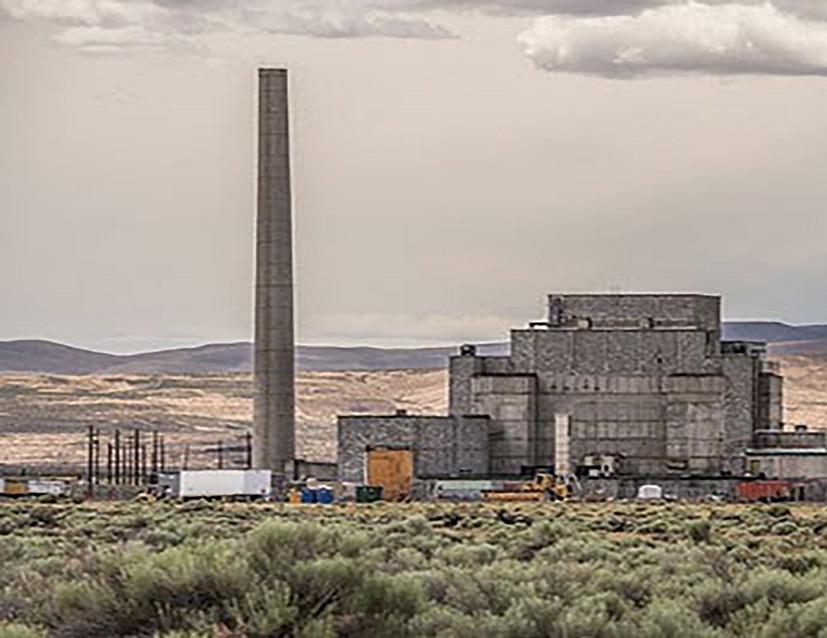
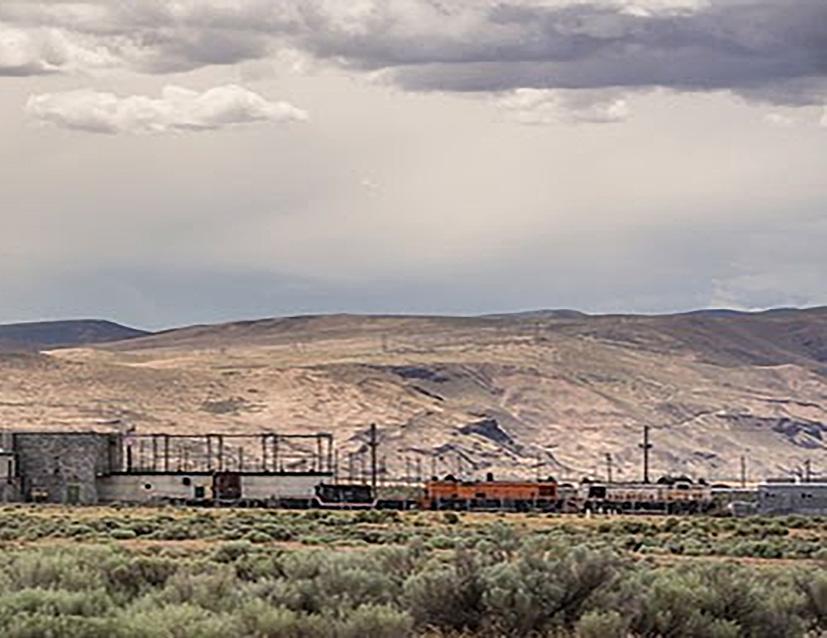
The Hanford Site, sprawling across 586 square miles at the heart of the Washington State ecoregion, boasts one of the largest remaining native shrub-steppe habitats in the state. This landscape, characterized by its unique vegetation, soil conditions, and climate, harbors a diverse array of plant and animal species.
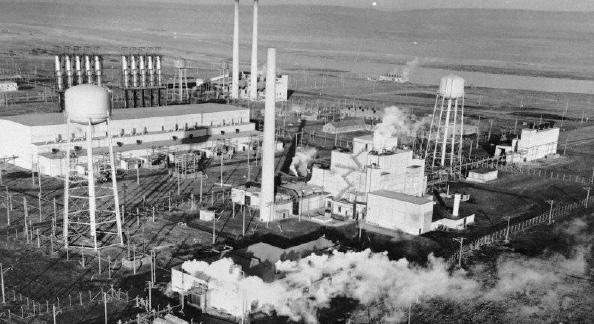
Once home to the Hanford Engineer Works and B Reactor, the site played a pivotal role in the development of nuclear technology during World War II. Plutonium produced here fueled the atomic bombs dropped on Hiroshima and Nagasaki, altering the course of history forever.
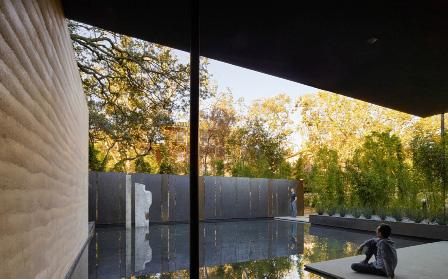
The priority of this project is to provide a created outdoor space that not only serves as a lodging destination for the curious visitor, but more importantly, it is designed to prompt self-reflection and contemplation on the impacts and consequences of human ingenuity.
Atomic Reflections seeks to transform the perception of the need to deter people from the Hanford Nuclear Site by recognizing that there will always be interested travelers drawn to it’s historical significance. Rather than keep people away and uninformed, the project embraces curiosity and aims to enrich their experience. Through this approach, Atomic Reflections will be a space where investigation is not only accommodated, but rewarded with the opportunity for learning and reflection.
The following background research was used to identify essential issues of the project intention and also to understand the historical and contemporary strategies on best practices relevant to the issue.
Environment and Planning
Urban Analytics and City Science by Olszewska, A. A., Marques, P. F., Ryan, R. L., & Barbosa, F.
This article outlines seven key criteria that define contemplative landscapes: layers of the landscape, landforms, biodiversity, color and light, compatibility, archetypal elements, and the character of peace and silence.
By integrating these elements, designers aim to create environments that stimulate engagement, interaction, and ultimately contemplation. Each criterion contributes to the overall atmosphere, promoting a sense of calm and reflection while also encouraging dynamic use. The framework offers a comprehensive approach to shaping outdoor environments that support both contemplation and active engagement, catering to the multifaceted needs of users seeking both relaxation and stimulation.

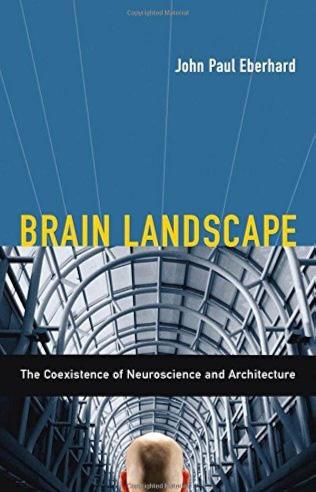
This book tries to explain the connection between neuroscience and architecture, aiming to uncover the connections between our built environment and our cognitive responses. Chapter 4 is particularly interesting with its examination of memorials, sacred spaces, and memory.
It explains how architectural design endeavors to elicit emotional reactions, albeit with varying degrees of success. Notably, when architectural settings incorporate memorials, emotional responses are not only more frequent but also more profound, underscoring the impact of spatial design on human experience and remembrance.
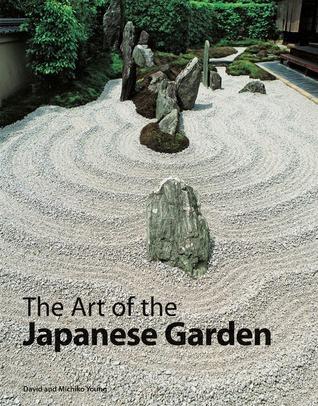
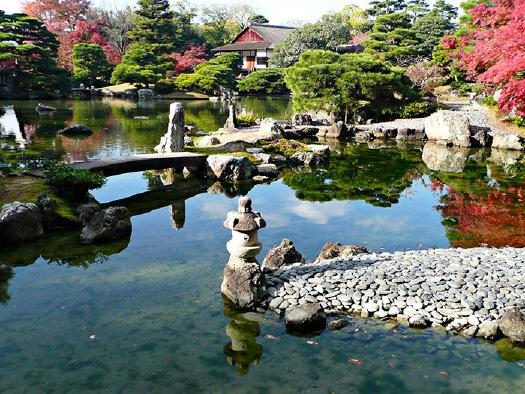
This book profiles a number of the most notable gardens in Japan and beyond. It states that the goals of a Japanese garden are to suggest a landscape, to depict famous natural scenes, or to evoke a particular artistic quality or atmosphere.
The book goes on to explain that Japanese gardens are rooted in two traditions: an ancient one in which patches of dense forest or pebbled beach were dedicated to nature spirits, and a tradition from China and Korea that included elements such as ponds, streams, waterfalls, rock compositions, and a variety of vegetation.
Perhaps most importantly, the book includes a section describing how Japanese gardens have reached new heights in popularity in recent centuries and how they have influenced landscapes and contemplative gardens in other countries around the world.
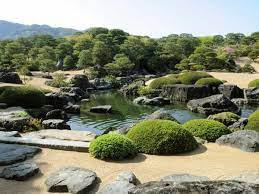
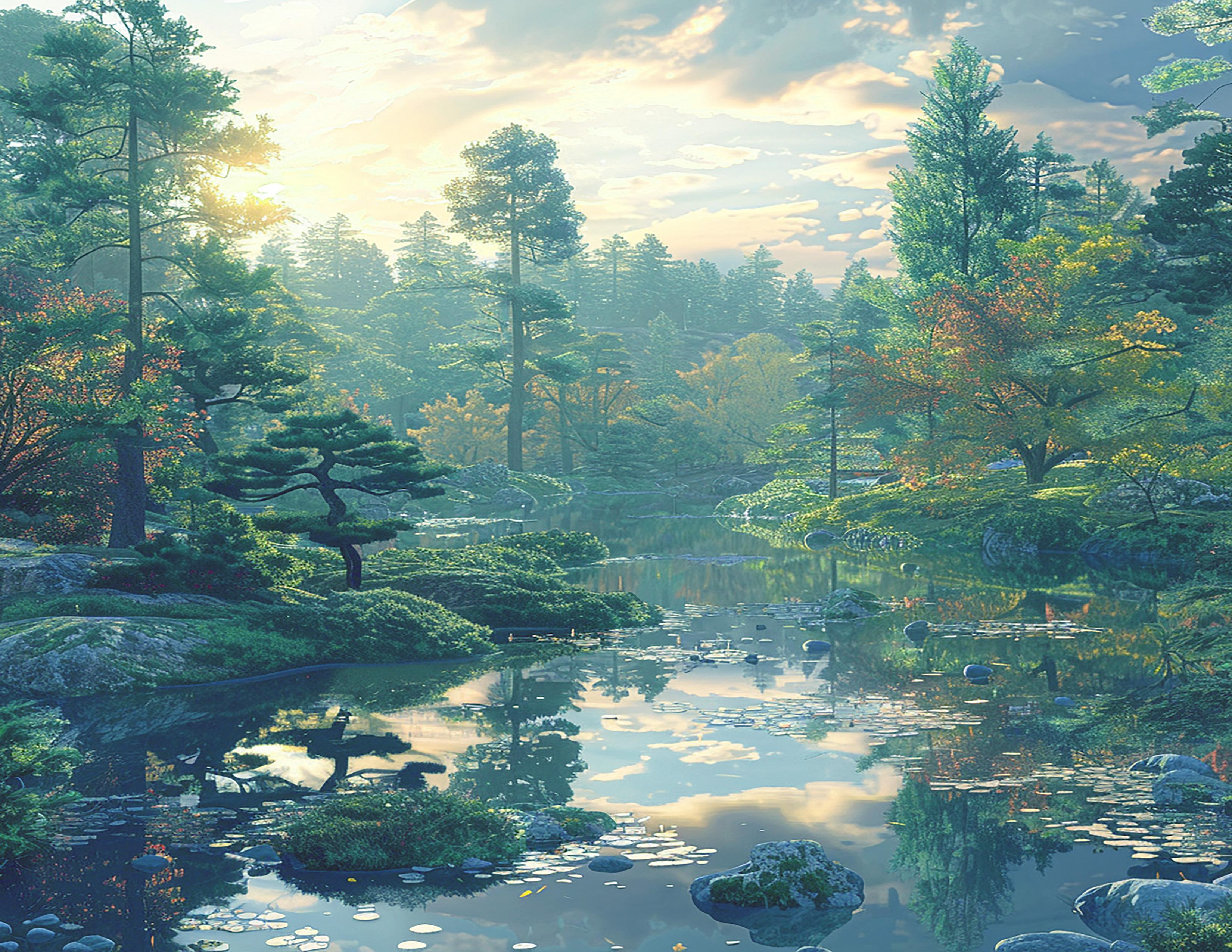
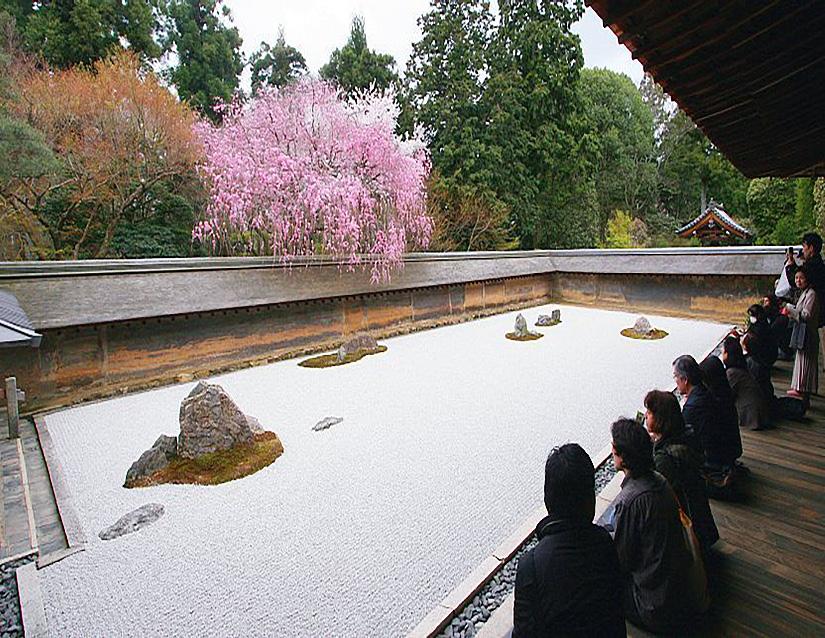
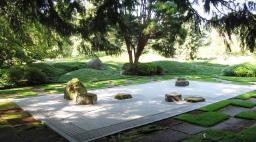
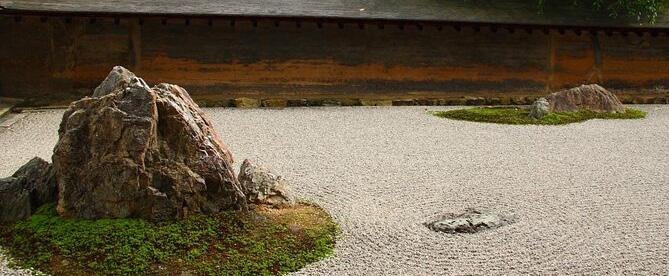
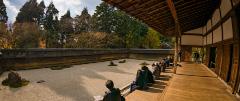
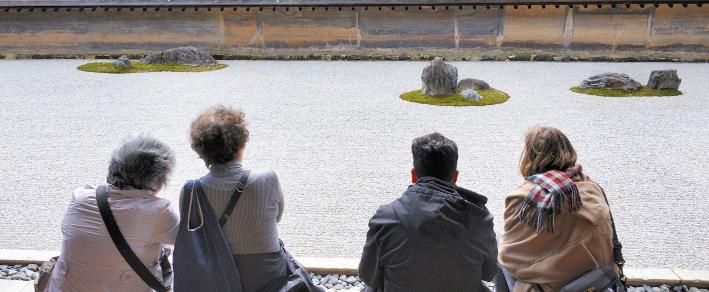
The Ryōan-ji Zen Temple, located within Kyoto, Japan, stands as a paragon of contemplative landscape design, captivating visitors with its minimalist aesthetic and profound spiritual essence. Originally constructed in the late 15th century, Ryōanji has since become renowned for its iconic rock garden, known as karesansui, or “dry landscape garden.”
Measuring approximately 25 meters by 10 meters, the karesansui of Ryōan-ji is a masterpiece of simplicity, comprising 15 carefully placed rocks amidst raked gravel. Its composition remains a subject of intrigue and interpretation, with scholars and visitors alike pondering the symbolic significance of its arrangement. Some speculate that the garden represents islands amidst a sea of waves, while others see it as a manifestation of Zen principles, encouraging meditation and contemplation.
Visitors to the temple are invited to engage in a practice of quiet introspection, allowing the landscape to inspire a sense of tranquility and inner peace.
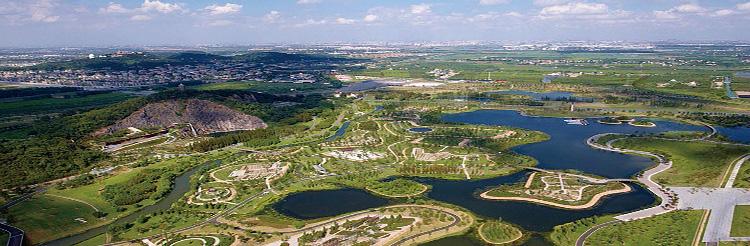
Chenshan Botanic Garden is aimed at fostering appreciation for the beauty of Earth’s ecosystems while raising awareness about their vulnerability. Serving as a multifaceted experience, the garden communicates, instructs, entertains, and leaves a lasting impression on visitors seeking relaxation. Spatial elements not only provide orientation in both geographical and aesthetic dimensions but also serve as exemplars of sustainable architectural development. By seamlessly integrating educational, recreational, and sustainable design principles, the garden emerges as a model for promoting ecological consciousness and responsible stewardship of natural resources.
Established in 2010, this expansive garden spans over 207 hectares and serves as a sanctuary for both rare plant species and visitors seeking solace in nature. Inspired by traditional Chinese garden principles, Chenshan seamlessly integrates lush greenery, serene water features, and winding pathways, creating an atmosphere conducive to reflection and tranquility. As one meanders through its scenic landscapes, the garden’s harmonious blend of natural beauty and cultural symbolism invites contemplation, offering a respite from the bustle of modern life.
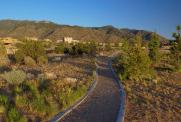
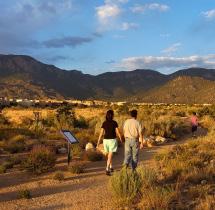
The High Desert Park is known as beacon of sustainability and water conservation. Spanning 1000 acres, this park exemplifies low-impact design principles, prioritizing water conservation, wildlife habitat restoration, and native plantings. The natural landscape is in the high desert and is characterized by sagebrush and few large trees, which is similar to the Hanford site.
Its stewardship of the environment not only reflects a commitment to preserving natural resources but also shows that it is possible to create a contemplative design without the traditional elements, such as large canopy trees and lush green plantings.
The primary objective of this project is to create a campground that transcends its conventional role by providing basic amenities and lodging services, while simultaneously providing an environment that promotes contemplation and prolonged stay. Through thoughtful architectural design strategies, the campground will be transformed into a destination that encourages visitors to linger and engage with their surroundings, rather than merely passing through.
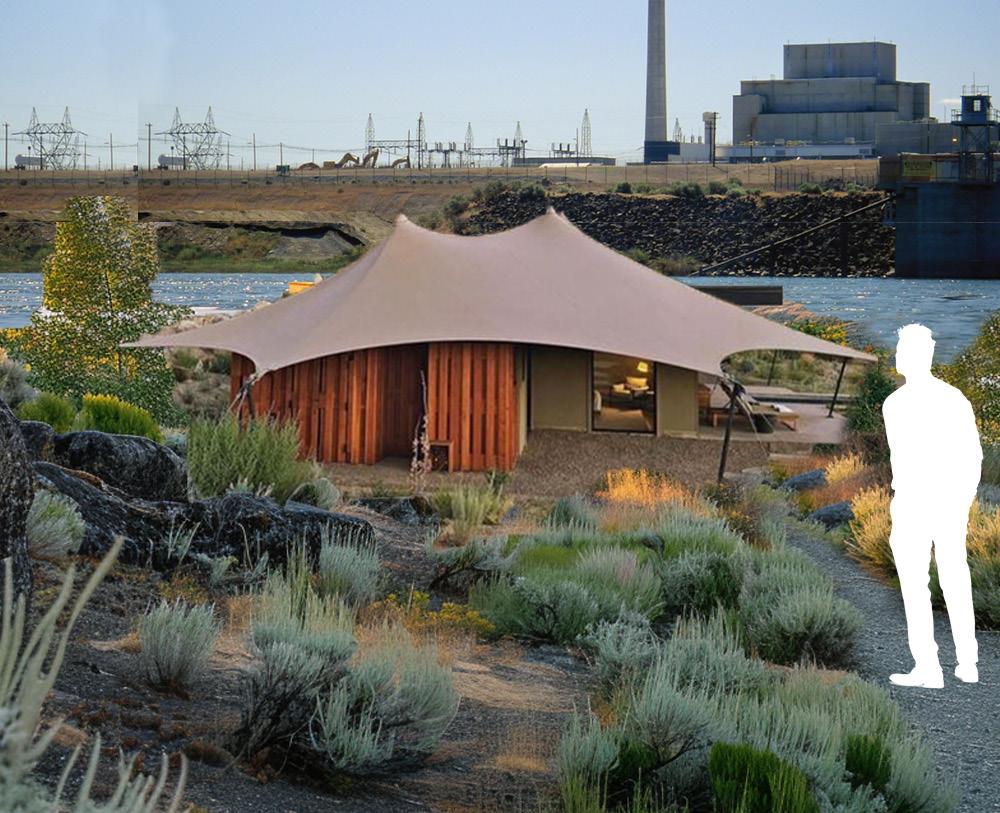
Key features of the campground will include essential amenities such as a registration office, convenience store, restrooms, playground, pet park, and laundry facilities. These facilities will ensure that guests have the necessary comforts to fully explore the area and spend extended periods of time within the site.
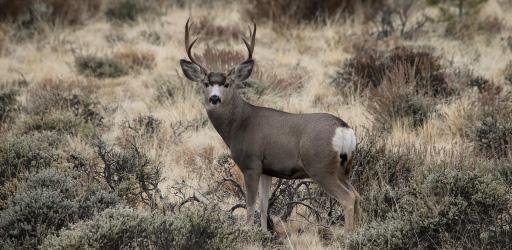
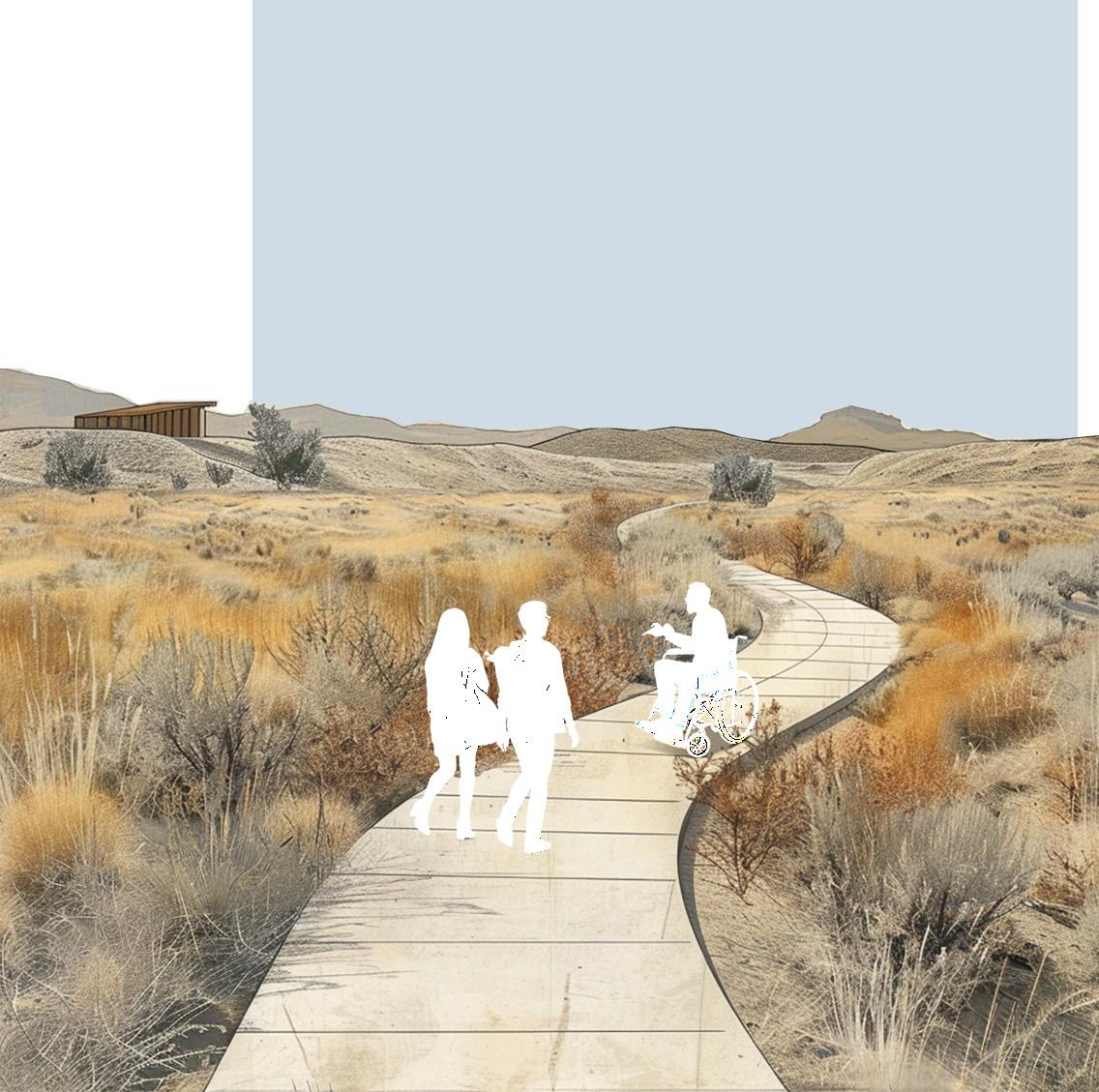
Furthermore, the design will integrate a natural park area, complete with a trail system that allows visitors to observe and interact with local wildlife.
Central to the design philosophy is the incorporation of prospect-refuge principles throughout the layout. By arranging spaces to provide secluded areas for contemplation and reflection, the campground will offer visitors a break from the hustle and bustle of daily life.
Atomic Reflections is guided by a commitment to responsible stewardship of the natural land, prioritizing sustainable design principles at every stage. By utilizing native vegetation, employing low-impact construction techniques, and implementing efficient water management strategies, the project aims to minimize its environmental impact while enhancing the ecological integrity of the site.
Safety and accessibility are large considerations in the project’s design, with ADA-compliant facilities and well-maintained pathways ensuring that all visitors can enjoy the site comfortably and safely.
Furthermore, the design will incorporate contemplative strategies, such as layers of the landscape, landforms, biodiversity, color, compatibility, and archetypal elements, to create spaces that inspire reflection, connection, and serenity.
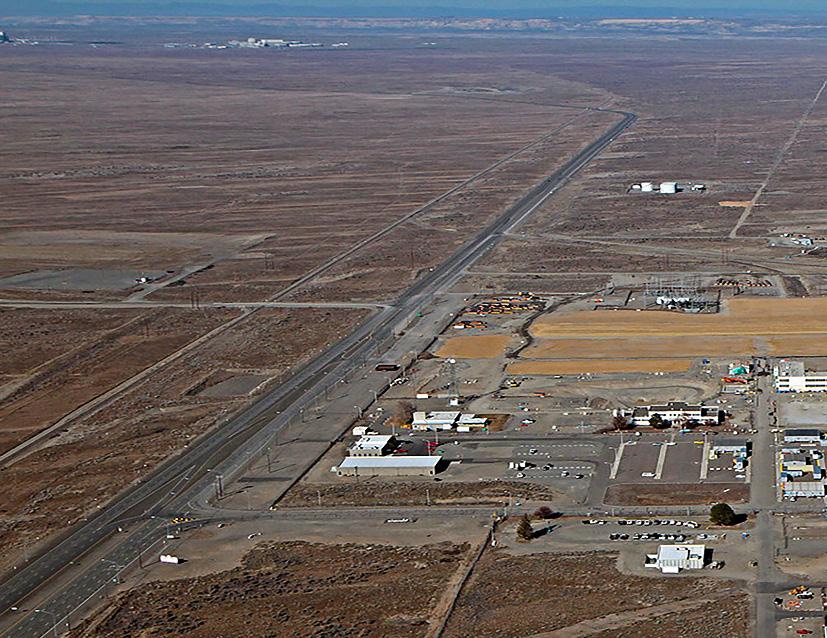
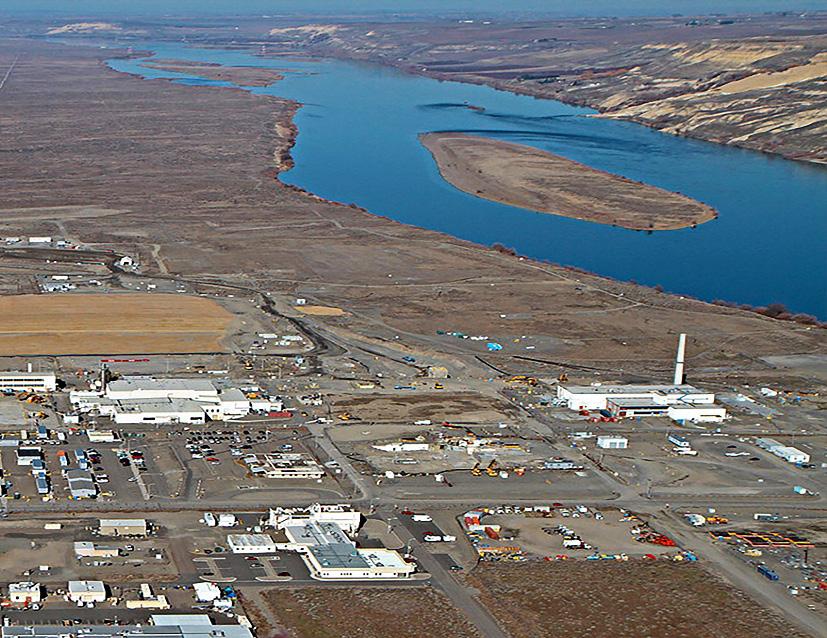
The Hanford Nuclear Site is situated in southeastern Washington State, United States, along the banks of the Columbia River. Spanning approximately 580 square miles (1,500 square kilometers), it occupies a remote and sparsely populated region known as the Hanford Reach, named after a portion of the Columbia River that flows freely through the area. Surrounded by arid desert terrain and characterized by vast expanses of shrub-steppe vegetation, the site is nestled amidst the rolling hills and plateaus of the Columbia Basin.
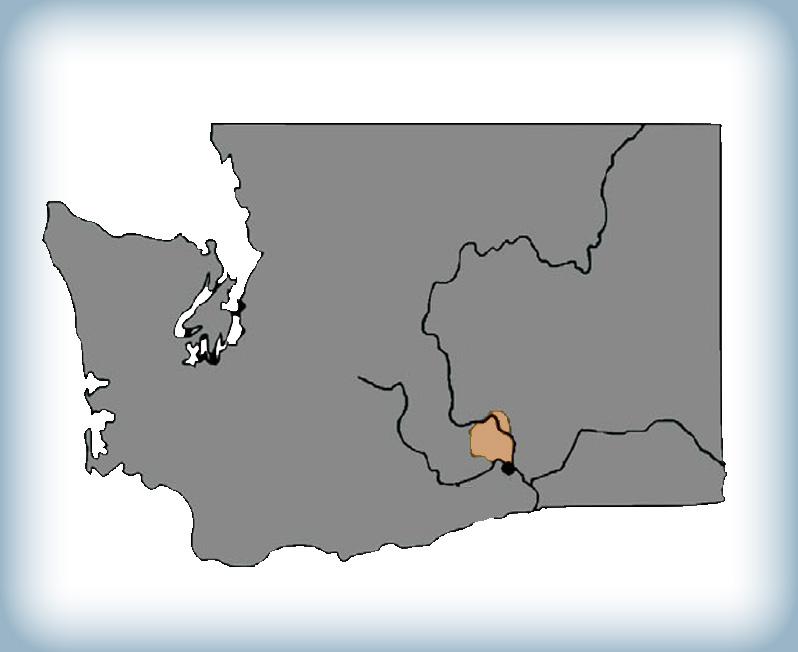
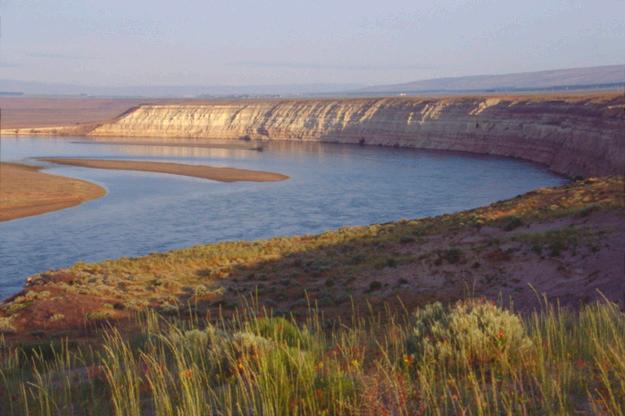
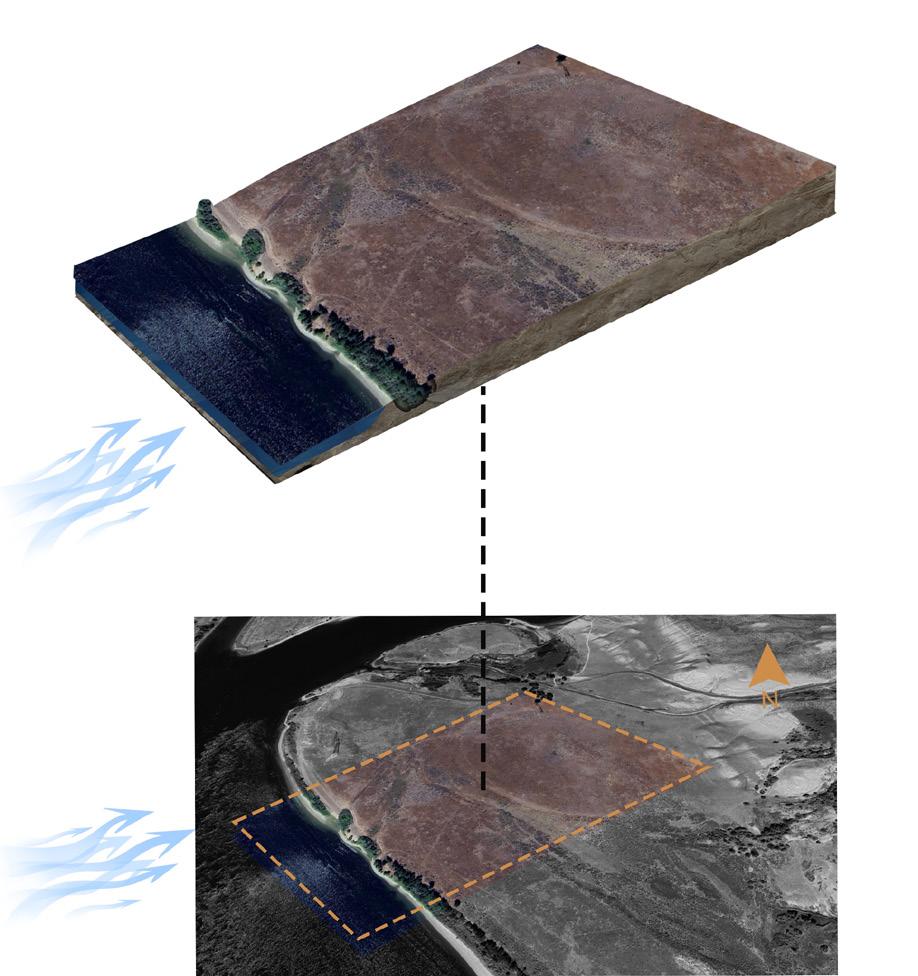
The chosen site within the Hanford Reach National Monument is currently known as the White Bluffs Boat Launch. The area, situated within the Hanford Reach, offers visitors convenient access via Highway 24 and Ringold Road, near the National Monument Entrance Gate. The landscape of White Bluffs is distinguished by towering, chalk-colored cliffs that dramatically overlook the Columbia River. Additionally, the region is renowned for its diverse native flora and abundant wildlife, making it a captivating destination for outdoor enthusiasts and nature lovers alike.
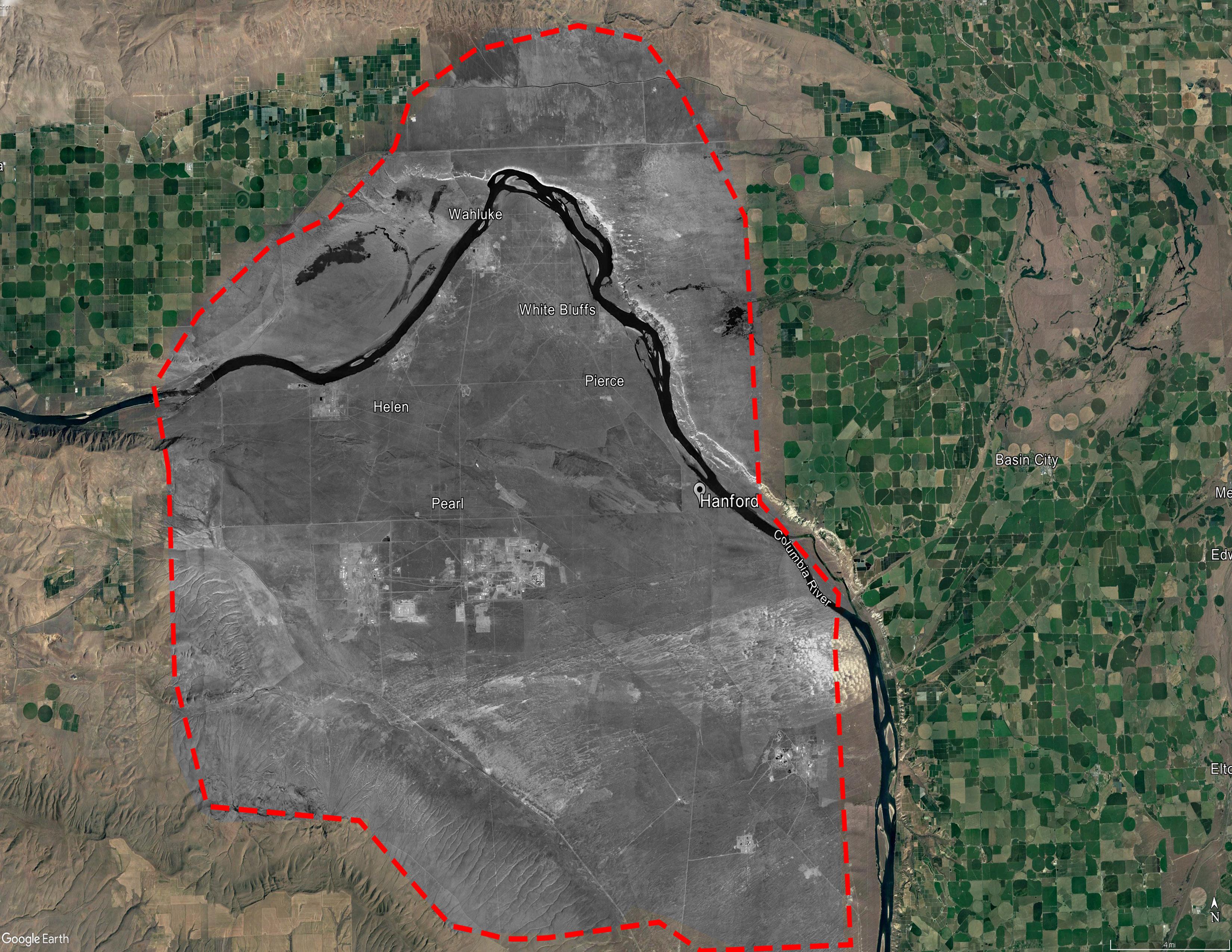
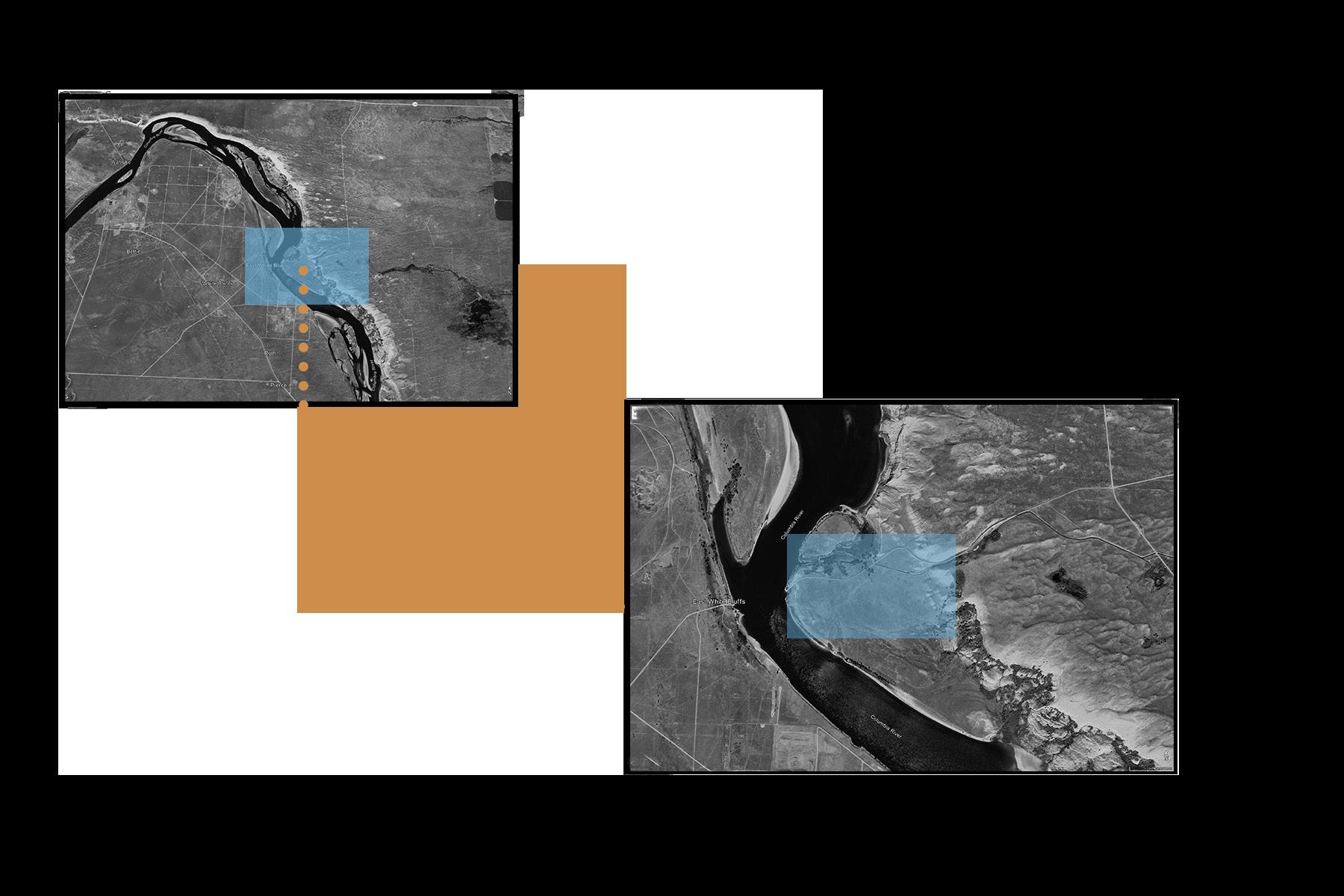
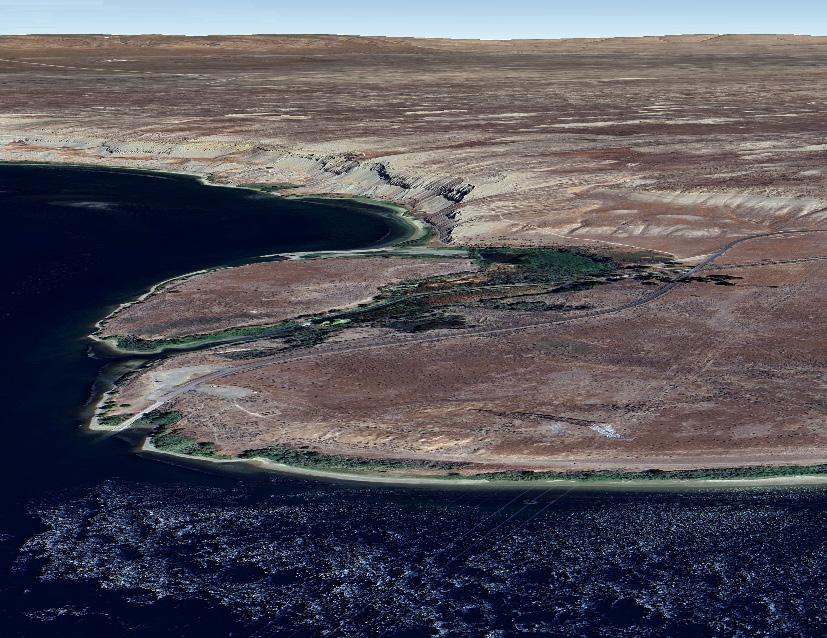
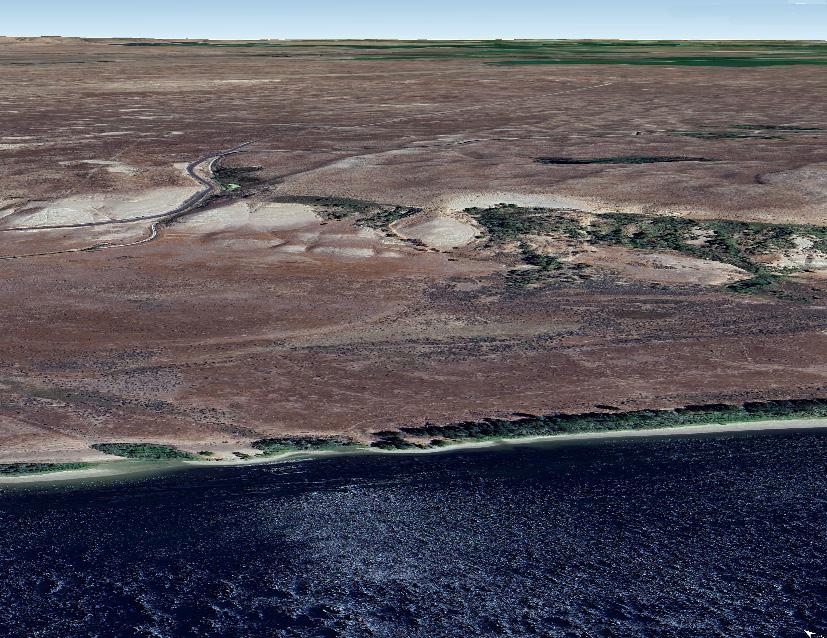
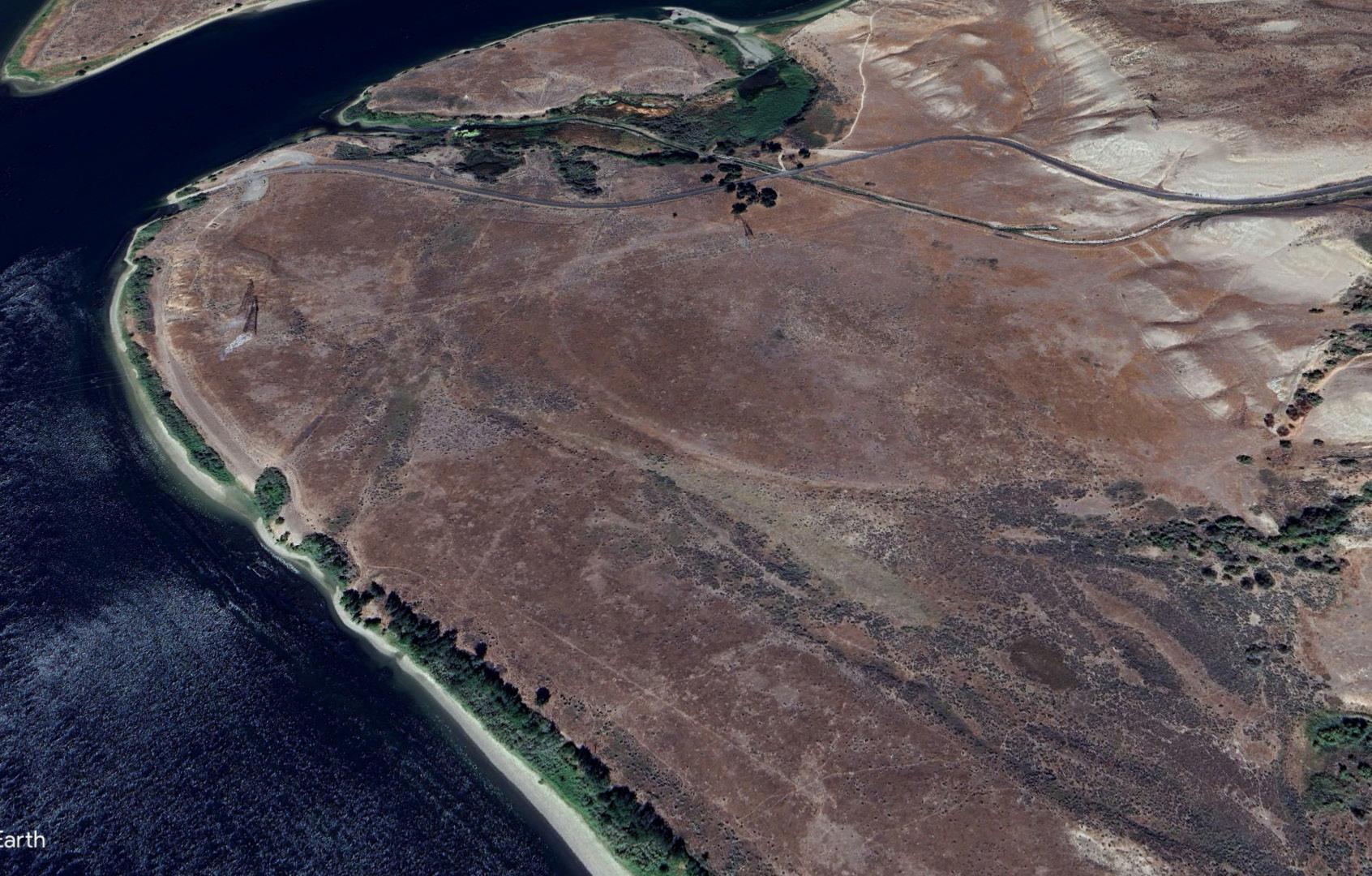
Located at the base of the iconic White Bluffs, the proposed site offers a unique blend of natural beauty and accessibility. Following a quick descent down the bluffs, the topography levels out to reveal an ideal location for a camping area. Its proximity to the Columbia River not only provides recreational opportunities but also offers a valuable water source for both human use and irrigation, facilitating the growth of potentially large shade trees and wind breaks.
Also, the site’s strategic location at the Hanford Reach Trail Head and the Shoreline Trail makes it a natural focal point for visitors seeking to explore and learn about the Hanford area. Its proximity to the existing boat launch and natural wetlands further enhances its appeal as a destination for outdoor enthusiasts.
With its combination of natural features and accessibility points, this site presents an unparalleled opportunity to create a welcoming and sustainable recreational space.
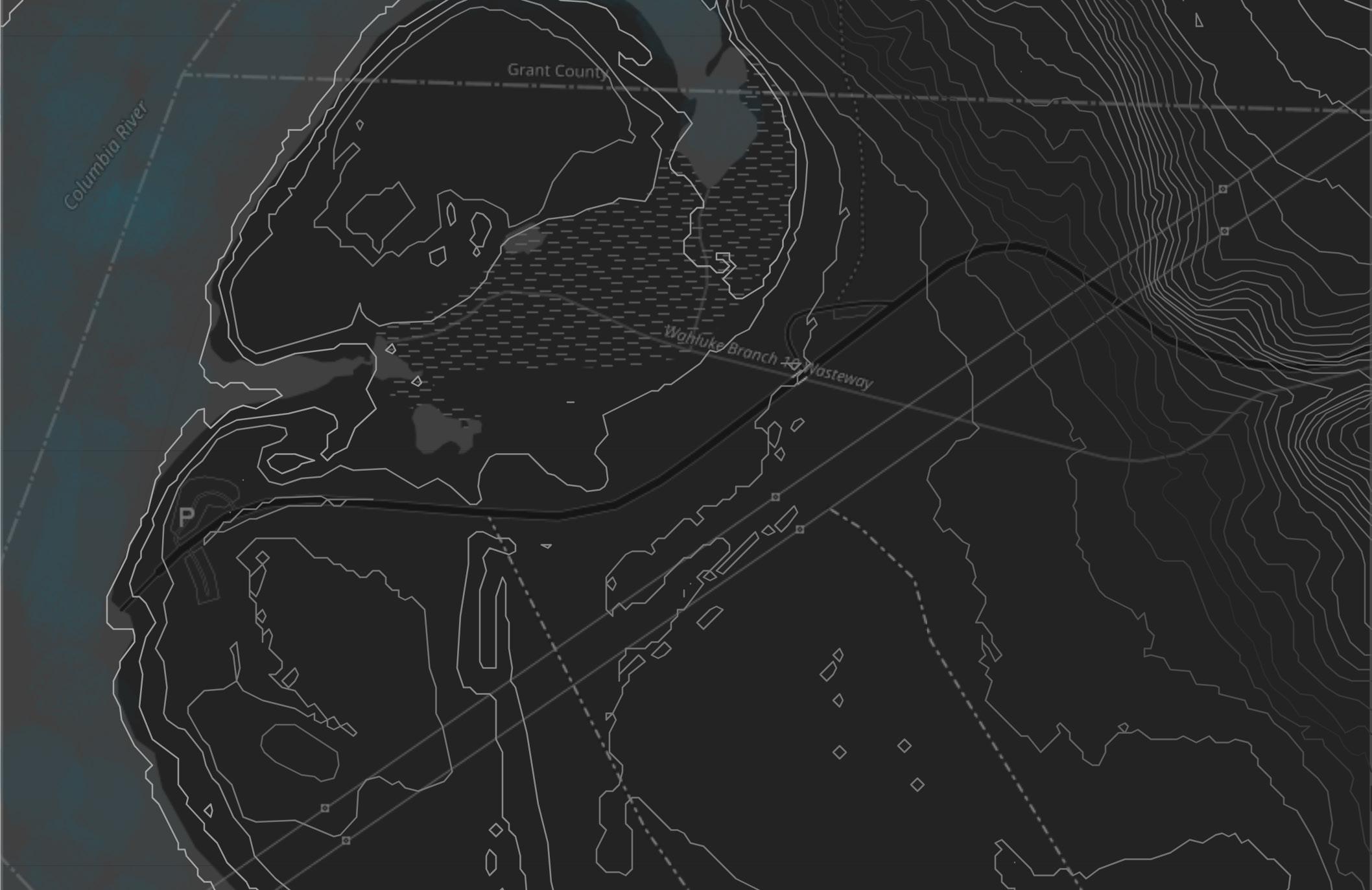
The displacement of Native Americans from the Hanford Nuclear Site primarily occurred during World War II.
The White Bluffs area of the Hanford Reach in Washington holds significant historical significance, primarily due to its association with the Manhattan Project during World War II. During this time, the Hanford Site, located nearby, played a pivotal role in the development of the atomic bomb as part of the top-secret Manhattan Project. The White Bluffs served as a natural barrier, shielding the activities at the Hanford Site from prying eyes and potential aerial reconnaissance.
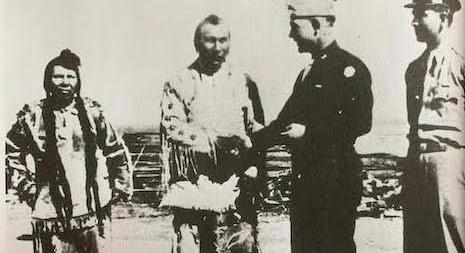
The White Bluffs area has been inhabited by indigenous peoples for thousands of years, with archaeological evidence indicating continuous human presence dating back at least 10,000 years. The region was home to several Native American tribes, including the Wanapum, Yakama, and Nez Perce, who relied on the Columbia River for sustenance and transportation.
Also, the Hanford Reach, including the White Bluffs area, was designated as a National Monument in 2000, preserving its natural and cultural heritage for future generations. The monument protects one of the last free-flowing stretches of the Columbia River in the United States.
The Hanford Nuclear site was operational for approximately four decades beginning in the 1940’s, making it one of the longest-operating nuclear production facilities in the world.
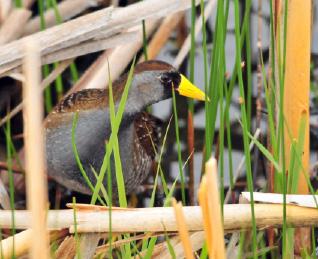
The natural environment at the White Bluffs area is characterized by a unique combination of arid desert landscapes, towering chalk-colored cliffs, and the riparian habitat of the Columbia River. This region experiences a semi-arid climate, with hot, dry summers and cool, wet winters, resulting in sparse vegetation dominated by shrub-steppe species adapted to drought conditions.
The White Bluffs themselves, composed of layers of sedimentary rock and volcanic ash, rise above the Columbia River, providing nesting sites for birds of prey and offering panoramic views of the surrounding landscape.
Despite the arid conditions, the Columbia River supports a diverse habitat for fish, waterfowl, and other wildlife species. The river’s banks are lined with cottonwood and willow trees, while the surrounding shrub-steppe habitat is home to species such as sagebrush, bitterbrush, and rabbitbrush.
Closed-off areas like Hanford can become wildlife refuges due to limited human disturbance. In the case of Hanford, restrictions on public access and industrial activities have allowed natural processes to flourish, creating important habitats for a variety of wildlife species. Additionally, efforts to restore and enhance habitat through conservation initiatives have further contributed to the area’s value as a wildlife refuge.
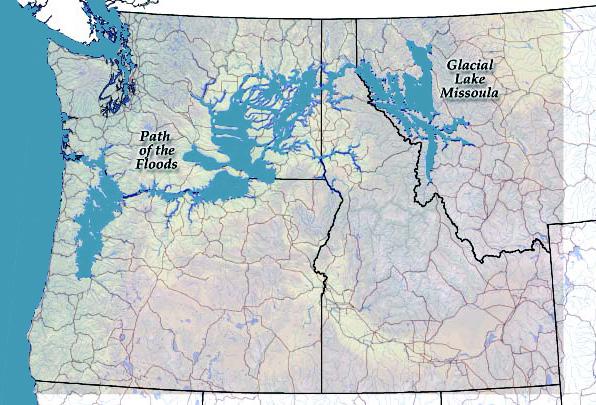
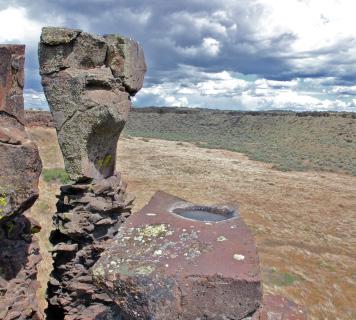
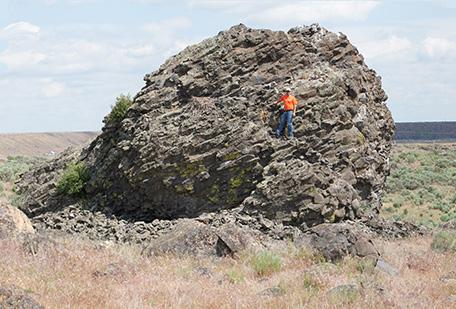
The Hanford Reach area in Washington contains an intriguing physical environment shaped by both geological forces and climatic conditions. The landscape is mainly the result of ancient events, notably the glacial Lake Missoula floods. During the Pleistocene era, massive ice dams periodically blocked the flow of the Clark Fork River in present-day Montana, creating Glacial Lake Missoula. When these dams ruptured, catastrophic floods swept across eastern Washington, carving out the dramatic channeled scablands that define the region. These floods carried colossal, erratic boulders for hundreds of miles and sculpted giant ripples in the ground, leaving behind a landscape of geological fascination.
In addition to its glacial history, the Hanford Reach area is characterized by a high desert climate, which directly influences its physical features. The arid conditions, with hot, dry summers and cold winters, contribute to the sparse vegetation and exposed rocky terrain. Precipitation is scarce, and water sources are limited, shaping the landscape into a mosaic of shrub-steppe ecosystems interspersed with rugged cliffs and bluffs.
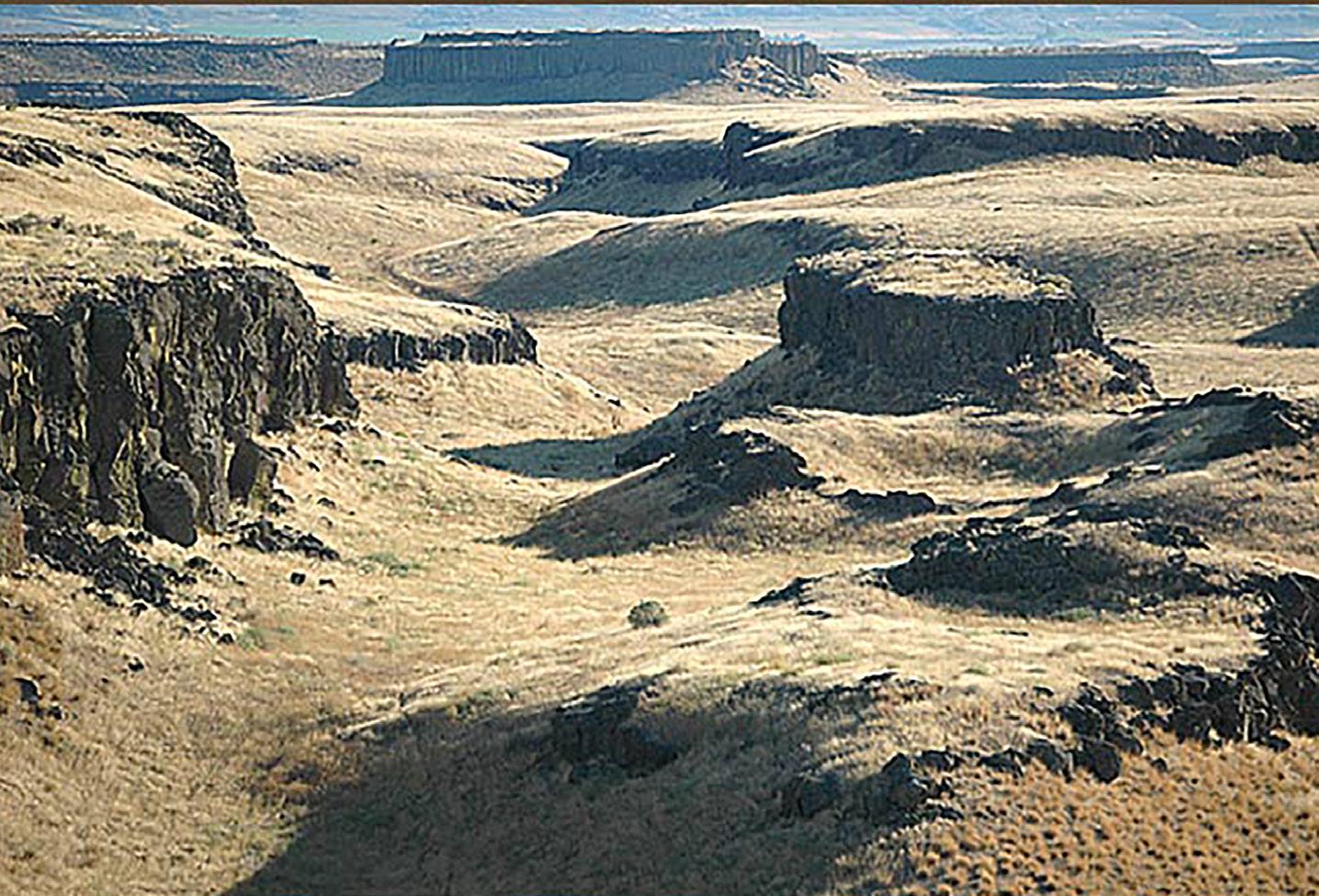
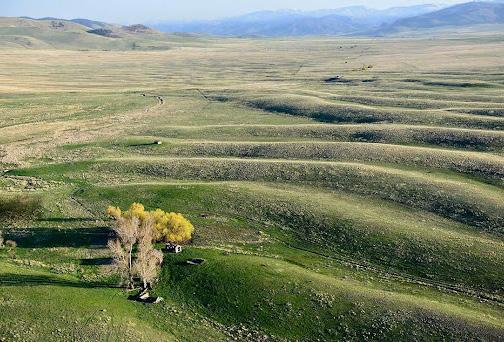
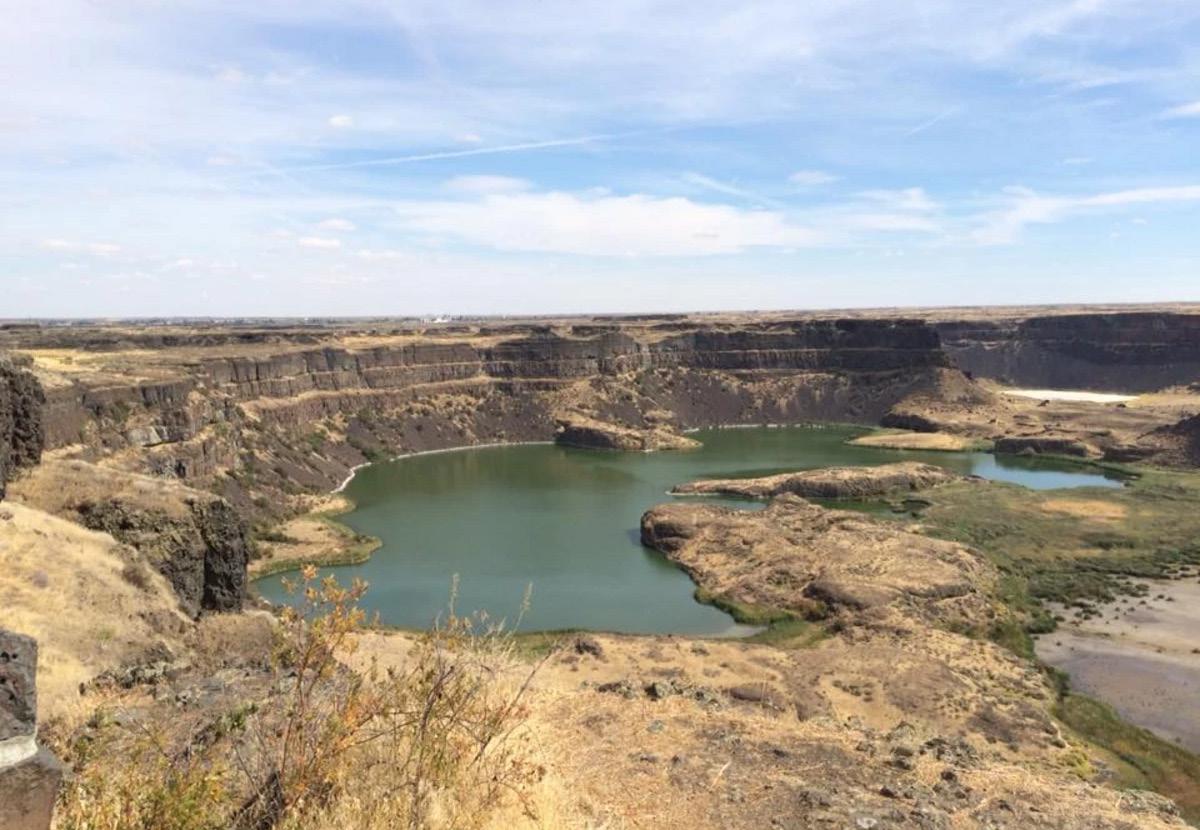
 Giant Land Ripples
Erratic Boulders
Giant Land Ripples
Erratic Boulders
Atomic Reflections aims to exceed the normal campground experience by evolving into a place for introspection, designed to prompt contemplation on the impacts and consequences of human ingenuity.
Drawing inspiration from the solemnity of memorials and the tranquility of Japanese gardens established world-wide in the aftermath of the atomic bombings of Hiroshima and Nagasaki, Atomic Reflections strives to carve out an outdoor space that serves dual purposes. While providing the necessary amenities for camping, its primary function is to offer a refuge for self-reflection.
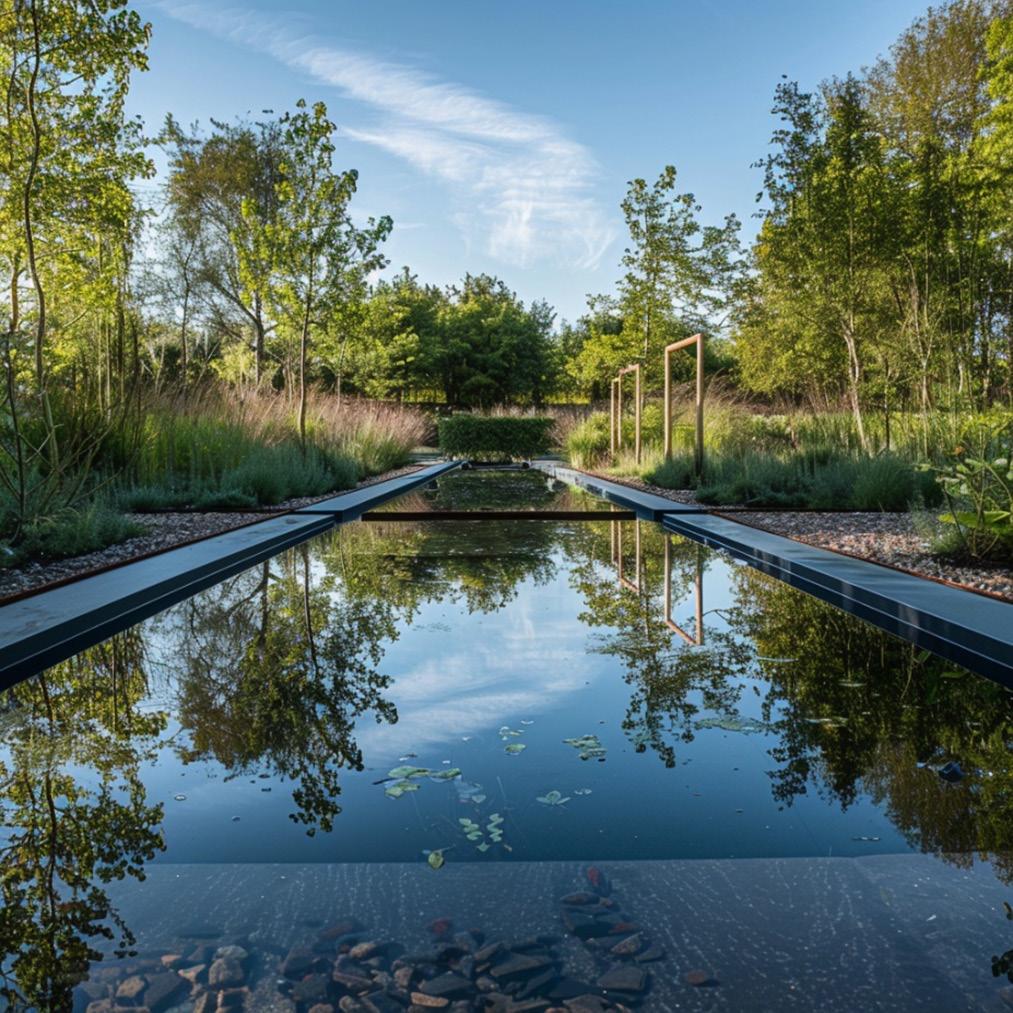
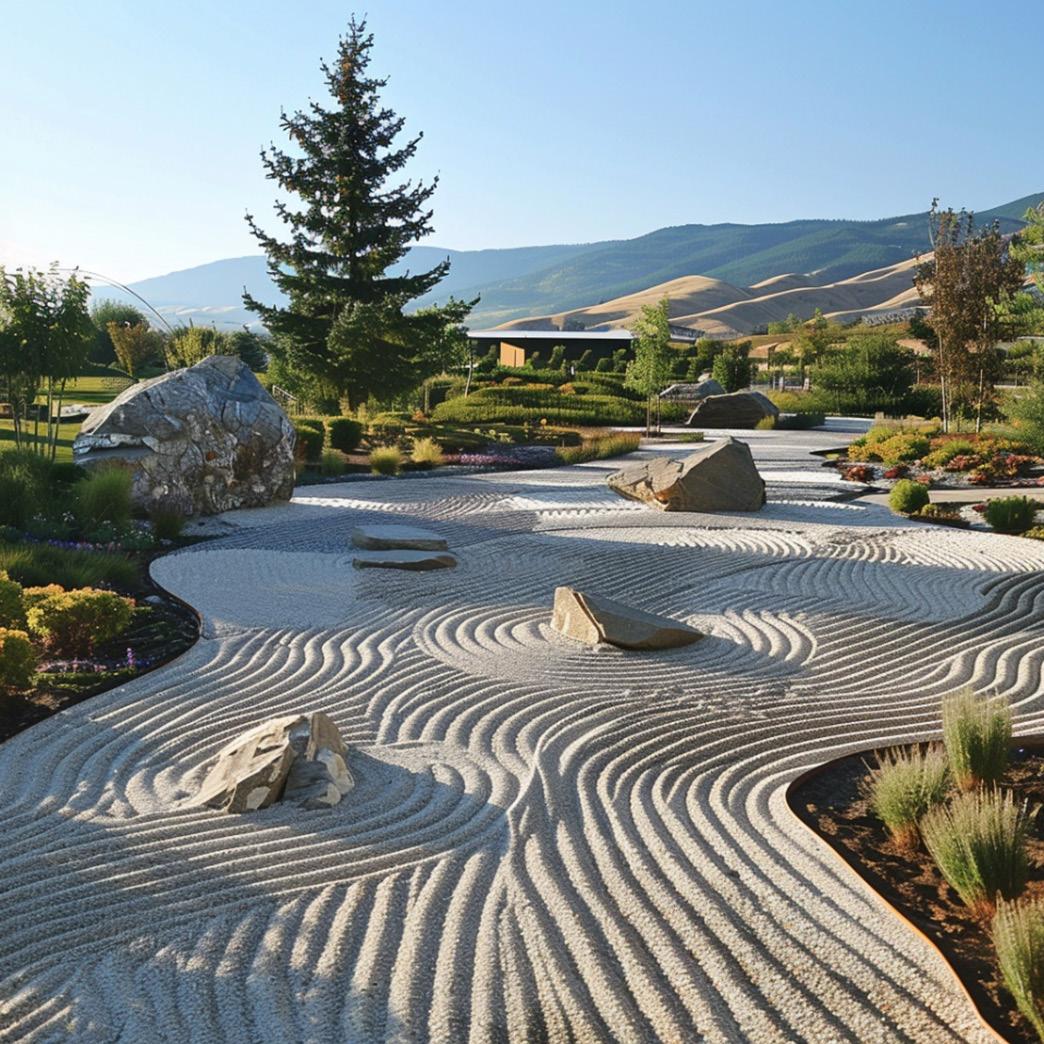
Central to the design intent is the creation of an environment conducive to deep thought and meditation. The layout and landscaping will be crafted to evoke a sense of serenity and reverence, inviting visitors to pause and engage with their surroundings. Paths meandering through curated greenery and water features will guide individuals on a journey of introspection, encouraging them to confront the complexities of humanity’s impact on nature.
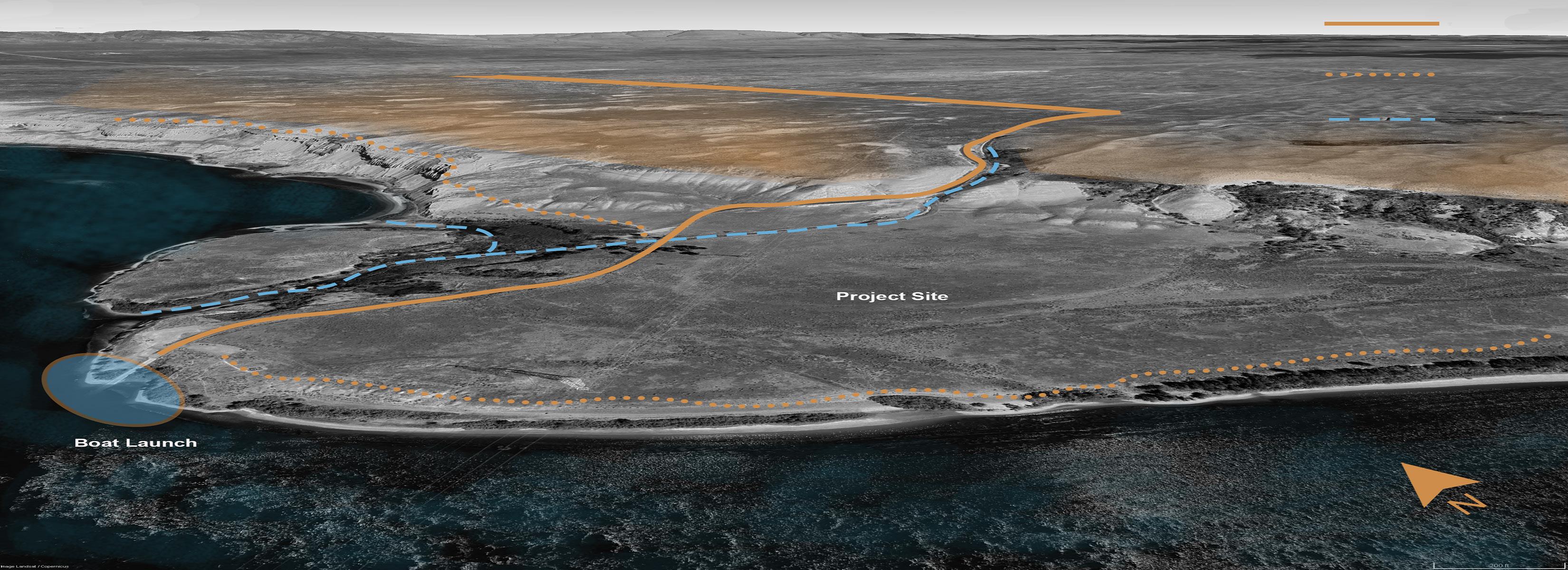

CURRENT SITE LAYOUT
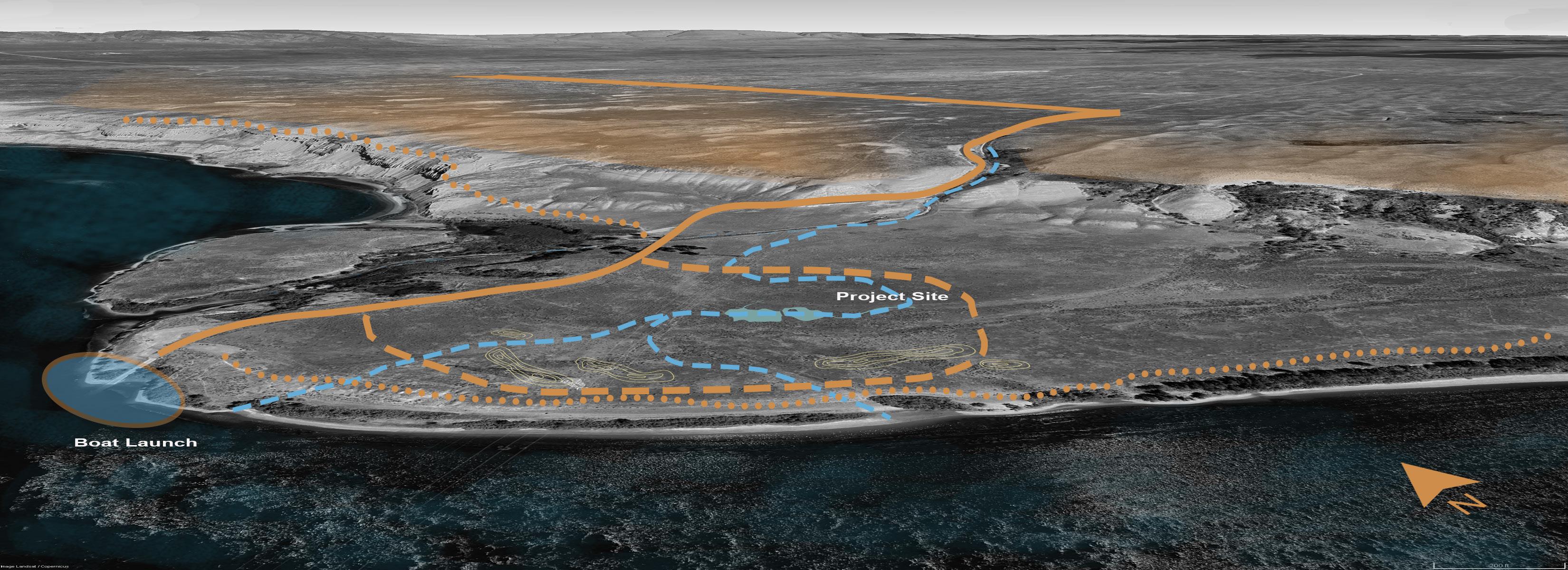
POROPOSED SITE LAYOUT
When envisioning a campground that serves as a sanctuary for contemplation amidst the Hanford high desert landscape, the transformation of the terrain from a flat spread to one with character and form is integral. This will include the creation of mounds and earth berms of varying scales and shapes, strategically and aesthetically positioned. The soil required for these landforms can be sourced primarily from the channel dug out for the re-routing of the stream, minimizing environmental impact while sculpting the landscape. Trees play a pivotal role in this transformation, carefully selected to survive in the high desert environment and purposefully placed to provide a break from the winds blowing in off the Columbia River, enhance the aesthetic appeal, and contribute to the reflective ambiance of the campground.
Central to the design is the rerouting of the existing stream to meander through the campground, forming one of the contemplation zones, a mirror pond. This stream not only adds depth, but also serves a functional purpose by providing irrigation for the introduced trees. Supplementary water for irrigation can be sourced from the nearby Columbia River, ensuring sustainable landscaping practices.
Additionally, a one way vehicle loop will be added off of the existing road to provide access to the project.
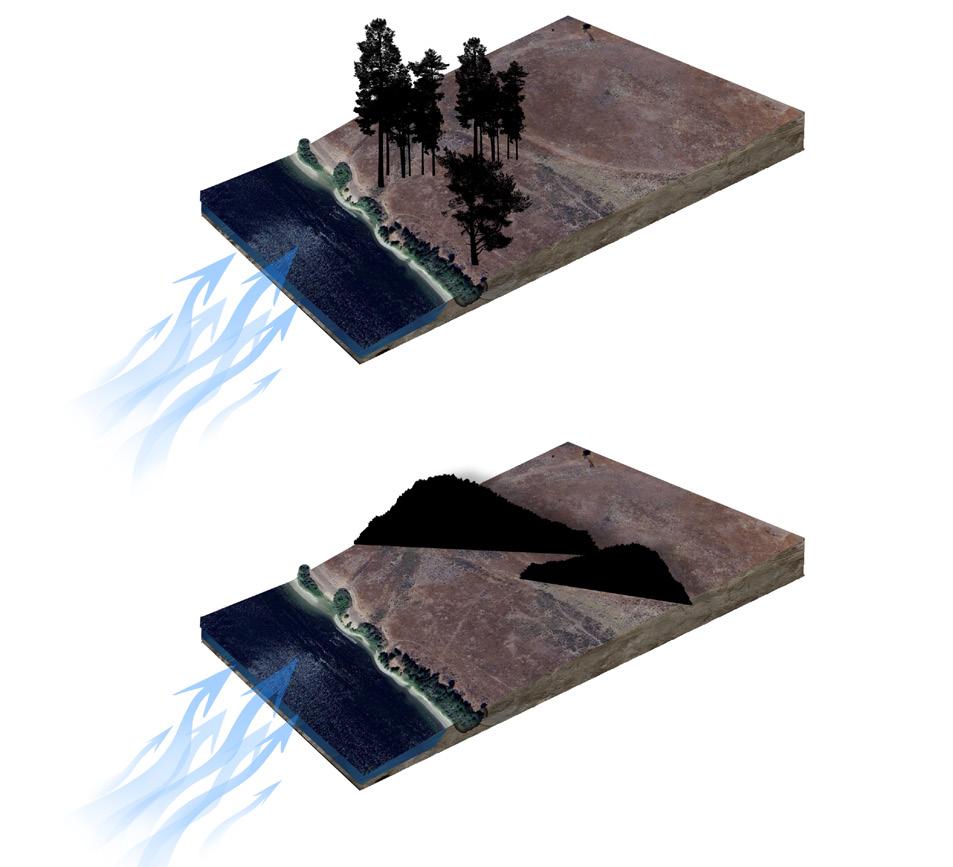
The transformation of a flat spread to one with character and function through the addition of trees and earth berms is paramount to the project.

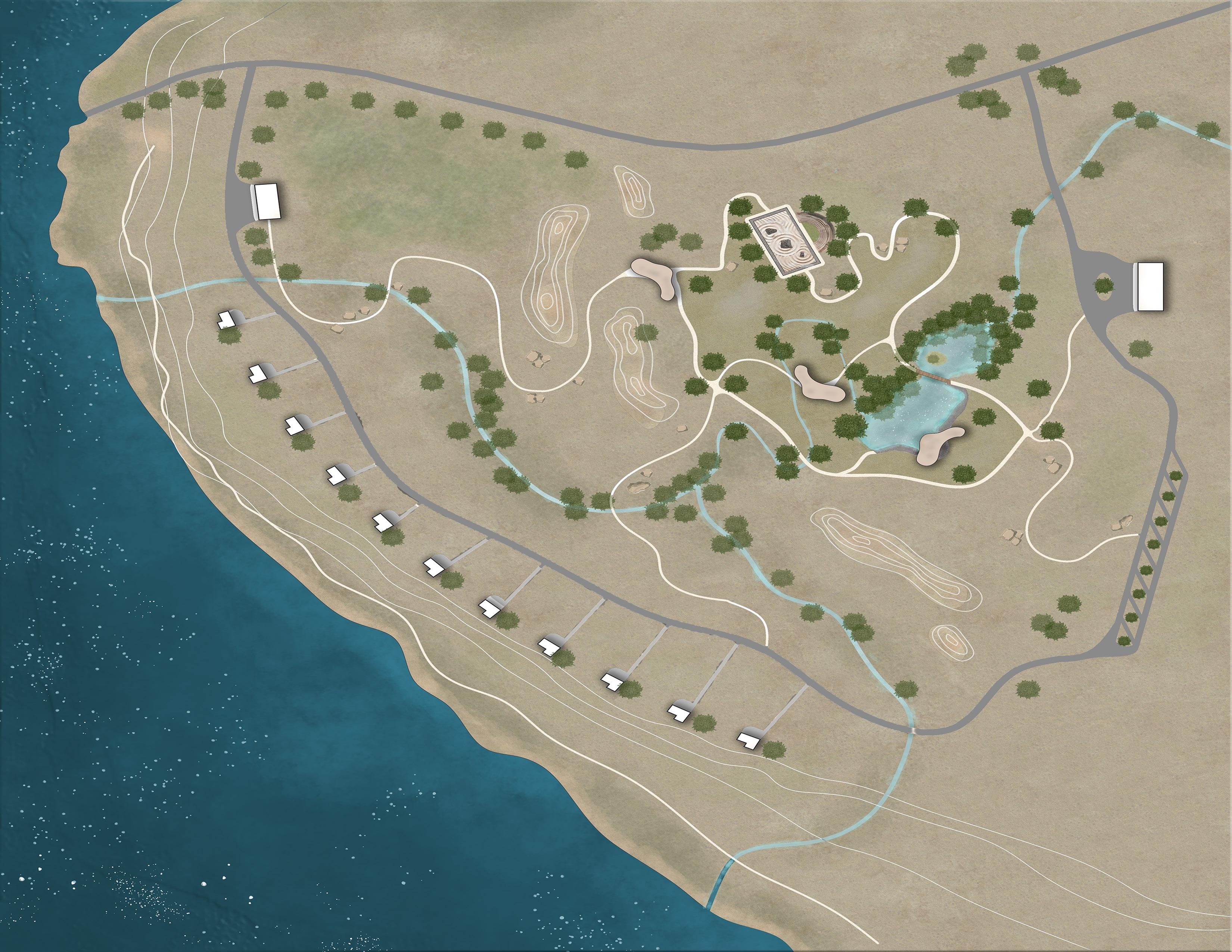
Welcome to Atomic Reflections, where the visitor’s journey begins with a scenic descent down the majestic White Bluffs. As they reach the base, a left turn off of Ringold Road enters the park.
The first stop is the guest registration office and welcome center. Once checked in, visitors can then find their designated campsite, whether that is an RV pull through, resort cabin, or even just space to pitch a tent, its all located along the perimeter of the park.
After settling in, guests can feel free to explore the park’s contemplative atmosphere, which is spread throughout its center. Some may choose to get lost in the labyrinth-style trail system, which offers privacy along with plenty of stops along the way that include massive shade structures and plenty of seating. Others will choose to make their way directly to the two main contemplation zones: the sprawling mirror pond, reflecting the endless sky above, or the enormous Zen Garden, inspired by the ancient events of the Missoula floods.
As guests eventually return to their dwellings, they will find all necessary amenities to prolong their stay at either the entrance building or at a second building located near the exit.
1 2 3 4 6 7 8 9 10 11 5
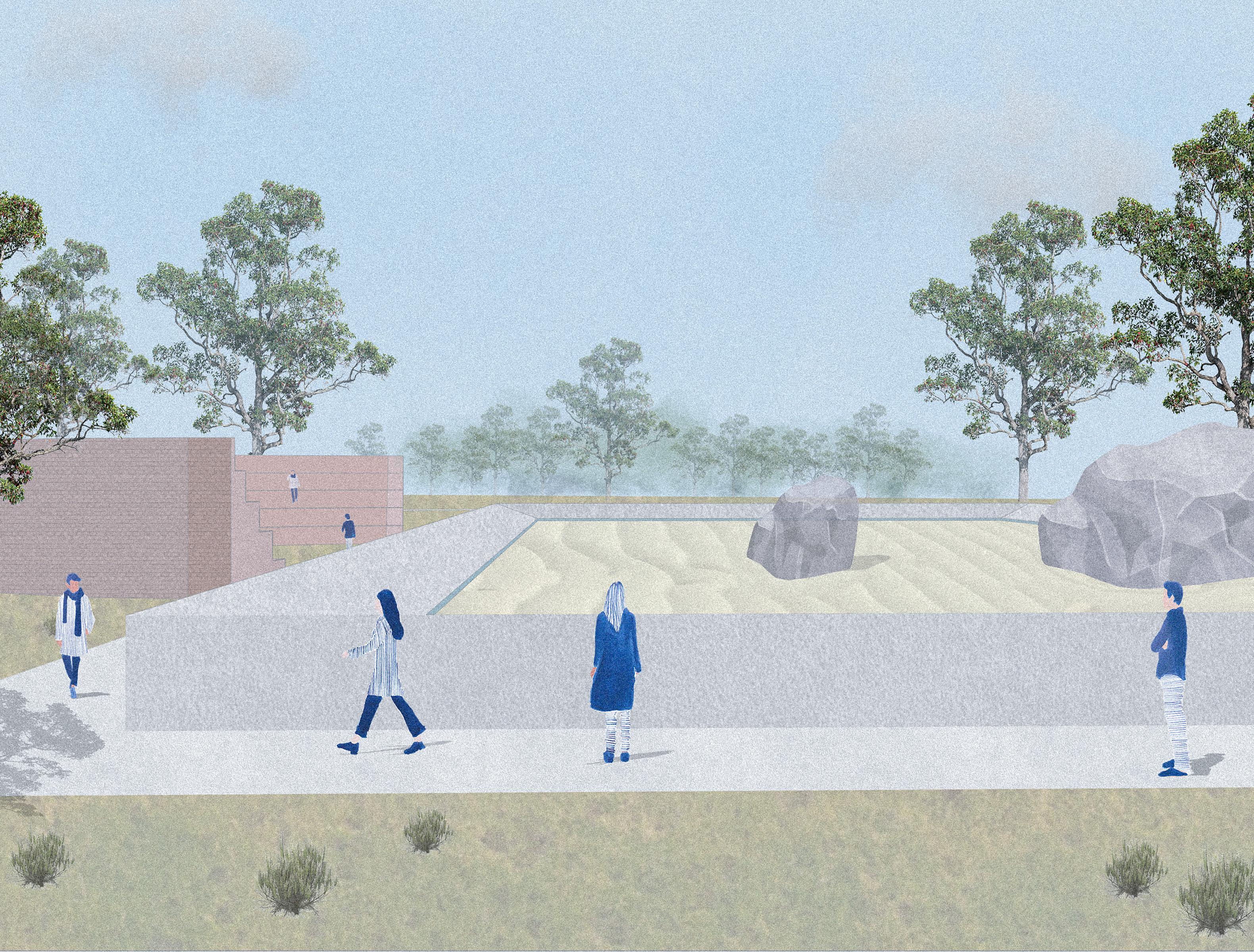
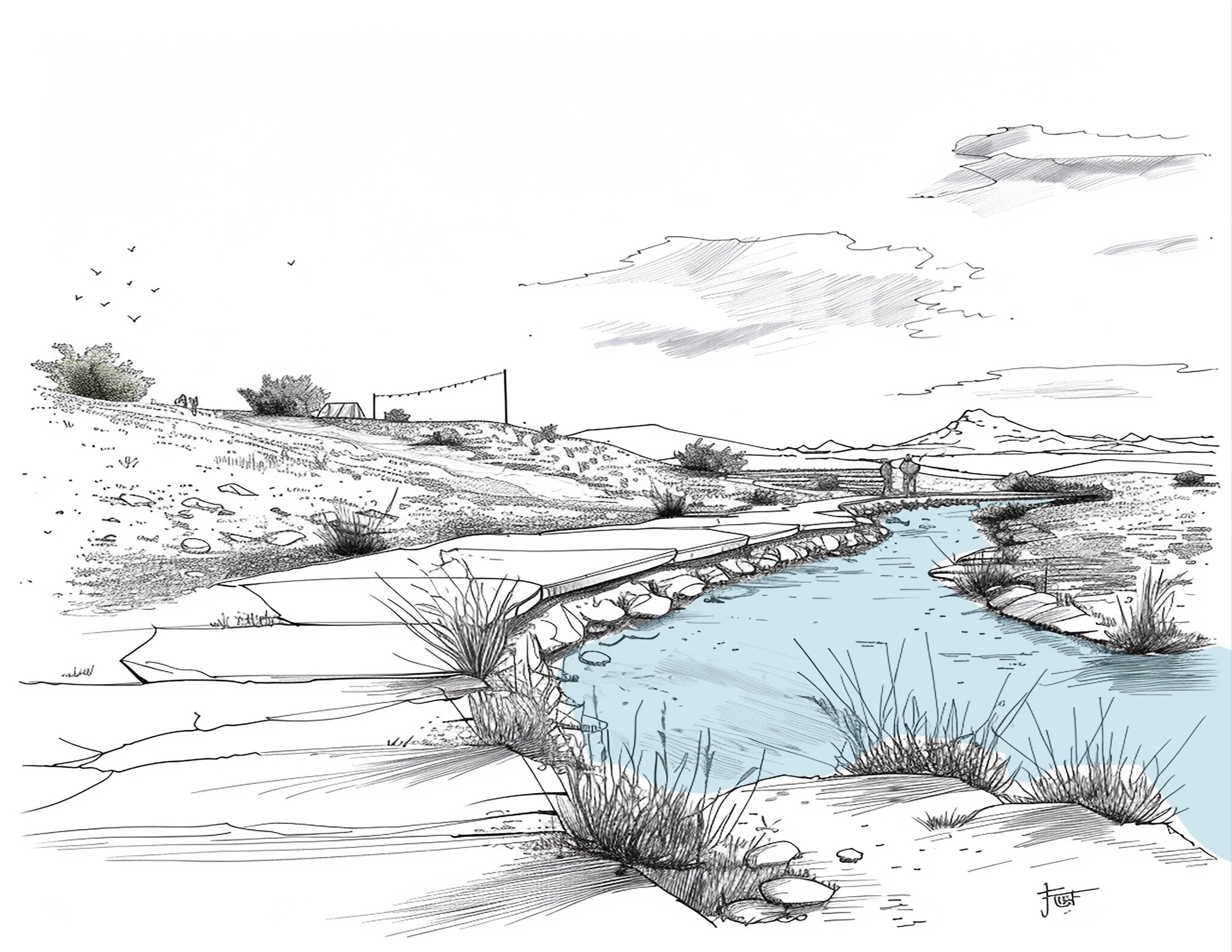
ZEN GARDEN - perspective that illustrates the scale of the structure. Traditional zen gardens take inspiration, in part, from the natural surroundings and try to capture the landscape in miniature form. This garden is no different, as it took inspiration from the Missoula floods that sculpted the landscape during the last ice age, leaving behind massive ripples in the land and depositing erratic boulders along it’s path.
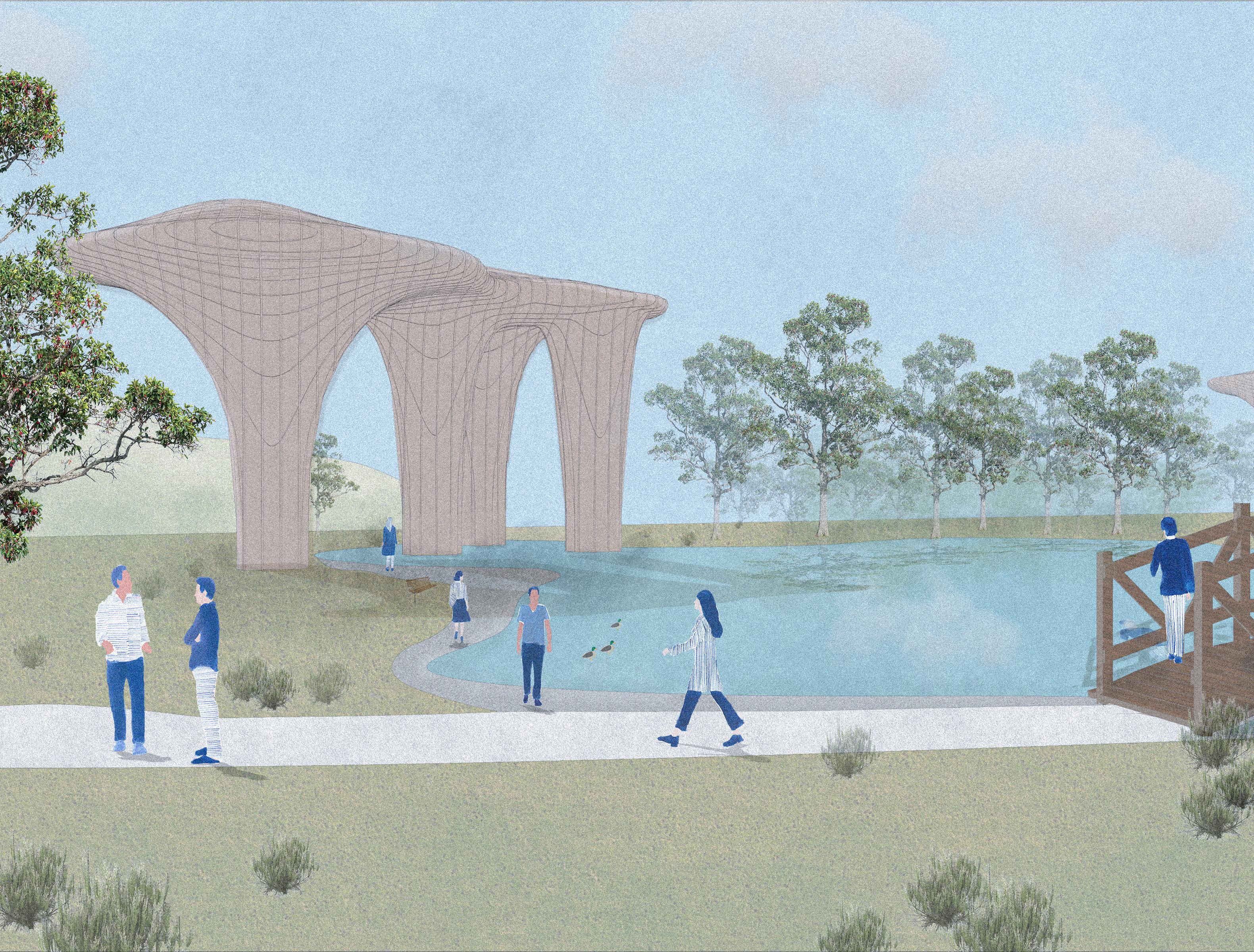
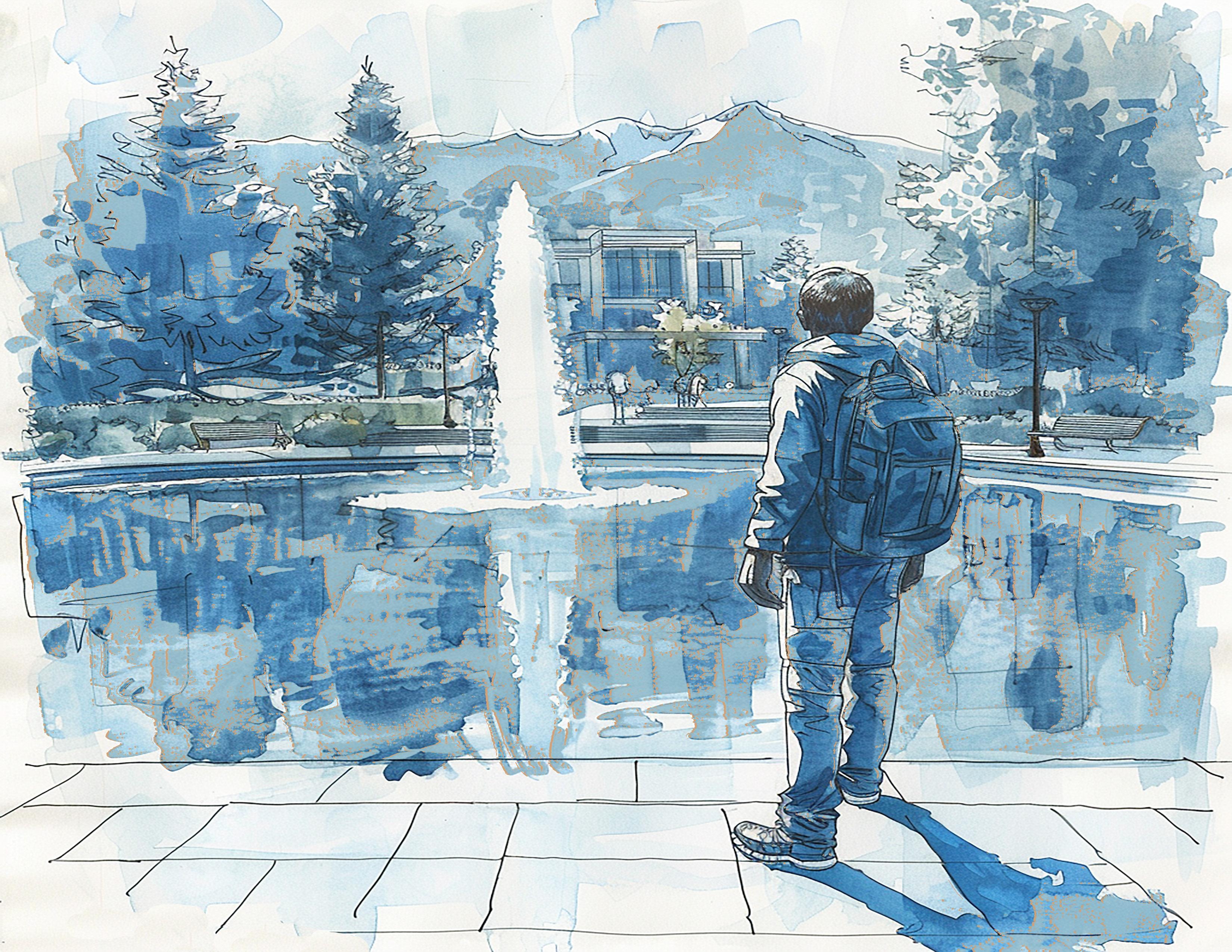
MIRROR POND - perspective that illustrates its tranquil surface reflecting the surrounding landscape. The stillness invites visitors to pause and reflect on the presence and impact of nuclear technology.
As I conclude this narrative on my capstone project, I find myself proud of all the learning and work that went into this journey. From the development of the overall, driving concept of Atomic Reflections that started as one thing and evolved into something much more, to putting the last finishing touches on my drawing set, this project has tested and broadened my design capabilities throughout. I am especially fulfilled with the overall project goal of trying to create a space in the high desert, next to a nuclear production facility, that is highly influenced by the legacy of Japanese-style contemplative gardens that emerged in the aftermath of World War II, marking a convergence of history, culture, and environmental consciousness.
Reflecting on the journey, I am filled with a sense of pride in the knowledge I have acquired about the Hanford site and the design strategies I have navigated through while dealing with the complexities of such a demanding environment. The process of crafting a landscape that seamlessly integrates cultural resonance, ecological sensitivity, and aesthetic allure has been both challenging and enriching.
Designing for the harsh, high desert landscape posed significant challenges, especially in the context of enticing visitors to explore a retired nuclear production plant. However, despite these obstacles, I believe the project was ultimately a success.
By providing a safe and inviting space for visitors to spend time, learn about, and truly appreciate the unique history and landscape of the Hanford Reach, the project fulfills its primary objectives. The integration of amenities and facilities ensures that guests can comfortably immerse themselves in the experience.
Also, by drawing inspiration from historically contemplative elements found in Japanese Gardens and memorials, the project succeeds in its goal to evoke contemplation on the effects of human ingenuity. Through the creation of specific design elements, the project creates an atmosphere conducive to reflection and introspection, encouraging visitors to ponder the complex relationship between human innovation and the natural world.
In conclusion, while designing for the harsh desert landscape and the context of a retired nuclear production plant presented formidable challenges, the project’s success in providing a safe and contemplative space for visitors to engage with the history and landscape of the Hanford Reach demonstrates its effectiveness and value.
Bretz, J. H. (1969). The Lake Missoula floods and the channeled scabland. The Journal of Geology, 77(5), 505-543.
Craig, R. G. (2020). Dynamics of a Missoula flood. In Catastrophic flooding (pp. 305-332). Routledge.
Eberhard, J. P. (2009). Brain landscape the coexistence of neuroscience and architecture /. Oxford University Press,. https://doi.org/10.1093/acprof:oso/9780195331721.001.0001
Freer, B. (1994). Atomic pioneers and environmental legacy at the Hanford Site. Canadian Review of Sociology/Revue canadienne de sociologie, 31(3), 305-324.
Gerber, M. S. (2007). On the home front: The cold war legacy of the Hanford nuclear site. U of Nebraska Press.
Goto, S. (2003). The Japanese Garden. New York: Peter Lang Publishing.
Gray, R. H., & Becker, C. D. (1993). Environmental cleanup: the challenge at the Hanford Site, Washington, USA. Environmental Management, 17, 461-475.
Jacobs, D. (2017). Hanford Nuclear Site: Remediating to a Standard Safe for All or Some?. Seattle J. Envtl. L., 7, 106.
Krinke, R. (Ed.). (2005). Contemporary landscapes of contemplation. Routledge.
Olszewska, A. A., Marques, P. F., Ryan, R. L., & Barbosa, F. (2018). What makes a landscape contemplative? Environment and Planning B: Urban Analytics and City Science, 45(1), 7-25. https://doi.org/10.1177/0265813516660716
ResearchGate. https://www.researchgate.net/figure/Vegetation-Cover-Types-Found-onthe-Hanford-Site-before-the-2000-Command-Fire-Because_fig3_242703402
Steele, K. D. (1989). Hanford: America’s nuclear graveyard. Bulletin of the Atomic Scientists, 45(8), 14-23.
Weiss, A. S. (2010). The limits of metaphor: ideology and representation in the Zen garden. Social Analysis, 54(2), 116-129.