Exploring Restorative and Transformative Justice Skills for Abolition

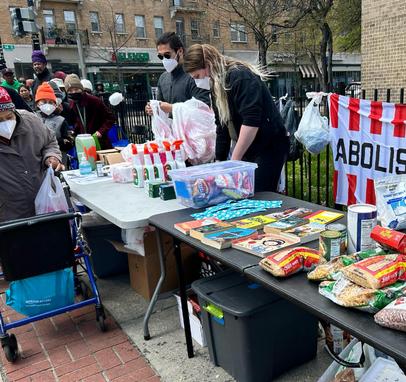
Good Trouble Co-op's mission is to build community power in Columbia Heights / Ward One in Washington D.C through mutual aid and community organizing. We aim to protect housing rights, resist and reverse gentrification, and keep each other safe without resorting to police or the state. Our mission comes out of the demand for racial and social justice and the ongoing need to develop alternatives to the systems put in place that harm our communities.
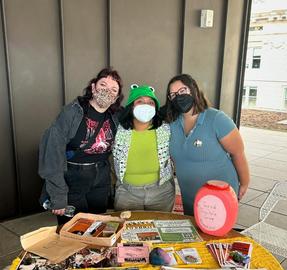
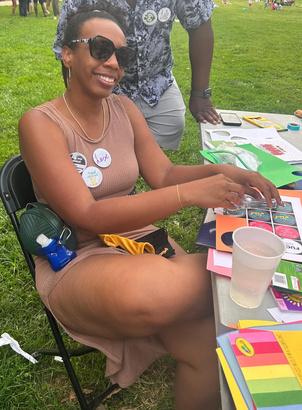
Abolition: Abolition is a political vision with the goal of eliminating imprisonment, policing, and surveillance and creating lasting alternatives to punishment and imprisonment.
Abuse: A pattern of harmful and/or coercive behaviors used to maintain power and control.
Carceral: Of, relating to, or suggesting a jail or prison.
Harm: Any misuse of a position of power, authority or trust leading to physical, psychological, emotional, economic or spiritual distress.
Harm Reduction: Policies, programmes and practices that aim to minimise the negative health, social and legal impacts associated with drug use and other public health crises.
Mutual Aid: An organizational model where voluntary, collaborative exchanges of resources and services for common benefit take place amongst community members to overcome social, economic, and political barriers to meeting common needs.
Restorative Justice: An approach to justice that aims to repair the harm done to victims.
Transformative Justice: A spectrum of social, economic, legal, and political practices and philosophies that aim to focus on the structures and underlying conditions that perpetuate harm and injustice.
** Trigger warnings for brief mentions of sexual assault, abuse, and state violence**


Love offered me more agency than resistance or trauma could, and my growing desire to learn and take risks with others became a source of inspiration for my freedom.

-Derecka Purnell, “Becoming Abolitionists”
A model of justice that seeks to repair harm by allowing those impacted by the injustice to discuss & decide what should be done.
Focused on healing, not punishment or retribution.
Asks: What was the harm to community? How can a person who created harm give back?
Examples: Mediation, classes, community service, resources to person(s) harmed.
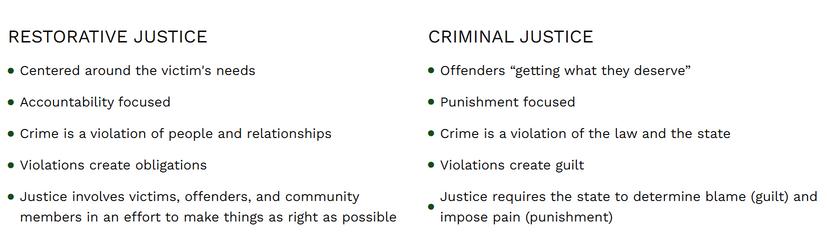
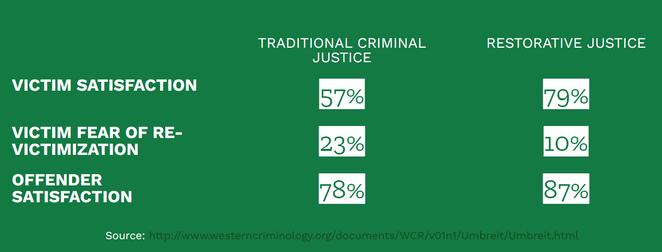
Taking the ideas of restorative justice a step further, tackling the root causes of harm and injustice to prevent future harm and to create a more equitable society by challenging systems of oppression
Transformative justice is abolition in practice:
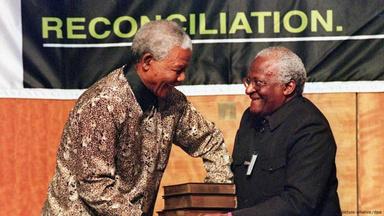
South African Truth and Reconcilliation Commission
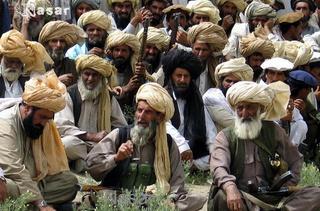
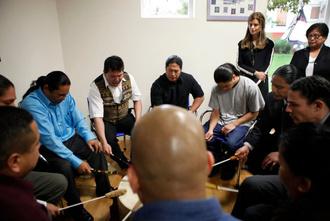
Indigenous American Healing Circles Pashtun Jirgas in Pakistan and Afghanistan
Did you know? One of the biggest protective factors against violence and PTSD is a strong healthy community.
Transitioning from dependency on the state to interdependency on each other via restorative and transformative justice means practicing the skills needed to sustain relationships with each other at a community level.

This includes strong self-understanding, healthy interpersonal communication skills, and conflict resolution skills, as well being able to practice community accountability and name behaviors that create and escalate harm or abuse either by members of the community or the state.

Regardless of our personal identities, previous victimhood or involvement in advocacy, we are all capable of harm and conditioned by systems of white supremacy and colonization to different extents that we must unlearn.

Self-honesty
Know your strengths and weaknesses, your boundaries and limits, how you react in times of perceived danger (ex: Fight, flight, freeze, and fawn) and develop a plan to respond accordingly.
Self-Compassion
Shame and guilt do not motivate long term, sustainable action like love.
Nervous System Regulation
Feed your Mind, Body, and Soul.

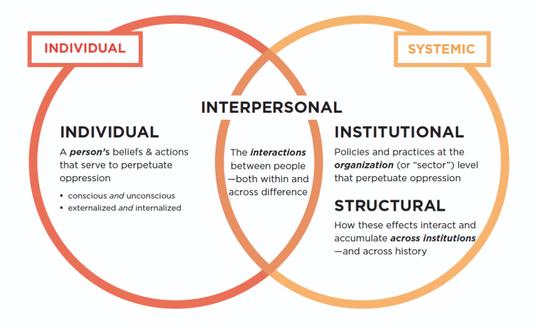
Our interpersonal interactions exist at the intersection of individual and systemic impact, making them ripe for both conflict and transformation. However, not every conversation is worth engaging in. Use the below model and later tactics to explore whether an argument is being made in ‘Good Faith’, and reference the following conflict resolution models to explore which approach works best for you. L
V
A n t a g o n i s m ( Y o u v s . M e t h i n k i n g ) C u r i
Community accountability must be a survivor centric/-led process.
We cannot treat people in our movements as disposable or remain carceral in our response if we seek to create new systems.
Repairing group connection and safety is the ultimate goal of conflict.
We can and should develop protocols for conflict transformation around harm and abuse to prepare for when it occurs.
By Adrienne Marie Brown
Listen with a ‘Why’ Framework.
Ask yourself/selves: what can I /we learn from this?
How can my real time actions contribute to transforming this situation (vs making it worse)?
By Ejeris Dixon and Leah Lakshmi Piepzna-Samarasinha
(1) Protect community members when the potential for harm from specific people exists
(2) Hold open a door to a transformative healing process, including people on both sides of the harm.
byMarshallBRosenberg
This model of communication developed at the grassroots level has been demonstrated to lower defensiveness and increase empathy to encourage productive, respectful communication with trusted individuals in private.
Observe: Share what you ' ve noticed without judgment
Feel: Express your feelings
Connect: Link your feelings to your needs
Example needs: sustenance, safety, love, understanding/empathy, creativity, recreation, sense of belonging, autonomy and meaning.
Request: Ask others for what you need
I noticed you haven’t been wearing a mask when we hang out I feel anxious when my safety and well-being is compromised as someone immunocompromised. Could you please wear a mask when we hang out next time?
Thanks for sharing, I’m glad you told me this. Sure, I’ll put on a mask now.
“Because we all live in a white supremacy culture, these characteristics show up in the attitudes and behaviors of all of us –people of color and white people. Therefore, these attitudes and behaviors can show up in any group or organization, whether it is white-led or predominantly white or people of color-led or predominantly people of color.”
- Tema Okun

Fear Perfectionism(‘Oneright wayonly ’andpaternalism)
Either/Or and Binary Thinking
Right to Comfort, Fear o fOpen Conflict, and Power Hoarding
QualificationBarriers (i.edisregardinglived experienceasknowledge)
Progress is Bigger/More and Quantity over Quality
Ex:Recentlawscriminalizingand/orseverely restrictingaccesstoreproductiveandgender affirminghealthcare.
Ex:Trumppassingdozensofexecutiveorderson hisfirstdayinofficeinanattempttooverwhelm thepeoplesotheycannotmobilizeandresist.
DARVO- A manipulation technique that stands for ‘Deny and Reverse Victim and Offender’
Observe context, power dynamics, and patterns of behavior
Ex: How Israel used Hamas as a scapegoat for the destruction of Gaza following October 7th when Palestine has been occupied for decades
Ex: Mass incarceration systemically denies the human need for socialization and freedom of movement, isolating and punishing those most vulnerable in society to create profit.
Ex: The Central Park Five were a group of young Black kids falsely imprisoned for sexually assaulting a white woman Police intimidated, lied to, and coerced the children into making false confessions DNA evidence and a confession exonerated them in 2002, after a decade in prison
Ex:AfterTrump’sinauguration,Googleremovedits namefromthepledgetonotuseAIforstate surveillance,anincreasingtrendwhichpredominately targetsBlackandBrownpeopleduetoracialbiases.
Ex:Smearcampaigns(i.epropaganda), police intimidation,stalking,sleepdeprivationtactics againstorganizersandprotestors
Ex: AIDS Crisis, poverty and racism, endemic homelessness
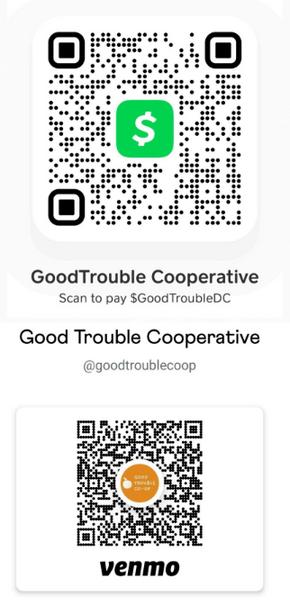
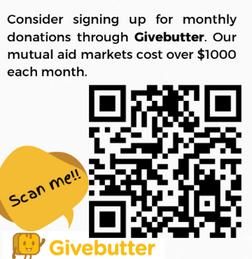
Liked this zine? Want to support our mutual aid work? Scan the QR codes below to donate to our Givebutter, Venmo, or CashApp!

Be here.
Be all over the place.
Be messy.
Be wrong.
Be bold in your hopefulness.
Be confused in community.
Be reaching past isolation.
Be part of the problem.
Be hungry for after.
Be helpful in the midst.
Be so early in the process.
Be broken by belief.
Be bolstered by brave comrades.
Be unbelievably unready.
Be alive. -Alexis Pauline Gumbs, “Beyond Surviva