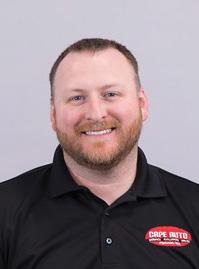
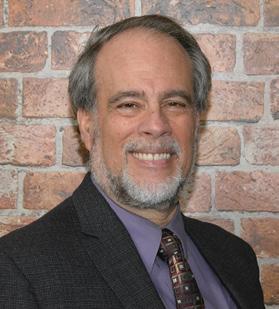
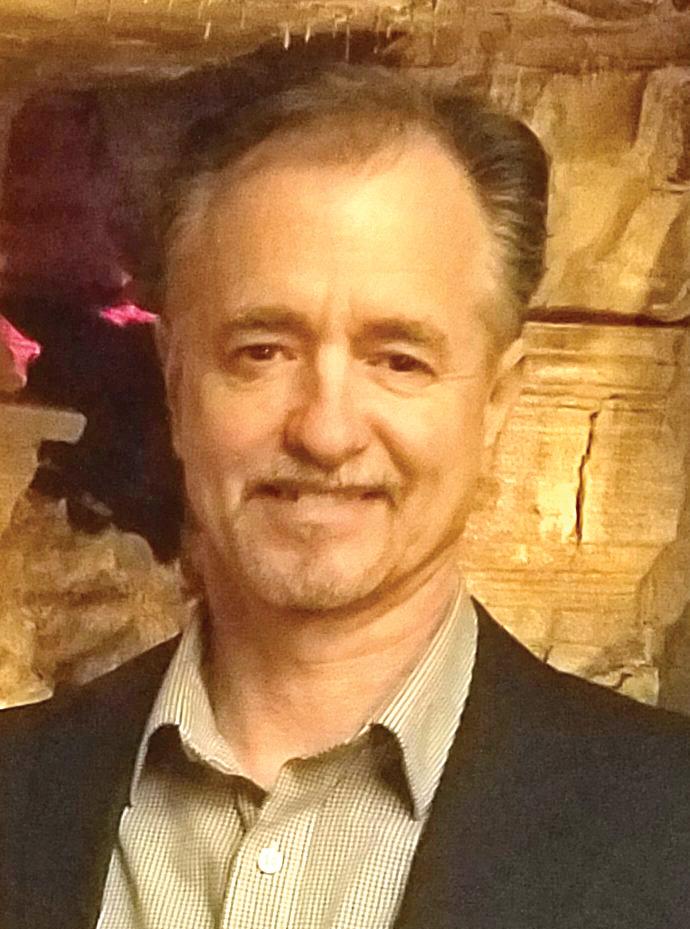
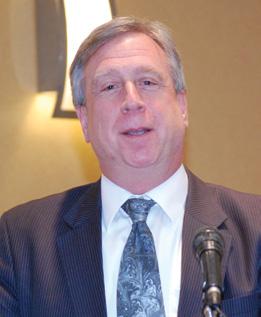
My family has been in the auto body business here in Massachusetts for four generations, so it’s safe to say my entire life has been spent in this industry. As a young man, I grew up watching my dad, Dave, serve on the Board for the Massachusetts Auto Body Association (MABA), and I attended many meetings and events in those days. I stayed active in association life when MABA and the Central Massachusetts Auto Body Rebuilders Association (CMARA) merged with AASP/MA more than a decade ago, and I’ve remained involved enough over the years to eventually have the honor of serving as your president. I’ve met and become friends with numerous collision repairers over the years, and I’m always blown away by their professionalism and commitment to their customers.
But here’s something else I’ve come to know about people in this industry: We sure love to complain a lot.
PUBLISHER
Thomas Greco | thomas@grecopublishing.com
SALES DIRECTOR
Alicia Figurelli | alicia@grecopublishing.com
EDITORIAL DIRECTOR
Joel Gausten | joel@grecopublishing.com
EDITORIAL/CREATIVE COORDINATOR
Alana Bonillo alana@grecopublishing.com
OFFICE MANAGER
Donna Greco | donna@grecopublishing.com
PRODUCTION COORDINATOR
Joe Greco | joe@grecopublishing.com
PUBLISHED
(973) 667-6922
(973)
Stop Your Crying
Want
Look, I’m in the same business you are, and I know how frustrating it can get. It always feels like there isn’t enough time in the day – especially with all the added work and stress surrounding COVID-19. But there are people out there who only whine about their problems and don’t do
anything about them. Frankly, I’m sick of hearing it.
AASP/MA is dedicated to helping every single person who pays membership dues, but we can’t do it alone. With the two bills we currently have in the AASP/MA
AASP/MA
EVANGELOS
“LUCKY”
PAPAGEORG
Political Equity: Talk versus $$$$
In late February, AASP/MA reactivated its political/ lobbying machine after a very successful and well-attended virtual General Membership Meeting that focused on our legislative initiatives and plans for the current session. We discussed our two very important consumer protection bills that were filed for consideration during the 192nd General Court of the Commonwealth of Massachusetts. At present, over 5,000 bills have been filed in this session, which will last through the end of 2022. Our work has only just begun, but we are off to a great start based on the number of senators and representatives who have already signed on to sponsor our bills. This success did not happen by accident.
In January 2021, AASP/MA hired a full-time lobbyist, Guy Glodis, who has been involved in Massachusetts politics for nearly two decades. During that time period, Guy has served as Worcester County Sheriff from 2005 to 2011. Prior to that, he served in the Massachusetts Senate and the Massachusetts House of Representatives. Guy is very familiar with the automotive industry and the issues that it faces. He also serves as the lobbyist for the Statewide Towing Association (STA), which has been very successful in their legislative efforts.
The first bill was filed by Representative Tackey Chan (D-Quincy), who is the co-chair of the Joint Committee on Consumer Protection and Professional Licensure. This bill, “An Act Relative to the Licensure of Appraisers,” seeks to move the Auto Damage Appraiser Licensing Board (ADALB) from the Division of Insurance (DOI) to the Division of Professional Licensure (DPL). This is in compliance with the Governor’s order #567 issued in March 2016 “to ensure proper review of the regulation of professional licensing by independent boards.” As part of this bill, the composition of the ADALB will then be increased by two individuals – one from the AG’s office of Consumer Affairs and one from a consumer advocacy group – representing the concerns of the consumers. Massachusetts motorists will finally have a voice on the Board, which was created to protect them through licensing and regulating of auto damage appraisers. (NOTE: This bill is identical to Senate Bill 182, which was filed in 2019 and released with a favorable recommendation before stalling in the Senate Ways and Means Committee due to the COVID-19 shutdown.)
Our second bill, “An Act to Establish Minimum Reimbursement Rate to Insurance Claimants,” was filed by Representative Jim Hawkins (D-Attleboro). It seeks to ensure that policyholders are reimbursed fairly and properly for the needed repairs due to a claim under their auto insurance policy. The current auto insurance policy in Massachusetts is meant to cover all costs associated with the safe and proper repair of damaged vehicles and required to restore them to their pre-loss
condition. The procedures and rates by which the insured are reimbursed are based on artificially suppressed rates and repair techniques dating back to the late ’80s and early ’90s. Current reimbursement rates have not kept pace with the constantly changing technology, training and equipment required to guarantee the safety of the motoring public. Neither those involved in an accident nor those who share the roads with them, subsequent to a repair having been performed, are currently being protected.
It is important to remember that legislators are elected by their constituents. As such, they want to hear from us and understand our concerns. Legislators also want to please their constituents. This equates to the votes they need to get re-elected to keep their respective seats in the House or Senate. It is also especially important to remember that you personally may have two representatives and two senators who represent you. This is based on not only where your business is located, but also on where you live. In many instances, they are different legislative districts. The same can be said for any one of your employees. If you are unsure who your specific legislators are, go to malegislature.gov/Search/FindMyLegislator and simply type in your business or residential address. Pictures of your local senator and representative will appear; click on either of them for their contact information. There is no excuse for not knowing who to contact.
Armed with the simple tools and talking points on each of the bills, all those who attended the February meeting began calling their legislators the following morning. The results were AMAZING! Please read this month’s cover story to see just how much we were able to achieve in such a short period of time.
Through the concerted efforts of our AASP/MA members and their employees, we have made huge strides in the support of these bills, and that support has continued to grow. Again, these results were amazing in just three short days. The efforts put forth have helped to build the foundation for our activities going forward.
Our work is far from over! With your combined and ongoing assistance, we will continue to bring the message of how important these two bills are for the safety and wellbeing of the insurance claimants in Massachusetts. We will provide you with regular updates regarding our progress, and we WILL call on you again to do your part. I cannot express how impressed I was that so many took up the challenge and made call after call. Those shops and individuals filled out call log sheets documenting their conversations. I have received hundreds of copies of the call log sheets as proof.
Just as important as the first or second call were the ones that continued on pg. 45
AASP/MA Members Share Major Body/Mechanical Rate Disparities
In March 2020, recent AASP/MA member and long-running mechanical service facility owner Dan Stroscio (DSC Auto; Westborough) expanded his services by opening a second location, DSC Auto Body, Inc. in Acton. In addition to unknowingly launching a new collision repair business at the start of the most challenging time in industry history due to COVID-19, Stroscio soon became acutely aware of the massive disparity between auto body and mechanical rates paid in Massachusetts.
As of this writing, DSC Auto’s minimum hourly mechanical rate is more than three times the amount insurers reimburse consumers at DSC Auto Body. Because his mechanical rates are based on customer pay without insurer influence, Stroscio is free to determine what to charge based on his professional expertise and preferred methodologies. Currently, he utilizes Shop Boss Pro automotive shop management software to achieve this objective.
“With our mechanical service, we charge based on the degree of difficulty with the work, so the rate is on a matrix.”
Unfortunately, economic freedom of this nature does not exist at DSC Auto Body. Although the shop has determined a posted hourly reimbursement rate based on what it needs to remain profitable, it has only received roughly 60 percent of that amount from any one carrier in the state.
no insurance company has reimbursed a consumer our posted rate. How do we keep purchasing and updating our equipment when we can just barely survive?”
A former shop owner, Magnant is well versed in the long-term negative effects of the state’s historically frozen reimbursement rate.
“Years ago, I asked why shops were not receiving reimbursement from insurers based on the rate of inflation. Nobody could ever give me an answer other than the insurance companies stating that the rates they paid were sufficient. I’ve always disagreed with that.”
“Realistically, our posted body reimbursement rate is based on a cash estimate to make the shop profitable and be able to put money away to purchase equipment and pay what we need to provide for our employees,” explains DSC Auto Body Shop Manager Fred Magnant. “Unfortunately, we have not been able to get there; so far,
DSC applauds AASP/MA’s efforts to address shops’ struggles with insurers through the two pieces of legislation it is currently pushing at the State House. (Read this month’s cover story for more information.)
“I think AASP/MA’s bills are fantastic and could realistically work,” Magnant says. “The whole industry could change for every body shop and consumer in this state. That would help with so many problems we’ve had over the years. This is the way we really need to go in order to stay in business for the future and stay current with changes in technology and equipment.”
As AASP/MA continues its push to assist Magnant and other repair professionals, he urges association members to roll up their sleeves and help. He also encourages non-members to join.
“If they’re unhappy and complain about everything, then they need to get involved with the association so that they really hear what is actually happening outside their small world in their body shop. We need to all pull together to make this business stable for the long run.”
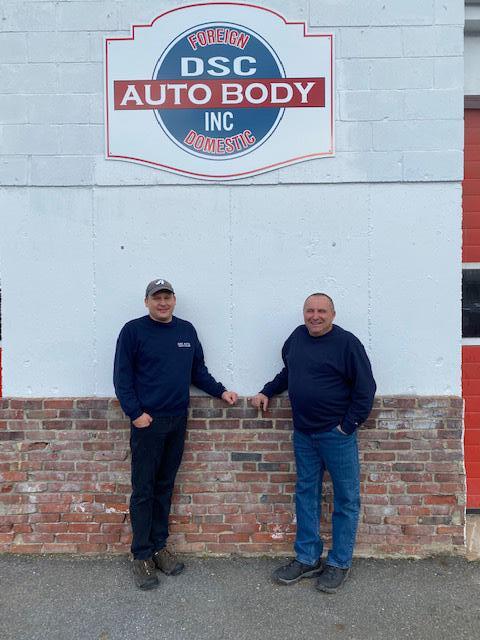
Dan Stroscio (left) and Fred Magnant of DSC Auto Body, Inc.
Remembering Normand O. Lamoureux
On February 14, the Massachusetts collision repair industry said goodbye to one of its longest-running members with the passing of Normand O. Lamoureux at the age of 91.
A second-generation shop owner, he took over Oliver Auto Body in Springfield in the 1960s from his father, Lionel, who started the business in 1932. Together with his wife, Rose, he operated the shop and eventually grew Oliver Auto Body to six repair facilities and salvage yards. His son, Paul, took over the family business in 1996.
Lamoureux was deeply involved with his community, starting the Gold Badge in four area counties for the Chiefs of Police. He was an honorary member of the Western Massachusetts Chiefs of Police Association and assisted in countless areas with the Hampden County Sheriff’s Department with Sheriff Michael Ashe and Sheriff Nicholas Cocchi. He was a veteran of the Korean War, proudly serving our country with the US Army.
Lamoureux is survived by his son, Paul; daughters Gail Richards and Denise Burek; sisters Gloria and Norma; five grandchildren; six great-grandchildren; and numerous nieces and nephews.
AASP/MA and New England Automotive Report offer his family and friends our deepest condolences.
“We don’t pay for that.”
NABR Announces Major BillableGenie Upgrades
Body shops in Massachusetts and beyond hear that statement from insurers every single day, but there is a way for collision repair professionals to accurately prove these words wrong.
Developed by National AutoBody Research (NABR; nationalautobodyresearch.com), BillableGenie is a powerful program that features a searchable database of what repairers across the country report in regard to the procedures they are being paid for by insurers. The information is compiled through estimates and other documentation submitted by body shop end-users. As of early March, BillableGenie contained data for 8,191 paid estimates nationally, including 987 customer-pay repairs. Over 2,000 of these estimates were from Massachusetts alone.
In early February, NABR performed substantial upgrades to the BillableGenie system to enable increased search functionality efficiency. These advancements include the addition of parenthetical information (noted in parentheses) showing the number of records
the system has for specific insurers, states, cities, procedures, vehicle makes, Labor Rates and shop certifications.
“The updates were made to accelerate the use of our system to the benefit of the body shops and simplify the process,” NABR President Sam Valenzuela comments. “It’s a faster and more precise way for shops to get to the data they’re looking for.”
For example, if an end-user wants to find out if a particular insurer has been paying for COVID-19 clean-up in Massachusetts, BillableGenie’s improved search engine can track down and display the exact number of records per category in parentheses. From there, that user can view the average labor hours and material costs documented for this procedure. This data will help them determine their charges based on their individual in-house costs to perform the service and procedure at their posted Labor Rates. Information of this nature can also be used to demonstrate that an insurer does in fact have a documented history of paying for certain procedures and Labor Rates in various markets.
“Insurers can’t argue with this data, because it’s primarily what they themselves approved and paid for,” NABR CEO Richard Valenzuela says.
The number of end-user estimates and other documents received by BillableGenie directly impacts the strength and reach of the data collected. Richard notes that Massachusetts shops currently lead the nation in terms of participation.
“For any one state as a whole, Massachusetts shops have shown the greatest enthusiasm and participation in BillableGenie – and this shows up in many individual shop’s results, with significant gains in posted Labor Rates and billed hours. Overall, Massachusetts has really been a model on how to use our BillableGenie system to make an impact.”
As for the future, NABR is exploring ways (via resources including P-Pages and the Society of Collision Repair Specialists’ Guide to Complete Repair Planning) to better streamline and represent procedural descriptions that are submitted to the system under various names.
“Insurance adjusters and body shops write procedures quite differently around the country with different vocabulary words,” Sam observes. “Our procedure list captures all of those. There may be 20 different ways to say ‘pre-repair scan.’ Without the parenthetical numbers now featured as a result of our upgrade, it was more difficult for a shop to see which term would give them the most data. So, we decided to add the counts to enable someone to pinpoint what they’re looking for much faster than before.”
Richard recommends that end-users go with the procedure name that yields the highest parenthetical number, as regular use of this terminology will help the industry at-large determine the best wording to use on estimates and better ensure more consistent and realistic payments.
“If one option is better because of the higher parenthetical number included, then body shops can more easily determine which description is being paid most frequently.”
For more information on NABR’s BillableGenie, please visit billablegenie.com.
Consulting, Sales and Beyond: Board Member Phil Morin on His Industry Life
Phil Morin sure knows a thing or two about how to repair cars and successfully run a body shop business. He’s built an entire career around helping body shops get into a solid financial position and make the most of their production time.
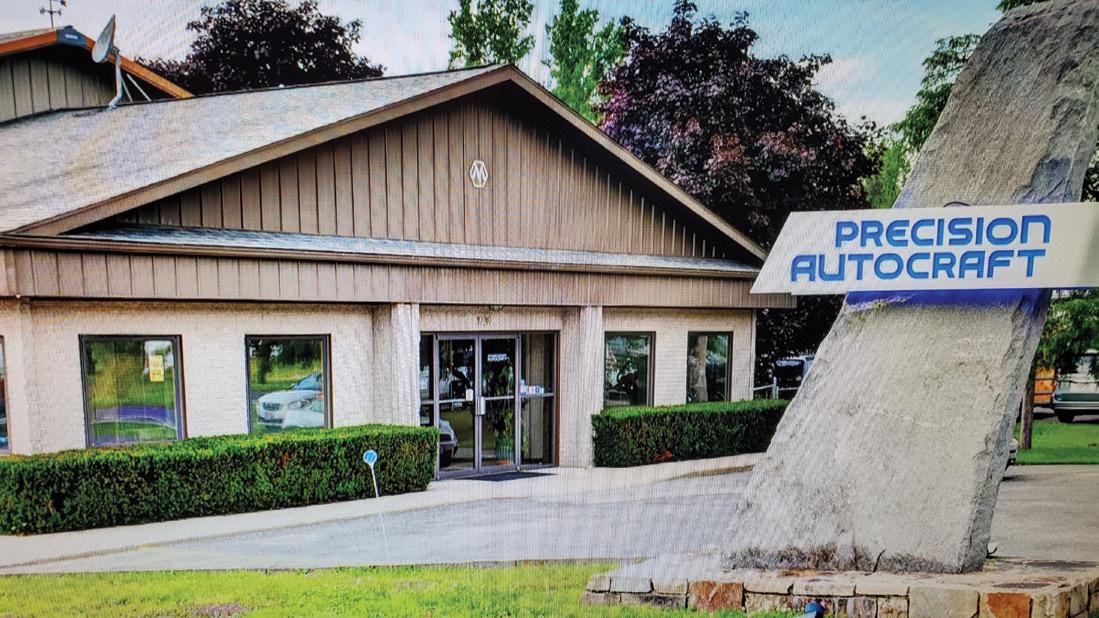
For the past few years, he has been serving as a consultant to Precision Autocraft in Sheffield, where he has become part of the operation as well as part of the family. The long-running business, owned and operated by Kathy Andrus and her son, Max, has been a staple in its community for 40 years and counting.
Morin works mostly with high-end shops, analyzing and predicting shortfalls and focusing on taking them to the next financial level.
“It’s not the type of consulting where you go in, spend a few days or a week at a shop and give it a report that says, ‘Here is where you need to make improvements; here is where you are doing well,’” he explains. “Often, the shop winds up not doing anything when you leave. Most of the body shop owners I’ve known over the 30-plus years I’ve been in this industry kind of already know how to figure out what isn’t right by looking at profit loss and balance sheets. The problem is that they don’t have the time, and it never gets done. So, basically, you can say I hold their hand, but I really kick them in the butt and say, ‘This is what you said you wanted to do; this is what we are going to do, and this is how we are going to do it.’ Sometimes, I spend five days in their facility; sometimes, it’s more. I do whatever it takes to get the goals reached.”
As an example of Morin’s consulting work, the influx of ADASequipped vehicles has led him to work with the Precision team in finding ways to bring calibrating and scanning in-house.
Morin’s introduction to the body shop world started by sweeping floors at a shop while in high school. He later moved on to priming and painting. In college, he studied business management and later became a sales rep for Sherwin-Williams.
Soon, company management recognized that Morin’s sales position had taken on more of a consulting role, as the job focused on showing customers how to use Sherwin-Williams products.
“I was much more valuable to my clients as a consultant rather than trying to dictate what they needed to do. It was a natural gravitation to what I do now.”
After Sherwin-Williams, he went to work at Rick’s Auto Body in Springfield, where he served as general manager for a number of years. He also worked in a consultant role at Acme Auto Body in Northampton before joining the Precision Autocraft team.
“I treat [the shop] as my own when I give them advice. Many times, I’m treated like an owner. It’s about helping people and moving this industry forward instead of backward. This keeps me going; I like challenges.”
Recently, Andrew Potter (North Amherst Motors), a colleague and member of the AASP/MA Board of Directors, suggested that Morin’s background and industry knowledge would be a benefit to the association and suggested he run for an open position on the Board. As a newly elected director, he is working with the Board to push its legislative agenda forward and feels positive about the efforts AASP/MA is making on behalf of consumers and the repair industry.
“My primary reason to get on the Board is to see what I can do to help out. Now that I’ve been serving and have already attended some meetings, I really see this as a potential turning point for our industry if momentum continues. I hope to do the best I can.”
Industry veteran Phil Morin now brings his experience and expertise to the AASP/MA Board of Directors.
Morin currently serves Precision Autocraft in Sheffield as a consultant.
LABOR RATE: Facts, Fiction and the Future - Part SIX (
Editor’s note: For this final installment in our series on the Labor Rate, we welcome economist Fred Jennings, Jr. for his fourth in a series of articles that feature his research and perspectives on the issue. We thank Fred for his contributions and welcome reader feedback on any of the topics he presents.
This is the last of my series of four articles that take an in-depth view into the Labor Rate issue. The first installment described the current situation and discussed the 1963 Consent Decree and litigation involving the collision repair industry. The second piece examined what the actual level of Labor Rates would be in a market not controlled by auto insurers, using widely accepted methods of economic evaluation to show why they would exceed the level of auto mechanical Labor Rates. The third part addressed two opposite arguments: The auto insurers’ “efficiency argument” versus the collision repair industry’s “market power interpretation” of auto insurers’ control over their market, with a discussion of “monopsony power” and how the widely disparate rates of inflation of motor vehicle insurance premiums and collision repair costs support a “market power” interpretation of this situation.
This last part will test these two views, based on a statistical analysis of national Labor Rate patterns. The analysis will be introduced and explained, its method described and the research findings reported and interpreted. So as not to keep you all in suspense, I will state my conclusions up front.
The results of my statistical analysis strongly suggest that the geographical pattern of Labor Rates being paid on collision repair claims by auto insurers does not conform or align with the pattern of costs (as reflected in the wages paid for auto collision or mechanical repair services) across US counties, based on variations in their population and shop densities. Though wage
costs consistently rise with these two density measures, Labor Rates do not – and, in some cases, they actually decline. The findings so derived strongly support a market power interpretation of this pattern over auto insurers’ false efficiency claims.
Introduction
I first became aware of auto insurers’ control over the collision repair industry when I was retained to help with a Virginia auto glass case in 1993. The pattern was similar to one I had seen in the healthcare industry. By 1994, I had extended my understanding enough to suggest a “Silver Bullet Test” of the “efficiency versus market power” arguments if sufficient Labor Rate data were available for such a test. Thanks to Lucky Papageorg and AASP/ MA’s recent association with National AutoBody Research (NABR), I learned last year that these data might be available, 26 years after describing this test.
NABR was collecting claims data from independent collision repair shops across the country, so – encouraged by Lucky – I contacted the company. In early December, I was sent a database of 7,068 auto insurance claims from a diverse array of collision repair shops across 39 states, covering approximately 165 US counties. The statistical analysis that I then conducted compared the body Labor Rate paid in these claims with two different county-based measures of regional density – population and shops – both per square mile. County data were used because US Census data on wage costs are also available on that basis.
The Basic Question
The question addressed was this: Does the geographical pattern of Labor Rates consist more closely with an “efficiency argument” or with a “market power interpretation”? For an efficiency argument
to prevail, Labor Rates should track wage costs. For a market power interpretation, Labor Rates should be less positively (or even negatively) related to population or shop density across different counties.
The key issue has to do with wage costs, which rise with population density (wages tend to be higher in urban than in rural areas), which means that Labor Rates – under an efficiency argument – should rise in accord with population or shop density to reflect these rising costs. A market power interpretation of these industry patterns, alternatively, would suggest that Labor Rates do not rise as much as costs do – or might even decline – with increasing (population and shop) density.
The reason is that, with more people and shops in a given county, there is more opportunity for auto insurers to play these shops off against each other in a monopsonistic, anticompetitive power game. Consequently, to the extent that market power abuse is occurring, Labor Rates should not respond to and thus reflect these rising costs as much or at all as population or shop density increases.
First, I looked at wage cost differentials across US counties. Then, I examined the relation of Labor Rates to costs across different counties for three different groups of claims. The first group was the entire data set, first with and then without the claims that were “customer paid” (and thus non-insurance related). The second group focused on those auto insurance companies for which I had enough claims and counties to perform a statistically significant test of these data. The third group was to look at the states for which I had enough claims and counties to analyze them independently. I will report the results for each of these three groups and then discuss the significance of these findings with respect to the “efficiency versus market power” arguments. But first, I should offer a caution about the use of statistical data.
A Brief Caution
The “significance” of a statistical analysis depends on the number of data points, so what you want is enough observations to show a clear and “significant” relationship. Furthermore, to call a test result “significant at the 99.9 percent level” means there is only a 0.001 (or one in a thousand) statistical chance that the conclusion is wrong based on the data used for that test. For 95 and 99 percent significance levels, those chances of error are five and one percent, respectively. So, these “significance levels” serve as a measure of certainty for the result. Furthermore, the larger the sample, the more likelihood that you will get a statistically significant result.
The Measure of Costs
I started with the “Average Weekly Wage”1 for three categories of services: NAICS2 #102 (All Services), NAICS #81111 (“Automotive Mechanical and Electrical Repair”) and NAICS #811121 (“Automotive Body and Interior Repair”) for all US counties.
Interestingly, average wages in both #102 (All Services) and #81111 (Auto mechanical repair) are strongly and positively correlated (significant at the 99.9 percent level) with both population and shop density across all US counties, while average wages in #811121 (Auto body repair) have only a slight positive
correlation with these two measures of density. This suggests that auto body repair wages do not track cost differentials as well as do Services in general (#102) or wages in auto mechanical repair (#81111). One might conclude from this finding that there is something abnormal going on in the collision repair industry that is keeping these wage costs from rising in accord with the wage costs for auto mechanical repair or for services in general.
This unexpected and abnormal result raised the question of whether I should use auto body repair wages as a cost benchmark for assessing Labor Rate patterns or whether auto mechanical repair wages were a more reliable benchmark for how Labor Rates should vary with population and shop density. I ended up using both to test for any difference between them; sometimes, that difference mattered, but most often it did not.
Group One: The Entire Sample of 7,068 Claims
Across the entire sample of 7,068 auto insurance claims, the Average Weekly Wage (AWW) in both auto collision and auto mechanical repair by county is related to population and shop density in a strongly positive way, confirming that labor costs do rise significantly with population and shop density across counties.
In contrast, Body Labor Rate Paid (BLRP) showed a weakly negative correlation with both density measures.3 Consequently, collision repair Labor Rates are not aligned with costs over the entire sample. This suggests strong support for a market power interpretation of these Labor Rate patterns over an efficiency argument, at well over a 99.9 percent significance level.
A directly negative correlation of body Labor Rates paid with wage costs (AWW) in both auto collision and mechanical repair (ignoring density measures) also reinforces a market power interpretation, as it further implies a lack of alignment between Labor Rates and wage costs.
Group Two: Individual Auto Insurance Companies
My first set of findings for auto insurance companies was for “All Majors” as a group of significant interstate auto insurers.4 Within this group of about 3,400 claims, body Labor Rates paid were negatively correlated with both shop and population density, while the correlation of auto body repair and auto mechanical repair wages with both density measures was strongly and significantly positive. So, once again, within this selected group of 3,400 claims, Labor Rates do not align with costs, so this finding strongly supports a market power interpretation over an efficiency argument at well over a 99.9 percent level of significance. This result is also reinforced by a direct negative correlation of Labor Rates with wages in both types of auto repair across counties.
I analyzed all individual auto insurers with more than 40 claims. Of the four insurers with 400 or more claims (Allstate, GEICO, Progressive and State Farm), Labor Rates were either strongly negatively or weakly positively correlated with both density measures (and differed from wage costs at mostly more than a 99.9 percent significance level). The direct correlation of Labor Rates with both wage cost measures, however, was negative only for continued on pg. 43
Alana Bonillo
adasThink is changing the way shops handle calibrations on ADAS-equipped vehicles for the better.
adasThink’s estimate intelligence software enables estimators to upload estimates to a system that automatically supplies them with the vehicle’s ADAS feature information, the calibrations that are needed and a link to the OEM service information and requirements for a proper repair.
The Canada-based company launched in November 2020 and is already expanding its customer base throughout North America, including a growing presence in Massachusetts. Nick Dominato, founder of adasThink, started building the foundation for the product in early 2020. Earlier this year, adasThink was acquired by asTech; as a result, it will now operate under the asTech umbrella.
“We are them and they are us,” states Dominato, who now serves as senior vice president of asTech. “What it means is that we will be able to leverage asTech’s knowledge, resources and huge technical reservoir of skill and experience to really improve adasThink and make us a better product.”
Dominato recognized the need for adasThink when he first encountered ADAS-equipped vehicles a few years ago while spending time in body shops as an asTech agent in Canada. As his interest in the technology heightened, he took it upon himself to learn more about ADAS and the calibrations it required.
“I’d ask the body shop managers how many times they calibrated vehicles, and they’d tell me it would be a few times a month. But just by looking at their shop floor, I could see at least three to five vehicles that required calibrations.
“I discovered that these systems needed to be calibrated a lot more often than what was actually happening,” he continues. “Shops were very busy, and repairers were under extreme time pressures. Estimators are often not as skilled as owners would like them to be, and it’s often a transitory industry; staff can be there one day and be gone in two months. It’s difficult with time pressure and labor force issues to train estimators well and have them stick around and have the time to write proper estimates. The body shops
needed something that is easy to use, accurate and puts the documentation they need right in their hands.”
Dominato says there is currently a 64 percent calibration-to-estimate ratio in this industry. This means that if 100 estimates were uploaded to the adasThink system, 64 would require calibration.
“It’s a huge number. Fifty percent of most of the makes we run through the system require at least one calibration on the average vehicle, which is model year 2017. We are not even talking about 2021 and 2022 models.”
Dominato advises repairers to take a close look at how many calibrations and ADAS-related repairs they are doing. If their numbers are not close to what adasThink reports, they may need to ask themselves why.
“There is a ton of ADAS-related work on cars, even on those that are four to five years old.”
To further strengthen its ties to the repair community, adasThink recently came on board with AASP/MA as a Gold-level participant of the association’s Vendor Affinity Program.
“We had some big support from the [Massachusetts] area initially, which was a big factor in wanting to support the association. Local body shop associations are the most important organizations for education at the local shop level. For your independent facilities and smaller body shops, associations like AASP/MA are invaluable. We wanted to show our support and appreciation to them.”
To check out adasThink for free, create an account at adasthink.com to try 10 estimates and obtain more information.
Nick Dominato of adasThink
Long
7 Sutton Rd
Webster, MA 01570
800-982-2298
Fax: 508-879-1212
tschube@longauto.com
E Howard St Quincy, MA 02169
Toll Free: 877-707-8475
wparts@baliseauto com
com
247 Boston Tur npike
Shrewsbury, MA 01545
508-756-8364
Fax: 508-752-3691
www patricksubaru com
jlavalley@patrickmotors.com
MAKING THE CALL:
The Importance of Legislative Outreach
Want to better protect your customers and improve this industry? All it takes is your phone.
With the 2021-2022 legislative session underway in Massachusetts, AASP/MA is already making considerable headway in improving the lives of consumers and repairers alike – but it can’t do it alone. If you’re frustrated over what is (or, more accurately, isn’t) happening with the Auto Damage Appraiser Licensing Board (ADALB) or tired of insurers constantly failing to properly reimburse your customers for the costs of a safe and proper repair, then it’s time for you to call the lawmakers in your area and urge them to support the association’s current legislation.
The first bill, “An Act Relative to the Licensure of Appraisers,” has been filed by Representative Tackey Chan of Quincy. As discussed at length in last month’s cover story, it aims to move the ADALB from the Division of Insurance to the Division of Professional Licensure. It also seeks to expand the size of the ADALB to include two consumer advocates, one appointed from the Attorney General’s Office and the other from a consumer advocacy group, and replace the current Board chairman, appointed by the Massachusetts Commissioner of Insurance, with one appointed by the Commissioner of the Division of Professional Licensure. Additionally, it will set term limits for all ADALB members.
During a special virtual AASP/MA General Membership and Legislative Review Meeting on February 23, AASP/MA Executive Director Evangelos “Lucky” Papageorg noted that passage of this legislation would elevate the protections provided to the Massachusetts motoring public.
“Even if the votes on a particular issue go down partisan lines –
the two insurance [representatives] vote one way and the two body [industry representatives] vote the other – the consumer, who that Board was put in place to protect, will now have a voice.”
Despite the ongoing logistical difficulties surrounding COVID-19, AASP/MA has remained active throughout the pandemic, regularly connecting with legislators to set the groundwork for its current push toward the finish line with this ADALB-centric bill.
“Through the whole COVID-19 timeframe, we have been meeting with senators, either in person at shops, via Zoom or teleconference, and talking about this bill,” Papageorg shared during the meeting. “The Senate side is very familiar with it. In some of those in-shop meetings or telephone calls, there were [House] representatives on the line as well.”
The second bill, “An Act to Establish Minimum Reimbursement Rate to Insurance Claimants,” has been filed by Representative Jim Hawkins of Attleboro. The legislation aims to set a minimum reimbursement rate for auto body labor paid by insurers to Massachusetts claimants. This would guarantee that the consumer has a choice and is not being limited to just the amount an insurer is willing to reimburse them for the repair of their vehicles.
The collision repair industry’s efforts in this current legislative session are being strengthened by AASP/MA’s new lobbyist, Guy Glodis. During his presentation to members at the February 23 gathering, he stressed that Massachusetts lawmakers are reactive –meaning that it was up to association members to get these pieces of legislation in front of the right people.
“They react to constituents, they react to media and they react to buzz. There are 6,000-7,000 bills filed every session. There is no continued on pg. 32
legislator out of 200 who is just going to happen to identify our two bills and be like, ‘Gee, these bills are great! They make sense’ […] It’s not going to happen that way; it never happens that way […] What I need to do – and what you need to do – is reach out to the people [with whom] you have a relationship in the Legislature and ask them to co-sponsor both of these bills.”
For more information on AASP/MA’s bills, please contact AASP/MA Executive Director Evangelos “Lucky” Papageorg at (617) 574-0741, ext. 2 or lucky@aaspma.org continued from pg. 30
Glodis’ words clearly had an impact. By the end of February, AASP/MA members were responsible for securing an additional 37 sponsors for “An Act Relative to the Licensure of Appraisers” (bringing the total to 46 when counting the two lead sponsors and seven co-sponsors already lined up prior to the February 23 meeting). Similar AASP/MA member outreach greatly benefited “An Act to Establish Minimum Reimbursement Rate to Insurance Claimants,” with 24 additional sponsors coming on board in only three days’ time. Only two sponsors (including the lead sponsors) had been in place prior to the association’s legislative contact campaign. These figures stand as proof that support, enthusiasm and action from the AASP/MA community truly makes a difference. Additionally, several AASP/MA members used the legislator contact campaign to call their representatives for the very first time, thus establishing the kind of relationships that are critical in moving bills along.
The past year has not been the smoothest ride for the industry
The collision repair industry's efforts in this current legislative session are being strengthened by AASP/MA's new lobbyist, Guy Glodis.
– or anyone else, for that matter – but AASP/MA’s unprecedented activity in the Legislature offers welcome good news and demonstrates that progress is still possible. Glodis is one of many who are inspired by what a unified and proactive AASP/MA has already accomplished in 2021.
As he told the AASP/MA meeting attendees, “In a lot of coalitions and associations that I represent, I tend to find one or two people who tend to be active. But AASP/MA has a really active Board, and they’re very committed to change and reform within the industry.”
Is Your Referral Shop Contract Legal?
Every collision repair shop must make its own decision as to whether to become a referral shop for an insurer. Many shops in Massachusetts opt not to, but others do choose to participate in insurer referral programs.
In our state, there are actually two separate types of referral shops. The majority fall into the general category envisioned by governing regulations. Under those regulations, an insurer must accept a shop for its referral list if the shop meets certain relatively minimal criteria. A smaller number of shops participate in specialized insurer referral programs in which the insurers limit the number of eligible shops and generally take greater liberties in encouraging their insureds to use those facilities.
For either type of referral repair shop, there is one criterion that is universal: In order to participate in an insurer’s referral program, the shop must sign that insurer’s referral shop contract. If you want to be on an insurer’s regular referral shop list, then the governing regulations require that you enter into an agreement with that insurer. If you want to participate in an insurer’s specialized referral program, and if the insurer wants you, then the insurer will require that you sign its contract applicable to that program.
A requirement of all insurer referral contracts is that the repair shop obey applicable laws. As stated in one such contract, “The referral shop must comply with all Massachusetts [l]aws and [r] egulations pertaining to the appraisal and repair of damaged motor vehicles.” However, there may be a problem with this requirement, since most referral shop contracts contain clauses that appear to require a shop to act in ways that would violate the law. This article explores just a few examples of these clauses.
Requirements that a Shop Make Repairs in Accordance with the Insurer’s Appraisal
The nature of this clause may vary depending on the insurer and whether the contract is for the insurer’s regular referral shop program or its specialized program. But some variation of this requirement is in every referral shop contract that I have seen. For regular referral programs, here is a typical clause: “The referral shop agrees to perform repairs in accordance with the auto damage appraisal prepared by licensed representatives of [Insurer].” For the specialized programs, the clause is often more detailed, allowing for immediate removal from the program if repairs are not made in accordance with the insurer’s appraisal, and/or requiring the shop to make all repairs negotiated in a supplement in all cases and/or requiring the shop to reimburse the insurer for any moneys paid for repairs not listed in the insurer’s original appraisal or supplement. Despite almost universal use, there are significant problems with these clauses.
One major problem is that, according to regulations issued by the Massachusetts Attorney General and the “Direct Payment” regulations issued by the Commissioner of Insurance, a repair shop’s obligation is to make repairs in accordance with what is authorized by the vehicle owner – NOT what is authorized by their insurer No matter what an insurance appraiser writes on their appraisal, and no matter what a repair shop negotiates –including on a supplement – it is solely the vehicle owner who has the choice of what repairs, if any, are to be made to a vehicle.
If an insured decides to make only partial repairs, they are entitled to retain the funds paid by their insurer for repairs not made. If an insured decides to make different repairs (such as asking that claim funds be used to repair old damage) and that certain written repairs not be made or be made in a different manner, then the insured is entitled to direct that the claim payment funds be used for these purposes. If a repair shop fails to follow what its insured customer directs and instead makes repairs in accordance with its referring insurer’s appraisal, then the shop is violating the law and is making itself potentially liable to its customer for punitive damages under the Massachusetts Consumer Protection Act.
Another major problem is that referral shop contracts generally require repairs to be made in accordance with the insurer’s appraisal and also require that repairs be made in accordance with “industry standards.” But what if the insurer’s appraisal does not allow for repairs that meet those standards? What if the insurance appraiser writes for a repair that differs from OEM-recommended procedures? What if the insurance appraisal allows for repairs that are going to cause a potential safety problem? What if the appraisal does not allow for certain procedures needed to restore the vehicle to pre-accident condition? In such cases, the repair shop is placed in an impossible position. The shop cannot possibly make repairs according to the insurer’s appraisal, while at the same time be in accord with industry standards.
Total Loss Vehicles Being Moved without Owner Consent
Particularly in specialized referral shop contracts, there is generally a clause that requires the shop to release a total loss vehicle to the insurer without needing the owner’s or anyone else’s consent. One example of such a clause is: “The Shop shall consider the motor vehicle to be released and cleared for pick up once it is determined to be a total loss. With the exception of a police release (if applicable), the Shop shall not require the execution of any additional release by the motor vehicle owner, insurer or tow
continued from pg. 34
company prior to pick up of the motor vehicle.”
The problem with these clauses is that the Auto Damage Appraiser Licensing Board (ADALB) regulations say that “[n]o motor vehicle may be deemed a total loss unless it has been inspected or appraised by a licensed appraiser nor shall any such motor vehicle be moved to a holding area without the consent of the owner.” [Emphasis added.] In other words, it is a violation of the ADALB to allow a totaled vehicle to be moved by an insurer to its holding area unless the vehicle owner has consented.
Appraisals Based on Digital Images or Appraisals Not Being Made at All
Referral shop contracts for insurer specialized programs almost always eliminate the necessity of one of their appraisers actually having to inspect a damaged vehicle in person. Typically, the contracts require the shop to take pictures, upload digital images and electronically submit an appraisal of damage. The insurer will then have an inside appraiser review the documentation and decide on what the authorized cost of repairs will be. Notably, no staff or independent appraiser physically inspects the vehicle, nor do they write their own appraisal. Despite the inclusion of these clauses in the contracts, the ADALB regulations would appear to make them illegal (notwithstanding expedited supplements and possible emergency pandemic related exceptions).
One portion of the regulations requires an insurer to assign a staff or independent appraiser to appraise a vehicle’s damage once a claim for damages is received. The regulation goes on to say that the appraiser “shall personally inspect the damaged motor vehicle and shall rely primarily on that personal inspection in making the appraisal. As part of the inspection, the appraiser shall also photograph each of the damaged areas.” [Emphasis added.] It does not allow the insurance appraiser to rely on photographs to make an appraisal; it requires personal inspection. It then requires the insurance appraiser to take photos of the damage; it does not allow them to rely on photos taken by a shop appraiser.
The regulations then specify at length everything that the appraiser must include in their appraisal, adding that they “shall mail, fax or electronically transmit the completed appraisal within five business days of the assignment, or at the discretion of the repair shop, shall leave a signed copy of field notes, with the
completed appraisal to be mailed or faxed within five business days of the assignment. The repair shop may also require a completed appraisal at the time the vehicle is viewed.” In other words, an insurer’s staff or independent appraiser is required to write their own appraisal and deliver it to a repair shop; they cannot simply rely on the repair shop’s appraisal.
Additionally, an earlier part of the regulations says that “[i]t shall be a conflict of interest for any appraiser employed by a repair shop to accept the assignment of an appraisal from an insurer unless that appraiser’s employment contract prohibits the repair shop from repairing damaged motor vehicles that have been so appraised. In addition, it shall be a conflict of interest for any appraiser who owns or has an interest in a repair shop to have a vehicle repaired at that shop if that appraiser has appraised that vehicle at the request of an insurer.” It appears to me that any shop that writes its own appraisal, uploads it to its referring insurer and then makes repairs based on that appraisal – all as “requested” by its referring insurer through the requirements of a referral contract – is violating this section of the regulations and is putting its appraiser’s license at risk.
Conclusion
Before agreeing to sign on to an insurer’s referral shop program, a repair shop should carefully review that insurer’s contract. Not only is it important to know what the insurer is requiring in terms of Labor Rates, parts prices, storage charges, etc., but it is also important to know whether the contract’s requirements are legal. If they are not, you have been forewarned.
Notably, this article does not address a separate overriding issue: Are insurers’ specialized referral shop programs legal at all under Massachusetts law? Perhaps that will be the subject of another Legal Perspective article.
Attorney James Castleman is a managing member of Paster, Rice & Castleman, LLC in Quincy, MA. He can be reached at (617) 472-3424 or at jcastleman@prclawoffice.com
THEY’RE CALLED “ORIGINAL BMW PARTS” FOR GOOD REASON. FOR UNCOMPROMISING PRECISION AND INCOMPARABLE QUALITY, YOUR BMW CENTER IS YOUR ONE-STOP SHOP FOR EVERYTHING BMW.
For Original BMW Parts, contact one of these authorized BMW centers:
BMW of West Springfield
1712 Riverdale St.
West Springfield, MA 01089
PH: 413-746-1722
FAX: 413-304-9009
bmwwestspringfield com
New Country BMW
1 Weston Park Ave.
Hartford, CT 06120
PH: 860-240-7881
FAX: 860-240-7873
newcountrybmw com
BMW of Stratham 71 Portsmouth Avenue
Stratham, NH 03885
PH: 603-772-0000
FAX: 603-772-9436
bmwofstratham com
BMW of Warwick 1515 Bald Hill Rd.
Warwick, RI 02886
PH: 401-821-1510
FAX: 401-823-0530
bmwofwarwick com
Tulley BMW of Nashua 147 Daniel Webster Hwy
Nashua NH 03060
PH: 603-888-5050
FAX: 603-888-8427
tulleybmw com
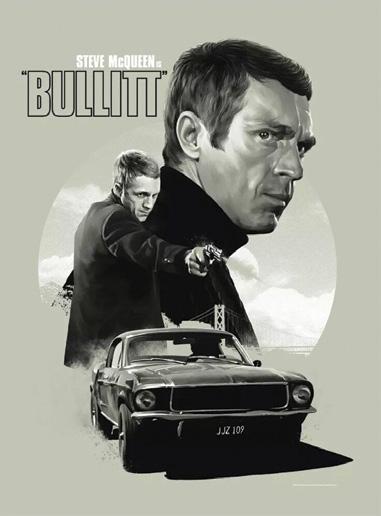
Bullitt
Long before the Fast & Furious franchise brought street racing to the big screen, there was 1968’s Bullitt – forever the high-water mark of cinematic car chases. No dramatic dialogue. No intensive musical score once the action kicks in. No quick-cut editing – just roughly eight minutes of extraordinary high-speed driving through the streets of San Francisco that you need to see at least once in your lifetime. Slowly building up to the (literally) explosive climax, the film’s legendary chase scene finds the title character, Lt. Frank Bullitt (played to the heights of cool and focus by the legendary Steve McQueen), barely breaking a sweat while outrunning his gun-toting adversaries. The scene is a dose of exhilarating fun (and perhaps the perfect go-to for some stress relief after a call with an insurance company) that is easily found on YouTube.
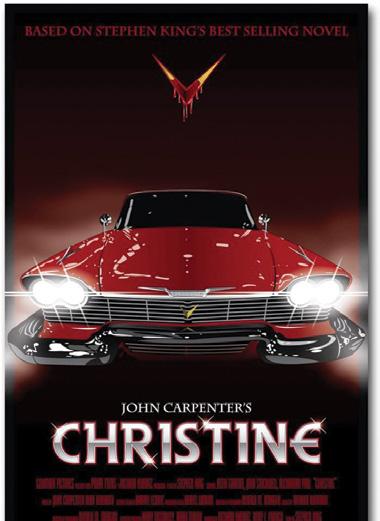
An obsession with automobiles isn’t a strange phenomenon for anyone reading this magazine, but the 1983 supernatural horror classic Christine makes it murderous. Directed by John Carpenter and based on a novel by Stephen King, Christine follows lead character Arnie Cunningham’s descent into madness as he restores a used 1958 Plymouth Fury. It turns out that the car has a mind – and body count – of its own, leading to one of the most memorable man-versus-machine confrontations ever captured on film. Nearly 40 years after its release, Christine remains creepy, fun and a perfect midnight movie.
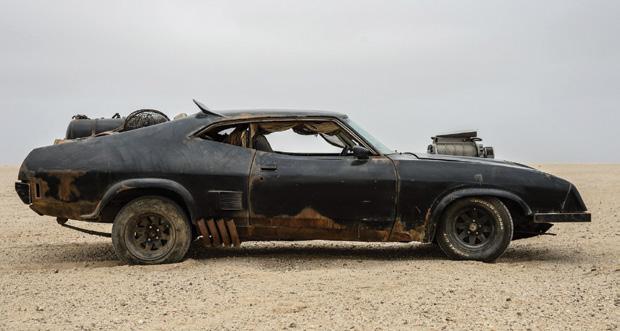
Christine The Road Warrior
The Mad Max movie franchise depicts a post-apocalyptic world where even the most basic human needs –including gasoline and transportation – are typically acquired through savage methods. While it’s hard to pick just one movie from the series, we’ll give 1981’s The Road Warrior the slight edge for: 1. Its awesome title, 2. Mel Gibson in his action-adventure film star prime, 3. The multi-vehicle chase scene, which is the brutal flipside to Bullitt’s grace, and 4. The menacing on-screen presence of the villainous Lord Humongous.
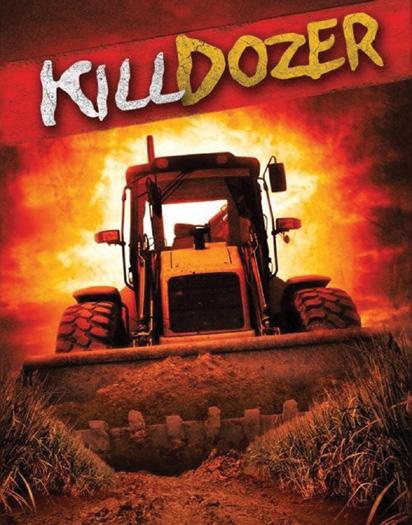
Okay, we’re really stretching the definition of “car movie” here, but this one’s just too ridiculous to leave out. Made for television in 1974, Killdozer presents a tale of a meteor that crashes to Earth, possesses a bulldozer and turns into a ferocious death-and-destruction machine. Seriously. That is the plot. This is an actual movie made with actual money. People actually spent time working on this thing. And if you spend time actually watching it, you’ll experience a movie that is utterly brilliant in its over-the-top goofiness.
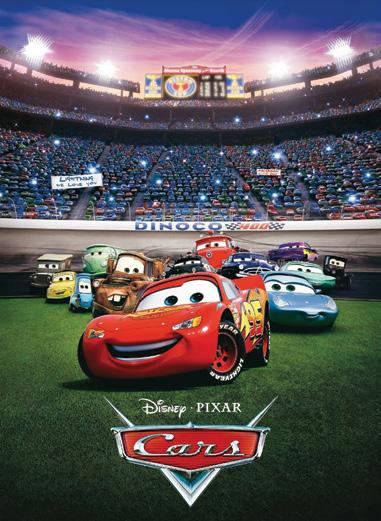
This one’s an easy choice, as more than a few AASP/MA members have told us over the years how much they love watching this film with their families. This 2006 Pixar Animation classic spawned a franchise after introducing the world to an unforgettable cartoon race car named Lightning McQueen. If you’ve never seen it, think Toy Story on wheels and strap yourself in for a ride that you and your little ones will enjoy.
Genuine Volkswagen Collision Parts Are a Call or a Click Away.
The best repairs start with the best shop-supplier relationship. Contact the following Authorized Volkswagen dealers by phone, fax or email to get the parts you need, when you need them.
Mattie Volkswagen
80 William S Canning Blvd Fall River, MA 02771
800-678-0914 fax: 508-730-1283
Lia Volkswagen 140 Elm Street Enfield, CT 06083 860-698-6890 fax: 860-265-7840 www liavw com
Quirk Auto Dealers 115 E Howard St Quincy, MA 02169
Toll Free: 877-707-8475
Volkswagen of Hartford 133 Leibert Road Hartford, CT 06120
Direct Parts: 860-543-6012 fax: 860-728-4408 email: ebautista@vwofhartford com
Balise Volkswagen 525 Quaker Ln West Warwick, RI 02893
TOLL FREE: 800-992-6220 FAX: 800-254-3544 wparts@baliseauto.com www.BaliseWholesaleParts.com One Call, One Truck for Eleven Brands!
Mastria Volkwagen 1619 New State Highway Raynham, MA 02767
Toll Free: 888-581-1146
Direct Parts: 508-802-9955 fax: 508-802-9966 email: vwparts@mastria.com www.mastriavw.com
BALD HILL DODGE CHRYSLER JEEP
1035 Bald Hill Rd
Warwick, RI 02886
Order Hotline: (800) 822-3015
17 delivery trucks serving RI, MA and CT daily!
BEST CHRYSLER DODGE JEEP RAM
520 Colony Place Road Plymouth, MA 02360
Order Hotline: (800) 932-7900
Fax: (781) 749-7804 www.bestjeep.com
IMPERIAL CHRYSLER DODGE JEEP
6 Uxbridge Road
Mendon, MA 01756
Order Hotline: (877) 272-0332
Call us for your wholesale parts needs!
KELLY JEEP CHRYSLER
353 Broadway Route 1 North Lynnfield, MA 01940
Order Hotline: (800) 278-8558
Fax: (781) 581-2490
Email: kjcparts@kellyauto.com
Over $1,000,000 in stock to support your business, and fast free delivery!
MCGOVERN CHRYSLER JEEP DODGE RAM
777 Washington Street Newton, MA 02460
Order Hotline: (800) 741-7563
For the best customer service ask for Mando Bogosian
QUIRK AUTO DEALERS
115 E. Howard Street Quincy, MA 02169
Order Hotline: (877) 707-8475
continued from pg. 23
Allstate and GEICO, and only weakly positive (i.e., near zero) for the two others (Progressive and State Farm). So, the results for these four auto insurers strongly support a market power interpretation of their Labor Rate patterns
Among six additional interstate insurers with between 100 and 400 claims in the dataset (American Family, Farmers, Liberty Mutual, Nationwide, Travelers and USAA), only two (Liberty Mutual and Nationwide) had no strong difference between Labor Rates and (population or shop) density. The rest had significant differences between Labor Rates and density with significance levels ranging among 95 percent, 99 percent and 99.9 percent. So once again, even with these smaller sample sizes, most of the test results support a market power interpretation over the auto insurers’ efficiency argument.
Within this group of six auto insurers with 100 to 400 claims in the dataset, the direct correlation between Labor Rates and both types of wage costs was consistently negative for Farmers, Travelers and USAA, while American Family and Liberty Mutual had mixed results. Only Nationwide had a weakly positive correlation between Labor Rates and wage costs in both types of repair.
For the 15 other insurers with between 40 and 100 claims in the sample, the findings were mixed; some showed significant support for a market power interpretation, but others did not. The results from these smaller samples were simply too indeterminate to draw statistically significant conclusions.
Group Three: Individual States
I wondered if there were state-to-state variations in these data, so I examined the claims from specific states and the variability of wage costs across state counties for 15 of the 39 states for which I had 100 or more claims. The results for 10 of these states supported a market power interpretation of the Labor Rate patterns at mostly a 99.9 percent level of significance. The direct correlations between Labor Rates and either auto body repair or auto mechanical repair wages were also either negative or only weakly positive in nearly all of these states.
Conclusions
While acknowledging the inherent limitations of the available claims data, the important question addressed by the “Silver Bullet Test” does have a definite answer. The regional distribution of Labor Rates in the 7,068 claims examined in this study yields a significant level of strong support for the auto collision repair industry’s “market power interpretation” of the control over their industry exercised by auto insurers, and the results shown do not
support the auto insurers’ “efficiency argument” that has been used to justify these insurers’ control over the auto collision repair industry and their suppression of Labor Rates.
The geographical pattern of Labor Rates paid on these claims does not align with the increasing wage costs associated with higher population and shop density across counties, while such an alignment is required by any efficiency claim.
The apparent fact that (in most cases) Labor Rates either decline or increase very little with rising population and shop density – while wage costs increase significantly – amounts to evidence supporting an effective suppression of Labor Rates stemming from an abuse of market power in the auto collision repair industry resulting from auto insurers’ control over the process of auto collision damage appraisal and repair.
This conclusion arises from the fact that higher population and shop density make it easier for auto insurers to play auto collision repair shops off against each other in an anticompetitive abuse of monopsony power through a price-profit squeeze against them, while low-density areas make such anti-competitive ploys more difficult or impossible for auto insurers to implement effectively.
I would like to close by thanking Richard and Sam Valenzuela of National AutoBody Research (NABR) for the data that made this study possible, and Lucky Papageorg of AASP/MA for his support and encouragement of this study as well. Assuming that the NABR database expands over time, it might be possible to replicate and thereby update this study in future years as a means to confirm and develop these findings and perhaps reveal further aspects of – or changes in – the processes and behaviors analyzed. However, the strong statistical significance of the current results should in no way be underestimated, nor should their important implications be ignored.
The final conclusion is this: Auto insurers are, through an abuse of their market power, artificially suppressing Labor Rates below what are fair and reasonable levels in an anticompetitive manner.
Fred Jennings, Jr. of EconoLogistics (“Consultants to Business and Law”) can be contacted at (978) 356-2188 (for messages only), (617) 605-3150 (direct line) and econologistics@yahoo.com.
2 The North American Industry Classification System (NAICS) replaced the Standard Industry Codes (SIC) system in 1997 with a new and more detailed classification of industries.
3 Including or removing 801 “Customer Pay” (non-insurance) claims had no effect on this finding. Curiously, a look at the 801 “Customer Pay” claims alone showed Labor Rates were negatively correlated with both density measures, while AWWs were positively correlated with them, implying that the Labor Rates being charged by these shops on non-insurance claims are more closely aligned with insurers’ allowable Labor Rates than with AWW wage costs. So, these independent shops do not seem to be setting their posted Labor Rates based on their actual labor costs but rather more in accord with the auto insurers’ allowable Labor Rates.
4 This “All Majors” group included the following auto insurers: Allstate, Chubb, Farmers, GEICO, Hartford, Liberty Mutual, MetLife, Nationwide, Progressive, State Farm, Travelers and USAA.
PRESIDENT’S MESSAGE
continued from pg. 6
Legislature, we have an amazing opportunity to finally solve some of our industry’s biggest problems, but we need every body shop owner in this business – and their employees, managers, etc. – to do their share in making these goals a reality. If you’re not a member of AASP/MA, now is the time to join. We have an incredibly strong legislative agenda, and we have a great new lobbyist working hard for us. Now, we need you to make calls, push our message and get your area representatives to stand behind us. Yes, this is going to take time out of your day, but how much is your future worth?
An association can only do so much; the real legwork comes down to you. We’re here to provide you with the information, talking points and game plan to help us all succeed at the State House. We will continue to do our part, but your work now truly begins. You are these legislators’ constituents; you are the people they want and need to hear from about these bills.
We need worker bees, not crybabies.
I know these are harsh words, but I’m only saying them because these bills are of the utmost importance. This is our chance. There’s no time left to just sit around and moan about the way things are. Again, if you’re not helping us as a member, you need to join the association now.
I recently read a message by Jill Tuggle, executive director of the Auto Body Association of Texas (ABAT), in that group’s monthly magazine, Texas Automotive (which is produced by Greco
Publishing, publishers of New England Automotive Report). In it, she tries to get her own members more engaged in pushing for passage of ABAT’s current consumer-safety bill (Texas House Bill 1131, if you are interested in checking it out). She delivers a great line: “If we don’t pass this legislation, it will be because not enough shops got involved – plain and simple.”
Read that sentence again, please.
We can’t run your businesses for you; all we can do is arm you with the tools to help you run it better and stronger. The rest is up to you. So, do me a favor: Instead of calling me to bitch about the way things are, call your local representative and urge them to help you make things better.
EXECUTIVE DIRECTOR’S MESSAGE
continued from pg. 10 followed. Shops have since made calls thanking their legislators for signing on as sponsors. Shop owners like yourself have made follow-up calls to legislators who had not returned messages. These legislators are getting the message: THESE ISSUES ARE SERIOUS…WE ARE SERIOUS! As I stated at the meeting, this is far from a ONE and DONE project.
Our efforts will pay dividends. We have suffered for far too long with the notion that the $$$$ spent by the insurance industry controls the vote. Your calls, along with those of your employees and customers, will be what helps to create change. In this case, “Talk is NOT cheap;” legislators are listening. AASP/ MA will continue to bring issues to the forefront that MUST be confronted. We will use all available means to get our voices heard. If you missed the meeting and want to learn more and add your voice to the growing roar, go to aaspma.org to watch the video of the meeting and get the important documents regarding these bills. If you are not a member of AASP/MA, get off the sidelines and JOIN NOW. There is an application on page 7 of this issue. JOIN THE SOLUTION!
EXECUTIVE
EVANGELOS “LUCKY” PAPAGEORG can be reached at (617) 574-0741 or lucky@aaspma.org.