DESIGNDISSERTATION
(Stage 1) TOPIC
(Stage 1) TOPIC
SUBMITTEDBY NIVEDITASINHA
FifthYear-Sem.IX,B.Arch Dr.D.Y.PatilCollegeofArchitecture (Affiliated to MumbaiUniversity) Nerul,NaviMumbai,India
October2022

I hereby declare that this written submission entitled “NATIONAL INSTITUTE OF FASHION TECHNOLOGY, GOA” represents my ideas in my own words and has not been taken from the work of others (as from books, articles, essays, dissertations, other media and online); and where others’ ideas or words have been included, I have adequately cited and referenced the original sources. Direct quotations from books, journal articles, internet sources, other texts, or any other source whatsoever are acknowledgedandthesourcescitedareidentifiedinthedissertationreferences.
Nomaterialotherthanthatcitedandlistedhasbeenused.
I have read and know the meaning of plagiarism* and I understand that plagiarism, collusion, and copying are grave and serious offences in the university and accept the consequencesshouldIengageinplagiarism,collusionorcopying.
I also declare that I have adhered to all principles of academic honesty and integrity and have not misrepresented or fabricated or falsified any idea/data/fact source in my submission.
This work, or any part of it, has not beenpreviouslysubmittedbymeoranyotherperson forassessmentonthisoranyothercourseofstudy
SignatureoftheStudent:
NameoftheStudent:NIVEDITASINHA
ExamRollNo:18073
Date:20/10/2022
*Thefollowingdefinesplagiarism:
Place:Nerul,NaviMumbai
“Plagiarism” occurs when a student misrepresents, as his/her own work, the work, written or otherwise, ofany other person(including another student)or of anyinstitution Examples of forms of plagiarism include:
● the verbatim (word for word) copying of another’s work without appropriate and correctly presentedacknowledgement;
● the close paraphrasing of another’s work by simply changing a few words or altering the order of presentation,withoutappropriateandcorrectlypresentedacknowledgement;
● unacknowledgedquotationofphrasesfromanother’swork;
● thedeliberateanddetailedpresentationofanother’sconceptasone’sown
● “Another’s work” covers all material, including, for example, written work, diagrams, designs, charts, photographs, musical compositions and pictures, from all sources, including, for example, journals,books,dissertationsandessaysandonlineresources
I would like to express my sincere gratitude to my thesis guide, Prof. Sanjay Chaudhary, for the continuous support of my thesis study and research and for his patience, support, motivation, enthusiasm and immense knowledge. His guidance helped me in writing and researching for this thesis. I would also like to give thanks to all the othermentorswhohavereviewedmyworkandextendedtheirsupportforthesame.
I would also like to thank my friends who have been there for me and have constantly helpedinimprovingmywork,motivatingmeandhaveencouragedmyideas.
To my parents Saibal Sinha andSudesnaSinha,whohavealwaysbeenwithmethrough all of my achievements and short-comings in life, nothing would have been possible withouttheirguidance,support,encouragementandimmenselove.
NiveditaSinha 5thYearB.ARCH
National Institute of Fashion Technology (NIFT) is oneoftheknownfashioninstitutesin the world and is located in various states of India. Today, NIFT is acknowledged as the hallmark of the Indian fashion industry across the country Each centre of NIFT has a universal and common multidisciplinary curriculum delivering a skill oriented, broad based education integrating it with information technology (IT) and modern industrial practices.
NIFTisthefirstpremierinstituteintheworldtoawarditsowndegreesinthefieldof fashioneducation.
NIFT is generally planned around a courtyard with three zones academic zone, admin zone and residential zone. For this project, it was important to understand the planning and functioning of the NIFT campuses and accordingly have gathered my data and have presented the design requirements and ideas to come upwithasustainableandfunctional campus.
CHAPTER1–INTRODUCTION………………………………………………….1
1.1.Descriptionoftopic………………………………………………………………1
1.2.Aim……………………………………………………………………………….2
1.3.Objectives ………………………………………………………………………..2
1.4.ArchitecturalIntervention ………………………………………………………..3
1.5.WhyisNIFTGoaimportant? ……………………………………………………3
CHAPTER2-BACKGROUNDSTUDY …………………………………………6
2.1.Fashion …………………………………………………………………………..6
2.1.1.Originoffashion …………………………………………………………6
2.1.2.Evolutionoffashionindustryglobally ………………………………….11 2.1.3.EvolutionoffashionindustryinIndia …………………………………..13 2.1.4.Transformationofthefashionindustrythroughtheages ……………….15 2.1.5.Impactofmediainfashion………………………………………………20 2.1.6.Impactoffashiononsociety …………………………………………….21
CHAPTER3–LITERATUREREVIEW………………………………………....22
3.1.Researchpaper1–TheinterrelationshipbetweenFashionandArchitecture…...22 3.2.ResearchPaper2-CampusPlanning …………………………………………...26 3.3.ClimateResponsiveTechnologies ………………………………………………30 3.4.ArchitectureOfGoa …………………………………………………………….36
CHAPTER4–CASESTUDY …………………………………………………….40
4.1.NationalInstituteofFashionTechnology,Kharghar………………………….…40 4.2.NationalInstituteofFashionTechnology,Gandhinagar ………………………..52 4.3.NationalInstituteofFashionTechnology,Delhi………………………………...60 4.4.NationalInstituteofFashionTechnology,Chennai …………………………….78
CHAPTER5–DESIGNOBJECTIVESANDDESIGNBRIEF ………………90
5.1.Designobjectives ………………………………………………………………90 5.2.Designlayoutwithrespecttoclimateanalysis ………………………………...90 5.3.Designingformultipurposeevents …………………………………………….94 5.4.DesignBriefandAreaRequirements ...………..………………………………96
CHAPTER6–SITE …………………………………………………………….100
6.1.Siteselectioncriteria ………………………………………………………….100 6.2.Sitejustification …………………………………………………………..…..100 6.3.Sitelocation …………………………………………………………………..102 6.3.1.AboutGoa ……………………………………………………………...102 6.3.2.AboutTaleigao …………………………………………………………102 6.4.TransportandAccessibility……………………………………………………102 6.4.1.CityLevelTransport ………………………………………………….103 6.5.Physicalfeaturesofthesite……………………………………………………106 6.5.1.Areaofthesite ………………………………………………………..106 6.5.2.SiteImages ……………………………………………………………106 6.5.3.RoadAnalysis…………………………………………………………107 6.6.ContextofSurroundingAreas..……………………………………………….109 6.6.1.Presentuseofsite……………………………………………………...109 6.6.2.SiteConstraints ……………………………………………………….110 6.6.2.Surroundingarea ...……………………………………………………110 6.6.3.Electricalsubstation …………………………………………………..111 6.7.Geography …………………………………………………………………….112 6.7.1.SoilType ………………………………………………………………112 6.7.2.Topography ……………………………………………………………113 6.7.3.Floraandfauna ………………………………………………………..113 6.8.Climate ………………………………………………………………………...114 6.8.1.TemperatureofGoa……………………………………………………114 6.8.2.RainfallofGoa…………………………………………………………115 6.8.3.WindDirectionofGoa ………………………………………………...116 6.9.SWOTAnalysis ………………………………………………….…………….116 6.10.Conclusionfromsiteanalysis…………………………………………………117
CHAPTER7–GOABUILDINGBYELAWS …………………………………118
CHAPTER8-CONCLUSION ………………………………………………….121
CHAPTER9- BIBLIOGRAPHY.………………………………………………122
9.1.References..…………………………………………………………………….122
9.2.ListofTables.…………………………………………………………………..122
9.3.ListofFigures………………………………………………………………….122
National Institute Of Fashion Technology, commonly known as NIFT, was establishedin 1986 under the guidance of the Ministry of Textiles by the Government of India. It is a statutory institute governed by the NIFT ACT 2006. With the capacity to integrate knowledge, traditional arts, modern ideas, academic freedom, innovations in design, technology, and creative thinking, NIFT is a leader in fashion education. It continuously updates its curriculum to take into account the changing needs of the industry NIFT’s vision is to emerge as a centre of excellence and innovation by training and educating professionalswhichwillfurtherleadtothegrowthofthefashionindustry

Education is one of the most important skills which is useful for developing an individual's ideas and thoughts about different aspects of life. An institution is an organisation that caters to a singlepurpose,whichisgenerallyassociatedwithresearchor education. Developing an educational institute ensures that the mission of a college or university toturnstudentsintoprofessionalswhofurthercontributeasresponsiblecitizens ofthenationissuccessfullyachievedthroughacademiceducation,trainingandresearch.
Fashion is a form of an art based on imagination,aformofself-expressionoranaddition to a person’s personality In earlier times, fashion was exclusively made for people who could afford it such astheaffluent,royaltyandcelebrities.Nowpeoplehavebecomevery fashion conscious and are aware about the type of choices available around them. One shouldn’t limit fashion only to clothing styles and trends but also its subsequent partners
such as footwear, accessories, beauty products etc aswell.Fashiondesigningrequiresnot only talent, aesthetics andcreativitybutalsoastrongtechnicalbasethatinvolvesnotonly national but global economies as well. However, fashion doesn’t limit itself to designing andideasbutalsoinvolvesmanufacturing,massproduction,marketingandtrade.
The purpose of NIFT is to create an institution where main emphasis is given on the pre production aspect, that is, the knowledge which is required for designing with the use of technology, thus enabling the students to get a wide range of options for each type of fashion related business in the global market tolearnandexploremoreabout.EachNIFT centre aims to create a learning environment that contributesininnovation,creativityand excellence as well as designing spaces that encourages interaction of people for exchangingideasandlearnings.
The aim for the institute istoprovideastateoftheartfacilityatparwithglobalstandards for a fashion institutethatisculturally,ecologicallyandmentallysuitedfortheabsorption ofknowledgebydesigningspacesthatcatertoexchangingideasandlearning.
● Topromotestudy,educationandresearchwithrespecttofashion,designandcraft.
● To understand the inter-relationship between ‘Fashion and Architecture’ and reflectingitintheinstitutedesign.
● Tounderstandthespatialandcharacteristicsrequirementsoftheinstitutedesign.
● To design multifunctional spaces that will host andorganisefashionshowsforthe instituteaswellasforoutsiders.
● To focus on making the best possible layout with ample lighting, better acoustics as these factors play an important role in making the spaces more comfortable to use.
● Tomakefulluseofthepotentialofthesite.
● Designing a campus that provides interdisciplinary and progressive knowledge of designwithafocussedareaofspecialisation.
● The building will be symbolic of the fashion industry that is catering to the ever changingandevolvingnewideas.
● Local artisans and craftsmen can also be trained and taught more skills, thus generatingmoreincomeforthemselves.
● Creating a fashion hub inside the campus that will act as a magnet in attracting potential stakeholders, fashion designers, fashion retail houses etc where a commonwillbeprovidedaplatformtointeract.
● Hosting fashion shows, exhibition centres, fashion shoots, textile and crafts stalls etc will attract tourists, designers, retail outlets etc to invest more in the local craftsmanaswellasgivingexposuretostudents.
● Showcasing India’s contemporary as well as heritage and its craftsmanship, showingtheevolvingoffashiontrendsinIndiabycreatingafashiongallerythatis accessibletoall.
● The design of the institute will be environment friendly using passive design strategies,climateresponsivearchitectureandimprovedairquality.
● With the advent in technology, there have been a number of new technologies available regarding the usage of clothes, accessories, footwear etc thathelpinour day to day life. For example there aresmartsocksavailablethatusetemperature sensors totrackdiabetichealth.Therefore,researchlabswillbemadeavailablefor anyonewhowantstodomoreresearchonsuchthings.
● Since the site is located near Goa University so there already exists a few hostel and hotel accommodation near the site.Butthereisaneedtobuildmorestarrated hotel accommodation and residentialunitsforoutsiderscomingtovisitoravailing short courses in the institute. So, with the construction of NIFT, the area is going tobecomemoreadvanced.
NIFT is ranked at 9th position amongst fashion institutes around theworld.TheNational Institute of Fashion Technology is a leader in fashion education with the ability to integrate knowledge, traditional arts, contemporary thought, academic freedom, innovations in design and technology and creative thinking to continuously upgrade its curriculum to address the changing needs of the industry Its history of more than three decades at the pinnacle of fashion education stands as a testimony to its focus on core values where academic excellence has been nurtured. The institute has stood as abeacon of industry-academia engagement and a key enabler in developing competent professionals.
NIFT, today, has spread its wings across the length and breadth of the country. It is established in 17 different cities in India which are Delhi, Kolkata, Chennai, Bangalore, Ghandhinagar, Hyderabad, Mumbai, Kannur, Bhopal, Patna, Panchkula, Raebareli, Shillong,Kangra,Jodhpur,BhubaneshwarandSrinagar.
In India, since time immemorial, Delhi has been noted as the fashion capital of India. People in Delhi love to dress up in boisterous,funkyorstylishtoprimandproperoutfits, not only on the weekends but also to their everyday work. The winterfashionofDelhiis quite famous and striking for all . The city’s cool is defined by elegantly tailored jackets and ultra-chic knee high-boots that emerge dapper and boldfromitsfoggymight.Delhi’s fashion is fast evolving into one of the international destinations that stand out withtheir distinctivegetupsduringtheirwintertravels.
The Bollywood industry follows closely behind Delhi for on one side, there are the common people whoseefashionastheirentitlementtotheluxuryofcomfortwhileonthe other, there are the glittering ramps and shows that continue to sparkle with the best dressed models. Mumbai city uses fashion as the way people want it tobe.Itisafashion destinationforyoungIndiansbecauseitcombinescomfortwithahighlevelofstyle.
These two cities have always contributed a lot in the fashion industry and are known as fashion capitals of India. Apart from these cities, in the new age, there havebeenalotof
upcoming cities such as Bangalore, Shillong, Chandigarh etc that are now emerging as newfashionhubs.OnemoreofsuchanewfashionhubisGoa.
Goa is regarded as the cradle of Indo-Western couture. In 1510, the Portuguese became the first colonists, bringing with them clothing from the West. The Portuguese were followed by the Mughals. Portuguese and Mughal clothing, as well as Buddhist drapes and Persian embroidery, had an influence on Goan attire.Goaalsohassomeintricateand beautiful handicraft items made up of local goan materials that capture the fancies of touristsaswellaslocals.
Over the years Goa has become the go-to holiday destination, with a spunky spirit that translates to its fashion consciousness. Goa embodies a free-spirited fashionista who approaches style with equal parts purpose and insouciance. One can see breezy, flowery outfits with funky motifs and vibrant prints. It's also not just about the brands; junk jewelleryandfleamarketaccessoriesmakejustasmuchofastatementasdesignerpieces.
Goa is one of the most favourite tourist destinations for both Indian and foreigners. This city is also the hub of film institute that regularly hosts programs and events attracting millions every year. Goa is also considered a fashion destination by many yet this city is devoid of a good fashion educational institute. The aspiring designers have to travel to othercitiesforthesame.TherearenosuchinstitutesapartfromNIFTMumbaiinthewest coast of India. Hence, having a NIFT Campus inGoaisimportanttocatertotheneedsof those students as well as students from the surrounding areas. As people value the education imparted in NIFT due to its name, many international and national designers canbebroughttothecampustoguideandgiveindustryexperiencetothestudents.
As NIFT aims to foster a new generation of creative thinkers, NIFT Goa will be a replication of this idea alongwithbringinginanewbreathoffreshairthroughitscampus designing and planning and its subsequent impact notonlyinitssurroundingsbutalsoon theglobalscale.
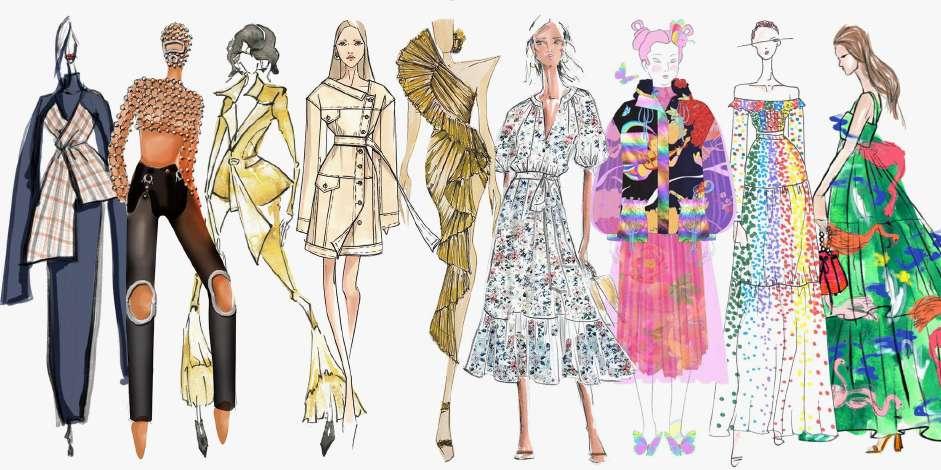
Fashion is a form of art, communication that defines you. It is also a cultural and social phenomenon, which survives on every new idea, trends and looks.Fashionisinclothing, footwear, lifestyle, accessories, makeup, hairstyle, body posture. People are evaluated by their attire, the inclusion of colours, materials, silhouette and the display of the garments onthebodymattersalot.
What we wear,whoweare,whowewanttobe areallthecharacteristicsoffashion.Itis about finding your look,yourinspirationandforgingones’ownaestheticpath.Toeachof us,fashionissubjective,thereisnofixeddataorpathwhichactually“definesfashion”. FIGURE1 FASHION ANARTOFSELFEXPRESSION
Fashionstartedwhenhumanbeingsstartedwearingclothestoprotectthemselvesfromthe climate and weather. The clothes weretypicallymadefromanimalskins,plantleavesand bones. Itwasn’tuntilthe20th centurythatfashionandclothingbegantobetakenseriously by people with many of them developing new designs, the introduction of modern technology for creating sustainable clothes. With theadventofthe21stcentury,theentire
definition of fashion has changed with many designers designing clothes that are affordableandsuitableforall.
Clothing also evolved due to different cultures and so different varieties of clothes appeared which belonged to a particular group of people. Pakistan cultivated cotton around 3000B.C. Wool was woven in Egypt in 4000 BC, while nylon, an artificial fibre was invented in the year 1935, which was a replacement ofsilk.Theearliestsignsofany type offashioncanbeobservedinEgyptandtheRomanempire,whereintheclotheswere made specifically to differentiate among the rich and poor of that time. Thus, earlier clotheswereworntodemonstrateanddifferentiatepowerandclassamongthepeople.
It was common to see the early human beings tobecoveredintreeleaves,animalskinor even bones. Clothing was worn by them just to protect their anatomy. This kind of clothing was also more function based rather than aesthetics since they were hunter gatherersandneededtheirclothingtoadapttotheiractivities.


During the Roman era, clothes were considered as a status symbol. Only the rich and aristocrats could afford and wear expensive and stylish clothes. Thepoorpeoplecouldn’t affordtobuygoodclothes,sothedifferencewasquitevisible.
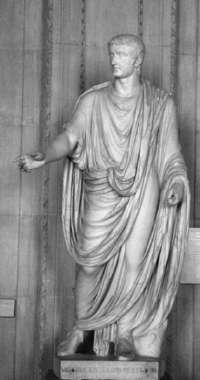
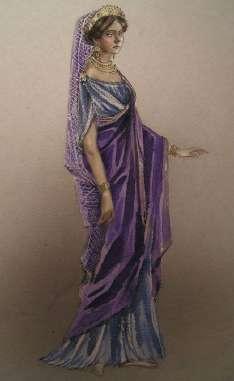
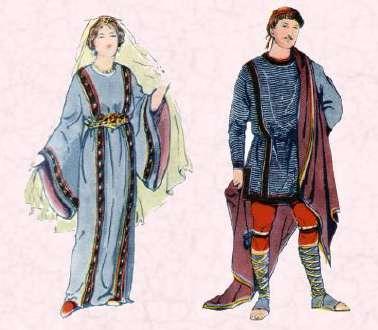
Women in the Roman era used to wear a long dress called a stola, while men wore a draped cloth over their body which was called a toga. This clothing piece worn by the peoplealsomarkedthemasRomancitizens.

The ancient Egyptians used to wear clothes made up of linen that was perfect for doing the daily activitiesinhotweathersuchasEgypt.TheEgyptianswerefamousforflaunting their wealth. This was showcased by wearing different colours and jewelleries to show theirstatus.
Women wore ankle-length pleated dresses nomattertheirsocialstatus,whilemenusedto wear kilts. The Egyptians loved gold andjewellerysomuchthattheywereburiedintheir tombs with their wealth so that they could carry it in the afterlife. The poor people also usedtowearasmuchjewelleryastheycouldafford.
 FIGURE3 CLOTHINGOFMENANDWOMENDURINGTHEROMANERA
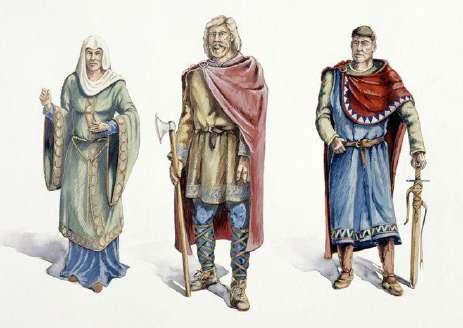
The Anglo-Saxon clothing had belted-ankle-length tunics, both for men and women.The design for clothes differentiated between the rich and the poor. Earlier women used to wearlayereddressesbutafterthe14thcentury,theyusedtowearfullskirtgowns.
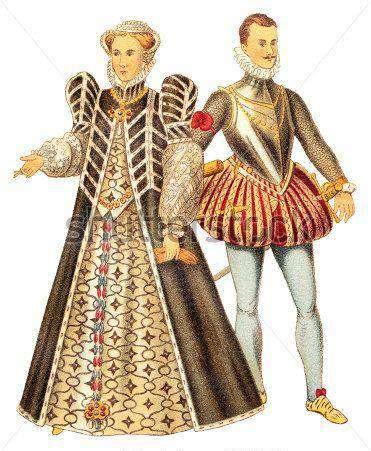

During the renaissance period, the aristocrats used to spend a lot of time and money on clothes. The clothing style reflected the social class of the people while the middle class weretryingtomatchtheclothingstyleofthearistocrats.
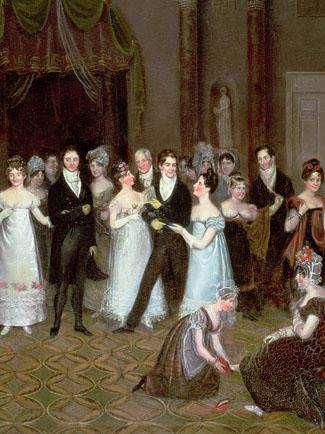
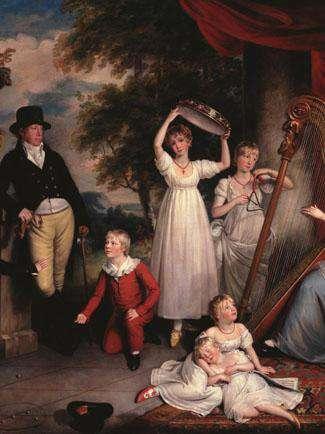
Sewing machine was first invented in 1790, which brought in new opportunitiesofusing less labour and time consumption as compared to hand sewing. Until the early 1800s people considered the way of dressing as a status symbol. Nobody thought of it as displayingtheirindividualstyle,asitisthenorminmodernsociety.
It all changed in 1826 when Charles Frederick Worth set up a fashion design house in Paris. It was he who started the tradition of fashion houses and started telling his customers what kind of clothing would suit them. Design houses then started lookingfor artists who would use their creative skills to develop unique patterns for sewing the garments.
In the early decades of the 20th century, fashion originated mostly in Paris and to some extent in London as well. Fashion magazines used to send their editors from around the world to the fashion shows in Paris. Department stores used to send their buyers to the shows in Paris so that they could copy the purchased garments and sell it to others at affordablerates.


The manufacture of clothing is oneoftheoldestcraftsmanshipofmankind.Itisverywell known that knowledge, technology and design are the fundamental pillars of human development. Fashion has evolved from a craftsman to one of the most powerful industries globally After the industrial revolution and the use of new technologies, machinery, the supply chain and the scale of production of fashion goods has increased ten-folds. FIGURE9 SPINNINGANDWEAVINGIMPLEMENTS,NEOLITHICB,9000 YEARSAGO

Textile manufacturing began with the development of techniques and technology for processing plant, animal fibres such as flax, wool, cotton as fabrics. It’s a complex, time consuming craft which requires a person with good expertise anddedication.Thisiswhy itisconsideredanartisticcraftwork.
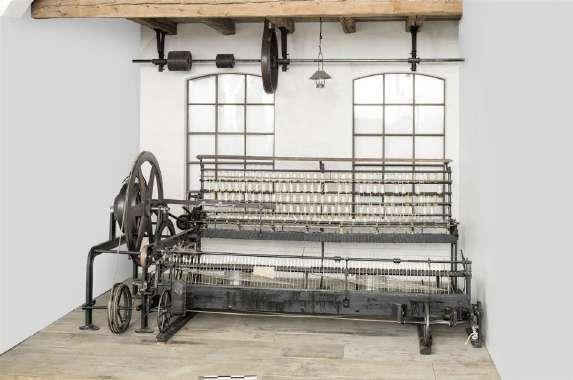
The first advancement in technology was in thetextileindustrythatfocussedmoreonthe processing and production of textilefibres.Thesemi-automaticspinningmachinewasthe first spinning wheelinventedinIndiafrom1767to1785thatshapedtheindustrialtextiles production that we know today During the 1st Industrial Revolution, steam energy was introduced which gained unprecedented levels of productivity and agility, which further contributedinscalinguptheproduction.
With the technological advancements over the subsequent centuries, the fashion industry was revolutionised. Most of the innovations were related to extraction of fiber and processing, as wellasfabricmanufacturingandsewingmachines.Astheelectricalenergy was discovered in the 19th century, in the 2nd IndustrialRevolutionitledtothecreationof artificial fibres, nylon, as well as new technologies for dyeing and fabric cutting which gavethedesignersmorefreedomtocreatevariousdesigns.
The idea of mass production of fashion was first implemented with the aim to produce military uniforms in Europe that spread to the whole industry which further accelerated the industry automation. The relationship with clothes was transformed by the introductionofreadytowearapparels.
Laser cutting, 3D printing, artificial intelligence and robotics allowed theautomationand digitization of many production processes including fashiondesign.TheuseofComputer Aided Design (CAD) and Computer Aided Manufacturing (CAM) aids in the advancement of fashion design and manufacturing in editing sketches and remodelling, fabric weaving, sizing designs, usage of more colours, shapes and patterns with a high level of detailing, enhanced the product lifecycle through the supply and production chains bydisplayingprecisepatternspecificationssuchasseams,printlayouts,fabriccuts andcolours.
India is known for its culture, heritage, elegance and colourfulness. It brings out the beauty which has sustained through innumerable decades. Clothing in India varies depending on the different ethnicity, geography, climate and cultural traditions of the people of each region of India. Not only is it comfortable, sophisticatedandaesthetically beautiful but it has also evolved over time. Making a sweeping surge in today’s global scenario,thefashionindustryinIndiaisanamalgamationofdynamicconventions.
Fashion in India covers a whole range of clothing from ornate clothes designed for wedding ceremonies to pret lines, sportswear and casual wear Traditional costumes in India vary widely depending on the climate and natural fibres grown in a region. From ethnic to western, salwar kameez to high street fashion, the fashion industry in India has definitelygonethroughalotoftransformations.
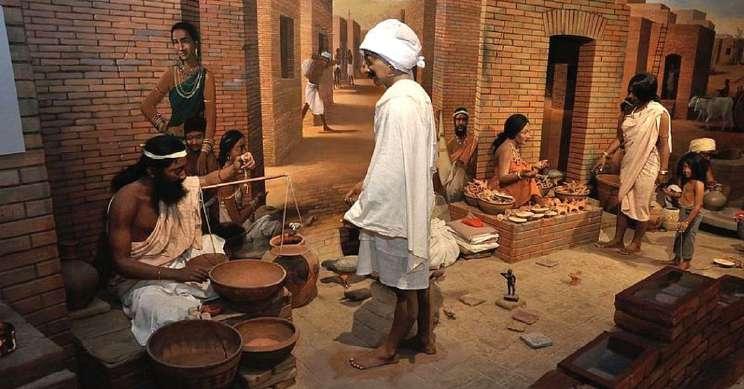
It was during the Indus Valley Civilisation that the first Indian traditional clothing was foundakatheBronzeAgeCivilisationthatlastedfrom3300BCEto1300BCE.
The textile industry in India is amongthelargestsegmentsofIndia’scapitalgoodssector It was a booming sector even before the fashion industry came to take its initial steps. India had discovered the secret of making silk around 300CE from the Chinese and they had started silk and cotton exports even before the era of colonisation. As per the report published by Indian Brand Equity Foundation(IBEF),Indiaisthesecondlargestexporter oftextilesintheworld.
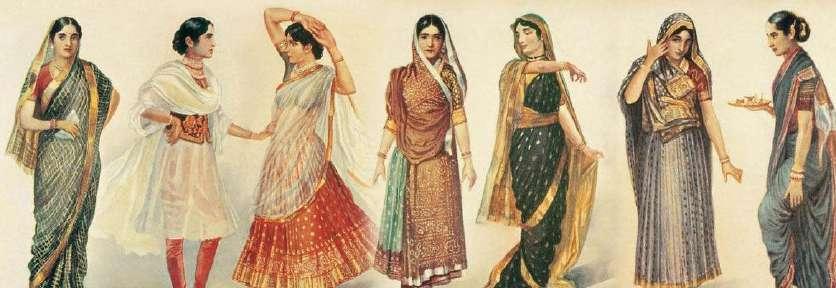
The fashion industry in India covers a wide range of clothing from ornate clothes designed for wedding ceremonies to casual wear. The traditional Indian techniques of embroidery like Crewel, Chikhan and Zardosi have made their way into theinternational fashion runway portraying Indo-western clothing style of a fusion of the best ofEastand West. Aside from these, India has a distinct blend of silk and cotton sarees such as Kanjivaram, Mysore, Pochampalli, Jamdani, Blucher, Pithani, Benarasi, Bandhini, Sambhalpuri,andothers.

The earliest piece of clothing was found on the statue of Mother Goddess which was wrapped around her waist, dating back to Mohenjo Daro civilization. The Goddess’ stomach was covered with jewels. In the ancient Vedic literature of this era, it states the existence of Phataka which is made up of leaves and barks. In the 11th century B.C Rig Veda, it states the existence of Paridhan (dyed) and Pesas (embroidered) garments which tracesthedevelopmentofrefinedfabricatingtechniquesofapparelsduringtheVedicage.
By the 2nd century AD, muslin clothes made in southern India were being soldtoRoman Emperors. The evolution of stitched and tailored garment is traced even before the beginning of the 10th century AD which was further proposed around the 15th century by theMuslimempiresofIndia. FIGURE12 CLOTHINGOFMENANDWOMENININDIADURINGBRONZE AGE
With the advent of the British Raj in India, it encouragedBritishindustrialclothinIndia. The development of Khadi, a hand woven material,wasmadeasaweaponforopposition
against British rule in India, which in turnledtheIndianstobeindependentoftheBritish industrialgoods.
Fashion was a privilege which was afforded by the richest ofthecountryuntiltheBritish colonisation. Poor farmers and clerks used to wear dhotis and cotton sarees, for the clothing of soldiers or warriors they had heavy armoured clothes. Hence, fashion dependedmostlyontheoccupation,castesystemanddiverseroles.
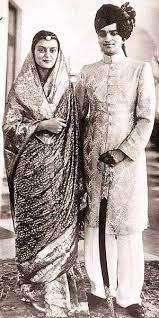
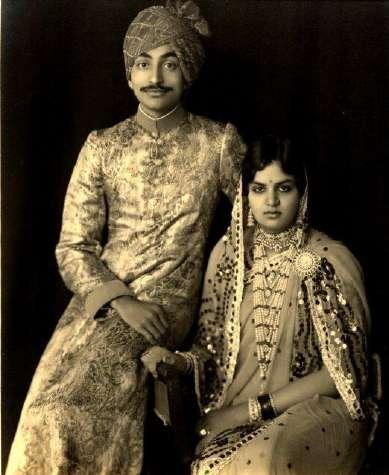
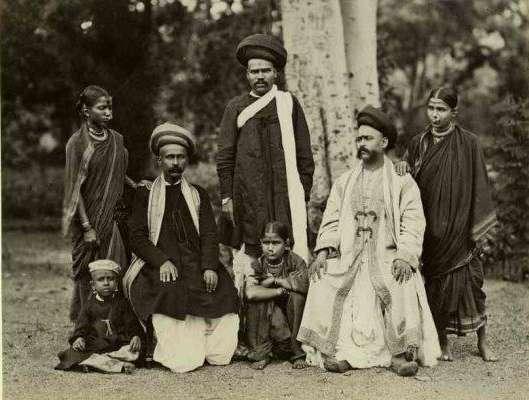
A few decades after Indian Independence, the economy wasunderthenegativeimpactof colonisation. The country was still struggling economically, which causedfashiontotake a back seat. Most of the urban and educatedpopulationofthecountry.Preferredwestern clothingandkeptalotofEuropeanfashionalivetoacertainextent.
The actual rise of the Indian fashion industry started after the partition and the stable economyofthecountrycameintoplay
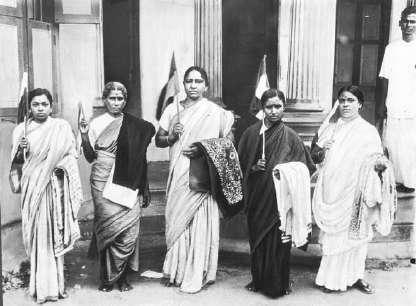
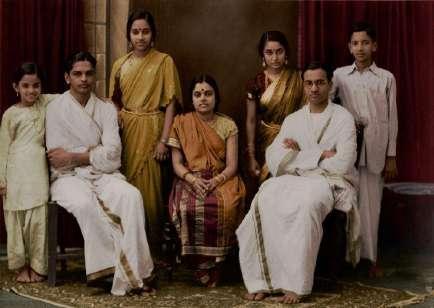
Bollywood contributed greatly in changing the Indian Fashion Industry. In the 1950s, as colour in cinemas became popular, people began to be influenced bythefashionsenseof Bollywoodicons.
● 1940sto1960s
Actors like Dilip Kuma, Dev Anand and actresses such as Madhubala and Nargis Dutt became great fashion icons. People looked up to them for inspiration for their fashion choices. However, there was a huge drawback in this industry at that time since it was largely disorganised, the clothing styles were limited as there were very rare bazaars and brandsavailablewhichwouldcatertotheneedsofthecommonfolk.
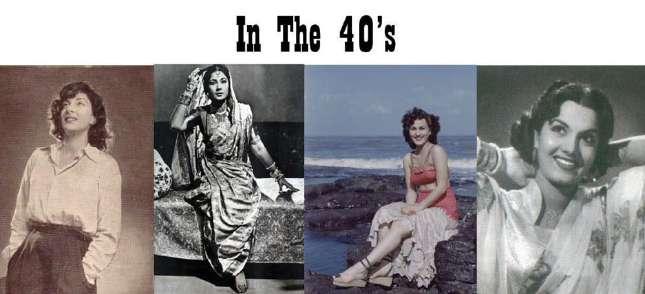
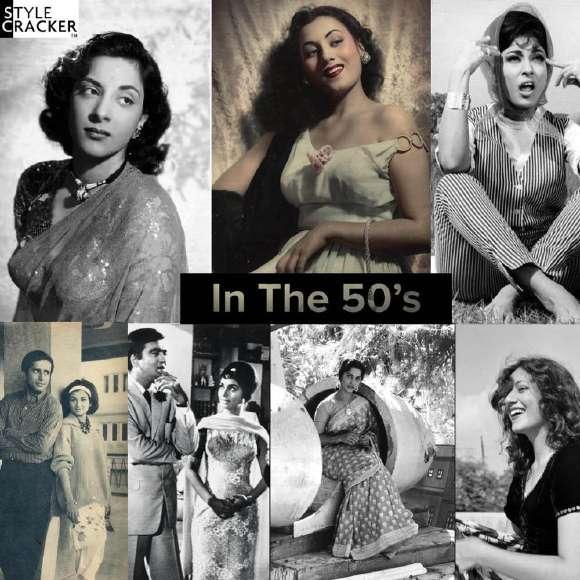
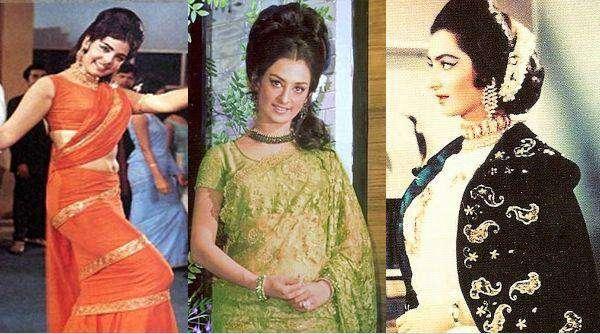 FIGURE15 FASHIONDURING1940s
FIGURE16–FASHIONDURING1950s
FIGURE15 FASHIONDURING1940s
FIGURE16–FASHIONDURING1950s
●
This era was popular among the masses due to more impressive work of fashion. The styling of superstars such as Amitabh Bacchan, Jackie Shroff, Zeenat Aman, Rekha was copied. Their outfits were an extension of their personalities. A lot of the treads were at parwithEuropeanfashionwiththeinclusionofdenim,bellbottomsetc.
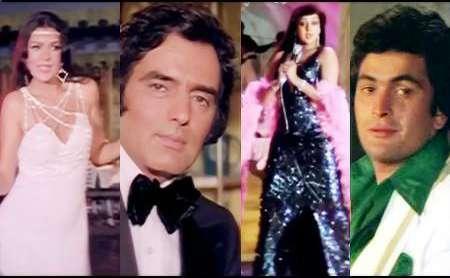
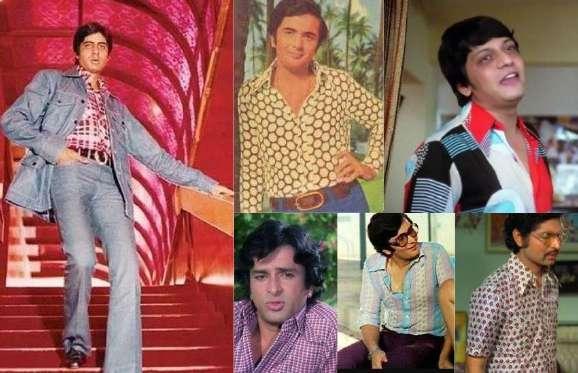
Due to the economic rise in the country, many homegrown brands such as Park Avenue, Lakme, Louis Phillipe etc became popular among theIndianaudience.Fashiondesigning became a viable profession for Indians during the 1980s. NIFT established its first campus,NIFTDelhi,inHausKhaz.
With the influence of television and media, a lot of celebrated fashion designers such as Manish Malhotra, Rohit Bal etc cametotheforefrontandwereappreciatedbythemasses
of India. This era brought home two very prestigious pageant contest winners for India namely Sushmita Sen and Aishwarya Rai and thus the Indian fashion industry got more boostfromthis.
In the early 2000s, since more and more women became independent, they preferred spending a good amount of theirmoneyintobrandedfashionandbeautyproducts.Dueto this, international brands suchasLouisVuitton,H&Malsostartedexpandingtheirbasein India.
Withtheadventofdigitalinnovations,agrowingeconomyallowedmoreandmorepeople to have access to smartphones which further encouraged them to purchase things online. Fashion has become easy and accessibleforall,however,brandsmustbeconsciousabout thechangingneedsofIndiancustomerswhoprioritisequalityovereverything.
Media in fashion has an important role to play becauseofthefactthatfashionjournalism has emerged as a significant part of the fashion business. With fashion emerging asabig industry in its own respect, there have beensomanyfactorsthathavestronginfluenceon
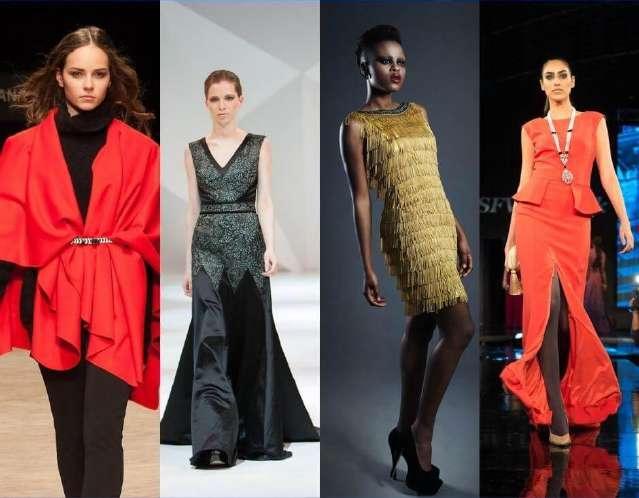
this industry and fashion media is among them. Moreover, like any other field there is much more awareness in people regarding the editorial critique and commentary which appear in fashion magazines, newspapersontelevision,internetthroughfashionwebsites, social networks and in fashion blogs. People get to read honest reviews about fashion trends and much more. It is one of the reasons which have made the fashion industry understand the role of media in fashion. During the startofthe20thcentury,thepresence of media in fashion began to increase gradually. The magazines dedicated to fashion and fashion runways began to feature images of different fashion creations and became even more influential on people than in the past. The role of media in fashion was clearly visible from the fact that in big cities across the globe these magazines were selling like hot cakes and left a profound effect on public clothing taste. Oneofthemostfamousand influential mediums of fashion media wastheVoguemagazine,whichwasfoundedinthe US in 1892. It is still one of the longest-running and at the same time one of the most successful fashion magazines with a loyal fan following. Over timetherehavedeveloped so many other channels through which the presence of media in fashion is clearly seen. There are thousands of fashion websites that combine traditional editorial writing with user-generated content. Fashion media presents people with all kinds of information regarding fashion and there are many people who follow what fashion media says. This clearly shows that the role ofmediainthefashionindustryisofgreatimportancebecause itisquiteaninfluencingmediumwithgreaterreach.
There’s no debate that fashion is about taking the art of self-expression to another level. Fashion is a reflection of social changes. It’s more like looking intoalensthroughwhich onecouldstudythetransformationofculturalvalues.
People are now looking into ways where there is transparency, diversity, eco conscious representatives. Many fashion trends for women such as corsets, tight dresses,highheels that hurt, which in a way reflected how macho society imposed certain standards has come down to extremely simple, elegant and mature ways of dressing up. Feminism has thus come to break these standards, and women are gradually demonstrating that they
have the right to express themselves and be free in all aspects, including their dressing styles.
Fashion is something that we deal with every day. One can find a lot of changes and evolution in the history of fashion. Fashion can affect the economy of a country or the whole world. It can sway politics, serve as an art formandcanaffectsomeone’spersonal life.
Fashion and architecture are two such fields which are almost the same yet are different and independent from each other These two have design theory at their core. Just likea designer deals with problems associated with clothing thatshouldhaveaconnectionwith the human body intermsofdesignlines,colour,fabrication,proportionandpattern,inthe same way the designing in architecture is a response to the problems related with the environment.
A common phrase states that what we wear reflects our individuality. The style of the building reflects the architect’s concept of using a façade that acts as the first skinwhich protects the structural frame of the building at the same time allowing the users of the space to have little glimpse of the surrounding but in fashion the dress is the only skin whichprotectsthebodythusthebodyactsasthestructuralelementinthiscase.Valuethat is expressive is something that architecture and fashion both haveincommon.Thesetwo are important expressions of culture as both structure and clothing are madetocoverand protect our human body. The main aim of an artist is to offer inventive and original designs which are influenced by theory, philosophy and techniques. Therefore, art becomes the basis, which defines architecture and fashion thereby helping individuals in creating unique identities. Art, science and technology are connected with one another thus they affect each other with a debatable boundary amongst themselves. This can be seen in cases where fashion takes inspiration from architectural elementssuchastheidea of wrapping, folding, weaving,usesofcantileveretc.Thiscanbeexplainedbytheideaof ‘media façade’. In the buildings, LED lights are used to enhance the beauty of the building façade even at night. In the same way, a fashion designer presented their collection by using lights and photographs which illuminated the dresses as a building does.
In a conceptual sensebotharchitectureandfashionaddresspsychologicalperceptionsand spatial structures. From the imagery point of view and visual point of view, both arts reflect the taste of the individuals whooccupythosespaces.Fromthematerialitycontext,
architecture and fashion have many things in common such as use of fabrics, materials etc.
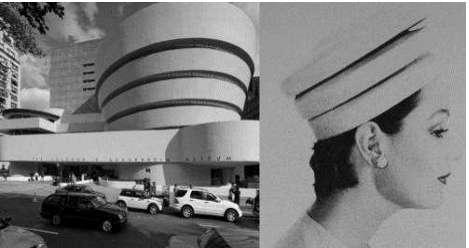
From the global point of view, both arts and artists in these fields have an opportunityto interact closely with each other especially in more socially responsive, more sustainable and economical design. The mainaimofthearchitecturaldesignistogiveanordertoour surrounding environment. As Norberg Schulz mentions architecture is the key element which controls and regulates the relationship between man and his environment. Basic components of design objects are the same and both represent functional and communicative criteria. For example, a dress or a building are basically designed to shelter human beings and protect their bodies against thenaturalorunnaturalphenomena in different scales but what makes them so personal and unique with identity are the aesthetic factors and concepts behind the whole design. A house can just be a simple building with fewroomsbutitcanbedesignedforaspecificpersonortheconceptbehind the whole design can best be unique. It is also the same in case of fashion design and clothing, an evening dress can be so uniqueandspecificallymadeforaperson,according to his/her body figure and interest, that can be called couture, there will not be anyother dress like that and it only represents the specificdesignerand,inmanycases,thespecific personaswell.
One of our greatest architect’s, Zaha Hadid’s signature brandoffluid,sweepinglinesthat characterised her gravity-defying buildings redefined the principles for monumentalism. And although she was lauded for her architectural innovation,hervisionalsoextendedto the body. It therefore comes as no surprise thatanarchitectcarvedanicheforthemselves
in the fashionworld fromundertakinganartprojectinChaneltojewelleryandfootwear forbrandslikeAdidas,GeorgJensenandMelissaamongothers.
There are certain elements and details that are present in both architecture and fashion, which tends to become the useful idea and inspiration behind the fashion designers clothing, accessories as well as the architects building design. Althoughbotharchitecture and fashion are structured in art and appearance. Both of them are three dimensionalin form and space which changes the entire shape of the design and also acts as the foundationforbotharchitectureandmostfashiondesignedobjects.
The relationship betweenfashiondesignandarchitectureisnotsomethingoutofthemind and imaginary In the past century, the bond between these two industries has gotten stronger by realisation of the fact that both are based onart,scienceand technology;and they are the actors who are creating the image for people. Fashion and architecture with art, science and technology is growing in the direction which no one in the past century couldimagine.
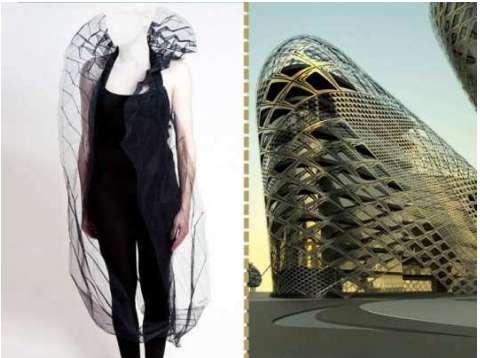

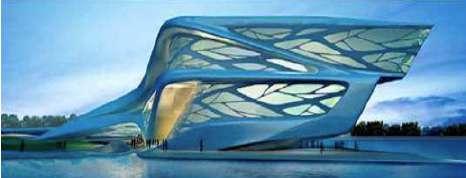 FIGURE21 MELISSASHOESBYZAHAHADIDANDHERARCHITECTURAL
International Journal of Engineering Research and Technology. ISSN 0974-3154 Volume 10,Number1(2017)
InternationalResearchPublicationHouse
SnehalY.Damugade
AssistantProfessorDepartmentofArchitecture
D.Y.PatilCollegeofEngineeringandTechnology,Kolhapur
YuvrajN.Damugade
ExecutiveDirectorEQUINOXEnvironmentIndiaPvt.Ltd.
Source: http://www.pomona.edu/sites/default/files/documents/standards/architectural_campus _planning_principles.pdf
The aim of this paper is to know in depth about campus planning and how it deals with planning principles. The implementation of these principles results in terms of their functions, economy and aesthetic value, ensuring a good microclimate.Thereasonwhya master plan or campus plan is important to document is to form an idea on the basis of which we can create the architectural character, composition and typology of the buildingsinthefutureandtheexteriorspacesofthecampus.
The campus community and its neighbours' values arephysicallyexpressedintheMaster Plan. It makes the campus more liveable and restores its pastoral feel as well as concentrates on the structures at the centre of the campus to promote a sense of community
A well-designed campus environment significantly enhances users' and visitors' social, professional, and educational experiences. It also enhances themicroclimate.Itgivesan individualanunusualandmotivatingworkspace.
The welcoming to the campus is very important because it makes the campus look more inviting and transparent to the students. Clustering of the structures within the campus core is encouraged so that it promotes workability, a variety of open usable spaces and preserve lands for future opportunities. Having a good connection between vehicularand pedestrian should be established with supporting amenities to its endusers.Development of formal and informal interactions through open spaces needstobeestablishedproperly While designing the campus, one should make sure that the spatial sensibilities such as mass, proportion and size of the surrounding buildings are designed with the human sensesandnotlooktoomuchortooless.
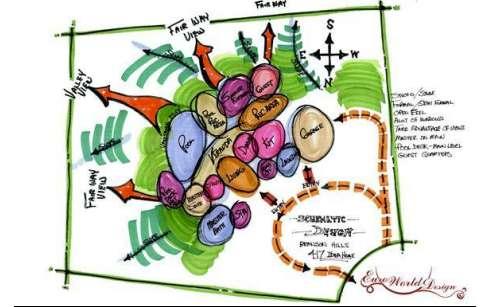
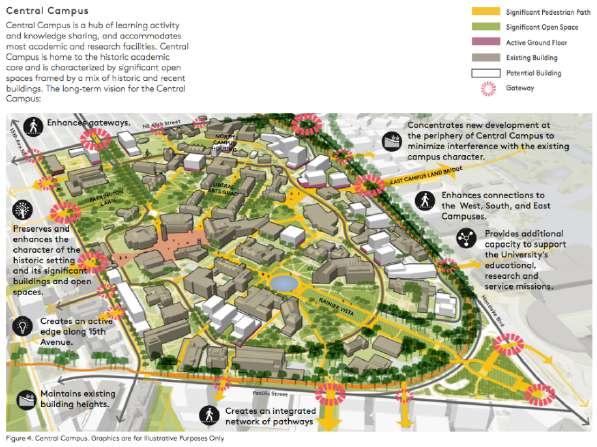 FIGURE23 CAMPUSMASTERPLAN
Keeping the orientation of the building according to the sun path canhaveahugeimpact on the buildings’ energy use. For the building occupants, the visual connection to the exterior of the building should be one of the coredesignelements.Itshouldbenotedthat on an average, the glass that is facing south should be 10-20% of the floor area of each building. Efforts should be taken to reduce solar heat gain while increasing day lighting and glare control by keeping the south-facing glazing and sun screens. The use of skylights such as movable, standard or view windows, clerestories, light shelves, and tubularetcwillhaveapositiveimpact.
The administrator in the university seeks that degree of continuity and stability that is a progressive change which isrequiredtomaintaintheinstitution’sleadershiprole.Campus design needs to anticipate the nature of growth and change, providing good flexibility to designaswell.Therearethreemaincriteriauponwhichthegrowthaspectsdepend:
a) The overall and expansion of facilities due to increase in the number of enrolment.
b) The differential growth that occurs in various areas of the universityalongwith theoverallgrowth.
c) The internal flexibility of spaces that is required with changing the uses of spaces and services, a kind of system that ensures that order in future developmentwithoutbeingtoorestrictive.
The campus should be pedestrian friendly and its designelementsshouldbeincorporated everywhere including the parkinglotsandstreetcrossings.Thereshouldbedifferentsizes of plazas, formal and informal gathering places, and amenities for everyone that encourage natural conversations and a feeling of belonging. Pathways for thepedestrians need to be designed in a way that is safe to access, is attractive and gives a feeling of invitation along with a direct connection to differences in spaces in the campus. All the
street furniture that includes benches, lighting, bollards, waste receptacles etc should go withthearchitecturalstyleandthequalityofthecampusbuildings.
FIGURE25 INTERRELATIONSHIPBETWEENBUILTANDUNBUILTANDTHE INTEGRATIONOFBOTH
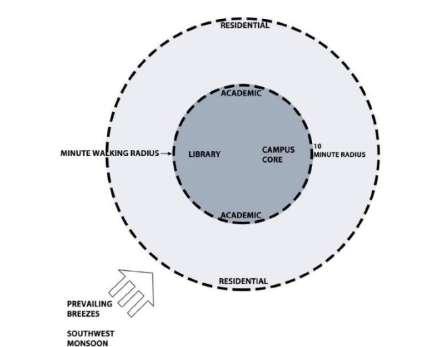
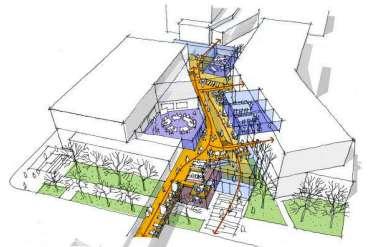
In an ideal campus environment, regardless of the size, classroom and living spaces should be related for the convenience of pedestrian occupants and closely linked to the qualities of the natural setting. Since a campus is for people, it must be designed for the personitself,his/herphysicaldimensions,senses,habits,responsesandimpulses.
FIGURE26 IDEALWAYOFPLANINGACAMPUS
While planning for a campus, we should use the principles which are used in urban planning such as skyline, vista, edges, lines, nodes, viewpoints, paths, landmarks etc. These will help us in designing an aesthetically good looking, functionalandeconomical campus. One must also take into consideration the growth and unpredictable changes, makingsurethedesignisquiteflexibleandreadytoadaptinthefuture.
Warm and humid climatic zones can be defined by the presence of high humidity, strong and harsh glare from the sun. This climatic zone can be found in coastal areas of south India and in the hilly areas of north east which comes under this region.Themajorcities havingthisclimateareGoa,Mumbai,Visakhapatnam,Kolkata,Chennaietc.
This climatic zone can be identified by long monsoon periods with heavy rain. But the breezes can increase significantly whichcanbringdiscomforttothepeople.Thedirection of sun and win is extremely necessary to know as it affects the form and planning. Moisture in the air combined with moderate heat and high rainfall is favourable for the growth of vegetation. The plant cover of the ground reduces reflected radiation and lessenstheheatingupofthegroundsurface.
1. Themainbuildingshouldbespreadoutwithlargeopenspacesinbetweenso thatthereisunrestrictedmovementofair
2. Oneofthemostimportantcharacteristicsofthistypeofclimaticzoneiscross ventilation.
3. Openingsshouldhaveshadingoroverhangs.
4. Thereshouldbeoutletstoventhotair.
5. Thereshouldbegoodwaterproofingtreatmentandfastdrainageofwaterwhich isessentialtohaveduetoheavyrainfall.
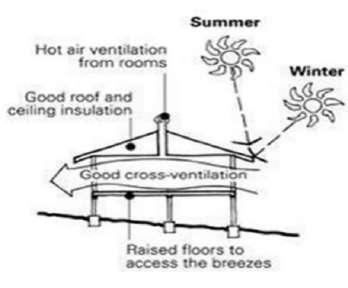
1. Since the air temperature is very near to skintemperaturesothereisbodilyloss totheairbythemethodofconvectionorwhenconductionisnegligible.
2. To achieve physical comfort, some amount of heat dissipation from thebodyto the environment, at least as much as the metabolic heat production from the body.
3. In the presenceofhighhumidity,theevaporationofasmallquantityofmoisture from the body would form a saturated air envelope which effectively prevents any further evaporation, thus blocking the last resort of heat dissipation. This canberemovedwiththehelpofairmovement.
4. Encouragingoutdoorbreezestopassnotonlythroughthebuiltspacesbutacross thebodyoftheoccupants.
1. As movement of air is the only available relief from climatic stress, therefore vital to indoor comfort, the building will have to be opened upto breezes and orientedtocatchwhateverairmovementthereis.
2. In this type of climatebuildingstendtohaveopenelongatedplanshapes,witha single row to allow cross ventilation. Such rooms may be accessible from open verandas,galleries,whichalsoprovideshading.
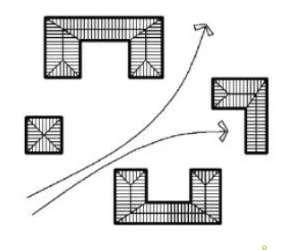
3. Door and window openings should be as large as possible to allow a free passageofair.
4. Groupsofbuildingsalsotendtobespreadout.
5. Extended plans in a line across the prevailing wind direction, afford low resistancetoairmovementandisthereforetheidealsolution.
6. Formofthebuildingalsohelpsinventilatingthebuilding.
FIGURE28:WINDFLOWPATTERNSACCORDINGTOTHEBUILDING FORM
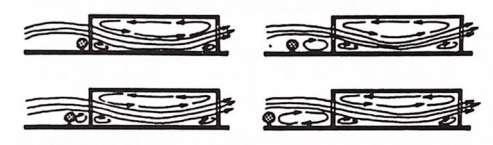
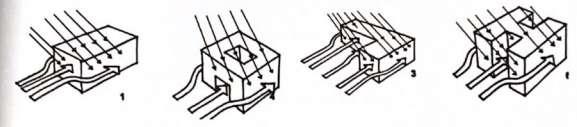
7. Plant cover of the ground tends to create a steeper wind gradient than an open surface that is it restricts the movement of air near the ground and is often necessary to elevate the building on stilts, thereby avoiding the stagnant or slowly move the air atthegroundsurfacecapturingtheairmovementsofhigher velocity.
1. Thebuildingscanbeorientedaccordingtothedirectionofthesunsothatwecan ventilatethestructureinallthepossibleways.
2. Ifthebuildingislowrise,thenthewallswouldnotreceivemuchradiation,sothe orientationcanbedoneasperthewindflow.
3. Thedirectheatgaininthebuiltspacescanbereducedthroughopeningsandwith thickwalls.
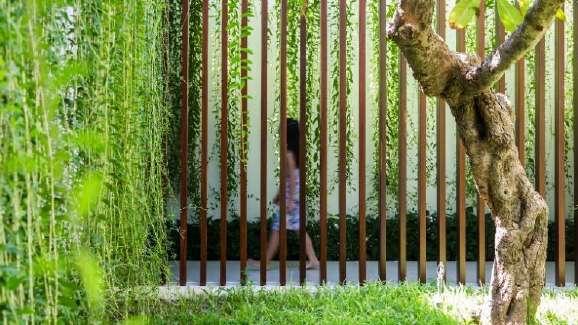
1. Shadingandfreepassageforairmovementarethetwobasicrequirements.
2. Trees and planting can bereliedonforshading,asplantscarryfullfoliageallyear round.
3. Pergolasandlightframingcanbecoveredbycreeperplantswhicharequitecheap.
4. Varioussystemsofpalingfencesandscreenwallscanbeusedwhichdonotpermit directviewbutallowthebreezetopenetrate.
1. As the temperature outside remains the same throughout the day and night, a building cannot cool off sufficiently at night-time to allow the storage of heat duringtheday
2. It is advisable to construct buildings of low thermal capacity using materials that arelightweight.
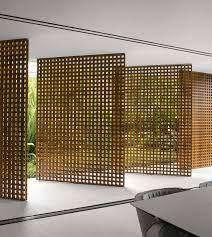 FIGURE30:SCREENWALLSANDSHADEDCORRIDORSCANHELPFOR BUFFERSBETWEENBUILTANDUNBUILTSPACES
3. The design oftheroofisverycrucialasitcanpreventtheindoortemperaturefrom increasing above the outdoor temperature andkeeptheceilingtemperaturearound thesamelevelasothersurfaces.
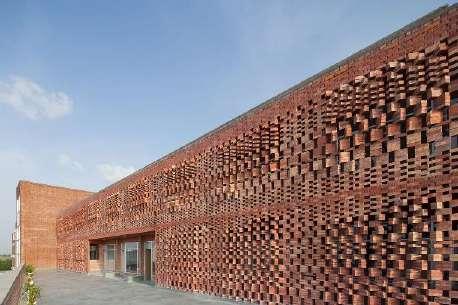
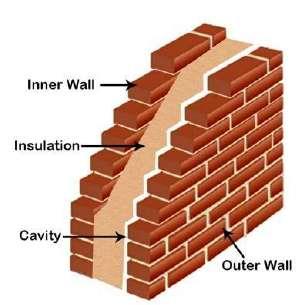
4. For solid vertical walls insulation is not necessary if they are shaded.However,if these walls are exposed to solar radiation such as gable walls, then these insulations will prevent the elevation of inner surface temperature above the air temperature. FIGURE31:CAVITYWALLANDBRICKJALLIWALLSREDUCESSOLAR
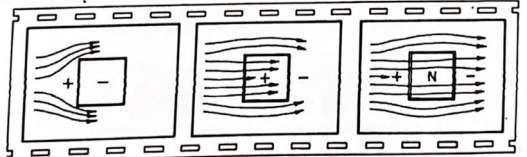
1. Openings must be placed suitably in relation to the prevailing breeze to permit naturalairflowthroughtheinternalspacesatbodylevelthatisinthelivingzone.
2. Such openings should be large and fully openable as there is no point in having windowswithfixedglasspanes. FIGURE32:AIRMOVESFROMPOSITIVEPRESSUREWHERETHEACTIONOF
1. Ventilation will also be necessary to the space between the roof and ceiling and adequateopeningsmustbeprovidedforthispurpose.
2. Ventilation of the roof space can cause a ceiling temperature to drop 2 degree Celsiuswithoutanyconstructionalchange.
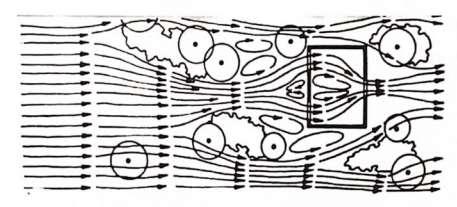
FIGURE34:WINDEFFECTS
1. These devices should provide great coverage and the openings should be comparativelylarger.
2. Itprotectsagainstsolarradiationheat. 3. Reducesglare.
4. Reducesnoisebysoundabsorption.

5. Regulatestheeffectonhumidity
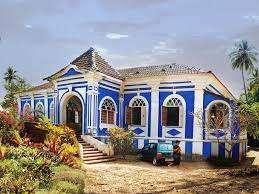
The architectureofGoaismulti-layered.InGoa,onecanseethefusionofdifferentstyles, technology and details that emerged from the mixture of various cultures. The Goa that we know and see today has been changed several times, from the Kadambas to the Islamicate Deccan to the Portuguese occupation which lasted 451 years from 1510 to 1961. The Portuguese are credited mostly for shaping the architectural identity of Goa. But it is quite evident that thearchitecturefoundhereismulti-faceted,thathasborrowed influences from a lot of places therefore the term ‘Portuguese’ has been misused while describingthearchitectureofthisstate. Thismighthavebeendonetomakeitsoundmore exotic and attractive to the tourist, or at other times, it could simply be because of ignorance. The truth is these structures should simply be called ‘Goan’ due to their heterogeneity;theyareuniqueandcannotbefoundanywhereelseintheworld.
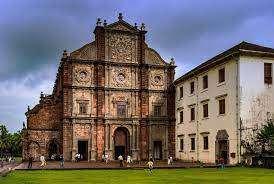
In the past, Goa's identity was defined by its beautiful natural environment together with the prevalent Indo-Portuguese and vernacular styles of architecture. Since architecture mirrorslocalmaterialculture,andtherehadbeenlittlechangeinthatcultureforcenturies, Goanarchitectureremainedrelativelystaticuntilthe1960s.
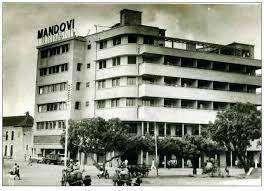
However, there are few examples of a different architecturalstylewhichdidcropup.The earliest Mandovi Hotel at Panaji, which was built in 1952 to cater to the mixed visitors who were expected to attend the Exposition of St. Francis Xavier There being no architects in Goa then, the hotel authorities brought them in fromBombay,thendesigned the Mandovi, the first multi-storeyed building, intheArtDecostyleprevalentinthatcity
FIGURE35:ARCHITECTUREFOUNDINGOAThe Art Deco style may thus have been a necessary stepping stone to a more robust modernity.
FIGURE36:MANDOVIHOTELINPANJIM,1954
One of the modern buildings, the original airport terminal at Dabolim, came up in the mid-1950s when Benard Geddes was Goa's Governor. Theword"modem"isusedhereto mean something more particular than "contemporary"; it means the new type of architecture that is contributing to the art of architecture. The designs were prepared in Portugal, as the project was under the Overseas Ministry Making extensive use of large glass areas, wooden partitions, and hollow block external walls, it was one of the finest smallairportbuildingsintheworld.
Their simple and functional designs made use of the latest structural methods and materials. Examples of this were the one room village school at Cortalim ferry, the military barracks at Ponda, and the military chapelatRawanfond,Margao.Theprototype school, rectangular with a small verandah, used hollow-block walls, operable glass louvres, and a reinforced cement concrete roof; a mural of glazed blue decorative tiles flanked the entrance. The simple chapelplanfeaturedasteeplyslopingreinforcedcement concrete roof slab over hollow-block walls with precast grilles for light and ventilation. BeforethearrivalofthePortuguese,mostGoanhousesweremostlymadeofmudandhad a thatched roof. They faced inwards towards a central courtyard and had smallwindows, mostlydevoidofornaments.
1)TheArchitecturalStyleofPortuguese-BuiltChurches.
2)AdaptationofForeignIdeastoLocalConditionsandUsingLocalMaterials.
3)ProtectingtheHouseanditsOccupantsfromtheFierceMonsoonsofGoa.
Three buildings strongly influenced by Le Corbusier came up: the Minor Seminary at Pilar, the Goa Chamber of Commerce and Industries at Panaji, and the Carmelite Monastery Church at Margao. The first two, with their elevational treatment and structures for recreational activities on the roof, were photogenically veryappropriatefor architectural magazines, but actually not suited for Goa. The exposed concrete walls accumulated heat and became badly disfigured after the rains due to fungus formation. Graphically designedfenestrationenhancedtheCarmelitechurch'sverysculpturalquality. The fan-shaped seating focused on the altar, which had brilliant light flooding it from windowssethighinthebelltower.
Popular Hotel Cidade de Goa in Dona Paula, a serious attempt to reinterpret Goa's vernacular architectural language, by overlaying it with Portuguese urbanism. The plan form is a simple parallel wall structure placed perpendicular to the contours; subtle variations in the projections of the facades create an impression of a clustered Mediterraneanvillage.
Another example, built aroundthesametime,istheKalaAcademy,alargeculturalcenter on the banksoftheMandoviatPanaji.TheKalaprojectundertooksignificantinnovations in spatial organisation. A modernist plan-form of post and beam construction institution orthogonal grid offered thearchitectthenecessaryvariationindimensionsdemandedbya programme that makes use of several performance halls, exhibition galleries, informal public gathering places, etc. The relatively low rise mass is spread horizontally and organised around an innovative ground plan with an open 'street'goingthroughtheentire
building.
FIGURE37:STREETSINGOA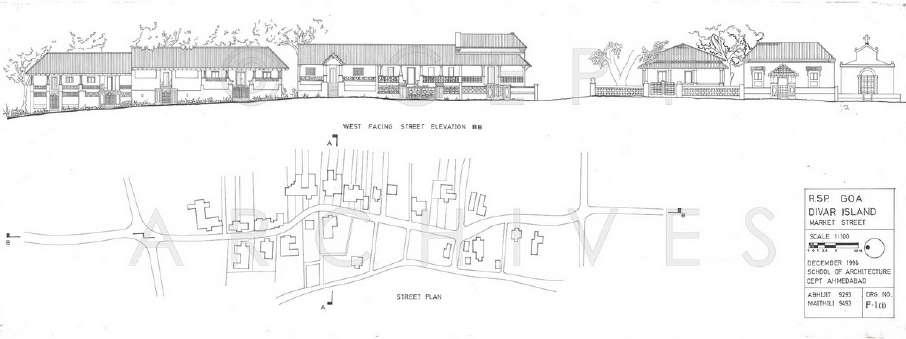
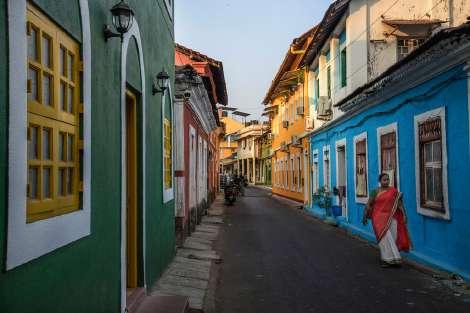
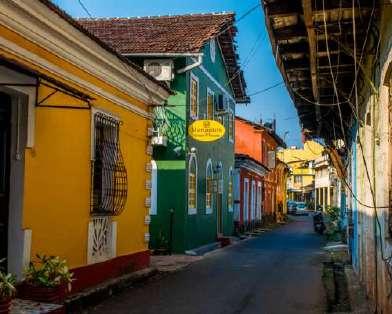
Goan architecture can be seen easily through imperfections such as walls which are not plumb, an askew roof, irregular cut mother of pearl shells, patchy lime plastering, unsymmetrical mouldings etc. During the pre industrialised society,everythingwasmade by hand and hand-crafted from the cutting of the stones to the making of furniture. Even early country tiles were moulded on thighs. And all of this added to the charm of these buildings.Withthepassageoftimehasmadeitallthemoreclosetoourheritage.
These buildings that emerged from this cultural boom reached its peak in the 18th and 19th centuries, becoming the cornerstone of Goan identity today It is sad to see that several of these structures are falling into ruin, on account of carelessness or property disputes, or sometimes just razed to the ground to build higher These Goan heritage houses are the ultimate physical component of our identity and must be preserved and keptaliveifwearetoretainourcollectiveidentityasGoans.
Client:MinistryofTextiles
Architect:HafeezContractor
SiteArea: 20,234.94sq.mt(approx.10acres)
Yearofestablishment: 1995
Nooffloors:Ground+2
Totalnumberofstudents: 360
Non-Teachingstaff:15
Administration:15
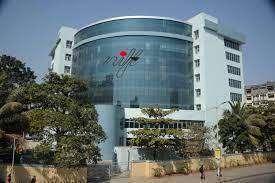
The National Institute of Fashion Technology, Navi Mumbai is a leading institute in the field of fashion design and technology. It was established in 1995 at Dadar but later shifted to Kharghar in the year 2005, this institute is spread over 10acresofareainNavi Mumbai and has hostel facilities for both girls and boys students with world class infrastructure,highlyequippedlabsandmachinerooms.
This campus also has sports infrastructure, well monitored and well equipped mess facilities.Theinstitutehashighlytrainedfacultieswithstrongindustryconnections.
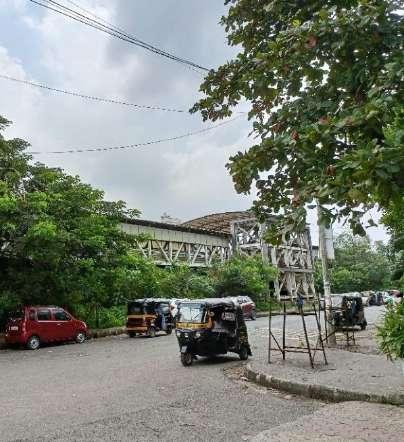
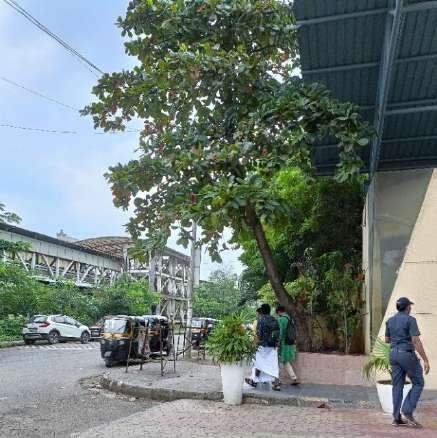
This institute is well connected to roadways. The Kharghar station which is 0.5 km in distance is quite near the campus and one can reach the station by auto. There is a skywalkthatconnectsthecampustothestationbutitisnotusedbythepeople.
The built environment of the campus revolves around the sensitivity that a lot of interaction occurs in a spontaneous manner and as a result an activity space is created aroundtheformalstudyarea.
However, there is a certain contrast of spaces ranging from narrow to wide, short to tall, enclosed concrete to the exposed steel structure that givesagoodsenseofaesthetics.The corridor while linking the departments physically provides ample space for the casual activitiesandinformalfashionshows.
Thedesigningismainlybasedonthreeimportantfactors-
● Central Spine: The main aim of this design was to create spaces that surrounded the courtyard which acted as major gathering spaces for interaction.
● Corridors for circulation: The spaces have been linked with corridors where casual activities and informal shows will happen which further bringasense ofcommunity
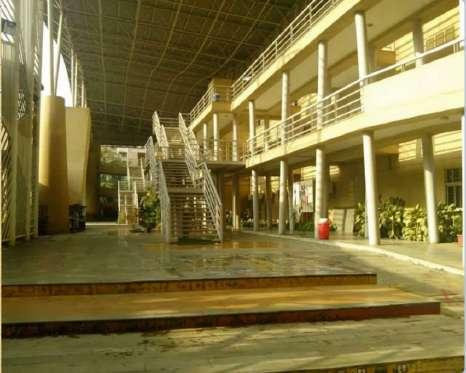
● Form with function: Each building will have its own identity without disturbing thefunctionofthesame.
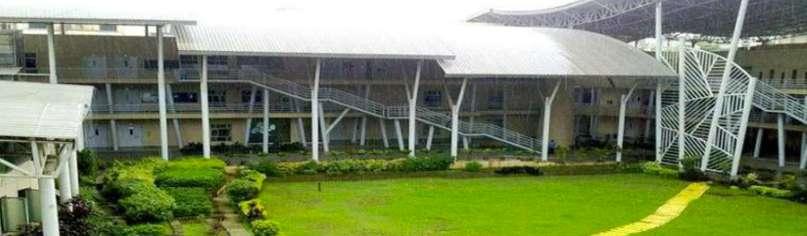
Theblocksareplacedasperthefunctioningofthebuildings.
● Thesiteisflatland.
● Inthecampus,theyhavetwoacademicblocksbothnewandold.Thenewblockis connectedtotheolderstructurethroughanenclosedcorridor.
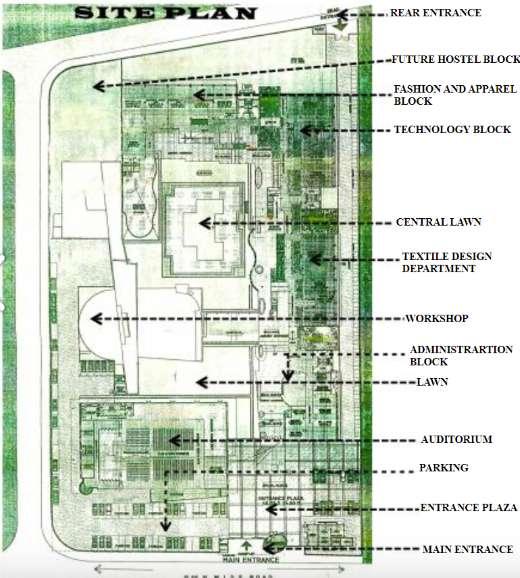
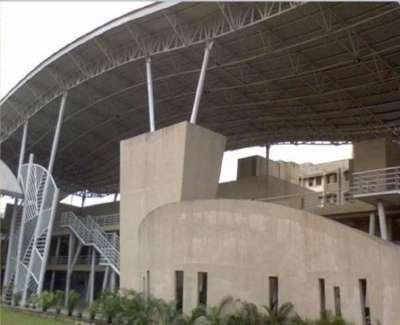
● Theentrytothecampusisthroughagrandentranceplazawhichhasatrussed roof.
● Thebuildingsare2floorhighsothatitiseasyforcirculationandareconnected withwidecorridorsthroughout.
● Thereare5staircasesthatareinternallyrunningthroughoutthecampus.
● Thereisacentrallawnaroundwhichthebuildingblocksrevolve.
● Therearetwoseparateentriestothecampus.
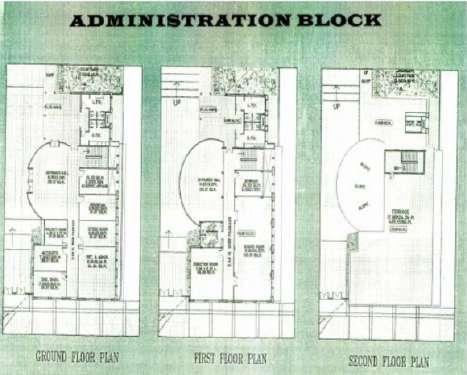
● The administrative zone whichisG+1,hasadoubleheightreception,cashierarea, accounts department, director’s office, assistant directors’ office, visitors’ area, pantry,toilets.
● The main foyer of the admin block gives a very warm and welcoming feeling whileentering.
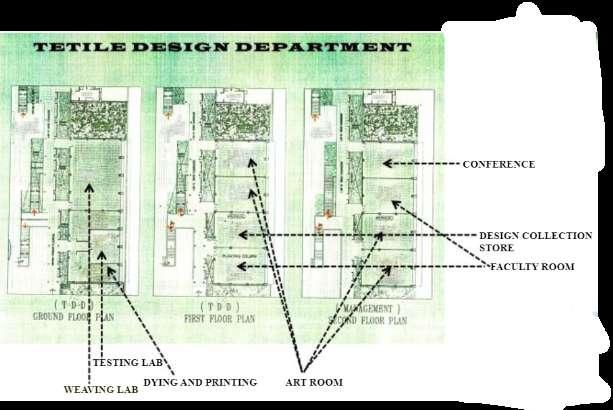
● Onthegroundfloorwehaveaweavinglab,adyinglabandaprintinglabwhichis attachedwithatestinglab.
● Onthefirstfloortheyhave2artrooms,afacultyroomandadesigncollection store.
● Onthesecondfloortheyhaveconferencerooms,facultyroomsand2artrooms.
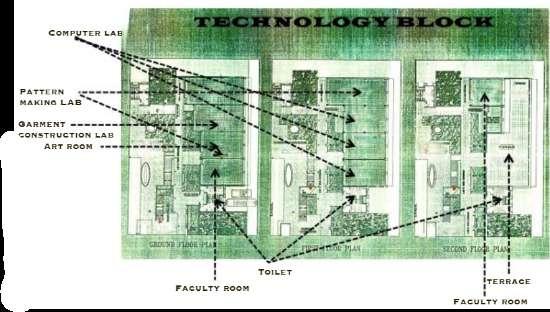
● On the ground floor they have 1 patternmakinglab,1garmentconstructionlab,1 facultyroomand1artroom.
● Thefirstfloorconsistsof1patternmakinglab,3computerlabs.
● Thesecondfloorconsistsof1facultyroom,terraceareaandclassrooms.
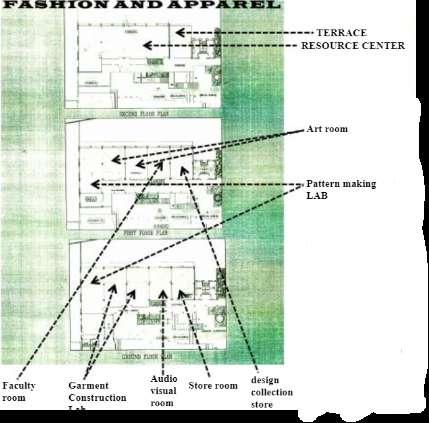
● The ground floor consists of a GC lab, 1 store room,1patternmakinglaband adesigncollectionstore.
● ThefirstfloorconsistsofanAVroom,facultyroomandPMLab.
● Thesecondfloorconsistsofaresourcecentreandterracearea.
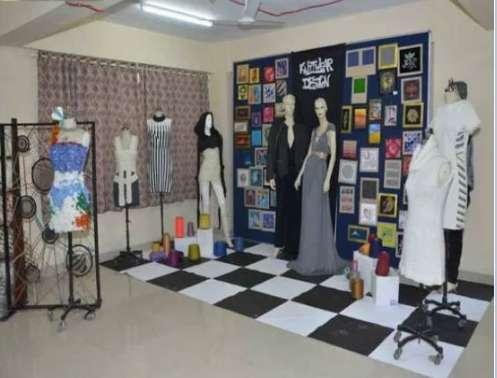
● Recreationalspaceshavebeencreatedonthecampus.
● Thecentralcourtcanaccommodateupto600people.
● However,thereisonlyonecanteenwithacapacityupto80peopleonly
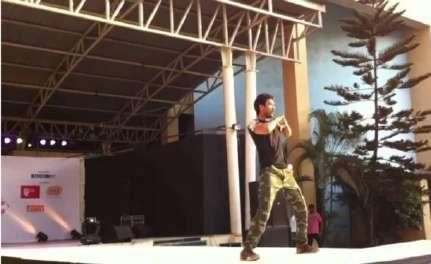
● There is an auditorium in the new academic block which can accommodate 350 people. There is a ramp provided for fashion shows and competitions for the students.
● The resource centre has two different which are the library and the materials section.
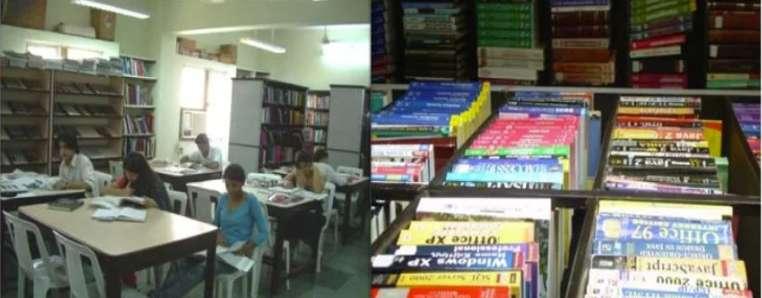
● Thecapacityofthecanteenisfor80students.
● Itservesthehostelstudentsaswell.
● Totalareaofthecanteenis170sq.mt.
● Thecanteenhasasufficientamountofnaturallight.
● The canteen has a differentserviceentrywhichdoesn’tcreateanynuisancewithin thecampus.
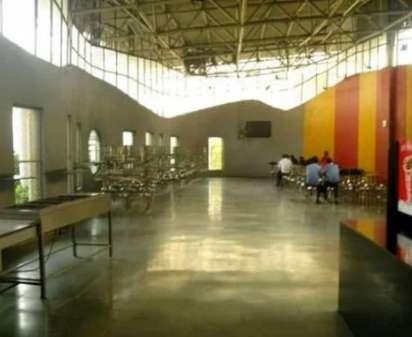
● Thecompositionismostlybasedonvariousformswhicharearrangedverticallyor atcertaininclinedangles.
● Therearelandscapedcourtyardsprovided.
● There are space frame structures provided at places to form semi-covered areas whichalsoactaspedestrianpathways.
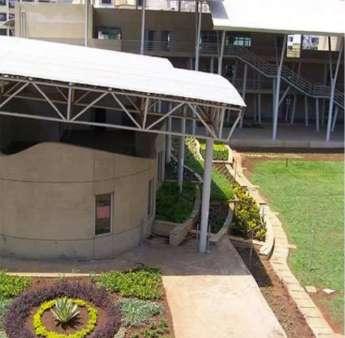
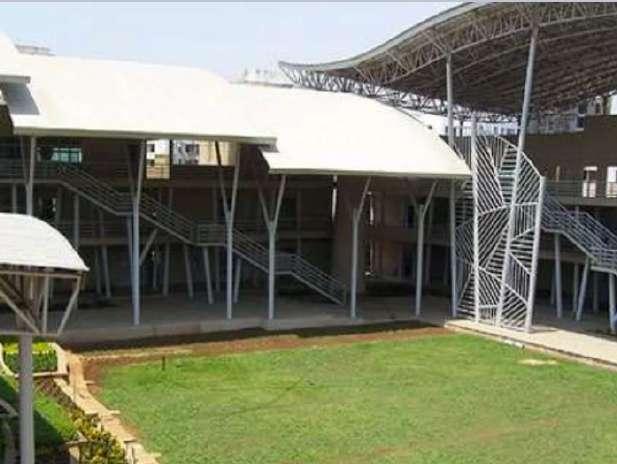
● This building has two combinations of materials concrete blocks for walls and lots of steel work, visible steel columns and roofing is present which adds on to theaestheticsofthebuildingasawhole.
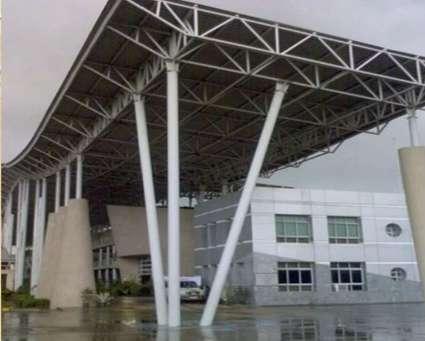
● Thebuildingisplannedinawaythatitdoesn’tobstructnaturallight.
● Thecampusiscoveredwithrampsaswellasstepsforcirculation.
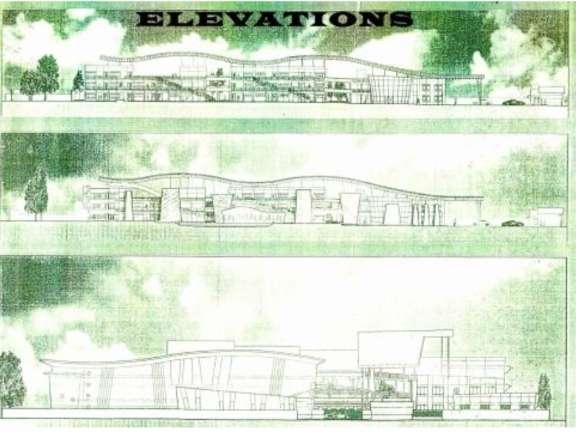
● The steel roof acts asthemainelement inenhancingtheelevationofthebuilding. Italsogivesacontrastinfeelingandonedoesn’tfeelboredomwhilewalkingfrom oneblocktoanother.
● Therearedifferentgeometricalshapesseenintheelevationofthebuilding.
● There are two overhead water tanks which havebeenprovidedalongwith oneundergroundtank.
● The capacity of the tank is calculated by 135 litre per person X No of floorsXNoofpeople.
Twofiretanksof64cu.mand77cu.mrespectivelyhavebeenprovided.
One flush water tank of 26 cu.m capacity, one domestic water tank of 18 cu.m and one softwatertankof28cu.m
Airconditioningandplantroomarelocatedinthebasementalongwiththreefanrooms.
● Thecampusdesignhasbeendonekeepingalltherequirementsaspectsinmind.
● The connecting linkages between different blocks is quite interesting and is the mainfocalpointofthedesign.
● As per NIFT’s idea of design, thecourtyarddesignhasbeenretainedandproperly inculcated.
● Propercarehasbeentakentoensureproperpathwaysforvehicularandpedestrian.
● It gives a very contrasting feeling as the structure keeps on playing in forms as it goesfromshorttotall,widetonarrow,exposedsteeltobuildandunbuiltspaces.
Client:MinistryofTextiles
SiteArea:20,000sq.mts
BuiltUpArea: 11,300sq.mts
Totalnooffloors:Ground+2
LOCATION
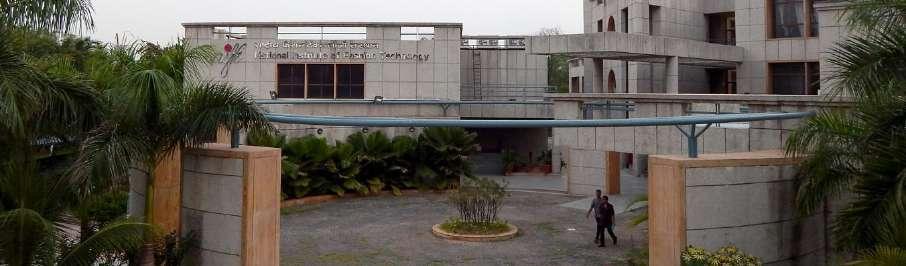
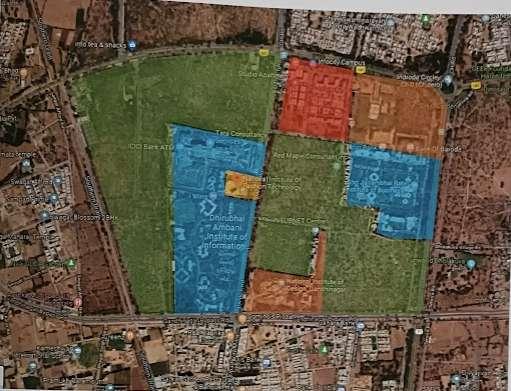
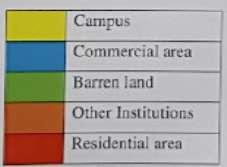
The site is located at GH-O, road that leads to DAIICT, behind Info cityinGandhinagar, Gujarat.
SITECONTEXT
The design should be something which provides a healthy and positive environment. So, the idea was to provide spaces that are healthy,interactiveaswellgivesapositivefeeling toanindividual.
● All the buildings are planned around a central courtyard sothecourtyardactsasa gatheringspace.
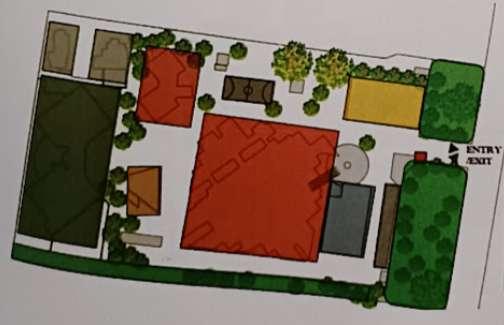
● There are small informal spacesthathavebeencreatedforbetterinteractionofthe studentsinthecampus.
● Thesiteplanninghasbeendonekeepinginmindtheusergroupandtheusability ofthatspace.
● Plenty of plantations have been provided all around the campus to maintain the microclimateofthecampus.
● Goodcarehasbeentakentoprovideproperlightandventilation.
● Intermsofshadingdevices,pergolashavebeenprovided.
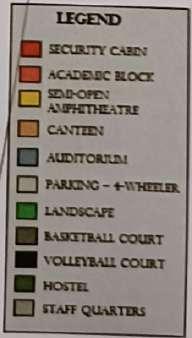
● Thesiteisdividedinto4majorblocks–Academicblock,Hostelblock, Administrativeblockandauditorium.
● Thesiteisflatland.
● The building blocks have been properly segregated depending upon the functioningofeachblock.
● Themainelementisthecourtyardwhichisagatheringspaceforalltheoccupants.
● Circulation is the main aspect. These 5 blocks are connected by means of passages.
● The circulation on the site from the main entrance to the point where the administrativebuildingbeginsisvehicular.
● Beyondthat,thecircularistotallypedestrianwithdifferentplayinlevels.
● Externalstaircasehasbeenprovidedwhichgivesaccesstothecourtyard.
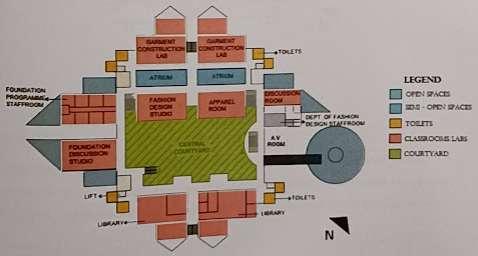
● Openingshavebeenprovidedonthegroundfortheventilationtothebasement.
● Anamphitheatrehasbeenprovidedwhichislocatedbehindthehostelbuilding.
Thisfloorconsistsofaresourcecenter,departmentoffashiondesign,fashiondesign studios,andagarmentmakinglab.
This floor consists of information technology lab, programmes studios, department of fashion programme, textile design studios, audio visual room, garment construction lab, pattern making lab, department of fashion and technology and apparel production classrooms.
The basement consistsofatextileweavinglab,textileprintinglab.Provisionofsprinklers havebeenprovided.
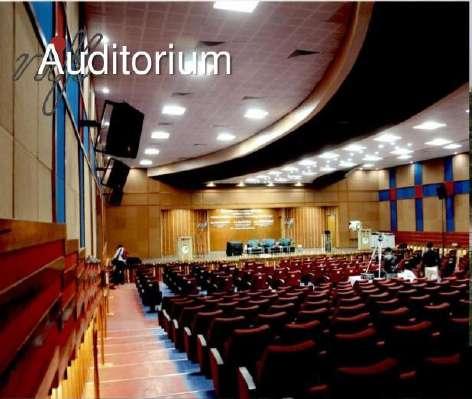
With a capacity for 340 occupants, this auditorium is equipped with a good quality AV system.ThisspaceholdseventsforbothNIFTaswellasotherorganizations.
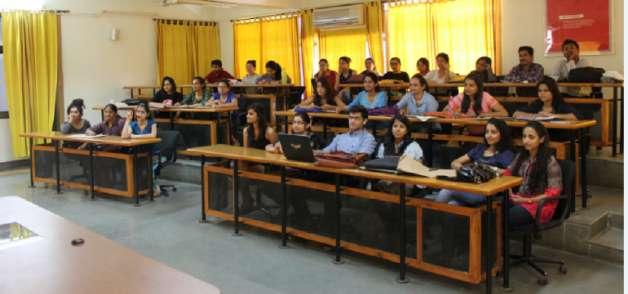
StudiosareprovidedwithAC,projectors,displayboards,blackboardsetc.
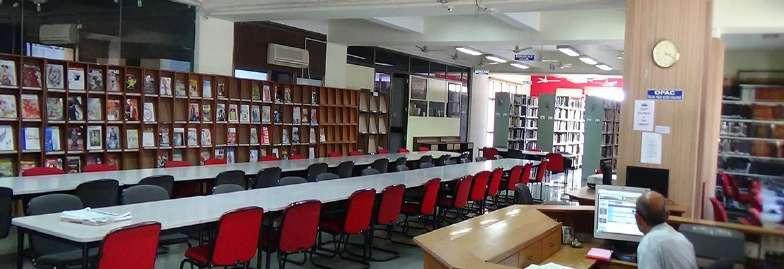
The resource center is one of the key wings in the institute which consists of a library wing and a material wing. The library consists of books that contain information regarding garments, fashion and technology They also avail the forecast which further helps the industry to select upcoming colours, silhouettes, fabrics as well in advance for thefourseasons.
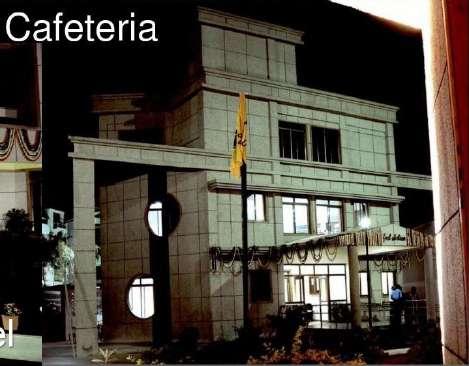
This canteen is three floors high in height which is a mess cum canteen block to cater to therequirementsofstudents,staffandfaculty.
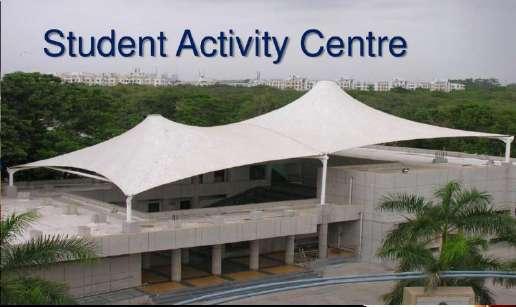
It consists of an amphitheatre,badmintoncourt,basketballcourt,volleyballcourt,cricket pitch etc. There is astudenthangoutareanexttothestudentactivityareawhichalsohasa fitness area built out of recycled material. It was set up with the help of the Border SecurityForce(BSF),Gandhinagar.
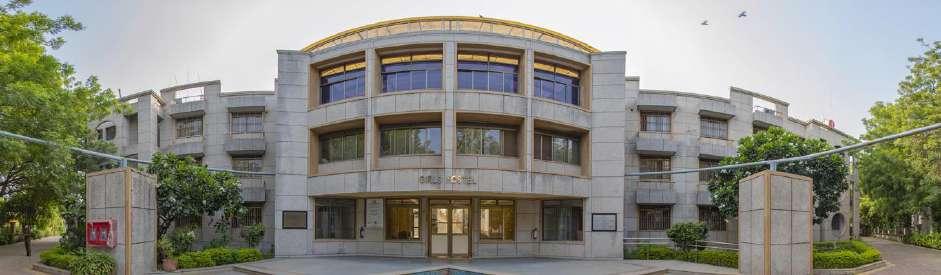
The 200 bed girls hostel is built up of two wings which are named after the perennial rivers of Gujarat Narmada and Tapti. These two wings have all the in-house facilities likecommonrooms,TVroomandindoorgames.
There are individual rooms which can accommodate 2 students. The size ofeachroomis 3.5m x 3.5m. Each room is provided with two beds, two chairs, two wardrobes and a table.
● Therearestaircasesandliftsthatareprovidedtoconnecttheupperfloors.
● Thereisapedestrianpathwayalongthevehicularroad.
● An external staircase has been provided near the courtyard which acts as an interestingdesignelement.
● Allofthebuildingblocksareconnectedtoeachotherbymeansofpassages.
● A structural system of hollow columns hasbeendevisedtoenhancethefunctional conditions.
● There is a grid of 7.8 square hollow column work asaverticalplenumfortheuse ofpresentandfutureACorevaporativecoolingsystems.
● The column square is 1m X 1M with RCC Columns at four cardinal ends and brick masonry infills in between, which has been provided for running the electricalductsthroughit.
● Theslabisribbedwithprecastplatesthatareplacedtoformacontinuousnetwork. The present situation reveals the exposed surface of concrete, which has been intentionally left imprinted, to give a contrast to the surface ofthebuildingwhich ispaintedwhite.
● This unit is respectively used for the entire site forallspacesinmultiples,leaving nowastageofmaterial.
● Thecolourfortheceiling,wallandtheflooringhaveKotastonefinish.
● The total height from finish floor to ceiling is 4m which is adequateforaclassof 30students.
● The bridge that connects the classroom to the administration and resource Centre is glazed with bronze glass, with swing quality supported but narrow at one end andbroadensatother
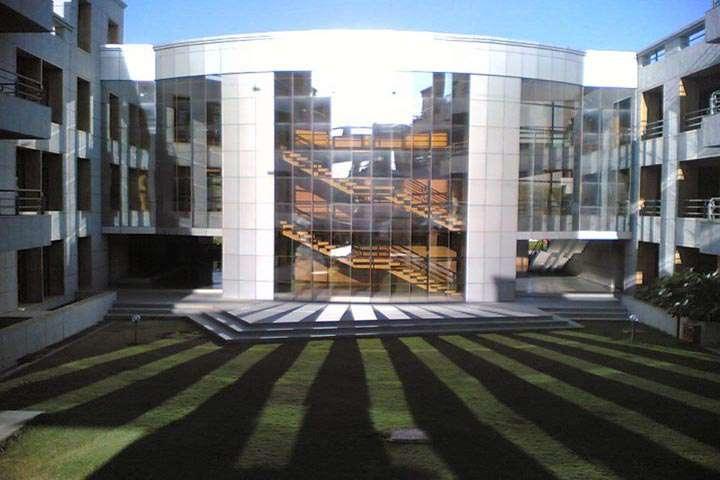
● Circulationisquiteeasyandallbuildingsareaccessible.
● Thecentralcourtyardgivesanunobstructedviewoftheacademicarea.
● The informal interaction spaces have trees and seating spaces which makes the spacecalmandrelaxing.
● Addition of pergola structure in the landscaped area gives a pleasing appearance duetoitsshadows.
● Thereisnoproperlightandventilationsystemforthebasement.
● There are no shaded pathways on the eastern side of the campus near the canteen area.
Client:MinistryofTextiles
PrincipalArchitect: B.V.Doshi
StructuralConsultant: SiteArea: approx.11650sq.mts(approx.3acres)
TotalBuiltUpArea: 13570sq.mts ProjectCost:Rs.8.5Million Intake:300students
Courses:FashionandApparel;FashionCommunication YearofCompletion: 1986
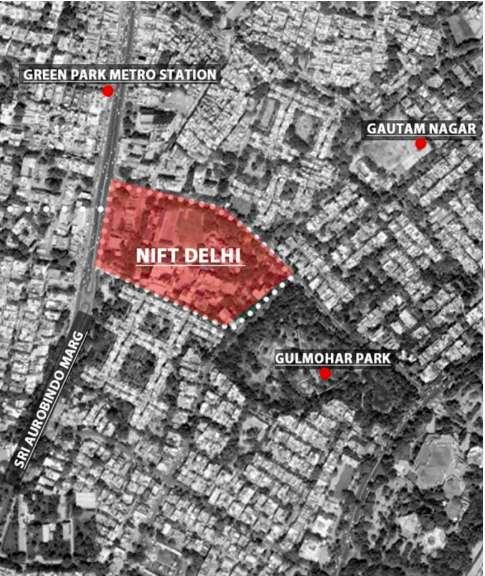
NIFT, Delhi is located at the Mehrauli road in New Delhi’s Hauz Khas Area, where it is known because of institutes mostly and it goes from AIIMS, Delhi to Qutub Minar People can easily access thisareafromtheAurobindoMargorBalbirSaxenaMarg.Hauz Khasmetroisthenearestmetrostation.
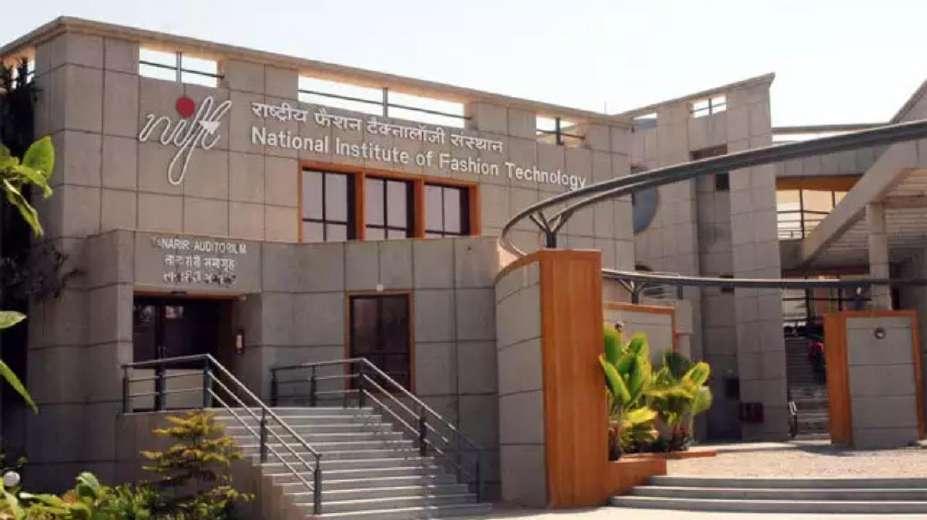
The access to the site is from theNorthEastandSouthWestsideofthecampus.Thissite is quite irregular in shape and is surrounded by Hauz Khas housing, a classical dance institute and Gulmohar Park. DDA has developed the front courtyard which is visible whileenteringthecampusbutthisgreenareahasbeengiventoNIFTformaintenanceand upkeep.
The objective of this institute is to impact education in apparel design for the readymade garment industry, to undertake research that is in tune with ourculturalheritageandtrain professionals in the field of garment marketing. The aim of the institute is to become an international fashion center and more importantly a model agency promoting regional institutes all over India to boost talents which would enrich the national garment design and manufacturing. This is one of the first of such institutesthatfacilitateseasyaccessto local and foreign professionals, visitors and buyers, which is centrally located around HauzKhasatDelhi.
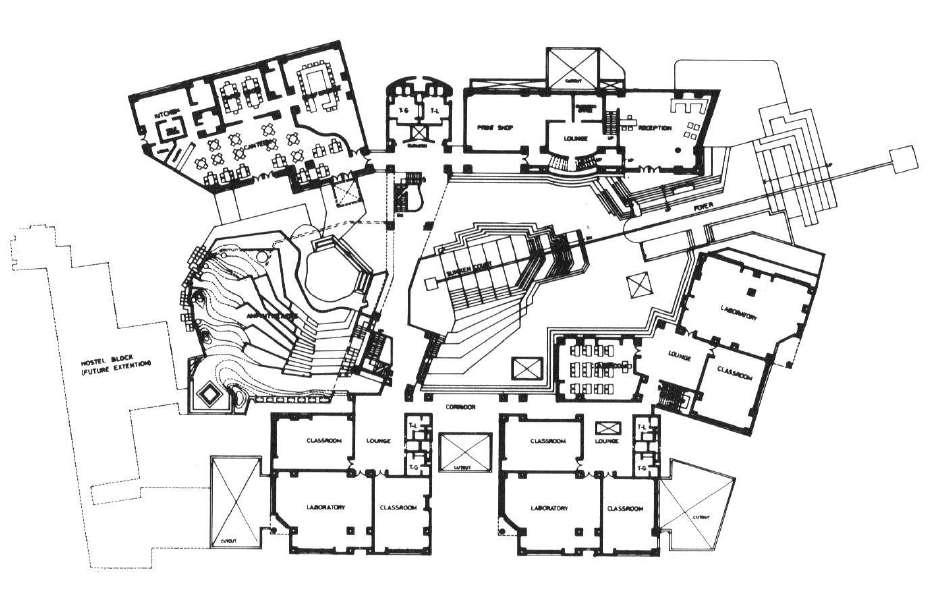
B.V. Doshi’s concept of the building revolves around the form-imagery perception that provides a building with life,historyandroots.TheNIFTcampus,thusbecomesavillage square growing organically over time to become a theatre like scene forunfoldingdrama ofdaytodaydailylife.
AccordingtoAr.B.V.Doshifollowingreferenceshavebeenused:
STEP WELL: The surrounding platforms and galleries lead to a water body which is in thecentreandaccessedthroughsteps.
INDIAN BAZAAR: The idea of Indian bazaars which are inverted relating to the theatrical quality of fashion and traditional chowk or mohalla to foster a sense of community.
KUND: This is the main dominant feature for the formation of institute design which guidesthewaytothecampus.
1. The plan follows the site boundary with a setback of 6m to maintain its character
2. The openings are designed such that they maintain a visual unity in their form andproportion.
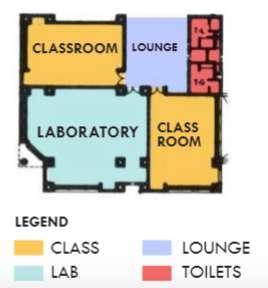
3. Academic clusters have been grouped together to form units comprising class rooms,labs,commonlobbyandservicespaces.
4. Thebuildingcoversalmosttheentiresiteleavingverylittlegreenarea.
1. Building is aligned with its long sides along the NW and SE axis, facilitating goodexposuretothesunandbreeze,atcertaintimescausingglare.
2. Different blocksofthebuildingcomplexareplacedaccordingtothesitelines.All theperipheralbuildinglinesareparalleltothesitelines.
3. Openings for light and ventilation have been sacrificed for aesthetic considerationsratherthanclimaticcomfort.
1. Thesiteissituatedonflatland.
2. The kund and the levels are all architect’s creations which have changed the overallsitecontours.
3. Theaccessisthroughaplotwhichisreservedforzonalgreenareanowhandledby NIFTontheconditionthatabuildingshallbeconstructedonthispart.
4. The landscape is all planned with no trace ofanynaturalgrowthofvegetationbut main focus has been given to the hard landscape neglecting the effectiveness of softlandscape.
Thecampusisbasicallydividedintothreebasiczones:
1. The academic block is similar in plan and function as well, it occupies the upper portionofthesite.
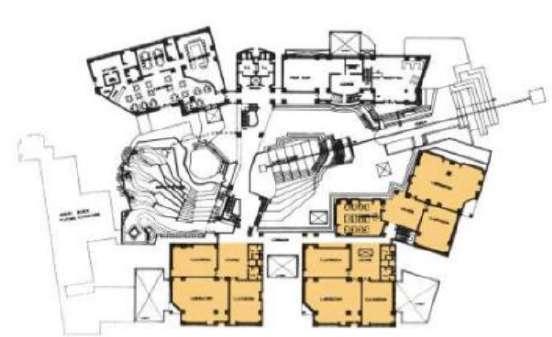
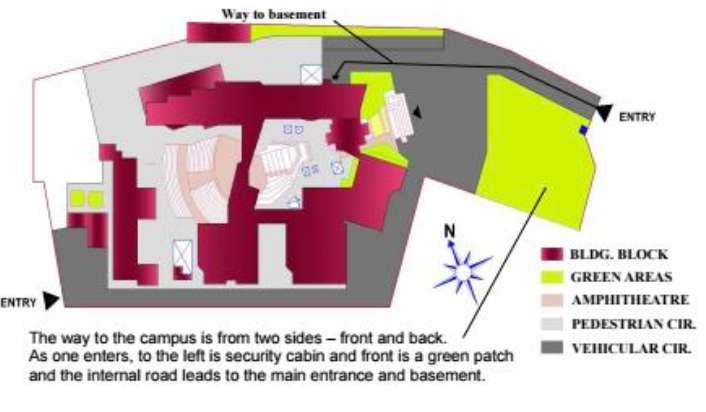
2. The administrative block isalongwiththecanteenandthelibraryisintheopposite directionof theacademicblock.
3. Hostelblockisplacedinthebackofthesite.
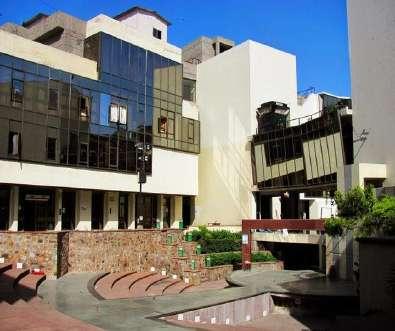
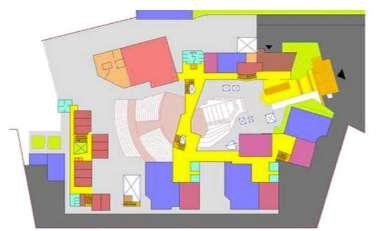
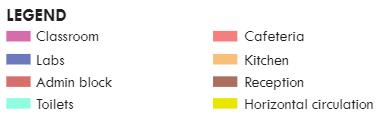
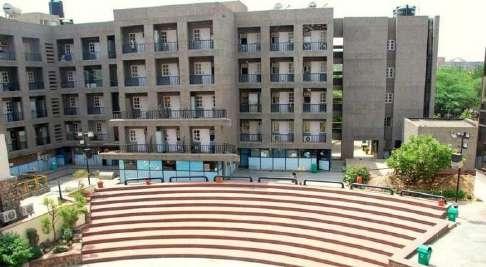
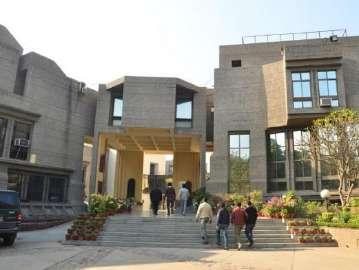



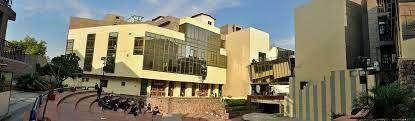
1. Differentblocksacquiredifferentshapesandformsdependinguponthefunctions theyareaccommodating.
2. Permeabilityoftheblocks,duetoaccessibilityfromallthesides.
3. Thebuildingblocksareconcentratedaroundthesunkencourtthusgenerating activityandcreatingalivelyenvironment.
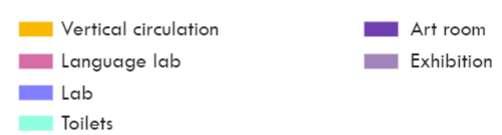
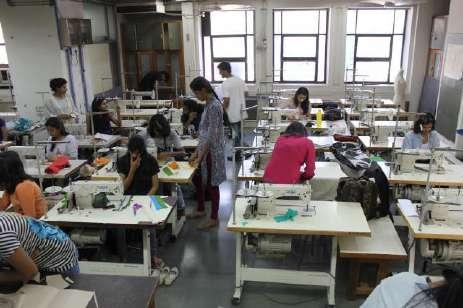
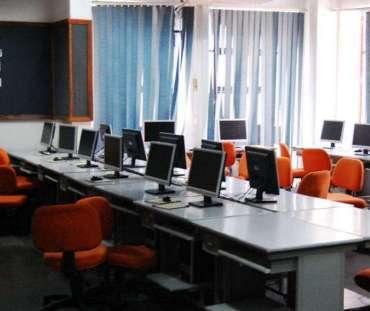
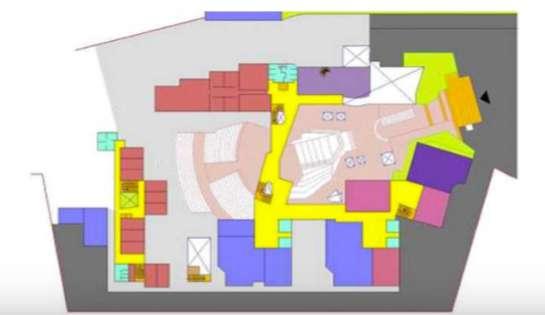

1. Inthethirdfloor,thelibraryisusedbyallstudentsandoutsidepeoplefromthe industryandprofession,forresearchandreferencework.
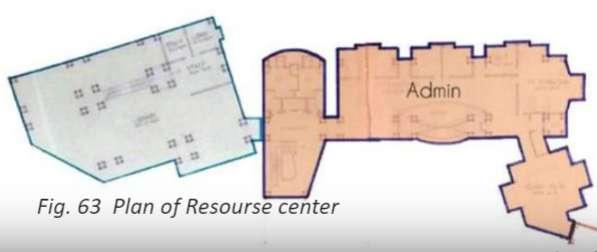
2. Resourcecenterconsistsofavaluableaudio-visualcollectionofvideotapes, slides,CDsandphotographs.
3. Resourcecentersalsoconsistofmaterialcollectionoftextile,costumes,jewellery andotherrelatedreferencematerial.
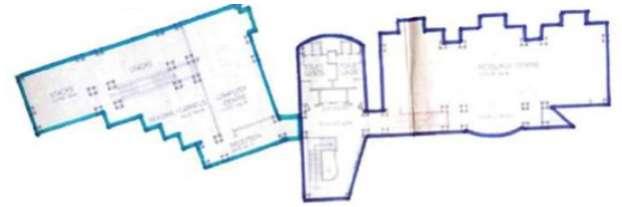
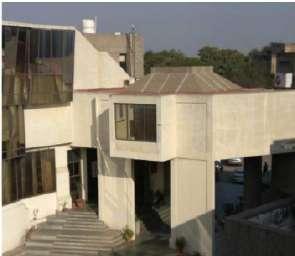
4. Information technology is becoming anintrinsicelementofallthestudyprograms at NIFT The computer labs are well-equipped with hardware silicon graphic and workstations,plotters,whiteformatprinters,soundmixers,digitalcamerasetc.
5. The resource center has around 15000 books relatedtothefield.Itisaccessibleto everyone,evenforthepeoplewhoarenotfromthisinstitute.
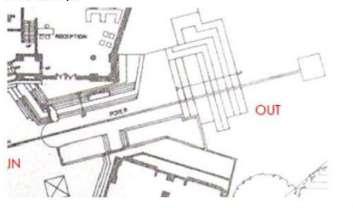
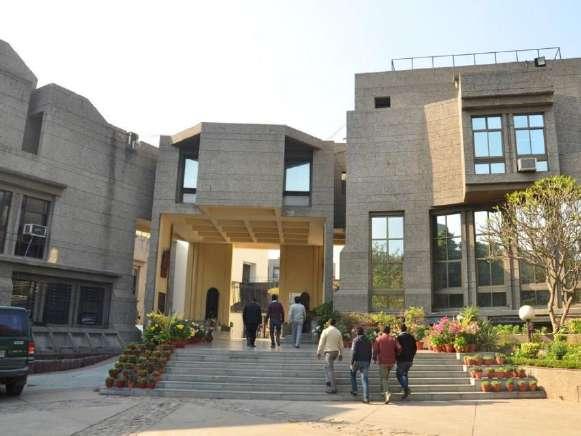
Entry to the site is through an inward looking road withparkingbaysoneitherside.The flooringpatternleadsthroughtheentrancefoyer.
Thedoubleheightgatewaylikegategiveswaytotheacademicaswellasadministrative blockreachedbyaseriesofsteps.
1. Itisaseriesofstepswithseatingatvariouslevelsfromtheentranceplazagiving aninformalatmospheretothearea.
2. Thefoyerleadstothereceptionandalsoopensoutofthesunkencourtyard.
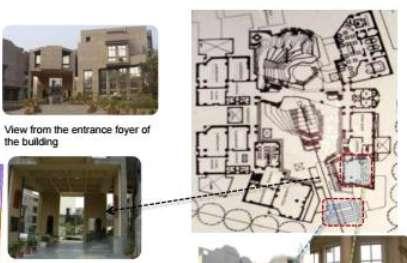
It is a large 10x10m double height space with offices at ground level merging with exhibitionspaceonthefirstfloor.
It occupies the ground and mostofthesecond flooroftheadminblock.Officesandbank extension counters are on the ground floor while the second floor houses senior staff. Executive director, accounts office etc, is located on the second floor. The lobby overlooksthekundandcentralcourtyardontheoutside.
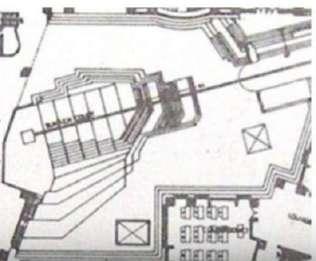
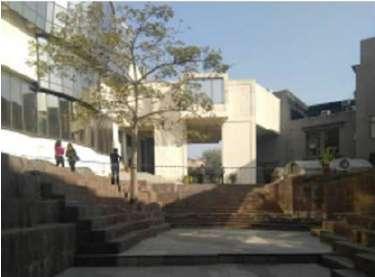
The central kind is reminiscent of erstwhile stepwells and baolis.Earlier,thereusedtobe an actual tiled water channel which has been covered uptorenderthespacemoreusable.
The kund acts as a space for congregation, where students spill out of their classes to socialiseandinteract.Theactivityincreasessignificantlyduringeveningandlunchhours.
1. Thewholecomplexformsavibrantcomposition.
2. Theacademicblocksareconnectedthroughdifferentsystemsofcirculation overlookingthecentralcourt.
3. Academicfacilitieshavebeen providedintheareasjoinedtogetherintheformof acluster Theclustercompriseslobby,lecturerooms,labs,toilets.
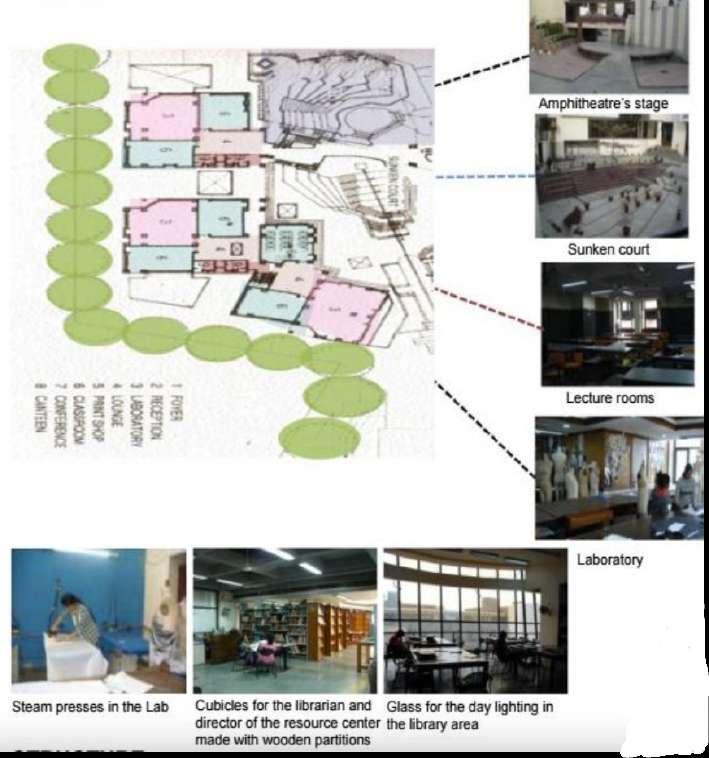
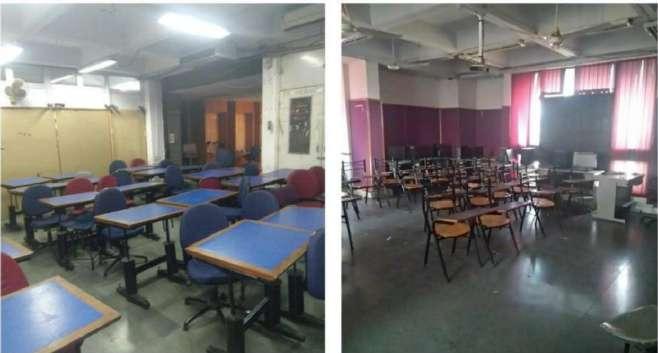
Thelecturehallsareequippedwithoverheadprojectorsandsoftboards.Lockersare placedoutsideindepartmentlobbiesthoughitcanbebetterplacedinsidethematerials laboratorieswhereitisrequiredmostly.Seatinginmanagementdepartmentsconsistsof movablechairswithbuiltinflabsforwritingwhereasdesigndepartmentshavetablesthat arerequiredforstudentstodrawaswell.
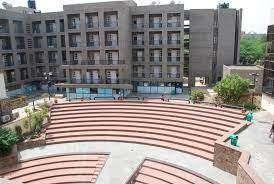
1. Itismainlydesignedtoattractpeopleforfashionshows.
2. The amphitheatre was not constructed as it was designed.Itwassupposedtohavethe stage floating in the water body below, but the direction of the stage has also been changed,withouttakingtheconsiderationoftheorientationofthesun.
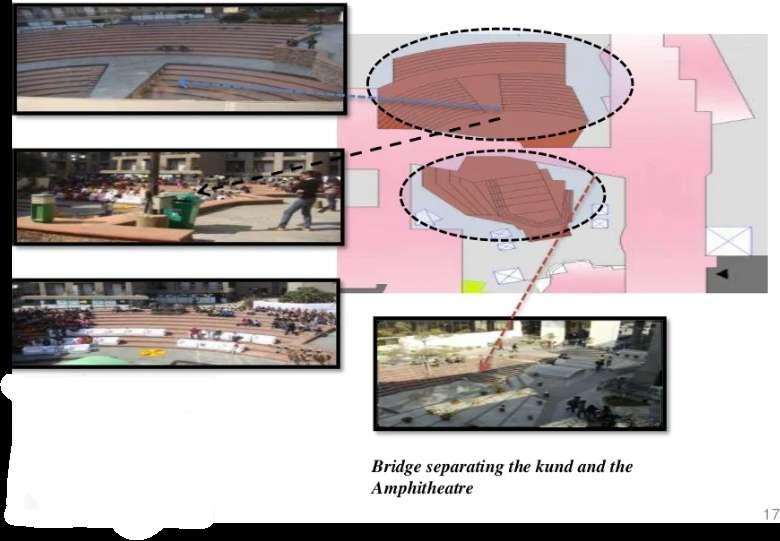
3. Totalseatingcapacityisfor300studentswhichisnotlargeenoughforgatherings.
4. Areacoveredbyamphitheatre=319.35sq.mts.
1. Pedestrian pathway which leads to the main building block from the main entrance.
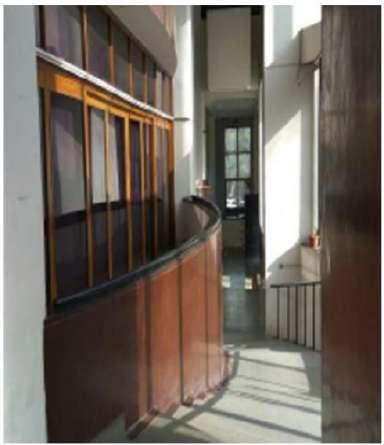
2. The components of horizontal circulation are enclosed corridors which connect theadministrativeblocktotheacademicblockattheupperthreelevels.
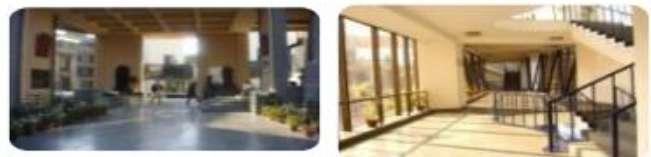
3. Bridge acts as bothtransitionalaswellasinteractivespacebetweenacademicand administrativeblocks.
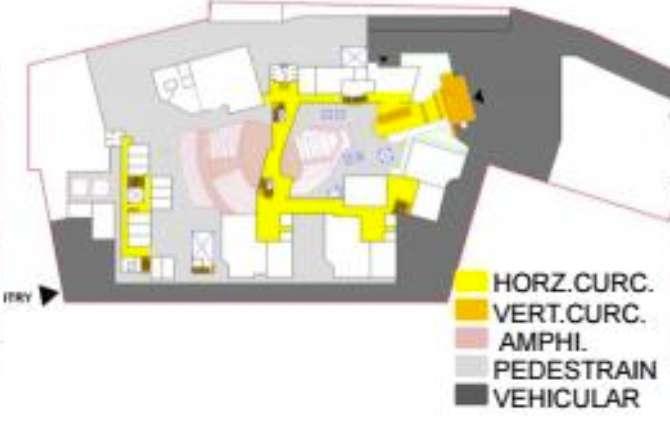
1. The vertical system of circulation is through small lobbies by means of lift and staircases which are grouped together at different points in the building blocks. Theirsegregatedarrangementprovideseasyaccessateachfloor
2. There are service staircases which resemble the traditional straightflightstaircase ofJodhpurfort.
● Open parking has been provided for 20 cars and 40 scooters along the paved access to the building. One side is flanked by staff car parking and the other by visitorsparking.
● Covered parking has been provided for 100 cars in the basement and light is provided through randomly placed cut outs and glass bricks on periphery of the internalcourtswhicharenowusedasmultipurposehallsandoffices.
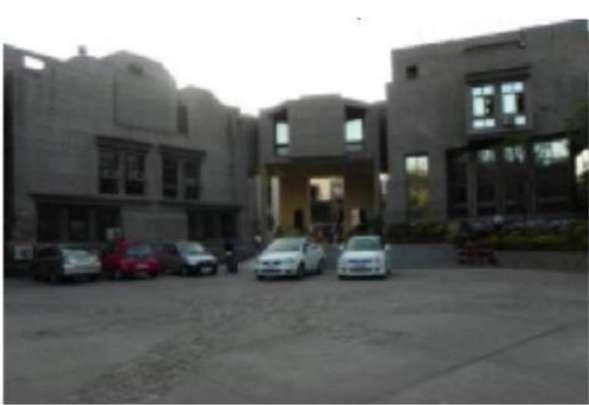
● Parkingforthehostelblockisprovidedonstiltsfor25cars.
● Open parking is also flanked by greenery with earth mounds, flowerbedssoasto addrichnesstothespaceenclosed.
● This complex is based on the frame structure square module has been followed up.
● The 7.88mts grid of square hollow columns (servingasducts)worksasavertical plenumforfutureairconditioningandevaporativecoolingsystems.
● The roofing is done with waffle slabs (1.7m x 1.7m)thusprovidingacolumnfree space of 6.85 sq.mts, this subdivision is used as a basic module for all the componentsofthebuilding.
● The external thickness of 990mm which furtheractsasanadequatesunprotection forthewindows,providinginsulation.
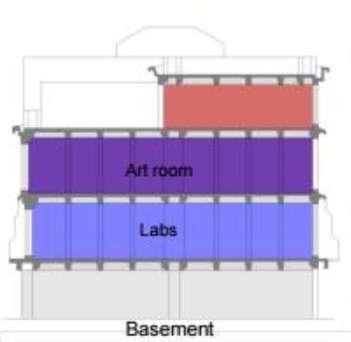
● Structure cladding RCC and brick walls, random rubblestonemasonryonsome part of the plinth, walls in some places, imported float glass used as a special material as a non-reflecting glass used as a complete wall, steel frame screened withreflectedglassanduseofvibrantcoloursintheinteriorspaces.
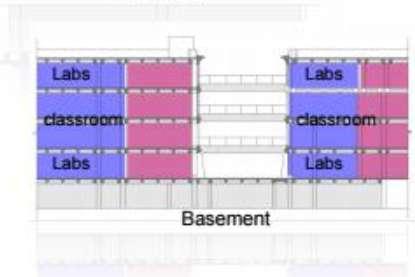
● Floor finish Block granite and white marble check flooring in reception hall, kota green and Jaisalmer yellow in corridors, plain cement floor finish in classroomsandlaboratories,chipflooringinexhibitionhall,stoneinopenspaces.
● Windows–Jharokasoftraditionalarchitecture.
● FacadeTreatment Theexterioralthoughuniformlyfinishedingreycolouredgrit, theinteriorsinwhite,greyandgreensofthecourtreflectedintheglasswall.
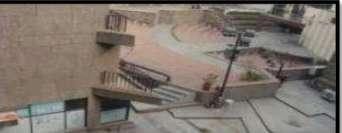
● Theinstitutegivesafeelingofarichlylandscapedenvironment.
● Siteboundaryislined with deciduousandevergreentrees.
● A series of high and low platforms, soft and hard landscaping have been used in theamphitheatrecourt.
● In the surrounding area of Kund, soft landscaping is done and is paved with cut outsforbasementlighting.
● The central kund is the most attractive design element used in the designing of NIFT,Delhi.
● Since this was one of thefirstNIFTsconstructed,thedesigncriteriaisfollowedin thesubsequentnewcampusesofNIFTaswell.
● Special care hasbeentakentoprovidemaximuminnercomforttothestudentsand thatallthefunctionalactivitiescanalsobedoneinashadedzone.
Client:MinistryOfTextiles
PrincipalArchitect: SanjayMohe
Consultants:SEMACPvt.Ltd
Contractors:J.MC.ProjectsPvtLtd.
YearCompleted: 2002
Climate:SemiTropic
BuiltUpArea: 14,548SQ.M
SiteArea: 18,996SQ.M(4.3Acres)
GroundCoverage:37%
ProjectCost:11.6Crores
FSI:0.8
Totalnumberoffloors: G+2
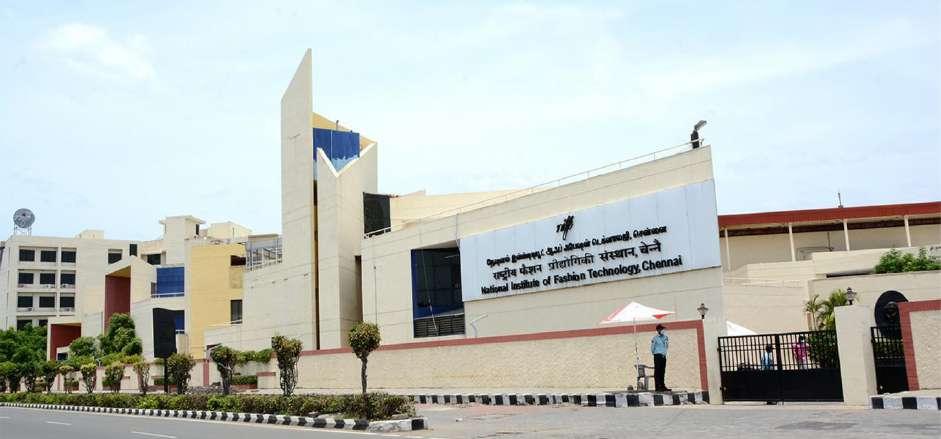
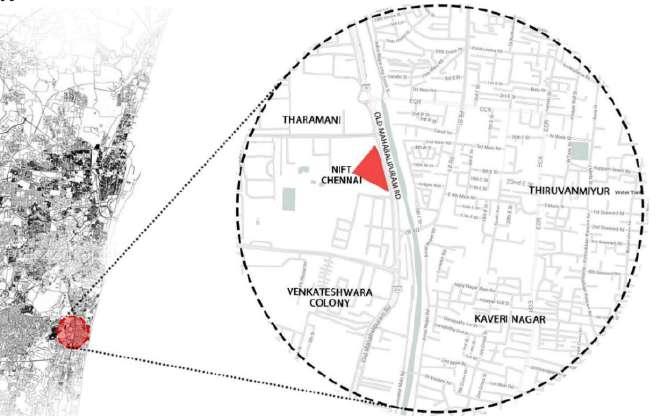
NIFT Chennai is located in semi-tropical climate near tidel park on Old Mahabalipuram Road (OMR), Chennai. The campus is connectedtoThiruvanmiyurrailwaystationandis mostly surrounded by residential areas nearby The site is triangular in shape that is flanked by roads on two sides and elevated railway line on thethird.Thereisanelevated railway line that intersects the old Mahabalipuram Road at a very sharpangle,whichisa uniqueaspectofthesiteandhasbeencarriedthroughtothebuiltform.
When the campus was being designed, Sanjay Mohe’s approach to design was through generatives ideas. The design moves away from static, monochromatic architecture that dominates his earlier projects. The generative idea for the design emerges from a surprisinglyunusualsource atriangularcousinofRubik’scubethatoneofhisassociates had brought into the office one morning. The colourful triangles of the cube render a vibrant composition of peaks and niches thatinspiredMohetowardstheplayfuldesignof the roadside façade at NIFT, Chennai. These triangular pockets are devised as wind catcher. These cubes also act as a buffer from the harsh Chennai sun and the noise from thebusyroad.
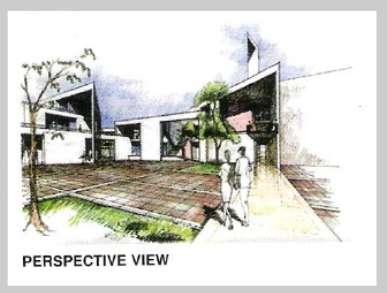
The triangular corner of the site points towards the approach from the city. The arrival plaza has an enhancing low height red wall leading both to the main circular entrance
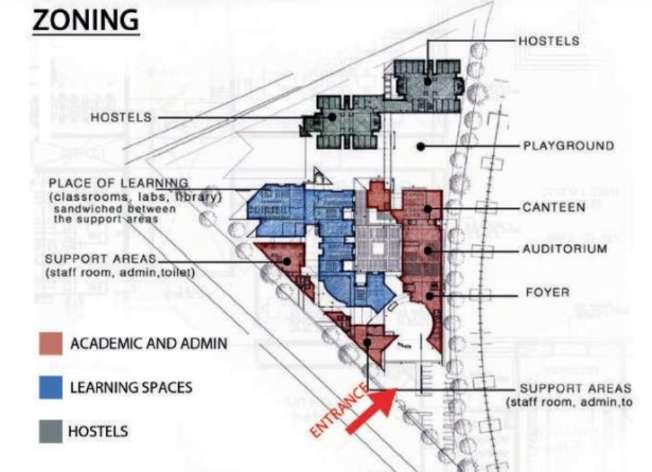
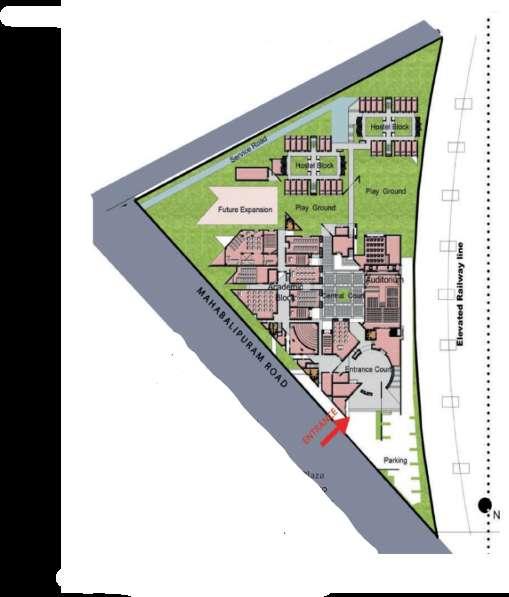
courtandtotheauditoriumwhichhasawelcomingentryguidedbyachromeyellowwall. The entrance court again gives one the choice to proceed ahead taking either of the circular paths depending on the reason to be there. The entrance flag off the open to sky bridgethesefactsasniceoverlookingspace.
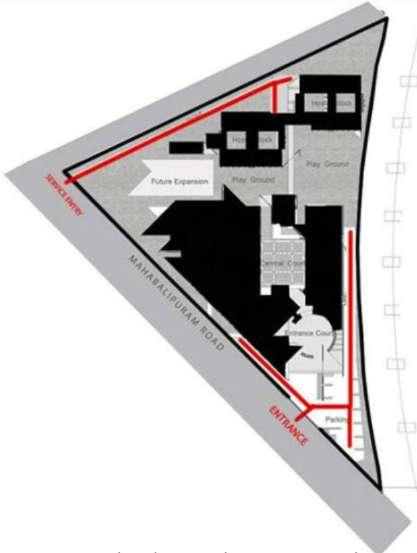
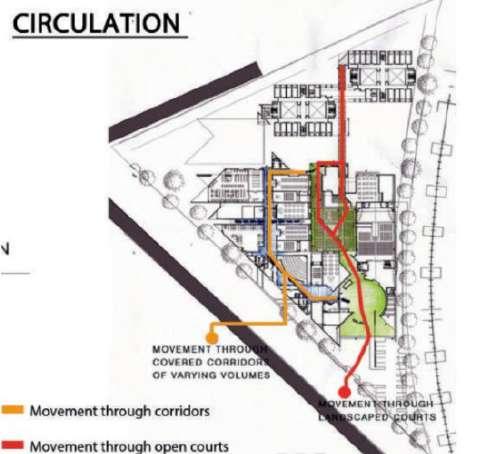
Pedestrian movement has been done through open courts and through corridors as the climate is too harsh soforthecomfortofpeople,ithasbeendonethroughshadedareasof the campus. Vehicular movement is kept separated for academics and hostels. For access to vehicles in the academic block, it is kept in the front with parking facilities. For vehicular access to the hostel, it is given from the south side which is only catering to hostels.
The site is abutting a railway track on its west side and there is a high trafficroadonthe other two sides. Hence, the quiet areaofthesiteisidentifiedastheinnerportion.Support areas such as toilet core, staff room, adminareasarelocatedfacingtheNHtoavoidnoise pollution while the high insulating wall of the auditorium acts as a buffer against train soundvibration.Hostelblockhasbeenzonedattherearendofthesitewhichisconnected bymeansofanopencorridortotheacademicblock.
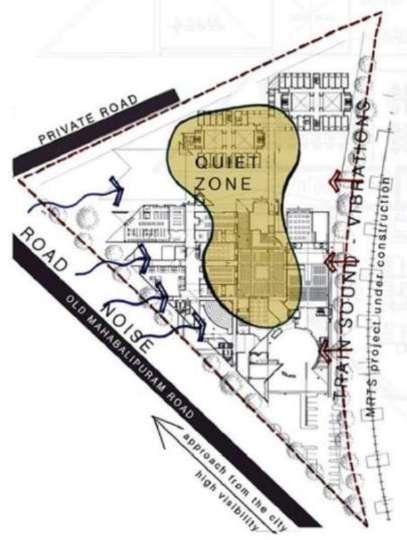
The campus has been laid out so that the building is separated by deep through fissures that serve as wind tunnels and light wells. The sea breeze makes itsentryinplacesinthe building, coming through the narrow and tall gaps between the angular units on the seaward side of the building; however,thereareafewcomplaintsbythestudentsbecause of absence of proper cross ventilation inseveralclassrooms.Lightfloodsintotheheartof the building andthatbringsasenseoflayeringwhichisdefinedbyplanesofvaryinglight intensity.There is a heightened awareness of light, which is always a salient feature of sensitive architecture. It is affected by a movement path that takes one through a progressionoflightanddarkzones.
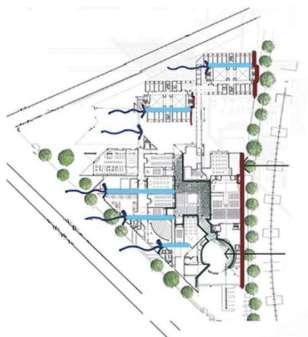
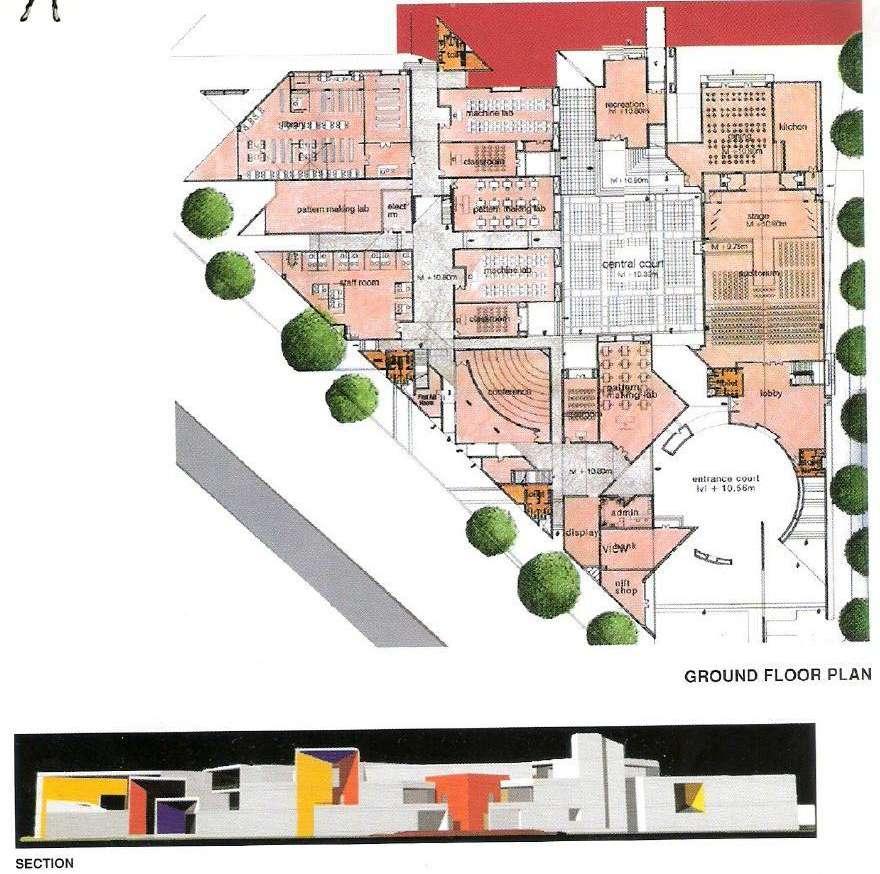

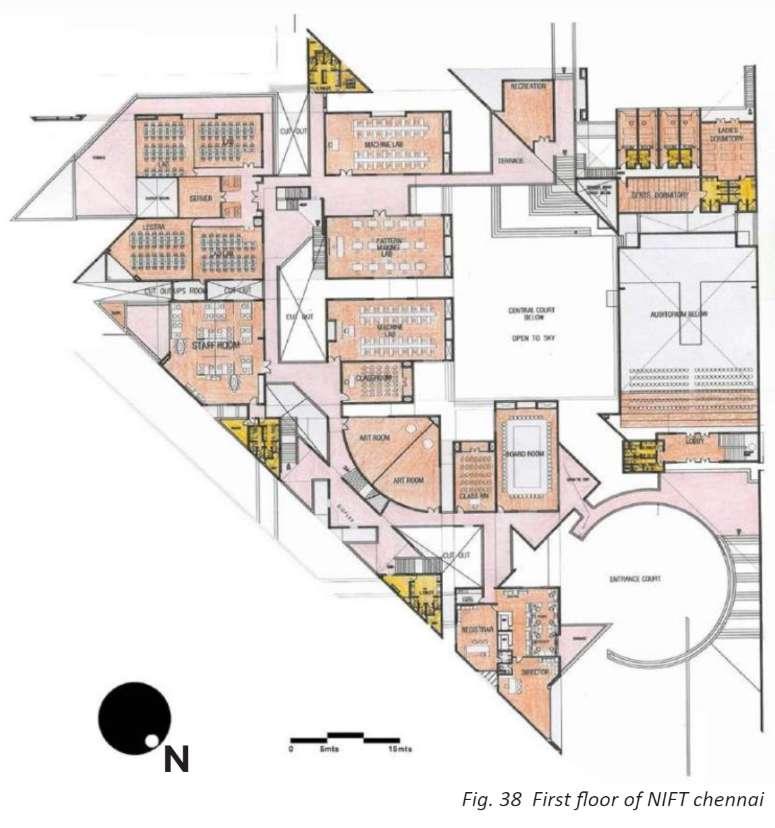
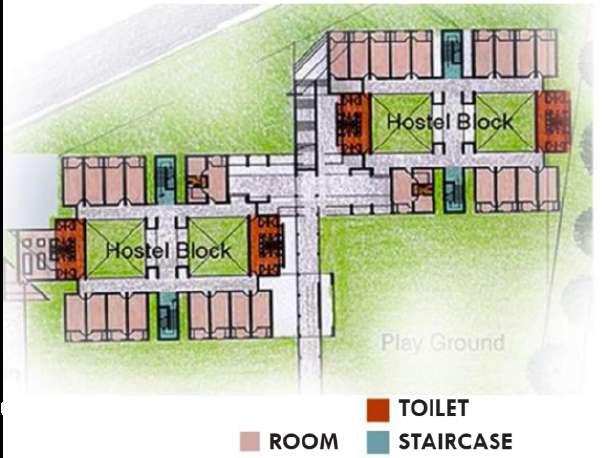
● The classroom is internally connected to an art roomandlabswithartrooms opentoopencourts.
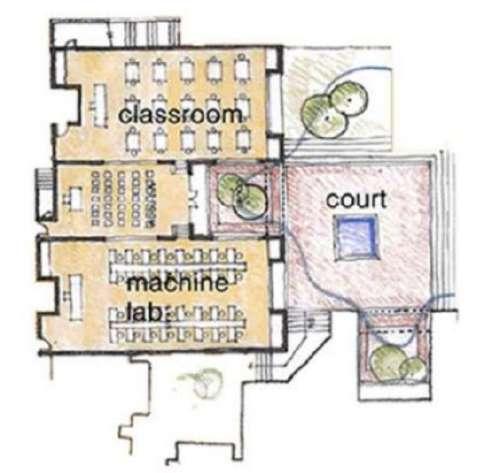
● Designeducationisasmuchtaught,asisassimilatedthroughobservationand analysis. It has been observed through research that interaction between studentsplaysaninvaluableroleintheiracademicprogress.
● Considering the heavy traffic the classrooms are designed inside while the administrationfacestheroad.
● Allclassroomsopenintothecorridorandcourtyardoneitherside.
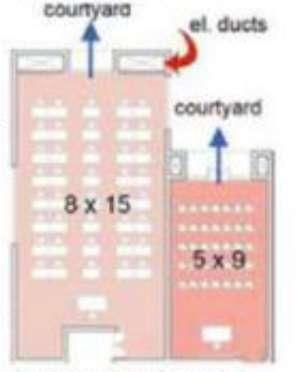
● The classrooms are internally connected to the lab indirect entry on either side.
● Tobringoutacreativeenvironmentsomepatternsareusedonthewalls.
● Eachclassroomhasanareaof90sq.m.
● The students are provided with individual seating in all the classrooms.However,thereisnostoragespacegivenwithintheclassroom.
● Each classroom consists of chairs with the facility of writing and overhead projectorwithscreen.
● Labsareprovidedonallfloorsandthereisnospecificareaforeverykindoflabs.
● Allthelabshaveanareaof200sq.m
● Thegarmentconstructionlabisdesignedfor32studentsbut50isprovided presently.
● Thesizesofthefurnitureforconstructionlab–
1. Sewingmachine-1.25x.6x.76m
2. Ironingtable-1.5x1.x.75m
● Thesizesoffurnitureforpatternmakinglab–
1. Workingtable-1.2x1.25x.8m
2. Ironingtableandstorageunits
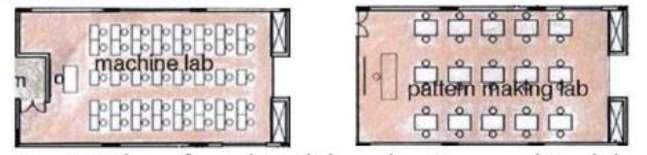
3. Sewingmachines
4. Fusingmachines-1.5x1.2x1.2m
● Artroomconsistsofworkingtable-.75mx.6x.75m
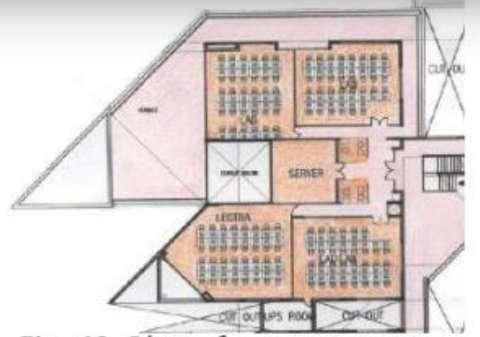
● The computer lab is located on the first floor with all the labs that are placed adjacenttoeachother.
● Eachlabhasanareaof90sq.mfor32students.
● Areaofthecomputercenteris400sq.m
● The lab is provided with an entrance lobby and security and hence restricting entry
● Libraryconsistsofareferencesection,stackareaandspacestodisplaymaterials.
● Resource center offers various services like photocopying,scanningofdocuments etc.
● Thelibrarywasdesignedtoprovideanentrancelobby,capacityfor70students.
● 12bookshelves,librarianroom,storereferenceandmaterialwing.
● Collectionof4200booksisthereinthislibrary.
● Bookshelves–6nos,doublesizeddimension220x60x200(cm).
● Materialshelfdimension–180x80x200
● Thereare2staffroomsprovidedintheblock,onthegroundandfirstfloors.
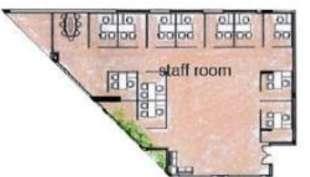
● The staff room is provided with the staff tables in an open office manner.A discussiontablehasbeenprovidedalongwithaseparatetablefordining.
● There is no separate toilet but has a balcony spacewhichoverlooksontothemain roadforthestaff.
● Thecapacityoftheauditoriumis370withanareaoftheauditoriumis1420sq.m
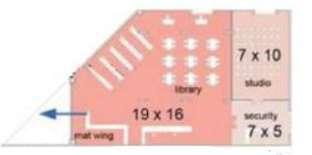
● There is a separate entry for the public,withhugeflightstepsleadingtothelobby spaceorbalcony,totheentrancecourt.
● On the ground floor there is a spaciouslobbywhichdirectlyopenstotheentrance court.
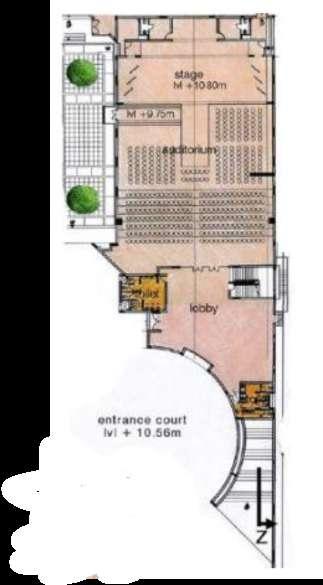
● Apart from the main staircase there is a separate staircase going directly to the projectorroom.
● The auditorium is provided with the lower able ramp, the ramp dimensions are 6x3x0.8m.
● The designing of spaces has been done in a good way so that the outside noise doesn’thampertheteachingsofthestudentswhichisanimportantfactor
● The spaces inside the campus have been managed well and the physical connectivityisalsomaintainedthroughoutthedifferentspaces.
● Propercarehasbeentakentomaintainthemicroclimateofthecampus.
● Thefaçadevolumesaddauniqueidentitytothecampus.
National Institute of Fashion Technology (NIFT) is ahighereducationinstituteofdesign, technology and management as the main department of learning to the students with housing facilities and provisionofsportactivitieswithinthecampus.Themainfocusisto make a sustainable campus with the use of passive cooling techniques and natural ventilationetc.
Thecampuswillbedividedinto5differentzones:
● Academic block The academic zone andotherareasoflearningwillbeplacedin the interior while services areas, staff rooms and other support rooms will be placedintheperiphery
● AdministrationBlock
● Recreational Block There will be bicycle access and parking throughout thesite making the campus cycle friendly Theconnectinglinkbetweenstructuresi.e.,the pathways would be ending on a landscape element and other sport activities such asbasketballcourt,gymetc.
● Commercial Block The multipurpose hall will be accessible to all the outsiders so it will be at the entrance of the campus, where othercommercialactivitieswill takeplace.
● HostelBlock Theaccommodationonthecampuswillbemadeforbothmaleand femalestudents.
As found from the climatic data of India and Goa it is established that Goa, lies in the climatic zone of warm and humid. Hence, there has to be certain measures taken for the passivecoolingstrategies-
1. FORM AND PLANNING: The planning of NIFT, Goa can be done in such a way with internal courtyards having recreational activities in between and shaded corridors. This will ensure that there is good amount of cross ventilation, there is no direct heart radiation in the interior spaces as well as provide good viewpoints. It won’t obstruct the view of the sea from the main road and peopledrivingontheroad willenjoythescenery FIGURE37:EXAMPLESOFCAMPUSPLANWHICHCANBEIMPLEMENTED
2. ORIENTATION OF THE BUILDING: The building's longest façade/ walls should face north and south direction while the shorter walls should face east and west. Placing the building in such a way will ensure the inner parts receive maximum heat duringwinters.
3. COURTYARDS: As per the design idea for NIFT, having a courtyard is amandatory design requirement. If the roof is slopping towards the internal courtyard, then itwill help in sinking down the coolairintothecourtandenterthelivingspacesthroughthe lowlevelopenings,thehotairwillleavetheroomthroughhighlevelopenings.
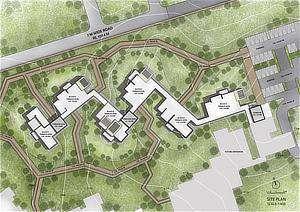
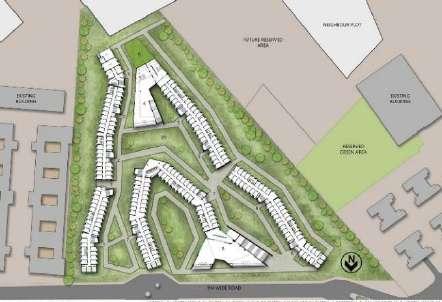
4. ROOFS:Therecanbeenergyefficientroofinginsulationmethodstomaintainthe interiorclimateofthebuilding.
● Deciduousorcreepercovercanbeprovided.Surfaceevaporationfromroofs willkeeptheroomscool.
● Theroofcanbepaintedinlightcolourstoreducethesolarreflectiveindexby 50%ormore.
● Theentireroofcanbecoveredinearthenpots.Thesecanalsobeusedto shadetheroofwithaninsulatedcoverofstillair.
● Theserooftopgardenswillprovideaplaceforthestudentstorelaxandalso willhelpinenjoyingtheviewofthesea.Additionally,solarpanelscanbeput astheroofwillreceivegoodsunlightduringthesummerseason.
FIGURE38: ROOFTOPGARDENORSOLARGARDENCANBEGOODWAYTO UTILISETHEROOFSURFACE
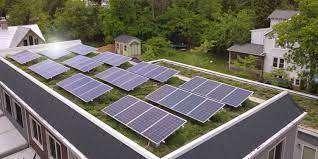
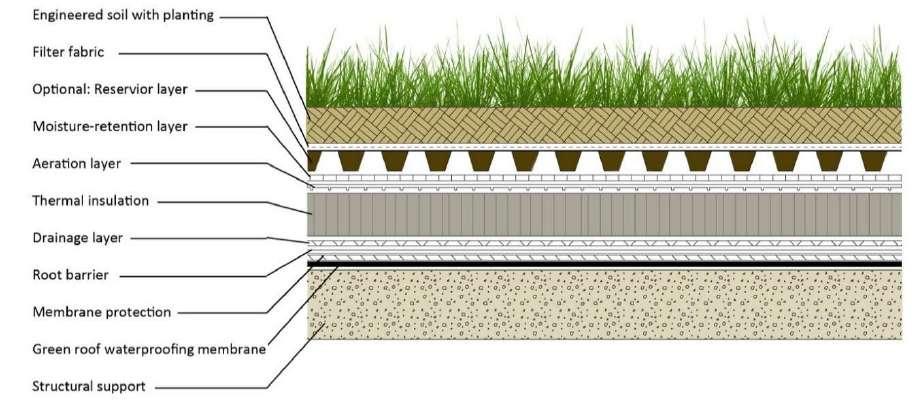
5. WALLS: Having good exterior wall cladding as well as air cavities will help in reducingtheheattransmissioninthebuilding.
● Thewallthicknessshouldbearound300mm.
● On the outside exposed wall applying light distemper colour will protect the interiorenvironment.
● Natural light can be brought inthroughtheuseofskylight,atriumsetcwhich arecoveredinglazingsystems.
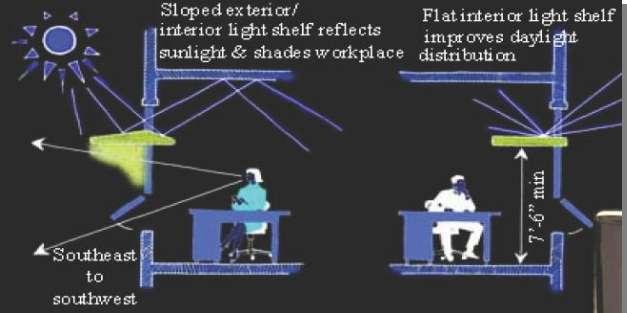
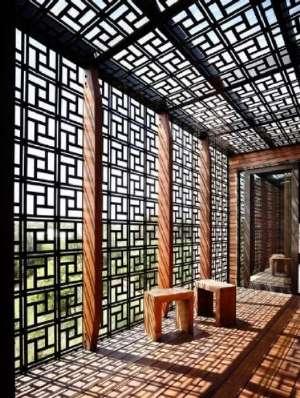
● Strip windows can be provided which give moredaylight.Thesecanbeused inclassrooms.
7. SHADING
Having fins in the façade will help in protecting the structure from solar radiation. Louvres can alsobeexperimentedwithwhichcanbemadeupof stone, ceramic, stucco or any kind of wooden material. These will further help in increasingtheaestheticvalueofthestructure.
FIGURE40: FINSANDLOUVRESPROTECTINGTHEINTERIORFROMTHE HARSHGLAREOFTHESUNASWELLASADDINGAESTHETICVALUE
Conclusion The design ideas provided can be implemented and utilised in a goodway to provide a good environment to the campus however, these ideas can be changed or modifiedaspertherequirementofthedesignprocess.
A detailed study has been done which shows different parameters that are related in creating a multipurpose areawhichcanbeusedinvariousactivitiessuchasanauditorium space or for any kind of fashion event.Thisdataandstudywillbeusefulindesigningthe commercialblockinthecampus.
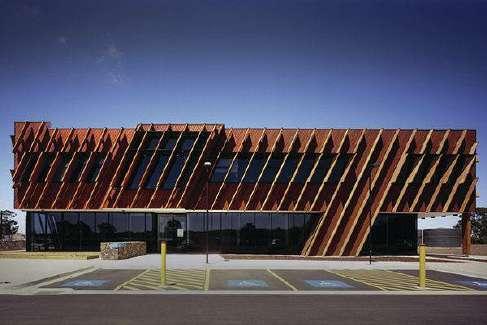
Through the research there are certain pointers that have been taken and understood for theintegrationanddesigningoframpsthatcanbecreatedinanykindofspaces–
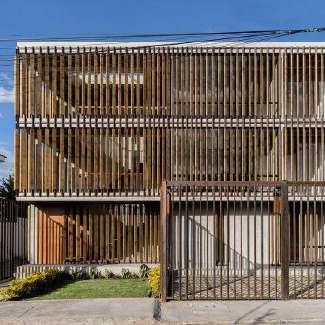
● To create any kind of fashion events or any other academic/institutional activities in the same space, having a black box theatrehelpsinbringingoutdifferentkinds ofstagevarietiesasperthechoicesoftheclient.
● The different layouts of stage and setups of fashion shows help us to understand howwecaninculcatedifferentwaysofpresentingoutbetterstagedesignoptions.
● The evolution of fashion shows has helped us to understand how certain pointers have to bekeptinmindwheneveronewantstocreateashowlikethisandsothese arethebasicrequirementsforthesame.
● The technical requirements, dimensions help us tounderstandinabetterwayhow aspaceistobemanagedandprovideabetterexperiencetotheaudience.
Rather than creating and exploring this space in a traditional way that keeps everything fixed, it hasbeenestablishedwiththisresearchtoevolvethespaceinsuchawaysothatit is more flexible in layout, planning and designing which can be changed as per the requirements of the clients or the designers based on their own interests and ideas. This brings out a good variety of new thoughts and designs which helps others in giving inspirationtothinkforoutoftheboxideastodesignaswell.
From the earlier times of fashion shows and designstothecurrentscenarioofthefashion world, we have come a long wayinshowcasinghowadesignerpresentstheircollections. Not only that but we also realised and understood the requirements, uses of other materials,andtheco-dependencyofeachparameterontheother.
With technology and innovation evolving more and more every day, it is safe to say that the future is going to be unpredictable but the basic parameters of designing is going to remainthesame.Basedonthis,onecaneasilycreatedifferentkindsoflayoutsaspertheir requirements and choice, bringing out ones’ownimaginationandideas,thusmakingsure thattheshowisasuccess.
1. UGPROGRAMME
● FashionDesign
● AccessoryDesign
● FashionCommunication
● TextileDesign
● KnitwearDesign
Noofstudentsperclass=45
Noofcourses=5
Noofyearsforeachcourse=4years
TotalnoofstudentsforUGProgramme=900students
2. PGPROGRAMME
● M.FashionDesign
● M.FashionTechnology
● M.FashionManagement
Noofstudentsperclass=45
Noofcourses=3
Noofyearsforeachcourse=2years
TotalnoofstudentsforPGProgramme=270students SITEAREA
● Selecting an appropriate site for an educational institute is an important consideration not only for the studentsbutalsothewholecommunityinwhichthe instituteisgoingtobemade.
● The government of Goa had shown their interest in setting up aNationalInstitute OfFashionTechnologyinGoa.
● Considering the present NIFT’s in India, the site area shouldbemorethan5acres andshouldcomeunderinstitutionalzoneindevelopmentplan.
● Every year there are so many tourists visiting Goa, so it’s a major tourist destination for tourism as well as fashion. Also, there is no such fashion institute likethisandstudentsgoouttopursueeducationinfashion.
● The site selected has an area of about 10 acres which is sufficient for the campus ofNationalInstituteofFashionTechnology
● Thesiteisverywellaccessiblebyroadsandbypublictransport.
● The site is quite airy as the site is situated very close to the sea so there is good flowofair
● The site is located next to Goa University and Goa International centre, which is one of the most important landmarks and is surrounded by institutions and guest houses.
● Thesiteisflatlandsothereisnoexternalmaintenance.
● The areawhereitislocatedhaslessnoiselevelsmakingitidealforaninstitutional building.
● TheareaisalsoaproposalsiteforNIFT.

ThesiteislocatedinTalegion,Goa,India.
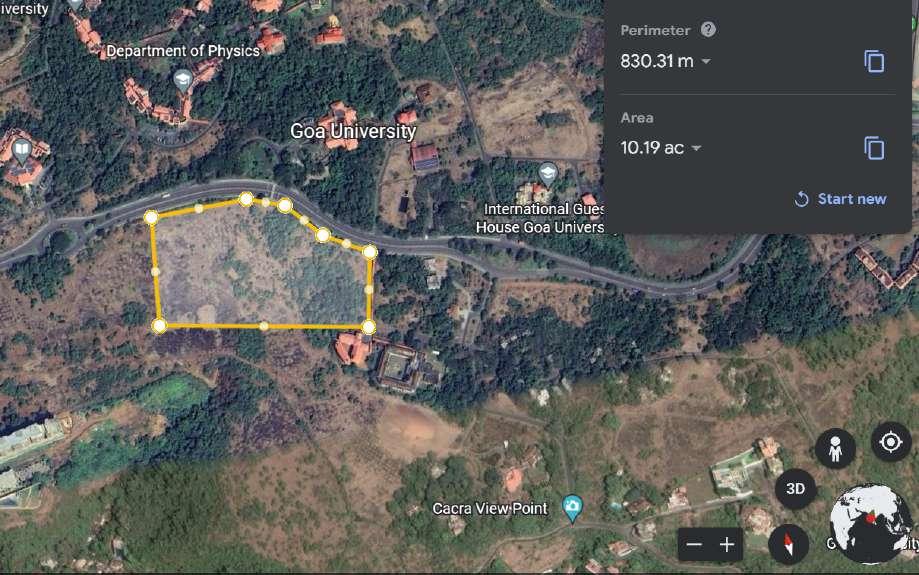
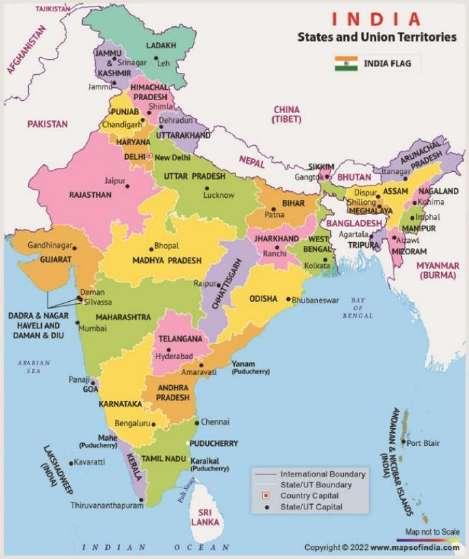
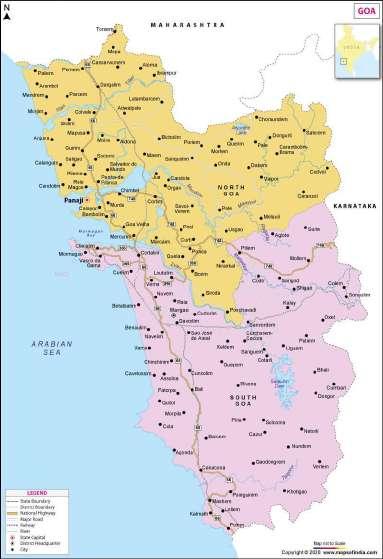
Capital–Panaji Language–Konkani,Hindi,English Population–1.82million Districts–2 Area–3702sq.km
Goa is one of the tiny emerald lands that is situated on the west coast of India. It is the 25th state of the Union states of India and was liberated from Portuguese rule in 1961. Until 30th May 1987, Goa was a part of the Union Territory of Daman and Diu when it was carved out to form a separate state. Goa has an area of 3702 sq.km and is further divided into North Goa and South Goa. Goa State's borders are established by the Terekhol River in the north, which divides itfromMaharashtra,byKarnatakaStateinthe eastandsouth,andbytheArabianSeainthewest.
It is a neighbourhood which is located in the southern part of Panji city which is the capital of the Goa state, India. It is bordered by the Arabian Sea toitswesternside,there are vast areas of fields to its east, while there is Vainguinim-Dona Paula to its south and Santa Inez-Bhatlem to its north. Taleigao this name isfromthelocallanguagewhichin Konkani means ‘a level of village that is neither on a hill nor in a valley This place is located intheTiswadiislandwhichbelongstotheGoastate'stalukas.Thisplaceismostly famousforitsimportanteducationalcampusofGoaUniversity
Taleigao was the granary of north Goa due to itsvastareasofagriculturallandduringthe Portuguese era because of the cultivation ofrice.Thisplaceisknownforitspalm-fringed beaches, paddy fields and Nagalli Hill which are bright green in colour, houses and mansions that are traditional in architecture, broad footpaths and roads, churches which are centuries old, chapels and temples, educational institutions,hotelsandrestaurantsand ofcourseitsinhabitants.
ByAir: Theairportisalmost30kmawayfromGoaUniversity.Onweekdays,withthe trafficduringpeakhours,itwilltakeaboutanhourtoreachtheairport.
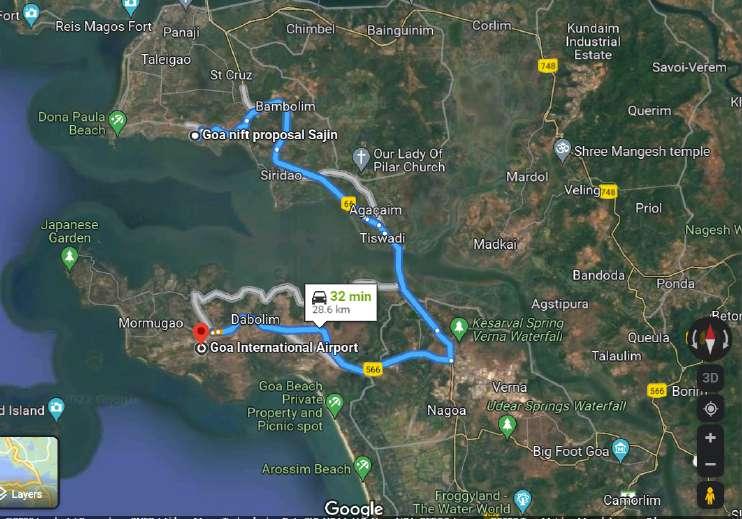
ByRail:
● The nearest major railway stations are Thivim which is about 30 kms away, Karmali 20 kms away in North Goa, Madgaon is 35 kms away while Vasco Da Gamais30kmsawayinSouthGoa.
● ThemajorstationsinGoaareMadgaonandVascoDaGama.
● However, trains coming from the north such as Delhi, Ahmedabad, Mumbai etc whichtaketheKonkanRailwaystopatThivimandKarmaliaswell.
● There are buses running daily between Mumbai, Bangalore and Pune to Panaji, Goa.
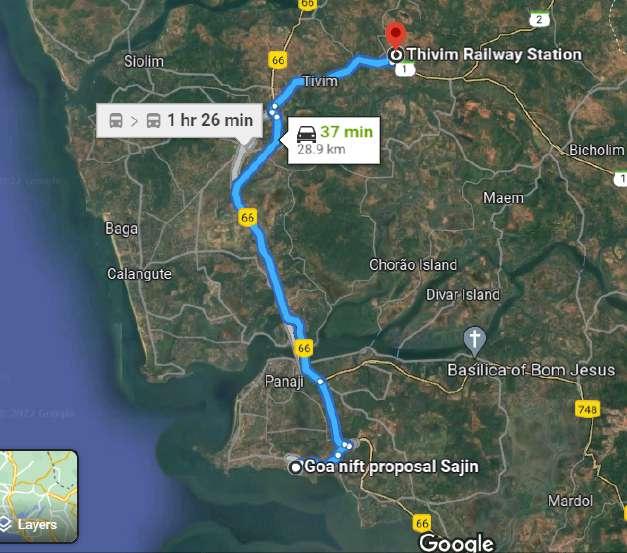
● ThebusesmostlystopatKTCBusStandwhichisjust17minsfromNIFTsiteand KadambabusstationinPernem.
● In addition to this, there is availability of autos and taxis as well to theuniversity area.
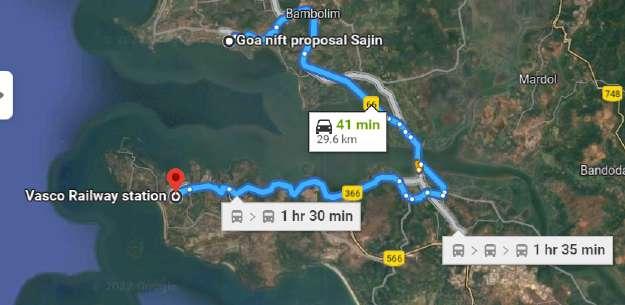
● Thefrequencyofbusesisalsoless.
● People mostly prefer the use of private vehicles rather than publictransportinthe Universitycampus.
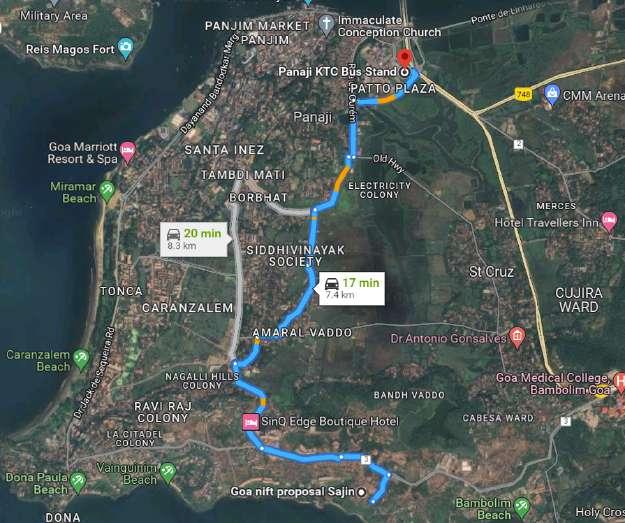
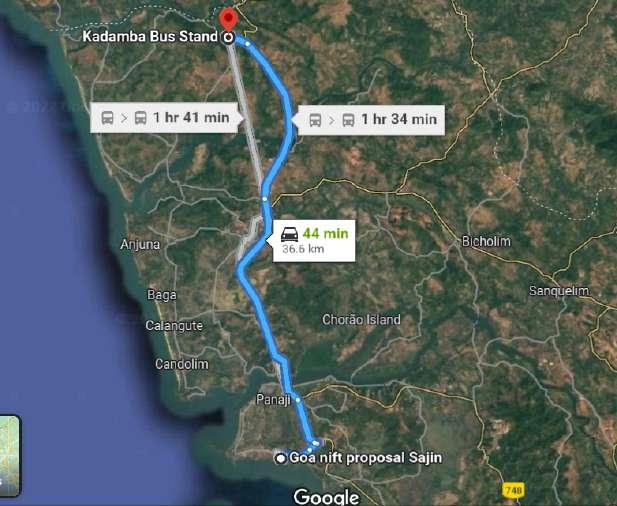
6.5.1.
6.5.2.
SITEAREA=APPROX40,000SQ.MTS (10ACRES)
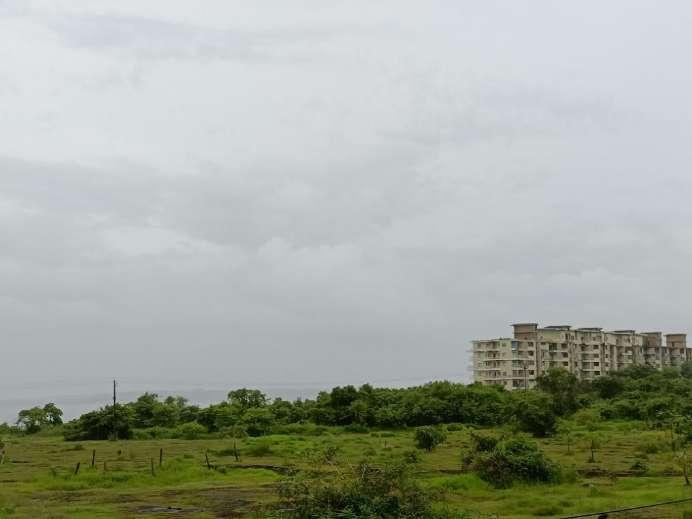
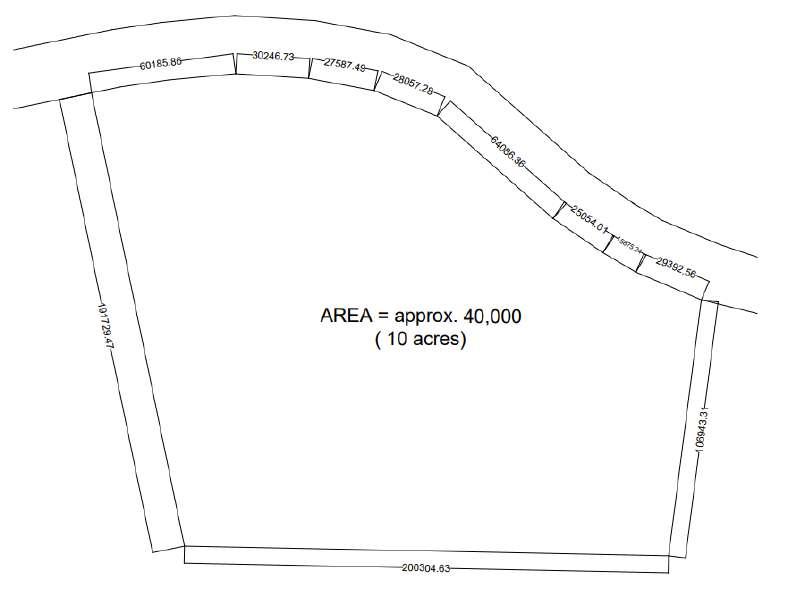
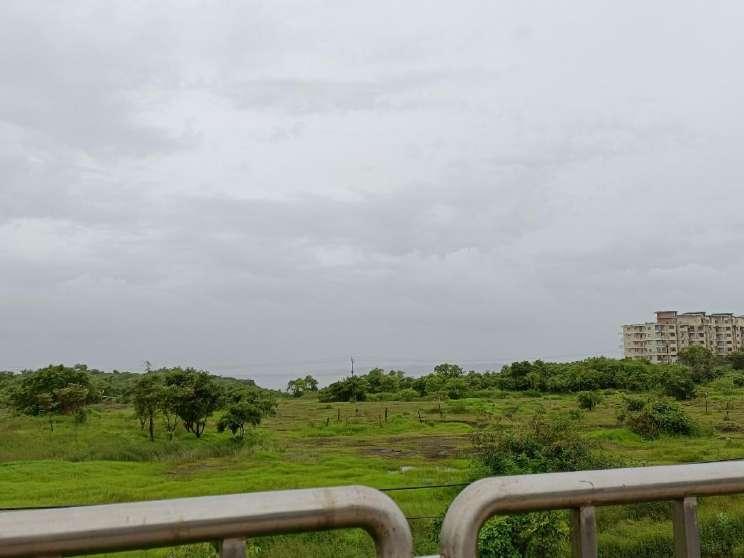
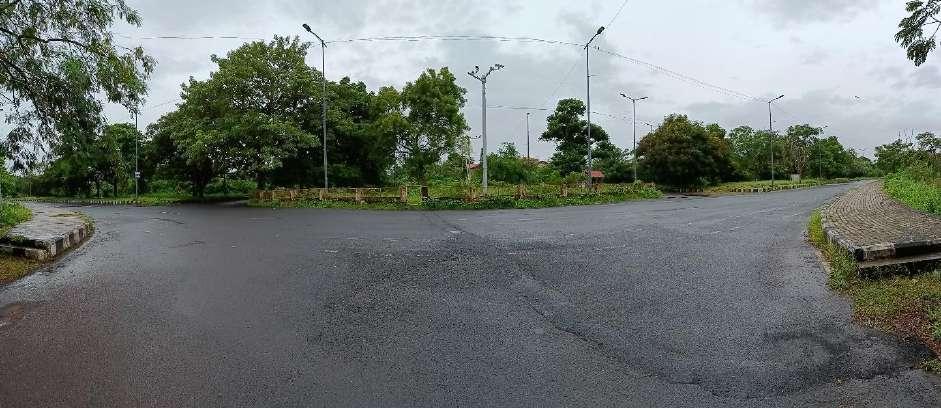
● The interior road which connects it from the main road to the site is 3m in widthandisasinglelaneroadmostly
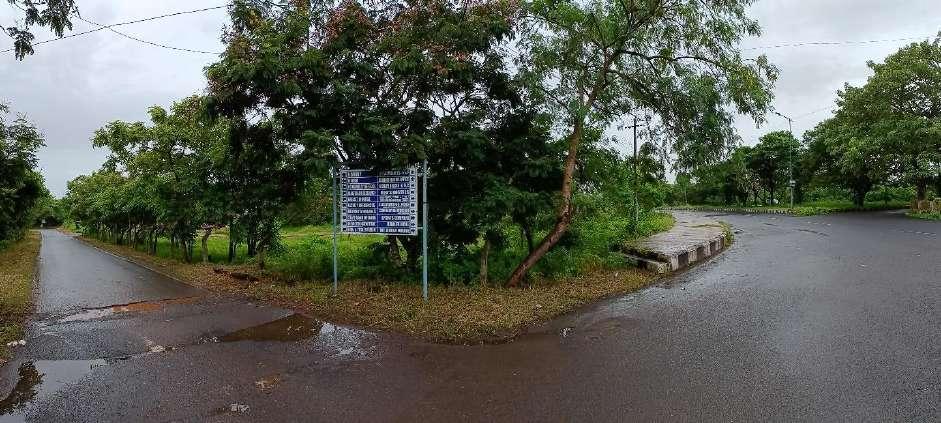
● The main accesstothesiteisthroughtheinteriorroadwhichisconnectedfrom theinteriorsideandalsothroughthemainroad.
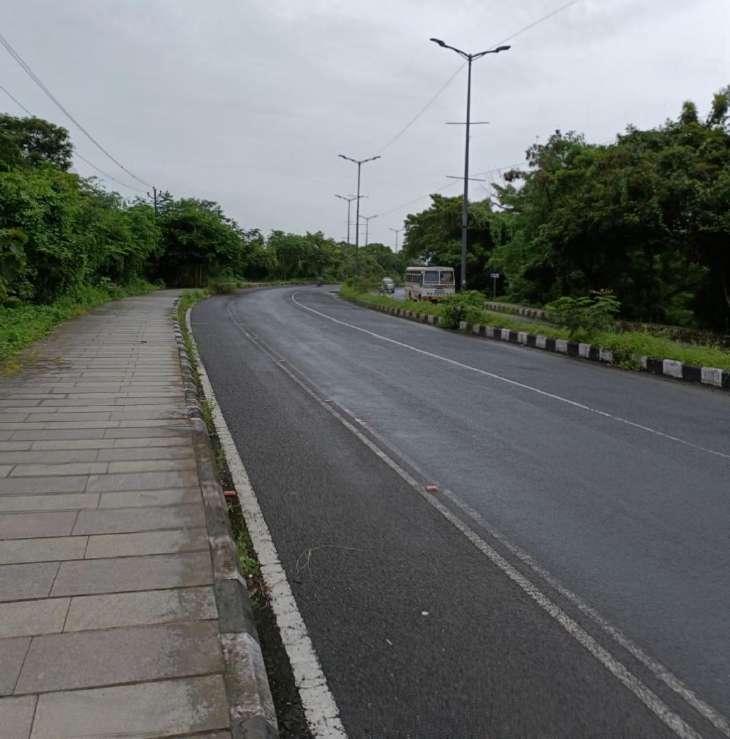
The site is currently barren green land with no immediate contours and has lots of dense treesonit,atcertainareas.Attheentranceofthesite,onecanhearthesoundofthewaves at the spot. The site is very quiet and has a good flow of air from all sides. Attheendof thesite,onecanseethehostelaccommodationbytheGoaUniversity
● The site has dense vegetation at certain places so replanting and cutting down of treeshastobedone.
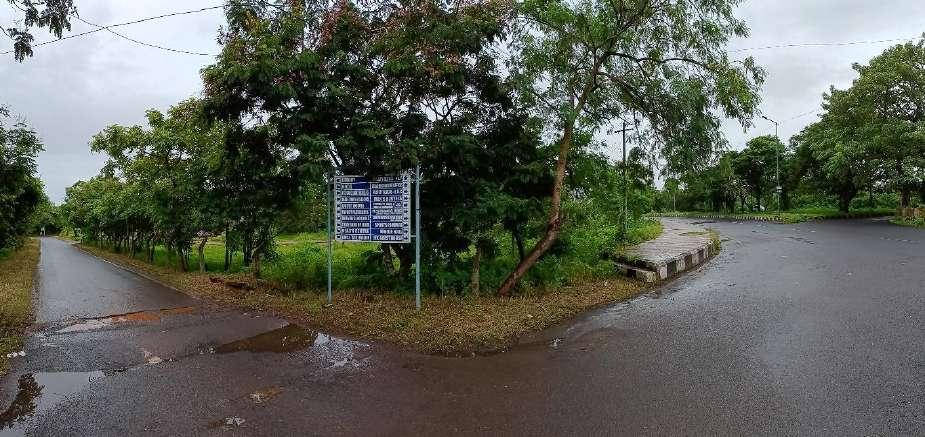
● The site is located quite close to the sea area so it may be a safety issue for the studentsinthefutureduetoriseinsealevels.
● Thereareveryfewpublictransportavailableatregularintervals.
● AlittlebitfartherawayfromthesiteistheguesthouseofGoaUniversity
● Rightoppositetothatisafootballground.
● The site is further used for men’s and women’s hostelaccommodation,thelibrary block,healthcentre.
● ThereisanSBIBankaswell.
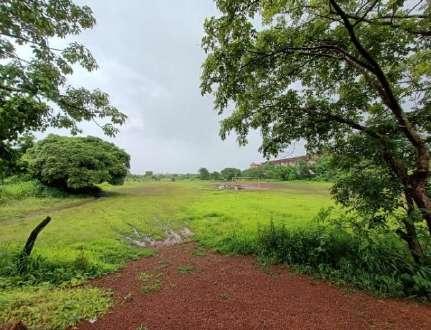
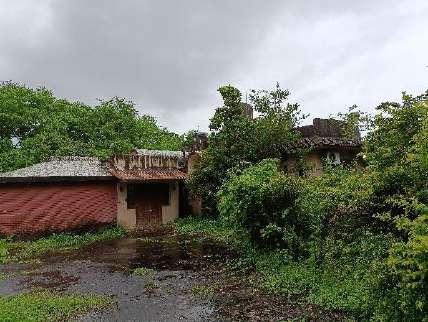
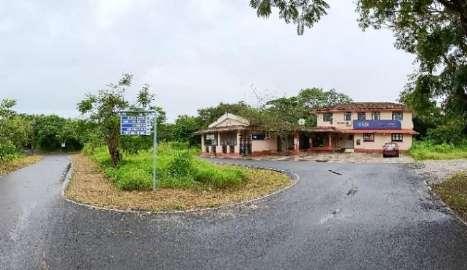
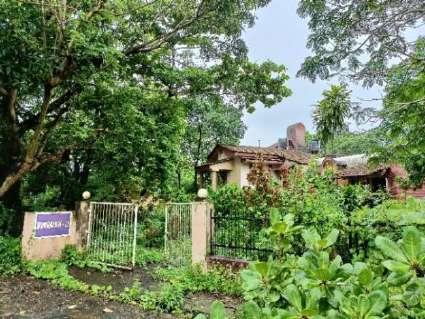

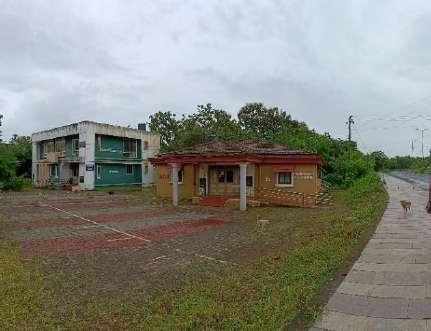
● There aremajorly3typesofsoilavailableinthisdistrict Lateritesoil,Salinesoil andAlluvialsoil.
● Laterite soil is the major soil type in the district. It is highlyporous&permeable, slightly acidic with low pH values, low in organic matter, Calcium and Phosphorus.
● Saline soil in the district occurs in the flood plainsofZuariandMandoviriversin Tiswadi, Bardez and Ponda taluka. It also occurs in Pernem taluka. The soil is deep, poorly drained and less permeable. It is saline, high in pH and contains humusandorganicmatter.
● Alluvial soil occurs as a very thinstripalongthecoastlinetowardswesternpartof the district. It is reddish brown to yellowish, coarse grained and confined to narrow valleys of rivers. It is well drained, acidic with low pH and organic content.
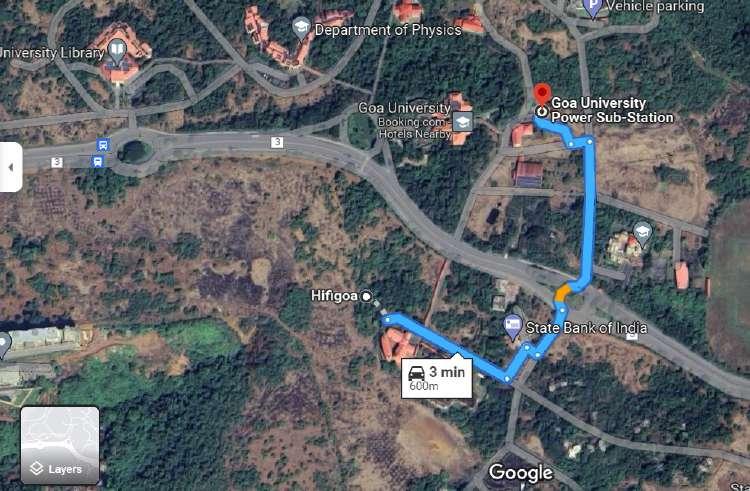



● The vegetation found in Goa is a mix of tropical deciduous and tropical evergreen.
● Thetopographyofthesiteisflatland Therearenomajorcontoursonsite
● However, in certain areas of the land, there is dense vegetation of bushes and shrubs.
● There are gradual contours towards the edge of the land which further meets thesea.
● FAUNA: Foxes, wild boars and migratory birds are found in the jungles ofGoa.The avifauna includeskingfishers,mynasand parrots. Crabs, lobsters, shrimps, jellyfish, oysters and catfish form some of the piscine catch. Goa also has a high snake population,whichkeepstherodentpopulationincontrol.
● FLORA: Coconuttrees are ubiquitous and are present in almost all areas of Goa
barring the elevated regions. There is mostlytoomuchofdeciduousvegetationwhich includesteak,sal,cashewandmango trees, is present. Fruits includejackfruits, mangos,pineapplesandblackberries.
● FAUNA:Peacockswerespotted.
● FLORA: Peepal tree, mango trees, dry trees, wild vegetation, cashew-nut trees, acaciatrees.
Being in the tropical zone and near the Arabian Sea, the climate of Goa is warm and humid for most of the year. The monsoons arrive around early June and provide a much
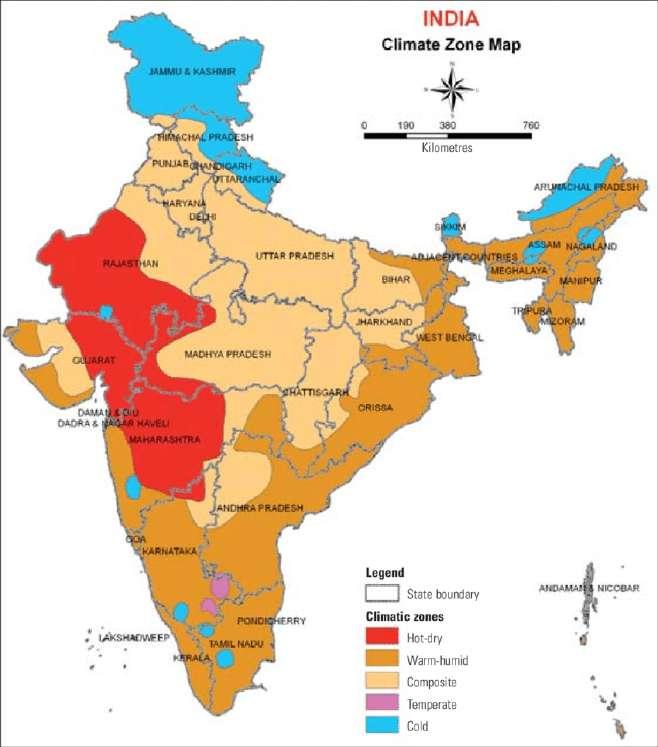
needed respite from the heat. Then Goa receives sudden downpours and tropical thunderstorms during the monsoons. It has a comparatively shorter winter season from DecembertoFebruary
May is the hottest month where the mean daily temperatureincreasesto300C.Januaryis the coolest with a mean daily temperature of about 230C. It is noted that the day temperature is the lowest in monsoon months of July and August and not in the cool winter months of December and January The temperature is highest (around 330C) in pre-monsoon months of April & May and againinpostmonsoonmonthsofNovember& January Due to proximity to the Arabian Sea, humidity throughout the year ismorethan 60%whichrangesfrom80to90%duringthemonsoonperiod.
Goa has awarm and humid weather for mostoftheyear Insummerthetemperaturescan reach as high as 91°F (33°C) and there are monsoon rains from June to September. Goa has a short winter, which lasts only from DecembertillFebruary Inthewinterseasonthe temperatures average around 77°F (25°C). The minimum average mean is 23.3degree Celsius.Andthemaximumtemperatureis31.3degreeCelsius.
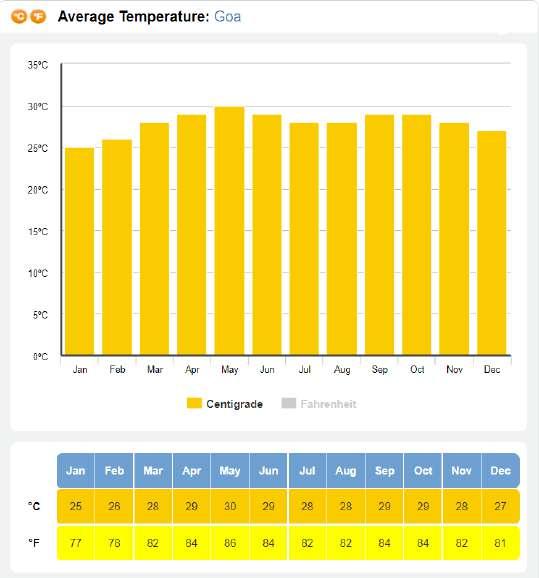
The water resource in Goa is mainly due to the monsoon rainfall during June to September and is largely affected by the monsoon vagaries, resulting in floods during some yearsanddroughtsduringothers.Thesouthwestmonsoonnormallyadvancesbythe month of June and establishes firmly over the entire state by the end of the month. It withdraws from this region mostly in the first week of October The average annual rainfallinGoais2932.0mm.
The windier part of the year lasts for 3.2 months, from May 30 to September 5, with average wind speeds of more than 16.0 kilometres per hour The windiest month of the yearinTaleigaoisJuly,withanaveragehourlywindspeedof22.0kilometresperhour. The calmer time of year lasts for 8.8 months, from September 5 to May 30. The calmest month of the year in Taleigao is November, with an average hourly wind speed of 10.3 kilometresperhour
The wind is most often from the north for 2.3 months, fromJanuary1toMarch9,witha peak percentage of 46% on February 16. The wind is most often from the west for 7.4
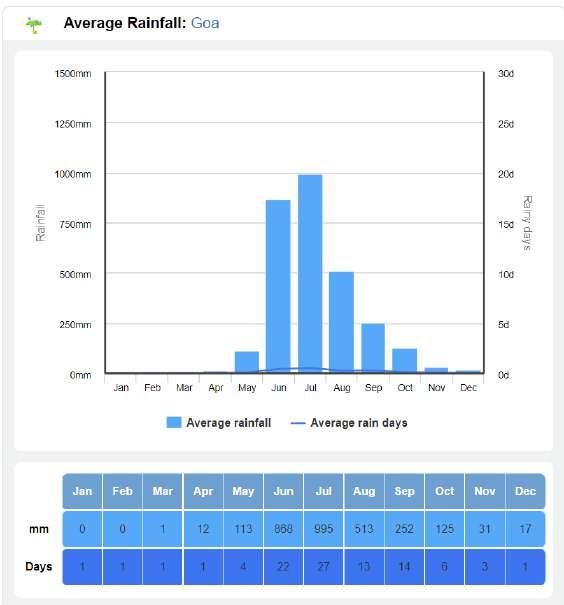
months, from March 9 to October 22, with a peak percentage of 99% on July 30. The wind is most often from the east for 2.3 months, from October 22 to January 1, with a peakpercentageof49%onDecember1.
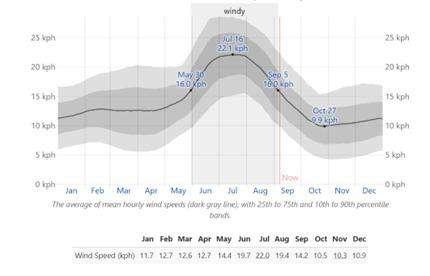
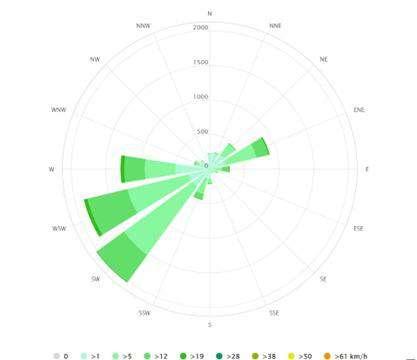
● Theareaisquietsoitisgoodasinstitutionsneedaquietatmosphere.
● Thelocationandviewsfromthesitearequitegoodandthedesigncanbequite interesting.
● Thesiteislocatedinthemainareasothereisagoodinflowofstudentsnearby
● Availabilityofregularpublictransport.
● Safetycanbeanissuesincetheareaisquitesecluded.
● The location is very nice and can help in developing nearby lands. The surrounding area doesn’t have much development in terms of accommodation so with the construction of NIFT, there will be more star rated hotels available, thus increasingrevenueaswellasattractingmoredesignerstothecampus.
● Theriseinsealevelsduetoglobalwarming.
Through the site analysis done, we understood the ideaofdesigningthecampusbasedon the climatic data analysis. The site location helped us to understandhowinthedesigning process factors such as sun path, wind path etc are important to know to create a sustainablecampusthatisnotdependentonmechanicaltechnology.
● The orientation of the building will be done according to the sun and wind direction.
● The highhumidityandthewarmtemperaturesrequiremaximumventilationwhich leadstoopencourtyardplanning.
● Plantinggoodtreesandusingthecoverofdensetreesonthesitecanhelpin creatinggoodrecreationalactivitiesaswellasprotectingthenaturalfauna.
● Sincethesiteisonthemainroadsoitwillbenoticeablebythepasser-byaswell.
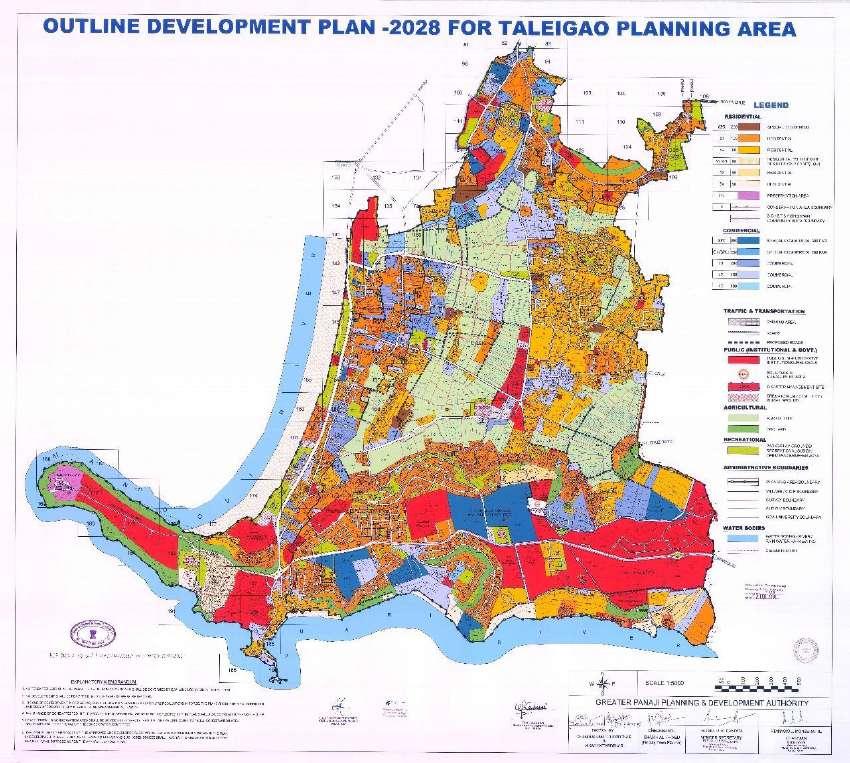
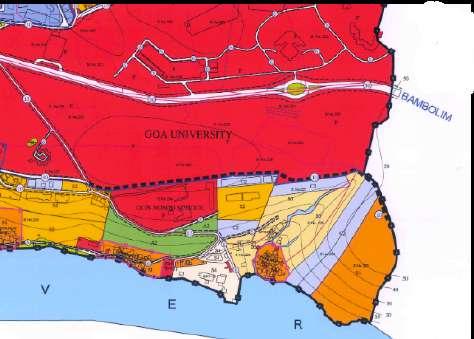
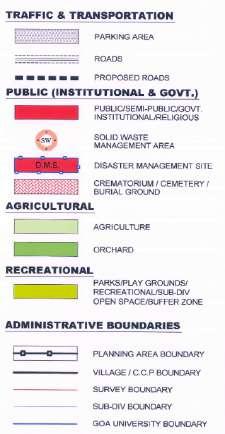

‘Educational Building’ includes a building exclusively that isusedforaschoolorcollege recognized by the appropriate board or university or any other competent authority that involvesassemblyforinstruction,educationorrecreationincidentaltoeducationaluse.
‘FLOOR AREA RATIO’ (F.A.R) means the ratio which is obtained by dividingthefloor areabytheeffectiveplotareaX10.
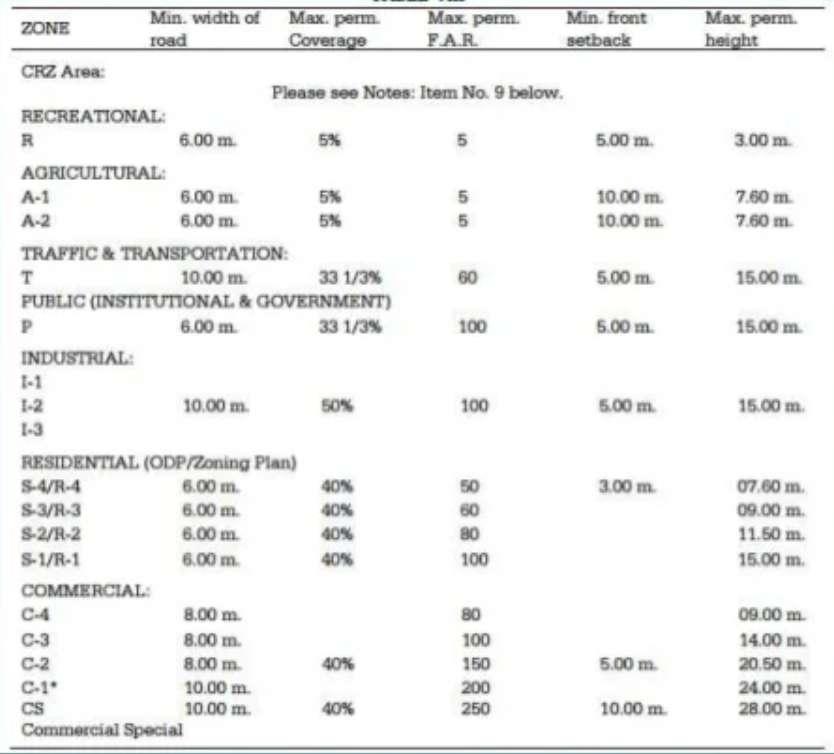
Thegeneralrequirementsfordevelopmentare–
● Roof patterns in building Flat type roof may be permitted up to a maximum extentof25%ofcoveredareaofbuilding.
● Means of access to the building within the plot Every person who erects a building shall provide a means of access to such building a clear way of not less than3.00mts.
● Restrictionondevelopmentwithinlineofsightattheroadintersections–No developmentincludingconstructionofbuildings,compoundwalls,erectionof hoardingetcshallbepermittedwithinthelineofsightupto4.5mtsheightfrom thelevelofroads.

● Theminimumdistancebetweentwobuildingswithinthesameplotshallnotbe lessthan3mincasenoventilationorlightistakenfromfacingsides.
● Theheightrestrictionis15m.
● Parkingrequirements-
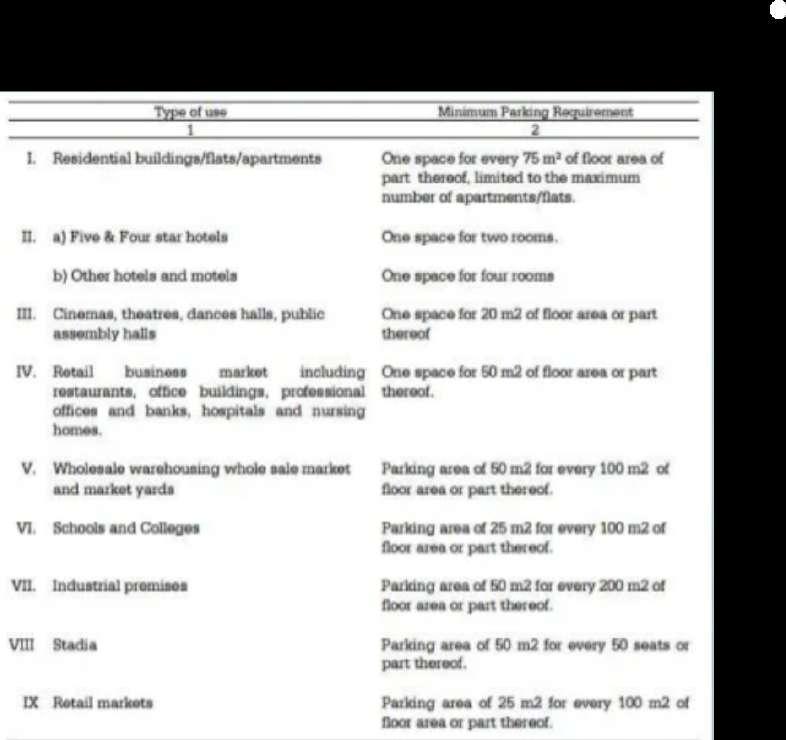
Through the research there have many factors and pointers that have been taken and understood by the means of understanding the way for designing the campus, the relationship between fashion and architecture, the actual campus planning of NIFT’s in our country and the climate responsive techniques whichwillfurtherhelpusindesigning thenewcampusforNIFT,Goa.
We also learnt the way how certain factors affect not only the activities inside the site boundariesbutintheoutsidezoneaswell.Everyfactoriscodependentoneachother
Architecture___fashion__1.pdf
https://www.slideshare.net/JoelManoj1/the-goa-land-development-and-building-2010 https://www.windfinder.com/windstatistics/panaji_goa https://issuu.com/karasolia.milind/docs/milind_thesis_report-compressed_1_ https://www.academia.edu/44930861/STAGING_THE_FASHION_SHOW_AND_ITS_S PACES
https://fashinnovation.nyc/the-history-of-fashion-from-the-1900s-to-today/ https://www.google.com/search?q=architecture+of+Goa&rlz=1C1CHBF_enIN1027IN102 7&sxsrf=ALiCzsaDX7yd4BfjGgtuQ9Yon71_CITrmA:1665989467797&source=lnms&tb m=isch&sa=X&ved=2ahUKEwiFurWz1ub6AhWH9nMBHYF1ATIQ_AUoAXoECAIQ Aw&biw=768&bih=720&dpr=1.25#imgrc=tW3-dZa0yKgUBM
https://architexturez.net/doc/az-cf-21229 https://thebalcao.com/goan-architecture/ https://www.slideshare.net/JoelManoj1/the-goa-land-development-and-building-2010 https://www.holiday-weather.com/goa/averages/
TableNo1: FarAreaRatioForInstitutions
TableNo2:RestrictionOnDevelopmentWithinLineOfSightAtTheRoadIntersections
TableNo3:ParkingRequirements
Figure1-Fashion–AnArtOfSelfExpression
Figure2–ClothingOfEarlyHumanBeingsMadeUpOfTreeLeavesAndAnimalSkin
Figure3–ClothingOfMenAndWomenDuringTheRomanEra
Figure4–ClothingAndJewelleryOfMenAndWomenDuringTheEgyptianEra
Figure5–ClothingAndJewelleryOfMenAndWomenDuringTheMiddleAges
Figure6–ClothingAndJewelleryOfMenAndWomenDuringTheRenaissancePeriod
Figure7–ClothingAndJewelleryOfMenAndWomenDuringThe19th Century
Figure8-ClothingAndJewelleryOfMenAndWomenDuringThe20th Century
Figure9 - SpinningAndWeavingImplements,Neolithic B,9000YearsAgo
Figure10-Semi-AutomaticSpinningFrame
Figure11-ClothingofWomenandMeninIndia
Figure12-ClothingofMenandWomeninIndiaduringBronzeAge
Figure13-ClothingofMenandWomeninIndiaduringBritishRaj
Figure14-ClothingofmenandwomeninIndiaPostIndependence
Figure15-Fashion1940s
Figure16-Fashionduring1950s
Figure17-FashionDuring1960s
Figure18-Fashionin1980s
Figure19-FashioninRecentTimes,2022
Figure20-TheGuggenheimHat
Figure21-MelissaShoesbyZahaHadidandherarchitecturalbeauty
Figure22-Inter-relationshipbetweenfashionandarchitecturebasedonart,scienceand technology
Figure23-CampusMasterPlan
Figure24-SiteLayoutIdea
Figure25-InterRelationshipbetweenbuiltandunbuiltandtheintegrationofboth
Figure26-Idealwayofplanningacampus
Figure27-Importanceofcorridorspacesforgoodcrossventilation
Figure28-Windflowpatternsaccordingtothebuildingform
Figure29-Alowhedgelessthan3fthighisintroducedatvariousdistancesfromthe inletopening
Figure30-Screenwallsandshadedcorridorscanhelpforbuffersbetweenbuiltand unbuiltspaces
Figure31-Cavitywallandbrickjalliwallsreducessolarradiation
Figure32-Airmovesfrompositivepressurewheretheactionofforceishighthrough neutralpressuretonegativepressurewheretheactionofforceislow
Figure33-Airmovementcanbeachievedbyproperselectionandcarefulplacementof vegetation
Figure34-Windeffects
Figure35-ArchitectureofGoa
Figure36-MandoviHotelinPanjim,1954
Figure37-Examplesofcampusplanwhichcanbeimplementedfordesigningthe campusofNIFT,Goa
Figure38-Rooftopgardenorsolargardencanbegoodwaytoutilisetheroofsurface
FIgure39-Havingfenestrationsincorridorsorinthelibraryorcanteenareawillprovide agoodatmosphere
Figure40-Finsandlouvresprotectingtheinteriorfromtheharshglareofthesunaswell asaddingaestheticvalue
Figure41-SiteLocationInGoa,LocatedOppositeToGoaUniversityAtTalegion
Figure42- TheDistanceFromNiftGoaToPanaji BusStandIsApprox 8KmFromThe Site
Figure43- TheDistanceFromNiftGoaToKadamba BusStandIsApprox36KmFrom TheSite
Figure44-ClimaticMapofIndia
Figure45-TheLandUseMapOfTaleigaoWhichShowsTheGoaUniversityLandAs WellAsTheProposedSiteForNift,Goa