
Netherlands Innovation Network Netherlands Innovation Network Singapore Connecting innovation worldwide
Foreword
Innovation in the Netherlands & Singapore: a tale of two countries punching above their weight
As small countries that function as a hub to their respective region, Singapore and the Netherlands have been internationally engaged from their very beginnings Both hold an entrepreneurial and pragmatic mindset, which trickles down to research and innovation – after all as small countries you cannot do it all, cannot know it all, and need partners to scale up Both our countries are top ranked, with our governments investing heavily in our knowledge base and public private partnerships are at the core of solving societal challenges
Similar as we are in our level of ambition, the same similarity can be seen in our challenges Small countries, with limited natural resources, densely populated, lack of space, an ageing population and prone to sea level rise, we must rely on the inventiveness and savviness of our industry and researchers and the potential of emerging, key-enabling technologies to building climate and urban resilience, managing strategic positions in global value chains and finding new solutions for today’s and tomorrow’s national and global challenges
With the many similarities between Singapore and the Netherlands, it only makes sense to collaborate in areas where our excellent research and innovation ecosystems strengthen each other and are complimentary Singapore and the Netherlands have strong economic ties and collaborate closely in the fields of Life Sciences and Health, Circular Economy, Water and Climate Adaptation, Agriculture & Food Innovation for complex societal challenges that are deeply intertwined require a whole of nation approach, and Dutch – Singapore R&D exchange and relations can be seen across industries, public authorities and knowledge institutes and technologies
The Netherlands Innovation Networks supports these connections and we look forward helping you become involved in sustainable innovation partnerships, so we can together advance our common ambitions
We hope to inform and inspire with this brochure, and wish to thank the organizations contributing their partnership showcase for doing so.
Drop us a message at sin-ia@minbuza.nl for questions, suggestions, or to explore ideas for beginning or expanding collaborations between the Netherlands and Singapore!
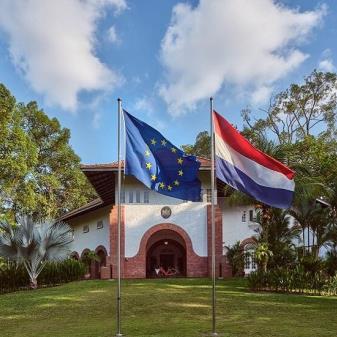
2 Netherlands Residence
Astrid Seegers Head of Innovation
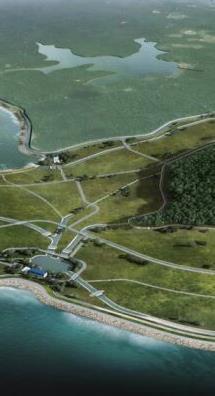
Polder at Pulau Tekong
José Snoep Advisor Innovation, Technology & Science
Dutch – Singaporean history A trusted partner from the beginning
The Netherlands has been a trusted partner for Singapore from the earliest days. In the 1960’s Dutch economist Dr Albert Winsemius was invited as the leader of a UN Survey mission team to conduct a three-month feasibility study to assess Singapore’s potential for industrialization At the time, Singapore was still a British colony, its economy was undeveloped, educational attainment low, and there were hardly any foreign investments
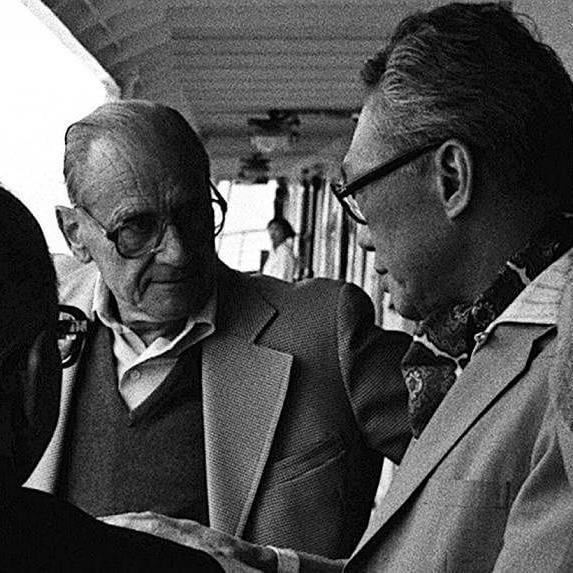
As an important economic advisor for the late Prime Minister Lee Kuan Yew, Dr Winsemius played a major role in the development of Singapore’s national economy With most newly independent states industrializing through replacing foreign imports with domestic production, he advised Singapore to challenge the orthodoxy, connect with other advanced economies and pursue foreign investment to create labor-intensive industries
A combination of leaning into globalization, infrastructural development and tax advantages led to multinationals investing into Singapore over the years – starting with production facilities, and later regional offices and research labs as well Royal Dutch Shell’s built its first oily refinery in 1965, with many companies following Today more than 1600 Dutch companies, including small- and medium-sized, are active in Singapore
Netherlands embassy & Netherlands Innovation Network in Singapore
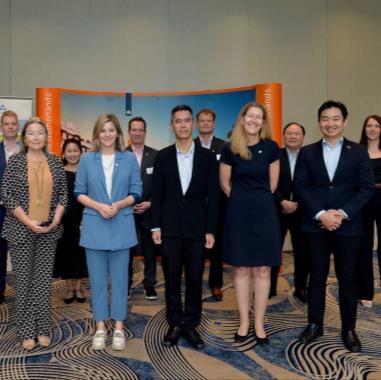
The Embassy of the Kingdom and the Netherlands was established in 1965, and currently has a team of about 25 employees In addition to providing consular services to Dutch citizens, the team predominantly focuses on providing economic support related to innovation and research, trade and investments
The Netherlands Innovation Network at the Netherlands Embassy in Singapore stimulates international cooperation between companies, research institutes and public authorities in the fields of innovation, technology and science The network's activities support the implementation of the international knowledge and innovation agenda of the Ministry of Economic Affairs and Climate Policy
We address national and global challenges and aim to further develop key enabling technologies through international cooperation And do that by:
► providing knowledge about developments in the Netherlands and Singapore;

► connecting to potential collaboration partners in both countries;
► organizing innovation missions, workshops, matchmaking events and seminars;
► identifying funding mechanisms for bi- and multilateral cooperation
Our focus sectors in Singapore include water & coastal resilience, agriculture & food, circular economy, high tech systems & manufacturing, sustainable and smart mobility, digitalization, energy, life sciences & health.
Across sectors, we pay close attention to developments related to quantum technology, artificial intelligence, 3D printing and privacy-enhancing technologies.
Mr Lee Kuan Yew & Dr Albert Winsemius, 1980
Semiconductor forum, Dec 2022
3
Innovation mission Dementia, Nov 2022
Innovation in Health lunch, Oct 2022
Rotterdam
SmartPort

CleanTech
MedTech
Energy
Food
R&D in the Netherlands
Small in size, big on impact
► Fourth most competitive country (Global Competitiveness Index, 2019)
► Fifth most innovative country
Input rank 10 : output rank 6 (Global Innovation Index, 2022)

► 10 out of 13 universities ranked in top 100 (Times Higher Education, 2023)


An overview of the Dutch ecosystem
Applied research
Maritime, hydrodynamics
Food, agriculture
Sustainable, healthy, safe, digital
Aerospace
Water, subsurface
Academic research by universities and research & education hospitals


The Hague
Security Delta
Leiden
BioTech
Utrecht
Healthy people
Healthy environment
Healthy mind
Friesland Water technology


Twente
HighTech systems & materials
Delft Industrial solutions
CleanTech
MedTech
IT
Groningen
Data services
Energy
Healthy ageing
Limburg
Logistics
AgroFood Manufacturing industry
Smart materials
Amsterdam
Creative Mobile Internet
HighTech systems
Sharing economy
FinTech
Brainport Eindhoven
HighTech systems & materials

Smart mobility
Health
Energy Design
Wageningen Food Agriculture

Arnhem/ Nijmegen
HealthTech

Life Science
Smart manufacturing
4
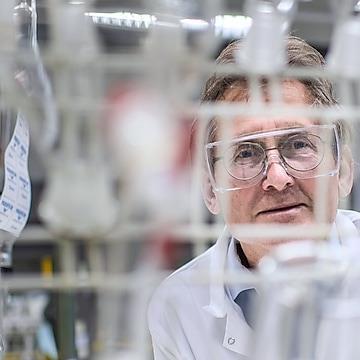
Prof B. Feringa, Chemistry Nobel laureate 2016
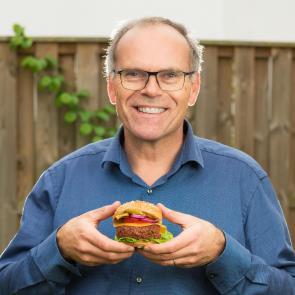
Prof M. Post, presented the first PoC for cultured meat
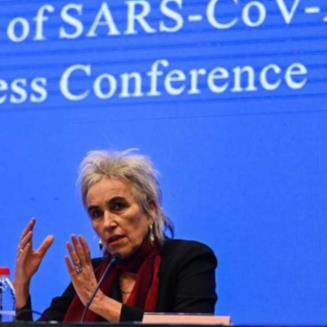
Prof M. Koopmans, top WHO advisor
Key-enabling technologies
Dutch missions for grand challenges
Mission-driven Top Sector and Innovation Policy
The Dutch government has formulated 25 missions to tackle social challenges These missions focus on ensuring a greater and healthy life expectancy, sufficient clean water and safe food, lower greenhouse gas emissions, affordable sustainable energy and a safe Netherlands to live and work in Ambitious goals that challenge entrepreneurs and scientists to develop pioneering solutions and contribute to the competitiveness of the Netherlands The missions were drafted in close cooperation with eight Ministries and the top sectors
► With the National Growth Fund, the Dutch government is investing €20 billion in the next five years in large public-private programs that provide long-term economic growth
with international partners
• 49% reduction of national greenhouse gas emissions by 2030, aiming for 95% lower emissions by 2050 compared to 1990.
• An entirely carbon-free electricity system by 2050.
• A carbon-free built environment by 2050.
• Carbon-neutral industry with reuse of raw materials and products by 2050.
• Zero-emission mobility of people and goods by 2050.
• A sustainable and completely circular economy by 2050, with resource use halved by 2030
• By 2040, all Dutch citizens will live at least five years longer in good health, while the health inequalities between the lowest and highest socio-economic groups will have decreased by 30%.
• By 2040, the burden of disease resulting from an unhealthy lifestyle and living environment will have decreased by 30%.
• By 2030, the extent of care provided to people within their own living environment (rather than in health-care institutions) will be 50% more than today or such care will be provided 50% more frequently than at present.
• By 2030, the proportion of people with a chronic disease or lifelong disability who can play an active role in society according to their wishes and capabilities will have increased by 25%.
• By 2030, quality of life for people with dementia will have improved by 25%
• Reduction of the use of raw and auxiliary materials in agriculture and horticulture by 2030 and creating the maximum possible value from all end products and residuals by utilising them as fully as possible (circular agriculture).
• By 2050, the agricultural and nature system will be net carbon-neutral.
• The Netherlands will be climate-proof and water-resilient by 2050.
• By 2030, we will produce and consume healthy, safe and sustainable food, while supply chain partners and farmers get a fair price for their produce.
• A sustainable balance between ecological capacity and water management vs. renewable energy, food, fishing and other economic activities, where this balance must be achieved by 2030 for marine waters and by 2050 for rivers, lakes and estuaries.
• The Netherlands is and will remain the best-protected and most viable delta in the world, with timely future-proof measures implemented at a manageable cost.
• By 2030, organised crime in the Netherlands will have become an excessively high-risk and low-return enterprise, thanks to a better insight into illegal activities and cash flows.
• By 2035, the Netherlands will have a navy fit for the future, which will be able to respond flexibly to unpredictable and unforeseen developments.
• By 2030, the Netherlands will have operationally deployable space-based capabilities for defence and security.
• Cyber security: the Netherlands will be in a position to capitalise, in a secure manner, on the economic and social opportunities offered by digitisation
• By 2030, the armed forces will be fully networked with other services and through the integration of new technologies, so that they can act faster and more effectively than the opponent.
5
Energy transition and sustainability Agriculture, water and food
and healthcare Security
Health
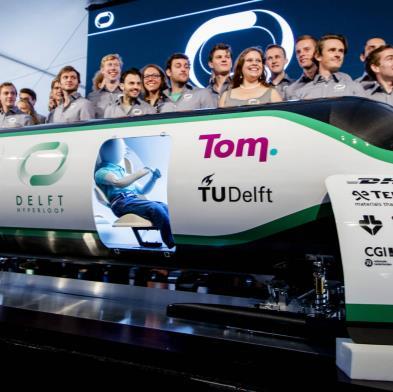
Delft Hyperloop, 2018
–
Factsheet Dutch Solutions to Grand Challenges Shortened version
R&D in Singapore
Innovation in the Lion City
► Most competitive country worlwide (Global Competitiveness Index, 2019)
► Seventh most innovative country Input rank 1 : output rank 14 (Global Innovation Index, 2022)
► Two universities (NUS, NTU) ranked in top 100 (Times Higher Education, 2023)
Research, innovation and enterprise form the corner stone of the national economic strategy for Singapore. From starting out as a production hub, Singapore made the transition from factory work to an innovation-driven knowledge-based economy Early focus sectors include logistics (maritime and port), electronics, financial services and chemistry, and now includes biotech, digitalization, high tech manufacturing as well
For a relatively young country, the high rankings held by the National University of Singapore and the Nanyang Technology University are impressive Singapore is cultivating an ideal business- and research climate for knowledge intensive industries and foreign talent, illustrated by its no 1 position in the Global Innovation Index Input Rank Due to its small national market, with different needs than its neighboring ASEAN countries, homegrown innovative companies get much support from the Singapore government for international expansion.
Research, innovation & enterprise 5 year plan
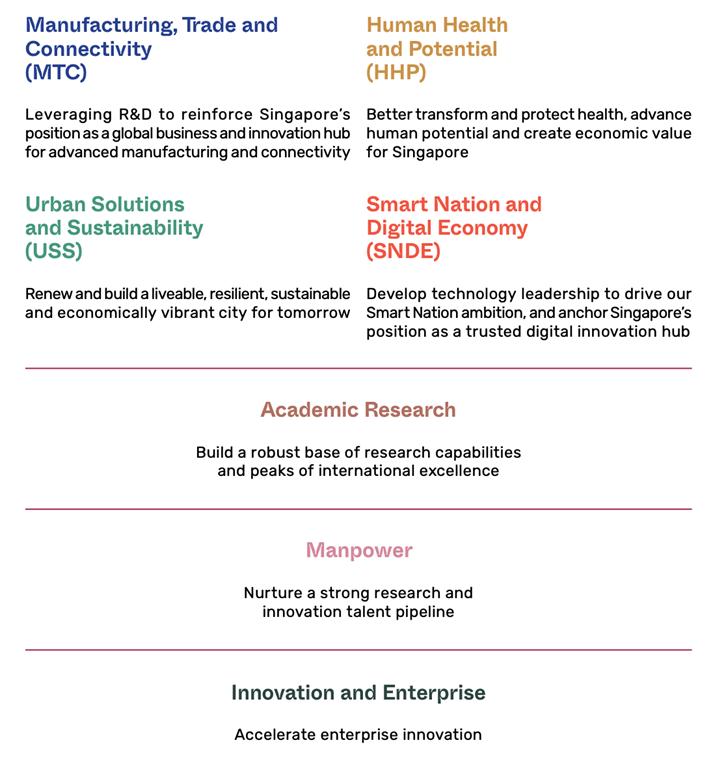
Singapore launched its first 5-year national technology plan in 1991, and has done so every 5 years thereafter with its latest being the Research, Innovation and Enterprise 2025 The aim was to develop high-technology activities that would move Singapore up the economic value chain and build a strong base of scientists, engineers and technologists who would help to drive economic and enterprise transformation More funding was allocated to each plan, with a strong recurring focus on investing into infrastructure and human capital, and attracting foreign talent and high-tech companies
Areas of emphasis in RIE2025:
Three strategic focus areas:
► Expand RIE mission to tackle a broader spectrum of national needs
► Enrich Singapore’s scientific base (i e fundamental research)
► Scale up platforms to drive technology translation and strengthen the innovation capabilities of its enterprises (i.e. valorisation)
In each domain, greater emphasis is placed on the following subdomains:
► MTC: Additive manufacturing technologies, synthetic Biology, autonomous assurance and testing for Maritime transformation
► HHP: Precision medicine, ageing, pandemic preparedness
► USS: Food, climate change, urban resilience, coastal protection and floor management
► SNDE: (Enabling) quantum technologies, cybersecurity, 5G technologies

6
RIE2025 Plan
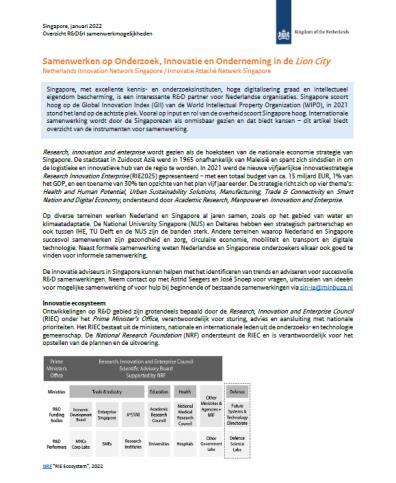
Research, innovation & enterprise Ecosystem

The Research, Innovation and Enterprise ecosystem in Singapore comprises various ministries, R&D funding bodies and R&D performers
At the top is the Research, Innovation and Enterprise Council (RIEC), chaired by the Prime Minister, which oversees long term strategy to transform Singapore into a knowledge-based society, with strong capabilities in research and technology The RIEC is supported by the National Research Foundation (NRF) Board, which is responsible for the formulation of its 5-year plans and policies to grow Singapore’s research capability, support economic growth and meet Singapore’s future national challenges
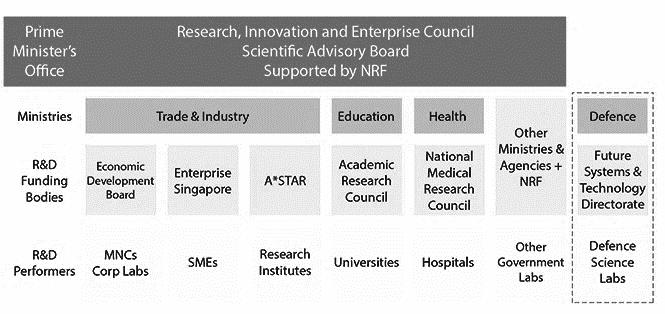
Ministries and A*STAR in the lead
Over time Singapore’s open-for-all attitude towards international R&D collaboration and partnerships has turned more selective and strategic In addition to pursuing economic value and increased competitiveness, in recent years Singapore’s R&D efforts have become more linked to its national challenges and societal needs. Examples include greater emphasis on food science and cultivated meat to decrease food import dependencies, and a National Innovation Challenge focused on Active and Confident Ageing
This places greater decision power on content, partners and approach for grant calls and funding decisions with each distinct ministry and center under Singapore’s applied Agency for Science, Technology and Research (A*STAR) The latter plays a coordinating role between Singapore institutions, and in orchestrating multi-institutional, national consortia.
7
RIE ecosystem, NRF
Funding support for collaboration
With its excellent research institutes, great IP protection, ease of setting up a business, research and digital infrastructure, and access to investment funding, Singapore makes for an interesting R&D partner
Though there is no bilateral R&D funding between the Netherlands and Singapore, several programs exist that can support Dutch participation in collaboration projects In addition to the programs in the table below, there are top sector specific programs and there may be grant calls or partnership programs in Singapore open for international applications The Netherlands Innovation Network can help you explore these and other funding options, support you in finding the right consortium partners and matchmaking, or more generally share relevant trends and advice on how to approach beginning or expanding collaborations.
Collaboration programs for Dutch partners

EU/NL: Horizon Europe Countries in European Union (NL), associated non-EU countries
EU/NL: EUREKA Network
Full members (NL), associated (Singapore) and partner countries
NL: Money Follows Cooperation NWO
Note that Singapore is not an associated non-EU member – NRF may be open to co-financing a new or existing Horizon Europe project if Singaporean researchers or organizations express interest.
Singapore has joined the EUREKA network in 2021 as an associated member, which enables them to participate in funding programs such as Eurostars and Cluster calls. This increases chances for funding of projects between Singapore and the Netherlands.
EUREKA network calls enable funding for international R&D collaboration projects between companies. Institutes for Higher Learning such as universities can be a (leading) partner in this.
Option implemented as a budget module in almost all NWO funding instruments – it aims to create opportunities to enhance the scientific and social impact of research projects by using expertise from abroad that is not available in the Netherlands. The requested budget may be up to fifty percent of the total requested budget, and may in specific cases, include funding for researchers from a foreign knowledge institute.
NL: Instruments for international business and innovation collaboration
Rijksdienst voor Ondernemend Nederland
- Partners for International Business (PIB)
Partners for International Business (PIB) is a programme that allows Dutch businesses to enter into a public-private partnership to realize their international ambitions. The partners together with the Dutch government set out a strategy and plan of activities to enter a foreign market.
- Demonstration projects, feasibility studies and investment preparation projects (DHI)
The DHI scheme consists of 3 modules:
1. Demonstration projects: presentation of technology, capital goods or service in one of the DHI countries.
2. Feasibility studies: assessment of the profitability of a foreign investment in a product or service.
3. Investment preparation projects: assessment of the technical and commercial profitability of an investment in a company in one of the DHI countries.
8
Options for (international) collaboration in Singapore
There are many different ways to approach collaboration, and new programs and centers are continuously added to the list The table below summarizes the common R&D programs with options for international collaboration as of March 2023
Programs in Singapore Partner(s) Type, engagement model and highlights
SG: RIE2025 plan NRF
The RIE plan lays the groundwork for the country’s science and technology efforts every five years. The budget for RIE2025 goes towards funding of foundational and applied research, talent development, and innovation and enterprise activities. Compared to the previous RIE plan, more emphasis is placed upon creating solutions for national challenges such as climate adaption and food security.
SG: Research Centers of Excellence
NRF, MOE Program that saw the set-up of five research centres (RCE) hosted by NUS and NTU between 2007 and 2011. Each RCE has its own autonomy in pursuing its own research mission and stewardship, with 15 to 25 principal investigators (PI) leading research teams of PhDs, research students and staff.
Though a new round was announced in 2019 – there have been no updates since. The alliance NUSDeltares with Dutch partner Deltares collaborated with the NUS through the RCE program.
SG: CREATE Research Centers NRF, SG and foreign universities
An international (physical) research campus and innovation hub that is home to interdisciplinary university research centers. These centers enable 5-year partnership cooperation between foreign top universities (e.g MIT, University of Cambridge) and a Singaporean university. Research focuses on turning academic insight into practical solutions that have meaningful, positive societal and economic impact for Singapore.
Though not explicitly shared, the entry requirements for CREATE are established by the NRF and require a substantial financial contribution. For Singapore’s side, half of it is government funded, and half should be funded from other sources.
SG: Corporate Laboratories NRF, SG universities and companies
Industry partners can open laboratories in Singapore’s universities in an effort to stimulate public-private R&D partnerships. Research areas are aimed at creating business growth, jobs and economic benefit for Singapore. Funding requires approximately 40~65 million SGD in total, though no information is explicitly shared about the share in contribution per partner.
Examples include labs between Rolls-Royce and NTU (engineering, manufacturing) and Sembcorp and NUS.
SG: National Innovation Challenges (NIC)

Multi-agency with NRF, ESG, IMDA, knowledge institutes, companies
Grant calls open to consortia of companies, knowledge institutes in combination with government agencies to develop practical solutions to national challenges with commercial spin-off or licensing potential.
Current NICs:
1. Energy challenge
2. Land and Liveability National Innovation Challenge, MND
3. Active and Confident Ageing, MOH
SG: R&D Grant calls for specific challenges
SG: Membership Consortia
NRF, A*STAR, EDB, ESG, Temasek Foundation and Ministry specific (e.g. MOH, LTA)
Several R&D funding bodies (see “RIE Ecosystem” figure), including the ministries and the philanthropic branch Temasek Foundation, have their own separate funding from the NRF and RIE plans. On a regular basis calls and grants are announced that focus on domain-specific challenges.
E.g. ARTC, PIPS Large consortia platforms (can be as big as 80 members) that are built upon public-private partnerships between industry leaders, technology & service providers and SMEs.
9
Collaboration showcases



10
Monitoring for clean & safe drinking water
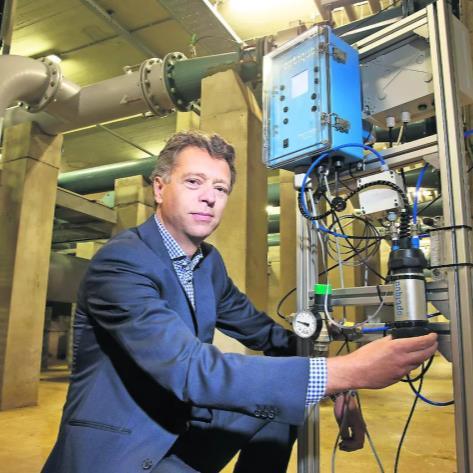
Though one might not suspect it, given its ‘Garden City’ image, Singapore has a history of water shortages, -rationing and -import dependencies. The city-state’s lack of natural water resources, and limited land for capture and storage, caused it to rely heavily on local catchment and be intwined in drawn-out negotiations over imported water from Malaysia. With a growing population, urbanizing landscape and expanding economy since its humble beginnings in 1965, Singapore’s water demand is expected to double by 2060 from the current 430 million gallons per day in 2020 (source) To improve national water supply and security, as laid out in its Green Plan for 2030, Singapore’s national water agency PUB was on the lookout for innovative solutions – and partnered with Twente-based Optiqua to codevelop and validate its real-time monitoring solution EventLab Optiqua is part of Demcon group
The Netherlands is internationally renown for water technology, its knowledge and innovations to produce and monitor drinking and industrial water, purify and reuse water, are applied and sold worldwide. With several prolonged dry spells in the 1990s, the Singapore government set out to become more water self-sufficient – and more particularly how to continuously monitor and safeguard drinking water quality across its network. Traditional methods involved taking periodic samples at limited locations, but PUB envisioned a water monitoring system that would be more pro-active, realtime and allow greater comprehensive understanding of contamination processes, sources and locations across its network. Every drop counts, and every drop should be digitized.
The Singapore way
As co-founder and Optiqua CEO, Jos-Willem Verhoef knows a thing or two about setting up successful collaborative innovation projects in Singapore.
“In establishing long-term, strategic and impactful R&D relations with Singapore, engaging the relevant government entity is critical.” The preferred way of working is co-innovation and developing technologies together, as opposed to implementing off-the-shelf solutions The value and uniqueness of an innovation lies with its match to the government’s vision and chosen direction for Singapore Be prepared that getting to a formalized partnership may take more time due to the technocratic and thorough approach to innovation and planning – but with the Singapore government as a launching customer, as is the case with PUB and EventLab, you have great credentials to sell internationally.
“With the Singapore International Water Week the Singapore Government has managed to create a global platform for the international water sector to come together, and with it a hub function for itself. The Netherlands Embassy in Singapore organizes events, pavilions and fora for the Dutch water technology industry which are useful to connect and find relevant matches ”
11
Jos-Willem Verhoef
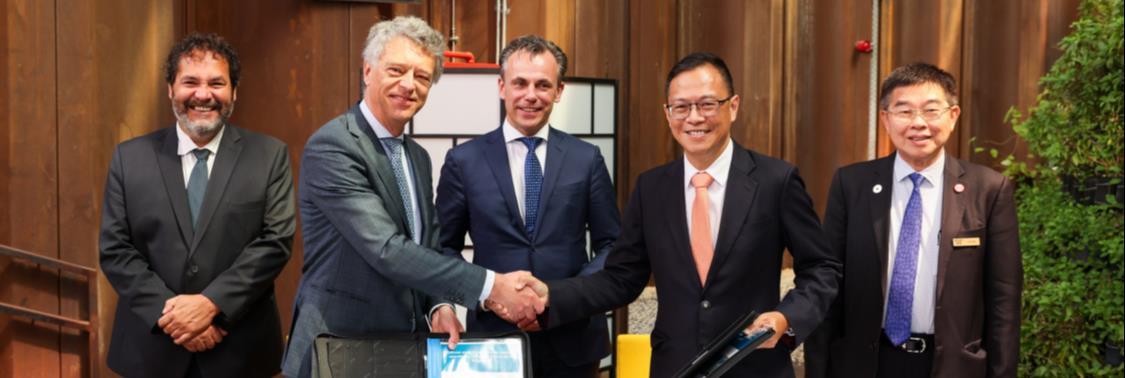
This is where Demcon Optiqua came in, which had since established a Singaporean entity Through strategic partnership with PUB, an early prototype for such a system was developed and validated in Singapore Next up was developing and validating the actual product, a forerunner of the EventLab solution. The latest installment of this long-term partnership was confirmed in March 2022, when the two signed a contract for the further rollout of EventLab in Singapore starting March 2023
About the EventLab solution: more than a sensor
A patented optical lab-on-a-chip sensor with generic sensitivity to changes in water quality forms the core of the EventLab network In addition to a network of sensors, the EventLab system consists of infrastructure for data transmission and data analysis and visualization software Data algorithms constantly analyze the information produced by the sensor network for abnormal water quality changes In case of an event – contamination or another change in the drinking water’s composition – the software issues an alert This enables the drinking water company to immediately initiate action, for example, further analyzing the drinking water
Next to a network of sensors, the Eventlab system consists of infrastructure for data transmission and data analysis and visualization software. Data algorithms constantly analyze the network output for abnormal water quality changes In case of an event – contamination or another change in the drinking water’s composition
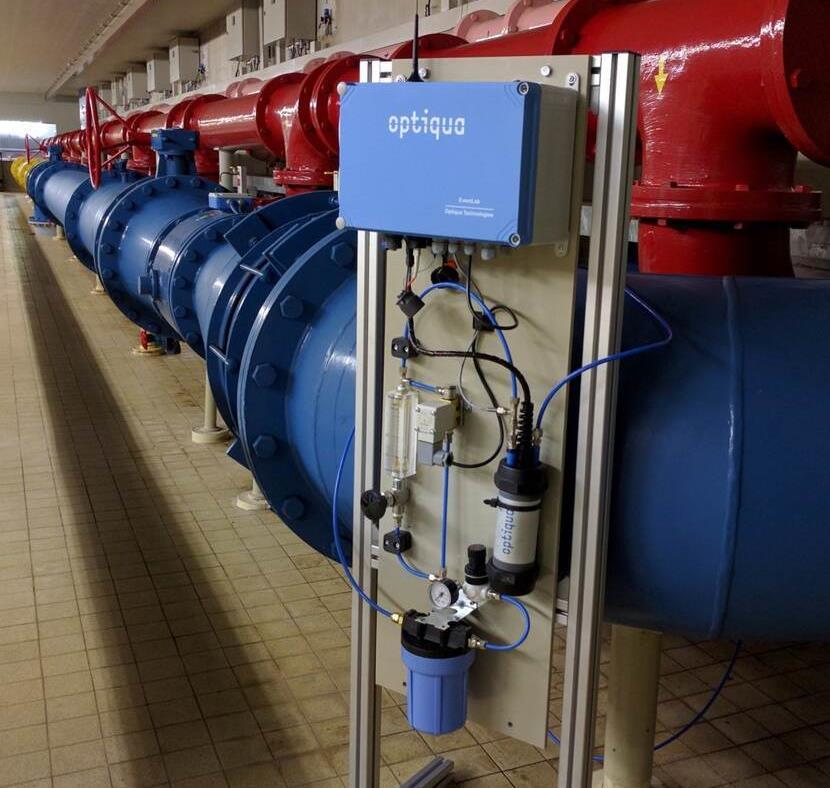
the software issues an alert This enables the drinking water company to immediately initiate action, for example, further analyzing the water.
Credit: Optiqua
Read more:
- Information about Demcon group, PUB and Optiqua
- Optiqua’s EventLab chip solution and the Mach-Zehnder Interferometer as sensor technology
- Earlier EUREKA awarded project Aquatic Qualification with AI (AQUA, 2021), with Singaporean, Dutch and Belgian partners Demcon, de Watergroep, Hal24k, Optiqua and Zweec Analytics
12
–
Optimizing clinical workflows
The IWISH project will develop data and AI-driven solutions for optimizing hospital and room level workflows and clinician experience, and is part of the Eureka AI call 2021 program The IWISH consortium partners, including Philips and Singaporean start-up Workforce Optimizers, will be having their first project review coming May 2023

Health expenditure is on the rise in both the Netherlands and Singapore, and the operating theatre is typically one of the major cost drivers Due to the multi-disciplinary, dynamic and highly complex nature of the clinical operations performed in Operating Rooms (OR) and Image Guided Therapy (IGT) labs, optimizing time and economic resources while ensuring a safe patient care flow has proven to be challenging Both countries are renowned for having excellent healthcare systems, and its health care providers embrace data and AI-driven solutions that address clinical operation planning and efficiency, by reducing complexity, informational overload and administrative burden
Developing such novel and specialized solutions requires collaboration and cooperation Singapore became an associated country of the Eureka Network in 2021, making it possible to receive support and explore international collaborative projects. The Cluster AI call of 2021 again attracted a lot of interest. Singapore and the Netherlands already collaborated in an earlier Cluster AI call before on Smart Water technology, and will now partner up again through the Intelligent Workflow optimization and Intuitive System interaction in Healthcare (IWISH) project, this time in the health domain The IWISH consortium will be led by Philips Image Guided Therapy in the Netherlands, and consists of research-oriented partners, technology suppliers and industrial end product suppliers Clinical end users and partners with access to clinical experts are represented as well: they will provide requirements at the start of the project and evaluate multiple use cases during the course of the project.
“
Partnering in the IWISH project offers a great opportunity to complement Workforce Optimizer’s experience in AIpowered clinical procedure scheduling with the procedure tracking technology of the Dutch consortium partners. ” – Robert Hofsink, IWISH project lead
Each partner differs in the expertise they bring to the table, necessary to address considerations that go beyond technology development Data and AI offer great potential to optimize clinical workflow, cost-effectiveness and user experience The IWISH consortium includes Dutch partners such as Delft University of Technology, Leiden University Medical Center, NewCompliance and Syntho to address key issues such as data scarcity and sharing, privacypreserving technologies, procedure tracking and human-AI interaction Singaporean partner Workforce Optimizer specializes in optimized workforce management software, and already has a strong partnership with Philips The promising scale-up will improve and expand its product offering thanks to solutions developed in the IWISH project
13
Tackling new urban mobility challenges

Both Singapore and the Netherlands are frontrunners and forward thinkers when it comes to smart mobility, autonomous vehicles and infrastructure With increasing urbanization, an ageing population and climate change, both countries share a need for urban strategy solutions that will sustain liveable, secure and healthy cities The Netherlands Organization for Applied Scientific Research (TNO) established presence in Singapore back in 2015, with a focus on exploring strategic knowledge exchange in the areas of smart mobility, smart city, urban planning and built environment.
Collaborations include a feasibility study on electronic bus solution adoption with the Singapore Land Transport Authority, resulting in a e-bus simulation platform, and the autonomous vehicle safety case testing and simulation partnership with Nanyang Technological University Centre of Excellence for Testing & Research of Autonomous Vehicles (CETRAN)
Under its Joint Innovation Program for New Urban Mobility initiative, TNO’s latest partnership was established with National University of Singapore (NUS), through the NUS’ Centre of Excellence in Modelling and Simulation for Next Generation Ports (C4NGP) and Centre for Next Generation Logistics (C4NGL) at the NUS Faculty of Engineering
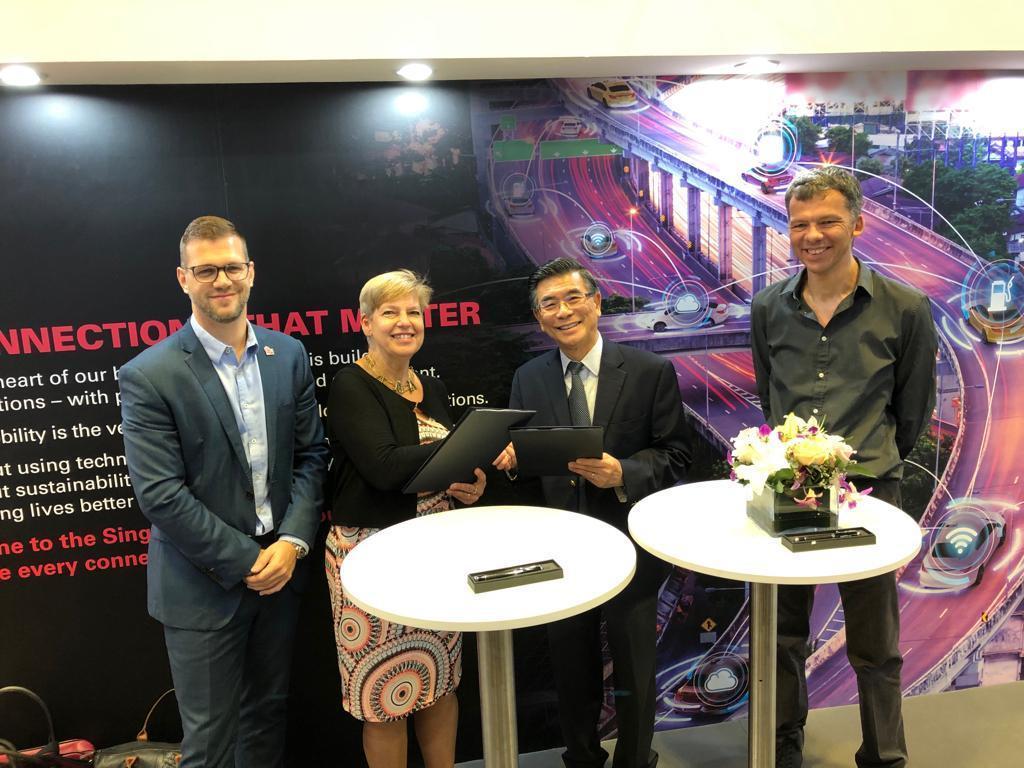
Projects between NUS and TNO will focus on integral urban planning and models for improving next generation logistics and ports. In addition, the cooperation will entail the development of educational programmes for fact-based urban planning across multiple domains, like public space, mobility, air quality, safety, energy and noise. The team has also agreed to explore further cooperation in order to accelerate the application of fundamental research in urban planning and logistics The aim is to support the transition towards the digitalisation of Singapore’s urban and logistics ecosystems
“Singapore is at an advanced stage of development in the field of urban planning and mobility, particularly when it comes to New Mobility like autonomous vehicles and personal mobility devices (PMD’s) These insights are highly valuable for understanding the impact on the safety, efficiency sustainability in cities. Close collaboration between the Netherlands & Singapore in the Joint Innovation Program enables Smart Nation Singapore to remain at the forefront of smart urban mobility and offers TNO the opportunity to deal with major mobility issues in a future-proof manner in the Netherlands.”
– Ronnie van Munster, Regional Director APAC, TNO Mobility & Built Environment
14
Joining forces in food science education

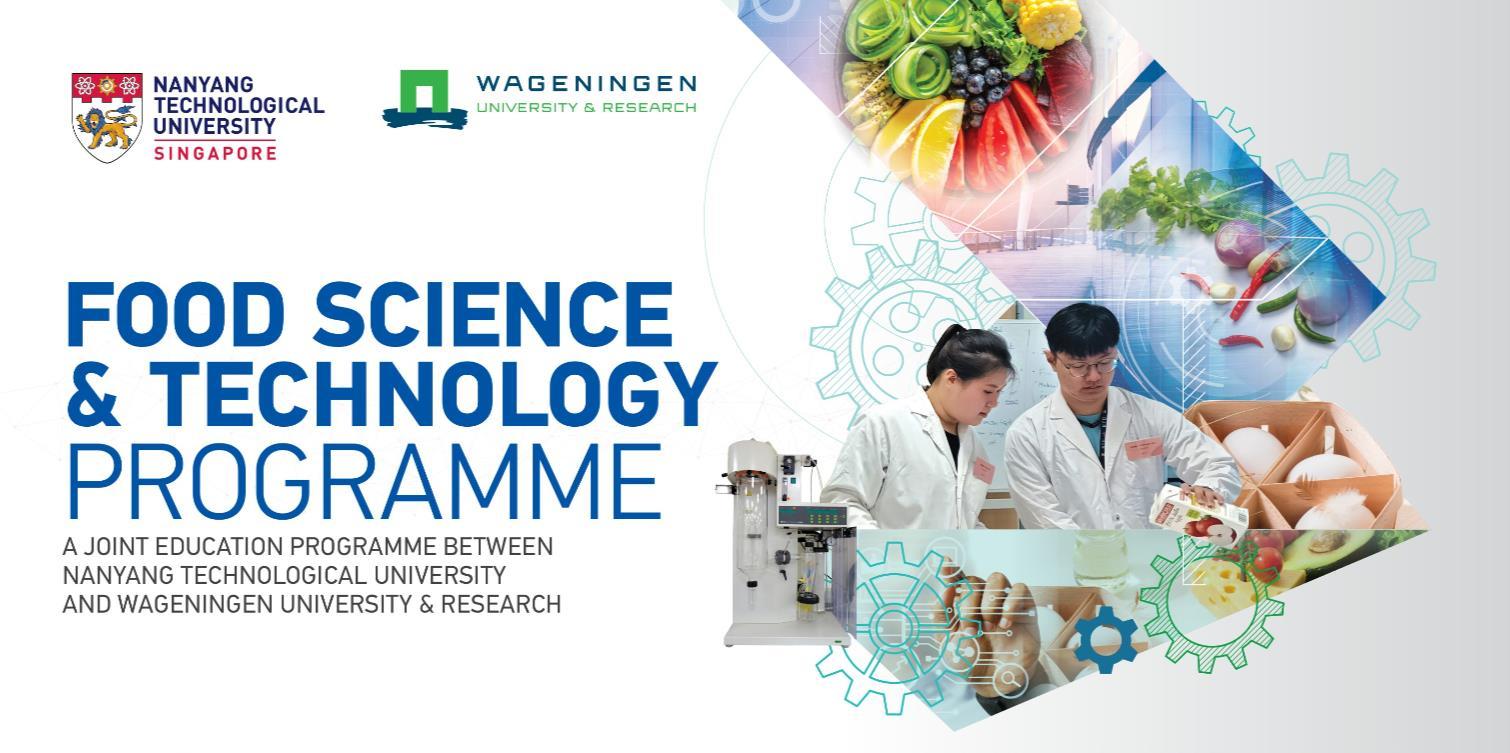
Wageningen University & Research and Nanyang Technological University started their partnership back in 2014, with a second major program in Food Science & Technology program Since then, cooperation was extended by a joint PhD program and two SkillsFuture Singapore courses
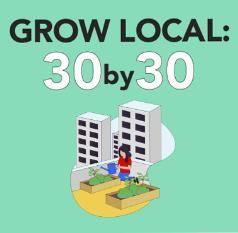
Singapore’s food vulnerability is compounded by its high dependency on import food, limited land and sea space for food production. The nation is in need of innovation and high tech farming techniques to achieve the 30 by 30 goal it set out in 2018: by 2030 Singapore will produce 30% of its nutritional needs locally From less than 10% today, Singapore is open to collaborate on novel techniques to reduce food wastage and improve food safety, nutrition and processes This will ensure Singapore’s access to safe and nutritious food at affordable prices
Fueled by world-class research institutes, research universities and public-private partnerships between science, industry and government, the Netherlands is a world leader in agrifood innovation – from farm to fork The Food Technology program at Wageningen University & Research (WUR) has been in place for more than 50 years and is considered one of the best and most innovative programs in its field WUR offers high-level courses and research in all areas of food science; ranging from advanced technical fields, such as Process Engineering or Chemistry, to fields with a more economic or sociological focus, such as Marketing and Gastronomy
The NTU – Wageningen University partnership came about as both universities were inspired by the shared objectives of promoting and accelerating the progress of research, education and training in the increasingly important area of Food Science and Technology Nanyang Technological University has longstanding R&D credentials in Science and Engineering With its second major program in partnership with WUR, an interdisciplinary natured program was created that combines four existing NTU degree programs and five core courses taught by WUR Course highlights include a student exchange and study trip to Wageningen
After the success of the second major program in 2014, NTU and WUR partnered again in 2016 to introduce a joint PhD program for students from both universities.
16
Saving our shores from rising sea levels
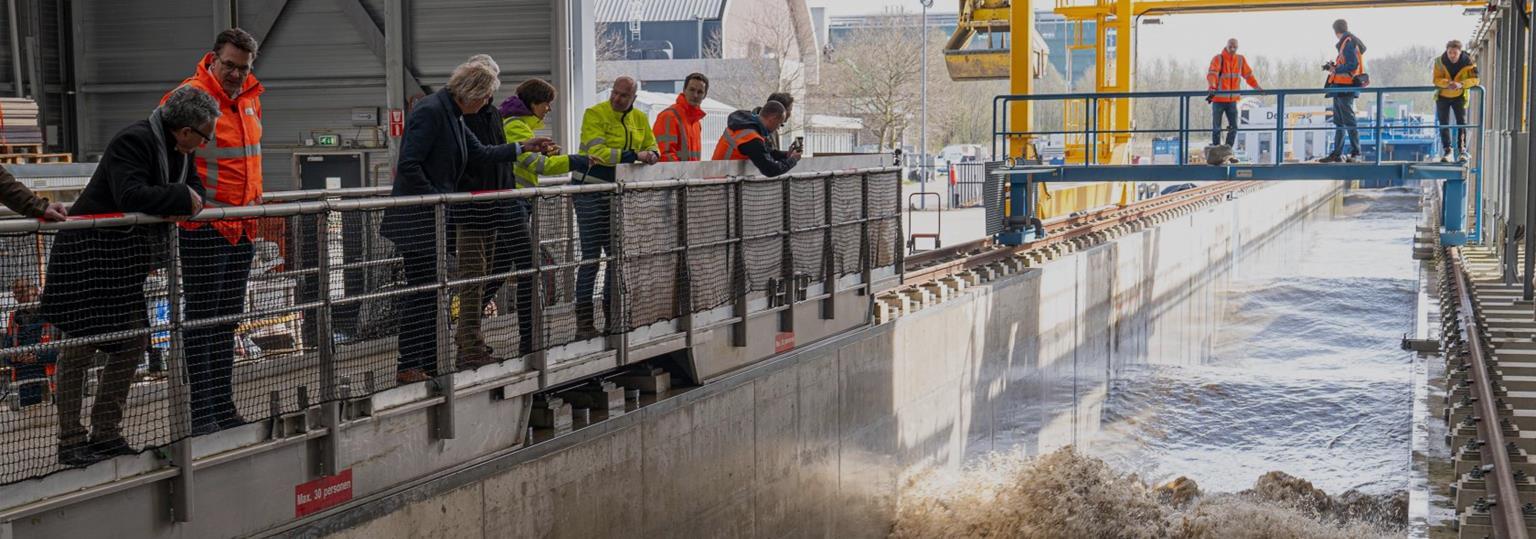
As an island nation, Singapore is vulnerable to the impacts of sea-level rise. And as a fellow low-lying, land-scare nation, it makes sense to look to the Netherlands for ways to battle rising tides With approximately one third of the Netherlands being situated below sea level, its second-largest city Rotterdam even 90%, the Netherlands has become a world leader in coastal protection and has developed some of the most innovative and effective techniques for protecting low-lying land from the sea. Its industry and knowledge institutes pursue research and development of natural and engineered hybrid solutions, aiming to limit disturbance of the coastal ecosystem.
NUSDeltares is the long-lasting knowledge alliance between the National University of Singapore and the Dutch applied knowledge institute Deltares, stemming from the 2007 creation of the Singapore Delft Water Alliance (SDWA) Within the NUSDeltares framework of cooperation, projects are started that focus on coastal engineering and management, climate resilience, sustainable and healthy cities, integrated water management and subsurface planning and resource management.
Deltares continues to expand its relations with Singapore institutes, formalizing its partnership with the Technology Centre for Offshore and Marine (TCOMS) by signing an MoU during the 2022 Singapore International Water Week The MoU includes joint research and co-development of knowledge in the field of hydrodynamics
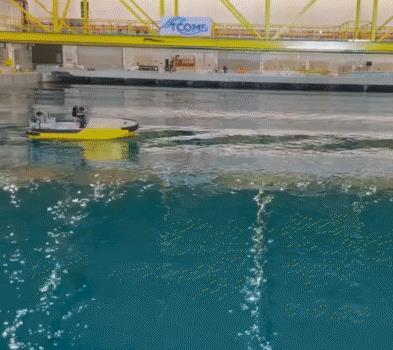
The agreement is a first step towards a long-term collaboration between TCOMS and Deltares. Both parties agree to share and exchange their knowledge and expertise, to further enhance capabilities in hydrodynamic modelling, for both deep-water and shallow-water scenarios, and contribute towards predictions of regional met-ocean conditions and coastal protection measures, especially adaptation solutions in response to climate change and rising sea levels The mutual sharing of knowledge, and conduct of joint projects and research to co-create innovative modeling and simulation solutions in the hydrodynamics field The knowledge acquired through the collaboration will support the greater research eco-system including industry and public agencies
Launched in 2016, TCOMS is a national Research and Development (R&D) centre dedicated to the Marine & Offshore Engineering, Maritime and other ocean-related industries It is a joint venture between the Agency for Science, Technology and Research (A*STAR) and the National University of Singapore (NUS), supported by the Singapore Economic Development Board (EDB) and the Maritime & Port Authority of Singapore (MPA).
“The agreement marks the start of an exciting partnership with Deltares to co-create cutting edge capabilities in hydrodynamic modelling and knowledge of coastal fluid-structure interactions. This will mutually strengthen our position as leading R&D institutes contributing towards coastal resilience solutions ”
–
Professor Chan Eng Soon, CEO TCOMS
partner with a leading institute for larger projects and expand our knowledge about the Singapore and SE Asia region”
17
“Enriching our knowledge of the effects of climate change and climate adaptation is crucial With this collaboration we are able to
This article is based on the TCOMS and Deltares press release following the signing of their MoU
– Annemieke Nijhof, Managing Director Deltares
Technology Centre for Offshore and Marine Singapore, 2022
Living with Water: Dutch-Singapore collaboration to keep our feet dry
Singapore and the Netherlands, both low-lying and land-scarce nations, have found each other in their quests to keep their feet dry. There are specific projects as a testimony to this partnership, such as the development of a polder on Pulau Tekong, but also in the longstanding relationship between the Dutch Ministry of Infrastructure and Water Management and the Singapore Ministry for Sustainability and the Environment
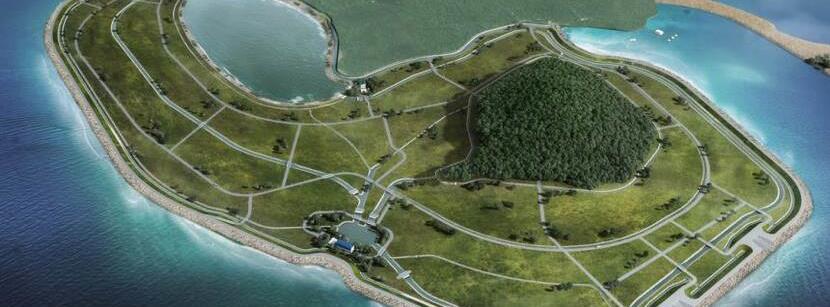
Singapore needs to reinforce its coasts to prepare for rising sea levels and has made multi billion dollars of funding available for this purpose. The same happened in the Netherlands, with the launch of the Delta Programme. Under the Delta Programme, the government has entered into innovative collaborations with residents, businesses, knowledge institutes, and NGOs
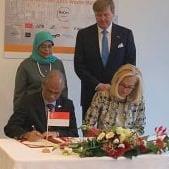
In November 2018, the Netherlands and Singapore signed their agreement to cooperate on environmental and water management This was the first time two countries signing a memorandum on both environment and water The goals of this cooperation are exchanging expertise on water management and supporting efforts and exchange in the areas of circular economy.
The collaboration is not only a government exchange, but also includes exchanges with industry and knowledge institutes, strengthening the valued public private partnership model both countries aim for In the coming years we expect more and intensive collaboration and invite those active in the area of climate mitigation and adaptations to join these efforts
18
Singapore’s minister Zulkifli and Dutch minister Kaag sign the agreement to enhance cooperation on environmental and water management (Amsterdam, Nov 21, 2018).
Polder in Pulau Tekong. Dutch companies Deltares, Boskalis and Royal HaskoningDHV have been involved in the development of the polder.
Netherlands Innovation Network
Follow our LinkedIn page for updates, take a look at our RVO webpage for studies, or drop us a message at sin-ia@minbuza.nl
Keep in touch with the Dutch
