Contents.
New Days. re:SCENE.
Senior Assisted Living Chicago, IL
Adaptive reuse of Damen Silos in Chicago, Illinois to revibrant the neighborhood and allowing seniors to have impactful reconnnection with younger generations.
Pavilions New York, NY
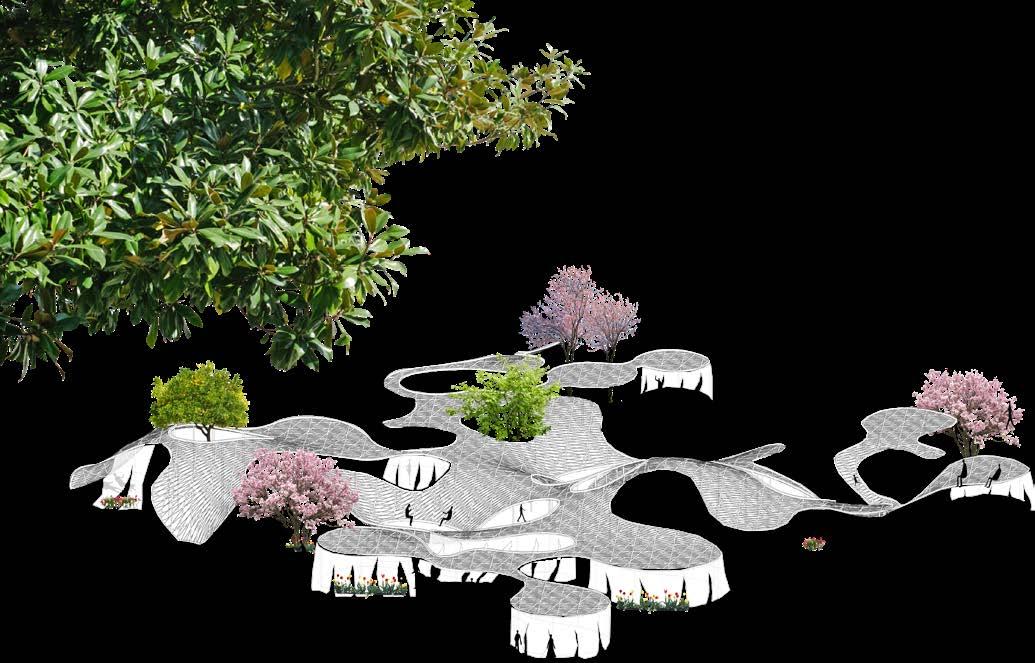
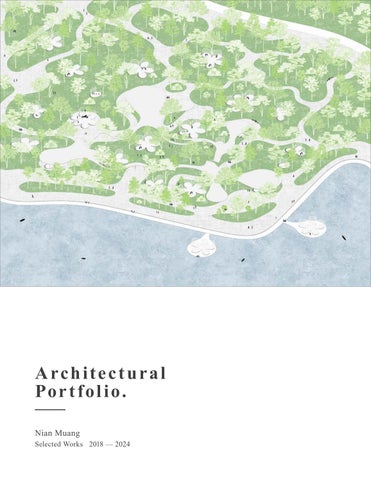
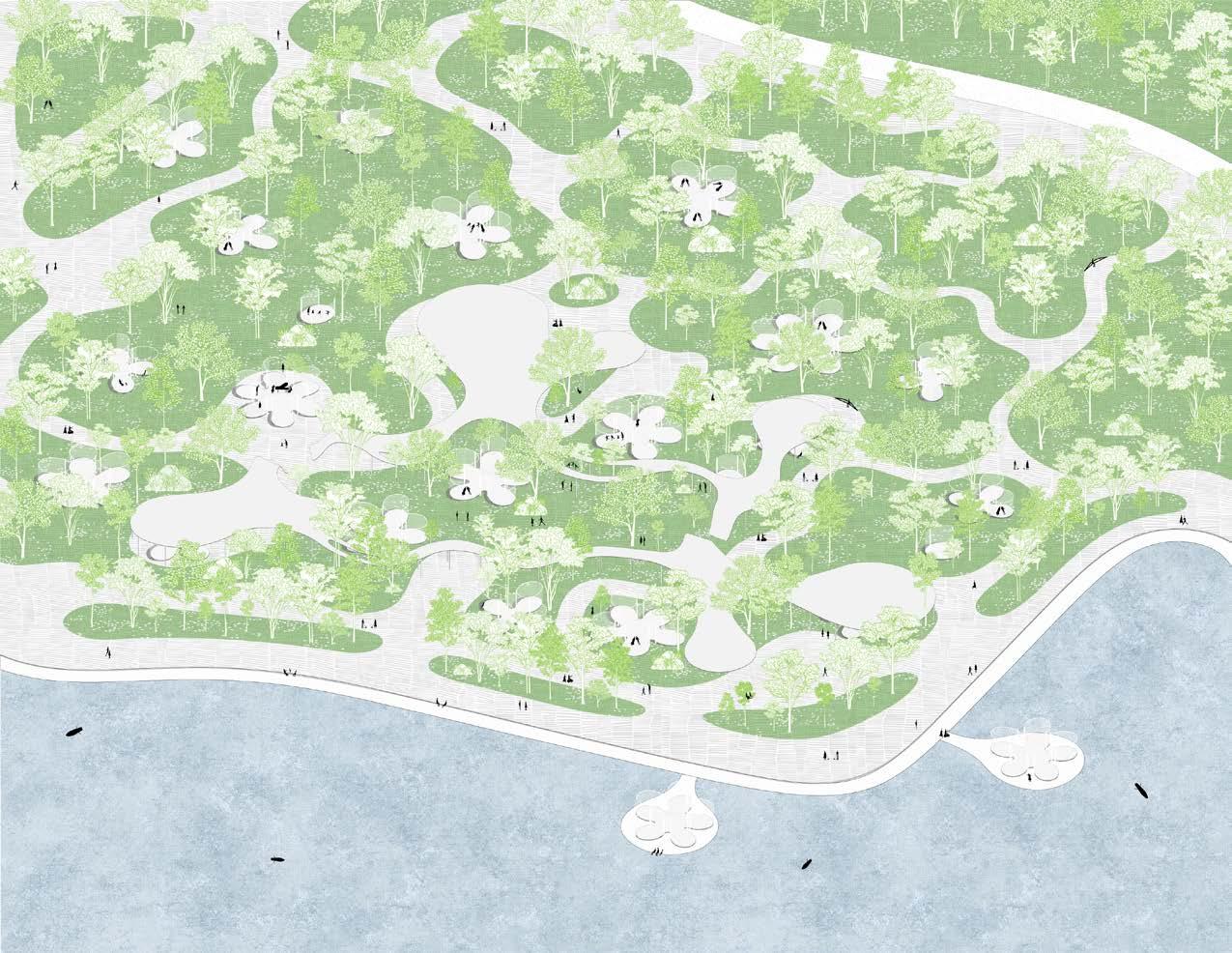
Simple and flexible pavilions to provide tailored experiences within Central Park based on user preference.
// 05. page // 19.
The View at the Landing.
Film Institute Fort Wayne, IN
Revibranting downtown Fort Wayne through creating an urban hub and allowing visitors to experience what ‘cinematography’ is.
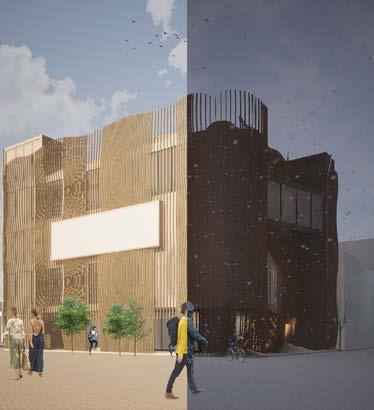
The Wave / Internal Competition - First Place
Mixed-used Muncie, IN
Reassessing impacts of Covid 19 and enhancing the places for people-viewing in response to the need of social-distancing.
page // 27.
page // 33.
New Days.
Location: Chicago, IL
Type: Senior Assisted Living Year: 2024
Project: Competition by Buildner Software used: Rhino, Photoshop, Illustrator
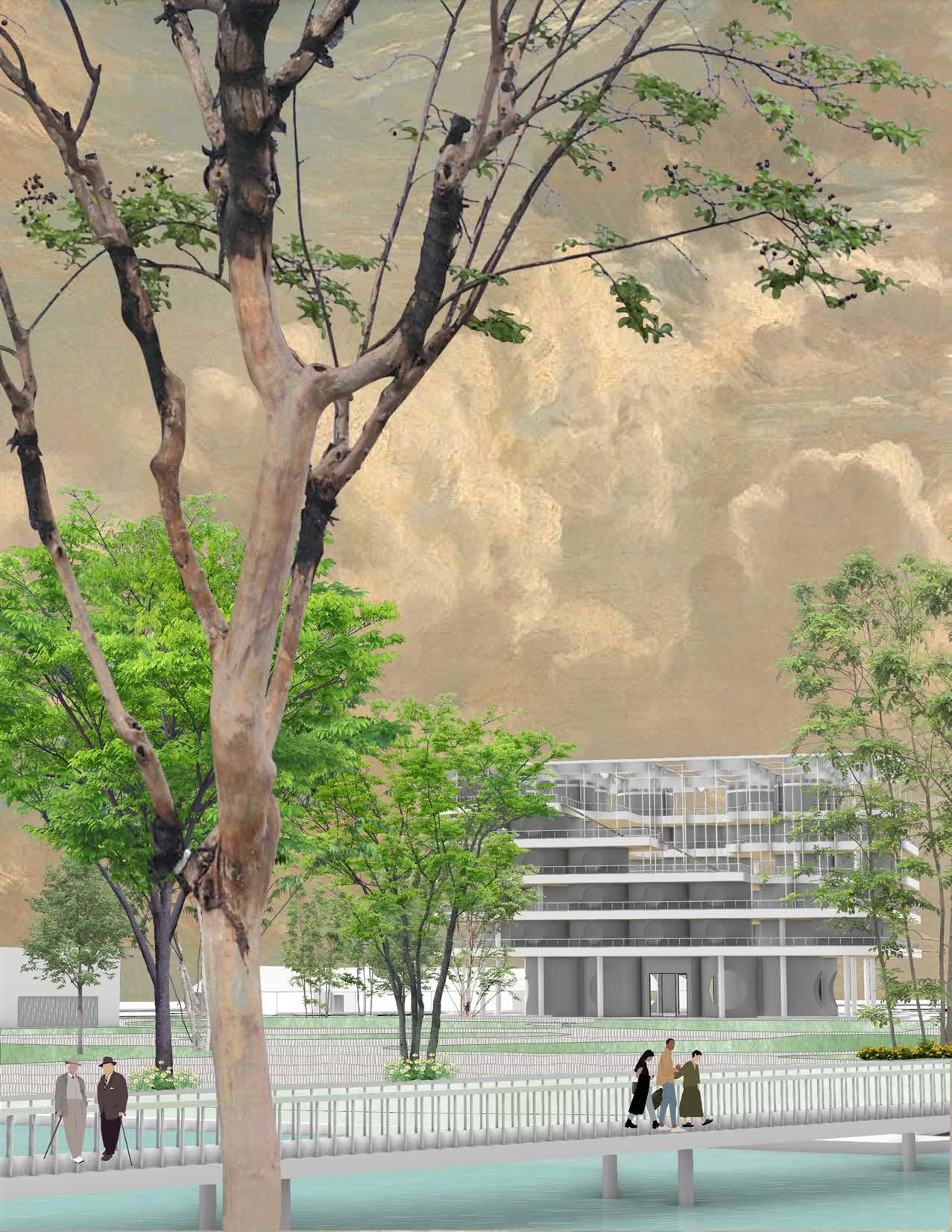
The Damen Silos site, a historic industrial complex located in Chicago, offers a unique opportunity for adaptive reuse with a focus on addressing social isolation and enhancing the quality of life for senior residents.
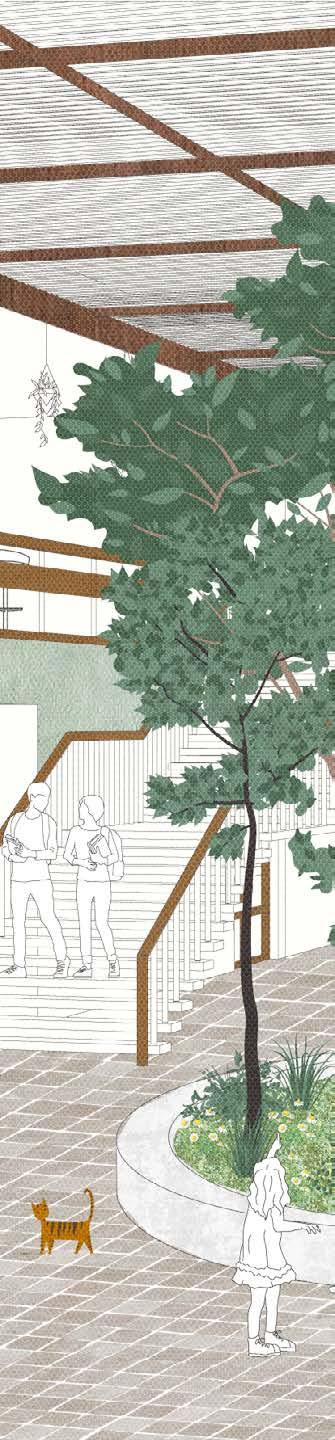
The site will be transformed into a vibrant senior living community that not only provides comfortable and safe living spaces but also fosters social interaction and intergenerational learning.
The adaptive reuse plan would include the conversion of the existing silos and warehouses into spacious apartments, while the surrounding area will be landscaped to create recreational spaces such as gardens and walking paths.
Additionally, public spaces with classrooms and gathering areas will help be established to promote intergenerational learning and activities, facilitating interactions between seniors and younger generations. This innovative redevelopment approach aims to combat social isolation among seniors by creating a dynamic and inclusive environment that encourages connections, engagement, and lifelong learning.
Site History
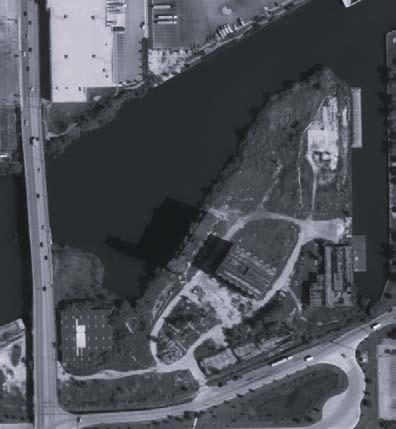
Damen Silos is a historic grain elevator complex in Chicago and was built in 1906. It was designed by architect Rudolph Hering, and it featured distinctive concrete silos. It was abandoned after a fire during late 20th century and later became popular place for urban exploration.
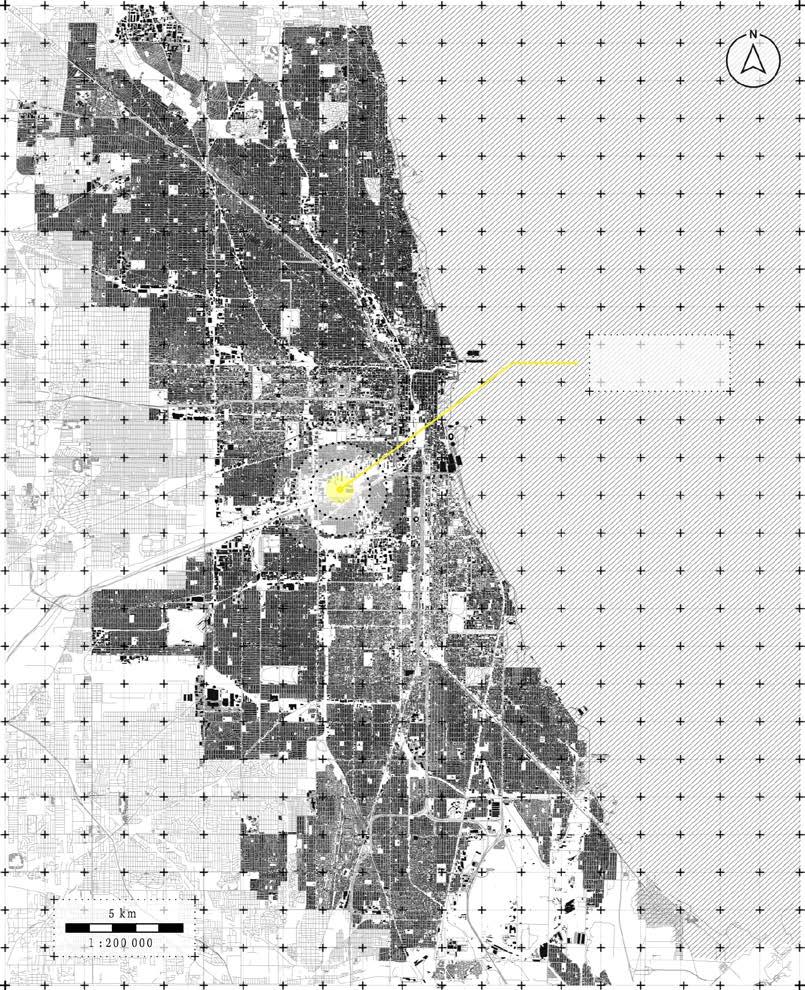
Damen Silos is now a symbol of Chicago’s industrial past, with the potential for revitalization. It is located in the Heart of Chicago and has many existing programs near the site that are helpful for building a community. The site is vast enough to hold multitude of different programs and a great place for a senior residence with the potential to seamlessly integrating them back into the community.
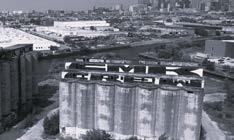
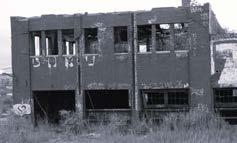
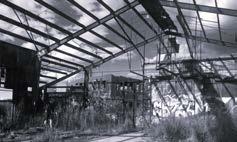
Damen Silos Chicago, IL
Credits: TagTeamTravel + Darrel Powers Site
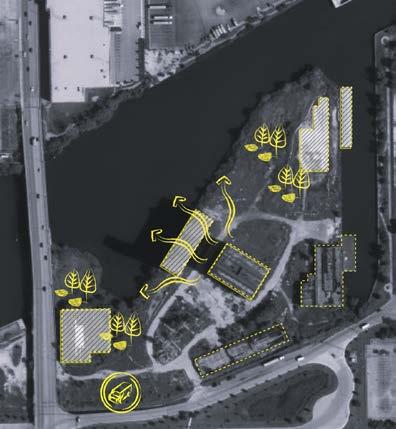
Silos
Office building Warehouse
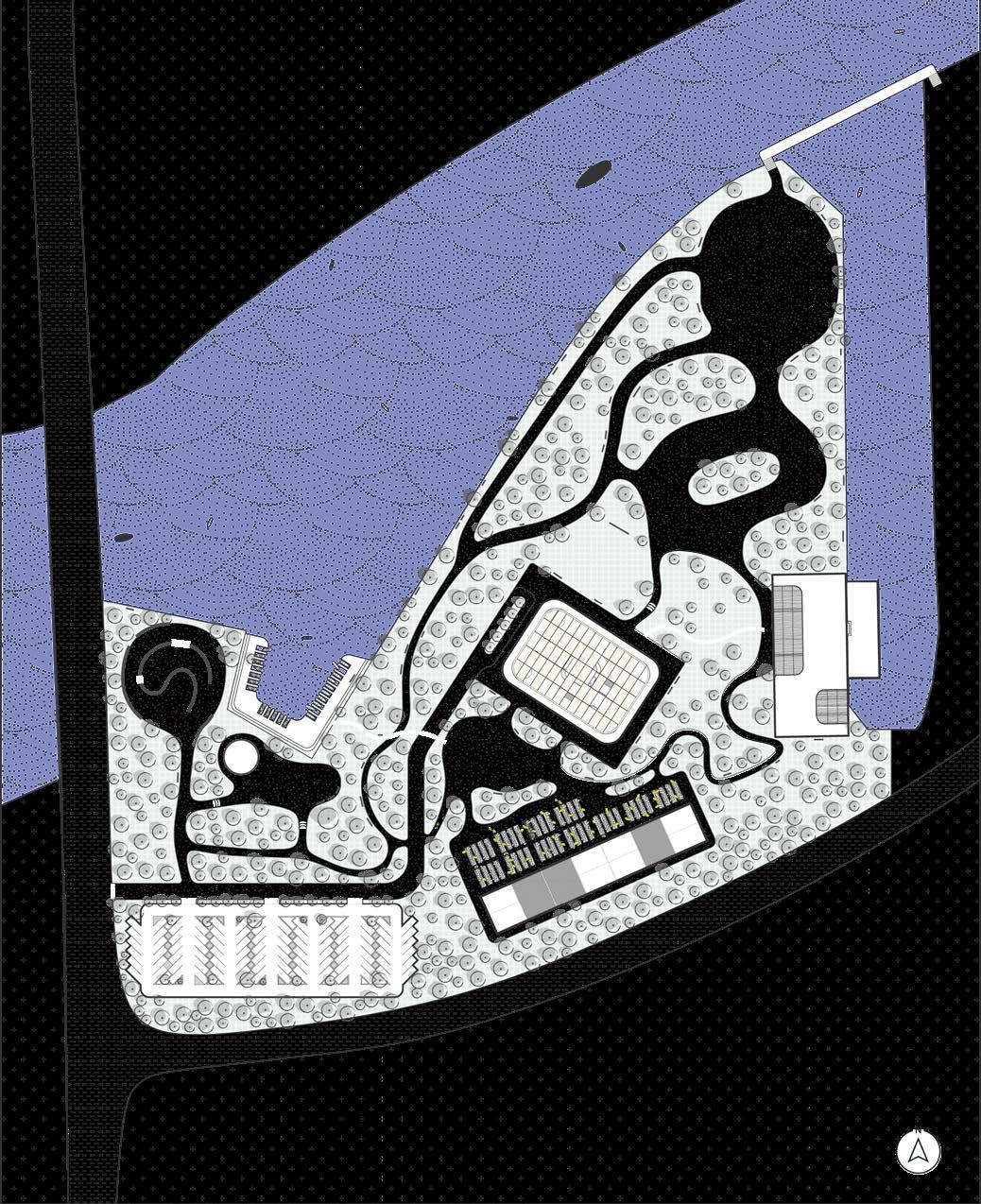
While utilizing the existing structures to a feasible extent, this project aims to transform Damen Silos into a vibrant senior living residence and creating a new urban hub for all ages, helping reconnect seniors into the community. The main programs are (1) senior living residence, cafe + convenience store, indoor and outdoor public courtyards (2) farm-to-table restaurant, bar, cafe, and farm (3) caregiver residence, pharmacy + emergency clinic, caregiver training classes and library (4) kayak and boat rental shop (5) open areas on site for any types of events such as seasonal festivals, foodtrucks, and weddings.
Senior Living Residence.
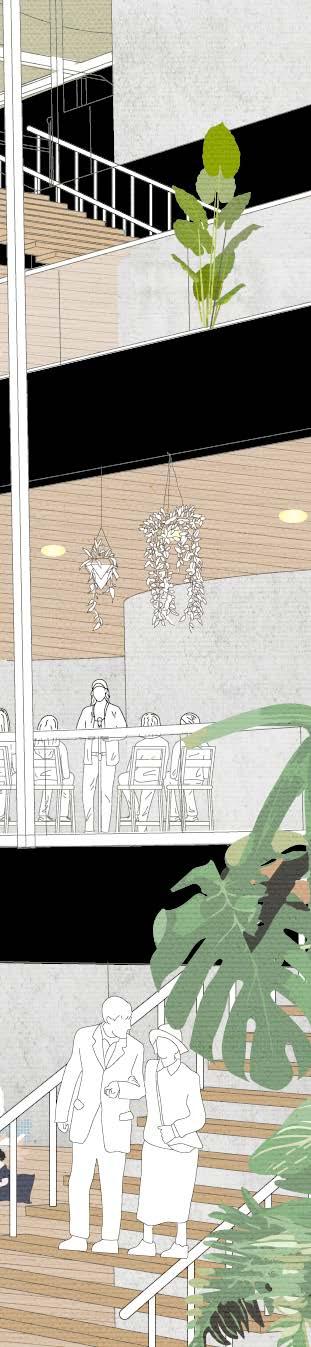
+ The residence has public spaces that are open to all throughout the building.
+ Regularly filled with classes held/taught by residents + caregivers of the building.
+ Some example classes are painting, pottery, sewing, gardening and also reading & writing help sessions to different language along with to those who aren’t English speakers.
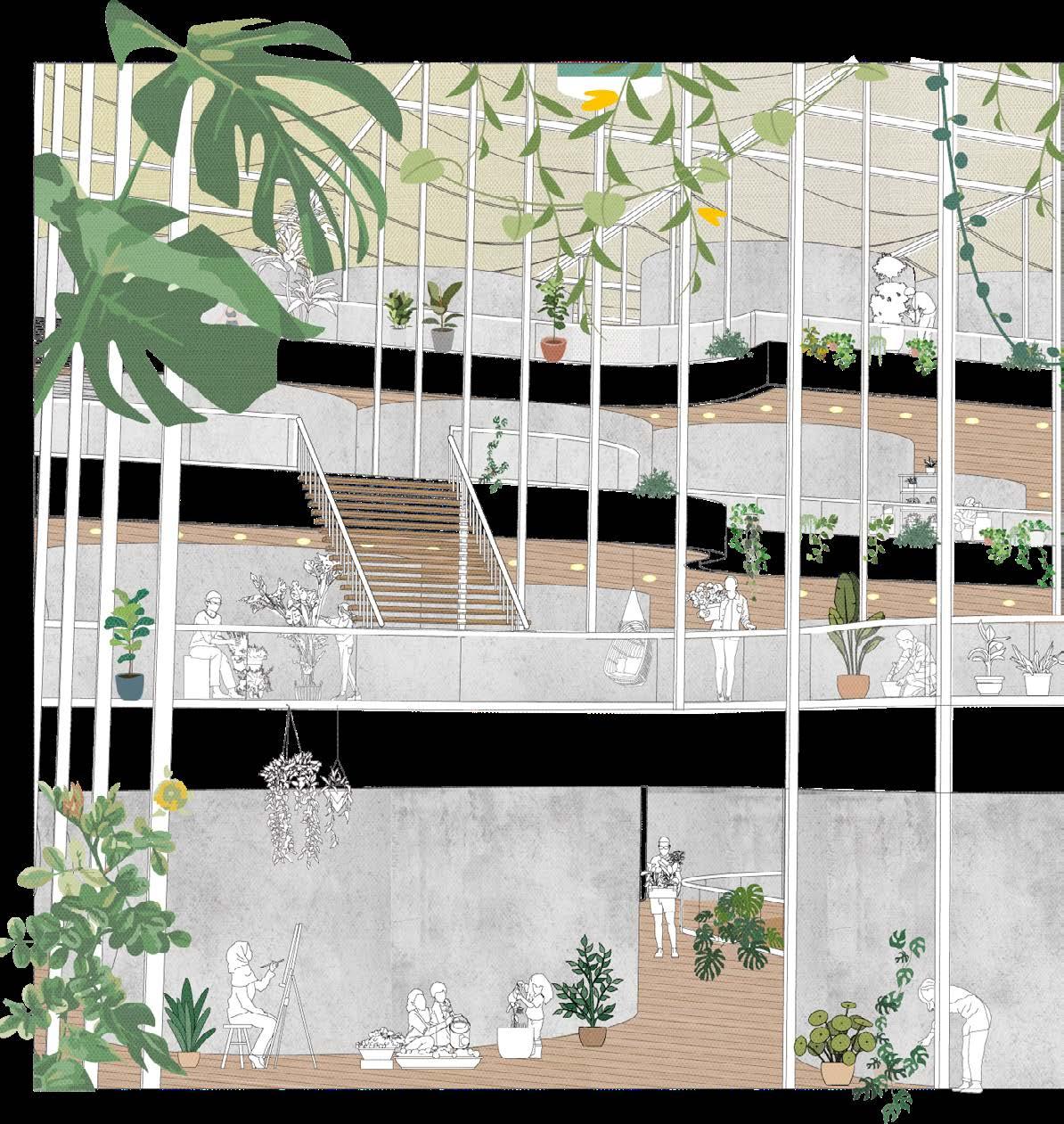
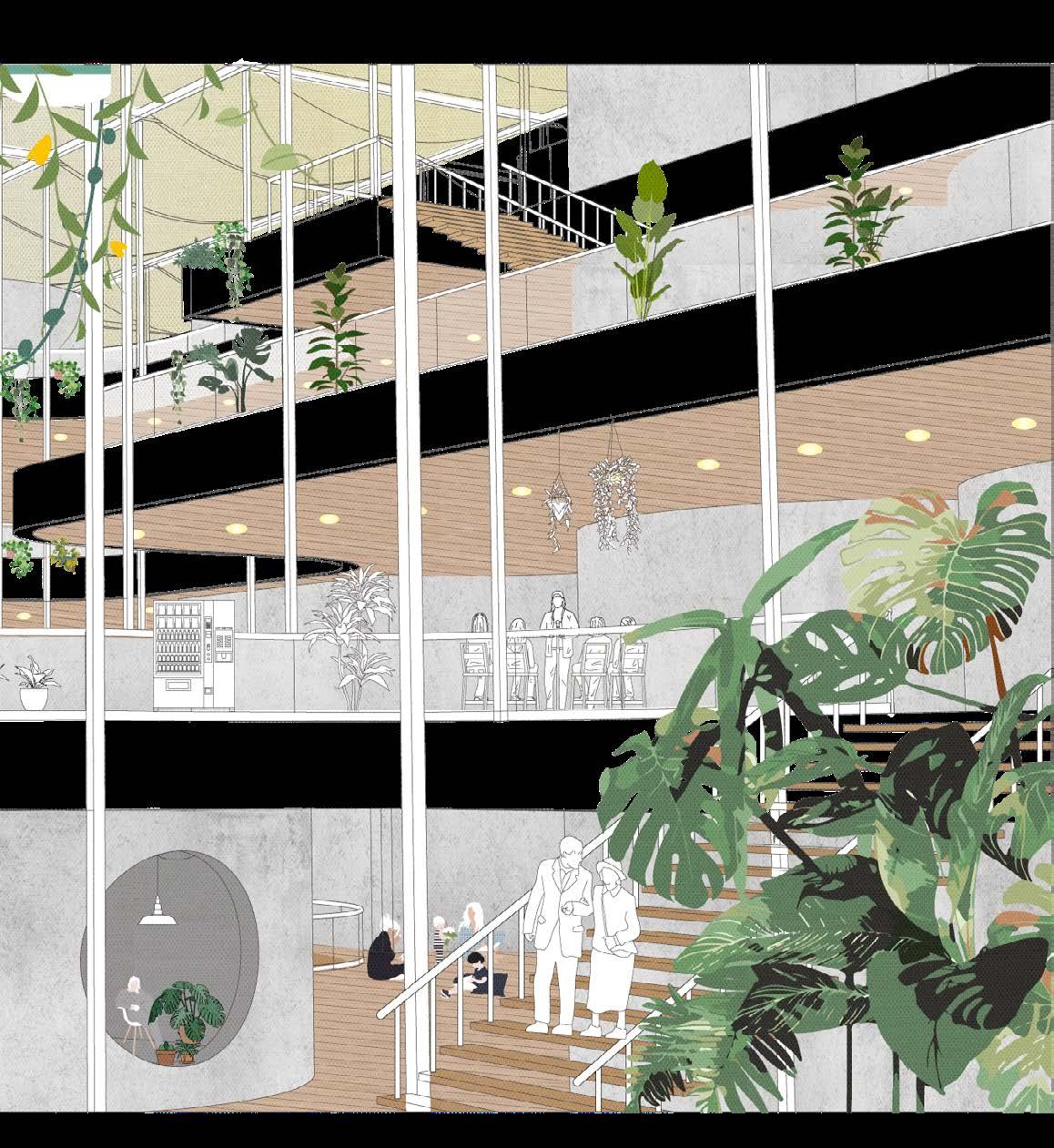

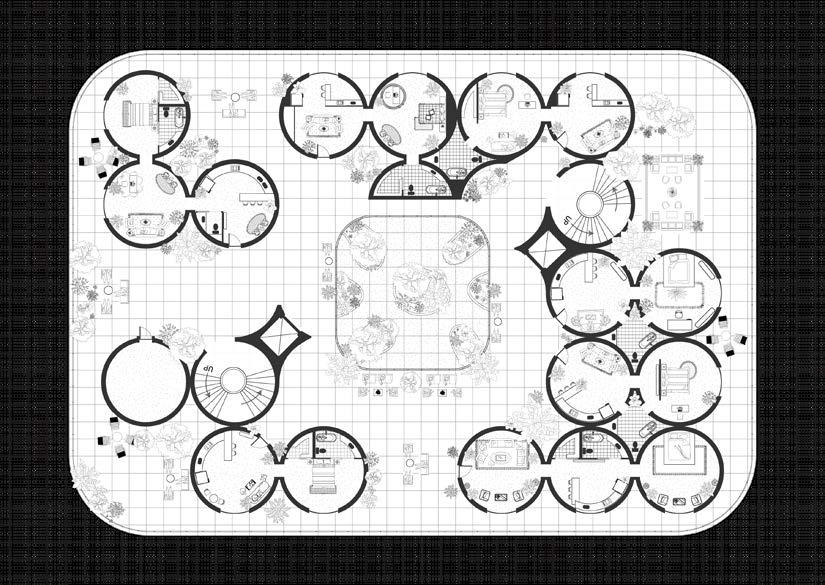

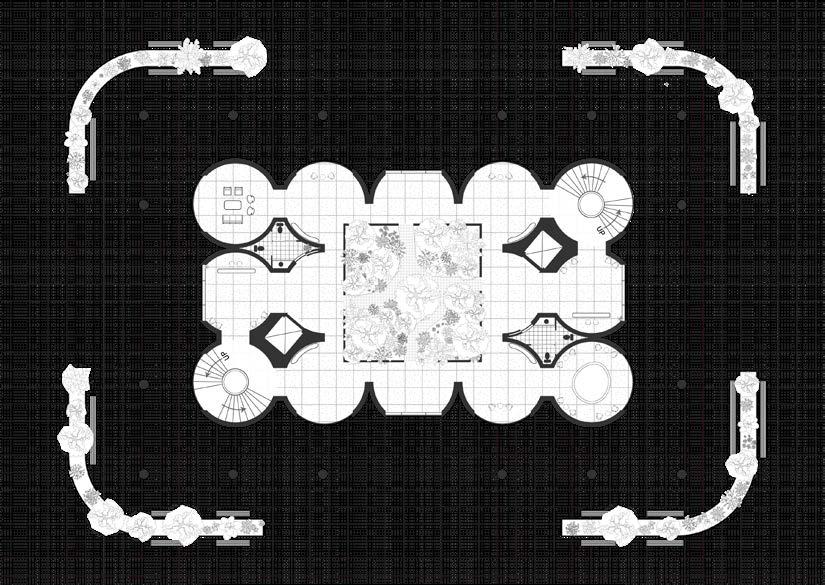
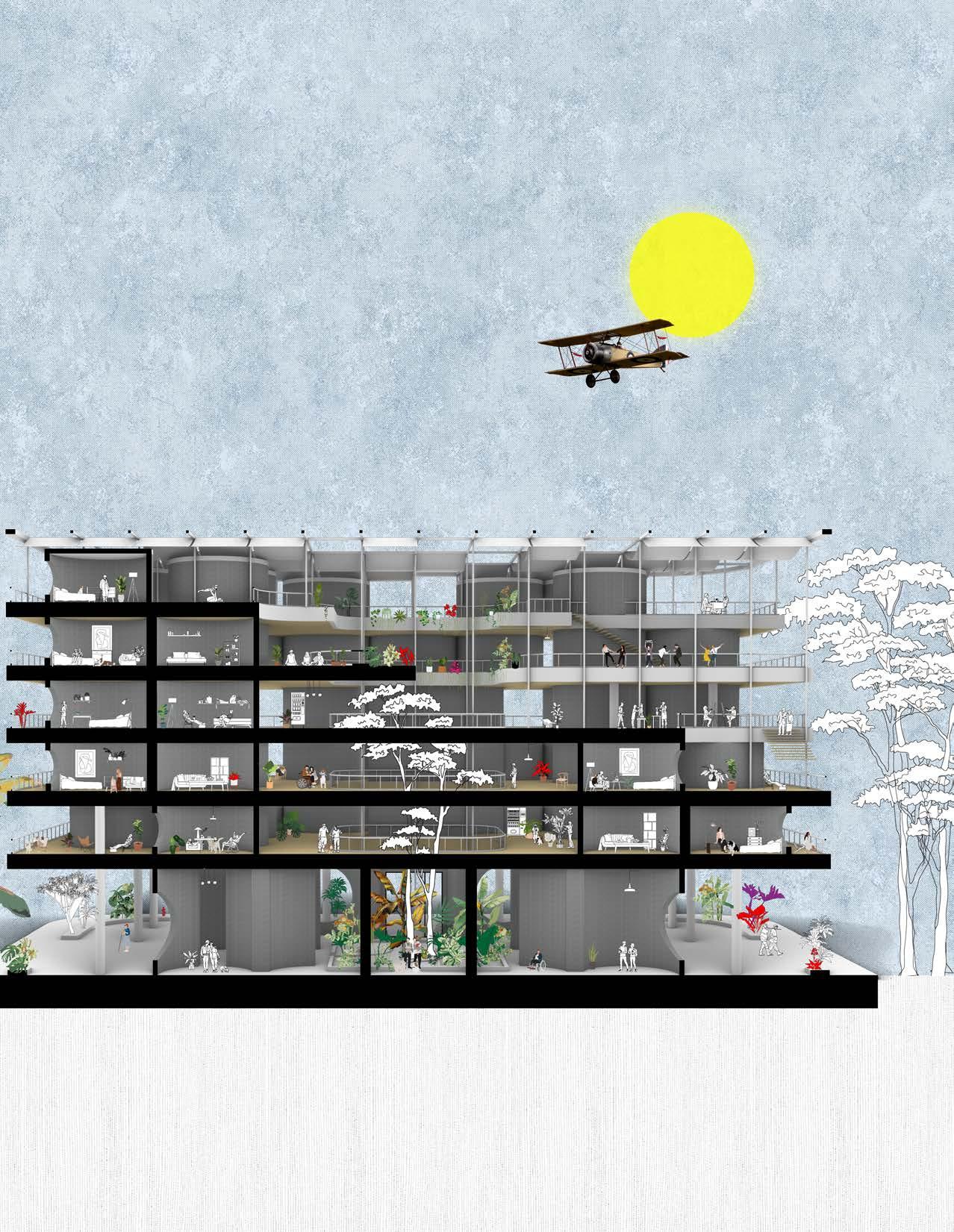
Senior Living Residence Section.
A little community forming within the building. To lighten up the darker mood the concrete tubes expresses, the flooring and ceiling uses white ash wood with white trims around the building + uses adjustable fabric as roof to make sure the space is open and welcoming to seniors and visitors.
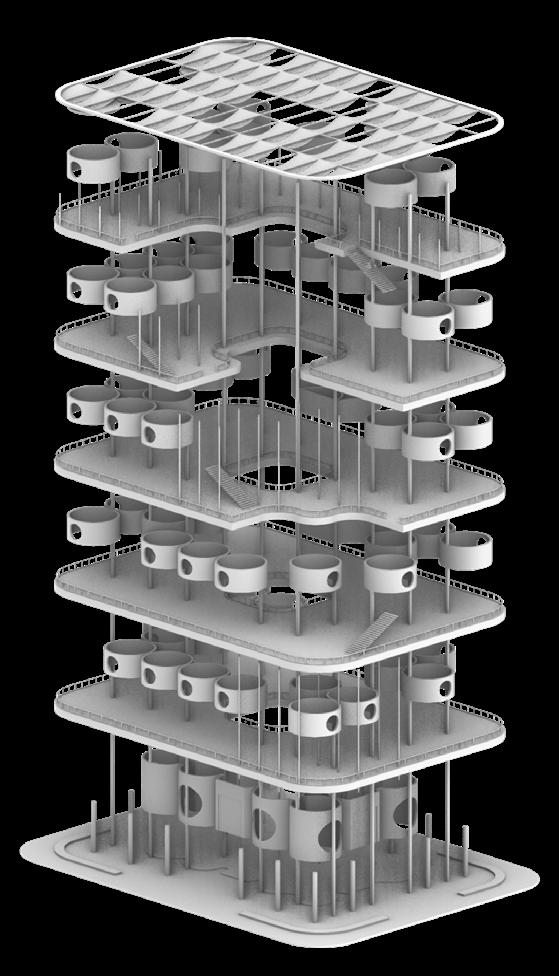
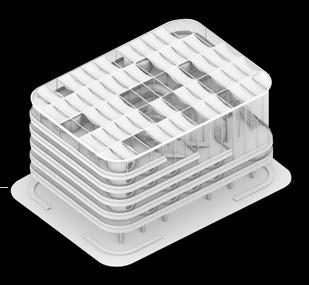
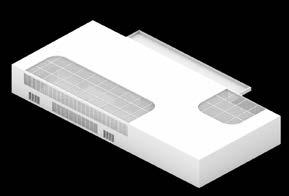
Controlled/ adjustable fabric roof
Opening for inner courtyard
Public spaces
Senior living tubes
Lobby
Reinforced existing columns
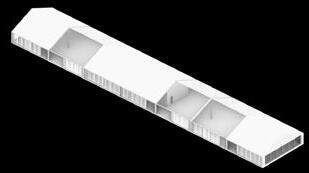
Restaurant is operated by the senior residents.
Also the vegetable garden is grown by the residents.
Regularly hold gardening classes for visitors + volunteers.
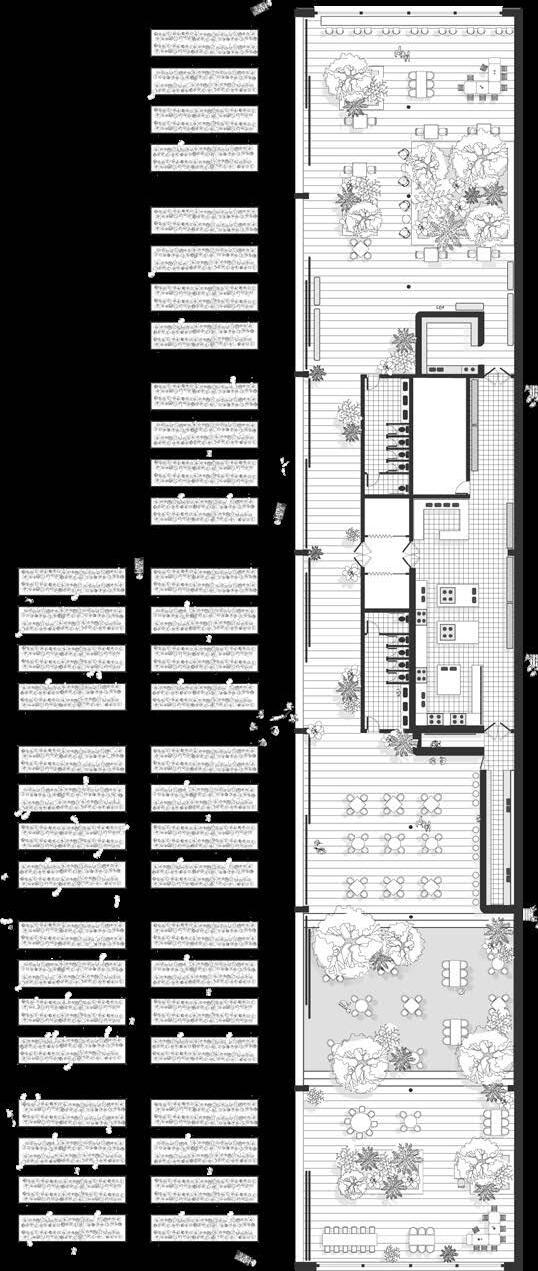

Farm-to-table restaurant, Bar + cafe, Vegetable + flower garden
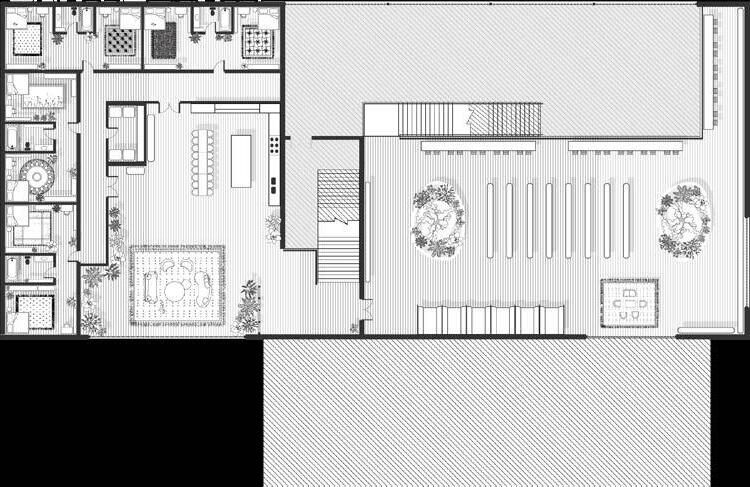

Floor 02: Caregivers’ residence & Public Library
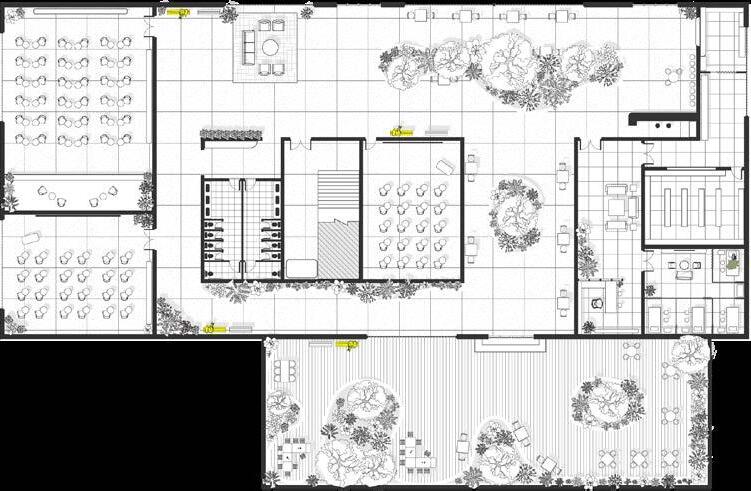
Floor 01: Pharmacy, Emergency clinic, Caregiver training classes by current caregivers Outdoor seating area + Gardens
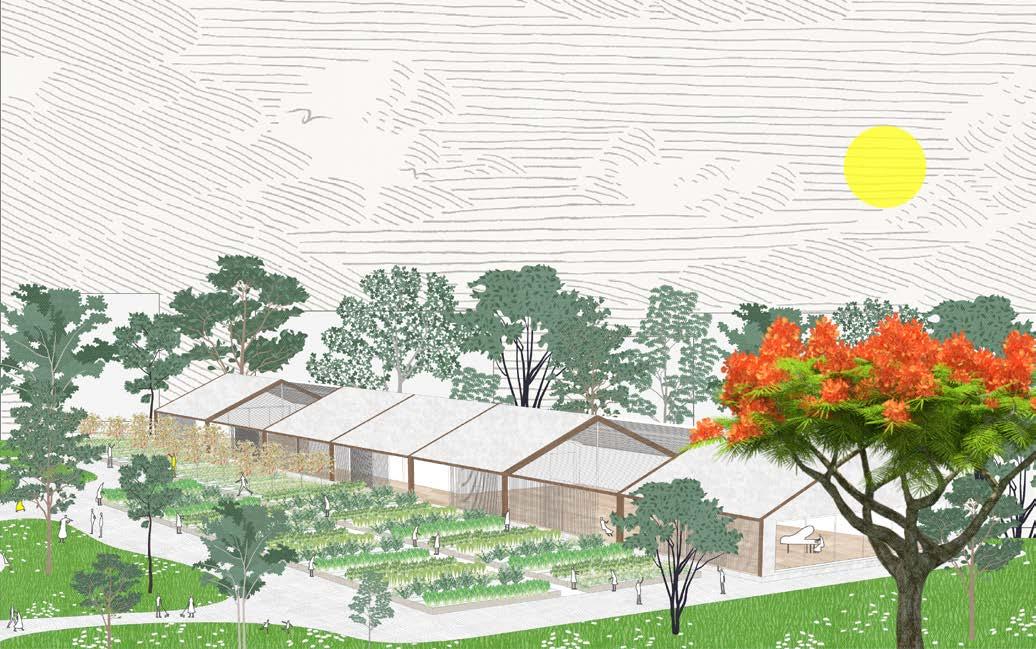
Farm-to-Table Restaurant Exterior
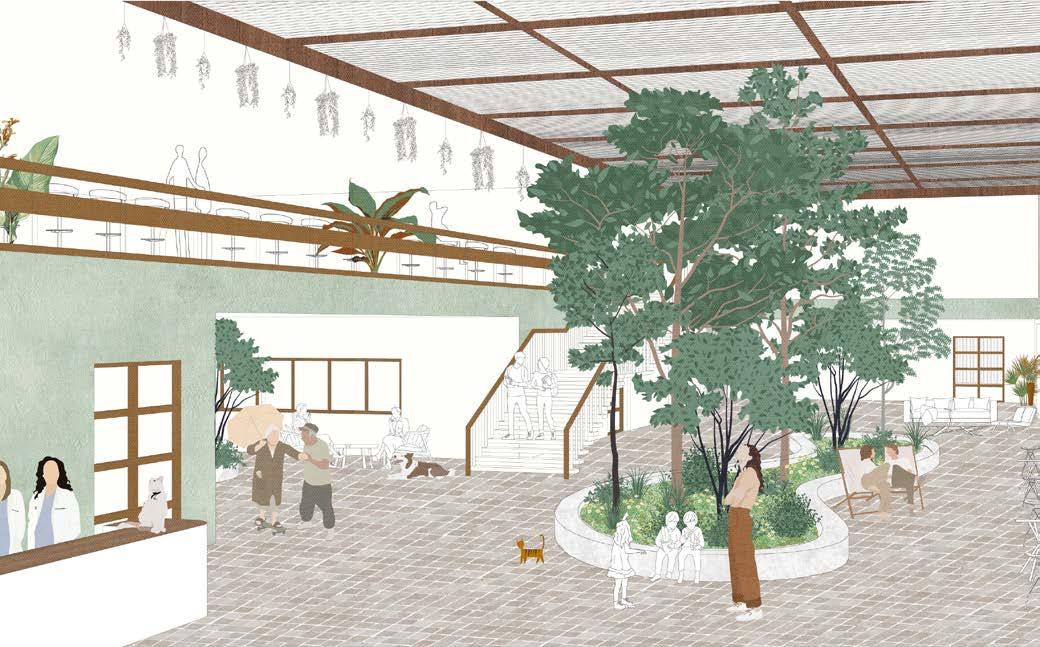
Caregivers’ Residence Interior
Location: New York, NY
Type: Observation Pavilion
Year: 2023
Project: Diploma Project
Software used: Rhino, Photoshop, Illustrator
A third place. The term refers to a place that is between one’s home and workplace. Parks, notably recognized as a third place, offer people a natural environment that promotes health and wellbeing, while acting as the social fabric of communities.
Central Park, situated in the heart of Manhattan, New York City, is a manmade public park and serves as an urban oasis, while also being one of the most visited parks in the world. But an observation reveals Central Park lacks designated areas where visitors can have a more private or tailored experience. In addition, given the current pandemic, there is a growing need for increased efforts to maximize the use of the park. Because there is increased interest in outdoor activities in natural settings, but there are insufficient designed spaces to accommodate the activities in the park.
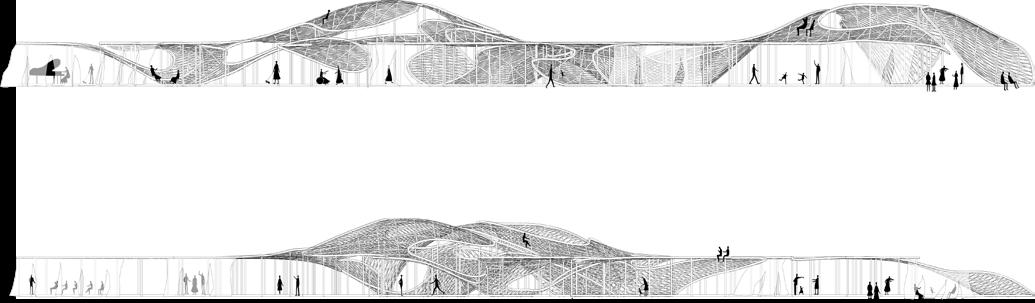
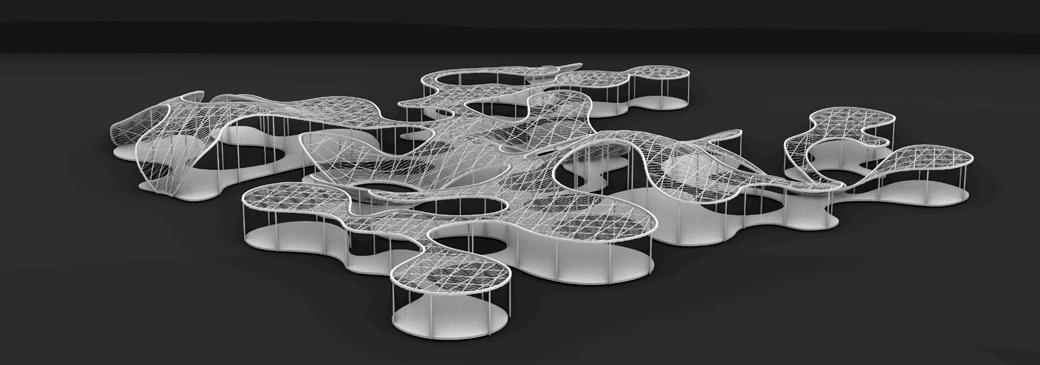
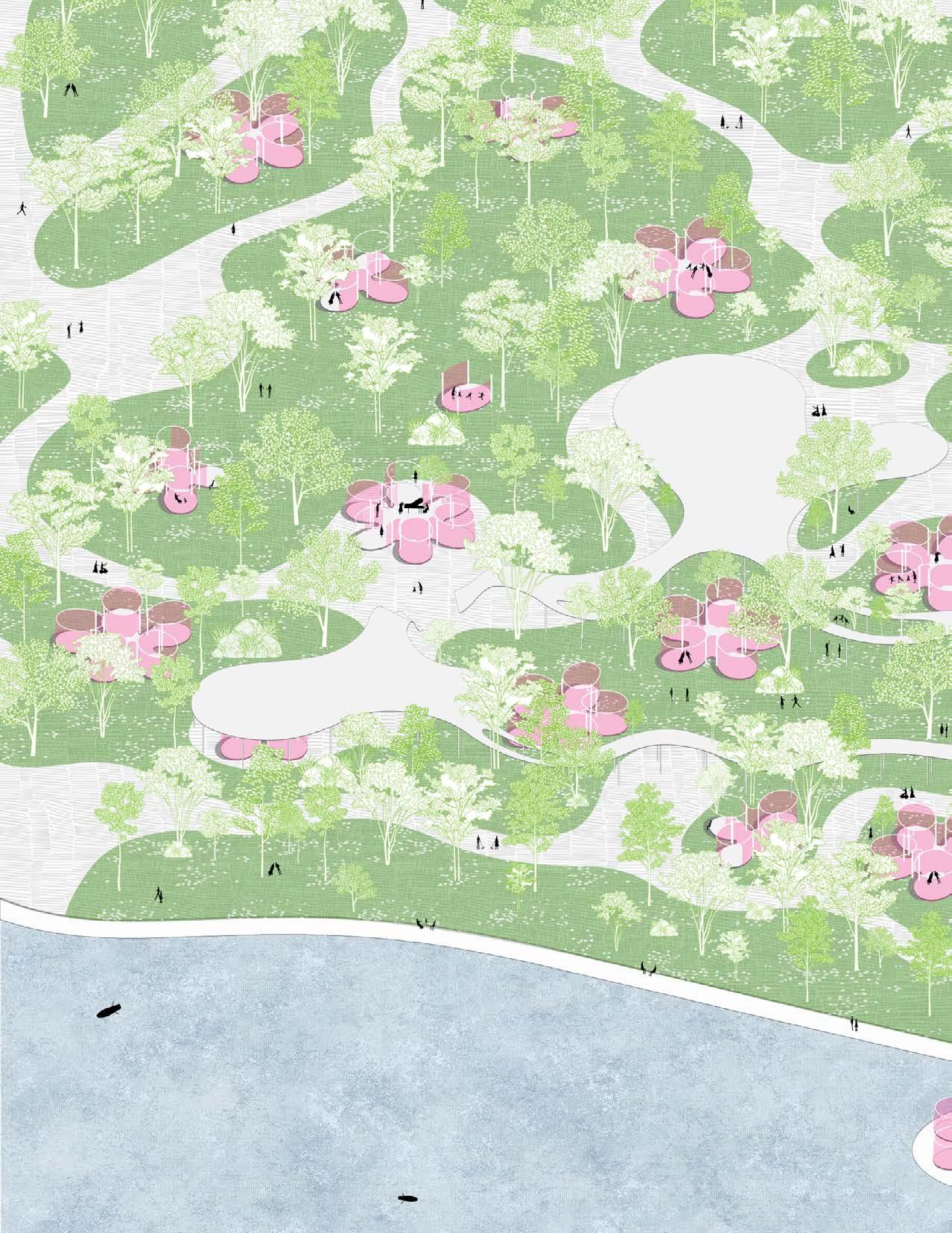
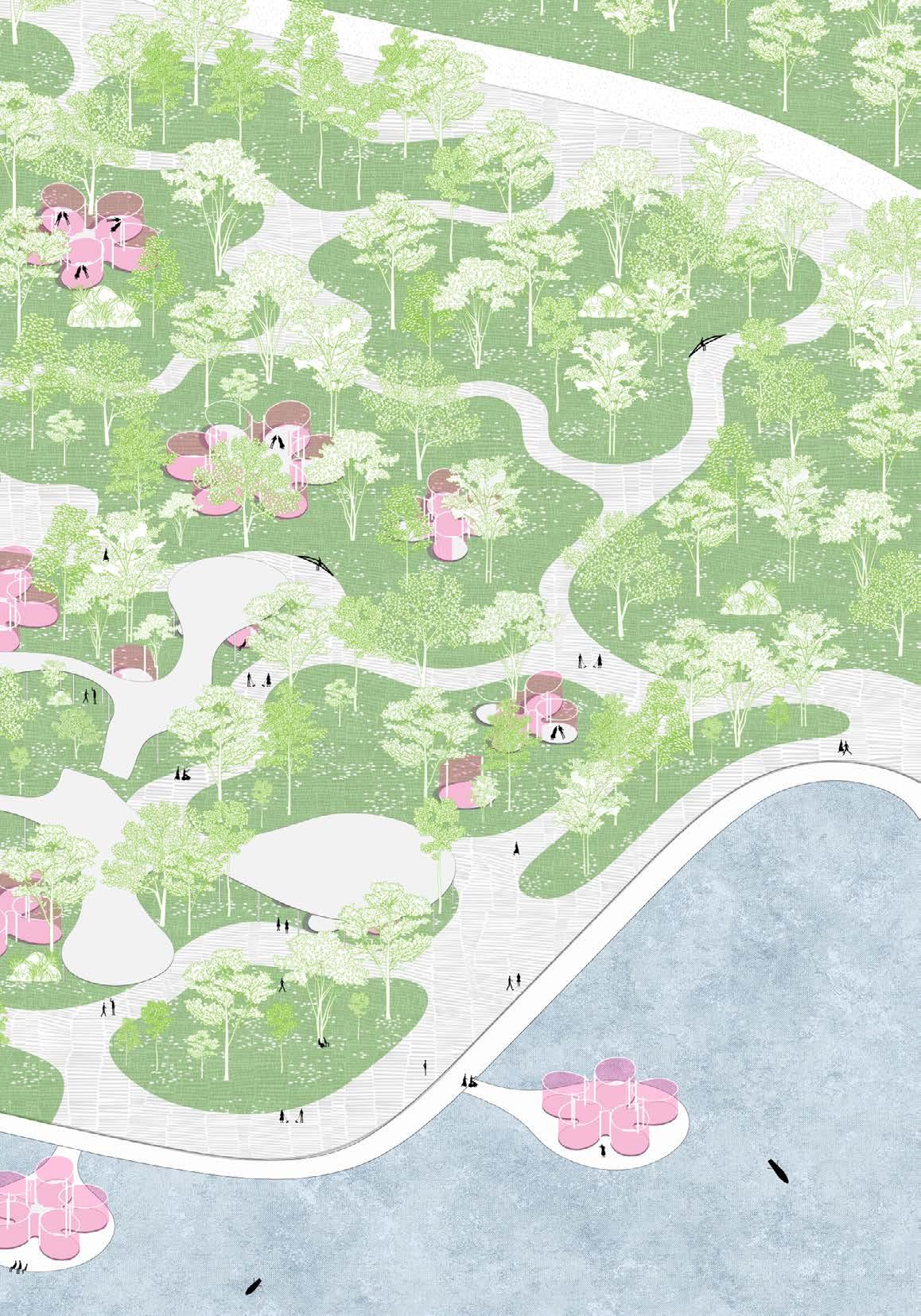
Re:SCENE is a year-long diploma project with two segments consisting of research and implementation of the identified findings. The objective of this thesis is to create versatile spaces that meet the diverse needs of visitors in parks. This project aims to accomplish this by conceptualizing modular pavilions featuring adaptable curtains, enabling swift, effortless, and seamless adjustments by users. The design is intended to be responsive to a range of needs, including spatial modifications in response to the occasion, addressing privacy concerns, and user preferences for open views, placing control firmly in the hands of the users.
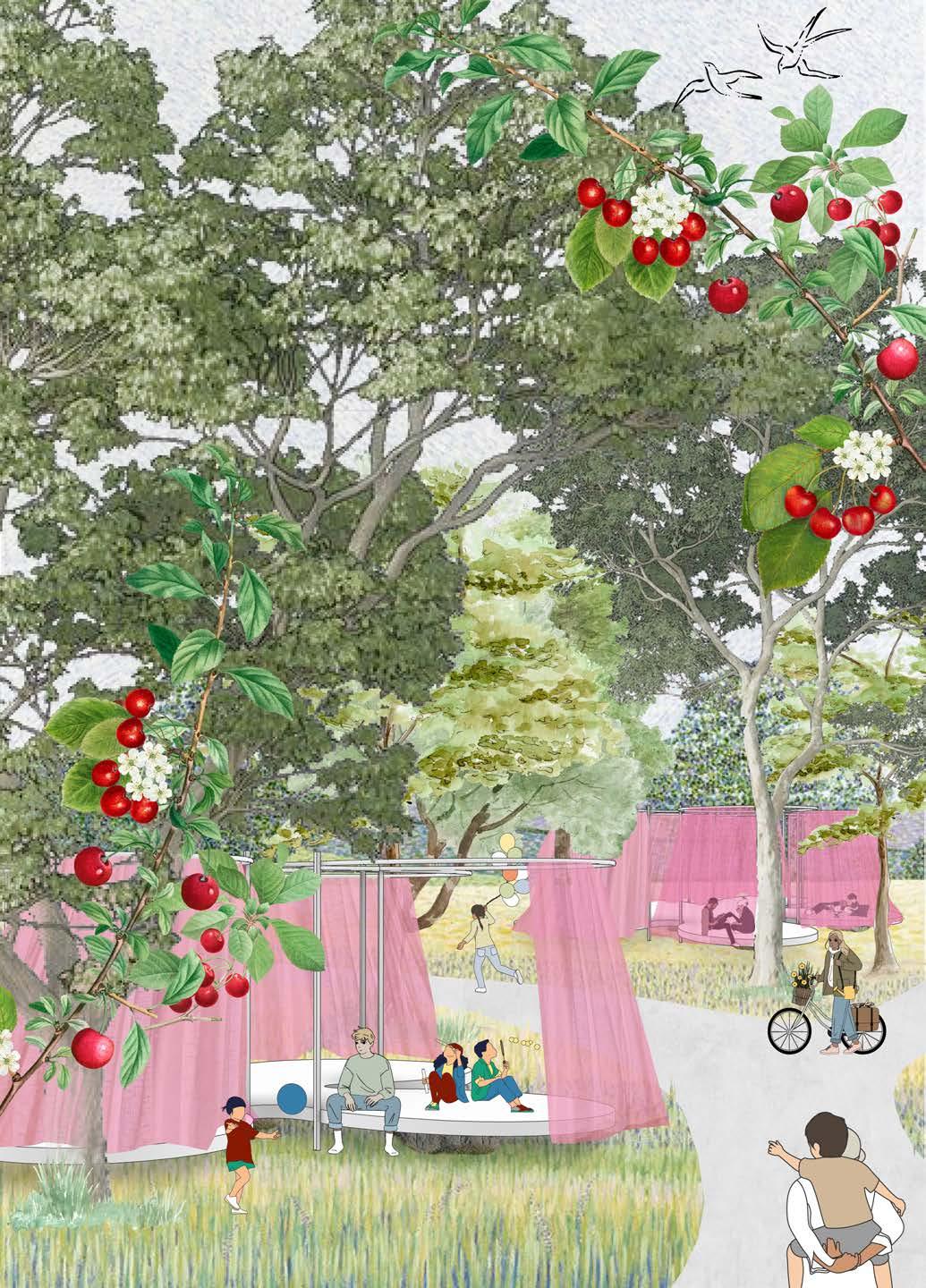
Location of the site: Cherry Hill and 72nd St + Central Park.
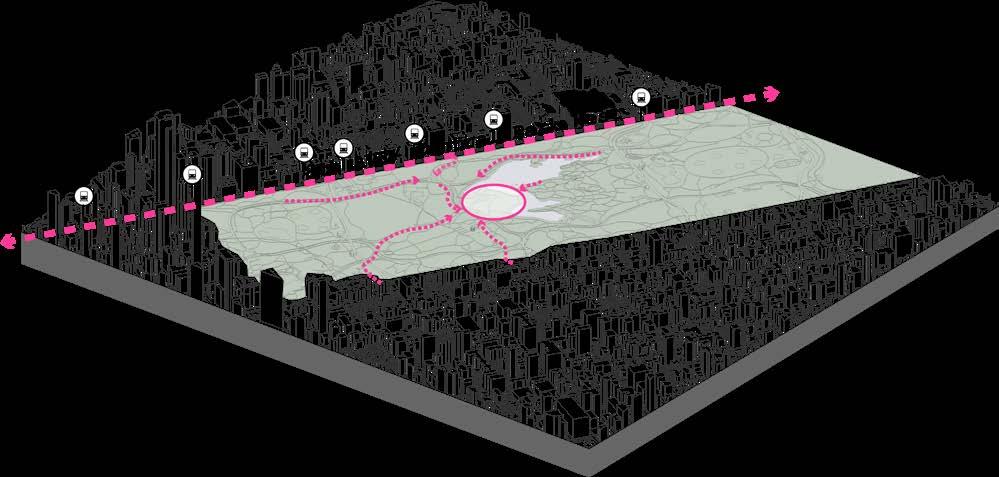
Access points to site and nearby transportation.
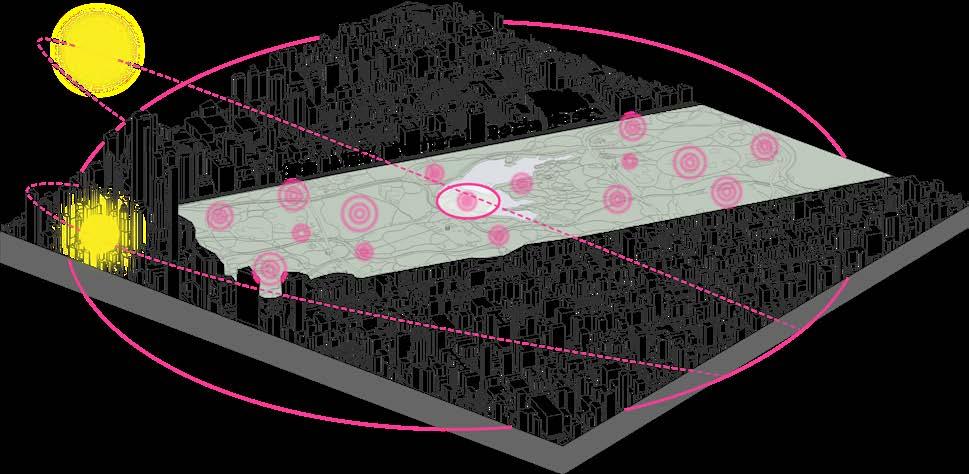
Noise diagram showing most populated areas of the park.
Sun path diagram showing winter and summer sun.
Central Park’s Cherry Hill is located near the park’s southwestern edge, adjacent to 72nd Street and Central Park West. The site is easily accessible by foot, bike, or public transportation, with several entrances and subway stations located within walking distance. The surrounding area is primarily residential, with a mix of historic brownstones and high-rise buildings.

Reconfigurable spaces Form Process
Basic geometry
Concept Scheme
Spatial division
Smaller engaging spaces
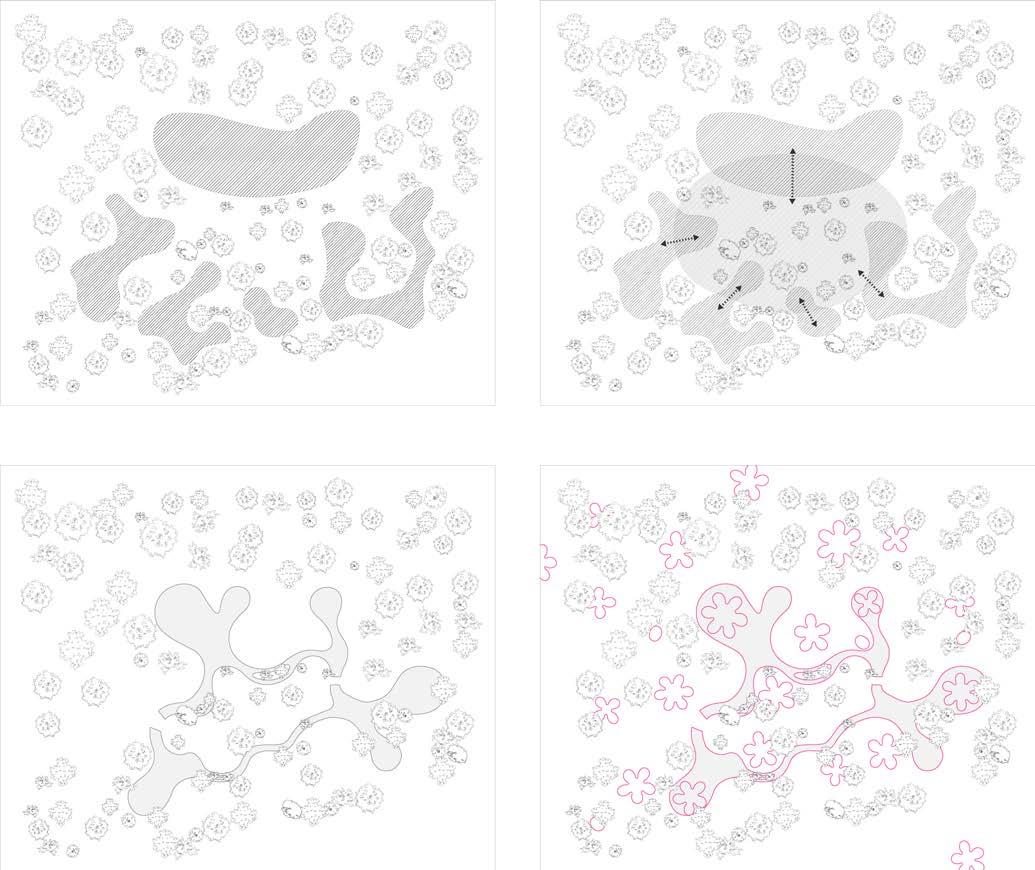
Existing trees + open spaces on site
Creating central area in the middle to connect to surrounding open spaces
A central structure to provide shading + to create visual boundry and minimal disruption to the existing trees on site
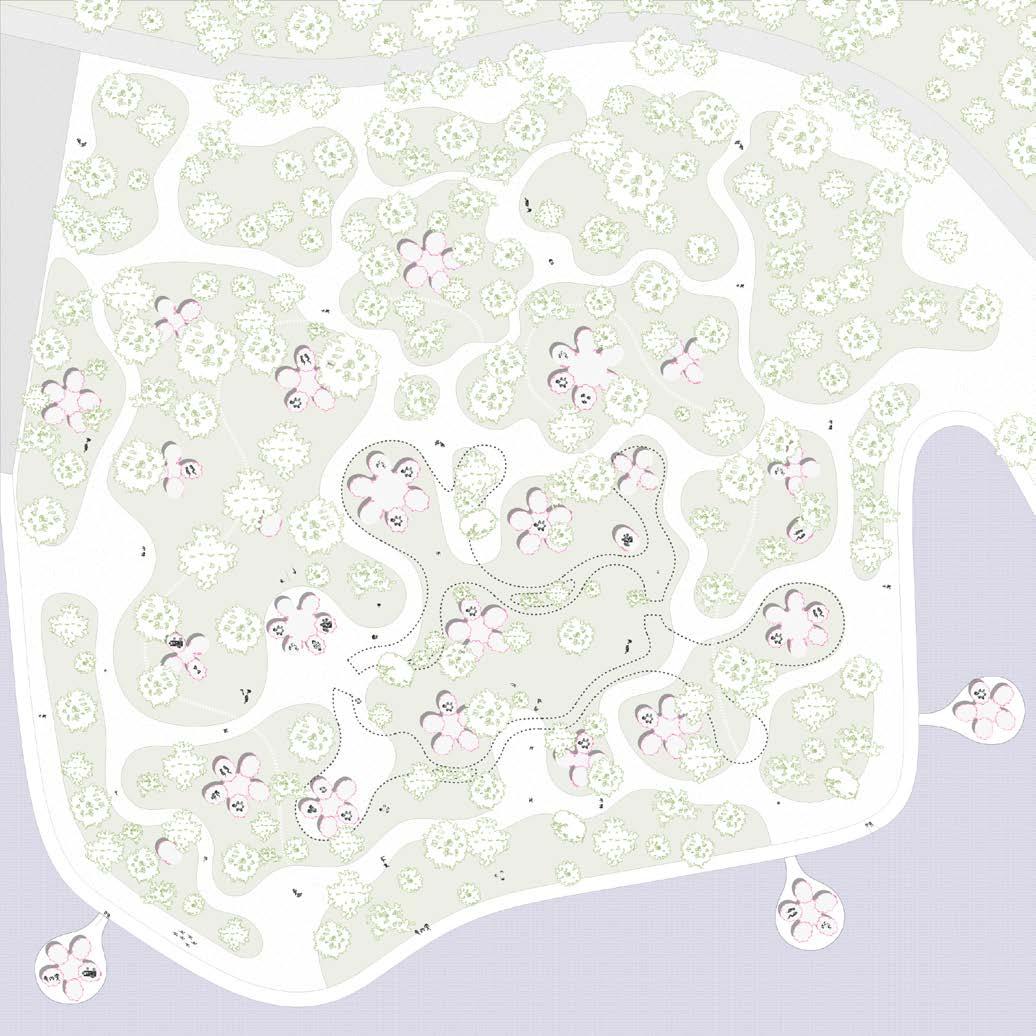
Arranging adjustable pavilions to create micro and macro scenes catering to diverse visitor needs
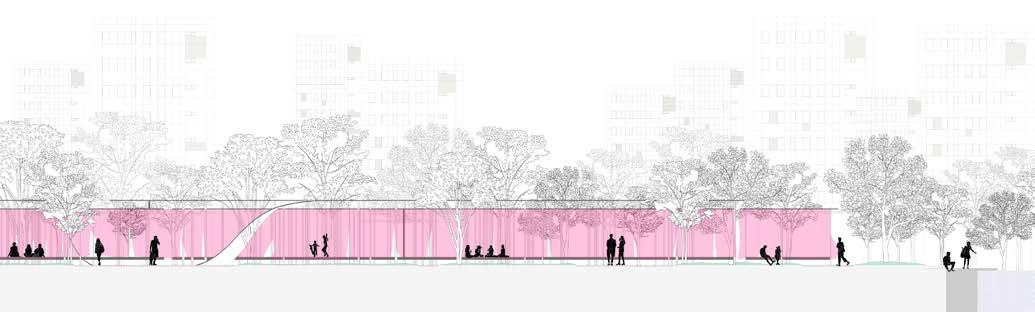

Re:SCENE.
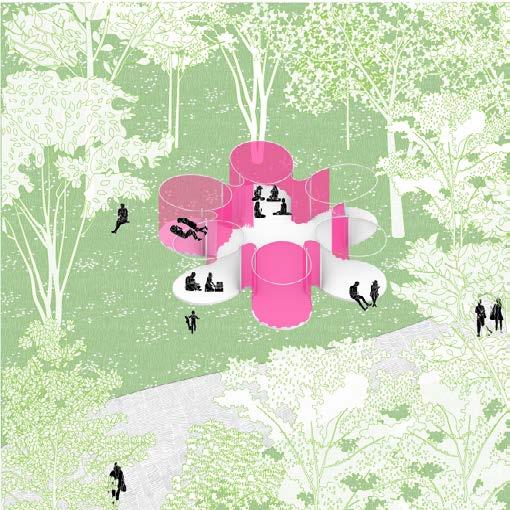
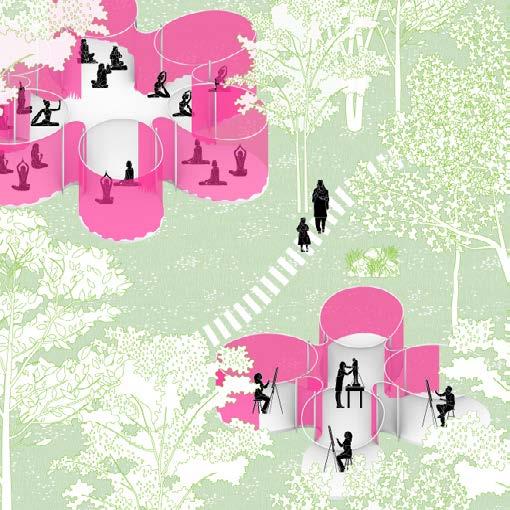
+ Scene 1 + Six-petal pavilion embracing various users’ needs, such as having family picnic, napping, casual conversations.
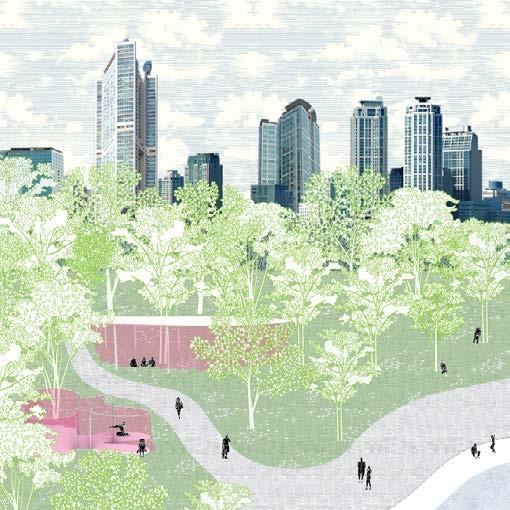
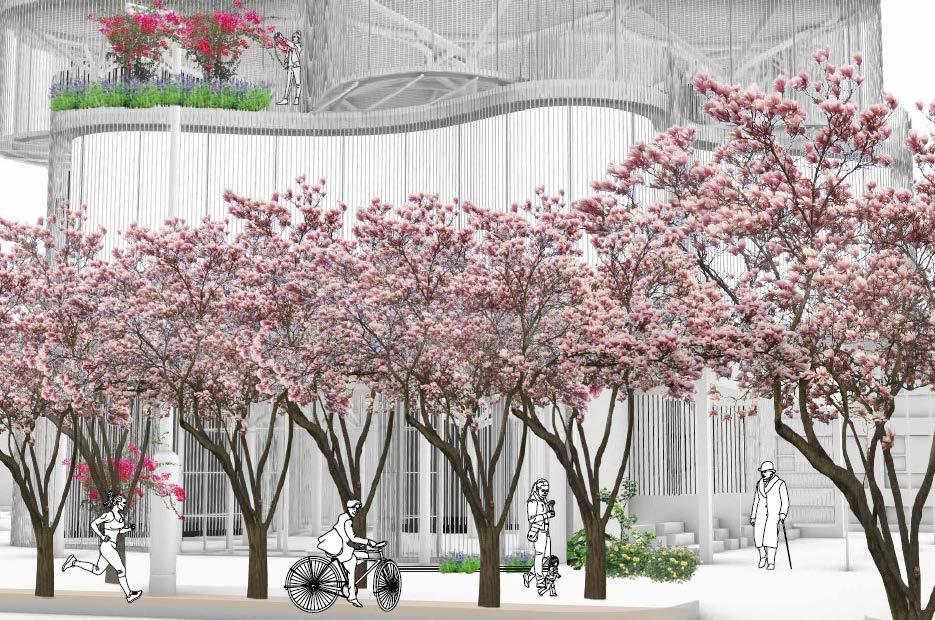
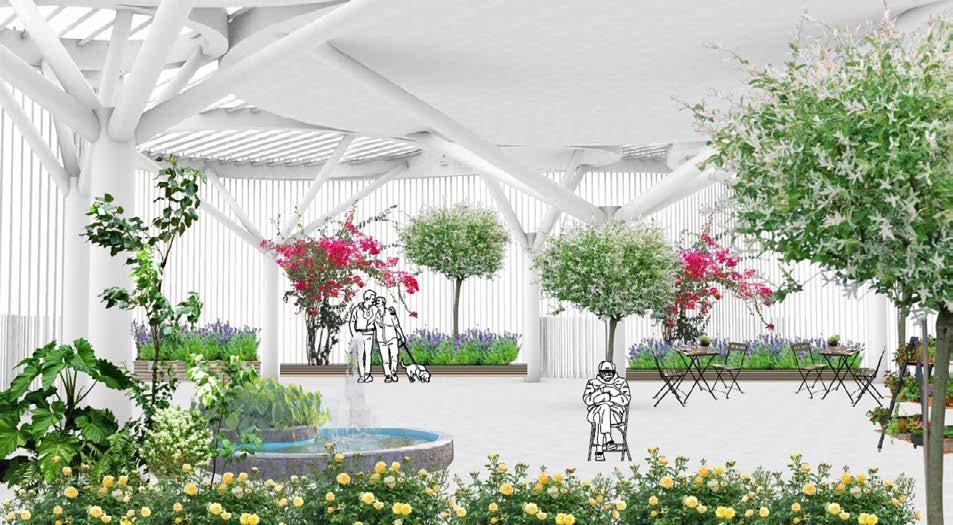
+ Scene 2 + An urban oasis nestled within the heart of a bustling city.
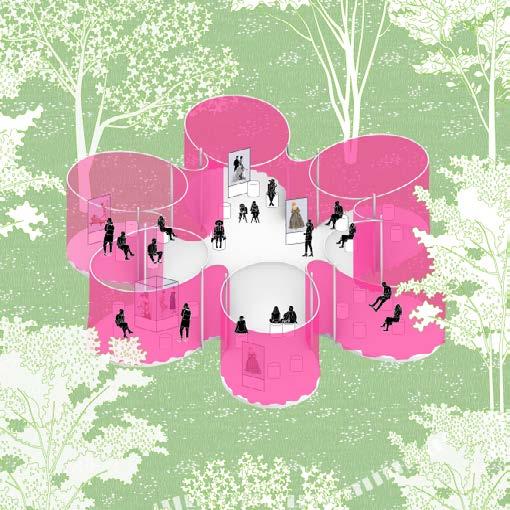
+ Scene 3 + Utilizing and merging all smaller petals to form a larger space for a gallery-lecture.
+ Scene 4 + Effortless adaptation to either openness or privacy, allowing for complete coverage with curtains, partial, or no coverage at all.
The View at the Landing.
Location: Fort Wayne, Indiana
Type: Film Institute
Year: 2021, 4th year
In collaboration with: Ashleigh Totten Software used: Rhino, Photoshop, Illustrator, Indesign, Enscape
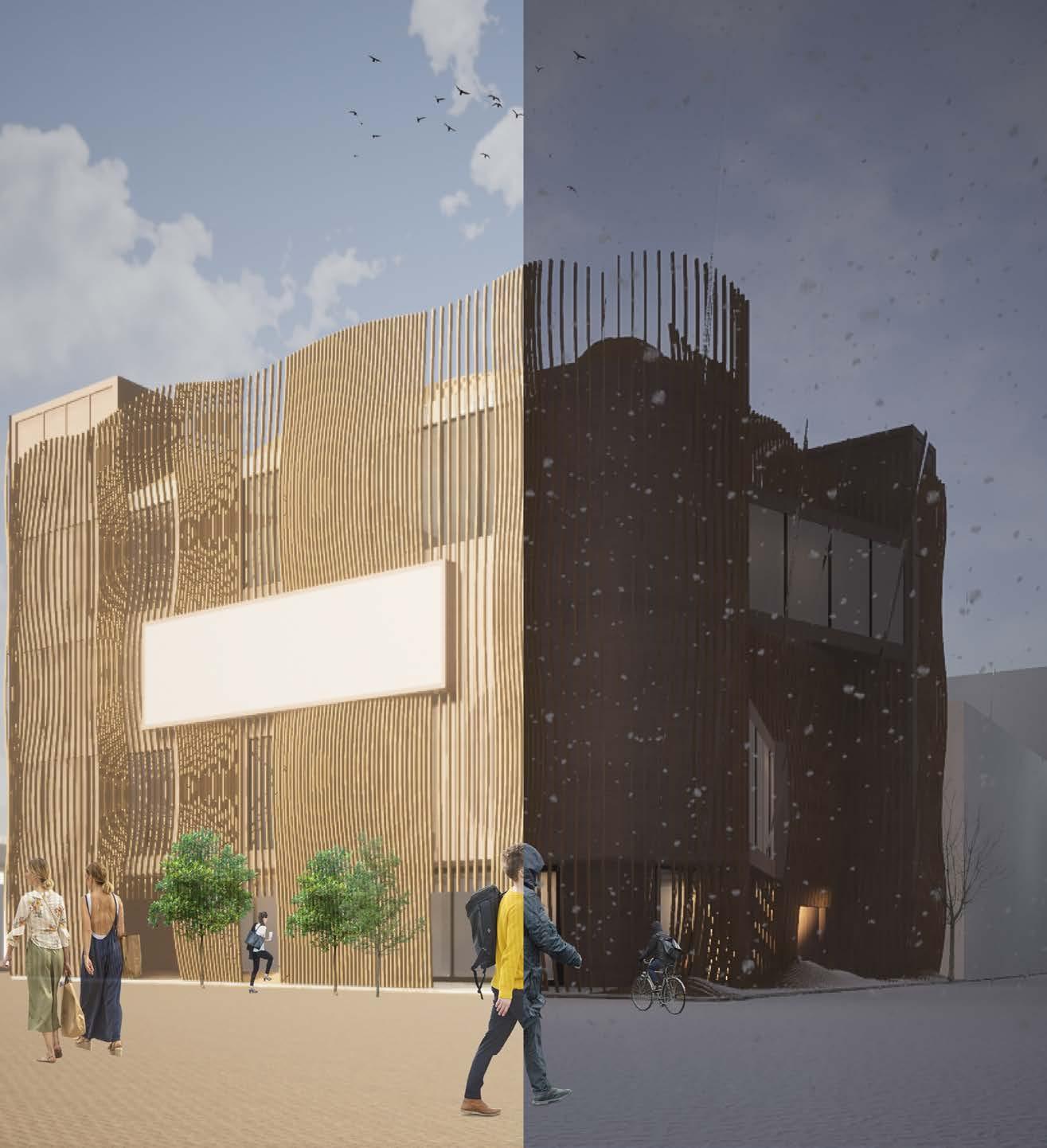
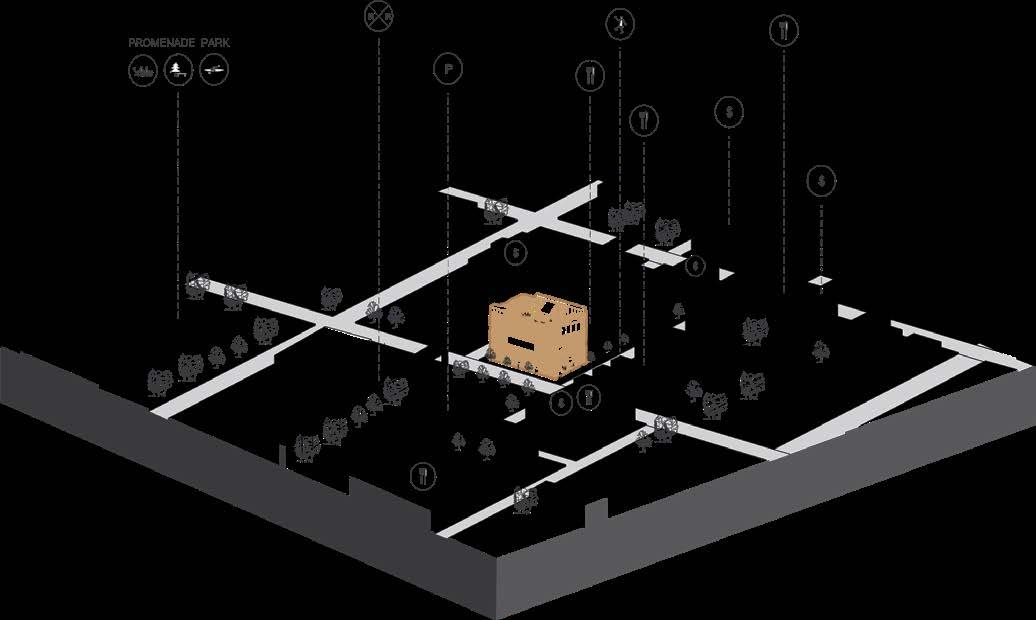
Situated at the bustling intersection of the Fort Wayne arts walk and pedestrian street at the landing, The View stands as a captivating destination that seamlessly merges the realms of film institute and theater. This innovative establishment caters to a diverse range of guests, offering an array of cinematic experiences that extend beyond traditional movie-watching. By presenting an immersive environment, The View encourages visitors to actively participate in the art of creating, interacting, and, of course, viewing cinema.
The View’s distinctive design and concept go beyond the confines of a typical cinema. As guests step inside, they are welcomed into a dynamic space that captivates the senses. The architectural layout encompasses various zones, including interactive installations, workshops, and exhibition areas, all designed to foster engagement and exploration. Visitors are invited to become part of the filmmaking process through hands-on activities and educational programs, gaining insights into the craft of cinema from experts in the field. This fusion of a film institute and theater offers an immersive experience, blurring the boundaries between audience and creator, and fostering a deeper understanding and appreciation for the art of cinema.

Concept 1:
Try to draw people in from the pedestrian street by creating an open field.
Concept 2:
Creating multiple outlook from the building through angled aparture throughout the building.
Preliminary Concepts + Process.
Concept 3:
Creating an inner courtyard to create a space for users to enjoy natural sunlight and ventilation. Having a public space indoor to invite people in.
Final Design:
For final design, main features from peliminary were used. Such as angled apertures to get optimized view of downtown Fortwanye + an inner courtyard + rooftop outdoor space to draw people in.
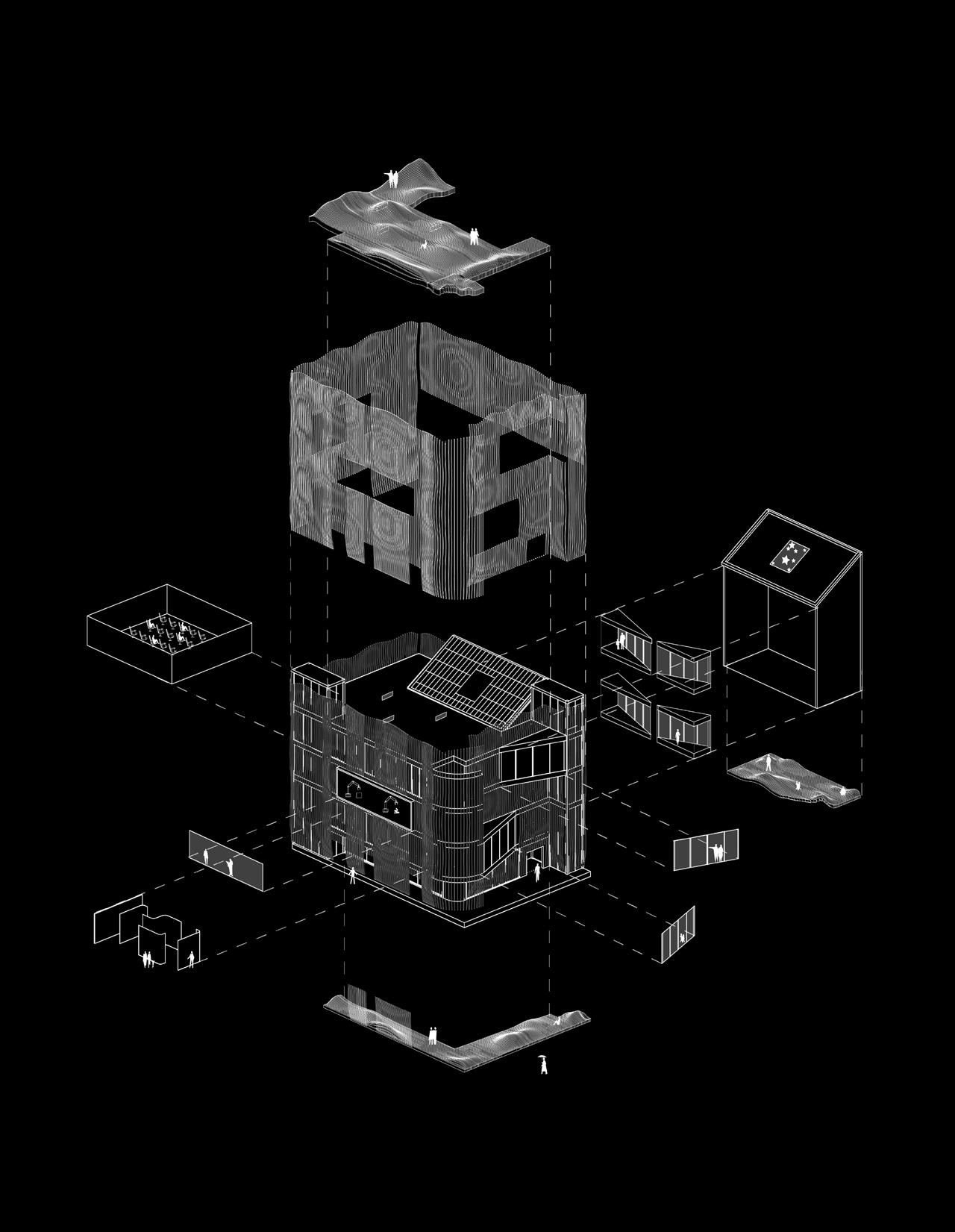
Traditionalcinema.
Publicoutdoorrooftop. atTranslucentaperture workshop.
Galleryatfirstfloor. theOutdoorcorridorhiddenthrough doublefacade. Mainentry. Angled aperture. Publicinnercourtyard.
Skylight. Wood double skin acade.
Angled aperture facing the inner courtyard.

Cinematic Courtyard Viewing
Elevator
Egress Stairs
Screening Room
Projection Room
Practice Room
Lounge
Soundstage Storage
Cinematic Courtyard Viewing
Elevator
Egress Stairs
Unisex Restrooms
Fab Lab
Cafe + Art Store
Office Suite
Cinematic Courtyard Viewing
Elevator
Egress Stairs
Classrooms
Collab
Sound Lab
Post-production
Storage
Electrical Room
Cinematic Courtyard Viewing
Elevator
Egress Stairs
Unisex Restrooms
Entry/ Lobby Reception
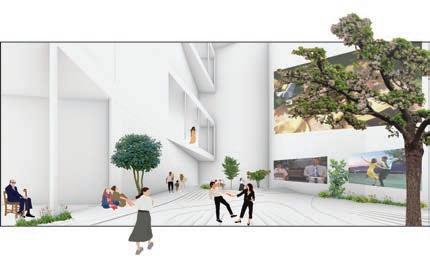
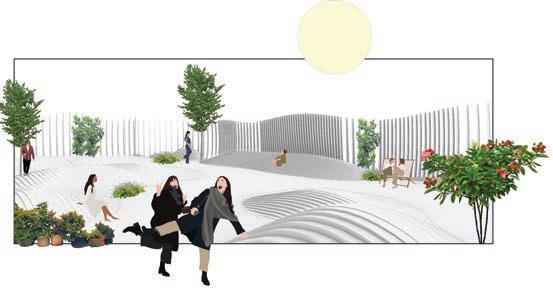
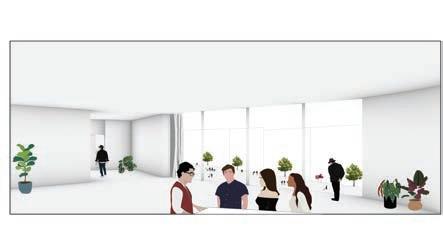
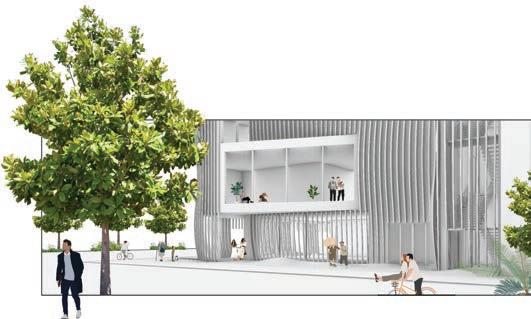
A film institute is essential for our community's growth, offering numerous benefits. This project aims to enhances our cultural diversity through educational programs and screenings, opportunities to promotes economic growth by collaborating with local filmmakers, empowers individuals with filmmaking skills, fosters community engagement, and serves as a creative hub, ultimately contributing to our community's vibrancy, diversity, and cohesion.
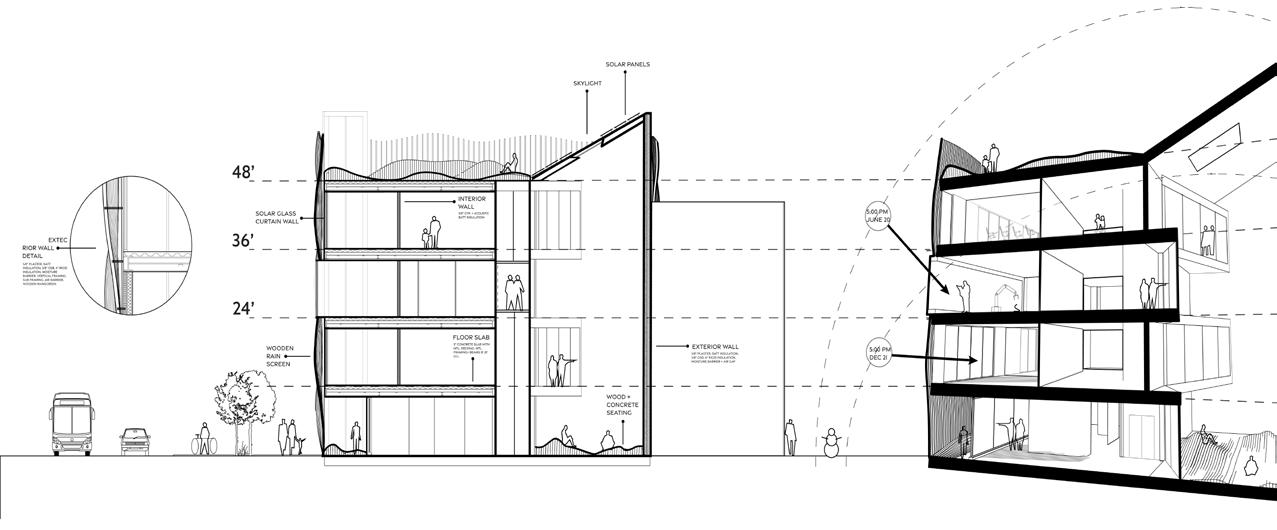
Courtyard Cinema.
Main Viewport. Building from Street Level.
Rooftop View.
The Wave.
Location: Muncie, Indiana
Type: Mixed-use (MKM Steel Competition: First Place)
Year: 2021, 3th year
Software used: Rhino, Photoshop, Illustrator
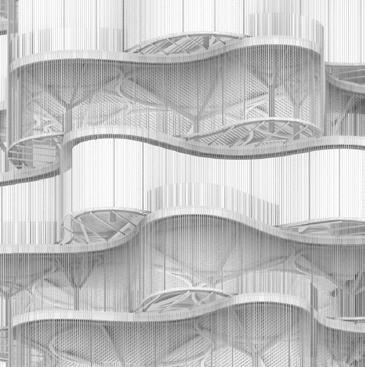
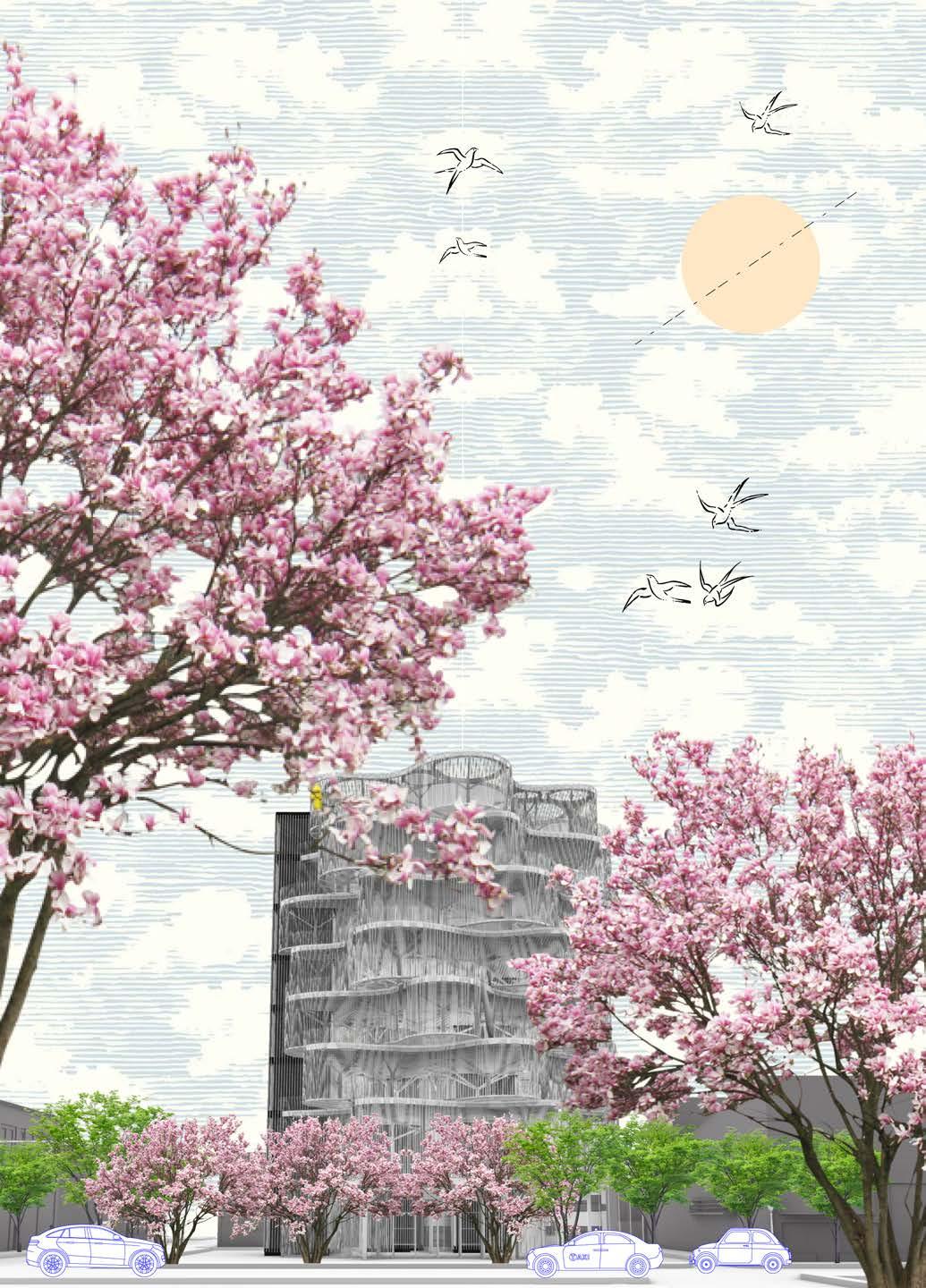
The Wave is an innovative mix-used project that addresses the challenges of the pandemic by creating a vibrant urban environment for Muncie’s community. It offers solutions that balance communal interactions and individual privacy within the constraints of current circumstances.
(1) The building’s design showcases the daily lives of its occupants, fostering social connections and shared experiences while providing designated private spaces for retreat. These areas seamlessly integrate into the overall design, creating a harmonious balance between communal and individual needs.
(2) The Wave not only prioritizes community and privacy but also captivates people by offering unique and immersive spaces. It incorporates interactive installations, sensory experiences, and thought-provoking design elements to create memorable encounters. Through these experiential spaces, the building encourages curiosity, engagement, and active participation, allowing individuals to shape their own experiences within its architectural embrace.


E Main St
N Mulberry St
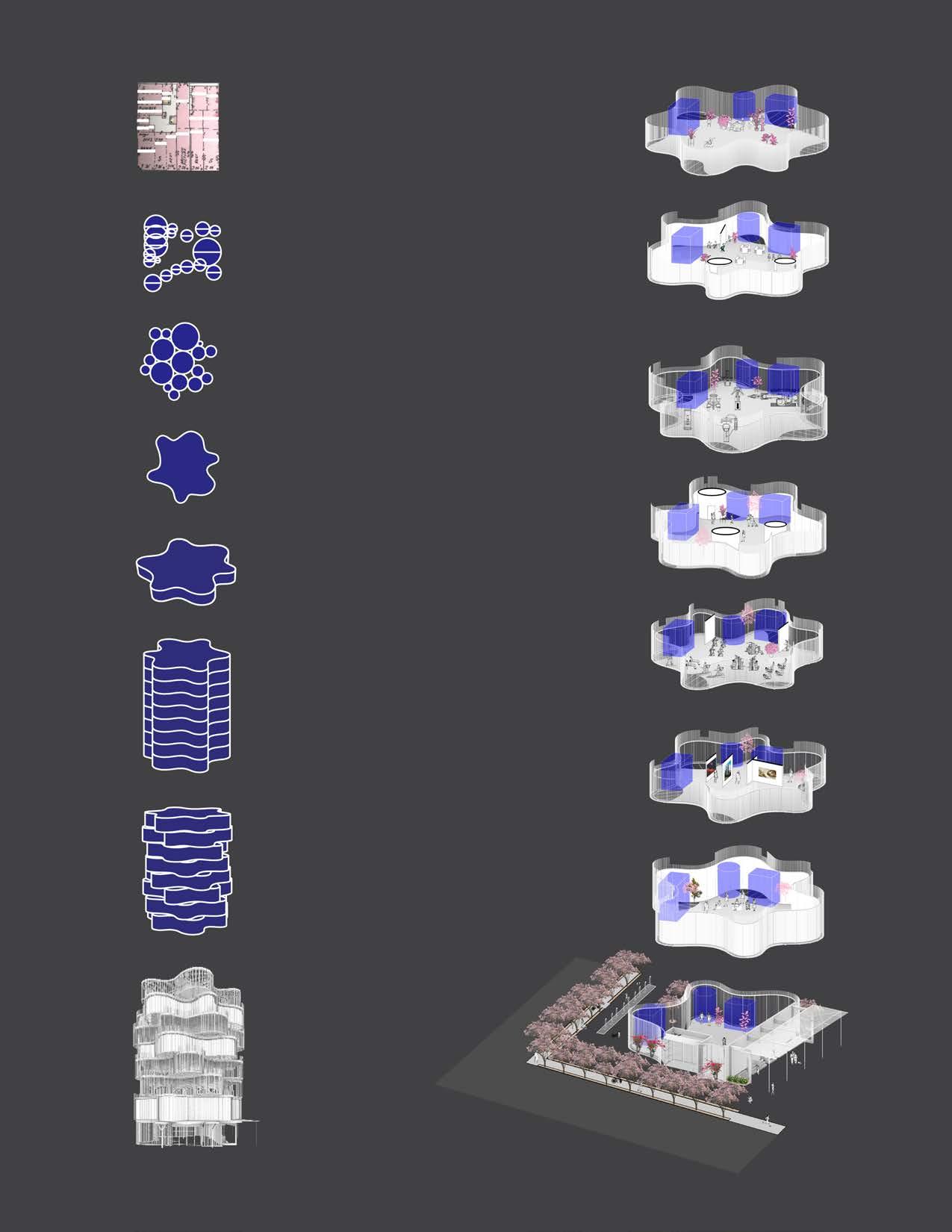
Buildings that used to exist on site’s distance horizontally measured
Community Rain
Garden
Transforming into circles
Offices
Public Restrooms
Grouped bubbles
Work Force
Development
Space
Curved formed from grouped bubbles
Healthcare Center
Public Restrooms
Curve extrusion
Gym
Locker Room
Public Restrooms
Floors addition
Gallery
Public Restrooms
Rotation by 45 degree
Auditorium
Public Restrooms
Entry
Lobby
Market
Final form
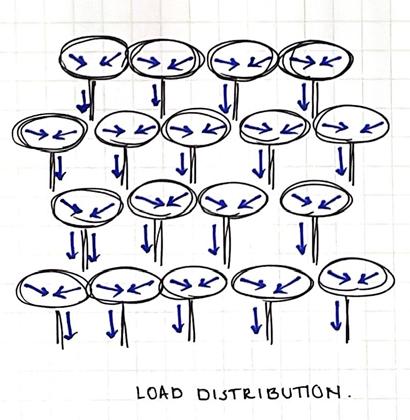
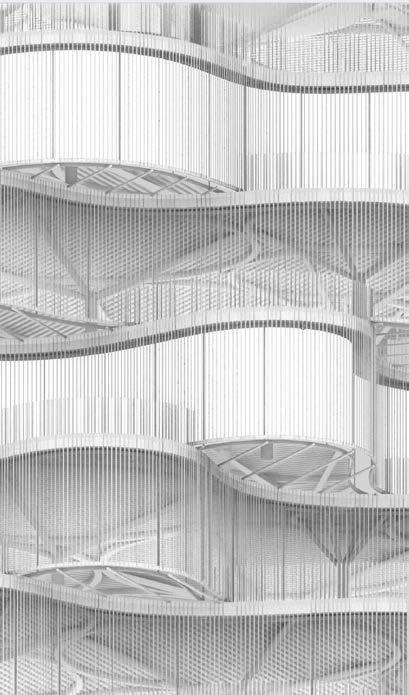
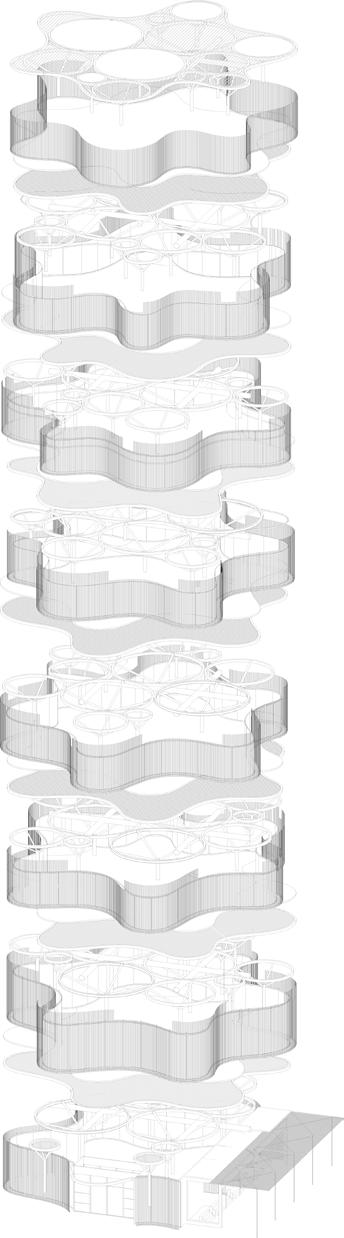
Sketches + Explorations