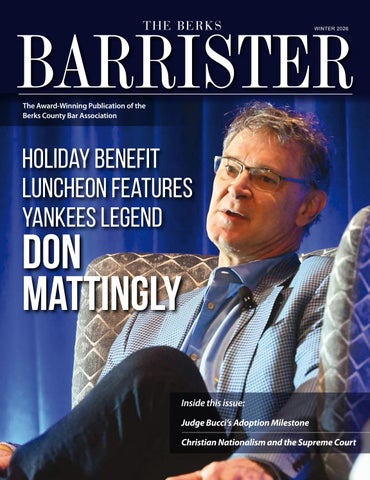

HolidayBenefit Luncheonfeatures Yankeeslegend
Don Mattingly

BOARD OF DIRECTORS
PETER F. SCHUCHMAN, JR., President
ANDREW F. FICK, President-Elect
LAUREN M. MARKS, Vice President
DANIEL C. NEVINS, Immediate Past President
AMY J. LITVINOV, Treasurer
JACQUELIN M. HAMER, Secretary
ALEXA S. ANTANAVAGE, Director
DANIEL CORTES, Director
BETH M. KOHL, Director
JESSE C. LEISAWITZ, Director
JOSEPH R. SPEECE, III, Director
PAMELA VANFOSSEN, Director
JACOB D. KRAMER, Young Lawyers Section President
BAR ASSOCIATION STAFF
KORI A. WALTER, Executive Director
ROSE M. JOHNSON, Law Journal Secretary/Office Manager
LUCY BRITO, Community Services Manager
EMILY BUCOLO, Publications/Marketing Coordinator
VALERIE KRAMER, Law Journal Editor
JACOB D. KRAMER, Law Journal Assistant Editor
PAMELA VANFOSSEN, Barrister Editor
Please submit materials or comments to: Berks County Bar Association 544 Court Street, P.O. Box 1058 Reading, PA 19603-1058
Phone: 610.375.4591
Fax: 610.373.0256
Email: info@berksbar.org www.berksbar.org

Content for Winter 2026


Opening Statement
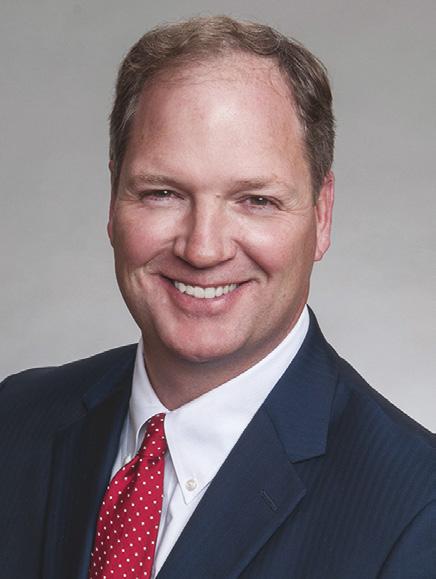
Peter F. Schuchman, Jr., Esquire
2026 Berks County
Bar Association President


Glad and Grateful
Whether or not your journey as a lawyer has led you to the courtroom, you undoubtedly learned that an effective presentation involves clearly stating and repeating the theme of your case. In the opening statement, we tell the jurors what the evidence is going to show. Then, we show them the evidence. And once the evidence is in, we make a closing argument to remind them what they saw.
This is my opening statement as the 93rd president of our Bar Association. I am glad and grateful to share with you the theme of my presidential year: mentorship. I would not be writing this column as BCBA President had I not benefitted from the mentors who so greatly impacted me. I have listened to, have watched, and have tried hard to emulate great lawyers and great bar leaders who, more importantly, are truly good people. I am so grateful to all of them, and so glad to share my thoughts on how to pass along their lessons.
Growing up within the structure of a mid-sized firm has been a blessing. I have had great teachers—by instruction, by reflection, by revision, by repetition, by example, and by being entrusted with heavy responsibility. I have learned from victory and learned even more from defeat. I have learned not only to be the best advocate I can be, but the best nuts and bolts practitioner, best community contributor, and best bar association member I can be.
You do not need to practice at a firm like mine to find great mentors. So many of you at other offices or sitting on the bench have taught me something. When I first began practicing, more than 30 years ago, our bar association was filled with wise and kind professionals. Courtesy and collegiality were the norm. Certainly, our duties to our clients were paramount. But “winning”—whether in a courtroom or across a deal table—was always within the bounds of professional conduct and within the bounds of decency. Senior lawyers often saw a bit of themselves in the up-and-coming younger lawyers and were willing to share their hard-earned wisdom. We were often adversaries, but we were never enemies.
Thankfully, even though the generations have changed, the character of our bar association has not. We remain an association filled with wise and kind professionals. There are up-and-coming younger lawyers (perhaps not as many as there used to be), and I very much hope that we can see a bit of ourselves in them and that we feel the same duty to help them develop as our predecessors did.


To our “seasoned” lawyers, I hope that each of you will join me in engaging with and energizing our young lawyers and, by so doing, re-energize ourselves. The demands on our time are heavy, but there is a benefit to taking time to remind ourselves and explain all the good parts about our lives as lawyers. There is also a benefit to helping others try to avoid or learn to endure the not-so-good parts. Please be available and open to sharing your stories, sharing your techniques, and sharing your wisdom with our younger members. I know that our social events are oftentimes among the few chances we get to see our old friends—that’s a big part of why I love our association. But it’s also a great chance to make some new friends among our younger sisters and brothers. A lot of them, like us once, are trying to find their way. Please consider putting on or participating in a CLE lunch and learn or a panel discussion at the Bench Bar Conference. Tell your war stories. Let the
youngsters know that you are willing to be a resource going forward.
To our younger lawyers, COVID restrictions and technological advancements have made communication easier and personal interactions less favored. That said, we practice a profession that very often still requires personal interaction! I understand that there is a comfort zone in working from home and in insulating yourself from anything new, like meeting new people and handling new projects (in fairness, this isn’t limited to younger lawyers). But I believe that you have a duty to develop to your fullest and that we more seasoned members have a duty to help you. We owe it to you to give you opportunities to grow. Our bar association offers many of those opportunities.
You would do well to lean on the senior members. We remember those early years grinding through the ever
piled up work, billing hours, feeling a bit of imposter syndrome, having a decent but uncertain command of the law, but mostly worrying about trying to effectively apply that law and get great results for your bosses and your clients. My mentors taught me not to be in a hurry to make money. That will come. Be in a hurry to get good. This association has so much to offer: friendships, committee work, continuing education, community outreach, business contacts, and much, much more. All of it is something I embraced to get good. I will always have a ways to go, but I know that I am better at this job now than I once was.
Please try to participate more fully because your time investment pays off. Come to our numerous social events. As members, we have a lot in common and the people are friendly. Get to know the judges. Before they put on the robes, they were, and still are, members of our association. You can be sure that they
Salvatore Anastasi Partner
Zachary J. Daly Attorney
Joseph R. Falcon, III Partner John L. Janick Attorney
Michael A. Jannuzzi Attorney
Albert T. Keyack Attorney
Steven J. Link Attorney
Kevin C. Myhre Partner
Continued from page 5
want you to be the best prepared, most polished, and capable that you can be. Serve on a committee or two. Join a section pertinent to your area of practice. Go to Young Lawyers Section meetings and encourage your contemporaries to join you. Volunteer for our community outreach projects. Attend the memorial service and the new member ceremonies. Come to the Law Day luncheon and celebrate our role as guardians of the Rule of Law. Observe a Naturalization Ceremony and celebrate people achieving heartfelt goals that we might take for granted. Participate in person as often as you can at our multitude of CLE programs. I recognize that there is time efficiency and ease in meeting by Zoom and Teams. I know that remote work is never going away. But when you attend in person, you can sit down next to somebody you don’t know yet, stick out your hand, and introduce yourself. You will likely learn something useful from the CLE and, even better, make a connection that will last your entire career.
I am grateful for the generous willingness of those of you who have stepped into, or are continuing, the committee and
section leadership and board of directors’ roles that move our association forward. I have been particularly touched by the congratulations and offers from so many of you to help in whatever way you can. Thank you—here’s how: in addition to the long list of events recounted above, programs we are re-invigorating this year include Speed Networking between younger lawyers and more seasoned lawyers; Operation Safe Ask—to allow our members to get confidential advice when faced with a practice problem; and convening mini-meetings in the different corners of the county where some of our members live or maintain their offices. We want to hear your concerns. We want to consider your ideas. We want to hear your stories. Please accept this invitation and encouragement to participate in any and every event.
All of us have benefitted from mentorship. I hope that we all will honor our mentors by living the lessons they have taught us, passing their wisdom on to those who follow us, and hopefully, finding that by this effort, we strengthen our bar association, our profession, and ourselves. CHOOSE BUSINESS
ACCELERATED WITH
SOLUTIONS MANAGEMENT CASH TOMPKINS

At Tompkins, our business banking team helps you put together just the right suite of cash management solutions to turn “business as usual” into “business amazing”—and to help your business thrive. Scan the code for more information


HolidayReceptiongets “Ugly”
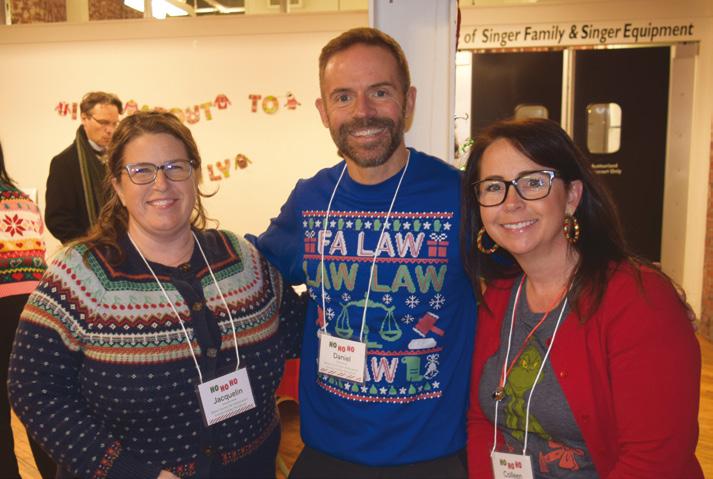
Members pulled their “best” ugly sweaters from the back of their closets for the Holiday Reception on December 11 at the GoggleWorks Center for the Arts. Bar Association President Peter F. Schuchman, Jr. selected this theme to kick off his presidential year. The result was an evening that would have made the Griswold family proud!

Your Berks County Bar Association staff gets in the holiday spirit! From left: Executive Director Kori Walter, Community Services Manager Lucy Brito, Law Journal Secretary/ Office Manager Rose Johnson, and Bookkeeper Claudia Ferko.
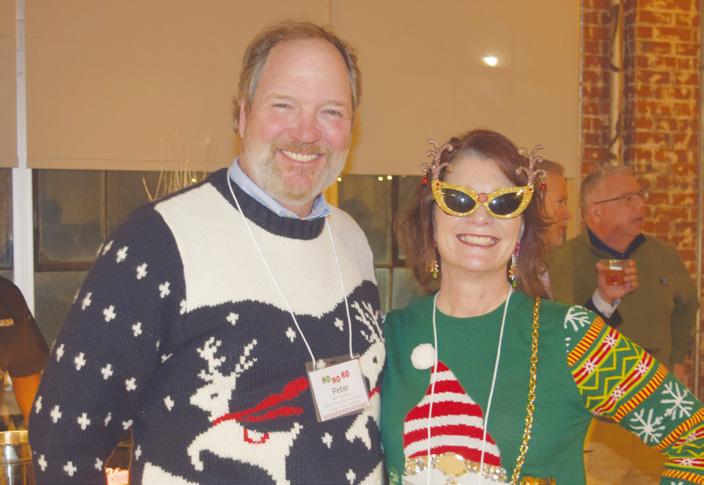
Berks County Bar Association President Peter F. Schuchman, Jr. and The Hon. Jill M. Scheidt celebrate in style!
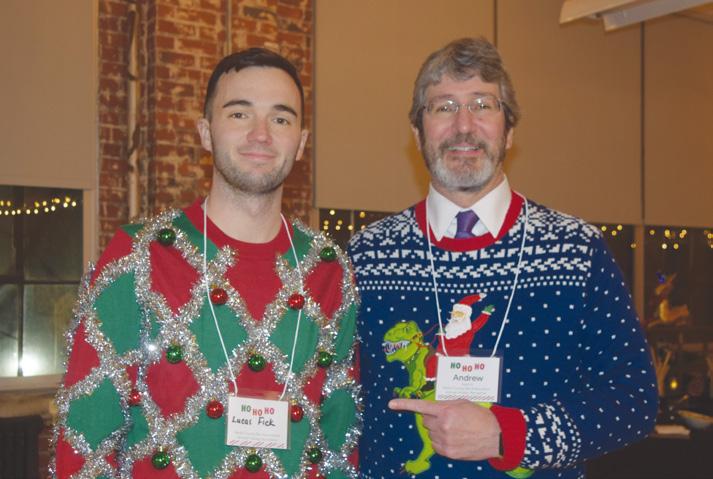
Like father, like son for the Ficks, Lucas and Andy, as they show off their festive fits!
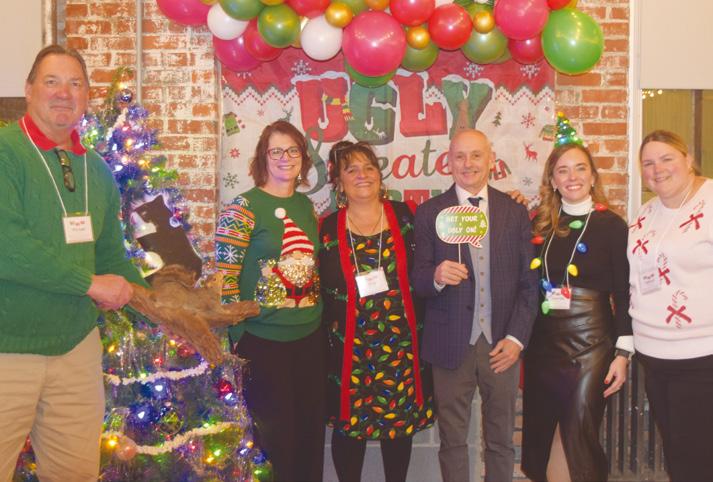

Wolfe; The
Rose Johnson; Doug
Gabriela Raful; and Katie Wentzel enjoy a festive photo opportunity at our ugly National Lampoon’s Vacation-themed Christmas tree!

LizMary Mejia Julio and The Hon. Justin D. Bodor know that the ALDI “Aisle of Shame” has the best sweaters.

Priscilla Natale and Sara Haines Clipp represent Berman Voss in matching sweaters!
Bar Association Secretary Jacquelin Hamer, Immediate Past President Dan Nevins, and Muhlenberg Magisterial District Judge Colleen Dugan Schearer show that a little Christmas spirit can unite prosecutors, criminal defense attorneys, and the minor judiciary.

Michael
Hon. Jill M. Scheidt;
Wortman;
Members of the Berks County District Attorney’s Office enjoy the festivities.
Easy To Like “Donnie Baseball”
By
Brian C. Engelhardt, Esquire

“I'm still going to be the same person whether or not I get into the (Baseball) Hall of Fame.”
- Don Mattingly, December 5, 2025

Don Mattingly’s appearance at the Law Foundation of Berks County and PICPA 17th Annual Holiday Benefit Luncheon on December 5 at the DoubleTree Hotel was accompanied by somewhat more drama than most years.
Mattingly, a Yankee legend, six-time All-Star, and one-time American League MVP, came to Reading as one of eight candidates eligible for election to the National Baseball Hall of Fame. The Hall of Fame’s “Contemporary Era Committee” was scheduled to vote on the candidates on December 7—just two days after Mattingly headlined the luncheon.
Adding to the drama were reports by Philadelphia and national media that the Philadelphia Phillies were on the verge of hiring Mattingly as bench coach heading into the 2026 season. The speculation that Mattingly would join the Phillies coaching staff was bolstered by the fact that his eldest son, Preston, is the Phillies general manager, and the 25-plus-year relationship Mattingly had with Phillies manager Rob Thomson, who also spent time as a coach for the Yankees.
We’ll get back to all the drama in a bit, but first a little bit about the Guest of Honor—Don Mattingly, also known as “Donnie Baseball” (more about that later as well).
Donnie Baseball’s Yankee Legacy
Mattingly’s credentials as a “star” were earned over the course of his 14-year playing career with the Yankees from 1982 to 1995. During that time, he was named to the All-Star team six times and won nine Gold Glove awards as a first baseman—all while driving in 1,099 runs over the course of his career and posting a .307 lifetime batting average.
Your author welcomes New York Yankees legend Don Mattingly to the 17th Annual Holiday Benefit Luncheon. (Photos courtesy of The Reading Eagle)

Don Mattingly reflects on a 14-year career in Major League Baseball in which he was a six-time All-Star and the 1985 American League MVP.
His dedication and leadership made him one of the most admired and respected players in the game and the foundation of the Yankees for 12 seasons.” His plaque in Monument Park reads: “Humble Man of Grace and Dignity. A Captain Who Led by Example. Proud of the Pinstripes Tradition and Dedicated to the Pursuit of Excellence. A Yankee Forever.”
Some of Mattingly’s most accomplished seasons included:
• 1984: Mattingly won the American League batting title with an average of .343. He edged out Yankee teammate Dave Winfield (.340 average) for the batting title on the last day of the season.
• 1985: Mattingly was named the American League MVP, batting .324 with 35 home runs, while driving in 145 runs.
• 1986: As pointed out by Brian Smith in a December 7 article in LNP/Lancaster Online covering Mattingly’s appearance, Mattingly hit .352 with 31 homers, 53 doubles, 113 RBIs and a .967 OPS which may have been his best season. Rich Scarcella wrote in his article on Mattingly’s appearance published in the December 7 issue of the Reading Eagle that the 53 doubles plus the 388 total bases he compiled were the most by any player in one season during the 1980s.
• 1987: This was a year of records for Mattingly, as he not only batted .327 with 30 home runs, with 117 RBIs, but hit home runs in eight consecutive games, tying Dale Long’s major league record set in 1956 (also matched by Ken Griffey, Jr. in 1993). In addition, he slugged six grand slam home runs, which set the major league record at that time. This record was tied by Travis Hafner in 2006. Mattingly did not hit a grand slam home run in any season before or after 1987. Go figure.
Mattingly’s career with the Yankees was distinguished by his being named team captain in 1991—a post he held until he stopped playing after 1995—which ironically was the only year in which he appeared in post season play. In an agonizing series for Yankees fans, Seattle came back in the AL Division Series from an 0-2 deficit, coming from behind three times in the fifth and deciding game, the last being in the bottom of the 11th inning. In the series Mattingly batted .417 with four doubles and a home run, compiling an OPS of 1.148.
Although congenital back problems affected his play over the last several years of his career—in his last six seasons he only batted over .300 once and didn’t hit more than 17 home runs in any of them—Mattingly’s main reason for retiring was to spend more time raising his sons. He spent most of his time in his hometown of Evansville, Indiana, with his family, while still joining the Yankees in Florida as a temporary coach in spring training and occasionally serving as a roving minor league instructor. However, in 2004 he joined the Yankees as a full-time coach under Manager Joe Torre, a job he held for four years.
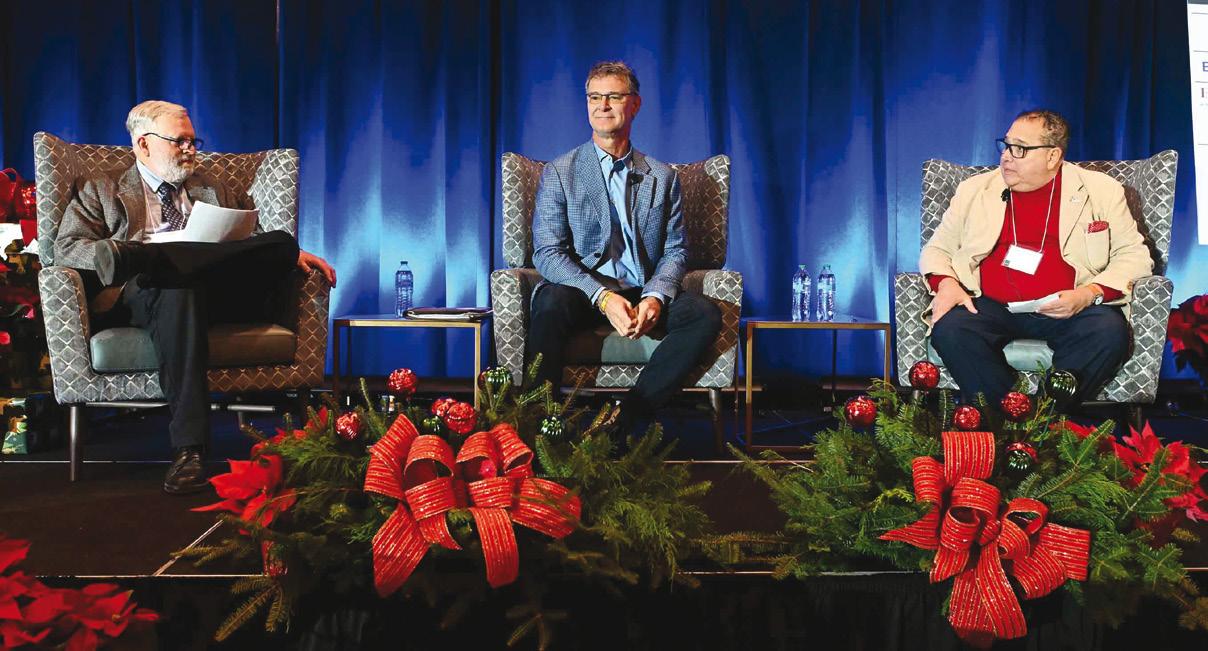
Mattingly fields questions from your author, left, and Holiday Benefit Luncheon Chair Mark Caltagirone.
LA and Beyond
When Torre parted ways with the Yankees and became manager of the Los Angeles Dodgers in 2008, Mattingly joined Torre’s staff after the Yankees chose Joe Girardi over him as Torre’s successor. After spending the next several seasons as a member of Torre’s staff, Mattingly succeeded him as Los Angeles manager in 2011, guiding the team to three division titles in five seasons. After the 2015 season, Mattingly and the Dodgers agreed to a mutual parting, at which time he became manager of the Miami Marlins for seven seasons between 2016-22, being named National League Manager of the Year in 2020 when he guided the team to the playoffs. The Braves knocked the Marlins out of the playoffs that year, sweeping them 3-0 in the Division series, after the Marlins swept the Cubs 2-0 in the Wild Card Series. For the past three seasons Mattingly served as bench coach for the Toronto Blue Jays, who made it to the 2025 World Series. This was the only World Series appearance for Mattingly.
The Yankees later retired Mattingly’s uniform number: 23. He is the only Yankee whose number was retired without having won a World Series. The plaque in Yankee Stadium next to the retired number reads: “‘Donnie Baseball’” was one of his era’s outstanding hitters and ranks among the premier defensive players of all time. continued on next page
Former New York Yankees first baseman Don
Easy To Like “Donnie Baseball”
Continued from page 9

But it was the team Mattingly previously managed, the Los Angeles Dodgers, who captured the title in a thrilling seven-game series.
And About That Additional Drama
As referenced earlier, Mattingly appeared before more than 500 people in Reading while awaiting a decision on whether he would finally gain admission to the Hall of Fame. The other candidates being considered for admission were Barry Bonds, Roger Clemens, Carlos Delgado, Jeff Kent, Dale Murphy, Gary Sheffield, and Fernando Valenzuela. Asked about the pending vote, Mattingly was reserved, but cautiously optimistic. Over the years he had been a subject of consideration for entry into the HOF, first through the Baseball Writers Association, falling short in balloting over 10 years, then through three iterations of the predecessors to the Contemporary Era Committee where he again did not receive enough votes for induction.
In interviews with local media prior to the lunch, Mattingly said, “I’m hopeful like anybody else would be.” He added, “I’m not going to put myself in the same category as the greatest players who ever played, but I know I could play a little bit.” In talking about the upcoming vote during the luncheon, Mattingly said quietly, “I’m still going to be the same person whether or not I get into the Hall of Fame.”
On December 7, the Contemporary Era Committee voted to admit just one candidate to the Hall of Fame. Their selection was
Jeff Kent, a second baseman who played most of his 17-year career with the San Fransico Giants and was National League MVP in 2000. Kent’s teammate on the Giants was slugger Barry Bonds. Kent earned a reputation as being more arrogant and unlikeable than Bonds, who media outlets, such as ESPN, perennially ranked as the most unlikeable player in baseball.
Mattingly received six of the 12 votes needed to add Hall of Fame to his impressive resume. He could be on the ballot again when the Contemporary Era Committee meets in three years. In the meantime, we all rest assured that Mattingly will be the same person whether he gets in the HOF or not. And after spending time with him before and during the December luncheon, I would say that is a pretty good person to be.
As to the other element of drama hanging in the air on December 5, Mattingly was hired on January 5 as the Phillies bench coach. The announcement was made just as I was finishing up this article, causing me to rewrite the part where I whined about still awaiting a decision about bringing Mattingly on board. Instead, I am writing that this is a great hire for the Phillies. Phils skipper Rob Thomson, who appeared at the 2024 Holiday Benefit Luncheon, offered enthusiastic praise following Mattingly’s hiring: “When it came to me there was a possibility Donnie was going to be available, I said, ‘This is the perfect guy.’ Because I know the integrity, the knowledge, how detailed he is. Plus, I think he’s a great sounding board for our players and stars because he’s been there and he’s done all these things. And the rest of us can’t really answer that.”
Redner’s Markets President and CEO Ryan Redner reveals that Don Mattingly was his favorite baseball player while growing up and still has “Donnie Baseball’s” rookie baseball card. Redner received the 2025 Sidney D. Kline Award for Outstanding Community Service during the luncheon.
A Few Words About the Luncheon
The more than 550 guests who packed the DoubleTree ballroom provided positive feedback about Mattingly sharing his experiences in baseball in general, as well as tales about various personalities he encountered over the course of his career as a player, coach, and manager. At the heart of the success of the event is the great support from sponsors and attendees. The Law Foundation and PICPA are extremely grateful that banks, wealth management firms, local businesses, accounting firms, and lawyers step up each year with invaluable support.
Also responsible for the success of this event was the hard work of event organizer Mark S. Caltagirone, who devotes countless hours preparing for the event and making sure every detail is addressed to ensure an enjoyable event. Supplementing Mark’s efforts were Bar Association Executive Director Kori Walter and the entire Bar Association staff, including Rose Johnson, Lucy Brito, and Claudia Ferko. Rose, Lucy, and Claudia put in a long day setting up the basket raffle and registration table, assisting guests during registration, and then cleaning up after the event concluded. Finally, several members of the Young Lawyers Section volunteered again this year, assisting with registration, selling basket raffle tickets, and many, many other tasks required to make the event a success.
The Origins of “Donnie Baseball”
During our “fireside chat” with Mattingly, Caltagirone led off the questions by asking about the origins of his nickname, “Donnie Baseball.” Somewhat surprisingly, the nickname was not coined by one of Mattingly’s Yankee teammates or managers. Rather it was Minnesota Twins Star Kirby Puckett who first called Mattingly “Donnie Baseball.” Mattingly recalled how both he and Puckett were guests at a charity banquet in Rochester, N.Y. Puckett suddenly and apparently quite persistently started calling out, “Donnie Baseball” repeatedly. Mattingly related that the name “stuck” with all present that evening and quickly spread to the rest of the baseball world, adding that he “had been called worse.”
Remembering Managers… and the Pine Tar Game
Of the various managers for whom he played and coached during his time with the Yankees (there were 11 different individuals, with Billy Martin repeating as manager three times and Lou Pinella repeating twice), Mattingly had several good things to say about each—even the mercurial Martin. At the head of that group was Torre, for whom he also served as a coach in Los Angeles, and who he described as always seeming to keep things calm even when things on the field did not go as he would have liked. Describing Torre appearing to be unflappable when an error or bad pitch occurred, Mattingly added that once Torre thought that nobody was looking after the offending incident, he would look down and quietly utter an obscenity, then immediately go back to appearing stoic.
Yogi Berra, who managed during Mattingly’s early years with the Yankees, was among the nicest people he had experienced, continued on next page


Easy To Like “Donnie Baseball”
Continued
VOTED BEST REALTOR 2 YEARS
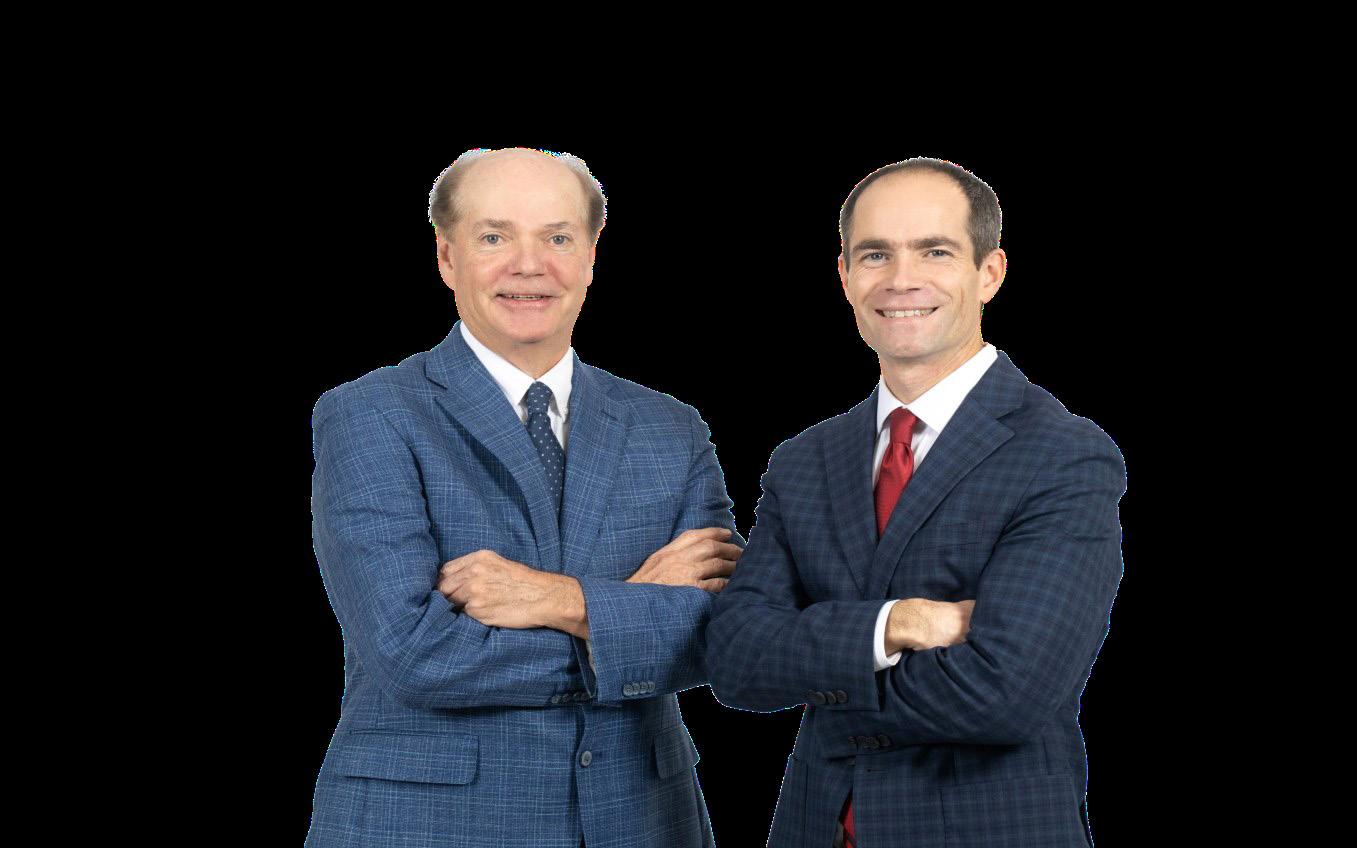
Eric J. & Eric P. Miller

noting that Berra discussed plays or game results with players outside of the clubhouse—something Mattingly said was a valuable lesson that he tried to follow later in his own managing career. A notable contrast to this was Billy Martin, who Mattingly described as always taking the game with him in his relationships with players off the field. Aside from this and several other of Martin’s shortcomings, Mattingly stated that he respected Martin as a manager as well as his commitment to winning.



Title Searches for Legal Matters
The mention of Martin led to a discussion of the historic July 24, 1983 “Pine Tar Game,” played in Yankee Stadium between the Yankees and the Kansas City Royals, who at the time were heated rivals battling for the American League pennant and who had developed a hatred for each other. With the Yankees leading 4-3 with two outs in the top of the ninth inning, George Brett hit what appeared to be a game-tying home run. “Not so,” said Yankee Billy Martin, who had kept a close eye on Brett’s bat, which had pine tar on that portion of the bat handle above where the rules of baseball permitted.
When the home plate umpire agreed with Martin, disallowing the home run and calling Brett “out,” Brett sprang from the Royals dugout in a rage, and had to be physically restrained. This resulted in his almost immediate ejection, with the game ending as a 4-3 Yankee victory. However, following an appeal by the Royals, American League President Lee MacPhail reversed the ruling of the umpire and allowed the home run (Brett still was ejected). That meant the game was tied at four-all. It was decided that the game would resume at Yankee Stadium on August 18 in front of 1,200 fans instead of the 34,000 who were in attendance on the original date of the game in July.
As a result of injuries and trades, several substitutions occurred when the game resumed. Among the substitutions in the Yankees lineup made by Martin were moving Mattingly to second base from his usual position at first base. Mattingly took over second for Bert Campaneris, who had been injured. This made Mattingly the first left-hander to play second base since left-handed Cleveland pitcher Sam McDowell was moved from pitcher to second base for one batter in a game in 1970 against Washington to avoid facing right-handed Senator’s power hitter Frank Howard. In1986 when Yankee third baseman Mike Pagliarulo was injured, Mattingly volunteered as an emergency fill in, with manager Lou Piniella using him for the three games at third base, making Mattingly the first left-handed-throwing third baseman to play in the majors since Wee Willie Keeler in 1905. How did Mattingly do at third base for those three games? One putout, 11 assists, one error, and involvement in two double plays.
Money in Baseball and The Boss
On April 10, 1990, bombastic Yankees owner George Steinbrenner signed Mattingly to a five-year, $19.3 million contract. At that time, the contract made Mattingly the highest paid player in baseball. Asked about it at the luncheon Mattingly added, with a laugh, “That was the case for about a week.” At that
time, in his usual modest style, Mattingly stated, “I’m not going to look at the papers for a few days because I don’t want to read about it. I’d rather let my playing do all the talking.”
Reflecting on today’s economics in baseball, Mattingly expressed that what he saw with today’s players and their megacontracts was indeed the same attitude that he expressed in 1990: their desire is to play baseball and not let the money get in the way of their efforts.
As to his relationship with Steinbrenner, Mattingly recalled a few run-ins with “The Boss.” Among the most notable came in August 1991 when Mattingly refused to take the field after Steinbrenner declared that Mattingly’s hair was too long, in violation of team rules. Under Steinbrenner, players were required to have hair trimmed “above the collar.” Mattingly related that he didn’t have a problem trimming his hair. What was frustrating is that the demand to cut his hair was relayed to him just before the start of a game. A day later, Mattingly visited a barber to trim his hair.
The classic animated television series The Simpsons poked fun at Steinbrenner’s strict grooming policies. Mattingly earned pop-culture immortality with his appearance in a 1992 episode titled “Homer at the Bat.” In the episode, Mr. Burns demands that Mattingly get rid of his sideburns or face being kicked off his softball team. The clip is hilarious because Mattingly’s character clearly did not have sideburns. The 27-second Simpsons clip is easily found on the Internet and the subject of numerous GIFs. Mattingly noted that ironically the episode was recorded before his haircut showdown with Steinbrenner but aired after the brouhaha.
Dealing With the Loss of Alex Fernandez
Near the end of Mattingly’s first season as manager of the Marlins, the team’s young pitching phenom Alex Fernandez was killed in a boating accident in September 2016. There were many comments on the way that Mattingly brought the team together at the time. Asked about his actions, Mattingly said, “I had no special formula. I just was a human being and treated (the team members) as human beings. I opened up my heart.”
Charities
Mattingly spoke proudly about Mattingly Charities, which operates in Evansville. Both Mattingly and his wife, Lori, are active in the organization, which seeks to help underserved children in the community.
It was good to meet and hear the thoughts of one of baseball’s greatest players, “Donnie Baseball.”
Mr. Engelhardt retired from BB&T’s Legal Department and is a regular contributor to The Berks Barrister and the Berks County Historical Review. He has written for a number of publications by the Society for American Baseball Research and is the author of the insightful and dynamic Reading’s Big League Exhibition Games.



17th Annual Holiday Benefit Luncheon
The Law Foundation of Berks County and PICPA hosted the 17th Annual Holiday Benefit Luncheon on December 5th at the DoubleTree Hotel in downtown Reading. More than 550 people attending the luncheon, which is the Law Foundation’s largest fundraising event of the year. Headlining this year’s event was Don Mattingly, former New York Yankees legend and recently hired Philadelphia Phillies bench coach. Ryan Redner, President/CEO of Redner’s Markets Inc., was recognized for his commitment to community service, receiving the 2025 Sidney D. Kline, Jr. Award for Outstanding Community Service. Tompkins Community Bank served as the Hall of Fame Sponsor. Thank you to all the sponsors and attendees who helped raise more than $55,000. Those funds will provide mini grants later this year benefiting organizations working with youth and providing legal services in the community.
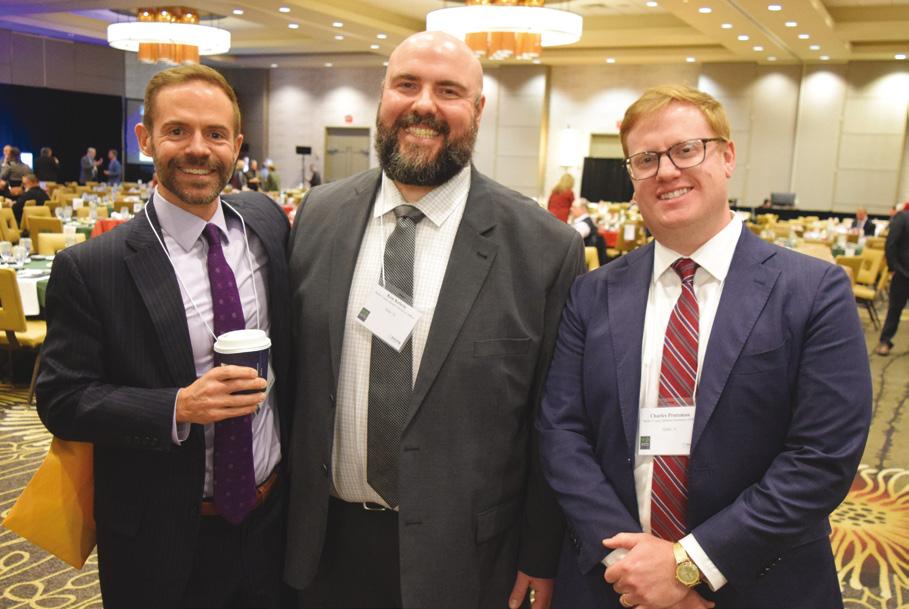


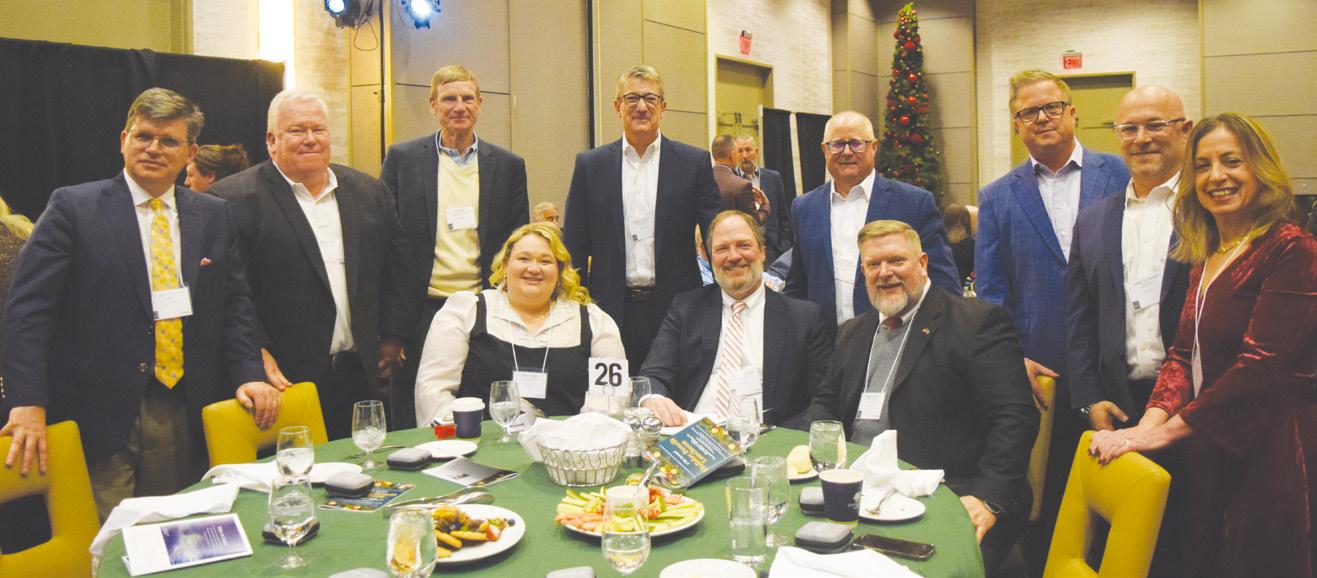
Daniel Nevins, Ken Kelecic, and Charles Prutzman prior to the start of the 17th Annual Holiday Benefit luncheon!
The ladies of Berman Voss enjoy lunch awaiting special guest Don Mattingly.
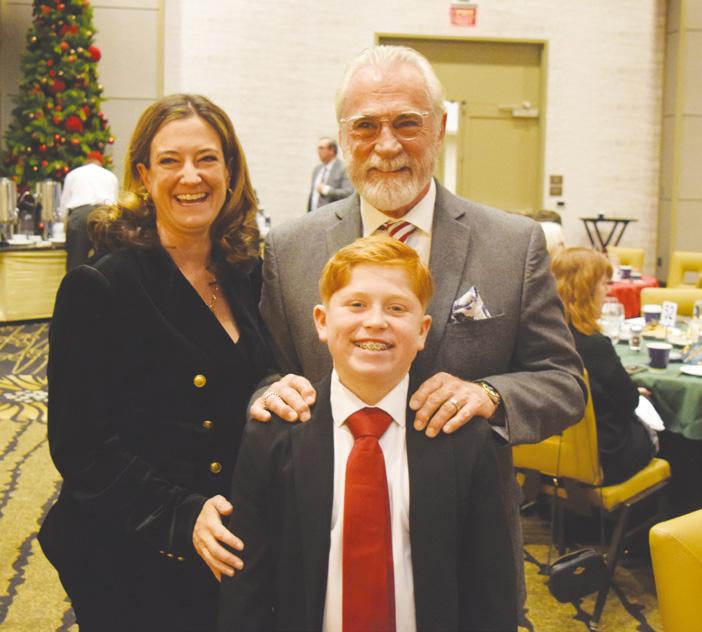
Berks County Bar Association Vice President Lauren Marks with her father, Richard Applegate, and son, Wyatt Marks.
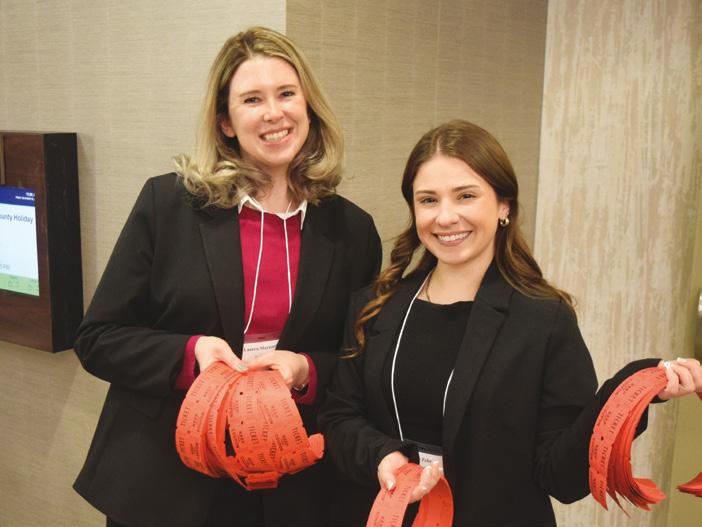
Ladies from the PICPA volunteer to sell raffle tickets to supplement foundation funds.
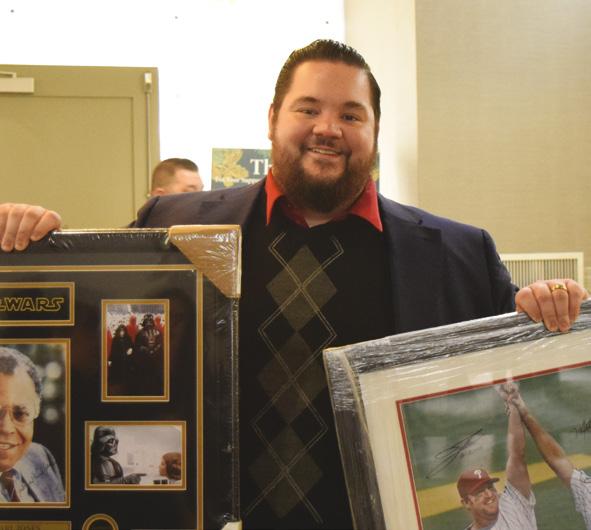
Silent auction winner Gregory Scott shows off his prizes!
Representing Triple Crown Sponsor Cherry Bekaert is David Stoneseifer, Northeast Region Market Leader and Partner.
Berks County Bar Association President Peter Schuchman, Jr. with his Kozloff
and

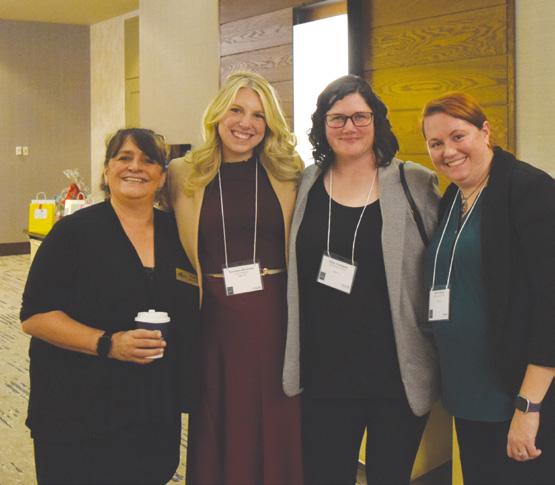
Rose Johnson, Kourtney Bernecker, Misty Toothman, and Valerie Kramer take a break before connecting lucky winners with their gift baskets.


Law Foundation

Ryan Redner, center, and his wife, Nathaly, receive a hand-crafted piece of glass artwork from Law Foundation President William R. Blumer. Redner, President/CEO of Redner’s Markets Inc., received the 2025 Sidney D. Kline, Jr. Award for Outstanding Community Service during the luncheon. The artwork was designed and crafted by Scott Krenitsky, Hot Glass Studio Manager at the GoggleWorks Center for the Arts in Reading.
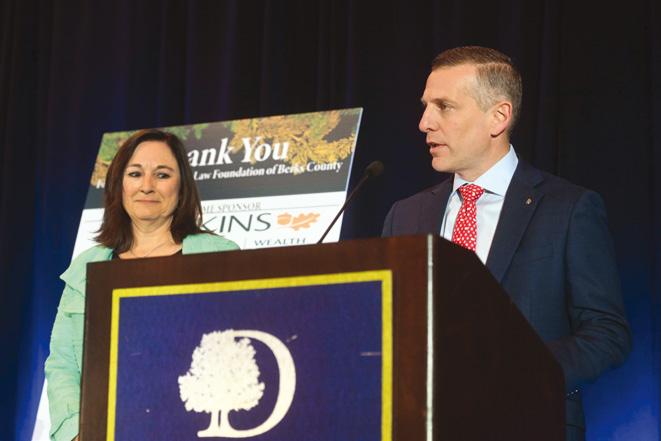
Representing Hall of Fame Sponsor Tompkins Community Bank are Ginger Kunkel, President of the Pennsylvania Market, and John Perate, Senior Vice President—Chief Lending Officer.

Ryan Redner, President/CEO of Redner’s Markets Inc., reflects on how giving back to the community has always been important to his family and the cornerstone of Redner’s culture.

PICPA Chief Executive Officer Jen Cryder delivers remarks.
Stoudt colleagues
Berks County District Attorney John Adams.
Trustee Franki Aitken poses with her lucky lottery basket!
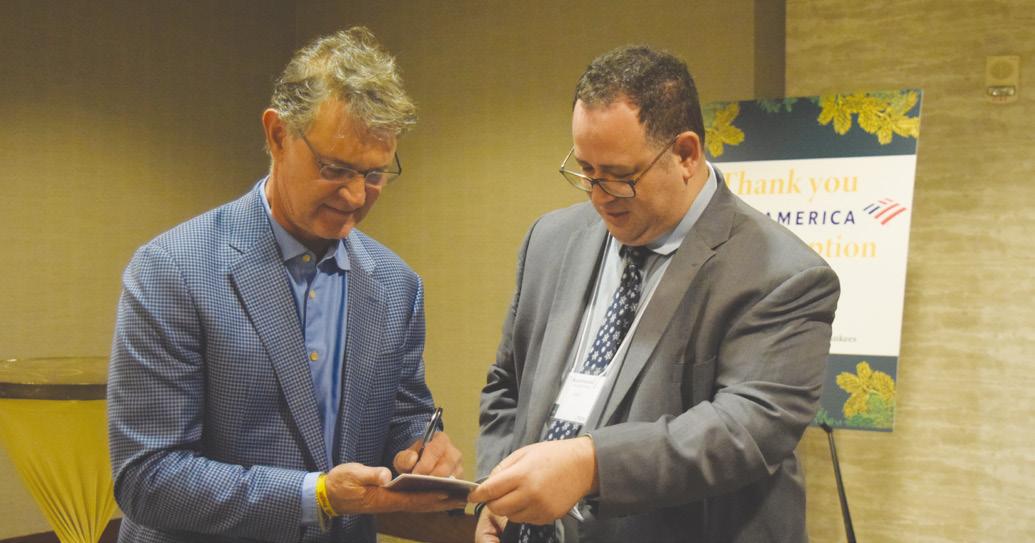
Special guest Don Mattingly signs an autograph for Russell Farbiarz!
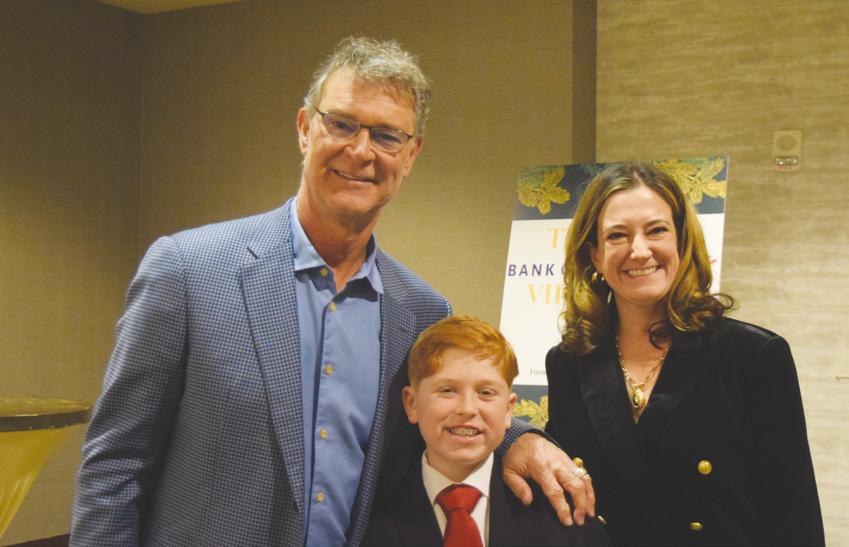
Special guest Don Mattingly with Berks County Bar Association Vice President Lauren Marks and her son, Wyatt.
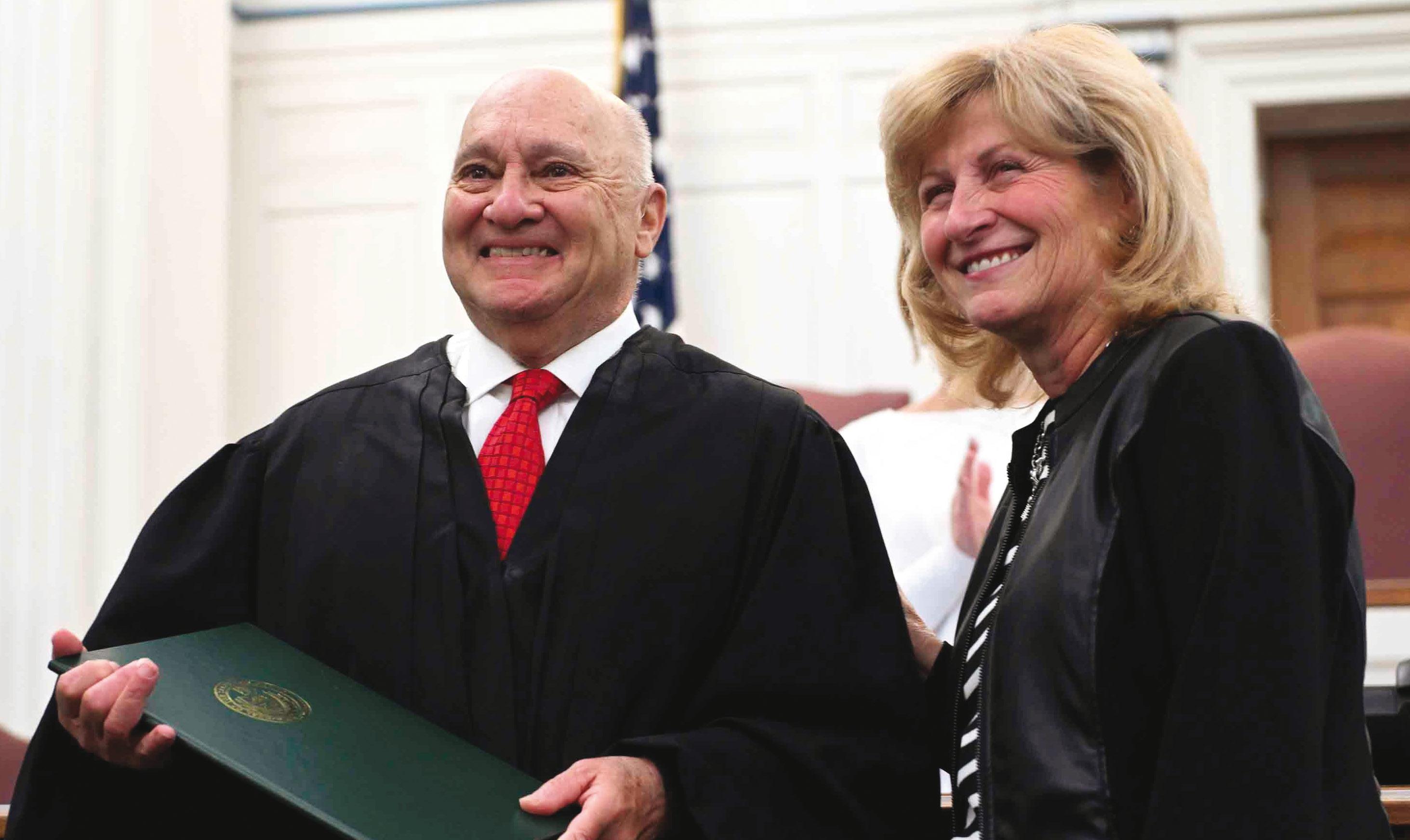
Senior Judge Bucci Honored for Uniting Families in More Than 500 Adoptions
By Susan N. Denaro, Esquire, and Kori Walter
Teardrops flowed frequently when folks appeared before the Hon. James M. Bucci in Courtroom 7B. They were not tears of anguish over a marriage dissolving in divorce, or tears of remorse from a criminal defendant waiting for Bucci to impose a sentence. The countless tears Bucci has witnessed are ones of joy, welling in the eyes of family members who were before him to finalize the long process of adopting a child.
“Tears of happiness flow readily in Adoption Court, and on more than one occasion, I was moved to tears myself,” Bucci recalled. “I truly believe individuals who adopt children in need are living saints.”
Bucci presided over more than 500 foster care adoptions between 2018 and June 2025, accounting for 46% of all adoptions filed in Berks County during that period, according to case
records maintained by Berks County Children and Youth Services.
On November 10, Bucci’s colleagues on the Berks Bench, staff from Berks County Children and Youth Services, and local elected officials surprised him with special recognition of his remarkable service as the primary judge handling adoptions for more than seven years. The special celebration was held to commemorate National Adoption Month in November and in advance of National Adoption Day on November 22. The Berks event was one of more than 400 across the United States honoring the path of uniting children and families through the foster care system. Bucci started handling adoptions when he was appointed head of the Orphans’ Court Division. Adoption law was new to Bucci. “I had never handled adoptions when I practiced law, and so I was very unfamiliar with the entire world of adoptions,” he recalled
State Sen. Judy Schwank recognizes the Hon. James M. Bucci for his commitment to justice while presiding over more than 500 adoptions since 2018. (Photo courtesy of the Reading Eagle)
during a recent interview. “I did not know then at that time how much I would enjoy adoption hearings, nor did I ever expect to preside over the adoption of 500 children. But I soon discovered that presiding over adoptions was the most rewarding work of my career,” Bucci said.
A 1974 graduate of Villanova University and Antioch School of Law in 1978, Bucci was elected to the Berks County Court of Common Pleas in 2004. He retired from the Court of Common Pleas in December 2021. Bucci continued presiding over adoptions as a Senior Judge until June 30, 2025.
Bucci said he will always remember the outpouring of support that families receive when adopting a child, especially if the adopting family was active in a local church. “I recall many adoption hearings in Courtroom 7B when the courtroom was filled to capacity with over 80 supporters, family, and friends of the adopting parents,” Bucci said. “On one memorable occasion, I was moved to tears at the conclusion of the adoption hearing when the entire courtroom began singing the hymn ‘Jesus Loves Me’."
Bucci acknowledged that he gained a new perspective that he did not have when he first began presiding over adoptions in 2018. “I never appreciated how emotional and important adoption day is to the parents and the children,” he said. “I used to think it was only a formality. Now, I know it is the culmination of a long process filled with doubt and uncertainty.”
Bucci added, “It was a learning experience for me to see the joy and happiness.”
During the National Adoption Month celebration in November, Bucci received a citation from State Sen. Judy Schwank. “Over the course of his career, he has made crucial decisions that have improved the lives and welfare of countless children and teens,” Schwank proclaimed before a standing-room only audience in Courtroom 5A. “His commitment to justice has had immeasurable effects on the future of each child. He has handled each case with grace, impartiality, and honor.”
County Commissioners Christian Leinbach, Michael Rivera, and Dante Santoni also presented ceremonial citations in honor of Bucci’s work.
The Hon. James E. Gavin, who is now head of the Orphans’ Court Division, was instrumental in organizing November’s celebration. As part of the ceremony, Gavin and Bucci finalized the adoption of 12 children.
The event culminated in an ice cream party for the hearing participants and their invited guests, together with many of the tireless employees of the Berks County Children and Youth Services Office who took the lead in planning and hosting what is hoped to become an annual event.
Reflecting upon adoptions in advance of the event, Berks County President Judge M. Theresa Johnson aptly said, “There are few things more heartwarming for a judge than presiding in an adoption hearing. Watching a young child in foster care being united with a loving family is truly miraculous.”
Given the happy tears and smiles that abounded in the courtroom during those hearings, it was clear that day that Bucci
ATTORNEY DISCIPLINARY AND ETHICS MATTERS
STATEWIDE PENNSYLVANIA MATTERS NO CHARGE FOR INITIAL CONSULTATION
Representation, consultation and expert testimony in disciplinary matters and matters involving ethical issues, bar admissions and the Rules of Professional Conduct
James C. Schwartzman, Esq.
• Judge, Court of Judicial Discipline
• Former Chairman, Judicial Conduct Board of Pennsylvania
• Former Chairman, Disciplinary Board of the Supreme Court of Pennsylvania
• Former Chairman, Continuing Legal Education Board of the Supreme Court of Pennsylvania
• Former Chairman, Supreme Court of Pennsylvania Interest on Lawyers Trust Account Board
• Former Federal Prosecutor
• Selected by his peers as one of the top 100 Super Lawyers in PA and the top 100 Super Lawyers in Philadelphia
• Named by his peers as Best Lawyers in America 2022 and 2015 Philadelphia “Lawyer of the Year” Ethics and Professional Responsibility Law and Legal Malpractice Law
1500 Market Street, East Tower, Suite 1800 • Philadelphia, PA 19102 (215) 751-2863
and Gavin made dreams come true for all ten families by the granting of their adoption decrees.
Currently there are over 240 children in foster homes, group homes, and kinship care in Berks County, and over 343,000 nationwide. One of the main goals of National Adoption Month, and the November celebration in particular, was to raise awareness of the need to find safe, loving, and permanent homes for our children. According to nationaladoptionday. org, since its inception in 1999, National Adoption Day has recognized more than 90,000 children moving from foster care to a permanent family placement.
Ms. Denaro is with the Wyomissing firm Plank Frankowski.
Mr. Walter is the Berks County Bar Association Executive Director.
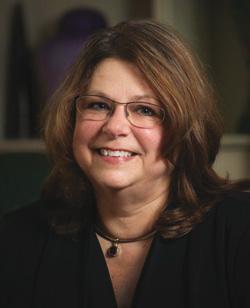
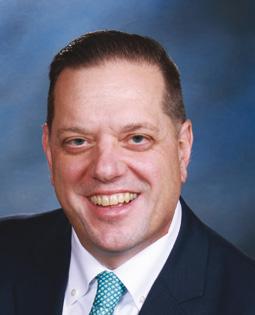
Welcome New Members!
The Berks County Bar Association welcomed seven new members during a ceremony in Courtroom 5A on Nov. 6. Admissions Committee Chair Alisa Hobart organized the ceremony, introducing the new members to colleagues and the judges of the Berks County Court of Common Pleas. The bar association hosted a reception to make the new members and their families feel at home in our community of lawyers.
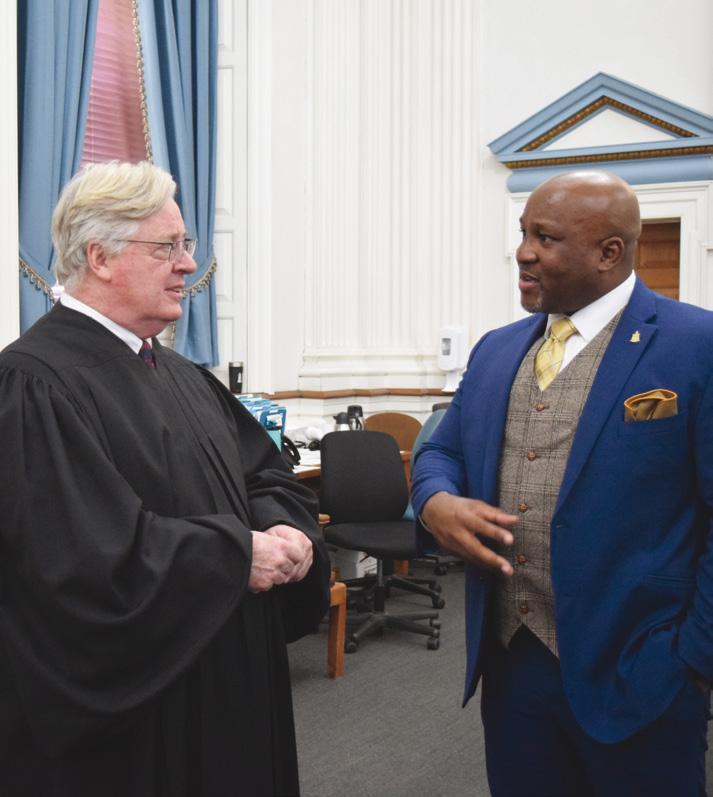
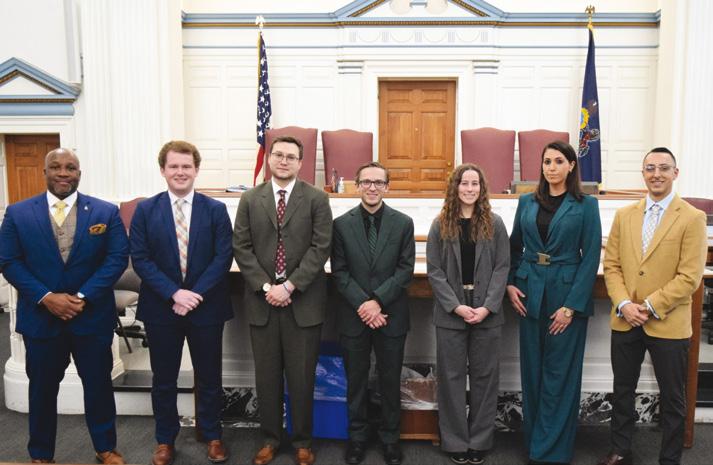
Meet our new members, from left: Obinna Abara, solo practitioner; Colin McGee, assistant district attorney; Brian Weiss, Stock Alfieri; Seth Conard, assistant public defender; Sydney Dougherty, assistant county solicitor; Dolly Dashe, assistant public defender; and Nathaniel Griesbaum, assistant district attorney.
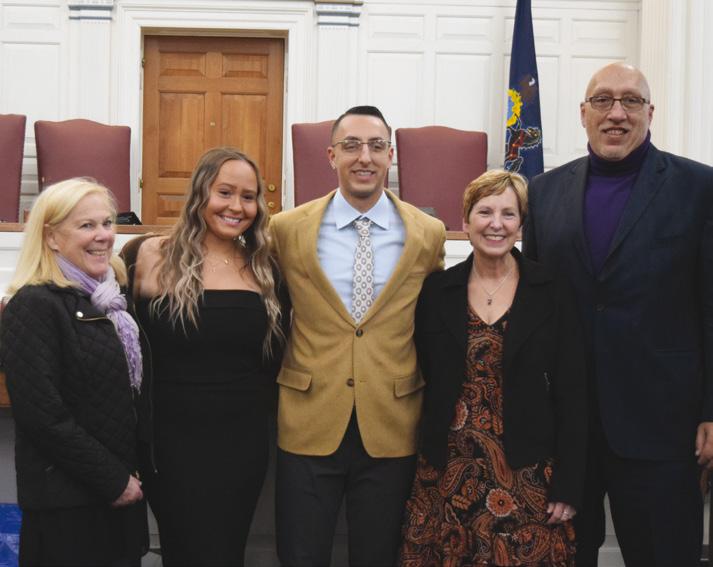
Griesbaum,

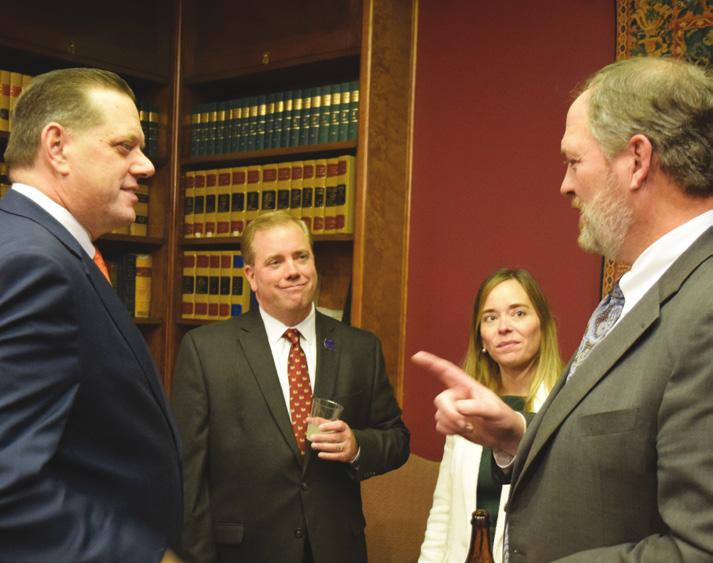
Executive Director Kori Walter, Board member Joseph R. Speece III, Gabriela Raful, and Bar Association President Peter F. Schuchman, Jr. catch up at the reception.
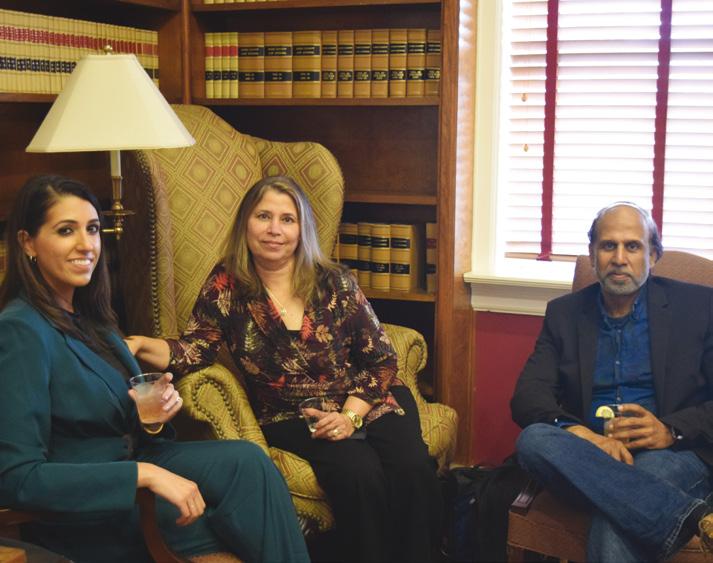
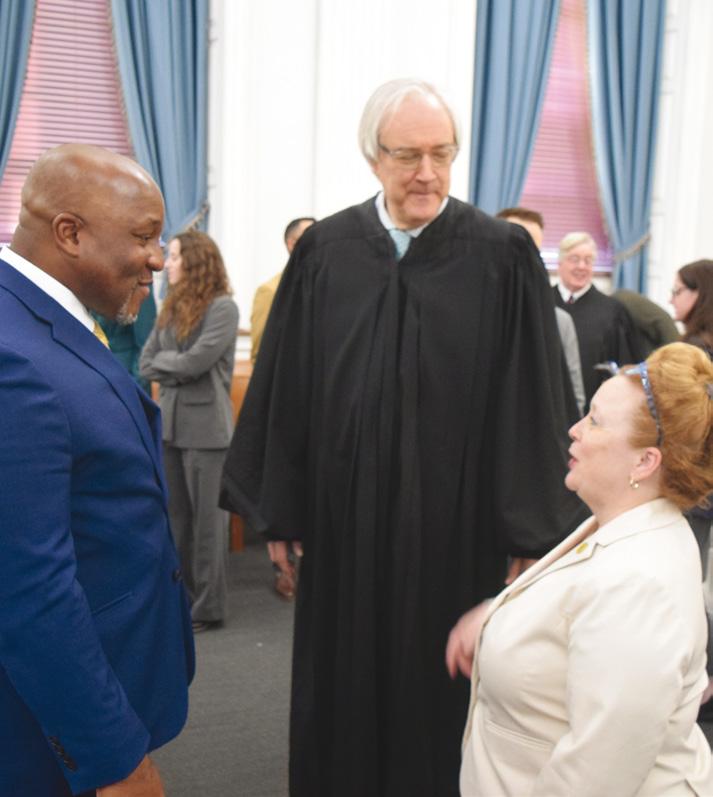
The Hon. Thomas Parisi connects with Obinna Abara.
The Hon. Scott Lash with Obinna Abara and Admissions Committee Chair Alisa Hobart.
Nathaniel
an assistant district attorney, celebrating with his family.
Dolly Dashe, an assistant public defender, and her family.

Christian Nationalism
andthe Supreme Court
No Respect for the Word “Respecting”
By Donald F. Smith, Jr., Esquire
On October 27, 2018, about 75 people from three separate Jewish congregations were gathered in Pittsburgh’s Tree of Life synagogue for various religious services. A middle-aged man entered the house of worship shouting antisemitic slurs and began shooting. Eleven people were murdered and several more wounded. A subsequent search of his social media accounts disclosed that the gunman, Robert Bowers, had an extensive history of espousing antisemitic, white supremacist, racist, and Christian nationalist views.1
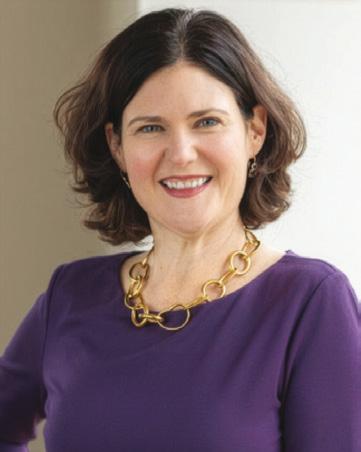
Amanda Tyler has written a book titled How to End Christian Nationalism. She is a devout Baptist, a lawyer living with her family in Texas, and a leader of the group named Christians Against Christian Nationalism. She describes Christian nationalism as “a political ideology and cultural framework that seeks to fuse American and Christian identities. It suggests that ‘real’ Americans are Christians, and that ‘true’ Christians hold a particular set of political beliefs.”2
She notes that, in a 2023 Public Religion Research Institute/Brookings Institution Study, “researchers identified five correlates
of Christian nationalism: anti-Black racism, anti-immigrant views, antisemitic views, anti-Muslim views, and patriarchal understandings of gender roles.”3
While “Christianity is a religious faith that follows Jesus and his gospel of love…” Ms. Tyler writes, “Christian nationalism is antidemocratic…a clear and present danger to our constitutional republic,” and “poses an ongoing threat to the health and vitality of authentic Christian faith and practice in America.”4
Inspired Acts of Violence
It presents such a danger by inspiring “acts of intimidation and physical violence—including vandalism, bomb threats, arson, hate crimes, attacks on places of worship, and murders— against religious communities in the United States.”5 The love of Christ is not demonstrated. Mahatma Gandhi has been quoted as saying, “I like your Christ. I do not like your Christians. Your Christians are so unlike your Christ.”6 New York Times columnist David Brooks has written that Christian nationalism “is about power more than love. It is about threat more than hope. It is rigid and pharisaical rather than personal and merciful.” 7
Amanda Tyler concludes, Christian nationalism “is a gross distortion of Christianity.”8 Examples of the physical violence and murder described in Tyler’s book include not only the Tree of Life
tragedy, but also the 2015 massacre of the Emanuel Nine in Charleston, South Carolina, by a racist young man who espoused Christianity as “a warrior’s religion”;9 in August 2017 at the Unite the Right rally in Charlottesville, Virginia, “white supremacists and self-proclaimed neo-Nazis chanted, ‘Jews will not replace us’” and “a man who promoted white supremacist views drove his car into a crowd, killing one person…and injuring dozens more”;10 the January 6th insurrection featured many “white flags emblazoned with a single green evergreen tree and the words ‘Appeal to Heaven,’ which have become an emblem of Christian nationalism”;11 and the 2022 murder of ten African Americans in a Buffalo, New York, supermarket by “a white supremacist who identified with Christian nationalism.”12
Religion and the Constitution
What does our original Constitution view the role of religion to be? How do the Religion Clauses of the Constitution’s First Amendment and decisions of the current Supreme Court interpreting the Clauses impact the movement?
In her book, Ms. Tyler describes U.S. House Representative Lauren Boebert speaking to an audience gathered at a Christian Center in Colorado Springs in June 2022. She quotes her as saying, “I
continued on next page
Christian Nationalism and the Supreme Court
Continued from page 19
want to let y’all know, right now is the time for the church to influence the nation… This is the vision that our founding fathers had from the very beginning.”13
Nothing could be farther from the truth. Christianity is not mentioned at all in the Constitution, nor is God. As Ms. Tyler points out, “The only time that ‘religion’ or ‘religious’ is mentioned in the original Constitution is in Article VI,” wherein it provides, “no religious Test shall ever be required as a Qualification to any Office or public Trust under the United States.”14
She cites the letter Thomas Jefferson wrote in 1802 to a group of Baptist ministers explaining how the First Amendment builds “a wall of separation between Church & State,”15 and includes similar commentary from James Madison, described by some as the “father of the Constitution” and Alexis de Tocqueville, the French diplomat who spent ten months traveling around the United States in 1831 and 1832.
Madison wrote, in 1819, that “the morality of the priesthood and the devotion of the people have been manifestly increased by the total separation of the Church from the State.”16 Tocqueville, in his Democracy in America, related that “the clergy or the laity” he encountered on his travels “all attributed the peaceful dominium of religion in their country mainly to the separation of church and state.”17
Writing for The Atlantic magazine, Fintan O’Toole notes that our Founders “understood from European and recent colonial history that true religious freedom is impossible if faith is intertwined with government.”18 O’Toole then quotes the Religion Clauses, followed by a quote from Jefferson: “‘It does me no injury for my neighbor to say there are twenty gods or no god. It neither picks my pocket nor breaks my leg.’”19
Clearly, our Constitution’s Framers intended our government to be secular, which was viewed in the Founding Era as being beneficial to all. Ms. Tyler concludes that the document’s neutrality “with regard to religion helps dispel the Christian nation myth, particularly with regard to the legal structure of the country.”20
Current Court on Establishment Clause
However, Amanda Tyler, the attorney, writes: “Unfortunately, over the past several years, the US Supreme Court has issued a series of decisions that have weakened legal protections for the separation of church and state.”21 She cites Town of Greece v. Galloway22 and Kennedy v. Bremerton School District.23
Two residents of Greece, New York, one an atheist and one Jewish, challenged the town board’s practice of having Christian clergy lead citizens in prayer at the start of the municipal meetings. The residents argued the practice violated the First Amendment’s Establishment Clause.
As a reminder, the First Amendment provides, in relevant part: “Congress shall make no law respecting an establishment of religion or prohibiting the free exercise thereof.” The Establishment Clause was applied to the states in the 1947 decision of Everson v. Board of Education;24 the Free Exercise Clause had been applied seven years earlier by the Court in Cantwell v. Connecticut.25
By a narrow vote of 5-4 the Court ruled that Greece’s town board’s practice was constitutional, noting that it is necessary to interpret the Establishment Clause “by reference to historical practices and understandings.”26 In doing so, the majority concluded there was a long history of conducting prayers before legislative sessions, including explicitly Christian prayers.
Justice Kagan wrote a lengthy, passionate dissent: “In this country, when citizens go before the government, they go not as Christians or Muslims or Jews (or what have you), but just as Americans (or here, as Grecians). That is what the Town of Greece precluded by so identifying itself with a single faith.”27
Prayer in a public-school setting was the issue in Kennedy. Joseph Kennedy was a public high school football coach who, after a game, would kneel at the 50-yard line of the school’s football field to pray quietly for approximately 30 seconds. Players would join him. The school district asked him to avoid any “religious activity,” but he
persisted.28 Thus, his coaching contract was not renewed; whereupon, he sued in federal court, claiming his First Amendment rights were violated. The District Court ruled that, if his contract had been renewed, the Establishment Clause might have been violated. The Ninth Circuit affirmed.
On appeal, the Supreme Court, by a 6-3 vote, ruled in Kennedy’s favor. Justice Gorsuch, writing for the conservative majority, explained that the lower courts had erred in relying on the Lemon test to find a violation of the Establishment Clause (the test considers three factors as to whether a law or action violated the Establishment Clause: (1) does it have a secular purpose; (2) the principal or primary effect must be one that neither advances or inhibits religion; and (3) it must not foster “an excessive government entanglement with religion”).29
According to Justice Gorsuch, the Court had “long ago abandoned Lemon.”30 Instead, the History and Tradition Test applies and the “Establishment Clause must be interpreted by ‘reference to historical practices and understandings’” and here the action of Kennedy praying on a public high school football field after a game and with team players was in “accord with history and faithfully reflects the understanding of the Founding Fathers.”31
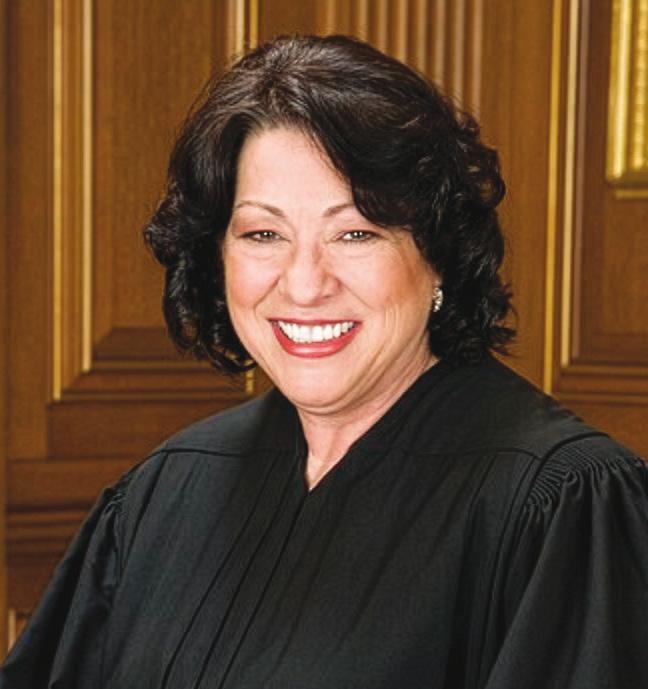
From my own research, I believe Justice Gorsuch is mistaken on several points. First, the Lemon test had not been abandoned in the past by a majority of the Court; the 1971 holding itself was never previously overruled. As Justice Sotomayor establishes in her dissenting opinion, the only categorical rejection of the test was
by Justices Kavenaugh, Thomas, and Gorsuch in their concurring opinions in American Legion v. American Humanist Association, 588 US 29 (2019) (upholding the constitutionality of a forty-foot cross on government land).32
Secondly, Justice Gorsuch cites the Town of Greece decision for supporting Kennedy’s act of praying in the manner and at the place he chose being in accord with history. While there is a history of having government meetings open with prayer going all the way back to the founding of the republic, when the First Amendment was ratified in 1791, there was no public-school educational system (or high school football games for that matter).
In 2023, two conservative law professors, Randy E. Barnett and Lawrence B. Solum, published a law review article analyzing the current Court’s use of history and tradition as interpretative tools.33 In discussing the Kennedy decision, they criticized Justice Gorsuch for providing “no historical analysis” and by failing to “expound on the idea of a ‘long constitutional tradition.’”34 Justice Gorsuch did not because he could not. In other words, he abandoned a test of 51 years for a test for which the professors flunked him!
Role of Coercion
Finally, as Ms. Tyler asserts, the Court opinion “focused solely on the religious exercise of Coach Kennedy and not the rights of the kids and families.”35 Pursuing that point, I dug deeper into the opinions. Justice Gorsuch claimed the record did not disclose any evidence that players were coerced into joining the coach at midfield.
However, in Justice Sotomayor’s dissent she noted that the trial judge, who actually heard the testimony, found some students reported joining Kennedy’s prayer group “because they felt social pressure to follow their coach and teammates.”36 She then points to prior High Court decisions holding that serious establishment concerns arise even if only indirect, “subtle coercive pressure” exists, particularly when youth are involved.37 Adding to that concern, she writes, “Kennedy’s prayers had a greater coercive potential because they were delivered…by their coach, who was still on active duty for postgame events.”38
My research disclosed that, a few days after the Kennedy decision was issued, The New York Times columnist Pamela Paul opined about it.39 She had read a brief filed in the case by one of the players and seven other members of the community. The brief alleged, as reported by Ms. Paul: “Participation in Kennedy’s prayers was ‘expected.’ Students were explicitly encouraged by him to ask the other team’s coaches and players to join in, something Kennedy himself boasted about.” She pointed out that “Kitsap County is home to a variety of religions, including Judaism, Islam, Sikhism, Hinduism and Baha’ism. A coach-led Christian prayer is necessarily exclusionary.”
Ms. Paul then writes the following, underlining Ms. Tyler’s point of the Court ignoring the effect on the players: “One atheist student on Kennedy’s team reported feeling coerced to participate. He described feeling ‘uncomfortable and unsafe’ during a chaotic scene in which over 500 people stormed the field to join in Kennedy’s prayers. This deprived the player not only of his free exercise rights, but also, according to the brief, of ‘his love for football, lasting friendships with his teammates and the respect he otherwise earned from his coaches.’ Years later, the brief reports, he feels traumatized.” She further reports that when “a teacher in the school district came out publicly in favor of her employer, she became in [the teacher’s] words, a ‘social pariah.’”
The column’s conclusion: “Such intolerance mirrors the strong-arming intentions of the Supreme Court’s conservative majority. Unhappy with what much of the country believes, the court’s right wing chooses to believe what it would like and foists the results on the rest of us. Just like Coach Kennedy, they’re out to proselytize.”
Slam dunk! The majority’s opinion is simply result-oriented, based on a void of legal reasoning, as disclosed by the two law professors, to hold what the majority “chooses to believe what it would like,” while ignoring the implicit coercion felt by the players and being insensitive to their religious rights. As a Christian, I am offended by the decision and deeply believe it represents a step advancing Christian nationalism.
Meaning of “Respecting”
Constitutional law scholars have observed that the Roberts Court’s conservative majority has elevated the Free Exercise Clause “above the Establishment Clause by showing little concern for government entanglement with religion.”40
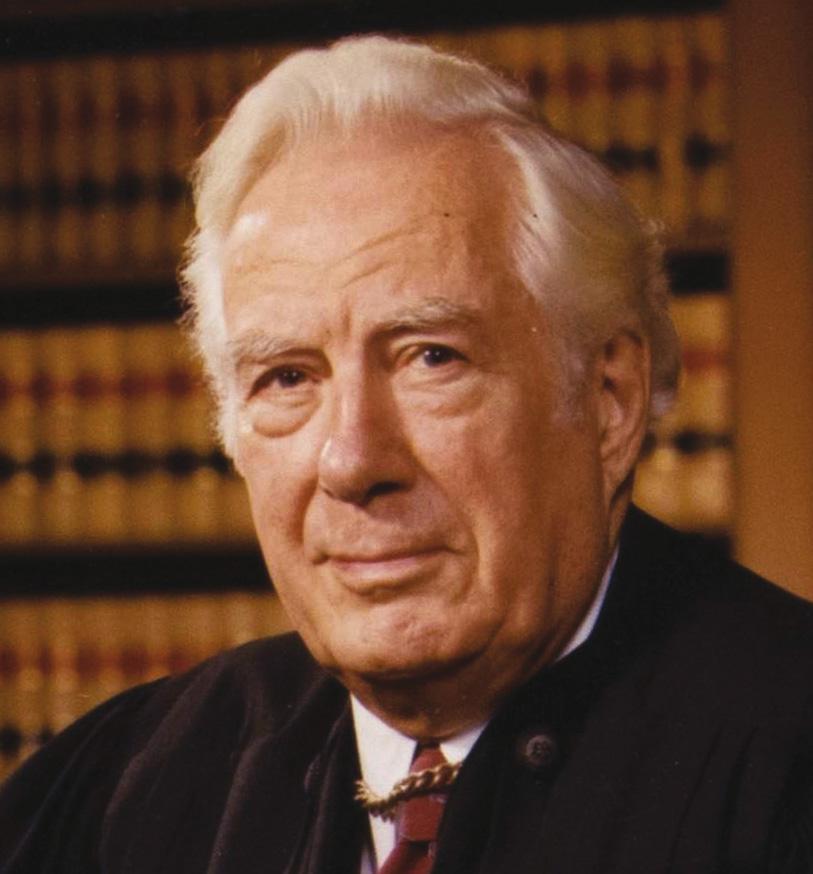
Lemon’s majority opinion was authored by Chief Justice Warren Burger, and even if the Lemon test is to be considered abandoned, what he wrote about the Establishment Clause in 1971 stands the test of time. He noted the Clause includes the modifying word “respecting,” writing, “Its authors did not simply prohibit the establishment of a state church or a state religion, an area history shows they regarded as very important and fraught with great dangers. Instead, they commanded that there should be ‘no law respecting an establishment of religion.’ A law may be one ‘respecting’ the forbidden objective while falling short of its total realization.” (Emphasis in original.)41
The Chief Justice went on to explain the effect of the word “respecting,” an effect never considered by the current conservative majority: “A given law might not establish a state religion but nevertheless be one “respecting” that end in the sense of being a step that could lead to such establishment and hence offend the First Amendment.” (Emphasis in original.)42
Echoing that concern about the First Amendment’s language, Justice Souter, in delivering the opinion of the Court in McCreary County v. ACLU of Kentucky, acknowledged the Clause’s interpretative problem and concluded “the principle of neutrality has provided a good sense of
Christian Nationalism and the Supreme Court
Continued from page 21
direction: the government may not favor one religion over another, or religion over irreligion…”43 In concluding the Court’s opinion, Justice Souter sounds a prescient warning relevant today: “The divisiveness of religion in current public life is inescapable. This is no time to deny the prudence of understanding the Establishment Clause to require the Government to stay neutral on religious belief, which is reserved for the conscience of the individual.”44
The Roberts Court’s decisions not only lack any semblance of such neutrality, but they also defy it. In a New York Times article of March 31, 2025, Rachel Laser, president of Americans United for Separation of Church and State, noted that it is “Christians, and oftentimes conservative Christians who are repeatedly being favored by Supreme Court rulings.”45 So much for respecting “the conscience of the individual” in our religiously diverse society.
Those rulings have included approving governmental grants for a church-related playground,46 state tax credits for donations supporting scholarships for parochial students,47 actual tuition assistance for parochial students,48 and, of course, the school prayer decision discussed above. Harvard law professor Noah Feldman has written that that these decisions have “gutted 50 years of precedent on the separation of church and state.”49
Do these decisions not sanction a sectarian purpose and not advance religion while leading to excessive government entanglement? Is that why the conservative justices have abandoned the Lemon test and wrongfully claim the Court’s precedents support such abandonment? Instead, the decisions approved actions “‘respecting’ the forbidden objective…and hence offend the First Amendment.”
Dissenting in the decision approving tuition assistance for parochial students, Justice Sotomayor wrote: “Today, the Court leads us to a place where separation of church and state actually becomes a constitutional violation.”50
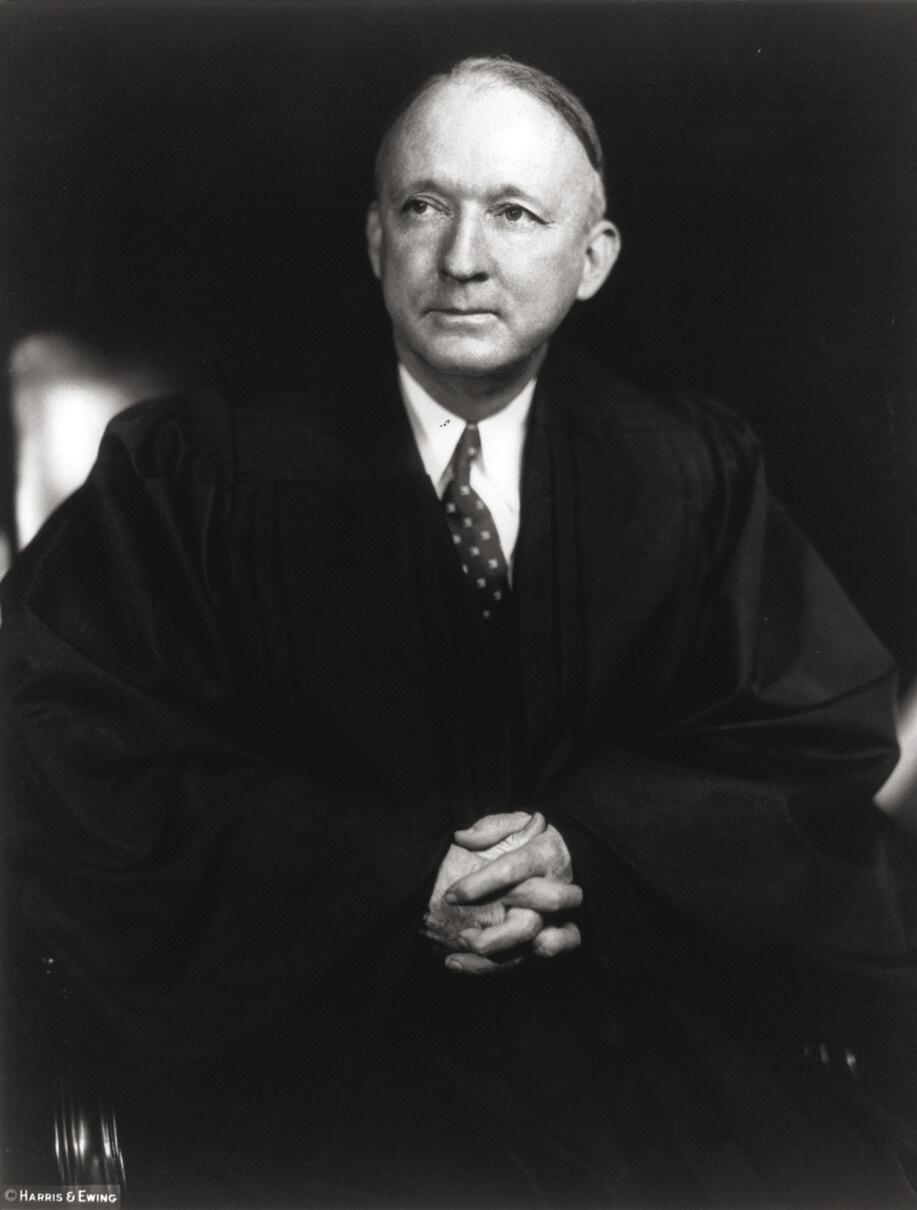
In fact, I feared a case argued last year would render the Establishment Clause completely impotent was St. Isidore of Saville Catholic Virtual School v. Drummond. Thankfully, impotency did not come to pass, at least not yet. The Oklahoma Supreme Court had held that state funding of the St. Isidore charter school would violate the Establishment Clause. On appeal to the Supreme Court, the judgment was “affirmed by an equally divided Court,” a 4-4 split with Justice Barrett having recused herself.51
Underlining Professor Feldman’s point, I have no doubt 50 years ago the Court’s vote in the case would have been unanimous to affirm the Oklahoma Supreme Court. For four of today’s justices to vote otherwise confirms that the four lack respect for the term “respecting” in the Establishment Clause.
Such was most evident during oral arguments when Justice Kavanaugh said, “All the religious school is saying is ‘don’t exclude us on account of our religion.’ You can’t treat religious…institutions… as second class in the United States,”... concluding that to exclude the school from state funding would amount to “rank discrimination against religion.”52
That is hyperbole nonsense! Maintaining government neutrality
actually protects religion and does not discriminate against it. As Justice Black wrote in 1948, “For the First Amendment rests upon the premise that both religion and government can best work to achieve their lofty aims if each is left free from the other in its respective sphere.”53 In her book, Tyler drives home the points made by Justice Black in 1948 and then by Justice Souter in 2005 when she writes: “The best way to protect everyone’s freedom to exercise their religion is to make sure the government stays neutral with regard to religion and its practice.”54
Proponents of religious charter schools “vowed to keep fighting,” saying, “there will be another case” when “Justice Barrett will break the tie.”55 Maybe, but she has been “showing signs of leftward drift” and “has not voted on cases predictably.”56
Ripple Effects of the Court’s Decisions
Author Tyler observes “there are signs that some litigators, legislators, and advocacy groups have taken the abandonment of the Lemon test as a green light to pursue more aggressive measures pushing for government sponsored religion in public schools.”57
The states of Louisiana, Arkansas, and Texas have passed laws requiring that the Ten Commandments be displayed in every public school classroom, despite a 1980 Supreme Court decision prohibiting such posting.58 On January 20, 2026, the Fifth Circuit Court of Appeals heard arguments over the Texas and Louisiana laws; lower courts have blocked the laws in both of those states as well as the Arkansas mandate.59
In November 2024, Texas education officials approved a new elementary school curriculum that incorporates stories from the Bible. That action followed Texas enacting a law in 2023 allowing public school districts to replace licensed counselors with religious chaplains.
Jesus Christ summarized all of the
Commandments into two: “’You shall love the Lord your God with all your heart, and with all your soul, and with all your mind.’ This the greatest and first Commandment. And a second is like it: ‘You shall love your neighbor as yourself.’ On these two Commandments hang all the law and the prophets.”60
While arguing against an earlier attempt to require posting the Ten Commandments in Texas public school classrooms, Ms. Tyler quotes Texas State Representative James Talarico, a seminarian, with saying, after citing Christ’s commandment to “love your neighbor”: “I would submit to you that our neighbor also includes the Hindu student who sits in the classroom, the Buddhist student who sits in a classroom, and an atheist student who sits in a classroom.”61 The actions of leaders in Louisiana, Arkansas, and Texas do not reflect love for those students, for which the Court’s right wing must take responsibility.
More frightening is the fact that Christian nationalism is not about love for one’s neighbor, quite the opposite. We need to recognize it for the evil it is.
Conclusion
No Court decision should ever be a step toward helping the movement achieve its goal of the United States becoming a Christian nation in fact, if not by decree. The Court’s six conservative justices need to stop ignoring the First Amendment’s word “respecting” and enforce the concept of religious neutrality the Founders intended.
Mr. Smith is a frequent speaker and writer on constitutional law topics. The opinions expressed in this article are his and do not represent the opinions of the Berks County Bar Association.
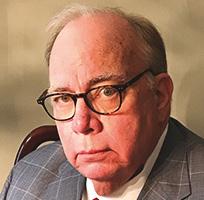

References
1 Amanda Tyler, How to End Christian Nationalism (Broadleaf Books, 2024) (hereafter “Tyler”), p. 77
2 Tyler, 26
3 Id. 33
4 Id. 27
5 Id. 47
6 David French, “Christianity Is a Dangerous Faith,” The New York Times, December 23, 2025, p. A21
7 David Brooks, “How to Replace Christian Nationalism,” The New York Times, November 15, 2025, p. A22
8 Tyler, 61
9 Id. 49
10 Id. 75-76
11 Id. 24
12 Id. 50
13 Id. 100
14 Id. 102
15 Id. 103
16 Id.
17 Id. 103-104
18 Fintan O’Toole, “What the Founders Would Say Now,” The Atlantic, November 2025, pp. 105, 107
19 Id. 107
20 Tyler, 102
21 Id. 117
22 Town of Greece v. Galloway, 572 US 565 (2014)
23 Kennedy v. Bremerton School District, 597 US 507 (2022)
24 Everson v. Board of Education, 330 US 1 (1947)
25 Cantwell v. Connecticut, 310 US 296 (1940)
26 Town of Greece, supra 572 US at 576
27 Id. 633
28 One might question the Coach’s adherence to the Gospel. After all, Jesus taught: “And whenever you pray, do not be like the hypocrites; for they love to stand and pray in the synagogues and at the street corners, so that they may be seen by others. Truly I tell you, they have received their reward. But whenever you pray, go into your room and shut the door and pray to your Father who is in secret; and your Father who sees in secret will reward you.” Matthew 6: 5-6 (New Revised Standard Version)
29 Lemon v. Kurtzman, 403 US 602, 612-613 (1971)
30 Kennedy, supra 597 at 534
31 Id. 535-536
32 Id. 571
33 Randy E. Barnett and Lawrence B. Solum, “Originalism After Dobbs, Bruen and Kennedy: The Role of History and Tradition,” 118 Northwestern University Law Review 433 (2023)
34 Id. 474-475
35 Tyler, 165
36 Kennedy, supra 597 at 562
37 Id. 574
38 Id. 576
39 Pamela Paul, “For This Court, Justice Isn’t Blind. Faith Is,” The New York Times, July 18, 2022, p. A19.
40 Marcia Coyle, “A trio of religion cases marks Spring on the Supreme Court’s argument docket,” National Constitution Center’s Constitution Daily Blog, February 25, 2025
41 Lemon, supra 403 US at 612
42 Id.
43 McCreary County v. ACLU of Kentucky, 545 US
844, 876 (2005)
44 McCreary County, supra 545 US at 881
45 Adam Liptak, “Three Major Cases Will Test Supreme Court’s Vision of Religious Liberty,” The New York Times, March 31, 2025, p. A16
46 Trinity Lutheran Church of Columbia v. Comer, 582 US 449 (2017)
47 Espinoza v. Montana Department of Revenue, 591 US 464 (2020)
48 Carson v. Makin, 596 US 767 (2022)
49 Noah Feldman, “The Last Bulwark,” The New York Review of Books, May 15, 2025, p. 39
50 Carson, supra 810
51 St. Isidore of Seville Catholic Virtual School v. Drummond, 605 US ___ (No. 24-396, May 27, 2025)
52 Adam Liptak, “Justices Weigh Charter School Run by Church,” The New York Times, May 1, 2025, p. A18
53 McCollum v. Board of Education, 333 US 203, 212 (1948)
54 Tyler, 117
55 Abbie Vansickle and Sarah Mervosh, “Supreme Court, in Split, Rebuffs Bid for Oklahoma Religious Charter School,” The New York Times, May 22, 2025, p. A18
56 Jodi Kantor, “Justice Barrett Is Confounding Court Observers on Both Sides,” The New York Times, June 16, 2025, p. A1
57 Tyler, 166
58 Stone v. Graham, 449 US 39 (1980)
59 Pooja Salhotra, “Texas Schools Wait as Appeals Court Weighs Order to Display Ten Commandments,” The New York Times, January 20, 2026, p. A13
60 Matthew 22: 37-40 (New Revised Standard Version)
61 Tyler, 161

793 Boylston Street
Boston, Mass. www.abeandlouies.com



A Steakhouse Sure to Satisfy Every “Sally”
By Susan N. Denaro, Esquire
It’s hard to believe that 37 years have passed since the romantic comedy classic
When Harry Met Sally premiered.
By Susan N. Denaro, Esquire
The movie’s most memorable line was from a scene shot in the worldfamous Katz’s Deli in New York City. After watching the character Sally lustfully demonstrate for Harry how women sometimes fake orgasms to boost their partner’s ego, a female customer seated at the next table deadpans: “I’ll have what she’s having.”
Delivering that iconic line was Estelle Reiner, mother of the film’s genius director, the late Rob Reiner.
However, there’s another line from the movie that is often quoted by finicky diners: “On the side.” Sally was infamous for always asking wait staff to tweak the menu item she wanted, and requesting some ingredients or additions “on the side.”
I usually try to order dishes as designed by the chef, but there are times when the urge strikes to ask for an ingredient to be omitted or a substitution. When I do, I’m mindful about not sounding as high maintenance as the character Sally was in the movie.
I am certain that Sally’s cravings for modified dishes would be satisfied at Abe & Louie’s Steakhouse in Boston (“A&L”). It is a steakhouse that prides itself on serving everything exactly as requested by the customer. At a time when steakhouses everywhere are struggling to fill tables due to increased beef prices, A&L’s top-notch service and fine, classic fare ensured that every seat in the house was booked. We felt lucky to get a reservation.
Opened in 1965, this mainstay restaurant is spread out over two floors and many dining areas. Despite every table being occupied, we never sensed a slowness in the service or a lack of attention from the impeccable wait staff.
Intent on enjoying every section of its menu, we started with some signature cocktails. Unlike the cocktail menus found in newer establishments, the signature drinks were not tortured with convoluted ingredients that sound appealing but end up being too muddled to have any distinctive taste. Instead, classic cocktails with modern twists abounded. My selection was a Fashion Forward that simply featured Maker’s Mark bourbon and orange vanilla bitters. My spouse ordered a Manhattan that was made with Buffalo Trace bourbon, sweet vermouth, bitters, and a Luxardo cherry, while our son had a Moscow Mule, and his roommate enjoyed a glass of the house red wine. The cocktails were deftly prepared and shaken by striking bartenders clad in white oxfords, black vests, and red neckties.
Three of us shared an order of the pillowy soft lobster dumplings served floating in a saffron-fennel sauce while my husband with the shellfish allergy started with a traditional wedge salad. The delicate dumplings were cooked al dente and were an appropriate amuse bouche and gave us insight into the talents of those toiling away in the kitchen. My spouse can never resist a wedge salad, and he declared A&L’s version to be the best of the best. Perhaps it was the perfectly cooked, thick cut bacon that dotted the plate that sold him. But my guess is that the premise-made
Abe & Louie’s Steakhouse
A rare find these days on dessert drink menus: Brandy Alexander.
Pillowy soft lobster dumplings served floating in a saffron-fennel sauce.


Sweet chunks of lobster are abundant in the lobster mac and cheese side dish.
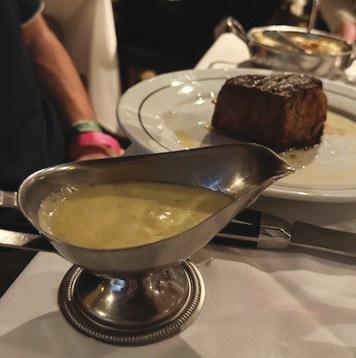
Serving Bearnaise sauce on the side provides a perfect complement to the filet.
blue cheese dressing that was generously ladled over the lettuce was the real star. While Sally may have wanted the salad dressing served “on the side,” my husband had no complaints.
My entrée was a beef tenderloin served at my preferred temperature. I normally do not order the filet because I prefer porterhouse cut. But at eight ounces, it was one of the smaller options. Bearnaise sauce was served on the side, as was a slice of seared foie gras.

Cooked with incredible finesse, the foie gras dances on the palate.

I was so intently focused on and overwhelmed by my main course that I have zero recollection of what anyone else at the table ordered. My intensity was heightened by watching several decadent dishes being served to nearby tables. When my entrée arrived, every element of it was perfect.
Foie gras is something that I rarely order, but this piece was cooked with such finesse that each bite of it danced on my palate. Similarly, the sauce was so well seasoned that the tarragon notes did not overpower it. Serving the sauce on the side rather than puddled on the plate made it easy to control the sauce to steak ratio with each bite.
One of the joys of dining with our son and his roommate—two very athletic 20-somethings—was that my husband and I used them as an excuse to order quite a few side dishes to share. The thick hand-cut fries were fried in duck fat and served immediately after being plated. Not surprisingly, A&L’s lobster mac and cheese boasted more sweet lobster than one typically finds in that dish in other restaurants. From my perspective, however, the truffled Brussels sprouts were the best side. The truffle was in a cream sauce spooned over the top. Had I known a sauce was involved, I definitely would have asked for it to be served as a side to that side.
The boys ordered a warm chocolate skillet cookie served with vanilla ice cream and a rich chocolate sauce for dessert while I ordered a Brandy Alexander, something I had always wanted to try but do not recall seeing on a cocktail menu since the 1980s. It did not disappoint.
Because the servings were so generous, to the delight of the boys, I could only eat about a quarter of my entrée. With the

Thick-cut bacon cooked to perfection and premise-made blue cheese dressing make the wedge salad memorable.
unfinished sides and whatever they could not finish on their own plates, the boys had enough leftovers for a huge dinner the next night.
A&L has an extensive Wine List that always receives accolades from Wine Spectator. While there are bottles of red that sell for $11,000 available, the delightful sommelier is on hand to help select something more reasonably priced that pairs well with the food you’ve ordered. We enjoyed a 2021 Sangiovese from Umberto Cesari, Liano, Romagna, which we selected solely because we had recently travelled to that part of Italy and enjoyed its wines. Priced at $84.00 for the bottle, it was a bargain compared to the prospect of everyone merely ordering wine by the glass.
One other feature of A&L that merits mentioning is its valet parking. The restaurant is in the very busy Back Bay section of Boston. If we had to park on our own, we may have been late for our reservation and very frustrated before our experience there began.
Our son recently moved to the Boston area to attend grad school, and because we were not that familiar with its dining scene, we ventured into this charming and classic restaurant based upon the recommendation of a colleague. Based upon the strength of our meal and experience there, A&L has ruined us for all other steakhouses. Prior to this dinner, my favorite one was Gallaghers in New York City (featured in the Spring/Summer 2017 edition of The Barrister). While Gallaghers is very good, A&L is just in a different league. With a little luck, we hope to dine at A&L during a future visit to see our son during his stay in the Boston area. If we don’t make it back there, we would not be averse to checking out its second location in Boca Raton, Florida, one of these winters. We expect that it will also offer unparalleled flavor combinations and have a staff equally accommodating of our ordering everything “on the side.”
RIP Rob Reiner and his wife, Michele Singer Reiner.
Ms. Denaro is with the Wyomissing firm Plank Frankowski.

Learning and Connecting at PBA Mid-Year Meeting in Puerto Rico
By Gabriela G. Raful, Esquire


Ihad the pleasure of attending the Pennsylvania Bar Association’s MidYear Meeting in Puerto Rico this January, an experience that once again demonstrated why this conference remains one of the PBA’s most enriching and distinctive events. The Mid-Year Meeting offers a rare opportunity to combine substantive legal programming and collegial interaction in a setting that encourages genuine connection among members.
Berks County was proudly represented at this year’s meeting by several of our Past Presidents, including: The Hon. Jill Scheidt; Heidi Masano; Joan London; Dan Nevins; and me. Current Bar President Peter Schuchman, Jr. also attended along with Sean O’Brien, Michael Dautrich, and Executive Director Kori Walter. Many of us were accompanied by our families. One of the defining strengths of the Mid-Year Meeting is its family-friendly structure, which allows attendees to engage fully in professional programming while sharing the experience with spouses and children. This format fosters not only professional collaboration but also enduring personal relationships.
A centerpiece of the meeting was the robust CLE programming. Across multiple sessions, attendees were able to earn valuable CLE credits while exploring topics that impact legal practice today. The CLE sessions featured dynamic speakers, practical insights, update on case law, and thoughtful discussions designed to sharpen legal skills, enhance ethical awareness, and provide strategies for navigating current challenges in the law. These offerings, coupled with opportunities to interact directly with judges and seasoned practitioners, made the educational component of the conference both substantive and rewarding. A particularly valuable aspect of the conference was the opportunity to interact with distinguished guests, including Justices of the Pennsylvania Supreme Court and judges from across the Commonwealth, in both formal and informal settings.
The Mid-Year Meeting also provides a setting that allows for meaningful, relaxed, informal conversations with bar members from across the Commonwealth, something that is rarely possible during our busy day-to-day practices and the isolated bar activities. These interactions reinforce mutual respect and create a more unified legal community.
Beyond the meeting sessions, our Berks Bar delegation was fortunate to experience some of Puerto Rico’s most significant cultural and historical landmarks together. We visited El Yunque National Forest, the only tropical rainforest in the United States. El Yunque’s lush landscape, cascading waterfalls, and diverse ecosystems offered a powerful reminder of the island’s natural richness and the importance of environmental stewardship.
Our group also explored El Morro in Old San Juan, the iconic 16th-century fortress that has guarded Puerto Rico’s coastline for more than 400 years. The
The Berks Bar delegation enjoys an evening of fellowship and outstanding food at a group dinner.
The meeting provided a chance to interact with justices from the Pennsylvania Supreme Court. The author’s son, Julian Agudo, catches up with Chief Justice Debra Todd.
sprawling battlements overlooking the Atlantic Ocean provided a palpable connection to the island’s colonial history and strategic significance. Walking within its walls, we were reminded of the deep historical roots that enrich Puerto Rico’s present and offer perspective for those of us practicing law in a changing world.
In addition, some members of the Berks delegation enjoyed a catamaran excursion to Culebra Island, consistently ranked among the top ten beaches in the world.
Our stay at the El Conquistador Resort enhanced the overall experience. Set high above the ocean with sweeping views, the resort combines natural beauty with thoughtful amenities, including access to its private island, Palomino Island. Palomino’s pristine beaches and tranquil atmosphere provided the perfect backdrop for both family time and informal conversations with colleagues and fellow PBA members.
Our week together was also filled with the island’s vibrant music and delicious cuisine. Whether enjoying local seafood, mofongo, and tropical flavors at sunset dinners or simply relaxing after sessions, the soundtrack of our time there was unforgettable. My son Julian became the unofficial DJ for the Berks delegation, playing Bad Bunny throughout the week and keeping the energy lively at every stop. It was especially fitting given the island’s pride in the artist—just a day after returning to frigid Pennsylvania, Bad Bunny’s album Debí Tirar Más Fotos won the Grammy Award for Album of the Year, marking the first Spanish-language record to receive that honor and celebrating Puerto Rican culture on the world stage.
The Pennsylvania Bar Association Mid-Year Meeting continues to distinguish itself by offering far more than continuing legal education. It builds leadership, fosters collaboration between the bar and the bench, and reinforces the sense of community that is essential to a strong legal profession. While Berks County does not have an annual trip to the Caribbean or other distant places, the shared experience of Puerto Rico allowed our delegation to spend meaningful time together and create lasting professional and personal memories.
Looking ahead, I strongly encourage Berks County practitioners to consider attending the 2027 PBA Mid-Year Meeting, which will be held in Costa Rica at the JW Marriott Guanacaste Hotel. Our experience in Puerto Rico illustrates the value of these gatherings, and we all hope to see an even larger Berks County presence as we continue this tradition of learning, connection, and shared experience.



The entrance to El Yunque National Forrest, the only tropical rain forest in the United States.

Ms. Raful was President of the Berks County Bar Association in 2023. She is a senior partner with Galfand Berger, LLP.


Spending an afternoon on Old San Juan’s narrow cobblestone streets are your author, son Camilo, and Judge Scheidt. Visitors will find plenty of unique stores, vibrant restaurants, a scenic harbor, and historic sites.
The lush canopy of El Yunque National Forrest.
Exploring the 16th Century fortress, El Morro, with your author are her sons, Camilo and Julian Agudo, husband, Lenin Agudo, and the Hon. Jill M. Scheidt.
Members serve first responders, veterans at Wills for Heroes Clinic

Our bar association joined forces with the Pennsylvania Bar Association to hold a Wills for Heroes Pro Bono Clinic at Muhlenberg High School on November 8. Berks Bar attorneys donated their time and services to assist and draft free estate planning documents for veterans, police officers, volunteer firefighters, first responders, and their families. The sisters of Kutztown University’s Delta Phi Epsilon Zeta Gamma chapter also assisted the attorneys in completing the estate planning documents.




Philip Edwards and a sorority sister prepare for the day.
Brett Fegely and Stacey Lindsay provide advice on future estate arrangements.
Carrie Naylor, Lieutenant John Naylor, and Erika Aljens collaborate on estate documents.


Doug Wortman, a veteran himself, helps a fellow hero with his future estate planning, along with assistance from a sorority sister.


Amy Litvinov provides guidance regarding the completion of the estate paperwork with the help of a sorority sister.



Richard Almquist helps a hero complete estate paperwork.
Kevin and Ambre Chevalier complete the notarization process for their estate.
Carrie Naylor and her husband, Lieutenant John Naylor, are happy to receive assistance with their future planning.
The sisters of Kutztown University’s Delta Phi Epsilon Zeta Gamma chapter volunteer their time to assist the attorneys at the Wills for Heroes Pro Bono Clinic.
Miscellaneous
William R. Blumer, Esquire, was elected President of the Pennsylvania Association of Elder Law Attorneys (PAELA). Blumer is an attorney with the Spring Township firm Kozloff Stoudt. He is chair of the Bar Association Elder Law and Estate Planning Section and chair of the Law Foundation of Berks County Board of Trustees. PAELA supports elder law attorneys and advancing quality legal services and advocacy for older Pennsylvania residents, caregivers, and individuals with special needs. The organization is a resource for legislators and policymakers on critical issues affecting seniors throughout the Commonwealth.
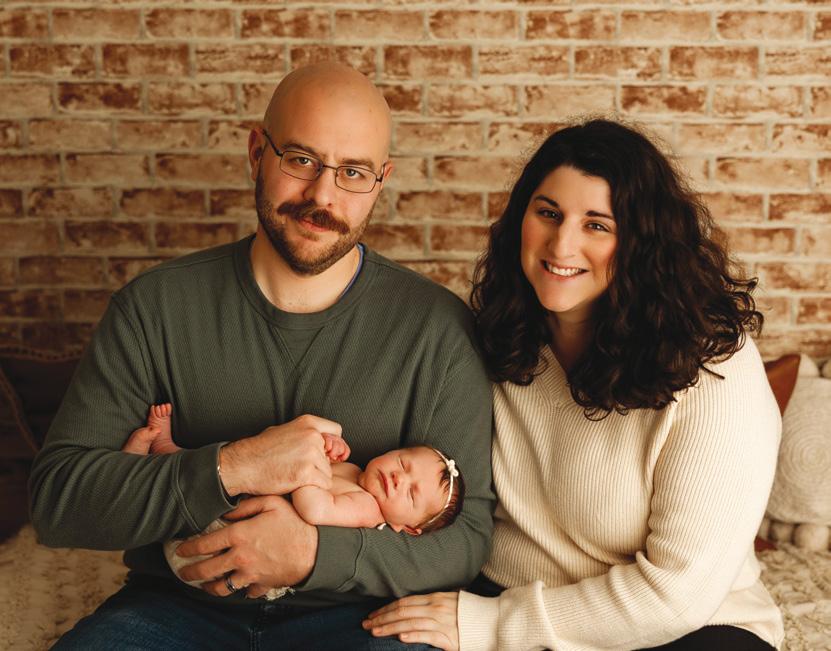
Raymond E. Baker, Esquire, and wife, Jennifer, welcomed daughter Elena Marie on Nov. 10 in Lancaster Women & Babies Hospital. Elena was 8 lbs. 15.4 oz. and 20 inches tall. Baker, an assistant district attorney for Berks County, became a first-time father six days after winning a seat on Reading City Council. Baker represents the 4th District, which covers northeast Reading, including College Heights, Hampden Heights, and Northmont.

The American Bar Association Standing Committee on Pro Bono and Public Service recognized Amy B. Good, Esquire, for her exceptional contributions to the Free Legal Answers (FLA) program in 2025. Good, an attorney with the Reading Office of MidPenn Legal Services, received an FLA Pro Bono Leadership Award for responding to 88 questions from individuals who e-mailed questions about housing, eviction, income maintenance, and other civil legal issues. Additional information about the program and how to volunteer is available at pa.freelegalanswers.org.
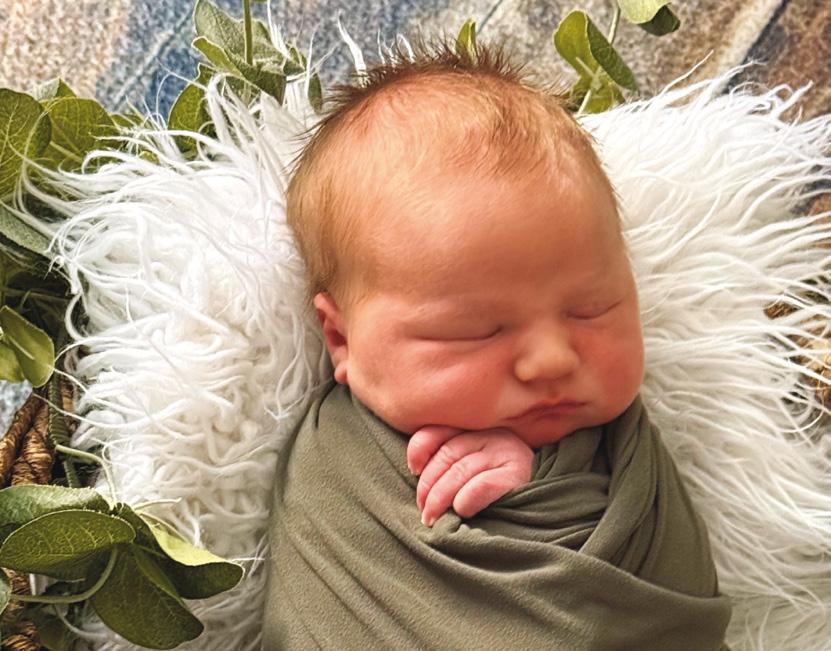
The Berks County District Attorney’s Office has another first-time dad. Jordan Fegley, Esquire, and wife, Abby, are the proud parents of Hudson Reed, born April 22, 2025, in Reading Hospital. Hudson entered the world at 8 lbs. 4 oz.
Have personal news or a professional accomplishment to share with your colleagues? E-mail items and photos to kwalter@berkbar.org to be considered for publication in an upcoming issue.











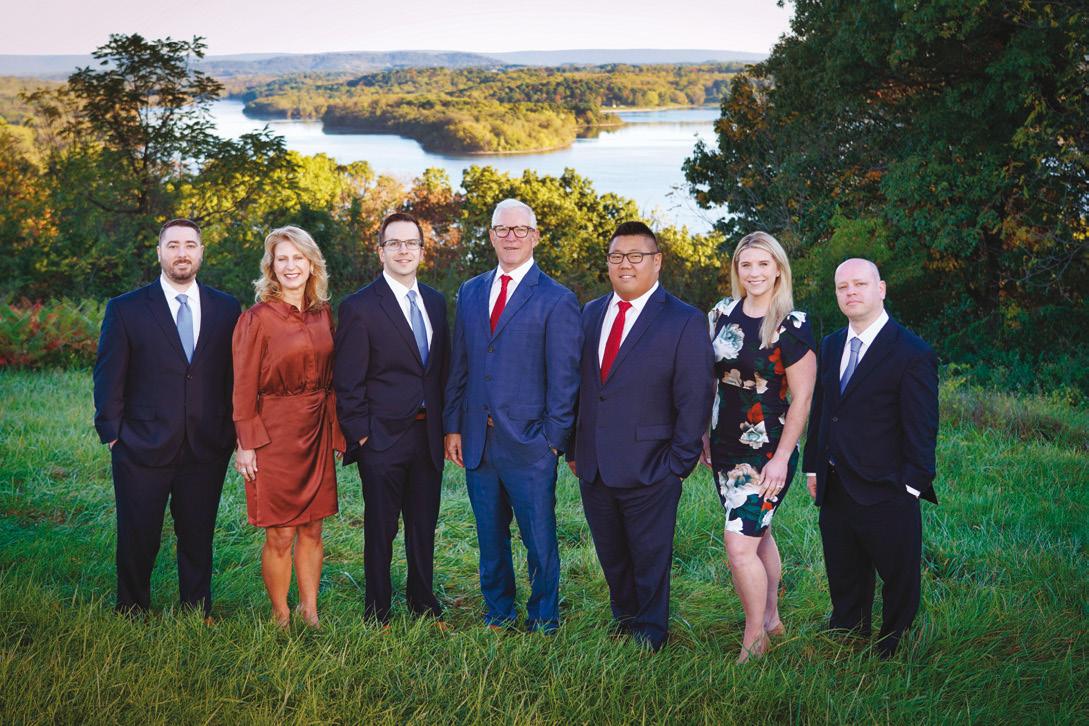


Advice for what matters most, when you need it most
Congratulations to Maggs & Associates for being named to the “Best-in-State Wealth Management Teams” 2026 list. Published on January 7, 2026. Rankings based on data as of March 31, 2025.
Maggs & Associates



Merrill Lynch Wealth Management 985 Berkshire Boulevard Suite 200 Wyomissing, PA 19610
610.320.5462
advisor.ml.com/sites/pa/reading-pa/maggs
2026 Forbes “Best-in-State Wealth Management Teams” list. Opinions provided by SHOOK® Research, LLC and is based on in-person, virtual and telephone due-diligence meetings and a ranking algorithm that measure best practices, client retention, industry experience, credentials, compliance records, firm nominations, assets under management and Firm-generated revenue (investment performance is not a criterion because client objectives and risk tolerance vary). SHOOK’s rankings are available for client evaluation only, are not indicative of future performance and do not represent any one client’s experience and available for investor help in evaluating the right financial advisor and not an endorsement of the advisor. Compensation was not received from anyone for the rankings study. Past performance does not guarantee future results. Details available at the SHOOK Research website. SHOOK is a registered trademark of SHOOK Research, LLC.
Merrill Lynch, Pierce, Fenner & Smith Incorporated (MLPF&S) is a registered broker-dealer, registered investment adviser, and Member SIPC. Bank of America, N.A., Member FDIC and MLPF&S are wholly owned subsidiaries of Bank of America Corporation. © 2025 Bank of America Corporation. All rights reserved. 8038366 | AD-02-26-0076 | 472538PM-0725 | 02/2026