













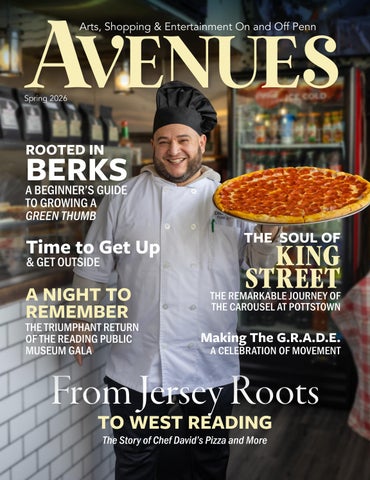
There is a quiet magic to the changing of the seasons—that invisible moment when the brittle, silver-grey grip of winter finally yields to the growing, green pulse of spring. In this issue of Avenues, we celebrate more than the change of seasons—we celebrate a Spring Awakening!
For many of us, winter is a time of inward focus and quietude. But as the sun lingers a little longer above the horizon, there is a collective exhale. We find ourselves restless to get outside and to try new things, to go new places and to savor new experiences. This issue is a tribute to that revitalization—the surge of energy in our communities and the renewed sense of possibility that defines Berks County this time of year.
Of course, no awakening is complete without a feast for the senses and Chef David’s Pizza and More in West Reading delivers! Chef David’s kitchen is a microcosm of the spring awakening itself—flour, water and yeast transforming into something extraordinary through heat, patience and love. It isn’t just about the dough; it’s about the soul he pours into every slice.
Once you’ve worked up an appetite, get off the couch and head out to sample other spring delights designed to inspire your creativity and feed your need for connection. Check out the inaugural G.R.A.D.E. Festival for a sampling of the varied talents fueling the local dance scene, then head down 422 to experience the graceful movements of the jumpers on the legendary Carousel at Pottstown. Or break out your fancy threads and get gussied up to support the Reading Public Museum at their reborn annual Gala.
Spring is also a good time to get dirty—yeah, we went there! Whether you dig into that pile of clutter to clean out your space or dig into the dirt to start your first garden, nothing feeds the soul quite like the feeling of a fresh start.
Spring is a season of looking ahead and a season of momentum. Be sure to check out the Calendar of Events for new events and places—along with some old favorites—to enjoy. We hope you feel that spark of inspiration as you flip through these pages. Whether you’re planning your first garden, getting introduced to the local art scene or simply looking for the perfect patio to enjoy a slice of pizza, let this issue be your guide.
Spring has arrived—wake up, look around and savor every moment!
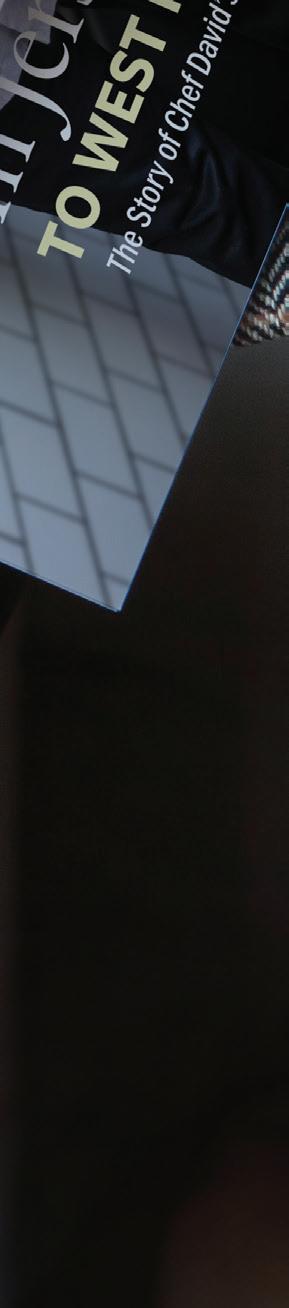
4 From Jersey Roots to West Reading: The Story of Chef David’s Pizza and More
8 The Art of the Fresh Start: Reclaiming Your Space Through Spring Cleaning
10 Rooted in Berks: A Beginner’s Guide to Growing a Green Thumb 14 Time to Get Up & Get Outside!
17 A Fresh Canvas: Plein Air West Reading Returns for 2026
18 A Night to Remember: The Triumphant Return of the Reading Public Museum Gala
20 Making The G.R.A.D.E.: A Celebration of Movement
22 The Soul of King Street: The Remarkable Journey of The Carousel at Pottstown
26 Must-Attend Events

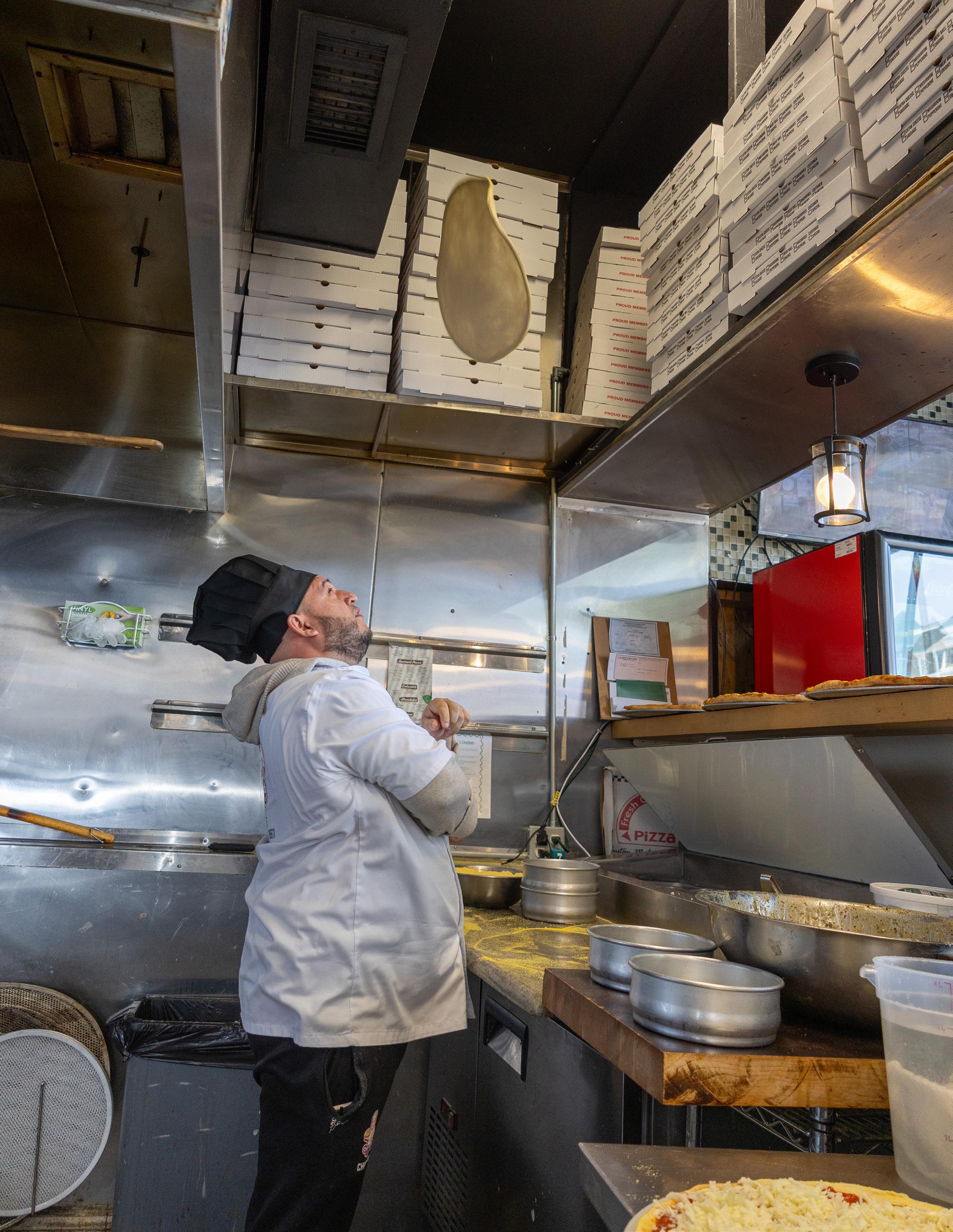
If you find yourself on Penn Avenue in the middle of the night—or the middle of a Tuesday morning—and follow the scent of bubbling cheese and toasted crust, you’ll land at Chef David’s Pizza and More. It isn’t just a pizza shop; it’s a full-circle success story built on family, community and a tireless passion for the craft.
Meet the Man Behind the Madness
Chef David isn’t new to the game. Arriving in the U.S. as a teenager, he discovered his love for cooking almost immediately and by age 18, Chef David was running his own restaurants, first in New Jersey and then here in Pennsylvania. While he has found success in other business ventures—he also owns Wyomissing Limo—he always came back to his true love: pizza shops with a twist!
Chef David’s vision was two-fold:
• To have a pizza shop that served MORE than pizza, offering an extensive menu of yummy delights
At the end of the day, Chef David runs the business with a simple core philosophy: every meal that goes out the door is made with love.
• To offer something no one else offered in Berks—be open 24/7, ensuring that morning, noon or night, Chef can feed his passion for feeding others
Why West Reading?
It’s a Family Affair
One of the best parts of Chef David’s is that it is truly a family affair. Chef David has four children: two daughters (Bri and Bella) and two sons (Joseph and Jacob). His eldest, Bri, manages marketing and the back-end operations of the shop while Bella welcomes patrons out front. Joseph and Jacob often come to lend a hand when the rush hits. Known for its lighthearted atmosphere, laughter and jokes are as common as pizza toppings among the family crew.
For Chef David, the choice of where to open his business was deeply personal. Newly arrived in Pennsylvania and looking to do what he loved most, he stumbled across Georgios (where Chef David’s is now located). While working there he fell in love with the atmosphere of West Reading and the people that came through the shop. He later bought a home nearby and experienced a full-circle moment when he was able to open Chef David’s in the same location where his journey began. Since then, West Reading has proven to be exactly what Chef always loved, a community, welcoming him and his restaurant with open arms.
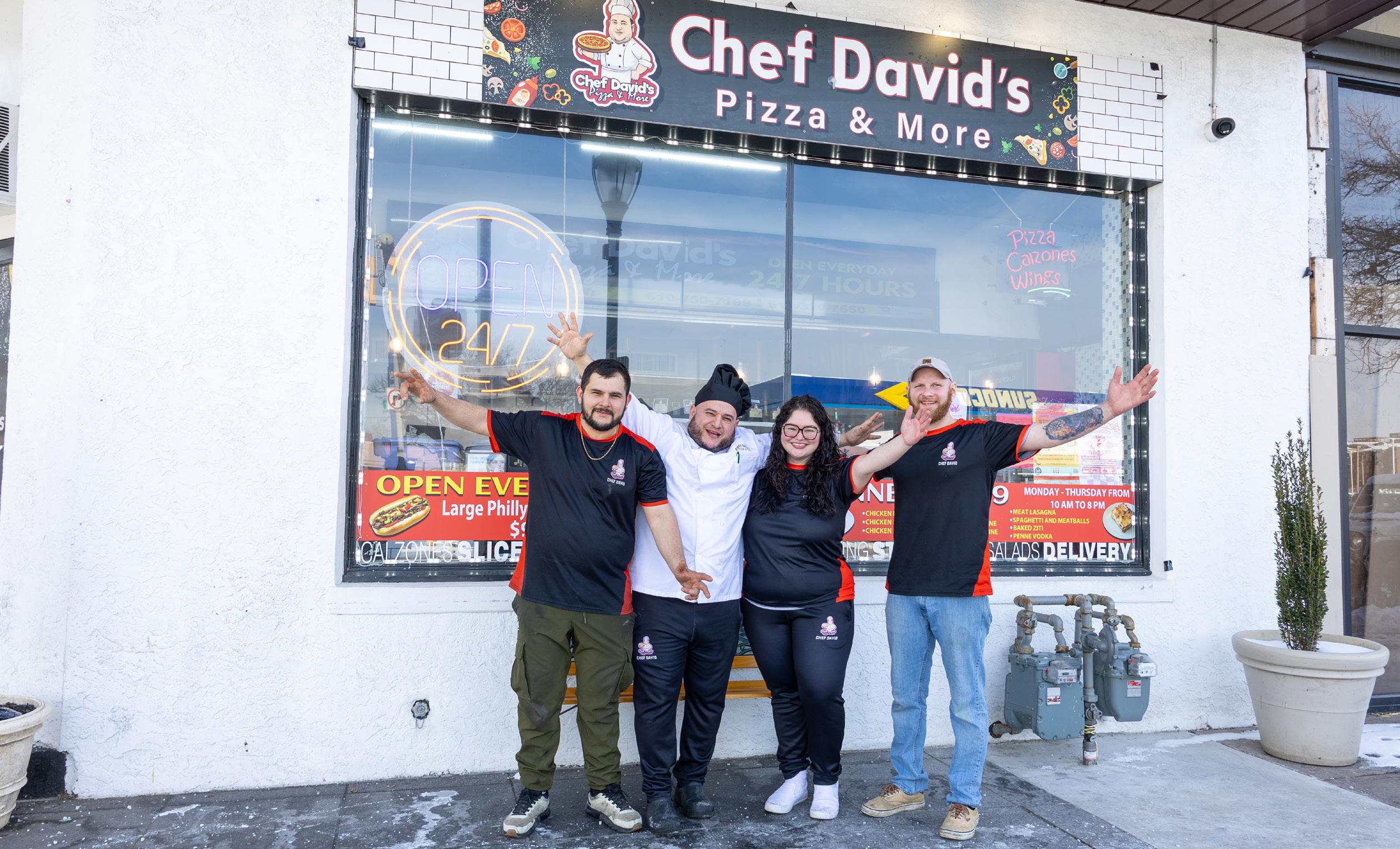
Operating 24 hours a day, seven days a week is no small feat and Chef David loves to brag about his team, “They are the best in Berks.” He knows you are only as good as the people behind you, making the magic happen. Chef David has an amazing cook crew, kind counter help and a great marketing team. EVERYONE jumps in to help whenever and at whatever. He makes sure his crew is always respectful, quick and wanting to serve every customer that walks through the door—no matter what time the clock says!
At the end of the day, Chef David runs the business with a simple core philosophy: every meal that goes out the door is made with love. His genuine passion for the food industry is what makes him so successful along with a “customer first” mentality that doesn’t waver.
Next time you find yourself in West Reading hankering for a slice—any hour of the day, any day of the week—stop by to support an amazing local family business that truly loves what they do and the community in which they do it!
Chef David’s Pizza and More is located at 500 Penn Avenue in West Reading and online at www.chefdavidspizzamore.com. To see more of this crazy fun family, follow them on social media: Facebook, Instagram and Tik Tok at Chef David’s Pizza and More!




There is a reason we associate the turning of the season—particularly, Spring—with a frantic scrubbing of baseboards and the purging of closet. As the winter frost thaws and daylight lingers a little longer each evening, our homes— which served as cozy cocoons during the dark months—can suddenly feel heavy, dusty and cramped.
Spring cleaning is more than a chore— it serves as a psychological reset. By intentionally clearing out the physical “noise” of our lives, we make room for new energy, better habits and a genuine sense of peace. Here is how to navigate the process without losing your mind—or your car keys.
The Psychology of the Purge Before you pick up a microfiber cloth, tackle your mindset. Clutter is often a result of delayed and/or impulsive decisions—that stack of mail, the sweater that doesn’t quite fit or the kitchen gadget you used once in 2022. When you clear physical clutter, you reduce your cognitive load—you literally take a load off your mind. Research suggests that a messy environment competes for your attention, making it harder to focus.

Spring cleaning is an act of self-care that tells your brain: “We are starting fresh.”
Strategy Over Chaos
The biggest mistake people make is trying to clean their entire space in a single Saturday. This leads to “mid-project fatigue,” where your bedroom is covered in piles of clothes and you’re too exhausted to finish. Instead, try these methods:
• The One-Hour Rule: Instead of looking at a room as a monumental weekendlong task, treat decluttering like a highintensity interval training (HIIT) session for your home. The core of the rule is strict timeboxing. It’s built on three main pillars:
- The Hard Stop: You set a timer for exactly 60 minutes. During this time, you are in “sprint mode.” Once the timer goes off, you stop— regardless of whether the room is done. This prevents the physical and mental burnout that leads to decluttering regret—where you’ve emptied every drawer and now have a mess you’re too tired to clean up.
- Micro-Zoning: You don’t try to clean the kitchen in an hour. You choose a specific micro-zone that can realistically be finished in that window.
ˏ Bad Goal: “I’m going to declutter the garage.”
ˏ Good Goal: “I’m going to declutter the three shelves in the pantry.”
- Immediate Disposal: The final 10-15 minutes of that hour must be spent removing the items from the house. If you spend an hour sorting clothes but the bags sit in your hallway for a month, you haven’t decluttered—you’ve just relocated the mess. The hour isn’t up until the trash is in the bin or the donation bags are in the trunk of your car.
• The “Three-Pile” Rule: Every item you touch must go into one of three categories: Keep, Donate/Sell, or Trash.
• Overcomes Procrastination: It’s easy to say “no” to an eighthour cleaning binge. It’s much harder to argue that you don’t have a single hour.
• The “Endorphin Loop”: Completing a micro-zone gives you a hit of dopamine. Often, people find that after the first hour, they want to do another one later that day because the progress is visible.
• Decision Speed: Because you are on the clock, you spend less time agonizing over a t-shirt you haven’t worn since 2018. You make faster, more intuitive decisions.
Don’t use this hour for “cleaning” (scrubbing or dusting). Use it strictly for editing—removing what doesn’t belong. The cleaning is much easier once the surfaces are clear. Once you get to cleaning, be sure to follow the Top-to-Bottom Rule: Gravity is real. Always clean from the ceiling down (dusting fans, then shelves, then baseboards) so you aren’t dropping dirt onto floors you’ve already scrubbed.
A true spring clean goes beyond the weekly vacuuming. It’s about the “invisible” spots that collect grime over six months.
The Kitchen Degrease the stovetop, clean the coils behind the fridge and toss expired spices.
The Bedroom Rotate the mattress, wash the pillows (yes, they are usually washable!) and swap winter linens for breathable cotton.
The Windows Clean the glass, but don’t forget the tracks and screens where pollen and dust settle.
The Digital Space Unsubscribe from junk emails and organize your desktop icons. Digital clutter is still clutter.
You don’t need a cabinet full of harsh chemicals to get a deep clean. In fact, part of a fresh start is removing toxins from your environment. A few staples can handle almost any job:
• Vinegar and Water: The ultimate streak-free window and mirror cleaner.
• Baking Soda: A natural abrasive for sinks and tubs.
• Essential Oils: Add lemon or eucalyptus to your cleaning solutions for that “spring” scent without the synthetic perfumes.
The tragedy of spring cleaning is how quickly the clutter creeps back in. To prevent the rebound, implement the “One In, One Out” rule—for every new item brought into the home, one must be donated or discarded. Additionally, a “five-minute reset” every evening can keep your surfaces clear and your mind calm until next year.
Spring cleaning isn’t about achieving a perfect space that looks like a magazine spread; it’s about creating a functional sanctuary that supports your life rather than draining your energy. When you open your windows to let in the spring breeze, you want that air to circulate through a space that feels light, intentional and uniquely yours.

As the days get longer and the daily temperatures begin to rise, the “gardening itch” strikes. For a beginner, the transition from admiring a seed catalog to actually digging in the dirt can feel daunting. But the good news is that Berks County is situated in a sweet spot of agricultural heritage. With the right timing and a little local gardening knowledge, you can turn even a small patch of suburban yard into a thriving sanctuary.
Know Your Zone: The Berks Calendar Berks County primarily sits in USDA Hardiness Zone 6b to 7a. This means our “last frost date”—the date after which it is generally safe to plant tender summer crops— is typically around Mother’s Day (mid-May). To maximize your season, think in two waves:
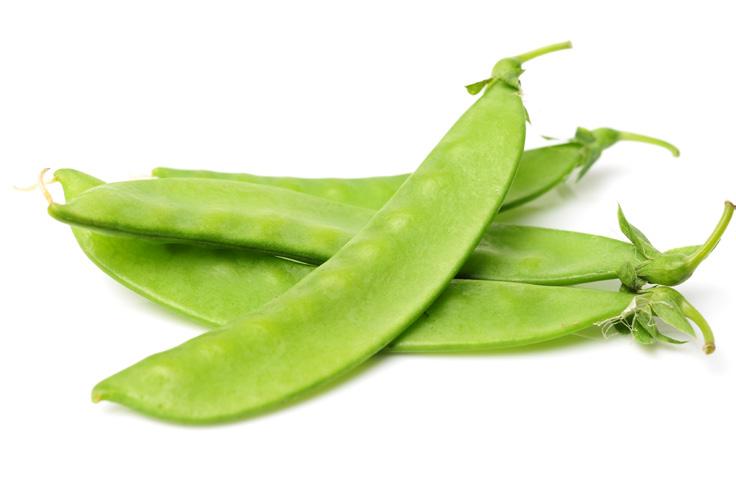
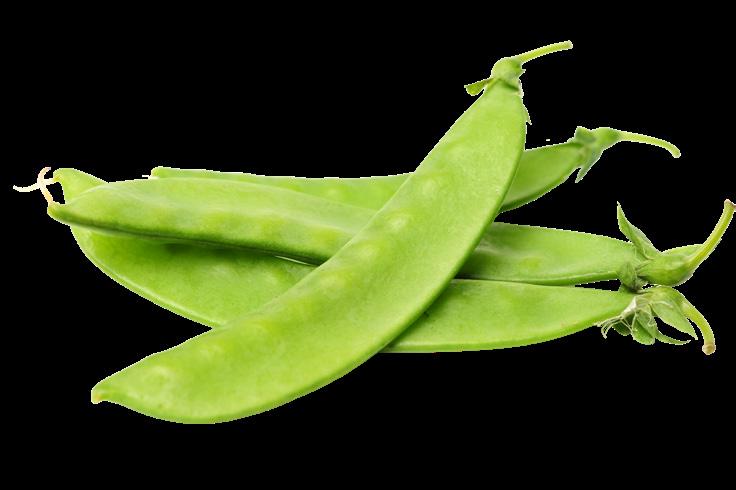
• The Cool Wave (Late March–April): Don’t wait for the heat! You can plant hardy vegetables as soon as the soil is workable (not frozen or muddy). Peas, spinach, kale, radishes and onions thrive in the chilly, damp Berks spring.
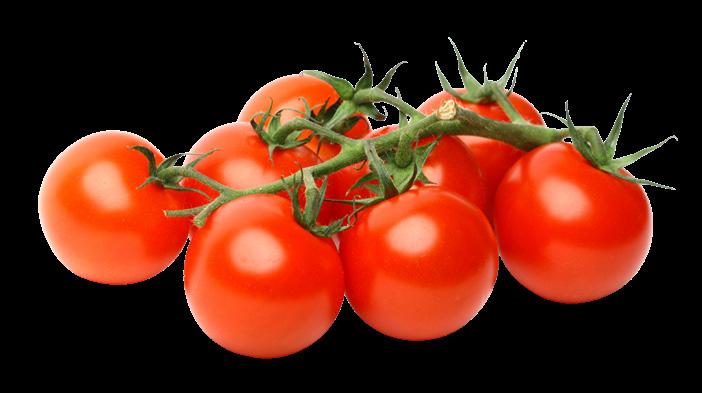
• The Warm Wave (Late May): This is the time for the stars of the garden—tomatoes, peppers, cucumbers and basil. Planting these too early in Berks is a common beginner mistake; a single 38°F night can stunt a tomato plant’s growth for weeks.
Solving the Berks Soil Mystery
Commonly thought to be primarily clay, Berks County soil is a mix of silt loam (fine sandstone and shale particles mixed with flat rock fragments) on the surface with a
clay layer underneath. This composition poses two gardening challenges. One, water drains too quickly through the porous silt layer and two, the clay layer then becomes too wet, turning into a hardpan, brick layer.
So, what do you do? Don’t try to “replace” your soil. Instead, amend it. Mix in two to three inches of high-quality compost or leaf mold. This organic matter creates air pockets in the clay, allowing roots to breathe and water to move through. If the digging feels like too much, consider raised beds. They allow you to control the soil quality perfectly from day one.
Top Plant Picks for Berks Beginners
Success is the best fertilizer for a new gardener. Start with plants that want to grow in our Mid-Atlantic climate:
Check out these Berks County resources for the what, when, where and how to begin your gardening journey!
Berks Nature/The Nature Place is a hub for environmental education and community involvement in Reading and hosts the Angelica Creek Park community garden plots where local residents can grow their own food: berksnature.org

GoggleWorks’ Gardens at Lauer’s Park is designed to instill an appreciation for local food systems, learn farm skills and enjoy time with members of the community. All ages and people are welcome to participate: goggleworks.org/studios/ goggleworks-gardens-at-lauers-park
Hamburg Community Garden on Apple Street in Hamburg provides northern Berks County residents a place to cultivate their own produce. It features well-maintained plots located conveniently within the Hamburg borough and serves as a quiet, productive green space for local gardeners.
The Penn State Extension in Berks County (located in Leesport) offers robust gardening resources, including a Garden Hotline (9am-4pm, M-F), demonstration gardens and educational workshops, supported by local Master Gardeners. They provide expertise on plant selection, pests and local horticulture: extension.psu.edu/ programs/master-gardener/counties/berks
Reading Iron Community Garden at 723 Laurel Street in Reading is a dedicated space in the city of Reading for residents to engage in urban agriculture. It provides accessible plots within a neighborhood setting and fosters a sense of community through shared gardening efforts and local food production.
The Rodale Institute in Kutztown promotes better, natural and more responsible ways of modern farming and also offers resources for the home gardener: rodaleinstitute.org
No Yard? No Problem!
Creating an urban garden without a yard is entirely possible by using your available vertical and indoor space. Whether you have a small balcony, a sunny windowsill or just a spare corner in your kitchen, you can grow everything from fresh herbs to full-sized vegetables.
If you have a small outdoor space like a balcony or patio, the best strategy is to “grow up” instead of “out.” Vertical systems allow you to stack multiple plants in the same footprint that a single traditional pot would take.
• Tiered Planters: These are freestanding units that feature multiple levels of planting boxes. They are ideal for growing a variety of herbs, flowers and even leafy greens like lettuce and spinach.
• Vertical Towers: For a high-impact garden, consider a tower system. The is a popular soil-based option that can hold dozens of plants in just a few square feet.
• Railing & Window Boxes: Utilize your balcony railings with over-the-rail planters or install window boxes to save floor space.
If you lack any outdoor space, hydroponic smart gardens are the ultimate “plug-andplay” solution. These systems use water and nutrients instead of soil and include built-in LED grow lights, so you can garden in a windowless room or a dark apartment.
• Countertop Systems: For kitchen herbs like basil and cilantro, compact systems are perfect.
• Large-Scale Indoor Towers: If you want to offset your grocery bill with significant harvests of lettuce, kale and even tomatoes, larger vertical systems can grow up to 30 plants at once using AI-powered light and water schedules.
If you truly want to dig in the dirt but have no space at home, look into community gardens. In the Reading and Wyomissing area, organizations like Berks Nature often
manage community garden plots where you can rent a small space for the season to grow larger crops like squash or peppers that might be difficult to manage in an apartment.
Local Resources: Don’t Garden Alone One of the best things about gardening in Berks County is the wealth of local expertise. You don’t have to guess if your plant has a disease or if you’re watering too much.
• Penn State Extension (Berks County): Located in Leesport, the Master Gardeners offer a “Garden Hotline.” You can call or email them photos of your struggling plants, and they will give you sciencebased advice for free.
• Soil Test Kits: Before you spend $100 on fertilizer, spend $10 on a Penn State soil test kit (available at the Extension office). It will tell you exactly what your specific patch of Berks earth needs.
• The Seed to Supper Program: Keep an eye out for this Penn State course designed specifically for beginners on a budget.


Scan here for menu and business hours www.ThornAlleyKitchen.com







After the long, cold months of winter— thanks for the extra six weeks, Groundhog—the first true breath of spring air feels less like a weather change and more like an awakening. As biological creatures, we are deeply in tune with the rhythms of the earth, yet modern life often traps us in perpetual January—climate-controlled boxes with artificial lighting and static air.
Stepping back outside as the world thaws isn’t just a pleasant weekend activity—it is a physiological necessity. Reclaiming your relationship with the outdoors is the fastest way to shake off the “winter blues” and recalibrate your internal clock.
The most immediate benefit of heading outdoors is the surge of vitamin D. Synthesized through skin exposure to UVB rays, vitamin D is a powerhouse pro-hormone that regulates everything from bone density to immune function. Additionally, sunlight exposure triggers the production of serotonin, the neurotransmitter responsible for mood stabilization and focus. During the winter, many individuals suffer from a dip in serotonin levels and interruptions to their circadian rhythms, both of which contribute to Seasonal Affective Disorder (SAD)—a condition marked by symptoms of depression, fatigue, food cravings and lethargy. Just 15 to 30 minutes of morning sunlight can reset your circadian rhythm and stimulate serotonin production, signaling to the brain that the day has begun and ensuring better melatonin production when it’s time to sleep.
While a treadmill session is better than no movement at all, “green exercise”—physical activity performed in natural environments—offers a unique cognitive boost. Research into Attention Restoration Theory (ART) suggests that urban environments and digital screens drain our “directed attention” (the focus required for work and problem-solving).
Nature, conversely, provides “soft fascination.” The movement of clouds, the patterns of new leaves and the sound of running water allow our brains to enter a state of effortless observation. This restorative effect lowers cortisol levels more effectively than indoor exercise and has been shown to reduce rumination—the repetitive negative thinking that often peaks during the isolated winter months.
Winter is a season of sensory deprivation. We see greys and whites; we feel the bite of the wind; we smell the recycled air of a furnace. Spring is a sensory explosion that pulls us back into the present moment.
• Olfactory Awakening: The smell of damp earth after rain—called “petrichor”—and the scent of blooming flowers stimulate the limbic system; the part of the brain associated with memory and emotion.
• Tactile Connection: The simple act of “earthing”—walking barefoot on new grass or digging in a garden bed—lowers inflammation and improves heart rate variability.
• Auditory Landscapes: The return of migratory birds and the buzzing of early
HERE ARE SOME BEST LOCAL SPOTS TO JUMPSTART YOUR SPRING OUTDOOR HABITS:
The Arboretum at the Reading Public Museum: This is the “crown jewel” of local spring blooms. It’s a 25-acre accredited arboretum with labeled specimen trees and the Wyomissing Creek running through it. The early-blooming bulbs and flowering trees (cherries and dogwoods) are spectacular here in late March and April.
Blue Marsh Lake: The Skinner’s Loop (about 2.5 miles) is a manageable trail with great water views. Great for “Green Exercise”—the air coming off the lake is crisp and refreshing in the spring.
Hawk Mountain Sanctuary: About 30-40 minutes north of Reading, Spring is peak migration time for broad-winged hawks and other raptors.
Neversink Mountain: Managed by Berks Nature, this offers several loops (Blue and Orange are popular). Incredible views of the city and the Schuylkill River as the trees start to leaf out. It’s also a great spot for early-season birdwatching.
The Union Canal Trail: This trail connects Stonecliffe Park to Blue Marsh. It’s flat, shaded and follows the Tulpehocken Creek. Look for the Wertz’s Covered Bridge (the Red Bridge), which is a local landmark.
Wyomissing Creek Trail: This is an easy, paved-to-crushedstone loop (about four miles) that connects several parks. It’s perfect for that mid-morning or mid-afternoon “coffee break.”
pollinators provide a soundscape that reduces the “fight or flight” response triggered by sirens and traffic.
If you’ve spent the last three months curled up on a sofa, the transition back to an active outdoor life doesn’t have to be a marathon. Start with small, intentional “re-entry” habits:
• The “Coffee Outside” Ritual: Commit to drinking your morning beverage on the porch or by an open window. This initial hit of natural light before you check your emails sets the tone for your entire hormonal day.
• The “Micro-Hike”: You don’t need a national park to find nature. A 20-minute walk through a local park or a tree-lined neighborhood counts. Focus on looking for “The Firsts”: the first crocus peeking through the dirt, the first bud on a maple tree or the first robin of the season.
• Al Fresco Dining: As soon as the temperature hits that “light jacket” threshold, take your lunch break outside. Breaking bread in the fresh air shifts your nervous system into the “rest and digest” state, improving metabolic health and giving you a mental buffer between morning tasks and afternoon deadlines.
The Collective Thaw
Finally, getting back outside is a social act. Winter tends to make us insular, but spring pulls us into the communal “front yard” of the world. Seeing neighbors gardening, children playing and dogs enjoying the park

reminds us that we are part of a larger, living ecosystem. As the trees begin to sprout green leaves again, allow yourself the same grace. You don’t have to bloom all at once. Just step outside, tilt your chin toward the sun and let the season do the rest of the work.

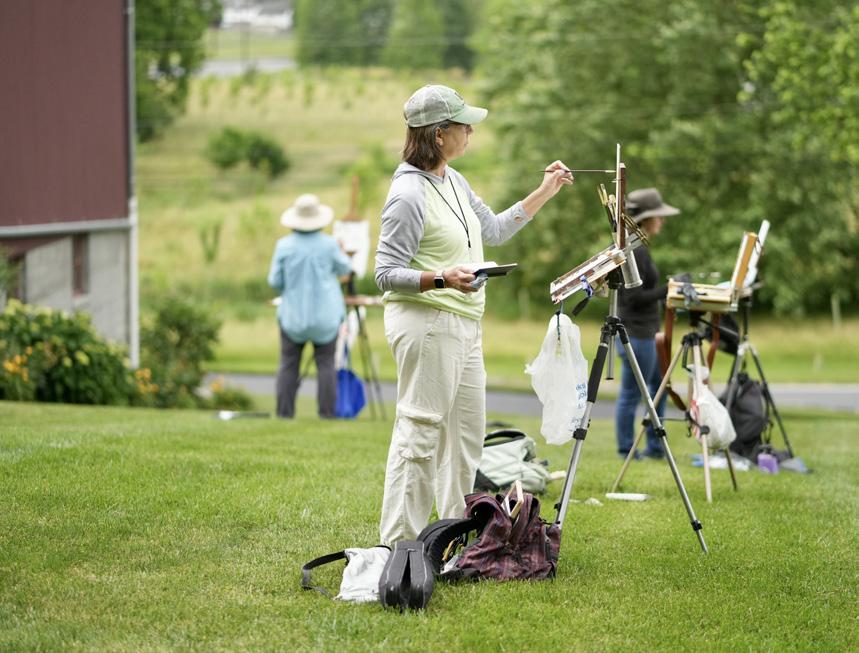
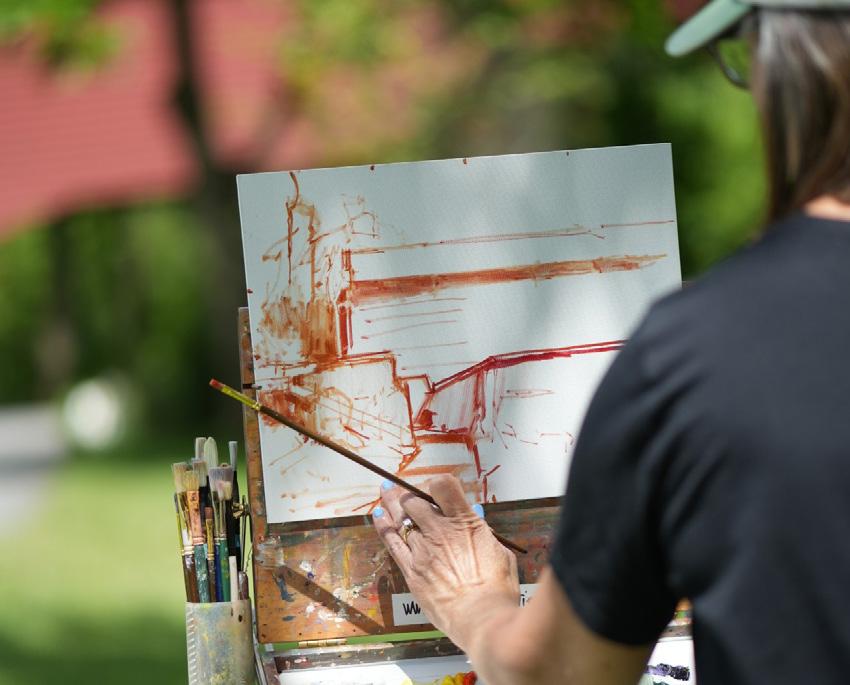
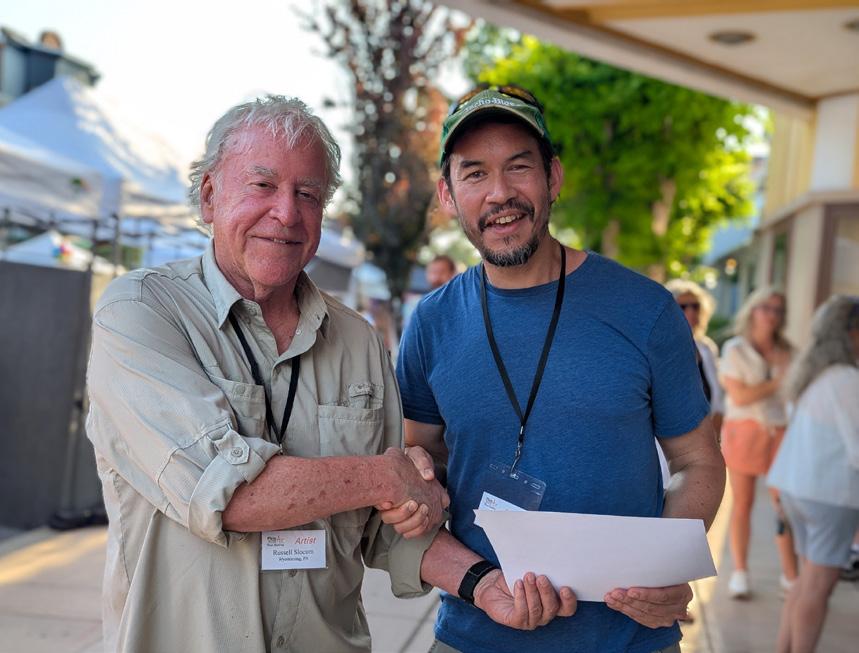
Come June, West Reading will once again be transformed into an openair art studio. Following the massive success of its milestone 10th anniversary last year, Art Plus Gallery, in partnership with the Berks Art Alliance, has officially launched the 2026 edition of Plein Air West Reading (PAWR).
What began as a local gathering has blossomed into a premier national competition, attracting talent from as far away as Florida, Illinois, Louisiana and Texas. This year’s event promises to be more inclusive and vibrant than ever, proving that while the digital age marches on, there is no substitute for the raw, real energy of paint meeting canvas under an open sky.
The biggest buzz surrounding PAWR 2026 is the introduction of the Open Artist category, added to further involve the local creative community. While 30 artists are selected by a professional jury, an additional 30 Berks County artists will be chosen from all applicants via lottery to participate. This means a total of 60 artists will be scattered across the county for a week, capturing the soul of the region—from rolling farmlands and quiet nature preserves to the grit and glamour of urban West Reading. Rain or shine, these creators will be translating the light of Berks County into tangible art.
With over $6,000 in prizes on the line, the stakes are high, but the atmosphere remains one of community celebration. The schedule is packed with opportunities for both artists and art lovers:
• June 15: The Quick Draw Competition Held on the scenic grounds of the Reading Public Museum, this fast-paced event challenges artists of all ages and skill levels
to complete a work in just two hours. It’s a spectator favorite that bridges the gap between student hobbyists and seasoned professionals.
• June 19: The Patron’s Preview and Awards Ceremony—The week culminates at the Olympian Ballroom, where both Juried and Open Artists will exhibit their work. This is the first chance for collectors to purchase pieces created during the week and find out who takes home the top honors.
• June 20: Art on the Avenue —The celebration spills into the streets during West Reading’s famous festival. Residents and visitors can browse the week’s output, meet the artists and cast their ballots for the People’s Choice Award from among the PAWR Juried Artists’ paintings.
In a world increasingly dominated by artificial intelligence and digital screens, the act of “painting in the wild” feels like a necessary rebellion. As PAWR Co-Director Jesse Prentiss puts it, “Art is meant for everyone to enjoy— and do. Painting outside is a way to enjoy life while connecting with the beauty of the world. In an increasingly digital and artificial age, creating in plein air keeps it real.”
By stepping out of the studio and into the public eye, PAWR reminds us that art isn’t just a finished product on a wall—it’s a process of connecting with our environment and each other. Whether you are a veteran collector or a curious passerby, Plein Air West Reading 2026 invites you to see the world through a different lens.
To learn more about 2026 Plein Air West Reading, contact Art Plus Gallery at info@artplusgallerypa.com.

For many residents of Berks County, the mention of the “Reading Public Museum Gala” evokes images of a bygone era of local glamour—nights where the museum’s historic galleries were transformed into scenes of black-tie elegance and high-stakes philanthropy. Originally launched in 1992, the Gala quickly became a hallmark of the Reading social calendar, a tradition that flourished for 15 years until 2007.
Now, after nearly two decades, the wait is over. The Reading Public Museum is proud to announce the highly anticipated return of its signature Spring Gala on Saturday, April 25, 2026.
The decision to revive the Gala was not made lightly but rather was born from a groundswell of popular demand. In recent years, long-time supporters, board members and museum staff have expressed a shared nostalgia for the unique energy the event once brought to the region.
“For generations, the Gala served as a hallmark occasion for our supporters,” said Geoffrey K. Fleming, Executive Director and CEO of the Museum. “Its return symbolizes not only a tribute to our past, but a bold step toward our future.”
Ashley Houston, Director of Development, agrees, “Countless people reminisce that it was once their favorite and most anticipated event of the year. The Gala Committee consists of several individuals who were also on the committee 20 years ago and who fully support its revival.”
The 2026 event is being spearheaded by a dedicated committee of community leaders, including Ann Calvaresi-Barr, Dr. Mark Dougherty, Caroline Hill, Laurie Kirkpatrick, Zerena KlajborBoyer and Frederick Nice, Esq. Their mission is clear—to honor the storied legacy of the original celebrations while ushering in a new era of support for a modern, 21st-century institution.
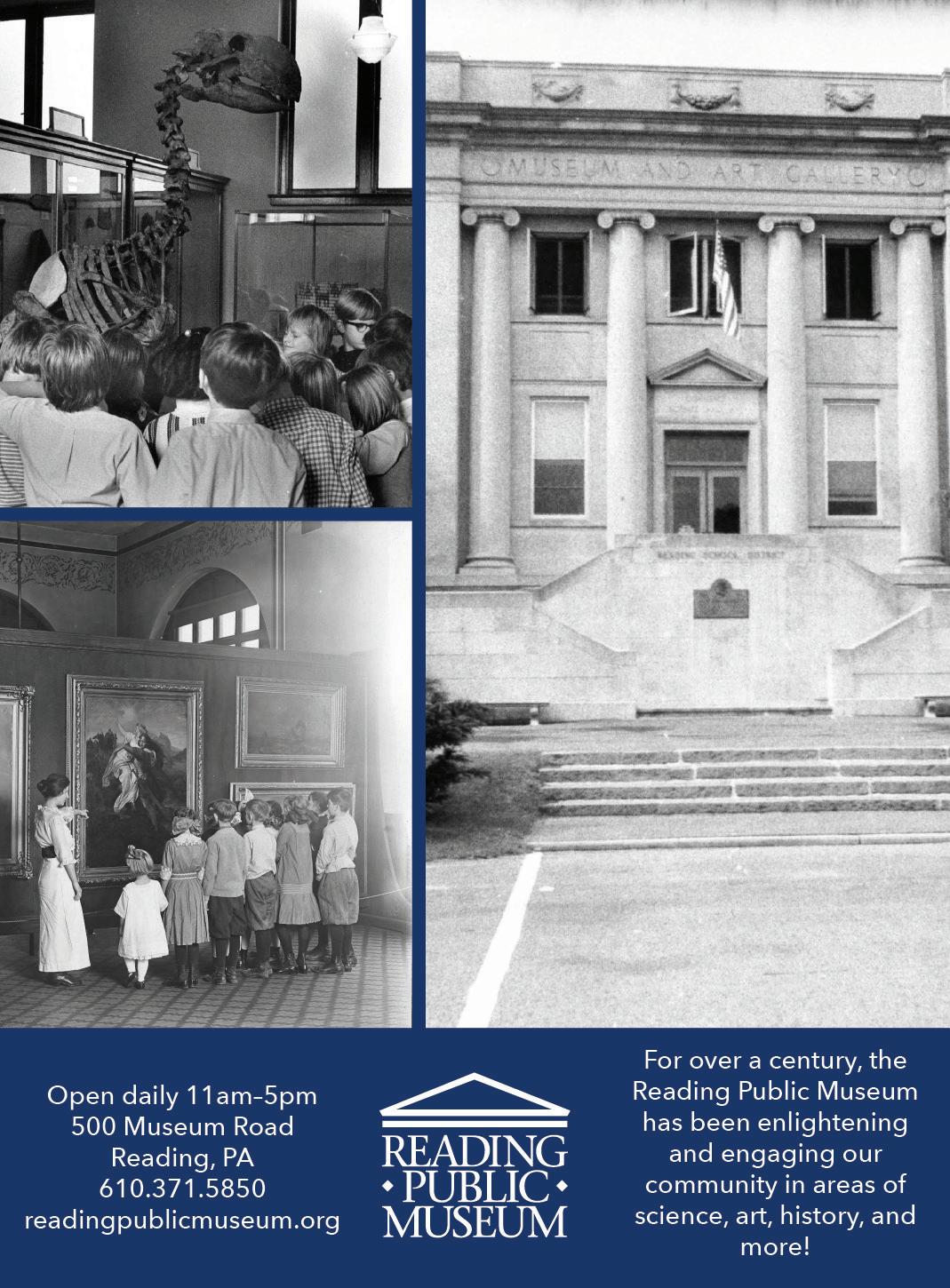
The Reading Public Museum has served as a vital cultural heartbeat for the community for over 120 years. It remains a rare gem in Pennsylvania—a multi-disciplinary hub where art, science and history coexist. On any given day, the Museum’s halls are filled with school children marveling at the ancient Egyptian mummies, families exploring the rotating star shows at the Neag Planetarium or nature lovers wandering the beautifully maintained 25-acre Arboretum.
The Museum’s current programming reflects this diversity. From the interactive Towers of Tomorrow with LEGO® Bricks exhibition to the moving contemporary narratives of Indigenous communities found in its latest photographic galleries, the Museum continues to fulfill its mission of lifelong learning and discovery.
Many visitors do not realize that the Reading Public Museum is a privately funded institution. Unlike many public museums of its size, it receives no regular federal, state, local or taxpayer funding. This makes the return of the Gala more than just a social engagement; it is a critical pillar of the Museum’s financial health.
Proceeds from the evening will directly sustain the Museum’s mission-driven operations. Every ticket sold and every sponsorship secured ensures that the collections are preserved, the school tours remain accessible and the Arboretum remains a sanctuary for the city. It is an investment in the cultural cornerstone that has inspired Berks County residents for generations.
While the specific theme of the 2026 revival is being kept under wraps to ensure maximum impact, guests can expect an evening that matches—and likely exceeds—the grandeur of the early 90s. The event—set in the galleries that are home to the Museum’s world-class collections—will run from 6:30 PM to midnight and will be a catered affair including open bars, a silent auction and musical entertainment.
The return of the Gala is a testament to the enduring power of the Reading Public Museum and the community that loves it. As the sun sets on April 25th and the lights of the Museum Road entrance glow, Berks County will once again come together to celebrate art, science and the shared future of a local treasure.
For more information about the Reading Public Museum and their events, go to readingpublicmuseum.org or call 610-371-5850. Gala tickets will be available by table or individually.
WE’RE MORE THAN BONES

Best Choice for Comprehensive Orthopedics and Sports Medicine!
Patients, community members, and physicians alike trust us for their comprehensive orthopedic and sports medicine needs.


In the heart of Berks County, a new cultural movement is taking flight at a vibrant, three-day celebration that brings together movement, community and the rich history of Reading: The Greater Reading Area Dance Exchange (G.R.A.D.E.) Festival.
Produced by JCWK Dance Lab and led by artistic director Jessica Warchal-King, the G.R.A.D.E. Festival is more than just a series of performances—it is a landmark event for the region, marking the first time in the county’s history that adultfocused dance performance groups have been unified under one festival umbrella.
Taking the stage March 13–15, the timing and mission of the festival are deeply intentional as the event aligns
with the broader national celebrations of America’s 250th anniversary. By grounding the festival in Reading’s history, the G.R.A.D.E. organizers aim to showcase how dance serves as a living, breathing record of the community’s resilience and evolution. The festival calls Alvernia University’s Francis Hall Theatre home and this venue serves as a perfect backdrop for an event that bridges the gap between educational institutions and the professional art world.
One of the most remarkable aspects of the G.R.A.D.E. Festival is its commitment to intergenerational movement. While many dance festivals focus on youth or elite pre-professional companies, G.R.A.D.E. highlights the beauty of the adult dancer.
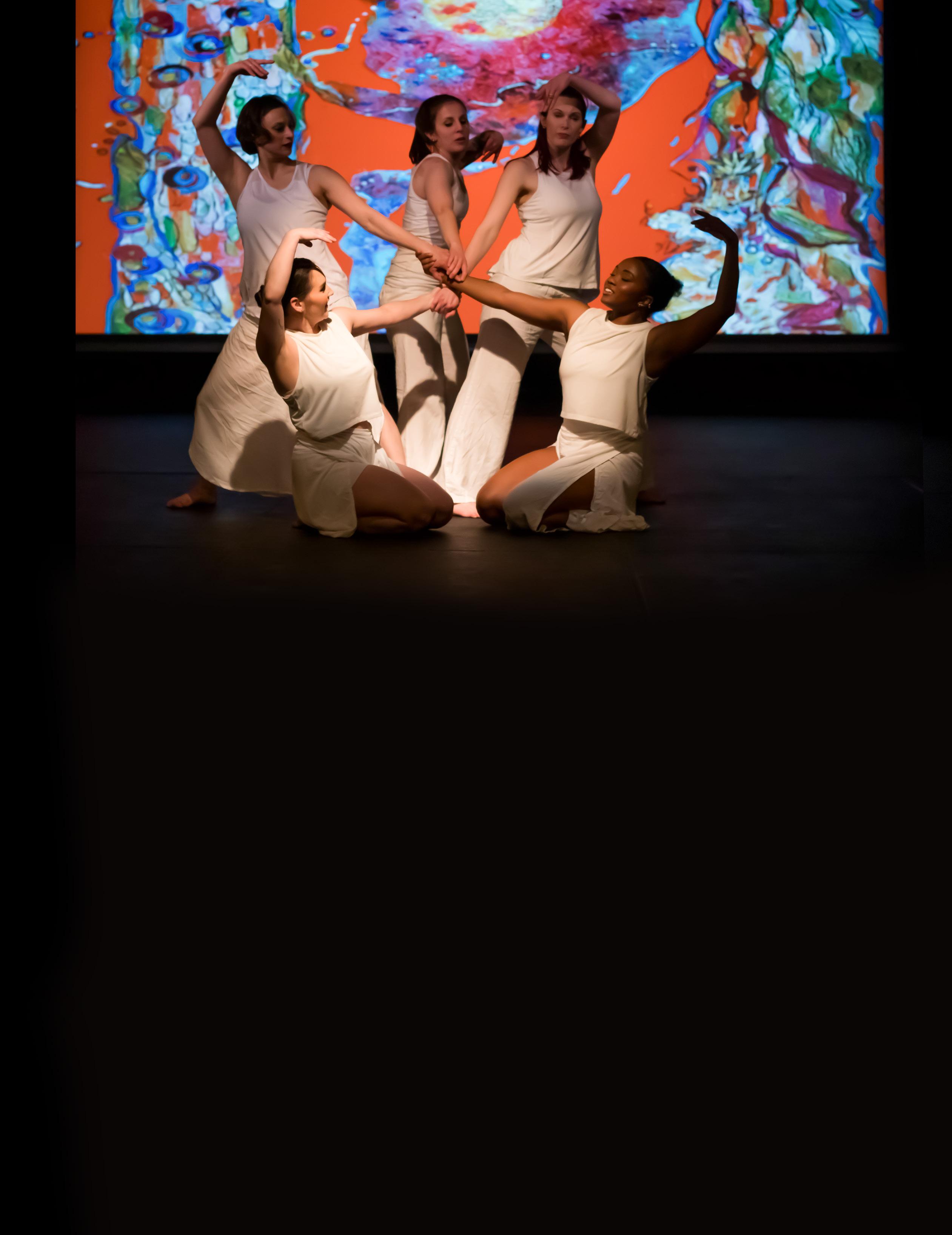
With a roster of performers ranging from 18 to 80 years old, the festival challenges the notion that dance is a pursuit reserved for the young. This inclusivity allows for a depth of storytelling that can only be achieved through a lifetime of experience. Audiences can expect a kaleidoscope of styles, including:
• Classical Ballet: Showcasing technique and tradition.
• Bachata and Latin Styles: Celebrating the vibrant Latino culture that is a pillar of the Reading community.
• Modern and Contemporary: Pushing the boundaries of physical expression.
Building a “Dance Exchange”
The “Exchange” in the festival’s name is not accidental. The event grew out of a program originally aired on BCTV (Berks Community
Television), where local artists and educators discussed the state of the arts in Reading. The festival serves as the in-person extension of those conversations. The G.R.A.D.E. Festival roster includes dancers from truly varied groups such as Barrio Alegria (Mexican folk dance), Helena Zahra (belly-dancing), the Heritage Hotties (dance/pom team for older adults), Hooley School of Irish Dance, the Reading Royals Ice Angels, the Xion Step and Dance Team and so many more.
By bringing together professional choreographers, local university students and community-based performance groups, the G.R.A.D.E. Festival fosters a unique ecosystem of collaboration. It provides a platform for emerging artists to share the stage with seasoned professionals, encouraging a mentorship culture that strengthens the local arts economy.
“The G.R.A.D.E. Festival brings together adult-focused performance groups for the first time in County history... together, we make the GRADE!” — JCWK Dance Lab

Reading has long been a city of makers— from its history as the “Outlet Capital of the World” to its industrial roots with the Reading Railroad. Today, that spirit of making has embraced the creative arts. Between the GoggleWorks Center for the Arts, the Reading Public Museum and now the G.R.A.D.E. Festival, the city is cementing its reputation as a premier destination for cultural tourism in the mid-Atlantic. The festival also acts as a precursor to the famous Berks Jazz Fest, which typically follows shortly after in late March. Together, these events turn the spring season in Reading into a powerhouse of music and movement.
As the G.R.A.D.E. Festival prepares for its inaugural 2026 run, the buzz in the community is palpable. It offers a space where the physicality of history meets the artistry of the future. For residents and visitors alike, it is an invitation to witness the pulse of the city through the universal language of dance.

Whether you are a seasoned dance aficionado or someone looking to experience the local culture for the first time, the G.R.A.D.E. Festival promises a weekend of inspiration, connection, and, most importantly, joy.
For more information about JCWK Dance Lab and the G.R.A.D.E. Festival, go to https:// jcwkdancelab.org/gradefestival/.
Photos credit to Brian Mengini

The Remarkable Journey of The Carousel at Pottstown
In an age of digital distractions and highspeed entertainment, there is a corner of Pottstown where time slows down to the steady, rhythmic mechanical hum of a century-old masterpiece. The Carousel at Pottstown, officially the Derek Scott Saylor Memorial Carousel, is more than a charming attraction. It is a survivor of the Golden Age of Carousels and proof of what can happen when a community decides something worth saving is worth fighting for.
Its story begins in 1905, when the Philadelphia Toboggan Company was setting the gold standard for amusement craftsmanship. The carousel, originally designated PTC #9, did not even start out the way most of us imagine a carousel today. It was built as a “stationary” model, before the crankshaft technology that made horses rise and fall had been perfected.
From the beginning, PTC #9 was a traveler. Its early run took it to Euclid Beach Park in Ohio, delighting crowds until 1910, then to Laurel Springs Park in Hartford, Connecticut, where it stayed for the next 15 years. Like so many classic American things, it moved where the crowds moved, following the call of summer nights and park-side laughter.
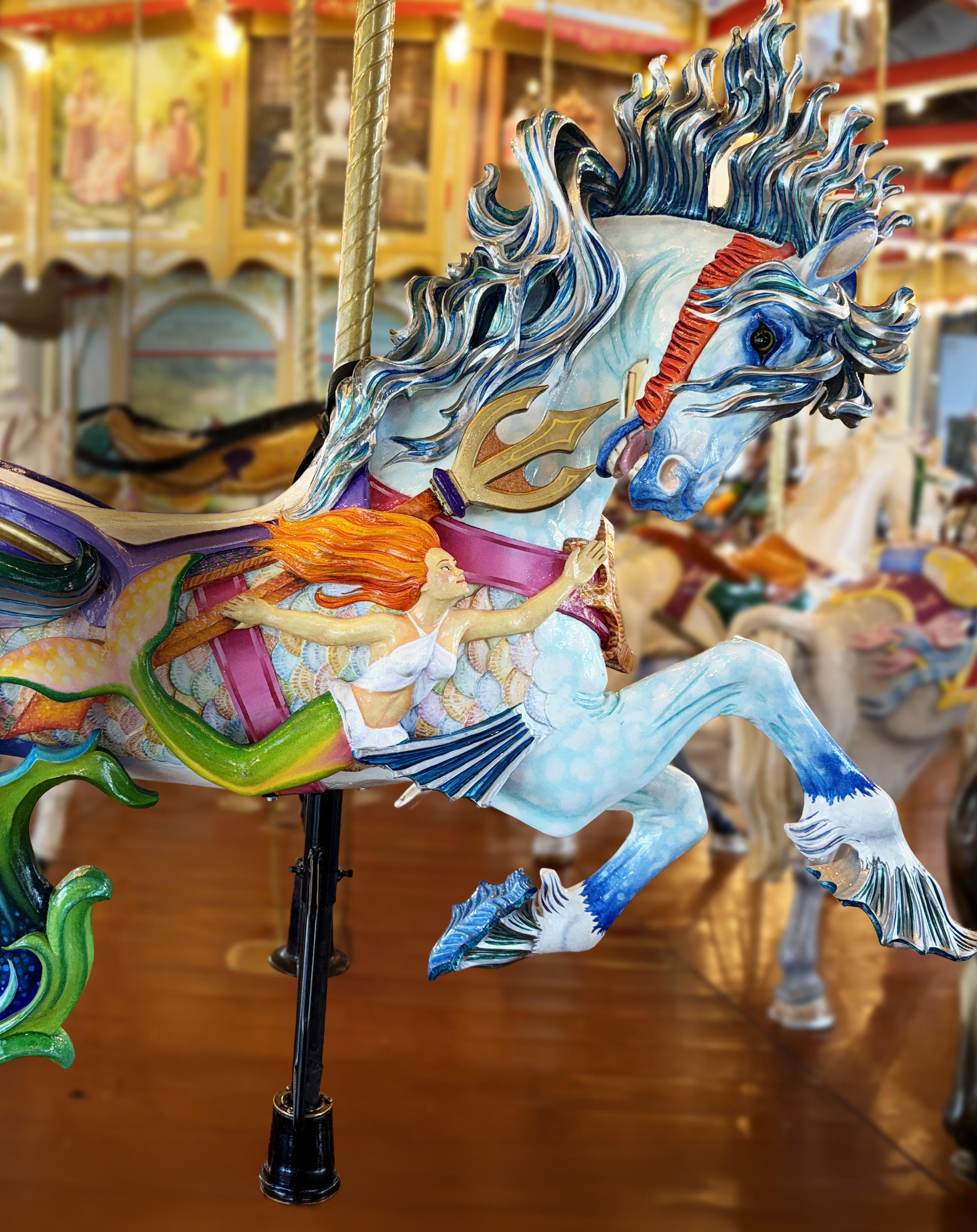
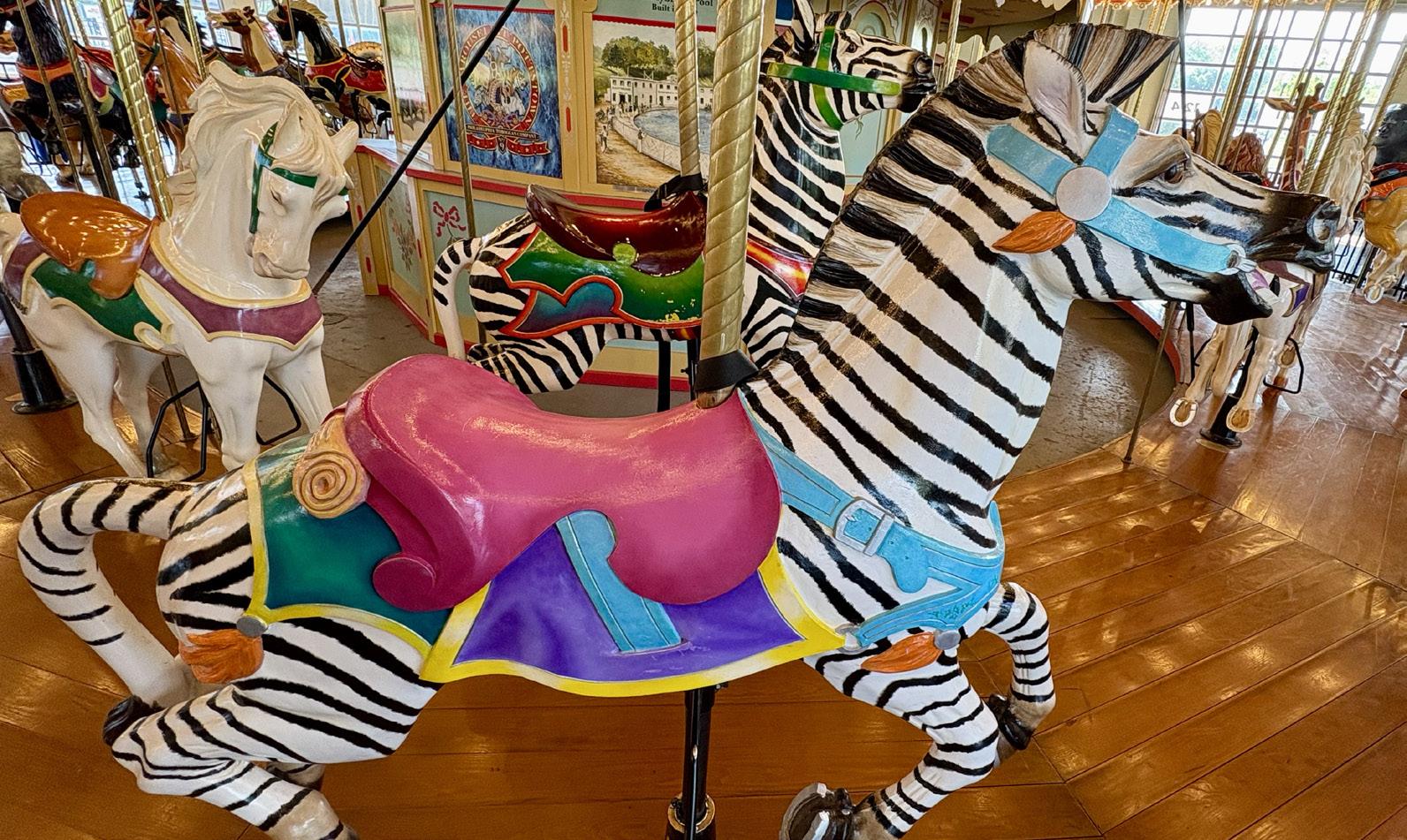
By 1925, amusement technology had evolved, and so did PTC #9. It returned to the PTC factory for a major mechanical overhaul and was refitted with crankshafts, transforming its static figures into the “jumping horses” that have become the signature thrill of traditional carousels. That single change gave the ride a new personality. A carousel is charming when it spins, but it becomes unforgettable when it spins and breathes, when every animal seems to come alive in its own up-and-down rhythm.
The upgrades did not stop there. Reborn as PTC 9/74R, it spent a few years in Mt. Gretna, Pennsylvania, then returned to the factory again in 1928 for additional reconfiguration. By the early 1930s, the machine, now bearing the wonderfully complex serial number PTC 9/74R/86R, arrived at Twin Grove Park in Pine Grove. There it became a fixture of local memories
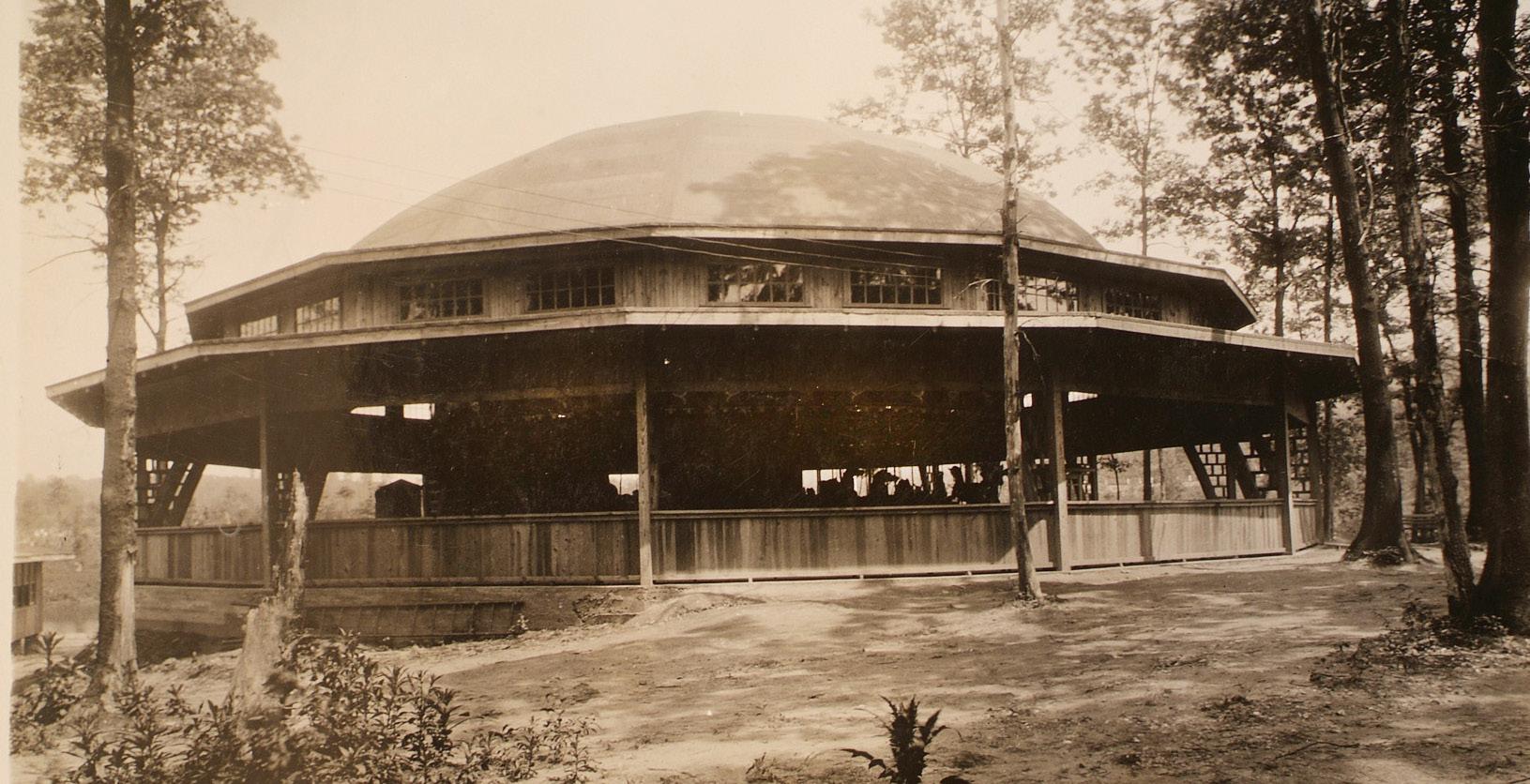
for nearly half a century, the kind of place where first dates happened, where little hands clutched brass poles, where grandparents pointed out a favorite animal they remembered from childhood.
Then came the dark days.
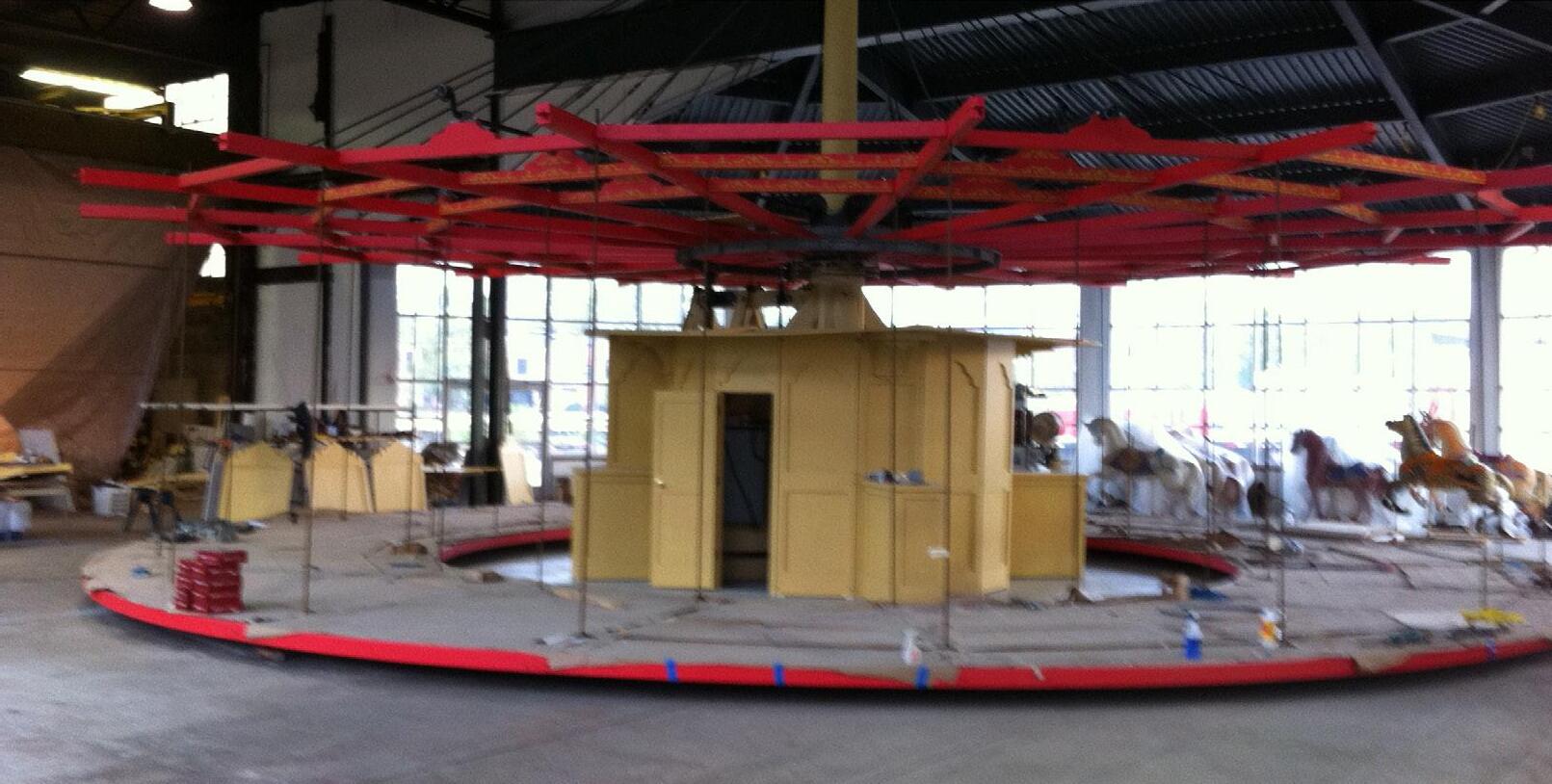
In 1980, the carousel’s history nearly ended, not because it stopped working, but because it became valuable in the wrong way. Vintage carousel figures had become highly sought-after collectibles, and in a move that still stings to imagine, the carousel was stripped of its heart and soul. Every original hand-carved animal
and decorative rounding panel was sold off to private collectors, leaving behind only the mechanical skeleton: the center pole, the sweeps, the floor, the gears.
What remained was not a carousel you could ride. It was the idea of one, a hollow frame that hinted at what used to be. And that is where the story could have ended. Instead, it took a cold, windy winter day in the 1990s to spark the kind of conviction that only communities can muster.
At the Building Industries Exchange (BIE) Home Show at Sunnybrook in Pottstown, a portable carousel had been set up outside.
The weather was biting, the kind that makes you rethink every reason you left the house, and yet a long line of children and parents waited patiently for a ride anyway. Members of the BIE and the Pottstown Historical Society watched it unfold and saw what the rest of us sometimes forget: people do not outgrow wonder.
The message was clear. Pottstown needed a carousel.
The group tracked down the original mechanical structure of PTC #9 and
brought it back to Pottstown. The frame was finally home, but it was still lifeless. To restore a century-old mechanism is daunting. To replace the lost animals, the faces and personalities that make a carousel feel like a living gallery, is something else entirely.
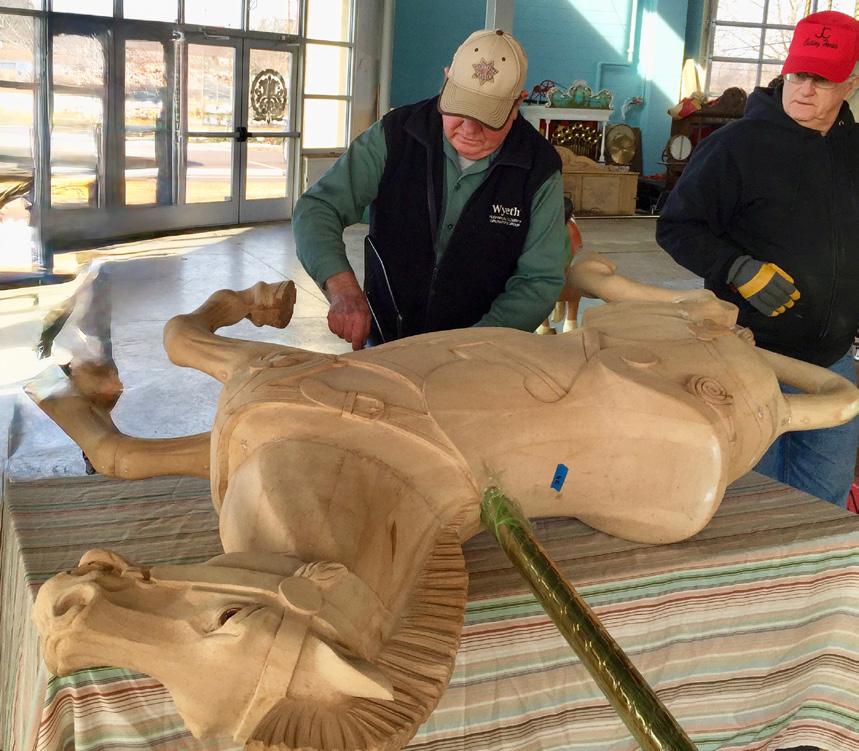
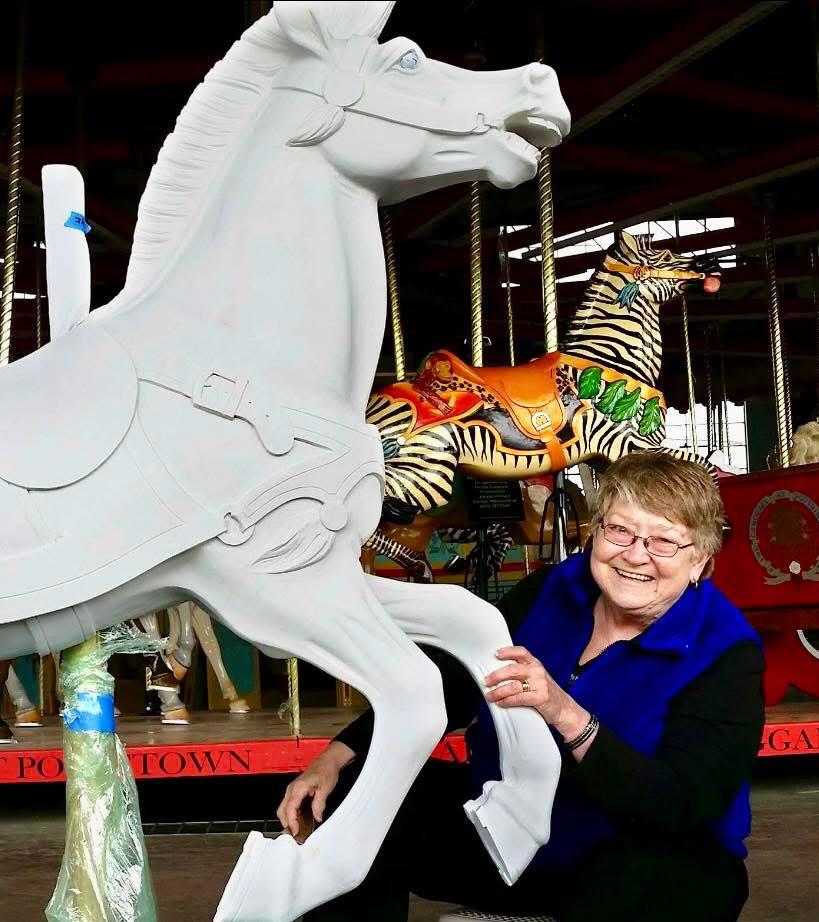
For that, the committee turned to Ed Roth, a master carver known for his work on Disney’s carousel animals. In California, Roth carved new figures that were shipped to Pottstown, where local artists and volunteers took over. The work was not quick. It was not easy. It was the kind of meticulous labor
that only love makes sensible. Artists spent between 250 and 350 hours on each animal, sanding, priming, and hand-painting every creature until it looked like a museumquality masterpiece that just happened to be built for joy.
The project gained its greatest momentum through a bittersweet gift. The carousel was named in memory of Derek Scott Saylor, a 13-month-old boy who passed away. A generous donation from the Saylor family provided the essential “giddy-up” that helped move the project from dream to reality.
After twenty years of volunteer labor, fundraising, and a massive restoration of the building on King Street, the carousel took its first official spin in January 2016. By the end of that year, it was fully open to the public. In the decade since, it has become more than a ride. It has served as a voting location, hosted animal rescue events and food drives, and provided a picturesque backdrop for family celebrations, fundraisers, and even an official Eminem merchandise video.
That last part says something important. The Carousel at Pottstown is not frozen in time. It is not a relic behind rope. It is a working piece of history that keeps showing up in the present tense.
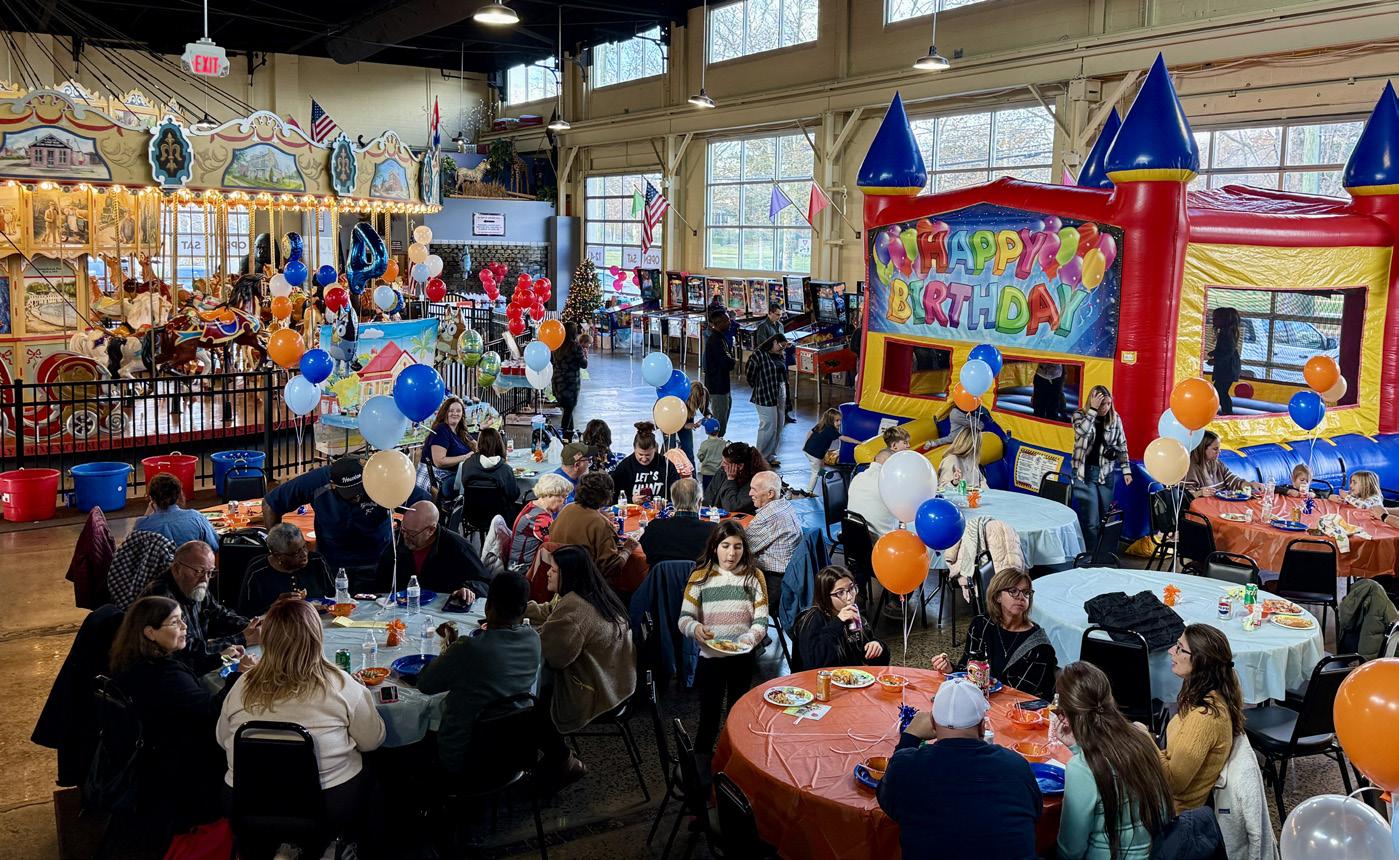
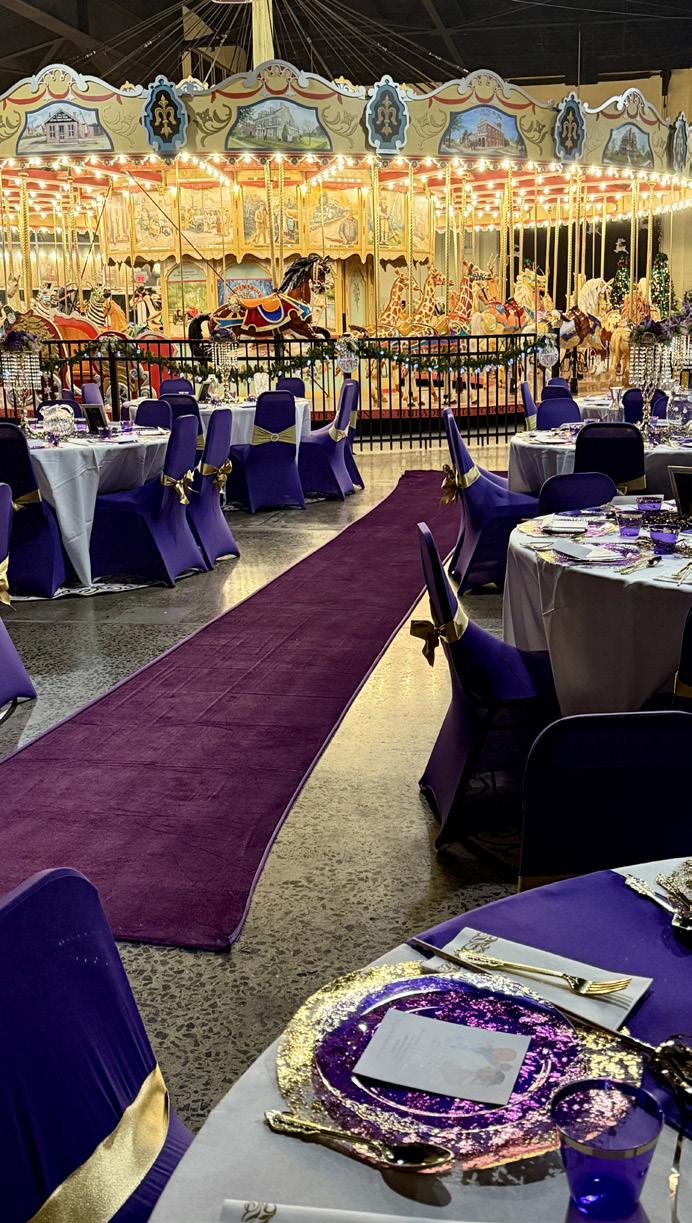
And for many residents, the most delightful surprise is that this piece of living history is not reserved only for walk-in visits. The carousel is also available for private rentals, which means your next celebration can take place in one of the most distinctive spaces in town. Whether it is a birthday party, a family gathering, a school or team celebration, or even a high school reunion, a private event at the carousel turns an ordinary get-together into something people talk about afterward. You are not just renting a venue, you are borrowing a story, one that comes with bright lights, hand-painted artistry, and that unmistakable sound of gears doing what they were built to do.
Today, when you ride one of the jumpers on PTC 9/74R/86R, you are riding a mechanical marvel that has survived the
Great Depression, two World Wars, and the very real threat of being sold for parts. Wood can be carved and gears can be replaced, but the true crankshaft of The Carousel at Pottstown is the community spirit that keeps it turning.
The Carousel at Pottstown is located at 30 West King Street in Pottstown. To learn more, including details about visiting and private rentals, visit carouselatpottstown.org.


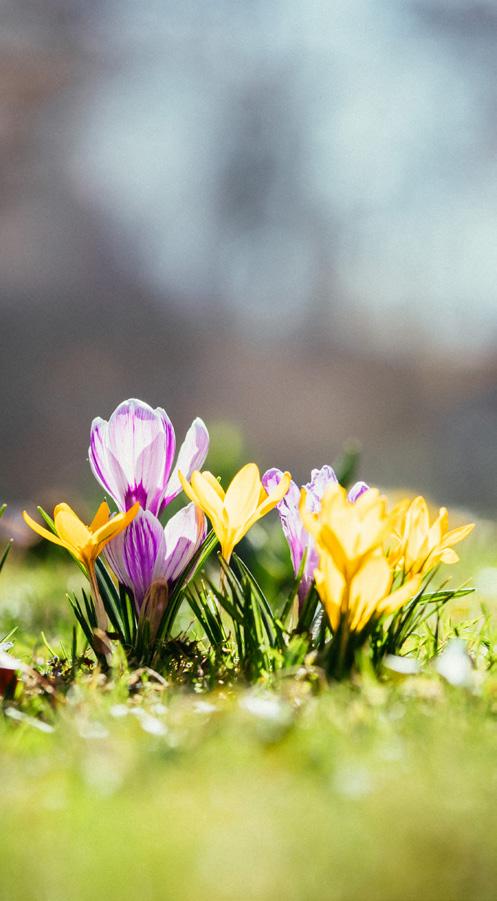
As the frost retreats and the first green shoots start peeking through the soil, there’s an unmistakable shift in the air—Spring is here! Get ready to shed your winter layers and step back out into the world. From the return of sun-drenched farmers’ markets and blooming botanical trails to the high-energy buzz of local festivals, this season is packed with reasons to get off the couch. Whether you’re looking to find your zen in a wildflower meadow or find your rhythm at an outdoor concert, our curated calendar has you covered.
March 8
Charter Day
Noon to 4 p.m.
Conrad Weiser Homestead 28 Weiser Ln., Womelsdorf conradweiserhomestead.org
March 13-15
G.R.A.D.E. Festival
See website for performance times Alvernia University, Francis Hall Theatre 401 Zygmunta Ln., Reading events.ticketleap.com/ tickets/jcwkdancelab/ gradefestival
March 14
St. Patrick’s Day Party 5 to 11 p.m.
Reading Liederkranz 143 Spook Ln., Reading readingliederkranz.com
Plant Swap 10 a.m. to 2 p.m. GoggleWorks 201 Washington St., Reading goggleworks.org
March 15
West Reading Chili Madness Noon to 5 p.m. West Reading visitwestreading.com
March 20
March 2-8
A Good Thyme for Life: Fine
Frog Safari at Blue Marsh Lake 7 to 8 p.m.
Blue Marsh Lake Stilling Basin springtwpberks.org/ family-nature-series-3
March 19-29
Boscov’s Berks Jazz Fest
See website for dates & times berksjazzfest.com
March 26
Soil & Stage 6:30 to 8:30 p.m. GoggleWorks 201 Washington St., Reading goggleworks.org
March 29
YogaSing with Suzanne Jackson Workshop 3 p.m.
WCR Center for the Arts 140 N. Fifth St., Reading www.wcrcenter.org
April 7
Opening Night— Reading Fightin’ Phils vs Hartford Yard Goats
6:45 p.m.
First Energy Stadium 1950 Centre Ave., Reading milb.com/reading
April 10
Jerry Seinfeld Live 7 p.m.
Santander Performing Arts Center
136 N. 6th St., Reading santander-arena.com
April 15
Sean Jones with Kutztown University Jazz Band 7:30 p.m.
Spring Seed & Houseplant Swap 6 to 8 p.m.
Kutztown University, Schaeffer Auditorium kutztownpresents.org/ performing-artists-series
Sketching in Nature 6:30 p.m. to 8 p.m. Township of Spring Fire Station 2301 Monroe Ave., Reading springtwpberks.org
April 17
Barry Manilow—The Last Reading Concert 7 p.m. Santander Arena 700 Penn St., Reading santander-arena.com
April 18
Coming Out of Hibernation 11 a.m. to 4 p.m. 3 E. Philadelphia Ave., Boyertown boyertownborough.org
April 18
Jazz Appreciation Month Concert Hot Club of Reading 7 p.m.
WCR Center for the Arts 140 N. Fifth St., Reading wcrcenter.org
Dining for a Good Cause
See website for participating restaurants goodthymeforlife.org
Berks County Heritage Center
1102 Red Bridge Rd., Reading berkspa.gov
Wee Ones Wild Spring Discoveries
10 a.m. to 11 a.m.
Shiloh Hills Park 303 Sage Dr., Reading springtwpberks.org
Nun Run 5K
10 a.m.
Holy Guardian Angels Regional School 3125 Kutztown Rd., Reading pretzelcitysports.com
April 21
Habitat for Humanity Birdhouse Challenge
5:30 to 8:30 p.m.
Reading Country Club 5311 Perkiomen Ave., Reading habitatberks.org
April 24
Café con Boomers: Sara Contreras
7:30 p.m.
Miller Center for the Arts 4 N. 2nd St., Reading millercenter.racc.edu
April 25
West Reading Craft
Beer & Pretzel Fest
11 a.m. to 5 p.m.
500 – 700 blocks, Penn Ave., West Reading
Healthy Kids Day with the YMCA
10 a.m. to 3 p.m.
Berks County Heritage Center 1102 Red Bridge Rd., Reading berkspa.gov
Iron Pour + Fire Arts Festival
3 to 9 p.m. GoggleWorks
201 Washington St., Reading goggleworks.org
2026 Gala at The Reading Public Museum
6:30 p.m. to Midnight Reading Public Museum 500 Museum Rd., Reading readingpublicmuseum.org
May 2
Reading-Berks Spring Fine Art & Craft Festival
9 a.m. to 3 p.m.
Renninger’s Farmer’s Market 740 Noble St., Kutztown pacrafts.org/readingberks-2026-springfine-art-craft-festival
Early Bloomers
Wildflower Walk
1 p.m. to 2:30 p.m. Blue Marsh Lake springtwpberks.org
JLR Touch-A-Truck
9:30 a.m. to 2 p.m. First Energy Stadium 1950 Centre Ave., Reading jlreading.org/touch-a-truck
May 5
Peso Pluma & Tito Double P
8 p.m.
Santander Arena
700 Penn St., Reading santander-arena.com
May 7-9
Apple Dumpling Festival Check website for times Willow Glen Park 94 Park Ave., Sinking Spring appledumplingfest.com

May 8
2nd Friday on the Avenue
Celebrate with West Reading shops and restaurants! 6 to 8 p.m. Penn Ave., West Reading
Smooches4Pooches
6 to 8 p.m.
Reading Public Museum 500 Museum Rd., Reading smooches4pooches.org
May 8-17
The Secret Garden Check website for showtimes Yocum Institute
3000 Penn Ave., West Lawn yocuminstitute.org
May 16
Girls on the Run Berks 5K
9:30 a.m. Penn State Berks gotrberks.org/5k
May 18
Spring Book Sale
10 a.m. to 3 p.m.
Womelsdorf
Community Library
203 W. High St., Womelsdorf berkslibraries.org/branch/ womelsdorf
May 22
Classic Piano Jazz
Stephanie Trick & Paolo Alderighi
7 p.m.
Yocum Institute
3000 Penn Ave., West Lawn yocuminstitute.org
May 31
Colonial Craft and Demonstration Day
11 a.m. to 4 p.m.
Conrad Weiser Homestead
28 Weiser Ln., Womelsdorf conradweiserhomestead.org
June 5 – 7
“Harvey”
Reading Community Players WCR Center for the Arts 140 N. Fifth St., Reading wcrcenter.org
June 12
Elmo’s Got the Moves 6 p.m.
Santander Performing Arts Center 136 N. 6th St., Reading santander-arena.com

June 13
Taste of Kutztown Wine & Beer Festival 11:30 a.m. to 5:30 p.m. Kutztown Community Park 439 E. Main St., Kutztown tasteofkutztown.com
June 13-20
Plein Air West Reading artplusgallerypa.com/ pawr2026.html
June 26-27
Berks Celtic Festival See website for event times
Reading Liederkranz 143 Spook Lane, Reading berksirish.org
June 27-28
Hoods Up Weekend 9:30 a.m.
Boyertown Museum of Historic Vehicles 85 South Walnut St., Boyertown boyertownmuseum.org
513 Penn Avenue
West Reading Shopping Center parking lot.
Winter Market: Mar. 15 and 29 April 12 and 26 10 a.m. to 12 p.m.
Summer Market: every Sunday, May-November 10 a.m. to 1 p.m.
APG-avenues-ad-B.pdf 1 2/4/26 10:07 PM
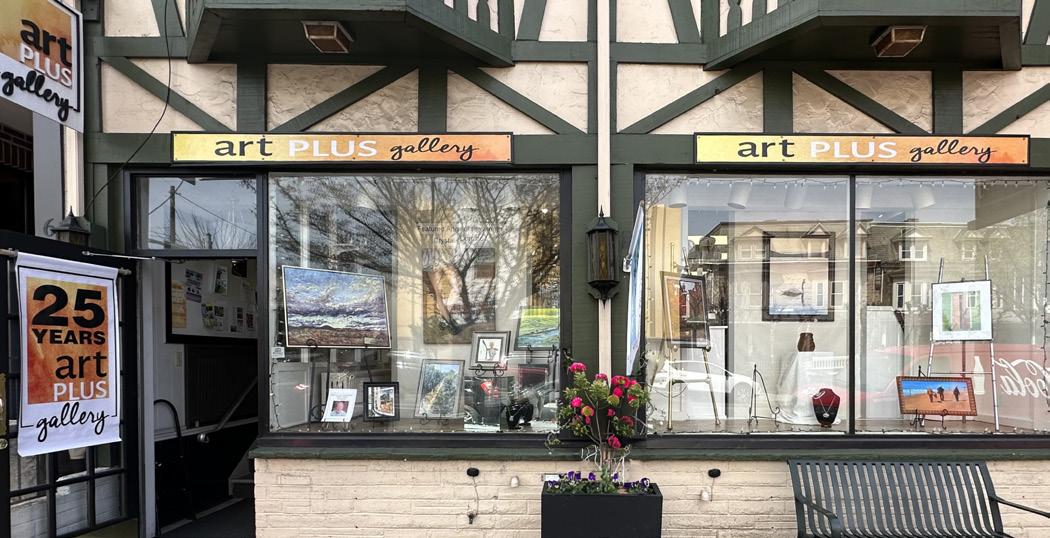


Make it a point to stop by every time you’re in town. There’s a new show every month, and you’ll always meet one of the creative talents and enjoy a welcoming atmosphere. Along with a first-class gallery you’ll find a gift shop with a remarkable array of original art, crafts, prints and cards.
Art Plus Gallery 604 Penn Avenue West Reading, PA 19611 610-375-9122
www.ArtPlusGalleryPA.com