April 13, 2026

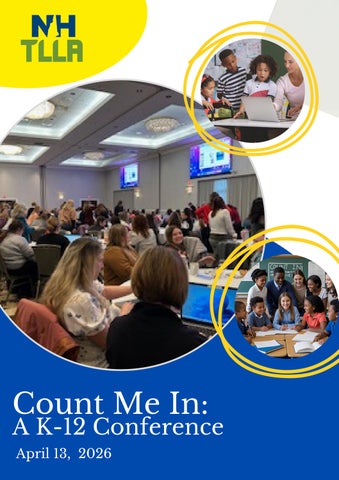
April 13, 2026
Mike Anderson is an award winning teacher, consultant, and best-selling author. He was a classroom teacher for many years and now serves schools as an independent consultant. His work centers around the intersection of student engagement, positive relationships, and effective discipline.
His forthcoming book, Hugging Porcupines: Month-byMonth Strategies to Support Our Most Challenging Students, is scheduled to be released in the spring of 2026. You can learn more about Mike through his website: www.leadinggreatlearning.com
Bari Boisvert joined the New Hampshire Learning Initiative (NHLI) after 26 years in the classroom, including 25 years as an English teacher with the Sanborn Regional School District in Kingston, NH. She held a variety of leadership roles, including new teacher mentor, team leader, PLC facilitator, and interdisciplinary team member.
At the state level, Bari served as a content lead for NHPACE Grade 10 ELA and a Design Lead for NH ELA PLACE. At NHLI, her work centers on Project-Based Learning, Student Voice and Agency, ELA PLACE, and performance assessments. Outside of work, she lives with her husband and their four-legged menagerie and enjoys dreaming of summer and time outdoors
Chris Demers is currently the assessment coordinator for the Concord School District. Because of a short attention span, he has periodically been granted opportunities to do other jobs in Concord including media/tech integrator, assistant principal, math coach and - his all time favorite5th grade teacher.
Sue Downer is presently the Director of STEM and Performance Learning at NHLI. Her experience includes co-designing and implementing professional development workshops for K-12 science teachers. Before joining NHLI, Sue spent 28 years teaching chemistry and AP chemistry at Souhegan High School in Amherst, NH. During that time, she served as the science department coordinator, senior project coordinator, and as a content lead for the NH-PACE project focused on developing performance assessments for competency-based learning.
Carolyn Eastman is a passionate advocate for youth well-being and community engagement, dedicated to decreasing anxiety and increasing hope in young people through hands-on, purposedriven learning. With deep roots in service, she partners with schools and community organizations to equip students with future-ready skills, meaningful relationships, and a sense of agency.
Carolyn’s journey has included systems thinking through the 2030 SDGs Game, strategic reflection with LEGO® SERIOUS PLAY®, and AI-powered career exploration—all culminating in the launch of the Future Ready Solutions Collective, a think tank that brings together educators and community leaders to prototype small, impactful solutions that drive big change. Guided by Rotary’s values, she believes in the power of local connection to create a more hopeful future for all.
Deb Alexander has more than 20 years of experience across the primary grades at Enfield Village School, She has developed a nuanced understanding of elementary student development. I believe academic enrichment thrives in classrooms where students feel a deep sense of belonging and psychological safety. In addition to their work with students, I serve as a mentor and informal leader, guiding peer groups to refine instructional focus and improve educational practices. Deb is part of the Enfield Village School team who is presenting.
Julie McHugh-Kramer believe’s that every student possesses a unique way of learning and a distinct set of strengths. As a Special Educator, her mission is to bridge the gap between potential and achievement by creating inclusive, adaptive environments where students feel seen and supported. With a focus on individualized instruction and data-driven progress, she works closely with families and multidisciplinary teams to ensure that every learner has the tools they need to thrive both in and out of the classroom.
Tammy Poirier has over 30 years of experience in the classroom. She has dedicated the "lion’s share" of her career to the Enfield Elementary community. Her background as a Special Educator, Second Grade Teacher, and Reading Specialist allows her to bring a unique, multi-faceted perspective to student development. She specializes in evidence-based literacy instruction and adaptive teaching strategies designed to meet the diverse needs of every learner. She believes that education is most effective when it is rooted in both expertise and empathy.
Jamie Winny is currently in her fourth year as the Principal of Enfield Village School, drawing on 13 years of experience across the educational spectrum to lead her school community.
Her career began in the classroom, where she spent six years as a middle school math teacher cultivating a passion for student-centered instruction and academic rigor. She later transitioned into school-wide leadership, serving for three years as an assistant principal at both the elementary and middle school levels. This diverse background across multiple grade spans has provided her with a holistic perspective on school culture and student development, which she leverages daily to foster a supportive, high-achieving environment for all learners.
David Levesque is in his 4th year as the Principal of Franklin High School. With a strong commitment to student-centered learning, David focuses on building positive school culture, strengthening instructional practices, and fostering meaningful connections among students, staff, families, and the community. His work emphasizes leadership development, continuous improvement, and the creation of learning environments where all students feel supported, challenged, and empowered to succeed. David serves on the executive board for the NH Association of School Principals and is also a board member for NH Excellence in Education.
Tammy Noyes isan English teacher at Franklin High School who is passionate about helping students develop strong critical thinking and analytical skills. She also is a member of the school's Instructional Leadership Team, where she collaborates with colleagues to support professional learning communities focused on strengthening instructional practices, increasing teacher effectiveness, and designing more rigorous, engaging learning tasks for students.
Jamie Smith is the School Climate Specialist at Franklin High School, where she supports student well-being and helps design systems that center student voice, choice, and meaningful engagement. She coordinates Extended Learning Opportunities and supports students in their transition to high school. Jamie also teaches college-level early childhood education courses, bringing a developmental lens to school climate and personalized learning.

Marissa Hooper is a Professional Development and Math Specialist for Demonstrated Success.
During her eight years as a middle school math teacher, she was a leader in competency based grading, RTI, and curriculum writing through the Understanding By Design framework. She has a Master's Degree in Curriculum and Instruction and provides coaching and school support in the areas of mathematics, data analysis, and Professional Learning Communities.
Jess Jacques is the Math Specialist for the Merrimack Valley School District, with 28 years in mathematics education, including 17 years as a middle-level math teacher.
She supports instruction and curriculum within and beyond her district through coaching, curriculum development, and professional learning, focusing on visual models, math routines, and grade-level standards. Jess has been honored with NHTM’s Richard C. Evans Distinguished Mathematics Educator Award and Richard H. Balomenos Mathematics Education Service Award.
Heather Jenkins put her love for data analysis and math to work in her careers in both the technology and education industries.
With more than 15 years as an early elementary teacher, she is skilled in curriculum design and delivery, PLC’s and data use, and strategies in both ELA and math.
Heather works for Demonstrated Success as a Director of Assessment and Math Curriculum.
Jennifer Maio brings over a decade of educational experience to her role as a curriculum administrator in New Hampshire. Previously, she dedicated 12 years to shaping young readers and writers as a middle school English teacher in Massachusetts
In 2022, Jennifer earned her Doctorate in Educational Leadership from New England College, where her research concentrated on advancing inclusivity and equity in education
Outside of her professional life, Jennifer is an avid reader and contemporary dancer, and she also embraces the beauty of New Hampshire as a beginner hiker. Jennifer cherishes time spent with her family, friends, boyfriend, and two cats
Karen Matso is the Professional Development Director of Demonstrated Success. She has 30 years of experience as an educational leader, focusing on school transformation in the areas of literacy, school culture and climate, MTSS, curriculum, instruction and assessment.
Erin Moore was a classroom teacher for 20 years. She taught in heterogeneous classrooms in public schools with wonderfully diverse students. She served as a mentor teacher, led inhouse professional development, and helped lead many school and district initiatives. She was also a Responsive Classroom consultant for 14 years, leading professional development across the United States.
Erin is currently an education consultant and coach, and teaches at New England College. She is passionate about supporting learners and educators, and enjoys coaching and providing customized professional learning for educators in diverse settings. Erin lives in Webster, NH with her husband and two children.
Katie Novak is an internationally renowned educational consultant, founder and CEO of Novak Educational Consulting, best selling author, adjunct instructor at the University of Pennsylvania, global keynote speaker, and a leading voice in Universal Design for Learning and MTSS.
With 25 years experience in education, a doctorate degree, and real-world experiene as a former teacher, curriculum coordinator, and assistant superintendent of schools, she brings credibility and passion to all she does.
Emily Russin has nearly 30 years experience in education ranging from being in elementary and middle level classrooms to working at the Massachusetts Department of Education to now being an educational consultant for Hill Literacy.
She holds a Masters in Language and Literacy from Harvard Graduate School of Education
Cate Simmers is a Professional Learning Consultant for Collaborative Classroom and has spent more than 20 years in the education field as a classroom teacher, reading coach, intervention specialist, and professional learning facilitator. She currently works as a consulting teacher for the Seattle School District.
Cate holds a Masters in Teaching from the University of Washington and is a Nationally Board Certified Teacher.
Megan Vasconcellos has been teaching in New Hampshire for 16 years, including six years in the Concord School District. She currently teaches 5th grade and is passionate about creating student-centered classrooms where learners take ownership of their education.
Megan’s work focuses on empowering students to become confident, independent thinkers who actively engage in their growth and thrive within a strong classroom community.
Allison Carroll is a third grade teacher at Sandown North Elementary School in the Timberlane School District. She has taught first through third grade for over twenty years in Massachusetts and New Hampshire. Ali received her Masters Degree from Lesley University, where she found her passion for literacy instruction. Universal Design has helped create a more flexible approach to how students access the Science and Social Studies curriculum; as well as ways to integrate it into her Literacy Block.
Amy DiFeo is an English Language Arts Instructional Coach in Sandown, New Hampshire. She serves both Sandown Central School and Sandown North School within the Timberlane Regional School District. With more than 30 years of experience in the district, Amy has held a variety of roles, including classroom teacher, literacy specialist, and ELA Instructional Coach. She holds a Master of Education degree in Curriculum and Instruction and is a certified reading and writing specialist. Amy is a member of the school Leadership Committee and is deeply committed to Universal Design for Learning, with a focus on removing barriers to ensure all students have the opportunity to thrive.
Carolyn Nenart is currently a 4th grade teacher in Sandown, NH. She is an educator with experience teaching Early Childhood through upper elementary students. She holds a Master’s degree in Education Administration from Wheelock College and has also worked as a Museum Education Director and lead instructor specializing in Colonial American history. These experiences shaped her strong commitment for Universal Design for Learning (UDL) and hands-on, experiential instruction that promotes engagement, accessibility, and deep understanding for all learners.
Eileen Statkus is a 2nd grade teacher in Sandown, New Hampshire. She teaches at Sandown North Elementary School within the Timberlane Regional School District. Throughout her career, Eileen has worked with both vertical learning and co-teaching models, collaborating closely with colleagues to provide inclusive and effective instruction for all learners. She is passionate about creating supportive classroom environments and enjoys exploring and applying Universal Design for Learning (UDL) practices to ensure accessibility, engagement, and success for every student.

In schools today, two realities collide: teachers feel buried under too many initiatives, and leaders are under pressure to meet policy requirements and improve student outcomes The challenge isn’t the commitment; it’s the lack of coherence Without a clear throughline, well-intentioned efforts pile up, leaving educators overwhelmed and progress fragmented This keynote invites both teachers and leaders to step back and see the bigger picture A Multi-Tiered System of Supports (MTSS) isn’t another initiative; it’s the structure that connects them all By unifying initiatives through MTSS, we can replace confusion with clarity and exhaustion with focus Educators and leaders alike will leave inspired to approach change not as “one more thing,” but as a coherent pathway to ensuring every student succeeds
Understand why MTSS is necessary for improving outcomes for learners
Learn how MTSS provides the structure that connects and aligns schoolwide efforts
Explore how MTSS can bring clarity and focus to both teachers and leaders by streamlining practices, reducing initiative fatigue, and centering student success
Katie Novak, Ed.D. is an internationally renowned educational consultant adjunct instructor at the University of Pennsylvania, best-selling author, podcast host, and founder of Novak Educational Consulting.
With over 20 years of experience in education, she has authored 16 books. She has a global reach spanning 33 states and 28 countries. Her guidance has significantly shaped educational practices on an international scale.

Techniques and strategies for tailoring education to meet individual student needs (personalization, differentiation)
Franklin High School has implemented innovative practices through a comprehensive redesign of its master schedule to better meet the academic, social, and personal needs of students. The revised schedule provides structured opportunities for targeted intervention, enrichment, and flexible learning pathways aligned with individual student goals By prioritizing personalized education, we have created a system that allows students to engage more deeply with their learning while also receiving the support they need to be successful
The impact of these changes is reflected in key performance indicators. Student attendance rates have increased by 10% over the past three years, as the schedule encourages engagement and stronger connections to school Behavioral referrals have decreased by 40%, highlighting the effectiveness of a structure that fosters student accountability, positive behavior, and meaningful relationships with staff Most significantly, Franklin High School’s graduation rate has risen from over a three-year period, underscoring the success of aligning instructional time with student needs
Franklin High School remains committed to continuous improvement and innovation, using data-driven strategies to personalize education and ensure every student is prepared for success beyond graduation
Beyond the Basics: Differentiation that Moves, Engages, and Inspires with Bari Boisvert - (All Grade Levels)
In this hands-on workshop, teachers will explore practical and creative ways to make learning more responsive to students’ needs, interests, and readiness levels We’ll move beyond the usual talk about “tiers” and “levels” to discover fresh strategies that get students thinking, moving, and excited to learn
Participants will try out engaging activities, see real classroom examples, and plan lessons that offer meaningful choice and challenge for every student You’ll leave with ready-to-use ideas to help all learners grow and have fun doing it!
Co-planning and Co-instructing to Meet Diverse SEL with Karen Matso - (All Grade Levels)
In today’s classrooms, student needs are intense Targeted, effective support from every available adult is essential Co-planning is key to maximizing the skills and assets of our educators in the service of our students’ academic growth and social emotional wellness
Through co-planning, specialists, paraprofessionals and classroom teachers collaborate to articulate common learning outcomes and identify potential barriers to student learning By anticipating student needs and sharing their diverse expertise, co-planning teams can co-design core classroom instruction with the scaffolds and differentiation needed so every child can access learning with their peers
Differentiate and Personalize Learning Through Student Choice with Mike Anderson - (All Grade Levels)
We know that all learners are unique, bringing different strengths, challenges, interests, and skills to the classroom. When all students are asked to do the same thing in the same way at the same time, many are inevitably left behind Too often, teachers are also required to use prescriptive programs designed for an “average” learner, where differentiation and personalization are limited If you want to better support personalized and differentiated learning without significantly increasing your planning load, this session is for you
In this practical session, we’ll explore how offering students meaningful choices in daily learning can increase relevance and appropriate challenge You’ll learn a simple three-part process that works in any content area and grade level, along with strategies for teaching students how to make thoughtful learning choices You’ll see real classroom examples and gain access to an online binder filled with resources, sample plans, and tools to support implementation
From Progression to Practice: Using Learning Progressions to Drive Instruction & Assessment with Dr Jennifer Maio - (All Grade Levels)
Learning progressions are powerful roadmaps that illustrate how students develop understanding over time, but translating them into daily practice can be challenging In this interactive workshop, educators will learn how to use learning progressions to plan meaningful instruction and assessment at every stage of learning.
Participants will:
Unpack how learning progressions clarify the “pathway” of skill and concept development
Design pre-assessments that reveal where students are along the progression.
Develop strategies for formative assessment and student self-assessment aligned to progression levels
Use progressions to plan targeted small-group instruction and scaffolded supports
Align summative assessments to the learning goals embedded in the progression
By the end of the session, participants will leave with practical tools and templates to make learning progressions the backbone of a cohesive, student-centered instructional cycle
Introduction to UDL with Dr. Katie Novak - (All Grades)
Universal Design for Learning (UDL) offers a proactive alternative to retrofitting instruction by anticipating and removing barriers to learning before they arise This session introduces UDL’s three core beliefs and models practical strategies and routines to help educators design for learner variability and promote student success
Objectives:
Understand UDL and describe three core tenets.
Explain how UDL and differentiated instrution are related but distinct
Recognize how variability drives instructional design
Participants will explore how to use the UDL Journey Map as a framework for designing differentiated, project-based units of study that provide students with multiple pathways to demonstrate their learning
Grounded in content-area standards, this model emphasizes immersion in the subject matter while accounting for student barriers, diverse learning styles, and interests. Through the integration of clear rubrics, opportunities for choice and voice, and flexible options for project design, educators will learn strategies to create engaging, inclusive, and standards-aligned units While the model was successfully applied in an animal habitats unit, it can be adapted for any grade level and any content area to support deeper learning and meaningful student engagement
Participants will explore how to use the UDL Journey Map as a framework for designing differentiated, project-based units of study that provide students with multiple pathways to demonstrate their learning
Grounded in content-area standards, this model emphasizes immersion in the subject matter while accounting for student barriers, diverse learning styles, and interests Through the integration of clear rubrics, opportunities for choice and voice, and flexible options for project design, educators will learn strategies to create engaging, inclusive, and standards-aligned units While the model was successfully applied in an animal habitats unit, it can be adapted for any grade level and any content area to support deeper learning and meaningful student engagement
The Reflective Reader, The Expressive Writer: Building the Reading-Writing Connection in the Content Areas with Emily Russin(High School Grade Levels)
This session explores the dynamic interplay between reading, writing, and discussion as essential practices for developing literate adolescents across content areas Participants will examine how writing serves as a powerful tool for deepening comprehension, fostering critical thinking, and promoting equity in literacy instruction
Through an introduction to the fundamentals of effective writing pedagogy, educators will identify actionable strategies to strengthen student engagement and achievement. The session highlights Self-Regulated Strategy Development (SRSD) as an exemplar framework for teaching writing, offering practical approaches to scaffold student independence and confidence Attendees will leave equipped with versatile structures such as quick writes, quotation-response activities, guided responses, and the SRSD-DEFEND model that can be seamlessly integrated into daily instruction to build meaningful reading-writing connections and support diverse learners
This session is a double-block
From Insight to Impact: Building & Sustaining a K-4 data driven reading intervention model with the Enfield Village School Team(early Elementary)
Elementary students who struggle with reading need immediate and effective support to address foundational skill gaps. This interactive institute focuses on providing differentiated, research-based instruction to help students build the skills and confidence they need to succeed
Grounded in professional journal articles and current research, this session bridges research to practice Participants will experience effective instructional routines from the SIPPS program and explore how structured literacy lessons can accelerate learning. Additionally, we’ll examine the essential characteristics of connected texts that engage struggling readers and provide meaningful practice for skill mastery
Participants will:
1) Examine recent research, explore the article "Guidelines for Determining if a Reading Intervention Is Consistent With the Science of Reading" from The Reading League Journal, and consider the implications for foundational skills instruction
2) Experience structured literacy routines that build critical reading skills
3) Analyze the features of connected texts that engage readers and promote mastery of foundational skills
4) Learn strategies for designing differentiated small-group instruction to meet the diverse needs of students
This session provides practical tools and insights to support struggling readers and foster success in foundational literacy
Hugging Porcupines: Practical Strategies for Supporting Kids Who Struggle with Behavior in School with Mike Anderson - (All Grade Levels)
Teachers everywhere are reporting a sharp rise in student behavior challenges both in frequency and intensity Younger students are showing more signs of dysregulation and even aggression, while older students appear increasingly withdrawn or disengaged from learning These shifts have left many educators feeling frustrated and searching for strategies that actually work
In this engaging and practical session, educators will explore why some students struggle with behavior and how certain wellintentioned practices such as incentive systems, traditional grading, or teacher-centric praise can sometimes backfire Together, we’ll examine what’s really driving challenging behavior and how schools can respond in ways that build capacity rather than compliance
Kids who struggle in school need approaches that are warm and demanding, supportive and empowering They thrive when classrooms balance structure with empathy and emphasize connection alongside accountability Participants will learn how an integrated approach grounded in positive relationships, effective management, and engaging academics can transform the learning experience for all students
Most importantly, teachers will leave with realistic, time-tested strategies they can use right away These strategies address three essential pillars of great teaching: engaging academics, positive relationships, and effective management Attendees will also gain access to a set of robust online resources designed to deepen their learning, support implementation, and foster collaboration with colleagues
Supporting New and Striving Readers with Small-Group, Mastery-Based Intervention with Cate Simmers - (Elementary Grade Levels)
Elementary students who struggle with reading need immediate and effective support to address foundational skill gaps. This interactive institute focuses on providing differentiated, research-based instruction to help students build the skills and confidence they need to succeed
Grounded in professional journal articles and current research, this session bridges research to practice Participants will experience effective instructional routines from the SIPPS program and explore how structured literacy lessons can accelerate learning. Additionally, we’ll examine the essential characteristics of connected texts that engage struggling readers and provide meaningful practice for skill mastery
Participants will:
1) Examine recent research, explore the article "Guidelines for Determining if a Reading Intervention Is Consistent With the Science of Reading" from The Reading League Journal, and consider the implications for foundational skills instruction
2) Experience structured literacy routines that build critical reading skills
3) Analyze the features of connected texts that engage readers and promote mastery of foundational skills
4) Learn strategies for designing differentiated small-group instruction to meet the diverse needs of students
This session provides practical tools and insights to support struggling readers and foster success in foundational literacy
Methods for purposeful and deliberate instruction to maximize student engagement and learning outcomes.
Effective science instruction happens at the intersection of Intention, Instruction, and Insight. In this hands-on, interactive workshop, educators will explore how phenomenon-based learning and sensemaking can transform science classrooms into environments of purposeful, student-centered discovery
Participants will engage in NGSS-aligned activities that model how to design instruction intentionally beginning with curiosity and building toward reasoning, critical thinking, and ownership of learning. Together, we will unpack how 3-dimensional science learning supports differentiation and personalization, ensuring that all students can access rigorous, authentic learning experiences
Using examples and templates from classroom-tested performance tasks, participants will begin developing their own phenomenon-based lessons or assessments that connect scientific understanding to real-world contexts and career pathways Through collaborative reflection, they will consider how evidence of sensemaking and reasoning can serve as Insight into student learning guiding next steps in instruction and intervention
Educators will leave this workshop with practical strategies, adaptable tools, and renewed intentionality for designing lessons that engage students deeply, connect to their lives, and build the durable skills needed for success in college, career, and life
From Intention to Action: Building Career and Community-Connected Classrooms with Dr. Carolyn Eastman - (All Grade Levels)
Participants will explore how intention fuels career-connected learning in every class When teachers are intentional about linking curriculum to real-world applications, students develop a stronger sense of relevance, belonging, and agency Through stories and examples from New Hampshire classrooms, attendees will see how intentional design can elevate engagement whether through project-based learning, community partnerships, or career exploration experiences woven into everyday instruction
This session blends research on student motivation with practical classroom strategies Participants will examine frameworks such as backward design and Portrait of a Learner outcomes to ensure that every instructional decision supports skill development aligned with students’ strengths and aspirations They’ll also reflect on how intentional teaching builds hope giving students a clearer sense of purpose and pathways for the future
Teachers are working too hard not to have better academic results, higher levels of student engagment, and more balance in their lives In this session, you’ll discover that when we transfer the power of design, decision-making, and collaboration to the learners we serve, we create space that sllow them to cuild skills necessary for succes in any pathway they choose to pursue
Objectives:
Be inspired bo shift from traditional teacher-led workflows to student-led workflows
Explore student-led strategies that are designed to be flexible enough to work in any teaching and learning landscape
The Power of Progression: Designing Math Tasks That Move Thinking and Understanding Forward with Jess Jacques - (All Grade Levels)
In this session, participants will work through an algebra task designed to model a thinking mathematics classroom. The tasks provide a concrete examples of how purposeful design fosters deep reasoning, problem solving, and meaningful student discourse
As the task unfolds, we will explore the learning progressions connecting elementary concepts to middle school standards, discovering how foundational understandings can be intentionally leveraged to advance algebraic thinking This approach highlights how students build, refine, and transfer mathematical ideas across grades, moving beyond procedural knowledge toward deeper conceptual understanding through the use of visual representations
Through collaborative work on the task, participants will examine strategies for facilitating student-centered discussion, prompting productive reasoning, and sequencing tasks to support a diverse range of learners Attention will be given to instructional moves that encourage sense-making, abstract reasoning, and collaborative thinking, ensuring that all students engage meaningfully with challenging mathematics
By the end of the session, participants will leave with practical tools and strategies for designing and adapting tasks that build on students’ current thinking while helping them deepen their mathematical understanding They will feel better prepared to implement tasks that develop skills, strengthen reasoning, and support meaningful learning in their classrooms.
Educators often find themselves frustrated and puzzled by students' learning outcomes We frequently ask "Why aren't students more engaged in their learning?" For a learner to be engaged in a lesson or assignment, they need to have intrinsic motivation.
As educators, we can be intentional and thoughtful in the ways that we foster motivation and engagement Providing engaging learning opportunities allows for students to be invested in the process of learning rather than just the product This often leads to higher overall achievement
In this workshop, we'll dig into the traits of intrinsic motivation and how they differ from extrinsic motivators We'll explore specific teaching strategies that support engagement, agency, and foster critical thinking and reflection Participants will learn how to avoid the typical pitfalls of partner and group work, and create accessible, multi-faceted learning experiences
h
We will explore the benefits of interactive learning structures, which provide structured collaboration and opportunities for selfdifferentiation We'll take a look at the logistics and "nuts and bolts" of interactive learning structures, and share resources and examples across grade levels Participants will learn about specific ways to set students up for success, starting with a foundation of modeling and guided practice We'll discuss best practices for student goal setting, reflecting, and building capacity to struggle, sustain, and regroup throughout the learning cycle
In addition, we'll look at the benefits of the 70/30 principal and the specific ways that teacher language can support or hinder student growth Throughout the workshop, there will be opportunities for participants to discuss, collaborate, and apply resources to their specific upcoming lessons
In a world marked by uncertainty, anxiety, and rapid change, schools are being called to do more than deliver academic content they must help every student graduate with a clear, future-ready plan This interactive workshop explores how districts and educators can ensure that every student leaves high school with both vision and direction, while also addressing the practical challenge of personalization without additional staffing burdens.
Participants will engage with a framework that embeds career-connected exploration directly into coursework, using real-world projects and partnerships to help students connect learning to future opportunities Through AI-driven career navigation tools, students can receive tailored recommendations that align with their strengths and interests, enabling schools to personalize at scale Additionally, participants will explore how to guide students in building professional networks through strategic LinkedIn profile development fostering social capital that extends beyond school walls
The session also integrates strategic foresight and project management practices, empowering students to anticipate challenges, adapt with resilience, and confidently navigate multiple possible futures By focusing on well-being and social bridging, the workshop addresses the mental health crisis by equipping young people with hope, agency, and purpose.
Attendees will leave with practical strategies to:
- Ensure every student graduates with a personalized plan for life after high school
- Implement scalable personalization tools and processes that do not increase staff workload
Utilizing data and insights to inform instructional practices and improve student achievement.
When used intentionally, formative assessment data becomes a powerful guide for shaping math instruction and promoting student growth In this one-hour session, educators will explore the essential characteristics of effective formative assessments in mathematics, including clarity of learning targets, alignment to math standards, and the ability to reveal student thinking in real time Participants will also expand their understanding of what counts as “data,” considering not only traditional assessment scores but also student work samples, problem-solving approaches, observations, and classroom discussions
The session will provide practical strategies for gathering data efficiently and analyzing it in ways that uncover trends, misconceptions, and learning gaps specific to mathematics Educators will learn how to interpret this information to make timely, focused decisions that directly inform math instruction Emphasis will be placed on designing responsive lessons that address the specific needs of individual students and groups, ensuring that every learner has the support and challenge they need to grow mathematically.
Participants will leave the session with concrete tools and approaches for integrating formative assessment into daily math instruction By learning how to systematically collect, examine, and act on student learning data, teachers will be better equipped to provide targeted feedback, adjust instructional strategies, and create learning experiences that are both rigorous and personalized.
From Data to Drive: Supporting Student Led Goal Setting with Megan Vasconcellos and Chris Demers - (All Grade Levels)
This professional learning session is designed for educators interested in using student data to foster agency, goal ownership, and academic growth The goal of this workshop is to support educators in making data meaningful and accessible to students, empowering them to take an active role in their learning journey.
Participants will engage with a short presentation that shares the story of how we have collaborated over the years to bring multiple types of data to life in the classroom Using the resources available to us, we’ve implemented strategies that encourage students to reflect on their progress, understand their own data, and set personalized goals One component of this work includes guiding students in self-assessing their work using student-friendly checklists. Another vital component of this work is collaboration Bringing data to life for students has been a team approach Our schools and districts are full of experts When we can come to the table with the goal of putting students at the center of their learning, we co-create powerful opportunities for students to grow, thrive and take ownership over their learning
Throughout the session, educators will explore practical approaches to initiating and sustaining data conversations and goal setting with students throughout the school year We will provide a resource and work time to help participants foster their own ideas on how to bring data to life for students
By the end of the workshop, educators will leave with a deeper understanding of how to use data not just as a tool for assessment, but as a catalyst for student empowerment and academic success.
Students are our most powerful ambassadors for change, and they are the school community members for whom change matters most
In this session, attendees will learn how to leverage diverse student teams in collecting, analyzing, communicating and responding to school climate data. We will unpack a real life action research project in NH, to learn how to: build a strong student team, facilitate that student team as they collectively develop a climate survey, design activities to increase survey participation, use protocols to make meaning from the data, communicate data trends to school community members, and finally develop an action plan for improvement
Through Youth Participatory Action Research (YPAR), school culture and climate improvement is also an applied social and academic learning opportunity for students

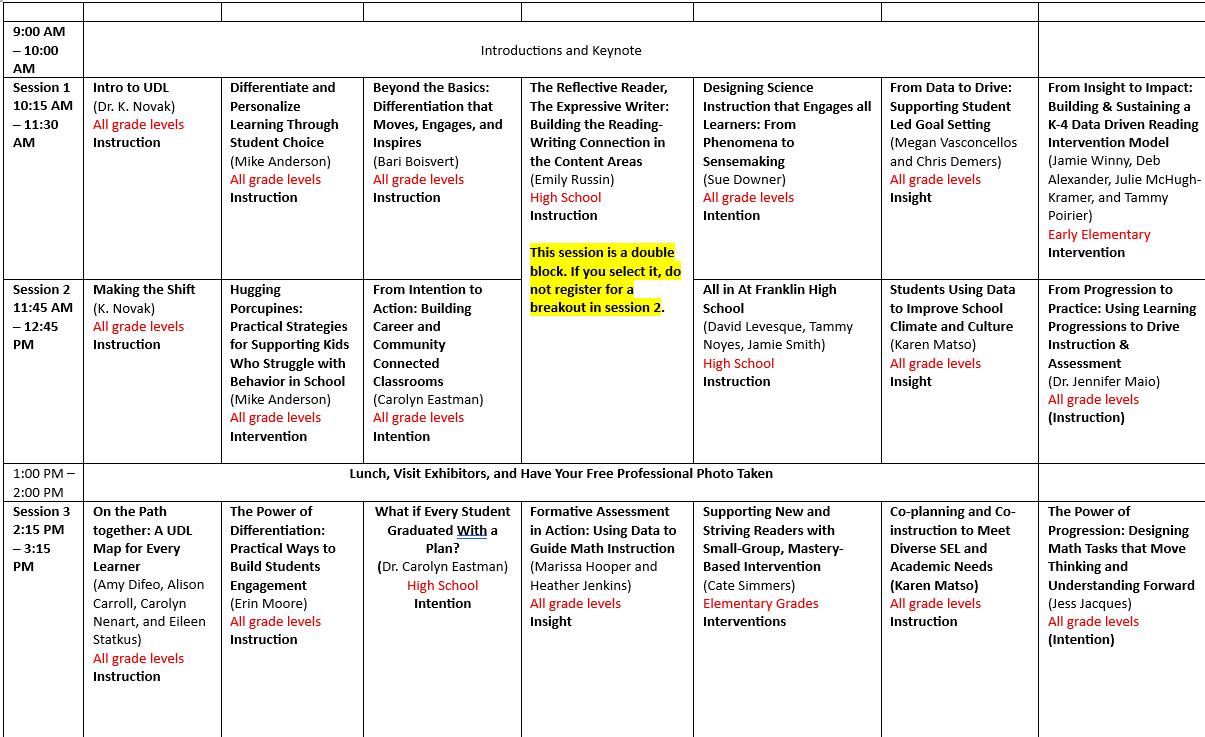
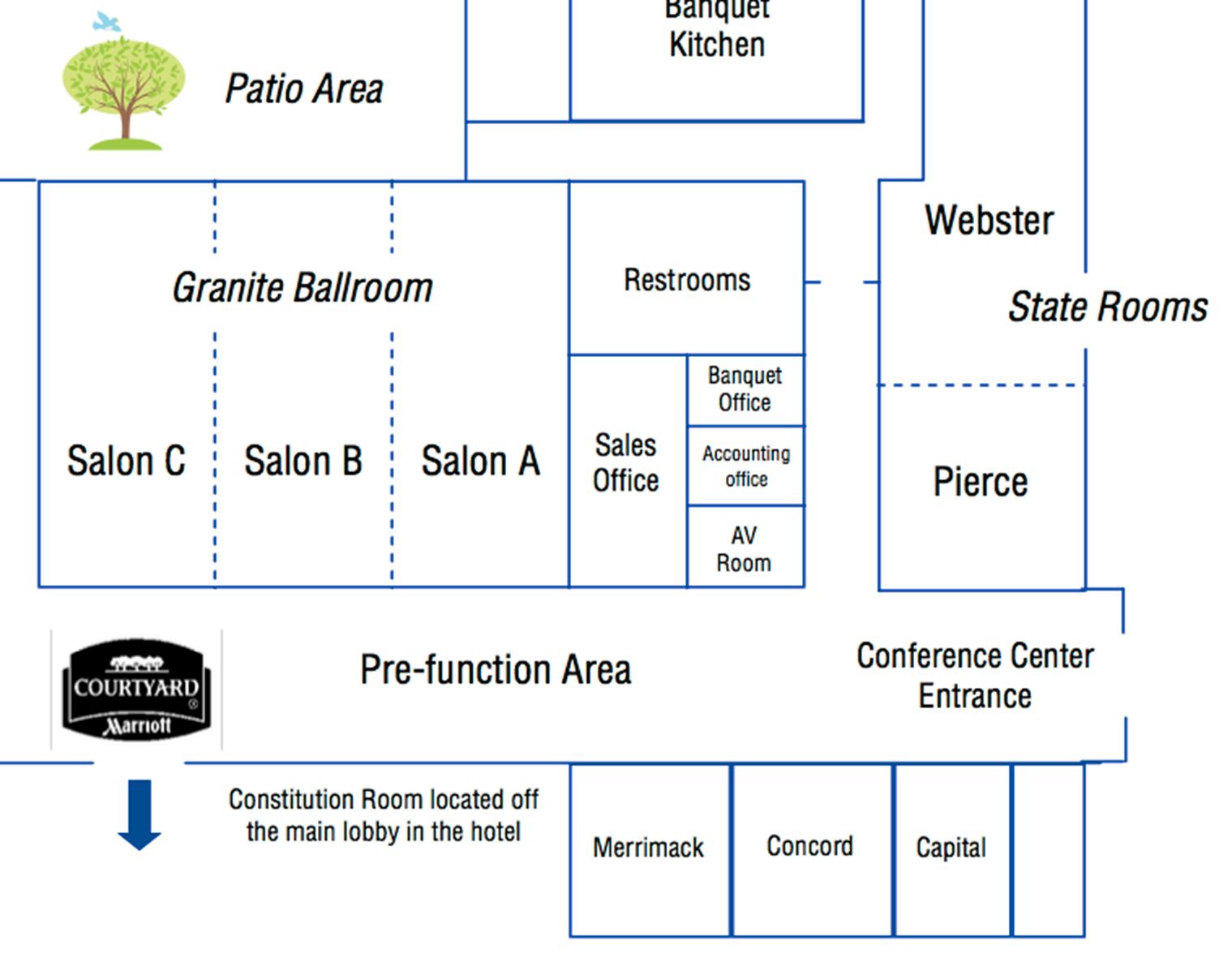
Session locations will be assigned at a later date.
Free professional photographs by Strawbridge Photography will be taken and sent to you.