6 AUSTRALIAN HORTICULTURAL TRIALS WEEK AHT OFFERS PRACTICAL INSIGHTS TO GROWERS
BRINGING PLANT POTENTIAL TO LIFE
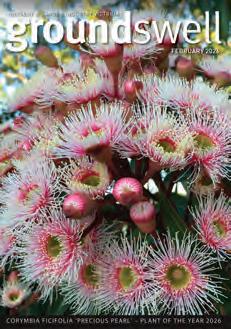
15 PLANT OF THE YEAR 2026 CORYMBIA FICIFOLIA ‘PRECIOUS PEARL’: A NEW TREE FOR THE AUSTRALIAN LANDSCAPE
16 PLANT OF THE YEAR 2026 WINNERS ANNOUNCED
17 MEMBERS GATHER AT TGA FOR AGM
19 BALL AUSTRALIA ANNOUNCES PARTNERSHIP WITH GOOTES-ALLPLANT B.V.
20 PREPARING FOR A BUSINESS EXIT
22 MEMBER PROFILE: PEARCEDALE GARDEN CENTRE
24 48TH ANNUAL VSGP AWARDS
27 ROLE OF GARDEN INSPIRATION GROUP (GIG)
28 TRADE DAY REPORT
31 NEXTGEN: BRODIE GLADMAN
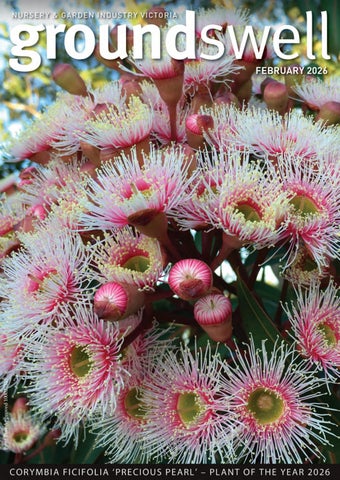
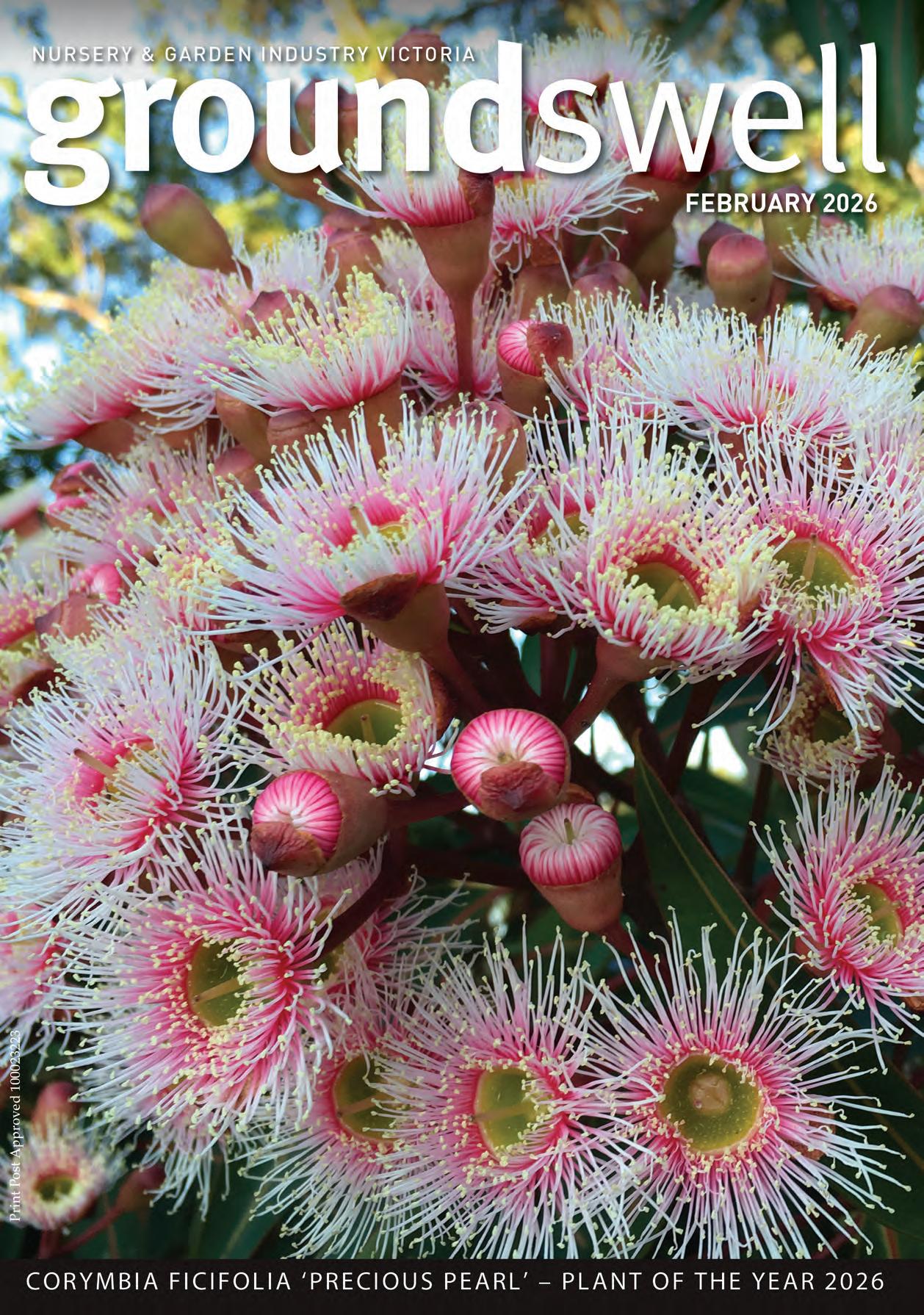
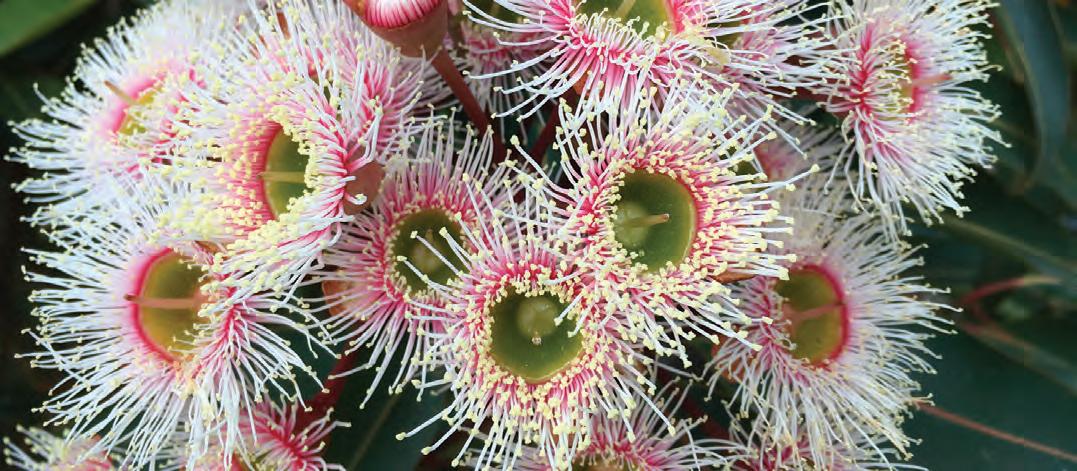
Our front cover: Corymbia ficifolia ‘Precious Pearl’ – Plant of the Year 2026. www.plantoftheyear.com.au
Executive update
Welcome to the first edition of Groundswell for 2026. We hope the summer break offered a chance to rest, recharge and spend time with family and friends as we look ahead to another busy and exciting year for Victoria’s greenlife industry.
Late last year marked an important milestone for our association, with members voting at the Annual General Meeting in November to adopt a new name and brand. From 1 July 2026, Nursery and Garden Industry Victoria will transition to Greenlife Industry Victoria. This change reflects the evolution of our industry and aligns with a national initiative led by Greenlife Industry Australia.
December was a standout month on the industry calendar, with Australian Horticultural Trials Week 2025, proudly presented by The Garden Gurus, delivering another exceptional showcase of innovation and collaboration. From the Summer Soirée and Trials Week Breakfast to bus tours and exhibitor sites, the week provided valuable
opportunities to explore new varieties, discover emerging trends and reconnect with colleagues from across Australia and overseas. We thank all exhibitors, visitors and partners for contributing to another memorable Trials Week. You’ll find a full wrap-up in this issue.
We were also delighted to celebrate excellence at the Plant of the Year 2026 Awards, announced at the Summer Soirée. Corymbia ficifolia ‘Precious Pearl’ was named Overall Winner and Tree of the Year, alongside a strong field of category winners and highly commended plants. Plant of the Year continues to highlight the innovation, creativity and years of work behind the plants that shape our industry, and we congratulate all breeders and growers involved.
Carl Soderlund President, NGIV
Craig Taberner CEO, NGIV
While there was much to celebrate, biosecurity remains a critical focus. Tomato Potato Psyllid (TPP) continues to pose challenges for Victorian businesses, with interstate movement requirements coming into effect from 8 December 2025. While TPP is most closely associated with solanaceous crops, requirements apply to the movement of all carrier plants and may affect businesses beyond traditional tomato and potato supply chains. We encourage members to familiarise themselves with their obligations and to contact NGIV if support or clarification is needed. Advocacy and clear communication in this space remain a priority.
The AGM also marked a change at Board level, with Mario Diaco stepping down after two successful terms. We sincerely thank Mario for his service, passion and memorable contributions. We were pleased to welcome Rebecca Humphris (The Greenery Mt Evelyn and Heidelberg; Humphris Nursery) to the Board, and to recognise Michael Warner with Life Membership in acknowledgement of more than four decades of industry leadership, including his significant contribution to MIFGS.
Looking ahead, February brings the return of the NGIV Golf Day Classic, to be held at Cape Schanck, offering a relaxed opportunity to connect with peers ahead of a busy autumn events calendar.
Preparations are well underway for the Melbourne International Flower & Garden Show, returning from 25–29 March 2026. NGIV will once again host the Green Room, and we’re excited to reveal this year’s Victorian Schools Garden Program feature, Wildplace. Designed by Urban Discovery, Wildplace is an immersive children’s play garden inspired by research, pedagogy, regenerative design and Indigenous knowledges. Created to spark imagination, learning and wellbeing, it reflects VSGP’s mission to champion excellence in children’s play and education spaces – now and into the future.
We wish to advise members that James Nicklen has concluded his role in Communications and Marketing at NGIV. As we move into 2026, we remain committed to supporting members through advocacy, events and programs that strengthen our industry and promote its value to the wider community. Thank you for your continued engagement and support – we look forward to another year of connection, innovation and growth.
Carl Soderlund President, NGIV
Botanix Plant Supply
Craig Taberner CEO, NGIV
TRIALS WEEK
Australian Horticultural Trials Week 2025
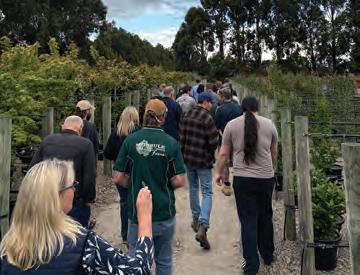
Australian Horticultural Trials Week 2025 once again affirmed its place as a cornerstone event on the Australian greenlife calendar, as a practical, in-production showcase of the genetics, systems and partnerships shaping the future of ornamental horticulture.
Held from 2–5 December across multiple sites in Victoria, Trials Week brought together growers, breeders, allied suppliers and industry leaders from across Australia and overseas. For NGIV, the week represents a tangible demonstration of how collaboration, technical rigour and long-term thinking continue to underpin a resilient and progressive industry.
Industry connection at scale
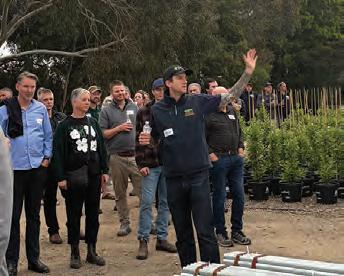
With an impressive number of attendees over the course of the week, Trials Week once again struck a balance between structured engagement and informal, peer-to-peer connection. Across the sites, growers shared insights, compared notes and discussed challenges around labour, inputs, climate variability and market demand.
This exchange of ideas is central to the value of the event. Trials Week is not just about showcasing new releases – it is about strengthening the collective capability of the industry, supporting informed decision-making, and ensuring that innovation is grounded in practical outcomes.
The continued support of presenting partner The Garden Gurus also played a significant role in amplifying the week’s impact, helping to connect industry innovation with broader consumer awareness and reinforcing the importance of strong storytelling around plants, people and production.
The Garden Gurus
The Garden Gurus is Australia’s longest-running gardening television show on commercial-free-to-air TV, with last year marking their 22nd on Channel 9. Having produced over 37 series, 600+ episodes, and 4800 stories, The Garden Gurus reaches over 500,000 people per episode in Australia and is telecast in 86 countries in seven languages.
The Garden Gurus is dedicated to promoting the garden industry and wishes to thank the industry for its tremendous support of the series since it launched in February 2002.
The Garden Gurus are proud to support NGIV with the naming sponsorship of the Australian Horticultural Trails Week.
Exhibitor highlights
Anthony Tesselaar Plants
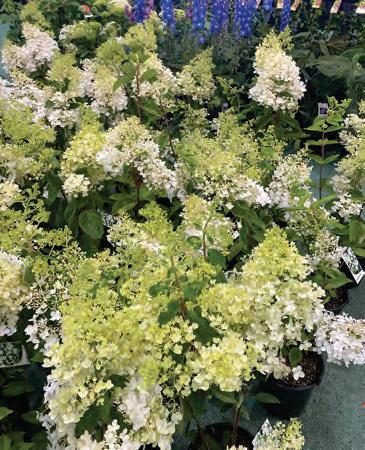
Anthony Tesselaar Plants once again drew strong interest with a mix of proven performers and new releases. Highlights included the latest addition to the globally recognised Flower Carpet rose series, reinforcing the longevity and reliability of this category, alongside a new hydrangea making its first public appearance in Australia. The display underscored the value of incremental innovation built on strong genetic foundations.
Ball
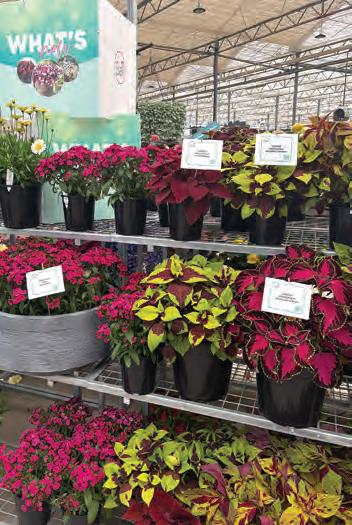
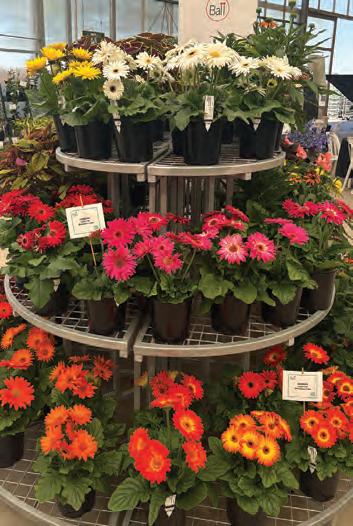
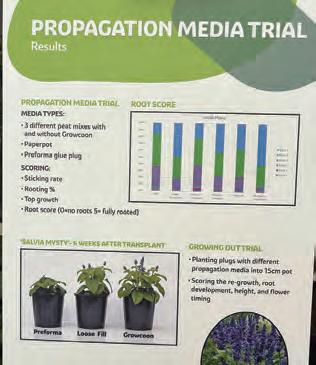
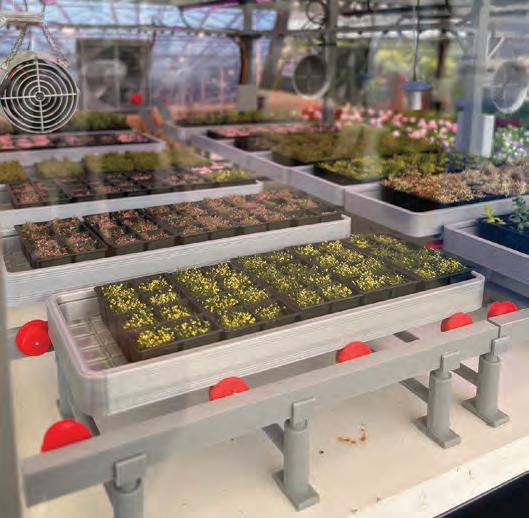
Ball’s trials site focused on what the company does best –practical comparisons, technical demonstrations and clear production insights. The Ball Lab allowed visitors to explore growing comparisons and Plug Perfection standards in action, while the presence of allied suppliers created a hub for broader technical discussion. The emphasis was firmly on performance, consistency and real-world application.
Fleming’s Nurseries
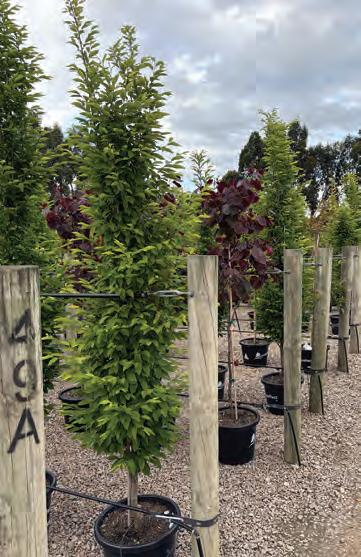
Fleming’s Innovation Showcase combined structured presentation sessions with the opportunity to explore the nursery at visitors’ own pace. With a strong focus on trees for both commercial and residential landscapes, Fleming’s highlighted how new varieties are responding to changing urban environments, space constraints and long-term landscape performance expectations.
Carawah Nursery
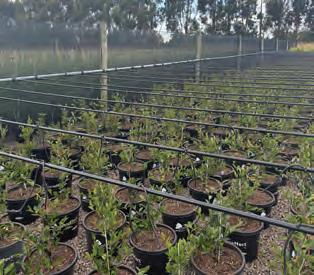
Exhibiting at Trials Week for the first time, Carawah Nursery showcased its specialist range of Australian native tubestock. With a clear focus on quality, consistency and suitability for large-scale projects, Carawah’s presence reflected the growing demand for resilient native plants across councils, infrastructure projects and sustainable landscapes.
Touch of Class Plants – PlantFest
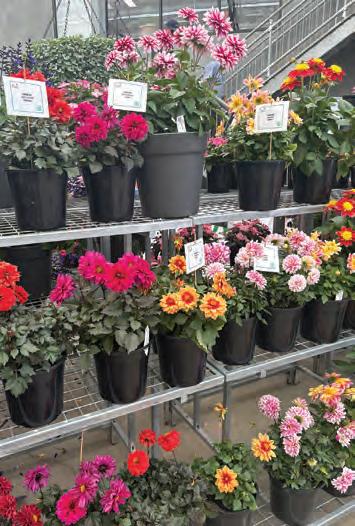
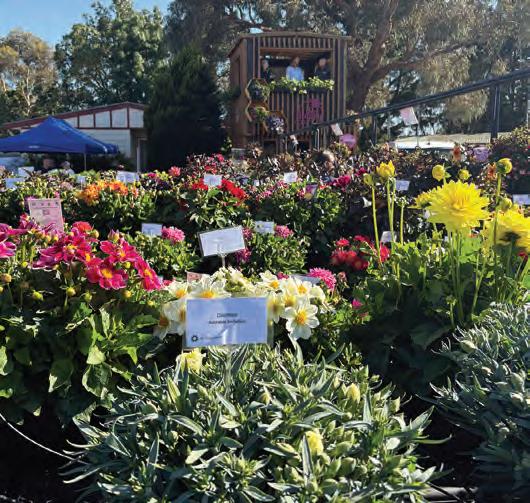
PlantFest delivered a vibrant showcase of new releases from Touch of Class Plants and Greenhills Propagation Nursery. Designed to appeal across grower, retailer and media audiences, the display highlighted diversity, market-ready genetics and strong consumer appeal, reinforcing the importance of aligning breeding innovation with retail outcomes.
Haars Nursery
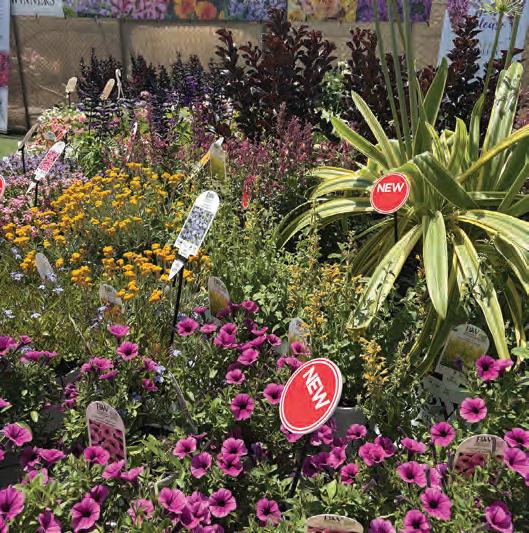
Haars Nursery’s ‘Back Yard’ concept brought a relaxed and engaging atmosphere to Trials Week, combining colour, innovation and strong point-of-purchase storytelling. The site fostered conversation and connection, while reinforcing the role of presentation and branding in supporting plant performance at retail.
JD Propagation
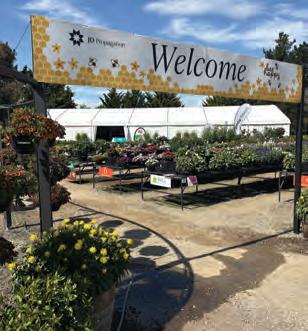
As one of the central hubs of Trials Week, JD Propagation once again showcased an extensive range of young plant trials from leading breeders. The breadth of material on display, combined with JD’s hallmark hospitality, created a highly productive environment for technical discussion, comparison and collaboration.
Mansfield’s Propagation Nursery
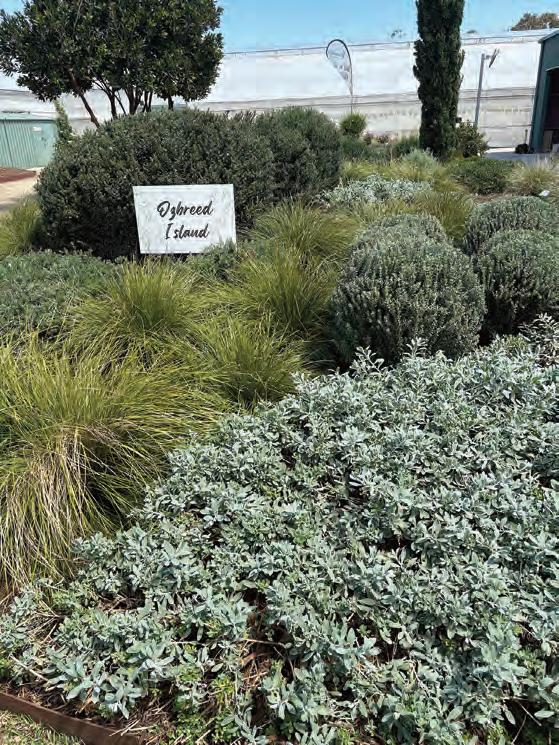
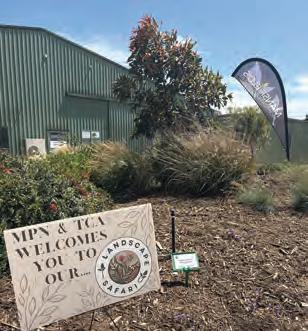
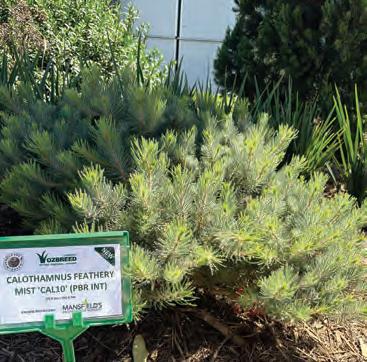
Mansfield’s ‘Landscape Safari’ offered guided exploration through display gardens featuring Austraflora, Ozbreed, Instyle and Core lines, alongside new Corymbia and tissue culture introductions The format encouraged discussion around landscape performance, specification and long-term plant behaviour.
Proven Winners
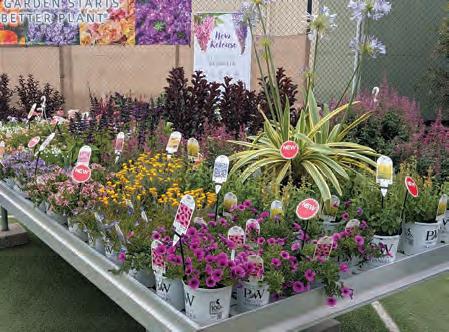
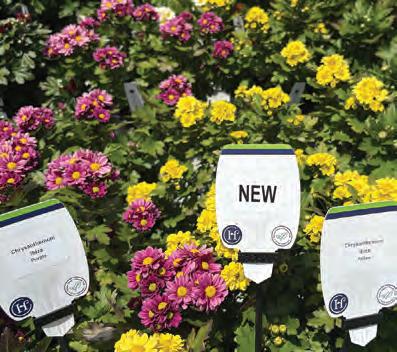
Proven Winners highlighted upcoming 2026 releases alongside the Color Choice ranges of Buddleja and Lagerstroemia, with particular interest around the new Color Choice Buddleja Pugster® series. As Tanya Kathleen of Proven Winners explained, the name Pugster® comes from the plants’ resemblance to a pug – short, stocky and cute. Varieties such as Pugster® Pinker and Pugster® Blue feature thick, sturdy stems that support full-sized, richly coloured flowers on a compact, dwarf butterfly bush. Dense foliage and strong branching result in a lush, garden-ready display that responds directly to demand for high-impact plants suited to smaller spaces.
Visitors also experienced Proven Winners® and Proven Winners® Color Choice® white pots – the brand’s global signature for quality – many for the first time. Tanya noted the strong positive feedback on the cohesive presentation these pots provide, as well as their sustainability credentials. Made from post-consumer recycled plastic, clearly marked with a ‘recycle me’ message and, including the label, 100 per cent recyclable, the pots reinforced how branding, performance and environmental responsibility can work together across the supply chain.
Helix Australia
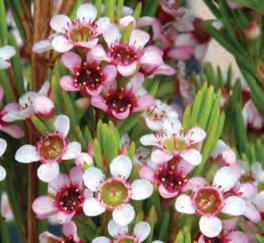
Helix Australia presented its compact waxflower range, bred specifically for smaller gardens, hedging and mass plantings. The focus on scale-appropriate plants aligned closely with current trends in urban design and space-conscious landscaping.
Allied Exhibitors: Supporting the system
Allied exhibitors once again played a critical role in demonstrating how inputs, technology and systems intersect with plant genetics. Garden City Plastics, ICL, Norwood, Powerplants and Syngenta Flowers & Ornamentals all contributed practical demonstrations and discussions around containers, wetting agents, automation, digital tools and future genetics.
For NGIV, this integration of plant and allied innovation is essential. Trials Week continues to demonstrate that improved outcomes are rarely driven by genetics alone – they are achieved through the alignment of plants, inputs, infrastructure and management practices.
NGIV would like to sincerely thank all exhibitors, allied partners and attendees who contributed to the success of Australian Horticultural Trials Week 2025. From the generosity of hosts opening their businesses, to the quality of conversations, insights and connections shared across the week, the event once again reflected the strength and collegiality of Australia’s greenlife industry. We also thank presenting partner The Garden Gurus for their ongoing support in helping tell the industry’s story. We look forward to building on this momentum and continuing to grow Australian Horticultural Trials Week in 2026 – expanding its reach, deepening its impact and further strengthening its role as a cornerstone event for our industry.
Credit Proven Winners photos: Proven Winners® Color Choice®
Australian Horticultural Trials Week offers practical insights for growers
By Elliott Akintola
The 2025 Australian Horticultural Trials Week, organised by Nursery and Garden Industry Victoria (NGIV), delivered a timely message for growers operating under increasing environmental, cost and labour pressure: performance and predictability now outweigh novelty.
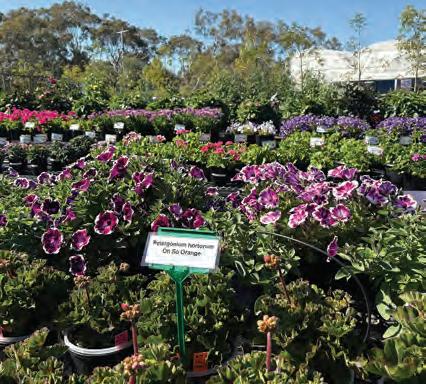
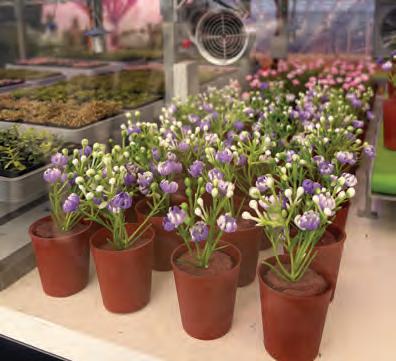
Trials Week stands out from traditional trade events by showcasing plants and products in real production environments. This format continues to provide valuable context for growers. Plants are not viewed in idealised conditions; they are evaluated for performance, uniformity, and resilience. From changing environmental conditions to growing constraints around water availability and inputs, the stakes are high for varieties that can deliver predictable outcomes in landscapes and retail. With over 500 attendees, the week struck a balance between serious business engagements with open technical conversations.
From an agronomic perspective, the 2025 event highlighted how closely plant performance is now tied to evolving climatic and operational pressures. Across seedlings, bedding plants, container lines, shrubs and trees, exhibitors consistently reinforced the same point: modern varieties must satisfy consumer expectations while coping with tougher growing
conditions. Colour and visual appeal remain essential, but resilience, adaptability and production efficiency are increasingly what determine whether a variety is viable. As environmental variability increases and production costs continue to rise, reducing inconsistencies in plant performance, improving forecasting accuracy and supplying retailers with dependable product are no longer optional objectives in both production and sales.
This emphasis extended well beyond genetics. Discussions at trial sites highlighted the increasing importance of precision in managing resources. Nutrition programs, wetting agents, and biostimulants were discussed not as separate solutions but as tools that, when used correctly can bring measurable efficiency gains. For many growers, these small improvements can mean the difference between maintaining profit margins and absorbing rising costs.
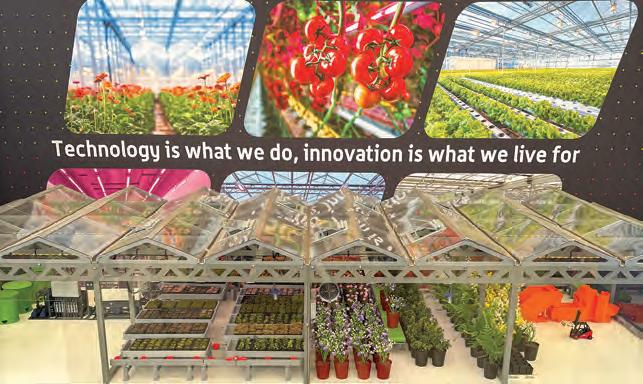
Beyond the plants, Trials week also provided insight into the changing operational aspects of horticulture. Attendees showed strong interest in leadership development programs, structured training methods, and applying scientific principles to daily production challenges. Practical demonstrations of greenhouse design models and guided tours illustrated how optimising layout and workflow can improve labour efficiency. The growing use of artificial intelligence in diagnostic tools indicated a shift toward faster, data-driven decision-making in agronomy. These innovations remind growers that horticulture increasingly blends traditional plant science with digital and systems-based solutions.
A highlight of the week was the announcement of the 2026 Plant of the Year, Corymbia ficifolia ‘Precious Pearl’. This cultivar stood out for its beautiful soft pink to white blooms and compact growth, but it also represents something significant technically Produced through tissue culture, ‘Precious Pearl’ offers a high level of genetic consistency that leads to stable growth, uniform flowering, and reliable market performance. Achieving this outcome reflects years of careful breeding, selection and refinement, highlighting the long-term commitment required to deliver genuinely improved cultivars to market.
The real value of Australian Horticultural Trials Week lies in how growers act on what they observe. It goes beyond new plant releases but a snapshot of the industry’s direction. This means taking a more disciplined approach to variety selection and input use. Continual variety turnover without a clear production rationale, or reliance on legacy nutrition and crop management programs, introduces unnecessary risk and inefficiency. Plants must now earn their place on the nursery floor by demonstrating consistent performance under variable conditions, efficient resource use and compatibility with existing systems. Trials Week remains one of the few industry platforms where these decisions can be critically assessed before being implemented at scale.
As one agronomist summed it up: “If a variety or input doesn’t simplify your system, make it more predictable, or improve its efficiency, it’s not innovation it’s just change.”
Bringing plant potential to life
Global insights shaping the future of ornamental horticulture
By James Nicklen
At Australian Horticultural Trials Week 2025, Syngenta Flowers’ Global Strategic Portfolio Manager Mike Murgiano offered a wide-ranging snapshot of the forces currently shaping the global ornamental industry – and how breeders are responding. His presentation, Bringing Plant Potential to Life, reinforced a clear message: innovation must begin with grower success, while staying deeply connected to the realities of retail and consumer demand across the value chain.
Grower success at the centre of innovation
With operations spanning more than 84 countries and a global team of around 2,300 people, Syngenta Flowers operates at a scale that offers a unique vantage point.
At the heart of Syngenta Flowers’ strategy is a simple but uncompromising principle. “Our passion – our mission – is to ensure the success of growers,” Murgiano said. “And by ensuring the success of growers, we believe we’ll also ensure the success of consumers and everyone else in our value chain.”
That focus shapes how innovation is prioritised. Like growers themselves, breeding companies must constantly balance ambition with constraint. “There’s never enough money, there’s never enough time,” Murgiano noted, “so we’re always managing and balancing what we focus on.”
Key priorities include disease resistance, yield efficiency and technical support. Improving disease resistance, he explained, helps make grower businesses more secure while also delivering a better experience for consumers in the garden.
Yield improvements can take many forms – from faster crop times to higher usable percentages at harvest – but all are aimed at improving efficiency.
Crucially, genetics alone are not enough. “It’s not just breeding and enhancing products,” he said. “It’s also having the technical people there to help you grow and get the value out of the genetics that we breed.”
Innovation takes time – and support
One of the clearest illustrations of this long-term commitment is Sunfinity, Syngenta’s interspecific sunflower. While it has become a standout product globally, Murgiano was candid about the journey behind it. “It took us 20 years to develop
the variety,” he said, “but then it took us another 10 years just to learn, for ourselves, how to grow it well – and to help growers grow it well.”
That kind of behind-the-scenes work, he suggested, is often overlooked when people think about breeding companies, but it is fundamental to success on the ground.
Other innovations highlighted during the presentation included Cora® XDR vinca, Calliope® geraniums, Imara® XDR impatiens and Sunfinity® sunflowers – each representing a “first” in disease resistance or interspecific breeding. “Those are the kinds of innovations we’re really proud of at Syngenta Flowers,” Murgiano said.
A challenging global backdrop
Moving beyond product development, Murgiano outlined the global market conditions influencing breeders and growers alike. The post-pandemic period, he said, has been marked by a dramatic reset. “There was this massive increase in demand during the pandemic that we all got giddy and excited about,” he said. “And then there was a quick reset after that.”
Inflationary pressure and energy costs remain significant challenges, particularly in Europe, where geopolitical and environmental factors have constrained energy supply. “So, we ask ourselves as breeders,” Murgiano said, “how do we address that? One answer is developing products that require less energy and less heating, so growers can maintain profitability.”
Globally, markets in Europe and the Americas appear to be stabilising after several turbulent years, but without strong growth. In the Asia-Pacific region, growth in emerging markets is being offset by declines in China, leaving the overall picture largely flat.
Grower behaviour is changing
In response, growers are becoming more cautious. Across major markets, purchasing and production decisions are increasingly conservative, with a focus on selling through existing stock rather than speculative expansion. There is a noticeable resistance to refilling greenhouses late in the season, alongside efforts to increase unit pricing where possible. Product mix is also evolving, with a shift away from high-volume packs towards fewer, larger and more premium containers, especially in North America.
The result is a familiar equation: fewer units produced, but a higher price per unit. For breeders and suppliers, this reinforces the need to deliver genetics that perform reliably, finish efficiently and justify their place in a premium offering.
At the same time, growers face intensifying operational challenges. Labour availability, energy reliability and cost, transport logistics, environmental compliance and increasingly unpredictable weather events are all putting pressure on margins and management capacity.
Sustainability is no longer optional
Environmental expectations are reshaping production systems at pace. Peat-free growing media, reduced plastic use and fewer chemical control options are no longer future considerations – they are present realities.
“Peat-free growing started in the UK, but we’re now seeing that trend spreading,” Murgiano said. “So we’re screening all of our products to make sure they can be grown in peat-free systems – and that’s challenging.”
Plastics are another area of intense scrutiny, particularly in Europe and increasingly in the United States, where pressure is mounting to move towards more easily recyclable alternatives. Meanwhile, chemical inputs are under sustained regulatory pressure. “Growers in many areas are already very limited in how they can use PGRs, fungicides and other controls,” Murgiano said. “And it’s coming to more markets.”
For breeders, this means developing genetics that can perform both with and without chemical supports.
Retail and consumer expectations
Retail dynamics continue to exert a strong influence, particularly in the US, where mass-market and big-box retailers dominate. Narrowing ranges, pay-by-scan models and growermanaged merchandising are becoming standard practice.
“You’re no longer just a grower,” Murgiano observed. “You’re a marketer, a retailer – you’re doing everything – and it’s a challenge that I think you have to be aware of when you get into the grower business in many markets.”
Branding and tagging are critical in this environment, with dominant brands often controlling prime retail space. The implications for growers are clear: strong genetics must be paired with compelling presentation and retail-ready solutions.
On the consumer side, several long-running trends continue to accelerate. Convenience is paramount. “’Do it for me’ versus ‘do it yourself’ has really taken off,” Murgiano said, pointing to growing demand for large, ready-to-go patio containers over smaller DIY options.
Patio gardening is increasingly becoming more popular than in-ground planting, with many plants never leaving their grower pots. Premium combinations, edibles, perennials and cut flowers for home gardens all remain strong categories, while pollinatorfriendly plants, natives and drought-tolerant varieties reflect broader environmental awareness.
At the same time, consumers want confidence. “They want to go away on vacation and come back five days later and still have their plants alive,” Murgiano said. “That might be asking a lot – but we have products that can do that to a certain degree.”
How breeders are responding
For breeders, responding to these converging pressures is no small task. Long development timelines, high costs per unit, regulatory constraints and the need to “right-size” products for specific markets all complicate the path to innovation.
Syngenta Flowers’ approach, as outlined in the presentation, is grounded in listening – not only to growers, but across the entire value chain. That includes technical vetting of growing protocols, investment in resistance breeding, exploration of new species and interspecific opportunities, and a continued focus on practical, market-ready innovation.
Crucially, the emphasis remains on ensuring success for growers first. As Syngenta’s Global Head of Flowers Mark Schermer observed, growers are ultimately the industry’s best marketing tool – when plants perform well in production and in the consumer’s garden, everyone benefits.
The road ahead
The message from Australian Horticultural Trials Week was clear: the future of ornamental horticulture will be shaped by collaboration, resilience and relevance. Breeding programs that balance innovation with practicality – and sustainability with commercial reality – will be best placed to support growers navigating an increasingly complex landscape.
As global conditions continue to evolve, bringing plant potential to life will mean more than just developing new varieties. It will require a deep understanding of growers’ realities, retailers’ expectations and consumers’ changing relationships with plants – and the ability to connect all three.
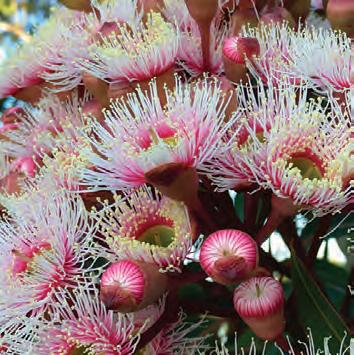
Corymbia ficifolia ‘Precious Pearl’: A new tree for the Australian landscape
– Plant of the Year
2026
Corymbia ficifolia has long been a favourite native, with the iconic flowering gum tree holding a special place in Australian’s hearts for their summer time blooms.
But what if this beloved Aussie native could be improved upon? And in a way that ensures the tree can be used more readily across public landscapes, parks, streetscapes and the home garden.
In a collaboration between Kings Park and Botanic Garden Breeding Program and Austem Foundation that combined patience and innovation in equal measure, Corymbia ficifolia ‘Precious Pearl’ has gone from idea to award-winning tree.
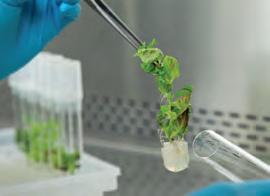
The key to ‘Precious Pearl’s’ success is its careful selection and propagation via tissue culture. Unlike seed-grown gums, which are variable, or grafted stock, which can fail over time, tissue-cultured plants are true to type, delivering predictable growth and consistent floral displays.
This breakthrough overcomes the genetic challenges typically associated with flowering gums and secures supply. Now amongst the world’s first Corymbia ficifolia successfully produced via tissue culture, ‘Precious Pearl’ is a highly adaptable tree with striking aesthetic appeal – and set to become a new favourite in both public and private gardens.
A medium size tree (7m x 4m), its canopy is covered from spring through summer in an elegant pink-to-white display that distinguishes it from brighter coloured flowering gums. Dense, glossy foliage offers year round greenery, while textured bark and decorative capsules extend its ornamental appeal. Its refined size gives it a strong presence without overwhelming its setting, creating balance and proportion in parks and streetscapes to private gardens.
Its pastel pink blooms also harmonise beautifully with both native and exotic plantings, ensuring its versatility for a diverse range of design palettes. And of course, beyond aesthetics ‘Precious Pearl’ provides nectar and pollen that attracts birds, bees and pollinators.
Front of mind was also ensuring a tree with robustness and reliability to give growers, landscapers, councils and the home gardener confidence. ‘Precious Pearl’ has been carefully selected to be adaptable, low maintenance with strong survival performance. It will thrive in full sun and well drained soils with tolerance for drought and mild frost once established, and its consistent growth habit requires minimal pruning or intervention, reducing costs for councils and landscapers. Enhanced pest and disease resistance adds to its robustness, while uniform canopy shape ensures cohesive, professional results in large scale plantings.
For councils and landscapers, ‘Precious Pearl’ now offers a tree with predictable outcomes, reduced maintenance costs and confidence in long-term performance in streetscapes, parks and feature plantings where presence is required without the challenge of overly large trees. For home gardeners, it offers a refined, manageable tree with an elegant floral display and year round foliage appeal.
By combining the reliability of tissue culture with striking sensory appeal and ecological value for the contemporary Australian landscape, ‘Precious Pearl’ makes quite the statement as the NGIV Plant of the Year
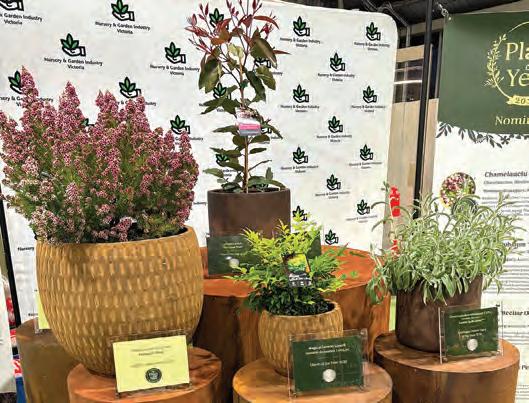
Announcing the 2026 Plant of the Year Award Winners
By James Nicklen
Nursery and Garden Industry Victoria (NGIV) is thrilled to announce the winners of the 2026 Plant of the Year awards – celebrating outstanding plant varieties that spark innovation, inspire the horticulture industry, and showcase the exciting developments shaping the future of gardening and landscape design.
Judged by a distinguished panel of industry experts, the awards recognise plants that excel in aesthetic appeal, growth and performance characteristics, innovative qualities, and marketability potential.
Overall Winner & Tree of the Year 2026
Corymbia ficifolia ‘Precious Pearl’
A medium-sized flowering gum (7 m × 4 m) celebrated for its elegant, balanced canopy and abundant soft pink-to-white summer blooms. Hardy, low-maintenance and ideal for parks, streetscapes and modern gardens, it also performs consistently thanks to tissue-culture production ensuring uniform canopy shape and flower display.
Category Winners
Shrub of the Year:
2 0 2 6
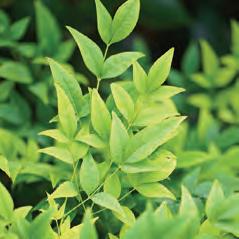
Nandina domestica ‘LemLim’ — Magical Lemon Lime®
A hardy evergreen shrub with vibrant lime-green foliage and a compact, dense habit that requires no pruning. Perfect for containers, borders and small gardens, it offers year-round interest and excellent frost and heat tolerance.
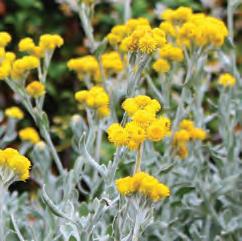
Australian Native Plant of the Year: Chrysocephalum apiculatum ‘CAP07’ PBR Intended — Aussie Reflection™
A resilient groundcover with dense grey-blue foliage and vibrant golden button flowers. Thriving in full sun to part shade, it’s drought, frost and flood resilient, supports pollinators, and brings long-lasting colour to native gardens, coastal sites, retaining walls and containers.
Highly Commended Plants
Australian Native Highly Commended: Chamelaucium floriferum ‘Pinnacle Pink’
A striking native waxflower shrub (≈2 m × 1.5 m) that produces show-stopping conical pink flower spikes in spring framed by fine green foliage.
Herbaceous Plant Highly Commended:
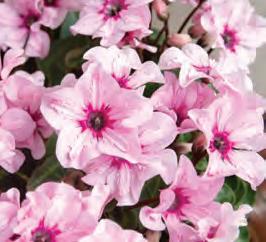
Cyclamen persicum ‘Illusia’ (Shrub)
A compact and elegant cyclamen with luminous bi-coloured blooms and beautifully marbled foliage. Ideal for pots, indoor displays and shaded garden settings, it offers extended flowering season performance.
All winners and nominees will be showcased at the 2026 Melbourne International Flower and Garden Show, offering a unique opportunity for the public and industry alike to celebrate the diversity and beauty of these exceptional plants.
For the full list of winners and more information on the awards, visit plantoftheyear.com.au
Members gather at TGA Australia for November AGM
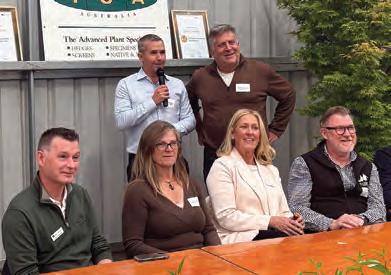
NGIV members came together in November for the Tree & Shrub Growers event and Annual General Meeting, hosted by TGA Australia at their Somerville nursery. The evening offered a valuable opportunity to connect with peers, reflect on the year past and look ahead to the future of the Victorian greenlife industry.
Guests were welcomed with an exclusive behind-the-scenes tour of TGA’s expansive wholesale nursery, providing insight into the systems, scale and precision behind one of Australia’s leading production operations. The tour was followed by a relaxed evening of dinner, drinks and networking, with members enjoying the chance to catch up and share experiences in an informal setting.
The choice of venue was particularly fitting, with TGA Australia recently named Production Nursery of the Year at the 2025 NGIV Awards. Judges recognised the business for its impeccable stock quality, pristine nursery layout and outstanding environmental initiatives, including constructed wetlands, water catchment systems and an industry-leading stormwater treatment and harvesting project. TGA also received the Award for Commitment to Environmental Stewardship, acknowledging its long-term investment in sustainability, beneficial insect habitats, solar power and waste reduction.
Formal proceedings during the AGM included important governance updates and moments of recognition. After two successful terms on the Board, Mario Diaco stepped down, with
members warmly thanking him for his service, leadership and memorable contributions. Rebecca Humphris (The Greenery Mt Evelyn and Heidelberg; Humphris Nursery) was elected to the Board, bringing valuable experience and perspective to the role
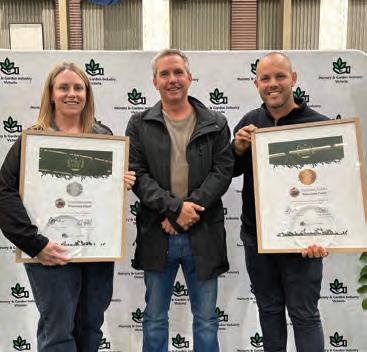
The evening also recognised an outstanding contribution to the industry, with Michael Warner awarded Life Membership in acknowledgement of more than four decades of leadership and service, including his significant and enduring involvement in the Melbourne International Flower & Garden Show.
A key outcome of the AGM was members voting in favour of adopting a new name and brand for the organisation. From 1 July 2026, NGIV will transition to Greenlife Industry Victoria, reflecting the evolution of the industry and alignment with a national initiative led by Greenlife Industry Australia.
The November AGM was a strong example of what makes NGIV events so valuable – meaningful conversation, shared insight and a collective commitment to strengthening the greenlife industry in Victoria. Thank you to TGA Australia for their generous hospitality, and to all members who attended and contributed to a memorable evening.
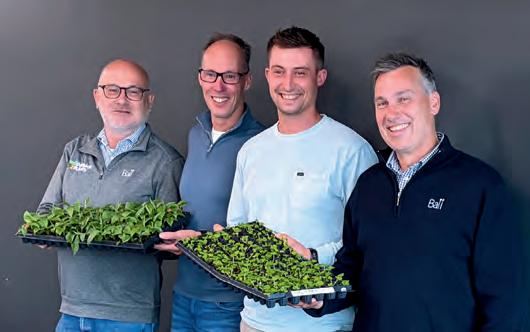
Ball Australia is pleased to announce a strategic partnership with Gootjes-AllPlant B.V.
By James Nicklen
A renowned Dutch producer specialising in premium tissue culture plants and young plants, with the aim of delivering their comprehensive Tissue Culture Plant Range to the Australian market.
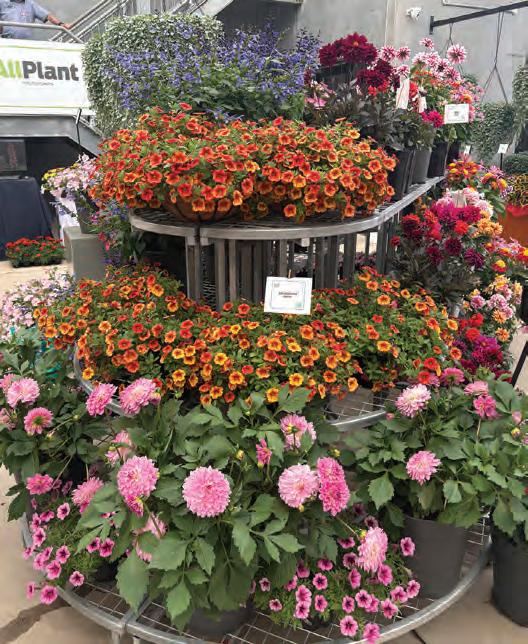
Operating under the brand AllPlant Australia, this collaboration will introduce a distinguished selection of exclusive and highly sought-after perennials, succulents, foliage plants, and shrubs to the Australian market from 2026 onwards.
AllPlant Australia will provide high-quality tissue culture plants from carefully controlled initiations undertaken in the Netherlands, with manufacturing facilities in Vietnam to supply commercial quantities.
An ongoing research and development program is in place to cultivate new plant varieties for tissue culture production and to continuously enhance propagation techniques.
These plants will be distributed exclusively through Allplant Australia, ensuring growers have access to a diverse and reliable range of innovative and consistently high-quality plant material.
Simon Gomme, Managing Director of Ball Australia, stated, “By integrating AllPlant’s expertise in tissue culture with our established distribution network, we are creating a valuable opportunity for Australian horticultural professionals. This partnership affirms our commitment to supplying superior plant genetics and innovative solutions to the market.”
Simon Gootjes, Managing Director of Gootjes AllPlant B.V., added, “We are excited to collaborate with Ball Australia to bring our range of tissue culture plants into the Australian market. Working with Ball Australia provides an opportunity
to consolidate the shipments for the customers and efficiently offer and distribute our assortment of tissue culture plants to the growers.”
The new product range will be available for order through Ball Australia beginning in 2026, with availability for the 2027 planting season.
More information
Mark Lunghusen, General Manager Outback Plants
M: +61 407 050 133 | E: mark@outbackplants.com.au
Sem Gootjes, Sales Advisor
M: +31 6 47 134 961 | E: sem@allplant.nl
L-R: Mark Lunghusen, Simon Gootjes, Sem Gootjes and Simon Gomme.
Preparing for a business exit – will you really be ready?
By Michael Coker
Exiting a business is inevitable, but being properly prepared is not. This article explores why early planning and the right legal and structural foundations are critical to achieve an efficient, smooth and stress-free exit.
Many operators in the greenlife industry have set up, or acquired and then grown, their business over a long period of time. However – no-one stays in the industry forever, and there will come a time when eventually most proprietors of a business will:
» want to sell their interest in the business – either to other proprietors or to a third party;
» want to pass the business onto ‘the next generation’; or
» need to sell to or buy-out another proprietor when there has been a breakdown in a joint venture or business relationship.
A number of legal issues and problems can arise when you want to implement this sort of transaction – including:
» how should the transaction be structured – from both a legal and a tax perspective?
» what happens if other proprietors, particularly minority equity holders, do not want the transaction to proceed?
» are all of the business’s assets actually held by the company?
» how should the business, particularly your interest in it, be valued?
It is not possible in this article to provide answers to the myriad issues and problems that can arise – but in the table on the following page we set out just a few of the considerations you should address when planning for a business exit.
The key here really is to make sure that the structure of your business and its contractual relationships will facilitate any likely business exit you may want to pursue, at any particular time, with the minimum of fuss, and the least possibility of third parties ‘throwing a spanner in the works’, particularly by preventing you doing what you want to do, or forcing you to give them financial or other concessions to secure their agreement.
All too often we see that a lack of forward planning in setting up and managing a business results in extensive difficulty, anxiety, and expense when it comes to the time for a business exit. Whilst invariably joint ventures start with harmony and common purpose, and therefore they often rest on a mere ‘handshake’ – many of them eventually break down and that’s when the time and effort in forward planning repays itself many times over.
Piper Alderman has extensive experience advising on both business structuring and business exit management in the greenlife industry.
If you are contemplating any form of business exit, it is highly prudent, particularly before you speak with any other co-proprietors, employees, suppliers/customers, regulators or other key stakeholders, to engage with a lawyer to identify any potential legal problems, so that you can manage them in a proactive and timely manner to maximise the benefits that you will gain from the transaction.
About the author
Michael Coker is a corporate and commercial lawyer with considerable experience in a number of fields of advisory and transaction-based legal work, including advising clients in the horticulture industry, particularly members of NGIV.
Michael Coker Corporate, Commercial & Property
Alderman
Topic Considerations
Structuring the business from the outset
» Should the business be conducted through a company, trading trust, sole proprietorship or other structure?
» If there is more than one equity holder – a joint venture agreement in the form of a Shareholders Agreement or Unitholders Agreement should be put in place. This should include a range of ‘exit options’ especially including ‘drag-along’ rights to minimise potential interference from minority holders, and a valuation mechanism.
» Should a ‘Buy-Sell’ agreement be put in place? This agreement sets out how co-owners equity interests will be dealt with if a ‘trigger event’ occurs, such as death, disability, retirement, or departure ensuring business continuity, preventing disputes, and providing a clear exit strategy with funding mechanisms, often using insurance.
Holding of assets and contracts
Structuring the transaction
» All of the assets used in relation to the business should be held in the correct corporate vehicle.
» All too often assets are held outside the main business entity – this can include real estate, trademarks and even critical contractual relationships.
» Surprisingly, it is also fairly common for a business not actually to own intellectual property it has commissioned third parties to create – including logos, marketing material and photographs.
» Remember that transferring assets between entities may have stamp duty and/or tax consequences –therefore this should generally be considered at the time the asset is required.
» Should the exit take the form of a share/unit sale, and asset sale, a management buy-out, or even a winding-up?
» Tax and liability considerations often impact upon the choice of structure.
» It may be that a ‘business broker’ could be engaged to help find a potential third-party purchaser.
» You will need to consider what external professional advice you will need to help implement the transaction – including legal support, accounting/tax support, and other relevant advisors.
» In relation to legal support – you will need to consider whether the key legal advisor is appointed by the business itself, or you personally. It may be that other parties will wish to have their own representation – either from the outset or once the proposed documentation has been prepared.
Managing the transaction
Valuation
Required approvals
Your ongoing involvement in the business
» A detailed transaction checklist should be prepared at the outset – this should set out all the key steps involved in implementing the transaction, in chronological order, including the expected timing and who is to be responsible for each step.
» Quite often the legal advisor will have the primary role of managing the transaction including co-ordinating the various advisors.
» Presumably, a valuation of the business will need to be undertaken.
» You will need to be confident that the chosen valuer has appropriate expertise and is independent of other stakeholders.
» Are any shareholder/unitholder approvals required for the transaction?
» Will the exit trigger any ‘change of control’ or assignment provisions in key contracts? These may give the counterparties undesirable leverage in the exit process – or worse still, result in the termination of key contracts.
» Is the approval of a regulator required to the transaction – such as the competition regulator, an environmental regulator, the Fair Work Commission, or a local council?
» Will you want to have an ongoing involvement in the business – such as a contractor for a period of time, or even remaining a passive equity holder?
» Will the ongoing proprietors want you to have an ongoing involvement in business?
» On the flip side – will the ongoing proprietors want to restrain you from being involved in any competitive business going forward, if so, what are their geographical concerns and desired duration?
Comms strategy
» A major transaction relating to a business is likely to have a significant impact on certain key stakeholders including employees, suppliers and customers.
» The timing of any public announcements in relation to the transaction needs to be carefully considered – particularly in the light of any arrangements with employees, and the interests and sensitivities of key suppliers and customers.
New member profile: Pearcedale Garden Centre
Pearcedale Garden Centre (PGC) began on a small block of land opposite the Pearcedale Village Shopping Complex. As the business outgrew that space, it moved to its current location, where it has now been established for more than 15 years. Over that time, the business has built a strong reputation for high-quality plants and some of the best prices on the Peninsula. Pearcedale Garden Centre prides itself on excellent customer service and offers a hybrid model – supplying both retail customers and wholesale clients.
What makes your business unique?
The business model we are developing ensures we can continue to offer the best prices for our customers, alongside a wide variety of plants for those who shop with us.
What is your stock range?
PGC’s quality stock includes hardware goods, soil, improvers and mixes, mulches and pest control products, as well as a wide range of indoor and outdoor plants. We also have the ability to source more unique or rarer varieties on request. Our plant range spans hedging and screening plants, natives, cottage garden favourites, water plants and established trees. An expansion of our established tree range is currently in the works, and PGC is excited about opening this new area in the near future. We also stock giftware, along with garden design artworks, features and ornaments. We have taken pride in building our range of giftware/products by sourcing Australian hand-made products from local craftsmen.
Who is a typical Urban Tree Growers customer?
Our customer base spans all ages and locations. People shop at PGC for gifts, garden updates, ongoing garden maintenance and small-scale garden design projects. Schools and local businesses also purchase our products. Other clients include landscapers, building groups and procurement customers. In addition, we are part of Evergreen Connect and offer plants at wholesale prices to businesses within the industry.
Have you worked with any NGIV members before?
We have enjoyed getting to know other members at trade days and hearing about their ventures so far, and we look forward to what the future holds for PGC.
How do you market yourselves to your customers?
We pride ourselves on exceptional customer service and on offering quality plants at competitive prices. Sales are primarily in person, with delivery available on request. We market ourselves across various platforms as a one-stop shop, while also referring customers to trusted local suppliers for anything outside our range. With a long-standing history built on service, price and plant quality, we advertise locally, contribute to weekly RRP Radio Peninsula Radio 98.7 segments, and support community clubs (including netball and football) as well as charitable organisations. PGC is a grassroots business that is now developing a new and growing online presence.
Do you have any long-term plans for your business?
Future endeavours at PGC are multifaceted, as we move into our next phase of growth. Over the coming years, various works will take place to support our operations, plant production and growing capacity. While we are already operating at a higher rate of propagation to maintain competitive pricing, we look forward to seeing this continue to evolve as new spaces open up. Engaging with local businesses and communities is integral to our ethos, and we work hard to support these wherever possible. We value building strong relationships with other businesses in the industry and communicating with those willing to take necessary risks so nursery businesses can prosper into the future. Education is also at the forefront –formulating training programs and drawing on the knowledge NGIV currently offers to find the most effective ways of delivering value to our customers.
This marks an exciting phase for PGC as we strengthen our presence within the industry, raising expectations for both growers and buyers.
Tell us a little bit about your core team and skills. The team at PGC works hard on the ground to ensure plant quality is excellent and a diverse range is always available. We are a family-operated and run business, employing a team of horticultural specialists across in-house propagation, stock control, sales and customer advice. Our team is vibrant, enthusiastic and deeply committed to what we do.
How can NGIV members learn more about your products and services?
Through social media, our website, in person, at trade days, and via radio segments on RRR Peninsula Radio.
Why did you decide to become an NGIV member?
For industry support and advice, trade and industry connections, and the specific support NGIV provides to its members.
We’re delighted to have Pearcedale Garden Centre join the NGIV as a full member. As Victoria’s peak industry body, we are committed to helping our member businesses and the State’s horticulture industry to grow. Find out how you can become a member – ngiv.com.au
More information
Pearcedale Garden Centre, 690 Baxter-Tooradin Road
Pearcedale VIC 3912
t: 03 5978 7235
e: info@pearcedalegardencentre.com.au
pearcedalegardencentre.com.au
RETAIL STATE OF PLAY
SPONSORED BY:
Garden Centres Australia: Part of a Global Alliance
Garden Centres Australia (GCA) is proud to be part of an international alliance of garden centre associations, working collaboratively to strengthen and support the retail garden centre industry worldwide.
Through our involvement with the International Garden Centre Association (IGCA), GCA is connected to global industry leaders, gaining valuable insight into emerging retail trends, sustainability, customer engagement and business innovation. This international connection helps ensure Australian garden centres remain relevant, resilient and future-focused.
A highlight of this collaboration is the IGCA Annual Congress, which will be held in Munich, Germany this August. The Congress brings together garden centre owners, retailers and suppliers from around the world for several days of learning, inspiration and networking.
The program includes behind-the-scenes tours of leading European garden centres, keynote speakers, business-focused sessions and opportunities to share ideas with international peers. For GCA members, these insights often translate into practical strategies that can be adapted to the Australian retail landscape.
GCA members and associate members are eligible to attend the Congress.
To learn more or register, visit igca2026.com
Contact
Lisa McCann, GCA General Manager
e:
manager@
gardencentresaustralia.com.au m: 0438 387 677
48th Annual VSGP Awards Celebration
By Tania Karamitos
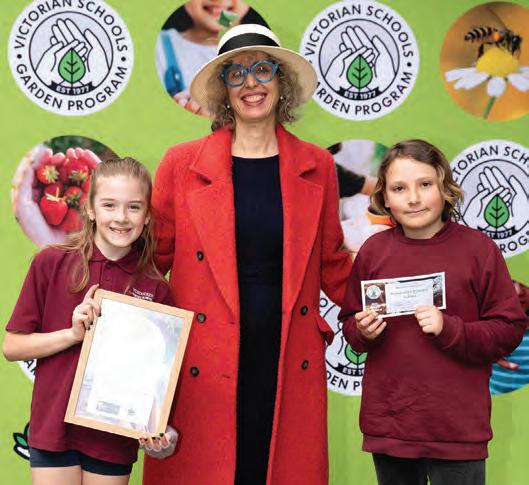
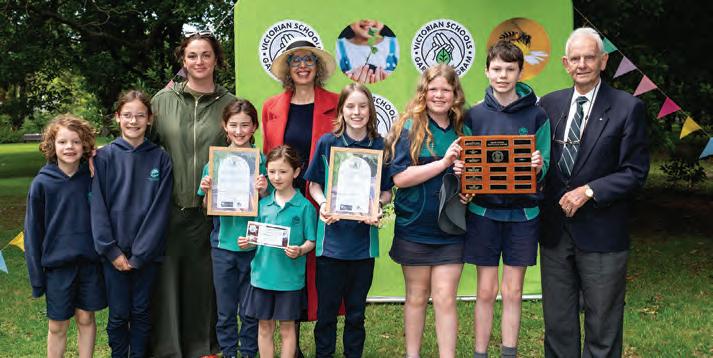
On 27 November 2025, in the Oak Lawns at the Royal Botanic Gardens, more than 451 students, teachers and parents from 35 Victorian schools, gathered to celebrate school gardening achievements and share the joy of learning through gardens.
The top prize, the Kevin Heinze Perpetual Award went to Montmorency South Primary School, where all 615 students help create and care for gardens spanning a productive, orchard-and-chooks – kitchen garden, bush tucker, native and pollinator plantings, and a bush reserve restoring habitat for local sugar gliders. Students lead the full gardening cycle, with produce feeding into their kitchen garden program and learning from all gardens embedded across the curriculum.
In a very close second, State Award finalist Wendouree Primary School was recognised for outstanding, student-driven biodiversity work on its Ballarat grounds, including the planting of more than 1,200 native trees, shrubs and grasses and the creation of rich habitat spaces such as wetlands, frog bogs, nature trails and bush tucker gardens. Their work also supports other schools through shared resources and expertise.
Third place State Award finalist, Collingwood College, was celebrated for its long-running kitchen garden program, now in its 24th year, continuing to build student leadership, wellbeing and strong curriculum links in a diverse inner-city community.
The VSGP is proud of every school that entered this year’s Awards and encouraged by the growing recognition of gardens as powerful spaces for learning, health and wellbeing. We invite all schools in 2026 to consider starting or expanding a garden project: even the smallest patch can make a big difference.
Finally, the VSGP sincerely thanks our 2025 sponsors for their generous support, helping inspire the next generation of gardeners and enabling schools to grow, learn and thrive through their garden programs.
State finalist Collingwood College with Nina Taylor, Parliamentary Secretary for Education
State finalist Wendoureee Primary School with Nina Taylor, Parliamentary Secretary for Education
And the winners are:
Kevin Heinze Perpetual Award:
Montmorency South Primary School
State Award:
Collingwood College
Wendouree Primary School
Montmorency South Primary School
Independent Schools Victoria – Greatest Improvement of School’s Green Space:
Croydon Hills Primary School
Kilsyth Primary School
Koroit And District Primary School
Nursery & Garden Industry Victoria – Most Engaging Garden for Learning Boroondara Park Primary School
St John’s Catholic Primary School, Footscray Warrnambool East Primary School
Nursery & Garden Industry Victoria Most Engaging Garden for Play:
St James Primary School, Sebastopol Tanjil South Primary School
Eltham East Primary School
Maxicrop – Best Edible Garden Award:
St Augustine’s Primary School, Frankston Sth
St Kilda Park Primary School
Bright P-12 College
Horticultural Media Victoria – Best School Habitat Garden: Little Yarra Steiner School
Jackson School
Montmorency Primary School
Garden City Plastics & Norwood –
P55 Recycling Champion Award
1st Diamond Creek Primary School
2nd Athol Road Primary School
3rd Surfside Primary School
Best Use of a Grant: Woodmans Hill Secondary College
Australian Growing Solutions Award: Essendon Primary School
Best Community Garden Award – Plantfulness: Botanic Ridge Primary School
Fleming’s Nurseries Award: Ferny Creek Primary School
FoodCube by Biofilta Award: Surfside Primary School
RB Landscape Award: Kardinia International College
Turf Victoria Award provided by HG Turf Group: Karingal Primary School
Kevin Heinze Perpetual Award and State Award winner Montmorency South Primary School with Nina Taylor (Parliamentary Secretary of Education) and Paul Crowe OAM (VSGP Co-founder).
The Role of Garden Inspirations Group (GIG) in the Australian Nursery and Garden Industry
Garden Inspirations Group (GIG) is a network of complementary, industry leaders dedicated to empowering independent Garden Retailers. We provide innovative products, expert support, staff training, and strong industry connections to help Garden Centres grow and thrive. Our annual Best GIG in Town event is a standout opportunity for networking, learning, and celebrating excellence – highlighted by the GIG Industry Champion Award.
Our annual Best GIG in Town event is a standout opportunity for networking, learning, and celebrating excellence – highlighted by the GIG Industry Champion Award.
GIG occupies a vital strategic position within the Australian Nursery and Garden Industry. It is not a buying group, nor a conventional industry body. Instead, GIG functions as an innovation and education platform, bridging the gap between supply and retail. By showcasing trend-forward plants, products and retail solutions, GIG ensures independent Garden Centres remain competitive and relevant in an evolving market landscape.
Through initiatives such as the annual “Best GIG in Town” event, GIG delivers industry-leading staff training, product engagement and unparalleled networking opportunities. These events contribute to a dynamic and future-focused Garden Centre community, reinforcing the value of human expertise and retail creativity in the face of large-scale retail competition
GIG also complements, not competes with, state and national industry associations such as Greenlife Industry Australia (GIA), Garden Centres of Australia (GCA) providing targeted support where independents need it most: staff development, customer experience, product innovation and collaborative momentum.
As Australia’s Independent Garden Centres navigate challenges ranging from supply chain pressure to shifting consumer habits, GIG plays a critical role in ensuring they are not only resilient but also thriving. With a flexible, valuesbased approach, GIG helps preserve the integrity, autonomy and local character that define independent garden retailing.
In summary, GIG is a progressive and unifying force within the Australian horticultural industry, fostering excellence at every stage of the Garden Centre journey – from supplier to shop floor.
1. Trend-Leading Products
Be first to discover new and innovative plant ranges and garden goods.
2. Staff Training That Engages
GIG’s famous “Best GIG in Town” event is a one-of-a-kind opportunity to upskill your team in a fun, inspiring and educational setting.
3. Unrivalled Networking
Build relationships with suppliers, fellow retailers and industry figures who share your vision.
4. Marketing & Merchandising Ideas
Get inspired with fresh ideas to drive foot traffic, seasonal promotions and in-store experiences.
5. Support Without Pressure
Stay completely independent while accessing support that strengthens your retail edge.
GIG exists to help Independent Garden Centres thrive. When you join, you’re not just getting access to products or discounts – you’re joining a community committed to raising the bar for the whole industry.
If you’re ready to energize your team, elevate your offer, and grow with the strength of industry behind you, then we invite you to contact GIG today.
Wishing a happy, safe and healthy New Year to all NGIV members and their families.
After a very busy December Trade Day to wrap up 2025, January began with a calm and quiet start. Many members were still making the most of the Christmas and school holiday break.
As is typical post-festive season, January Trade Day had a more relaxed pace – but those standholders in attendance reported good sales, helped along by fine, mild weather conditions.
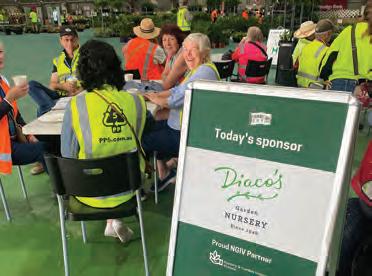
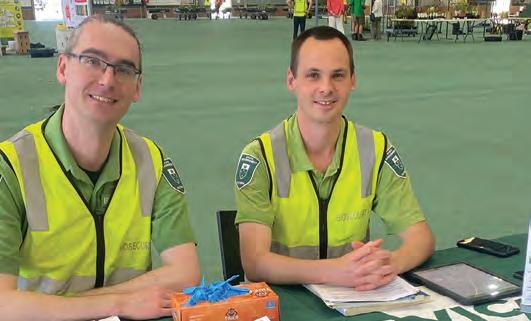
« Recognition to our Sponsor of the Day – Gold Industry Partner, Diacos Garden Nursery. Buyers took the chance to relax and reconnect over an obligatory raisin toast and cuppa.
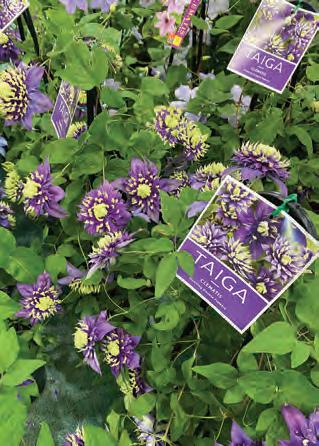
« Right in the thick of a sea of colour – the Alameda Homestead Nursery team, including David and Judy, nearly sold out of their spectacular clematis and hydrangeas. The nursery has now been attending Trade Day for more than 26 years.
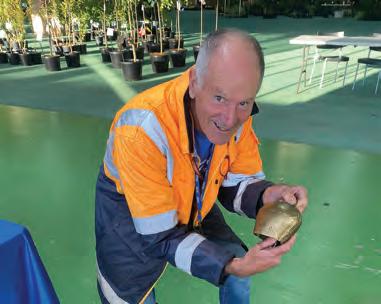
“Under the pump – but loving it!” David Button from Alameda Homestead Nursery got right into the spirit of things, enthusiastically ringing in the New Year to mark the start of trade.
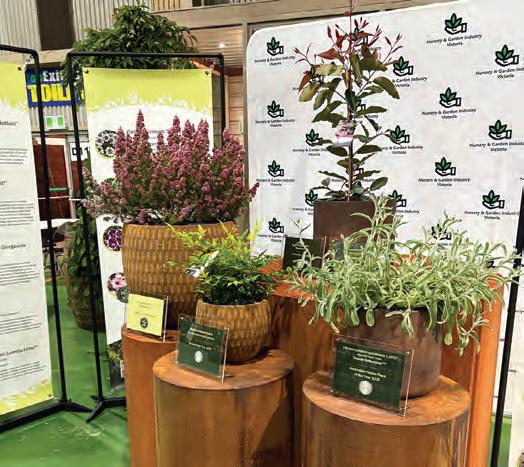
Much interest in the results of ‘Plant of the Year’ showcase –members inspecting the winning entries on show, appreciating the high standard and care with displays.
Our thanks to Bombora Pots for provision of planters to showcase the entries
Fernland, with close on 50 years' experience, all focus is on helping nursery growers succeed. Taking full advantage of the spotlight on start of trade – Michael Parsons taking on the ‘bell ringing’ duties with much enthusiasm.
Department of Agriculture – Nick Collinson (LHS) and Alec Edmondson (RHS) were on hand to assist members with queries around the transport and movement of plant products interstate.
Interview with NextGen BRODIE GLADMAN
Biemond Nurseries
Where do you work and what is your role?
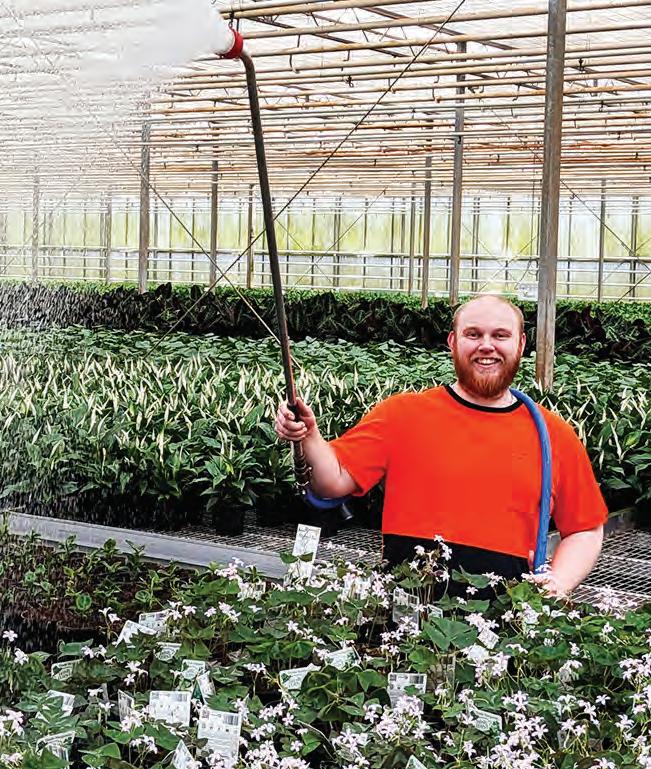
I work at Biemond Nurseries; my role is grower which consists of keeping stock well-watered and fertilised, as well as staying on top of any pest that may arise.
How long have you worked there and how has your role progressed in that time?
I’ve been at Biemond for three years now and have filled in many nursery roles whilst completing my apprenticeship. I’ve progressed from being a general hand, doing task such as picking stock and weeding, to being the main man in charge of potting our stock at our smaller sites. I then spent the last two years as a grower, focusing on improving my plant knowledge and managing the irrigation, pest control and fertigation of our larges site.
What/or who inspired you to choose horticulture?
Growing up I spent a lot of time outdoors with friends and family. I have always enjoyed being around nature, camping and being outside exploring the forest. As I grew older, being able to follow my passion and allowing me to be surrounded by nature at work was a huge deciding factor in choosing horticulture as a career.
What do you enjoy most about working in horticulture?
Working with plants and being rewarded by seeing my efforts of nuturing them come to fruition. Watching them flourish and grow into something beautiful and full of life is an experience I absolutely love and adore.
What are your achievements and ambitions within the industry?
I have definitely seen an improvement in the quality of the plants we have grown this past year and I intend to continue to put out these absolutely stunning plants into the industry.
Who has inspired you on your journey?
My parents have been a huge inspiration in my journey and have supported me through any challenges during my apprenticeship. Another large inspiration to my studies were my teachers at Swinburne during my study, Mark and Mike, whose passion and expertise for plants left me with a great admiration for the horticulture industry as a whole.
Why should more young people choose horticulture as a career?
Horticulture is a broad and ever-growing field to work in. I find being able to see the hard work I put in, grow in real time into a very fulfilling experience that I haven’t had in any of my previous jobs.
What is a typical day like for you?
A typical day starts with a water check around the site, looking for any dry patches and assessing plant health while I walk around. Then I spend the remainder of my day watering and fertilising any plants that appear to need it, ending the day by setting water requirements for the next morning or helping to pick plants for dispatch.
What is the best piece of career advice you’ve received on your journey?
Just don’t kill anything and I’m sure everything will work out fine.
Are you/have you studied a horticultural course?
I studied a nursery production apprentice at Swinburne which I complete in November 2025.
Tell us a bit about you; what you enjoy doing outside of work?
I enjoy spending time with my family and camping outdoors. I’m a keen fisherman with a terrible catch rate and I enjoy board games with my mates and family.
PRICE UPDATE
y P f Jiffforma,ferP
te y condition no mat
erven in evopr f ff or decades orldwide f ted w rusTr T , Jif