
EAST HANOVER FLORHAM PARK
BY STEVE SEARS STAFF WRITER
HANOVER PARK - For Hanover Park High School senior, Tanvi Daita, it is personal.
Daita, who was named in November to All NJAC - Liberty First Team as a girls’ tennis singles player, said, “The heart is definitely a muscle, obviously, and you have to take care of it and do the proper things. You have got to eat right, exercise, make sure you are keeping your stress levels down, because those are the triggers of attacks. At the same time, it also is the most important organ in your entire body; it literally pumps life into every single part of your body. Everything is connected to it through arteries and veins, but at the end of the day, it is the center of your body. It is really important that we take care of and raise awareness for it.”
Daita was born with Tetralogy of Fallot, a complex congenital heart defect. Early in her life, she had three openheart surgeries, and this summer prior to college will likely have a fourth.
And she is raising that awareness for heart health. For the past three years, Daita has led a walking team called Every Beat Counts to support the American Heart Association via the Northern New Jersey Heart Walk. This year’s walk, held on October 14 at ADP in Roseland, raised about $4,000, and Every Beat Counts’ threeyear total is over $10,000. In addition to Daita and her Hanover Park High School Hornets teammates, the number representing her walk swelled to almost 50 people. Daita, whose team was
among many who took part in the walk, said, “I asked a bunch of my close friends and family, and also beyond that. I said, ‘Bring as many people as possible.’ This was definitely the biggest number we have had in the three years, so this year was definitely the most successful in terms of showing up and raising money. It was a mix of my school friends, friends outside of school, family and some of my close relatives, and even people that I have not seen in a year or two came from South Jersey. Whoever could make it did show up, and if they did not, they definitely donated or expressed their support. That is all you can really ask for.”
And next year, when Daita is away at college, Every Beat Counts will again be putting feet to walking path, as Tanvi’s
Whippany Park High School Girls’ Tennis Wins First Sectional Title
BY STEVE SEARS STAFF WRITER
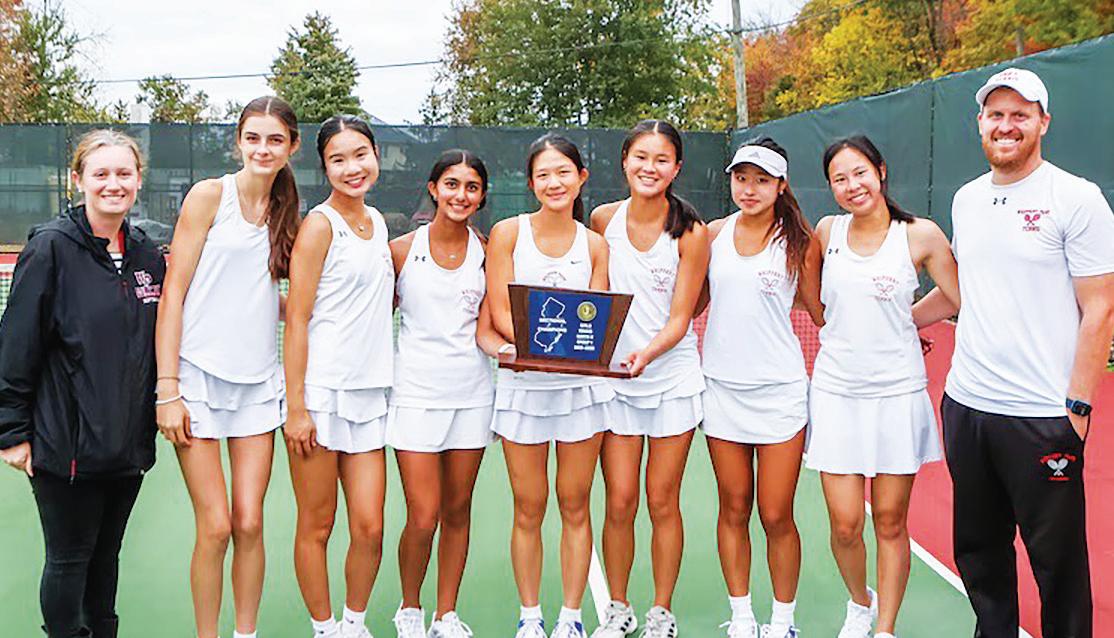
WHIPPANY - This fall, all at Whippany Park High School are celebrating the first ever sectional title win in the history of the girls’ tennis program and its companion 17 – 1 record. The season’s only blemish was a loss to Glen Rock in the final round of the NJSIAA Group 1 tournament. But two days earlier, history had been made when the team defeated Hanover Park High School, 4 – 1, to win their first North Jersey, Section 2, Group 1 title. Junior singles player, Amanda Wickenheisser, alluded to the key to the team’s success. She said, “At the end of the day, our
competitive nature and nevergive-up attitude were what led us so far. We are a team and every one of us has contributed to our team’s success.” Matthew Samson, who has assisted the program for over a decade, just completed his first full year as head coach.
Samson said, “This core group of girls I have been coaching at the varsity level for about three years. We had seven returning varsity starters, and we knew going in we would be good, and every single girl from last year to this year really got better.”
Regarding the second sec-
with
tional final appearance in three years for the program, Samson said, “We know going in we were going to play against Hanover Park; we knew how good they were. They had all seven returning starters, and we knew a lot about them and their team. But what really stood out was our girls knew how ready that had to be for this match.”
Wickenheisser held the prominent role in the Wildcat’s tiebreaker point against a Hornets team that had lost just one prior match this season.
Wickenheisser said, “Our sectional title win over Hanover Park was definitely one of the most emotional and memorable matches of the season. Every time we play them, we know it is going to be a tough battle. It was such a tight, competitive match and I am so proud of our team for how well we were
PLEASE SEE TENNIS WINS, PAGE 2
younger sister, Tarini, plans to carry the baton forward.
Tara Geisser, Hanover Park High School head girls’ tennis coach, said, “We have a very small, close-knit team, and when somebody needs support, we are there. And there was not even a second thought when Tanvi brought this to our attention. The answer was, ‘Of course.’ And for anyone else in the situation, we would all be there as well.”
Although donations to Every Beat Counts were closed in November, Daita recommends donating to the American Heart Association when you can.
“You can donate to the American Heart Association in general. It is always important,” she said.
For more information, visit https://www2.heart.org/




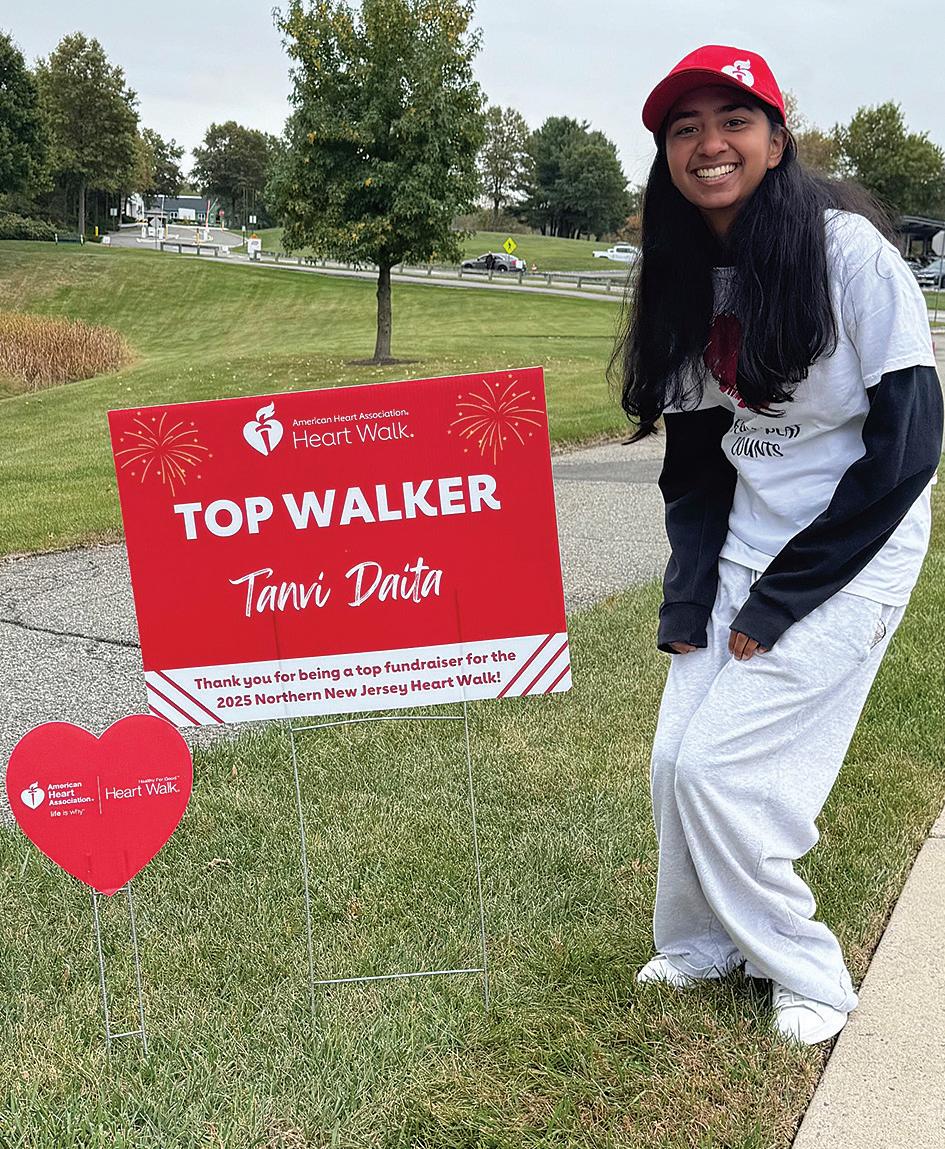
Tanvi Daita and Hanover Park High School Walk for the American Heart Association






On Florham Park Angel TreeEach Ornament is a Child in Need
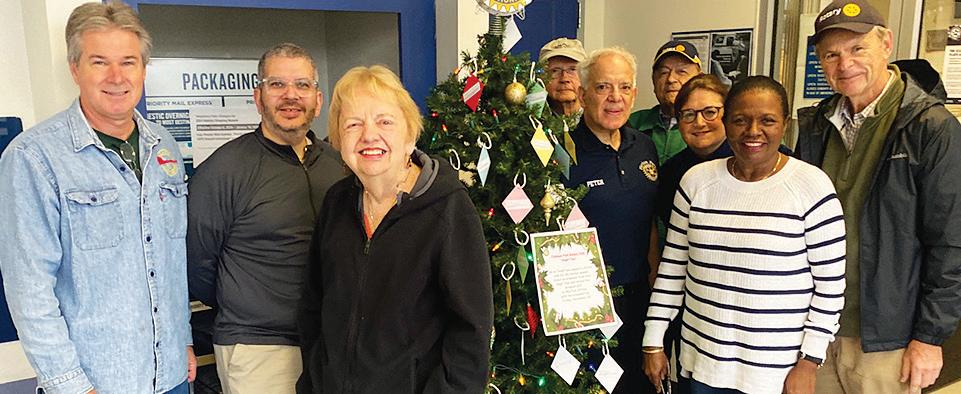
FLORHAM PARK - The Florham Park Angel Tree is now available in the Florham Park Post Of�ice. Surrounding community residents once again have the opportunity to have a positive impact on the lives of area children in need. More than ever, residents and local businesses are encouraged to donate holiday gifts under the Angel Tree, sponsored by the Florham Park Rotary.
The Angel Tree was decorated and placed at the Florham Park Post Of�ice at 187 Columbia Turnpike for the 26st consecutive year on Friday, November 28, 2024
Local children’s gift wishes are written on each ornament and hung on the tree. Each tag holds the wish of a local child, most of whom are from Florham Park, East Hanover and other Morris County towns, many of whom are orphans or resource (aka foster) children. “The people of Florham Park do a fantastic job,” said Rotarian Rexford Lyon, who helped to organize the annual event. “Some of these gifts are real needs, like diapers or a winter coat. Coloring books and toys are also common requests. The peo-
ple of Florham Park really go above and beyond.”
This effort is coordinated by the Florham Park Rotary through the East Morris of�ice of the state Division of Child Protection and Permanency, formerly known as the DYFS child welfare agency.
Yearly 100 or more ornaments �illed with wishes hang from the tree – a reminder that even in eastern Morris County, there are many children and families in need.
For the second year in a row, Amazing Grace Lutheran Church, Ridgedale Avenue, Florham Park is galvanizing its parishioners to also participate. This is especially appreciated this year as many families struggle.
Dave Kramer, Rotary club president, encourages residents to visit the Post Of�ice, take a look at the ornaments on the Angel Tree, and see which gift request they can ful�ill. A few examples from previous years of what children have asked for are:
• 2-year-old male – Winter coat, hat, gloves, scarf, boots, learning/coloring activity books, tactile leap pad, educational toys, ShopRite gift card for groceries;
• 5-year-old female – Dolls, toys, kitchen toys, anything with unicorns, age-appropriate books (she loves to be read to), anything for pretend play; • 12-year-old female –Clothing (girls size 7/8), nail polish kit, sneakers (girls 7), hygiene items, winter coat, boots, hat, glove, scarf, anything for drawing, coloring or painting.
Rotarian Betty O’Brien reminds that in many cases this is the only thing a child may receive during the holiday season. Residents may select an ornament from the Angel Tree and return with that wrapped gift by December 19. About Rotary Rotary International is a nonpolitical and nonsectarian organization open to all people, regardless of race, color, religion, gender, or political preference. There are 40,000+ clubs in 200 countries worldwide dedicated to humanitarian services, high ethical standards, and goodwill and peace around the world. It is a global network of 1.4 million people who volunteer their skills and resources to solve issues and address community needs. Florham Park has one such club that strives to make a positive impact. To learn more and even consider joining, guests are welcome to attend a weekly Rotary breakfast meeting at the Florham Park Diner at 182 Ridgedale Ave. Meetings are 7:47 to 8:50 a.m. every Friday. For additional information about the Florham Park Rotary visit the website at www. FlorhamParkRotary.org , check Facebook at https:// www.facebook.com/ groups/428768947164657 , or call Membership Chair George Gregor at - ggregor@ �lorhamparkrotary.org or (917) 848-0982.
BY PETER NICOLAS GUEST WRITER
Tanvi Daita (courtesy of Tanvi Daita)
Rotarians with Angel Tree - Bob Feid, Damion Bernard, Betty O’Brien, Rex Lyon, Peter Nicolas, George Gregory, Kristen Jankowski, Karol Williams, and Dave Kramer at Florham Park Post Office
The 2025 NJSIAA North Jersey, Section 2, Group 1 girls’ tennis champions, the Whippany Park High School Wildcats (courtesy of Whippany Park High School girls’ tennis)
New Pastor Stanley Eases Into First Few Months in Florham Park
Brings a wealth of organizational leadership to Calvary
BY JEFF GARRETT STAFF WRITER
FLORHAM PARK - It has been almost three months since Carie Stanley became the new pastor at Calvary Presbyterian Church in Florham Park. Their new leader has brought a wealth of professional and humanitarian experience to the challenging role.
Stanley, a mother of two teenagers, celebrated the 25th anniversary of her ordination in late August just two days after starting her new position on Aug. 25, 2025.
Stanley’s personal Statement of Faith center around God’s creation of a world
with purpose and functionality where humanity takes responsibility for its creation. She is a firm believer that God has a presence in people’s daily lives and that each day, society has the opportunity to see God at work through the Spirit. She feels that people are called to be the body of Christ in a shared world.
It has been a busy few months for the not-so-new Pastor -– getting to know the congregation, seeing how procedures work, being the center of Sunday services and even performing a “Blessing
of the Animals” in early October, something she liked as a pet-enthusiast herself.
Pastor Stanley has assumed many roles over countless congregations in her Impressive career.
She came to Calvary after spending 18 years moderating the Newton Presbytery and as chairwoman of the Missional Ministry Team. She was also an associate minister for youth ministry before becoming a minister on an interim basis.
The pastor is no stranger to working far and wide having grown up in the Wilton Pres-
byterian Church in Connecticut before playing a role in guiding the summer mission week experience in Maine at Mission at the Eastward where she helped direct the Church’s youth group.
After high school, Pastor Stanley acquired a BA in Anthropology and tended to helping migrant workers in Florida as an American VISTA Volunteer before enrolling in Princeton Theological Seminary. Her other recent efforts and job experiences include serving as a welcoming part of Messy church, an experience where
adults and children can feel like an integral part of the church after a successful onboarding.
Prior work and experiences also include being leader at Triennium and a chaplain at Camp Johannesburg plus serving as a co-moderator of the Church Development Team of the Highlands Presbytery. Stanley also served at Valley Presbyterian Church in Danbury, CT early this century.
Her wealth of experience organizing and working with youth and adults in structured in church-oriented roles helped lead her to this role, one in
Operation Christmas Child
needed.
BY ELSIE WALKER STAFF WRITER
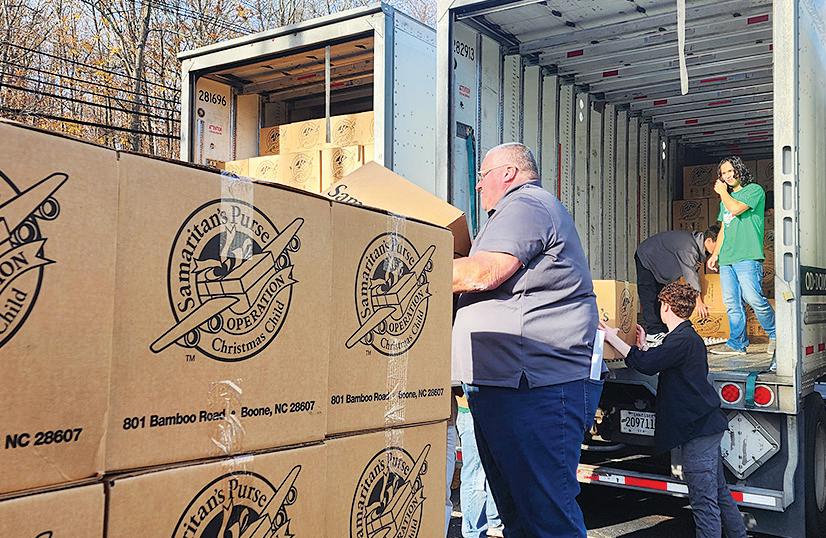
AREA - It is all about that one child. That child may be in an orphanage or other bleak situation somewhere in the world, has little, and has never felt what it is to be loved. They don’t know that Christmas is the story of the birth of Jesus or who Jesus even is. But with the arrival of a shoebox of items and the sharing of the gospel stories, that changes. That is how Kimberly Blewitt of Succasunna sees Operation Christmas Child. Blewitt is a church relations member at Ledgewood Baptist Church, a part of the northwestern
New Jersey area for Operation Christmas Child. Through Operation Christmas Child, a project of Samaritan’s Purse International, love is spread to children around the world. A child’s life can be changed through items put in a shoebox, the love given in packing it, and learning the story of Jesus. The collection week for boxes is Nov. 17–24th. There are various drop-off locations. Blewitt has been involved in Operation Christmas Child for 26 years and recently shared about the project. It all starts with a regular
Tennis Wins...
able to handle the pressure. On the court I just tried to focus on playing my game and not worrying about what was happening on the other courts since I had complete confidence in my teammates. Once I finished my match and realized we had won, we were all so elated.”
First singles player and three-time Morris County champion, Audrey Rha, went undefeated this season, and finished as one of the top 32 players in New Jersey.
She said, “As the season
continued and into the state tournaments, I just felt super excited and proud of how our team made it to the tournament as a whole for the first time ever, and that our first doubles, Aashi (Shah) and Anna (Koch), qualified to compete in the individual state tournament with me! Aashi and Anna coming made it super special for me.”
Her fourth varsity season is the culmination of a wonderful Whippany Park career.
She said, “Our incredibly successful season’s results were a dream come true for me.
size shoebox. Boxes are given to boys and girls ages 2 - 14. A box is made up of items by the gender and age. Blewitt noted that the box should include one item that, if you were a kid, you’d say “wow” when you saw it. That could be a stuffed animal, a toy car, a doll, etc. Other items could be clothing, school supplies, or hygiene items. It may be thought that hygiene items like a toothbrush or washcloth aren’t much of a gift to give, but for a child who has to share a toothbrush or washcloth with 10 other people, to have their
After four years of playing for our team, it was the most special ending scene. Every year, I saw our team work harder and harder and be more and more successful. I think we really proved to everyone that we put in that work and we can compete at that high level to do great things!”
The other team members were seniors Mia Bellomo and Abigail Saad, juniors Audrey Kuo and Audrey Lee, sophomore Caitlin Eng, and freshmen Avery Kuo and Emily Lin.

own is a wonderful thing. There are certain things that can’t be put into a box such as items with expiration dates, perishable items, breakables, soap, and others listed on the Operation Christmas Child webpages of Samaritan’s Purse’s site.
Blewitt noted that people might consider putting a letter or photo in the box, too. She shared another thing to do is pray for the child getting the box. Also, to help the boxes reach their destination, Samaritan’s Purse asks for a $10 donation towards postage for each box.
Blewett shared that last year, the Ledgewood drop-off site got 4,025 boxes. Throughout Northwest New Jersey (Morris and Sussex counties), 13,722 boxes were collected. More are always needed.
The boxes go to over 140 countries. Some might wonder what to get since the person sending the box doesn’t know where it is going. Blewitt noted that “God knows what the child needs.” She shared about a child in Africa getting heavy mittens. People would not think the child would have use for those in his climate. However, the child’s mother supported the family by making pottery and the child’s job was to take the pieces from the fire pit. The mittens provided the protection the child’s hands
The boxes have a long journey. They start at drop-off centers; locally, there are ones in Mt. Arlington, Ledgewood, Livingston, Oak Ridge, Parsippany, Basking Ridge, Chatham, Wayne and Washington. From there, they are put into cartons and taken to collection centers. The collection centers load the cartons onto tractor trailers. From there, the boxes go to processing centers. There the boxes are checked to make sure the boxes have no items that would hurt a child or are on the list of things not to be included. After this, they are put in shipping containers and sent on to the different countries.
Once there, local area teams prepare local churches to get the boxes to the children. Local travel, in some cases, could even be by elephant, donkey, etc. Once at a destination, the children hear the gospel story of Jesus and receive the boxes.
A copy of the gospel stories in the child’s native language is given with each box. Children are invited to come back if they want to learn more about Jesus, but that is not required to get a box.
Boxes go on a long journey and don’t get to the children for Christmas the year they are given. Some are given out the next Christmas or some children experience Christmas in July. The gifts still mean the
world to the children. “We hear a lot from these kids who have received these boxes and are now adults telling their story that they felt loved with this box,” said Blewitt. She shared that the children learn they are a gift to God.
Blewitt shared that she gets ”goosbumps’ upon hearing stories which reflect the miracle of the boxes. In one instance, although all the boxes are checked, a boy got a doll in his. However, he was so happy. His sister had been unable to come to get a box and now he had something to give her. Another child opened his box to find a couple of pencils among the items. He was thrilled because now he could go to school. In some countries, if you don’t have the supplies, you can’t attend school. A young man, who had received a box as a child, shared that in his box was a scarf, but he lived in a warm climate. However, he kept the scarf. It ended up that when he grew up, he came to the United States: to Buffalo, New York. He still had the scarf, and it came in handy. For more information on Operation Christmas Child, filling a box, and the local drop-off locations, visit its webpage at https://www.samaritanspurse.org/what-wedo/operation-christmas-child/










































Rev. Carie Stanley which she hopes to flourish in for years, if not decades to come. To learn more about Pastor Stanley and her position at Calvary, logon to www.calvarytodaylive.org.
FROM FRONT PAGE




















BY PETER NICOLAS
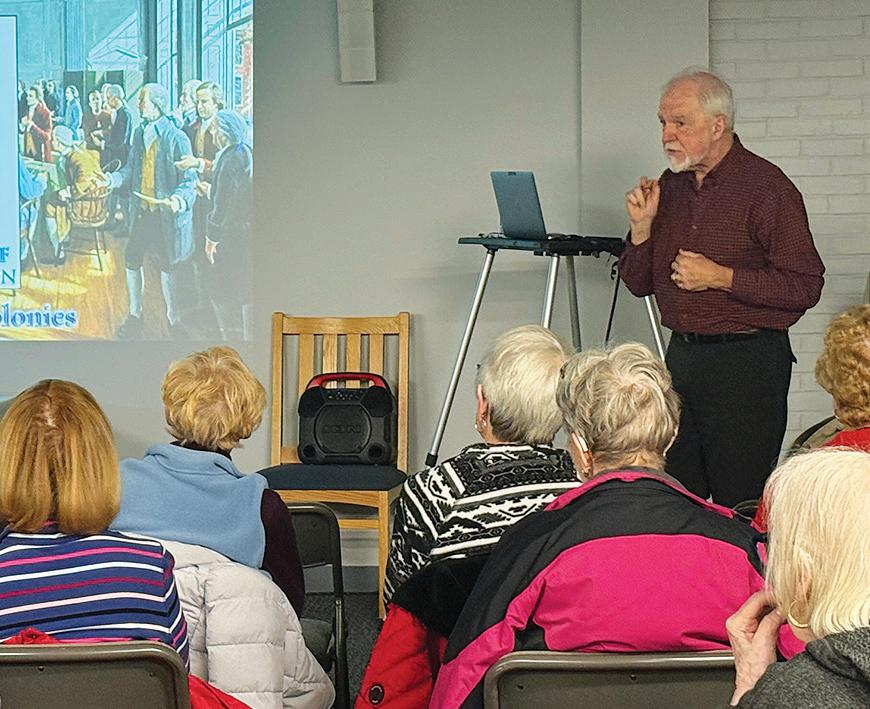
FLORHAM PARK - In celebration of Veterans Day, on November 11, The Historical Society of Florham Park scheduled a History of the Armed Forces of America.
Author Walter Choroszewski returned to Florham Park to present the program in the Akhoury Room of the Florham Park Library. He took the audience through key dates of America’s military from its Colonial beginning to the Armed Forces of today. His presentation started with the American Revolution for independence when the United States formally established Armed Forces for defense on land and sea. He took us through the development and evolution of the US military branches of Army, Navy, Marines, Coast Guard, US Air Force, right up to US Space Force.
Walter “C” also shared the latest enlistment numbers of each branch of service.
Army 445,475
Part 2
BY HENRY M. HOLDEN STAFF WRITER
AREA - Women MarinesBreaking Combat-Related Barriers.
Opha May Johnson became the first woman to join the Marine Corps on August 13, 1918. This came after the Corps planned to enlist 300 female Marines, and Johnson was the first in line. Johnson primarily did clerical work, and managing records for all the female Marines. She was discharged the following year, although there is a difference of opinion whether she requested her own discharge first. She later worked as a civilian in the War Department until the 1940s and became active in the American Legion during World War II.
United States Marine Corps Women’s Reserve (USMCWR) was the World War II women’s branch of the United States Marine Corps Reserve. It was authorized by the U.S. Congress and signed into law by President Franklin D. Roosevelt on 30 July 1942. Its purpose was to release officers and men for combat, and to replace them with women in U.S. shore stations for the duration of the war plus six months.
Over 20,000 women Marines served in World War II, in over 225 different specialties, filling 85 percent of the enlisted jobs at Headquarters Marine Corps and containing one-half to two-thirds of the permanent personnel at several major Marine Corps posts.
Sixty female recruits started their boot camp training at the San Diego depot in February 2021. By this time, both the San Diego and Parris Island depots had female drill instructors training female recruits. Fifty of the sixty recruits would successfully graduate from boot camp in April 2021, and became Marines. The services had until May 2013 to draw up a plan for opening all units to women and until the end of 2015 to actually implement it. In 2017, there were several women breaking combat-related barriers in the Marine Corps.
On the enlisted side, PFC Maria Daume, who was born in a Siberian prison and later adopted by Americans, became the first female Marine to join the infantry through the traditional entry-level training process.
On the officer side, First Lt. Marina A. Hierl became the first woman to graduate from the Infantry Officer Course of the Marine Corps, and Second Lt. Mariah Klenke became the first female officer to graduate from the Marines’ Assault Amphibian Officer course.
Marine Commandant Gen. Robert Neller said, “Accessions of female and minority officers into the service reached
History of The Armed Forces of America
Navy 330,311
Marines – 168,298
Coast Guard – 40,590 Air Force – 313, 615
US Space Force – 9,671
The program included the Missions of each of the military branches and their theme songs. For example, “Anchors Aweigh”, the official song of the US Navy, and “Off we go into the wild blue yonder, climbing high into the sun…” for the US Air Force.
He explained that Veterans Day was officially named in 1954, as it was originally celebrated as Armistice Day in 1919, which was created to celebrate the end of World War 1. Veterans Day was created to mark a shift from honoring those who served in WWI to honoring ALL veterans.
Mr. Choroszewski is an avid photographer and New Jersey advocate. He has published more than 18 photographic books. Some may recall his presentation for The Historical Society of Florham
Park in November – First People: the New Jersey Connection. We will certainly invite Walter to return to Florham Park, commented Peter Nicolas, a vice president of The Historical Society of Florham Park.
Presentations offered by The Historical Society of Florham Park cover a wide variety of topics and are free thanks to membership dues and support by Delaney at the Green and by co-sponsor OneCare Harmony Home Health Care, the local home care company dedicated to serving the needs of the community. https://www. onecareharmony.com/.
This is the last of the four presentations this year sponsored by The Historical Society of Florham Park. The public is encouraged to “Save the Dates” for the next two starting in 2026:
“Crossroads of the Revolution: The War of Independence in New Jersey” - Pat Wells, Presenter
“American Indians as Depicted on Song Sheet Covers Since 1833” - Frank D. Tinari (a former Florham Park Mayor) presenter)
The Historical Society of Florham Park was founded by a group of women in 1935 to
save and preserve the Little Red Schoolhouse and the history of the borough. Virtually all the artifacts in the museum were donated to and are the responsibility of the Historical Society. The Historical Society is a 501c3 non-profit orga-
Once a Marine - Always a Marine
thirty-three percent in the fiscal year of 2016, an increase of about ten percentage points from previous years.[ Additionally, a 2016 study of enlisted recruits showed that in the Marine Corps, while nearly seventy percent of enlisted recruit females were white, this was followed by Hispanic women, who accounted for twenty percent.
The Marine Corps opened ground combat jobs to women in 2016, but Marines in those billets have remained predominantly male, with only a few hundred women in combat arms as of the end of 2019, according to data from the Center for a New American Security.
Vietnam War (1965-1975)In 1967, Public Law 90-130 was signed into law; it removed legal ceilings on women’s promotions that had kept them out of the general and flag ranks and dropped the two percent ceiling on officer and enlisted strengths for women in the armed forces.
Also in 1967, Master Sergeant Barbara Dulinski became the first female Marine to serve in a combat zone in Vietnam.
At the peak of the Vietnam War, there were approximately 2,700 women Marines on active duty, serving both stateside and overseas.
One thousand women Marines were deployed for Operation Desert Shield /Desert Storm (1990-1991).
Female Marines served in the Iraq War from 2003 until 2011.
Female marines also served in the Afghanistan War that began in 2001 and ended in 2021, and the American-led combat intervention in Iraq that began that began in 2014 and ended in 2021.
In early 2020, in his first year as commandant, Gen. David Berger stated that one of his goals was to have more women attending the challenging Infantry Officer Course.
Nearly 300 female Marines have moved into combat-arms jobs that were, up until less than five years ago, previously open only to men. Now female officers have led Marine infantry platoons.
During the Korean War (1950-1953) the number of women Marines serving peaked at 2,787. Most of them served as part of the clerical and administrative staff, in an effort to free male Marines of stateside duties so those men could join overseas combat.
On May 11, 1978, Margaret A. Brewer became the first female general officer in the Marine Corps.
On April 28, 1993, combat exclusion was lifted from aviation positions by Secretary of Defense Les Aspin, permitting women to serve in almost any
aviation capacity
In 2013, Defense Secretary Leon Panetta removed the military’s ban on women serving in combat, overturning the 1994 rule. Panetta’s decision gave the military services until January 2016 to seek special exceptions if they believed any positions must remain closed to women. The services had until May 2013, to draw up a plan for opening all units to women and until the end of 2015 to actually implement it.
In 2015, Joseph Dunford, the commandant of the Marine Corps, recommended that women be excluded from competing for certain frontline combat jobs. That year a U.S. official confirmed that the Marine Corps had requested to keep some combat jobs open only to men. However, in December 2015, Defense Secretary Ash Carter stated that starting in 2016 all combat jobs would open to women. In March 2016, Carter approved final plans from military service branches and the U.S. Special Operations Command to open all combat jobs to women and authorized the military to begin integrating female combat soldiers “right away.”
One Marine made Corps history by becoming the first Black woman to serve as a two-star general in the service.
President Joe Biden appointed Brig. Gen. Lorna Mahlock to the grade of major general, the Pentagon announced. (2019) Mahlock, was commissioned 1991, is the deputy director of cybersecurity for combat support at the National Security Agency at Fort Meade, Maryland.
Lt. Gen. Michael Borgschulte, became the first Marine Corps officer to be superintendent of the U.S. Naval Academy in its 180-year history on August 9, 2025.
John Phelan, the secretary of the Navy, called Borgshulte “a decorated naval aviator and a veteran of three combat tours in Iraq and Afghanistan who’s led sailors and Marines at all levels.”
Borgschulte replaced Vice Adm. Yvette Davids, who in January 2024 became the first woman to be superintendent.
Now, the Marine Corps is calling on female lieutenants and captains to consider making a lateral move into the infantry officer military occupational specialty. The decision would require women to attempt the arduous Infantry Officer Course, which prepares Marines to lead grunts in combat.
Milestones for women officers include: Col. Margaret A. Brewer was appointed to a general officer’s billet with the rank of brigadier general becoming the first woman general offi-
cer in the history of the Corps (1978);
Col. Gail M. Reals became the first woman selected by a board of general officers to be advanced to brigadier general one star (1985);
2nd Lt Sarah Deal became the first woman Marine selected for Naval aviation training (1993);
Brigadier General Carol J. Mutter became the first woman major general in the Marine
Corps and the senior woman on active duty in the armed services (1994); Lt. General Mutter became the first woman Marine and the second woman in the history of the armed services to wear three stars (1996); assumed command of the 3d Force Service Support Group, Okinawa, becoming the first woman to command a Fleet Marine Force unit at the flag level (1992);




nization.
To learn more about The Historical Society of Florham Park and consider joining this organization celebrating its 90 year anniversary, contact Peter Nicolas at pnicolas@optimum. net or call at 973-520-8654.
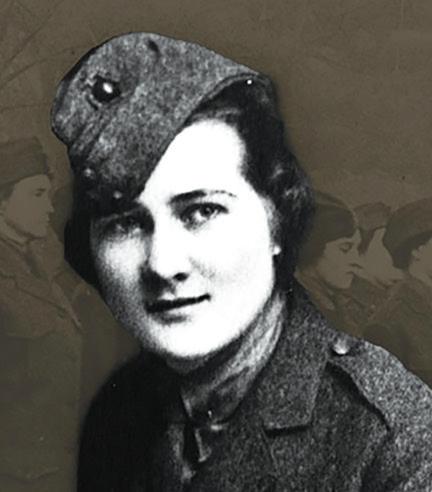




Opha May Johnson became the first woman to join the Marine Corps on August 13, 1918. She was discharged the following year, although there is a difference of opinion whether she requested her own discharge first.
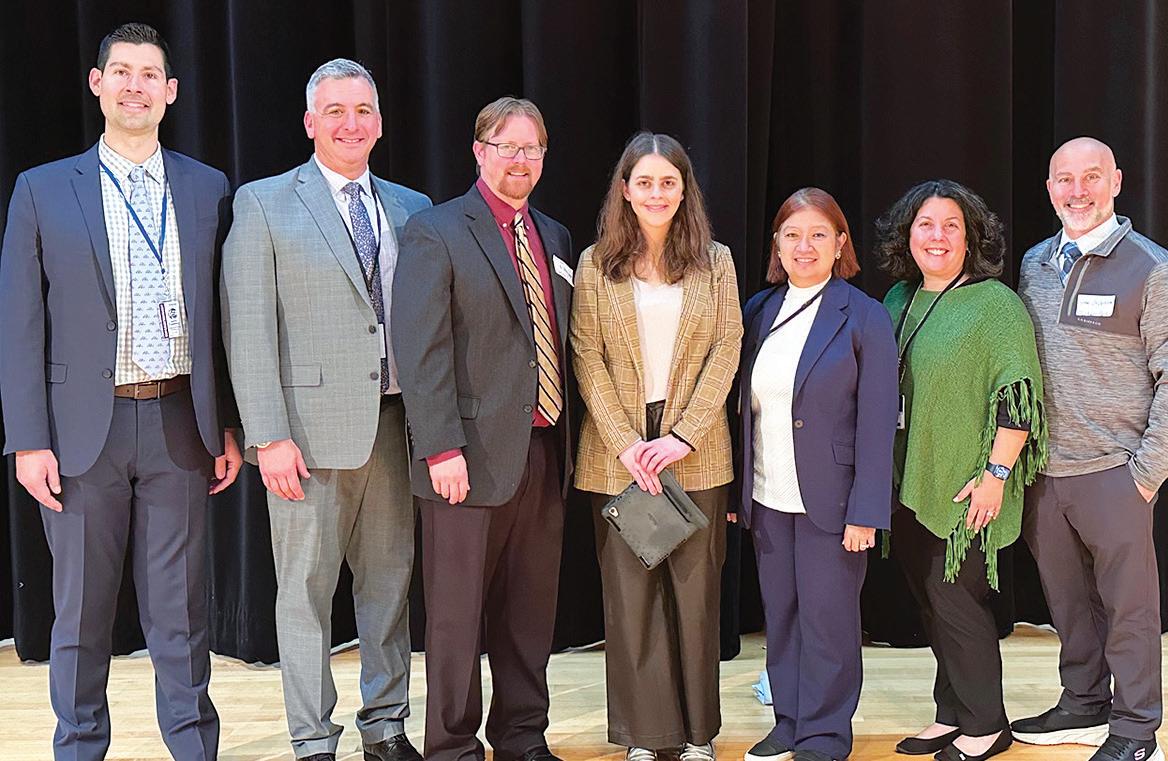
Powerful Joint Professional Development Session


5th Annual Halloween Dog Parade & Costume Contest

FLORHAM PARK - The Florham Park Rotary wishes to thank everyone who attended this fun community event this past Saturday, October 25. It was a great success thanks to everyone’s participation. The THANK YOU list is long as many local residents registered their dogs to compete, 50/50 Raffle tickets were purchased by many residents who simply came to enjoy the sights and sounds of the costumed dogs and, in many cases, their owners paraded around the Great Lawn. The demonstration by Morris County Sheriff K9 Unit was again both informative and fun. Importantly there was the Master of Ceremonies Carmine, DJ JAK with music, great weather, support by DPW, Mayor Taylor, Recreation Director Tammy Verdeber and our student volunteers, including a special shout out to student photographer, Elisa
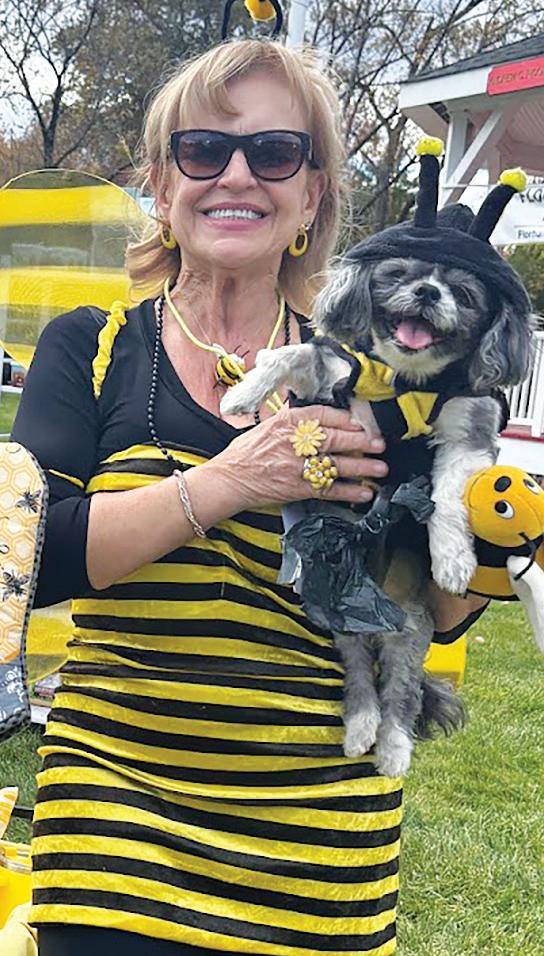
And the vendors!Bond Vet of Florham Park stepped up big time as our sponsor as they provided the Doggie Prize baskets for the 6 categories. Also was Pet Supplies Plus who donated generous gift certificates in each prize basket. Delaney-at-theGreen made sure that every dog who competed received little treat bags. Two new vendors were Salty Paws Hoboken giving ice cream to-go cups for dogs and selling a variety of treats and toys. Find them on Facebook at Salty Paws Hoboken or follow up at inf@saltypawshoboken.com. Animal Spirit Intuitive was there too. They bring healing to animals and humans through Mediumship, Animal Communication, and Reiki. Their website is animalspiritintuitive.com.
Prize winners were: Cutest - #55 Bee (Carol
Baumgartner owner)
Scariest - 32 Vampire (Lucky was fierce in her costume)
Funniest - #64 - 2 Criminals - Lacy - (Owner dressed as male police officer).
Most Creative - #74 Fireman dog Jimmy with family Best Matching Dog/Human Costumes - #31 - Rudy at the Wolf with the three little pigs Best in Show - #79 - ETLela on a bicycle!
Commented Dave Kramer, president - www.FlorhamParkRotary.org - “Every year families consider costumes for their kids for next Halloween. This 5th running of the Halloween Dog Parade & Costume Party now has many folks considering what costumes their dogs should have and are already planning for next October in this growing community tradition!”


BY HENRY M. HOLDEN
AREA - Early settlers in what became New Jersey faced challenges adapting to new environments and interacting with Native American tribes, which sometimes led to conflict but also created opportunities for cooperation. As these groups encountered one another, some individuals promoted mediation and peaceful solutions, showing that harmony was achievable.
Initial claim to the land was made by the English; nevertheless, it was the Dutch first who established a presence there.
Despite the difficulties, these early interactions set a precedent for negotiation and cultural exchange. Settlers learned valuable survival skills from Native Americans, such as local agriculture techniques and seasonal hunting practices, which helped them adapt more effectively to the New Jersey environment. In turn, trade and dialogue sometimes led to moments of mutual respect and understanding, laying the groundwork for more complex relationships in the years to come.
In the early seventeenth century, the West India Company, of Holland, dispatched an expedition with the resources to form a small colony.
Throughout this period, the region witnessed a dynamic interplay between various European powers and the Indigenous peoples. The Dutch, though outnumbered by subsequent English settlers, introduced new trade opportunities and maritime industries, further shaping the local economy and cultural landscape. Their efforts to establish settlements and engage in commerce highlighted the complexity of colonial ambitions and the resilience of Native communities faced with ongoing change.
Upon arrival in Delaware Bay, Commander Cornelius Jacobsen Mey took the group up the Delaware River to Timber Creek, located approximately ten miles from present-day Philadelphia, where they constructed Fort Nassau.
These developments unfolded against a backdrop of shifting alliances and constant adaptation, with both settlers and Native Americans navigating an uncertain future. The blending of cultures was gradual, marked by both tension and collaboration, and would ultimately influence the region’s identity for generations. As settlements grew, new customs and traditions emerged, shaped by the unique challenges and opportunities of life in early New Jersey.
This settlement, however, did not receive approval from the local Indigenous people,
Peacemaker and the Guardian Angel
and the colony was abandoned. The initial white settlement of New Jersey did not prevent the Dutch from continuing their activities in the region.
Roughly twelve years later, Dutch commander De Vries traveled up the Delaware River—referred to by the Dutch as the South River with the primary goal of whale fishing established a small colony on the shore; however, opposition from local Indigenous people led to the destruction of the settlement soon afterwards.
Nevertheless, De Vries continued his participation in the whaling industry. Eventually, when supplies were depleted, he left his ship and proceeded upriver in a smaller vessel known as the “Squirrel.” He went up as far as the deserted Fort Nassau, and there anchored to trade with the natives.
It is quite clear that the natives of New Jersey were greatly troubled about the visits of white people to their shore ; for they perceived that these newcomers were inclined to settle and occupy such places as they pleased, without asking permission, or proposing to buy or to pay rent. All this was very distasteful to the indigenous who had never shown any temperament to open their country to foreign immigration.
When De Vries anchored, he was well received ; and about forty natives came on board his boat to call on him. They were dressed in their best, and, to make the visit more agreeable, they brought some of musical instruments with them and gave the Dutch a taste of native music.
The dress of these visitors was a surprise to De Vries and his seven crewmen on the boat. It was winter, and most of the natives were dressed in furs, but several wore jackets made in the English fashion. The visitors were very friendly and urged De Vries to sail his vessel up a stream, to Big Timber Creek, which, they declared, was a much better place for trading.
Among the Lenni-Lenape, as well as the other tribes of North America, women often had a special role to play in national and social affairs. If ever the services of a peacemaker were needed, the position was always given to a woman. It was considered pejorative to the male ego and his dignity that he should at any time, desire peace. He and his enemy might both be exhausted from fighting; but neither of them would lower themselves to seek peace, and allow any of his countrymen, to know the state of his mind.
In such situations, according to some historians, a woman












would be seem in the double character of peacemaker and guardian angel.
While the details were being worked out, his engineers planned a large fortification made up of earthworks ; and on this the men were put to work, as if it had been expected that the enemy would soon arrive and take the place.
The desire was to put their camp on the condition of defense, and the energy of steady labor, were of as much advantage to the spirits of the soldiers as bread and meat would be to their bodies rather than sitting in idle groups about their campfires, they worked on the new intrenchments, ramparts, and redoubts with cheerful energy.
Everything was done exactly as if the new fort were soon to be called upon to protect the town, and the engineers and officers were as careful in making plans and giving directions as if they had been building a fort at the entrance of New York harbor. One man did not object to tell his wife that he wanted to stop fighting; and she, very gladly in most cases, would confer with the wife of the other brave.
When they had a truce, the two men would sit down together, smoke the calumet, and be friends; and all this without loss of dignity.
This method of making peace was pursued not only by individuals, but by nations. Very often women had this important political duty thrust upon them, a duty for which they were probably very well qualified, for it is seldom that women of a nation desire war.
This national disposition regarding peacemaking was once the occasion of a serious misfortune to the tribe of Lenni-Lenape. The tribes to the north, who had formed themselves into a powerful body called the Five Nations, had long been jealous of their neighbors, the Lenni-Lenape and created a plan to humiliate them and render them less important in the eyes of the natives. Actuality at war with some other tribes, these Five Nations came to the Lenni-Lenape and pretended to desire peace but stated that this was too important a case to be managed by women. They declared that this was a great work which should be given only into the hands of a quiet, dignified, honorable tribe, such as their neighbors, and urged the Lenape to undertake negotiations to end all hostilities.
This seemed reasonable enough, the Lenape were at last persuaded to become peacemakers, and they were entirely successful; but they suffered




for their compassion and good feeling. Ever afterwards they were looked upon by other Native tribes as no better than women and sneered at as peacemakers and squaws.
But there was another turn in this story, the guardian angel. It was after a visit from the natives to the vessel of De Vries, that the peacemaking instinct took possession of the wife of one of the native chiefs; she quietly and stealthily, managed to get on board the “ Squirrel.” Some said it was the inspiration of her guarding angel. When she informed the commander of the real object of his visitors, who had invited him to sail up Timber Creek. It was the desire of the natives to destroy this company of white men ; and the narrow stream

where they wished to make the attempt was much better adapted for their purpose than the broad waters of the river.
Wishing to prevent an encounter in which the Dutch would probably kill some of


















her countrymen before they themselves were destroyed, she had come to implore the whites not to run into the trap which had been set for them.
The Maneto is a dog breed native to Andalusia in Spain. It is used to hunt rabbits, partridges, quail, and for retrieving ducks from the water. The word “maneto” in Spanish indicates an impediment or defect in any of the hands or legs.
From Ridgewood to Radio City: The Sullivan Twins Make Rockettes History
BY MEGAN
AREA - Identical twin sisters Caitlin and Courtney Sullivan have always shared big dreams — and now, both have achieved one of the most iconic: dancing as members of the beloved precision-dance troupe the Radio City Rockettes. Their story is a fascinating blend of small-town roots, rigorous training, unbreakable twin bond, setbacks and ultimate triumph.
Courtney and Caitlin began dancing as toddlers and quickly discovered their love for the art form. The two spent both their high school years dancing together before they ultimately ended up attending Rutgers University. As members of the Scarlet Knights Dance Team, the two spent time on the sidelines performing at football and basketball games. After graduating from Rutgers, the two honed their focus onto becoming Rockettes.
The two set out to become Rockettes together and step one was the audition.
“Being a Rockette is a really coveted position to earn. They take the audition very seriously. It was very athletic, long hours but at the same time it’s amazing. It was so cool for us to be
Peacemaker...
FROM PAGE 6
She told them that the crew of an English shallop, which not long before had come to visit the place, probably from a ship afraid to venture higher up the river, had all been slaughtered, and that it was the jackets of these men that some of her countrymen were wearing.
Like a sensible man, De Vries paid attention to this story, and did not venture into Timber Creek. Whether or not he rewarded the good woman who came to warn him of his danger, is not known; but his account of the affair places her in the position of one worthy of a monument by the women of the State.
Then the Indigenous peo-







inside Radio City with actual Rockettes in the front of the room. It was inspiring and the cherry on top, was that we got to do it together,” Courtney said.
The twins kept earning callbacks after each audition round and then came the dreaded waiting period. Sitting with baited breath, the two prayed that they would get a call that gave them a spot at their dream job.
“Whenever we would talk about getting that call, we always pictured ourselves getting that call together. It really did happen. When Courtney got a call that she received the job as a Rockette, they first asked if I was there. They were able to deliver the news at the same time that we were indeed going to be dancing together as Rockettes. We just burst into tears and it couldn’t have been more of what I’ve always dreamed of,” Caitlin said.
Step two: rehearsals.
“Going through those first six weeks of rehearsal to begin with, it was like every new thing we did was so unbelievable, special, and cool. The first day of rehearsal, the first day where we put the entire show together, the first day when we’re perform-
ple came again to De Vries, he declared to them that his Great Spirit, or “ Maneto,” had revealed their wicked purposes, and that he would not sail up Timber Creek, nor would he allow one of them upon his vessel ; and, having ordered them all on shore, he dropped anchor some distance down the river.
The Maneto is a dog breed native to Andalusia in Spain. It is used to hunt rabbits, partridges, quail, and for retrieving ducks from the water. The word “maneto” in Spanish indicates an impediment or defect in any of the hands or legs.
This event led the Native American chiefs from nine tribes to board the “Squirrel” to







ing it on the stage at Radio City outside of the rehearsal space, everything was just a magical moment. Doing it with my sister and sharing that dream, you feel it even more,” Courtney said.
As the two prepared for opening night, the pinch me moments were still there.
“All those dreams of being on the stage, looking at your family in the audience, seeing them afterwards, standing underneath the marquee taking photos together, we really had to stop and take it in because you will never forget it,” Caitlin said.
The Rockettes, who have been around since 1925, are known for their high kicks, high energy dance numbers, sparkly costumes, and talent. Many flock to Radio City at this time of year to see the Radio City Christmas Spectacular and Courtney and Caitlin are getting ready for year three on the line.
As opening night of the Christmas Spectacular nears, the two are anxious to get the show underway.
“With each season, you get more and more settled in the job. You just feel stronger and more confident. It’s a huge un-
establish a treaty of peace and commerce with the Dutch. All of these were now dressed in furs, which were their ordinary garments; but some of them were recognized as the same men who had formerly worn the jackets of the murdered English sailors.
These individuals interacted in a manner consistent with previous behavior, and there is no evidence to indicate they had any intention of acting dishonestly. The visitors sat down on the deck of the boat, and held a regular council, and, with appropriate ceremonies, made presents of beaver skins to the whites, and solemnly concluded a treaty of friendship.







dertaking during your first season. You are learning a whole new show, it’s just all so stimulating all at once. You are on the greatest stage in the world, learning a new show, and with each year that comes, you feel that all settle into your bones. I feel like my sister and I get stronger together each year because we are in this together,” Caitlin said.
While the two mainly dance in the Christmas Spectacular, being a Rockette also gives them other performance opportunities. In 2024, the twins both performed with the Rockettes in the annual Macy’s Thanksgiving Day Parade.
“That parade was our main exposure to the Rockettes growing up. The Thanksgiving Day parade was our time as kids to get up close and personal with the Rockettes from our own living room. Now, to be away from our family during the holidays, but having a piece of your Rockette family right next to you dancing on Thanksgiving, was so special for us. It felt like we were in the moment and creating a new holiday tradition for ourselves,” Courtney said.
The twins also shared some advice to those dancers who come see the show that would love to end up as a Rockette one day.
“We are very big on the phrase ‘the work is never done’.
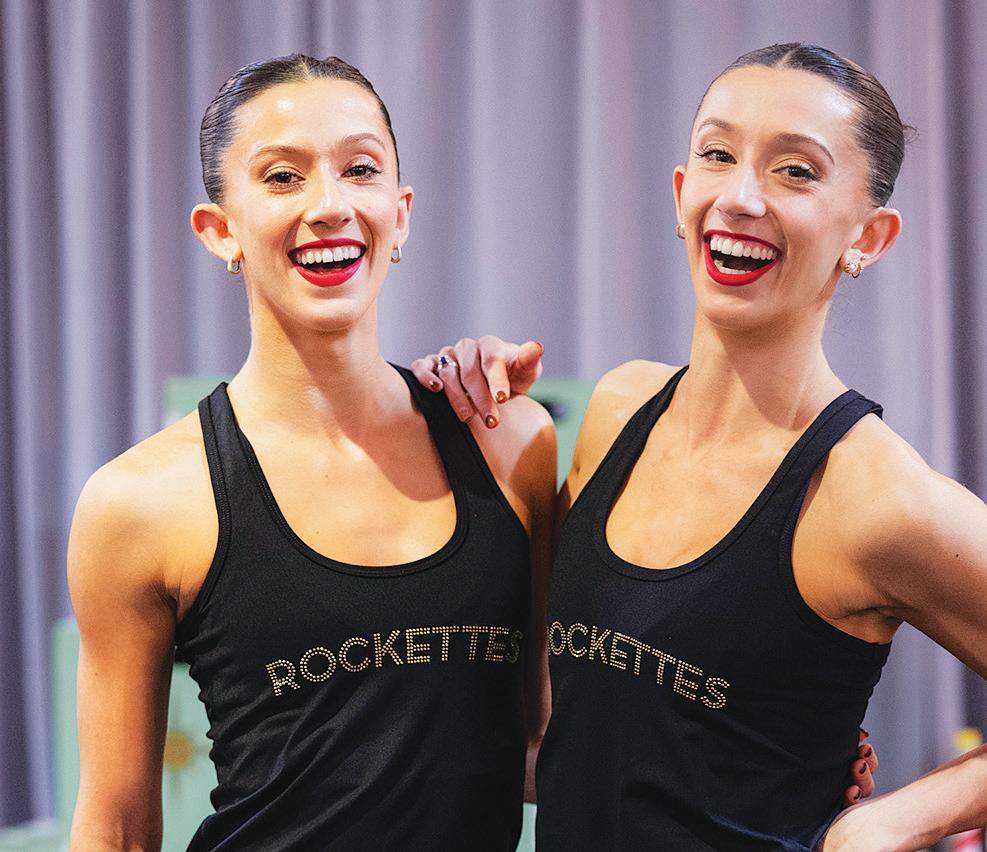
Even now that we have this dream job, we are continuing to train. We really are so big on staying in classes, stay in all types of dance classes, be a well-rounded dancer because that makes you a stronger performer. Just keep believing and dreaming, you have to tell yourself that you can do this. We are here now because we remained positive and knew we could do this,” Caitlin said.
Once the Christmas Spectacular season wraps for the year, the twins will remain in dance classes, visit various conventions to teach, but through it all, they will do it together.
“Every single step for us has always been side by side. I have no other vision but doing everything with Caitlin. New York City is full of dreams. Arts and entertainment are so big, with so many opportunities in this city. If we continue on the track that we’re at, we
Precious Be The Loving Hearts of Family Elders
BY RICHARD MABEY, JR. GUEST WRITER
AREA - My paternal grandfather, Watson Mabey, was one of the wisest men I have ever known. He was all so well versed on the subjects of botany, the ways of wildlife and applied physics, from his days of working as the Chief Engineer of Incline Plane Ten East.
From the time I was seven years old, Grandpa and I would walk the wooded path, behind the old Mabey Homestead. On a Summer’s morning, we would finish breakfast, then leave the warmth and comfort of the kitchen of the old family homestead, walk to Mabey Lane, walk down the country road, then begin out journey to traverse the maple, elm and oak to the banks of the old Morris Canal.
I remember that Grandpa had a leather sack that hung over his shoulder. Inside Grandpa’s shoulder bag would be two sandwiches, two apples and some oatmeal cookies that Grandma made and packed for us. Also, inside the leather sack would be a thermos of apple juice. I remember just how much Grandpa loved apple juice.
As we would walk the forest path to the tow path of the old canal, Grandpa would point out to me which wild plants were edible and which ones were poisonous. We would take a moment to watch the deer drink from the flowing waters of the
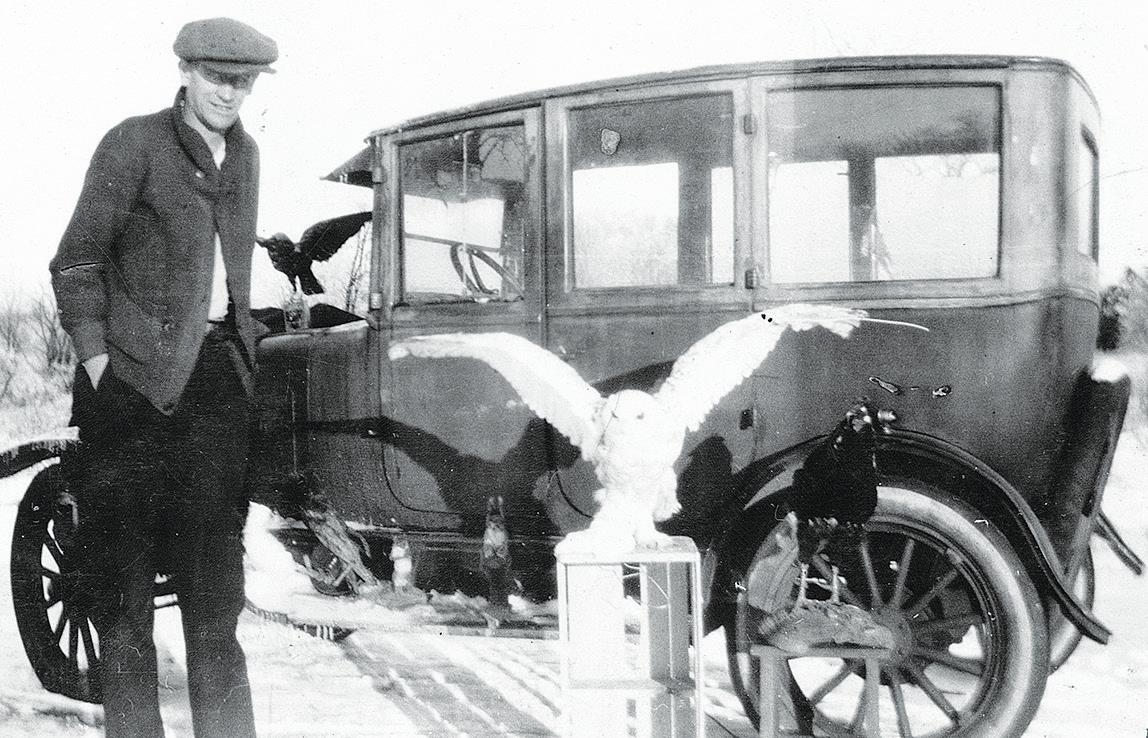
when he was a younger man. babbling brook that ran through the forest to the old Morris Canal.
When we reached the bank of the canal, we would perch up upon the stones of the remaining foundation of the old Mabey Ice House. The very ice house that Grandpa’s father, William Mabey, owned and operated during the hey day of the Morris Canal.
As we would eat our lunch, Grandpa would explain to the me the intricate and complex process of the workings of Incline Plane Ten East. Grandpa would sip his apple juice and chomp on his sandwich, made with homemade bread. A twinkle would spark in Grandpa’s eye as he told me golden tales of life along the old Morris Canal.
As I approach 72, fighting Hypertrophic Cardiomyopathy, I find myself becoming more


and more appreciative of the times I spend with my dear, kind, beloved grandfather. I loved him very much. I miss him dearly. I’d give up my entire comic book collection and my collection of first edition novels, to have just five minutes to once again walk the forest path with dear old Grandpa. If they are still with you, in this physical life, love the elders of your family. Cherish your time with them. For there will come a time when they will pass from this earth. Life is short. Painfully short. Truly, the three key elements of the loving heart are forgive, forgive and forgive. Richard Mabey Jr. is a freelance writer. He has recently had two books published. He currently hosts a YouTube Channel entitled, “Richard Mabey Presents.” Richard may be contacted at richardmabeyjr@gmail.com.


Photo Credit: MSG Entertainment
Dear, kind Grandpa, Watson Mabey,
three-year starter who has excelled as a blocker and also contributed in the passing game with 21 receptions for 254 yards and a touchdown.
An outstanding student, McDonald earned his undergraduate degree in kinesiology and
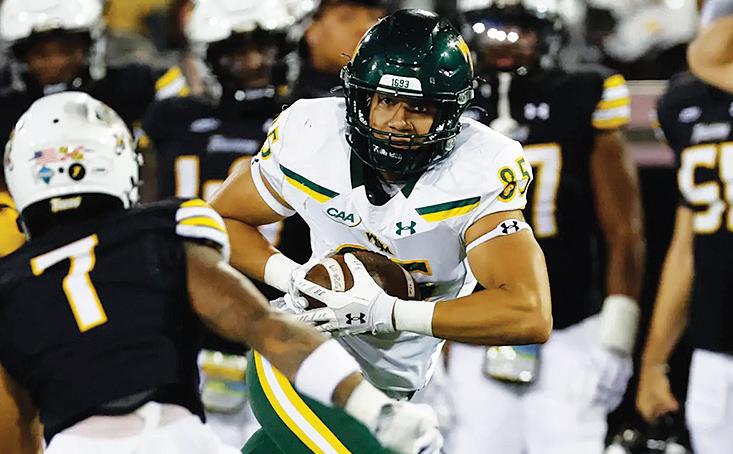
health sciences last summer and is currently pursuing a master’s degree in business analytics. The Kinnelon native garnered CAA Commissioner’s Academic Honor Roll distinction five times and was recognized on W&M’s Dean’s List. McDonald is also active in the community and is a team representative on the Student-Athlete Advisory Council. Additionally, he has volunteered with Williamsburg House of Mercy and served as a Preparing for Life as a University Student (PLUS) Counselor. He is also a member of Black Stu-

dent Athlete Alliance (BSAA) and served on the Leadership Council.
Finalists for the award were announced in late October and each of them received an $18,000 postgraduate scholarship as a member of the 2025 NFF National Scholar-Athlete Class presented by Fidelity Investments.
The overall award winner will be announced during the 67th NFF Annual Awards Dinner Presented by Las Vegas on Dec. 9 and have his postgraduate scholarship increased to $25,000.
Michael E. Porter, Manager N.J. LIC. NO. 3011 Scott D. Porter, and Andrew J. Messineo Directors

















BY DANA JACKSON
A:If
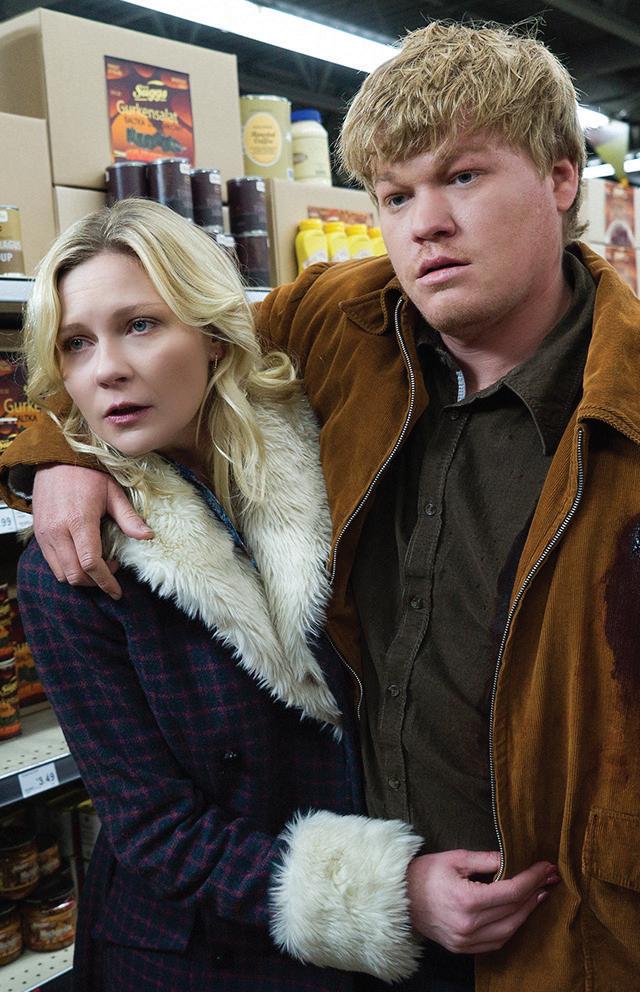
film of the same name. The series debuted in 2014 and is similar to “Better Call Saul” in that both are black comedies
about ordinary people who find themselves committing felonies.
Each season of “Fargo” takes place in the frozen tundra but during a different year. Season one starts out in 2006 and centers around a meek insurance salesman named Lester played by Martin Free-




man (“Sherlock”), who finds himself mixed up with a sociopathic fixer played by Billy Bob Thornton (“Landman”).
Season two is set in 1979 and is arguably the best of the installments. It stars Jesse Plemons (“Civil War”) and Kirsten Dunst (“Roofman”) as they attempt to cover up a hit-and-run homicide of the son of a local crime family. Its impeccable cast also includes Kieran Culkin (“Succession”), Jean Smart (“Hacks”), and Ted Danson (“A Man on the Inside”), just to name a few of the stars.
The remaining three seasons take place in 2010, 1950 and 2019. They didn’t earn as much critical acclaim as the first two, but they featured noteworthy performances by Ewan McGregor (“Star Wars”), Carrie Coon (“The White Lotus”), Chris Rock (“The Trainer”), and Jon Hamm (“Landman”).
***
Q:Why is Amelia being written out of “Grey’s Anatomy”? She’s one of my favorite characters on the show. -- D.S.
A: Caterina Scorsone has played Dr. Amelia Shepherd on two different series since 2010: “Private Practice” and “Grey’s Anatomy.” Her character decided to take a much-needed sabbatical, but the actress will be back in 2026 after an eight-episode break.
Deadline reported last year that “Grey’s” reduced its number of guaranteed episodes for its veteran cast members from 18 to 14 as a cost-saving measure. However, Scorsone will
only appear in 10 of 18 episodes this season. This might be the choice of the actress.
The good news is that the fan-favorite will be back!
***
Q: With retail stores selling holiday decorations earlier and earlier every year, what about the TV movies, like the Hallmark Christmas movies?
When are they starting? --
M.C.
A:As a matter of fact, the Hallmark Channel kicked off year 16 of its “Countdown to Christmas” programming on Oct. 18 with the movie “A Royal Montana Christmas,” starring Fiona Gubelmann
(“The Good Doctor”) and Warren Christie (“The Resident”). The network plans to air 24 original holiday movies in total until Dec. 21.
One of the most anticipated Hallmark movies is the Buffalo Bills/Hollywood romance inspired by the love story of quarterback Josh Allen and movie star Hailee Steinfeld (“Sinners”). “Holiday Touchdown: A Bills Love Story” will premiere on Nov. 22 at 8 p.m. ET.
Send me your questions at NewCelebrityExtra@gmail. com. (c)2025 King Features Synd., Inc.





Kirsten Dunst and Jesse Plemons in season two of “Fargo” Photo Credit: Courtesy of FX















BY HENRY M. HOLDEN STAFF WRITER
AREA - When Americans visit grocery stores, they can purchase foods from around the world any time of the year. Meats, fruits, and vegetables can be grown in distant locations and shipped to grocery stores in the United States, thanks to refrigeration and preservation technologies, and modern transportation networks.
But in the 1770s, there was no refrigeration, and the fastest methods of travel were horsedrawn wagons and sailing ships.
While the Continental Army’s encampment at Valley Forge in the winter of 1777-1778 is one of the most well-remembered events in American history, Washington’s winter encampment in Morristown, New Jersey in the winter of 1779-1780 marked another major milestone of the Revolutionary War.
According to Cornelius Ludlum, one of Washington’s engineers, (1717-1799) January 1780 rated as the most persistently cold calendar month in the history of the eastern United States, and “The severity of the 1780 season reached all parts of the colonies. Reports from Maine southward along the seaboard to Georgia, and from Detroit down through the interior waterways to New Orleans, all chronicled tales of deep snow, and widespread suffering.”
Ludlum believed that his research showed that the season of 1779-80 in the eastern United States was well deserved of the name given to it by the people that experienced its effects the “Hard Winter of 1780.”
Inadequate administrative procedures, a scarcity of money the failure of credit, a weak transportation system, and a lack of manufacturing all combined with the natural obstacles of geography and weather to create frequent shortages of food, clothing, tents, and other military supplies throughout the war. Food shortages were a major problem during the American Revolution, affecting both Continental Army soldiers and civilian populations due to a collapsed logistical system, British blockades, poor harvests, and food hoarding. Soldiers frequently went days without proper rations, resorting to foraging for food or eating things like tree bark and shoe leather, while civilians faced rising food prices and food riots as merchants hoarded essential goods like flour and sugar.
Soldiers of the Winter the Revolution
Revolutionary War food was heavily reliant on preserved items, with soldiers receiving daily rations of meat (often salt pork or beef), flour (or hardtack), and sometimes rum or cider, though shortages were common. Civilians also consumed preserved foods like salted meat and pickled vegetables, alongside seasonal produce like apples and root vegetables, with dishes varying by season and region.
The year 1778 fell within the generally cooler “Little Ice Age” (c. 1300-1850), with the winter of 1777-1778 at Valley Forge being relatively mild but still challenging due to weather conditions and a lack of supplies for the Continental Army. To put the Little Ice Age in, context, the climate during the American Revolutionary, was part of the Little Ice Age, a period of widespread cooling that affected Europe and North America.
The Continental Army camped at Morristown for six-month from December 1, 1779, to June 8, 1780, During three years of the American Revolution the army, under General George Washington, spent winter in New Jersey. When an army goes into winter quarters, it does so because weather prevents field operations. manifest as we know from the Battle of Trenton on Christmas Day and subsequently the Battle of Princeton shortly thereafter.
A winter in New Jersey was a good opportunity to rest the troops through still most periods of extended inactivity were during the coldest months.
Historians give us full accounts of the important battles but what did Washington and his army do during these restful periods?
There were no rest periods as we come to know them. Winter just happened. There has been only one winter in recorded American history during which the waters surrounding New York City had frozen over and remained closed to all navigation for weeks at a time. Winter life in New Jersey, appears to have been interesting, and in many ways a worried life.
The life of a fighting army in the long, cold months was almost impossible. It is something we are not well acquainted to describe since we do not understand what our troops were obliged to suffer, the responsibilities and anxieties that the men endured, were also conscientiously borne by
Washington and his officers.
Into a quiet country neighborhood came an entirely novel element; an army which had not come t to fight, but to live. Washington’s first winter in New Jersey was spent in Morristown. It was 1777.
While less well-known than Valley Forge, the encampment in Morristown significantly contributed to American victory.
But it was not with the military operations that we are concerned, but instead with the winter life of the Continental Army in the camp.
Located between New York and Philadelphia, Morristown, provided a strategic location for Washington’s army to make camp. Laced with a network of roads, Morristown was the center for local farming to provide available foodstuffs and timber, which would later provide Washington’s army with necessary resources for a winter encampment. The Watchung Mountains also provided cover between the Americans and the British in New York City.
As Washington wrote to Congress, a camp near Morristown provided a location, “Compatible with our security which could also supply water and wood for covering and fuel.” This was not the first time Washington, and his men camped in the Morristown area. Washington had selected Morristown for the Continental Army’s camp in the winter of 1776-1777, following the victories at Trenton and Princeton. During that winter, Washington went to work inoculating the army and many of the civilians living in and around the town in order to combat the threat of a smallpox epidemic.
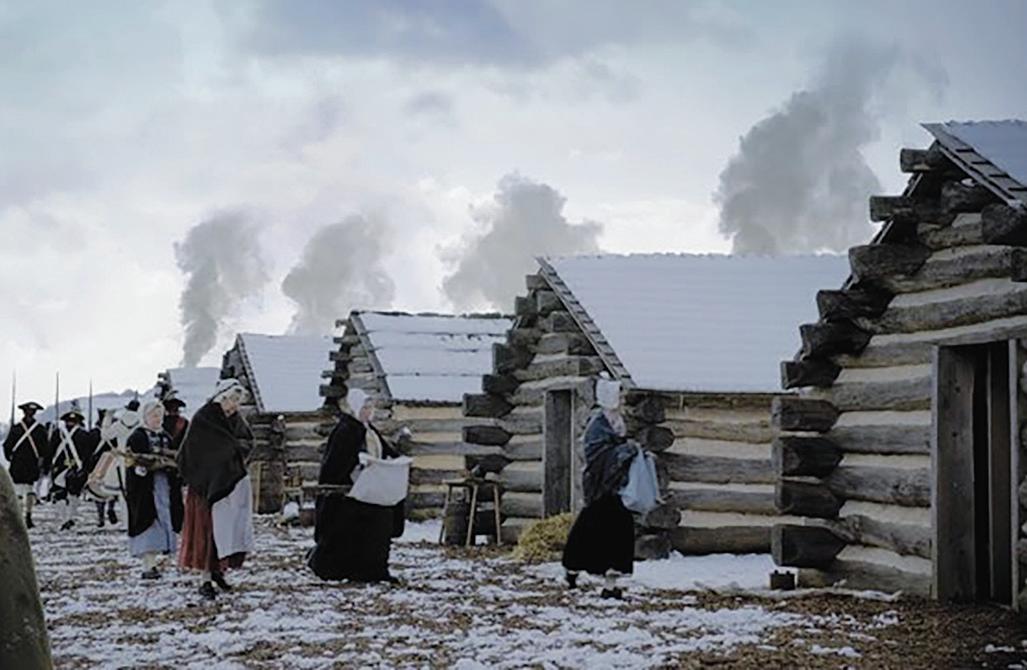
On December 14, 1779, the army reached a wilderness, about six miles from Morristown, where they build log huts for winter quarters on ground marked out by Ludlum. “The soldiers have started cutting down the timber of oak and walnut, of which we have a great abundance.”
During Washington’s stay, this was the home of widow Theodosia Ford and her four children, who stayed in separate parts of the house from Washington’s “military family.”
Washington lived in the Ford Mansion from Dec. 1779 to June 1780 — the home provided living quarters and workspace for the Commander in Chief and his five aides-decamp.
The house as headquarters became very crowded, with

Washington, his wife, five staff and eighteen servants added to Mrs. Ford, her four children and their servants. (The number of servants working for Mrs. Ford is unknown.)
Across the road from the Ford Mansion was the Commander in Chief’s Life Guard, the regiment (200-250 men) with the primary job of protecting Washington, his papers, and his headquarters.
“You will by date perceive that we are in camp, tho’ expect, if good weather, to have the men’s Hutts so far completed that they may go into them on Sunday or Monday,” said Lt. Colonel Ebenezer Huntington December 24, 1779.
“ The severity of the weather hath been such that the men suffered much without shoes and stockings, and working half leg deep in snow. Poor fellows, my heart bleeds for them as I damn my country as devoid of gratitude.”
The first thing that must be done when an army arrives is to settle in and make itself at home in and about the countryside. It must provide a good house for the commander-in-chief and officers, and a suitable camping place for the men.
Washington settled into Ford’s mansion but not particularly attractive huts to warm in cold weather. But then, as we will see the accommodations were superior to the enlisted men.
The army stripped hundreds of acres of virgin forests to provide logs for building huts for the army and tried to keep themselves warm.
“There was poverty, in the ranks, and, it was hard to keep plenty to eat and drink in the surrounding country,” said Ludlum. “But there was very little money to buy anything, and Morristown was surrounded by people night and day with a guard of twenty-six soldiers. It was hard to have their streets made lively by soldiers on foot, while Washington, with the officers of his staff, galloped here and there, dressed in the regular Continental uniforms of blue and buff.
By 1781, provisions were difficult and the issuing of money that was rapidly losing value was a major issue; the Continental money, was depreciating so rapidly that thirty or forty dollars was barely equal to a dollar. There was a feeling in many circles that it would not be long before the war would end.
At this time, General Washington lived in the handsome house which is now known as Mrs. Washington’s Headquarters,” (aka Ford Mansion) and has been preserved in the same condition as it was in those Revolutionary days.
Communications were poor. There were only guards at the headquarters, two the front of the house, and two at the back, but care would show it was well maintained.
On one occasion a shot could be heard from of the most distant outpost. Then a
sentinel near the town would fire, and so on until the gunshot would be heard by the sentinels at the headquarters.
A detachment of Life Guards with their guns; were sent out to the camp, and very soon they would in hurry into the town at a quick step. But before they reached the place, the life guards the encamped near house, enter headquarters and would barricade rand ush to the doors; and five men at each window, with muskets loaded and ready to fire, would await the approach of the enemy. But the enemy never came.
Although no British entered Morristown, there were soldiers with good reason who made frequent attempts which were the cautions made by large bodies of the Redcoats to penetrate to region occupied by Washington’s army. There were these men, small expeditions, even consisted of the possibility a of more dangerous attempts.
One of a party of handpicked British who started from their camp New York City, by way of Elizabethtown, for the express purpose of capturing Washington. They advanced in the direction Morristown about six miles distant, and there they were in one of several snow storms and finding so many difficulties they gave up their project.
“We had the severest of the plainest of food.,” said Ludlum. “We have had the virtue and patience of the army put to the trial. Not just once but have been five or six days together. Sometimes we got just bread; at other times as many days without meat; and twice, two or three days without either.
Nor I hardly thought possible, at one period, that we should be able to keep it together. It could not it have been done, but for the actions of the magistrates in the several counties on whom I was obliged to call and expose our situation. We were reduced to them, and in plain terms thought of the alternative ourselves, of disbanding which would afford us their aid.
When Washington heard of the distress in the ranks heI allotted each county a certain proportion of flour or grain, and a certain number of cattle, to be delivered on certain days; and for the honor of the magistrates, and the good disposition of the people.
“I must add that my requisitions were punctually complied with, and in many counties exceeded,” said Washington. “Nothing but this great exertion has saved the army from dissolution or starving, as we were bereft of every hope from the commissaries.
“At one time the soldiers ate every kind of horse food but hay. Buckwheat, common wheat, rye, and Indian corn composed the meal which made their bread. As an army, they bore it with the most heroic patience; but sufferings like these, accompanied by the need of clothes, blankets, etc., will produce frequent desertions in all armies; and so, it happened with us, though it did not excite a single mutiny.” At this time, various circulars sent to the American and printed money from the British, urging the men to fly from all their hardships and miseries, and join the English force, where they would be received, and furnished with every comfort. In this of things it was very important to keep the American soldiers, cold, hungry, and idle, from thinking too much of their troubles. Washington could not invite them to dine; but he wisely considered that the best thing he could give them was content. Occupation.
His engineers planned a large fortification made up of earthworks; and on this the men were put to work, as if it had been expected that the enemy would arrive and take the place.
The desire to put their camp in a defensive position condition required steady labor, and the advantage of uplifted spirits of the soldiers as bread and meat would be to their bodies. Their campfires and huts provided the heat to work on the entrenchments, ramparts, and redoubts with cheerfulness and energy.
Weather played a significant role in 18th-century warfare, with even minor conditions like fog, rain, and snow affecting military operations.
The winter of 1777-1778 it was where, 11,000 of Washington’s Continental Army faced one of its most trying episodes. While rain, snow, and cold temperatures afflicted the army, the situation was made far worse by the lack of supplies. An almost constant issue was the lack of adequate provisioning of food.
Like Valley Forge, the winter encampment at Morristown, became an important symbol of patriotism and persistence in the American Revolution. In the most severe winter encampment of the war, weather-wise at least, Patriot forces held together, despite all the conditions that threatened to tear an army apart. The Continental Army’s perseverance and determination to overcome the challenges they faced prepared them for the campaigns that would eventually secure American Independence.

Journey of a Veteran — From Combat to Comfort
BY HENRY M. HOLDEN STAFF WRITER
AREA - Veterans in New Jersey and Morris County face an ongoing crisis with alarmingly high rates of substance abuse, homelessness, mental health struggles, suicides, and denied claims. Despite these challenges, veterans remain an immense source of leadership for our communities and nation and deserve the utmost respect and support. A major hurdle is the general public’s lack of awareness of the unique hardships faced by those who have served.
To overcome this hurdle, Veterans Valor was created to help heal our veterans and to raise public awareness of their sacrifices, resilience, and the resulting need for generosity toward veterans ‘services.
Veterans Valor first proposed the project in February 2023; formal approval came that October.
Veterans Valor a nonprofit organization based in Morristown, dedicated to supporting veterans and their families. The organization focuses on raising public awareness, programs, and creating spaces for veterans to connect and heal from PTSD. What is PTSD and what causes it? Post Traumatic Stress Disorder is a mental health disease. Going through or seeing a life-threatening event can cause PTSD.
If someone has a lot of stress in their life they may start to feel better after a few weeks but if the stress lasts longer, it could be PTSD.
Having up-setting memories, feeling on edge or having trouble sleeping after a traumatic event can be difficult.
For some people, the PTSD symptoms may start later.
This new initiative seeks to honor our disabled veterans and teach about how PTSD can be mitigated.
Veterans Valor will honor and stand with those who have served, transforming the scars of war into spaces of healing through nature, art, “The County Commissioners are proud to work with the Park Commission and Veterans Valor to create a space that not only honors the service and sacrifice of our veterans but also provides a place for them to help cope with some of the challenges they face when they return home,» said Commissioner Douglas Cabana, liaison to the Park Commission. «Many months of planning led to finally be able to break ground on this important project next month.
The garden will serve as a place for peace, reflection and spiritual renewal while allowing veterans and the broader community to connect. Envisioned as a “living tribute,” the garden will host veteran-related art, horticultural programs, wellness seminars and opportunities for creative expression. At its core is the Disarm PTSD initiative, a campaign to help veterans transform their experiences with service-related trauma into a source of purpose and connection.
Through the Healing Gardens, and supportive programs,
will bring veterans and civilians together to restore body, mind, and spirit—turning pain into purpose, isolation into community, and sacrifice into hope.
The mission of The Healing Gardens is threefold: To help heal our veterans, to raise public awareness of their sacrifices, and the need for generosity toward veterans ’services.
“It takes at least 10 years to adjust back to civilian life,” founder Will Draper said. “This is about helping veterans move from duty and hardship to a sense of belonging in the community.”
How is Veterans Valor going to achieve this? “We have been granted the use of 3/4 acre for the 7 gardens,” said Tom Miller, a Marine Corp veteran.
“I expect in the coming years that this concept will be going nationwide. It will be helping Veterans and civilians coping with PTSD.
“The Veterans Valor project is a collaborative initiative led by the Morristown Rotary in partnership with the County of Morris and various New Jersey nonprofits,” said Draper. “Our mission is to raise public awareness, support, and engagement for veterans and their families. Through our innovative programs, we aim to honor those who served and help facilitate their healing journey. There are factors that are not under a person’s control and can increase the chance that they will have PTSD. Combat is an excellent example. You have very intense or long-lasting traumatic effect or getting
wounded during the event and make it more likely that a person will develop PTSD.
After a traumatic event, many times, but not always, the person starts to feel better after a week but if it lasts longer than a few weeks it maybe PTSD.
There are many Veterans struggling and living with post-traumatic stress disorder. With the stigma of PTSD, thousands of veterans do not seek professional help. We want to be part of the solution.”
Social programs and restorative retreats, Veterans suffering from the unseen wounds of service can build healthy, trusted relationships to help overcome mental health conditions, including PTSD and Military Sexual Trauma (MST).
“Our mission at Veterans Valor is to honor and support New Jersey veterans, especially those wounded in or from war, and their families through impactful initiatives,” said Draper. “We are establishing a healing garden at the, featuring art by or about veterans. This space will be used for seminars, lectures, and programs in art, horticulture, and healing. We aim to elevate public support for veterans and foster a stronger, more inclusive community.”
More than 70 people gathered at the Frelinghuysen Arboretum on October 3 for a signing ceremony launching The Healing Garden, also known as Veterans Valor.
Veterans’ Valor will see the creation of seven unique gardens, each designed to tell the story of soldiers’ sailors,
Troubadour Acoustic Concert
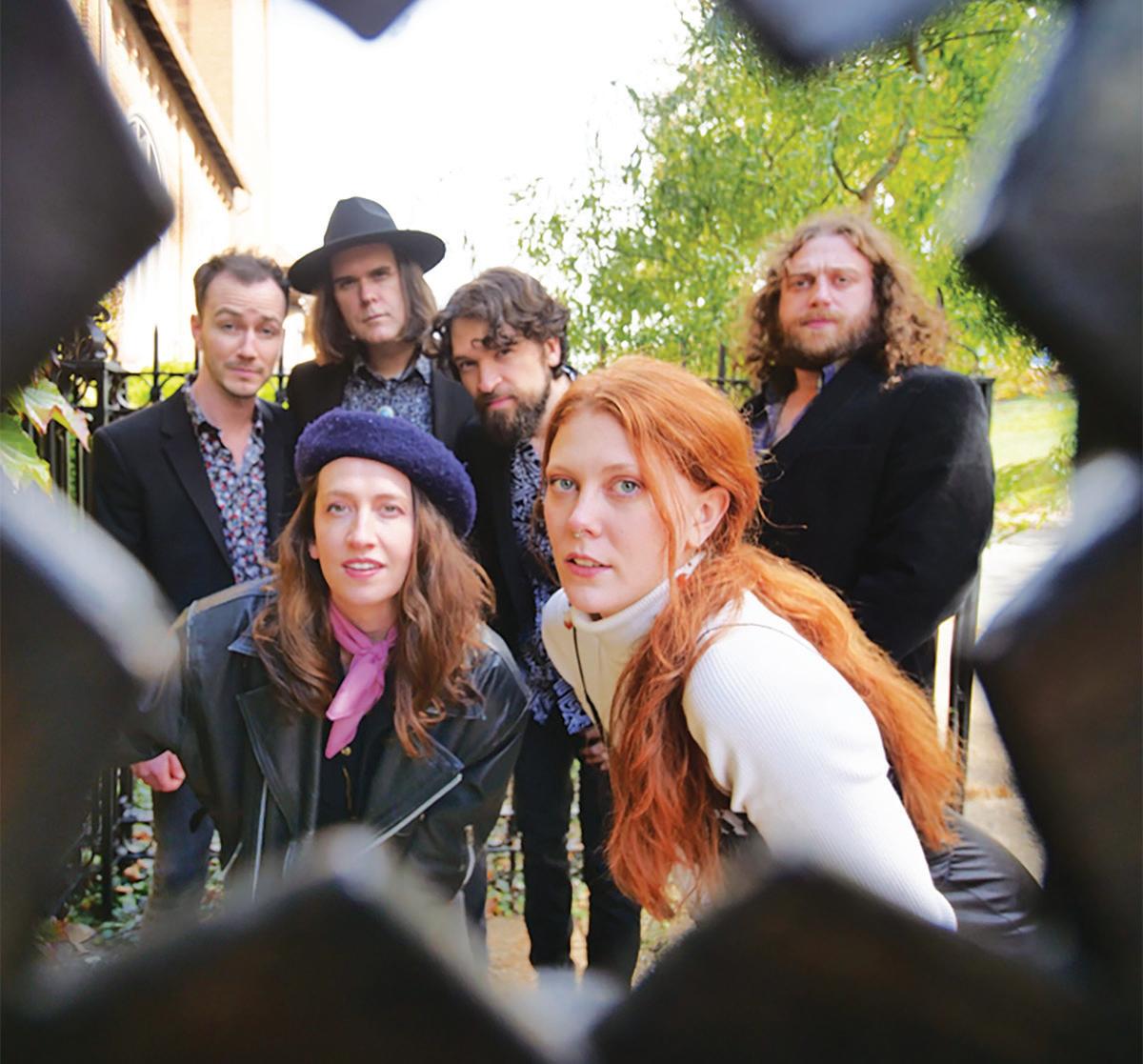
AREA - The Troubadour
Acoustic Concert Series presents Buffalo Rose with Ali Tod on November 7, 2025 at the Morristown Unitarian Fellowship, 21 Normandy Heights Rd., Morristown, at 7:30pm, $20.00 ($15 for members)
Buffalo Rose is a sensational six-piece Americana band from Pittsburgh, PA. A Buffalo Rose show is a spectacular celebration of creative joy, a sparkling sonic delight. The band takes the singer-songwriter tradition to a new level by crafting original songs which are deeply emotive, meticulously arranged, and inspired by a world of idiosyncratic influences, sure to captivate the mind and charm the heart.
Ali Tod fuses classical training with percussive fingerstyle guitar, loop-pedal wizardry, and raw, soul-stirring vocals—drawing comparisons to Rodrigo y Gabriela and KT Tunstall. Her dynamic performances have wowed audiences from Mexico to the UK, earning praise from
industry legends, including Brandi Carlile, who said: “She’s ten times the musician we are!”
Admission is $20 per adult at the door, Folk Project members $15. Children 12 and under are free. More info at https://folkproject.org/mecevents/2025-11-07/ Troubadour Acoustic
Concerts presents Frank Vignola with Caroline Cotter on November 21, 2025 at the Morristown Unitarian Fellowship, 21 Normandy Heights Rd., Morristown, at 7:30pm, $20.00 ($15 for members) Frank Vignola is one of the most extraordinary guitarists performing before the public today. His stunning virtuosity has made him the guitarist of choice for many of the world’s top musicians, including Ringo Starr, Madonna, Donald Fagen, Lionel Hampton, Tommy Emmanuel, John Lewis, the Boston Pops, the New York Pops, and guitar legend Les Paul, who named Vignola to his “Five Most Admired Guitarists List” for the Wall Street Journal. His

The best value in transportation since 1939!
virtuosity is stunning. Caroline Cotter’s songs explore connection, longing, gratitude, and the human experience with a honeyed voice and lyrical honesty. A seasoned traveler and touring artist, she’s performed over 1,000 shows across 45 states and 16 countries—everywhere from Parisian living rooms to schooners

off the Maine coast. Her music reflects a life shaped by global travel, spiritual practice, and deep introspection.
Admission is $20 per adult at the door, Folk Project members $15. Children 12 and under are free. More info at https://folkproject.org/mecevents/2025-11-21/

airmen and Marines from the PTSD contact point to a New Life celebrating the journey of healing and reintegration for veterans and their families.
How is Veterans Valor going to accomplish this? The first phase, Gateway to the Garden, is fully funded and will break ground Nov. 3, 2025, at 4:30 p.m. Organizers hope to complete it by spring 2026.
SEVEN GARDENS, ONE MISSION
Plans call for seven themed gardens under the concept
From Trauma to New Life: Point of Sacrifice: Honoring bravery and loss.
Medevac: The urgency of rescue and treatment.
Triage: The first steps toward recovery.
Homeward: The emotional return to loved ones.
Recovery: Ongoing mental and physical healing.
Fallen: Remembering those lost after coming home.
New Life: Renewal and hope for veterans.
We’re going to launch a larger fundraising campaign to finance the remaining six gardens, which Draper hopes to see under construction within three years.
He closed the event with a story of meeting a young veteran with prosthetic legs outside a Morristown restaurant. “I told him, the entire county is coming together for you,” Draper said. “He turned back before getting into his Uber and said, ‘Our paths will cross.’ That’s why we’re here.”
Two years in the making, the Healing Garden is a joint effort among Veterans Valor,
the Morris County Park Commission, the Morris County Commissioners, the Rotary Club of Morristown, and other local partners.
“This will be a sanctuary for our veterans seeking peace and healing,” said County Commissioner Doug Cabana. “Morris County puts our veterans first.” Every veteran’s journey is unique, but there are many who share common experiences as they transition from the battlefield to their homes. Our project seeks to honor this journey through storytelling and support.
In the garden, there is the opportunity to find, and restore self, by losing oneself in the moment instead of feeling isolated or alone what is in a “low flow” state also known as being in the zone. It is a mental state in which immersed in the activity with a positive food and energetic focus. Much as the runner finds himself on a new road or the artist loses time in the world of her creation, getting lost in gardening equates to a common connection beyond consciousness, the chance to experience the full of self-expression, a chance to experience a self beyond pain and loss.
Become a vital part of our mission by volunteering your time and skills. Your support can make a real difference in the lives of veterans.
For more information about the Veterans Valor project, to learn about volunteer opportunities, or to make a donation, please reach out to us: veteransvalorofnj@gmail.com Don’t be afraid to ask for help.







I Remember Dad: Remembering The Unkind Letter
BY RICHARD MABEY, JR.
WRITER
AREA - In early September of 1971, I turned 18 and began my college studies at County College of Morris. At that point in time, my father was a bit short handed for scout leaders, in his role as Scoutmaster of Boy Scout Troop 170. Mr. Jack Floyd Sr. was only one Assistant Scoutmaster in Troop 170. At the time, the troop only had about three or four Committeeman. Dad had asked me to help me lead the scout troop as an Assistant Scoutmaster. I gladly accepted my father’s vote of confidence in my role as a scout leader. It was in mid September that the fateful letter was written by one of the scout fathers in the troop. The letter was written to the Chief Scout Executive of the Morris-Sussex Area Council. The letter basically stated that this father felt my father should be removed as the Scoutmaster of Boy Scout Troop 170. This scout father’s entire reason, for writing this
terrible letter, is that my father used improper English when talking to the scouts. This scout father was not accusing my father of using curse words. In all my life, I had never heard my dad ever use a curse word. Rather, this scout father had kept track of the number of times that he heard my father said the word “ain’t” and used double negatives in a sentence.
This scout father was very bold in writing the Chief Scout Executive, because he mailed a carbon copy to Dad. I will never forget this moment. It was a Saturday afternoon. I climbed the stairs down to the basement of the old Mabey Homestead. There was Dad sitting at his workbench. He wasn’t tinkering, fixing a toaster, he wasn’t building a birdhouse, he wasn’t organizing his hand tools. Dad was sitting on his work bench crying.
At 18, the only other time I had seen my dear father cry
was the fateful day in mid May of 1968, when he got the telephone call that his father had passed away. I felt Dad’s pain as he showed me the horrible letter that the scout father had mailed to the Chief Scout Executive.
My father had spoken words of comfort to me dozens of times. From the time I got cut from my high school baseball team, till the time Penny Lancaster wrote me from Rutgers University that she had begun dating another boy. Now, it was my time to speak words of comfort to my beloved father.
Fast forward two weeks later, in late September of 1971. Dad, Mr. Floyd and I were attending the District Round Table Meeting. The Chief Scout Executive was there. When we walked into the room, the Scout Executive asked Dad if he could talk to him outside, alone.
Mr. Floyd and I were very concerned about what the
Chief Scout Executive could be telling Dad. I remember looking outside the meeting room window and seeing Dad and the Scout Executive walking around the green grass. When the two men came back into the meeting room, they both looked very happy.
After the District Round Table Meeting, Dad told Mr. Floyd and myself what the Scout Executive told him. Dad was so happy to tell us that the Scout Executive told Dad that he was one of the best Scoutmasters in the entire Morris-Sussex Area Council. Then, Dad showed Mr. Floyd and I a copy of the letter the Scout Executive had written to the disgruntled scout father.
The letter praised my father to the end of the earth. The Scout Executive’s letter made it clear as day, that he strongly felt that my dad was one of the best Scoutmasters in the entire council. In a subtle way, the Scout Executive kind of
scolded the scout father for not seeing the forest for the trees. And, for not seeing how fortunate his son was to have such a wonderful Scoutmaster like Richard Mabey Sr. The long and short of it all, it was a most beautiful letter that the Chief Scout Executive had written, praising my father’s dedication as a Scoutmaster. My father served as dedicated Scoutmaster, of Boy Scout Troop 170, for 30 years. I loved my father with all my heart. He was one of the wisest men I have ever known. It’s been almost 20 years since Dad went Home to be with the Lord. I still miss him, all so very much. Now at 72, and battling this horrible heart disease known as Hypertrophic Cardiomyopathy, I am fully aware that my time on earth may soon be ending. If there are some words I can share with my readers, it is these words. Be kind to one another. Do not be too quick to find the fault in other peo-
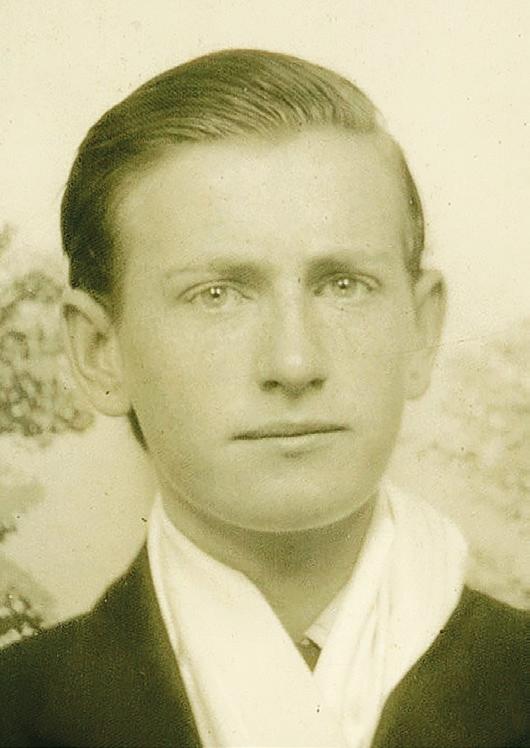
ple. Forgive, forgive and forgive those who have done you wrong. None of us have a guarantee that we will see the sun rise tomorrow. Cherish each and every moment of life. Love one another. Simply put, love one another. Richard Mabey Jr. is a freelance writer. He has recently had two books published. He currently hosts a YouTube Channel entitled, “Richard Mabey Presents.” Richard may be contacted at richardmabeyjr@gmail.com.
I Remember Dad: So Be, These Precious Attic Treasures
BY RICHARD MABEY, JR. GUEST WRITER
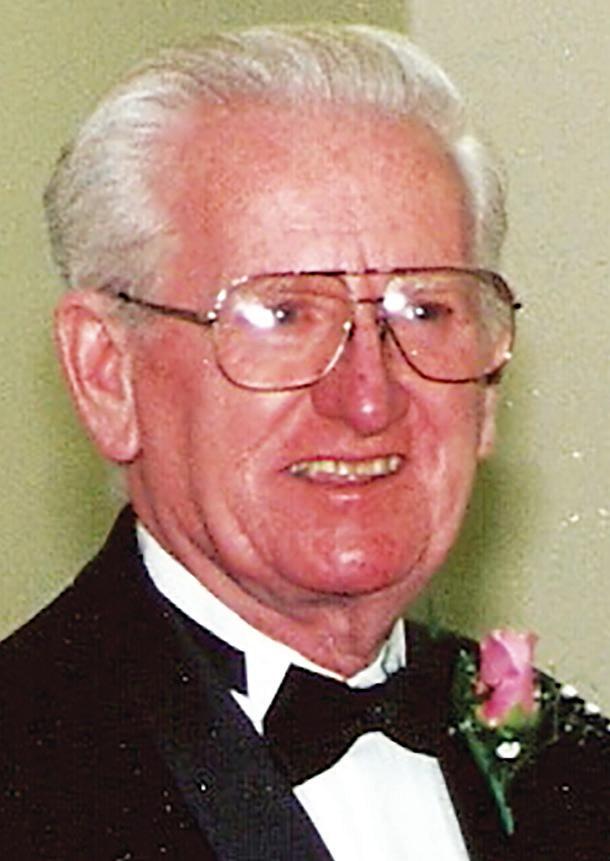
AREA - My grandmother, Bertha Storms Mabey, once told me that when my dad came home from the war that he became a bit of a recluse. He spent hours upon hours working on his train set layout in the upstairs hallway. Grandma also told me that Dad lost himself in book after book. Simply put, Dad loved to read. In 1946, when Dad came home to his family homestead at the end of Mabey Lane, Grandma told me that my father had become very
quiet and withdrawn. Dad had returned from a long stay at Hickam Air Field in Hawaii, which was located right next to Pearl Harbor. While Dad was not present at the time of the Japanese air attack, my father did help in cleaning up Hickam after the Japanese attack. It was something that my father could hardly ever talk about. And, the very few times that he did talk about it, he would get very emotional. Right after he came home from Hickam Air Field, Dad began working at Moon Carrier Trucking Company. Grandma told me that Dad saved every penny he could. And, in 1950, Dad and his brother, Edward, founded Mabey Trucking Company.
In the year, 2004, my father had a strong, spiritual calling to move to Central Pennsylvania, to live in the midst of the many Amish farms that
abounded along the Lincoln Highway, just to the west of Chambersburg. My dear father was now weakened from being in the midst of fighting colon cancer. So, one Saturday, Dad asked me to climb the attic ladder and hand down the boxes and boxes of stuff that had been stored in our attic for years.
As I stood in the attic, facing the windows looking out to Route 202, there on my left hand side, in a corner, were four old cardboard boxes. They were filled with both, paperback and hard cover books. I hollered down to Dad, who was standing by the ladder in the hallway of the old Mabey Homestead of my find. Dad simply asked me to bring them down for him.
There in those four old cardboard boxes were the golden gems of literature. Books by John Steinbeck, Ernest Hem-
ingway and William Faulkner abounded. And, then there was the most precious book of all, a first edition printing of Thomas Wolfe’s classic, “Look Homeward, Angel.”
As Dad and I went through his incredible collection of books, it felt like it was Christmas time. But instead of wrapped gifts, I was opening the cover to some of the greatest books ever written.
I remember this like it was yesterday, Dad proudly proclaimed to me, “you know, Richie, I’ve read every one of these books. Mostly from when I came home from the war, before I met your mother. All I really did back then was work, read books and work on my train layout.”
Then I remember how my father kind of laughed to himself. And then he said with a smile, “of course that all changed after I started dating your mom.”
I was in awe of my father’s incredible collection of books.
The apple had not fallen from the tree. For the majority of the books that were in one of Dad’s four cardboard boxes,




were the same authors and titles that I had read in my youth.
In May, it will be 20 years since my beloved father went Home to be with the Lord. While my father won out in his battle with colon cancer, he sadly lost his battle with pancreatic cancer, in May of 2006. My father was one of the wisest individuals whom I have ever known. While Dad left school to enlist in the Unites States Army Air Corps, he studied and earned his GED in 1972. My father then attended classes and seminars at Drew University and became a fully recognized Lay Leader of the United Methodist Church. I am immensely grateful for all my father taught me in scouts and in life, in general. It’s a debt I can only recognize, but never repay. I so dearly miss my beloved father. Richard Mabey Jr. is a freelance writer. He has recently had two books published. He currently hosts a YouTube Channel entitled, “Richard Mabey Presents.” Richard may be contacted at richardmabeyjr@gmail.com.
What’s happening in your school or organization? Celebrating a special birthday, anniversary, graduation? Have a human interest story or something you would like to share? Email us at production@mylifepublications.com



A great photo of my dad, Richard Mabey Sr., in 1997.
Dad as a young man