

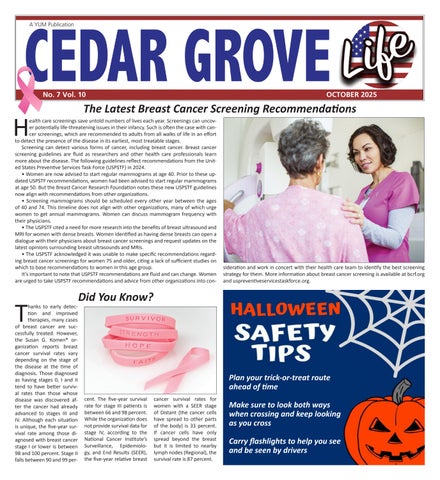
Health care screenings save untold numbers of lives each year. Screenings can uncover potentially life-threatening issues in their infancy. Such is often the case with cancer screenings, which are recommended to adults from all walks of life in an effort to detect the presence of the disease in its earliest, most treatable stages.
Screening can detect various forms of cancer, including breast cancer. Breast cancer screening guidelines are fluid as researchers and other health care professionals learn more about the disease. The following guidelines reflect recommendations from the United States Preventive Services Task Force (USPSTF) in 2024.
• Women are now advised to start regular mammograms at age 40. Prior to these updated USPSTF recommendations, women had been advised to start regular mammograms at age 50. But the Breast Cancer Research Foundation notes these new USPSTF guidelines now align with recommendations from other organizations.
• Screening mammograms should be scheduled every other year between the ages of 40 and 74. This timeline does not align with other organizations, many of which urge women to get annual mammograms. Women can discuss mammogram frequency with their physicians.
• The USPSTF cited a need for more research into the benefits of breast ultrasound and MRI for women with dense breasts. Women identified as having dense breasts can open a dialogue with their physicians about breast cancer screenings and request updates on the latest opinions surrounding breast ultrasounds and MRIs.
• The USPSTF acknowledged it was unable to make specific recommendations regarding breast cancer screenings for women 75 and older, citing a lack of sufficient studies on which to base recommendations to women in this age group. It’s important to note that USPSTF recommendations are fluid and can change. Women are urged to take USPSTF recommendations and advice from other organizations into con-
Thanks to early detection and improved therapies, many cases of breast cancer are successfully treated. However, the Susan G. Komen® organization reports breast cancer survival rates vary depending on the stage of the disease at the time of diagnosis. Those diagnosed as having stages 0, I and II tend to have better survival rates than those whose disease was discovered after the cancer had already advanced to stages III and IV. Although each situation is unique, the five-year survival rate among those diagnosed with breast cancer stage I or lower is between 98 and 100 percent. Stage II falls between 90 and 99 per-

cent. The five-year survival rate for stage III patients is between 66 and 98 percent. While the organization does not provide survival data for stage IV, according to the National Cancer Institute’s Surveillance, Epidemiology, and End Results (SEER), the five-year relative breast
cancer survival rates for women with a SEER stage of Distant (the cancer cells have spread to other parts of the body) is 33 percent. If cancer cells have only spread beyond the breast but it is limited to nearby lymph nodes (Regional), the survival rate is 87 percent.

sideration and work in concert with their health care team to identify the best screening strategy for them. More information about breast cancer screening is available at bcrf.org and uspreventiveservicestaskforce.org.





Plan your trick-or-treat route ahead of time

Make sure to look both ways when crossing and keep looking as you cross
Carry flashlights to help you see and be seen by drivers
By Tina Pappas
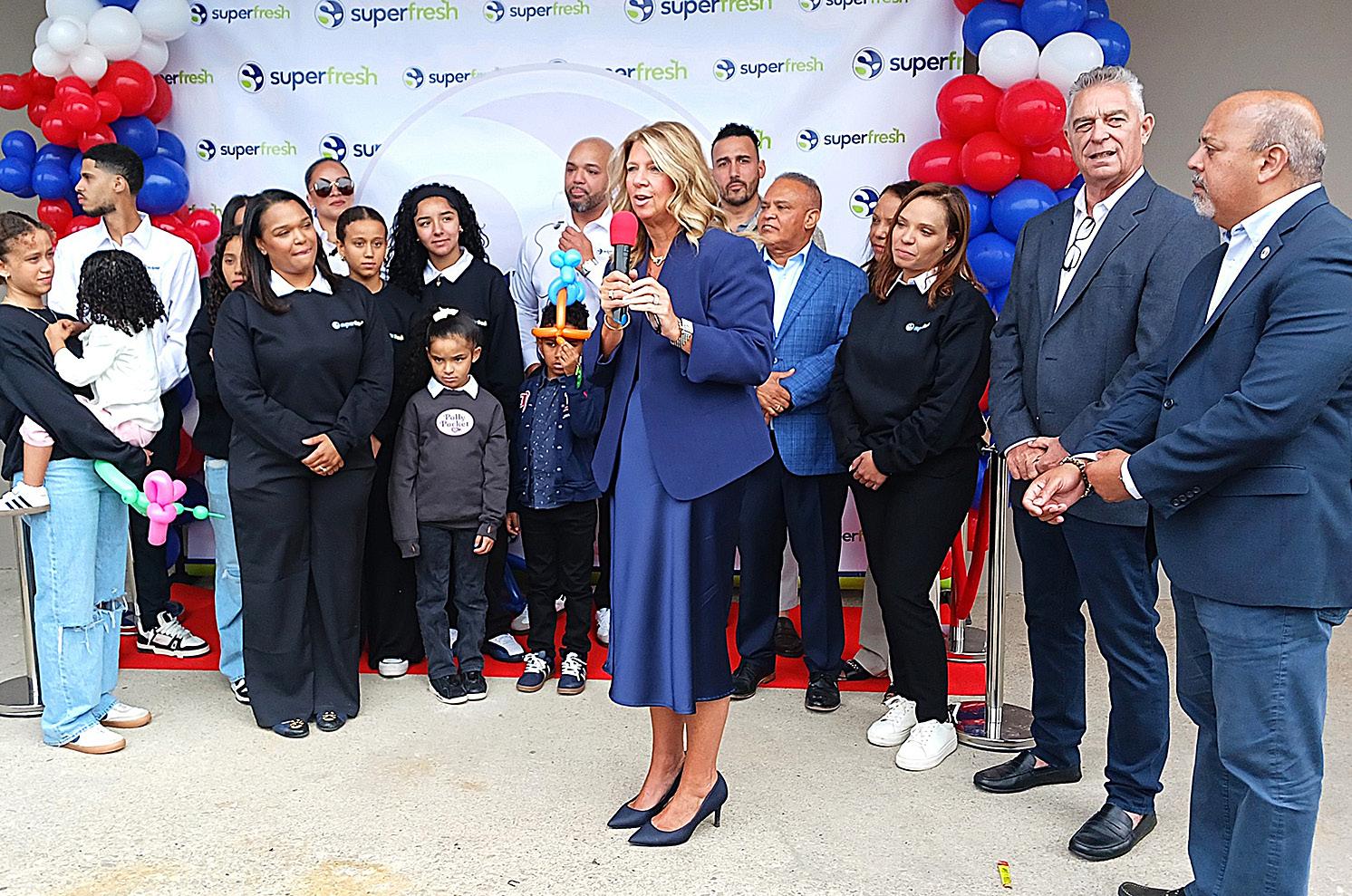
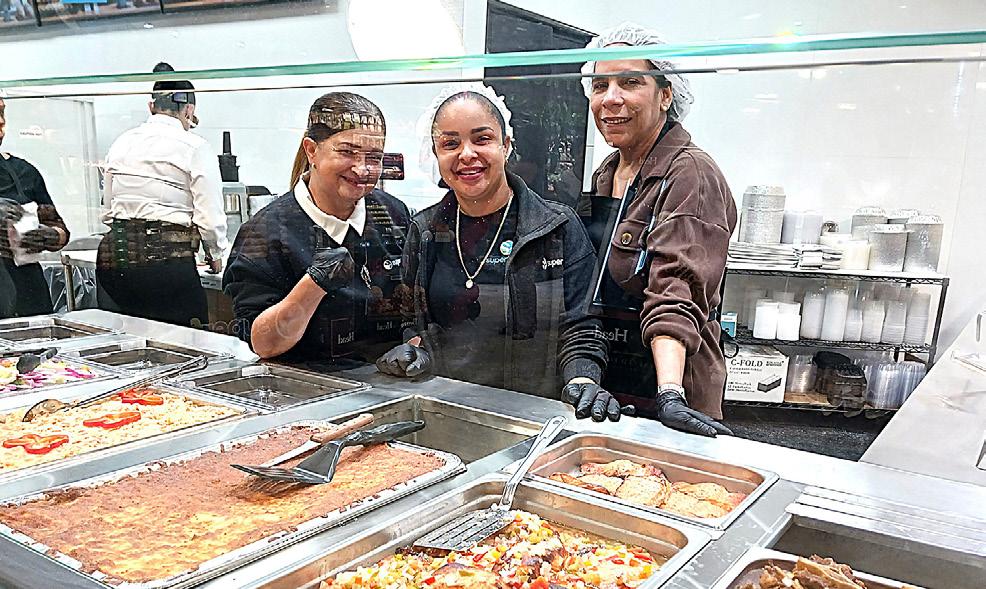
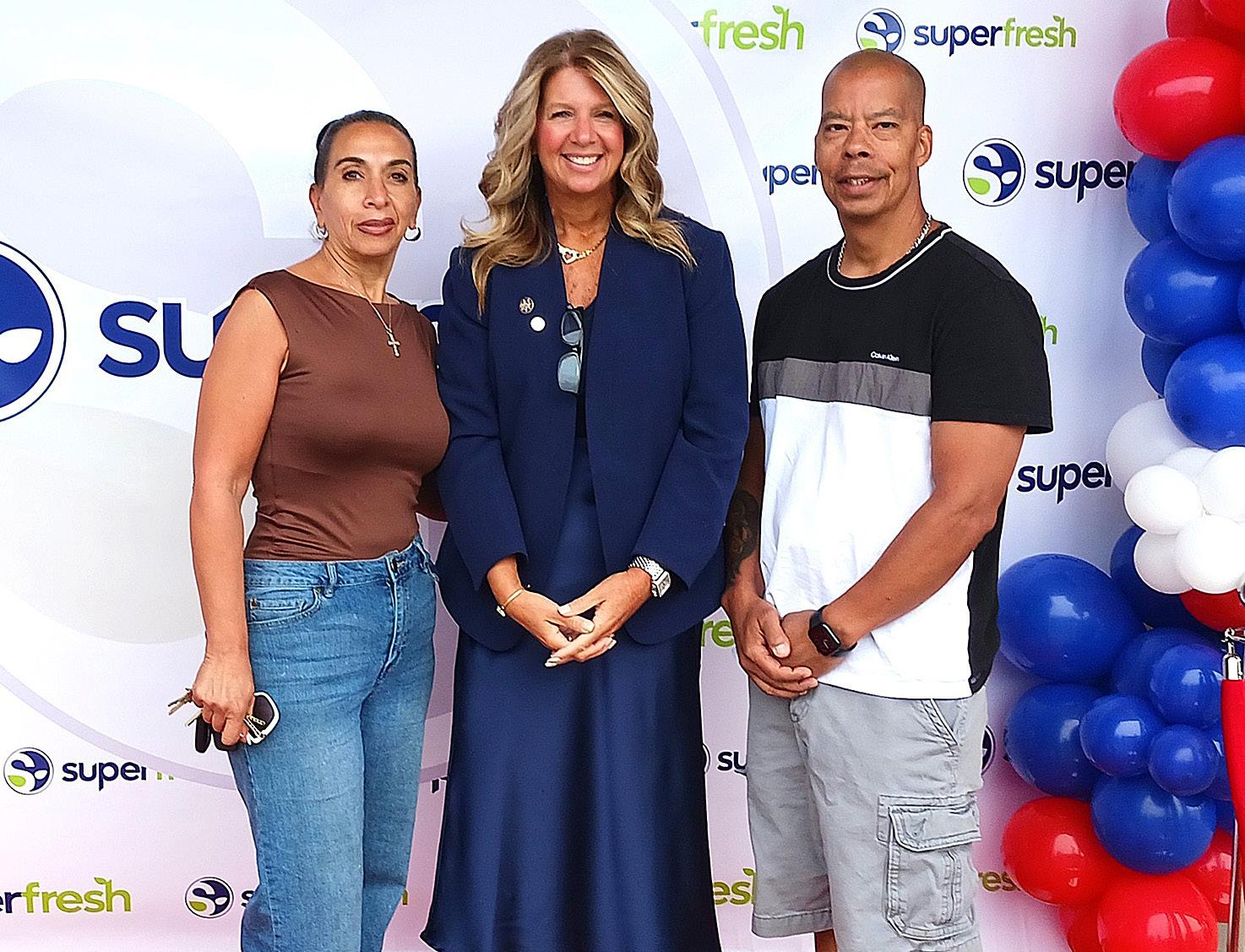
The grand opening of Superfresh Supermarket made its much-anticipated debut to the community in the Borough with a grand opening ceremony on Sept. 13.
The 14,000 square-foot, mid-sized supermarket is located at 1750 Route 46 West. The brand is owned by Key Food Stores, which operates approximately 20 supermarkets in the Tri-state area. It's part of a chain owned by the Teo De Jesus family, operating over 10 supermarkets in New Jersey and New York. They've been in business for over 40 years.
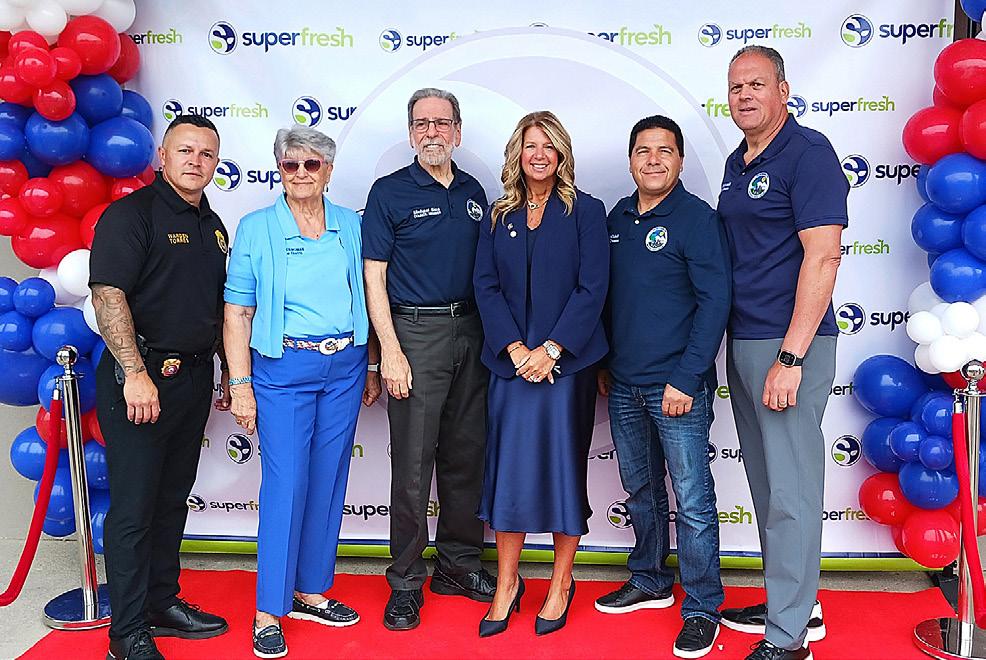
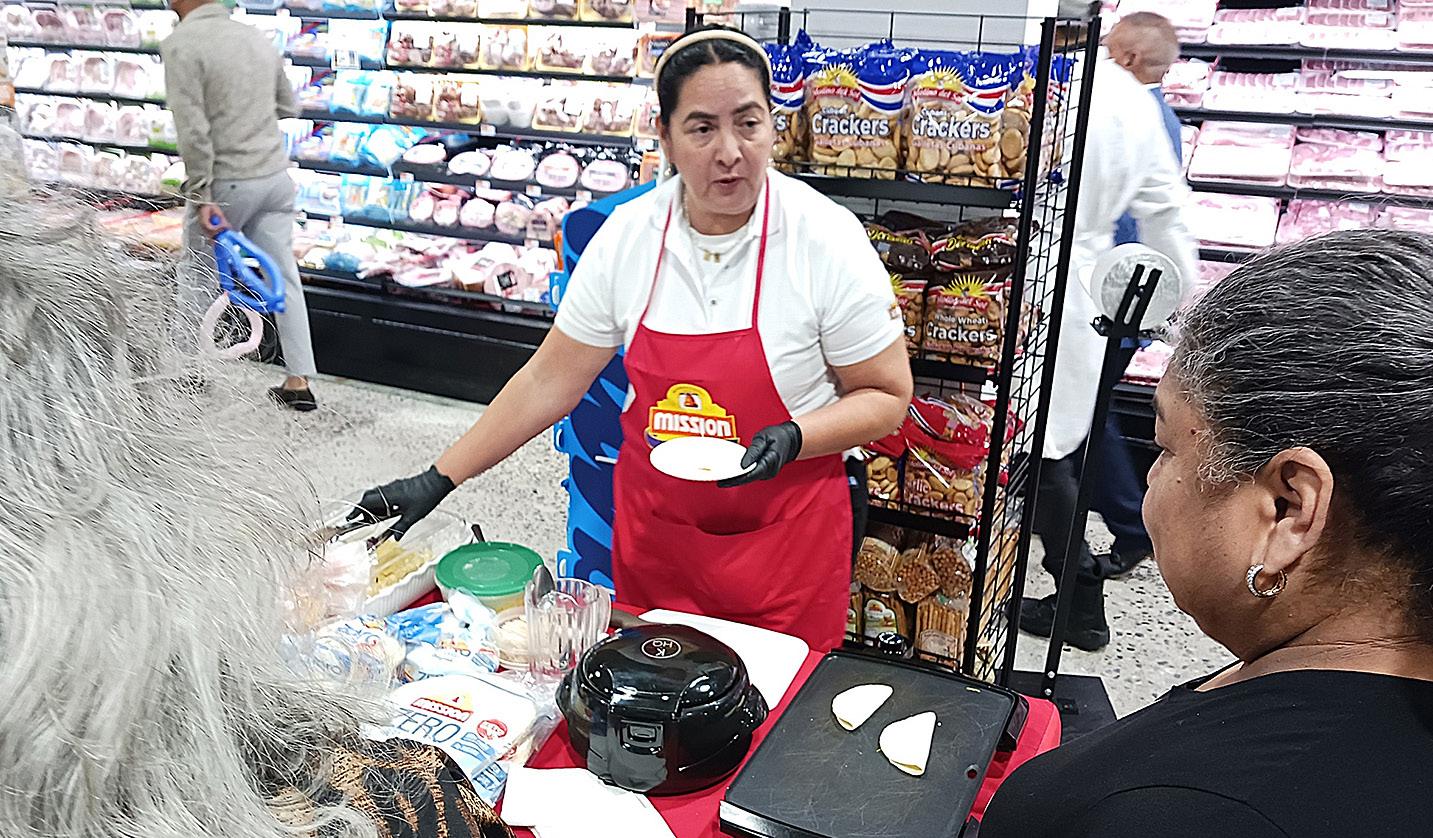
A ribbon-cutting ceremony was held by Mayor Tracy Kallert, along with Council President Mike Sica, Councilwoman Tina Gatti, Councilman Vincent DeCesare, Councilman Luis Torres, and Councilman Adam Chaabane. The supermarket's official opening was celebrated with free samples, demos and special sales, including refreshments and entertainment for the entire family.
Mayor Tracy Kallert spoke afterwards and said it was a very big day in Woodland Park because additional shopping options had been needed in town for quite some time.
"I have to say that when we were first approached about Superfresh coming to Woodland Park, we were excited," she said. "But when we had people go out and visit other stores, they came back to say, 'Mayor, you have no idea what you're getting. Your community is going to be very happy.' This is a top-notch operation run by an amazing family. I knew that our partnership was going to be fantastic."
Kallert then thanked those who assisted with the launch of Superfresh in Woodland Park.
"Thank you to your beautiful family, thank you to all of

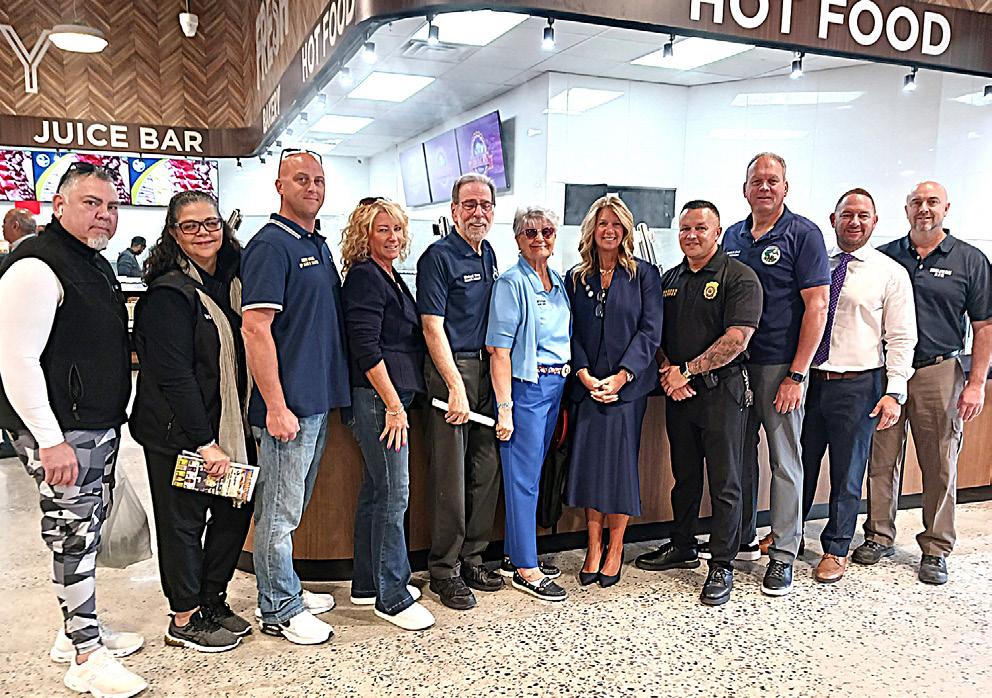
Photos provided by The Borough of Woodland Park
The much-anticipated grand opening of Superfresh Supermarket was held on Sept. 13. Woodland Park Mayor Tracy Kallert is pictured, along with members of the Borough Council and her administrative team.
our dedicated employees and everyone who has come together to make this happen today," she added. "We are all very excited."
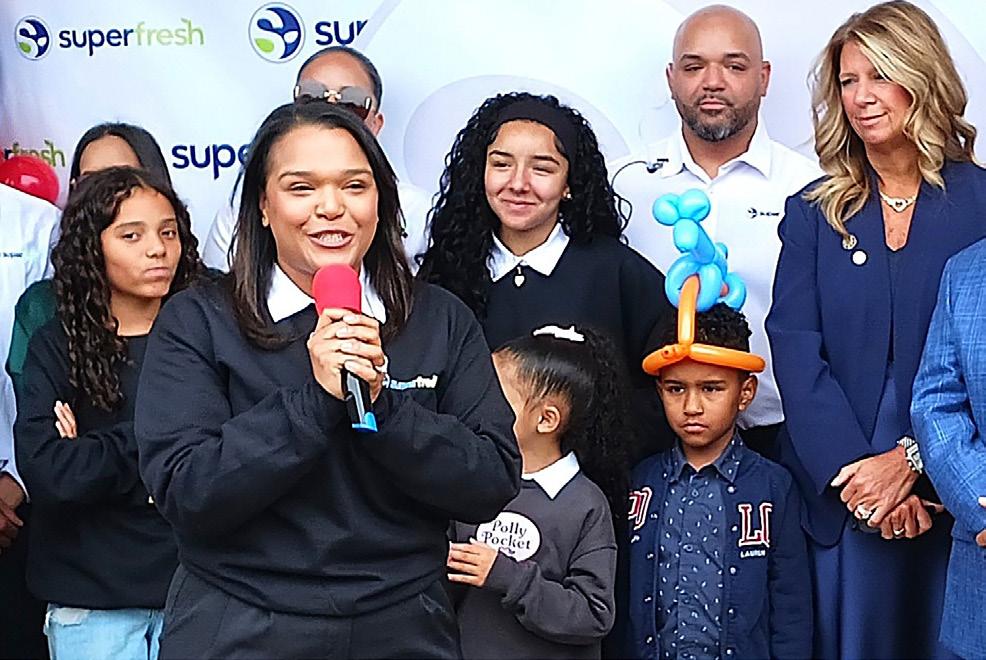
Nallely De Jesus, Vice President of Superfresh in Woodland Park, welcomed everyone to the ribbon-cutting ceremony.
"We're so excited to be part of the Woodland Park community!" DeJesus said, and thanked Kallert for attending the grand opening with her entire team, and for all of their support. "I also want to thank my father for his guidance, and the group for their effort and the leadership. I want to thank
For over 175 years, people have turned to New York Life to protect what matters most.
Times may be turbulent, but your future financial security doesn’t have to be. I can work with you to build a strategy that helps you protect what matters most.
Built for times like these.
Even during challenging times, our financial strength allows us to keep our promises and fulfill our obligations. That’s why, for over 175 years, families and businesses have turned to New York Life to protect what matters most.
Putting you first.
As a mutual company, we are accountable only to you. That means we are fully aligned with our policy owners, not with outside investors or Wall Street. This allows us to focus on delivering lifelong value to our customers.
Anthony
M.
Protection, accumulation, preservation. I can make recommendations, tailored to your needs, on a wide variety of protection and financial matters, so you can:


Protect your family’s future
Prepare for retirement

Grow your wealth

Preserve your assets for future generations

Protect and grow your business

the Superfresh staff and I hope you all appreciate all their hard work. I want to thank my family and we are inviting all of you to be part of our family."
De Jesus boasted about all the departments inside the supermarket, which offer a fresh variety of food and goods.
"We're excited to have you share your experience at our supermarket in Woodland Park," she noted. "Thank you all for being here today."
De Jesus said afterwards that the supermarket is family-owned and that she's proud to be a second-generation operator. She added they are independent operators and own three other supermarkets - two in Clifton and one in Passaic.
"My dad has been in the business for over 30 years," she said, adding that she was a teen when she first starting work-
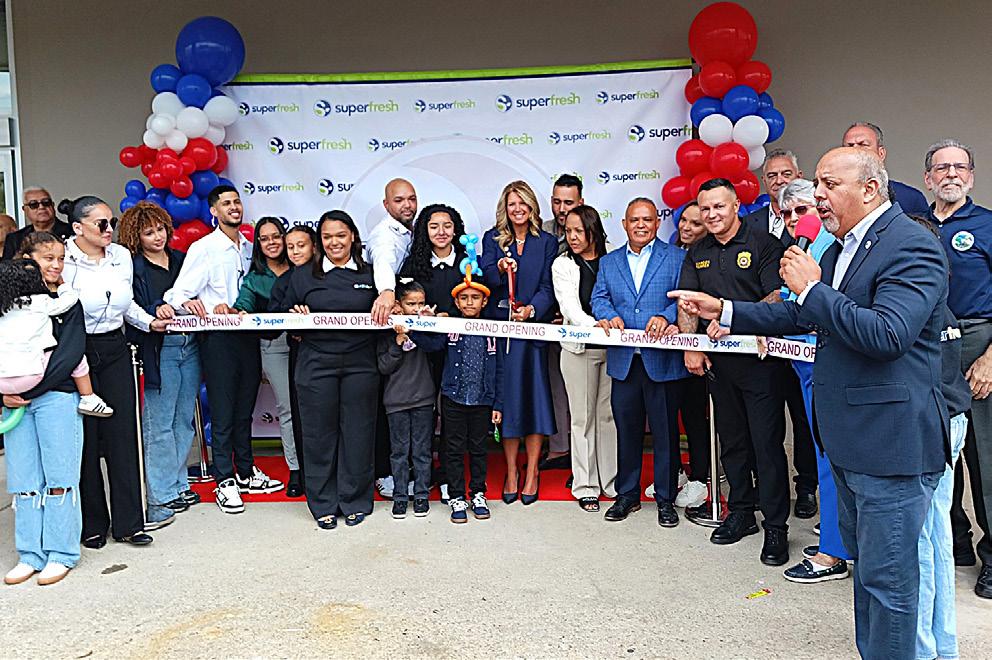
Mayor Tracy Kallert readies to cut the ribbon during the grand opening of Superfresh Supermarket in Woodland

Sessa Agent
New York Life Insurance Company 250 Pehle Avenue, Suite 900 Park 80 West-Plaza Two Saddle Brook, NJ 07663 (Mobile) (862)-201-9655 amsessa@ft.newyorklife.com




Woodland Park... cont. from page 2 ing in the field. "I've always been involved and my dad has always been supportive. He'd say you have to start from the bottom up, so he made us work the front lines. I worked in the deli, in the front end, as a pricing coordinator and that experience makes me a better leader because I know the hands-on experience of the front line."
She also said that Superfresh has "a very dynamic way of operating" and hopes to bring a sense of giving-back to customers.
"We are all about the community," she emphasized. "In our other locations we host a yearly event where we give away a car and we're hoping to do that some time next year here in Woodland Park. We believe in giving back to everybody that shops here. We worked very hard to build this store and we're hoping everyone enjoys what we've accomplished."
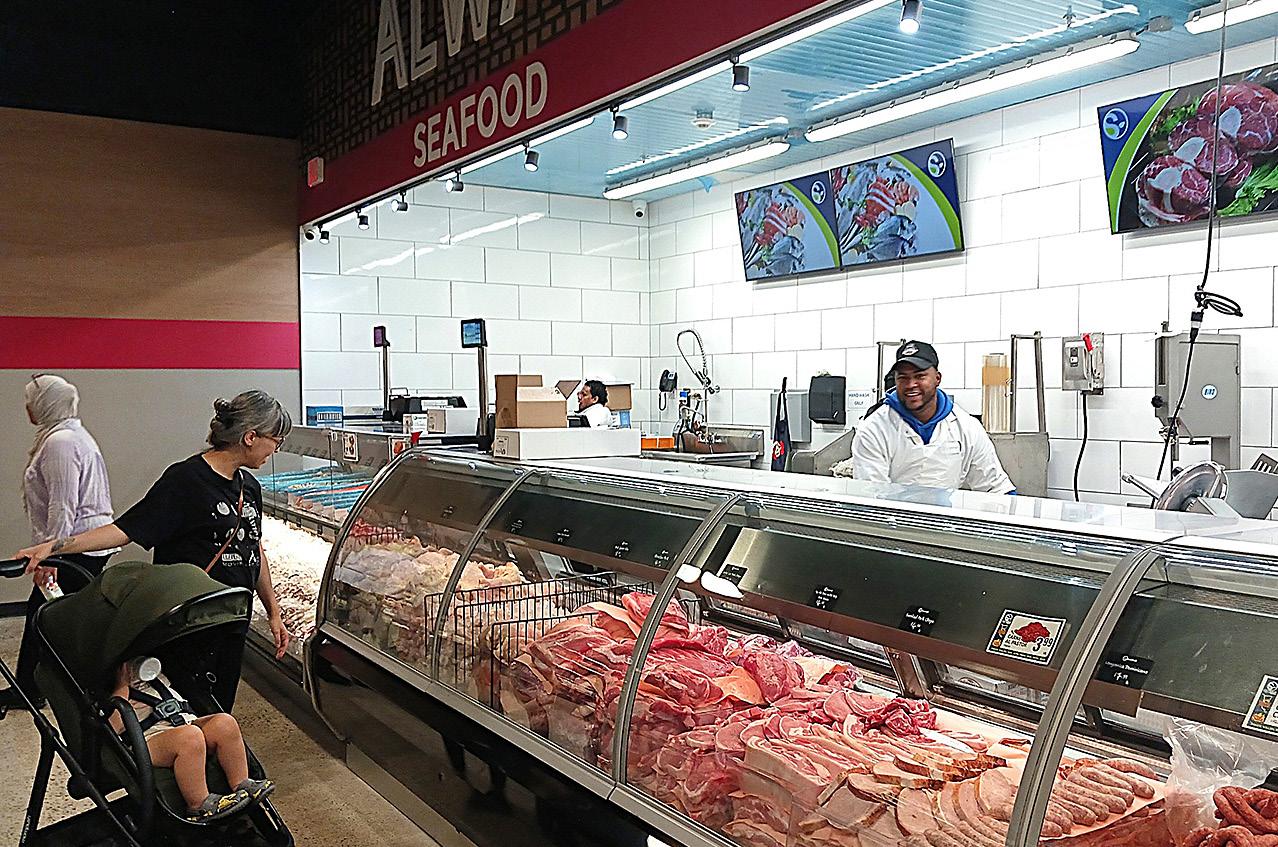
She also stressed that Superfresh is a mid-sized supermarket and is easy to navigate with a strong perishable department containing the freshest items.
"When you need a late night dinner or a quick shop, you can pick up all your fresh products and go home," she noted. "We're very mindful of how busy everyone is and we're here to make everything easier for families and the community."
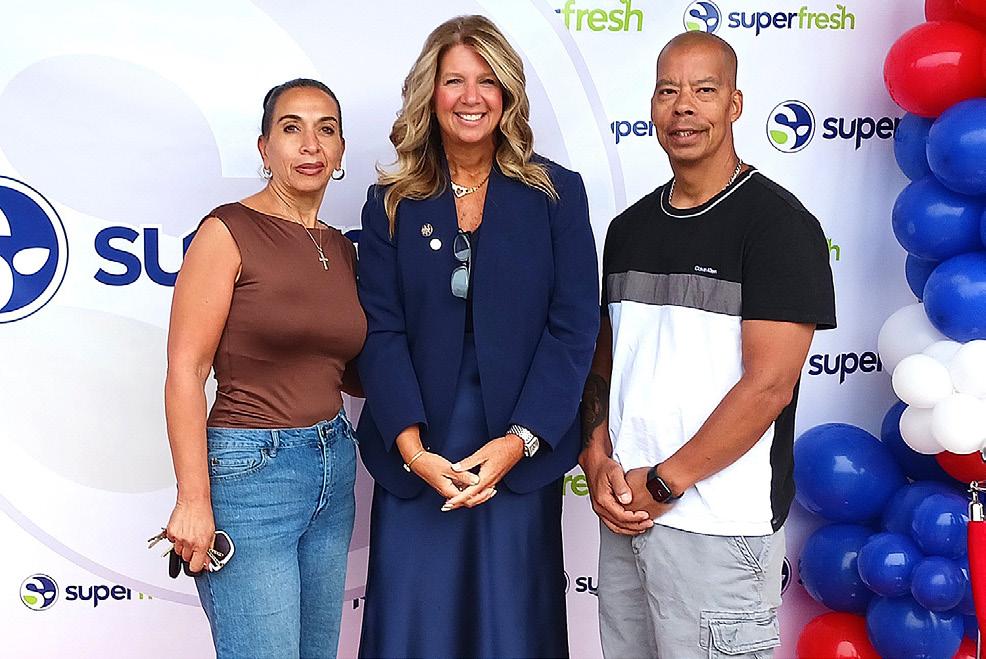
Local resident Nadia Aponte stopped by for the grand opening and said Superfresh is a great find.
"I really like this place," she added. "It caters to the local community and offers a wide variety of foods from different cultures. The vegetables are incredibly fresh and of high quality. It's definitely a spot worth visiting!"
Superfresh Supermarket in Woodland Park is open Monday through Saturday from 7 a.m. to 10 p.m. and on Sunday from 7 a.m. to 9 p.m.


















By Tina Pappas
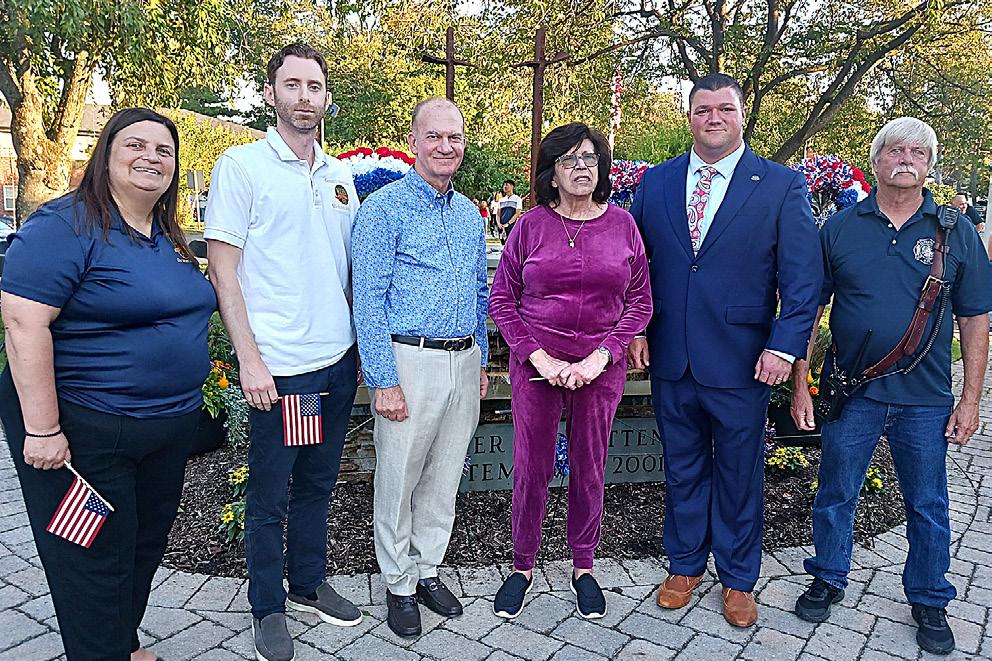
The Township of Little Falls held a somber and reflective ceremony as many gathered at Memorial Park on Wilmore Road, marking the 24th anniversary of the terrorist attacks.
The ceremony was held in front of the 9/11 monument, which displays two pieces of World Trade Center steel and an 8 by 6 foot waterfall, with the engraved words, "Never Forget - September 11, 2001." The five-foot long I-beams were erected by the Township in 2011. Many who spoke during the evening recounted how the country was unified after the attacks, which took nearly 3,000 lives, including local residents Linda Rosenbaum

and FDNY firefighter Robert Cordice.
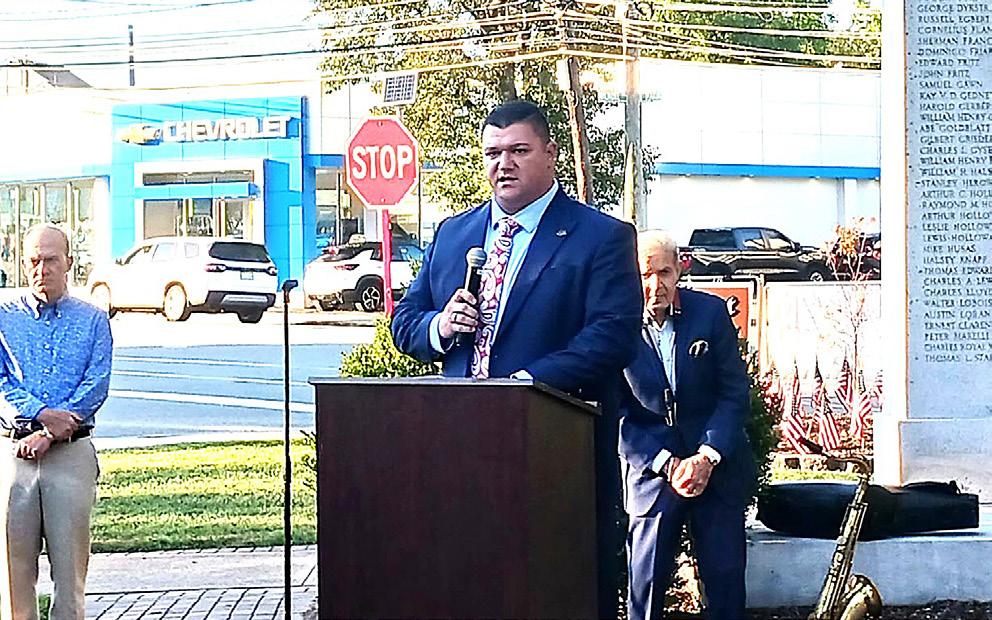
Council President Anthony Sgobba held a moment of silence and welcomed attendees on behalf of Mayor James Damiano, the Township Council, the Little Falls
Police Department (LFPD) and the Little Falls Fire Department (LFFD). He recognized Passaic County Commissioner Rodney DeVore, who was in attendance. He also acknowledged mem-










911..
cont. from page 9
bers of the Cordice Family, who were also in attendance.
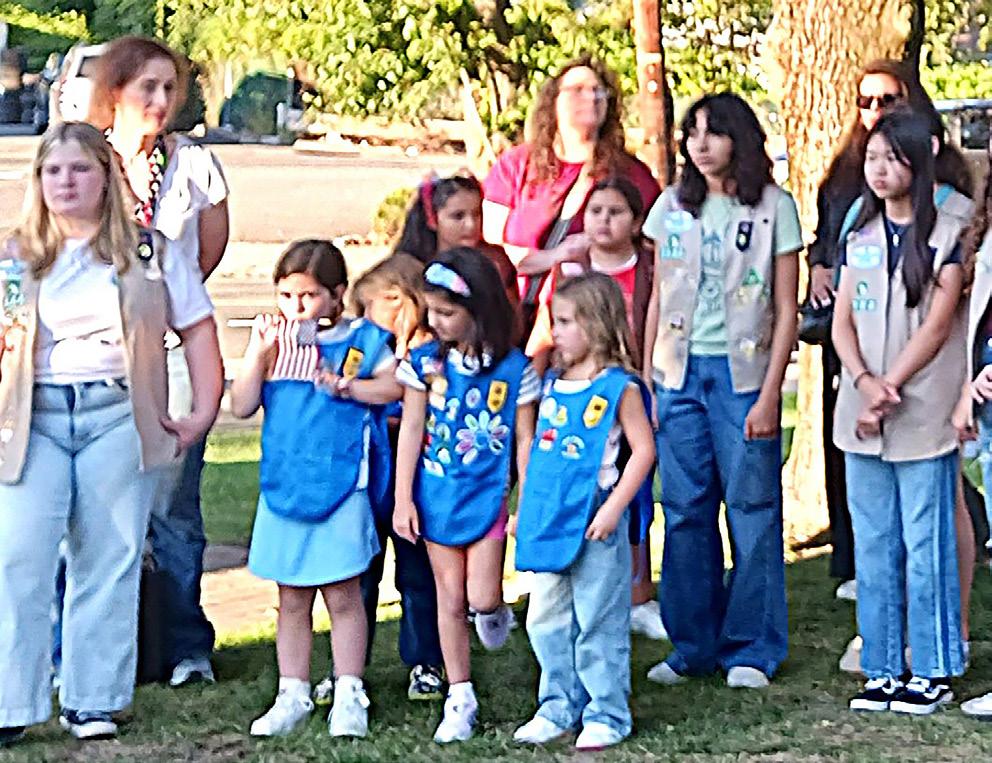
The National Anthem was sung by Girl Scout Cadettes Ayin Kim and Madelyn Larionoff. Girl Scout Cadettes Evelyn Chichester, Camilla Petracca and Keira Krietzman led the younger Girl Scouts in the Pledge of Allegiance. Boy Scout Troop 14 also took part in the ceremony.
Sgobba recalled the events of that day when four planes were hijacked by terrorists. Two planes were flown into the Twin Towers of the World Trade Center, one plane into the Pentagon and a fourth crashed into a field in Pennsylvania, with victims ranging from 2 to 85 years old.
"The number continues to grow due to 9/11 related health issues from those who were working at Ground Zero," he said.
Mayor James Damiano emphasized the importance of continuing to honor those who lost their lives. He recalled the country's unity in its aftermath.
"As a community, it's important that we pause each year to honor those we lost, and to reflect on how we came together in the days and months that followed," he said. "In the face of unimaginable tragedy, Americans stood united, with compassion, kindness, and a shared resolve that we would not be broken. Yesterday's heartbreaking school shootings remind us again of the fragility of life, the pain that violence brings, and the importance of standing together as one community and one nation when tragedy strikes. That spirit of unity is something we need just as much today as we did 24 years ago."
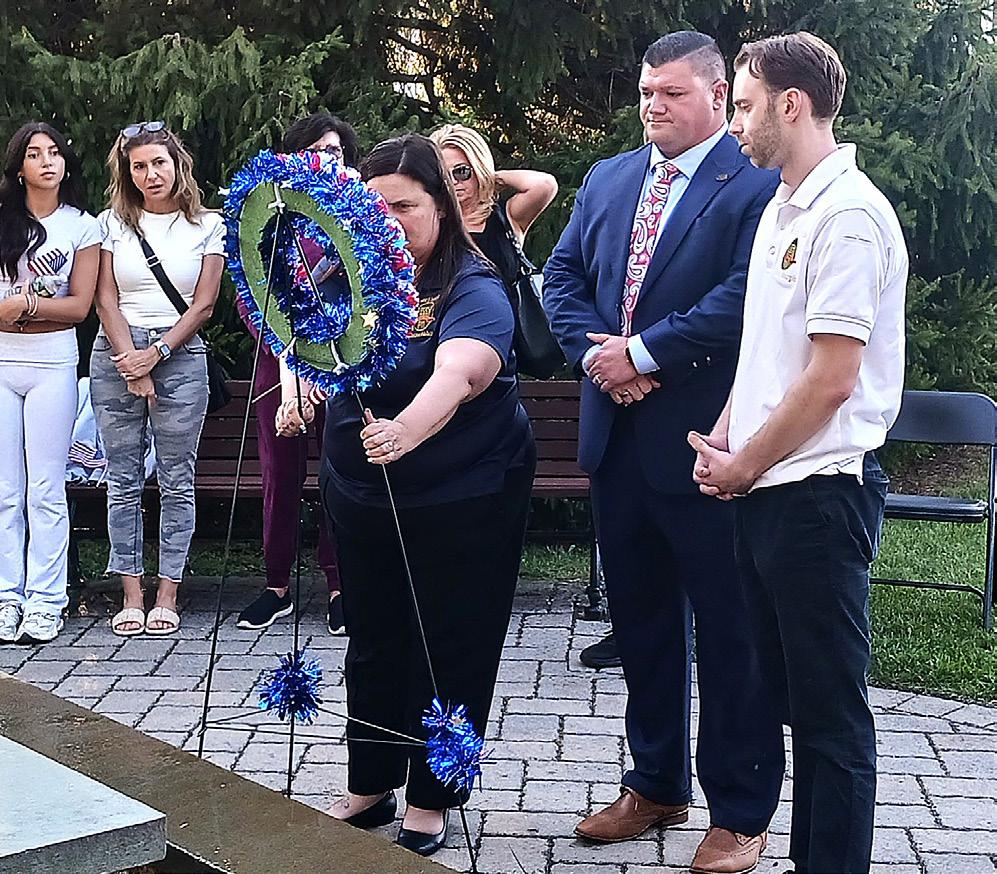
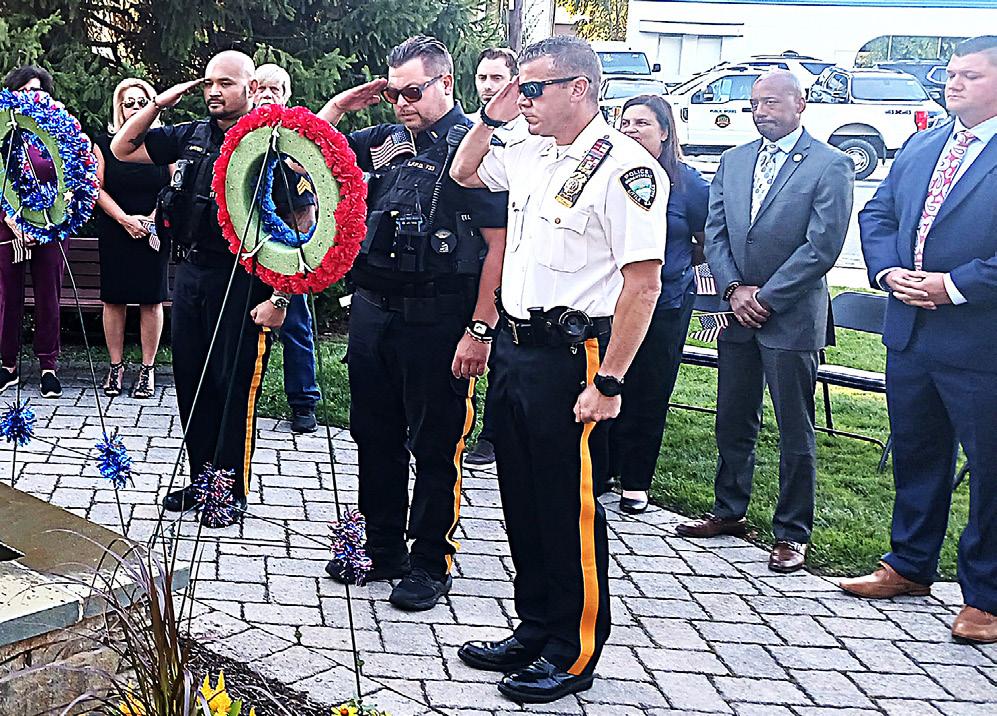
Damiano, along with Councilwoman Christine Hablitz and Councilman Mike Murphy, placed a wreath in front of

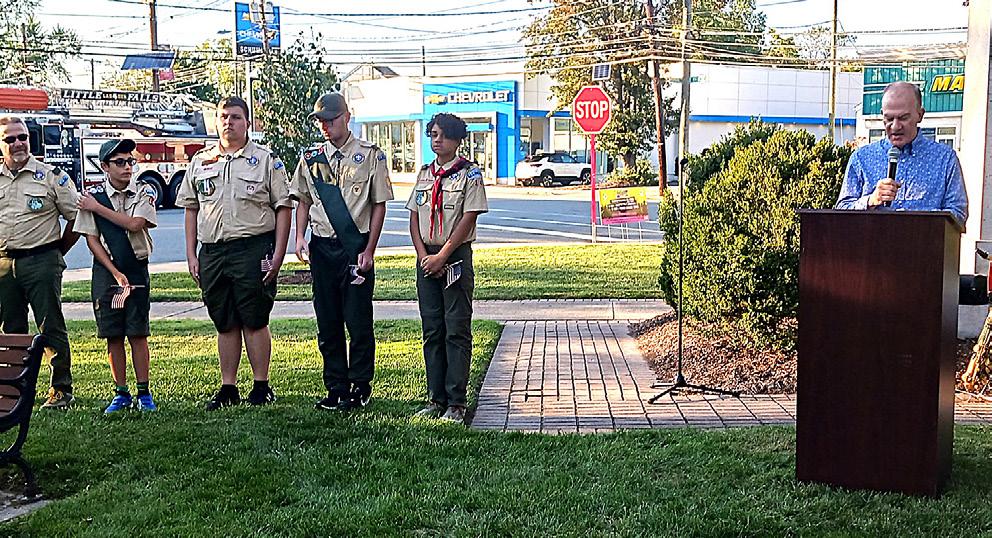
Council President Anthony Sgobba welcomes attendees flanked by Boy Scout Troop 14 during the Little Falls 9/11 ceremony marking the 24th anniversary of the terrorist attacks.
the 9/11 Memorial. The second wreath was then placed by Police Chief Bryan Prall and officers of the LFPD. LFFD Chief Ken Cichy placed a third wreath, along with the Cordice family.
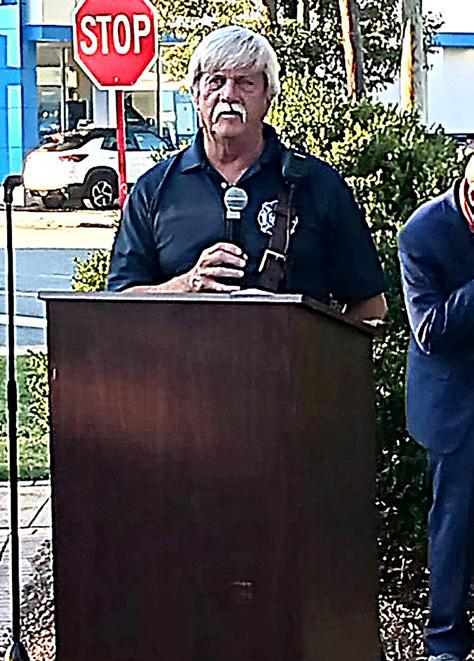
LFFD Chief Ken Cichy spoke to attendees about the sacrifices of all fallen firefighters that day.
"Thank you to everyone taking time out of your busy schedules to honor the fallen fighters of 9/11, and to the Cordice family for coming every year," he said, adding that the wreath will be moved to the FDNY Firefighter Robert Cordice Memorial with the Cordice family after the ceremony.
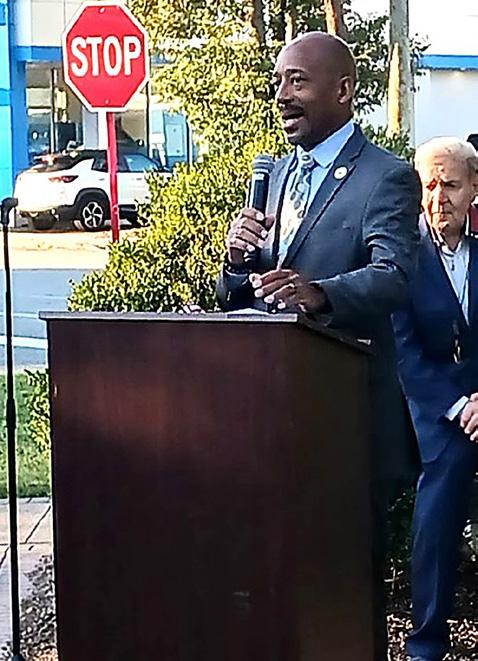
Sgpbba then introduced DeVore, who selected Little Falls to join in the 9/11 ceremony.
"I just wanted to be here for Little Falls, and even though it's 24 years later, it doesn't get any easier," he said. "Floods of memories, floods of emotions come each year, and each
year we hear stories and it refreshes our memory like it was yesterday."
He added that the reason he came to Little Falls is because he feels the Township holds "a special connectivity" for conducting the ceremony each year.
"I'm speaking as someone who was affected as well. I remember on that day I was teaching and called my wife telling her to get to my kids who were 4 and 6 at the time because I had to watch over someone else's kids," he recalled. "When people found out what happened, they came to the scene just to show up and see how they could lend a hand. That's what I wanted to do when I came by to spend time with you here. I wanted to show up and lend a hand. I remember and I stand with you."
Local resident Lenny Pollara then recited a poem he






Somber 911.. cont. from page 10 wrote.
"Most of us remember where we were when the first place hit," he said. "Then after that, the day spun out of control. To those people out there who lost their loved ones, there are no words to describe the pure pain. Our country lost so many loving and caring people and for what? A senseless act of hatred."
He then passed along a message to people of all ages.
"Now it's time to start living all of your lives in the best way you can and cherish each passing moment," he noted. God bless America and God bless us all."
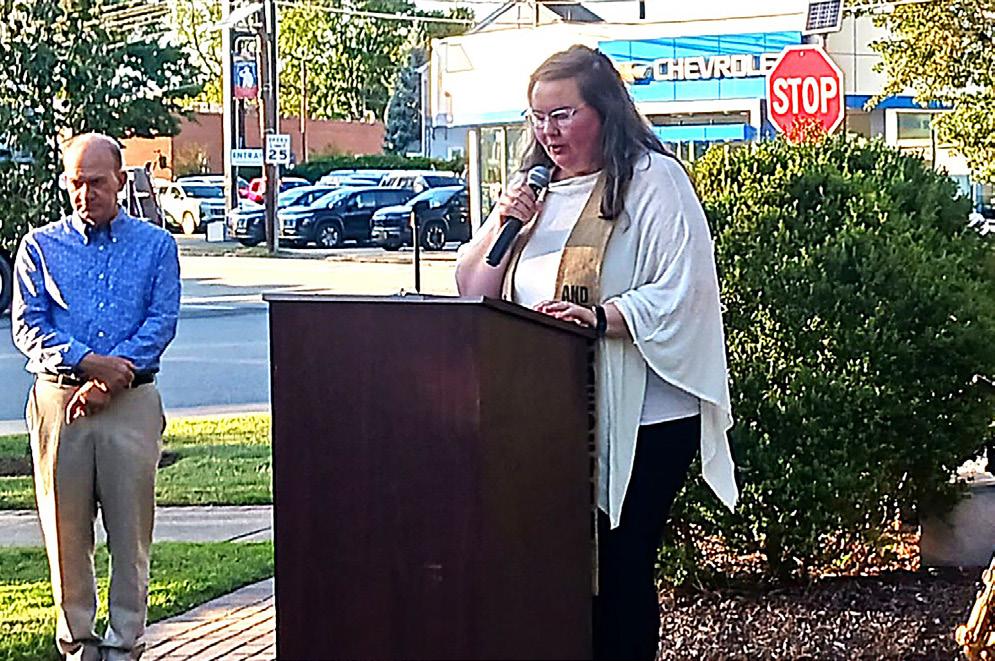
Saxophonist John Morano then performed Danny Boy followed by Pastor Emily Youngberg of the First Reformed Church who led the invocation and benediction. She recalled the tragic day where people kept their resolve in helping others.
"For those among us who risked their lives to save others we are comforted by those who offered kindness to people in distress and by those who would not let hatred overcome love," she said. "We pray and hope for peace in the world among people and nations, religions, cultures until we could become a beloved community and reconcile to one another in peace."
Sgobba thanked everyone who joined the ceremony, including the Little Falls Department of Public Works and Little Falls Recreation Department, the Boy Scouts Troop 14 and Little Falls Girl Scouts. He also thanked Morano and Youngberg for assisting in the ceremony. Morano closed out the ceremony with God Bless America. Sgobba then
spoke afterwards.
"On behalf of Chris Vancheri who puts this ceremony together, it was my honor to host the 9/11 ceremony this year," he said.
The Cordice family along with Damiano, the Township Council then gathered around the Survivor Tree Seedling and monument plaque for reflection. Cordice's mother, Caroline, said she's grateful that the Township continues to hold the 9/11 ceremony every year.
"From the bottom of my heart, thank you for continuing this memorial service," she said.

By Tina Pappas
The Borough held its recent council meeting with a special session at the Four Seasons at Great Notch on Sept. 3.
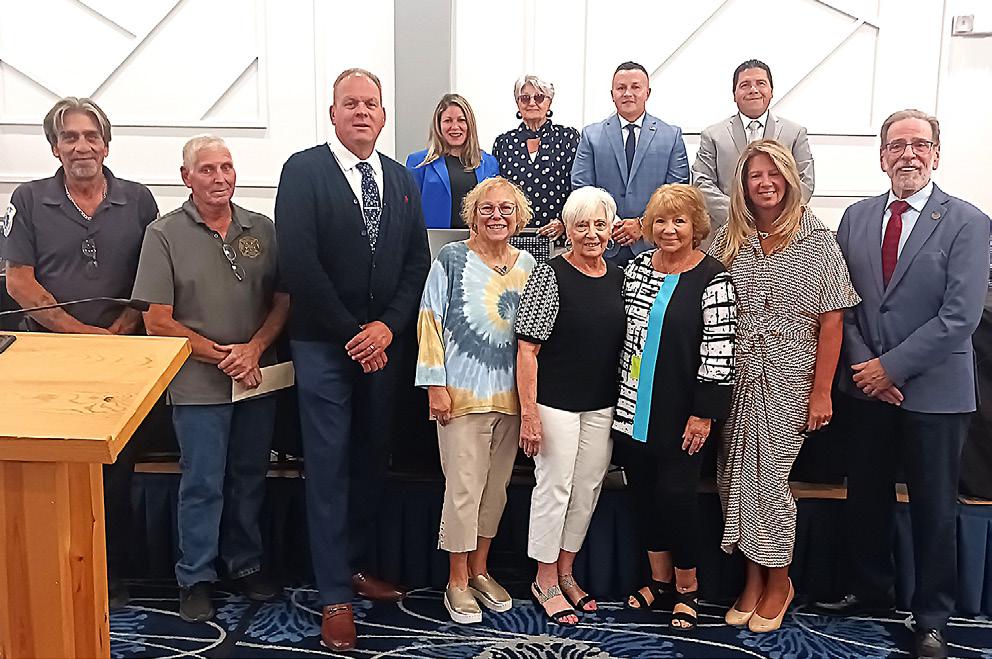
During the meeting, Mayor Tracy Kallert and the Borough Council welcomed the West Paterson First Aid Squad (WPFAS) and the West Paterson Fire Department (WPFD), and proudly watched as The Illuminations Group at the Four Seasons at Great Notch, presented checks to both WPFAS Capt. Andy Dillon and WFPD Chief Paul Salomone. The generous donations stem from fundraising efforts by The Illuminations Group, a philanthropic, charitable organization that participates in many community outreach initiatives via food and clothing drives, school supplies, and worldwide disasters. In recent years, they've participated in raising funds for local fire departments and emergency medical response services.
After council member introductions, Council President Mike Sica acknowledged all the volunteers in the Borough who comprise the WPFAS and the WPFD.
"They are special people that are here today," he added, as they were given a round of applause by those in attendance.
Kallert then called up Dillon and Salomone, along with Council President Sica and Councilman Vincent DeCesare, who chairs the Borough’s Public Safety Committee, to gather at the dais for the presentation of the two checks amounting to over $2,000 each. She commented about
how meaningful it was to hold the presentation at the Four Seasons at Great Notch so residents could attend and celebrate their hard work as the leaders of The Illuminations Group acknowledged the first responders.
"I can't tell you how appropriate this is because you have been so extremely generous towards our Fire Department and our First Aid Squad," Kallert said, and then commended the members of the WPFAS and WPFD, some of who were present at the meeting. "You truly understand what it




opened up her very first coffee shop last November. She has since opened a string of coffee shops.
By Tina Pappas
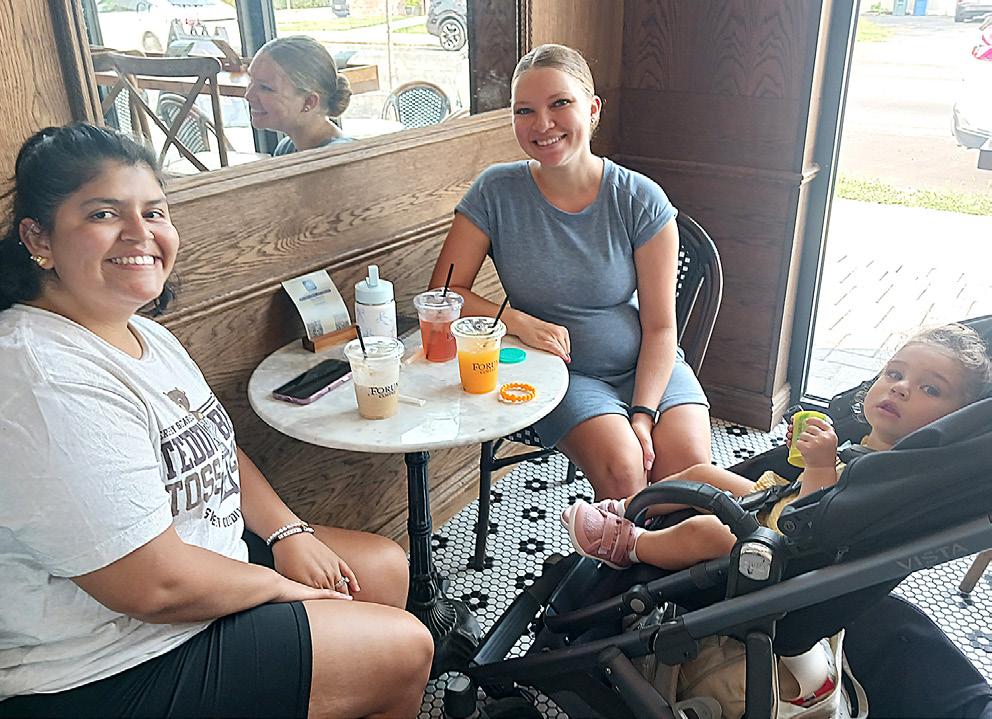
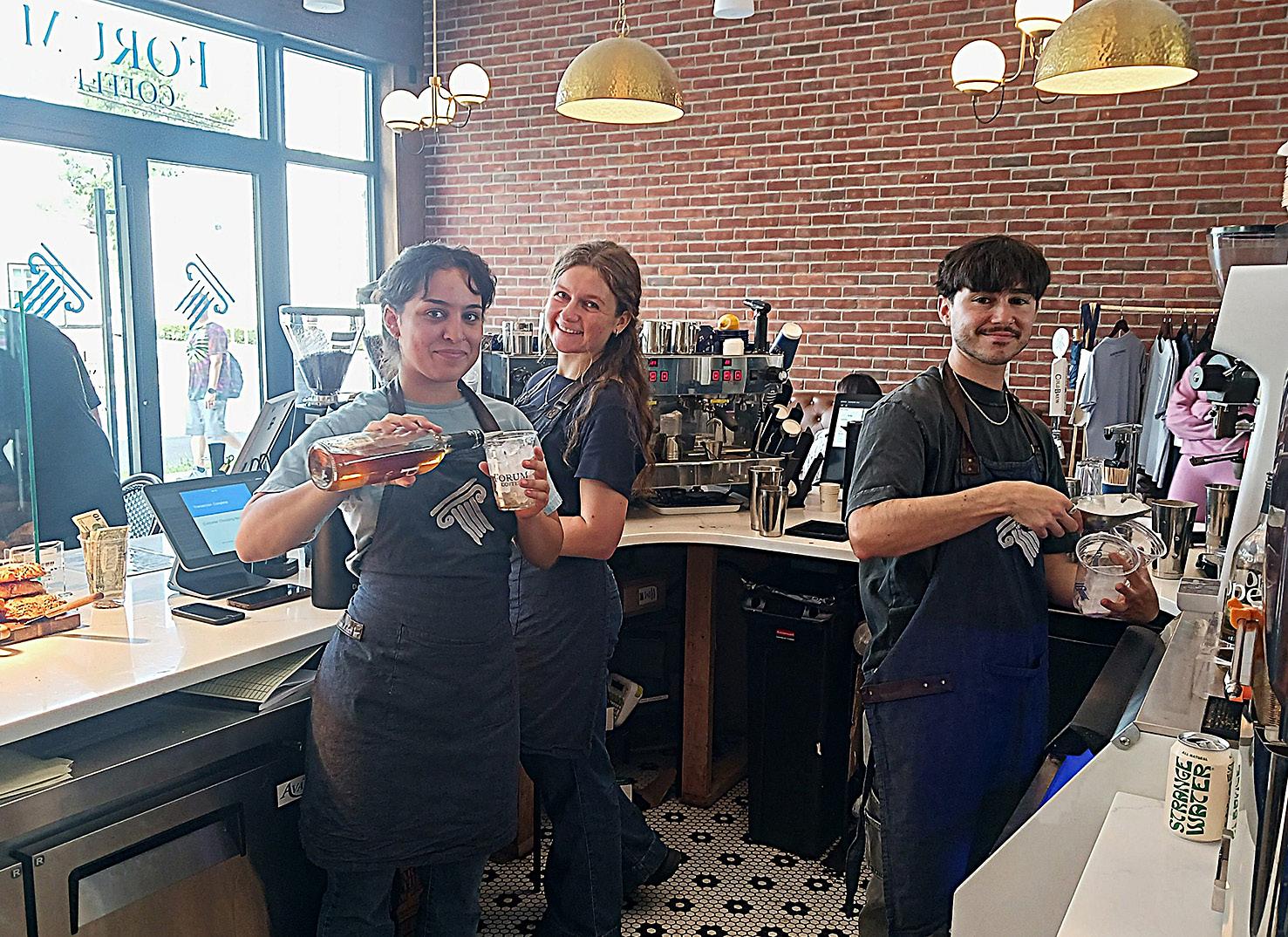
Anew coffee shop has opened in town for coffee connoisseurs, setting its sights to "redefine the coffee experience in New Jersey." Forum Coffee, located at 178 Newark Pompton Turnpike, aims to be a true coffee lovers delight.
According to owner Courtney Foti, the Forum Coffee's aim is to create a welcoming atmosphere where people can come by to work or hang out and treat themselves to delicious coffee and other food items. Foti, who grew up in Caldwell, currently lives in East Hanover where she
"We opened our first location in East Hanover where we all grew up just last November, so that one was kind of like our baby," she said. "We just always wanted to redefine the coffee experience in New Jersey and being in the city for a while, I felt northern New Jersey lacked this vibe, so Forum came to life. We're now a chain because we're in East Hanover, Livingston and we have two shops in Hoboken. And here we are opening our fifth location right here in Little Falls."
Foti added that there are seven more locations in the works for later this year and into early 2026. She says
she's always been a coffee drinker and connoisseur, visiting coffee shops in different areas. She also said the rapid growth of Forum Coffee has been very positive.
"We're seeing great things," she explained. "We're a family company and we want to give that feeling to all patrons during their coffee experience."
There are several food items also on the menu that have proved to be a big hit with customers.
"We have pastries galore! Our monkey bread is a hit too and we've brought out our pumpkin bread for the fall," she further added. "We also have Italian egg sandwiches, with options of having eggs with sausage, pep -

cont. from page 14
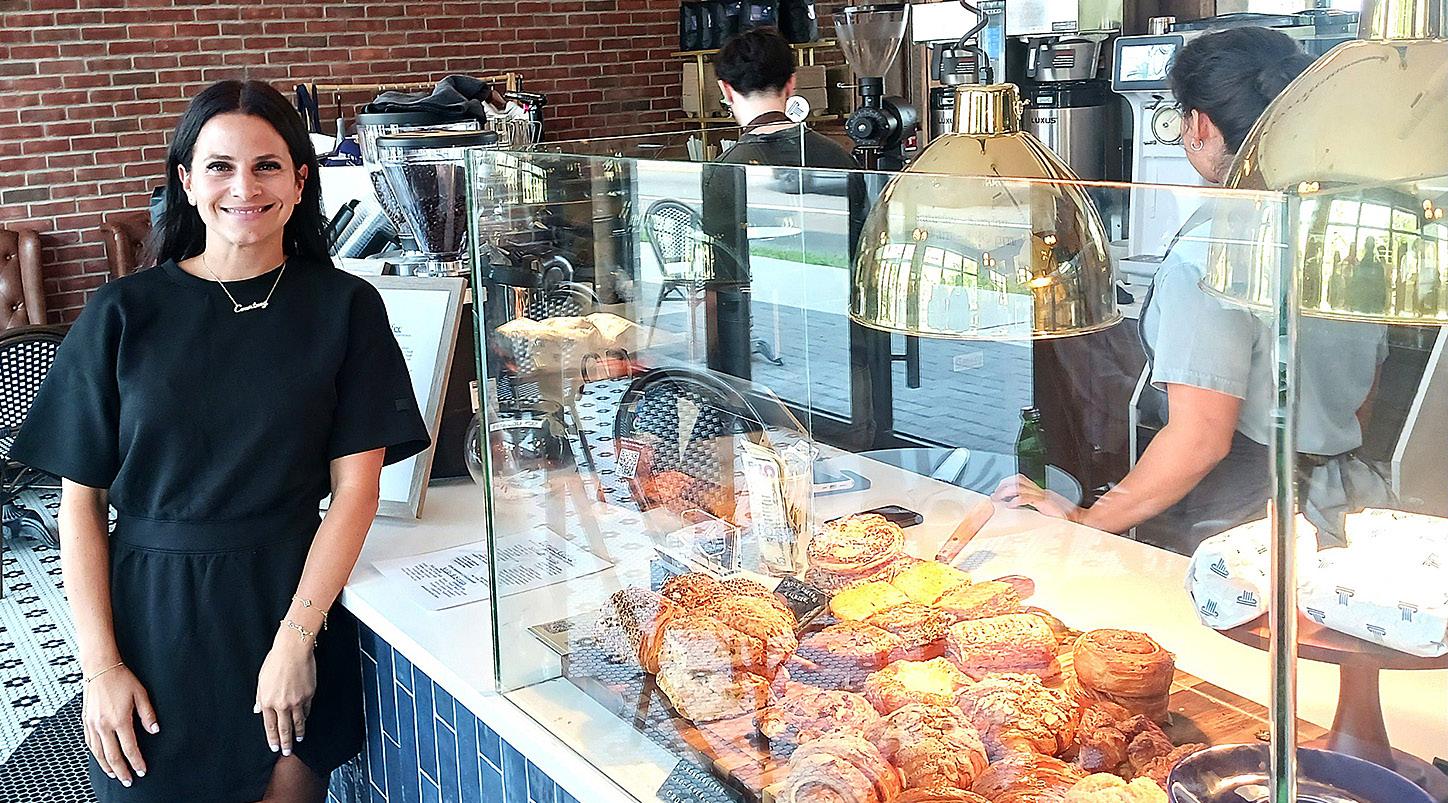
peroni, potato or pepper. We also have a number of tea offerings also if not everyone's a coffee drinker."
Forum Coffee officially opened on Aug. 20. Foti hopes everyone will come by and enjoy tasty offerings while enjoying savory coffee and beverages.
"We're hoping this will be a place to bring everyone together," she noted. "I really envision it being a location where people can stop by into a welcoming atmosphere and just enjoy themselves."
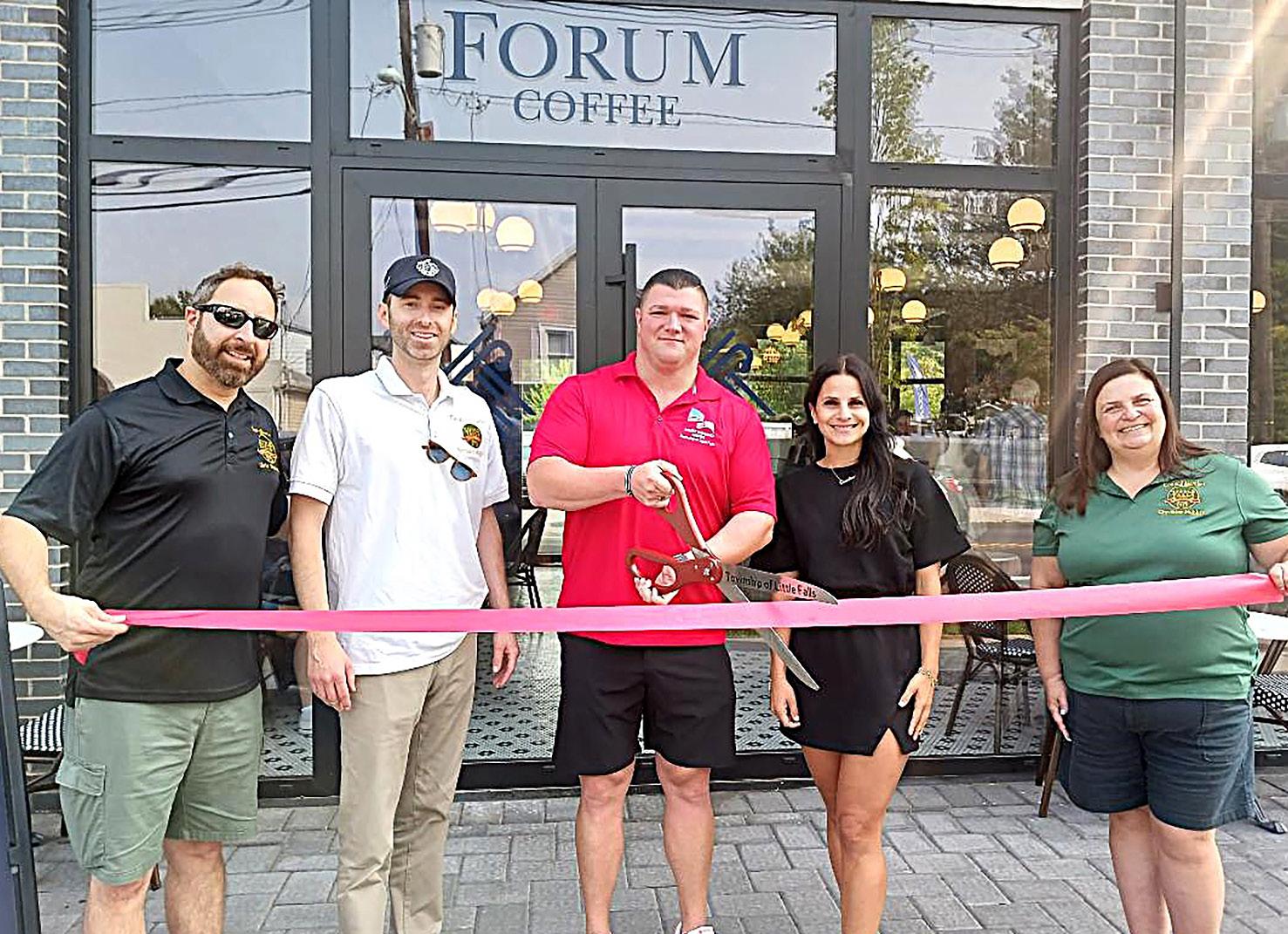
A ribbon-cutting ceremony was held on Sept. 6 at the newly-opened Little Falls location led by Mayor James Damiano, with Councilman Chris Vancheri, Councilwoman Christine Hablitz and Councilman Mike Murphy. Damiano commented after the ceremony.
"We are thrilled to welcome Forum Coffee to Little Falls as their fifth location," he said. "Their coffee is truly delicious, and I know our residents will enjoy having them right here on Newark Pompton Turnpike. We wish them the best of luck and much success, and we are proud they chose Little Falls to grow their business."
cont. from page 13
takes to be a volunteer first responder. You report to calls, knowing the potential danger you could face - but respond none the less. They respond regularly to all emergencies at the Four Seasons. Woodland Park couldn't be in better hands than with these two leaders right here - Capt. Dillon and Chief Salomone."
Kallert then thanked Judi Sierchio, Judy Davidson and Loren Rosenthal, leaders of The Illuminations Group at Four Season at Great Notch, for continuing to raise money to donate to Woodland Park volunteer organizations.
Rosentahl spoke on behalf of The Illuminations Group and said it was a collective effort from fundraising events.
"It is our honor to present to you a check to these two wonderful organizations," she said, adding that proceeds from the Four Seasons' annual event "Pocketbook Bingo" go towards the donation. "We've already started next year's event. It's a work of fun and lots of hours, but we really enjoy doing it."
Kallert commended The Illuminations Group for their fundraising efforts.
"They've given so much already and yet they continue their hard work on our behalf," she said. “You have been extremely generous towards our Fire Department and our First Aid Squad and I want to thank you for inviting us into your home tonight."

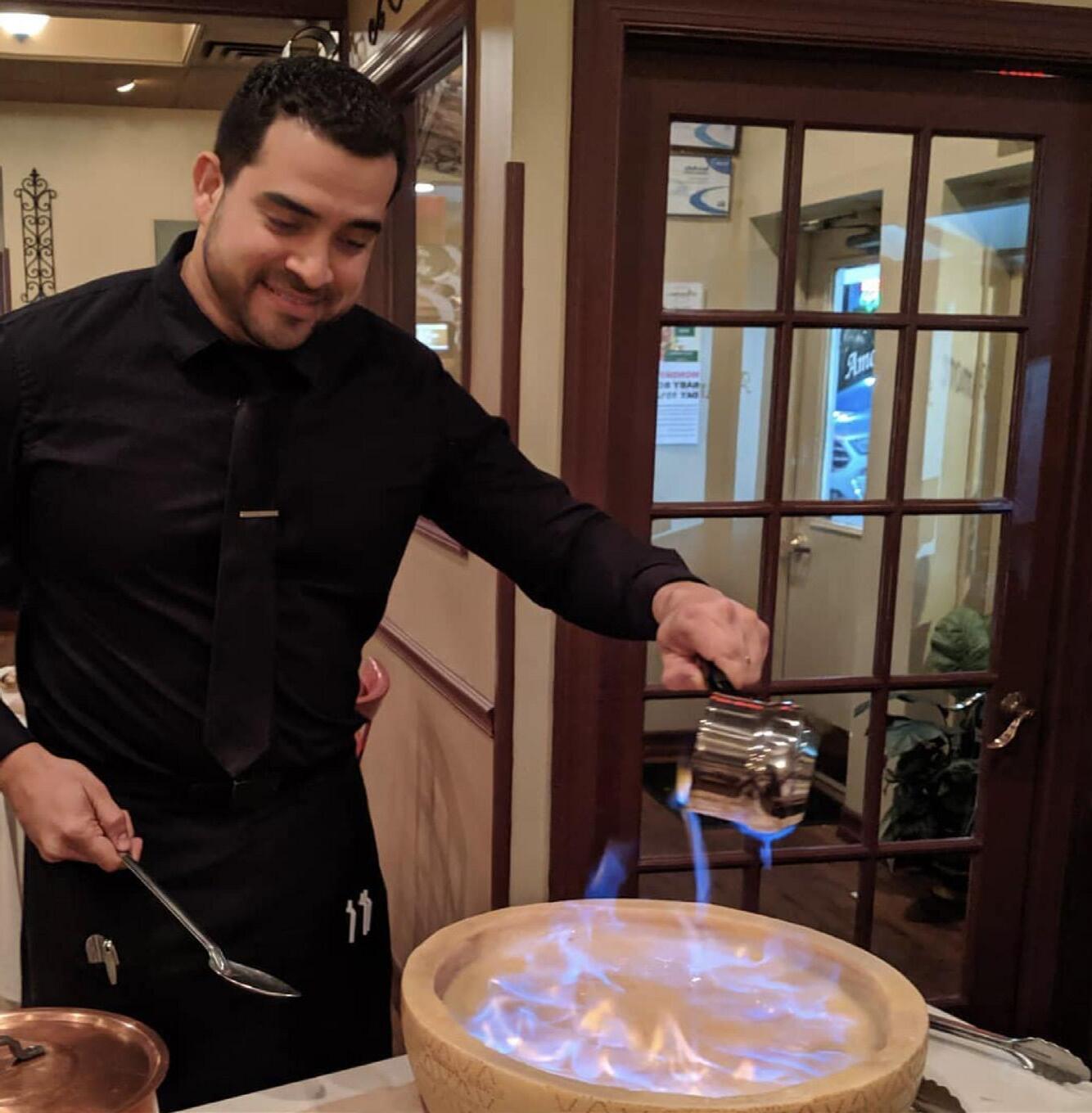
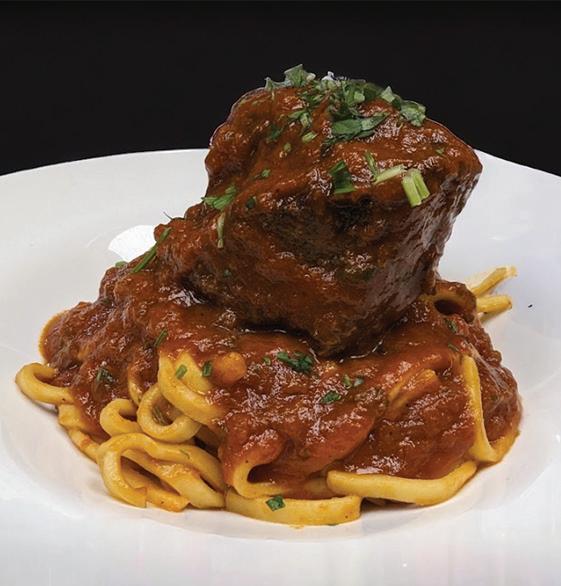
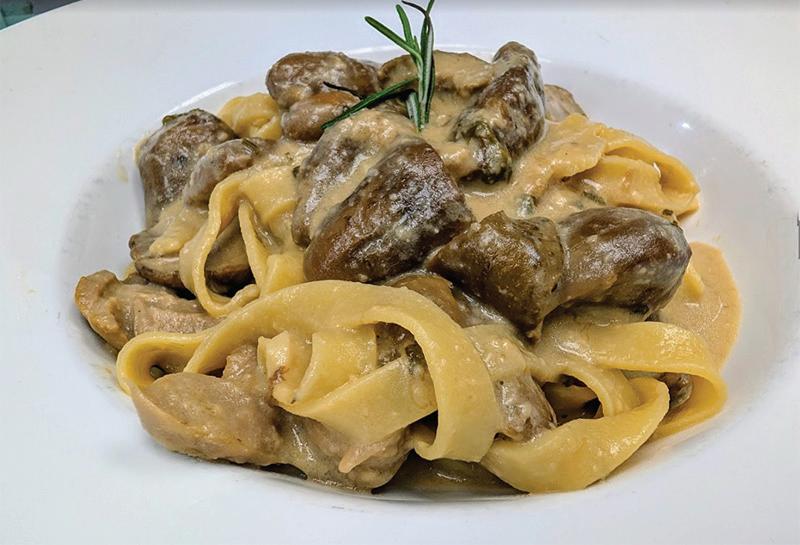
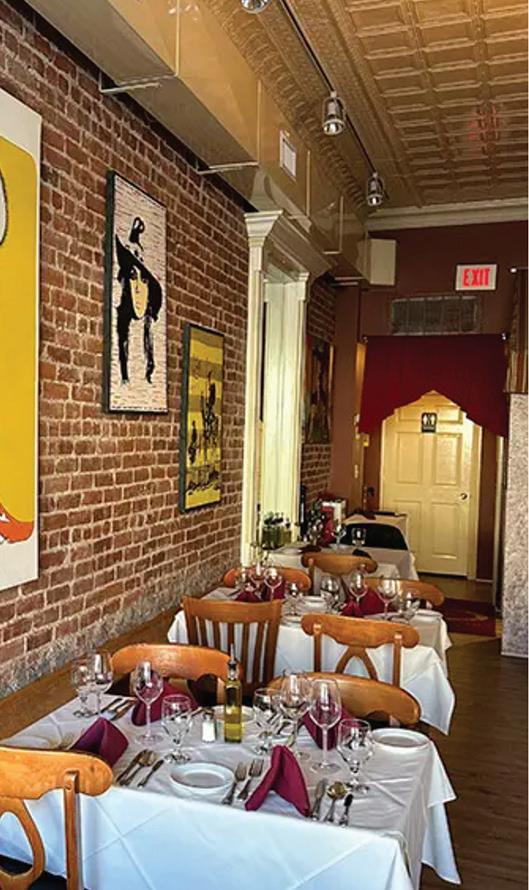
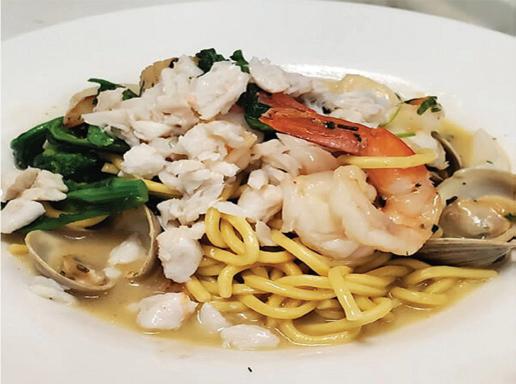
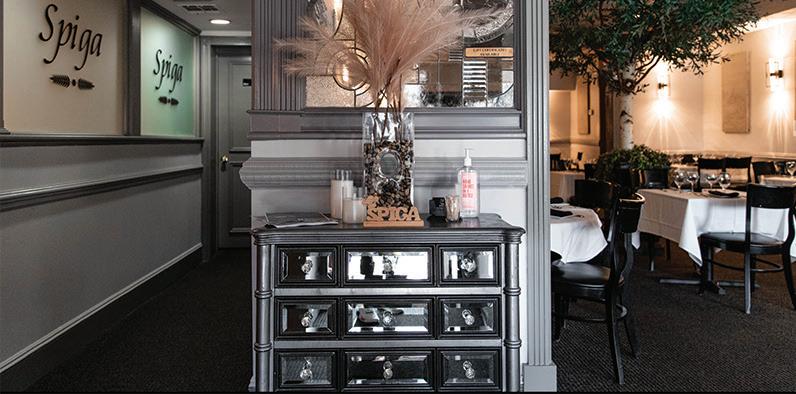
Experience Italy's rich flavors and homestyle traditions. Our seasonally inspired menu features everything from fresh artichoke salads to cozy pumpkin delights and zesty zucchini creations, complemented by heartwarming homemade desserts like creamy cheesecake and fluffy ricotta cake.




By Tina Pappas
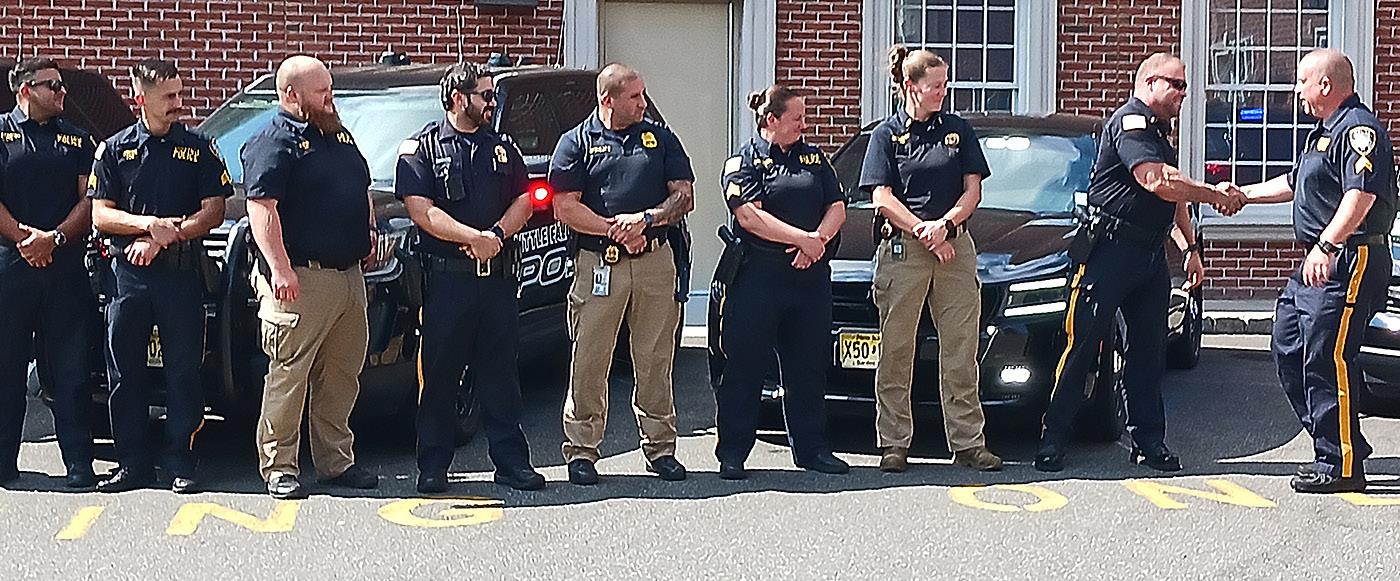
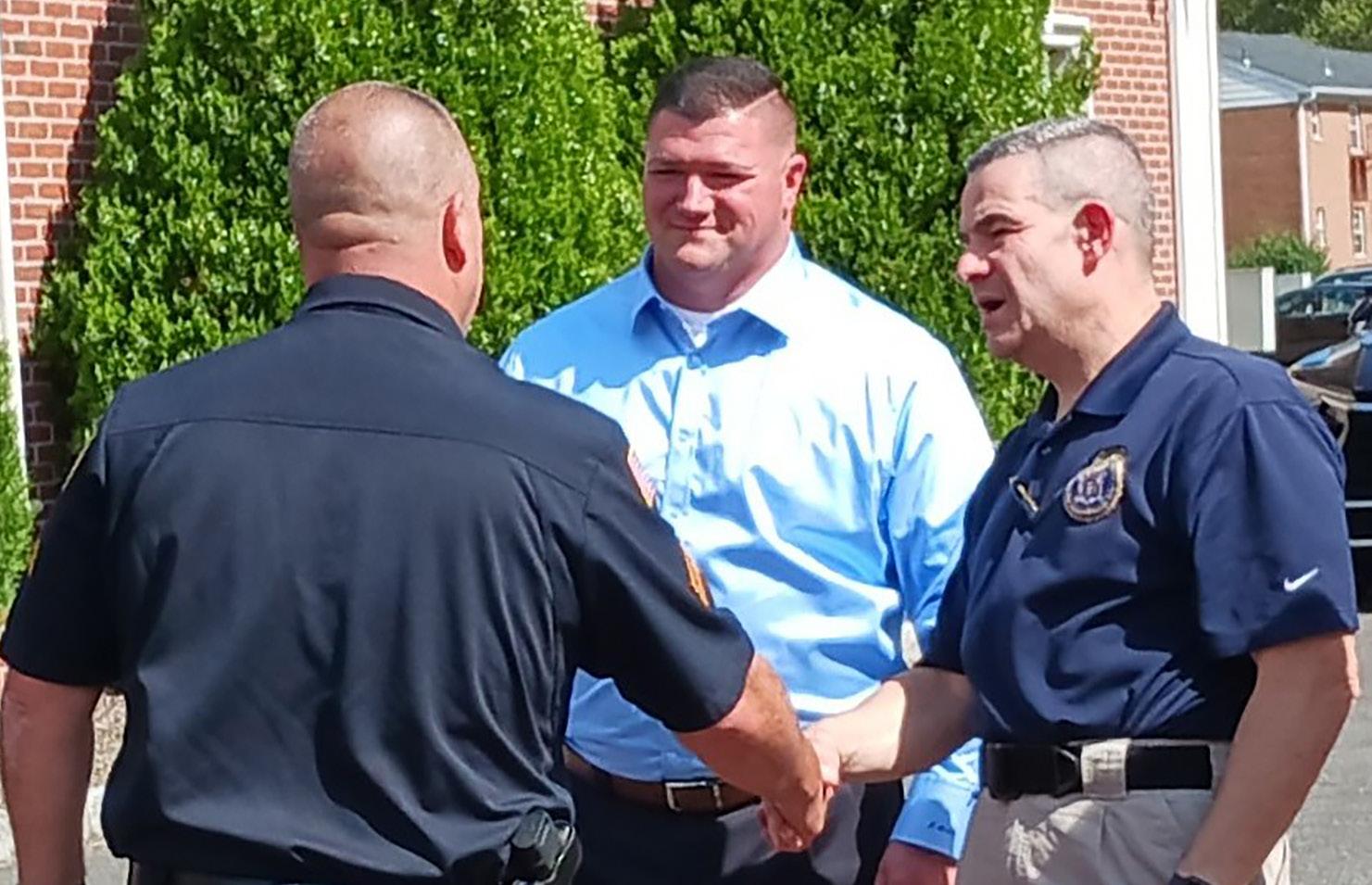
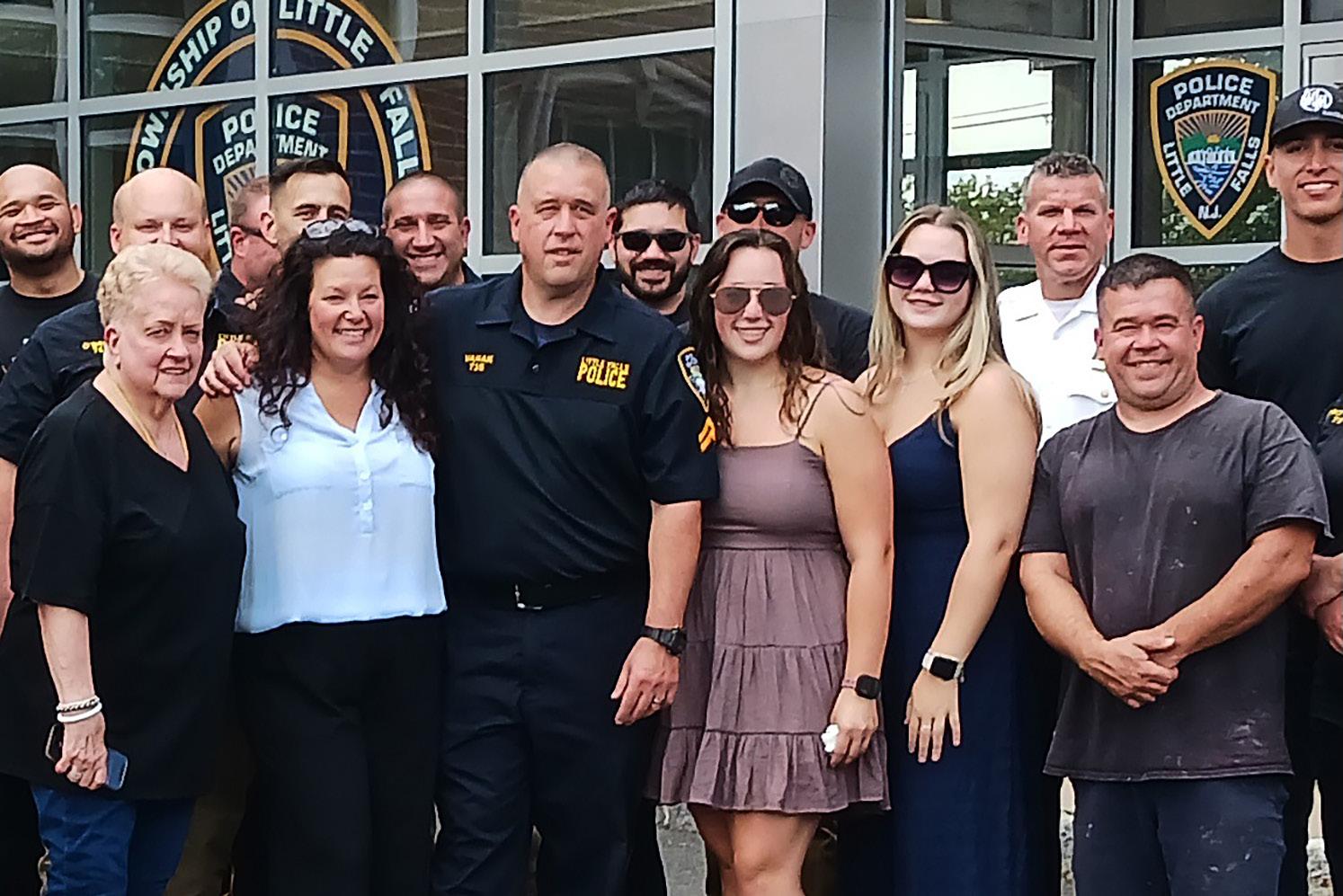
Det. Cpl. Jon Vanak retired from the Little Falls Police Department with a heartfelt sendoff on Sept. 4.
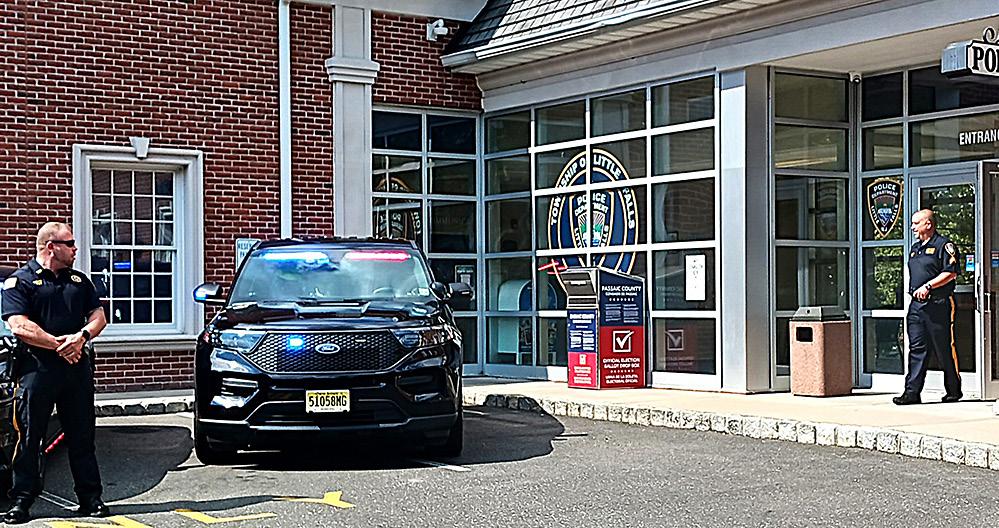
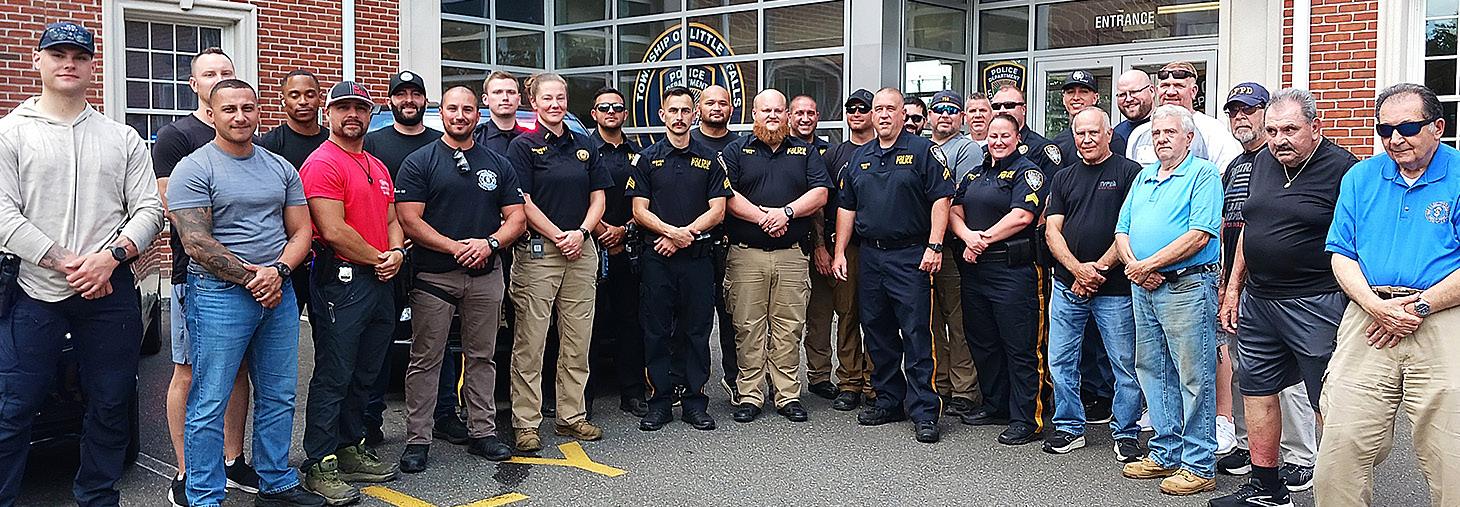
A "Walk Out" ceremony was held at the Little Falls Police Department (LFPD) headquarters, located at 225 Main Street. Vanak was honored by Police Chief Bryan Prall and members of the LFPD for his dedicated service and unwavering commitment to the community.
Also on hand for the ceremony was Mayor James Damiano and members of the Township Council, including other officials and community leaders from varying departments in town. Retired Police Chief Steven Post and retired Police Detective Fred Batelli were also in attendance. Family and friends of Vanak were also present during the ceremony.
Vanak began his law enforcement career in 2002, after graduating from the Paterson Police Academy and becoming an officer with the Paterson Police Department. He joined the Little Falls Police Department in 2003, and wore many hats throughout his career with the LFPD, working with the patrol division, serving as a juvenile detective, and ultimately as a community policing officer.
An announcement made during the ceremony on behalf of the LFPD commended Vanak during his tenure for "always bringing professionalism, compassion, and a sense of community that set the example for others."
"His dedication, creativity, passion for service and commitment to this community have left a legacy," the announcement continued. "Thank you for your heart, your humor, your leadership, and your friendship. You will be uniquely missed but never forgotten. We wish you all the best in your next chapter. Congratulations on your retirement!"
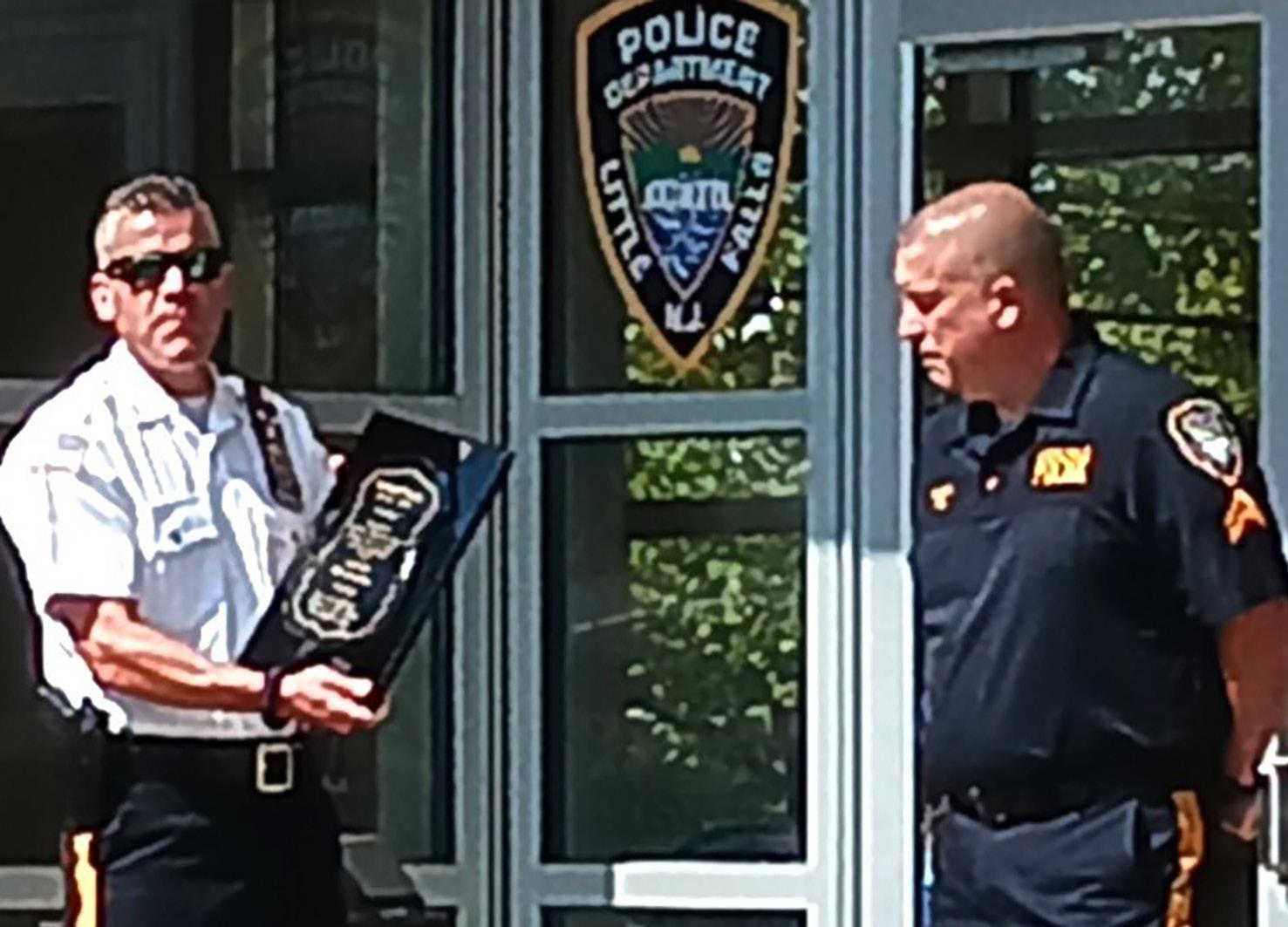
Prall then presented a plaque to Vanak for his dedication and service to the LFPD, including other tokens of appreciation.
"Your commitment to the community will be honored for generations to come," Prall said. "Best of luck on your retirement!"
Bagpipes were played as a line of police officers, town officials and retirees lined the parking lot to wish Vanak well.
Vanak commented afterwards stating he appreciated everyone's well wishes. Earlier in the day, Schools Superintendent Tracey Marinelli of the Little Falls School District put together a fond farewell tour of the
schools for Vanak.
"I officially retired on Sept. 4 and it was a great send-off," he said. "Tracey Marinelli did an amazing job with the kids from all three schools and then coming back to headquarters was wonderful. Lt. Dawn Gilchrist helped put together a big send-off and I couldn't ask for anything better. It was a good way to go. I received a couple of plaques from Chief Prall and the PBA , and the day was just perfect. I appreciated everything."
Vanak said he's looking forward to moving on to the next chapter of his life now that he's retired.
"Ill take some time off and work again in some capacity," he added. "I have a couple of hobbies that I've been involved with and I'll try to keep busy."
Overall, he said it was a good turnout and couldn't be happier.
"It was a great day and I'll miss everyone in the department," Vanak emphasized. "It was a nice group of officers that I've had the pleasure of working with and I'll definitely miss the camaraderie. But I'm still in town, so I'll still see them and everyone else from time to time.".














By Tina Pappas
Golden Styles Barber Studio and the Borough of Wood
Cuts."
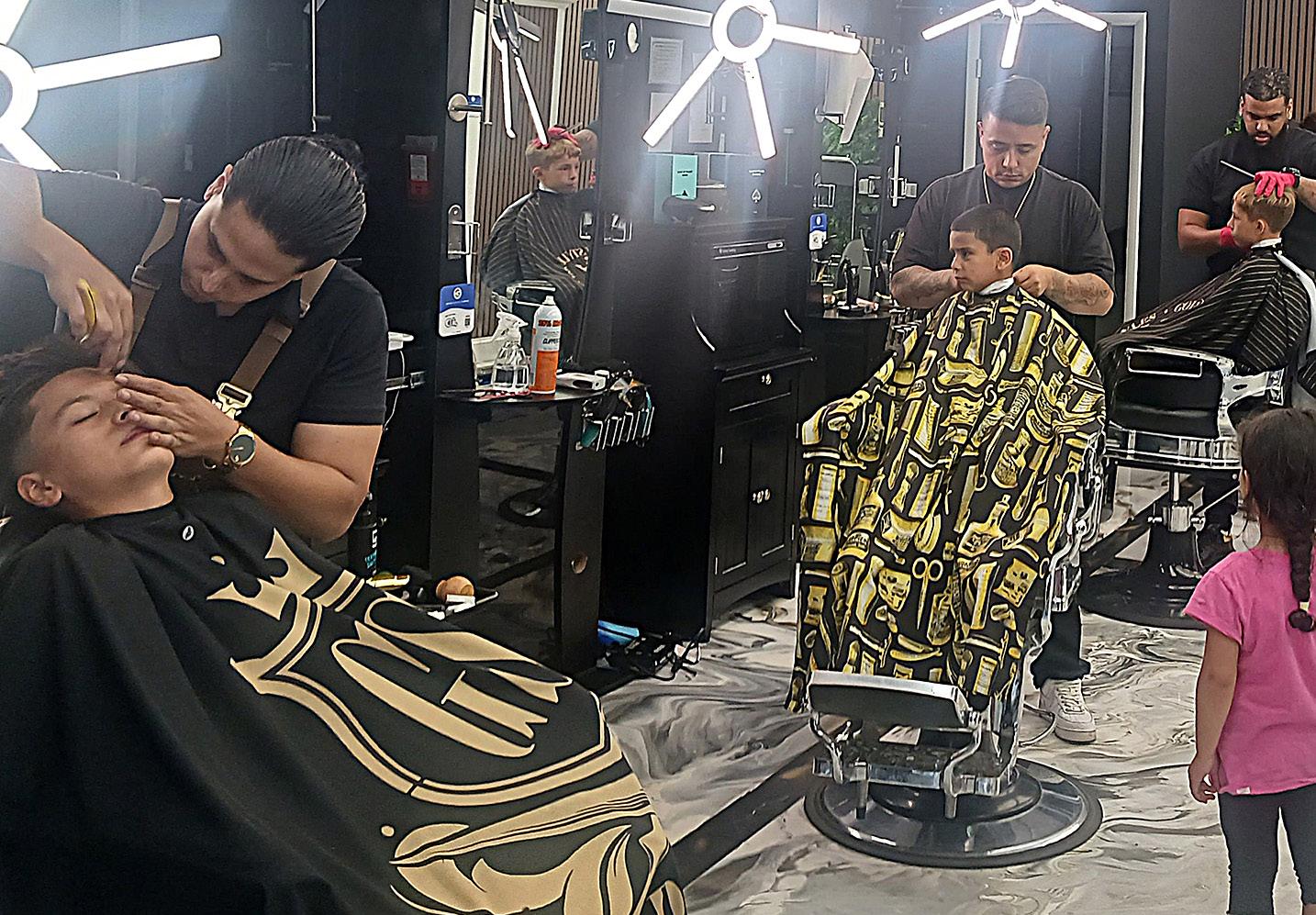
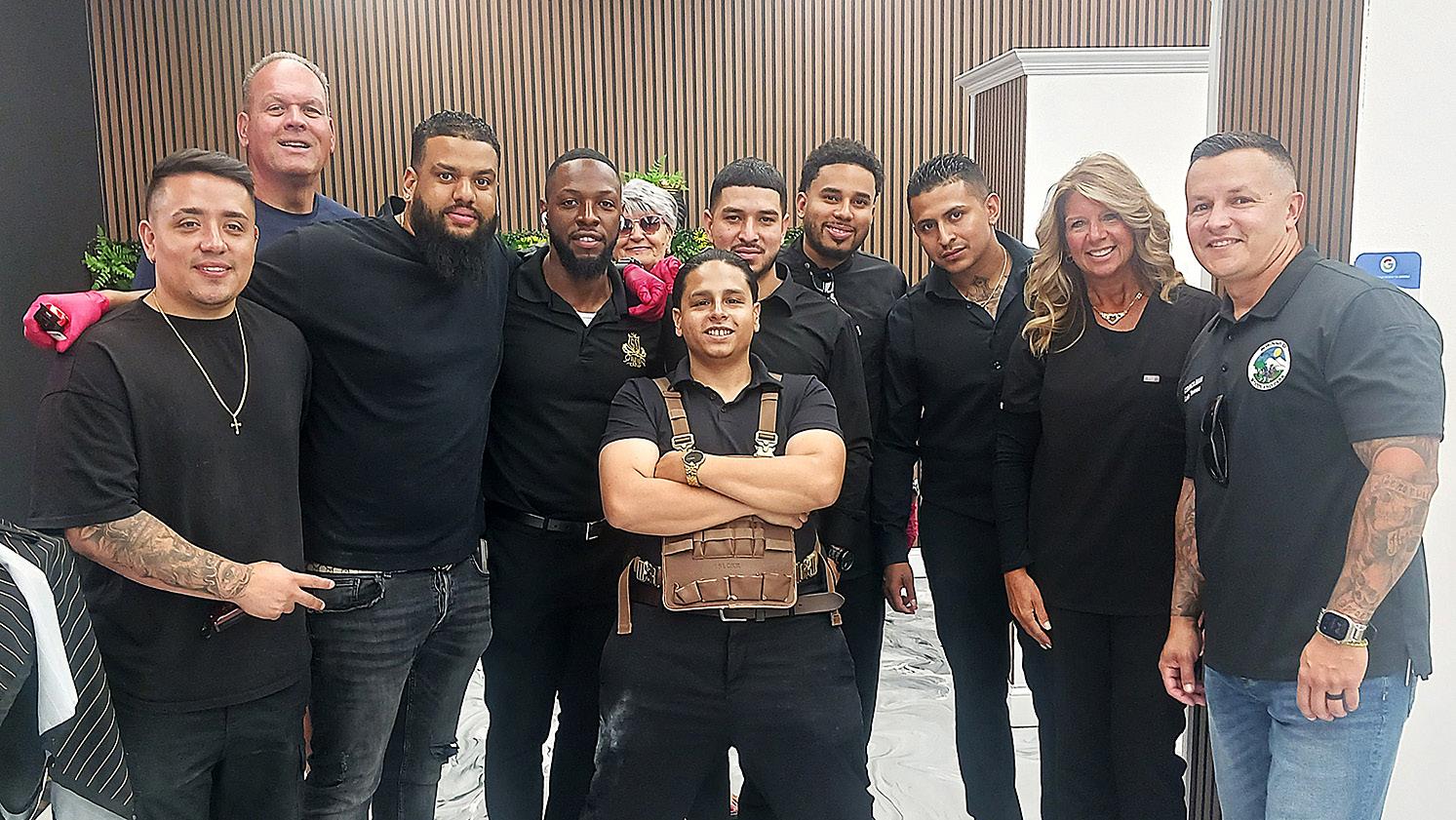
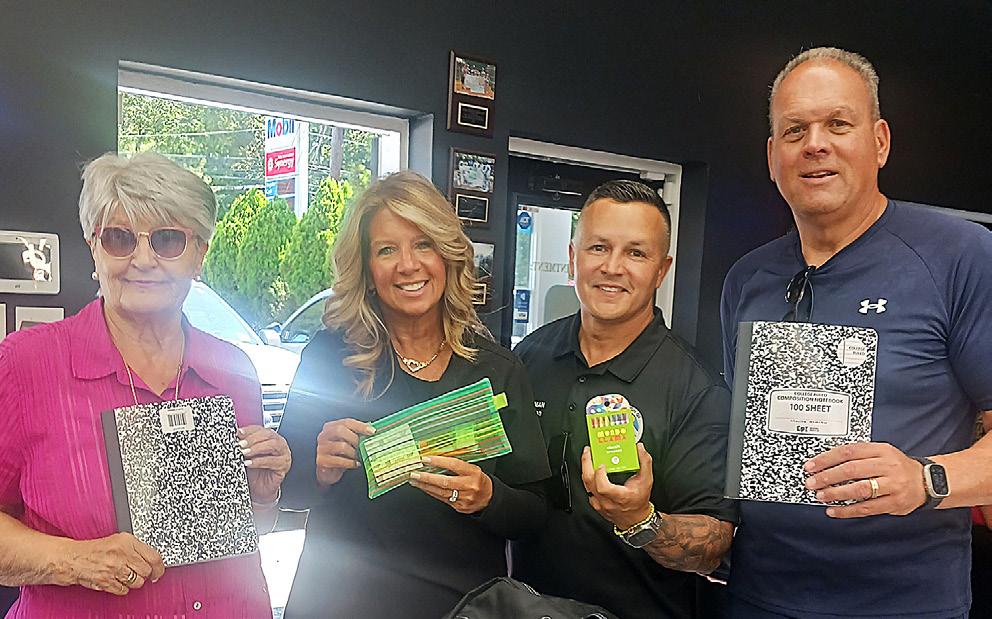
The barber studio, located at 154 Rifle Camp Road, runs the annual event with the town with the goal of providing free haircuts to local kids as they head back to school for the new academic year. Councilman Luis Torres and Golden Styles Barber Studio owner Jonathan Bolanos led the initiative on Sept. 2, where families brought their children to get a fresh new look. They also enjoyed free pizza as they waited for their turn with pizza pies donated by Pizza City. After their haircuts, kids also received a free, new backpack stocked with supplies.



This initiative was supported by Golden Styles Barber Studio, The Woodland Park Mayor and Council, as well as members of the Woodland Park Board of Education and members of Team Woodland Park.
According to Torres, approximately six barbers came out to cut hair for kids from pre-K to high school so they can start the new school year with confidence. He gave special thanks to Bolanos and commended his barbers for not stopping until all the kids who showed up received a haircut. He also thanked all the event donors.
"It's a great event and it's terrific seeing everyone come out here today," he said. "We've been holding this event for the past two years and it's a great opportunity to help out families. 61 kids got haircuts today and seeing how happy they are is wonderful. Hopefully, we'll continue this every year."
Bolanos also commented on the initiative.
"It's about giving back to my community and doing the right thing," he said, adding that he was pleased to see the great turnout. "We started at 11 a.m. and we're running this until 5 p.m. We've done this since we opened seven years ago at this location and we're now doing this with Luis and the town for the past few years."
Local resident Masa Ammar brought her child to the event and expressed her appreciation.
"They do such a nice job with the haircuts and it's a wonderful thing that they're doing for the community," she said.
Also assisting with the event was Mayor Tracy Kallert, Councilwoman Tina Gatti Councilman Vincent DeCesare,
cont. on page 21








cont. from page 19
Councilman Adam Chaabane and Council President Mike Sica, who helped hand out the school-supply filled backpacks.
Kallert commended the initiative to help families, adding that many children feel nervous or uncertain at the beginning of a new school year.
"Giving them a positive start helps them feel ready to take on new challenges and meet new friends, and it gives them confidence that will help them throughout the year," she said. "There's nothing more exciting than a new haircut, new school supplies, new clothes to start off the year and helping everyone feel a little more positive."
Kallert also acknowledged everyone who assisted with the event.
"I couldn't be more proud of Councilman Luis Torres for bringing this to Wood-

land Park," she further added. "And I couldn't be more grateful to everyone who donated school supplies. I'm eternally grateful to Golden Styles and Pizza City. This is truly a labor of love to make sure our children are thriving, not just in school, but within the Woodland Park community as well."
(minimum order $10)

By Tina Pappas
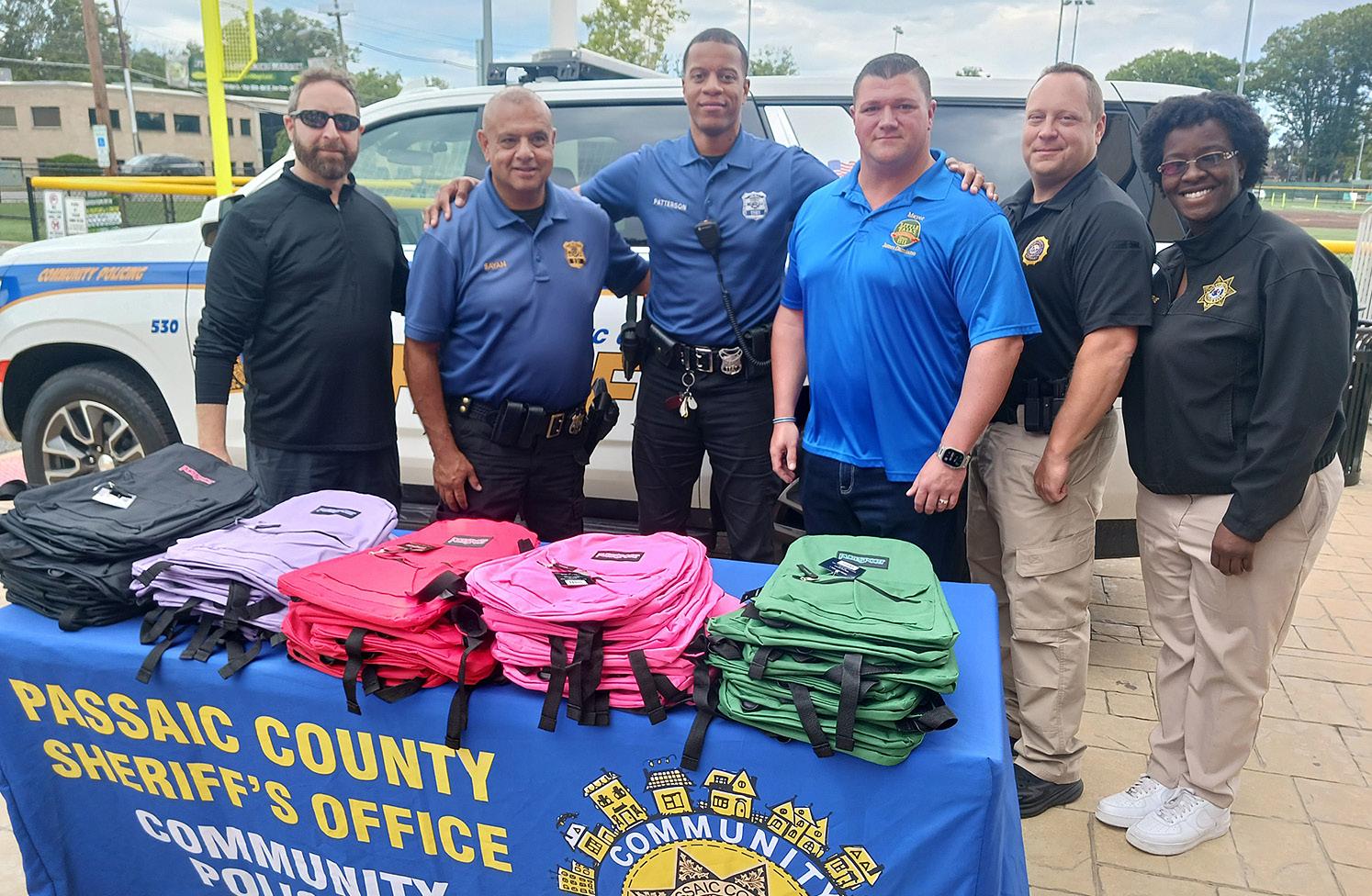
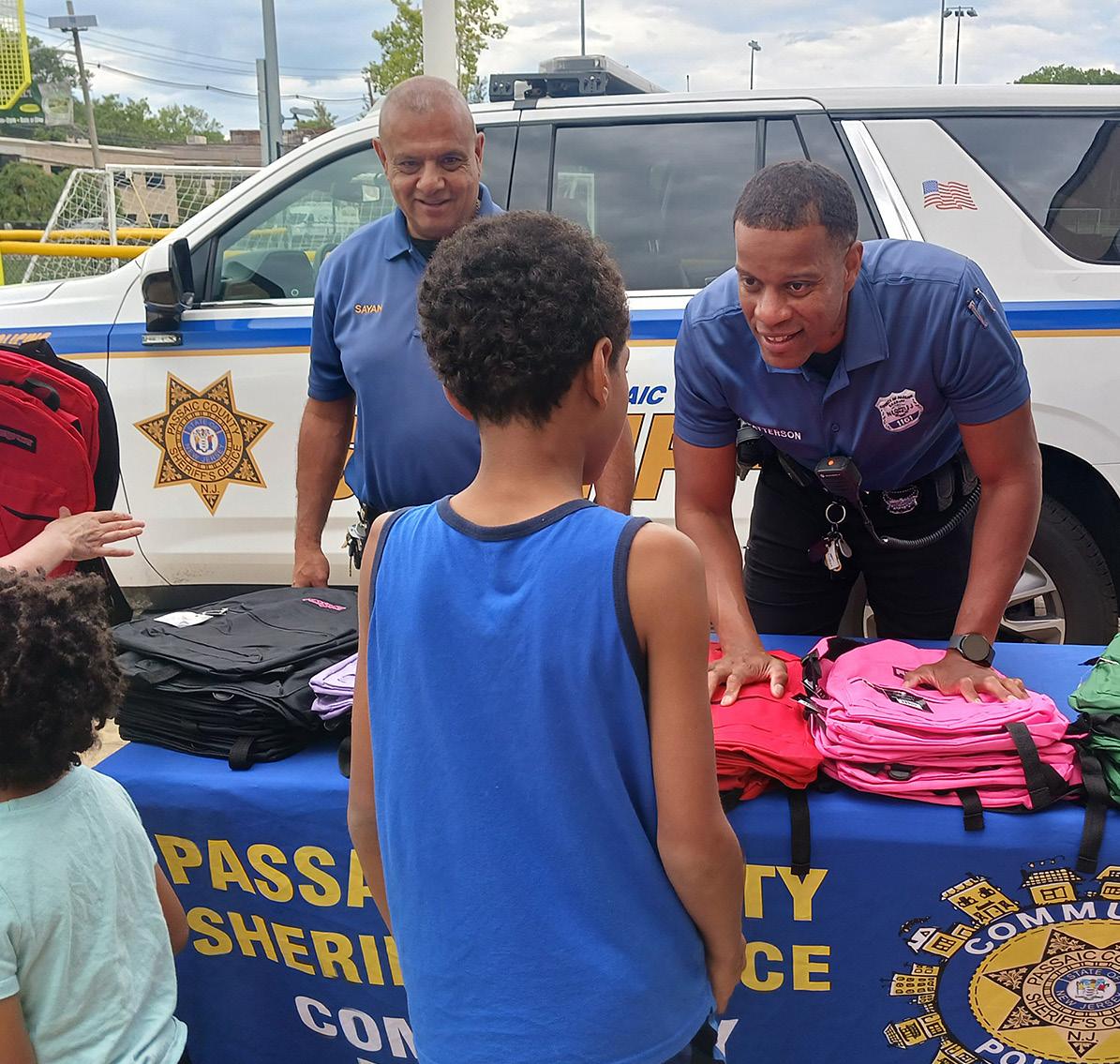
The Passaic County Sheriff's Office (PCSO) Community Policing Division made a stop in Little Falls, as part of Sheriff Thomas Adamo's back-to-school bookbag distribution tour.





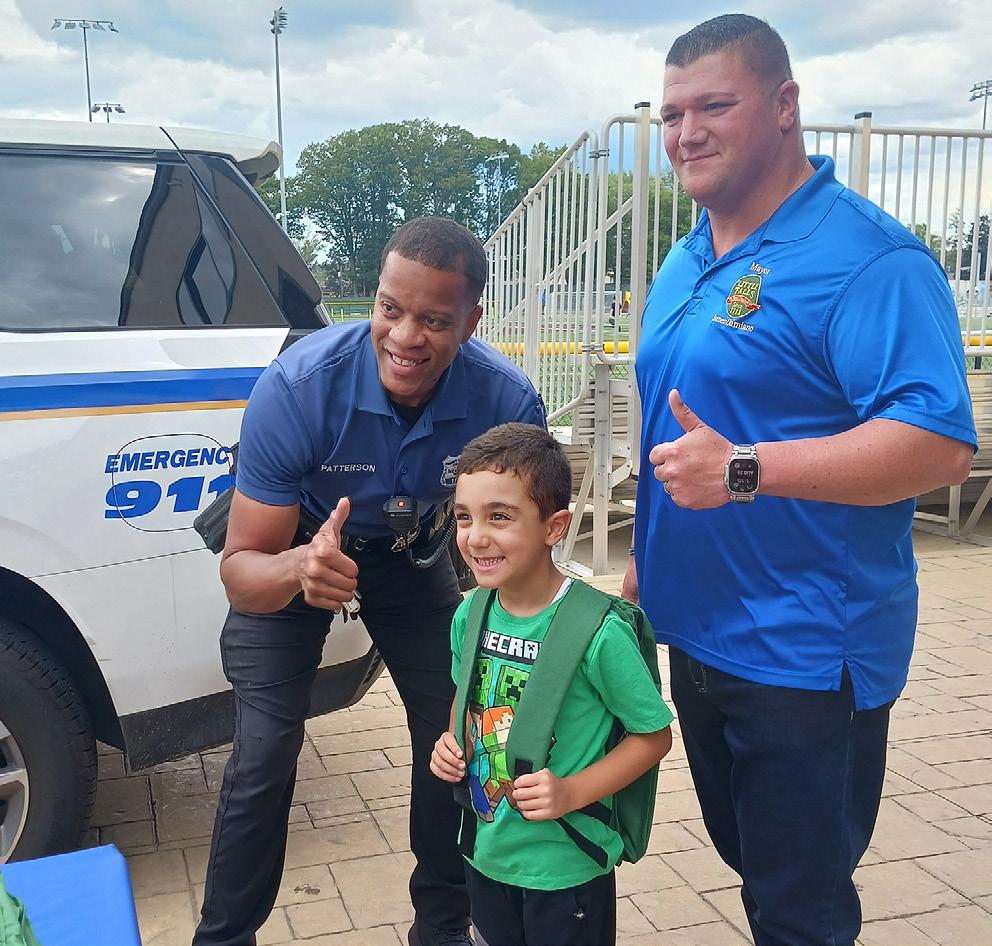
Officers from the PCSO' unloaded free bookbags from their Community Policing Division vehicle to distribute to school-aged children with their families on Aug. 29. The distribution took place in front of the Little Falls Recreation Department, located at 160 Paterson Avenue.
The initiative stems from Adamo's push for the PCSO to get out and connect with communities, according to Marqueesha Guthrie of the PCSO's Community Policing Division.
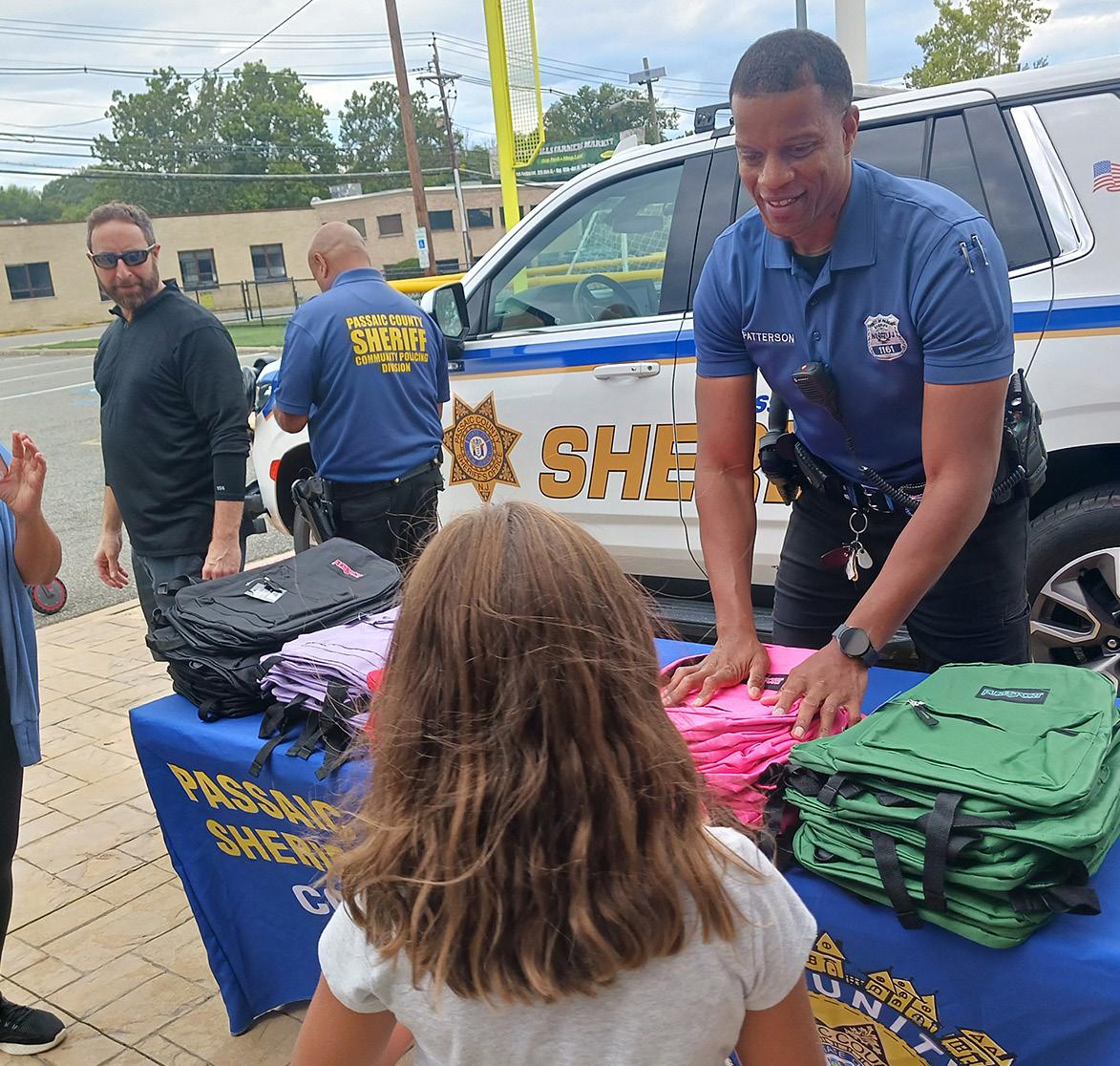
for the PCSO to get out and connect with communities," said Guthrie. "We're happy to begin the program this year."
Lt. Matt Markowksi, also of the PCSO's Community Policing Division, assisted with the initiative.
"I help coordinate the bookbag distribution by reaching out to towns like Little Falls," he said, adding that distributions were also made throughout the day in Paterson, Prospect Park, and Clifton.
"A huge thank you to Sheriff Thomas Adamo, the Passaic County Sheriff's Department, and the entire Community Policing Division for bringing backpacks to Little Falls students who may need them," he said. "Their generosity ensures that every child has the tools to start the school year with confidence. We truly value our strong partnership with the Sheriff's Department, which continues to demonstrate their commitment to our community in meaningful ways. They are a tremendous partner to Little Falls, and we thank them for always standing with our residents." Sheriff's Dept...
"Since taking office, Sheriff Adamo is making an effort
Mayor James Damiano, who attended the event with Councilman Chris Vancheri, commented afterwards.


Dr. Frank Plateroti earned his Doctorate Degree in Education Research, with a concentration in psychology. He also earned a Master’s Degree in Communication, with a concentration in television and film production. For over twenty years, Dr. Plateroti had taught in the communication department at William Paterson University. Prior to his teaching. he was an international television producer, writer, and director working with network and cable news companies and formed his own international production company.
In 2024, Dr. Plateroti republished an updated and expanded Second Edition of the first book of his trilogy, East Clifton Avenue, while simultaneously launching Book 2. Book 3, which completes the trilogy, is due to be launched early winter 2026. Negotiations for a cable series are underway.
The 2025 Launching of a Second Edition of Speak No Evil, and the East Clifton Avenue trilogy are all under Plateroti Publishing.




In Search of our Self-esteem, Self-worth, Self-empowerment, and...True Love Second Edition
Personal, familial, and romantic relationships are the most important facets of our lives, and at the same time relationships are the most abused facet of the human condition. For anyone looking to improve relationships, especially with the relationship with ourself, Speak No Evil is an important resource. Parents agree that this book is a must read to help children navigate through these most challenging times.
With the upcoming holiday season and relationship challenges, Speak No Evil would make the perfect gift for others and ourself.
”It’s important now, more then ever!”






By Tina Pappas
One amazing recreational baseball team in Little Falls was recently recognized for clinching this year's championship.
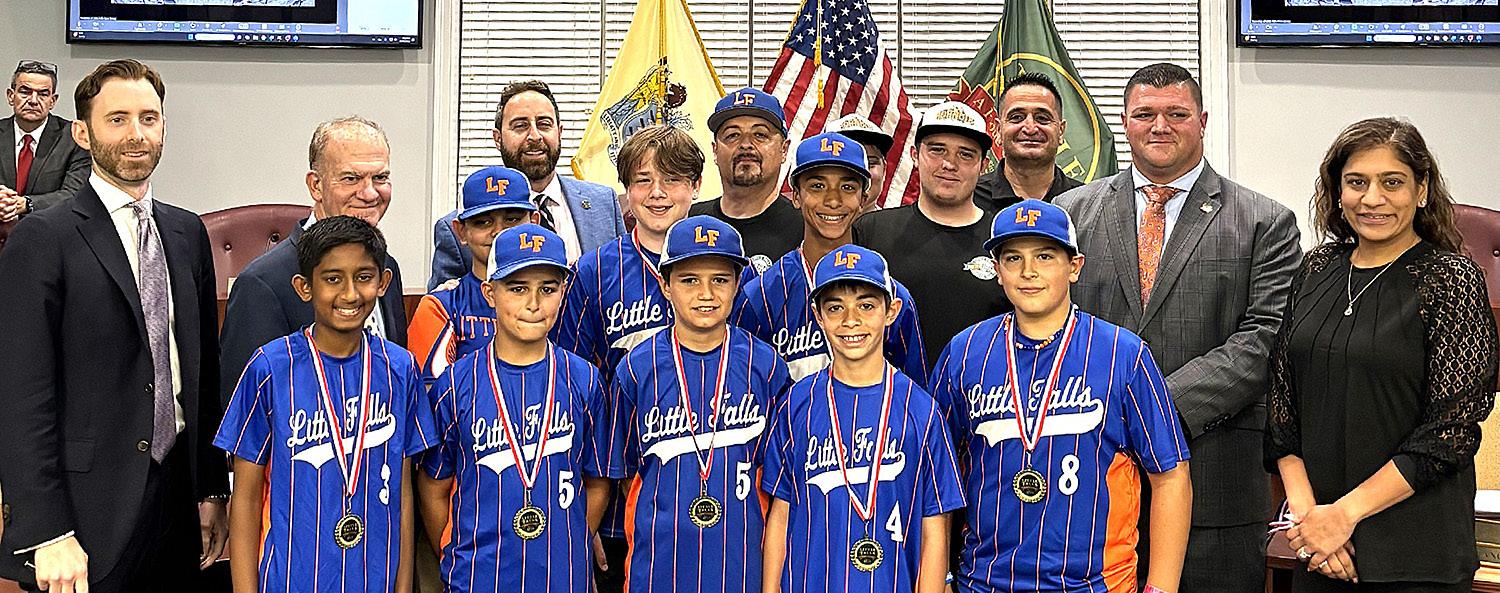
The Little Falls Jokers were honored by Mayor James Damiano and the Township Council meeting on Aug. 25. The team, comprised of fifth and sixth graders, is coached by local resident Al Hubi. The team went undefeated 11-0, ending with a championship victory in a nail-biting final game.
"I'm very proud that we've won three championships in a row," Hubi said. "I started three years ago, as that was my first year coaching and we went undefeated that first year. I then coached the second year and we were 10-1. This year we're 11-0, so the record is 32-1 for these past
three years."
The team is part of the Little Falls Recreation Department Spring Baseball season, which consists of teams from Pre-K through eighth grade. Hubi has coached three different teams the past three years but feels this year was more of a challenge against the Totowa Tigers team, that was more of a formidable opponent.




"That championship game was an amazing game that went into extra innings," he said. "It could've went any way because it was close but my team came out victorious.
The first time that I started coaching, we played against Nick Vancheri's team in Totowa and we won. But this year he put together a really good team and came in with a strategy. We had played them twice and and now we beat them twice, cont. on page 25








Little Falls Baseball.. cont. from page 24
but that championship game was so close. It's a lot of fun the rivalry we have with them."
The championship game was held at the Little Falls Sports & Recreation Complex was held on June 11. The game was packed and the stakes were high with many people in attendance.
"It was a full packed house at the championship game and it was wall to wall people," he added. "We were winning 5-0 and we had the momentum, everything going our way but our pitchers got a little nervous because there were a lot of people with the spotlight. They did well all season long but the didn't perform as well, which is understandable with this big game. But we still held them off."
According to Hubi, Totowa began to comeback resulting in a score of 5-3. It was then one of The Jokers' outfielders crashed into a wall while trying to catch a ball and suffered a mild concussion. That player had to get taken out as a precautionary and watched the rest of the game.
"He was taken to the hospital and is going to be fine," he explained. "We then had a huddle and we said we would win it for him. He's fine, thank goodness. After the ceremony, we celebrated for an hour. It was amazing. The final score was 6-5 in seven innings."
Hubi said it was the most exciting and intense game he ever coached. It resulted in losing his voice for a whole week.
"Every pitch was magnified and it was a tough game," he recalled. "Nick's team was really good as well and we spoke the next day because we had a lot of big moments in the game. It was like an MLB game."
Hubi also said he's very grateful for the opportunity he has had. He said he's always been very passionate about baseball especially when it comes to coaching.
During the council meeting, Damiano handed out a medal to each of the players as they were called up. Each player also received a framed image of the team with every player's signature on it.
Dr. Plateroti released the Second Edition of Self-Esteem, Self-worth, and Self-empowerment.
Speak No Evil is that rare book that challenges the way we view ourselves and others, and how we seek and cultivate lasting friendships, and most importantly familial and romantic relationships. Based on the success of his First Edition, this expanded Second Edition in response to readers’ requests, includes an in depth and enlightening focus on the development of romantic relationships, unconditional love, and overcoming the many of their challenges. It also further focuses on familial relationships and the destruction of gossiping and eliminating toxic environments. It explores how we communicate based on our nature or nurture, with discussions on ways to improve both.
Dr Plateroti takes the culmination of over twenty years of teaching communication strategies and concepts he developed while teaching and counseling university students to inspire open conversations and self-reflection. Reflecting on his vast teaching experience, he claims, “It is the most rewarding experience and period of my career.”
Whether you are a student, business leader, artist, teenager, retiree, or particularly a parent, Speak No Evil will speak to you.
Dr. Frank Plateroti earned his Doctorate Degree in Education Research and a Master’s Degree in Communication. Prior to his teaching he worked in public relations, broadcasting as a producer, a director, an editor, and a writer, with his own international production company.
http://drfjpesteem.com/













By Tina Pappas
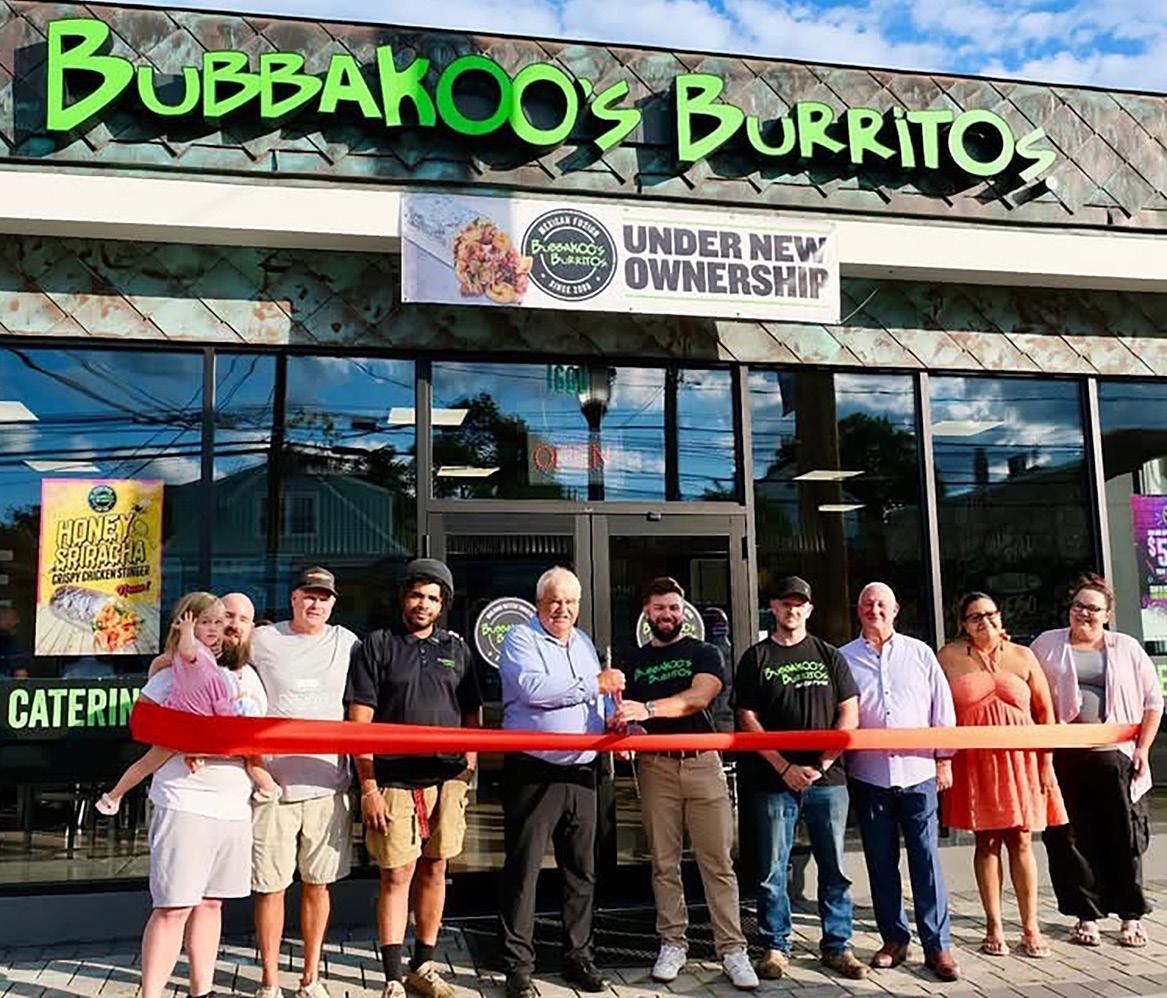
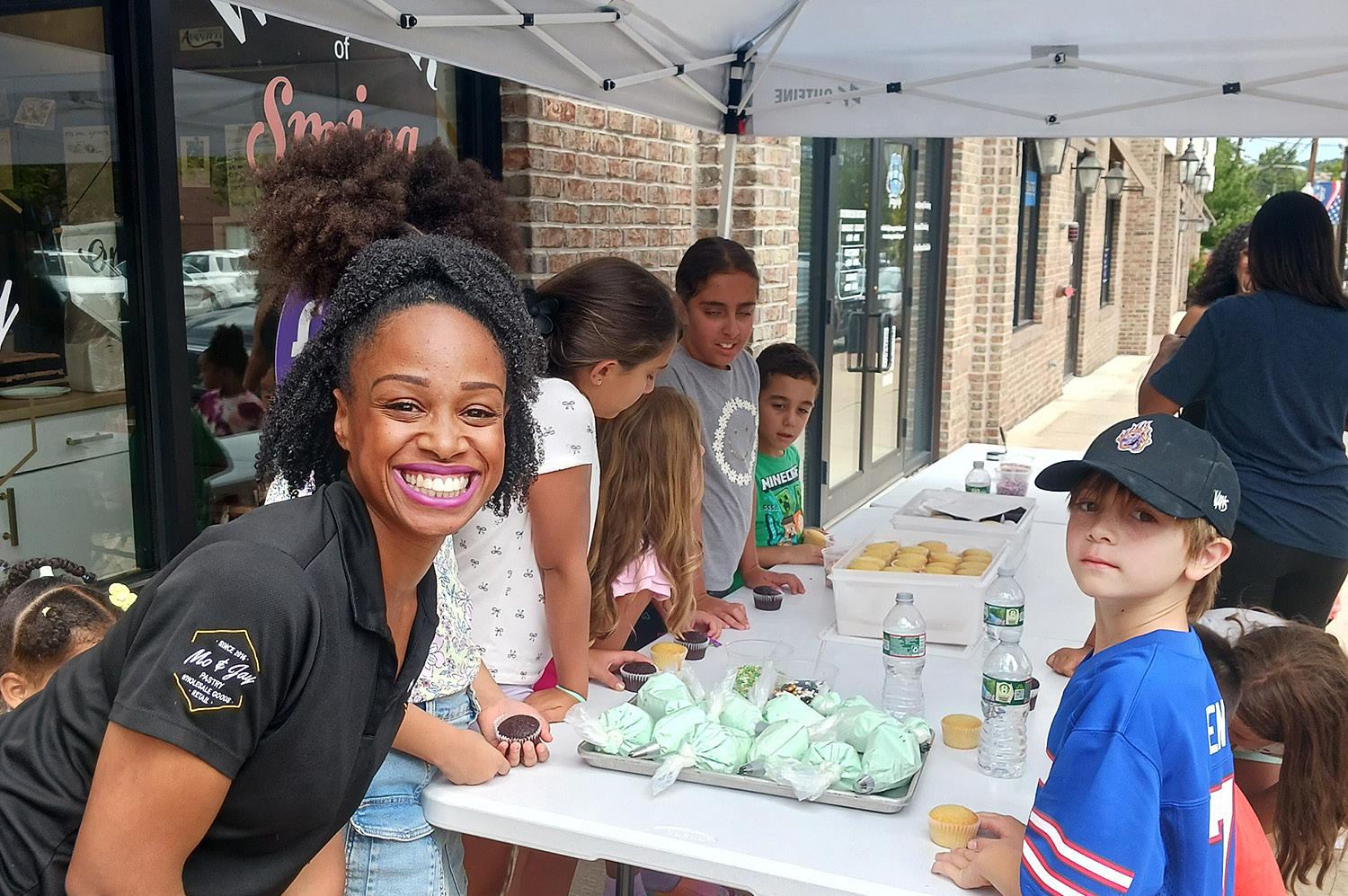
o & Jay Pastry has reopened in Little Falls! The French-pastry, wholesale bakery was first established in 2016 by Jaleesa "Jay" Mason, along with her husband Mohamad "Mo" Al Kassem. They eventually opened their store on 44 Main Street in 2020.
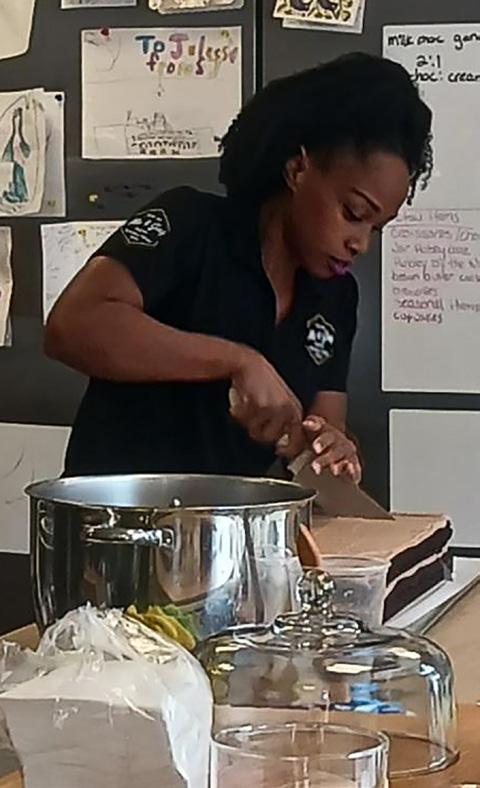
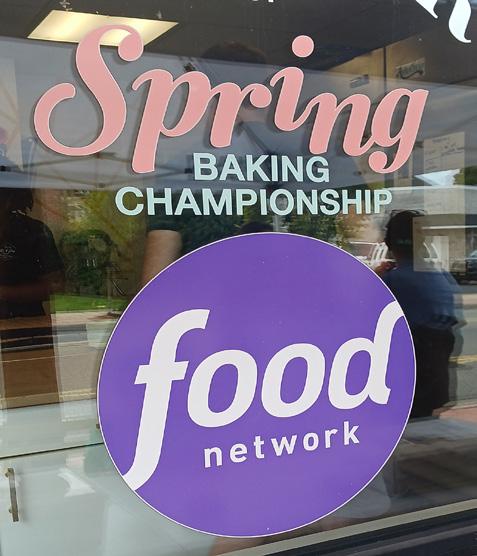
In 2022, Jalessa was selected to compete in the finals of the Spring Baking Championship on the Food Network's eighth season premiere and consistently made it through each round, where she ultimately wound up winning that season. With her background in pastry arts, Jaleesa created a series of eclectic cakes and treats that won over the judges throughout the season and during the final two hours of the competition.
A viewing party also took place at the Little Falls Civic Center set up by the Township to celebrate her win that year.
Jaleesa said her store was on a hiatus for a couple of years due to several priorities she needed to handle, among them an ailing father who recently passed away.
"He would've wanted me to continue on with the business and I know his spirit is here with us today," she said.
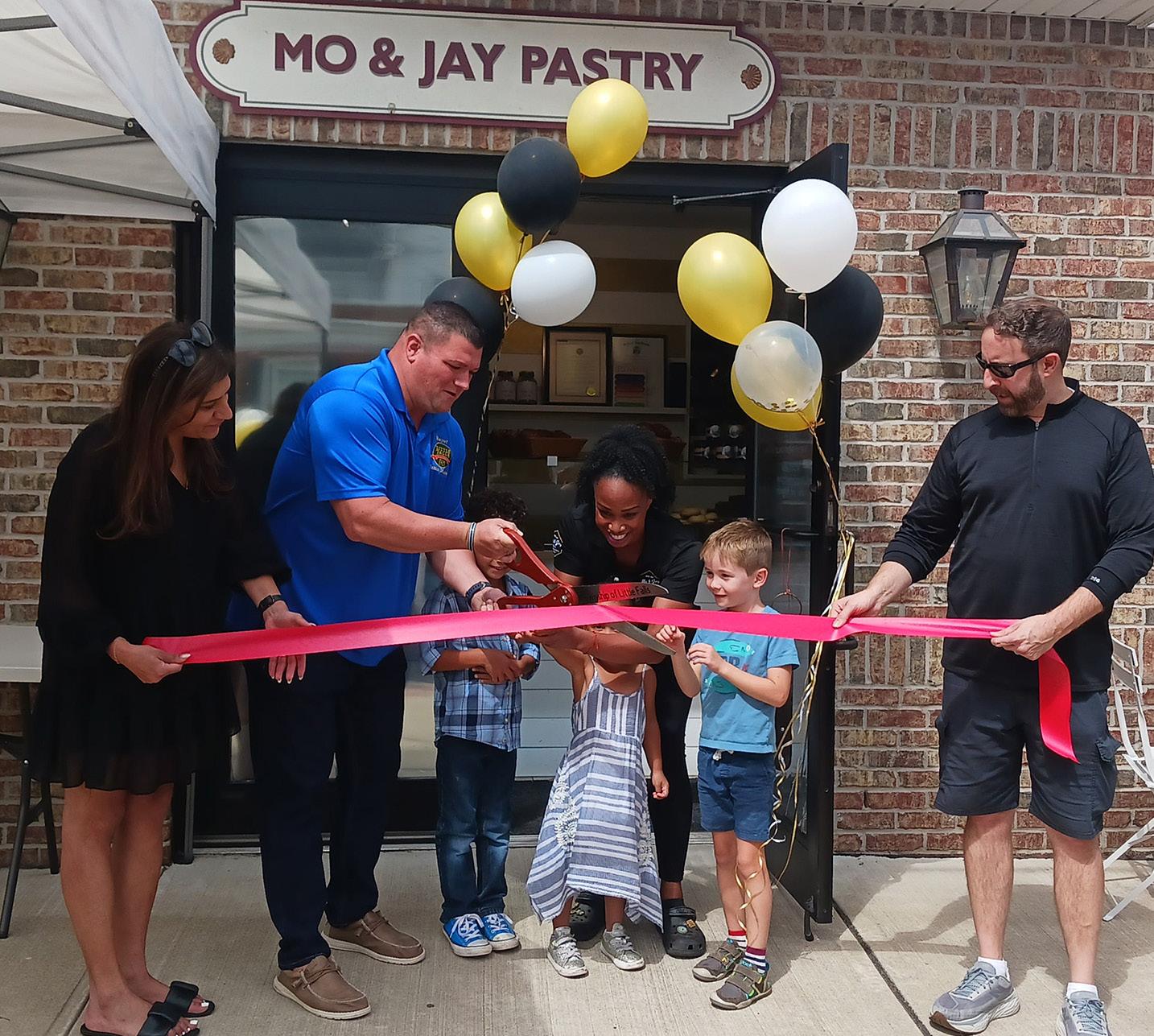
Mayor James Damiano held a ribbon-cutting grand re-opening for Mo & Jay's Pastry, along with Councilman Chris Vancheri and Councilwoman Jayna Patel on Aug. 29. Jaleesa thanked those in attendance and said it was great to be back.
"I'm so excited to be opening Mo & Jay Pastry again to Little Falls," she said, adding that it has been difficult with
At Cedar Grove Foot & Ankle Specialists, we provide innovative and compassionate care to get our patients back on their feet.
the loss of her father. "I appreciate everyone's support here today, including Mayor Damiano and the Township Council. And it's my father's birthday tomorrow, too."
Just for the occasion, Jaleesa treated all those in attendance with a slice of one of her delicious, chocolate specialty cakes.
Mohammad also commented on the grand reopening, adding how much they love their business and the community.
"It's wonderful to be back open again and I think it's also great Jaleesa is continuing with the cooking classes, which she loves to do," he explained. "We appreciate everyone in the community who has supported us."
Local resident Bonnie Clark lives near the store and always enjoys the tempting baked aroma from the store.
"When the scent is in the air it gets you craving one of their pastries," she said. "Now that their store is open again it's wonderful. And as a former small business owner, I know how important it is to support local businesses like this one in the community."
Damiano also commented afterwards.
"We're so excited to welcome Mo & Jay's back to their location in Little Falls!" he said. "After a short hiatus, their return is truly a sweet one. We've all missed their incredible pastries and the warm, welcoming spirit they bring, and we couldn't be happier to see their doors open again. Here's to many more days filled with the sweet taste of Mo & Jay's."





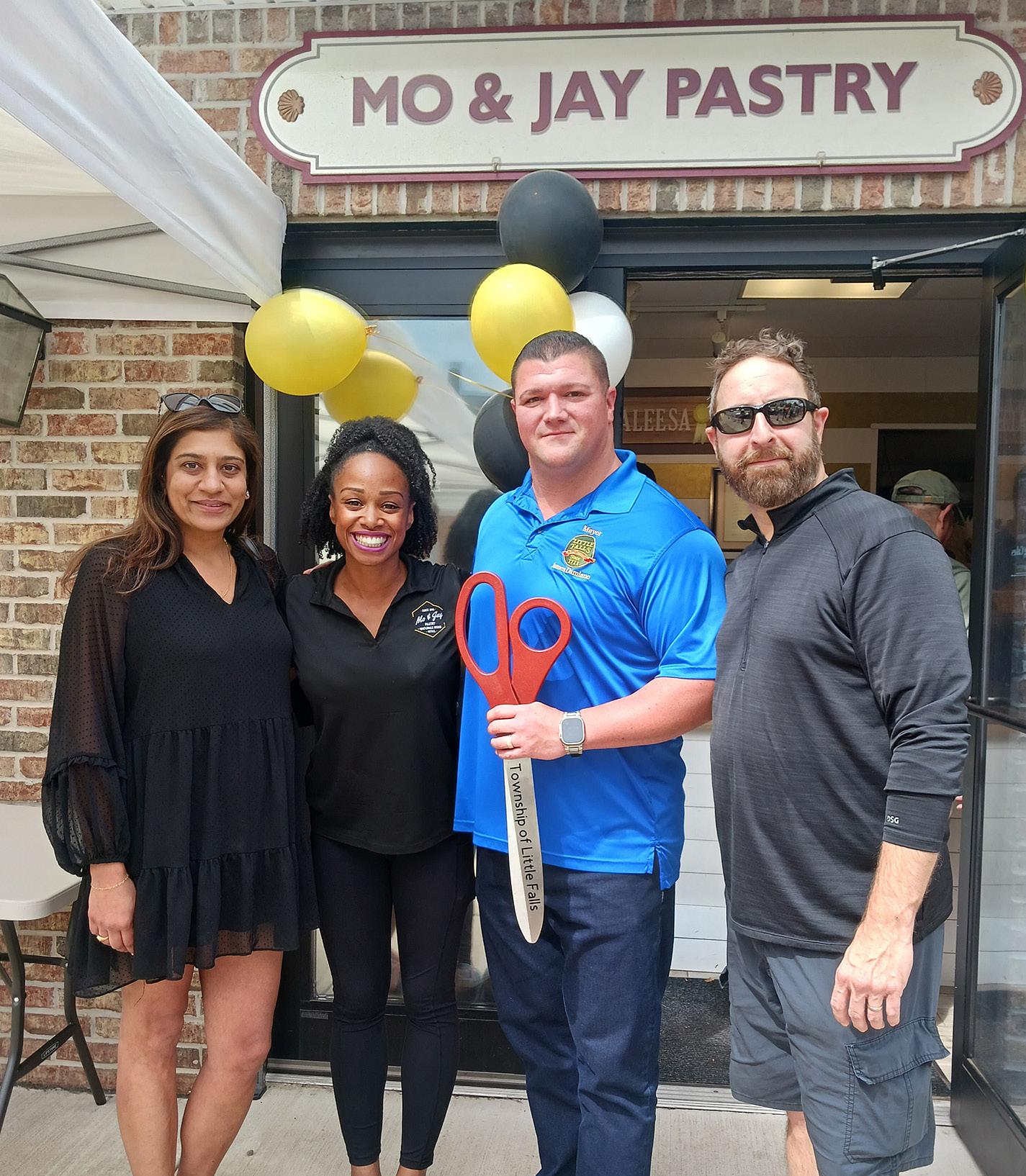
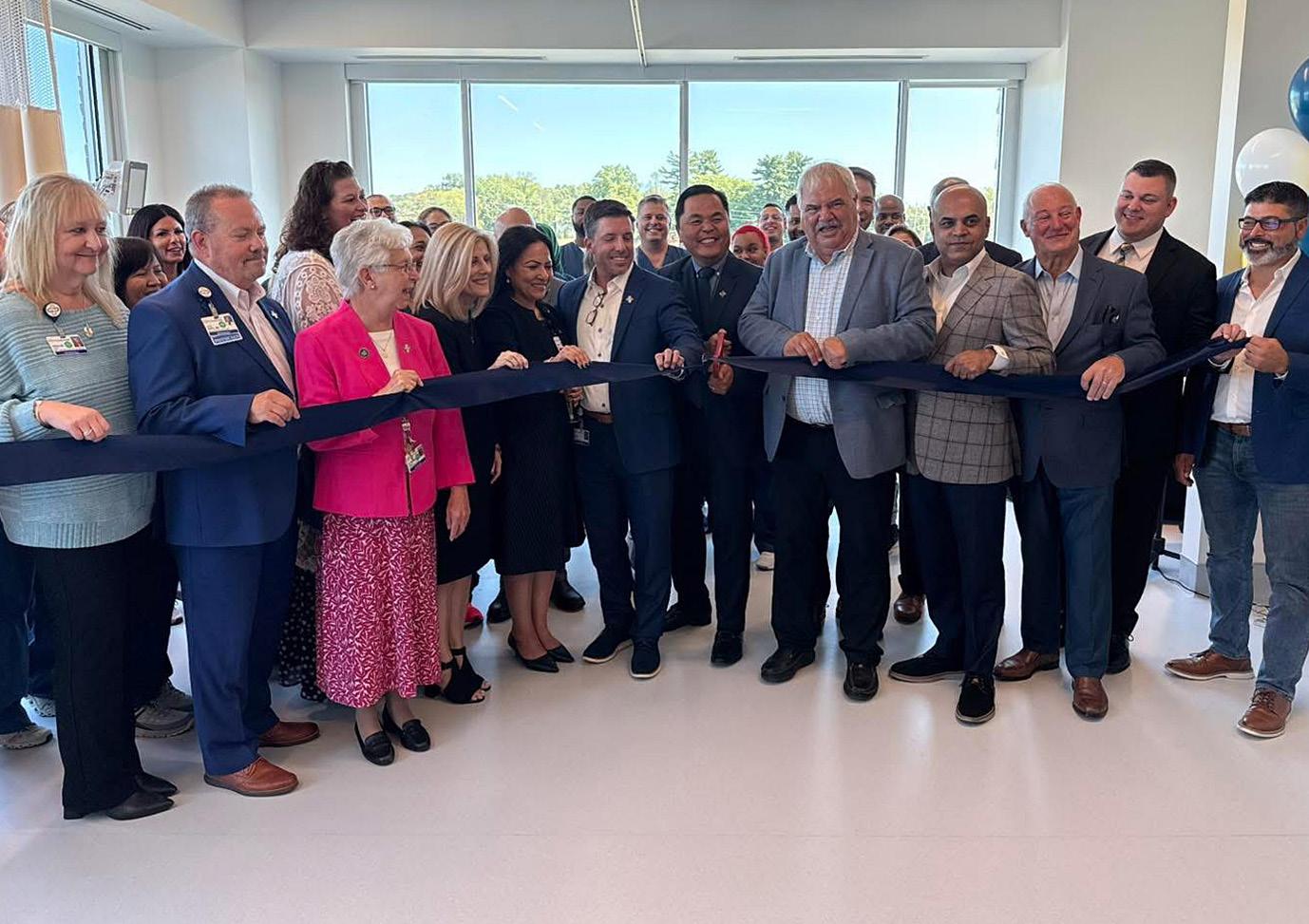
Photo credits Borough of Totowa.
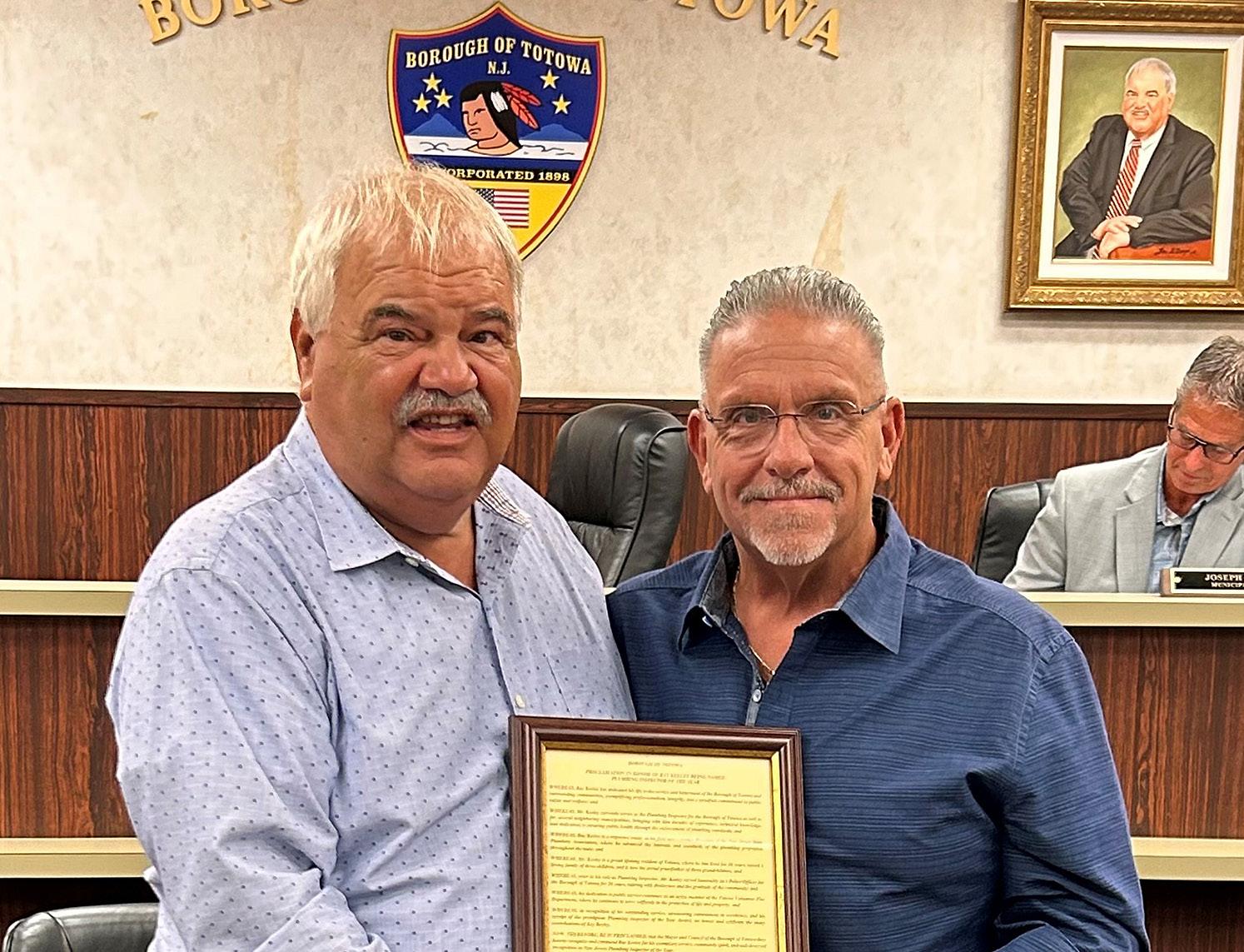
On Tuesday, September 9th, Mayor Coiro and our Totowa Council members celebrated the grand opening of the St. Joseph's Health Ambulatory Surgery Center on Minnisink Road. This state-of-the-art facility will provide Totowa area residents with high-quality medical care.








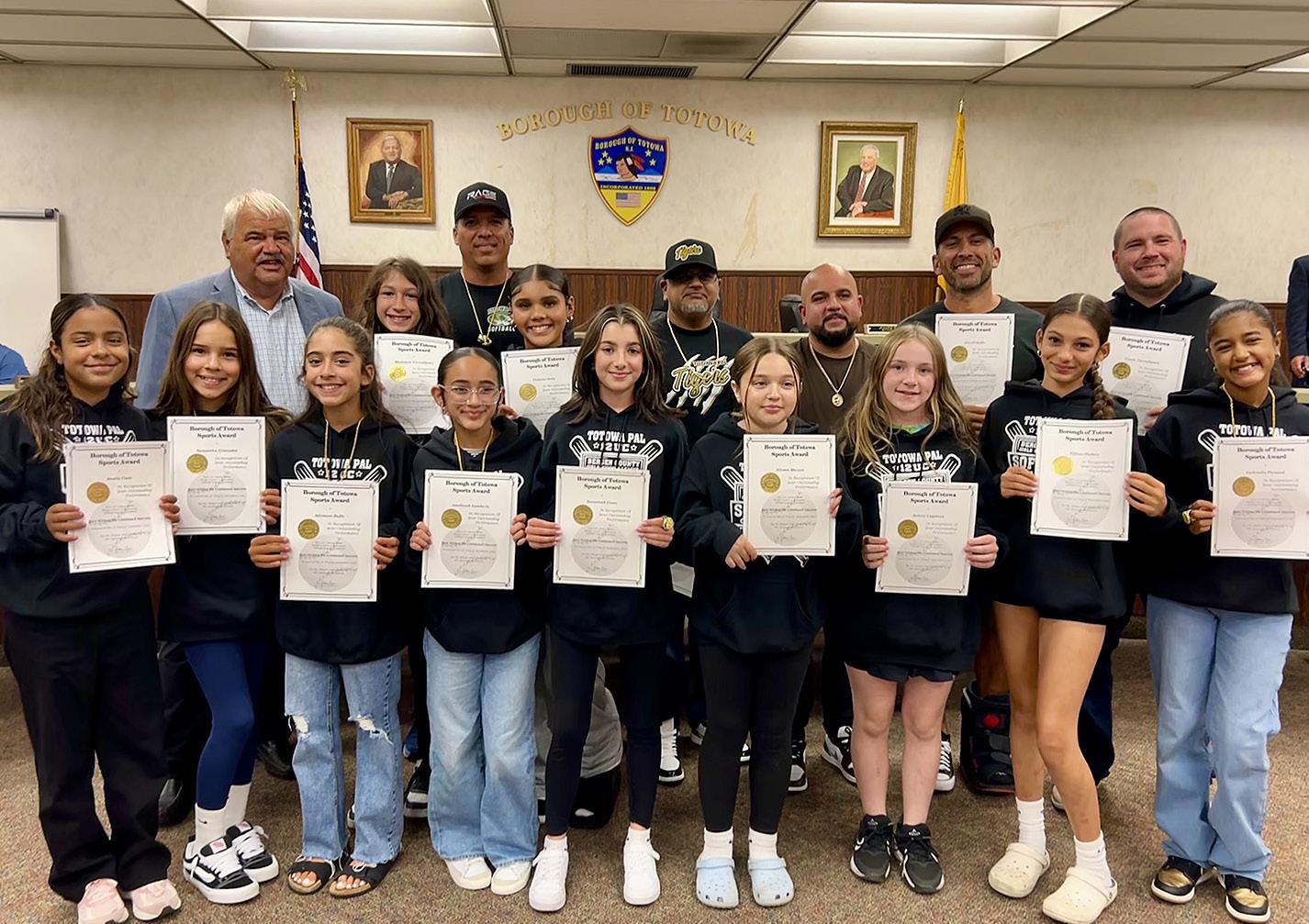
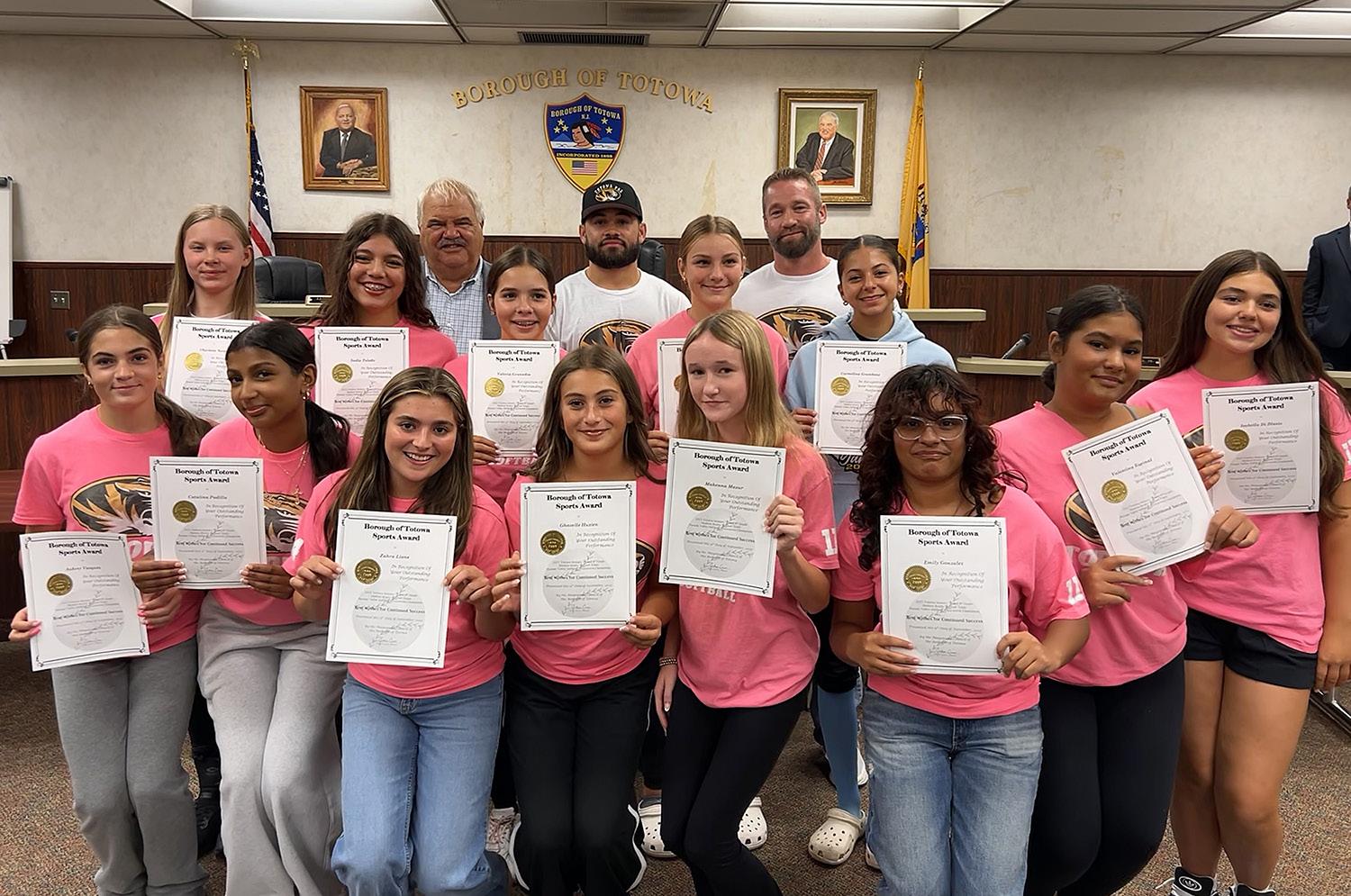
On Tuesday, September 9th, Mayor Coiro and the Totowa Council presented certificates to the 2025 Totowa 7th & 8th Grade Seniors, winners of the Passaic Valley Softball Association Championship and the Totowa 12U team, winners of the Bergen County Girls Summer Softball League Championship.




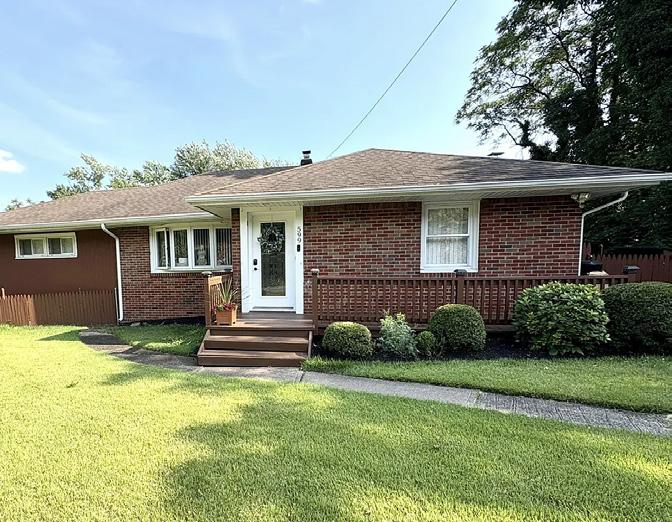
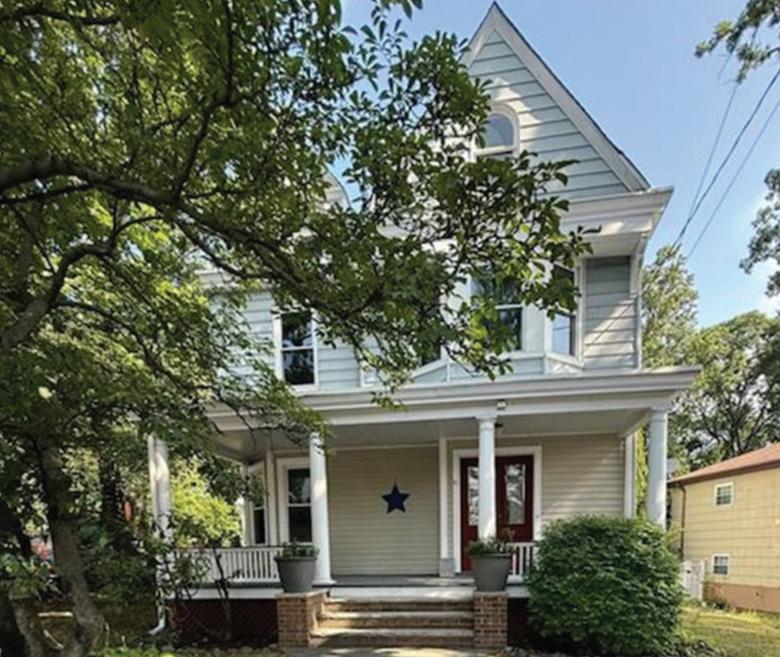
HALEDON
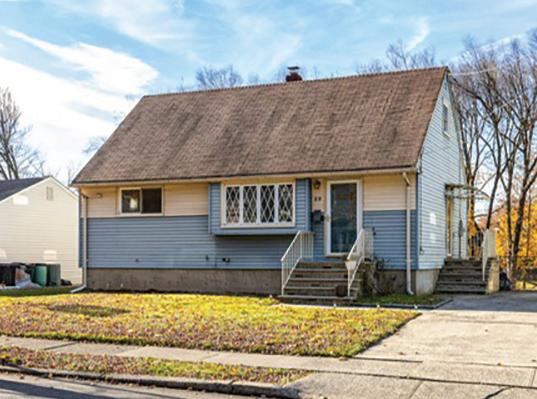
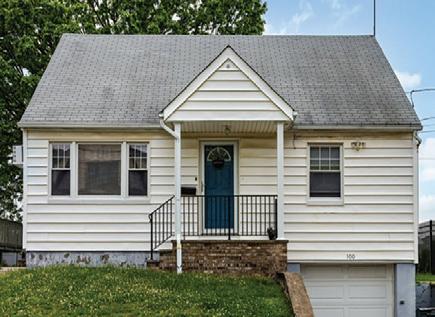
$559,900 SO MANY EXTRAS!
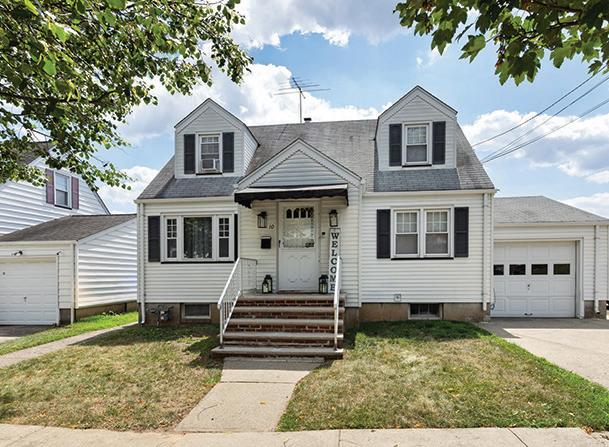
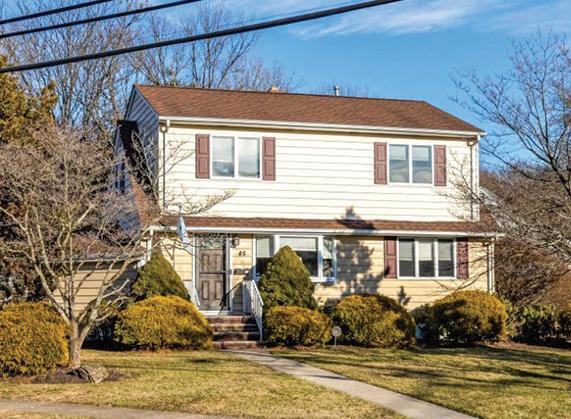
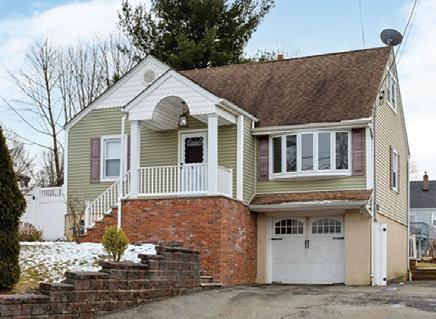
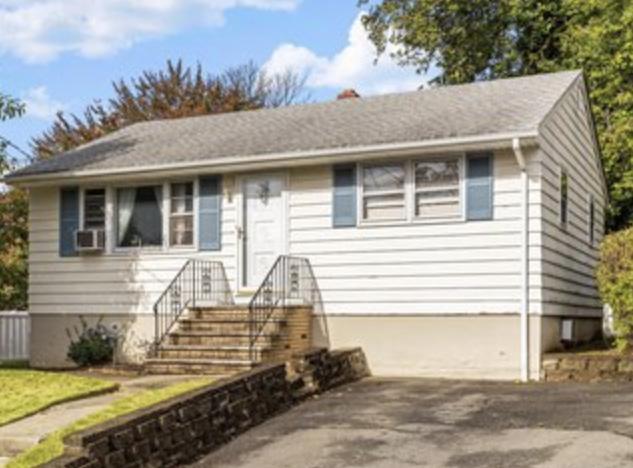
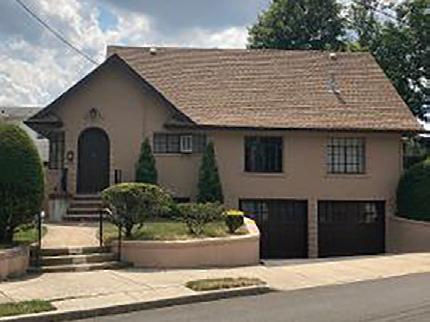
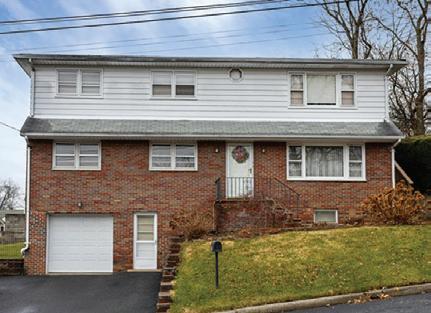
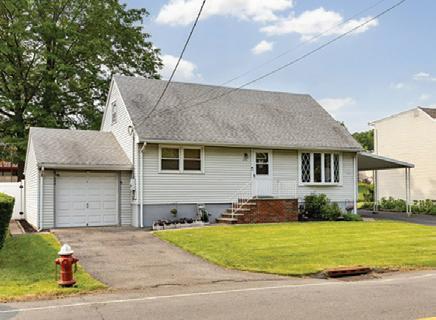
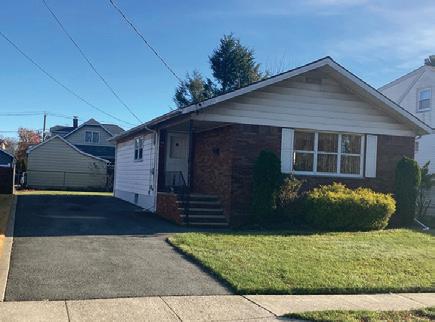
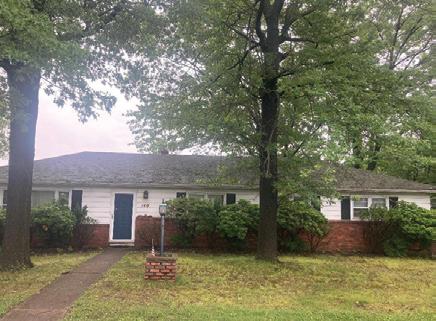
A MUST see home that has been lovingly restored in many parts and special care has been given to the smallest of details in keeping with the period of the home. This is a true gem! This colonial consists of living room, formal dining room, with H/W floors & pocket doors between the 2 rooms. Eat-in-kitchen and full bath on the first level. The 2nd level consists of 3 bedrooms, den/office and full bath. Stairs to attic storage. The property contains a beautiful barn with a large loft that would be suitable for home office, art studio all it needs is your imagination. The home has so many small details that have been painstakingly restored.
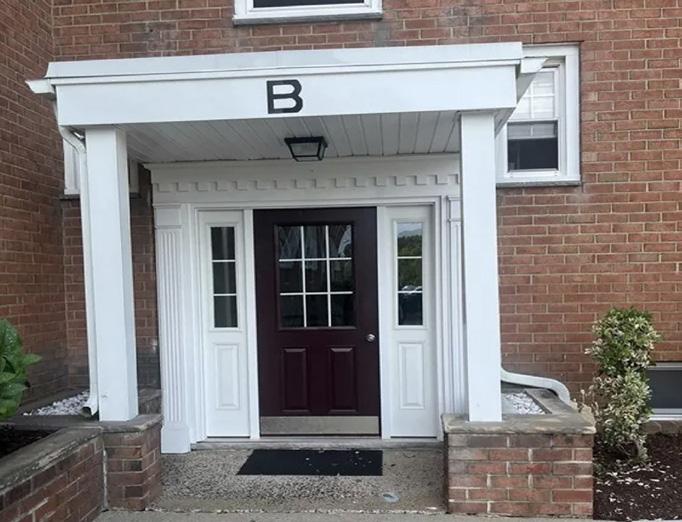
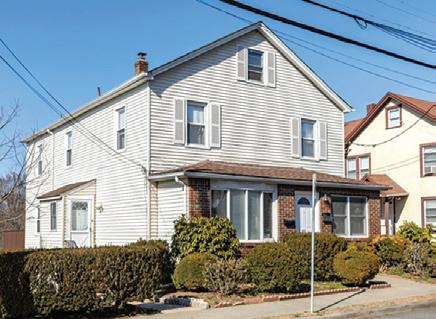
CLIFTON
$229,000 NEWLY RENOVATED
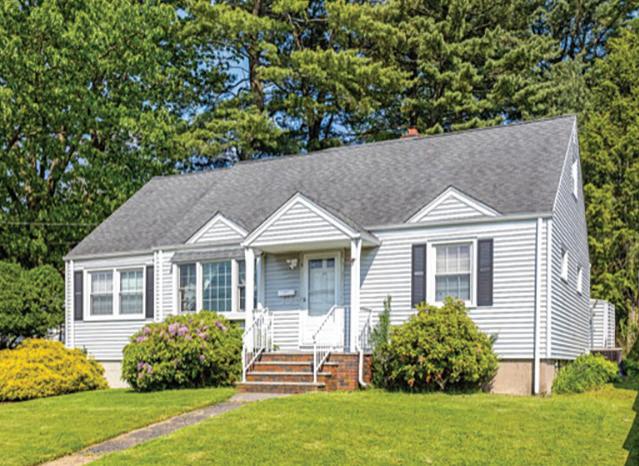
Great renovated studio-style condo in a super location. NYC Bus out the front entrance with easy access to Routes 3,46, Pky.19 & 21. Newly renovated bath, kitchen countertop, recess lighting. with gleaming hardwood floor in the living area. A large walk-in closet along with linen closet and newer wall Air Conditioner. On-site coin laundry, storage room & ample parking. The outdoor pool is available for a seasonal charge. Newer Range and stainless refrigerator. Approx. 420 sq. feet. No pets. New windows in the process of of being installed. On-site superintendent. Heat, gas, and water included

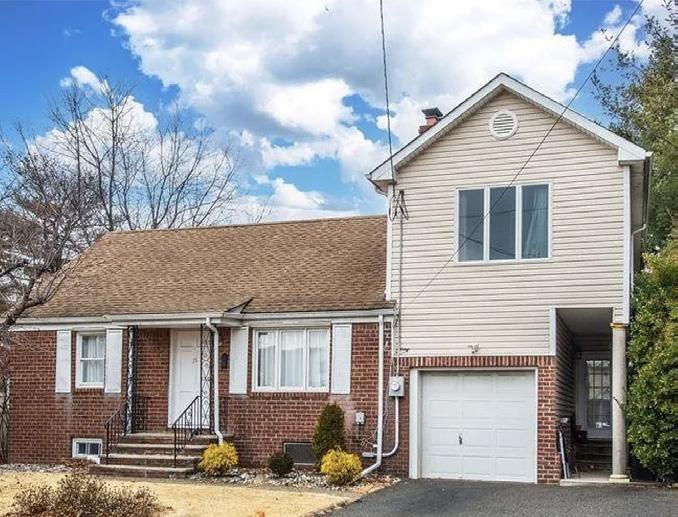
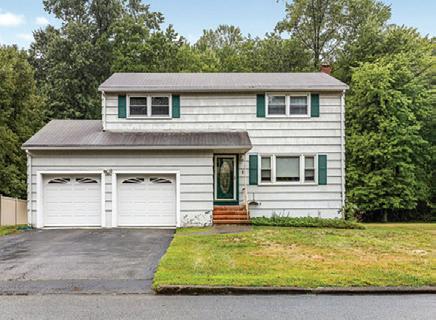
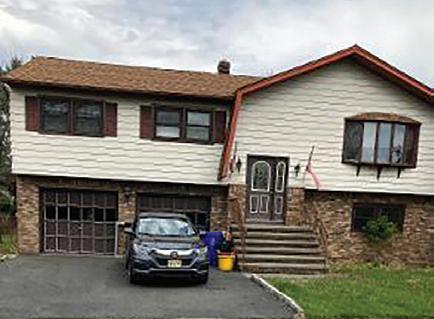
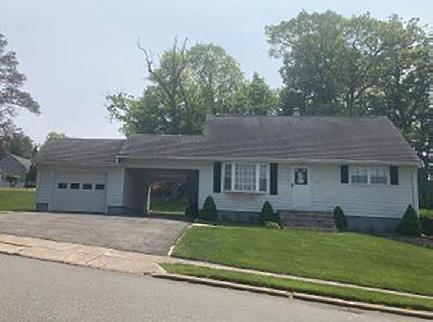
formal dining room, and an updated galley-style kitchen,. Step down to a sunken great room with a gas fireplace, and an extra dining area with/ sliders out to a patio with access to a beautiful Gunite In-ground pool.. The first level also features one bedroom/guest room and a full bath. The second level features 4 bedrooms, one being a huge master bedroom with a master bath and oversize custom windows.. The main bath is also on the second level. Utilities include gas-forced air heat and 2 zone C/A. A side door entrance from the driveway for easy access to the living area. Enjoy your inground Gunite pool in a secluded landscaped yard. Nearby travel routes are Rte.80 and Garden State Parkway.,Rte. 46 and 17. A one car garage with openers and an updated electric panel to coincide with the original panel in the finished basement.
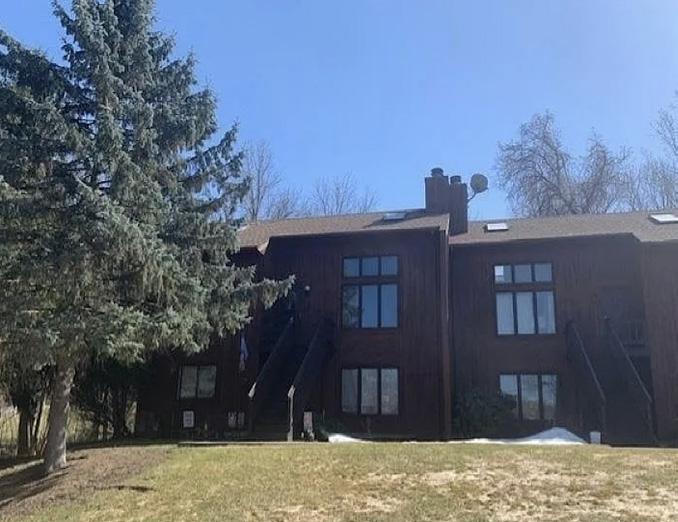
VERNON
$310,000 3 BEDROOM CONDO
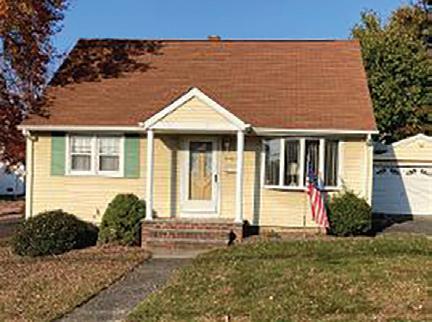
Stunning Condo with Scenic Views in Great Gorge Village. Discover the perfect retreat in this charming condo, ideally located next to the renowned Minerals Resort & Spa and the exciting Mountain Creek Ski Resort. With breathtaking views, this 3-bedroom, 2-bathroom home (including a spacious loft) offers the perfect balance of comfort and style. Inside, you’ll be welcomed by soaring cathedral ceilings, an abundance of natural light through skylights, and the cozy ambiance of a wood-burning fireplace. The open floor plan makes this home feel incredibly spacious, perfect for both relaxing and entertaining.Nestled in a peaceful setting with ample parking, this condo provides both serenity and convenience. Plus, enjoy the added benefit of in-unit laundry for ultimate ease.
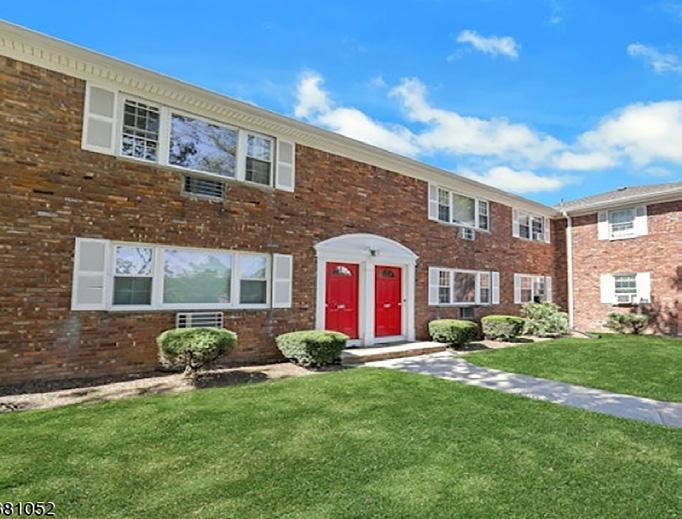
WAYNE
$2,175/MO. NEW RENTAL
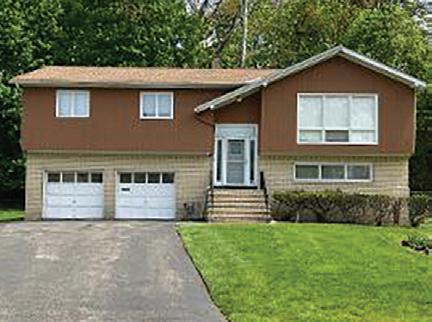
Welcome to Manchester Village II. Freshly painted 2nd floor corner unit with large picture window and gleaming H/W floors. The bright & spacious sun drenched LR offers walk-in-closet & new A/C unit, separate DA, the stylish, updated kitchen has ample cabinets, new SS appliances, new quartz counters, tile backsplash & floor, new faucet + center island. Primary BR-large WIC. Renovated full bath with linen closet, new toilet and faucet. Newer windows. Builtin & window A/C units & ceiling fans. Conveniently close to local amenities-dining, parks, shopping, & major highways. Ideal for the NYC commuter, walk to NYC bus on Valley Rd. Whether you are running errands, commuting, or exploring the area, everything is within reach. Non-smoking unit. Shared laundry room located in the basement of neighboring building. Rent includes: Heat, hot & cold water, cooking gas, sewer, snow removal, maintenance fee, trash removal.

Admission is $20 per adult at the door, Folk Project members $15. Children 12 and under are free. For more info, see https://folkproject.org/mec-events/2025-09-26/
Date of Event: October 3, 2025
Location of Event: Morristown Unitarian Fellowship
Time of Event: 7:30 pm
Price of Event: $20.00 ($15 for members)
The Troubadour Acoustic Concert Series presents David Wilcox with Todd Dennison. David Wilcox is a masterful storyteller whose acoustic-driven sound connects deeply with listeners. His songs blend intricate melodies with lyrics that capture life’s complexities, turning each song into an emotional journey. A celebrated figure in folk music, Wilcox won the prestigious Kerrville Folk Festival in 1988, propelling his career forward. His evocative style has earned critical acclaim, including top honors at the USA Songwriting Competition in 2018.
Todd Dennison is a versatile multi-instrumentalist whose music bridges folk, jazz, rock, and American roots traditions. Influenced early on by artists like James Taylor and Kenny Rankin, Todd developed a distinctive guitar style known for its flowing bass lines, melodic chord voicings, and intuitive, expressive feel. A seasoned performer, Todd has toured nationally as a guitarist, bassist, pedal steel player, accompanist, and arranger. His playing is never showy, but always deeply musical
Admission is $20 per adult at the door, Folk Project members $15. Children 12 and under are free. For more info, see https://folkproject.org/mec-events/2025-10-03/
Date of Event: October 17, 2025
Location of Event: Morristown Unitarian Fellowship
Time of Event: 7:30 pm
Price of Event: $20.00 ($15 for members)
The Troubadour Acoustic Concerts presents The Mammals and Dustin Lowman.
The Mammals are folksingers Ruth Ungar, Mike Merenda, and a dynamic quintet of multiinstrumentalists whose sound spans fiddle, banjo, guitar, organ, bass, and drums. Over two decades, this fiercely independent band has built a legacy of genre-defying, politically charged, and emotionally resonant folk-rock praised as “some of the best songwriting of their generation” (LA Times). Their music resonates with urgency and tenderness—

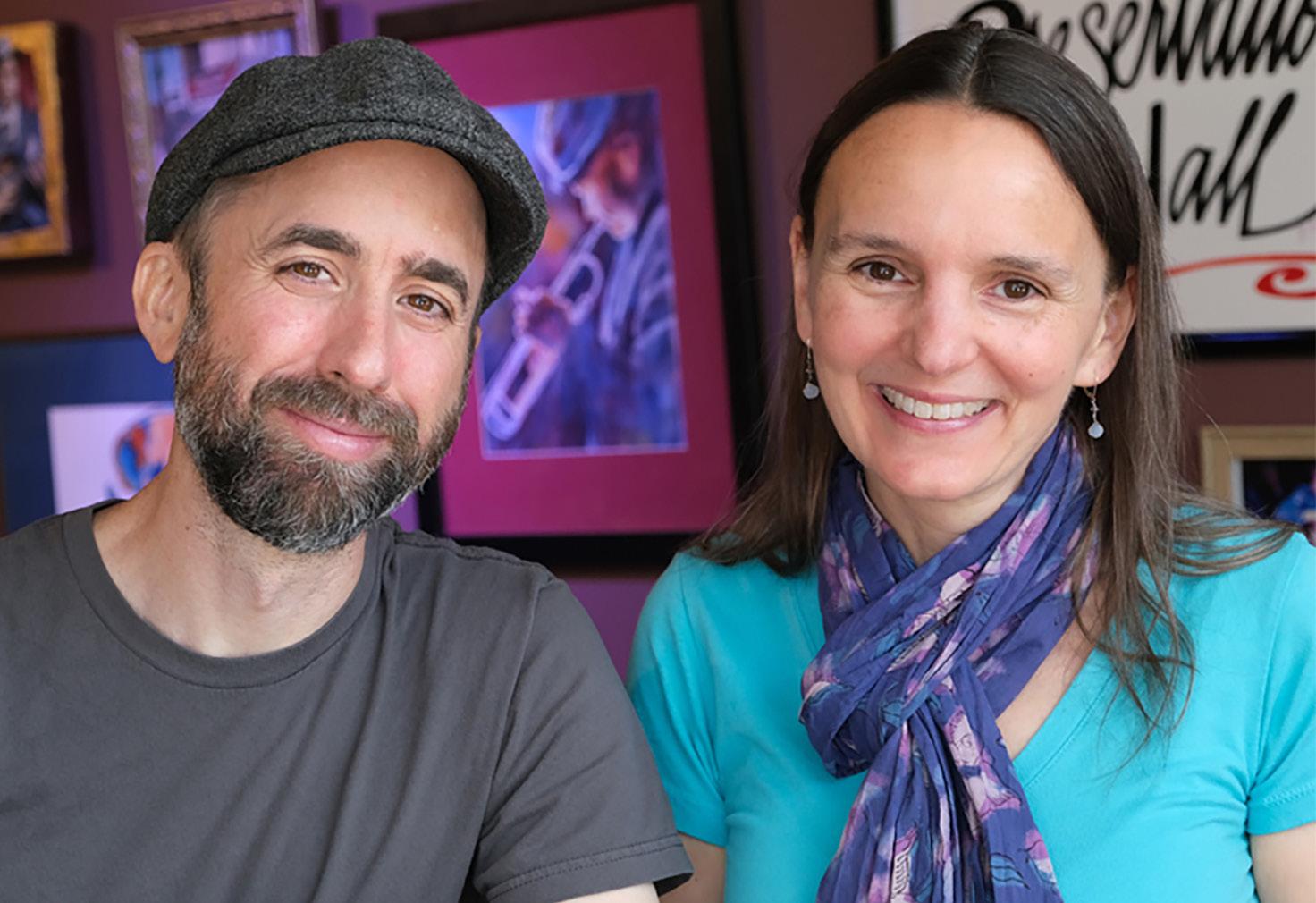
amplifying voices of conscience, connection, and the full spectrum of human experience. The forthcoming release, Touch Grass Vol. 1 & 2 (2025), is a double album that rages, reflects, and rejoices—equal parts protest and balm, recorded at their own Humble Abode Music studio.
Dustin Lowman exudes wit, warmth, and wounded wonder through a poet’s eye and a voice that’s pure and true. A soulful folk singer whose songs spring from the quiet sanctum of reflection and the harsh echoes of rebellion, he delivers ballads both tender and absurd, stories shaped by heartbreak, hilarity, and a deep literary streak. With echoes of Dylan and the rawness of lived truth, his performances walk the line between traditional and heretical, cont. on page 33




Troubador Acoustic...
cont. from page 32
inviting audiences into a shared human moment.
Admission is $20 per adult at the door, Folk Project members $15. Children 12 and under are free. For more info, see https://folkproject.org/mec-events/2025-10-17/
All Friday night concerts are presented by the Folk Project and will be held at the Morristown Unitarian Universalist Fellowship, 21 Normandy Heights Road, Morristown, NJ, at 7:30 p.m.
And a special event in October: Beppe Gambetta and the Troubadour Acoustic Concert Series present the New Jersey Guitar Summit
Date of Event: October 4, 2025
Location of Event: Morristown Unitarian Fellowship Event begins at 9:30 a.m.
Admission: $145 for Workshop 10 AM – 5 PM (Includes Lunch, Supper, Jam and Evening Concert)
$35 For Concert Only 8:00 PM / $20 Webcast of Concert Concert: Age 12 and under free with adult.
After the success of last year's guitar summit, the NJ Guitar Summit, organized by the Folk Project together with Beppe Gambetta, is back on Saturday October 4, 2025. It will again be an opportunity to meet, learn and share with new friends the passion for acoustic guitar. Like last year, the structure includes an intense day of workshops for each level, ending with a jam session and a final concert.
Teachers:
Beppe Gambetta: flatpicking technique starting with learning and understanding the music of the great masters to open the door to creativity in arranging, adapting and composing with the guitar.
Tony McManus: the world of Celtic guitar, with all the embellishments, techniques, open tunings, in which the guitar reproduces the sounds of traditional instruments.
Jefferson Hamer: the guitar from the point of view of the songwriter, arranger and producer, delving into its use as an instrument on which the production of a song is built.









By Tina Pappas
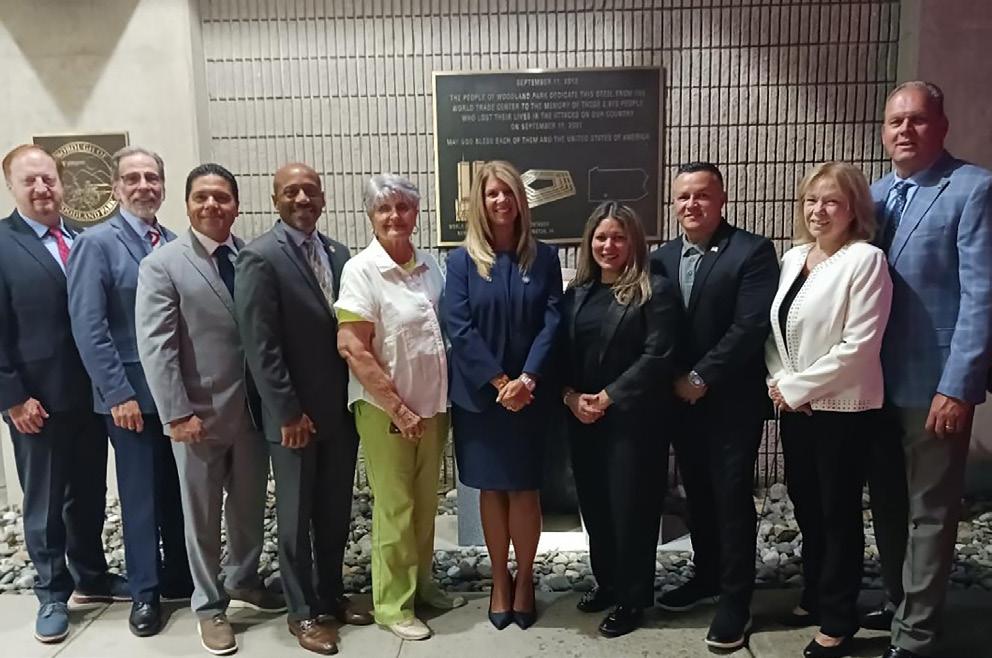
The Borough of Woodland Park held a poignant 9/11 ceremony marking the 24th anniversary of the terrorist attacks.
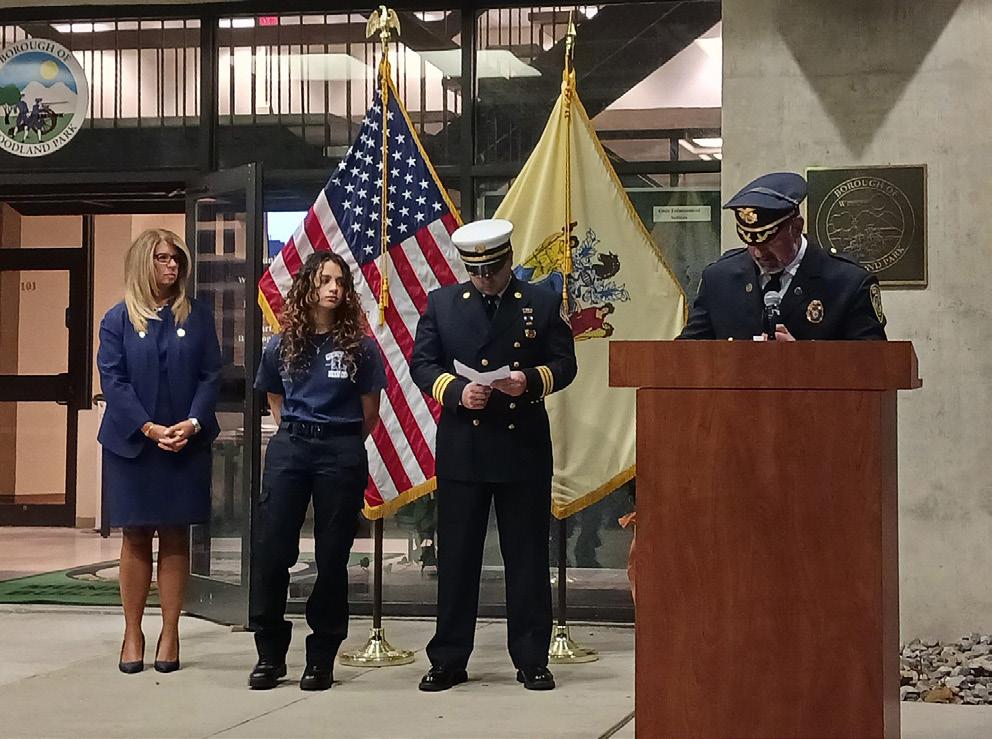
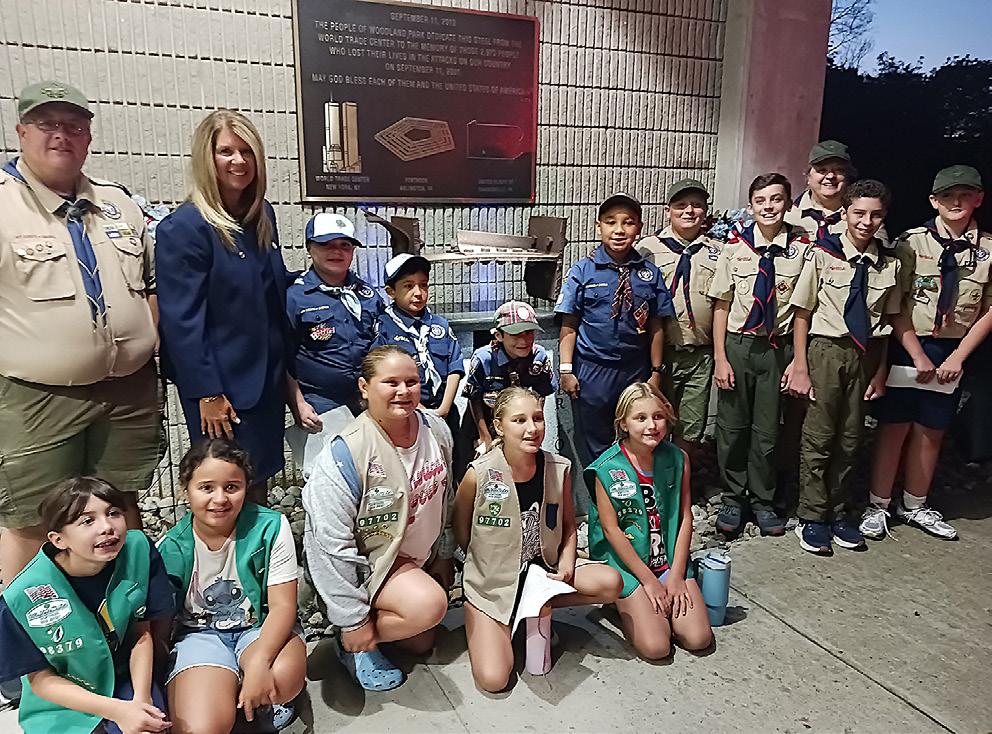
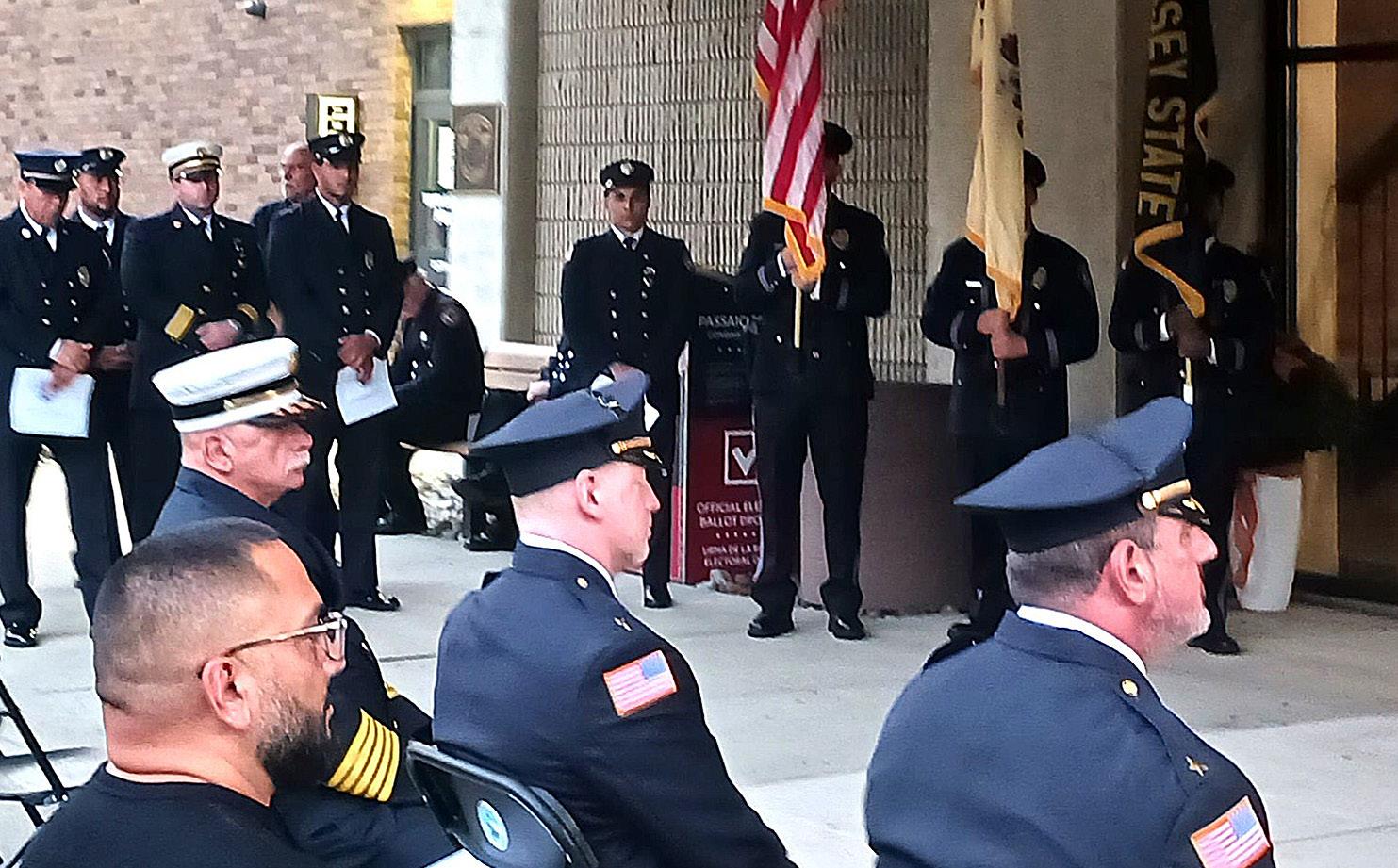
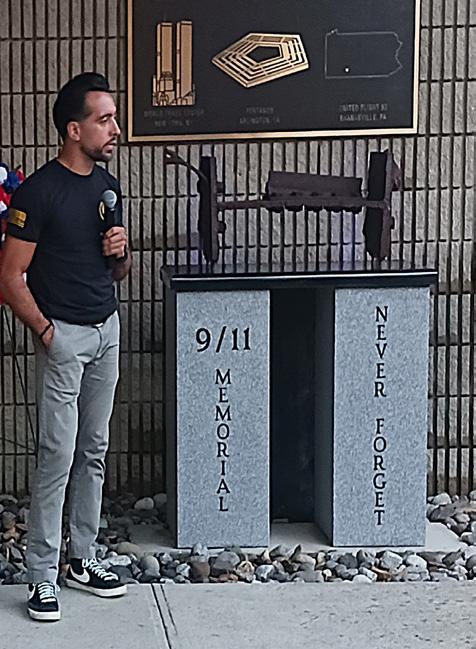
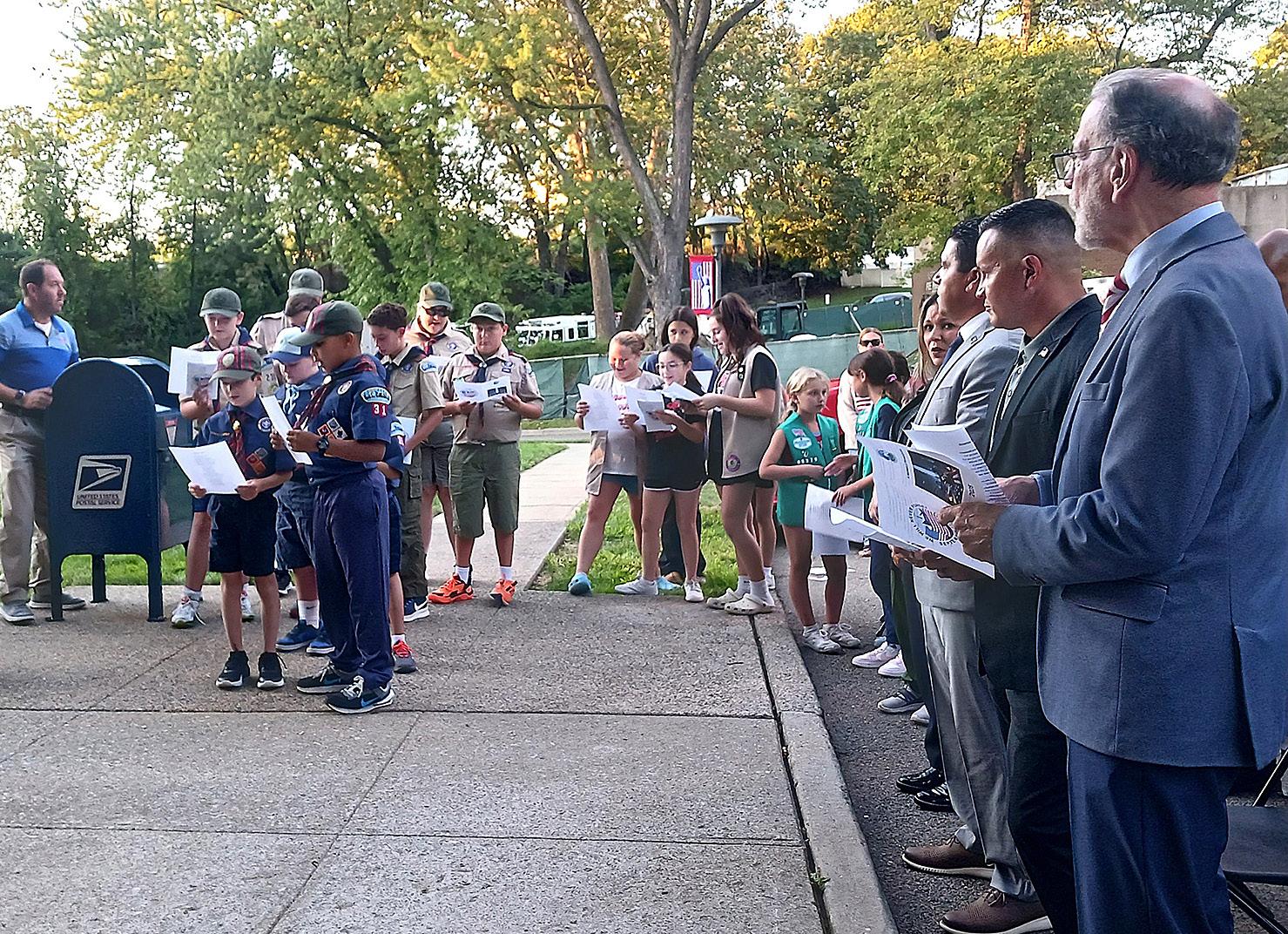
Councilman Vincent DeCesare welcomed attendees as he spoke next to the borough's 9/11 monument, erected in 2012, which displays an encased piece of an I-beam recovered from debris at the World Trade Center, with a plaque that reads "9/11 Memorial, Never Forget." The flag salute was led by officers from the Woodland Park Police Department. The National Anthem was sung by local resident Madelyn DaSilva. Pastor Joel LaTorre of Living Water Church led the invocation and benediction. "America the Beautiful" was sung by the Girl Scout Brownie Troop 97702, Cub Scouts Pack 31 and Boy Scout Troop 238.
DeCesare commented at the start of the ceremony.
"This town always comes together in hard times and in good times," he said, and asked everyone to applaud the borough's first responders.
LaTorre commented on the 9/11 attacks during the prayer.
"We honor the lives lost and the families forever changed," he said. "We remember the souls of those lost in New York, Washington D.C. and Pennsylvania. We pray for comfort for those who still mourn and healing to those who are still hurting."
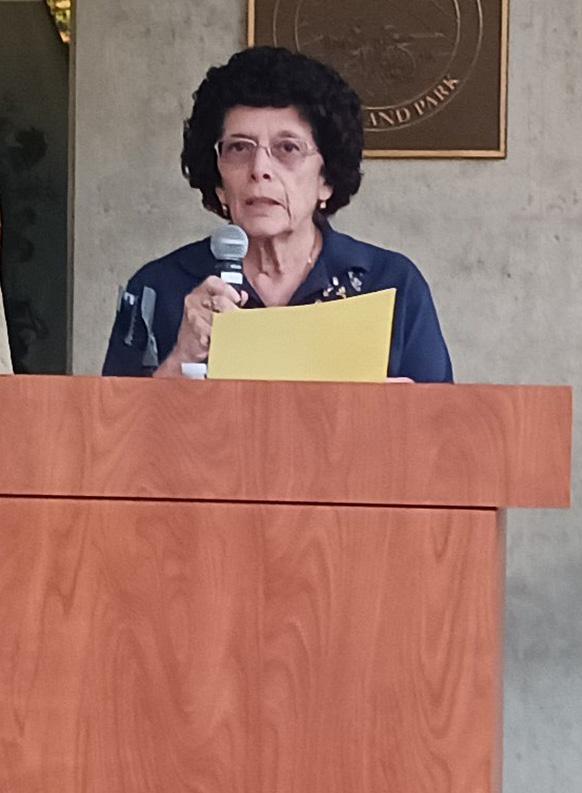
American Legion Auxiliary President Cathy Pagano spoke on how the 9/11 attacks brought the nation together in its wake, but how divided people have become since.
"For all of us who are still alive, our memories linger," she

said. "We remember all the pain and anguish of the families who lost loved ones. But we also saw the rise in American spirit and pride in our country. 24 years have passed but somehow we've allowed all those memories to get away from us. 24 years later we have to remember what a great nation we live in. It starts with us, every one of us individually because we really are the power of one. We need to speak out against all those negative voices. We will then honor all those lives lost. It's start with you, it starts with me."
Dr. Erik Luker, American Legion Post Judge Advocate, also
spoke and addressed his speech towards the youth of the nation.
"You guys weren't around during 9/11," Luker said, as he spoke to the scouts at the ceremony. "I remember seeing the smoke rising in Manhattan and it was a tough day for all Americans."
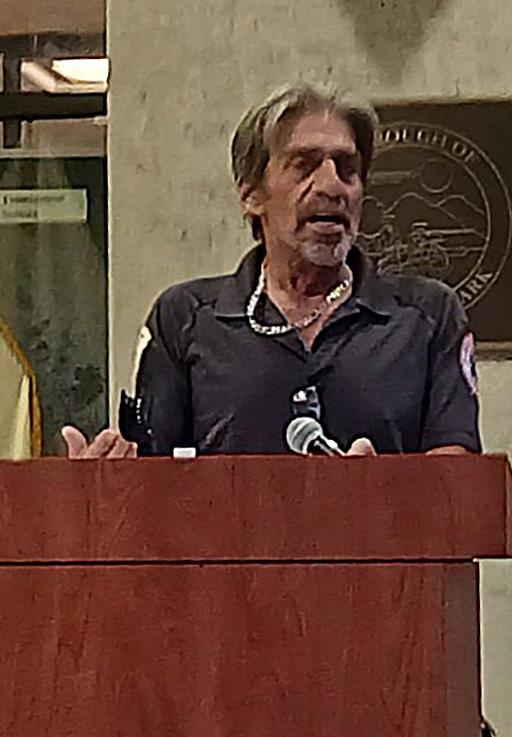
Luker also spoke of NYC Fire Dept. Rescue Company 1, also known as Rescue 1, which responded to the North Tower and lost nearly half its crew. He recalled the opportunity he had to meet with several relatives of fallen crew




bers.
"I was touched with what true bravery really was," he said. "I'll never forget the bravery of those first responders on 9/11."
Passaic County Commissioner Sandra Lazzara, also spoke of how everyone will always remember where they were that day. As a former teacher, she remembered being in her classroom with her students when the attacks took place.
"Everyone remembers," she said, adding that the effects of the attacks linger on 24 years later. "I remember every minute of that day. It's up to us, those of us who are here that need to keep those memories alive for our kids."
She also highlighted the important work first responders do and that they should be honored.
"You guys should be on a pedestal," she emphasized. "750 were from New Jersey, and sadly we need to keep this in mind that the deaths continue to climb because most are the first responders. At Ground Zero they put their lives on the line for us and we can't let anyone forget that. Their illnesses and deaths linger due to toxic exposure."
Lazzara also noted how united the country was in the aftermath of the attacks, but how divided the country has become.
"We need to come together because this is about people's lives and it behooves us to do so," she stressed. "We need to take care of each other."
Assistant West Paterson Fire Department (WPFD) Chief Anthony Ficarra, who said he was a student inside Lazzara's class when the events of 9/11 unfolded, also reflected on that day and was inspired to become a firefighter himself.
"When they made the announcement, I remember the look on her face," he recalled. "I remember the teachers all standing around the TV sets. I remember parents coming to pick up their children. I remember the crossing guards crying and the presence of police. And I'll never forget when I got home and saw on the news the smoke, the flames and the flashing emergency lights. The people that lost their lives that day, specifically the firefighters, that's why I do what I do today. That day completely changed my life."
He also shared the story of Welles Crowther, also known as the "Man in the Red Bandana" during 9/11, who is remembered for his courage and saving 18 lives that day. He made three trips in the South Tower's sky lobby, saving as many people as he could but was caught inside as the building came down.
"I think it's important to remember different individuals from that day so their stories live on so that we could never, ever forget," Ficarra said.
Woodland Park Police Department (WPPD) Police Chief Lou DeLuca also spoke of the nation's courage and resilience in the days following the attacks. He commended the first responders and veterans.
"This day is not only about reflecting on the tragedy but the spirit the binds us together as one," he said.
West Paterson First Aid Squad (WPFAS) Captain Andy Dillon also spoke, remembering exactly where he was 24 years ago.
"It was a morning similar to this one and I ask what was 9/11? Hate was 9/11," he said. "In the years since, we gathered to make people aware. Hate is very toxic. Love is what we need to bring each and every day."
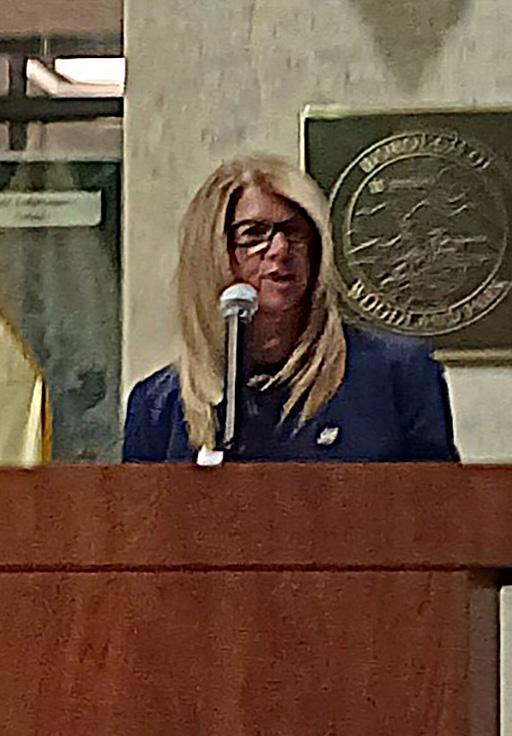
Mayor Tracy Kallert also recalled the "overwhelming sense of unity" the country experienced 24 years ago.
"As people came together in the wake of the attacks, patriotism became a unifying force," she said. "Americans rallied around symbols, like the flag, the National Anthem and the public displays of solidarity. It became a way to express support for the victims, show resilience, and demonstrate collective strength."
She also stated that communities like Woodland Park have the power to bring ideals to life in meaningful ways, and collective efforts will inspire broader change.
"Loving your country doesn't mean you have to agree with everything it does, or support every decision made by its leaders," she emphasized. "Genuine patriotism involves a commitment to the country's core values, like freedom, justice and equality, and a desire to see those values preserved for our children and grandchildren. Together, let us be that change."
The ceremony closed out with the reading of names of the residents of Passaic County who died during the attacks, followed by the local scouts singing "God Bless America."
Low-Tox Living 101 with Good for the Sole- Sara Sole! Simple swaps for a healtier bathroom! Learn about Low-Tox Living without the pressure to be perfect. Discover easy swaps for everyday bathroom products! There will be 2 low-tox DIY take home projects! October 8th at 6:00pm. A $5 donation is suggested. Please register at: Totowapl.org/ register or call: 973-790-3265. Totowa Residents take first priority!
Herb ThymePresents: Handmade Holiday Gifts for adults workshop! Make a Handmade lotion bar for yourself or as a gift for the holidays here at the Totowa Library! A $5 donation is suggested. November 18th at 6:00pm. Please visit: totowapl.org/register or call: 973790-3265. Totowa residents take first priority!
Unleash your creativity and discover the joy of painting! Join us for a relaxing and fun Adult Painting Class where you’ll learn simple techniques, explore color, and create your own masterpiece to take home with Tracy Emma! No experience necessary-all supplies provided! Space is limited! These are 6 week sessions for 2025 starting Monday, October 6, 27, November 10, 24, December 8 and 15 at 6:30pm. Please visit: totowapl.org/register or call: 973-790-3265. A $5 suggested donation to cover cost of supplies. Totowa residents take first priority!
The Totowa Library Mandolin Orchestra will be performing a concert on Thursday, Oc-
tober 23rd 2025 at 1:00pm, here at the Totowa Library. Their Fall concert consist of Italian Heritage Melodies…. All are welcome! Please RSVP at: totowapl.org/register or call: 973790-3265.
New sessions of Adult Zumba classes with Lauren will start Saturday, October 25th, and November 22, 2025 all at 10:30am! There is a $5 donation for these classes. Don’t miss laurens energy! Please visit: totowapl.org/register or call: 973-790-3265. Walk ins welcome!
Save money and sharpen your skills! AAA’s six-hour classroom-style defensive driving course enables participants to: RECEIVE up to 10 o/o insurance discount on collision and liablility for the principal driver, REDUCE up to 2 points on your license for violations occuring within the past 5 years, REFRESH driving skills and learn techniques. This course is at the Totowa Public Library, located at 537 Totowa Road, Totowa N.J. 07512, on Saturday, October 11th, 2025 from 9:00am-4:00pm which includes a one hour lunch break. Please pack a brown bag lunch! A $36.00 check payable to: AAA Northeast. To register please call: 973-790-3265.


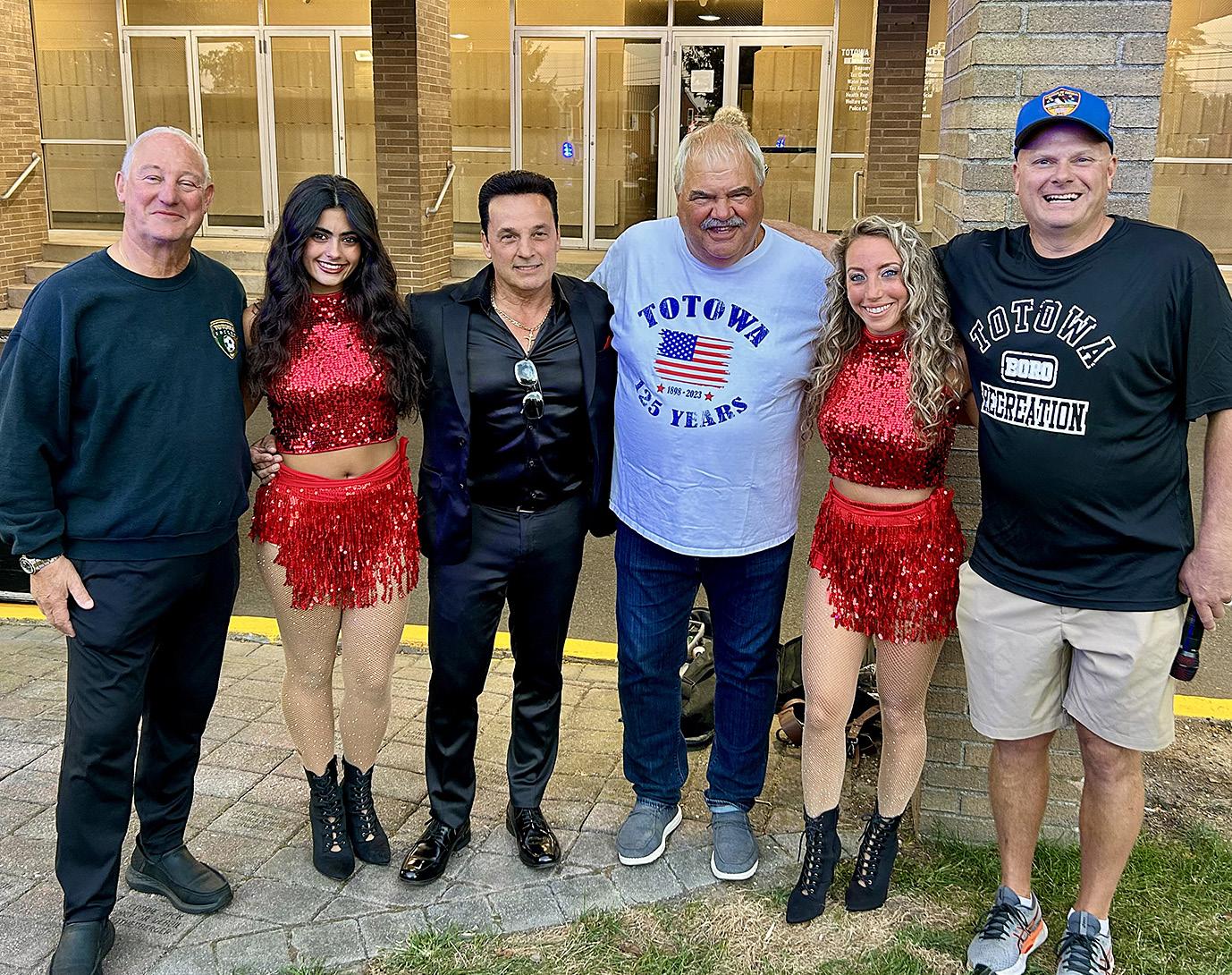
On Wednesday, September 3rd, the Totowa Board of Recreation sponsored their final summer concert with Biagio performing. Pictured are Mayor Coiro, Council President Lou D’Angelo and Recreation Director Mark Monteyne with Biagio.







The Totowa Library presents a Doo Wop Concert , Music of the 50's with the singing group the Wildcats! Wednesday, October 22, 2025 at 1:00pm. Get Ready to Rock Around the Clock!
Doo Wop Delight: An afternoon of 50’s Magic! Step back in time to the golden era of music at Doo Wop Delight, a spectacular concert celebrating the timeless tunes of the 1950s! Get ready to groove, sway, and
sing along to the unforgettable harmonies that defined a generation. Please visit: totowapl.org/register or call: 973-790-3265.


The Morris Music Men present their annual show, It’s Not Unusual: To Laugh, Sing and Leave Happy, on Sunday, October 26 at 3:00 p.m. at The Dorothy Young Center for the Arts in Madison, NJ. Under the direction of Nate Barrett, with Dave Blazier and Leo Weismantel, the chorus will be joined by the Clifton High School Choirs. Tickets are $25 general admission and $10 for students at www.morrismusicmen.org, 877-808-8697, or at the door (while available).