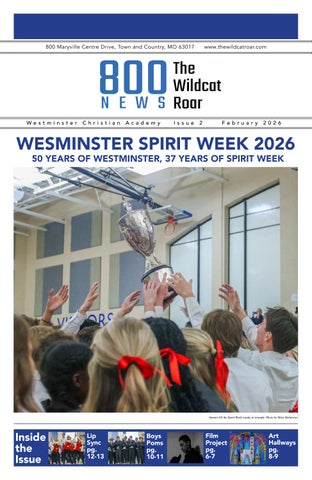
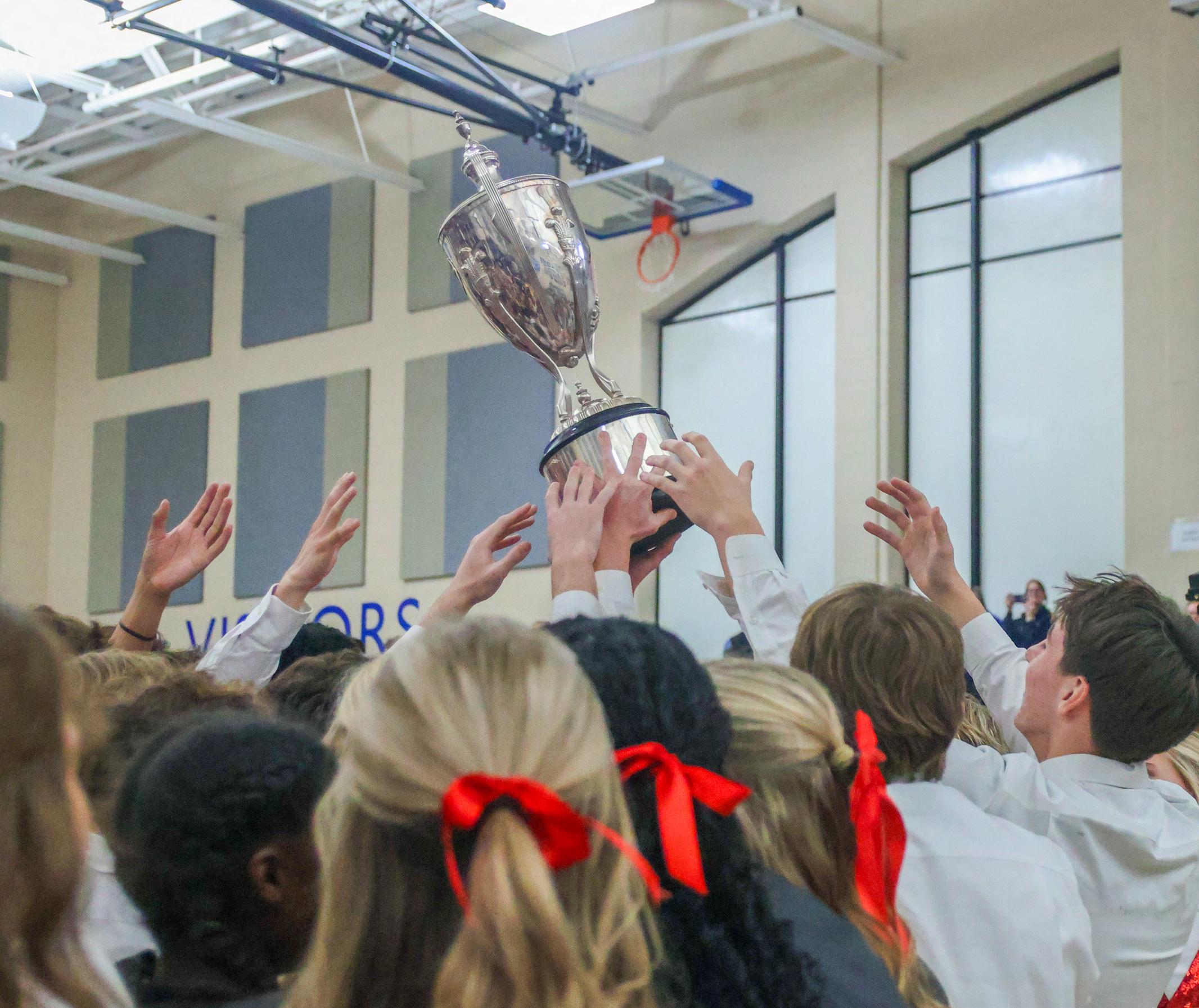
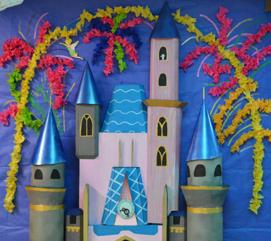
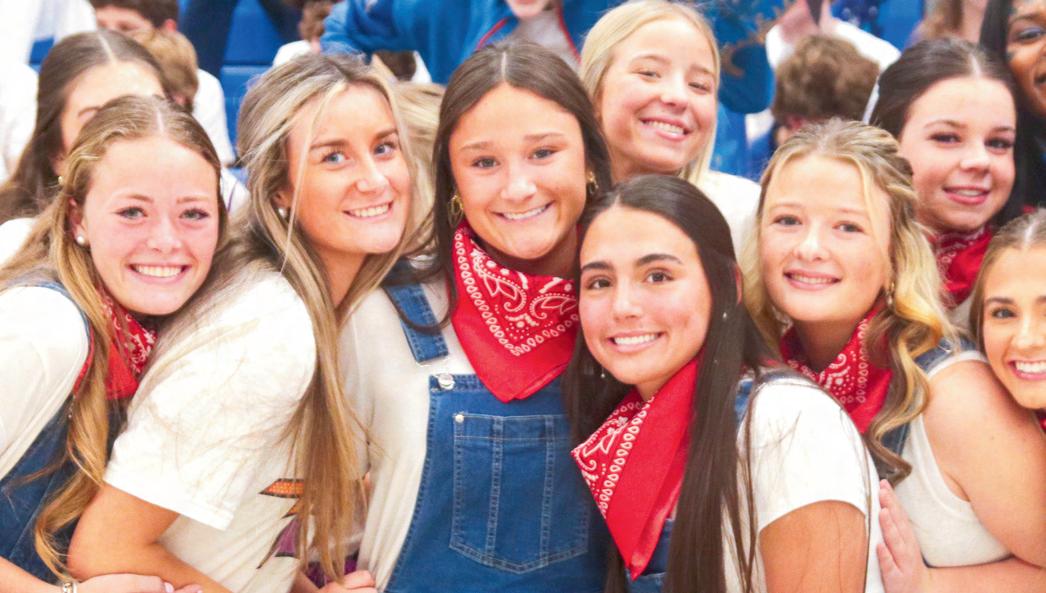
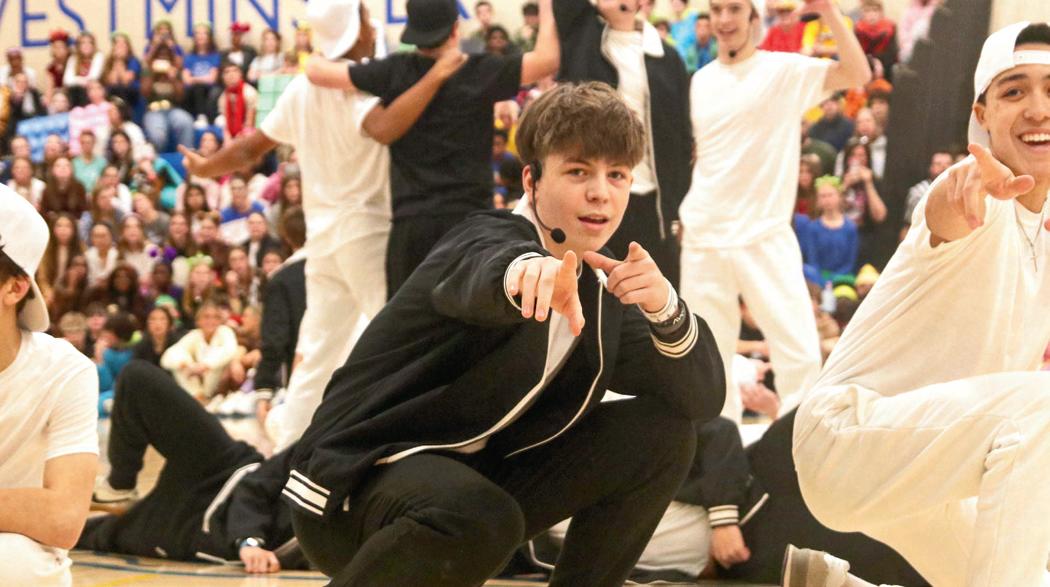
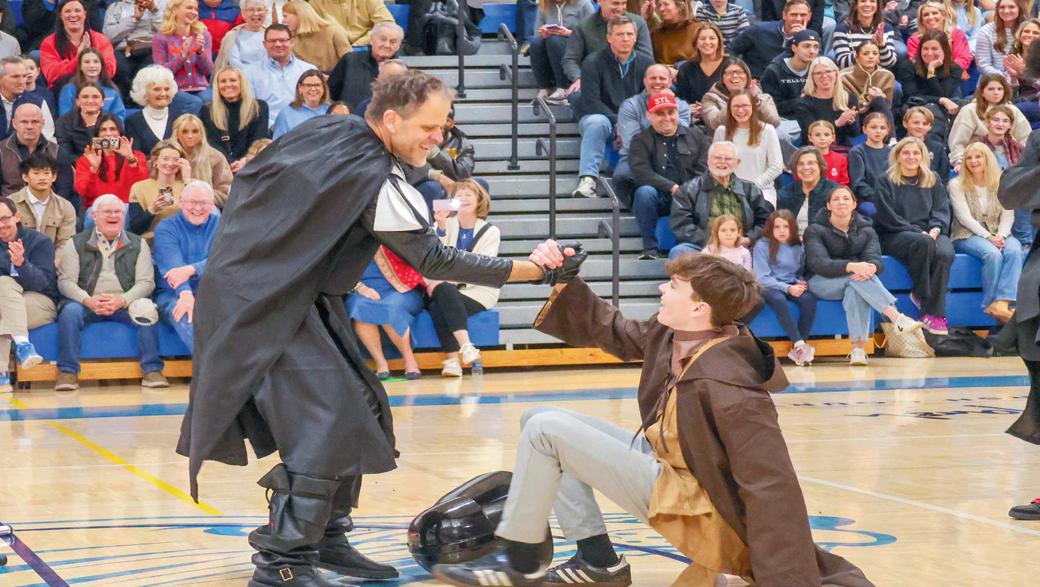
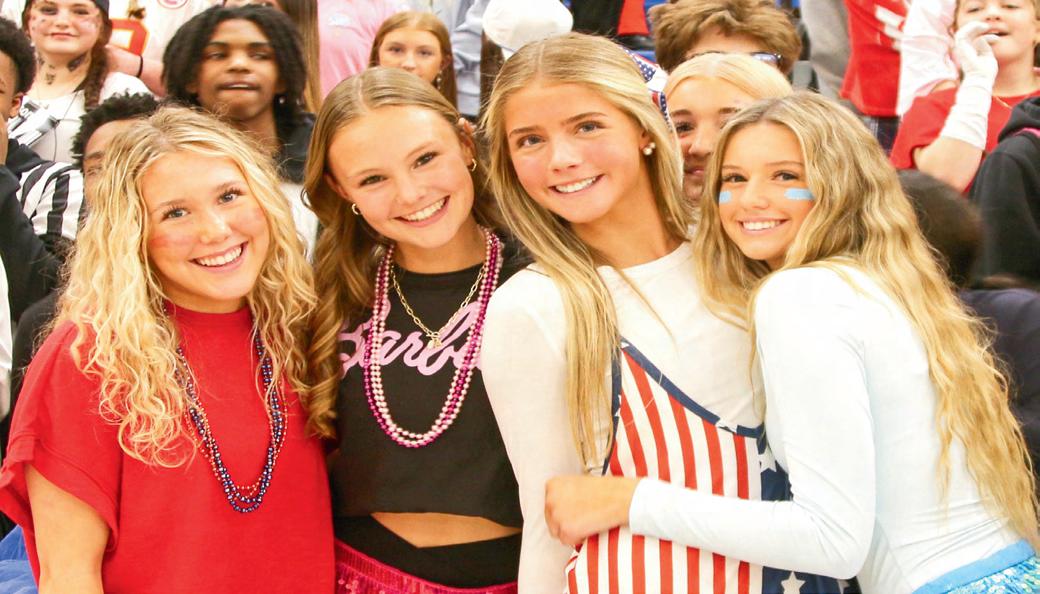
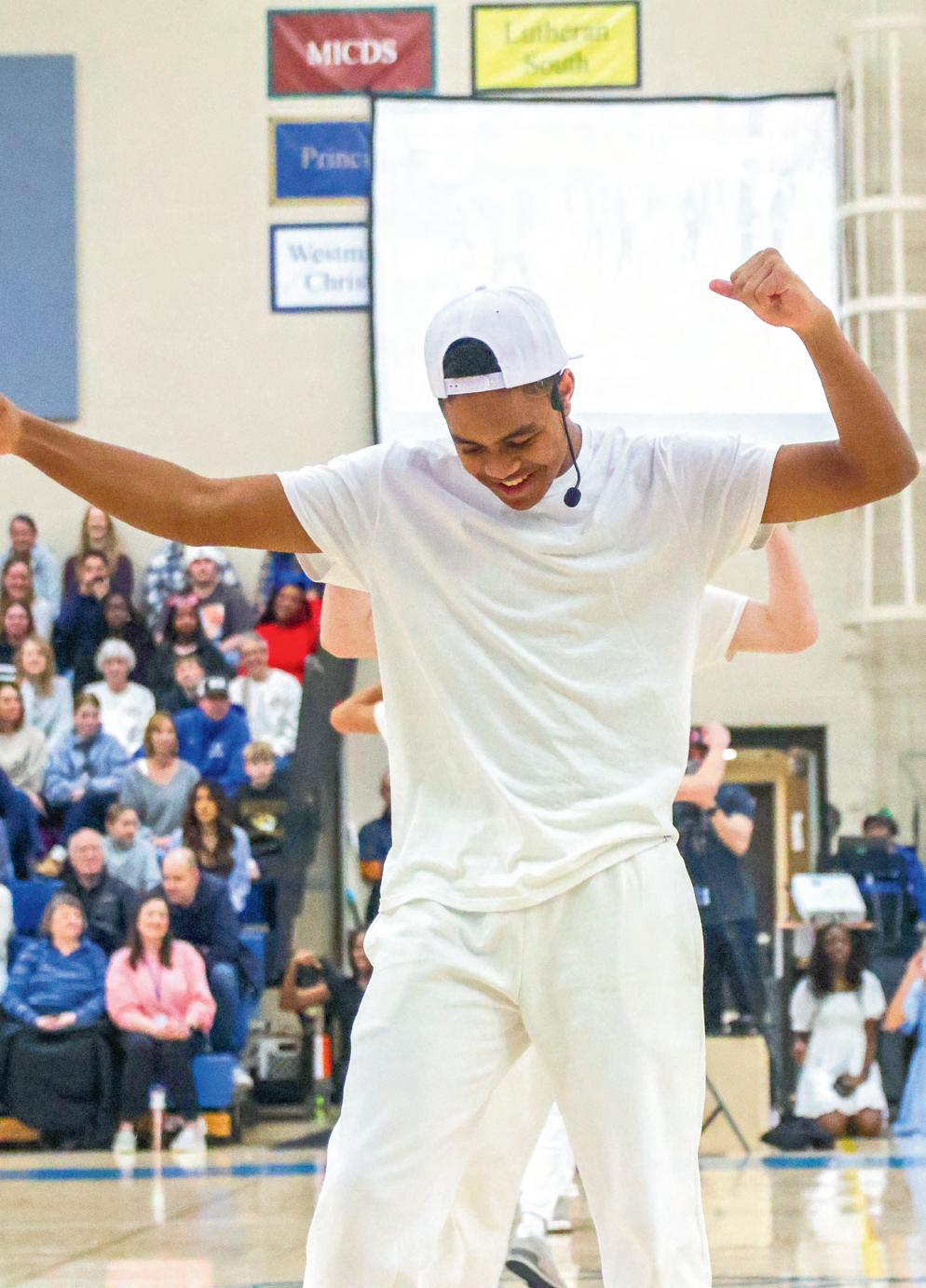
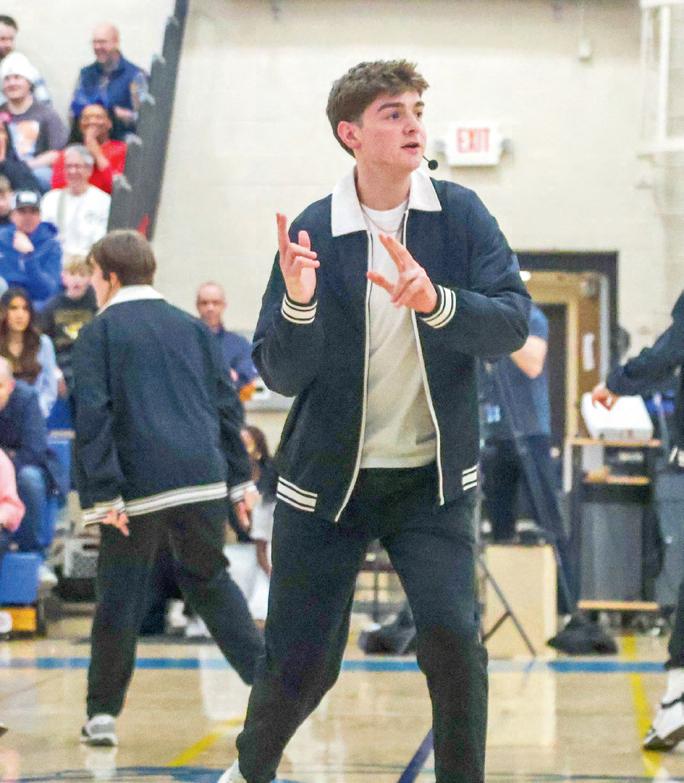
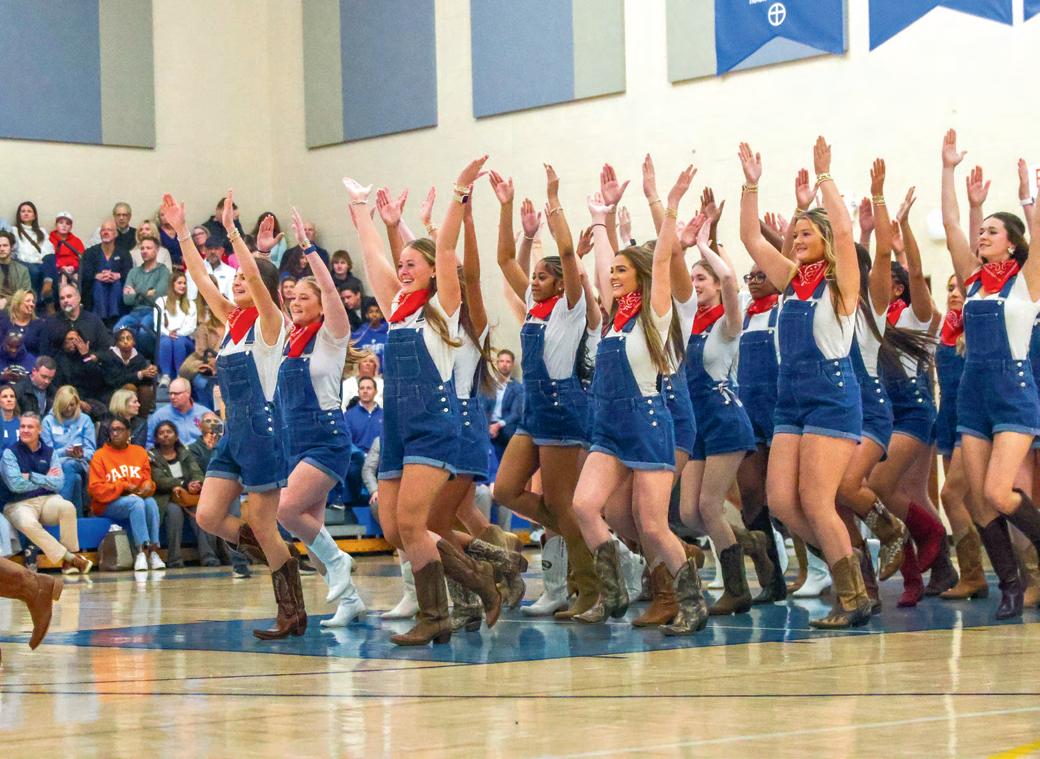
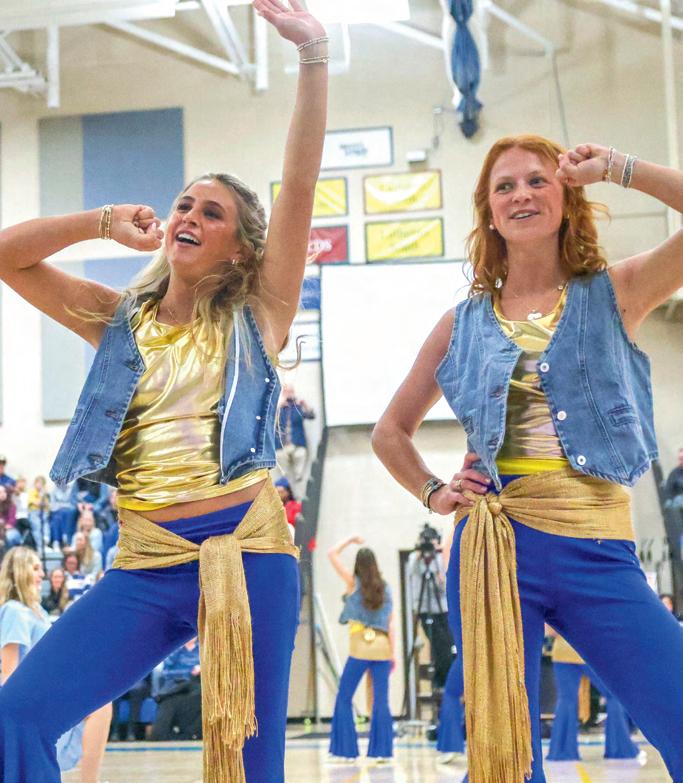
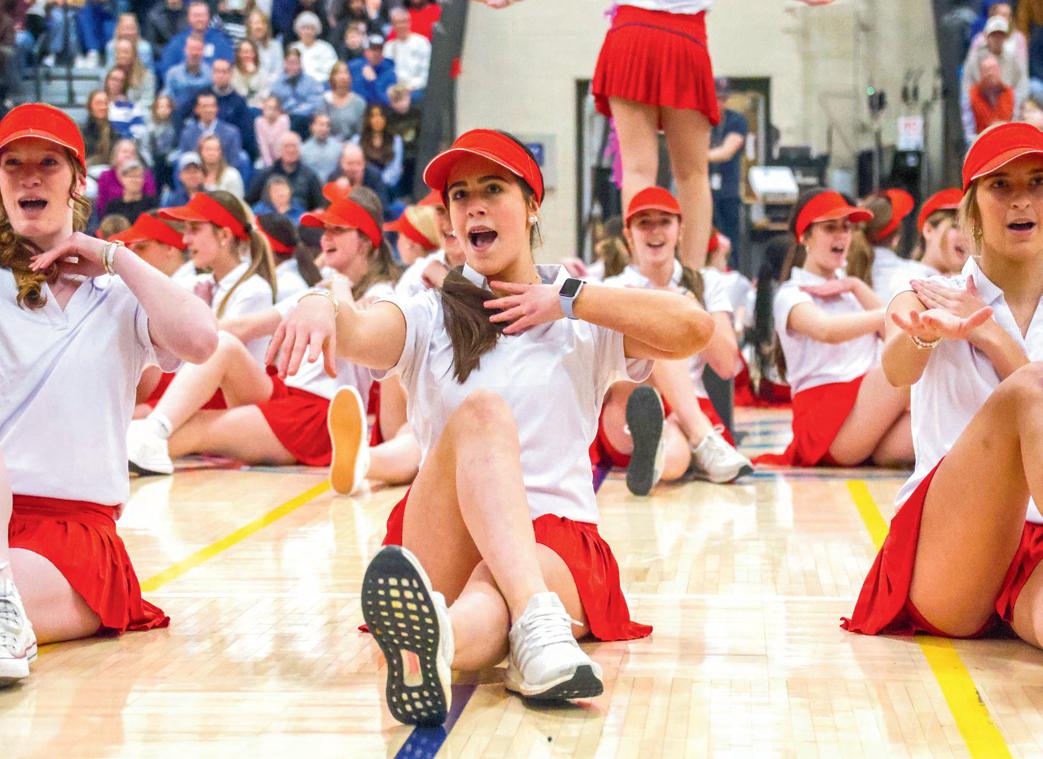
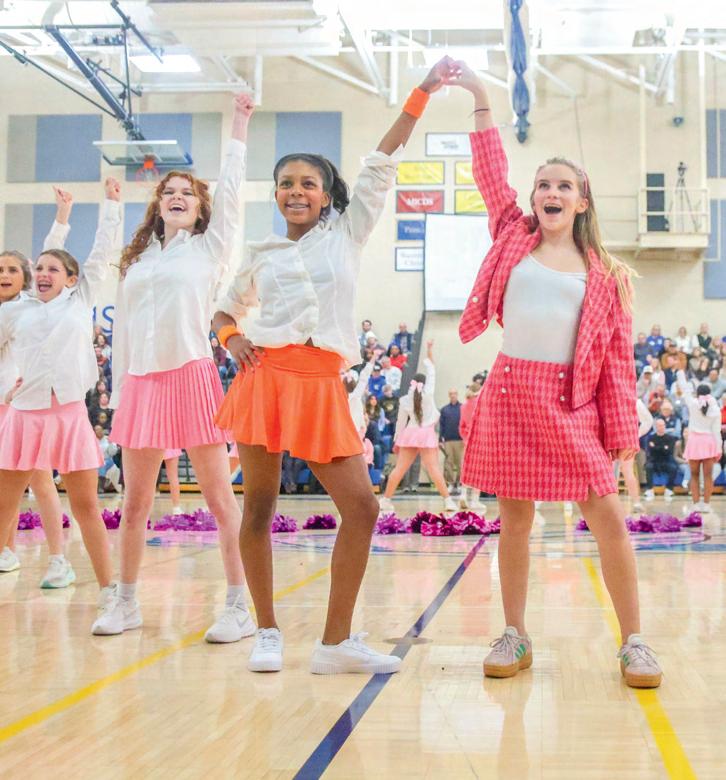
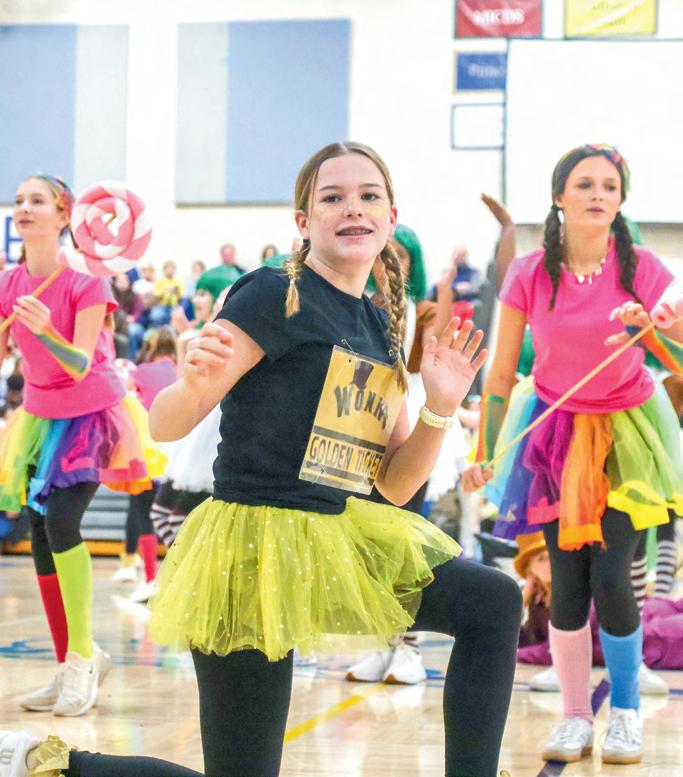
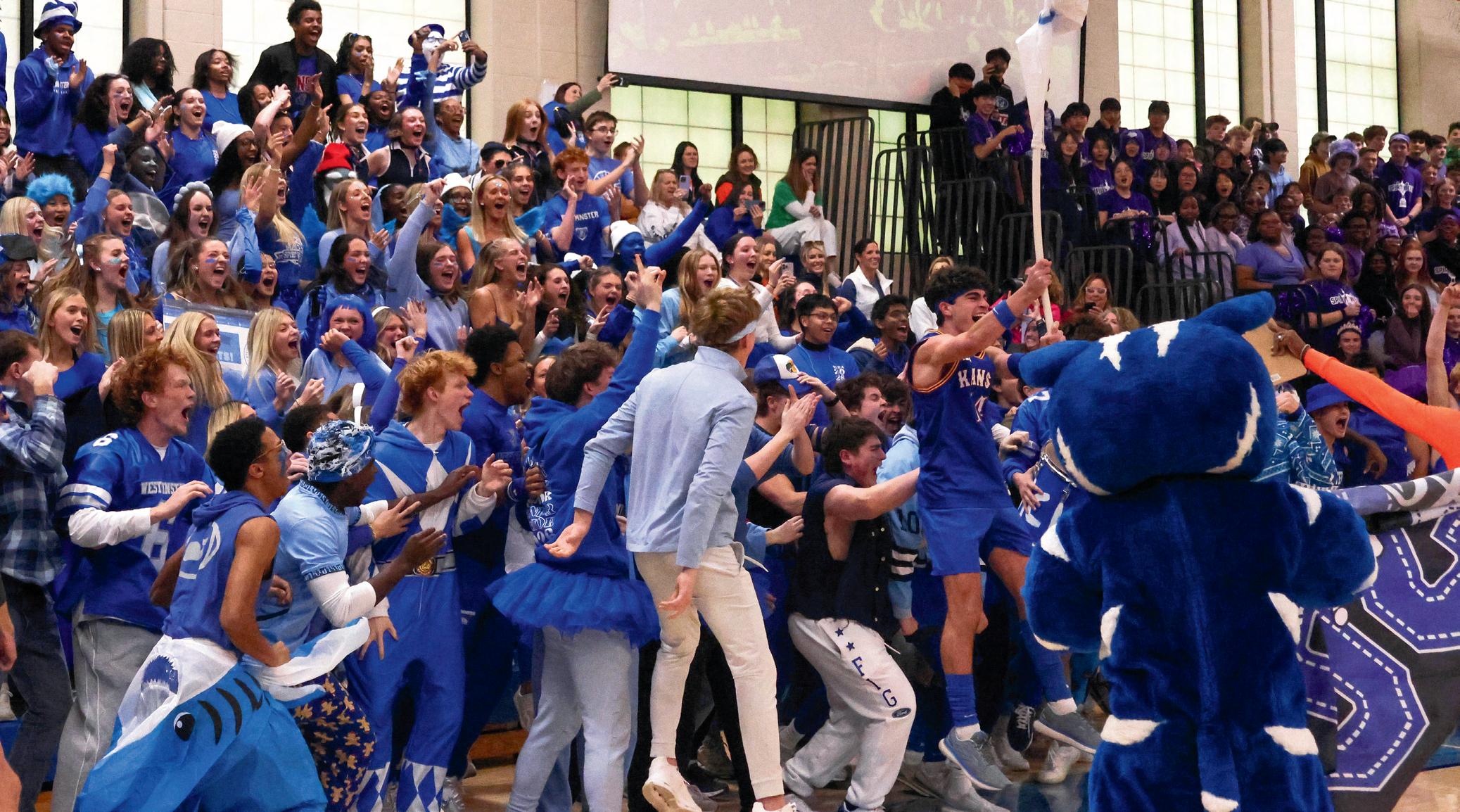
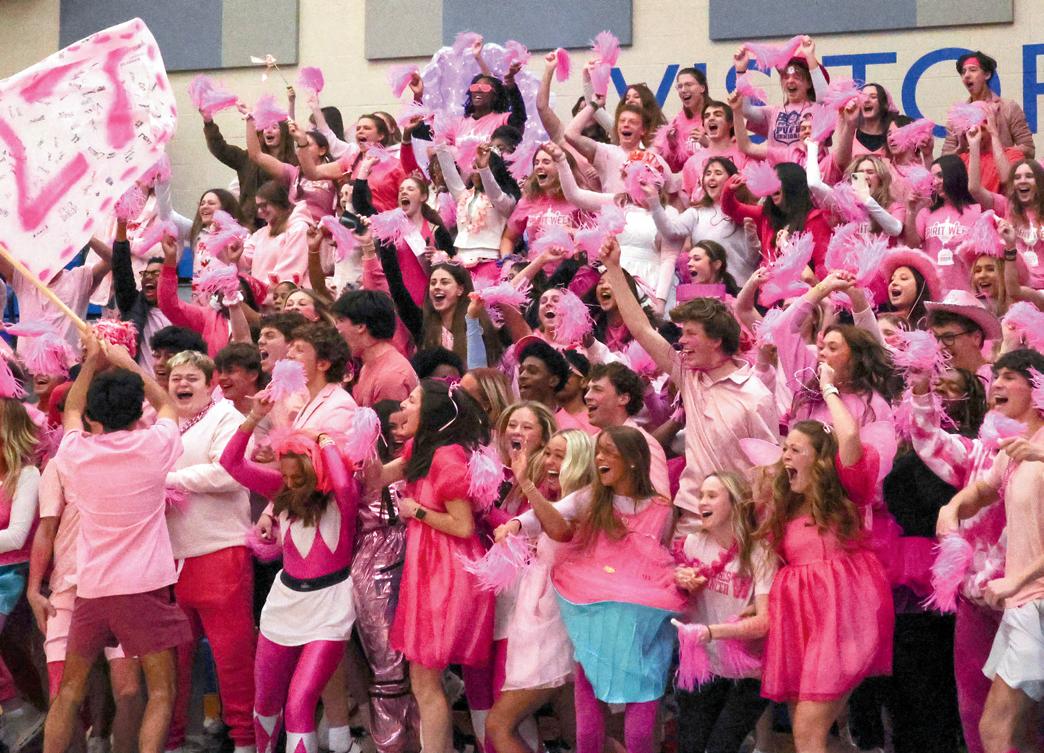
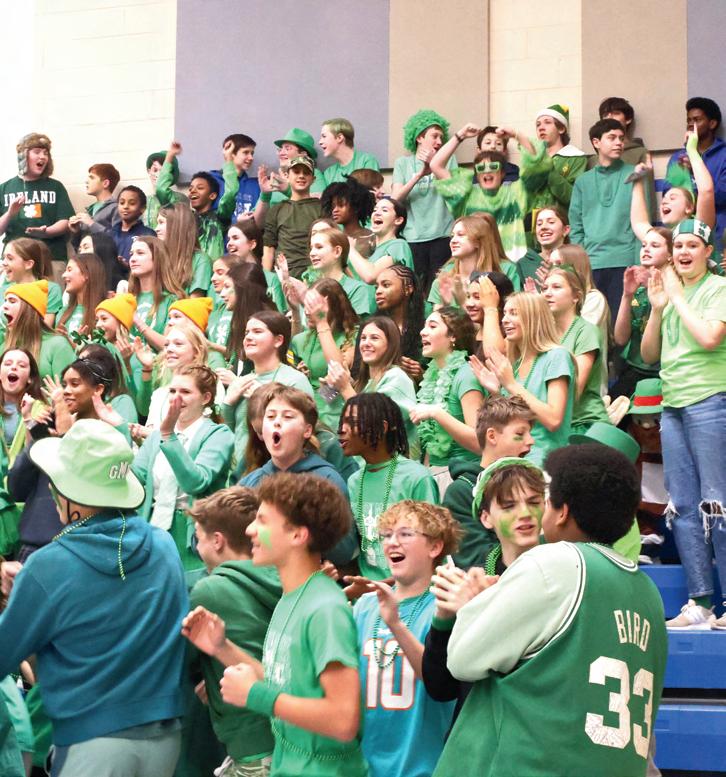
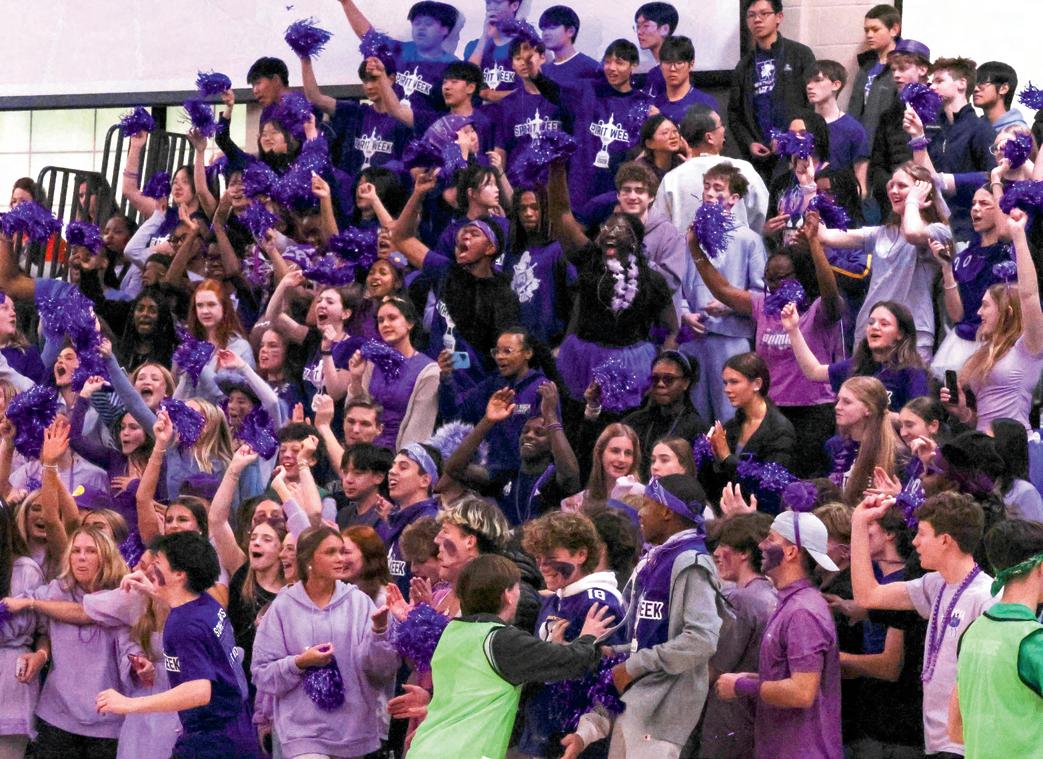
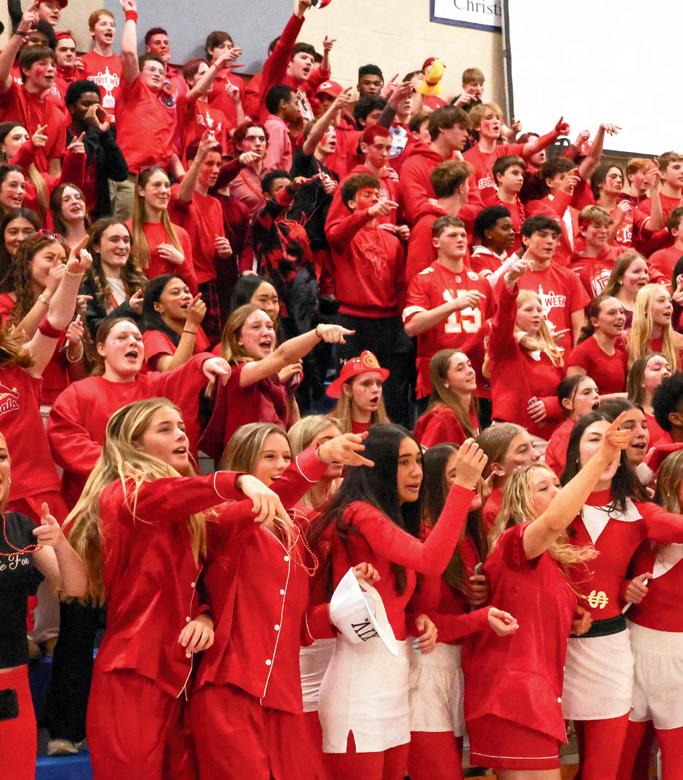
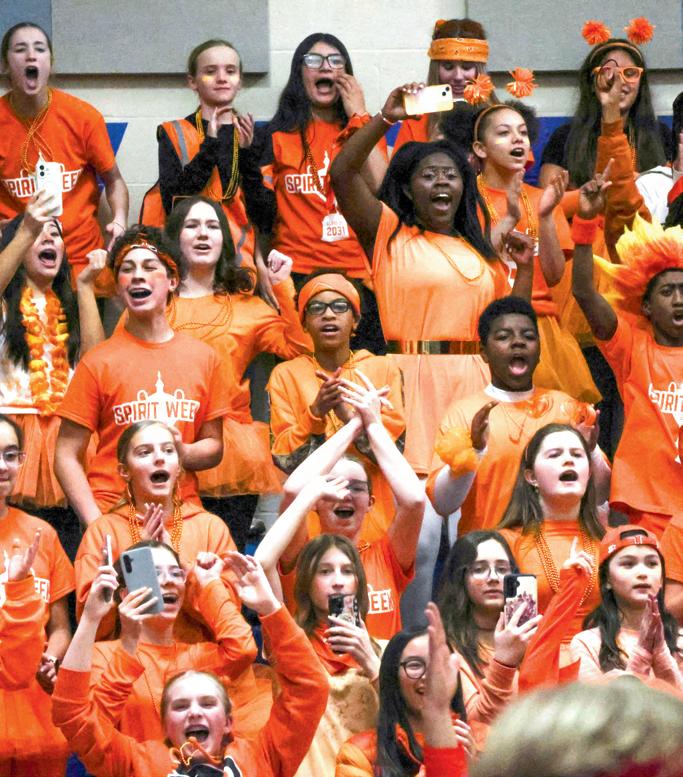
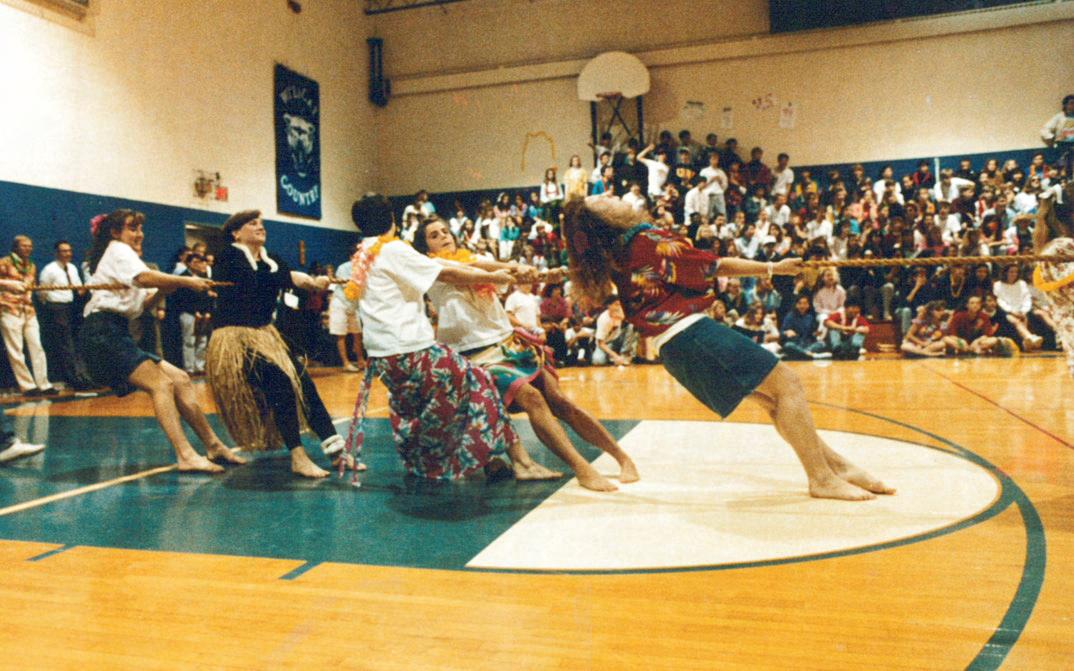
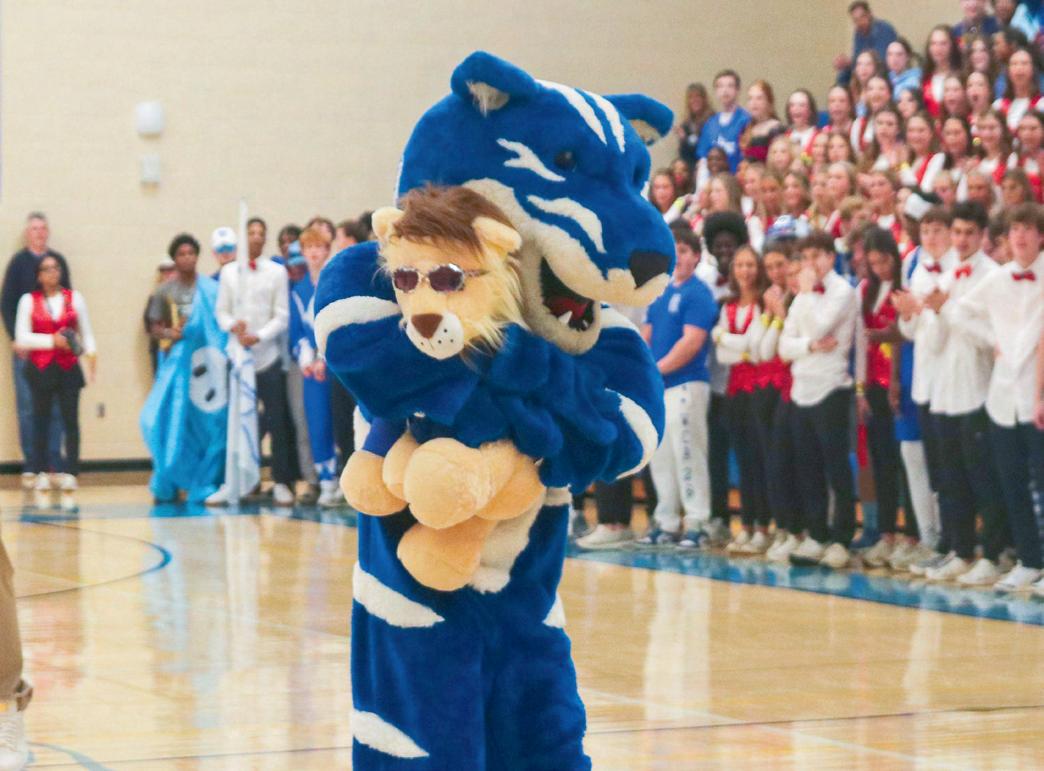
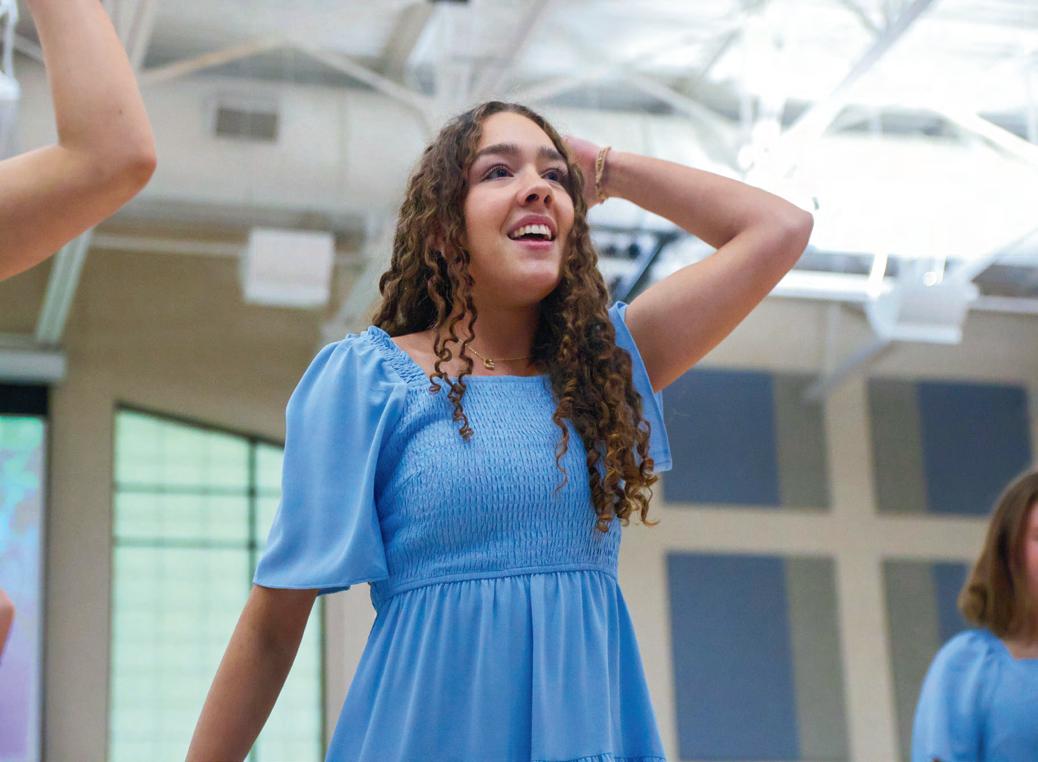
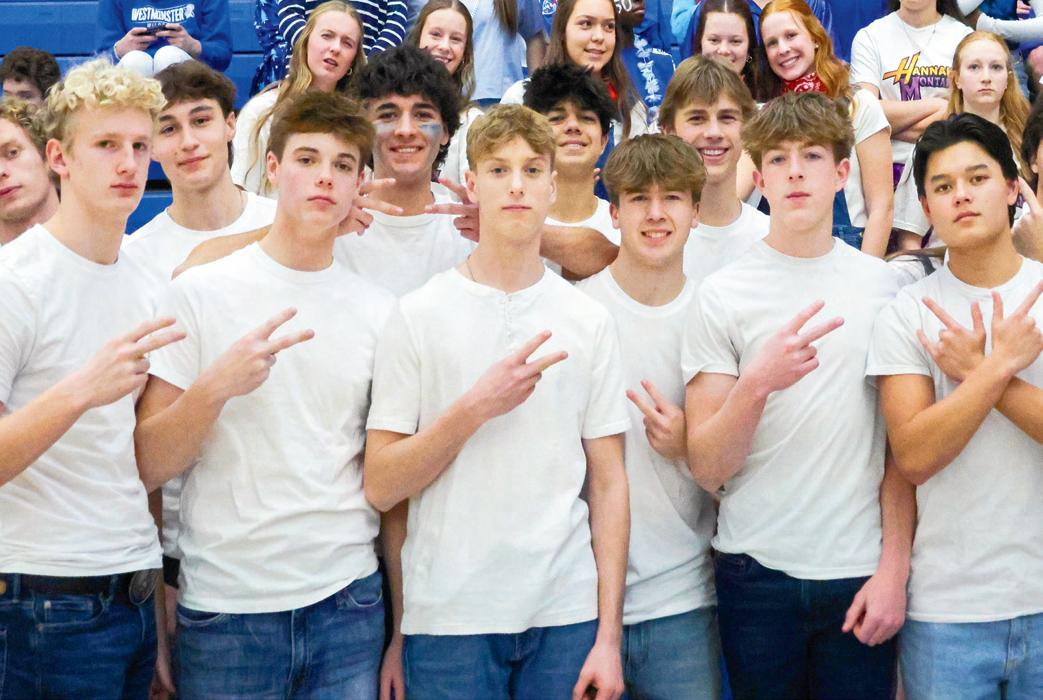
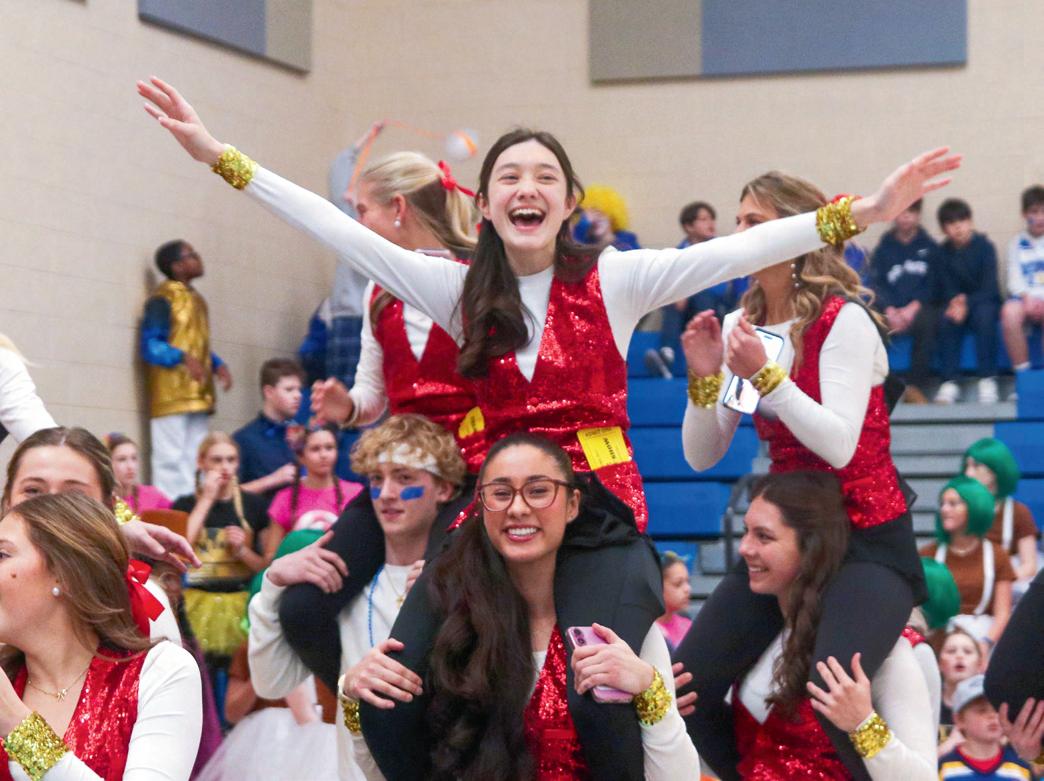
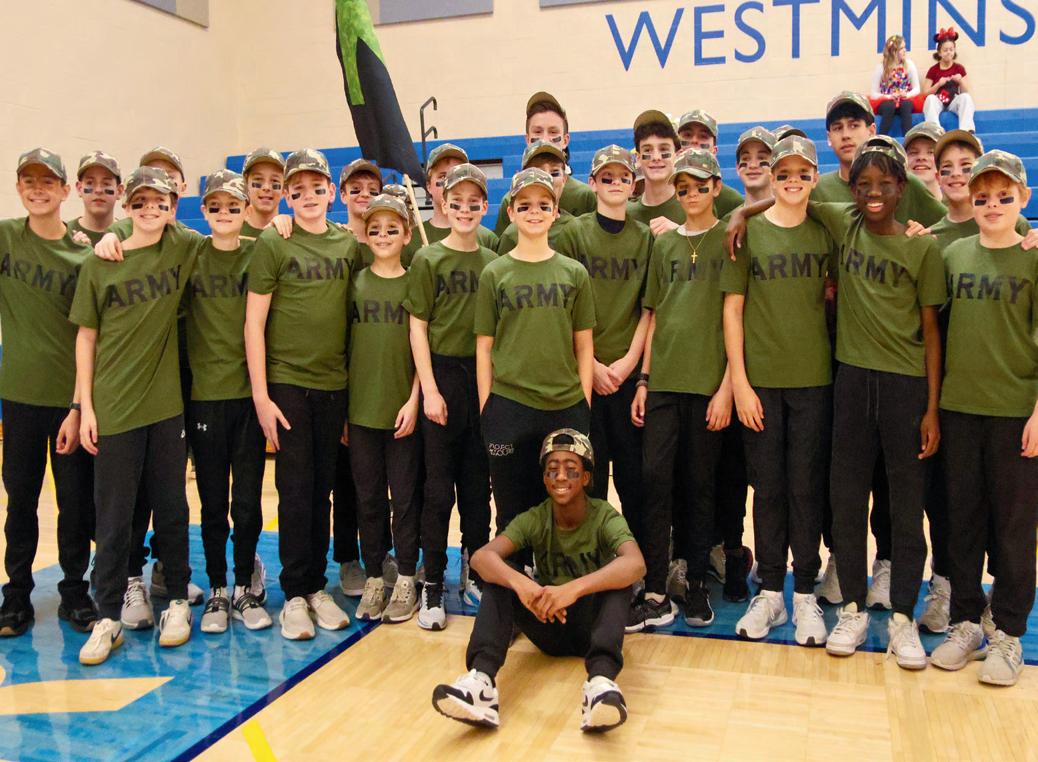
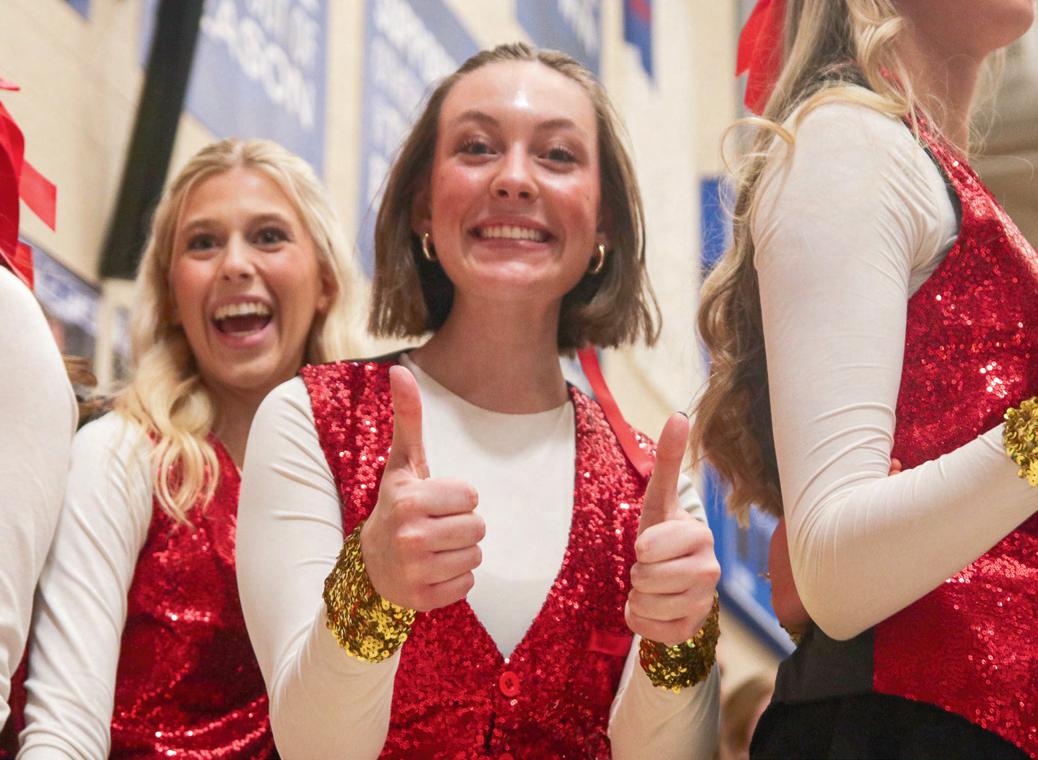
Seniors lift the Spirit Week trophy in triumph. Photo by Mary Hathaway.
BELLA THIES
EDITOR-IN-CHIEF, SENIOR
MARY HATHAWAY
DESIGN EDITOR, JUNIOR
JOSIE MOSLEY
STAFF WRITER, SENIOR
JACK OVERBY
STAFF WRITER, JUNIOR
OPHELIA FOLKEMER
STAFF WRITER, JUNIOR
JAMESON ROAM
STAFF WRITER, JUNIOR
BRYCE ERVIN
STAFF PHOTOGRAPHER, SOPHOMORE
ALLY MOSELER
STAFF WRITER, SOPHOMORE
ADA SCHMIDT
STAFF WRITER, FRESHMAN
EDITOR-IN-CHIEF EDITORAL
50 YEARS OF WESTMINSTER, 37 YEARS OF SPIRIT WEEK
Ever since its founding, Westminster has been a prestigious religious institution dedicated to the cultivation of the spiritual lives and academic minds of its students. However, due to the rigorous pacing of the curriculum and the multitude of extracurricular activities students are involved in, every now and then students and faculty members alike need a chance to unwind and take a break from their busy schedules.
Spirit Week was first established as an opportunity for the Westminster community to do just that, unwind and have a moment of excitement in the midst of the post-Christmas doldrums. Spirit week is a chance for students to take a break from the stress of their lives and experience the joy of loosening up for a change. It allows them to get their competitive juices flowing and dedicate their unique skill sets to a collective goal: victory. Teachers also often join in on the fun and enjoy seeing different sides of their students in their costumes, their dancing, and their other creative outlets.
The tense competition between the grades sparks energy and creativity within the minds of the students and pushes them to achieve impressive feats only possible through their joint efforts. Activities like art board, film project, and lipsync call students to collaborate and
TABLE OF CONTENTS:
Page 2-3: Staff and Editorial
Page 4: Coordinating Chaos: This Year’s Emcees
Bella Thies Editor-in-Chief
spend time together making memories that will last a lifetime. Shared experience in a common place cements these moments into the fabric of our lives. In incentivizing the classes to work together, Spirit Week catalyses the formation of lasting friendships between students who would otherwise never talk to one another and in doing so brings the community closer together.
Although the class competition is a huge part of what makes Spirit Week memorable, the true meaning of Spirit Weeks is an opportunity for all members of the Westminster community to make lasting memories and rediscover what it truly means to be in community with fellow believers. The point is for students and faculty members to have fun and enjoy themselves,
As Westminster celebrates its 50th anniversary, it is important to revisit the history of the events that make Spirit Week so special and how the celebration of class unity itself has changed. In this Spirit Week issue of The Wildcat Roar, we cover the evolution of Spirit Week over the past 37 years and the journey it took to become the extravaganza it is today.
Page 5: The Games That Got Away: Spirit Week’s Lost Classic Games
Page 6: “What’s the Skinny?” A Look Into the Creativity, Collaboration, and Film Making Behind Film Project
Page 7: Film Project Results
Pages 8: The Return of Hallways
Page 9: Art Hallway Results
Page 10: Boys Just Want to Have Fun: Why This Fundemental Dance Deserves More than Just a Glance
Page 11: Boys Poms Results
Page 12: Costumes, Choreography, and Collaboration: A History of Lip Sync
Page 13: Lip Sync Results
Page 14: And the Winners Are...
Page 15: Photo Gallery
Page 16: Pulling Together: The Games that Last
Page 17: Photo Gallery
COORDINATING CHAOS
Ally Moseler
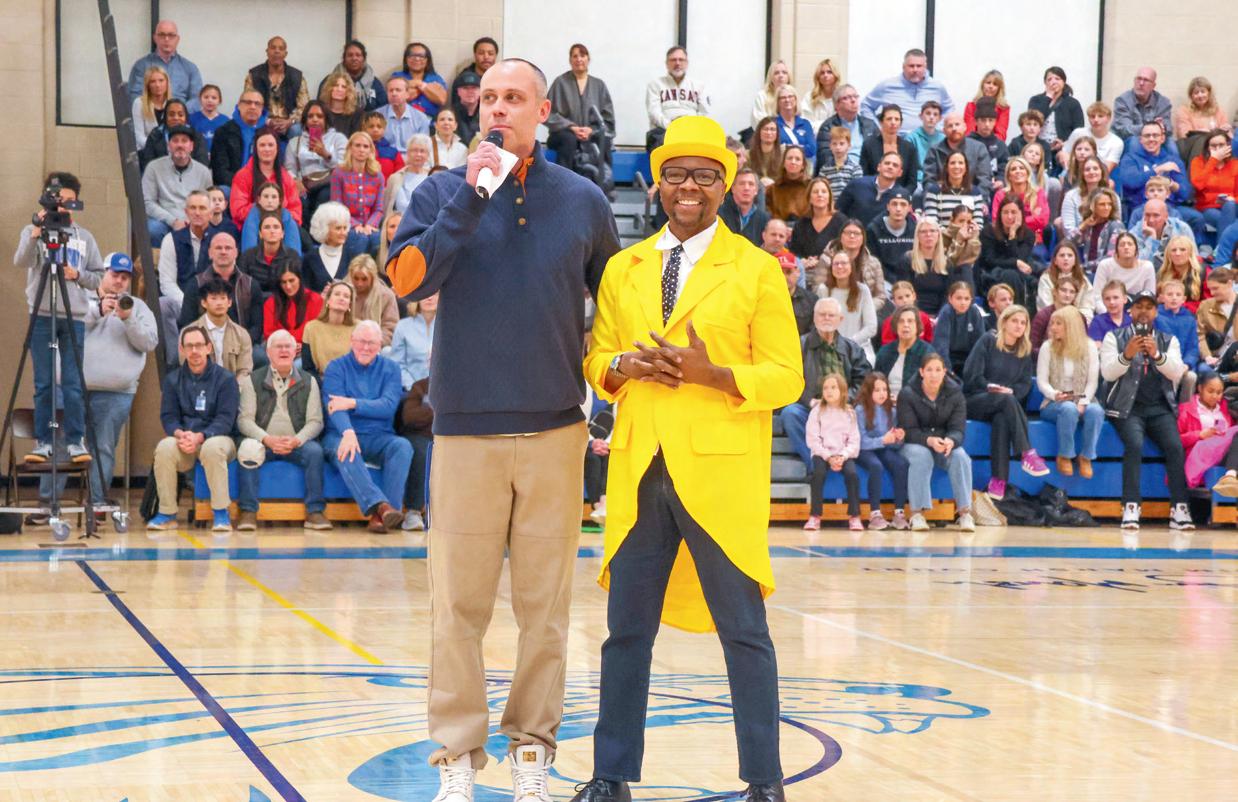
Coordinating chaos. This play on words encapsulates the job of Westminster’s Spirit Week emcees, the brave faculty members who keep the wild crowds of students on task while simultaneously building up the hype.
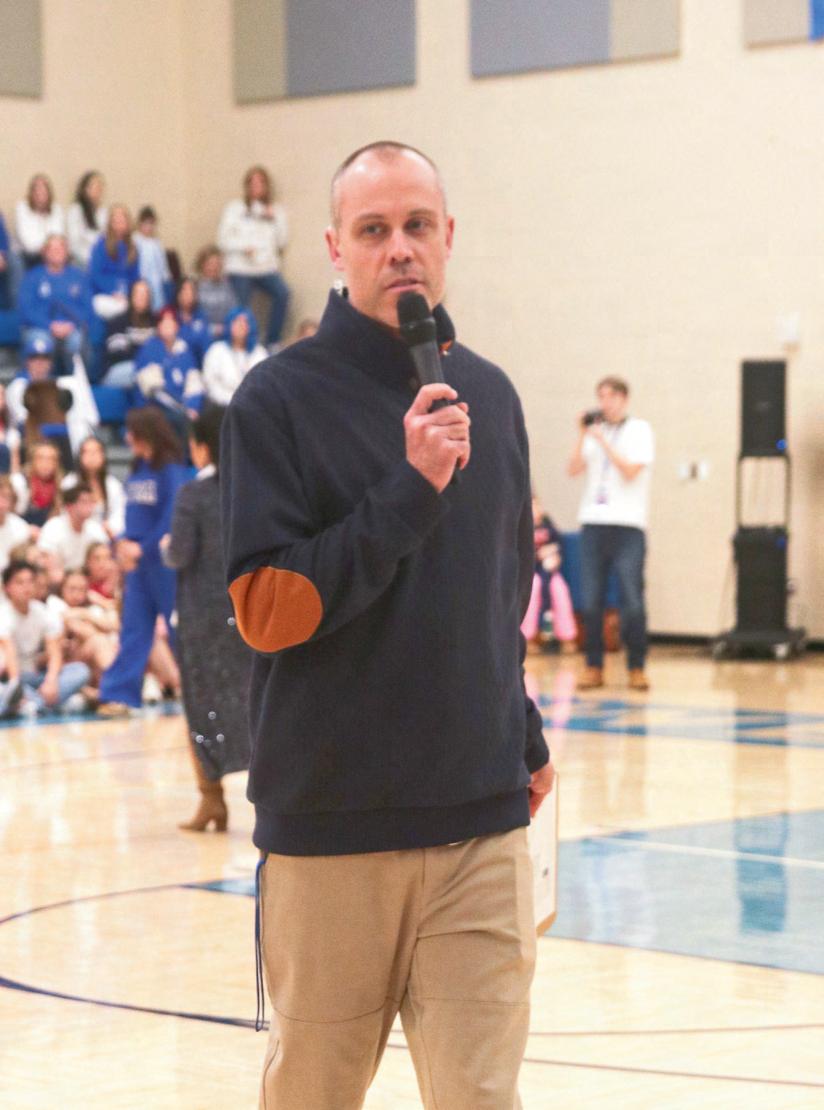
For 2026, the two faculty Emcees will be Aaron Layton and Jeff Eastham. Layton serves as a middle school Bible upper school history teacher, as well as the coordinator of Minority Community development and inclusion. Eastham is a middle school PE teacher as well as a coach in the athletic department.
The emcees’ jobs are very complicated, and involve more work than most people may notice. The emcees also have a wonderful skill set that allows them to handle time management for Spirit Week very effectively.
According to Steven Ottolini Assistant Director of Student Life Student Council Director:
“The emcee’s job is to keep us on schedule, kind of make sure that announcements go out to coordinate who’s doing what, so that especially when we’re transitioning to things like tug of war, for instance it takes a minute to get everybody on the court. If we’re gonna do a game like Ultimate Chicken, as soon as they start to announce it, it’s not just getting people on the court. It’s also the cues for the judges and for the right people to be kind of activating stuff to make the program happen.”
Emceeing is such an in-depth craft that mant aspects of it are seldom noticed by assembly attendees. In addition to transitioning between the different events and giving important announcements, they are required to understand the layout of every single day of spirit week very well. If they were to fail at even one of these difficult tasks, Spirit Week would fall into anarchy, yet the emcees are able to do this flawlessly year after year and run Spirit Week well.
Layton continues this idea:
“Yes. And what makes it difficult is like you have a short period of time. So here you are. You know, I think basically we have about 45 minutes. And you got a ton of stuff. And then there’s things you can’t account for. Like, for example, you can’t account for how long it takes for all the students to get down to the aren, get into their place. You can’t account for let’s say, for instance, if there is some sort of malfunction. And so, that puts pressure on time, then you’ve allotted a five minute transition, and now you’re over that five minutes.”
Serving as an emcee for spirit week is not solely about being a logistics manager; it is also about having fun and enjoying all that spirit week brings. Layton states:
“I want to always be a part of Westminster Student life and community life, [...] and you know it’s a good way to serve. It’s a good way to use some of the ways God has gifted me. I have an outgoing personality. I love people, and get excited about stuff like Spirit week”
Layton uses the talents God gave him to help the school with spirit week because he finds such enjoyment and fulfillment from the assemblies. Having emcees who are passionate about God and what they are doing furthers what the school stands for. Layton and Eastham’s excitement for the job can be seen from all
the student body and staff. The school is incredibly lucky to have wonderful emcees who are very dedicated to this craft, and who are able to delegate and balance responsibility.
When asked about his favorite part of spirit week Layton replied:
“Oh, I do love when seniors come marching in with music. I absolutely love that. It’s like a procession and there’s music playing and I love that. I love the games, and the competitions are super cool. And then I love the performances. The performance, I mean first of all, is just phenomenal, even the film projects there’s just so many parts about it. [...] one of the things I love the most, which comes from all of those different things which I just mentioned, is like energy.”
Layton and Eastham both bring different valuable skills to the table. Westminster is lucky to have them both as emcees this year. The 2026 emcees are both people who have always been very dedicated to spirit week and the school. Spirit week is in the hands of good people who are able to balance the responsibility and charisma required to maintain the hype and tame the chaos.
Emcees Aaron Layton and Jeff Eastham Announce Boys Poms Performances
Emcee Aaron Layton gets the crowd hype as he announces the Dress Up results. Photo by Cutler Fricke
Emcee Jeff Eastham announces the Lip Sync Judges. Photo by Cutler Fricke
Febuary 2026
THE GAMES THAT GOT AWAY: SPIRIT WEEK’S LOST CLASSICS
Westminster’s forgotten events reveal how tradition evolves through trial and error
Jack Overby
Spirit Week has always been a “laboratory” of controlled chaos, where creative ideas meet enthusiastic students and the results are not always predictable. Since 1989, Westminster’s annual winter tradition has cycled through dozens of games and events, with some becoming beloved classics while others quietly disappeared from the schedule. The games that did not survive were not necessarily failures— they were simply too chaotic, too complicated, or too dangerous to justify keeping around.
Every Spirit Week evolution tells a story about what works and what does not when you are trying to entertain hundreds of students while keeping them reasonably safe. From balloon-stomping battles that sent athletes to the nurse’s office to elaborate percussion competitions that spiraled out of control, Westminster’s lost events reveal how the annual tradition has been refined over nearly four decades. These discontinued events may no longer appear on the Spirit Week agenda, but they helped form it into what it is today.
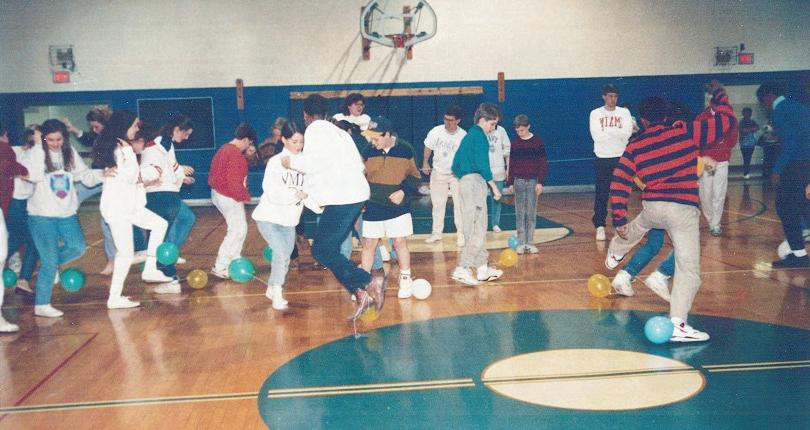
Balloon Stomp embodied Spirit Week at its most primal. Five students would tie balloons to their ankles and enter a makeshift ring created with caution tape and rope on the basketball court. For sixty seconds, they’d attempt to stomp and pop their opponents’ balloons while protecting their own. As time expired, the ring would shrink, forcing the remaining students into an even tighter area until only one balloon remained intact.
Mike Rohlfing, Westminster Alumni Class of 2005, recalls the painful pitfalls of the beloved eliminator game: “I think they stopped it because people were getting hurt and athletes were out there getting their ankles kicked.”
The appeal is obvious in hindsight. It had simple rules, instant elimination, and the satisfaction of popping a balloon. But the execution proved problematic when competitive students started treating ankles as collateral damage. It is a pattern that repeated with many of the other lost games: great in theory, hazardous and faulty in practice.
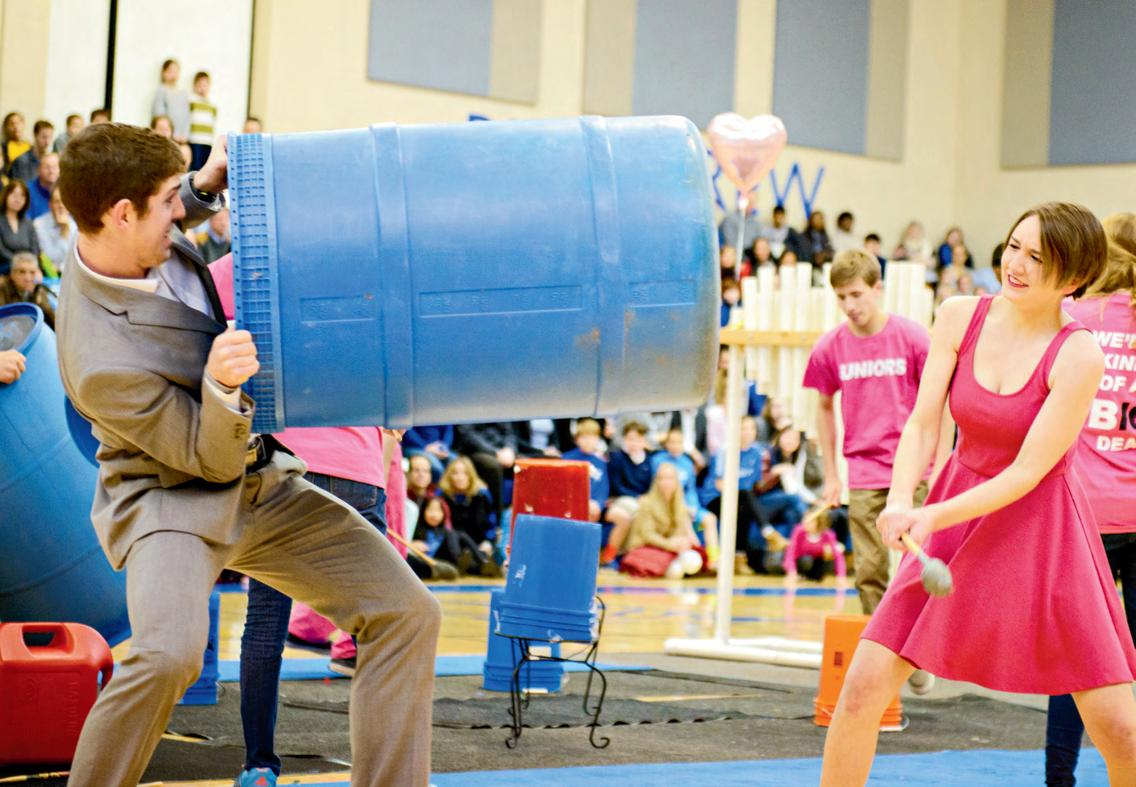
Blue Man Stomp took a different approach to failure. Rather than becoming too dangerous, it became too ambitious. The event started during Rohlfing’s senior year when Boys Poms incorporated live percussion into their routine. Inspired by this innovation, Westminster created Blue Man Stomp, where each class assembled percussionists to perform using homemade instruments like trash cans and buckets.
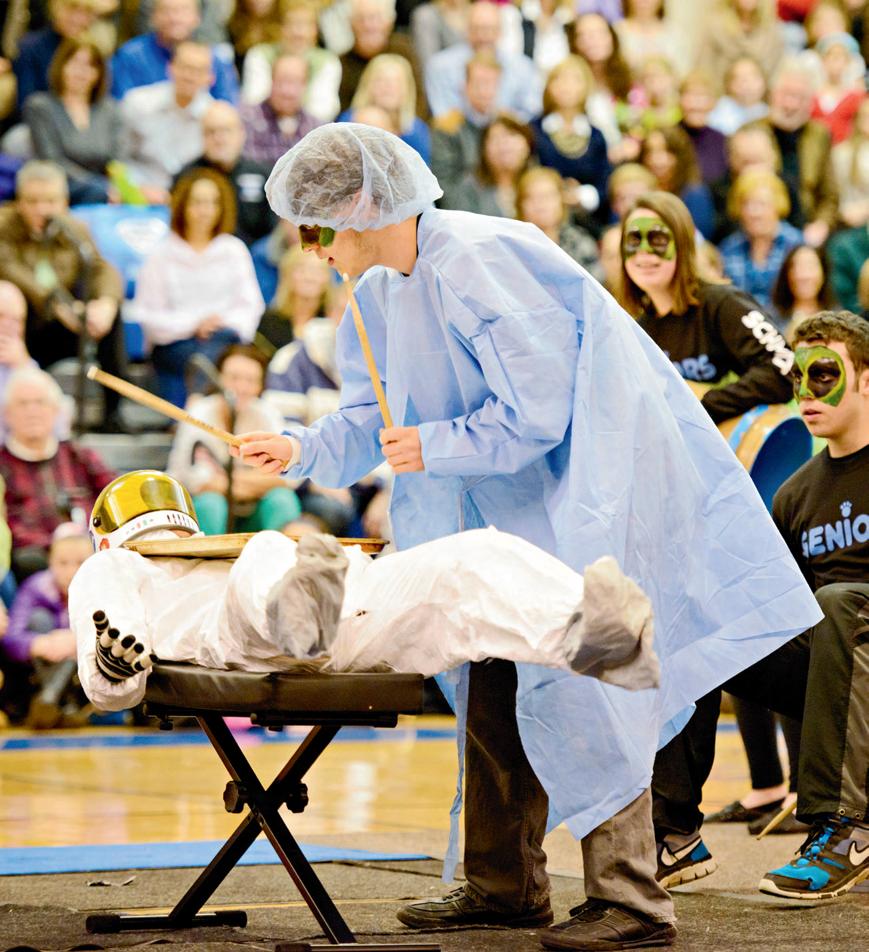
Rohlfing explains, “It got really complicated and then got overly complicated which is why it stopped. Kids were spending lots of time and money building xylophones out of metal and PVC pipes. People were creating instruments that would play actual melodies.” What began as a simple percussion showcase evolved into elaborate staged productions, with one memorable performance featuring a mock operating room where students played on a patient’s chest before shouting “clear!”
The creativity was impressive, but unsustainable. With Boys Poms, Lip Sync, and the newly introduced Film Project, starting in 2012, all demanding significant time and resources, Blue Man Stomp became a casualty of Spirit Week’s increasingly packed and stressful schedule. Sometimes events disappear not because they failed, but because they succeeded too well—making students so obsessed with them that they could not coexist with everything else.
Rohlfing reflects, “I think teachers used to do more back in the day. It used to be more laid back, just like let’s go have fun and play some games and do some dances,” The shift from casual fun to serious competition changed what kinds of events could survive. Games that thrived on spontaneity and chaos gradually gave way to more structured, polished productions.
Spirit Week continues to evolve each year, adding new games while quietly retiring others. The lost events—from Balloon Stomp’s simplicity to Blue Man Stomp’s runaway creativity—represent experiments in what makes a tradition sustainable. Not every game can become a classic, but every attempt teaches Westminster something about balancing excitement with safety, creativity with feasibility, and chaos with control. The games may be gone, but their lessons and memories remain imprinted in every Winter Classic’s carefully calibrated chaos.
Students participate in a game of Balloon Stomp during Spirit Week (1992). Photo by WCA Communications.
The Juniors, Class of 2016, perform their Blue Man Stomp [2015] Photo by WCA Communications
Blue Man Stomp performed by the Class of 2015, resembling an operating room. [2015]
Photo by WCA Communications.
“WHAT’S THE SKINNY?”
A Look into the Creativity, Collaboration, and Filmmaking Behind this Year’s Film Project
Once a year during Spirit Week, each grade trades iPads and notebooks for storyboards and cameras. Film Project is back once again, and this year’s films are anything but predictable. From parody to noir, each grade is bringing something entirely their own to the screen.
Every year, Film Project gives students the chance to step into the world of filmmaking, from writing scripts to acting. Although each grade is given the same set of requirements (a line, a prop, and a character) and a shared deadline, no two films ever look the same. This year’s projects range from gritty noir mysteries to quirky rom-coms, all created through teamwork and lots of creativity. The 2026 film project requirements are the line, “what’s the skinny,” a birthday cake, and a hippie. Behind the scenes, students faced challenges, but also made memories they will never forget.
Despite working from the same list of requirements, each grade took Film Project in a completely different direction. Some leaned into classic film genres, while others embraced originality and humor. From dramatic storytelling to new concepts, the variety of ideas highlights how flexible and creative the project allows students to be.
Freshman leader Josiah Butz explained that the freshman film draws inspiration from classic cinema.
“The film is based on the 1950s genre of movies called noir, gritty black and white detective movies,” Butz said. The plot follows a detective unraveling a strange mystery: “The story centers around a detective named Logan McLean, investigating a gang of hippies who have vandalized the hallways.”
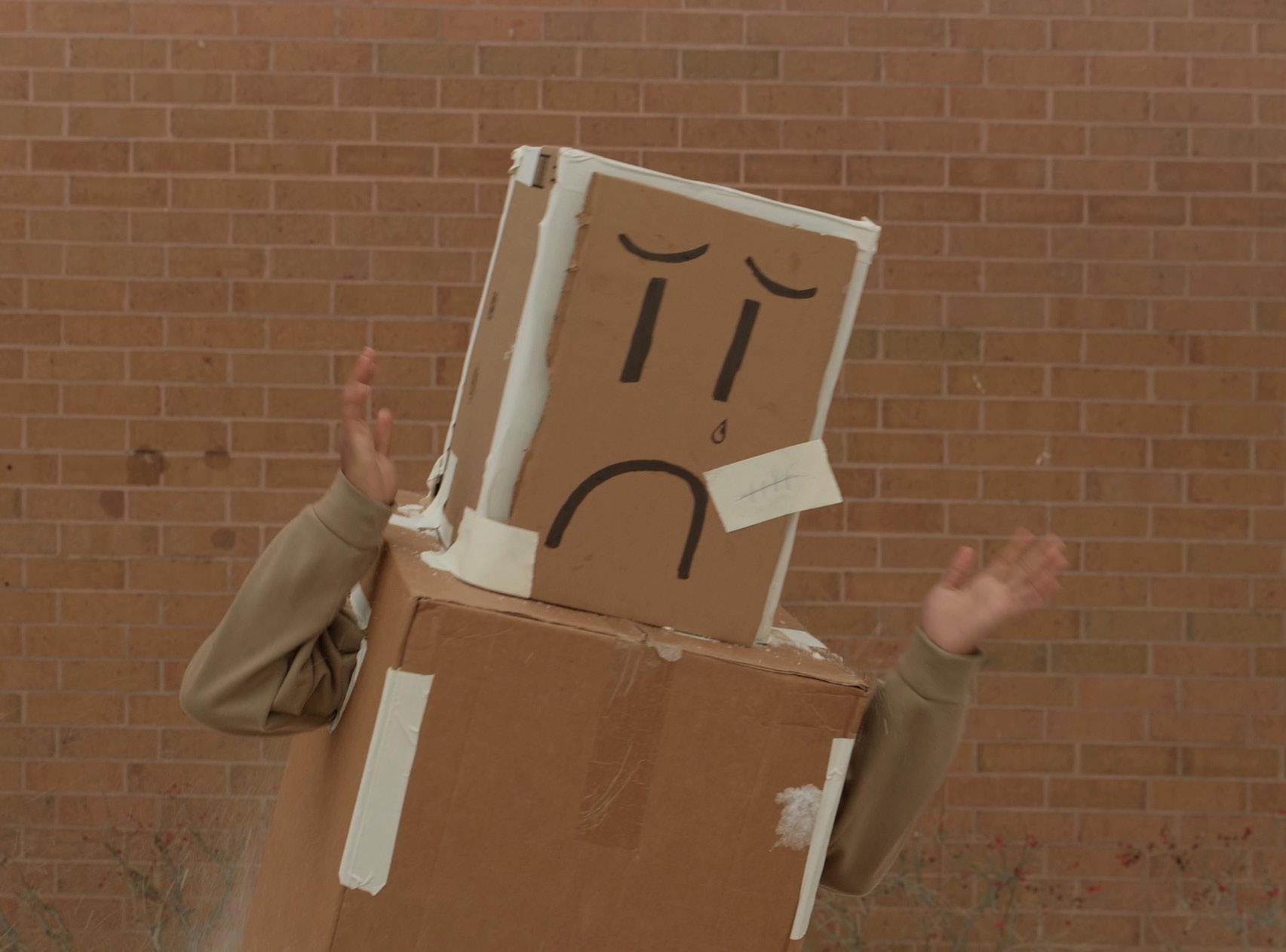
Meanwhile, sophomores chose a much more playful approach. Sophomore leader Nathan Polk described their film as “a rom-com about a boy, who was born a box, who meets a girl, then has to fight to keep her over her former boyfriend, who is stuck in the 70s.”
While the final films may appear polished on screen, the process behind them is anything but simple. Film Project requires extensive planning, collaboration, and flexibility. Students juggle filming schedules, rehearsals, and plenty of unexpected obstacles, all while balancing their normal school responsibilities. The behind the scenes work often proves just as demanding as the final product.
Ophelia Folkemer
Several leaders noted that scheduling and last-minute changes were some of their biggest challenges. Freshman leader Josiah Butz shared,
“We have had scheduling issues, particularly with myself and Brady Thies due to the recent WCA theatre production.”
Junior leader Caleb Ranheim also faced setbacks during filming:
“A drastic change was made to the script while we were filming and it set us back as well as the snow storm, but all together, I’m confident in our ability to create a cohesive story.”
Despite the setbacks, Film Project remains one of the most memorable experiences for many students. The opportunity to work creatively with classmates makes the challenges worth it. For many, the project becomes a highlight of the year, offering a rare chance to experiment and collaborate with one another.
Confidence in the final products remains high across the grades. Freshman leader Josiah Butz said:
“I think our videography is amazing. We have been painstakingly thorough in recording each take.”
Sophomore leader Nathan Polk echoed that optimism, stating,
“Our acting talent actually has experience, unlike our crew from last year, and we have significantly overhauled our leadership structure and scriptwriting process, both of which I hope will contribute to a better final result!”
Junior leader Caleb Ranheim kept it simple and assured:
“I am confident in everything.”
Film Project continues to be a unique tradition that allows students to explore storytelling with their own unique voices. Though each grade begins with the same guidelines, the results are wildly different and equally creative. In the end, Film Project is more than just a film, it is an experience.
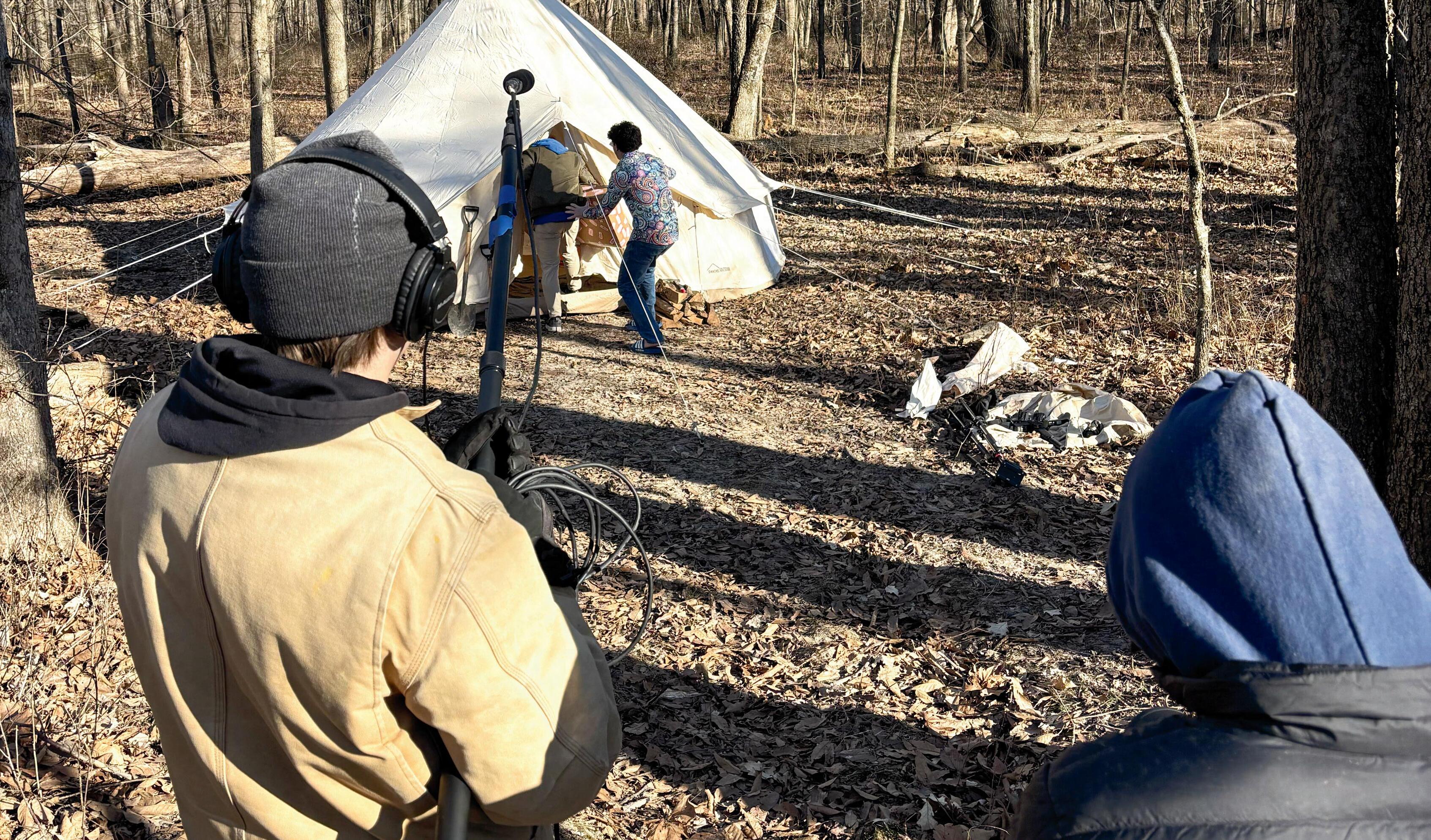
Behind-the-scenes shot from the Senior’s filming their Film Project in the woods. Photo by Evan Kim.
Film Project Results
1st
Seniors
2nd
3rd
Freshmen Juniors
4th 5th
THE RETURN OF HALLWAYS
The Old Tradition of Decorating the Grade’s Hallways is Back
to have plenty of details and Easter eggs, so that each time you walk through the hallway you notice something new.”
Ada Schmidt
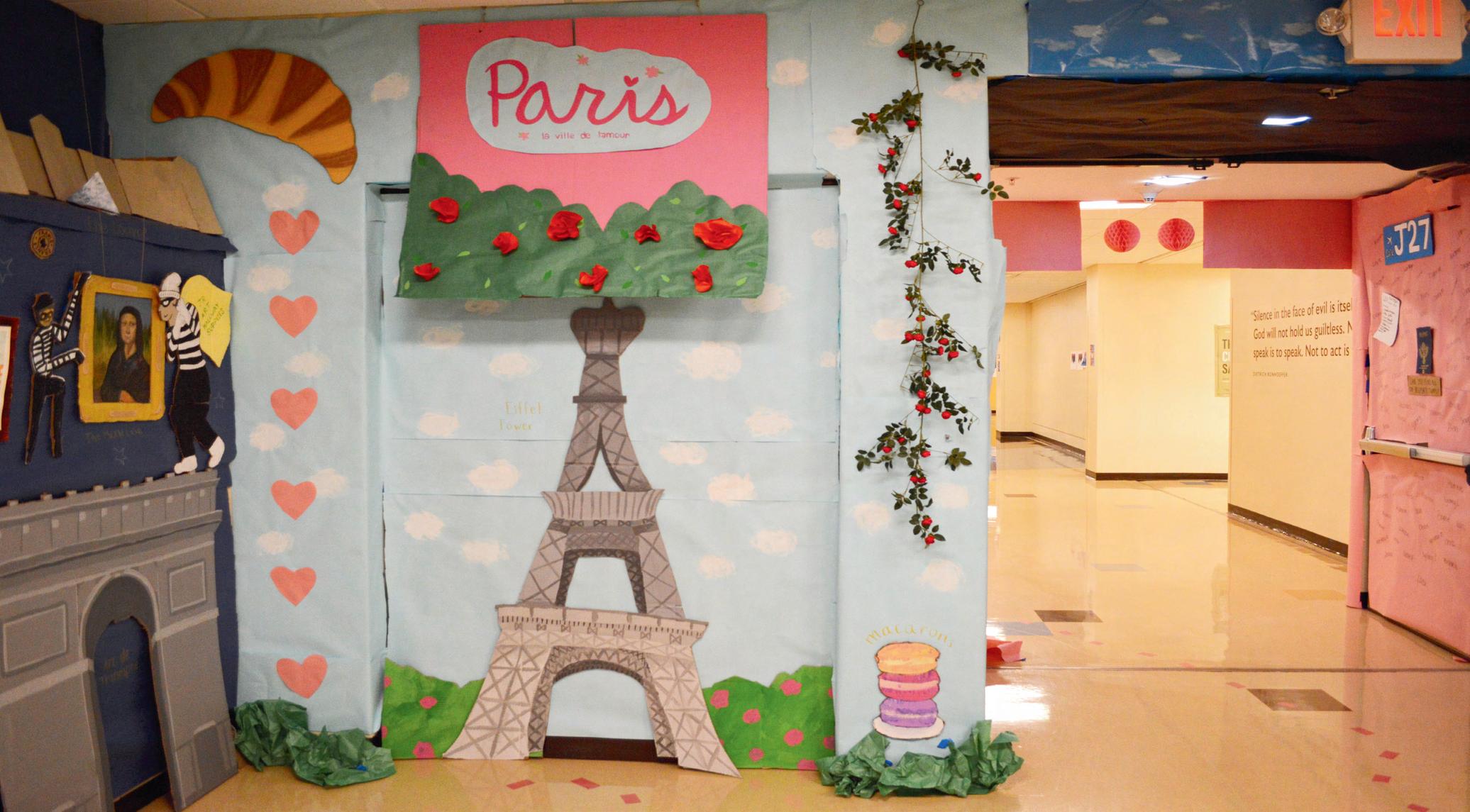
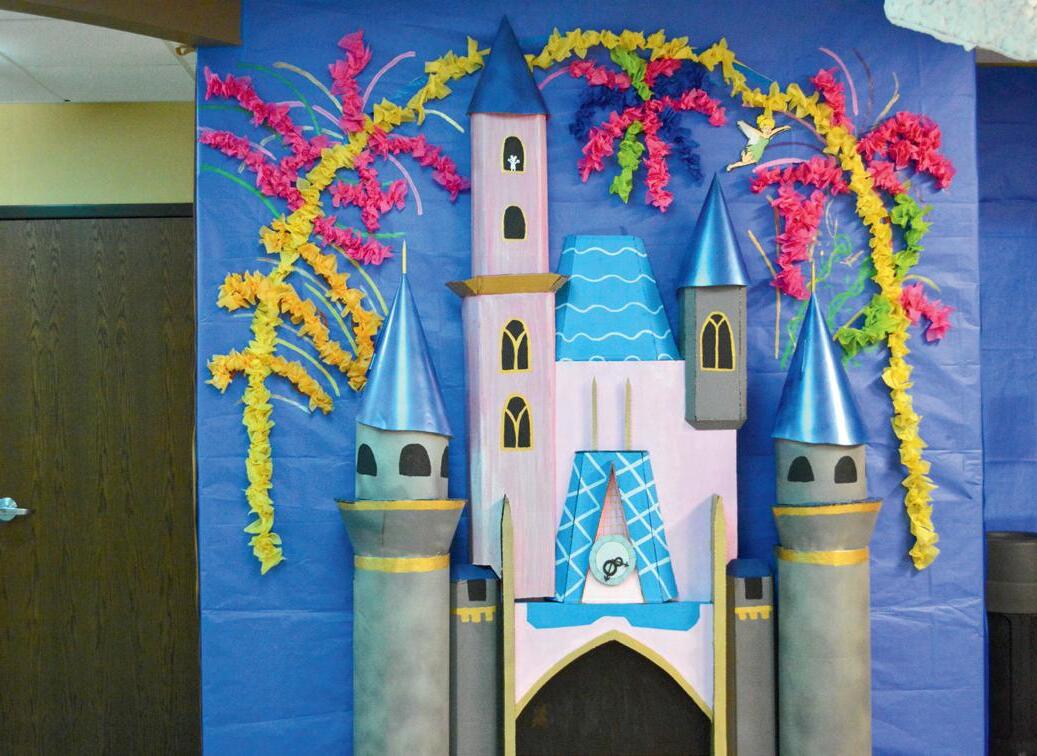
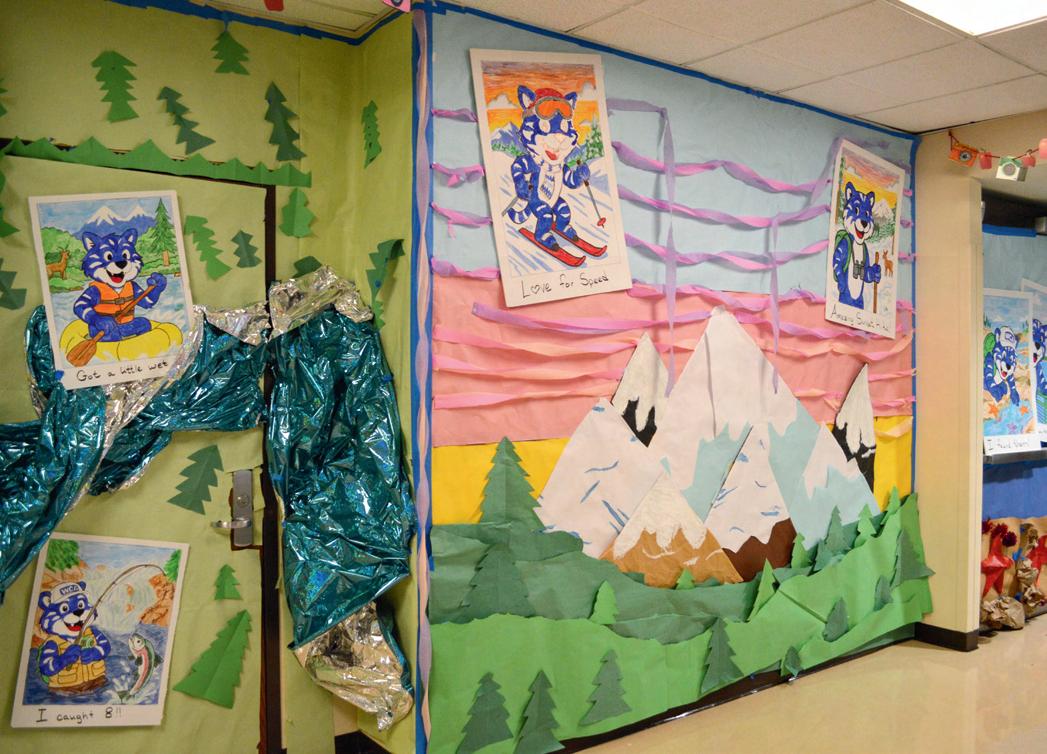
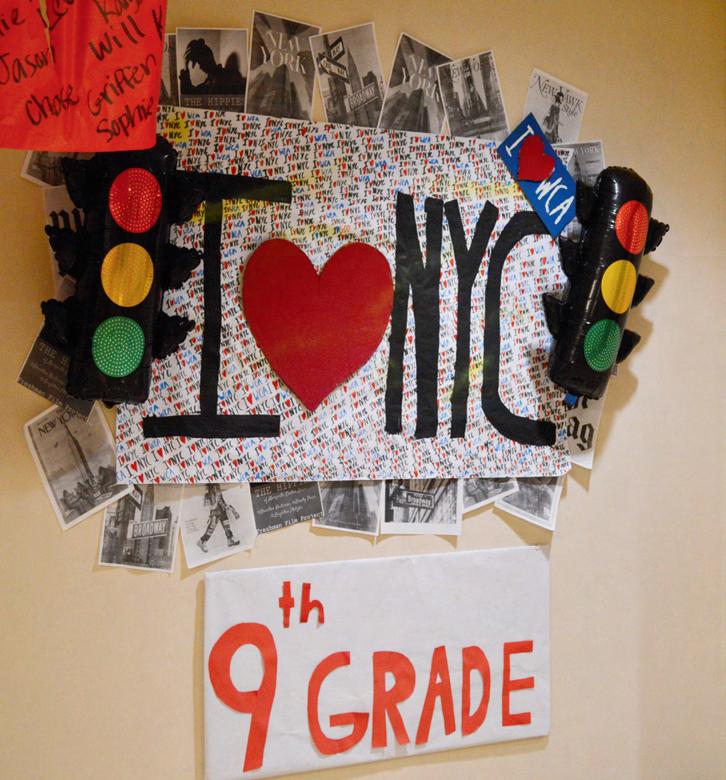
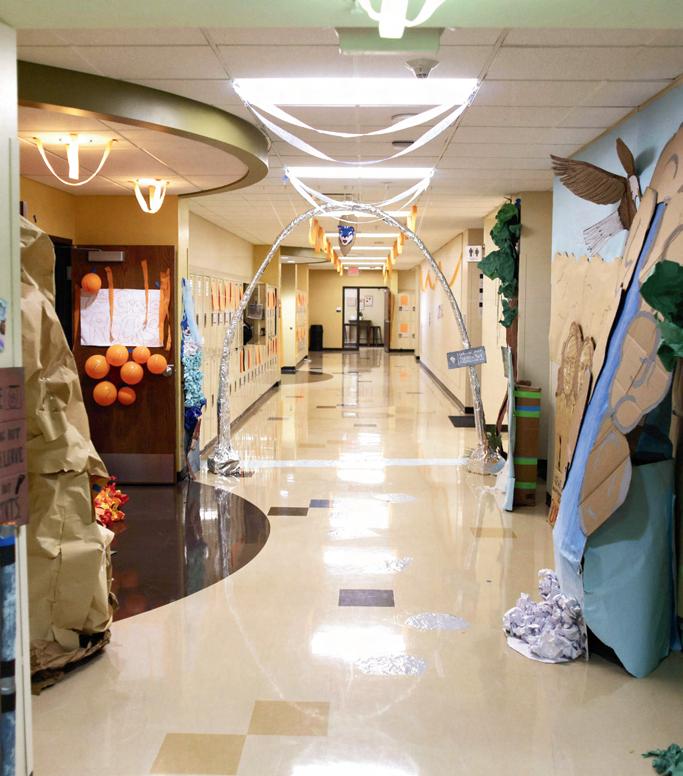
As we celebrate the 50th year anniversary of Westminster Christian Academy we remember many traditions and events celebrated at the old campus. The Student Council made a collective decision to quit the art board this year, and bring back an old tradition of elaborate decoration and display of our 7-12th grade hallways. For spirit week 2026 the themes were inspired by vacation destinations.
Each grade has leaders, including parents for middle school, who outlined and created a plan for their hallway theme. Each and every BIG EVENT requires an enormous amount of leadership and dedication, but hallways are a huge representation of leadership and collaboration with your grade. Everyone has skills, but fitting everyone’s strengths into a big group project is extremely difficult.
The students who are involved in hallways are thrilled to be able to bring their visions of hallways to life, making them as detail oriented and engaging as possible!
Emma Dunn, a 11th grade leader in Hallways, says this when asked about how they are planning “The main goal for the Junior Hallway is to completely cover and transform the space. We want students to feel surrounded by art wherever they look. Another goal is
The stress is on when it comes to time. In every BIG EVENT there is a time limit to practices or meetings that needs to be closely followed by the leaders. For hallways the students will have a floor plan of what they would like to do before beginning to construct their theme. They will have *specific date and time when they will put everything up.
Emmett Burke, a freshman leader of Hallways says this when asked about how they are working on their hallway “Just. Build. Everything. If we get everything done we will have a competition ready hallway and more importantly avoiding disqualification. We just need everyone to participate.”
Elizabeth Holliday, a Freshman English teacher and Westminster Alumni recalls some past hallway themes from her time spent at WCA, “Some themes were cities in the United States or places around the world, other times it was more specific like Disney movies.” This year our theme is Vacation Destination, so places such as New York, Europe, Ski resorts and many others. Each grade wants to catch people’s attention with their hallways, whether it be through detail or a story portrayed through the art.
Westminster hopes to bring this piece of the past as a returning BIG EVENT. It cultivates community with collaboration through art and gives artists a leadership role in our spirit festivities.
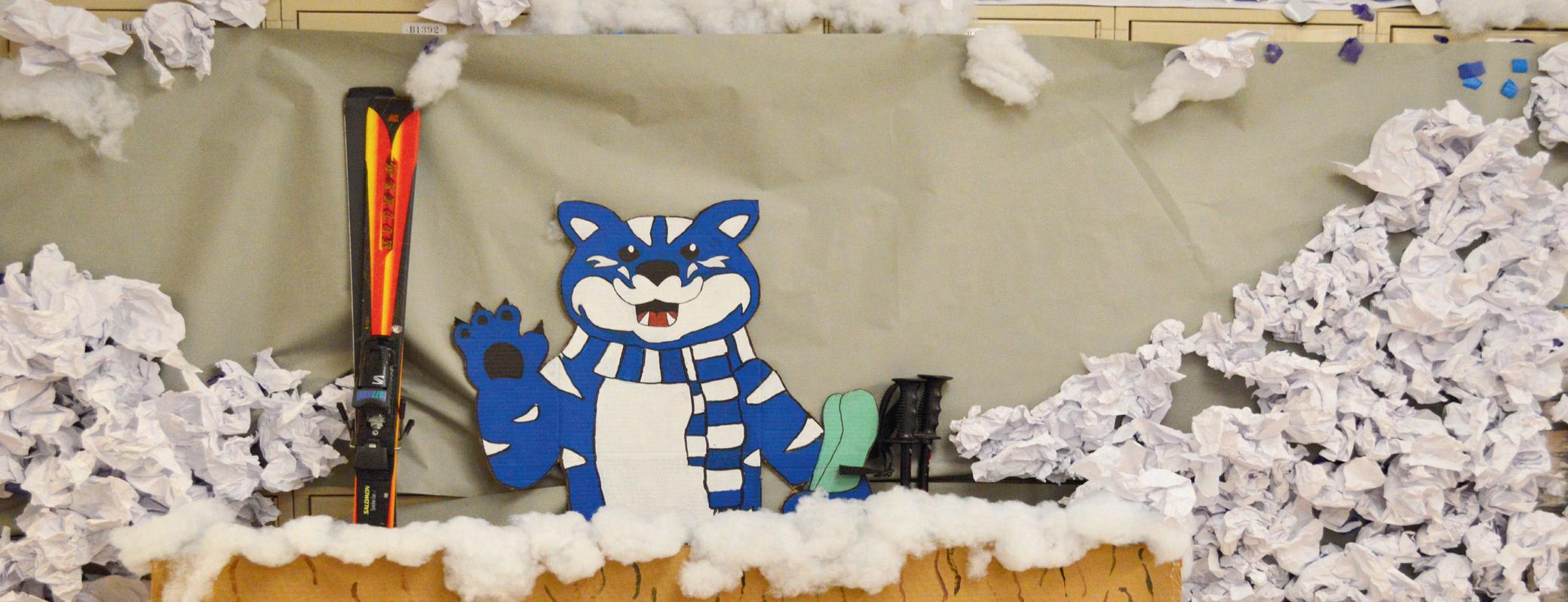
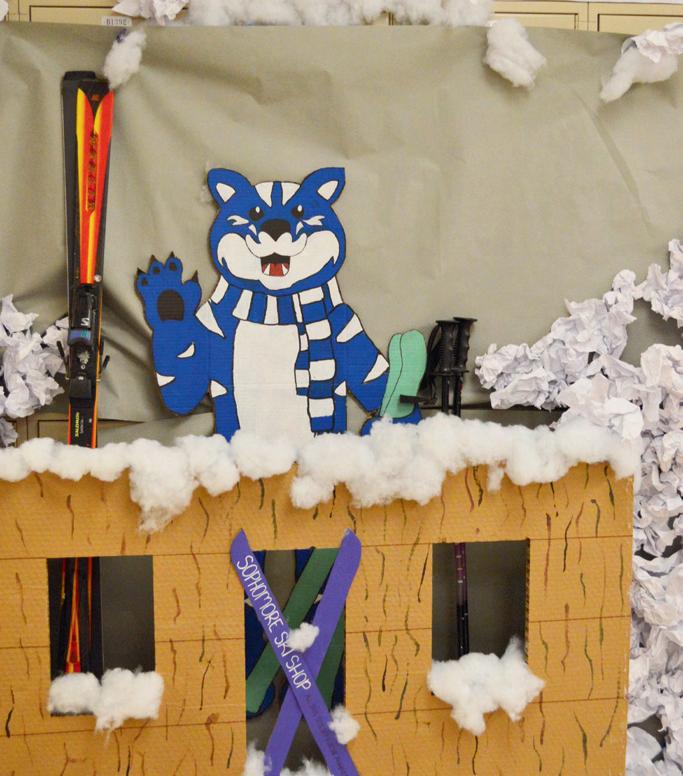
The Sophomore Art Hallway Shows the Westminster Wildcat Mascott waving from among the “snow drifts.” Photo by Ada Scmidt
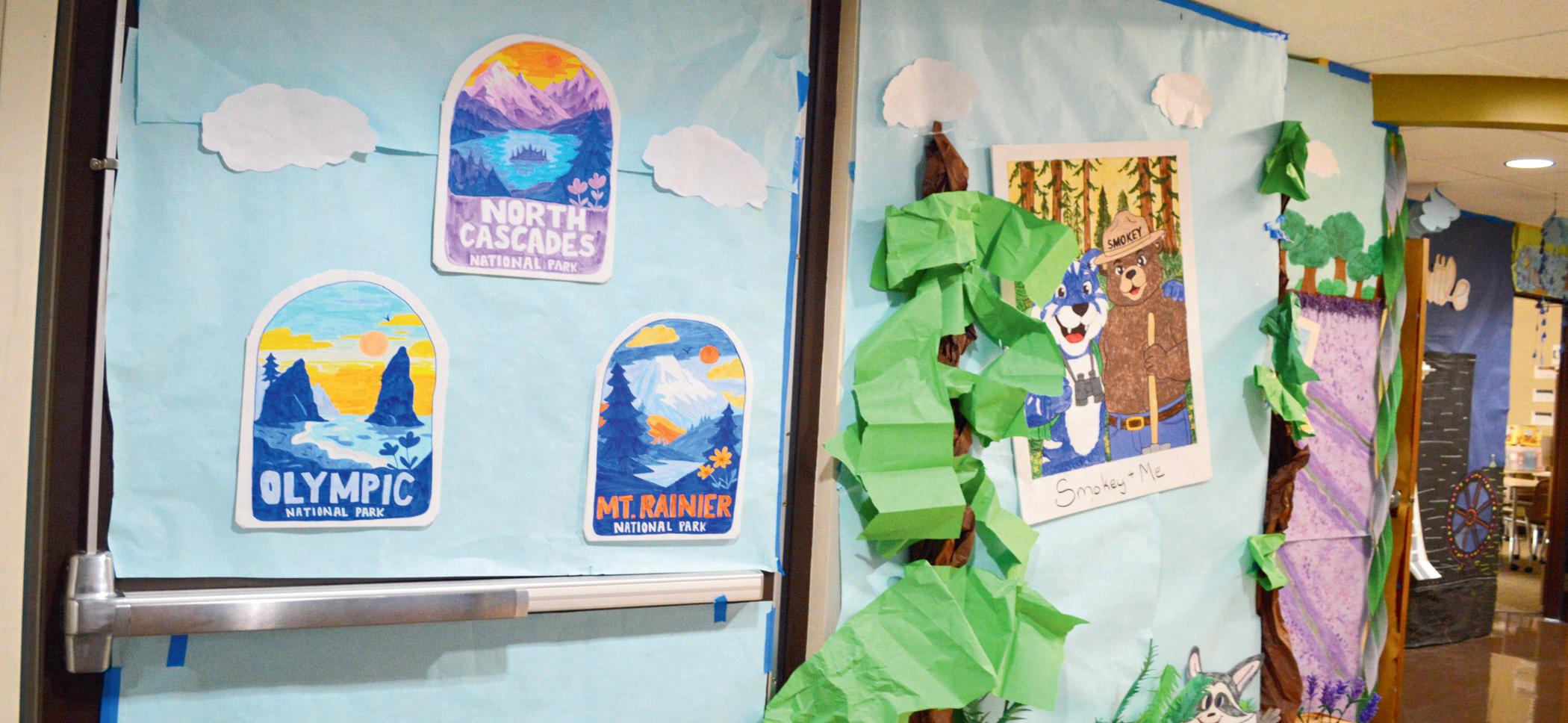
The Eigth Grade’s Art Hallway Respresents Washington State. Photo by Ada Schmidt.
Art Hallway Results
1st
Juniors
2nd 3rd
Seniors 8th Grade
4th 5th 6th
BOYS JUST WANT TO HAVE FUN
Why this Fundamental Dance Deserves More than Just a Glance
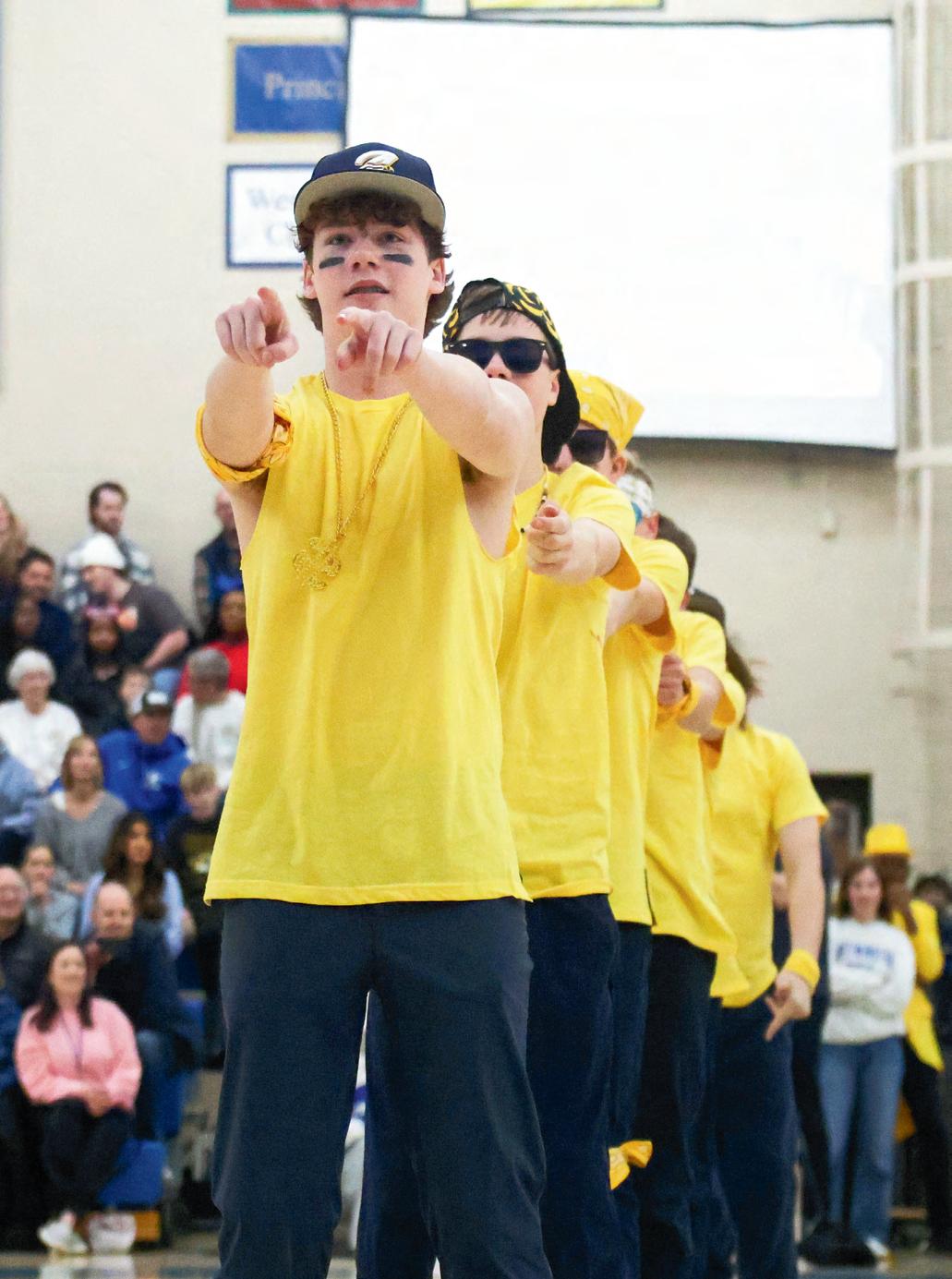
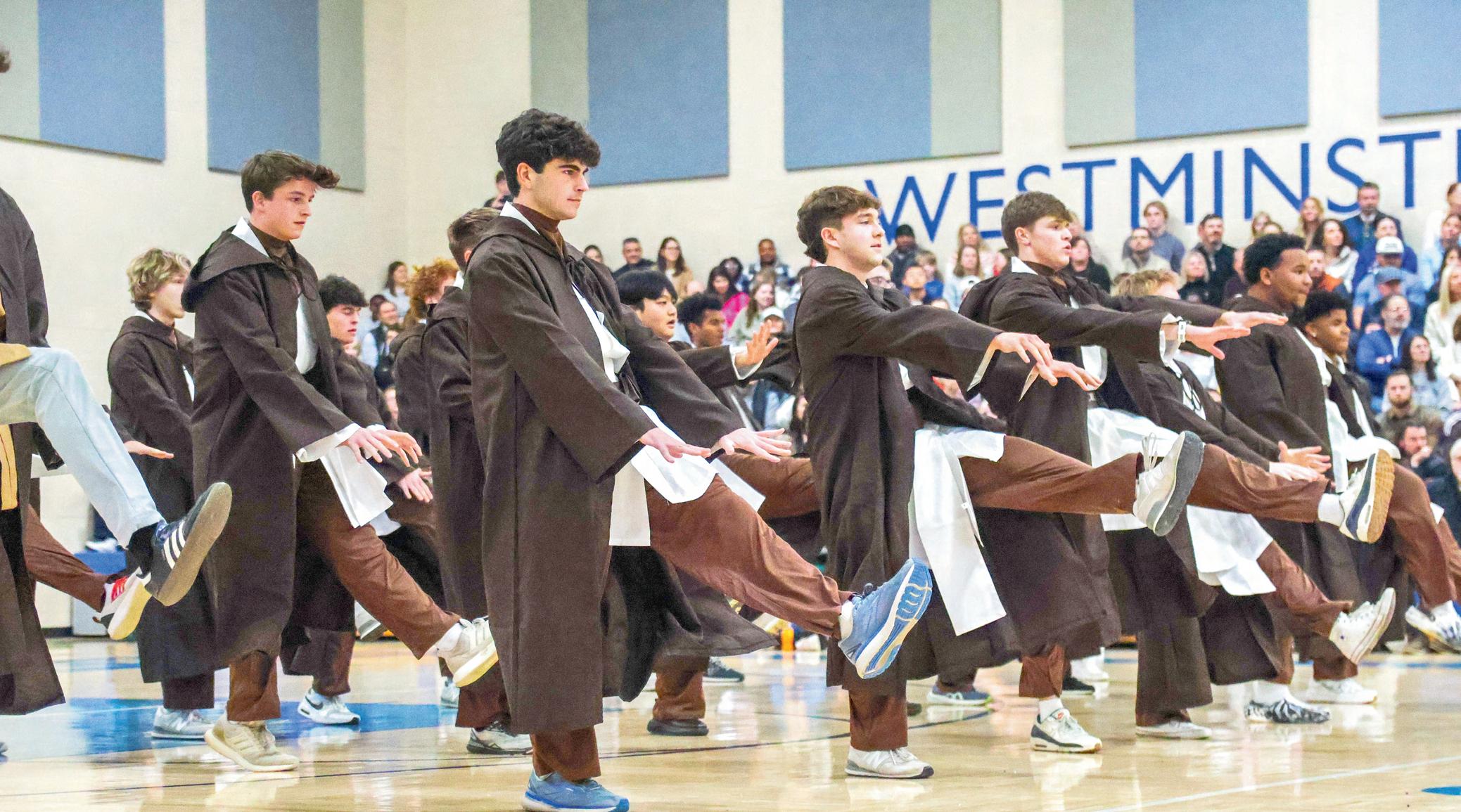
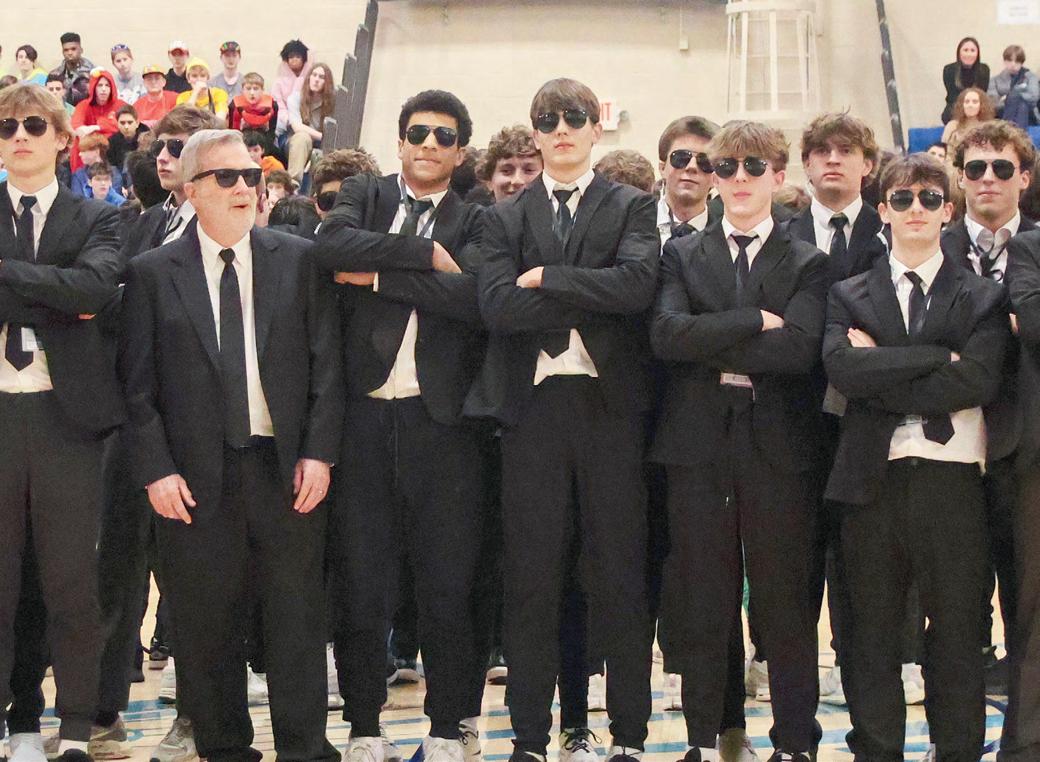
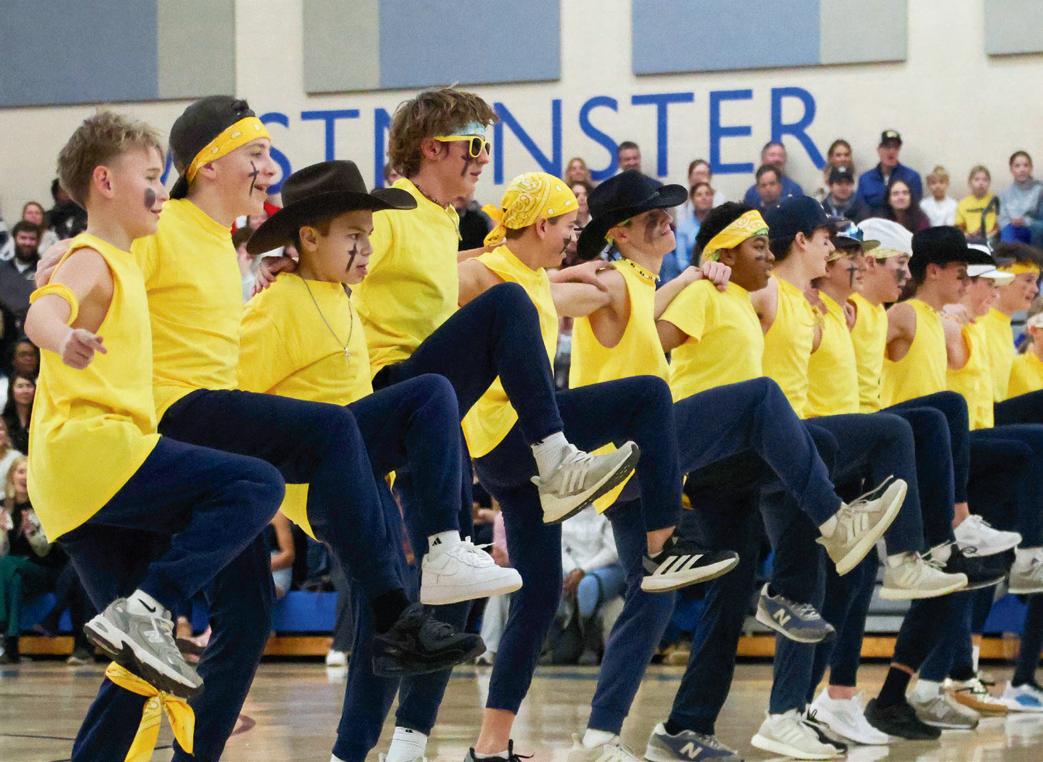
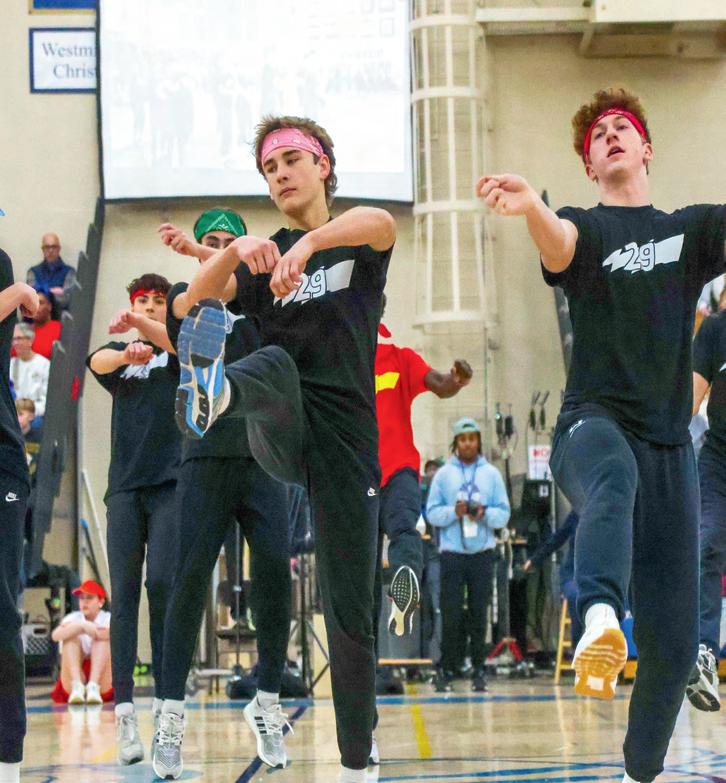
This year at WCA, the upper school Boys Poms performances take us on a journey through cinema with themes of Star Wars (seniors), Men in Black (juniors), Back to the Future (sophomores), and Cars (freshmen), so grab your popcorn, silence your phones, and get ready for an exciting display of some of America’s most iconic movie series!
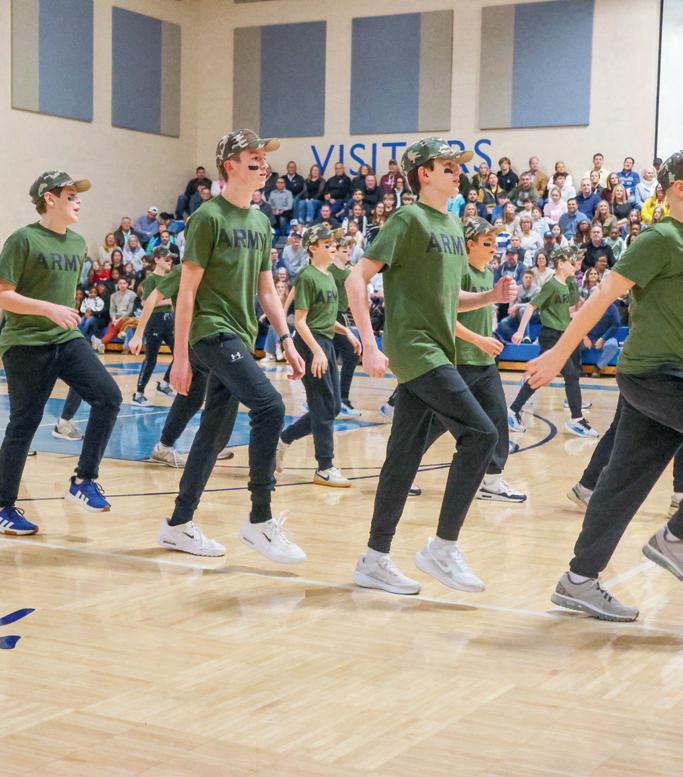
In addition to the higher grades’ focus on movies, the middle school will be bringing the energy as the newcomers to Spirit Week, with the 7th graders having an army theme and 8th grade paying homage to the Savannah Bananas Baseball team.
The age-old custom of throwing teenage boys into a stadium of eager spectators is one that has been practiced for years at Westminster, and it never fails to draw a crowd and hype people up! But what is it about the choreography and companionship that makes Boys Poms such a beloved Spirit Week classic?
Two Boys Poms leaders offer their opinion on the significance of this stupendous Spirit Week staple.
Nadia Robinson is one of the leaders for the 11th grade Poms this year. Her passion for creating and teaching dance arose from an idea she had that she “wanted to carry out,” and she loves watching her creation manifest during practice. She expresses:
“My favorite part of the process is seeing the results come to life.”
For the leaders, the dance is a way to see their hopeful visualizations take shape. The transformation of a dream into a reality is extremely powerful, and it’s one of the hidden beauties of dances like Boys Poms.
Mrs. Emily Koenig, Westminster boy mom and a leader for the middle school with a background in dance, describes the benefits of participating in this Big Event:
Jameson Roam
“Boys Poms is a great chance to hang out with friends and participate in Spirit Week. You get to be goofy and crazy on the court while still working to create something really cool that impresses your grade and builds amazing Spirit Week memories!”
Additionally, Robinson provides her opinion on why Boys Poms is a meaningful experience worth the time and effort by remarking: “I would advertise Boys Poms as a way to entertain, contribute to the Spirit Week process, and have fun.”
Spirit Week is nothing without its students, but joining Boys Poms not only brings joy and vivacity to the viewers, but it also benefits the dancers by being an incredibly fun and informative experience.
Lastly, Koenig addresses the concerns of students worried that their dancing abilities are not up to par. She explains that pure skill is not nearly as crucial to the process as a readiness to have some fun.
“Don’t worry if you can’t dance! You’re not supposed to be “good at it!” That’s part of what makes Boys Poms so great...It’s just a chance to have fun with friends!”
Koenig emphasizes that there’s no pressure to have any prior dance experience or even experience performing in any regard in order to have a good time. Everyone is there to enjoy themselves, and it’s a comfortable environment to experiment in your skills.
Whether you are questioning which Big Event to join, informing yourself about the most wonderful week of the year, or just bored in class, my hope is that you have learned something meaningful about the experience and expectations of Boys Poms. I’ll see you in the audience!
Eighth Grade Boys Poms Performes their Dance to the Theme of The Savanna Bananas. Photo by Mary Hathaway
Sophomore Josiah Stovall dances with vigor along with the rest of his class. Photo by Mary Hathaway
Boys Poms Results
1st
2nd
Seniors
3rd
Juniors 8th Grade
4th 5th 6th
COSTUMES, CHOREOGRAPHY, AND COLLABORATION: A HISTORY OF LIP SYNC
A beloved Spirit Week tradition
Josie Mosley
Picture this: it is 9:45 pm and you are under the fluorescent lights of Westminster’s Blue Gym along with 80 other girls. You’re tired, you’re sweaty, and the only thing you may be thinking about is going home and going to sleep. But you stay and you put in your best effort because you and these girls have one common goal: to annihilate the opposition by winning Lip Sync.
One of the greatest and most memorable Spirit Week traditions is the iconic Lip Sync competition. From the costumes to the routines, the Lip Sync dances consistently prove to be one of the greatest forms of entertainment of the week. As Westminster is celebrating its 50th anniversary, let us take a look at how this iconic competition first began.
As all good traditions do, Lip Sync has had many evolutions over the years. During Westminster’s first ever Spirit Week in 1990, Lip Sync did not exist. That is, it did not exist in the way we think of it today.
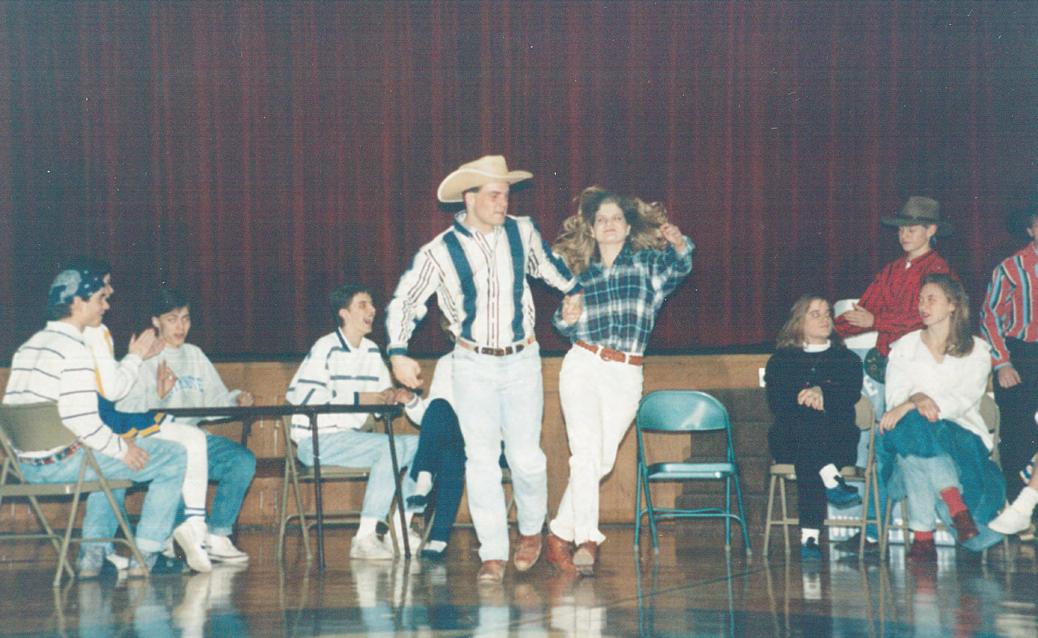
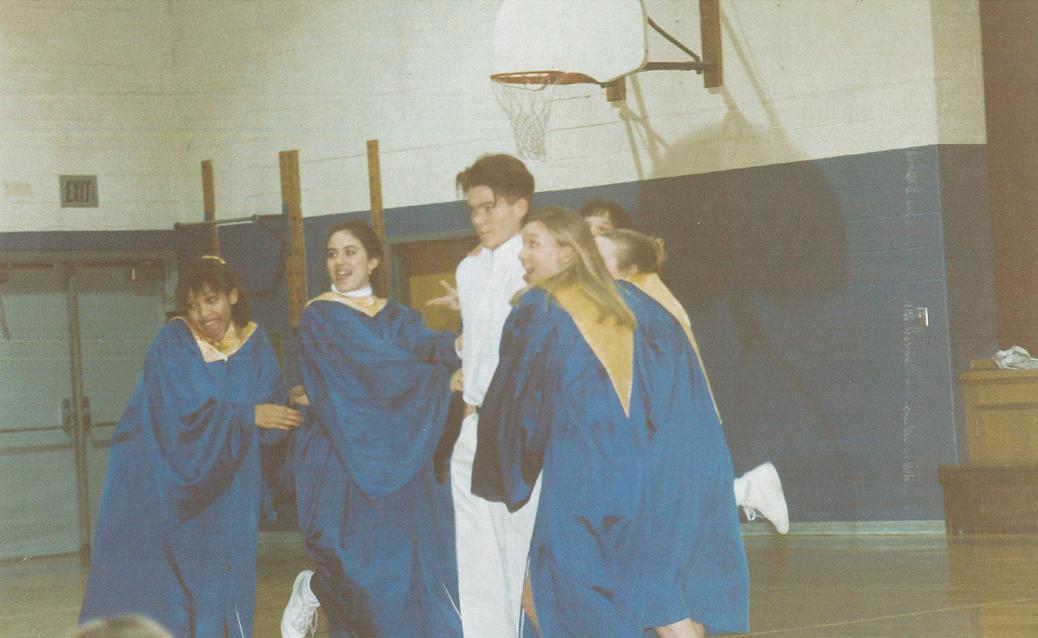
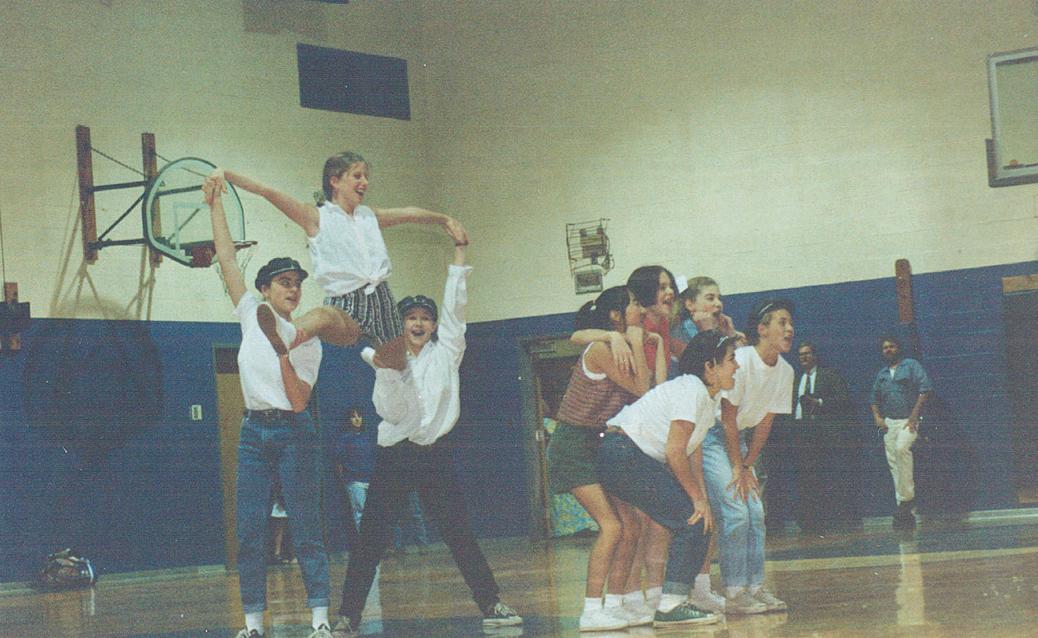
In the early days of Spirit Week, “Class Cheer” took the place of Lip Sync. Each grade would get a few words, and they would have 10 minutes to come up with a cheer using those words. Sometimes the boys would even dress up as cheerleaders for this event. While the Class Cheer is very different from the modern Lip Sync tradition, it paved the way for the beginning of a new era.
The iconic Lip Sync tradition officially kickstarted in 1992. While dancing was still a major part of the performance, what the judges mainly focused on was the storytelling aspect. Each grade had a different story to tell, and many grades incorporated boys in their performances as well as girls. This helped move the story forward, and even earned the grades extra points. Lizzie Vogel, current Westminster art teacher and alum, remembers how Lip Sync used to be;
“It used to be much smaller, and it was pure lip sync. There wasn’t much movement, and it was strictly microphones and focused more on the storytelling.”
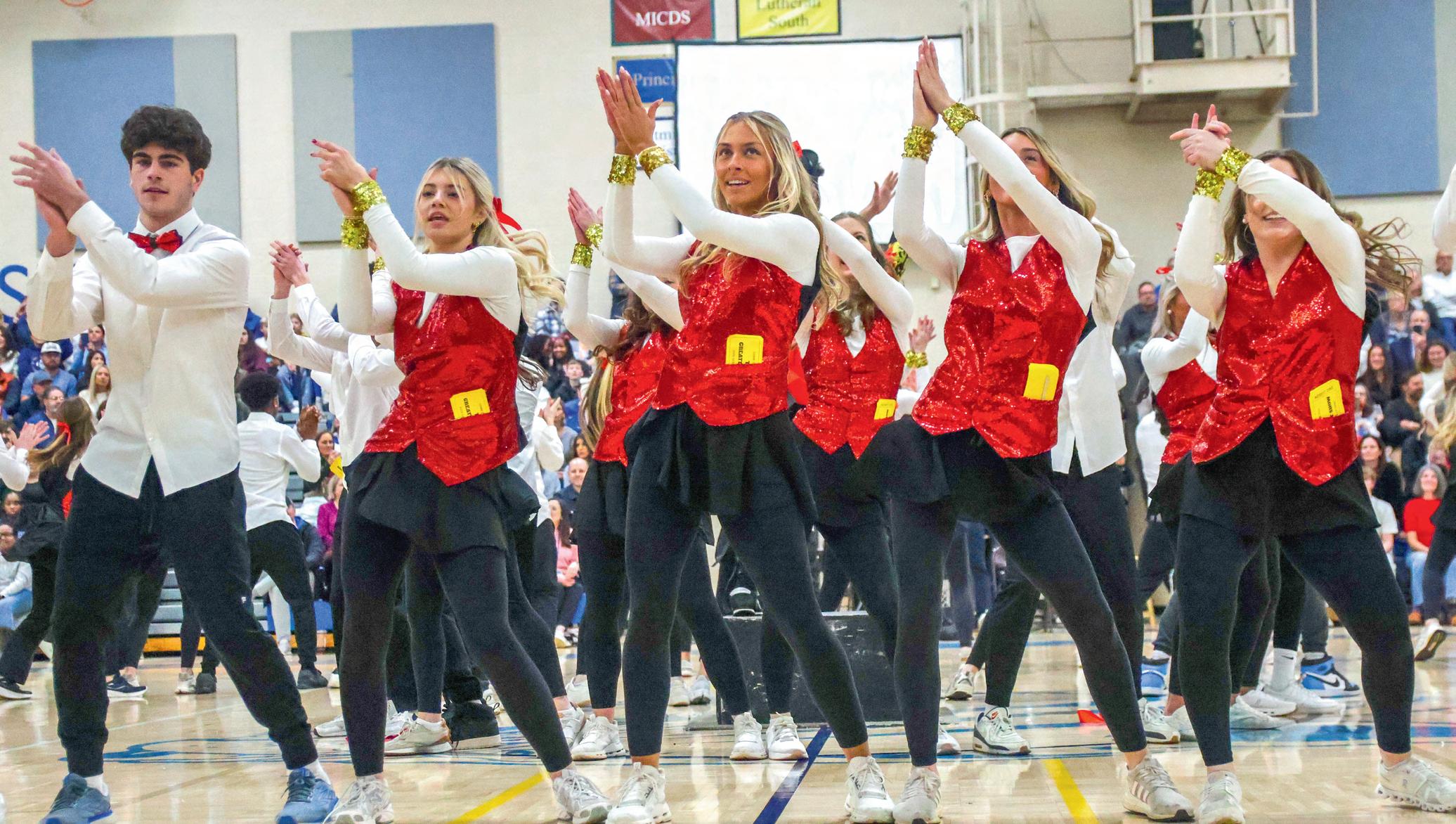
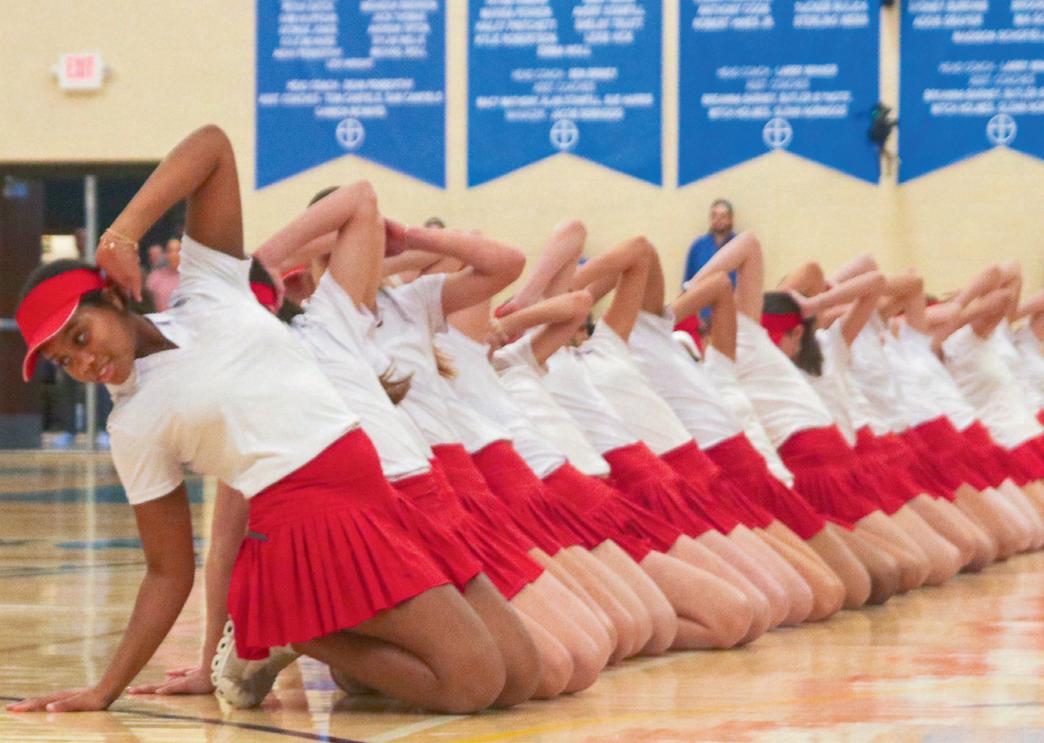
As the years progressed, so did Lip Sync. Eventually, each performance would become bigger than the next, with more dancing and elaborate costumes. While lip syncing and storytelling were still incorporated, the focus seemed to shift more to the choreography. Each grade’s dance was different than the next, making the event more and more exciting to watch.
Kate Sowers, senior, is one of the current Lip Sync leaders for the 12th grade. For weeks, her and the other leaders take time to choreograph and organize what their performance will look like that year. Sowers speaks on what it takes to craft the “perfect” performance;
“Energy is a big factor in what makes your performance stand out. So is facial expressions and showing the audience the emotion that ties into the dance. We also make sure our dancers are synchronized so we look clean and put together.”
Even now, Lip Sync is one of the most anticipated events of Spirit Week. The mixture of exciting dances, creative costumes, and trending themes really drive the event home and make each one unique. But the vibrant performances are not the only aspect that makes Lip Sync memorable.
Throughout the process of crafting a performance, the girls in each grade really grow closer as they collaborate with one another. They all want to make the best Lip Sync performance as they can, and their passion ignites a unique friendship between them all. Sowers says;
“One of the best parts about Lip Sync is coming together as a class and talking and hanging out with girls you normally wouldn’t. It’s something that a lot of people can look forward to.”
All in all, Lip Sync has been special from its beginning. Whether you’re a spectator or a performer, you will find joy in what this tradition has to offer. And maybe, deep down, you will come to realize that all of those late night practices were all worth it in order to make memories that will stick with you long after your final Spirit Week.
1994 WCA students perform in their grade’s Lip Sync dance. Photo by WCAComunications
WCA Upper School students perform in their grade’s Lip Sync dance during the 1993 Spirit Week. Photo by WCA Communications
WCA students perform in their grade’s Lip Sync dance. Photo by WCA Communications.
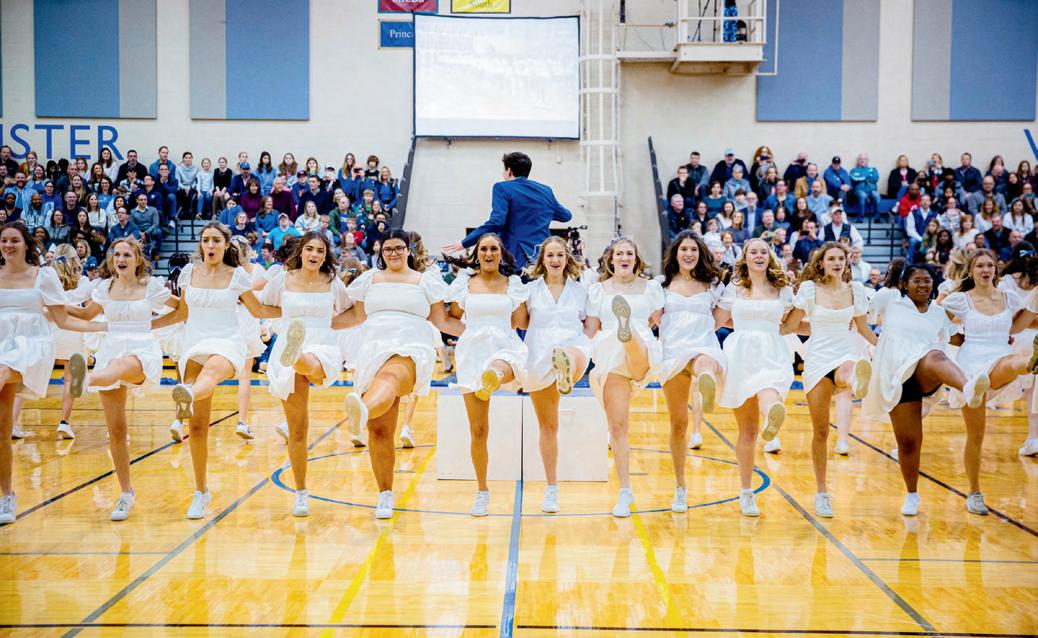
Class of 2023 perform in their senior Lip Sync dance titled “High School Musical 3: Senior Year.”Photo by WCA Communications
1st
Lip Sync Results
2nd
Seniors
3rd
Juniors Freshmen
4th 5th 6th
1st
2nd
Juniors
3rd
4th 5th 6th
Sophomores
PULLING TOGETHER: THE GAMES THAT LAST
Two Long-Lasting Westminster Competitions That Never Go Out Of Style
Jack Overby
Every Winter, the arena transforms into a battleground where freshmen dreams meet senior dominance, and two events stand above the rest as the truest tests of class unity. The rope may burn and bruised shins may appear, but for Westminster students and alumni, the memories of these battles remain as vivid as the day they fought for the Spirit Week Trophy.
Spirit Week has evolved over the decades, adding new and innovative games and events and building off of the early hits, but Tug-Of-War and Chariot Race endure as the games that define what it means to be a Wildcat. These are the competitions where juniors and seniors remind underclassmen of the natural order, where strategy meets determination, and where an entire class becomes something greater than the infamous trophy by the week’s end.
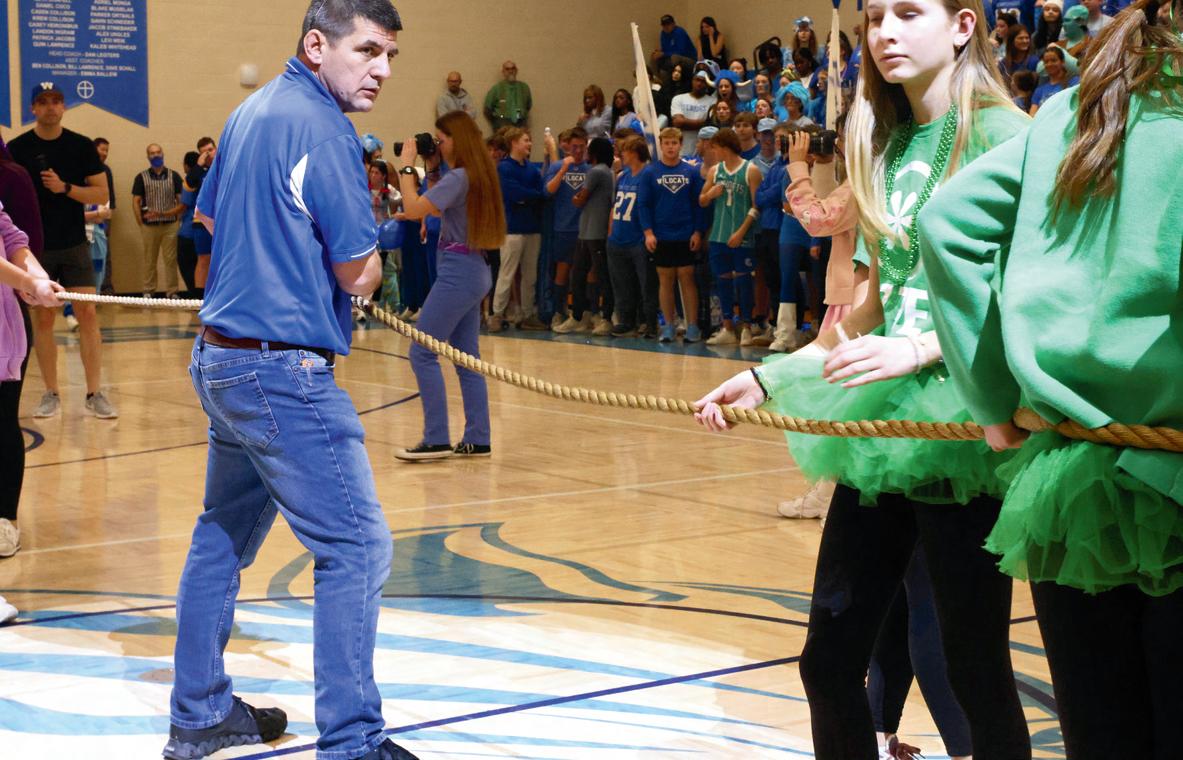
Tug-Of-War appears deceptively simple. Two classes grip opposite ends of a thick rope, plant their feet, and pull until one side crosses the line. Yet that simplicity masks the endurance and conviction invested in every inch of movement. Classes strategize about weight distribution and anchor positions. Sometimes the matchups end in utter domination, and sometimes it is a several minute bout until the other gives out.
“I just remember Tug-Of-War was one of the games that everyone cared about and which class won tugof-war,” recalls Shauna Collison, Westminster’s 11th and 12th grade counselor and class of 1997 Alumni. “It was always the one that was the most competitive.”
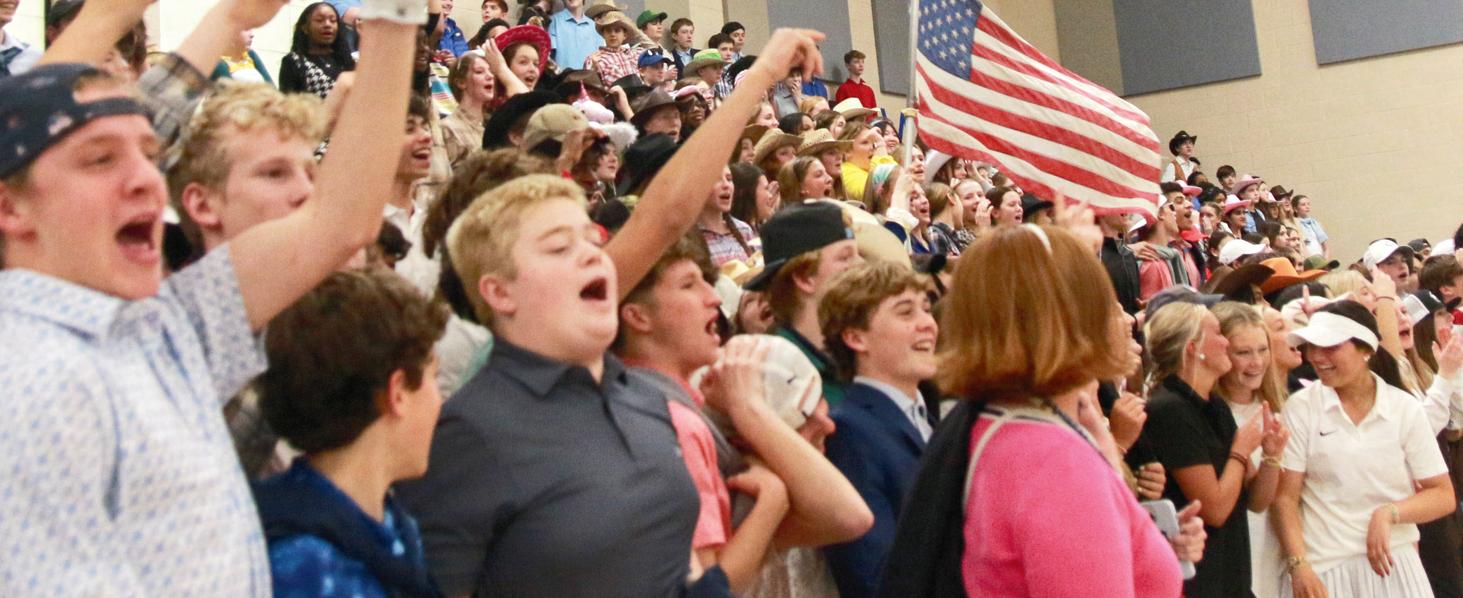
Westminster students watching understand this intensity. While every game and event gathers loud cheers and outbursts, Tug-Of-War transforms the arena into something like no other game can replicate. Students’ voices go hoarse, while they anxiously watch to see if their class can hold out. The arena gets the loudest often when there is an upset, such as the Freshmen over the Sophomores, or Sophomores over the Juniors. When a class finally drags their opponents across the line, the eruption of celebration roars off the walls.
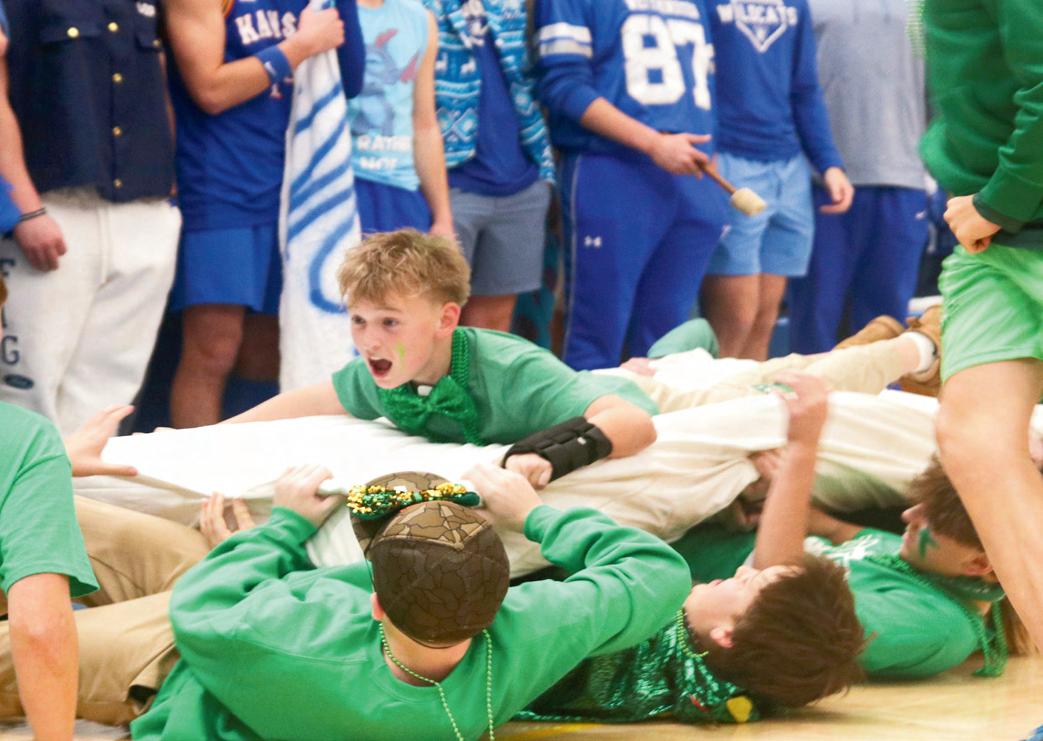
“Well we did Tug-Of-War and Chariot Race for sure,” Collison remembers, and if Tug-Of-War channels competitive spirit through strength, Chariot Race demands speed and endurance. One student sits atop a blanket or sack while their partner grips the edge and pulls them down the court, around a cone or teacher, and back to tag the next pair. Each duo must complete the circuit before the next can begin, and the class that finishes all their pairs first claims victory.
The beauty of Chariot Race lies in its unsuspecting difficulty. What looks straightforward becomes a test of stamina as the pullers, often larger and stronger than the one in the sack, feel their arms burn and riders, often small and agile, try to balance without tipping off. Unlike individual competitions, this relay-style event means every pair matters equally, as one struggling duo or a blanket gone haywire can make the difference between getting first and last. It is a microcosm of what Spirit Week represents: individual effort compounding into collective triumph or defeat.
Dan Burke, the upper school principal, remembers the game fondly from his own Spirit Week days. “I recall us rolling around on carts,” he says, the memory bringing a smile decades later. For alumni like Burke and Collison, these were not just games, but rather defining moments of their Westminster experience.
Spirit Week will continue evolving, and new traditions will emerge. However, when that oh-so-special week arrives and Westminster gathers for its annual competition, some truths remain constant: some ropes are meant to be pulled together, and some chariots are meant to be raced as one. Perhaps what makes certain games classics is not just the competition itself, but the way they crystallize a moment. The sweaty hands gripping a rope, voices going hoarse, the shared exhaustion of pulling a teammate across gymnasium floors. These are the games we return to, the ones that etch themselves into memory. What is it about these particular battles that makes them worth fighting year after year? Maybe it is something one can only understand when they are there, leaning back with everything they have, feeling the weight of their entire class behind them.
A girls’tug-of- war match takes place with students cheering from the bleachers (1990). Photo by WCA Communications.
A girls’tug-of- war match takes place with students cheering from the bleachers (1990). Photo by WCA Communications.