

Distribution and Sales
U.S. Distribution and Sales:
Two Rivers Distribution (previously called Perseus Distribution) 1400 Broadway, Suite 520 New York, NY 10018
Orders and Customer Service:
Ingram Content Group LLC
One Ingram Blvd. La Vergne, TN 37086 (866) 400-5351 tel ips@ingramcontent.com
United Kingdom, Ireland, the Isle of Man, and the Channel Islands
Turnaround Publisher Services Ltd Unit 3, Olympia Trading Estate Coburg Road, Wood Green London N22 6TZ
United Kingdom
+44 (208) 829-3000 tel +44 (208) 829-3002 tel +44 (208) 881-5088 fax orders@turnaround-uk.com www.turnaround-uk.com
Canada
Codasat Canada Ltd.
+1 (604) 228-9952 tel info@codasat.com
Europe
General Inquiries
INGRAM
5th Floor
52–54 St John Street Clerkenwell London EC1M 4HF IPSUK_enquiries@ingramcontent.com
Ordering Information
Grantham Book Services
Trent Road
Grantham, NG31 7XQ, UK
+44 (0) 1476 541 080 tel +44 (0) 1476 541 061 fax orders@gbs.tbs-ltd.co.uk (UK) export@gbs.tbs-ltd.co.uk (Export)
Australia, New Zealand, South Africa, India
Shawn Abraham Manager, International Sales
Ingram Publisher Services International 1400 Broadway, Suite 520 New York, NY 10018
+1 (212) 581-7839 tel shawn.abraham@ingramcontent.com
Australia
NewSouth Books Orders and Distribution 15-23 Helles Avenue Moorebank, NSW 2170
Australia
+61 (2) 8778 9999 tel +61 (2) 8778 9944 fax orders@tldistribution.com.au
South Africa
Jonathan Ball Elmasie Stodart Office C4, The District 41 Sir Lowry Road Woodstock, Cape Town 7925
South Africa
+27 (0) 21 469 8932
+27 (0) 86 270 0825 Queries:
services@jonathanball.co.za Orders: orders@jonathanball.co.za
India Ordering Information
Penguin Books India Pvt. Ltd 7th Floor, Infinity Tower C DLF Cyber City, Phase - III, Gurgaon-122 002 Haryana
India
+91 (124) 478 5600 tel sales@penguinrandomhouse.in
Asia, Middle East, North Africa
Edison Garcia Manager, International Sales
Ingram Publisher Services International 1400 Broadway, Suite 520 New York, NY 10018 +1 (212) 340-8170 tel edison.garcia@ingramcontent.com
Latin America, Caribbean
Matthew Dickie Manager, International Sales INGRAM UK 5th Floor 52–54 St John Street Clerkenwell London EC1M 4HF matthew.dickie@ingramcontent.com
For all other markets:
General international inquiries
Ingram Publisher Services International 1400 Broadway, Suite 520 New York, NY 10018
IPS_intlsales@ingramcontent.com
International Orders
Please send orders and remittances to: IPS_International.Orders@ ingramcontent.com
This catalog describes books to be published from March 2020 through August 2020
The New Press 120 Wall Street, Fl 31 New York, NY 10005-4007 (212) 629-8802 tel (212) 629-8617 fax www.thenewpress.com
For media/event inquiries, please contact: publicity@thenewpress.com
For special sales and bulk orders, please contact: (212) 629-8802 tel specialsales@thenewpress.com
Cover design by Oliver Munday
Page 3 photograph of Romesh Gunesekera by Yemisi Blake
Page 4 photograph of Noliwe Rooks by Cornell Marketing
Page 6 photograph of Dahr Jamail by John Fleming
Page 12 photograph of Bernice Yeung by Rachel de Leon/Reveal from the Center for Investigative Reporting
Page 17 photograph of David Dayen by John Florance
Page 19 photograph of Delphine Diallo courtesy of the author
Page 20 photograph by Kisha Bari
Page 22 photograph of Vivian Nixon and photograph of Daryl Atkinson courtesy of the authors
Page 24 photograph by Molly Adams used under a Creative Commons license (http://creativecommons.org/)
Page 26 photograph of Laura E. Gómez courtesy of the University of California, Los Angeles/Alyssa Bierce
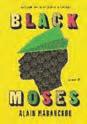
RECENTLY PUBLISHED IN PAPERBACK
Black Moses
A Novel
ALAIN MABANCKOU
translated from the french by HELEN STEVENSON
THE “HEART-BREAKING” ( NEW YORK TIMES BOOK REVIEW ), ROLLICKING, AWARD-WINNING NOVEL THAT HAS BEEN DESCRIBED AS “OLIVER TWIST IN 1970S AFRICA”
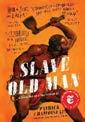
Slave Old Man
A Novel
PATRICK CHAMOISEAU
translated from the french and creole by LINDA COVERDALE
THE “HAUNTING, BEAUTIFUL” ( BUZZFEED ) STORY OF AN ESCAPED SLAVE AND THE KILLER HOUND THAT PURSUES HIM “HEARTSTOPPING” ( THE MILLIONS ) AND “RICHLY LAYERED” ( BROOKLYN RAIL )
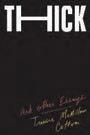
Thick
And Other Essays
AS FEATURED BY THE DAILY SHOW , NPR, PBS, TIME , WELL-READ BLACK GIRL, AND CHRIS HAYES, “INCISIVE, WITTY, AND PROVOCATIVE ESSAYS” ( PUBLISHERS WEEKLY ) BY ONE OF THE “MOST BRACING THINKERS . . . OF OUR TIME” (REBECCA TRAISTER)
Winner of the 2018 Zora Neale Hurston/Richard Wright Legacy Award for Fiction
One of the most compelling books you’ll read in any language this year.
ROLLING STONE
Paperback, 978-1-62097-589-3
Ebook, 978-1-62097-294-6
$15.99 / $26.99 CAN 5 1⁄4” x 7 1⁄2”, 208 pages Fiction/Literature (Hardcover edition: 978-1-62097-293-9)
A New York Times Notable Book of 2018
Slave Old Man is a cloudburst of a novel, swift and compressed—but every page pulses, blood-warm. . . . I found myself stopping to rub my eyes in disbelief.
—PARUL SEGHAL, THE NEW YORK TIMES
Paperback, 978-1-62097-588-6
Ebook, 978-1-62097-296-0
$14.99 / $22.50 CAN 5 1⁄4” x 7 1⁄2”, 176 pages Fiction/Literature (Hardcover edition: 978-1-62097-295-3)
Longlisted for a National Book Award
Sure to become a classic.
THE NEW YORK TIMES BOOK REVIEW
[McMillan Cottom is] the type of voice that society often refuses to make room for because it challenges so many defaults. Take a look; have a listen. You won’t regret it.
CHICAGO TRIBUNE
Paperback, 978-1-62097-587-9
Ebook, 978-1-62097-437-7
$15.99 /$23.99 CAN 5 1⁄2” x 8 1⁄2”, 272 pages Essays (Hardcover edition: 978-1-62097-436-0)
TRESSIE M c MILLAN COTTOM
Suncatcher
A Novel
ROMESH GUNESEKERA
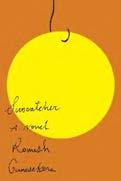
THE INTERNATIONALLY CELEBRATED (AND BOOKER PRIZE–SHORTLISTED) AUTHOR RETURNS WITH A DAZZLING COMING-OF-AGE STORY SET IN POST-INDEPENDENCE SRI LANKA
A master storyteller.
THE NEW YORK TIMES
Ceylon is on the brink of change. But young Kairo is at loose ends. School is closed, the government is in disarray, the press is under threat, and the religious right are flexing their muscles. Kairo’s hardworking mother blows off steam at her cha-cha-cha classes; his Trotskyist father grumbles over the state of the nation between his secret bets on horse races in faraway England. All Kairo wants to do is hide in his room and flick through secondhand westerns and superhero comics, or escape on his bicycle and daydream.
Then he meets the magnetic teenage Jay, and his whole world is turned inside out.
A budding naturalist and a born rebel, Jay keeps fish and traps birds for an aviary he is building in the garden of his grand home. As Jay guides Kairo from the realm of make-believe into one of hunting guns and fast cars and introduces him to a girl— Niromi—Kairo begins to understand the price of privilege and embarks on a journey of devastating consequence.
Taut and luminous, graceful and wild, Suncatcher is a poignant coming-of-age novel about difficult friendships and sudden awakenings set among the tumult of 1960s Sri Lanka, that confirms Gunesekera’s status as one of today’s most lyrical writers.

Romesh Gunesekera is the author of Monkfish Moon; Reef, which was shortlisted for the Booker Prize; The Sandglass; The Match; and Noontide Toll (all published by The New Press). Elected a fellow of the Royal Society of Literature in 2004, he grew up in Sri Lanka and now lives in London.
Praise for Romesh Gunesekera’s Noontide Toll:
Not a word is wasted or a detail extraneous in the clenched, explosive vignettes Mr. Gunesekera strings together.
—PICO IYER, THE WALL STREET JOURNAL Revelatory and unique.
THE NEW YORKER
Full of the uncertain sadness of exiles and dreamers . . . Gunesekera’s characters become memorable emblems of solitude and despair.
VOGUE
An enchanting, endlessly funny and affecting novel—truly exquisite.
SAN FRANCISCO CHRONICLE
Gracefully crafted . . . simple stories told in delicate prose. . . . The book is an elegant balancing act and a pleasure to read.
—SHEHAN KARUNATILAKA, THE GUARDIAN
March
Hardcover, 978-1-62097-559-6
Ebook, 978-1-62097-560-2
$24.99
5 1⁄2” x 8 1⁄2”, 288 pages Fiction/Literature
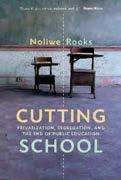
Cutting School
Privatization, Segregation, and the End of Public Education
NOLIWE ROOKS
with a foreword by diane ravitch
NOW IN PAPERBACK A “POWERFUL ANALYSIS OF RACISM, SEGREGATION, POVERTY” (DIANE RAVITCH) AND A TIMELY INDICTMENT OF THE PRIVATIZATION—AND PROFITABILITY—OF SEPARATE AND UNEQUAL SCHOOLS
This is an important work; hopefully it will make people mad enough to act.
—TAYARI JONES, IN THE NEW YORK TIMES’ “BY THE BOOK”
A convincing argument that the only viable, proven school reform strategy is integration, a solution distressingly difficult to achieve.
—KIRKUS REVIEWS
Exciting and incredibly provoking of thought and conversation . . . Powerful.
DEMOCRACY & EDUCATION
Cutting School is the book that I have been waiting for.
—KEEANGA-YAMAHTTA TAYLOR
A superb book.
—DIANE RAVITCH
March
Paperback, 978-1-62097-598-5
Ebook, 978-1-62097-249-6
$18.99 / $28.50 CAN
5 1⁄2” x 8 1⁄2”, 288 pages
Education (Hardcover edition: 978-1-62097-248-9)
An astounding look at America’s segregated school system, weaving together historical dynamics of race, class, and growing inequality into one concise and commanding story. Cutting School puts our schools at the center of the fight for a new commons.
—NAOMI
KLEIN, AUTHOR OF NO IS NOT ENOUGH AND THIS CHANGES EVERYTHING
In an era characterized by levels of school segregation the country has not seen since the mid-twentieth century, cultural critic and American studies professor Noliwe Rooks provides a trenchant analysis of our separate and unequal schools and argues that profiting from our nation’s failure to provide a high-quality education to all children has become a very big business.
Hailed as “a bold and groundbreaking work” by Danny Glover, Cutting School deftly traces the financing of segregated education in America, from reconstruction through Brown v. Board of Education up to the current controversies around school choice, teacher quality, the school-to-prison pipeline, and more. Rooks breaks down the fraught landscape of “segrenomics,” transforming the “conversation about privatization and public education just as The New Jim Crow has done for the war on drugs and mass incarceration” (Khalil Gibran Muhammad, author of The Condemnation of Blackness).
As our public education infrastructure crumbles, Rooks’s book manages to find hope in the inspired individuals and powerful movements fighting to save our urban schools. Cutting School is a cri de coeur for all of us to resist educational apartheid.

Noliwe Rooks is the director of American studies at Cornell University and was for ten years the associate director of African American studies at Princeton University. She is the author of White Money/ Black Power and Hair Raising. She lives in Ithaca, New York.
Democracy Unchained
How to Rebuild Government for the People
edited by DAVID ORR, ANDREW GUMBEL, BAKARI KITWANA, and WILLIAM BECKER
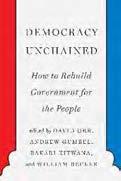
PAPERBACK ORIGINAL A STELLAR GROUP OF AMERICA’S LEADING POLITICAL THINKERS EXPLORE
HOW TO REBOOT OUR DEMOCRACY
Democracy is a process, not a thing finished once and for all. It will always need repair and revitalization. Democracy is a wager that we, the citizens, have the stamina and wisdom to maintain a government truly of, by, and for the people.
—FROM THE FOREWORD
The presidential election of 2016 highlighted some long-standing flaws in American democracy and added a few new ones. Across the political spectrum, most Americans do not believe that democracy is delivering on its promises of fairness, justice, shared prosperity, or security in a changing world. The nation cannot even begin to address climate change and economic justice if it remains paralyzed by political gridlock. Democracy Unchained is about making American democracy work to solve problems that have long impaired our system of governance. The book is the collective work of thirty of the most perceptive writers, practitioners, scientists, educators, and journalists writing today, who are committed to moving the political conversation from the present anger and angst to the positive and constructive change necessary to achieve the full promise of a durable democracy that works for everyone and protects our common future. Including essays by Yascha Mounk on populism, Chisun Lee on money and politics, Ras Baraka on building democracy from the ground up, and Bill McKibben on climate, Democracy Unchained is the articulation of faith in democracy and will be required reading for all who are working to make democracy a reality.
David Orr is the Paul Sears Distinguished Professor of Environmental Studies and Politics, Emeritus, at Oberlin College. Andrew Gumbel has worked as a foreign correspondent around the world and won awards as an investigative reporter, political columnist, and feature writer. Bakari Kitwana is a journalist and activist in the area of hip-hop and black youth political engagement. William Becker is executive director of the Presidential Climate Action Project.
Contributors include:
Ras Baraka
Judy Braus
Michael Eric Dyson
Denise Fairchild
Jacob Hacker
Maria Hinojosa
Dawn Johnsen
Robert Kuttner
Chisun Lee
Jessica Tuchman Mathews
Bill McKibben
Yascha Mounk
Paul Pierson
Sasha Polakow-Suransky
K. Sabeel Rahman
Steven Rockefeller
Mary Wood
March
Paperback, 978-1-62097-513-8
Ebook, 978-1-62097-514-5
$18.99 / $28.50 CAN 6” x 9”, 368 pages Current Affairs & Politics
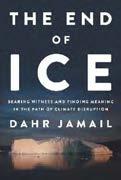
The End of Ice
Bearing Witness and Finding Meaning in the Path of Climate Disruption
DAHR JAMAIL
with a new afterword by the author
NOW IN PAPERBACK ACCLAIMED ON ITS HARDCOVER PUBLICATION, A GLOBAL JOURNEY THAT REMINDS US “OF HOW MAGICAL THE PLANET WE’RE ABOUT TO LOSE REALLY IS” (BILL M c KIBBEN)
A Powell’s Bookstore Book of the Month
Jamail commits to educating others on the plight of the planet, in hopes a younger generation can delay the inevitable.
MEN’S JOURNAL
Enlightening, heartbreaking, and necessary.
BOOKLIST
This is more than a good book. It is a wise one.
—WILLIAM deBUYS, AUTHOR OF A GREAT ARIDNESS: CLIMATE CHANGE AND THE FUTURE OF THE AMERICAN SOUTHWEST AND THE LAST UNICORN: A SEARCH FOR ONE OF EARTH’S RAREST CREATURES
March
Paperback, 978-1-62097-597-8
Ebook, 978-1-62097-605-0
$17.99 / $26.99 CAN 5 1⁄2” x 8 1⁄2”, 272 pages Science/Environment (Hardcover edition: 978-1-62097-234-2)
Assiduously researched, profoundly affecting, and filled with vivid evocations of the natural world. Jamail’s deep love of nature blazes through his crisp, elegant prose.
KIRKUS REVIEWS
After nearly a decade overseas as a war reporter, the acclaimed journalist Dahr Jamail returned to America to renew his passion for mountaineering, only to find that the slopes he had once climbed have been irrevocably changed by climate disruption. In response, Jamail embarks on a journey to the geographical front lines of this crisis—from Alaska to Australia’s Great Barrier Reef, via the Amazon rainforest—in order to discover the consequences to nature and to humans of the loss of ice.
In The End of Ice, we follow Jamail as he scales Alaska’s Denali, the highest peak in North America, dives in the warm crystal waters of the Coral Sea only to find bleached coral reefs, and explores the tundra of St. Paul Island where he meets the last subsistence seal hunters of the Bering Sea and witnesses its collapsing food web. Accompanied along the way by climate scientists and people whose families for centuries have fished, farmed, and lived in the areas he visits, Jamail begins to accept the fact that Earth, most likely, is in a hospice situation. Ironically, this allows him to renew his passion for the planet’s wild places, cherishing Earth in a way he has never been able to before.
The End of Ice offers an essential firsthand chronicle of the catastrophic reality of our situation and the incalculable necessity of relishing this vulnerable, fragile planet while we still can.

Dahr Jamail, a Truthout staff reporter, is the author of Beyond the Green Zone: Dispatches from an Unembedded Journalist in Occupied Iraq. He has won the Martha Gellhorn Prize for Journalism and the Izzy Award. He lives in Washington State.
Going Home
A Walk Through Fifty Years of Occupation
RAJA SHEHADEH
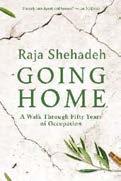
IN A DAZZLING MIX OF REPORTAGE, ANALYSIS, AND MEMOIR, THE LEADING PALESTINIAN WRITER OF OUR TIME REFLECTS ON AGING, FAILURE, THE OCCUPATION, AND THE CHANGING FACE OF RAMALLAH
Few Palestinians have opened their minds and their hearts with such frankness.
THE NEW YORK TIMES
In Going Home, Raja Shehadeh, the Orwell Prize–winning author of Palestinian Walks, takes us on a series of journeys around his hometown of Ramallah. Set in a single day—the day that happens to be the fiftieth anniversary of Israel’s occupation of the West Bank—the book is a powerful and moving record and chronicle of the changing face of his city.
Here is a city whose green spaces—gardens and hills crowned with olive trees— have been replaced by tower blocks and concrete lots; where the Israeli occupation has further entrenched itself in every aspect of movement, from the roads that can and cannot be used to the bureaucratic barriers that prevent people leaving the West Bank. Here also is a city that is culturally shifting, where Islam is taking a more prominent role in people’s everyday and political lives and in the geography of the city.
A penetrating evocation of memory, pain, and place that is lightened by everyday joys such as delightful accounts of shared meals and gardening, Going Home is perhaps Raja Shehadeh’s most moving and painfully visceral addition to his series of personal histories of the occupation, confirming Rachel Kushner’s judgment that “Shehadeh is a buoy in a sea of bleakness.”
Considered Palestine’s leading writer, Raja Shehadeh is a writer, a lawyer, and the founder of the pioneering Palestinian human rights organization Al-Haq. He is the author of several books including the 2008 Orwell Prize–winning Palestinian Walks and Where the Line Is Drawn (The New Press). He has written for the New York Times, the New Yorker, Granta, and other publications. He lives in Ramallah, Palestine.
Praise for Raja Shehadeh’s Where the Line Is Drawn: Fiercely intelligent and honest.
—IAN McEWAN
A lucid, honest, unsparing voice. His humanity and wisdom are invaluable.
—CLAIRE MESSUD
No one else writes about Palestinian life under military occupation with such stubborn humanity, melancholy, and fragile grace.
THE GUARDIAN
A beautifully impressionistic exploration of shared cultural understanding despite the narrowing of borders.
KIRKUS REVIEWS
March
Hardcover, 978-1-62097-577-0 Ebook, 978-1-62097-578-7
$24.99 / $37.50 CAN 5 1⁄2” x 8 1⁄2”, 224 pages with 25 b&w images History
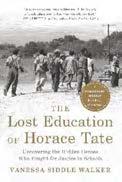
The Lost Education of Horace Tate
Uncovering the Hidden Heroes Who Fought for Justice in Schools
VANESSA SIDDLE WALKER
NOW IN PAPERBACK THE HARROWING ACCOUNT OF THE BLACK SOUTHERN EDUCATORS WHO “BRAVELY PRESSED ON FOR JUSTICE IN SCHOOLS” ( NEW YORK REVIEW OF BOOKS ) EVEN AS THE BRIGHT LODESTAR OF DESEGREGATION FADED
A Publishers Weekly Best of 2018 Book and Top 10 History Pick Starred reviews in Library Journal and Publishers Weekly
A more conscientious torchbearer of the history of black educators in America you will not find. Vanessa Siddle Walker is a brilliant thinker, a teacher’s teacher, and a sage storyteller. Her words illuminate the passion, the tragedy, and the inventiveness behind the struggle for equality in the South.
—LISA DELPIT, AUTHOR OF OTHER PEOPLE’S CHILDREN
A beautiful story, a powerful life, and an essential read.
—GLORIA LADSON-BILLINGS, AUTHOR OF THE DREAMKEEPERS
April
Paperback, 978-1-62097-602-9 Ebook, 978-1-62097-106-2
$19.99 / $29.99 CAN 5 1⁄2” x 8 1⁄2”, 480 pages History/Education (Hardcover edition: 978-1-62097-105-5)
Meticulous in its historical detail and compelling in its narrative . . . both a tragic tale, and a cautionary one for those who continue the struggle today.
—BEVERLY DANIEL TATUM, AUTHOR OF WHY ARE ALL THE BLACK KIDS SITTING TOGETHER IN THE CAFETERIA?
This “well-told and inspiring” story (Publishers Weekly, starred review) is the monumental product of Lillian Smith Book Award–winning author Vanessa Siddle Walker’s two-decade investigation into the clandestine travels and meetings—with other educators, Dr. King, Georgia politicians, and even U.S. presidents—of one Dr. Horace Tate, a former Georgia school teacher, principal, and state senator. In a sweeping work “that reads like a companion piece to Hidden Figures” (Atlanta Journal-Constitution), post-Brown generations will encounter invaluable lessons for today from the educators behind countless historical battles—in courtrooms, schools, and communities— for the quality education of black children.
For two years, an aging Tate told Walker fascinating stories about a lifetime advocating for racial justice in schools. On his deathbed, he asked her to return to his office in Atlanta, where upon his passing she discovered an attic filled with a massive archive documenting the underground actors and covert strategies behind the most significant era of the fight for educational justice. Until now, the courageous tale of how black Americans in the South won so much and subsequently fell so far has been incomplete. The Lost Education of Horace Tate is “a powerful reminder of the link between educators and the struggle for equality and justice in American history” (Wall Street Journal).
Vanessa Siddle Walker, a professor at Emory University, has studied the segregated schooling of African American children for more than twenty years. She is the president of the American Educational Research Association, a member of the National Academy of Education, a former Spencer fellow, and a recipient of the prestigious Grawemeyer Award in education. She lives near Atlanta.
Seeding a Common Future
How to Save Our Only Home from the One Percent
VANDANA SHIVA with KARTIKEY SHIVA

AN URGENT CALL TO FIGHT AGAINST THE DAMAGE TO OUR PLANET CAUSED BY THE SUPER RICH, FROM THE INTERNATIONALLY ACCLAIMED ENVIRONMENTAL ACTIVIST
All of us who care about the future of Planet Earth must be grateful to Vandana Shiva. Her voice is powerful and she is not afraid to tackle those corporate giants that are polluting, degrading, and ultimately destroying the natural world.
—JANE GOODALL
In Seeding a Common Future, celebrated environmental and anti-globalization activist Vandana Shiva takes on the Billionaires Club of Gates and others, whose blindness to the destructive impact of their ideas of progress has wrought great harm across the world. Even as poverty and malnutrition, a refugee crisis, and social unrest have become our lived reality, the wealthiest one percent have pushed the planet to the social and ecological brink. In Seeding a Common Future, Shiva exposes the one percent’s model of philanthrocapitalism—deploying unaccountable money to bypass democratic structures, derail diversity, and impose totalitarian ideas.
“One of the world’s most prominent radical scientists” (The Guardian), a “rock star” (Bill Moyers) in the anti-GMO movement, and “a burst of creative energy, an intellectual” (The Progressive), Vandana Shiva is a crusader for farmers’, low-wage workers’, and women’s rights. The winner of numerous major international awards and named by Time, The Guardian, Forbes, and Asia Week as one of the world’s most important activists, she has exposed the destructive effects of the corporate monopolization of agriculture, fought to defend biodiversity and food democracy, and revealed the links between ecology, gender, and poverty. Seeding a Common Future is her powerful manifesto.
Vandana Shiva is a leader in the International Forum on Globalization and of the slow food movement. The director of Navdanya and of the Research Foundation for Science, Technology and Ecology, she is the author and editor of a number of books, including Making Peace with the Earth; Soil Not Oil; Seed Sovereignty, Food Security; and Who Really Feeds the World? Co-author Kartikey Shiva is a photographer and computer scientist. They are based in Delhi.
Vandana Shiva’s awards include:
The Medal of the Presidency of the Italian Republic
The Horizon 3000 Award
The John Lennon-Yoko Ono Grant for Peace
The Sydney Peace Prize
The Calgary Peace Prize
The Thomas Merton Award
Fukuoka Grand Prize Laureate
Her great virtue as an advocate is that she is not a reductionist. Her awareness of the complex connections among economy and nature and culture preserves her from oversimplification. So does her understanding of the importance of diversity.
—WENDELL BERRY
April
Hardcover, 978-1-62097-579-4 Ebook, 978-1-62097-601-2
$23.99 / $35.99 CAN 5 1⁄2” x 8 1⁄2”, 192 pages Environment
THE
EXTRAORDINARY STORY
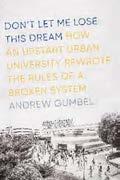
Don’t Let Me Lose This Dream
How an Upstart Urban University Rewrote the Rules of a Broken System
ANDREW GUMBEL
OF HOW GEORGIA STATE UNIVERSITY TORE UP THE RULEBOOK FOR EDUCATING LOWER-INCOME STUDENTS
Georgia State has become a celebrity of sorts as universities desperately look for the secret sauce to improve college completion rates.
When it comes to predictive analytics, Georgia State University is arguably the leader of the pack.
THE CHRONICLE OF HIGHER EDUCATION
Our goal is to show higher education how to create a future where you can thrive as a research university and educate the full spectrum of America.
—GSU PRESIDENT MARK BECKER
May
Hardcover, 978-1-62097-470-4
Ebook, 978-1-62097-471-1
$27.99 / $41.99 CAN 5 1⁄2” x 8 1⁄2”, 336 pages with 20 b&w images
Education
Georgia State . . . has been reimagined—amid a moral awakening and a raft of data-driven experimentation—as one of the South’s more innovative engines of social mobility.
THE NEW YORK TIMES
Once just another unglamorous urban university, Georgia State University has become a place of miracles and wonders in the heart of Atlanta, the city that spawned the civil rights movement. GSU is a living experiment in the education of lowerincome students and a crucible in which the promise of social advancement through talent and hard work, the essence of the American Dream, is being rekindled in an age of deep inequality and political crisis.
More than any other institution in the country, Georgia State has overturned the assumption that poorer students are doomed to fail. Don’t Let Me Lose This Dream describes how the architects of Georgia State’s success harnessed the power of evolving data technologies, a “moneyball” strategy that helped them recognize and remove the obstacles that have held poor students back. Veteran journalist Andrew Gumbel uncovers the human stories behind these innovations, tracing real students as they realize lifelong dreams of graduating from college.
Today, a Georgia State freshman who arrives homeless and hungry is no less likely to succeed than the daughter of a billionaire. African American, Hispanic, and low-income students now graduate from GSU at rates equal to or higher than those of other students. In fact, GSU has raised its graduation rate to 55 percent in 2018 from 32 percent in 2003 and, since 2014, has awarded more bachelor’s degrees to African Americans than any other nonprofit college or university in the country. More than just a story about higher education, Don’t Let Me Lose This Dream is a tale that points the way to wholesale societal transformation.
Andrew Gumbel is a regular contributor to The Guardian. He is the author of Down for the Count (The New Press) and Oklahoma City. He lives in Santa Monica, California.
Murder in the Garment District
The Grip of Organized Crime and
the
Decline of Labor in the United States
DAVID WITWER and CATHERINE RIOS

THE THRILLING AND TRUE ACCOUNT OF RACKETEERING AND UNION CORRUPTION IN MID-CENTURY NEW YORK, WHEN UNIONS AND THE MOB WERE LOCKED IN A POWER STRUGGLE THAT REVERBERATES TO THIS DAY
The murder had taken place “in one of the most congested areas of the city,” the district attorney noted. And yet, he told the press, “Not a single witness came forward.”
—FROM MURDER IN THE GARMENT DISTRICT
In 1949, in New York City’s crowded Garment District, a union organizer named William Lurye was stabbed to death by a mob assassin. Through the lens of this murder case, prize-winning authors David Witwer and Catherine Rios explore American labor history at its critical turning point, drawing on FBI case files and the private papers of investigative journalists who first broke the story. A narrative that originates in the garment industry of mid-century New York, which produced over 80 percent of the nation’s dresses at the time, Murder in the Garment District quickly moves to a national stage, where congressional anti-corruption hearings gripped the nation and forever tainted the reputation of American unions.
Replete with elements of a true-crime thriller, Murder in the Garment District includes a riveting cast of characters, from wheeling and dealing union president David Dubinsky to the notorious gangster Abe Chait and the crusading Robert F. Kennedy, whose public duel with Jimmy Hoffa became front-page news.
Deeply researched and grounded in the street-level events that put people’s lives and livelihoods at stake, Murder in the Garment District is destined to become a classic work of history—one that also explains the current troubled state of unions in America.
David Witwer is a professor of history and American studies at Penn State Harrisburg, and the author of Corruption and Reform in the Teamsters Union and Shadow of the Racketeer. Witwer also worked in the Labor Racketeering Bureau of the New York County District Attorney’s Office and served as a staff researcher at the New York State Organized Crime Task Force. Catherine Rios is an award-winning filmmaker and writer and an associate professor of humanities and communications at Penn State Harrisburg.
Praise for David Witwer’s previous work:
Shadow of the Racketeer: Winner of Labor History’s Best Book Prize for 2009
A masterful study of a subject that few historians have looked at closely—the role of corruption and mafia influence on the U.S. labor movement, and the significance of union corruption for U.S. history.
LABOR HISTORY
Corruption and Reform in the Teamsters Union:
A Choice Magazine Outstanding Academic Book
The definitive study of its subject, [and] one of the best volumes on any aspect of U.S. labor history to appear in recent years.
INDUSTRIAL AND LABOR RELATIONS REVIEW
May
Hardcover, 978-1-62097-463-6
Ebook, 978-1-62097-464-3
$26.99 / $40.50 CAN
5 1⁄2” x 8 1⁄2”, 288 pages with 23 b&w images Labor

In a Day’s Work
The Fight to End Sexual Violence Against America’s Most Vulnerable Workers
BERNICE YEUNG
with a new preface by the author
NOW IN PAPERBACK THE PULITZER PRIZE FINALIST’S POWERFUL EXAMINATION OF THE HIDDEN STORIES OF WORKERS OVERLOOKED BY #METOO
Finalist for the 2019 Pulitzer Prize in General Nonfiction
Winner of the 2018 Goddard Riverside Stephan Russo Book Prize for Social Justice
Winner of the 2019 PEN/ Galbraith Award for Nonfiction
A must-read for union organizers, advocates, policy makers and legislators—and all of us.
SAN FRANCISCO CHRONICLE
Under the Bus: How Working Women Are Being Run Over
Caroline Fredrickson
Paperback, $17.95, 978-1-62097-253-3
May
Paperback, 978-1-62097-599-2
Ebook, 978-1-62097-600-5
$17.99 / $26.99 CAN
5 1⁄2” x 8 1⁄2”, 256 pages Labor (Hardcover edition: 978-1-62097-315-8)
A timely, intensely intimate, and relevant exposé.
KIRKUS REVIEWS (STARRED REVIEW)
Apple orchards in bucolic Washington State. Office parks in Southern California under cover of night. The home of an elderly man in Miami. These are some of the workplaces where female workers have suffered brutal sexual assault and shocking harassment at the hands of their employers, often with little or no official recourse. In this harrowing yet often inspiring tale, investigative journalist Bernice Yeung exposes the epidemic of sexual violence levied against women farmworkers, domestic workers, and janitorial workers and charts their quest for justice in the workplace.
Yeung takes readers on a journey across the country, introducing us to women who came to America to escape grinding poverty only to encounter sexual violence in the United States. The author mitigates the difficult material by bringing humanity, empathy, and hope to each page. In a Day’s Work exposes the underbelly of economies filled with employers who take advantage of immigrant women’s need to earn a basic living. When these women find the courage to speak up, Yeung reveals, they are too often met by apathetic bosses and underresourced government agencies. But In a Day’s Work also tells a story of resistance, introducing a group of courageous allies who challenge dangerous and discriminatory workplace conditions alongside aggrieved workers—and win. Moving and inspiring, this book will change our understanding of the lives of immigrant women.

Bernice Yeung is an investigative journalist at ProPublica, and her work has appeared in the New York Times, PBS Frontline, New York magazine, and others. She lives in Berkeley, California.
The Merit Myth
How Our Colleges Favor the Rich and Divide America
ANTHONY P. CARNEVALE, PETER SCHMIDT, and JEFF STROHL
AN EYE-OPENING AND TIMELY LOOK AT HOW COLLEGES DRIVE THE VERY INEQUALITIES THEY ARE MEANT TO REMEDY, COMPLETE WITH A CALL—AND A VISION—FOR CHANGE
The system is worse than broken. It’s fixed.
—ANTHONY P. CARNEVALE, WASHINGTON POST OP-ED ON THE COLLEGE ADMISSIONS SCANDAL
Colleges fiercely defend America’s higher education system, arguing that it rewards bright kids who have worked hard. But it doesn’t actually work this way. As the recent bribery scandal demonstrates, social inequalities and colleges’ pursuit of wealth and prestige stack the deck in favor of the children of privilege. For education scholar and critic Anthony P. Carnevale, it’s clear that colleges are not the places of aspiration and equal opportunity they should (and claim) to be.
The Merit Myth delves deeply into the rampant dysfunction of higher education today and critiques a system that pays lip service to social mobility and meritocracy, while offering little of either. Through policies that exacerbate inequality, including generously funding so-called merit-based aid rather than expanding opportunity for those who need it most, U.S. universities—the presumed pathway to a better financial future—are woefully (and in some cases criminally) complicit in reproducing racial and class privilege across generations.
This timely and incisive book argues for unrigging the game by dramatically reducing the weight of the SAT/ACT; measuring colleges by their outcomes, not their inputs; designing affirmative action plans that honor the relationship between race and class; and making 14 the new 12—guaranteeing every American a public K–14 education. The Merit Myth shows the way to higher education becoming the beacon of opportunity it was intended to be.
Anthony P. Carnevale, a chairman under President Clinton of the National Commission on Employment Policy, is the director of the Georgetown University Center on Education and the Workforce (CEW). Peter Schmidt, the author of Color and Money, is an award-winning reporter and editor who has worked for Education Week and the Chronicle of Higher Education. Jeff Strohl is CEW’s director of research. All three live in Washington, DC.
• Admission rates for donors’ children and other applicants on special “interest lists” was 42 percent—far more than the single-digit admit rate for those without prior ties to a university.
• Black and Hispanic students are actually less represented at America’s top colleges now than they were thirty-five years ago.

Lower Ed: The Troubling Rise of For-Profit Colleges in the New Economy Tressie McMillan Cottom Paperback, $18.99, 978-1-62097-438-4
May
Hardcover, 978-1-62097-486-5 Ebook, 978-1-62097-487-2
$26.99 / $40.50 CAN 5 1⁄2” x 8 1⁄2”, 256 pages Education
A
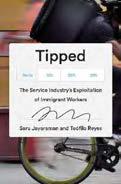
Tipped
The Service Industry’s Exploitation of Immigrant Workers
SARU JAYARAMAN and TEÓFILO REYES
POWERFUL EXPOSÉ OF HOW THE TIPPING SYSTEM HAS BEEN USED TO EXPLOIT IMMIGRANT WORKERS, FROM THE NATIONALLY RENOWNED ACTIVIST AND ACCLAIMED AUTHOR OF BEHIND THE KITCHEN
DOOR
Praise for Saru Jayaraman’s books:
Forked:
Paints a grim picture of the food business today . . . [and] makes the case that restaurants can survive and even prosper while paying workers well and offering them generous benefits.”
THE NEW YORK TIMES
Well researched. Jayaraman investigates the employment practices of a wide range of restaurants, from fine dining establishments to fast-food chains.
THE WALL STREET JOURNAL
Behind the Kitchen Door:
Detailed and unflinching.
CHICAGO TRIBUNE
A Must-Read for Anyone Who Eats at Restaurants.
YES!
May
Hardcover, 978-1-62097-533-6
Ebook, 978-1-62097-534-3
$26.99 / $40.50 CAN
5 1⁄2” x 8 1⁄2”, 256 pages Social Science
No one has done more to move forward the rights of food and restaurant workers than Saru Jayaraman.
—MARK BITTMAN, AUTHOR OF MARK BITTMAN’S KITCHEN MATRIX AND A BONE TO PICK
Six million workers in America are tipped workers, relying on a subminimum wage and the whims of customers to feed themselves and their families. Over a million of them are immigrants, and the unpredictability of tips combined with the unpredictability of life as an immigrant creates an unstable, uncertain future.
The restaurant industry has led the way in exploiting tipped workers, its incredible growth over the past few decades failing to translate to greater prosperity for most of the people it employs—many of them vulnerable immigrants. Other industries have gotten in on the act too, including nail salons and car washes. And as the service sector moves online, tech companies, such as DoorDash, Uber, and Lyft are capitalizing on the tipping loophole to avoid paying workers a minimum wage. All of these industries are profiting off immigration policy that allows employers to keep the immigrant workers they so desperately need, while discouraging the workers from speaking up.
Acclaimed author and restaurant activist Saru Jayaraman and social scientist Dr. Teófilo Reyes draw on hundreds of interviews to show how the subminimum wage and our broken immigration system combine to exploit millions of Americans. Tipped points to a new future in which immigrants are welcome and the service sector can prosper with, not off of, its immigrant workforce.
Saru Jayaraman is the co-founder of the Restaurant Opportunities Centers United (ROC-United), director of the Food Labor Research Center at the University of California, Berkeley, and the author of Behind the Kitchen Door and Forked: A New Standard for American Dining. Teófilo Reyes is the research director for both ROC-United and the Food Labor Research Center at the University of California, Berkeley. They are both based in the Bay Area.
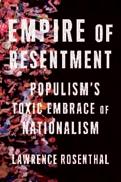
Empire of Resentment
Populism’s Toxic Embrace of Nationalism
LAWRENCE ROSENTHAL
FROM A LEADING SCHOLAR ON CONSERVATISM, THE EXTRAORDINARY CHRONICLE OF HOW THE TRANSFORMATION OF THE AMERICAN FAR RIGHT MADE THE TRUMP PRESIDENCY POSSIBLE—AND
WHAT IT PORTENDS FOR THE FUTURE
The lead up to the First World War saw a particular brand of nationalism that has a stark overlap with the populist nationalisms we see on the rise in Europe today . . . that kind of nationalism never dies.
—INTERVIEW WITH AUTHOR, THE CHRISTIAN SCIENCE MONITOR
Since Trump’s victory and the UK’s Brexit vote, much of the commentary on the populist epidemic has focused on the emergence of populism. But, Lawrence Rosenthal argues, what is happening globally is not the emergence but the transformation of right-wing populism.
Rosenthal, the founder of UC Berkeley’s Center for Right-Wing Studies, suggests right-wing populism is a protean force whose prime mover is the resentment felt toward perceived elites, and whose abiding feature is its ideological flexibility, which now takes the form of xenophobic nationalism. In 2016, American right-wing populists migrated from the free marketeering Tea Party to Donald Trump’s “hard hat,” antiimmigrant, American-First nationalism. This was the most important single factor in Trump’s electoral victory. In Italy, for example, the Northern League reinvented itself in 2018 as an all-Italy party, switching its fury from southerners to immigrants, and came to power.
Rosenthal paints a vivid sociological, political, and psychological picture of the transnational quality of this movement, which is now in power in at least a dozen countries, creating a de facto Nationalist International. The future of democratic politics in the United States and abroad depends on whether right-wing populists stay with this nationalist ideology and whether the liberal and left parties have the political capacity to effect a progressive populism of their own.
Dr. Lawrence Rosenthal is chair and lead researcher of the Berkeley Center for Right-Wing Studies. He has taught at the University of California, Berkeley, in the sociology and Italian studies departments and was a Fulbright Professor at the University of Naples in Italy. He lives in Berkeley.
You know, they have a word. It sort of became old-fashioned. It’s called a nationalist. And I say, “Really? We’re not supposed to use that word.” You know what I am? I’m a nationalist, OK? I’m a nationalist. Nationalist. Use that word. Use that word.
—DONALD TRUMP

978-1-62097-349-3
June
Hardcover, 978-1-62097-510-7 Ebook, 978-1-62097-511-4
$27.99 / $41.99 CAN
5 1⁄2” x 8 1⁄2”, 272 pages Current Affairs & Politics
Strangers in Their Own Land: Anger and Mourning on the American Right Arlie Russell Hochschild Paperback, $17.99,
• Google and Facebook control 99 percent of all new dollars spent on digital advertising
• The six biggest banks control 62 percent of U.S. assets
• Amazon accounts for nearly half of all online sales, and during the 2018 holiday season that number rose to 81 percent
• Three companies ship 85 percent of all prescription drugs to pharmacies and hospitals
• Four airlines control 80 percent of the world’s airplane routes
• 1,300 communities across America have completely lost local print newspaper coverage
• The meat industry is more concentrated now than it was at the time of Upton Sinclair’s muckraking classic The Jungle
• 68 million U.S. households have only one option for an Internet service provider to their home— either Comcast or Charter
Monopolized Life in the Age of Corporate Power
DAVID DAYEN

FROM THE CARS WE DRIVE TO WHAT TOOTHPASTE WE USE, HOW A TINY GROUP OF CORPORATIONS HAVE COME TO DOMINATE EVERY ASPECT OF OUR LIVES—BY ONE OF OUR MOST INTREPID AND ACCOMPLISHED JOURNALISTS
If you’re looking for a book . . . that will get your heart pumping and your blood boiling and that will remind you why we’re in these fights—add this one to your list.
—SENATOR ELIZABETH WARREN ON DAVID DAYEN’S CHAIN OF TITLE
Over the last forty years our choices have narrowed, our opportunities have shrunk, and our lives have become governed by a handful of very large and very powerful corporations. Today, practically everything we buy, everywhere we shop, and every service we secure comes from a heavily concentrated market.
This is a world where six major banks control most of our money, four airlines shuttle most of us around the country, and four major cell phone providers connect most of our communications. If you are sick you can go to one of three main pharmacies to fill your prescription, and if you end up in a hospital almost every accessory to heal you comes from one of a handful of large medical suppliers.
Dayen, the editor of the American Prospect and author of the acclaimed Chain of Title, provides a riveting account of what it means to live in this new age of monopoly and how we might resist this corporate hegemony.
Through vignettes and vivid case studies Dayen shows how these monopolies have transformed us, inverted us, and truly changed our lives, at the same time providing readers with the raw material to make monopoly a consequential issue in American life and revive a long-dormant antitrust movement.

David Dayen is the author of Chain of Title, winner of the Studs and Ida Terkel Prize for a first book in the public interest. He writes regularly for The Intercept and The Nation and has just been appointed the editor of the American Prospect. He lives in Venice, California.
Praise for David Dayen’s Chain of Title:
Named a Best Book of the Year by Kirkus Reviews and The Week
Gripping. . . . Prepare to be surprised, and angry . . . the homeowners’ stories are emotional roller coasters. Dayen skillfully narrates a slow reveal and sprinkles in some lively metaphors.
THE NEW YORK TIMES BOOK REVIEW
An inspiring, well-rendered, deeply reported, and often infuriating account.
KIRKUS REVIEWS (STARRED REVIEW)
Hitchcockian. . . . Meticulously researched, enthralling, and educational, this addition to the literature of the Great Recession calls out for its own big-screen adaptation.
PUBLISHERS WEEKLY
June
Hardcover, 978-1-62097-541-1
Ebook, 978-1-62097-542-8
$27.99 / $41.99 CAN
5 1⁄2” x 8 1⁄2”, 336 pages Current Affairs & Politics
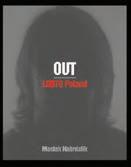

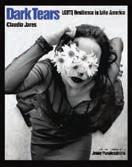
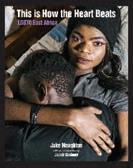

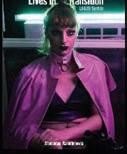

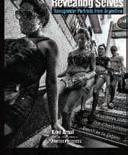





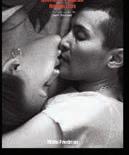



LGBTQ Life Around the World
A GROUNDBREAKING PHOTOBOOK
SERIES FROM THE NEW PRESS


Lived Experience
Reflections on LGBTQ Life
DELPHINE DIALLO
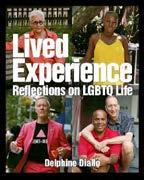
PAPERBACK ORIGINAL A BEAUTIFUL SERIES OF FULL-COLOR PORTRAITS OF LGBTQ PEOPLE OVER THE AGE OF FIFTY
My advice to the younger generation is to live your life with as much passion and as much indulgence as you possibly can. Do not do anything to anyone that you would not have done to yourself. Just live life as a wonderful, wonderful experience. —EVELYN WHITAKER, from Lived Experience
Even with the extraordinary strides the LGBTQ movement has made in civil rights, acceptance, and visibility over the past half century, a growing portion of the community remains largely invisible, its concerns relegated to the margins.
In the latest in a groundbreaking series of beautiful photobooks on LGBTQ communities around the world—from Russia to Mexico to Japan—French-Senegalese photographer Delphine Diallo centers on the voices and lives of older LGBTQ people in the United States, a generation that has been ravaged by the AIDS epidemic but has also been instrumental in extraordinary progress in LGBTQ rights and visibility in this country.
The series of fifty full-color portraits of LGBTQ people from across the nation— interviewed on the fiftieth anniversary of the Stonewall riots that led to the modern LGBTQ rights movement—offers this wise and resilient cohort a chance to share their stories and reflections. With a special focus on people of color, Lived Experience is a celebration of an underserved, neglected part of the LGBTQ world in America and an inspiration to future generations.

Delphine Diallo is a Brooklyn-based French and Senegalese visual artist and photographer. She graduated from the Académie Charpentier School of Visual Art in Paris in 1999 before working in the music industry for seven years as a special effect motion artist, video editor, and graphic designer. In 2008 she moved to New York after giving up a corporate art director role in Paris.


The Age of Dignity: Preparing for the Elder Boom in a Changing America Ai-jen Poo Paperback, $16.95, 978-1-62097-201-4
June
Paperback, 978-1-62097-580-0 Ebook, 978-1-62097-581-7
$21.99 / $32.99 CAN
8” x 10”, 192 pages with 50 4/c photos Photography/Gay and Lesbian Studies
Love Unites Us: Winning the Freedom to Marry in America Edited by Kevin M. Cathcart and Leslie J. Gabel-Brett Hardcover, $27.95, 978-1-59558-550-9

Use the Power You Have
A Brown Woman’s Guide to Politics and Political Change
PRAMILA JAYAPAL
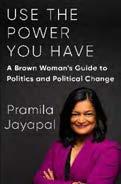
WASHINGTON’S RISING STAR EXPLAINS HOW WE CAN ACHIEVE A TRULY PROGRESSIVE AND INCLUSIVE AMERICA THAT WORKS FOR ALL OF US
Pramila Jayapal came to Congress in 2016 as a progressive outsider, but she’s quickly adapted to become the activist insider—negotiating with House Speaker Nancy Pelosi with the goal of turning progressive ideas into real policy.
VOX MAGAZINE, FEBRUARY 20, 2019
In November 2016, Pramila Jayapal (D-WA) was elected to the U.S. House of Representatives, the first Indian American woman to serve in that role. Two years later, the “fast-rising Democratic star and determined critic of President Donald Trump,” according to Politico’s Playbook 2017 “Power List,” won reelection with more votes than any other member of the House. Jayapal, co-chair of the Congressional Progressive Caucus, proved her progressive bonafides when she introduced the most comprehensive Medicare-for-all bill to Congress in February.
Behind the story of Jayapal’s rise to political prominence lie over two decades of devoted advocacy on behalf of immigrants and progressive causes—and years of learning how to turn activism into public policy that serves all Americans. Use the Power You Have is Jayapal’s account of the path from sixteen-year-old Indian immigrant to grassroots activist, state senator, and now progressive powerhouse in Washington, DC.
Written with passion and insight, Use the Power You Have offers a wealth of ideas and inspiration for a new generation of engaged citizens interested in fighting back and making change, whether in Washington or in their own communities.
Congresswoman Pramila Jayapal represents Washington’s 7th District, which encompasses most of Seattle and surrounding areas. The first Indian American woman in the House of Representatives, Jayapal has spent the last twenty years working internationally and domestically as an advocate for women’s, immigrant, civil, and human rights. She lives in Issaquah, Washington.
She’s one of these incredible mentors that, at the forefront, is always about serving your district and doing it in a very authentic way.
—REP. RASHIDA TLAIB
The congresswoman is a lifelong organizer—and now she’s one of the key players in Congress.
THE NATION
The Democratic Party is quickly coalescing around an ambitious Medicare-for-all platform—and Rep. Pramila Jayapal is shaping up to be a major voice in that debate.
THE EZRA KLEIN SHOW
The Democrats’ fastest-rising star is a woman unafraid of her own power.
—QZ.COM
June
Hardcover, 978-1-62097-143-7 Ebook, 978-1-62097-145-1
$25.99 / $38.99 CAN 5 1⁄2” x 8 1⁄2”, 240 pages Current Affairs & Politics
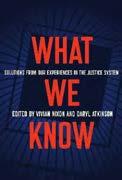
What We Know
Solutions from Our Experiences in the Justice System
edited by VIVIAN NIXON and DARYL ATKINSON
A
THOUGHTFUL AND SURPRISING CORNUCOPIA OF IDEAS FOR IMPROVING AMERICA’S CRIMINAL JUSTICE SYSTEM, FROM THOSE MOST IMPACTED BY
IT
Contributors include people incarcerated at:
• Arrendale State Prison, Georgia
• Century Correctional Institution, Florida
• Indiana State Prison
• Louisiana Correctional Institute for Women
• Maine Correctional Center
• Massachusetts Treatment Center
• North Branch Correctional Institution, Maryland
• Rosharon, Texas
• Snake River Correctional Institution, Oregon
• Thumb Correctional Facility, Michigan
• Washington State Penitentiary
June
Hardcover, 978-1-62097-529-9
Ebook, 978-1-62097-530-5
$26.99 / $40.50 CAN
5 1⁄2” x 8 1⁄2”, 272 pages Current Affairs/Criminal Justice
This is what we know, and we know it better than anyone else. —FROM THE INTRODUCTION BY VIVIAN NIXON AND DARYL ATKINSON
When The New Press, the Center for American Progress, and the Formerly Incarcerated and Convicted Peoples and Family Movement issued a call for innovative reform ideas, over three hundred currently and formerly incarcerated individuals responded. What We Know collects two dozen of their best suggestions, each of which proposes a policy solution derived from their own lived experience.
Ideas run the gamut: A man serving time in Florida argues for a Prison Labor Standards Act, calling for us to reject prison slavery. A Nebraska man who served a federal prison term for white-collar crimes suggests offering courses in entrepreneurship as a way to break down barriers to employment for people returning from incarceration. A woman serving a life sentence in Georgia spells out a system of earned privileges that could increase safety and decrease stress inside prison. And a man serving a twenty-five-year term for a crime he committed at age fifteen advocates powerfully for eliminating existing financial incentives to charge youths as adults.
With contributors including nationally known formerly incarcerated leaders in justice reform, twenty-four justice-involved individuals add a perspective that is too often left out of national reform conversations.

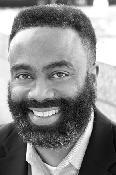
The Reverend Vivian Nixon is executive director of College and Community Fellowship (CCF), a New York–based organization committed to removing barriers to higher education for women with criminal-record histories and their families. Attorney Daryl Atkinson was the inaugural Second Chance Fellow for the U.S. Department of Justice, and is now the co-director of Forward Justice, a law, policy, and strategy center in Durham, North Carolina, dedicated to advancing racial, social, and economic justice in the United States.
Prison by Any Other Name
The Harmful Consequences of Popular Reforms
MAYA SCHENWAR and VICTORIA LAW with a foreword by michelle alexander
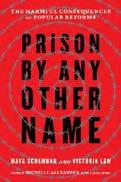
A CRUCIAL INDICTMENT OF WIDELY EMBRACED “ALTERNATIVES TO INCARCERATION” THAT EXPOSES HOW MANY OF THESE NEW APPROACHES ACTUALLY WIDEN THE NET OF PUNISHMENT AND SURVEILLANCE
But what does it mean—really—to celebrate reforms that convert your home into your prison?
—MICHELLE ALEXANDER, FROM THE FOREWORD
Electronic monitoring. Locked-down drug treatment centers. House arrest. Mandated psychiatric treatment. Data-driven surveillance. Extended probation. These are some of the key alternatives held up as cost-effective substitutes for jails and prisons. But many of these so-called reforms actually widen the net, weaving in new strands of punishment and control, and bringing new populations, who would not otherwise have been subject to imprisonment, under physical control by the state.
As mainstream public opinion has begun to turn against mass incarceration, political figures on both sides of the spectrum are pushing for reform. But—though they’re promoted as steps to confront high rates of imprisonment—many of these measures are transforming our homes and communities into prisons instead.
In Prison by Any Other Name, activist journalists Maya Schenwar and Victoria Law reveal the way the kinder, gentler narrative of reform can obscure agendas of social control and challenge us to question the ways we replicate the status quo when pursuing change. A foreword by Michelle Alexander situates the book in the context of criminal justice reform conversations. Finally, the book offers a bolder vision for truly alternative justice practices.
Maya Schenwar is the editor-in-chief of Truthout. She is also the author of Locked Down, Locked Out and the co-editor of the anthology Who Do You Serve, Who Do You Protect? She lives in Chicago. Victoria Law is a freelance journalist and the author of Resistance Behind Bars and co-editor of Don’t Leave Your Friends Behind. She is a cofounder of NYC Books Through Bars and lives in New York. Michelle Alexander is an opinion columnist for the New York Times and the author of The New Jim Crow. She lives in Columbus, Ohio.

Until We Reckon: Violence, Mass Incarceration, and a Road to Repair Danielle Sered Hardcover, $26.99, 978-1-62097-479-7

Decarcerating America: From Mass Punishment to Public Health Edited by Ernest Drucker Hardcover, $27.95, 978-1-62097-278-6
July
Hardcover, 978-1-62097-310-3 Ebook, 978-1-62097-311-0
$25.99 / $38.99 CAN 5 1⁄2” x 8 1⁄2”, 240 pages Criminal Justice

Democracy, If We Can Keep It
The ACLU’s 100-Year Fight for Rights in America
ELLIS COSE
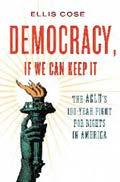
PUBLISHED TO COINCIDE WITH THE ACLU’S CENTENNIAL, A MAJOR NEW BOOK BY THE NATIONALLY CELEBRATED JOURNALIST AND BESTSELLING AUTHOR ABOUT ONE OF AMERICA’S MOST IMPORTANT ORGANIZATIONS
We have worked with and battled American presidents of both parties to ensure that our country makes good on its founding premise as the land of the free.
—FROM THE ACLU’S FULL-PAGE NEW YORK TIMES ADVERTISEMENT, FOLLOWING DONALD TRUMP’S ELECTION
For a century, the American Civil Liberties Union has fought to keep Americans in touch with the founding values of the Constitution. As its centennial approached, the organization invited Ellis Cose to become its first ever writer-in-residence, serving as an “embedded journalist” with complete editorial independence.
The result is Cose’s groundbreaking Democracy, If We Can Keep It: The ACLU’s 100-Year Fight for Rights in America, the most authoritative account ever of America’s premier defender of civil liberties. A vivid work of history and journalism, Democracy, If We Can Keep It is not just the definitive story of the ACLU but also an essential account of America’s rediscovery of rights it had granted but long denied. Cose’s narrative begins with World War I and brings us to today, chronicling the ACLU’s role through the horrors of 9/11, the saga of Edward Snowden, and the phenomenon of Donald Trump.
A chronicle of America’s most difficult ethical quandaries from the Red Scare, the Scottsboro Boys’ trials, Japanese American internment, McCarthyism, and Vietnam, Democracy, If We Can Keep It weaves these accounts into a deeper story of American freedom—one that is profoundly relevant to our present moment.
Ellis Cose is a former columnist for Newsweek, chairman of the editorial board of the New York Daily News, contributor and critic for Time, and columnist for USA Today
The author of numerous books, including the bestselling The Rage of a Privileged Class, Cose lives in New York City.
Praise for Ellis Cose’s The End of Anger:
May be the defining work on America’s new racial dynamics.
—ANTHONY D. ROMERO, EXECUTIVE DIRECTOR OF THE AMERICAN CIVIL LIBERTIES UNION
A tremendously important book—gracefully done, painfully perceptive . . . fearless in its honesty.
—JONATHAN KOZOL, AUTHOR OF SAVAGE INEQUALITIES
Praise for Rage of a Privileged Class:
A disciplined, graceful exposition of a neglected aspect of the subject of race in America.
THE NEW YORK TIMES BOOK REVIEW
Cose’s book is not only a wholly positive contribution to the dialogue on race in America, but an essential one.
LOS ANGELES TIMES
July
Hardcover, 978-1-62097-383-7
Ebook, 978-1-62097-384-4
$29.99 / $44.99 CAN
6” x 9”, 480 pages History/Legal
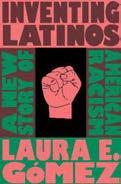
Inventing Latinos
A New Story of American Racism
LAURA E. GÓMEZ
A GROUNDBREAKING EXAMINATION OF HOW LATINOS’ NEW COLLECTIVE RACIAL IDENTITY UPENDS THE WAY AMERICANS UNDERSTAND RACE
A Latino man who was filmed being racially abused by a white California woman has said similar incidents have become “increasingly regular” since Donald Trump took office.
—2018 GUARDIAN ARTICLE

Brown Is the New White: How the Demographic Revolution Has Created a New American Majority
Steve Phillips Paperback, $18.99, 978-1-62097-314-1
July
Hardcover, 978-1-59558-917-0 Ebook, 978-1-62097-178-9
$27.99 / $41.99 CAN 5 1⁄2” x 8 1⁄2”, 336 pages Current Affairs & Politics
Latin music is more popular than country music, and one of the most recognizable political faces in the United States is Rep. Alexandria Ocasio-Cortez, D-NY, whose family comes from Puerto Rico. And yet, Latinos . . . still face overt and subtle racism.
—FROM A 2/26/19 NBC NEWS ARTICLE
In an unprecedented demographic shift, Latinos will comprise a third of the American population in just a matter of decades. While their influence shapes everything from electoral politics to popular culture, many Americans still struggle with two basic questions: Who are Latinos, and where do they fit in America’s racial order? Laura E. Gómez, a leading expert on race in America, argues that it is only recently that Mexican Americans, Puerto Ricans, Cubans, Dominicans, Central Americans, and others are seeing themselves (and are being seen by others) under the banner of a cohesive racial identity. And the catalyst for this emergent identity, she argues, has been the ferocity of anti-Latino racism.
In a bold effort to reframe our often-confused discussions over the Latinx generation, Gómez argues that everything from Trump’s toxic rhetoric and anti-immigrant laws like Arizona’s SB1070 to DACA and sanctuary cities have indelibly changed the way race functions in this country.
Part history, part guide for the future, Inventing Latinos argues that all Americans must grapple with Latinos’ dynamic identity—an identity that is impacting everything we think we know about race in America.

Laura E. Gómez is a professor of law, sociology, and Chicana/ Chicano studies at UCLA. She is the author of Manifest Destinies, Mapping Race, and Misconceiving Mothers. She lives in Los Angeles.
The Beginning or the End
How Hollywood Learned to Stop Worrying and Love the Bomb
GREG MITCHELL
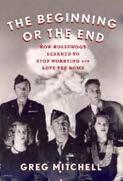
THE DARK AND ABSURD TALE OF HOLLYWOOD’S ATTEMPT TO MAKE “THE MOST IMPORTANT STORY EVER” ABOUT THE MANHATTAN PROJECT
Greg Mitchell is the best kind of historian, a true storyteller.
—KAI BIRD, PULITZER PRIZE–WINNING AUTHOR OF AMERICAN PROMETHEUS
Almost as soon as bombs had dropped on Hiroshima and Nagasaki, MGM Studios had sewn up the rights to make the picture Louis B. Mayer would call “the most important story” he would ever film: a big budget dramatization of the Manhattan Project and the invention of the atomic bomb.
Over at Paramount, Hal B. Wallis was at the same time ramping up his own film version. His screenwriter: the novelist Ayn Rand, who saw in protagonist J. Robert Oppenheimer the embodiment of her first individualist hero-visionary, Howard Roark.
In the tradition of Mark Harris’s Five Came Back, Greg Mitchell’s The Beginning or the End chronicles the first efforts of the American culture industry to process the Atomic Age. What began as a faithful cautionary tale with major stars that could have set a responsible path of respect for fearsome technology was drained of all blood by thousands of cuts. Concessions to Truman, the military, and the scientists for reasons of propaganda, politics, and petty human vanity (this was Hollywood) turned this important narrative into a government-sponsored megaphone touting the irreproachable myth of American right and might.
Mitchell has found his way into the rooms where it happened, unearthing and using letters and studio cables that show how conscientious intentions were compromised by the imperatives of the Cold War. As in his acclaimed Cold War true-life thriller The Tunnels, he exposes how our implacable American story-making mechanisms distort our history.
Greg Mitchell’s books include The Tunnels; The Campaign of the Century, winner of the Goldsmith Book Prize and finalist for the Los Angeles Times Book Prize; Tricky Dick and the Pink Lady, a New York Times Notable Book; So Wrong for So Long; and, with Robert Jay Lifton, Hiroshima in America and Who Owns Death? He lives in the New York City area.
Praise for Greg Mitchell’s The Tunnels:
Engaging . . . the book vividly describes the harrowing conditions under which strong young men based in West Berlin dug the tunnels.
THE WASHINGTON POST
Every hour of my year in East Berlin—1963/64—the escape tunnels beneath our feet were being dug. This is their story: those who dug them, those who used them, and those who betrayed them. Fascinating—and it is all true.
July
Hardcover, 978-1-62097-573-2 Ebook, 978-1-62097-574-9
$27.99 / $41.99 CAN 5 1⁄2” x 8 1⁄2”, 272 pages Film & Television
—FREDERICK FORSYTH, AUTHOR OF THE ODESSA FILE AND THE DAY OF THE JACKAL
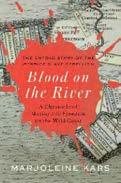
Blood on the River
A Chronicle of Mutiny and Freedom on the Wild Coast
MARJOLEINE KARS
A BREATHTAKINGLY ORIGINAL WORK OF HISTORY THAT UNCOVERS A MASSIVE SLAVE REVOLT THAT ALMOST CHANGED THE FACE OF THE AMERICAS
Praise for Marjoleine Kars’s Breaking Loose Together:
This is social history of the highest order. . . . Kars’s explanation of the uprising should cause a reevaluation of the origins of the American Revolution.
HISTORIAN
In a crisp, narrative style, Kars captures the local voices of resistance without losing sight of the larger social and economic forces that transformed personal frustration into organized violence.
JOURNAL OF AMERICAN HISTORY
A masterful work, truly required reading.
WILLIAM AND MARY QUARTERLY
August
Hardcover, 978-1-62097-459-9
Ebook, 978-1-62097-460-5
$27.99 / $41.99 CAN
5 1⁄2” x 8 1⁄2”, 336 pages with 15 b&w images History
As the rebellion lighted from one plantation to another, colonists panicked. Instead of rallying to the colony’s defense, they acted to save themselves. Rather than protecting their plantations, they hurriedly readied themselves to abandon them.
—FROM BLOOD ON THE RIVER
On Sunday, February 27, 1763, thousands of slaves in the Dutch colony of Berbice— in present-day Guyana—launched a massive rebellion that came amazingly close to succeeding. Surrounded by jungle and savannah, the revolutionaries (many of them African-born) and Europeans struck and parried for an entire year. In the end, the Dutch prevailed because of one unique advantage—their ability to get soldiers and supplies from neighboring colonies and from Europe. Blood on the River is the explosive story of this little-known revolution, one that almost changed the face of the Americas.
Drawing on nine hundred interrogation transcripts collected by the Dutch when the Berbice rebellion finally collapsed, and which were subsequently buried in Dutch archives, historian Marjoleine Kars reconstructs an extraordinarily rich day-by-day account of this pivotal event. Blood on the River provides a rare in-depth look at the political vision of enslaved people at the dawn of the Age of Revolution and introduces us to a set of real characters, vividly drawn against the exotic tableau of a riverine world of plantations, rainforest, and Carib allies who controlled a vast South American hinterland.
An astonishing original work of history, Blood on the River will change our understanding of revolutions, slavery, and of the story of freedom in the New World.
Marjoleine Kars is an associate professor at the University of Maryland, Baltimore County. A noted historian of slavery, she is the author of Breaking Loose Together. She lives in Washington, DC.
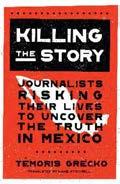
Killing the Story
Journalists Risking Their Lives to Uncover the Truth in Mexico
TÉMORIS GRECKO
translated from the spanish by diane stockwell
A HARROWING AND UNFORGETTABLE LOOK AT REPORTING IN MEXICO, ONE OF THE WORLD’S MOST DANGEROUS COUNTRIES IN WHICH TO BE A JOURNALIST
Let them kill us all, if that is the death penalty for reporting this hell. No to silence.
—JAVIER VALDEZ CÁRDENAS LESS THAN TWO MONTHS BEFORE HE WAS PULLED FROM HIS CAR AND MURDERED IN THE STREET
In 2017, Mexico edged out Iraq and Syria as the deadliest country in the world in which to be a reporter, with at least fourteen journalists killed over the course of the year. The following year another ten journalists were murdered, joining the almost 150 reporters who have been killed since the mid-2000s in a wave of violence that has accompanied Mexico’s war on drugs.
In Killing the Story, award-winning journalist and filmmaker Témoris Grecko reveals how journalists are risking their lives to expose crime and corruption. From the streets of Veracruz to the national television studios of Mexico City, Grecko writes about the heroic work of reporters at all levels—from the local self-trained journalist Moises Sanchez, whose body was found dismembered by the side of a road after he reported on corruption by the state’s governor, to high-profile journalists such as Javier Valdez Cárdenas, gunned down in the streets of Sinaloa, and Carmen Aristegui, battling the forces attempting to censor her.
In the vein of Charles Bowden’s Murder City and Anna Politkovskaya’s A Russian Diary, Killing the Story is a powerful memorial to the work of Grecko’s lost colleagues, which shows a country riven by brutality, hypocrisy, and corruption, and sheds a light on how those in power are bent on silencing those determined to reveal the truth and bring an end to corruption.
Témoris Grecko is a journalist who has worked in ninety-one countries. A regular contributor to Proceso and Aristegui Noticias, he has published five books in Spanish. He has made two documentaries, Watching Them Die: The Mexican Army and the 43 Disappeared and The Truth Shall Not Be Killed. He lives in Mexico. Diane Stockwell is a Spanish-language translator based in New York.
Mexico’s press is caught in a deadly cycle of violence and impunity, with journalists in Veracruz state at particular risk of kidnap and murder. . . . A lack of political will to end impunity exposes Mexico as one of the most dangerous countries in the world for journalists.
—COMMITTEE TO PROTECT JOURNALISTS
The many murders and abductions of journalists who try to inform the public about organized crime, corruption and collusion between crime cartels and officials . . . must be regarded as crimes against humanity.
—REPORTERS WITHOUT BORDERS
August
Hardcover, 978-1-62097-502-2 Ebook, 978-1-62097-503-9
$25.99 / $38.99 CAN 5 1⁄2” x 8 1⁄2”, 240 pages Current Affairs & Politics
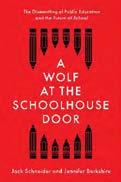
A Wolf at the Schoolhouse Door
The Dismantling of Public Education and the Future of School
JACK SCHNEIDER and JENNIFER BERKSHIRE
A TRENCHANT ANALYSIS OF HOW PUBLIC EDUCATION IS BEING DESTROYED IN OVERT AND DECEPTIVE WAYS—AND HOW TO FIGHT BACK
Praise for Jack Schneider’s Beyond Test Scores:
Engaging, provocative, and at times inspiring.
—HOWARD GARDNER, AUTHOR OF THE APP GENERATION
A critical contribution to policy, discourse, and the public good [that] gets at the heart of American inequality.
—TRESSIE McMILLAN COTTOM, AUTHOR OF LOWER ED
Thoughtful and thorough . . . enlightening and a breath of fresh air.
—PEDRO NOGUERA, AUTHOR OF SCHOOLING FOR RESILIENCE
An important book.
—DIANE RAVITCH, AUTHOR OF REIGN OF ERROR
A clear-eyed, thoughtful step forward.
—ANYA KAMENETZ, AUTHOR OF THE TEST
August
Hardcover, 978-1-62097-494-0
Ebook, 978-1-62097-495-7
$26.99 / $40.50 CAN
5 1⁄2” x 8 1⁄2”, 256 pages
Education
There’s no more time for tinkering around the edges.
—BETSY DeVOS, 2018 “RETHINK SCHOOL” TOUR
Betsy DeVos may be the most prominent face of the push to dismantle public education, but she is in fact part of a large movement that’s been steadily gaining power and notching progress for decades—amassing funds, honing its messaging, and crafting policies. While support for public education today is stronger than ever, the movement to save our schools remains fragmented, variable, and voluntary. Meanwhile, those set on destroying this beloved institution are unified, patient, and well-resourced.
In A Wolf at the Schoolhouse Door, Jennifer Berkshire and Jack Schneider, cohosts of the popular education podcast Have You Heard, lay out the increasingly potent network of conservative elected officials, advocacy groups, funders, and think tanks that have aligned behind a radical vision to unmake public education. They describe the dogma underpinning the work of the dismantlers and how it fits into the current political context, giving readers an up-close look at the policies—school vouchers, the war on teachers’ unions, tax credit scholarships, virtual schools, and more—driving the movement’s agenda. Finally they look forward, surveying the world the dismantlers threaten to build.
As teachers from coast to coast mobilize with renewed vigor, this smart, essential book sounds an alarm, one that should incite a public reckoning on behalf of the millions of families served by the American educational system—and many more who stand to suffer from its unmaking.
Jack Schneider is the author of three books and an award-winning education historian and professor at the College of the Holy Cross. Jennifer Berkshire is the education editor at AlterNet. Together they host the education podcast Have You Heard. They both live in Massachusetts.
12 Essential Education Books from The New Press
That Every Teacher—and Every Bookstore— Needs to Have on Their Shelves *
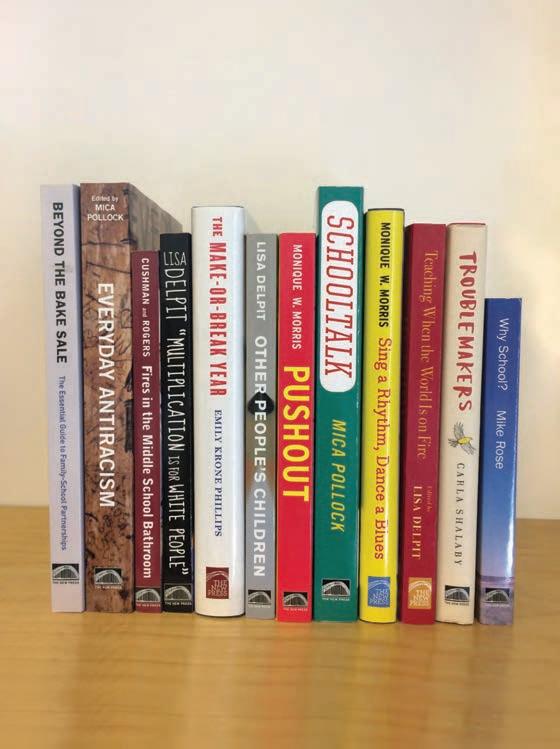
* Through August 2020, any bookstore that stocks all 12 books and organizes a teachers’ reading group in their store will receive 12 free copies of the brilliant new classic Troublemakers by Carla Shalaby to share with participating teachers.
MARCH/International Women’s Day
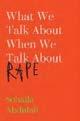
What We Talk About When We Talk About Rape
Sohaila Abdulali
Paperback, 978-1-62097-474-2, 240 pages Ebook, 978-1-62097-475-9
APRIL/Earth Day
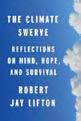
The Climate Swerve: Reflections on Mind, Hope, and Survival
Robert Jay Lifton
Hardcover, 978-1-62097-347-9, 192 pages Ebook, 978-1-62097-348-6
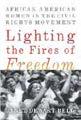
Lighting the Fires of Freedom: African American Women in the Civil Rights Movement
Janet Dewart Bell
Hardcover, 978-1-62097-335-6, 240 pages Ebook, 978-1-62097-336-3

Frackopoly: The Battle for the Future of Energy and the Environment
Wenonah Hauter
Hardcover, 978-1-62097-007-2, 384 pages Ebook, 978-1-62097-017-1
MAY/May Day and Studs Terkel’s Birthday
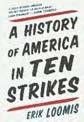
A History of America in Ten Strikes
Erik Loomis
Hardcover, 978-1-62097-161-1, 320 pages Ebook, 978-1-62097-162-8

From the Folks Who Brought You the Weekend: An Illustrated History of Labor in the United States
Priscilla Murolo and A.B. Chitty
Paperback, 978-1-62097-448-3, 480 pages Ebook, 978-1-62097-449-0
Under the Bus: How Working Women Are Being Run Over Caroline Fredrickson
Paperback, 978-1-62097-253-3, 256 pages Ebook, 978-1-62097-080-5

Strangers in Their Own Land: Anger and Mourning on the American Right
Arlie Russell Hochschild Paperback, 978-1-62097-349-3, 416 pages Ebook, 978-1-62097-398-1
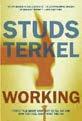
Working: People Talk About What They Do All Day and How They Feel About What They Do Studs Terkel
Paperback, 978-1-56584-342-4, 640 pages Ebook, 978-1-59558-766-4
JUNE/Pride and Graduation

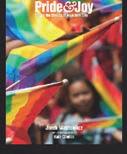
Pride & Joy: Taking the Streets of New York City
Jurek Wajdowicz
Paperback, 978-1-62097-185-7, 192 pages Ebook, 978-1-62097-206-9
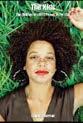
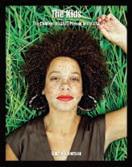
The Kids: The Children of LGBTQ Parents in the USA
Gabriela Herman Paperback, 978-1-62097-367-7, 160 pages Ebook, 978-1-62097-368-4
JULY/Independence Day

We Too Sing America: South Asian, Arab, Muslim, and Sikh Immigrants
Shape Our Multiracial Future
Deepa Iyer
Paperback, 978-1-62097-273-1, 272 pages Ebook, 978-1-62097-326-4
AUGUST/Back to School
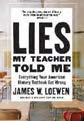
Lies My Teacher Told Me: Everything Your American History Textbook Got Wrong
James W. Loewen
Paperback, 978-1-62097-392-9, 480 pages Ebook, 978-1-62097-455-1
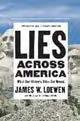
Lies Across America: What Our Historic Sites Get Wrong
James W. Loewen
Paperback, 978-1-62097-433-9, 512 pages Ebook, 978-1-62097-493-3
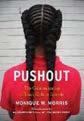
Pushout: The Criminalization of Black Girls in Schools
Monique W. Morris
Paperback, 978-1-62097-342-4, 304 pages
Ebook, 978-1-62097-413-1
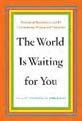
The World Is Waiting for You: Graduation Speeches to Live By from Activists, Writers, and Visionaries
Edited by Tara Grove and Isabel Ostrer Hardcover, 978-1-62097-090-4, 224 pages Ebook, 978-1-62097-091-1
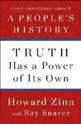
Truth Has a Power of Its Own: Conversations About A People’s History
Howard Zinn with Ray Suarez Hardcover, 978-1-62097-517-6, 240 pages Ebook, 978-1-62097-518-3
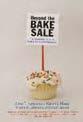
Beyond the Bake Sale: The Essential Guide to Family-School Partnerships
Anne T. Henderson, Karen L. Mapp, Vivian R. Johnson, and Don Davies
Paperback, 978-1-56584-888-7, 352 pages Ebook, 978-1-59558-554-7
Studs and Ida Terkel Award Winners
On the occasion of his ninetieth birthday, Studs Terkel and his son Dan announced the creation of the Studs and Ida Terkel Author Fund. The Terkel Fund provides authors with support to conduct their research and writing, allowing a new generation of writers the freedom to experiment and innovate in the spirit of Studs’s own work. The Studs and Ida Terkel Award recognizes authors whose books explore aspects of America that are not adequately represented by the mainstream media.
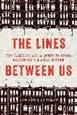
The Lines Between Us: Two Families and a Quest to Cross Baltimore’s Racial Divide
Lawrence Lanahan
Hardcover, 978-1-62097-344-8, 416 pages Ebook, 978-1-62097-345-5

Chain of Title: How Three Ordinary Americans Uncovered Wall Street’s Great Foreclosure Fraud
David Dayen Paperback, 978-1-62097-350-9, 416 pages Ebook, 978-1-62097-418-6
Lessons from the Heartland: A Turbulent Half-Century of Public Education in an Iconic American City
Barbara J. Miner
Hardcover, 978-1-59558-829-6, 320 pages Ebook, 978-1-59558-864-7
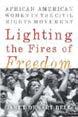
Lighting the Fires of Freedom: African American Women in the Civil Rights Movement
Janet Dewart Bell Hardcover, 978-1-62097-335-6, 240 pages Ebook, 978-1-62097-336-3
The Boy Who Could Change the World: The Writings of Aaron Swartz Paperback, 978-1-62097-066-9, 368 pages Ebook, 978-1-62097-076-8
Framing Innocence: A Mother’s Photographs, a Prosecutor’s Zeal, and a Small Town’s Response
Lynn Powell Paperback, 978-1-59558-714-5, 320 pages Ebook, 978-1-59558-626-1

Teeth: The Story of Beauty, Inequality, and the Struggle for Oral Health in America
Mary Otto Paperback, 978-1-62097-482-7, 304 pages Ebook, 978-1-62097-281-6

Hold Fast to Dreams: A College Guidance Counselor, His Students, and the Vision of a Life Beyond Poverty
Beth Zasloff and Joshua Steckel Paperback, 978-1-62097-132-1, 320 pages Ebook, 978-1-59558-928-6

The Devil in Dover: An Insider’s Story of Dogma v. Darwin in Small-Town America
Lauri Lebo Paperback, 978-1-59558-451-9, 256 pages Ebook, 978-1-59558-658-2
Criminal Justice
Becoming Ms. Burton: From Prison to Recovery to Leading the Fight for Incarcerated Women
Susan Burton and Cari Lynn Paperback, 978-1-62097-435-3, 336 pages Ebook, 978-1-62097-439-1
Start Here: A Road Map to Reducing Mass Incarceration
Greg Berman and Julian Adler Hardcover, 978-1-62097-223-6, 224 pages Ebook, 978-1-62097-224-3
Until We Reckon: Violence, Mass Incarceration, and a Road to Repair
Danielle Sered Hardcover, 978-1-62097-479-7, 320 pages Ebook, 978-1-62097-480-3
A Perilous Path: Talking Race, Inequality, and the Law
Sherrilyn Ifill, Loretta Lynch, Bryan Stevenson, and Anthony C. Thompson Hardcover, 978-1-62097-395-0, 128 pages Ebook, 978-1-62097-396-7
Decarcerating America: From Mass Punishment to Public Health
Edited by Ernest Drucker Hardcover, 978-1-62097-278-6, 336 pages Ebook, 978-1-62097-279-3

Race to Incarcerate
Marc Mauer Paperback, 978-1-59558-022-1, 256 pages Ebook, 978-1-59558-666-7
The New Jim Crow: Mass Incarceration in the Age of Colorblindness
Michelle Alexander Paperback, 978-1-59558-643-8, 336 pages Ebook, 978-1-59558-819-7
Hell Is a Very Small Place: Voices from Solitary Confinement
Edited by Jean Casella, James Ridgeway, and Sarah Shourd Paperback, 978-1-62097-351-6, 240 pages Ebook, 978-1-62097-138-3
Critical Race Theory: The Key Writings That Formed the Movement
Edited by Kimberlé Crenshaw, Neil T. Gotanda, Gary Peller, and Kendall Thomas Paperback, 978-1-56584-271-7, 528 pages
The New Press 12 “Must Haves” New
Press books that every bookstore in the country should have in stock
Working: People Talk About What They Do All Day and How They Feel About What They Do Studs Terkel Paperback, 978-1-56584-342-4, 640 pages Ebook, 978-1-59558-766-4

Dr. Seuss Goes to War: The World War II Editorial Cartoons of Theodor Seuss Geisel
Richard H. Minear Paperback, 978-1-56584-704-0, 272 pages Ebook, 978-1-59558-990-3

“The Good War”: An Oral History of World War II Studs Terkel Paperback, 978-1-56584-343-1, 608 pages Ebook, 978-1-59558-759-6
Lies My Teacher Told Me: Everything Your American History Textbook Got Wrong
James W. Loewen Paperback, 978-1-62097-392-9, 480 pages Ebook, 978-1-62097-455-1
“Multiplication Is for White People”: Raising Expectations for Other People’s Children
Lisa Delpit Paperback , 978-1-59558-898-2, 256 pages Ebook, 978-1-59558-770-1

Other People’s Children: Cultural Conflict in the Classroom
Lisa Delpit Paperback , 978-1-59558-074-0, 256 pages Ebook, 978-1-59558-654-4
Pushout: The Criminalization of Black Girls in Schools
Monique W. Morris Paperback, 978-1-62097-342-4, 304 pages Ebook, 978-1-62097-413-1
Everyday Antiracism: Getting Real About Race in School Edited by Mica Pollock Paperback , 978-1-59558-054-2, 416 pages Ebook, 978-1-59558-567-7
Strangers in Their Own Land: Anger and Mourning on the American Right Arlie Russell Hochschild Paperback , 978-1-62097-349-3, 416 pages Ebook, 978-1-62097-398-1

Beyond the Bake Sale: The Essential Guide to Family-School Partnerships
Anne T. Henderson, Karen L. Mapp, Vivian R. Johnson, and Don Davies Paperback, 978-1-56584-888-7, 352 pages Ebook, 978-1-59558-554-7
Chokehold: Policing Black Men
Paul Butler Paperback, 978-1-62097-483-4, 320 pages Ebook, 978-1-62097-498-8
The New Jim Crow: Mass Incarceration in the Age of Colorblindness
Michelle Alexander Paperback, 978-1-59558-643-8, 336 pages Ebook, 978-1-59558-819-7
The New Press extends heartfelt thanks to the following philanthropic institutions for their support since the beginning of 2018:
AG Foundation
Amazon Smile Foundation
Arcus Foundation
Art for Justice Fund, a sponsored project of Rockefeller Philanthropy Advisors
LR Bauman Foundation
Butler’s Hole Fund, Boston Foundation
Butler’s Hole South Fund, Boston Foundation
Annie E. Casey Foundation
Coltrane Donor Advised Fund
CrossCurrents Foundation
Richard H. Driehaus Foundation
Educational Foundation of America
Everett Foundation
Ford Foundation
Furthermore: a program of the JM Kaplan Fund
Jewish Communal Fund
Kahn Charitable Fund
W. K. Kellogg Foundation
Kresge Foundation
John D. and Catherine T. MacArthur Foundation
Meyer Family Fund of the Jewish Communal Fund
Moses/Young Donor Advised Fund
New York Women’s Foundation
Overbrook Foundation
Public Welfare Foundation
Reed Foundation
Ress Family Foundation
Frederick W. Richmond Foundation
Rockefeller Brothers Fund
Select Equity Group Foundation
Starry Night Fund of Tides Foundation
State Street Foundation
Still in Action Fund of the Jewish Communal Fund
Stream Line Circle LLC
Wallace Action Fund of Tides Foundation
PUBLISHING CIRCLE
The New Press is grateful to members of The New Press Publishing Circle, a group of individual donors and organizations who make contributions of $5,000 or more. The remarkable support of Publishing Circle members allows The New Press to give a voice to underrepresented viewpoints and publish works of educational, cultural, political, and community value.
Gifts of $10,000+
Emily Altschul-Miller, Patricia Bauman, Nonnie and Rick Burnes, Sarah Burnes and Sebastian Heath, Margaret Chi, Amy Glickman and Andrew Kuritzkes, Sarah Griffin and Mandeep Manku, Agnes Gund, Nancy Meyer and Marc Weiss, Frederica
Perera and Frederick A.O. Schwarz Jr., Jon Stryker, Svetlana and Herbert Wachtell, Randall Wallace, Abby Young and Jonathan Moses, Cynthia Young and George Eberstadt
Gifts of $5,000 to $9,999
Elizabeth Driehaus, Bruce Gottlieb, Sven Huseby, Jane Isay, Priscilla Kauff, Debbie and Jonathan Klein, Ethel Klein and Edward Krugman, Elizabeth Sackler, Shannon Wu and Joseph Kahn
FRONTLIST MEMBERS
The Frontlist is a group of individuals and organizations who support the important work of The New Press with gifts ranging from $1 to $4,999. The New Press thanks these members for their gifts to The New Press over the past year:
Gifts of $1,000 to $4,999
Lisa Adams, Helen and Robert Bernstein, Sara Bershtel, Ricardo Castro, Angelo Chan and Frederick Wertheim, Anne Delaney, Abigail Disney, Peter Edelman, Eve Ensler, Edith Everett, Judi Gallent and Scott Metzner, Helena Huang and Robe Imbriano, Micheline Klagsbrun and Ken Grossinger, Judi Komaki, Lt. Governor (CA) Eleni Kounalakis, Maggie Lear and Daniel Katz, Kate Manning and Carey Dunne, Gregory Miller and Michael Weiner, Lisa Mueller and Gara LaMarche, Silverstein Properties, Theodore Shaw, Bonnie Stelzer and Jonathan Abady, David Wolf, Margaret Wing.
Gifts of $250 to $999
Beverly Benz Treuille, Amy and Peter Bernstein, Haruko and Theodore Cook, Leonard Cox, John Duff, Nicholas Fandos, Bill Foo, Mary Gabriel, Brad Hebel, Noorain Khan and K. Sabeel Rahman, Jennifer Kwon, Margaret Ladner and Aziz Huq, Emily Mandelstam and Paul Englemayer, Carlin Meyer, Rhett Millsaps II, William Moses, Jaclyn and Terence Paré, Gloria Phares, Ellen Reeves and Joan Ress Reeves, Hilary and Charles Reyl, Lynda Richards, Janny Scott, Theodore Shaw, Adena Siegel, Peter Sills, Adele Simmons, Susan Sommer and Stephen Warnke, Estate of Studs Terkel, Genevieve and Daniel Wachtell, Cynthia Wachtell and Jeffrey Neuman, Tina Weiner
Gifts up to $249
Kalieb Bowers, John Anthony Butler, Peter Cobb, Don Davies, Indira Etwaroo, Ansar Fayyazuddin, Elaine Friedman, Franciene Forte, Katherine Gulick, Veronica Hairston, Audrey Holm-Hansen, Debra Inwald, Joseph Levine, Sydney Lewis, Idelisse Malavé, Tanya McKinnon, Deborah Menkart, Edward Meylan, Patricia Miller, Kenny Nakaji, Michel Paradis, Barbara Pearl, Beatrice Ramsey, Elizabeth Seidlin-Bernstein, Benjamin Shute Jr., Nicholas Sobel, Michael Spence, Whitney Tilson, Liliana Vaamonde, Christina Wang, Jeremy Wang-Iverson, Audrey Waysse, Zoe Wicomb
Special Thanks
The New Press thanks the following people and organizations for devoting time and talent to The New Press since the beginning of 2018:
Hadiya Abdelrahman, Lisa Adams, Abby Aguirre, Michelle Alexander, Theresa Amato, Angela Baggetta, Victoria Bassetti, Doug Bauer, Jessica Bauman, Patricia Bauman, Janet Dewart Bell, Lara Bergthold, Deepak Bhargava, Brooklyn Community Foundation, Brooklyn Historical Society, Scott Budnick, Nonnie and Rick Burnes, Devon Carbado, Center for Arts and Culture at Restoration, Sewell Chan, Ed Chung, Cecilia Clarke, Gina Clayton, Tanya Coke, David Cole, College and Community Fellowship, Rio Cortez, Letty Cottin Pogrebin, Betsy Davidson, Joan Davidson, Beth Dembitzer, Jacqueline Ebanks, Peter Edelman, Marcia Ely, Indira Etwaroo, Edith Everett, Laura Flanders, Bill Foo, James Forman, Caroline Fredrickson, Bob Friedman, Donald Gaitlin, Mike German, Liza Goitein, Emily Goldman, Gracie Mansion Conservancy, Michelle Grier, James Grimmelmann, Catherine Gund, Paul Gunther, Steve Harris, Christie Hefner, Anne Hess and Craig Kaplan, Hewlett Foundation, Sarah Hochman, Steve Hubbell, Lea Hunter, Robe Imbriano, Jameel Jaffer, Maria and Greg Jobin-Leeds, Daniel Katz, George Kendall, Noorain Khan, Ethel Klein, John Kowal, Larry Kramer, Karol Kupchar, Lawrence Lanahan, Susan Lehman, Sydney Lewis,
Literacy Partners, Tony Macaluso, Carmelyn Malalis, Adrian Marin, Marc Mauer, Douglass Maynard, Ted Mermin, Nancy Meyer, Greg Miller, Bill Moyers, Jessica Neuwirth, Vivian Nixon, Cecile Noel, Ana Oliveira, Lucas Papaelias, Alvin Alicia Parker, Erica Payne, PEN America, Alvin Perlmutter, Mayra Peters-Quintero, Niko Pfund, Lily Philpott, Jeanine Plant-Chirlin, Bert Pogrebin, Katherine Porter, Karen Pritzker, Jennifer Raab, Robert Raben, Eric Rayman, Fred Richmond, Susan Rosenberg, Tina Rosenberg, David Rosenthal, Lucien Rothenstein, Anya Schiffrin, Natalya Schiffrin, Schomburg Center for Research in Black Culture, Heidi Schreck, Steven Schulman, Deborah Schwartz, Matt Seaton, Steven Shapiro, Clarisse Rosaz Shariyf, Mikki Shepard, Adele Simmons, Bryan Simmons, Ed Skloot, Lisa Steglich, Liane Stegmaier, Melanie Steinhardt, Bryan Stevenson, Jeff and Susan Sussman, Dan Terkell, Quynh Thai, Tony Thompson, Steven Thomson, Juhu Thukral, Martha Toll, Susan Tucker, Katrina vanden Heuvel, Laura Walker, Jeremy Wang-Iverson, Amy Weiss-Meyer, Doug Wood, Jeffrey Yamaguchi, Bernice Yeung
The New Press Interns:
The New Press’s Diversity in Publishing Internship Program is very grateful to the following individuals who successfully completed the program since the beginning of 2018: Isabel Adler, Jonathan Baldoza, Sarah Castro, Maz Do, Imma Duverger, Viviane Eng, Joaquin Labio, Sarah Martin, Elli Neeld, Minahil Salam, Asha Simon, Eva Sotomayor, Priscilla Wah
Thank you again to all who have given generously to support publishing in the public interest.
These lists reflect gifts as of June 2019. Every effort has been made to ensure the accuracy of these lists. If you believe you have been omitted, we extend our heartfelt apologies and ask you to bring the error to our attention by calling Chelsea Miller at (212) 629-8551 or emailing development@thenewpress.com.
Foreign Rights Representatives
Brazil
Laura Riff
João Paulo Riff RIFF Agency
Avenida Calógeras n° 6, sl 1007, Centro 20030-070 Rio de Janeiro
Brazil
+55 (21) 2287-6299 tel +55 (21) 2267-6393 fax laura@agenciariff.com.br joaopaulo@agenciariff.com.br
Eastern Europe (excluding Poland and Romania) and Russia
Milena Kaplarevic Prava I Prevodi
Blvd. Mihaila Pupina 10B/I 5th floor Belgrade 11070
Serbia
+381 (11) 311 9880 tel +381 (11) 311 9879 fax milena@pravaiprevodi.org
France
Vanessa Kling
La Nouvelle Agence
7 Rue Corneille 75006 Paris
France
+33 (1) 4325-8560 tel +33 (1) 4325-4798 fax vanessa@lanouvelleagence.fr
Germany
Dr. Uwe Neumahr
Agence Hoffman
Landshuter Allee 49 D-80637 Munich
Germany
+49 (89) 540-473-815 tel +49 (89) 540-473-820 fax u.neumahr@agencehoffman.de
Japan
Miko Yamanouchi
Japan UNI Agency, Inc. Tokyodo No.2 Bldg, 5F 1-27 Kanda-Jinbocho
Chiyoda-ku, Tokyo 101-0051
Japan
+81 (03) 3295-0301 tel miko.yamanouchi@japanuni.co.jp
Poland
Filip Wojciechowski
Graal Literary Agency ul. Pruszkowska 29/252 02-119 Warsaw
Poland
+48 (22) 895-2000 tel +48 (22) 895-2001 fax info@graal.com.pl
Romania
Simona Kessler
International Copyright Agency
Str. Banul Antonache 37 011663 Bucharest 1
Romania
+40 (21) 316-4806 tel +40 (21) 316-4794 fax office@kessler-agency.ro
Spain and Portugal
Mònica Martín
MB Agencia Literaria
Ronda Sant Pere 62 1º-2ª 08010 Barcelona
Spain
+34 (93) 265-9064 tel +34 (93) 232-7221 fax monica@mbagencialiteraria.es
Turkey
Dog˘an Terzi AnatoliaLit Agency
Caferag˘a Mah.
Gunesli Bahce Sok. No:48
Or.Ko Apt. B Blok D:4 34710 Kadikoy
Istanbul
Turkey
+90 (216) 700-1088 tel +90 (216) 700-1089 fax dogan@anatolialit.com
UK
David Grossman
David Grossman Literary Agency
9 Lamington St
London W6 0HU
United Kingdom
+44 (208) 741-2860 tel general@dglal.co.uk
Unless otherwise indicated, foreign rights are controlled by The New Press.
For all other inquiries, please contact rights@thenewpress.com.
BOARD OF DIRECTORS
GARA LaMARCHE (CHAIR)
President, Democracy Alliance
THEODORE M. SHAW (VICE-CHAIR)
Julius L. Chambers Distinguished Professor of Law and Director, the Center for Civil Rights, the University of North Carolina School of Law at Chapel Hill
SARAH BURNES (SECRETARY)
Literary Agent, The Gernert Company
AMY GLICKMAN (TREASURER)
Media Lawyer; Former Deputy General Counsel, Time Inc.
JONATHAN S. ABADY
Founding Partner, Emery Celli Brinckerhoff & Abady LLP
ELLEN ADLER
Publisher, The New Press
JOHN ANTHONY BUTLER
Chief Operating Officer, Brennan Center for Justice at NYU Law School
RICARDO CASTRO
General Counsel, International Rescue Committee
JEFF DEUTSCH*
Director, Seminary Co-op Bookstores
BOARD OF DIRECTORS, EMERITUS
Lisa Adams
Tom Blanton
Faith Childs
Barbara Ehrenreich
Antonia Grumbach
Jane Isay
Melvyn R. Leventhal
Frances Fox Piven
IN MEMORIAM
W. Haywood Burns
Kenneth Clark
Edward J. Davis
Peter Kwong
Hylan Lewis
Michael Ratner
Norman Redlich
André Schiffrin
Anthony M. Schulte
Woodward A. Wickham
BRUCE GOTTLIEB
General Counsel and Secretary, MeiraGTx Holdings
BRAD HEBEL
Associate Press Director and Director of Operations and Sales, Columbia University Press
HELENA HUANG
Program Officer, Art for Justice Fund, Ford Foundation
AZIZ HUQ
Professor of Law, University of Chicago Law School
VIVIEN LABATON
Co-Founder, Make It Work
IDELISSE MALAVÉ
Organizational Consultant; Former Executive Director, Tides Foundation
K. SABEEL RAHMAN
President, Demos
FREDERICK “FRITZ” A.O. SCHWARZ JR. Chief Counsel, Brennan Center for Justice at NYU School of Law; Senior Counsel, Litigation, Cravath, Swaine & Moore LLP
DIANE WACHTELL
Executive Director, The New Press
TINA C. WEINER Director, Yale Publishing Course
*incoming
FINANCE COMMITTEE MEMBERS
Ellen Adler
Todd Berman
Anthony Butler
Sameer Chaudhari
John Duff
Bill Foo
Amy Glickman
Brad Hebel, Chair
Gara LaMarche
Greg Miller
Diane Wachtell
Tina Weiner