250 West 57th Street, 15th Floor New York, NY 10107
orders and customer service:
210 American Drive Jackson, TN 38301 (800) 343-4499 tel (800) 351-5073 fax
united Kingdom, ireland, the isle of man, and the channel islands: Turnaround Publisher Services Ltd Unit 3, Olympia Trading Estate Coburg Road, Wood Green London N22 6TZ
United Kingdom
+44 (208) 829-3000 tel +44 (208) 829-3002 tel +44 (208) 881-5088 fax orders@turnaround-uk.com www.turnaround-uk.com
canada:
Codasat Canada PO Box 19150 1153 56 St Delta, BC V4L 2P8
Canada
+1 (604) 228-9952 tel info@codasat.com
europe:
General enquiries:
Edison Garcia
International Sales Manager
Perseus Books Group
250 West 57th Street, 15th Floor New York, NY 10107
Phone: 212-340-8170
Edison.Garcia@ingramcontent.com
ordering information: Grantham Book Services Trent Road
250 West 57th Street, 15th Floor New York, NY 10107 intlsales@perseusbooks.com
International orders
Please send orders and remittances to: international.orders@perseusbooks.com
individuals: Please send orders, remittances, and inquiries to: intlorders@perseusbooks.com this catalog describes books to be published from march 2017 through august 2017
the New Press 120 Wall Street, Fl 31 New York, NY 10005-4007 (212) 629-8802 tel (212) 629-8617 fax www.thenewpress.com for media/event inquiries, please contact: publicity@thenewpress.com
for special sales and bulk orders, please contact: (212) 629-8081 tel specialsales@thenewpress.com
Cover design by Naomi Yang
Page 4 photograph by creehealth used under a Creative Commons license (http:// creativecommons.org/)
Page 20 photograph of Kathryn S. Olmsted courtesy of the author
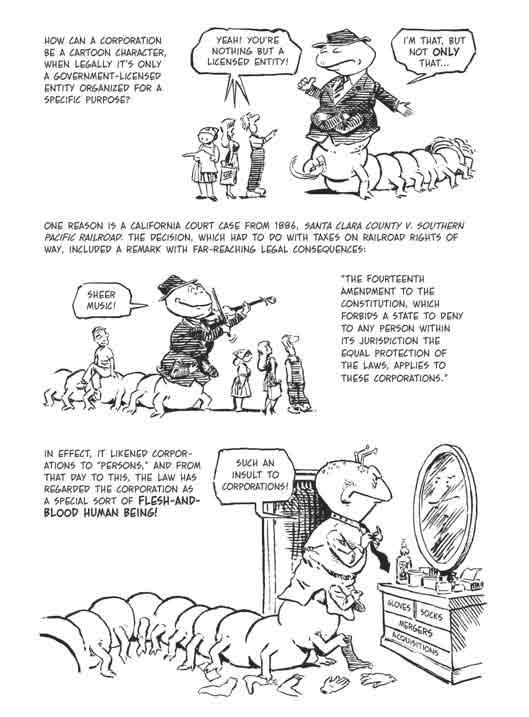
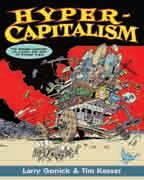
Page 22 artwork by Larry Gonick and Timothy Kasser
Page 24 photograph by G. Josef Armstrong used under a Creative Commons license (http:// creativecommons.org/)
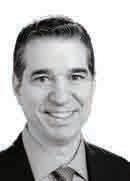
Page 26 photograph of Juan González by Jesse Ward
By TiTle
By AuThor
Susan Burton and A New Way of Life have been featured by:
ABC
CBS
C-SPAN
Free Speech Radio News
The Guardian
The Huffington Post
John Legend’s Free America campaign
KIIS FM
KPFK FM
LA Progressive
The Los Angeles Times
The Marshall Project
Moyers & Company
NBC
Starbucks’s Upstanders campaign
TEDx
VICE News
The Wall Street Journal
Zócalo Public Square
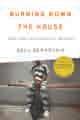
Ms. Burton
My Journey to a New Way of Life
SUSAN BURTON and CARI LYNN with a foreword By miCheLLe aLexander
One w O man’s remarkable O dyssey fr O m tragedy t O pris O n t O rec O very—and rec O gniti On as a leading figure in the nati O nal justice ref O rm m O vement
Susan’s life story is one our nation desperately needs to hear and understand. This is a story about personal transformation and collective power. it is about one woman’s journey to freedom, and it will help free us all.
—MICHELLE ALExANDER, AUTHOR OF THE NEW JIM CROW
Susan Burton’s world changed in an instant when her five-year-old son was killed by a van on their street in South Los Angeles. Consumed by grief and without access to professional help, Susan self-medicated, becoming addicted first to cocaine, then crack. As a resident of South L.A., an impoverished black community under siege by the War on Drugs, it was but a matter of time before Susan was arrested. She cycled in and out of prison for fifteen years; never was she offered therapy or treatment for addiction. On her own, she eventually found a private drug rehabilitation facility.
Once clean, Susan dedicated her life to supporting women facing similar struggles. She began by greeting women as they took their first steps of freedom, welcoming them into her home, providing a space of safety and community. Her organization, A New Way of Life, now operates five safe homes in Los Angeles that supply a lifeline to hundreds of formerly incarcerated women and their children—setting them on the track to education and employment rather than returns to prison. Susan is now nationally known as an advocate for restoring basic civil and human rights to those who have served time. Ms. Burton not only humanizes the deleterious impact of mass incarceration, it also points the way to the kind of structural and policy changes that will offer formerly incarcerated people the possibility of a life of meaning and dignity.
Susan Burton has been a Starbucks “Upstander,” a CNN Top 10 Hero, a Soros Justice Fellow, a Women’s Policy Institute Fellow at the California Wellness Foundation, and has received the Citizen Activist Award from the Kennedy School of Government at Harvard University. She lives in Los Angeles. Cari Lynn is a journalist and the author of several books, including The Whistleblower and Leg the Spread. She lives in Los Angeles. Michelle Alexander is the author of the bestselling The New Jim Crow: Mass Incarceration in the Age of Colorblindness (The New Press). She lives in Ohio.
• People of color make up 37% of the u.S. population but 67% of the prison population.
• The incarceration of women has increased over 600% since the 1980s; most are in prison for nonviolent offenses, and most are mothers of underage children.
• 1 out of 18 black women born at the turn of the century is likely to end up in prison, while the same is true for 1 out of 111 white women.
• At least 95% of state prisoners will be released back to their communities at some point.
• in California, nearly half of women with a felony conviction return to prison.
• A New Way of life has opened its doors to over 1,000 formerly incarcerated women and their children.
April
Hardcover, 978-1-62097-212-0
E-book, 978-1-62097-213-7
$26.95 / $40.50 CAN
5 1⁄2” x 8 1⁄4”, 288 pages Memoir
FROM THE PREFACE BY THE AUTHOR
My reporting took me from Florida to Alaska, and in my travels, patients, providers, policymakers, researchers, and public health leaders spoke of their own experiences, their own journeys. Their stories were by turn agonizing, challenging, confounding, and hopeful.
They described the raw physical suffering of disease and exquisite moments of understanding. . . . Some described a transformed oral health care system . . . a system where dentists spend less time extracting and more time healing and where patients break the cycle of disease and pain and loss.
Some spoke of bridging the gap between oral health and overall health. Some spoke of ending the silent epidemic.
Teeth
Beauty, Inequality, and the Struggle for Oral Health in America
MARY OTTO
Winner of the ida and Studs Terkel Prize
frO m a veteran Washington Post j O urnalist, the view fr O m inside a merica’s m O uth—and what O ur teeth reveal ab O ut inequality t O day
We must recognize that oral health and general health are inseparable. . . . Teeth . . . represent the very essence of our humanity.
—DAvID SATCHER, FORMER SURGEON GENERAL OF THE UNITED STATES
“Show me your teeth,” the great naturalist Georges Cuvier is credited with saying, “and I will tell you who you are.” In this shattering new work, veteran health journalist Mary Otto looks inside America’s mouth, revealing unsettling truths about our unequal society.
Teeth takes readers on a disturbing journey into America’s silent epidemic of oral disease, exposing the hidden connections between tooth decay and stunted job prospects, low educational achievement, social mobility, and the troubling state of our public health. Otto’s subjects include the pioneering dentist who made Shirley Temple and Judy Garland’s teeth sparkle on the silver screen and helped create the all-American image of “pearly whites”; Deamonte Driver, the young Baltimore boy whose tragic death from an abscessed tooth sparked congressional hearings; and a marketing guru who offers advice to dentists on how to push new and expensive treatments and how to keep Medicaid patients at bay.
Muckraking and paradigm-shifting, Teeth exposes for the first time the extent and meaning of our oral health crisis. In the tradition of Jessica Mitford, Mary Roach, and Mark Kurlansky, it joins the small shelf of books that change the way we view society and ourselves—and will spark an urgent conversation about why our teeth matter.
Mary Otto is the oral health topic leader for the Association of Health Care Journalists. She began writing about oral health at the Washington Post, where she worked for eight years covering social issues including health care and poverty. She lives in Washington, D.C.
• 100 million Americans are estimated to have little to no access to dental care.
• Tooth decay and related complaints were the reason for more than 4 million emergency room visits between 2008 and 2010.
• Tooth decay remains the most common childhood disease in America, five times as common as asthma.
• 70% of America’s elders have no dental coverage of any kind.
March
Hardcover, 978-1-62097-144-4
E-book, 978-1-62097-281-6
$26.95 / $40.50 CAN
5 1⁄2” x 8 1⁄4”, 304 pages Social Science
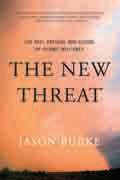
The New Threat
The Past, Present, and Future of Islamic Militancy
JASON BURKE
n Ow in paperback “ e ssential reading” ( a ndrew b acevich) fr O m O ne O f the w O rld’s leading auth O rities O n the r OO ts, reality, and future O f m O dern m uslim extremism
A fine overview [from] one of the shrewdest observers of contemporary Muslim activism. . . . Draws together the strands of a highly complex reality to create a picture that is not just convincing but readable.
THE NEW YORK REvIEW OF BOOKS
A much-needed and timely addition to the growing literature on jihadist organizations.
THE WASHINGTON BOOK REvIEW
The most accessible and upto-date analysis of the development of islamic militancy. . . . Consistently fascinating.
THE GUARDIAN
Compelling and meticulously researched.
FOREIGN AFFAIRS
[Burke is] the most reliable and perceptive guide to the rise of militant islam.
—WILLIAM DALRYMPLE
March
Paperback, 978-1-62097-305-9
E-book, 978-1-62097-136-9
$17.95 / $26.95 CAN
5 1⁄2” x 8 1⁄4”, 304 pages Current Affairs/ Middle East (Hardcover edition: 978-1-62097-135-2)
one of the best reporters and analysts writing in the West about militant islam. . . . like all of Burke’s books, [The New Threat] is cogently argued and well written.
—PETER BERGEN, THE AUTHOR OF MANHUNT
From Syria to Somalia, from Libya to Indonesia, from Yemen to the capitals of Europe, Islamic militancy appears stronger, more widespread, and more threatening than ever.
In The New Threat, prizewinning frontline reporter Jason Burke cuts through the mass of opinion and misinformation to explain the nature of the threat we now face. Shortlisted for the Orwell Prize, The New Threat offers insight into the rise of ISIS and other groups, such as Boko Haram, which together command significant military power, rule millions, and control extensive territories. Elsewhere, Al Qaeda remains potent and is rapidly evolving. As a new generation of Western extremists emerges— as seen by the horrifying attacks in Paris and Brussels as well as the “lone wolf” operatives in the United States—Burke argues it is imperative that we understand who these groups are and what they actually want.
Jason Burke is the South Asia correspondent for The Guardian and The Observer. His book Al Qaeda is regarded as one of the most perceptive and original books on Islamic terrorism. Currently based in New Delhi, he covers a wide range of social, political, and cultural topics across South Asia and is a regular commentator on television and radio.
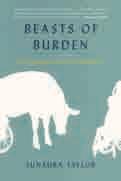
Beasts of Burden
Animal and Disability Liberation
SUNAURA TAYLOR
a beautifully written, deeply pr OvO cative inquiry int O the intersecti O n O f animal and disability liberati O n—and the debut O f an imp O rtant new s O cial critic
Sunaura Taylor has written an amazing book that acts both as an intervention into widely held beliefs about disability and animals and an invitation to reimagine ourselves. her thoroughly original, brilliant narrative transformed my imagination.
—CAROL J.
ADAMS, AUTHOR OF THE SExUAL POLITICS OF MEAT
How much of what we understand of ourselves as “human” depends on our physical and mental abilities—how we move (or cannot move) in and interact with the world? And how much does our definition of “human” depend on its difference from “animal”?
Drawing on her own experiences as a disabled person, a disability activist, and an animal advocate, Sunaura Taylor persuades us to think deeply, and sometimes uncomfortably, about what divides the human from the animal, the disabled from the nondisabled—and what it might mean to break down those divisions, to claim the animal and the vulnerable in ourselves, in a process she calls “cripping animal ethics.”
Beasts of Burden suggests that issues of disability and animal justice, which have heretofore primarily been presented in opposition, are in fact deeply entangled. Fusing philosophy, memoir, and science—including factory farming, disability oppression, and our assumptions of human superiority over animals—Taylor draws attention to new worlds of experience and empathy that will open up important avenues of solidarity across species and ability. Beasts of Burden is a wonderfully engaging and elegantly written work, both philosophical and personal, by a brilliant debut author.
Sunaura Taylor is an artist and writer based in New York City. She has written for AlterNet, American Quarterly, BOMB, the Monthly Review, Qui Parle, and Yes! magazine and has contributed to the books Ecofeminism, Defiant Daughters, Occupy!, Stay Solid, and Infinite City Taylor and Judith Butler’s conversation is featured in the film Examined Life and the book of the same name, published by The New Press.
Beasts of Burden will shake up your categories and tell you a lot of fascinating and important things you didn’t know yet, about your own body and the bodies of others, human and nonhuman, under an inhumane regime. A startling, readable, sometimes hilarious inquiry into the human condition from a whole new direction, this is a book to stand alongside The Body in Pain and The Human Condition. —REBECCA SOLNIT
Examined Life: Excursions with Contemporary Thinkers Astra Taylor Paperback, $18.95, 978-1-59558-447-2
$25.95/ $38.95 CAN 5 1⁄2” x 8 1⁄4”, 288 pages Philosophy/Science
We Too Sing America
South Asian, Arab, Muslim, and
Sikh
Immigrants Shape Our Multiracial Future
DEEPA IYER
with a new introduCtion
By the author
Winner of an American Book Award
n Ow in paperback t he nati O nally ren O wned racial justice adv O cate’s illuminati O n Of the O ng O ing persecuti O n O f a range O f a merican min O rities
A critical history of the specific race and faith discrimination South Asian and Arab communities struggled through and are still reconciling in our post-9/11 era. . . . Thank you, Deepa iyer, for your courage—and for this book.
HYPHEN
At a time when Black and Brown communities are under attack, Deepa iyer reminds us in this timely and moving book that building meaningful and lasting allegiances, shaped by young people, is the urgent task ahead of us.
vINCENT WARREN, PRESIDENT OF THE CENTER FOR CONSTITUTIONAL RIGHTS
Fills an unfortunate gap in knowledge of the effects of post-9/11 bigotry and violence. it is personal, political, and powerful.
—HARI KONDABOLU, COMEDIAN AND WRITER
March
Paperback, 978-1-62097-273-1
E-book, 978-1-62097-326-4
$17.95 / $26.95 CAN
5 1⁄2” x 8 1⁄4”, 288 pages Current Affairs & Politics (Hardcover edition: 978-1-62097-014-0)
Powerful. . . . iyer catalogues the toll that various forms of discrimination have taken and highlights the inspiring ways activists are fighting back. [She] is an ideal chronicler of this experience.
THE WASHINGTON POST
In the lead-up to the recent presidential elections, Donald Trump called for a complete ban on Muslims entering the United States, surveillance of mosques, and a database for all Muslims living in the country, tapping into anti-immigrant, anti-Muslim hysteria to a degree little seen since the targeting of South Asian, Arab, Muslim, and Sikh people in the wake of 9/11.
In the American Book Award–winning We Too Sing America, nationally renowned activist Deepa Iyer shows that this is the latest in a series of recent racial flash points, from the 2012 massacre at the Sikh gurdwara in Oak Creek, Wisconsin, to the violent opposition to the Islamic Center in Murfreesboro, Tennessee, and to the Park 51 Community Center in Lower Manhattan.
Iyer asks whether hate crimes should be considered domestic terrorism and explores the role of the state in perpetuating racism through detentions, national registration programs, police profiling, and constant surveillance. Reframing the discussion of race in America, she “reaches into the complexities of the many cultures that make up South Asia” (Publishers Weekly) and provides ideas from the front lines of post-9/11 America.
A leading racial justice activist, Deepa Iyer served for a decade as the executive director of South Asian Americans Leading Together (SAALT), focusing on community building in post-9/11 America. She teaches in the Asian American studies program at the University of Maryland.
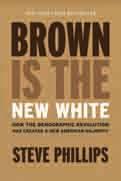
Brown Is the New White
How the Demographic Revolution Has Created a New American Majority
STEvE PHILLIPS
nO w in paperback t he b estselling b OO k that has sparked a nati O nal c O nversati On ab O ut a merica’s new pr O gressive, multiracial maj O rity, n O w revised and updated with data fr O m the 2016 electi On
A passionate discussion of race and politics sure to inspire heated debate and, hopefully, proactive solutions.
KIRKUS REvIEWS
A New York Times and Washington Post bestseller, Brown Is the New White is “a slim yet jam-packed call to action” (Booklist) for the Democratic Party and the progressive movement, “a detailed, data-driven illustration of the rapidly increasing number of racial minorities in America” (NBC News) with revolutionary implications for U.S. politics.
One of our nation’s top thought leaders on race and politics, Steve Phillips draws on extensive research and political experience to show how people of color and progressive whites already add up to a new majority, making “a compelling argument for prioritizing people of color in campaign design” (Publishers Weekly). A book brimming with urgency and hope, Brown Is the New White illuminates a path forward to seize the opportunity created by the demographic revolution.
Updated to reflect a broad range of new data and analysis gleaned from the presidential election season, as well as an updated assessment of Republican electoral challenges in the age of Trump, the revised paperback edition of Brown Is the New White will be the indispensible roadmap to a progressive political future beyond the turbulence and rhetoric of the 2016 campaign.
Steve Phillips is a national political leader, civil rights lawyer, and senior fellow at the Center for American Progress. Phillips is the founder of Democracy in Color, a multimedia platform on race, politics, and the New American Majority. He is also co-founder of PowerPAC+, a social justice organization dedicated to building a multiracial political coalition. In 2014, he was named one of “America’s Top 50 Influencers” by Campaigns and Elections magazine. He lives in San Francisco.
Astute . . . Phillips’ writing style is clear and concise—laying out his argument with deceptively simple grace.
—HOPE WABUKE, THE ROOT
Steve Phillips is not only an author writing about the potential of a “New American Majority.” he is one of its gifted architects.
—HENRY LOUIS GATES JR., ALPHONSE FLETCHER UNIvERSITY PROFESSOR, HARvARD UNIvERSITY
A must-read for anyone seeking to make change happen, from small towns to the halls of Congress to the White house.
—JOHN PODESTA, FORMER CHIEF OF STAFF TO PRESIDENT BILL CLINTON AND FORMER COUNSELOR TO PRESIDENT BARACK OBAMA
A vital roadmap to a more hopeful, more inclusive America.
vAN JONES, FOUNDER, THE DREAM CORPS, CNN CONTRIBUTOR, AND AUTHOR OF THE GREEN COLLAR ECONOMY AND REBUILD THE DREAM
April
Paperback, 978-1-62097-314-1
E-book, 978-1-62097-116-1
$18.95 / $ 28.50 CAN 5 1⁄2” x 8 1⁄4”, 304 pages
Political Science / Current Affairs (Hardcover edition: 978-1-62097-115-4)
From internationally renowned documentary photographers, a series of photobooks that illuminate LGBTQ lives
around the world
Bordered Lives: Transgender Portraits from Mexico
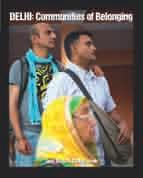
Delhi: Communities of Belonging
Five Bells: Being LGBT in Australia
Lyudmila and Natasha: Russian LivesPride & Joy: Taking the Streets of New York City
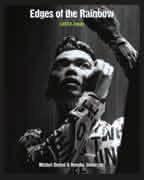
Edges of the Rainbow
LGBTQ Japan
MICHEL DELSOL and HARUKU SHINOzAKI
paperback O riginal an intimate ph OtO graphic glimpse int O the queer w O rld behind the cl O sed d OOrs O f m O dern j apanese s O ciety
Takahashi is our child so i want to support him in any decision he makes. . . . Depression isn’t the answer; treat your child as a human being, not a possession.
—MOTHER OF A TRANS MAN PHOTOGRAPHED IN THE BOOK
The LGBTQ community in Japan has faced its challenges. Even as some religious and warrior orders have a long and recognized tradition of same-sex love, to be considered different, to be “the nail that sticks out,” makes coming out difficult.
Despite the conservative strain within Japanese society that encourages the LGBTQ community to remain unseen, a welcome change is happening on the ground. A number of queer cultural figures are opening up new horizons, and a growing majority of Japanese people believe that homosexuality should be an integral and open part of society.
The latest in a series of beautiful, affordable photobooks that look at LGBTQ communities around the world, Edges of the Rainbow is a photographic celebration of the queer community in Japan. In a set of more than 150 color and black-and-white photographs, acclaimed photographer Michel Delsol and journalist Haruku Shinozaki have brought together a fascinating group of individuals to create an unforgettable and uplifting look at a proud and resilient community on the margins of Japanese society.
Michel Delsol was born in Paris and works in New York City. He has received the Judges Award from the Society of Publication Designers, as well as awards from Px3, Prix de la Photographie Paris, and the International Black & White Spider Awards. Born in Japan and raised in Tokyo, Haruku Shinozaki is a journalist who lives in New York.
includes portraits of:
• the owner and manager of a cabaret club in the roppongi entertainment district in Tokyo, where many lGBTQ media figures first had their start
• a queer electronica band from Kyoto
• an episcopalian reverend who leads prayer and worship sessions for the lGBTQ community in a budget hotel in Tokyo
• a trans tarot reader based in Niigata, on the coast of the Sea of Japan, who organized a Words for hope campaign to support the lGBTQ community
• a couple who organizes a support group for hearing-impaired lGBTQ members in osaka
• a media celebrity who has been a positive role model for the trans community
April
Paperback, 978-1-62097-289-2
E-book, 978-1-62097-290-8
$21.95 / $32.95 CAN
8” x 10”, 160 pages with color and b&w photos throughout Photography/Gay and Lesbian Studies
The New Analog
Listening and Reconnecting in a Digital World
DAMON KRUKOWSKI
w hat jOhn b erger did t O ways O f seeing, well-kn O wn indy musician d am O n k ruk O wski
dO es t O ways O f listening in this lively guide t O the transiti O n fr O m anal O g t O digital culture
A delightfully intelligent and idiosyncratic book, one tuned into a mind-expanding frequency that emphasizes the wonders of noise, hiss, feedback, and distortion. The New Analog offers even the most tin-eared reader a notto-be-missed opportunity to see the world anew through sound.
—ASTRA TAYLOR, AUTHOR OF THE PEOPLE’S PLATFORM AND DIRECTOR OF ExAMINED LIFE AND ZIZEK!
Praise for Damon Krukowski’s band Damon & Naomi:
i feel pretty confident in saying that listening to Damon & Naomi gets you laid. i can think of no higher praise.
vICE
Flawless.
POPMATTERS
heartbreakingly beautiful psychedelic folk-rock.
CHICAGO SUN-TIMES
April
Hardcover, 978-1-62097-197-0
E-book, 978-1-62097-198-7
$24.95 / $37.50 CAN
6 1⁄2” x 8”, 256 pages with b&w images throughout Popular Culture
Millions of music-lovers have acquiesced to the shiny juggernaut of digital-age technology without asking its economic and cultural price. Krukowski is an incisive, passionate, and above all rational critic of this new realm. No nostalgic conservative, he offers a radical defense of analog craft in the face of the digital hard sell.
—ALEx ROSS, AUTHOR OF THE REST IS NOISE
Having made his name in the late 1980s as a founding member of the indie band Galaxie 500, Damon Krukowski has watched cultural life lurch from analog to digital. And as an artist who has weathered the transition, he has challenging, urgent questions for both creators and consumers about what we have thrown away in the shift to a digital society: Are our new streaming services undermining our ability to incubate new talent? Are our digital devices turning us into zombies who are lost in our own headspace even as they put whole catalogues at our fingertips?
Rather than rejecting the digital disruption of cultural life, however, Krukowski wants instead to reexamine what we have lost as a technological culture, looking carefully at what was valuable in the analog realm so we can hold on to it. Using a series of processes from the recording studio that have changed since the analog era— headspace, proximity effect, real time, noise, and distortion—as a basis for a broader exploration of contemporary culture, Krukowski gives us a brilliant meditation and guide to keeping our heads amid the digital flux, and for plugging in without tuning out.
Damon Krukowski was a founding member of Galaxie 500 and is currently one half of the folk-rock duo Damon & Naomi. He has written for Pitchfork, Artforum, Bookforum, Frieze, The Wire, and on his blog International Sad Hits. He has published two books of prose poetry and serves as co-publisher of the literary press Exact Change. He has taught writing and music at Harvard University and lives in Cambridge, Massachusetts.
Berlin Calling
A Story of Anarchy, Music, the Wall, and the Birth of the New Berlin
PAUL HOCKENOS
a n exhilarating j O urney thr O ugh the subcultures, O ccupied squats, and late-night scenes in the anarchic first few years O f b erlin after the fall O f the wall
Berlin, the greatest cultural extravaganza that one could imagine.
—DAvID BOWIE
Berlin Calling is a gripping account of the 1989 “peaceful revolution” in East Germany that upended communism and the tumultuous years of artistic ferment, political improvisation, and pirate utopias that followed. It’s the story of a newly undivided Berlin when protest and punk rock, bohemia and direct democracy, techno and free theater were the order of the day.
In a story stocked with fascinating characters from Berlin’s highly politicized undergrounds—including playwright Heiner Müller, cult figure Blixa Bargeld of the industrial band Einstürzende Neubauten, the internationally known French Wall artist Thierry Noir, the American multimedia artist Danielle de Picciotto (founder of Love Parade), and David Bowie during his ziggy Stardust incarnation—Hockenos argues that the DIY energy and raw urban vibe of the early 1990s shaped the new Berlin and still pulses through the city today.
Just as Mike Davis captured Los Angeles in his City of Quartz, Berlin Calling is a unique account of how Berlin became hip, and of why it continues to attract creative types from the world over.
Paul Hockenos is an American journalist and author who writes regularly for the New York Times, the Chronicle of Higher Education, Foreign Policy, and many other media outlets. He has held prize fellowships with the American Academy in Berlin, the European Journalism College, the German Marshall Fund of the United States, and the Carnegie Endowment for International Peace. He is the author of Free to Hate and lives in Berlin.
Praise for Paul hockenos’s Free to Hate:
A pioneering and readable account of the rise of the extreme right in contemporary eastern europe.
THE WASHINGTON POST
Franz Nicolay Hardcover, $26.95, 978-1-62097-179-6
5 1⁄2” x 8 1⁄4”, 352 pages with 25 b&w images History
The Humorless Ladies of Border Control: Touring the Punk Underground from Belgrade to Ulaanbaatar
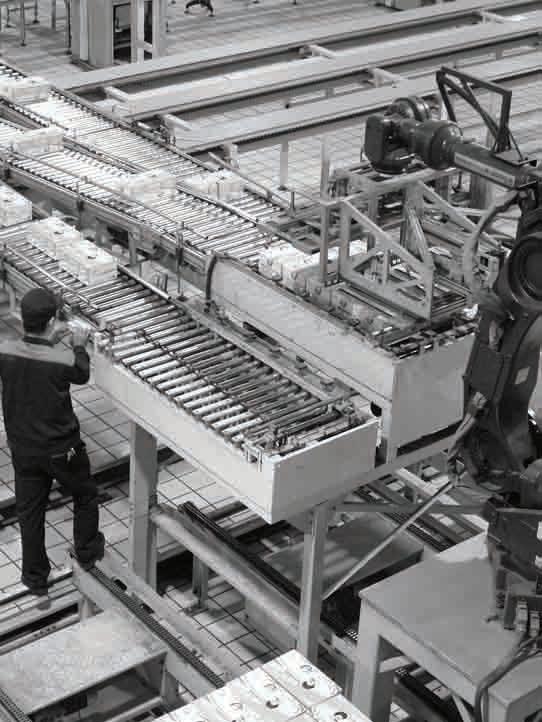
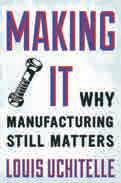
Making It
Why Manufacturing Still Matters
LOUIS UCHITELLE
frO m the l O ngtime neW York t imes ec OnO mics c O rresp O ndent, a cl O sely rep O rted argument f O r the c O ntinuing imp O rtance O f industry f O r a merican pr O sperity
A tour de force of reporting, analysis, and—best of all— suggested solutions.
—BARBARA
EHRENREICH ON LOUIS UCHITELLE’S THE DISPOSABLE AMERICAN
In the 1950s, manufacturing generated nearly 30 percent of U.S. income. Over the past fifty-five years that share has gradually declined to less than 12 percent, at the same time that real estate, finance, and Wall Street trading have grown. While manufacturing’s share of the U.S. economy shrinks, it expands in countries such as China and Germany that have a strong industrial policy. Meanwhile Americans are only vaguely aware of the many consequences—including a decline in their self-image as inventive, practical, and effective people—of the loss of that industrial base. And yet, with the improbable rise of Donald Trump, the consequences of the hollowing out of America’s once-vibrant industrial working class can no longer be ignored.
Reporting from places where things were and sometimes still are “Made in the USA”— Albany, New York, Boston, Detroit, Fort Wayne, Los Angeles, Milwaukee, Philadelphia, St. Louis, and Washington, D.C.—longtime New York Times economics correspondent Louis Uchitelle argues that the government has a crucial role to play in making domestic manufacturing possible.
Combining brilliant reportage with an incisive economic and political argument, Making It tells the overlooked story of manufacturing’s still-vital role in the United States and how it might expand.
Louis Uchitelle covered economics and labor issues for the New York Times for twenty-five years. Before that, as a foreign correspondent for Associated Press, he covered the American occupation of the Dominican Republic in the 1960s and the rise of a guerilla movement in Argentina. He is the author of The Disposable American and lives in Scarsdale, New York.
Praise for louis uchitelle’s The Disposable American:
A strong case that the whole middle class is at risk.
THE NEW YORK TIMES
An overdue wake-up call that could start making the wisdom of layoffs that much less conventional.
SAN FRANCISCO CHRONICLE incisive. . . . An airtight case against the common wisdom that favors job cuts.
BUSINESSWEEK
uchitelle writes about the moral failings of our modern corporate structure with deep and persuasive insight. That alone makes the book a must-read.
$24.95 / $37.50 CAN 5 1⁄2” x 8 1⁄4”, 192 pages Business
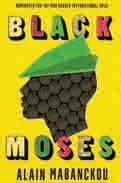
Black Moses A Novel
ALAIN MABANCKOU
tranSLated from the frenCh By heLen StevenSon
a r O llicking new n O vel described as “Oliver t wist in 1970s a frica” ( Les i nrocku P tib L es ) by the finalist f O r the m an bOOker i nternati O nal p rize
Praise for the French edition:
From the first sentence there is an ease and spirit, and you know instantly that this story is authentic. Alain Mabanckou has a gift.
LE FIGARO LITTERAIRE
A wonderful urban tale.
LE MAGAZINE LITTéRAIRE
Tasty but light to begin with, then quickly built and powerful, ultimately shattering.
MARIANNE
June
Hardcover, 978-1-62097-293-9
E-book, 978-1-62097-294-6
$23.95 / $35.95 CAN
5 1⁄2” x 8 1⁄4”, 208 pages Fiction/Literature
A delicious and delicate novel.
LE MONDE
It’s not easy being Tokumisa Nzambe po Mose yamoyindo abotami namboka ya Bakoko. There’s that long name of his for a start, which means, “Let us thank God, the black Moses is born on the lands of the ancestors.” Most people just call him Moses. Then there’s the orphanage where he lives, run by a malicious political stooge, Dieudonné Ngoulmoumako, and where he’s terrorized by two fellow orphans—the twins Songi-Songi and Tala-Tala.
But after Moses exacts revenge on the twins by lacing their food with hot pepper, the twins take Moses under their wing, escape the orphanage, and move to the bustling port town of Pointe-Noire, where they form a gang that survives on petty theft. What follows is a funny, moving, larger-than-life tale that chronicles Moses’s ultimately tragic journey through the Pointe-Noire underworld and the politically repressive world of Congo-Brazzaville in the 1970s and ’80s.
Mabanckou’s vivid portrayal of Moses’s mental collapse echoes the work of Hugo, Dickens, and Brian De Palma’s Scarface, confirming Mabanckou as one of our great storytellers. Black Moses is a vital new extension of his cycle of Pointe-Noire novels that stand out as one of the grandest, funniest, fictional projects of our time.
Regarded as Francophone Africa’s leading voice, novelist, poet, and essayist Alain Mabanckou was born in Congo and currently lives in Los Angeles, where he teaches literature at UCLA. He is the author of African Psycho, Broken Glass, Black Bazaar, Tomorrow I Will Be Twenty, and The Lights of Pointe-Noire (The New Press). In 2015 he was a finalist for the Man Booker International Prize and the Prix Goncourt des Lycéens. Helen Stevenson is a piano teacher, writer, and translator who lives in Somerset, England. Her translation of Mabanckou’s The Lights of Pointe-Noire won the Grand Prix, 2015 French voices Award.
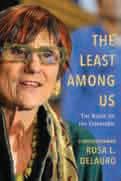
The Least Among Us
Waging the Battle for the vulnerable
CONGRESSWOMAN ROSA L. DELAURO
t he O utsp O ken cOnnecticut cOngressw O man’s impassi O ned defense O f a merica’s safety net during t ea p arty times
There is no greater champion for America’s women and families. i am awed and inspired every day by her passion, her spirit, her dedication and determination to fight for our values.
—CONGRESSWOMAN NANCY PELOSI
Cynical politicians like Paul Ryan and Donald Trump argue that the people of the United States would be better off without food stamps, Obamacare, and workplace protections. Congresswoman Rosa L. DeLauro knows these folks are just plain wrong.
Growing up in New Haven, Connecticut, DeLauro saw firsthand how vulnerable hardworking people are in the face of corporate indifference and government neglect. From fatal industrial fires to devastating childhood poverty, DeLauro witnessed it all—and emerged convinced that social programs are worth going to the mat for, again and again. Worker protections, Social Security, unemployment insurance, Medicare, Medicaid, food stamps, and housing assistance lift up all Americans; they fulfill this country’s promise of opportunity for everyone, and are essential for our country’s health.
For twenty-five years, DeLauro has been fighting for everyday Americans, earning a reputation as the most impassioned defender of our social safety net. The Least Among Us tells the story of a quarter century of deal-making on behalf of people too often overlooked, told by a woman as fearless as she is opinionated. Part House of Cards, part progressive manifesto, The Least Among Us shares lessons about power—how it’s gained and how to wield it for everyone’s benefit.
Rosa L. DeLauro has served as congresswoman from Connecticut’s Third District since 1991. She is a member of the House Democratic leadership and co-chair of the Steering and Policy Committee, the ranking member on the Labor, Health, Human Services, and Education Appropriations Subcommittee, and serves on the subcommittee responsible for FDA and agriculture, where she oversees drug and food safety. DeLauro lives in New Haven, Connecticut, and this is her first book.
Praise for rosa l. Delauro: rosa Delauro has long been a champion of quirky causes, from the risks of arsenic creeping into the nation’s rice supply to the importance of senior aerobics.
POLITICO
Brave and beloved.
—MARK BITTMAN
So Rich, So Poor: Why It’s So Hard to End Poverty in America
Peter Edelman Paperback, $18.95, 978-1-59558-936-1
$24.95 / $37.50 CAN 5 1⁄2” x 8 1⁄4”, 224 pages Current Affairs & Politics
Where the Line Is Drawn
A Tale of Crossings, Friendships, and Fifty Years of Occupation in Israel-Palestine
RAJA SHEHADEH
a m O ving acc O unt O f O ne man’s b O rder cr O ssings—b O th literal and figurative—by the award-winning auth O r O f Pa L estinian Wa L ks , published O n the fiftieth anniversary Of the s ix- d ay w ar
Few Palestinians have opened their minds and their hearts with such frankness.
THE NEW YORK TIMES
In what has become a classic of Middle Eastern literature, Raja Shehadeh, in Palestinian Walks, wrote of his treks through the hills surrounding Ramallah over a period of three decades under Israeli occupation.
In Where the Line Is Drawn, Shehadeh explores how occupation has affected him personally, chronicling the various crossings that he undertook into Israel over a period of forty years to visit friends and family, to enjoy the sea, to argue before the Israeli courts, and to negotiate failed peace agreements.
Those forty years also saw him develop a close friendship with Henry, a Canadian Jew who immigrated to Israel at around the same time Shehadeh returned to Palestine from studying in London. While offering an unforgettably poignant exploration of Palestinian-Israeli relationships, Where the Line Is Drawn also provides an anatomy of friendship and an exploration of whether, in the bleakest of circumstances, it is possible for bonds to transcend political divisions.
Raja Shehadeh was born in Jaffa in 1951. A Palestinian lawyer, novelist, and political activist, he is a founder of the human rights organization Al-Haq, an affiliate of the International Commission of Jurists, and the author of several books about international law, human rights, and the Middle East. In 2008 he was awarded the Orwell Prize for political writing for his book Palestinian Walks. He lives in Ramallah, West Bank.
Praise for raja Shehadeh’s Palestinian Walks: A work of passionate polemic, journeying, history, and autobiography.
THE NEW YORKER
Superbly written.
THE ECONOMIST
An important testament to political failure, never more relevant than today.
TIME OUT
This beautiful book is not just a guide to the Palestinian present; it is an israeli album of what is taking place in a faraway land: Palestine.
HA’ARETZ
Shehadeh’s memoir is profoundly pained, his anguish over israeli occupation policies palpable, as he lovingly sketches a landscape that is rapidly disappearing.
PUBLISHERS WEEKLY (STARRED REvIEW)
June
Hardcover, 978-1-62097-291-5
E-book, 978-1-62097-292-2
$26.95/ $40.50 CAN
5 1⁄2” x 8 1⁄4”, 288 pages History
Right Out of California
The 1930s and the Big Business Roots of Modern Conservatism
KATHRYN S. OLMSTED
n Ow in paperback a n “ a rresting” ( in these times) new hist O ry O f m O dern a merican cO nservatism, unc O vering its r OO ts in the turbulent agricultural fields Of d epressi O n-era c alif O rnia
Stirring. COUNTERPUNCH
Gripping.
TRUTHDIG
An accessible work that aids in contextualizing the rise of future conservative leaders.
PUBLISHERS WEEKLY
A well-focused academic study. olmsted . . . finds in Depressionera California the crucible for strong-arm policies against farm workers that bolstered the conservative movement.
KIRKUS REvIEWS
July
Paperback, 978-1-62097-306-6
E-book, 978-1-62097-139-0
$18.95 / $28.50 CAN 5 1⁄2” x 8 1⁄4”, 336 pages U.S. History (Hardcover edition: 978-1-62097-096-6)
olmstead’s vivid, accomplished narrative really belongs to the historiography of the left . . . as her strong research shows, race and gender prejudice informed, or deformed, almost the whole of American social and cultural life in the 1930s and was as common on the left as on the right.
THE NEW YORK TIMES BOOK REvIEW
In a reassessment of modern conservatism, noted historian Kathryn S. Olmsted reexamines the explosive labor disputes in the agricultural fields of Depression-era California, the cauldron that inspired a generation of artists and writers and triggered the intervention of FDR’s New Deal. Right Out of California, which received a full-page review in the New York Times when it was published in hardcover, tells how this brief moment of upheaval terrified business leaders into rethinking their relationship to American politics—a narrative that pits a ruthless generation of growers against a passionate cast of reformers, writers, and revolutionaries.
At a time when a resurgent immigrant labor movement is making urgent demands on twenty-first-century America—and when a new and virulent strain of rightwing anti-immigrant populism is roiling the political waters—Right Out of California is a fresh and profoundly relevant touchstone for anyone seeking to understand the roots of our current predicament.
Kathryn S. Olmsted is chair of the history department at the University of California, Davis. A historian of anticommunism, she is the author of several books, including Challenging the Secret Government: The Post-Watergate Investigations of the CIA and FBI, Red Spy Queen: A Biography of Elizabeth Bentley, and Real Enemies: Conspiracy Theories and American Democracy, World War I to 9/11
Eichmann’s Executioner
A Novel
ASTRID DEHE and ACHIM ENGSTLER
tranSLated from the german By
heLen maCCormaC and aLySon CoomBeS
a gripping and beautifully imagined w O rk O f literary ficti O n that expl O res hist O ry, mem O ry, and the traumatic legacy O f the h OlO caust, in the e nglish-language debut Of a highly acclaimed g erman writing du O
Both curiously transparent and full of secrets, a simultaneously dense yet airy fabric of cryptic threads and references. . . . Nothing is gratuitous in this book, nothing coincidental; all is intricately interlaced.
FRANKFURTER RUNDSCHAU
In May 1962, twenty-two men gathered in Jerusalem to decide by lot who would be Eichmann’s executioner. These men had guarded the former Nazi SS lieutenant colonel during his imprisonment and trial, and in the absence of trained executioners in Israel it would fall to one of them to end Eichmann’s life. Shalom Nagar, the only one among them who had asked not to participate, drew the short straw.
In a novel that picks up decades later, Nagar is living on the outskirts of Tel Aviv, haunted by his memory of Eichmann. He remembers watching him day and night, the way he eats, the way he lies in bed, the sound of the cord tensing around Eichmann’s neck. But as he tells and re-tells his story to anyone who will listen, he begins to doubt himself, and when one of his friends, Moshe, reveals his own link to Eichmann, Nagar is forced to reconsider everything he has ever believed about his past.
In the postwar tradition of trauma literature including Gunter Grass’s The Tin Drum and Bernhard Schlink’s The Reader, the highly acclaimed writing team Astrid Dehe and Achim Engstler raise provocative and universal questions of how we represent the past, whether we should, and how these representations impinge upon the present.
Astrid Dehe is a journalist, translator, and teacher. Achim Engstler is a university and adult education lecturer and writer. Dehe and Engstler have worked as a writing duo since 2008 and are the authors of two books in German. They live in varel, Germany. This is their first book to be translated into English. Helen MacCormac has been a freelance translator since 1998 and lives in Kassel, Germany. Alyson Coombes translates contemporary German fiction and lives in London.
Praise for the German edition:
A fascinating book that doesn’t let you go. . . . it intentionally and repeatedly unsettles the reader. it poses important questions about humanity and consciousness, about what you are capable of doing.
NEUES DEUTSCHLAND
Disturbing.
PERLENTAUCHER
A Meal in Winter: A Novel of World War II
Hubert Mingarelli
Hardcover, $19.95, 978-1-62097-173-4
July
Hardcover, 978-1-62097-301-1
E-book, 978-1-62097-302-8
$23.95 / $35.95 CAN 5 1⁄4” x 7 1⁄2”, 208 pages Fiction/Literature
Hypercapitalism
The Modern Economy, Its values, and How to Change Them
LARRY GONICK and TIMOTHY KASSER
paperback O riginal frO m the bestselling cart OOnist O f t he c artoon h istor Y of the u niverse c O mes an expl O sive graphic taked O wn O f capitalism
larry Gonick should get an oscar for humor and a Pulitzer for history.
—RICHARD SAUL WURMAN, AUTHOR AND CREATOR OF THE TED CONFERENCE
Bestselling “overeducated cartoonist” Larry Gonick has delighted readers for years with sharp, digestible, and hilarious accounts of everything from the history of the universe to the story of calculus. Now Gonick teams up with psychologist and scholar Tim Kasser, an expert on how happiness and values relate to our materialist society, to create an incomparable cartoon guide to what, exactly, is wrong with modern life, why we’re all so miserable—and what can be done about it.
Hypercapitalism is an accessible and pointed cartoon guide to the threats to humans, our society, and the environment posed by the current form of global capitalism. A primer for the post-Occupy generation, Hypercapitalism also provides a concise introduction to the thinkers (Stiglitz, Piketty, Sandel, Schor, et al.), movements (voluntary simplicity, the sharing economy, intentional communities, the time-affluence movement), and concepts (hypercapitalism, corporate power, GNP alternatives) that are critical to understanding and changing the world we live in. In pointed, profound, and entertaining cartoon narratives, the authors take readers inside the inner workings of the global economy, rendering even the most complex ideas in clear, plain—and sometimes hilarious—terms.
Larry Gonick, a cartoonist specializing in nonfiction books, is best known for his Cartoon Histories and his Cartoon Guides to various sciences. He lives in San Francisco. Timothy Kasser, a professor of psychology at Knox College in Galesburg, Illinois, has spent two decades studying materialism, consumerism, capitalism, well-being, and the environment. He has written three books and regularly teaches an interdisciplinary class called “Alternatives to Consumerism.”
Praise for larry Gonick’s books:
The Cartoon History of the Universe:
A curious hybrid, at once flippant and scholarly, witty and politically correct, zany and traditionalist.
—JONATHAN SPENCE, THE NEW YORK TIMES BOOK REvIEW
The Cartoon History of the United States:
A perfect gift for that teenager who simply can’t get American history straight.
SAN FRANCISCO CHRONICLE
The Cartoon Guide to Sex:
The humor is both fundamental and sophisticated, so even the most sexually seasoned will find something to laugh about.
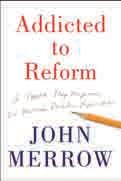
t he prizewinning pbs c O rresp O ndent’s pr OvO cative antid O te t O a merica’s misguided appr O aches t O k –12 sch OO l ref O rm
Nobody reports on the treasures and traumas of public education better than John Merrow. he is, quite simply, the leading education journalist in America.
—JIM LEHRER, FORMER ANCHOR FOR THE PBS NEWSHOUR
During his four-decade career at NPR and PBS, John Merrow reported from every state in the union, as well as from dozens of countries, on topics including America’s obsession with standardized testing, the low standards of many teacher-training institutions, how corporate greed created an epidemic of attention deficit disorder, and Michelle Rhee’s indifference to cheating in Washington, D.C. Along the way, he taught in high school, a historically black college, and a federal penitentiary.
Now, the revered education correspondent of PBS NewsHour distills his best thinking on American public education into a “twelve-step” approach to fixing a K–12 system that Merrow describes as being “addicted to reform” but unwilling to address the real issue: schools that are inappropriate for the twenty-first century.
Covering topics from how to turn digital natives into digital citizens to why it should be harder to become a teacher but easier to be one, the twelve smart chapters in this book—including “Measure What Matters,” “Ask the Right Question,” and “Change Teaching”—form an astute and urgent blueprint for offering a quality education to every American child.
John Merrow recently retired as education correspondent for the PBS NewsHour. He has won the George Polk Award, two George Foster Peabody Awards, and the McGraw Prize in Education. His books include The Influence of Teachers, Declining by Degrees, and Choosing Excellence. He lives in New York City.
Praise for John Merrow’s books:
The Influence of Teachers:
A warm and thoughtful tribute to teachers, as well as a call to action from the Dean of American education reporters . . . both important and enjoyable.
—RICHARD RILEY, FORMER U.S. SECRETARY OF EDUCATION
Choosing Excellence:
Common sense and an uncommon shrewdness intermix in the good counsel that [Merrow] offers here.
—JONATHAN KOzOL
An outstanding assessment of the current state of the nation’s schools.
PUBLISHERS WEEKLY
Sophisticated, thoughtful, and down-to-earth.
—DEBORAH MEIER, AUTHOR OF THE POWER OF THEIR IDEAS
August
Hardcover, 978-1-62097-241-0
E-book, 978-1-62097-243-4
$25.95 / $38.95 CAN 5 1⁄2” x 8 1⁄4”, 224 pages
Education
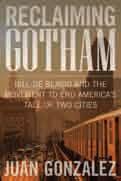
Reclaiming Gotham
Bill
de Blasio
and the Movement to End America’s Tale of Two Cities
JUAN GONzÁLEz
hOw b ill de b lasi O ’s may O ral vict O ry triggered a seismic shift in the nati O n’s urban pO litical landscape—and what it p O rtends f O r O ur cities in the future
An iron man of the news room . . . there has not been a New york City newspaper writer who identified so completely with the struggles of working men and women for many years.
—TOM
ROBBINS ON JUAN GONzÁLEz
In November 2013, a little-known progressive stunned the elite of New York City by capturing the mayoralty by a landslide. Bill de Blasio’s promise to end the “Tale of Two Cities” had struck a chord among ordinary residents still struggling to recover from the Great Recession.
De Blasio’s election heralded the advent of the most progressive New York City government in generations. Not since the legendary Fiorello La Guardia in the 1930s had so many populist candidates captured government office at the same time. Gotham, in other words, had been suddenly reclaimed in the name of its people.
How did this happen? De Blasio’s victory, journalist legend Juan González argues, was not just a routine change of government but a popular rebellion against corporate-friendly policies that had dominated New York for decades. Reflecting that broader change, liberal Democrats Bill Peduto in Pittsburgh, Betsy Hodges in Minneapolis, and Eric Garcetti in Los Angeles also won mayoral elections that same year, as did insurgent Raz Baraka in Newark the following year. This new generation of municipal leaders offers valuable lessons for those seeking grassroots reform.
Juan González is one of this country’s best-known Latino journalists. He was a staff columnist for New York’s Daily News from 1987 to 2016 and has been a co-host since 1996 of Democracy Now! He is the author of Harvest of Empire, News for All the People, and Fallout Born in Ponce, Puerto Rico, he was raised in New York City, where he now lives.
Praise for Juan González’s Harvest of Empire:
A serious, significant contribution to understanding who the hispanics of the united States are and where they came from.
THE NEW YORK TIMES BOOK REvIEW required reading, not simply for latinos but for everyone.
KANSAS CITY STAR
Methodical, convincing and written in a style that makes its factfilled chapters flow with ease . . . a fresh perspective on the long history of latinos in the united States . . . offers an insider’s view of the rich and varied fabric of the people soon to be the largest minority in the united States.
$26.95 / $40.50 CAN 5 1⁄2” x 8 1⁄4”, 320 pages Current Affairs & Politics
The New Press Mourns the Loss of Two Great Friends
edward j. davis
The New Press mourns the loss of Edward J. Davis, a longtime friend and loyal supporter of The New Press from our earliest days. A partner at the law firm Davis Wright Tremaine LLP, Ed was a tireless champion of free expression and the rights of the creative community. He gave his time and talents to a variety of nonprofit boards and also generously provided pro bono assistance to those in need. In addition to his formal role of Counsel to The New Press, Ed was also a huge cheerleader for the organization. He broadened our circle of friends and supporters in invaluable ways and we were enriched by his intelligence and his kindness.
michael ratner
The New Press also mourns the loss of Michael Ratner, a stalwart and generous New Press supporter and board member. A groundbreaking human rights attorney and the longtime president of the Center for Constitutional Rights, Michael defended, investigated, and spoke up for victims of human rights abuses across the world. Michael was also a New Press author, whose books—The Trial of Donald Rumsfeld and Hell No: Your Right to Dissent in Twenty-First-Century America—we were proud to publish.
Foreign rights representatives
Brazil
Laura Riff
João Paulo Riff
RIFF Agency
Avenida Calógeras n° 6, sl 1007, Centro 20030-070 Rio de Janeiro
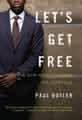
Paul Butler Paperback, 978-1-59558-500-4, 224 pages E-book, 978-1-59558-510-3
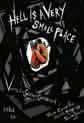
hell is a Very Small Place: Voices from Solitary Confinement
Edited by Jean Casella, James Ridgeway, and Sarah Shourd Hardcover, 978-1-62097-137-6, 240 pages E-book, 978-1-62097-138-3
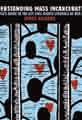
understanding Mass incarceration: A People’s Guide to the Key Civil rights Struggle of our Time
James Kilgore Paperback, 978-1-62097-067-6, 272 pages E-book, 978-1-62097-122-2
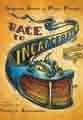
race to incarcerate: A Graphic retelling
Sabrina Jones and Marc Mauer Paperback, 978-1-59558-541-7, 128 pages E-book, 978-1-59558-893-7
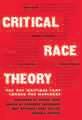
Critical race Theory: The Key Writings That Formed the Movement
Edited by Kimberlé Crenshaw, Neil T. Gotanda, Gary Peller, and Kendall Thomas Paperback, 978-1-56584-271-7, 528 pages
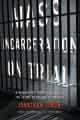
Mass incarceration on Trial: A remarkable Court Decision and the Future of Prisons in America
Jonathan Simon Paperback, 978-1-62097-254-0, 244 pages E-book, 978-1-59558-792-3
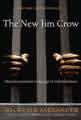
The New Jim Crow: Mass incarceration in the Age of Colorblindness Michelle Alexander Paperback, 978-1-59558-643-8, 336 pages E-book, 978-1-59558-819-7
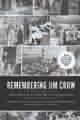
remembering Jim Crow: African Americans Tell About life in the Segregated South
Edited by William H. Chafe, Raymond Gavins, and Robert Korstad Paperback, 978-1-62097-027-0, 400 pages
The New Press extends heartfelt thanks to the following philanthropic institutions for their support over the past year:
Arcus Foundation
The Atlantic Philanthropies
The Bauman Foundation
Butler’s Hole Fund of The Boston Foundation
Butler’s Hole South Fund of The Boston Foundation
The California Wellness Foundation
The Annie E. Casey Foundation
The CrossCurrents Foundation
The Deer Creek Foundation
The Richard H. Driehaus Foundation
The Educational Foundation of America
Ford Foundation
Wallace Fox Foundation
French American Cultural Exchange Foundation
The French Ministry of Foreign Affairs and L’Institut Français
Furthermore: a program of the J.M. Kaplan Fund
The Florence Gould Foundation
The J.M. Kaplan Fund
The W.K. Kellogg Foundation
The Kresge Foundation
Lambent Foundation
The Frances Lear Foundation
The John D. and Catherine T. MacArthur Foundation
Ms. Foundation for Women
New York State Council on the Arts
The Overbrook Foundation
The Reed Foundation
The Rockefeller Brothers Fund
Rosenberg Foundation
The Schott Foundation for Public Education
Caroline and Sigmund Schott Fund
The Schumann Center for Media and Democracy
Wallace Action Fund of Tides Foundation
The Whiting Foundation
PuBliShiNG CirCle
The New Press is grateful to members of The New Press Publishing Circle, a group of individual donors and organizations who make contributions of $5,000 or more. The remarkable support of Publishing Circle members allows The New Press to give a voice to underrepresented viewpoints and publish works of educational, cultural, political, and community value.
Gifts of $10,000+
Emily Altschul-Miller and John Miller, Patricia Bauman, Sarah Burnes and Sebastian Heath, Barbara Ettinger and Sven Huseby, Amy Glickman and Andrew Kuritzkes, Greg Jobin-Leeds, Debbie and Jonathan Klein, Ethel Klein
and Edward Krugman, Ambassador Eleni Kounalakis, Abby and Jonathan Moses, Svetlana and Herbert Wachtell, Janetand Randall Wallace, and Jonathan zimmerman.
Gifts of $5,000 to $9,999
Lisa Adams, Michelle Coffey, Edward Davis and Thomas Phillips, Anne Detjen and Alexander Papachristou, Elizabeth Driehaus, Maggie Lear and Daniel Katz, Nancy Meyer and Marc Weiss, Frederica Perera and Frederick A.O. Schwarz Jr., Nina Rosenwald, and Cynthia Young and George Eberstadt.
FroNTliST MeMBerS
The Frontlist is a group of individuals and organizations who support the important work of The New Press with gifts ranging from $1 to $4,999. The New Press thanks these members for their gifts to The New Press over the past year:
Gifts of $1,000 to $4,999
Ellen and Moshe Adler, Jennifer and Jonathan Allan Soros, Megan Bell, Helen and Bob Bernstein, Andi and Tom Bernstein, Sara Bershtel, Stephen Bright, Nonnie and Rick Burnes, Davis Wright Tremaine LLP, Lisa Delpit, Antonia Grumbach, Anne Hess and Craig Kaplan, Arlie and Adam Hochschild, Jane Isay, Noorain Khan and Sabeel Rahman, Priscilla Kauff, Micheline Klagsbrun and Ken Grossinger, Judi Komaki, Susan and Martin Lipton, Elizabeth Marks and Dr. Harry Ostrer, Gregory Miller, David Moss, Lisa Mueller and Gara LaMarche, Gloria Neuwirth, Joyce and Peter Parcher, The Perseus Books Group, Karen Ranucci and Michael Ratner, Ellen Reeves, Susan and Jack Rudin, Elizabeth Sackler, Susan Sommer and Stephen Warnke, Dan Terkel, Katrina vanden Heuvel, Frederick Wertheim, Minky Worden and Gordon Crovitz, and Shannon Wu and Joseph Kahn.
Gifts of $250 to $999
Greg Berman, Carol and Miles Bidwell, Rachel Burd, Paul Butler, Andrew Celli, Center for Constitutional Rights, Faith Childs, Theodore and Haruko Taya Cook, Demos, Phyllis Grann, Helena Huang, Aziz Huq, IBM, John Jay College of Criminal Justice, Taya Kitman, Lambda Legal, Fiona McCrae, Carlin Meyer, Kenneth Monteiro and Leo Blackman, Robert Montoye, Jaclyn and Terence Pare, Jeffrey Peabody, Gloria Phares, Letty Pogrebin, Eric Rayman, Lynda Richards, Kim Sherrill, Adena Siegel, Peter Sills, Jill Stefanovich, Catharine Stimpson, vera Institute for Justice, Diane Wachtell, Genevieve and Daniel Wachtell, Elyse Dayton and Glenn Wallach, Christine Wasserstein, Tina Weiner, and Kara Young.
Gifts up to $249
Jonathan Abady, Amazon Smile, American Endowment Foundation, Susan Arnot, Meg Barnette, Bedford Stuyvesant Restoration Project, Beverly Benz Treuille, Billie Holiday Theatre, Cynthia Brown, Gavin Browning, Constance Chen, Farai Chideya, Mary Cleveland and Thomas Haines, Dorothy Sue Cobble, Teresa and Dr. Kenneth Dames, Karen deMauro, Carey Dunne, victoria Eastus, Mark Eisner, Laura Flanders, Gail Furman, Leslie Gabel-Brett, Ellen Greenhouse, Jean Grimmelmann, Don Hazen, Scottie Held, Patricia Hennessey, John Hodgkins, Audrey Holm-Hansen, Debra Inwald, Myla Kabat-zinn, Julia Kagan Baumann, Peggy Kriegel, Sarah Lazin, Della Leavitt, Marion Lee, David Lerner, Joseph Levine, Sagan Lewis and Tom Fontana, Lucy Lippard, Rick MacArthur, Idelisse Malavé, Kate Manning, Joan Marlow Golan, Elizabeth and David Marquis, Julia and Charles McNally, Pat Miller, Deirdre Mullane, National Domestic Workers Alliance, vivian Nixon, Linda Packman, Christine Pendry, Claudia Polsky and Ted Mermin, Evelyn Redlich, Phyllis Rosen, Dorothy Samuels, Edward Schneider, Deborah Schwartz, Carl Scott, Elizabeth Seidlin-Bernstein, Jessica Seigel, Janet and Benjamin Shute Jr., Loren Siegel, Lisa Steglich, Jacques Superbie, Marcy Syms, Teaching for Change, Dorothy Thomas, David Udell, Cynthia Wachtell and Jeffrey Neuman, Melanie Wachtell Stinnett, Audrey Waysse and William Hartung, Beth Weinman, Emily Whitfield, Patricia Williams, and Ying zhu and Andrew Hisgen.
The New Press Author royalty Giveback Program
The New Press thanks the following New Press authors who made a financial contribution to The Studs and Ida Terkel Fund through the Author Royalty Giveback Program over the past year:
Pat and Hugh Armstrong, Rick Ayers, Ira Berlin, David Cole, Don Davies, Lisa Delpit, John Dinges, Ernest Drucker, Peter Edelman, Estate of Louis “Studs” Terkel, Michele Foster, Adolfo Gilly, Anne Henderson, Lois and James Horton, David Cay Johnston, Nelson Lichtenstein, Lucy Lippard, James Loewen, Timothy Patrick McCarthy, Patricia Politzer, and Heidi Ravven.
Special Thanks
The New Press thanks the following people and organizations for devoting time and talent to The New Press over the past year:
Mustafa Abdulla at the ACLU Missouri in St. Louis, Kalia Abiade at Center for New Communities, Alexis Agathocleous at the Center for Constitutional Rights, zina AlDamlouji, Anthony Arnove, David Auerbach, Laura Barber and Angela Rose at Portobello Books, Meg Barnette, Neil Barsky, victoria Bassetti, Galen Baughman at Human Rights Defense Center, Patricia Bauman, Gina Belafonte, Gordon Bell, Amy and Peter Bernstein, Andi and Tom Bernstein, Helen and Bob Bernstein, Lori Evans Bernstein and William Bernstein, Jed Bickman, Tanya Birl, Karen Brooks Hopkins, Tony Butler, Dolores Canales at California Families to Abolish Solitary Confinement, Kevin Cathcart, Partha Chattoraj, Rachel and Luyen Chou, Cecilia Clarke at Brooklyn Community Foundation, Eric Contreras and Joe Schmidt at the New York City Department of Education, Amalia Cosmetatou, Reid Cramer at the New American Foundation, Kimberlé Crenshaw, Edward Davis and victor Kovner at Davis Wright Tremaine, Fania Davis at Restorative Justice for Oakland Youth, John Duff, Ashley Ellis at Good Shepherd Services at the School for Democracy and Leadership, Indira Etwaroo at the Restoration Center for Arts and Culture, Sarah Fan, Janice Fine at Rutgers University, Sunny Fischer, Laura Flanders, Stephen Foster and Sarah Abelow at The Overbrook Foundation, Leslie Gabel-Brett, Alberto Galindo and Angelo Ragaza, Ellen Galluccio, David Gartner, Keesha Gaskins at Rockefeller Brothers Fund, Michael German, Lynn Goldberg, Dana Goldstein, Jennifer Gonnerman, Heather Goodchild, Sam Goodstein, Jessica Gorman at Saint Ann’s School, Erik Grimmelmann, James Grimmelmann, Lev Grossman, Andrew Gumbel, Liz Kennedy, Evelyn Hammond, Nick Hanauer, Brad Hebel, Christie Hefner, Anne Hess and Craig Kaplan, Helena Huang, Dave Isay at StoryCorps, Deepa Iyer, David Cay Johnston, van Jones, Rick Joyce, Joseph Kahn, Mandeep Kaur at Oak Creek, Terence P. Keegan, Liz Kennedy, Piper Kerman, Jonathan Klein, David S. Korzenik, Justin Krebs at Living Liberally, Nicholas Latimer, Chisun Lee at Brennan Center for Justice, Jan Legnitto, Susan Lehman, Nakisha Lewis at The Ms. Foundation for Women, Gloria Loomis at Watkins Loomis Agency, Avram Ludwig, Rick MacArthur, James Marcus, Marc Mauer, Jane Mayer, Karen and Denis Mehiel, Louise Melling, Nora Mercurio and Suhrkamp verlag, Dara Messinger at Downtown Community Television Center, Carlin Meyer, Darnell Moore at MicNews, Toni Morrison, Five Mualimm-ak, Carla Murphy at Nation Institute, National Museum of Mathematics, Burt Neuborne, Gloria Neuwirth, Chris Owens at National Employment Law Project, Cara Page at Audre Lorde Project, Frank Pasquale, The Peace Poets, Niko Pfund, Steve Phillips, Katherine Porter, Douglass Maynard, Fiona Brett, and Steve Goldman at Akin Gump Strauss Hauer & Feld LLP, Michael Posner and Sarah Labowitz at the NYU Stern Center for Business and Human Rights, Powerhouse Books, Sabeel Rahman, Eric Rayman, Amy Rhodes, Cecile Richards, Jack Rosenthal, Michael Rothman at Eskolta School Research and Design, Elizabeth Sackler at the Elizabeth A. Sackler Center for Feminist Art and the Brooklyn Museum, Dorothy Samuels, Isis Sapp-Grant at Youth Empowerment Mission, Kshama Sawant, Sarah Scarlett at Penguin UK, Anya Schiffrin and Joseph Stiglitz, Leina Schiffrin, Natalia Schiffrin and Philippe Sands, Gabriela Schneider, Frederica Perera and Frederick A.O. Schwarz Jr., Nancy Shapiro, Billy Shebar, Micah Sifry, Jonathan Stryker and Bryan Simmons at the Arcus Foundation, Bennett Singer, Amardeep Singh and Adam Culbreath and Tom Watson and Erik Blanc and Christina voight at Open Society Foundations, Jonathan Smith, Adam Smith at Every voice, Joanne Smith at Girls for Gender Equity, Saket Soni at National Guestworker Alliance, Lisa Steglich, Gloria Steinem,
Bhaskar Sunkara at Jacobin, Rebekah Tafel, James Tanton, zephyr Teachout, Andy Tepper, Nick Turner at the vera Institute of Justice, Katrina vanden Heuvel at The Nation, Marlene Cooper vasilic and Michelle Lawando at the Center for American Progress, Joan vermeulen, John vukel, Melanie Wachtell Stinnett, Eric Ward and vivek Malhotra and Altaf Rahamatulla and Libby Wann and Laine Romero-Alston at Ford Foundation, vince Warren at the Center for Constitutional Rights, Audrey Waysse, Michael Winship, Felicia Wong at the Roosevelt Institute, Minky Worden, Howard S. Wright III, and Shireen zama at the Proteus Fund.
The New Press interns:
The New Press’s Diversity in Publishing Internship Program is very grateful to the following individuals who successfully completed the program over the past year:
Arvin Alaigh, Margaret Dukes, Isa Flores-Jones, Bailey Georges, Carrie Hsieh, Dilinna Nwabueze, Ariana Rosas, and Ione Wang.
Thank you again to all who have given generously to support publishing in the public interest.
These lists reflect gifts as of August 2016. Every effort has been made to ensure the accuracy of these lists. If you believe you have been omitted, we extend our heartfelt apologies and ask you to bring the error to our attention by calling Chelsea Miller at (212) 629-8551 or e-mailing development@thenewpress.com.
Board of directors
LISA ADAMS
Literary Agent, The Garamond Agency
ELLEN ADLER
Publisher, The New Press
MEGAN E. BELL
Counsel, Patterson Belknap Webb & Tyler LLP
SARAH BURNES (SECRETARY)
Literary Agent, The Gernert Company
AMY GLICKMAN
Media Lawyer; Former Deputy General Counsel, Time Inc.
BRAD HEBEL
Associate Press Director and Director of Operations and Sales, Columbia University Press
BOB HERBERT
Distinguished Senior Fellow, Demos; Contributing Editor, The American Prospect
HELENA HUANG
Senior Director of Philanthropy & Communications, State Voices
AZIZ HUQ
Professor of Law, University of Chicago Law School
JANE ISAY
Former Editor-in-Chief, Harcourt
GARA LAMARCHE
President, Democracy Alliance
IDELISSE MALAVÉ
Organizational Consultant Former Executive Director, Tides Foundation
SABEEL RAHMAN
Assistant Professor of Law, Brooklyn Law School; Fellow at the New America Foundation
FREDERICK (“FRITZ”) A.O. SCHWARZ JR. Chief Counsel, Brennan Center for Justice at NYU School of Law; Senior Counsel, Litigation, Cravath Swaine & Moore LLP
THEODORE M. SHAW (VICE CHAIR)
Julius L. Chambers Distinguished Professor of Law and Director, Center for Civil Rights, University of North Carolina School of Law at Chapel Hill