

Distribution and Sales
United States:
The New Press is distributed to the trade by Two Rivers Distribution, an Ingram brand.
Orders and Customer Service:
Ingram Content Group LLC One Ingram Blvd.
La Vergne, TN 37086 (866) 400-5351 tel ips@ingramcontent.com
For General International Enquiries:
Ingram Publisher Services International 1400 Broadway, Suite 520 New York, NY 10018
IPS_Intlsales@ingramcontent.com
International Orders:
Please send orders and remittances to: IPS_International.Orders@ ingramcontent.com
United Kingdom, Ireland, Europe: General Enquiries: INGRAM
5th Floor
52–54 St John Street Clerkenwell London EC1M 4HF
IPSUK_enquiries@ingramcontent.com
UK, Ireland, Europe Orders Through NBNi: NBNi/INGRAM
1 Deltic Avenue Rooksley Milton Keynes 01752 202301 tel NBNi.cservs@ingramcontent.com
Europe, Latin America, Caribbean: Matthew Dickie International Sales Manager INGRAM UK 5th Floor
52–54 St John Street Clerkenwell London EC1M 4HF Matthew.Dickie@ingramcontent.com
Australia, New Zealand, Canada: Tricia Remark
Senior Sales Representative
Ingram Publisher Services International 1400 Broadway, Suite 520 New York, NY 10018
+1 (212) 581-7839 tel Tricia.Remark@ingramcontent.com
Australia Ordering Information: NewSouth Books Orders and Distribution Alliance Distribution Services, 9 Pioneer Avenue, Tuggerah, NSW 2259 Australia
+61 (2) 4390 1300 tel adscs@alliancedist.com.au
Canada Ordering Information: Canadian Manda Group 664 Annette Street, Toronto, ON M6S 2C8 +1 (416) 516-0911 tel info@mandagroup.com
South Africa: Karis Moelker
Sales & Support Representative
Ingram Publisher Services International 1400 Broadway, Suite 520 New York, NY 10018 212-714-8196 tel Karis.Moelker@ingramcontent.com
South Africa Ordering Information: Jonathan Ball Elmasie Stodart Office C4, The District 41 Sir Lowry Road Woodstock, Cape Town 7925 South Africa +27 (0) 21 469 8932 tel +27 (0) 86 270 0825 fax Queries: services@jonathanball.co.za Orders: orders@jonathanball.co.za
Asia, India, Middle East: Edison Garcia Senior Manager, International Sales Ingram Publisher Services International 1400 Broadway, Suite 520 New York, NY 10018 +1 (212) 340-8170 tel edison.garcia@ingramcontent.com
India Ordering Information: Penguin Books India Pvt. Ltd 7th Floor, Infinity Tower C DLF Cyber City, Phase - III, Gurgaon-122 002 Haryana India +91 (124) 478 5600 tel sales@penguinrandomhouse.in
Middle East: IPR Team
Middle East Sales Group IPR PO Box 25731 1311 Nicosia CYPRUS + 357 22872355 tel iprschl@spidernet.com.cy
This catalog describes books to be published from September 2021 through February 2022
The New Press 120 Wall Street, Fl 31 New York, NY 10005-4007 (212) 629-8802 tel (212) 629-8617 fax www.thenewpress.com
For media/event inquiries, please contact: publicity@thenewpress.com
For special sales and bulk orders, please contact: (212) 629-8802 tel specialsales@thenewpress.com
Cover photograph by Ted S. Warren © Associated Press
Page 2 photograph by Clifford Ling/ Associated Newspapers/REX/Shutterstock
Page 4 photograph courtesy Wikimedia used under a Creative Commons license (http://creativecommons.org/)
Page 12 photograph of Alice Walker by Ana Elena Peña/www.anaelena.com.mx
Page 20 photograph of Elie Mystal courtesy of the author

Spies, Lies, and Exile
The Extraordinary Story of Russian Double Agent George Blake
SIMON KUPER

FOR FANS OF JOHN LE CARRÉ AND BEN MACINTYRE, AN EXCLUSIVE ACCOUNT OF THE NOTORIOUS COLD WAR SPY
Kuper provides a different and valuable perspective, humane and informative.
—JOHN LE CARRÉ
Few Cold War spy stories approach the sheer daring and treachery of George Blake’s.
After fighting in the Dutch resistance during World War II, Blake joined the British spy agency MI6 and was stationed in Seoul. Taken prisoner after the North Korean army overran his post in 1950, Blake later returned to England to a hero’s welcome, carrying a dark secret: while in a communist prison camp in North Korea, he had secretly switched sides to the KGB after reading Karl Marx’s Das Kapital
As a Soviet double agent, Blake betrayed uncounted western spying operations— including the storied Berlin Tunnel, the most expensive covert project ever undertaken by the CIA and MI6. Blake exposed hundreds of western agents, forty of whom were likely executed. After his unmasking and arrest, he received, for that time, the longest sentence in modern British history—only to make a dramatic escape to the Soviet Union in 1966, five years into his forty-two–year sentence. He left his wife, three children, and a stunned country behind.
Much of Blake’s career existed inside the hall of mirrors that was the Cold War, especially following his sensational escape from Wormwood Scrubs prison. Veteran journalist Simon Kuper tracked Blake to his dacha outside Moscow, where the aging spy agreed to be interviewed for this unprecedented account of Cold War espionage. Following the master spy’s death in Moscow at age ninety-eight on December 26, 2020, Kuper is finally able to set the record straight.
Simon Kuper is a British author and journalist for the Financial Times. He has written for The Observer, The Times and The Guardian, and also writes regularly for Dutch newspapers. He lives in Paris with his family.
The most comprehensive and insightful biography to date.
—BEN MACINTYRE, THE TIMES
Truly enthralling . . . a deeply human read, wonderfully written, on the foibles of a fascinating, flawed, treacherous and sort of likeable character.
—PHILIPPE SANDS, AUTHOR OF THE RATLINE AND EAST WEST STREET
A good account of a good story . . . [Kuper has] a sceptical wit in judging his man and the secret world he inhabited.
MAX HASTINGS, THE SUNDAY TIMES Fascinating.
NOEL MALCOLM, THE DAILY TELEGRAPH
Recently published
Hardcover, 978-1-62097-375-2
Ebook, 978-1-62097-376-9
$27.99 / $36.99 CAN
5 1⁄2” x 8 1⁄2”, 288 pages with 25 b&w images Biography
Wormwood Scrubs prison a month after Blake’s escape (from Spies, Lies, and Exile)

The Kaepernick Effect
Taking a Knee, Changing the World
DAVE ZIRIN

RIVETING AND INSPIRING FIRST-PERSON STORIES OF HOW “TAKING A KNEE” TRIGGERED AN AWAKENING IN SPORTS, FROM THE CELEBRATED SPORTSWRITER
Dave Zirin hits the bullseye with this textured examination of the man behind the movement and the movement inspired by the man. The Kaepernick Effect answers all of our questions, and more, while simultaneously connecting the dots to a moment in contemporary times that will be remembered for the global awakening it inspired.
—SEKOU
SMITH, NBA TV/NBA.COM SENIOR ANALYST
In 2016, amid an epidemic of police shootings of African Americans, the celebrated NFL quarterback Colin Kaepernick began a series of quiet protests on the field, refusing to stand during the U.S. national anthem. By “taking a knee,” Kaepernick bravely joined a long tradition of American athletes making powerful political statements. This time, however, Kaepernick’s simple act spread like wildfire throughout American society, becoming the preeminent symbol of resistance to America’s persistent racial inequality.
Critically acclaimed sports journalist and author of A People’s History of Sports in the United States, Dave Zirin chronicles “the Kaepernick effect” for the first time, through interviews with a broad cross-section of professional athletes across many different sports, college stars and high-powered athletic directors, and high school athletes and coaches. In each case, he uncovers the fascinating explanations and motivations behind a mass political movement in sports, through deeply personal and inspiring accounts of risk-taking, activism, and courage both on and off the field.
A book about the politics of sport, and the impact of sports on politics, The Kaepernick Effect is for anyone seeking to understand an essential dimension of the new movement for racial justice in America.
Dave Zirin is a columnist for The Nation, SLAM Magazine, and The Progressive. His many books include A People’s History of Sports in the United States, Bad Sports, and Game Over. Host of Sirius XM’s popular weekly show Edge of Sports Radio and a regular guest on ESPN’s Outside the Lines, he lives near Washington, DC.
Includes exclusive interviews with: Megan Rapinoe
Michael Bennett
Kenny Stills
Gwen Berry
Eric Reid and many others
Praise for The Kaepernick Effect: Dave Zirin has offered us a gift: a powerful chronicle of the national uprising inspired by the Movement for Black Lives in the world of sport. This will be the go-to text on athlete activism for years to come.
—FRANK ANDRE GURIDY, AUTHOR OF THE SPORTS REVOLUTION
In this captivating book, Zirin puts into sharp relief the activist potential of young athletes, and how they can serve as dismantlers of intersectional oppression.
—KIMBERLÉ CRENSHAW
September
Hardcover, 978-1-62097-675-3
Ebook, 978-1-62097-686-9
$25.99 / $33.99 CAN 5 1⁄2” x 8 1⁄2”, 240 pages Sports

Prison by Any Other Name
The Harmful Consequences of Popular Reforms
MAYA SCHENWAR and VICTORIA LAW
with a foreword by michelle alexander and a new afterword by the authors
NOW IN PAPERBACK WITH A NEW AFTERWORD FROM THE AUTHORS, THE CRITICALLY PRAISED INDICTMENT OF WIDELY EMBRACED “ALTERNATIVES TO INCARCERATION”
Important reading for anyone involved in the criminal justice system.
KIRKUS REVIEWS
Clearly written and persuasive, Prison by Any Other Name is a thoughtful call for compassion and kindness in our efforts to promote safety, security and community peace.
THE INDYPENDENT
A cogent critique of proposals to end mass incarceration that replicate the surveillance, control, and punishment of the “prison industrial complex” rather than offering genuine justice or rehabilitation. . . . Their impassioned yet evidence-based polemic exposes flaws in much of the perceived wisdom around the issue . . . a must-read.
PUBLISHERS WEEKLY
September
Paperback, 978-1-62097-697-5
Ebook, 978-1-62097-701-9
$17.99 / $23.99 CAN
5 1⁄2” x 8 1⁄2”, 336 pages Criminal Justice (Hardcover edition: 978-1-62097-310-3)
But what does it mean—really—to celebrate reforms that convert your home into your prison?
—MICHELLE ALEXANDER, FROM THE FOREWORD
Electronic monitoring. Locked-down drug treatment centers. House arrest. Mandated psychiatric treatment. Data-driven surveillance. Extended probation. These are some of the key alternatives held up as cost effective substitutes for jails and prisons. But in a searing, “cogent critique” (Library Journal), Maya Schenwar and Victoria Law reveal that many of these so-called reforms actually weave in new strands of punishment and control, bringing new populations who would not otherwise have been subject to imprisonment under physical control by the state.
Whether readers are seasoned abolitionists or are newly interested in sensible alternatives to retrograde policing and criminal justice policies and approaches, this highly praised book offers “a wealth of critical insights” that will help readers “tread carefully through the dizzying terrain of a world turned upside down” and “make sense of what should take the place of mass incarceration” (The Brooklyn Rail).
With a foreword by Michelle Alexander and a new afterword by the authors, Prison by Any Other Name exposes how a kinder narrative of reform is effectively obscuring an agenda of social control challenging us to question the ways we replicate the status quo when pursuing change, and offering a bolder vision for truly alternative justice practices.
Maya Schenwar is the editor-in-chief of Truthout. She is also the author of Locked Down, Locked Out and the co-editor of the anthology Who Do You Serve, Who Do You Protect? She lives in Chicago. Victoria Law is a freelance journalist and the author of Resistance Behind Bars, and the co-editor of Don’t Leave Your Friends Behind. She is a co-founder of Books Through Bars—NYC and lives in New York City. Michelle Alexander is an opinion columnist for the New York Times. She is the author of The New Jim Crow and lives in Columbus, Ohio.
Immigration Matters
Movements, Visions, and Strategies for a Progressive Future
edited by RUTH MILKMAN, DEEPAK BHARGAVA, and PENNY LEWIS
with a new introduction by the editors
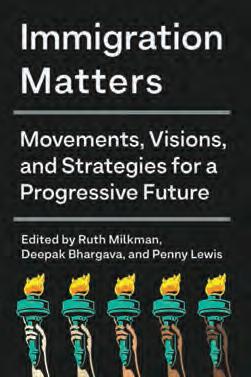
NOW IN PAPERBACK A PROVOCATIVE, LONG-TERM PLAN FOR A HUMANE IMMIGRATION SYSTEM FROM THE NATION’S LEADING IMMIGRATION SCHOLARS AND ACTIVISTS WITH A NEW INTRODUCTION THAT REFLECTS ON THE EARLY DAYS OF THE BIDEN ADMINISTRATION
Immigration Matters draws together the leading voices on immigration and immigrant rights to offer a cogent pathway forward to fix a tragically broken immigration system.
—DOUGLAS S. MASSEY, PRINCETON UNIVERSITY
During the past decade, right-wing nativists have stoked popular hostility to the nation’s foreign-born population, forcing the immigrant rights movement into a defensive posture. In the Trump years, preoccupied with each crisis upon crisis, advocates had few opportunities to consider questions of long-term policy or future strategy. Now is the time for a reset.
Immigration Matters offers a new, actionable vision for immigration policy. It brings together key movement leaders and academics in the immigration space to share cutting-edge approaches to the question of America’s borders—who should be allowed in, and who, if anyone, should be kept out. The book delves into topics including new ways to frame immigration issues, fresh thinking on key aspects of policy, challenges of integration, workers’ rights, family re-unification, legalization, paths to citizenship, and humane enforcement.
The perfect handbook for immigration activists, scholars, policy makers, and anyone who cares about one of the most contentious issues of our age, Immigration Matters makes accessible an immigration policy that both remediates the harm done to immigrant workers and communities under Trump and advances a bold new vision for the future.
Ruth Milkman is Distinguished Professor of Sociology at the CUNY School of Labor and Urban Studies, where she also serves as research director, and the CUNY Graduate Center. Deepak Bhargava is Distinguished Lecturer in Urban Studies at the School of Labor and Urban Studies (SLU) at the City University of New York (CUNY). Penny Lewis is an associate professor of labor studies, CUNY School of Labor and Urban Studies. All three editors live in New York.
Contributors include:
Justin Gest, George Mason University
Marielena Hincapié, National Immigration Law Center
Pramila Jayapal (D-WA), U.S. House of Representatives
Amaha Kassa, African Communities Together
Adam Kruggel and Mehrdad Azemun, People’s Action
Peter L. Markowitz, Cardozo Law School
Eliseo Medina, SEIU
Cristina Jiménez Moreta, United We Dream
Cecilia Muñoz, New America Foundation
Mae M. Ngai, Columbia University
Saket Soni, Resilience Force
D. Taylor, president, UNITE HERE
Javier H. Valdes, Make the Road NY
September
Paperback, 978-1-62097-699-9
Ebook, 978-1-62097-702-6
$18.99 / $24.99 CAN 5 1⁄2” x 8 1⁄2”, 320 pages
Current Affairs/Immigration (Hardcover edition: 978-1-62097-652-4)
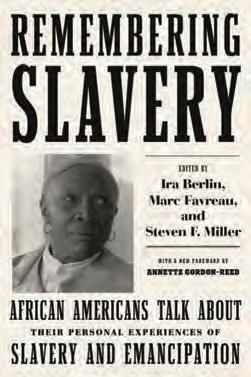
Remembering Slavery
African Americans Talk About Their Personal Experiences of Slavery and Emancipation
edited by IRA BERLIN, MARC FAVREAU, and STEVEN F. MILLER
with a new foreword by annette gordon-reed
REISSUED PAPERBACK CLASSIC THE GROUNDBREAKING, BESTSELLING HISTORY OF SLAVERY, WITH A NEW FOREWORD BY PULITZER PRIZE–WINNING HISTORIAN ANNETTE GORDON-REED
Praise for Ira Berlin and Remembering Slavery:
Quite literally, history comes alive in this unparalleled work.
LIBRARY JOURNAL
As good a synthesis of current scholarship as one will find, with fresh insights for any reader.
THE SAN DIEGO UNION-TRIBUNE
[Berlin’s] mark on the field of slavery and African American history stands as one of the most significant since W.E.B. Du Bois.
—STEVEN HAHN, IN THE NEW YORK TIMES
This project will enrich every American home and classroom.
PUBLISHERS WEEKLY
September
Paperback, 978-1-62097-028-7
Ebook, 978-1-62097-044-7
$19.99 / $25.99 CAN
5 1⁄2” x 8 1⁄2”, 432 pages with 43 b&w images History/African American Studies (Previous edition: 978-1-59558-228-7)
As vital and necessary a historical document as anyone has ever produced in this country.
THE BOSTON GLOBE
With the publication of the 1619 Project and the national reckoning over racial inequality, the story of slavery has gripped America’s imagination—and conscience— once again.
No group of people better understood the power of slavery’s legacies than the last generation of American people who had lived as slaves. Little-known before the first publication of Remembering Slavery over two decades ago, their memories were recorded on paper, and in some cases on primitive recording devices, by WPA workers in the 1930s. A major publishing event, Remembering Slavery captured these extraordinary voices in a single volume for the first time, presenting them as an unprecedented, first-person history of slavery in America.
Remembering Slavery received the kind of commercial attention seldom accorded projects of this nature—nationwide reviews as well as extensive coverage on prime-time television, including Good Morning America, Nightline, CBS Sunday Morning, and CNN. Reviewers called the book “chilling . . . [and] riveting” (Publishers Weekly) and “something, truly, truly new” (The Village Voice).
With a new foreword by Pulitzer Prize–winning scholar Annette Gordon-Reed, this new edition of Remembering Slavery is an essential text for anyone seeking to understand one of the most basic and essential chapters in our collective history.
Until his death in 2018, Ira Berlin was one of the preeminent historians of American slavery. His many awards include the Bancroft Prize, the Frederick Douglass Prize, and the Los Angeles Times Book Prize. Annette Gordon-Reed is the Carl M. Loeb University Professor at Harvard and the winner of sixteen book prizes, including the Pulitzer Prize for History in 2009 and the National Book Award in 2008 for The Hemingses of Monticello. She divides her time between New York City and Cambridge, Massachusetts.
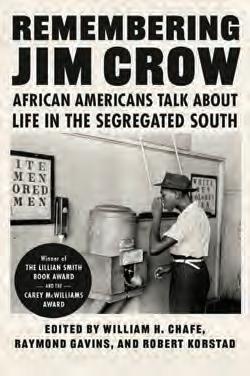
Remembering Jim Crow
African Americans Talk About Life in the Segregated South
edited by WILLIAM H. CHAFE, RAYMOND GAVINS, and ROBERT KORSTAD
REISSUED
PAPERBACK CLASSIC A TIMELY NEW EDITION OF THE STUNNING, PRIZE-WINNING PORTRAIT OF THE JIM CROW SOUTH THROUGH UNIQUE FIRST-PERSON ACCOUNTS
A landmark book. PUBLISHERS WEEKLY, “THE YEAR IN BOOKS”
Praised as “viscerally powerful” (Publishers Weekly), this remarkable work of oral history captures the searing experience of the Jim Crow years through first-person interviews carefully collected by researchers at Duke University’s Behind the Veil project. Newly relevant today as Americans reckon with the legacies of slavery and strive for racial equality, Remembering Jim Crow provides vivid, compelling accounts by men and women from all walks of life, who tell how their day-to-day lives were subjected to profound and unrelenting racial oppression.
“A shivering dose of reality and inspiring stories of everyday resistance” (Library Journal), Remembering Jim Crow is a testament to how Black Southerners fought back against the system, raising children, building churches and schools, running businesses, and struggling for respect in a society that denied them the most basic rights. Collectively, these narratives illuminate individual and community survival and tell a powerful story of the American past that is crucial for us to remember as we grapple with Jim Crow’s legacies in the present.
William H. Chafe is professor emeritus at Duke University. He lives in Durham, North Carolina. Raymond Gavins was a professor at Duke University and the project director of Behind the Veil. Robert Korstad is Professor of Public Policy and History emeritus at Duke University. He lives in Durham, North Carolina.
Winner of the Lillian Smith Book Award
Winner of the Carey McWilliams Award
This is not just an oral history for the South but for us all. It is a sobering reminder of the mistakes this nation has made, a hopeful reflection on how far we have come.
THE KANSAS CITY STAR
Powerful eyewitness accounts of the brutal and demeaning American apartheid.
BOOKLIST
September
Paperback, 978-1-62097-682-1 Ebook, 978-1-62097-698-2
$19.99 / $25.99 CAN 5 1⁄2” x 8 1⁄2”, 400 pages with 52 b&w images History/African American Studies (Previous edition: 978-1-62097-027-0)

The People’s Constitution
200 Years, 27 Amendments, and the Promise of a More Perfect
Union
JOHN F. KOWAL and WILFRED U. CODRINGTON III
THE 233-YEAR STORY OF HOW THE AMERICAN PEOPLE HAVE TAKEN AN IMPERFECT CONSTITUTION— THE PRODUCT OF COMPROMISES AND AN ARTIFACT OF ITS TIME—AND MADE IT MORE DEMOCRATIC
Political battles covered in The People’s Constitution:
• The drafting and ratification of the Constitution and the Bill of Rights
• The struggle against slavery and the fight for equal rights for African Americans
• The push for an equitable tax system during the Gilded Age
• The effort to democratize the Senate amidst the corrupt influence of corporations
• The fight to eradicate alcohol from American life
• The Women’s Movement campaigns for civic equality
• The Civil Rights Movement
September
Hardcover, 978-1-62097-561-9
Ebook, 978-1-62097-562-6
$27.99 / $36.99 CAN 6” x 9”, 368 pages
History
When contemporary Americans cite “The Constitution,” they invoke a concept that is vastly different from what the framers barely began to construct two centuries ago.
JUSTICE THURGOOD MARSHALL AT A BICENTENNIAL COMMEMORATION OF THE CONSTITUTION
Who wrote the Constitution? That’s obvious, we think: fifty-five men in Philadelphia in 1787. But much of the Constitution was actually written later, in a series of twentyseven amendments enacted over the course of two centuries. The real history of the Constitution is the astonishing story of how subsequent generations have reshaped our founding document amid some of the most colorful, contested, and controversial battles in American political life. It’s a story of how We the People have improved our government’s structure and expanded the scope of our democracy during eras of transformational social change.
The People’s Constitution is an elegant, sobering, and masterly account of the evolution of American democracy. From the addition of the Bill of Rights—a promise made to save the Constitution from near certain defeat—to the post–Civil War battle over the Fourteenth Amendment, from the rise and fall of the “noble experiment” of Prohibition to the defeat and resurgence of an Equal Rights Amendment a century in the making: The People’s Constitution is the first book of its kind. Here is a vital guide to America’s national charter and an alternative history of the continuing struggle to realize the Framers’ promise of a more perfect union.
John F. Kowal, a former program officer in the Democracy Program of the Ford Foundation, is now the vice president for programs at the Brennan Center for Justice at NYU School of Law. Wilfred U. Codrington III is the Bernard and Anne Spitzer fellow at the Brennan Center for Justice. They live in New York City and this is their first book.
If We Want to Win A Latine Vision for a
New American Democracy
edited by DIANA CAMPOAMOR
with a foreword by robert k. ross
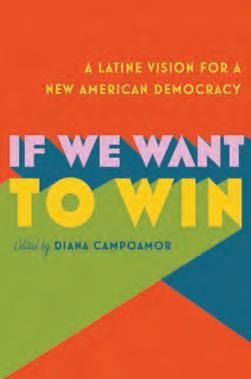
AN URGENT, PROVOCATIVE COLLECTION OF ESSAYS FROM LATINE THOUGHT LEADERS HERALDING A MORE INCLUSIVE VISION OF AMERICA’S FUTURE
The United States must reckon with the fact that Latinos are essential to its survival and to its splendor, and have been for generations. We Latinos need to know it, too.
—ELIZABETH MÉNDEZ BERRY AND MÓNICA RAMÍREZ
Latine people make up the second largest ethnic and racial group in America, with a population of over sixty million. They have been integral to shaping the country’s economy, culture, and politics, and their influence and power continue to grow at all levels of civic life. Yet their diversity remains misunderstood, their contributions ignored, their concerns overlooked.
If We Want to Win brings together twenty leading figures involved in issues that affect the Latine community, to lay out a vision for the future of American democracy, drawing on their experience and expertise in areas ranging from the arts, juvenile justice, women’s rights, and education to environmental justice, racism, human rights, immigration, technology, and philanthropy.
Each contributor tells his or her own story alongside stories of the resilience and hope they have encountered over the course of their careers, debunking the stereotyping and scapegoating that continue to plague the Latine community and seeking a more accurate portrayal of themselves and their communities. While questioning what it means to be Latine and what it means to be American in the twenty-first century, this inspiring, visionary collection offers a blueprint for moving the United States toward a more inclusive and just democracy.
Diana Campoamor is the founder of Nuestra America Fund (NAF), an initiative focused on documenting Latine leadership and best practices in philanthropy. Prior to NAF, she served as president of Hispanics in Philanthropy (HIP) for nearly twenty-seven years. She lives in San Francisco.
Contributors include:
Ana Marie Argilagos, president, Hispanics in Philanthropy
Carmen Barroso, WHO Gender and Rights Technical Group co-chair
Anjanette Delgado, author of The Heartbreak Pill
Julio Marcial, director of Youth Justice, Liberty Hill Foundation
Hector Mujica, Google.org
Matt Nelson, executive director, Presente.org
Mary Skelton Roberts, codirector, Climate Program at the Barr Foundation
Nelson I. Colon Tarrats, president and CEO, Fundación Comunitaria de Puerto Rico
October
Hardcover, 978-1-62097-680-7
Ebook, 978-1-62097-691-3
$26.99 / $35.99 CAN
5 1⁄2” x 8 1⁄2”, 288 pages
Social Science

We Are the Ones We Have Been Waiting For
Inner Light in a Time of Darkness
ALICE WALKER
with a new foreword by rebecca walker
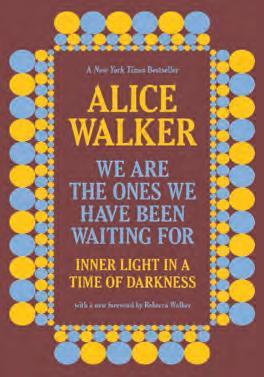
REISSUED PAPERBACK CLASSIC THE NEW YORK TIMES BESTSELLING BOOK THAT BOTH GALVANIZES PROGRESSIVES FOR ACTION AND IS A BALM—FROM THE PULITZER PRIZE–WINNING AUTHOR
A light in darkness, Alice Walker awakens us to our own power as only she can. . . . Once again, Walker has exceeded our expectations.
ATLANTA JOURNAL-CONSTITUTION
When the United States recently exploded with unprecedented demonstrations challenging racial violence and hatred, Alice Walker’s New York Times bestselling We Are the Ones We Have Been Waiting For was one of the books to which people turned for inspiration and solace. Called “stunningly insightful” and “a book that will inspire hope” by Publishers Weekly, this work by the author of The Color Purple is a clarion call to activism—spiritual ruminations with a progressive political edge, that offer a moment of care and solace.
Walker encourages readers to take faith in the fact that, despite our daunting predicaments, we are uniquely prepared to create positive change. Drawing on Walker’s spiritual grounding and her progressive political convictions, the book offers a cornucopia of the Pulitzer Prize winner’s writings and speeches on advocacy, struggle, and hope. Each chapter concludes with a recommended meditation to teach patience, compassion, and forgiveness.
Walker’s clear vision and calm meditative voice—truly “a light in darkness”—has struck a deep chord among a large and devoted readership. In a new foreword, Rebecca Walker reflects on the contemporary political and spiritual crises in the post–Trump era United States, making this classic book relevant for the current moment.
Alice Walker is one of the most prolific and important writers of our time, known for her literary fiction, including the Pulitzer Prize–winning The Color Purple (which was also a major Broadway play), her many volumes of poetry, and her powerful nonfiction collections. Her advocacy on behalf of the dispossessed has spanned the globe. She lives in Northern California. Rebecca Walker is, in addition to being Alice Walker’s daughter, a writer, teacher, feminist, and activist who is credited with having coined the term “third wave.”
978-1-59558-986-6

978-1-59558-774-9
October
Paperback, 978-1-62097-673-9 Ebook, 978-1-62097-692-0
$16.99 / $22.99 CAN 4 1⁄2” x 7 1⁄4”, 288 pages Essays (Previous edition: 978-1-59558-216-4)
The Cushion in the Road, Meditation and Wandering as the Whole World Awakens to Being in Harm’s Way Alice Walker Paperback, $17.95,
The Chicken Chronicles, Sitting with the Angels Who Have Returned with My Memories: Glorious, Rufus, Gertrude Stein, Splendor, Hortensia, Agnes of God, the Gladyses, & Babe: A Memoir Alice Walker Paperback, $17.95,

From Parchment to Dust
The Case for Constitutional Skepticism
LOUIS MICHAEL SEIDMAN
THE
PROMINENT CONSTITUTIONAL LAW SCHOLAR’S FASCINATING (AND, YES, MIND-BOGGLING) ARGUMENT THAT WE DON’T NEED THE CONSTITUTION AFTER ALL
What’s wrong with the Constitution?
• In four out of the last five presidential elections, a candidate became president even though they lost the popular vote.
• Nine individuals, appointed for life (three of them by Donald Trump!) and responsible to no one, regularly make crucial and unreviewable decisions about . . . everything.
• Popular majorities favor measures like limitations on campaign spending, more effective gun regulation, and rebuilding of our national infrastructure, yet because of political structures imposed on us by the Framers, we are unable to enact measures accomplishing these objectives.
October
Hardcover, 978-1-62097-636-4
Ebook, 978-1-62097-693-7
$26.99 / $35.99 CAN
5 1⁄2” x 8 1⁄2”, 288 pages Political Science
No society can make a perpetual constitution. . . . The earth belongs always to the living generation.
—THOMAS JEFFERSON
For some, to oppose the Constitution is to oppose the American experiment itself. But leading constitutional scholar Louis Michael Seidman argues that our founding document has long passed its “sell-by” date. It might sound crazy, but Seidman’s arguments are both powerful and, well, convincing.
As Seidman shows, constitutional skepticism and disobedience have been present from the beginning of American history, even worming their way into the Federalist Papers. And, as Seidman also points out, no one alive today has agreed to be bound by these rules.
In From Parchment to Dust, Seidman offers a brief history of the phenomenon of constitutional skepticism and then proceeds to a masterful takedown of most cherished, constitutionally enshrined institutions and beliefs, from the Supreme Court (“an arrogant elite in robes”), to the very concepts of civil rights, due process, and equal protection—all of which he argues are just pretenses for preserving a fundamentally rigged and inequitable status quo.
Rather than rely on the specific wording of a flawed and outdated document, rife with “Madison’s mistakes,” Seidman proposes instead a version that better reflects our shared values, and leaves it to people currently alive to determine how these values will play out in contemporary society.
From Parchment to Dust is a short, sharp, and iconoclastic book questioning the value (and ultimately the hypocrisy) of embracing the Constitution—which, after all, was written more than 230 years ago—as our moral and political lodestar.
Louis Michael Seidman is the Carmack Waterhouse professor of Constitutional Law at Georgetown University, a former clerk for Thurgood Marshall, and a major proponent of the critical legal studies movement. He is the author of several academic books on the Constitution. He lives in Washington, DC.
Empire of Rubber
Firestone’s Scramble for Land and Power in Liberia
GREGG MITMAN

AN AMBITIOUS AND SHOCKING EXPOSÉ OF AMERICA’S HIDDEN EMPIRE IN LIBERIA, RUN BY THE STORIED FIRESTONE CORPORATION AND ITS LONG SHADOW
Throughout the twentieth century, Liberia’s human population was treated as yet another resource for extraction, along with the country’s rubber. When Ebola appeared in 2014, it exposed the underbelly of a nation, where more has been taken than returned.
—FROM EMPIRE OF RUBBER
In the early 1920s, Americans owned 85 percent of the world’s automobiles and consumed 75 percent of the world’s rubber. But only one percent of the world’s rubber grew under the U.S. flag, creating a bottleneck that hampered the nation’s explosive economic expansion. To solve its conundrum, the Firestone Tire and Rubber Company turned to a tiny West African nation, Liberia, founded in 1847 as a free Black republic. Empire of Rubber tells a sweeping story of capitalism, racial exploitation, and environmental devastation, as Firestone transformed the republic of Liberia into America’s rubber empire.
Historian and filmmaker Gregg Mitman scoured remote archives to unearth a history of promises unfulfilled for the vast numbers of Liberians who toiled on rubber plantations built on taken land. Mitman reveals a history of racial segregation and medical experimentation that reflected Jim Crow America—on African soil. As Firestone reaped fortunes, wealth and power concentrated in the hands of a few elites, fostering widespread inequalities that fed unrest, rebellions and, eventually, civil war.
A riveting narrative of ecology and disease, of commerce and science, and of racial politics and political maneuvering, Empire of Rubber uncovers the hidden story of a corporate empire whose tentacles reach into the present.
Gregg Mitman is Professor of History, Medical History, and Environmental Studies at the University of Wisconsin–Madison. An award-winning author and filmmaker, his recent books include Documenting the World: Film, Photography, and the Scientific Record and Breathing Space: How Allergies Shape Our Lives and Landscapes. He lives in Madison, Wisconsin.
Praise for Gregg Mitman’s Breathing Space: Finalist, 2008 Cundhill International Prize
Winner of the 2012 William H. Welch Medal from American Association for the History of Medicine
Inspired history.
THE WASHINGTON POST
In clear and detailed prose, Mitman offers a wide-ranging history.
PUBLISHERS WEEKLY
Mitman directs steely, twentytwenty insight at popular misapprehensions . . . full of the wisdom of lessons learned.
BOOKLIST
Praise for Gregg Mitman’s Reel Nature:
Admirable history . . . very well told.
TIMES LITERARY SUPPLEMENT Fascinating.
SCIENCE
October
Hardcover, 978-1-62097-377-6
Ebook, 978-1-62097-378-3
$26.99 / $35.99 CAN
5 1⁄2” x 8 1⁄2”, 288 pages History
FROM
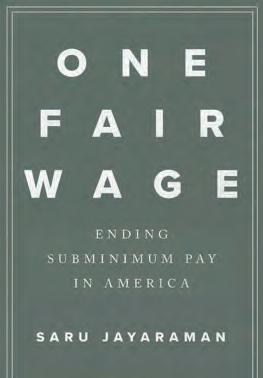
One Fair Wage
Ending Subminimum Pay in America
SARU JAYARAMAN
THE AUTHOR OF THE ACCLAIMED BEHIND THE KITCHEN DOOR , A POWERFUL EXAMINATION OF HOW THE SUBMINIMUM WAGE AND THE TIPPING SYSTEM EXPLOIT SOCIETY’S
MOST VULNERABLE
Praise for Saru Jayaraman’s books:
Forked:
Paints a grim picture of the food business today . . . [and] makes the case that restaurants can survive and even prosper while paying workers well and offering them generous benefits.
THE NEW YORK TIMES
Well researched. Jayaraman investigates the employment practices of a wide range of restaurants, from fine dining establishments to fast-food chains.
THE WALL STREET JOURNAL
Behind the Kitchen Door:
Detailed and unflinching.
CHICAGO TRIBUNE
A must-read for anyone who eats at restaurants.
YES!
October
Hardcover, 978-1-62097-533-6
Ebook, 978-1-62097-534-3
$24.99 / $32.99 CAN
5 1⁄4” x 7 1⁄2”, 240 pages Social Science
No one has done more to move forward the rights of food and restaurant workers than Saru Jayaraman.
—MARK
BITTMAN, AUTHOR OF THE KITCHEN MATRIX AND A BONE TO PICK
Before the COVID-19 pandemic devastated the country, more than six million people earned their living as tipped workers in the service industry. They served us in cafes and restaurants, they delivered food to our homes, they drove us wherever we wanted to go, and they worked in nail salons for as little as $2.13 an hour—the federal tipped minimum wage since 1991—leaving them with next to nothing to get by.
These workers, unsurprisingly, were among the most vulnerable workers during the pandemic. As businesses across the country closed down or drastically scaled back their services, hundreds of thousands lost their jobs. As in many other areas, the pandemic exposed the inadequacies of the nation’s social safety net and minimumwage standards.
One of New York magazine’s “Influentials” of New York City, one of CNN’s Visionary Women in 2014, and a White House Champion of Change in 2014, Saru Jayaraman is a nationally acclaimed restaurant activist and the author of the bestselling Behind the Kitchen Door. In her new book, One Fair Wage, Jayaraman shines a light on these workers, illustrating how the people left out of the fight for a fair minimum wage are society’s most marginalized: people of color, many of them immigrants; women, who form the majority of tipped workers; disabled workers; incarcerated workers; and youth workers. They epitomize the direction of our whole economy, reflecting the precariousness and instability that is increasingly the lot of American labor.
Saru Jayaraman is the co-founder of the Restaurant Opportunities Centers United, director of the Food Labor Research Center at the University of California, Berkeley, and the author of Behind the Kitchen Door and Forked: A New Standard for American Dining
The Privatization of Everything
How the Plunder of Public Goods Transformed America and How We Can Fight Back
DONALD COHEN and ALLEN MIKAELIAN

AMERICA’S LEADING DEFENDER OF THE PUBLIC INTEREST AND A BESTSELLING HISTORIAN SHOW US HOW TO PREVENT THE PRIVATE TAKEOVER OF OUR CHERISHED PUBLIC RESOURCES
Donald Cohen is a bright star in the progressive firmament, and The Privatization of Everything brilliantly distills and illustrates the critically important idea that our public goods should be controlled by the American people.
—NANCY
MACLEAN, AUTHOR OF DEMOCRACY IN CHAINS
As people reach for social justice and better lives, they create public goods—free education, public health, open parks, clean water, and many others—that must be kept out of the market. When private interests take over, they strip public goods of their power to lift people up, creating instead a tool to diminish democracy, further inequality, and separate us from each other.
The Privatization of Everything, by the founder of In the Public Interest, an organization dedicated to shared prosperity and the common good, chronicles the efforts to turn our public goods into private profit centers. Ever since Ronald Reagan labeled government a dangerous threat, privatization has touched every aspect of our lives, from water and trash collection to the justice system and the military.
However, citizens can, and are, wresting back what is ours. A Montana city took back its water infrastructure after finding that they could do it better and cheaper. Colorado towns fought back well-funded campaigns to preserve telecom monopolies and hamstring public broadband. A motivated lawyer fought all the way to the Supreme Court after the State of Georgia erected privatized paywalls around its legal code.
The Privatization of Everything connects the dots across a broad spectrum of issues and raises larger questions about who controls the public things we all rely on, exposing the hidden crisis of privatization that has been slowly unfolding over the last fifty years and giving us a road map for taking our country back.
Donald Cohen is the founder and executive director of In the Public Interest. His writing has appeared in the New York Times, Reuters, and the Los Angeles Times, among others. This is his first book. Allen Mikaelian is an editor and the bestselling author, with Mike Wallace, of Medal of Honor. He lives in Washington, DC.
Praise for Donald Cohen and In The Public Interest:
An essential organization that we all count on as we fight the assault on public goods and the commons.
—NAOMI KLEIN
It’s hard to think of any organization that is as valuable in protecting the public interest in a time when it is in peril.
—DIANE RAVITCH
With in-depth, well-researched analysis, the team at In the Public Interest is an invaluable policy resource.
—RANDI WEINGARTEN, PRESIDENT, AMERICAN FEDERATION OF TEACHERS
A key voice in helping imagine what a more democratic and inclusive alternative might look like.
—SABEEL RAHMAN, PRESIDENT, DEMOS November
Hardcover, 978-1-62097-653-1
Ebook, 978-1-62097-662-3
$27.99 / $36.99 CAN 6” x 9”, 320 pages Political Science/Economics

Light Up the Night
America’s Overdose Crisis and the Drug Users Fighting for Survival
TRAVIS LUPICK
A REVELATORY, MOVING NARRATIVE THAT OFFERS A HARROWING CRITIQUE OF THE WAR ON DRUGS FROM VOICES SELDOM HEARD IN THE CONVERSATION: DRUG USERS WHO ARE WORKING ON THE FRONT LINES TO REDUCE OVERDOSE DEATHS
Praise for Travis Lupick’s Fighting for Space:
The story of Vancouver’s Downtown Eastside is one of the most inspiring, moving, and enraging stories of our time. This beautiful and haunting book finally does it justice. This is essential history—and it isn’t over.
—JOHANN HARI, AUTHOR OF CHASING THE SCREAM
Part social history and part community organizing manual, Fighting for Space . . . [is] an amazing, inspiring, and sometimes harrowing read.
LOS ANGELES REVIEW OF BOOKS
An intense, riveting report on a public health crisis and a network of heroes on the front lines.
KIRKUS REVIEWS (STARRED)
January
Hardcover, 978-1-62097-638-8
Ebook, 978-1-62097-687-6
$26.99 / $35.99 CAN
5 1⁄2” x 8 1⁄2”, 256 pages Public Health
People always think recovery is either you’re completely abstinent or you’re in full chaotic use, and there is a world in between.
—JESS TILLEY, PRESIDENT OF THE NEW ENGLAND DRUG USERS UNION
When the news began to break (and break) about the impending opioid epidemic, the story was reliably about despair, addiction, and death. As the story developed to include the criminal actions of Big Pharma, and the heartbreak of relatives who had lost loved ones to overdoses, it continued to leave out one vital perspective: that of the drug users fighting to live—and to help others live as well.
Across the country, drug users are organizing themselves in response to the growing number of overdose deaths and demanding that addicts be given the same rights as other citizens. Set against the backdrop of the overdose crisis, Light Up the Night provides an up-close look at how drug users navigate policies that criminalize them through the ongoing failed war on drugs. It chronicles a growing social change movement led by drug user activists whose goal is to save lives, end stigma, and inspire common sense policy making.
Told from embedded reporting focused on two local activists, Jess Tilley in Massachusetts and Louise Vincent in North Carolina, this is the story of the courageous people stepping in where the government’s public health policies have failed, standing on the front lines of the underground effort to help drug users use drugs safely, reduce harms, and live with dignity.
Travis Lupick is an award-winning journalist who has written for the Los Angeles Times, Los Angeles Review of Books, VICE magazine, Toronto Star, and Globe and Mail, among others. He is the author of Fighting for Space: How a Group of Drug Users Transformed One City’s Struggle with Addiction. He lives in Santa Barbara.
Understanding E-Carceration
Electronic Monitoring, the Surveillance State, and the Future of Mass Incarceration
JAMES KILGORE

PAPERBACK ORIGINAL A RIVETING PRIMER ON THE GROWING TREND OF SURVEILLANCE, MONITORING, AND CONTROL THAT IS EXTENDING OUR PRISON SYSTEM BEYOND PHYSICAL WALLS AND INTO A DARK FUTURE—BY THE PRIZE-WINNING AUTHOR OF UNDERSTANDING MASS INCARCERATION
An excellent, much-needed introduction to the racial, political, and economic dimensions of mass incarceration.
—MICHELLE ALEXANDER, AUTHOR OF THE NEW JIM CROW, ON JAMES KILGORE’S UNDERSTANDING MASS INCARCERATION
During the last decade, as consensus has grown that mass incarceration is morally reprehensible, financially unsustainable, and politically unviable, criminal justice reforms that release prisoners from actual prisons have been nearly universally embraced. But as educator, author, and formerly incarcerated activist James Kilgore brilliantly shows, these reforms are largely a part of the phenomenon of e-carceration—the slow, sinister way that technological interventions are expanding to increasingly and creatively deprive justice-involved people and other marginalized groups of their freedoms, all in the name of ending mass incarceration.
People subject to the constraints of e-carceration can be denied access to employment, housing, medical treatment, therapy, and even the opportunity to spend time with their families. The harm caused by data harvesting, which involves the collection and storage of data, has no time boundaries. Certain e-carceration technologies, like facial recognition, persist even without the knowledge of their subjects. And sometimes, people may be accidentally complicit in the intensification of their own e-carceration by adding data and information to databases used to predict behavior and authorize official responses.
In this searing and powerful work, Kilgore examines the dark side of this evolution of mass incarceration, from the simple analog-like ankle shackle to the great corporate data clouds in the sky—and offers a way forward.
James Kilgore is a writer, educator, and social justice activist who teaches and works at the University of Illinois at Urbana-Champaign. He spent six years in prison, during which time he drafted his three published novels. He is the author of Understanding Mass Incarceration: A People’s Guide to the Key Civil Rights Struggle of Our Time (The New Press). He currently lives with his family in Urbana, Illinois.
Praise for James Kilgore’s Understanding Mass Incarceration:
An inaugural selection of the National Book Foundation’s Literature for Justice Award Program
Understanding Mass Incarceration help[s] us all to appreciate the vast reach and destructive impact of today’s carceral apparatus and why we should indeed try to create a different justice future.
—FROM THE AWARD CITATION FROM THE NATIONAL BOOK FOUNDATION
Extremely important . . . a graphically pleasing, very readable, emotionally and intellectually engaging work. COUNTERPUNCH
Useful for anyone with a horse in the race regarding law enforcement—in other words, most American citizens. KIRKUS REVIEWS
January
Paperback, 978-1-62097-614-2
Ebook, 978-1-62097-615-9
$17.99 / $23.99 CAN 7” x 7”, 224 pages Criminal Justice/Law

The Great Compromise of 1787
provided that one chamber of the legislature, the House of Representatives, would be apportioned based on population, while the other, the Senate, would give equal representation to each state. To put another way: white slavers feared “democracy” so much that they wrote it out of the Constitution.
Allow Me to Retort
A Black Guy’s Guide to the Constitution
ELIE MYSTAL

THE MSNBC COMMENTATOR AND LEGAL EDITOR OF THE NATION TURNS HIS RAZOR-SHARP WIT AND LEGAL ACUMEN ON OUR FOUNDING DOCUMENT AND FINDS IT TO BE . . . WELL, AWFULLY WHITE
Mystal possesses a vocabulary and penchant for stringing words together that makes other writers envious. He can bring you to your knees with the power of the written word.
—DONNA MCGILL,
LAWCROSSING.COM
According to commentator and lawyer Elie Mystal, Republicans are wrong when they tell you the First Amendment allows religious fundamentalists to discriminate against gay people who like cake. They’re wrong when they tell you the Second Amendment protects the right to own a private arsenal. They’re wrong when they say the death penalty isn’t cruel or unusual punishment, and they’re wrong when they tell you we have no legal remedies for the scourge of police violence against people of color.
In fact, Mystal argues, Republicans are wrong about the law almost all of the time, and now, instead of talking about this on cable news, Mystal explains why in his first book.
Allow Me to Retort is an easily digestible argument primer, offered so that people can tell the Republicans in their own lives why they are wrong. Mystal brings his trademark humor, snark, and legal expertise to topics as crucial to our politics as gerrymandering and voter suppression, and explains why legal concepts such as the right to privacy and substantive due process are constantly under attack from the very worst judges conservatives can pack onto the courts.
You don’t need to be a legal scholar to grasp how stop-and-frisk is an unconstitutional policy of racial discrimination. You just need to read Mystal’s book to understand that the Fourteenth Amendment once made the white supremacist policies adopted by the modern Republican Party illegal—and it can do so again if we let it.
Elie Mystal is The Nation’s justice correspondent, an Alfred Knobler Fellow at the Type Media Center, and the legal editor of the More Perfect podcast on the Supreme Court for Radiolab. He is a graduate of Harvard College and Harvard Law School, a former associate at Debevoise & Plimpton, and a frequent guest on MSNBC and Sirius XM. He lives in New York and this is his first book.
With chapters on:
• Rightwing Gun Fetish: Ammosexuals
• Free Speech and the Hypocrisy of Cancel Culture
• Equal Protection Means Never Having to Cut Your Hair
• Substantive Due Process Is How the Constitution Says “I See What You Did There”
• A Very Short Debate About Whether Black People Should Be Allowed to Vote
• A Longer Debate About Whether Black and Brown Votes Should Count
• Electoral College Apartheid
• All of the Ways Abortion Is Constitutional
• The Death Penalty: Killing People Is Cruel and Unusual
November
Hardcover, 978-1-62097-681-4
Ebook, 978-1-62097-690-6
$24.99 / $32.99 CAN
5 1⁄2” x 8 1⁄2”, 240 pages
U.S. Politics/Political Science
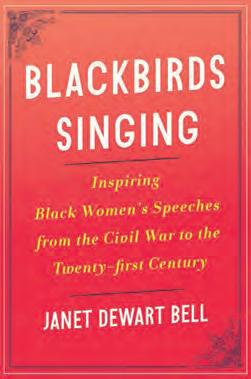
Blackbirds Singing
Inspiring Black Women’s Speeches from the Civil War to the Twenty-first Century
JANET DEWART BELL
AN UPLIFTING COLLECTION OF SPEECHES BY AFRICAN AMERICAN WOMEN, CURATED BY THE HUMAN AND CIVIL RIGHTS ACTIVIST, SCHOLAR, AND AUTHOR
Includes speeches from:
Ella Baker
Josephine Baker
Charlotta Bass
Mary McLeod Bethune
Nannie Helen Burroughs
Mary Ann Shadd Cary
Kathleen Cleaver
Dorothy Cotton
Fannie Lou Hamer
Frances Ellen Watkins Harper
Dorothy Height
Barbara Jordan
Barbara Lee
Sojourner Truth
Harriet Tubman
Ida B. Wells-Barnett
February
Hardcover, 978-1-62097-628-9
Ebook, 978-1-62097-629-6
$25.99 / $33.99 CAN
5 1⁄2” x 8 1⁄2”, 256 pages African American Studies/Women’s Studies
Bell reminds readers that one story is never enough to truly explain a movement.
SHELF AWARENESS
When Mary Ann Shadd Cary—the first Black woman publisher in North America— declared, “break every yoke let the oppressed go free” to congregants in Chatham, Canada, in 1858, she joined a tradition of African American women speaking for their own liberation. Drawing from a rich archive of political speeches, acclaimed activist and author Janet Dewart Bell explores this tradition in Blackbirds Singing, a soaring new— and gorgeously packaged—collection of African American women’s speeches.
With a sweeping and expansive historical lens, Blackbirds Singing celebrates the tradition of Black women’s political speech and labor, allowing the voices and powerful visions of African American women to speak across generations building power for the world.
Gathering an array of recognized names as well as some new discoveries, Janet Dewart Bell curates public addresses by Black women beginning in the nineteenth century and extending to the twenty-first century. Author of Lighting the Fires of Freedom: African American Women in the Civil Rights Movement, a nominee for the NAACP Image Award, Bell highlights Black women speaking truth to power in service of freedom and justice. From Harriet Tubman to Barbara Lee, Josephine Baker to Barbara Jordan, these magnificent speakers explore ethics, morality, courage, authenticity, and leadership. Bell’s substantive introductions provide rich new context for each woman’s speech.
Janet Dewart Bell is a social justice activist with a doctorate in leadership and change from Antioch University. She is the author of Lighting the Fires of Freedom and the co-editor of a collection based on the Derrick Bell Lectures series, which she founded at NYU Law School to honor her late husband. An award-winning television and radio producer, she lives in New York City.
I’d Like to Say Sorry, but There’s No One to Say Sorry To Stories
MIKOŁAJ GRYNBERG
translated from the polish by sean gasper bye

AN EXQUISITELY ORIGINAL COLLECTION OF DARKLY FUNNY STORIES THAT EXPLORE THE PANORAMA OF JEWISH EXPERIENCE IN CONTEMPORARY POLAND, FROM A WORLD-CLASS CONTEMPORARY WRITER
These small, searing prose pieces are moving and unsettling at the same time. If the diagnosis they present is right, then we have a great problem in Poland.
—OLGA TOKARCZUK, NOBEL PRIZE LAUREATE AND AUTHOR OF FLIGHTS
Mikołaj Grynberg is a psychologist and photographer who has been collecting and publishing oral histories of Polish Jews. In his first work of fiction—a book that has been widely praised by critics and was shortlisted for Poland’s top literary prize—Grynberg recrafts those histories into little jewels, fictionalized short stories with the ring of truth. Both biting and knowing, I’d Like to Say Sorry, but There’s No One to Say Sorry To takes the form of first-person vignettes, through which Grynberg explores the daily lives and tensions within Poland between Jews and gentiles haunted by the Holocaust and its continuing presence.
In “Unnecessary Trouble,” a grandmother discloses on her deathbed that she is Jewish; she does not want to die without her family knowing. What was passed on to the family is fear and the struggle of what to do with this information. In “Rejwach,” Jewish identity is explored through names, as Miron and his son Jurek demonstrate how heritage is both accepted and denied. In “My Five Jews,” a non-Jewish narrator remembers his five interactions with his Jewish countrymen, and his own anti-Semitism, ruefully noting that perhaps he was wrong and should apologize, but no one is left to say I’m sorry to.
Each of the thirty-one stories is a dazzling and haunting mini-monologue that highlights a different facet of modern Poland’s complex and difficult relationship with its Jewish past.
Mikołaj Grynberg is a photographer, author, and trained psychologist. He has published three collections of “conversations” based on these histories: Survivors of the 20th Century, I Accuse Auschwitz, and The Book of Exodus. He lives in Poland. Sean Gasper Bye has translated work by some of Poland’s leading nonfiction writers, including Małgorzata Szejnert, Paweł Smolen´ski, and Lidia Ostałowska, and is a winner of the Asymptote Close Approximations Prize. He lives in New York.
978-1-62097-589-3

February
Hardcover, 978-1-62097-683-8 Ebook, 978-1-62097-685-2
$19.99 / $25.99 CAN 5 1⁄4” x 7 1⁄2”, 160 pages Fiction/Literature
Black Moses: A Novel Alain Mabanckou Paperback, $15.99,
Four Soldiers: A Novel Hubert Mingarelli Hardcover, $19.99, 978-1-62097-440-7
100% Democracy
The Case for Universal Voting
E.J. DIONNE JR.
and MILES RAPOPORT
A TIMELY AND PARADIGM-SHIFTING ARGUMENT THAT ALL MEMBERS OF A DEMOCRACY MUST PARTICIPATE IN ELECTIONS, BY A LEADING POLITICAL EXPERT AND WASHINGTON POST JOURNALIST
• Since the Voting Rights Act of 1965, voter turnout in the U.S. has hovered at around 57% in presidential elections and 41% in midterm elections.
• In a close election with turnout at 60% (the high end of the norm in most presidential elections), the winner receives votes from only about 30% of the population theoretically eligible to vote.
• Today, 26 countries have some form of civic duty voting.
• In 1924, Australia adopted a law requiring all citizens to present themselves at their polling place on Election Day and providing for fines at the level of routine traffic tickets for those who did not.
February
Hardcover, 978-1-62097-677-7 Ebook, 978-1-62097-684-5
$24.99 / $32.99 CAN
5 1⁄4” x 7 1⁄2”, 208 pages U.S. Politics/Political Science
Give us the ballot and we will transform the salient misdeeds of bloodthirsty mobs into the calculated good deeds of orderly citizens.
—MARTIN LUTHER KING JR.,
1957
Americans are required to pay taxes, serve on juries, get their kids vaccinated, get driver’s licenses, and sometimes go to war for their country. So why not ask—or require—every American to vote?
In 100% Democracy, E.J. Dionne and Miles Rapoport argue that universal participation in our elections should be a cornerstone of our system. It would be the surest way to protect against voter suppression and the active disenfranchisement of a large share of our citizens. And it would create a system true to the Declaration of Independence’s aspirations by calling for a government based on the consent of all of the governed.
It’s not as weird as it sounds: in Australia, where everyone is required to vote (Australians can vote “none of the above,” but they have to show up), 91.9 percent of Australians voted in the last major election in 2019, versus 60.1 percent in America’s 2016 presidential race. Australia hosts voting-day parties and actively celebrates this key civic duty.
It is time for the United States to take a major leap forward and recognize voting as both a fundamental civil right and duty required of every eligible U.S. citizen.
E.J. Dionne is the author of Code Red: How Progressives and Moderates Can Unite to Save Our Country. He is a senior fellow at the Brookings Institute, a syndicated columnist for the Washington Post, university professor at Georgetown University, and visiting professor at Harvard University. He lives in Washington, DC. Miles Rapoport is a Senior Practice Fellow in American Democracy at the Ash Center for Democratic Governance and Innovation at the Harvard Kennedy School. He formerly served in the state legislature and as Secretary of State in Connecticut. He also served as president of Demos and of Common Cause. He lives in Cambridge, Massachusetts.
How We Win the Civil War
Securing a Multiracial Democracy and Ending White Supremacy for Good
STEVE PHILLIPS
THE BESTSELLING AUTHOR AND NATIONAL POLITICAL COMMENTATOR PULLS NO PUNCHES ON WHAT AMERICA NEEDS TO DO TO STRENGTHEN ITS MULTIRACIAL DEMOCRACY
We face opposition as intractable as the Confederate leaders whose statues they so passionately defend, as feverishly as those leaders defended their way of life. Trump is not sui generis. Robert E. Lee sought to make America great again and his ideological successors have continued that fight all the way to the present day.
—FROM THE INTRODUCTION
Steve Phillips’s first book, Brown Is the New White, helped shift the national conversation around race and electoral politics, earning a spot on the New York Times and Washington Post bestseller lists and launching Phillips into the upper ranks of trusted observers of the nation’s changing demographics and their implications for our political future.
Now, in How We Win the Civil War, Phillips charts the way forward for progressives and people of color after four years of Trump, arguing that Democrats must recognize the nature of the fight we’re in, which is a contest between democracy and white supremacy left unresolved after the Civil War. We will not overcome, Philip writes, until we govern as though we are under attack—until we finally recognize that the time has come to finish the conquest of the Confederacy and all that it represents.
With his trademark blend of political analysis and historical argument, Phillips lays out razor-sharp prescriptions for 2021 and beyond, from increasing voter participation and demolishing racist immigration policies to reviving the Great Society programs of the 1960s—all of them geared toward strengthening a new multiracial democracy and ridding our politics of white supremacy, once and for all.
Steve Phillips is host of the podcast Democracy in Color with Steve Phillips, founder of the political media organization Democracy in Color, and author of the New York Times and Washington Post–bestselling Brown Is the New White: How the Demographic Revolution Has Created a New American Majority. He lives in San Francisco.
Praise for Steve Phillip’s Brown Is the New White:
Decades after Nixon’s cynical political calculation, the time is ripe for a new Southern strategy. This book helps point the way.
—SENATOR RAPHAEL WARNOCK
A vital road map to a more hopeful, more inclusive America.
—VAN JONES
Sparks an important conversation about what increasing racial and cultural diversity will mean for American politics and policy.
—SENATOR CORY BOOKER
A slim yet jam-packed call to action.
BOOKLIST
February
Hardcover, 978-1-62097-676-0 Ebook, 978-1-62097-689-0
$25.99 / $33.99 CAN 5 1⁄2” x 8 1⁄2”, 272 pages Political Science/Current Affairs
Community Reads for Our Times
Becoming Ms. Burton: From Prison to Recovery to Leading the Fight for Incarcerated Women
Susan Burton and Cari Lynn Paperback, 978-1-62097-435-3, 336 pages Ebook, 978-1-62097-439-1
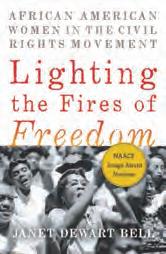
Lighting the Fires of Freedom: African American Women in the Civil Rights Movement
Janet Dewart Bell Paperback, 978-1-62097-558-9, 240 pages Ebook, 978-1-62097-336-3

Strangers in Their Own Land: Anger and Mourning on the American Right
Arlie Russell Hochschild
Paperback, 978-1-62097-349-3, 416 pages Ebook, 978-1-62097-398-1
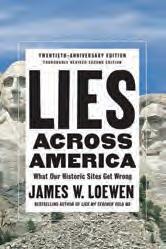
Lies Across America: What Our Historic Sites Get Wrong
James W. Loewen
Paperback, 978-1-62097-433-9, 512 pages Ebook, 978-1-62097-493-3

Mouths of Rain: An Anthology of Black Lesbian Thought
Edited by Briona Simone Jones
Paperback, 978-1-62097-576-3, 400 pages Ebook, 978-1-62097-625-8
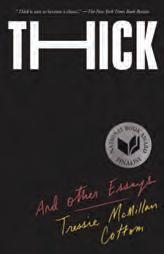
Thick: And Other Essays
Tressie McMillan Cottom
Paperback, 978-1-62097-587-9, 272 pages Ebook, 978-1-62097-437-7
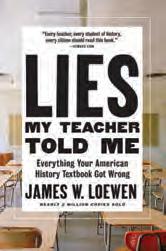
Lies My Teacher Told Me: Everything Your American History Textbook Got Wrong
James W. Loewen
Paperback, 978-1-62097-392-9, 480 pages Ebook, 978-1-62097-455-1
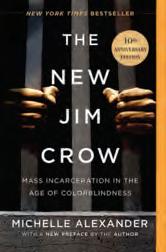
The New Jim Crow: Mass Incarceration in the Age of Colorblindness
Michelle Alexander Paperback, 978-1-62097-193-2, 432 pages Ebook, 978-1-62097-194-9

What We Talk About When We Talk About Rape
Sohaila Abdulali
Paperback, 978-1-62097-474-2, 240 pages Ebook, 978-1-62097-475-9
Antiracist K–12 Education Books


Everyday Antiracism: Getting Real About Race in School
Edited by Mica Pollock
Paperback, 978-1-59558-054-2, 416 pages Ebook, 978-1-59558-567-7
Lies My Teacher Told Me: Everything Your American History Textbook Got Wrong
James W. Loewen
Paperback, 978-1-62097-392-9, 480 pages Ebook, 978-1-62097-455-1

Pushout: The Criminalization of Black Girls in Schools
Monique W. Morris
Paperback, 978-1-62097-342-4, 304 pages Ebook, 978-1-62097-413-1
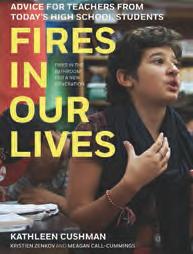
Fires in Our Lives: Advice for Teachers from Today’s High School Students
Kathleen Cushman, Kristien Zenkov, and Meagan Call-Cummings
Hardcover, 978-1-62097-543-5, 208 pages
Ebook, 978-1-62097-544-2
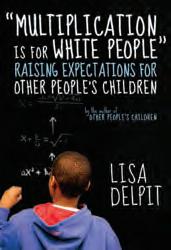
“Multiplication Is for White People”: Raising Expectations for Other People’s Children
Lisa Delpit
Paperback, 978-1-59558-898-2, 256 pages Ebook, 978-1-59558-770-1
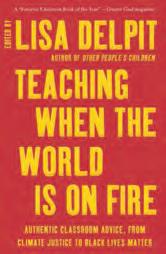
Teaching When the World Is on Fire: Authentic Classroom Advice, from Climate Justice to Black Lives Matter
Edited by Lisa Delpit
Paperback, 978-1-62097-665-4, 272 pages
Ebook, 978-1-62097-432-2

Fires in the Middle School Bathroom: Advice for Teachers from Middle Schoolers
Kathleen Cushman and Laura Rogers
Paperback, 978-1-59558-483-0, 240 pages
Ebook, 978-1-59558-652-0
Other People’s Children: Cultural Conflict in the Classroom
Lisa Delpit
Paperback, 978-1-59558-074-0, 256 pages
Ebook, 978-1-59558-654-4
Troublemakers: Lessons in Freedom from Young Children at School
Carla Shalaby
Hardcover, 978-1-62097-236-6, 240 pages
Ebook, 978-1-62097-237-3
Backlist Power

Art on My Mind: Visual Politics
bell hooks Paperback, 978-1-56584-263-2, 240 pages
Chokehold: Policing Black Men
Paul Butler Paperback, 978-1-62097-483-4, 320 pages Ebook, 978-1-62097-498-8

Critical Race Theory: The Key Writings That Formed the Movement
Edited by Kimberlé Crenshaw, Neil T. Gotanda, Gary Peller, and Kendall Thomas Paperback, 978-1-56584-271-7, 528 pages
On Anarchism
Noam Chomsky
Paperback, 978-1-59558-910-1, 192 pages Ebook, 978-1-59558-951-4
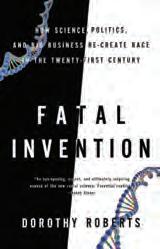
Fatal Invention: How Science, Politics, and Big Business Re-create Race in the Twenty-first Century
Dorothy Roberts Paperback, 978-1-59558-834-0, 400 pages Ebook, 978-1-59558-691-9
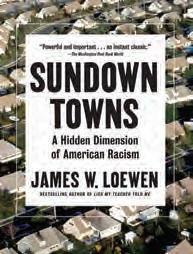
Sundown Towns: A Hidden Dimension of American Racism
James W. Loewen
Paperback, 978-1-62097-434-6, 608 pages
Ebook, 978-1-62097-454-4
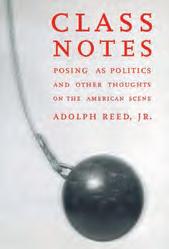
Class Notes: Posing as Politics and Other Thoughts on the American Scene
Adolph Reed Jr. Paperback, 978-1-56584-675-3, 240 pages

Hard Times: An Oral History of the Great Depression
Studs Terkel Paperback, 978-1-56584-656-2, 480 pages Ebook, 978-1-59558-760-2
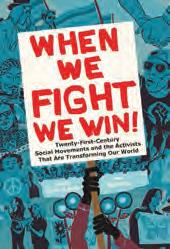
When We Fight, We Win!: Twenty-First-Century Social Movements and the Activists That Are Transforming Our World
Greg Jobin-Leeds and AgitArte Paperback, 978-1-62097-093-5, 208 pages Ebook, 978-1-62097-140-6
The New Press extends heartfelt thanks to the following philanthropic institutions for their support in 2020–21:
AG Foundation
Akonadi Foundation
Jennifer and Jonathan Allan Soros Fund
Amalgamated Foundation
Arcus Foundation
Art for Justice Fund, a sponsored project of Rockefeller Philanthropy Advisors
The Atlantic Philanthropies
The Baffler Foundation
The L. R. Bauman Foundation
Butler’s Hole Fund at The Boston Foundation
The California Endowment
Carnegie Corporation of New York
Annie E. Casey Foundation
CrossCurrents Foundation
Cultural Services of the French Embassy
The Richard H. Driehaus Charitable Lead Trust
Emerson Collective
FJC: A Foundation of Philanthropic Funds
Ford Foundation
Foundation for the Study of Independent Social Ideas
Frederick W. Richmond Foundation
Furthermore: A Program of the J. M. Kaplan Fund
The William T. Grant Foundation
JK Irwin Foundation
The JPB Foundation
Kresge Foundation
Lumina Foundation
John D. and Catherine T. MacArthur Foundation
New York Women’s Foundation
Open Society Foundations
Overbrook Foundation
The Reed Foundation
Resnick Family Foundation
Ress Family Foundation
Rosenberg Foundation
Schmidt Family Foundation
Sierra Health Foundation
Silicon Valley Community Foundation
The Svetlana and Herbert M. Wachtell Foundation
Wallace Action Fund of Tides Foundation
Wellspring Philanthropic Fund
PUBLISHING CIRCLE
The New Press is grateful to members of The New Press Publishing Circle, a group of individual donors and organizations who make contributions of $5,000 or more. The remarkable support of Publishing Circle members allows The New Press to give a voice to underrepresented viewpoints and publish works of educational, cultural, political, and community value.
Gifts of $10,000+
Emily Altschul-Miller and John Miller, Jessica Bauman and Benjamin Posel, Nonnie and Rick Burnes, Amy Glickman and Andy Kuritzkes, Debbie and Jonathan Klein, Nancy Meyer and Marc Weiss, Susan and Nicholas Pritzker, Svetlana and Herbert M. Wachtell, and Cynthia Young and George Eberstadt.
Gifts of $5,000 to $9,999
Ethel Klein and Edward Krugman, Kaitlyn Krieger, James Leitner, Patty Quillin, Elizabeth Sackler, Liz Simons and Mark Heising, Lauren Stossel and Ben Elga, Katherine Sugg, Katrina vanden Heuvel, and Laura Walker and Bert Wells.
FRONTLIST MEMBERS
The frontlist is a group of individuals and organizations who support the important work of The New Press with gifts ranging from $1,000 to $4,999. The New Press thanks these members for their gifts to The New Press since the beginning of 2020.
Gifts of $1,000 to $4,999
Michelle Alexander, Jennifer and Jonathan Allan Soros, Amy and Peter Bernstein, Sarah Burnes and Sebastian Heath, Lucy Chie and Justin Campbell, Lisa Delpit, Ayala Deutsch, Martin Duberman and Eli Zal, Katie Fallow and Bruce Gottlieb, Martin Garbus, Antonia and George Grumbach, Noorain Khan and K. Sabeel Rahman, Maggie Lear and Daniel Katz, Susan and Martin Lipton, Vincent McGee, Gregory Miller and Michael Wiener, Lisa Mueller and Gara LaMarche, Vivian Nixon, Robin Panovka, Thea Posel, and Shannon Wu and Joe Kahn.
Gifts of $250 to $999
Theresa Amato and Todd Main, Leo Blackman and Ken Monteiro, Barbara Blackmond, Anthony P. Carnevale, Sara Darehshori, Nicholas Fandos, Sunny and Paul Fischer, William Foo, Linda Genereux, Michael Gilsenan, Stephen Harris, Brad Hebel, Kevin Keenan, Sarah and Victor Kovner, Vivien Labaton and Nicholas Arons, Margaret Ladner and Aziz Huq, Erik Loomis, Idelisse Malavé, Emily Mandelstam and Paul Engelmayer, Ted Mermin, Mica Pollock, Janny Scott, Mike Seidman, Theodore Shaw, Matthew Shifflett, Claire Silberman, Adele Simmons, Suzie Tapson and Gordon Burnes, Beverly Treuille, Diane Wachtell, Cynthia Wachtell and Jeffrey Neuman, and Jeremy Wang-Iverson.
Gifts up to $249
Ellen Adler, Sumeet Ajmani, Sean Bekoe-Tabiri, Shanae Bradley, Derrick Brice, Ross Brockway, F. Isabel Campoy, Faith Childs, Harriett Cody and Harvey Sadis, Haruko and Theodore Cook, Tawene Cooper, Jessica de Vault Hale, Jeff Deutsch, Julie Diamond, John Duff, Sara Estep, John Evans, Ansar Fayyazuddin, Tom Fontana, Nicole Gilhooley, Chelsea Golding, Marilyn Gonzalez, Haley Haltiwanger, Anne Henderson, Micah Herskind, Taneris Hill, Chelsie Hinton, Audrey Holm-Hansen, Colin Hosten, Barry Johnson, Leon Kuan, Andy Kurzen, Tabia Lisenbee-Parker, Moshe Ma’oz, Christopher Miller, Syl Morrone, Ramona Nadaff, Gabriel Reichler, Elizabeth Seidlin-Bernstein, Benjamin Shute Jr., Mark Simon, Angela Skowronek, Lisa Steglich, Margaret Stueben, Mona Villarrubia, Sarah Waltcher, Audrey Waysse, Anne Gay Wilgus, John Womack Jr., Naomi Woodspring, and Meredyth Yoon.
The New Press Author Royalty Giveback Program
The New Press thanks the following New Press authors who made a financial contribution through the Author Royalty Giveback Program between 2020 and 2021: Michelle Alexander, Paul Butler, Anthony Carnevale, Lisa Delpit, Julie Diamond, John Dinges, Martin Garbus, Thomas Geoghegan, Lisa Heinzerling, Anne Henderson, Deepa Iyer, Greg Jobin-Leeds, Vivian Johnson, James Kilgore, Dana Lindaman, Lucy Lippard, James Loewen, Erik Loomis, Martha Minow, Bill Moyers, Steve Phillips, Victor Pickard,
Patricia Politzer, Mica Pollock, Heidi Ravven, Nikolas Rose, Joe Sacco, Jonathan Simon, Vincent Southerland, Jeff Strohl, William Tabb, The Estate of Louis Terkel, Tony Thompson, Jon Wiener, and John Womack.
The New Press thanks the following people and organizations for devoting time and talent to The New Press since 2020:
The ACLU, Lisa Adams, Michelle Alexander, Anthony Arnove , Angela Baggetta, Victoria Bassetti, Janet Dewart Bell, Greg Berman, Peter Bermudes, Tom Bernstein, Deepak Bhargava, Phylicia Bishop, Charles Blow, Bluestockings Bookstore, Brooklyn Community Foundation, Brooklyn Historical Society, Antony Bugg-Levine, Christopher Caines,Nicole Capatasto, Noam Chomsky, Ed Chung, Rosdely Ciprian, Cecilia Clarke, Rio Cortez, Bob Crane, Angela Davis, Beth Dembitzer, Dissent Magazine, Jacqueline Ebanks, Alfreida Edelen, Dorothy Ehrlich, Ben Elga, Marcia Ely, Marc Fest, Sarah Figgatt, Jason Flom, Mike German, Karen Greenberg, Michelle Grier, James Grimmelmann, Paul Gunther, Steve Harris, Yolanda Santiago Hasbun, Haymarket Books, Christie Hefner, Helena Huang, Lea Hunter, Independent Publishers Caucus, Jane Isay, Mike Iveson, Mariame Kaba, Alec Karakatsanis, Daniel Katz, Kevin Keenan, Sanj Kharbanda, Rachel Klausner, Karol Kupchar, Alex Lau, Susan Lehman, Alexei Leonard, Literacy Partners, Mary Livingston, Eric Loomis, Carmelyn Malalis, Adrian Marin, Marc Mauer, Douglass Maynard, Fiona McCrae, Jennifer McCrea, Caits Meisner, Chelsea Miller, Greg Miller, Bill Moyers, Ralph Nader, National Book Foundation, Cecile Noel, Mellen O’Keefe, Camila Ortiz, Douglas Palumbo, Lucas Papaelias, Alvin Alicia Parker, Leah Paulos, Erica Payne, PEN America, Lily Philpott, Bert Pogrebin, Katherine Porter, Danyale Price, Robert Raben, Susan Rabiner, Amy Rao, Eric Rayman, Rethinking Schools, Tina Rosenberg, Anthony Scarpaci, Schomburg Center for Research in Black Culture, Heidi Schreck, Steven Schulman, Deborah Schwartz, Seattle Town Hall, Matt Seaton, Clarisse Rosaz Shariyf, Bryan Simmons, Emma Spalti, Rebecca Stefoff , Liane Stegmaier, Melanie Steinhardt, Bryan Stevenson, Anne Sullivan, Madelyn Sundquist, Dan Terkell, Steven Thomson, Larry Welch.
Inaugural
“Intoxicating
Conversations” Event Series
The New Press is deeply thankful to the “Intoxicating Conversations” featured guests for supporting its 2020–21 event series:
Bill Ayers and Bernardine Dohrn, Chuck Collins, James Forman Jr., Ruthie and Craig Gilmore, Arlie and Adam Hochschild, Alec Karakatsanis, Morris Pearl, Anya Schiffrin and Joe Stiglitz, and Senator Sheldon Whitehouse.
The New Press Interns:
The New Press’s Diversity in Publishing Internship Program is very grateful to the following individuals who successfully completed the program since the beginning of 2020:
ILiza Buell, Rola Harb, Gus O’Connor, Aya Ouda, and Katie Silva.
Foreign Rights Representatives
Brazil
Laura Riff
João Paulo Riff
RIFF Agency
Avenida Calógeras n° 6, sl 1007, Centro 20030-070 Rio de Janeiro
Brazil
+55 (21) 2287-6299 tel +55 (21) 2267-6393 fax laura@agenciariff.com.br joaopaulo@agenciariff.com.br
Eastern Europe (excluding Poland and Romania) and Russia
Milena Kaplarevic Prava I Prevodi
Blvd. Mihaila Pupina 10B/I 5th floor Belgrade 11070
Serbia
+381 (11) 311 9880 tel +381 (11) 311 9879 fax milena@pravaiprevodi.org
France
Vanessa Kling
La Nouvelle Agence 7 Rue Corneille 75006 Paris
France
+33 (1) 4325-8560 tel +33 (1) 4325-4798 fax vanessa@lanouvelleagence.fr
Germany
Dr. Uwe Neumahr
Agence Hoffman
Hohenstaufenstraße 1 D-80801 München
Germany
+49 (89) 540-473-815 tel +49 (89) 540-473-820 fax u.neumahr@agencehoffman.de
Italy
Silvia Brunelli
Nabu International Literary & Film Agency
Via S. Romano, 60 50135 Florence Italy brunelli@nabu.it
Japan
Miko Yamanouchi
Japan UNI Agency, Inc. Tokyodo No. 2 Bldg, 5F 1-27 Kanda-Jinbocho
Chiyoda-ku, Tokyo 101-0051
Japan
+81 (03) 3295-0301 tel miko.yamanouchi@japanuni.co.jp
Poland
Filip Wojciechowski
Graal Literary Agency
ul. Pruszkowska 29/252 02-119 Warsaw
Poland
+48 (22) 895-2000 tel
+48 (22) 895-2001 fax info@graal.com.pl
Romania
Simona Kessler
International Copyright Agency
Str. Banul Antonache 37 011663 Bucharest 1
Romania
+40 (21) 316-4806 tel +40 (21) 316-4794 fax office@kessler-agency.ro
Spain and Portugal
Mònica Martín
MB Agencia Literaria
Ronda Sant Pere 62 1º-2ª 08010 Barcelona
Spain
+34 (93) 265-9064 tel +34 (93) 232-7221 fax monica@mbagencialiteraria.es
Turkey
Dog˘an Terzi
AnatoliaLit Agency
Caferag˘a Mah. Gunesli Bahce Sok. No: 48 Or.Ko Apt. B Blok D: 4 34710 Kadikoy
Istanbul
Turkey
+90 (216) 700-1088 tel
+90 (216) 700-1089 fax dogan@anatolialit.com
UK
David Grossman
David Grossman Literary Agency 9 Lamington St
London W6 0HU
United Kingdom
+44 (208) 741-2860 tel general@dglal.co.uk
Unless otherwise indicated, foreign rights are controlled by The New Press.
For all other inquiries, please contact rights@thenewpress.com.
BOARD OF DIRECTORS
GARA LaMARCHE (CHAIR)
President, Democracy Alliance
THEODORE M. SHAW (VICE-CHAIR)
Julius L. Chambers Distinguished Professor of Law and Director, the Center for Civil Rights, the University of North Carolina School of Law at Chapel Hill
SARAH BURNES (SECRETARY)
Literary Agent, The Gernert Company
AMY GLICKMAN (TREASURER)
Media Lawyer; Former Deputy General Counsel, Time Inc.
JONATHAN S. ABADY
Founding Partner, Emery Celli Brinckerhoff & Abady LLP
ELLEN ADLER
Publisher, The New Press
JOHN ANTHONY BUTLER
Chief Operating Officer, Brennan Center for Justice at NYU Law School
JESSICA BAUMAN
Artistic Director, New Feet Productions
FINANCE COMMITTEE MEMBERS
Ellen Adler
Todd Berman
John Anthony Butler
Sameer Chaudhari
John Duff
William Foo
Amy Glickman
Brad Hebel (CHAIR)
Gara LaMarche
Gregory Miller
Diane Wachtell
Tina Weiner
Carline Yup
BOARD OF DIRECTORS, EMERITUS
Lisa Adams
Tom Blanton
Ricardo Castro
Faith Childs
Barbara Ehrenreich
Frances Fox Piven
Antonia Grumbach
Ivan Held
Helena Huang
Jane Isay
Idelisse Malavé
Amalia Mesa-Bains
K. Sabeel Rahman
John Morning
Abby Young Moses
JEFF DEUTSCH
Director, Seminary Co-op Bookstores
BRUCE GOTTLIEB
Attorney
BRAD HEBEL
Associate Press Director and Director of Operations and Sales, Columbia University Press
AZIZ HUQ
Professor of Law, University of Chicago Law School
VIVIEN LABATON Co-Founder, Make It Work
FREDERICK “FRITZ” A.O. SCHWARZ JR.
Chief Counsel, Brennan Center for Justice at NYU School of Law; Senior Counsel, Litigation, Cravath, Swaine & Moore LLP
NABIHA SYED President, The Markup
DIANE WACHTELL
Executive Director, The New Press
TINA C. WEINER
Director, Yale Publishing Course
IN MEMORIAM
W. Haywood Burns
Kenneth Clark
Edward J. Davis
Peter Kwong
Hylan Lewis
Michael Ratner
Norman Redlich
André Schiffrin
Anthony M. Schulte
Woodward A. Wickham