Page 1 photograph by Tony Webster used under a Creative Commons license (http://creativecommons.org/)
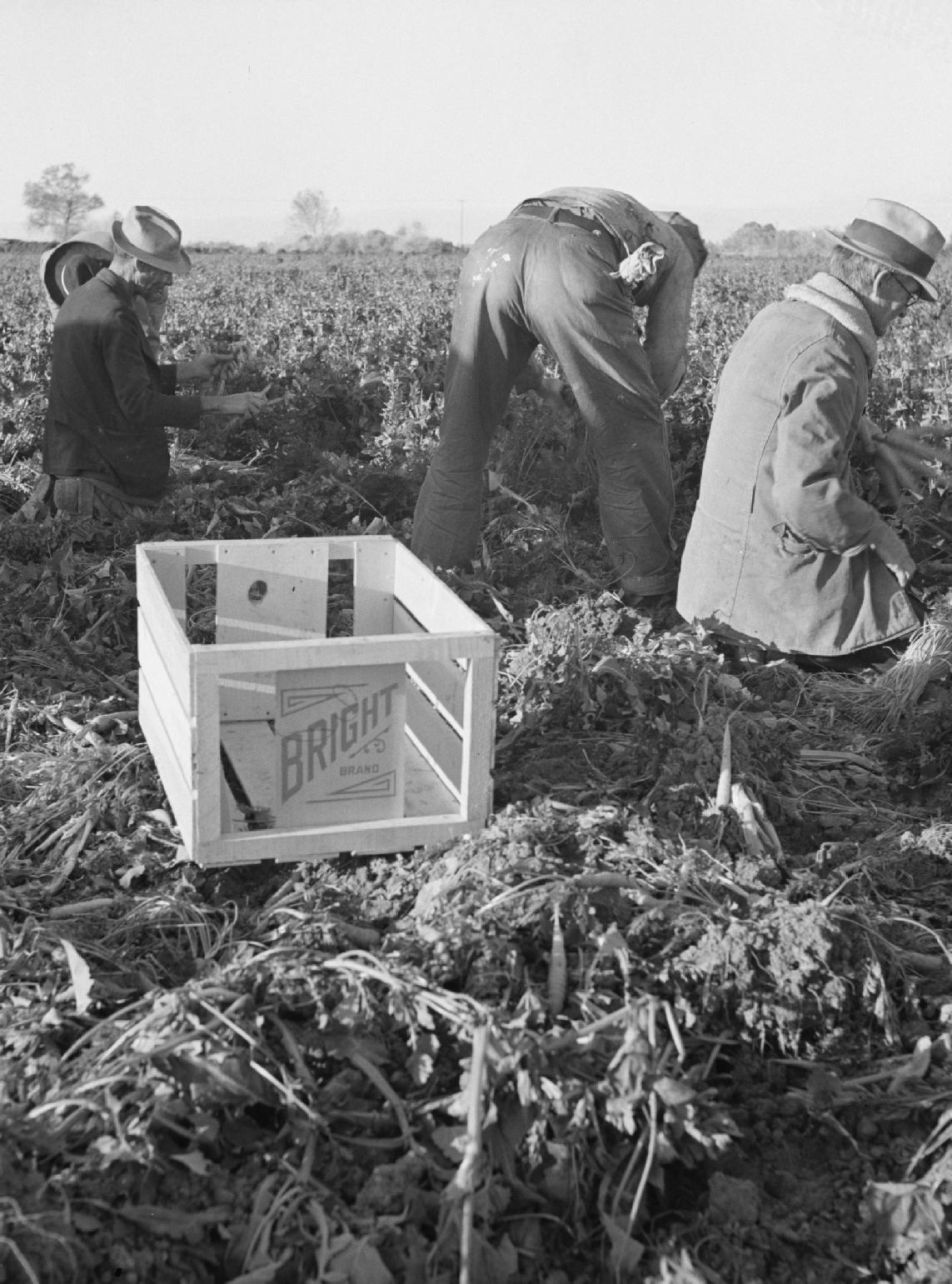
Page 8 photograph by Dorothea Lange, U.S. Farm Security Administration/ Office of War Information, courtesy of the Library of Congress
Page 14 photograph by U.S. Navy photo by Mass Communication Specialist 2nd Class Eli J. Medellin
Page 18 photograph by Frank used under a Creative Commons license (http://creativecommons.org/)
Page 20 photograph by Steve Jurvetson used under a Creative Commons license (http://creativecommons.org/)
Page 24 photograph of Omar Musa by Cole Bennetts
Page 30 photograph by Craig Allen used under a Creative Commons license (http://creativecommons.org/)
Page 34 photograph by Derek Purdy used under a Creative Commons license (http://creativecommons.org/)
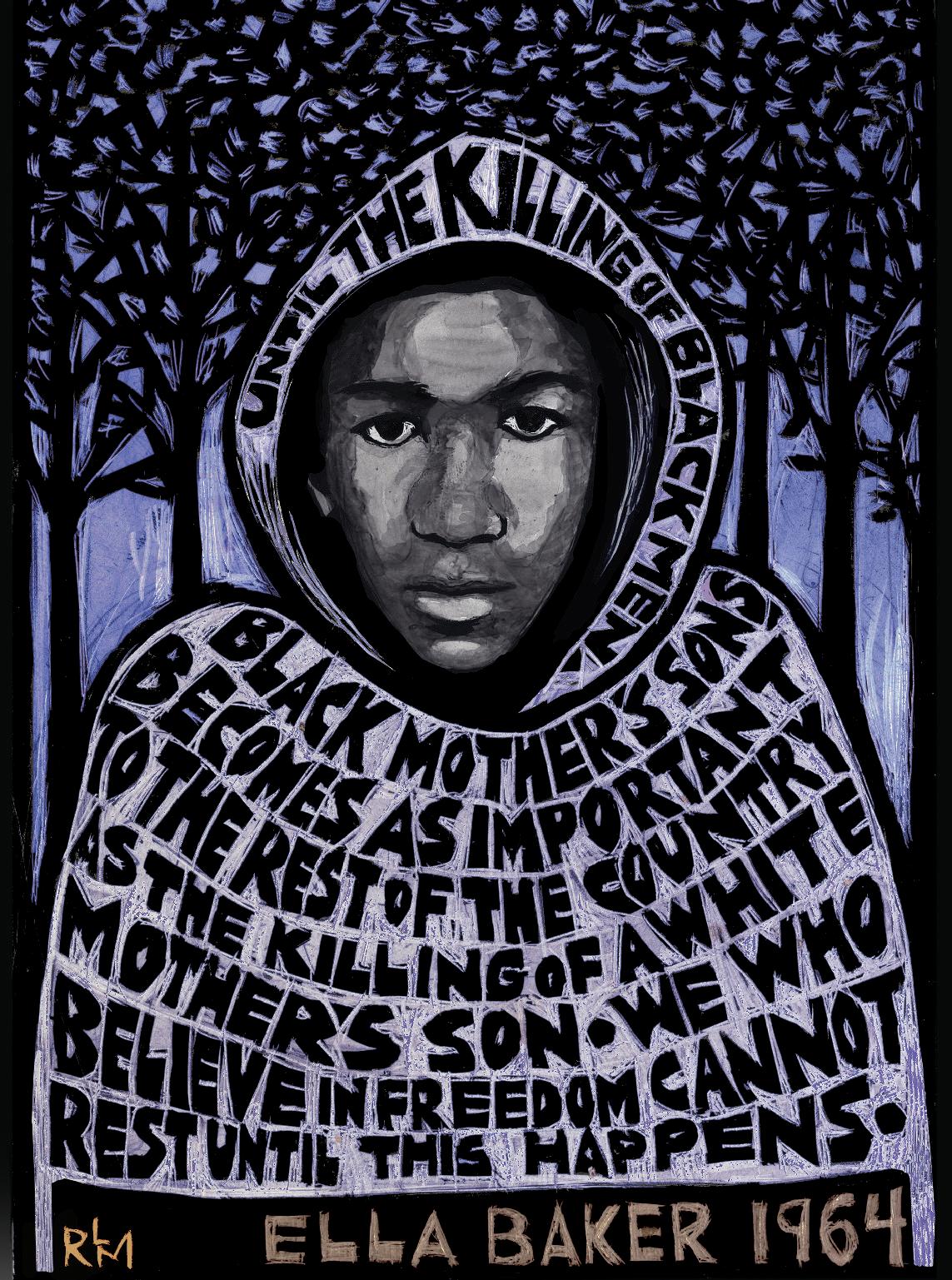
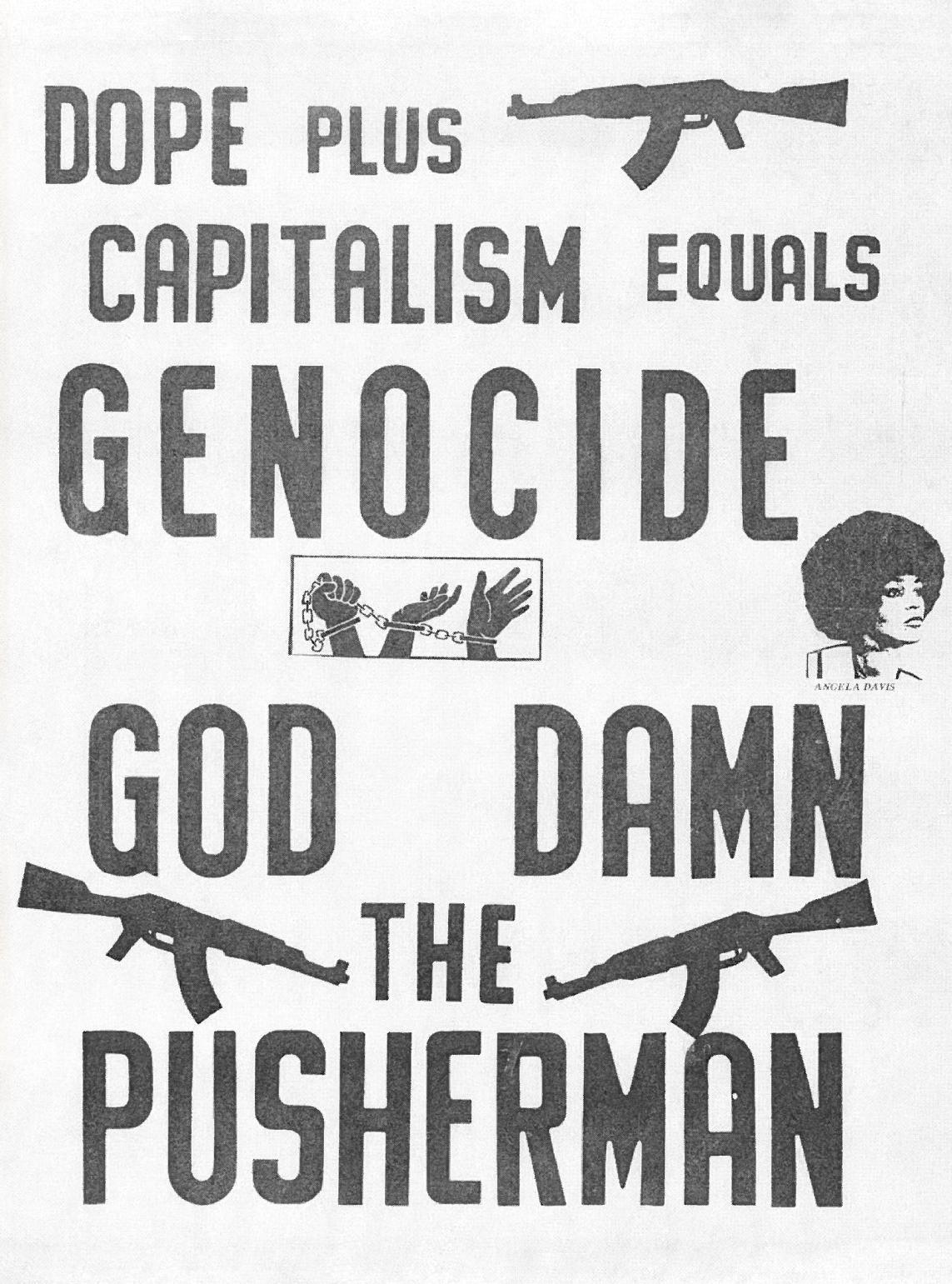
Page 36 image courtesy of the Schomburg Center for Research in Black Culture
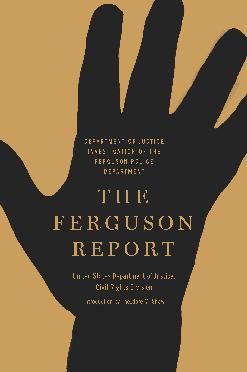
The Ferguson Report
Department of Justice Investigation of the Ferguson Police Department
UNITED STATES DEPARTMENT OF JUSTICE, CIVIL RIGHTS DIVISION
with an introduction by THEODORE
M. SHAW
PAPERBACK ORIGINAL THE LANDMARK JUSTICE DEPARTMENT REPORT ON POLICING THAT WILL TAKE ITS PLACE ON THE SHELF NEXT TO THE KERNER COMMISSION REPORT, THE 9/11 COMMISSION REPORT, AND THE SENATE INTELLIGENCE COMMITTEE REPORT ON CIA TORTURE
Exposes a broken and racially biased system. . . . [This is] not an isolated incident . . . trust between communities and law enforcement ha[s] broken down.
—PRESIDENT BARACK OBAMA, REACTING TO THE FERGUSON REPORT
On August 9, 2014, Michael Brown, an unarmed African American high school senior, was shot by Officer Darren Wilson in Ferguson, Missouri. For months afterward, protesters took to the streets demanding justice, testifying to the racist and exploitative police department and court system, and connecting the shooting of Brown with the deaths of Trayvon Martin, Eric Garner, and other young black men at the hands of police across the country.
In the wake of these protests, the Department of Justice launched a six-month investigation, resulting in a report that Colorlines characterizes as “so caustic it reads like an Onion article” and laying bare what the Huffington Post calls “a totalizing police regime beyond any of Kafka’s ghastliest nightmares.” Among the report’s findings are that the Ferguson Police Department “Engages in a Pattern of Unconstitutional Stops and Arrests in Violation of the Fourth Amendment,” “Detain[s] People Without Reasonable Suspicion and Arrest[s] People Without Probable Cause,” “Engages in a Pattern of First Amendment Violations,” “Engages in a Pattern of Excessive Force,” and “Erode[s] Community Trust, Especially Among Ferguson’s African-American Residents.”
Contextualized here in a substantial introduction by renowned legal scholar and former NAACP Legal Defense and Educational Fund president Theodore M. Shaw, The Ferguson Report is a sad, sobering, and important document, providing a snapshot of American law enforcement at the start of the twenty-first century, with resonance far beyond one small town in Missouri.
Theodore M. Shaw, former president of the NAACP Legal Defense and Educational Fund, is the Julius L. Chambers Distinguished Professor of Law and Director of the Center for Civil Rights at the University of North Carolina School of Law at Chapel Hill, where he lives.
I was shocked but not that surprised . . . all of the police departments, all of the mayors and county and other officials throughout the country [need to] take a look in the mirror.
—COLIN POWELL
What the Justice Department report demonstrates is that we’re not crazy. There is a system of racial and social control in communities of color across America.
—MICHELLE ALEXANDER
Utterly devastating.
—CHARLES BLOW
Scathing.
—WOLF BLITZER
The scope of the racism and appalling behavior is worse than I expected.
—JEFFREY TOOBIN
Damning.
—GWEN IFILL
Just Published
Paperback, 978-1-62097-160-4
E-book, 978-1-62097-165-9
$10.00 / $00.00 CAN 5 1⁄2” x 8 1⁄4”, 192 pages Current Affairs/Criminal Justice
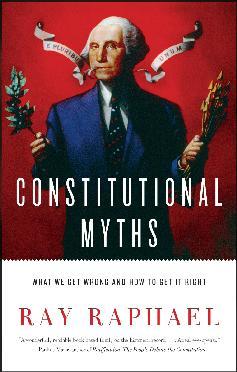
Constitutional Myths
What We Get Wrong and How to Get It Right
RAY RAPHAEL
NOW IN PAPERBACK A CHALLENGE TO THE TALL TALES THAT HAVE ASSAILED OUR FOUNDING DOCUMENT, FROM THE CELEBRATED AND HUGELY POPULAR HISTORIAN
Take off your rose-colored glasses, people: The Founding Fathers embraced a strong federal government, at the risk of falling into anarchy and disintegration. Therein lies the kernel of the author’s readable demystification of some of the ongoing crusades by conservatives touting the supremacy of “originalism.” . . . With documents amply provided at the close of the text, Raphael provides a truly accessible teaching tool.
$17.95 / $23.50 CAN 5 1⁄2” x 8 1⁄4”, 336 pages History (Hardcover edition: 978-1-59558-832-6)
Wonderfully lucid and highly informative.
—EDWARD J. LARSON, PULITZER PRIZE–WINNING AUTHOR OF A MAGNIFICENT CATASTROPHE
Americans on both sides of the aisle love to reference the Constitution as the ultimate source of truth. But which truth? What did the framers really have in mind? In a book that author R.B. Bernstein calls “essential reading,” acclaimed historian Ray Raphael places the Constitution in its historical context, dispensing little-known facts and debunking popular preconceived notions.
For each myth, Raphael first notes the kernel of truth it represents, since most myths have some basis in fact. Then he presents a big “BUT”—the larger context that reveals what the myth distorts. What did the framers see as the true role of government? What did they think of taxes? At the Constitutional Convention, how did they mix principles with politics? Did James Madison really father the Constitution? Did the framers promote a Bill of Rights? Do the so-called Federalist Papers reveal the Constitution’s inner meaning?
An authoritative and entertaining book, which “should appeal equally to armchair historians and professionals in the field” (Booklist), Constitutional Myths reveals what our founding document really says and how we should apply it today.
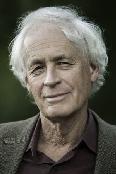
Ray Raphael’s seventeen books include A People’s History of the American Revolution, The First American Revolution, Founders, and Founding Myths, all published by The New Press. He is currently a senior research fellow at Humboldt State University, and associate editor of Journal of the American Revolution.
john guillemin
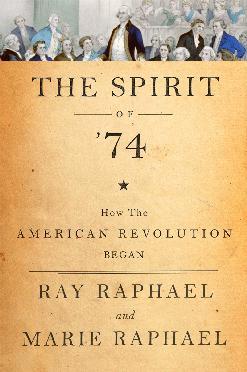
The Spirit of 74
How the American Revolution Began
RAY RAPHAEL and MARIE RAPHAEL
THE ESSENTIAL BACKSTORY TO THE “SHOT HEARD ’ ROUND THE WORLD”
Ray Raphael challenges us to re-assess what we had accepted as fact—to root out the myths, to account for vagaries of memory and the biases of participants and chroniclers. . . . He provokes us, he shakes us up.
—2013 BAY STATE LEGACY AWARD, MASSACHUSETTS HUMANITIES COUNCIL
Americans know about the Boston Tea Party and “the shot heard ’round the world,” but sixteen months divided these two iconic events, a period that has nearly been lost to history. The Spirit of 74 fills in this gap in our nation’s founding narrative, showing how in these mislaid months, step by step, real people made a revolution.
After the Tea Party, Parliament not only shut down a port but also revoked the sacred Massachusetts charter. Completely disenfranchised, citizens rose up as a body and cast off British rule everywhere except in Boston, where British forces were stationed. A “Spirit of ’74” initiated the American Revolution, much as the better-known “Spirit of ’76” sparked independence. Redcoats marched on Lexington and Concord to take back a lost province, but they encountered Massachusetts militiamen who had trained for months to protect the revolution they had already made.
The Spirit of 74 places our founding moment in a rich and new historical context, both changing and deepening its meaning for all Americans.
Marie Raphael, author of two historical novels, has taught literature and writing at Boston University, College of the Redwoods, and Humboldt State University. She and her husband, Ray Raphael, live in Northern California.
Praise for A People’s History of the American Revolution:
Ray Raphael has probably altered the way in which future historians will see events. His narrative is a tour de force.
THE SUNDAY TIMES
Raphael uses his considerable gifts as a writer [to weave] a tapestry that uses individual experiences to illustrate the larger stories of social groups.
LOS ANGELES TIMES BOOK REVIEW
Praise for The First American Revolution:
Raphael shows how thoroughly the rebellion transformed colonial society and produced a revolution like no other.
THE BOSTON GLOBE
September
Hardcover, 978-1-62097-126-0
E-book, 978-1-62097-127-7
$26.95 / $34.95 CAN 5 1⁄2” x 8 1⁄4”, 288 pages History/U.S.
ray raphael
Understanding Mass Incarceration
A People’s Guide to the Key Civil Rights Struggle of Our Time
JAMES KILGORE
PAPERBACK ORIGINAL A BRILLIANT OVERVIEW OF THE DEFINING HUMAN RIGHTS CRISIS IN AMERICA TODAY
Facts from Understanding Mass Incarceration:
• More than 90 percent of criminal cases in the United States never go to trial.
• In 2012, New York State spent more than $60,000 a year on each incarcerated person; the annual cost of attending Harvard was $52,652.
• 1,200 people are currently serving life without parole for crimes they committed as juveniles.
• The first few minutes of local phone calls made from within a prison can cost as much as $3.95, with an additional 69 cents per subsequent minute. More than half the revenue from these calls is returned to prisons as a “kickback.”
$17.95 / $23.50 CAN 7” x 7”, 272 pages, with b&w illustrations throughout Criminal Justice
An excellent, much-needed introduction to the racial, political, and economic dimensions of mass incarceration.
—MICHELLE ALEXANDER
We all know that orange is the new black and mass incarceration is the new Jim Crow, but how much do we actually know about the structure, goals, and impact of our criminal justice system? Understanding Mass Incarceration offers the first comprehensive overview of the incarceration apparatus put in place by the world’s largest jailer: the United States.
Drawing on a growing body of academic and professional work, Understanding Mass Incarceration describes in plain English the many competing theories of criminal justice—from rehabilitation to retribution, from restorative justice to justice reinvestment. In a lively and accessible style, author James Kilgore illuminates the difference between prisons and jails, probation and parole, laying out key concepts and policies such as the War on Drugs, broken windows policing, three-strikes sentencing, the school-to-prison pipeline, recidivism, and prison privatization. Informed by the crucial lenses of race and gender, he addresses issues typically omitted from the discussion: the rapidly increasing incarceration of women, Latinos, and transgender people; the growing imprisonment of immigrants; and the devastating impact of mass incarceration on communities.
Both field guide and primer, Understanding Mass Incarceration will be an essential resource for those engaged in criminal justice activism as well as those new to the subject.
James Kilgore is a formerly incarcerated person who currently teaches in the Center for African Studies at the University of Illinois. He is the author of a number of novels and an educational text about Zimbabwe. He lives with his family in Champaign, Illinois.
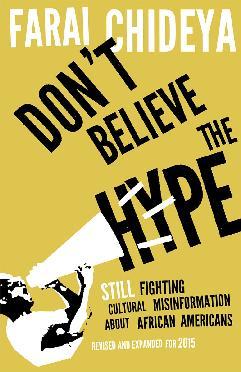
Don’t Believe the Hype
Still Fighting Cultural Misinformation about African Americans
FARAI CHIDEYA
Twentieth Anniversary Edition
PAPERBACK A TWENTIETH-ANNIVERSARY EDITION OF THE CLASSIC EXPOSÉ, REVISED AND UPDATED TO DEBUNK THE MYTHS AND STEREOTYPES ABOUT BLACK AMERICA STILL BEING PERPETUATED BY THE MEDIA
A brilliant analyst of the American scene.
—BILL MAHER
First published in 1995, Farai Chideya’s Don’t Believe the Hype became an instant classic, filling an enormous gap in what was then an emergent field and going on to sell more than 50,000 copies. Chideya exposed the various ways that media bias created and upheld inaccurate and harmful stereotypes about African Americans, and she succeeded in debunking those myths with an accessible, thoroughly researched handbook, its title inspired by the famous Public Enemy song.
Now, after achieving national fame as a respected commentator on NPR, CNN, and ABC News, Chideya returns to this seminal text, offering a completely revised and updated twentieth-anniversary edition. She once again exposes the persistent reality of media bias against black America, even as new media formats proliferate and diversity rises in newsrooms, on television, and in film. This new edition highlights biased news coverage of black athletes, disaster victims, and police violence, among other subjects, with updated statistical information offering accurate counterpoints. Now a new generation of readers can benefit from a fresh, frank approach to looking at race, media, power, and culture.
Farai Chideya is an award-winning journalist, professor, and lecturer, currently serving as Distinguished Writer in Residence at New York University. She has hosted NPR’s News and Notes and has been a reporter for ABC News and a political analyst for CNN. She partners with Public Radio International for One with Farai, a series of extended interviews with world changers.
Facts from Don’t Believe the Hype:
• A study of local television news found that black criminals are portrayed less evenhandedly than whites.
• African American athletes receive much harsher press coverage than their white counterparts.
• Mainstream media outlets often do not explicitly mention racism and discrimination when discussing affirmative action.
$17.95 / $23.50 CAN 5 1⁄2” x 8 1⁄4”, 304 pages African American Studies (Previous edition: 978-0-452-27096-1)
patricia alvarado
Right Out of California
The 1930s and the Big Business Roots of Modern Conservatism
KATHRYN S. OLMSTED
A MAGISTERIAL NEW HISTORY OF MODERN AMERICAN CONSERVATISM, UNCOVERING ITS ROOTS IN THE TURBULENT AGRICULTURAL FIELDS OF DEPRESSION-ERA CALIFORNIA
Exquisitely researched and annotated. . . . A startling read of public history.
CHICAGO TRIBUNE ON KATHRYN S. OLMSTED’S REAL ENEMIES
In a major reassessment of modern conservatism, noted historian Kathryn S. Olmsted reexamines the explosive labor disputes in the agricultural fields of Depression-era California, the cauldron that inspired a generation of artists and writers and that triggered the intervention of FDR’s New Deal. Right Out of California tells how this brief moment of upheaval terrified business leaders into rethinking their relationship to American politics—a narrative that pits a ruthless generation of growers against a passionate cast of reformers, writers, and revolutionaries.
Olmsted reveals how California’s businessmen learned the language of populism with the help of allies in the media and entertainment industries, and in the process created a new style of politics: corporate funding of grassroots groups, military-style intelligence gathering against political enemies, professional campaign consultants, and alliances between religious and economic conservatives. The business leaders who battled for the hearts and minds of Depression-era California, moreover, would go on to create the organizations that launched the careers of Richard Nixon and Ronald Reagan. A riveting history in its own right, Right Out of California is also a vital chapter in our nation’s political transformation whose echoes are still felt today.
Kathryn S. Olmsted is chair of the history department at the University of California, Davis. A noted historian of anticommunism, she is the author of several books, including Challenging the Secret Government, Red Spy Queen, and Real Enemies. She lives in Davis, California.
Praise for Challenging the Secret Government:
Olmsted successfully confronts and refutes the heroic myths surrounding post-Watergate journalism.
THE NATION
A fascinating study of how, just months after Watergate, both press and Congress quietly retreated to the same silk-gloved handling of the CIA and FBI in the name of national security.
PUBLISHERS WEEKLY
Praise for Red Spy Queen:
One of the most significant works to emerge in McCarthyism studies since the collapse of communism.
THE WALL STREET JOURNAL
A revealing and compassionate biography.
BOOKLIST
October
Hardcover, 978-1-62097-096-6
E-book, 978-1-62097-139-0
$26.95 / $34.95 CAN
6 1⁄8” x 9 1⁄4”, 288 pages, with 20 b&w images Political Science/American History
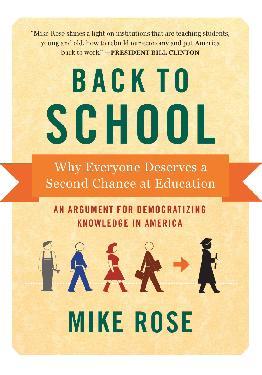
Back to School
Why Everyone Deserves a Second Chance at Education
MIKE ROSE
NOW IN PAPERBACK THE BOOK THAT EDUCATOR AND MACARTHUR FELLOW DEBORAH MEIER CALLED “VERY IMPORTANT AND MIND-SHIFTING,” ILLUMINATING THE ISSUES FACED BY THE MILLIONS OF “NONTRADITIONAL” COLLEGE STUDENTS
Mike Rose shines a light on institutions that are teaching students, young and old, how to rebuild our economy and put America back to work.
—PRESIDENT BILL CLINTON
Thoughtful and surprising.
THE WASHINGTON POST
Inspiring.
KIRKUS
Those working in secondary education would be remiss to ignore these crucial lessons.
PUBLISHERS WEEKLY
Rose’s idealism is the best kind: informed, tough-minded, selfaware. Those of us who inhabit lives on the cushier side of the educational boundary should honor, and act upon, his profoundly democratic spirit.
Back to School opened my eyes. It forced me to dig through my own beliefs about whom contemporary higher education is for and why, and how we might best re-craft it for learners who desire it deeply.
—ANNA
NEUMANN, THE JOURNAL OF HIGHER EDUCATION
The statistics come as a total surprise to most: 45 percent of postsecondary school students do not enroll directly out of high school. Many are part-time students, people who are returning to school after life intervened, or otherwise “nontraditional” learners—and this segment is growing. Back to School is the first book to look at this population of “second chancers,” in a work that Make magazine calls “optimistic yet simultaneously realistic.”
Writing in the anecdotal style of his bestselling Possible Lives, veteran educator Mike Rose paints a vivid picture of the community colleges and adult education programs that give millions of Americans a shot at reaching their aspirations. Chapters treat topics from remedial education and bridging the academic-vocational divide to the economic and social benefits of returning to school, the importance of secondchance education for democracy, and the college-for-all debate. Throughout, Rose combines what Education Digest calls “rich and moving vignettes of people in tough circumstances who find their way” with what Publishers Weekly calls “highly practical areas for improvement in higher ed, such as orientation programs, occupational schools, physical campus layouts, and pedagogical training for new teachers.”
A professor at the UCLA Graduate School of Education and Information Studies, Mike Rose is the author of many books, including Why School? (The New Press), Lives on the Boundary, The Mind at Work, and Possible Lives. Among his awards are a Guggenheim Fellowship, the Grawemeyer Award in Education, and the Commonwealth Club of California Award for Literary Excellence in Nonfiction. He lives in Santa Monica, California.
The Age of Aspiration
Power, Wealth, and Conflict in Globalizing India
DILIP HIRO
A MAJOR WORK OF REPORTAGE AND ANALYSIS THAT DEMYSTIFIES CONTEMPORARY INDIA BY THE “QUINTESSENTIAL NONALIGNED JOURNALIST” (JEREMY SCAHILL)
Hiro . . . is a model political analyst. His approach is as incorrigibly nonpartisan as it is methodical.
THE SUNDAY TIMES
Nearly four decades ago, Dilip Hiro’s Inside India Today, banned by Indira Gandhi’s government, was acclaimed by The Guardian as simply “the best book on India.” Now Hiro returns to his native country to chronicle the impact of the dramatic economic liberalization that began in 1991, which ushered India into the era of globalization. Hiro describes how India has been reengineered not only in its economy but also in its politics and cultural mores. Places such as Gurgaon and Noida on the outskirts of Delhi have been transformed from nondescript towns into forests of expensive high-rise residential and commercial properties. Businessmen in Bollywood movies, once portrayed as villains, are now often the heroes. The marginal, right-wing Hindu militants of the past now rule the nominally secular nation, with Prime Minister Narendra Modi as their avatar, one whose electoral victory was funded by big business.
Hiro provides a gripping account of the role played by Indians who have settled in the United States and Britain since 1991 in boosting India’s GDP. But he also highlights the negatives: the exponential growth in sleaze in the public and private sectors, the impoverishment of farmers, and the rise in urban slums. A masterful panorama, The Age of Aspiration covers the whole social spectrum of Indians at home and abroad.
Dilip Hiro is a leading expert on the Middle East and South Asia. He is the author of the bestselling Iraq in the Eye of the Storm; the Orwell Prize–nominated Secrets and Lies; and Inside Central Asia, a Financial Times Best Book of the Year. He has appeared on NPR, Democracy Now!, and CNN. He lives in London.
Praise for Secrets and Lies: Deeply informed.
—NOAM CHOMSKY
An extraordinary account. . . . Hiro has fashioned a wellrounded, thought-provoking story about the Bush administration’s bellicose preparations, the invasion and the postwar headaches.
—STANLEY MEISLER, LOS ANGELES TIMES Praise for After Empire:
Dilip Hiro writes from an unabashedly un-American point of view. It is arresting to see a familiar subject assume an unfamiliar shape.
THE ECONOMIST
October
Hardcover, 978-1-62097-130-7
E-book, 978-1-62097-141-3
$27.95 / $36.50 CAN
6 1⁄8” x 9 1⁄4”, 368 pages, with 4 maps History/Asian Studies
A People’s Art History of the United States
250 Years of Activist Art and Artists Working in
Social Justice Movements
NICOLAS LAMPERT
NOW IN PAPERBACK TAKING AMERICAN ART HISTORY OUT OF THE MUSEUM AND INTO THE STREETS, AN “EYE-OPENING, HISTORY-ENRICHING, AND SUPERBLY WELL-ILLUSTRATED EXPOSITION OF THE UNION OF ART AND ACTIVISM” ( BOOKLIST )
Readable and instructive. PUBLISHERS WEEKLY
An inspiration in itself. Lampert’s passion for social change and his optimism about creative and constructive resistance come on strong in this well-written and wonderfully illustrated book. Highly recommended.
—ERIKA DOSS, PROFESSOR OF AMERICAN STUDIES, UNIVERSITY OF NOTRE DAME
Undermining: A Wild Ride Through Land Use, Politics, and Art in the Changing West
7 1⁄2” x 9 1⁄4”, 384 pages with 219 b&w images throughout Art/History
(Hardcover edition: 978-1-59558-324-6)
A much welcome, fresh view of American political art.
—PAUL BUHLE, EDITOR
OF A PEOPLE’S HISTORY OF AMERICAN EMPIRE
Inspired by the pathbreaking work of Howard Zinn, A People’s Art History of the United States is propelled by a democratic vision of art, showing that art doesn’t just belong within the confines of museums and archives. In fact, art is created every day in the street and all around us, and everyone deserves to be a part of it.
Called “important” by renowned art critic Lucy Lippard, A People’s Art History of the United States introduces us to key works of American radical art alongside dramatic retellings of the histories that inspired them. Richly illustrated with more than two hundred black-and-white images, this book by acclaimed artist and author Nicolas Lampert is the go-to resource for everyone who wants to know what activist art can and does do for our society.
Spanning the abolitionist movement, early labor movements, women’s suffrage, the civil rights movement, and up to the present antiglobalization movement and beyond, A People’s Art History of the United States is a wonderful read as well as a brilliant toolkit for today’s artists and activists to adapt past tactics to the present, utilizing art and media as a form of civil disobedience.
laura klein
Nicolas Lampert is a Milwaukee-based interdisciplinary artist and author whose artwork is in the permanent collections of the Museum of Modern Art and the Milwaukee Art Museum, among other institutions. Lampert is a full-time faculty member at the University of Wisconsin–Milwaukee.
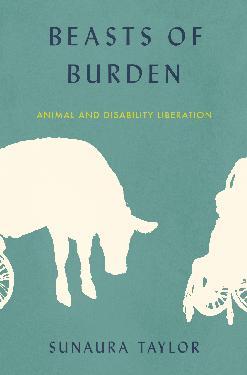
Beasts of Burden
Animal and Disability Liberation
SUNAURA TAYLOR
A BEAUTIFULLY WRITTEN, DEEPLY PROVOCATIVE INQUIRY INTO THE INTERSECTION BETWEEN ANIMAL AND DISABILITY LIBERATION—THE DEBUT OF AN IMPORTANT NEW SOCIAL CRITIC
Sunaura Taylor will shake up your categories, turn your world inside-out, and tell you a lot of fascinating and important things you didn’t know yet, about your own body and the bodies of others, human and nonhuman, under an inhumane regime. —REBECCA SOLNIT
How much of what we understand of ourselves as “human” depends on our physical and mental abilities—how we move (or cannot move) in and interact with the world? And how much of our definition of “human” depends on its difference from “animal”?
Drawing on her own experiences as a disabled person, a disability activist, and an animal advocate, author Sunaura Taylor persuades us to think deeply, and sometimes uncomfortably, about what divides the human from the animal, the disabled from the nondisabled—and what it might mean to break down those divisions, to claim the animal and the vulnerable in ourselves, in a process she calls “cripping animal ethics.”
Beasts of Burden suggests that issues of disability and animal justice—which have heretofore primarily been presented in opposition—are in fact deeply entangled. Fusing philosophy, memoir, science, and the radical truths these disciplines can bring—whether about factory farming, disability oppression, or our assumptions of human superiority over animals—Taylor draws attention to new worlds of experience and empathy that can open up important avenues of solidarity across species and ability. Beasts of Burden is a wonderfully engaging and elegantly written work, both philosophical and personal, by a brilliant debut author.
Sunaura Taylor is an artist and writer based in New York City. She has written for AlterNet, American Quarterly, BOMB, the Monthly Review, Qui Parle, and Yes! Magazine. She has contributed to the books Ecofeminism, Defiant Daughters, Occupy!, Stay Solid, and Infinite City Taylor and Judith Butler’s conversation is featured in the film Examined Life and the book of the same title, published by The New Press.
Sunaura Taylor has written an amazing book that acts both as an intervention into widely held beliefs about disability and animals and an invitation to reimagine ourselves. Her thoroughly original, brilliant narrative transformed my imagination.
—CAROL J. ADAMS, AUTHOR OF THE SEXUAL POLITICS OF MEAT
$25.95 / $33.95 CAN 5 1⁄2” x 8 1⁄4”, 272 pages Philosophy/Science
Gristle: From Factory Farms to Food Safety (Thinking Twice About the Meat We Eat) Edited by Moby and Miyun Park Paperback, $14.95, 978-1-59558-191-4
The New Threat
The Past, Present, and Future of Islamic Militancy
JASON BURKE
AN EXTRAORDINARY INTERNATIONAL JOURNEY THROUGH THE ROOTS, REALITY, AND FUTURE OF MODERN MUSLIM EXTREMISM, FROM A BRILLIANT JOURNALIST AND INSIDER
[Burke is] the most reliable and perceptive guide to the rise of militant Islam.
—WILLIAM DALRYMPLE,
AUTHOR OF NINE LIVES
Jason Burke is one of the world’s leading experts on militant Islam. He fought with the Kurdish peshmerga (currently at war with ISIS) while still in college. He was hanging out with the Taliban in the late 1990s. He witnessed the bombing of Tora Bora in Afghanistan in 2001 firsthand.
With the current emergence of ISIS in Iraq and Syria and the resurgence of the Taliban in Afghanistan and Pakistan, no one is as well placed as Burke—whose previous books have been chosen as books of the year by The Economist, the Daily Telegraph, and The Independent—to explain this dramatic post–Al Qaeda phase of Islamic militancy. We are now, he argues, entering a new phase of radical violence that is very different from what has gone before, one that is going to redefine the West’s relationship with terrorism and the Middle East.
ISIS is not “medieval,” as many U.S. national security pundits claim, but, Burke explains, a group whose spectacular acts of terror are a contemporary expression of our highly digitized societies, designed to generate global publicity. In his account, radical Islamic terrorism is not an aberration or “cancer,” as some politicians assert; it is an organic part of the modern world. This book will challenge the preconceptions of many American readers and will be hotly debated in national security circles.
Jason Burke is the South Asia correspondent for The Guardian and The Observer. His book Al Qaeda is regarded as one of the most perceptive and original books on Islamic terrorism. Currently based in New Delhi, he covers a wide range of social, political, and cultural topics across South Asia and is a regular commentator on television and radio.
Praise for Al Qaeda: Essential reading.
—NOAM CHOMSKY
Burke is a superb journalist.
THE DAILY TELEGRAPH
An expert on Islamic terrorism.
—ROBERT MACKEY, THE NEW YORK TIMES
An indispensable guide to the multidimensional reality of Al-Qaeda.
—JOHN GRAY
The Infernal Machine: A History of Terrorism
Matthew Carr Paperback, $18.95, 978-1-59558-408-3
November
Hardcover, 978-1-62097-135-2
E-book, 978-1-62097-136-9
$24.95 / $32.50 CAN 5 1⁄2” x 8 1⁄4”, 192 pages Current Affairs/Middle East
anton la guardia
We Too Sing America
South Asian, Arab,
Muslim,
and
Sikh Immigrants
Shape Our Multiracial Future
DEEPA IYER
THE NATIONALLY RENOWNED RACIAL JUSTICE ADVOCATE SHINES A LIGHT ON AN UNEXPLORED CONSEQUENCE OF MODERN-DAY TERRORISM: THE ONGOING, STATE-SANCTIONED PERSECUTION OF A RANGE OF AMERICAN MINORITIES
$24.95 / $32.50 CAN 5 1⁄2” x 8 1⁄4”, 192 pages Race Relations/Current Affairs
If I see someone [who] comes in that’s got a diaper on his head and a fan belt wrapped around the diaper on his head, that guy needs to be pulled over.
—FORMER U.S. CONGRESSMAN JOHN COOKSEY (R-LA) IN 2001, WHO LATER APOLOGIZED
Many of us can recall the targeting of South Asian, Arab, Muslim, and Sikh people in the wake of 9/11. We may be less aware, however, of the ongoing racism directed against these groups in the past decade and a half.
In We Too Sing America, nationally renowned activist Deepa Iyer catalogs recent racial flashpoints, from the 2012 massacre at the Sikh gurdwara in Oak Creek, Wisconsin, to the violent opposition to the Islamic Center of Murfreesboro, Tennessee, and to the Park 51 Community Center in Lower Manhattan.
Iyer asks whether hate crimes should be considered domestic terrorism and explores the role of the state in perpetuating racism through detentions, national registration programs, police profiling, and constant surveillance. She looks at topics including Islamophobia in the Bible Belt; the “Bermuda Triangle” of anti-immigrant, anti-Muslim hysteria; and the energy of new reform movements, including those of “undocumented and unafraid” youth and Black Lives Matter.
In a book that reframes the discussion of race in America, a brilliant young activist provides ideas from the front lines of post-9/11 America.
A leading racial justice activist, Deepa Iyer served for a decade as the executive director of South Asian Americans Leading Together (SAALT), focusing on community building in post– 9/11 America. She teaches in the Asian American studies program at the University of Maryland and lives in Silver Spring, Maryland.
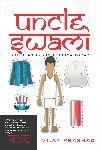
Uncle Swami: South Asians in America Today Vijay Prashad Paperback, $16.95,
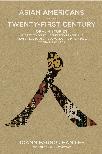
Asian
the Twenty-first Century: Oral Histories of First- to Fourth-Generation Americans from China, the Philippines, Japan, India, the Pacific Islands, Vietnam, and Laos Joann Faung and Jean Lee Paperback, $16.95,
les talusan photography
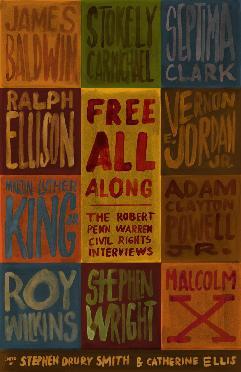
Free All Along
The Robert Penn Warren Civil Rights Interviews
edited by STEPHEN DRURY SMITH and CATHERINE ELLIS
A COLLECTION OF NEVER-BEFORE-PUBLISHED INTERVIEWS WITH PROMINENT FIGURES OF THE BLACK FREEDOM STRUGGLE BY THE PULITZER PRIZE–WINNING AUTHOR AND POET
[W]e were outnumbered, we still are, and this did not cow us as a lot of people like to pretend. It imposed a discipline upon us, and we see that discipline now bearing fruit in the Freedom Marches and so on, and the willingness of little children and old ladies to take chances, that is, to walk up against violence. This is an expression not of people who are suddenly freed of something, but people who have been free all along.
—RALPH
ELLISON, INTERVIEWED BY
ROBERT PENN WARREN
In 1964, Pulitzer Prize–winning author and poet Robert Penn Warren set out with a tape recorder to interview leaders of the civil rights movement. He spoke with luminaries such as James Baldwin, Martin Luther King Jr., Stokely Carmichael, Ralph Ellison, and Roy Wilkins. In Harlem, a fifteen-minute appointment with Malcolm X unwound into several hours of vivid conversation.
A year later, Penn Warren would publish Who Speaks for the Negro?, a probing narrative account of these conversations that blended his own reflections with brief excerpts and quotations from his interviews. The large collection of audiotapes of his conversations, however, remained unknown to the public until rediscovered by scholars in recent years. A major contribution in their own right to our understanding of the struggle for civil rights, these remarkable long-form interviews are presented here as original documents with pressing relevance today.
Published to coincide with a national radio documentary from American RadioWorks®, Free All Along brings to life the voices of America’s civil rights generation, including writers, political activists, religious leaders, and intellectuals.
Stephen Drury Smith is the executive editor and host of American RadioWorks® , the acclaimed documentary unit of American Public Media. He lives in St. Paul, Minnesota. Catherine Ellis is a contributing producer with American RadioWorks® and the founder of Audio Memoir. She lives in Boston, Massachusetts.
Including interviews with:
James Baldwin
Stokely Carmichael
Septima Clark
Kenneth Clark
Ralph Ellison
Charles Evers
Aaron Henry
Martin Luther King Jr.
Robert Moses
Bayard Rustin
Ruth Turner
Wyatt T. Walker
Roy Wilkins
Stephen Wright
Malcolm X
Andrew Young
December
Hardcover, 978-1-59558-818-0
E-book, 978-1-59558-982-8
$25.95 / $33.95 CAN
5 1⁄2” x 8 1⁄4”, 256 pages, with 20 b&w photos
History/African American Studies
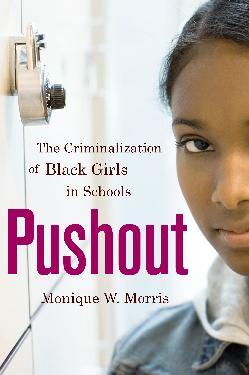
Pushout
The Criminalization of Black Girls in Schools
MONIQUE W. MORRIS
A GROUNDBREAKING LOOK AT THE LIVES OF AFRICAN AMERICAN GIRLS BY THE EBONY.COM COLUMNIST WHOSE PREVIOUS BOOK WAS FEATURED ON MSNBC, ON THE BRIAN LEHRER SHOW , AND IN ESSENCE MAGAZINE
Monique Morris is a fearless and brilliant intellectual.
—SHERRILYN IFILL, PRESIDENT OF THE NAACP LEGAL DEFENSE AND EDUCATIONAL FUND AND AUTHOR OF ON THE COURTHOUSE LAWN
On the day fifteen-year-old Diamond from the Bay Area stopped going to school, she was expelled for lashing out at peers who constantly harassed and teased her for something everyone on the staff had missed: she was being trafficked for sex. After months on the run, she was arrested and sent to a detention center for violating a court order to attend school.
Black girls represent 17 percent of female students but almost half of all girls with a school-related arrest. The first trade book to tell these untold stories, Pushout exposes a world of confined potential and supports the growing movement to address the policies, practices, and cultural illiteracy that push countless students out of school and into unhealthy, unstable, and often unsafe futures.
For four years Monique W. Morris, the author of Black Stats, chronicled the experiences of black girls across the country whose intricate lives are misunderstood, highly judged—by teachers, administrators, and the justice system—and degraded by the very institutions charged with helping them flourish. Morris also shows how, despite obstacles, stigmas, stereotypes, and despair, black girls still find ways to breathe remarkable dignity into their lives in classrooms, juvenile facilities, and beyond.
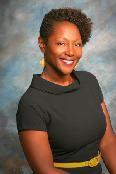
Monique W. Morris is the co-founder of the National Black Women’s Justice Institute and writes a monthly column on black women and girls for Ebony.com. She is the author of Black Stats (The New Press) and lives in the Bay Area with her husband and two daughters.
Praise for Black Stats: Black Stats has become my go-to source.
—PATRICK HENRY BASS, ESSENCE
Morris carries forward the best of the Du Boisian social science and progressive tradition.
—KHALIL GIBRAN MUHAMMAD, FROM THE INTRODUCTION TO BLACK STATS
Black Stats disallows for lingering inequalities to be camouflaged.
$25.95 / $33.95 CAN 5 1⁄2” x 8 1⁄4”, 256 pages Education/Criminal Justice
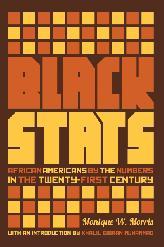
Black Stats: African Americans by the Numbers in the Twenty-First Century Monique W. Morris Paperback, $14.95,
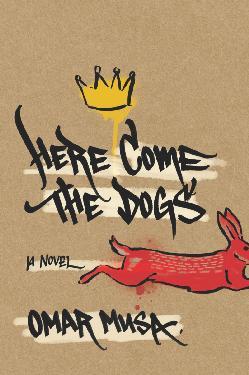
Here Come the Dogs
A Novel
OMAR MUSA
PAPERBACK ORIGINAL AN INCENDIARY LITERARY DEBUT THAT SEETHES WITH THE ANGER, FRUSTRATION, AND POWERLESSNESS
OF YOUNG MULTICULTURAL AUSTRALIA
This stunning novel has such swaggering exuberance that it will make most other fiction you read this year seem criminally dull. You have been warned.
—IRVINE WELSH
In small-town suburban Australia, three young men from three different ethnic backgrounds—one Samoan, one Macedonian, one not sure—are ready to make their mark. Solomon is all charisma, authority, and charm, a failed basketball player down for the moment but surely not out. His half-brother, Jimmy, bounces along in his wake, underestimated, waiting for his chance to announce himself. Aleks, their childhood friend, loves his mates, his family, and his homeland and would do anything for them. The question is, does he know where to draw the line?
Solomon, Jimmy, and Aleks are way out on the fringe of Australia, looking for a way in. Hip hop, basketball, and graffiti give them a voice. Booze, women, and violence pass the time while they wait for their chance. Under the oppressive summer sun, their town has turned tinder-dry. All it’ll take is a spark.
As the surrounding hills roar with flames, the change storms in. But it’s not what they were waiting for. It never is.
Omar Musa is a Malaysian Australian rapper and poet from Queanbeyan, Australia. He has opened for Gil Scott Heron and performed at the Nuyorican Poets Cafe in New York City. He attended University of California Santa Cruz. He has released three hiphop albums and two poetry books, and he received a standing ovation at TEDxSydney at the Sydney Opera House. He lives in Australia.
Praise for the Australian edition: Omar Musa’s writing is tough and tender, harsh and poetic, raw and beautiful; it speaks to how we live and dream now. This novel broke my heart a little, but it also made me ecstatic at the possibilities of what the best writing can do. His voice is genuine, new and exciting; his voice roars.
—CHRISTOS TSIOLKAS, AUTHOR OF THE SLAP
At once tender, beautiful, gritty, and raw.
THE GUARDIAN
January
Paperback, 978-1-62097-117-8
E-book, 978-1-62097-119-2
$16.95 / $22.50 CAN
5 1⁄2” x 8 1⁄4”, 352 pages Fiction
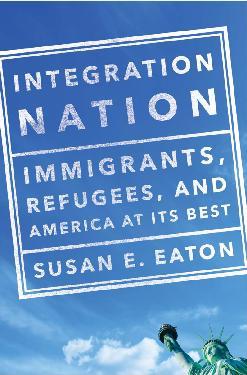
Integration Nation
Immigrants, Refugees, and America at Its Best
SUSAN E. EATON
AN
INSPIRING CROSS-COUNTRY JOURNEY
TO PLACES WHERE PEOPLE ARE WELCOMING
IMMIGRANTS,
FROM AN AUTHOR ADAM HOCHSCHILD SAYS WRITES “WITH THE SKILL OF A FINE STORYTELLER”
Praise for The Children in Room E4: A spectacular accomplishment. A wonderful, complex, subtle, and intelligent work.
—JONATHAN KOZOL
Praise for The Other Boston Busing Story :
Compelling new insights on both the short- and long-term effects of a desegregated school experience.
5 1⁄2” x 8 1⁄4”, 192 pages with 12 b&w photographs Social Science/Emigration & Immigration
A graceful and fluent writer. —STARRED PUBLISHERS WEEKLY REVIEW FOR EATON’S THE CHILDREN IN ROOM E4
Integration Nation takes readers on a spirited and compelling cross-country journey, introducing us to the people challenging America’s xenophobic impulses by welcoming immigrants and collaborating with the foreign-born as they become integral members of their new communities. In Utah, we meet educators who connect newly arrived Spanish-speaking students and U.S.-born English-speaking students, who share classrooms and learn in two languages. In North Carolina, we visit the nation’s fastest-growing community-development credit union, serving immigrants and U.S.born depositors and helping to lower borrowing thresholds and crime rates alike.
In recent years, politicians in a handful of local communities and states have passed laws and regulations designed to make it easier to deport unauthorized immigrants or to make their lives so unpleasant that they’d just leave. The media’s unrelenting focus on these ultimately self-defeating measures created the false impression that these politicians speak for most of America. They don’t.
Integration Nation movingly reminds us that we each have choices to make about how to think and act in the face of the rapid cultural transformation that has reshaped the United States. Giving voice to people who choose integration over exclusion, Integration Nation is a desperately needed road map for a nation still finding its way beyond anti-immigrant hysteria to higher ground.
Susan E. Eaton is the research director at the Charles Hamilton Houston Institute for Race and Justice at Harvard Law School. She is the author, most recently, of the Children in Room E4: American Education on Trial. Her writing has appeared in the New York Times, the Boston Globe Sunday Magazine, The Nation, and many other publications. She lives in Boston.
Made in America: Immigrant Students in Our Public Schools
Laurie Olsen Paperback, $19.95, 978-1-59558-349-9
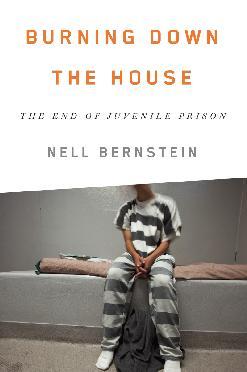
Burning Down the House
The End of Juvenile Prison
NELL BERNSTEIN
NOW IN PAPERBACK THE NATIONALLY ACCLAIMED, “ENGROSSING, DISTURBING, AT TIMES HEARTBREAKING” (VAN JONES) BOOK THAT SHINES A HARSH LIGHT ON THE ABUSIVE WORLD OF JUVENILE PRISONS, BY THE AWARD-WINNING JOURNALIST
Nell Bernstein’s new book could be for juvenile justice what Rachel Carson’s book was for the environmental movement.
—ANDREW COHEN, CORRESPONDENT, ABC NEWS
In what the San Francisco Chronicle called “an epic work of investigative journalism that lays bare our nation’s brutal and counterproductive juvenile prisons and is a clarion call to bring our children home,” Nell Bernstein eloquently argues that there is no good way to lock up a child. Making the radical argument that state-run detention centers should be abolished completely, her “passionate and convincing” (Kirkus) book points out that our system of juvenile justice flies in the face of everything we know about what motivates young people to change.
Called “a devastating read” by Truthout, Burning Down the House received a starred Publishers Weekly review and was an In These Times recommended summer read. Bernstein’s heartrending portraits of young people abused by the system intended to protect and “rehabilitate” them are interwoven with reporting on innovative programs that provide effective alternatives to putting children behind bars.
The result is a work that the Philadelphia Inquirer called “a searing indictment and a deft strike at the heart of America’s centuries-old practice of locking children away in institution”—a landmark book that has already launched a new national conversation.
Nell Bernstein’s All Alone in the World (The New Press) was a Newsweek “Book of the Week.” Bernstein is a former Soros Justice Media Fellow and winner of a White House Champion of Change award. Her articles have appeared in Newsday, Salon, Mother Jones, Ebony, and the Washington Post, among other publications. She lives outside Berkeley, California.
What adults do to children behind the walls of America’s juvenile prisons is criminal. If we want to change the United States’ senseless addiction to incarceration, the best possible place to start is transforming how our justice system treats our children. This book shows just how that can be done.
—PIPER KERMAN
[A]n unflinching look at America’s unbalanced juvenile justice system.
EBONY
An excellent piece of advocacy.
LOS ANGELES REVIEW OF BOOKS
Passionate, thoughtful, and well-researched . . . a resounding call to action.
PUBLISHERS WEEKLY (STARRED REVIEW)
January
Paperback, 978-1-62097-131-4
E-book, 978-1-59558-966-8
$17.95 / $23.50 CAN 5 1⁄2” x 8 1⁄4”, 384 pages Criminal Justice/Law (Hardcover edition: 978-1-59558-956-9)
timothy buckwalter
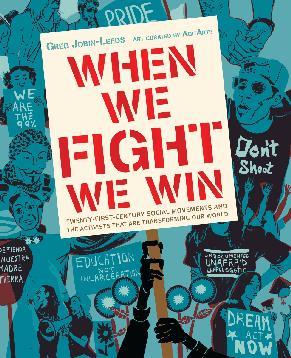
When We Fight, We Win!
Twenty-First-Century Social Movements and the Activists That Are Transforming Our World
GREG JOBIN-LEEDS and AGITARTE
PAPERBACK ORIGINAL REAL STORIES OF HARD-FOUGHT BATTLES FOR SOCIAL CHANGE, WITH CLEAR LESSONS AND TIPS FOR ACTIVISTS TO BUILD POWERFUL MOVEMENTS
At the cliff edge of history is as good a place as any to mine insights that can benefit all those brave enough to try making the kinds of changes that have been deemed impossible.
—RINKU SEN
Same-sex marriage, #BlackLivesMatter, the Dream Act, the People’s Climate March, End the New Jim Crow, Occupy Wall Street—these are just a few of the initiatives that have taken flight in the past decade, the most fertile and productive era of activism and reform this country has seen since the 1960s. Now, in a visually rich and deeply inspiring book, movement leaders and activists distill their wisdom, sharing lessons of what works and what hinders transformative social change.
Weaving together interviews with today’s most successful activists—from Bill McKibben and Clayton Thomas Muller to Karen Lewis, Rinku Sen, Ai-jen Poo, Favianna Rodriguez, Rea Carey, Gaby Pacheco, Patrisse Cullors-Brignac, and more—with narrative recountings of strategies and campaigns alongside full-color photos—social activist Greg Jobin-Leeds joins forces with AgitArte, an organization of artists and organizers, to document the stories, philosophy, tactics, and art of today’s leading social change movements.
Beautifully packaged in a wonderfully affordable paperback edition, When We Fight, We Win! will allow a whole generation of readers to celebrate and benefit from a remarkable decade of activism and reform.
Greg Jobin-Leeds is co-chair of the Schott Foundation for Public Education. He has helped launch many high-impact social change organizations and lives in Cambridge, Massachusetts. Dey Hernández-Vázquez and Jose Jorge Diaz are members of AgitArte, an artist, puppet, mask, and performing object theater and music collective based in Santurce, Puerto Rico.
Nation:
That Inspired a Century of
$17.95, 978-1-59558-504-2
From the Folks Who Brought You the Weekend: A Short, Illustrated History of Labor in the United States
Priscilla Murolo, A.B. Chitty, and Joe Sacco Paperback, $18.95, 978-1-56584-776-7
January
Paperback, 978-1-62097-093-5
E-book, 978-1-62097-140-6
$17.95 / $23.50 CAN
7 5⁄8” x 9 3⁄8”, 320 pages, with 4/c art throughout Current Affairs/Sociology
Protest
Words
American Radicalism Edited by Timothy Patrick McCarthy and John McMillian Paperback,
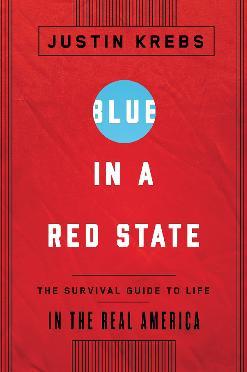
Blue in a Red State
A Survival Guide to Life in the Real America
JUSTIN KREBS
ENGAGING STORIES AND INNOVATIVE STRATEGIES FROM LEFT-LEANING PEOPLE SURVIVING IN RIGHT-LEANING COMMUNITIES ACROSS THE COUNTRY, FROM THE FOUNDER OF THE NATIONAL LIVING LIBERALLY NETWORK
Politicians want to pick his brain, women want to play with his ponytail; as social movement movers and shakers go, Drinking Liberally co-founder Justin Krebs is a virtual whirling dervish of democratic dynamism.
ALTERNET
Imagine if you felt out of step with every other member of the parent association at your kid’s school, your quilting circle, or even your workout group. What if casual conversations revolved around Fox News and the decline of American values? How would you feel if you were afraid to put a political bumper sticker on your car or had to think twice about what liberal posts you liked on Facebook? These are just some of the experiences shared by liberals across twenty states and five time zones who tell their stories with honesty, warmth, and humor.
Most of us have to “talk across the aisle” once or twice a year—when we’re seated next to our conservative out-of-town uncle at Thanksgiving, say. But millions of selfidentified liberals live in cities and towns—particularly away from the East and West Coasts—where they are regularly outnumbered and outvoted by conservatives.
In this uplifting and completely original book, Justin Krebs, the founder of the national Living Liberally network, speaks with and tells the stories of atheists, vegetarians, environmentalists, pacifists, and old-fashioned liberals—a term he is intent on rehabilitating—from Texas to Idaho, South Carolina to Alaska. Krebs weaves these stories together to create a provocative and rollicking taxonomy of strategies for living in a diverse society, with lessons for every participant in our great democratic experiment.
The founding director of Living Liberally, with more than two hundred chapters across the country, Justin Krebs is the author of 538 Ways to Live, Work, and Play Like a Liberal and lives in Brooklyn.
Praise for 538 Ways to Live, Work, and Play Like a Liberal: Krebs says Americans can live a more socially conscious, environmentally friendly and liberally minded life. He even advises readers on how to raise their kids liberally and how to effectively engage in dinner table debate with their conservative counterparts. Being liberal isn’t just a political choice, Krebs argues. It’s a lifestyle.
IN THESE TIMES
A sanity-saving, moral guide to living in a contemporary society hell-bent on crushing you with its consumer choices, paralyzing you with moral relativism, and making you want to go numb with all the pain and injustice.
—FEMINISTING
February
Hardcover, 978-1-59558-972-9
E-book, 978-1-59558-969-9
$24.95 / $32.50 CAN 5 1⁄2” x 8 1⁄4”, 240 pages Sociology/ Political Science
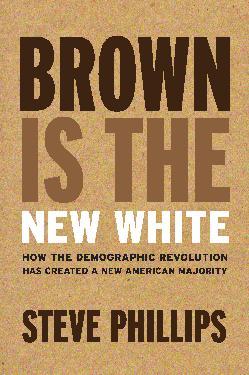
Brown Is the New White
How the Demographic Revolution Has Created a New American Majority
STEVE PHILLIPS
A
HIGHLY ORIGINAL BOOK OF POLITICAL MATH, SHOWING HOW PROGRESSIVE PEOPLE OF COLOR AND PROGRESSIVE WHITES NOW AMOUNT TO AN ELECTORAL MAJORITY AND WHAT THIS COULD MEAN FOR
5 1⁄2” x 8 1⁄4”, 224 pages Political Science/Current Affairs
A must-read for anyone seeking to make change happen, from small towns, to the halls of Congress, to the White House.
—JOHN
PODESTA, FORMER CHIEF OF STAFF TO PRESIDENT BILL CLINTON AND FORMER COUNSELOR TO PRESIDENT BARACK OBAMA
29 + 26 = 55: that’s the math behind the new hidden majority in America. Progressive people of color now make up 29 percent of the entire U.S. population, and progressive whites make up 26 percent of the population. In a book brimming with optimism, Steve Phillips, the founding chairman of a group dedicated to realizing the promise of this new majority, shows how we are now positioned to overcome the racial barrier that has divided our electorate for the past two centuries. Together, these two groups form a progressive majority for the first time, with huge potential implications for everything.
Phillips takes readers on a journey through U.S. history to reveal how racial inequality was deliberately constructed in different historical eras; the historical and demographic roots of the new American majority; and the policy shifts in the realms of education, criminal justice, housing, environmental justice, and economic justice that will be possible—in our lifetimes—when this majority realizes its potential. The book goes on to offer a range of solutions and tools, including an audit of recent Democratic spending, an analysis of key battleground states, and concrete suggestions for steps we can all take to make a progressive future a reality.
Steve Phillips is an attorney and the founder and chairman of PowerPAC+ and PowerPAC.org. In 1992, at the age of twenty-eight, he became the youngest person ever elected to public office in San Francisco when he won a seat on the Board of Education, where he went on to serve as president. He lives in San Francisco.
Black Stats: African Americans by the Numbers in the Twenty-First Century Monique W. Morris Paperback, $14.95, 978-1-59558-919-4
Latino Stats: American Hispanics by the Numbers Idelisse Malavé and Esti Giordani Paperback, $14.95, 978-1-59558-961-3
fernando sandoval
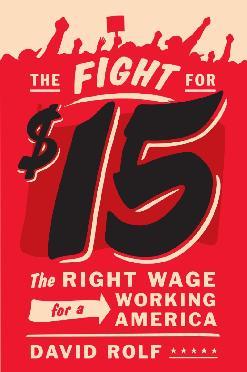
The Fight for Fifteen
The Right Wage for a Working America
DAVID ROLF
PAPERBACK ORIGINAL A NEW VISION FOR HIGHER WAGES AND A REVITALIZED AMERICA FROM “THE MOST SUCCESSFUL ORGANIZER OF THE PAST FIFTEEN YEARS” ( THE AMERICAN PROSPECT )
Over the past fifteen years, no American unionist has organized as many workers, or won them raises as substantial, as Rolf.
THE AMERICAN PROSPECT
The fight for a higher minimum wage has become the biggest national labor story in decades. Beginning in November 2012, strikes by fast food workers spread across the country, landing in Seattle in May 2013. Within a year, Seattle had adopted a $15 minimum wage—the highest in the United States—without a bloody political battle.
Combining history, economics, and commonsense political wisdom, The Fight for Fifteen makes a deeply informed case for a national $15/hour minimum wage as the only practical solution to reversing America’s decades-long slide toward becoming a low-wage nation.
Drawing both on new scholarship and on his extensive practical experiences organizing workers and grappling with inequality across the United States, David Rolf, president of SEIU 775—which waged the successful Seattle campaign—offers an accessible explanation of “middle out” economics, an emerging popular economic theory that suggests that the origins of prosperity in capitalist economies lie with workers and consumers, not investors and employers.
A blueprint for a different and hopeful American future, The Fight for Fifteen offers concrete tools, ideas, and inspiration for anyone interested in real change in our lifetimes.
David Rolf is the president of SEIU 775, the fastest-growing union in the Northwest. He has led some of the largest organizing efforts since the 1930s, including the successful organization of 75,000 home care aides in Los Angeles. Rolf lives in Seattle.
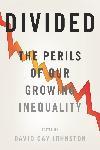
Divided:
The Perils of Our Growing Inequality
Edited by David Cay Johnston
Paperback, $18.95, 978-1-62097-085-0
February
Paperback, 978-1-62097-113-0
E-book, 978-1-62097-114-7
$15.00 / $19.95 CAN 5 1⁄2” x 8 1⁄4”, 192 pages Labor Studies
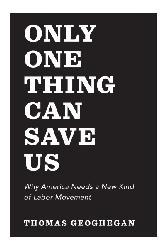
Only One Thing Can Save Us: Why America Needs a New Kind of Labor Movement Thomas Geoghegan Hardcover, $25.95, 978-1-59558-836-4
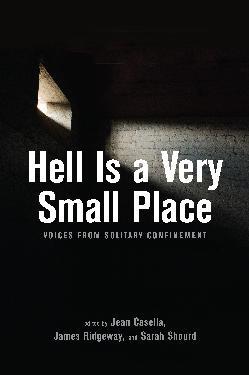
Hell Is a Very Small Place
Voices from Solitary Confinement
edited by JEAN CASELLA, JAMES RIDGEWAY, and SARAH SHOURD
THE FIRST MAJOR TRADE BOOK ABOUT THE PRISON SENTENCE “WORSE THAN DEATH,” FEATURING A DOZEN HAUNTING FIRSTHAND ACCOUNTS OF LIFE IN SOLITARY
Solitary confinement in American prisons has become one of our nation’s most horrendous human rights problems. Much more public attention is needed to this shameful, wasteful, cruel travesty. Hell Is a Very Small Place is vitally important.
—RALPH NADER
The UN Special Rapporteur on Torture has denounced the use of solitary confinement beyond fifteen days as a form of cruel and degrading treatment that often rises to the level of torture. Yet the United States holds more than 80,000 people in isolation on any given day. Now, for the first time, the founders of Solitary Watch have collected a dozen firsthand accounts of life in solitary confinement.
In a book that will add a startling new dimension to the debates around human rights and prison reform, former and current prisoners describe the devastating effects of solitary confinement on their minds and bodies, the solidarity expressed between individuals who live side by side for years without ever meeting one another face to face, the ever-present specters of madness and suicide, and the struggle to maintain hope and humanity.
These firsthand accounts are supplemented by the writing of noted experts, exploring the psychological, legal, ethical, and political dimensions of solitary confinement, and a comprehensive introduction by James Ridgeway and Jean Casella. Sarah Shourd, herself a survivor of more than a year of solitary confinement, writes eloquently in a preface about an experience that changed her life.
Jean Casella and James Ridgeway are co-founders of Solitary Watch and Soros Justice Fellows. Casella, editor of several anthologies, lives in New York. Ridgeway, former Washington correspondent for Mother Jones, lives in Washington, D.C. Sarah Shourd, a journalist and playwright, was held as a political hostage by the Iranian government, including 410 days in solitary, an experience she chronicled in A Sliver of Light. She lives in Oakland, California.
Blind Goddess: A Reader on Race and Justice Edited by Alexander Papachristou Paperback, $25.95, 978-1-59558-699-5
Invisible Punishment: The Collateral Consequences of Mass Imprisonment Edited by Marc Mauer and Meda Chesney-Lind Paperback, $18.95, 978-1-56584-848-1
Black Power 50
edited by SYLVIANE A. DIOUF and KOMOZI WOODARD with a foreword by KHALIL GIBRAN MUHAMMAD
PAPERBACK ORIGINAL THE STUNNING, FULLY ILLUSTRATED COMPANION TO A MAJOR EXHIBIT AT NEW YORK’S SCHOMBURG CENTER FOR RESEARCH IN BLACK CULTURE, A SWEEPING FIFTIETHANNIVERSARY RETROSPECTIVE OF THE BLACK POWER MOVEMENT
Black Power burst onto the world scene in 1966 with ideas, politics, and fashion that opened the eyes of millions of people across the globe. In the United States, the movement spread like wildfire: high school and college youth organized black student unions; educators created black studies programs; Black Power conventions gathered thousands of people from all walks of life; and books, journals, bookstores, and publishing companies spread Black Power messages and imagery throughout the country and abroad.
Black Power aesthetics of natural hair and African-inspired fashion, ornaments, and home décor—and the concept that black was beautiful—resonated throughout the country. The black arts movement inspired the creation of some eight hundred black theaters and cultural centers, where a generation of writers and artists forged a new and enduring cultural vision. Published in conjunction with a major 2016 exhibit at New York’s Schomburg Center for Research in Black Culture, Black Power 50 includes original interviews with key figures from the movement, essays from today’s leading Black Power scholars, and more than one hundred stunning images from the Schomburg’s celebrated archives, offering a beautiful and compelling introduction to the history and meaning of this pivotal movement.
Sylviane A. Diouf is a curator at the Schomburg Center for Research in Black Culture and the author of Slavery’s Exiles, Servants of Allah, and Dreams of Africa in Alabama, which received the Wesley-Logan Prize of the American Historical Association and the Sulzby Award of the Alabama Historical Association. She is a recipient of the Rosa Parks Award, the Dr. Betty Shabazz Achievement Award, and the Pen and Brush Achievement Award. She lives in New York. Komozi Woodard is a professor of history at Sarah Lawrence College. He is the author of A Nation Within a Nation and the editor of The Black Power Movement, Part I; Freedom North, Groundwork; and Want to Start a Revolution? Khalil Gibran Muhammad is the director of the Schomburg Center and the author of The Condemnation of Blackness. He lives in New York.
Features:
Akinyele O. Umoja
Angela Davis
Brenda Gayle Plummer
Dan Berger
Emory Douglas
James Edward Smethurst
Kathleen Cleaver
Khalil Gibran Muhammad
Komozi Woodard
Martha Biondi
Peniel Joseph
Sonia Sanchez
Tanisha Ford
February Paperback, 978-1-62097-148-2
$24.95 / $32.50 CAN 7” x 7”, 256 pages with b&w art throughout and an 8-page 4c insert African American Studies/Social Science
Foreign Rights Representatives
Brazil
Laura Riff
João Paulo Riff RIFF Agency
Avenida Calógeras n° 6, sl 1007, Centro 20030-070 Rio de Janeiro
Brazil
+55 (21) 2287-6299 tel +55 (21) 2267-6393 fax laura@agenciariff.com.br joaopaulo@agenciariff.com.br
Bulgaria
Katalina Subeva Anthea Agency
62 G.M. Dimitrov Blvd PO Box 16 1172 Sofia
Bulgaria
+359 (2) 986-3581 tel/fax
France
Vanessa Kling
La Nouvelle Agence 7 Rue Corneille 75006 Paris
France
+33 (1) 4325-8560 tel +33 (1) 4325-4798 fax vanessa@lanouvelleagence.fr
Germany
Dr. Uwe Neumahr
Agence Hoffman Landshuter Allee 49 D-80637 Munich
Germany
+49 (89) 540-473-815 tel +49 (89) 540-473-820 fax u.neumahr@agencehoffman.de
Italy
Susanna Zevi Francesca Comboni
Susanna Zevi Agenzia Letteraria Via Andrea Appiani 19 20121 Milano
Italy
+39 (2) 657-0863 tel +39 (2) 657-0867 tel +39 (2) 657-0915 fax susanna.zevi@agenzia-zevi.it
Poland
Filip Wojciechowski Graal Literary Agency
Ul. Pruszkowska 29/252 02-119 Warsaw
Poland
+48 (22) 895-2000 tel +48 (22) 895-2001 fax filip.wojciechowski@graal.com.pl
Romania
Marina Adriana
Simona Kessler
International Copyright Agency
Str. Banul Antonache 37 011663 Bucharest 1
Romania
+40 (21) 316-4806 tel +40 (21) 316-4794 fax marina@kessler-agency.ro
Scandinavia and Holland
Philip Sane
Lennart Sane Agency AB Holländareplan 9 SE-374 34 Karlshamn
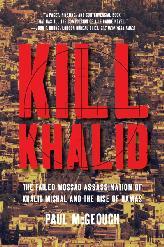
Kill Khalid: The Failed Mossad Assassination of Khalid Mishal and the Rise of Hamas Paul McGeough Paperback, $19.95, 978-1-59558-501-1, 512 pages
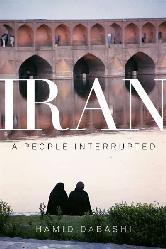
Iran: A People Interrupted Hamid Dabashi Paperback, $17.95, 978-1-59558-333-8, 336 pages
A Concise History of the Arabs John McHugo Hardcover, $26.95, 978-1-59558-946-0, 352 pages E-book, 978-1-59558-950-7
Syria: A History of the Last Hundred Years John McHugo Hardcover, $26.95, 978-1-62097-045-4, 304 pages E-book, 978-1-62097-050-8
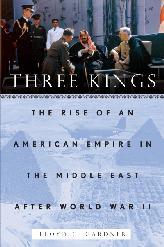
Three Kings: The Rise of an American Empire in the Middle East After World War II Paperback, $18.95, 978-1-59558-644-5, 272 pages E-book, 978-1-59558-533-2
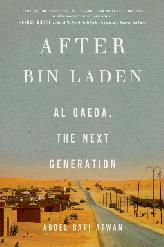
After bin Laden: Al Qaeda, the Next Generation Abdel Bari Atwan Hardcover, $27.95, 978-1-59558-899-9, 304 pages E-book 978-1-59558-900-2
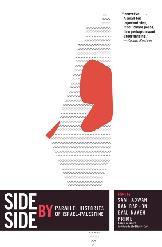
by Side: Parallel Histories of Israel-Palestine Sami Adwan, Dan Bar-On, Eyal Naveh, and the Peace Research Institute in the Middle East Paperback, $24.95, 978-1-59558-683-4, 416 pages
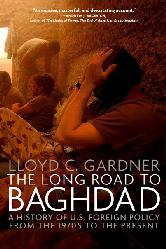
The Long Road to Baghdad: A History of U.S. Foreign Policy from the 1970s to the Present Paperback, $18.95, 978-1-59558-476-2, 320 pages E-book, 978-1-59558-601-8
Side
Current Affairs
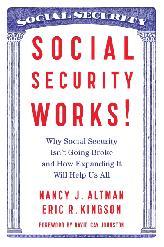
Social Security Works!
Why Social Security Isn’t Going Broke and How Expanding It Will Help Us All
Nancy J. Altman and Eric R. Kingson Paperback, $16.95, 978-1-62097-037-9, 320 pages E-book, 978-1-62097-047-8
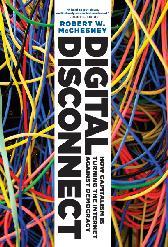
Digital Disconnect: How Capitalism Is Turning the Internet Against Democracy
The New Press extends heartfelt thanks to the following philanthropic institutions for their support in 2014: Arcus Foundation
The Atlantic Philanthropies
The Bauman Foundation
Butler’s Hole South Fund of the Boston Foundation
The Annie E. Casey Foundation
Deer Creek Foundation
The Richard H. Driehaus Foundation
Educational Foundation of America
Ford Foundation
The French Ministry of Foreign Affairs and L’Institut Français
Furthermore: a program of the J.M. Kaplan Fund
The Florence Gould Foundation
The William and Flora Hewlett Foundation
The Sidney Hillman Foundation
The J.M. Kaplan Fund
The Kresge Foundation
Lambent Foundation
The John D. and Catherine T. MacArthur Foundation
New York State Council on the Arts
The Overbrook Foundation
The Reed Foundation
Wallace Action Fund of Tides Foundation
The W.K. Kellogg Foundation
The New Press thanks the following individuals and organizations for their contributions in memory of Frances and Ihler Grimmelmann
Carol and Miles Bidwell, Karen DeMauro, Jean Grimmelmann, Carlin Meyer, Dorothy Noe, Perseus Book Group, Diane Wachtell, and Beth and Dot Weiman and family.
PUBLISHING CIRCLE
The New Press is grateful to members of The New Press Publishing Circle, a group of individual donors and organizations that make contributions of $5,000 or more. The remarkable support of Publishing Circle members allows The New Press to give a voice to underrepresented viewpoints and publish works of educational, cultural, political, and community value.
Anonymous, Emily Altschul-Miller and John Miller, Helen and Robert L. Bernstein, Edward J. Davis and Thomas D. Phillips, Elizabeth Driehaus, Amy Glickman and Andrew Kuritzkes, Ethel Klein and Edward Krugman, Maggie Lear and Daniel Katz, Levy Economics Institute of Bard College, Abby Young Moses and Jonathan Moses, Karen Ranucci and Michael Ratner, Marla Schaefer, Marcy Syms, Svetlana and Herbert Wachtell, Janet and Randall Wallace, Sue Ann Weinberg, and Jonathan Zimmerman.
FRONTLIST MEMBERS
The Frontlist is a group of individuals and organizations that support the important work of The New Press with gifts ranging from $1 to $4,999. The New Press thanks these members for their gifts to The New Press in 2014:
Editor’s Circle: Gifts of $1,000 to $4,999
Lisa Adams and David Miller, Ellen and Moshe Adler, Megan E. Bell, Sara Bershtel, Deborah Bial and Bob Herbert, Nadia Burgard and Cliff Fonstein, Nonnie and Rick Burnes, Sarah Burnes and Sebastian Heath, Davis Wright Tremaine LLP, Anne Detjen and Alexander Papachristou, Antonia M. and George J. Grumbach Jr., Helena Huang, Jane Isay, Priscilla Kauff, Debbie and Jonathan Klein, Judi Komaki, Pamela Lichty, Elizabeth Marks and Dr. Harry Ostrer, Vincent McGee, Nancy Meyer and Marc Weiss, Gregory Miller and Michael Weiner, Lisa Mueller and Gara LaMarche, Tablet Magazine, Joyce and Peter Parcher, Perseus Books Group, Beth Sackler and Jeffrey Cohen, Anya Schiffrin and Joseph E. Stiglitz, Frederick A.O. Schwarz Jr., Claire Silberman, Deborah Sills Iarussi, Florence and Warren Sinsheimer, Susan Sommer and Stephen Warnke, David Sternlieb, Katrina vanden Heuvel, Frederick Wertheim, Minky Worden and Gordon Crovitz, and Shannon Wu and Joseph Kahn.
Patron: Gifts of $250 to $999
Goldie Alfasai-Siffert and John Siffert, Diane Archer and Stephen Presser, Neil Barsky, Beverly Benz Treuille, Brennan Center for Justice, Elyse Dayton and Glenn Wallach, Demos, Janet Forest, Lynn Goldberg Moskin, Beth Golden, Phyllis and Dr. Victor Grann, Vartan Gregorian, Audrey Holm-Hansen, Aziz Huq, Renee Khatami and Rick MacArthur, Helen Lowenstein, David Marsh, Carlin Meyer, Chelsea and Jonathan Miller, Kenneth Monteiro, Burt Neuborne, Martha Olson, Jaclyn and Terence Pare, Jeffrey Peabody, Christine Pendry, Gloria Phares, Publishers Weekly, Eric Rayman, Lynda Richards, Susan and Jack Rudin, Elizabeth Sackler, Inda Schaenen, Maria Elena Schiffrin, Peggy Stern and Alan Ruskin, Vera Institute for Justice, Diane Wachtell, Tina Weiner, Elissa Weinstein, WNYC, and Cynthia Young Eberstadt.
Supporter: Gifts up to $249
Amazon Smile, American Constitution Society, Rich Benjamin, Greg Berman, Carly Berwick, Carol and Miles Bidwell, Rachel Burd, Dorothy Sue Cobble, Tanya Coke, Jane Dalrymple-Hollo, Mildred H. Daniel, Karen DeMauro, Rebekah Diller, Lynne Elizabeth, Marye Elminger and Eric Lamm, Lydia Emil, Tom Fontana, Frances Goldin, Jean Grimmelmann, Hans Haacke, William Hartung, John Hodgkins, Patricia Holt, Colin Hosten, Debra Inwald, Maya Iwata, Julia Kagan Baumann, Sheila Kinney and Christopher Marzec, Suzanne Lander, Jid Lee, Joseph Levine, Arlene and Eric Lieberman, Idelisse Malavé, Elizabeth and David Marquis, Nikki Marron, Julia and Charlie McNally, Dinaw Mengestu, Patricia Miller, Kathleen Miller, Ruth Misheloff, Ramona Naddaff, Dorothy Noe, Leslie Norton, Tom Oppenheim, Susan and Peter Osnos, Judith Papachristou, Christopher Parris-Lamb, Alvin Perlmutter and Joan Konner, Donovan Ramsey, Ellen Reeves, Sarah Reid and David Gikow, Henry Richmond, Dorothy Samuels, Jill Savitt, Jon Shefner, Benjamin Shute Jr., Adena Siegel, Peter Sills, Karen Sisti, Sandy Taggart, Dorothy Thomas and Michael Hertz, David Udell, Liliana Vaamonde and Richard Pretsfelder, Genevieve and Daniel Wachtell, Cynthia Wachtell, Christine Wasserstein, Niobe Way, Naomi Wolf, and Ying Zhu and Andrew Hisgen.
The New Press Author Royalty Giveback Program
The New Press thanks the following New Press authors, who made a financial contribution to The Studs and Ida Terkel Fund through the Author Royalty Giveback Program in 2014:
Ervand Abrahamian, Moshe Adler, Sami Adwan, William Ayers, Rick Ayers, Lisa Delpit, John Dinges, Peter Edelman, Lois E. Horton, James Oliver Horton, David Cay Johnston, Lauri Lebo, Lucy Lippard, Priscilla Murolo, Joseph O’Donnell, Timothy Patrick McCarthy, Joshua Steckel, Cynthia Stokes Brown, Dan Terkel and the Studs Terkel Estate, Zoë Wicomb, John Womack Jr., Marilyn Young, and Beth Zasloff.
Special Thanks
The New Press thanks the following people and organizations for devoting time and talent to The New Press in 2014: Lisa Adams and David Miller, Ellen and Moshe Adler, Zina AlDamlouji, Michelle Alexander, Emily Altschul-Miller and John Miller, Nate Balis, Gina Belafonte, Harry Belafonte, Megan Bell, Rich Benjamin, Amy and Peter Bernstein,
Andi and Tom Bernstein, Nell Bernstein, Robert L. Bernstein, Sara Bershtel, Deborah Bial and Bob Herbert, Carla Blumenkranz, The Brennan Center for Justice, The Brooklyn Historical Society, Nonnie and Rick Burnes, Sarah Burnes and Sebastian Heath, Carlos Buzon, Helen Caldicott, The Calhoun School, Benjamin Canty, David Cay Johnston, Chelsea Piers, Farai Chideya, Polly Cleveland and Tom Haines, Tanya Coke, M. Graham Coleman, The Cooper Union, Reid Cramer, Davis Wright Tremaine LLP, Dawn Davis, Edward J. Davis and Thomas D. Phillips, Joanna Delson, Anne Detjen and Alexander Papachristou, Jason Diamond, Mary Dore, Elizabeth Driehaus, Christine and Renaud Dutreil, Soffiyah Elijah, Lori Evans Bernstein and William Bernstein, Everybody Wins!, Film Forum, Bill Foo, Ariele Friedman, Leon Friedman, Margaret Fung, Leslie Gabel-Brett, Khalil Gibran Muhammad, Amy Glickman and Andrew Kuritzkes, Bruce Gottlieb, Vartan Gregorian, Farah Jasmine Griffin, James Grimmelmann, Hugo Guinness, Harper’s Magazine, Kianoosh Hashemzadeh, Tyler Henry, Julianne Hoffenberg, Housing Works Bookstore and Café, Aziz Z. Huq, Jane Isay, Dave Isay and StoryCorps, Allison Janice, John Jay College of Criminal Justice, Christy Johnson, Priscilla Kauff, Nancy Kennedy, Colin Kinniburgh, Ethel Klein and Edward Krugman, Elizabeth Koke, Edward Koren, Shin-Ming Kou, Justin Krebs, Jan Krukowski, Nicholas Latimer, Maggie Lear and Daniel Katz, Susan Lehman, Sarah Leonard, Ivan Lett, Bart Lubow, Avram Ludwig, Rick MacArthur, Idelisse Malavé, Rep. Carolyn Maloney, Maple Press, Elizabeth Marks and Dr. Harry Ostrer, Marc Mauer, Vincent McGee, Deborah Meier, Nancy Meyer and Marc Weiss, Rhett Millsaps II, Luke Mitchell, Toni Morrison, Lisa Mueller and Gara LaMarche, The Nation, Victor Navasky, Burt Neuborne, Gloria Neuwirth, Jessica Neuwirth, The New School, Jason Ng, Nils Gunnar Nilsson, Dan O’Brien, Emily Paul, Perseus Books Group, Jeanine Plant-Chirlin, Bert Pogrebin, Sabeel Rahman, Karen Ranucci and Michael Ratner, Eric Rayman, Read Ahead, Jeffrey Rosen, Susan and Jack Rudin, Beth Sackler and Jeffrey Cohen, Albert Scharenberg, Maya Schenwar, Anya Schiffrin and Joseph E. Stiglitz, Jessica Schmidt, Deborah Schwartz, Billy and Miles Shebar, Claire Silberman, Deborah Sills Iarussi, Florence and Warren Sinsheimer, Susan Sommer and Stephen Warnke, Romina Skaya, Alvin Starks, Gloria Steinem, Andy Stern, Swiss Institute of Contemporary Art, Technicolor Screening Room, Dorothy Thomas, Calvin Trillin, Katrina vanden Heuvel, Monika Verma, John Vukel, Svetlana and Herbert Wachtell, Michael Waldman, Vincent Warren, Frederick Wertheim, David Wolf, Minky Worden and Gordon Crovitz, Shannon Wu and Joseph Kahn, and Abby Young Moses and Jonathan Moses.
The New Press Interns
The New Press’s Diversity in Publishing Internship Program is supported by generous gifts from the J.M. Kaplan Fund and the Matthew Marks Gallery. We are very grateful to the following individuals who successfully completed the four-month rotational internship program in 2014:
Ian Becker, Colleen Callery, Nic Cavell, Tess Duncan, Michael Elmets, Dara Hyacinthe, Jacob Kiernan, Amy Klopfenstein, Margot Kotler, Duncan Ranslem, Lola Seaton, Sarah Sommer, Bryden Spevak, and Elaine Yu.
Thank you again to all who have given generously to support publishing in the public interest.
These lists reflect gifts as of January 2015. Every effort has been made to ensure the accuracy of these lists. If you believe you have been omitted, we extend our heartfelt apologies and ask you to bring the error to our attention by calling Chelsea Miller at (212) 629-8551 or e-mailing development@thenewpress.com.