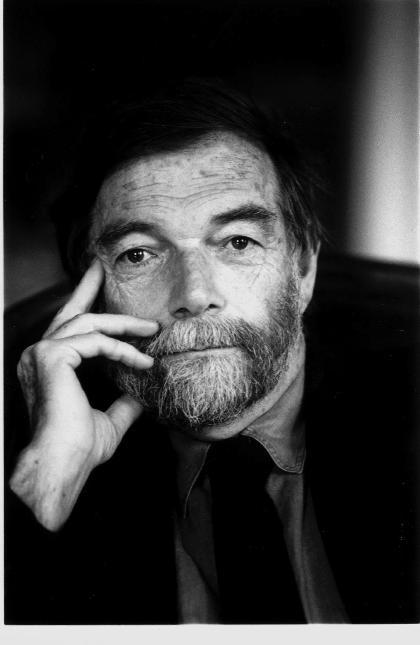
Anyone who worked for André Schiffrin will remember his Dictaphone. One of the last giants of a pre-Internet— indeed pre-computer—era, André was known for his long, thoughtful letters to authors and potential authors, publishers, literary agents, scouts, and friends across the United States and much of the rest of the world. These were dictated into a handheld recorder by André as he walked through Central Park every morning on his way to the Pantheon—and later The New Press—offices. A small microcassette was deposited a couple of times a week on the desk of his reigning assistant. Using a conservative estimate—half a dozen letters three times a week over several decades—his correspondence runs to some 25,000 missives, which are in the process of being transferred to Columbia University Libraries’ publishing archive.
André Schiffrin’s correspondence offers a rich picture of late twentieth-century book publishing, as practiced by an editor with radically new ideas about what the world needed to read and radically old ideas about the way the industry ought to work. Genteel exchanges with Gustaf Bjurström, the erudite Swedish scout who sent decades’ worth of readers reports on the latest books from the Continent (and flagged Henning Mankell as worth translating), alternate with letters written to authors for whom André had ideas for new projects—as well as agents whom André perceived to be sacrificing long-standing relationships for eye-popping advances offered by the new conglomerates beginning to dominate the industry. The depth of André’s intellect is on vivid display as he corresponds with the likes of E.P. Thompson, Marguerite Duras, Edward Said, Sissela Bok, Hans Magnus Ensenzberger, Willie Brandt, Barbara Ehrenreich, Noam Chomsky, Eric Hobsbawm, and, of course, Studs Terkel.
After a half-century of dictation, André was mastering Internet communication by the time of his death in December 2013. We are all grateful that he was not an early adopter.
In Memoriam
André Schiffrin
1935–2013
Founder of The New Press, visionary editor and publisher, progressive thinker, author, mentor, and inspiration to many
Five years later, the remarkable publishing story continues . . .
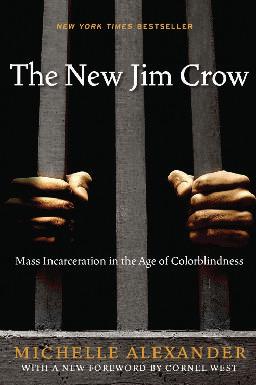
The New Jim Crow: from
a
3,000-copy first printing in January 2010 to 90+ weeks on the
New York Times Paperback Bestseller list
• With more than 400,000 copies in print and still on indie bookseller bestseller lists across the country, The New Jim Crow should remain in stacks at the front of bookstores throughout the country.
• It is the #1 book in criminology, discrimination and racism, and in African American studies on Amazon.com.
• The New Jim Crow has been adopted in more than 600 college and law school courses, including by professors at Barnard College, Brown University, Columbia University, Ithaca College, New York University, Ohio University, Princeton University, Rutgers University, Smith College, Stanford University, George Washington University, the University of Washington, UCLA, the University of California at Berkeley, and Yale University.
• The book was cited by the judge in Floyd et al. v. City of New York et al. —the federal class action lawsuit filed against the NYPD and the City of New York that challenged the NYPD’s practice of racial profiling and unconstitutional stop-and-frisks.
• Teaching Tolerance of the Southern Poverty Law Center, in partnership with Michelle Alexander and The New Press, is developing a high-school curriculum based on The New Jim Crow . This curriculum will be freely available to all high school teachers in September 2014.
• More than 500 study groups have gathered across the country to engage with the book.
• The book is cited and Michelle Alexander is interviewed in Eugene Jarecki’s documentary The House I Live In ; Matthew Pillischer’s film Broken on All Sides ; and Long Distance Revolutionary , the award-winning documentary about Mumia Abu-Jamal.
An outreach coordinator has been working at The New Press since 2012 to leverage the publication of The New Jim Crow in support of the growing national movement to end mass incarceration. To learn more, please e-mail outreach@newjimcrow.com
Thank you to all of the booksellers, librarians, activists, readers, professors, students, and citizens who are working to end the New Jim Crow. We look forward to supporting your efforts.
The New Jim Crow: Mass Incarceration in the Age of Colorblindness
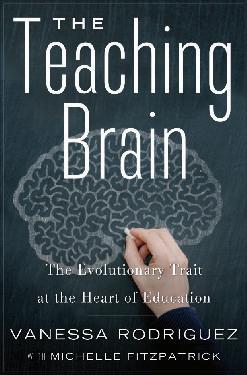
A bold ch A llenge to A nd redefinition of our most b A sic underst A nding of te A ching— A nd le A rning—in cl A ssrooms A nd in life
Vanessa Rodriguez has a truly original mind. Her experience, empathy, and insight have inspired and provoked me. —DeBOrAh Meier, AUthOr OF IN SChOOLS WE TRUST
What is at work in the mind of a five-year-old explaining the game of tag to a new friend? What is going on in the head of a thirty-five-year-old parent showing a firstgrader how to button a coat? And what exactly is happening in the brain of a sixtyfive-year-old professor discussing statistics with a room full of graduate students? While research about the nature and science of learning abounds, shockingly few insights into how and why humans teach have emerged—until now. countering the dated yet widely held presumption that teaching is simply the transfer of knowledge from one person to another, The Teaching Brain weaves together scientific research and real-life examples to show that teaching is a dynamic interaction and an evolutionary cognitive skill that develops from birth to adulthood. With engaging, accessible prose, harvard researcher Vanessa rodriguez reveals what it actually takes to become an expert teacher. At a time when all sides of the teaching debate tirelessly seek to define good teaching—or even how to build a better teacher—The Teaching Brain upends the misguided premises for how we measure the success of teachers. this game-changing analysis of how the mind teaches will transform common perceptions of one of the most essential human practices (and one of the most hotly debated professions), charting a path forward for teachers, parents, and anyone seeking to better understand learning—and unlocking the teaching brain in all of us.
Vanessa Rodriguez, a researcher at the harvard Graduate School of Education, was a middle-school humanities teacher in the New York City public schools for over ten years. She lives in Cambridge, Massachusetts. Michelle Fitzpatrick is a writer and educator who has co-authored numerous books on women’s health, psychology, sexuality, and education. She lives in Massachusetts.
Features:
• The evolutionary development of the teaching brain in all of us
• A nuanced explanation of the research behind the learning brain
• Skill scales that explain teacher development
• A full chapter of questions to understand and assess your teaching brain
The Self Beyond Itself: An Alternative history of Ethics, the New Brain Sciences, and the Myth of Free Will heidi M. ravven hardcover, $31.95, 978–1–59558–537–0
September
hardcover, 978–1–59558–996–5 e-book, 978–1–62097–022–5 $26.95 / $33.95 cAn 5 1⁄2” x 8 1⁄4”, 224 pages with 7 b&w illustrations education/Science
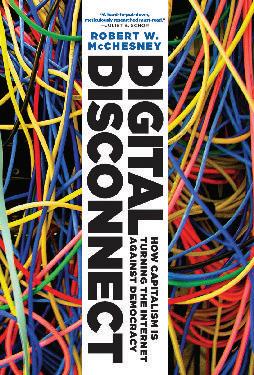
Digital Disconnect
how capitalism is turning the internet Against Democracy
rOBert W. MccheSney
no W in PAP erb A c K An “informed A nd eng A ging” ( Counterpun C h ) A n A lysis of c AP it A lism A nd the i nternet, from the A uthor of r i C h Media, p oor d e M o C ra C y
A thorough and alarming critique of the corruption of one of the most influential inventions in human history.
Once again, McChesney stands at the crossroads of media dysfunction and the denial of democracy, illuminating the complex issues involved and identifying a path forward to try to repair the damage. Here’s hoping the rest of us have the good sense to listen this time.
eric AlterMAn
September paperback, 978-1-62097-031-7 e-book, 978-1-59558-891-3
No one knows this field better than McChesney, and with this book he has reached the pinnacle.
—MAttheW rOthSchilD, eDitOr OF ThE PROGRESSIvE
hailed as “important” (Truthdig) and praised for its “excellent insight” (patricia J. Williams, The Nation), Digital Disconnect, by activist and “exemplary public intellectual” (Choice) robert W. Mcchesney, skewers the assumption that a society drenched in information in a digital age is inherently a democratic one.
A prescient examination of the relationship between the internet and the economy—one that has become even more relevant since its publication in hardcover—the book argues that capitalism’s colonization of the internet has spurred the collapse of credible journalism and made it an unparalleled apparatus for government and corporate surveillance.
“A provocative and far-reaching account of how capitalism has shaped the internet in the United States” (Kirkus Reviews) and “an excellent analysis of the problem where a medium with the capacity to empower people is itself becoming a tool of social control” (Daily Kos), Digital Disconnect is both a groundbreaking critique of the internet and an urgent call to reclaim the democratizing potential of the digital revolution while we still can.
Robert W. McChesney is the Gutgsell Endowed Professor in the Department of Communication at the University of Illinois at Urbana-Champaign. he is the author of several books on the media, including the award-winning rich Media, poor Democracy and communication revolution (both available from The New Press). he lives in Champaign, Illinois.
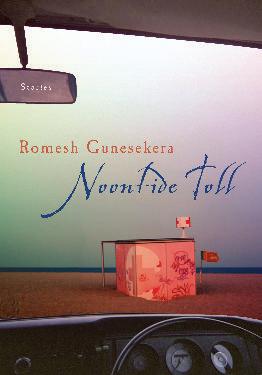
noontide toll
Stories
rOMeSh GUneSeKerA
A su P erb collection of stories set in the A fterm A th of the s ri lA n KA n civil WA r, from the b oo K er Prize–nomin A ted “m A ster storyteller” ( t he n ew y ork t i M es )
[Romesh Gunesekera’s] Monkfish Moon strikes the reader like a hammer blow. . . . Gunesekera’s subtly erotic prose animates Sri Lanka’s natural luxuriance, veined with menace.
vOICE LITERARY SUPPLEMENT
The driver’s job is to stay in control behind the wheel and that is all. The past is what you leave as you go. There is nothing more to it.
Vasantha retired early, bought himself a van with his savings, and now works as a driver for hire. As he drives through Sri lanka, carrying aid workers, businessmen, and families, and meeting lonely soldiers and eager hoteliers, he engages them with self-deprecating wit and folksy wisdom—and reveals for us their uncertain lives.
On his journey from the army camps in northern Jaffna to the moonlit ramparts of Galle, in the south, he begins to discover the depth of the problems of the past—his own and his country’s—and the promise the future might hold.
From the writer praised by The Guardian for the “vivid originality” of his vision, here is a wonderful collection—perceptive, somber, finely tuned—which draws a potent portrait of postwar Sri lanka and the ghosts of civil war.
Romesh Gunesekera is the author of eight highly acclaimed works, including reef, which was shortlisted for the Booker Prize and the Guardian Fiction Prize; the Sandglass, winner of the BBC Asia Award; the Match; and the collection of stories Monkfish Moon, a new york times notable book (all available from The New Press). he lives in London.
Praise for Romesh Gunesekera’s books:
Revelatory and unique.
ThE NEW YORKER
Full of the uncertain sadness of exiles and dreamers . . . Gunesekera’s characters become memorable emblems of solitude and despair.
vOGUE
An enchanting, endlessly funny and affecting novel . . . truly exquisite.
SAN FRANCISCO ChRONICLE
A sensuous feast of delight, incessantly pleasurable to read. . . .
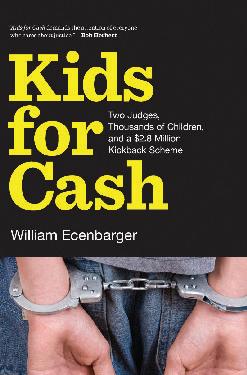
Judges, thousands of children, and a $2.8 Million Kickback Scheme
WilliAM ecenBArGer
no W in PAP erb A c K t he shoc K ing W or K of true crime A bout judges W ho too K c A sh PA yments for sending children to A P riv A tized juvenile detention f A cility
A gripping story, too unbelievable to be fiction.
FOREWORD REvIEWS
A colorful and gripping account of the two judges’ corruption and downfall. This book is a pageturner.
PENNSYLvANIA LAWYER
William Ecenbarger’s Kids for Cash takes the reader deep inside a profoundly flawed legal system, revealing the twisted and haunted realities of America’s juvenile justice system.
PALO vERDE vALLEY TIMES
A well-researched, insightful exposé of corruption in the juvenile justice system: a must-read for those interested in social justice, court reform, and children’s rights.
From the pulitzer prize–winning Philadelphia Inquirer reporter William ecenbarger comes the exposé of a shocking scandal that ruined thousands of young lives—in paperback for the first time. As the Boston Globe wrote, “the story is incredible: thousands of children wrongfully sentenced to juvenile detention centers, many without legal representation and after cursory hearings, by two rogue judges in northern pennsylvania who received millions of dollars in bribes from the private institutions’ owners.” the story has all the elements of a true-crime legal thriller—mafia connections, colorful characters, corruption—and was made into a documentary of the same title, released in theaters in 2014. the Philadelphia Review of Books called the story “harrowing,” Library Journal called it “shocking,” and the Pittsburgh Tribune called it “heartbreaking.”
When it was first released, Kids for Cash brought the story to national attention, where it has stayed ever since. As the Philadelphia Inquirer pointed out, this is the “worst stain on pennsylvania, a state with more than its share of stains. Bill ecenbarger offers a detail-packed, sickening account of the scandal and its impact. Anyone caring about courts, justice, or children should read it.”
William Ecenbarger was part of a philadelphia inquirer reporting team awarded a Pulitzer Prize for their coverage of the Three Mile Island nuclear accident. Once an international correspondent for reader’s Digest, he has been published in the Washington post, the los Angeles times, Smithsonian Magazine, esquire, Audubon, and other leading publications. he is the author of Walkin’ the line and lives in hershey, Pennsylvania.
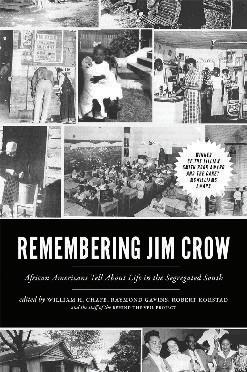
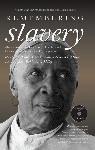
remembering Jim crow
African Americans tell About life in the Segregated South
edited by WilliAM h. chAFe, rAyMOnD GAVinS, and rOBert KOrStAD
with a new preface by the editors
PAP erb A c K Winner of the l illi A n s mith b oo K A WA rd A nd the cA rey m c Willi A ms A WA rd A nd A n unforgett A ble A ccount of the j im c ro W s outh, through first- P erson A ccounts of those W ho lived it
A landmark book. PUBLIShERS WEEKLY, “the yeAr in BOOKS”
praised as “viscerally powerful” (Publishers Weekly), this remarkable work of oral history captures the searing experience of the Jim crow years—enriched by memories of individual, family, and community triumphs and tragedies. in vivid, compelling accounts, men and women from all walks of life tell how their day-to-day lives were subjected to profound and unrelenting racial oppression. At the same time, Remembering Jim Crow is a testament to how black Southerners fought back against the system—raising children, building churches and schools, running businesses, and struggling for respect in a society that denied them the most basic rights. the result is a powerful story of individual and community survival and an important part of the American past that is crucial for us to remember.
Based on interviews collected by the Behind the Veil project at Duke University’s center for Documentary Studies, this landmark in African American oral history is now available in an affordable paperback edition and, for the first time, as an e-book with audio.
William H. Chafe is a professor emeritus of history and the Alice Mary Baldwin Professor of history emeritus at Duke University’s Sanford School of Public Policy and the author of multiple books. Raymond Gavins is a professor of history at Duke University and the author of the perils and prospects of Southern Black leadership. Robert Korstad is an associate professor of public policy studies and history at Duke University and the author of two books. Chafe, Gavins, and Korstad are project directors of Behind the veil. They live in Durham, North Carolina.
A shivering dose of reality and inspiring stories of everyday resistance.
LIBRARY JOURNAL A multimedia triumph.
KANSAS CITY STAR
Remembering Slavery: African Americans Talk About Their Personal Experiences of Slavery and Emancipation edited by ira Berlin, Marc Favreau, and Steven F. Miller paperback w/cD, $29.95, 978-1-59558-228-1
September
paperback, 978-1-62097-027-0 e-book with audio, 978-1-62097-043-0 $19.95 / $24.50 cAn 5 1⁄2” x 8 1⁄4”, 448 pages history/African American Studies (Previous edition: 978-1-56584-778-1)
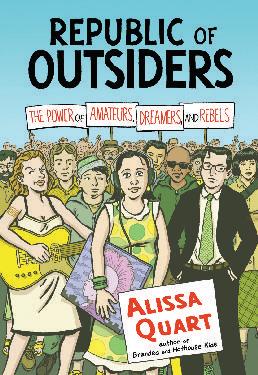
republic of outsiders
the power of Amateurs, Dreamers, and rebels
AliSSA QUArt
no W in PAP erb A c K A “r A re A nd f A scin A ting loo K A t cre A tive subcultures” ( bA rb A r A e hrenreich) by the bestselling A uthor of Branded
[Quart’s] careful reporting and vividly rendered characters make the book a vital, engaging read.
PSYChOLOGY TODAY
Instructive for those who do creative work, and even for people who are trying to engage in any kind of meaningful selfdefinition: Don’t always accept other people’s categories. You can always make your own.
FAST COMPANY
With brief but telling glimpses of the many people she interviews, the author makes connections that wouldn’t otherwise be obvious . . . a liberating vision of interlocking subcultures.
5 1⁄2” x 8 1⁄4”, 224 pages Social Science (hardcover edition: 978-1-59558-875-3)
Quart’s gift as a writer is her ability to report on the experiences of ordinary people, following their realistically messy lives for years, offering us vivid portraits that are profoundly humane.
ThE NEW YORK TIMES BOOK REvIEW
this “groundbreaking study of the increasing influence of cultural outsiders” (The Philadelphia Inquirer) is “at once an ode to the underrepresented and a reporting tour de force” (The Writer). Alissa Quart, “one of the smartest cultural interpreters of her generation” (Susan cain, author of Quiet), introduces us to those who have created new ways to keep themselves sane, fulfilled, and, on occasion, paid.
Republic of Outsiders is the story of Americans who, freed of middlemen and armed with new technology, are able to make their unusual ideas go viral and disrupt the status quo. they include amateur filmmakers who crowdsource their work, scientists developing artificial meat, neurodiverse activists, and “alternative” bankers. these outsiders create and package new identities (a process Quart dubs “identity innovation”). they push the boundaries of who they—and we—can be.
excerpted in O Magazine and The Nation, given a starred review in Publishers Weekly, chosen as a Flavorwire “must read,” and placed on the “brilliant highbrow” quadrant of New York’s Approval Matrix, Republic of Outsiders also was praised by Douglas rushkoff, author of Present Shock, as “an essential account of how and why fringe activism has become central to our culture and politics in a digital age.”
Alissa Quart is the author of Branded and hothouse Kids. She has written features and opinion pieces for the new york times, the Atlantic, O Magazine, the nation, and many other publications. her poetry has appeared in the london review of Books and elsewhere. She lives in New York City.
only one thing can save us
Why Our country needs a new Kind of labor Movement
thOMAS
GeOGheGAn
f rom the A uthor of the l A bor cl A ssic w hi C h s ide a re y ou o n? , A g A lv A nizing A rgument for revit A lizing Americ A n unions A nd s A ving the middle cl A ss
Which Side Are You On? is one of the finest nonfiction books by a contemporary author I’ve ever read. It’s incredibly informative, frequently moving, loaded with fresh insights, and often laugh-out-loud funny. A delightful book about the labor movement: it sounds like an oxymoron, but in Geoghegan’s case it’s an accomplishment. henDriK hertzBerG, neWyOrKer.cOM
is labor’s day over or is labor the only real answer for our time? in this new book, national Book critics circle Award finalist and labor lawyer thomas Geoghegan argues that even as organized labor seems to be crumbling, a revived—but different— labor movement is more relevant than ever in our increasingly unequal society.
the inequality reshaping the country goes beyond money and income: the workplace is more authoritarian than ever. he tells us stories, sometimes humorous but more often chilling, about problems working people like his own clients—cabdrivers, cashiers, even chicago public school teachers—now face in our largely union-free economy. he then explains why a new kind of labor movement (and not just more higher education) will be crucial for saving what is left of the middle class; pushing Keynes’s original, sometimes forgotten ideas for getting the rich to invest and reduce our balance of trade; and promoting John Dewey’s “democratic way of life”—one that would start in the schools and continue in our places of work.
A “public policy” book that is compulsively readable, Only One Thing Can Save Us is vintage Geoghegan, blending acerbic, witty commentary with unparalleled insight into the real dynamics (and human experience) of working in America today.
Thomas Geoghegan is a Chicago labor lawyer and the author of books including the National Book Critics Circle Award finalist Which Side Are you On?, in America’s court, See you in court, and Were you Born on the Wrong continent? (all available from The New Press).
Praise for Thomas Geoghegan’s books:
Most diverting . . . [Geoghegan] has the great virtue of being witty and ironic—and to the point. . . . A necessary primer.
—JUreK MArtin, FINANCIAL TIMES
Clever and immensely appealing.
—KAthA pOllitt, ThE NATION
Quirky, brilliant. . . . Inspiring . . . unparalleled in the literature of American labor.
ThE NEW YORK TIMES
A brilliant book.
ThE WAShINGTON POST
Delightful reading.
—BArBArA ehrenreich
So skillfully written, so witty— and so scathing—that it seems bound to grip even those who find the labor movement boring.
$25.95 / $32.50 cAn 5 1⁄2” x 8 1⁄4”, 272 pages labor Studies
Will the circle be unbroken?
reflections on Death, rebirth, and hunger for a Faith
StUDS terKel
with an introduction by jane gross
no W in PAP erb A c K A n indis P ens A ble or A l history from the Pulitzer Prize– W inning A uthor de A ling W ith the univers A l ex P erience of de A th
Terrifying, moving, painful, and redemptive. . . . Terkel provides us with [a] community, and . . . there is solace in knowing, at least for now, that we are not alone.
ChICAGO TRIBUNE
One of Studs terkel’s most important oral histories, Will the Circle Be Unbroken? turns to the ultimate human experience—that of death. called “extraordinary a work of insight, wisdom, and freshness” by the Seattle Times when it was first published fifteen years ago, the book explores—with unrivaled compassion and wisdom— the indelible variety of reactions to mortality and the experience of death and the possibility of life afterward. here a wide range of people addresses the unknowable culmination of our lives and its impact on the way we live, with memorable grace and poignancy. included in this remarkable treasury of oral history are terkel’s interviews with such famed figures as Kurt Vonnegut and ira Glass as well as with a range of ordinary people, from policemen and firefighters to emergency health workers and nurses, who confront death in their everyday lives.
Whether with a hiroshima survivor or an AiDS caseworker, a death-row parolee or a woman who emerged from a two-year coma, these interviews offer tremendous eloquence as they deal with a topic many are reluctant to discuss openly and freely. rich, moving, and inspiring, Will the Circle Be Unbroken? is a stunning capstone to terkel’s extraordinary career.
Studs Terkel (1912–2008) was the bestselling author of twelve books of oral history, including hope Dies last, Working, race, and the Pulitzer Prize–winning “the Good War” (all available from The New Press). Jane Gross is the founding blogger of the hugely popular “The New Old Age’’ blog at the new york times, where she has been a correspondent for nearly thirty years. She is the author of the acclaimed book A Bittersweet Season: caring for Our Aging parents—and Ourselves. She lives in New York.
Studs
paperback, $17.95, 978-1-59558-810-4
paperback, $18.95, 978-1-56584-342-4
October paperback, 978-1-62097-011-9 e-book, 978-1-62097-061-4
$18.95 / $22.95 cAn 5 1⁄2” x 8 1⁄4”, 432 pages Self help/Death and Dying (hardcover edition: 978-1-56584-692-0)
Race: how Blacks and Whites Think and Feel About the American Obsession
terkel
Working: People Talk About What They Do All Day and how They Feel About What They Do Studs terkel
bordered lives
transgender portraits from Mexico
KiKe ArnAl
with an introduction by susan stryker A be A utifully P hotogr AP hed ex P lor A tion of W h A t it is to be tr A nsgender in m exico
Profiles include:
• A student and activist who was rejected by his parents when he decided to transition to a man
• A trans-activist with a college degree supporting her family through sex work
• The first transsexual couple to be married in Mexico
November
paperback with French flaps, 978-1-62097-024-9
e-book, 978-1-62097-055-3
$21.95 / $27.50 cAn
8” x 10”, 192 pages with 4/c and b&w images throughout photography/lGBt Studies
SAN FRANCISCO ChRONICLE On KiKe ArnAl’S IN ThE ShADOW OF POWER
A richly evocative collection of photographs by internationally renowned photographer Kike Arnal, Bordered Lives seeks to push back against the transphobic caricatures that have perpetuated discrimination against the transgender community in Mexico. Despite some important advances in recognizing and protecting the rights of its transgender community, including legislating against hate crimes targeting transgender people, discrimination still persists, and the majority of the violent attacks against the lGBt community are against transgender women.
in the highly personal profiles that make up Bordered Lives, Arnal takes us into the lives of seven individuals in and around Mexico city. he shows them going about their day-to-day lives: getting ready in the morning, interacting with family and friends, and devoting their lives to helping others in the transgender community.
Deeply honest, sensitive, and humane, Bordered Lives challenges society’s preconceived notions of sexuality, gender, and beauty not only in Mexico but across the globe.
Originally from venezuela and now based in the San Francisco Bay Area, Kike Arnal has covered stories in the Americas, the Middle East, Asia, and Europe. his photographs have been featured in the new york times, life, and Mother Jones, among other leading publications. Arnal’s photographs of Washington, D.C., have been collected in in the Shadow of power, with an introduction by Ralph Nader. Susan Stryker is director of the Institute for LGBT Studies and associate professor of gender and women’s studies at the University of Arizona. She lives in Tucson.
lyudmila and natasha
russian lives
MiShA FrieDMAn
with an introduction by jeff sharlet
f rom the celebr A ted document A ry P hotogr AP her, A collection of P hotogr AP hs th A t P o W erfully c AP ture the intim A cy of A rel A tionshi P bet W een t W o W omen in r ussi A
Love is understanding, respect. Love is everything. Without love a person is dead. It’s happiness, it’s sorrow, it’s laughter, it’s tears. It lives right here, where the soul is, a little blob, that’s where love lives.
FrOM LYUDMILA AND NATAShA
the photojournalist Misha Friedman is renowned for his efforts to capture life in contemporary russia, documenting subjects as varied as political corruption, the dangers of coal mining, the tuberculosis epidemic, and the Bolshoi Ballet. in publications ranging from the New York Times, the Washington Post, Time, and the New Yorker, Friedman’s grimly evocative black-and-white images—“intimate, behind-the-scenes photos” (Time)—have been credited with capturing moments of intense pathos, bleak existence, and human dignity. he has received multiple international awards for his “unflinching” lens and his intrepid reporting.
For his new collection of photographs, Lyudmila and Natasha, Friedman trains his lens on a gay couple living in Saint petersburg, offering a series of intimate snapshots of their relationship as it unfolds over the course of a year. Faced with a hostile political climate, financial difficulties, and often unstable living arrangements, the subjects of this stunning book reveal the possibilities for love in the most uncertain of times. With the fabled city of Saint petersburg as its backdrop, Lyudmila and Natasha powerfully evokes both a vital place and the people who call it home.
Misha Friedman is an award-winning documentary photographer who has worked for various NGOs, including Médecins Sans Frontières, in Uganda, Nigeria, India, and Darfur. his photographs have appeared in the new york times, the los Angeles times, and the new yorker, among other publications. he lives in New York City. Jeff Sharlet is an acclaimed journalist and the author of Sweet heaven When i Die and the Family. he lives in hanover, New hampshire.
978-1-59558-945-3
November
paperback with French flaps, 978-1-62097-023-2
e-book, 978-1-62097-054-6
$21.95 / $27.50 cAn
8” x 10”, 160 pages with 4c and b&w images throughout photography/lGBt Studies
Queer America: A People’s GLBT history of the United States Vicki l eaklor paperback, $17.95, 978-1-59558-636-0
hold Tight Gently: Michael Callen, Essex hemphill, and the Battlefield of AIDS
Martin Duberman hardcover, $27.95,
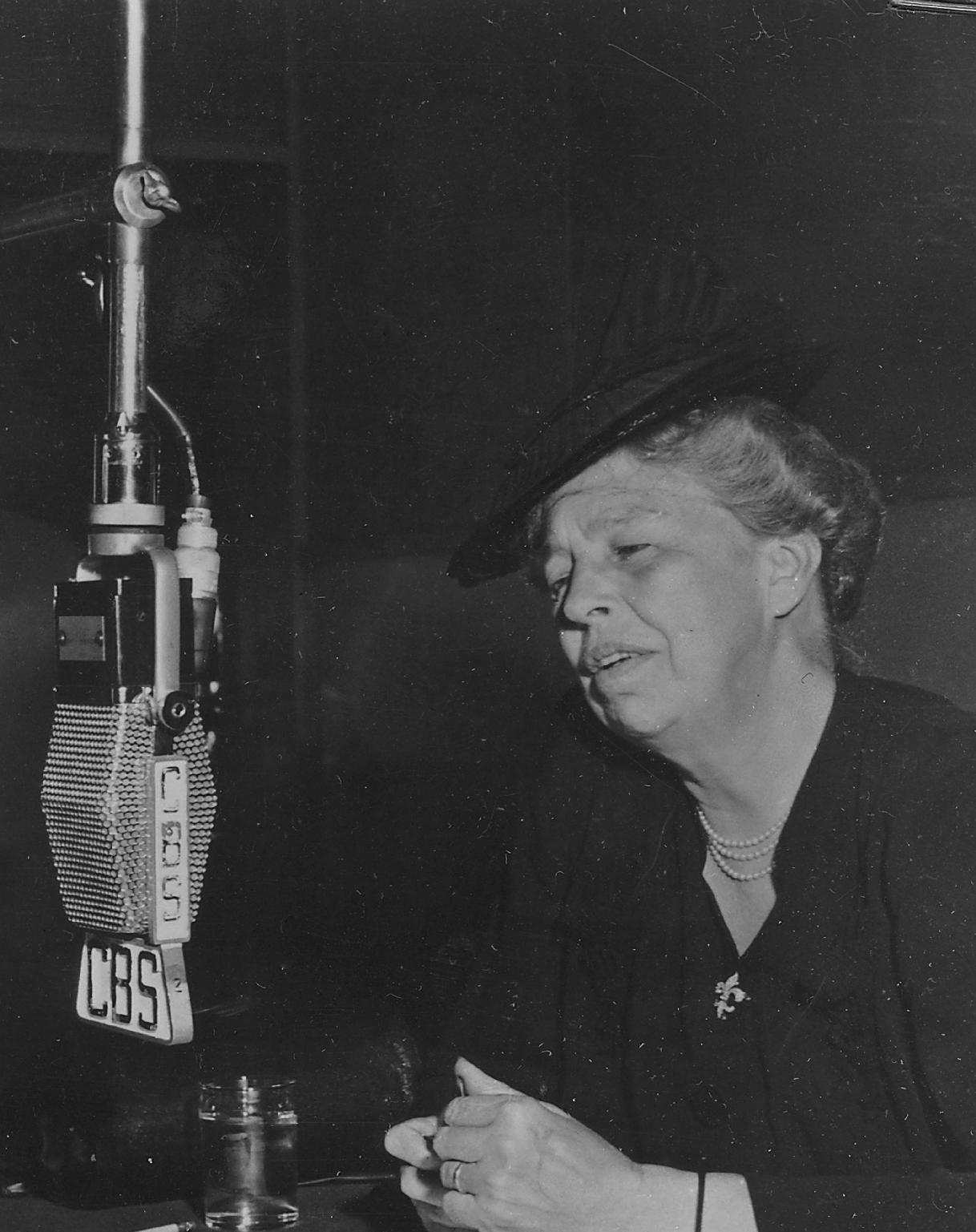
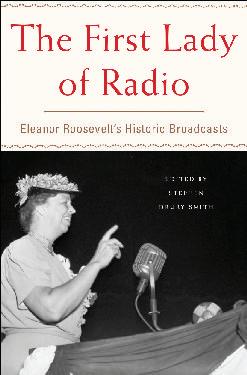
the First lady of radio
eleanor roosevelt’s historic Broadcasts
edited by Stephen DrUry SMith
with a foreword
by blanche wiesen cook
Published to coincide W ith A n Americ A n rA dioWor K s ® document A ry, the first-ever com P il A tion of e le A nor r oosevelt’s historic r A dio APP e A r A nces
[Eleanor Roosevelt] was terrified of speaking in public at first, and her high-pitched voice could sail off uncontrollably. Yet she became one of the most effective speakers of her time.
—DAViD MccUllOUGh
On December 7, 1941, as a stunned nation gathered around the radio to hear the latest about pearl harbor, eleanor roosevelt was preparing for her weekly Sunday evening national radio program. At 6:45 p.m., listeners to the nBc Blue network heard the First lady’s calm, measured voice explain that the president was conferring with his top advisors to address the crisis. it was a remarkable broadcast. With America on the verge of war, the nation heard first not from their president, but from his wife. eleanor roosevelt’s groundbreaking career as a professional radio broadcaster is almost entirely forgotten. As First lady, she hosted a series of prime time programs that revolutionized how Americans related to their chief executive and his family. now The First Lady of Radio rescues these broadcasts from the archives, presenting a carefully curated sampling of transcripts of roosevelt’s most famous and influential radio shows, edited and set into context by award-winning author and radio producer Stephen Drury Smith. With a foreword by roosevelt’s famed biographer, historian Blanche Wiesen cook, The First Lady of Radio is both a historical treasure and a fascinating window onto the power and the influence of a pioneering First lady.
Stephen Drury Smith is the executive editor and host of American RadioWorks® (ARW). he is also the host of NPR’s Bright ideas. Smith and ARW have been awarded the duPont-Columbia University Gold and Silver Batons. Smith is the co-editor of three books—Say it plain, Say it loud, and After the Fall—all available from The New Press. he lives in St. Paul, Minnesota. Blanche Wiesen Cook is Distinguished Professor of history at John Jay College in the City University of New York and the author of eleanor roosevelt. She lives in New York.
November
hardcover, 978-1-62097-042-3 e-book, 978-1-62097-049-2 e-book with audio, 978-1-62097-058-4
$25.95 / $32.50 cAn 5 1⁄2” x 8 1⁄4”, 272 pages U.S. history
Say It Loud: Great Speeches on Civil Rights and African American Identity edited by catherine ellis and Stephen Drury Smith hardcover w/cD, $35.00, 978-1-59558-113-6
Say It Plain: A Century of Great African American Speeches edited by catherine ellis and Stephen Drury Smith paperback, $16.95, 978-1-59558-126-6
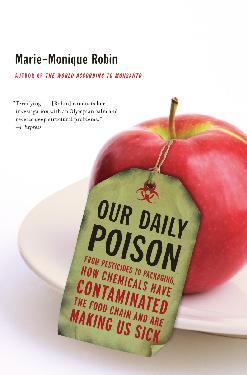
our Daily poison
From pesticides to packaging, how chemicals have contaminated the Food chain and Are Making Us Sick
MArie-MOniQUe rOBin
translated from the french by allison schein and lara vergnaud
f rom the P rize W inning A uthor of t he w orld aCC ording to Monsanto , A shoc K ing A ccount of the d A ngerous chemic A l com P ounds th A t h A ve infiltr A ted our food ch A in
Terrifying . . . [Robin] conducts her investigation with an Olympian calm and reveals deep structural problems.
L’ExPRESS
Over the last thirty years, we have seen an increase in rates of cancer, neurodegenerative disease, reproductive disorders, and diabetes, particularly in developed countries. At the same time, since the end of World War ii approximately 100,000 synthetic chemical molecules have invaded our environment—and our food chain. in Our Daily Poison, award-winning journalist and documentary filmmaker MarieMonique robin investigates the links between these two concerning trends, revealing how corporate interests and our ignorance may be costing us our lives.
the result of a rigorous two-year-long investigation that took robin across north America, europe, and Asia, Our Daily Poison documents the many ways in which we encounter a shocking array of chemicals in our everyday lives—from the pesticides that blanket our crops to the additives and plastics that contaminate our food—and their effects on our bodies over time. Gathering as evidence scientific studies, testimonies of international regulatory agencies, and interviews with farm workers suffering from acute chronic poisoning, robin makes a compelling case for action.
Marie-Monique Robin is an award-winning French journalist and filmmaker. She received the 1995 Albert-Londres Prize, awarded to investigative journalists in France. The author of the World According to Monsanto (The New Press), she lives outside Paris. Allison Schein holds master’s degrees in French language and civilization and French–English literary translation from New York University. She lives in New York City. Lara Vergnaud holds a graduate diploma in specialized English–French translation from the University of Lyon 2 in France and a master’s degree in French–English literary translation from New York University. She lives in New York City.
Praise for Marie-Monique Robin’s The World According to Monsanto:
No one who cares for their freedom and health can afford to ignore this very important book.
—VAnDAnA ShiVA, AUthOr OF EARTh DEMOCRACY AnD STOLEN hARvEST
A truly eye-opening view of how American business-as-usual really works.
DAILY KOS
An alarming and uncompromising investigation.
LE MONDE
The World According to Monsanto: Pollution, Corruption, and the Control of Our Food Supply Marie-Monique robin paperback, $19.95, 978-1-59558-709-1
6 1⁄8” x 9 1⁄4”, 352 pages Science/environment/health
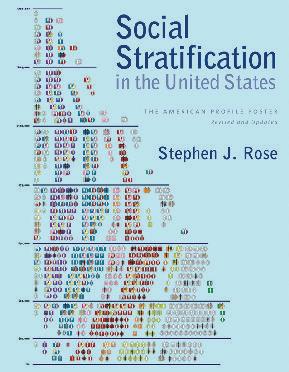
social stratification in the united states
the American profile poster
Stephen J. rOSe
PAP erb A c K uP d A ted for the first time since the 2008 recession, A ne W edition of the cl A ssic boo K - A nd- P oster set bA rb A r A e hrenreich c A lled “ A unique A chievement”
Transforms the percentages and media figures you frequently hear into a form you can see and drawings you can grasp.
NEW YORK DAILY NEWS
Sort of a Demographics 101 and Sociology 101 presented on a single large sheet of paper.
SAN FRANCISCO ExAMINER
There is a crippling lack of information . . . with regard to some of the basic facts of the American socioeconomic system. This attractive poster goes a long way toward remedying that deficiency.
rOBert
heilBrOner
January
paperback/poster, 978-1-62097-005-8
$19.95 / $24.50 cAn 8 1⁄2” x 11”, 56 pages Social Science (Previous edition, 978-1-59558-155-6)
Ingenious design. . . . A bleak, statistically meticulous, and even-tempered presentation of trends that ought to alarm anyone.
ThE NEW YORK TIMES BOOK REvIEW
Generations of educators, organizers, and activists have relied on this brilliantly designed book-and-poster set, originally published in 1979, to illustrate the magnitude of America’s economic divide. today, income inequality is at an all-time high, and awareness of the issue is growing proportionately. the financial crisis of 2008 changed the economic picture for all Americans and helped the richest among us grow their holdings, even as income for the rest of us has remained stagnant.
Folded inside the companion booklet, the now-iconic poster depicts color-coded figures that make it possible to compare social groups at a glance and to understand how income distribution relates to race, sex, education, and occupation. For the first time ever, the poster has been redesigned to represent the level of educational attainment among American social classes. the booklet shows how to make the most of the poster in the classroom and beyond and reveals the seismic changes in America’s social landscape over the past few decades with respect to who owns what, who earns what, who works where, and who lives with whom.
this much-anticipated update of the “eye-opening” (Chicago Tribune) presentation of American society, drawn from the 2012 current population Survey of the U.S. census, will be an essential resource and a touchstone for the current debates over education, inequality, poverty, and jobs in our country.
Stephen J. Rose is a senior economics fellow at Third Way: A Strategy Center for Progressives. he previously served in a number of research and policy positions at the Department of Labor, the National Commission for Employment Policy, the Joint Economic Committee of Congress, and the Educational Testing Service. he lives in Washington, D.C.
liberated lawyering
how lawyers can change the World
thereSA AMAtO
An essenti A l P r A ctic A l guide for the ide A listic l AW yer A nd A P rescri P tion for the leg A l P rofession
Amato has had a busy career in twenty years as a public interest lawyer working on some of the most dramatic and important issues of our time.
ricK perlStein, ThE
NATION
how is it possible that, with a glut of lawyers in America, so many of our country’s legal needs go unmet? in Liberated Lawyering, theresa Amato, executive director of citizen Works and founder of the citizen Advocacy center, shows how to realign supply with demand.
in a practical, no-nonsense guide to changing the way the legal profession creates lawyers in order to address the tens of millions with unmet legal needs, Amato explains why lawyers must reform themselves from serving corporate America to serving the “99 percent.” She shares a concise, nuts-and-bolts self-help manual for lawyers and law students and describes how law schools and the profession can create more public interest jobs to assist those with no access to counsel.
A stirring and refreshing call for would-be and disenchanted lawyers to rethink their careers, Liberated Lawyering encourages and teaches entrepreneurial lawyers how to navigate the legal landscape that needs them and shows the profession how to redirect the talents of its members to solve the pressing problems and public interests of all of us.
An award-winning public interest lawyer, Theresa Amato was named by American lawyer as one of forty-five public sector lawyers whose work is changing lives. She is founder of the Citizen Advocacy Center and the author of Grand illusion (The New Press). She lives with her family in Oak Park, Illinois.
See You in Court: how the Right Made America a Lawsuit Nation thomas Geoghegan paperback, $17.95, 978-1-59558-410-6
$24.95 / $30.95 cAn 5 1⁄2” x 8 1⁄4”, 224 pages law/reference
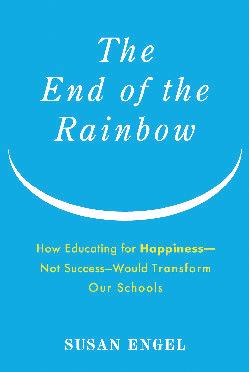
the end of the rainbow
how educating for happiness—not Success— Would transform Our Schools
SUSAn enGel
A le A ding educ A tor A nd P sychologist offers A bold refr A ming of the very P ur P ose of educ A tion
Where education was meant to open many kinds of doors, it now is focused on opening only one door: the door that leads to money. As we have expanded the group entitled to an education, we have shrunk the goals of education.
FrOM ThE END OF ThE RAINBOW
Amid the hype of race to the top, online experiments such as Khan Academy, and bestselling books like The Sandbox Investment, we seem to have drawn a line that leads from nursery school along a purely economic route, with money as the final stop. But what price do we all pay for the increasingly singular focus on wage as the outcome of education? Susan engel, a leading psychologist and educator, argues that this economic framework has had a profound impact not only on the way we think about education but also on what happens inside school buildings.
The End of the Rainbow asks what would happen if we changed the implicit goal of education and imagines how different things would be if we made happiness, rather than money, the graduation prize. Drawing on psychology, education theory, and a broad range of classroom experiences across the country, engel offers a fascinating alternative view of what education might become: teaching children to read books for pleasure and self-expansion and encouraging collaboration. All of these new skills, she argues, would not only cultivate future success in the world of work but also would make society as a whole a better, happier place.
Accessible to parents and teachers alike, The End of the Rainbow will be the beginning of a new, more vibrant public conversation about what the future of American education should look like.
Susan Engel is a professor of developmental psychology at Williams College, where she is also the founder and director of the Williams Program in Teaching. She is the author of four previous books, the Stories children tell, context is everything, real Kids, and red Flags or red herrings? She lives in New Marlborough, Massachusetts.
Praise for Susan Engel’s Red Flags or Red Herrings?:
The perfect antidote to the high anxiety that pervades parenting these days.
eDWArD hAllOWell, AUthOr OF ThE ChILDhOOD ROOTS OF ADULT hAPPINESS
A technically thoughtful and beautifully written book.
—JerOMe S. BrUner, nyU prOFeSSOr OF pSychOlOGy AnD AUthOr OF ThE PROCESS OF EDUCATION
A liberating book.
rOGer A. hArt, prOFeSSOr OF enVirOnMentAl AnD DeVelOpMentAl pSychOlOGy, the GrADUAte centre OF the city UniVerSity OF neW yOrK
A compassionate guide for parents and educators.
KIRKUS REvIEWS
Insightful . . . the author knows her stuff and is a wonderful storyteller.
$25.95 / $32.50 cAn 5 1⁄2” x 8 1⁄4”, 256 pages education
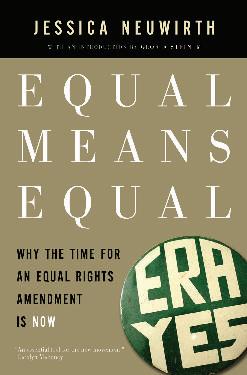
equal means equal
Why the time for an equal rights Amendment is now
JeSSicA neUWirth
with an introduction by gloria steinem
PAP erb A c K origin A l A sm A rt A nd timely P rimer for the movement to P rovide Americ A n W omen W ith A constitution A l right to equ A lity— P ublished to coincide W ith A document A ry of the s A me n A me
The time is right for the ERA and a new movement of women and men, Democrats and Republicans alike, to put this fundamental right into our Constitution. Equal Means Equal clearly and eloquently lays out the issues at stake and will be an essential tool for the movement.
cOnGreSSWOMAn cArOlyn MAlOney
Supporters of the new Coalition for the ERA include:
Tyne Daly
Eve Ensler
Sally Field
Jane Fonda
Lesley Gore
Alyson Hannigan
Carol Jenkins
Catharine MacKinnon
Robin Morgan
Lynn Nottage
Jada Pinkett-Smith
Joss Whedon
January
paperback, 978-1-62097-039-3
e-book, 978-1-62097-048-5
$14.95 / $18.95 cAn
5 1⁄2” x 8 1⁄4”, 160 pages with 12 b&w photos law/current Affairs and politics
I would like in my lifetime to see women get fired up about the Equal Rights Amendment.
—JUStice rUth BADer GinSBUrG
When the equal rights Amendment was first passed by congress in 1972, richard nixon was president and All in the Family’s Archie Bunker was telling his feisty wife edith to stifle it. Over the course of the next ten years, an initial wave of enthusiasm led to ratification of the erA by thirty-five states, just three short of the thirty-eight states needed by the 1982 deadline. Many of the arguments against the erA that historically stood in the way of ratification have gone the way of bouffant hairdos and Bobby riggs, and a new coalition for the erA was recently set up to bring the experience and wisdom of old-guard activists together with the energy and social media skills of a new-guard generation of women.
in a series of short, accessible chapters looking at several key areas of sex discrimination recognized by the Supreme court, Equal Means Equal tells the story of the legal cases that inform the need for an erA, along with contemporary cases in which women’s rights are compromised without the protection of an erA. covering topics ranging from pay equity and pregnancy discrimination to violence against women, Equal Means Equal makes abundantly clear that an erA will improve the lives of real women living in America.
The founder of the international women’s rights organization Equality Now, Jessica Neuwirth is the former director of the New York branch of the Office of the United Nations high Commissioner for human Rights. She lives in New York City. Gloria Steinem is an American feminist, journalist, and social and political activist who became nationally recognized as a leader of, and media spokeswoman for, the women’s liberation movement in the 1960s and 1970s. She lives in New York.
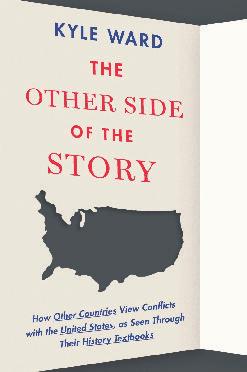
the other side of the story
how Other countries View conflicts with the United States, as Seen through their history textbooks
Kyle WArD
i n the tr A dition of Kyle W A rd’s A ccl A imed h istory l essons A nd h istory in the Making , A n eye-o P ening A ccount of W h A t it feels li K e to go to WA r A g A inst Americ A
Ultimately, the war was lost by the British rather than won by the Americans, and it was lost to the American landscape as much as to the Americans. . . . British defeat was not inevitable.
FrOM A recent BritiSh textBOOK ABOUt the AMericAn reVOlUtiOn
historian and educator Kyle Ward has introduced readers to a breathtaking range of new perspectives on the American past in a series of books on the world’s history textbooks. cleverly juxtaposing excerpts from different textbooks, he demonstrates how the same accounts of the past can be viewed in strikingly different ways, offering a glimpse into the cultural and political biases that every nation clings to. in this exciting new book, Ward focuses on the episodes of sharp conflict between the United States and its various antagonists throughout history. The Other Side of the Story looks at slavery from liberian and nigerian perspectives, the British account of the American revolution, and French and Spanish views of the louisiana purchase. Other chapters offer perspectives on the War of 1812, the texas revolution, the Spanish-American War, the cuban Missile crisis, nixon’s visit to china, and the iran hostage crisis, all from the point of view of our enemies at the time. each chapter includes substantial excerpts from overseas history textbooks, supplemented by information on school curricula as well as rich descriptions of how teachers discuss these topics in their high school history classes around the world. At a moment of profound uncertainty and change in the United States’ role in global affairs, here is a book that will challenge Americans’ insular worldview and offer a new way of understanding how other nations see us.
Kyle Ward is an associate professor and the Director of Social Studies Education at St. Cloud State University and has taught at both the high school and university level. he is the author of history in the Making and co-author, with Dana Lindaman, of history lessons (both available from The New Press). he lives in Terre haute, Indiana.
Praise for Kyle Ward’s History Lessons:
History Lessons makes available to American readers a fascinating assortment of perspectives on our past from other countries. This gives Americans a refreshing way to break out of the ethnocentric cocoon within which our high school American history textbooks swaddle us.
—JAMeS lOeWen, BeStSellinG AUthOr OF LIES MY TEAChER TOLD ME
A provocative, timely, and surprisingly readable book.
social security cannot and will not “go broke.” and social security does not—and by law cannot—add a penny to the nation’s debt.
a three-decade long, billionaire-funded campaign is working to undermine confidence in social security’s future and cut your earned benefits.
poll after poll shows americans overwhelmingly united in their support for social security, from the most conservative tea partiers to the most liberal union members.
two-thirds of today’s workers face a retirement income crisis.
social security provides retirement income more efficiently, fairly, universally, and securely than any private arrangement does or ever could.
social security is the nation’s largest children’s program.
a twenty-year-old worker has a more than one-in-four chance of becoming disabled and a roughly one-in-eight chance of dying before reaching age sixty-seven.
two-thirds of seniors receive half or more of their annual income from social security.
social security spends less than one cent of every dollar on administration.
the most important insurance that most young families have is social security, which provides the equivalent of more than $550,000 in life insurance and $580,000 in disability insurance for a thirty-year-old worker earning around $30,000 and married with two young children.
social security lifts over 22 million americans out of poverty.
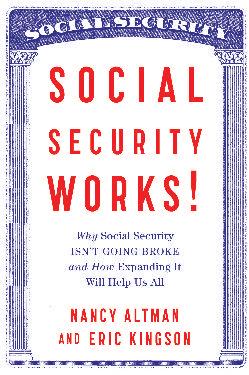
social security Works!
Why Social Security isn’t Going Broke and how expanding it Will help Us All
nAncy AltMAn and eric KinGSOn
PAP erb A c K origin A l A myth-busting loo K A t A critic A l com P onent of the Americ A n soci A l contr A ct A nd A much-needed A ntidote to those W ho W ould te A r it do W n
Social Security Works! puts expanding Social Security front and center on the national agenda, where it belongs. Everyone who has a stake in the debate should read this important book.
—SenAtOr Bernie SAnDerS (i-Vt)
A growing chorus of prominent voices in congress and elsewhere are calling for the expansion of our Social Security system—people who know that Social Security will not “go broke” and does not add a penny to the national debt. Social Security Works! will amplify these voices and offer a powerful antidote to the three-decade long, billionaire-funded campaign to make us believe that this vital institution is destined to collapse. it isn’t.
From the Silent Generation to Baby Boomers, from Generation x to Millennials and Generation z, we all have a stake in understanding the real story about Social Security. critical to addressing the looming retirement crisis that will affect twothirds of today’s workers, Social Security is a powerful program that can help stop the collapse of the middle class, lessen the pressure squeezing families from all directions, and help end the upward redistribution of wealth that has resulted in perilous levels of inequality.
All Americans deserve to have dignified retirement years as well as an umbrella to protect them and their families in the event of disability or premature death. Sure to be a game-changer, Social Security Works! cogently presents the issues and sets forth both an agenda and a political strategy that will benefit us all. At stake are our values and the kind of country we want for ourselves and for those that follow.
Scholars, policy advisers, and political activists who are nationally known for their work on Social Security, Nancy Altman and Eric Kingson founded the not-for-profit organization Social Security Works and co-chair the Strengthen Social Security Coalition. Altman, author of the Battle for Social Security, lives in Bethesda, Maryland; Kingson, professor of social work at Syracuse University, lives in Manlius, New York.
This book is an important shoutout to the U.S. Congress. Social Security Works! explains how and why expanding Social Security is the solution to our nation’s retirement income crisis.
richArD l trUMKA, preSiDent, AFl-ciO Social Security Works! shows why expanding Social Security is a top priority for MoveOn.org’s millions of members.
—AnnA GAllAnD, execUtiVe DirectOr, MOVeOn.OrG ciVic ActiOn Altman and Kingson cut through the fog of calculated confusion and outright lies about Social Security.
—DAViD cAy JOhnStOn, pUlitzer prize–WinninG JOUrnAliSt AnD AUthOr
A must-read for everyone who cares about economic justice for women.
terry O’neill, preSiDent OF the nAtiOnAl OrGAnizAtiOn FOr WOMen
January paperback, 978-1-62097-037-9 e-book, 978-1-62097-047-8
$16.95 / $20.95 cAn
5 1⁄2” x 8 1⁄4”, 208 pages with 25 b&w illustrations current Affairs and politics
the last gun
how changes in the Gun industry Are Killing Americans and What it Will take to Stop it
tOM DiAz
no W in PAP erb A c K t he n A tion A lly reno W ned gun control A dvoc A te’s st A rtling A n A lysis of the st A te of P l A y, including the PA th to A s A fer future
A gripping narrative that combines plenty of factual data with compelling storytelling.
—JOShUA hOrWitz, execUtiVe DirectOr, cOAlitiOn tO StOp GUn ViOlence
Tom Diaz is one of the most insightful observers of the gun industry and the larger gun debate in America today.
rOBert J. Spitzer, AUthOr OF ThE POLITICS OF GUN CONTROL
Diaz knows his subject inside and out and, like the prophets of old, hurls his arguments from the mountaintop with terrible precision.
—AnDreW GUMBel, JOUrnAliSt AnD AUthOr OF STEAL ThIS vOTE
$18.95 / $22.95 cAn 5 1⁄2” x 8 1⁄4”, 336 pages Sociology/Business (hardcover edition: 978-1-59558-830-2)
A blistering takedown of the gun business and politics.
ThE BOSTON GLOBE
tom Diaz’s The Last Gun was first published in hardcover shortly after the tragic newtown massacre. Major media outlets, including the New York Times, Rolling Stone, Democracy Now!, npr, and cnBc, rushed to contact Diaz, the widely respected gun control advocate, for his views on what Americans could do to bring an end to this epidemic of gun violence. As he told them, America is by far the most armed nation in the world, and it has the deaths to show for it: by some estimates, over 30,000 in 2013 alone. in this “readable and topical” (Bloomberg BusinessWeek) book, the former gun enthusiast and ex-member of the national rifle Association lays out a lucid, incisive account of how we got here and what we can do to prevent future massacres. Marshaling a range of stunning evidence and case studies, The Last Gun is essential reading for understanding how we can finally rid America’s streets, schools, and homes of gun violence—and with effective gun control measures stalled in congress, it remains as timely as ever.
Tom Diaz is a writer, lawyer, and public speaker on the gun industry and gun control. Formerly a senior policy analyst at the violence Policy Center, he has been featured on MSNBC, NPR, and other national media. his books include Making a Killing (The New Press). he lives in Washington, D.C.
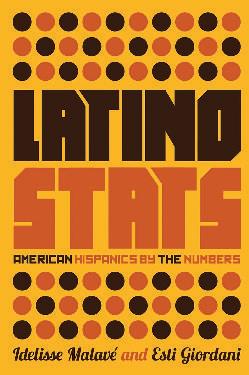
latino stats
American hispanics by the numbers
iDeliSSe MAlAVé and celeSte GiOrDAni
PAP erb A c K origin A l An essenti A l h A ndboo K of eye-o P ening— A nd frequently sur P rising—f A cts A nd figures A bout the lives of A n incre A singly influenti A l
P o P ul A tion
By 2050, the Hispanic share of the U.S. population could be as high as 29 percent, up from 17 percent now.
peW reSeArch center
At a time when politics is seemingly ruled by ideology and emotion and when immigration is one of the most contentious topics, it is more important than ever to cut through the rhetoric and highlight, in numbers, the reality of the broad spectrum of latino life in the United States. latinos are both the largest and fastest-growing racial/ethnic group in the country, even while many continue to fight for their status as Americans.
respected movement builder and former leader of the tides Foundation idelisse Malavé and her daughter, celeste Giordani—a communications strategist for the Social transformation project—distill the profusion of data, identifying the most telling and engaging facts to assemble a portrait of contemporary latino life with glimpses of the past and future. From politics and the economy to popular culture, the arts, and ideas about race, gender, and family, Latino Stats both catalogs the inequities that plague latino communities and documents latinos’ growing power and influence on American life.
An essential tool for advocates, educators, and policy makers, Latino Stats will be a go-to guidebook for anyone wanting to raise their awareness and increase their understanding of the complex state of our nation.
Idelisse Malavé is an organizational consultant who ran the Tides Foundation in California for eleven years and was vice president of the Ms. Foundation. She coauthored Mother Daughter revolution. Born in Puerto Rico, she grew up and lives in New York City. Celeste Giordani is a communications strategist and blogger for the Social Transformation Project. She pens a weekly blog on the Latino experience for Radar Productions. She is a New York–born Puerto Rican living in Oakland, California.
• Most Hispanics are not immigrants: two out of every three were born in the United States
• Hispanic buying power is increasing from $1 trillion in 2010 to $1.5 trillion in 2015— a 50 percent jump over five years
• The net migration rate from Mexico has fallen to zero, with return migration to Mexico equaling new arrival rates to the United States
$14.95 / $18.95 cAn 5 1⁄2” x 8 1⁄4”, 240 pages with charts and graphs throughout hispanic American Studies
Black Stats: African Americans by the Numbers in the Twenty-First Century Monique W. Morris paperback, $14.95, 978-1-59558-919-4
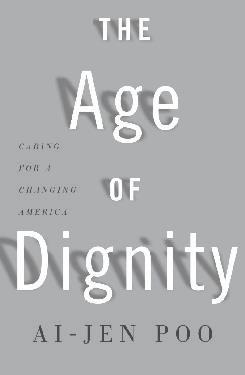
the age of Dignity
caring for a changing America
Ai-Jen pOO
o ne of n ewsweek’s 150 “fe A rless W omen,” the A ctivist W ho s P e A rhe A ded n e W y or K ’s successful b ill of r ights for domestic W or K ers sho W s ho W W e c A n better c A re for our gro W ing elderly P o P ul A tion A nd P rovide millions of good jobs A t the s A me time
Ai-jen Poo knows how to create social change from the bottom up . . . showing the humanity of a long devalued kind of work. This goes beyond organizing to transforming.
—GlOriA
SteineM in TIME
By 2035, 11.5 million Americans will be over the age of eighty-five, more than double today’s 5 million, living longer than ever before. to enable all of us to age with dignity and security in the face of this coming Age Wave, our society must learn to value the care of our elders. the process of building a culture that supports care is a key component to restoring the American dream, and, as Ai-Jen poo convincingly argues, will generate millions of new jobs and breath new life into our national ideals of independence, justice, and dignity.
this groundbreaking new book from the director of the national Domestic Workers Alliance offers bold solutions, such as long-term care insurance and cultural change to get all of us to value care, which is already at the heart of a movement transforming what it means to grow old in the United States. At the intersection of our aging population, the fraying safety net, and opportunities for women and immigrants in the workforce, The Age of Dignity maps an integrated set of solutions to address America’s new demographic and economic realities.
Ai-jen Poo is the director of the National Domestic Workers Alliance (NDWA) and a co-director of the Caring Across Generations Campaign. In 2000, she co-founded Domestic Workers United. She lives in New York.
Ai-Jen Poo’s numerous accolades include:
• One of Time’s 100 Most Influential People in the World
• Ms. Foundation Woman of Vision Award
• Independent Sector American Express NGen Leadership Award
$24.95 / $30.95 cAn 5 1⁄2” x 8 1⁄4”, 176 pages Social Science
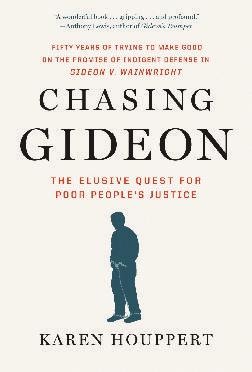
chasing gideon the
elusive Quest for poor people’s Justice
KAren hOUppert
no W in PAP erb A c K o ne of the n iem A n r e P ort’s to P ten boo K s of investig A tive journ A lism of 2013, A groundbre AK ing loo K inside the n A tion’s crisis of indigent defense
Houppert’s narratives of crimes, investigations, and court proceedings are careful and engrossing, and she has an excellent command of the relevant data, which she intersperses among interviews and case histories to great effect.
LOS ANGELES REvIEW OF BOOKS
Highly recommended. Fluent and fluid, Houppert’s book has all the urgency this subject demands and is a page-turner. Alternately thrilling and gut-riling, this book will grab and hold lovers of great nonfiction.
LIBRARY JOURNAL
A well-researched and -written investigation that shows the inadequacies in stark human terms rather than an abstraction.
Chasing Gideon is a wonderful book, its human stories gripping, its insight into how our law is made profound.
—AnthOny leWiS, AUthOr OF GIDEON’S TRUMPET
First published to mark the fifty-year anniversary of the Supreme court decision Gideon v. Wainwright, which guaranteed the right to legal counsel for all criminal defendants, Chasing Gideon is “a hugely important book” (New York Law Journal) that gives us a visceral, unforgettable experience of our systemic failure to fulfill this basic constitutional right. Written in the tradition of Gideon’s Trumpet, by the late Anthony lewis, this is “a book of nightmares,” as leonard pitts wrote in the Miami herald, because it shows that the “‘justice system’ too often produces the opposite of what its name suggests, particularly for its most vulnerable constituents.”
Following its publication, Chasing Gideon, which AclU director Anthony romero said “illustrates the scope and seriousness of the indigent defense crisis,” became an integral part of a growing national conversation about how to reform indigent defense in America, coordinated with an hBO documentary and a website to promote the book and the movie (www.gideonat50.org). the effort spread news about Chasing Gideon directly to public defenders offices nationwide and drove a national conversation about what eric holder in the Washington Post called the “shameful state of affairs” of indigent defense.
Karen Houppert has written for the Washington post Magazine, the nation, newsday, the new york times, Mother Jones, the Village Voice, Salon, and many other publications. She is the author of home Fires Burning: Married to the Military— for Better or Worse and the cure: confronting the last Unmentionable taboo— Menstruation. She lives in Baltimore, Maryland, where she teaches at Johns hopkins University and at Morgan State University.
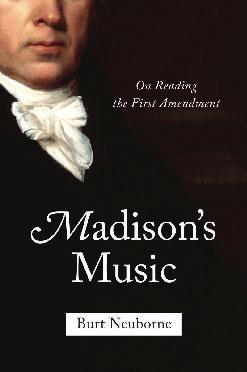
madison’s music
On reading the First Amendment
BUrt neUBOrne
o ne of the n A tion’s foremost civil liberties l AW yers ch A llenges our underst A nding of ho W our democr A cy W or K s W ith A r A dic A l ne W re A ding of A founding document
In the dark art of lawyering, Neuborne has always been considered a white knight.
NEW YORK
Are you sitting down? it turns out that everything you learned about the First Amendment is wrong. For too long, we’ve been treating small, isolated snippits of the text as infallible gospel without looking at the masterpiece of the whole. legal luminary Burt neuborne argues that the structure of the First Amendment as well as of the entire Bill of rights was more intentional than most people realize, beginning with the internal freedom of conscience and working outward to freedom of expression and finally freedom of public association. this design, neuborne argues, was not to protect discrete individual rights—such as the rights of corporations to spend unlimited amounts of money to influence elections—but to guarantee that the process of democracy continues without disenfranchisement, oppression, or injustice. neuborne, who was the legal director of the AclU and has argued numerous cases before the Supreme court, invites us to hear the “music” within the form and content of Madison’s carefully formulated text. When we hear Madison’s music, a democratic ideal flowers in front of us, and we can see that the First Amendment gives us the tools to fight for campaign finance reform, the right to vote, equal rights in the military, the right to be full citizens, and the right to prevent corporations from riding roughshod over the weakest among us. neuborne gives us an eloquent lesson in democracy that informs and inspires.
Burt Neuborne is a professor of civil liberties and the founding legal director of the Brennan Center for Justice at NYU Law School. he has served as national legal director of the ACLU, special counsel to the NOW Legal Defense and Education Fund, and as a member of the New York City human Rights Commission. he has written three scholarly books and has contributed to the nation he lives in New York.
Constitutional Myths: What We Get Wrong and how to Get It Right ray raphael hardcover, $26.95, 978-1-59558-832-6
$24.95 / $30.95 cAn 5 1⁄2” x 8 1⁄4”, 208 pages law
Mass Incarceration on Trial: A Remarkable Court Decision and the Future of Prisons in America Jonathan Simon hardcover, $25.95, 978-1-59558-769-5
Frackopoly
the Battle for the Future of energy and the environment
WenOnAh hAUter
f rom the A uthor of Foodopoly , A m A jor ne W critique of fr A c K ing, including A n A n A tomy of the industry A nd ho W W e c A n sto P it
The long-term risk to underground sources of drinking water is perhaps the most alarming impact of all.
FrOM
FRACKOPOLY
A new and controversial energy extraction method known as hydraulic fracturing, or fracking, has rocketed to the forefront of U.S. energy production. With fracking, millions of gallons of water, dangerous chemicals, and sand are injected under high pressure deep into the earth, fracturing hard rock to release oil and gas.
in Frackopoly, Wenonah hauter, one of the nation’s leading clean-water advocates, argues that the rush to fracking is dangerous to the environment and treacherous to human health. this is the first book to describe how the fracking industry began, the technologies that make it possible, the destruction and poisoning of clean water sources, and the release of harmful radiation from deep inside shale deposits. hauter travels the country, interviewing leading experts, activists, and scholars, and reveals not only overwhelming evidence of the harm that fracking causes but also a major groundswell of opposition to the practice in every state and from many different political quarters. Frackopoly also examines the powerful interests, including leading environmental groups, that have supported fracking and offers a thorough debunking of its supposed economic benefits.
With a wealth of new data, Frackopoly is essential and riveting reading for anyone interested in protecting the environment and ensuring a healthy and sustainable future for all Americans.
Wenonah Hauter is the executive director of Food & Water Watch, a D.C.-based watchdog organization focused on corporate and government accountability relating to food, water, and fishing. She has worked and written extensively on food, water, energy, and environmental issues at the national, state, and local levels. She owns a working farm in The Plains, virginia.
Praise for Wenonah Hauter’s Foodopoly:
Foodopoly is politically brave— not just naming names in the agri-industrial complex, but pushing us to think more deeply about the politics and economics that dictate our diets beyond our own roles as shoppers and eaters.
SAN FRANCISCO ChRONICLE
A meticulously researched tour de force.
PUBLIShERS WEEKLY
Foodopoly: The Battle Over the Future of Food and Farming in America
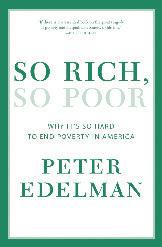
So Rich, So Poor: Why It’s So Hard to End Poverty in America
peter edelman paperback, $24.95, 978-1-59558-936-1, 208 pages e-book, 978-1-59558-957-6
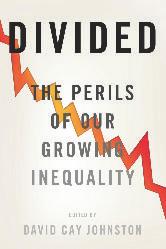
Divided: The Perils of Our Growing Inequality
David cay Johnston hardcover, $25.95, 978-1-59558-923-1, 352 pages e-book, 978-1-59558-944-6
From the Folks Who Brought You the Weekend: A Short, Illustrated History of Labor in the United States
priscilla Murolo, A.B. chitty, and Joe Sacco paperback, $18.95, 978-1-56584-776-7, 384 pages e-book, 978-1-59558-856-2
Moral Underground: How Ordinary Americans Subvert an Unfair Economy
lisa Dodson paperback, $17.95, 978-1-59558-642-1, 240 pages e-book, 978-1-59558-529-5
Field Guide to the U.S. Economy: A Compact and Irreverent Guide to Economic Life in America
Jonathan teller-elsberg, nancy Folbre, and James heintz paperback, $17.95, 978-1-59558-048-1, 256 pages e-book, 978-1-59558-569-1
The Stiglitz Report: Reforming the International Monetary and Financial Systems in the Wake of the Global Crisis
Joseph e. Stiglitz paperback, $16.95, 978-1-59558-520-2, 240 pages e-book, 978-1-59558-591-2
The Color of Wealth: The Story Behind the U.S. Racial Wealth Divide Meizhu lui, Bárbara robles, Betsy leondar-Wright, and rose Brewer paperback, $22.95, 978-1-59558-004-7, 336 pages e-book, 978-1-59558-562-2
Criminal Justice
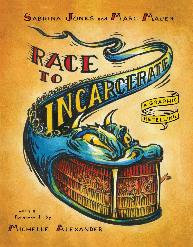
Race To Incarcerate
Marc Mauer paperback, $17.95, 978-1-59558-022-1, 256 pages e-book, 978-1-59558-666-7
Let’s Get Free: A Hip-Hop Theory of Justice
paul Butler paperback, $16.95, 978-1-59558-500-4, 224 pages e-book, 978-1-59558-510-3
All Alone in the World: Children of the Incarcerated nell Bernstein paperback, $16.95, 978-1-59558-185-3, 320 pages e-book, 978-1-59558-555-4
Str. Banul Antonache 37 011663 Bucharest 1 romania
+40 (21) 316-4806 tel
+40 (21) 316-4794 fax marina@kessler-agency.ro
Scandinavia and Holland
philip Sane
lennart Sane Agency AB holländareplan 9 Se-374 34 Karlshamn Sweden
+46 (4) 54-12356 tel +46 (4) 54-14920 fax philip.sane@lennartsaneagency.com
Spain and Portugal
Mònica Martín
MB Agencia literaria
ronda Sant pere 62 1º-2ª 08010 Barcelona Spain
+34 (93) 265-9064 tel +34 (93) 232-7221 fax monica@mbagencialiteraria.es
Turkey
eda Çaça
Anatolia literary Agency
252 caferag˘a Mah. Gunesli Bahce Sok. no:48 Or.Ko Apt. B Blok D:4 34710 Kadıköy istanbul turkey
+90 (216) 700-1088 tel +90 (216) 700-1089 fax amy@anatolialit.com
UK
David Grossman
David Grossman literary Agency 118B holland park Avenue london W11 4UA
United Kingdom
+44 (207) 221-2770 tel
+44 (207) 221-1445 fax david@dglal.co.uk
Unless otherwise indicated, foreign rights are controlled by the new press.
please see inside front cover for sales and distribution information.
For all other inquiries, please contact rights@thenewpress.com.
Distribution and Sales
U.S. Distribution and Sales: perseus Distribution 250 West 57th Street, 15th Floor new york, ny 10107
Orders and Customer Service: 210 American Drive Jackson, tn 38301 (800) 343-4499 tel (800) 351-5073 fax
United Kingdom, Ireland, the Isle of Man, and the Channel Islands turnaround publisher Services ltd Unit 3, Olympia trading estate coburg road, Wood Green london n22 6tz +44 (208) 829-3000 tel +44 (208) 829-3002 tel +44 (208) 881-5088 fax orders@turnaround-uk.com www.turnaround-uk.com
Canada codasat canada p.O. Box 19150 1153 56 St. Delta, Bc canada V4l 2p8 +1 (604) 228-9952 tel info@codasat.com
Australia and New Zealand newSouth Books Orders and Distribution 15-23 helles Avenue Moorebank, nSW Australia 2170 +61 (2) 8778 9999 tel +61 (2) 8778 9944 fax orders@tldistribution.com.au
South Africa
nicky Stubbs Book promotions Office B4, the District 41 Sir lowry road Woodstock, cape town South Africa 7925 +27 (21) 469 8932 +27 (086) 270 0825 enquiries@bookpro.co.za
China, Hong Kong, and Taiwan
Wei zhao
2-1-503 Uhn international 2 xi Ba he Dong li chaoyang District Beijing 100028 china 136 8301 8054 tel 011 86 10 5130 1051 fax wzbooks@aol.com
India, Nepal, Sri Lanka, Bangladesh, Maldives, and Pakistan General inquiries
Sharad Mohan regional Manager y-311, Agrasen Awas, 66. i. p. extn, patparganj, new Delhi 110092 india +91 98107 90604 tel +91 11 4218 2212 tel sharad.pgw@gmail.com Ordering information: penguin Books india 11 community centre panchsheel park new Delhi 110017 india +91 11 2649 4401 tel +91 11 2649 4403 fax sales@in.penguingroup.com
Japan and Korea
Gilles Fauveau 2-3-25, 9F Kudan-Minami chiyoda-ku, tokyo Japan 102-0074
+81 (3) 3264-0144 tel +81 (3) 3264-0440 fax gillesfauveau@yahoo.com
Singapore and Malaysia
Suk lee perseus international
250 West 57th Street, 15th Floor new york, ny 10107 (212) 397-5090 tel suk.lee@perseusbooks.com
Thailand, Indonesia, Vietnam, Cambodia, and Laos June poonpanich 476/3 Soi ladprao 47 Wangtonglang, Bangkok 10310 thailand +66 (8) 9660 3397 tel +66 (2) 538 8318 fax june.p@live.com
The Philippines
Jaime Gregorio 408 cornell Street South pointe townhomes l.p. leviste Village Barangay, Merville paranaque city the philippines 1700 +63 (2) 822-1108 tel +63 (2) 824-0835 fax jaimecarogregorio@gmail.com
Latin America, the Caribbean, the Middle East, North Africa, and overseas military edison Garcia perseus international 250 West 57th Street, 15th Floor new york, ny 10107 (212) 340-8170 tel edison.garcia@perseusbooks.com
For all other markets: General international inquiries and orders perseus international 250 West 57th Street, 15th Floor new york, ny 10107 212 581 7839 tel Orders: intlorders@perseusbooks.com jodie.hagerman@perseusbooks.com
Individuals please send orders, remittances, and inquiries to: intlorders@perseusbooks.com
This catalog describes books to be published from September 2014 through February 2015
The New Press
120 Wall Street, Fl 31 new york, ny 10005-4007 (212) 629-8802 tel (212) 629-8617 fax www.thenewpress.com
For media/event inquiries, please contact: publicity@thenewpress.com
The New Press extends heartfelt thanks to the following philanthropic institutions for their support in 2013: the Annie e casey Foundation Arcus Foundation the Atlantic philanthropies the Bauman Foundation Butler’s hole South at the Boston Foundation carnegie corporation of new york the Florence Gould Foundation* Ford Foundation the French Ministry of Foreign Affairs and l’institut Français Furthermore: a program of the J.M. Kaplan Fund the J.M. Kaplan Fund the John D. and catherine t. MacArthur Foundation the Kresge Foundation lambent Foundation the lloyd A. Fry Foundation new york State council on the Arts the Overbrook Foundation the reed Foundation the richard h. Driehaus Foundation the Sidney hillman Foundation the W.K. Kellogg Foundation the William and Flora hewlett Foundation
*The New Press remembers Mary Young (d. 2012) of the Florence Gould Foundation for her unwavering support of French translation and for her tireless work as a champion of French–American cultural exchanges.
PUBLISHING CIRCLE
The New Press is grateful to members of The New Press Publishing Circle, a group of individual donors and organizations that make contributions of $5,000 or more. The remarkable support of Publishing Circle members allows The New Press to give a voice to underrepresented viewpoints and publish works of educational, cultural, political, and community value.
emily Altschul-Miller, patricia Bauman, Sarah Burnes and Sebastian heath, Betsy Davidson, edward J. Davis and thomas D. phillips, elizabeth Driehaus, Amy Glickman and Andrew Kuritzkes, ethel Klein and edward Krugman, Maggie lear and Daniel Katz, elizabeth Marks and the Matthew Marks Gallery, Karen ranucci and Michael ratner, Svetlana and herbert Wachtell, and Abby young Moses and Jonathan Moses.
FRONTLIST MEMBERS
The Frontlist is a group of individuals and organizations that support the important work of The New Press with gifts ranging from $1 to $4,999. The New Press thanks these members for their gifts to The New Press in 2013:
Editor’s Circle: Gifts of $1,000 to $4,999
lisa Adams and David Miller, Deborah Bial and Bob herbert, Davis Wright tremaine llp, Anne Detjen and Alexander papachristou, emery celli Brinckerhoff & Abady llp, Antonia M. and George J. Grumbach Jr., ivan held, Anne hess and craig Kaplan, Jane isay, priscilla Kauff, pamela lichty, Susan and Martin lipton, Vincent McGee, nancy Meyer and Marc Weiss, Gregory Miller and Michael Wiener, lisa Mueller and Gara laMarche, Joyce and peter parcher, Frederica perera and Frederick A.O. Schwarz Jr., perseus Distribution, elizabeth Sackler, Anya Schiffrin and
Joseph e. Stiglitz, claire Silberman, Susan Sommer and Stephen Warnke, David Sternlieb, Katrina vanden heuvel, cynthia Wachtell and Jeffrey neuman, and Shannon Wu and Joe Kahn.
Patron: Gifts of $250 to $999
Suzanne Aisenberg, Brenda Bello, Beverly Benz treuille, robert and helen Bernstein, hali Breindel and eric Anderson, John Brickman, paul Butler, lucy chie and Justin campbell, nancy crown and Samuel Weisman, elyse Dayton and Glenn Wallach, Demos, David elsila, Sunny and paul Fischer, Faith Gay, phyllis and Dr. Victor Grann, Aziz huq, Debra inwald, Sheila Kinney and christopher Marzec, Micheline Klagsbrun and Ken Grossinger, Judi Komaki, Ann and Dennis laGory, Kate lear, Arlene and eric lieberman, helen lowenstein, rick MacArthur and renee Khatami, Maple press, David Marsh, carlin Meyer, patricia Miller, Jennifer Moses, robin panovka, Jaclyn and terence paré, Jeffrey peabody, Gloria phares, lynda richards, Beth Sackler and Jeffrey cohen, Dorothy Samuels, inda Schaenen, halona and theodore Shaw, Benjamin Shute Jr., Michael Stewart, catharine Stimpson, cara tabachnick and Jesse Scolaro, the Garamond Agency, Genevieve and Daniel Wachtell, Diane Wachtell, chris Wasserstein, tina Weiner, elissa Weinstein, cora and peter Weiss, Donald West, Mary young, Jianying zha and Benjamin lee, and laurence zuckerman.
Supporter: Gifts up to $249 ervand Abrahamian, ellen and Moshe Adler, theresa Amato, American constitution Society, Julia Kagan Baumann, louise Bernard, Miles Bidwell, Grace and chanitra Bishop, Barbara Braun, Minton Brooks, Gavin Browning, peter cobb, Dorothy Sue cobble, the constitution project, haruko and theodore cook, Jane Dalrymple-hollo, cynthia Dantzic, Julie Diamond, Kira Don, Drug policy Alliance, Alice eaton, elizabeth eaton, nina Fischer, Martha Fleischman, Janet Forest and William paul, the Fortune Society, lloyd c. Gardner, Katie Geissinger and Billy Shebar, Joan Golan, Beth Golden, Frances Goldin, Ann Gollin, ruth Greenstein, colin Greer, hans haacke, clay hiles, John hodgkins, Kenneth hoffman, Suzanne lander, lewis lapham, Sue leonard, Joseph levine, emily Mandelstam, Kate Manning and carey Dunne, Stephanie Mermin, Abby Miller, chelsea Miller, Daniel Morris, ramona naddaff, leslie norton, tom Oppenheim, pedro pedraza, christine pendry, linda and robert piantedosi, richard pinner, claudia polsky and ted Mermin, rita Margaret rack and Jean-christophe Agnew, Sarah reid, hilary reyl, Dorothy roberts, rachel rosenfelt, Marianna Sackler, Matt Saha, Deborah Schwartz and David tykulsker, elizabeth Seidlin-Bernstein, nancy and Steven Shapiro, Jon Shefner, Adena Siegel, loren Siegel, elizabeth Slovic and nicholas Budnick, peggy Stern and Alan ruskin, rose Styron, Bhaskar Sunkara, David Udell, Amy and David Vachris, nancy Van De Mark and Walter laMendola, Melanie Wachtell Stinnett and nathaniel Stinnett, Jeri Wachter, Mary Katherine Wold, Marilyn B. young, and carline yup.
The New Press Author Royalty Giveback Program
The New Press thanks the following New Press authors, who made a financial contribution to The Studs and Ida Terkel Fund through the Author Royalty Giveback Program in 2013: ervand Abrahamian, Moshe Adler, pat and hugh Armstrong, William Ayers, ira Berlin, cynthia Stokes Brown, John Dinges, ernest Drucker, peter edelman, Anne t. henderson, James Oliver horton, lois e. horton, timothy patrick Mccarthy, priscilla Murolo, Joseph O’Donnell, leslie rowland, Studs terkel estate, zoë Wicomb, John Womack Jr., and David Wyman.
Special Thanks
The New Press thanks the following people and organizations for devoting time and talent to The New Press in 2013: lisa Adams and David Miller, Beniamino Ambrosi, Joseph Artusa, Michelle Asha cooper, Sarika Bansal, Gina Belafonte, harry Belafonte, James Belluardo, elliot Berger, lindsay Beyerstein, the Blue Mountain center, the Brennan center for Justice at nyU School of law, Kelly Burdick, Sarah Burnes and Sebastian heath, the calhoun School, rosanne cash, Stewart cauley, Anila churi, Steven cohen, tanya coke, M. Graham celemán, the constitution
project, edward J. Davis and thomas D. phillips, Anne Detjen and Alexander papachristou, Bernardine Dohrn and William Ayers, tom engelhardt, eve ensler, renee eyma, Film Forum, Sunny Fischer, laura Flanders, Melissa Flashman, Food & Water Watch, Max Fox, leon Friedman, Marybeth Gasman, colonel Gian Gentile, Amy Glickman and Andrew Kuritzkes, patti Goldman, Anthony Grafton, patti Greaney and Bob Giraldi, James Grimmelmann, Antonia and George Grumbach, Malcolm harris, Annie hedrick, ivan held, Anne hess and craig Kaplan, housing Works Bookstore and café, helena huang, Aziz huq, Debra inwald, Dave isay and Storycorps, Jane isay, the James Beard Foundation, Allison Janice, John Jay college of criminal Justice, Danny Kahn, elisabeth Kallick-Dyssegaard, priscilla Kauff, piper Kerman, richard Kim, Mark Koenig, elizabeth Koke, Gara laMarche, norman lear, Maggie lear and Daniel Katz, ivan lett, Doug liman, lloyd A. Fry Foundation, Allison lorentzen, Avram ludwig, idelisse Malavé, rachel Mannheimer, elizabeth Marks and Dr. harry Ostrer, Vincent McGee, nancy Meyer and Marc Weiss, Gregory Miller and Michael Wiener, Abby young Moses and Jonathan Moses, William F.l. Moses, national legal Aid & Defender Association, the new School, Dan O’Brien, lucas papaelias, robin panovka, lawrence pedowitz, Frederica perera and Frederick A.O. Schwarz Jr., Bert pogrebin, Karen ranucci and Michael ratner, eric rayman, Matthew rich, richard ross, Anya Schiffrin and Joseph Stiglitz, Jessica Schmidt, Jordan Scott, pete Seeger, tinya Seeger, Mike Shatzkin, ted Shaw, claire Silberman, Michael Small, Susan Sommer and Stephen Warnke, Spitfire Strategies, Ben Straden, lauren tapper and Kramer levin naftalis & Frankel llp, teaching for change, calvin trillin, trilogy Films, Katrina vanden heuvel, Wachtell, lipton, rosen & Katz, Vincent Warren, David Wessel, zoë Wicomb, David Wolf, Douglas Wood, and Shannon Wu and Joseph Kahn.
The New Press Interns:
The New Press’s Diversity in Publishing Internship Program is supported by generous gifts from the J.M. Kaplan Fund and the Matthew Marks Gallery. We are extremely grateful to the following individuals, who successfully completed the internship program in 2013: colleen callery, tess Duncan, lucia hsiao, Alexsis Johnson, Stephanie lee, Jasmine little, caitlin Mackaman, Kristen Maye, Anna pleskunas, Allison prince, Juan ruiz, Maredith Sheridan, Sarah Sommer, Bryden Spevak, Aria thaker, paris West, and Jessica yu.
thank you again to all who have given generously to support publishing in the public interest. every effort has been made to ensure the accuracy of these lists, which reflect gifts as of January 2014. if you believe you have been omitted, we extend our heartfelt apologies and ask you to bring the error to our attention by calling (212) 629-8551 or e-mailing development@thenewpress.com.
the new press mourns the loss of pete seeger (1919–2014). his profound understanding of the role that music and the arts can play in social movements brought people together, provided hope, and challenged us to see the humanity in others. the new press was honored to present pete seeger—along with harry belafonte—with a 2013 new press social Justice award.
BOARD OF DIRECTORS
liSA ADAMS (chAir)
literary Agent, the Garamond Agency
ellen ADler
publisher, the new press
MeGAn Bell
Associate, patterson Belknap Webb & tyler llp
SArAh BUrneS (SecretAry)
literary Agent, the Gernert company
BArBArA ehrenreich
Author and columnist
AMy GlicKMAn
Associate General counsel, time inc.
BOB herBert
Distinguished Senior Fellow, Demos; contributing editor, the American prospect
Aziz hUQ
Associate professor of law, University of chicago law School
JAne iSAy
Former editor-in-chief, harcourt
GArA lAMArche president, Democracy Alliance
ABBy yOUnG MOSeS (treASUrer)
Founder and partner, ewenstein, young & roth llp
MichAel rAtner president emeritus, center for constitutional rights
theODOre M. ShAW (Vice chAir) professor of professional practice, columbia law School; Former president, nAAcp lDF, inc.
DiAne WAchtell
executive Director, the new press
tinA c. Weiner Director, yale publishing course
Counsel: eDWArD J. DAViS partner, Davis Wright tremaine llp