New York, NY 10013 (212) 629-8802 tel (212) 629-8617 fax www.thenewpress.com
For media/event inquiries, please contact: publicity@thenewpress.com
For media/event inquiries in the UK and Europe, please contact: Turnaround Publisher Services Ltd Unit 3, Olympia Trading Estate Coburg Road, Wood Green London N22 6TZ
Page 2 photograph by M Glasgow used under a Creative Commons license (http://creativecommons.org/)
Page 6 illustration by Wapcaplet used under a Creative Commons license (http://creativecommons.org/)
Page 10 photograph by Paul Allen Smith
Page 14 photograph by Michael Prados used under a Creative Commons license (http://creativecommons.org/)
Page 18 photograph by the U.S. Army used under a Creative Commons license (http://creativecommons.org/)
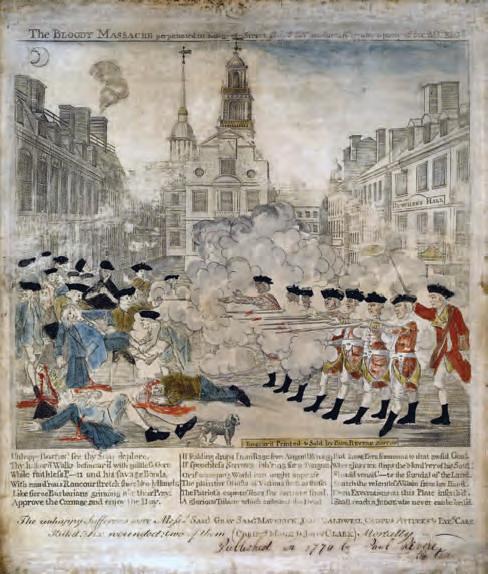
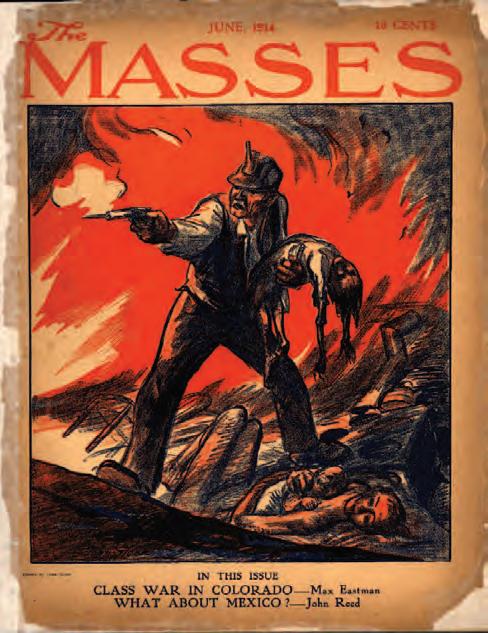
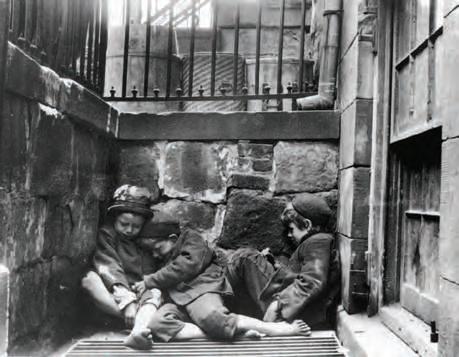
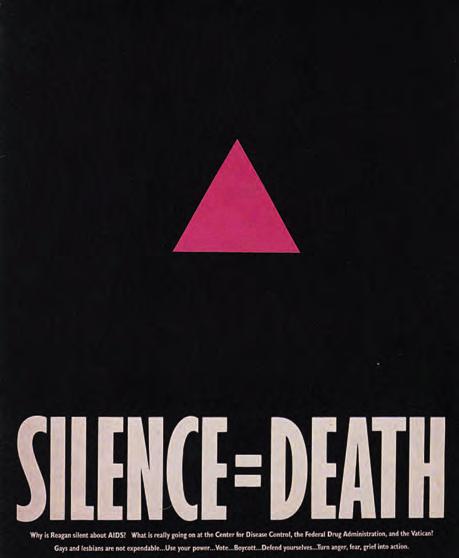
Page 20 photographs (clockwise from upper left): Boston Massacre image from the Library of Congress; Jacob Riis photograph from the Jacob A. Riis Collection, Museum of the City of New York; “Silence = Death” poster from the New York Public Library; The Masses magazine cover from the American Radicalism Collection, Michigan State University
Page 26 photograph by Physicians for Human Rights—Israel used under a Creative Commons license (http://creativecommons.org/)
Page 32 photograph by J. Paxon Reyes used under a Creative Commons license (http://creativecommons.org/)
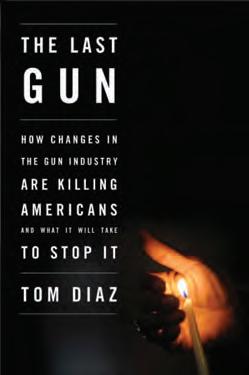
The Last Gun
How Changes in the Gun Industry Are Killing Americans and What It Will Take to Stop It
TOM DIAZ
JUST PUBLISHED
From the in F luential gun control advocate and author, a startling new analysis o F guns and gun violence—in a book that shows the path to a sa F er F uture
In his eminently readable style, mixing science and anecdote, Diaz shows how our leaders have created gun policies that are good for the gun industry but horrific for our nation. He also describes solutions worthy of the name. What a timely book!
—DAVID HEMENWAY, PROFESSOR OF HEALTH POLICY, HARVARD SCHOOL OF PUBLIC HEALTH
Newtown, Connecticut. Aurora, Colorado. Both have entered our collective memory as sites of unimaginable heartbreak and mass slaughter perpetrated by lone gunmen. Meanwhile, cities such as Chicago and Washington, D.C., are dealing with the painful, everyday reality of record rates of gun-related deaths. By any account, gun violence in the United States has reached epidemic proportions.
A widely respected activist and policy analyst—as well as a former gun enthusiast and an ex-member of the National Rifle Association—Tom Diaz presents a chilling, upto-date survey of the changed landscape of gun manufacturing and marketing. The Last Gun explores how the gun industry and the nature of gun violence have changed, including the disturbing rise in military-grade gun models. But Diaz also argues that the once formidable gun lobby has become a “paper tiger,” marshaling a range of evidence and case studies to make the case that now is the time for a renewed political effort to attack gun violence at its source—the guns themselves.
In the aftermath of Newtown, a challenging national conversation lies ahead. The Last Gun is an indispensable guide to this debate, and essential reading for anyone who wants to understand how we can finally rid America’s streets, schools, and homes of gun violence and prevent future Newtowns.
Tom Diaz is a writer, lawyer, and public speaker on the gun industry and gun control. Formerly senior policy analyst at the Violence Policy Center, he has been featured on MSNBC, NPR, and other national media. His books include Making a Killing (The New Press). He lives in Washington, D.C.
Diaz once again reveals what the firearms-industrial complex doesn’t want the public to know, while refusing to spare politicians and the media for their complicity in the cover-up. . . . This book should be required reading for policy makers at every level and for every American fed up with the massacre of 30,000 people a year.
—ANDREW FOIS, DEPUTY ATTORNEY GENERAL, PUBLIC SAFETY DIVISION, WASHINGTON, D.C.
Through a gripping narrative that combines plenty of factual data with compelling storytelling, Diaz makes the convincing case that the gun industry is knowingly trading American lives for profits. . . . After the tragedy of Newtown, if you are going to read one book to understand the current political fight in Washington, this is it.
—JOSHUA HORWITZ, ExECUTIVE DIRECTOR COALITION TO STOP GUN VIOLENCE
$26.95 / $29.95 CAN 5 1⁄2” x 8 1⁄4”, 336 pages Sociology/Business
The Pinochet File A
Declassified Dossier on Atrocity and Accountability
PETER KORNBLUH
revised and updated with a new afterword
paperback t he de F initive primary–source history o F u s . involvement in the regime o F a ugusto p inochet, revised and updated F or the F ortieth anniversary o F the c hilean coup that brought him to power
The long-awaited book of record on the U.S. intervention in Chile. . . . A crisp, compelling narrative, almost a political thriller.
LOS ANGeLeS TiMeS
A remarkable reconstruction of the secret foreign policy that transformed Chile into a dictatorship.
NeWSWeeK
The smoking guns are all here.
—SAMANTHA POWER, AUTHOR OF THE PULITZER PRIZE–WINNING A PROBLeM FROM HeLL
Paperback, $14.95, 978-1-56584-985-3
September
Paperback, 978-1-59558-912-5
$24.95 / $28.95 CAN
6 1⁄8” x 9 1⁄4”, 592 pages History/Latin American Studies (Previous edition: 978-1-56584-936-5)
Weaves together thirty years of declassified documents with a gripping narrative.
THe NeW YORKeR
Revised and updated for the fortieth anniversary of Augusto Pinochet’s September 11, 1973, military coup in Chile, The Pinochet File reveals a formerly secret record of complicity with atrocity on the part of the U.S. government. Documents that were first made publicly available in the original hardcover edition formed the heart of the international campaign to hold Pinochet accountable for murder, torture, and terrorism—a campaign chronicled for the first time in this updated edition.
Peter Kornbluh spearheaded the effort to declassify some 24,000 secret CIA, White House, National Security Council, and Defense Department records on Chile, and when The Pinochet File was first published in 2003, Marc Cooper wrote in the Los Angeles Times, “Thanks to Peter Kornbluh, we have the first complete, almost day-to-day and fully documented record of this sordid chapter in Cold War American history.” With the publication of this edition, that record becomes even more complete.
This book now includes the story of Pinochet’s 2004 indictment and trial, as well as new information about the famous cases of the American Charles Horman and Chilean folk singer Victor Jara—both executed by Pinochet’s military after the coup. The new afterword also tells the story of The Pinochet File itself: Henry Kissinger’s attempt to undercut the book’s reception generated a major scandal that led to highlevel resignations at the Council on Foreign Relations, illustrating the continued ability of the book to speak truth to power.
Peter Kornbluh directs the Chile Documentation Project and the Cuba Documentation Project at the National Security Archive. He is a co-author of The Iran-Contra Scandal (The New Press) and the editor of The Bay of Pigs Declassified (The New Press) and The Cuban Missile Crisis, 1962. He lives in Maryland.
Confessions of an Argentine Dirty Warrior: A Firsthand Account of Atrocity
Horacio Verbitsky
The Arabs A Concise History
JOHN McHUGO
From a leading scholar, a sweeping, accessible history o F a key region that provides vital context F or understanding the contemporary m iddle e ast
A lucid and highly readable history of the Arab peoples up to the present day. John McHugo has provided a way of understanding this complex and ongoing story that will enlighten all who read it.
—CHARLES TRIPP,
AUTHOR OF THe POWeR AND THe PeOPLe
From Algeria and Libya to Egypt and Syria, the Arab world commands Western headlines, even as its complex politics and cultures elude the grasp of most Western readers and commentators. Perhaps no other region is so closely linked to contemporary U.S. foreign policy, and nowhere else does the unfolding of events have such significant consequences for America.
The Arabs: A Concise History argues that the key to understanding the Arab world today—and in the years ahead—is unlocking its past. John McHugo takes the reader on a journey through the political, social, and intellectual history of the Arabs from the Roman Empire right up to the present day. His sweeping and fluent account describes in vivid detail the mission of the Prophet Muhammad, the expansion of Islam, the origins of Shiism, medieval and modern conflicts, the fall of the Ottoman Empire, the interaction with Western ideas, the struggle to escape foreign domination, the rise of Islamism, and the end of the era of dictators.
McHugo reveals how the Arab world came to have its present form, why change was inevitable, and what choices lie ahead following the Arab Spring. This deeply informed and accessible account is the perfect entry point for anyone seeking to comprehend this vital part of the world.
John McHugo is an Arabist, an international lawyer, and a former academic researcher. He is a director of the Council for Arab-British Understanding, the chair of the Liberal Democrat Friends of Palestine, and a director of the British-egyptian Society. He lives in London.
Available only in the U.S. and Canada Translation Rights: Saqi Books, London
The Coup: 1953, the CiA, and the Roots of Modern U.S.-iranian Relations Ervand Abrahamian Hardcover, $26.95, 978-1-59558-826-5
Three Kings: The Rise of an American empire in the Middle east After World War ii Lloyd C. Gardner Paperback, $18.95, 978-1-59558-644-5
Behind the Shock Machine
The Untold Story of the Notorious Milgram Psychology Experiments
GINA PERRY
t he true story—and revealing legacy—o F the controversial experiments on obedience to authority F igures, based on previously unpublished material
There may be no studies of the twentieth century more haunting—or more revealing of human beings at their best and worst—than Stanley Milgram’s work. And here, finally, is a book that illuminates Milgram and his research subjects in riveting, compassionate detail.
—DEBORAH
BLUM, AUTHOR OF LOVe AT GOON PARK
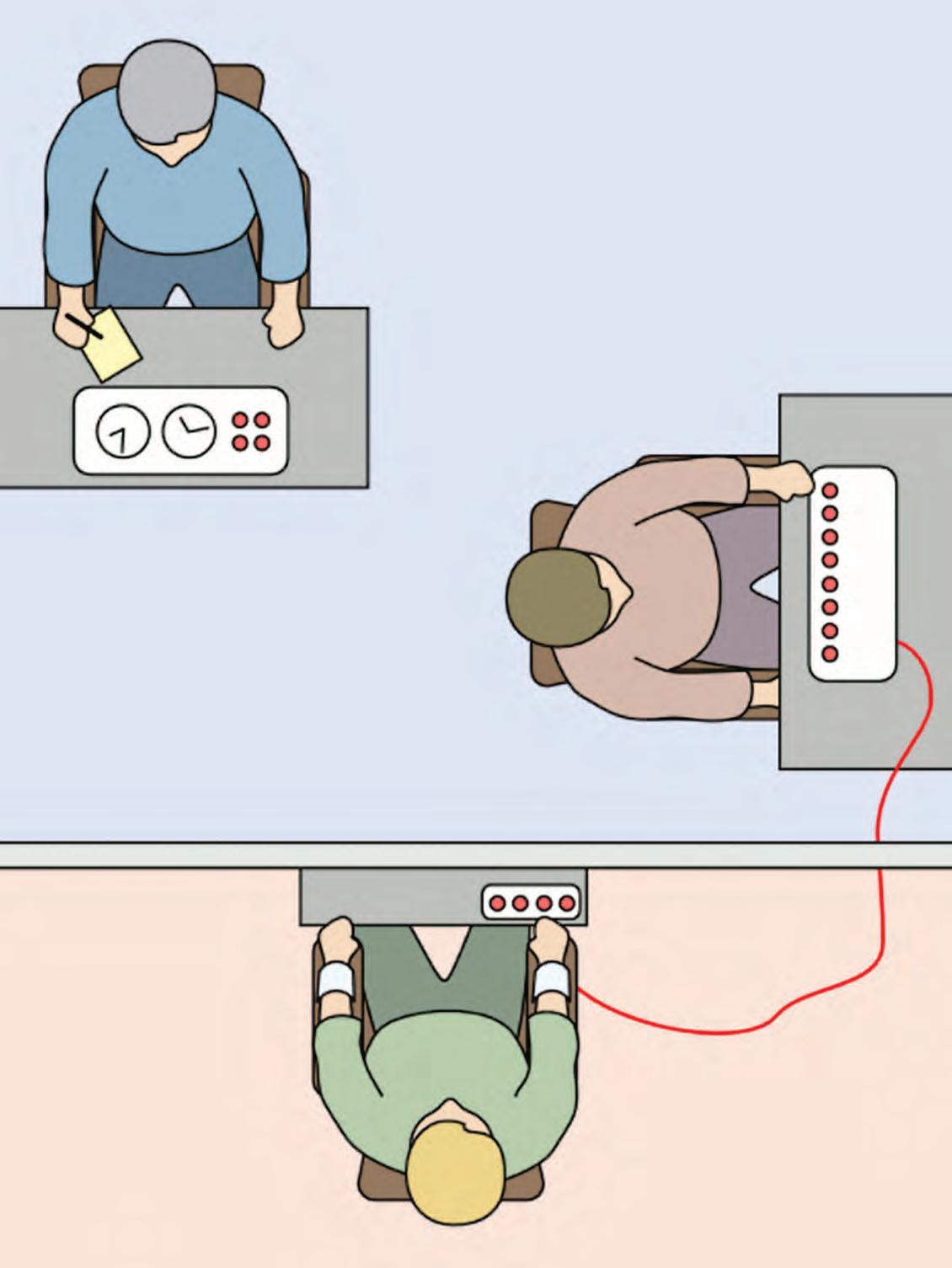
When social psychologist Stanley Milgram invited volunteers to take part in an experiment at Yale in the summer of 1961, none of the participants could have foreseen the worldwide sensation the results would cause. Milgram reported that the volunteers had repeatedly shocked a man they believed to be in severe pain, possibly even dying, because an authority figure had told them to, and he linked this behavior to atrocities perpetrated by ordinary people under the Nazi regime.
In Behind the Shock Machine, noted psychologist and author Gina Perry unearths for the first time the full story of this controversial experiment and its startling repercussions. Interviewing the original participants and delving deep into the Yale archives and Milgram’s unpublished files and notebooks, she pieces together a more complex picture of this flawed experiment: volunteers were not as obedient as later claimed; they were subjected to more intense and sustained pressure; some left unaware that the shocks had been faked; and, most significantly, many participants remain haunted by what they had done. Fleshed out with dramatic transcripts of the tests themselves, Perry puts a human face on the statistics and offers a gripping, unforgettable tale of one man’s ambition and an experiment that defined a generation.
Gina Perry is a psychologist and writer. She was a co-producer of the Australian Broadcasting Corporation’s national radio documentary Beyond the Shock Machine She lives in Melbourne, Australia.
Praise for the Australian edition: Remarkable. . . . Reading Behind the Shock Machine becomes an act of creative disobedience.
THe AUSTRALiAN
[A] provocative magnum opus . . . full of new info and insights, written with a literary flair so engaging and absorbing that I found it hard to put down.
—THOMAS BLASS, AUTHOR OF THe MAN WHO SHOCKeD THe WORLD
An intriguing tale about science, ethics and storytelling.
THe AGe
An absorbing account of Stanley Milgram, his subjects, and the continuing quest to understand what it means to be human.
—DAVID BAKER, DIRECTOR, ARCHIVES OF THE HISTORY OF AMERICAN PSYCHOLOGY
$26.95 / $30.95 CAN 6 1⁄8” x 9 1⁄4”, 352 pages Psychology/Social Science
Available only in the U.S. and Canada Translation Rights: Scribe Publications Pty Ltd, Brunswick, Australia
So Rich, So Poor
Why It’s So Hard to End Poverty in America
PETER EDELMAN
with a new introduction by the author
now in paperback t he bestselling exploration o F increasing poverty in a merica today by the man who resigned F rom the c linton administration to protest the treatment o F the nation’s poor
Before we have one more discussion of how America can combat its persistent and growing levels of poverty, could everyone please read this book?
—BARBARA EHRENREICH
If you are a layperson, [So Rich, So Poor] is a chance to absorb more than you probably ever realized is at the heart of the fight against poverty; if you are someone who has long been involved in the fight against poverty, I have little doubt you will find new ideas, angles, or inspiration in these pages.
—GREG KAUFMANN, THe NATiON
Provocative.
BLOOMBeRG NeWS
[Edelman’s] compassionate and singular voice awakens our conscience and calls us to action.
5 1⁄2” x 8 1⁄4”, 208 pages Social Science/Current Affairs (Hardcover edition: 978-1-59558-785-5)
If there is one essential book on the great tragedy of poverty and inequality in America, this is it. Peter Edelman is masterful on the issue. With a real-world grasp of politics and the economy, Edelman makes a brilliantly compelling case for what can and must be done.
—BOB HERBERT
Income disparities in our wealthy nation are now wider than at any point since the Great Depression. The structure of today’s economy has stultified wage growth for half of America’s workers—with even worse results at the bottom and for people of color—while bestowing billions on those at the top.
In this “accessible and inspiring analysis” (Angela Glover Blackwell), lifelong antipoverty advocate Peter Edelman assesses how the United States can have such an outsized number of unemployed and working poor despite important policy gains. He delves into what is happening to the people behind the statistics and takes a particular look at young people of color for whom the possibility of productive lives is too often lost on the way to adulthood. In a timely new introduction, Edelman discusses the significance of Obama’s reelection—including the rediscovery of the word “poverty”—as well as the continuing attack on the poor from the right.
“Engaging and informative” (William Julius Wilson), “powerful and eloquent” (Wade Henderson), “a national treasure composed by a wise man” (George McGovern), and “a great source for summaries of our country’s antipoverty program” (Publishers Weekly), So Rich, So Poor is crucial reading for anyone who wants to understand the most critical American dilemma of the twenty-first century.
Peter Edelman is a professor at Georgetown University Law Center. A top adviser to Senator Robert F. Kennedy from 1964 to 1968, he went on to fill various roles in President Bill Clinton’s administration, from which he famously resigned in protest after Clinton signed the 1996 welfare reform legislation. He lives in Washington, D.C.
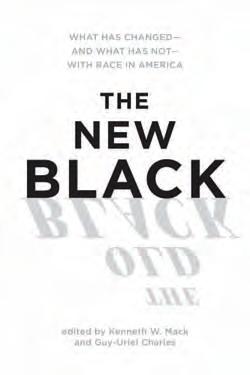
The New Black
What Has Changed—and What Has Not— with Race in America
edited by KENNETH W. MACK and GUY-URIEL CHARLES
paperback original a F resh and illuminating look at twenty- F irst-century a merican race relations in original pieces by an all-star set o F commentators
Americans of all races and ethnicities need to become racially literate, not post-racially blind . . . the conversation on race continues in a new space.
—LANI GUINIER, AWARD-WINNING CONTRIBUTOR TO THe NeW BLACK
The election and reelection of Barack Obama ushered in a litany of controversial perspectives about the contemporary state of American race relations. In this incisive volume, some of the country’s most celebrated and original thinkers on race— historians, sociologists, writers, scholars, and well-known cultural critics—reexamine the familiar framework of the civil rights movement with an eye to overhauling dramatically our understanding of the politics of race.
Through provocative and insightful essays, The New Black challenges contemporary images of black families, offers a contentious critique of the relevance of presidential politics, defies accepted notions of what “black” means individually and collectively, transforms ideas about the real and perceived political power of people of color, and generally attempts to define the new boundaries of debates over race in America.
Bringing a wealth of novel ideas and fresh perspectives to the public discourse, The New Black represents a major effort to address both persistent inequalities and the changing landscape of race in the new century.
Kenneth W. Mack is a law professor at Harvard University and the author of Representing the Race. He has written for the Boston Globe, the Washington Post, the Los Angeles Times, and the Baltimore Sun, and has appeared on CNN, Anderson Cooper 360, and PBS’s Frontline. He lives in Newton, Massachusetts. Guy-Uriel Charles, a law professor at Duke University and the founding director of the Duke Center on Law, Race, and Politics, is the publisher of the widely read blog coloreddemos. He lives in Durham, North Carolina.
5 1⁄2” x 8 1⁄4”, 256 pages with 13 b&w images Race Relations/Current Affairs
Howard Zinn
A Life on the Left
MARTIN DUBERMAN
now in paperback n amed one o F the Progressive ’s F avorite books o F 2012, a sweeping political biography o F “the people’s historian” F rom the award-winning biographer and scholar
This intelligent book reminds us of the titanic moral struggles in American history and those who engaged with them.
THe WASHiNGTON POST
Published to great acclaim in hardcover, Martin Duberman’s Howard Zinn was described by Michael Kammen in the Los Angeles Review of Books as “biography at its best, written by a master of the craft and a man who has lived the activist life and combined that with serious scholarship and innovative teaching.” For the millions moved by Howard Zinn’s personal example of political engagement, here is a brilliant new biography of perhaps the most widely celebrated popular interpreter of American history and one of America’s most admired progressive voices.
“Profoundly moving and perfectly timed” (Blanche Wiesen Cook), “compulsively readable and elegant” (ForeWord), “engaging” (History News Network), and “thoughtful” (Reason Online), this fascinating account places Zinn at the heart of the signal events of modern American history—from World War II to the McCarthy era, the civil rights and the antiwar movements, and beyond. A bombardier who later renounced war, a son of working-class parents who earned a doctorate at Columbia, a white professor who taught at the historically black Spelman College in Atlanta—the author of A People’s History of the United States blazed a bold, iconoclastic path through the turbulent second half of the twentieth century. Drawing on the previously closed Zinn archives and illustrated with never-before-published photographs, Howard Zinn brings to life this towering figure—the people’s historian who himself made history, changing forever how we think about our past.
Martin Duberman is Distinguished Professor emeritus of History at the CUNY Graduate School. The author of more than twenty books, Duberman has won a Bancroft Prize and been a finalist for both the National Book Award and the Pulitzer Prize. He lives in New York City.
Destined to be a classic.
—MARK KURLANSKY
If you’re a fan of Howard Zinn . . . you’ll want to pick up this excellent biography.
THe PROGReSSiVe
A masterful biography. . . . With his typically meticulous research, [Duberman] has ferretted out the facts and given us a complete picture, warts and all.
The indispensable Zinn: The essential Writings of the “People’s Historian” Howard Zinn, edited by Timothy Patrick McCarthy Paperback, $19.95, 978-1-59558-622-3
A People’s History of the U.S. Military
Ordinary Soldiers Reflect on Their Experience of War, from the American Revolution to Afghanistan
MICHAEL A. BELLESILES
a new press people’s history howard zinn, series editor
now in paperback t he compelling F irst-person accounts o F common soldiers in the a merican military, F rom the a merican r evolution to the war in aF ghanistan
In this excellent new book, Michael A. Bellesiles shows that wars are about death and destruction, and the ones who ultimately pay the price in carrying them out are the men and women who fight them.
—GIAN P. GENTILE, AUTHOR OF HOW eFFeCTiVe iS STRATeGiC BOMBiNG?
[A] much-needed, one-of-a-kind book.
—DAVID WILLIAMS, AUTHOR OF A PeOPLe’S HiSTORY OF THe CiViL WAR
1877: America’s Year of Living Violently Michael A. Bellesiles Paperback, $19.95, 978-1-59558-708-4
5 1⁄2” x 8 1⁄4”, 384 pages Military History (Hardcover edition: 978-1-59558-628-5)
This vivid and insightful volume provides an essential corrective, offering readers U.S. military history from the bottom up.
—ANDREW J. BACEVICH, AUTHOR OF WASHiNGTON RULeS, THe NeW AMeRiCAN MiLiTARiSM, THe LiMiTS OF POWeR, AND AMeRiCAN eMPiRe
Military service can shatter or give meaning to lives—it is rarely a neutral encounter— and it has resulted in a rich outpouring of personal testimony from the men and women who have literally placed their lives on the line. “A ‘real’ love letter to our military [that] will prove enlightening, even galvanizing” (Dissent), A People’s History of the U.S. Military tells the captivating narratives of common soldiers, sampled from over three centuries of letters, diaries, and memoirs as well as audio recordings, films, and blogs. The often dramatic, sometimes very raw, and always richly textured first-person accounts collected in this book cover a wide range of perspectives, from ardent patriots to disillusioned cynics, barely literate farm boys to urbane college graduates, scions of founding families to recent immigrants, and women disguising themselves as men in order to serve their country to African Americans fighting for their freedom through military service.
Praised as “compact and complete” (Booklist), “an excellent educational tool” (Publishers Weekly), and “a useful, unsettling, bottom-up history of America’s wars that emphasizes the soldiers’ mistreatment, suffering, and injustice” (Kirkus Reviews), A People’s History of the U.S. Military has already become a major new touchstone for our understanding of American military service.
Michael A. Bellesiles teaches history at Central Connecticut State University. He is the author of numerous books, including 1877 (The New Press) and Arming America. He lives in Connecticut.
Hearts and Minds
A People’s History of Counterinsurgency
edited by HANNAH GURMAN
a new press people’s history howard zinn, series editor
paperback original From m alaya and v ietnam to i raq and aF ghanistan, leading scholars and journalists unravel the myth and challenge the e FF icacy o F counterinsurgency
Counterinsurgency is a tactical phoenix, dying only to rise again, ever-ready to win hearts and minds for the American empire. . . . This essential volume makes it possible to understand the past and prepare for the next time the siren song of counterinsurgency is sung.
—MARILYN YOUNG, PROFESSOR OF HISTORY, NEW YORK UNIVERSITY
Since 2006, when the Army published its new field manual on counterinsurgency (or the battle for “hearts and minds”), this guiding doctrine of the U.S. military establishment continues to command broad support from liberals and conservatives alike.
The first book of its kind, Hearts and Minds retells the history of counterinsurgency from the perspective of the populations whose hearts and minds have been fought over since the end of World War II. With contributions from economists, anthropologists, social historians, and journalists, the book examines key examples of counterinsurgency campaigns in Malaya, the Philippines, Vietnam, El Salvador, Iraq, and Afghanistan—detailing not only the real sources of discontent behind the insurgencies but also the negative impact of supposedly benevolent counterinsurgency programs on the everyday lives of the people in these regions. A wealth of primary sources and gripping documentary photographs give readers a rare glimpse into the experiences of the many civilians—children, mothers, farmers, workers—caught in the conflicts. A historical primer in its own right, Hearts and Minds will also be a key resource for anyone engaged in the vital contemporary debates over U.S. military policy.
Hannah Gurman is an assistant professor at New York University’s Gallatin School of individualized Study. She writes on the politics, economics, and culture of U.S. diplomacy and military conflict for Salon, the Huffington Post, and Foreign Policy in Focus, among other publications. She is the author of The Dissent Papers: The Voices of Diplomats in the Cold War and Beyond. She lives in New York City.
5 1⁄2” x 8 1⁄4”, 336 pages with 12 b&w images History
Wrong Turn: America’s Deadly embrace of Counterinsurgency Colonel Gian Gentile Hardcover, $24.95,
Divided
The Perils of Our Growing Inequality
edited by DAVID CAY JOHNSTON
o ver thirty leading economists, journalists, and scholars explore the most urgent issue o F our times: the upward redistribution o F wealth and income in a merica
In a democracy, the civics textbooks tell us, people come together to discuss, debate, and decide solutions to the common problems they face. But this democratic deliberation only works effectively when most people have the same problems in common. In deeply unequal societies, they don’t.
—SAM PIZZIGATTI, TOO MUCH
The issue of inequality has irrefutably returned to the fore, riding on the anger against Wall Street following the 2008 financial crisis and the concentration of economic and political power in the hands of the super-rich. The Occupy movement made the plight of the 99 percent an indelible part of the public consciousness, and concerns about inequality were a decisive factor in the 2012 presidential elections.
How bad is it? According to Pulitzer Prize–winning journalist David Cay Johnston, most Americans, in inflation-adjusted terms, are now back to the average income of 1966. Shockingly, from 2009 to 2011, the top 1 percent got 121 percent of the income gains while the bottom 99 percent saw their income fall. Yet in this most unequal of developed nations, every aspect of inequality remains hotly contested and poorly understood.
Divided collects the writings of leading scholars, activists, and journalists to provide an illuminating, multifaceted look at inequality in America, exploring its devastating implications in areas as diverse as education, justice, health care, social mobility, and political representation. Provocative and eminently readable, here is an essential resource for anyone who cares about the future of America—and compelling evidence that inequality can be ignored only at the nation’s peril.
David Cay Johnston is an investigative journalist and the winner of a 2001 Pulitzer Prize for uncovering loopholes and inequities in the U.S. tax code. He is the president of investigative Reporters & editors and the author of the bestselling trilogy Perfectly Legal, Free Lunch, and The Fine Print. He lives in Rochester, New York.
Contributors include:
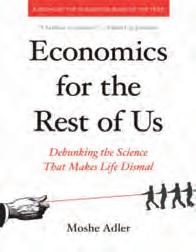
Moshe Adler
Gar Alperovitz
Kim Bobo
Chuck Collins
Peter Edelman
Leo W. Gerard
Meizhu Lui
Mary O’Brien
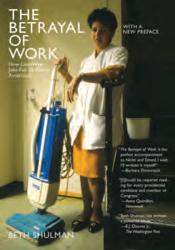
Beth Shulman
Studs Terkel
Jaime Torres
Elizabeth Warren
Richard Wilkinson
October
Hardcover, 978-1-59558-923-1
E-book, 978-1-59558-944-6
$25.95 / $29.50 CAN 5 1⁄2” x 8 1⁄4”, 256 pages Economics/Social Science
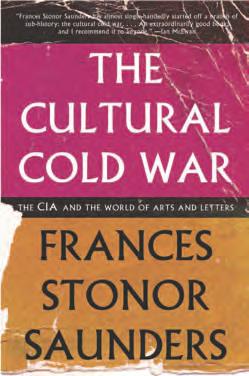
The Cultural Cold War
The CIA and the World of Arts and Letters
FRANCES STONOR SAUNDERS
with a new preface by the author
paperback t he award-winning history o F the cia ’s covert F unding o F cultural activities— F rom the b oston s ymphony o rchestra to a bstract e xpressionism— during the c old w ar
A tale of intrigue and betrayal, with scene after scene as thrilling as any in a John le Carré novel.
CHRONiCLe OF HiGHeR eDUCATiON
A major work of investigative history [and] an extremely valuable contribution to the all-important post–World War II record.
—EDWARD SAID, LONDON ReVieW OF BOOKS
Avoids polemic and fits the fragments of elusive fact into a coherent and persuasive narrative.
—LEWIS LAPHAM, LOS ANGeLeS TiMeS BOOK ReVieW
Makes clear the sinuous interlocking nature of American governmental, corporate and cultural life . . . consistently fascinating.
—MICHAEL DIRDA, THe WASHiNGTON POST BOOK WORLD
November
Paperback, 978-1-59558-914-9
E-book, 978-1-59558-942-2
$21.95 / $24.95 CAN
5 1⁄2” x 8 1⁄4”, 496 pages with 15 b&w images History/Art
(Previous edition: 978-1-56584-664-7)
Translation Rights: Lutyens & Rubinstein, London
Frances Stonor Saunders has almost single-handedly started off a branch of sub-history: the Cultural Cold War. . . . An extraordinarily good book, and I recommend it to anyone.
—IAN McEWAN
During the Cold War, freedom of expression was vaunted as liberal democracy’s most cherished possession—but such freedom was put in service of a hidden agenda. In The Cultural Cold War, Frances Stonor Saunders reveals the extraordinary efforts of a secret campaign in which some of the most vocal exponents of intellectual freedom in the West were working for or subsidized by the CIA—whether they knew it or not. Called “the most comprehensive account yet of the [CIA’s] activities between 1947 and 1967” by the New York Times, The Cultural Cold War presents shocking evidence of the CIA’s undercover program of cultural interventions in Western Europe and at home. This “impressively detailed” (Kirkus Reviews) book draws together declassified documents and exclusive interviews to expose the CIA’s astonishing campaign to deploy the likes of Hannah Arendt, Isaiah Berlin, Leonard Bernstein, Robert Lowell, George Orwell, and Jackson Pollock as weapons in the Cold War.
Widely reviewed upon its original publication in 2000, awarded the Royal Historical Society’s Gladstone Memorial Prize, and translated into ten languages, the book is “a real contribution to popular understanding of the postwar period” (The Wall Street Journal). This edition includes a new preface by the author recalling the complexity of writing the book and its impact on publication.
Frances Stonor Saunders is the author of The Devil’s Broker and The Woman Who Shot Mussolini. She has worked as the city editor of the New Statesman; writes and presents for BBC radio; and has written for Areté, The Guardian, Lapham’s Quarterly, and the Los Angeles Times. She lives in London.
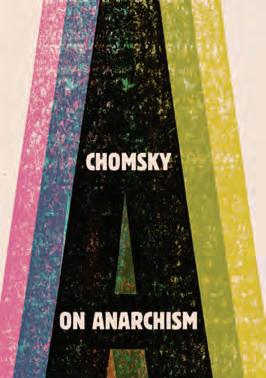
On Anarchism
NOAM CHOMSKY
paperback original t he essential primer to the political theory o F the thinker the New York t imes deemed “arguably the most important intellectual alive”
The essence of anarchism [is] the conviction that the burden of proof has to be placed on authority and that it should be dismantled if that burden cannot be met.
—NOAM CHOMSKY
Radical linguist, philosopher, and activist Noam Chomsky is one of the world’s foremost intellectuals. Known for his brilliant evisceration of American foreign policy, state capitalism, and the mainstream media, he remains a formidable and unapologetic critic of established authority.
On Anarchism sheds a much-needed light on the foundations of Chomsky’s thought, specifically his constant questioning of the legitimacy of entrenched power. The book gathers his essays and interviews to provide a short, accessible introduction to his distinctively optimistic brand of anarchism. Chomsky eloquently refutes the notion of anarchism as a fixed idea, suggesting that it is part of a living, evolving tradition, and he disputes the traditional fault lines between anarchism and socialism, emphasizing the power of collective, rather than individualist, action.
Including a revealing new interview with Chomsky by well-known writer and blogger Nathan Schneider that assesses Chomsky’s writings on anarchism to date, this is a book that is sure to challenge, provoke, and inspire. Profoundly relevant to our times, On Anarchism is a touchstone for political activists and anyone interested in deepening their understanding of anarchism and the man dubbed the “nation’s conscience.”
Noam Chomsky is institute Professor emeritus of linguistics at MiT and the author of numerous books including Towards A New Cold War, The Chomsky-Foucault Debate, On Language, and Objectivity and Liberal Scholarship (all available from The New Press). He lives in Cambridge, Massachusetts. Nathan Schneider writes for The Nation and is an editor of the blogs Waging Nonviolence and Killing the Buddha. He lives in New York City.
$15.95 / $18.50 CAN 5 1⁄4” x 7 1⁄2”, 128 pages Political Science/Essays
Understanding Power: The indispensable Chomsky Noam Chomsky, edited by Peter R. Mitchell and John Schoeffel Paperback, $22.95, 978-1-56584-703-3
The Chomsky-Foucault Debate: On Human Nature Noam Chomsky and Michel Foucault Paperback, $15.95, 978-1-59558-134-1
Killing Machine
The American Presidency in the Age of Drone Warfare
LLOYD C. GARDNER
From the “devastatingly e FF ective” ( a ndrew b acevich) chronicler o F a merican F oreign policy, a scathing new assessment o F the a merican presidency and u . s . global power
Thomas E. Donilon, the national security advisor, remarked that what surprised him the most about Obama in office was: “He’s a president who is quite comfortable with the use of force on behalf of the United States.”
FROM KiLLiNG MACHiNe
With Obama’s election to the presidency in 2008, many believed the United States had entered a new era: Obama came into office with high expectations that he would end the war in Iraq and initiate a new foreign policy that would reestablish American values and the United States’ leadership role in the world.
In this shattering new assessment, historian Lloyd C. Gardner argues that, despite cosmetic changes, Obama has simply built on the expanding power base of presidential power that reaches back across decades and through multiple administrations. The new president ended the “enhanced interrogation” policy of the Bush administration but did not abandon the concept of preemption. Obama withdrew from Iraq but has institutionalized drone warfare—including the White House’s central role in selecting targets. What has come into view, Gardner argues, is the new face of American presidential power: high-tech, secretive, global, and lethal.
Killing Machine skillfully narrates the drawdown in Iraq, the counterinsurgency warfare in Afghanistan, the rise of the use of drones, and targeted assassinations from al-Awlaki to Bin Laden—drawing from the words of key players in these actions as well as their major public critics. With unparalleled historical perspective, Gardner’s book is the new touchstone for understanding not only the Obama administration but the American presidency itself.
Lloyd C. Gardner is the Charles and Mary Beard Professor of History at Rutgers University and the author or editor of more than a dozen books, including The Long Road to Baghdad and Three Kings (both available from The New Press). He lives in Newtown, Pennsylvania.
Praise for The Road to Tahrir Square: Chronicles the U.S. and Egypt’s twentieth-century entanglements with concision and clarity . . . thought-provoking.
PUBLiSHeRS WeeKLY
A clear, concise, and insightful account of Egypt’s long decline, focusing on both the mistakes of its own leaders and the ignorant meddling of outside powers.
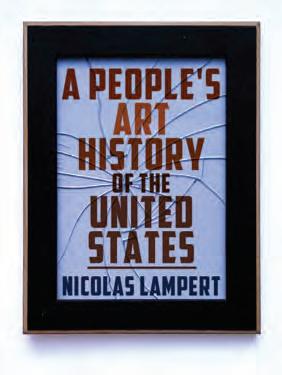
i nspired by the pathbreaking work o F h oward Zinn, a book that takes a merican art history out o F the museum and into the streets
When artists join social movements, they become agitators in the best sense of the word, and their art becomes less about the individual and more about the common vision and aspirations of many. Their art challenges power and becomes part of a culture of resistance.
—FROM A PeOPLe’S ART HiSTORY OF THe UNiTeD STATeS
Most people outside of the art world view art as something that is foreign to their experiences and everyday lives. A People’s Art History of the United States places art history squarely in the rough-and-tumble of politics, social struggles, and the fight for justice from the colonial era through the present day.
Author and radical artist Nicolas Lampert combines historical sweep with detailed examinations of individual artists and works in a politically charged narrative that spans the conquest of the Americas, the American Revolution, slavery and abolition, western expansion, the suffragette movement and feminism, civil rights movements, environmental movements, LGBT movements, antiglobalization movements, contemporary antiwar movements, and beyond.
A People’s Art History of the United States introduces us to key works of American radical art alongside dramatic retellings of the histories that inspired them. Stylishly illustrated with over two hundred images, this book is nothing less than an alternative education for anyone interested in the powerful role that art plays in our society.
Nicolas Lampert is a Milwaukee-based interdisciplinary artist and author whose work focuses on themes of social justice and ecology. His artwork is in the permanent collections of the Museum of Modern Art and the Milwaukee Art Museum, among others. Collectively, he works with the Justseeds Artists’ Cooperative. Lampert is a full-time faculty member at the University of Wisconsin-Milwaukee.
Artists and works discussed include:
Native American wampum belts
Paul Revere’s Boston Massacre lithograph
Abolitionist slave ship illustrations
Jacob Riis’s photographs
Edward Curtis’s and Richard Throssel’s photographs of Native Americans
7 1⁄2” x 9 1⁄4”, 400 pages with over 200 b&w images
Art/History
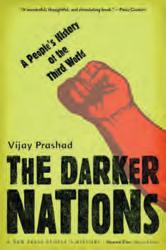
Uncle Swami
South Asians in America Today
VIJAY PRASHAD
now in paperback a n illuminating, incisive portrait o F s outh a sians in a merica by the award-winning author o F t he Darker Natio N s and t he k arma of Brow N f olk
Vijay Prashad is our own Frantz Fanon. His writing of protest is always tinged with the beauty of hope.
—AMITAVA KUMAR, AUTHOR OF PASSPORT PHOTOS
With unflinching clarity and deep compassion, [Prashad] mines the post-9/11 landscape to locate the source of an emerging collective identity as the racial other.
—RINKU SEN, APPLIED RESEARCH CENTER, AND PUBLISHER OF COLORLiNeS
This compelling and carefully researched account reveals not only the contradictions in America’s treatment of its South Asian immigrants, but the contradictions of the great American project itself.
$16.95 / $19.50 CAN 5 1⁄4” x 7 1⁄2”, 224 pages Race Relations/Current Affairs (Hardcover edition: 978-1-59558-784-8)
A passionate book that situates “Indian America” within its own diversified history and alliances in the United States, within the complex histories of national liberation and Hindu nationalism in India, as well as within the spectrum of struggles in the United States.
—GAYATRI CHAKRAVORTY SPIVAK, COLUMBIA UNIVERSITY
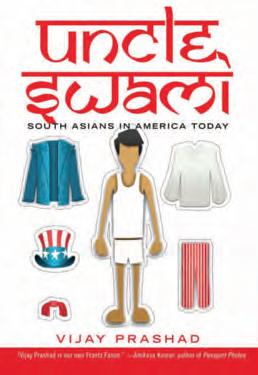
Within hours of the attacks on the World Trade Center, misdirected assaults on Sikhs and other South Asians flared in communities across the nation, serving as harbingers of a more suspicious, less discerning, and increasingly fearful worldview that would drastically change ideas of belonging and acceptance in America.
Weaving together distinct strands of recent South Asian immigration to the United States, Uncle Swami examines a diverse and dynamic people whose identities are all too often lumped together, glossed over, or simply misunderstood. Vijay Prashad confronts the experience of migration across an expanse of generations and class divisions, from the birth of political activism among second-generation immigrants and the meteoric rise of South Asian American politicians in Republican circles to migrant workers at the mercy of the vicissitudes of the American free market.
Described as “eye-opening” (Kirkus Reviews), “bound to spark discussion” (Booklist), and “required reading for anyone who wants to understand race, assimilation, and patriotism” (The Boston Globe), Uncle Swami restores a diasporic community to its full-fledged complexity beyond both model minorities and the specters of terrorism.
Vijay Prashad is the George and Martha Kellner Chair in South Asian History at Trinity College in Hartford, Connecticut. He is the author of The Karma of Brown Folk and The Darker Nations (The New Press), which was chosen as a best nonfiction book of the year by the Asian American Writers’ Workshop and won the Muzaffar Ahmad Book Prize. He lives in Northampton, Massachusetts.
Black Stats
African Americans by the Numbers
MONIQUE W. MORRIS
paperback original a n essential handbook o F eye-opening—and F requently myth - busting— F acts and F igures about the real lives o F aF rican a mericans today
As things are, our opinions upon the Negro are more matters of faith than of knowledge.
—W.E.B. DU BOIS, “THE STUDY OF THE NEGRO PROBLEMS” (1898)
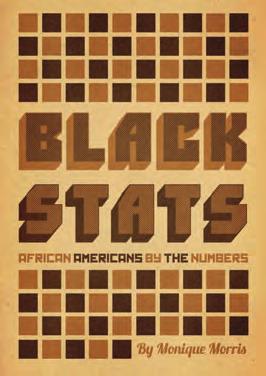
Amid the widespread spin and skewed analysis that is commonplace to media and politics alike, the need for less filtered information and more raw facts seems more pressing than ever. Black Stats, a compact and useful guide, skips over the assumptions, suppositions, and hypotheses about trends and patterns in our society and offers up-to-date figures on black life in the United States today.
Author and advocate Monique W. Morris has compiled statistics from a broad spectrum of telling categories that illustrate the quality of life and the possibility of (and barriers to) advancement for a group at the heart of American society. With fascinating information on everything from disease trends, incarceration rates, and lending practices to voting habits, green jobs, and educational achievement, the material in this book will enrich and inform a range of public debates while challenging commonly held yet often misguided perceptions.
Black Stats simultaneously highlights measures of incredible progress, conveys the disparate impacts of social policies and practices, and surprises with revelations that span subjects including the entertainment industry, military service, and marriage trends. A critical tool for advocates, educators, and policy makers, Black Stats is an affordable guidebook for anyone seeking to understand the complex state of our nation.
Monique W. Morris is a Soros Justice Fellow and consultant to the nation’s leading civil rights and social justice organizations. She is a former Vice President for economic Programs, Advocacy and Research for the NAACP. A lecturer at St. Mary’s College of California, she is the author of the novel Too Beautiful for Words. Morris lives in the Bay Area with her husband and two daughters.
Did you know?
• African Americans represent 13% of the population and 4% of medical doctors in the U.S.
• 20% of black armed service members were discharged under “don’t ask, don’t tell.”
• There are 43 African American members of the 113th Congress, including Tim Scott (R-South Carolina), the first black senator from a Southern state since Reconstruction.
• African Americans are 79% more likely than white Americans to live near major health hazards, like coal plants.
January
Paperback, 978-1-59558-919-4
E-book, 978-1-59558-926-2
$14.95 / $16.95 CAN
5 1⁄4” x 7 1⁄2”, 192 pages with charts and graphs throughout African American Studies
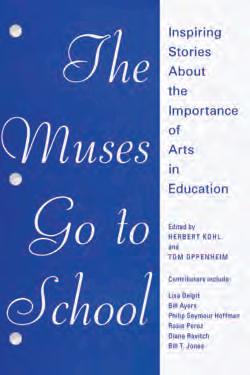
The Muses Go to School
Inspiring Stories About the Importance of Arts in Education
edited by HERBERT KOHL and TOM OPPENHEIM
published in conjunction with the stella adler studio of acting
now in paperback c elebrated artists and educators make the compelling case that the arts belong at the heart o F the a merican education system
Includes interviews with:
David Amram
Whoopi Goldberg
Philip Seymour Hoffman
Bill T. Jones
Moisés Kaufman
Michael Medavoy
Rosie Perez
Phylicia Rashad
and commentary by:
Bill Ayers
Lisa Delpit
Michelle Fine
Maxine Greene
Frances Lucerna
Deborah Meier
Diane Ravitch
Gary Sager
Steve Seidel
Kevin Truitt
January
Paperback, 978-1-59558-941-5
E-book, 978-1-59558-768-8
$18.95 / $21.95 CAN 5 1⁄2” x 8 1⁄4”, 240 pages
Education (Hardcover edition: 978-1-59558-539-4)
Powerful narratives that put a human face on the often-dry statistical studies . . . a passionate and personal reflection upon the effects of America’s educational policies.
THe WASHiNGTON
iNDePeNDeNT ReVieW OF BOOKS
Hailed as an “impressive collection of remembrances and commentaries” (Choice), The Muses Go to School brings together beloved and renowned artists—including Whoopi Goldberg, Phillip Seymour Hoffman, Rosie Perez, and Phylicia Rashad—to share their transformative school encounters with the arts that helped them discover their inner humanity and put them on the road to fully realized creative lives. These autobiographical pieces are paired with interpretive essays by distinguished educators to produce a powerful case for positioning the arts at the center of primary and secondary school curriculums. Spanning a range of genres from acting and music to literary and visual arts, these smart and entertaining voices make surprising connections between the arts and the development of intellect, imagination, spirit, emotional intelligence, self-esteem, and self-discipline of young people.
Herbert Kohl and Tom Oppenheim have created “a superbly articulate assemblage of intensely personal, interdisciplinary voices” (Booklist), revealing that creative arts are a critical element of any education.
Herbert Kohl is a celebrated writer, teacher, and advocate. He is the author of more than forty books, including 36 Children. A recipient of a National Book Award and a Robert F. Kennedy Book Award, he was the founder and first director of the Teachers and Writers Collaborative in New York City and established the PeN West Center in San Francisco. He lives in Point Arena, California. Tom Oppenheim is the artistic director of the Stella Adler Studio of Acting. A lifelong New Yorker, he studied acting at the National Shakespeare Conservatory and with his grandmother Stella Adler. He has numerous theater, film, and television credits and is the recipient of the 2009 Laurette Taylor award from Theatre east. He lives in New York City.
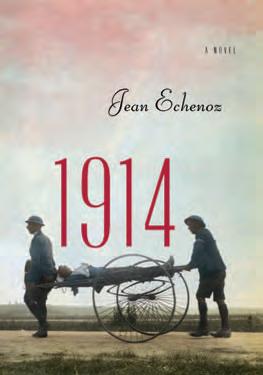
1914 A Novel
JEAN ECHENOZ
translated from
the french by
linda coverdale
paperback original t he p rix g oncourt winner turns his stylistic brilliance to the horrors o F w orld w ar i in a novel published on the war’s one hundredth anniversary
Dazzling, meticulous, and somber.
TéLéRAMA
Jean Echenoz, considered by many to be the most distinguished and versatile living French novelist, turns his attention to the deathtrap of World War I in 1914. In it, five Frenchmen go off to war, two of them leaving behind a young woman who longs for their return. But the main character in this brilliant novel is the Great War itself. Echenoz, whose work has been compared to that of writers as diverse as Joseph Conrad and Laurence Sterne, leads us gently from a balmy summer day deep into the relentless—and, one hundred years later, still unthinkable—carnage of trench warfare.
With the delicacy of a miniaturist and with an irony that is both witty and cleareyed, Echenoz offers us an intimate epic: in the panorama of a clear blue sky, a biplane spirals suddenly into the ground; a piece of shrapnel shears the top off a man’s head as if it were a soft-boiled egg; we dawdle dreamily in a spring-scented clearing with a lonely shell-shocked soldier strolling innocently toward a firing squad ready to shoot him for desertion.
Ultimately, the grace notes of humanity in 1914 rise above the terrors of war in this beautifully crafted tale that Echenoz tells with discretion, precision, and love.
Jean Echenoz won France’s prestigious Prix Goncourt for I’m Gone (The New Press). He is the author of six other novels available in english and the winner of numerous literary prizes, among them the Prix Médicis and the european Literature Jeopardy Prize. He lives in Paris. Linda Coverdale’s most recent translation for The New Press was Jean echenoz’s Lightning. She was the recipient of the French-American Foundation’s 2008 Translation Prize for her translation of echenoz’s Ravel (The New Press). She lives in Brooklyn.
Praise for the French edition of 1914:
This new novel from Jean Echenoz concentrates and synthesizes the quintessence of his writing.
Le MONDe
Praise for Jean Echenoz: One of the best storytellers among the “serious” novelists of his generation.
CONTexT
Lightning: A Novel Jean Echenoz Hardcover, $19.95, 978-1-59558-649-0
January
Paperback with French flaps, 978-1-59558-908-8 E-book, 978-1-59558-911-8
$14.95 / $16.95 CAN
5 1⁄4” x 7 1⁄2”, 128 pages Fiction/Literature
Available only in the U.S. and Canada Translation Rights: Georges Borchardt, Inc., New York
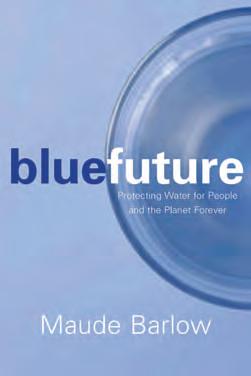
Blue Future
Protecting Water for People and the Planet Forever
MAUDE BARLOW
From the internationally acclaimed environmentalist, a power F ul, penetrating, and timely look at the looming global water crisis—and what we can do to prevent it
The coming grab for the planet’s dwindling resources is the defining issue of our time. Water is not a resource put here for our convenience, pleasure and profit but the source of all life. It is urgent that we clarify the values and principles needed to protect the planet’s fresh water.
FROM BLUe FUTURe
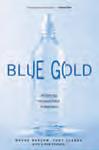
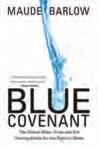
In her bestselling books Blue Gold and Blue Covenant, world-renowned water activist Maude Barlow exposed the battle for ownership of our dwindling water supply and the emergence of an international, grassroots-led movement to reclaim water as a public good. Since then, the United Nations has recognized access to water as a basic human right—but there is still much work to be done to stem this growing crisis.
In this major new book, Barlow draws on her extensive experience and insight to lay out a set of key principles that show the way forward to what she calls a “watersecure and water-just world.” Not only does she reveal the powerful players even now impeding the recognition of the human right to water, she argues that water must not become a commodity to be bought and sold on the open market. Focusing on solutions, she includes stories of struggle and resistance from marginalized communities, as well as government policies that work for both people and the planet.
At a time when climate change has moved to the top of the national agenda and when the stage is being set for unprecedented drought, mass starvation, and the migration of millions of refugees in search of water, Blue Future is an urgent call to preserve our most valuable resource for generations to come.
A recipient of Sweden’s Right Livelihood Award and a Lannan Cultural Freedom Fellowship, Maude Barlow is head of the Council of Canadians and founder of the Blue Planet Project. The author of sixteen books, including Blue Gold and Blue Covenant (both available from The New Press), she is on the boards of Food and Water Watch and the international Forum on Globalization. She lives in Ottawa.
Available only in the U.S. Translation Rights: House of Anansi Press, Toronto
Blue Gold: The Fight to Stop the Corporate Theft of the World’s Water Maude Barlow and Tony Clarke Paperback, $16.95, 978-1-56584-813-9
Blue Covenant: The Global Water Crisis and the Coming Battle for the Right to Water Maude Barlow Paperback, $16.95, 978-1-59558-453-3
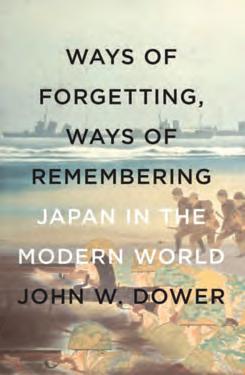
Ways of Forgetting, Ways of Remembering Japan in the Modern World
JOHN W. DOWER
now in paperback a stunning meditation on the historical relationship between j apan and the u nited s tates F rom the p ulit Z er p ri Z e–winning historian
Praise for Ways of Forgetting, Ways of Remembering:
No historian writes with more authority than this leading historian of modern Japan. Dower’s new work . . . shows him at the top of his form.
PUBLiSHeRS WeeKLY
Scrupulously researched and bravely presented scholarship.
KiRKUS ReVieWS
Praise for Embracing Defeat:
A superb history of Japan’s occupation.
THe NeW YORK ReVieW OF BOOKS
A magisterial and beautifully written book. . . . A pleasure to read.
THe NeW YORK TiMeS BOOK ReVieW
February
Paperback, 978-1-59558-937-8
E-book, 978-1-59558-811-1
$19.95 / $22.95 CAN
5 1⁄2” x 8 1⁄4”, 336 pages with 38 b&w images History/Japan
(Hardcover edition: 978-1-59558-618-6)
Translation Rights: Georges Borchardt, Inc., New York
At a tense time of toxic nationalism in Asia, this book is a timely reminder of the uses and abuses of history.
THe eCONOMiST
Historian John W. Dower’s celebrated investigations into modern Japanese history, World War II, and U.S.-Japanese relations have earned him critical accolades and numerous honors, including the Pulitzer Prize, the National Book Award, and the Bancroft Prize. Now Dower returns to the major themes of his groundbreaking work, examining American and Japanese perceptions of key moments in their shared history.
Both provocative and probing, Ways of Forgetting, Ways of Remembering delves into a range of subjects, including the complex role of racism on both sides of the Pacific War, the sophistication of Japanese wartime propaganda, the ways in which the nuclear bombing of Hiroshima and Nagasaki is remembered in Japan, and the story of how the postwar study of Japan in the United States and the West was influenced by Cold War politics.
Ways of Forgetting, Ways of Remembering offers urgent insights by one of our greatest interpreters of the past into how citizens of democracy should deal with their history and, as Dower writes, “the need to constantly ask what is not being asked.”
John W. Dower is Professor emeritus of History at Massachusetts institute of Technology. He is the author of several books, including War Without Mercy, Cultures of War, and Embracing Defeat, which was the recipient of numerous awards, including the Pulitzer Prize, the National Book Award, the Bancroft Prize, and the Fairbank Prize. He lives in Boston.
Fukushima Facing Down Disaster
DAVID LOCHBAUM, EDWIN LYMAN, SUSAN Q. STRANAHAN, and THE UNION OF CONCERNED SCIENTISTS
t he edge-o F -your-seat story o F the meltdown o F the Fukushima nuclear power plant by nuclear scientists and a p ulit Z er p ri Z e–winning journalist—published to coincide with the third anniversary
It’s been over thirty years since a reactor in the United States melted down. Some believe this indicates that all safety problems have been addressed and no challenges remain. That’s not “mission accomplished,” it’s just plain luck. The Japanese thought the same thing until their luck ran out.
FROM FUKUSHiMA
On March 11, 2011, an earthquake large enough to knock the earth from its axis sent a massive tsunami speeding toward the Japanese coast and the aging and vulnerable Fukushima Daiichi nuclear power reactors. Over the following weeks, the world watched in horror as a natural disaster became a man-made catastrophe: fail-safes failed, cooling systems shut down, nuclear rods melted.
In the first definitive account of the Fukushima disaster, two leading experts from the Union of Concerned Scientists, David Lochbaum and Edwin Lyman, team up with journalist Susan Q. Stranahan, the lead reporter of the Philadelphia inquirer’s Pulitzer Prize–winning coverage of the Three Mile Island accident, to tell this harrowing story. Fukushima combines a fast-paced, riveting account of the tsunami and the nuclear emergency it created with an explanation of the science and technology behind the meltdown as it unfolded in real time. Bolstered by photographs, explanatory diagrams, and a comprehensive glossary, the narrative also extends to other severe nuclear accidents to address both the terrifying question of whether it could happen here and how such a crisis can be averted.
David Lochbaum is the head of the Union of Concerned Scientists’ Nuclear Safety Project and author of Nuclear Waste Disposal Crisis. He lives in Tennessee. Edwin Lyman is a senior scientist in the Global Security Program of the Union of Concerned Scientists. He lives in Washington, D.C. Susan Q. Stranahan is the author of Susquehanna: River of Dreams. She lives in Maine. The Union of Concerned Scientists is the leading science-based nonprofit working for a healthy environment and a safer world.
5 1⁄2” x 8 1⁄4”, 256 pages with images throughout Science/Current Affairs
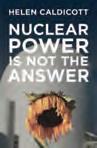
Nuclear Power is Not the Answer Helen Caldicott Paperback, $16.95, 978-1-59558-213-3
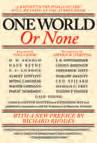
One World or None: A Report to the Public on the Full Meaning of the Atomic Bomb Edited by Dexter Masters and Katharine Way Hardcover, $23.95, 978-1-59558-227-0
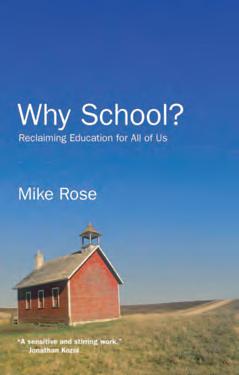
Why School?
Reclaiming Education for All of Us
MIKE ROSE
revised and updated
now in paperback newly revised and updated, a power F ul and timely exploration o F this country’s public education goals by the g uggenheim Fellow and g rawemeyer award–winning author and educator
A Bill Moyers Book Pick
Rose gives a larger sense of the interplay between what happens in the classroom and the world outside school . . . [and] a capacious sense of what can happen within the interior world of the classroom.
THe NeW YORK ReVieW OF BOOKS
Rose puts into clear words what so many of us feel is lacking in our children’s education. . . . [He] recalibrates our thinking in this little book, the first step toward change.
LOS ANGeLeS TiMeS
Wondrous.
iN THeSe TiMeS
A compact and potent collection of essays.
THe NATiON
February
Paperback, 978-1-59558-938-5
E-book, 978-1-59558-522-6
$16.95 / $19.50 CAN 4 1⁄2” x 7”, 224 pages
Education (Hardcover edition: 978-1-59558-467-0)
Once again at his most bold and brilliant. . . . Rose is a rare treasure in this dreary moment of debate along the dismal flatlands of education discourse. He brings us to the mountaintops.
—JONATHAN KOZOL
Why School? is a little book driven by big questions. What does it mean to be educated? What is intelligence? How should we think about intelligence, education, and opportunity in an open society? Drawing on forty years of teaching and research and “a profound understanding of the opportunities, both intellectual and economic, that come from education” (Booklist), award-winning author Mike Rose reflects on these and other questions related to public schooling in America. He answers them in beautifully written chapters that are both rich in detail and informed by an extensive knowledge of history, the psychology of learning, and the politics of education.
This paperback edition includes three new chapters showing how cognitive science actually narrows our understanding of learning, how to increase college graduation rates, and how to value the teaching of basic skills. An updated introduction by Rose, who has been hailed as “a superb writer and an even better storyteller” (TLN Teachers Network), reflects on recent developments in school reform. Lauded as “a beautifully written work of literary nonfiction” (The Christian Science Monitor) and called “stunning” by the New educator Journal, Why School? offers an eloquent call for a bountiful democratic vision of the purpose of schooling.
Mike Rose, a professor at the UCLA Graduate School of education and information Studies, is the author of numerous books, including The Mind at Work, Possible Lives, and Back to School (The New Press). Among his many awards are a Guggenheim Fellowship, the Grawemeyer Award in education, and the Commonwealth Club of California Award for Literary excellence in Nonfiction. He lives in Santa Monica.
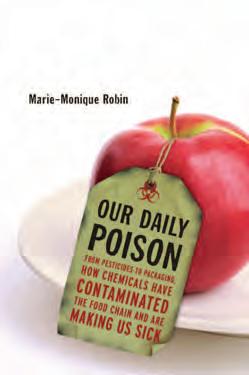
Our Daily Poison
From Pesticides to Packaging, How Chemicals Have Contaminated the Food Chain and Made Us Sick
MARIE-MONIQUE ROBIN
From the acclaimed author o F t he w orl D a ccor D i N g to m o N sa N to , a shocking account o F the dangerous chemical compounds that have in F iltrated our F ood chain
Terrifying . . . [Robin] conducts her investigation with an Olympian calm and reveals deep structural problems.
L’exPReSS
The past thirty years have seen a dramatic increase in cancer rates, neurodegenerative and reproductive disorders, and diabetes, particularly in developed countries. Since the end of World War II, approximately one hundred thousand synthetic chemical molecules have invaded our environment—and our food chain. In Our Daily Poison, award-winning journalist and documentary filmmaker Marie-Monique Robin investigates the links between these two trends, revealing how a toxic mix of corporate interests and public ignorance about invisible poisons may be costing us our lives.
The result of a rigorous two-year-long investigation that took Robin across three continents, Our Daily Poison documents the shocking array of chemicals in our everyday lives and their effects on our bodies over time. Moving beyond the substances, Robin also dissects the byzantine, entirely inadequate evaluation and approval systems for chemical products, highlighting the fallacy of the “acceptable daily intake” and other regulatory standards for harmful substances.
Our Daily Poison also exposes the chemical industry’s lobbying efforts to keep highly toxic products on the market. Drawing on scientific studies, the testimony of international regulatory agencies, and a range of in-depth interviews—from farm workers suffering from acute chronic poisoning to FDA and WHO representatives and to the scientists who develop these compounds—Robin makes a gripping and compelling case for outrage and action.
Marie-Monique Robin is an award-winning French journalist and filmmaker. She received the 1995 Albert-Londres Prize, awarded to investigative journalists in France. She is the director and producer of over thirty documentaries and investigative reports filmed in Latin America, Africa, europe, and Asia. She lives outside Paris.
Praise for the French edition of Our Daily Poison:
Its great strength lies in Robin’s thoroughness and precision, the shocking interplay of data and figures.
LeS iNROCKUPTiBLeS
Robin tenaciously dissects the system by which our meals have become fatal.
TéLéOBS
Praise for The World According to Monsanto:
A truly eye-opening view of how American business-as-usual really works.
6 1⁄8” x 9 1⁄4”, 352 pages Science/Current Affairs
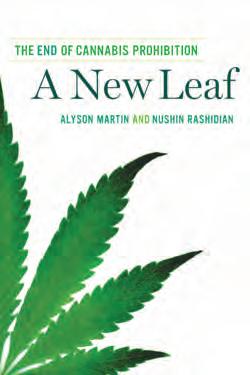
A New Leaf
The End of Cannabis Prohibition
ALYSON MARTIN and NUSHIN RASHIDIAN
paperback original t he most vivid and comprehensive account yet o F the rocky road to cannabis legali Z ation—and where we are headed next—by two award-winning journalists
With great clarity, A New Leaf offers a sweeping and important view of today’s changing attitudes toward marijuana.
—AMY WILENTZ, AUTHOR OF THe RAiNY SeASON AND FAReWeLL, FReD VOODOO
In November 2012, voters in Colorado and Washington passed landmark measures to legalize the production and sale of cannabis for social use—a first in the United States and the world. Medical cannabis is now legal in eighteen states and Washington, D.C., and more than one million Americans have turned to it in place of conventional pharmaceuticals. Yet the federal government refuses to acknowledge these broader societal shifts and continues to raid and arrest: 49.5 percent of all drug-related arrests involve the sale, manufacture, or possession of cannabis.
In the first book to explore the new landscape of cannabis in the United States, investigative journalists Alyson Martin and Nushin Rashidian present a deeply researched, insightful story of how recent developments tie into cannabis’s complex history and thorny politics. Reporting from nearly every state with a medical cannabis law, Martin and Rashidian enliven their book with in-depth interviews with patients, growers, doctors, entrepreneurs, politicians, activists, and regulators. They whisk readers from the federal cannabis farm at the University of Mississippi to the headquarters of the ACLU to Oregon’s “World Famous Cannabis Café.” They present an expert analysis of how recent milestones toward legalization will affect the war on drugs both domestically and internationally. The result is an unprecedented and lucid account of how legalization is manifesting itself in the lives of millions.
A New Leaf offers an essential guide for anyone who wants to understand the farranging implications of this rapidly changing drug landscape.
Alyson Martin is an award-winning journalist whose work has appeared in the New York Times, The Nation, and the Albany Times Union. Nushin Rashidian is an awardwinning journalist whose work has appeared in the New York Times, The Nation, and Tehran Bureau. This is Martin and Rashidian’s first book. They live in New York City.
• Percentage of Americans who support legalization for medical use: 70%
• Percentage of Americans who support legalization for recreational use: 56%
• Number of people arrested for a marijuana law violation in 2011: 757,969
• Percentage of those charged with marijuana law violations who were arrested for possession only: 86%
• Amount spent annually in the U.S. on the war on drugs: $51 billion
• Percentage of Americans who believe the war on drugs is working: 7%
• Estimated annual revenue that California would raise if it taxed and regulated the sale of marijuana: $1.4 billion
February
Paperback, 978-1-59558-920-0
E-book, 978-1-59558-929-3
$17.95 / $19.95 CAN
5 1⁄2” x 8 1⁄4”, 256 pages Social Science/Drug Culture
David Grossman Literary Agency 118B Holland Park Avenue
London W11 4UA
United Kingdom
+44 (207) 221-2770 tel
+44 (207) 221-1445 fax david@dglal.co.uk
Unless otherwise indicated, foreign rights are controlled by The New Press
Please see inside front cover for UK sales and distribution information
For all other inquiries, please contact rights@thenewpress.com.
The New Press extends heartfelt thanks to the following philanthropic institutions for their support in 2012:
The Annie E. Casey Foundation
The Atlantic Philanthropies
The Bauman Foundation
Butler’s Hole South at the Boston Foundation
Carnegie Corporation of New York
The Educational Foundation of America
The Florence Gould Foundation
Ford Foundation
The French Ministry of Foreign Affairs and L’Institut Français
J.M. Kaplan Fund
John D. and Catherine T. MacArthur Foundation
The Kresge Foundation
Lambent Foundation
New York State Council on the Arts
The Overbrook Foundation
The Reed Foundation
The Richard H. Driehaus Foundation
The Sidney Hillman Foundation
Tides Foundation
W.K. Kellogg Foundation
The William and Flora Hewlett Foundation
PUBLISHING CIRCLE
The New Press is grateful to members of The New Press Publishing Circle, a group of individual donors and organizations who make contributions of $5,000 or more. The remarkable support of Publishing Circle members allows The New Press to give a voice to underrepresented viewpoints and publish works of educational, cultural, political, and community value.
Publishing Circle members who made gifts in 2012 include:
C. Edwin Baker Trust, Sarah Burnes and Sebastian Heath, Betsy Davidson, Edward J. Davis and Thomas D. Phillips, Elizabeth Driehaus, Amy Glickman, Ethel Klein and Ed Krugman, Maggie Lear and Daniel Katz, Elizabeth Marks and Harry Ostrer, Karen Ranucci and Michael Ratner, Bernard L. Schwartz, Svetlana and Herbert Wachtell, Abby Young Moses and Jonathan Moses, and Jonathan Zimmerman
FRONTLIST MEMBERS
The Frontlist is a group of individuals and organizations who support the important work of The New Press with gifts ranging from $1 to $4,999. The New Press thanks these members for their gifts to The New Press in 2012:
Senior Editor’s Circle: Gifts of $2,500 to $4,999
Anthony Arnove, Antonia Grumbach, Harper’s Magazine, Nancy Meyer and Marc Weiss, Gregory Miller, Patterson Belknap Webb & Tyler LLP, Nina Rosenwald, Claire Silberman and Stuart Leaf, and Frederick Wertheim
Editor’s Circle: Gifts of $1,000 to $2,499
Lisa Adams and David Miller, Ellen and Moshe Adler, Sara Bershtel and Richard Brick, Deborah Bial and Bob Herbert, Nadia Burgard and Cliff Fonstein, Lori Cohen and Christopher Rothko, Davis Wright Tremaine LLP, Martin Duberman
and Eli Zal, Phyllis and Victor Grann, Ivan Held, Jane Isay, Priscilla Kauff, Renee Khatami and John R. MacArthur, Debbie and Jonathan Klein, Nancy Kuhn and Bernard Nussbaum, Gara LaMarche, Susan and Martin Lipton, Louis Sternbach & Company, Kate Manning and Carey Dunne, Vincent McGee, Kenneth Monteiro, New York Public Radio, Anne Detjen and Alexander Papachristou, Joyce and Peter Parcher, Lawrence Pedowitz, Frederica Perera and Frederick A.O. Schwarz Jr., Perseus Distribution, Anya Schiffrin and Joseph Stiglitz, Jennifer Sinclair and David Schiff, Susan Sommer and Stephen Warnke, David Sternlieb, Katrina vanden Heuvel, Cynthia Wachtell and Jeffrey Neuman, and Shannon Wu and Joseph Kahn
Patron: Gifts of $500 to $999
Emily Altschul-Miller, Helen and Bob Bernstein, Drug Policy Alliance, Aziz Huq, Micheline Klagsbrun and Ken Grossinger, Marie Louise and David Scudder, The Maple-Vail Book Manufacturing Group, Gloria Pitagorsky, Lynda Richards, Beth Sackler, Catharine Stimpson, William Thorndike, Amor Towles, Kimbrough Towles, Genevieve and Daniel Wachtell, Tina Weiner, and Elissa Weinstein and Mark Weintraub
Supporter: Gifts of $250 to $499
Ira Berlin, Faith Childs and Harris Schrank, Nancy Crown and Sam Weisman, Elyse Dayton and Glenn Wallach, Demos, Yolanda Ferrel Brown and Alvin Brown, Bill Foo, Jan Forest and Bill Paul, Patti Greanay and Bob Giraldi, Joan Golan, Hans Haacke, Julia Kagan Baumann, Kate Lear, Avram Ludwig, Carlin Meyer, John Morning, Jeffrey Peabody, Gloria Phares, Sarah Reid and David Gikow, Phyllis and Leonard Rosen, Dorothy Samuels, Janny Scott, Beverly Benz Treuille, Bernice Weissbourd, and Cynthia Young and George Eberstadt
Member: Gifts up to $249
Thomas Acri, Jean-Christophe Agnew, American Friends Service Committee, Anonymous, Sarah and Dan Beard, Gregory Berman, Carly Berwick, Lisa and Miles Bidwell, Grace and Chanitra Bishop, Patricia Bosworth, Rachel Burd, F. Isabel Campoy and Alma Flor Ada, Randolph Carter, Noam Chomsky, Jane Dalrymple-Hollo and Anselm Hollo, Julie Diamond, Paula DiPerna, Shelley Einbinder, Renee Eyma, Tom Fontana, Stephen Foster, Beth Golden, Frances Goldin Literary Agency, Kenneth Hoffman, Jorn Holl, Patricia Holt, David Kairys, Sheila Kinney and Christopher Marzec, Suzanne Lander, David Lerner, Joseph Levine, Joan Marks, Julia and Charles McNally, Ted Mermin and Claudia Polsky, Cecily Morse, Martha Olson, Barbara Opotowsky, Pedro Pedraza, Hilary Reyl, Linda and Sidney Rosdeitcher, Andrea Schulz, Deborah Schwartz, Elizabeth Seidlin-Bernstein, Nancy and Steven Shapiro, Benjamin Shute Jr., Loren Siegel, Bennett Singer, Elizabeth Slovic, Frank Stricker, Jeremy Travis, Nancy Van De Mark and Walter La Mendola, Thomas Viles, Marei von Saher, Diane Wachtell, Juliet Wachtell, Melanie Wachtell-Stinnett and Nathaniel Stinnett, Gregg Walker, Phyllis Wiener, and Justin Yockel
The New Press Author Royalty Giveback Program
The New Press thanks the following New Press authors who made a financial contribution to The Studs and ida Terkel Fund through the Author Royalty Giveback Program in 2012:
Pat and Hugh Armstrong, Rick Ayers, William Ayers, Ira Berlin, Cynthia Stokes Brown, Hamid Dabashi, Lisa Delpit, John Dinges, Ernest Drucker, Medard Gabel, Lloyd C. Gardner, Anne I. Henderson, Lois and James Horton, Nelson Lichtenstein, Lucy Lippard, Timothy Patrick McCarthy, Steven F. Miller, Joseph O’Donnell, Laurie Olsen, Anya Schiffrin, Lore Segal, Dan Terkell, The Estate of Studs Terkel, Immanuel Wallerstein, Zoe Wicomb, John Womack Jr., David Wyman, and The Estate of Howard Zinn
Special Thanks
The New Press thanks the following people and organizations for devoting time and talent to The New Press in 2012:
Lisa Adams and David Miller, Ellen and Moshe Adler, Michelle Alexander, Beniamino Ambrosi, Sarika Bansal, Sara Bershtel and Richard Brick, Deborah Bial and Bob Herbert, The Brecht Forum, Sarah Burnes and Sebastian Heath,
Paul Butler, Stewart Cauley, Center for American Progress, Ken Chen, Michelle Asha Cooper, Edward J. Davis and Thomas D. Phillips, Anne Detjen and Alexander Papachristou, Martin Duberman and Eli Zal, Peter Edelman, Sunny Fischer, Laura Flanders, Leon Friedman, Marybeth Gasman, Amy Glickman, Anthony Grafton, Naomi Graham, Vartan Gregorian, James Grimmelman, Antonia Grumbach, Maryam Gunja, Laura Hanna, Annie Hedrick, Scottie Held, Jane Isay, Priscilla Kauff, John F. Kennedy Presidential Library and Museum, Renee Khatami and John R. MacArthur, Ethel Klein, Debbie and Jonathan Klein, Nancy Kuhn and Bernard Nussbaum, Gara LaMarche, Maggie Lear and Daniel Katz, David Levering Lewis, Leonard Lopate, Avram Ludwig, Kate Manning and Carey Dunne, Elizabeth Marks and Harry Ostrer, Matthew Marks Gallery, Marc Mauer, Vincent McGee, Sarah McNally, Gregory Miller and Michael Wiener, Abby Young Moses and Jonathan Moses, William F.L. Moses, The Nation, Lawrence Pedowitz, Frederica Perera and Frederick A.O. Schwarz Jr., Frances Fox Piven, Bert Pogrebin, Public Welfare Foundation, Tom Putnam, Karen Ranucci and Michael Ratner, Gretchen Rubin, Anya Schiffrin and Joseph Stiglitz, Natalia Schiffrin and Philippe Sands, New York State Attorney General Eric T. Schneiderman, Ted Shaw, Claire Silberman and Stuart Leaf, Todd Sines, Michael Small, Susan Sommer and Stephen Warnke, Alexander Stille, Teaching for Change, Eboni Marshall Turman, Anita Underwood, Katrina vanden Heuvel, Svetlana and Herbert Wachtell, Gregg Walker, Laura Walker, Frederick Wertheim, Laura Wertheimer and Andy Pincus, David Wessel, Douglas Wood, and Paul Yamazaki
The New Press Interns:
The following people participated in The New Press’s Diversity in Publishing internship program in 2012:
Katie Accardo, Maxine Anderson, Kate Boyle, Eli Cauley, Allison Charette, Christina Chronister, Zach Frater, Nikki Garcia, Joe Krakoff, Stephanie Lee, Amy Tong Liu, Elizabeth May, Allison Prince, Peg Schreiner, Ria Sen, Michelle Walbaum, Paris West, Ben Woodward, and Emma Young
The New Press is deeply grateful to the J.M. Kaplan Fund and the Matthew Marks Gallery for their generous support of our Diversity in Publishing internship program.
Thank you again to all who have given generously to support publishing in the public interest.
Every effort has been made to ensure the accuracy of these lists. If you believe you have been omitted, we extend our heartfelt apologies and ask you to bring the error to our attention by calling (212) 629-8551 or e-mailing cmiller@thenewpress.com.
BOARD OF DIRECTORS
LISA ADAMS (CHAIR)
Literary Agent
The Garamond Agency
ELLEN ADLER
Publisher The New Press
SARAH BURNES (SECRETARY)
Literary Agent
The Gernert Company
BARBARA EHRENREICH
Author and Columnist
AMY GLICKMAN
Associate General Counsel Time Inc.
ANTONIA GRUMBACH
Of Counsel Patterson, Belknap, Webb & Tyler
IVAN HELD
President G.P. Putnam’s Sons
BOB HERBERT
Distinguished Senior Fellow
Demos; Contributing Editor
The American Prospect
AZIZ HUQ
Associate Professor of Law University of Chicago Law School
JANE ISAY
Former Editor-in-Chief Harcourt
GARA LAMARCHE
Senior Fellow
New York University’s
Robert F. Wagner
School of Public Service
ABBY YOUNG MOSES (TREASURER)
Founder and Partner Ewenstein & Young LLP
MICHAEL RATNER
President Emeritus Center for Constitutional Rights
ANDRé SCHIFFRIN
Founding Director The New Press
THEODORE M. SHAW (VICE CHAIR)
Professor of Professional Practice
Columbia Law School; Former President NAACP LDF, Inc.