The South African food and beverage sector faces unprecedented challenges as we navigate through March 2026. The ongoing Foot and Mouth Disease outbreak has now reached all nine provinces with nearly 1,000 reported cases, prompting Agriculture Minister, John Steenhuisen to launch a mass vaccination campaign to protect our R80 billion livestock industry. Simultaneously, recent food safety recalls continue to impact the sector, including RCL Foods' pet food recall due to Salmonella contamination, ButtaNutt's peanut butter recall for elevated aflatoxin levels, and Nestlé's NAN infant formula recall due to potential cereulide presence.
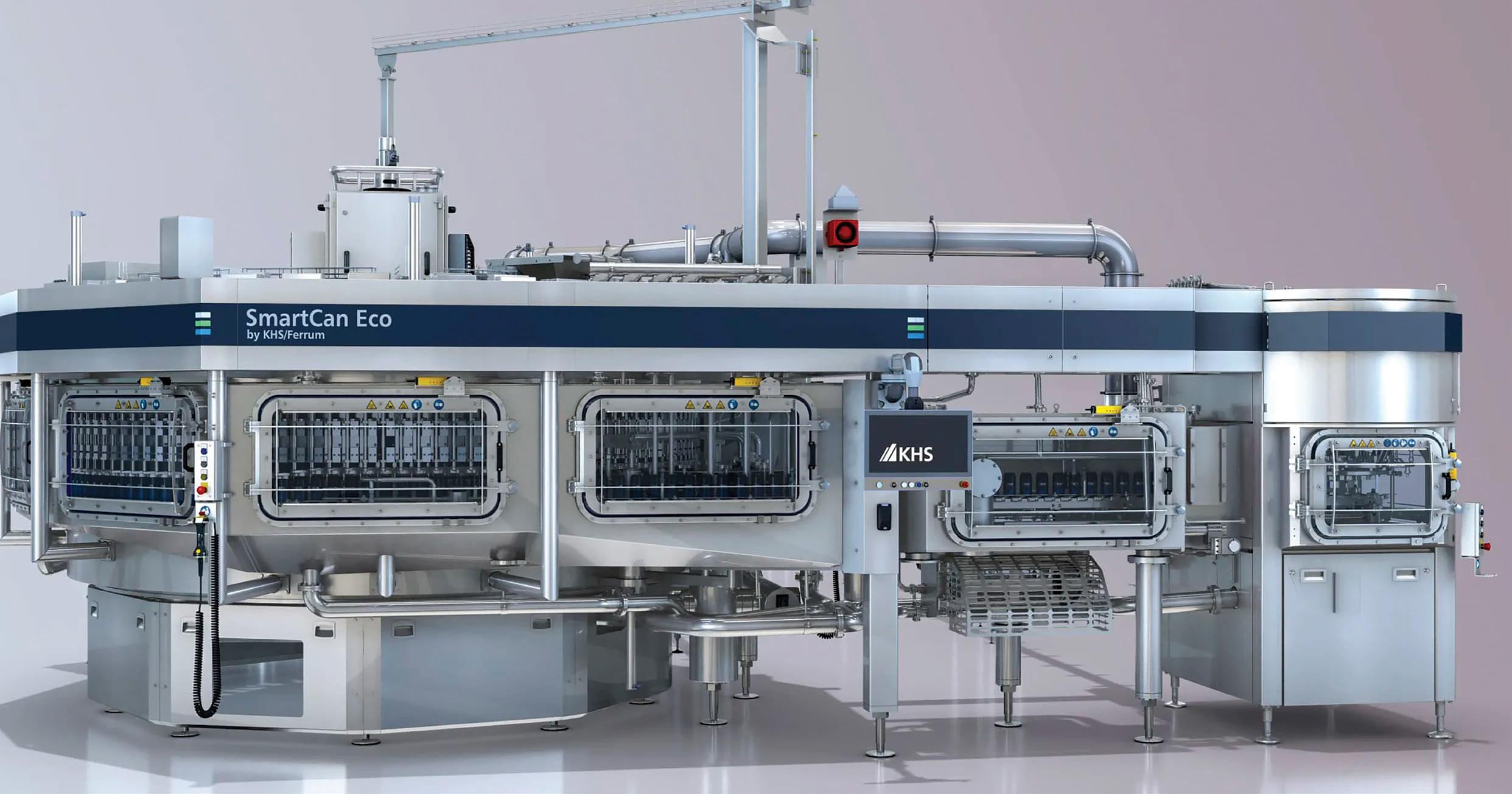
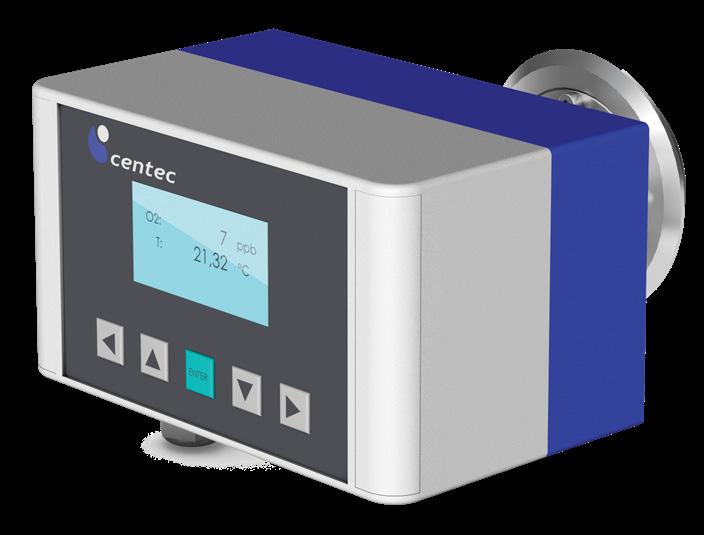
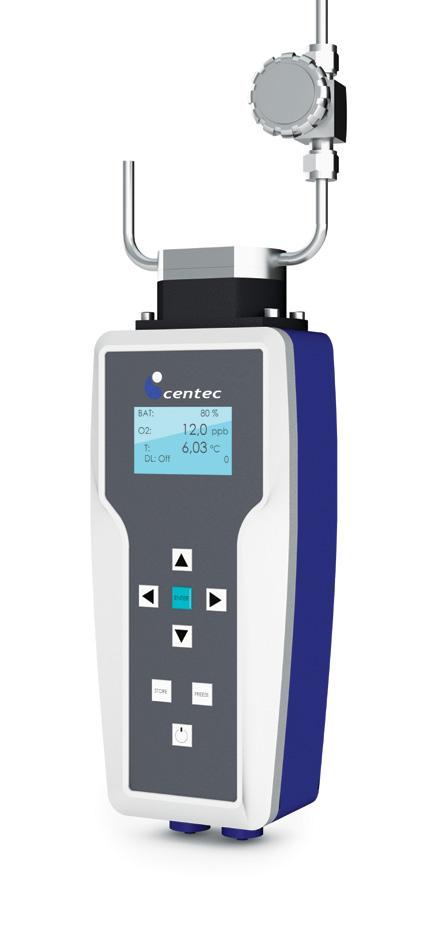
These industry challenges underscore the critical importance of the advanced technologies featured in this March edition. Our Clean-in-Place coverage highlights how VEGA's hygienicby-design instrumentation and Centec's DeGaS-Cold deaeration systems offer automated CIP cycles with Bluetooth-enabled remote monitoring – essential for maintaining stringent biosecurity protocols during disease outbreaks.
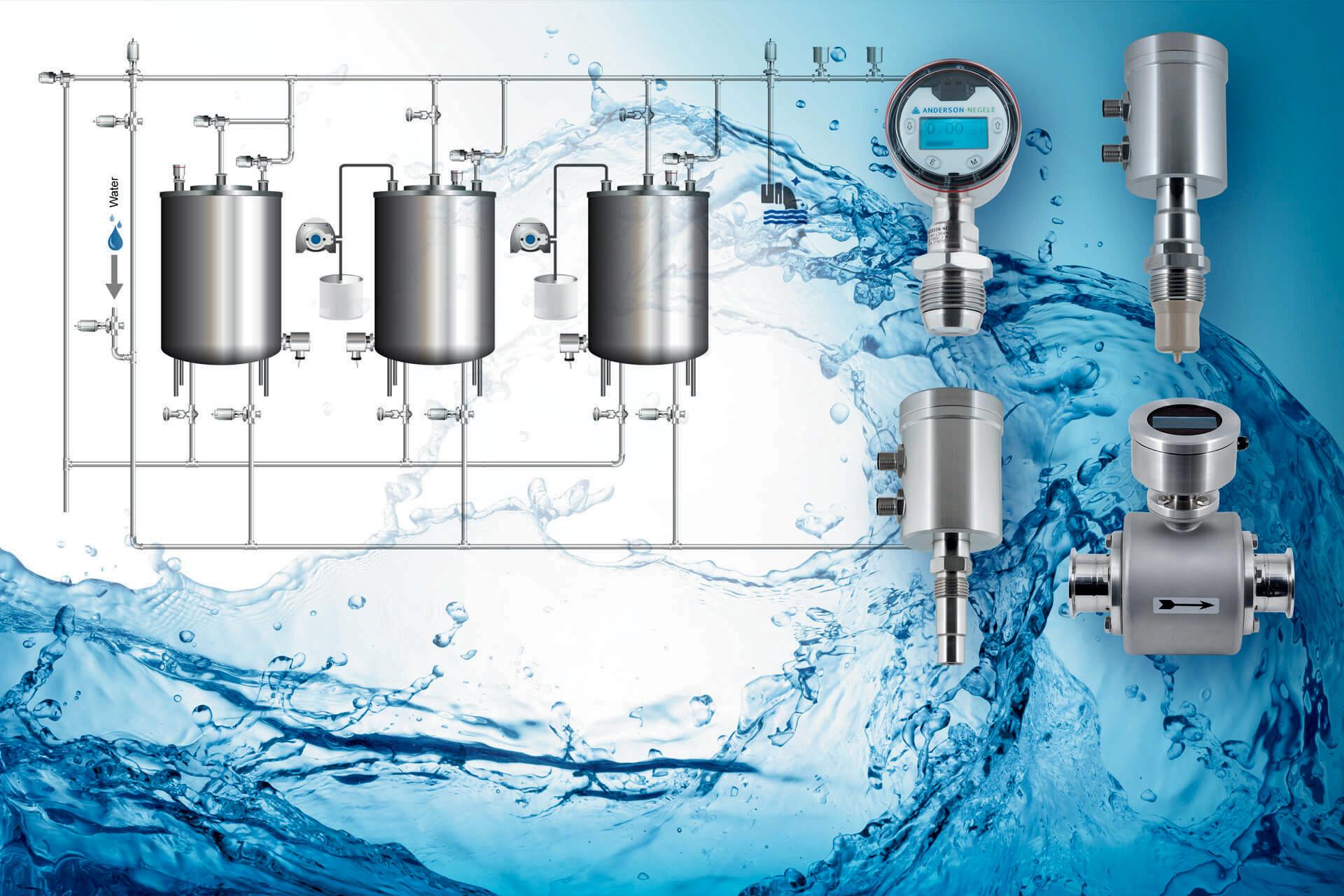
In Water Processing Technology, Endress+Hauser's digital IIoT platforms and Heat & Control's Cascade Water Recirculation Systems demonstrate how manufacturers can achieve both sustainability and enhanced hygiene standards critical during heightened regulatory scrutiny.
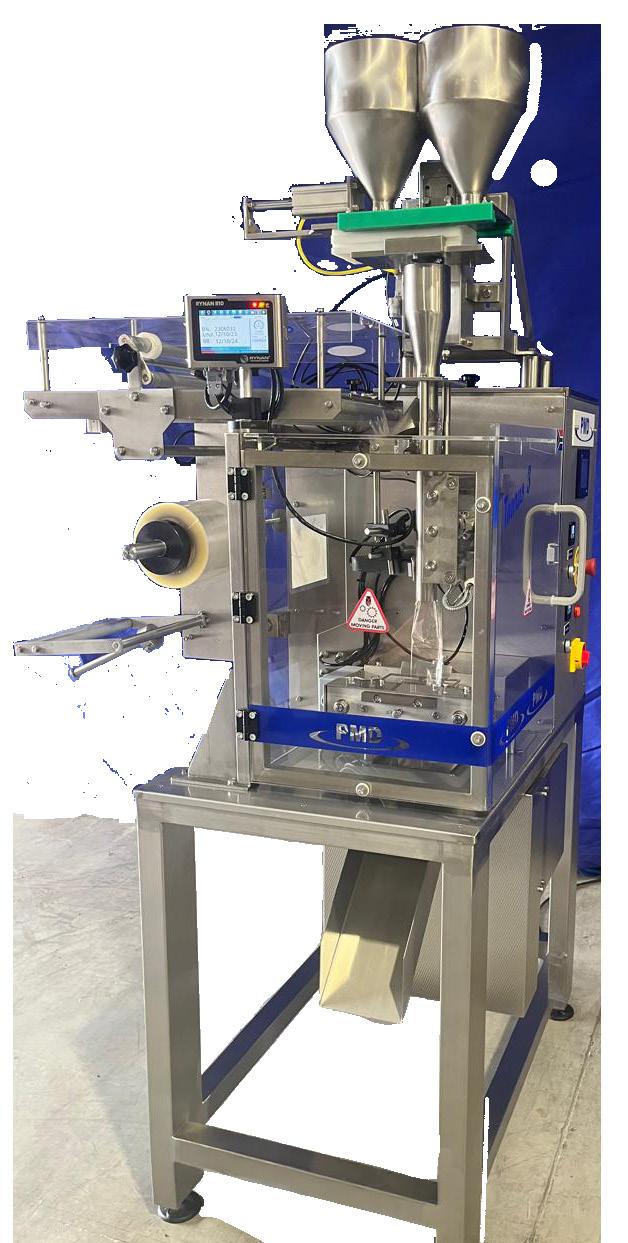
The Snacks & Confectionery innovations from Bühler's DirectBake Smart technology and Cama Group's premium chocolate packaging solutions show how the sector continues to evolve despite supply chain pressures, while PMD Packaging's small-pack machinery addresses changing consumer demands.
Our Meat, Fish & Poultry coverage becomes particularly relevant given the FMD crisis, featuring advanced blade engineering with antimicrobial surface finishes and precision cutting solutions that maximise yield while maintaining critical food safety standards needed to restore export market confidence.
Sydney Lai +886 4 2329 7318 sydneylai@ringier.com.hk
CIRCULATION
Circulation Manager: Rae Morrison Email: Rae.Morrison@media24.com
PUBLISHING TEAM
General Manager: Dev Naidoo
Head of Content & Digital Strategy: Varushka Padayachi
Production manager: Angela Silver Group Art Director: David Kyslinger
have any concerns regarding our use of AI please email the editor at: Kelebogile.nondzaba@newmedia.co.za
Giambò-Kruger
MEDIA24 MEDIA
CEO: Minette Ferreira
CFO: Lana Goliath
MEDIA24 CORPORATE
CEO MEDIA24: Raj Lalbahadur CFO MEDIA24: Nelmarie Beyers
JOHANNESBURG OFFICE
Building 13, The Woodlands Office Park, 20 Woodlands Drive, Woodmead, Sandton PO Box 784698, Sandton 2146
Tel: +27 (0)11 713 9000
POSTAL ADDRESS PO Box 784698, Sandton, Johannesburg, 2146
Bringing together leading brands in processing and packaging equipment for the snack food industry. Our solutions set the standard for yield, efficiency, and safety while producing the highest quality snacks. Whatever your product needs, we can meet it with precision and passion.
SOLUTIONS FOR:
Preparation + Processing
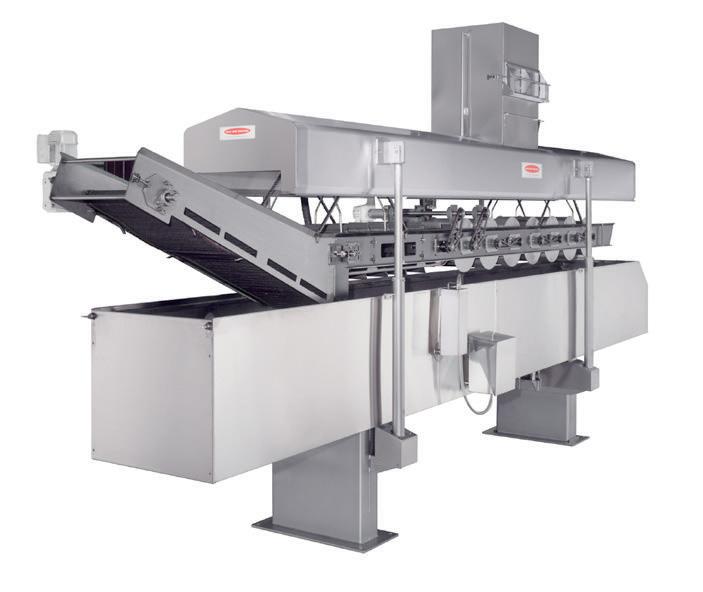
Frying + Oil Management
Drying, Baking + Roasting
Coating + Seasoning
Product Handling
April
Packaging Innovations Birmingham, UK
2-3 April
www.packagingbirmingham.com
Sial India Food Expo India, Jio World Centre 10 – 12 April www.sialindia.com
IFE
30 March to 1 April Excel London www.ife.co.uk
Food & Drink Expo
13 – 15 April
NEC Birmingham www.foodanddrinkexpo.co.uk
June
Food Safety Summit
2 – 3 June
Emperors Palace Convention Centre
Johannesburg, South Africa www.foodsafetysummit.co.za
The Food Show Africa 10 – 12 June
Cape Town. South Africa www.theafricafoodshow.com
May
Africa Packaging Expo 13 – 15 May Lusaka, Zambia www.afripackexpo.com
VitaFoods Europe 5 – 7 May Barcelona, Spain www.vitafoods.eu.com
NEW DUBAI PISTACHIO KUNAFA GELATO
Baglio’s Gelato is proud to announce that its wildly popular Dubai-style Milk Chocolate Pistachio gelato will become a permanent menu feature across all stores from 13 December 2025. The move marks a significant milestone in South Africa’s premium dessert landscape, where global flavour trends and local distribution power are now collaborating to create products that are irresistibly tasty yet sustainably scalable, to support local livelihoods while meeting soaring con-
sumer demand. The decision follows months of trial batches that repeatedly sold out within a single day since August, driven by consumer demand and social buzz around the flavour’s signature ingredient: the Milk ChocolatePistachio Kunafa bar.
To ensure uninterrupted supply, Baglio’s Gelato has partnered exclusively with Clout Group, the local distributor delivering luxury, global, viral brands to South African consumers.
For more, visit: foodreview.co.za
FOODBEV SETA HOSTS RESEARCH COLLOQUIUM
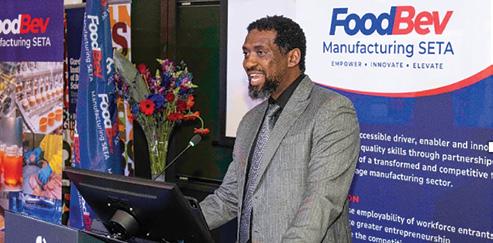
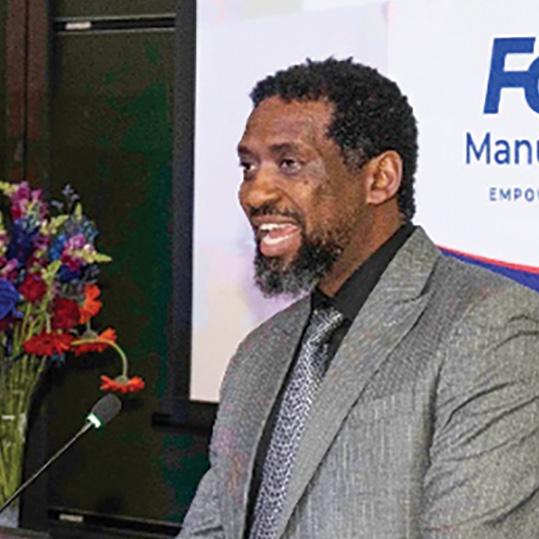
Research is a strategic instrument for gathering data, expanding knowledge targeted for decision making for guiding skills planning and policy direction leads to economic growth and social transformation. “Our focus is on building a capable, development state supported by high-quality research, responsive qualifications, and integrated skills system”. These were the words of the Honourable Buti Manamela, Minister of Higher Education and Training, who delivered the keynote address at the inaugural
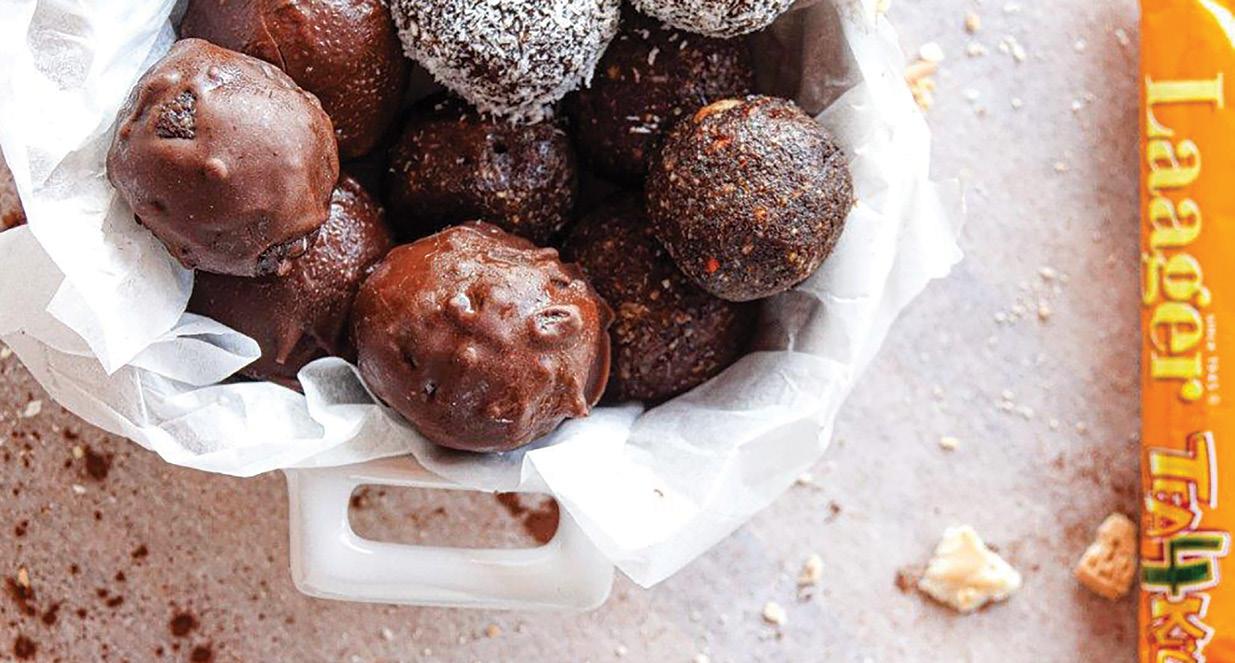
LAAGER TEA4KIDZ ROOIBOS
TikTok has grown into a worldwide sensation, becoming one of the most popular social media platforms in South Africa since its 2016 inception. Among the dance routines, TikTok challenges, and funny videos, lies a wealth of great recipe content and foodie trends for families. Some of the trends are relevant for local audiences while others may require ingredients that are harder to find on South African shelves. In light of this, Laager Tea4Kidz Rooibos will be putting a local spin on 3 current TikTok foodie
Research Colloquium hosted by FoodBev SETA at the Gordon Institute of Business Science (GIBS) on 3 March 2026. The Minister highlighted the importance of evidence-based planning within South Africa’s Post-School Education and Training (PSET) system and reaffirmed the Department’s commitment to strengthening research as a foundation for national develop-
MONDELĒZ INTERNATIONAL’S NEW APPOINTMENT
International, Inc. (Nasdaq: MDLZ), a leading global snacking company with iconic brands such as Cadbury, OREO, Bournvita and Halls, has appointed Hisham Ezz El-Arab as President of its Sub-Saharan Africa (SSA) business unit. Hisham comes with extensive experience in the food business and will be responsible for directing the strategic direction of the business with a robust portfolio of brands, including iconic global brands and inspiring local jewels.
Hisham joins Mondelēz International with 32 years of extensive leadership experience in the FMCG sector. He has a distinguished career across Danone and Procter & Gamble, with a proven track record of driving significant business acceleration, strategic growth, and complex turnarounds across diverse global markets. Most recently, Hisham served as Regional Vice President for Asia, Middle East and Africa (AMEA) at Danone in charge of Business
trends, with a health focus so the whole family can enjoy them! “Trying to get children to eat healthily can be an uphill task for parents and caregivers, but getting them to eat something that’s trending on a popular social media platform might make it a bit easier!” says Candice Sessions, Laager Rooibos Marketing Manager. “We scoured TikTok for top recipe trends, and have added our own twist as well as a touch of Laager Tea4Kidz Rooibos to infuse local flavours with the benefits of Rooibos as well. For more, visit: foodreview.co.za Mondelēz
NEWS
ment and informed skills policy. The Colloquium brought together a diverse group of stakeholders from across the skills ecosystem. Representatives from various SETAs and institutions within the PSET system were joined by employers and industry associations in the food and beverage manufacturing sector, academics, trade unions and beneficiaries of FoodBev SETA programmes.
For more, visit: foodreview.co.za
Acceleration and Strategic Growth across a region spanning Morocco to the Philippines, and from Russia to South Africa.
For more, visit: foodreview.co.za
West Africa's premier packaging innovation showcase returns
Montgomery Group Africa brings Propak West Africa 2026 to Lagos, showcasing packaging innovation, automation and sustainability solutions across multiple industries.
Nigeria remains one of Africa’s most dynamic economic hubs, with a large and youthful consumer base driving demand across food and beverage, personal care, pharmaceuticals and e-commerce. That demand is placing increasing pressure on packaging, processing and print industries to scale capacity, improve efficiency and meet evolving regulatory and sustainability requirements. Despite growing local capacity, Nigeria continues to rely heavily on imported packaging and processing technology. This reliance reflects both the strength of domestic demand and the significant opportunities that exist for localisation, technology transfer and regional manufacturing development. At the same time, industrial businesses are operating in an environment shaped by supply chain disruption, currency volatility and evolving regulatory requirements. Capital equipment investments must now deliver not only output, but efficiency, resilience and measurable return.
In sectors such as packaging, plastics, labelling, print and food processing — where machinery purchases represent long-term strategic commitments - the ability to assess equipment performance firsthand and engage directly with technical specialists play an important role in purchasing decisions.
CROSS-SECTOR INNOVATION SHOWCASE
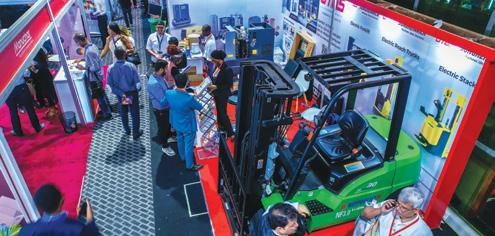
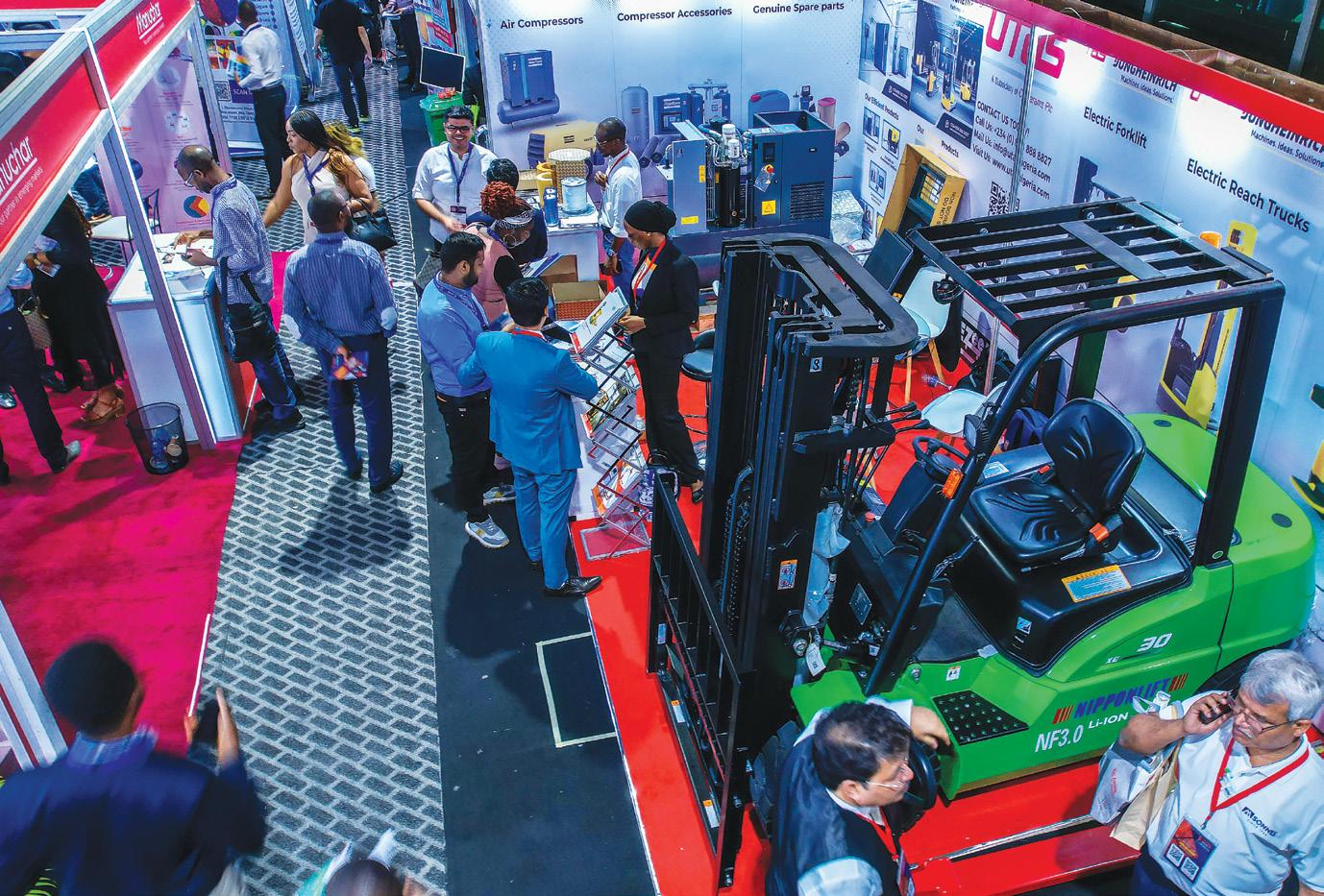
Against this backdrop, Propak West Africa returns to the landmark centre in Lagos, Nigeria, from 8-10 September, uniting stakeholders from packaging, plastics, print, labelling and food processing in a single,
DID YOU KNOW?
Despite Nigeria's growing local manufacturing capacity, the country still relies heavily on imported packaging and processing technology, creating significant opportunities for localisation and technology transfer through events like Propak West Africa.
cross-sector environment. It provides an opportunity to compare machinery, materials, services and integrated systems in one place. “Capital equipment and industrial technology purchases typically involve multiple decision-makers — from plant managers and engineers to procurement and finance teams,” says Mark Anderson, Portfolio Director at Montgomery Group Africa, organisers of the show. “Propak West Africa creates a neutral space where stakeholders can evaluate solutions, ask technical questions, and understand their long-term value.” Across the exhibition floor, more than 250 exhibitors will present developments spanning smart packaging technologies, automation systems, advanced plastics manufacturing, digital and flexographic print innovations, and intelligent labelling solutions. Increasingly, the focus is on combining performance with sustainability — from recyclable and recycled-content materials to packaging designs that reduce material usage without compromising strength or functionality.
SUSTAINABILITY MEETS SMART TECHNOLOGY
Energy-efficient machinery, integrated production systems and traceability technologies aimed at reducing waste and improving compliance will also feature prominently across food, beverage, pharmaceutical and
"Propak West Africa creates a neutral space where stakeholders can evaluate solutions and understand their longterm value."
personal care applications. The show’s co-located conference programme further strengthens the exhibition relevance. With more than 50 industry experts contributing insights, sessions will explore regulatory developments, sustainable materials, smart manufacturing trends, automation adoption and regional trade integration. This strategic context provides decision-makers with a broader perspective beyond product specifications alone.
As West Africa continues its push toward industrialisation and value addition, collaboration across packaging, plastics, processing and print will remain essential. Platforms that combine a technology showcase with knowledge exchange can play a practical role in accelerating capability development and supporting long-term competitiveness.
Images: Supplied by Propak
Innovative packaging solutions for every application
SOMIC presents two new machine series and other technical highlights.
German packaging machinery specialist Somic will unveil two cutting-edge cartoning machine series at Interpack 2024, demonstrating the company's commitment to delivering enhanced efficiency and automation across the end-ofline packaging sector. The Amerang, Bavariabased manufacturer will showcase its latest high-performance cartoning machines at Hall 14, Booth A02, targeting a comprehensive range of formats and production speeds to meet diverse industry requirements.
ENHANCED AUTOMATION AND USER EXPERIENCE
"With our new products, we offer the right solution for every application – from entry-level automated packaging to highperformance applications," explained Patrick Bonetsmüller, managing director of Somic. "Visitors to Interpack will gain practical insight into how our machines can simultaneously increase productivity and ease of use."
CONNECTIVITY AND DATA INTEGRATION
SOMIC will be presenting two new machine series and other innovations for end-of-line packaging at Interpack
capabilities, enabling comprehensive data-based services that support predictive maintenance and operational optimisation. This digital integration represents a strategic advancement in the company's approach to Industry 4.0 implementation within packaging operations. The enhanced machinery portfolio builds upon Somic's established reputation for engineering excellence and international service provision.
The new machine series features intelligent material feeding functions and advanced assistance systems designed to simplify operation whilst maximising production autonomy. Key improvements include optimised changeover processes and enhanced accessibility for both format changes and routine maintenance procedures. Somic – www.somic-packaging.com
A significant focus of Somic's Interpack presentation will be expanded connectivity
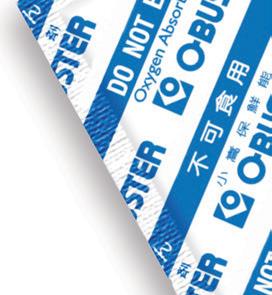
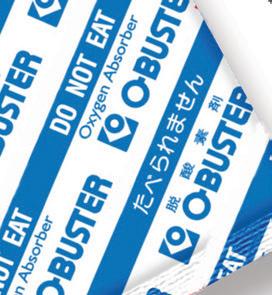
O – Buster sachets from KubePac use simple iron powder technology to preserve food naturally, eliminating spoilage without artificial preservatives or chemicals.
For suppliers and distributors of biltong, maintaining the product’s freshness, flavour, and safety from the point of production to the consumer’s hands is crucial. One of the most effective tools in modern food preservation is the use of oxygen absorbers—and among the most reliable on the market are O - Busters oxygen absorbers. These small yet powerful packets play a vital role in ensuring that packaged biltong maintains its quality during storage and transport, without relying on chemical preservatives or refrigeration.
THE ROLE OF OXYGEN IN BILTONG SPOILAGE
Oxygen is one of the main culprits in food degradation. Even after sealing biltong in packaging, residual oxygen can remain trapped inside. This oxygen supports the growth of aerobic microorganisms, accelerates lipid oxidation (causing rancid flavours), and degrades the texture and colour of the product.
For a protein-dense product like biltong, which has reduced water activity but still contains natural fats, the combination of exposure to oxygen and ambient humidity can rapidly lead to oxidative spoilage. This means discoloration, unpleasant odours, and a decline in flavour—all of which can shorten shelf life and hurt your brand’s reputation.
WHAT ARE O - BUSTERS OXYGEN ABSORBERS?
O - Busters are sachets containing a specialised iron-based compound that reacts with oxygen molecules. When placed inside
FAST FACT
Oxygen reduction: O - Buster reduces internal packaging oxygen concentration to less than 0.01% within hours.
“Small yet powerful packets play a vital role in ensuring packaged biltong maintains its quality.”
airtight packaging, the sachet actively absorbs oxygen, reducing the internal oxygen concentration to less than 0.01%. By doing this, the absorbers create an oxygenfree environment that helps preserve the product’s natural colour, taste, and aroma.
HOW THEY WORK STEP BY STEP
• Activation by humidity: Once the O - Buster absorber is enclosed in packaging with a small amount of humidity, the reaction begins. The moisture in the air facilitates the oxidation of iron inside the packet.
• Rapid oxygen reduction: Within a few hours, the residual oxygen inside the sealed package is significantly reduced—down to levels below 0.1%. This rapid oxygen depletion halts the activity of aerobic bacteria and moulds that could otherwise spoil the product.
• Maintenance of an anaerobic environment: The absorber continues to scavenge any additional oxygen that may permeate through packaging material over time, ensuring long-term product preservation.
THE BASIC REACTION INSIDE EACH O - BUSTER PACKET IS A CONTROLLED OXIDATION OF IRON POWDER: 4FE+3O_2+6H_2 O › 4 FE(OH)_3
This reaction converts oxygen and moisture into a non-toxic compound, effectively removing oxygen while maintaining the product’s safety and integrity. Importantly, the process is noninvasive—there are no chemicals released or absorbed by the biltong itself.
BENEFITS FOR BILTONG DISTRIBUTORS AND SUPPLIERS
• Extended shelf life
By removing oxygen, O - Buster dramatically extend the shelf life of biltong. This is particularly beneficial for distributors shipping across long distances or storing bulk quantities before retail packaging.
J&M BILTONG TESTIMONIAL
“We have been using O - Buster oxygen absorbers supplied by Kubepac in our biltong packaging and have seen consistent, measurable improvements. The biltong retains the same consistency, taste, and colour as when it is first packed, even over extended periods. This has significantly improved shelf life, reduced product waste, and allowed us to distribute our biltong further afield with confidence, knowing it stays fresher for longer. Kubepac is a pleasure to work with, and the O’ Buster has become an integral part of our packaging process. We are very satisfied with the results,” says Ilze Sidney, quality Controller, J&M Biltong.
CLOSWA BILTONG (NAMIBIA)
"Kubepac’s O - Buster oxygen absorbers have transformed the way we protect our biltong. The taste is just as good as the day we packed it, and it stays fresher for longer without going rancid. Even in transit, we never worry about temperature changes—the O - Buster keeps our product safe and consistent. Working with Kubepac is a pleasure; their friendly, efficient team makes our job so much easier. We couldn’t ask for a better partner,” says, Rena Havenga, stock control manager, Closwa Biltong.
• Maintained colour and texture
Oxidation causes the natural colour of meat to fade to a dull brown. Oxygen absorbers help preserve the deep, rich hue that consumers expect from fresh biltong.
• Preserved flavour and aroma
Lipid oxidation is the main reason for rancid or “stale” flavours in dried meats. By preventing oxygen contact,
O - Buster locks in the natural, seasoned taste of biltong, keeping it authentic and appealing.
• Improved food safety
Oxygen is vital for many spoilage organisms. Removing it drastically reduces microbial proliferation, lowering the risk of contamination and spoilage, especially in warm climates.
• No additives or preservatives required
With O - Buster, preservation is achieved naturally—no need for chemical preservatives or modified atmosphere packaging. This enhances clean-label marketing, a growing consumer demand in health-conscious markets.
• Cost-effective and simple Integration
A TRUSTED PACKAGING PARTNER: KUBE PACKAGING
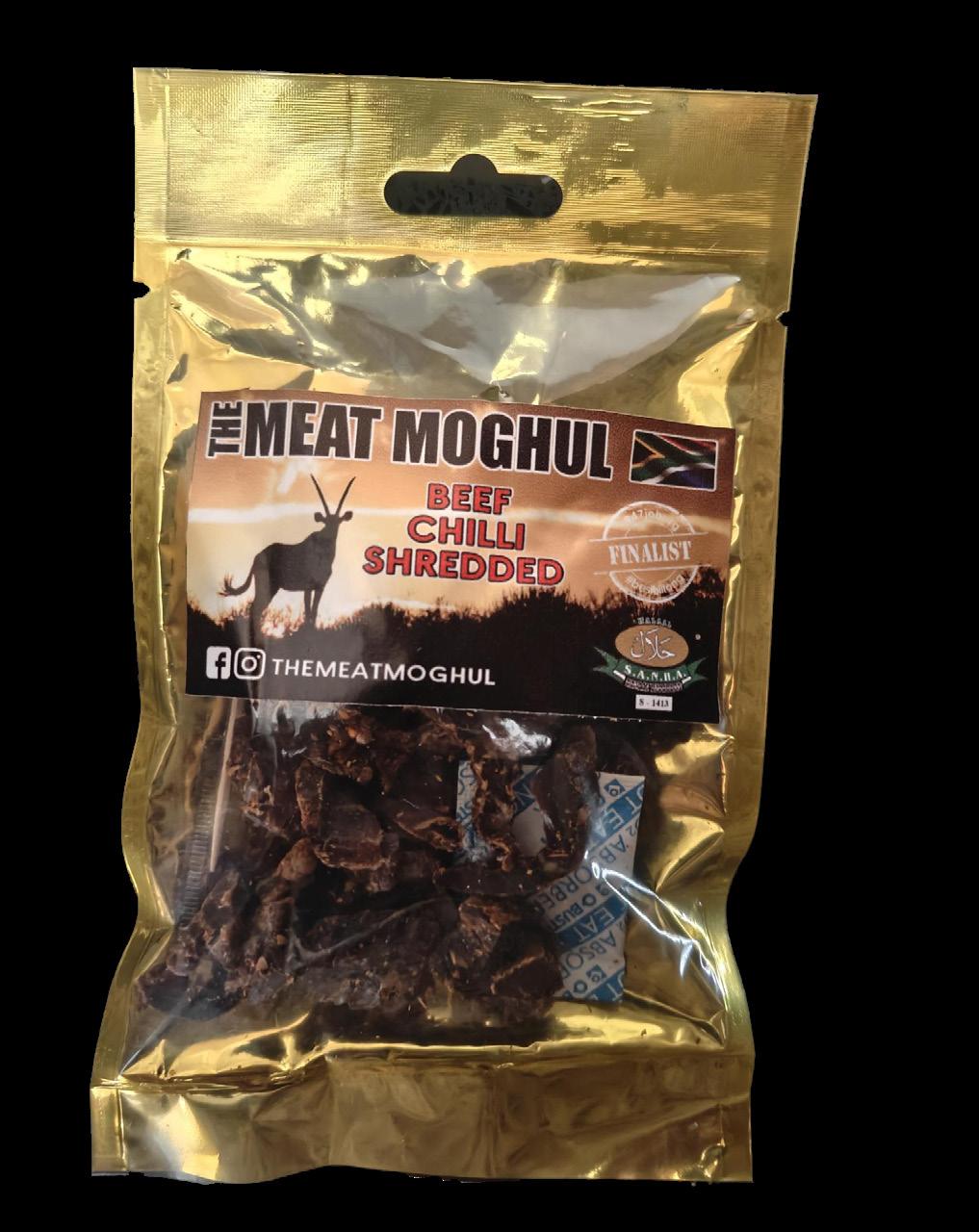
Behind every reliable packaging solution is a strong partnership. The Meat Moghul has proudly worked with Kube Packaging for over five years, building a relationship based on trust, responsiveness, and shared standards of excellence. Over the years, Kube Packaging has consistently stepped up — finding solutions, meeting tight deadlines, and adapting to our evolving
O - Busters are easy to integrate into existing packaging lines. They require no additional machinery and have a minimal impact on packaging costs relative to the extended shelf life and reduced waste they provide.
Kubepac - www.kubepac.com
needs as the business has grown. Their willingness to “come to the party” and make things happen has played a vital role in helping us maintain quality, improve shelf stability, and scale with confidence. This ongoing partnership allows us to focus on what we do best — producing premium biltong — knowing that our packaging is backed by expertise, reliability, and innovation, comments, Muhamed Osman, managing director, Meat Mogul.
Improve Product Freshness
Oxygen absorbers are used to remove oxygen from within a sealed environment, creating a nitrogen environment for long-term food storage. They protect dry foods from insect damage and mould to help preserve product quality.
When used with proper packaging and sealing, the oxygen in the packaging is greatly reduced.
O-Buster Oxygen Absorbers
Oxygen Absorbers Maintain Quality, Freshness and Flavour of Food
Smartline production line balances efficiency and quality
Bühler's innovative Smartline production system delivers superior biscuit quality while reducing energy consumption, waste, and operational costs for manufacturers globally, explains Lynne Davies.
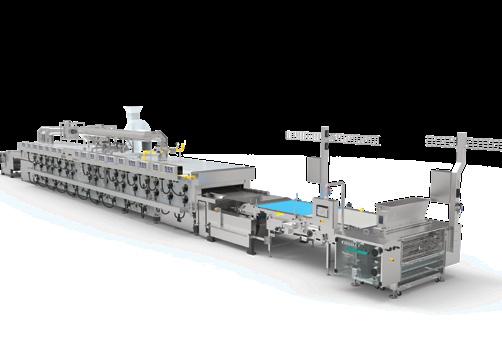
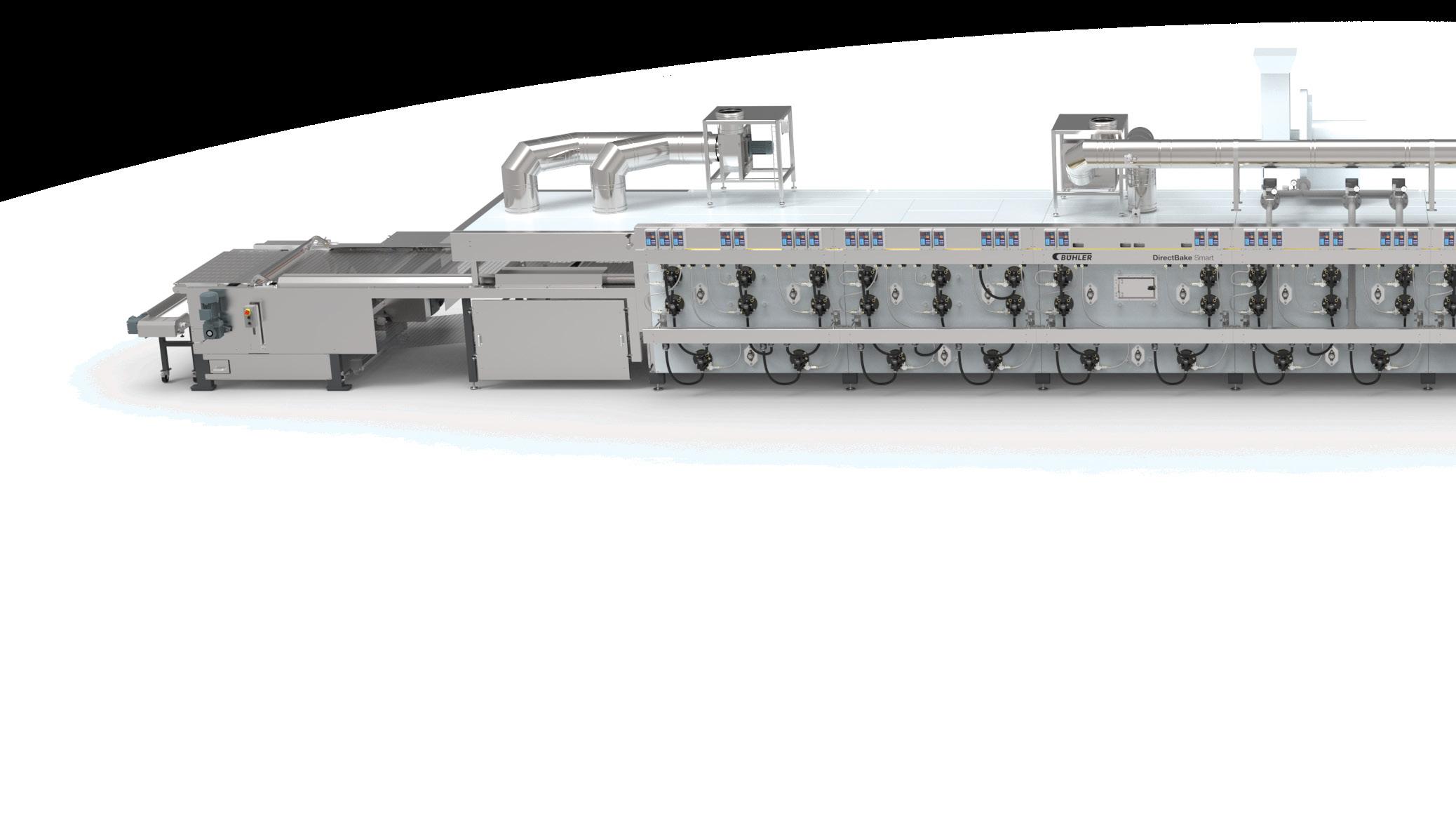
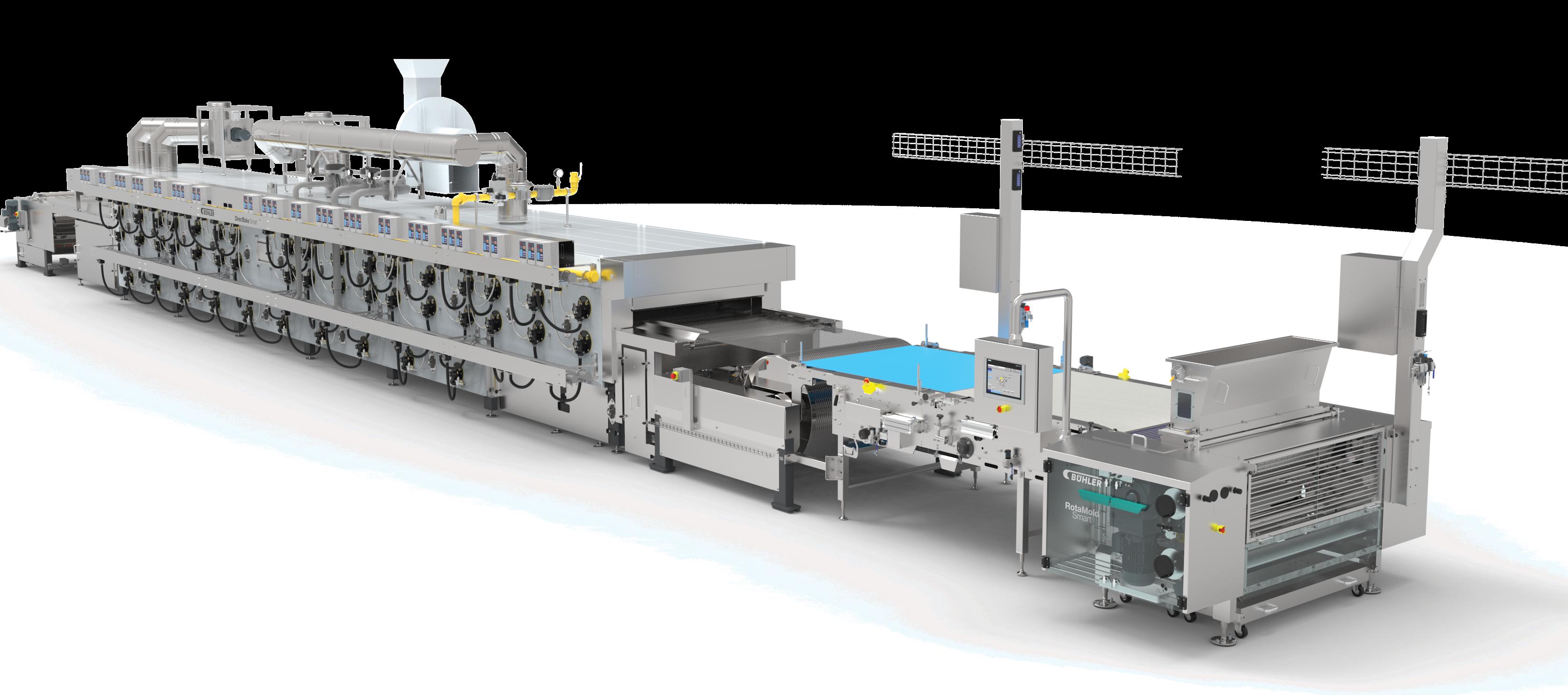
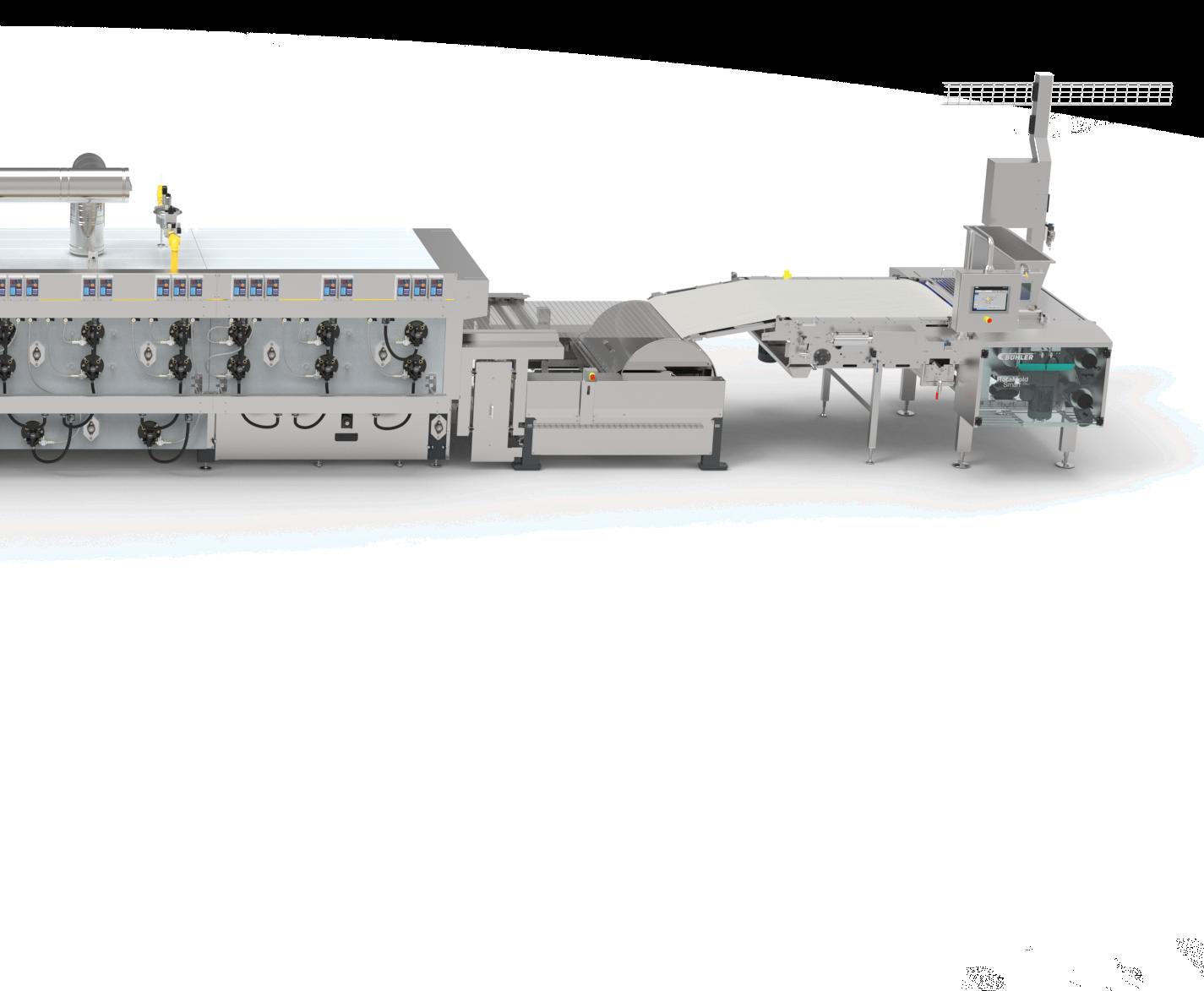
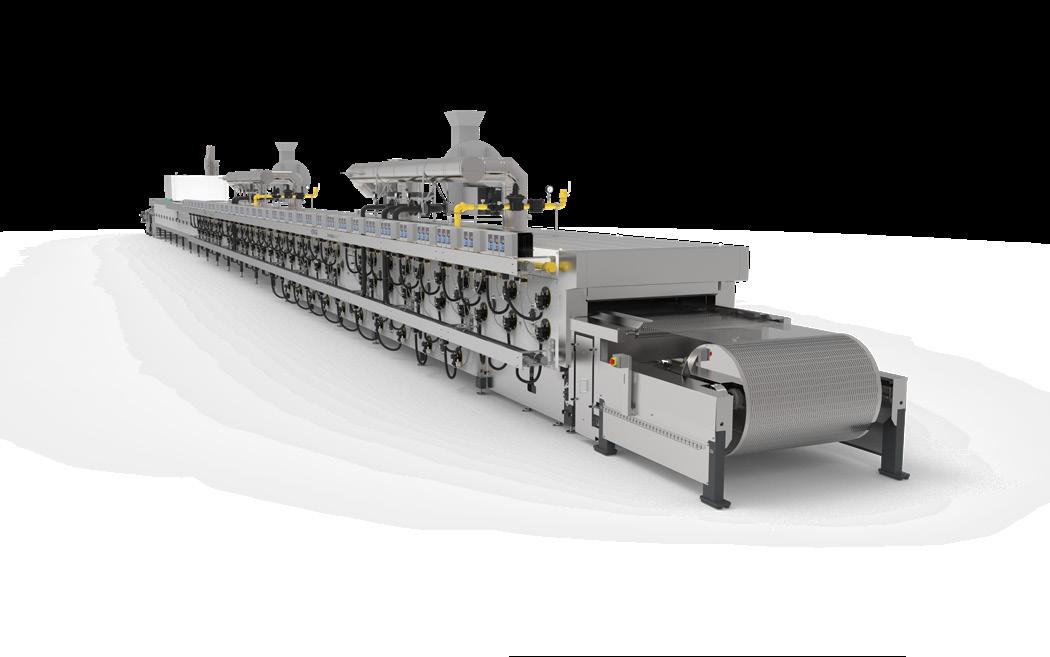
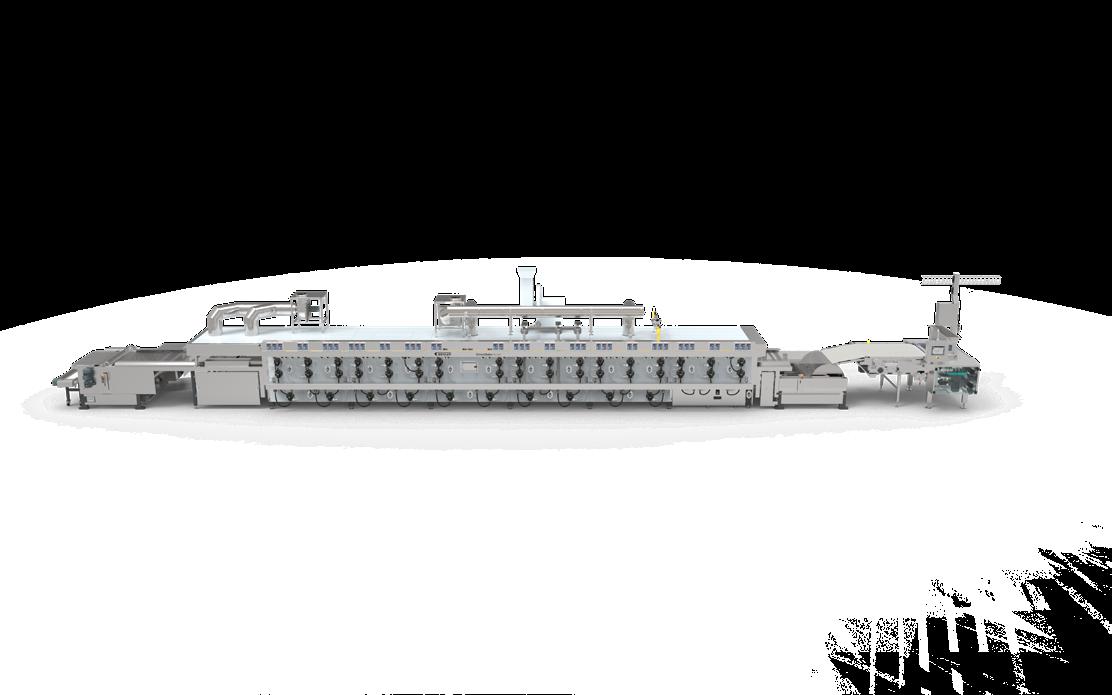
As food and beverage manufacturers face growing pressure to deliver consistent quality while reducing energy use and lower production costs, the Smartline production line of the company Buhler is designed to support biscuit and cracker manufacturers with a high-performance system that balances efficiency, quality and sustainability. Developed in India and supported by decades of European engineering expertise, the Smartline integrates advanced automation with energy efficient design to ensure consistent results and improved overall equipment effectiveness. “Central to the system is the DirectBake Smart oven, which delivers uniform texture, colour and flavour through precise heat control, superior insulation and high-efficiency burners,” Bühler biscuit business product management unit head Céline Vachet explains.
"Central to the system is the DirectBake Smart oven, which delivers uniform texture, colour and flavour through precise heat control, superior insulation and high-efficiency burners."
SMART DESIGN, GLOBAL VALUE
The Smartline production line is a standardised platform that helps to reduce total cost of ownership by combining energy efficient baking, recipe-driven automation and modular scalability. Although it was developed with strong cost competitiveness in mind,
Bühler’s engineering governance and performance standards, which ensure that value is derived from smarter design and standardisation, rather than reducing safeguards and process capability to improve margins. Moreover, the system benefits from a “global design, local cost structure” approach, combining European engineering principles and validation methods with regionally optimised manufacturing and application development. “This approach shaped the design, with design-to-value engineering that prioritises features that measurably impact [on] energy, original equipment effectiveness and quality while limiting complexity that does not improve outcomes, with the European expertise anchoring performance standards, safety and process reliability,” Vachet explains. In line with Bühler’s broader digitalisation drive,
Smartline ovens deliver uniform baking through multi-zone heat control that shapes colour and moisture development.
controls and recipe structures that allow for performance comparisons and continuous improvement. It provides real-time visibility of process and energy performance using machine-specific key performance indicators and predictive maintenance indicators.
ENERGY REDUCTION
Targeting energy reduction through a redesign of the baking chamber and an optimised heat distribution, the Smartline ovens’ actual savings depend on product type, line load, operating hours, moisture targets and baseline efficiency.
To achieve uniformity through precision and repeatability in heat delivery, the ovens include a multi-zone heat control that has a baking profile “shaped” to control colour and moisture development. Moreover, the recipe-driven baking profiles – which include setpoints and transitions that are standardised, further reducing operator-dependent variability – and a recipe-controlled burner system ensure that every baking batch is consistent using the optimal parameters while maintaining consistent quality. The Smartline ovens follow the same modular
concepts as older Bühler ovens, with 2 m modules ensuring fast installation while meeting the space and capacity requirements of the customer. It is also equipped with a new Web-based human-machine interface – Playone – providing a “very intuitive and modern” user experience, Vachet adds. The Smartline further supports sustainability by lowering waste and scrap, with more consistent baking to reduce off-specification production and downgrades; lowering CO2 emissions; and improving raw material use, with fewer rejects and smoother startups, ensuring a higher yield from the same ingredients, she concludes.
FAST FACT
Bühler's modular DirectBake Smart oven features 2-meter modules for rapid installation and scalable capacity without compromising safety or process capability.
Bühler – www.buhler.com
Redefining the Future of Baking DirectBake Smart Oven & RotaMold Smart
Discover the baking excellence with the DirectBake Smart oven and RotaMold Smart. Combining european expertise and Indian innovation, these cutting-edge solutions ensure energy efficiency, precise molding, and consistent baking results. From raw ingredients to perfectly shaped and baked products, experience unmatched performance in achieving the ideal size, texture, flavor, and color of your end-products.
5 Star Business Park, Juice Street, Honeydew +27 11 801-3500. buhler.johannesburg@buhlergroup.com
Innovations for a better world.
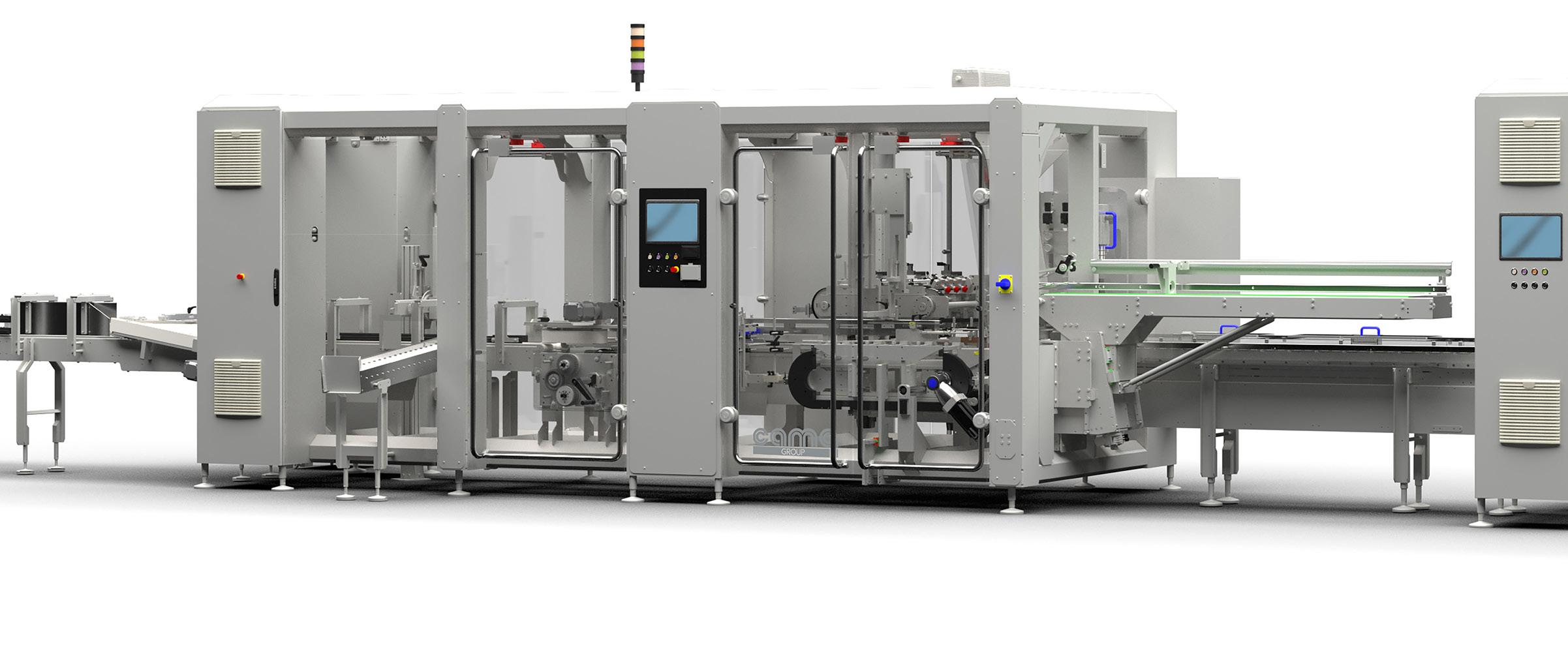
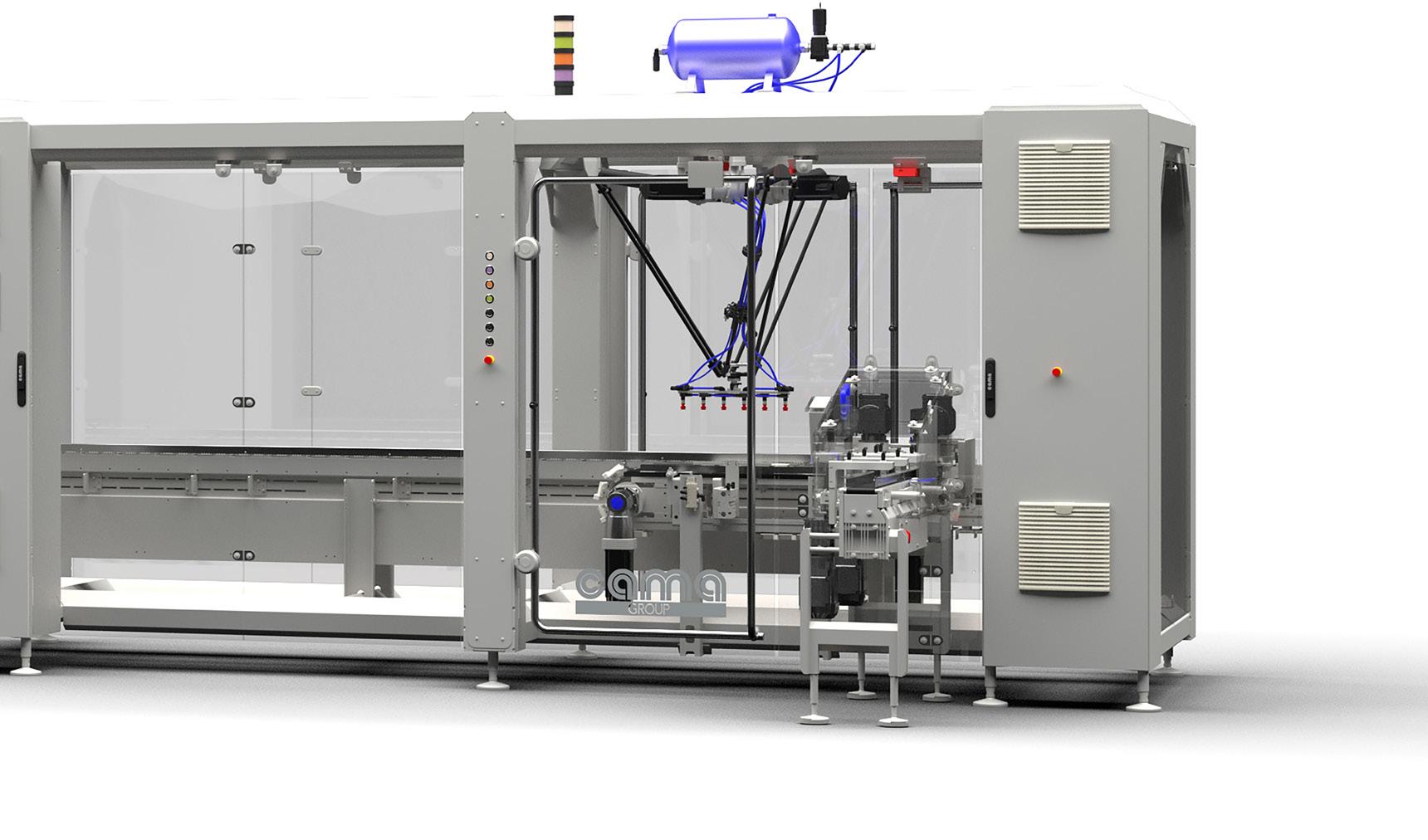
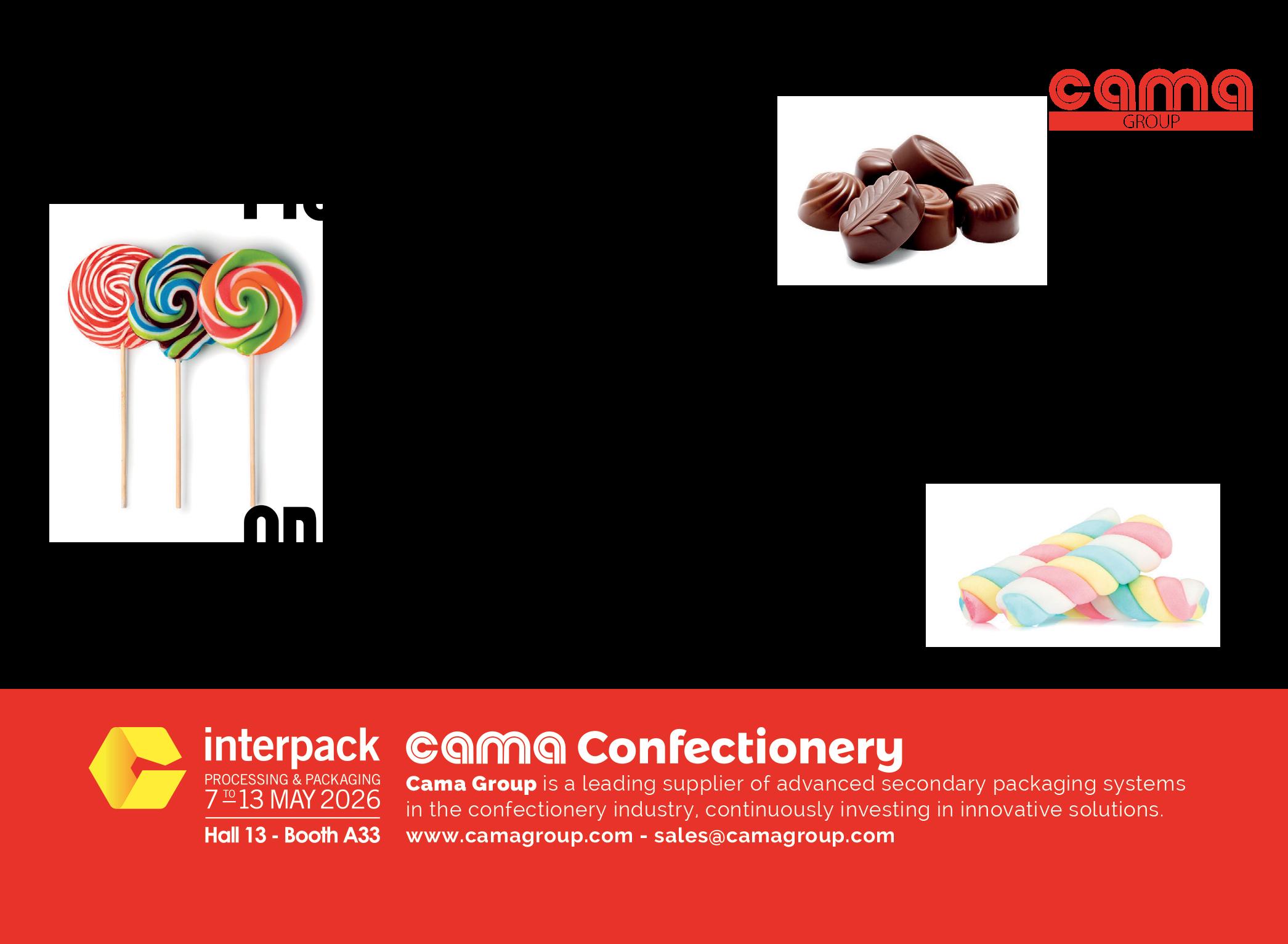
Perfect equation for premium chocolate packaging
Brand maintenance plus high flexibility – not just now, but in the future too as modular secondary packaging technology surpasses manual capabilities.
Premium chocolates require premium packaging and, as a direct result, premium packaging demands highly capable, but very gentle premium packaging technology.
Highly capable and gentle are just two features of the packaging machines, cells and turnkey lines supplied by global packaging expert Cama Group. High speed, compact, modern technology, flexibility, agility and fully digital complete the picture. As a result, Cama’s technologies see deployment around the world, from the biggest blue-chip multinational, down to the smallest, boutique, local specialist.
One recent beneficiary of Cama’s extensive domain expertise is the Ghirardelli Chocolate Company, an American confectioner, wholly owned by Swiss confectioner Lindt & Sprüngli. The company set a challenge to Cama to develop a secondary packaging process that would ably replace the existing manual process in terms of dexterity, accuracy, and delicacy.
According to Davide Di Lorenzo, sales engineer manager at Cama Group: “The products being packaged comprised flow packed chocolate squares and seasonally branded flow packed chocolate rectangles. This product-mix challenge is compounded by the design of the secondary packaging, which is a small gable-topped box, into which
“The first step in the packaging process involves defining the orientation of the packed chocolates to ensure optimum placement into the servo-driven flighted conveyor within the IT280 loading unit, although the technology is tolerant of minimally skewed packages.”
DID YOU KNOW
Cama was founded in 1981 and has operations in eight countries, delivered more than 3, 000 machines worldwide.
the products are placed in pairs at a rate of 260 packaged per minute. As well as its diminutive dimensions and slightly irregular shape, the packaging is also very aesthetic – promoting the expected quality of the product inside, as a result, gentle, abrasionfee handling was essential.”
The first step in the packaging process involves defining the orientation of the packed chocolates to ensure optimum placement into the servo-driven flighted conveyor within the IT280 loading unit, although the technology is tolerant of minimally skewed packages. Once oriented, each product is placed into its own separate pocket or flight, after which a pre-set train of
products is created.
This train is then picked by a triaflex robot – specially developed in house by Cama, specifically for packaging processes – and the products are placed into individual cartons phased on a parallel conveyor. After loading, the cartons are transferred to the flap-folding station, where the top and bottom flaps are closed and secured using hot-melt, before being conveyed to the machine’s outfeed. The completed packages are then feed into an CL 156 electronic
continuous motion cartoning machine.
“Although this sounds like a relatively straightforward packaging operation,” Di Lorenzo explains, “there were a number of immediate hurdles to overcome, including the size and design of the box, both of which required bespoke tooling modifications of our standard solution. In terms of product size and variety we designed a racetrack that can take all chocolate shapes – either short edge leading or at 90°, in fact the pockets are specifically designed to
receive both orientations so there would be no need for downtime between batches.
“And these were just the current challenges. With one eye on the future, the customer also wanted us to factor in higher-product-count capabilities –all on the same machines – which would see five or six products loaded instead of the existing pair. For this challenge, our packaging design consultancy team got to work and proposed new designs and dimensions that would fit the higher product count,
as well as addressing sustainability in its use of less material.
“To cater for the higher throughput, we exploited the modular capabilities of the IT280, which allows us to add a second infeed and second robot – taking throughput up to 400 (2 x 200) products per minute. The cartoner is already capable of this level of operation. These expanded capabilities will be demonstrated during testing and FAT.”
Di Lorenzo concludes. “Modularity, flexibility and minimal downtime are pre-requisites of many of our customers, as they witness the new technologies and capabilities available to them on the wider market. Why do they always come to us? It’s because we have the reputation, skills and broad multi domain expertise to conquer the most difficult packaging challenges with modular technologies that will grow as they grow. Add our packaging design consultancy, extensive global & local support and AR and VR capabilities into the mix and it’s easy to see why we get so much repeat business from some of the world’s biggest brands.”
USS Pactech - www.usspactech.co.za Cama - www.camagroup.com
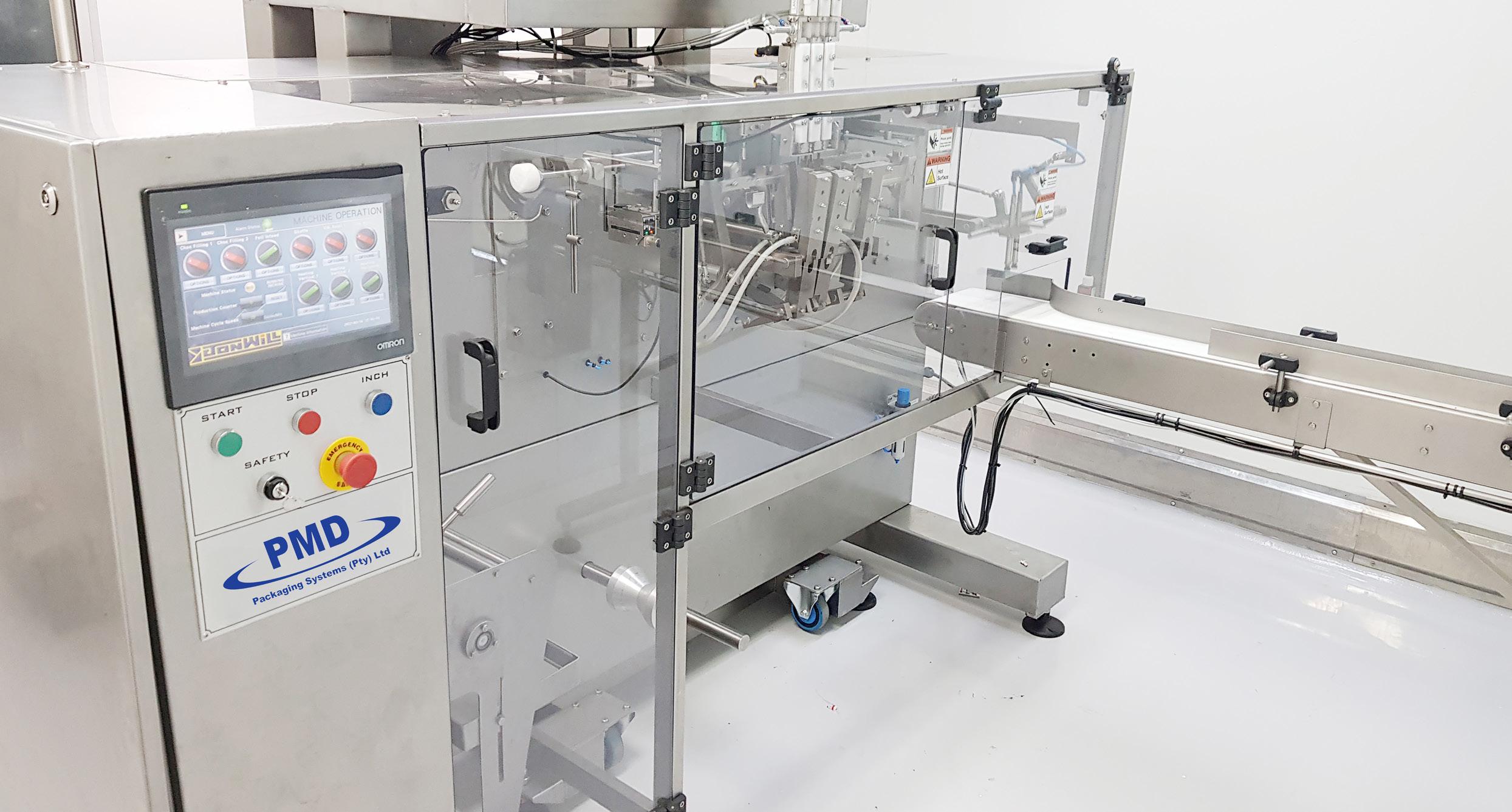
Small packs drive big changes
PMD Packaging launches innovative small pack machinery range targeting African entrepreneurs and addressing portion control hygiene challenges across diverse markets.
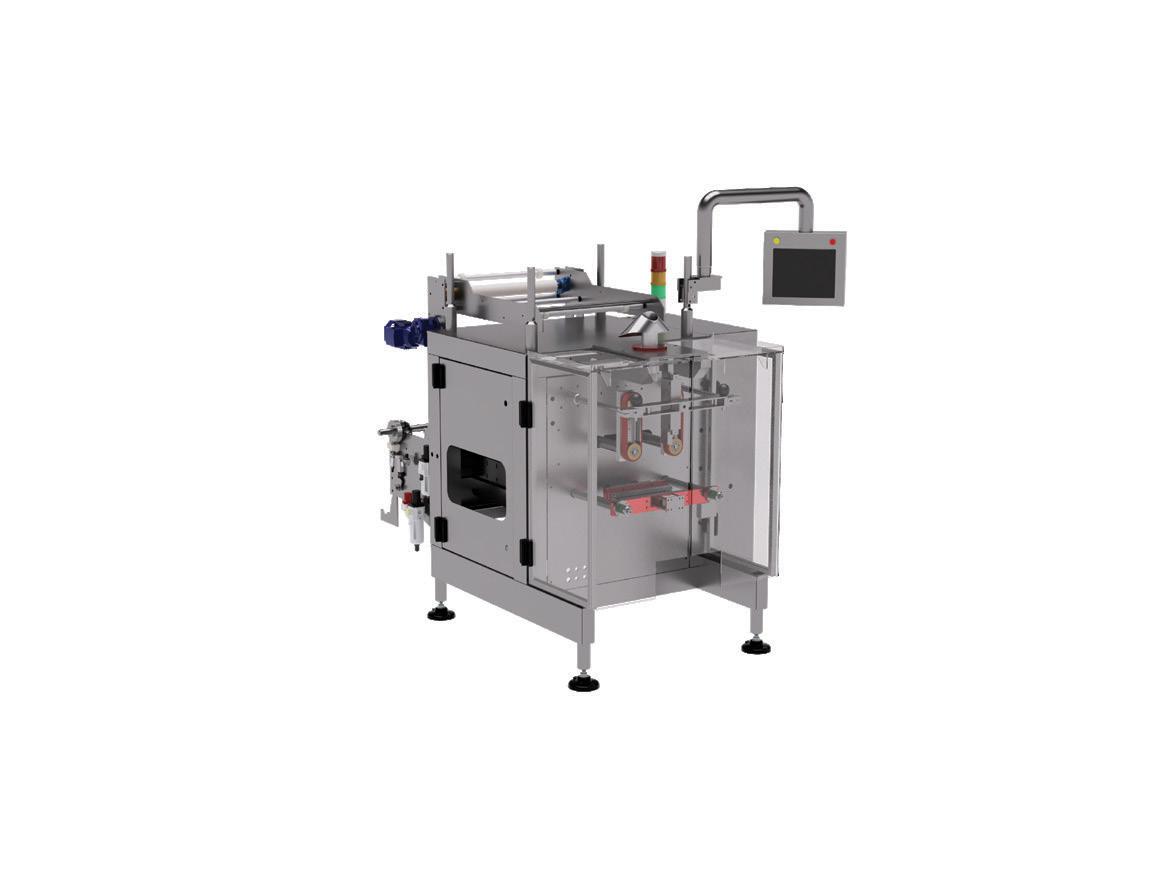
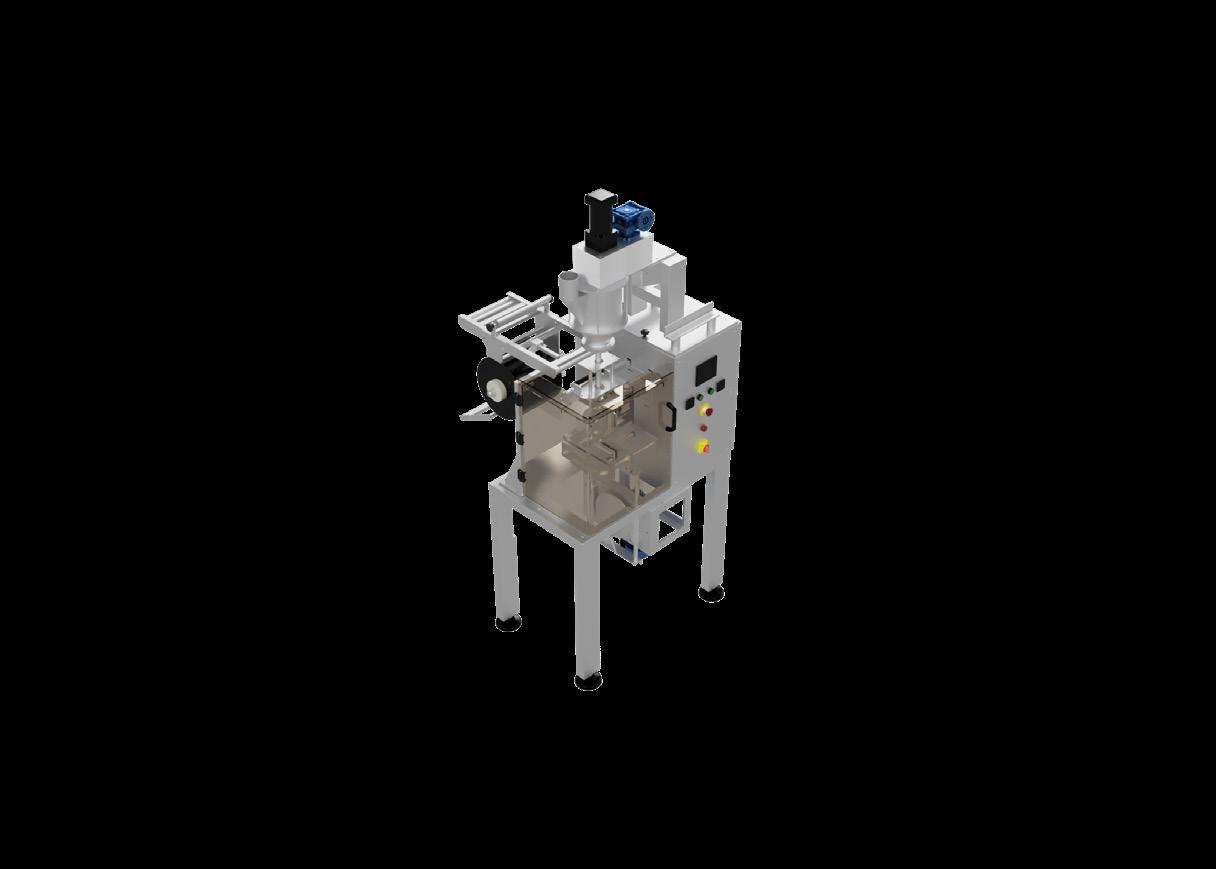
PMD is constantly investing in new solutions for packaging systems to suit the Food and Beverage market and others including Pharmaceutical, Nutriceutical, et al. Furthermore the company wants to pay attention to the economic profile of Africa. Many end users of common domestic products just don’t have the resources to purchase the big packs and the result is often Please change to manual intervention in order to satisfy the need for small packs. Small entrepreneurs have no choice but to do their best and measure portion size as best they can and manage their hygiene issues accordingly. This naturally introduces the consumer to hygiene risks and also risk of being over charged. Thus there is more pressure to make small packs available and that they are produced in compliance with health and safety requirements of the modern world.
PMD has now launched a new range of machines to complement a very successful range of VFFS
machines with a multitude of special dosing systems, plus Auto Baling, Shrink-wrap, and many other special solutions where the company enjoys assistance from our European partners.
This move is designed to satisfy many
We design them, we build them, we maintain them, we improve them, we develop them. And above all we have technical support for everything we make.
ABOUT PMD
PMD Packaging has been manufacturing high-quality packaging machinery, since inception in 1966. The Sigma range of vertical form fill and seal packaging machines complies with world class standards. Under the guidance of Mike Spencer, the company has expanded, to offer a wide range of packaging and processing machinery by partnering with a number of international brands. PMD services a loyal client base globally and throughout Africa, with local representation in Johannesburg, Cape Town and Durban.
Our success is based on our work ethic, as well as an excellent track record of suc-
markets including, small entrepreneurs, and also big companies that need to offer small portions.
PMD HAS DEVELOPED AND INTRODUCED TO THE MARKET, A RANGE OF SMALL PACK MACHINES:
Taurus: Mini VFFS machine for 3 side seal or pillow pack. Taurus is available with quick change over dosing capability for liquids, powders or granules.
Sigma 1: High speed VFFS machine for small packs up to 100 packs / min Apollo: Horizontal sachet machine for 3 or 4 side seal in single or twin lane format.
PMD - www.pmdpackaging.co.za
cessful installations and back up service for many leading multi-national companies. Throughout the years PMD has put technical development at the top of its agenda with the result that its products are widely recognised as leaders in the field of food packaging machinery, and now has many machines installed in a broad cross section of industries and countries throughout the world. We represent a number of suppliers including, Matcon, Delfin, Velteko, New Projects, Proxes, Symach. Pat Galleymore, Technical Director heads up PMD’s manufacturing and demo facility in Northriding, Johannesburg, supported by an experienced and qualified team.
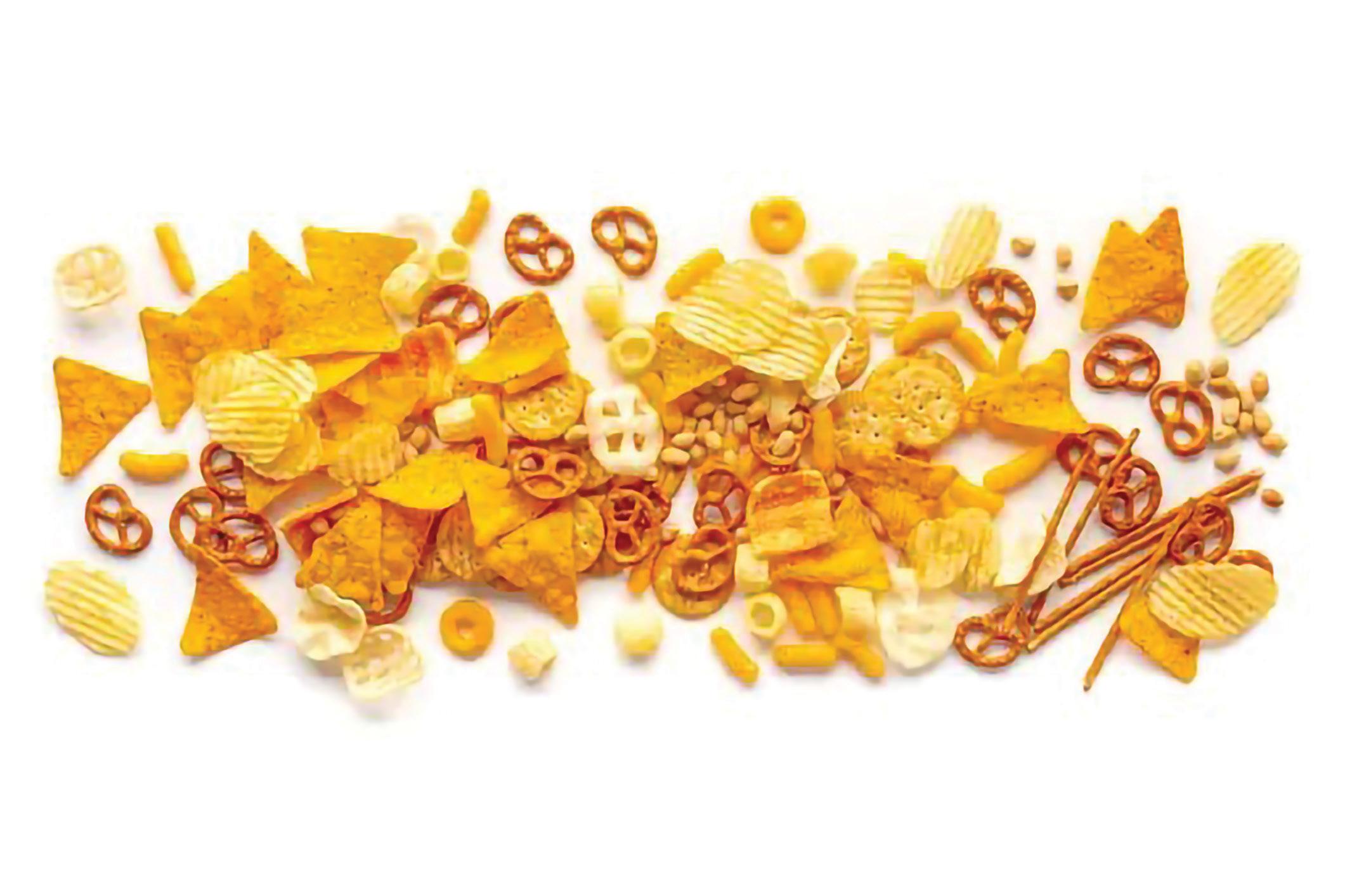
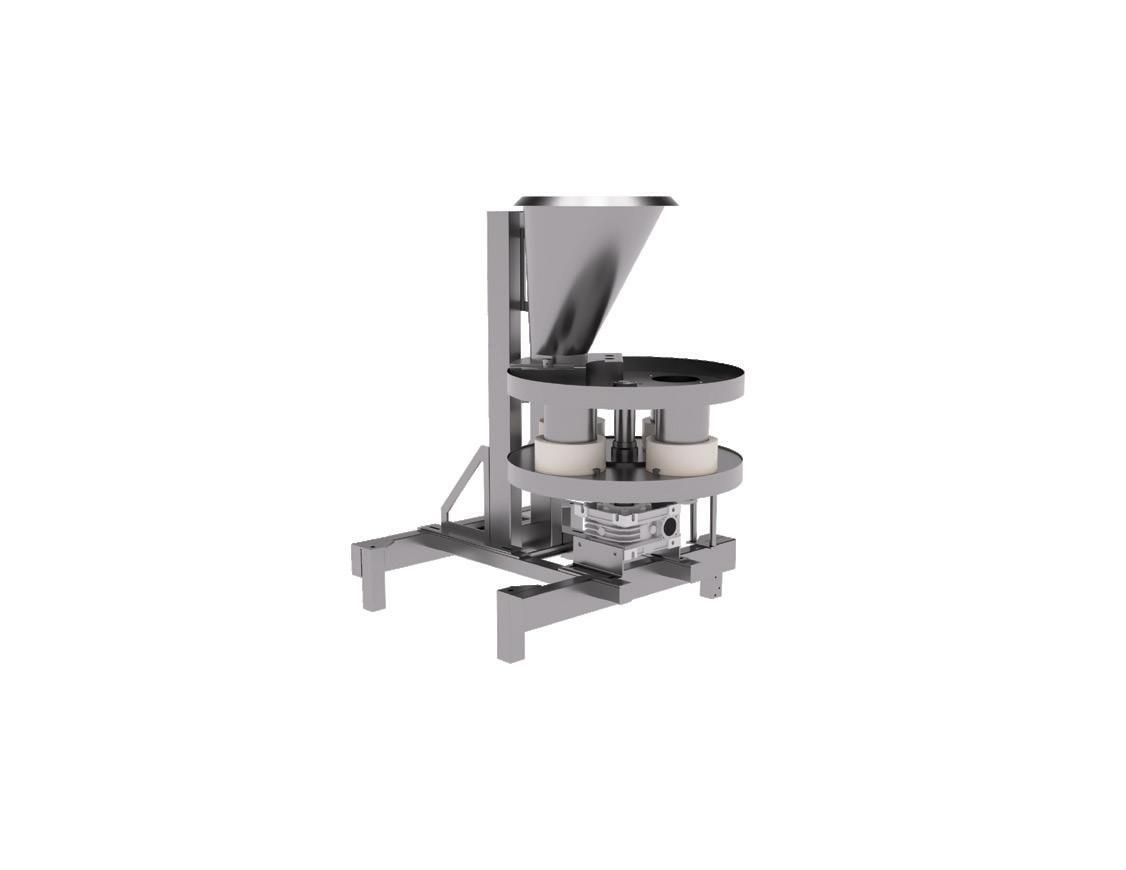
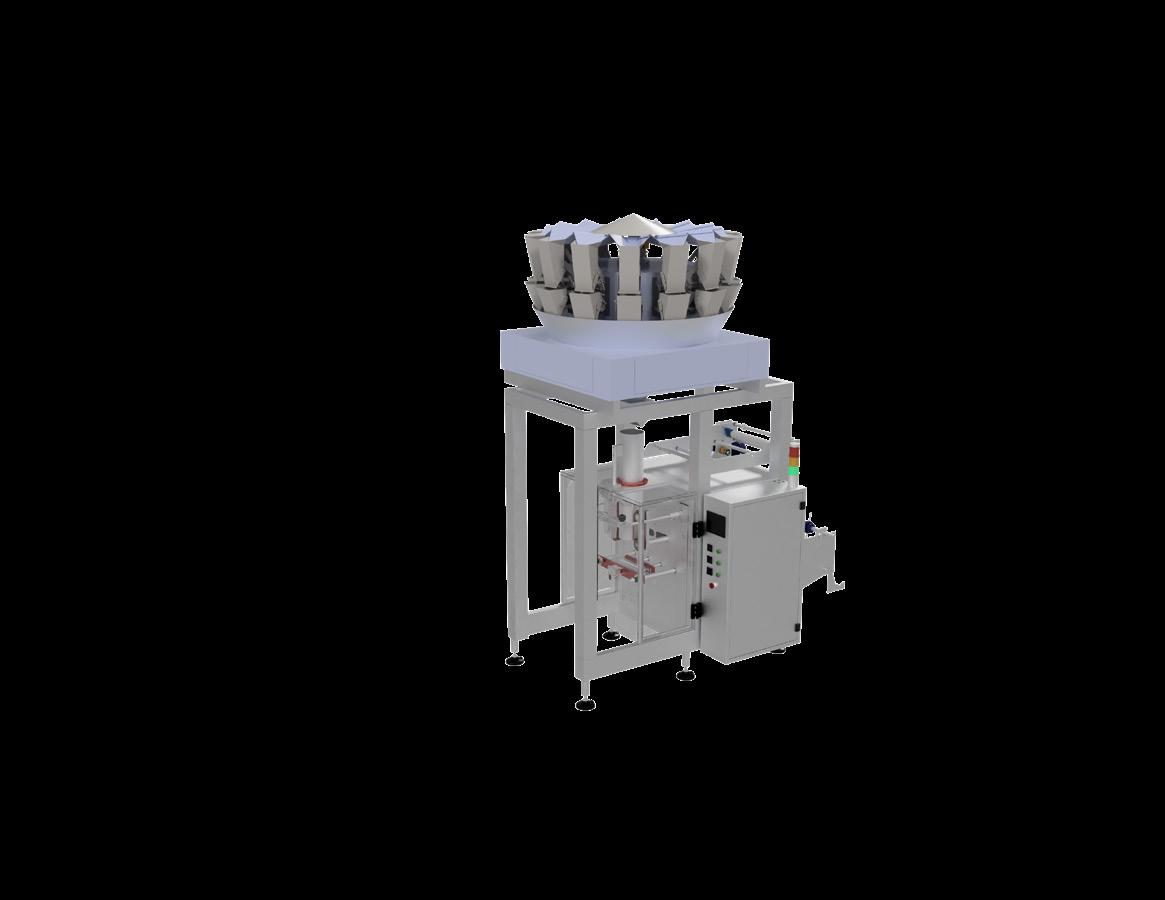
SNACK PACKAGING
Packing snacks since 1966
With representation in Gauteng, Cape Town and Durban, we are able to offer quick and effective sales, technical and service support. Contact us for all your snack packing requirements
Cocoa butter versus substitutes: Purpose drives choice
In confectionery development, choosing between cocoa butter and substitutes isn't about superiority—it's about matching functional outcomes to product purpose.
In confectionery development, fat is seldom the headline ingredient, yet it is the foundation of structure, stability, sensory performance and manufacturing efficiency. The decision between cocoa butter and cocoa-butter substitutes (CBS) is not about which is superior, it is about purpose. In both chocolate and compound formulations, fat is far more than a carrier. It determines crystallisation behaviour, melting characteristics, processing performance and ultimately how the product is positioned in the market. Formulators are not simply selecting ingredients; they are selecting functional outcomes. The conversation is often framed as cocoa butter versus alternatives. In reality, the more relevant question is: What is the product designed to be?
COCOA BUTTER: THE ARCHITECTURE OF REAL CHOCOLATE
Cocoa butter’s triglyceride composition gives it a crystallisation pattern that has become synonymous with premium chocolate. When properly tempered into stable ß(V) form, it delivers gloss, snap and a clean melt at body temperature. For moulded pralines, high-cocoa couvertures and premium enrobing applications, this melting curve is critical. It enables controlled flavour release and avoids the waxy perception sometimes associated with non-cocoa fats. Suppliers such as Barry Callebaut have built strong technical reputations on consistency in cocoa butter quality, particularly in crystallisation performance and neutral flavour profile. For R&D teams working in premium segments, that reliability reduces
process variability and bloom risk when systems are correctly designed.
Sustainability has also become part of ingredient evaluation. Through initiatives like Cocoa Horizons, cocoa sourcing is increasingly tied to traceability and farmer support programmes. A factor that procurement and retail partners are now weighing alongside cost and functionality. In products where “real chocolate” is part of the consumer promise, cocoa butter remains the structural foundation.
"It's not about which is superior, it's about purpose."
COCOA BUTTER SUBSTITUTES: ENGINEERED FOR EFFICIENCY
Where cocoa butter relies on natural polymorphism, CBS systems rely on lipid engineering. Bunge Loders Croklaan is not simply a manufacturer of alternatives, it is a global leader in specialty lipid science, with deep expertise in fractionation, enzymatic interesterification and fat structuring technology. Products such as Bunge Loders Croklaan CLSP 555/E are developed through precise control of fatty acid composition and solid fat content (SFC) curves. These fats are engineered for rapid crystallisation and stable processing without tempering. They deliver consistent gloss, clean bite and reliable setting behaviour on high-throughput lines.
THE FORMULATION ARCHITECTURE IS ALSO DIFFERENT.
Unlike chocolate systems built around cocoa mass and cocoa butter, CBS-based
compounds rely on low-fat cocoa powder (typically in the 10–12% fat range, an example is the N102C cocoa powder form Barry Callebaut) to maintain structural stability. Higher fat cocoa powders or cocoa mass introduce cocoa butter into the system, which is incompatible with lauric CBS structures. This is not a compromise; it is simply a different design approach. Compound systems are engineered for robustness, efficiency and defined sensory expectations. Chocolate systems are engineered for polymorphic precision and flavour authenticity. In high-speed coating applications like biscuits, wafers, and snack bars, these systems reduce process complexity while delivering consistent sensory properties within compound formats.
COCOA BUTTER AND CBS
Modern confectionery portfolios often include both chocolate and compound formats. The expertise lies not in favouring one fat over another, but in aligning fat choice with product intent, processing capability and market positioning. Cocoa butter supports authenticity, premiumisation and full chocolate declaration. CBS systems support scalability, operational efficiency and controlled cost structures.
Both rely on advanced technical knowledge. Both require disciplined formulation. And both continue to evolve as ingredient science advances. In the end, fat is not the background ingredient. It is the quiet driver of product identity.
appearance you need for your food & nutritional products. We represent leading global manufacturers & our specialists can provide you with unrivalled sales support bringing the highest quality products to market:
of additives to help create the taste, texture, performance and appearance you need for your food & nutritional products. We represent leading global manufacturers & our specialists can provide you with unrivalled sales support bringing the highest quality products to market:
Bakery ingredients: flavour, texture and fortification - Beverage ingredients for innovation - Confectionary: healthier & tastier alternatives to enhance your brandCulinary solutions for sauces, dressings and prepared meals that will innovateDairy & Desserts: texture and functionality - Flavour & fragrance creation - Health & sports nutrition.
Bakery ingredients: flavour, texture and fortification - Beverage ingredients for innovation - Confectionary: healthier & tastier alternatives to enhance your brandCulinary solutions for sauces, dressings and prepared meals that will innovateDairy & Desserts: texture and functionality - Flavour & fragrance creation - Health & sports nutrition.
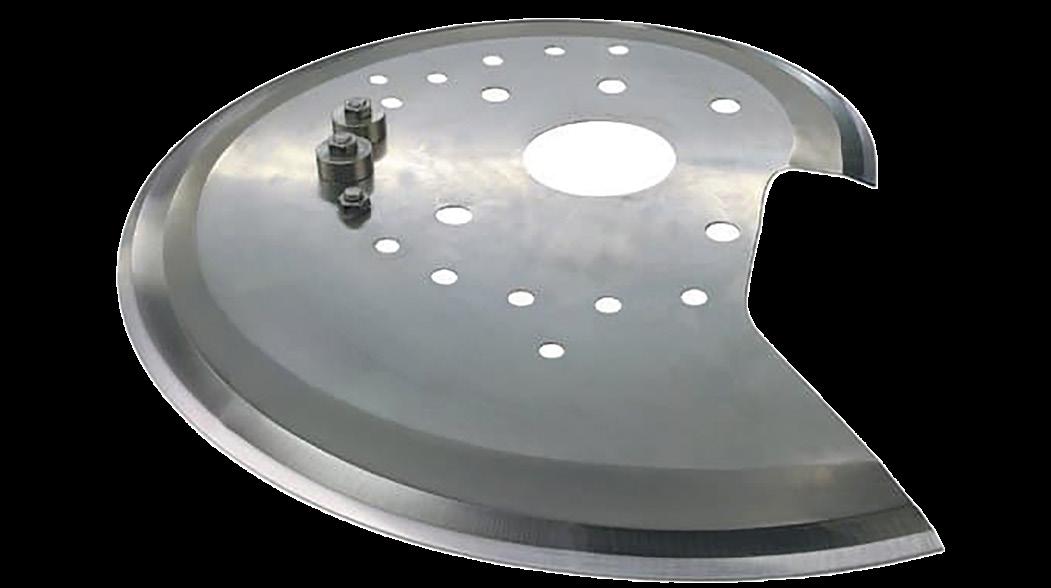
Advanced blade engineering transforms modern meat processing
Precision-engineered cutting blades with advanced steel compositions and specialised coatings improve meat processing efficiency, hygiene, and product yield.
THE SCIENCE BEHIND THE CUT
In the fast-paced environment of poultry and meat processing, efficiency is measured in seconds and yield is measured in grams. Amid the complex machinery and automation that define modern processing lines, one small component quietly determines the quality, consistency and reliability of the entire operation: the cutting blade. From deboning poultry to cubing beef or sealing packaged products, industrial blades perform thousands of cuts per hour under demanding conditions. Their design and manufacture require far more engineering expertise than many realise. According to Mikko Brunner, managing director of Renlaw Industrial Cutting Tools and a mechanical engi neer, the performance of a blade is determined long before it ever reaches a pro duction line. For food processors, understanding these factors can help improve yield, maintain hygiene stand ards and reduce costly downtime.
STEEL: THE FOUNDATION OF BLADE PERFORMANCE
Steel is not a single material but an alloy of iron, carbon and other elements. By adjusting the proportions of these elements, engineers can control properties such as hardness, toughness, corrosion resistance and wear resistance. Chromium, for example, is a key ingredient in stainless steels and significantly improves corrosion resistance. Nickel
enhances toughness and oxidation resistance, while molybdenum improves strength and resistance to salt and chemical attack — an important factor in food-processing environments. “Selecting the right steel is always about balance,” explains Brunner. “You need hardness for wear resistance, but also toughness so the blade doesn’t chip or crack. Getting that balance right is what determines how long a blade lasts in production.” For food-contact applications, martensitic stainless steels are commonly used. These steels can be hardened while maintaining corrosion resistance and hygienic properties, making them ideal for blades used in meat and poultry processing. However, steel composition alone is not enough.
HEAT TREATMENT: ENGINEERING THE CUTTING EDGE
After blades are machined into shape, their internal structure must be transformed through heat treatment. Industrial blades are typically heated to a temperature c before being rapidly cooled to form a hard microstructure known as martensite. While this structure provides hardness, it can also be brittle, so the blades are subsequently tempered at lower temperatures to restore toughness. The result is a material that can withstand both high-speed cutting and mechanical stress. Hardness is measured using the Rockwell C scale, which determines how deeply a diamond point penetrates the steel surface. A shallow indentation indicates
a harder material. The optimal hardness depends on the application. High-speed cutting operations benefit from harder blades that resist wear, while blades exposed to impact forces require more toughness to prevent chipping.
COATINGS AND SURFACE FINISHES
In addition to steel composition and heat treatment, surface coatings can play an
"Steel as the foundation of blade performance, with controlled alloying elements like chromium, nickel, and molybdenum precisely tuned to balance corrosion resistance, toughness, and wear characteristics."
THE FINAL STAGE OF THE PROCESS
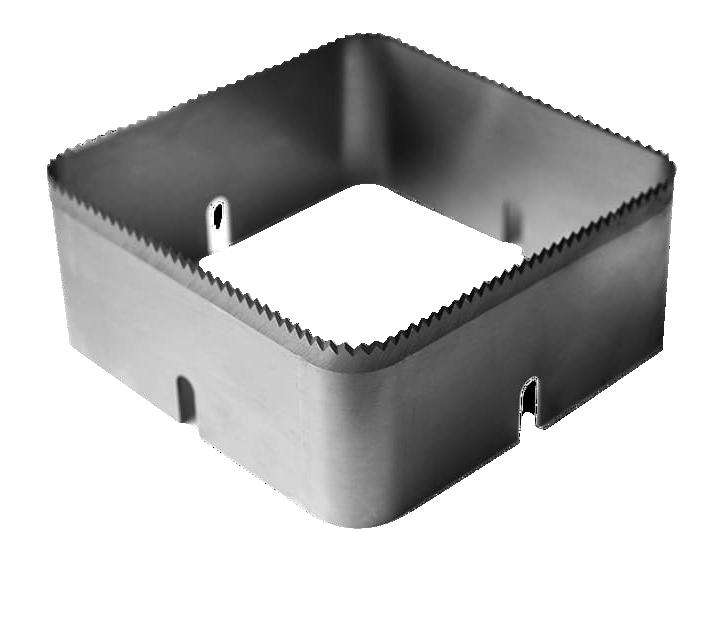
The role of cutting blades does not end once the meat is processed. Packaging machinery also relies on precision cutting tools to seal and separate film, foil and flexible packaging materials. Toothed blades are commonly used in packaging equipment such as vertical form-fill-seal systems and tray-sealing machines. These blades cut between sealed packages or trim lids from sealed trays. Tooth geometry plays a critical role. Smaller teeth produce smoother edges but require more cutting force, while larger teeth reduce cutting force but require greater travel to complete the cut. Precision grinding ensures that these teeth maintain the correct angles and sharpness, helping to prevent packaging defects and minimise downtime.
Image: Supplied by Renlaw
important role in blade performance. Technologies such as Physical Vapour Deposition (PVD), electroplated coatings and specialised non-stick coatings can improve wear resistance, reduce friction and enhance corrosion resistance. In food-processing applications, surface finish is also critical for hygiene. Smooth, polished blade surfaces reduce the risk of product adhesion and make cleaning more effective. Some food-processing blades are finished with antimicrobial surface treatments to further improve hygiene performance.
“In food produc tion, blade design isn’t only about cutting per formance,”
Brunner notes. “Sur face integrity and corrosion resistance are equally important because hygiene standards are so strict.”
PRECISION TOOLS FOR POULTRY PROCESSING
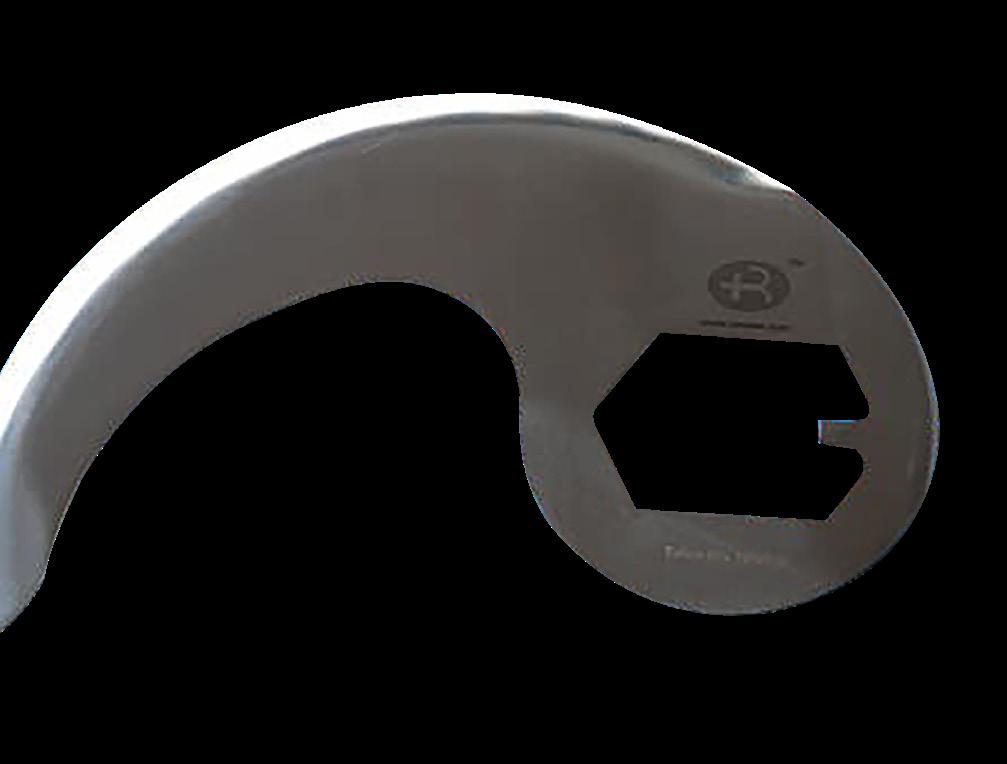
Poultry processing lines rely on specialised blades designed for specific operations, from evisceration and deboning to portioning and trimming. These include blades used for tasks such as gizzard harvesting and wishbone removal, where precise cutting geometry ensures that edible product is separated cleanly without damaging surrounding tissue. Consistency is essential — not only for product quality but also for maximising yield. Manufacturers must also consider machine compatibility and operating conditions. Modern poultry plants use highly specialised equipment from global brands, and replacement blades must match exact tolerances to ensure smooth operation. Renlaw manufactures a wide range of poultry blades — including circular knives, deboning blades, vent cutters, wing and thigh cutters and wishbone removers — designed to fit leading poultry-processing machines. “A properly engineered blade should cut cleanly, last longer and reduce the frequency of blade changes,” says
“A cutting blade may look simple, but it’s the result of careful metallurgical engineering.”
“That translates directly into more efficient production.”
CUTTING CHALLENGES IN RED MEAT PROCESSING
Red meat processing presents a different set of challenges. Equipment used for cubing, dicing and slicing must operate continuously while maintaining consistent cut quality. Cubing and dicing blades, for example, must retain sharpness under constant contact with dense muscle tissue. Large bowl chopper blades — used in
processed meat production — rotate at high speed and are subjected to repeated impact loads. For these demanding applications, food-grade stainless steels with carefully controlled hardness are essential. Industrial blade manufacturers supply a wide range of cutting tools for the meat sector, including cubing blades, slicer blades, bowl chopper knives and specialised cutting tools designed for specific machinery.
ENGINEERING THE RIGHT CUTTING SOLUTION
Although often overlooked, industrial blades are among the most important components in a processing line. Their performance influences product quality, machine reliability and operational efficiency. For processors, working with a blade manufacturer that understands both metallurgy and real-world production environments can make a measurable difference. Based in Cape Town, Renlaw Industrial Cutting Tools manufactures a wide range of industrial blades for poultry, meat processing and packaging applications. Using imported food-grade tool steels and precision manufacturing processes, the company supplies cutting solutions designed to meet the demanding conditions of modern food production.
FAST FACT
Martensitic stainless steel blades undergo controlled heat treatment to achieve optimal hardness levels, with surface coatings providing antimicrobial properties and enhanced wear resistance.
Renlaw – www.renlaw.co.za
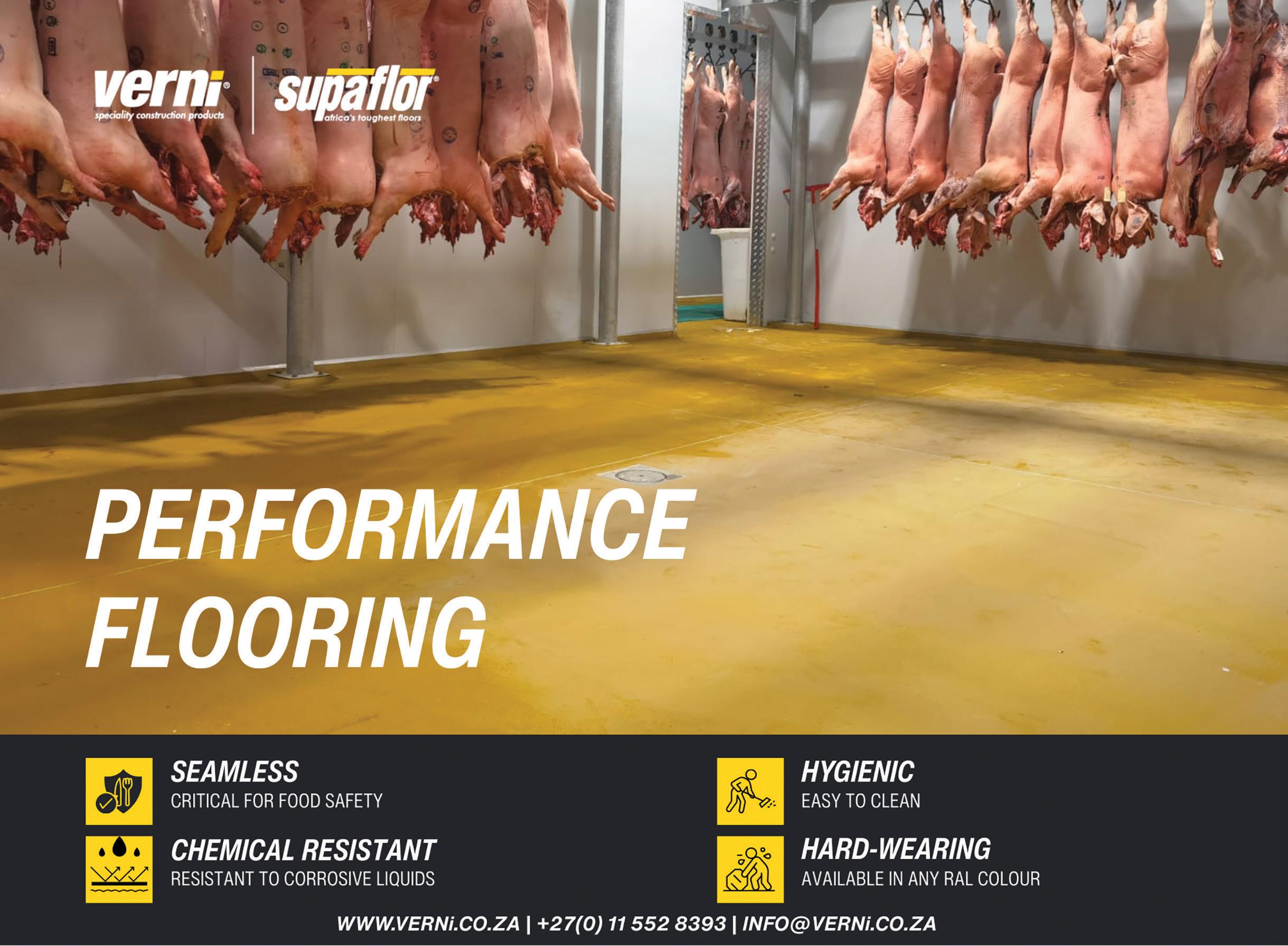
Advanced flooring solutions enhance protein processing facilities
VERNi's Supaflor® performance flooring systems provide seamless, chemical-resistant polyurethane floors designed specifically for meat, fish, and poultry facilities.
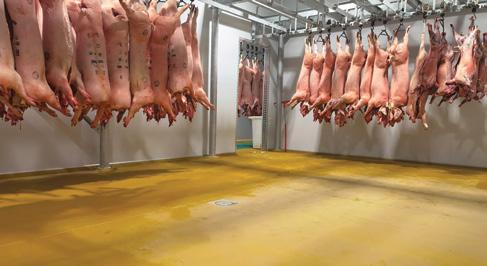
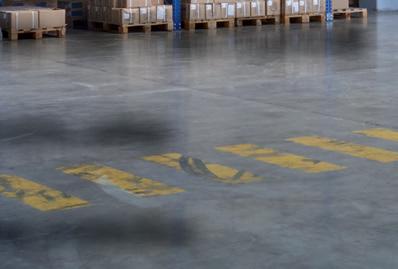
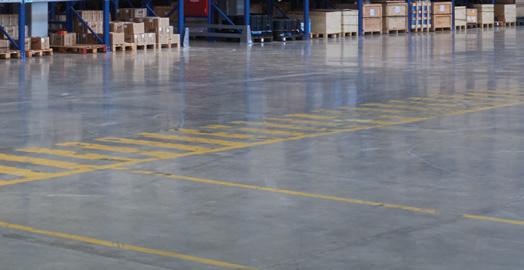
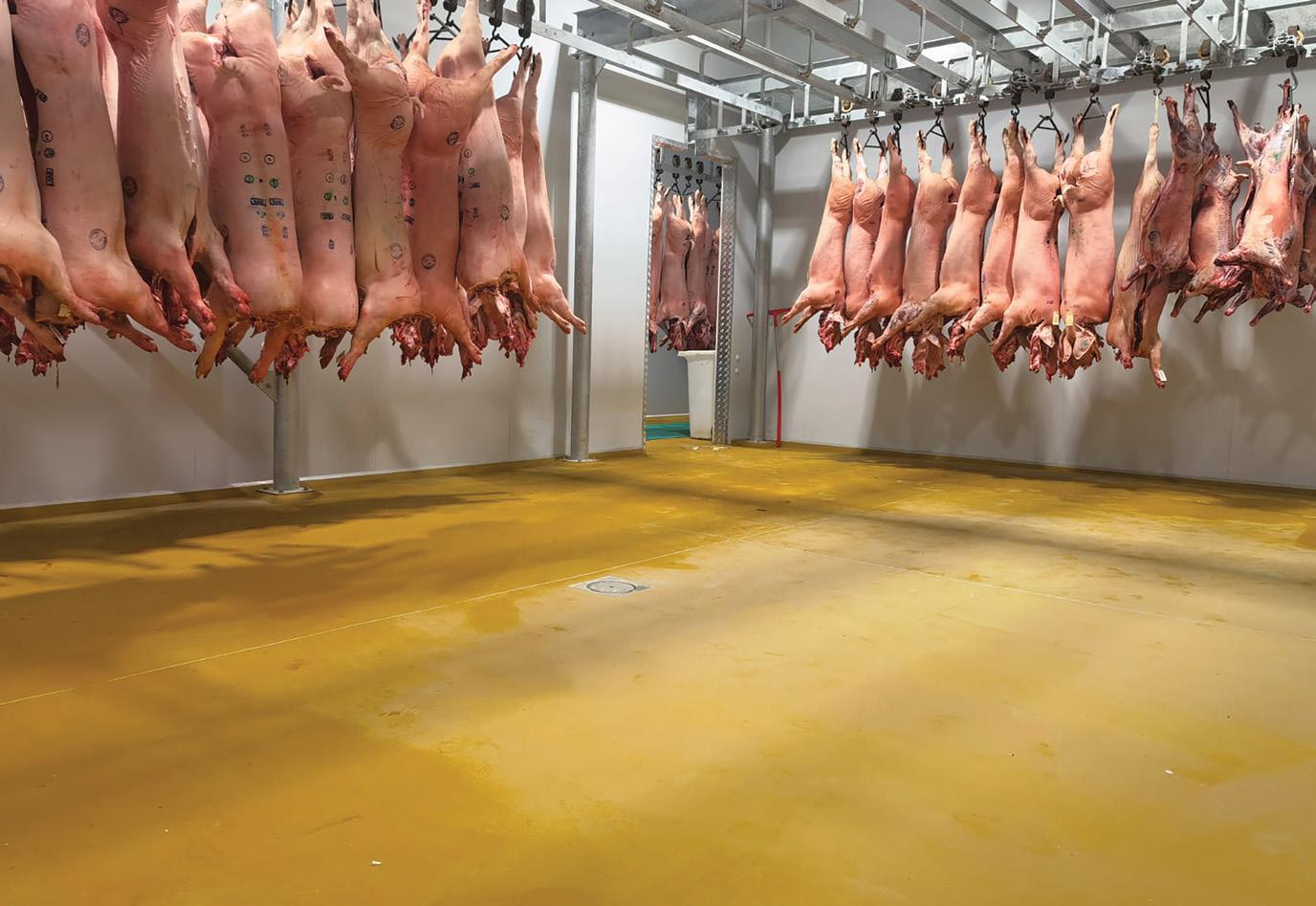
In meat, fish and poultry processing facilities, the floor is one of the hardest -working assets in the building. It carries the weight of production — literally and operationally — while playing a critical role in hygiene, safety and regulatory compliance. From abattoirs and piggeries to filleting rooms and cold storage areas, flooring must endure relentless cleaning regimes, thermal shock, heavy traffic and constant moisture without compromising performance. This is where VERNi - Supaflor ® Performance Flooring Systems delivers measurable value. Designed specifically for protein -processing environments, VERNi’s polyurethane floor screed systems are engineered to handle the extreme demands of facilities such as the piggery shown in the accompanying image.
Image: Supplied by VERNi
TAILORED DURABILITY
In these settings, floors are exposed daily to organic acids, animal fats, blood, high pressure washdowns and aggressive sanitation chemicals. Conventional coatings often deteriorate under these conditions, leading to cracking, delamination and potential hygiene risks. Polyurethane screeds, however, are formulated to resist chemical attack while maintaining structural integrity. One of the most significant advantages of polyurethane technology is its ability to withstand thermal cycling. Meat and poultry operations frequently shift between hot washdowns and chilled processing areas. Rapid temperature fluctuations can cause expansive on and contraction in standard flooring systems, resulting in failure over time. VERNi’s polyurethane screeds are thermally compatible with concrete substrates, reducing stress and helping prevent cracking or debonding — a crucial factor in maintaining a hygienic, seamless surface. Hygiene performance is non -negotiable in food production.
“A distinguishing feature of VERNi is its position as both manufacturer and installer.”
SEAMLESS MONOLITHIC FINISHES
VERNi ’s poly urethane screeds are installed as seamless, monolithic finishes that eliminate joints and crevices where bacteria can harbour. This supports strict HACCP protocols and simplifies cleaning procedures. The dense, non -porous surface resists moisture ingress, further reducing the risk of contamination and substrate deterioration. Safety is equally critical. Processing plants are inherently wet environments, and slip hazards are a constant concern. VERNi’s polyurethane screeds can be tailored with anti-slip textures suited to specific operational zones — from slaughter areas to pack aging sections — ensuring optimal traction without compromising cleanability. Durability directly impacts operational uptime. Heavy equipment, pallet jacks, forklifts and continuous foot traffic place immense strain on floors. VERNi’s heavy -duty polyurethane floor screeds provide high impact and abrasion resistance, reducing maintenance frequency and minimising costly downtime for repairs.
A distinguishing feature of VERNi is its position as both manufacturer and installer. This integrated model provides a single -line guarantee, ensuring accountability from product formulation through to final
application. The result is consistent quality control, technical expertise and long -term reliability without the inefficiencies associated with multiple suppliers.
In protein -processing environments where standards are uncompromising and margins are tight, flooring must perform without failure.
VERNi Performance Flooring delivers systems built not merely to withstand the environment — but to actively support the safety, efficiency and longevity of meat, fish and poultry operations. VERNi - Supaflor ® Performance Flooring Systems – Africa’s Toughest Floors.
"Guaranteed toughest floors."
FAST FACT
VERNi's polyurethane floor screeds are thermally compatible with concrete substrates, preventing cracking and debonding from thermal cycling common in protein processing facilities.
Verni – www.verni.co.za
Heat and Control at Interpack 2026
As food manufacturers face mounting pressure to cut energy and water use while maintaining throughput, quality and consistency, Interpack 2026 will put process performance firmly in the spotlight.
Heat and Control will return to the global trade fair with a clear focus on helping food manufacturers optimise every stage of production through smarter, more efficient processing and packaging solutions. At this year’s show, Heat and Control will showcase new and recently launched technologies across food processing, conveying, seasoning, weighing, packaging and inspection. The solutions are designed to tackle rising energy costs, water management and increasing performance expectations on the production floor, while supporting a wide range of applications like French fries and potato co-products, snacks, prepared foods and more. Heat and Control will introduce the FastBack® Symphony On-Machine Seasoning System (OMS), a recently launched solution developed to simplify seasoning processes and deliver greater accuracy in high-speed
production environments.
SYMPHONY OMS
According to the company, Symphony OMS represents a significant step forward in on-machine seasoning performance. “Seasoning is one of the most critical and challenging stages in snack production,” says Blake Svejkovsky, General Manager, Product Handling Systems at Heat and Control. “With Symphony OMS, we set out to address the real-world issues processors face every day, including airborne seasoning, inconsistent coverage and sanitation demands. This is the most accurate on-machine seasoning system we’ve ever developed, and it is engineered to perform at higher line speeds and application rates.” Heat and Control will also highlight its Cascade Water Recirculation Systems, reflecting the company’s long-term focus on sustainability and water
efficiency in food manufacturing. Developed through extensive research and development, the advanced water management systems are designed to help processors reduce freshwater consumption while maintaining sanitation and process performance. “Food manufacturers face growing pressure to operate with less — less energy, less water, less waste,” says Rick Bajema, Director of Processing Innovations at Heat and Control. “Our Cascade Water Recirculation Systems give them practical tools to conserve, treat and reuse water more effectively. Technologies such as our Slice Wash Support Module (SWSM) and Pre-Rinse Support Module (PRSM) significantly reduce water usage without compromising food safety or equipment performance.”
Heat and Controlwww.heatandcontrol.com
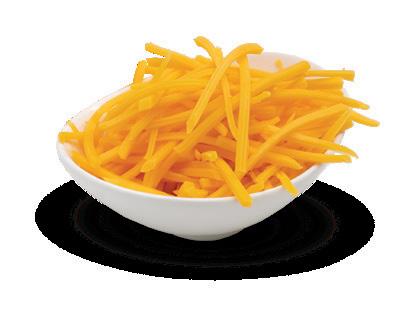
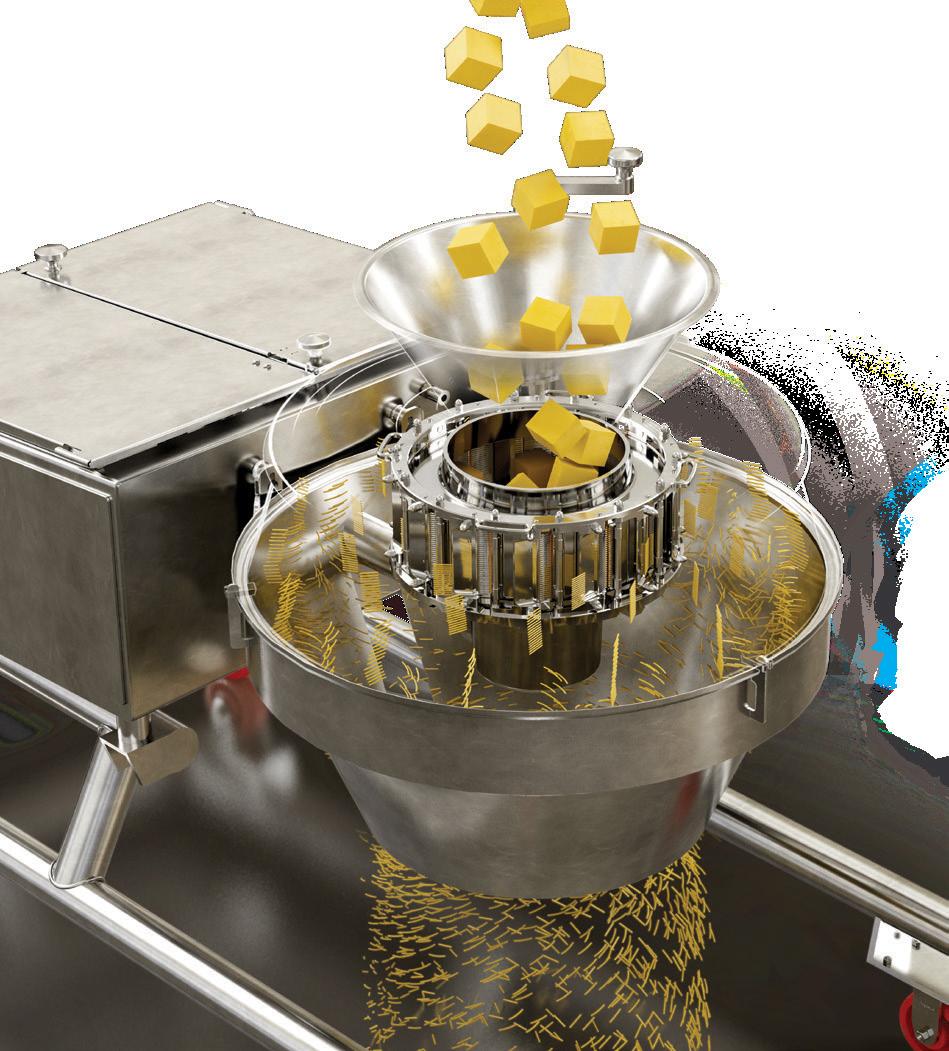
The CCX-D Shredder now features a powerful 15 HP (11.2 kW) motor for peak production. 32” (813 mm) enclosure paired with the SH-14 MicroAdjustable® 14-station shred head offers maximum capacity of precision shreds. Both the shredder and head design provide the ultimate in sanitation.
Explore more cutting solutions at heatandcontrol.com/urschel.
Slice | Dice
Strip
Shred
Puree
Production excellence gets major expansion
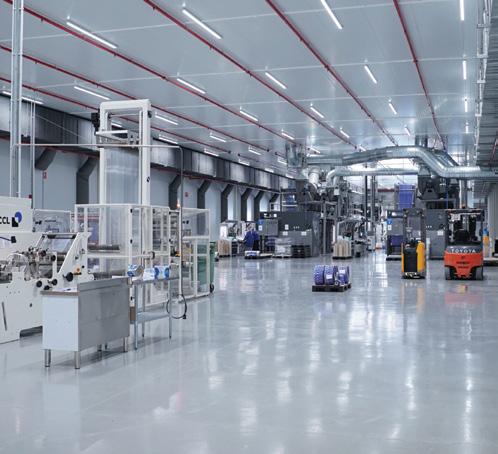
CCL Label expands operations in Tibi, Spain, strengthening sustainable high performance shrink sleeves and in - mould labels.
CCL Label, a global leader in specialty label and packaging solutions, announces the expansion of its operations in Tibi, Spain, enhancing local production of high-performance Shrink Sleeves and In-Mould Labels (IML) to serve brand-driven food & beverage markets with best-in-class printing, compliance, and sustainability. Locally produced in Spain and globally backed by CCL's innovation network, the Tibi facility now offers offset and gravure printing technologies that deliver vibrant graphics, precise detail, and outstanding consistency for demanding F&B packaging.
"We have significantly strengthened our production platform in Tibi with the addition of new high-performance printing presses and expanded die-cutting capabilities," said Reinhard Streit, group vice president Food&Beverage global at CCL Label. "In
parallel, we are consolidating our entire In-Mould Label (IML) operation into the new facility, bringing it together with our shrink sleeve manufacturing. This integration enhances efficiency, accelerates lead times, and creates a powerful center of excellence for decorative solutions serving the food and beverage market."
MEETING EU REGULATORY STANDARDS
The expanded operations are fully aligned with emerging European and Spanish packaging regulatory landscapes, particularly the EU Packaging and Packaging Waste Regulation (PPWR), which becomes binding across member states and introduces harmonised design, recyclability, and labelling requirements throughout the EU packaging life cycle. CCL's Tibi production lines support these
TAP INTO THE GROWING PET ECONOMY
Pet Hub is a specialised B2B digital publication connecting your brand to the decision-makers shaping South Africa’s booming pet food, pet care, and pet services and pet care services.
regulatory frameworks by offering shrink sleeves and in-mould labels designed to be PPWR-compliant and aligned with Design for Recycling guidelines, enabling brands to achieve strong shelf impact without compromising end-of-life performance. "Expanding our footprint in Tibi reinforces our commitment to both market excellence and responsible design," said Streit. "We combine local agility with global expertise to help brands thrive in an evolving regulatory landscape — from labelling compliance to sustainable packaging outcomes."
"We combine local agility with global expertise to help brands thrive"
CCL Labels – www.ccl.co.za
For editorial and advertising contributions contact: Kelebogile (Lebo) Nondzaba kelebogile.nondzaba@media24.com
For advertising: Càndida Giambò-Kruger +27 (0)71 438 1918 candida.giambo-kruger@media24.com
TIME TO ACT SUSTAINABLY
With EcoStream and EcoFloat, CCL Label provides decoration solutions that make high-quality PET bottle-to-bottle recycling possible. As South Africa takes a major step forward with Extrupet’s new recycling plant in Cape Town, we congratulate the team on this milestone for circular packaging. Together, we’re closing the loop – label by label.
Powerful lightweight: KHS Premium LITE
KHS Premium LITE combines cutting-edge design, sustainability, and cost-effectiveness for modern high-speed production requirements worldwide.
New benchmark in lightweight design: with KHS Premium LITE, the KHS Group is launching a pioneering PET bottle to market. It combines high-quality design with sustainability and cost-effectiveness and is specifically tailored to the requirements of modern high-speed production lines. KHS Premium LITE is the result of an extensive development study carried out at the KHS production site in Hamburg, the Dortmund company’s competence centre for PET development. With 50 years of experience in PET processing to its name, KHS in Hamburg has a unique wealth of expertise at its disposal that has gone into every single detail of the new container. KHS’ specialist knowledge also plays an essential role in customer consultancy, helping clients the world over to develop innovative packaging systems. It’s on this basis that KHS Premium LITE has been developed; this is an extremely light PET bottle that weighs just 6.2 grams in the 0.25-litre size with a 29-/25-mm neck. It combines a minimal use of materials with quality aesthetics and is designed to cope with top filling
DID YOU KNOW?
KHS Hamburg has 50 years of PET processing experience, making it the company's dedicated competence centre for innovative container development.
"We're adopting the premium lightweight approach".
speeds. “With this bottle, we’re adopting the premium lightweight approach,” explains Frank Fretwurst, head of PET Sales at KHS GmbH. “As opposed to lightweight concepts that merely centre on reducing the weight of a container, we balance low weight with functionality and an attractive, elegant design.”
PRECISION WITH KHS BLOMAX TECHNOLOGY
The continuously further developed InnoPET Blomax Series V stretch blow molder has been specifically designed to meet the requirements of high-speed systems and provides maximum bottle quality at low energy consumption, making it ideal for large quantities of ultralight PET water bottles. For its water bottling equipment, KHS uses tried-and-tested stretch blow molding technology and customised high-speed line concepts. “The lighter the bottle, the more precise the processes have to be,” Fretwurst says. This precision is key to process stability with large batches. “Our Blomax technology enables the material to be placed exactly where’s it needed in the bottle structure, taking the demands of filling lines, logistics and end consumers into account.”
COMPATIBLE, FLEXIBLE AND COST EFFECTIVE
Engineering company KHS supplies turnkey PET filling lines – from stretch blow molder through filler to palletizer. The KHS Premium LITE bottle was developed in close cooperation with KHS’ Canadian technology partner Husky TechnologiesTM, a leading global supplier of PET preforms manufacturing solutions and services. The result is a bottle that with its standard neck thread can be seamlessly integrated into existing product portfolios. KHS Premium LITE consists of 100% recycled PET. By using one to two grams less material per bottle and at a PET price of about €1.25 per kilogram, significant savings can be made without having to compromise on quality and design. “Design made in Germany makes all the difference,” says Fretwurst. With its Premium LITE, KHS proves that low weight, a high level of functionality and pleasing design can be perfectly combined with one another – even with the extremely sophisticated requirements made by high-speed filling.
FAST FACT
Just 6.2 grams for 0.25-litre bottle with 29-/25-mm neck
Label innovation: Rotolabel's rise to excellence
South Africa’s Bidvest Labels
Rotolabel isn’t just a label producer - they’re redefining the industry with their focus on innovation and customer service.
NESTLED in Thornton, Cape Town, this division of the esteemed Bidvest Group has etched its mark as a premier supplier of self-adhesive labels, crafting a legacy of integrity and ingenuity since its inception in 1982. Led by managing executive Wicus Maritz, Bidvest Labels Rotolabel epitomises a commitment to surpassing customer expectations, fuelled by a blend of cutting-edge technology and unwavering dedication to personalised service. Reflecting on the company’s trajectory, Wicus emphasises: “Our goal has always been to exceed customer expectations by delivering exceptional products and service. We are driven by a passion for innovation and a relentless pursuit
DID YOU KNOW?
Bidvest Labels Rotolabel is pushing the boundaries for a sustainable future by sourcing all paper-based label materials from sustainable forests and by recycling glassine label liners.
WORLD-CLASS SELF-ADHESIVE LABELS
For almost four decades, many of South Africa’s popular and most reputable wine and FMCG producers have relied on the company as the custodian of the face of their brand – the label.
Earning the label of trustworthy is thanks to their unwavering consistency, professionalism and people with a passion for producing premium quality labels.
Rotolabel was acquired by the Bidvest Group in 2008, and today forms part of the Bidvest Data, Print & Packaging division of Bidvest Branded Products. Bidvest Data, Print & Packaging is a leading supplier
of perfection.” This sentiment reverberates across Rotolabel’s corridors, echoed by national sales executive, Grant Watson, who underscores their customer-centric approach and emphasis on tailored solutions.
The company was one of the early adaptors of self-adhesive labels within South Africa, whereby they invested in the leading technology to provide the market with premium quality self-adhesive labels which set the bench mark for South Afrian label industry. This streamlined production, boosted efficiency, and improved the final
“Bidvest Labels Rotolabel’s dedication to excellence is evident in their long-lasting customer relationships, built on trust and reliability. ”
of printing, communications, packaging and labelling solutions in southern Africa.
With a staffing of skilled, dedicated and motivated employees, the Rotolabel plant in Cape Town offers well-designed facilities to support the flexographic and digital printing of consistently high-quality labels on a range of substrates, with a variety of finishes.
Our latest-generation digital presses produce superior quality labels at affordable prices and are especially suitable for lower volumes.
Complementing our printing resources is state-of-the-art finishing that offers hot and cold foiling, silkscreen and high-build, varnishing and laminating – everything you could wish for in designing a world-class label.
product. Their adaptability to complex designs further highlights their commitment to partnership and innovation. Rotolabel’s dedication to excellence is evident in their long-lasting customer relationships, built on trust and reliability. Their longstanding and experienced sales team isn’t just selling labels; they’re packaging specialists who understand the entire process and recommend solutions that perfectly suit each customer’s needs. Highly skilled machine operators and indepth knowledge allow Rotolabel to offer exceptional service and top-quality labels.
CUTTING-EDGE TECHNOLOGY
Investment in cutting-edge equipment is central to Rotolabel’s success. They leverage a wide range of machinery, from flexographic to digital printing presses, to cater to diverse client needs. Stringent quality control and a commitment to sustainability underscore their dedication to excellence in every aspect. While their latest digital presses produce high-quality labels at competitive prices for smaller runs, Rotolabel excels in flexographic printing. Flexo offers a unique, artisanal quality ideal for intricate and bespoke labels. Additionally, their state-of-the-art finishing options, including hot/cold foiling, silk screen, and laminating, allow for the creation of truly world-class labels. Bidvest Labels Rotolabel’s journey is a testament to their unwavering focus on innovation, dedication, and strong partnerships. As they continue to redefine label production, one thing remains constant: their commitment to exceeding customer expectations. Wicus Maritz, managing executive, perfectly captures their philosophy: “Our entire business revolves around going the extra mile for our customers.” With this dedication and passion, their legacy of precision and excellence in label production is guaranteed to endure.
Strategic investment powers packaging
The MIRAFLEX || installation at SIYAKA's Dube Trade port facility is part of a broader investment initiative that includes converting equipment, virtual workflow systems, and workforce skill.
Additional strategic investments
reaffirming its leadership in the flexible packaging sector, SIYAKA has made a landmark investment in Windmöller & Hölscher’s (W&H’s) flagship MIRAFLEX || Central Impression (CI) flexographic printing press—a machine world-renowned for precision, efficiency, and future-ready packaging innovation. This investment is far more than a phased equipment installation —it's a deliberate strategic leap. At SIYAKA’s new Dube Trade port facility the latest MIRAFLEX || amongst an already state-of-the-art line-up of converting equipment, SIYAKA is positioning itself at the intersection of operational excellence and supply chain optimization, ensuring maximum synergy across its operational realm and bespoke client experiences.
STRATEGIC PARTNERSHIP WITH W&H
Partnering with Windmöller & Hölscher’s (W&H) was an easy decision for SIYAKA as the W&H brand shares core business principles, focusing on high quality standards, operational efficiencies, world-class technologies and value engineered solutions.
The MIRAFLEX || was exclusively selected for its proven capability to deliver on both quality and efficiency metrics critical to modern packaging requirements. Its versatility across substrates and unmatched print quality making it ideal for serving SIYAKA’s high-end client base. As packaging demands continue to evolve—driven by brand differentiation, regulatory compliance, and consumer expectations—SIYAKA's investments sends a profound message: “The Future, We are already Present.” The MIRAFLEX || is not only an industry benchmark; it’s engineered
with technological advancements in future proof packaging.
“The new MIRAFLEX || investment is part of a broader investment initiative at SIYAKA, which includes converting and finishing equipment, expanding virtual workflow systems, and enhancing workforce skill.” says Mikhail Lutchman, COO (Chief Operation Officer) of SIYAKA.
“This installation represents the next chapter in SIYAKA’s growth strategy; by embedding this industry-leading technology into our operations, we’re not just investing in conversion capabilities—we’re providing solutions for traditional market challenges, with a futuristic packaging ecosystem”, he adds. In an increasingly dynamic and demanding packaging landscape.
Siyaka – www.siyaka.net
HTST milk pasteuriser cleaning solutions and methods
Critical cleaning procedures for HTST milk pasteurisers ensure equipment sanitation, milk quality preservation, and optimal shelf-life in dairy operations.
These pasteurisers are designed to rapidly heat milk to 72°C for 15 seconds, effectively killing both pathogens and spoilage bacteria, while preserving the milk quality, however proper cleaning procedures are necessary to ensure the equipment remains sanitary and efficient. The cleaning procedure typically involves several steps to remove milk resides and milkstone. There are 3 methods that have worked successfully.
THE FIRST AND MOST COMMON METHOD INVOLVES 5 STEPS:
a. Flush the pasteuriser with cold water to remove any remaining milk and debris until the discharge is clear.
b. Next a caustic based detergent yielding 1% active caustic soda is circulated through the pasteuriser for 30 minutes at 80°C.
c. Rinse with cold water until clear.
d. Then add 0.5 -1.0% of acid detergent (depending on the strength of the detergent) and recirculate for 30 minutes at 80°C.
e. Rinse until clear and the pH is neutral. (7 or 8)
This process is effective but involves the use of 5 steps and lots of water and heating which is costly and takes more time.
1. The acid/ caustic or acid override program.
a. Rinse until discharge is clear.
b. Recirculate 1% acid for 30 minutes at 80°C
ABOUT BRANSON CHEMICALS
Branson is the first choice for tough to clean hygiene sensitive environments in the Farm, Food & Beverage & Hospitality industries.
Our mission is to ensure food safety from Farm to Fork by providing world class innovative and cost effective solutions for our customers.
Branson’s cleaning and hygiene solutions are based on innovative chemistry, industry knowledge and many years of experience. This depth of expertise in detergent and disinfectant manufacture, together with significant advancements in the design and installation of innovative cleaning technology and control equipment, ensures that world class cleaning results are achieved at minimal costs.
Our modern manufacturing facility is SABS ISO 9001/2008 accredited and many of our products, including disinfectants, carry the SABS Seal of Approval under SABS 1828 and 1853. Today more than ever, hygiene is an important management tool to increase profitability by improving results and by reducing defects.
c Add caustic detergent (Enough to provide 1% active caustic) on top of the acid detergent and recirculate for 30 minutes at 80°C.
d. Rinse until clear (pH 7 to 8) note that the caustic solution is much stronger than the acid and only a
slight amount of caustic is neutralised in the process. The savings of energy and water are significant.
2. The “one shot” programme involves a highly chelated caustic detergent.
a. Rinse until clear.
b. Recirculated 2% solution of the chelated caustic detergent.
c. Rinse until discharge is clear (pH 7 to 8)
This process saves substantial time water and energy, but the chemical costs are slightly more.
Regular maintenance of HTST milk pasteurisers is essential to prevent contamination and ensure product quality. Cleaning schedules should be established based on production volume and equipment usage, with thoroughly inspections performed to identify any area requiring attention.
Additionally, staff training is crucial to ensure proper cleaning procedures are followed consistently.
Mastering measurement in food & beverage
Hygiene should be flawless, attending to every detail. With state-of-the-art sensors, VEGA ensures safe processes that guarantee the highest quality in food preparation.
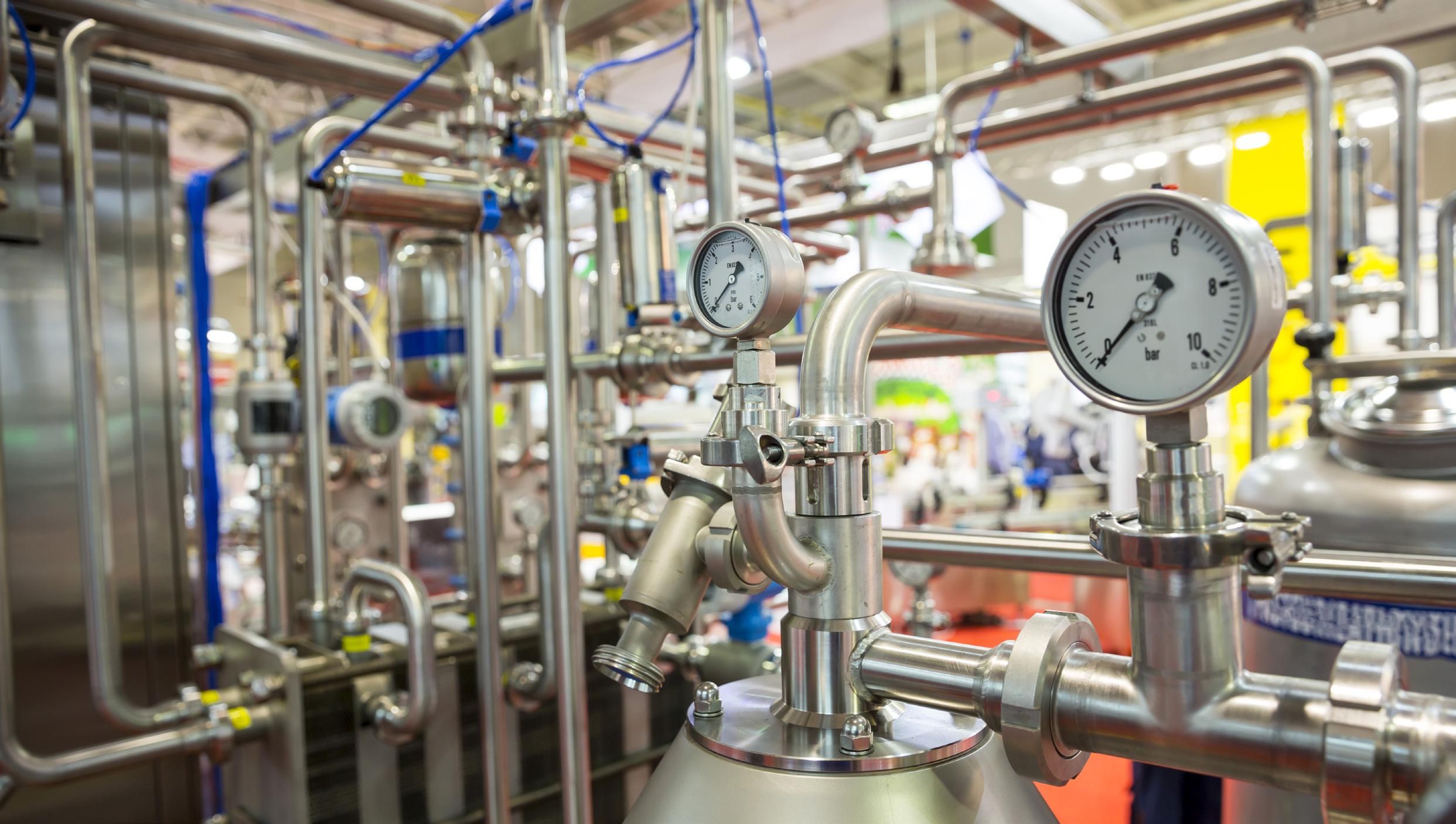
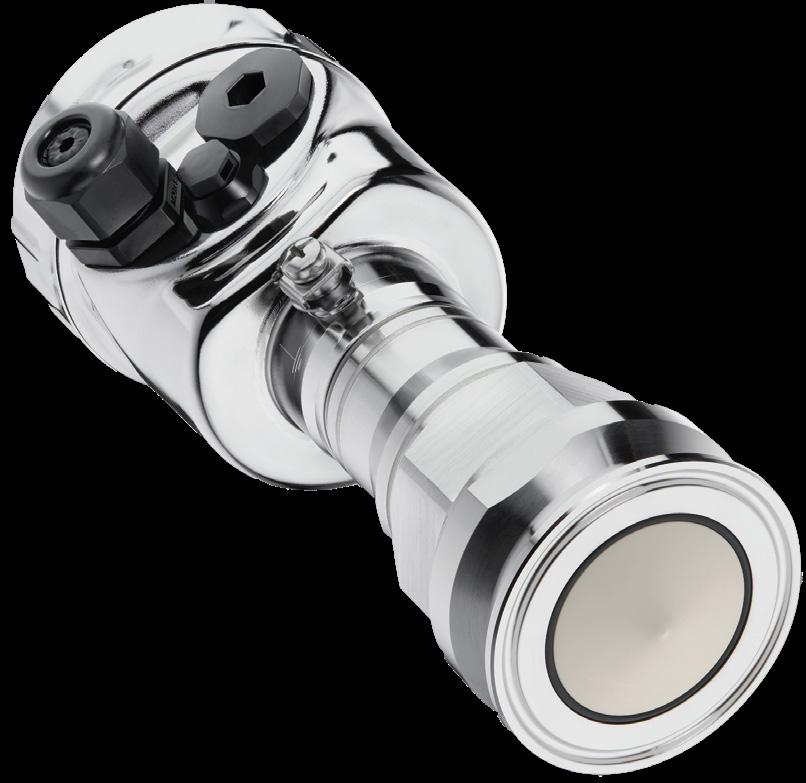
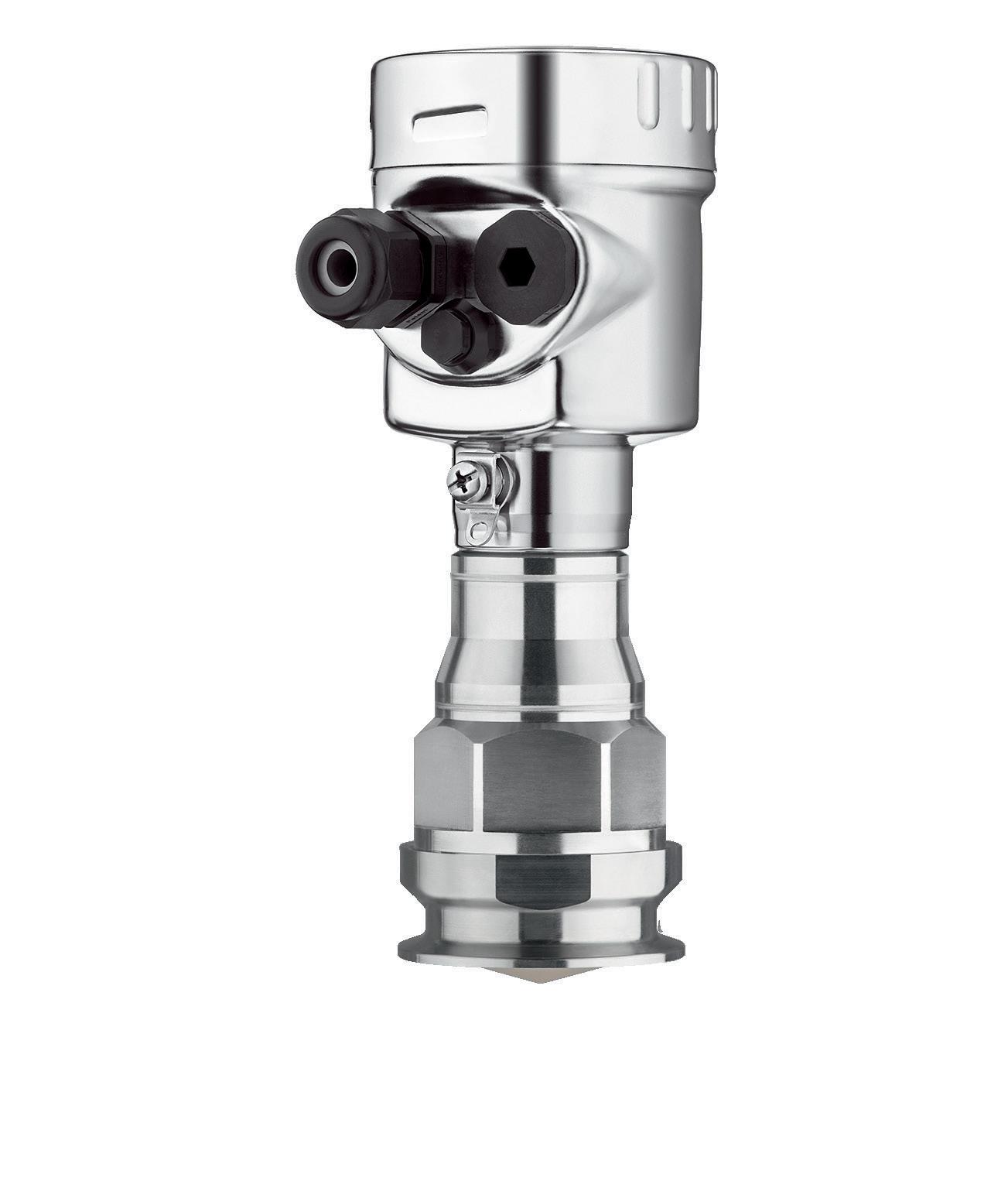
The variety of foods and beverages available to consumers today has expanded more than ever before. Reliable quality and impeccable hygiene are non-negotiable, and with VEGA instrumentation, food producers can ensure these standards while streamlining their processes. Food production is a highly sensitive industry, with corresponding complexities and costs in its processes. The stringent demands of this sector are matched by the challenges encountered in measurement technology. VEGA sensors for level and pressure are certified according to the latest standards for the food and pharmaceutical industries, meeting FDA, ISPE GAMP, ASME-BPE, EHEDG, and 3-A Sanitary regulations. VEGA’s equipment is crafted from corrosion-resistant materials that facilitate efficient cleaning, ensuring the thorough removal of microorganisms. The “hygienic by design” philosophy is evident in the sensor surfaces that contact products, which feature special roughness values of less than 0.8 µm and are even available in an electropolished finish. In many cases, seals have been eliminated for added safety. Moreover, VEGA measuring instruments are specifically designed to address the critical elements of CIP (Clean-In-Place) processes.
FLAWLESS HYGIENE. ABSOLUTE QUALITY
In food production, precision and purity go hand in hand. VEGA’s state-of-the-art level and pressure sensors ensure safe, reliable processes that meet the most stringent global standards — FDA, EHEDG, and 3-A Sanitary included. With VEGA instrumentation, producers can maintain impeccable hygiene and consistent quality while streamlining their operations.
“VEGA’s equipment is crafted from corrosionresistant materials that facilitate efficient cleaning, ensuring the thorough removal of microorganisms.”
ONE CONNECTION – MANY POSSIBILITIES
VEGA sensors can be quickly integrated into existing production facilities. The standardised fittings make this possible. The available hygienic adapters provide even more flexibility for the user and simplify processes at the same time. They are also diffusion-tight and extremely robust. The adapter system provides the right solution for every mounting situation.
Solutions for any challenge: VEGA offers a suitable sensor for every application, ensuring precise and reliable measurement across various processes. For level measurement, the VEGAPULS 42 is ideal for applications with fast level changes. It integrates seamlessly into process data systems using IO-Link and operates maintenance-free with advanced 80-GHz radar technology. Its illuminated ring enhances readability, even from a distance, making it user-friendly in diverse industrial environments. Meanwhile, the VEGAPULS 6X delivers exceptional accuracy and strong focusing, ensuring reliable measurements even in challenging conditions. Internals such as agitators do not affect its performance, and it excels in detecting media with poor reflective properties, such as oily products.
VEGASWING 61
For limit-level measurement, the VEGAS-
WING 61 is a versatile choice for all liquid applications. Its reliable detection capability and long service life make it particularly suitable for overflow and dry-run protection in storage tanks containing cleaning agents. The VEGAPOINT sensor offers additional convenience with an optional universal hygienic adapter that simplifies installation and reduces spare parts inventory. Its illuminated ring ensures clear readability, even from a distance, making it a practical solution for process monitoring.
VEGA TOOLS APP
VEGA also offers digital solutions to simplify monitoring and operation. Not every measuring point is easily accessible, so VEGA sensors with Bluetooth connectivity allow users to manage them remotely via a smartphone or tablet. The VEGA Tools app enables quick and easy commissioning, configuration, and monitoring, making process control more efficient than ever. VEGA offers a wide array of sensors designed for level, limit level, and pressure measurement, ensuring accurate and dependable monitoring across a variety of applications. Featuring cutting-edge innovations such as Bluetooth connectivity for remote operation, maintenance-free radar technology, and versatile hygienic fittings, VEGA sensors make installation straightforward, boost efficiency, and enhance process control. Whether you're dealing with rapid level fluctuations, implementing overflow protection, or achieving high precision in pressure monitoring, VEGA delivers durable solutions precisely tailored to meet the demands of the industry.
The most important ingredient for your process?
A pinch of perfection.
The perfect radar transmitter for non-contact level measurement in hygienically demanding production facilities.
Everything is possible. With VEGA.
• Precise level data, even with buildup and internal vessel installations
• Hygienic, easy-to-clean process fitting, resistant to CIP processes
• Tightly focused for maximum measurement certainty
VEGAPULS 6X
Hygienic water deaeration for beverage production
Deaeration technology that ensures optimal beverage quality through ambienttemperature oxygen removal, supporting modern hygienic production standards.
In beverage manufacturing, water is far more than a raw material—it is a functional component that directly influences product quality, stability, and shelf life. Among the various parameters that must be controlled, dissolved oxygen remains one of the most critical. Even trace levels of oxygen can initiate oxidation reactions that compromise flavour, reduce product freshness, and ultimately shorten shelf life in beverages such as beer and beer-based mixed drinks.
As production environments become more automated and quality expectations more stringent, oxygen removal is no longer a secondary process consideration. It is a defined control point within the production architecture. At the same time, modern processing facilities must comply with strict hygienic design principles, requiring all equipment to integrate seamlessly into Clean-in-Place (CIP) regimes. This dual requirement—process precision and hygienic integrity—has driven the development of advanced deaeration technologies such as the Centec DeGaS-Cold.
OXYGEN REMOVAL AT AMBIENT CONDITIONS
The DeGaS-Cold system is engineered to remove dissolved oxygen from process water prior to its use in beverage production. Operating at ambient temperature, the system avoids the need for thermal input, simplifying plant integration and reducing energy consumption. The outcome is water with extremely low oxygen content, suitable for applications where flavour stability and product consistency are paramount. At the core of the system is a column-based design that maximises mass transfer efficiency. Water is introduced at the top of the column and distributed evenly across a structured packing arrangement consisting of thin stainless-steel plates. These plates create multiple flow paths, increasing both the surface area and the residence time of the liquid phase. This configuration enhances contact between the water and the stripping medium, enabling efficient oxygen removal.
"Even trace levels of oxygen can initiate oxidation reactions that compromise flavour, reduce product freshness, and ultimately shorten shelf life."
VACUUM OPERATION FOR PROCESS OPTIMISATION
In addition to conventional stripping gas operation, the system can be configured to operate under vacuum conditions. Reducing the pressure within the column lowers the solubility of oxygen in water, further enhancing the degassing effect without the need for external gas input. This operating mode offers tangible process and economic benefits. It eliminates the requirement for a continuous gas supply, reducing operating costs and simplifying plant infrastructure. It also prevents unintended carbonation or nitrogen absorption in the treated water, which is particularly important in applications where precise control of dissolved gases is required.
Inline monitoring for quality assurance: Accurate and continuous measurement of dissolved oxygen is essential to ensure process reliability. The system incorporates the high-precision Centec OXYTRANS, an optical sensor specifically developed for beverage applications. This instrument provides real-time oxygen concentration data, enabling operators to verify that water quality meets specified limits before it enters downstream processes. Inline monitoring not only improves process transparency but also supports rapid response to deviations, reducing the risk of off-spec production.
HYGIENIC DESIGN AND CIP
COMPATIBILITY
cleaning cycles while maintaining structural integrity and measurement accuracy. The DeGaS-Cold system is designed with smooth stainless-steel surfaces, sanitary construction principles, and optimised flow paths that support complete Clean-inPlace (CIP) integration. This allows the entire deaeration system to be cleaned and sanitised in place, without disassembly. Cleaning solutions can circulate effectively through the column and associated piping, ensuring that all wetted surfaces are thoroughly cleaned. The result is reduced downtime, improved operational efficiency, and consistent compliance with hygiene standards.
COUNTERCURRENT FLOW AND MASS TANSFER EFFICIENCY
A key feature of the system is its countercurrent operating principle. A stripping gas—typically carbon dioxide or nitrogen—is introduced at the base of the column and flows upward, opposing the downward movement of water. This arrangement maximises the concentration gradient between the gas and liquid phases, which is essential for effective gas transfer. The underlying mechanism governing oxygen removal is described by Henry's Law. According to this principle, the solubility of a gas in a liquid is proportional to its partial pressure above the liquid. By introducing a stripping gas with a very low oxygen partial pressure, the system creates a strong driving force for oxygen to diffuse out of the water and into the gas phase. The oxygen-laden gas is then vented from the top of the column.
DID YOU KNOW?
The Centec DeGaS-Cold operates at ambient temperature without thermal input, reducing energy consumption whilst maximising mass transfer efficiency through structured stainless-steel plate packing technology.
In beverage processing, hygienic design is non-negotiable. Equipment must be capable of withstanding frequent Instek - www.instek.co.za
Digital solutions transform South Africa's water crisis
Endress+Hauser leverages smart technologies to combat South Africa's R35 billion annual water losses through real-time monitoring systems.
As ageing infrastructure, rising water losses and stricter compliance intensify pressure on water systems, digitalisation has become essential. For Endress+Hauser, one of the world’s leading process instrumentation and automation specialists, digitalisation offers a practical, scalable path to more transparent, efficient and resilient water systems. “Digitalisation in the water sector is sometimes framed as a complex concept, but at its heart it is simply about using smart technologies to improve how water and wastewater industries operate. Examples include smart meters, cloud platforms to centralise and analyse operational data in real time as well as various sensors and monitors for predictive maintenance and to optimise processes. In essence, digitalisation makes it easier to manage your plant, understand the health of your infrastructure and make informed decisions,” states Terene Govender, Junior Water & Wastewater Industry Developer, Endress+Hauser.
MAKING NON-REVENUE WATER MORE MANAGEABLE
According to the 2022/23 No Drop Report, South Africa loses 2.08 billion m³ of
FAST FACT
South Africa loses 2.08 billion cubic meters of non-revenue water annuallythat's equivalent to filling over 830,000 Olympic-sized swimming pools.
"Digitalisation makes it easier to manage your plant, understand the health of your infrastructure and make informed decisions."
non-revenue water each year. With conditions worsening over the past three years, this now translates into losses of more than R35 billion annually. Endress+Hauser is already supporting several municipalities with cloud-based monitoring platforms trials that provide pressure monitoring and leak detection in real time. Although adoption is not yet widespread, early results show promise. “In many cases, leaks happen underground and can continue for days or weeks before anyone knows about them. Our monitoring platforms can detect these losses immediately and then issue alerts. This helps our clients to better plan their maintenance activities,” she says. Real-time monitoring also empowers utilities and companies to respond faster to quality changes in treatment processes, ensuring compliance with Blue Drop and other regulatory frameworks.
IMPROVING ENERGY EFFICIENCY
Pumps remain some of the biggest energy users in water treatment and distribution. Digital tools allow operators to run pumps only when necessary and at optimal performance settings. “You’re able to optimise
pump usage, reduce operational costs and avoid unnecessary wear. Digitalisation helps you run your equipment only when it is needed,” explains Govender. Better data also improves service delivery. With accurate information on asset condition, maintenance backlogs, and critical equipment, utilities or private companies can prioritise repair work more effectively and reduce disruptions to consumers or their businesses.
COMPLIANCE
Digital records further support compliance. Endress+Hauser instruments are fully traceable to ISO 9001 standards and include smart verification capabilities that check whether instruments are working properly and generate tamper-proof audit documents. These instruments can support the audit trail needed for Blue Drop, Green Drop and No Drop submissions. “You cannot manipulate the data. There are dashboards, logbooks and full transparency of what happens on each device,” Govender notes. This transparency helps rebuild trust between utilities, regulators and communities. Endress+Hauser instruments provide continuous, accurate water-quality measurement – including turbidity, pH, chlorine and conductivity –ensuring that water treatment processes remain within SANS 241 limits. In addition, asset-health monitoring and predictive-maintenance tools assist with risk management and improving overall treatment-system stability. Through integrated dashboards, operators can access clear trends, alarms and downloadable reports that can be incorporated directly into all Drop evidence packs.
Process improvement is increasing
efficiency whilst ensuring compliance.
The water & wastewater industry must balance the opposing pressures of improving water safety and shrinking budgets. With our comprehensive portfolio of instruments, expert services, and industry expertise, we support you in protecting, conserving water sources, and improving processes throughout the water cycle.
WHERE SOUTH AFRICA IS ON ITS DIGITAL JOURNEY
South Africa’s progress is mixed. Some metros and water boards are far ahead, while many smaller municipalities are only beginning to explore digital solutions. “It is still early days for South Africa and Southern Africa,” adds Govender. “Most entities are open to digitalisation, but funding remains a challenge. Fortunately, new regulatory requirements may push more municipalities to adopt digital tools sooner rather than later.”
Several ongoing municipal pilot projects, supported by Endress+Hauser, are already demonstrating value – especially for utilities managing multiple sites spread across a province. “From trials – especially with multiple sites – customers can identify which sites need more attention from a maintenance perspective and what additional monitoring they may need,” adds Govender.
DIGITAL TRANSFORMATION SUPPORT
One of the biggest barriers to digital transformation is the perception that it is too complex or requires replacing entire systems. According to Govender, the process can be gradual, practical and minimally disruptive. “Digitalisation doesn’t have to happen all at once. Sometimes it starts with one device, tested over a few months. If it works, the client expands gradually.” The first step is always understanding the customer’s problem – not pushing a product. “We don’t go in with a one-size-fits-all approach. We start by understanding their end goal, their specific issues, and then suggest a solution that aligns with their infrastructure and their people,” advises Govender. Many of Endress+Hauser’s devices can also be retrofitted to existing tanks, pipes and systems. However, where a plant relies on extremely old PLCs or outdated SCADA systems that use old communication protocol, upgrading the communication layer may be necessary. “We begin by assessing a client’s current infrastructure and the people (in terms of skills) who will operate the instrumentation. It’s essential to optimise what is already in place — ensuring systems and equipment are used as efficiently and cost-effectively as possible — before expanding or scaling any digitalisation strategy,” says Govender.
CYBER SECURITY, THEFT AND VANDALISM
With global attacks on utilities increasing, cybersecurity cannot be ignored. Endress+Hauser uses cybersecurity standards
equivalent to those used in the banking sector. Importantly, its cloud system communicates only with the device – not directly with a customer’s PLC or SCADA – significantly reducing risk. Instrumentation theft is also a growing concern in South Africa. Endress+Hauser addresses this by offering devices designed for high-risk environments, including units that can be buried underground or run on batteries without external cabling. “With no visible cables, there is nothing to steal,” adds Govender.
INNOVATIONS IN THE MARKET
Endress+Hauser have a number of new technologies in the market. Netilion is a cloud-based Industrial Internet of Things (IIoT) ecosystem. It is designed to connect physical field devices (sensors, flowmeters, analysers) with digital platforms, enabling real-time monitoring, diagnostics, analytics and lifecycle management of assets. They
have also developed Liquiline CM44X transmitters that are fitted with an edge module that sends data straight to the cloud instead of through PLCs. “We have also recently launched a new controller for levels and flow that is fitted with Wi-Fi capabilities and Ethernet to view trends,” states Govender. Beyond instrumentation, Endress+Hauser positions itself as a long-term partner to utilities, backing up its technology with training, after-sales support, cloud-based monitoring solutions and practical implementation strategies. As South Africa moves toward modernised water systems, digitalisation offers a realistic, scalable route to improved compliance, reduced losses, greater resilience and more reliable service delivery
Allmech delivers rapid duplex softener solution using runxin 3 – way ceramic valve.
When a medical supply customer urgently required uninterrupted softened water for sterilisation processes, Allmech was able to deliver a reliable duplex water softening solution within just two days, despite having no conventional duplex control valves in stock at the time. The team turned to an alternative already proven in practice by Runxin: a ceramic 3-way L-type ball valve configured to manage two softener vessels in a continuous-duty system.
Allmech is a leading South African manufacturer of boilers and supplier of water treatment equipment and chemicals and services customers across a wide variety of sectors. “We know that in healthcare-related environments, any interruption to water quality or supply can have immediate operational consequences,” says Anelia Hough, water treatment consultant at Allmech. “The customer required a production capacity of 4m³/h and continuous availability of softened water, with no tolerance for downtime during regeneration cycles.”
Drawing on recent exposure to the system in operation during a Runxin factory visit in China, Allmech’s managing director, Lionel Maasdorp, proposed using the Runxin ceramic 3-way valve to create a duplex configuration. The valve was installed on the outlet of the system and wired directly into the existing control valves. “The key was ensuring the correct electrical connections so the system could function as a true duplex softener,” explains Maasdorp. “Once that logic was in place, the solution was surprisingly simple.”
HOW THE SYSTEM WORKS
The working process is cyclical. When the resin’s capacity to remove hardness from the supply water decreases to zero, a signal is sent to the 3-way ball valve to change direction. Water is immediately routed from the second softener vessel, which has already
"The solution was surprisingly simple once the correct electrical connections enabled true duplex functionality."
completed regeneration, while the first vessel begins its regeneration cycle. Once regeneration is complete, the first vessel returns to standby, and the valves continue alternating automatically. “The system was assembled, tested, and made available for collection within 48 hours. Performance has met expectations, delivering the required flow rate consistently and ensuring uninterrupted supply,” says Hough.
BENEFITS OF THE 3-WAY VALVE SYSTEM
Beyond speed, the solution offers structural advantages over traditional duplex manifolds. Ceramic 3-way valves generally outperform conventional manifold arrangements in durability and reliability, particularly in abrasive or corrosive environments. While ceramic valves carry a higher upfront cost, their longer service life and reduced maintenance requirements can offset the expense of frequent manifold rebuilds over time. The configuration also reduces system complexity. Rather than relying on multiple valves and a complex manifold arrangement, a single ceramic valve controls flow between two vessels. This results in a more compact, mechanically straight forward installation. While purpose-built duplex valves such as the Runxin F73 or F135 remain a cost-effective option for new installations where 24/7 soft water demand is known upfront, the 3-way valve approach opens new possibilities for existing sites.
“This setup is particularly well suited to retrofit applications,” says Maasdorp. “Where a site previously operated with a single softener, but demand has increased, this configuration allows customers to upgrade to continuous operation without a full system replacement.” Applications include healthcare facilities, industrial plants, food and beverage operations, and any environment where softened water must be available around the clock. For Allmech, the project reinforces the value of deep product knowledge and practical engineering judgement. “Sometimes the best solution isn’t a standard configuration,” Maasdorp says. “It’s about understanding what’s possible and applying it intelligently under real-world constraints.”
ABOUT ALLMECH
Allmech was founded in 1995 and has grown over two decades to become one of South Africa’s leading boiler manufacturers and suppliers to the water treatment industry. Allmech offers a comprehensive range of electrical, gas and oil-fired boilers with water treatment to suit.
With a customer base stretching from its head office in Benoni, Johannesburg, throughout Southern Africa and beyond, Allmech has become recognised as an experience end-to-end provider for clients requiring boiler plants, steam supply of all types, cooling towers, water treatment equipment and associated chemical programmes.
Tel ; +27 (0)11 849 2733
Email - lionelm@allmech.co.za
WhatsApp +27 (0) 69 267 6046
Allmech - www.allmech.co.za
Fuji box-motion packaging machines work in tandem with customised infeed systems, which can collate, separate and stack products according to customer needs.
Intelligent... Accurate...
Box-motion packaging machines deliver hermetic sealing on products within specied size ranges and automatically deals with rejections, saving time and money while maintaining speed. Automatic feeding optimises machine efciency.
Durable...
Servo technology uses shaft mounted gear heads, which eliminates maintenance from timing belts. Fuji machines are a long-term solution for both batch and continuous processes.
and continuous processes
Building a Circular Future
MetPac-SA Drives South Africa’s
Metal
Recycling Revolution
Dr Kishan Singh (CEO, MetPac-SA)
Certified Excellence
MetPac-SA is the first PRO in South Africa to achieve ISO 9001:2015 certification, a mark of excellence in Extended Producer Responsibility. At the same time, it is digitising EPR declarations for its 85 members via a platform developed with sustainability tech partner Unifi—streamlining submissions, ensuring accuracy, and reducing administration.
A Collective Future
“Our message to municipalities is simple: when you partner with MetPac-SA, you strengthen recycling systems, create opportunities, and build a circular economy,” concludes Dr Singh.
Through results-driven programmes, ISO-certified systems, and strong community partnerships, MetPac-SA demonstrates that metal packaging is far more than recyclable material—it is a catalyst for sustainability, empowerment, and economic development.
Strong Results in 2025
Metal packaging is everywhere—beverage cans, food tins, and foil trays. Beyond convenience, it is one of the world’s most recyclable materials, infinitely reusable without losing quality. In South Africa, MetPac-SA, the Producer Responsibility Organisation (PRO) for metal packaging, is proving just how valuable this material can be for municipalities, communities, and the environment.
Partnering with Municipalities
Under CEO Dr Kishan Singh, MetPac-SA has become a trusted ally to local authorities, improving waste collection, diverting material from landfills, and creating jobs. By coordinating industry players, supporting waste pickers, and engaging with communities, the organisation ensures that recycling delivers both environmental and social impact.
“Recycling metal packaging isn’t just about sustainability—it helps municipalities cut costs, extend landfill life, and create value for communities,” says Dr Singh.
Why Metal Matters
Aluminium and steel can be recycled endlessly, cutting demand for virgin materials. Recycling a single can saves up to 95% of the energy required to produce a new one—helping municipalities and supporting climate goals.
Empowering Communities
MetPac-SA’s programmes are as much about people as packaging:
• Waste Pickers: Working with SAWPA, the organisation provides training, PPE, financial literacy, and SAPRAS 2.0 registration to ensure fair compensation and dignity.
The first half of 2025 has seen measurable progress:
• Schools and Youth: Initiatives like Trash4Treats, Phoenix for the Planet, and the Purposeful School Recycling Programme equip learners with bins, materials, and activities that foster lifelong recycling habits.
• Used Beverage Cans (UBCs): Collection reached 85% (target: 68%), with recycling at 77% (target: 34%). Energy recovery and external streams achieved 60% (target: 34%).
• Tinplate (Ferrous): Collection and recycling hit 70%, exceeding municipal targets of 59% and 56%.
• Aluminium Other: Initiatives to improve recovery of foil, trays, and closures are underway.