Digital food safety Cereals, Grains & Milling: Grain tech revolution
Green circular labelling solutions
JANUARY 2026 Vol. 53 • No. 1
7
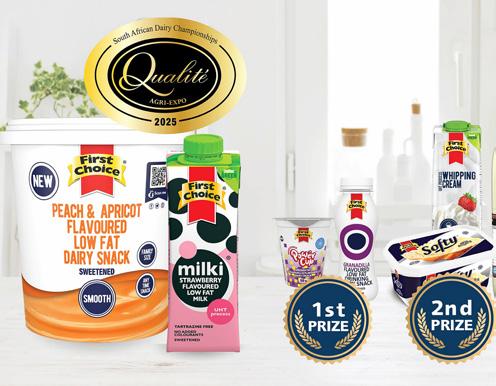
WHAT’S NEW SA’s latest on shelf products
8 NEWS
Air products achieve SANAS accreditation
Ingredients company adopts AKA Foods’AI Tech solution
Woodlands dairy announces cheese acquisition
9
INDUSTRY TALK
Baby formular recall
10 CEREALS, GRAINS AND MILLING
From grain to greatness
Smart silos transform food security
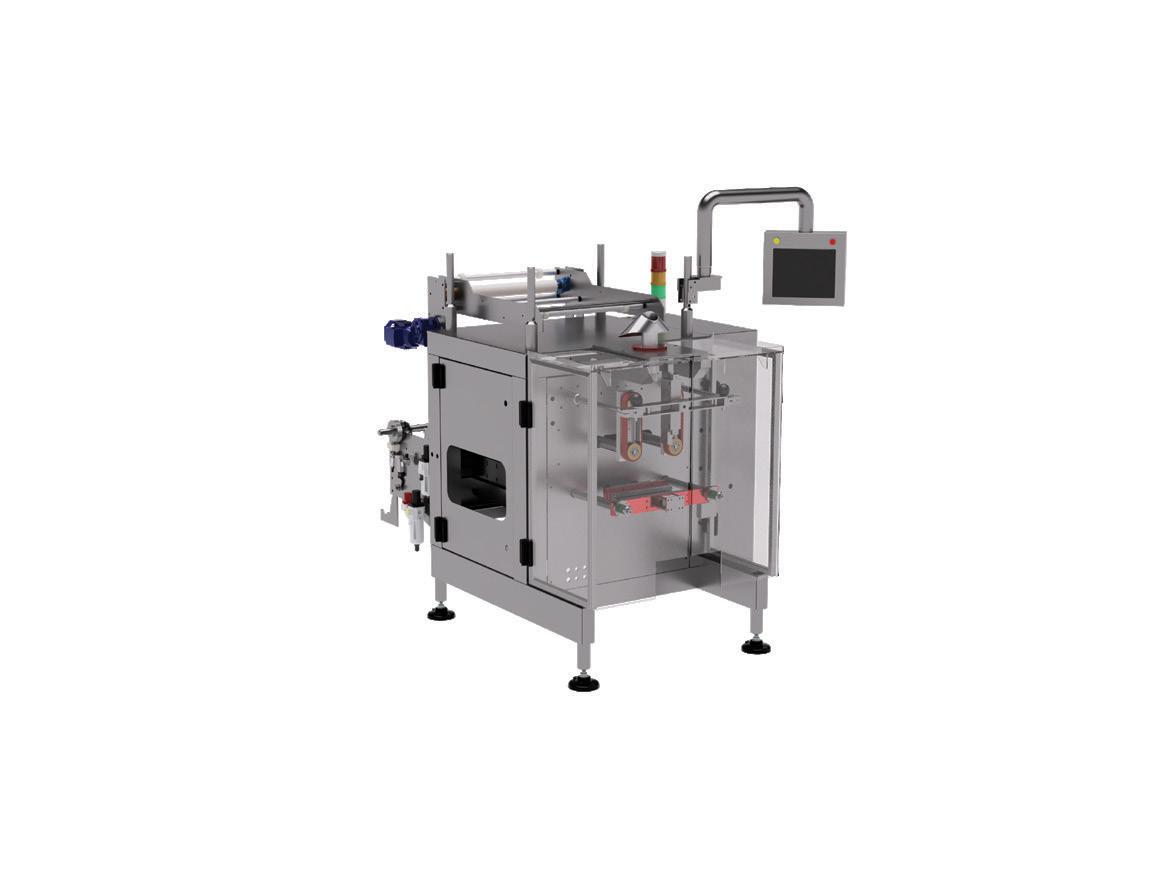
Small packs drive big changes
Complete guide to bread troubleshooting
Driving nutritional impact
20
LABELLING
Protecting intellectual innovation
Green labelling solutions
Manual inspection for defect – free production
Sleeve solutions for FMCG packaging
28
FUNCTIONAL BEVERAGES
Sustainable Packaging
30
X-RAY & METAL DETECTOR
Advanced inspection tech
Transforming leafy greens processing
37
FOOD SAFETY
The new standard for personal hygiene
EDITORIAL
Editor: Kelebogile Nondzaba +27 (0)78 175 9632
kelebogile.nondzaba@newmedia.co.za
Layout & Design: Tumi Kunene
Welcome to a new year of innovation!
Dear valued readers,
Welcome to the first issue of Food Review for 2026! As we embark on another year together, the team and I would like to extend our heartfelt gratitude for your continued support and unwavering loyalty to the publication. Your engagement drives us to deliver the cutting-edge insights that shape our industry's future.
This issue showcases the remarkable innovations transforming food production and packaging. From Prinova's targeted nutritional fortification solutions addressing micronutrient deficiencies, to CCL Labels' revolutionary circular packaging technologies for functional beverages, we're witnessing sustainability become central to business strategy. The featured EcoFloat® WHITE and WashOff label technologies exemplify how companies are reimagining packaging for a circular economy.
Food safety automation takes centre stage with PHT's advanced hygiene systems and METTLER TOLEDO's inspection technologies, demonstrating how automation reduces contamination risks while improving efficiency. Bühler's smart silo solutions highlight the critical role of IoT and AI in strengthening food security through better grain storage management.
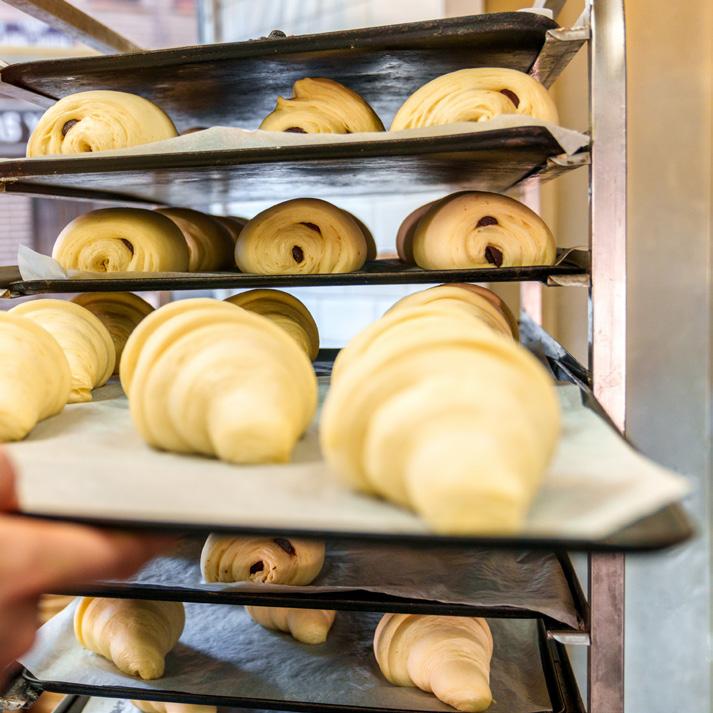
Our comprehensive coverage spans from Key Technology's COMPASS optical sorter for leafy greens to Ishida's X-ray inspection systems ensuring croissant quality. These innovations reflect an industry-wide commitment to precision, safety, and sustainability.
The intellectual property feature from Hahn & Hahn reminds us that innovation protection remains vital for competitive advantage, while our packaging section explores how shrink sleeves and sustainable materials are reshaping consumer experiences.
As we navigate 2026, these technologies will undoubtedly accelerate transformation across our industry. May this year bring prosperity, innovation, and sustainable growth to all our readers. Thank you for making Food Review your trusted industry resource.
Here's to a year of groundbreaking achievements ahead!
Kelebogile (Lebo) Nondzaba
Cover Image and current page: Courtesy of Toqan AI and Getty Images
Building 13, The Woodlands Office Park, 20 Woodlands Drive, Woodmead, Sandton PO Box 784698, Sandton 2146 +27 11 867 6111
POSTAL ADDRESS PO Box 784698, Sandton, Johannesburg 2146
Published Media24 (Pty) Ltd
Càndida Giambò-Kruger
Account Manager
COMMUNICATE & CONNECT
2026 DIARY
February
Fruit Logistica Berlin, Germany 5-7 February
www.fruitlogistica.com
Biofach Nuremberg, Germany 11-14 February
www.biofach.de/en
March
Sino Pack Guangzhou, China 4 – 6 March www.chinasinopack.com
Propak Africa Johannesburg, South Africa 11 – 14 www.propakcape.co.za
IFE London, UK 17 – 19 www.ife.co.uk
Craft Brewers Conference 20-22 April Philadelphia, PA www.craftbrewersconference.com
April
Packaging Innovations Birmingham, UK 2-3 April
www.packagingbirmingham.com
WHAT'S NEW
GORDON’S AND BOS INTRODUCE NEW G&T SPIRIT COOLER
Johannesburg’s finest culture curators, tastemakers, and trendsetters gathered for an unforgettable celebration as Gordon’s and BOS unveiled their latest innovation — the Gordon’s and BOS G&Tea alcoholic ice tea.
The launch brought together the bold energy of both brands in a refreshingly unexpected event
that was vibrant, playful and promoted positive socialising.
Set against the city’s dynamic backdrop, the launch put balance and seamless joy at the heart of the event to create a brand new type of occasion and experience.
Guests were among the first to experience the new Gordon’s and BOS G&Tea alcoholic ice tea, a spirited fusion of Gordon’s crisp gin botanicals and BOS’s rooibos tea flavours.
The collaboration, now officially available nationwide, caters to consumers looking for something refreshingly unexpected and new.
“Wow, I have to say that I did not expect this blend of flavours, but it works so well. I love that it’s non-carbonated and low ABV” said Ponahalo Majapelo, Gordon’s and BOS G&Tea alcoholic ice tea content creator. The event perfectly captured the ethos of both brands — light, bright, and full of flavour.
Visit: FoodReview.co.za for more.
THE HOUSE OF BNG UNVEILS THE MIMOSA!
South Africa's premier blackowned luxury beverage brand, is proud to announce the launch of The Mimosa, a sophisticated ready-to-drink offering that reimagines the classic brunch favourite for the modern South African lifestyle. Following the overwhelming success of its Méthode Cap Classique range and 0% Nectar collection, this new addition marks another milestone in the brand's journey.
The Mimosa arrives in a sleek 250ml can, embodying the same elegance and attention to detail that has become synonymous with The House of BNG since its groundbreaking 2019 launch. This new expression is designed with convenience and celebration in mind, part of founder Bonang
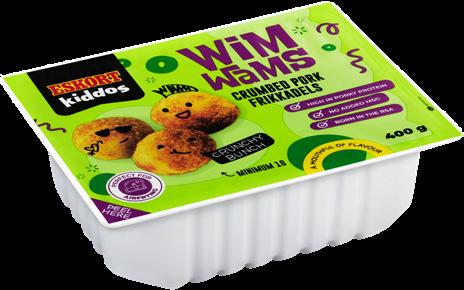
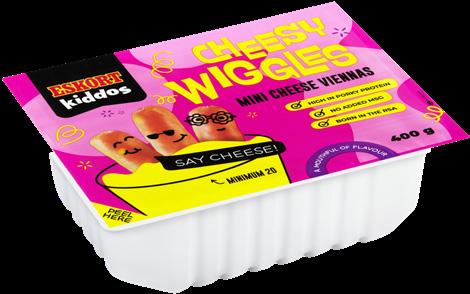
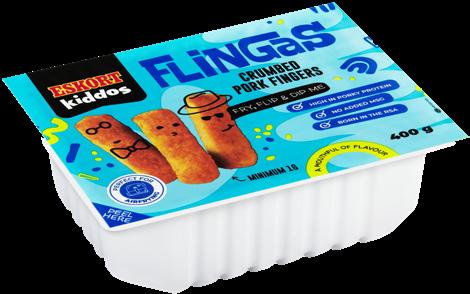
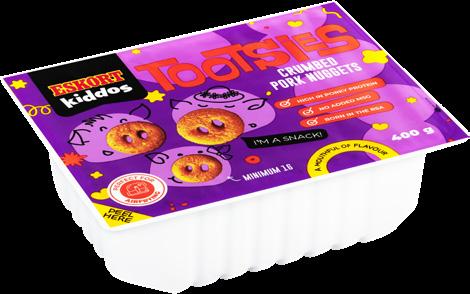
ESKORT LAUNCHES KIDDOS: PORK RANGE MADE JUST FOR KIDS
A YUMarrific, CHOMPalistic, SCRUMPtiously MUNCHeous new range brings playful protein to lunchboxes, snack times and family meals
There’s something magical about mealtimes made just for the little ones.
That’s why Eskort, South Africa’s leading antibiotic-free pork producer, is excited to introduce Eskort Kiddos, the country’s first-ever pork range created especially for children aged 3 to 13.
Thoughtfully crafted for curious taste buds and busy family lives, Eskort Kiddos brings together fun, flavour, and wholesome goodness in every bite. Because when food feels made for them, it’s more than a meal, it’s a mouth full of flavour.
an adventure. Each product is designed to make kids smile while giving parents the quality, nutrition, and convenience they can trust.
“There’s never been a dedicated pork range made just for kids in South Africa, and that felt like a missed opportunity to bring a little magic to mealtimes,” says Arnold Prinsloo, CEO of Eskort.
With six fun products boasting names like Flingas, Tootsies, Smashies, Wim Wams, Tonkies, and Cheesy Wiggles, the Eskort Kiddos range transforms everyday eating into
Matheba's vision to create "a variant for every occasion, mimosas in the morning, Brut in the afternoon, and Nectars in the evening".
"I love a mimosa, and our customers have consistently asked for one, especially after we launched the non-alcoholic variant," says Bonang Matheba, founder of The House of BNG. "We genuinely listen to trends and consumer preferences in the drinks market. Women are enjoying sparkling wine differently, at different times and occasions, and we need to respond to what our customers want. I'm a big fan of mimosas and have always enjoyed them, so being able to offer this is very exciting."
Visit, www.foodreview.co.za for more.
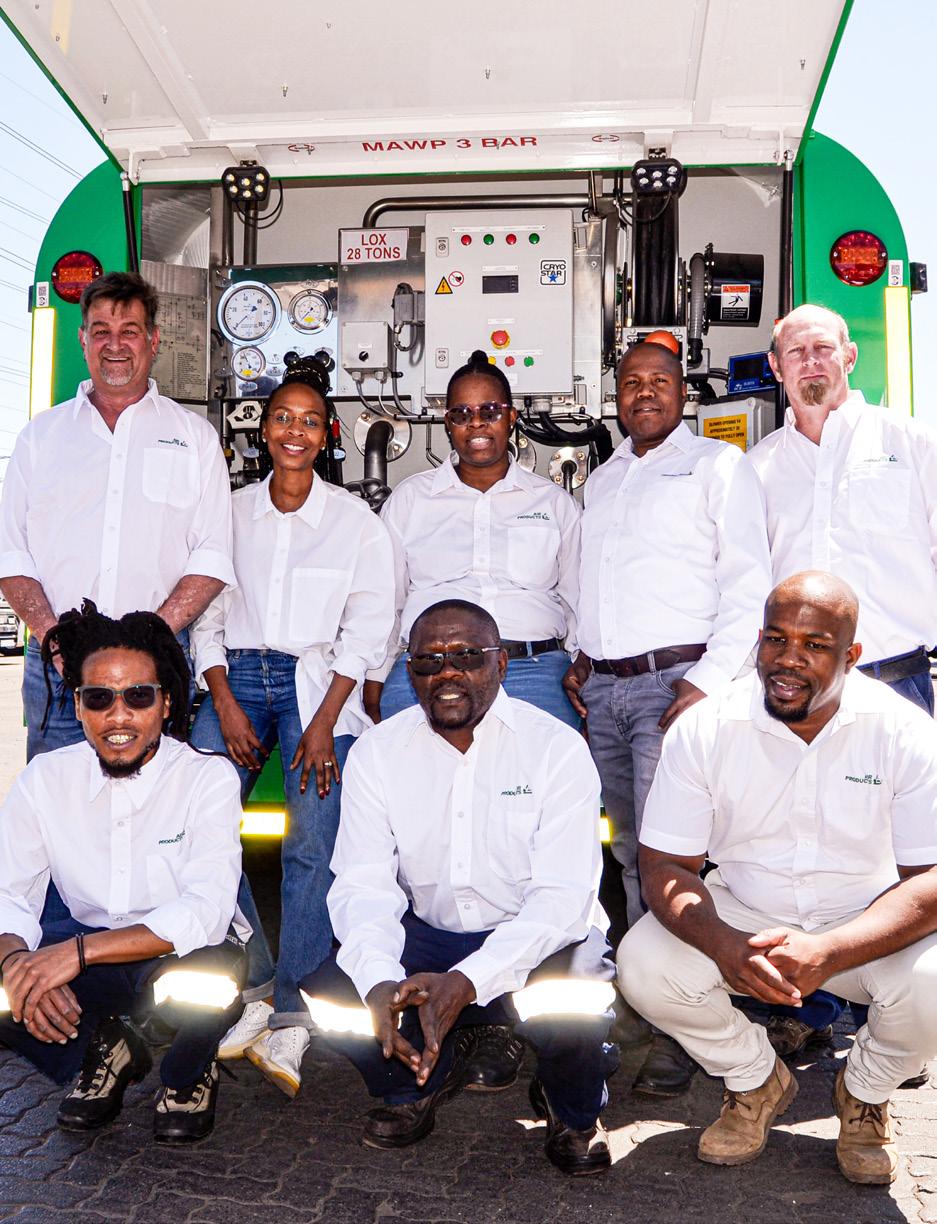
AIR PRODUCTS SOUTH AFRICA ACHIEVES SANAS ACCREDITATION
Air Products South Africa’s Verification and Repair Body accreditation for cryogenic and liquid carbon dioxide (CO2) by the South African National Accreditation System (SANAS) is a turning point in terms of the local capability and compliance of flowmeters in South Africa.
The accreditation is the result of a demand for legal metrology in a high-risk, precision-driven field. The Verification and RepairBody accreditation process was a complex journey with a lot to learn and has sharpened the team’s understanding of the requirements. The following key achievements were valuable and obtained:
• Legal traceability
• Reduced fragmentation
• Improved local capability
• Technical excellence
Dual accreditation: Verification and repair
According to Gift Nyambe, the General Manager for Technical, the accreditation was built on three critical pillars, which empowers Air Products South Africa to deliver the verification and repair service. These pillars includes technical astuteness, legal compliance and system efficiency, and our customers will be able to benefit from this compliant and integrated solution.
The process included the Master Meter approval by the National Regulator for Compulsory Specifications (NRCS), certification by the verification officer, and final accreditation by SANAS.
Visit, www.foodreview.co.za for more!
INGREDIENTS COMPANY
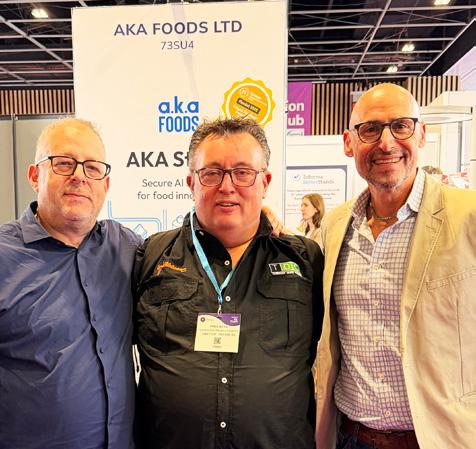
ADOPTS AKA FOODS' AIREADY DEVELOPMENT PLATFORM
AKA Foods B.V. has announced that Technology Driven Concepts (TDC), one of Africa’s most advanced ingredient solutions and application development companies, has signed a multi-year agreement to adopt its innovative and secure AI-ready platform for food R&D and knowledge consolidation, AKA Studio. The award-winning platform enables food companies to create, optimise, and launch products much faster, smarter, and more affordably and was selected by TDC to meet its objectives for improved customer responsiveness, innovation across categories and decision making.
The partnership with TDC, which serves leading CPGs, retailers and a global fast food restaurant chain, makes it one of the first companies globally to formalise a long-term strategy for AI-enabled product development. The agreement also follows a close collaboration, in which TDC acted as an early design partner for AKA Studio. Through this process, AKA Studio proved it could unify formulations, experiments, sensory learnings, costing insights, and tacit product knowledge into a single,
structured environment designed for the way food developers actually work.
A major validation for the future of AI in food R&D
As Chris Botha, R&D Director at TDC explains, his company’s adoption of AKA Studio signals a shift toward modernised, data-driven product development:
“AKA Studio gives our developers something we have never had before – the ability to see and use all of our knowledge in one place. It strengthens how we respond to customers, how we innovate across categories, and how we make decisions. With its ability to centralise years of development knowledge in a structured system that will support food-specific AI as it becomes available, AKA Studio helps future-fit TDC for the next decade of product development,” he says.
“Essentially, our teams will be able to retrieve relevant past work instantly, reduce duplication, and deliver stronger customer responses with greater confidence. This gives TDC a solid foundation to activate AI capabilities as they mature within the platform,” adds Botha.
Woodlands Dairy Group (Pty) Limited (“Woodlands”) is pleased to announce the acquisition of 100% of Ladismith Cheese Company (Pty) Limited, together with its subsidiaries, Ladismith Powder Company (Pty) Limited and Mooivallei Suiwel (Pty) Limited, from Sea Harvest Group Limited.
As a prominent entity in the dairy sector, Woodlands Dairy Group, comprising Woodlands Dairy and its wholly owned subsidiary Fairfield Dairy (Pty) Limited, specialises in UHT milk, yoghurt, cheese, custard, flavoured milk, and a diverse range of other dairy products. This acquisition represents a significant advancement in the Group’s
strategic growth trajectory, further solidifying its dedication to the South African dairy industry while enhancing supply chain efficiencies and expanding its consumer offerings.
“This transaction aligns perfectly with our vision to deliver high-quality, sustainable dairy products to a growing market,” comments Woodlands Dairy Group CEO Helen McDougall. “By integrating Ladismith’s established regional presence and expertise with our extensive network, we are well positioned to provide customers with an enhanced and more specialised product portfolio.”
For more, visit: foodreview.co.za
Baby formula recall exposes supply chain vulnerabilities
Nestlé's contaminated formula recall spanning 25 countries highlights critical need for robust reverse logistics and supply chain recall readiness.
THE CONTAMINATION CRISIS
Following the recall of possibly contaminated baby formula, South African supply chain industry body SAPICS has stressed how critical it is for all organisations to examine their recall readiness and improve their reverse logistics plans, processes and skills. South Africa’s National Consumer Commission (NCC) issued an urgent notice that a batch of Nestlé’s NAN Special Pro HA Infant Formula that was sold in South Africa may contain the toxin Cereulide. Consumers have been urged to return the product to the point of purchase for a full refund. Recalls like this present a significant challenge for organisations and supply chains, SAPICS says, stressing that lives may depend on whether manufacturers, retailers and logistics service providers are recall ready. “Today’s food supply chains are vast, interconnected and more efficient than ever before. But they can also be vulnerable, with risk travelling around the world just as fast as the products. This incident underscores the crucial role of supply chain capability in protecting consumers and sustaining public trust in consumer goods sectors.”
GLOBAL RIPPLE EFFECT
A single non-compliant raw material sourced upstream can move seamlessly through international manufacturing and distribution networks, to land swiftly in consumers’ homes thousands of kilometres away. In this case, the issue with the baby formula was first detected at a factory in the Netherlands. It was then established that the contaminated raw material had been used at multiple production sites globally, and according to the NCC, a potentially contaminated batch was distributed through all major retailers and distributors across South Africa, as well as being exported to Namibia and Eswatini. This is reportedly the largest recall in Nestlé’s history, spanning 25 countries and involving over 800 products from more than 10 factories. The company’s global traceability systems will play a critical role in supporting the recall and enabling a targeted response, SAPICS notes. The measure of a supply chain is not only how efficiently it performs in normal conditions
"Today's food supply chains are vast, interconnected and more efficient than ever before. But they can also be vulnerable, with risk travelling around the world just as fast as the products.”
and during forward logistics, but how responsibly and effectively it responds when consumer safety is at stake during a critical recall, SAPICS states.
THE REVERSE LOGISTICS CHALLENGE
According to the organisation, reverse logistics is frequently underdeveloped because it does not directly generate revenue and is rarely exercised at scale. Yet in a recall scenario, it becomes the focal point of the entire operation. Products must be accurately identified by batch, rapidly traced through distribution networks, removed from shelves, returned by consumers, documented for regulatory compliance and managed in a way that protects both public health and brand integrity. SAPICS explains that reverse logistics encompasses all activities required to move products back through the supply chain - from consumers, retailers and warehouses to manufacturers,
testing facilities and safe disposal sites or remediation points. Without clear, tested reverse logistics plans, recalls can quickly become disorganised, costly, reputationally damaging and even life threatening. In an era of global sourcing and heightened consumer awareness, recall readiness must be embedded into supply chain strategy, SAPICS says. This requires end-to-end supply chain visibility and traceability at batch and ingredient level. Clearly defined recall governance and decision-making structures are vital. Reverse logistics processes should be well-designed and understood across the supply chain. Since supply chains today are complex, volatile and always evolving, recall plans should be tested and refined regularly through simulations and scenario planning. Skilled, knowledgeable, qualified supply chain professionals who understand both forward and reverse flows are essential. Recognising the importance of reverse logistics, it is one of the topics that not-for-profit organisation SAPICS covers in its regular skills development and networking events, as well as at the annual SAPICS Conference, the leading event in Africa for supply chain professionals. “Education is key to ensuring that supply chain professionals are equipped to deal with the increasing complexities of supply chain management and with rapid advances in technology,” the organisation says.
SAPICS - www.sapics.org
Driving Nutritional Impact Through Staple Food Fortification in South Africa
Prinova Premix Solutions Move Closer to Regulatory Approval
Micronutrient deficiencies remain a widespread concern, particularly in regions where staple foods dominate the diet. In South Africa, maize and wheat flour are daily essentials for millions. Fortifying these foods presents a high-impact opportunity to support public health – and Prinova is proud to be at the forefront of this critical mission.
As a global leader in ingredient distribution and custom premix manufacturing, Prinova brings decades of experience, technical expertise, and global infrastructure to fortification strategies that make a difference. Our customised micronutrient premixes are designed to deliver consistent performance in real-world production environments – ensuring stability, shelf-life, heat tolerance and flavour neutrality.
The Prinova Fortification Approach
Our maize and wheat flour premixes are developed to meet both national mandatory standards and voluntary fortification initiatives. Each formulation is tailored with essential vitamins and minerals – including iron, folic acid and vitamin A – to address key nutritional gaps that affect immunity, cognitive development, and overall wellbeing.
We take a collaborative approach to every project. Working hand-in-hand with millers, food producers, NGOs, and public health bodies, we ensure that our fortification solutions are technically feasible, commercially viable, and nutritionally effective.
Whether you’re supporting government-led health initiatives or looking to strengthen your brand with added-value nutrition, Prinova provides full-service support – from formulation to production scale-up.
Looking to enhance your fortification strategy?
Visit www.prinovaglobal.com or scan the QR code to connect with our experts.
Advancing Regulatory Approval in South Africa
In partnership with Savannah, our Changzhou-based facility has successfully met the stringent audit and testing criteria required for premix approval in South Africa. This achievement is a testament to the high manufacturing standards we uphold across our global production network.
We are now in the final phase of registration and expect to receive official certification by Q3 2025. This will enable the widespread rollout of our fortified premixes for maize and wheat flour across the South African market.
Global Strength, Local Partnership
Prinova’s extensive portfolio spans more than 3,500 functional and nutritional ingredients – from vitamins and amino acids to botanical extracts, proteins, and branded ingredients. Our integrated supply chain, deep market knowledge, and strategically located manufacturing sites ensure security of supply and responsive service wherever our customers operate.
As a partner in product development and nutritional innovation, Prinova delivers more than ingredients – we deliver reliable, scalable solutions that improve lives and support healthier communities.
In partnership with Savannah www.savannah.co.za
Our extensive ingredient portfolio, blended your way
From our extensive ingredient portfolio to our vertically-integrated capabilities, we utilise all of our strengths to formulate superior custom premixes and market-ready blends.
Our premixes and blends are formulated to ensure stability, tolerate heat, eliminate undesirable flavours and odours, and contain the right overages to account for processing and shelf-life conditions.
As a full-service partner, we develop dry and liquid premixes and market-ready solutions for a wide range of applications, including:
Beverages
Cereals & bars
Dairy
• Flour fortification
• Infant & early life nutrition
Meal supplements & replacements
Nutritional supplements
Oil & fat fortification
• Personal care
• Sports & lifestyle nutrition
For more information, scan the QR code or visit our website prinovaglobal.com
Vitamin-fortified flour
Together with cooking oils, flour can be fortified to target specific conditions. Take advantage of our expertise in wheat flour fortification, maize, rice flour, and other staple food applications, including cooking oils, spreads, and margarine.
Our expert team can develop formulations, product samples and prototypes to enhance development and production.
In partnership with Savannah www.savannah.co.za
Small packs drive big changes
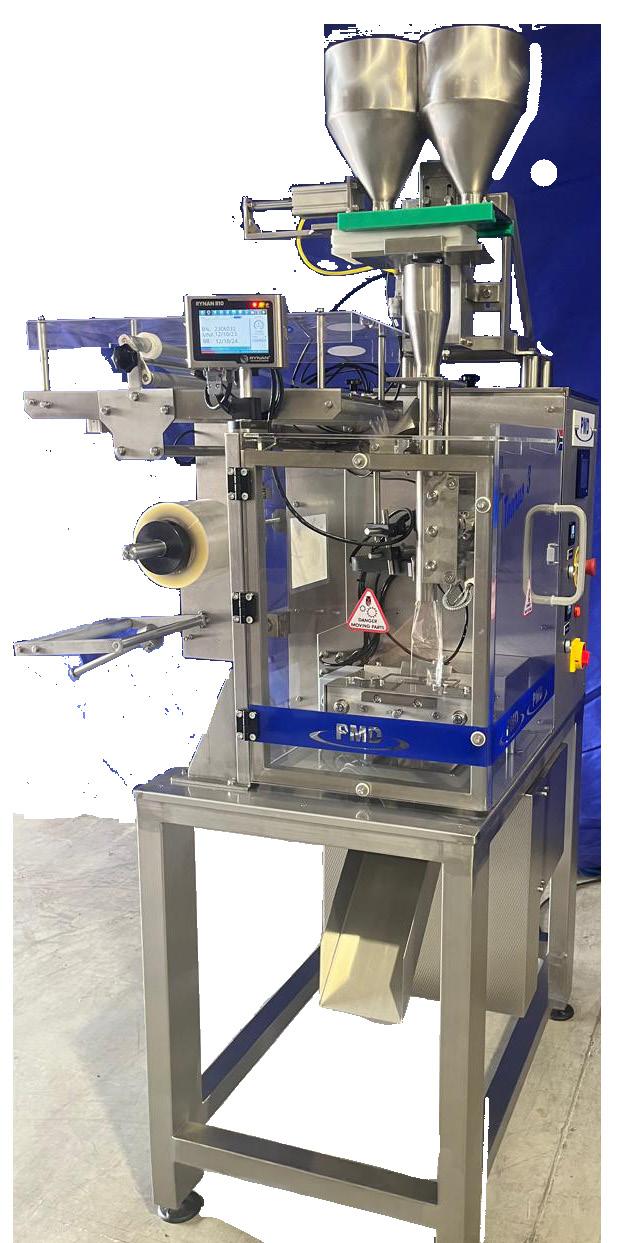
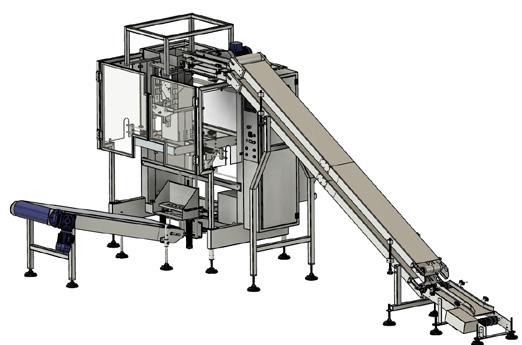
PMD Packaging launches innovative small pack machinery range targeting African entrepreneurs and addressing portion control hygiene challenges across diverse markets.
PMD is constantly investing in new solutions for packaging systems to suit the Food and Beverage market and others including Pharmaceutical, Nutriceutical, et al. Furthermore the company wants to pay attention to the economic profile of Africa. Many end users of common domestic products just don’t have the resources to purchase the big packs and the result is often Please change to manual intervention in order to satisfy the need for small packs. Small entrepreneurs have no choice but to do their best and measure portion size as best they can and manage their hygiene issues accordingly. This naturally introduces the consumer to hygiene risks and also risk of being over charged. Thus there is more pressure to make small packs available and that they are produced in compliance with health and safety requirements of the modern world.
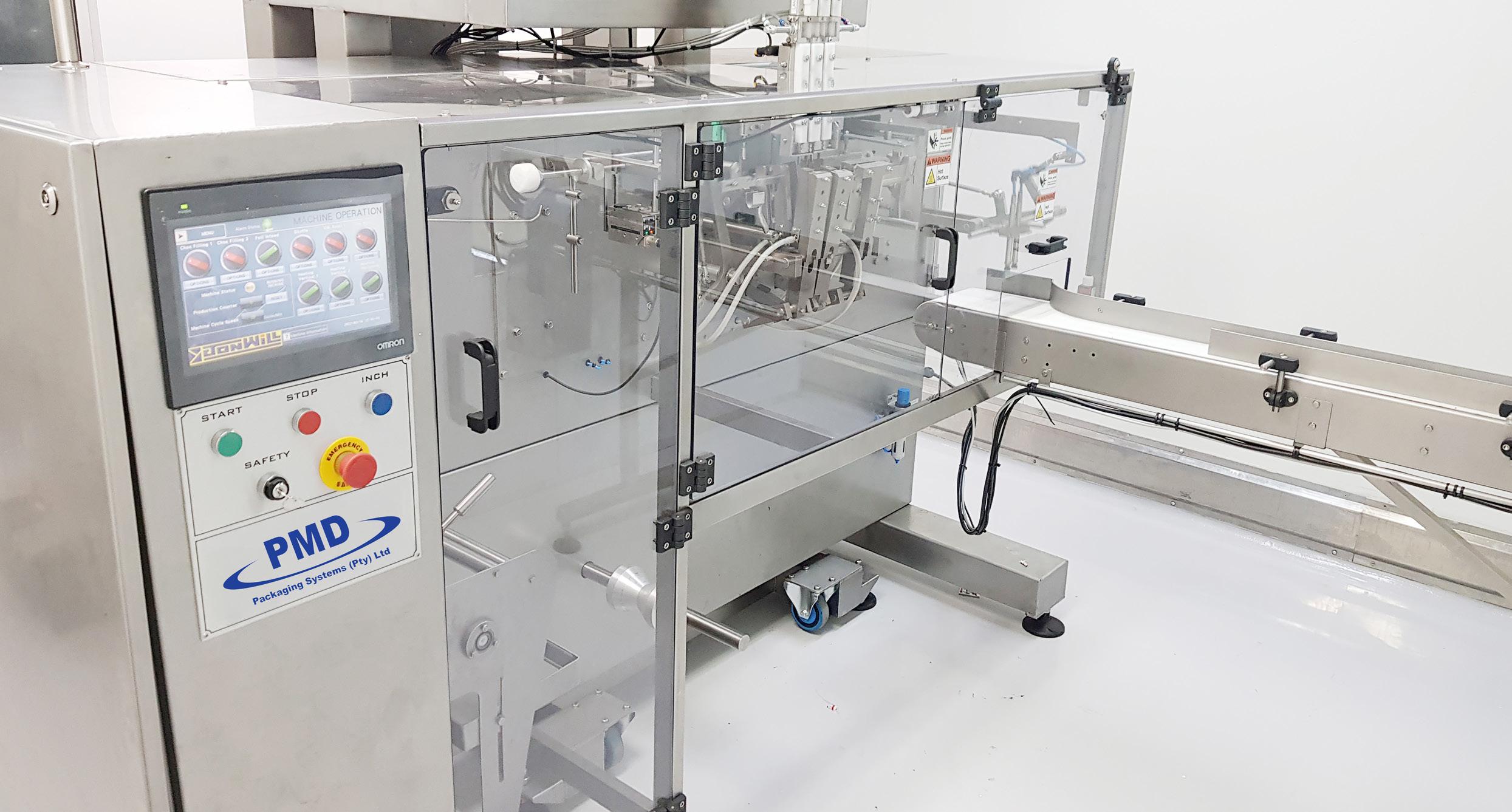
PMD has now launched a new range of machines to complement a very successful range of VFFS
machines with a multitude of special dosing systems, plus Auto Baling, Shrink-wrap, and many other special solutions where the company enjoys assistance from our European partners.
This move is designed to satisfy many
We design them, we build them, we maintain them, we improve them, we develop them. And above all we have technical support for everything we make.
ABOUT PMD
PMD Packaging has been manufacturing high-quality packaging machinery, since inception in 1966. The Sigma range of vertical form fill and seal packaging machines complies with world class standards. Under the guidance of Mike Spencer, the company has expanded, to offer a wide range of packaging and processing machinery by partnering with a number of international brands. PMD services a loyal client base globally and throughout Africa, with local representation in Johannesburg, Cape Town and Durban.
Our success is based on our work ethic, as well as an excellent track record of suc-
markets including, small entrepreneurs, and also big companies that need to offer small portions.
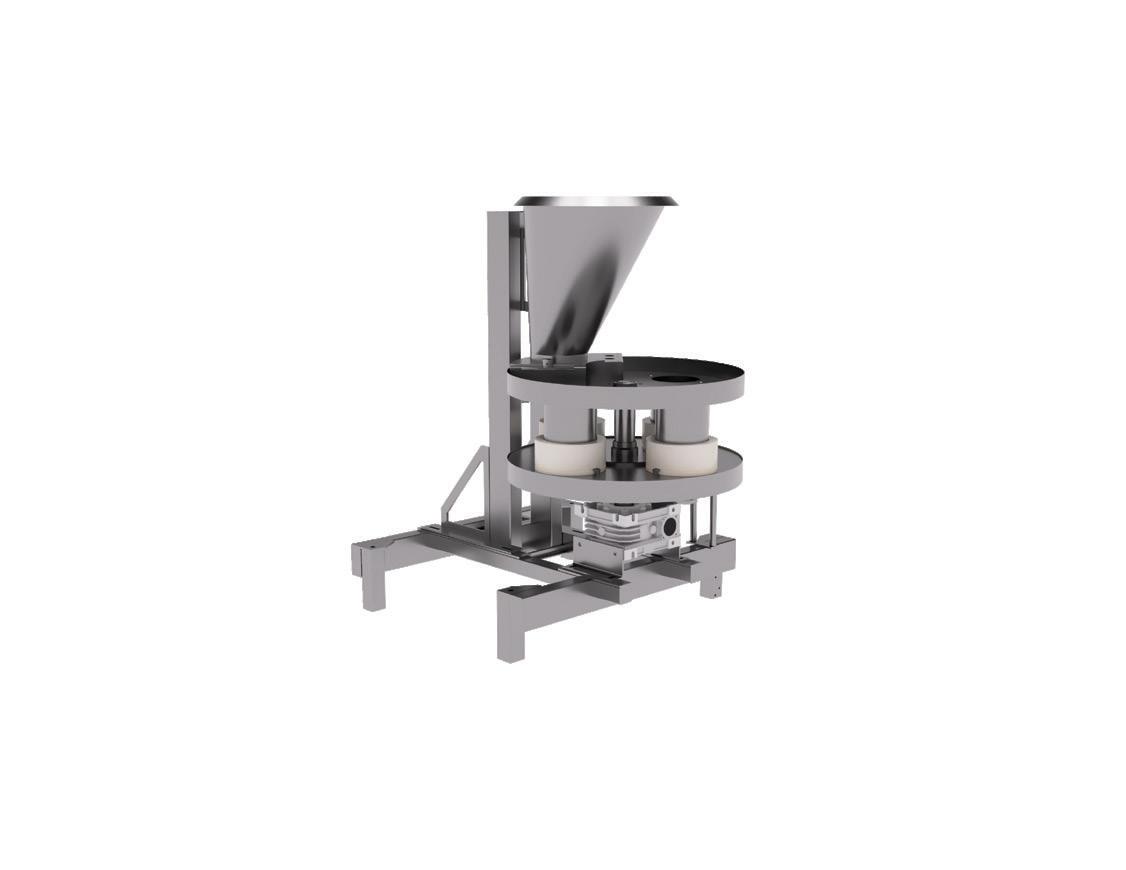
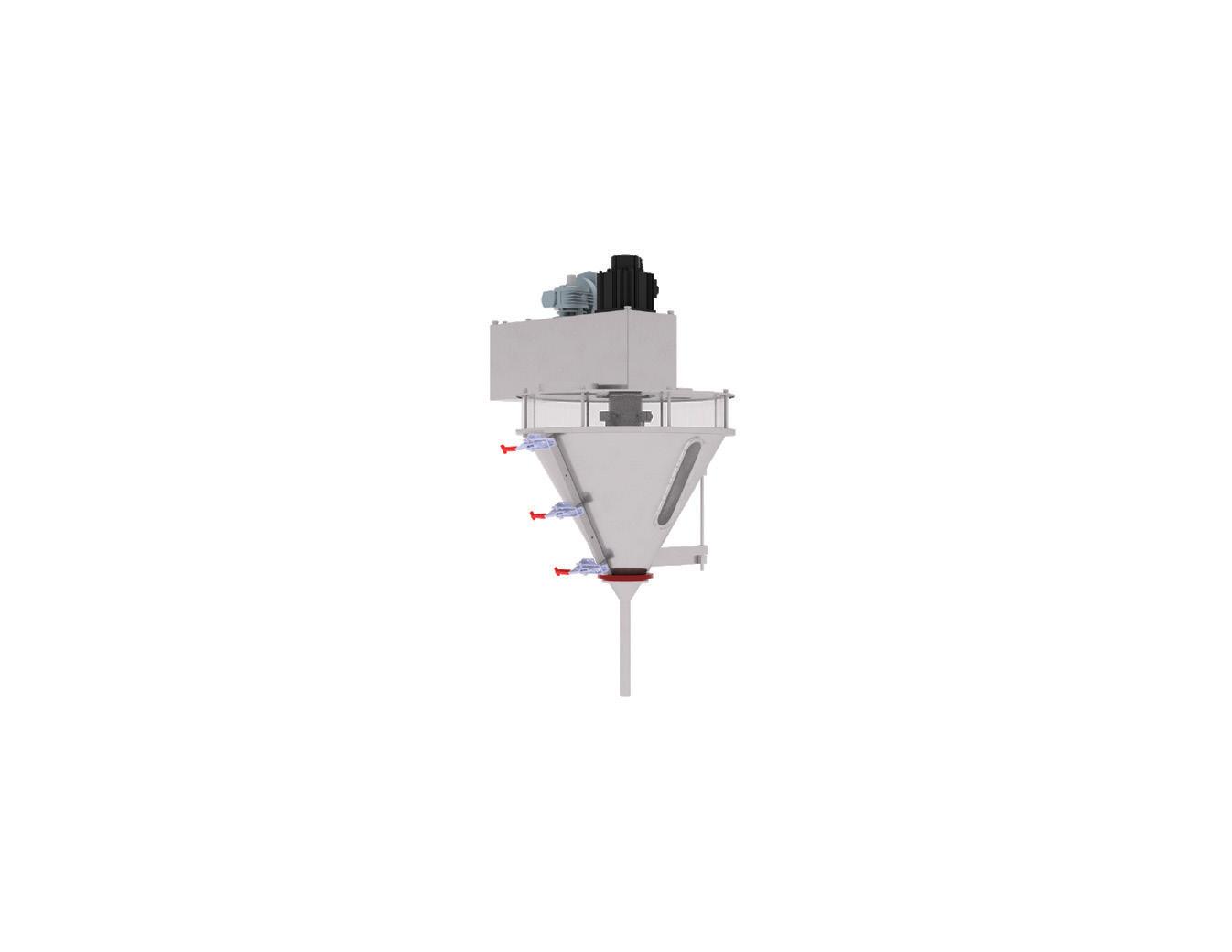
PMD HAS DEVELOPED AND INTRODUCED TO THE MARKET, A RANGE OF SMALL PACK MACHINES: Taurus: Mini VFFS machine for 3 side seal or pillow pack. Taurus is available with quick change over dosing capability for liquids, powders or granules.
Sigma 1: High speed VFFS machine for small packs up to 100 packs / min Apollo: Horizontal sachet machine for 3 or 4 side seal in single or twin lane format.
PMD - www.pmdpackaging.co.za
cessful installations and back up service for many leading multi-national companies. Throughout the years PMD has put technical development at the top of its agenda with the result that its products are widely recognised as leaders in the field of food packaging machinery, and now has many machines installed in a broad cross section of industries and countries throughout the world. We represent a number of suppliers including, Matcon, Delfin, Velteko, New Projects, Proxes, Symach. Pat Galleymore, Technical Director heads up PMD’s manufacturing and demo facility in Northriding, Johannesburg, supported by an experienced and qualified team.
MILLING AROUND PEOPLE LIKE PMD WILL INCREASE YOUR PRODUCTIVITY
Over the last 50 years, PMD has built up a proven track record, as a reliable partner to the milling
We offer an array of equipment to maximise productivity and lower operational costs. With representation in Gauteng, Cape Town and Durban, we are able to offer quick and effective sales,
Contact us to assist you in finding a customised solution tailor made for your factory and/or mill.
From grain to greatness
The journey from barley to beer begins long before fermentation. It starts in the silo. In malt houses, barley is stored in bulk silos, often up to 20 metres tall, and the way that barley fills and empties influences not only operational efficiency, but also product quality and safety. Reliable level measurement and point-level detection are critical for modern brewers, particularly as the South African craft and industrial brewing sector continues to expand.
THE SILO CHALLENGE
Advanced silo level measurement is critical for breweries. According to BlueWeave Consulting, South Africa's beer market was valued at around USD 3.5 billion and could reach USD 6 billion by 2030. Beer production contributes about R71 billion to the country's economy and supports nearly 249,000 jobs in agriculture, manufacturing, and logistics. This highlights just how important efficient and reliable storage solutions are, and not only for operational performance in breweries, but also for the broader economic landscape and employment throughout the value chain. Breweries encounter challenges when storing malted or raw barley in silos. The filling of these silos generate significant amounts of fine dust, which not only interferes with sensor accuracy, but also creates safety hazards for workers and equipment. As barley is loaded, it forms a shifting “cone” shape inside the silo that changes dramatically during discharge, making it difficult to gauge the exact fill level. The tall and complex geometry of these silos adds to the difficulty of obtaining precise level measurements. Without feedback, breweries run the risk of overfilling, which lead to spillage, increased dust and potential over-pressurisation of the silo structure, or underfilling, resulting in inefficient use of storage space and operational interruptions.
“Beer is not just a beverage, it is a key driver to the South African economy.”
BREWING BETTER PERFORMANCE
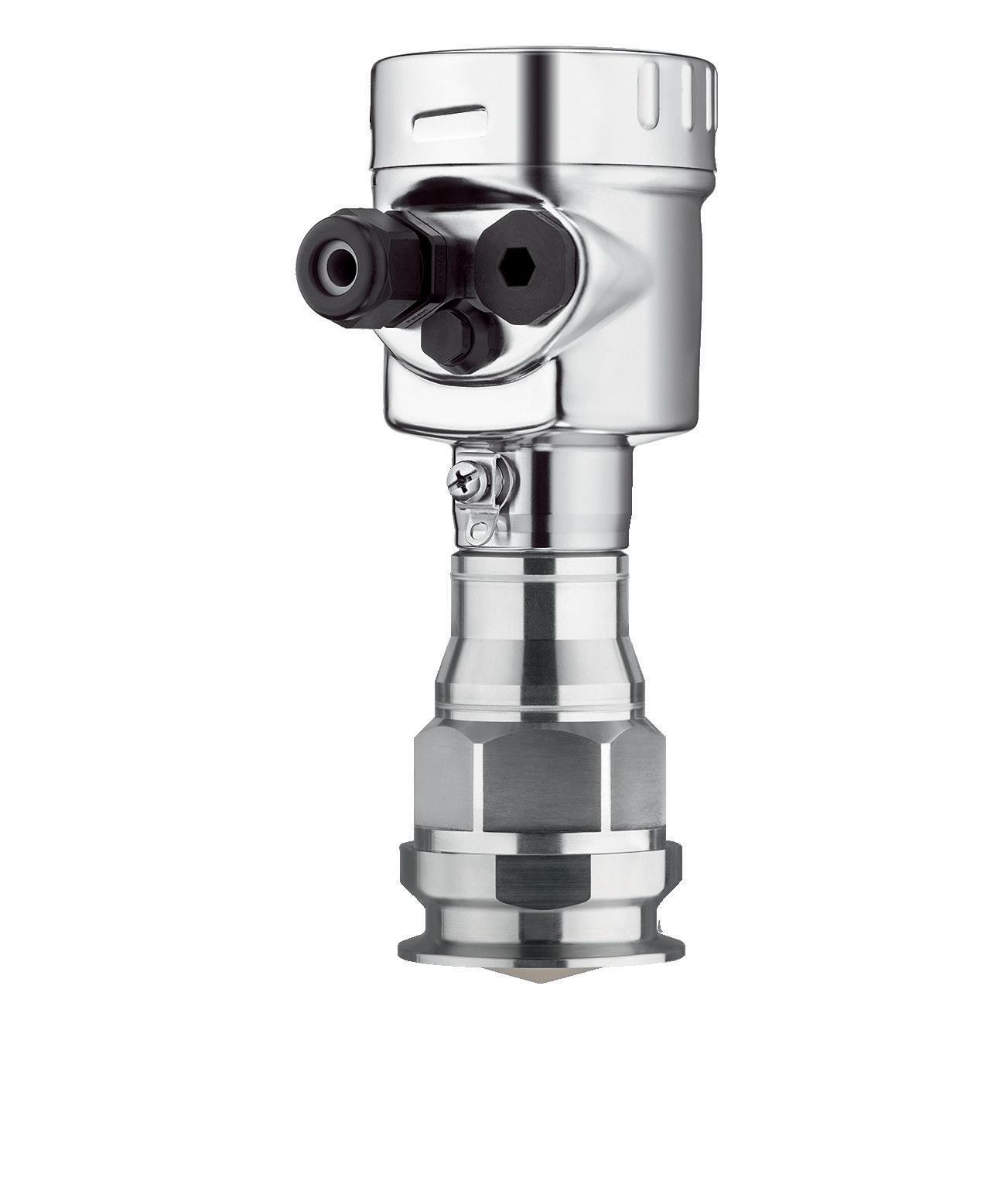
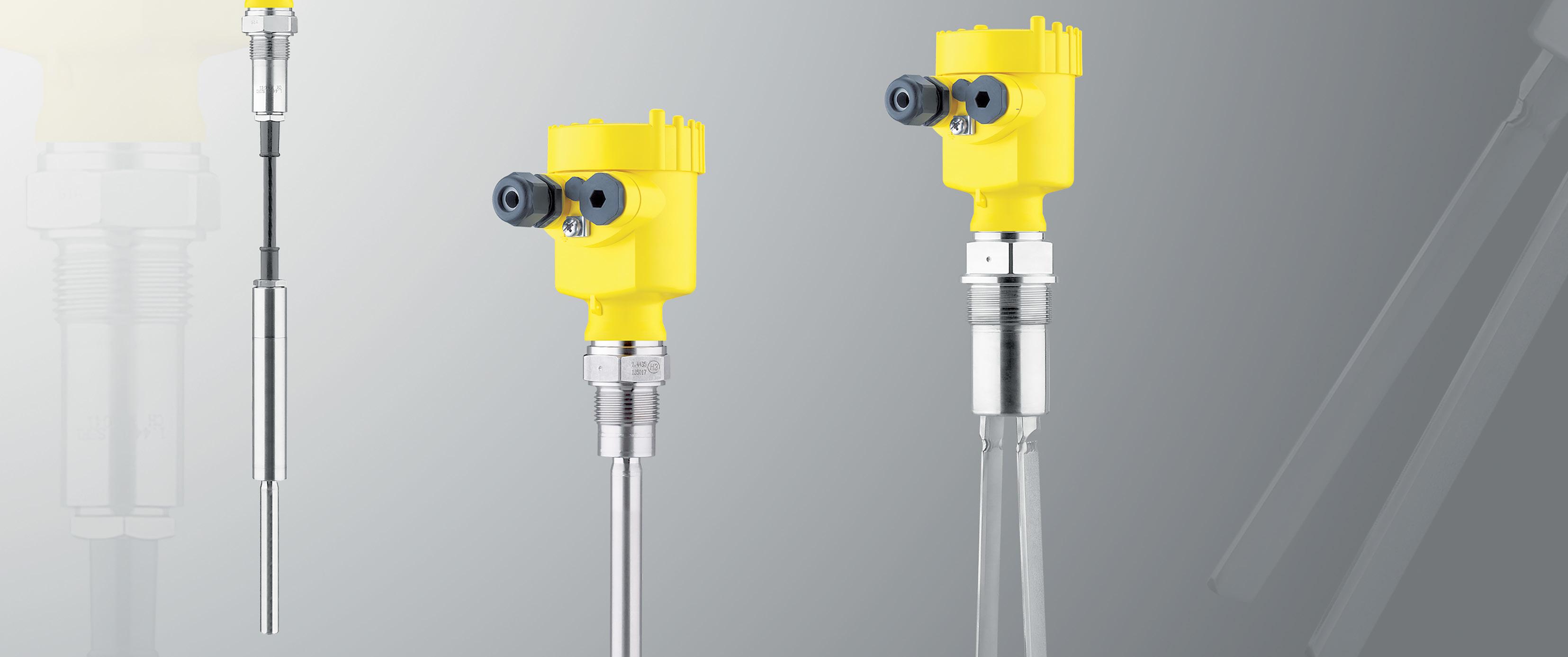
Employing a combination of continuous radar measurement and vibrating pointlevel detection proves to be highly effective in overcoming these challenges, with this approach ensuring accurate monitoring and control of silo contents, even in environments complicated by dust and shifting material surfaces. The VEGAPULS 6X radar sensor is designed for continuous level measurement. It operates using non-contact radar technology, allowing it to monitor the silo’s fill level without being affected by dust as the non-contact design eliminates wear or clogging, contributing to a maintenancefree operation and minimising downtime. Its tightly focused antenna system delivers precise measurements, whether the silo is tall, narrow or contains internal structures. This versatility enables the same sensor to be
used for barley or other materials without the need for hardware changes. For maximumlevel detection, the VEGAVIB 63 vibrating rod switch is ideal. Installed near the top of the silo’s filling region, it reliably detects when the silo is full or nearly full, preventing overfill and spillage. The rod’s smooth construction reduces the risk of barley clogging or accumulating on the sensor, which can interfere with performance. It remains robust and dependable even when the barley has a low bulk density or is aerated during filling. At the base of the silo, the VEGAVIB 61 vibrating rod switch provides low-level protection by detecting when the silo is almost empty, an essential feature for preventing complete drawdown and ensuring continuous processing. Its compact design helps prevent build up on the sensor, maintaining accuracy and cleanliness. The switching point remains consistent, regardless of changes in the barley’s bulk density or variations between different barley batches, so there is no need for recalibration.
Reinventing grain silo management with VEGA.
Images: Supplied by Vega
The most important ingredient for your process?
A pinch of perfection.
VEGAPULS 6X
The perfect radar transmitter for non-contact level measurement in hygienically demanding production facilities.
Everything is possible. With VEGA.
• Precise level data, even with buildup and internal vessel installations
• Hygienic, easy-to-clean process fitting, resistant to CIP processes
• Tightly focused for maximum measurement certainty
BARLEY, BEER AND BETTER DATA
Implementing advanced level measurement tools in brewery silos delivers tangible operational and financial benefits. By ensuring accurate filling and emptying processes, breweries can maximise the usable volume of each silo, leading to greater throughput and optimal utilisation of storage capacity. This efficiency translates into more streamlined brewing operations and improved productivity. In addition, these instruments help mitigate operational risks. Preventing overflows and empty-run situations not only enhances workplace safety, but also ensures a smoother, uninterrupted production process. The reduction in such incidents supports both compliance and business continuity. From a maintenance perspective, non-contact radar systems significantly reduce the need for manual checks, frequent cleaning, and unplanned downtime. This minimises labour requirements and associated costs, while also keeping the equipment in optimal working condition. Finally, once installed, these level measurement instruments are straightforward to configure and calibrate. Their robust design ensures consistent performance across different types of barley and under varying environmental conditions, allowing breweries to maintain efficiency with minimal ongoing intervention.
MEASURE WHAT MATTERS MOST
Investing in reliable level measurement systems for silos is a sensible decision. Modern level instrumentation helps breweries optimise their capital investments, reduce grain losses, enhancing safety and ensuring compliance, ultimately safeguarding profit margins. As production volumes increase, automated level measurement allows operations to scale smoothly, maintaining predictability and efficiency
WHY ACCURATE SILO MEASUREMENT MATTERS
Reliable level control reduces overfills, prevents downtime, protects silo integrity, and ensures better use of storage capacity. In a high-dust barley silo, the right radar and point-level instruments keep production stable and predictable.
throughout the expansion process. For breweries, whether large-scale or boutique craft brewers, the humble barley silo plays an outsize role in performance, safety and profitability. By pairing VEGAPULS 6X radar instrumentation with VEGAVIB 63 and VEGAVIB 61 vibrating level switches, brewers can tame the operational uncertainty of dusty, tall silos. The result? More accurate storage, smoother operations and stronger value-chain performance, all of which feed into a more competitive and sustainable industry. Given how critical beer is to both the economy and agriculture in South Africa, that’s a win not just for brewers, but for the entire value chain.
BREWING STARTS LONG BEFORE FERMENTATION
Barley quality can only shine if storage is stable. Precision level measurement helps malt houses and breweries maintain consistent flow, reduce losses, and automate safely — even in 20-metre-high silos packed with dust.
SMARTER SILOS, STRONGER BREWERIES
With Africa’s beer sector expanding, efficient raw-material handling is nonnegotiable. Modern radar sensors like VEGAPULS 6X offer accuracy, reliability and dust immunity that older technologies simply can’t match.
2. Beer production in South Africa: https://thebeerstore.co.za/discoverthe-world-of-beer-in-south-africa-abeginners-guide-2024-2025
3. Beer and the economy: https://www. businessday.co.za/bd/business-andeconomy/2025-03-20-native-thanksto-sab-beer-isnt-just-a-beverage-its-akey-driver-of-sas-economy
Advanced grain storage technology took center stage as Bühler addressed Africa's critical food security challenges at major investment summit.
Smart silos and grain storage technology was the focus of a key presentation by Marco Sutter, managing director of Bühler Southern Africa, at the 8th edition of the African Agri Investment Indaba (AAII), held from 24 to 26 November 2025 at the Cape Town Convention Centre.
SMART TECHNOLOGY TACKLES STORAGE CHALLENGES
The event brought together over 800 stakeholders, including investors, project developers, and government officials, to discuss the critical trends driving the future of African food and agribusiness over the next ten years and to analyse the economic forces impacting the sector in the coming decade. Bühler's participation underscored the vital role that advanced grain storage technology plays in addressing Africa's food security challenges. Smart grain storage silos use sensors, monitoring systems, and control mechanisms to optimise grain storage conditions and prevent losses due to pests, moisture, and other factors. Advanced technologies such as Internet of Things (IoT) devices, artificial intelligence (AI), and machine learning are being integrated into grain silos to optimise storage operations. "The African Agri Investment Indaba provided an essential platform for Bühler to engage with key stakeholders across the agricultural value chain," said Marco Sutter. "As Africa grapples with the dual challenges of feeding a growing population whilst minimising post-harvest losses, smart silo technology represents a critical solution. We were excited to share how these innovations can transform grain storage across the continent."
"As Africa grapples with the dual challenges of feeding a growing population whilst minimising post-harvest losses, smart silo technology represents a critical solution."
AFRICA'S FOOD SECURITY CRISIS
The AAII served as Africa's leading investment platform for global agrifood investment, creating opportunities for collaboration, knowledge sharing, and partnership development across the continent's agricultural sector.
"We viewed the Indaba not just as a speaking opportunity, but as a chance to forge meaningful partnerships that can drive real change," concluded Sutter. "Africa's food security challenges require collaborative solutions, and we are committed to working alongside governments, investors, and agricultural producers to deploy technology that makes a tangible difference."
ABOUT BÜHLER
Bühler is driven by its purpose of creating innovations for a better world, balancing the needs of economy, humanity, and nature in all its decision-making processes. Billions of people come into contact with Bühler technologies as they cover their basic needs for food and mobility every day. Two billion people each day enjoy foods produced on Bühler equipment; and one billion people travel in
vehicles manufactured using parts produced with Bühler solutions. Countless people wear eyeglasses, use smart phones, and read newspapers and magazines – all of which depend on Bühler process technologies and solutions. Having this global relevance, Bühler is in a unique position to turn today’s global challenges into sustainable business.
As a technology partner for the food, feed, and mobility industries, Bühler has committed to having solutions ready to multiply by 2025 that reduce energy, waste, and water by 50% in the value chains of its customers. It also proactively collaborates with suppliers to reduce climate impacts throughout the value chain. In its own operations, Bühler has developed a pathway to achieve a 60% reduction of greenhouse gas emissions by 2030 (Greenhouse Gas Protocol Scopes 1 & 2, against a 2019 baseline).
Bühler spends up to 5% of turnover on research and development annually to improve both the commercial and sustainability performance of its solutions, products, and services. In 2024, some 12,350 employees generated a turnover of CHF 3.0 billion. As a Swiss family-owned company with a history spanning 165 years, Bühler is active in over 140 countries around the world and operates a global network of 105 service stations, 31 manufacturing sites, and research and training centers in 26 locations.
FAST FACT
37% of locally produced food in Africa is lost in transit due to processing delays and poor infrastructure.
A complete guide to bread troubleshooting
Professional bakers can systematically eliminate recurring bread defects by identifying root causes and implementing targeted solutions for consistent quality results, explains Pakmaya.
Although bakers pay attention to many factors to produce good bread, they sometimes encounter faulty loaves. In such cases, identifying the source of the error is crucial to prevent the mistake from recurring and to ensure a flawless breadmaking process. At Pakmaya Professionals World , the meeting point for bakers and pastry chefs , we have compiled the most common errors in bread production and their possible causes for you to achieve flawless bread production. You can learn which points to pay attention to for good bread by reviewing our list.
FLAWLESS RESULTS
For flawless bread production, the bread's internal structure must not exhibit the following characteristics. If the bread does exhibit these characteristics, it is beneficial
FAST FACT
Over 25 distinct bread defects can occur from just 8 main production variables: flour quality, kneading, water, temperature, yeast, fermentation timing, humidity, and baking conditions.
to evaluate the factors leading to the defect in order to resolve the issue. Accordingly:
• If your bread has a firm texture: You should consider possible causes such as choosing the wrong flour, excessive kneading, insufficient water, or a prolonged fermentation process.
• If the bread has a crumbly texture: You should consider factors such as incorrect flour selection, insufficient enzyme activity, inadequate kneading, insufficient water usage, excessively long first and second fermentations, and overbaking.
• If your bread is sticky: You should focus on potential causes such as excessive humidity, overactive enzymes, dough that is too cold, insufficient fermentation time, or inadequate baking time.
• If the bread has a greyish colour: You should consider possible causes such as excessive water use, insufficient yeast, or insufficient fermentation time.
• If the bread has a sour taste, you should consider that it might be a fault due to the use of the cooking utensil.
• If the bread has large pores: You can consider reasons such as excessive humidity in the air, excessive enzyme
activity, excessive water usage, dough temperature that is too high, or insufficient fermentation time.
ERRORS AFFECTING THE APPEARANCE OF BREAD
Some errors encountered in bread production can be noticed when you evaluate the bread's external appearance. For ideal bread production, it will be beneficial to examine what errors might affect the bread's external appearance. Accordingly:
• If the bread has insufficient volume: You might consider the possibility that the flour used was too fresh. On the other hand, you should also consider factors such as using sprouted wheat flour, insufficient or excessive kneading, the dough being too hot or too
"Identifying the root cause is essential to prevent recurring problems and maintain consistent bread quality."
cold, insufficient water usage, the use of a groats (a type of utensil), inadequate yeast usage, fermentation time being too short or too long, using the wrong blade, and insufficient steam.
• If the bread has a flat (slanted) appearance: Check possible causes such as humid air, excessive enzyme activity, using very fresh flour, using sprouted wheat flour, using too much water, the dough being too cold, insufficient compaction, inadequate yeast use, or fermentation lasting too short or too long.
• If the bread doesn't cut with a knife: Consider possible causes such as dry or humid air, wrong flour choice, insufficient or excessive kneading, inadequate water usage, use of a groats/coating, insufficient yeast usage, fermentation process that is too short or too long, a faulty knife, and excessive steam.
• In the case of bread with cracked edges: Look at factors such as dry or humid air, use of sprouted wheat flour, excessive kneading, cold dough, use of too much water, over-compression, faulty cutting tool, insufficient yeast, insufficient steam, and inadequate fermentation time.
DID YOU KNOW?
• Too soft: Check if you applied too much force or used too much water.
• An excessively strong structure: Consider factors such as incorrect flour selection, excessive force, insufficient kneading, over-compression, the use of a sack, and a prolonged first fermentation process.
A bread's crust colour can indicate up to 7 different production issues, from humidity problems to enzyme activity levels, making visual inspection one of the most valuable diagnostic tools for professional bakers.
• If the bread crust is bubbly: Check the following issues: humid air, using very fresh flour, insufficient or excessive kneading, using too much water, over-compression, insufficient yeast, insufficient fermentation time, and excessive steam.
• If the bread is light in colour: Focus on insufficient enzyme activity and excessively long first and second fermentation times.
• If the bread crust is red, you should focus on possible causes such as humid air, flour being too fresh, using sprouted wheat flour, excessive enzyme activity, insufficient or excessive kneading, excessive water usage, insufficient yeast, or overbaking.
• Dull bread crust is: Consider possible causes such as dry air, insufficient water usage, dough being too hot, the use of a baking sheet, and insufficient steam.
• A thick crust: It could be factors such as dry air, insufficient enzyme activity, inadequate water usage, the use of a baking sheet, the dough being too hot, insufficient steam, and overbaking.
• Soft crust: Consider factors such as humid weather, the use of sprouted wheat flour, and insufficient baking time.
COMMON MISTAKES IN BREAD DOUGH
Sometimes bakers encounter errors stemming from the dough itself. Therefore, the most logical step would be to evaluate whether the dough is faulty according to the following criteria and focus on resolving the issue.
• Stiff bread dough: Look for possible causes such as insufficient water usage and excessive force.
• Under-firm bread dough: You should consider mistakes such as over kneading, the dough being too hot or too cold, using too much water, insufficient compression, and insufficient yeast.
• If the bread dough is very fresh: Look for other possible causes such as the dough being too hot or too cold, excessive water usage, insufficient yeast, or a short first fermentation period.
• Limp bread dough: Check possible causes such as using very fresh flour or sprouted wheat flour, insufficient strength, overkneading, excessive water use, insufficient yeast, and a short first fermentation period.
• Sticky bread dough: Look at factors such as humid air, using very fresh flour, using sprouted wheat flour, excessive enzyme activity, over-kneading, dough that is too cold, excessive water usage, insufficient yeast, and a short first fermentation period.
• A crusty crust: Focus on factors such as dry air, the dough being too hot, insufficient water usage, inadequate yeast, or a short first fermentation period.
To produce good bread and create bread recipes that will appeal to your customers, we recommend that you consider the potential issues mentioned above.
Intellectual property protects food industry innovation
Candidate Patent Attorney Stellar Frisby from Hahn & Hahn explores how intellectual property rights protect every aspect of food production innovation.
Imagine cooking a perfect, fluffy free-range egg omelette in your trusty non-stick pan. Following the recipe of your favourite chef, you add a knob of butter to the pan and crack in three eggs, whisking vigorously. Once the eggs are almost cooked, you grate in a generous helping of Parmigiano Reggiano before folding the omelette, garnishing with radish microgreens and serving with a slice of buttered sourdough toast and a hot almond-milk latte. Looking down at the mug and plate from a food industry perspective, we would tend to think of food chemistry, microbiology, processing techniques, nutrition and sensory analysis, without realising the intellectual property (IP) rights that linger behind each component. Now, imagine each item on your breakfast table as a piece of intellectual property (IP). IP rights protect not only the ingredients themselves, but the formulations, processes, and reputations that go along with them. Here’s how IP play a role in your breakfast, and why it should matter to all food industry professionals
Rohwedder in 1928, transformed commercial baking forever. Without it, you may still be slicing your bread at home and “the best thing since sliced bread” might never have become a phrase at all!
DESIGNS
– IS IT A
BIRD?
IS IT A PLANE? NO, IT’S A TOASTER!
PATENTS – THE BEST THING SINCE
SLICED BREAD
Your trusty frying pan may be coated with a handy non-stick surface that allows the omelette to seamlessly glide out of the pan and onto your plate. Inventions such as compositions or manufacturing processes which help solve problems (such as omelettes sticking to the bottom of pans) may be protected by patents. To be patented in South Africa, inventions must be new, inventive, and capable of industrial application. Patents help protect the research and development that goes into new products, such as cookware, ingredients, or processing methods, by excluding others from exploiting the invention without permission. A patentee may also choose to license their patents to earn royalties, which can be a valuable revenue stream and may facilitate the reaching of wider markets. Patents not only reward inventors; they drive technological advancement by encouraging innovation and sharing knowledge. For example, the first patent for a machine that sliced and packaged bread, granted to Otto Frederick
The toaster’s smooth curves, sleek aesthetic, and unique shape, almost reminiscent of a well-designed sports car, give it a distinctive, eye-catching presence on your kitchen counter and may be protected as a registered design. Registered designs protect the visual appearance of an article, including its shape, configuration, ornamentation, and pattern.
Trademarks – What’s in a name? The butter's brand name, logo, and slogan may be protected by trademarks. A trademark helps consumers easily identify your brand which can develop your reputation and consumer trust, while also helping to prevent confusion in the market.
Geographical indications– Who moved my cheese? Only cheese made in specified regions of Italy using traditional methods may be labelled Parmigiano Reggiano. This is known as a Geographical Indication (GI). South Africa recognises certain international
"The first patent for a machine that sliced and packaged bread... transformed commercial baking forever"
GIs and protects some of its own, for example the world-renowned Rooibos tea. GIs safeguard cultural heritage and food quality linked to specific origins.
Trade Secrets – Your secret’s safe with me: At what temperature and time combination was the coffee roasted to give it that perfect chocolaty aroma? What emulsifiers and stabilisers were added to enhance the homogenisation of the almond milk? If this knowledge gives your company a competitive edge and it’s kept secret, it may qualify as a trade secret.
COPYRIGHT – ALL RIGHTS RESERVED
The beautifully illustrated recipe book sitting open beside your stove is protected by copyright. In South Africa, original literary and artistic works are protected automatically when recorded in material form. This means the wording, layout and any accompanying illustrations or photographs cannot be copied, even if the ingredients are as common as eggs, butter, and cheese.
Plant breeders’ rights – Your secret’s safe with me: The delicate, red, peppery microgreens garnishing your plate may be the result of years of selective breeding. Plant Breeders' Rights (PBRs) protect new plant varieties if they are distinct, uniform, and stable. In South Africa, PBRs are crucial for innovation in agriculture and give breeders exclusive rights to produce and sell their varieties.
Hahn & Hahn - www.sapat.co.za
“ARE YOUR LAWYERS ENGINEERS TOO? WE ARE ™.
Our Lawyers who are Engineers and Scientists too understand your complex legal and regulatory matters which require an understanding of the technical subject matter and a firm grasp of the law.
As IP attorneys we can protect your valuable inventions and brands through patent and trade mark applications drafted by patent attorneys who understand your specific technical field.
So ask yourself, should your Lawyers be Engineers and Scientists too?”
Janusz F. Luterek for: Hahn & Hahn
V C Williams, J F Luterek, PCR Venter, C Michael, C Berndt, V Lawrance, Y Ra
Green labelling solutions for industrial applications
HERMA debuts game-changing labelling technology combining competitive pricing, sustainable printing without consumables, and unprecedented precision for industrial applications.
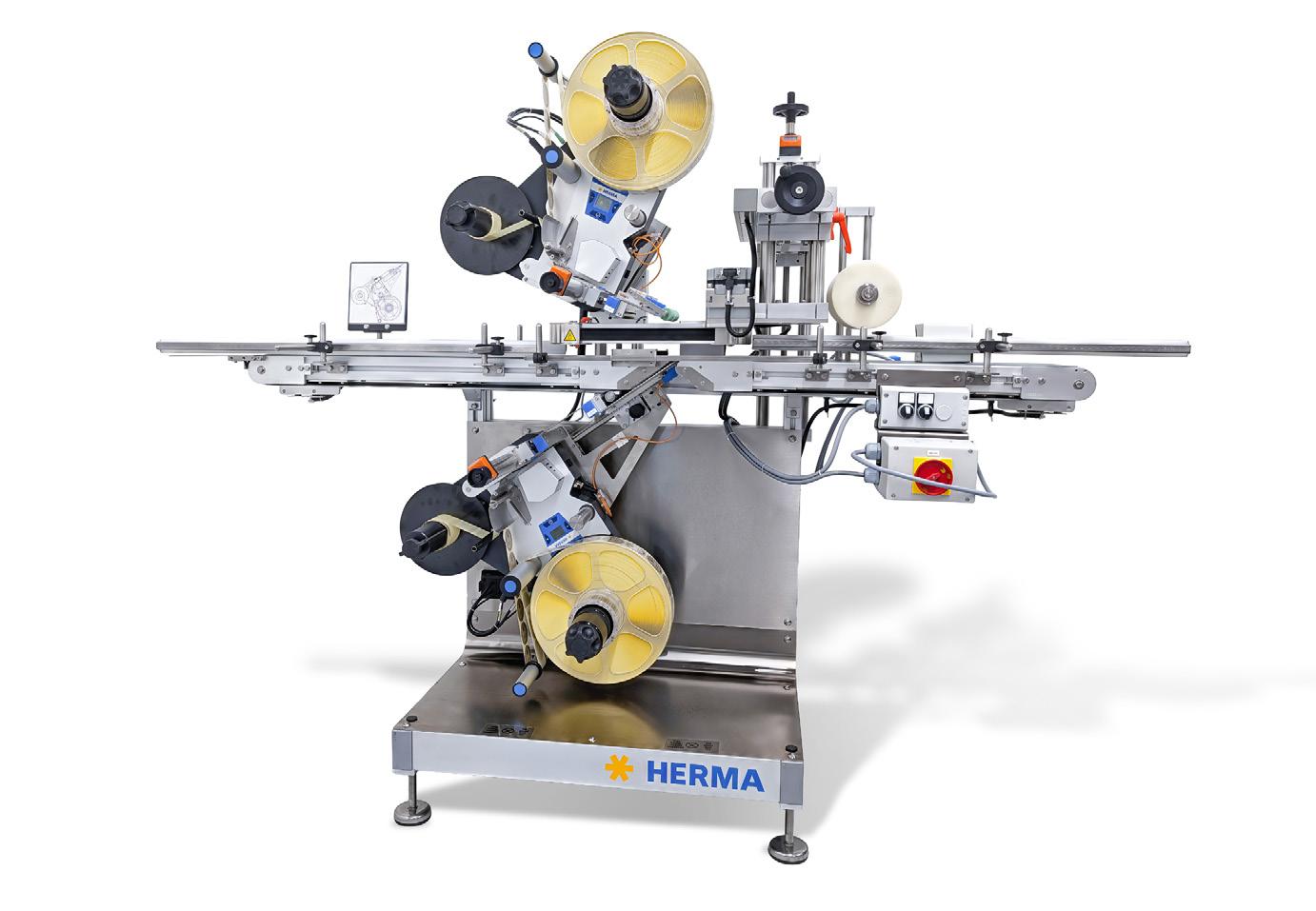
High performance at a remarkably competitive price — this is what the HERMA eco label applicator will demonstrate for the first time at Fachpack 2025 (Hall 3C, Stand 322). Integrated into the newly designed 652C model, it enables highly efficient top-and-bottom labelling. Despite its premium features, the HERMA eco combines exceptional efficiency with mechanical and build quality rarely seen in this segment. The system will be demonstrated alongside a Köra-Packmat friction feeder, which separates products before labelling them on both sides — or can be configured for single-surface labelling. The system's impressive precision stems from the HERMA Eco’s Master Encoder function, ensuring continuous synchronization with conveyor speed. This delivers accurate labelling even at speeds up to 30 meters per minute with labels up to 160 millimetres wide. The 652C's modular design allows customisation for specific needs. Optional integration of the HERMA 500 thermal transfer printer or hot-foil unit enables variable data printing on both sides, while the modular approach ensures quick delivery times.
SEALING WITH INTELLIGENCE
HERMA's 362E double-sided labelling machine demonstrates how up to 200 products per minute can be labelled and printed with variable data — completely without consumables. Combined with a UV laser from Domino and HERMA's specialized film labels, the printed image is created through colour shift within the label material itself, requiring no contact, ink, or transfer ribbon.
The result is smudge-proof, scratch-resistant, and chemically stable printing that withstands alcohol, grease, and disinfectants — making it particularly valuable for pharmaceutical, cosmetic, and chemical applications. Another highlight: the 752C labelling machine showcases a unique application by simultaneously sealing and labelling packaging, demonstrated live on clamshell containers filled with popcorn. This illustrates how labels can serve multiple functions — an increasingly important trend in sustainable packaging.
THE HERMA LABELLING LINE
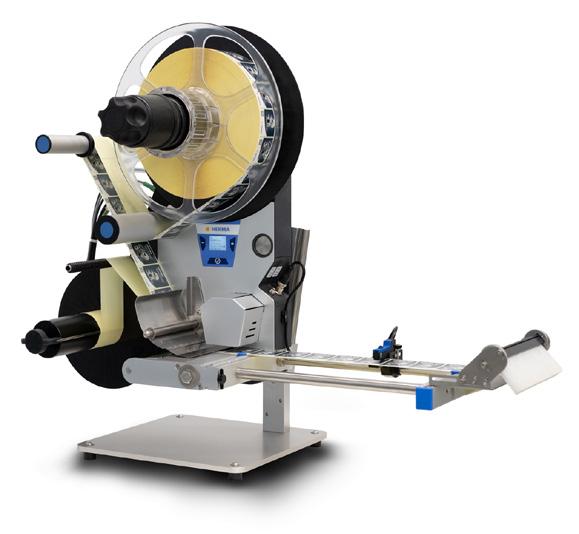
HERMA's complete labelling line underscores its holistic systems approach, providing the right solution for any application. At its core are modular label applicators like the new HERMA eco and the proven HERMA 500. The HERMA 500 serves as a benchmark for flexibility, user-friendliness, and integration capabilities, accommodating all label widths, installation scenarios, and production speeds while maintaining consistent operation and structure. This simplifies integration, maintenance, and training while ensuring rapid availability.
The labelling line includes logistics-tailored solutions. HERMA's Print & Apply systems integrate flexibly into
"High performance at a remarkably competitive price."
existing production lines, with print modules, applying units, and winders that can be freely positioned for maximum integration flexibility. These systems use the same modular components as HERMA's high-performance systems, ensuring reliable operation and fast changeovers between different products or production lines. HERMA's Fachpack presence is completed by two semi-automatic labelling machines offering perfect support for smaller batch sizes: the 414 for top labelling and the 211 for wrap-around labelling of cylindrical products.
EFFICIENT LABELLING, FLEXIBLE INTEGRATION
• For the first time in a top-and-bottom labelling machine, the new HERMA eco will showcase impressive performance at a remarkably competitive price.
• Sustainability takes centre stage with solutions for variable data printing on film labels using UV lasers without consumables, plus intelligent concepts for sealing packaging.
• A complete labelling line will demonstrate the advantages of HERMA's modular applicators across diverse applications.
ABOUT HERMA
HERMA GmbH, based in Filderstadt, Germany, is a leading European specialist in packaging and product labelling. In fiscal year 2024, the company group generated €452.6 million in turnover with over 1,100 employees across three business divisions: Adhesive materials, labels, and labelling machines. Exports represented 64.6% of total revenue.
FAST FACT
HERMA's 362E can label and print up to 200 products per minute with variable data — completely without consumables..
Herma – www.herma.com
Images: Supplied by Herma
From manual inspection to defect-free production
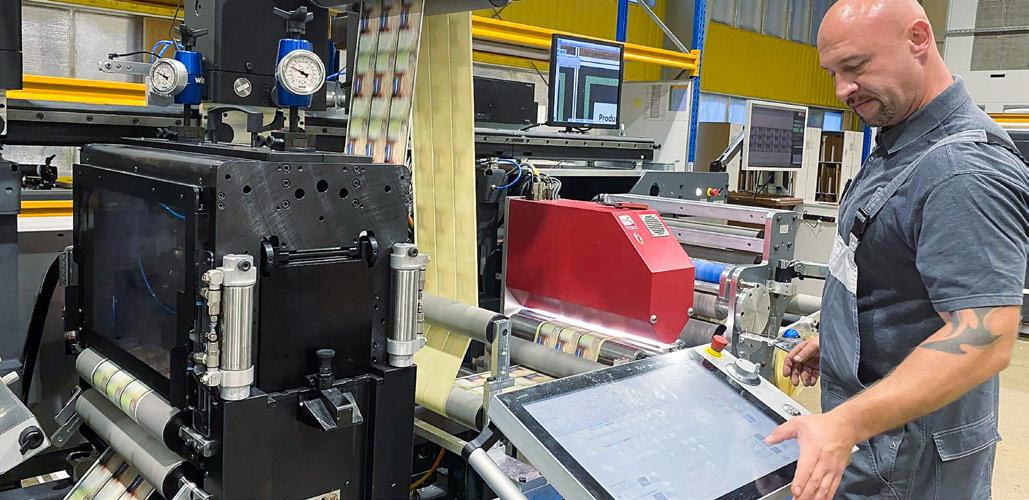
A-Z Color sets new standards in label production with EyeC and with over 30 years of experience, the Polish company is one of the leading specialists in self-adhesive labels, heat-shrink labels and flexible packaging.
At its modern production facility in Antonie near Ostroleka, the family-owned company with over 90 employees manufactures high-quality solutions for renowned customers in the cosmetics, food and pharmaceutical industries throughout Europe. Its mission: uncompromising precision in every print, especially in regulated markets. The label manufacturer confirms this promise of quality with ISO 9001:2015, BRC P&P Food Safety and FSC® certifications, as well as DPG qualification for the German market.
ZERO TOLERANCE FOR ERRORS
In the pharmaceutical industry, precision is paramount. An incorrectly placed decimal point in dosage instructions, a slight change in batch number or a subtle colour change on a warning label can have serious consequences. Consequences can include production stoppages, batch recalls, regulatory audits, and threats to patient safety and brand reputation – an unacceptable risk for GMP-compliant supply chains. “Our priority has always been to deliver products that meet our customers’ high expectations,” explains Katarzyna Zecer-Gołaszewska, partner at A-Z Colour. “However, in a dynamic market that does not forgive mistakes, ensuring absolute reliability at every stage of production was a real challenge.” A-Z Color was faced with the task of finding a future-proof, automated solution that would combine 100% reliability with maximum production speed.
“Our priority has always been to deliver products that meet our customers’ high expectations. However, in a dynamic market that does not forgive mistakes, ensuring absolute reliability at every stage of production was a real challenge.”
NO COMPROMISES ON QUALITY
A few years ago, A-Z Color implemented its first automated print inspection systems and evaluated their performance in long-term use. The selection criteria were simple and included ultra-precise detection, stable 24/7 performance, seamless integration, userfriendly design and reliable operation. “When selecting the right product, it is not only the technology and price that matter to us, but also the quality of cooperation,” emphasises Zecer-Gołaszewska. “We need partners who understand our requirements, share our quality standards and provide us with reliable support in our daily production. An evaluation of various quality control systems, considering pharmaceutical requirements and GMP guidelines, allowed us to make a clear decision: while competing systems failed in
areas critical to the pharmaceutical industry, EyeC systems reliably and consistently detected even the smallest deviations.”
TECHNOLOGY MEETS PRACTICE
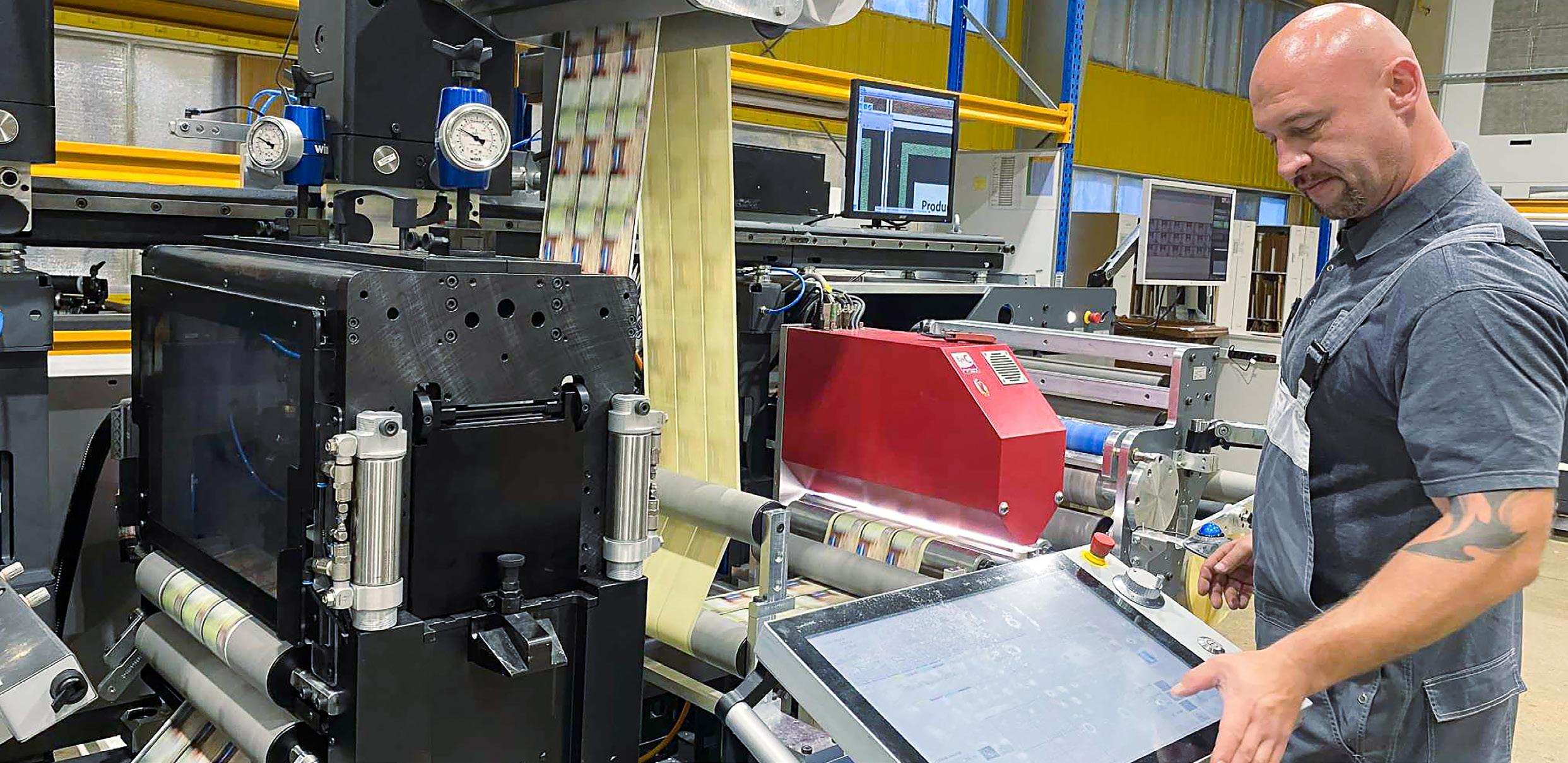
The EyeC Proofiler 600 DT offline scanner system was used to check the print pattern, while EyeC ProofRunner Web inline systems were used for 100% inspection on the label printing line. The EyeC Proofiler combines intelligent software with a high-resolution flatbed scanner and enables objective, repeatable quality control of text, colours, graphics, 1D and 2D codes, and Braille. It digitally compares printed products with approved PDF templates, checking both print quality and content accuracy. Based on this approach, EyeC ProofRunner Web cameras capture every label during the printing process. Each item is fully checked for accuracy, colour accuracy, registration accuracy and positioning accuracy, and then automatically verified. The system detects and flags errors in real time, so that only error-free products are processed further.
All EyeC systems are equipped with pixel-accurate comparison algorithms that detect deviations of 0.1 millimetres, enable real-time analysis at full production speed and automatically compensate for differences in materials and prints. Intelligent contrast analysis also prevents false alarms. If deviations are detected, the system immediately notifies production, precisely locates the deviation and allows operators to make targeted corrections. By
combining offline and inline systems, A-Z Colour was able to fully digitise its quality control process. The implementation was completed in record time without interrupting production. After two weeks of technical preparation, including analysis of production lines, infrastructure upgrades and definition of real-world test cases, three ProofRunner Web systems were installed, calibrated and tested in a single day with the active support of A-Z Color's technologist and maintenance staff. After practical training for operators, the systems were immediately put into production mode. The installation complied with pharmaceutical standards and included approved documentation (IQ/OQ) and training certificates for all operators. “The installation can definitely be described as exemplary,” confirms Zecer-Gołaszewska.
HIGH PRODUCTION STANDARD
What began in 2019 as a targeted application in pharmaceutical labels has become a company-wide standard. “Over time, we realised that EyeC solutions also offer us enormous benefits in other areas,” adds Zecer-Gołaszewska. Today, in addition to the EyeC Proofiler, five EyeC ProofRunner systems are an integral part of production, operating virtually around the clock. The
NEXT STEPS: QC: FUTURE STRATEGY
With the implementation of EyeC systems, A-Z Colour has set a new quality standard in label printing that guarantees:
• Error-free results
• Maximum process reliability
• Absolute design fidelity
Building on its successes to date, the company is now working on further development towards predictive quality control through data-driven analysis and continuous process improvement.
The partnership with EyeC is an indispensable foundation for these activities. “Based on our consistently positive experience, we have no hesitation in recommending EyeC as a proven and reliable partner,” concludes Katarzyna Zecer-Gołaszewska.
most recent installation took place in 2025. In accordance with internal standards, the systems must always be running when the printing machines are in operation. Monitored and controlled by printing house employees, shift managers and technologists, the systems check the entire printing process during all production shifts.
STRATEGIC PARTNERSHIP
The collaboration with EyeC was a decisive breakthrough for A-Z Colour in label production. In several years and thousands of production orders, only one defective printing template was produced. After joint analysis with the manufacturer, insufficient colour contrast was identified as the cause, the system parameters were adjusted, and a preventive action protocol was implemented. Since then, the error rate has been zero.
This has fundamentally changed quality assurance from random sampling to 100% automated inspection on the production line. The biggest advantage: deviations immediately lead to production stoppages, are documented and enable targeted corrections – fully GMP-compliant and audit-proof. For customers, especially in the pharmaceutical industry, this means: - No product recalls - Complete documentation - Audit securityPredictable delivery dates at the same time, the amount of waste and reprints has been significantly reduced, leading to real resource savings and significantly higher production efficiency.
Sleeve solutions for FMCG packaging
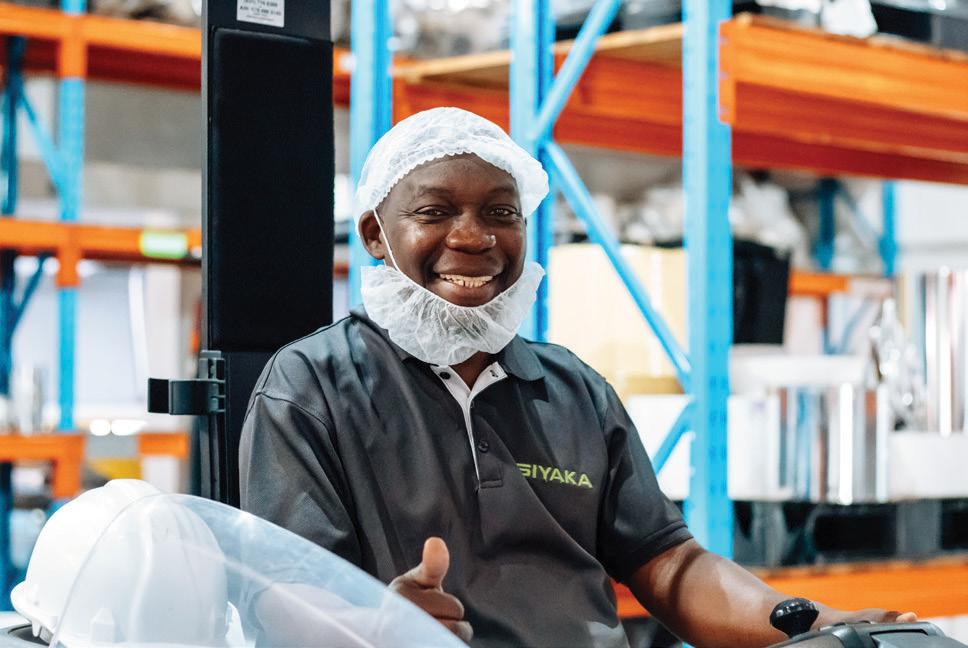
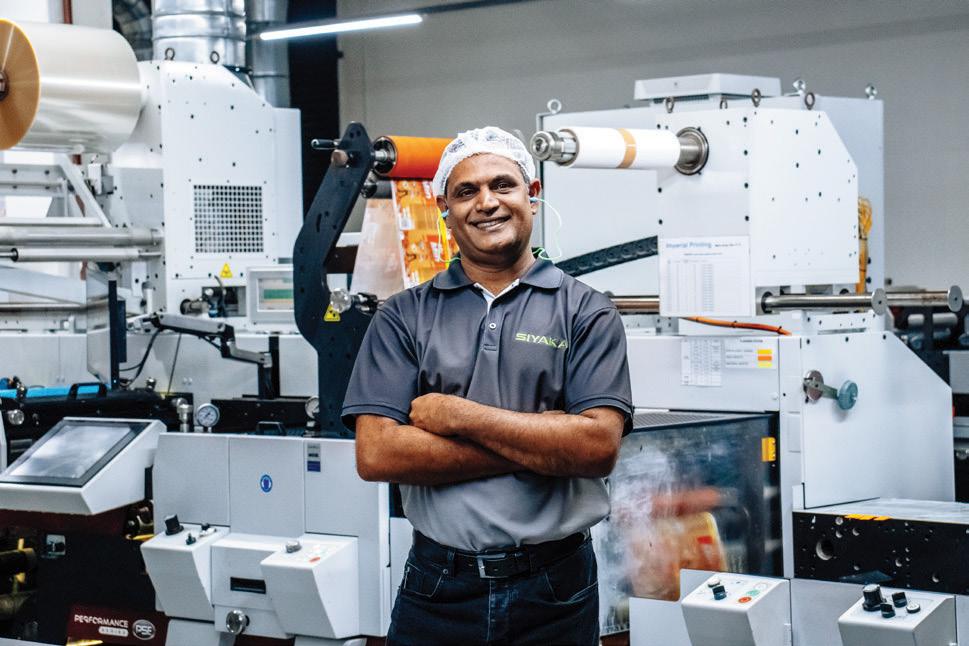
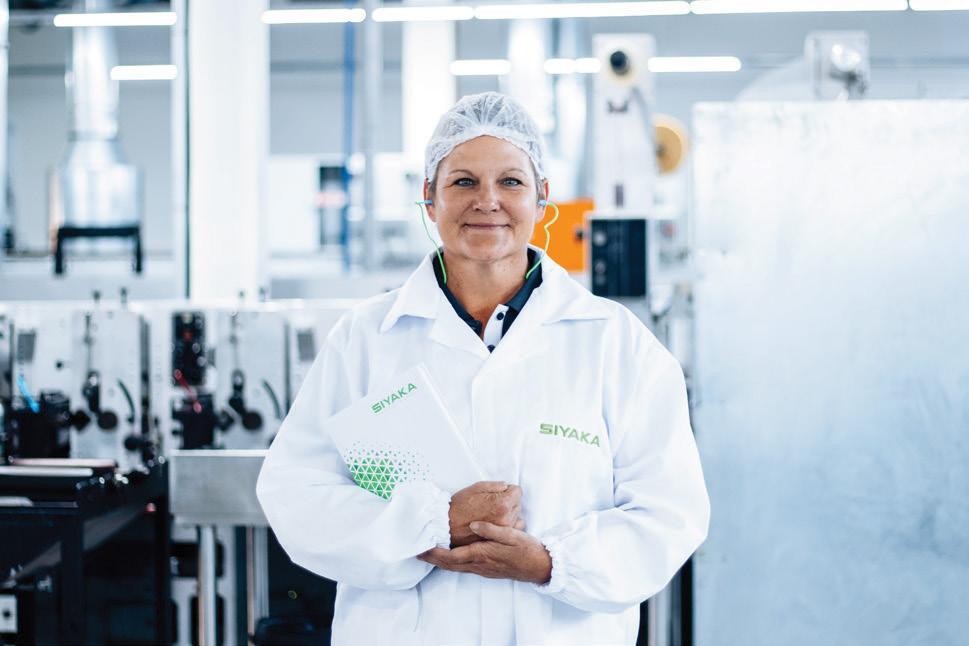
Siyaka's innovative shrink sleeve technology delivers sustainable, customisable packaging solutions with enhanced branding capabilities across diverse FMCG product categories.
Shrink sleeves have emerged as a leading packaging solution, offering full 360-degree branding, product protection, and adaptability across diverse product categories. As market demands evolve, so too do the innovations in shrink sleeve technology. Key trends shaping this space include sustainability, enhanced customisation, tamper-evidence, and impactful branding.
SUSTAINABILITY: A GROWING PRIORITY
Driven by environmentally conscious consumers and tightening regulations, the demand for eco-friendly packaging is accelerating. Shrink sleeves are adapting through:
• Biodegradable and recyclable materials
such as PLA (Polylactic Acid) and rPET (recycled PET).
• Efficient manufacturing processes that help reduce overall material waste.
• Simplified packaging systems that consolidate multiple components into a single, sustainable solution.
• These advances make shrink sleeves a more environmentally responsible choice while maintaining performance and visual appeal.
CUSTOMISATION AND VISUAL IMPACT
The rise of e-commerce and consumer preference for premium-looking products have fuelled demand for customisable and visually compelling packaging. Shrink sleeves stand out due to:
• Flexibility in form – conforming to complex product shapes and sizes.
• Category-specific designs – tailored sleeves enhance the usability and appearance of:
• Food products by providing durability during storage and handling.
• Beverages through easy-grip textures and spill-prevention features.
• Personal care items with premium finishes that elevate shelf presence.
TAMPER-EVIDENT SECURITY
Safety and authenticity are paramount, particularly in the pharmaceutical and food sectors. Shrink sleeves can incorporate: Tamper-evident bands or perforated seals that assure consumers of product integrity.
– www.siyaka.net
+27 31 502 5050 info@siyaka.net www.siyaka.net
Siyaka
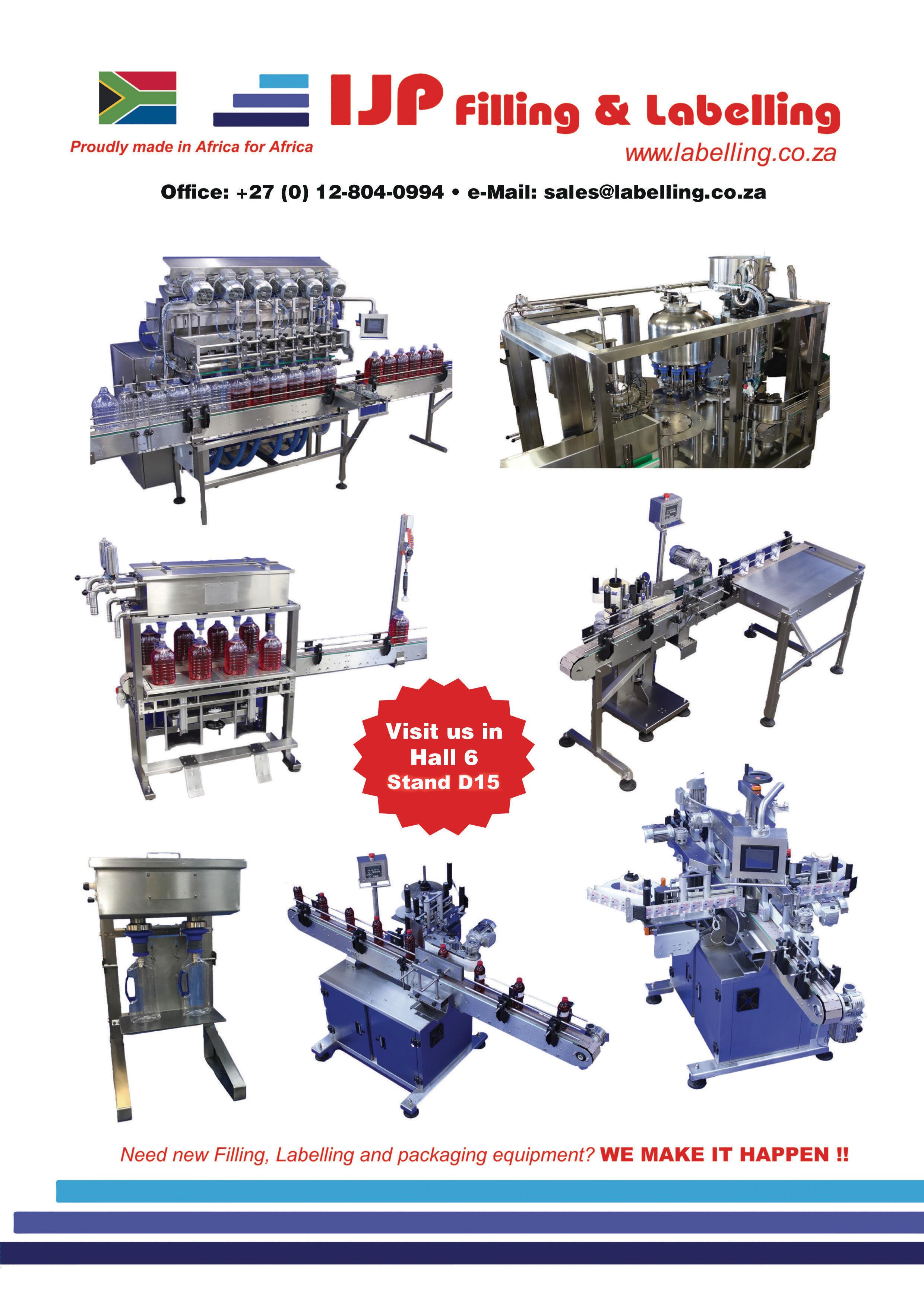
Inline pump filling equipment
filling equipment
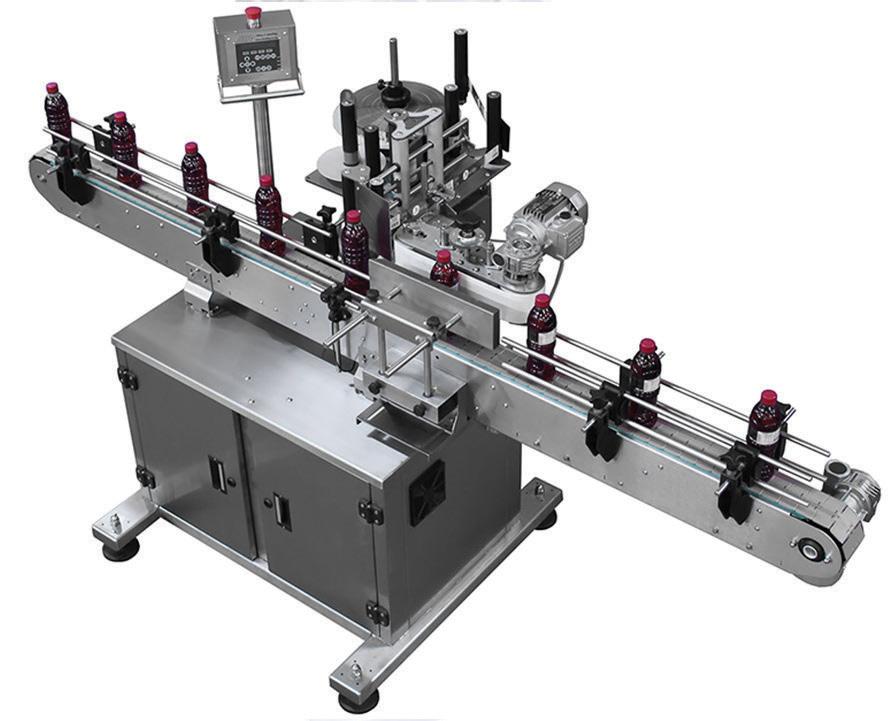
Round bottle labelling
Gravity filling equipment
Entry level filling equipment
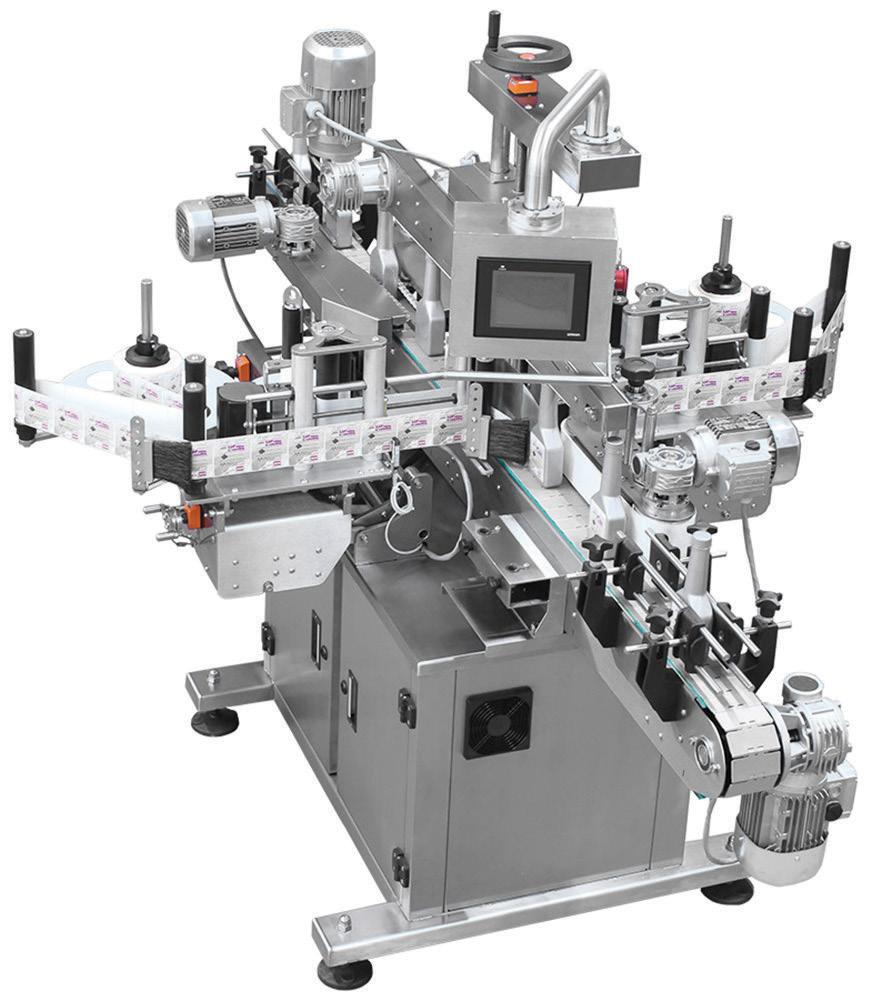
Front and back labelling
Pharmaceutical labelling & coding
Rotary
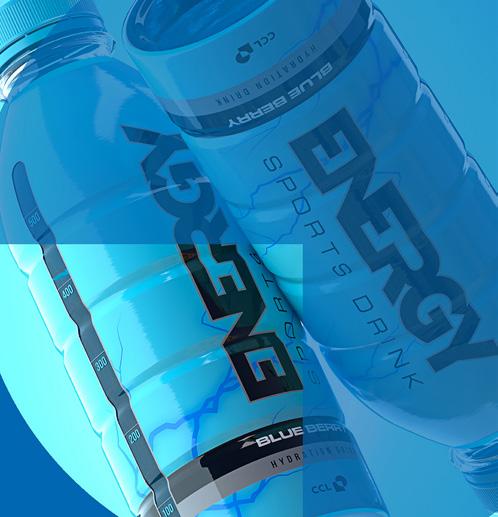
Driving sustainable functional beverage packaging
CCL Labels introduces circular economy-driven packaging solutions to support the rapidly growing global functional beverages market's sustainability demands.
As the functional drinks category continues to grow rapidly around the globe, sustainability is becoming a key differentiator alongside health benefits, ingredient transparency, and brand authenticity. CCL Labels, a global leader in label and packaging solutions, supports beverage brands with innovative, sustainability-driven technologies designed to enhance recyclability, enable circular packaging, and respond to the latest functional drink trends.
The global functional beverage market, mainly driven by developments in the United States, is evolving beyond traditional energy and sports drinks. Consumer demand for targeted wellness solutions is driving growth
FAST FACT
CCL Labels offers five specialised sustainable technologies including EcoFloat® WHITE, EcoShear®, and WashOff labels designed specifically for beverage recycling systems.
in probiotic and prebiotic beverages supporting gut health, protein-enriched drinks for nutrition and satiety, and hard refreshers and better-for-you alcoholic beverages that combine enjoyment with mindful consumption. These products are often packaged in glass or PET bottles, cans, or flexible formats—making packaging compatibility with recycling systems increasingly critical.
TECHNOLOGIES DESIGNED FOR CIRCULARITY
CCL Labels offers a broad portfolio of solutions that help reduce environmental impact while maintaining the performance and shelf appeal required in the functional drinks segment. Key sustainability-focused technologies include:
• EcoFloat® WHITE, a floatable label solution that separates efficiently from PET during recycling, supporting high-quality recyclate while delivering the lightblocking in the sleeve – enabling brands with light-sensitive products to move from opaque containers to transparent PET containers that are recycled in a closed loop.
• EcoShear®, a pressure-sensitive label technology engineered to shear cleanly from glass containers during the sorting and recycling process, helping to minimise contamination in recycling streams.
• WashOff labels, designed to detach reliably during standard washing processes of returnable glass or PET bottles, enabling early removal of labels and adhesives in re-use and re-fill schemes.
• EcoStream® PSL labels, which are removed cleanly and efficiently in one piece during recycling, supporting clean separation from PET bottles and improving recyclate purity.
Images: Supplied by CCL Labels
“Functional drinks are at the intersection of health, innovation, and sustainability.”
• Monomaterial pouches for drinks, designed to support recyclability by using a single material structure, offering a lightweight and resource-efficient alternative for
emerging functional beverage formats. Together, these solutions help beverage brands improve material recovery, reduce waste, and move closer to closed-loop packaging systems.
SUSTAINABLE GROWTH IN FUNCTIONAL BEVERAGES
"Functional drinks are at the intersection of health, innovation, and sustainability," said Reinhard Streit, Group Vice President Food
& Beverage Global, CCL Labels. "Brands are moving fast to address consumer demand for probiotics, protein, and better-for-you refreshment—but packaging must evolve just as quickly. Our goal is to provide labelling and packaging solutions that support recyclability and circularity while allowing brands to stand out and clearly communicate value to consumers."
A CIRCULAR BEVERAGE ECONOMY
With its global footprint and deep expertise in beverage packaging, CCL Labels is helping shape a more sustainable future for functional drinks—where innovation in health and wellness goes hand in hand with responsible packaging design.
ABOUT CCL LABELS
CCL Labels is part of CCL Industries Inc., one of the world's largest providers of label and packaging solutions. The company serves a wide range of markets, including food and beverage, healthcare, cosmetics, industrial, and consumer goods, with a strong focus on innovation and sustainability.
Labels – www.ccllabel.com
Advanced inspection technologies for food manufacturers
Microsep collaborates with METTLER TOLEDO to deliver cutting-edge product inspection solutions for food manufacturers in demanding markets.
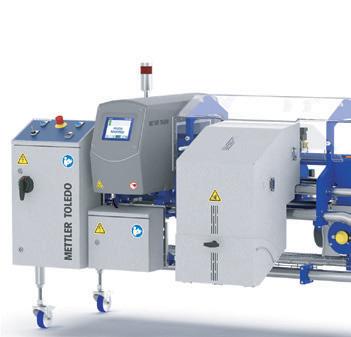
Food manufacturers operate in a demanding environment shaped by strict food safety regulations, rising production costs and growing consumer expectations. Ensuring product safety, consistent quality and regulatory compliance is essential for protecting both consumers and brand reputation. Microsep, in collaboration with METTLER TOLEDO, delivers advanced product inspection solutions that support food producers across the value chain - from raw ingredient handling to packaged foods and readymeal production. These technologies help manufacturers prevent contamination, improve quality control and remain competitive in an evolving market.
INSPECT. PROTECT. COMPLY
METTLER TOLEDO product inspection systems enable food and beverage manufacturers to inspect every product with confidence, protect brand integrity and comply with industry standards. By integrating checkweighing, metal detection and X-ray inspection, manufacturers can meet local and international food safety standards, including those required by major retail supply chains and export markets.
For producers supplying both domestic and export customers, reliable inspection solutions are critical for maintaining compliance while supporting efficient, high-throughput production.
FAST FACT
METTLER TOLEDO X-ray systems can detect metal, glass, stone, calcified bone and dense plastics across packaged food products using HiGain detector technology.
REDUCE COSTS AND IMPROVE PRODUCTIVITY
With increasing production costs and labour challenges, the focus on automation, data management, and waste reduction has become essential for companies striving to remain competitive. Integrating intelligent product inspection solutions throughout the production line enables manufacturers to address these challenges effectively.
METTLER TOLEDO’s metal detection and X-ray inspection systems reliably detect and reject contaminated products, helping to protect consumers and reduce recall risks. Precision checkweighers support accurate portion control, reducing product giveaway and preventing under-filled packs that can damage consumer trust and brand reputation.
HIGH-PERFORMANCE CHECKWEIGHING
The range of dynamic checkweighers deliver accurate, high-speed weighing in demanding production environments. Designed for stability and flexibility, these systems support portion control, inline quality checks and optimise throughput across a wide range of food applications. The hygienic design and user-friendly interface allow quick product changeovers and simplified cleaning, key for maintaining throughput in fast-paced food and ready meal production lines.
SUPERIOR CONTAMINATION DETECTION
Industrial metal detection systems provide reliable detection and rejection of metal contaminants in both dry and high-moisture food products. Advanced signal processing reduces false rejects and automatically adapts to product variations, without complex manual
METTLER TOLEDO inspection solutions help you inspect every product with confidence, meet safety standards, protect your brand, and increase productivity.
adjustments. Compact designs allow easy integration into existing production lines, making these systems suitable for a wide range of food applications.
SMART X-RAY INSPECTION SOLUTIONS
X-ray inspection systems deliver reliable detection of a wide range of physical contaminants, including metal, glass, stone, calcified bone and dense plastics, across a broad spectrum of packaged food products. HiGain detector technology in single-lane systems produces sharper images for outstanding contaminant detection. Built-in product integrity tools also enable additional quality assurance checks, helping manufacturers reduce waste and avoid costly recalls.
DRIVING AUTOMATION, DIGITALIZATION AND SUSTAINABILITY
Advanced data management software integrates inspection systems into production lines, improving automation, traceability and process control. By reducing food waste, optimising resource use and improving energy efficiency, METTLER TOLEDO product inspection solutions support operational excellence and long-term sustainability.
Microsep - www.microsep.co.za
Images: Supplied by Microsep
✔ Maintain compliance
✔ Ensure product integrit y
✔ Avoid product waste
✔ Maintain compliance
✔ Avoid product waste
✔ Maintain compliance
✔ Ensure product integrit y
✔ Ensure product integrit y
End-of-line marking and inspection
For fifteen years, Block House Butchery has relied on Wipotec's comprehensive quality technology to ensure product excellence and regulatory compliance.
Jörg Jablonski, managing director for production and technology at the Block House Butchery, and his team have been working with Wipotec for almost 15 years. “We use Wipotec technology in the end-of-line functions. Primarily, we need to ensure quality, but we also want to document controlled processes.” This is why systems and software from almost all Wipotec’s business units are in use at Block House Butchery – also historically developed in line with customers’ requirements. So, this collaboration has a long history, but it always looks towards the future. Block House increasingly relies on automation in its production processes and requires technology that can meet this demand: “We live up to our customers’ trust
“Thanks to the Comscale software, we have seamless documentation with very clear traceability.”
in our brand by using state-of-the-art technology for quality assurance.”
CORE COMPETENCE
CHECKWEIGHER
Block House’s hygiene standards are just as high as their demands on quality. Even in the final packaging area, wet cleaning must take place daily. Combined with the low temperature, this is a particularly challenging environment for technical equipment.
The first checkweigher was installed in the butchery back in 2010 – and is still operating perfectly. The ambient temperature in the butchery has a significant influence on the equipment and the accuracy of the various systems. Special accuracy is required here. After all, Block House also wants to live up to its quality standards and comply with the stated weight values in accordance with the pre-packaging directive. As Jörg Jablonski states, the fact that all determined weight values are recorded and stored centrally in Comscale is a great help.
FOREIGN BODY DETECTION AT ITS BEST
Is a metal detector not sufficient to eliminate foreign bodies? With Block House’s sense of responsibility, this is not the case. Of course, their metal detectors are also in use in the butchery. According to Jörg Jablonski, they are “the absolute basic requirement for a food producing company.” Just like the checkweighers, they are connected to Comscale, making all collected data traceable and comprehensible. In meat processing, it is important to filter out not only metallic foreign bodies but also a wide range of natural foreign bodies. The raw material may contain cartilage, bone, or other particles that the metal detector would not detect. This is where Wipotec’s SC-E X-ray technology takes over. Block
House even detects spice nests with the scanner, preventing affected products from coming off the production line.
IMPRESSIVE PRINT RESULT
The latest acquisition is the TQS – Traceable Quality System. It is also installed at the end of the line and handles product marking. And again, Block House proves to be exceptionally conscientious and foresighted: “In view of the speed of the automated process, it was absolutely essential for us to integrate a camera inspection system into the line to avoid recall campaigns due to incorrectly declared or undeclared goods from retailers.” Unlike the common approach of installing a separate printer in line, Block House has opted for a holistic system. Printer, camera and transport are coordinated and unified in a central control system. The result speaks for itself, and Jörg Jablonski has significantly optimised the production process: “We create the layout once, and that then applies to both printing and camera setup. So, the operator does not have to teach in the printer and camera separately, as with traditional devices.” Jörg Jablonski appreciates the system’s thermal inkjet printer (TIJ): “We are very pleased with the print quality, accuracy and clarity of the cartridge system. The classic inkjet printer has its disadvantages.”
ECONOMIC FORESIGHT
Currently, Block House products are marked with the freeze date, best before date and lot number. With TQS, Jörg Jablonski has also planned: “In the future, the market will develop in such a way that we will increasingly use two-dimensional printing, a QR code for example, to be able to integrate much more information in marking and labelling. Using this technology, we are ready for the future. We can place 2D codes on our products and thus provide food retailers with more information.” As soon as the code contains production-related data, it can no longer be pre-printed in the packaging design. The TQS at Block House then generates a code from the text content and additionally prints it out.
The production staff at Block House are particularly impressed by the fact that the time and effort required for refilling and cleaning has been significantly reduced.
COMFORTABLE MARKING AND VERIFICATION
“Installation was extremely straightforward and smooth, so we were able to get the system up and running very quickly.” This efficiency was the deciding factor for Block
House to select TQS. The most significant advantage however is evident not during commissioning, but in ongoing production. Already when selecting the system, they found that “everything is very pragmatic and simple to use in production mode.” Operators control all machine functions via the central touch display using the Configure Fast software. As a result, article changes and layout changes become minimally error-prone and maximally user-friendly.
KEEPING THE OVERVIEW WITH COMSCALE
Block House uses Comscale for quality assurance purposes and to maintain an overview during dual-shift operation. The fact that all Wipotec systems are connected to this system is an enormous added value for Jörg Jablonski: “The software takes care of all the documentation, reporting and data archiving for us. We can access the data at any time, evaluate the statistics, and even detect where problems have occurred in the past. Especially for audits, Comscale is highly relevant to us.”
A STRONG SERVICE
For Jörg Jablonski, excellent service is one major reason for the longstanding collaboration with Wipotec: “We have very good support in-house.” The more different systems are used in the butchery, the more the benefits are for Block House. Instead of hiring different companies and service technicians for checkweighers, metal detectors, X-ray inspection, printers and cameras, all systems are serviced together.
FAST FACT
Still Going Strong: The first Wipotec checkweigher installed at Block House in 2010 continues to operate perfectly after 15 years, demonstrating exceptional equipment durability in challenging butchery conditions.
Nothing goes undetected in croissant inspection
Frost, Slovakia's largest croissant manufacturer, has successfully installed three advanced Ishida X-ray systems for enhanced quality control and food safety.
An innovative approach to quality control at Frost a.s. Prešov, Slovakia’s largest croissant manufacturer, has been achieved through the installation of three Ishida IX-EN-2493 X-ray Inspection systems that maximise food safety and help ensure a consistent quality for filled croissants. Frost Prešov supplies a diverse range of fresh and frozen baked goods to the central European market. A popular product line are croissants containing a variety of fillings such as chocolate, apricot or marmalade which are individually wrapped in 60g pillow packs. The requirement for a capable quality control solution for these products prompted Frost to approach Ishida for a solution. The company supplied three IX-EN-2943-S X-ray inspection systems which are working across three lines to inspect approximately 18,000 packs of croissants per hour in a 24/7 operation. In order to handle such high volumes, the X-ray systems incorporate a high-capacity belt system that is capable of speeds up to 75 metres per minute.
DUAL DETECTION TECHNOLOGY
The IX-EN models are performing two different but equally essential quality control checks. Firstly, they carry out vital foreign body detection for companies, with the ability to identify and reject packs containing metal, rubber and other contaminants even at these high inspection speeds. Equally important to Frost is the missing item feature of the IX-EN range which can detect croissants with missing or defective fillings. This helps to maintain the highest product quality and consistency in order to protect and maintain Frost’s premium
"The Ishida X-ray systems are easy to use and to clean, making staff training straightforward. Of particular benefit to us is that we don't have to adjust settings when changing fillings, so this greatly simplifies our production planning."
brand image. Before delivery, Ishida’s technical team worked closely with Frost to maximise the effectiveness of the missing item feature. A range of samples was sent to Ishida Europe’s UK headquarters where a series of tests took place to ensure that croissants with out-of-spec fillings were reliably rejected from the line. Central to this capability is
THE CUSTOMER
Established in 2013, Frost a.s. Presov produces a wide range of sweet and savoury baked and frozen pastries, sold throughout Slovakia, Poland, Hungary and the Czech Republic. The company’s factory in Presov in Eastern Slovakia features the largest and most technologically advanced production process for pastries in Slovakia. Frost frequently changes its ranges of pastries in line with customer demands, with innovations continuously developed to meet diverse consumer requirements.
Ishida’s unique Genetic Algorithm (GA) image processing feature which optimises product inspection for greater sensitivity to specific contaminants and quality issues.
CUSTOMER SUCCESS AND SATISFACTION
“The Ishida X-ray systems are easy to use and to clean, making staff training straightforward,” said Vladimir Varga, Technical Manager at Frost. “Of particular benefit to us is that we don't have to adjust settings when changing fillings, so this greatly simplifies our production planning." The installation marks another milestone in the relationship between the two companies with Frost already using Ishida X-ray inspection systems for other product lines. “We are really pleased with the level of service we have received from Ishida over the years,” continued Vladimir Varga. “In particular, the company was a huge help in enabling us to solve some technical production issues, working directly with us to ensure that the solution met our exact needs. For that reason, we have a lot of confidence in both the equipment and in Ishida as a brand.”
PARTNERSHIP FOR THE FUTURE
Following the success of this latest quality control solution, Frost intends to continue to invest in Ishida X-ray equipment for future product lines.
Key Technology introduces COMPASS optical sorter, combining high-performance foreign material detection with gentle handling for fresh-cut leafy greens processing.
Key Technology (Key), a member of Duravant’s Food Sorting and Handling Group, introduces its COMPASS® optical sorter for leafy greens. Designed to inspect fresh-cut product straight from the field, this belt-fed system combines highperformance foreign material (FM) detection and removal with gentle, hygienic product handling. Featuring intuitive controls and an open, easy-to-clean design, COMPASS helps processors protect food safety, reduce labour requirements and achieve a fast return on investment.
“Foreign material is one of the biggest challenges at this early stage of leafy greens processing, but many processors can’t justify the expense or complexity of traditional optical sorting systems. COMPASS changes that,” said Jack Lee, Duravant Group President – Food Sorting and Handling. “It delivers accurate and reliable FM removal in a user-friendly, cost-effective solution engineered to withstand the dirt and debris common at the front end of leafy greens lines.” Ideal for sorting spinach, arugula and other unwashed, fresh-cut leafy greens including salad mixes, COMPASS identifies and rejects a wide variety of FM including dirt clods, rocks, sticks, insects and animal parts, as well as product defects when running single varieties.
To simplify operation and reduce training requirements, COMPASS is recipe driven and features a touchscreen interface that mimics smartphone app navigation. Operators can learn to run the system in less than 30 minutes, easily create new recipes and quickly changeover between different products or salad blends. Intelligent belt control automatically maintains proper belt tracking, minimising downtime and eliminating the need for manual adjustments.
COMPASS is equipped with customisable camera options including up to eight channels of multispectral sensor data to deliver advanced performance at a lower cost of owner-
"Operators can learn to run the system in less than 30 minutes, easily create new recipes and quickly changeover between different products."
ship than laser-based sorters. When configured with Key’s Pixel Fusion™ detection technology, COMPASS combines visible, infrared and shortwave infrared data at the pixel level to produce optimal contrasts for finding even the most difficult-to-detect FM and product defects. An optional chlorophyll-sensitive detection channel further enhances contrast between leafy greens and FM. Fresh-cut leafy greens are lightweight and often moist, which can cause them to clump, overlap or stick to surfaces during sorting if not properly handled. Key combines COMPASS with the ideal infeed conveying systems to effectively present product to the sorter’s inspection zone, maximising sort accuracy. Optional air-assist systems
FAST FACT
30 minutes - the time needed for operators to learn the complete COMPASS system operation
"Foreign material is one of the biggest challenges at this early stage of leafy greens processing, but many processors can't justify the expense or complexity of traditional optical sorting systems. COMPASS changes that. It delivers accurate and reliable FM removal in a user-friendly, costeffective solution."
create a controlled curtain of air that improves the transition from the infeed conveyor to the belt for gentle product flow. Air knives at discharge help carry leaves through the pass stream, minimising the chance of good product falling short or sticking.
SEAMLESS INTEGRATION AND SMART ANALYTICS
Key designed COMPASS for maximum sanitation and easy cleaning with an open frame, sloped surfaces and quick-release belt removal for fast washdowns. A clean-in-place system with spray bars and brushes beneath the belt maintains hygiene throughout production. High-mounted camera windows stay clean and are easily accessed for wiping. The dry-air boost system prevents condensation from collecting inside the enclosure, protecting sensors even in humid or refrigerated en-
vironments. The open architecture provides clear visibility into the product zone.
An optional counter-rotating roller prevents product buildup at the divider between accept and reject streams, keeping the discharge area clean and maintaining consistent product flow. With its cantilevered frame and open discharge area, COMPASS offers ample space for integration with collection conveyors, water flumes or other downstream equipment. For processors upgrading from Key’s legacy Optyx optical sorter, COMPASS shares the same height and length, allowing it to be seamlessly installed within existing lines. Every COMPASS is equipped with Key Discovery™, a powerful data analytics and reporting software that transforms the sorter into an IIoT-connected device and information centre, giving processors real-time insights into line performance and product quality trends. Key supports its customers worldwide through an extensive sales network and its global service team.
ABOUT DURAVANT
Headquartered in Downers Grove, IL, Duravant is a global automation solutions and engineered equipment company with
DID YOU KNOW?
COMPASS utilises up to eight channels of multispectral sensor data and Pixel Fusion™ technology that combines visible, infrared and shortwave infrared data at the pixel level to detect even the most difficult-to-find foreign materials and product defects in leafy greens.
manufacturing, sales and service facilities throughout North America, South America, Europe and Asia. Through their portfolio of operating companies, Duravant delivers trusted end-to-end process solutions for customers and partners through engineering and integration expertise, project management and operational excellence. With worldwide sales distribution and service networks, they provide immediate and lifetime aftermarket support to all the markets they serve in the protein processing, food sorting and handling, packaging and material handling sectors. Duravant’s market-leading brands are synonymous with innovation, durability and reliability.
ABOUT KEY TECHNOLOGY
Key Technology is a global leader in the design and manufacture of automation systems including optical sorters, conveyors and other processing equipment. Applying processing knowledge and application expertise, Key helps customers in the food processing and other industries improve quality, increase yield and reduce cost. Key manufactures its products in Walla Walla, Washington, USA; Redmond, Oregon, USA; and in Beusichem, the Netherlands. Key offers customer demonstration and testing services at four locations including Walla Walla and Beusichem as well as Hasselt, Belgium and Sacramento, California, USA; and maintains a sales and service office in Santiago de Queretaro, Mexico. Key is a Duravant Company.
Digital manufacturing in food safety
Advanced digital technologies are transforming food manufacturing by creating unprecedented levels of safety monitoring and contamination prevention.
High-tech digital machinery, powered by artificial intelligence, IoT sensors, and blockchain technology, is creating a new era of smarter food safety that goes far beyond traditional quality control methods. At the forefront of this revolution are IoT-enabled sensors that act as the "eyes and ears" of food processing facilities. These interconnected devices continuously monitor critical parameters including temperature, humidity, vibration, and electrical currents throughout the production line. According to the FDA's New Era of Smarter Food Safety Blueprint, this real-time monitoring capability enables immediate detection of deviations that could compromise food safety, allowing for rapid corrective actions before contamination occurs.
FROM PAPER TO AUTOMATION
Artificial intelligence and machine learning are changing HACCP (Hazard analysis crit-
ical control point) systems by transforming manual, paper-based processes into automated, digital operations. AI-powered systems analyse vast amounts of production data to predict potential hazards before they materialise, enabling proactive rather than reactive safety measures. These intelligent systems can detect patterns in temperature logs, equipment performance data, and environmental conditions to forecast potential contamination risks, significantly reducing the likelihood of recalls and foodborne illness outbreaks. Digital twin technology represents another breakthrough in food safety automation. By creating virtual replicas of production processes, manufacturers can simulate various scenarios and optimise safety protocols without disrupting actual production. This technology allows for predictive maintenance scheduling, ensuring that equipment operates within safe parameters and reducing the risk of mechanical
failures that could compromise food safety.
Blockchain technology is enhancing supply chain transparency by creating immutable records of each product's journey from farm to fork. This tamper-resistant ledger system enables rapid traceability during food safety incidents, allowing manufacturers to quickly identify the source of contamination and execute targeted recalls rather than broad market withdrawals.
SMART VISION ENABLES PREDICTIVE SAFETY
Vision systems and advanced inspection technologies now provide 100% automated quality control, using machine learning algorithms to detect foreign objects, packaging defects, and product inconsistencies with unprecedented accuracy.
*References available on request
www.FoodReview.co.za
Deliver unparalleled inspection with extremely high detection sensitivity for metals - whether ferrous, non-ferrous, or stainless steel - for all manner of food products, anywhere along the line.
Food safety automation
According to PHT, food safety automation has evolved from optional enhancement to business necessity for South African manufacturers tackling contamination risks.
In 2026, food safety is no longer driven by policies and training alone. Across South Africa’s food manufacturing sector, automation has become a critical tool in protecting product integrity, ensuring regulatory compliance and maintaining consumer trust. Personal hygiene remains one of the most significant risk factors in food production. Despite rigorous procedures, people are still the primary carriers of microbiological and physical contamination. As production volumes increase and margins tighten, relying solely on manual hygiene compliance is no longer sufficient. Food safety automation has moved from a “nice to have” to a business necessity.
THE HUMAN FACTOR: STILL THE BIGGEST CONTAMINATION RISK
The human body naturally carries millions of microorganisms. Even healthy individuals can transfer bacteria such as Salmonella, E. coli and Staphylococcus through hands, clothing, footwear and hair. In hygiene-sensitive environments, these risks multiply rapidly. Hands alone are responsible for most contamination events. An unwashed hand can carry millions of germs, while hair, skin particles and footwear introduce both microbiological and physical contaminants into production areas. Sneezing, coughing and movement further increase airborne contamination risks. While hygiene rules and training programmes remain essential, they depend heavily on consistent human behaviour. This is where automation plays a decisive role.
WHY FOOD SAFETY AUTOMATION IS NOW ESSENTIAL
Traditional hygiene programmes rely on signs, checklists and supervision. While these remain important, they are vulnerable to non-compliance, fatigue and shortcuts during busy production periods.
Automated hygiene systems:
• Enforce correct hygiene procedures every time
• Remove ambiguity and human error
• Ensure repeatable, standardised processes
• Provide visible compliance during audits
• Protect both products and people Automation ensures that hygiene is not optional, forgotten or bypassed. It becomes an integrated part of the production flow.
AUTOMATING PERSONAL HYGIENE AT CRITICAL CONTROL POINTS
Modern food safety automation focuses on controlling hygiene at entry points into hygiene-sensitive areas. This includes automated hand washing, hand disinfection, sole and footwear cleaning, and access control. Automated hygiene stations ensure that:
• Hands are washed and disinfected correctly and for the required duration
• Footwear and soles are cleaned and disinfected before entry
• Access is only granted once hygiene steps are completed
• Cross-contamination risks are reduced at the source
REGULATORY PRESSURE IS INCREASING, NOT DECREASING
South African food manufacturers are required to comply with strict hygiene legislation and standards, including:
• The Foodstuffs, Cosmetics and Disinfectants Act (Act 54 of 1972)
• Regulation R.638 of 2018: General hygiene requirements for food premises
• HACCP principles and risk-based food safety systems
• SANS 10049 / ISO 22000 food safety management standards
• Occupational Health and Safety Act (Act 85 of 1993)
Environmental Health Practitioners (EHPs), certification bodies and customers increasingly expect verifiable, auditable hygiene controls. Automation provides exactly that: consistency, traceability and reduced dependency on human judgement.
FAST FACT
Sneezing, coughing and movement further increase airborne contamination risks.
These systems align directly with HACCP principles by controlling risks at critical points before contamination can occur.
INTELLIGENT HYGIENE SOLUTIONS IN PRACTICE
PHT’s automated hygiene systems are designed to support food manufacturers in meeting regulatory requirements while improving operational efficiency.
Solutions include:
• HeliX hygiene stations with automated hand disinfection and two-phase sole cleaning
• EntryX access control systems with smart, temper-proof nozzle positioning
• WashX hand cleaning channels with sensor-controlled operation and optional remote monitoring
By automating hygiene processes, these systems remove reliance on manual compliance and ensure consistent results across all shifts.
BEYOND COMPLIANCE: PROTECTING BRAND AND BUSINESS CONTINUITY
The consequences of poor hygiene extend far beyond regulatory non-compliance. Product recalls, production downtime and reputational damage can have long-term financial and brand impacts.
Building a strong food safety culture
Ensuring food safety is crucial in today’s complex industry. From farm to fork, every step matters. Implementing robust measures requires more than regulations; it demands a shared commitment to a food safety culture.
Afood safety culture is a shared set of values, attitudes and behaviour that prioritise food safety at every level of an organisation. It goes beyond simply adhering to guidelines and regulations; it involves a collective commitment to continuous improvement and vigilance in identifying and mitigating potential risks. Here are some key steps to help you create and maintain a strong food safety culture in your organisation.
LEADERSHIP COMMITMENT
Building a food safety culture begins at the top. Leaders within the organisation must demonstrate a genuine commitment to food safety by making it a top priority. This includes allocating resources, providing training, and leading by example. When employees see that food safety is taken seriously by leadership, they are more likely to prioritise it themselves.
Education and training: Proper training is essential for ensuring that all employees understand the importance of food safety and know how to implement best practices in their daily tasks. From factory staff to management, everyone should receive comprehensive training on topics such as proper hygiene, safe food handling procedures, and identifying potential hazards. Regular refresher courses can help reinforce these principles and keep everyone up to date on the latest developments in food safety.
Clear communication: Effective communication is essential for maintaining a strong food safety culture. Employees should feel comfortable reporting any concerns or observations related to food
safety, and there should be clear channels for doing so. Whether it is a suggestion box, regular meetings, or an open-door policy with management, employees should know that their voices are heard and that their feedback is valued.
ACCOUNTABILITY AND RECOGNITION
Holding employees accountable for their actions regarding food safety is crucial for maintaining standards. This includes implementing clear protocols for addressing violations and ensuring that consequences are consistent and fair. At the same time, it is essential to recognise and reward employees who demonstrate exemplary adherence to food safety protocols. This can help reinforce positive behaviour and encourage others to follow suit.
Continuous improvement: The food industry is constantly evolving, with new challenges and risks emerging all the time. As such, it is essential to foster a culture of continuous improvement within your organisation. This means regularly reviewing and updating food safety protocols in response to new information, technological advancements, and changing regulations and actively seeking out opportunities for
“Building a food safety culture begins at the top. Leaders within the organisation must demonstrate a genuine commitment to food safety by making it a top priority.”
improvement can help ensure that your organisation stays ahead of the curve.
Lead by Example: Employees take cues from their leaders, so it is crucial for managers and supervisors to lead by example when it comes to food safety. This means consistently following protocols, practicing hygiene, and prioritising food safety in all their work. When employees see that their leaders take food safety seriously, they are more likely to do the same.
INVEST IN TECHNOLOGY
Technology can be a valuable tool for enhancing food safety in your organisation. From temperature monitoring systems to automated hygiene monitoring, there are a variety of technologies available that can help streamline processes and identify potential risks more efficiently. By investing in the right tools and systems, you can improve overall food safety while also saving time and resources.
Collaborate with partners: Food safety is a shared responsibility that extends beyond the walls of your organisation. Collaborating with chemical and raw material suppliers, distributors and other partners in the food supply chain can help ensure that everyone is aligned on food safety standards and protocols. By working together, you can identify potential risks more effectively and implement measures to mitigate them before they become problems.
In conclusion, creating a strong food safety culture in your organisation requires commitment, communication and continuous improvement. By prioritising food safety at every level in your organisation, investing in education and training, and fostering a culture of accountability and collaboration.
Safety first auditing
Protecting South African food businesses through comprehensive safety auditing
AUDITING WITH LTL GROUP OF COMPANIES
In today’s fast-paced food industry, safety isn’t just a requirement, it’s a responsibility. Whether you’re running a food factory, processing plant, restaurant, or retail chain, one mistake in hygiene or handling can lead to serious health risks, legal action, and reputational damage.
That’s where food safety auditing and training come in, not as box-ticking exercises, but as essential tools to protect your business, your customers, and your brand.
Why Every Business Needs It
• In South Africa, food laws (like Regulation R638) require proper training and hygiene controls.
• Customers and retailers now demand proof that your business takes food safety seriously.
• One mistake, like a foodborne illness outbreak, can damage your reputation and your bottom line.
Food Safety Audits
Observations Made
PARTNERING WITH EXPERTS
Trusted service providers like LTL Group offer a full package: audits, training, inspec-
tions, lab testing, and more, helping businesses stay ahead of risk. LTL Group works across South Africa and beyond to build safer food systems.
We Offer
• Health and Safety Audits
• Animal Welfare Audits
• Supplier Development
• Hygiene Inspection
• Food Safety
COMING UP IN FEBRUARY
ake sure not to miss out on an opportunity to showcase your products and services: Topics covered in the next issue:
This design along with a piercing blade allows for the easy penetration into semisolids for the direct measurement of pH.
Designed for food professionals
Measures pH and temperature using the foodcare FC2323 meat pH electrode (compatible with FC099 stainless steel piercing blade).
This waterproof meter complies to IP67 standards and is rugged and portable with the performance and features of a benchtop. The HI98263 is supplied with an application specific electrode and cleaning solutions.
Main features
• Bluetooth data transfer using third party application
• USB data transfer using supplied HI920015 cable connector
• Reliable readings guaranteed by pH calibration checks
•Up to five points pH calibration with Hanna/NIST traceable, custom, or millesimal pH buffers
•Context-sensitive Help
•Warning message when the calibration is outside range
•Log on demand of up to 200 samples (100 pH and 100 mV)
We also operate in: Botswana, Eswatini, Lesotho, Mozambique, Namibia and Zimbabwe. Contact apaka@hanna.co.za Cell: +27 (0) 72-910-5749
www.hanna.co.za
HEAD OFFICE – JHB 6 Vernon Road Morninghill
Johannesburg T: (011) 615 6076
F: (011) 615 8582
E: hanna@hanna.co.za
CAPE TOWN BRANCH Unit B 18 Bellville
Park
Cape Town T: (021) 946 1722 F: (021) 946 1723
E: ct@hanna.co.za
DURBAN BRANCH
Office 2 Dias Block Fairway Green Office Park 3 Abrey Road Kloof Kwazulu Natal T: (031) 701 2711 E: durban@hanna.co.za
EASTERN CAPE BRANCH Southern Life Gardens
First Floor, Block F 70-2nd Avenue Newton Park Port Elizabeth 6045