

By Leo Adam Biga
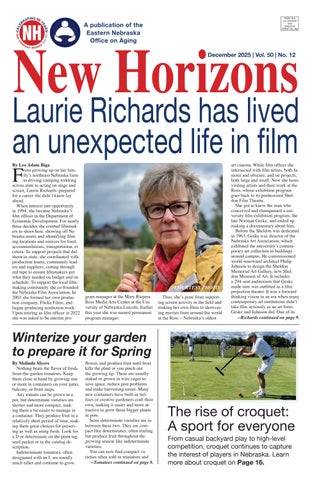
From growing up on her family’s northeast Nebraska farm to driving-camping-trekking across state to acting on stage and screen, Laurie Richards prepared for a career she didn’t know lay ahead.
When interest met opportunity in 1994, she became Nebraska’s film officer in the Department of Economic Development. For nearly three decades she courted filmmakers to shoot here, showing off Nebraska assets and identifying filming locations and sources for food, accommodations, transportation, et cetera. To support projects that did shoot in-state, she coordinated with production teams, community leaders and suppliers, cutting through red tape to ensure filmmakers got what they needed on budget and on schedule. To support the local filmmaking community she co-founded the Nebraska Film Association. In 2003 she formed her own production company, Flicka Films, and began producing nonfiction work. Upon retiring as film officer in 2022 she was asked to be interim pro-
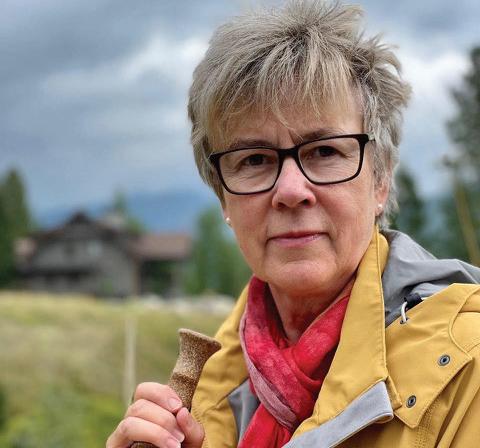
gram manager at the Mary Riepma Ross Media Arts Center at the University of Nebraska-Lincoln. Earlier this year she was named permanent program manager.
By Melinda Myers
Nothing beats the flavor of freshfrom-the-garden tomatoes. Keep them close at hand by growing one or more in containers on your patio, balcony, or front steps.
Any tomato can be grown in a pot, but determinate varieties are shorter and more compact, making them a bit easier to manage in a container. They produce fruit in a relatively short period of time, making them great choices for preserving as well as using fresh. Look for a D or determinate on the plant tag, seed packet or in the catalog description.
Indeterminate tomatoes, often designated with an I, are usually much taller and continue to grow,
flower, and produce fruit until frost kills the plant or you pinch out the growing tip. These are usually staked or grown in wire cages to save space, reduce pest problems and make harvesting easier. Many new containers have built-in trellises or creative gardeners craft their own, making it easier and more attractive to grow these bigger plants in pots.
Semi-determinate varieties are in between these two. They are compact like determinates, often trailing but produce fruit throughout the growing season like indeterminate varieties.
You can now find compact varieties often sold as miniature and --Tomatoes continued on page 8.
she’s gone from supporting screen activity in the field and making her own films to showcasing movies from around the world at the Ross – Nebraska’s oldest
art cinema. While film officer she intersected with film artists, both famous and obscure, and on projects, both large and small, Now she hosts visiting artists and their work at the Ross, whose exhibition program goes back to its predecessor Sheldon Film Theatre.
She got to know the man who conceived and championed a university film exhibition program, the late Norman Geske, and ended up making a documentary about him. Before the Sheldon was dedicated in 1963, Geske was director of the Nebraska Art Association, which exhibited the university’s contemporary art collection in buildings around campus. He commissioned world-renowned architect Philip Johnson to design the Sheldon Memorial Art Gallery, now Sheldon Museum of Art. It includes a 294-seat auditorium that Geske made sure was outfitted as a film projection theater. It was a forward thinking vision in an era when many contemporary art institutions didn’t take film seriously as an art form. Geske and Johnson did. One of its
--Richards continued on page 9.

From casual backyard play to high-level competition, croquet continues to capture the interest of players in Nebraska. Learn more about croquet on Page 16.

A 55+ ACTIVE SENIOR COMMUNITY BELLEVUE, NE

Spacious • Modern • Vibrant Living
Features You’ll Love
• Central Heating & Air Conditioning
• Fully Equipped Kitchen
• Generous Closet & Storage Space
• Community Space
• On-site Computer Center
• Playground & Outdoor Gathering Spaces
2204 Albert Street, Bellevue, NE 68147
Why Choose Walnut Creek?
• Affordable rents through the Low-Income Housing Tax Credit (LIHTC) program
• Income and student status restrictions apply
• Supportive staff committed to your comfort
• Conveniently located near shopping, dining & entertainment
• Live your best life, independently.
Call Today: 402-819-3999 walnutcreeknebraska.com



Please remember that if you don’t review your drug plan by December 7th, you won’t get another chance to change it until next year. Both the premiums and drug formularies change yearly.
There has been an unprecedented development in Nebraska that has made it very difficult for agents to help their clients with drug plan quoting.
At the time of this writing, 2 drug plan carriers have pulled access to their plan information from the third-party quoting sites that licensed, independent brokers use to help their customers.
Medicare exists to ensure older adults and people with disabilities can access health care without undue hardship. Licensed, independent insurance brokers play a critical role in helping Medicare beneficiaries navigate increasingly complex plan choices and are there to service them with questions or issues throughout the year.
When distribution changes make coverage harder to compare or remove the people who help these clients make informed choices, the program’s promise erodes.
In Idaho, the Department of Insurance issued emergency cease-and-desist orders to at least two major carriers.
These insurers are accused of deliberately limiting access to MA applications.
At the time of this writing, several other states have followed Idaho’s lead.
These unfair trade practices are happening right here in Nebraska for both Drug Plans and Medicare Advantage Plans. These actions undermine fair competition, create barriers to market access for Medicare beneficiaries, and limit consumer choice.
Drugs expected to have lower pricing in 2026: Eliquis, Xarelto, Januvia, Jardiance, Farxiga, Enbrel, Stelara, Imbruvica.
Entresto: There’s a generic available for this now, called sacubitril/valsartan, but as of this writing not all drug formularies have it loaded into their systems.
Fiasp and NovoLog: In-
sulin will still be at the $35 copay, if the Drug or Medicare Advantage plan has it on their formulary.
The maximum allowable Part D deductible will be $615, however, some Part D plans will have lower deductibles or none. You could possibly get on a drug plan or Medicare Advantage plan that caps your drug maximum out of pocket at far less than the $2100 if you get on the right plan.
Prescription Payment Plan: In case you missed it last year, enrollees in both Part D prescription plans and Medicare Advantage plans with prescription coverage have the option to pay out-of-pocket costs in monthly installments rather than all at once at a pharmacy.
This means a $2,100 bill in January becomes a $175-a-month payment through the Medicare Prescription Payment Plan. If you were already in the payment plan, you’ll be reenrolled automatically unless you opt out or change to a new Part D or Medicare Advantage plan. If you do change plans and want to continue a payment plan, just contact your new drug plan. It’s best to do this before you fill your first prescriptions on the new plan. Neither your pharmacy nor your agent can help you with this, you must call the number on your card.
Some Medicare Advantage plans have left the market. If your plan has left the market, you will be without insurance coverage in 2026 unless you pick a new plan. When a Medicare Advantage plan leaves the market, you have 2 options: Pick a new Medicare Advantage plan, or you will have guaranteed issue into a Medicare supplement plan and can pair it with a drug plan, and dental and vision plan if desired.
2026 NE Plan/Contract Terminations (all counties)
• SmartFit HMO-POS (H7149-009)
• Value Plus HMO-POS (H7149-008)
• Enhanced Select PPO (1608-082)
Service Area Reductions:
• Signature HMO-POS (H7149-001): 6 COUNTIES EXITED- Burt, Cuming, Dodge, Otoe, Jefferson & Washington
• Signature PPO (H1608012): 6 COUNTIES EXITED Burt, Dixon, Holt, Otoe, Saunders & Washington
• Signature Extra PPO (1608-038): 6 COUNTIES EXITED: Burt, Dixon, Holt, Otoe, Saunders & Washington
There is an HMO-POS Medicare Advantage plan that is now requiring a referral to see specialists. Even if those specialists are in network and you’re already seeing them. Again, review with your local independent agent.
A Medicare Advantage plan has expanded into the Omaha metro starting in 2026. It is a PPO plan, and CHI is its first major network. This Medicare Advantage company is a privately owned company.
Per CMS, Medicare Advantage plans are no longer able to offer enhanced benefits to DSNP- Dual Special Needs Clients unless the beneficiary has a qualifying condition. Please work with your agent to make sure you still qualify.
Many Medicare Advantage Plans have eliminated or reduced the non-Medicare ancillary benefits. Remember that if you’re on a Medicare Advantage plan already, and you missed important changes to your plan, you have an Open Enrollment Period from Jan 1st through March 31st to make a one-time plan change effective the first of the following month.
You can shop for a Medigap plan any time of the year, but in Nebraska, underwriting questions will be asked unless you’re Guaranteed Issue – turning
--Medicare continued on page 3.
The image of Old Man Time being replaced with the new baby 2026 is a misleading metaphor. Yes, 2026 is an opportunity for new, hopefully better days ahead. On the other hand, 2025 and all the previous years are not dismissed but go with us into the future.
We are shaped by our life experiences and what we glean from these experiences. It is good practice to periodically review our past, reflecting on the blessings and the lessons learned from the difficult times.
An end to the year is a natural opportunity to do such reflection. I think of the loved ones who are still with me and the friends who have passed away. I celebrate the highlights of family gatherings, trips and my nephew’s wedding. I lament the suffering I witness of vulnerable members of our society who endure fear, hunger and insecurity.
I acknowledge the personal growth that allows me to handle challenges and pain with grace
The practice of life review is a way of harvesting the wisdom which flows from life experience. I offer two models here for doing life review, one that includes the past year and another that encompasses one’s whole life. Writing the answers to the following questions provides a means of focusing our thoughts.
Choose some or all the
By Nancy Hemesath
following questions as they relate to 2025. Add others that may come to mind.
1. What has brought me joy?
2. What has brought me pain?
3. What have I accomplished?
4. Who has supported me?
5. Whom have I supported?
6. What have I grieved?
7. How have I handled my grief?
8. What have I let go of?
9. What have I hung on to?
10. How have I grown as a person?
11. Who have been my teachers?
12. Whom have I taught?
My second suggestion is to do a full life review which is an inner foundation for conscious eldering. There are many possible formats.
Some might want to purchase a journal with guided questions. Or you might follow this format suggested by my friend, Ron Pevny, in his book called, Conscious Living, Conscious Aging.
Think of your life in chapters of seven-year increments. Chapter 1 is 0-7 years of age, Chapter 2 is 8-14 years of age, etc. An
Medicare continued from page 2.
65, leaving a qualified group health plan, or your Medicare Advantage plan exits the market.
Some beneficiaries might have to consider a Plan N, High Deductible G, or Innovative G to keep premium costs down.
Nothing has been officially announced yet, but speculation is that the Part B premium will rise from $185 to $206.50. With that, the Part B deductible is likely to rise. And of course, IRMAA (Income Related Monthly Adjustment Amount for high income earners.)
Medicare beneficiaries shouldn’t have to become health policy experts to secure the care and medications they need. Restoring transparent choices and reliable counseling isn’t just a market nicety — it’s a matter of equity and dignity.
There are not enough SHIP volunteers to help all the non-technical savvy clients who need help with their plans. If you want to help agents help you, please respectfully
added way to frame this it to match each chapter to the months of the year. Chapter 1 is January, Chapter 2 is February. That brings us to December which is age 78 plus.
Spend time reflecting on each chapter of your life. Ask broad questions. What are my strongest memories of this period? What highlights come to mind? What milestones did I meet? Who were the most influential people? What painful or difficult experiences do I recall?
As you reflect on these questions, the underlying question is how this has shaped the person you are today.
Life review takes time and focus. For those who wish to grow into being a more conscious elder, I recommend this exercise. As wise elders, instead of kicking out the old, we harvest the lessons from all our life experience. This prepares us for what is to come.
(Hemesath is the owner of Encore Coaching. She is dedicated to supporting people in their Third Chapter of Life and is available for presentations. Contact her at nanhemesath@gmail. com.)
urge the Nebraska Department of Insurance to follow other states that are issuing cease and desist orders and raising awareness of unfair trade practices.
Write or call the Nebraska Department of Insurance at 1526 K St Suite 200, Lincoln, NE 68508 or call 402-471-2201.
Mary Hiatt is a Retirement & Insurance Advisor and President of Mary the Medicare Lady (A non-government entity.) She is Certified in Long Term Care Programs, Policies, & Partnerships and Annuities. She offers Educational Workshops on Medicare, Long Term Care and more at no charge. She helps retirees convert their 401Ks and IRA’s into guaranteed income streams as well as helping clients get Medicaid with eligible spend-down plans and Funeral Expense Trusts. Not connected with or endorsed by the U.S. government or the federal Medicare program. Medicare Supplement insurance plans are not connected with or endorsed by the U.S. government or the federal Medicare program. See www.hiattagency.com or contact licensed independent agent mary@ hiattagency.com or call or text 402-6729449 for more information.

New Horizons is the official publication of the Eastern Nebraska Office on Aging. The paper is distributed free to people over age 60 in Douglas, Sarpy, Dodge, Washington, and Cass counties. Those living outside the five-county region may subscribe for $5 annually. Address all correspondence to: Ron Petersen, Editor, 4780 S. 131st Street, Omaha, NE 68137-1822. Phone 402-444-6654. FAX 402-444-3076. E-mail: ron.petersen@enoa.org
Advertisements appearing in New Horizons do not imply endorsement of the advertiser by the Eastern Nebraska Office on Aging. However, complaints about advertisers will be reviewed and, if warranted, their advertising discontinued. Display and insert advertising rates available on request. Open rates are commissionable, with discounts for extended runs. Circulation is 9,000 through direct mail .
Editor................................Ron Petersen, 402-444-6654 Ad Mgr................Mitch Laudenback, 402-444-4148
Contributing Writers.........Leo Biga & Andy Bradley
ENOA Board of Governors: Mary Ann Borgeson, Douglas County, chairperson; Don Kelly, Sarpy County, vice-chairperson; Lisa Kramer, Washington County, secretary; Pat Tawney, Dodge County, & Taylor Boyle, Cass County.
The New Horizons and the Eastern Nebraska Office on Aging (ENOA) complies with applicable federal civil rights laws and does not exclude, deny services to, or otherwise discriminate against any person on the basis of race, color, national origin, disability, age, sex, marital status, veteran status, or religion.
By Andy Bradley
Contributing Writer

While most people look forward to retirement with eager anticipation (11,000 people a day are stepping into the retirement abyss), and most have some idea about how they will use their newfound freedom, a significant minority haven’t a clue. Like a deer in headlights, nearly 21 percent of new retirees are fearful about how they will
find meaningful ways to spend time and stay involved when their days are no longer filled with workrelated activities, according to a September 2023 report from the Transamerica Center for Retirement Studies.
Of course, a myriad of options await, especially for those who have squirreled away enough cash to enjoy their leisure years, from golfing and knitting to cruising and sightseeing. Still, television watching heads the list of leisuretime activities for retirees.
A typical senior will watch four to five hours of televi-

• One Floor Living
• “Open Concept” design – easy traffic flow
• Step-less Front Door & Garage Entries
• Wider Hallways
Homes designed with your future in mind! Open concept floor plans with “Universal Design”* standards
• Wider Doorways (most doors)
• Low-Curb or Zero-entry (per plan) Shower Access
• Low Maintenance Exteriors
• Available in over 20 Communities
Locations available in all parts of the Omaha area For NW/Elkhorn Living: 402-916-9883 For SW/Gretna Living: 402-895-1100 For Papillion Living: 402-896-9200 For Bellevue Living: 402-614-6088

www.RegencyHomesOmaha.com
*This is Universal Design; not ADA Standards.

sion a day. Conversely, they dedicate an average of just 30 minutes a day to volunteering. Of those leaving behind their jobs this month, more than 330,000 people (about the population of the cities of Orlando and Honolulu), only about 52,000, or 16 percent, will engage in volunteer pursuits.
Community engagement can help fill a dark void many new retirees feel when turning their backs on their careers. The Transamerica Center report stated, “Many struggle to replace the support from co-workers, including daily chats, shared goals and a sense of belonging.”
According to a report from Kiplinger, written by Kathryn Pomroy and published in August, many retirees feel that work defines who they are. “Without a job title, daily responsibilities and projects, many might feel they have lost their ‘why’ in life.”
A long-running Harvard study on happiness has tracked the same group of older men since they were teenagers. Researchers asked participants what they worried about most in retirement, beyond obvious financial concerns. The answer? How to find new social ties to replace the work connections that they leaned on for so many years.
Still, fewer than one in seven turn to volunteer pursuits to fill that emptiness,

turning instead to watch General Hospital or reruns of Golden Girls.
While so many rich opportunities for social and civic engagement exist, one organization in Omaha caters exclusively to older individuals looking to give back to the community while expanding their circle of friends.
The Omaha Golden K Kiwanis Club has provided service and fellowship opportunities for seniors since 1982. Although persons of any age can join, most members are well into their 70s or older and seven of them are over age 90.
Kiwanis is not a social club, although members enjoy a joyful comradery, both in Tuesday morning club meetings, and in informal social gatherings.
It is not a professional organization or business networking group.
Nor is it a sectarian or religious organization, although one of its founding principles is “to give primacy to the human and spiritual rather than to the material values of life.”
Kiwanis is similar in nature to other community service organizations, like Rotary, Lions (the largest service organization in the world) and Optimists. But each has its own distinctive focus, mission and community presence, and each offers multiple clubs in the metropolitan area.
Setting Golden K apart is its exclusive focus on providing a service club experience for persons of retirement age. No other service club – not Rotary, not Optimists, not Lions –offer exclusive membership privileges and opportunities for older adults.
Golden K service projects include, among many others, reading to second graders at area schools, distributing a thousand free books a year to students at Conestoga Magnet Elementary School; volunteering and raising money for the Miracle League, a modified baseball experience for children with disabilities; ringing bells for the Salvation Army; and stocking shelves at the food bank.
Golden K is just one of 7,000 adult clubs affiliated with Kiwanis International, headquartered in Indianapolis. Kiwanis traces its roots back to 1915 in Detroit. It was founded as a business networking group but changed its focus in
1919 to service, especially to children. It defines itself as “a global organization of volunteers dedicated to improving the world, one child and one community at a time.”
The name “Kiwanis” is a Native American term meaning “We Build.” Leaders envisioned a rapidly expanding national – even international – organization, and the first Nebraska clubs opened in Fremont and Omaha in 1920. They are still active today.
In addition to adult membership clubs, which typically meet weekly and feature prominent guest speakers from the business, government and nonprofit community (political issues tend to be taboo), the Kiwanis movement began to specialize in providing leadership training and volunteer opportunities for young people. It established student-led/adult-supported clubs, called K-Kids, in elementary schools; middle school clubs called Builders Clubs; high school clubs called Key Clubs, the largest high school leadership and service program in the world; and clubs for adults with disabilities, called Aktion Clubs. Golden K clubs began to spring up in the mid 1980s.
Like other service clubs, Kiwanis membership was open only to men until 1987, in the wake of a series of Supreme Court decisions in the mid-to-late 1980s that banned discrimination on the basis of sex in private clubs, effectively opening membership to women.
The Golden K club now counts a dozen women among its 57 members. One of them, Linda Placzek, joined the Golden K in 2005 upon retiring as principal of Conestoga School. She learned about Kiwanis through their volunteers who had been reading to her students since 1991.
“My life has been dedicated to children, so to me, Kiwanis was a natural fit –doing great things for kids,” she said
Placzek later become the club’s first woman president, and now oversees required child protection guidelines training for Kiwanis volunteers throughout Nebraska and Iowa. “I have met the most wonderful, down-to-earth caring people of integrity” in Kiwanis.
The opportunity to serve young people is the
--Kiwanis continued on page 5.
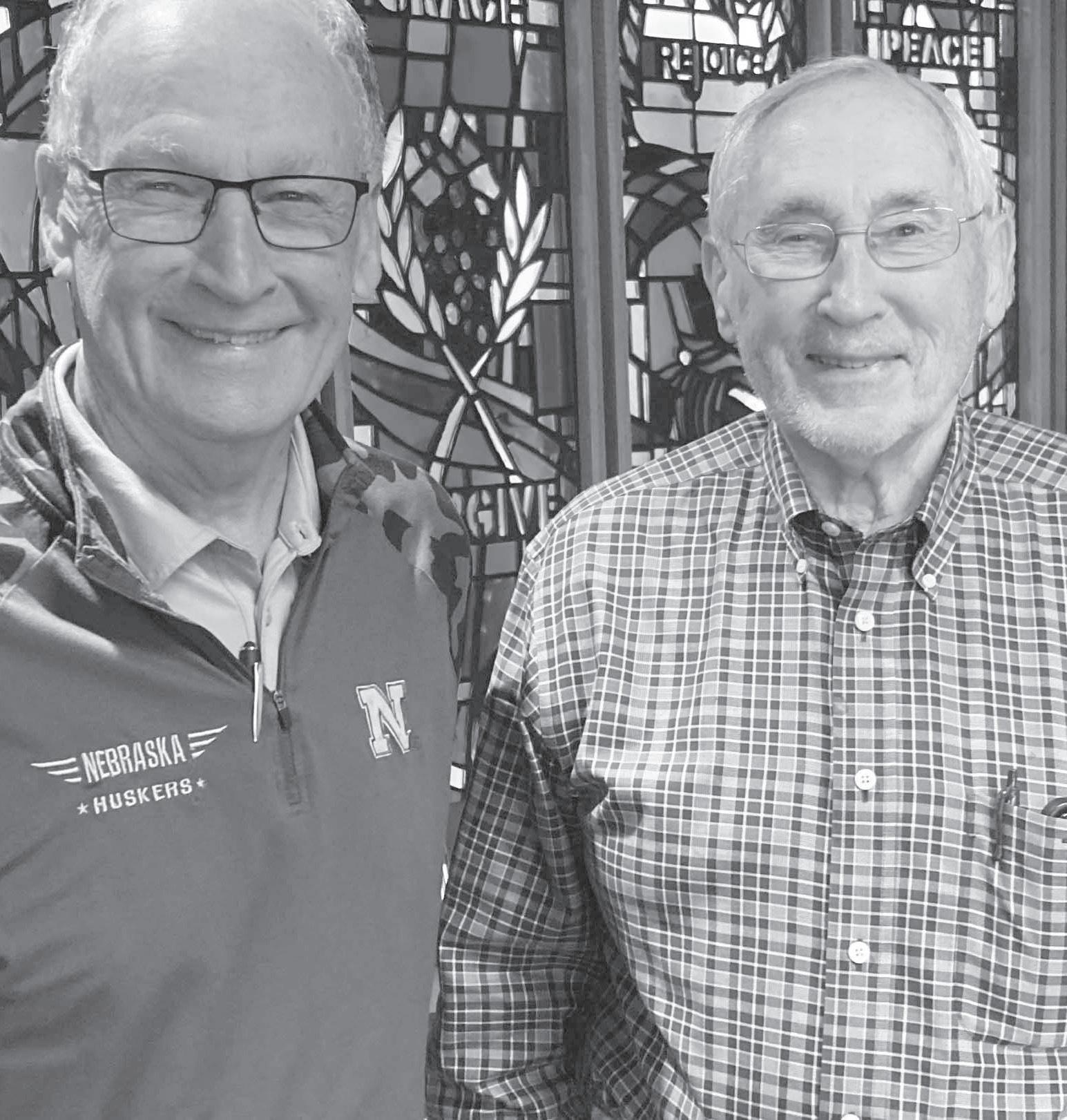
Co-president Neal Fortkamp (left) and past-present Norm Marfice, who coordinates the club’s volunteer ambassador program at Eppley Airfield
--Kiwanis continued from page 4.
motivating factor for all Kiwanians interviewed.
The club’s oldest member, 99-year-old Bill Gordon, has been a member for 30 years, joining when he was 69. He discovered Kiwanis after a 32-year career as a marketing executive for Mutual of Omaha, working closely with Wild Kingdom stars Marlin Perkins and Jim Fowler. Gordon, who turns 100 in September, still attends regularly because “I like what we do and I like the members, I like being able to help a lot of people.”
Co-president Daniel Falcon, a retired Junior ROTC instructor at Benson High School, joined in 2017 “because I wanted to give back to the community. Kiwanis is a great way to contribute.” Falcon volunteers regularly at several other organizations, but his favorites are working as a docent at the zoo and Kiwanis. “I’m here every Tuesday, no matter what. We’re helping people.”
But as meaningful as volunteer opportunities are for the members, the chance to develop a broader cadre of friends is just as important.
“One benefit of membership is finding a new circle of friends,” said co-president Neal Fortkamp. He described the challenges of
losing work-related friends and associates after retirement. “To me, Kiwanis is one of my new circle of friends,” adding, “I never wake up on Tuesday saying I don’t want to go.”
Members pay $220 a year to belong, some of which goes to district and national structures. While many service organizations offer a weekly meal – typically breakfast or lunch – the Golden K club keeps costs in check by serving only coffee and donuts. Members are free to be as engaged as their energy, health, time, and interest permit.
To learn more, navigate to Omaha Golden K Kiwanis on Facebook, or simply pop in to any Tuesday morning meeting, 9:30 a.m. at Countryside Community Church, in the Tri-Faith Initiative complex, just south and east of 132nd and Pacific Streets.
(The author is a member of the Southwest Omaha Kiwanis Club, one of a dozen clubs in the Omaha and surrounding area, including Blair, Wahoo, Fremont, Bellevue and Council Bluffs, as well as the Golden K club featured in this story. Membership is open to everyone, regardless of age, race, creed, gender, income or political persuasion. Meeting frequency, dates, times, locations and dues structures will vary).
ou’re invited to visit the La Vista Senior Center, located at 8116 Park View Blvd. The facility provides activity programs and meals Monday through Friday from 8 a.m. to 5 p.m. Please call 402-331-3455 for general Community Center hours.
Meals are served weekdays at 11:30 a.m. Reservations are due by noon the business day prior to the date the participant wishes to attend and can be made by calling 402-331-3455.
A $5 contribution is suggested for the meal if you are age 60 and older. If you are under age 60, then the meal cost is $9.50.
In addition to meals being served daily, the La Vista Senior Center offers a variety of activities such as: Bingo, outings, cooking classes, movies with popcorn, arts and crafts, a variety of card games, quilting, Tai Chi, exercise classes, musical entertainment and various parties.
Please visit our website at cityoflavista.org/seniors for updated information or call 402-331-3455.

Traditional funding sources are making it more difficult for ENOA to fulfill its mission.
Partnership opportunities are available to businesses and individuals wanting to help us.
These opportunities include volunteering, memorials, honorariums, gift annuities,
one older adult.
$75 = Provides one week of meals and activities at a senior center.
$175 = Helps provide respite care for an older adult.
$250 = Provides urgent relief and essential support to individuals during unexpected emergencies. Other amount (please designate)__________________________

$50
Alice Kruse
$25
Sharon Thomas
Lauren Whisenand
Dale Kaisershot
Eula Nilius
$20
Mary Stone
$10
Eileen Tiede

• We Organize pre-move
• Move our Clients
• Mediate Family Issues
• Prepare assets for online auction
• Real Estate Broker
• Licensed Federal Firearm Dealer
• Auto Auction Dealer
• Coin Collections
• Asset Appraisal
• We love to Move Seniors

A majority of individuals walk on uneven surfaces, such as floors, where slips, trips, and falls are common occurrences.
Individuals are also prone to falling off ladders, scaffolding, tripping on outdoor surfaces, where slips, trips, or falls are likely to result in serious injury or death.
Slips happen where there is too little friction or traction between the footwear and the walking surface. Trips happen when your foot collides (strikes, hits) an object causing you to lose balance and eventually fall.
So, how can you prevent slips, trips, and falls (STF)?
Get in the habit of walking through your home every day to determine if objects, equipment, water, etc. are present that could contribute to a STF. Periodically inspect your areas throughout the day for anything that could cause STFs.
Review the condition of equipment, check if regular preventative maintenance is being conducted, to prevent leakage. Do you wear the proper footwear to prevent slipping? Do you recognize that the three points of contact (one foot, two hands or two feet, one hand) are
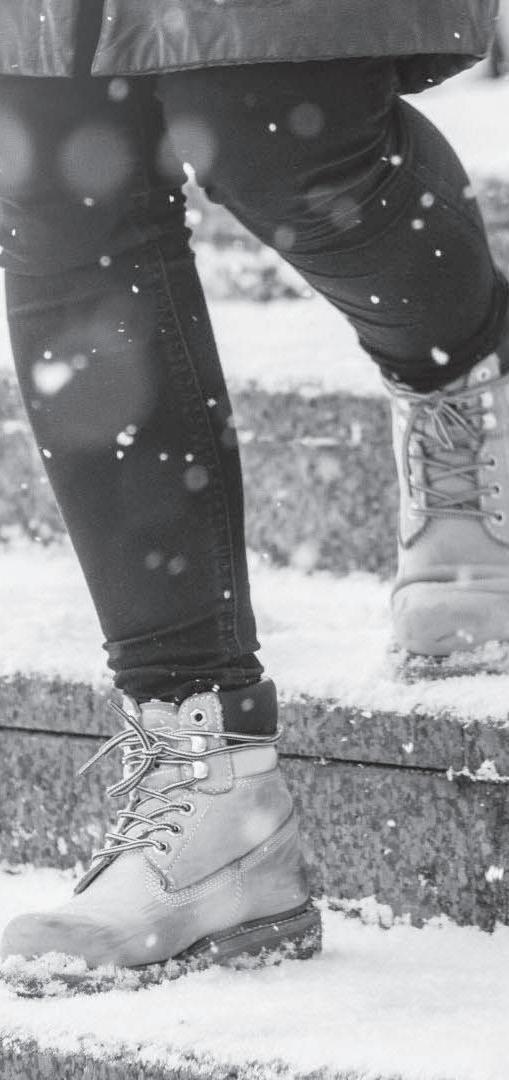
To prevent slips, trips, and falls this winter, wear appropriate footwear, take small, slow steps, and maintain a clear path by clearing snow and ice
required when climbing ladders, accessing forklifts or other mobile equipment? Do you know that climbing and carrying items can contribute to a fall?
Take time to make sure you are going such as holding on to hand rails when climbing stairs. This can prevent falls over items that are laying around that you may not see. Create or
adopt a checklist to assist with inspections at home. Good housekeeping is the first and most important (fundamental) level of preventing falls due to slips and trips.
Floors can be oily or wet. Preventing fall accidents should focus on selecting proper footwear. Since there is no footwear with anti-slip properties for every condition, consultation with a foot specialist is highly recommended. Properly fitting footwear increases comfort and prevents fatigue, which, in turn, improves your overall safety. Also make sure your home environment is safe by:
• Cleaning up all spills immediately
• Marking spills and wet areas
• Mopping or sweeping debris from floors
• Removing obstacles from walkways and always keeping them free of clutter It is important to remember that safety is everyone’s business. Don’t let a slip, trip or fall ruin your day. Take action now to prevent an unexpected injury.
Submitted by Karen Rehm, worksite wellness specialist. To contact Karen at 402-483-1077 or send an email to krehm36@gmail. com.
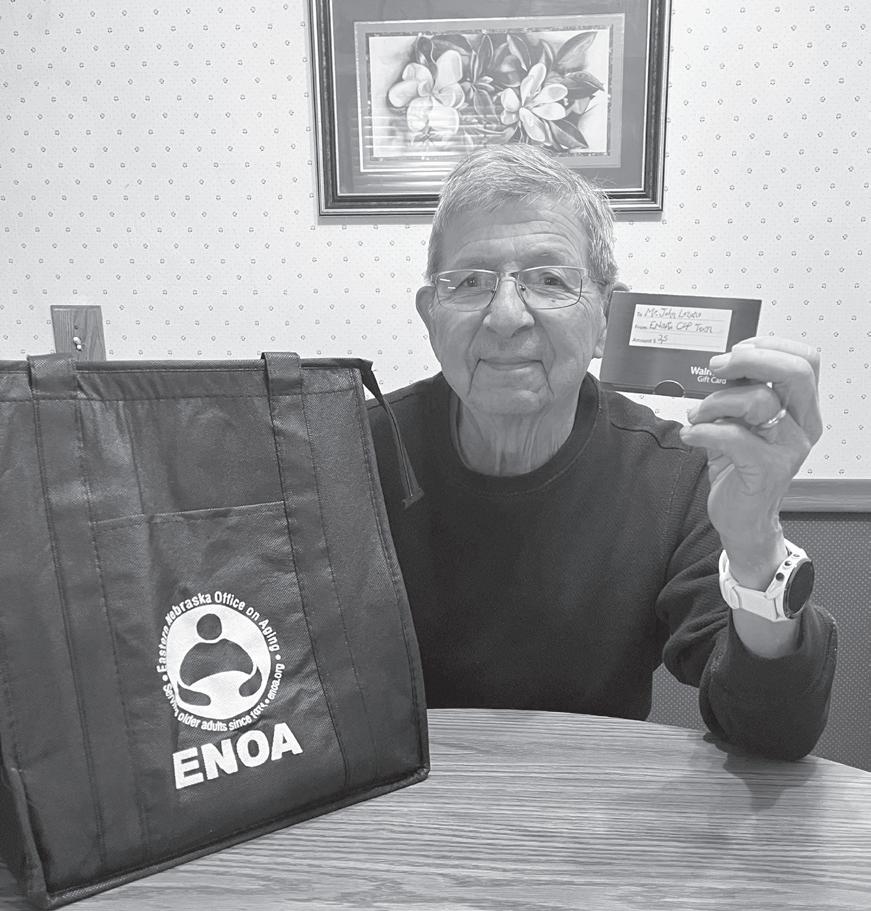
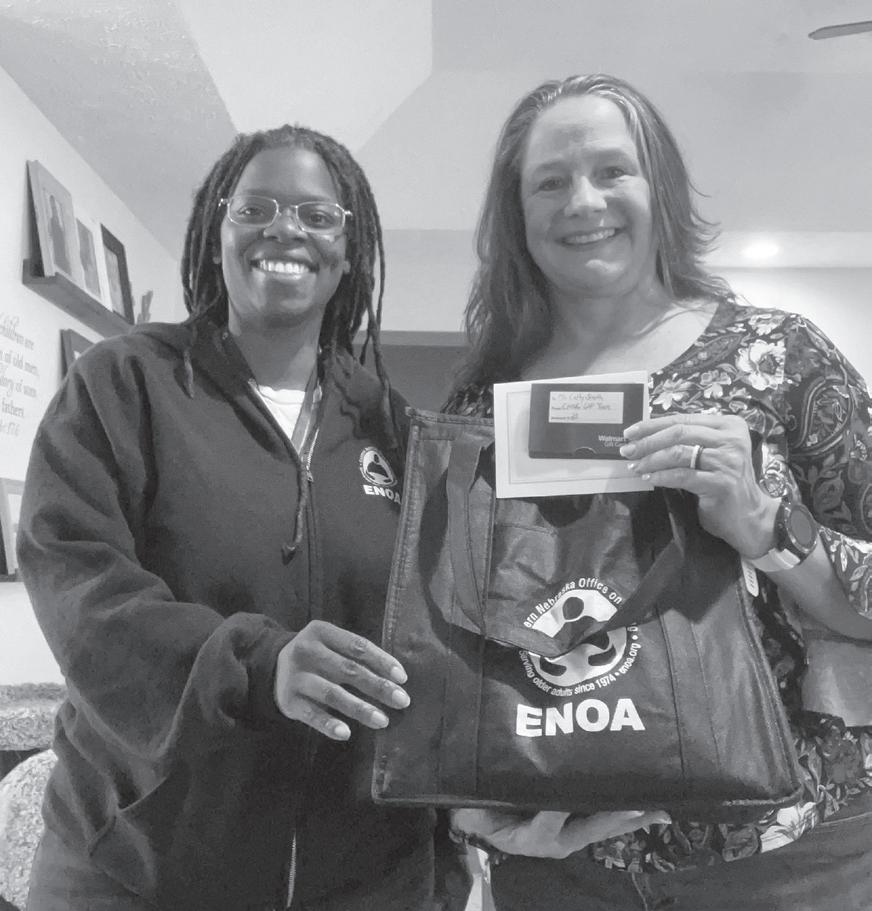
COURTESY PHOTOS
In honor of this year’s Caregiver Support Program (CSP) theme, “Games Through the Years” the Eastern Nebraska Office on Aging (ENOA) held a competition for ENOA CSP caregivers who took part in completing miscellaneous puzzles (i.e. word searches, Sudoku, crosswords, etc.). The origins of word searches can be traced back to the late 1960s. Norman E. Gibat, an American puzzle creator, is often credited with developing the first word search puzzle in 1968. He called it a “Word Cross” puzzle, and it was published in the Selenby Digest, a small puzzle magazine he produced. For more information on the Caregiver Support Program, call the Eastern Nebraska Office on Aging at 402-444-6536.
You’re invited to visit the Fremont Friendship Center, 1730 W. 16th St. (Christensen Field). The facility is open Monday through Thursday from 9 a.m. to 3 p.m. and Friday from 9 a.m. to 12:30 p.m.
A meal is served weekdays @ 11:30 a.m. Reservations, which are due by noon the business day prior to the meal the participant wishes to enjoy, can be made by calling 402727-2815. A $5 contribution is suggested for the meal. This month’s activities will include:
• December 3: Music with George and the Jrs. @ 10:30 a.m.
• December 4: Nye Presentation @ 10 a.m.
• December 5: Bake Sale Items @ 10 a.m.
• December 6: 47th Annual Parks and Recreation Craft Show @ 9 a.m.
• December 9: W.I.P. -Works in Progress @ 1:30 p.m.
• December 10: Music with Bill Chrastil @ 10 a.m.
• December 11: Early Bird Bingo followed by a presentation from Lutheran Services-“Online Safety” @ 9:30 a.m.
• December 13: Parks and Recreation Breakfast with Santa @ 9:30 a.m.
• December 16: New Horse Racing Game @ 10:30 a.m.
• December 17: Music with the Links-Christmas Dinner @ 10 a.m.
• December 18: Christmas Sing-along @ 10 a.m.
• December 19: Christmas Bingo and Ugly Christmas Sweater Contest @ 10:30 a.m.
• December 23: New Horse Racing Game @ 10:30 a.m.
• December 24-26: Center Closed
• December 30: White Elephant Bingo @ 10 a.m.
• December 31: Music begins with Tim Javorskyg @ 10:30 a.m.
Craft class on Tuesday afternoons @ 1:30 p.m.
Tai Chi offered every Tuesday and Friday from 9:15-10 a.m.
If you can’t stay for lunch with our friends and you currently participate in any activity at the center, you may now order a Grab-n-Go meal to take home for your lunch. Grabn-Go meals must be reserved the day before by noon and the person ordering the lunch must come in to the center to pick it up at 11 a.m. The number of Grab-n-Go lunches are limited to a first come first serve basis. Suggested donation is $5.
For meal reservations and more information, please call Laurie at 402-727-2815.
Legal Aid of Nebraska operates a free telephone access line for Nebraskans ages 60 and older.
Information is offered to help the state’s older men and women with questions on topics like bankruptcy, Homestead Exemptions, powers of attorney, Medicare, Medicaid, and Section 8 housing.
The number for the Elder Access Line is 402-827-5656 in Omaha and 1-800-527-7249 statewide.
This service is available to Nebraskans ages 60 and older regardless of income, race, or ethnicity.
The Legal Aid of Nebraska hours of operation are 9 a.m. to noon and 1 to 3 p.m. Monday through Thursday, and 9 a.m. to noon on Friday.
The Omaha Fire Department’s Public Education and Affairs Department will install free smoke and/or carbon monoxide detectors inside the residences of area homeowners.
To have a free smoke and/or carbon monoxide detector installed inside your home, send your name, address, and telephone number to: Omaha Fire Department Smoke/Carbon Monoxide Requests 1516 Jackson St. Omaha, Neb. 68102 For more information, please call 402-444-3560.


dwarf plants that grow well in small 4 to 8” pots. They are a great option for those with limited space, gardening on balconies, indoors in a sunny window or just about anywhere. Kitchen Mini tomatoes, Heartbreakers, Red Velvet and Micro Tom Thumb are just a few. Grow one tomato per container for maximum productivity. Use a 5-gallon or bigger container for large varieties and at least a two to three gallon or similar size pot for smaller varieties. Some research suggests growing tomatoes in a pot that is at least 14 inches but preferably 20 inches wide will yield greater results. Adding flowers and herbs to the container boosts the beauty and diversity of your container garden but will reduce the number of toma-

toes produced.
Growing tomatoes in containers also allows you to start the season earlier.
Just move the planter inside when the weather is harsh and back outside when the weather is warm and sunny. As the weather turns cold at the end of the growing
season, cover the planter or move it into a frost-free location as needed. Some gardeners even move a pot or two inside to finish off the tomato season.
Plant tomatoes in a container with drainage holes and fill it with a quality potting mix. Reduce the
time spent watering with a self-watering pot that has a reservoir to hold water and extend the time between watering. Further reduce the need to water by adding an organic, sustainable soil amendment like certified organic Wild Valley Farms’ wool pellets (wildvalleyfarms.com) to the potting mix. Made from wool waste, this product reduces watering by up to 25%.
Water thoroughly when the top few inches begin to dry. Mulch the soil with evergreen needles, shredded leaves, or other organic mulch to keep the soil consistently moist and suppress weeds. Consistent soil moisture encourages more flowering and fruiting, while reducing the risk of blossom end rot, cracking, and misshapen fruit.
Harvest tomatoes when fully colored or leave them

on the plant a few more days for an even sweeter flavor. You’ll enjoy the convenience of harvesting fresh tomatoes right outside your door for use in salads, sauces, and other favorite recipes.
Melinda Myers has written over 20 gardening books, including Midwest Gardener’s Handbook, 2nd Edition and Small Space Gardening. She hosts The Great Courses “How to Grow Anything” instant video and DVD series and the nationally syndicated Melinda’s Garden Moment radio program. Myers is a columnist and contributing editor for Birds & Blooms magazine and was commissioned by Tree World Plant Care for her expertise in writing this article. Her website is www.MelindaMyers.com.
at
if
wish to receive more information about the list of the studies available.
You’re
to
The Intercultural Senior Center facility – open weekdays from 8 a.m. to 4:30 p.m. – offers programs and activities from 8 a.m. to 3 p.m. from Monday to Friday.
The ISC offers a light breakfast, lunch, crafts, health presentations, fitness, language classes, technology, book club, gardening and more.






ISC will be closed on December 25th for Christmas. Lunch reservations are due by 9 a.m. A voluntary contribution is suggested for the meal. Please call 402-4446529 for reservations.
Monthly food pantries are available for adults ages 50 and older. ISC’s SAVE bus (Sustenance Assistance Vitality Engagement), can bring case management services to your doorstep.
For more information, please call 402-444-6529.
continued from page 1.
first big screenings was the 1964 Richard Lester Beatles romp, A Hard Day’s Night. Legend has it the bon vivant Geske hosted a screening of the four-part, seven-hour Russian epic War and Peace with an intermission of caviar and champagne.
“Now whether or not that’s true I’m not sure,” Richards said, “but it certainly sounds like something Norman would have done.”
Geske made film an integral element by hiring Danny Ladely as Sheldon Film Theatre’s first full-time program manager. Ladely remained on the job 50 years, making the theater a haven for the American independent and international cinema movements. Under his leadership the theater transitioned into the Ross with its own building in 1995 courtesy of major donations from Mary Riepma Ross. He made it into one of the nation’s most respected film exhibition programs, with programming tied to various university academic units, including film studies. Visiting artists meet students in the Lincoln Public Schools and at UNL’s Johnny Carson Center for Emerging Media Arts. Richards is aware of all she’s inherited.
“Dan Ladely created a hugely successful film exhibition program in conjunction with the film studies activities on campus. The Ross is really the epitome of independent film centers. He left a great legacy.”
Richards is putting her own spin on things, like the Made in Nebraska series she curated last summer. The series largely focused on pictures made in-state during her film officer tenure, including the well-reviewed The Ballad of Buster Scruggs, Nomadland and Bones and All. She personally intersected with their makers, the Coen Brothers, Chloe Zhao and Luca Guadagnino. The same with Alexander Payne and his Citizen Ruth. Though not screened in the series, she also worked with Payne on his Election, About Schmidt, Nebraska and Downsizing.
Selections made before her time included some distinctive projects, including A Time for Burning (1966) and Terms of Endearment (1985). The Oscar-nominated Burning is in the National Film Registry. Endearment won five Oscars, including Best Picture.
While Nebraska film activity is scant compared to
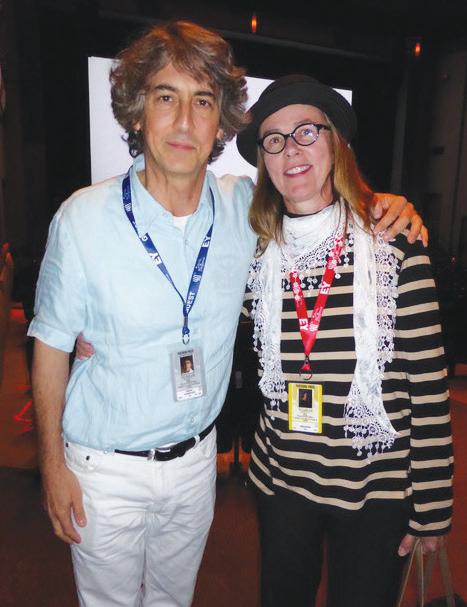
I really managed the community of Loma in Butler County where they did the majority of the filming. I’d never seen anything like this before from that side of the camera. It was quite overwhelming and interesting and engaging. It immediately changed the way I looked at a film.”
The experience introduced her to the infrastructure that goes into facilitating production.
many states, there have been some notable moments.
When Mickey Rooney and Spencer Tracy shot two weeks of Boy Town (1938) at the famous boys home they were among Hollywood’s biggest stars. Fans flocked there to catch a glimpse.
While on the Francis Ford Coppola drama The Rain People (1969) that shot in and around Ogallala, actor Robert Duvall got close to a local ranch-rodeo family, the Petersons, He returned to shoot a doc about them, We’re Not the Jet Set. A member of that clan, Rex Peterson, is the subject of a new doc, Hollywood Horseman, that Richards plans screening at the Ross. She earlier screened Rain People and Jet Set.
But it was still another Made in Nebraska film that marked a turning point for Richards. In the early ‘90s she and her architect husband Dan Worth lived in Omaha. She acted in plays at the Emmy Gifford Children’s Theatre (now The Rose) and worked in its costume department. She also did on-camera commercial work for clients. After the couple moved to Lincoln she was busy restoring an old house they bought when a friend in the state tourism division, Mary Ethel Emanuel, called with an unusual job lead. As Richards recalled, “Mary Ethel said, ‘There’s this gal in town looking for an assistant for a film project, and I thought of you.’”
The film turned out to be To Wong Foo, Thanks for Everything! Julie Newmar, starring Patrick Swayze, Wesley Snipes and John Leguizamo as New York drag queens stranded in fictional Snydersville, Nebraska. Richards jumped at the chance, recalling, “A day later I started on the film as an assistant location person.
project – narrative dramatic features, studio pics, indies, documentaries, industrials, commercials.
When Richards started as film officer, production was fleeing Los Angeles for other locales.
“It was a new way of being part of an industry I was curious about anyway. I never looked back. It was a kismet moment. It was hard work, tough work. I was on the movie for five months. Crazy fun, interesting, hard working, dedicated people. Made new friends. I still keep in touch with a couple of them.”
The project also introduced her to in-state professionals who work as grips, gaffers, production assistants, drivers, et cetera. “I met more crew in Nebraska through that project. I found out who these people were.”
That served her well when she became state film liaison in the governor’s office (under Ben Nelson) and eventually state film officer. “The opportunity for me to get involved with that film was a tipping point that changed the direction of my career.”
Nebraska had been without a full-time film office after previous efforts fell away. To Wong Foo was among a slate of projects filming in-state then and, she said, “The Department of Economic Development handed all of it to tourism – and Mary Ethel Emanuel became the go-to person.
Then DED was given the task from the executive branch to create a meaningful state film office with the primary mission of marketing Nebraska to the film industry. The state saw the film industry as an opportunity to diversify economic opportunities and created the film office role within DED.”
Productions generate revenue in the communities they shoot in via purchase of local services. Much of a film officer’s job is to help expedite things.
As a natural extrovert, the job of being Nebraska’s ambassador to the film industry fit. “There were several candidates to fill the role and then I threw my hat in the ring. I’m not ashamed to say I wasn’t their first choice. But I was the one that said yes. I’m glad I did.” She soon found herself working with every kind of
“Canada created a wonderful incentives package that everyone else tried to meet,” she recalled. “When I got on board that’s where we were. We (the U.S.) were losing product to Canada like nobody’s business. Whereas Canada had country-wide incentives, America did not. About the only national movie advocacy group was the Motion Picture Association of America.”
Nebraska lacked then and still lacks certain supports, mainly sound-stages. Though it has its own special topography, it will always lack natural wonders such as mountains, beaches and ocean-scapes. And until very recently the state lacked grant and tax incentives to sweeten the spot for filmmakers.
“The idea Nebraska could compete in this industry was a far cry from reality,” she said. “We always tried to reinforce the idea we could put you down anywhere and get you where you needed within an hour, plus you could fly non-stop to either coast.”
A big part of her job, she noted, was “knowing who the movers and shakers are” to secure locations, along with hotel owners, caterers, Teamsters, to help support cast and crew. She worked with county museums and historical societies to borrow artifacts as set pieces.
Her love of Nebraska helped her sell the state. “I do have a deep appreciation for the physical lay of the land and for the unique pieces of our state that make us Nebraska. She already knew the Sandhills but discovered more treasures.
“When I became the film officer it was a huge eye opener to find Sowbelly Canyon in Sioux County for the first time and many other places, like Wildcat Hills south of Scottsbluff and Gering. Just a lot of different nooks and crannies that are tucked away.”
Scouting potential locations was right up her alley. “I love getting in the car driving across the state. I would do this at the drop of a pin and from one end of the state to the other.” She estimates she traversed
nearly all of Nebraska’s 77,000 square miles, documenting sites through photographs she took that she then shared with location managers-directors.
She said she always went with a sense of adventure and discovery. “Coming over a ridge and wondering, is that the location they’re looking for? It might be a house, a barn, a grain bin, a farm field, a river valley, a grassy hill, an historic main street, whatever. When film production people not from Nebraska get here they just fall in love with the state. They can’t believe what’s here. They’re like, where are we? This is beautiful. Their preconceived notions that Nebraska must be flat and featureless are soon dispelled. We’re this hidden treasure. Some people have found us, like the Coen brothers. They certainly enjoyed being here. Alexander Payne, our golden boy, certainly loves to film in Nebraska.”
Wherever she went it meant dealing with people from all walks of life.
“My personality has something to do with my fearlessness of meeting and talking to people, asking questions, trying to find answers, and that has served me well,” she said.
“Laurie has always been a tremendous supporter of filming in Nebraska, pushing for film incentives … and being a central part of the community of filmmakers in and from Nebraska,” said Nebraska Coast Connection founder Todd Nelson. “She’s always had that fearless drive mixed with jet fuel, along with her particular Nebraska corny spunk, that has kept her eye on the ball and done great things for our small state with big cinema ambitions.”
Reflecting on her film officer career, Richards said, “I did what was asked of me and more and enjoyed it. I did the best I could with what I had to work with. I had the visuals of the state to work with. A lot of people were on my side to try to make things happen. It was all a very valuable learning experience. It was this opportunity to continue to discover and share the state I was born and raised in.” Besides traveling around Nebraska her duties took her to professional conferences and to far-flung festivals Sundance (Utah) and Telluride (Colorado). When Payne’s Nebraska made its world premiere at the Cannes Film Festival in France she went.

By Gary Ogden Harper
Whether real or imagined, Saint Nicholas has historical origins. His birth is traced to the third century, and his earthly death was reported in the fourth. But it’s after he’s dead that he really comes to life!
Legends were quickly spread through oral tradition, the social media of its day. Due to widespread illiteracy, much less emphasis was placed on written records. That means those storytellers were only accidental historians. Their primary vocation was entertainment, which employs adventure to capture audiences.
That being said, in my more than twenty years of doctoral research, I’ve come across many “fun facts” and miraculous attributes belonging to our favorite Christmas icon. These actually begin before he was even born. His parents were very elderly and childless when he made his first appearance. But it doesn’t stop there.
Only minutes after being born, he stood perfectly upright in the washbasin— to the astonishment of the midwives in attendance. And so, he was bestowed with the name of Nicholas. It translates into “conqueror of the world.”
Growing up, the young boy became a voracious reader. He studied the bible religiously of course, but he also lived at the crossroads of early Christian development in both time and place. Nicholas was relatively only a few generations removed from living witnesses to the life and death of Jesus. The apostle John made it to the start of the second century. And those who knew him
lived on for many more decades.
Many of these first- and secondhand accounts were written down and discussed by the Early Christian Fathers. Nicholas would have studied the writings of Clement of Rome and Ignatius of Antioch. Taught by the finest tutors his wealthy parents could afford, the main subject was certainly Polycarp. He was the Christian bishop for their hometown of Smyrna.
When the adolescent Nicholas lost his mother and father to a plague, he went to live with an uncle who had founded one of the very first Christian monasteries. It enabled him to continue his studies in preparation for becoming a monk. Once that happened, he was forced to distribute all of his worldly wealth to the poor.
Nicholas found novel ways to get rid of his money. The most famous legend recalls how he rescued three young girls from being sold into slavery. One can imagine that he learned about their plight from a member of his weekly prayer group. Or perhaps their father was a popular local merchant, beloved by his community for selfless acts of philanthropy.
After falling victim to a devastating economic catastrophe, this unfortunate parent had few options for the survival of his family. The previous months were probably spent in anticipation of a triple wedding to celebrate the merchant’s most successful transaction of his career.
Maybe then, a storm of biblical proportions sank his shipment to the bottom of the sea. The creditors would
demand blood…or living flesh.
On successive nights, Nicholas reputedly used the cover of darkness to drop a bag of gold through the merchant’s front window. By the third night, however, the marauding monk would have had to vary his routine to remain anonymous. I’m guessing he used a handy ladder to climb up on the roof and drop the last dowry down the chimney. But what are the chances of that?
SANTA WAS A SAILOR
And then there were the times when Nicholas performed some nautical miracles. Once, he was a passenger aboard a boat that encountered a terrible tempest and most of the crew was forced to abandon the ship. The future saint gathered the remaining sailors together and prayed for calm waters. His timely intervention saved them from crashing onto the nearby rocks.
Later on, it was a less dramatic shipwreck that landed Nicholas at the port of Myra. At the time, the city was mourning the recent loss of their revered bishop. The sorrow was soon turned into joy after three priests rushed forward to announce that each of them had the same dream on the night before. It was that their next bishop would make an unexpected arrival. And that’s how Nicholas walked into his new lifelong career.
Dr. Gary Ogden Harper is the only scholar to have ever devoted an entire dissertation to the historical and mythological evolution of Saint Nicholas. His Book of Nicholas: An Advent Serialization is available on Substack.
Beware if you receive a text message that appears to be from the Department of Motor Vehicles (DMV). The text states that you must pay a traffic fine by a certain date. If you don’t pay on time, your vehicle registration will be suspended, and you’ll lose your driving privileges. Some versions of the message even state that you’ll go to jail or your credit score will be affected if you don’t pay. The text message contains a link and instructs you to click it so that you can pay the fee. However, these messages aren’t sent by the DMV. They’re actually phishing texts (smishing) sent by cybercriminals. There was never an actual traffic fine or penalty.
If you click the link in the text message
and make a payment, your money will go directly into the cybercriminals’ pockets. Follow these tips to avoid falling victim to a smishing scam:
• Be cautious if you receive text messages claiming you must pay a fine immediately. Scammers often create a sense of urgency to trick you into acting impulsively.
• The DMV wouldn’t ask you for personal information or money through a text message. If you have questions about paying a fine, contact your local DMV through its official website or phone number.
• This scam targets users in the United States.
For more information, visit KnowBe4. com.
There is no such thing as too much kindness. While World Kindness Day was on November 13, there are zero limits on the frequency or magnitude of care you can offer to others and to yourself during the other 364 days of the year. Not only does being kind benefit others—boosting others’ self-esteem and building their overall trust and faith in humanity—it has plentiful short- and long-term perks that you can carry with you through life.
Being kind to yourself is being thoughtful about your health. The Mental Health Foundation describes kindness as “choosing to do something that helps others or yourself, motivated by genuine warm feelings.” Being on the receiving end of thoughtfulness can lead to improved wellbeing and can reduce symptoms of anxiety and depression. Therefore, the best thing to do once you receive the warm-fuzzies is pay that feeling forward! The combined effort to be considerate of one another combats the worldwide loneliness epidemic and brings communities closer together.
Don’t forget that you can reap these same rewards by giving yourself kindness. A simple starting point is utilizing the practice of self-compassion: a method of reframing self-criticism to show yourself grace as you navigate life’s more-difficult moments.
Keeping in great spirits can lead to healthier aging. A study done by Columbia University concluded that showing frequent friendliness reflected greatly on the lifestyle of older participants. Those who practiced altruism felt more satisfaction in life and had a stronger sense of connection to others around them. Additionally,
older adults who volunteer have a 44% less likelihood of dying early. The hormones—oxytocin and serotonin, the “love hormone” and “happy hormone,” respectively—and “helper’s high” that your body produces as a response to kindness are prime examples of living joyfully and aging gratefully.
What are the best tips to begin a journey of lifelong amiability? Kindness doesn’t have to be a constant, everyday affair— there may be days where you may need to prioritize your own needs, hunker down and keep to yourself. Start by easing into a kind-hearted lifestyle: try random acts of kindness, show forgiveness toward yourself, be more open-hearted toward others’ struggles or take up a volunteering gig. More fulfilling starting points are practicing new forms of kindness at home, school, work or any environment you frequent, even if it’s your go-to coffee shop or local grocery store. Day by day, you may find yourself feeling lighter, more purposeful and perhaps even have some new friends and deeper bonds to show for it.
In the individualistic, high-speed social climate of the modern world, it may be easy to get caught up in negative moments and forget the beauty around you, both of human connection and of the world. Remember that kindness exists everywhere— and if you find yourself in a circumstance where none can be found, be the bringer of compassion and show some love to those around you.
This health tip is brought to you by Tabitha.
By Lois Jordan
As December’s chill wraps the world in silver and frost, there’s a quiet kind of magic that settles over everything. Lights twinkle from windows, laughter echoes from gatherings big and small, and time itself seems to pause for a moment of gratitude.
For many of us, this season brings memories as rich as fruitcake — the scent of pine and cinnamon, the laughter of children long grown, the rustle of wrapping paper, and the warmth of a good fire. December invites us not only to celebrate what is, but to remember all that has been — the love shared, the hurdles overcome, the countless ordinary days that became the building blocks of a beautiful life.
It’s easy to look at the
pace of the modern world and feel left behind — technology moves faster than ever, fashions come and go, and the world sometimes feels louder than it used to be. But here’s the truth: your generation carries something the world still desperately needs — steadiness, wisdom, and heart.
Every wrinkle is a story. Every smile line, a lesson. Every holiday season you’ve lived through has added another layer of memories you directly made. You are living proof that kindness, patience, and faith never go out of style.
So as this year draws to a close, take pride in all the chapters you’ve written. Call an old friend. Bake something that brings back a memory. Share a story with a grandchild who’s too young to know how wonderful the world can
be. Your presence — your laughter, your memories, your love — remains one of the most precious gifts the season has to offer.
Because while December may mark the end of a calendar year, it also reminds us of a timeless truth: the light we share with others never fades.
So here’s to you — the keepers of traditions, the storytellers, the steady hands that have shaped families and communities. May your December be filled with peace, purpose, and the joy of knowing you still make the world a little brighter, simply by being in it.
Lois Jordan, CEO for Midwest Geriatrics Inc. Management company for Florence Home Healthcare Center, Royale Oaks, and House of Hope Assisted Living and Memory Care
By Kelly C. Bourne
For most people a browser is their gateway to the World Wide Web. Browsers like Edge, Chrome, Safari or Firefox enable us to log into social media sites, read news articles, play games and conduct transactions online. Getting online without browsers would be significantly more difficult.
Browsers can capture and store a lot of data about us and our online activities. Such routine data collection may seem harmless, even helpful, but if your computer is compromised all that data can be stolen. Having your computer compromised can give someone your personal information as well as an insight into your hobbies, interests, political beliefs or even your medical issues.
Examples of data that can
be stolen include:
• Browsing history – Unless specifically prevented a browser records every website it visits.
• Download history –Browsers record the name of every file you download.
• Saved form data –Browser saves personal data used to autofill information fields on forms. For example, your name, email address, date of birth, address, phone number, and credit card details.
• Locational data – browsers can use your IP address, Wi-Fi, or Bluetooth to collect information about your physical location.
• Account credentials –Browsers can store credentials used to log into websites regularly.
This is convenient, but it makes this information vulnerable to exposure if a criminal gains access to
your computer.
Perhaps the most important attribute when choosing a browser is whether it emphasizes security. Two of the most important features of a secure browser are:
1. It doesn’t collect data about you. Thus, preventing your data from being sold to advertisers or data brokers.
2. It prevents you from being exposed to threats like malicious ads, viruses, unsafe websites and dangerous scripts.
If you asked several experts which browser is safest, you’d likely get a different answer from each of them. One way to find the safest browser is to go online and read reviews from multiple, reputable websites. A recent search I made listed these as the safest browsers:
• Brave
• DuckDuckGo
• Epic
• Mozilla Firefox
Browsers have settings that can be adjusted to create levels of safety and privacy that suit the user. You could increase the settings to the maximum level but unfortunately some websites won’t function normally at those extreme settings. Browser security, like many security concerns, involves trading off security for functionality.
In most browsers the screen to view and modify security settings can be found by clicking an icon that looks like a cogged wheel, 3 vertical ellipses or 3 horizontal lines. In a single article I can’t address every setting for every browser, but the concepts described below apply to

most browsers.
1. Tracking protection – Tracking tools are frequently hidden in ads, videos and other web pages. A good browser blocks sites from tracking your activity. Settings for this option tend to be at levels referred to as standard, strict or custom. Stricter level tracking protection reduces the ability of websites to track your online activities. A downside of tighter protection is some websites won’t function if tracking is blocked.
2. Do Not Track – DNT is a feature that informs websites that the user doesn’t want to be tracked. Unfortunately, it’s up to each website whether to honor this setting or not.
3. Don’t Sell My Data – This setting tells websites the user doesn’t want his data to be captured or marketed. This designation is enforceable in only California, Colorado and Connecticut. In other states, websites aren’t obligated to honor this directive.
4. Cookies – Cookies are small files websites create on visitors’ computers to track users and accumulate information about them. Browsers have a setting which prevents the most intrusive cookies from being created. In addition to preventing cookies from being created, browsers let users delete cookies that already exist on their computers.
5. JavaScript – is computer code executed on your computer when you go to some websites. It enables websites to be more interactive, but it also risks infecting your computer if the script is malicious. Browsers allow users to stop JavaScript from running on their computers. Doing this might prevent some websites from functioning normally.
6. Pop-ups Windows – Many websites display pop-up messages in separate windows when a browser goes to the website. Normally these pop-ups contain ads, but they can also be a security risk. This setting instructs the browser to block pop-up windows from being created.
7. Redirects – Websites can redirect your browser to another site. Sometimes this is legitimate, e.g., the website address has changed. In other cases, a criminal does this to get you to his website instead of the legitimate site. A setting in
most browsers allows you to prevent redirects.
8. Permissions – Permissions to access your location, camera, and microphone are frequently requested by websites. In many cases they don’t need the data but want to collect it and upload it to a server. You can choose which websites can access your data.
9. HTTPS-Only Mode –HTTPS is a more secure communication protocol than HTTP. It should be used whenever possible, especially when conducting business online. Browsers have a setting that ensures HTTPS is automatically used.
10. Add-on Install Attempts – Add-ons, aka plugins or extensions, are code packages that are downloaded and become part of the browser to increase functionality. While most add-ons are safe, some present a security risk. Some websites attempt to install add-on’s without the user’s explicit permission. Browsers have a setting to prevent this from occurring.
Other steps that you can take to make your browser more secure are:
• Update your browser regularly to install security fixes from the vendor. You should set your browser to automatically install updates.
• Close your browser on a regular basis. Doing this purges personal data that has accumulated.
• Delete the browsing history, cache and cookies regularly. This limits the amount of information sites can learn about you. Browsers can be set to clear this data every time the browser is closed.
• Browsers can save your passwords, but they aren’t encrypted. Saving them in the browser is risky.
• Limit personal data stored by the browser, e.g., names, addresses, credit card numbers, etc.
Browsers are a necessary tool to access the Internet but they come with some risk. By careful selection of security features, you can ensure that your online activities will be done as safely as possible.
Kelly’s newest book, “Ransomware, Viruses, Social Engineering and Other Threats: Protecting Your Digital Assets” is available on Amazon and at The Bookworm.
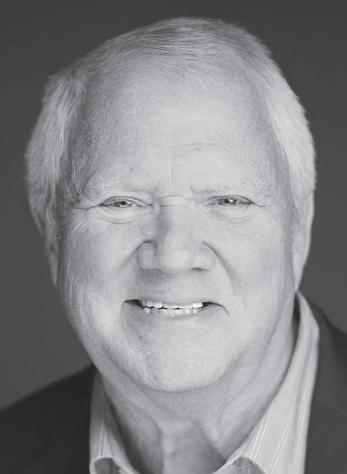
Longtime volunteer Ira Nathan of Omaha has been selected to receive the 2025 AARP Nebraska Andrus Award for Community Service. Named after AARP’s founder Dr. Ethel Percy Andrus, the award honors outstanding volunteers from each state who dedicate their time and talent to enrich their communities.
AARP Nebraska selected Nathan in recognition of his decades-long dedication to volunteer service, which has made a lasting impact on communities across the state, inspired fellow volunteers, and advanced AARP’s mission and vision. He serves on AARP Nebraska’s Executive Council and also as a Volunteer Portal Champion, training volunteers in Nebraska and nationwide on how to use AARP’s Volunteer Portal and access its resources.
“Ira’s commitment to strengthening communities across Nebraska through a wide range of meaningful initiatives is truly commendable,” stated Joyce Beck, AARP Nebraska Volunteer State President.
From the plains of Scottsbluff to the heart of Omaha, Nathan’s journey has been one of deep roots and meaningful connections.
After earning his Bachelor of Arts from the University of Nebraska, he settled in Omaha in 1971. He has been happily married to his wife, Carol, for 54 years and is the proud father of three sons and grandfather to four grandchildren. Now retired from a career as an actuary, Nathan has applied his analytical skills to meaningful advocacy—volunteering with AARP and other nonprofit and government organizations.
As a representative of the Eastern Nebraska Office on Aging (ENOA), Nathan plays a key role on the State of Nebraska’s Department of Health and Human Services (DHHS) Medicaid and Long-Term Care Aging Advisory Committee. This 12-member advisory group includes eight representatives from Area Agencies on Aging (AAAs) like ENOA and four At-Large members. The committee helps shape policy and advocacy efforts that promote dignity, independence, and freedom of choice for older Nebraskans and individuals with disabilities, supporting DHHS’s work with partners to help Nebraskans remain in their
homes and communities.
Nathan is also an active member of the Greater Omaha Genealogical Society (G.O.G.S.), driven by a deep passion for uncovering his family’s heritage. His journey into ancestral research has led to significant discoveries at Nathan’s Lake, which he has shared through a series of wellreceived presentations. In 2023, Nathan was honored with a nomination for the Nebraska State Genealogical Society’s Genealogist of the Year, recognizing his volunteer leadership in G.O.G.S. outreach efforts to promote genealogy and grow membership throughout the community. For Ira, genealogy is more than a hobby, it’s a meaningful way to honor and preserve the legacy of his loved ones.
“We’re proud to spotlight Nebraskans who are drawing on their life experiences to make a meaningful difference in their communities. Ira Nathan embodies that spirit of service and leadership, and this recognition is well deserved,” said Todd Stubbendieck, State Director of AARP Nebraska.
Nathan will be awarded the 2025 Andrus Award for Community Service, accompanied by a $2,500 donation to his selected nonprofit organization, the Hattie B.
By Ron Petersen
The Arlington senior center is entering its 45th year of existence. Since 1972, the National Senior Nutrition Program has funded local agencies and organizations to serve congregate meals that help ensure older adults have opportunities to stay healthy, independent, and connected.
The Arlington Senior Center opened its doors on May 15th, 1980, at the Arlington Community Room with a meal program and recreational activities, moving to its current location in 1985.
The Arlington Senior Center has made a positive impact on the community and its senior members by increasing participation by 5% in the last five years and providing an average of 2,665 meals, 2,121 hours of activities each year, including Tai Chi, card games, crafts, Bingo, exercise classes, Supper Club Dinners, and so much more.
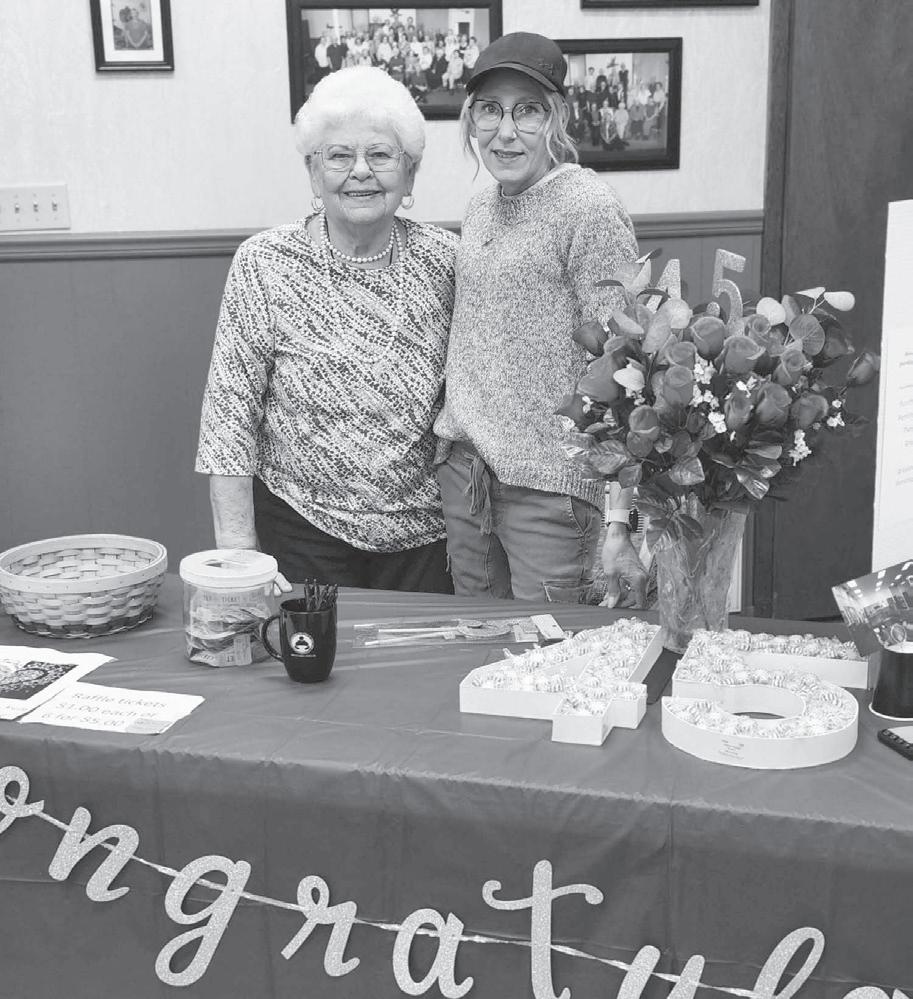
The Arlington Senior Center is an integral part of Arlington, Nebraska – providing sustenance and so much more to older community members. The Arlington Senior Center consistently improves the minds, bodies, and spirits of many aging adults in Arlington.
The Arlington Senior Center hosted a celebration in November, celebrating 45 years of service.
Munroe Foundation. The foundation supports a range of impactful programs at the Munroe-Meyer Institute, part of the University of Nebraska Medical Center.
Ira shared, “I’m deeply honored to receive this award. This recognition is truly meaningful to me, and I’m sincerely grateful for AARP Nebraska’s generous support of the Hattie B. Munroe Foundation.”
The foundation will direct
the donation to the Rhoda Davis Blatt Scholarship, which supports college students pursuing careers helping developmentally disabled children. Established in honor of Ira’s mother-in-law, Rhoda Davis Blatt, the scholarship carries forward her legacy of compassion and service. AARP Nebraska’s gift will help sustain this meaningful impact.

You’re invited to visit the Millard Senior Center at Montclair, 2304 S. 135th Ave., this month for the following:
• December 1: Decorating the senior center for Christmas @ 9 a.m.
• December 2: Handing out secret Santa lists @ 10 a.m.
• December 3: Board Meeting @ 9:30 a.m.
• December 4: Durham Museum trip @ 9:30 a.m.
• December 5: Turn in your secret Santa lists
• December 8: Bunco @ 12:15 p.m.
• December 9: Cookie Exchange @ 10 a.m.
• December 10: Sewing Club meet to make sun dresses and shorts @ 9:30 a.m.
• December 12: Gift exchange @ 10:30 a.m.
• December 16: Guess the Candy Jar game
• December 17: P.A.W.S (Puzzles & Words with Seniors) @ 9:45 a.m.
• December 19: Christmas Party @ 10:45 a.m.
• December 25: Center Closed
• December 31: New Years Eve Celebration @ 10 a.m.
Tai Chi on Mondays and Fridays @ 9:30 a.m.
Bingo every Tuesday and Friday @ 12 p.m. Sportswear Fridays. Wear your favorite team attire every Friday.
Hand-N-Foot Wednesdays @ 8:30 a.m.
MahJongg Wednesdays @ 1 p.m.
Chair Volleyball Thursdays @ 9:30 a.m.
Dominoes Thursdays @ 12:30 p.m.
For more information, please call 402-546-1270.


If you’re a sports fan, you know how important numbers can be.
Statistics like batting average and free throw percentage contribute to the most important number of all: the final score.
Numbers are important to your health, too. Numbers like body mass index and blood pressure show how likely you are to enjoy a long, healthy life.
Like sports statistics, health numbers can be a little hard to understand. So here’s a rundown of 5 important health numbers and what they mean to you.
BODY MASS INDEX (BMI)
• What it is: A simple measurement of body fat based on your height and weight.
• Why it matters: Being overweight or obese raises your risk for heart disease, type 2 diabetes, and cancer.
• How it’s measured: A health professional calculates it based on your height and weight; you can also use an online calculator.
• Note: There are other ways to measure body fat, but BMI is the quickest and easiest.
• What it is: A measurement of how much force it takes to move your blood through your arteries. The first/top number (systolic) shows the pressure when your heart beats; the second/ bottom number (diastolic) shows the pressure in between beats.
• Why it matters: High blood pressure (hypertension) raises your risk for heart attack and stroke.
• How it’s measured: A health professional puts a cuff around your upper arm and inflates it to control
blood flow.
Then, they listen with a stethoscope or read a digital display.
• Note: You can’t feel high blood pressure; you have to get it checked.
(PULSE)
• What it is: A measure of how fast your heart beats each minute it’s at rest.
• Why it matters: A high heart rate can increase your risk for heart failure and stroke.
• How it’s measured: You or a health professional takes your pulse on the inside of your wrist closest to your thumb, counts the number of beats in 30 seconds, and doubles that number. The normal range is 60 to 100 beats per minute (BPM).
• Note: Many smartwatches and other wearables show your resting heart rate, as well as your heart rate while you’re exercising.
• What it is: A measure of blood glucose (blood sugar) levels in your body.
• Why it matters: It can show whether you have diabetes, which contributes to heart disease, kidney disease, and many other health problems. It can also show whether you’re at risk for developing diabetes.
• How it’s measured: A health professional draws some blood and sends it to a lab for analysis; continuous glucose monitors are also available for people with diabetes.
• Note: If you get your prediabetes under control, you can lower your risk for type 2 diabetes by 71%.
• What it is: A measure
of cholesterol, a type of fat (lipid) in your blood.
• Why it matters: High cholesterol contributes to plaque buildup (atherosclerosis), which raises your risk for coronary artery disease and other serious conditions.
• How it’s measured: A health professional draws some blood and sends it to a lab for analysis (sometimes called a lipid panel or lipid profile).
• Note: You can raise your “good” cholesterol level by eating right, staying at a healthy weight, exercising most days, avoiding cigarettes, and limiting alcohol.
The first step in getting help for normal mental health conditions like depression and anxiety is recognition, but self-awareness that leads to taking that first step is a big leap for many adults over 65.
You might think, “I’m not depressed, I’m just sad my best friend died,” or “I’m not anxious, I just worry about my kids and grandkids every waking minute of the day.”
Emotional well-being is just as critical as managing physical conditions. But until we recognize the way those conditions are impacting our entire well-being— physical, mental, spiritual, emotional—we probably won’t make the changes necessary.
A Word from ArchWell Health: Wherever you are on the memory loss journey, you are not alone. The compassionate team at ArchWell Health is always ready to assist caregivers and older adults with their primary care needs.
Join Flaherty Senior Consulting for a series of Solutions Group gatherings that will address the questions and challenges caregivers face.
Solutions Groups provide opportunities for caregivers to learn how to deal with various issues, obtain skills and knowledge, engage in discussions, and interact with others in similar circumstances.
Upcoming meeting dates and locations are:
• Dec. 4, Feb. 5, April 2, June 4, Aug. 6, Oct. 1, Dec. 3
The Servite Center of Compassion 72nd St. and Ames Cr.
• Dec. 17, Feb. 18, April 15, June 17, Aug. 19, Oct. 21, Dec. 16
St. Timothy Lutheran Church 93rd and Dodge streets
• Jan. 13, March 10, May 12, July 14, Sept. 8, Nov. 10
St. Vincent de Paul Church 14330 Eagle Run Dr.
• Jan. 24, March 28, May 16, July 25, Sept. 26, Nov. 28
Faith Westwood United Methodist Church 4814 Oaks Ln.
The Solutions Groups are facilitated by Nancy Flaherty, MS, CDP, president of Flaherty Senior Consulting. She has extensive experience working with family caregivers and caregiver groups.
For more information, email Nancy at flahertyconsulting@cox.net or call/text her at 402-312-9324.
You’re invited to visit the Camelot Friendship Center, 9270 Cady Ave., for regular activities, which include Chair Yoga, card games, Tai Chi, Pinochle, 10 Point Pitch, and bingo. This month’s events include:
• December 11: Presentation and Bingo Calling with Suzy Bettger from Archwell Health @11:45 a.m.
• December 16: Bianca with Smart Gen Society will have a program @10 a.m.
• December 18: Jackpot Bingo @ 12:15 p.m.
• December 19: Christmas Party @11 a.m.
• December 19: Ben Tomasello to perform @11 a.m.
• December 25: Center Closed
• December 31: Center Closed
Every Wednesday – Chair Volleyball @ 10 a.m.
Everyday – Card Games @ 10 a.m.
Grab N Go meals are available.
For more information, contact Barb at 402-444-3091 or barbara.white@cityofomaha.org.
Life can bring on stress for many of us. Finding ways to relieve stress is important to our overall health and wellbeing. Caregivers are not immune to this stress.
Please contact Respite Across the Lifespan at edbennett@unmc.edu or 402-559-5732 to find out more about respite services and to locate resources in your area.
Older adults with the fewest financial resources die, on average, nine years earlier than those with the greatest wealth.
The analysis also found that 45% of older adult households (more than 19 million) lack the income needed to cover basic living costs.
“Low-Income Older Adults Die 9 Years Earlier than Those with Greatest Wealth,” which draws on nationally representative data from the Health and Retirement Study, highlights the widening wealth gap among Americans age 60+ and the devastating impact of that gap on health and longevity.
“It is shocking and unacceptable that in the United States in 2025, poverty steals almost a decade of older Americans’ lives,” said Ramsey Alwin, NCOA President and CEO.
In 2024, updated analysis of data from the Health and Retirement Study found living independently in the community without some assistance is out of
reach for most older adults.
Nearly 50% of adults 60 and older had household incomes below the Elder Index value for where they lived.
This means their average income was below the standard needed to afford basic needs. This was a nearly 5% increase in 2020 compared to data from just two years earlier.
“Financial insecurity has largely remained unchanged for those already most at-risk: In 2020, those in the bottom 20% had no wealth, and those in the next three quintiles (21% to 80%) saw a decrease in the value of their financial assets from 2018,” according to the 2024 analysis.
“Financial patterns over the next several years would need to improve dramatically in order for most older Americans to maintain economic security in the face of rising living costs and increasing risks of financial shocks. While COVID-19 health and employment shocks may have contributed to the

decline seen between 2018 and 2020, even if there is a return to modest improvements in 2022, the vast majority of older adults remain at financial risk.”
In 2023, updated analysis revealed that most older Americans continue to lack the resources that would allow them to weather a “financial shock” such as a significant long-term care need, health issue, or loss of income due to divorce or widowhood.
The updated analysis found that despite older adults’ preference to age in place, 60% would be unable to afford two years of in-home long-term services and supports.
And 45% of people 60 and older had household incomes below the Elder Index value for their geography.
In other words, their average income was below what they needed to afford basic living needs.
(Information provided by the National Council on Aging).


This Month’s Sudoku Answers This Month’s Crossword Answers

By Ron Petersen
Acompetitive
spirit
doesn’t diminish with age.
That is apparent to anyone who watches people play croquet.
“There are plenty of people out there in town that do enjoy croquet,” Omaha Croquet Club member, Brian Brigham said. “We get a group together once a month and play wherever we want. We play at a lot of places around Omaha.”
Croquet is a game played on a lawn, in which colored wooden balls are driven through a series of wickets by means of mallets.
Croquet can be played in many different forms. Serious croquet is played at international level including world individual and team championships. Mostly though, it is played as a casual, social game by millions of people around the world in their own gardens. The rules are the Official Rules of Garden Croquet as authorized by the World Croquet Federation. They allow for some variations and also for added complexity so that you can move

from social garden croquet to more serious croquet. The game is played by two sides. One side has the black and blue balls, and the other side has the red and yellow balls. The object of the game is to advance the balls around the lawn by
hitting them with a mallet, scoring a point for each hoop made in the correct order and direction. The winning side is the first to score the 6 hoop points and then finish by scoring one peg point for each of its balls. The sides are made up of
either one player per side (singles) or two players per side (doubles). The rules are the same for singles and doubles. The ways to play doubles are described later.
The players take turns and only one plays at a time. At the beginning of a turn the player (called the ‘striker’) has one shot. After that shot the turn ends, unless extra shots are earned. The turn ends when the striker has no more extra shots to play. Then it is the opponent’s turn to play.
“We play by the rules,” Brigham said. “There’s a lot of strategy and skill involved.”
The Omaha Croquet Club have held gatherings at locations like Lauritzen Gardens, Soaring Wings Winery and at Kingsway Christian
Church.
“Last year we hosted a croquet tournament that included four teams, a double elimination and a $200 prize,” Brigham said. “I would like to see if we can get more people in Omaha interested so we can develop a community of players.”
Croquet might be viewed as a kid’s game in the eyes of some people, but there are plenty of benefits of getting up and giving the sport a try.
“Everyone has probably tried it – it has gone out of fashion but there is degree of exercise included,” Brigham said. “There’s a benefit of getting out in the sun and exercising. A community of people getting together is a great thing.”
You’re invited to visit the Florence Senior Center, 2920 Bondesson St.
At the Florence Senior Center, lunch is served at 11:30 am. A select menu is offered Monday thru Friday. Meal reservations must be made one day in advance. Please call by noon the day before for a meal reservation.
There will be a painting workshop with Kim Darling at 9 a.m. every Wednesday in December.
The center hosts activites such as Tai Chi, annual picnics/ special events, bingo, cards, gym & game room access, special guest speakers and socials.
Arts and crafts will be held on the third Wednesday of each month. They also provide health and nutrition programs.
For more information, please call Colleen Metz @ 402444-6333.