
HSC MAJOR WORKS CATALOGUE 2025


FROM THE HEAD OF SCHOOL
Foreword
It is an honour to work in an environment that inspires students to excel, persevere, explore and innovate. This publication showcases the HSC Major Works of our talented Year 12 students from the Class of 2025 across Design and Technology, Drama, English, History, Music, Science, Society and Culture and Visual Arts.
These projects are the culmination of diligent research, creative vision and months of dedicated effort. Completing work of this calibre is no easy feat and the grit, maturity and perseverance shown by our students is truly commendable. Each work reflects not only academic and artistic skill but also individuality and passion.
We are incredibly proud of the determination our students have shown in exploring ideas, expressing themselves and striving for excellence.
I also gratefully acknowledge the tireless support of staff and families who have guided and encouraged them along the way.
Please enjoy and be inspired by the remarkable Major Works of the Class of 2025.
Matt Macoustra
VISUAL ARTS
Arabella Bartley
Neve Blamey
Oliver Buck
Annabelle Goodchild
Alexandria Hayes
Anjali Kana
Molly McCauley
Lucinda Mott
Diya Nookala
Serena Parker
Georgie Phelps
Lucienne Roberts
Samuel Roberts
Poppy Tame
Emma Tobin
Nina Winspear
ARABELLA BARTLEY
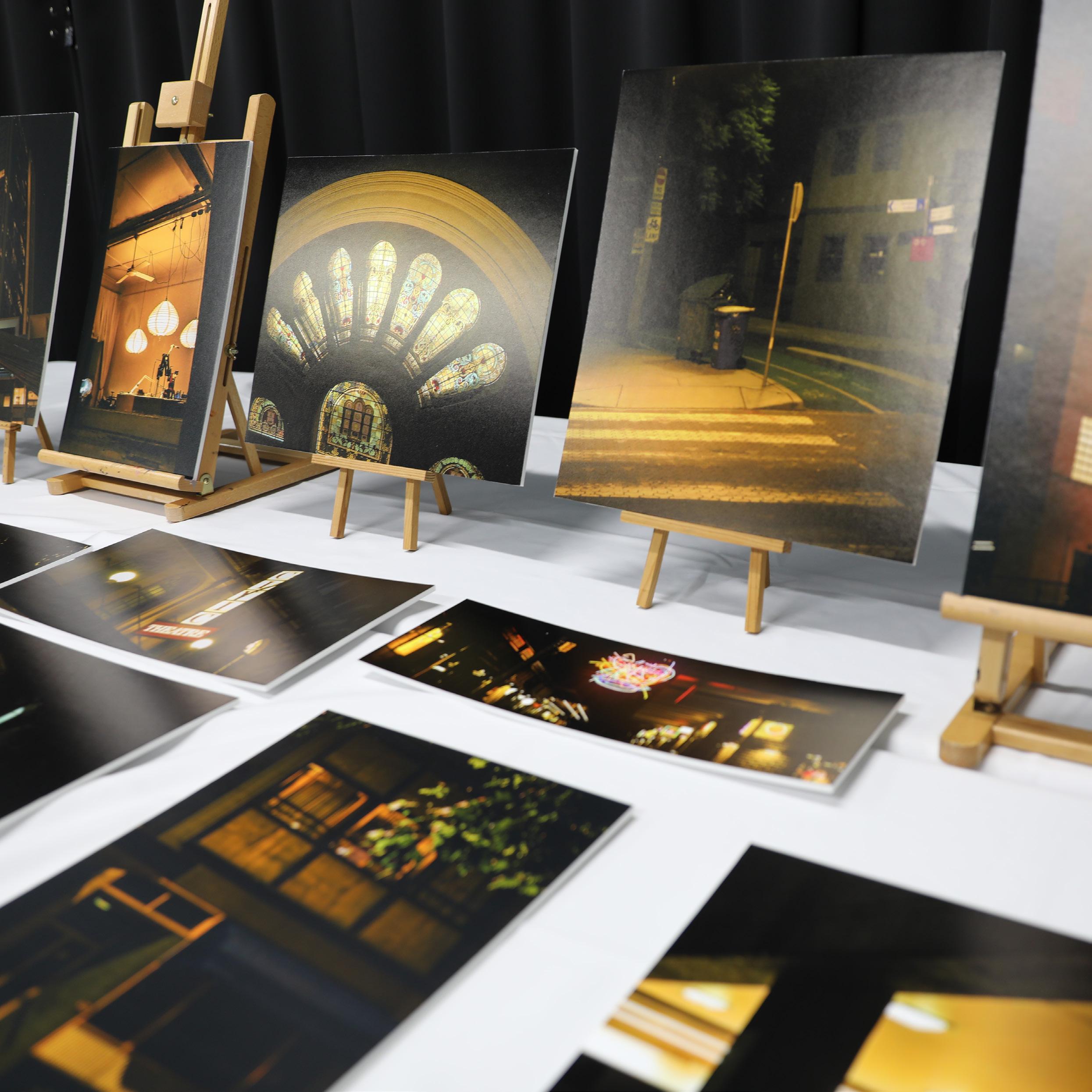
absence of....
We move through the city, absorbed in our lives, goals and destinations, rarely pausing to notice what surrounds us. At night, as I wandered without direction, the city seemed to breathe differently, streets hushed, surfaces washed in light, shadows deepening with silence. In those still moments, beauty revealed itself in fractured reflections, in the glow of lamps, in the emptiness of space. Yet always, at the edges, something lingered. The shadows pressed close, hinting at unseen presences, at the stories the city holds but does not speak. The tension between quiet and unease, between what is illuminated and what remains hidden.
Materials: Ilford Smooth Pearl Coloured Paper, foamcore, soundscape
Influences: Todd Hido, Joe Redski

NEVE BLAMEY
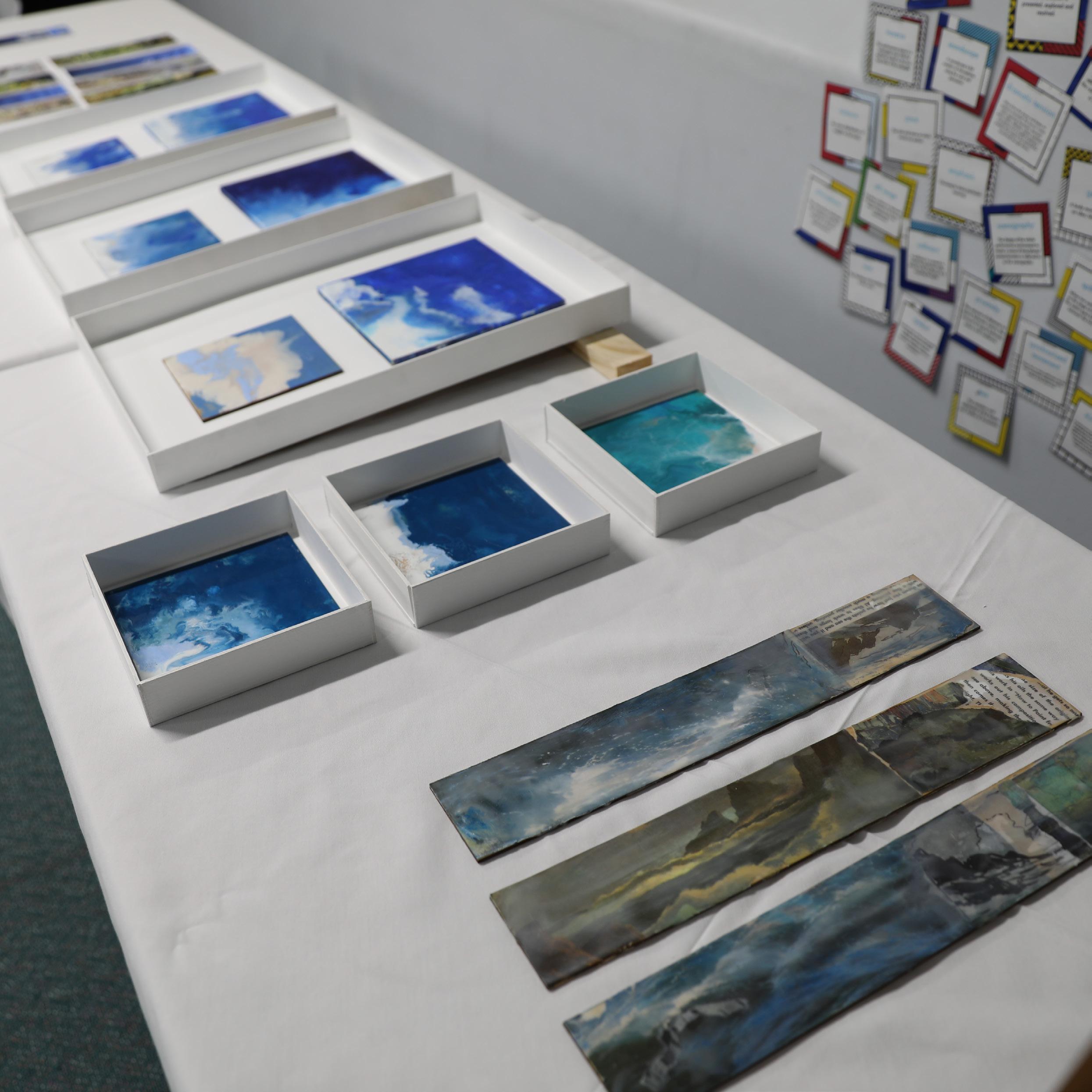
tidal
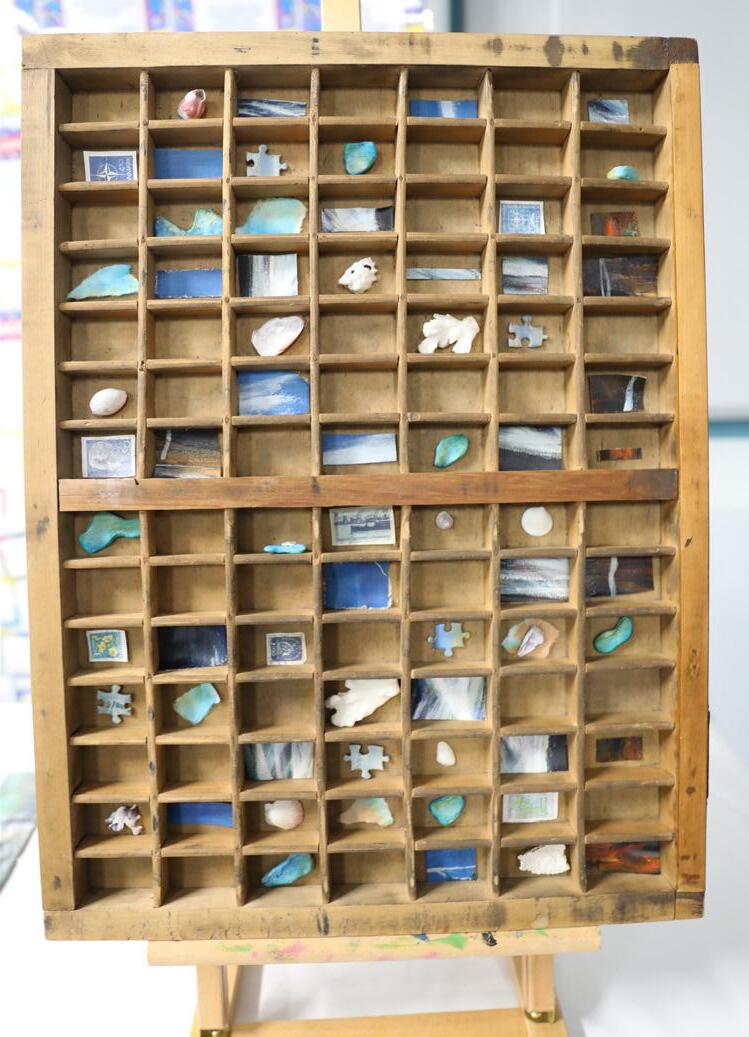
Using layering encaustics, photography, ceramics, watercolour and found objects gathered from the shoreline and variety of vintage books about the sea, my work explores the depth and complexity of the coastal environment. The beach and rock pools near my home are a place of constant transformation and change. These changes mirror the shifts I experience. I am interested in the processes of the hidden layers within the ocean environment. For me the sea holds emotion, memory and calmness. The tide, despite turbulence or uncertainty, always returns, a symbol of resilience, renewal and a reminder of the ongoing personal journey.
Materials: Photography on matte paper, ceramics, encaustics, Relief – Printers Tray with made items white earthenware clay, watercolour and acrylic painting fragments and found objects from old books – stamps, shells and coral.
Influences: John Wolseley, Isabel Davis, Tsuruko Yamazaki

OLIVER BUCK
Impressions of Newcastle
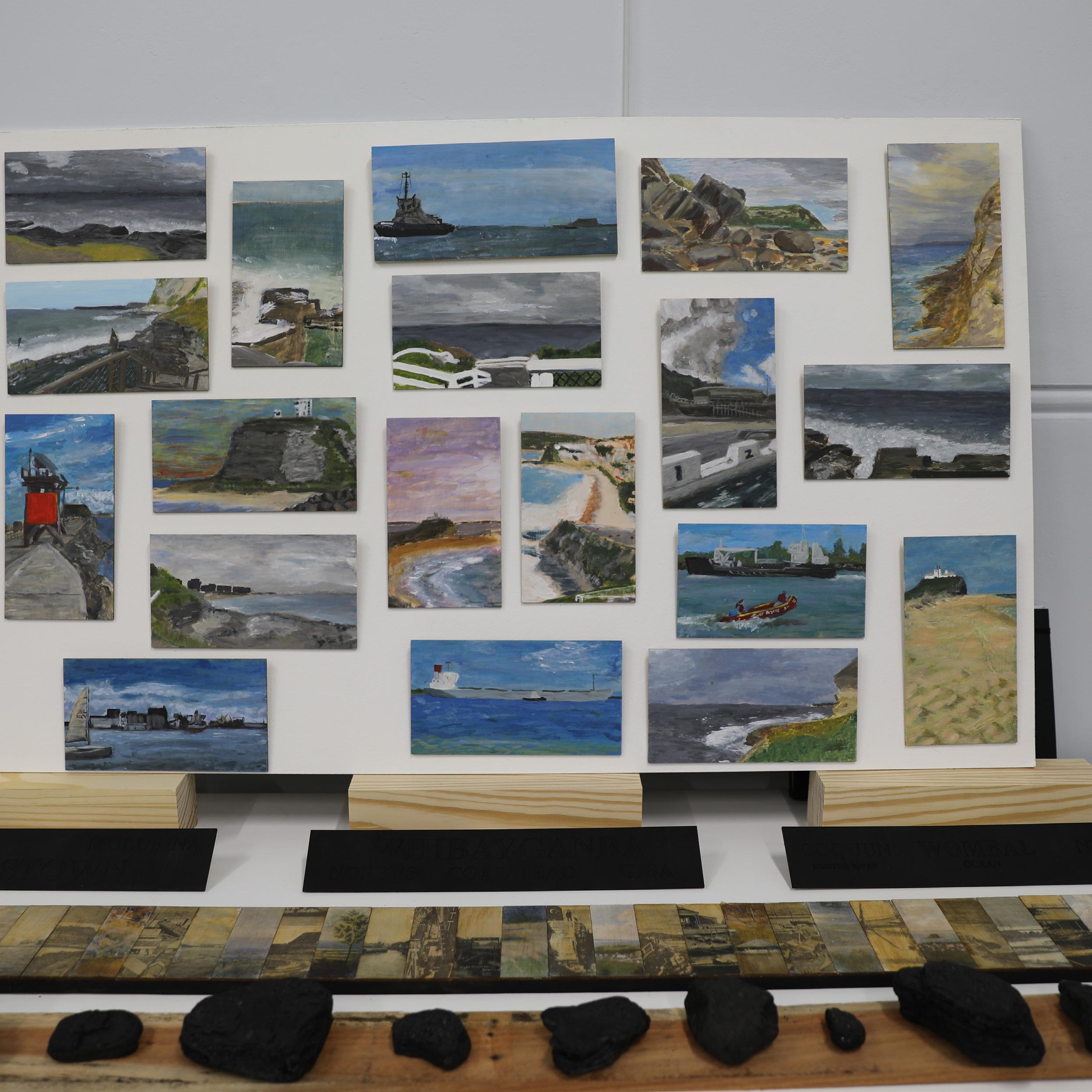
Impressions of Newcastle explores Newcastle’s ocean and harbour, inspired by historic photographs and the coastal landscape. Influenced by Australian impressionists, I adopted their expressive, light-filled style, painting on 9” by 5” plywood referencing the cigar box lids of the 1889 Melbourne Impressionist Exhibition.
Working with acrylic paint and brush and small brush strokes, focusing on capturing the shifting light and atmosphere. Many works were created en plein air to capture the fleeting light.
The work includes iconic sites such as Nobbys Whibayganba Lighthouse, The Bogey Hole built by convicts and Newcastle port and Harbour. Additional photo-released works, laser cut text panels and found coal pieces all weave fragments, layers and stories of Newcastle past and present.
Staying true to Impressionistic principles I focused on loose, gestural marks to evoke Newcastle’s beauty and its layered past.
Materials: Acrylic paint on board, gesso, vintage imagery, wooden boards and found objects – coal
Influences: Arthur Streeton, Charles Conder, Tom Roberts, Joseph Lycett and early paintings and photographs of Newcastle Harbour
ANNABELLE GOODCHILD
transient
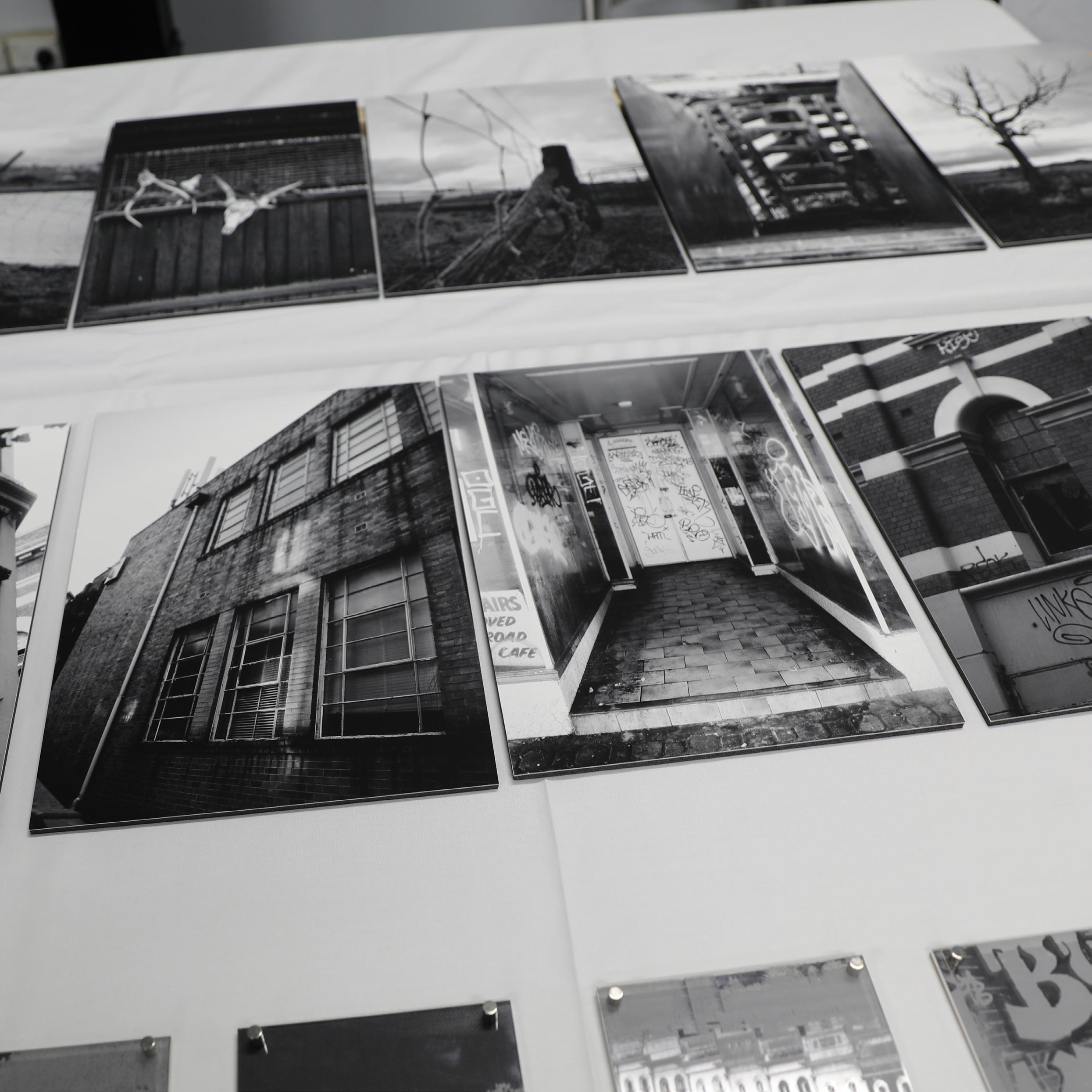
A quiet contrast unfolds between two places: the open stillness of the rural and the compressed energy of the city. These works trace the layered spaces I move through, shifting between calm and density, remoteness and compression.
Each image holds a momentary variation—a fleeting state of perception shaped by movement, memory and place.
Materials: Ilford smooth cotton rag, Black foam backing, Clear acrylic, Transparency film, Wood, Paper fasteners
Influences: Janet Laurence, Ian Strange

ALEXANDRIA HAYES
House of Memories
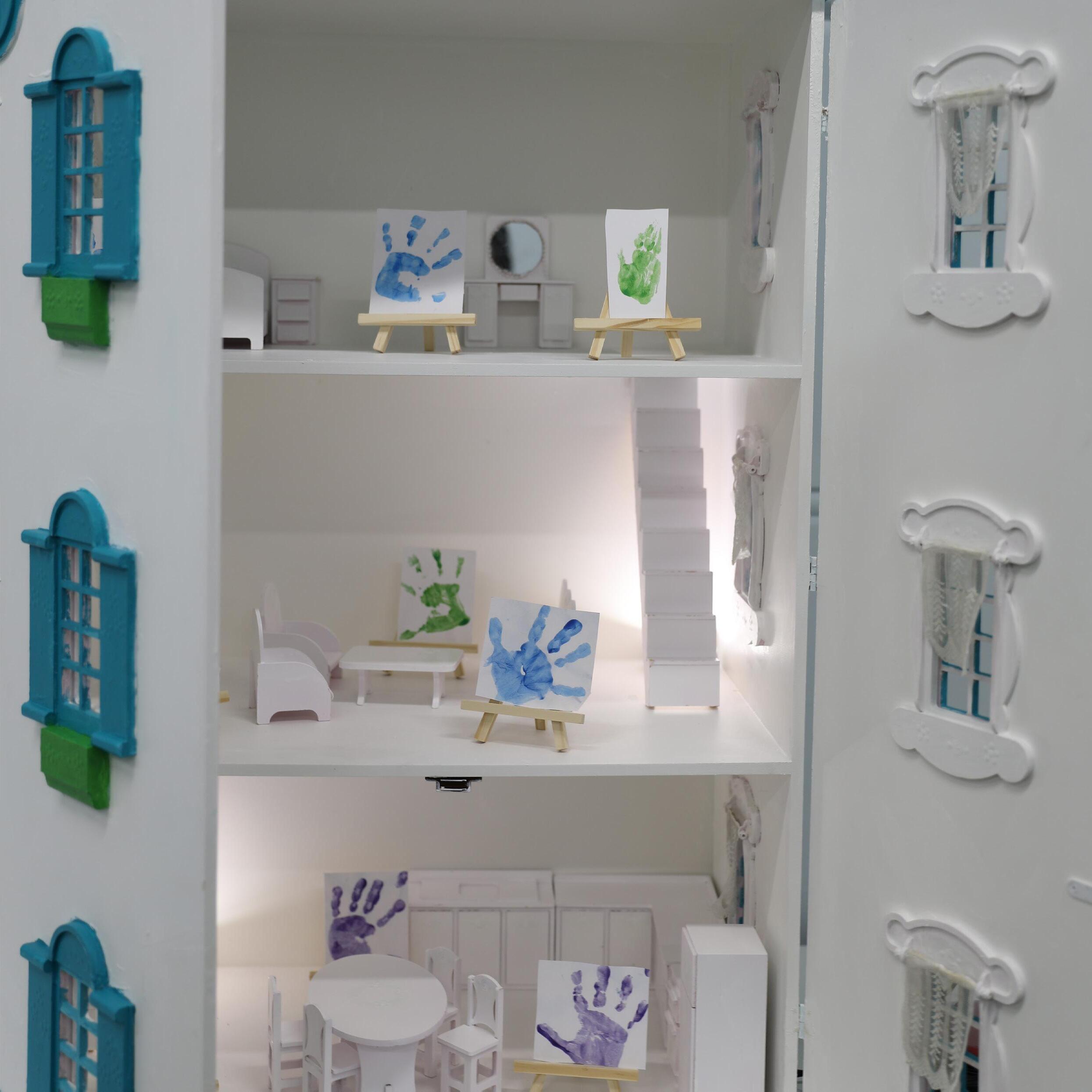
“The House of Memories” is a heartwarming, interactive artwork designed to visually capture the growth and development of children from birth to five years old using their handprints. This piece symbolizes the journey of early childhood, marking each stage with the child’s unique touch.
The handprints are arranged in random order because that’s how children are, a reminder that memories are not just moments, but the foundation of who we become. Just as the song “House of Memories” by Panic! at the Disco reflects on how certain moments stay with us forever, this artwork represents how each stage of childhood leaves a lasting imprint — building a house filled with laughter, love, and unforgettable beginnings.
Every handprint tells a story: the first touch, the first steps, the first friendships. Together, they form a home of memories — a place where time is preserved, and where growth can always be seen, felt, and remembered.
Materials: mixed media
ANJALI KANA
metastasis
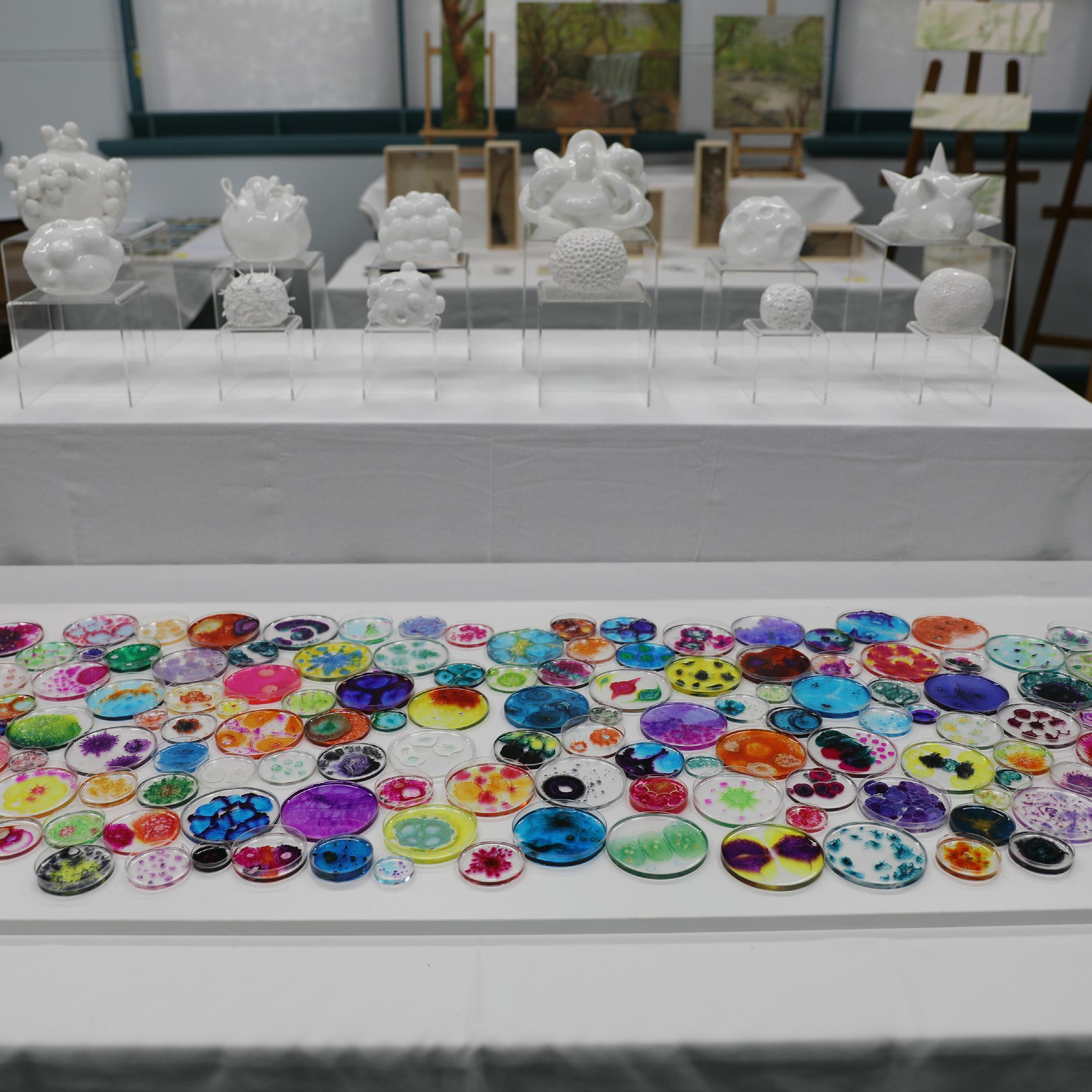
Having long been fascinated by the intersection between biomedicine and the art world, ‘metastasis’ captures my exploration of the ways in which disease and beauty unexpectedly coincide. By recontextualising the image of cancerous cells rather than as objects of fear they become microscopic aesthetic worlds full of colour and intricate details. Each petri dish explores the organic varieties of cellular forms and are celebrated for their natural idiosyncrasies as opposed to just being studied, controlled or sought to be changed. The array of colourful dishes are contrasted with 12 large-scale colourless cellular sculptures made with white stoneware clay and white gloss glaze. The absence of colour shifts the focus towards the biomorphic shapes and forms of the cellular world.
Materials: White stoneware clay, oyster white gloss glaze, petri dishes, craft resin, alcohol inks
Influences: Klari Reis, Tessa Eastman
MOLLY MCCAULEY
“Intertidal”
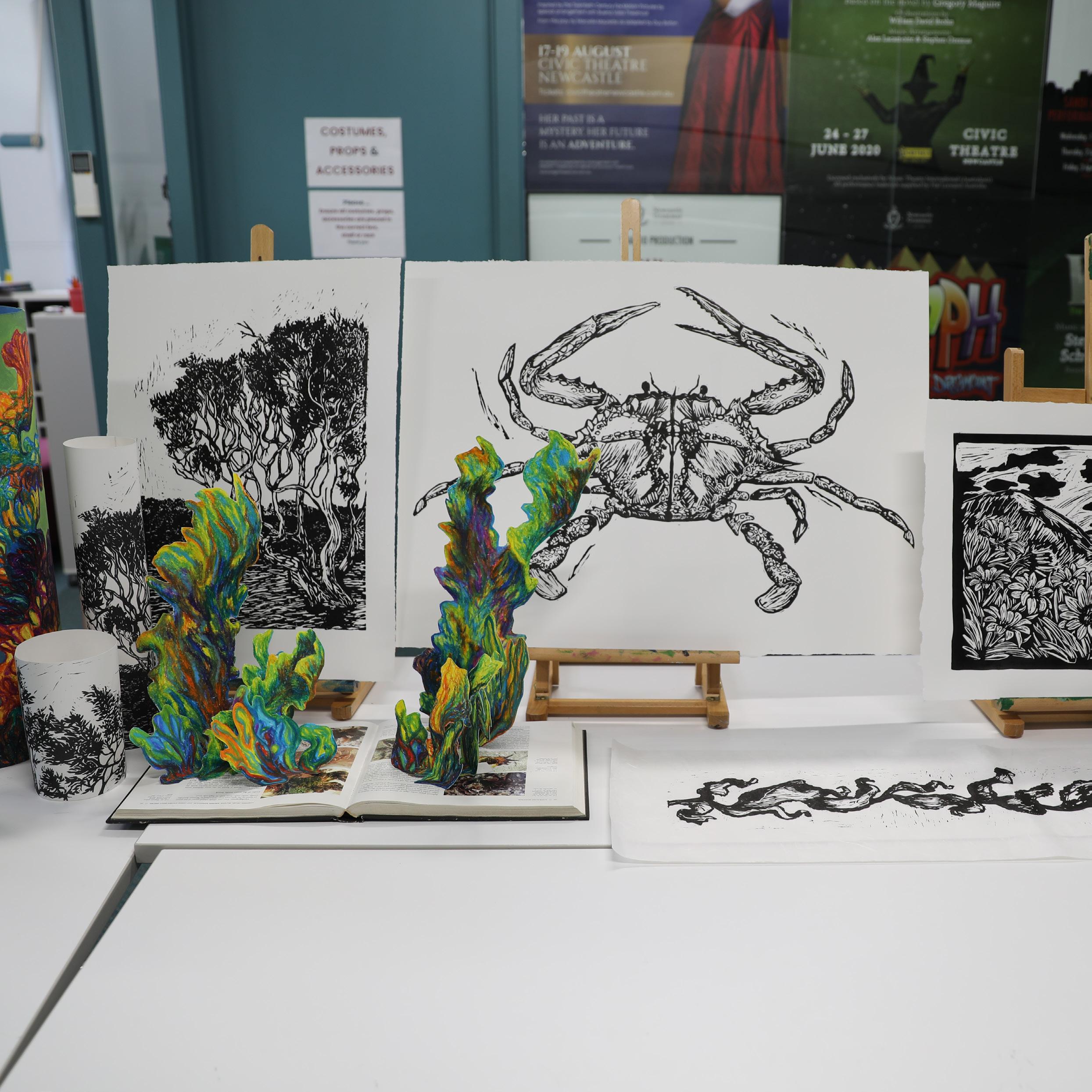
Beauty and Whimsy and Passion. “Intertidal” serves as a detailed and imaginative love letter to a biome I care very deeply about. The joyous reimagining of the natural world and its beauty, and the childlike experience of interacting with these surroundings. Engaging and photographing this biome was an essential and critical process within creating the work.
The work is a journey within the coastal mangrove forests, including its nautical and terrestrial flora and fauna. Experimentation with form and abstraction allowed an exploration of the ways the natural landscape can be portrayed in art.
Materials:
2D forms: Stonehenge paper, ink, double sided silk Lino 3D forms: Stonehenge paper, oil pastels, old book, double sided tape, water soluble oil paint
The blue swimmer crab lino-print within the work was made up of 11 separate pieces, carefully puzzled together with each print, ensuring no two prints are the same. This artistic practice intentionally mirrors the uniqueness of each component of this environment. Please see attached photo of this process.
Influences: Kathleen Neely, Erin Hanson, Käthe Kollwitz, John Woolsey
LUCINDA MOTT
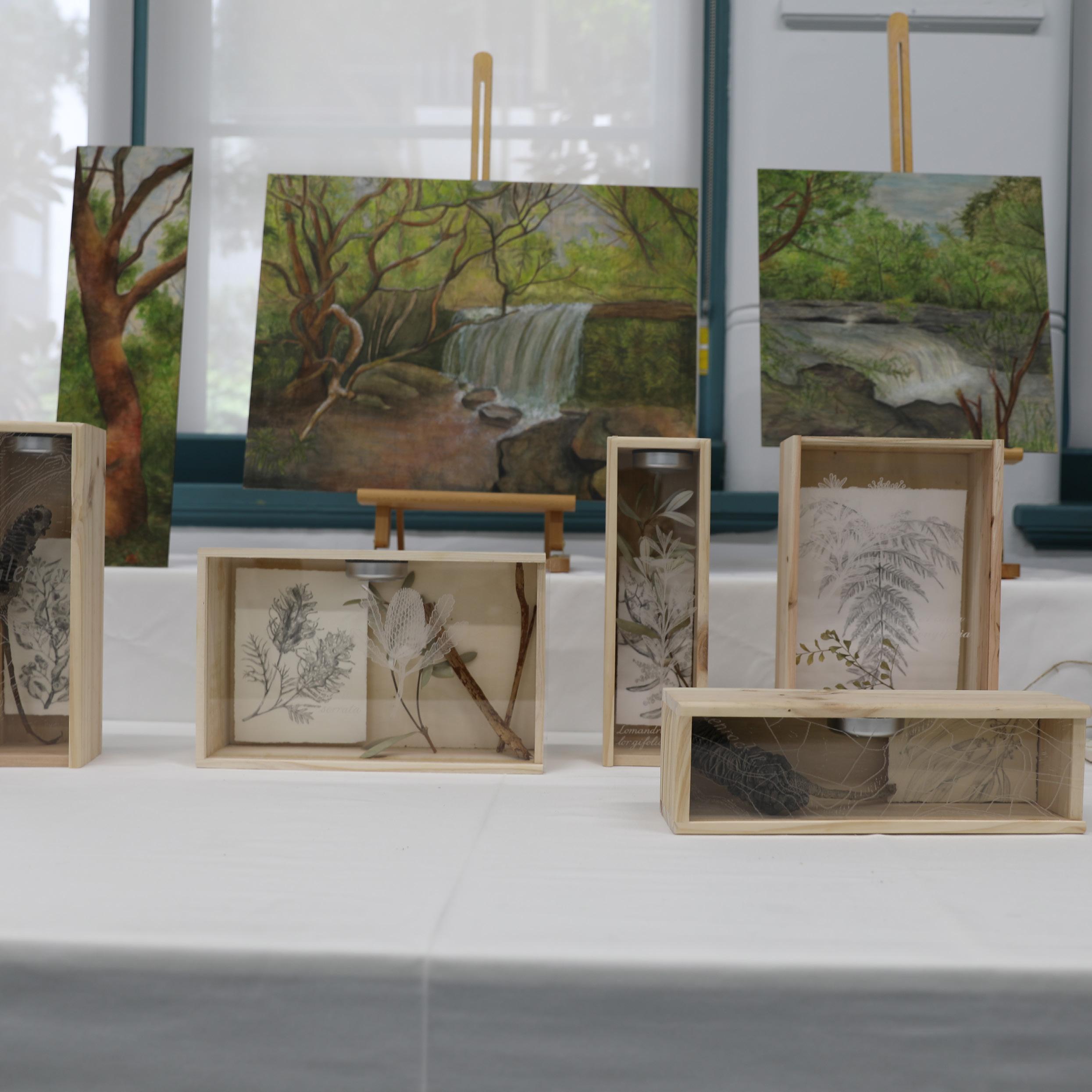
Where the Earth Lies Delicate
Expressive Artform: Collection of Works
Materials: Watercolour on board, lead pencil/graphite drawings, ceramics (white Eartheware clay with watercolour), wooden boxes (with LED light/acrylic imagery and found natural object)
Influences: Coco Elder, John Wolseley, Botany
DIYA NOOKALA
Traces of Home
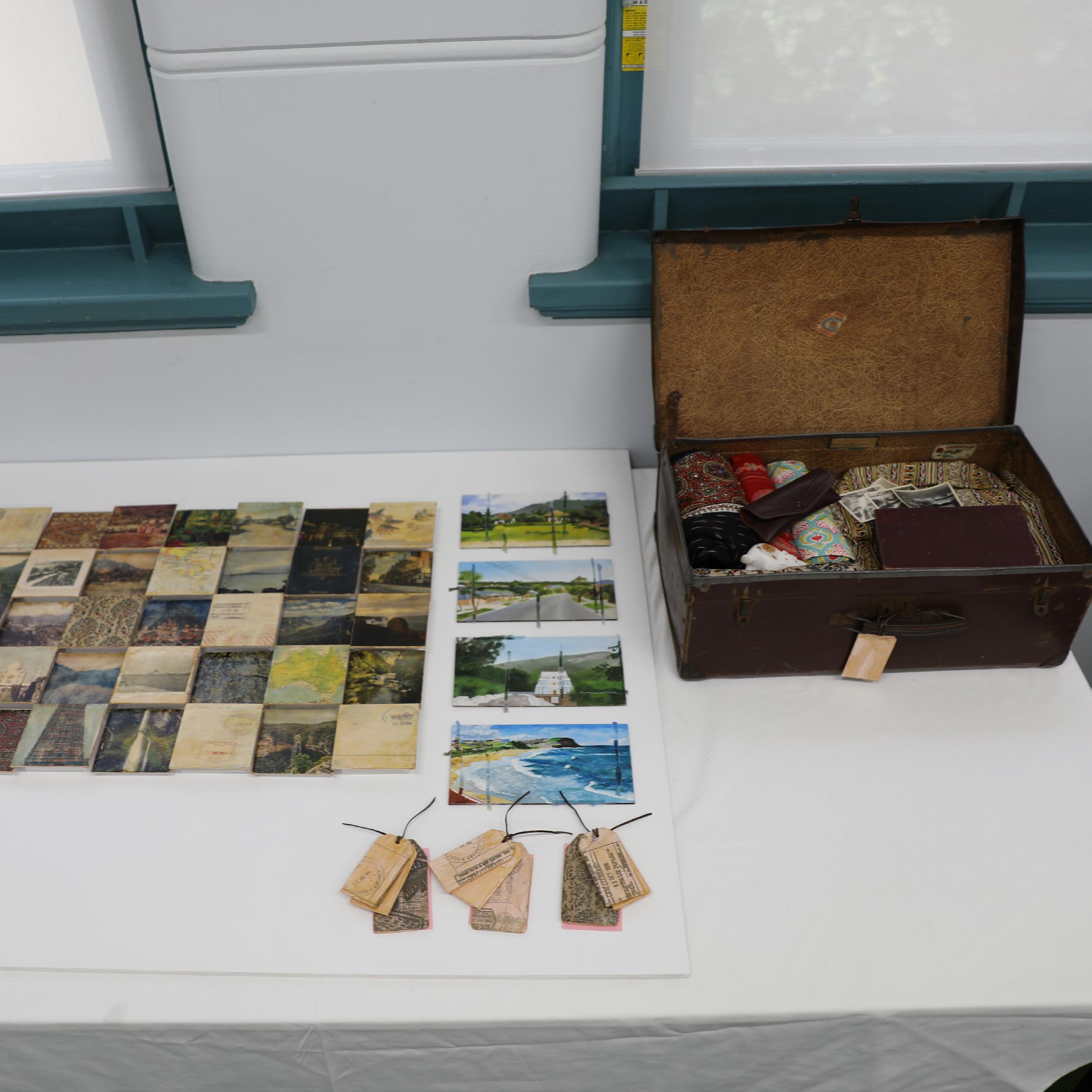
This work is a personal exploration of cultural identity and belonging, shaped by my experiences growing up between India and Australia. Inspired by photographs from my grandmother’s album, I have explored the fleeting and fragmented nature of memory, place, and family and its influence on my sense of self. Working across ceramics, oil paint, and mixed media canvases allowed me to experiment with layering and fragmenting images, mirroring the shifting nature of memory. The work captures the spaces that exist between cultures, inviting audiences to reflect on how their own identities are shaped by memory and place.
Materials: Oil paint on wood, Mixed media photo release on canvas with shellac, ceramics – white stoneware and shellac, family objects including photographs
Influences: James Tatum, Sophia Lee, Annika Romeyn, NS Harsha

SERENA PARKER
‘flow’
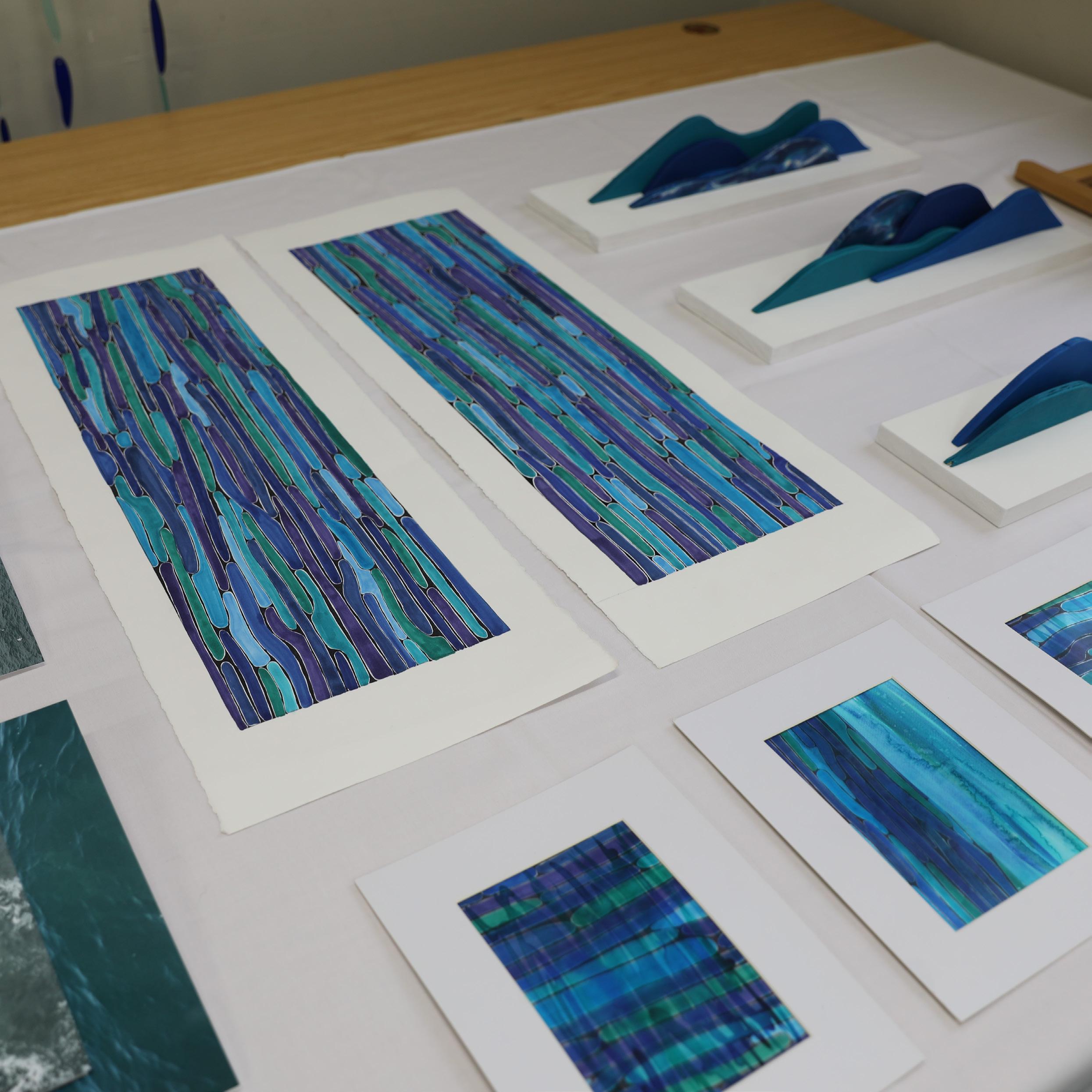
Through the combination of structured and abstraction compositions using organic forms, ‘flow’ explores the shifting rhythms, textures and forms of water. Through its layered abstraction and interplay of forms and limited colour, the work is a personal expression of a familiar environment. Inspired by Lake Macquarie, many childhood experiences and memories of being on the water. My connection to the lake and sense of renewal I experience, transcends beyond physical elements of this landscape. Through the creation of an abstract language that explores the flow of water, it’s a place where movement and stillness coexist.
Materials: Photography, 2D drawings, wood, encaustics and acrylic
Influences: Hokusai, Henri Matisse, Tansy Hargan
GEORGIE PHELPS
Intertwined Traces
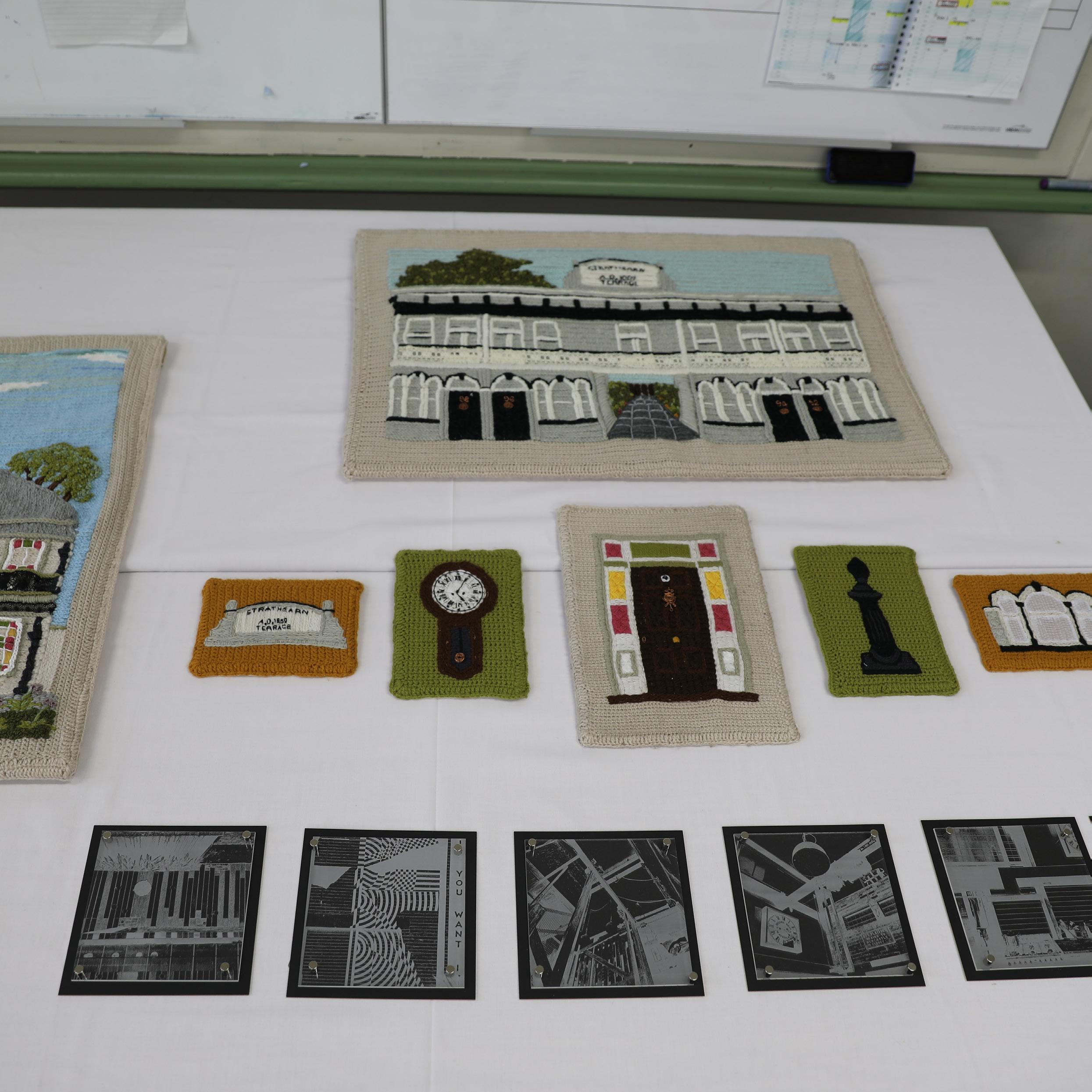
Through the use of domestic materials and processes as well as technology, my work aims to explore the formation of home and family. Through a collection of remnants and images from my world, with a particular focus on architecture and place. The representation of my world through crochet reflects the generations of my family unified by fibre work and skills passed down over many years. Just like a home has many layers and is made by many hands a family is built through a fusion of stories, experiences and environments. The overlapping experiences, memories and events formed by different lives and histories that all leave marks becoming inseparable and deeply connected. The contrasting forms of my representations of home, place and family symbolise the two worlds I navigate. Highlighting how worlds may differ within families they combine to form a disjointed yet harmonious connection that is unique.
Materials: yarn, wool, cotton, polyester, acrylic wool, wadding, ply wood, copper wire, lace, canvas, wood armature, acrylic sheets, black card
Influences: Jo Hamilton, Do Ho Su, Olek
LUCIENNE ROBERTS
fleeting
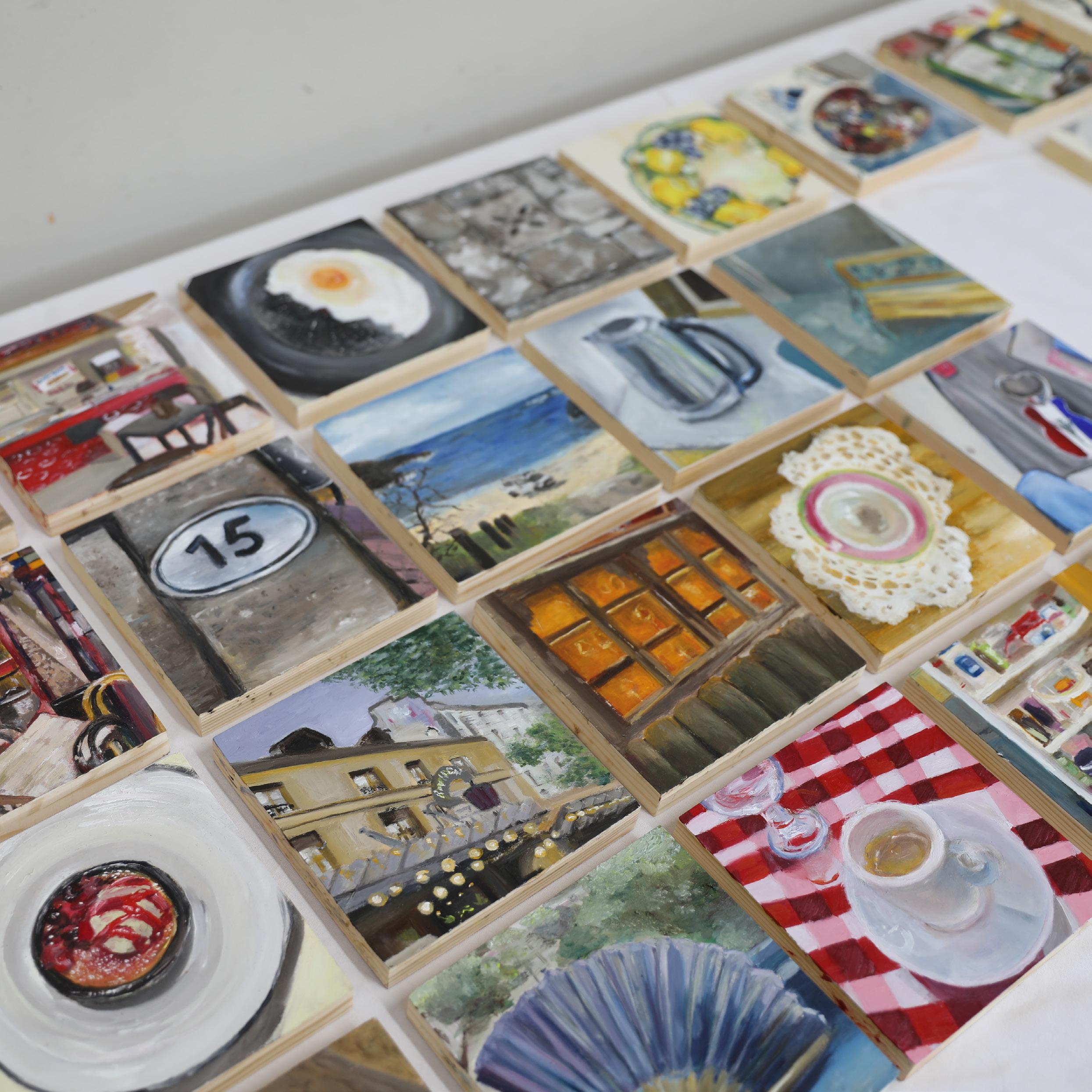
I aim to express the beauty of ‘fleeting’ moments in the mundane and regular every day. In such a bustling world, we struggle to live in the present moment, lamenting the past or anticipating what lies ahead. This splinters our perception of life, blinding us to the delicate moments threaded through our daily existence. I seek to highlight their quiet significance through the fragments of my world and experiences, transient details imbued with a fragility that reminds us of impermanence, yet it is within their ephemerality that meaning resides.
Materials: Oil on board
Influences: Rachel Milne, Beatrice Meoni, John Wolseley, Frederick Hurd
SAMUEL ROBERTS
“Live Through This”
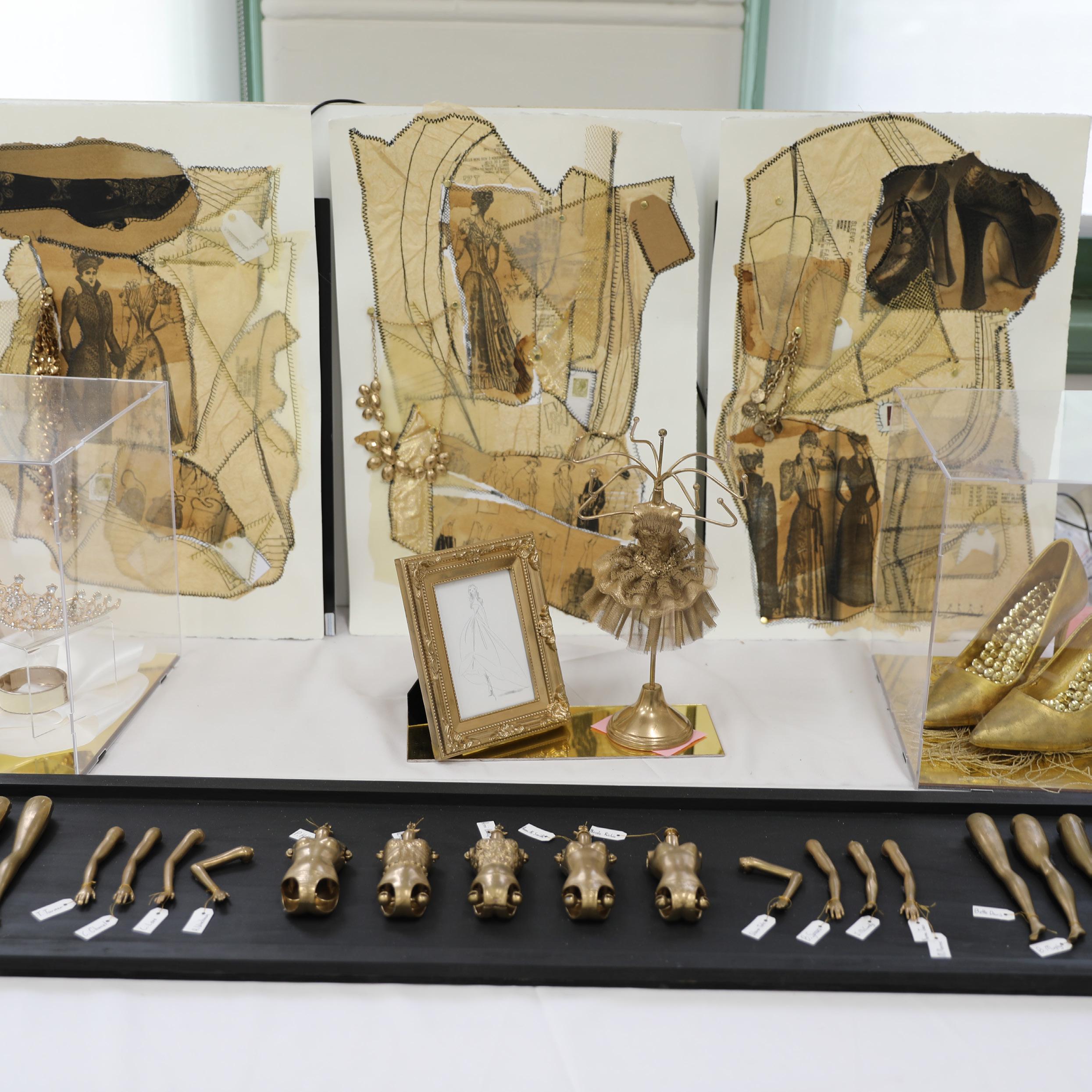
Symbols and preconceptions of beauty, fame and womanhood – using iconic imagery and items capturing the beaty queen, celebrities, fashion and the many layers and levels within contemporary Western culture. Coutney Love’s band Hole and their 1994 album “Live Through This” was a major source of inspiration for this work and in particular the song “Miss World”. The words and music encapsulate, explore and challenge female stereotypes and ideals of beauty, fame and the repercussions in an ironic way. Using this idea of metaphors and layers from the use of the gold to the doll parts, the bag tags, vintage dress patterns, the beauty sash and tiara, my work is examining the many ways women navigate and have to live through this.
Materials:
3D Sculpture Artworks:
Gold leaf, shoes, satin, fringing, thumbtacks, jewellery, tiara, dolls clothes, gold paint, doll parts, jewellery stand, small bag tags
2D Artworks:
Mixed media collage works on stone henge paper using tissue paper clothing patterns, vintage stamps, black and gold machine stitching, bag tags, jewellery, gold organza, gold fishnet, gold polyester fabric, stained paper with coffee, vintage pages from old fashion books and acrylic light boxes
Influences: Man Ray, Dada, Andy Warhol, Robert Rauschenberg, Pop Art, “Live Through This” 1994 album by Hole
POPPY TAME
“kin...structure...place”
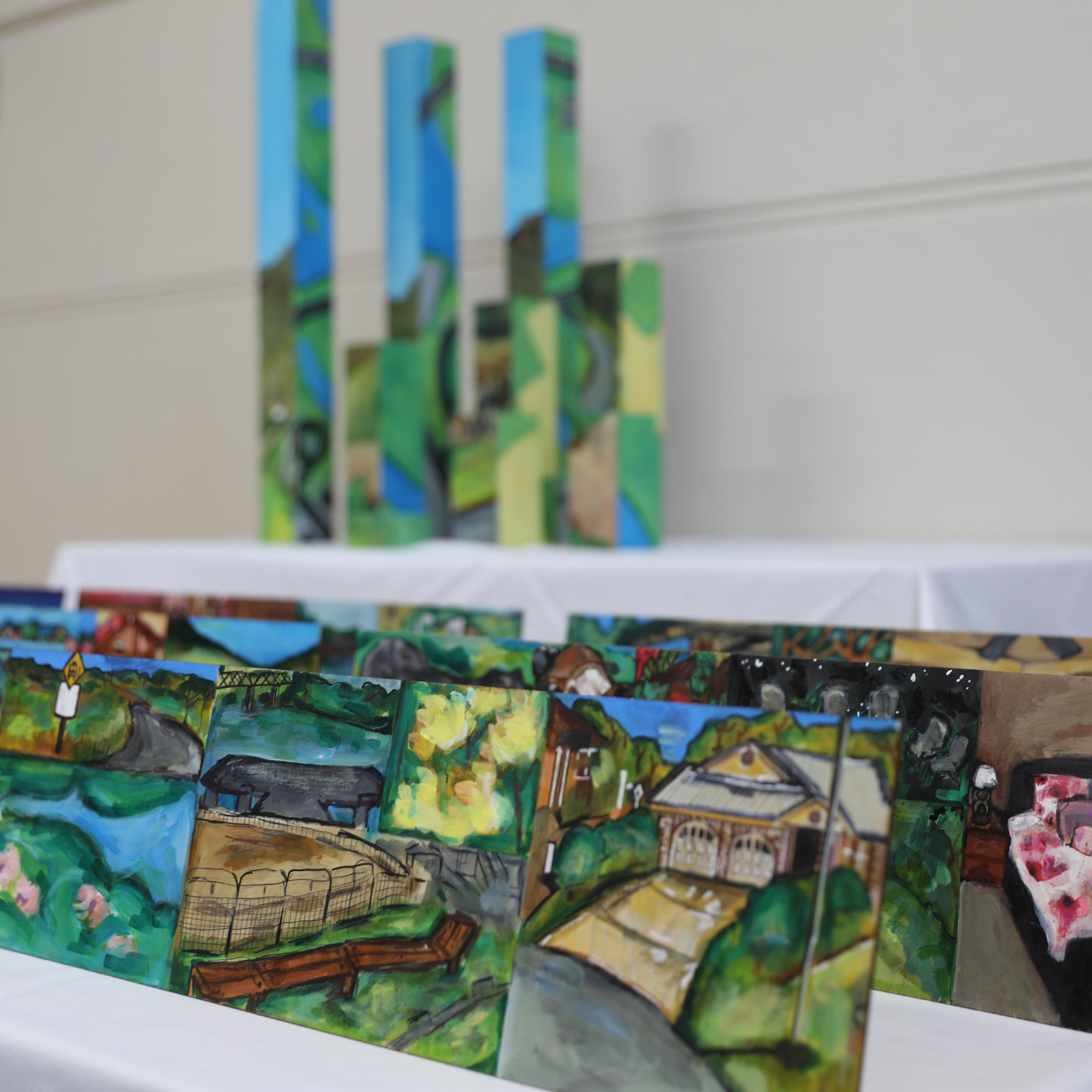
Memory, place, family, connection and identity. Using old photographs of my family at our family farm in the Hunter Valley formed the basis of my drawings on wood panels and paper. Through this exploration of old imagery and the use of a structures of wooden pieces the work was built panel by panel – piece by piece.
This structure and the juxtaposition of imagery became like the farm buildings – ordered – layered and reflecting their own stories and memories over time.
My aim was to hold space for the complexity of remembering and reflect on how identity is both shaped by what we experience and what we have lost. The work became a mediation on my family and our shared history and the quiet power of place.
Materials: Pencils – coloured and lead, wooden panels, posca pens and textas, watercolours, paper
Influences: Reg Mombassa, Ethel Carrick, Lucy O’Doherty, Rachel Milne and Gideon Rubin
EMMA TOBIN
The Intimacy of Decay
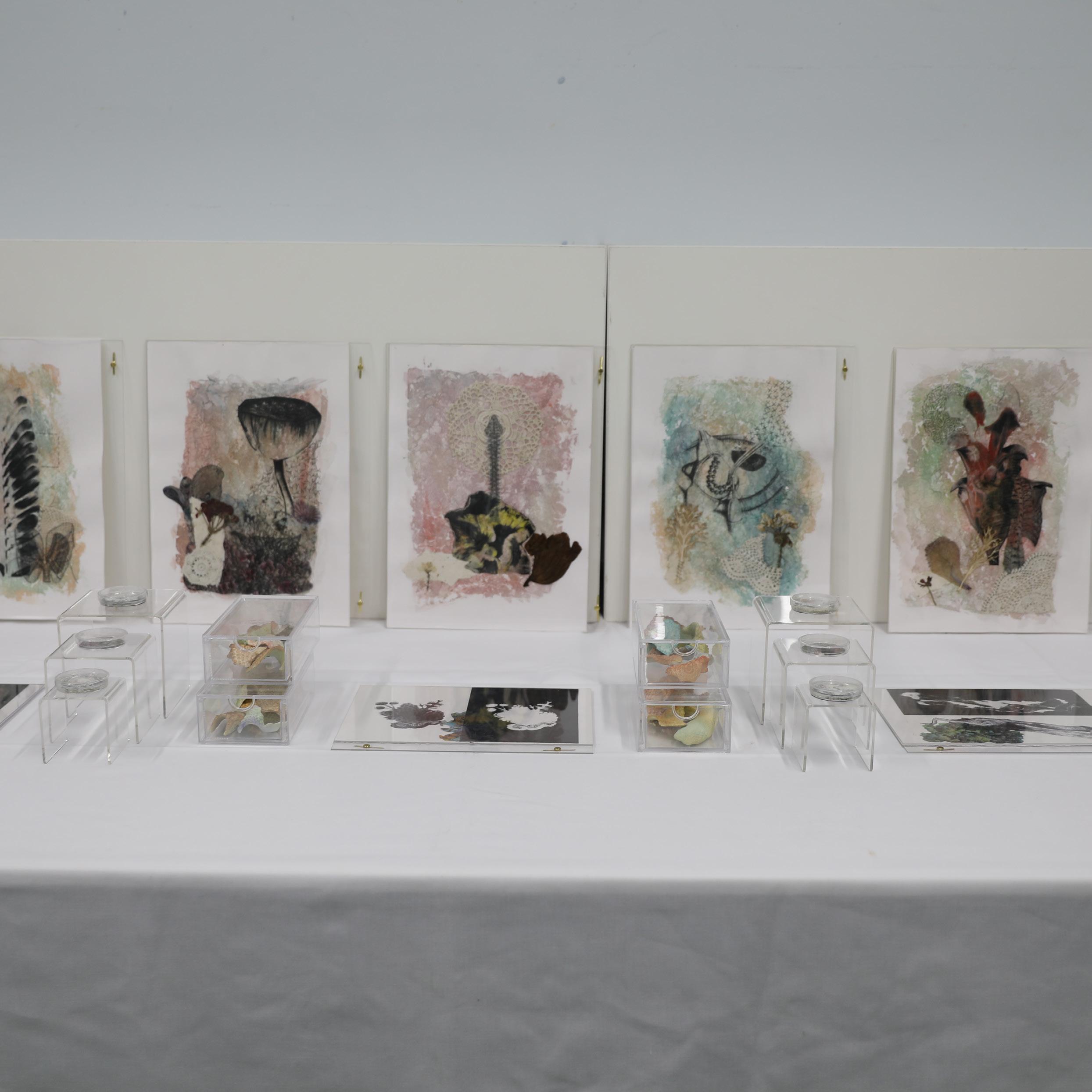
My investigation began with decay in the natural world and how this process might be represented visually. The soil and roots beneath us remind me that decay is not an end but a return to where we began.
I was drawn to old medical books, vintage imagery, dried flowers, fungi, wood and the delicate traditions of stitching and lacework. These sources informed my imagery and material choices, reflecting fragility, texture and the passage of time. I also worked with stoneware fragments, watercolour, resin, inks, cotton and printed transparencies in petri dishes.
Each element is a symbol of decomposition and resilience. Stitching and layering reflect fragmentation, yet also reconstruction. Through these processes, my work explores decay as part of renewal, where endings hold the potential for continuity.
Influences: Ashley Blanton, Ian Murphy, Nicholas Blowers, Hannah Hoch

NINA WINSPEAR
Icarus
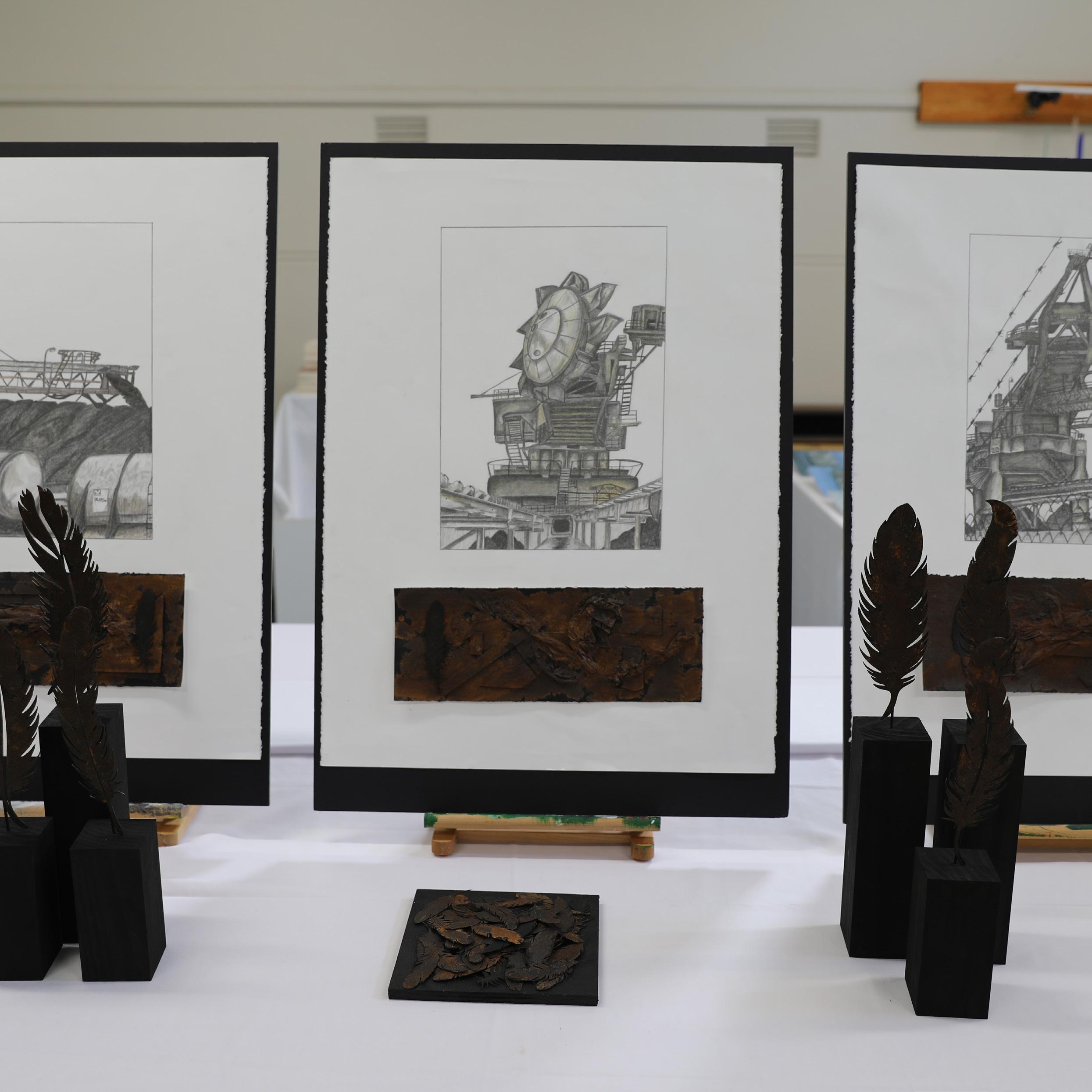
This work reimagines Icarus as a metaphor for humanity’s arrogance toward climate change. Kooragang Island, everpresent in my life yet often overlooked, embodies the fragile tension between industry and nature. Through machines and rusted feathers, it reveals destruction alongside a fragile hope for renewal. It reflects my personal reckoning with ambition’s cost and my uncertain future.
Materials:
Sculpture:
Rusted cardboard cut-outs, black painted wooden pillars, rusting agent, rust Paint (black), wood feather shapes laser cut 2D Drawings:
Graphite and coloured pencil, stonehenge paper
Influences: Herbert James Draper, Melissa Tan, Jan Sanbergs
DESIGN & TECHNOLOGY
Oliver Buck
Annabelle Goodchild
Logan Harman
Emily Navabpour
Maxim Siderovski
Fionn Spencer
Jack Welsh
OLIVER BUCK
Multifunctional Chair
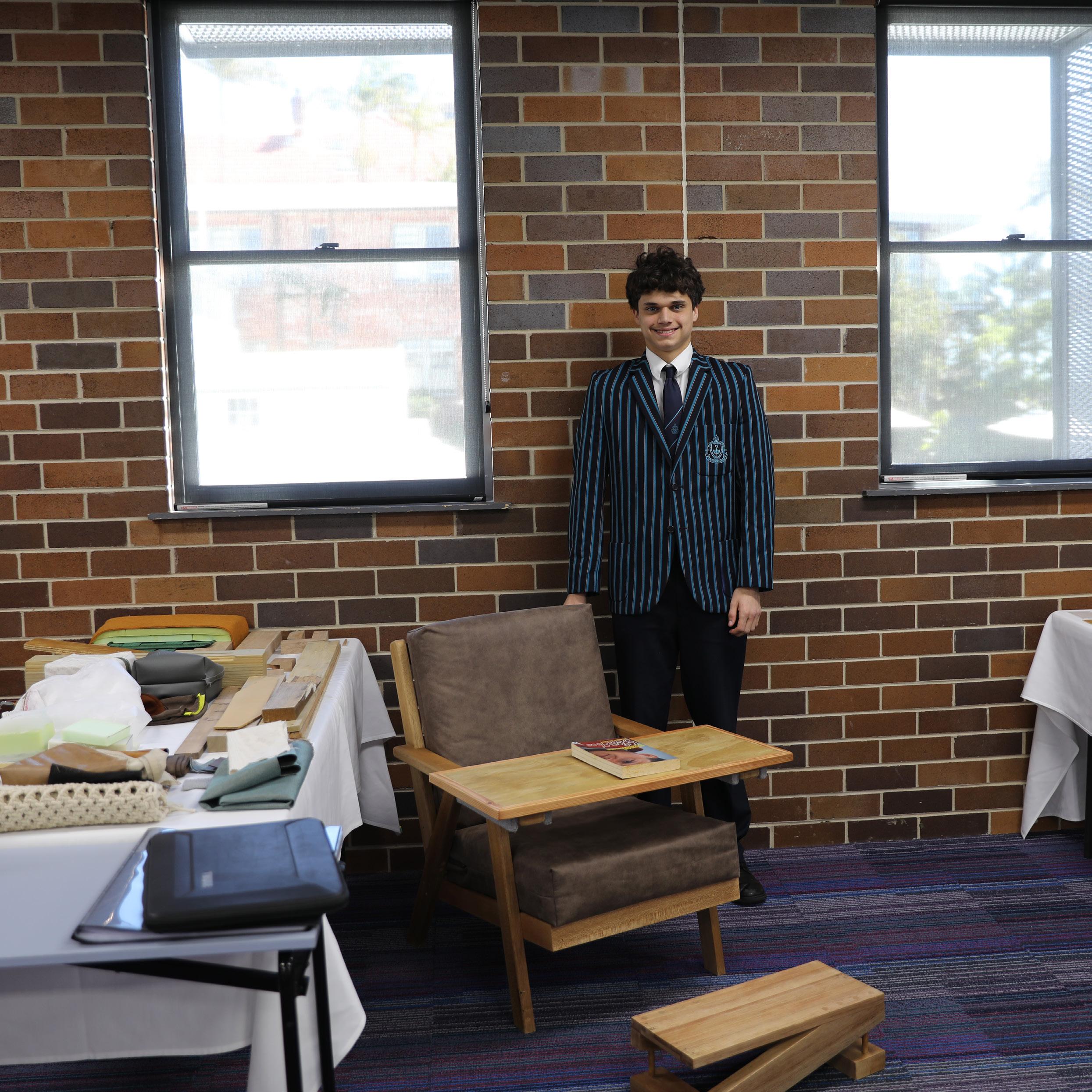
My project is a multifunctional chair that focuses on practicality, comfort and sustainability. The main chair was built from marenti wood I found on the side of the street, which gave the design strength and a natural look. Reusing this timber reduced waste and highlighted how discarded materials can be given new value. To extend the design, I also built a footstool from pallet wood. This added comfort for the user while reinforcing the project’s focus on recycling and repurposing. The chair includes a number of innovative features that make it more versatile. Recycled belts from the Salvation Army were used as both a supportive and decorative element, giving the design strength while adding unique detail. A simple but supportive backrest was created to ensure comfort and a detachable tabletop was added across the armrests. This feature allows the chair to be used as a workspace for a laptop or hold a drink or book, making it adaptable for different situations. Together, these features make the chair more than just a piece of furniture. Safety and durability were important throughout the design process. I sanded the edges to prevent injury, reinforced the joints for strength, and applied protective finishes to help the timber last longer. Testing and experimentation with tools allowed me to refine the construction and ensure all parts fit together accurately. The final result is a chair that is comfortable, strong and aesthetically attractive, while also being environmentally responsible. This project shows how thoughtful design and recycled materials can be combined to create a product that is both practical and innovative.
ANNABELLE GOODCHILD
Ecolearn
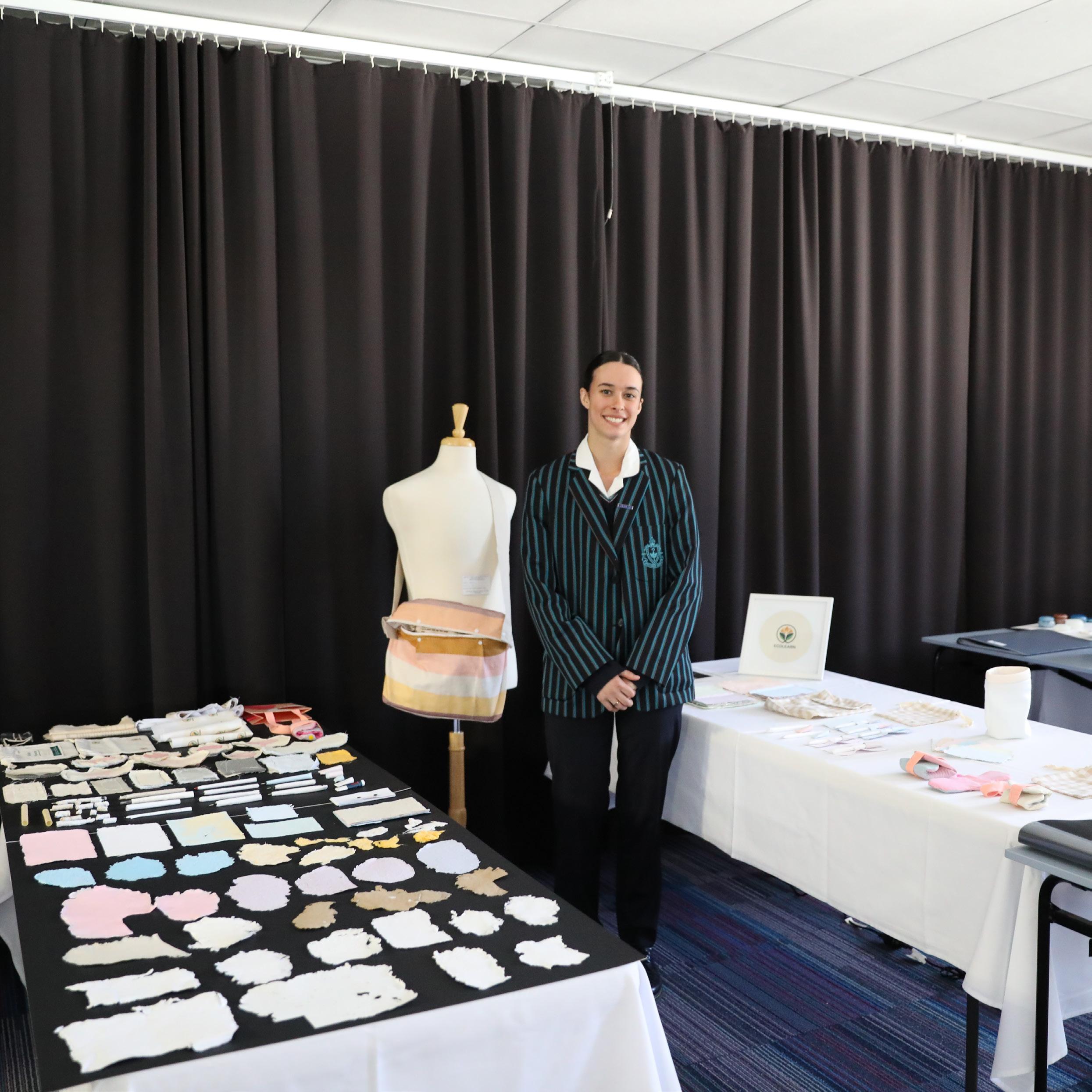
Nearly 2 billion young people live in developing countries with limited access to essential school supplies and sanitary items. Many face challenging living conditions, particularly due to the lack of everyday resources and opportunities to build vital skills. My HSC Design and Technology Major Project seeks to address these issues by creating sustainable kits and products for youth in these regions. These include plantable school supplies, reusable menstrual items for young women and upcycled packaging. Alongside the products, I have developed a brand and donation advertisement to collect and redistribute used but functional supplies, extending their life cycle and reducing waste. The inspiration for this project came from my sponsor child in Sri Lanka through World Vision, as well as my visits to schools and villages in Vanuatu, where I witnessed firsthand the struggles students face with extremely limited resources. This project brings together innovation, sustainability and compassion to provide both immediate support and long-term solutions for young people in need.
LOGAN HARMAN
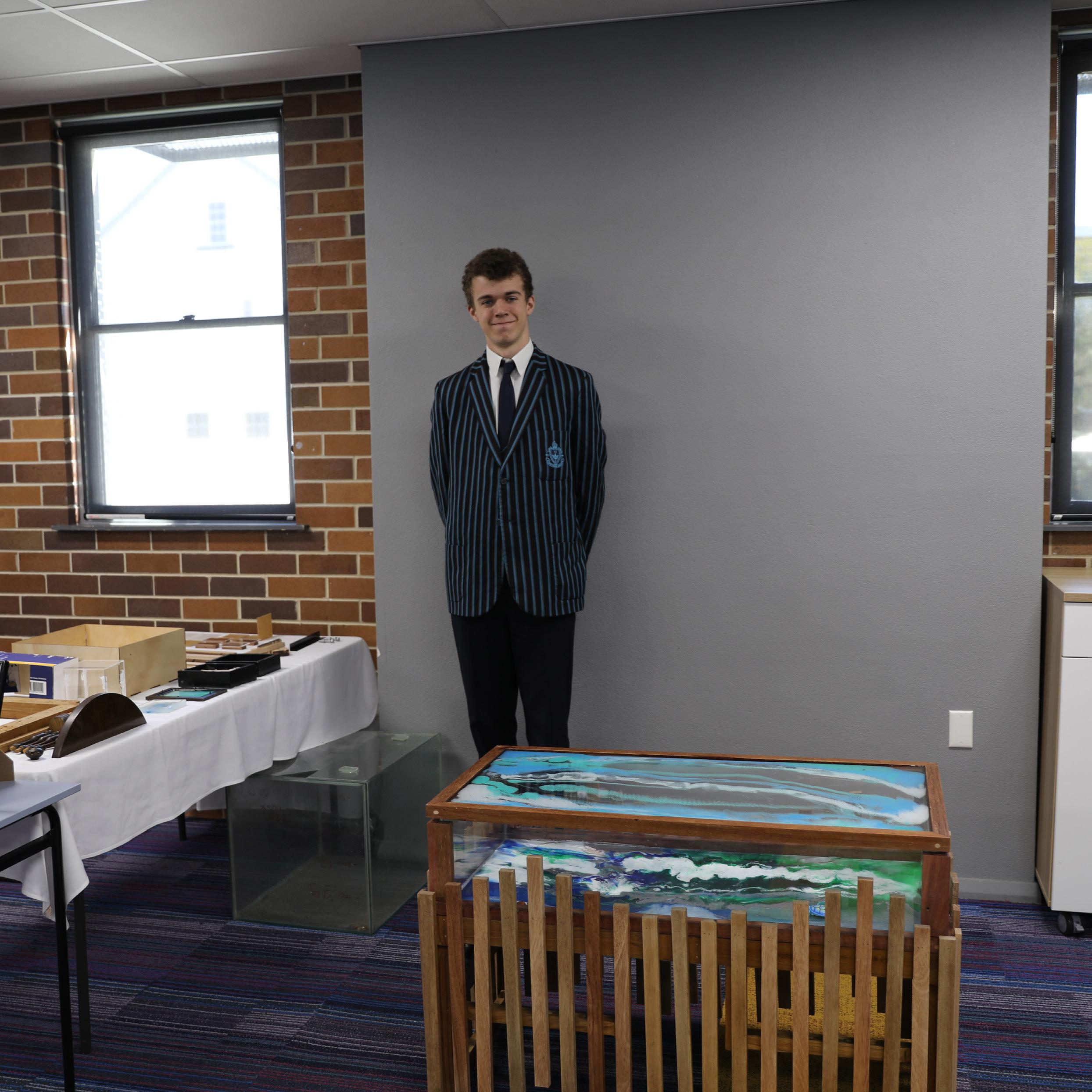
Fish Tank Coffee Table
My Design and Technology project focuses on creating a functional and visually appealing fish tank coffee table. The project integrates a homemade acrylic and resin detail tank with a base constructed from repurposed chairs, complemented by a Tasmanian Oak slat design and additional timber elements for strength and aesthetic interest. The design prioritises both structural stability and the recreation of a natural aquatic environment, demonstrating careful material selection, practical problem-solving and attention to craftsmanship. Through this project, I have applied iterative design processes and technical skills to produce a cohesive, innovative and functional final product.
EMILY NAVABPOUR
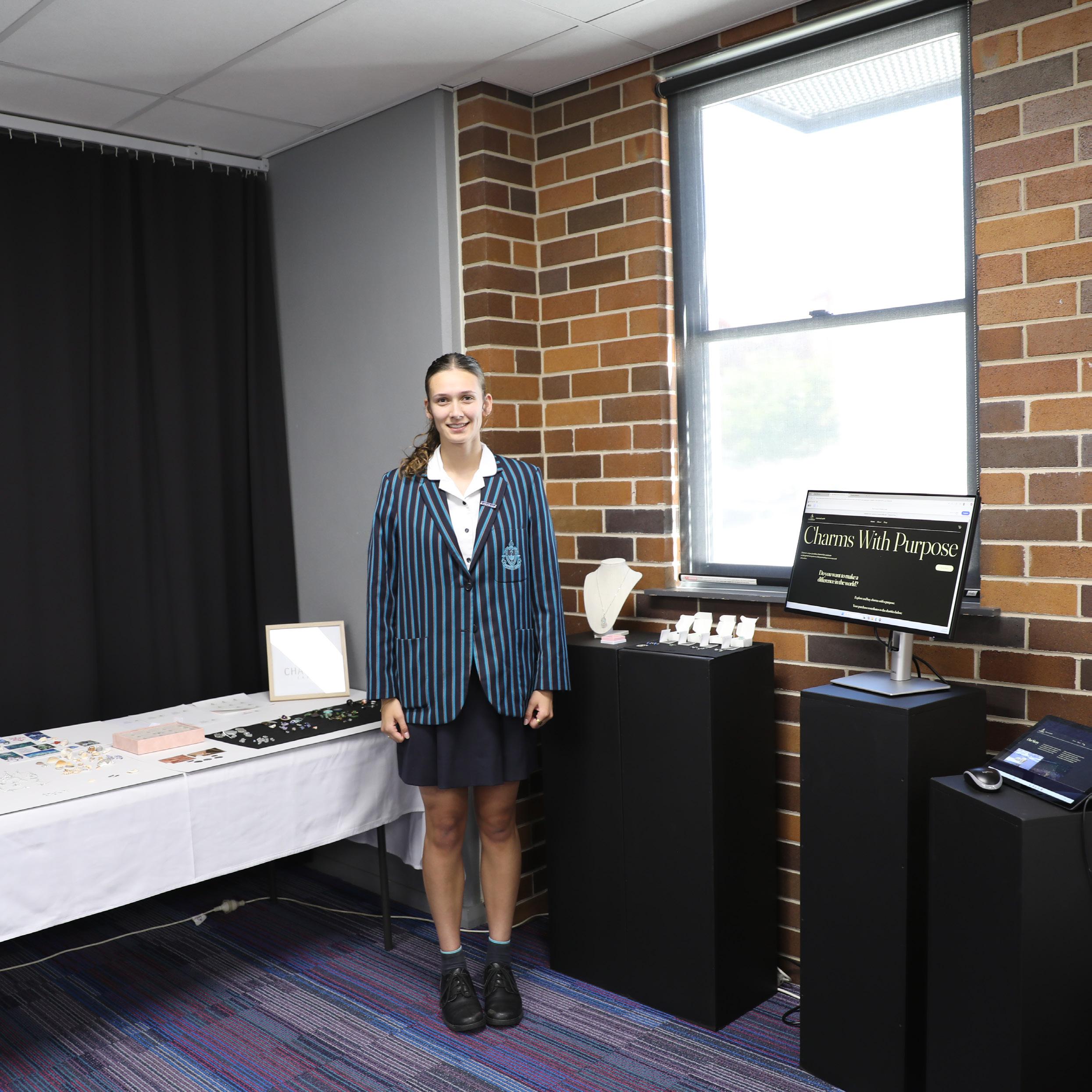
Charmed Earth
My product is a line of jewellery charms that are interchangeable between earrings and necklaces where each charm represents an identified ecosystem that is endangered or at risk. There are two components of my charms including larger backing charms which are worn on necklaces and smaller beaded charms which can be attached to the backing charm on a necklace or worn independently on earrings. Along with the physical products, I have created a website for my proposed jewellery company, Charmed Earth, which has pages corresponding to each ecosystem in order educate customers about the ecosystem that they support by buying my charms. The ecosystems that I have represented include rainforests, ice caps and glaciers, the ocean, and the environment around active and abandoned mines. Profits made by the company are proposed to be donated to identified organisations, charities and initiatives that are committed to helping these endangered ecosystems and species. Some of these organisations include Rainforest Trust, International Cryosphere Climate Initiative, Coral Reef Alliance, and Cooperative Research Centre for Transformations in Mining Economies (CRC TiME), all of which accept donation to help fund research and rehabilitation of these essential ecosystems.

MAXIM SIDEROVSKI
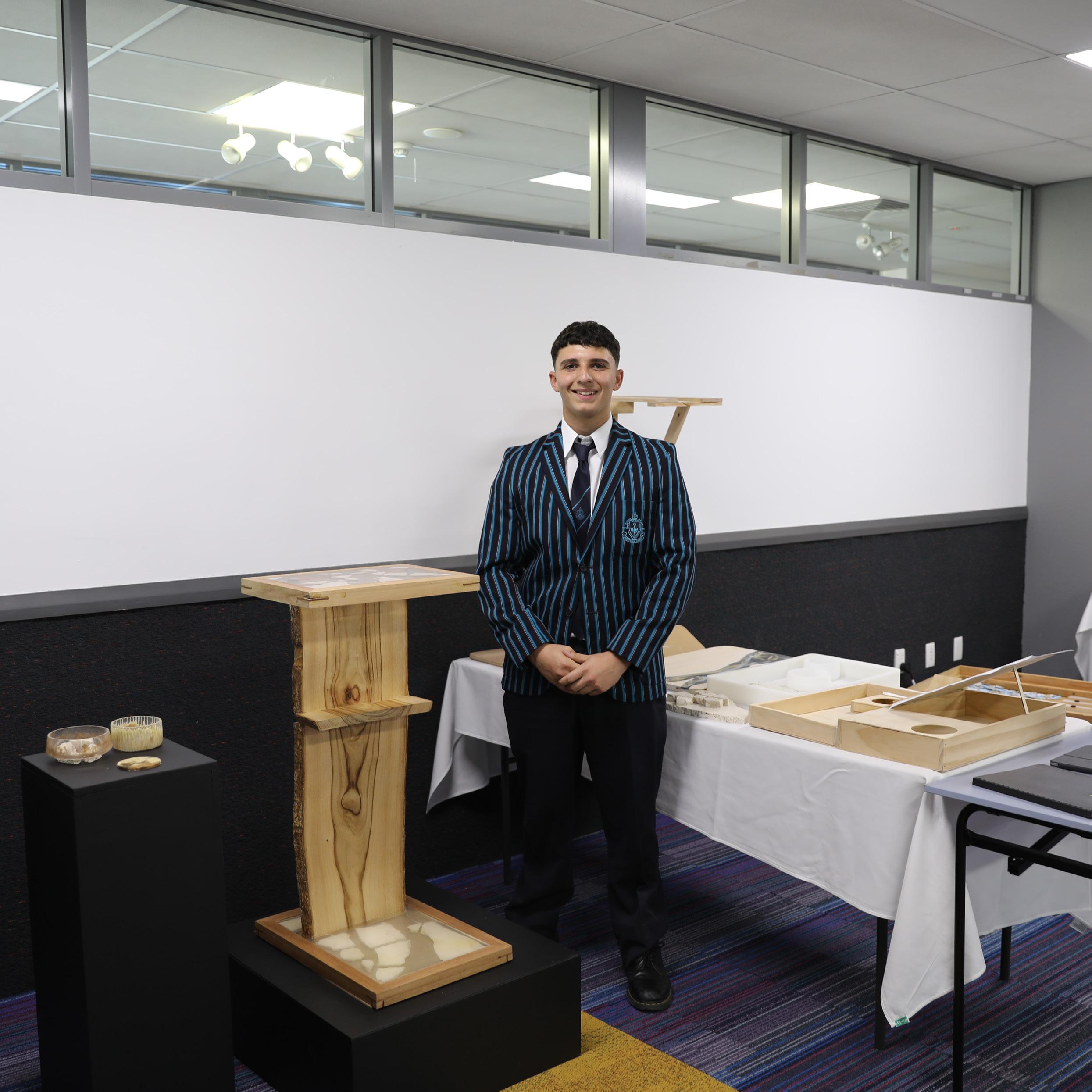
Portable Table
My project is a custom-designed work and side table that blends practicality with striking aesthetics. The table is built to be versatile and functional for both everyday use and as a stylish feature piece in any space. A standout element of the design is its reversible base, which allows the table’s style to be instantly transformed, giving the user the ability to adapt it to different settings, moods or purposes. The tabletop incorporates a hand-poured resin finish that frames a broken piece of recycled travertine tile, creating a bold focal point celebrating natural imperfection while highlighting sustainable design. This combination of resin and stone produces a unique, luxuryinspired finish that feels both modern and timeless. By merging innovation with creativity, the project takes a simple side table and elevates it into a dynamic, multifunctional statement piece that is as practical as it is visually captivating.
FIONN SPENCER
Games Table
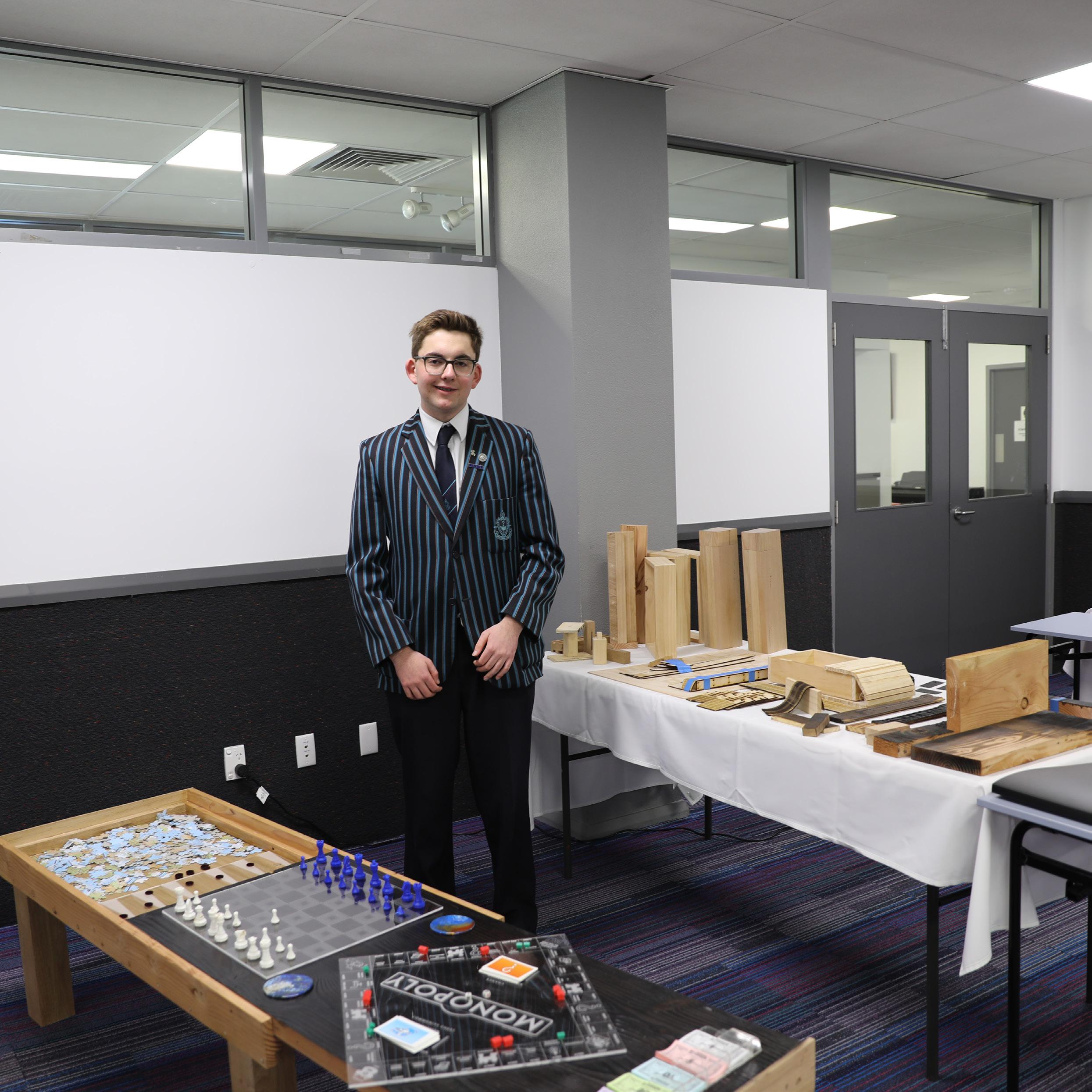
I constructed a coffee table that provides a communal place for relaxation, reading, inclusive interaction with others as well as a place to slow down. My design aimed to integrate the medium of wood as a platform to disconnect from digital devices and reconnect with others around us. My design promotes togetherness through the implementation of board games as the primary feature of the coffee table. My motivation for solving this problem is that I have seen first-hand the negative impacts experienced through the digitalised age of isolation. Through board games with friends and family, I have regained connections, had some of the most fun with my cohort and experienced everlasting micro moments of positivity that will stay with me. It is these moments of joy-filled connection that cannot be gained via other means that inspired this coffee table design.
JACK WELSH
Welshwear
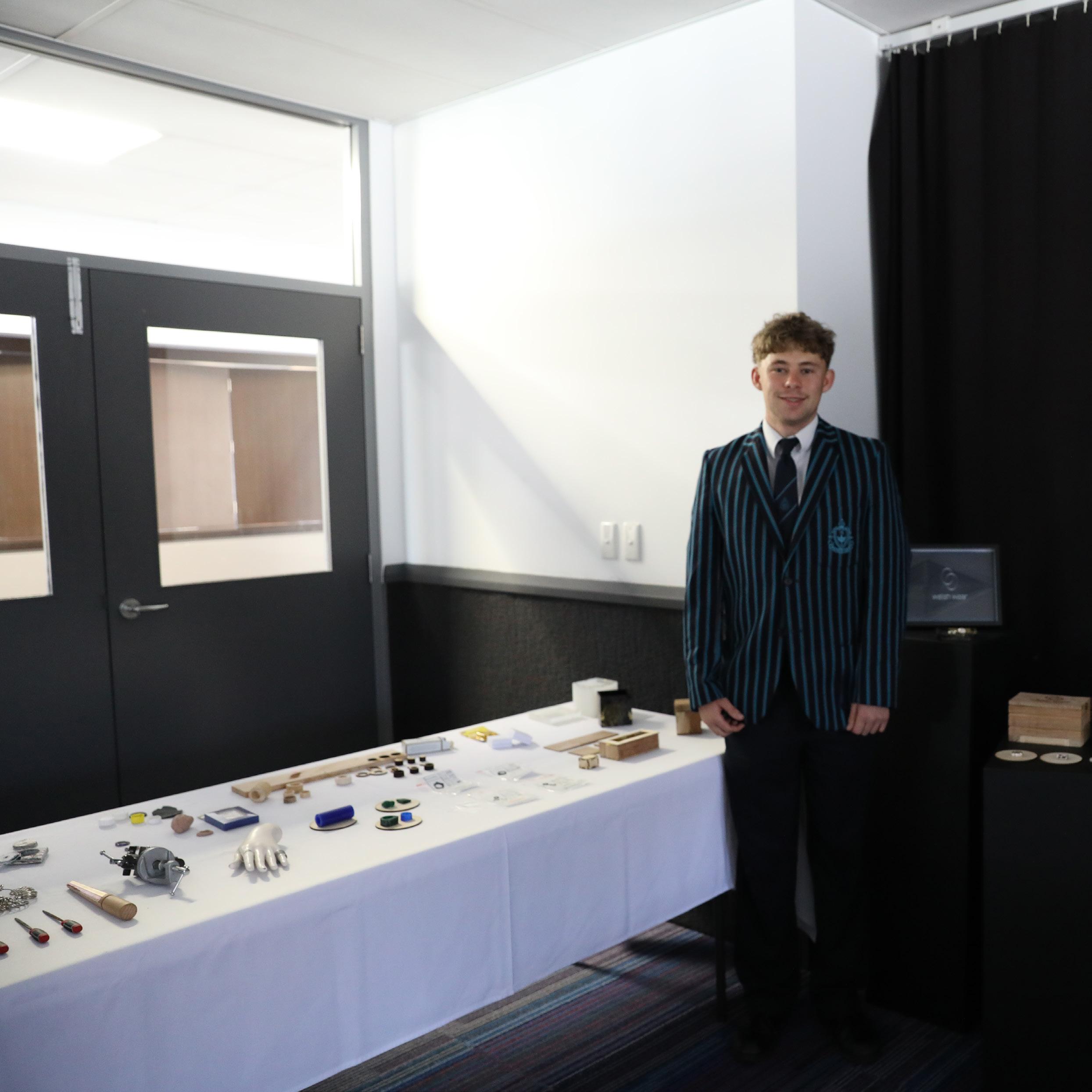
My project focuses on the design and creation of personalised men’s rings, addressing the lack of variety and style options in the men’s jewellery market. I aim to provide young men aged 16–30, as well as older individuals seeking meaningful gifts, with unique and expressive rings that combine functionality, aesthetic appeal and personal significance. The rings are sculpted from wax, allowing for intricate detailing and customisation, before being cast into high-quality silver to ensure durability and craftsmanship. A central feature is personalisation: customers can add symbols, textures, or engraved messages to reflect their individuality or commemorate special moments. To complement the rings, I have designed a range of packaging and display options, including the Big WelshWear box for premium presentation, two small puzzle-piece boxes for interactive storage and a display tray to showcase the collection. Sustainability and ethical practices are considered throughout, using eco-conscious materials and production methods. Guided by market research, surveys and professional advice from a jeweller, this project demonstrates a balance of creativity, technical skill and thoughtful problem-solving, offering a contemporary solution for modern men seeking personalised, meaningful jewellery.
ENGLISH EXTENSION 2
Pablo Arenal Mehanna
Isabel Dixon
Matilda Dyer
Jack Martin
Olivia McGee
Lucinda Mott
Lucienne Roberts
Sadie Smart
PABLO ARENAL MEHANNA
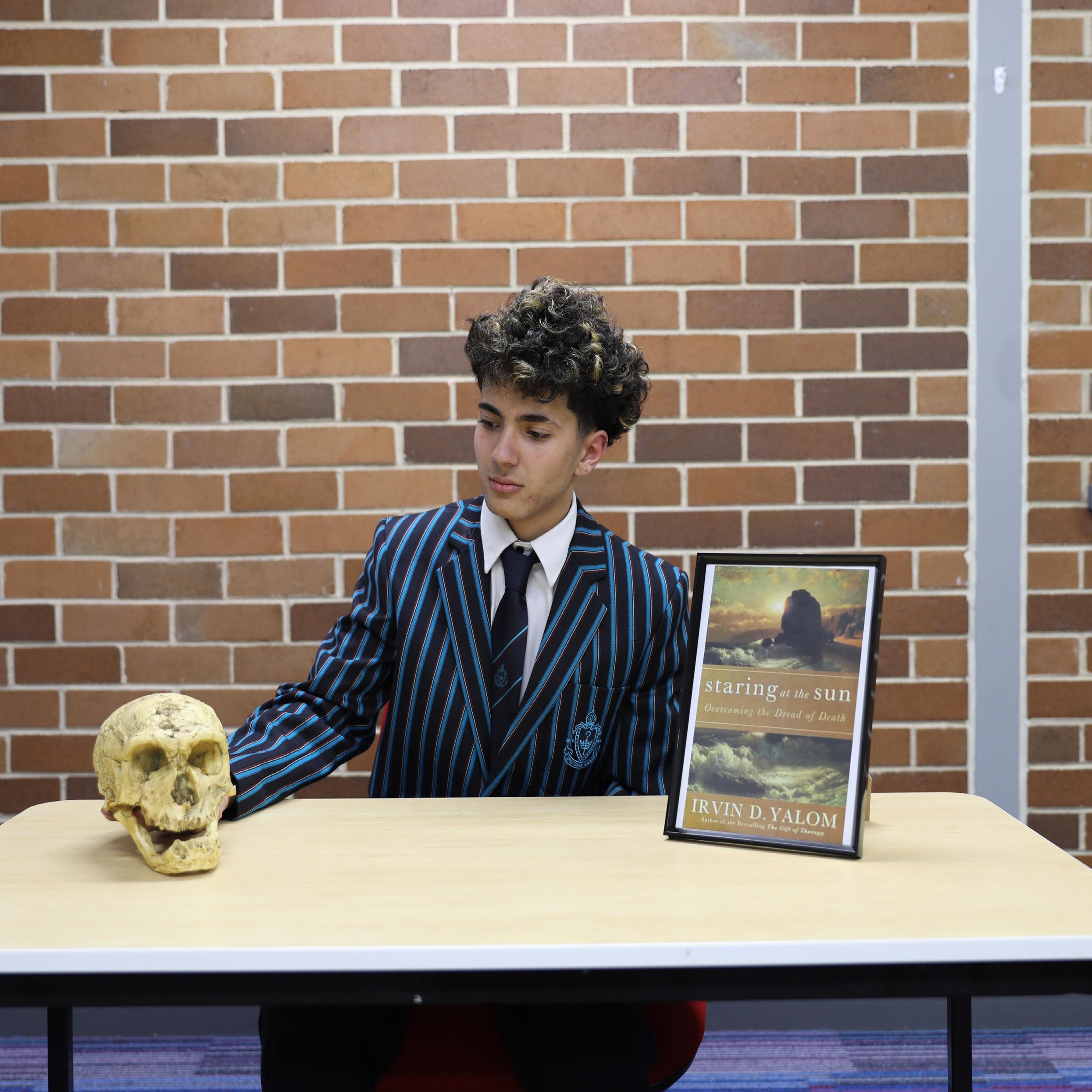
My experimental short film Staring at the Sun explores how confronting mortality can destabilize rather than liberate the psyche. Inspired by Irvin D. Yalom’s Staring at the Sun, Anna Kornbluh’s Marxist Film Theory, and Daniel Barenboim’s idea of culture as “the voice of the oppressed,” the work challenges the belief that accepting death leads to calmness. Instead, it suggests that awareness of mortality breeds disorientation and detachment. The protagonist, foreseeing his own death, becomes emotionally fractured—his inner voice splintering into contradiction.
Initially conceived as a realist drama using symbolic imagery, the film evolved when I replaced ambiguity with the certainty of death, intensifying its philosophical impact. This shift deepened my use of form: cold, grey tones give way to hyper-saturation to signify alienation; sound design favors silence and abrupt cuts to express emotional depletion.
Ultimately, Staring at the Sun transforms from a literal narrative into a structural embodiment of existential paralysis. It does not resolve death anxiety—it enacts it. My aim is for viewers to leave unsettled, suspended in the dread that defines the human condition.
ISABEL DIXON
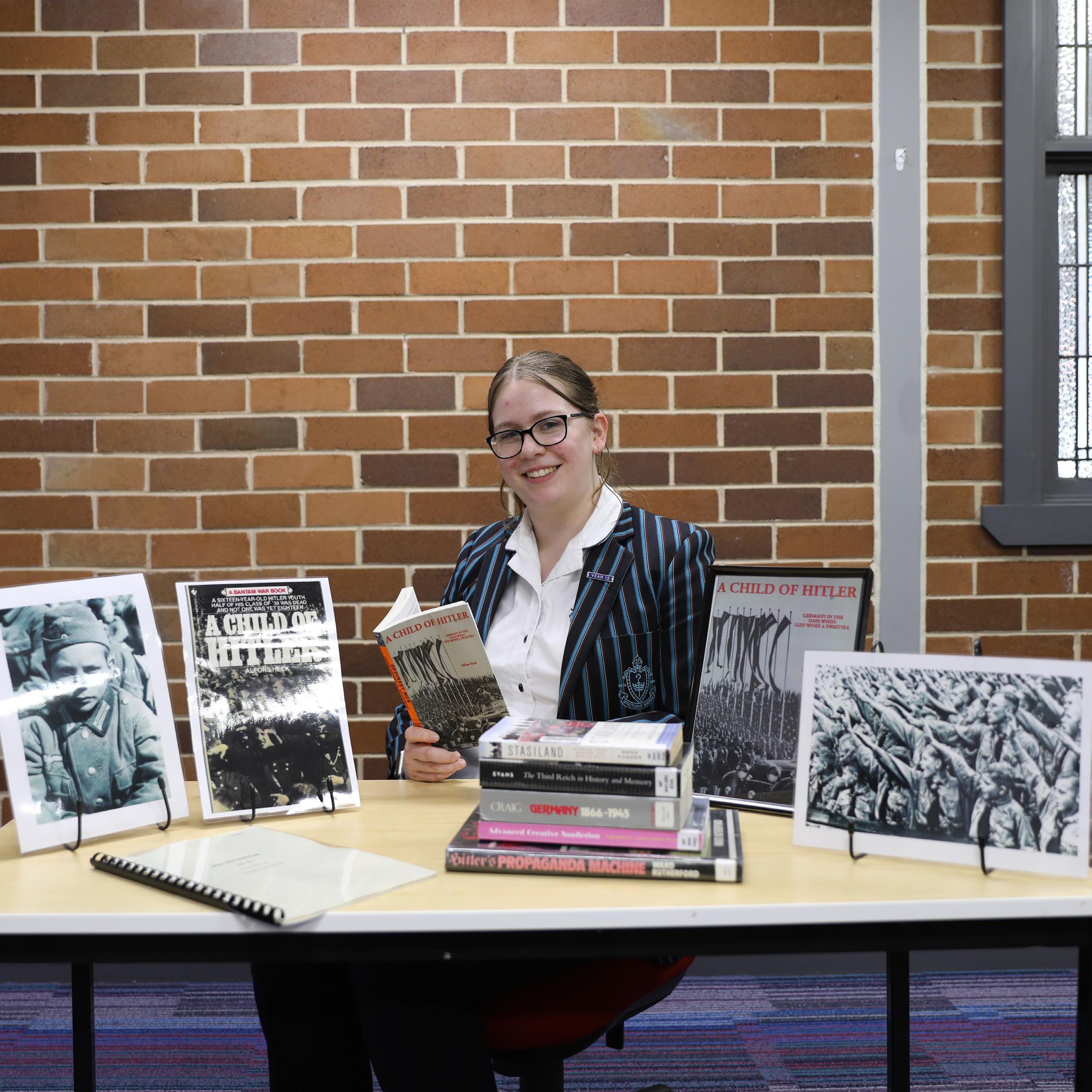
My creative non-fiction piece, When the Parade Ends is an investigation into the experiences of Alfons Heck and his subjugation to a carefully constructed reality -becoming ensconced in the Nazi regime. My intention was to explore the individual experiences of a Nazi soldier subjected to ideological indoctrination, and to investigate the erosion of his belief in the regime and the underlying causes for his disillusionment. This aspect of Nazi Germany’s history, specifically the internal psychological conflict experienced by Hitler Youth members and soldiers, is rarely examined in depth; instead, historians and audiences accept the perpetuated narrative of blind obedience. This has narrowed understandings of the diversity of individual experiences and the complex range of motivations behind allegiance to Hitler’s cause.
The postmodern context for literature has opened creative non-fiction as a method of deconstructing the truths presented in narratives, which is an area of literature and philosophy that fascinated me. I wanted to use my piece as a medium to explore the experiences of often overlooked victims of Nazi Germany, to challenge the lack of narratives like Heck in wider media. In this respect, I invite my audiences to interrogate the dominant historical narratives and consider whose voices have been marginalised or silenced to sustain them.
MATILDA DYER
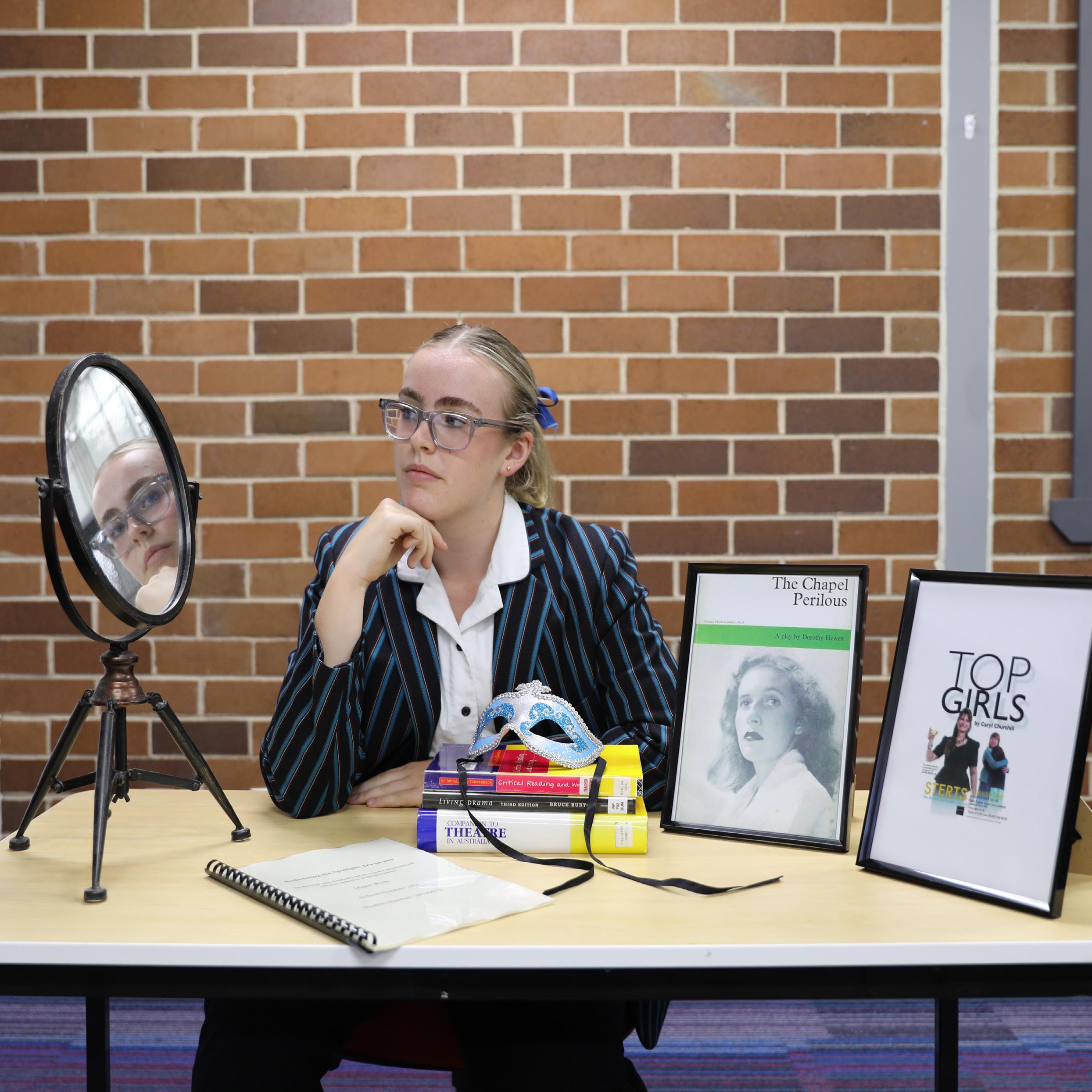
My hybrid critical piece Redirecting the Spotlight: It’s on You is a product of my deep passion for both theatre and feminist discourse, both of which I attempted to illuminate as fluid, evocative realms in the literary world. My intention was to advocate for and put a ‘spotlight’ on the inventive theatrical tropes employed by female playwrights such as Dorothy Hewett and Caryll Churchill, who actively encourage audience engagement - allowing women in the audience to identify deeply with their characters and circumstances as a form of self-actualisation and reflection. I really wanted to experiment with the essay form and push the boundaries of the critical research field, which led to my integration of meta fictive excerpts that are directed at my readers and the ‘audience’ of feminist dramas. Finding a balance between sophisticated concepts and accessible dialogue was incredibly important to me, ensuring that my piece remained as honest and authentic as possible.
JACK MARTIN
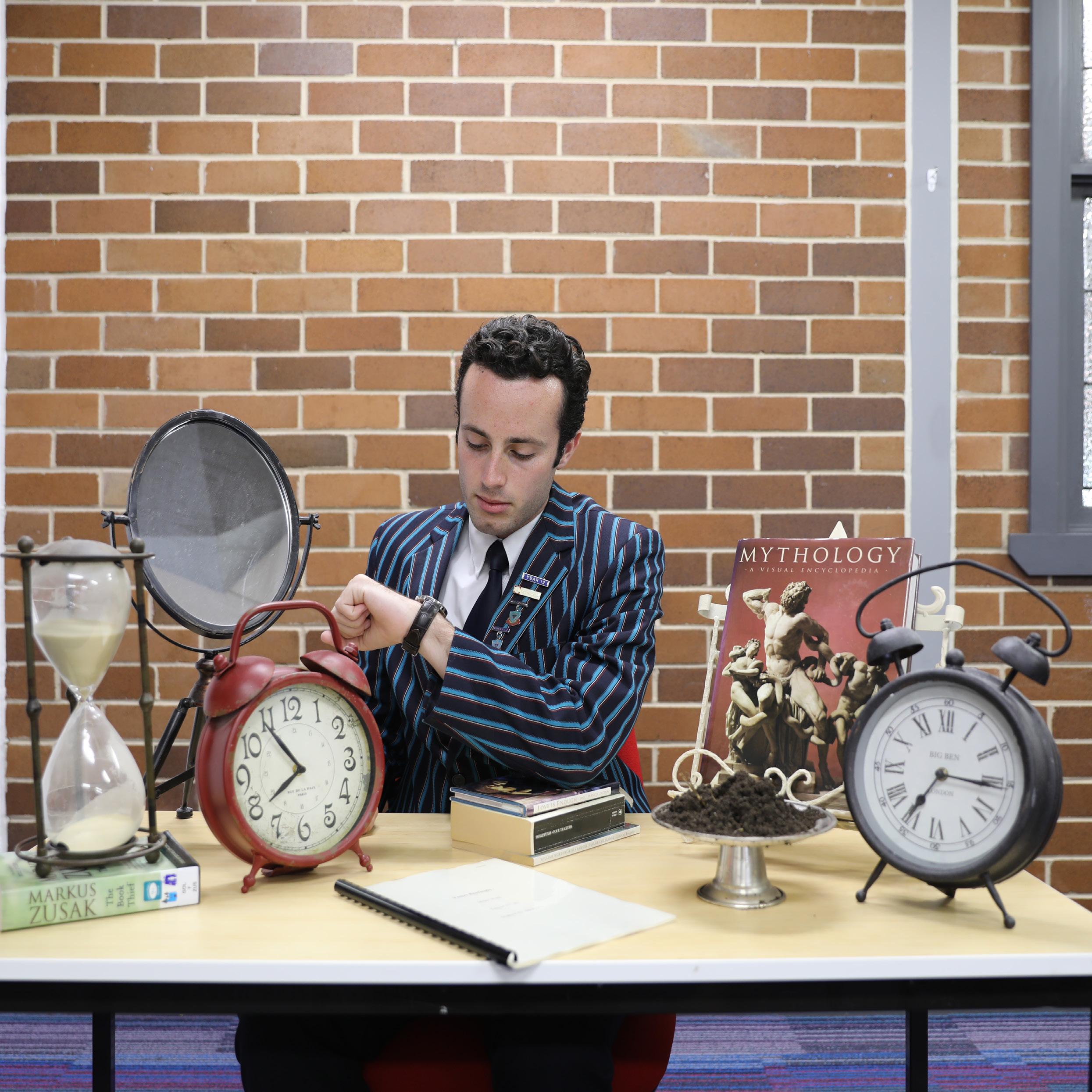
My Major Work Yours fleetingly, emerged from an investigation into the literary, artistic, and philosophical relationship between human legacy and Time. I became increasingly interested in the idea that language does not merely reflect reality but constructs and confines it. This paradox – that humans attempt to preserve the impermanent by naming it – became the thematic core of my project. The act of naming became symbolic of both hope and fear. We name to be remembered, but in doing so, forget the true purpose of existence: to live meaningfully. This conceptual inquiry evolved into a metaphysical critique of humanity’s relationship with Time. My purpose was not to define or explain Time, but to explore the myriads of ways in which humans attempt to grasp it and to expose the futility, beauty, and necessity of those attempts.
The conceptual foundation of Yours fleetingly, was also inspired by the abstract narrator of The Book Thief, whose mythic voice of Death blurred the lines between omniscience and intimacy. One of the greatest challenges I faced was differentiating my own narrator, Time, from this archetype. It took several drafts to ensure that Time’s voice, though similarly conceptual, was more ironic, discursive, and self-aware. Undertaking this course taught me not just how to craft a piece but how to challenge it. I learned that the most compelling creative choices often emerge from discomfort: from questioning tradition, breaking form, and letting uncertainty breathe to craft an enduring didactic message.

OLIVIA MCGEE
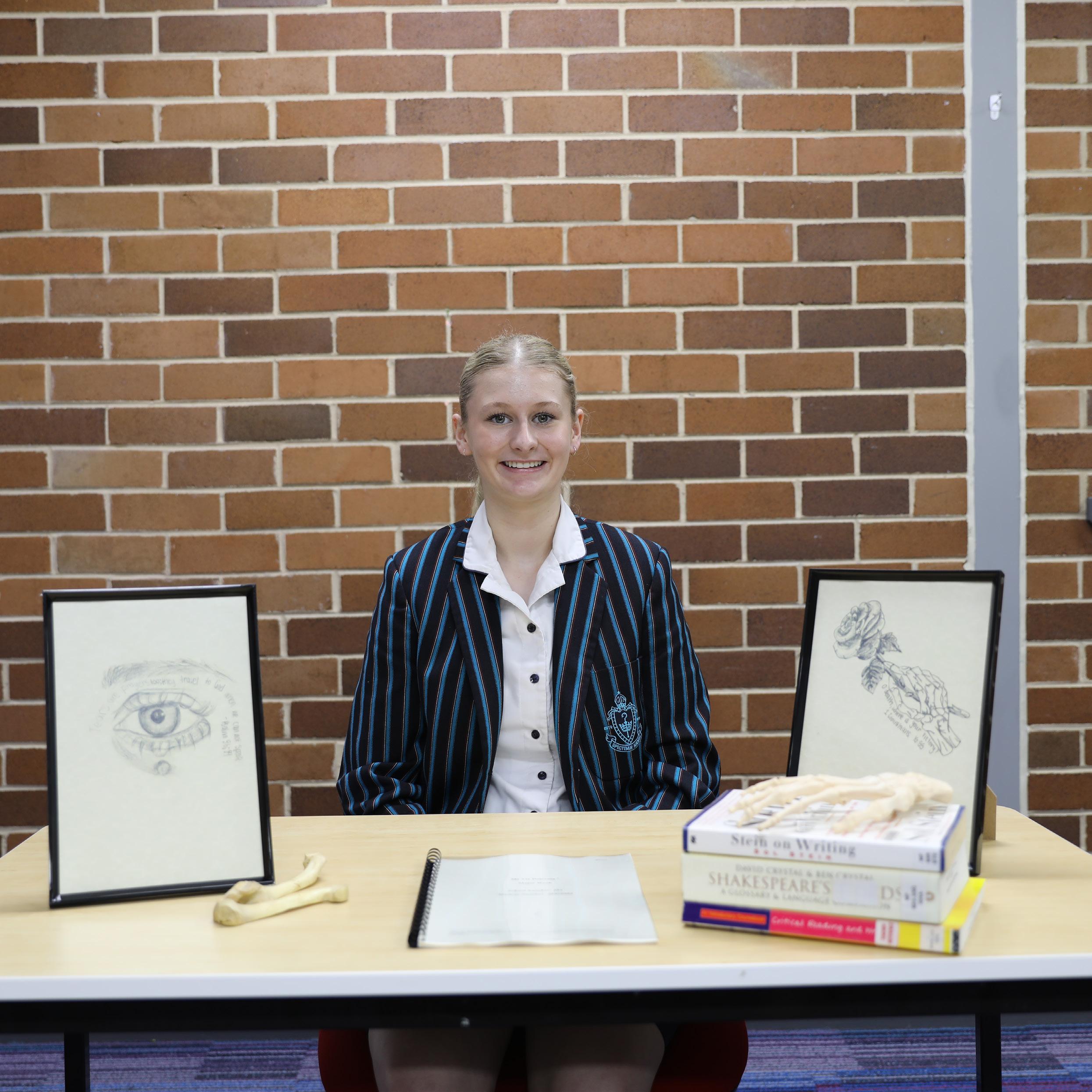
My short story My Via Dolorosa explores grief as a phenomenological construct - not as an external event, but as the interpretive process through which lived experience acquires meaning. Framed through a religious lens, the protagonist’s journey unfolds within an existential awareness, as the figures of Death and Grief simultaneously unsettle her faith and propel her towards self-recovery. In doing so, the aim of the work, is to highlight how childhood religious frameworks shape the emotional landscape of mourning, offering insight into the spiritual dimensions of human connection.
LUCINDA MOTT
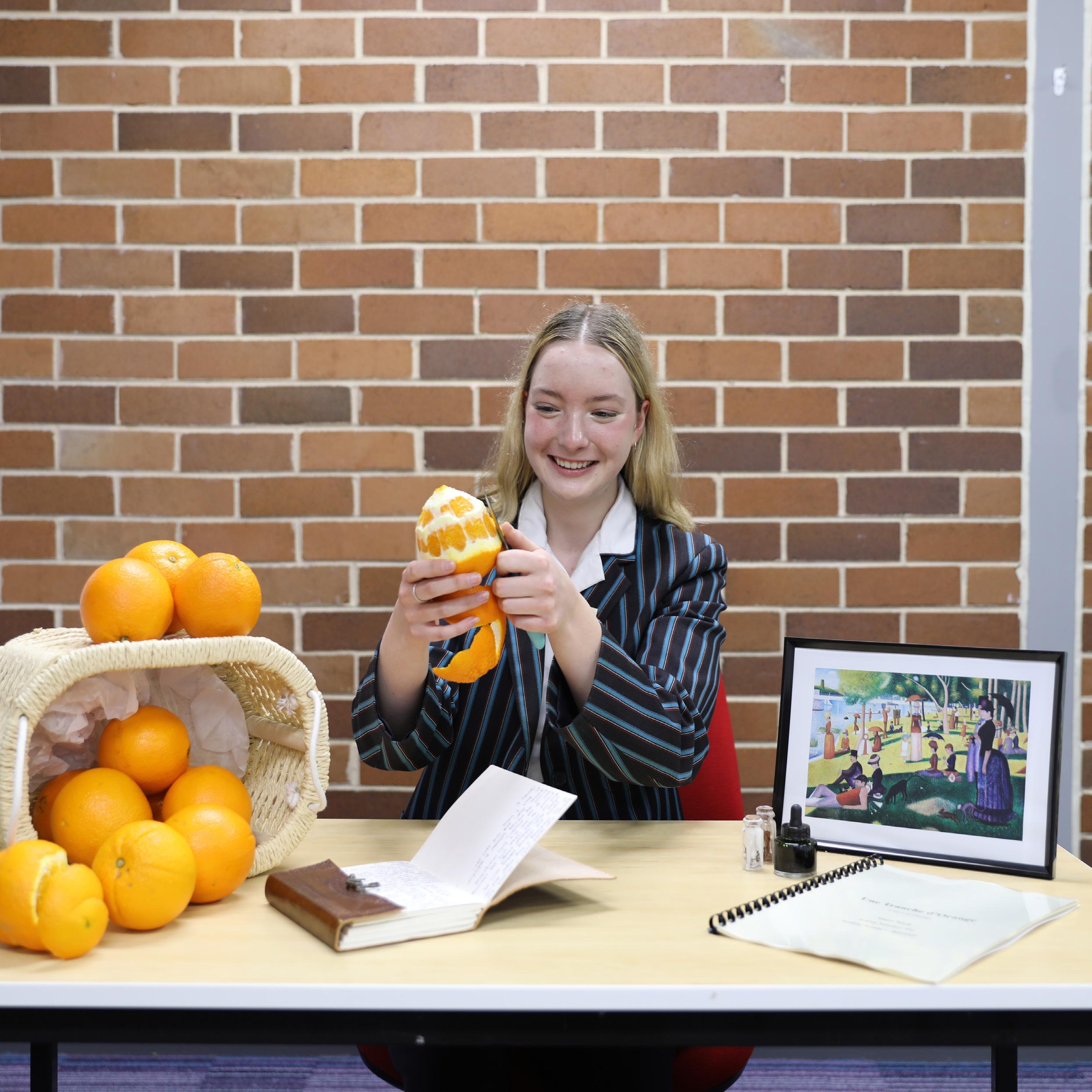
‘Une Tranche d’Orange’ is my short story creative writing piece, which explores the inextricable link between artistic creativity and psychological healing of personal grief and trauma. Through the intimate first-person perspective of an unnamed aesthete living in Chicago, the narrative reveals how portrait figures in a painting become companions in her grief, offering differing viewpoints on her childhood trauma.
In the beginning, the persona grapples deeply with her trauma, expressed in her physical and psychological reactions to art: “A slight tremor passed through my hands. My breath came shallow and unevenly, as the gallery walls blurred at the edges. I stepped back from the painting, like a protective shield, and held my notebook close to my chest. Then the Art Institute dissolved.” The paintings themselves, however, prompt a shift in thought: “In that artistic dream-space, I sat beside him on the slope of the riverbank. His name was Étienne, and he carried loneliness like a cherished heirloom.”
By the end of the piece, the persona’s grief becomes ritualised through the act of peeling an orange: “The next morning, I learned to peel an orange. Not out of routine or obligation, but because something in me itched to try again… The peel sloughed off in broken ribbons; there was no symmetry to its release. Tenacious. Like memory. Like love. Like the texture of words scrawled in urgency on a notebook page. Like the fraying edges of a parasol in mid-turn.” In this moment, her grief is no longer incapacitating her life but provides an opportunity for growth: “It burst open. Bright. Wild. Tasting not of loss, but of morning. And so, as grief bled from sienna into a gentler hue, I had no name for, I began to unpeel.”
LUCIENNE ROBERTS
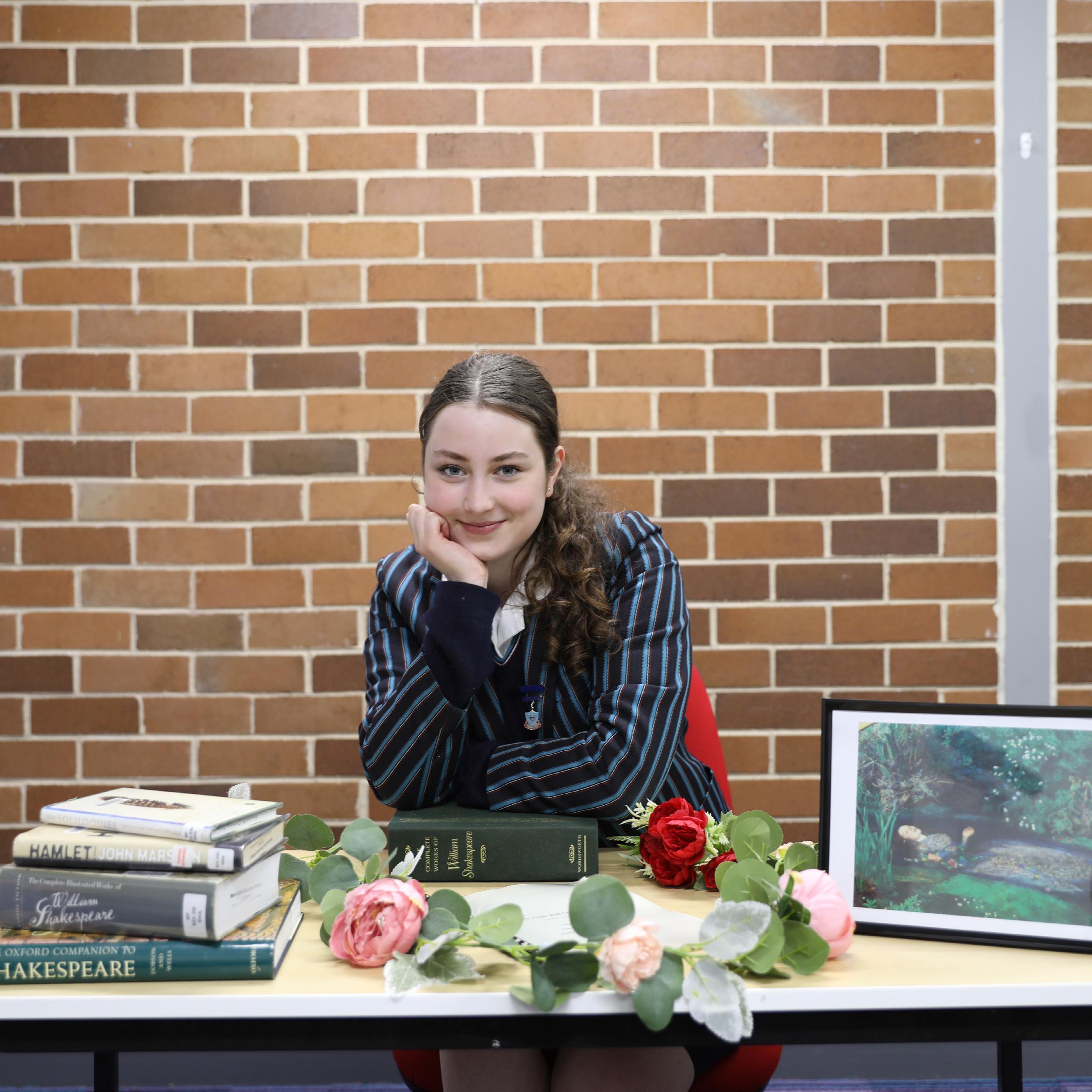
My short story is a feminist reimagining of Shakespeare’s Hamlet, highlighting Ophelia. Traditionally confined to a submissive role, Ophelia has long been denied a voice. In my work, she is reimagined as intelligent, perceptive, and capable of articulating her oppression. The purpose of my piece is to challenge patriarchal representations within canonical texts and explore how women reclaim power through retelling. The story centres on Verity, a young actress performing Ophelia in a production of Hamlet at the Civic Theatre, who becomes a vessel for Ophelia’s ghost, allowing her silenced voice to surface. Through this merging of past and present, the two women critique the systems that suppressed them, forming a relationship that affirms agency. I was inspired by Atwood’s Hag-Seed and my engagement with theatre, particularly how performance reshapes narratives. Developing the story required careful weaving of dual voices to create both authenticity and tension. Through Extension 2, I discovered the power of subversion in writing and the liberating potential of revisiting established texts to highlight contemporary concerns.
SADIE SMART
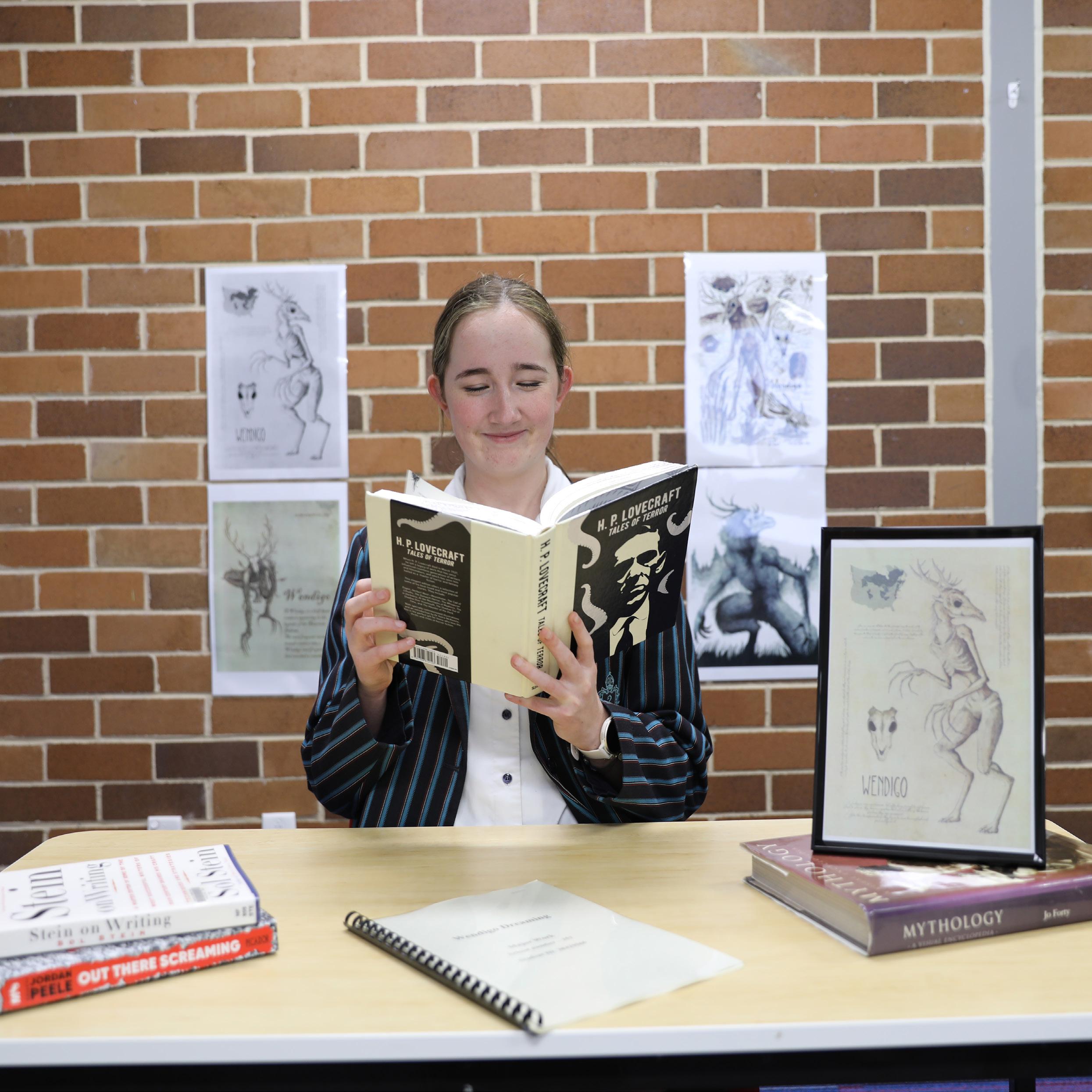
My short story, Wendigo Dreaming, developed from an interest in human psychology and the impact of cultural narratives, urban myths, and trauma on the psyche. I follow my protagonist, Ashwiyaa and her experience with postnatal psychosis, which arises from a lifetime of abuse, exploring the tragedy of domestic violence and the universality of psychological decline when the mind is under immense stress. My piece ebbs and flows between first-and second-person narration, creating an externalisation of her psychological decline, portraying it as an out of body, uncontrollable experience. Throughout the development of my piece, I created an insightful perspective on the complexity of psychosis, using the experience of my protagonist as a microcosmic examination of trauma and grief’s effect on one’s ontology. Heavily driven by research into cognitive psychology and cultural mythos, I produced a complex exploration of the limits of human sanity under immense psychological strain.
DRAMA
Josie Doyle
William Harvey
Jasper Lance
Lucienne Roberts
Samuel Roberts
Dean Vertzayas
Claudia Wills
JOSIE DOYLE
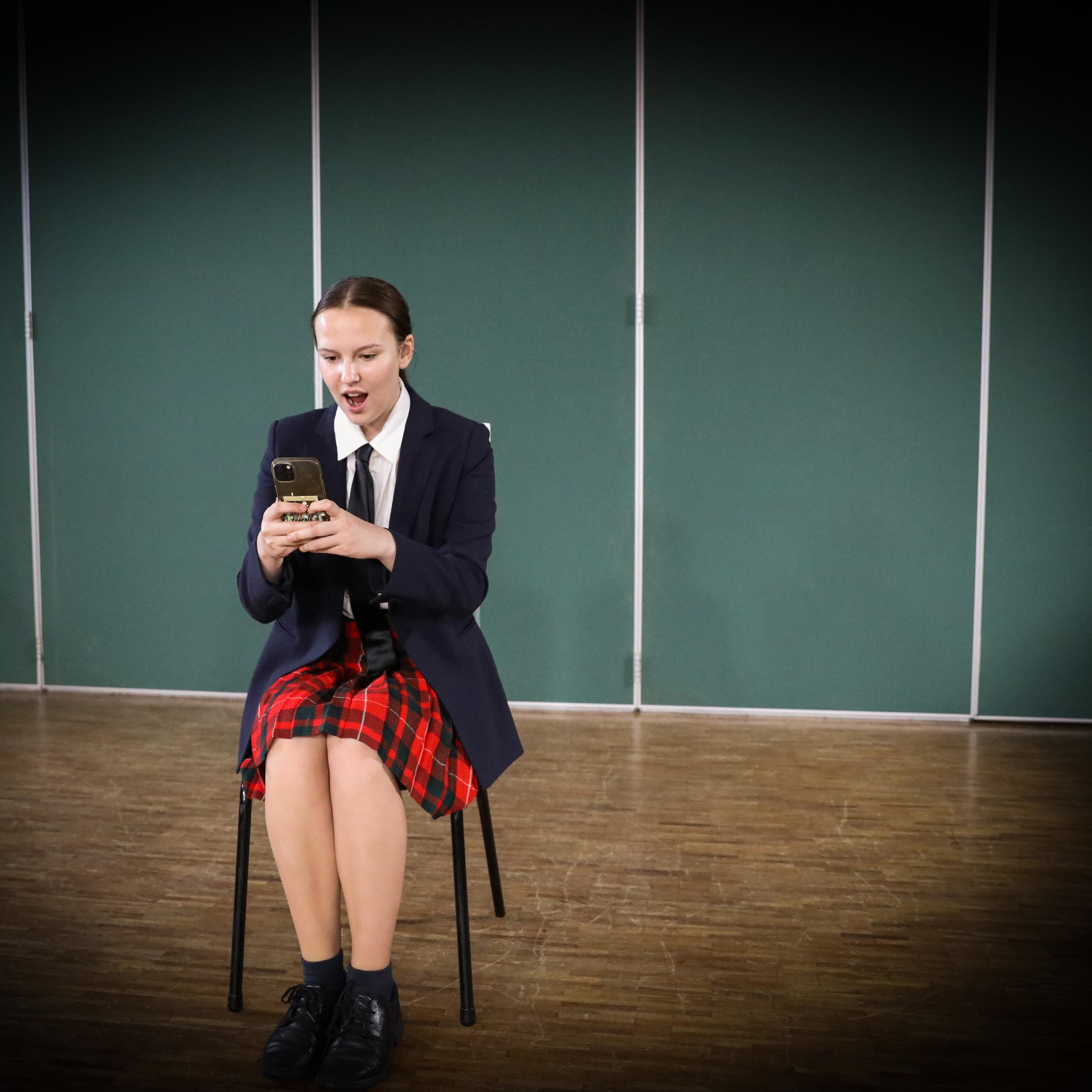
My performance of an excerpt from Evan Pacey’s 2013 Realism Play: Girls Like That explores how young girls, like boys, can perpetuate misogyny through harmful sexual stereotypes and shaming. It also highlights the pressures teenagers face in the social media age, where echo chambers of judgement and bullying can have particularly harmful consequences for women and girls.
I aim to present the reality of this issue through realism. While there are moments of transformational acting, these are minimal to convey its tangible nature. My character is insecure and projects this onto her peers, reflecting the intense beauty standards young women face. She further compounds her insecurity by analytically judging others’ bodies, questioning the ‘normalcy’ of herself in the process.
To enhance this realism, the set is simple, allowing the audience to form a personal connection with my character and absorb each nuanced expression without distraction. This realism underscores the real, personal nature of the issue. My performance also challenges the notion of ‘girls support girls,’ revealing the harsh effects of internalised misogyny in our patriarchal society.
WILLIAM HARVEY
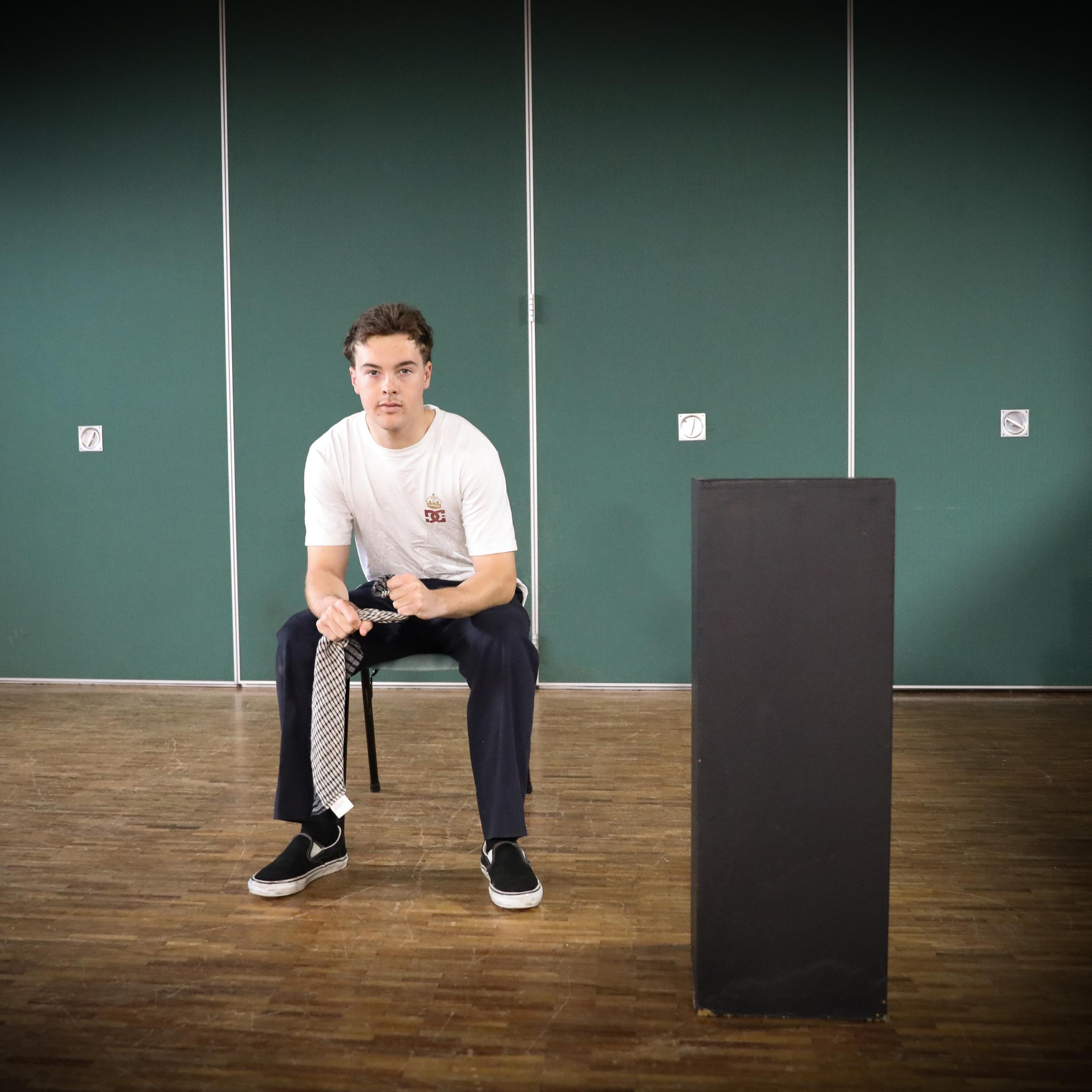
For my Individual Performance, I devised a monologue inspired by Carmy Berzatto’s AA meeting speech in The Bear, exploring his raw, conflicted emotions as he recounts his brother Michael’s struggles with addiction. I was drawn to the scene’s intensity and vulnerability, revealing how addiction affects both the addict and their family. My aim was to capture Carmy’s fractured psychology and desperate attempt at control in a space where honesty feels both liberating and unbearable.
Shaped by realism and naturalism, I drew on Stanislavski’s emotional memory and given circumstances, placing Carmy in an imagined AA meeting to ground the performance in unscripted rhythms. I also used conversational speech, silences, and fractured dialogue to convey vulnerability.
Vocally, I combined rapid speech with hesitant pauses, false starts, and stutters to reflect emotional overwhelm. Physically, I used hunched shoulders, averted gaze, and restricted gestures, punctuated by sudden outbursts to reveal suppressed anger. A single chair and direct audience address simulated the AA setting, creating intimacy with Carmy’s confession.
Overall, my performance aimed to capture the turbulence of grief and addiction, blending naturalistic techniques and the raw material of The Bear, embodying the universal struggle of those living in the shadow of a loved one’s addiction.

JASPER LANCE
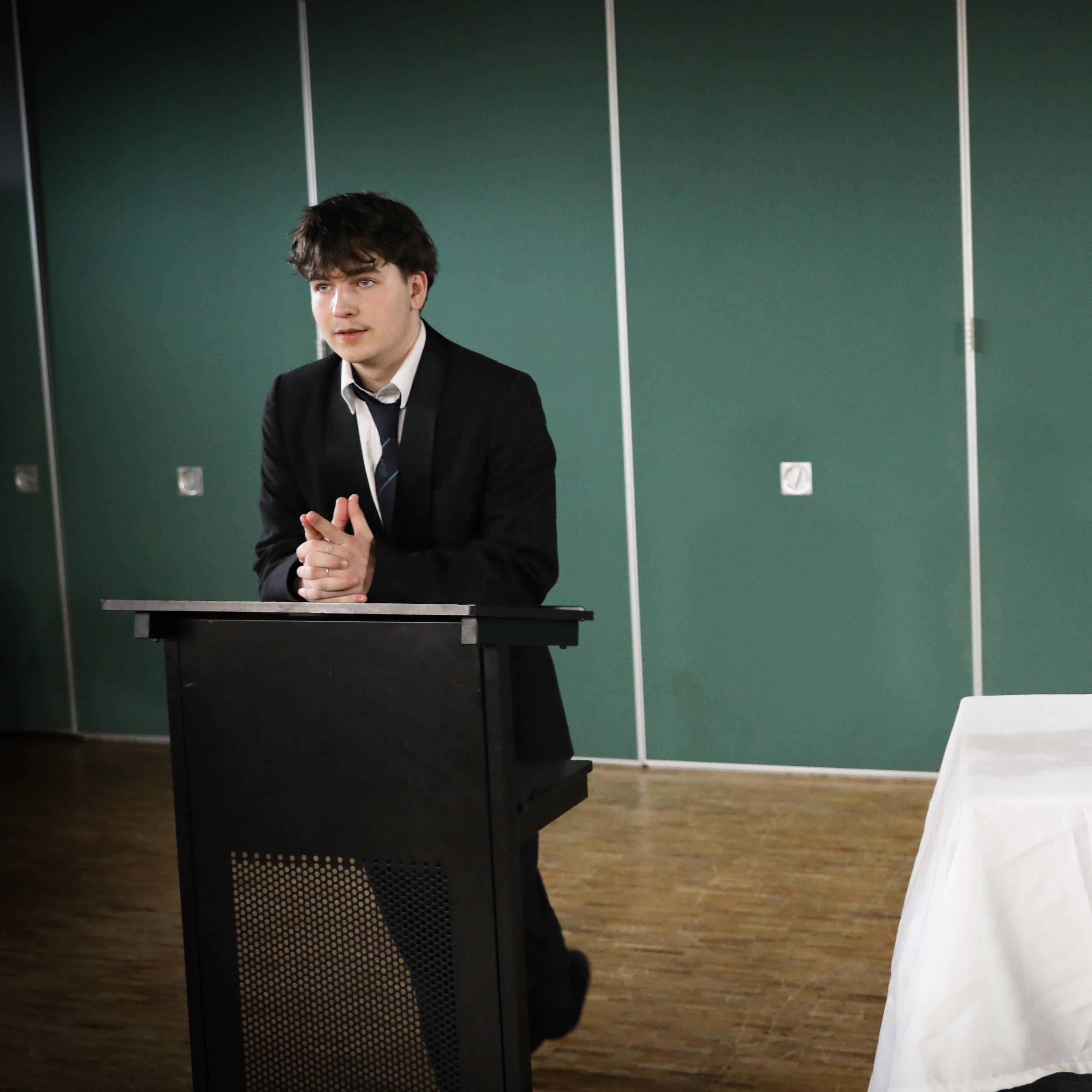
I chose this monologue from BoJack Horseman’s Free Churro episode because I’ve always been drawn to characters who are funny on the surface but are dealing with something heavier underneath. I remember coming across the episode late one night on YouTube and being blown away by how one character could hold an audience for an entire episode with just a eulogy. It’s a weird mix of humour, anger, grief, and awkwardness, which I thought would be an exciting challenge to perform.
What makes BoJack such an interesting character is that he knows he’s broken but keeps making the same mistakes. I started looking into other characters like Rick Dalton, Don Draper, Tony Soprano, and Fleabag, all people who use sarcasm or humour to avoid vulnerability. That’s a big part of what I wanted to show in my performance: someone using comedy to avoid facing their real emotions.
I kept the staging minimal with just a lectern and two blocks for the coffin, like in the show. I felt this would let the focus stay on the character’s words and emotional journey rather than complicated staging. The costume was simple too, a scruffy, slightly wrinkled suit with messy hair to reflect BoJack’s careless, emotionally drained state.
Cutting the original 20-minute monologue down was tricky because I didn’t want to lose its mix of funny rambles and emotional moments. After a few drafts, I kept the sections that felt the most real. Through rehearsals, I worked on pacing, pauses, and making the performance feel like a conversation instead of acting. Doing this piece taught me that grief on stage doesn’t always look like tears, sometimes it’s silence, bad jokes, or awkward memories, and that can be just as powerful.
LUCIENNE ROBERTS
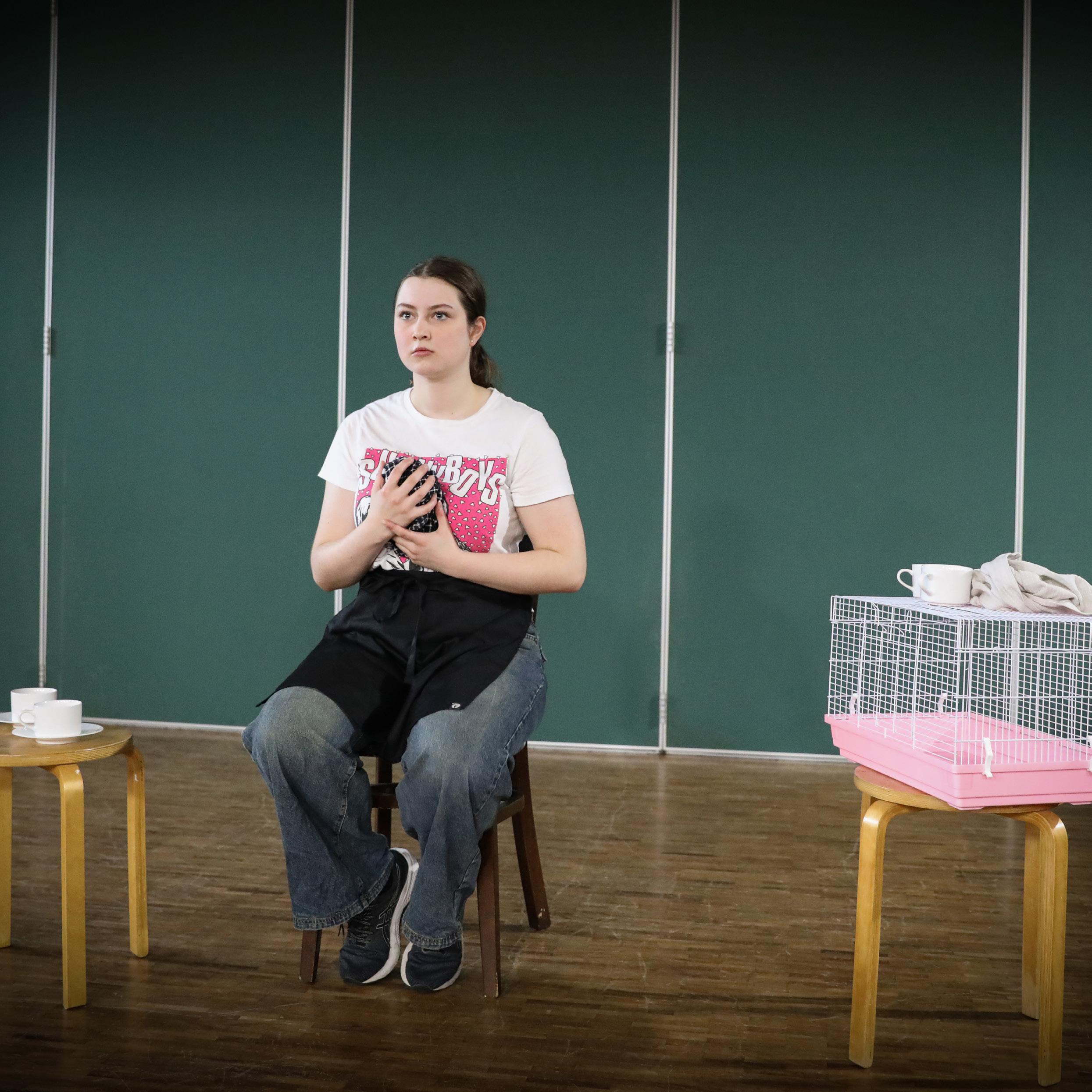
My individual performance, a monologue from Phoebe WallerBridge’s Fleabag, presents a contemporary exploration of female identity, loneliness and vulnerability through raw honesty and dark humour, subverting the audience’s expectations of how women “should” speak about their inner worlds. Through a confessional style, my performance aims to balance comedy with tragedy to reveal the multifaceted nature of humanity, a fractured character yearning for connection. Influenced by Waller-Bridge’s writing through an unapologetic frankness and her exploration of shame, I utilise physicality to punctuate moments of discomfort, contrasting restless energy with a tense stillness. I achieve this through the line “He cried, a lot…(a beat).. Hilary is also a sneaky little shit.” In shaping my performance, I controlled the elements of drama by focusing on tension, mood and character. I address the audience as a customer in the café to establish a confessional intimacy that kept the audience alert, unsure whether to laugh or empathise, thus reflecting the text’s destabilising effect. Additionally, atmosphere was crafted through abrupt tonal shifts, utilising the jarring language “I imagine sticking my finger in to make her eyes pop out”, as a tool, paired with fast-paced dialogue at times for audience engagement. Further, a challenge I faced was crafting intentional movement that informed pace, avoiding stagnancy by staying sat in a chair. To combat this, I decided to integrate set from Fleabag’s café (such as cups and a tea towel), allowing me to create a more naturalistic and visually engaging scene. Through this, I want my audience to feel complicit in my character’s confessions, laughing at her wit and jarring honesty while being unsettled by the intimacy of her pain. Ultimately, the piece surprised me in its demands for vulnerability, revealing that humour, when wielded honestly, can heighten tragedy rather than conceal it.
SAMUEL ROBERTS
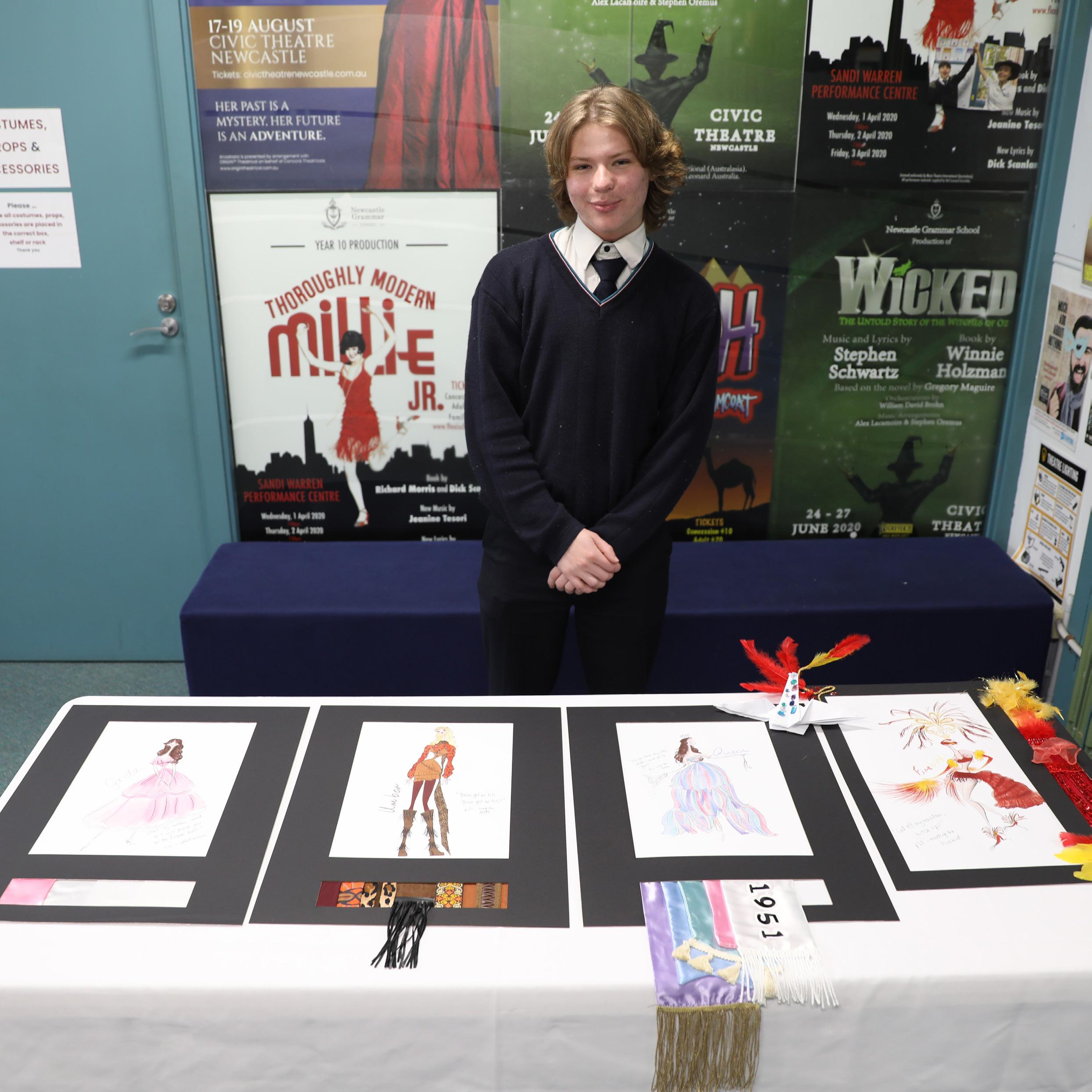
Designing my decadent, luscious costume collection for Girl Asleep was a dream for this 1970s fanatic. The play highlights the complexities of the Australian female teenage experience, from intergenerational tensions to girl-on-girl humiliation and social hierarchies. While some themes resonate with contemporary audiences, the 1970s setting invites reflection on changing beauty standards and gender expectations. Whittet’s comedic lens and larger-than-life surrealist characters inspired my playful exploration of patterns, textures, motifs, and colour.
Costumes for the ‘real world’ characters are functional and expressive. Greta is reduced to a puffy pastel pink cloud, a wallflower in her home and party, contrasting with Elliot’s baby blue suit. Umber’s layered animal prints and leather signal her queen-bee status, with Jade in matching snakeskin, together undermining Greta’s confidence.
‘Dream’ characters exaggerate societal roles of 1970s beauty. Janet, the old Beauty Queen, haunts Greta in pageant ribbons and a paper crane crown, while Genevieve, the Firebird showgirl, embodies the glamour, youth, and seductive power Janet once valued.
DEAN VERTZAYAS
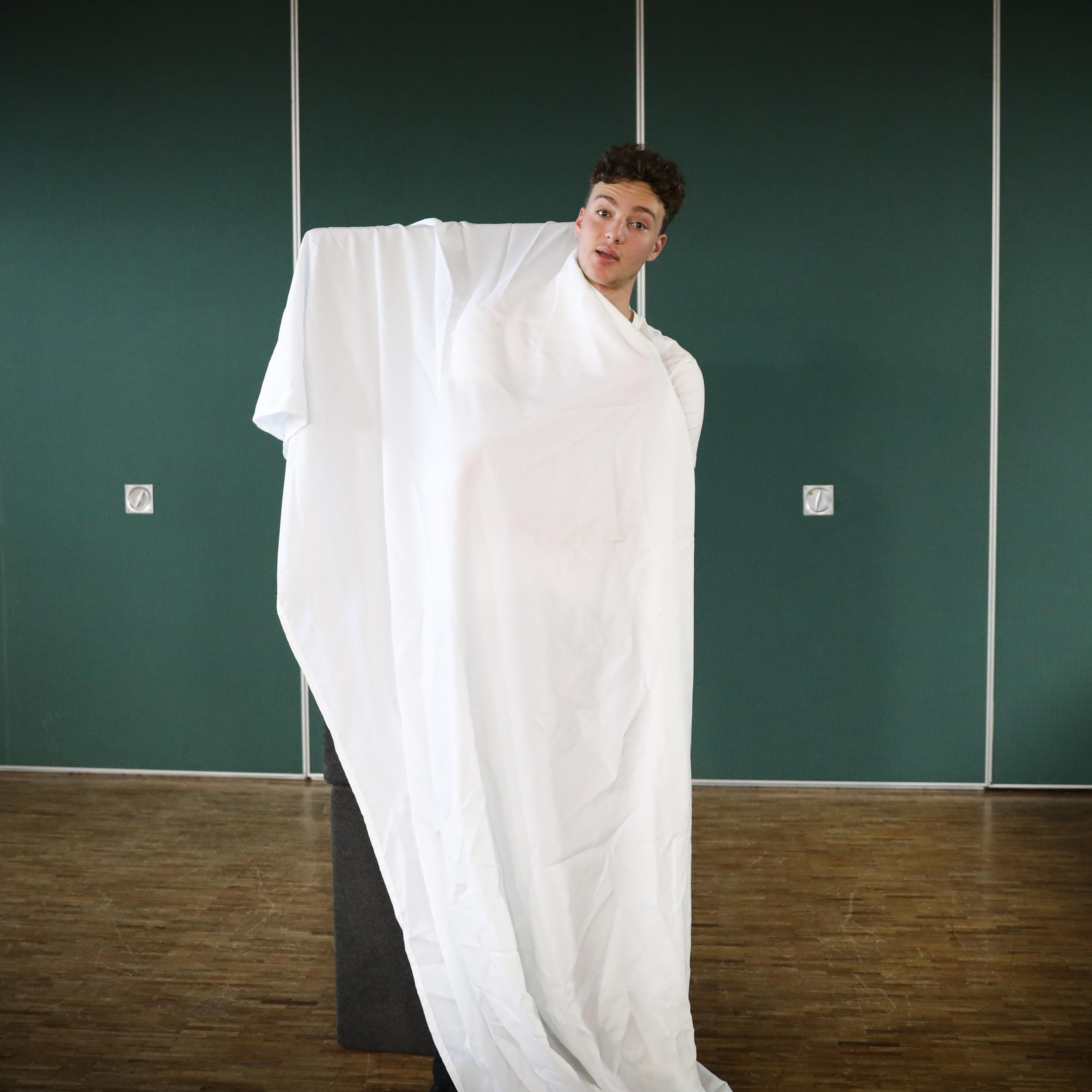
My project explores rebellion against authority and the pursuit of freedom through a heightened, theatrical style that fuses realism with satire. Inspired by Ferris Bueller’s Day Off, my performance reimagines Ferris as a charismatic manipulator who challenges social rules and celebrates youth while avoiding responsibility.
Using moments such as Ferris faking illness and dancing in the parade, I employed exaggerated physical theatre, fourth-wall breaks, and symbolic costume choices—like the iconic robe—to highlight his control, deceit, and comfort within chaos. Direct audience address, slapstick, and stylised sound reinforced the playful, satirical tone.
The piece examines individualism, deception, and the tension between youth and adulthood, questioning whether Ferris represents freedom or selfishness. By blending comedy with reflection, I aimed to create a layered portrayal that critiques privilege and explores the cost of rebellion. Ultimately, the work invites audiences to consider whether freedom without consequence can ever truly exist—and why Ferris Bueller still resonates today.

CLAUDIA WILLS
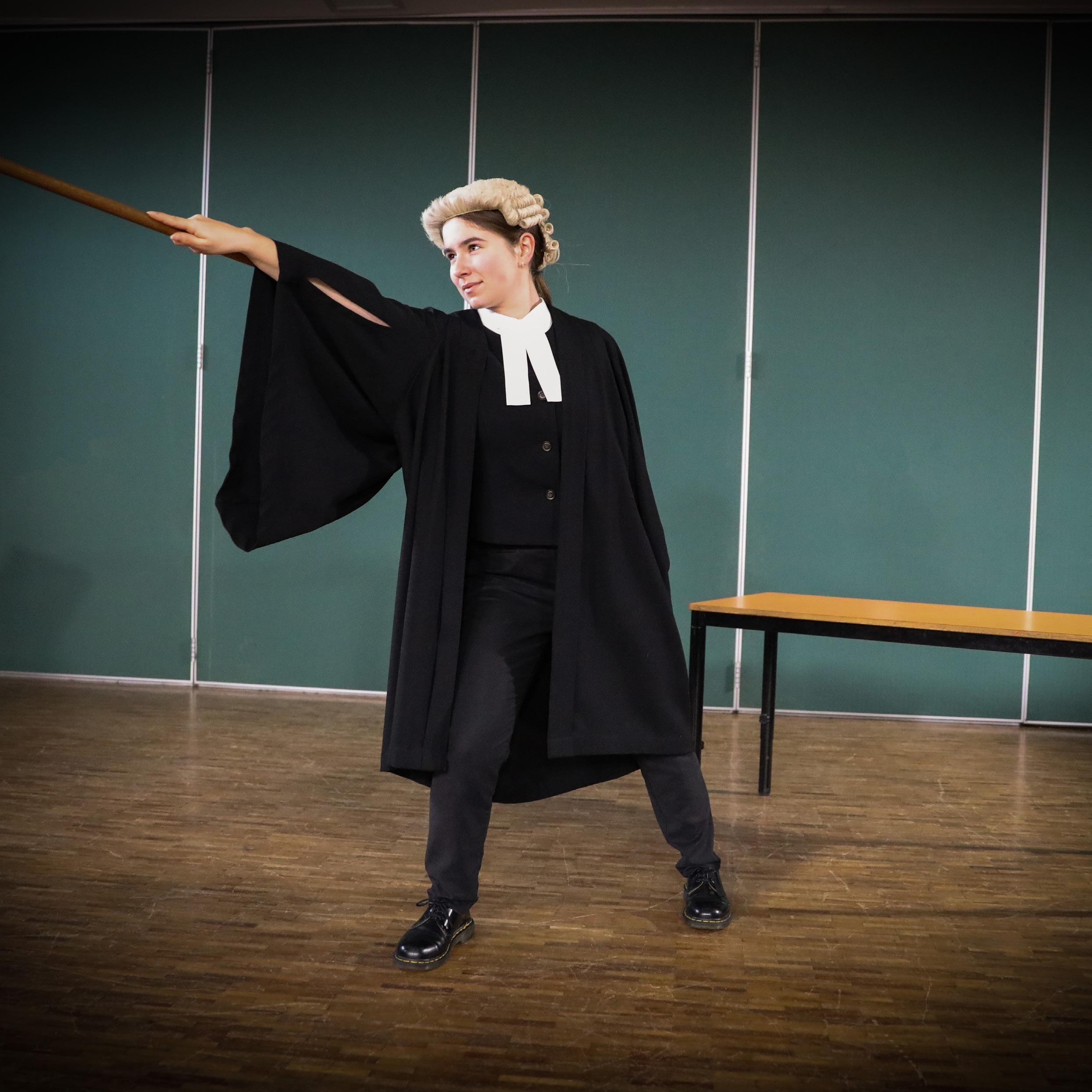
Through my manipulation of props and stylised movement in my monologue The Game, I aimed to create a theatrical performance highlighting the manipulative nature of legal practitioners within an ‘objective’ justice system. The piece, the opening scene of the one-woman play Prima Facie, follows a young female defence barrister as she commands the courtroom and wins her case.
Inspired by Laban’s movement analysis, I used increasingly ‘direct’ and ‘heavy’ movements to build tension and convey my character’s cunning. Vocal variation reinforced this: a higherpitched, innocent tone when questioning the witness, shifting to a lower, mocking tone as I call him an “idiot.” The wooden staff enhanced my stylised movement, symbolising control and the performative nature of the judicial process.
Physically, a wide crouched stance, the staff as a ‘gun,’ and martial arts-inspired strikes punctuated with “Bang. Bang. Bang. Bang.” created suspense and dramatized my character’s power. Through movement, pitch, and prop use, The Game engages the audience while exposing the cunning, manipulative nature of legal practitioners.
SCIENCE EXTENSION
George Carr
Jessica Feltrin
Logan Harman
Felix Lamoureux
Noah Lorenz
Omar Meeran
Christian Spencer
Fionn Spencer
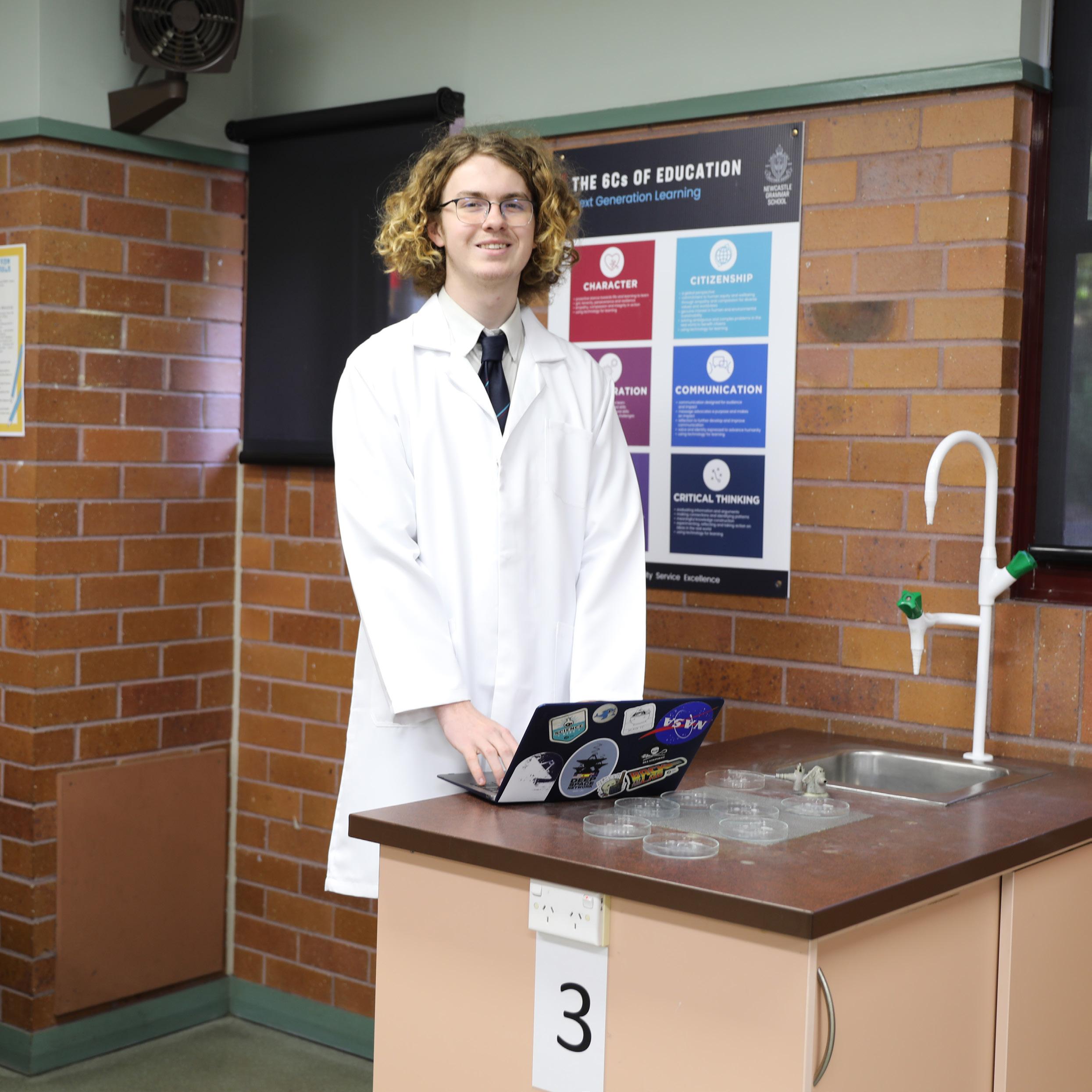
GEORGE CARR
The impact of arm length ratio on the chaotic nature of a double pendulum system
As a passionate physics student, I have always had an interest in mechanics and modelling physical systems. I have known about the double pendulum system for years and have always been interested in its chaotic behaviour. As my skills have developed mathematically, I have grown more curious about how to measure chaotic behaviour of the system and how chaotic behaviour relates to arm length ratio.
I have developed a computational model for the double pendulum system and have from this I have used a mathematical approach that enables me to measure how chaotic the double pendulum is for a given arm ratio. My results indicate a complex relationship between arm ratio and chaotic behaviour that may hold significant in engineering fields and when modelling other chaotic systems.

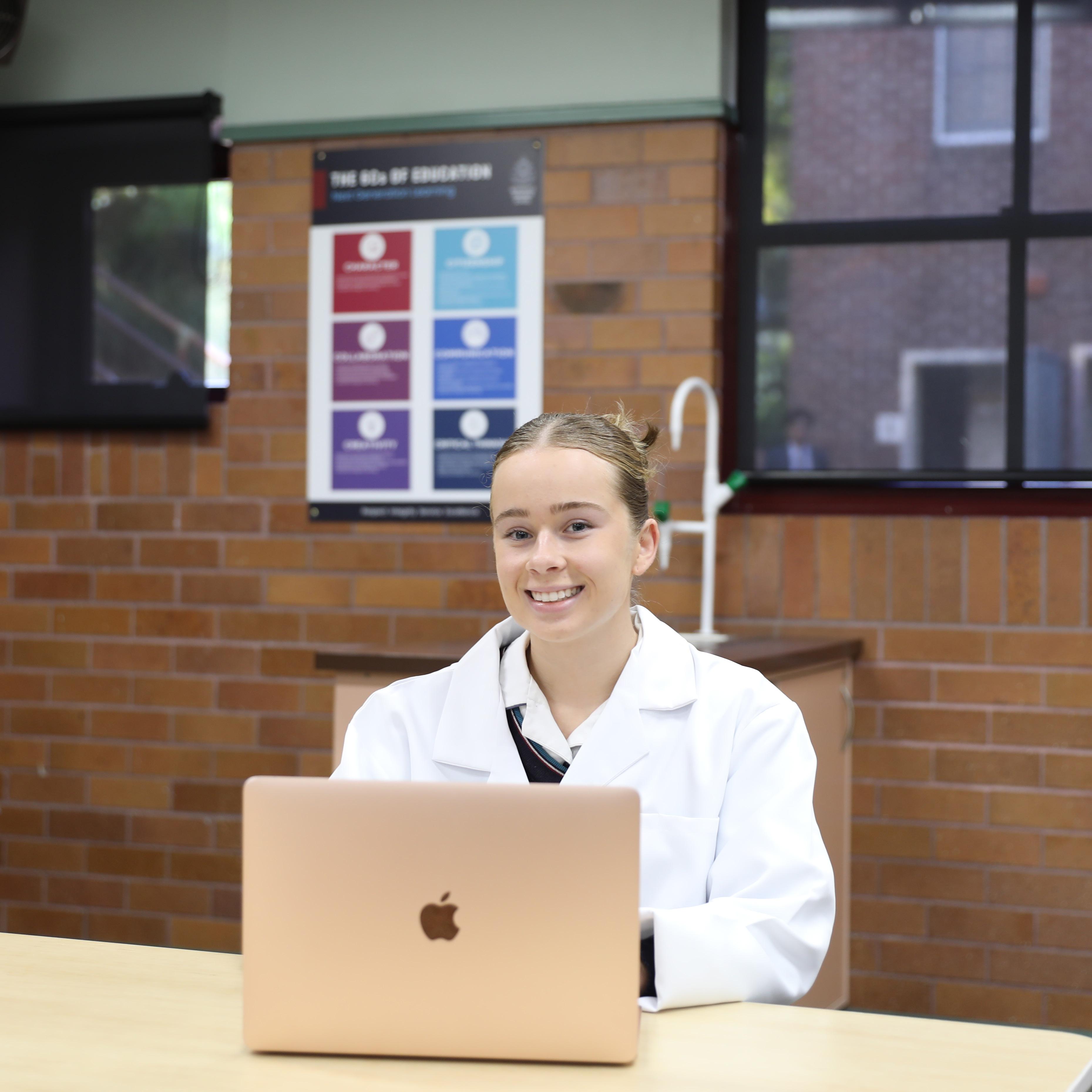
JESSICA FELTRIN
Investigating the correlation between population in Australian States and salmonella incidence from 2013-2019
Through studying epidemiology in year 12 biology, I was inspired to undertake a biology-based research task. I focused my research on microbiology, specifically studying Salmonella, where I was inspired by the immense health and economic burden of Salmonella incidence on Australia.
Zooming into transmission and association factors, I investigated how Salmonella incidence across Australian states is related to each state and territory’s changing population from 2013-2019. By conducting a meta-analysis on government data, I aimed to fill gaps in uncomprehensive reviews of population-associated Salmonella outbreaks, which could inform more targeted public health strategies and resource allocation.
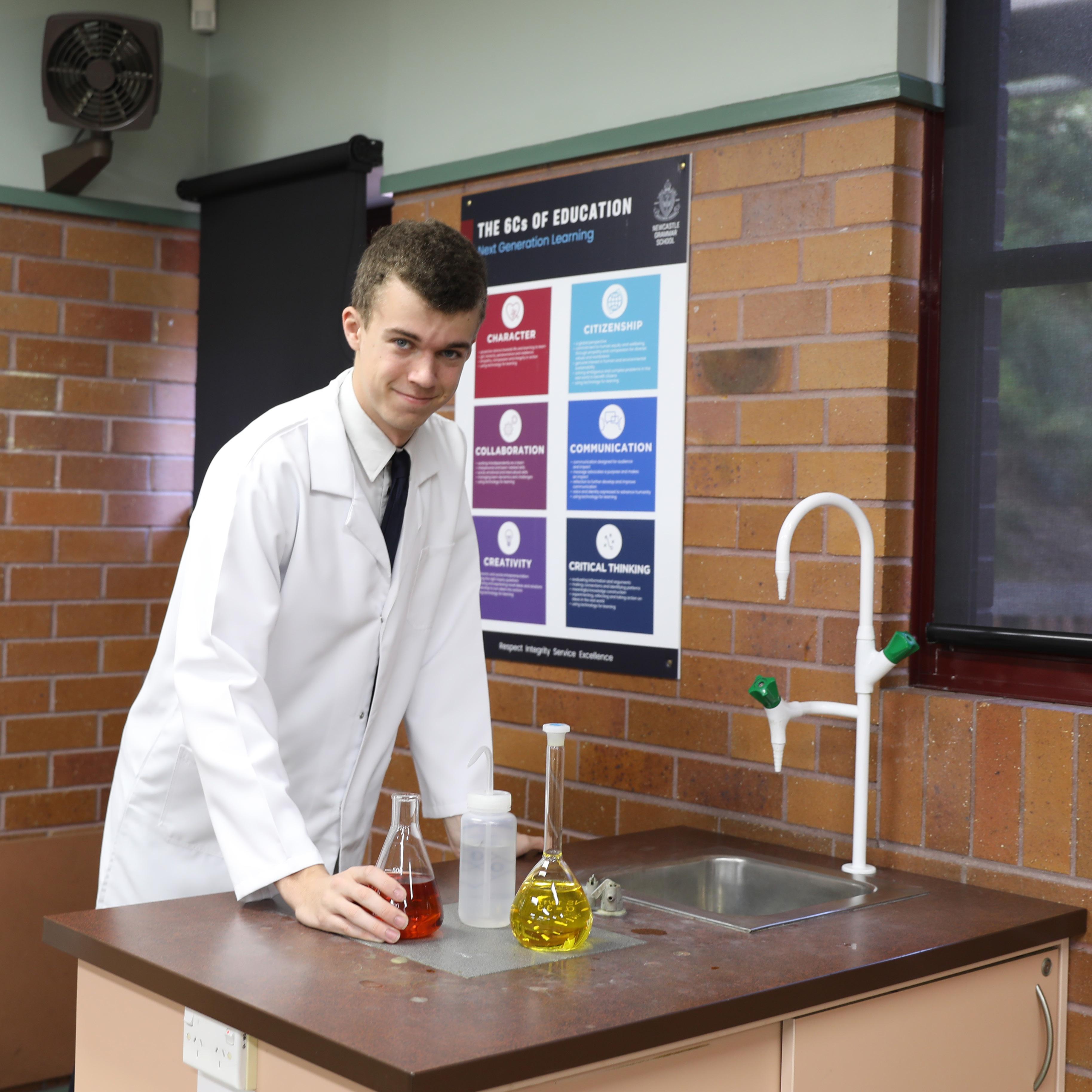
LOGAN HARMAN
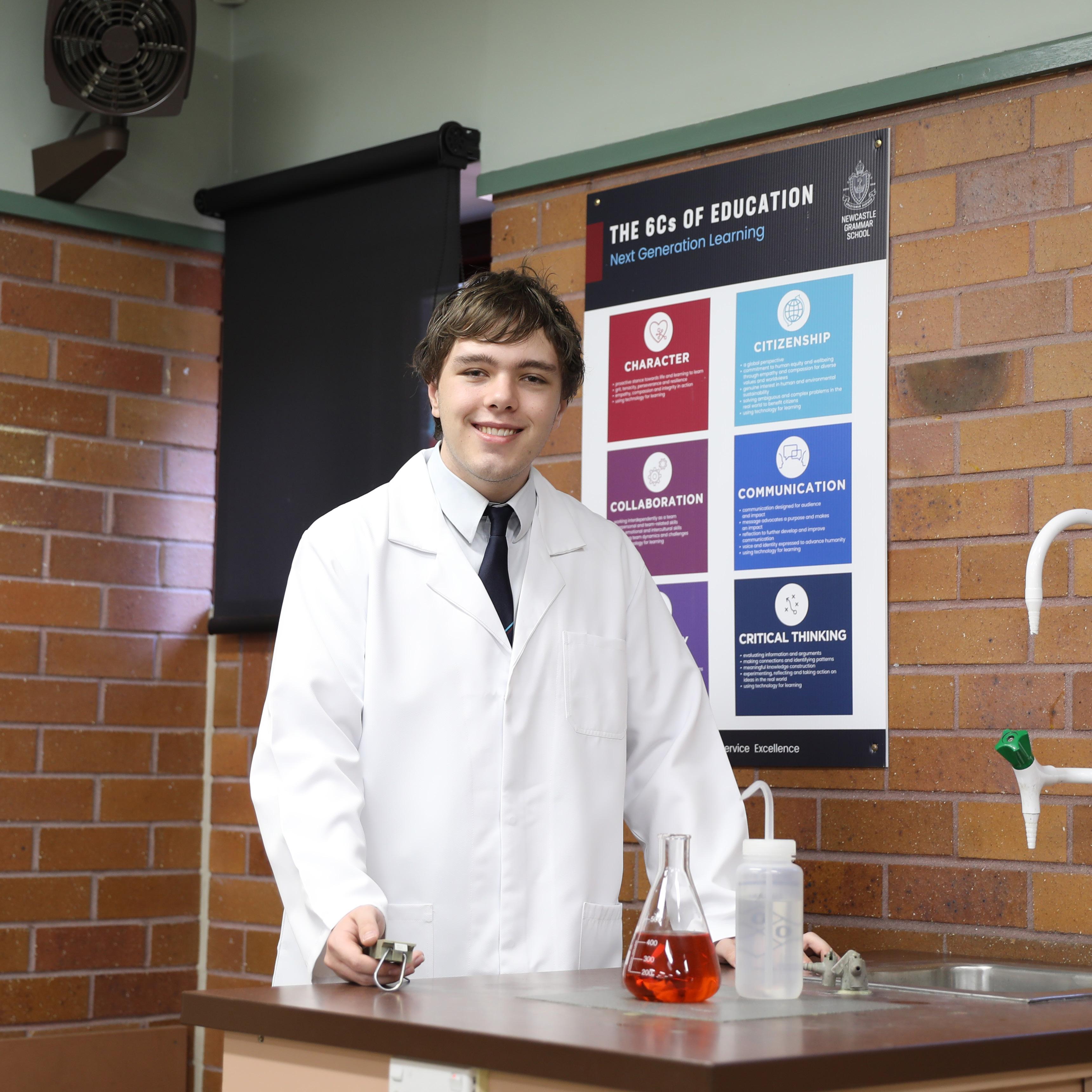
Is there a correlation between the calorie content and the refractive index of common artificial sweeteners?
I saw a need to investigate artificial sweeteners beyond their nutritional labels, as the discussion around them is often limited to calorie content and health effects. While these factors are important, they overlook the physical and chemical properties that define how these substances behave at a molecular level. Little attention is given to characteristics such as refractive index, which not only provides insight into how light interacts with a substance but can also reveal information about structural differences between compounds. By focusing on refractive index in relation to calorie content, this project highlights the value of examining everyday substances through a scientific lens to gain a deeper understanding of their properties.
FELIX LAMOUREUX
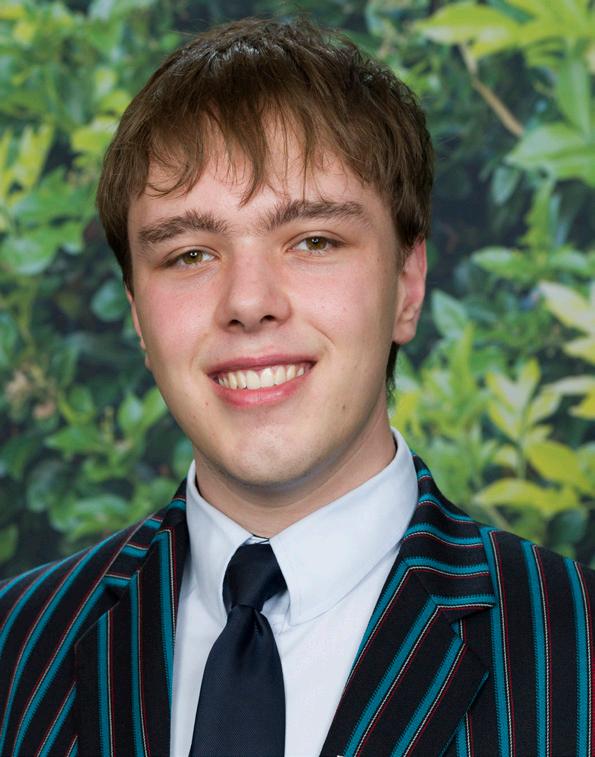
The effects of water on the mechanical properties of allcellulose composites
From my goal to become a mechanical engineer, I understood the growing need for sustainable materials in most industries today. Currently, many industries such as packaging and construction still require unsustainable plastics and other materials to function. All throughout my school life in subjects ranging from sciences to geography, I always been told about how the earth is running out of resources due to people’s unsustainable practices which are built into our industrial processes.
NOAH LORENZ
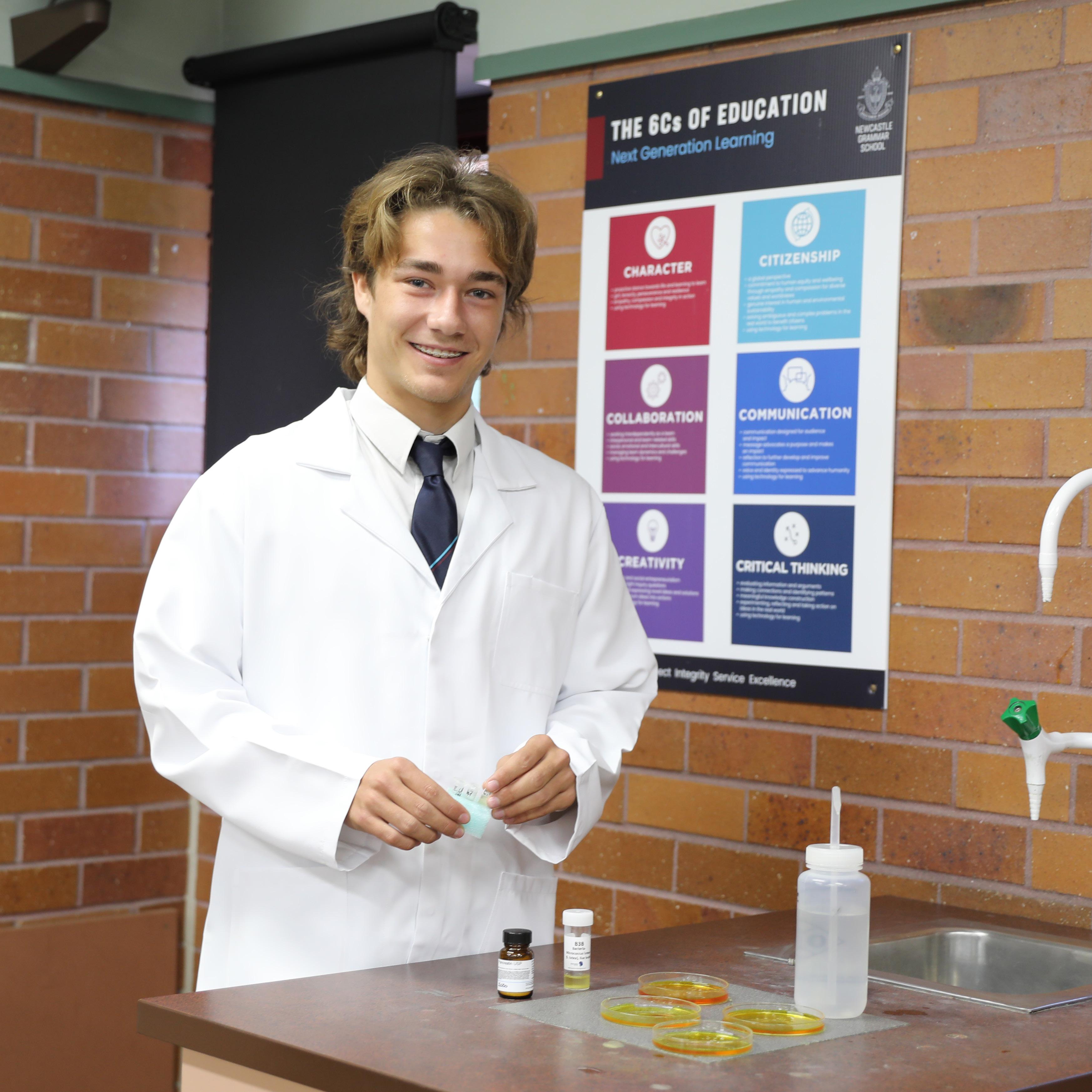
The antibacterial properties of Japanese Honeysuckle flower
I was inspired to carry out this experiment because I’ve always been fascinated by the idea that plants, used for centuries in traditional remedies, might hold real scientific value in modern medicine. The Japanese honeysuckle flower caught my attention because of its widespread use and reputation for healing, and that it is spread all around where I live, where still to this day I pick them on the way to school. Testing its antibacterial properties against a known antibiotic gave me the chance to explore the intersection between tradition and science. I thoroughly enjoyed designing and conducting the experiment, from preparing agar plates to measuring inhibition zones, and found it rewarding to see clear, measurable results emerge from my work.

OMAR MEERAN
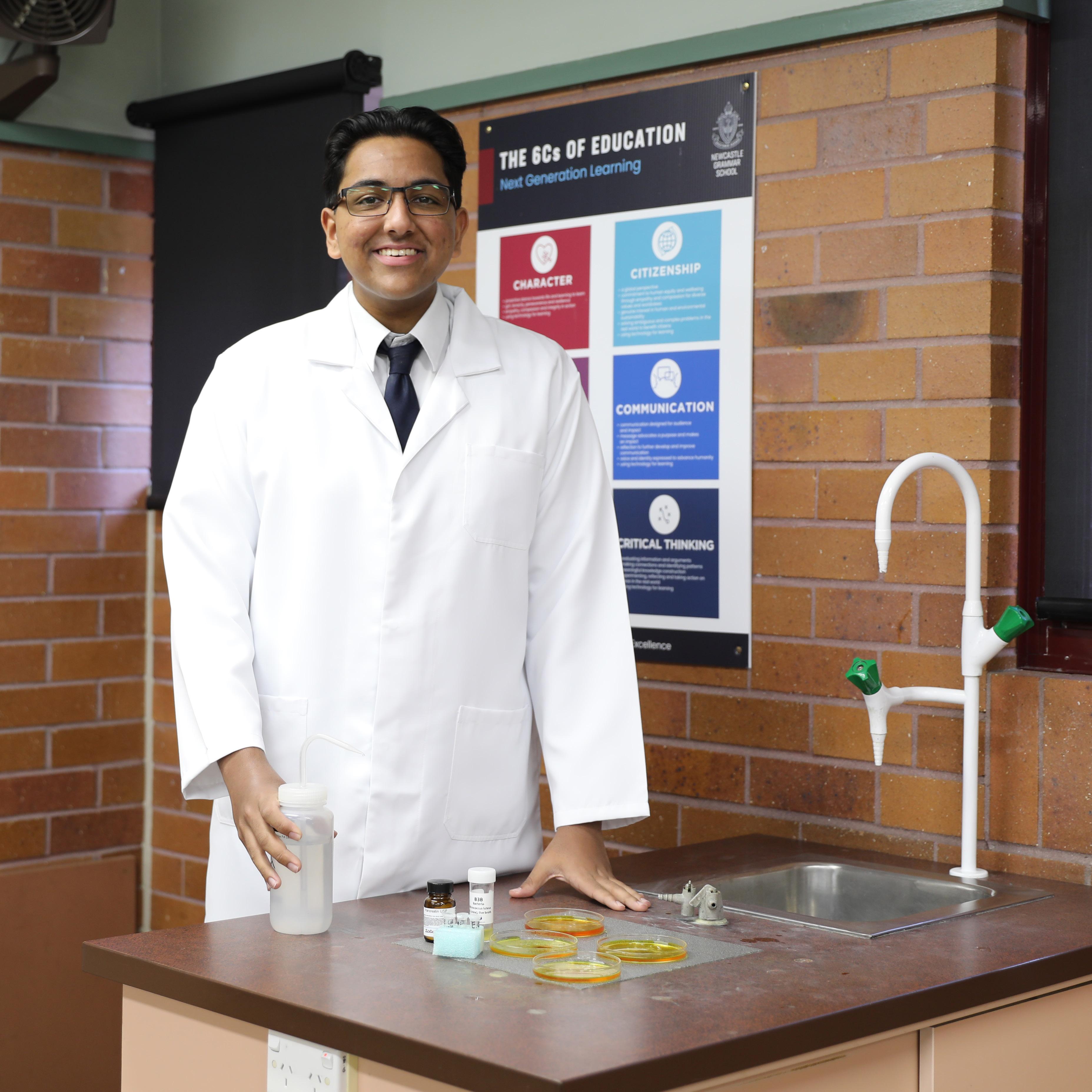
How does fig fruit extract compare to conventional antibiotics?
Growing up, my parents often encouraged me to eat figs, reminding me of their ability to prevent sickness. This personal connection, along with the way figs are marketed as a ‘superfood’ during their seasonal availability, overall, spark my curiosity.
I chose to investigate the antibacterial properties of fig fruit against E. coli because most existing research focuses on other bacteria, leaving a gap in scientific knowledge which doesn’t fill its broader potential. By addressing this gap, my project explores whether traditional beliefs have a scientific basis while contributing to knowledge on natural alternatives to antibiotics. Thus, this research has the potential to inform both dietary health awareness and strategies for combating bacterial resistance.
CHRISTIAN SPENCER
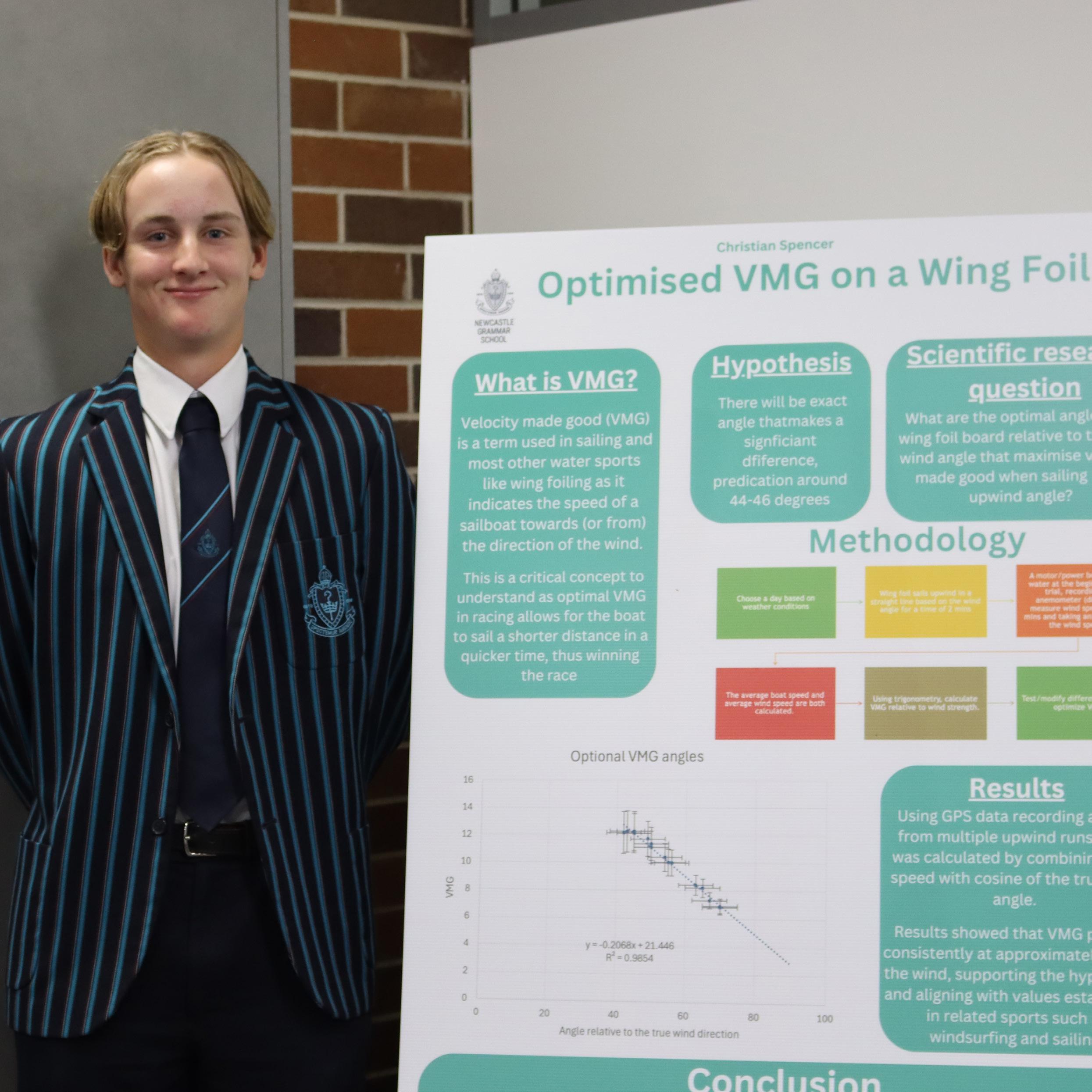
Optimised VMG on a Wing Foil
As a keen sailor and avid wing foiler, I saw the potential to investigate how the relationship between velocity made good (VMG) and boat speed influence the racing performance of a wing foil. Due to limited knowledge in the sport there is very little data available for athletes to use to best optimise their technique and equipment.
Seeing this gap in research I designed a scientific investigation that analyses the affect of different angles to improve speed and efficiency. This project provides valuable insight into the sport while also contributing to the growth and encouraging innovation, improving performance and participation in the sport.

FIONN SPENCER
How does the presence of DIPG modulate the Peripheral Immune System’s functioning via the S1P Axis Signalling
Professor Matt Dun, a close family friend, lost his daughter Josie to Diffuse Midline Glioma (DMG), the most lethal childhood cancer. Heartbreakingly, nothing has changed since Neil Armstrong’s daughter was diagnosed with the same disease in the 1960s—treatment remains limited to palliative radiotherapy, and survival is still only 8–11 months. Today, DMG claims the life of an Australian child every two weeks, accounting for 25% of all paediatric oncology deaths.
Motivated by this lack of progress, in collaboration with researchers at UoN’s Cancer Signalling Research Group including Professor Dun, we investigated how DMG suppresses immune responses via t-cell circulation. While other brain tumours cause T-cell sequestration through the loss of S1PR1 expression, we revealed that in DMG, S1PR1 is paradoxically upregulated. Instead, my research points to the suppression of Klf2 and Ccr7 as a driver of immune evasion uncovering a new mechanism behind T-cell dysfunction.
HISTORY EXTENSION
Henry Chaston
Isabel Dixon
Mia Kearney
Ibrahim Khalid
Samuel Lane
Siena Latham
Zoe Moss
Lucinda Mott
Sadie Smart
Emma Tobin
Hannah Vesey
Violet Williams
HENRY CHASTON
The Persistence of American Exceptionalism: Mythmaking and National Identity
For my History Extension Major Project, I investigated the extent to which America has manipulated and revised its history to preserve the mythology of exceptionalism. This belief in America’s inherent superiority and global mission has been sustained through the mythologising of the Founding Fathers, selective omission of uncomfortable truths, and the glorification of war. My research revealed that such deliberate shaping of the historical record has ensured the endurance of exceptionalist ideals as a central part of American national identity.
The study showed how successive presidents and political leaders have drawn upon patriotic myths to legitimise authority, portraying themselves as heirs to the founding generation. Revisionist challenges, such as Nikole Hannah-Jones’ 1619 Project, have sought to expose suppressed narratives around slavery and inequality, but have often been met with backlash that reinforces the dominant myth. Likewise, the media has played a vital role in perpetuating exceptionalist ideals, framing America’s actions as morally justified and embedding its selfimage as a global leader.
This investigation ultimately demonstrated that exceptionalism persists not as a timeless truth but as a deliberate construction, maintained by political rhetoric, cultural narratives, and selective historical memory. The process of researching and refining this project was challenging but rewarding, giving me a deeper understanding of how history functions as a contested space where national identities are built and preserved.
ISABEL DIXON
The
British Museum and Imperial Narratives: A Legacy of Colonial Power
The British Museum stands as one of the world’s most famous institutions, but its collections reveal more than global history — they reflect Britain’s imperial legacy. This investigation explored how the museum has perpetuated colonial narratives through contested artefacts like the Benin Bronzes and Elgin Marbles, presenting a vision of history that reinforces British superiority.
Historians such as Dan Hicks and Alice Procter argue that the museum’s refusal to repatriate artefacts is not just an ethical issue but a deliberate act of preserving colonial dominance. While exhibitions have sought to introduce new perspectives, the overarching narrative remains tied to Britain’s imperial past. My research showed how the museum functions as both an educational space and a political tool, shaping collective memory to sustain outdated ideologies.
The project demonstrated that museums, far from neutral spaces, are active participants in the construction of history. I found the debates surrounding the British Museum particularly engaging because they revealed how historical narratives are preserved or contested in the public sphere.
MIA KEARNEY
Shaping Young Minds: Children’s Texts and the Truth of Australia’s Past
The stories told to children often become the foundations of national identity. This project assessed how children’s history books in Australia have shaped young people’s understanding of the past, revealing how texts simplify events but rarely without bias. From early works like The Little Black Princess, which reinforced Eurocentric myths, to Bruce Pascoe’s Young Dark Emu, which challenges those narratives, children’s texts emerged as powerful tools of ideological influence.
These stories reflect broader historiographical debates, particularly Australia’s “History Wars.” In reality, conservative accounts of history seek to glorify settlement while revisionist texts risk overcorrection — yet both can politicise history in ways children cannot critically evaluate. Curriculum changes and textbooks also mirror these tensions, showing how history taught to the youngest Australians continues to be shaped by political agendas.
Researching this topic made clear that history for children is never neutral: it moulds identity, memory, and reconciliation efforts. The challenge lies in ensuring that young readers are encouraged to think critically rather than absorb politicised myths.
IBRAHIM KHALID
Pakistan’s Postcolonial Identity: Between Colonial Legacy and Indigenous Reclamation
Pakistan’s struggle to define itself after Partition reflects the broader challenges of postcolonial identity. This project explored how the country has been shaped by both colonial legacies and efforts to reclaim a more pluralist past. I found that official narratives often promote a singular Islamic identity framed through Western historiographical structures, while marginalising regional diversity and pre-Islamic heritage.
Drawing on theorists such as Edward Said, Dipesh Chakrabarty, and Ayesha Jalal, I examined how colonial epistemologies persist in Pakistan’s history writing, constraining its independence of thought. Yet I also uncovered resistance: subaltern voices, cultural producers, and revisionist historians are recovering oral traditions, folk histories, and suppressed identities, broadening what it means to be Pakistani.
My research revealed that Pakistan’s national identity remains contested — fractured by colonial residues but increasingly reimagined through pluralistic and inclusive perspectives. This showed me how history can operate as both a site of suppression and a space of resistance, shaping how nations understand themselves in the present.
SAMUEL LANE
Russia and Eurocentrism: The Challenge of Writing a Balanced History
Russia’s position between Europe and Asia has long subjected it to Eurocentric interpretations that depict it as an outsider or adversary. This project investigated how Western historians, media, and political thinkers have constructed narratives about Russia, particularly during the Cold War and after the 2022 invasion of Ukraine. I found that these accounts often reduce Russian history to ideological binaries, portraying it as uniquely malign while overlooking parallels with Western imperialism.
Engaging with historians such as Choi Chatterjee, who uses transnational comparisons to challenge one-sided critiques, and political realists like John Mearsheimer, I explored attempts to disrupt entrenched biases. Yet my research also showed that nationalist Russian historiography under Vladimir Putin reinforces distortion from within, making a balanced narrative even harder to achieve. In both Western and Russian accounts, history has often been deployed as a political weapon rather than an impartial or objective record, particularly in relation to nationalist histories.
Through this investigation, I argued that Eurocentric assumptions continue to dominate historical constructions of Russia, despite efforts by revisionist scholars to offer alternative perspectives. The project demonstrated how history remains contested ground, shaped as much by ideology and power as by evidence, and challenged me to consider whether a truly balanced historiography of Russia is even possible.
SIENA LATHAM
Psychohistory:
Innovation or Intellectual Dead End?
Emerging from Sigmund Freud’s psychoanalysis, psychohistory once promised to uncover the hidden psychological forces behind historical behaviour. Works such as Erik Erikson’s Young Man Luther and John Pollock’s study of Adolf Hitler attempted to humanise the past by explaining unconscious motivations, raising hopes that this method could transform historical interpretation. The discipline’s ambition was to answer the “why” of history, moving beyond the limits of traditional empiricism.
However, psychohistory has faced sustained criticism for its speculative methods and lack of verifiable evidence. Historians such as Richard Evans and Natalie Zemon Davis have argued that interpretation must be anchored in tangible sources, while critics like Lynn Hunt have dismissed psychohistory as a field that “fell into disrepute.” Case studies often relied on projection and introspection rather than substantiated evidence, leading to accusations of distortion and presentism. By imposing rigid psychological models onto historical figures, psychohistorians frequently shaped the past to fit theory rather than allowing evidence to guide interpretation.
Despite these limitations, psychohistory has not disappeared entirely. Some scholars argue it retains potential value as a form of narrative provocation, expanding the imaginative possibilities of history rather than providing empirical certainty. Yet within mainstream historiography, its methodological flaws have left it isolated, regarded as too speculative for historians and too rigid for psychologists. The project concluded that psychohistory’s promise to enrich historical analysis has largely been undermined by its own methods, leaving its legitimacy — and future — in doubt.
ZOE MOSS
The 1619 Project and the Limits of Historical Revisionism
Historical revisionism has become central to debates about American national identity, with The 1619 Project one of the most influential and contested examples. By recentering slavery as foundational to the nation’s story, it challenged traditional narratives rooted in liberty and democracy. This reframing exposed contradictions in the mythology of American exceptionalism, highlighting how political and economic structures were deeply shaped by racial subjugation.
Yet the attempt to redefine the national narrative has faced fierce resistance. While historians such as Eric Foner and David Blight support revisionist efforts to integrate slavery into America’s founding, critics like James Oakes argue that projects such as 1619 collapse the nation’s past into an overly singular and racially deterministic account. The backlash has extended beyond academia into politics and education, with initiatives like the 1776 Commission and restrictive state legislation reflecting a desire to defend traditional patriotic myths.
The investigation concluded that revisionism has been highly effective within academic and progressive circles but has had limited reach across the broader nation, particularly within the post-truth world. Rather than producing a unified redefinition of American identity, projects like 1619 have revealed the deep fractures within public memory. Competing truths therefore coexist in tension, reflecting a society divided over how its history should be remembered and retold.
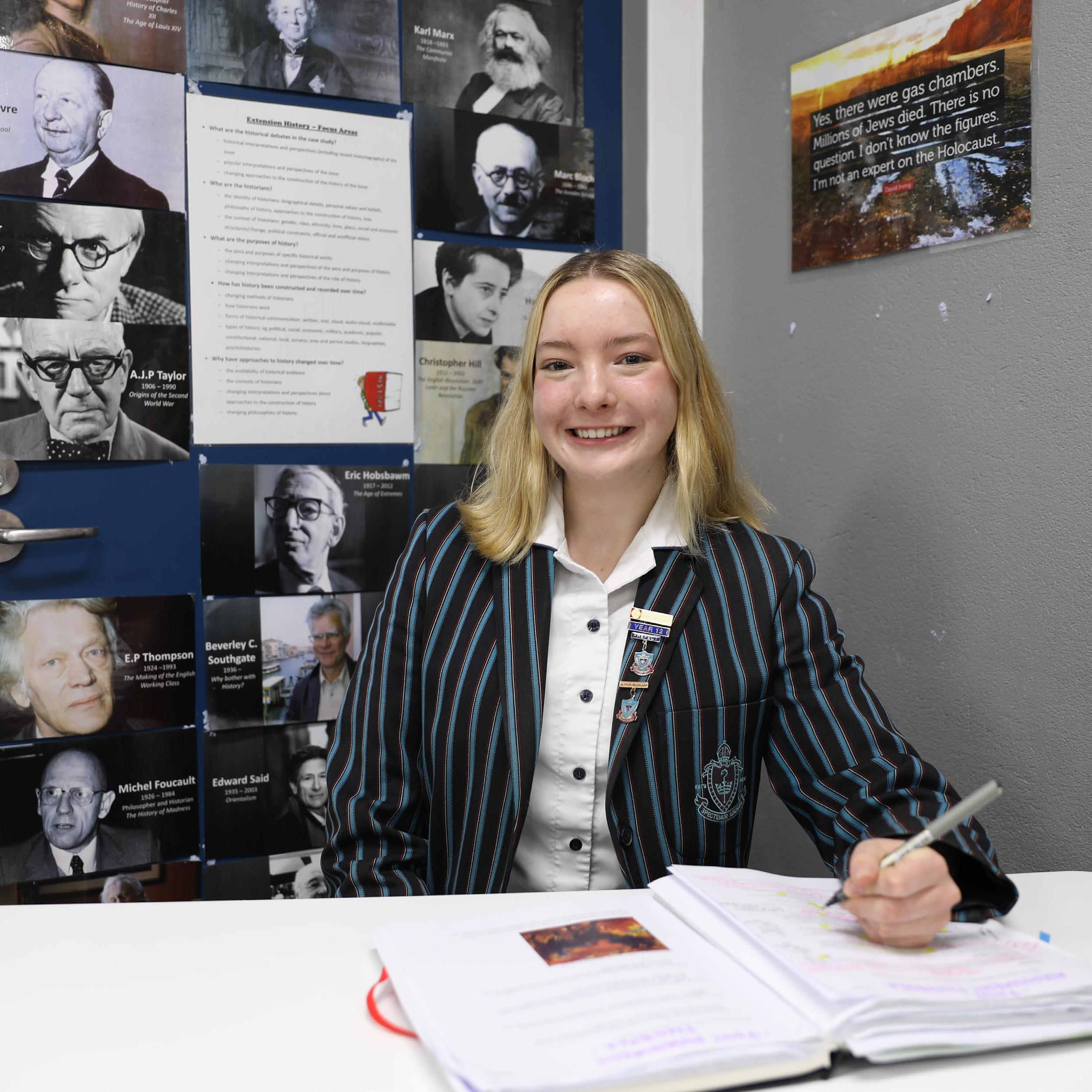
LUCINDA MOTT
Feminist Art and Historiography: Reclaiming Women’s Voices through Art in History
This project explored how feminist artists and historians have challenged the silencing of women in both cultural production and historical narratives. By examining artworks from the mid20th century to the present alongside feminist historiography, it revealed the ways art has functioned as both evidence and activism, reclaiming space for women within history. Scholars such as Joan Scott and Natalie Zemon Davis argue that feminist approaches reshape not only what is remembered, but also how history is constructed.
The research highlighted how visual art can be used as a historiographical source, exposing overlooked experiences while also reflecting the politics of its time. Exhibitions such as Fifty Works by Fifty British Women Artists and debates around performance art show how women’s creativity has consistently been marginalised, yet also how it provides a lens through which to critique dominant historical narratives. Combined with revisionist scholarship, these interventions demonstrate the power of art to destabilise established canons and expand the boundaries of historical evidence.
The project concluded that feminist art and historiography together disrupt traditional methods of recording the past, insisting on pluralism and inclusivity. Far from being peripheral, they have become essential in constructing a more complete and representative understanding of history.
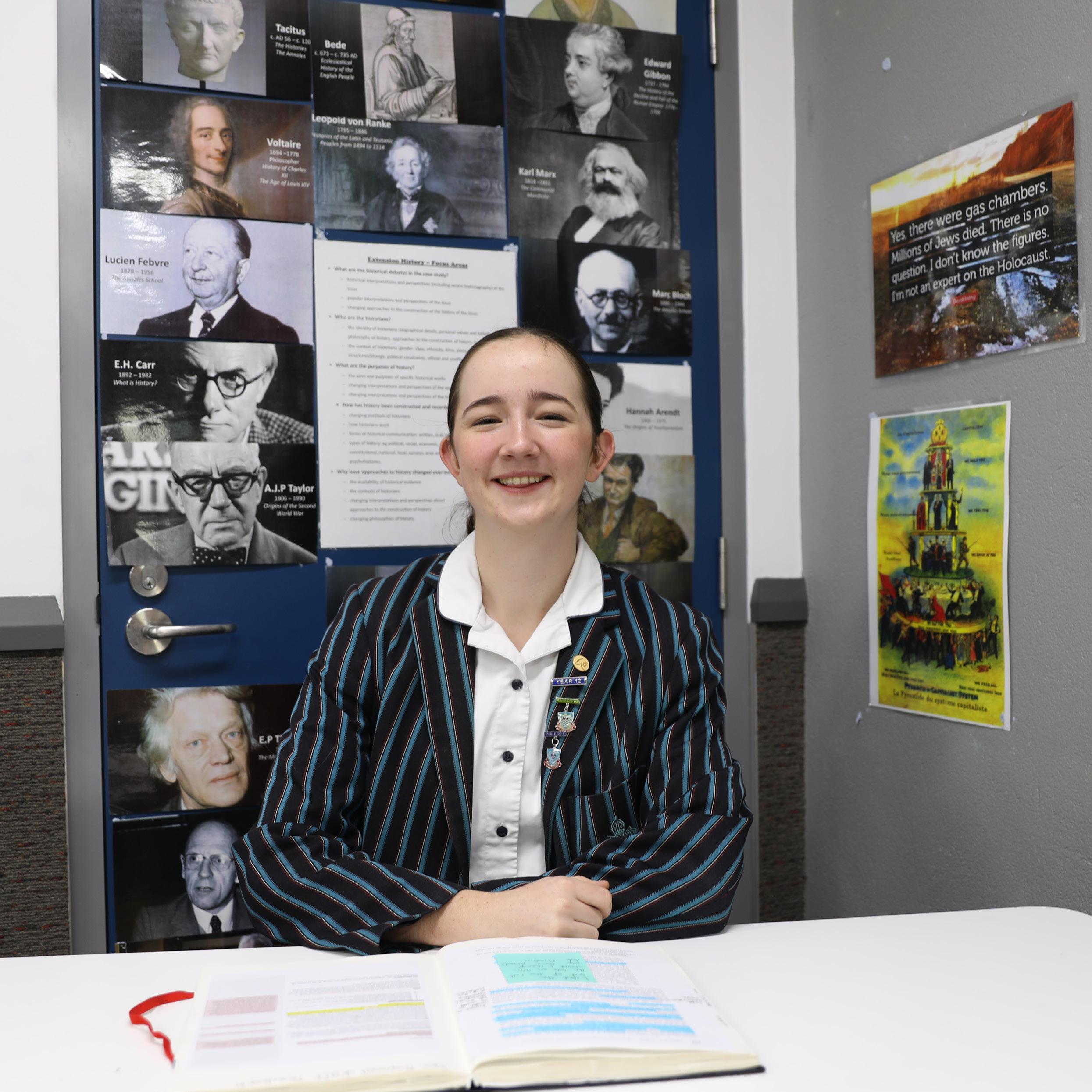
SADIE SMART
American Exceptionalism and the Construction of Global Moral Authority
This project examined how the intentional construction of American exceptionalism has enforced the United States’ position as a global moral authority, particularly during the later Cold War and the early War on Terror. Rooted in Puritan origins and enshrined in founding documents such as the Declaration of Independence and the Bill of Rights, exceptionalist ideals evolved into a powerful national identity that governments manipulated to justify foreign policy. By framing America as the defender of universal rights, leaders constructed a narrative in which intervention abroad became a moral imperative rather than a political choice.
The study highlighted how presidential rhetoric, public history, and mass media reinforced this myth. Speeches by Richard Nixon and George W. Bush exemplified the portrayal of America as both victim and saviour, while memorials and museums cultivated narratives of sacrifice, resilience, and moral superiority. The Vietnam War and the War on Terror became key case studies, revealing how historical narrative was deliberately reframed to rationalise intervention and suppress alternative interpretations of conflict.
Through this analysis, the project argued that American exceptionalism operates not only as national pride but as a political weapon. Its persistence demonstrates the capacity of mythmaking to elevate a nation’s moral self-image while obscuring complexity and accountability. The result is a powerful narrative that continues to shape both American identity and global perceptions of U.S. leadership.
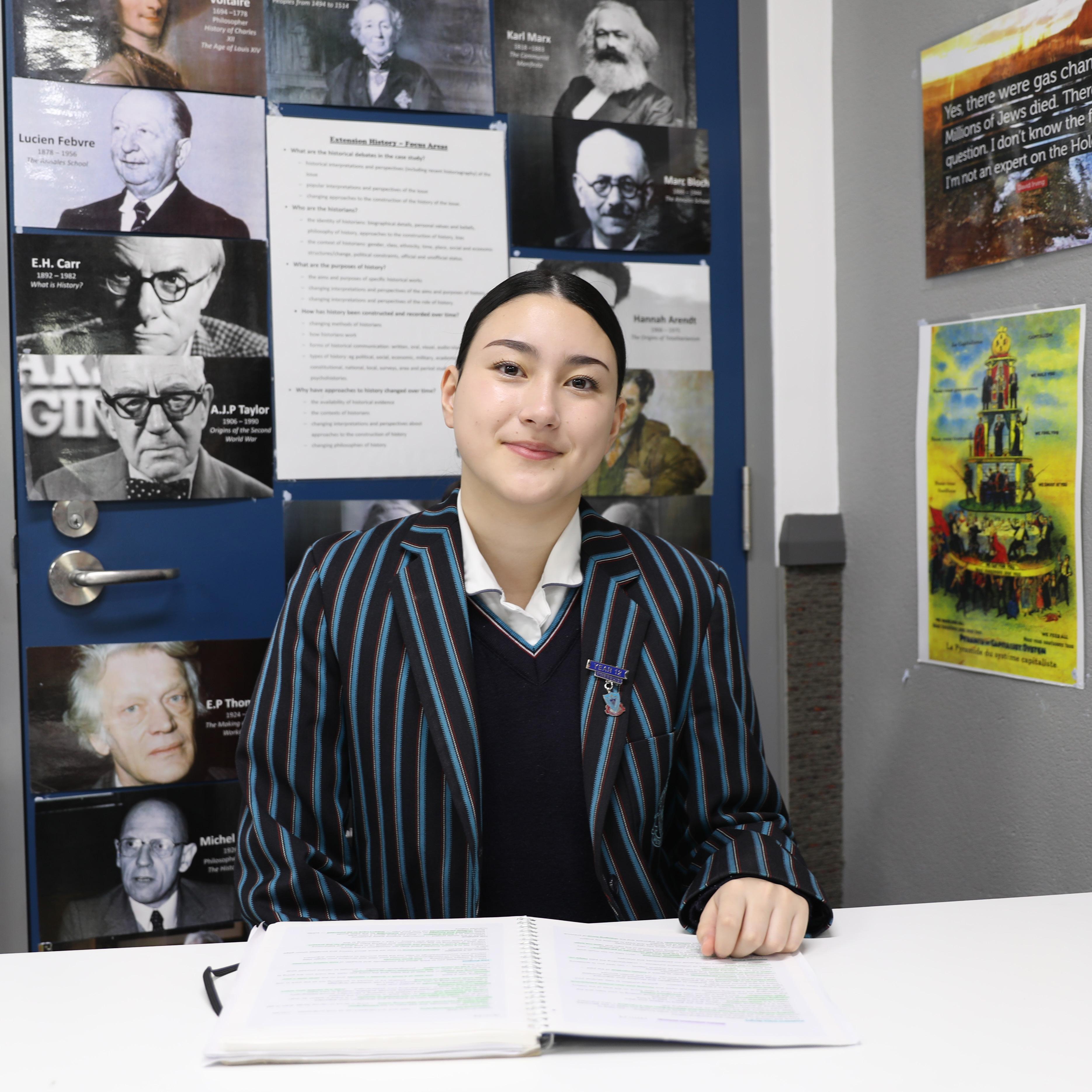
EMMA TOBIN
Taiwanese Identity and the Power of Revisionist Historiography
The construction of Taiwan’s modern identity reveals how suppressed narratives, once reclaimed, can transform a nation’s collective memory. Under Kuomintang (KMT) rule, cultural heritage and traumatic events such as the 228 Massacre and the White Terror were silenced in favour of a Sino-centric vision of “One China.” This imposed history sought to erase local identity, but in practice, it deepened the desire to recover and legitimise alternative voices.
Through revisionist historiography and activism, suppressed narratives of indigenous cultures, colonial experiences, and political repression have re-emerged, reshaping Taiwan’s sense of self. Pro-Taiwanese historians, cultural movements, and digital activism have challenged hegemonic accounts, while global shifts in attitudes toward China have further validated Taiwan’s claims to autonomy. Museums, textbooks, and memorials now preserve stories once erased, reframing Taiwan not as a Chinese province but as a distinct nation with its own pluralistic history.
This project concluded that the reclamation of marginalised voices has been central to Taiwan’s evolving identity. Revisionist history has not only legitimised Taiwan’s independence in domestic consciousness but also strengthened its international recognition. The case highlights how historical narratives are inseparable from political power, demonstrating the enduring role of revisionism in shaping both identity and legitimacy.
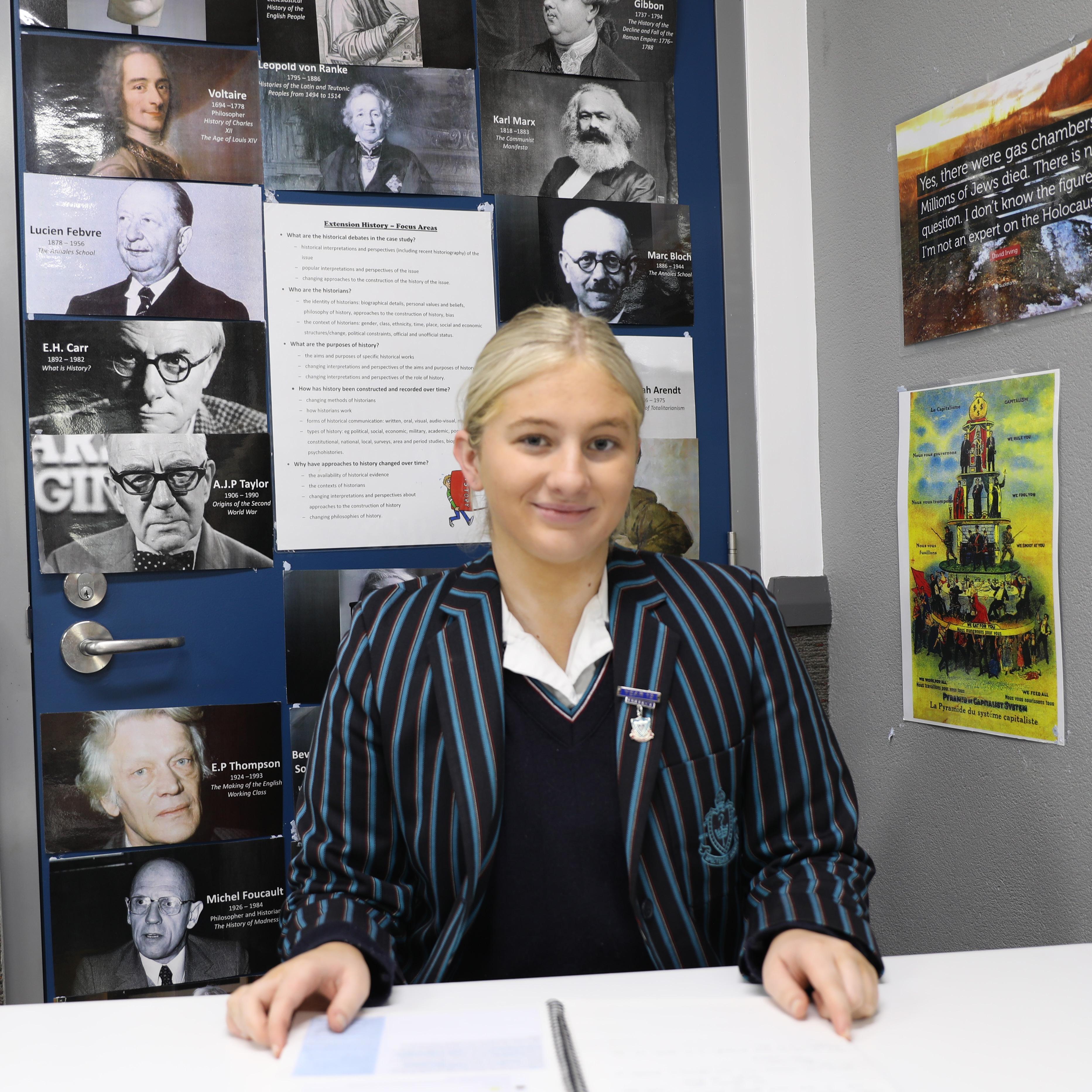
HANNAH VESEY
Berlin’s Public History: Accountability and National Identity
Berlin provides a striking example of how public history can navigate the tension between confronting atrocity and sustaining national identity. As the site of the Holocaust, Nazi dictatorship, and the Cold War, the city is uniquely burdened with traumatic memory. Rather than erasing these pasts, Berlin integrates them into its urban fabric through concepts such as Vergangenheitsbewältigung — “coming to terms with the past.” Memorials like the Topography of Terror and the Stolpersteine project embed accountability into public space, framing responsibility not as a threat to identity but as its foundation.
Comparisons with Washington, D.C. reveal how distinct Berlin’s approach is. While American monuments often celebrate national pride and downplay historical trauma, Berlin prioritises confrontation and reflection. Yet, this reckoning is not without complication. Sites such as Checkpoint Charlie illustrate the risks of commercialisation, where commodification can dilute historical meaning, turning memory into tourist spectacle. Historians remain divided over whether such practices undermine or enhance engagement with the past.
The project concluded that Berlin exemplifies both the possibilities and limits of public history. By embedding accountability within everyday life, the city demonstrates that national identity can be constructed through honesty and remembrance. At the same time, debates over generational fatigue, selective memory, and the pressures of international expectation show that this balance remains contested. Berlin’s case highlights the broader challenge faced by nations: whether to build identity on celebration, silence, or responsibility.
VIOLET WILLIAMS
Powerful Women and the Failures of Historiography
The representation of powerful women in history has long been distorted by patriarchal frameworks, gendered language, and media bias. Figures such as Cleopatra, Joan of Arc, Catherine of Aragon, and Margaret Thatcher have consistently been cast within polarised narratives, either as idealised symbols of femininity or as villainous threats to male authority. This victim–villain dichotomy has denied nuance and reinforced stereotypes, leaving historical accounts of women incomplete and unbalanced.
The case of Margaret Thatcher exemplifies this dilemma. As Britain’s first female Prime Minister, her leadership during the Falklands War, the miners’ strike, and her partnership with the United States and the USSR was often overshadowed by commentary on her voice, appearance, and supposed masculinity. Media caricatures and popular culture exaggerated her persona, while historians remained divided between condemning her as destructive or celebrating her as transformative. Such oversaturation of evidence, filtered through political bias and gendered assumptions, has proven just as problematic for accuracy as the absence of sources in earlier women’s history.
This project concluded that historiography has largely failed to provide balanced and truthful accounts of women in power. Despite the advances of feminist historiography and “history from below,” entrenched patriarchal values and cultural tropes continue to shape interpretation. The persistence of bias in both academic and popular history highlights the broader challenge of constructing fair and nuanced narratives of powerful women, revealing how history remains deeply conditioned by the values of its context.
MUSIC
Thomas Clarkson
Elyshia Lodge
Molly McCauley
Saffron Thibault
THOMAS CLARKSON
Music 1
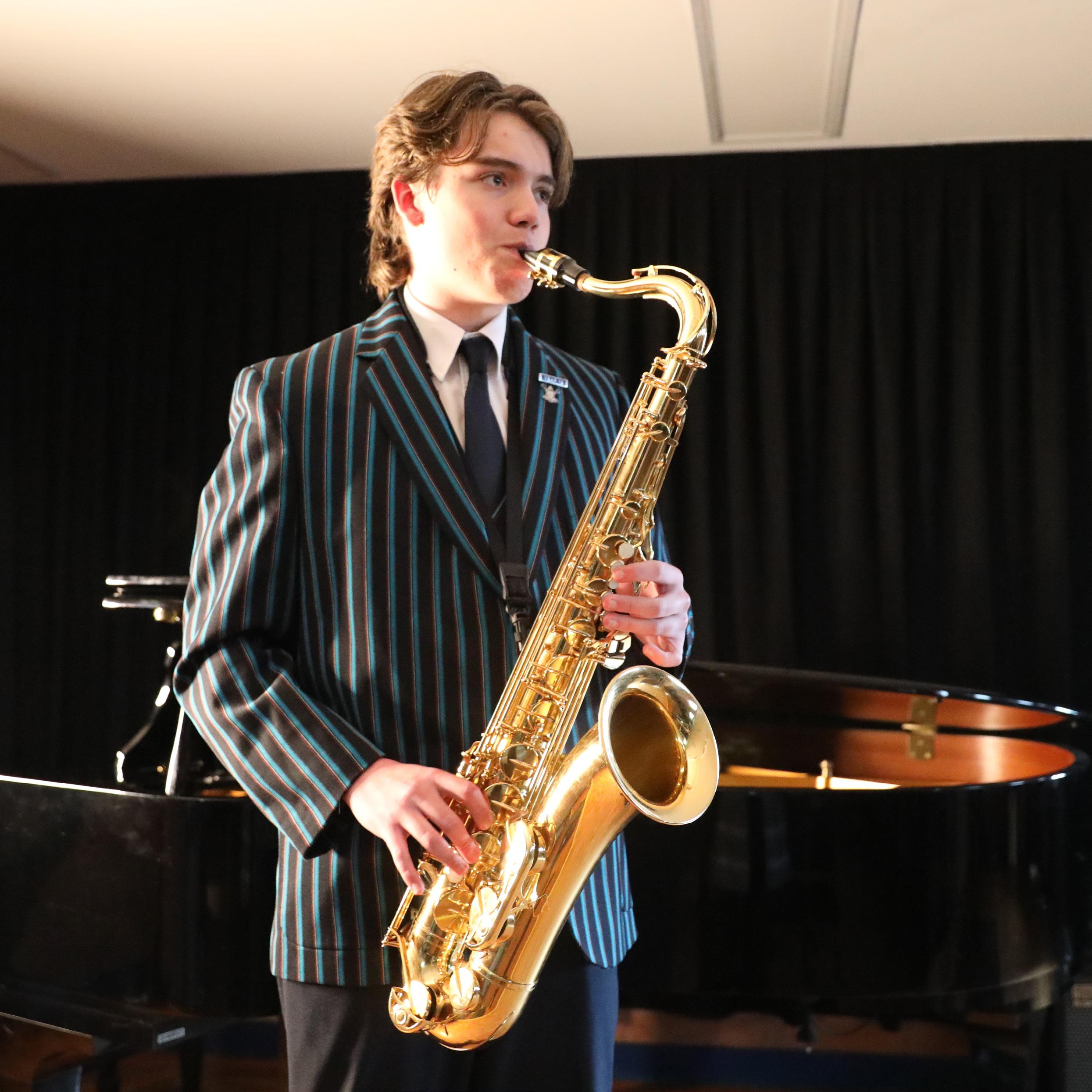
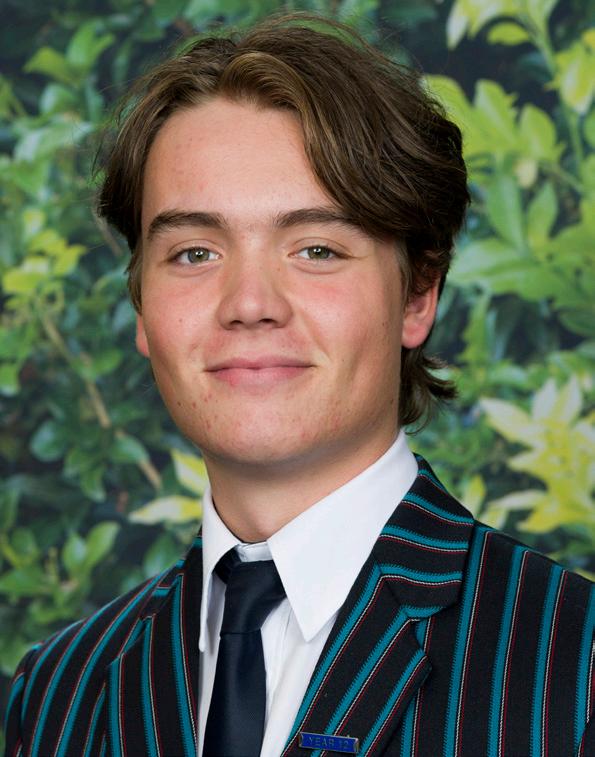
Thomas performed four pieces on tenor saxophone for his HSC Music 1 practical examinations, illustrating the instruments’ expressive capabilities and his skills as both soloist and within an ensemble. ‘Wonderboy’’ by The Huntertones was written and performed by a small ensemble showcasing the different roles the tenor saxophone can play within an ensemble. Pennies From Heaven by Arthur Johnston was published in 1936, at the beginning of the jazz era, explored many modern musical techniques, such as improvisation and trades. How Can I Stop the Rain by Andy Firth showcased the diversity of tone colours the tenor saxophone can achieve, such as sub-tone and the instruments ‘agility’. Jazz Police by Gordon Goodwin, a duet with trombone, explored the range, expressive techniques, dynamic range, and improvisational ability of the tenor saxophone.
ELYSHIA LODGE
Music 2 & Extension
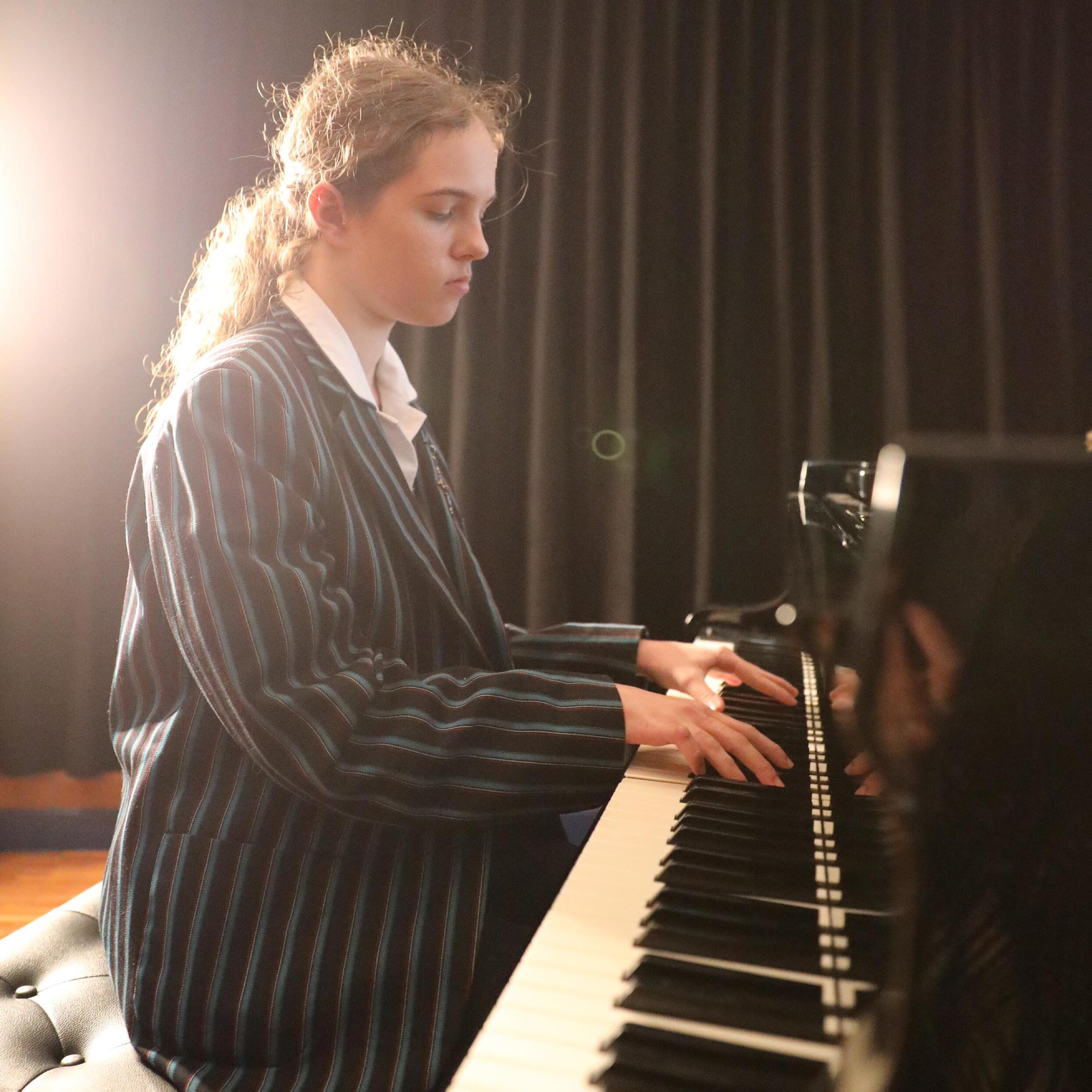
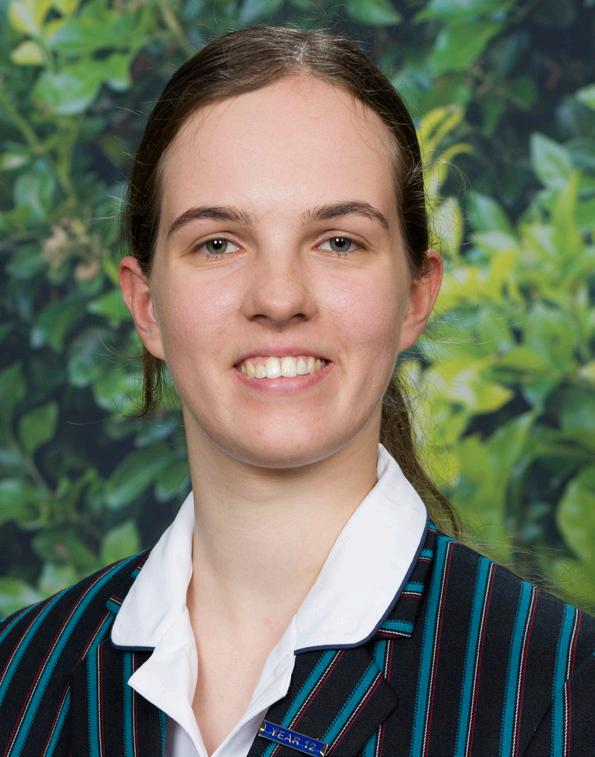
Elyshia performed one piece on piano for her HSC Music 2 Performance Examination, demonstrating her technical skills, stylistic understanding and her ability to explore a range of tone colours. For the Mandatory Topic, Music of the Last 25 Years (Australian Focus), Elyshia performed Dawn of Evening by the Australian composer Sally Greenaway, which was written in 2014. For her Musicology Elective, Elyshia researched Lieder (songs) by Schubert and wrote a 1500-word essay exploring death and hysteria within society. For Music Extension, Elyshia also chose Musicology, which involved researching the musical Wicked and writing a 3000-word essay about the transformation of the characters through the music.
MOLLY MCCAULEY
Music 1
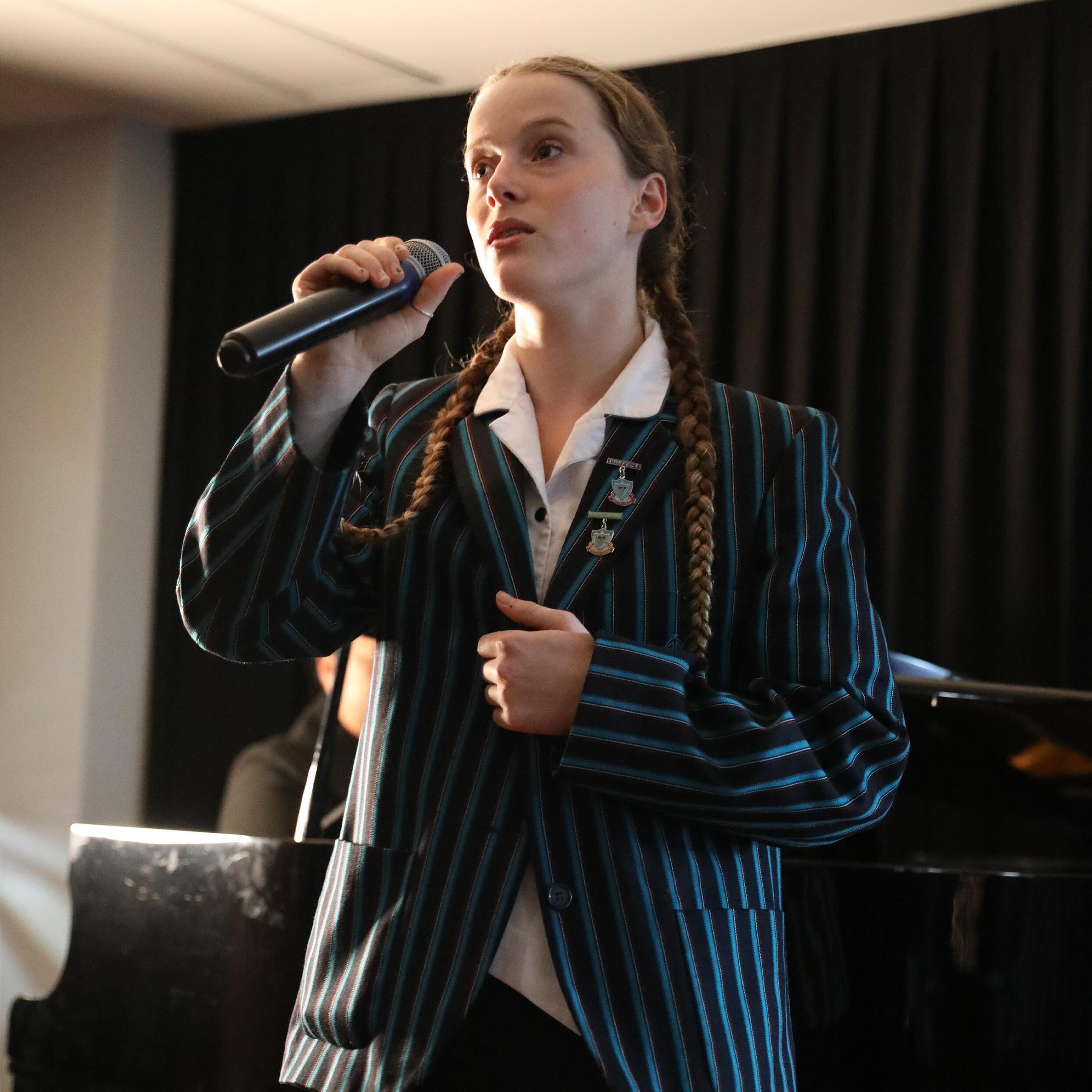
Molly performed four vocal pieces for her HSC Music 1 practical examinations, illustrating her advanced vocal technique, wide range and melismatic capabilities. ‘Sweet Child ‘O’ Mine’’ by Guns and Roses was adaptation of the original, introducing elements of folk, 3-part harmonies and more reminiscent of a ballad. ‘Paper Bag’ by Fiona Apple incorporated vocal techniques of scatting, chest voice, head voice, belting and spoken text, demonstrating the tone colour and technical capabilities of the voice. ‘Evergreen’ by Yebba showcased melismatic vocals in an R ‘n’ B style. This song required strong band communication to achieve a cohesive performance. ‘Dead Mom’ by Eddie Perfect explored music styles of rock, pop and musical theatre. This piece is the female protagonists most emotional, urgent narrative essential song from the Musical, Beetlejuice.
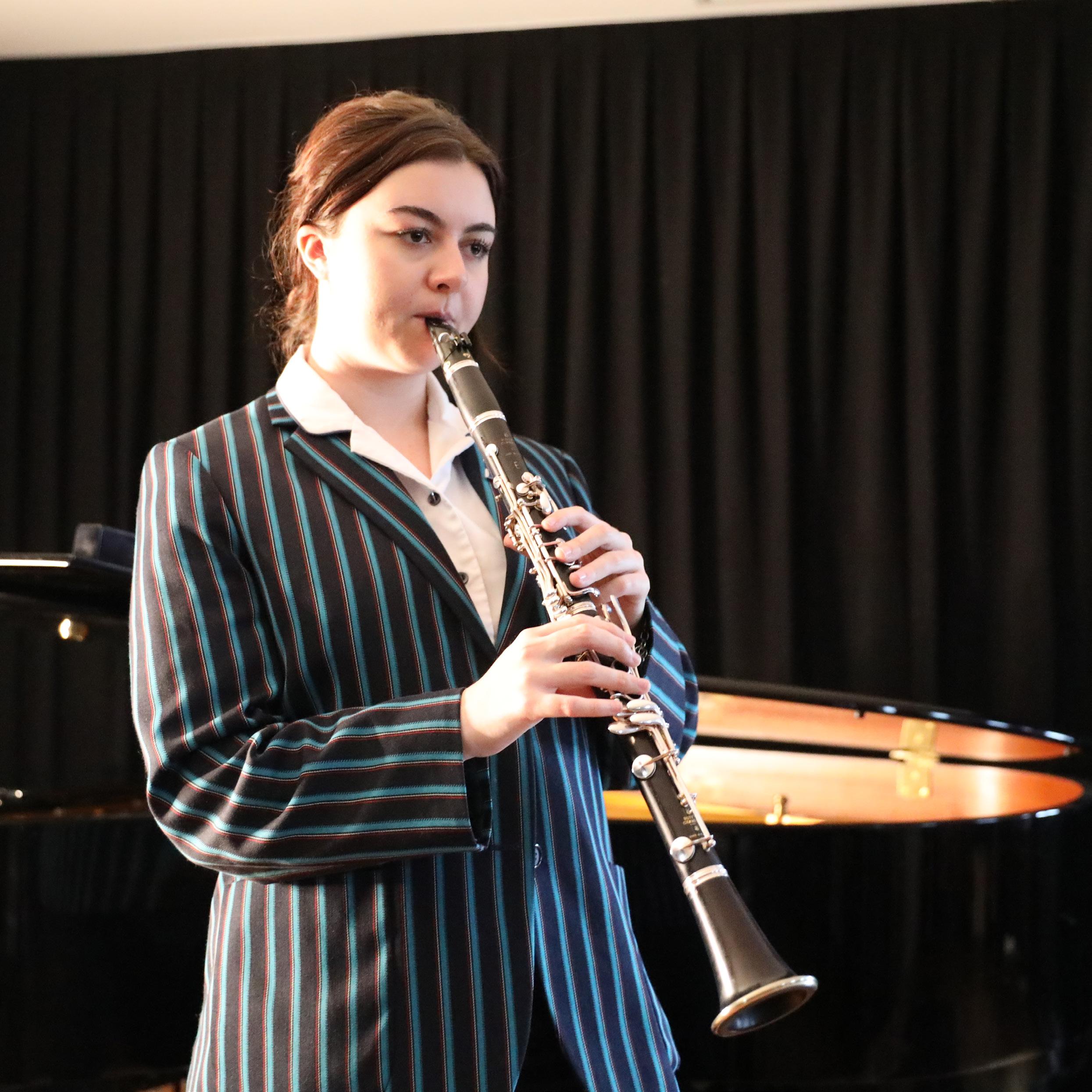
SAFFRON THIBAULT
Music 2
Saffron performed three pieces on clarinet for her HSC Music 2 Performance Examination, showcasing her expressive skills and stylistic understanding. For the Mandatory Topic, Music of the Last 25 Years (Australian Focus), Saffron performed an evocative rendition of Sati by the composer Jessica Wells, which was written in 2016. Her Performance Elective pieces were both from the Additional Topic, Music 1945 – 25 Years Ago, in which Saffron performed Blues For Two by Don Banks and Fantasy in B Flat by Malcolm Arnold.
SOCIETY & CULTURE
Arabella Bartley
Isabel Dixon
Josie Doyle
Alexandria Hayes
Mia Kearney
Samuel Roberts
Kevin Seng
ARABELLA BARTLEY
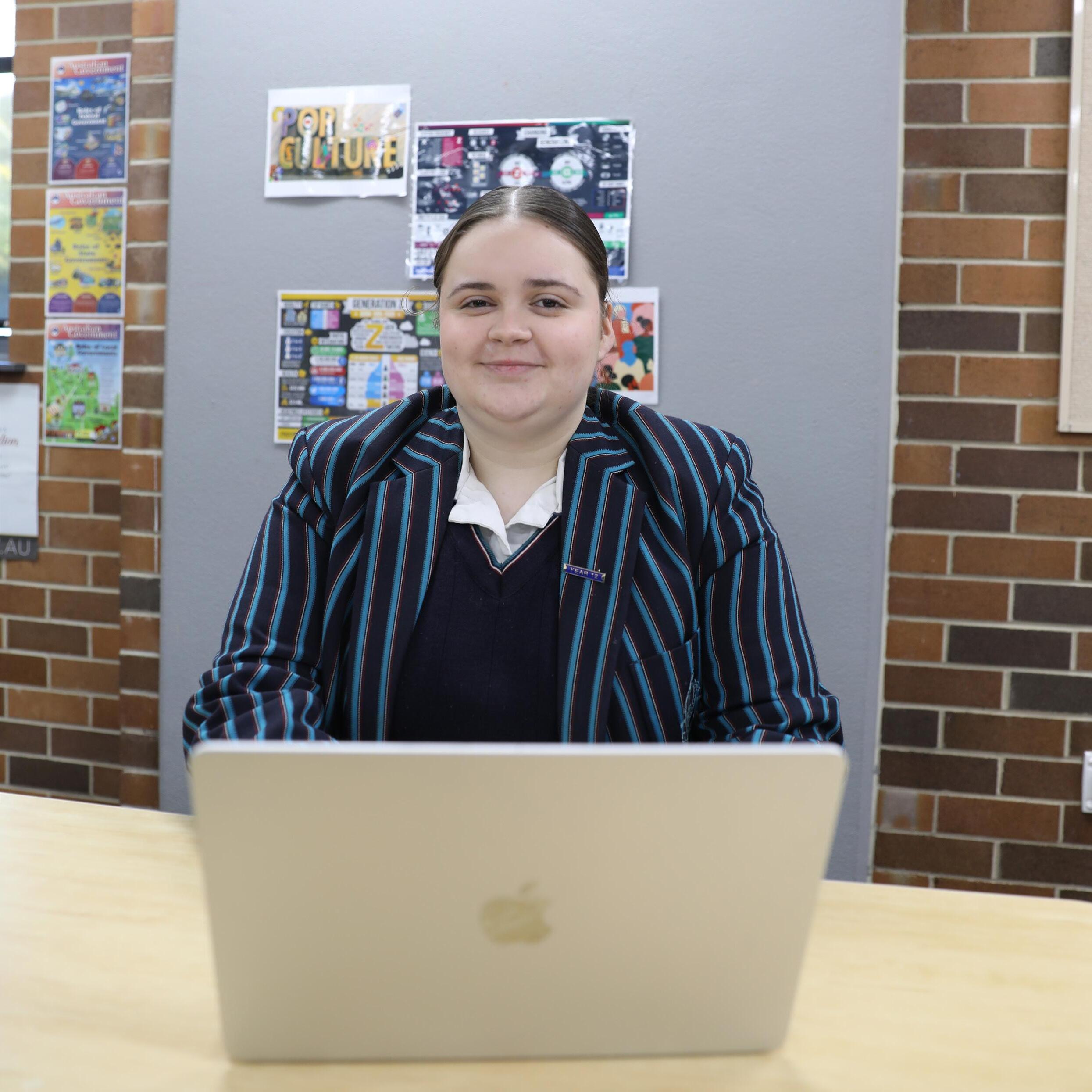
For my Personal Interest Project, I choose to investigate the rise of ‘artivism’ – a process of social change where art plays a role as a key form of activism. I was specifically interested to explore the nature and influence of artistic expression as a form of activism in support of feminism and gender equality. As both a Visual Arts and Society and Culture student, I was inspired to explore how artists can use their creative practices as platforms for protest, awareness and as a driver of social change. In addition to completing detailed secondary research, I used a range of primary research methods including questionnaire, focus group and a series of expert interviews with practising artists. Data obtained through these research methods enhanced my understanding of the value of diverse forms of artistic and creative resistance and the role that acts of non-conformity can play in challenging social inequalities and advocating for greater social justice
ISABEL DIXON
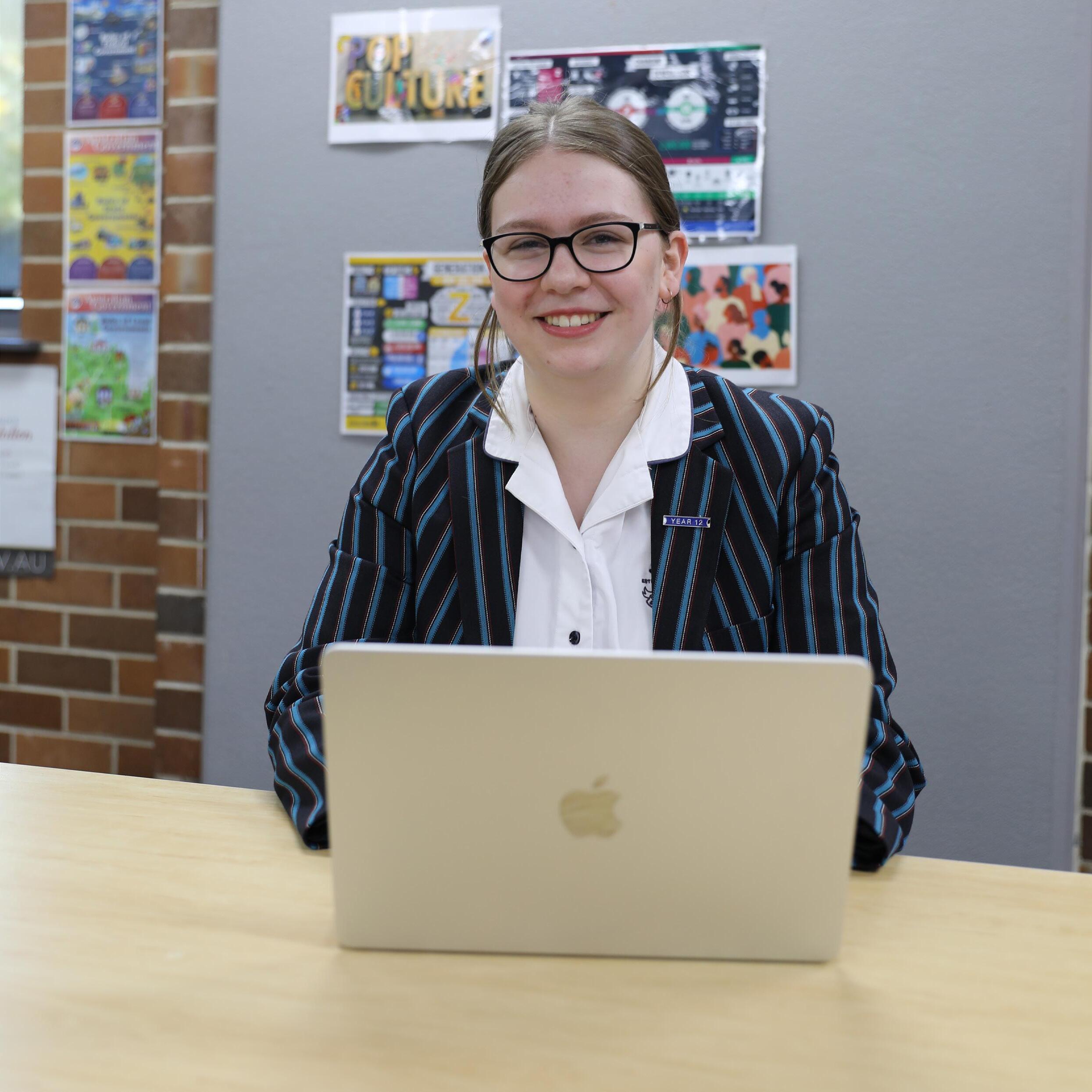
For my Personal Interest Project, I chose to investigate the existence of cross-generational attitudes and perspectives towards online anonymity, specifically conducting a comparison between the attitudes and responses of Baby Boomers and Generation Z. After being inspired by a class discussion about the theory of deindividuation and the increasing prevalence of anonymous online personas, I became interested to explore why individuals may choose anonymity; and whether the nature of online interactions varied between different generational groups. In doing so, I also sought to investigate the extent to which the use of anonymity can encourage individuality and freedom of expression or can lead to negative impacts within and between social groups. In addition to secondary research, I conducted a cross-generational focus group and completed a series of interviews. The collection of extensive qualitative data enabled me to obtain a wide range of personal and academic perspectives to support my investigation and research findings.
JOSIE DOYLE
For my Personal Interest Project, I chose to explore the postmodern interpretations of feminism and how changing interpretations of femininity, and the construction of the female identity, has led to a widening spectrum of ideological beliefs over time. In exploring the role and impact of ideologies as a source of influence within society, I was interested to consider the extent to which feminism exists as an ideology of ‘multiple truths’. In doing so, I aimed to explore the diverse nature and interpretations surrounding modern feminism, prompting me to initially question how and why being a ‘feminist’ can be perceived as positive, negative, courageous, powerful, misandrist and aspiring, all at once. Through the use of a range of secondary and primary research methods, including a series of expert and academic interviews, questionnaire and focus group discussions, I explored generational perspectives on the changing nature and construction of feminism in our modern context.
ALEXANDRIA HAYES
For my Year 12 major work, I investigated the rise and influence of K-Pop as a global popular culture. I was interested in exploring the influence that different sub-cultures, including a music genre such as K-Pop, can have on individual identity and on the development of a collective identity amongst fan groups. In exploring this topic, my research focused on exploring the influence that fandom can have on adolescent identity, beliefs and values. To support my research findings, I accessed a wide range of secondary articles and conducted a detailed content analysis of numerous K-Pop song lyrics, music videos and merchandise.

MIA KEARNEY
For my Personal Interest Project, I chose to explore how notions of femininity and masculinity have been constructed and perceived within the political landscape. My initial research began through my exploration of role congruency theory and reflections about the historical social constructs of gender and leadership. I was inspired to explore concepts of leadership and representation following my involvement in NSW Youth Parliament in 2024 and as a result of my strong interest in political advocacy and social justice. This Project provided me with the opportunity to obtain detailed qualitative and quantitative data using a range of primary research methods including academic interviews, focus group discussions and a questionnaire. I was inspired to explore not only the influence of socially constructed expectations and stereotypes surrounding leadership traits, but also the emerging role that communication technologies can play in promoting greater representation, supporting female leaders and re-imagining new political identities which challenge historical constructs. I was also interested to consider the role that greater levels of civic education can play in influencing social change.
SAMUEL ROBERTS
For my Personal Interest Project, I choose to explore issues surrounding the rise and nature of television Talk Shows as an increasingly popular media genre. I was interested to explore the social and cultural persona of the ‘Talk Show Host’ and the impact the genre can have on the identity and perceptions of viewers and wider society. My research led me to consider the broader influence that television icons can have, an influence that extends far beyond their role as an entertainer. I was also interested to explore the influence of the gender identity of the host and the extent to which social expectations surrounding gender potentially impacted the behaviour of a host and influenced the interactions between a host and their audience. Undertaking my research enabled me to consider the broader role that television, reality shows, and particularly talk shows can play in influencing and shaping societal attitudes and values. To support my secondary research, I collected data from a range of questionnaire participants and also conducted a content analysis.
KEVIN SENG
For my Personal Interest Project, I choose to explore how race, culture and identity can be represented through the media, specifically through film. This Project challenged me to consider the influence of historical representations of how Asian ethnicity has been constructed by Western media and the personal and collective impact that stereotyping and limited representation can have on identity. Growing up with Khmer heritage and reflecting on my own ethnicity made this topic deeply personal. Through my interview with a university professor, collection of detailed qualitative data from focus groups and a content analysis of various films, I examined how representation continues to shift from marginalisation to greater diversity, authenticity and visibility, whilst still negotiating stereotypes and western constructs. My research showed that the influence of film is complex and multifaceted - film can profoundly shape identity, belonging, and social attitudes. In addition to analysing the role of film within society, this Project enabled me to explore the influence of a media landscape where Asian identities are portrayed with complexity, pride, and authenticity.
Hill Campus
Cnr Church & Newcomen Street
Newcastle NSW 2300
T (02) 4929 5811
Email: office@ngs.nsw.edu.au Park Campus
Cnr Union Street & Parkway Avenue
Cooks Hill
NSW 2300
T (02) 4925 2121
www.ngs.nsw.edu.au