
Connecting Theory and Practice
Executive
A magazine for stakeholders, alumni, students, and friends of Newbold College of Higher Education

JESUS: THE LIVING CONNECTION BETWEEN THEORY AND PRACTICE
Jesus is the perfect example of how theory and practice are deeply connected and continuously shape each other in Christian life. “The Word became flesh and made his dwelling among us...” (John 1:14) reminds us that the cross and salvation are not just teachings or beliefs to accept, but actions to follow. Jesus didn’t only teach about salvation—he lived it fully. He revealed what God’s kingdom looks like: healing the sick, forgiving sins, serving others, and ultimately dying on the cross. His actions gave real meaning to the teachings he taught, showing that beliefs are meant to be lived out.
At the same time, Jesus’ practice—the way he lived—shaped how people understood God’s saving work: “I have come that they may have life, and have it to the full.” (John 10:10) His followers’ beliefs about salvation were not fixed ideas but became shaped and reshaped as they experienced His life, death, and resurrection.
It is my prayer that our lives become living connections between what we believe and how we live—so that those around us may come to understand and experience who Jesus is. May this not only impact others, but also help us grow in how we teach, live, and reflect Jesus in real, everyday life.
With blessings,
D r Lubica Mueller HEAD OF MARKETING AND COMMUNICATIONS
Dear Newboldians,
It is with great joy that I introduce you to the 2025 edition of The Newboldian Magazine. My hope and prayer is that the stories and reflections you will find within these pages will inspire you and deepen your love for Newbold. We treasure each of you—our students, alumni, friends, and supporters—and are excited to share glimpses of the life-changing and faith-affirming experiences happening within our vibrant community.
Let me begin by expressing our heartfelt gratitude to Dr Stephen Currow, who served as Principal of the College from 2022 until the end of this academic year (2025). With wisdom and resilience, he guided Newbold through challenging times and, together with the leadership team, laid a strong foundation for the future. We are deeply thankful for his faithful service and leadership.
Newbold continues to stand as one of the flagships of Adventist theological education—not only in Europe but across the world. Through our undergraduate and postgraduate programmes, we offer a holistic and biblically grounded education that prepares students for ministry and mission within today’s multicultural, multi-ethnic, and pluralistic European context. Our approach to learning is both theologically sound and practically relevant, equipping leaders who can serve with insight, compassion, and conviction.
Looking ahead, Newbold is broadening its vision for ministry and mission. While we remain committed to our core calling of pastoral and theological education, we are expanding our reach to better serve the Church and society as a whole. This includes the introduction of new academic programmes as well as the development of a dynamic e-learning hub. These initiatives reflect our commitment to adapt to the changing landscape of education while staying true to our mission.
Our new tagline, #ThinkNewbold, captures this vision beautifully. It reminds us that whenever the Church or community seeks training—whether for elders, Sabbath School teachers, safeguarding officers, or those seeking personal spiritual growth—Newbold should be the place they turn to. We aspire to be more than a college; we seek to be a partner on the journey of faith, learning, and service.
As we embark on this exciting new chapter, I warmly invite you to join us—to pray with us, to learn with us, and to dream with us. Together, let us Think Newbold and continue to build a community where minds are inspired, hearts are transformed, and lives are dedicated to God’s mission.

Dr Dan Serb PRINCIPAL

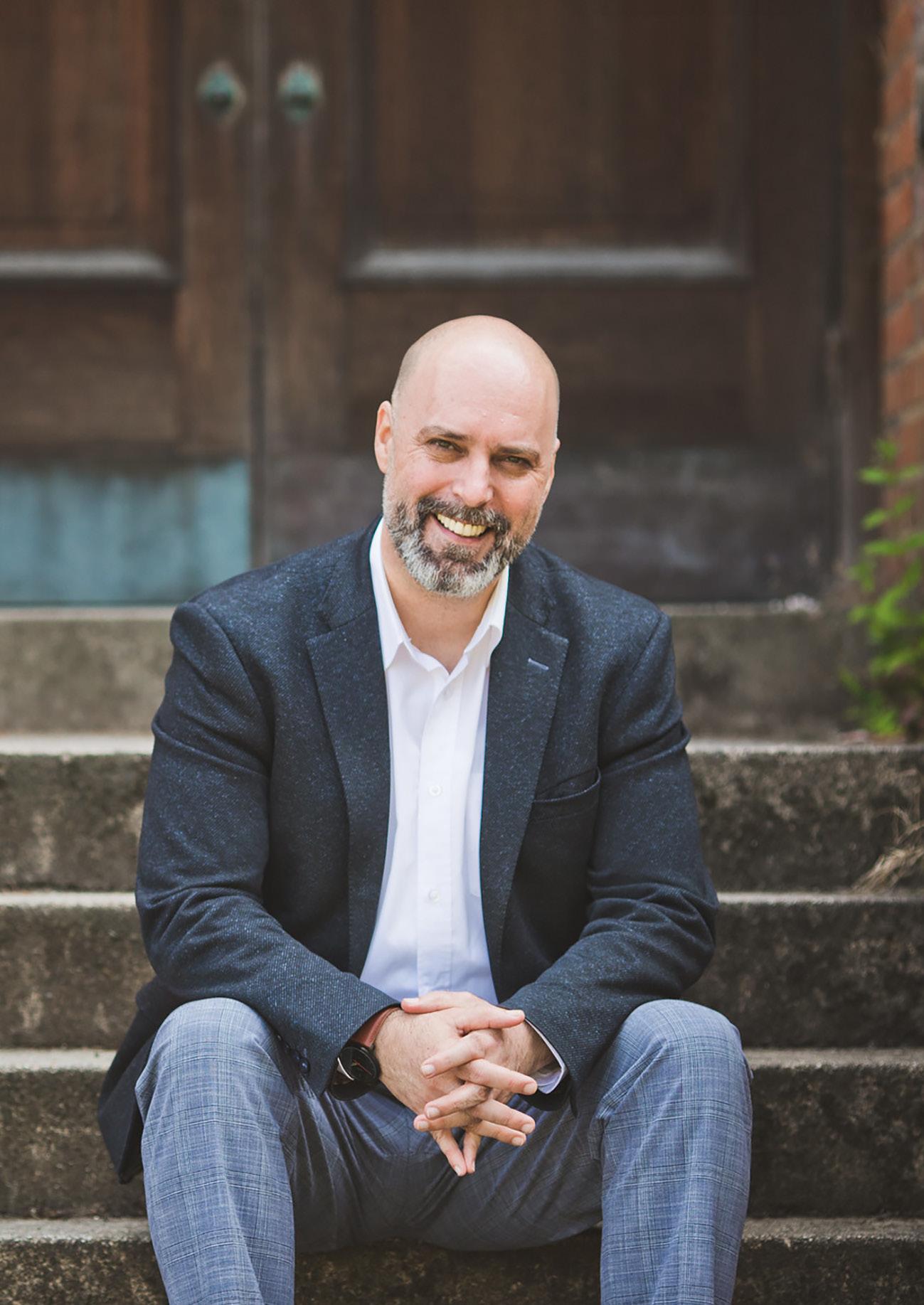
Photography: Asun Olivan
PASSING THE BATON:
Dr Stephen Currow and Dr Dan Serb share their reflections and vision for Newbold’s future
Written by: Clive Malcolm
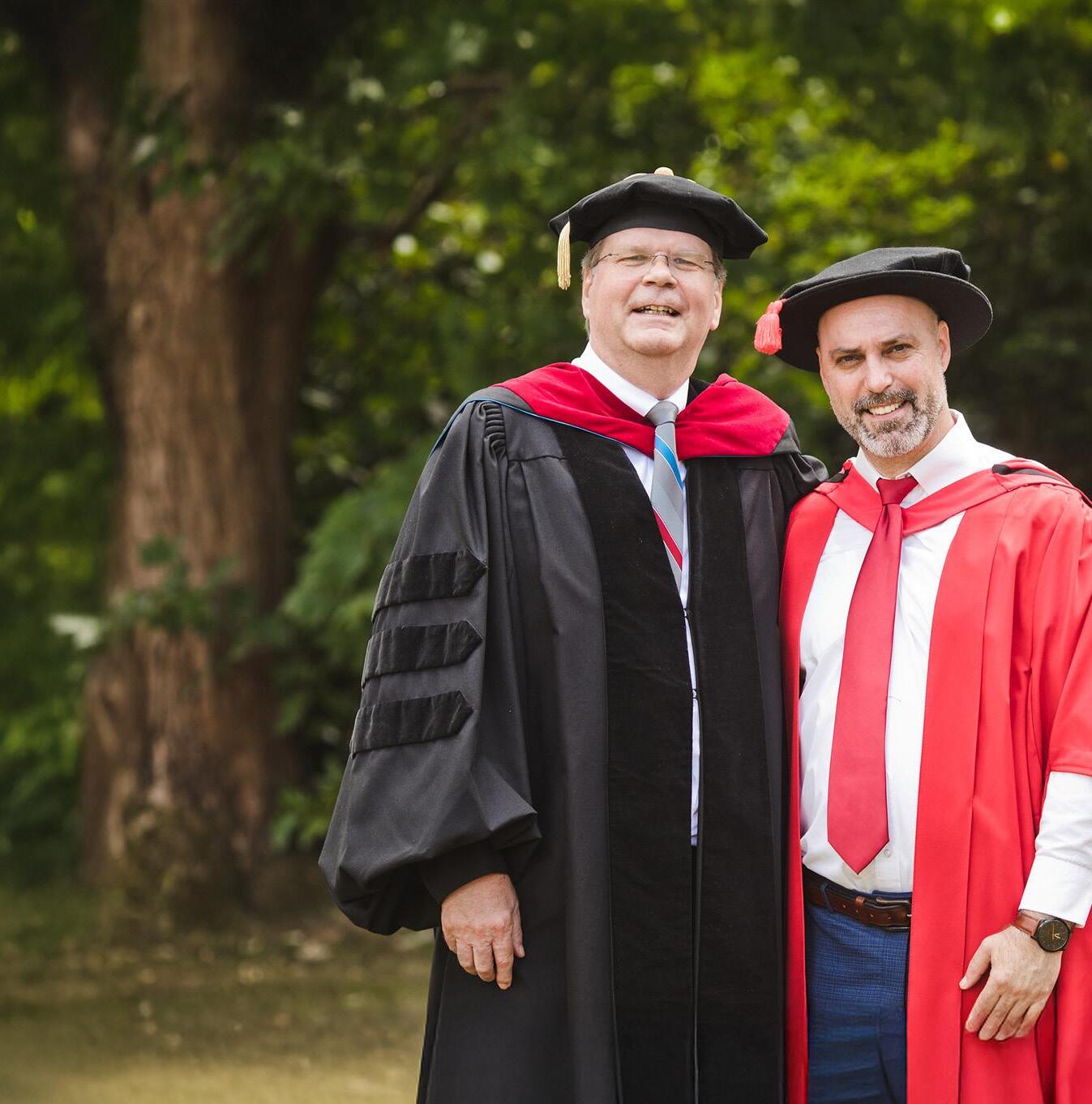
Stephen Currow
Dr Stephen Currow began his tenure as Newbold’s Principal in 2022. In March 2025, he announced his return to Australia after a four-year secondment from Avondale University. As Principal, Dr Currow focused on “developing people in ministry”, which he describes as a “sacred responsibility”. Dr Currow has passed the baton of leadership to his successor, Dr Dan Serb. He pauses to reflect on his legacy.
“My goal was to build expertise in pastoral studies,” Dr Currow explains. “We had to fill the gap in that area.” He points out that pastoral studies were a key focus of the College’s 2021 restructuring. “There’s a shortage of people qualified to teach it. This is not only a challenge for Newbold—it’s a challenge around the world.”
Getting to the heart of the matter, Dr Currow quotes from the book of John: As the Father has sent me, I am sending you. (John 20:21) It is a “succinct statement with a broad
implication,” he observes. “You have got to enter people’s worlds, as Jesus did with ours. There is nothing greater than seeing people accept Jesus as their saviour. There is nothing more rewarding than seeing the change in their lives. That is what you want to continue seeing and hearing in ministry.”
In parting, Dr Currow concludes, “Ministry is an exciting place to be because you see people grow and become what God wants them to be.”

Dr Dan Serb, a native Romanian, served in the Cape Conference, South Africa, until 2013 when he moved to Ireland. In 2016 he was appointed President of the Irish Mission and in 2024, Newbold’s Board invited him to serve as Vice Principal. In 2025, he stepped into the role of Principal.
“I am excited because there are great opportunities not just for Newbold, but the Church,” Dr Serb exclaims before adding, “We need to broaden the range
of programmes Newbold offers. We are going to launch a masterclass-type series online. It will include topics such as finance, well-being, religion, conflict resolution, and diversity, as well as theology.”
“We have so much expertise within the Adventist Church that we are not tapping into. There are members here in the UK and the Trans-European Division with extensive experience and knowledge in different fields. We aim to connect with these individuals and invite them to develop accredited six- to eight-week courses. They can help us equip the Church and provide more services to the community.
Dr Serb unveils plans to work with sister institutions to provide new programmes— for example, a BA in Social Work in partnership with Friedensau Adventist University in Germany. “We also plan to introduce a BA in Primary School Education and an MA in Leadership and
Social Innovation in partnership with Andrews University (USA),” he explains.
“Offering new programmes means you can minister to people and represent God in any field and have a faith-based education in areas other than theology. I’m searching for new opportunities to expand the range of courses we have to offer.”
Summing up his thoughts about the College, Dr Serb notes that Newbold is “much more than what happens in the classroom—it is an experience,” adding, “My hope is when people come here, they will renew and strengthen their relationship with God. They will find tangible aspects of what it means to be a Christian.“
“The College and what happens here belongs to God. We see His work in the formation of our students’ thoughts, characters and spiritual stamina. You can see His will for their lives.”
ANCHORED IN CHRIST, ENGAGED IN MISSION:
A
year of shaping lives in the classrooms of Newbold
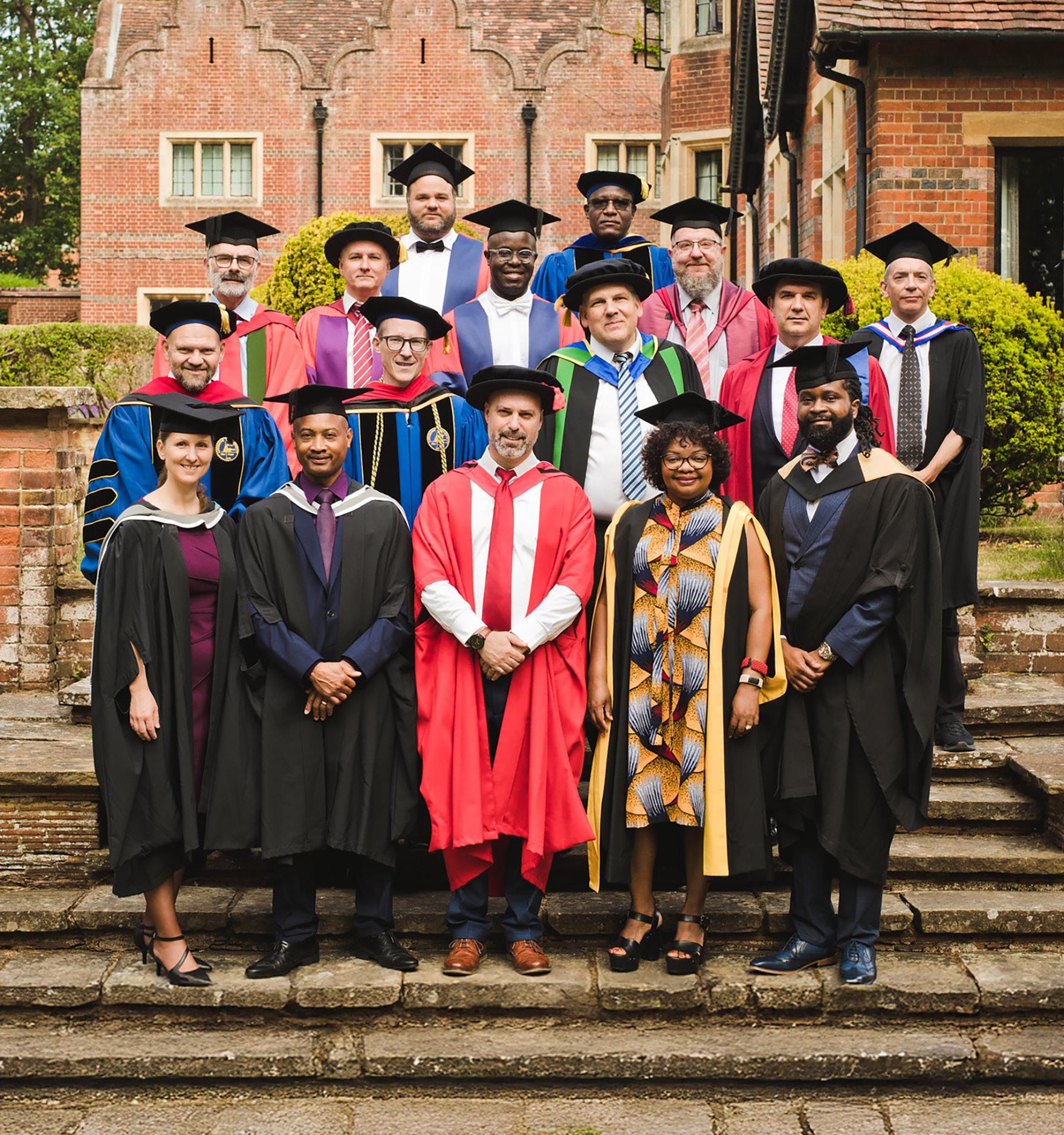
Written by: Dr Laszlo Gallusz, Head of the Centre for Ministry and Mission
The Centre for Ministry and Mission (CMM) lies at the heart of Newbold, serving as the hub for pastoral education and spiritual formation. Recognised internationally for its academic excellence and its commitment to integrating faith and learning within complex and changing European and UK contexts, CMM is a place where students encounter fresh ideas, research and innovation flourish, and personal and spiritual growth are nurtured. We are proud of our diverse and dynamic student body, whose passion for learning, creativity, and dedication to service continually inspire us.
Photography: Asun Olivan
Here are some of the ways that we have shared our mission of ministry over the past year:
Broader programme offerings.
We launched a new part-time Postgraduate Certificate in Youth Ministry in the Autumn of 2025.
Celebrating a lifetime of theological contribution.
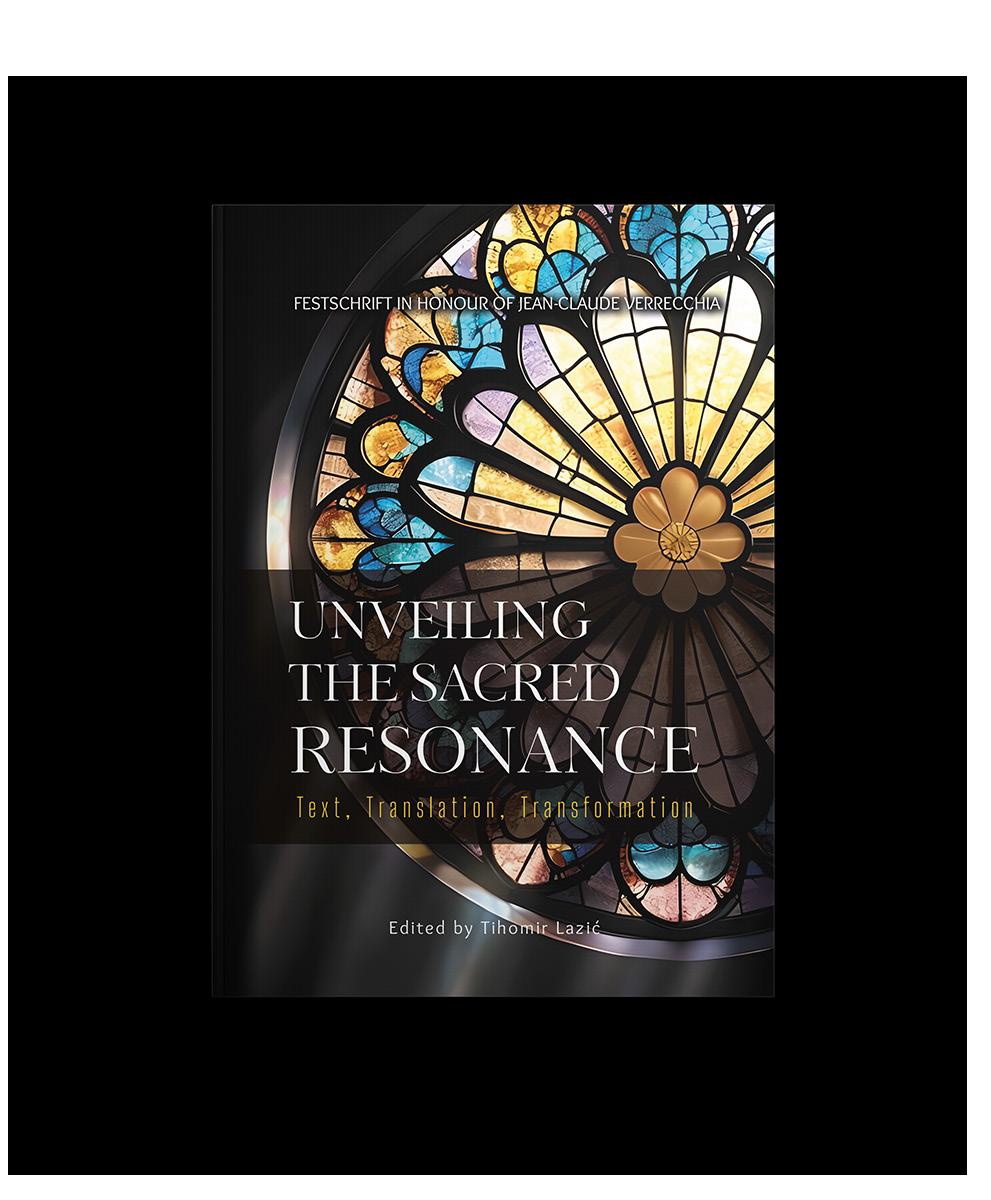
In recognition of his work, the Newbold Academic Press published a Festschrift, Unveiling the Sacred Resonance, edited by Dr Tihomir Lazić, honouring Dr Jean-Claude Verrecchia. The collection of essays, written by colleagues of the emeritus professor, was presented to him at a postgraduate research seminar at which Dr Verrecchia delivered a lecture entitled The Discourse to the Hebrews: New Perspectives
Contributing to ongoing theological conversation.
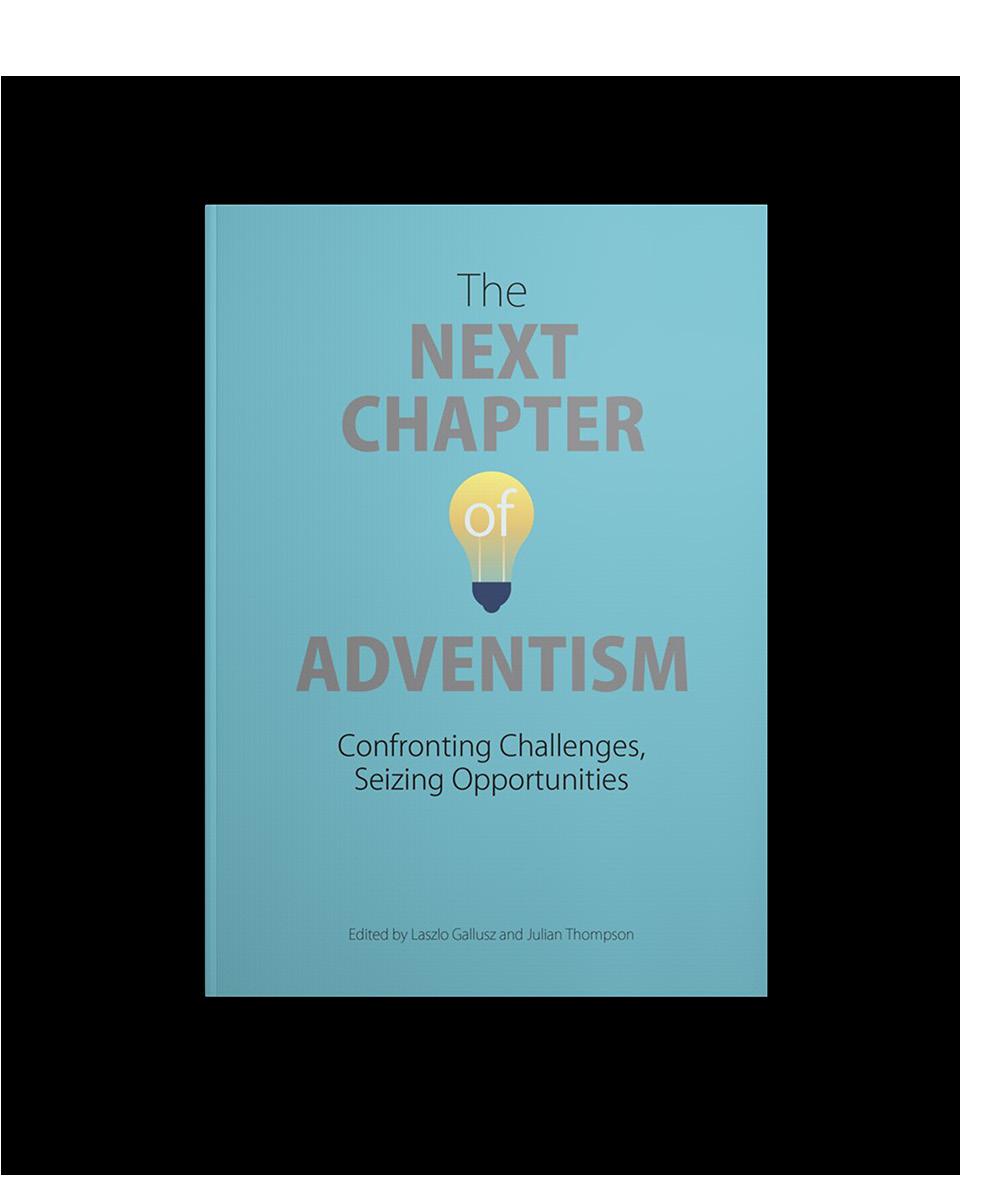
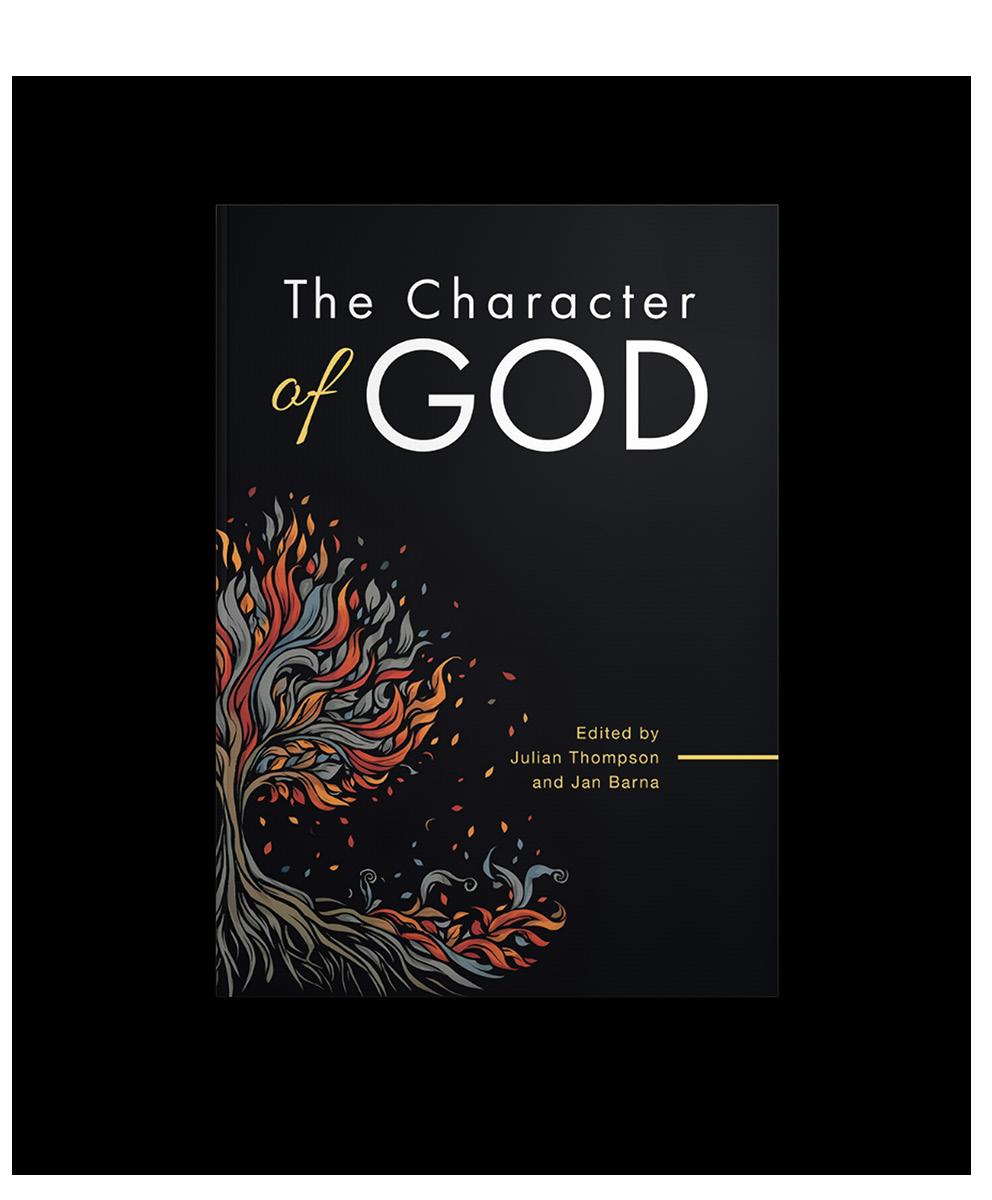
In 2025, Stanborough Press published The Character of God, a collaborative work written by 16 authors and edited by Newbold lecturers Dr Julian Thompson and Dr Ján Barna. Blending wisdom from Scripture, contemporary thought, and pastoral practice, the book explores one of Christianity’s most crucial yet often misunderstood themes from multiple perspectives.
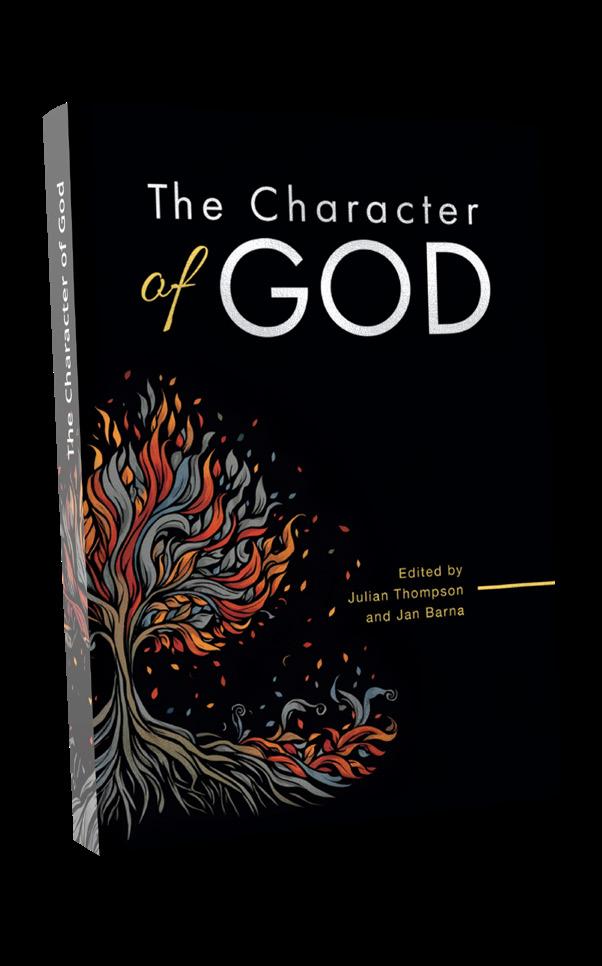
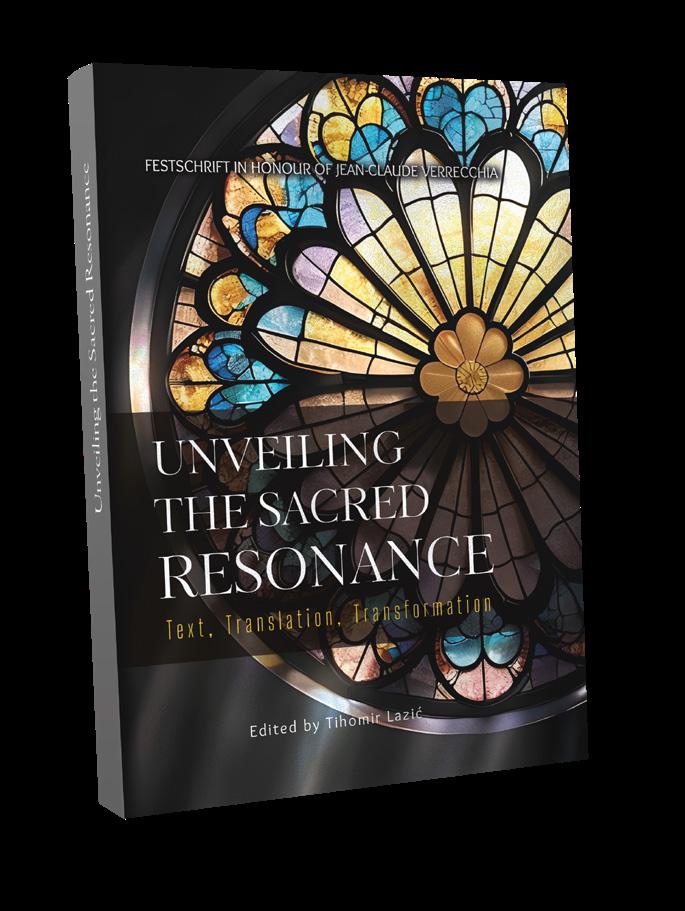
THE CHARACTER OF GOD - available for purchase online at lifesourcebookshop.co.uk
UNVEILING THE SACRED RESONANCE - available for purchase at Newbold reception
THE SEVENTH-DAY ADVENTIST BIBLICAL-THEOLOGICAL DICTIONARY - available online at dictionary.adventist.org
Engaging in global dialogue.
CMM lecturers actively contributed to academic conversation through their participation in a range of international conferences and events in 2025, including:
• The Society of Biblical Literature Annual Meeting, San Diego (USA)
• The Adventist Society for Religious Studies Conference, San Diego (USA)
• The Adventist Theological Society Conference, San Diego (USA)
• The European Theology Teachers’ Convention, Sagunto Adventist College, Valencia (Spain)
• The International Conference on Worship and Music, Andrews University (Berrien Springs, USA)
• The Ecclesiology and Ethnography Conference, Durham (UK)
• The European Academy of Religion Conference, Vienna (Austria)
Leading through service.
At its European conference in Sagunto, Spain, the European Adventist Society of Theological and Religious Studies elected Dr Ivan Milanov as its president. In addition, Dr Laszlo Gallusz was reappointed by the General Conference to serve as a Biblical Research Institute Committee (BRICOM) member for another quinquennium.
Recognising expertise.
Dr Tihomir Lazić was promoted to Principal Lecturer, and Dr Julian Thompson to Senior Lecturer.
Charting a way forward for mission.
In collaboration with the Trans-European Division (TED), CMM organised a joint conference to mark the 150th anniversary of Adventist Mission in Europe and the UK. The event was both a celebration and an opportunity for reflection—inviting church leaders to evaluate, rethink, and be inspired to embrace God’s mission in today’s challenging context.
Contributing to the development in Adventist Theology.
Nearly all Newbold lecturers and emeritus professors contributed articles to the recently released Seventh-day Adventist Biblical-Theological Dictionary online reference work. In addition, Dr Laszlo Gallusz and Dr Eike Mueller served as assistant editors, helping shape this significant and ongoing resource for the global Adventist community.
Serving in churches.
CMM lecturers were active in churches across the TED throughout 2025, preaching and leading seminars in addition to speaking at camp meetings, mission conferences, pastoral and elders’ meetings, and a range of training events—sharing their expertise and supporting the Church’s mission.
Altogether, 2025 was a very active year in which the lecturers served the student body, the Church, and the wider community— continuing our mission of advancing the Kingdom of God.

THE POWER OF BIBLICAL LANGUAGES
Could classes in biblical languages lead to deeper faith and more impactful ministry?
Written by: Pr Ivana Mendez Student Interviews by: Editorial Team
“Studying the Bible without knowledge of biblical languages is like studying Shakespeare’s works without knowing Early Modern English—we miss a lot!” Pr Ivana Mendez, Lecturer in Biblical Languages
Illustration: Aleksandra Pavlovic
Is it truly the case that biblical languages are still relevant today? We explored the impact that the study of biblical languages had on eight of our undergraduate theology students who completed two modules of either Greek or Hebrew in the last academic year.
Students enrolled in our language classes come from varied backgrounds and represent the entire spectrum: from polyglots and language enthusiasts to those who only have experience in English. Some are excited to learn a new language; others would avoid it if only they could!—many having heard discouraging ‘horror stories’ about the reputation of biblical languages as being among the most challenging subjects in a theology programme or having been told that this knowledge is ‘unnecessary for pastoral ministry’.
While our bachelor students learn Greek in their first year and see Hebrew on their timetable in the second, Graduate Diploma students must choose just one. Some are driven by a specific interest and decide instantly, others take their time or choose to consult with our Undergraduate Programme Director before making their decision. Eventually though, everyone receives a ‘pre-course pack’ with information, instructions, and videos recorded by their lecturer.
This helped me to familiarise myself not only with the Greek alphabet and sounds but also with the teacher herself. I saw myself being eager for the first day at school. Anderson (The Netherlands)
Our students refute the perception that a class in biblical languages must be dull and only about memorisation of vocabulary and grammatical charts.
Even learning the grammar can give you a sense that you have just listened to a sermon. Inger (Denmark)
To create an effective learning environment, a variety of teaching methods are employed, including immer sive ones. The challenge of having both in-class and online students is minimised with the use of customised workbooks that aid concentration and enhance engagement. Of course, not every class can be made easy; therefore weekly group tutorials are available for anyone who needs more clarity, practice, or just a word of encouragement. Our students agreed that such an approach not only enhanced their learning but also inspired confidence and excitement for further studies.
At the end, it was only a challenge and not an impossibility. Anderson (The Netherlands)
As their studies in biblical languages unfolded, our students became able to assess different translations of a biblical verse, marvelled over nuances that were lost in translation, and reported their amazement at how rich Hebrew and Greek are.
I was often excited during class whenever something became either more clear or carried a deeper meaning than I had. I called these my ‘Hallelujah moments’ in Hebrew. Chris (United Kingdom)
I developed interest in and love for the mindset, nuance, and beauty of the original text. Marvellous (United Kingdom)
What surprised me most was that the ancient language gave so much more understanding of the culture in biblical times. Joe (Finland)
It was so fascinating seeing the depth and intentionality of specific grammatical uses and how this impacts the way we should read and understand the Scripture. Layken (United Kingdom)
Because the language class was a safe space for asking questions and making mistakes, our students also revealed that, indeed, a part of their learning process was un-learning.
As we studied biblical Hebrew I became aware of how in my understanding and teaching I had not completely comprehended various texts; how I had misapplied some biblical principles; and also sometimes taught wrong things which were not in the text. Chris (United Kingdom)
Learning Hebrew has intensified my amazement of God and His words. Knowing the message in its original language creates a much deeper connection with the words of God. Mylene (The Netherlands)
Time and again, students emphasised that, while Hebrew and Greek demand perseverance, determination, time, and energy, the reward is extraordinary. Looking back and looking forward, has this experience shaped them in their personal life and pastoral ministry?
I am several steps closer to understanding the authors of the Bible, i.e. the intended meaning of their writing, and that strengthens my own faith, which in turn inspires what I say and do in my ministry. Inger (Denmark)
A solid foundation in biblical languages has proven essential for sound exegesis. Sharing these linguistic insights with others—particularly within my church community— has been incredibly rewarding. Kuda (United Kingdom)
You are not only learning this biblical language for yourself; but you are taking that tool you now have and using it to share God’s love and His Word in a new way to others around you. Layken (United Kingdom)
The acquired knowledge of biblical languages is applied and further developed in other classes our students take. Many equip themselves with Bible software, desiring to embark on a lifelong journey of discovery. As for our Graduate Diploma students, we delight if they are left with the following dilemma:
Having only studied Greek, my concern is that I am trying to figure out how I can squeeze Hebrew into my Grad Dip or MA studies, so that I don’t miss out. Inger (Denmark)
May the testimonies of our recent students encourage others to set off on a similar journey soon.
THE YEAR THAT CHANGED US
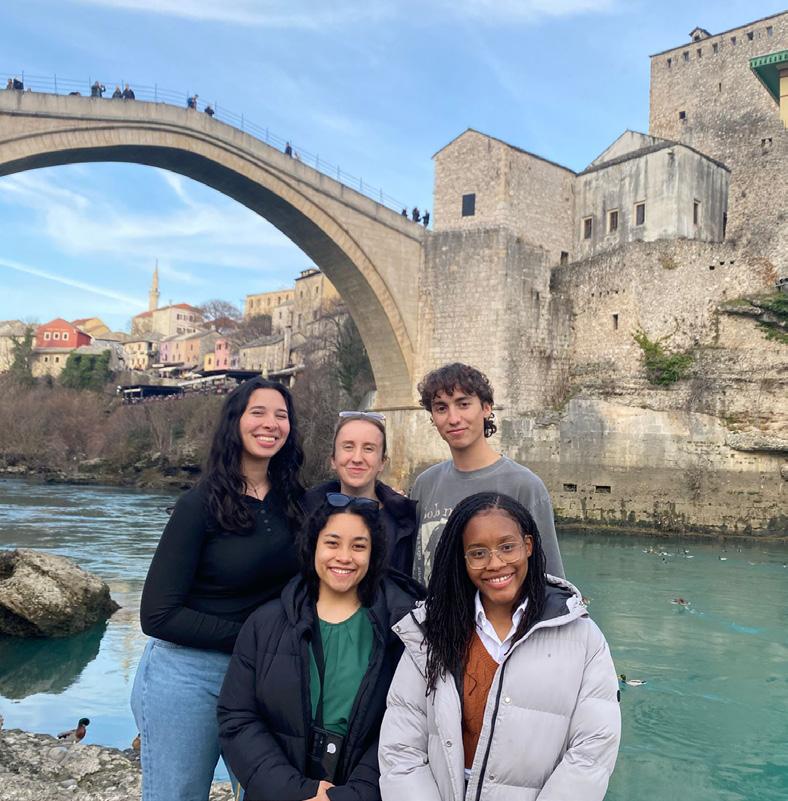
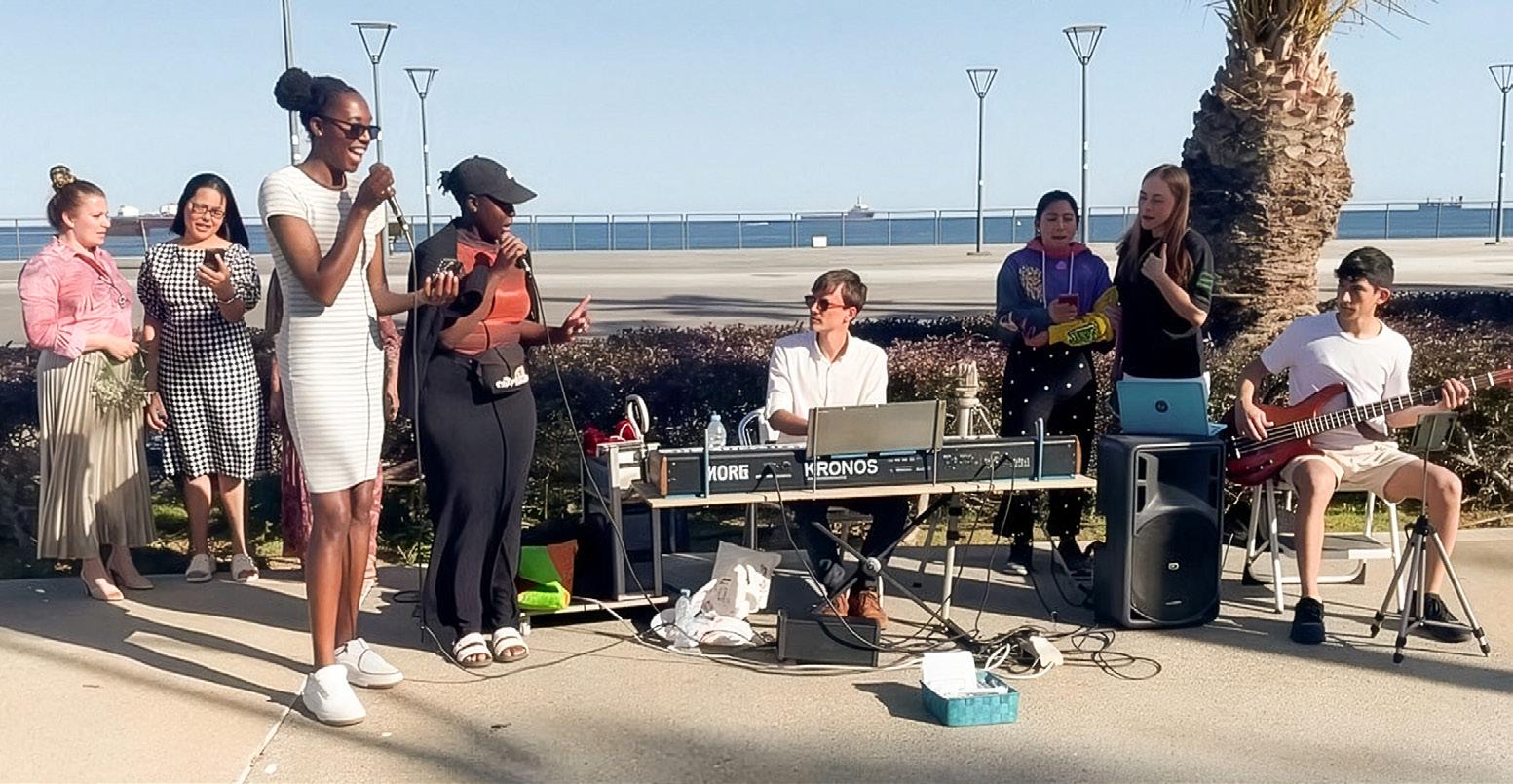
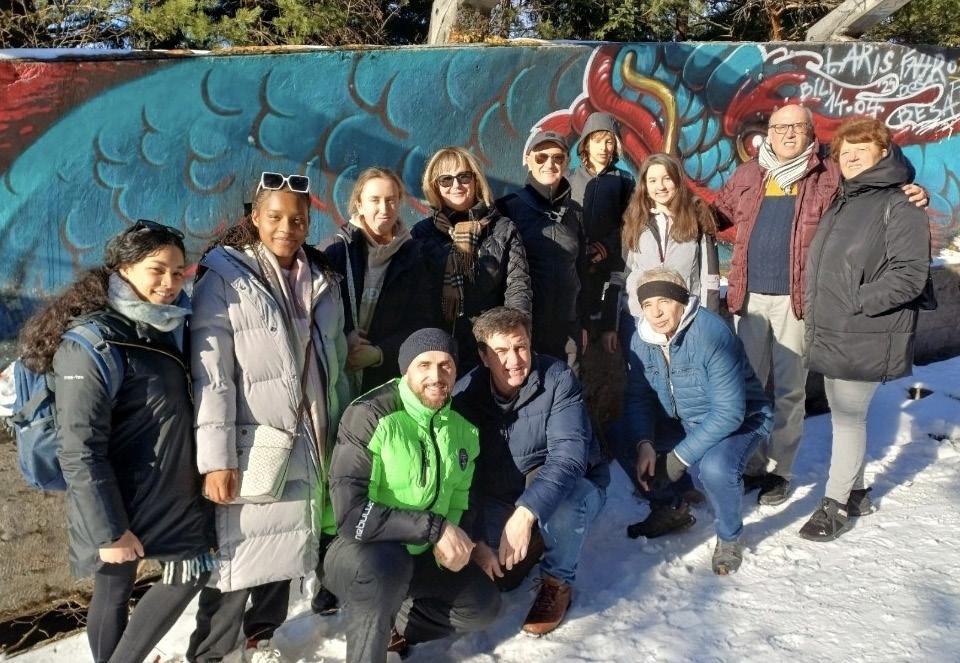
Students reflect on their experience in Newbold’s One Year in Mission and Service (OYiMS) programme. This short course equips students to grow personally while serving global communities through the gospel, beginning on campus before a lifeenriching mission trip with ADRA Europe or the Adventist Volunteer Service.
Photography: Supplied

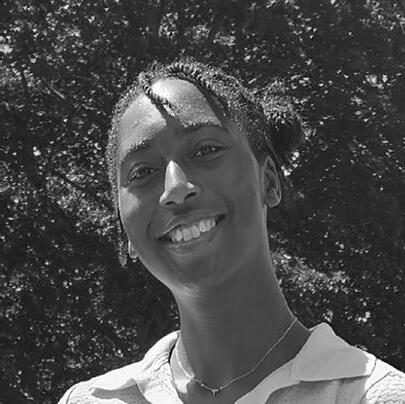
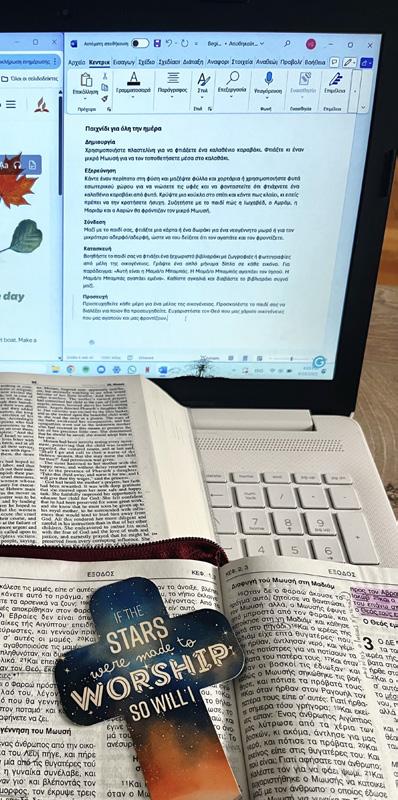
VICTORIA GIANTZAKLIDOU, OYiMS programme volunteer at Greek Mission
“In just three months, OYiMS at Newbold reminded me of something we often forget: that who we become through service matters even more than what we do. I was deeply inspired by the Engaged in Mission150 conference, particularly its discussion of the incredible impact of women in mission. Returning to Greece, I felt a renewed desire—as a young woman—to serve boldly, with faith and courage, and to grow into the kind of woman who embraces her calling and walks confidently with her Lord.”
“My time as an OYiMS student at Newbold taught me that ‘God doesn’t call the qualified. He qualifies the called.’ My time in mission has allowed me to make so many meaningful connections with the people around me, the community, the youth and church, too. It has changed my entire outlook on God’s calling for my life, as He was able to use me in more ways than I could have ever imagined.”

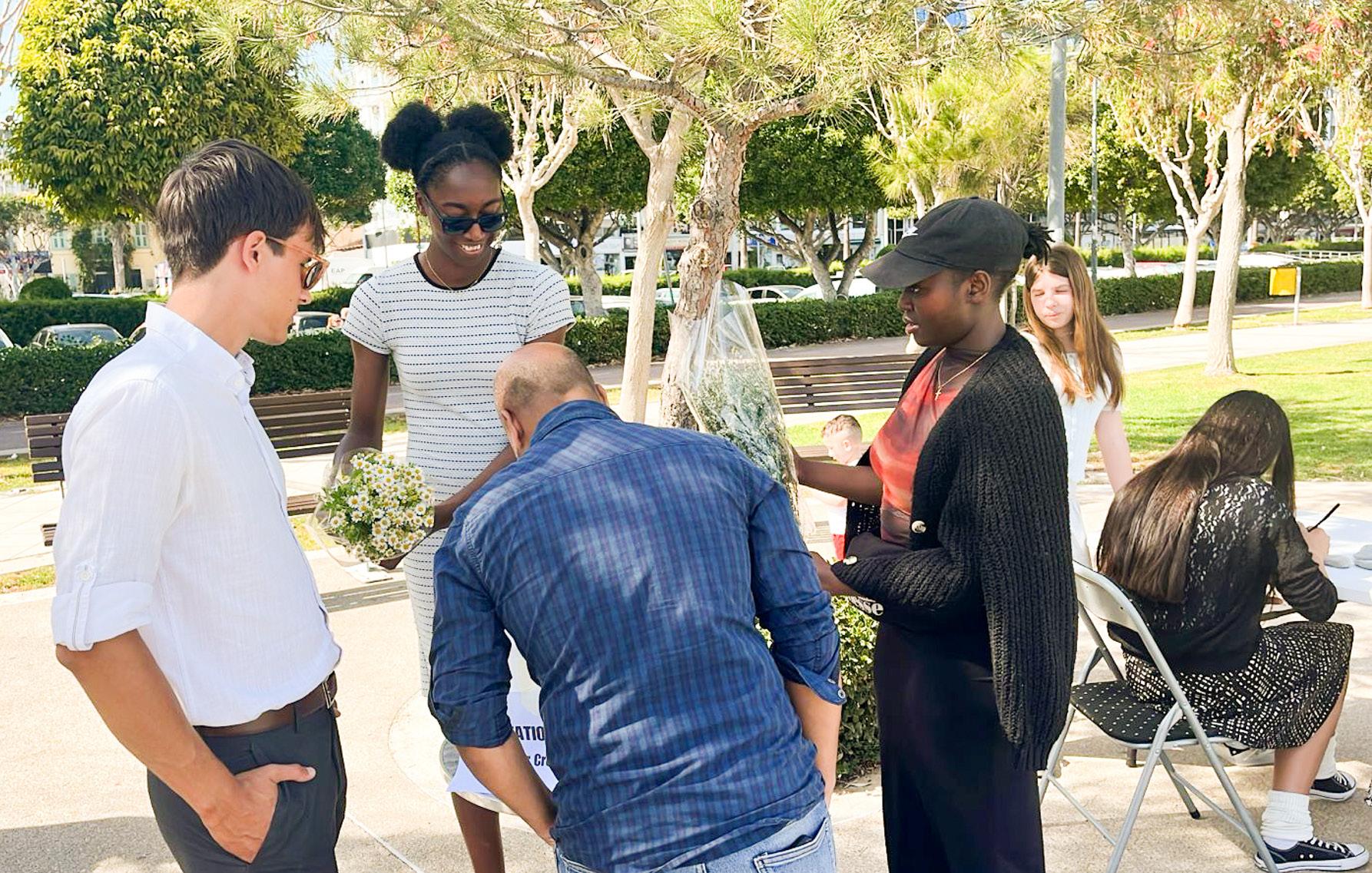
LASHAE MUNROE, OYiMS programme volunteer at Cyprus Mission



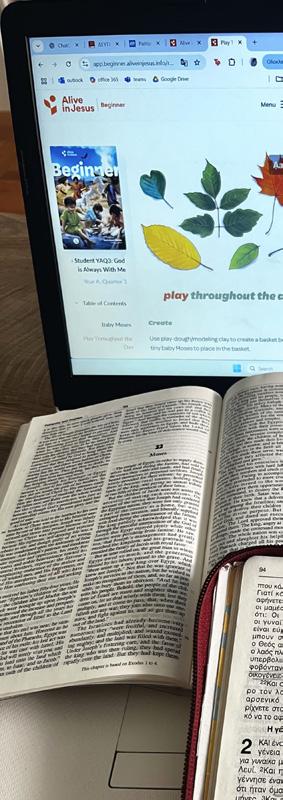
JONATHAN
KAMPMANN, OYiMS programme volunteer at Oikos, Finland
“Oikos* being part of the whole OYiMS programme helped me grow in so many aspects of my life. It let me leave my comfort zone, leaving home for the first time. I have experienced so many different cultures which all bring something to the table.”
(*Oikos Community partners with the OYiMS programme to support students through mission field experiences.)
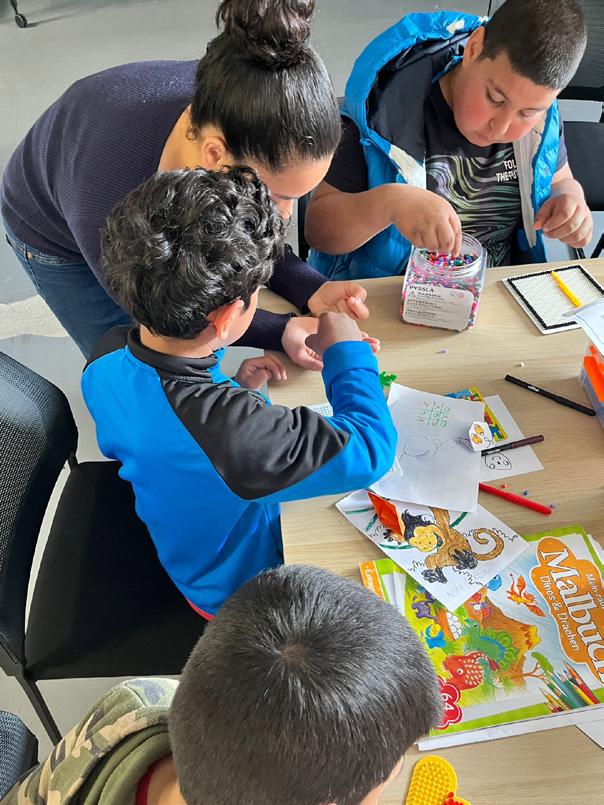
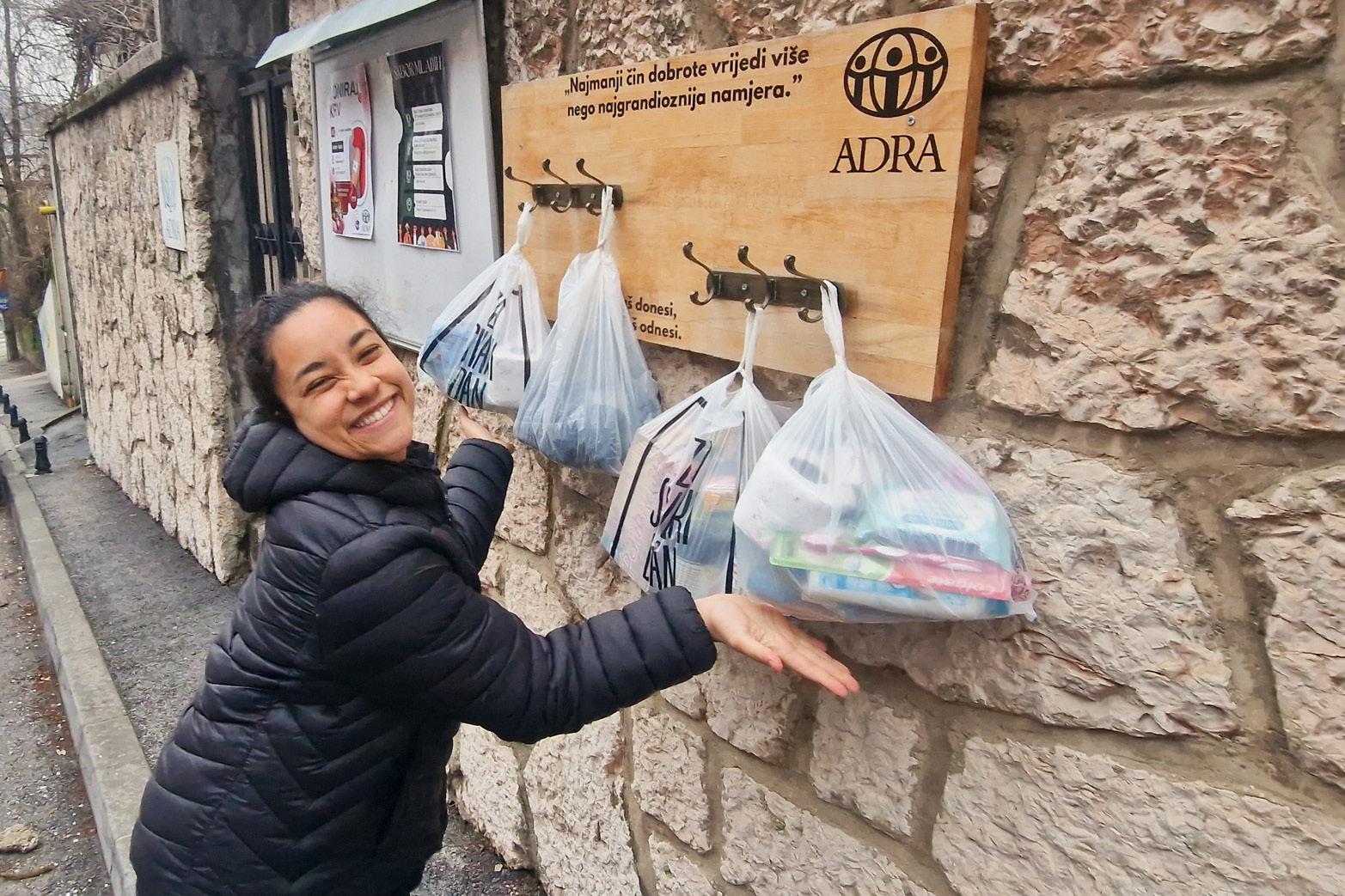
ANASTASIA SKOPEK, OYiMS programme volunteer at ADRA Bosnia & Herzegovina and ADRA Serbia
“Through OYiMS, I learned that the world is bigger than I thought, and God is bigger than I thought, too. It pushed me to places I didn’t realise I needed to be pushed towards, and to people I didn’t realise I needed to meet. Now, I have a clearer picture of God and how He is with us—always, wherever.”
GEORGIA BEDWELL, OYiMS programme volunteer at ADRA Bosnia & Herzegovina and ADRA Serbia
“My biggest takeaway from serving communities in Bosnia & Herzegovina and Serbia is that it is the smallest acts—like a smile, a conversation, or simply showing up—that speak the loudest about God’s love. This journey has affirmed my faith and shown me that my purpose is to serve others with compassion and share God’s love. Now I am excited to continue that mission back home on Saint Helena island.”
NEWBOLD ACADEMIC PRESS CELEBRATES A DECADE OF PUBLISHING
Written by: Dr Ján Barna
It is perhaps a less-er known fact, but in 2025 our own Newbold Academic Press celebrates its decennial—ten year—anniversary. The Press’s inaugural publication, Journeys to Wisdom: Festschrift in Honour of Michael Pearson, was released in March 2015.
Since publishing its first volume in 2015, Newbold Academic Press has—perhaps symbolically—marked its first decade with ten publications under its own name, and two produced in partnership with Stanborough Press.
In its early years, the publishing board comprised three main editors: Dr Andreas Bochmann, Dr Manuela Casti Yeagley, and Dr Jean-Claude Verrecchia, while later work was overseen by then-Principal, Dr John Baildam. Since October 2022, when Newbold Academic Press underwent a period of renewal, leadership has been shared by Dr Ján Barna (Head of Research, and Principal Lecturer in Systematic Theology), Dr Laszlo Gallusz (Head of Newbold’s Centre for Ministry and Mission, and Principal Lecturer in New Testament Theology), Serena Santona (Academic Registrar), and Nevena Borcsok (Librarian).
The primary purpose of the Press is to publish books and research that represent the College’s values as they apply to the mission of the Church within the Trans-European Division and beyond. Newbold Academic Press is therefore committed to supporting and sharing research that is biblically grounded, hermeneutically sound, theologically innovative and engaging, and practically relevant to current challenges and developments in the ministry and mission of the Church.
Following the COVID period and, in particular the restructuring of the College, the Press was relaunched in the autumn of 2022 with renewed focus and purpose. Since then, it has published regularly, producing high-quality and rigorous volumes that highlight and promote the research and teaching expertise within Newbold’s Centre for Ministry and Mission. Since this relaunch, five volumes have been published: three directly by Newbold Academic Press, two in cooperation with Stanborough Press.
The Press currently has two volumes in development, scheduled for publication in the spring of 2026.
This work highlights Newbold’s considerable potential to serve as a valuable resource for both the Church’s academic communities and the wider Church, contributing meaningfully beyond its pastoral teaching programmes.
We hope that in the decade to come, Newbold Academic Press will continue to make relevant research accessible through its publishing ministry—for the benefit of “edifying the body of Christ” so that “we all can come to the unity of the faith and of the knowledge of the Son of God” (Ephesians 4:12–13).
A full list of the volumes published by Newbold Academic Press is available on the following page.
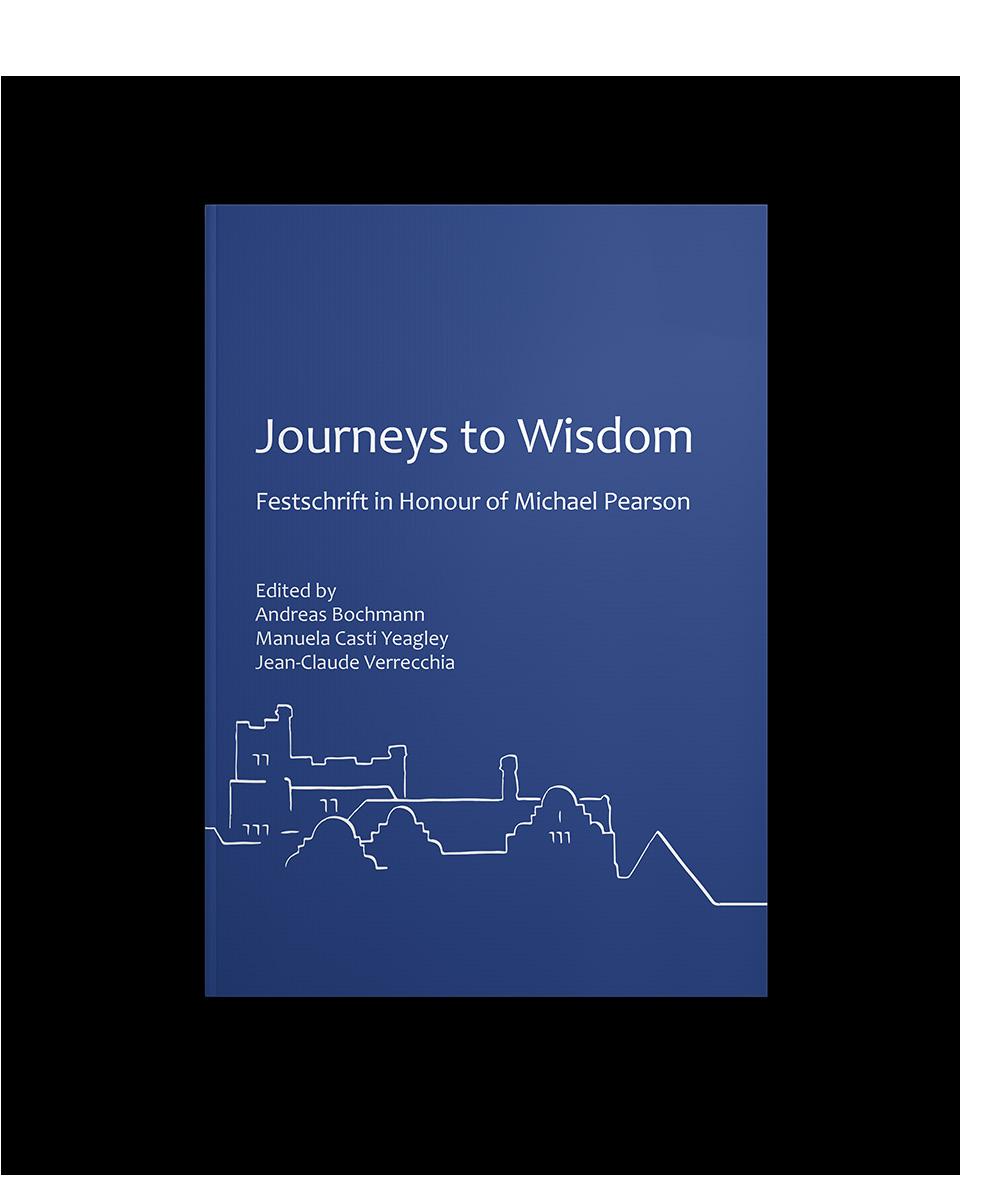
JOURNEYS TO WISDOM - Festschrift in Honour of Michael Pearson, Andreas Bochmann, Manuela Casti Yeagley and Jean-Claude Verrecchia, eds., 2015.
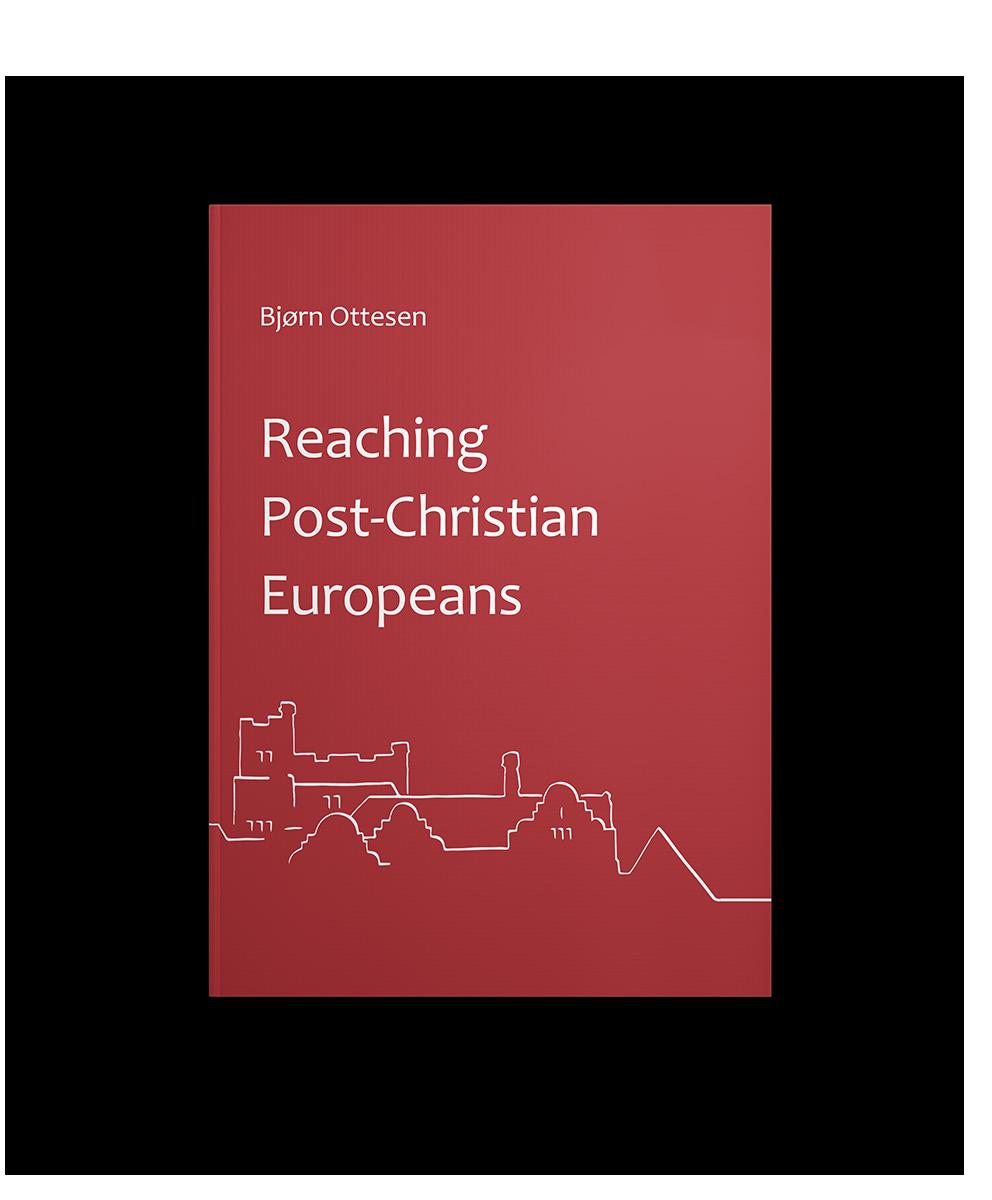
REACHING POST-CHRISTIAN EUROPEANS, Bjørn Ottesen, 2015.
ORDINATION RECONSIDERED: The Biblical Vision of Men and Women as Servants of God, Bertil Wiklander, 2015.
ECCLESIA REFORMATA, SEMPER REFORMANDA: Proceedings of the European Theology Teachers’ Convention, Jean-Claude Verrecchia, ed., Newbold College of Higher Education 25-28 March 2015, 2016.
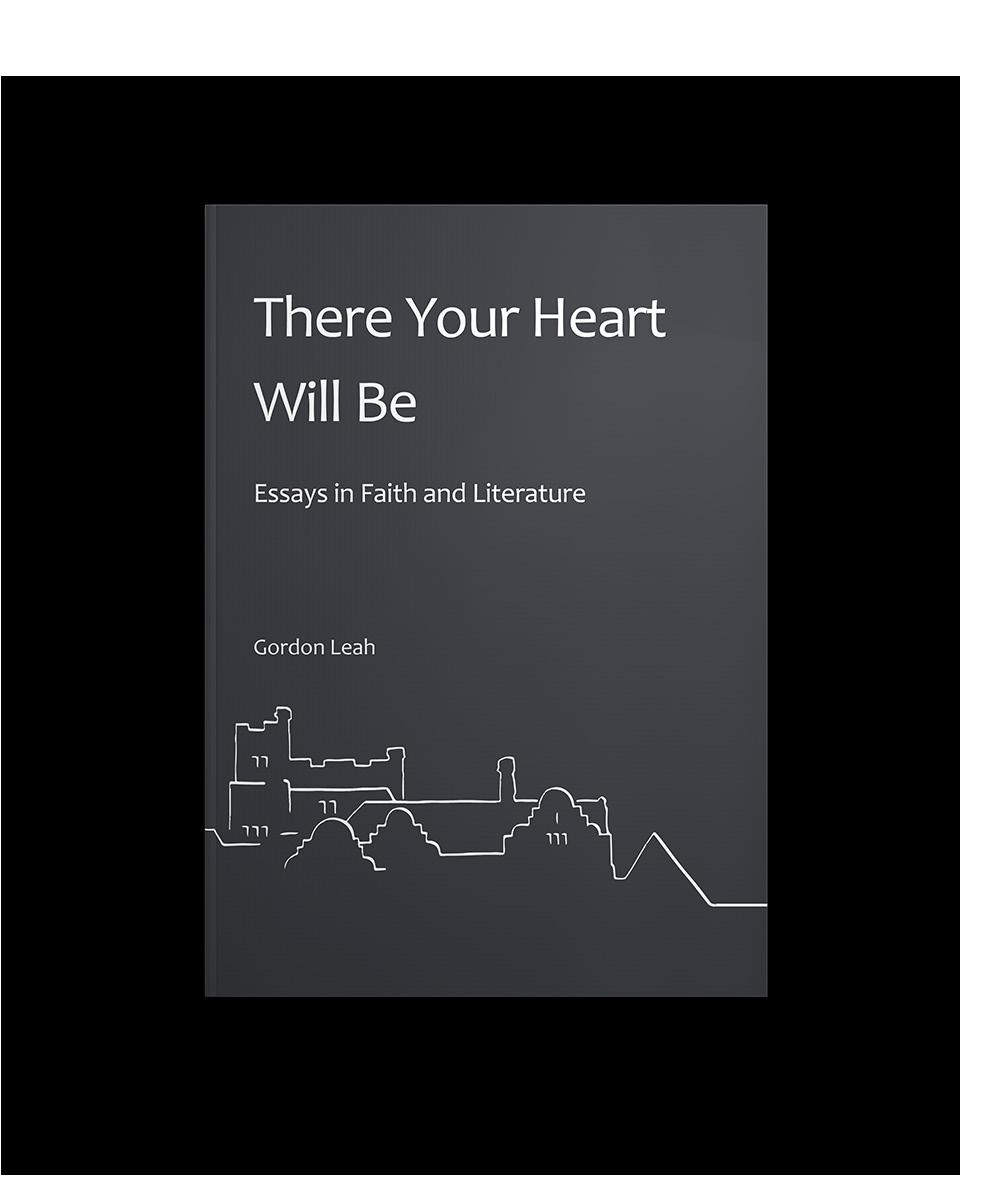
THERE YOUR HEART WILL BE: Essays in Faith and Literature by Gordon Leah, John Baildam, ed., 2016.
BORN ON A MISSION: As I Remember..., John Baildam, ed., Derek Crowther Beardsell, 2018.
A PASSION FOR MISSION, David J. B. Trim, 2019.
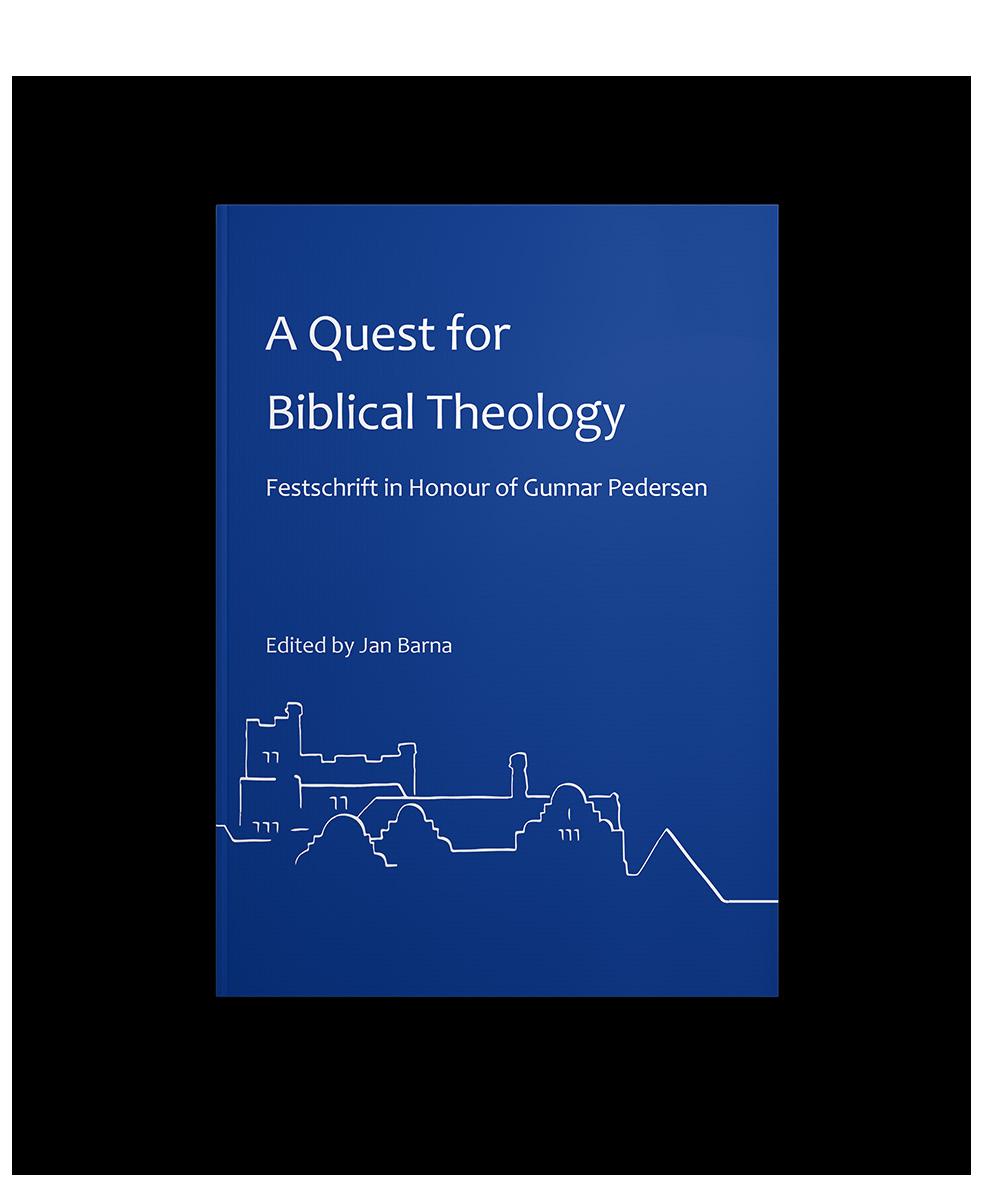
A QUEST FOR BIBLICAL THEOLOGY: Festschrift in Honour of Gunnar Pedersen, Ján Barna, ed., 2024.
THE NEXT CHAPTER OF ADVENTISM – Confronting Challenges, Seizing Opportunities, Laszlo Gallusz and Julian Thompson, eds., 2024 (in partnership with Stanborough Press).
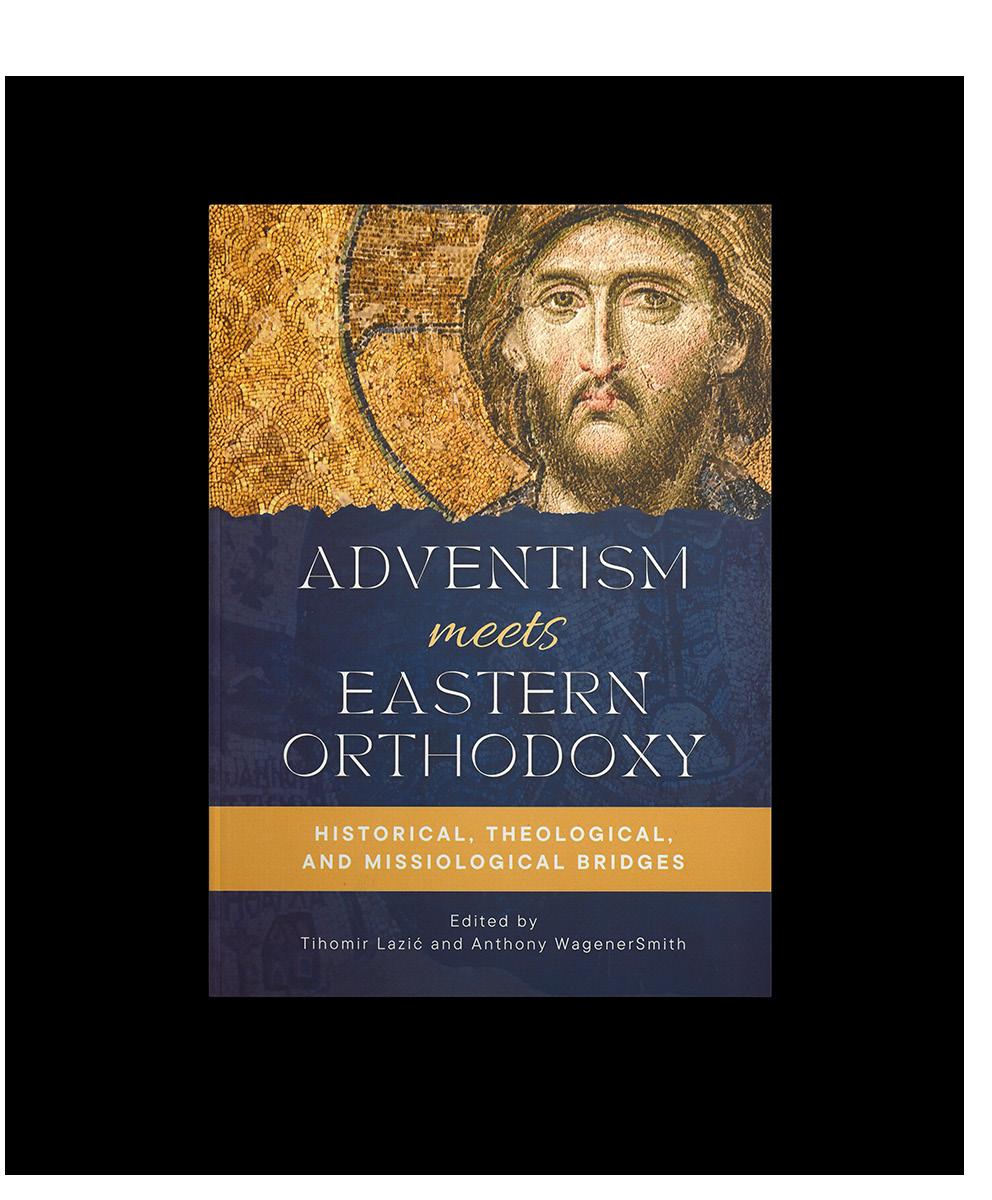
ADVENTISM MEETS EASTERN ORTHODOXY: Historical, Theological and Missiological Bridges, Tihomir Lazić and Anthony WagenerSmith, eds., 2025.
UNVEILING THE SACRED RESONANCE: Text, Translation, Transformation. Festschrift in Honour of Jean-Claude Verrecchia, Tihomir Lazić, ed., 2025.
THE CHARACTER OF GOD, Julian Thompson and Ján Barna, eds., 2025 (in partnership with Stanborough Press).
UNEARTHING THE PAST TO INSPIRE THE FUTURE
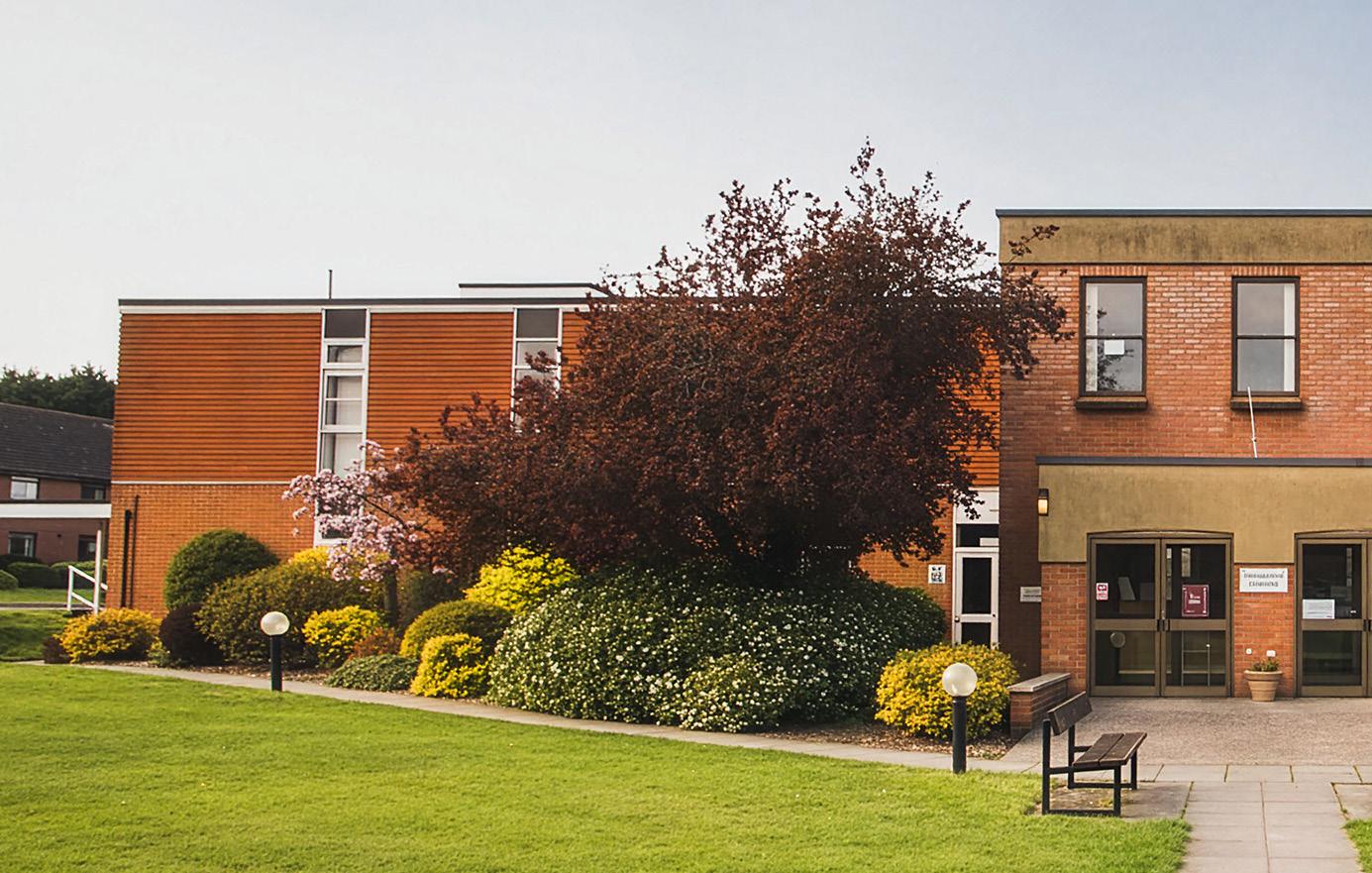
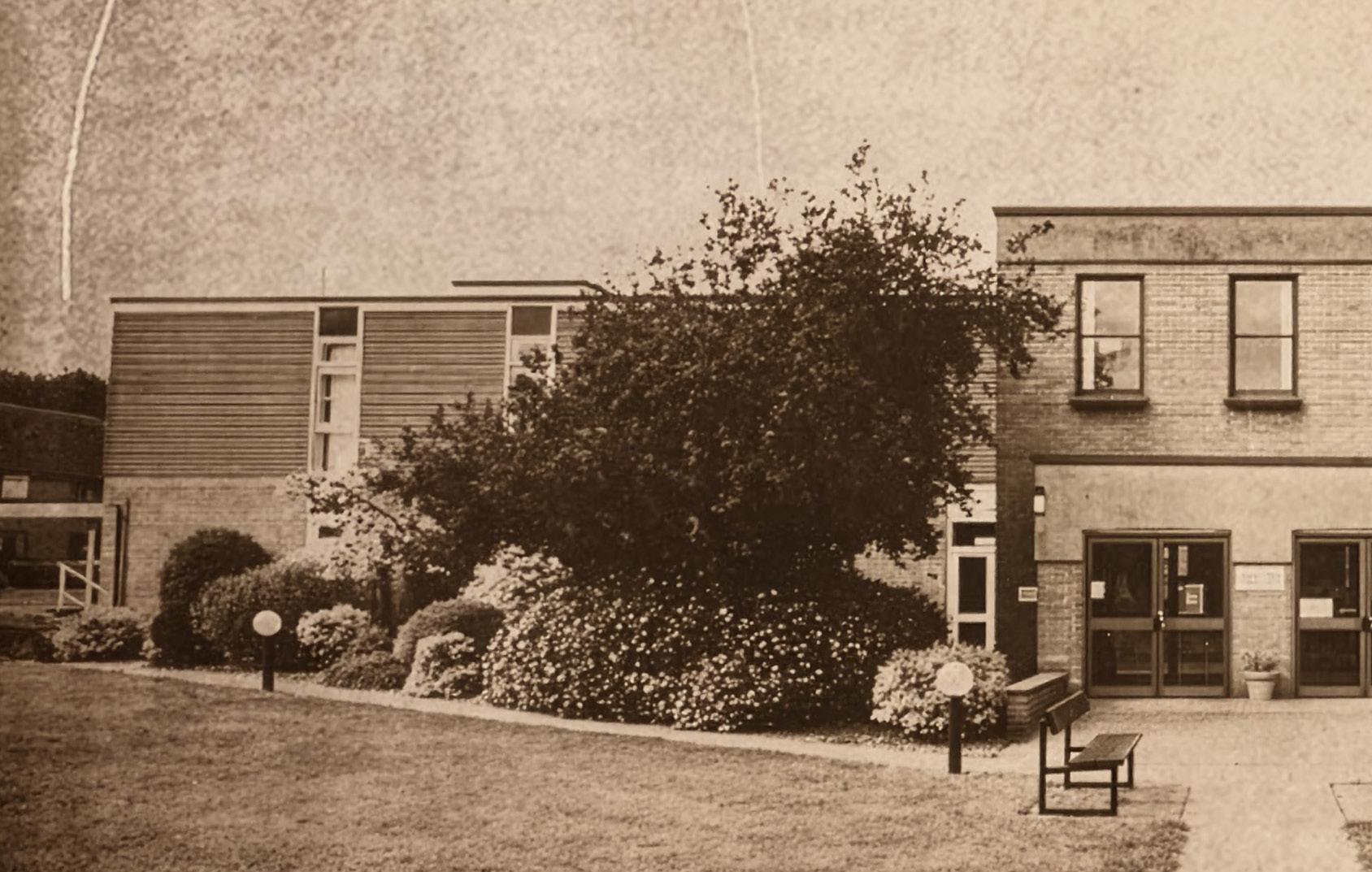
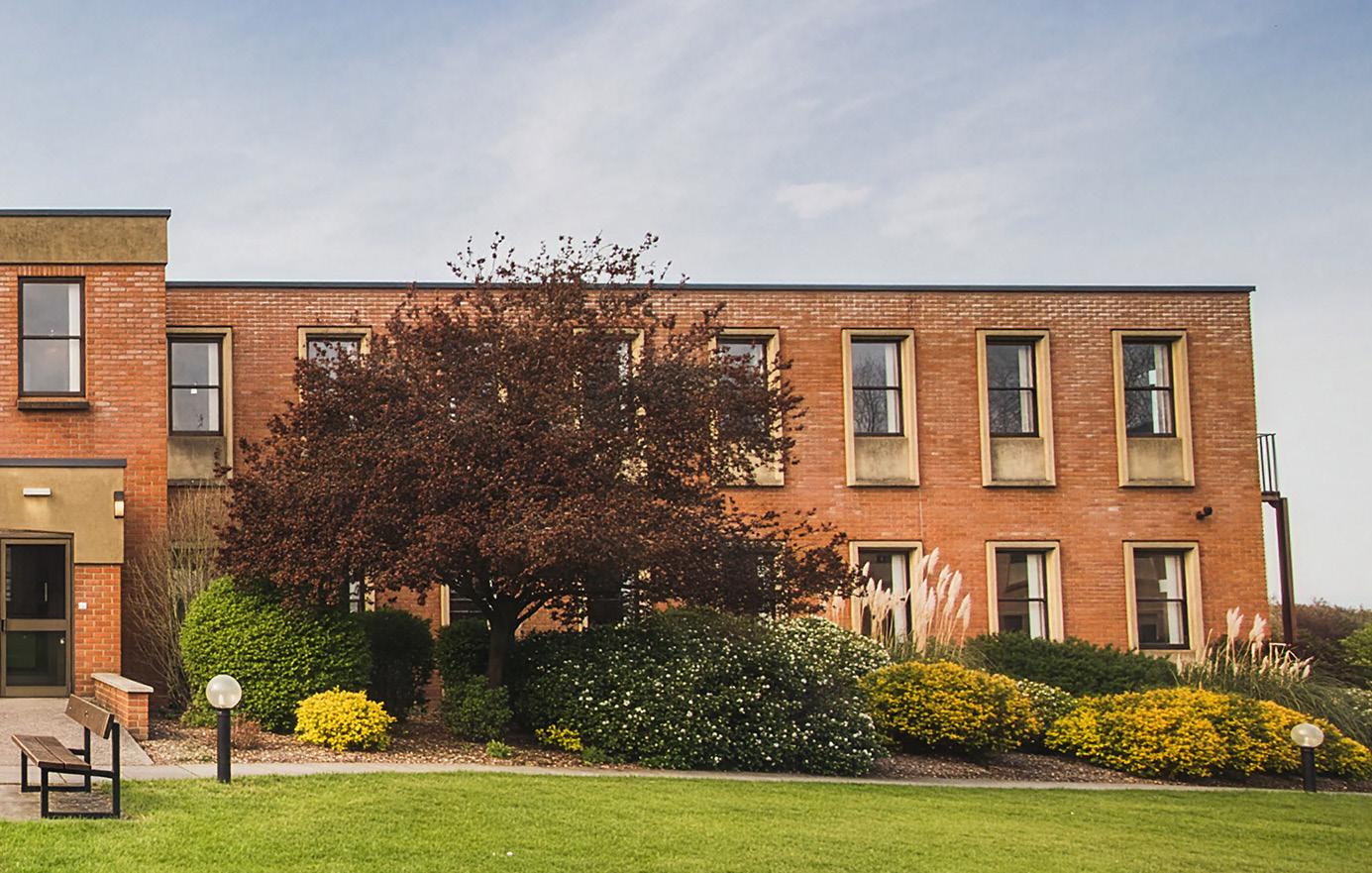
Newbold’s Librarian, Nevena Borcsok, reflects on the importance of preservation of the Roy Graham Library’s Special Collection and the value of historical records for researchers, while graduate assistant Alexandre Ghiorzi shares how working with the archives has enriched his own journey of discovery and ministry.

The Roy Graham Library houses a Special Collection of Historical Records relating to Newbold College of Higher Education, the Seventh-day Adventist Church in the British Isles, and the Trans-European Division. These materials hold undeniable value, as
they provide insights into the past and hold accounts of unique significance.
This year, we look forward to the renewal of our accreditation with the Office of Archives, Statistics and Research (ASTR).
As part of our ongoing commitment to quality and continual improvement, we are also strengthening how our collections are organised and made accessible.
To enable discovery and enhance accessibility, our student library assistants were trained and are helping us by actively cataloguing and describing the donated materials, carefully determining their scope and boundaries. This hands-on experience
allows students to fuse theory and practice in a meaningful way, providing a tangible connection to the past and enriching their educational experience.
Correspondence, photographs, manuscripts, and reports showcase first-hand accounts of real people and events that took place. These documents also reflect the social norms, educational styles, and communication methods of their time. By studying and analysing them, our students gain insight into how communities once thought, behaved and organised themselves, and are prompted to reflect on the contrasts and continuities with the present.
Nevena Borcsok Librarian
Photography: Roland Dan
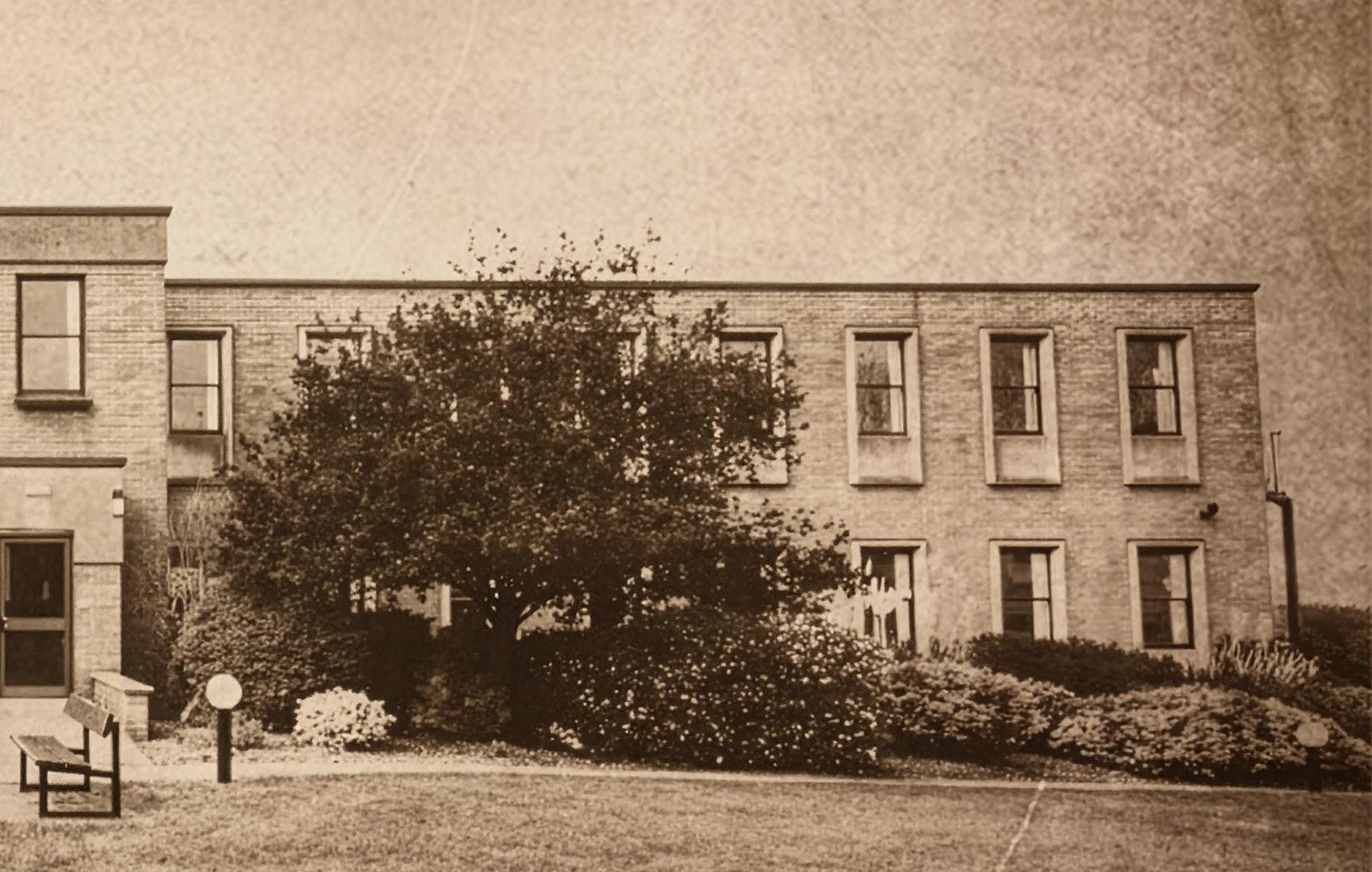

Participating in this initiative was incredibly exciting. While some might be deterred by working with old materials— such as architectural drawings, internal institutional communications, vintage magazines, personal photographs, and documents—I enjoy what they can teach us about the stories of people and institutions. The more you explore these materials, the more they reveal unique perspectives that expand your understanding of their histories.
I was particularly eager to discover the various projects Newbold has undertaken, as well as those of the Church here in the UK. I have come across architectural
drawings for buildings that were never realised, and I can’t help but imagine how the campus might have looked if they had been built. For instance, there was a proposal for a new Cafeteria and Kitchen to be constructed where Murdoch Hall now stands, and an alternative plan for the Newbold Church building which was drafted a few years before the current design was approved.
Taking me beyond the Newbold campus, archived copies of flyers and magazines illustrate the numerous events and programmes the Church has organised in the UK. Countless people may have been influenced, directly or indirectly, by these events, and although many are likely now forgotten by members, it is important to recognise their enduring impact in some way. Newbold’s Special Collection is one way to do this.
Bringing insights from working with archival materials into modern ministry inspires me in two key ways. First, just as some buildings were planned for the Newbold campus but never developed,
plans in our own lives may also change or be abandoned entirely. However, this does not mean that new or different initiatives will not emerge. Second, we often underestimate the impact that small actions today can have on people in the future. We tend to believe that our efforts only affect the present, but the reality is that these actions resonate not only through time but also across different locations. While this awareness adds to our responsibility, it also expands our possibilities.
Overall, although handling archival items might have seemed like a mere administrative task to support our library, it has significantly shaped how I view my life and service today.
It has shown me that history is not just about preserving the past but about recognising patterns and possibilities that inform how we live out faith and ministry now. The reminders of abandoned plans and forgotten events keep me aware that even modest efforts today may carry an unseen influence tomorrow.
Do you have any old documents, photographs and materials related to Newbold, the Seventh-day Adventist Church in the British Isles, or the Trans-European Division? We would love to hear from you! Get in touch to donate an item: library@newbold.ac.uk
Alexandre Ghiorzi Graduate Assistant
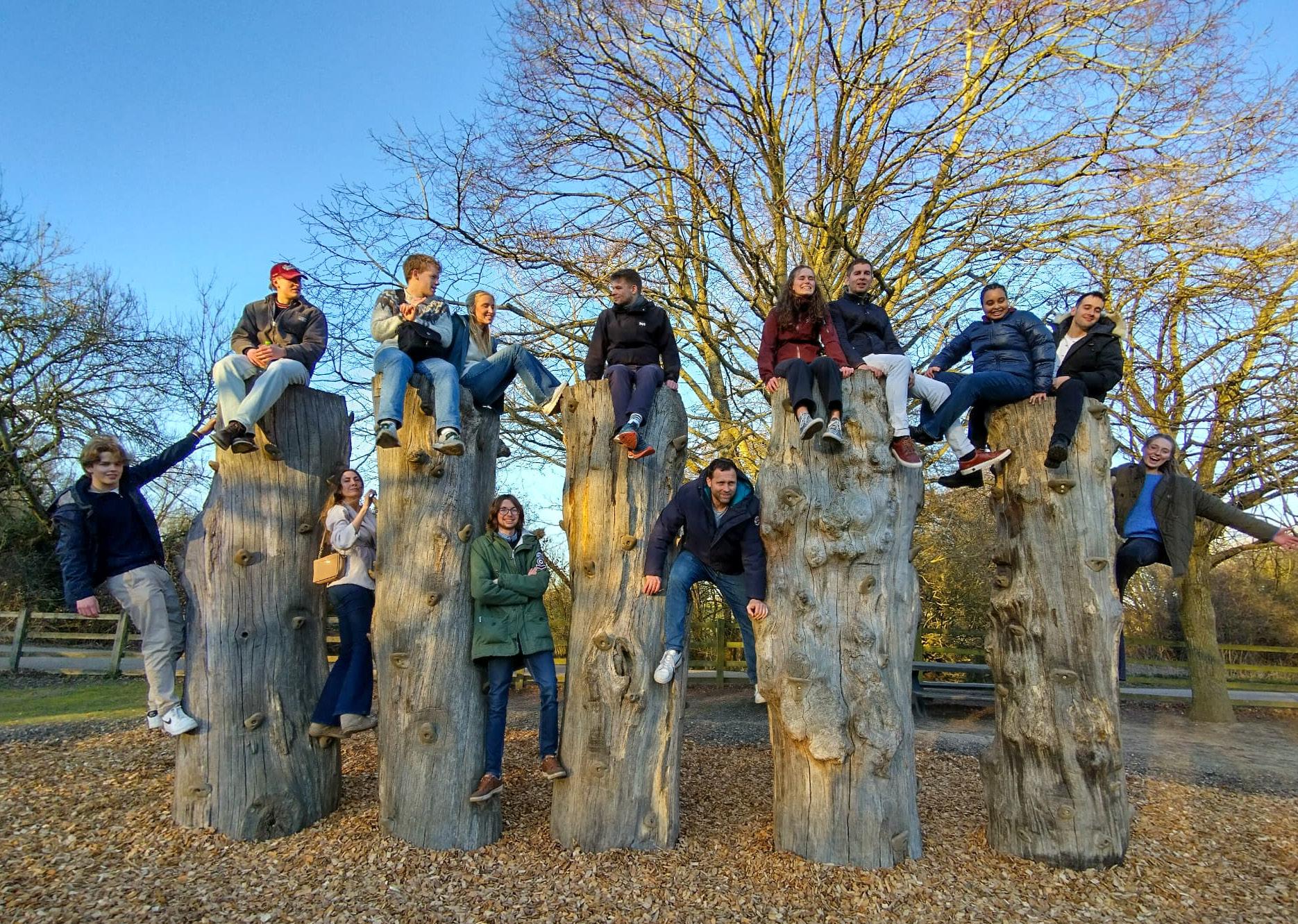
WHERE BELONGING BEGINS
Newbold’s Visit Us initiative allows prospective students to get a real feel for College life
Written by: Editorial Team
For many prospective students, applying for a learning experience in higher education can feel like arriving at a personal crossroads. The questions they ask themselves are rarely straightforward. Will I belong here? Will this place shape me as a person or just teach me? Will I be seen for who I am? Will I find my purpose?
In a faith-based educational setting, one of the most significant parts of the decision-making process is feeling ‘the call’. An individual may feel called to study theology, but do they feel called to study theology at Newbold?
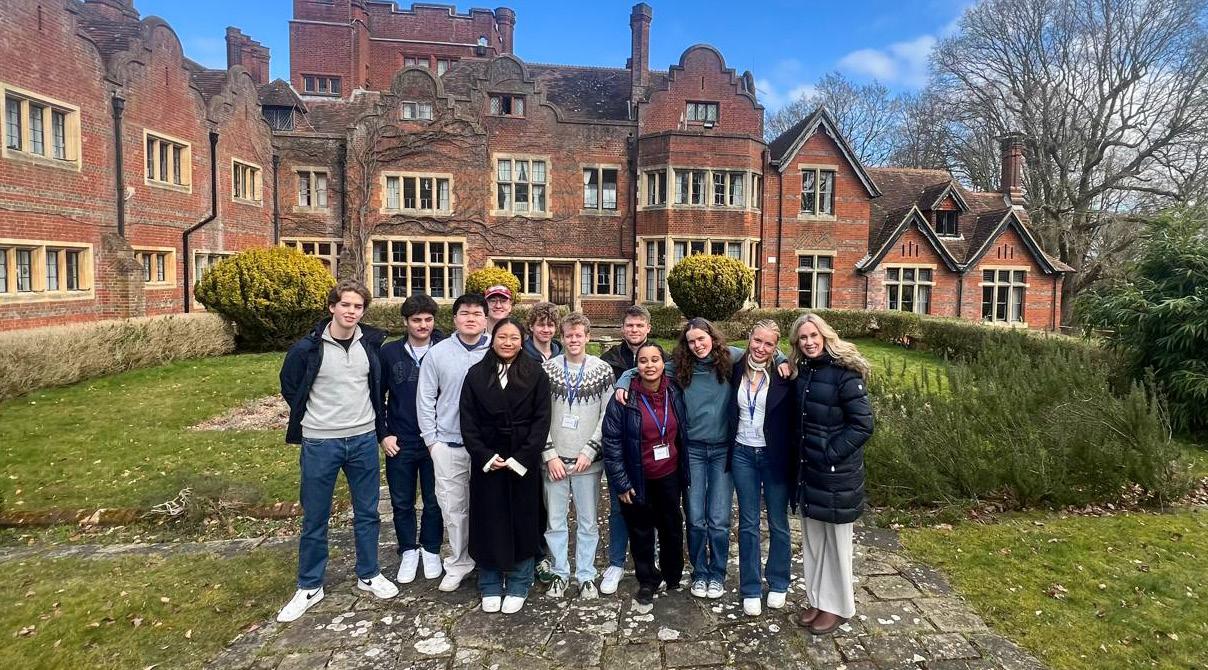
Our Visit Us programme is an experiential initiative with the potential to bridge the sense of uncertainty with insight, giving prospective students the opportunity to trial life and learning at Newbold through an immersive and nurturing experience that supports their personal decision-making. There is no expectation to decide, but space is held to discern. The Visit Us programme was born out of one simple idea: that the best way to really understand a place, is to live it. To discover whether it feels like home.
Many Newboldians will tell you that theology is a subject that will challenge you. It is a subject that invokes and stirs deep-rooted questions about life, about your own faith, and about the nature of God. Through taster classes and informal sessions, the Programme Directors of our undergraduate, postgraduate, and One Year in Mission and Service programmes unpack what the journey of theological study can look like. They share how theology is taught at Newbold and what is asked of our students. These interactions alone can provide a window into the ministry-centred culture and learning environment of the College, what it can mean to serve on and beyond the pulpit, and may even shift your initial perception of this subject.
Prospective students are welcome to meet with our friendly Marketing and Admissions staff, who are genuinely interested in your story, not just your grades. It is a chance for us to get to know you, and for you to sense whether our college is a place where you can truly grow. The team is here to listen, talk through any questions you may have, and explore what the next steps could look like for you.
We also understand that finances can sometimes feel like a barrier. That is why our Student Finance staff is on hand to have open, honest discussions about your individual circumstances and what support might be available. These are the kinds of conversations that can make your next step feel not just possible, but right.
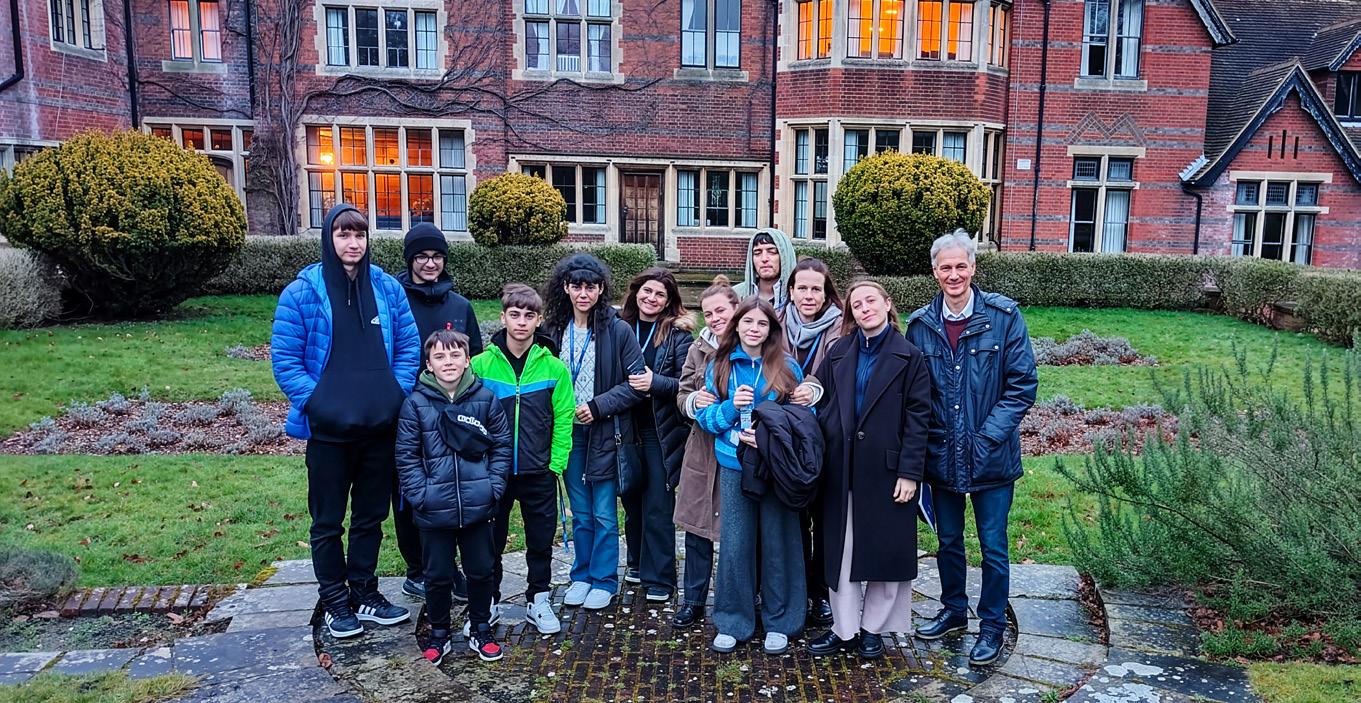
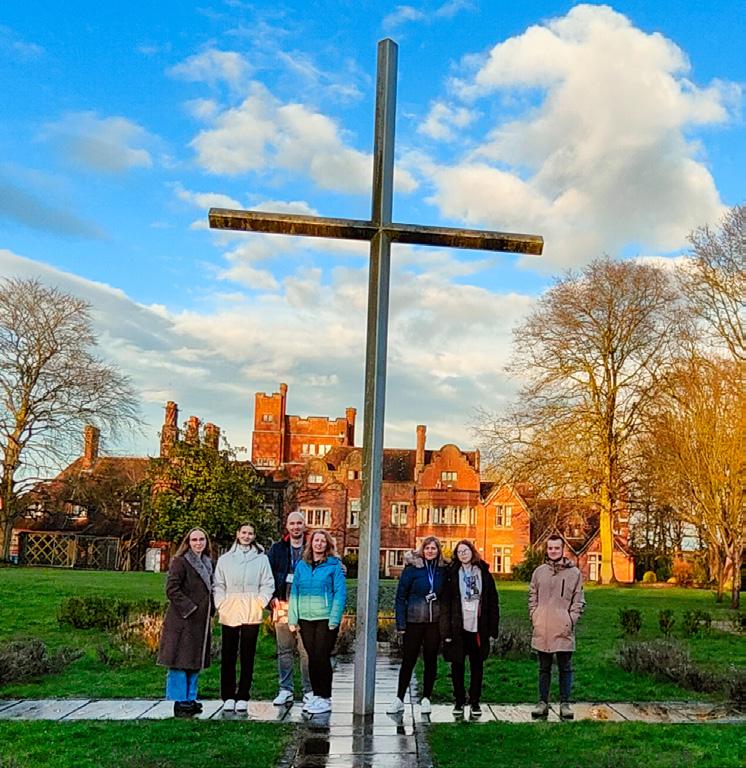
Tours and self-guided meanders around campus invite you to step into the daily rhythm of life here. You may find yourself wandering through the historic grounds and drawn into the stillness of our beautiful Sylvia’s Garden where generations of students have paused to consider life’s questions, both big and small. You can share a lunch table with students and hear firsthand what life here really feels like. You might find yourself
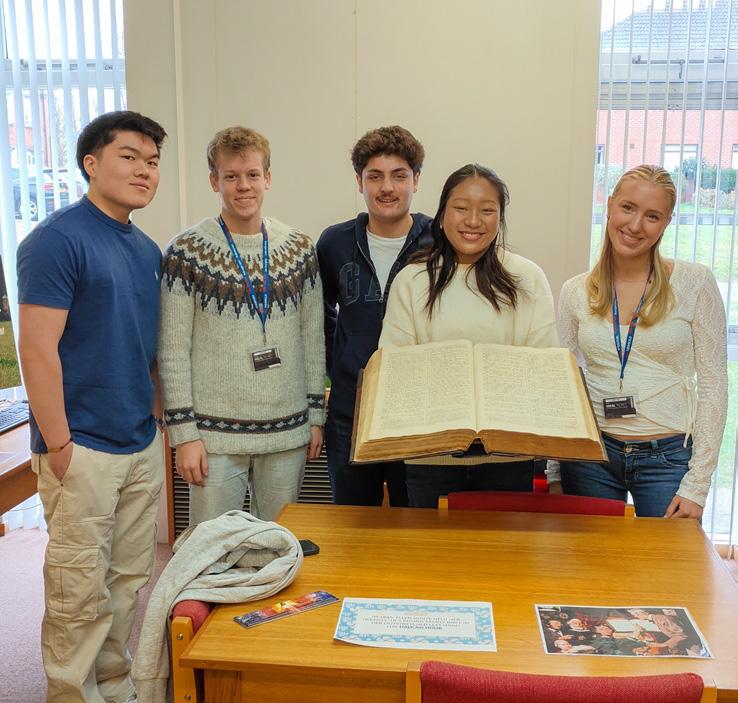
exploring the vast literature cases in the Roy Graham Library, browsing through titles that might one day contribute to shaping your thinking. You can also connect with the student community through gatherings like the weekly Experience, featuring guest speakers who offer spiritual nourishment, and Vespers, a time of worship and reflection to welcome the Sabbath. What you can experience here is how students really live out their faith—in their everyday spaces where theology becomes a part of how they think, relate, and live.
Visit Us is not about finding all the answers right away. But it can be about finding that inherent feeling that tells you that you might just belong here.

Photography: Supplied
SCROLLING WITH PURPOSE:
How Gen Z Adventists Shape—and Are Shaped by—Digital Ministry
Written by: Dr Lubica Mueller
Newbold’s Marketing and Communications team gathered valuable insights into Gen Z’s engagement with faith-based digital media, and the utilisation of digital technologies in ministry, during the GAiN Gen Z Conference, held from 28 February to 2 March this year.
Organised by the Trans-European Division and hosted at Newbold, the event brought together more than 100 Adventist digital enthusiasts from across the UK, Europe, and beyond for a series of inspiring worship services, insightful workshops, and valuable networking opportunities.
Digital media has rapidly reshaped our lives, especially in the postCOVID era. Online shopping, social media advertising, e-learning, and the increased availability and prevalence of artificial intelligence (AI) tools have become an inescapable part of our daily lives, and we are all compelled to take a stance on them in some way.
The Adventist Church has embraced the booming digital era by establishing media centres, equipping churches with technologies for online streaming, and hosting academic and professional conferences exploring the impact of AI on ministry and church life. It is also engaging younger generations within Adventist congregations through the growing use of digital technologies in ministry.
But this raises an important question: do we truly understand how our youth engage in and shape the digital world the Church hopes to reach? How are they using their digital skills to share their God and their faith with others, and how does this, in turn, influence their practice of digital ministry?

Drawing on insights gained during the GAiN conference, our findings reveal a clear trend: Gen Z Adventists are thriving in the digital world, using their creativity and tech skills with focus in the following areas:
19% VIDEO CONTENT 59% SOCIAL MEDIA 9% PODCASTING
7% WRITING
4% ANIMATION
2% OTHER
The data collected also revealed three distinct profiles among Gen Z Adventists in their professional engagement with digital media in ministry, each reflecting different levels of experience, commitment, and integration of faith within their creative work.
1. The Hobbyists
The largest group by far are those who share faith-based content on social—often as a personal passion or informal ministry. They craft their content around topics that matter to them, blending everyday interests with a Christian message. As one participant explained:
When I was younger, I used to film “what’s in my bag” or “look at these clothes I bought.” So, I guess I’ve always been drawn to the idea of creating something. […] As I have grown, my content obviously has changed with me […] and as I developed, my relationship with God has changed. My content at the start was very different—I kind of followed the trends within Christian TikTok, now I film my videos how I feel God is speaking to me in that moment. PARTICIPANT 1*
Seemingly simple topics that spark interest— biking, journalling, shopping, fashion—can be powerfully used to create inspiring content that instantly shares a Christian message with thousands of digital followers. More than just a form of outreach, these moments of online engagement also shape Gen Z creators themselves, deepening their relationship with God and equipping them for future ministry.
2. The Freelancers
Within our churches, we also find highly skilled individuals with expertise in areas such as social media marketing, website development, or video production, as another participant shared:
I am a video game and animation producer […]. I am at University, studying screen studies and cinema. I work on my own projects—video games and short films or TV shows. PARTICIPANT 2*
Whether students or self-employed professionals, these young people often balance projects for multiple clients alongside their contributions to the Church.
Hope Channel […] is one of those collaborations right now. We are working on a TV show. We are working with the Youth department to create a Pathfinders video. PARTICIPANT 2*
Some Gen Z professionals are not only skilled in digital media but also deeply knowledgeable or trained in theology and ministry. Many would choose to dedicate themselves fully to faith-based projects, which offer a greater sense of purpose and fulfilment. Engaging them in church-related initiatives is therefore mutually beneficial: for their church community while allowing these young people to align their talents with their calling.
3. The Church Employees
A growing number of Gen Z young people are now employed as part of Adventist media and communications teams, many of whom drew notice during the COVID era, when churches significantly expanded their digital presence and their talents came to the fore. These teams are often small yet handle many tasks—from managing audio, video, and stage lighting, to producing e-books or videos for institutional channels. Participation in Church projects makes young professionals aware of time limitations, especially when it comes to maintaining presences and engagement on social media platforms on behalf of the Church, which can be very time consuming in terms of content creation and project coordination:
We have technical staff […]. They are sustaining what the church already needs but it [our time] is limited to do something more [social media]. At the same time—when you ask someone to make [social media] content, it takes a lot of work, you know?
PARTICIPANT 3*
However, these platforms are essential for reaching young people with Christian messages, as demonstrated by the Gen Z Hobbyists described above. Increasing budgets for social media engagement or creating more opportunities for collaboration between the Church Employees, the Freelancers, and the Hobbyists could therefore be an effective strategy for strengthening Gen Z engagement in faith-based digital ministry.

*Participant insights were collected through a focus group interview held with the Marketing and Communications team.
WORLD
Prepared by: Editorial Team
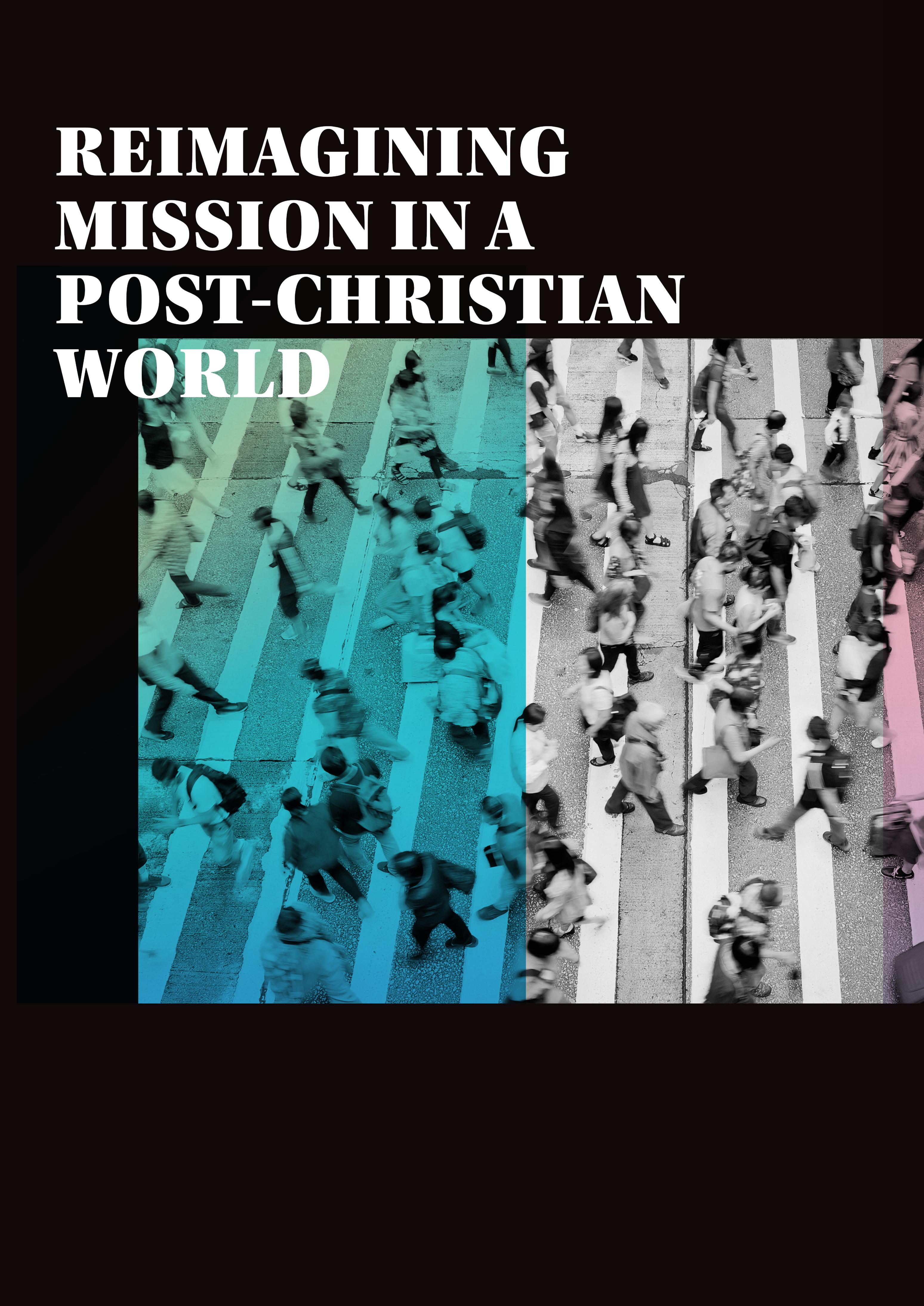
Over 160 leaders from across the Trans-European Division gathered at Newbold on 25-27 April this year for the conference which marked 150 years of Seventh-day Adventist mission in Europe.
Speakers, discussion panels, and networking events gave attendees the opportunity to explore our Church’s past, present, and future, and the cultural and theological shifts that are shaping its mission today. Following are some of the takeaway messages from the event.

EMBRACE the identity of a “faithful minority” in today’s culture, using the analogy of the Church as “Israelites in exile” as a chance to creatively reimagine mission.
(Anthony WagenerSmith, Adventist Mission Director for the Trans-European Division)
REFLECT on whether the Church today holds the same “ironclad determination” to reach post-Christian Europe as many of the nearly 1,000 European missionaries who served worldwide in the 20th century.
(Dr David Trim, Director of Archives and Statistics at the General Conference)
REMEMBER and draw strength from the example of, the overlooked contributions of women—leaders, teachers, pastors, missionaries, and musicians—whose faith sustained European communities.
(Pr Heli Otamo-Csizmadia, Stewardship Ministries Director for the Trans-European Division)
BE INSPIRED by Danish Adventist pioneers such as Sine Relev, the nation’s first female preacher.
(Pr Sven Hagen Jensen)
REDISCOVER God’s ongoing mission story in the Old Testament, where creation and messianic hope inspire blessing and restoration through grace.
(Dr Dragoslava Santrač, Managing Editor of the Encyclopaedia of Seventh-day Adventists)
READ the Bible in the context of its invitation to live within God’s mission story, recognising that mission is central to faithful engagement with Scripture.
(Dr Ján Barna, Head of Research and Principal Lecturer in Systematic Theology at Newbold)
CONFRONT consumerism. The“folk religion” of post-Christian society that fosters selfishness—by considering Adventist theology as a counterculture, and a vision of missional communities across Europe.
(Pr Brendan Pratt, President of the Australian Union Conference)
REIMAGINE church buildings as vibrant community hubs—rather than spaces that are “too holy”, used sparingly—shaping church planting around Christ’s ministry method, adapting contextually.
(Pr Gary Krause, Associate Secretary and Adventist Mission Director at the General Conference)
EXAMINE whether colonial mindsets shaped, and continue to shape, early European mission efforts; and seek transformation through humility and openness to the Spirit.
(Dr Val Bernard-Allen, Christian Sociologist)
SHAPE worship, leadership, and evangelism in multi-ethnic churches—with particular consideration of the impact of African-Caribbean immigration on British Adventism—so they reflect their communities, foster belonging, and grow through shared leadership and honest dialogue.
(Anthea Davis-Barclay, Transformational Creative Consultant)
BUILD patient, respectful relationships that make newcomers and long-time members alike feel safe and loved, while ensuring every visitor encounters God’s love within the individual church community.
(Karen Holford, Family Ministries Director for the Trans-European Division)
RECOGNISE church planting not only as fostering innovation and renewal, but also as contributing towards new and authentic expressions of Adventism and Adventist identity.
(Pr Adrian Peck, Director of Field Education and Lecturer in Pastoral Studies at Newbold)
LIVE the concept of “Soul Space”— mission lived out in everyday community life—creating a strong foundation for mission and authentic connections through prayer, attentive listening, and love.
(Rev Dr Michael Moynagh, Anglican priest)
EQUIPPING LAY PREACHERS FOR TODAY’S CHURCH
Newbold lecturers partnered with the Irish, Scottish, and Welsh Missions to deliver a five-week course for lay preachers in January-March 2025. This series of interactive online sessions was designed to equip the participating church members with practical skills that enabled them to share God’s word with clarity and confidence.
Written by: Editorial Team
Through the guidance of Newbold lecturers and guest lecturers, the course strengthened participants’ homiletics skills while providing a supportive space for growth in both biblical knowledge and communicative delivery. Through practical exercises and open discussion, participants explored expository and topical sermons, biblical narratives, and the process of exegesis.
Pr Adriana Fodor (Pastor and Evangelism & Personal Ministries Sponsor in the Welsh Mission) initiated and coordinated the collaboration, and reflects here on the experience itself and the insights gained.

Why was the cross-mission approach of this course important, and what did it add to the experience?
The three missions (Irish, Scottish, and Welsh) have always collaborated when it came to youth, pathfinders, personal ministries, and other departments. It was natural for the lay preachers across the missions to come together so that everyone could benefit and share their experiences in their respective entities.
How were the workshops structured, and what did they cover?
The workshops covered topics such as expository sermons, topical sermons, and preaching biblical narratives. Every session was both interactive and practical, allowing participants to ask questions and undertake exercises that helped them understand how to apply the principles.
How did the workshops help address some of the difficulties that lay preachers can face?
One challenge lay preachers face is sermon preparation—how to go through the process of exegesis so that a Bible passage is accurately interpreted, instead of using exegesis (reading one’s own assumptions into the text). It can also be challenging to deliver sermons correctly, applying the Biblical message and reaching both the minds and hearts of their audience.
The workshops addressed difficulties such as these, along with many others that lay preachers face when preparing and delivering sermons.

How did the presenters’ guidance shape learning and engagement?
Having Newbold lecturers with expertise and experience in homiletics (the art of preaching and writing sermons) was invaluable. They were able to present to a wide and dynamic audience, and tailor their teaching and methodology to suit the range of experience, skills, and learning needs of the participants. Their depth of knowledge, and their expertise in bringing the biblical narratives to life, was truly amazing to witness.
What kind of growth did you see among the participants by the end of the workshop?
I witnessed spiritual growth and an increased understanding across the various aspects delivered each session in the participants—many of whom were nervous and apprehensive at the outset.
Why is homiletics a vital area of development for lay preachers today?
Homiletics is the ability to write a sermon and preach it in a logical and engaging way. Being able to present biblical narratives in a cohesive manner that anyone from a child to the most seasoned of learners can understand is imperative for audiences today.
How is preaching evolving in today’s world?
Church members today draw from Generation Z, Millennials, and Generation Alpha and Beta, as well as the older generations we are used to preaching to. It is imperative that sermon delivery and preaching styles adapt—giving consideration to factors such as duration, and the incorporation of digital media—to meet the needs of the changing face of the Church.
What do you hope the workshop has sparked?
I believe this workshop has reignited a passion for preaching in participants, and that they have gained an understanding of how to maintain the Bible’s relevance for today’s audiences through broadened methods of delivery.
What is one thing you will carry with you from this experience?
The joy of seeing brothers and sisters from all over the British Isles and Ireland keen and eager to still engage with spreading the gospel to others through sola scriptura: the Bible and the Bible alone.
ONE YEAR IN MISSION AND SERVICE
CHANGE LIVES AND GROW THROUGH GLOBAL MISSION WORK
The OYiMS course immerses you in theology and mission theory, and offers you the chance to put your learning into action by witnes sing God’s love through a life-changing mission experience with ADRA Europe or the Adventist Volunteer Service.
EMPHASISING WELLBEING AND RESILIENCE AT NEWBOLD
College staff received practical training and skills designed to enhance personal wellbeing and increase workplace cohesion in a training programme delivered by experts from Loma Linda University.
Written by: Dr Dan Serb
Newbold began 2025 by taking a significant step toward strengthening organisational effectiveness and enhancing staff cohesion. ‘Wellness’ has become an increasingly vital priority in modern society. As a global collective, we hear the term ‘burnout’ with growing frequency; and the College has identified wellbeing as a focus area for the coming years. Acknowledging the importance of equipping its workforce with tools for resilience, the College undertook a comprehensive skills audit among its professional staff, laying the foundation for transformative staff training on resiliency.
The training programme, known as the Community Resiliency Model (CRM)® and developed by the Trauma Resource Institute, was delivered by a distinguished team from Loma Linda University’s School of Behavioral Health (Dr Beverly Buckles, Dr Kimberly Freeman, Dr Winetta Oloo, and Dr David Vermeersch). It provided Newbold staff with evidence-based strategies designed to foster both individual wellbeing and the collective strength of the team.
CRM draws on neuroscience to explain how the brain and nervous system respond to stress and trauma, while offering simple, practical tools to restore balance in the parasympathetic system. By helping people expand their ‘resilient zone’ it strengthens neural pathways and reframes stress reactions as normal biological processes, reducing stigma. Through clear and easy-to-follow techniques, participants learn to self-regulate and use physical sensations as a gateway to understand and calm their own nervous system.
Participants were introduced to practical techniques such as emotional regulation and peer-to-peer support, empowering them to manage stress more effectively (increasing resilience) and enabling them to extend meaningful support to family, colleagues, and members of their community. By cultivating a shared language of resilience, the training also promotes stronger interpersonal connections and unity amongst staff.
Strengthened morale, healthier coping mechanisms, and deeper team alignment will empower staff to more effectively carry out the College’s mission of delivering high-quality education and spiritually nurturing students, particularly as Newbold works towards delivering a bold strategic plan in the coming years. By investing in resilience training, Newbold demonstrates a commitment to building a resilient, compassionate, and mission-driven community, as well as a dedication to academic excellence.

The ripple effect of investing in staff resilience and wellbeing extends naturally to students, who are welcomed into a community that models balance, selfcare, compassion, and strength in the face of challenges. When staff feel cared for and supported, they are better able to guide and nurture students, ensuring that each one experiences an education grounded in care, stability, and positivity.
Newbold’s holistic environment equips students not only for success at the College but also for life beyond.
FINDING YOUR VOICE

How bespoke English learning empowers our students to express themselves, connect with others, and serve.
Written by: Editorial Team
Newbold’s Executive English Programme enables professionals and executives to master their English in targeted areas. Through customisable and personalised courses that meet their individual needs, this programme rapidly improves fluency and enables effective communication in both workplace and day-to-day use.
When Pam arrived at Newbold from Mexico, she was determined to improve her fluency in English. “I already notice the difference because I’m more confident with the language, as I got to experience what English is in my everyday life,” she shared. Living on campus throughout her study time became part of the learning journey, giving Pam countless opportunities to practise outside the classroom.
Her progress unfolded under the guidance of her “brilliant” teacher, Clive Malcolm. For Clive, teaching English is about helping students discover the courage to communicate, connect with others, and
grow. He sees personalised learning as a way to build confidence and show how communication can become a form of service, enriching the wider work of the Church and its mission. The Executive English programme is built on this philosophy and designed for professionals and executives at all stages of their careers.
For Pam, it also served as a new way of expressing herself. “I totally recommend this programme to others. Even if you think you know English from your school classes, it is different to be in a programme where you can practise every day with an individual teacher and learn new things all the time.”
Clive teaches on Newbold’s Executive English Programme, helping students improve their skills through one-to-one and classroom learning. He shares what makes the programme meaningful for both students and teachers:
How does the Executive English Programme contribute to the College’s mission of preparing students for ministry, especially through communication?
I watched Pastor Erton Köhler speaking after being elected General Conference President of the Adventist Church. He began by talking about Sabbath evening worship with his family. Less than two minutes into his speech, he made his point: “At the end of worship, we like to get a Bible verse from a small box, one in Portuguese, our language, and another in English because you can see we are always learning this language.” Pastor Köhler fully understands the value of English.
Some people see English as something they have to learn. Others see it as something they want to learn. There is a difference. Those who want to learn apply what they learn immediately. Why? Because they are on a mission. They have a clear vision of how they intend to use English for ministry. They know there is always room for improvement, and that’s where the Executive English Programme comes in.
Executive English offers one-to-one learning. How does this help students move from knowing grammar to using it naturally in conversation?
In 2017, Cambridge University Press published the results of a survey asking English language students to list language skills in order of importance. 70% listed speaking as the most important. I have observed that many students already possess a good understanding of grammar. They know it like a mathematical formula, ‘subject + verb + object’ and so on. They are often taught by rote. For some, that is as far as it goes—they learned grammar, just grammar. One-to-one learning allows them to put what they have learned into practice within a real cultural setting here in the UK. It is a genuine skill and confidence-builder.
How does mastering English at this level serve as a practical tool that empowers professionals to minister more effectively in local and international contexts?
Let’s remember English is also a lingua franca (adopted as a common language between speakers with different native languages). The General Conference is a case in hand of how Adventists from different countries use English to discuss topics, make decisions and cast votes. In addition, I have learned that in many parts of South America, English is a requirement for
anyone wanting to become a missionary. Used well, it can be highly effective around the globe.
Language learning is also relational. How do connection and dialogue shape the student experience in this programme?
Interestingly, the same survey conducted by Cambridge University Press revealed that “shyness and fear of embarrassment are common reasons for students not to participate in speaking activities”. If you are shy, the Executive English Programme is what you need. You have to talk, but it is not as bad as it sounds. You will soon discover that you are in an environment where you are allowed to make mistakes and not feel embarrassed. Your teacher’s goal is to help you improve, to get you talking confidently. That’s the essential part of the learning journey.
Many students go on to serve, or continue serving, in multilingual, multicultural churches or mission fields. How does the programme prepare them for these realities, beyond language alone, including cultural awareness and relational understanding?
Would you believe it, if the truth were known, and without rhyme or reason, many expressions—such as those that I have just used—found in William Shakespeare’s plays are embedded in the English language. The point is that language and culture are inseparable. For example, learning about British humour is a serious matter. I hope you realise I am playing with words; that’s being British. That’s reality! The programme helps students understand cultural nuances, which may play a vital role in problem-solving and building better relations with people and communities.
Beyond language skills, what personal or professional growth do students experience during the programme? Are there particular moments or stories that stand out to you as a teacher?
Confidence! Students leave the programme with confidence and newfound awareness. The programme is tailored around their needs. It means they walk away with a portfolio of missionspecific vocabulary they need to ‘get the job done’ in English. Of course, you can’t learn to speak perfect English in eight weeks, but you certainly know how to apply what you have learned.
I was very impressed with how Pastor Carlos Campitelli, Youth Leader for the South American Division, handled an interview where he talked about Newbold’s Executive English Programme. He used a broad range of vocabulary, applying everything he learned. His goal was to improve his speaking skills. That’s precisely what he did, and he did it confidently.
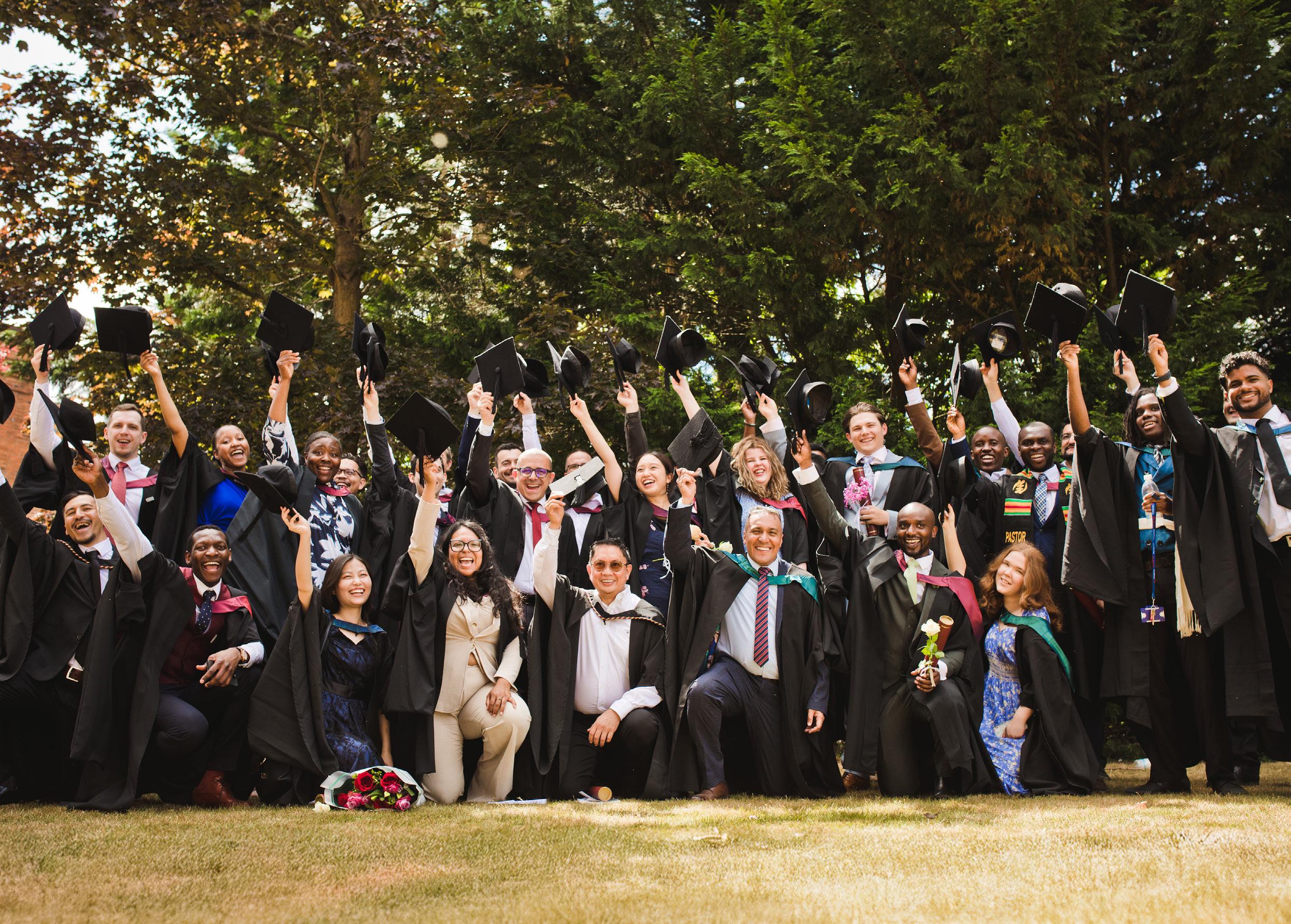
A CITY ON A HILL: CELEBRATING Inspired by their faith and driven by purpose, the class
Written by: Clive Malcolm
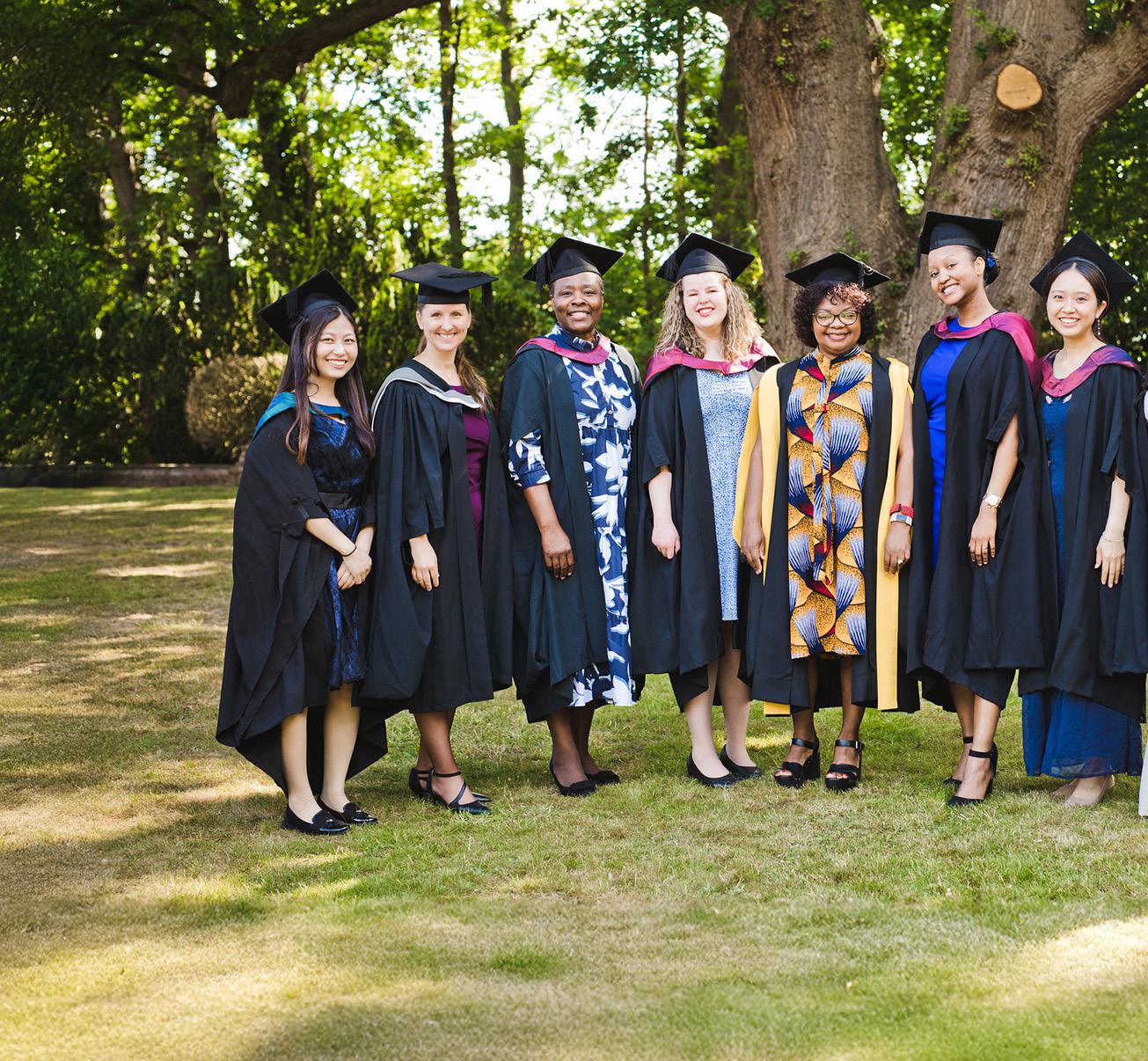
Newbold’s Awards Ceremony on 29 June brought together family, friends, staff, and faculty to celebrate 60 graduands from eight academic programmes, marking the achievements of the Class of 2025.
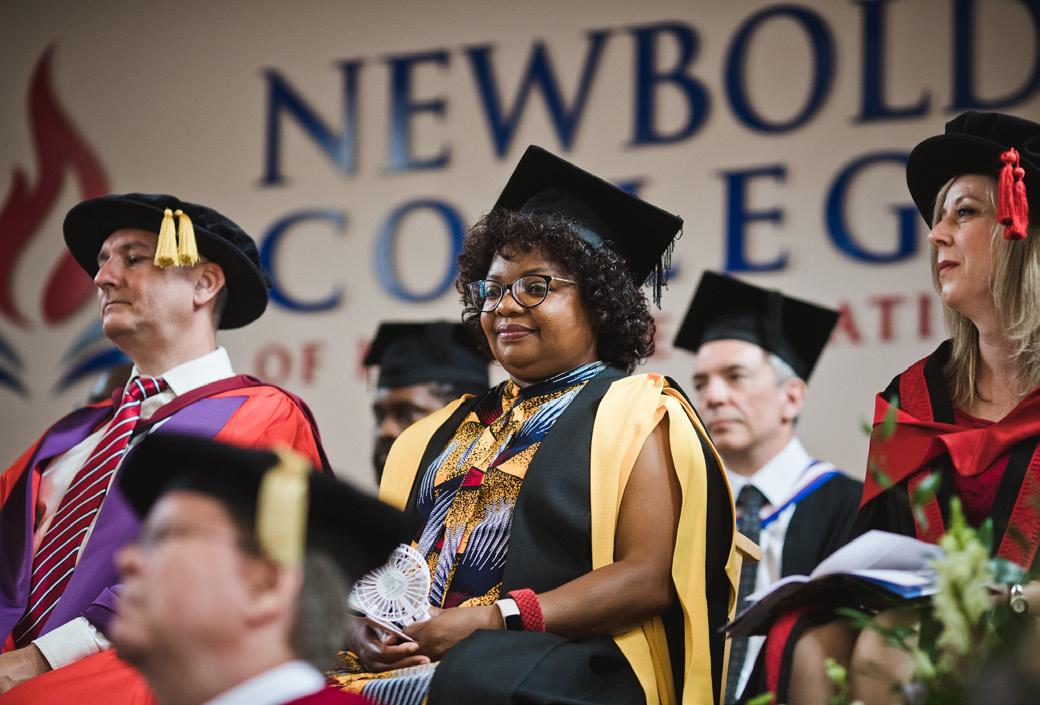
Following opening remarks from Academic Registrar Serena Santona, former Principal Dr Stephen Currow, and Chair of the Newbold Board Dr Daniel Duda, Councillor Jane Cochrane, Mayor of the Borough of Bracknell Forest, joined the celebration with words of praise for the graduands. She commended them for “having achieved so much academically and spiritually” and highlighted their readiness to “make a meaningful difference in the communities they will serve.”
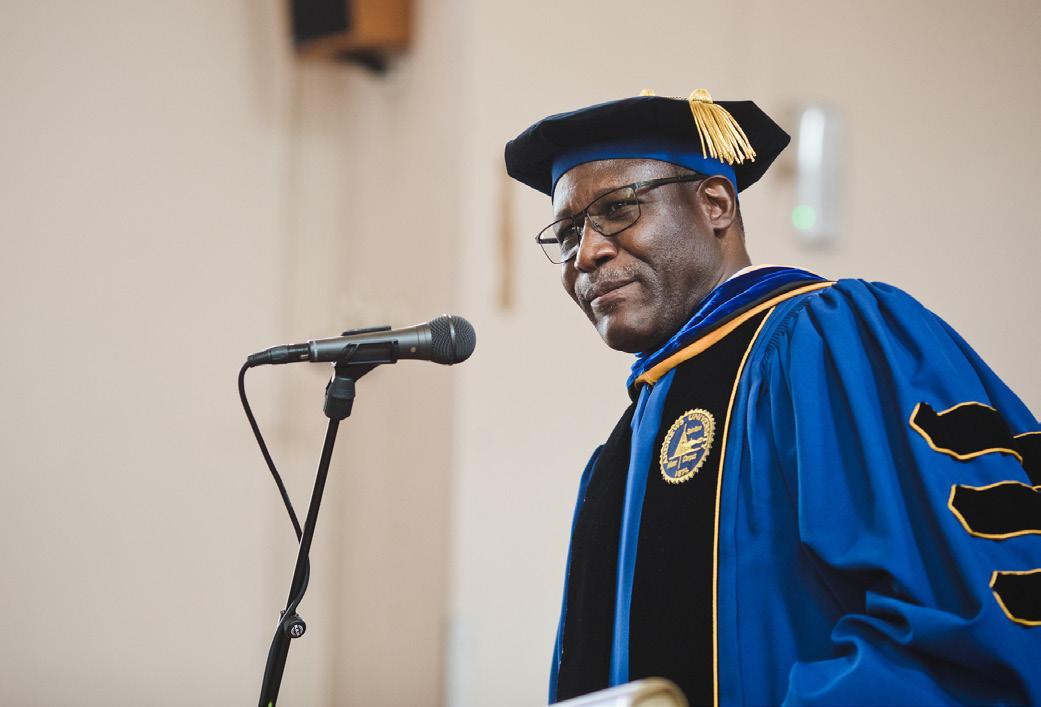
Postgraduate theology student and musician, Adam Best, introduced the audience to the vocal group Legacy, who sang a song to mark the occasion. Their a cappella rendition of the hymn Turn Your Eyes Upon Jesus set the tone for the guest speaker and alumnus, Dr Boubarak Sanou.
Before commencing his speech, Dr Sanou, who serves as Associate Professor of Mission and Intercultural Leadership and Chair of the Department of World Mission at the Seventh-day Adventist Theological Seminary, Andrews University, told the graduates, “You look awesome. I like your smile.” Launching into his presentation, he announced, “I am reminded of Newbold’s powerful and enduring motto: ‘Life-changing, faith-affirming.’”
Recounting his experience as a Newbold student, he recalled walking across the same stage as a graduate with an MA in Pastoral Studies. “I did not know then where God would lead me. But I knew one thing, I had been changed forever.” He continued, “I carry with me the legacy of those who invested in me. I pass on that legacy. I pass forward the commitment to academic excellence, modelled by professors here who not only knew their disciplines but also taught with integrity, rigour, and care.”
Dr Sanou shared numerous stories filled with essential life lessons, wisdom, and encouragement for his attentive listeners. “In a world filled with cynicism and despair, I invite you to be voices of hope


CELEBRATING THE CLASS OF 2025 of 2025 embrace their calling to reflect Christ’s light.
and healing,” he said, adding, “In a society driven by competition and self-interest, I invite you to model humility, generosity, and grace. In a culture clouded by confusion, misinformation, and ambiguity, I invite you to offer clarity. Clarity anchored in God’s truth and lived out in love.”
Appealing to the graduands, Dr Sanou said, “Let everyone know you are a Newbold graduate everywhere you go. Recommend Newbold to young people who are seeking a place to grow academically, spiritually, and missionally. If you can, mentor a current student. Offer your time, your wisdom and experience. A single conversation can shape a life’s direction.
“Graduating in 2025 is not the end. It is a beginning, an exciting threshold to a journey filled with meaning, purpose and impact. You leave this hall today not just with a degree but a foundation built on faith, knowledge, and conviction.
“As you step into new roles, new opportunities, and perhaps new uncertainties, remember that your calling is bigger than a career. It’s a calling to reflect the character of Christ wherever you go.
Let your faith be firm in the face of challenges. Let your lives be an agent of change. Let others see in you the light, love and hope that the world so desperately needs today. Let us be active Ambassadors for Newbold wherever life takes us.”
The Head of Marketing and Communications Dr Lubica Mueller welcomed graduands into the Newbold alumni network and outlined numerous possibilities for future collaboration.
As the ceremony drew to a close, graduate Alexandre Ghiorzi shared an emotional message with his college companions. He called on each one to “breathe” in their achievements before exclaiming, “Today is the day to celebrate!” and continued, “It is easy to downplay our victories, which I often do to myself. But let’s not do that today. Taste the joy of relief—and triumph!”
Celebrating his triumph, graduate Ethan Mpozembizi said, “Graduation is a moment of deep reflection for me and my family, a chance to look back at how far God has brought me. Today is a celebration of achievement and a reminder of God’s unfailing love for me.”
WOMEN’S WELLBEING AT NEWBOLD
Written by: Editorial Team
The Newboldian editorial team spent time with Hellen Diaz, Newbold MA Theology graduate and Assistant Director of Student Life at the College, to discuss the growing importance of supporting women’s wellbeing.
When the results of a major NHS-commissioned survey were published in June 2025, they revealed a sobering reality: one in four young people in England, aged 16-24, now live with a common mental health condition, ranging from anxiety and depression to OCD. Conducted by The National Centre for Social Research, University of Leicester, and City St George’s University of London, the survey highlighted a sharp rise over the last decade— from 18.9% in 2014 to 25.8% in 2024. What stood out most were the figures for women in this age group: over one third (36.1%) reported having a mental health condition, over double the rate of men (16.3%).
Even in a holistic faith-based educational setting, where individuals are nurtured as a whole, these statistics are part of the world that students inhabit. The demand for care is clear, it is very much here, and we are part of the wider system that must respond.
Supporting mental wellbeing during College years requires intentionality. Academic pressures, societal expectations, finances, and the uncertainties of early adulthood affect everyone, yet there are additional layers that are often gendered. Hellen Diaz, Assistant Director of Student Life at Newbold, whose role focuses mainly on supporting the women at the College, points out that ministry remains “still a man’s world,” where women can feel selfdoubt, fear, and questions of value tied solely to their gender. These

pressures, combined with the higher prevalence of mental health conditions, make mentorship, safe spaces, and consistent pastoral support more crucial than ever, helping students navigate both personal wellbeing and professional aspirations.
When invited to sit down and discuss the wellbeing of female students at College, Hellen’s response was immediate: “Yes. Just tell me when and where.” In this role, she is well-versed in conversations around the human experience, yet this one carried a weight that seemed more personal. Sitting with her, it quickly became apparent that she spoke from experience as much as professional insight. The conversation flowed naturally, and one truth became increasingly clear: if we are serious about supporting wellbeing, it must begin within the spaces where students live and learn.
Describing her role, Hellen finds it difficult to define in words. She likens it to “extending the hand.” Many arrive on campus at the
threshold of independence, standing between the comfortable securities of home and a new, unfamiliar territory. Hellen sees her responsibility as helping maintain balance, offering reassurance while encouraging autonomy. “I did not expect to feel this way about it,” she admits. “It can be frustrating, but this is our calling: just to extend that hand, hoping and praying that it will be taken.”
The hope Hellen speaks of does not come from authority or the confidence of having all the answers. She has walked this campus as a student and understands the sense of security that comes from knowing someone is always waiting on the other side.
Reflecting on her own time at Newbold, Hellen recalls lecturers who valued all students as equals. Every individual was seen as a fellow thinker in theology. Yet, she considers the importance of wider discussions around gender. “I would have liked more conversations about women in ministry,” she says, her voice steady and honest. “It is still a man’s world. I would have appreciated discussions on how to deal with the intensity, the ups and downs, and the self-doubts tied to gender in this field.”
Asked whether today’s students find it easier to express themselves, Hellen pauses thoughtfully. “We are talking about it… but certain taboos remain. Women’s health, especially, can be avoided or denied at times.” She stresses the importance of women within churches who will stand, speak, and connect with others to amplify the collective voice.
When asked what true wellbeing looks like for students today, she leans back, eyes intent. “To embrace,” she replies slowly. “To embrace your body, your mind, your thoughts, your limitations. To embrace yourself daily.” For Hellen, this is an active, conscious practice: recognising the past and integrating it into identity— not as the entirety, but as a foundational part of growth. In a faith-based community, she believes this self-embrace enhances relationships as well. “How you relate to others, how you treat people, even how you engage with your church community—all of this comes from accepting yourself.”
Creating safe spaces where students feel heard and valued is a shared responsibility, yet the Department for Student Life carries much of this work. Hellen smiles when asked how these spaces are cultivated at College. “That is a big question!” she says, thoughtfully. Beyond intentionality and consistency, she explains it requires more than listening: “It is about understanding someone and valuing them for who they are and where they are.” She admits it is complex, a huge effort, and she has no definite answer. “Somehow here, we manage to create a family environment, in which love helps us embrace each other. But it is still a work in progress.”
This work demands resilience. Holding space for others can leave little room for self-care. When asked how she maintains her own wellbeing in leadership, Hellen exhales. “Constant reminders,” she replies softly. She speaks openly of the accountability she finds in talking therapy (as a student and in her professional work), in movement and exercise, and in surrounding herself with
loved ones who help keep her grounded. The struggle to balance self-care while supporting others is shared by many in caregiving roles.
An MA theology graduate, Hellen believes her training was formative. “Studying theology is not just papers and assignments. It takes so much of you. It builds you, shapes you, changes you.” Specialising in systematic theology, she developed her ability to listen, to sit with people and their questions, and to humanise learning through relationship. Yet she recognises that frameworks can only go so far. “Sometimes, you just need to be there and allow the Holy Spirit to use you. Sometimes, it is just about being present.”
So what does it take to nurture women preparing for ministry? “Willingness,” Hellen replies immediately. “God will train you, give you the skills, the words, the guidance, and the placement.” For her, willingness is the seed. Trust in God, and the rest will follow.
Reflecting on how the role has shaped her, Hellen smiles as she recalls the many students she has met during her time at College. “It has been amazing to encounter so many stories, seeing how powerful God is, and the love of God—and how much it can transform people,” she says. She notes the reciprocity: “It is not just the role shaping me. These students, their journeys and their courage—they strengthen my faith and remind me there is no single way to live, serve, or be. God works through all of them.”
Asked about her hopes for the future for students on campus, she pauses, letting the weight of the question settle. Her eyes fill with tears. She sees herself in this very realisation. “There is no way I can say this without being emotional,” she says quietly. “I want
them to pursue their call. To recognise their worth. I want them to be ambitious because they have something to give. It is my dream that they might see themselves as God sees them.”
On how to better serve and prepare students for ministry, she encourages further space for dialogue, exploration, and peer connection. “Sometimes they already know what they need. But coming together allows them to find confidence and strength through shared experiences.”
Should students study theology? Hellen laughs, then grows serious. “No—not if you are not ready to be changed and transformed. If you want change in your life, to find your ministry, to flourish and be amazed by God—do theology. Sky is the limit,” she says, smiling. And at Newbold? “Just come,” she nods. “If you have questions, want to wrestle with them, or want to find your purpose—just come. God will take care of the rest and provide in every way you can imagine.”
If there is one message Hellen would like every young woman to hear, it is this: “There are no wounds too deep. No life too messy. No troubles too dark that cannot be overcome. You are known. Fully loved. You have a purpose in God.”
If you, as a woman, feel the pull to serve, please know this: you are seen, you are valued. Your story matters, your voice matters, and your presence matters.
You are ready, and God is already moving through you. Step into it.

A PLACE THAT BRINGS US TOGETHER
Spanning decades and continents, classmates, colleagues, mentors, and friends reunite—returning to the shared experiences and enduring friendships that continue to connect us across time.
Written by: Emilia Balogh
Newbold brings people together from around the world, creating a warm and welcoming community like no other. Our alumni have always been at the heart of this family, and it has been a true privilege to reconnect and continue nurturing this special group of Newboldians.
This year, Newbold had the opportunity to participate as an exhibitor at the 62nd General Conference (GC) Session in St Louis. The British-themed booth drew the eye and engaged attendees, giving us the opportunity to meet and reconnect with students from years past, former members of the Newbold community, and make new connections with others from the wider Church. Many fond reminiscences were shared.
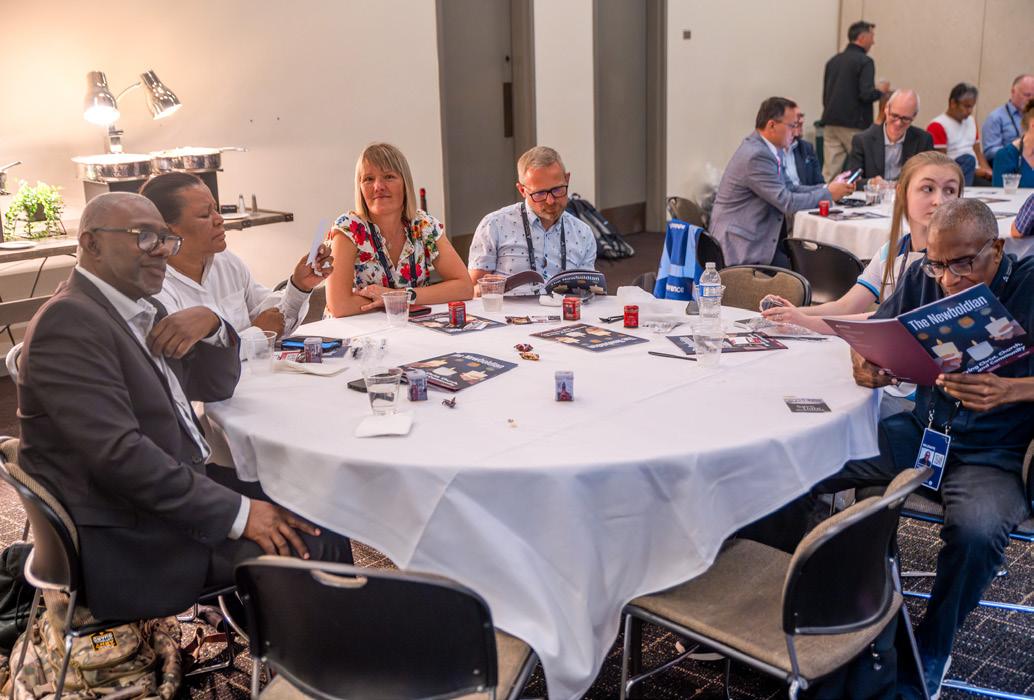
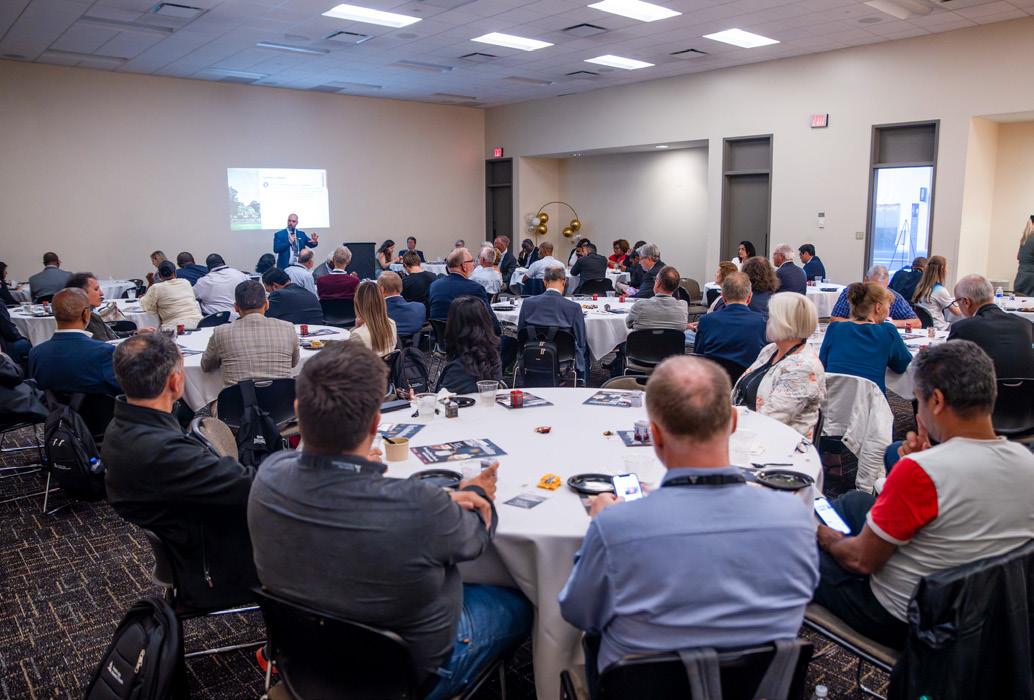
Newbold also had the privilege of hosting a dinner on the 9th of July 2025 during the Session, an event which drew more than 100 friends of the College—including alumni, union conference leaders, GC representatives, and educators. Guests enjoyed a taste of international cuisine while reconnecting and celebrating Newbold, the place that brings people together from around the world.
Excitement filled the room as Newbold’s Principal, Dr Dan Serb, Head of Marketing and Communications, Dr Lubica Mueller, and Trans-European Division President, and Chair of the College Board, Dr Daniel Duda, shared an inspiring presentation about College’s future, unveiling innovative ideas, new courses, and fresh partnerships with Adventist educational institutions.
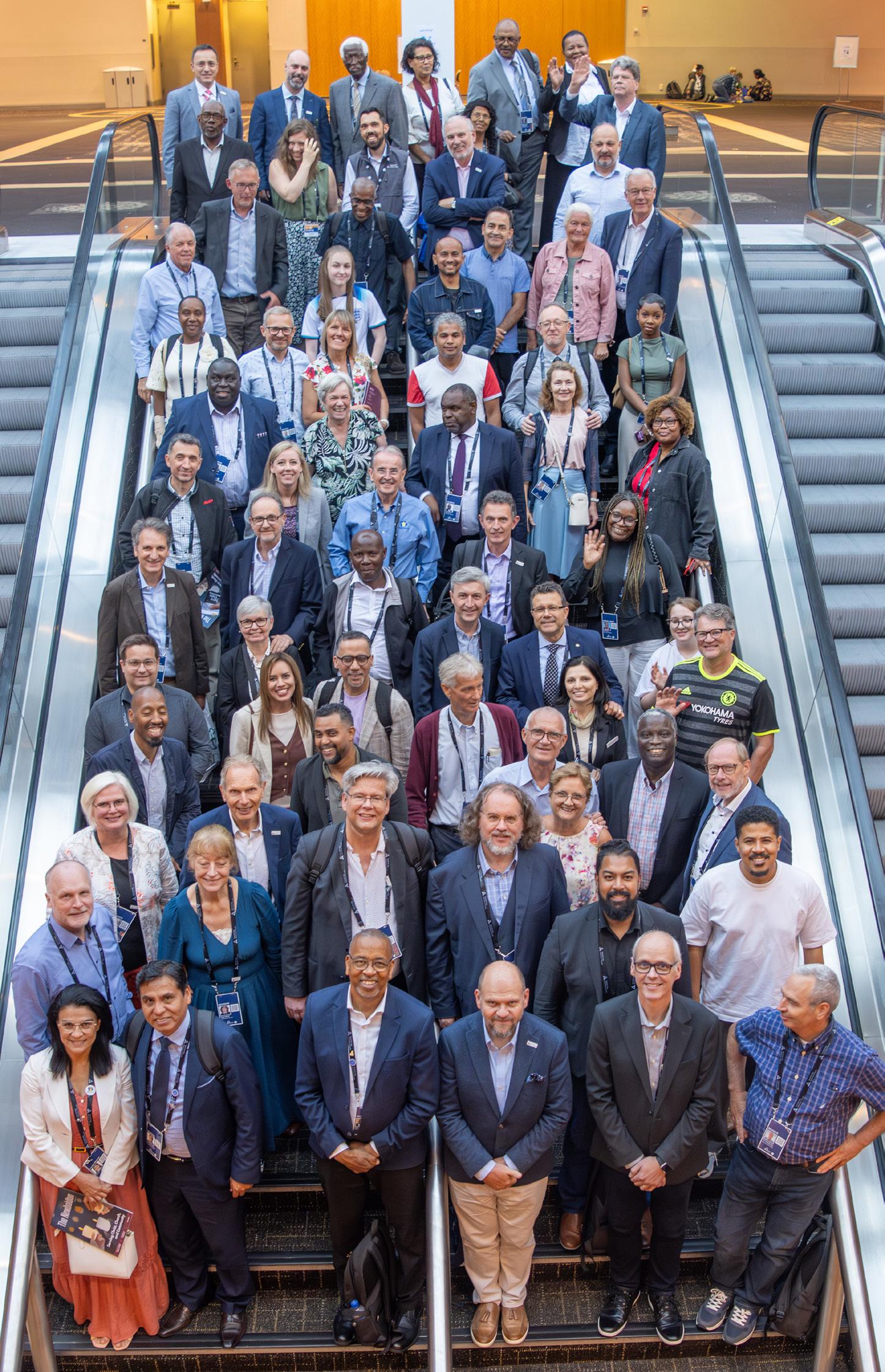
As a token of appreciation, each attendee received a small Newbold gift featuring a pin, tea, and sweets. A special puzzle guest book added a creative touch to the evening, inviting everyone to sign a piece and leave their mark. The event concluded with a group photo to capture the spirit of this memorable gathering.
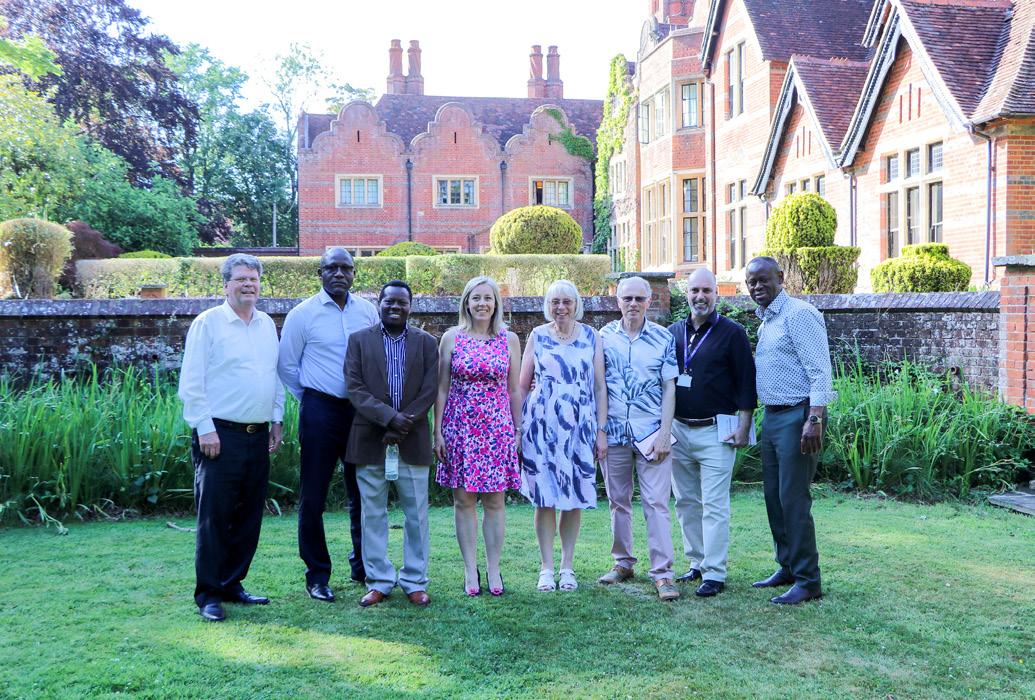
In addition to our presence at the GC Session, we were delighted to welcome some members from the 1990s alumni
cohort and their guests back on campus on the 26th of June 2025. They enjoyed a traditional cream tea in Moor Close, as they reminisced and shared cherished memories from their student days. Strolling through the sunlit campus, they revisited familiar spots—taking a seat in classrooms, browsing the library, and stopping by Salisbury Hall—reliving moments that shaped their Newbold journey.

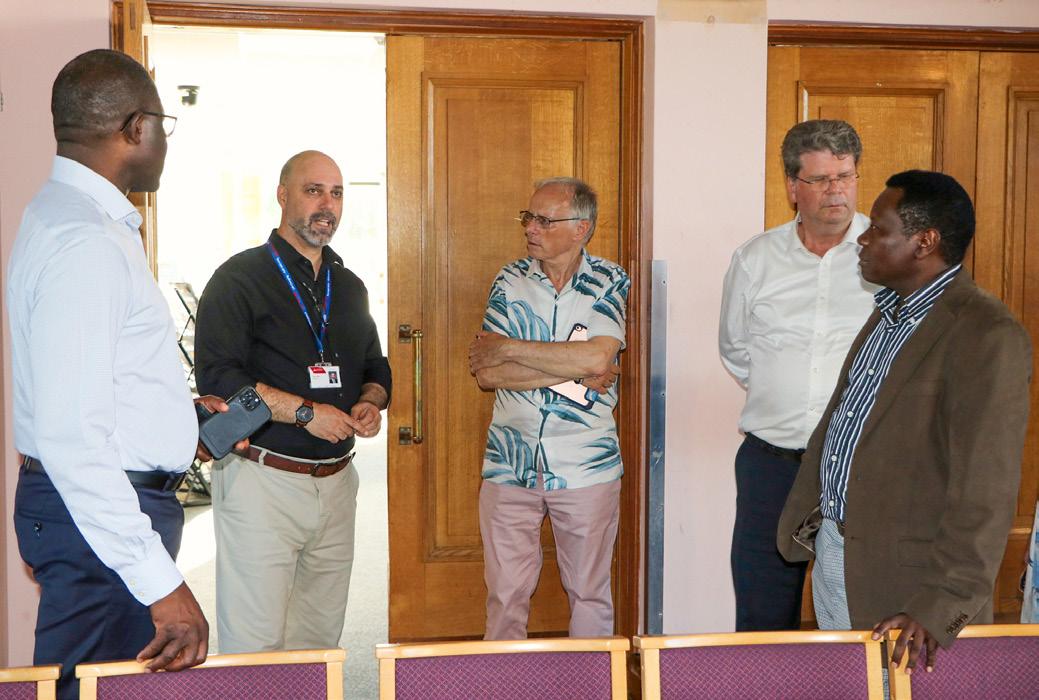
At Newbold, the experience extends far beyond the semesters spent in class— it continues wherever life takes you. No matter where you are in the world, Newbold will always be your home, ready to welcome you back with open arms. We look forward to seeing you on campus again soon as we celebrate the 125th anniversary of Newbold College of Higher Education together.
ALUMNI SPOTLIGHT
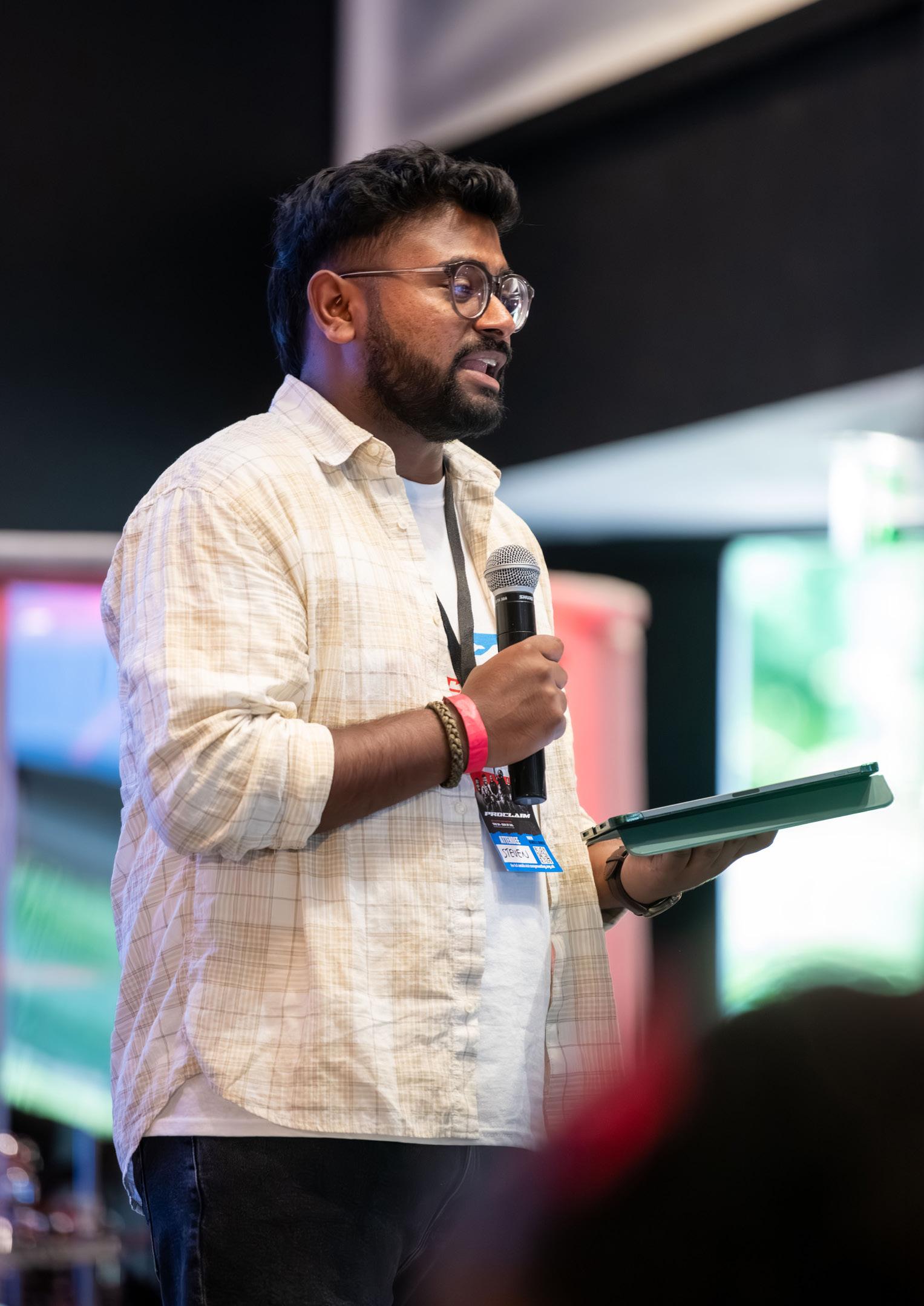
Newbold graduate and now intern pastor in the North England Conference, Steven George reflects on how his Newbold experience prepared him for the reality of pastoral life.
Written by: Steven George
Photography: Ashley Bloom

It is hard to explain the moment when you first step into a church not as a visitor or guest speaker, but as the pastor. There is no switch or ceremony that fully prepares you for the shift, but it is unmistakable. Suddenly, the questions are directed at you. The eyes turn to you for guidance. The silence in difficult moments waits for your words to fill it. You are no longer the student learning about ministry—you are the minister.
As a former Newbold student, and now an intern pastor in the North England Conference, I can say that the biggest difference between student life and pastoral life is not just in the tasks, it is in the perception. As a student, I was learning about theology, ministry, and mission. Now, I embody those things in the eyes of others. Even as an intern, I am regarded as a spiritual leader and a shepherd. And that reality is both humbling and deeply moving.
People open their lives to you, not because of your degree or qualifications, but because they sense your calling. And in those moments—by a hospital bed, in a living room, beside a graveside— you realise ministry is not about merely performance, but presence.
Looking back, I am deeply grateful for how Newbold prepared me. The theology I was taught was not only academically thorough but balanced. In a world of conspiracy theories, theological extremes, and echo chambers, the value of being a responsible exegete cannot be overemphasised. Newbold instilled in me the courage to be both critically reflective and Adventist-affirming, two things that are not mutually exclusive.
In completing my masters in Systematic Theology, I found myself falling in love with the Adventist message. Not just for its doctrinal accuracy, but its societal relevance and the compelling picture of God it paints. A God of justice, beauty, community, and grace. It is that picture which gives me confidence, not only as a minister, but as a believer.
My experience on campus was also formational in ways beyond the classroom. Serving as Campus Ministries Coordinator, and as a One Year in Mission and Service mentor, gave me a foretaste of pastoral life through organising weekly worship services and offering pastoral care and support to students. The diversity of our campus taught me how to serve in pluralistic spaces. This
was invaluable in finding new and creative ways to engage with an increasingly diverse, postmodern, unchurched society. That is something I carry with me now as I sit in interfaith groups in Lincoln and form ecumenical relationships with neighbouring churches. Newbold gave me the theological tools, and the spiritual permission, to engage confidently in those spaces, while holding fast to my Adventist identity.
Still, nothing quite prepares you for the pace of pastoral life. As students, we often joked about how busy we were with essays, presentations, and endless books to read. But it pales in comparison to full-time ministry. Now, my diary is a web of meetings, visitations, community events, preaching appointments, bible studies, and committee responsibilities. You quickly learn that ministry is not just about being present on Sabbath, it is about being available every day.
Ministry can be so externallyfocused that you can forget to tend to your own walk with God. It is a great paradox: in helping others connect with Jesus, you can risk drifting from Him yourself. I think this is an area where ministerial education could grow. Prioritisation and self-care are not luxuries in ministry, they are lifelines. The risk of burnout is real and learning how to safeguard yourself whilst serving others is critical. I hope future students are given more space to reflect and develop in their spiritual formation, time management, and emotional resilience.
Ministry today is more public, complex, and emotionally demanding than perhaps ever before. And yet, I would not trade this calling for anything. To walk with people through life’s messiness and mystery, to proclaim hope and embody grace, is the greatest privilege of my life. Ministry does not ignore pain. It does not ignore death or injustice. It just refuses to give them the final word; it insists there is another way to live. A way not driven by power or profit but grace, mercy, and sacrificial love.
For that, I remain grateful to Newbold. For the theology it gave me and the calling it affirmed in me. As I write this, there is a visit ahead of me, a sermon to finish, and a youth meeting later this evening. The days are full. But my heart is fuller still.
YOUR LEGACY, LIVING ON
Discover our rejuvenated digital alumni corner.
Our alumni webpage has been reimagined, with a fresh design and a renewed sense of purpose. We want to make reconnecting with Newbold simple and meaningful, and this space is built to invite you in.
You are welcome to reflect on the many moments that may have shaped you, to walk alongside students starting out on the path you once took, and to share your journey as part of a growing archive of Newboldian stories.
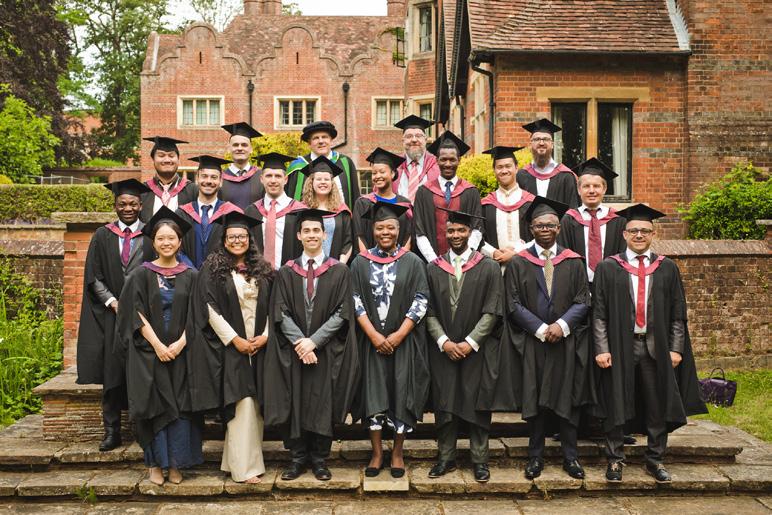
STAY IN TOUCH
Subscribe to our newsletter.
Stay in the loop with stories, events, and updates on College life—delivered straight to your inbox.
GET INVOLVED
Give back in ways that count.
From internship to placements, to mentoring, keynote speaking, and networking opportunities—your support helps create valuable real-world experiences for our students.
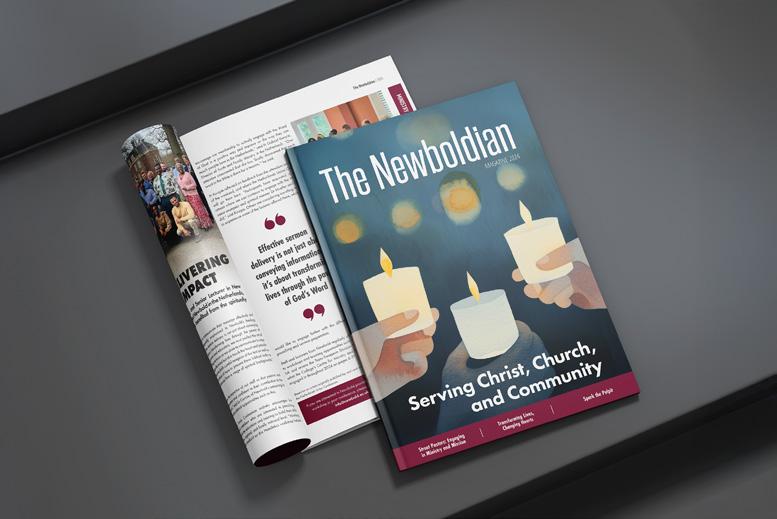

THE NEWBOLDIAN MAGAZINE
Delve into our story.
Engage with our annual publication, where student voices, alumni reflections, and College milestones come together in a beautifully curated print or digital edition.
REFLECTIONS AND STORIES
Share your story.
Stories do what timelines can’t—they bring our shared past to life. Every memory, long or short, reminds us of what endures and what connects us. Your voice is what makes this space truly alive.
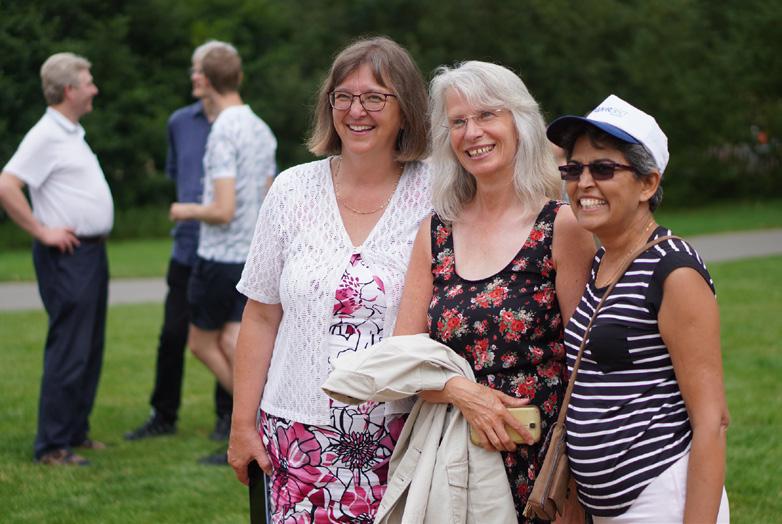
We pray that this refreshed web page moves forward with our alumni community, becoming a meeting place that you visit often, sharing as you feel called, and making it yours.
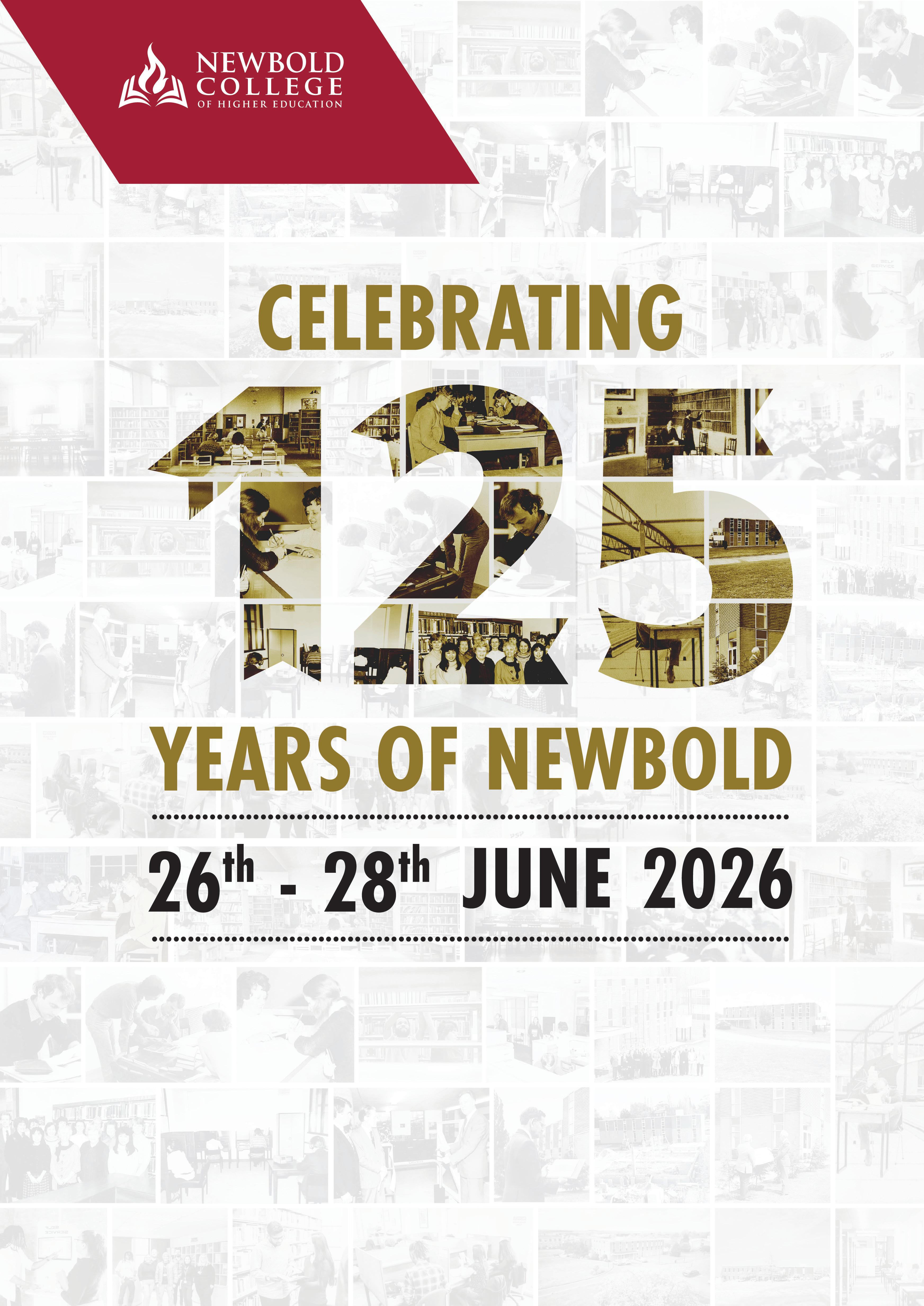
MARKING THE MOMENTS
Celebrating milestones in our community
Celebrating a Centenarian
On 22 October 2024, beloved community member Edna Scarr celebrated her 100th birthday. Known for her presence on campus and for her dedicated support of her late husband, Roy Scarr—who held the position of Director of Music at the college—she marked the milestone with her sons Martin and Graham, who have cared for her faithfully since Roy’s passing in 2014. Now 101, Edna’s life remains a remarkable testament to dedication and family. As well as her unfailing support of Roy, she was a musician in her own right, teaching piano and Primary Sabbath School children who remember her with great affection.
A Love that Shines Brighter than a Diamond
Olive and Anthony Crouch recently celebrated their Diamond Wedding Anniversary, a milestone marked with a congratulatory card from His Majesty King Charles III and Queen Camilla. Anthony, a Newbold graduate of 1963, and Olive, who graduated from Newbold in 1964 as a Bible worker, have spent sixty years building a life full of love and devotion together. The Newbold community sends its warmest congratulations to them on this remarkable occasion.
The life of our community continues through your stories. If you have news, memories, or milestones to share, we would be delighted to hear from you at alumni@newbold.ac.uk.
THE NEWBOLD STUDENT HARDSHIP FUND
MAKE A LASTING IMPACT

The Newbold Student Hardship Fund is one of the financial supports available to students. This fund can be life-changing for students who have stepped out in faith to answer God’s call into ministry, but find themselves struggling financially. Your contributions will help relieve financial stress, enabling students to reach their full potential—and God’s call.
Newbold College of Higher Education is an inclusive, student-focused provider owned and operated by the Seventh-day Adventist Church.
St Mark’s Road Binfield, Bracknell Berkshire, RG42 4AN United Kingdom
E: alumni@newbold.ac.uk W: newbold.ac.uk
Registered Charity Number: 1052494
ISSN: 2055 - 5474