2025 Annual Report on Environmental Sustainability
Environmental Sustainability
Annual Report 2025
Foreword
It has been another very good year for sustainability at New City College. We were delighted to win the Green Gown Award for Next Generation Learning and Skills in November 2024. This was well deserved recognition for the continued innovative work of our curriculum colleagues, particularly in Construction and Engineering, and the development of comprehensive green skills provision across our campuses.
We also now have the first set of data to demonstrate the true impact of our decarbonisation programme. We replaced end-of-life gas boilers in our main building at Redbridge in 2023-24 and as a result we have reduced the overall emissions from our energy consumption by 27%, saving 61 tCO2e. Many think that it is an unaffordable choice to transition from gas to electricity, but our utility bills have also decreased by £50,000 per annum. A win for sustainability can also be a win for the finances.
This positive sustainability work has taken place during an excellent year for the College when we were rated as Outstanding by Ofsted. We have also developed a new Strategic Intent 2025-2030 under which future work on sustainability will be taken forward. I am already looking forward to updating this report on our continued positive progress next year.
Gerry McDonald CBE Group Principal and CEO
October 2025
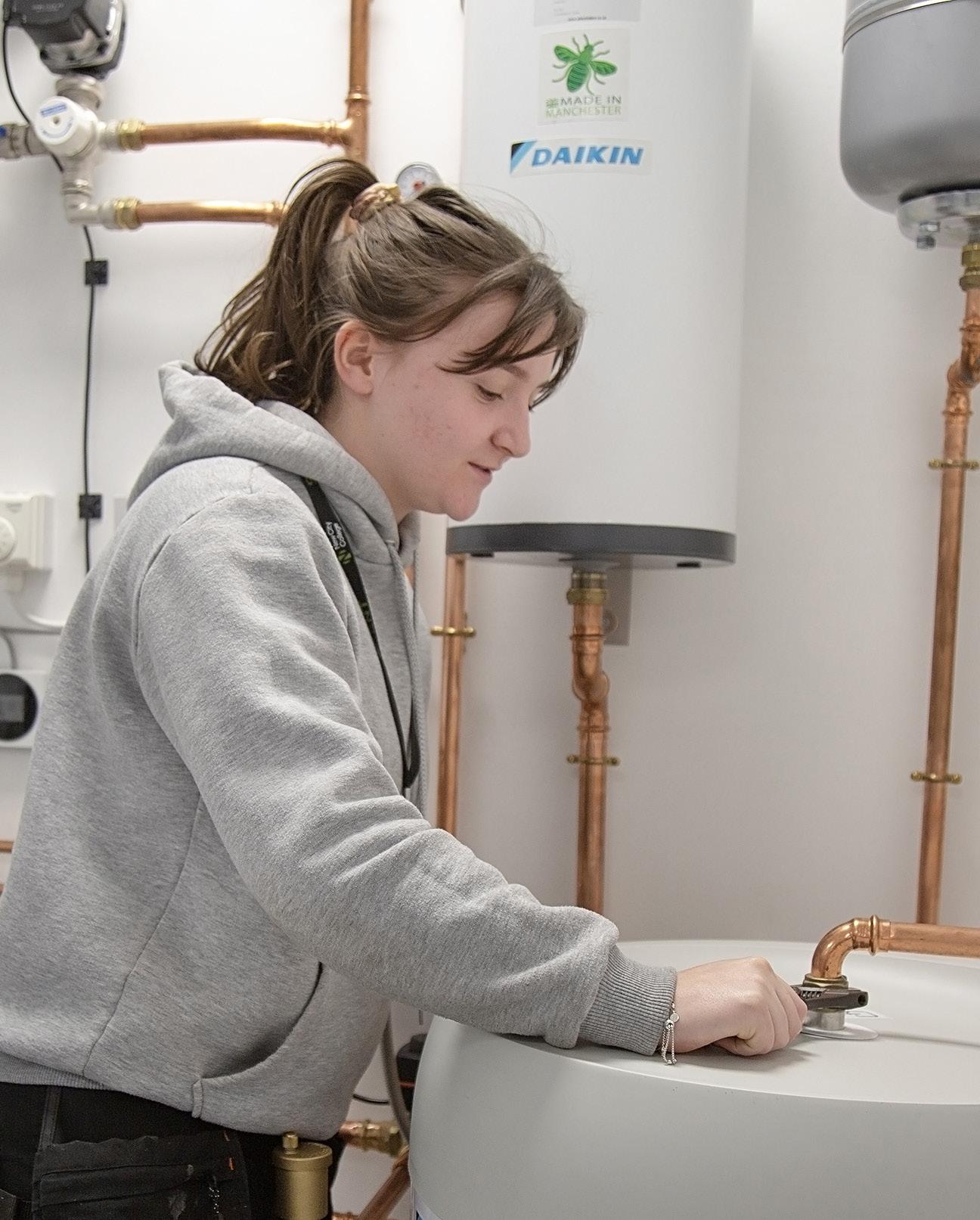
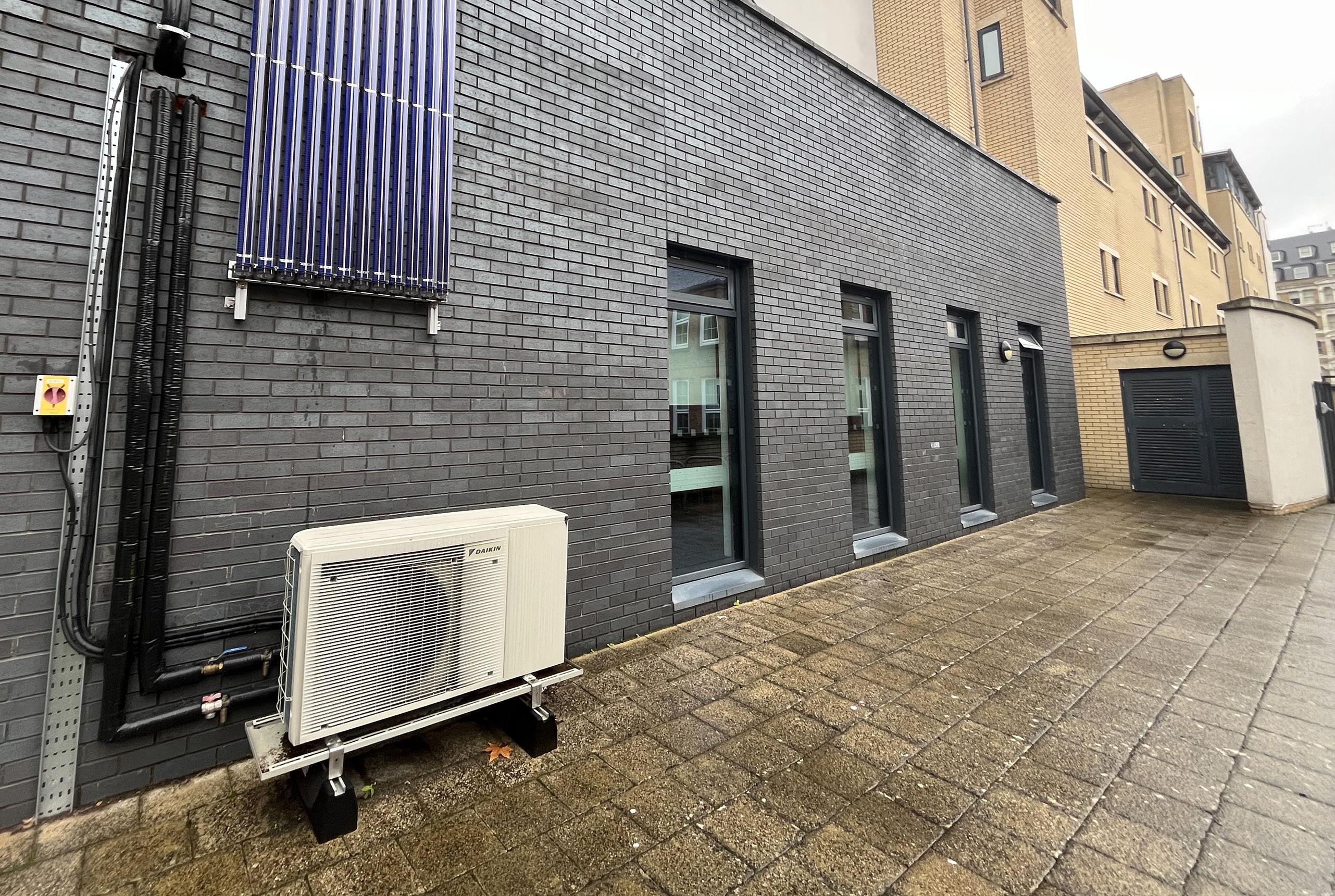
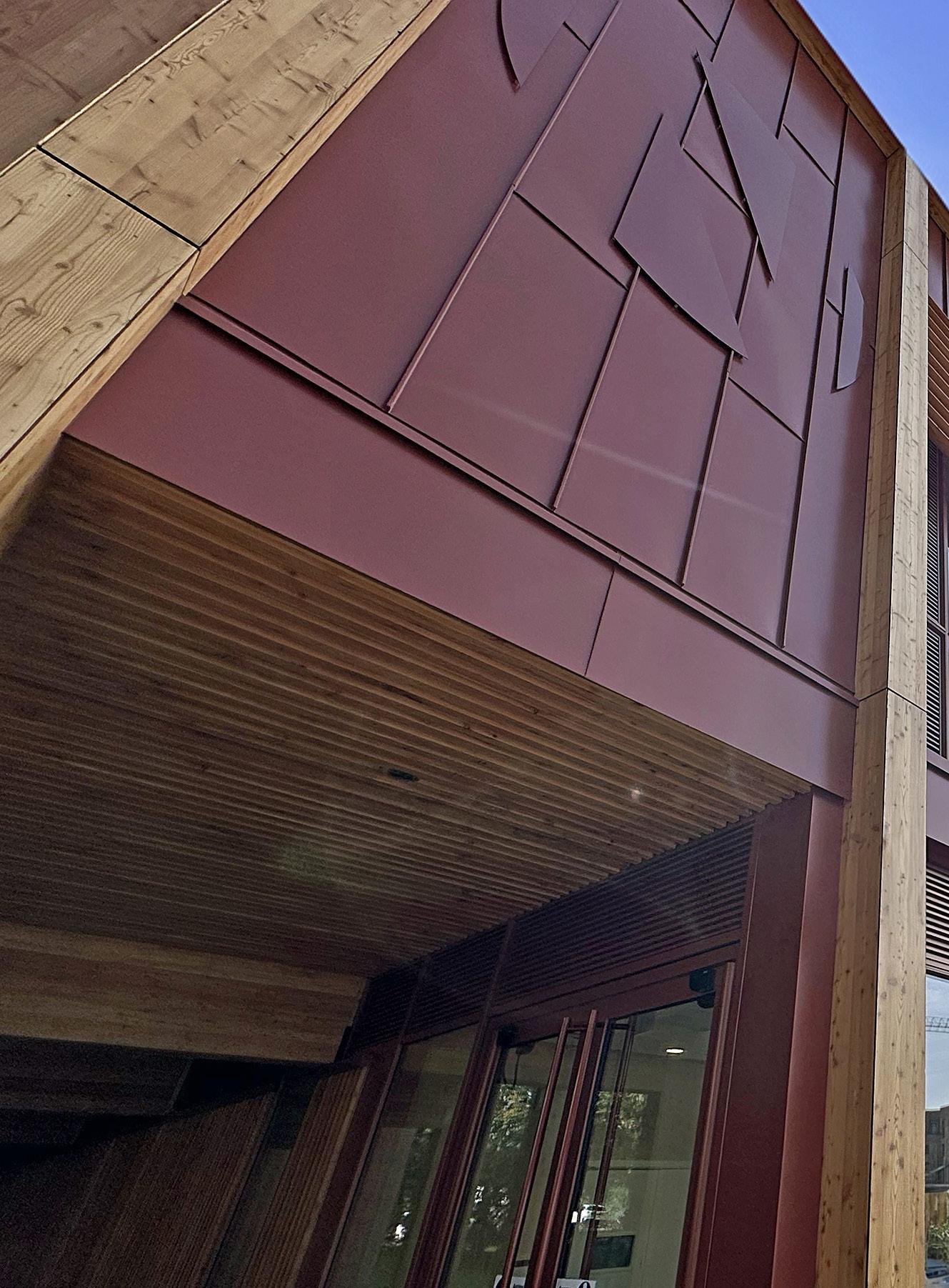
Low Carbon Technology Lab, Rainham Campus
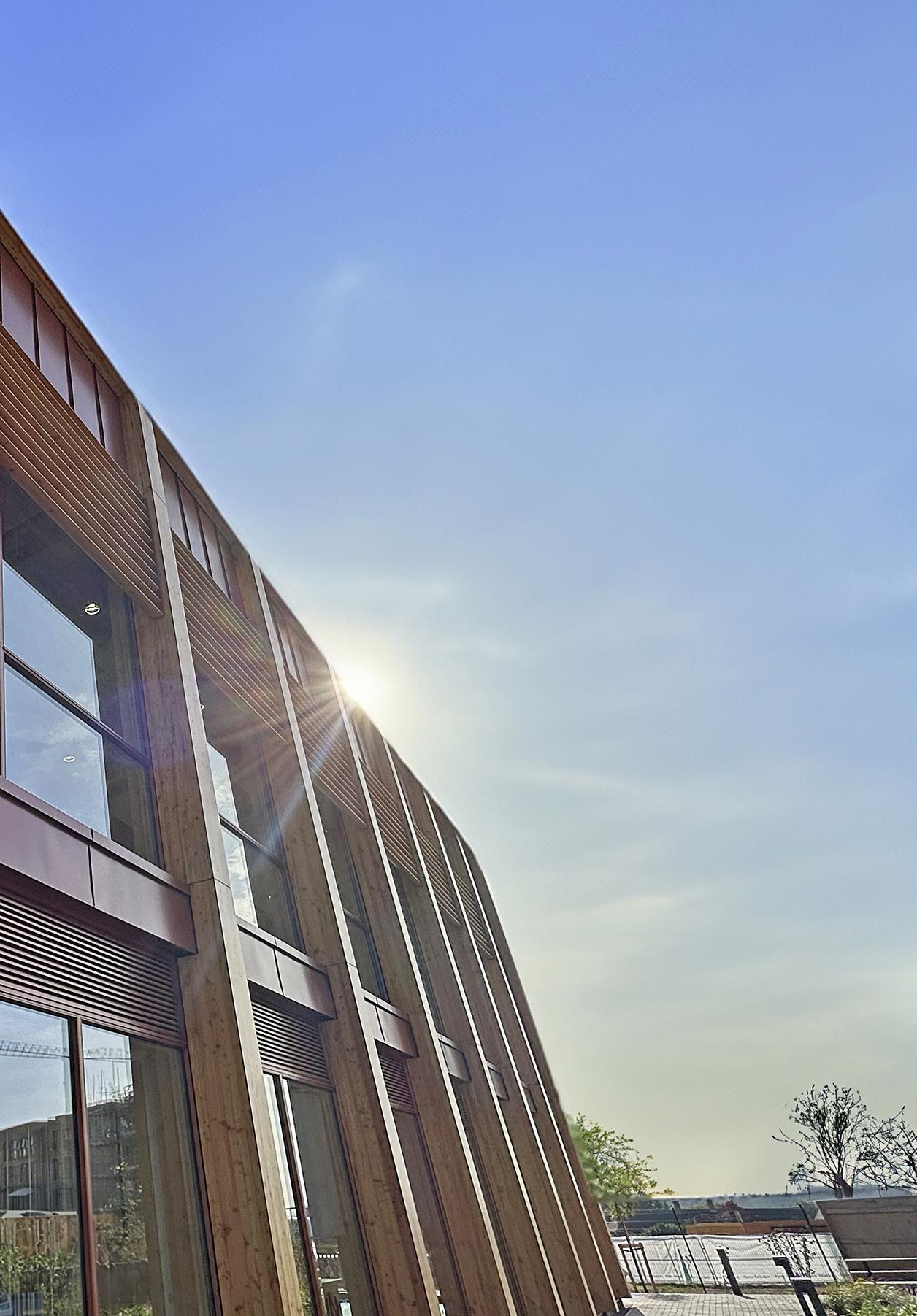
Low carbon heating training units: Hackney Campus
Introduction
New City College (NCC) has continued to deliver against the objectives outlined in the Green Strategy, first developed in 2021. The purpose of this Strategy was to create a greener NCC. It was aligned with the Climate Action Roadmap for FE Colleges1 and covered actions related to Leadership and Governance; Teaching and Learning; Estates and Operations; and Partnerships and Engagement. The Strategy has been successfully delivered in two phases, with the second phase completed in 2024-25, establishing NCC as a leading College on sustainability. The College is now developing a new sustainability strategy, building on the positive work already completed and aligning it with the whole-College Strategic Intent launched in Summer 2025.
This is the fourth annual report on NCC’s environmental sustainability work. It presents NCC’s carbon emissions and how these have evolved over time. It provides an overview of actions and activities undertaken as part of the Green Strategy during the academic year 2024-25. It concludes by outlining the focus areas for work in 2025-26.
Purpose of carbon reporting
The purpose of carbon reporting is to track the greenhouse gases emitted by organisations with a view to demonstrating how organisations are meeting the Government’s and international net zero targets. The scientific consensus is that the rise in average global temperatures should be limited to below 2°C from pre-industrial levels, targeting a maximum rise of 1.5°C.
Organisations report on greenhouse gases by converting all emissions into carbon dioxide equivalencies (CO2e). Reporting is done on three Scopes:
Scope 1
Emissions that are directly under our control e.g. emissions arising from gas boilers and owned vehicles.
Scope 2
Emissions that are indirectly under our control, primarily from purchased electricity.
Scope 3
Emissions associated with our organisation that we are indirectly responsible for e.g. waste, water, travel, purchases etc.
Organisations usually report on emissions by referring to tonnes of CO2e emitted. One tonne equates to driving an average petrol/diesel fuelled car for 2,500 miles.
Achieving net zero means reducing Scope 1 and 2 emissions to 0 or as close to it as possible. For Scope 3, the focus is on reducing emissions as much as possible and offsetting what cannot be reduced by contributing to initiatives that absorb greenhouse gases from the atmosphere.
NCC’s carbon emissions
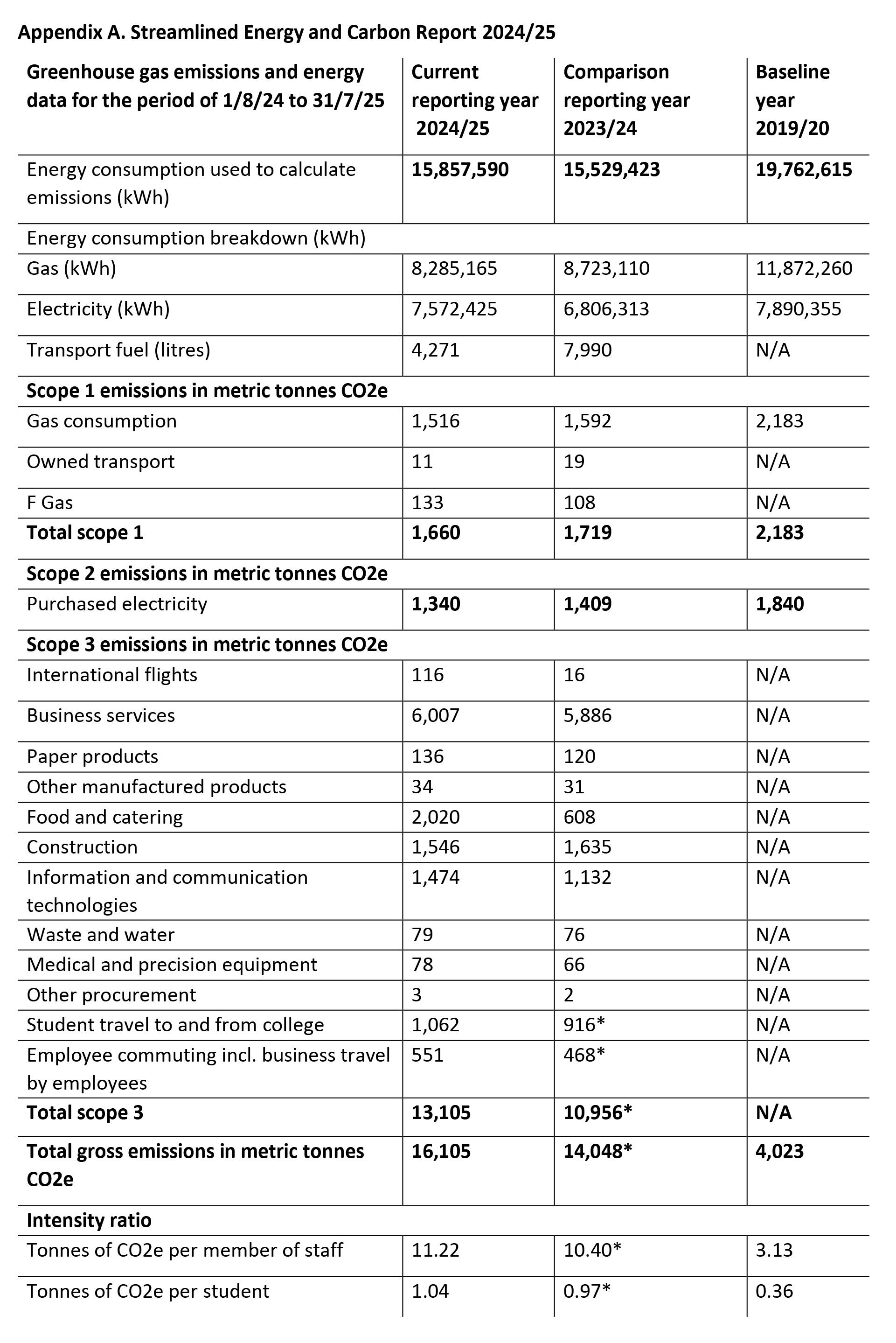
NCC reports on its carbon emissions using the Streamlined Energy and Carbon Reporting (SECR) process as recommended by the UK Government. The full 2024-25 report is included in Appendix A.
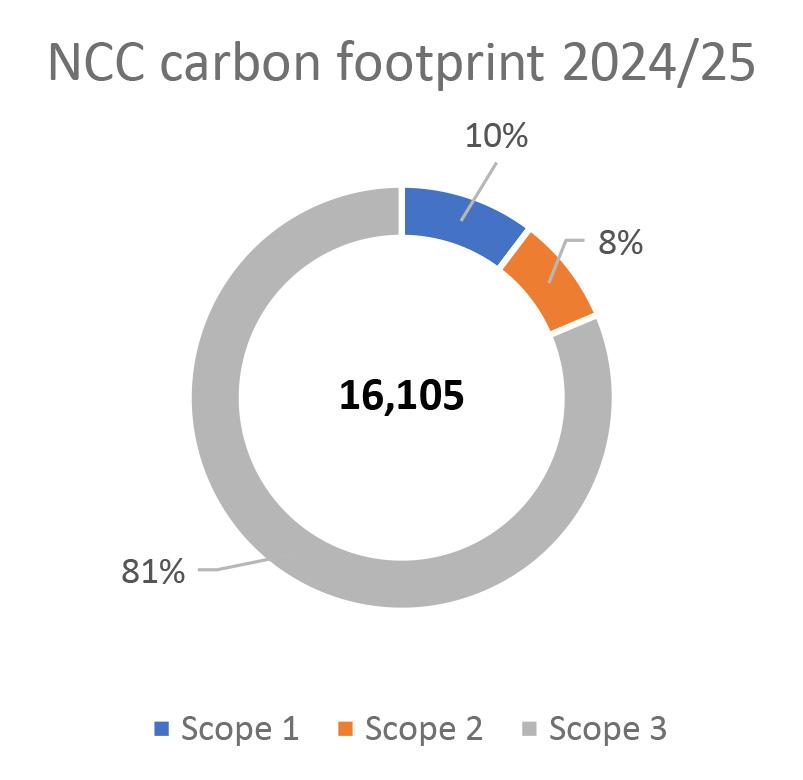
In 2024-25 NCC produced 16,105 tonnes of CO2e emissions.
This is an increase from 23-24 driven by an increase in Scope 3 emissions which form 81% of the total emissions. The reasons for the increase are discussed later in the report.
Scope 1 and 2
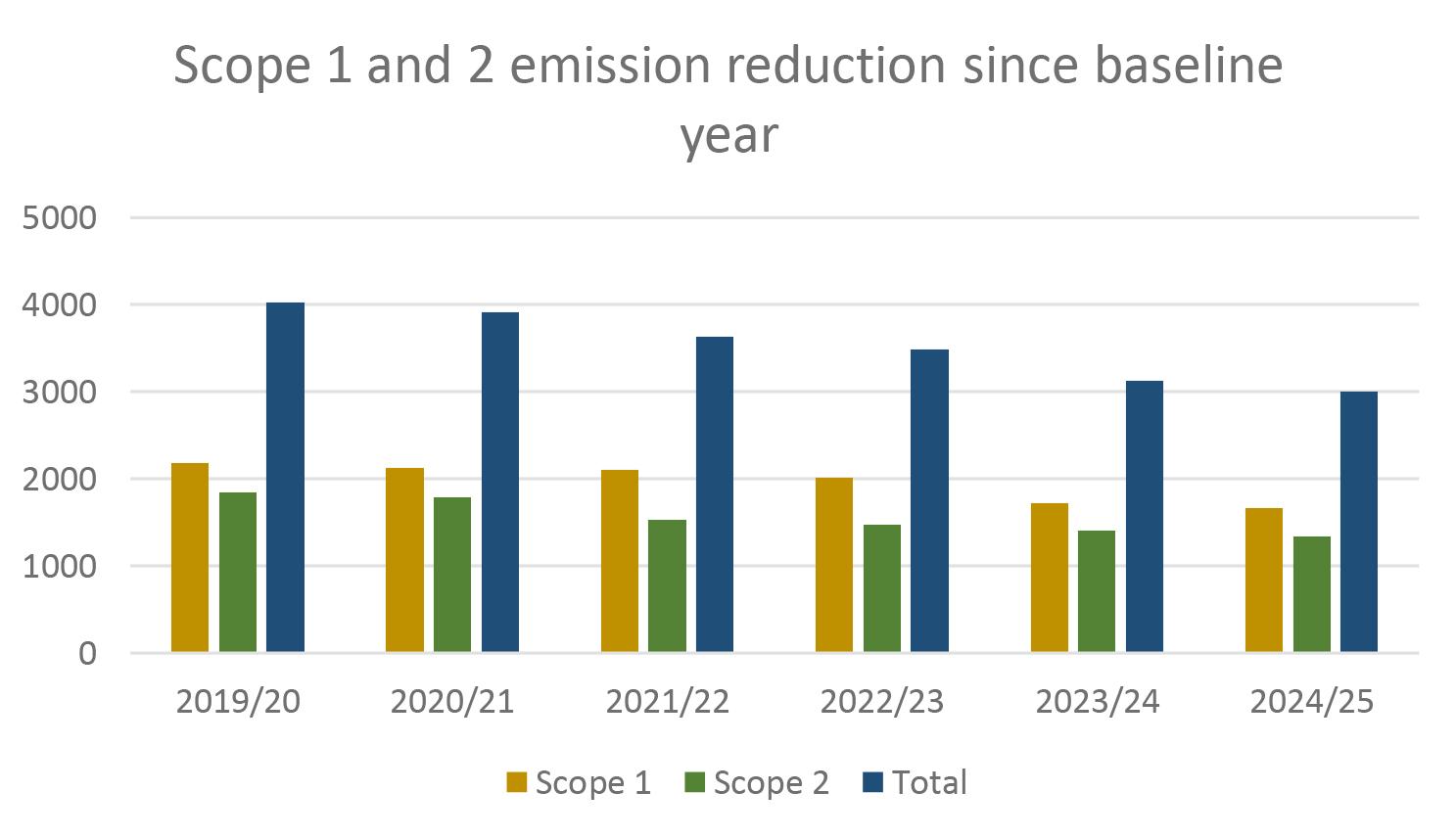
Scope 1 and 2 emissions show a continued year-on-year reduction since NCC started reporting on its carbon footprint. Scope 1 emissions have reduced a total of 24% and Scope 2 emissions by 27% since 2019-20 This is despite the fact that NCC has added nearly 15,000 sqm to its estate during this period with a new construction centre in Rainham, a wellness centre in Epping Forest and a new campus following the merger with Hackney Sixth Form.
The primary driver for the reduction in Scope 1 emissions has been the significant reduction in gas consumption. The transition to electric fleet vehicles during 24-25 has also supported the reduction in Scope 1 emissions by nearly halving the transport fuel litres consumed. For Scope 2 emissions, the reduction has been driven by a combination of reduced electricity consumption and the increase in the proportion of renewable energy in the national electricity grid. It should be noted that all reported consumption data comes with a level of uncertainty as it is based on invoicing data where consumption is sometimes estimated.
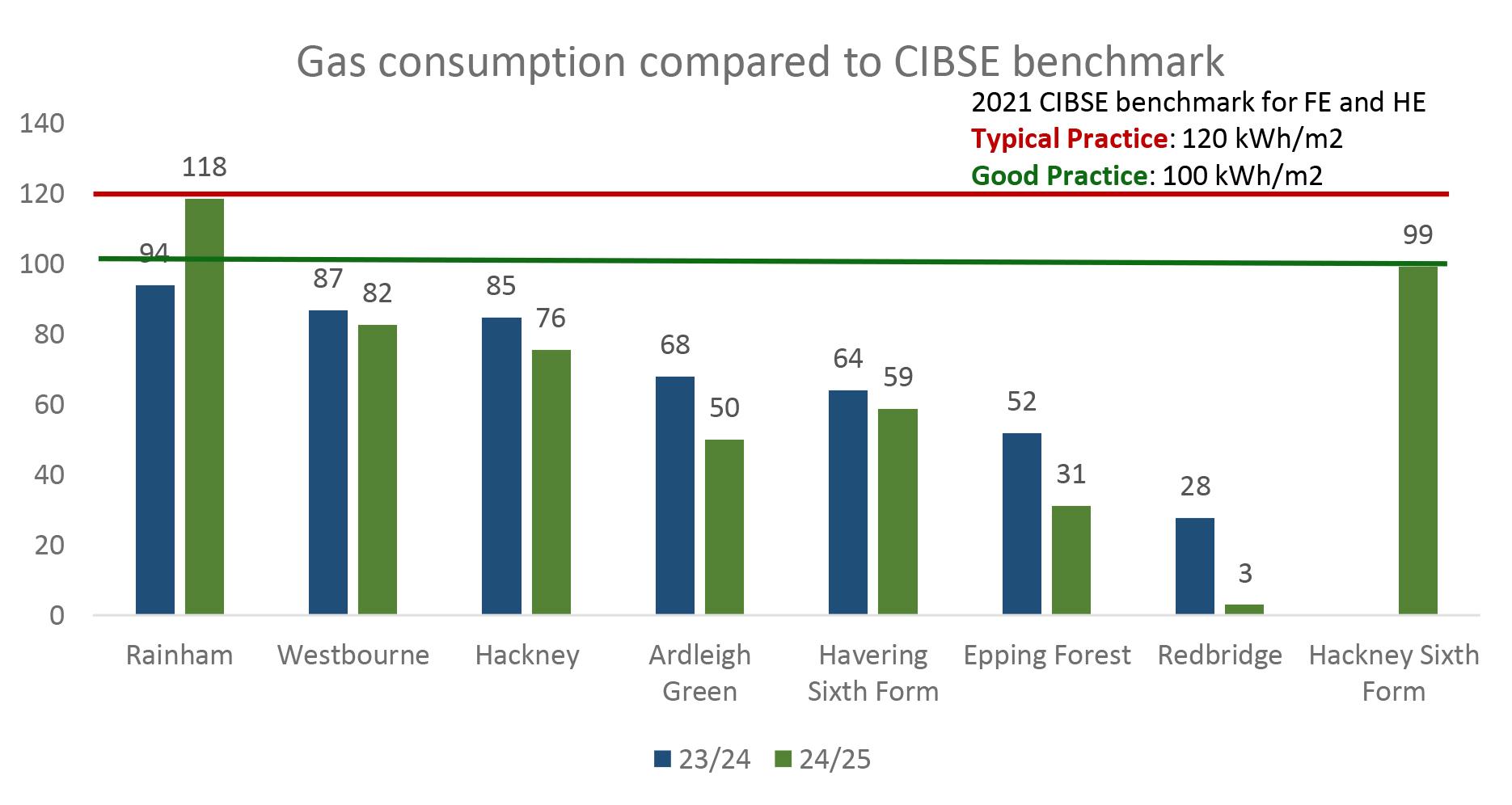
A year-on-year comparison between campuses shows that with one exception, there has continued to be a reduction in gas consumption per square metre2. This is most marked in Redbridge, where the impact of the heat decarbonisation project is now fully evident and has cut gas emissions by 89%. The heat decarbonisation project in Epping Forest (completed in April 2025) is also already showing a reduction in gas consumption with the full impact likely to become evident in the coming years. The ongoing redevelopment project in Ardleigh Green has resulted in the closure of some buildings which has driven gas consumption reduction on that site.
Gas consumption
The only campus where gas consumption has increased considerably and appears to be above good practice sector guidelines is Rainham. This can be explained by the Rainham specialist construction & engineering campus having seen exponential growth in student numbers over the last three years. The campus facilities have been developed, and usage has subsequently increased. This is the first year of reporting on gas consumption at Hackney Sixth Form following the merger in August 2024. Year-on-year comparison data for this campus will be available from next year onwards.
It should be noted that the Tower Hamlets and Arbour Square campuses have been excluded from this analysis as no energy data is available for them for the period between April-July 2025. This is due to a change in the energy supplier during this period and while unfortunate, is common within the industry. Data from 23/24 has been used for the overall emissions report to avoid reporting excessive emissions reductions.
NCC’s carbon emissions (continued)
Electricity consumption
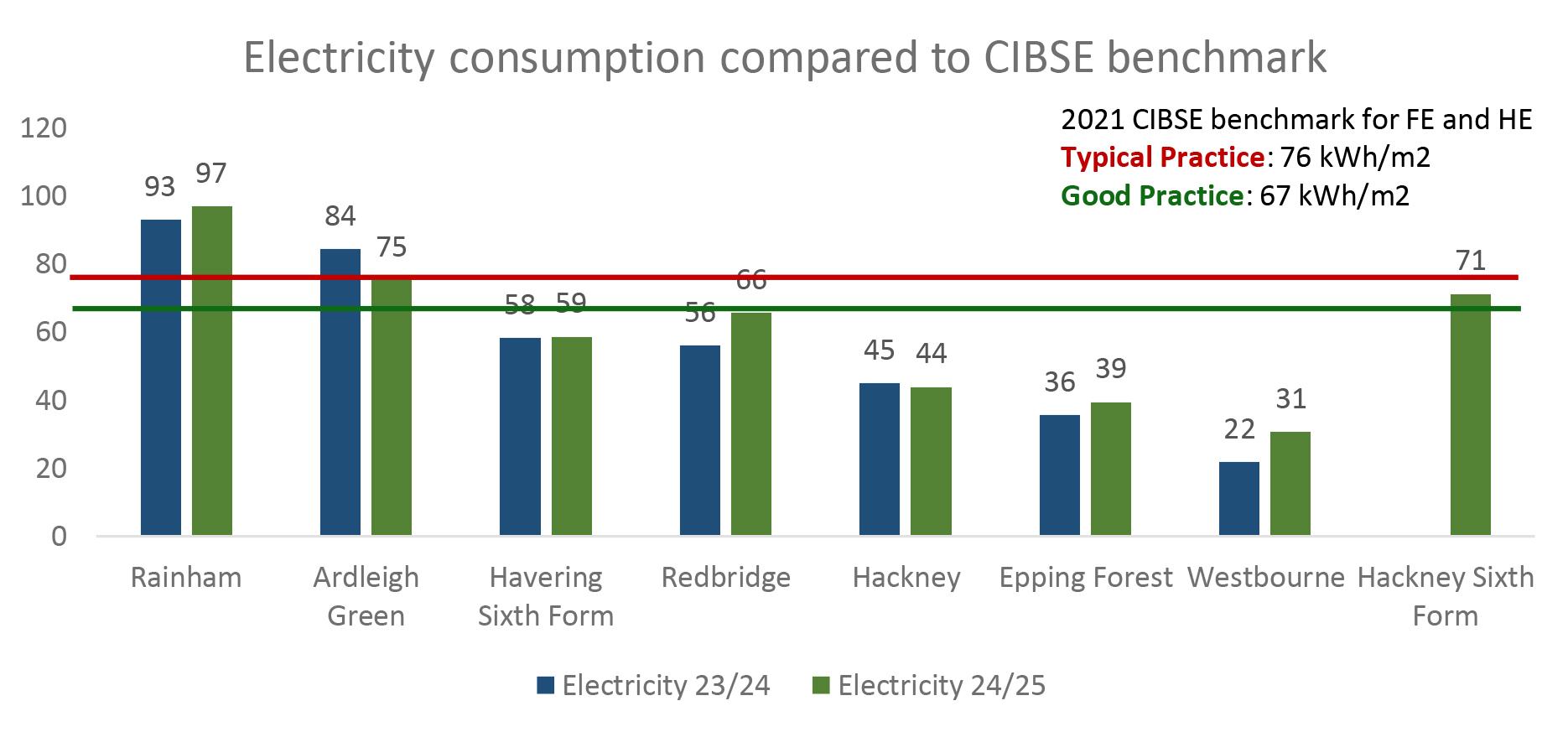
The changes in electricity consumption per square metre show a more varied picture. The increases in electricity consumption in Epping Forest and Redbridge are a result of heat decarbonisation projects where gas heating has been replaced with electricity based low carbon heating sources. In Ardleigh Green, the closure of some buildings ahead of the redevelopment works is the primary reason for the reduced electricity consumption on that site.
This is the first year of reporting on electricity consumption at Hackney Sixth Form following the merger in August 2024. Year-on-year comparison data for this campus will be available from next year onwards. As with the gas data, Poplar and Arbour Square campuses have been excluded from this analysis.
Scope 3
The majority of the Scope 3 data is based on cost-data, which is a typical way for estimating Scope 3 emissions. Carbon emissions are calculated using a conversion tool, which translates different types of non-pay costs into emissions based on typical emissions associated with these types of activities. This is helpful to clarify the scale of emissions associated with different business areas but provide only an estimate as they do not reflect the specific contracts which NCC holds. As the alternative would be to review every purchase item and contract separately, the tool is used as an efficient option to begin to understand Scope 3 emissions.
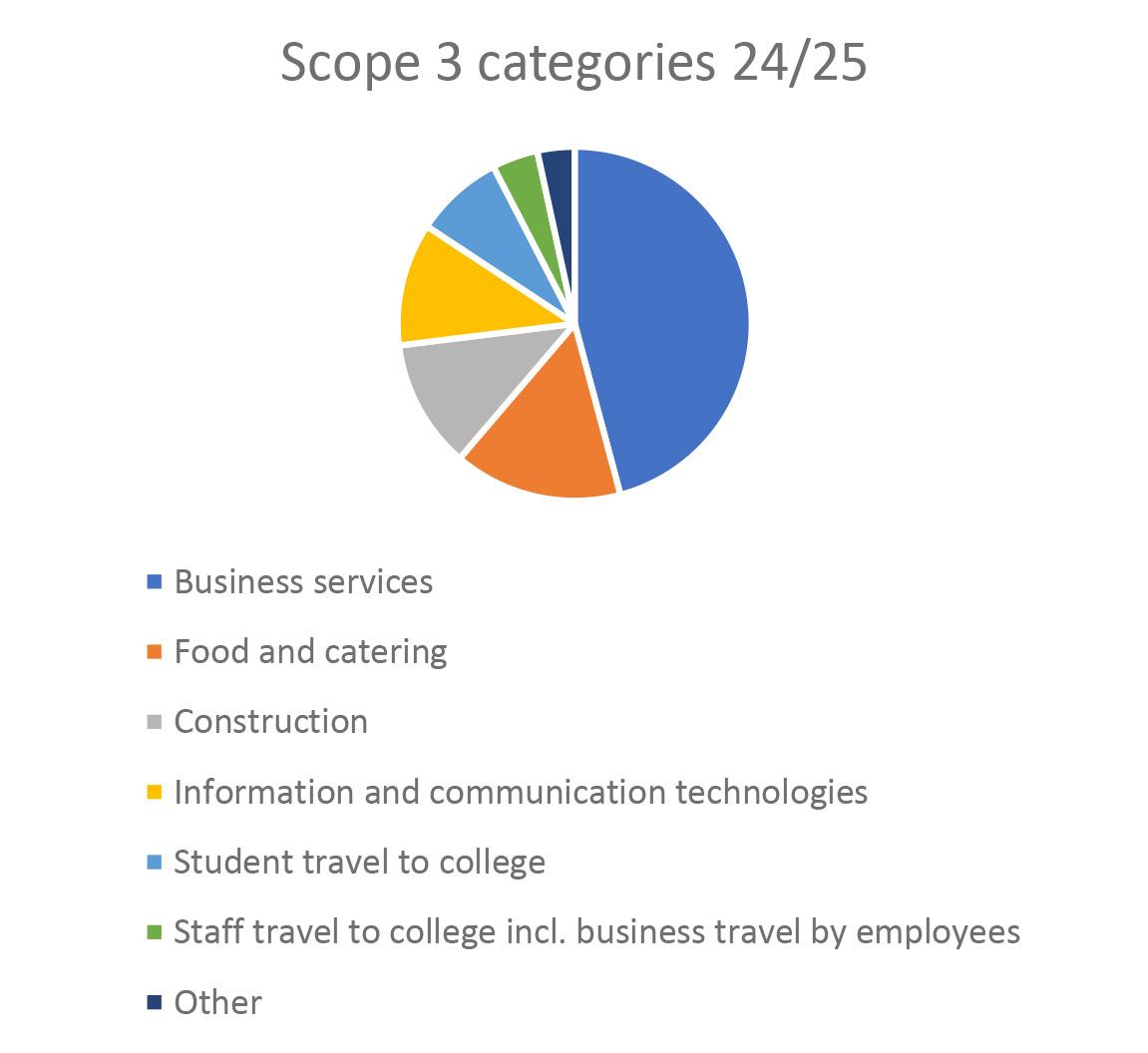
At 46%, the most significant Scope 3 emission source are business services. These include everything from marketing, staff recruitment and conferences to banking, insurance and auditing. These have increased slightly from 23/24 but are broadly in line with the figures reported in previous years.
At 15%, emissions associated with catering are the second largest single source of Scope 3 emissions. These have nearly quadrupled from 23/24. Catering costs have increased significantly across the board in this time period –particularly food ingredients, which explains this.
At around 11% each, construction and information and communication technologies form the third and fourth highest source of Scope 3 emissions. Construction emissions
have reduced from 23/24 reflecting annual fluctuation in the nature and costs of different estate projects. Information and communication technology emissions have increased noticeably, primarily due to our major investment into an enterprise service management system.
At 8% and 4%, student and staff travel to and from college form the fifth and sixth largest source of Scope 3 emissions.
Together these six areas create over 96% of all Scope 3 emissions. The travel emissions reflect the size of the college community rather than particularly unenvironmental forms of travel as 92% of the student population use public transport or walk or cycle to college. Over 50% of staff do the same. All student travel data is collected at enrolment so is comprehensive. Staff travel data is based on a generous staff survey sample.
Green Strategy Actions 2024/2025
TOP 3 actions/activities under each Green Strategy strand
Leadership and Governance Teaching and Learning
Led an LSIF project to enhance the green skills offer, including the development of a ‘virtual’ Green Skills Campus
Hosted a Low Carbon Innovators Showcase on behalf of the GLA Climate Leadership Group
Prioritised investment to sustainability initiatives, including LED lighting upgrades, via the Green Investment Board
Provided staff and students with an expanded programme of accredited carbon literacy training
Delivered a masterclass programme on Education for Sustainable Development (ESD) Implemented Paperwise Pedagogy Curriculum Cafés, encouraging the use of digital resources, reducing waste and promoting sustainability
Estates and Operations Partnerships and Engagement
Decarbonised heating at the Epping campus with the support of a £2.9m Salix grant
Delivered the Environmental Action Plan (EAP) with tangible improvements to Estates, IT, Procurement and Catering operations
Commenced the Food Made Good audit and accreditation from the Sustainable Restaurant Association
Won the UK Green Gown Award for Next Generation Learning and Skills
Delivered an extended NCC Goes Green programme with increased participation rates during Green Week
Showcased achievements as EAUC national conference keynote speaker & AoC Green Skills conference panel speaker
Focus for 2025/2026
• Begin implementation of the new sustainability strategy, aligned with the College’s new Strategic Intent.
• Deliver the Salix funded heat decarbonisation project at NCC’s Ardleigh Green campus.
• Provide an expanded programme of carbon literacy training and wider sustainability training as part of academic enrichment
• Deliver a further enhanced Green Week in March 2026, increasing student leadership via the Environmental Officers in student unions.
• Develop and begin delivery of a biodiversity strategy, which will be aligned with wider climate resilience plans for each campus.
• Continue to invest in sustainability initiatives via the Green Investment Board, with a focus on securing funding for the first solar PV project.
• Work closely with our new waste partner, Veolia, launching campaigns to reduce waste and increase recycling at all college campuses, with improved reporting.
Appendix A.
* Figures corrected from those reported in 2023/24 due to an error in the original travel data calculations. See note on next page →
Quantification and reporting methodology
We have followed the 2019 HM Government Environmental Reporting Guidelines. We have also used the GHG Reporting Protocol – Corporate Standard and have used the 2025 UK Government’s Conversion Factors for Company Reporting.
Scope 1 and 2 data is based on utility bills and records of fuel and f gas consumption. Utility data covers all NCC freehold sites. Utility data for Poplar and Arbour Square sites from April-July is based on 23/24 figures due to lack current figures resulting from a change of contract. Utility data from leasehold sites is included in Scope 3 data.
Scope 3 data is based primarily on cost data, calculated using the EAUC Scope 3 tool. The exceptions include international flights and student and staff travel data. International flight data is based on actual flight data from student trips. Students travel data to and from college is based on information gathered at enrolment regarding primary mode of transport and travel distance. Staff travel data is based on a staff survey with a response rate of 593 which has been used as a representative sample to estimate travel emissions for all staff. Business travel by staff, claimed based on mileage, has been added to this figure. Waste and water data are a mixture of cost-based estimates for leasehold sites and invoice and emissions data for freehold sites.
*Note regarding error in 23/24 data
There was an error in the calculation of the 2023/24 student and staff travel data reported under Scope 3. The error was twofold: emissions calculated as kgCO2e were reported as tCO2e and were only calculated for one week rather than the entire academic year. These figures have now been corrected in the 2024/25 data submission. The error impacted on the reported total gross emissions and intensity ratios. These have now also been corrected.
Intensity measurement
The primary intensity measurement ratio is total gross emissions in metric tonnes CO2e per staff member (counted as FTE), the recommended ratio for the sector. We have also included a secondary intensity measurement ratio which captures total gross emissions in metric tonnes CO2e per student (counted as FTE).
Measures taken to improve energy efficiency
In 24/25, NCC has implemented the following measures to improve energy efficiency:
• Decommissioning of gas boilers at the Epping campus and their replacement with low carbon air source heat pumps
• Upgrades to the Building Management System across all sites
• Continued roll-out of LED lighting
• Implementation of quick win actions recommended by the decarbonisation plans for each campus