MECHANICAL Mechanical systems include heating, ventilation, cooling, plumbing and electrical distribution that provide adequate energy and thermal comfort. In order to design and maintain healthy and comfortable indoor conditions, architects must consider local climate, occupancy, and construction type/materiality. Raised flooring, flexible drop-ceilings, and wet-walls are some of the design strategies employed in mechanical system distribution. Sustainability is continuously influencing the vertical layout and horizontal distribution of these systems, seeking to optimize both the consumption throughout the building, while understanding the opportunities for energy production. The redundancy of mechanical systems in highrise buildings is crucial to 102
VERTICAL SYSTEMS
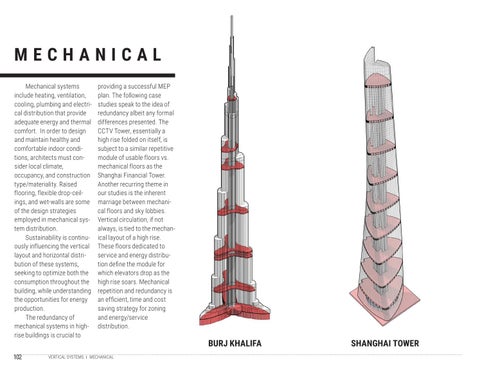
providing a successful MEP plan. The following case studies speak to the idea of redundancy albeit any formal differences presented. The CCTV Tower, essentially a high rise folded on itself, is subject to a similar repetitive module of usable floors vs. mechanical floors as the Shanghai Financial Tower. Another recurring theme in our studies is the inherent marriage between mechanical floors and sky lobbies. Vertical circulation, if not always, is tied to the mechanical layout of a high rise. These floors dedicated to service and energy distribution define the module for which elevators drop as the high rise soars. Mechanical repetition and redundancy is an efficient, time and cost saving strategy for zoning and energy/service distribution.
MECHANICAL
BURJ KHALIFA
SHANGHAI TOWER