YEC Resource Guide Get started planning your YEC competition
THANK YOU
THANK YOU THANK YOU
The Youth Entrepreneurship Challenge (YEC) Series is made possible by the following collaborating partners
Series Requirements; including important dates
Overview of Local Competitions
Local Competition Planning Timeline (example)
Local Competition Flyer
News Release Templates
Executive Summary Format, Instructions, and Scorecard Sample
Elevator Pitch Format, Instructions, and Scorecard Sample Tradeshow Format, Instructions, and Scorecard Sample
Formal Presentation Instructions
Formal Presentation Scorecard (example)
This booklet contains references of examples and templates your community team may find helpful while you plan a local entrepreneurship competition as part of the Youth Entrepreneurship Challenge Series. These documents are either real tools used in entrepreneurship competitions in the past, or based on real tools. Many eCommunities have contributed their processes and wisdom to these templates. They are yours to adapt as you see fit and are welcome to use them directly, be inspired by them, or otherwise utilize them in the planning of your local competition.
For more information, please consult your region’s assigned Network Kansas Community Entrepreneurship Professional, or contact Bailee Henry at bhenry@networkkansas.com.
Visit www.youtheshipchallenge.com for
YEC SERIES
Important Dates & Requirements
Deadline for YEC Series online sanction applications
IMPORTANT DATES
YEC State Championship NOV 14 MAR 24 APR 28-29
Cut-off for sanctioned competitions
Wildcard entry deadline for YEC State
Winners entry deadline for YEC State
Series Requirements
The physical location of the competition must be in Kansas. Competitions may be virtual.
Student participants must reside in Kansas; exceptions require prior approval.
Competition must be open to grades 9-12 or equivalent, but can also include grades 6-8 if desired. Ex. 7-12th, 9-12th, 10th grade only, or 6-9th grades are all acceptable competition structures.
The competition must include a written Executive Summary and a Formal Presentation; additional in-person components optional: elevator pitch, tradeshow, and/or other event.
Follow the YEC brand guide on our website: bit.ly/3HwXznu The following logos must be included: Network Kansas, K-State Extension, and K-State Center for the Advancement of Entrepreneurship.
Prizes are not mandatory. Competitions offering prizes typically do not exceed a total of $3,500 in prizes, and prize structures typically do not exceed $1,500 for first place, $1,250 for second place, and $1,000 for third place. Other examples of prizes may be “People’s Choice Award” or “Banker’s Choice Award”, etc.
The competition must apply for a Network Kansas sanction by November 14, 2025, or before the event if held earlier.
Event must occur between August 1, 2025, and March 24, 2026.
Competition host must agree to pay a $1,500 sanction fee to Network Kansas; waived for eCommunity organized events. This fee includes access to the VentureDash platform to host your event.
A student may compete in only one local event per 2025-2026 YEC Series and may only submit one business concept per competition.
Communities may only organize or participate in one local event per the 2025-2026 YEC Series, unless compelling reasons for more than one competition exist. Prior approval is needed.
Communities hosting local entrepreneurship competitions can apply for a sanction to join the “Youth Entrepreneurship Challenge Series,” leading to a statewide competition (YEC State). To qualify and use eCommunity grant funds (see p. 4), competitions must meet specific guidelines.
Benefits
All sanctioned events will gain access to a suite of tools and resources from Network Kansas and KSU, including entrepreneurship videos and a resource kit for planning and hosting a local competition, with full access to VentureDash, a digital tool for planning, organizing, and running a youth entrepreneurship competition with supplemental resources for classroom curriculum. All sanctioned events will earn one guaranteed spot at YEC State to be used by the 1st place business or a first alternate. All sanctioned event participants may also compete for up to 15 wildcard spots for YEC State.
“I am the founder of Sweets Inc., and we build your dream cupcakes.”
- Maya
“My business idea is to make vending machines out of recycled school buses.”
- Gabe
eCommunities & Additional Requirements
For Network Kansas eCommunities with a sanctioned event, follow these additional guidelines to access eCommunity grant funds (first-come, first-served basis) for event costs. Funds can cover hosting, educational materials, prizes, travel fees, and other related expenses.
1. At least one member of the local eCommunity leadership team and/or financial review board must help organize and/or host the competition. This person will work with their Community Entrepreneurship Professional to set up the event.
2. Events must take place within the geographic boundaries of an eCommunity, even if participants from beyond that area are admitted.
3.
eCommunities must invite a local or regional public sector business resource partner to participate as a committee member, educational resource, mentor, and/or judge. A great recommendation to fill this role is the local K-State Extension professional in some part of the planning process or invite them to serve as one of the roles previously mentioned. Some additional partners may include KSBDC, SCORE, Kansas Department of Commerce, Certified Development Companies, Kansas Main Street, USDA, City/County Economic Development organizations, or college/university business department instructors.
4. Establish a working group or committee as a subset of the leadership team to organize the event.
PARTICIPANT GROWTH
Learn more about YEC state
5. eCommunities should include private sector business resource partners as committee members, resources, mentors, or judges such as bankers, attorneys, insurance, accountants, and entrepreneurs.
6. eCommunities connect students to mentors, which could include leadership team and/or financial review board members, resource partners, entrepreneurs, bankers, public officials, etc.
Additional Benefits for eCommunity Events
• $1,500 sanction application fee is waived for the 2025-2026 Series.
• Full access to VentureDash, a digital tool for planning, organizing, and running a competition with supplemental resources for classroom curriculum and event planning.
• A $250 prize sponsored by Network Kansas will be given to the school or classroom of the 1st place student.
• Access to additional assistance from their regional eCommunity representative to plan and host the event.
• A judge will be provided for local event by Network Kansas, if needed.
• Access to additional grant funds* to pay for state competition travel expenses, if needed.
TIP: If you have questions about eCommunity related benefits, consult your region’s assigned Community Entrepreneurship Professional, or contact Bailee Henry at bhenry@networkkansas.com.
* eCommunities may use grant funds to pay for part or all costs incurred in hosting a youth entrepreneurship competition that meets the YEC Series qualifications. Grants are issued on a first-come, first-served basis until funds are depleted. Funds may only be issued after completing a sanction application. Exemptions to one or more requirements might be granted on a case-by-case basis. Competitions being held outside an eCommunity will not be able to access eCommunity grant funds or other Network Kansas funds to pay for the cost of hosting a competition.
“YEC is a great opportunity for young aspiring entrepreneurs to learn how to operate a successful business and make long-lasting
connections
with
business
mentors.” - Riley, YEC Participant
Sanction Form Guide
Follow the QR code below to access the sanction form on the VentureDash website. This application ensures you understand and will follow the rules for local competitions. It is required for eCommunities to use grant funds (first-come, first-serve) for event expenses. Only sanctioned events can qualify winners for the YEC State Championship.
Note: To complete the sanction application, you must log-in or create an account to fill out the form.
Sanction form link: goventuredash.com/app/series/2100
Local Entrepreneurship Competitions
Overview
During the 2024-2025 academic year, Network Kansas eCommunities and non eCommunities held 63 local-level youth entrepreneurship competitions with over 1,100 students as part of the Youth Entrepreneurship Challenge (YEC) Series, culminating in a statewide championship known as the State Youth Entrepreneurship Challenge (YEC State).
What is a local entrepreneurship competition?
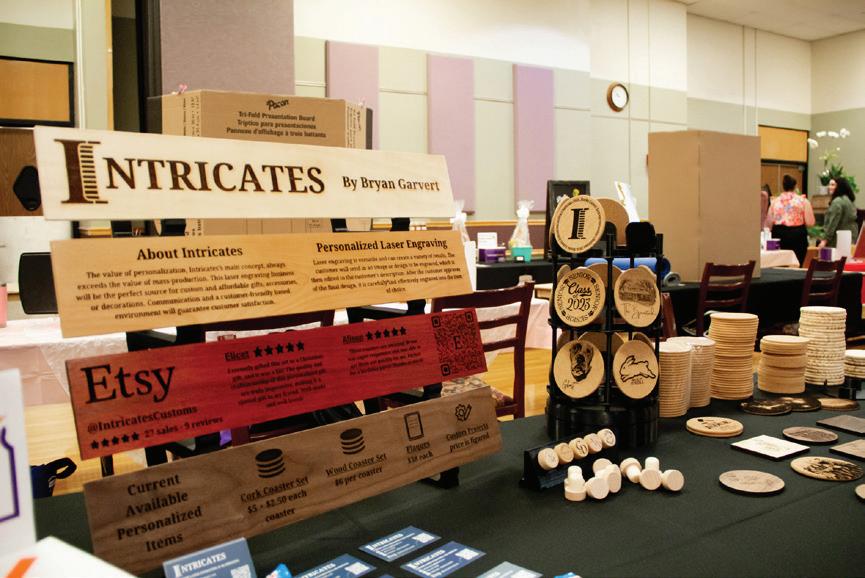
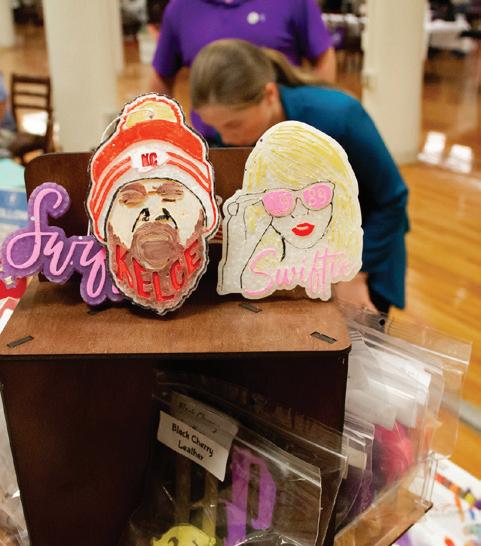
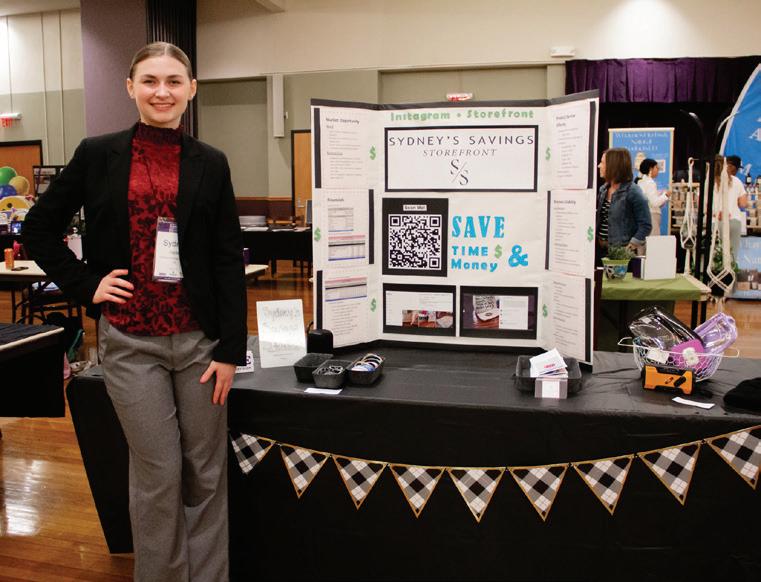
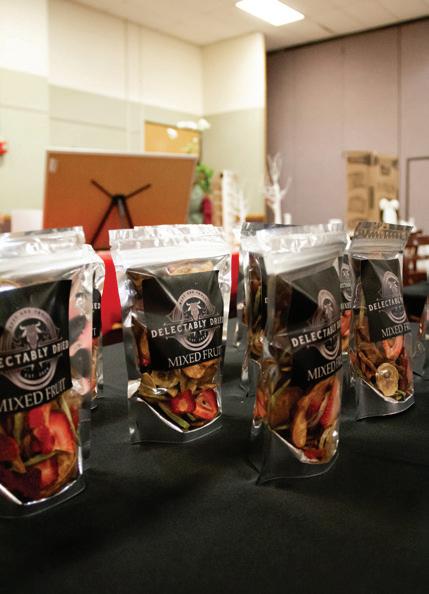
Communities host locally-organized events (at the county, city, school, or classroom level) that bring students together for the purpose of a hands-on entrepreneurship experience. Typically, local entrepreneurship competitions involve students preparing a written business plan or executive summary, a “tradeshow booth” (similar to a science fair tabletop display), and a pitch or presentation. Then, on a given day, students compete against one another in teams or individually. Students’ work is judged by local entrepreneurs, resource partners, mentors, or other adults. Most successful events are organized through a teacher or school as a classroom project or extracurricular activity, but other groups can be successful at organizing an event as well.
Important Elements
• A written executive summary
• Access to resources, like a teacher or other groups like K-State Extension and 4-H
• A formal presentation, and may also include an additional oral component of some sort - pitch, interview and/or a tradeshow
• Competitive process by which students’ work is evaluated/scored
• Judges - usually members of the community
• Awards or prizes (whether it’s a 1st place certificate or a cash award; token for participation)
Other
• Invite other students or the community at large to visit the tradeshow
• Invite an entrepreneurship guest speaker to talk to students and/or others
• Seek business owners to mentor students
• Invite businesses to sponsor the event
Host Expectations
• Decide the format and other parameters of the event (who, when, where, etc.)
• Find a mentor to help and decide how much education you can do on the topic of entrepreneurship
• Create or find applicable forms (judging forms, business plan outline, etc.)
• Decide your budget and how to fund the event (Will there be lunch? Awards? Other expenses?)
• Decide how to get students to participate
• Promote the event! Invite judges, students, businesses, and others to attend
• Coordinate the event (print documents, organize schedule, find a speaker, etc.)
• Run the event on the day of (give instructions, keep schedule on time, tally scores, give awards, etc.)
• Send thank you notes and write articles for newsletters, newspapers, etc.
• Follow instructions from Network Kansas to coordinate participation at the state level
YEC TIMELINE
16+ WEEKS BEFORE
� Determine if the Community wants to host a local entrepreneurship competition, set budget & determine how to fund the competition
� Decide who will be involved in the planning process & identify community partnership
� Meet with school superintendent, and/or teachers and others
� Determine location, time frame, format, eligibility, and begin discussing logistics
� Decide if/how education will be a part of the process for students
12-16 WEEKS BEFORE
� Resource partners and local entrepreneurs speak at school or business class
� School assembly to announce
� Contact previous year’s winners for progress report, assess interest
� Contact appropriate teachers &/or school administrators
� Create sponsorship letter
8-12 WEEKS BEFORE
� Create promotional fliers and distribute applications to school/teachers/office/ etc.
� Identify a keynote speaker for event, if desired
� Mail or e-mail invitations to businesses, resource partners, community members
� Approach potential sponsors
4-8 WEEKS BEFORE
� Find Judges
� Create or update judge instructions
� Create press release & send to local media
0-4 WEEKS BEFORE
� Submit advertisement or article to newspaper
� Request State Championship information from Network Kansas
� Follow-up on invitations/attendance
� Executive Summaries due
� Organize students & plan schedule for the day
� Send follow-up information to speaker with itinerary
� Mail copies of executive summary to judges in advance, if desired
� Provide instructions to judges in advance, if desired
� Print certificates
� Create & print any necessary paper items for the competition table tents, signs, etc.
� Post fliers around community
� Contact school or venue about itinerary
� Order speaker’s and judges thank you gifts, if desired
� Arrange refreshments
0-2 WEEKS AFTER
� Gather feedback from participants
� Process checks for winners, if desired
� Article for newsletters, newspaper, etc.
� Create thank you cards for judges, speaker, school board, mentors, etc.
FAQs
What is the Youth Entrepreneurship Challenge?
Communities have the opportunity to host local-level entrepreneurship competitions and submit their event to be part of the “Youth Entrepreneurship Challenge Series” culminating in an annual state championship. Local entrepreneurship competitions must meet certain guidelines in order to qualify as part of the Series and for eCommunities to be eligible to use grant funds to pay for part or all of the competition.
What are the expected outcomes of this competition?
This competition is meant to expose students to entrepreneurship and build their interest in it, leading students to see building their own business as a viable career path and a way to better their community.
Why/How does this program fit my community’s strategic focus?
Exposing youth to entrepreneurship and helping them develop that mindset can have a deep impact on a community’s future. If only one student is inspired enough to open their own business now or in the future, that’s one more independent business in your community. The more local businesses that open, the stronger the local economy and entrepreneurial ecosystem will become.
How does this program apply to students in middle school, high school?
This competition gives Kansas students experience in the process of making a business proposal. Exposing young people to entrepreneurship helps them develop an entrepreneurial mindset and allows them to explore entrepreneurship as a viable career option. Students must research, write and submit an Executive Summary. They may also gain experience pitching their idea and answering questions in front of a panel of judges that consists of entrepreneurs, bankers, and investment experts. Participating in this event provides students experience with business planning and public speaking, developing confidence, poise, organizational skills and valuable knowledge for their future.
What are the requirements to host a competition?
The physical location of the competition must be in Kansas and the students participating in the local competition must reside in Kansas. The competition must include students from at least one of the following grades (or equivalent): 9th, 10th, 11th, or 12th. The competition must include a written Executive Summary following the provided “Executive Summary Guidelines”, that is scored. The competition must include a 4-minute presentation and may include one or more of the following in-person components: tradeshow, oral interview, or elevator pitch.
After the eCommunity Leadership team and/or Financial Review Board approve this program for their community, the point person begins to organize the event. This will include picking a time and date, venue, deciding whether or not to cater the event, and recruiting judges and other event staff.
For other organizations outside the eCommunity network, after deciding to host a local entrepreneurship competition, fill out the sanction application, wait for approval, and then begin to organize the event. This will include picking a time and date, venue, deciding whether or not to cater the event, and recruiting judges and other event staff.
What does it cost to host a competition?
For the community, it depends on the cost of any educational aides, total prize money, refreshments, marketing, and the facilities that you choose for the event. A typical community commitment may range between $1,000-5,000. Each community should set their own budget.
Who coordinates the competition?
If the event is being coordinated by a Network Kansas eCommunity, at least one member of the local eCommunity Leadership Team and/or Financial Review Board must help organize and/or host the entrepreneurship competition. This person will work with guidance from their region’s assigned Network Kansas Community Entrepreneurship Professional to set up the event. Often school representatives or other community members are involved in coordinating the competition, in both eCommunities and non eCommunities.
For non eCommunity events, a designated competition host should be identified to lead the competition planning and serve as the liaison with Network Kansas. For events that are not part of an eCommunity, the competition host must agree to pay a sanction fee of $1,500 to Network Kansas if the event is awarded a sanction. If an eCommunity organizes the event, the sanction fee of $1,500 is waived for the 2024-2025 YEC Series as a benefit of the eCommunity Partnership.
Who would benefit from competing in the YEC Series?
Any student, especially those interested in entrepreneurship or business, would benefit from participation. Going through the steps of creating a business proposal can help develop their entrepreneurial mindset and set them on the path of one day creating their own business. In addition, students will develop creativity, problem solving, business planning, research skills, organization, presentation skills, and confidence.
Can eCommunities use Network Kansas funds to pay for hosting a competition?
Grant funds will be available to eCommunities on a limited and first-come, first-served basis (actual expenses only). Another way to fund the course is through other grant funding and business sponsorships. Contact your Network Kansas Community Entrepreneurship Professional for assistance and additional information about stipulations for using grant funds to pay for this program.
Are prizes available to participants?
Prizes are not mandatory. Competitions offering prizes typically do not exceed a total of $3,500 in prizes, and prize structures typically do not exceed $1,500 for first place, $1,250 for second place, and $1,000 for third place. Other examples of prizes may be “People’s Choice Award” or “Banker’s Choice Award”, etc.
When can this program be offered in my community?
Typically, a YEC Series event requires 12-16+ weeks of advanced planning. 2025-2026 local YEC events must occur between August 1, 2025 and March 24, 2026. Contact your Network Kansas Community Entrepreneurship Professional for assistance. If you are not in an eCommunity, email: bhenry@networkkansas.com.
What are my next steps if I am interested in offering this in my community?
eCommunities will need to contact their Network Kansas Community Entrepreneurship Professional for more information and guidance. If you are not an eCommunity, contact Bailee Henry, Manager, eCommunity Programs, at bhenry@networkkansas.com.
If you are not yet an eCommunity, and are interested in learning more about how to become one, visit networkkansas.com/services/ecommunity-partnership.
Involving Schools Best Practices: Involving Schools
This guide for eCommunity partners offers ways your team can connect local entrepreneurship resources to schools and teachers involved in the YEC Series. These resources enrich student learning, support teachers, and help students build stronger ties to the community.
BP #1: Pitching to Teachers
Find a teacher to be your champion - doesn’t have to be a business teacher. Connect teachers with other teachers that have done this in the past. If your eCommunity involves teachers in the YEC Series, you can tap into a powerful ally to educate students, increase participation, and help with accountability.
Provide teachers with educational materials and connect them with resource partners or mentors.
Volunteer to teach a session or find a guest speaker for the teacher.
Inform the teachers they don’t have to change their curriculum but can instead incorporate this into their existing curriculum.
Subjects YEC Teachers Have Taught
BP #2: Find Your Champion
Business teachers that focus on subjects such as entrepreneurship, marketing, etc., may relate more closely to this project, but they aren’t the only potential entrepreneurship champions!
Each of the subjects above can relate to components of a YEC Series competition. For example, a math teacher may be able to offer significant help with financials. An English teacher could provide expertise on writing the executive summary. Computers, career, technical, family and consumer science, and agriculture teach a wide array of subjects in their classrooms and have found creative applications for entrepreneurship in the past.
BP #3: Assisting in the
Classroom
Recruit mentors and schedule times for them to work with students.
Visit the classroom at scheduled times to present on certain subjects (ex: executive summary, financials, etc.).
Provide executive summary and tradeshow examples, written and video resources to the elevator pitch and formal presentation. Curriculum for teaching entrepreneurship may also be used (found in VentureDash).
Don’t be afraid to reach out to others for help and advice— whether that be Network Kansas, other communities or teachers. Remember, it’s okay to start small and/or stay small. There’s no pressure!
Use the below resources to help teachers instill an entrepreneurial mindset in students by:
• Recruiting mentors and scheduling time to work with the students
• Provide mock presentation settings and feedback for students before the competition
• Connect students with entrepreneurs, providing experimental learning and role models
• Survey business owners to understand workforce challenges
• Increase awareness of opportunities, needs, and key industries.
Mentor Resources
Local Entrepreneurs
Local Funding Options
Professional Services
KSRE & 4H
Community Leaders
Elected Officials
BP #4: Identifying Key Resources for Schools
SCORE & Other Senior Citizens
eCommunity Leadership Team
Civil Servants
Gain access to funding programs and board certified programs through the eCommunity
Support non-business teachers who are engaged in entrepreneurship
Identify champions of entrepreneurship and help educators understand how to integrate it into the curriculum
Connect with near-by communities in the county/region
Visit the classroom at scheduled times to present on certain subjects (ex: executive summary, financials, etc.)
Pair champions and mentors with students in their desired industry.
Provide clear, consistent communication between educators and partners
BP #5: Benefiting Students
Hands-on “real world” experience and exposure to new perspectives/experiences A.
Enhanced self-esteem and self-confidence
Improved interpersonal and communication skills
F.
Advice on how to grow their business D.
I. G.
A strong, positive and expanding support network established through mentorship
New opportunities may arise— jobs or otherwise— in the future
Encourages appropriate goal setting
Clear picture of what costs to expect; more realistic financial plans
Increased understanding of what it takes to run a business in their desired industry
Other Resources
Chamber Events
Job Fairs
Empty Building Tours
Local Business Events
Local Maker Spaces, Fab Labs, Co-working Spaces
Small Business Development Centers (SBDC)
TIP:
To foster these connections between students and mentors, facilitate a meeting or get permission for students to reach out to the mentor directly. Make sure the teacher is on board and select of diverse resources with a variety of expertise.
Partners
BP #1: Choosing a Location and Time
A. Consider the school calendar first and foremost. Choose a time of the year that is not overloaded with other extracurricular activities, such as sporting events.
Most successful events take place during the school week and during school hours. Attendance from the public will likely be lower on evenings or weekends.
C.
BP
Choose a location that is easy for the public to access. For example, make parking easy to find and free. Hosting the event at the school is probably the lowest-cost option.
If the event is not held at school, make sure it is in a place well known to community members so the public can access it easily.
What will the makeup of the attendees be? Do you want to influence/inspire community members, educators, parents, other students? This can help determine the location and time of day. The majority of communities have their events onsite at schools utilizing the gymnasiums or auditoriums. Only a couple have used community event centers.
#2: Working with Teachers
A. Request time to present about YEC and the benefits to all the students and faculty/staff (or at least High School/Middle School teachers). Pitch the YEC Series in a way that is easy to understand and appealing.
Find a teacher to be your champion— doesn’t have to be a business teacher. Connect teachers with other teachers that have done this in the past.
Provide teachers with educational materials and connect them with resource partners or mentors.
Volunteer to teach a session or find a guest speaker for the teacher.
Make sure the teachers know star students to push forward and encourage to compete.
Develop a good relationship with school administration— this will trickle down.
Inform the teachers they don’t have to change their curriculum but can instead incorporate this into their existing curriculum.
Don’t discourage teacher’s ideas. Let the teachers have a say in the project to create buy-in. For example, allow them to help make decisions on the guest speaker, date/time, and/or what the event looks like.
Be a support system. Offer to come into the classroom as often as needed to assist the kids and be accessible for whenever the teacher has questions. Follow up every couple of weeks to check in on progress.
Start talking to schools as early as possible and keep teachers in the loop. Communicate!
BP #3: Connecting Students with Resource Partners
A. Get information to both parties as soon as possible.
Guide students in critical thinking— find an idea that piques their interest but also has a need for a solution. Let them know their ideas are valid. Gently push students out of their comfort zones.
Help students understand the importance of entrepreneurship in the real world. Specifically in their community.
Help students understand the resources available in and outside of school.
Offer entrepreneurs the chance to take part in this event for exposure to their business and/or to give back to the community. Connect the students with these entrepreneurs for mentoring and advice. Judges can also serve as mentors.
Think about having a “Counselor’s Corner” / Maker Space type of set up at the event and celebrate with students once its concluded.
Organize a day where resource partners are available to students (in-person or virtually).
Ask leadership team members or business leaders to volunteer (in-person or virtually) to review some draft executive summaries, connecting the students with the resources.
Have students give their presentations to the Financial Review Board for practice.
Work with school to plan a field trip to explore local businesses, empty businesses, visit with the local appraiser or treasurer’s office. This will help demonstrate the costs of owning a building, availability of retail space, etc.,.
BP #4: Advertising to the Public
A. Hit the public in three ways: verbally, in writing (letter), or an advertisement/flier. Choose whichever methods work best for your community. Fliers, posters, table tents, banners/floor banners, etc., can really grab people’s attention. Make sure they are placed in visible places.
Place a newspaper ad in your local paper or radio ad on your local station. B.
Make sure each student is supplied with a flier or brochure to pique their interest.
Consider a direct mailer to each person you want to invite.
Create custom invitations for families of contestants and families of other students.
Choose organizations who will help spread the word and increase excitement. The school board, the Rotary, Chamber or Lions Club, etc., are good examples. Presenting to these groups is important to increasing community awareness. Local resource partners such as K-State Extension, KSBDC, etc., are also able to help spread the word.
Post about the event on social media— Facebook, X, LinkedIn, TikTok. Create a hashtag and boost the post for more visibility.
H.
Talk to key members of the community to attend and maybe even act as judge for the event!
Teachers
BP #1: Components of a YEC Event
3-page written executive summary (required)
B.
Formal presentation (required, but can be done as you’d like - for example, as part of the tradeshow) A. C.
D.
Tradeshow display (optional)
Elevator pitch (optional)
BP #2: Fitting the YEC Series into the Curriculum
The YEC Series competition could be a required class project assigned a grade. Many teachers have had success incorporating lessons students are already going to learn into YEC preparation. For example, if students will already learn about business, use the unit on business plans to write executive summaries.
There are creative ways to fit non-business subjects into YEC. For example, a math teacher could use financials to fit this into their curriculum.
Remember that you can utilize the help of the eCommunity partner. They can provide assistance such as:
� Coming to your classroom to teach sessions - for example, financials, etc.
� Finding guest speakers who can speak to your class on their topic of expertise
� Recruiting mentors to work one-on-one with students
� Organizing field trips like visits to local businesses, empty building tours, etc.
� Having students do a dry-run of presentations with leadership team and/or financial review board members
Use existing programs to recruit and prepare students for your YEC Series competition such as YE, FFA, DECA, FBLA, 4-H, JAG-K or other similar programs.
BP #3: Additional Resources
B. A.
� An online resource provided by Network Kansas, designed as a one-stop-shop
� Free examples, guidelines, rubrics, videos, articles, tutorials, templates, and more
VentureDash The eCommunity partner
� Takes responsibility for logistics and organization of the actual competition. This typically includes prize money, judges, sponsors, food, etc.
� The work that happens in your classroom leads up to the YEC Series competition in your community
BP #4: Working with the Event Host
A.
B.
C.
D.
E.
F. G.
Invite them to the classroom to provide additional guidance for students.
Follow up every couple of weeks to report progress.
Help students understand that the local point person can provide them with business resources in the real world.
Request resources, request guest speakers, schedule time for them to come and present to students about prizes available or resources available.
Ask point person or leadership team, local entrepreneurs, bankers, etc. to volunteer as mentors, come in and hear practice presentations, or review draft executive summaries.
Organize a field trip into the community, such as an empty building tour or visit to a local maker space.
Help promote to students that might be struggling.
BP #5: Getting Started
After your local eCommunity point person has approached you to become part of this program, you may be wondering what the best next steps are. Here is a list for you to get started:
A.
B.
C.
D.
E. F.
Obtain local event information from your local event host. If they have not already decided this information, then you may work with them to help decide. Likely a host will seek school input when deciding on this anyway, to ensure that other extracurricular activities do not interfere with the date and time chosen.
Decide how to implement this in your classroom. This includes what lessons you will teach on competition materials, (executive summary, formal presentation, etc.), how often, and on what specific days.
Help students access outside resources such as local business owners, the eCommunity point person, etc. Connecting students with mentors gives them inspiration, extra guidance, and an idea of how entrepreneurship impacts the real world.
Look through the ideas and best practices in this document and in the Help Center of VentureDash for inspiration about how to get optimum participation in this competition.
Look over students’ entries and provide coaching and guidance leading up to the competition.
Help students register for the event when the time comes.
Best Practices: Judges
Judges
BP #1: Providing Constructive Criticism
Please keep in mind that these are middle and high school students, not adults. Provide criticism that is gentle and constructive rather than harsh and discouraging. Here are some tips:
Focus on the situation — Suggest actions to improve their business, not character traits.
Be specific — Whatever you suggest, be sure to be as specific as possible.
Don’t make assumptions — If you’re not sure where a student is coming from, ask so you can understand their motivation and reasoning.
Suggest how to improve — Make sure to suggest specific actions to take.
BP #2: Expectations and Reminders
Students participating in the YEC Series rely on you as part of the learning process. Below are some expectations and reminders for you as a judge:
Pay careful attention to each business you judge. Avoid distractions such as texts, phone calls, etc.
Make your feedback quick, concise and constructive.
Engage the students in conversation.
Provide written feedback about each business you observe. Students can keep this for future reference instead of relying on their memory.
Be patient with students who are shy and nervous.
BP #3:
Sample Questions to Ask the Presenters
We recommend that each judge ask the presenter(s) at least one question. This will help the student get as much as they can out of this learning experience. Here are some examples of different types of questions to ask:
A.
Background
What talents do you possess that have helped you in your business?
What are the most/least important characteristics a person needs to start a business?
Business structure
What is the business entity type?
Who will help you run the business? What aspects of the business will they manage? When did you become interested in entrepreneurship?
C. Organization/Planning
What is the problem you are trying to solve? How did you come up with your idea? What is the first step you will take to implement your idea? How will you make the business grow in the future?
D. Marketing
How do you plan to market your product or service to potential customers? What distinguishes your company from your competition?
Who will buy your product or service? How will you reach those people?
E. Financials
How much money will you need to start? Are you seeking a loan?
What is your projected first year revenue? How did you come to that conclusion? How much does it cost to make the product or provide the service? How much profit do you expect to make?
Marketing
BP #1: Identify
Types of Attendees
A. Parents and family of the participants
B. D. C.
Other teachers, parents, and students who haven’t yet participated in the YEC Series Entrepreneurs, bankers, local leaders
eCommunity leadership team and/or financial review board
Recruit key community members as judges
BP #2: Advertising Methods
A. C. D.
B. E.
F.
G.
Social media. Students tend to use Instagram, Snapchat, TikTok, and/or X while parents tend to use Facebook.
Face-to-face visits. Visit anyone you’re trying to recruit in person and personally invite them to attend and observe. Address any questions they may have.
Email distribution list. Consider sending emails to the student body, faculty, and/or parents. You could also use other community email lists, such as through the Chamber of Commerce, to solicit business/mentor participation.
Fliers. Post in schools, banks, and businesses around the community. You may even mail them out directly.
Educational groups such as home school groups, Youth Entrepreneurs (YE), 4-H, FFA, DECA, FBLA, FCCLA, etc.
Library and other civic organizations such as Lions Club, Rotary Club, Kiwanis, etc..
Radio and newspaper. Consider having students record radio ads talking about their businesses or run an ad in your local newspaper.
BP #3: Promoting on the Day of the Event
A.
Hold an all-school assembly to showcase all winners.
Give as much recognition as possible for a job well done. Positive reinforcement for students regardless of placement to emphasize problem solving skills, confidence, poise, and other qualities that have been developed.
Awards for various purposes such as students that stepped outside their comfort zone with YEC, even though it was difficult for them.
B.
Recognize winners and participants on social media.
Canva Template: t.ly/fasTj
FOR IMMEDIATE RELEASE [Month, Day, Year]
Contact:
Phone:
Email:
[CITY/COUNTY] TO HOST STUDENT ENTREPRENEURSHIP COMPETITION THIS [MONTH]
[City], KS - [City/county], in association with the Network Kansas eCommunity Partnership, announces the [name of local competition] will take place in [city] this [month], as part of the 2025-2026 Youth Entrepreneurship Challenge (YEC) series. The competition will be held from [time] on [weekday, date] at [venue]. The goal of the competition is to expose Kansas middle school and high school students to entrepreneurship.
[Note: Point person should insert a “Quote” right here, either from them or from the facilitator.]
[City/County] is one of many communities across Kansas to host a locally organized event designed to give students a hands-on entrepreneurship experience. The competition will consist of students preparing a written business plan or executive summary, a “tradeshow” booth, and an elevator pitch or presentation. The students will be competing against each other for [$amount] in prize money. The students’ work will be judged by local entrepreneurs, public sector partners, teachers, or other adults. This is the [1st] time [City/ County] has brought this competition to their community.
“The YEC Series allows students to gain hands-on entrepreneurial experience and begin to deepen their connections to the local business community. Students are empowered through the process and begin to see entrepreneurship as a viable career option. The exponential growth of the YEC Series has reiterated that there is a hunger for youth entrepreneurship in Kansas,” says Bailee Henry, Manager, eCommunity Programming.
During the 2024-2025 season, 1,163 students participated in 63 locally hosted entrepreneurship competitions as part of the YEC series. The 2025-2026 academic year marks the thirteenth annual YEC Series coordinated by Network Kansas and the eCommunity Partnership.
The annual YEC series culminates in a statewide championship, where the top students from each local competition face off against each other for prize money and other honors. The 2026 YEC State Championship will be held on April 29th at Kansas State University. This competition is put on in partnership with Network Kansas, K-State Extension, and K-State Center for the Advancement of Entrepreneurship.
For more information, contact [Point Person], [Organization], at [phone number] or [email address]
.
FOR IMMEDIATE RELEASE [Month, Day, Year]
Contact: [Event Host, Title, Organization]
Phone:
Email:
[NAME OF LOCAL COMPETITION] ANNOUNCES RESULTS
[City], KS - [County/Partner Organization], in association with the Network Kansas eCommunity Partnership, hosted the first annual [name of local entrepreneurship fair] on [weekday], [date] at [venue], [City], KS. [Number] individuals and teams representing [names of schools] presented their business concepts with [a written business plan, a formal presentation to judges, and/or a tabletop display]
The winning concepts were:
1st Prize [$amount]: [Student name(s) and grade(s), business name]
2nd Prize [$amount]: [Student name(s) and grade(s), business name]
3rd Prize [$amount]: [Student name(s) and grade(s), business name]
4th Prize [$amount]: [Student name(s) and grade(s), business name]
5th Prize [$amount]: [Student name(s) and grade(s), business name]
Winning students received just over [total $ amount] in prize money courtesy of the following sponsors [Sponsor names/donations]
[“Quote about the entrepreneurship competition and why we think it’s important for students to learn about entrepreneurship],” said [event host], [host’s job title].
In addition to prizes and recognition, the first-place finisher has the opportunity to compete in the YEC State Championship at Kansas State University in Manhattan. This event will include the top young entrepreneurs from schools across the state and is hosted in partnership with Network Kansas, K-State Extension, and K-State Center for the Advancement of Entrepreneurship.
The goal of the competition is to expose Kansas middle school and high school students to entrepreneurship and give them hands-on experience. The students’ work was judged by local entrepreneurs, public sector partners, teachers, or other adults. This is the [1st] time [City/County] has brought this competition to their
For more information, contact [Name of event host], [Organization], at [phone number] or [email address]. Visit networkkansas.com to learn more about Network Kansas and the eCommunity Partnership.
Executive Summary
Format
� No longer than three pages
� At least 10-point font
� At least .75” margins on all four sides
� Must be submitted in PDF format
Judging Criteria for Executive Summaries and Presentations
Market Opportunity
Sizable market need presented, with the ability and plan to capture it.
Business Model
Company has a viable plan to grow a profitable business.
C.
D.
Management Capability
Founder / team demonstrates ability to effectively grow company.
Product / Service Offering
Customer focused solution with a clear value proposition.
Open Review
� Up to 15 teams may qualify for a spot in the YEC State Championship through the selection in the Executive Summary open review. The written Executive Summary must be submitted by March 24, 2026 and meet the Executive Summary format requirements.
Additional Resource
� Small Business Administration (SBA) Executive Summary Guide: www.sba.gov/blog/write-executive-summary
Business:
Judge Name:
Please rate each team on a scale from 1-5 on each of the criteria below. 1 being “poor”, 3 being “sufficient”, and 5 being “excellent”. Feel free to leave additional comments.
CATEGORY
Market Opportunity
Sizable market need presented, with the ability & plan to capture it
Business Model Company has a viable plan to grow a profitable business
Management Capability
Founder/team demonstrates the ability to effectively grow the business
Product / Service Offering
Customer focused solution with a clear value proposition
GRAND TOTAL
SAMPLE
Comments and Feedback to Share with the Team:
Elevator Pitch
Students
The Elevator Pitch competition is a short pitch about your idea for a product or business. Your job is to excite the judges by answering the following questions:
What is your idea?
What is the need, problem, or opportunity that your product or business addresses?
Who do you assume to be your target customers?
Where or how did the idea come to you?
Why is your product or business different or better than the competition?
What are your business goals?
Competition Day Process
Students will receive their Elevator Pitch “slot” (the time at which they should report for their elevator pitch) when they check in on the morning of the competition.
Students get up to 1 minute to enter the room and introduce themselves. No handouts, no PowerPoint, and no computer presentation permitted.
Student gets 4 minutes to make his or her pitch. Judges will be permitted to ask questions for 4 minutes. Allow time between pitches for judges to enter scores and leave comments for the students.
Judging your Business
The rubric created by the YEC planning team.
Answers to the six questions presented in student instructions.
Quality of the presentation performance: appearance, confidence, posture, speaking ability, captures attention, is within time limits, etc.
The compelling case you have made that this product or business has merit.
Business:
Judge Name:
Please rate each team on a scale from 1-5 on each of the criteria below. 1 being “poor”, 3 being “sufficient”, and 5 being “excellent”. Feel free to leave additional comments.
CATEGORY SCORE
Performance
Appearance, confidence, posture, speaks slowly
Presentation
clear, concise, understandable
Expectations
States goals of business, captures attention, persuasive, realistic
Quality
Includes all necessary points, makes plan clear, appropriate time length
GRAND TOTAL
SAMPLE
Comments/Feedback
to Share with the Team:
FINAL SCORE
Tradeshow
Students
The tradeshow is a 90-minute event where you will have the opportunity to pitch your business or product to a panel of judges. The judges will visit each student or team to evaluate your business idea, display, and your ability to discuss your business idea and answer questions.
Competition Day Process
At 8:30 AM, students will be allowed to set up their tradeshow booths. Booths must be finished and students ready to begin answering questions by 9:30 AM.
Judges will have 4-6 minutes to listen to student share the highlights of their business plan and business or product idea, including time to provide samples or handouts, and ask questions
Judges will visit students for 90-minutes. If you are not at your booth when the judges visit, you will be disqualified (unless you are presenting your elevator pitch at that time).
Non-participating students and community members might also be invited to the tradeshow, and you should be at your booth, ready to network and share with all those in attendance
� What is it, who occupies key roles (management/operations), what is your experience, what legal structure will you use, etc.
• What product or service will you provide, where will your business exist, when will it happen, what funds will you need, etc.
� Market research including target market, how will you reach your market, potential growth, who is your competition, what promotion and advertising will you use, how did you choose your pricing strategy, etc.
� Project financial requirements, cash flow, projected income, etc.
� Poise, confidence, comprehension, ability to answer questions, proper attire, captures attention, timing, etc.
� Creative, neat, easy-to-understand, relates to your business, engages judges, etc.
Business:
Please rate each team on a scale from 1-5 on each of the criteria below. 1 being “poor”, 3 being “sufficient”, and 5 being “excellent”.
SAMPLE
CATEGORY
Business Overview
What is it, who occupies key roles, what is your experience, legal structure, etc.
Business Description
What product or service will you provide, where will your business exist, when will it happen, what funds will you need, etc.
Marketing Market research including target market, potential growth, competition, promotion and advertising, pricing strategy
Presentation
Poise, confidence, comprehension, ability to answer questions, proper attire for a business presentation, captures attention, within time limits, etc.
Booth Display
Creative, neat, easy-tounderstand, relates to your business, engages judges, etc.
GRAND TOTAL
SCORE
FINAL SCORE
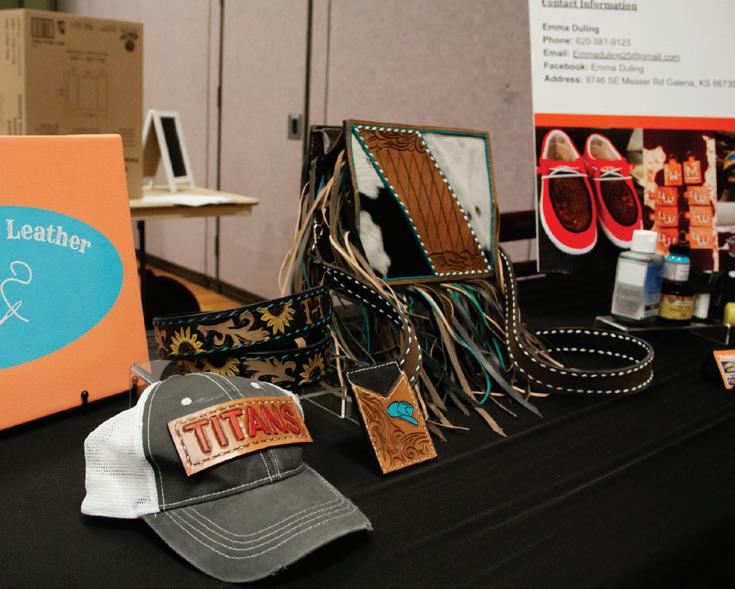
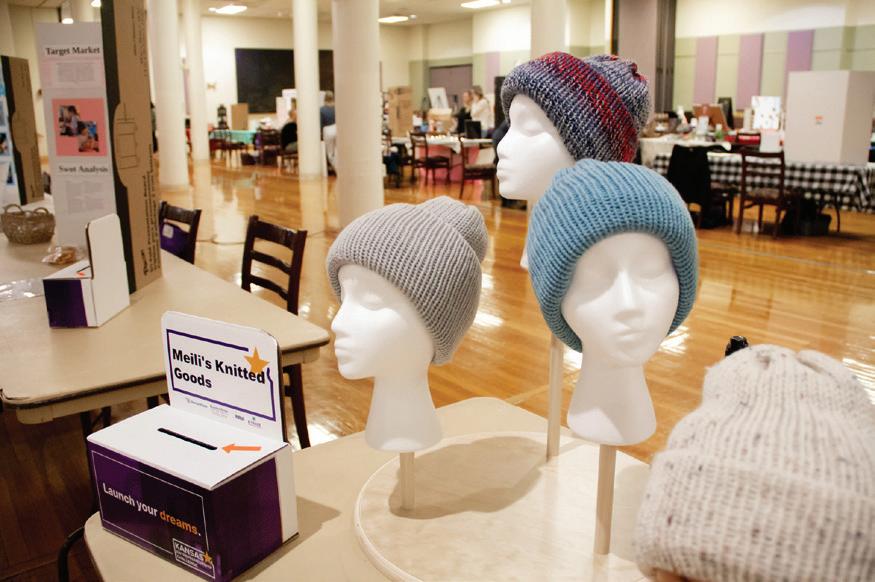
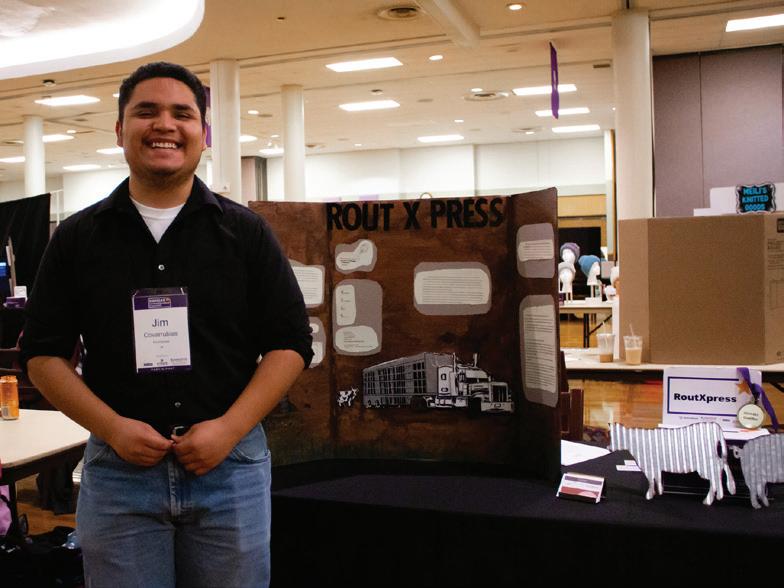
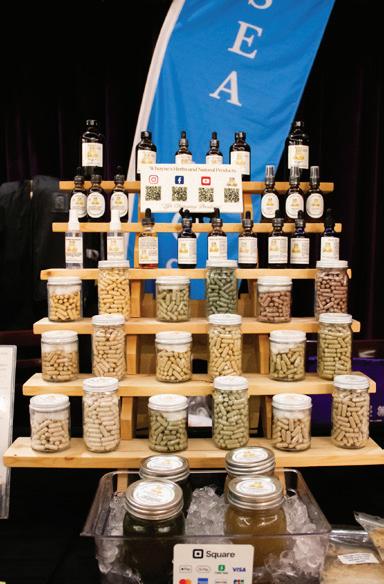
Tradeshow Booths
Formal Presentation
Competition Day Process (example)
The business (student/s) gets a maximum of 4 minutes for the presentation. Timing begins when the presenter starts speaking.
Presenter(s) must give the presentation live and in person, or virtually if needed.
There is no minimum or maximum to the number of team members who may speak.
Immediately following the student’s presentation, judges will be allowed 5 minutes to ask questions and add comments before the next presentation begins.
Audience members are not permitted to ask questions or make comments.
� What is it, who occupies key roles (management/operations), what is your experience, what legal structure will you use, etc.
• What product or service will you provide, where will your business exist, when will it happen, what funds will you need, etc.
� Market research including target market, how will you reach your market, potential growth, who is your competition, what promotion and advertising will you use, how did you choose your pricing strategy, etc.
� Project financial requirements, cash flow, projected income, etc.
� Poise, confidence, comprehension, ability to answer questions, proper attire for a business presentation, captures attention, is within time limits, etc.
� Is it an idea that, based on the judges’ experience, makes them interested in investing in this business?
Business:
Please rate each team on a scale from 1-5 on each of the criteria below. 1 being “poor”, 3 being “sufficient”, and 5 being “excellent”.
CATEGORY
Business Overview
What is it, who occupies key roles (management/operations), what is your experience, legal structure, etc.
What product/service is provided, where will the business exist, what funds are needed
Marketing
Market research including target market, potential growth, competition, promotion and advertising, pricing strategy
Presentation
Poise, confidence, comprehension, ability to answer questions, proper attire for a business presentation, captures attention, within time limits, etc.
Booth Display
Creative, neat, easy-tounderstand, relates to your business, engages judges, etc.
Investable
How likely would you be to invest in this business?
SCORE
SAMPLE
GRAND TOTAL
FINAL SCORE
W9 How To
In order to properly complete the W9 form, respond to the following question and proceed with the step-by-step instructions.* Access the W9 form with the Internal Revenue Service (IRS) here: www.irs.gov/pub/irs-pdf/fw9.pdf
Is your student business registered with the Secretary of State and the IRS? (Has a Federal EIN been obtained for the business?)
USE YOUR BUSINESS NAME ON #1
The business name must match the name that was used when the FEIN was obtained.
CHECK THE BOX THAT APPLIES ON #3
Select the entity type you chose when you applied for the business FEIN.
FILL IN YOUR ADDRESS ON #5 AND #6
Mailing address is needed.
FILL IN FEDERAL EIN UNDER PART 1
Enter your company Federal Employer Identification Number in the first set of boxes under part 1.
SIGN AND DATE THE FORM
USE YOUR PERSONAL LEGAL NAME ON #1
You can add your business name in box #2 if you so choose.
CHECK THE FIRST BOX ON #3
Individual/sole proprietor/single member LLC.
FILL IN YOUR ADDRESS ON #5 AND #6
Mailing address is needed.
FILL IN SSN UNDER PART 1
Enter your personal social security number.
SIGN AND DATE THE FORM
* Disclaimer: This document is meant to be used as a suggestive guide and is not intended to be tax advice. Please consult with your tax advisor regarding your particular situation.