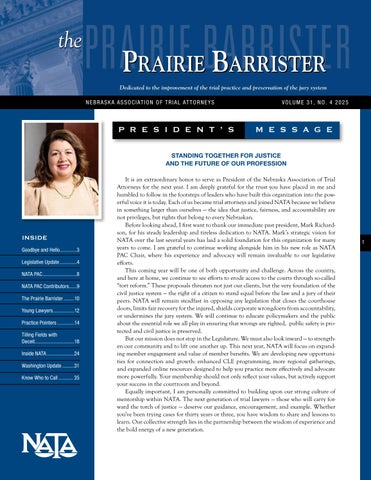
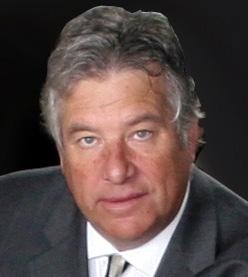
STANDING TOGETHER FOR JUSTICE AND THE FUTURE OF OUR PROFESSION
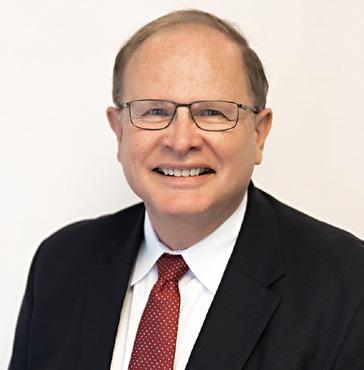
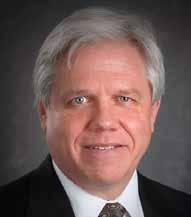
It is an extraordinary honor to serve as President of the Nebraska Association of Trial Attorneys for the next year. I am deeply grateful for the trust you have placed in me and humbled to follow in the footsteps of leaders who have built this organization into the powerful voice it is today. Each of us became trial attorneys and joined NATA because we believe in something larger than ourselves — the idea that justice, fairness, and accountability are not privileges, but rights that belong to every Nebraskan.
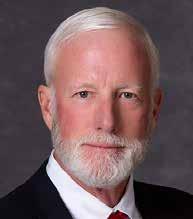
Before looking ahead, I first want to thank our immediate past president, Mark Richardson, for his steady leadership and tireless dedication to NATA. Mark’s strategic vision for NATA over the last several years has laid a solid foundation for this organization for many years to come. I am grateful to continue working alongside him in his new role as NATA PAC Chair, where his experience and advocacy will remain invaluable to our legislative efforts.
This coming year will be one of both opportunity and challenge. Across the country, and here at home, we continue to see efforts to erode access to the courts through so-called “tort reform.” These proposals threaten not just our clients, but the very foundation of the civil justice system — the right of a citizen to stand equal before the law and a jury of their peers. NATA will remain steadfast in opposing any legislation that closes the courthouse doors, limits fair recovery for the injured, shields corporate wrongdoers from accountability, or undermines the jury system. We will continue to educate policymakers and the public about the essential role we all play in ensuring that wrongs are righted, public safety is protected and civil justice is preserved.
But our mission does not stop in the Legislature. We must also look inward — to strengthen our community and to lift one another up. This next year, NATA will focus on expanding member engagement and value of member benefits. We are developing new opportunities for connection and growth: enhanced CLE programming, more regional gatherings, and expanded online resources designed to help you practice more effectively and advocate more powerfully. Your membership should not only reflect your values, but actively support your success in the courtroom and beyond.
Equally important, I am personally committed to building upon our strong culture of mentorship within NATA. The next generation of trial lawyers — those who will carry forward the torch of justice — deserve our guidance, encouragement, and example. Whether you’ve been trying cases for thirty years or three, you have wisdom to share and lessons to learn. Our collective strength lies in the partnership between the wisdom of experience and the bold energy of a new generation.
2
PRESIDENT
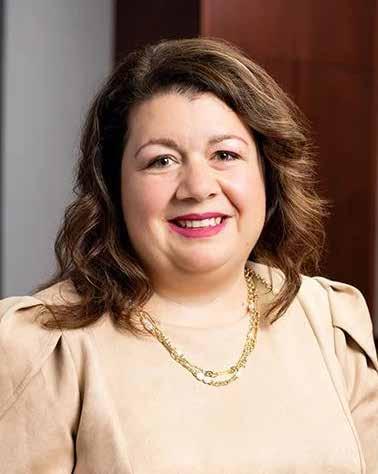
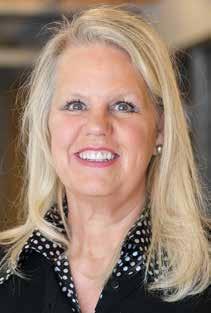
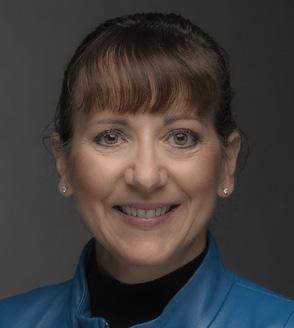
Jennifer Turco Meyer, Omaha
PRESIDENT ELECT
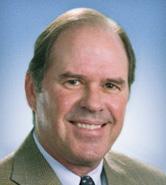
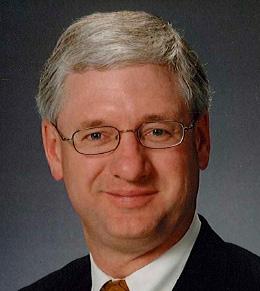
Elizabeth Govaerts, Lincoln
SECRETARY
Cameron Guenzel, Lincoln
TREASURER & CONTINUING EDUCATION CHAIR
Danny Leavitt, Omaha
IMMEDIATE PAST PRESIDENT
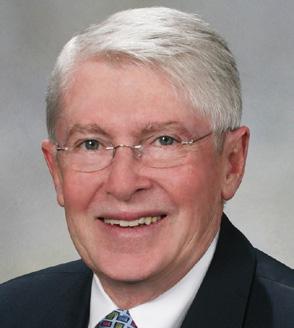
Mark Richardson, Lincoln
Board Oversight Chair
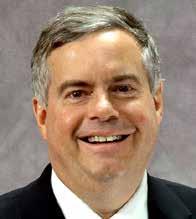
Peter C. Wegman, Lincoln
NATA PAC Chair
Mark Richardson, Lincoln
DIRECTORS
Jason G. Ausman, Omaha
James C. Bocott, North Platte
Aaron Brown, Omaha
Eric Brown, Lincoln
Nathan Bruner, Kearney
Sam Colwell, Lincoln
John F. Carroll, Omaha
Gregory Coffey, Lincoln
Patrick Cooper, Omaha
Michael F. Coyle, Omaha
Tara DeCamp, Omaha
Joseph Dowding, Lincoln
Michelle Epstein, Omaha
Erin Fox, Omaha
Nancy Freburg, Kearney
Daniel Friedman, Lincoln
Mandy Gruhlkey, Omaha
Cameron Guenzel, Lincoln
Matthew Knowles, Omaha
Steven M. Lathrop, Omaha
Mandy L. Larson, Papillion
Danny Leavitt, Omaha
Kyle Long, Scottsbluff
Clarence Mock, Oakland
Robert R. Moodie, Lincoln
George H. Moyer, Jr. Madison
Michael Moyer, Madison
Kathleen M. Neary, Lincoln
Brody Ockander, Lincoln
Robert G. Pahlke, Scottsbluff
James Paloucek, North Platte
Ross Pesek, Omaha
Vincent M. Powers, Lincoln
Jeffrey Putnam, Omaha
Jon Rehm, Lincoln
Julie Shipman-Burns, Lincoln
Andrew D. Sibbernsen, Omaha
Terry Sibbernsen, Omaha
Mitchell Stehlik, Grand Island
Adam Tabor, Omaha
Julie Tabor, Omaha
Dan Thayer, Grand Island
Christopher P. Welsh, Omaha
Josh Yambor, Omaha
Todd Bennett, Lincoln
Jason Ausman, Omaha
Michael Coyle, Omaha
Mandy Larsen, Omaha
George Moyer, Jr., Omaha
Kathleen Neary, Lincoln
Robert Pahlke, Scottsbluff
James Paloucek, North Platte
Executive Director
Deborah Neary
ASSOCIATE Director
Jane Jones
Vince Powers, Lincoln
Julie Shipman-Burns, Lincoln
Andrew Sibbersen, Omaha
E. Terry Sibbersnsen, Omaha
Dan Thayer, Grand Island
Jonathon Urban, Lincoln
Brock Wurl, North Platte
As we embark on this year together, I ask each of you to recommit to the principles that unite us. Defend the jury system. Tell your clients’ stories with courage and compassion. Stand up for those without a voice. And take a moment to reach out to a colleague, offer mentorship, or simply remind them that they are part of a community built on purpose and resolve.
The challenges ahead are real — but so is our determination. Together, we can ensure that Nebraska remains a place where justice is not theoretical, but lived; where the right to a fair trial is not diminished, but defended; and where our profession continues to be a force for good in the lives of our clients and our communities.
Thank you for your trust, your advocacy, and your shared commitment to this work. I am proud to stand with you.
Jennifer Turco Meyer President
editor
Deborah Neary
Nebraska Association of Trial Attorneys 6173 Center Street Omaha, NE 68106 402-435-5526
designer Heidi Mihelich cre8ivenergy
The Prairie Barrister is published quarterly by the Nebraska Association of Trial Attorneys. Inquiries regarding submission of articles and advertising should be directed to Deborah Neary, Executive Director.
I write this message as I have just concluded my term as NATA president and as I have just embarked on my term as NATA’s PAC Chair. It feels as though I am simultaneously leaving and just arriving.
Reflecting back on the last year, I’m kind of left with the feeling of “what the hell was that?” I presume most incoming NATA presidents hope for one thing during their term – tranquility. A calm year where NATA efficiently goes about its mission of providing education and community for its members while monitoring and putting out small fires throughout the legislative session. That…didn’t quite go as desired.
What has been solidified for me over the last year is that there is no substitute for (1) hard work or (2) surrounding yourself with quality people.
I took over just as Stella ended her decades-long service to NATA. Having seen transitions like that in other organizations, that had the potential to go disastrously. Through the efforts of an immensely talented hiring committee (I’m looking at you Dan Thayer, Mandy Strigenz, Jim Paloucek, and Matt Lathrop), we were fortunate to retain the services of our current executive director, Deborah Neary. Through the efforts of then-president Jon Urbom, Stella, and Deborah, the table was set for Deborah and I to have a wonderful working relationship throughout the last year. Not everything has been perfect, but it has been a successful transition by any definition of that term.
NATA endured what had to be the longest session in the history of the Nebraska State Legislature (or at least it felt that way). The insurance and trucking industries’ tort destruction efforts consumed much of our effort from January through June, bled over into the summer and fall, and we already have begun gearing back up for Round 2 during the upcoming short session. Again, whatever success we’ve had was only possible by the efforts of the collective team. I’ve repeatedly shouted out the efforts of Jennifer Turco Meyer, our lobbying team at Lindsay Harr MacDonald, and every member of our legislative committee that pulled overtime this year to fight off some truly unfair and draconian legislation. The efforts go beyond that group. If I try to list the names, I’ll surely do the disservice of forgetting someone instrumental. It seemed like
every time we needed someone over in the Capitol Rotunda, we had NATA members willing to show up.
The political discourse, at least nationally, left a lot to be desired over the last year (or decade, or century, really just pick your timeframe). We did have an unusual situation this year, however, where national political pressure was brought to bear on the legal profession. I am well-aware that NATA is not a monolith of political thought. First of all, it should go without saying that is a good thing. NATA should be a place where opposing views can come together, engage in spirited and rational debate, and then have the organization move forward in a manner that best serves its members and clients. I am aware that not all of our members think the political happenings of this year rise to threat-level-midnight. Nevertheless, the confluence of political forces in the legal profession was not on my radar a year ago. To navigate these unfamiliar waters, I was blessed to have NATA members I could call up and talk through these issues with. At a time when political nerves are raw on both sides of debates, NATA seems to have avoided fraying along those lines. The professionalism and reasonableness of NATA members is what gives me the greatest hope as the organization moves into the future.
I take these lessons from my time going through the NATA chairs and hope to apply them as I take my turn as PAC Chair. I’ve had the table set for me by the foundation established by past-Chairs like Jim Harris and the steadfast leadership of Matt Lathrop for more than a decade. There is no version of my time as PAC Chair that doesn’t start with me relying on Matt Lathrop’s expertise as I take my first few steps on this path. The same is true of the PAC Trustees. There is a plethora of knowledge and advice there just waiting for me. As the PAC moves forward, I invite any NATA member to reach out to me with new ideas, potential paths forward, or just the stray thought you believe might be of value.
I appreciate everyone’s patience and understanding over the last year and the anticipated patience and understanding in my new role. Onward and Upward!
Mark Richardson NATA PAC Chair
LEGISLATIVE UPDATE
The Case For “ Billed Vs. Paid”
Opposition to LB 79’s Attempt to Upend the Collateral Source Rule
By Elizabeth Govaerts, NATA Legislative Chair
The current Tort Reform package bearing down on us this session contains former LB 205’s attempt to change our current rules relating to evidence of damages for past and future medical expenses. In Nebraska injury cases, per Neb. Rev. Stat. §52-401, the evidence of the fair and reasonable cost of medical treatment is the amount the medical provider billed for the care, known as the “private party rate.” If, for instance, the medical provider determines that the fair and reasonable cost of medical procedure X is $1,000, all patients who receive that procedure will be billed the private party rate of $1,000. If a patient has paid premiums for health insurance, the health insurance carrier and the medical provider will have negotiated a reduced rate below the private party rate. So, the patient with health insurance, will get that $1,000 procedure for, say, $750. If the patient is a Medicare beneficiary, the medical provider has negotiated with CMS for an even lower rate. So, Medicare will pay $400 for that same $1,000 procedure. If the patient qualifies for Medicaid because of his poverty, Medicaid will cover that $1,000 procedure for an even lower rate, say $250.
Insurance payments and “write-offs” in Nebraska are treated as compensation from a collateral source and are inadmissible as evidence on the issue of damages. The insurance companies’ agreement with the medical provider is extrinsic to the issues of the lawsuit, which are the cause and the extent of the plaintiff’s damages, and have no bearing on the actual harm suffered by the plaintiff. LB 79 seeks to abrogate the collateral source rule against injured people, by requiring that evidence of the value of the medical treatment must not be the amount that the medical provider says the care they provided is worth, but, instead, the amount that a third-party payor actually paid.
Specifically, the bill would require that “[e]vidence offered to prove the amount of damages for charges for past medical treatment or services that have been satisfied is limited to evidence of the amount actually paid, regardless of the source of payment.”
This results in the nonsensical outcome of the same medical treatment received by three different people being valued at different amounts depending on what insurance the victim had.
The commonsense justification for maintaining the Collateral Source Rule is to 1) deter potential wrongdoers, and 2) ensure that the benefit of the injured person’s maintenance of health insurance, or his qualification for a public benefit, goes to the victim, not the wrongdoer. In other words, the fact that the victim was insured, elderly or poor, shouldn’t be a bonus for the negligent driver and his insurance carrier.
This bill seeks to upend the Collateral Source Rule in Nebraska by creating an inexplicable exception to solely benefit insurance companies to the detriment of Nebraska tort victims. Inflated damage awards in injury cases in injury are certainly not an issue in Nebraska. Risk of double recovery for plaintiffs is not an issue because in most cases, the health insurance carriers, including Medicare and Medicaid, as well as med-pay insurance carriers, have a right to reimbursement of the monies they paid on behalf of the injured person after a settlement or judgment. There is no problem that would be solved in Nebraska by changing the way we measure of damages in personal injury cases. The net result of this bill would be a windfall to the insurance industry.
Who should benefit from an injured person’s choice to maintain insurance coverage? The drunk driver or the brain injured victim of his negligence? Should the distracted driver who puts a senior citizen in the hospital get the benefit of that senior’s years of paying into Medicare? Or should that senior get that benefit?
The collateral source rule ensures that the damages in injury cases correlate with the defendant’s wrongdoing. Fairness and justice favor the defendant-wrongdoer paying for all the damages from his tortious conduct and against receiving the benefits of collateral source compensation provided to the plaintiff by an insurance policy.
THE PRACTICAL EFFECT OF LB 79 and why it is Unconstitutional
“Imagine for a moment, the extensive sideshow, the “trial within a trial,” that would occur if the parties were forced to bring in experts to somehow calculate the incalculable future dollar amounts and contracts and rates and co-pays and other data that would be required to accomplish the dictate of the new statute.”
Florida Judge David Frank, commenting on the unconstitutionality of Florida’s billed versus paid statute that was passed in 2023 with the identical language to LB 79.
Florida Statute 768.0427 was passed into law by the Florida Legislature in 2023, and has, since then, created a morass of confusion for trial courts and attorneys, and, as such, there is already proposed amendments to cure the perplexity. The bill contains the exact language proposed by the insurance lobby in Nebraska LB 79 regarding evidence of damages for past and future medical expenses (the billed versus paid dilemma). Florida’s law, like LB 79, limits damages of past medical expenses to the “amount actually paid, regardless of the source of payment.” If they are unpaid, then plaintiff must present “evidence of 120 percent of the Medicare reimbursement rate in effect on the date of the claimant’s incurred medical treatment of services, or, if there is no applicable Medicare rate for a service, 170 percent of the applicable state Medicaid rate.” Evidence offered to prove the amount of damages for any future medical treatment must include the amount for which the future charges of health care providers could be satisfied if submitted to such health care coverage (including Medicare and Medicaid), plus the plaintiff’s share of medical expense under the insurance contract or regulation.
Since the law’s passage two years ago, there have been over a hundred Florida district court opinions speaking to the confusion as to whether the law was to be applied retroactively or prospectively. In Briesemeister v. G.L. Homes of Florida Corp., 50-2024-CA-001426-XXXA-MB, Circuit Court of the Fifteenth Judicial District for Palm Beach County Florida, (06/25/2024), the plaintiff was injured 13 days before the Florida collateral source statute went into law. When she filed suit, after the law’s passage,
the defendant asserted an affirmative defense that argued, “the plaintiff’s claimed medical expenses are not reasonable. Plaintiff is only permitted to claim and recover those expenses appropriate and recoverable under Florida’s Tort Reform law and section 768.0427, Florida Statutes.” There, the trial court agreed with the defense that the statute definitely applies to cases filed after the enactment of the statute, but the issue was whether the law can be applied retroactively when the cause of action accrues before the date of enactment. The Briesemeister trial judge found that although the legislature intended the statute to be retroactive, such application would be unconstitutional. This is because a cause of action is a vested right, and the Florida and United States Constitutions provide that “no person shall be deprived of life, liberty or property without due process of law.” Therefore, a retroactive provision of legislation is invalid where it adversely affects or destroys vested rights, like a cause of action for the full value of medical expenses incurred.
Indeed, these statutory provisions affect the damages a plaintiff may recover for medical care rendered thorough March 24, 2023, with preexisting decisions made on where to obtain medical care, and any contractual arrangements for that care. Applying the statute to claims that accrued by March 24, 2023 would impair a plaintiff’s vested rights in seeking medical care obtained by March 24, 2023.
Id.
Florida district courts have also had to consider whether the admission of evidence of a plaintiff’s entitlement to past or future insurance benefits are allowed under the collateral source rule which would explicitly forbid such evidence, thus implicating a separation of powers issue. The Florida Courts have struggled to determine whether the act is substantive or procedural. The consensus, however, is that the subsections above are indeed procedural because they affect discovery and the admissibility of evidence on medical damages. In Florida, as here, procedure is created and adopted by the Supreme Court for the practice and procedure in all courts. It is necessary to understand what existing law applies to the proposed new legislation to determine whether LB 79, like Florida Statute 768.0427 is unconstitutional. Like Florida courts, the Nebraska Supreme Court has consistently prohibited the admission of evidence of the plaintiff’s entitlement to insurance benefits. Nebraska’s “collateral source rule provides that benefits received by the plaintiff from a source wholly independent of and collateral to the wrongdoer,” such as payments from Medicare, Medicaid, and private insurance, “will
not diminish the damages otherwise recoverable from the wrongdoer.” Burns v. Nielsen, 273 Neb. 724, 736 (2007). As a general rule, “presenting evidence of a pension or disability benefits is inappropriate for purposes of determining damages.” Mahoney v. Nebraska Methodist Hospital, 251 Neb. 841, 848 (1997). “The underlying theory of the collateral source rule is designed to prevent a tort-feasor from escaping liability based on the actions of a third party, even if it is possible that the plaintiff may be compensated twice.” Shipler, 271 Neb. at 233.
Both Florida and Nebraska Courts have applied the collateral source rule to procedural dictates of their highest court in finding that the plaintiff is entitled to present evidence of the full amount of their medical bills. See, e.g. Joerg v. State Farm Mutual Automobile Insurance, 176 So.3d 1247, 1249-50 (Fla. 2015) In Fickle v. State, 274 Neb. 267 (2007), a case decided before §52-401 was amended, the Nebraska Supreme Court examined this issue in a case involving a catastrophic injury. The issue was valuing the injured Nebraskan’s future medical treatment. He had been injured as a teenager and would require skilled care for life. The negligent defendant argued that because the victim had been receiving Medicaid, and the care facility was accepting Medicaid for payment, the value of the future medical treatment should be the Medicaid rate.
The Nebraska Supreme Court found that the private-party rate, not the Medicaid rate, was the proper rate to use in calculating the future medical expenses. The Court’s rationale was that the fact that the party seeking recovery (the injured person) has been wholly or partially indemnified for a loss by insurance cannot be used by the wrongdoer in mitigation of damages. The Court also reasoned that using the Medicaid rate for future damages would be too speculative, because once a plaintiff receives the judgment awarded in the case, they may no longer be eligible for Medicaid.
Florida Circuit Judge David Frank, in Steiger v. Nurzod Murali, et al, Case No. 2023-CA-482, Circuit Court of the Second Judicial Circuit for Gadsen County, Florida (11/20/2024) examined these subsections and found them to be in direct violation of the Florida law cited above because as procedural legislation, the Florida Statute unconstitutionally attempts to change procedural law.
It makes sense. Mentioning “insurance” to a jury has always been deemed prejudicial. Whether it is the jury believing defendants should pay more because they have liability insurance, or a jury believing plaintiffs should be awarded less because they have health insurance. The proper place to handle “double recoveries” or potential windfalls is post-trial.”
Therefore, he ruled the correct evidence of medical damages was the full, billed amount as it would be contrary to law otherwise. Because the statute is procedural, it unconstitutionally attempts to change this procedural rule, and the argument against the constitutionality of the subsections is even stronger for future medical treatment. The Florida Supreme Court summarized the
concerns and controlling procedural law governing future medical expenses that is similar to the Nebraska Supreme Court’s concerns in Fickle v. State:
We explained that it “is absolutely speculative to attempt to calculate damage award based on benefits that a plaintiff has not yet received and may never receive, should either the plaintiff’s eligibility or the benefits themselves become insufficient or cease to continue.” Ultimately, we “conclude[d] that the trial court properly excluded evidence of [the plaintiff’s] eligibility for future benefits from Medicare, Medicaid and other social legislation as a collateral source.”
Judge Frank citing Dial v. Calusa Palms Master Ass’n, Inc, 337 So. 3d 1229, 1231 (Fla. 2022), quoting Joerg, supra. In the Steiger case, the defendant had moved in limine to have the court issue a determination that the medical bills were what the statute said they were: the amount that had been paid by insurance. Judge Frank refused finding the statutory dictates unreasonable.
Imagine for a moment, the extensive sideshow, the “trial within a trial,” that would occur if the parties were forced to bring in experts to somehow calculate the incalculable future dollar amounts and contracts and rates and co-pays and other data that would be required to accomplish the dictate of the new statute.
Although Judge Frank’s opinion was that the statute was unconstitutional in its implication of separation of powers issues, other trial courts in Florida are ruling that it passes constitutional muster. However, there is ongoing confusion as to how evidence of the Medicare and Medicaid rates should get in front of the jury. One trial judge suggested that the parties should simply stipulate to the rates to satisfy the statute, despite the incongruity of a plaintiff being required to admit evidence it disagrees with. See Brewster v. Petroski-Moore, 2023CA002412, Second Circuit Court, Leon County, Florida (02/13/2025).
There is no rational reason to change the way we present evidence of medical damages other than to create a wind fall for bad actors. The Nebraska legislature in enacting Neb. Rev. Stat. §52401, codified Nebraska’s Collateral Source Rule. Our Courts have determined that evidence of the fair and reasonable cost of medical treatment is the amount the medical provider billed for the care, known as the “private party rate.” It is impossible to imagine that Nebraskans are clamoring to have this rule changed so that a negligent driver’s insurance company can save money.
LB 79 would create an unfair and unconstitutional quagmire that fundamentally impacts an injured victim’s right to a fair trial and a just result.
Nebraska’s Looming Threat: LB 79 and the Push for Tort Reform
By John Lindsay, President, Lindsay, Harr, MacDonald
When the Nebraska Legislature reconvenes in January, it will be my 29th session representing NATA. In all those years, I’ve never felt compelled to write to The Prairie Barrister — until now. This session poses an unprecedented threat to Nebraska’s injured citizens and to NATA members.
The national trucking industry is pushing “tort reform” to curb so-called “nuclear verdicts” (verdicts over $10 million). But Nebraska’s conservative juries rarely issue such awards. Meanwhile, truck crashes remain a national crisis: one person dies every two hours in preventable truck collisions. In 2022 alone, 5,936 people were killed — a 75% increase since 2009 — due to unsafe drivers, skipped inspections, unrealistic schedules, and negligent hiring practices.
Instead of addressing these safety failures, the industry has chosen to pursue legislation that shields it from accountability. Last session, several such bills were introduced and later combined into LB 79, which has now advanced to the floor.
LB 79 would:
• Allow companies to admit vicarious liability and block juries from hearing evidence of direct negligence (e.g., poor maintenance or negligent hiring).
• Limit recovery for medical expenses to amounts actually paid rather than billed.
• Cap non-economic damages at $2.25 million, regardless of injury severity.
• Let defendants use seatbelt nonuse to argue negligence, not just reduce damages.
• Cut the statute of limitations for personal injury cases from four to two years.
• Enact the Asbestos Claims Transparency Act, delaying legitimate claims.
• Restrict non-recourse litigation funding with new disclosure requirements.
These changes raise serious constitutional concerns — undermining the right to a jury trial, equal protection, and the separation of powers. Drafted largely by individuals with no courtroom experience in Nebraska, LB 79 is riddled with inconsistencies that will inevitably lead to years of litigation before the Nebraska Supreme Court.
Rather than dismantling accountability, the trucking industry should focus on compliance with safety standards to prevent crashes in the first place.
Politics is a participatory sport. NATA members Jennifer Turco Meyer, Mark Richardson, and Beth Govaerts have been leading the opposition to this harmful legislation. To join the effort, contact Deborah Neary at NATA, or anyone on the Lindsay Harr MacDonald team.
Your Voice Matters: Update Your Legislative District to Support Civil Justice
NATA is the only association of attorneys in Nebraska that actively represents the civil trial bar and injured consumer’s interests in the Legislature. Our experienced lobbyists review every bill introduced, and recommendations are made to the NATA Legislative Committee for further action. Our legislative committee members work diligently to ensure that issues of importance to our members and their clients are monitored, supported or opposed. When an issue is urgent — we engage our members with a call for action. Please visit NebraskaTrial.com to make certain we know the legislative district you reside, and/or visit the NATA PAC page to learn more about the NATA political action committee that supports the races of procivil justice candidates and incumbents from both sides of the political aisle.
Legislative district information can be entered on the legislative page of the NATA website: www. nebraskatrial.com/?pg=legIntro
Thank you for your continued commitment to protecting the rights of Nebraskans.
NATa PAC by
Matt Lathrop
Our Best Days Lie Ahead!
This September, I stepped down as Chair of the NATA Political Action Committee. It is a job I have loved. I tried to do my best to carry on the good and important work that had been done by my predecessors. The Committee has generously given me the opportunity to write one last column, to thank all of you.
In the Fall of 2011, I was elected to step into the role of NATA PAC Chair. I was happy and proud to do it. Unfortunately, I didn’t know what I was doing, and I started off with a few trips, mistakes and blunders, as I learned the ropes.
What I did not struggle with was our mission, and the PAC’s responsibility: protect the civil-justice system by helping elect people who will protect our clients’ rights. With that as our vision, I fumbled my way through that first year or two and soon got my “sea legs.”
I have to give a lot of credit to John Lindsay, the chief lobbyist for NATA. He coached me through a lot of candidate meetings. I learned how to present NATA PAC’s issues; and how to explore the candidates’ positions to see if we could work together.
I will be honest, candidate meetings were my favorite responsibility as PAC Chair. There is nothing like building a personal relationship with a candidate, and seeing it bear fruit during a legislative session.
John has been a great counsellor, coach and friend. Through the years his staff have been quick to help and answer my questions. To the extent I have looked politically astute, or strategically clever, the lobbyists get all the credit.
They have already made it clear that all of my 7:00 AM coffee meetings with candidates (slotted early so I could get to work “on time”) will NOT be missed.
I will miss the personal angst on election nights. It seems like there hasn’t been a single election cycle when none of the candidates we supported finished in an election-night nail-biter. It just wouldn’t be election night without a close race somewhere.
There have been some great moments in my tenure when senators we supported, took the microphone and argued passionately and effectively for NATA positions. These have been very rewarding to watch and were a source of some pride.
But what I’m most grateful for isn’t one vote or one race; it’s how all of you showed up.
The receipts back it up. During the 2010–2012 election cycles, NATA PAC was raising real money and pushing it out to races where it counted. In that first year as chair, we raised just short of $60k. Those contributions made an important impact.
That impact has grown. We have transitioned now, from one time, large (and painful) checks, to monthly giving. This has dramatically changed the PAC, for the better. By the end of this year, our annual PAC contributions should reach close to $200,000.
This has lifted NATA PAC into a position of incredible influence, in the legislature.
I couldn’t have done my work as PAC Chair, without the tireless efforts of the NATA Executive Directors. Stella Huggins really deserves most (if not all) of the credit for the PAC’s success. Weekly phone calls kept me on track and alerted me to issues and problems. She was instrumental in coaching me up to be a good steward of your contributions. She followed up on filling pledges, and renewing expired credit cards. I am so grateful for her help.
Deborah Neary has done a great job stepping into Stella’s shoes, and she has shown the same passion and dedication. She understands our mission. She wants the PAC to be stronger than ever. She has been a pleasure to work with as we discovered her role with the PAC.
My message as I step down: the PAC is bigger than any one chair. It is important that our organization doesn’t become too dependent on any one individual. Our success in everything we do is due to the willingness of everyone to give their part. “The PAC is everyone’s job.” After almost 15 years as chair, I’m excited to hand over the checkbook to Mark Richardson. He has dedication, commitment, zeal, and focus for the job. He will be the “next best thing” that ever happened to the PAC.
Thank you to the members of the PAC Board who have trusted me and supported me all these years. I’m grateful to have been entrusted with such an important job. Together, I feel like we have built something very special.
Thank you to the past PAC Chairs, Jim Harris and Bob Moodie who taught me how to ask for money without apologizing (and to smile while doing it). And thank you to the candidates—on both sides of the aisle—who let us make the case for civil justice and then invited us back.
As Mark takes over, I’ll share three strategies that guided my work:
1. Keep it personal. Our best connections with candidates were never slogans; they were stories—clients whose lives were changed because a jury listened.
2. Keep it steady. Pledges beat panics. Monthly contributions are the backbone.
3. Keep it big-tent. We’re pro-civil-justice, not pro-party. This allows us to make friends in unexpected places.
I can’t believe it, but I’m getting a little misty, saying goodbye. I am full of gratitude for this once-in-a-lifetime opportunity.
NATA PAC CONTRIBUTORS
NATA PAC is the political arm of the Nebraska Association of Trial Attorneys. It was established as a vehicle by which Nebraska trial lawyers could encourage and support candidates for public office who believe in ensuring the rights of the citizens of Nebraska by preserving the advocacy system.
THANKS to all of NATA PAC’s continued supporters:
Ausman Law Firm, Omaha
Berry Law, Omaha
Dowd & Corrigan LLC, Omaha
Dowding, Dowding, Dowding & Urbom Law Offices, Lincoln
Hauptman O’Brien Wolf & Lathrop, P.C., Omaha
Inserra Kelley Cooper Sewell, Omaha
Law Office of Matt Lathrop, Omaha
Paloucek, Herman & Wurl Law, North Platte
Sibbernsen Law Firm, P.C., Omaha
Urbom Maaske Law, Lincoln
Welsh & Welsh, P.C., L.L.O., Omaha
James Cada, Lincoln
Elizabeth Govaerts, Lincoln
Chaloupka Law LLC, Scottsbluff
Harris & Associates, P.C., L.L.O, Omaha
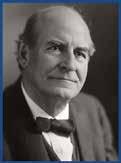
WILLIAM JENNINGS BRYAN
Abboud Law Firm, Omaha
James C. Bocott, North Platte
Greg Garland, Omaha
Mandy L. Larson, Papillion
Todd D. Bennett, Lincoln
Aaron Brown Injury Law, Omaha
Eric R. Chandler, Omaha
Conway, Pauley & Johnson, P.C.
Steven M. Delaney, Bellevue
Timothy R. Engler, Lincoln
Gallner & Pattermann, P.C., Council Bluffs, IA
Elizabeth Govaerts, Lincoln
Mandy M. Gruhlkey, Omaha
Cameron E. Guenzel, Lincoln
James R. Harris, Lincoln
Steven H. Howard, Omaha
Holly T. Morris
Danny Leavitt, Omaha
Jennifer Turco Meyer, Omaha
Robert R. Moodie, Lincoln
CONTRIBUTORS
Bruce H. Brodkey, Omaha
Gregory R. Coffey, Lincoln
Sam Colwell, Lincoln
Michael F. Coyle, Omaha
John C. Fowles, Lincoln
Jason P. Galindo, Lincoln
Tracy Hightower-Henne
Hightower-Reff Law, Omaha
Nicholas Jantzen, Lincoln
Christopher D. Jerram, Omaha
Luke Klinker, Omaha
Tod A. McKeone, Lexington
Clarence E. Mock, Oakland
Mark R. Richardson, Lincoln
Robert Pahlke, Scottsbluff
Peter C. Wegman, Lincoln
Monzon Guerra & Associates, Lincoln
George H. Moyer, Madison
Kathleen M. Neary, Lincoln Brody J. Ockander, Lincoln
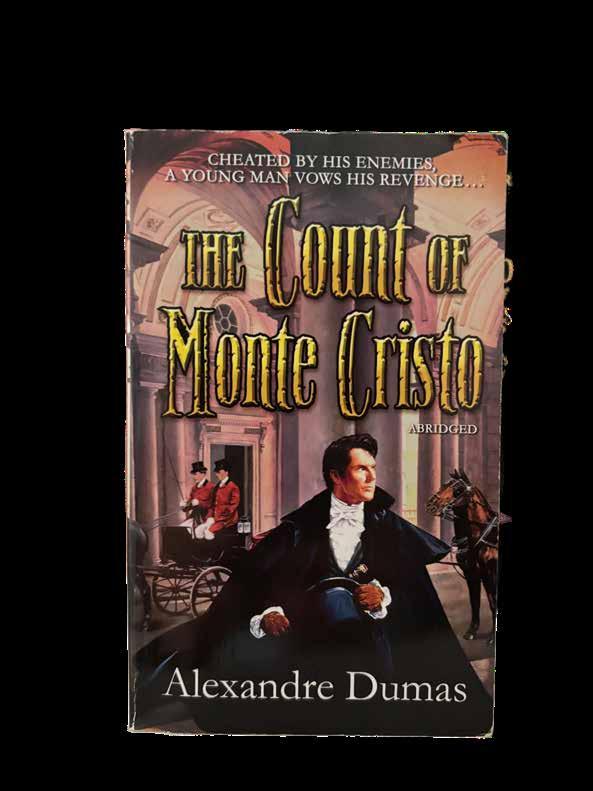
The courthouse cafeteria hummed with conversation. Trays clattered, footsteps echoed, and the scent of burnt coffee hung in the air. The Prairie Barrister sat silently at a corner table, a worn copy of The Count of Monte Cristo open beside them while they waited for trial to resume.
“Why are you reading that old book? Shouldn’t you be reviewing a transcript or prepping for cross?”
The voice came from a colleague — younger, quick-eyed, nervously clutching a legal pad. The trial they were handling together was underway upstairs.
The Prairie Barrister did not look up.
“The Count of Monte Cristo,” they said softly. “A story about a man who was buried alive by the law - and returned.”
“Sounds dramatic.”
“It is. But no more than what happens every day in this courthouse.”
The younger lawyer slid into the seat across from the Prairie Barrister, still glancing at the clock.
“Isn’t it about revenge?”
The Prairie Barrister finally looked up. “It’s about justice: how long it takes and how much it costs.”
The buzz of the cafeteria faded as the Prairie Barrister leaned forward.
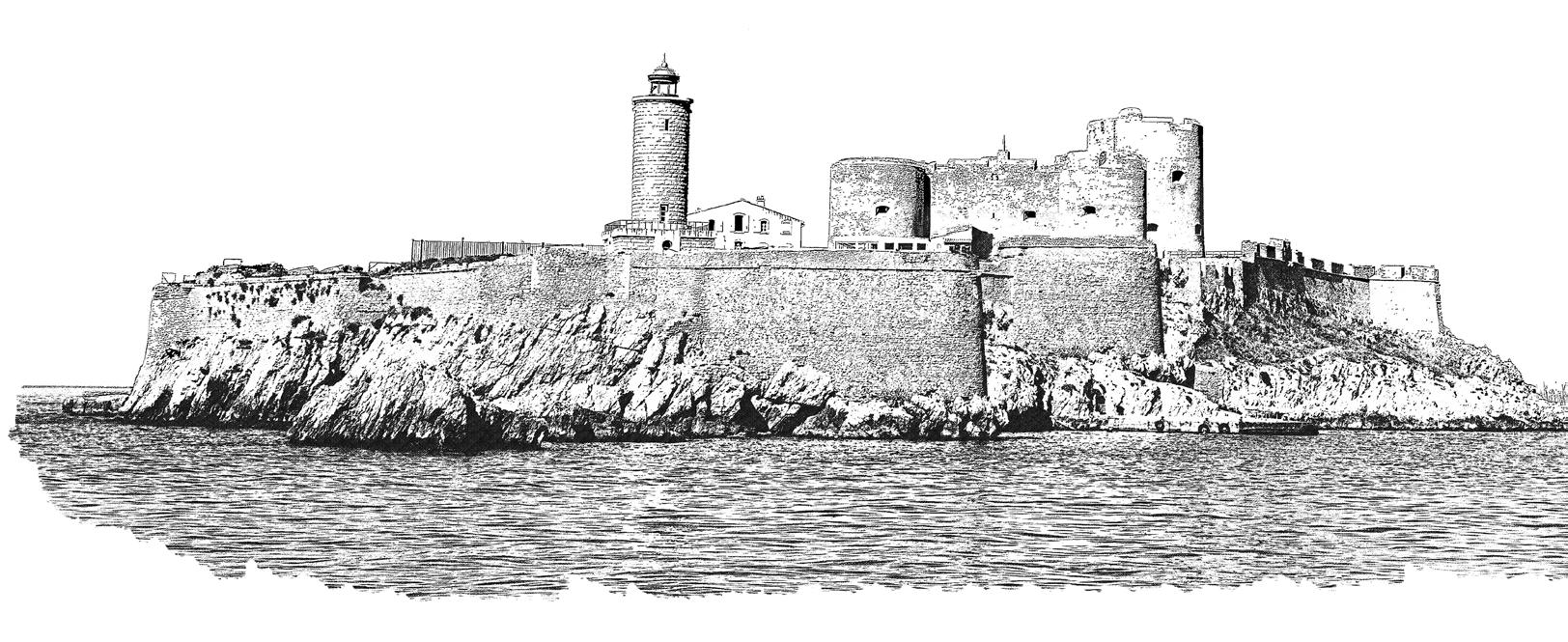
“In the story,” the Prairie Barrister began, “the main character is thrown in prison without trial, falsely accused and forgotten. He spends years in a dungeon waiting and hoping for justice. Sound familiar?”
The younger voice dropped. “Too familiar.”
“But he doesn’t die imprisoned. Instead, he learns, he transforms. Eventually, when he finally escapes, he returns not as a man, but as a force. He returns not as a prisoner but as the Count of Monte Cristo — wealthy, brilliant, careful, relentless. He returns as a presence no one can ignore.”
“And he takes revenge?”
“In his own words, he becomes an agent of God’s justice. Certainly, this is justice beyond the law because the law has failed to deliver justice in his case. One could be forgiven for seeing this divine justice as revenge. But, the Count of Monte Cristo sees beyond simple revenge.”
The Barrister paused and folded their hands.
“But transformation is not without cost. Before the Count of Monte Cristo can exist, he loses his former innocence, his name, and the life he once knew. The same happens to us lawyers who pursue justice in the real world. We must often sacrifice our innocence, our former selves.”
“The Count of Monte Cristo learns through bitter experience what a lawyer might learn through the practice of law: many are condemned not by fair judgment, but by treachery dressed as truth. That hypocrisy, wrapped in respectable language, often carries the day. That the law’s agents often act in self-interest and the system not only permits it but expects it. The Count of Monte Cristo was betrayed by friends, sold out by cowards, and punished by corrupt institutions. Does that sound like the past to you?”
The younger lawyer hesitated. “It sounds like last week.”
“Exactly. Two hundred years have passed. We have new robes, new rules, new names. But the same machinery still runs — the one that buries people in delay and hopelessness. Our clients still sit in dungeons. We call them detention centers now. Or denial letters. Or summary judgment. Or trials where blameless victims of negligence whose health and happiness have been destroyed are called liars by those who lie in service of power.”
“So many of our clients silently wait — unheard, unseen, buried beneath bureaucracy or bias for years. Still, some brave souls wait - hoping for an advocate to tell their story with power and passion and offer them a chance at justice.”
The Barrister closed the book and set it down gently.
“Justice isn’t new - it is eternal. It waits in silence — for someone to carry it forward again. Justice hopes for someone like you or me to come along and give it a voice.”
The younger lawyer looked down at the pad. “Still, I don’t get it. How can you sit here calmly reading fiction with trial underway? Doesn’t it make you anxious?”
The Prairie Barrister smiled.
“It would — if I had not already paid the price justice demands. Not just with outlines and trial notebooks, but with years of strengthening my spirit and sharpening my skills. You see, I don’t need to anxiously prepare at lunch because I’ve been preparing my entire career to summon justice before a jury without fear.”
The younger lawyer was quiet.
The Barrister took a breath.
“As in this book, you or I will become justice personified not through brute force or anxious last-minute preparation, but through waiting and hoping. We must wait for the right moment. We must never give up hope, even when faith in justice seems like a fool’s errand.”
“It teaches that justice finds those courageous souls who wait and hope for it. That patience and hope for justice no matter the circumstance, even if wrongfully imprisoned and forgotten, will be rewarded.”
“My silent reading of this fiction is not the absence of care or preparation — it is the final proof of it. If you have waited and hoped for years then when the final act of faith - the jury trialarrives you can be calm and resolute like I am now. Such inner silence lets you hear justice and give it a voice in the world.”
The Prairie Barrister let the words settle.
“In this world, we pursue justice not in rage, but in faith. It’s not for show. It’s not for pride. It’s not even for winning. It’s for defending the one thing that must never be abandoned: the client whose life has been torn apart by the injustices of the world — whose hope would be dashed entirely if not for a lawyer able to hear justice and give it a voice.”
A bell sounded faintly overhead and court was back in session.
The Prairie Barrister stood and straightened their jacket. They adjusted their tie but left the worn paperback behind as they walked calmly toward the courtroom, where justice was already waiting for its voice to arrive.
The younger lawyer didn’t follow right away. They remained seated, staring at the copy of Monte Cristo. Then, quietly, they opened the cover and turned the page — as if beginning their own transformation, one word at a time.
NATA YOUNG LAWYERS
by Sam D. Colwell
LEARN RELENTLESSLY: CURIOSITY AS A LITIGATION TACTIC
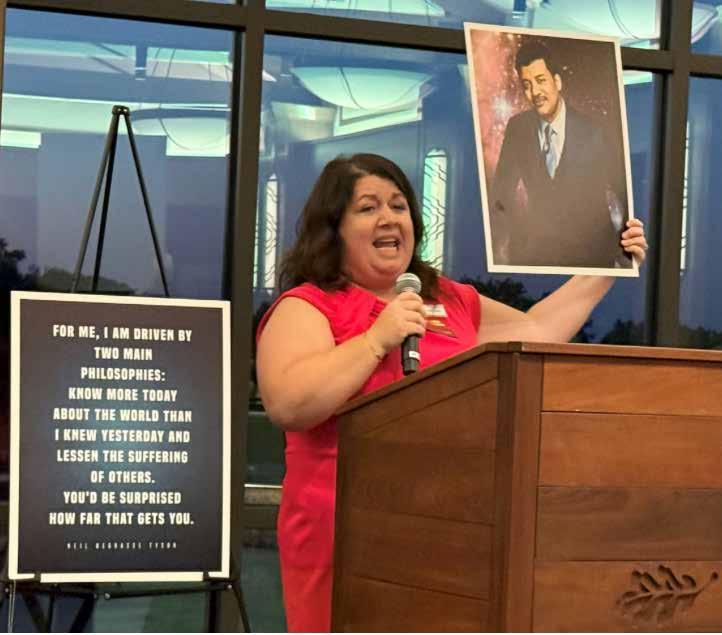
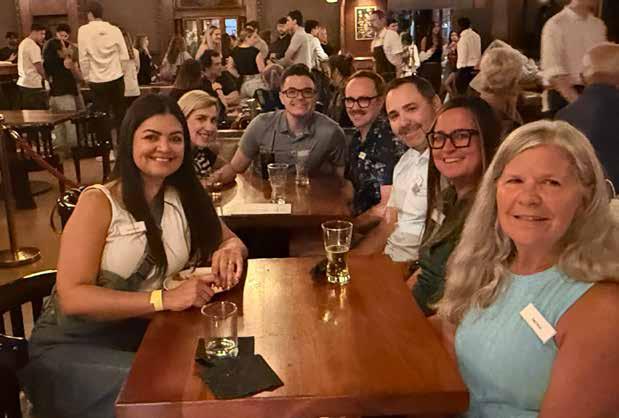
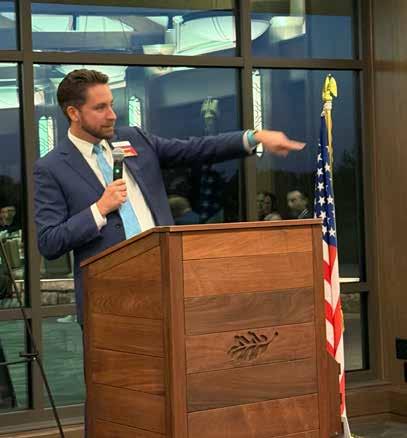
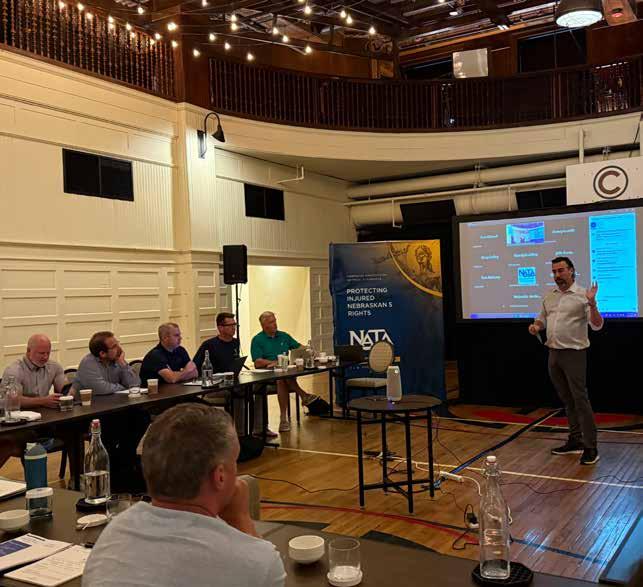
At NATA’s membership dinner in September (an event all young NATA members should attend), much of the conversation centered on our immediate past president, Mark Richardson, and his forsworn career in astrophysics. Having worked with Mark for several years, including a six-hour car ride during which Mark provided— unsolicited—a Quantum Physics 101, I can confirm his passion. Despite Mark’s passion, nothing he has said about astrophysics resonated with me more than this quote from actual astrophysicist Neil deGrasse Tyson: “I am driven by two main philosophies: know more today about the world than I knew yesterday and lessen the suffering of others. You’d be surprised how far that gets you.” This quote, highlighted at the Membership Dinner by President Jennifer Turco Meyer, served as a through line for the dinner and the next day’s seminar.
Though it is difficult to find two careers more different from one another, the purpose that drives astrophysicist Neil deGrasse Tyson is the same that drives the plaintiff personal injury attorneys I know. That purpose certainly drives me. As I’ve ruminated on Tyson’s credo, I’ve thought about how I can better turn his words into action. I’ve primarily focused my thoughts on the first north star offered by Tyson—knowing more about the world today than I knew yesterday.
Most trial attorneys are proud to describe themselves as lifelong learners. Still, our busy schedules and competing obligations can make it difficult to integrate curiosity into our daily practice. Explore some ways to employ curiosity as a tool during litigation, such as:
1. LEARN FROM YOUR CLIENTS. We have the privilege of representing everyday Nebraskans. One of my favorite parts of my job is learning about my clients—their careers, their families, their hobbies and interests. Learning about your client doesn’t just help you build the necessary relationship and rapport; it helps you better tell their stories. Our clients are almost always the only true experts on their case. They have the most in-depth knowledge of the impact of the harm they endured and are often the best fact witnesses we have. Capture your client’s vocabulary (e.g., what do they call the tool they were using or what words do they use to describe their daily pain?) and use that language in discovery and trial so jurors hear a human story, not a translation. Maintain consistent communication with your clients—at least one touchpoint every two weeks. When you learn from your clients, you’ll surface blind spots faster, align your themes with reality, and earn the kind of trust that turns clients into your best teachers throughout the case.
2. BUILD A DAILY “LEARNING LOOP.” Every file has blind spots. Find them early. When you find them, ask yourself: what are three facts that would change your evaluation if true? What is the best method to find those facts—RFP, RFA, depositions, etc.? You might also schedule 10 to 20 minutes a day to answer a question you have about medicine, engineering, or legal issues raised by your case. I’ve found that small, consistent dives are more effective in the long term than sporadic deep dives.
3. TREAT DISCOVERY AS HYPOTHESIS TESTING, NOT PAPER CHASING. The importance of consistently reviewing jury instructions is a common refrain when speaking with other trial attorneys. Jury instructions provide you with a road map from the outset of your case as to what you will need to prove to win. It is not enough to look at jury instructions when you file the case and then put them away until trial is quickly approaching. Use jury instructions during discovery as a hypothesis. Draft your discovery with the intent of proving your specific hypothesis. Avoid turning discovery into just a standard paper chasing effort. Be intentional with your requests and craft your story from the early stages of your case.
4. TURN EXPERTS INTO TEACHERS. One of the joys of being a trial attorney is having the opportunity to learn about various topics from experts in those fields. The most effective expert is one who can communicate with the jury in an accessible, easy-to-follow manner. Most juries want to learn, but, like the rest of us, they don’t want to be bored or confused. If you don’t understand what your expert is saying, assume the jury won’t either. Turn your experts into teachers and learn from them. It will improve your case and scratch your curiosity itch.
5. INVOLVE YOUR TEAM. Our practice group meets at least once every two weeks to touch on every one of our cases. These meetings are intended to address case progression, task lists, and potential blind spots or weak spots in our case. Attorneys on our team are seasoned devil’s advocates, highlighting worst case scenarios and generous reads on factual and legal issues for the defense. This exercise makes our team better prepared and gives us the ability to snuff out potential fires before they grow.
6. LEARN FROM YOUR LOSSES. After an unfavorable ruling, awkward witness examination, or loss at trial, write a contemporaneous post-mortem memo detailing your initial impressions as to what you could have done better. Keep the memo short—what happened? What did we expect and why? Where did reality diverge? What signals were available that things were not going your way? What could have prevented this outcome? Do not turn this into a blame parade. Do not write a novel. The point isn’t to wallow; it’s to metabolize and get better.
Juries respond to credibility born of preparation and purpose. When you learn just a little more each day, you show up with a mastery that doesn’t need to posture. To return to Tyson’s credo: Know more today about the world than you knew yesterday. Lessen the suffering of others. You’d be surprised how far that gets you. In my experience, it gets you exactly where trial lawyers ought to be: telling the truth clearly and serving clients well.
Plains Reporting.
Save money and time for your firm without sacrificing professionalism or quality. When you need expert, convenient, affordable deposition and transcription services, trust Great Plains Reporting. We offer court reporting and legal videography services, in-person or by videoconference. Since 2020, we’ve taken over 100,000 remote depositions across Nebraska and nationwide. With Great Plains, you will also receive:
• Complimentary online hosting on any platform
• Complimentary online repository
• Complimentary travel within the state of Nebraska
PODCASTS & SOFTWARE RECOMMENDATIONS FROM NATA MEMBERS
Thank you to everyone who shared suggestions of podcasts, software, and tools that have helped in your law practice! Below is a summary of the recommendations received — in no particular order.
SOFTWARE & TOOLS
Recommended by Cameron Guenzel:
• Arctrieval – Excellent for record retrieval; “I send record requests in about 30 seconds now.”
• ChatGPT – For rewriting paragraphs, checking for typos, and generating ideas (but beware hallucinated cases and poor-quality medical illustrations).
• OpenEvidence.com – Dedicated research tool for peer-reviewed medical sources. Useful for assessing injury outcomes (e.g., likelihood of post-traumatic arthritis after a tibial plateau fracture).
Recommended by Michael Milone:
• BriefCatch by Ross Guberman – Enhances editing and style in trial and appellate briefs.
Recommended by Blake Maaske and Jonathan Urbom:
• Plaud / Plaud Note – Records and transcribes meetings and calls, produces AI summaries and mind-maps (subscription-based).
• Smokeball – Case management.
• Canva – Presentations and visual design.
• Adobe Acrobat – PDF editing.
• Otter – AI transcription and dictation.
• Briefpoint – Discovery drafting and responses.
• Quadient – Postage management.
• Claude, ChatGPT, and Gemini – For brainstorming and idea generation (but use caution—AI can fabricate facts, cases, and accident reports).
PODCASTS & SHOWS
• Successful Barrister – Tips on running an office, marketing, and the business of law
Recommended by Mark Richardson:
• Trial Lawyers College
Recommended by Blake Maaske:
• Bourbon of Proof – YouTube TV series
Recommended by Danny Leavitt:
• Flawvate by Ben Gideon and Rahul Ravipudi
• Face the Jury by Lloyd Bell
• Litigation Radio (ABA)
• May the Record Reflect (NITA)
• Mitnik’s Brushstrokes
• Trial Lawyer Nation by Michael Cowen
• Trial Lawyers University by Dan Ambrose
ADDITIONAL TOOLS
• Supio – AI software designed for the plaintiff’s bar; positive feedback from users.
• FileVine and MyCase – Popular case management systems used by multiple firms.
If you have a podcast, software program, or show you’d like to recommend, please share it with the group on the NATA listserv.
Thank you for contributing your insights and helping all of us stay informed about the latest tools and ideas supporting the practice of law in Nebraska.
Membership in the Circle of Advocates at an annual dues of $2,000 and Sustaining Membership at an annual dues of $1250 provide needed financial support for NATA’s work in service to its members, their clients, and the public.
CIRCLE OF ADVOCATES
Jason Ausman
Todd Bennett
James Cada
Maren Chaloupka
Patrick Cooper
Nancy Freburg
Daniel Friedman
2025
Stephen Gerdes
Elizabeth Govaerts
James E. Harris
Matt Lathrop
Robert Moodie
George Moyer
Robert Pahlke
James J. Paloucek
Vincent Powers
Mark Richardson
Richard Schicker
Ryan Sewell
Andrew Sibbernson
Julie Shipman-Burns
SUSTAINING MEMBERS
William Andres
James Bocott
D.C. “Woody” Bradford
Aaron Brown
Eric Brown
Nathan Bruner
John Carroll
Gregory Coffey
Michael Coyle
2025
Tara DeCamp
Joseph Dowding
Michelle Dreesen
Daniel Fix
Erin Fox
Cameron Guenzel
Mandy Gruhlkey
James Knowles
Matthew Knowles
NEW MEMBERS
Robert Knowles
Mandy Larson
Danny Leavitt
Steven Lathrop
Kyle Long
Lee Loudon
Clarence Mock
Michael Mullin
Kathleen Neary
NATA CELEBRATES OUR NEW MEMBERS OF SUMMER 2025.
Zach Renshaw, High & Yous, Omaha
Jeremy Immel, Creighton Law, Omaha
Jessica Valdez, braska College of Law, Lincoln
Guillermo Martiz, Sherrets, Bruno & Vogt, Omaha
Chidu Igbokwe, Banwo & Igbokwe, Omah a
Wm. Richard Kroeger, Mintz Law Firm, Denver, CO
Martha Sanchez-Hernandez, braska College of Law, Lincoln
Alyssa Vela, Creighton Law, Omaha
Todd Jeffers, Jeffers Law Firm, Omaha
Cynthia Cruz, Creighton Law, Omaha
Sam Baue, McHenry Law, Lincoln
Natalie Andrews, Chandler Conway, Omaha
Benjamin Connor, UNL Law, Lincoln
Dan Thayer
Jennifer Turco Meyer
Jonathan Urbom
Peter Wegman
Christopher Welsh
Brock Wurl
Brody Ockander
Jeff Putnam
Shayla Reed
Jon Rehm
Terrence Salerno
Mitchell Stehlik
Adam Tabor
Julie Tabor
Jacqueline Tessendorf
Abbie Steir, Berry Law, Lincoln
Emily Pincin, Kent Pincin LLP, Los Angeles, CA
Marcus Sladek, Chandler Conway, Omaha
Isaiah Ramirez, UNL Law, Lincoln
Mollie Rowe, UNL Law, Lincoln
Makenna Welke, Creighton Law, Omaha
Christie Leonard, Creighton Law, Omaha
Katie Tidwell, UNL Law, Lincoln
Thomas Chase Murphy, Rensch & Rensch, Omaha
Amy Hart, Dyer Law, Omaha
Mitch Kohl, Rensch & Rensch, Omaha
Michael Moran, McGrath North, Mullin & Kratz, Omaha
Nicholas Marti, UNL Law, Lincoln
verdicts & settlements
$512,321.91
Tractor/Truck Collision – Multiple injuries
Buffalo County
Date of Settlement: August 25, 2025
Plaintiff Attorney: Ross Pesek and Alejandra Ayotitla
Plaintiff, a 60-year-old disabled Cuban immigrant and Spanish speaker, was trailing a tractor on a two-lane highway when a propane truck owned by Bosselman Energy collided head-on with the tractor’s oversized cultivator, causing an explosion. The tractor’s cultivator extended 2 to 2.9 feet into the oncoming lane, but the propane truck driver made no evasive maneuver despite having a 10-foot shoulder available. Plaintiff’s car was struck by flying propane tanks. Defendants included the propane truck driver, Bosselman Energy (propane distributor), and the tractor driver. Plaintiff was 0% at fault.
Coverage: Commercial automobile and corporate liability coverage for Bosselman Energy; limits undisclosed.
Medicals: $38,000 billed (defense stipulated to $23,000 related)
Lost Wages: None (SSA disability in place)
Settlement Offer: $25,000 final offer on Friday before trial.
Reprinted with permission of Trial® (October 2025)
WWorking through its front group, Modern Ag Alliance—a coalition of over 360 agricultural and industry groups—Bayer Corp. is leading a coordinated legislative effort to block lawsuits brought by people harmed by their products. Their goal: total legal immunity when pesticide labels fail to disclose known health risks, including cancer, neurological disease, and reproductive harm.
orking through its front group, Modern Ag Alliance—a coalition of over 360 agricultural and industry groups—Bayer Corp. is leading a coordinated legislative effort to block lawsuits brought by people harmed by their products. Their goal: total legal immunity when pesticide labels fail to disclose known health risks, including cancer, neurological disease, and reproductive harm.
If successful, the legislation would strip farmers, families, and communities of their right to seek justice and allow chemical giants to avoid responsibility—no matter how devastating the consequences.
If successful, the legislation would strip farmers, families, and communities of their right to seek justice and allow chemical giants to avoid responsibility—no matter how devastating the consequences.
Preparing the Ground
Preparing the Ground
Since 2018, Bayer and its allies have led a calculated, well-funded campaign to rewrite liability laws across the United States. The goal is simple: Eliminate legal accountability for the harm pesticides cause.
Since 2018, Bayer and its allies have led a calculated, well-funded campaign to rewrite liability laws across the United States. The goal is simple: Eliminate legal accountability for the harm pesticides cause.
The effort began with an unsuccessful attempt to attach federal immunity provisions to the 2018 Farm Bill.1 Undeterred, Bayer stuck to its playbook, one that aligns with earlier strategies the asbestos and tobacco industries used: Start at the state level to build momentum and justify federal intervention.
The effort began with an unsuccessful attempt to attach federal immunity provisions to the 2018 Farm Bill.1 Undeterred, Bayer stuck to its playbook, one that aligns with earlier strategies the asbestos and tobacco industries used: Start at the state level to build momentum and justify federal intervention.
In 2024, the pesticide industry launched bills in Idaho,2 Iowa,3 and Missouri.4 The proposals declared that EPA-approved pesticide warning labels “shall be sufficient”5 for any claim involving a failure to warn under state law. This seemingly technical language creates a powerful affirmative defense, effectively blocking litigation—even when manufacturers knowingly downplay or conceal serious health risks.
In 2024, the pesticide industry launched bills in Idaho,2 Iowa,3 and Missouri.4 The proposals declared that EPA-approved pesticide warning labels “shall be sufficient”5 for any claim involving a failure to warn under state law. This seemingly technical language creates a powerful affirmative defense, effectively blocking litigation—even when manufacturers knowingly downplay or conceal serious health risks.
After those early bills failed, Bayer escalated the campaign in 2025. The pesticide-pharmaceutical giant targeted 21 states with nearly identical bills designed to wipe out pesticide-related litigation.6 As of this writing, lawmakers
After those early bills failed, Bayer escalated the campaign in 2025. The pesticide-pharmaceutical giant targeted 21 states with nearly identical bills designed to wipe out pesticide-related litigation.6 As of this writing, lawmakers
have introduced immunity legislation in 12 states: Florida,7 Georgia,8 Idaho,9 Iowa, 10 Mississippi, 11 Missouri, 12 Montana, 13 North Carolina, 14 North Dakota,15 Oklahoma,16 Tennessee,17 and Wyoming.18
Bayer is also pressing its agenda on the federal front. It coordinated a petition with 11 state attorneys general,19 urging the EPA to rewrite its misbranding rules to further insulate pesticide companies from liability. The public comment period on that petition has closed, with nearly 74,000 submissions, 20 including formal opposition that AAJ21 submitted.
This flurry of activity lays the groundwork for Bayer’s ultimate objective: a renewed push for federal legislation that would permanently preempt state-level claims and deny those injured their day in court.
Meanwhile, Bayer continues to pursue immunity through the courts under existing law. In April, it petitioned the U.S. Supreme Court 22 to review a Missouri Supreme Court ruling that federal pesticide law does not preempt Missouri state law on failure to warn. This multi-pronged approach—spanning state legislatures, federal agencies, Congress, and the judiciary—shows the extraordinary lengths pesticide manufacturers will go to escape accountability.
At stake is a foundational question: Will consumers retain the right to hold chemical companies accountable when their products cause life-altering harm? If Bayer succeeds, the door will open for other industries to follow suit. If a company that sells poison can claim legal immunity, who can’t?
A False Spring
To advance their agenda, pesticide manufacturers have relied on a campaign of misrepresentation and fear. In state after state, industry lobbyists have
repeated the same misleading talking points—crafted to obscure the bill’s true purpose and deflect scrutiny.
Misleading Claim #1: It’s About EPA Authority
Industry advocates claim that because the EPA controls pesticide labeling under the Federal Insecticide, Fungicide, and Rodenticide Act,23 manufacturers face an “impossible”24 legal position when state courts hold them accountable for risks not disclosed on the label. They insist companies cannot legally modify labels without EPA approval.
What they don’t say is even more telling: Bayer has never asked the EPA to change the Roundup weed killer label.25 Bayer’s real concern isn’t regulatory inconsistency. It’s accountability. Litigation forces companies to face independent scientific evidence and answer questions that regulators don’t always ask.
Bayer’s go-to defense—we followed the regulators 26—depends on control of the regulatory process. And there’s strong evidence they’ve done just that.
EPA approval relies heavily on data that manufacturers submit themselves. The agency’s review process is notoriously narrow—excluding studies of real-world formulations, like those showing that formulated glyphosate products are nearly 50 times more toxic than glyphosate alone.27
Court cases have revealed scientific manipulation and even fraud by pesticide companies, including in the approval process for Roundup. This isn’t limited to Bayer. Similar coverups and manipulations by Syngenta have been revealed in litigation over paraquat.28
By pointing to the EPA as an unquestionable authority—while quietly shaping what the authority sees—Bayer and other pesticide companies seek to turn regulatory capture into total legal immunity.
Misleading Claim #2: Agriculture Is at Risk
The industry often claims that lawsuits threaten farmers’ access to essential agricultural tools. Farmers testify about the benefits of herbicides like Roundup for no-till farming, reducing erosion, and boosting crop yields. Industry representatives warn that Bayer might pull out of the U.S. market if it doesn’t receive blanket immunity.
But this is a false choice—and a classic strawman argument. No one is calling for a ban on these products. Dozens of companies make glyphosatebased herbicides, including some manufactured in the United States.29 The question isn’t whether farmers can use American-made pesticides, but whether manufacturers must warn those farmers about well-documented health risks.
This isn’t the first time Bayer and Monsanto have used scare tactics to manipulate the agricultural sector. In the early 2000s, Monsanto aggressively investigated and filed suit against farmers over genetically modified seeds, using legal intimidation to assert control over agriculture.30 As of 2018, Bayer and Monsanto collectively dominated the U.S. genetically modified seed market, supplying an estimated 98% of cotton, 95% of soybeans, 80 to 90% of corn, and 90% of canola seed used for planting crops nationwide. 31 That dominance gives Bayer leverage over a network of industry-aligned allies willing to echo its messaging.
Misleading Claim #3: The Bill Is Narrow
Perhaps the most misleading industry talking point is that these bills are “narrowly tailored” 32 to address only label-related lawsuits, without limiting broader legal remedies. Lobbyists routinely assure lawmakers that the legislation doesn’t prevent people from filing lawsuits.33
THE ISSUE ISN’T WHETHER FARMERS CAN USE HERBICIDES. IT’S WHETHER COMPANIES MUST DISCLOSE THE DANGERS.
This is simply not true. By stating the EPA-approved labels are sufficient under the law, the bills jeopardize any cause of action tied to product labeling— including failure to warn, product defect, breach of warranty, and even common law negligence.
Chemical companies seek to achieve this either through broad statutory language or a strategic one-two punch. First, the bill preempts failure-to-warn claims. Then, Bayer argues pesticides are unavoidably unsafe products to dismiss design defect claims.34
This isn’t a tweak to legal language. It’s a blueprint for complete legal immunity. Bayer’s political investment confirms it. The company isn’t spending millions of dollars lobbying in 21 states, Congress, the EPA, and the courts just to make plaintiffs revise a few filings. It’s not legal clarity the company wants— it’s a legal escape hatch. Bayer wants a system where, no matter how much harm a pesticide causes—or how badly the company misleads regulators and the public—victims can’t hold it accountable.
Misleading Claim #4:
This Is Farmers v. Trial Lawyers
Industry advocates often frame this debate as a fight between farmers and trial lawyers—a distraction that obscures those who truly stand to lose. Agricultural workers face the
highest levels of pesticide exposure, and the science is clear: Paraquat is linked to Parkinson’s disease, 35 and glyphosate-based herbicides are associated with cancer. 36 In some cases, pesticides may pose cancer risks comparable to smoking.37
Their impact on farming communities extends beyond ongoing litigation. For example, glyphosate exposure during early pregnancy reduces fetal growth. Studies have linked glyphosate exposure to adverse birth outcomes both at the individual level—lower birth weights—and at the county level, where higher use correlates with shorter gestation and reduced birth weight in rural populations.38
Nationwide, farmers have testified against these bills, directly challenging the narrative pushed by industry-aligned farm associations. 39 Grassroots agriculture isn’t driving this legislation. Bayer is.
Acres of Consequences
Bayer’s push for pesticide immunity isn’t just a domestic legal maneuver. It’s a global threat to public health, national security, and the foundational principle of corporate accountability.
If successful, this campaign would set a dangerous precedent, allowing companies to market hazardous products as safe, even when they conceal
well-documented risks. And they would do so without fear of ever being held accountable in court.
The human toll is already staggering. Plaintiffs have filed nearly 167,000 lawsuits linking Roundup to cancer.40 Thousands more allege paraquat caused Parkinson’s disease.
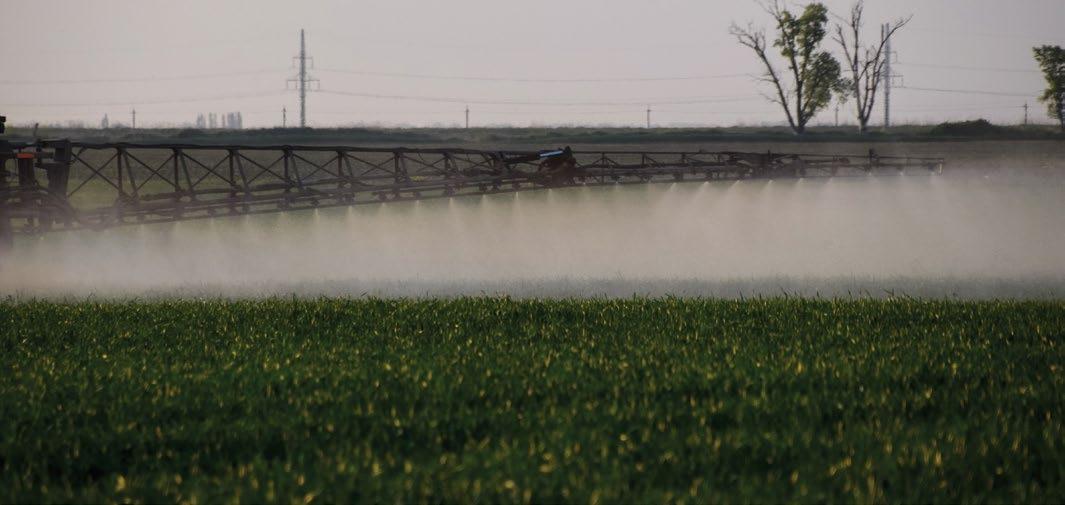
Dicamba, a widely used pesticide also made by Monsanto, “is a selective systemic herbicide used to control annual, biennial and perennial broadleaf weeds in a variety of food and feed crops and in non-agricultural settings.”41 It is prone to drifting—when pesticide dust or droplets travel through the air during or shortly after application, reaching unintended areas.42
Early testing revealed this risk, leading Monsanto to halt testing—and persuade BASF, another large-scale pesticide manufacturer, to do the same—and then withhold the data from independent researchers.43 Despite this, the EPA later approved dicamba for over-the-top spraying, which resulted in the destruction of millions of acres of crops.44
These aren’t just numbers. They represent real people: farmers, workers, and families whose lives and livelihoods have been upended by preventable harm. If these bills pass, courts may never hear many of these cases.
And the threat doesn’t stop at
U.S. borders. Among the top four companies selling EPA-registered pesticides in America is Syngenta, 45 maker of paraquat. Syngenta is owned by ChemChina, a Chinese state-owned enterprise controlled by the Chinese Communist Party and identified as an arm of the People’s Liberation Army.46 Paraquat is so toxic it’s been banned in more than 70 countries, including China.47
Yet, under this legislation, Americans would lose any legal pathway to investigate what foreign-owned chemical companies knew about the risks, when they knew it, or how they buried the truth. These laws would grant immunity not just to Bayer, but to companies with deep ties to authoritarian regimes and hostile foreign interests.
Litigation has been one of the only tools capable of exposing these deceptions. Legal discovery in cases involving dicamba, paraquat, and Roundup has brought to light scientific fraud, suppressed studies, and corporations’ deliberate efforts to mislead regulators.48 This legislation would block that vital pathway to accountability.
As one molecular toxicologist testified during a hearing in Tennessee, passing this legislation would “be sanctioning an act of bioterrorism” by giving corporations and foreign actors a green light to knowingly cause cancer, neurological damage, reproductive harm, and agricultural destruction.49
This isn’t just about dicamba, paraquat, and Roundup. These bills apply to every pesticide currently on the market and every new pesticide product introduced in the future. Once a product receives an EPA-approved label—no matter how flawed or manipulated the process may be—the label becomes an unbreakable shield. Victims lose all recourse, no matter how severe the harm.
IF SUCCESSFUL, THIS CAMPAIGN WOULD SET A DANGEROUS PRECEDENT, ALLOWING COMPANIES TO MARKET HAZARDOUS PRODUCTS AS SAFE, DESPITE DOCUMENTED RISKS.
Cultivating Opposition
Fortunately, a broad, growing coalition is fighting back against this push for corporate immunity. A diverse group of stakeholders have joined forces to oppose the pesticide industry’s push to rewrite the rules of accountability.50
This alliance cuts across political and ideological lines. What brings them together is a shared commitment to a fundamental principle: When corporations knowingly sell harmful products and hide the risks, they must face consequences.
This coalition has effectively exposed one of the most alarming aspects of this legislation: that it would grant total immunity to foreign pesticide manufacturers, including state-owned
enterprises like ChemChina, even when they knowingly conceal deadly risks. That message resonates with lawmakers and voters alike, and it could have a powerful influence on elected officials, if they are willing to listen.
The battle is far from over. In addition to pushing bills in more than a dozen states, industry lobbyists are eyeing the Farm Bill for a similar immunity provision.51 Bayer and other pesticide giants are spending millions to advance this effort, but opposition is growing as more people learn what’s truly at stake.
This is not just a legal or political battle. It’s a public reckoning. It’s about whether we will continue to hold powerful corporations accountable for endangering lives, or whether we will let them rewrite the rules to dodge responsibility.
Reaping What Was Sown
The pesticide industry has a clear alternative to its costly immunity campaign: Embrace transparency and accept accountability. For companies like Bayer, that means adding cancer warnings to glyphosate-based herbicides and acknowledging the growing body of scientific evidence that links the product to harm. Pesticide manufacturers must face juries, admit past wrongdoing, and fairly compensate the people their products have harmed—farmers, groundskeepers, and families who trusted that the chemicals they used were safe.
For ChemChina and its subsidiary, Syngenta, accountability means taking responsibility for the devastation paraquat has caused. And for every company that markets pesticides in the United States, it means recognizing that these products pose real risks—and making sure the people who use them understand the dangers by providing accurate, comprehensive warnings about the risks they carry.
The legal system remains the most powerful tool we have for exposing corporate misconduct and delivering justice. Through litigation, hidden studies have surfaced, whistleblowers have come forward, and corporations have been forced to change. Farmers and agricultural workers depend on accurate, clear labeling to protect themselves and their families. Trial lawyers are essential in preserving this transparency and holding companies to that standard—and ensuring that manufacturers prevent future harm.
Daniel Hinkle is AAJ’s senior counsel for policy and state affairs and can be reached at daniel.hinkle@justice.org.
Victor Diaz is AAJ’s senior counsel for federal relations and can be reached at victor.diaz@justice.org.
Notes
1. Compare H.R. 2, 115th Cong. §9101 (2018), with Pub. L. No. 115-334, 132 Stat. 4490 (2018).
3. S. 2412, 90th Gen. Assemb. (Iowa 202 FL SB 992 4); S. 2392, 90th Gen. Assemb. (Iowa 2024).
4. H.R. 2763, 102d Gen. Assemb., 2d Reg. Sess. (Mo. 2024); S. 1416, 102d Gen. Assemb., 2d Reg. Sess. (Mo. 2024).
5. See, e.g., Mo. H.R. 2763; H.R. 544, 103d Gen. Assemb., 1st Reg. Sess. (Mo. 2025).
6. See Carey Gillam, Farmers ‘Very Worried’ as US Pesticide Firms Push to Bar Cancer Diagnoses Lawsuits, The Guardian (Feb. 10, 2025), tinyurl.com/mry2sze7 (reporting that pesticide shield legislation was “being considered in more than 20 states”); Kaare Melby, Bayer Protection Act—Legislative Update, Organic Consumers Ass’n (Apr. 17, 2025), organicconsumers.org/bayerprotection-act-legislative-update (identifying at least 11 states where such bills were filed); Carey Gillam, Farm Country Fight—Battle Rages Over Proposed Legal Protections for Pesticide Makers, The New Lede (Feb. 8, 2025), tinyurl. com/4zac94ch (stating that draft bills were circulating in “more than 20 states”).
12. S. 14, 103d Gen. Assemb., 1st Reg. Sess. (Mo. 2025); H.R. 544, 103d Gen. Assemb., 1st Reg. Sess. (Mo. 2025).
13. H.R. 522, 69th Leg., Reg. Sess. (Mont. 2025).
14. S. 639, Gen. Assemb., 2025–2026 Sess. (N.C. 2025).
15. H.R. 1318, 69th Leg. Assemb. (N.D. 2025).
16. S. 1078, 2025 Reg. Sess. (Okla. 2025).
17. S. 527, 114th Gen. Assemb. (Tenn. 2025); H.R. 809, 114th Gen. Assemb. (Tenn. 2025).
18. H.R. 285, Gen. Sess. (Wyo. 2025).
19. Petition for Rulemaking to Clarify Section 24 of the Federal Insecticide, Fungicide, and Rodenticide Act (FIFRA), 7 U.S.C. §136v, Mike Hilgers, Neb. Att’y Gen. to Michael S. Regan, Administrator and Michal Freedhoff, Assistant Administrator, Env’t Prot. Agency (Aug. 7, 2024), tinyurl. com/5bxrm6uk (also signed by the Attorneys General for Alabama, Arkansas, Georgia, Indiana, Iowa, Louisiana, Montana, South Carolina, and South Dakota).
20. Pesticides: Petition Seeking Rulemaking to Modify Labeling Requirements for Pesticides and Devices, 90 Fed. Reg. 7037 (proposed Jan. 20, 2025), www.regulations. gov/document/EPA-HQ-OPP-20240562-0001.
21. Review AAJ’s comments at tinyurl. com/5dxapp9b.
22. Petition for Writ of Certiorari, Monsanto Co. v. Durnell, No. 24-1068 (U.S. Apr. 4, 2025), tinyurl.com/yrwt43rt.
23. 7 U.S.C. §136a(c)(1).
24. Petition for Writ of Certiorari, Monsanto, No. 24-1068, tinyurl.com/yrwt43rt.
25. See Carson v. Monsanto Co., 92 F.4th 980, 998 (11th Cir. 2024) (“Monsanto did not request—and the Agency did not consider, much less reject—a cancer warning at all.”). The EPA has also made it clear that it would approve a cancer warning on glyphosate “if pesticide registrants requested it.” Letter from Michal Freedhoff, Assistant Director, Env’t Prot. Agency, to Lauren Zeise, Director, Cal. Env’t Prot. Agency (Apr. 8, 2022), tinyurl.com/mtwt5f3x.
26. Bayer, Managing the Roundup™ Litigation (2025), www.bayer.com/en/managingthe-roundup-litigation.
27. Charles Benbrook et al., Genotoxicity Assays Published Since 2016 Shed New Light on the Oncogenic Potential of Glyphosate-
Based Herbicides, 2 Agrochemicals 47, 55 (2023), tinyurl.com/mrupm7wz.
28. Compare Email from William Heydens, Toxicology & Human Risk Assessment Lead, Monsanto to Charles Healy, Toxicology Programs Manager, Monsanto, RE: TNO dermal penetration studies: new issues and topics for the conf. call of Tuesday, 2 April (8 AM STL time) (Apr. 2, 2002, 12:45:18 PM SLT), tinyurl.com/ 337xed77 (Monsanto toxicology scientists stating Roundup dermal absorption studies could “blow Roundup risk evaluations”), and Email from Stephen Ratten, Employee, Monsanto, to other Monsanto personnel, RE: TNO dermal penetration studies (Apr. 5, 2002, 5:33:26 PM SLT), tinyurl.com/ yetx9ud7 (stating further study on glyphosate absorption “not likely to help us meet the project objective”), and Johan van Burgsteden, In Vitro Percutaneous Absorption Study with Glyphosphate Using Viable Rat Skin Membranes (June 24, 2002) (unpublished report), tinyurl. com/3ru42rkr, with TRO Dr. Philip Botham at 696, Hoffman v. Syngenta, No. 17-L-517 (Ill. Cir. Ct. Feb. 25, 2020), tinyurl. com/46u5j5ra (proof Syngenta manipulated the EPA’s Science Advisory Panel).
29. Albaugh Facilities in the US, Albaugh, www. albaugh.com/us/who-is-albaugh/about-us/ our-facilities.
30. Bill Freese & George Kimbrell, Seed Giants vs. U.S. Farmers, Ctr. for Food Safety (2013), tinyurl.com/55bteuvm.
32. Market to Market Podcast, Aligning Many Interests in Agriculture on Crop Chemistry Legislation - Elizabeth Burns-Thompson, Iowa PBS (Apr. 1, 2025), tinyurl.com/ 4jkynmj8.
33. Lisa Held, Bayer’s Effort to Block Roundup Lawsuits Kicks Into High Gear, Investigate Midwest (Apr. 30, 2025), tinyurl.com/ 32unrnst (quoting Bayer spokesperson, “The notion of these bills being a blanket immunity shield is a false narrative.”).
34. See Restatement (Second) of Torts §402A cmt. k (Am. L. Inst. 1965).
35. Comment submitted by The Michael J. Fox Foundation for Parkinson’s Research, 89 Fed. Reg. 6521 (notice posted Feb. 1, 2024) (comment submitted Apr. 17, 2024), www. regulations.gov/comment/EPA-HQ-OPP2011-0855-0400; TRO Dr. Philip Botham at 310–313, 733–870, 1707–1753, Hoffman v. Syngenta, No. 17-L-517 (Ill. Cir. Ct. Feb. 25, 2020), tinyurl.com/46u5j5ra.
36. Nat’l Res. Def. Council v. Env’t Prot. Agency, 38 F.4th 46 (9th Cir. 2022).
37. Deborah Pirchner, Pesticides Potentially as
Continued on page 33
At NATA we work hard for justice— and we play hard to build community! Big thanks to everyone who made our 2025 Summer meetings fun, educational, and energizing. From powerful strategic planning sessions to unforgettable moments with colleagues and friends— we’re grateful for each of you who make this organization what it is! And thank you to our generous sponsors: Great Plains Reporting, Summit Structured Settlement, Commonwealth Community Trust, and Tavrn AI.
Justice takes teamwork. Nebraska’s trial attorneys came together at the annual members dinner to celebrate wins, honor leaders, plan for toptier CLE offerings, and to strengthen our advocacy efforts on behalf of all Nebraskans. And to have fun!
Thank you Dan Thayer for representing NATA at the annual Legislative Invitational Golf Outing!
Congratulations to Dallas Jones Jr. who was awarded the Roscoe Pound Memorial Award for Oral Advocacy in March 2025 by the Nebraska Association of Trial Attorneys at the University of Nebraska College of Law. This award recognizes excellence in oral advocacy.
Big things happened at the NATA Board and NATA PAC Trustee Meeting in September.
Thank you to our speakers and organizers for the successful CLE Seminar held in September!
• MLM has returned a dividend check to policyholders annually, since 1988, over $80 million total
• First dollar defense- a loss only deductible can produce a substantial savings for firms facing nuisance type claims
• Full prior acts coverage
• Offers an array of services to mitigate risks including three free CLEs for policyholders each policy year, $165 value
December
PROGRAM SCHEDULE
8:00 a.m.
Registration and Continental Breakfast
Sponsored by Great Plains Reporting
MORNING SESSION
8:30 a.m.
Welcome and Opening Remarks
EMILY N. HAGGSTROM, Program Chair
Atwood Law, P.C., L.L.O
8:45 a.m.
AI 101 for Trial Lawyers: What It Is and What It Isn’t
CHRIS CARMICHAEL, Reinert Memorial Library
TROY JOHNSON, Creighton Law Library
HANS HERZL-BETZ, Creighton Law Library
9:45 a.m.
Counsel of Discipline & AI Ethics
MARK WEBER
Nebraska Counsel for Discipline
10:45 a.m. BREAK
11:00 a.m.
Using AI for Deposition Summaries
MIKE MCDONNER
Great Plains Reporting
11:45 a.m.
AI for Discovery – Drafting, Record Review, Chronology Building
ERIC B. BROWN
Atwood Law, P.C., L.L.O.
THANKS TO OUR SPONSORS
12:15 p.m.
LUNCH BREAK
Sponsored by Minnesota Lawyers Mutual
AFTERNOON SESSION
1:00 p.m.
Legal Research and AI
RIPLEY PIEDRASANTA
2:00 p.m.
Drafting Documents and AI: Practical, Interactive Tools for Everyday Legal Writing
EMILY N. HAGGSTROM
Atwood Law, P.C., L.L.O.
CAMERON GUENZEL
Johnson Flodman Guenzel & Wasserburger, LLP
2:45 p.m. BREAK
3:00 p.m.
Negotiating AI Contracts for Law Firm and Businesses
ERICA GOVEN
Kutak Rock
3:45 p.m.
Wrap-Up: Final Thoughts- Putting AI Into Practice
EMILY N. HAGGSTROM, Program Chair
Atwood Law, P.C., L.L.O.
Great Plains Reporting, Minnesota Lawyers Mutual Summit Structured Settlements
• Over 20 years of experience
• Professor of Economics, University of Nebraska-Lincoln
• Plaintiff and defense clients
• Testimony in state and federal court
“David Rosenbaum is responsive, thorough, understandable, credible and experienced. He’s one of the best forensic economists in the region. I highly recommend his expertise.”
—Repeat Client
WASHINGTON UPDATE
OCTOBER 2025
By Linda Lipsen, CEO American Association for Justice
As of this writing, the country is in its third week of a government shutdown. This is a tremendously difficult time for government workers who have missed paychecks and jobs and continue to live with constant uncertainty. And, the judicial branch has announced that “it will no longer have funding to sustain full, paid operations.”
Lately, Washington, D.C., seems to be the epicenter of uncertainty. While we wait for Congress to achieve some kind of consensus or compromise, AAJ continues its advocacy to protect your practices and ensure that your clients’ rights are not eviscerated in any negotiations.
As industries continue to attempt to gain immunity and preempt state law, AAJ is tracking and opposing their efforts:
H.R. 2300, a bill allegedly to bring “national uniformity” to infant formula
• This bill would provide manufacturers of premature infant formula broad immunity for death or serious illness caused to preterm babies.
• It was designed to eliminate cases brought by parents of babies who died from necrotizing enterocolitis (“NEC”) after they were given Similac or Enfamil premature infant formula made by Abbott Labs and Mead Johnson.
• Juries across the country have found manufacturers responsible for failing to adequately warn parents about the dangers of their products.
• It would provide immunity to any manufacturer of premature infant formula and prohibit states from enforcing any rule, regulation, requirement, common law, or court order that is different from applicable federal law.
• This bill applies retroactively and would dismiss hundreds of currently pending civil proceedings, resulting in lost time and resources for families seeking justice.
H.R. 4312, the Student Compensation and Opportunity through Rights and Endorsements Act (SCORE Act)
• This bill would grant the NCAA broad immunity, wiping out college athletes’ ability to legally enforce their Name, Image, and Likeness (NIL) rights and eliminating important protections for college athletes under state law that extend far beyond NIL.
• The bill contains a sweeping antitrust exemption for the NCAA and institutions, thus overturning a unanimous Supreme Court decision holding that college athletes do have rights under antitrust laws.
• By stripping college athletes of their rights under existing law, they would be left with no way to enforce currently available rules and protections.
H.R. 3548, the Infrastructure Expansion Act of 2025
• This bill would nullify New York Labor Law Section 240, known as the “Scaffold Safety Law,” which has stood the test of time for over 100 years of major New York construction and growth.
• After multiple failed attempts to overturn this well-established New York law at the state level, developers are asking Congress to intervene.
• Tort law has always been left to state legislatures and state courts.
• This bill tries to get around the federalism problem by preempting New York’s scaffolding law whenever any federal financial assistance is provided—directly or indirectly—for projects covered by the bill.
H.R. 5437, the Protection of Lawful Commerce in Stone Slab Products Act
• This bill would provide legal immunity to manufacturers and sellers of stone slab products, including those used for kitchen countertops, for liability connected to its product that has caused workers to get sick or die from exposure to silica dust.
• Workers handling artificial stone slab products have developed irreversible lung damage and silicosis from tiny particles of toxic dust over the past decade, and this issue has gained increasing attention since researchers at UC San Francisco and UCLA published “the largest U.S. study of this emerging health crisis” in 2023.
• On September 17, 2025, the Securities and Exchange Commission (SEC) voted along party lines to reverse its decades-old policy, stating that the presence of forced shareholder arbitration clauses will no longer be considered by the SEC in determining whether a company’s registration statement should become effective.
• This radical policy change threatens to shield companies from public accountability, put investors at risk of massive losses, depress shareholder value and stock prices, and undermine confidence in our capital markets—and any company that includes a forced arbitration provision in its IPO filing will face legal challenges that will result in significant risk and expense.
AAJ will continue to fight all attempts to curtail patient, worker, and consumer rights.
LEGAL AFFAIRS UPDATE: Amicus Curiae
AAJ’s Amicus Curiae program is a critical part of our advocacy efforts to ensure that access to justice, the right to trial by jury, and public policy arguments are rigorously supported in federal and state courts. Our most recent amicus filings include:
• Deditch v. Uber Techs., Inc. (Ohio) – On September 22, AAJ joined the Ohio Association for Justice (OAJ) in an amici curiae brief urging the Ohio Supreme Court to hold that the Ohio Product Liability Act (OPLA) does not abrogate common-law claims alleging personal injuries from the use of a digital app because such apps are not “products” under the Act.
• The GEO Group, Inc. v. Menocal (SCOTUS) – On September 22, AAJ filed a brief in the U.S. Supreme Court arguing that a private immigration detention contractor cannot immediately appeal a lower court’s denial of derivative sovereign immunity from human trafficking claims under the collateral-order doctrine.
• Paganini v. The Cataract Eye Ctr. of Cleveland (Ohio) – On October 1, AAJ joined OAJ to file an amici curiae brief urging the Ohio Supreme Court to hold that the “hard limit” on recoverable noneconomic loss in R.C. 2323.43(A)(3) that applies to serious or “catastrophic injuries” violates the “due course of law” provision in Article I, Section 16 of the Ohio Constitution as applied.
• Brazzano v. Thompson Hine LLP (2d Cir.) – On October 3, AAJ and the New York affiliate of the National Employment Lawyers Association (NELA/NY) filed an amici curiae brief urging the Second Circuit to affirm that the Ending Forced Arbitration Act of Sexual Assault and Sexual Harassment Act of 2021 (EFAA) applies to the plaintiff’s sexual harassment claims regardless of whether such harassment was related to sexual attraction.
• Newton v. LVMH Moet Hennessy Louis Vuitton Inc. (2d. Cir.) – On October 9, AAJ joined a coalition of advocacy organizations in the Second Circuit arguing that the EFAA exempts the entire cases from arbitration and that Congress intended the statute to invalidate pre-dispute arbitration agreements as to all claims within a “case relating to” a sexual harassment dispute.
• Fontaine v. Philip Morris USA Inc. (Mass.) – On October 15, AAJ and the Massachusetts Academy of Trial Attorneys (MATA) filed a brief in the Massachusetts Supreme Judicial Court urging affirmance of a jury’s punitive damages verdict against cigarette manufacturer Philip Morris.
AAJ’s website provides access to all our amicus curiae briefs. To request an AAJ amicus brief in your case, use our online form or email legalaffairs@justice.org.
LEGAL AFFAIRS UPDATE: Federal Rules
AAJ closely monitors proposed amendments to the Federal Rules of Civil Procedure, Federal Rules of Appellate Procedure, Federal Rules of Evidence, and other rules governing court procedure for potential impact on trial lawyers and their clients. When defense interests propose changes to the federal rules, AAJ ensures that plaintiff trial lawyers are represented by advocating for fair and balanced rules.
The Advisory Committee on Bankruptcy Rules met for its fall meeting at the end of September. AAJ is concerned with:
• A potential rule for the use of special masters in bankruptcy proceedings. If approved, it would go to formal comment in the fall of 2026.
Toxic Torts || Tilling Fields With Deceit
The Advisory Committee on Appellate Rules met for its fall meeting in October and is considering several rules of interest to AAJ for rulemaking next fall, including:
• A draft rule on intervention on appeal, which would provide an opportunity for a nonparty to intervene in exceptional circumstances when an amicus brief would not adequately protect its interests.
• A draft rule on reopening the time to appeal.
Exposure Fetal Observational Study doi.org/10.1186/ Reynier &
Bad as Smoking for Increased Risk in Certain Cancers, Frontiers (July 24, 2024), www.frontiersin.org/news/2024/07/25/ pesticides-smoking-risk-cancer.
38. Roy R. Gerona et al., Glyphosate Exposure in Early Pregnancy and Reduced Fetal Growth: A Prospective Observational Study of High-Risk Pregnancies, 21 Env’t Health 21, 95 (2022), doi.org/10.1186/ s12940-022-00906-3; Emmitt Reynier &
• All committees (except Evidence) are working on privacy updates.
Edward Rubin, Glyphosate Exposure and GM Seed Rollout Unequally Reduced Perinatal Health, 21 Process Nat’l Acad. Sci. (2025), www.pnas.org/doi/10.1073/pnas. 2413013121.
• A possible new privacy rule would identify minors by pseudonyms to protect their safety from traffickers. AAJ urges this rulemaking in joint comments with the National Crime Victim Bar Association.
40. Ludwig Burger & Brendan Pierson, Bayer Renews Bid for US Supreme Court to Curb Glyphosate Cases, Reuters (Apr. 4, 2024), tinyurl.com/y8ts6dhp ($100,000 from
43. Johathan Hettinger, ‘Buy It or Else’: Inside Monsanto and BASF’s Moves to Force Dicamba on Farmers, Investigate Midwest (Dec. 4, 2020), tinyurl.com/yehw2yux.
More information about AAJ’s Federal Rules Program, our filed comments, and our Rules Tracker can be found on AAJ’s website (login required).
MISSION FOCUSED
44. Kevin Bradley, A Final Report on DicambaInjured Soybean Acres, Integrated Pest Mgmt. (Oct. 30, 2017), tinyurl. com/47rykyd4 (archived Jan. 6, 2018).
Thank you for all you do to preserve the rule of law and to fight for the rights of injured workers, patients, and consumers. Your involvement makes AAJ and trial lawyer associations nationwide a strong community, united by the mission to protect the right to trial by jury.
Fields With Deceit in 24, 2024), www.frontiersin.org/news/2024/07/25/
45. Jennifer Clapp, How a Few Giant Companies Came to Dominate Global Food, Land & Climate Rev. (May 7, 2025), tinyurl. com/yz7yr95z; Jacob Posada, Pesticide Manufacturing in the US - Market Research Report (2015–2030), IBIS World (Apr. 2025), www.ibisworld.com/united-states/ industry/pesticide-manufacturing/484/.
Toxic Torts || Tilling Fields With Deceit
Edward Rubin, Glyphosate Exposure and GM Seed Rollout Unequally Reduced Perinatal Health, 21 Process Nat’l Acad. Sci. (2025), www.pnas.org/doi/10.1073/pnas. 2413013121.
39. Gillam, supra note 6.
Continued from page 23
40. Ludwig Burger & Brendan Pierson, Bayer Renews Bid for US Supreme Court to Curb Glyphosate Cases, Reuters (Apr. 4, 2024), tinyurl.com/y8ts6dhp ($100,000 from
Bad as Smoking for Increased Risk in Certain Cancers, Frontiers (July 24, 2024), www.frontiersin.org/news/2024/07/25/ pesticides-smoking-risk-cancer.
Fields With Deceit in 24, 2024), www.frontiersin.org/news/2024/07/25/
Exposure Fetal Observational Study
doi.org/10.1186/ Reynier &
Exposure and Reduced Acad. Sci. www.pnas.org/doi/10.1073/pnas.
38. Roy R. Gerona et al., Glyphosate Exposure in Early Pregnancy and Reduced Fetal Growth: A Prospective Observational Study of High-Risk Pregnancies, 21 Env’t Health 21, 95 (2022), doi.org/10.1186/ s12940-022-00906-3; Emmitt Reynier &
Edward Rubin, Glyphosate Exposure and GM Seed Rollout Unequally Reduced Perinatal Health, 21 Process Nat’l Acad. Sci. (2025), www.pnas.org/doi/10.1073/pnas. 2413013121.
39. Gillam, supra note 6.
40. Ludwig Burger & Brendan Pierson, Bayer Renews Bid for US Supreme Court to Curb Glyphosate Cases, Reuters (Apr. 4, 2024), tinyurl.com/y8ts6dhp ($100,000 from
Pierson, Bayer to Curb 2024), from settlement and $67,000 outstanding).
43. Johathan Hettinger, ‘Buy It or Else’: Inside Monsanto and BASF’s Moves to Force Dicamba on Farmers, Investigate Midwest (Dec. 4, 2020), tinyurl.com/yehw2yux.
43. Johathan Hettinger, ‘Buy It or Else’: Inside Monsanto and BASF’s Moves to Force Dicamba on Farmers, Investigate Midwest (Dec. 4, 2020), tinyurl.com/yehw2yux.
Edward Rubin, Glyphosate Exposure and GM Seed Rollout Unequally Reduced Perinatal Health, 21 Process Nat’l Acad. Sci. (2025), www.pnas.org/doi/10.1073/pnas. 2413013121.
39. Gillam, supra note 6.
44. Kevin Bradley, A Final Report on DicambaInjured Soybean Acres, Integrated Pest Mgmt. (Oct. 30, 2017), tinyurl. com/47rykyd4 (archived Jan. 6, 2018).
40. Ludwig Burger & Brendan Pierson, Bayer Renews Bid for US Supreme Court to Curb Glyphosate Cases, Reuters (Apr. 4, 2024), tinyurl.com/y8ts6dhp ($100,000 from
45. Jennifer Clapp, How a Few Giant Companies Came to Dominate Global Food, Land & Climate Rev. (May 7, 2025), tinyurl. com/yz7yr95z; Jacob Posada, Pesticide Manufacturing in the US - Market Research Report (2015–2030), IBIS World (Apr. 2025), www.ibisworld.com/united-states/ industry/pesticide-manufacturing/484/.
48. Paraquat Papers Media Library, The New Lede, www.thenewlede.org/paraquatpapers-media-library/; Monsanto Papers, U.S. Right to Know, usrtk.org/monsantopapers.
49. Hearing on HB0809 Before the H.R. Judiciary Comm., 114th Gen. Assemb. (Apr. 2, 2025) (testimony of Dr. Alexandra Munoz), tinyurl.com/htz48ane.
43. Johathan Hettinger, ‘Buy It or Else’: Inside Monsanto and BASF’s Moves to Force Dicamba on Farmers, Investigate Midwest (Dec. 4, 2020), tinyurl.com/yehw2yux.
44. Kevin Bradley, A Final Report on DicambaInjured Soybean Acres, Integrated Pest Mgmt. (Oct. 30, 2017), tinyurl. com/47rykyd4 (archived Jan. 6, 2018).
46. Hepeng Jia, Merger of Sinochem and ChemChina, Long Rumored, is Confirmed, C&EN (Sept. 10, 2020), tinyurl.com/ 58r5xc5a; Introduction, ChemChina, tinyurl.com/5bend6cp (archived Apr. 4, 2019).
43. Johathan Hettinger, ‘Buy It or Else’: Inside Monsanto and BASF’s Moves to Force Dicamba on Farmers, Investigate Midwest (Dec. 4, 2020), tinyurl.com/yehw2yux.
44. Kevin Bradley, A Final Report on DicambaInjured Soybean Acres, Integrated Pest Mgmt. (Oct. 30, 2017), tinyurl. com/47rykyd4 (archived Jan. 6, 2018).
47. Meredith Wadman, EPA Will Soon Weigh in on Weed Killer That May Cause Parkinson’s Disease, Science (Jan. 16, 2025), tinyurl. com/39jw3b9z.
48. Paraquat Papers Media Library, The New Lede, www.thenewlede.org/paraquatpapers-media-library/; Monsanto Papers, U.S. Right to Know, usrtk.org/monsantopapers.
45. Jennifer Clapp, How a Few Giant Companies Came to Dominate Global Food, Land & Climate Rev. (May 7, 2025), tinyurl. com/yz7yr95z; Jacob Posada, Pesticide Manufacturing in the US - Market Research Report (2015–2030), IBIS World (Apr. 2025), www.ibisworld.com/united-states/ industry/pesticide-manufacturing/484/.
50. See Sam Stockard, Tennessee Lawmakers Postpone Pesticide Bill Until 2026, Tenn. Lookout (Apr. 9, 2025), tennesseelookout. com/2025/04/09/tennessee-lawmakerspostpone-pesticide-bill-until-2026/; Groups Ask States to Reject Immunity From Lawsuits When Chemical Companies Fail to Warn of Product Hazards, Beyond Pesticides (May 5, 2025), tinyurl.com/ 3ruewe7m; Stop Pesticide Producers From Gaining Liability Immunity, My Health Forward (Mar. 4, 2025), tinyurl.com/ yx65vf86; Coalition Letter to Congress Opposing Efforts to Block State and Local Pesticide Laws, EWG (Sept. 19, 2023), tinyurl.com/bdv9sbf8
46. Hepeng Jia, Merger of Sinochem and ChemChina, Long Rumored, is Confirmed, C&EN (Sept. 10, 2020), tinyurl.com/ 58r5xc5a; Introduction, ChemChina, tinyurl.com/5bend6cp (archived Apr. 4, 2019).
51. Letter from the Am. Soybean Assoc. to Speaker Mike Johnson, Leader John Thune, Leader Hakeem Jefferies, and Leader Chuck Shumer, In Support of the Agricultural Labeling Uniformity Act (May 28, 2025), tinyurl.com/mvx7rk69.
49. Hearing on HB0809 Before the H.R.
45. Jennifer Clapp, How a Few Giant Companies Came to Dominate Global Food, Land & Climate Rev. (May 7, 2025), tinyurl. com/yz7yr95z; Jacob Posada, Pesticide Manufacturing in the US - Market Research Report (2015–2030), IBIS World (Apr. 2025), www.ibisworld.com/united-states/
47. Meredith Wadman, EPA Will Soon Weigh in on Weed Killer That May Cause Parkinson’s Disease, Science (Jan. 16, 2025), tinyurl.
we are stronger together
JOIN US IN THE FIGHT FOR JUSTICE
The American Association for Justice (AAJ), formerly the Association of Trial Lawyers of America (ATLA®), is an organization committed to promoting accountability and safety, advocating for a balanced civil justice system, improving our communities, and educating lawyers to provide excellent advocacy for their clients.
As a member of AAJ, you will play a meaningful role in the fight to protect the Seventh Amendment while accessing the tools you need to most effectively represent your clients against even the most powerful corporations and industries.
AAJ is the only national plaintiff lawyer association working as an advocate for trial lawyers on a broad range of issues, using lobbying, litigation, and public education to promote a fair and effective civil justice system.
JOIN THE AMERICAN ASSOCIATION FOR JUSTICE
Join us online at justice.org/Join or by contacting us at 1-800-424-2727.