
Bringing Nature Into Business Strategy
HowcompaniescanuseSBTntostarttheir journeytowardsNatureSolutions
PART 1
NATURE AS A STAKEHOLDER: WHY IT MATTERS
Nature is the invisible foundation of our global economy, contributing an estimated €234 billion annually to the EU alone through ecosystem services like pollination, water purification, flood protection, and carbon sequestration—comparable in value to agriculture and forestry combined. Yet this value is being eroded at alarming rates According to the 2024 Living Planet Report, global populations of vertebrate wildlife have declined by 73% since 1970, while the UN warns that one million species are now at risk of extinction The degradation spans all major ecosystems: 75% of land has been significantly altered, 66% of the ocean is impacted by human activity, 85% of wetlands have been lost, and 90% of marine fish stocks are exploited or depleted These losses threaten the resilience of ecosystems that support both life and livelihoods.
The financial risks of nature loss are no longer theoretical As highlighted by the European Central Bank (ECB), 75% of euro-area corporate loans are linked to companies highly dependent on natural ecosystems Droughts and biodiversity collapse now pose tangible macroeconomic threats - up to 15% of output loss in vulnerable regions and have already cost hundreds of millions in damages when natural buffers like wetlands are lost As a result, regulators and central banks are beginning to treat nature as a material risk, embedding it into economic models, supervisory tools, and reporting frameworks like the CSRD and the Taskforce on Nature-related Fi i l Di l (TNFD)
Against this b l, science-drive w SBTN empow re, set measurab ecosystems. ks, SBTN helps b e in a nature-pos




Physical risk may be acute risks, like severe natural disasters, or chronic risks
More than 1,677 European species are threatened 1,677+
Over half of Europe's endemic trees are at risk 50%
One-fifth of amphibians and reptiles are endangered
Pollinators are declining 20%
New regulations to halt and reverse nature loss and changing consumer preferences could lead to transition risks
Global biodiversity has declined by 70% since 1970
Numerous protection policies have been adopted
Nature-related risks
EU Nature Restoration Law
Kunming-Montreal Global
Biodiversity Framework
Various EU regulations and directives
Source: Note: This graph has been adapted from “Economic and financial impacts of nature degradation and biodiversity loss”
(impact
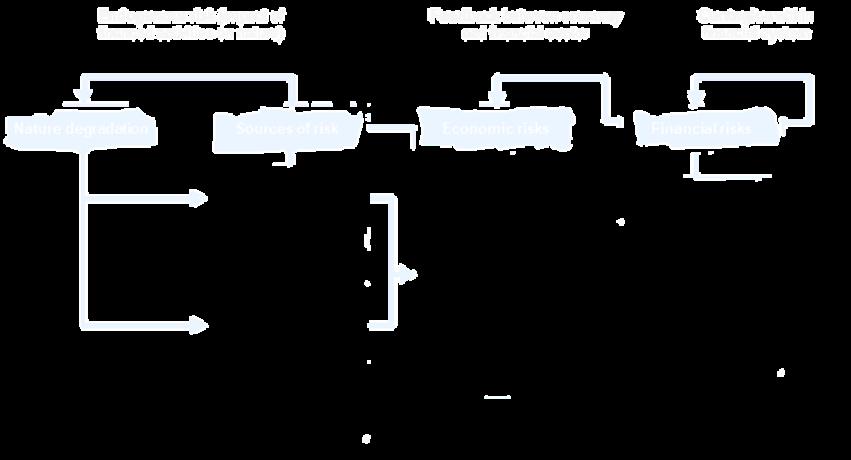
Source: Note: This graph has been adapted from NGFS, “Nature-related Financial Risks: a Conceptual Framework to guide Action by
and
PART 2
SCIENCE BASED TARGETS FOR NATURE – WHAT IS IT?
In response to accelerating nature loss and its mounting financial, social, and regulatory risks, the Science-Based Targets for Nature (SBTN) initiative offers companies a structured way to act. Developed by a coalition of over 80 expert organizations including CDP, WRI, WWF, and UNEP-WCMC - SBTN extends the proven concept of science-based climate targets (via SBTi) to cover the full spectrum of nature: land, freshwater, oceans, biodiversity, and ecosystem services.
SBTN helps businesses align their environmental impacts with the Earth's ecological limits, guided by the latest science from the IPBES, IPCC, and the Planetary Boundaries Framework. It is grounded in the recognition that nature and climate are deeply interconnected - and that meaningful action on climate must be accompanied by equally ambitious action on nature.
The initiative is designed to be practical and scalable. Its first operational guidances focuses on freshwater ecosystems, land, biodiversity, and ocean modules The ultimate goal is to give companies a comprehensive, sciencealigned roadmap to move from “nature-negative” to “nature-positive” by 2030, and contribute to the full recovery of ecosystems by 2050
While climate change remains urgent, it is only one of several interconnected environmental crises Ecosystem degradation, water stress, land conversion, and biodiversity collapse are deeply intertwined with climate breakdown, and businesses cannot solve one without addressing the others. SBTN recognizes this complexity. Its framework enables companies to assess their direct and indirect impacts on nature, prioritize key areas of intervention, and set time-bound targets that are grounded in science The goal: to halt and reverse nature loss by 2030 and enable full recovery by 2050.
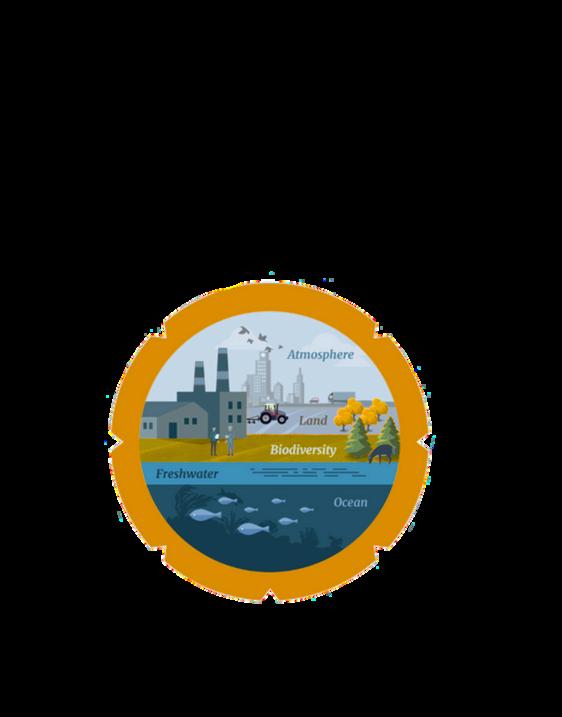
Pressure on Nature, lilke ecosystem use and use change, Resource overexploitation, Pollution,..
Business activities, like Agriculture, transportation, Forestry, Energy, ...
Drivers of Nature Change, like demograhic & Sociocultural, Economic & Technical, Institutions & Goverance and Conflicts & Epidemics
Source: This visual has been adapted from SBTN, “What are SBTs”
How it Differs from SBTi (Climate-Only Targets)
SBTN goes beyond greenhouse gases by also addressing ecosystem pressures like land conversion, water pollution, and biodiversity degradation. It is location-based, recognizing that impacts and solutions are often geographically specific.
It connects nature targets directly to financial risk, reputational concerns, and realworld operational challenges
PART 3
A CLEAR, ACTIONABLE FRAMEWORK
In this part you will learn more about the 5 step SBTN framework and Methodology A high level explanation of each step is given to present the framework and how a company can start implementing SBTN.
Step 1a: Materiality Screening
A quick, high-level assessment using a tool to identify which of your economic activities create significant pressures across eight categories This includes both direct operations and upstream value chains.
Step 1b: Value Chain Assessment
A more detailed analysis of the material activities identified in Step 1a This step involves mapping and quantifying pressures, and evaluating the condition of nature in key locations.
Step 1 will help to focus your target-setting on those environmental pressure that have a significant impact on people and nature
Step 2a: Target Boundary
Delineation
Define boundaries for four pressure categories, identifying all relevant locations in your direct operations and upstream value chains.
Step
2b: Interpretation & Ranking
Standardize environmental data from Step 1 to compare across locations Combine pressure and nature condition indicators into a ranked list showing where action is most environmentally important
Step 2c: Prioritization
Refine your list by factoring in social justice, stakeholder input, business reliance on nature, and strategic or financial risks You can prioritize within each boundary or look for synergies across boundaries to identify top-priority action areas
STEP 3 MEASURE, SET &
DISCLOSE
Step 3a: Set Targets
Set targets, based on the impacts identified in Steps 1 and 2, for freshwater, land or ocean These targets address key environmental pressures such as water use, pollution, land conversion, and biodiversity loss. Targets should be measurable and locationspecific aligned with ecological thresholds
Step 3b: Validate Targets
Submit targets to SBTN for scientific validation and alignment with SBTN methodologies.
Step 3c: Disclose Targets
Publicly disclose targets and progress. This supports transparency and aligns with disclosure frameworks such as CDP, GRI, and TNFD
Implementing science-based targets through real-world action Companies are encouraged to use the AR3T framework, which outlines three types of actions:
1.Avoid and Reduce environmental pressures,
2.Regenerate and Restore ecosystems,
3.Transform the broader systems driving nature loss.
STEP 5 TRACK
Focus on measuring, reporting, and verification (MRV) of progress toward science-based targets. While MRV occurs throughout all five steps, Step 5 formalizes it by helping companies track performance through indicators, data collection, and disclosure.
Guidance on indicator selection and baseline measurements is already included in earlier steps for freshwater and land. Pilot companies are developing MRV approaches within their Corporate Action Plans.
PART 4
WHY THIS MATTERS FOR BUSINESS
Setting science-based targets for nature is not just about sustainability - it is about protecting long-term business value. With regulatory expectations rising, stakeholder pressure increasing, and the financial costs of inaction growing, SBTN provides a trusted, science-aligned roadmap for credible and measurable action. It also positions businesses as leaders in a new nature-positive economy, opening doors to green financing, regenerative supply chains, and resilient operations. The nature crisis is a business crisis. Here’s why acting with SBTN is not only responsible, but essential:
1
Strengthen Risk Management & Resilience
Nature-related risks are material: over 75% of euro-area corporate loans are tied to ecosystemdependent companies Adopting SBTN helps businesses identify and address exposure - such as land use, water, or biodiversity loss - with science-based, location-specific strategies
2 Meet Regulatory and Market Expectations
With rising regulatory pressure from the CSRD, EU Taxonomy, and TNFD, companies must disclose and act on nature-related risks SBTN’s aligned methodology helps them stay compliant, avoid legal risks, and build credibility with regulators and investors.
3
Enhance Reputation and Stakeholder Trust
Companies that act on nature build trust and loyalty with customers, employees, and communities. SBTN reports 74% of businesses with science-based targets see brand and reputation gains. Purposedriven action boosts retention and resonates in a market where environmental transparency is key
4
Drive Innovation and Market Differentiation
Engaging with SBTN drives companies to innovate in products, supply chains, and business models. By aligning with nature through practices like regenerative agriculture or closed-loop manufacturing, they meet rising demand for nature-positive solutions and unlock new markets, partnerships, and growth opportunities.
NetCircular
Looking to Kickstart Your SBTN Journey?
Schedule a discovery call with the Net Circular team to get practical guidance on materiality screening, scoping, and target selection. Take the first step in your SBTN journey - backed by expert insights and frontrunner best practices.

Learn More