An Evotel Production
WHY EVERY HOUSEHOLD MUST HAVE INTERNET!



An Evotel Production
WHY EVERY HOUSEHOLD MUST HAVE INTERNET!


In this edition, we include an article that highlights and emphasises the importance of having internet access in every household. And as Evotel, we mean it — you simply cannot afford not to have internet at home.
If there’s one question that truly matters in 2026, it isn’t “Should we have the internet?” — it should be “Can we afford not to?”
In my view, the answer is a clear no. Here’s why: the internet has become essential infrastructure, much like electricity and clean water, as the articles inside further articulate.
Evotel connects people to opportunities that simply do not exist without connectivity.
Although not every household has fixed home fibre, the majority of access comes through mobile internet. Nearly three-quarters of households rely on their phones to get online. However, we deliver fast and reliable fibre connectivity designed for long-term stability and performance.
Fibre is no longer just a “nice to have” — it is part of how modern society functions.
In the early stages of our tertiary years, many of us had limited exposure to fibre and high-speed internet. Today, however, there is a wide range of service providers who can assist you wherever you are — visit www.evotel.co.za.
When schools assign research projects, homework resources, virtual classes and revision tools that are only available online, lacking internet access becomes a real disadvantage. The first consequence that comes to mind is academic failure.
Students without access at home are less likely to study effectively, apply for scholarships or prepare for exams in the same way that those with connectivity can.
Even government and educational initiatives assume internet access. School systems increasingly rely on online platforms for administration and learning tools, and communities without this support inevitably fall behind.
Fresh from a visit by the Minister of Communications and Digital Technologies, Solly Malatsi, who met with our Group CEO, Albert Oosthuysen, it was reinforced that today’s job market prioritises digital skills. Applications, interviews, banking and even small business sales — almost everything now happens online.
Without a stable internet connection, people struggle to apply for jobs, small businesses miss out on customers, and freelancing and remote work become significantly more difficult.
Put simply, as I sign off: if a household does not have internet access, that family is cut off from opportunities that many others take for granted.

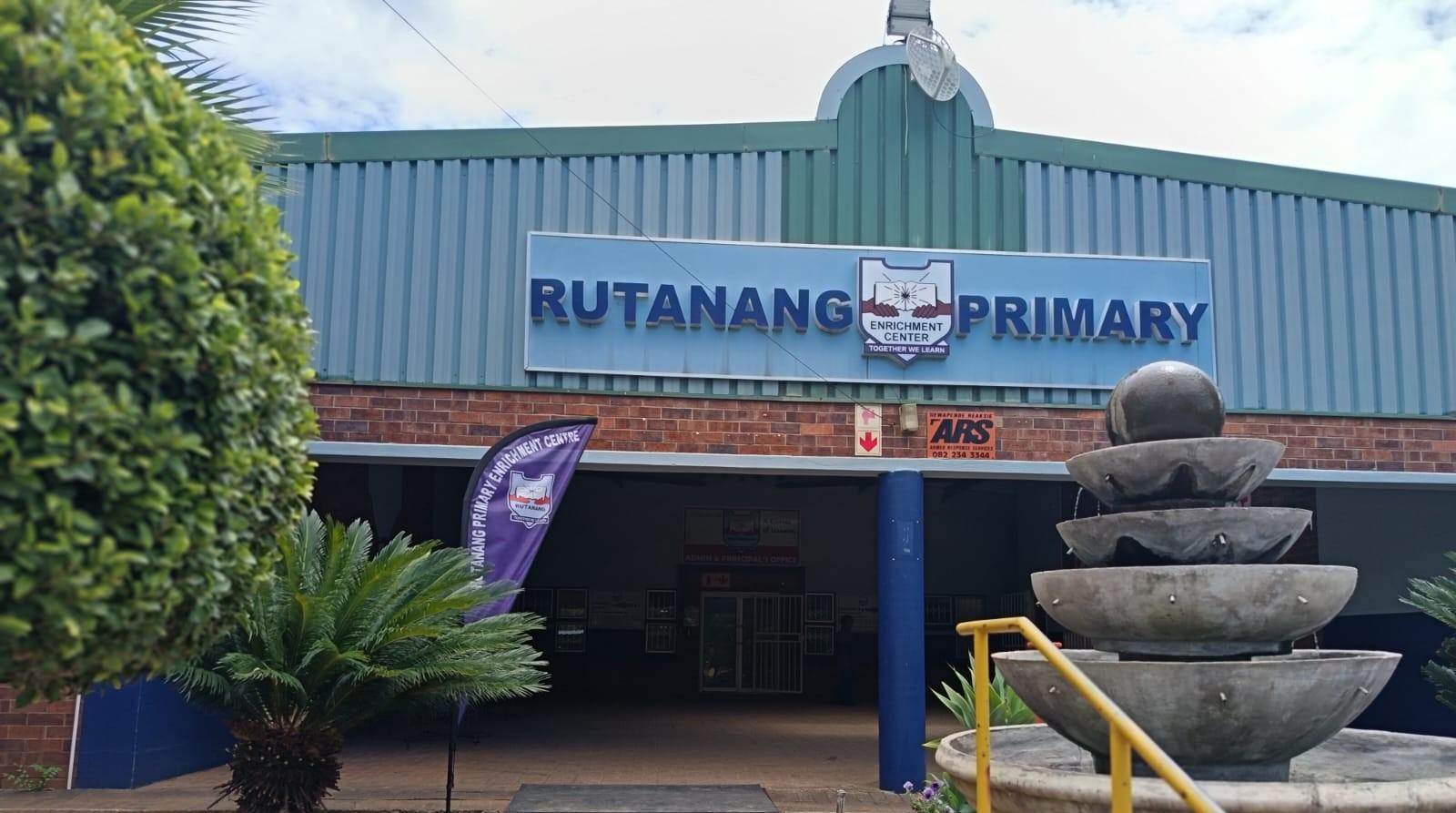
Rutanang Primary School has entered a transformative chapter in its history following its connection to the Evotel network — a milestone that has reshaped teaching methods, learning experiences and the school’s long-term vision.
At the centre of this digital shift is veteran educator and outgoing principal Lesiba Pila, whose passion for progress has defined more than four decades in education.
Now 65 years old, Pila has spent 44 years shaping young minds, with the last 20 years dedicated to Rutanang Primary School.
As he prepares for retirement at the end of February 2026, he is determined to leave behind a school that is not only functional, but future-ready.
For him, the Evotel network has been the catalyst that turned long-held ambitions into practical reality.
“I have gone through many successes and developments in my career as a teacher and principal,” Pila reflected. He also served on the National Executive Board of the South African Education Law Association (SAELA).
“But this partnership with Evotel has been one of the most beautiful chapters of my career.
I have been impressed by the company and remain fascinated by its professionalism.”
The arrival of 1 Gig high-speed connectivity did more than simply introduce internet access — it inspired confidence. According to Pila, the reliability and performance of the Evotel network played a critical role in convincing the School Governing Body (SGB) to invest in digital infrastructure.
As a result, the school purchased 24 smart boards, marking a decisive shift away from traditional teaching tools.
Before the connection, Rutanang Primary followed a familiar path shared by many public schools — from chalkboards to whiteboards, with limited access to digital resources. That changed rapidly once connectivity became stable and accessible.
“Since the connection, we moved from chalkboards to whiteboards, and then to laptops and iPads,” Pila explained from his office in Rustenburg.
“We are no longer an ordinary school. We are a paperless school, and I want it to remain that way, even in my retirement.”
Today, lesson delivery is more interactive, visual and engaging.
Teachers access online resources in real time, learners engage with multimedia content, and administrative processes have been significantly streamlined.
Pila proudly notes that he no longer accepts manual reports — a clear indication of the school’s commitment to efficiency and sustainability.
For educators, the transition has simplified teaching while enhancing effectiveness.
Smart boards allow lessons to be dynamic and adaptable, accommodating different learning styles and improving comprehension.
Exposure to digital tools at primary school level builds confidence and critical skills needed in an increasingly technology-driven world.
“I want this school to be a fully-fledged ICT school. When I retire, I want to know that the Evotel network is being used optimally,” Pila said firmly.
That determination reflects the go-getter spirit that has characterised his career — a mindset shaped over decades of service across various schools and communities.
Pila began his teaching journey in 1982 at Kgosithebe Primary School in Tlakgameng, Vryburg. His leadership potential soon became evident, leading him to Dipudi Primary School in Ganyesa, where he began his principalship.
In 1996, he moved to Rankelenyane Primary School, serving there until 2005. That same year marked a new chapter when he joined Rutanang Primary School in Rustenburg — a decision that would define the final and most transformative phase of his career.
“It has been an excellent journey,” he said, reflecting on more than four decades in education.
Colleagues describe Pila as a principal who never settled for the status quo.
His leadership style combines discipline, vision and an unwavering belief that township and public schools deserve the same technological advantages as their betterresourced counterparts.
The partnership enabled by the Evotel network aligned perfectly with that belief.
As his retirement approaches, the legacy he leaves behind is already visible — not only in smart boards mounted on classroom walls or tablets in learners’ hands, but in a culture of innovation and ambition.
Rutanang Primary School is no longer preparing learners solely for the next grade, but for a digital future.
For Pila, that may be the greatest achievement of all: retiring not at the end of a career, but at the beginning of a new era for the school he served with dedication, pride and vision.



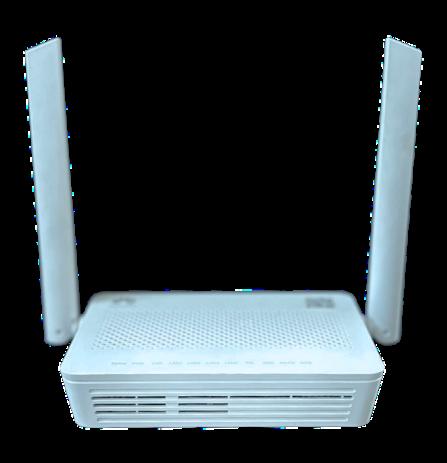
In today’s fast-paced digital world, internet connectivity is no longer a luxury — it is a necessity. Just as electricity and water power our homes, the internet powers our daily lives.
From education and employment to healthcare and entertainment, every household now depends on reliable connectivity to function and thrive in the modern age.
The way we learn has been transformed by the internet. Learners can access online classes, research materials, digital libraries and educational videos at any time.
Whether it is a primary school learner researching a project or a university student attending virtual lectures, connectivity ensures that no one is left behind.
In South Africa, where digital learning continues to expand, households without internet access risk falling behind academically.
A stable connection helps level the playing field by providing equal access to information and opportunity.


Access to essential services has increasingly shifted online. Families now rely on digital platforms for banking, telemedicine consultations, licence renewals and municipal services, often avoiding long queues and unnecessary travel.
In urgent situations, immediate access to information and communication can be lifechanging.
Beyond work and services, the internet plays an important role in keeping families connected. Video calls, messaging platforms and social media make it possible to maintain relationships across provinces and even across borders.
Entertainment options such as movies, music, sports and gaming also provide shared experiences that bring households together.
Modern living is becoming smarter and more secure. Home security cameras, smart alarms and monitoring systems rely on stable internet connectivity.
Parents and homeowners can monitor their properties remotely, offering greater peace of mind and improved safety.
While the importance of internet access is clear, affordability remains a key consideration for many households.
Concerns about cost often delay the decision to connect. This is where Evotel positions itself as a strong contender. The company has built a reputation for offering competitive and accessible fibre packages across South Africa.
Its packages are designed to accommodate different income levels, making high-speed connectivity available to a broader range of communities.
With reliable high-speed fibre suited to streaming, working and learning, and with infrastructure that continues to expand into growing residential areas, Evotel continues to strengthen its footprint.
The focus is not only on connection, but on consistent service delivery.
Evotel recognises that connectivity should not be a privilege reserved for a few. It should be accessible, reliable and reasonably priced.
As we move through 2026 and beyond, a home without internet access risks being a home without opportunity.
Choosing the right provider matters, and with competitive pricing and dependable fibre services, Evotel aims to remain a practical and forward-thinking choice for South African households.



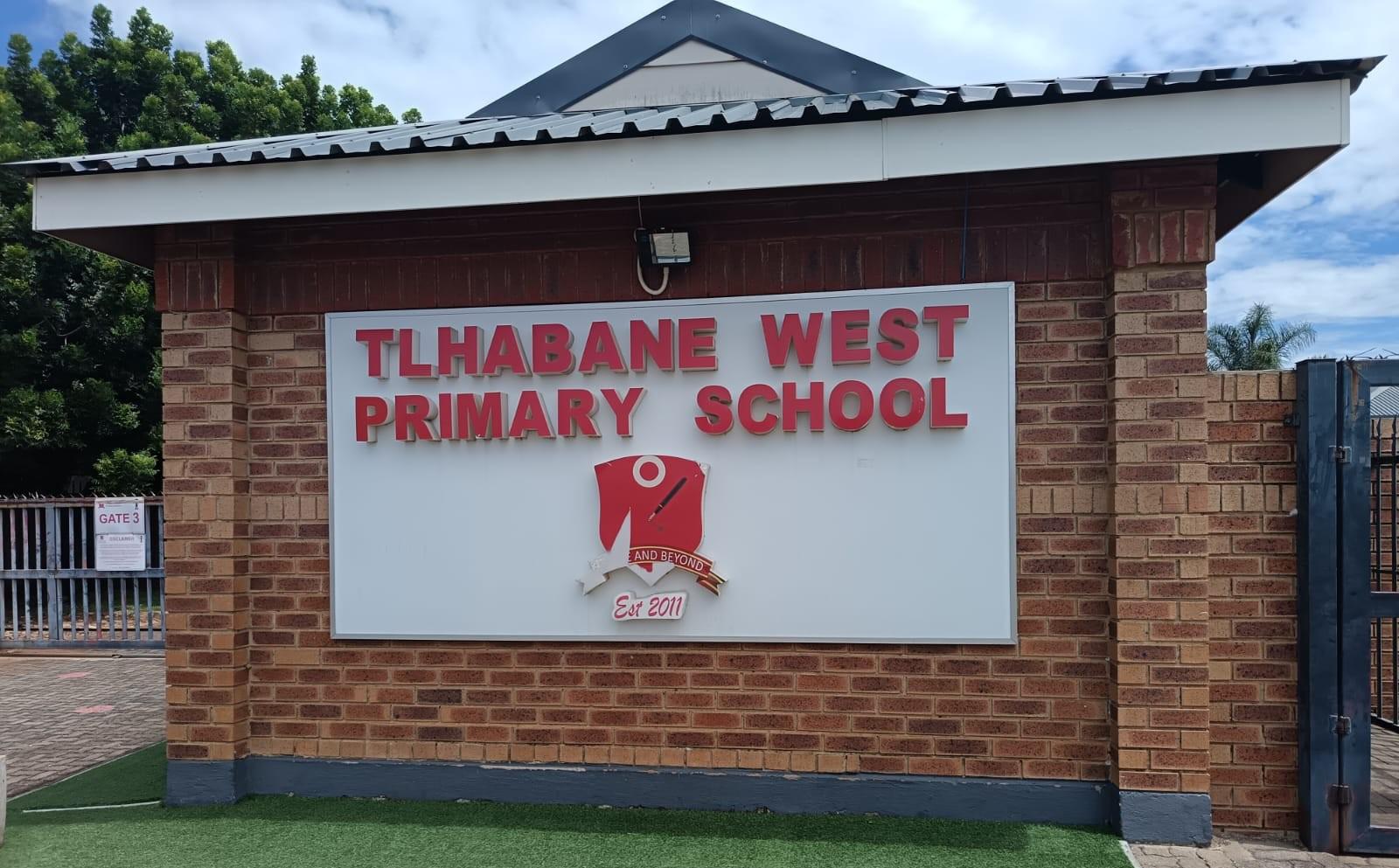
A wave of excitement is sweeping through Tlhabane Primary School in Rustenburg as the institution embraces a new era of digital transformation.
At the centre of this shift is the school’s principal, Ditshego Tlhowe, whose vision for the future of education is steadily becoming a reality.
The school’s recent connection to the Evotel network has significantly improved internet access and unlocked ambitious plans to introduce Robotics and Coding classes for learners from Grade R to Grade 3.
For Tlhowe, the Evotel connection represents far more than faster internet speeds. It is a gateway to opportunity, innovation and empowerment for learners growing up in an increasingly digital world.
Speaking during an Evotel visit to the school, Tlhowe said the partnership has already begun transforming operations.
“I’m happy with the progress at the school, and Evotel has simplified our lives. I want our learners to create robots and code them to perform certain functions.
This will be one of the best schools in Rustenburg,” he said confidently.
The introduction of Robotics and Coding for foundation phase learners is scheduled to begin in the second term in April.
While many schools only introduce these subjects at higher grades, Tlhabane Primary is taking a bold step by targeting early childhood development.
The initiative aligns with South Africa’s broader focus on the Fourth Industrial Revolution (4IR) and the integration of Artificial Intelligence (AI) in education.
Tlhowe believes that exposing learners to coding and robotics at an early age will nurture creativity, problem-solving skills and critical thinking.
“Children are naturally curious,” he explained.
“When you give them tools to build and programme, you unlock their imagination. We want them not just to consume technology, but to create it.”
The milestone is the result of strong collaboration between the school, its internet service provider and corporate partners.
Connectivity was made possible through Thusang Group, the company responsible for linking the school to the Evotel network.
Tlhowe expressed appreciation for the seamless installation and ongoing support.
“Connected by Thusang Group , we truly appreciate the support from Evotel. The connection has changed how we handle administration, communication and now teaching,” he added.
Reliable connectivity has already improved internal processes. Teachers can access online educational resources, administrative tasks are completed more efficiently, and communication with parents has become smoother. However, the most significant transformation is expected in the classroom.
To support the rollout of Robotics and Coding, Tlhabane Primary invested in teacher development.
Three educators have already undergone specialised training, sponsored by SibanyeStillwater Mines, whose contribution has been instrumental in preparing the school for this next phase.
Tlhowe emphasised the importance of equipping educators with the right skills. “We cannot introduce coding and robotics without empowering our teachers first.
Thanks to Sibanye Mines, we now have trained educators ready to lead our learners into this exciting space.
“Our aim is to grow in AI and 4IR. These are not just buzzwords; they are the future of work and innovation. If we prepare our children now, they will be ready for careers that may not even exist yet.”
Parents have responded positively, welcoming the opportunity for their children to gain exposure to advanced technological skills at a young age.
In a community where access to cuttingedge resources has often been limited, this development signals meaningful progress.
The introduction of robotics kits and beginner-friendly coding platforms will allow learners to build simple robots and programme them to perform specific tasks.
Whether guiding a robot to move forward, follow a line or respond to commands, these foundational experiences will lay the groundwork for more advanced learning in later grades.
For Tlhowe, this marks the beginning of a new chapter. The connection to the Evotel network represents a turning point — where vision meets opportunity.
With trained teachers, supportive partners and reliable connectivity in place, Tlhabane Primary School is positioning itself as a model for digital innovation in early education.
In Tlhowe’s words, this is more than progress — it is the foundation for greatness.

On my personal journey, I am constantly reminded that time is our most precious commodity, and that the people we love are often the reason we rise each morning with purpose.
In a world that moves quickly and demands so much of our attention, the moments we carve out for connection are the ones that truly matter.
A reliable internet connection is therefore not just about faster downloads or seamless streaming — it is about enabling meaningful human connection in the moments that count.
Whether it is a video call with a spouse while away on business, an important goodnight call to your child, checking in with grandparents in another province, collaborating with colleagues across cities, running a small business from home, or simply staying connected with friends through everyday conversations, reliable fibre makes distance feel smaller and shared moments more meaningful.
It allows us to celebrate milestones in real time, to offer comfort when it is needed most, and to remain present even when we cannot be physically together.
Uninterrupted communication, free from the frustration of dropped connections and lag, has become a basic need in modern life — as essential to households and businesses as electricity and water.
At Evotel, we remain focused on delivering reliable fibre infrastructure, strengthening network resilience, expanding coverage, and ensuring households have access to affordable, world-class connectivity that supports both personal and professional lives.
When we strengthen connectivity, we strengthen families, empower entrepreneurs, enable education, support economic growth, and reinforce the communities people build — no matter the distance between them.