
PROCEEDINGS REPORT
February 6 and 7, 2026

About Himalayan Future Forum
Opening Session
Unlocking the Carbon Market
Himalayan Disasters: Adaptation and Mitigation
Voices from the Ground: Climate Disasters
Climbing the Technology Hill
Why People Move
Taking Himalayan Brands Global
Digital Futures for Himalayan Languages
Voices From the Ground
Geopolitics and the Himalayas
Looking Ahead
Organizer
Partners and Supporters
ABOUT HIMALAYAN FUTURE FORUM
The Himalayan region, critical to global climate systems and home to diverse communities, cultures, and ecosystems, faces intensifying pressures from climate change, mobility, economic transition, and shifting geopolitical realities. Despite its ecological and strategic significance, the region often remains overlooked within policy and cooperation frameworks. There is a growing need for ongoing dialogue and collaborative platforms that prioritize Himalayan perspectives in shaping resilient and inclusive development.
The Himalayan Future Forum (HFF), convened by the Nepal Economic Forum (NEF), was established to respond to this need. Anchored around three core pillars, climate, community, and connectivity, HFF brings together policymakers, private sector leaders, academics, practitioners, creatives, and youth to deliberate on long-term challenges and shared regional opportunities. The first edition of the forum was held on February 16 and 17, 2024. Following this, the second edition of HFF was held on February 6 and 7, 2026, in Lalitpur, Nepal.
Day one comprised a formal conference held at Hotel Himalaya featuring keynote addresses, thematic panels, and high-level dialogues on climate risks and carbon markets, disasters and resilience, migration, digital transformation, language preservation, entrepreneurship, and geopolitics. These discussions emphasized the urgency of coordinated regional action and strengthened cross-border cooperation.
Youth engagement remained central to the Forum’s vision this year as well, as 22 youth fellows from Nepal and India participated through a competitive selection process, contributing to discussions while strengthening regional leadership networks.
As in the 2024 edition, the forum featured no flex print and limited printed items, eco-friendly seed pens, recycled tent cards, reusable tote bags, eco-friendly ID cards, and curated local art and furniture. Day 1 also parallely hosted stalls at the forum featuring Nepali artist merchandise.
Expanding beyond dialogue, HFF 2026 introduced the Himalayan Haat on the second day, an interactive fair showcasing crafts, food, innovation, and community-led enterprises from across the region. By integrating policy discourse with experience, the Forum reinforced its evolving role as a people-topeople platform promoting cooperation, resilience, and connectivity across the Himalayan region.
This proceedings report documents the key discussions and insights from the Day 1 conference sessions of HFF 2026.
OPENING SESSION

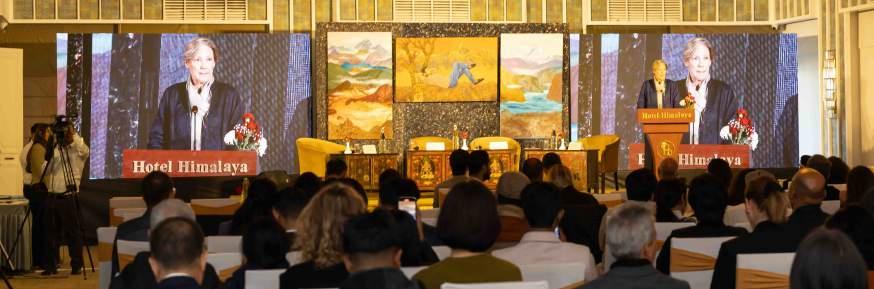
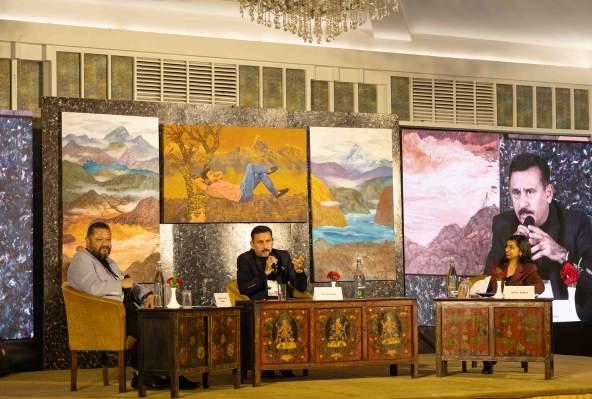
The opening session of the HFF Day 1 highlighted the Himalayas as a critical nexus of climate resilience, connectivity, and economic stability. Speakers emphasized that the region’s stability is central not only to local prosperity but also to broader geopolitical and environmental balance. The Himalayas are an important strategic and symbolic center in which the impact of climate change, cultural diversity, indigenous knowledge, cross-border interdependence, and community resilience converge. The discussions also highlighted the need for new forms of partnership that move beyond aid, rooted instead in inclusive growth, regional cooperation, and trust-building. Further, climate action was presented as both a peacebuilding and financial imperative, demanding stronger institutions, equitable access to climate finance, risk-sharing mechanisms, and the integration of local mountain knowledge into global policymaking. Together, these perspectives underscored that the Himalayan region is not merely vulnerable but central to shaping a more stable, connected, and resilient future.
SPEAKER
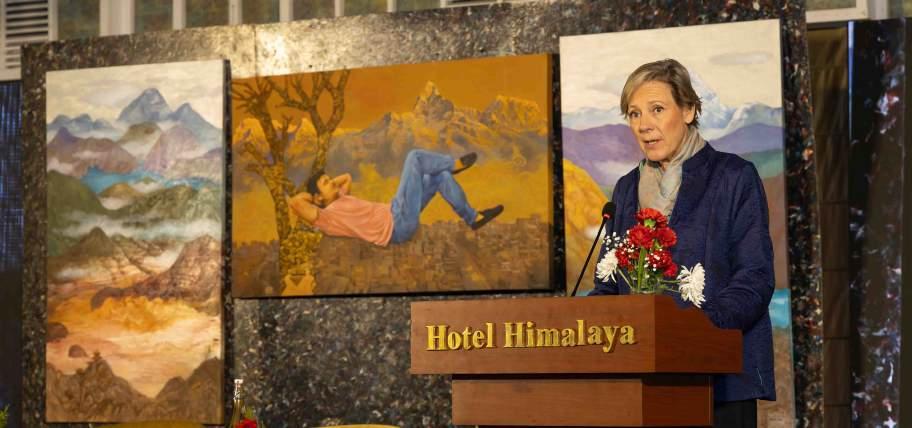
Ambassador of the European Union to Nepal H.E.VeroniqueLorenzo
European Union Ambassador to Nepal H.E. Veronique Lorenzo, in her opening remarks at the Himalayan Future Forum, emphasized that stability in the Himalayas is central to both regional prosperity and the evolving global order. She underlined that the region, long seen as remote, is of strategic importance amid accelerating geopolitical change. The EU’s partnerships, including ongoing trade and security dialogues with India and cooperation with China on climate action, reflect shared responsibility for regional stability and sustainable growth. Climate change, she noted, is advancing faster in the Himalayas than the global average, with growing water variability, hydropower risks, and frequent extreme events that strain governance and public trust. Climate action, therefore, is not only an environmental imperative but also a peacebuilding and conflict‑prevention tool.
Ambassador Lorenzo further stressed that traditional, aid based models of cooperation are giving way to partnerships built on investment and shared risk. The Himalayan region, she argued, must have equitable access to global carbon markets and climate finance, grounded in strong institutions and informed dialogue. She highlighted the interlinkages between climate, migration, and development, noting that mobility from the region is reshaping societies and must be managed through safe, legal, and dignified pathways.
Himalayas matter, not because they're vulnerable, but because they're central to climate security, to human security, and increasingly central to regional stability.
Emphasizing that “growth without inclusion breeds instability,” she called for people centred development that empowers women and youth, strengthens community resilience, and ensures that progress translates into shared opportunity rather than deepened inequality.
She concluded by reaffirming that infrastructural connectivity, trade linkages, and digital transformation must ultimately serve people reducing inequality and fostering inclusion rather than creating new dependencies. Stressing that connectivity is never neutral, Ambassador Lorenzo underscored the need for intentional design that strengthens local resilience, expands education, and promotes rural transformation through technology. She pointed to academic exchanges, tourism, and people‑to‑people engagement as essential avenues for building trust and mutual understanding. As trade and investment increasingly replace traditional aid, she highlighted that effective governance and regional cooperation are vital to managing shared risks. Closing her remarks, the Ambassador called for renewed partnerships grounded in trust, “ our most precious resource in an uncertain world.”
MahendraP.Lama SPEAKER
Senior Professor, Jawaharlal Nehru University
Advisory Board Member, Himalayan Future Forum
In his address, Professor Mahendra P. Lama reflected on what the Himalayan Future Forum stands for, a collective voice and platform for borderland and mountain communities to assert their perspectives in global policy debates. He opened by asking, “Where do we stand in the global climate change debate?” and described how the Himalayan people remain trapped in what he called the “Triple Triangular Trap”: they are custodians of global ecological balance yet excluded from major decisions; rich in traditional knowledge yet underrepresented; and most affected by climate change yet least responsible for it. Professor Lama reminded participants that mountain communities are not victims alone; they are also integrators of trade and culture across valleys and transboundary landscapes, custodians of centuriesold medicinal systems, and reservoirs of traditional environmental wisdom. Yet, he warned, global devastation and environmental negligence are pushing the Himalayas to the margins of survival, with changing seasons, glacial lake outburst floods, erratic hydrology, and genetic erosion all reshaping mountain life.
Professor Lama emphasized that the Himalayan Future Forum seeks to globalize the local, bringing mountain narratives, lived realities, and adaptation knowledge into international climate discourse. Although frameworks such as the 14 SAARC Summit Declaration on Climate Change have been tabled, he lamented, implementation has lagged behind policy promises. Despite mounting risks, th
mountain communities have shown remarkable resilience and adaptation capacity, and their knowledge systems deserve global recognition. Technology, he noted, must become a conduit for sharing mountain-based adaptation practices rather than deepening isolation. The Forum thus positions itself as a venue for bridging divides, connecting local narratives to global policy tables, and amplifying the mountain perspective in debates that have too often marginalized it.
Turning to the theme of connectivity, Professor Lama described borderlands as dynamic spaces of integration rather than division. The Himalayan borders, ranging from open pillars along Nepal-India to market towns at the Bangladesh frontier and fortified fences on the India-Pakistan line, illustrate the region’s complex geography of interaction. Land borders, he argued, are critical for fostering cooperation, economic vitality, and stability. Through cross-border corridors, hard borders can evolve into soft borders that transform conflict into cooperation and dependence into interdependence. Culture, tourism, food, and energy exchange already weave these boundaries together. Concluding with a reflection rooted in his own experience, he noted how daily spiritual and cultural practices, such as protecting sacred springs as abodes of deities, constitute time-tested conservation strategies, demonstrating that mountain heritage and environmental stewardship are inseparable. HFF, he affirmed, is precisely the space where these connections, of people, knowledge, and policy, and can converge to create a sustainable Himalayan future.

SPEAKER
MahendraK.Shrestha
Chairman, Himalayan Everest Insurance Advisory Board Member, Nepal Economic Forum
In the opening plenary, Mahendra K. Shrestha underscored that climate change is no longer an abstract or decorative concern but a lived financial reality. Extreme weather events, once dismissed as “acts of gods,” now cascade across sectors and communities, compounding vulnerabilities and delaying recovery. He described the changing climate as a force that has blurred traditional boundaries between natural and human-made disasters, creating a corrosive uncertainty for households, governments, and insurers alike. In places where homes and livelihoods remain uninsured, a single flood or landslide can set off cycles of migration, poverty, and long-term loss, with women often enduring the longest recovery periods. Disasters, he noted, are no longer just environmental or social shocks but financial shocks that alter lives across generations. Without financial buffers, resilience collapses and insurance becomes a critical tool for restoring confidence before loss even occurs.
Shrestha argued that the insurance sector must reinvent itself as an engine of adaptation and resilience in a climate-altered world. Traditional actuarial models, built on predictable data, no longer capture modern climate risks. The key question, he proposed, is whether insurance can help societies adapt rather than merely compensate. This requires a shift from exclusion to inclusion through community-based risk pools and climate-specific instruments such as parametric and microinsurance, enabling protection for farmers, small businesses, and vulnerable households.
Can insurance help societies adapt and can insurance act as a tool for climate resilience?
Insurance, he said, must evolve from individual risk coverage to systemic resilience, anchored in strong regulation, public trust, and financial literacy. He urged Himalayan societies to build regional cooperation and design context-specific financial solutions. In this way, he underscored how insurance transforms from a reactive safety net into proactive “risk infrastructure,” central to both economic security and climate adaptation in the Himalayas.

UNLOCKING THE CARBON MARKET
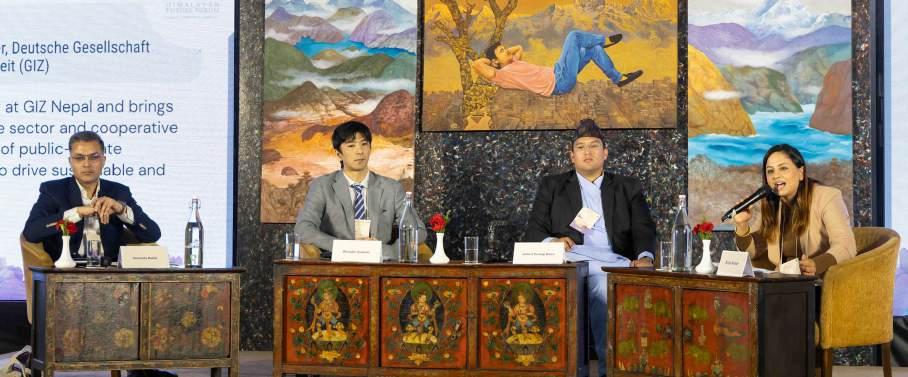
This session highlighted that Nepal’s Carbon Trading Regulation, 2025 marks an important step in transforming the country from a high-potential but uncertain carbon market into a more standardized and investable one by providing the regulatory clarity. However, the panelists cautioned about several implementation challenges, including institutional capacity constraints, uncertainties around monitoring, reporting and verification systems, and ambiguities in benefit-sharing and contractual arrangements. The discussion also underscored the increasing complexity of global carbon markets and the growing demand for high-integrity credits that demonstrate both emission reductions and tangible community benefits. Panelists further stressed the need to expand Nepal’s focus beyond traditional forestry projects to include diverse mitigation activities and emerging credit market instruments in order to attract private investment and scale climate finance.
MODERATOR
BinijaNepal
Programme Component Manager, Deutsche Gesellschaft für Internationale Zusammenarbeit (GIZ)
Binija Nepal’s work at GIZ Nepal centers on scaling proven development models and building public–private partnerships to drive sustainable and inclusive economic growth. Opening the session, Binija highlighted that carbon markets are emerging as a key global mechanism for channeling finance toward climate action She emphasized that carbon trading presents both an opportunity and a challenge for a country like Nepal, which is highly vulnerable to climate impacts yet contributes minimally to global emissions. Binija noted that even without a formal regulatory framework in place, the country was able to mobilize approximately USD 9.4 million through the Forest Carbon Partnership Facility, demonstrating its potential to engage in global carbon markets. She underscored that with the recent endorsement of the Carbon Trading Regulation, 2025, Nepal now has a critical foundation to scale its participation and unlock new pathways for climate finance.
Guiding Questions:
Can you share some insights or examples regarding market-based financing opportunities in the carbon market space?
What market and financing conditions have proven most effective in other countries to crowd in private sector investment into high integrity carbon market?
What do you think are the most important provisions that businesses need to understand? Where do you see the key legal or implementation risks in the early phase?
From a business standpoint, what kind of legal and contractual clarity are most critical to reduce the risk?
How does the carbon trading regulation change the risk profile and bankability of carbon projects in Nepal? And where do you still see uncertainty for private investors?
Apart from forest carbon initiatives, what other kind of activities or projects in Nepal can produce internationally tradable carbon credits?
JaikritPratapRana SPEAKER
Country Representative and Consultant, Value Network Ventures
Jaikrit Pratap Rana stated that the Carbon Trading Regulation, 2025 has helped move Nepal from being a high-potential but uncertain carbon market to one that is more standardized and investable. He noted that while the regulation does not remove the risks in carbon trading, it does make them clearer and easier to price. According to Rana, the regulation brings regulatory clarity, aligns Nepal more clearly with global carbon markets, and improves revenue predictability.
The regulations need to be tweaked a little. I think they are very good. The framework and everything provided by the Nepali government is fantastic. But I think it is more concentrated on oldschool carbon credits and mainly on the forestry aspect.
He further cautioned about implementation risks, including possible red tape, risks in bilateral agreements, and uncertainty in benefit-sharing arrangements. Rana also shared his personal experience about the difficulty he faced due to the lack of scalability in a carbon restoration forest project, mainly because of the limited availability of large land areas in Nepal. He further explained that due to the benefit-sharing provision, along with upfront validation costs and baseline studies, the initial investment required is very high.
Rana highlighted that the regulations are focused on old-school carbon credits and do not take into consideration other Internationally Transferred Mitigation Outcomes (ITMOs). Moreover, he emphasized the need to also consider new credits such as I-RECs, methane credits, biodiversity credits, and voluntary carbon market credits.
SPEAKER
KeisukeIyadomi
Senior Climate Change Specialist - South Asia, World Bank
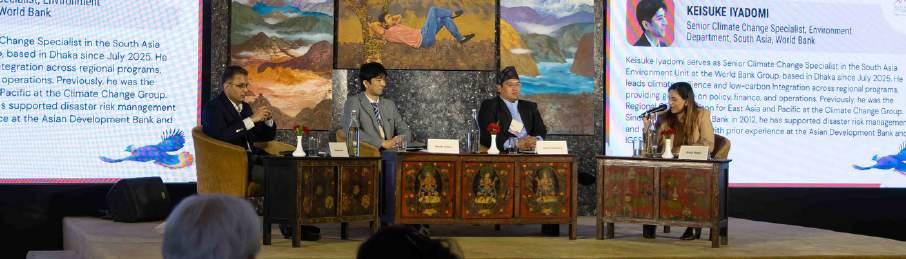
Keisuke Iyadomi outlined the changing complexity of the global carbon market. He emphasized that the earlier model was relatively simple, as developed countries primarily generated demand for carbon credits while developing countries supplied them. However, the dynamics have shifted significantly today, as each country now has its own commitments to achieve emission reductions under the Paris Agreement. Hence, according to Iyadomi, the key question for countries like Nepal is whether exporting credits could undermine their own climate commitments. He also noted that voluntary carbon markets operate through independent crediting standards with their own systems and procedures for issuing carbon credits, resulting in different varieties of credits in the market and further increasing complexity.
Iyadomi explained different schemes under Article 6 of the Paris Agreement through which countries can obtain emission reductions from other countries as part of their commitments. However, he cautioned that this should not lead to a situation where countries shift their responsibilities to others instead of achieving their own emission reduction targets. He also cautioned about the growing demand for highintegrity carbon credits that go beyond emission reductions to demonstrate tangible sustainable development in communities or among beneficiaries.
A carbon credit, in simple words, means that you reduce emissions, and in return that emission reduction is recognized as a carbon credit. However, buyers also look for more than that. They want to ensure that the project they invest in when purchasing carbon credits genuinely contributes to sustainable development in the communities or among the beneficiaries.
Turning to domestic policy, he welcomed Nepal’s Carbon Trading Regulation, 2025 as a positive step toward mobilizing climate finance, while reminding policymakers of the importance of balancing national accountability with private-sector incentives. He noted that countries can use a “positive list” to clarify which types of activities they want to promote through the carbon market and streamline procedural requirements, thereby encouraging private-sector participation in those activities.
SemantaDahal SPEAKER
Advocate and Partner, Abhinawa Law Associates
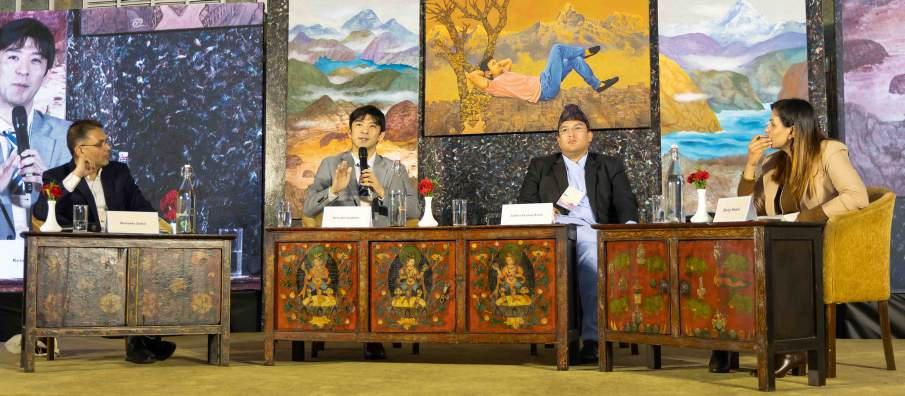
During the discussion, Semanta Dahal shared the difference between climate finance under Article 9 and carbon finance under Article 6 of the Paris Agreement and noted that Nepal’s Carbon Trading Regulations, 2025 incorporate both mechanisms. He highlighted that although the Environmental Protection Act, 2019 only considers the Nepal government’s involvement in carbon trading, the Carbon Trading Regulations, 2025 innovatively interpret this provision to allow participation by local companies, foreign entities, and joint ventures in Nepal to trade carbon through the government.
Dahal noted that forestry projects require initial screening by the REDD Implementation Center, while non-forestry projects are screened by the relevant sectoral ministry. Final approval is ultimately granted by the Ministry of Forests and Environment. He also noted that Nepal’s regulation allows the sale of 95% of generated carbon units internationally, with 5% retained for Nepal’s Nationally Determined Contribution (NDC) targets. He further explained the revenuesharing arrangement between project developers and the government.
The primary legislation, namely the Environment Act (or Environmental Protection Act, 2019), only refers to the government's involvement in the trading of carbon units. However, this provision was interpreted innovatively and creatively by the government when drafting the Carbon Trading Regulation, allowing even the private sector, through the government, to participate in the trading of carbon units.
Dahal also discussed major implementation challenges, including limited institutional capacity and coordination, uncertainty regarding monitoring, reporting, and verification (MRV), and ambiguity in benefit-sharing and royalty provisions.
From a seller’s perspective, he highlighted two agreement mechanisms of Emission Reduction Payment/Purchase Agreements and Mitigation Outcome Purchase Agreements for carbon trade and encouraged sellers to attain clarity in these mechanisms before entering the contract. He emphasized that key risks for Nepali sellers include clarity regarding the agreement type, exposure to default liability (generation, issuance, and delivery risks), failure in verification, safeguard-related indemnities, exclusivity arrangements, and changes in legislation in the buyer’s jurisdiction.
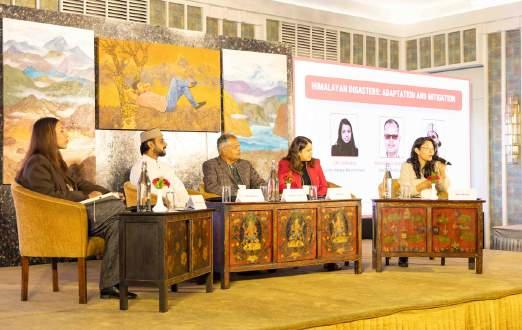
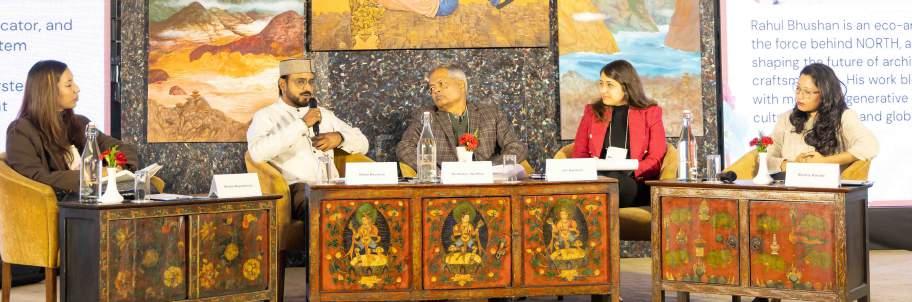
HIMALAYAN DISASTERS: ADAPTATION AND MITIGATION
The session brought together experts and practitioners addressing the growing climate and disaster challenges in the Himalayan region, highlighting both scientific insights and policy lessons. Speakers examined how climate change is intensifying disasters across the Himalayan region and exposed the urgent need for resilient, equitable, and forward looking infrastructure systems. They further emphasized that disasters themselves do not cause devastation, but rather that it is fragile infrastructure, weak institutions, and inequitable decision making that turn hazards into human and economic crises. Consequently, the speakers called for integrating indigenous knowledge, anticipatory planning, and advanced early warning technologies to strengthen preparedness and reconstruction efforts. The discussion underscored that resilience in the Himalayas is not just an engineering challenge but a political, social, and cultural commitment shared across governments, private actors, and communities.
PRESENTER
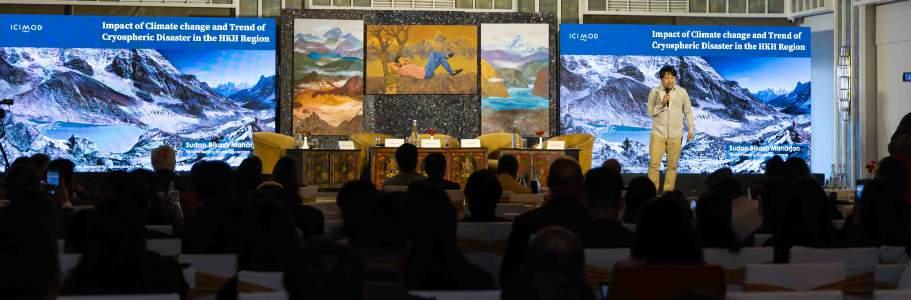
SudanBikashMaharjan
Geologist and Remote Sensing Analyst, ICIMOD
In his presentation, Sudan Bikash Maharjan of the International Centre for Integrated Mountain Development (ICIMOD) highlighted the organization’s work on cryospheric research, landslide forecasting, climate risk assessment, and regional knowledge sharing across the Hindu Kush Himalaya (HKH). The HKH is the “Water Tower of Asia,” supporting nearly 240 million people. Maharjan noted that the same water systems sustaining life also generate growing disaster risks as glaciers melt at an alarming rate. Citing ICIMOD’s long-term monitoring of the Yala Glacier, which has retreated by over 760 meters in four decades, he illustrated how rapid warming and expanding glacial lakes, such as those in the northern Annapurna region, are heightening the threat of glacial lake outburst floods (GLOFs).
Drawing on recent events in Thame, Til, and Rasuwagadhi, Maharjan discussed the cascading impacts these disasters have on mountain settlements and infrastructure, stressing the value of community-led responses and learning from past events to strengthen resilience. Reflecting briefly on the Forum itself, Maharjan remarked that it was an interesting platform to attend as a scientist, an opportunity to engage with practitioners and policy voices addressing shared challenges across the Himalayan region.
VOICES FROM THE GROUND: CLIMATE DISASTERS
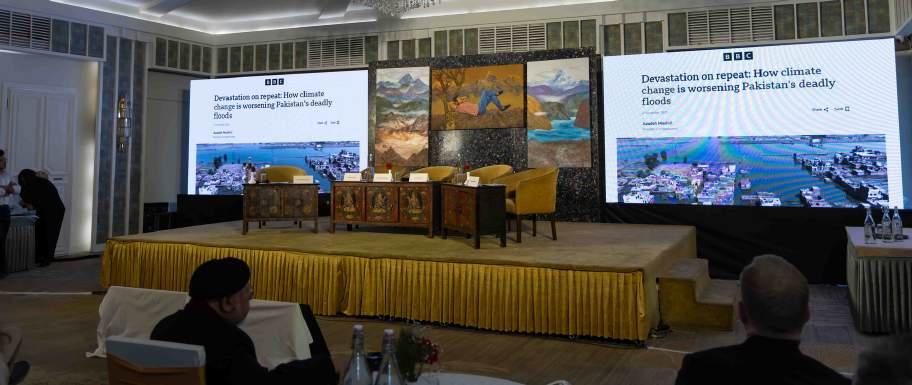
A short video produced by the Nepal Economic Forum set the context for the panel discussion, offering a stark overview of the escalating climate disasters across the Himalayan region and wider South Asia. It depicted the growing frequency and intensity of heatwaves, cyclones, flash floods, landslides, and glacial lake outburst floods affecting Bangladesh, India, Nepal, Pakistan, Tibet, and Myanmar. The video underscored that South Asia has become one of the world’s most climate vulnerable regions, where cascading and multi hazard events are increasingly the new normal. These disasters are taking lives, displacing communities, and destroying infrastructure, farmland, and livelihoods. The video concluded with a pressing question: how can the region strengthen mitigation and adaptation before the human and economic costs of the climate crisis escalate further?
SoniaAwale MODERATOR
Editor, Nepali Times
Sonia Awale is an editor at the Nepali Times with extensive experience covering environmental issues in Nepal. Awale framed the panel by pushing participants to look beyond the default tendency to attribute every disaster to climate change. She asked whether inadequate reconstruction, poor planning, and the neglect of indigenous knowledge are equally to blame, and how governments and civil society can better collaborate to manage climate risks. Her guiding questions probed whether climate change is, at its core, a water crisis; how infrastructure planning can move beyond reliance on historical data to prepare for an uncertain future; what concrete approaches organizations like Rahul’s are taking on the ground; and, given Nepal’s status as a disaster hotspot, whether the country is truly becoming more prepared, including how anticipatory action is being institutionalized within national disaster risk management systems.
Guiding Questions:
To what extent is it accurate to attribute these impacts to climate change alone, and how should reconstruction processes better integrate indigenous knowledge? What practical forms of collaboration between government and civil society are needed to manage climate related disasters more effectively?
From your experience, is it correct to say that climate change is fundamentally a water crisis in Nepal and the wider Himalaya?
Given that infrastructure planning still relies heavily on historical climate data, how should we rethink planning for an increasingly uncertain future?
Himalayan Disasters: Adaptation and Mitigation
Could you briefly outline your organisation’s work and the core principles that guide its approach to resilient architecture in the Himalayas?
Nepal is often described as a disaster hotspot where many hazards are predictable, yet preparedness still seems insufficient; would you say the country is closing this gap, or not yet? In concrete terms, how is anticipatory action being embedded within Nepal’s disaster risk management system?
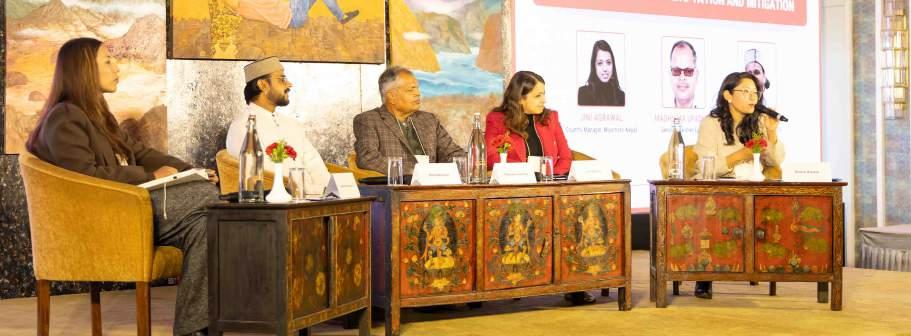
SPEAKER
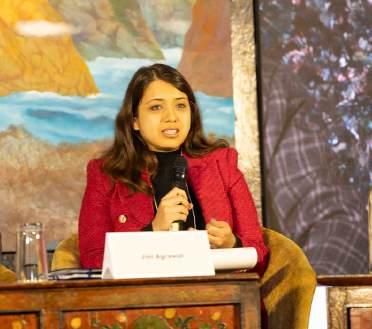
JiniAgrawal
Country Manager, Miyamoto Nepal
Jini Agrawal emphasized that climate change acts as a stress multiplier, driving more frequent and intense floods and landslides, and argued that it is often not the hazard itself but the absence of climate‑disaster‑resilient infrastructure that turns these events into lethal, financially burdening crises. She underlined that reconstruction after disasters is not merely a technical exercise but a political process shaped by decisions on who receives resources, when, where, and on what terms, raising questions of prioritization, relocation, and equity.
Drawing on an example from a rural province in Afghanistan, she showed how clusters of 15–20 houses enclosed within traditional boundary walls fared very differently during an earthquake; some walls failed while others, built with older techniques now largely forgotten, remained intact, illustrating how reviving indigenous construction knowledge can significantly strengthen affordable, climate resilient infrastructure. Agrawal stated that reconstruction is not just about technical expertise but that it is also a deeply political undertaking.
Engineers can create strong designs for infrastructure like homes, roads, and bridges, but the key decisions about allocating resources, who benefits, in what ways, and at what time and place are driven by issues of power, funding, and priority setting.
Himalayan Disasters: Adaptation and Mitigation
Agrawal concluded that no single actor can manage climate disasters alone: governments must lead on cross-border data sharing, hazard mapping, risk zoning, realistic building codes, and designing early warning systems; the private sector should drive innovation through technologies such as AI-based forecasting, resilient materials, and risk-sharing instruments like insurance; and civil society has a key role in assessing community needs, building capacity, and transmitting indigenous practices to new generations.
Senior Watershed Expert MadhukarUpadhya SPEAKER
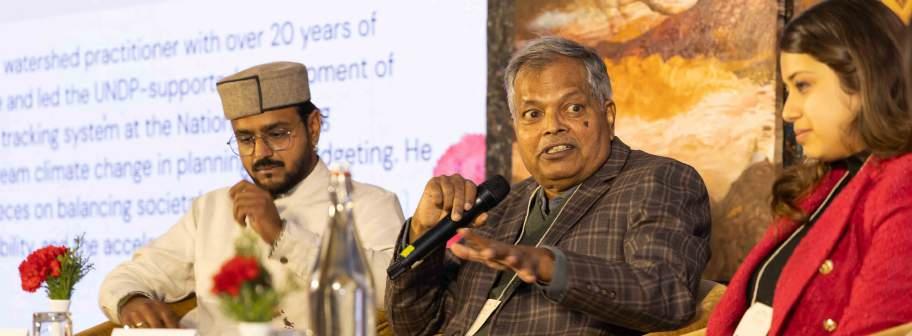
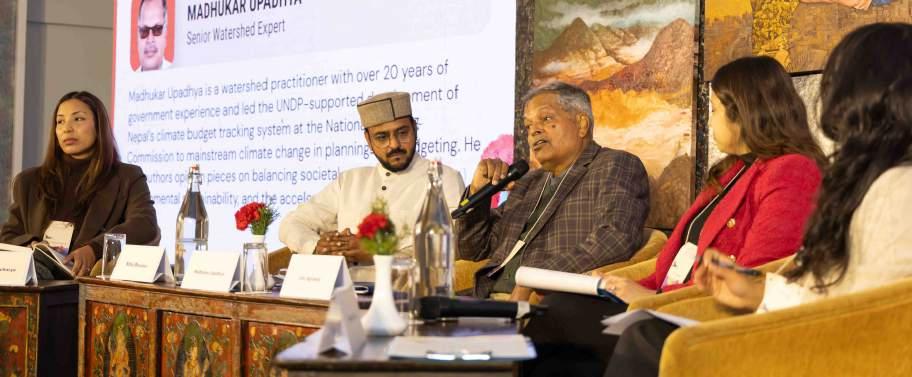
Madhukar Upadhya warned that the Himalayas have entered an era of “global water bankruptcy,” where changes in precipitation and temperature are pushing the region beyond conventional notions of scarcity.
He also spoke of the rapid climactic and environmental changes. Upadhya spoke of how disaster response is different in the various regions of Nepal, from the mountains, hills, and terai. He noted that winter rains have almost disappeared, snowfall has declined, and groundwater is depleting rapidly, with an estimated half of freshwater springs in the Himalayan region already lost. Recent anomalies, such as delayed monsoons shifting further north and increased drought in the Terai, illustrate how fast environmental conditions are shifting.
Upadhya argued that current early warning systems, based on unreliable and inaccurate forecasting technology, are not adequate for unprecedented events. He further underscored the urgent need for far more advanced and context‑specific early warning systems. He described a large mismatch between the current systems and infrastructures with the reality of climate change’s scale and impact. As Upadhya spoke of the damage to infrastructure due to monsoon flooding, he called for upgrading
Himalayan Disasters: Adaptation and Mitigation
infrastructure, building stronger institutions to interpret and apply indigenous, nature based knowledge, and shifting toward “water husbandry” that goes beyond basic rainwater harvesting, beginning with practical water saving education for students and communities.

Rahul how and w about constructing infrastructure for today but also about designing responsible systems that can last two or three generations, using low‑carbon, natural, and reusable materials such as stone and wood that can be upcycled over time.
He stressed that the Himalayas themselves are not fragile; rather, it is the way infrastructure has been sited and built, often now on riverbeds and other high risk zones, in contrast to earlier settlement patterns, that has created new vulnerabilities, driven by ignorance and lack of awareness.
As people who cannot and will not leave the Himalayas, he argued, communities must cultivate a conscious connection with their flora, fauna, architecture, and cultural heritage, and re‑educate younger generations to value and build upon ancestral knowledge. Observation and lived experience, he suggested, are as important as technical ‘book smarts’ in rethinking where and how to build so that design and solutions are matched by ground level practices that are genuinely resilient rather than “fake solutions.”
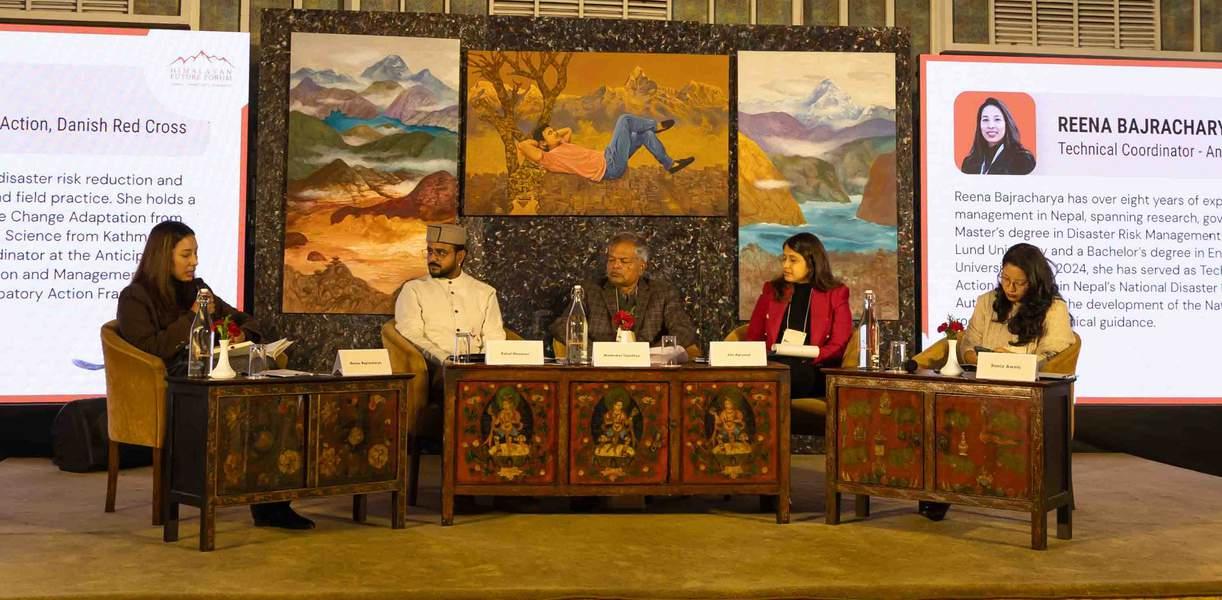
ReenaBajracharya SPEAKER
Technical Coordinator - Anticipatory Action, Danish Red Cross
Reena Bajracharya outlined how Nepal is increasingly integrating anticipatory action into its disaster risk management system, building on a national disaster risk reduction and insurance strategy endorsed in 2020. She noted significant improvements in weather forecasting, the rollout of early warning systems in high‑risk areas, and a shift towards impact‑based forecasting and community‑based protocols. Warehouses have been established in each province for pre‑positioning relief items, and real‑time risk information is now shared through a dedicated government department. Nepal has also developed a national anticipatory action framework that provides a five‑year roadmap, clarifies roles and responsibilities, and is supported by an anticipatory action “clinic” and a technical working group under the national disaster authority, with growing numbers of institutions engaged, particularly on floods.
At the same time, she emphasized that Nepal’s preparedness still lags behind the scale and complexity of the hazards it faces, especially as multi‑hazard, cascading events such as GLOFs and floods evolve and transform over time. Capacity constraints, financial, technical, and human, especially at local levels, along with coordination gaps among disaster institutions and limited data on exposure and vulnerability, remain major obstacles.
Cross border data sharing and cooperation with neighboring countries are essential but underdeveloped. Bajracharya stressed that while Nepal is not entirely unprepared, matching preparedness to risk will require deepening anticipatory systems, closing data gaps, and strengthening institutional coordination so that actions based on forecasts can be taken before hazards materialize.
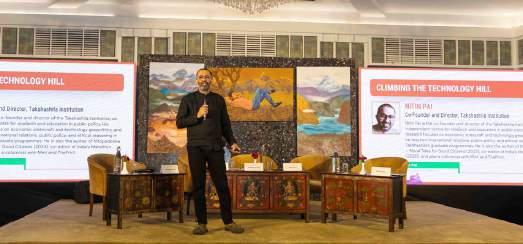
CLIMBING THE TECHNOLOGY HILL
PRESENTER
Co-Founder & Director, Takshashila Institution
Nitin Pai delivered a thought-provoking presentation titled “Climbing the Technology Hill,” examining how rapid technological change is reshaping power structures, governance systems, and social norms. While acknowledging that technology can help address capacity gaps and solve complex societal challenges, he stressed that the defining issue is not innovation itself, but how technological power is structured and exercised within society.
He warned of the growing convergence of corporate and political power, where dominant technology platforms accumulate monopoly control and extend influence into political and regulatory domains. The concentration of critical infrastructure, including digital networks and satellite systems, in the hands of a limited number of actors raises fundamental concerns for sovereignty and democratic accountability. He further noted that artificial intelligence and autonomous systems are transforming warfare and geopolitics, often outpacing ethical and legal safeguards.
Pai also highlighted the imbalance between technological costs and benefits. The rapid expansion of AI systems, cryptocurrency activities, and large-scale data centers consumes immense natural and financial resources, while environmental and social consequences are borne by wider populations who have little say in these developments.
To navigate this terrain, he proposed four guiding principles: strengthening community to reclaim collective agency; owning technological choices rather than adopting tools uncritically; prioritizing open systems to avoid overdependence on monopolistic platforms; and embedding pluralism in technological design to reflect the diversity and democratic character of Himalayan societies.
He concluded by urging societies to exercise their freedom to think and act deliberately, emphasizing that climbing the technology hill requires ethical reasoning, institutional foresight, and conscious choices that ensure technology serves society, not the other way around.

WHY PEOPLE MOVE
The "Why People Move" session at the Himalayan Future Forum explored migration as a multi-layered phenomenon, with discussions centered on the core themes of climate, connectivity, and community, moving beyond a strictly economic lens to view migration as a deeply personal yet globally significant political dynamic. The discussion highlighted how the movement of people is simultaneously a movement of ideas, cultures, and religions that have long defined the region. Ultimately, the session framed migration as a complex package of factors rather than an isolated issue, calling for a structural transformation that leverages the region’s natural and cultural diversity to turn global challenges into an opportunity for sustainable local prosperity. Himalayan Future Forum 2026
MODERATOR
ManjuvonRospatt
Research Fellow, Nepal Economic Forum
Manju von Rospatt’s work at the Nepal Economic Forum focuses on bridging the gap between local narratives and global policy frameworks, particularly in the context of human mobility and environmental change. Manju opened the session by highlighting that migration is not just a movement of people, but a movement of ideas, cultures, and religions that have historically defined the Himalayan region and the Silk Road. Manju emphasized that, amid the escalating climate crisis, there is an urgent need to change perspective: we must move beyond viewing migration through a purely economic lens and instead recognize it as a deeply personal yet globally significant political dynamic shaped by the intersection of climate, connectivity, and community.
Guiding Questions:
What are the primary drivers of migration, and how do the intersections of climate, connectivity, and community influence the decision to move?
What have you learned about "climate mobility" through your storytelling with Himalayan communities?
Where are migration trends going, specifically regarding new destinations like Europe?
What does your research show about the "diaspora" and why returnees struggle to stay in Nepal?
How can climate change be seen as an "opportunity" to bring people back?
What is one "fresh perspective" or shift in thinking you want to leave with the audience?
AnitaGhimire SPEAKER
Director- Social Science Research, Nepal
Institute for Social and Environmental Research
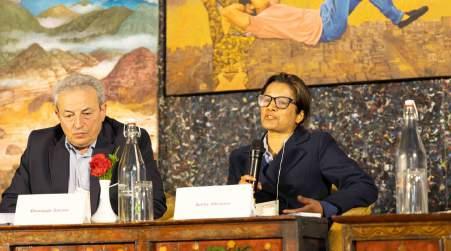
Anita Ghimire emphasized that Nepali migration has evolved from an economic necessity into a widespread coping strategy and community aspiration. Originally driven by agricultural failure to meet climate and financial needs, Ghimire noted that this movement is now sustained by dense networks of employers and intermediaries. She shared how her research indicates that adolescents increasingly view moving abroad as the primary way to combine "learning and earning" opportunities, which are perceived as absent at home. This "wave of aspiration" is evidenced by data showing that 72% of grade 12 girls intend to migrate within two years.
Ghimire further noted that a critical three-year "contemplation" window for returnees exists, who often re-migrate if local structural hurdles persist. She argued the state should embrace "multilocal engagement" to leverage diaspora knowledge and capital regardless of location. While some returnees aim to innovate locally, they are often stymied by a lack of legal frameworks for new business models.
The state must proactively create a vibrant environment where returnees are respectfully acknowledged for their contributions [...] where their global knowledge and innovative ideas can structurally transform Nepal into a hub of local opportunity.
Advocating for migration as a human right, Ghimire called for a national strategy to map diaspora skills and refine pre-departure systems. She concluded that the state must provide the infrastructure and respect necessary to transform migration into a tool for national development, utilizing effective diplomacy to ensure social protection for workers abroad.
SPEAKER
GiuseppeSavino
Founder, Migration Protocol Advisory Board, Nepal Economic Forum
Giuseppe Savino emphasized that the profile of Nepali migrants has dramatically shifted since 2000, moving from illiterate, unskilled workers to younger, better-educated generations. He underlined that the volume of departures has reached an "unsettling" level of over 2,000 people daily, which threatens the country's ability to project future ambition and development. This surge, he noted, is partly due to a missed opportunity over the last 25 years to use remittance inflows to structurally transform the economy. Economic transformation, he argued, is not only a financial requirement but a necessity to retain the engineers and technicians required for a viable future.
By proactively signing strategic bilateral agreements with emerging global markets, Nepal can unlock world-class social protections and advanced technical environments for our youth, turning migration into a powerful engine for professional growth that eventually fuels our own national ambition.
Savino further stressed that Nepal is entering a fierce global competition for skilled labor, particularly as the European Union faces a projected decrease of 49 million working-age people by 2050. The region, he argued, is aggressively pursuing bilateral labor agreements to attract workers to destinations like Germany and Romania, offering higher wages and better social protections than traditional destinations.
He highlighted the interlinkages between global demographics and local brain drain, noting that as developed nations struggle with aging populations, they will increasingly draw the youngest and brightest from countries like Nepal.
Emphasizing that "the young are the future," he also called for more proactive government action to manage these labor agreements effectively to benefit both the migrants and the nation.
He concluded by reaffirming that the "generation dividend" in the Himalayas is rapidly fading as villages are increasingly abandoned by the elderly. Underscoring that "the clock is ticking," Savino pointed to the urgent need for successive governments to finally utilize billions in remittances to change the local economy fundamentally. As competition with countries like India and China for global roles intensifies, he highlighted that retaining human capital is the only way to avoid a future of total dependency. Closing his remarks, Savino called for immediate structural transformation before the demographic opportunity provided by this young generation disappears entirely.


RameshBhusal SPEAKER
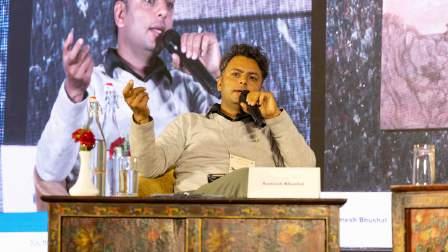
South Asia Coordinator, Earth Journalism Network
Ramesh Bhusal, South Asia Coordinator for the Earth Journalism Network, emphasized that the search for food and opportunity remains the fundamental driver of human movement across the Himalayas. He emphasized that while people move for individual reasons such as education, marriage, or escaping hardship, climate change has become a primary catalyst that "fast-tracks" these decisions. His reporting over the last 15 years shows that environmental stress makes traditional agriculture uncertain, forcing people to abandon the mid-hills for riverbanks and urban centers where market opportunities are more accessible. Climate action, therefore, should be viewed as a tool for securing livelihoods rather than just a topic for global carbon negotiations.
We can leverage the unmatched natural and cultural diversity of the Himalayas to bring our people back, proving to them that prosperity is possible in this unique landscape and inviting them to build a quality of life where their global experiments flourish alongside our local heritage.
Bhusal further stressed that government-led involuntary relocation efforts often fail because they focus on providing housing while ignoring the essential social fabric and livelihood needs of communities. The Himalayan region, he argued, must recognize that "you can move people, but livelihood is a very different thing." He highlighted the interlinkages between local quality of life and migration, noting that the Himalayas' natural diversity could be a powerful tool to attract the diaspora back if the region's environmental health is prioritized.
Emphasizing that "prosperity is possible" through nature, he called for local improvements such as reducing air pollution in Kathmandu and cleaning rivers to make the region a place where people truly want to live.
He concluded by reaffirming that migration is not a crime but a thoughtful individual choice that must be managed with care and intention. Underscoring that climate will remain a key factor in future movement, Bhusal pointed to the importance of differentiating between global climate debates and the local actions that improve daily life. As the world becomes more uncertain, he highlighted that the region's natural diversity remains its greatest "bonus" for bringing people home. Closing his remarks, Bhusal called for a mindset shift that treats migration as a complex "package" of factors requiring integrated, people-centered solutions.
TAKING HIMALAYAN BRANDS GLOBAL
As brands from the Himalayan region grow in quality and scale, many are looking beyond domestic markets and exploring international expansion. This session focused on what it truly takes for local enterprises to succeed abroad. Discussions highlighted the importance of strong supply chains, consistent product performance, clear brand positioning, and cultural understanding when entering new markets.
Through two presentations followed by a moderated panel discussion, speakers shared practical insights and real-world experiences on building competitive Himalayan brands. The session examined how businesses can move beyond relying solely on origin stories and instead combine authenticity with performance, strategy, and long-term commitment to succeed globally.

PRESENTER
AkanchhaJoshi
Co-Founder, SnackOn
In her presentation, Akanchha Joshi presented the journey of SnackOn, a homegrown food brand built with the ambition of positioning Himalayan products competitively in both domestic and international markets. She outlined how the company works closely with local farmers through sustainable procurement models, with a strong focus on women-led production and inclusive supply chains. At its core, she shared how SnackOn seeks to demonstrate that locally sourced ingredients and responsible production practices can translate into high-quality, globally viable packaged food products.
Using SnackOn’s experience as a lens, Joshi highlighted structural challenges confronting Himalayan brands. In Nepal, where over 80% of packaged food products are imported, local producers often struggle to capture value within the supply chain. This reliance on imports weakens domestic agricultural ecosystems and limits income opportunities for rural communities.
Joshi emphasized that building a Himalayan brand requires more than origin-based storytelling; it demands investment in quality, supply chain efficiency, and market readiness. She framed international expansion not simply as accessing larger markets but as a strategic pathway to build resilient value chains that uplift farmers while positioning Himalayan products as credible competitors on the global stage.
Market Lead, Nepal Tea Collective SahasShrestha PRESENTER
Sahas Shrestha presented the journey of Nepal Tea Collective, outlining how a Himalayan brand can scale internationally while remaining rooted in origin and purpose. Founded a decade ago and operational in Nepal for the past three years, the company operates across three verticals: direct-toconsumer sales (Amazon and Shopify in the United States), B2B partnerships with hotels and restaurants, and Tea-as-a-Service (TaaS)- experiential offerings such as tea bars and tea tourism.
He explained that this diversified structure allows the brand to move beyond conventional export models and instead build an integrated ecosystem around Nepali tea. Rather than competing solely on price or origin, Nepal Tea Collective positions itself around traceability, farmer relationships, and consumer experience. The brand actively works to create transparency within the supply chain, strengthening trust with both producers and buyers.
Shrestha emphasized that the brand’s core differentiation lies not only in product quality but in connection, a deliberate effort to humanize the supply chain and highlight the people behind the product. By positioning tea as both a product and an experience, Nepal Tea Collective seeks to bridge farmers and global consumers, linking Nepal to international markets through storytelling, transparency, and emotional resonance.
MODERATOR
SaloniSethia
Advisory Board Member, Nepal Economic Forum
Managing Director, VIE TEC Pvt. Ltd.
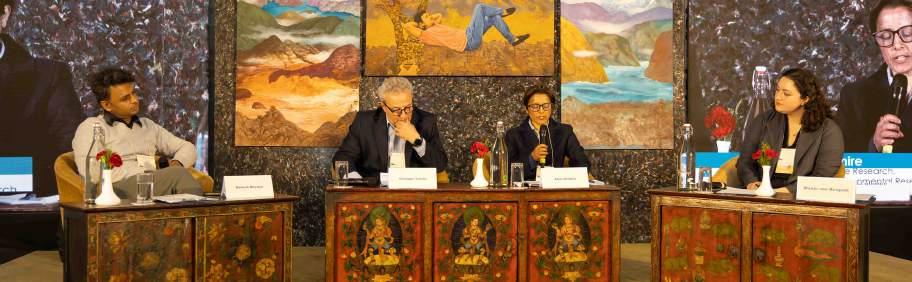
Moderating the discussion, Saloni Sethia steered the conversation toward the practical realities of global brand-building. She centered the dialogue on the often-overlooked gap between brand narrative and brand performance, emphasizing that while storytelling is important, it cannot compensate for weak execution or inconsistent quality.
She challenged panelists to move beyond abstract discussions of Himalayan identity and focus instead on measurable outcomes, operational discipline, and consumer trust. Throughout the session, she framed the conversation around strategic clarity and accountability.
Guiding Questions:
If a Himalayan brand wants to go global, what is the one thing it should do, or stop doing, immediately?
When brands begin scaling internationally, what is the first element that tends to break: operations, positioning, or purpose?
What is the most consistent gap you have seen that Himalayan brands showcase?
What tells you the brand is eager but not ready even if the product is solid?
What should other brands who want to go global know?
By structuring the discussion around these questions, Sethia guided panelists toward concrete insights on readiness, market research, performance standards, and long-term commitment.
NavrozeDhondy SPEAKER
Founder and Managing Director, Creatigies
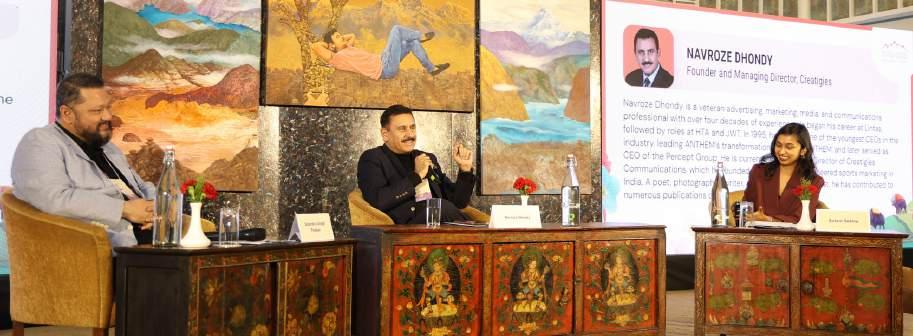
Navroze Dhondy centered his intervention on a critical distinction: the difference between provenance and performance. While acknowledging that Himalayan origin can offer a powerful narrative advantage, he cautioned that geography alone cannot sustain a brand in competitive international markets.
He challenged founders to interrogate whether their perceived opportunity truly aligns with demand. Simply being “from the Himalayas,” he noted, is not enough. Successful global brands such as Champagne or Scotch whisky have leveraged provenance effectively, but always alongside consistent product performance and quality assurance.
Dhondy warned against oversimplifying the “Himalayan promise” into a generic narrative of mountains and purity. Storytelling must be clear and compelling without becoming vague or repetitive. Brands must define their identity through three core questions: Who am I? Why should you buy me? Why should you emotionally connect with me? Emotional resonance, he argued, is often what allows brands such as Coca-Cola to scale globally; performance alone does not guarantee expansion.
He also stressed the importance of structured market entry. Using the example of Sri Lanka’s Dilmah tea, he explained how the company did not expand randomly, but strategically identified tea-drinking markets, many of which were also cricket-playing Commonwealth countries, and
reinforced brand presence through sponsorship of the national cricket team. The lesson, he suggested, is that global expansion requires research, sequencing, and cultural alignment rather than impulsive scaling.
On the operational side, Dhondy advised founders not to attempt global expansion alone. Building teams in both the origin country and destination markets is essential to navigating regulatory, cultural, and consumer differences. He further noted that founders must avoid taking early success for granted, as market conditions and regulatory environments can shift rapidly.
SPEAKER
UpendraSinghThakur
Founder, BeanstalkAsia
Upendra Singh Thakur focused on the distinction between eagerness and readiness in global expansion. While many Himalayan brands are ambitious, he noted that ambition without preparation can lead to structural weaknesses.
He emphasized that even when a product is strong, insufficient market research, unclear positioning, or lack of cultural intelligence can derail international scaling. Brands from smaller domestic markets, such as Nepal, may feel compelled to go global early due to limited local demand. However, without clear understanding of the target audience and competitive landscape, expansion efforts can falter.
Thakur highlighted that when brands scale prematurely, the first thing to break is often their foundational clarity. He highlighted the importance of defining “brand truth," the core purpose and reason for existence, and maintaining consistency even while adapting to new markets. Going global, he argued, effectively means becoming a multinational enterprise. It requires operational systems, cultural adaptation strategies, and long-term commitment. It is not merely about exporting products.
On the recurring question of brand-building versus productivity scaling, Thakur noted that there is no single formula. The approach depends on founder mindset, capital availability, and market strategy. However, he emphasized that both must ultimately move together; scaling volume without brand clarity weakens positioning, while strong branding without supply capacity limits growth.
DIGITAL FUTURES FOR HIMALAYAN LANGUAGES
Nepal is home to extraordinary linguistic diversity, with 124 languages reported as mother tongues in the 2021 national census and many more dialects spoken across the country. Across the broader Himalayan region, hundreds of languages continue to be spoken, yet many face increasing pressure from urbanization, migration, and the dominance of global languages. As younger generations move away from traditional linguistic environments and communication increasingly shifts to digital platforms, the future of many indigenous languages depends on their ability to adapt to new technological spaces.
This session explored how emerging digital tools, ranging from machine translation and speech recognition systems to digital fonts and online educational platforms, can help preserve and revive endangered languages.
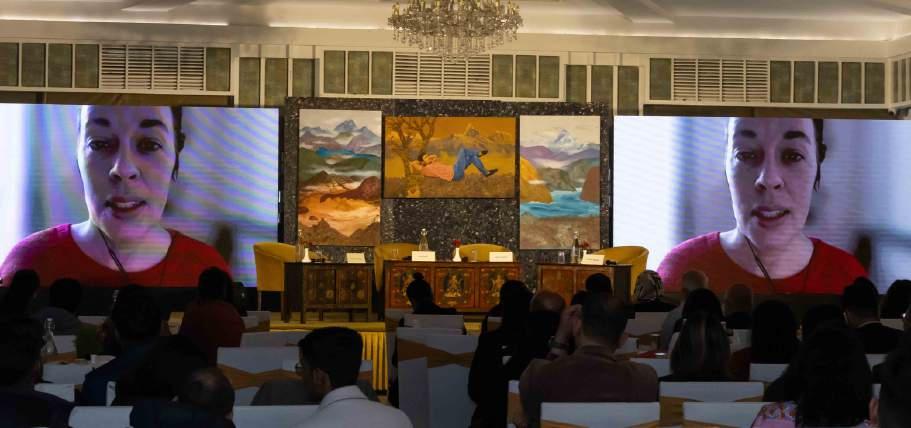
Following the introductory video remarks, the session featured a short video segment where community members spoke in their own languages about ongoing efforts to preserve and promote indigenous languages in Nepal. The stories shared in this segment set the context for the panel discussion that followed. While these voices illustrated the realities of language preservation at the community level, they also raised broader questions about documentation, education, policy support, and the role of technology.
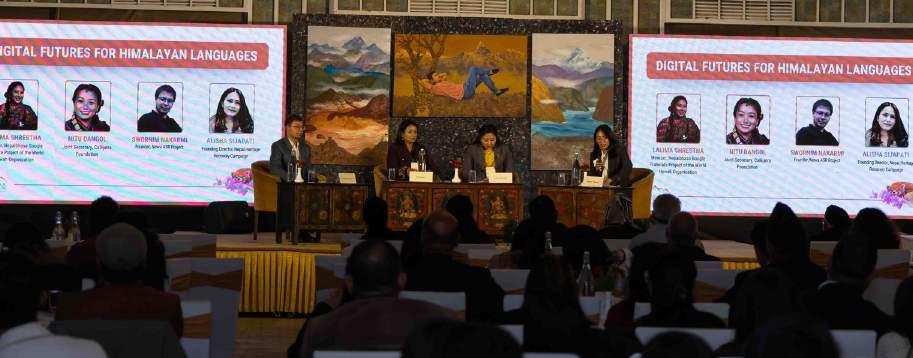
Building on these perspectives, the panel brought together practitioners working at the intersection of language preservation and digital innovation. While the discussion focused primarily on Nepal Bhasa, the insights shared reflected challenges faced by many Himalayan languages, including how to balance digital accessibility with cultural authenticity, how to build reliable linguistic datasets, and how communities can retain ownership over their linguistic heritage as new technologies emerge.
PRESENTER
Marie-CarolinePons
Linguistics Researcher, Languages and Cultures of Oral Tradition (LACITO) UMR 7107 - CNRS
Marie-Caroline Pons, a linguist who has spent over fifteen years working on languages spoken in Nepal, opened the session by highlighting the extraordinary linguistic diversity of the Himalayan region. Through collaborative language documentation projects with community members, she has worked on the Magar language in Syangja district, the Chepang language in Makwanpur and Chitwan, and the Khamchi language spoken by the Raute nomadic community. Pons emphasized that the Himalayas are home to one of the world’s richest concentrations of linguistic diversity, making the preservation of these languages both a shared responsibility and a cultural priority.
She framed the panel as a space to explore how digital technologies can support the future of Himalayan languages. Bringing together scholars, technologists, and community advocates, the discussion aimed to reflect on how tools such as digital archives, speech technologies, and translation platforms can contribute to language documentation, revitalization, and accessibility.
Pons also highlighted recent initiatives led by community members working to promote languages such as Nepal Bhasa and Chepang, demonstrating the growing momentum around linguistic preservation and digital innovation.
ShahaniSinghShrestha PRESENTER
Doctoral Researcher in Linguistics
In a second introductory video, Shahani Singh Shrestha, a PhD candidate in linguistics at Universitat Pompeu Fabra in Barcelona, offered a linguistic perspective on the role of digital technology in language preservation. She described language as a powerful force of connection, linking individuals to their cultural roots while also strengthening ties across communities. Using Nepal Bhasa as an example, she illustrated how shared linguistic structures connect diverse communities within the Kathmandu Valley despite geographical or social differences.
Singh also emphasized the importance of linguistic research in the development of digital language technologies. Understanding the underlying grammatical and syntactic structures of languages is essential for building tools such as speech recognition systems, machine translation platforms, and language learning applications. While such technologies are rapidly advancing for dominant global languages, many Himalayan languages remain underrepresented in digital systems.
She therefore highlighted the need for deeper linguistic research and collaboration between linguists, technologists, and communities to ensure that digital tools can effectively support the preservation of these languages.
VOICES FROM THE GROUND
BishnuKumar Sinjali
Bishnu Kumar Sinjali, speaking in the Magar language, reflected on his work to document and institutionalize Magar linguistic heritage. A scholar and author, Sinjali has written numerous books in the Magar Dhut language and developed learning materials to support its study. He described ongoing efforts to establish Magar language and culture programs at the university level, including a Bachelor’s program at Nepal Open University in Lalitpur. At the local level, Magar language teaching initiatives have also been introduced in several municipalities. Despite these efforts, Sinjali highlighted persistent challenges, particularly the limited institutional recognition of indigenous languages and the prevailing monolingual mindset within state structures. He stressed that strong advocacy, active use of the language, and stronger policies are essential to ensuring its long-term survival and development.
The second speaker, Santosh Chepang Praja, spoke in the Chepang language and shared community-led efforts to preserve a language increasingly at risk of disappearing. Working with collaborators including Pabitra Maya Chepang and linguist Marie Caroline Pons, Praja shared how he has been documenting the Chepang language through the development of grammar resources, dictionaries, and written materials. He emphasized that while older generations remain fluent, younger speakers are gradually losing the language, making documentation and education initiatives critical. Their work aims to create resources that will allow children to learn Chepang in schools and access reading materials in their mother tongue, ensuring that the language remains part of everyday life for future generations.
Santosh ChepangPraja


MODERATOR
Founding Director, Nepal Heritage Recovery Campaign AlishaSijapati
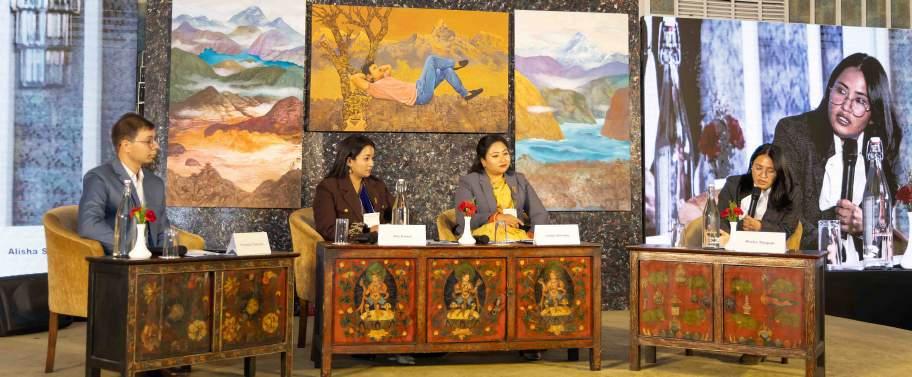
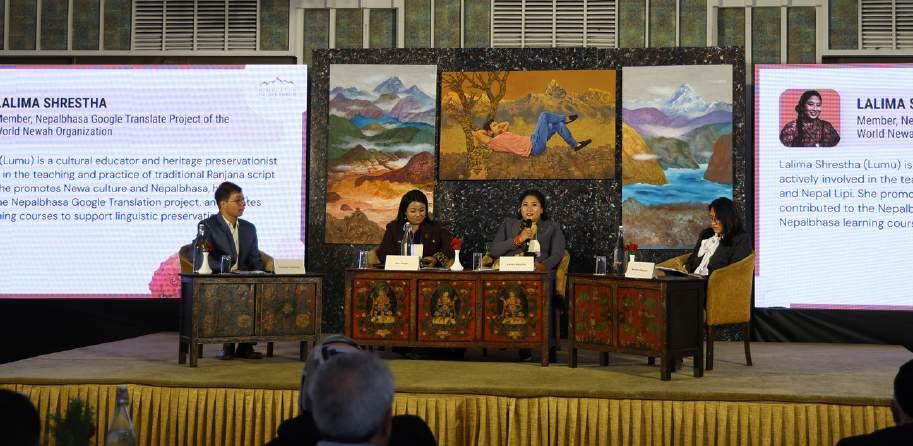
Alisha Sijapati set the tone of the session by reflecting on her 2018 article 'Lost in Translation,' highlighting the communication barriers with elders in Kathmandu. She emphasized the right ensured by Article 31 of the Constitution of Nepal to get education in one’s own language. She noted that while there are many languages in Nepal on the verge of extinction, the discussion of the session would majorly be around Nepal Bhasa, as the speakers on the panel were doing important work in the digitalization of this language. Her moderation focused on how digital innovation can move these languages from 'endangered' status to a thriving digital presence through community-led efforts.
Guiding questions:
How can Himalayan storytelling evolve through digital platforms, and how can these mediums ensure the representation of marginalized narratives?
What are the barriers preventing Himalayan stories from reaching broader audiences, and how can new media collaborations address these challenges?
How is technology giving new momentum to Himalayan creatives in amplifying their voices and fostering cross-cultural understanding?
What has been the biggest breakthrough and cultural risk in the transition from offline language teaching/learning to online medium?
LalimaShrestha SPEAKER
Member, Nepalbhasa Google Translate Project of the World Newa Organization
Lalima Shrestha discussed the development of the Nepal Bhasa Google Translate project, a communityled initiative that successfully brought the language onto one of the world’s most widely used digital translation platforms. For Shrestha, the project represents a major milestone in the effort to move Nepal Bhasa from a historically marginalized language into the global digital ecosystem.
She shared how the initiative required extensive collaboration among linguists, volunteers, writers, and community members. Over 1,000 days of coordinated effort were dedicated to collecting reliable linguistic data, reviewing translations, and ensuring that the system accurately represented the language. Rather than relying solely on existing online sources, the project drew from historical books, magazines, and other archival materials, helping to maintain linguistic authenticity.
A central challenge was balancing standardization with diversity. Nepal Bhasa has more than a dozen scripts, making digital compatibility difficult. To address this, the project adopted Devanagari as a temporary digital bridge, enabling the language to function effectively across global platforms while continuing efforts to preserve traditional scripts.
Shrestha emphasized that while Artificial Intelligence (AI) can process language data, it cannot fully capture cultural nuance, idioms, or emotional expression. For this reason, she stressed that community involvement must remain central to any effort to digitize indigenous languages.
SPEAKER
NeetuDangol
Joint Secretary, Callijatra Foundation
Neetu Dangol shared her work through the Callijatra Foundation, a youth-led initiative dedicated to promoting Nepal Bhasa scripts and calligraphy. The organization combines traditional cultural practices with modern digital tools, transforming calligraphy workshops into celebratory events that bring communities together.
Dangol described how their work has evolved from manual manuscript preservation to digital innovation. Early workshops relied on traditional materials such as bamboo pens and ink in community spaces like baha and chowks. Over time, the initiative expanded into digital platforms, including mobile applications for Nepal Lipi and Ranjana Lipi, making these scripts accessible on modern devices.
One major breakthrough was the development of the Nitya Ranjana font, released in collaboration with the Indian type design studio Ek Type. The font received international recognition and has helped make traditional scripts usable across digital platforms.
Dangol also discussed ongoing collaborations with archival institutions to document and digitize manuscripts, some of which are more than 300 years old. These texts are being transcribed and adapted into short AI-assisted educational videos, allowing audiences to learn the language in accessible formats.
For Dangol, the digital transition does not threaten cultural heritage. Instead, it offers new opportunities to engage younger generations and increase public visibility of Nepal Bhasa.
PRESENTER
SwarnimNakarmi
Software Engineer & Founder, Newa ASR Project
Swarnim Nakarmi presented the technical journey behind the Newa Automatic Speech Recognition (ASR) Project, which aims to develop AI-powered tools for Nepal Bhasa.
The project began as a personal exploration of the intersection between language and technology but quickly evolved into a broader effort to support digital preservation. One of the greatest challenges was collecting sufficient linguistic data. Over the course of one year and eight months, the team gathered 10,198 speech samples to build an initial dataset for training recognition models.
Nakarmi emphasized that developing AI systems for smaller languages requires patience and community participation. Unlike dominant global languages, which benefit from massive datasets, Himalayan languages often lack sufficient digital resources.
Another critical issue is data ownership. Nakarmi argued that linguistic data should belong to the communities that speak the language, rather than external institutions or technology platforms. While partnerships with universities and technical experts are valuable for infrastructure and expertise, the community must remain at the center of decision-making.
He also highlighted how speech technologies can help bridge generational gaps. Older speakers are often fluent in the language but less familiar with digital tools, while younger generations are digitally literate but may not speak the language fluently. Tools such as speech recognition and text-to-speech systems can help connect these groups, supporting both communication and language learning.
CLOSING PANEL: GEOPOLITICS AND THE HIMALAYAS
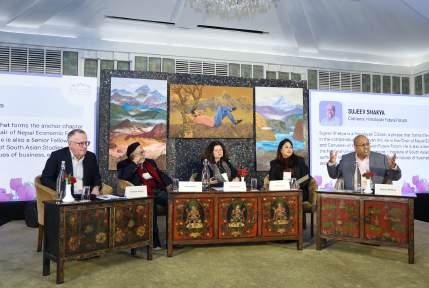
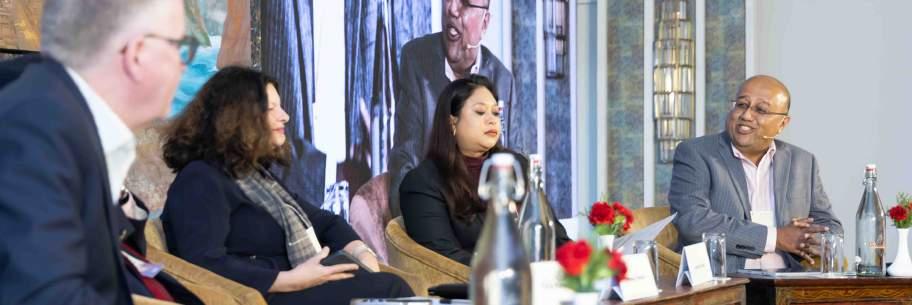
This panel brought together diverse perspectives to examine interconnected themes shaping the Himalayan region and the geopolitics in the region also presents another important subject. Recognizing that the global order is undergoing significant shifts, the closing plenary addressed development not only in terms of political power but also relating to the rising climate mobility, rapid technological advancement, and evolving systems of communication and human movement. These transformations carry implications for the Himalayan region, which sits at the intersection of major powers while remaining highly sensitive to external dynamics.

RSujeevShakya
Convener, Himalayan Future Forum CEO, Nepal Economic Forum
Sujeev Shakya, the Convenor of HFF, framed the discussion by emphasizing the importance of broader dialogue in navigating shifting geopolitical and economic dynamics. Special attention was drawn to how such shifts are perceived by various regional representatives. Furthermore, drawing on his work on business, economy, and development, he highlighted that emerging global and regional transitions require clarity, strategic positioning, and cooperation, particularly amid growing geopolitical uncertainty. The discussion placed the Himalayan region within a shared political context and stressed the importance of finding common ground to maintain cooperation. Attention was also drawn to the positive global branding of the Himalayan region and the need to better use this shared identity for collective progress. Reflections throughout the session further explored changing geopolitical trends, opportunities for regional learning, evolving mindsets toward collaboration, and the role of platforms such as the Himalayan Future Forum in strengthening future regional cooperation.
Guiding Questions:
How is the evolving global geopolitical order shaping the Himalayan region, and what shared strengths and potential risks should countries in the region be mindful of?
What lessons from Bhutan’s development experience could Nepal meaningfully learn from or adapt?
Amid ongoing regional and global changes, where do you see hope, and what are two key changes you would prioritise for the region’s future?
Do you observe a shift in mindset within the Himalayan region toward deeper regional cooperation and collaboration?
What key challenges and opportunities define the current geopolitical landscape for Himalayan countries?
How can the Himalayan Future Forum further strengthen its role in fostering regional dialogue and cooperation?

ApekshyaShah SPEAKER
Head of Department, Central Department of International Relations and Diplomacy, Tribhuvan University
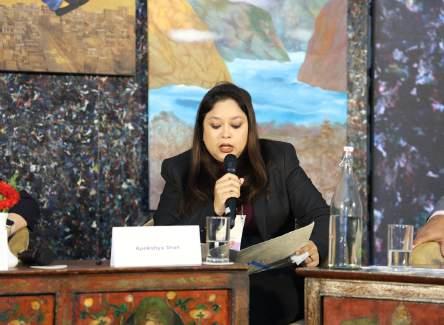
Apekshya Shah opened by acknowledging that the global environment is increasingly defined by competition. At the same time, she underscored the importance of asserting agency rather than relinquishing it. Domestic resilience forms the foundation at this stage, and cooperation is more necessary now than ever. She further reinforced that cooperation and competition are not mutually exclusive. Cross-border concerns such as pollution and migration are some areas for potential joint action, particularly among Himalayan states that share common interests.
The shifting world order does not predetermine outcomes for the Himalayan region. While external competition and global uncertainty will persist, the region’s future will be shaped by its own strategic choices.
Turning to the position of small states, she observed that vulnerability, while often viewed as a constraint, can also serve as an advantage. However, the lack of strategic communication has constrained diplomatic capacities. The central challenge lies in preserving internal stability while navigating external rivalries. A strong domestic foundation, she emphasized, is necessary to unlock development and community potential, remarking that
“without your house in order, it becomes difficult to put policy in place.” In the present landscape, priorities include enhancing connectivity to access markets and strengthening regional diplomatic engagement. She cautioned that ambiguity in such times can easily be misread.
Nepal’s opportunities, she noted, stem from its long diplomatic history, positive international image, strong foreign policy foundations, and engagement with multiple partners. Development remains its most significant strategic asset, particularly in clean energy technology, education, and connectivity, and these sectors should assume a greater role in post-LDC graduation negotiations and economic diplomacy. She concluded by emphasizing that diplomacy is a form of soft power cultivated over years, and both challenges and opportunities ultimately depend on how well we organize our "home."
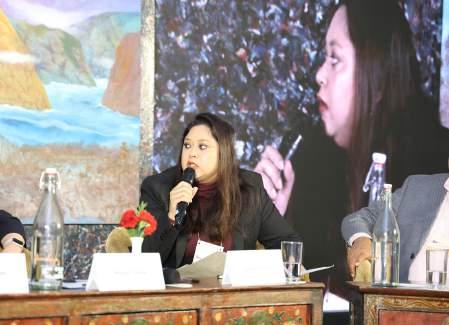

SPEAKER
RensjeTeerink
Former European Union Ambassador to Nepal and Bangladesh
As the former European Union Ambassador to Nepal and Bangladesh, Rensje Teerink described the European Union’s geopolitical identity as rooted in a long peacebuilding process that emerged after the Second World War. She pointed to the current geopolitical shift marked by growing alignment among middle powers. Further reflecting on elements of the European experience that could offer lessons for regional and bilateral cooperation in South Asia, she noted that diplomatic agreements often take considerable time. As an example, she highlighted that the EU–India trade agreement progressed only after nearly two decades of negotiations, regaining momentum following the 2022 meeting between Ursula von der Leyen and Narendra Modi.
The climate crisis is felt by everyone and therefore it necessitates collective collaboration.
Teerink also emphasized the importance of upcoming political transitions in the region. Reflecting on recent political developments, she noted that the Gen-Z movements in Nepal received notable media attention in Europe, suggesting that the country continues to maintain a positive international image that could be better harnessed.
Turning to bilateral economic relations, she explained that Least Developed Countries benefit from the European Union’s Everything But Arms (EBA) scheme, which provides duty- and quota-free access to European markets. While Bangladesh has effectively utilized these trade preferences, she observed that Nepal has not been able to benefit from them to the same extent.
Closing Panel: Geopolitics and the Himalayas
As a way forward, strengthening supply chain integration with India, alongside stronger economic diplomacy and careful post-LDC negotiations, was presented as a practical pathway forward.
To conclude, she recommended that HFF broaden its regional lens to include engagement with countries across the Himalayas, including China, Pakistan, and Afghanistan. The climate crisis, she stressed, is universally experienced and therefore necessitates collective collaboration.


TariqKarim SPEAKER
Former Ambassador of Bangladesh to India and the US Advisory Board Member, Himalayan Future Forum
As a former ambassador of Bangladesh, Tariq Karim began by describing his country, Bangladesh, as geologically dependent on its neighbor. This realization, he explained, shaped his long-standing commitment to regional cooperation. Bangladesh has often been at the forefront of such initiatives, with efforts such as the BBIN, BIMSTEC, and SAARC reflecting Bangladesh’s proactive engagement. The rationale for these initiatives, he noted, lies in the broader requirements of growth and development. Beyond food and livelihood security, water and energy security are equally critical. Moreover, rivers physically connect the countries of the region, reinforcing the idea that they must grow together. At the same time, the Himalayan region holds vast clean energy potential. Harnessing these shared resources, he suggested, could enable a quantum leap in development.
I cannot survive alone, unless I survive with others.
Turning to the shifting global order, he observed that although colonial powers have receded, new superpowers have emerged. This changing landscape underscores the importance of building regional value and supply chains within clusters of neighboring countries.
In this regard, he emphasized the need for stronger Bay of Bengal economic cooperation and encouraged looking beyond South Asia alone. Greater collective action, he reasoned, would enhance resilience in a competitive geopolitical environment.
In his concluding remarks, he underscored that the Himalayan region is among the most densely populated and strategically significant areas in the world. The rivers originating in the Himalayas sustain much of South and Southeast Asia, making Himalayan countries integral to downstream developments. This interconnectedness, he stressed, calls for dialogue and collective problem-solving rather than siloed approaches. He concluded by encouraging HFF to collaborate more closely with diverse stakeholders to advance regional cooperation.


SPEAKER
ThibaultDanjou
Managing Director, Augusta; Advisor, Phitrust
Thibault Danjou began by sharing personal reflections that shaped his interest in the Himalayan region. His fascination, he explained, stemmed from childhood stories about the yeti and an attraction to Himalayan spiritual traditions. This deepened over time through encounters with Himalayan communities abroad. He was also drawn to the region's maps, including the landlocked geographies, high-altitude mountains, and proximity to major powers, revealing both strategic complexity and vulnerability. Yet, he noted, the same geography that creates challenges also creates opportunities.
Can this Singapore model be transferred to other small countries? Likewise, Bhutan is also the smallest sovereign region. But why aren't they as successful as Singapore? Can they be as successful and how can we help them?
His reflections then turned to small states such as Nepal and Bhutan. Drawing on 23 years of living in Singapore, he described witnessing how a small country could transform itself into one of the most prosperous nations within a relatively short period. This experience led him to question whether the “Singapore model” could be adapted elsewhere. Bhutan and Nepal, among the smallest sovereign states, present a compelling comparison.
Why have these countries not replicated Singapore’s trajectory? Is similar success possible, and what forms of support would make it achievable? He also offered the view that small states possess a distinct advantage: reforms can generate visible and immediate impact. In larger countries such as India, the scale of population delays outcomes.
By contrast, he cited an example from Bhutan, where a single targeted intervention resolved an issue comprehensively. This outcome might have taken years to materialize in a much larger country. Such responsiveness, he emphasized, is a structural advantage of small states.
Concluding, he asserted that there is no inherent reason why countries like Nepal and Bhutan cannot achieve prosperity. The critical requirement, however, is the establishment of stable, predictable, and well-functioning institutions capable of sustaining long-term development.


LOOKING AHEAD
HFF 2026 made one thing clear: the future of the Himalayan region cannot be addressed in isolation. The challenges facing the region, from trade and migration to climate risks, technology, and shifting geopolitics are tightly linked. What happens in the mountains reflects far beyond the mountains themselves. Himalayan rivers sustain millions downstream, regional trade routes connect multiple economies, and political shifts ripple across borders. The region is deeply interconnected, whether policy frameworks reflect that reality or not.
Moving forward requires that the Himalayan region breaks out of silos. Collaboration must extend across the wider Himalayan arc, including more structured engagement with China and other neighboring countries. For private Himalayan businesses, this also means focusing seriously on export readiness, including meeting sanitary standards, improving product quality systems, and building the capacity needed to access larger markets. Regional integration must go beyond discussion and translate into practical alignment for regional diplomacy and for the private sector as well.
At the same time, deeper regional cooperation will only be possible if domestic institutions are strong and reliable. Smaller Himalayan countries are not destined to remain economically constrained. With predictable rules, transparent governance, and closer public-private coordination, prosperity is attainable. But ambition alone is not enough. Regional platforms like HFF can convene dialogue and generate ideas, yet real progress depends on consistent government engagement and follow-through. Conversations create direction, and institutions create results.
The next phase of HFF will therefore focus on continuity beyond the annual Forum. Plans are underway to establish a dedicated secretariat that can anchor year-round programming, research collaboration, and regional partnerships. By institutionalizing its work, HFF aims to function as an ongoing platform for structured dialogue, supporting thematic working groups, policy exchange, and collaborative initiatives aligned with its core pillars of climate, community, and connectivity.

ment with format. While high level panels will remain central, gagement models that bring policymakers, entrepreneurs, ct, meaningful exchanges. The goal is not only to discuss spaces where collaboration can emerge and grow.
ll remain integral to this effort. By investing in emerging pathways, HFF aims to cultivate a generation equipped to g g omic and technological transformations through informed, ethical decision-making.
In an increasingly fragmented geopolitical landscape, where trust in traditional multilateral institutions is declining, the Himalayan region requires credible, regionally anchored platforms capable of sustaining long-term cooperation. HFF is positioning itself as such a platform, deepening cooperation across borders and sectors, and welcomes partners ready to invest in long-term resilience, connectivity and inclusive regional growth.

ORGANIZER

Nepal Economic Forum (NEF) is an impact-driven research institution that has played a pivotal role in redefining the development narrative in the region. NEF has served as the secretariat to the Himalayan Consensus Summit (2016-19) and independently organized the Himalayan Circular Economy Forum (HiCEF) in 2020 to promote sustainable production and consumption in the Himalayan region. Additionally, the organization has a charity equivalence certification for the US, registered through NGO Source.
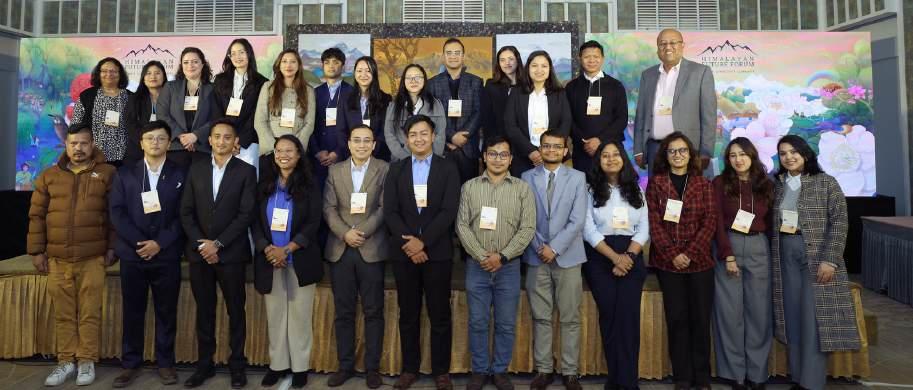

PARTNERS AND SUPPORTERS
OUR PARTNERS


OUR SUPPORTERS
PARTNERS AND SUPPORTERS
DESIGN THEME
ART COORDINATOR
VENUE
PARTNER
HFF
SECRETARIAT
TEAM
HFF SUPPORT
TEAM
Ubahang Nembang
Swosti Rajbhandari Kayastha
International Club, Sanepa
Convenor: Sujeev Shakya
Aarjan KC
Aashima Chalise
Anushka Tuladhar
Aaryan Kuikel
Aashutosh Sharma
Ajay Khadgi
Alpa B. Shakya
Arya Awale
Bam Bahadur Jirel
Bikesh Shakya
Heykha Rai
Kunal Maleku Shrestha
Mahotsav Pradhan
Manju von Rospatt
Laboni Pradhan
Salina Prajapati
Suyasha Shakya
Manika Maharjan
Nasala Prajapati
Nency Shakya
Padma T. Magar
Pransu Khakurel
Rojesh Bhakta Shrestha
Sanjit Tuladhar
Shrijesh Bajracharya
Sonam Dolkar Bhutia
Suhan Shakya

Connect with us!