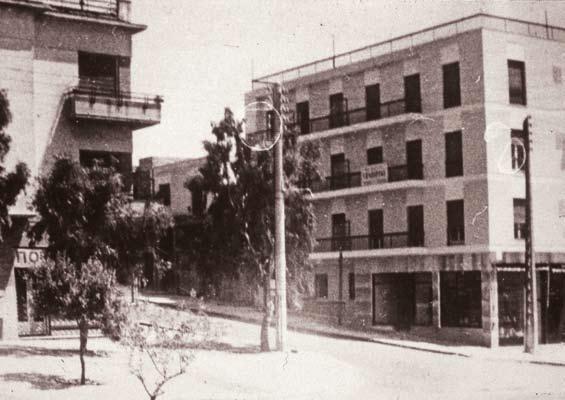
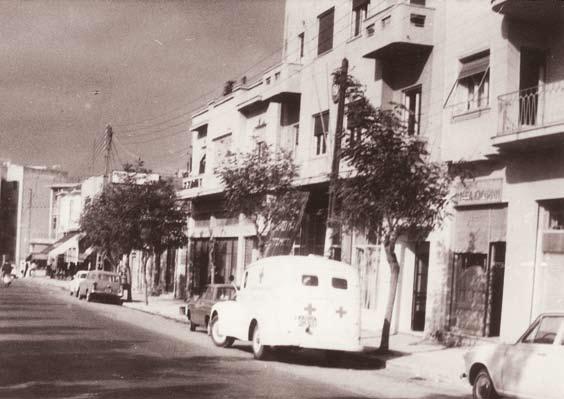
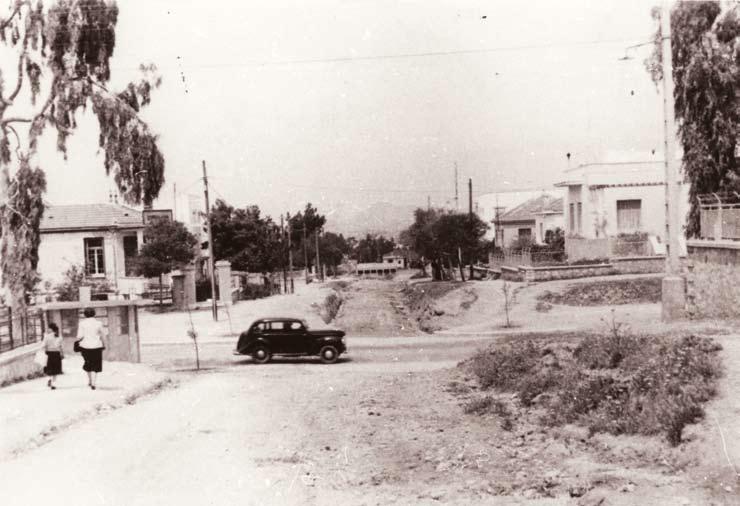
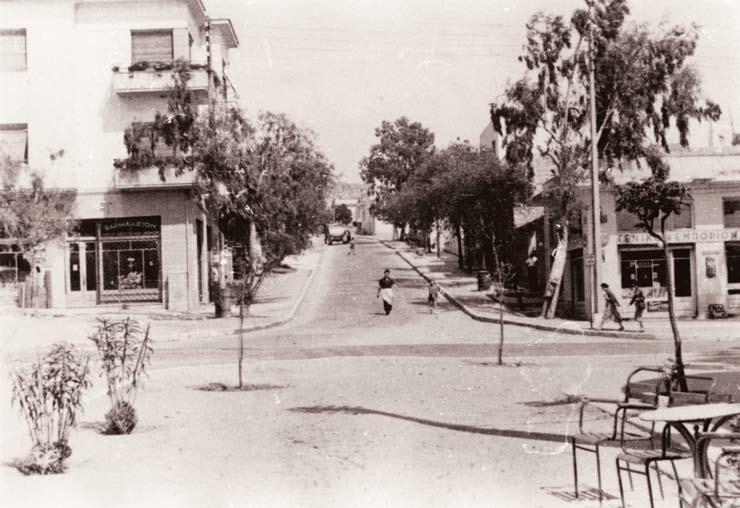
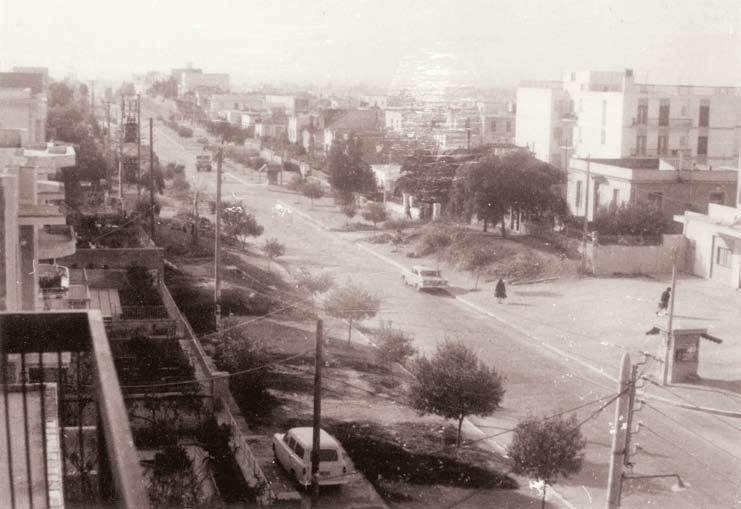
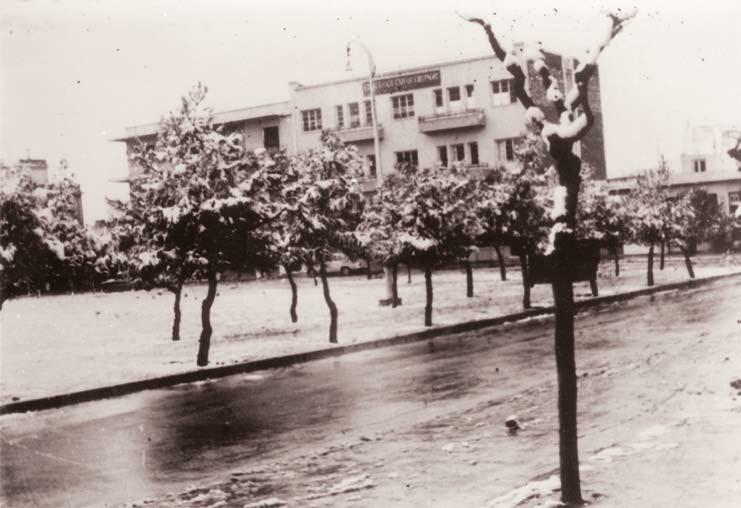
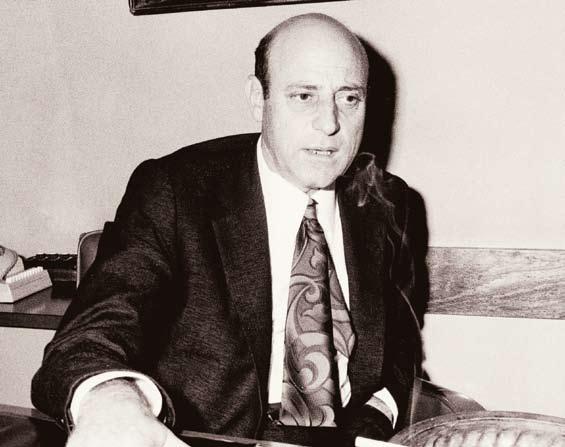
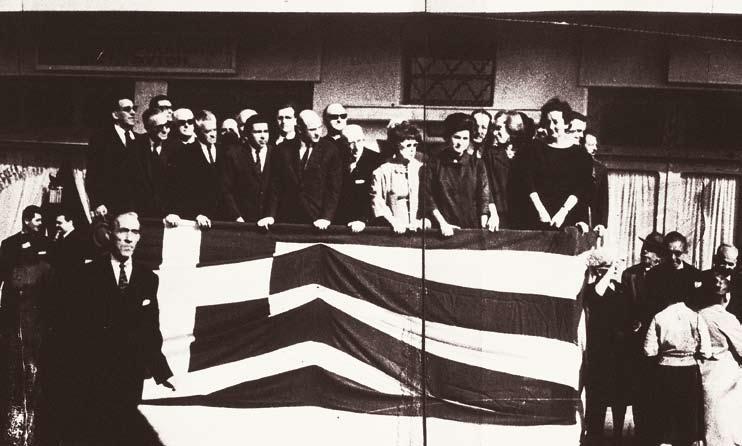
The refugees’ settlement in the area of Nea Smyrni
settlement’s foundation
The foundation of the Community of Nea Smyrni (1934)
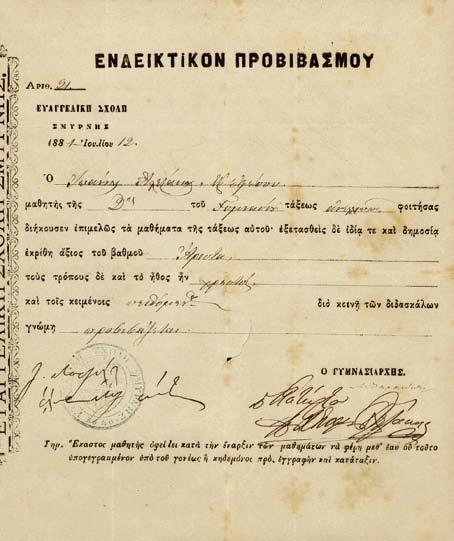
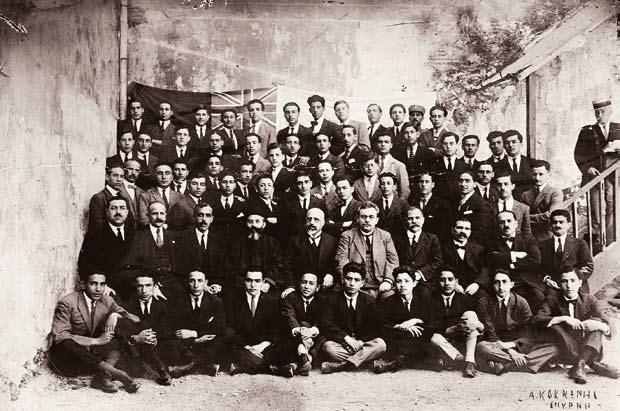
The beginnings of education – The Evangelical School of Nea Smyrni
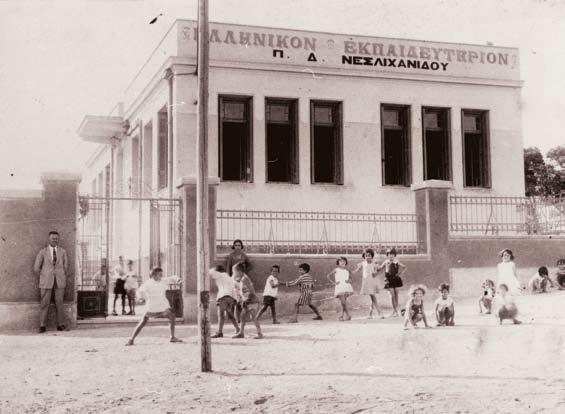
Private education at Nea Smyrni during the Mid-war period
Social care at Mid-War Nea Smyrni
The church of Saint Paraskevi
at Nea Smyrni during the 1920s and 1930s
Chapter V
Occupation and Resistance in Nea Smyrni
blockades at Nea Smyrni – The Pharos blockade
Local Self-government during the German Occupation – Nea Smyrni develops to a municipality
Chapter VI
Nea Smyrni during the 1950s and 1960s
Nea Smyrni grows
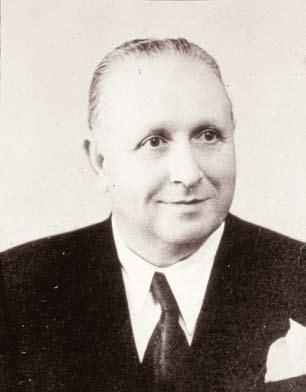
The tenure of Athanasios Karyllos as Mayor of Nea Smyrni (1951-1959)
The tenure of Petros Perimenis as Mayor of Nea Smyrni (1959-1964)
Financial crisis and alteration of municipal authorities (1963-1964)
The tenure of Athanasios Papathanasiou as Mayor of Nea Smyrni (1964-1967)
The dictatorship period
Chapter VII
The municipality of Nea Smyrni during the period 1975-1998
Nea Smyrni after the restoration of democracy
The tenure of Charalambos Bechlivanidis as Mayor of Nea Smyrni (1975-1993)
The tenure of Georgios Siotropos as Mayor of Nea Smyrni (1995-1998)
Chapter VIII
Nea Smyrni in the 21st century
The tenure of Georgios Koutelakis as Mayor of Nea Smyrni (1999-2010)
Nea Smyrni today: the tenure of Stavros Tzoulakis as Mayor of Nea Smyrni (2010-2018)
Foreword
Nea Smyrni is a city laden with history, the beginnings of which are to be found across the Aegean Sea and go back to an era of great prosperity, wealth, cultural development, education and civil nobility, which lasted until Smyrna’s tragic destruction. These roots, strengthened by the souls of its people through the ages, are evident everywhere: in the streets, the squares, the churches and our cultural centres, in ourselves and our children. They create memory, the most important element for the continuation of history and life itself. This is so, as it is only through knowing our past, that we can move on to the future in a fruitful and creative way. Indeed, we have so many things to remember, to learn and transmit to the future generations.
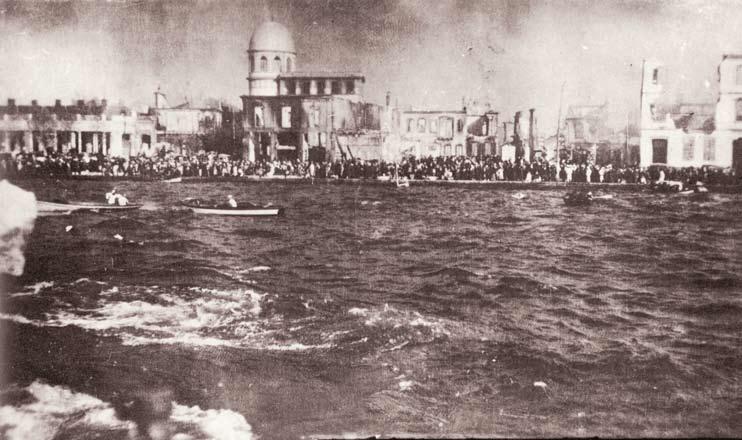
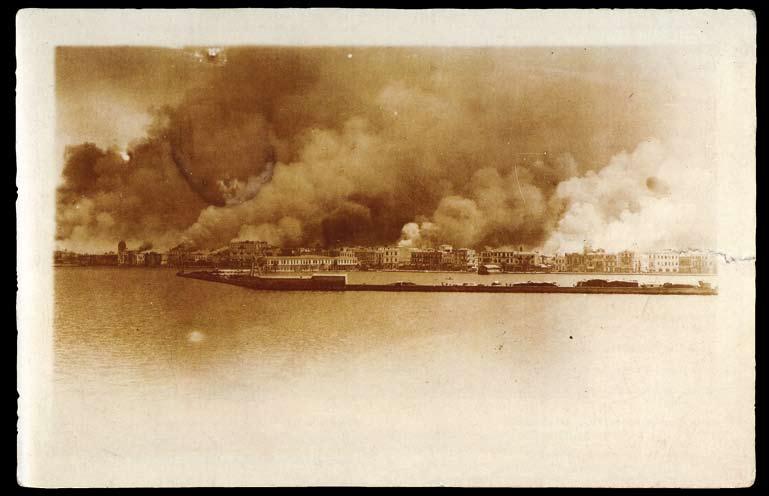
Almost a century has gone by, since the fire from the Armenian quarters devoured the city of Smyrna along with its famous Quais promenade. The pain from the tragic loss that the Smyrnians experienced immediately after the city’s destruction was transformed to a power for survival and achieving new beginnings in a new homeland. What was left from the old homeland was its enduring “colour”. Smyrna’s flavours and melodies entered the lives of all Greeks, not only of those originating from Asia Minor. Many poets, writers and song-writers have been inspired from the dark night of Smyrna’s destruction and what followed it and have recorded the feeling and atmosphere of a significant time in the history of Hellenism. The new city was created by optimistic people who brought along with them the dignity and prestige that had sunk into the Aegean Sea and managed to rebuild what they lost. All this became Nea Smyrni, our city.
Almost a century later, the people of Smyrna are mentally leading us ahead, while maintaining our traditions. As a matter of fact, this is the very purpose of the book at hand, namely to illuminate the lasting connection between Smyrna and Nea Smyrni; to associate the present with the past; to connect us to our roots.
Enjoy reading it!
Stavros
Tzoulakis Mayor of Nea Smyrni
Chapter I
CHAPTER I
Introducing the Municipality of Nea Smyrni
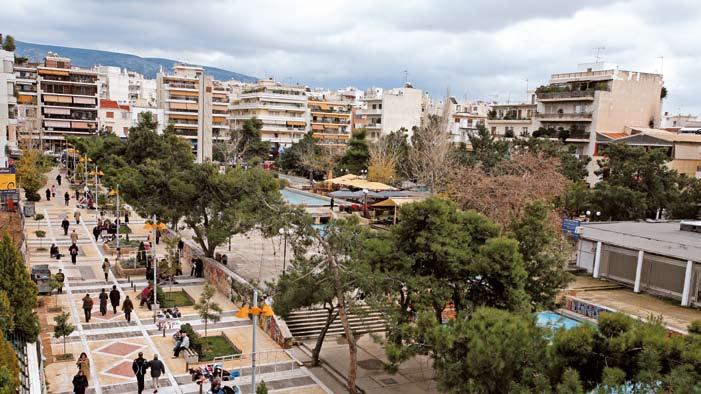
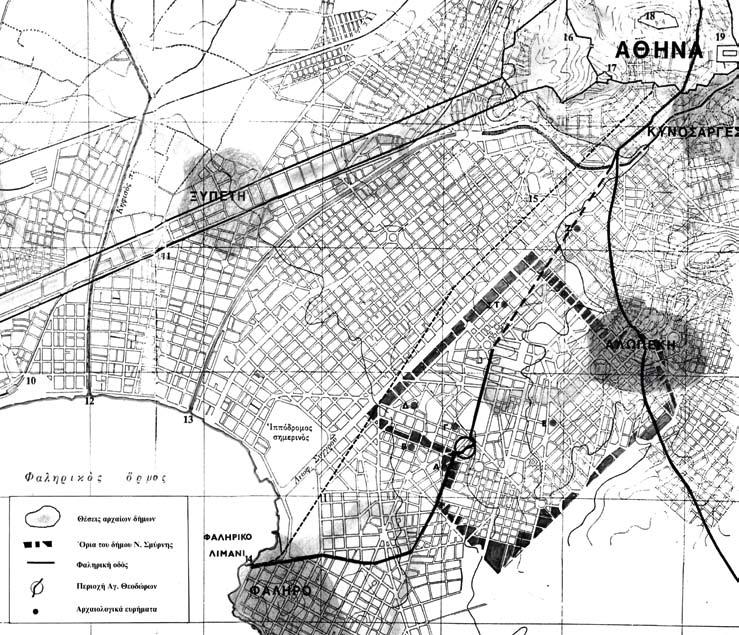
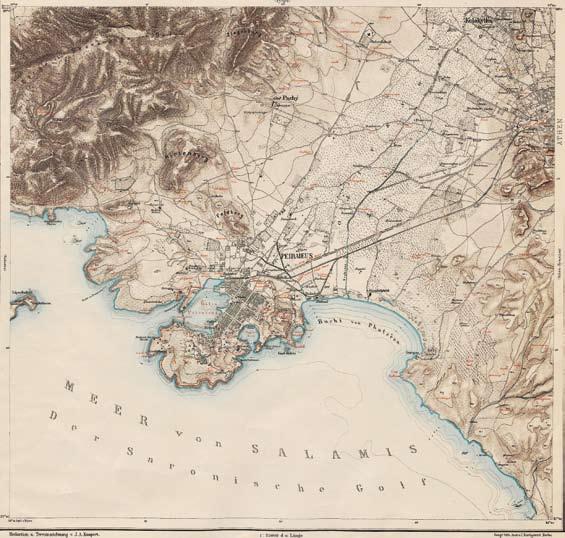
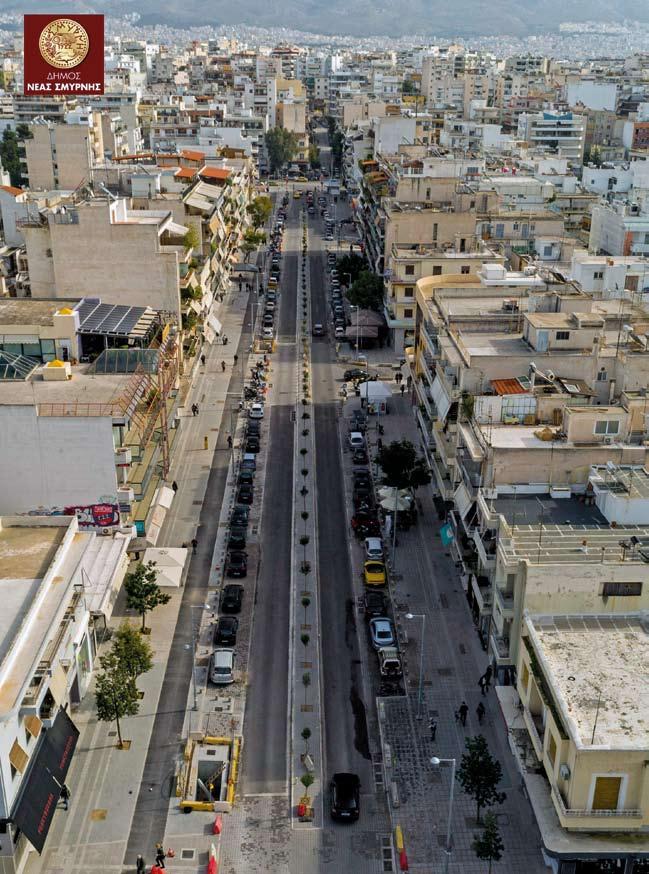
The Municipality of Nea Smyrni occupies 3,520,000 square metres of land stretching to the south of the Athenian centre. To the west it meets the Municipality of Kallithea, to the south the Municipality of Palaio Phaliro, to the east the Municipality of Agios dimitrios and to the north the Municipalities of Athens and daphni. The Syngrou Avenue constitutes its western boundary, whereas Kratitos and Akropoleos Streets define its northern limits. Nea Smyrni’s eastern boundaries coincide with Ainou and Euxeinou Pontou Streets, while Nazliou, Kyprou, Pamphylias and Psaron Streets separate it from Palaio Phaliro to the south.
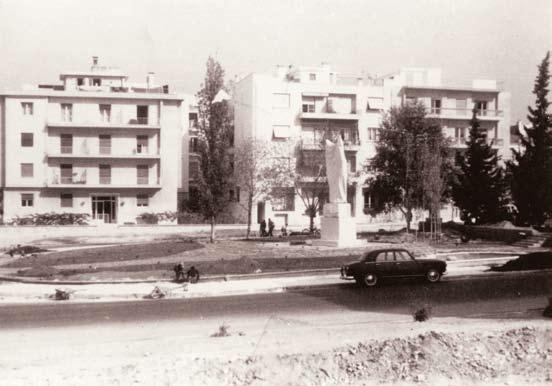
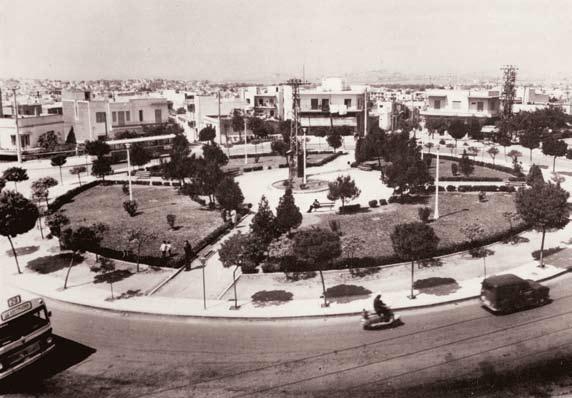
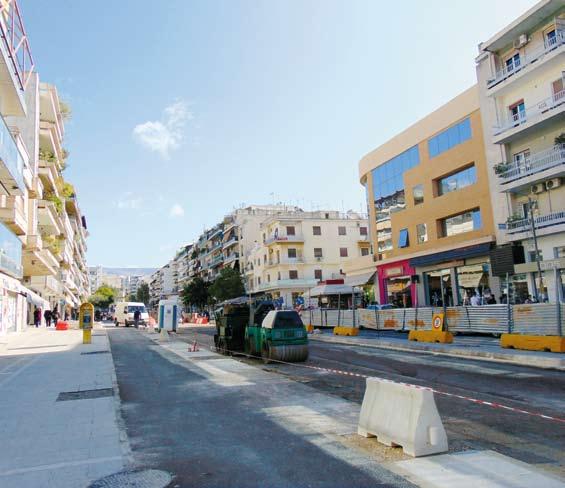
Eleftheriou Venizelou Avenue, Nea Smyrni’s main traffic artery, runs through it with a north-south direction. The municipality’s centre is occupied by Neas Smyrnis Square (Central Square), which meets Karyllou Square (Post Office Square) to the south.
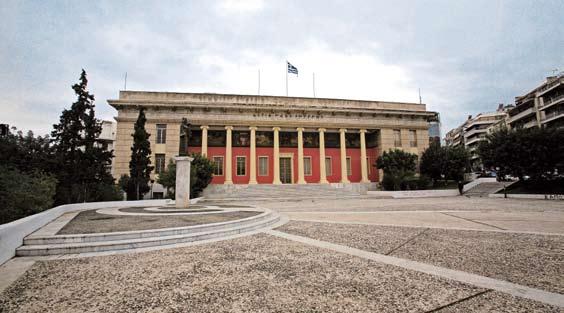
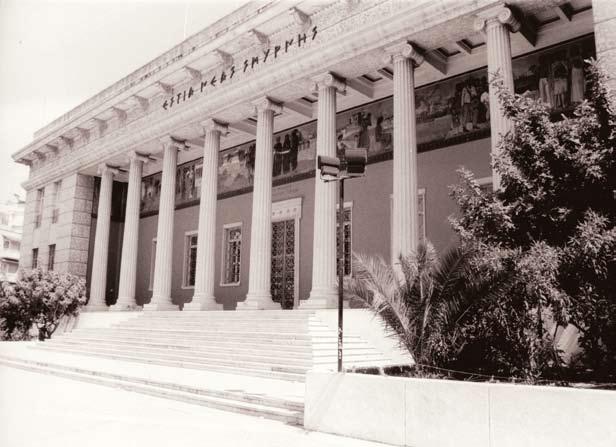
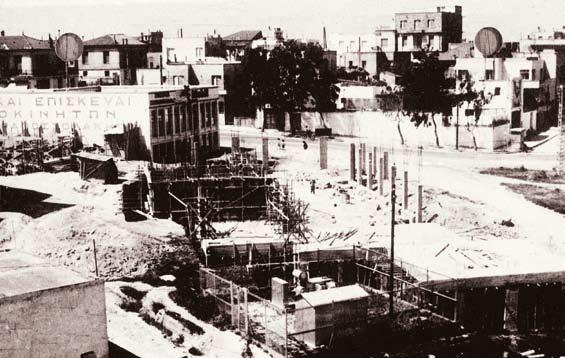
A few hundred metres to the south of the Central Square rises the impressive building of the Estia of Nea Smyrni, which was constructed during
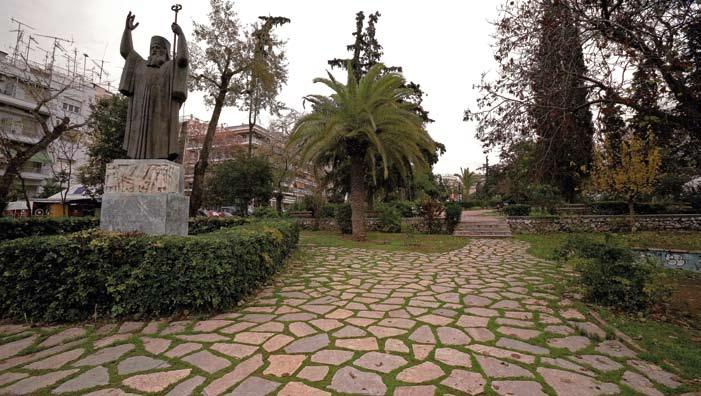
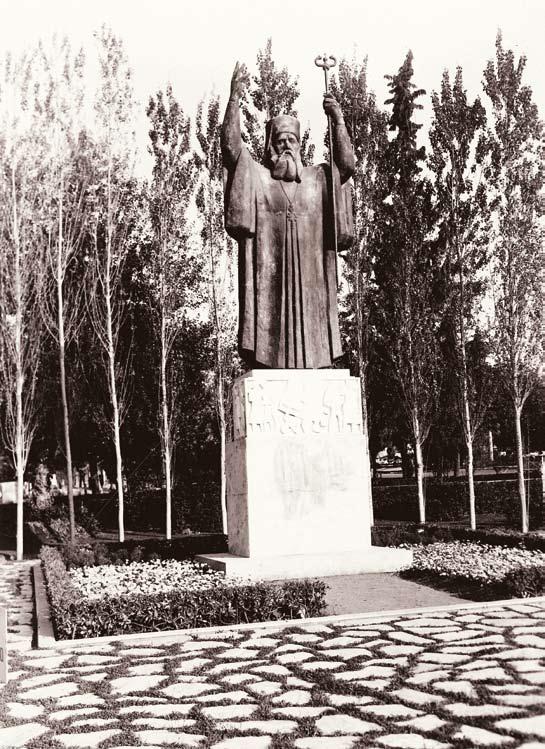
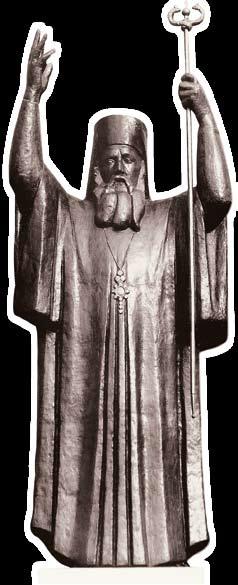
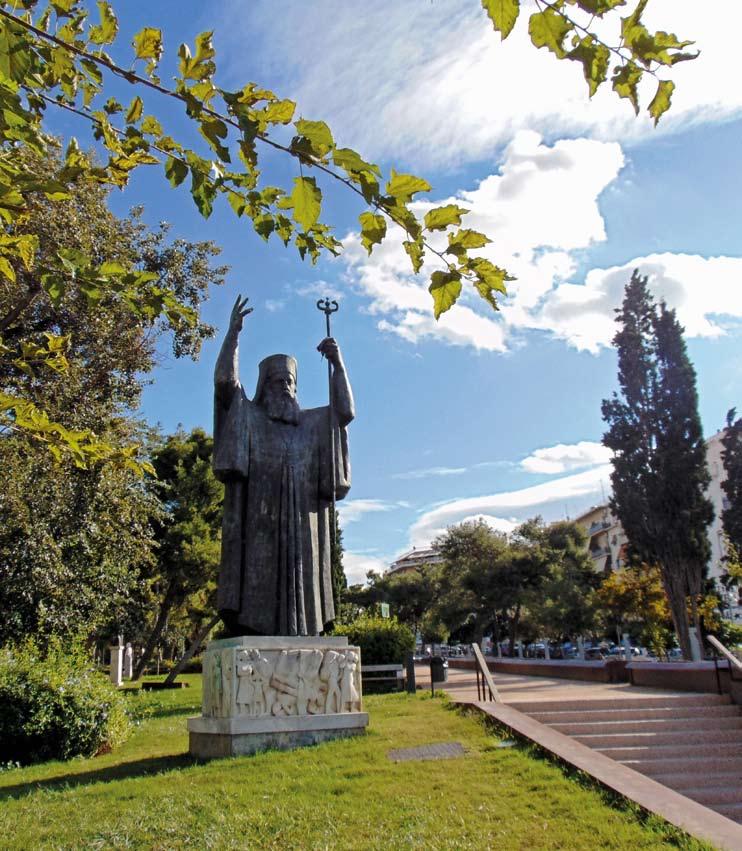
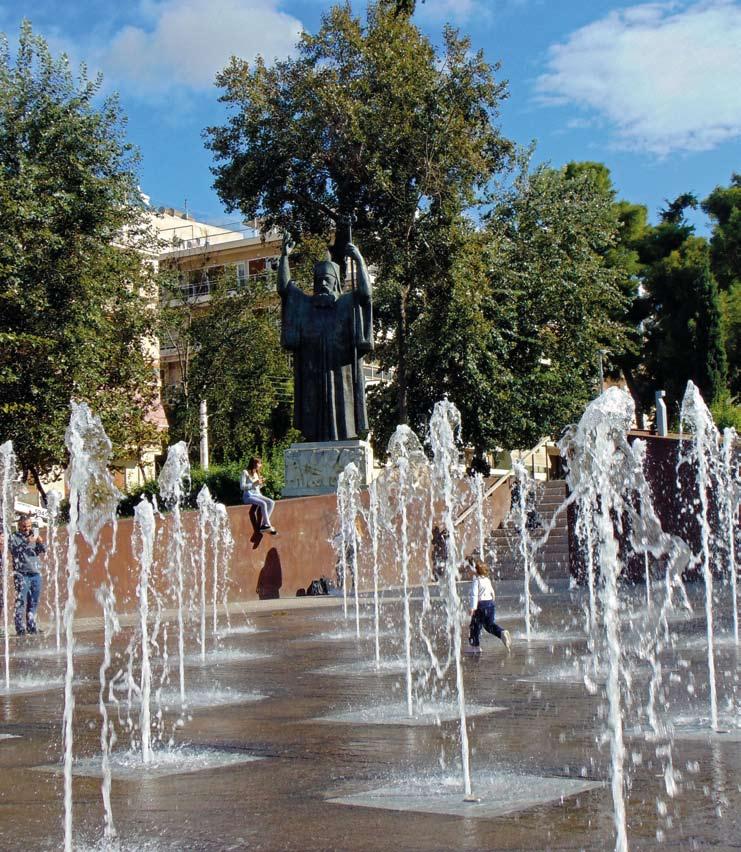
the 1960s; in front of it stretches the Mikrasiatikis Mnimosynis Park and the Chrysostomou Smyrnis Square, the southernmost section of which is occupied by the imposing statue of the heroic Chrysostomos of Smyrna. To the north of the Central Square lies the Alsos district (Syngrou Avenue-Saint Photina church-Eleftheriou Venizelou Avenue-Kratitos Street), where the most extensive park of Nea Smyrni and one of the largest urban greens in Attica is also to be found.
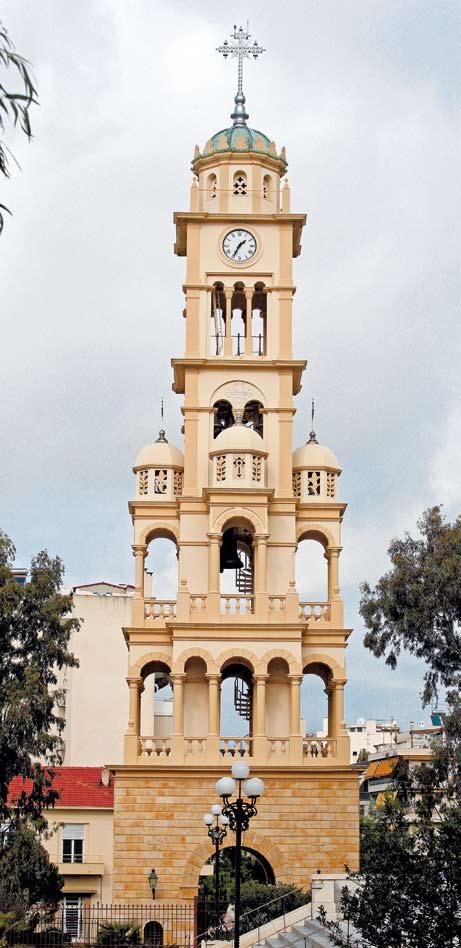
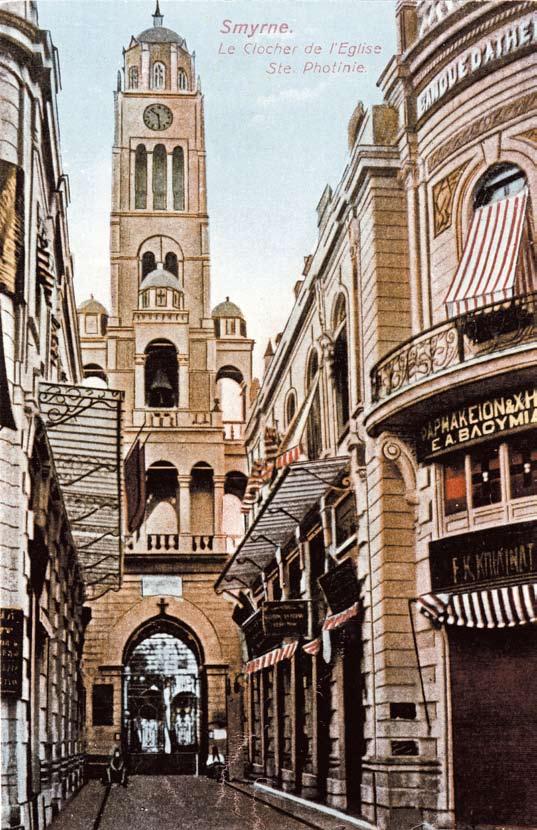
To the east of Alsos and the Central Square, on a hillock overlooking the Syngrou Avenue, the metropolitan church of Saint Photina is situated. Its monumental bell-tower has been built in resemblance to the campanile of the homonymous Smyrnian church, which was burnt down during the Ionian capital’s plundering in 1922.
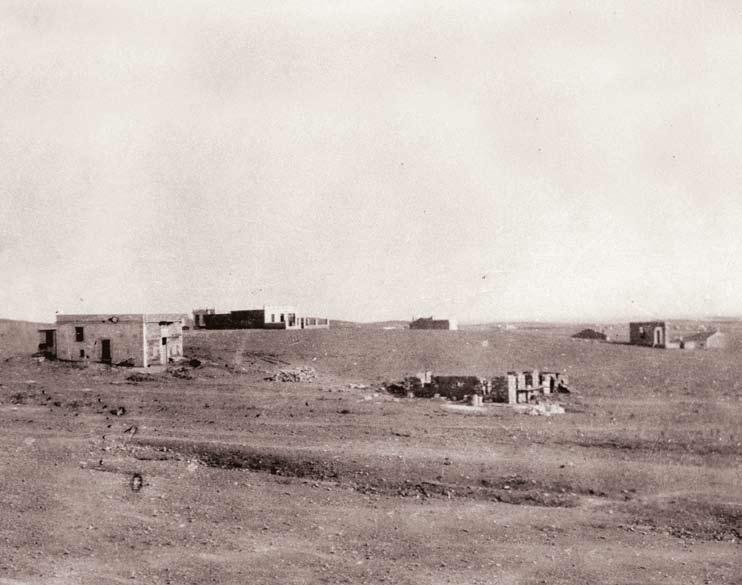
Pharos, the oldest district of Nea Smyrni, is located to the east of Saint Photina, as it occupies the north-eastern corner of the municipality. Pharos existed as a settlement prior to the arrival of
The megaron of Nea Smyrni ’s Estia.
Introducing the Municipality of Nea Smyrni
the refugees, and became widely known due to the organised resistance activities that took place there during the German Occupation. While moving from Saint Photina to Pharos, one comes across dexamenis Square, which is situated on the most elevated area of Nea Smyrni; it has been named after a large water tank (= dexameni), that was located here. Next to it, the Municipal Sports Centre and Swimming Pool, as well as a gymnasium and a lyceum (Omireio and Kentriko) are also to be found.
The Loutra district is situated in the eastern section of Ano (Upper) Nea Smyrni, whereas Armenika, named after the numerous Armenians that settled there, is located to its east.
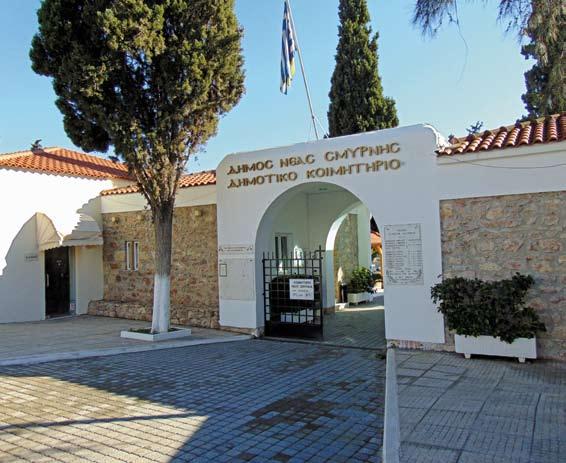
The south-eastern part of Nea Smyrni is called Mytilineika, as it has been settled by people from the island of Lesbos (Mytilene). Its southeasternmost end, essentially Nea Smyrni’s southeasternmost end, is occupied by the town’s cemetery, which is located near the cemeteries of Palaio Phaliro and Kallithea (on the border with the Municipality of Agios dimitrios).
The buildings of the Experimental Gymnasium and Lyceum of the Evangelical School, the antecedor of the renowned homonymous Smyrnian educational institution, occupy the area between the Mytilineika district and Eleftheriou
Venizelou Avenue, near the border with the Municipality of Palaio Phaliro. This is also, where Stadiou Square is to be found.
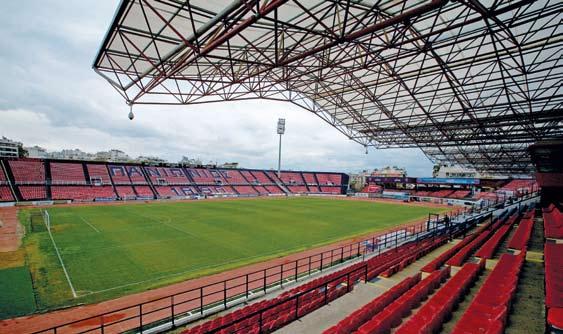
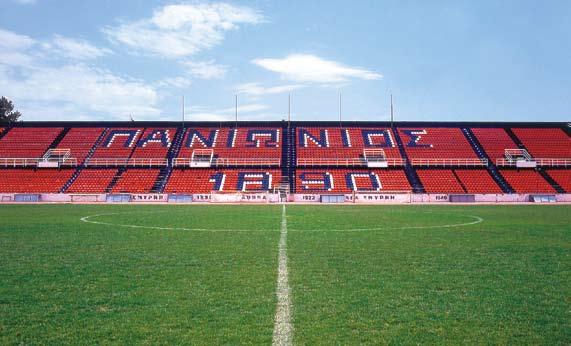
The stadium of Panionios, inaugurated in 1940, is situated to the south of the Central Square. Next to the stadium, the building of Milon SC and the building that used to accommodate the Evangelical School in the past are located. The historical chapel of Saints Theodores is situated a few metres to the south-east of the stadium.
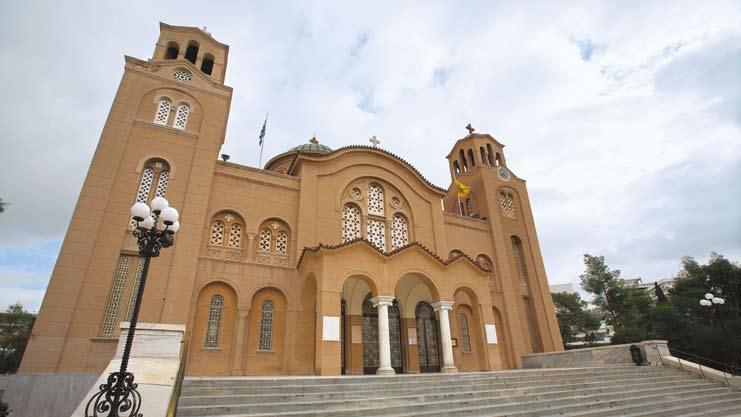
The section of Nea Smyrni located between the Panionios’ stadium and Eleftheriou Venizelou Avenue is identified with the Agia Paraskevi district. The Christian temple dedicated to Saint Paraskevi, which is situated there, was constructed during the 1940s and 1950s to commemorate the church of Saint Paraskevi in Smyrna.
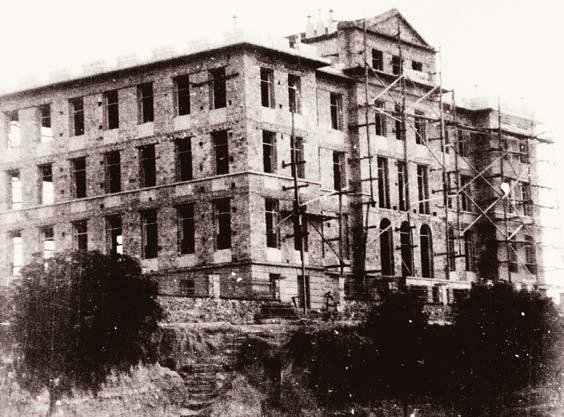
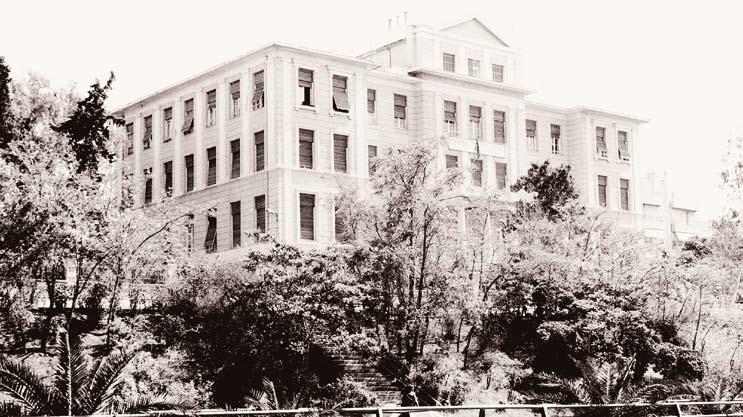
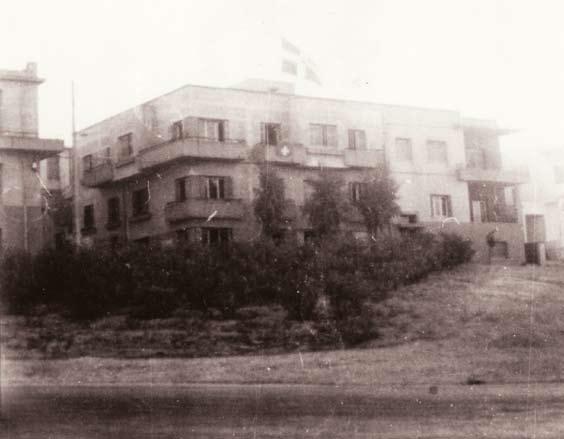
The north-western end of the Nea Smyrni Municipality is identified with the Chrysaki district, which accommodates the Leontian Luceum and the church of the Holy Unmercenaries. In the area stretching to the north-west of the Leontian Lyceum, the impressive building of the Iosiphogleian Orphanage that dates from 1929 is to be found; it is located on Syngrou Avenue, between the Chrysaki district and Chrysostomou Smyrnis Square.
The stadium of Panionios, the most popular sports club of Nea Smyrni.
CHAPTER Iι
The Nea Smyrni region from antiquity until the beginning of the 20th century
The region of Nea Smyrni during antiquity
The area of the Municipality of Nea Smyrni was not inhabited during antiquity, as it was mostly occupied by arable fields. despite its close vicinity to the Athenian centre, the area lay well outside the city walls. The section of the 5th and 4th century Athenian fortification that was closest to the region of Nea Smyrni was located a few hundred metres to its north-west.
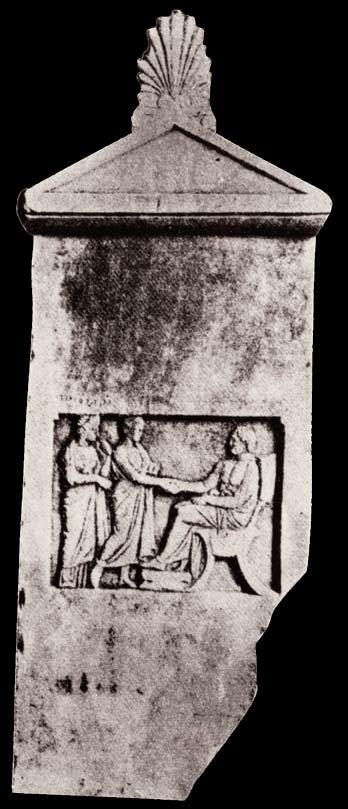
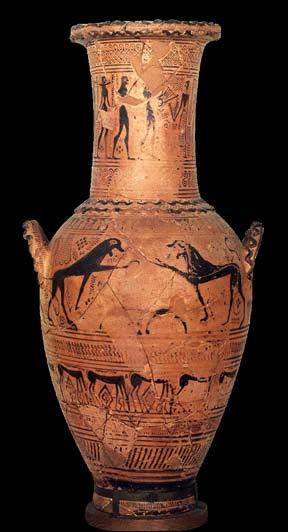
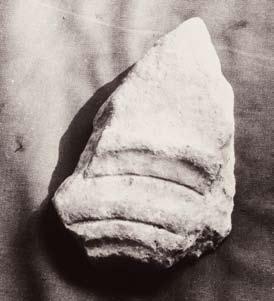
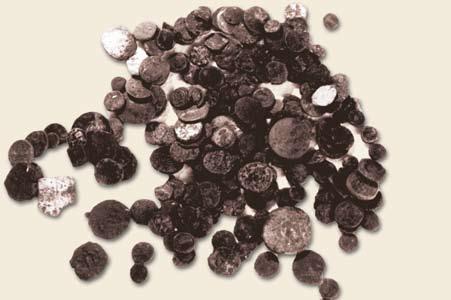
At the beginning of the 5th century BC, Themistocles had Piraeus and its ports fortified, whereas the Phaleric and the Long Walls were constructed about two decades later, to protect the roads leading from Athens to the ports of Pireaus and Phaleron. The course of the Phaleric wall more or less coincided with that of Syngrou Avenue, while its southern section diverged to the east, so as to include the eastern part of the Phaleric Bay. Large conglomerate boulders originating from the Phaleric wall’s southern section have been excavated in a building plot on Eptalophou Street, in the south-western end of Nea Smyrni. Only very limited archaeological remains have been identified within the boundaries of the Nea Smyrni Municipality, as the area was largely uninhabited during antiquity. despite the fact that archaeologists place it among three significant Athenian demes –Ksypete to the west, Alopeki to the north and Phaleron to the south–, the area of Nea Smyrni has yielded no architectural remains. The limited amount of excavated material is mostly associated with burials and most of it was identified in the south-western part of Nea Smyrni, i.e. along the Phaleric wall. The finds include clay and marble larnakes, as well as two
funerary stelae. An important group of burials containing the famous Analatos hydria has been excavated in the area of Agios Sostis (Saint Saviour church). On the basis of its painted decoration, which is of exceptional quality, the vase has been dated to 690 BC. Besides the Phaleric wall, the concentration of burial monuments should be also associated with the Phaleric street that ran through the area in question. The Phaleric street was an important road, as it connected the Phaleron port with the town of Athens. It was most probably the road used by Apostle Paul to
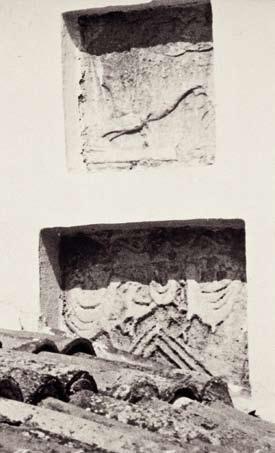
Early Christian parapet panels encased in the western wall of the Saints Theodores church.
The Nea Smyrni region from antiquity until the beginning of the 20th century
get from the Phaleron port, where his ship had cast anchor, to the city centre.
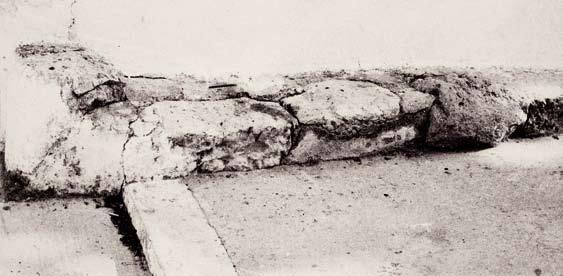
The area of Agioi Theodoroi (Saints Theodores church), where wells of potable water existed, must had been an important stop along the route of the Phaleric street. The location of the altar dedicated to the Unknown Gods mentioned by Pausanias has been identified with the site of the small church dedicated to Saints Theodores by the archaeologist A.S. Arvanitopoulos on the basis of ancient architectural remains encased in its walls.
The area of Nea Smyrni during the Greek Revolt: the battle of Analatos (1827)
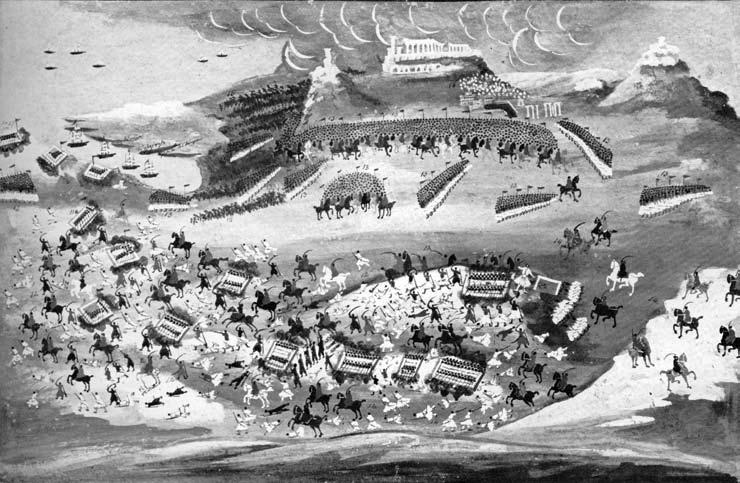
The area of Nea Smyrni has been closely associated with the historical battle of Analatos (April 1827), although the latter’s epicentre was located a few hundred metres to the north of the municipality’s northern boundary. The Turkish soldiers met the Greek fighters in the area to the east of Agios Sostis, near the church of Saint George of Kynosarges, where a contemporary square dedicated to the battle of Analatos (Machis Analatou Square) is to be found. This is also where Lagoumitzi Steet, the northern boundary of the Municipality of Kallithea, ends.
d uring the last decades of the 19th and the early 20th century Analatos belonged to the Athenian suburb of Kallithea and later to the homonymous community. This is based on various documents related to property ownership dating from this period. The exact borders of the Analatos region are not clear. The available information maintains that Analatos stretched along the modern Syngrou Avenue, immediately to the south of Agios Sostis.
The battle of Analatos, which took place on 24 April 1827, was the final act to the ten-month siege of the Athenian acropolis by the forces of Resid Mehmed Pasha, also known as Kutahi. The Greeks were severely defeated at Analatos, as a result of their improper
preparation and organisation, rush decisions and, most importantly, the absence of the great general Georgios Karaiskakis, who had been killed in a minor combat at Phaleron one day earlier.
The church of Saints Theodores
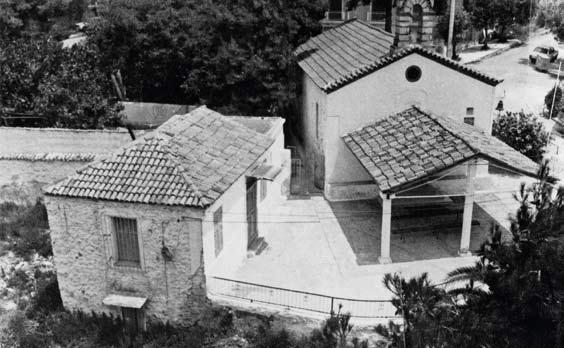
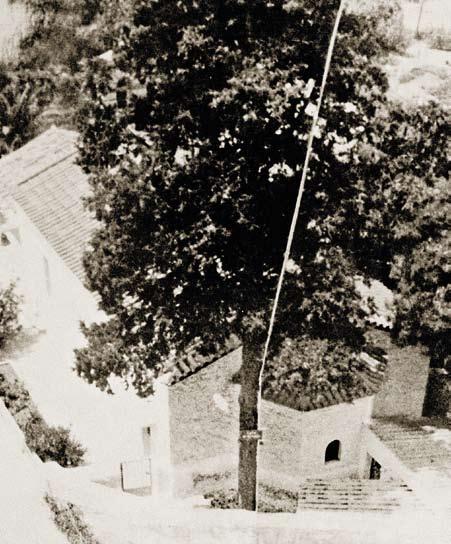
The chapel dedicated to Saints Theodores is located to the south-east of Panionios’ stadium, essentially in the southern end of the Municipality of Nea Smyrni. It consists of a single-aisled basilica with a wooden roof, which was most probably erected in 1870. Its original form has been significantly altered due to later additions to its northern and eastern sections. The small 19th century church was built on the ruins of an Early Christian structure, most probably a temple. This conclusion is based on two marble parapet slabs with relief decoration dating from the Early Christian period that have been found encased in the church’s western wall. Moreover, the remains of an ancient wall under the churh’s southern wall, as well as a marble column and a number of slabs, one of them bearing an inscription, that have been identified in a nearby building plot should be associated with either the Early Christian monument or the ancient altar dedicated to the Unknown Gods mentioned by Pausanias. The old well located to the west of the chapel should most probably be identified with the well of fresh water, after which Analatos (= saltless) was named.
The area of Nea Smyrni from the mid 19th century until the arrival of the refugees
In the 19th century, the region occupied by the modern Municipality of Nea Smyrni included farms and arable fields that belonged to rich farm owners from Brachami and Plaka. Along the area’s western boundary stretched Analatos, whereas the region of Issos was located to its east. Analatos constituted a section of Kallithea during the period 1885-1925. The 1885 census recorded 4
inhabitants at Analatos; ten years later, there were 6 inhabitants, whereas the area’s population had grown to 46 by 1920.
The Tataki estate, which had been established as early as 1830, occupied more than 1,000,000 square metres stretching from Syngrou Avenue as far to the east as Eleftheriou Venizelou and from Nazliou Street as far to the south as the Astoria cinema area. A section of the Tataki estate was purchased by Ioannis Chrysakis in 1905. A year later, Chrysakis bought Kalomoira Skotida’s neighbouring lot and established the Chrysaki estate, which had been used as a dairy farm until 1963. The Chrysaki estate was eventually expropriated, so as to accommodate the Leontian Lyceum and the Primary School “Chrysostomos Smyrnis”. To the east of the Tataki Estate stretched the properties of G. Georgantis and P. Tzoutouris, which occupied the whole of the Agia Paraskevi district. In the area of the Saints Theodores chapel lay the properties of Ntounis, Sachinis, Tsitsimbikos and others.
The fields to the east of Artakis Street belonged to land owners from Brachami, while the lands along Eleftheriou Venizelou Avenue and as far to the west as Syngrou were owned by Plakiotans. A large estate that belonged to the Plakiotan S. Totomis stretched along the zone defined by Syngrou Avenue to the west and the Alsos district to the east. This is where the Aspiotis Clinique, also known as “Blue Cross” (= Kyanous Stavros) was built. Its construction was initiated during the course of World War I and completed in 1919.
The north-eastern section of Nea Smyrni was occupied by the district of Pharos, where a small settlement had existed from as early as the beginning of the 20th century, that is prior to the arrival of the refugees from Asia Minor. Pharos was included in the city plan in 1937, when the settlement included 150 houses. The area immediately to the west of Pharos was known as Kepharapi or Kephara, while Molyva or Volyva
stretched along the northern section of Aigaiou Street. To the north of Molyva lies Souliotika Tambouria (= Souliotan Bulwarks); the locality’s name is related to the Analatos battle, which took place a few hundred metres to its north. Located at Souliotika Tambouria is also the characteristic church of Saint Saviour, which was constructed on the exact spot, where an attempt on the life of King George I occurred on 14 February 1898. The Christian temple was built in 1901, to commemorate the king’s salvation. Syngrou Avenue, the main traffic artery connecting the Athenian city centre with the Phaleric Bay and, also, Nea Smyrni’s western boundary, was constructed during the first decade of the 20th century. Two years later it was officialy declared a national road.
The Nea Smyrni region from antiquity until the beginning of the 20th century
View of the Saints Theodores church from the east.
καφενεία και ξενοδοχεία, καταστήματα, θέατρα
και
CHAPTER Iιι
From Smyrna in Ionia to Nea Smyrni in Attica
An
overview of Smyrna’s history from prehistory to the 19th century AD
d ue to its geographic location between the Aegean and Anatolia, Smyrna was an important town throughout antiquity. Its natural harbour as well as its close vicinity to the most important inland roads leading to the heart of Asia Minor facilitated Smyrna’s remarkable acme well before the Classical period. The remains from the first phase of ancient Smyrna (Old Smyrna) are located on the north-eastern part of the homonymous bay (Tepekule). At about the end of the 4th century, the town was moved to a new location on the slope of the Pagos Hill (Kadifekale).
The earliest traces of human presence in the wider area of Smyrna go back to the middle of the 7th millennium BC. The core-settlement that later developed into Old Smyrna is located in the Smyrnian district of Bayrakli, where Tepekule is to be found. The multiple similarities between Smyrna’s and Troy’s cultures have led researchers to the conclusion that these two sites were closely related in many different ways.
At about the mid of the 2nd millennium, Smyrna was incorporated into the Hittite Empire. According to Herodotus, Smyrna was colonised by Aeolians from Cuma at the beginning of the 1st millennium. Archaeological research has uncovered important architectural remains dating from the second half of the 10th century BC. during the Early Iron Age, Smyrna consisted of a settlement encircled by a massive fortification wall; its population measured more than a thousand inhabitants, while many more lived in the nearby villages that surrounded Smyrna. These habitation
foci were united under the Smyrnian city-state, which, according to a tradition, was the birthplace of Homer.
Historians maintain that the year 688 BC witnessed the occupation of Aeolian Smyrna by the Colophonians and its subsequent incorporation into the Ionian d odecapolis. In 454 BC, Smyrna was destroyed by the Persians of Cyrus the Great. From 688 until 454 BC Smyrna thrived, as it developed significant commercial activity in the Aegean and western Asia Minor. Pausanias and certain Smyrnian historians attribute the town’s re-establishment at about the end of the 4th century BC to Alexander the Great, who is generally thought to have gathered the scattered Smyrnians in a new site located on the south-eastern end of the bay, i.e. Smyrna’s current location.
during the first decade of the 2nd century BC, Smyrna was attached to the Roman Empire, while, similarly to the other Ionian towns, retaining certain rights and freedoms. Its reputation attracted the Romans’ interest: Hadrian visited Smyrna in A d 121, whereas Marcus Aurelius had the town systematically rebuilt after the destructive earthquake of Ad 178.
When Constantinople was established as the capital of the Eastern Roman Empire, trading activity in Asia Minor was gradually reduced and, consequently, Smyrna lost plenty of its glamour. Together with the rest of the Ionian towns Smyrna became one of the most significant strongholds of the Byzantines in their struggles
against the Persians, the Arabs and the Turks. After Constantinople was conquered by the Crusaders, the town of Smyrna was occupied by the Knights Templar. It was persistently and forcefully claimed by the Byzantines and sacked several times by the Turks. Moreover, at the beginning of the 15th century it suffered the brutal attack of Tamerlane’s Mongols. Eventually Smyrna was incorporated into the Ottoman Empire in 1452, i.e. during the reign of Murad II, and became one of the sandjak in the Aydin vilayet.
The end of the 15th and the beginning of the 16th century witnessed a large number of Hebrews from Spain arriving at Smyrna. Once more, its geographic location allowed the town to become a commercial centre for the Ottomans, the Greeks, the Western Europeans and the Armenians, who had gradually gathered there. Smyrna had become the metropolis of Asia Minor’s coast. Its development continued throughout the 17th, 18th and 19th centuries; this was so, despite the murderous famine of 1676, the destructive earthquake of 1688 and the great fire of 1743. At the beginning of the 17th century, Smyrna’s population included more than 30,000 members, the number of which had risen to 100,000 by 1803. More than one third of them were Greeks.
Smyrna: Asia Minor’s metropolis before the destruction
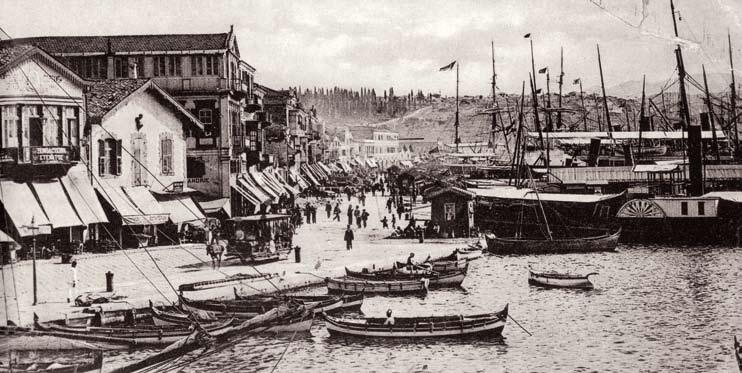
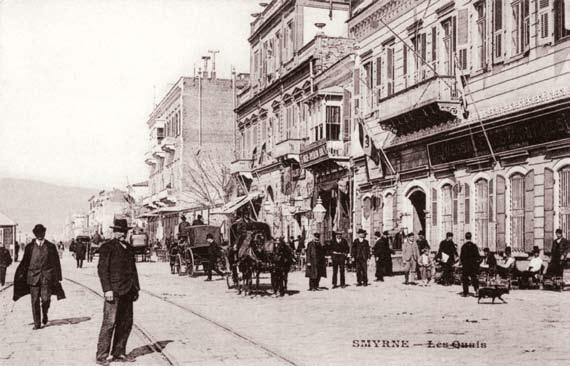
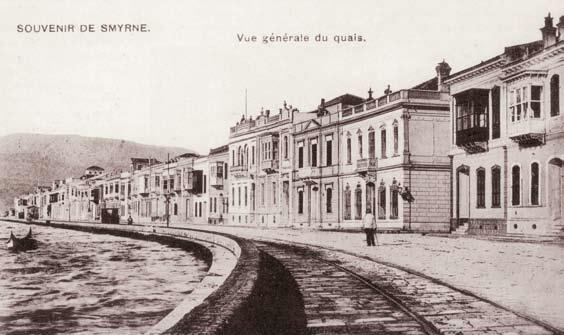
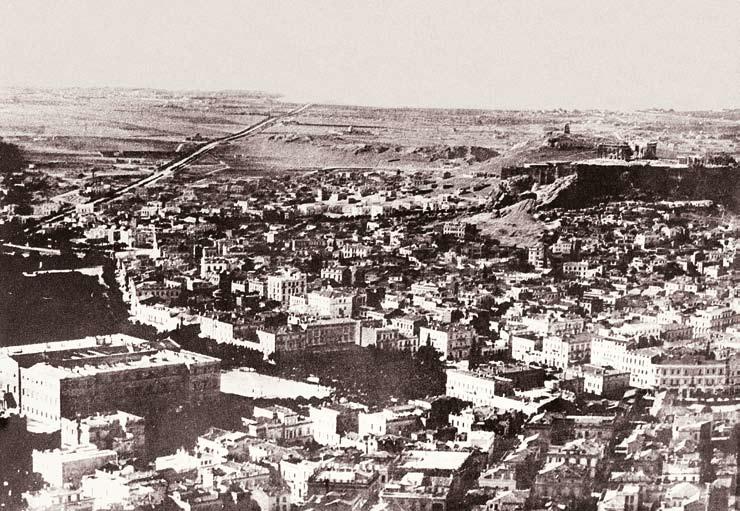
Stretched across the coast of the Hermaean Gulf, the town of Smyrna enjoyed the privileges stemming from its ideal geographic location. Established on a site of low elevation and edged by the Pagos Hill to the south, the town of Smyrna expanded towards the south during the 19th century; the new Smyrnian district accommodated primarily Greek populations, as well as some Western Europeans. Numerous monumental buildings appeared along the coastal zone; some of them were of domestic character and constituted typical examples of the characteristic Smyrnian house-type, i.e. double-storeyed structures with tiled roofs and wood-framed balconies. The multicultural town of Smyrna combined elements from both the East and the West. Its impressive economic and cultural development, to which the Greek Smyrnians had greatly contributed, as well as its outward, cosmopolitan character had attracted many romantic travellers from Europe. Just before its 1922 plundering, Smyrna, a true multi-ethnic Mediterranean metropolis, had a population of more than 300,000; this included Greeks, Ottomans, Armenians, Hebrews and Westerners.
General view of Smyrna’s famous quay.
From Smyrna in Ionia to Nea Smyrni in Attica
Smyrna’s Hellenism
The multi-ethnic nature of the Smyrnian society was its most renowned characteristic. The Greek element’s contribution to the establishment of its physiognomy was decisive. The Greeks consisted the most important community; the largest section of Smyrna’s population, i.e. about 150,000 inhabitants, were Christian Orthodox, spoke Greek and maintained a relatively high financial and cultural status. The Smyrnian Greeks were well-aware of their eminent position within the town that the Ottomans used to call “giaour Smyrna”. The Orthodox population had began associating themselves with the Greek mainland well before the Greek army’s arrival at the Ionian capital. The Smyrnians followed closely the development of the Greek operation in Asia Minor, rejoiced over the military victories and agonised over the final outcome.
The members of the Greek community took part in various social events and organised glamorous religious festivals, often of national importance. Several Greek educational institutions existed in
Smyrna; the most eminent among them was the renowned Evangelical School, which included an exceptional library and a remarkable museum. One of the most impressive features in 19th century Smyrna is the intense publishing activity including works of Western European scholarship, as well as original Greek literary works. Moreover, remarkable theatrical productions reflected the wealth and cultural development of the Greek Smyrnians during the second half of the 19th century. Athletic activity, which should be placed within the same cultural framework, was represented by three sports clubs: Panionios, Apollon and Pelops.
The Greek operation in Asia Minor
The extent of the human tragedy, the anguish due to the national defeat and the deep impact of the dramatic events of 1922 on communal conscience are reflected on the historical term used to describe them: “the Asia Minor destruction”. The Treaty of Sèvres, signed in August 1920, seemed to justify the Great Idea vision and create a “Greece of two continents and five seas”. Indeed, eastern Thrace and the Aegean islands were attached to Greece, which also gained sovereignty over the Smyrna area. The Greek forces had arrived at Smyrna well before the treaty was actually signed; the allies gave them permission to do so, as a result of Eleftherios Venizelos’ boldness and efficient political conduct. The Greek army corps, which reached the Ionian capital early in the morning of 2 May 1919, was received by the Greeks’ cheering, as well as the armed resistance of the Turkish garrison. A few days later, a Greek political administration was established. As a rule, military operations dictate the treaties’ conditions; however, what happened in Asia Minor was the exact opposite. The Greek army was engaged in a particularly risky operation, in order to enforce the favourable conditions of the Treaty of Sèvres. It was forced to go into an endless series
Greek troops in Smyrna, May 1919.
of battles and, despite the continuous victories, did not manage to ensure its opponents’ ultimate defeat. Soon, the situation reached a deadlock; nevertheless, the Greek governments of that period did not manage to reverse the destructive course things had taken. The heroic Greek soldiers were practically abandoned in the highlands of Asia Minor; this is where a tragic military epic was composed, as these brave men marched as far to the east as the River Sangarius, just outside the city of Ankara. A few months later (14 August 1922), the extremely worn out Greek army was defeated and the front collapsed.
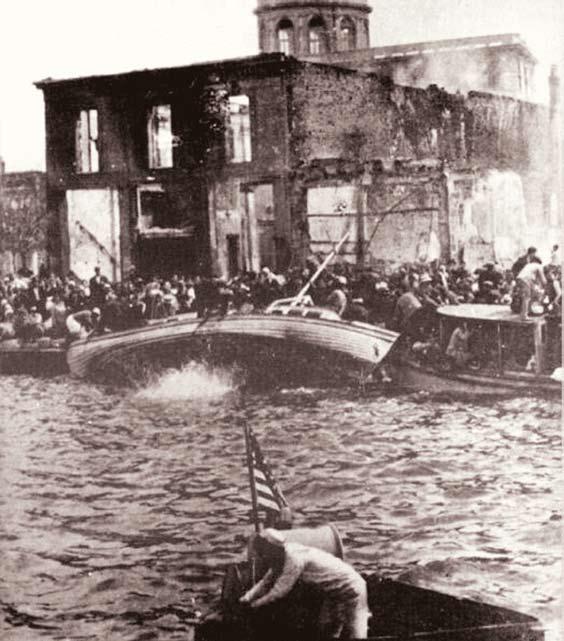
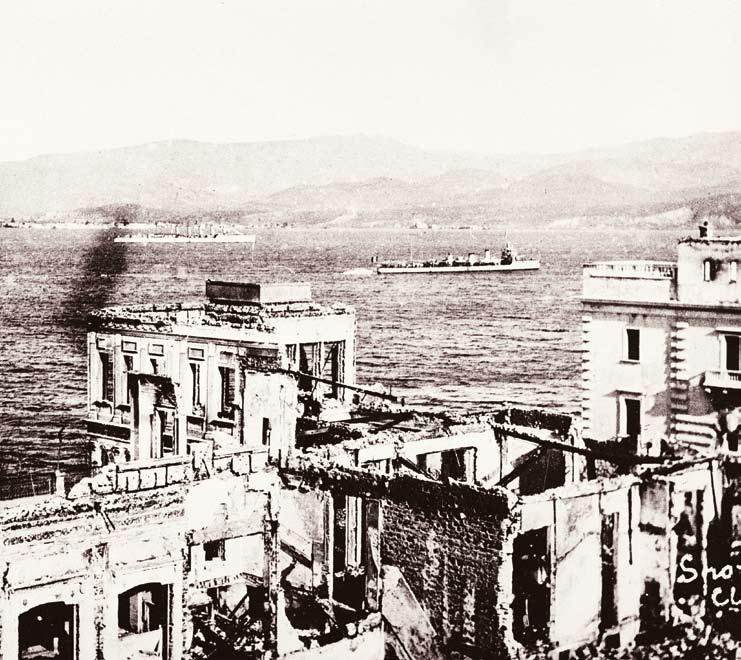
The last act of the drama took place in Smyrna, where the helpless Christian Orthodox population suffered a brutal attack by the Turks, while the beautiful city was going up in flames. The fire was initiated in the Armenian district and soon spread over the Greek neighbourhoods. Hunted by both the Turks and the flames, thousands of Smyrnians gathered on the waterfront, where several acts of violence and mayhem took place under the eyes of the crew members in the allies’ ships. On 3/ 15 August, Nuredin Pasha, the Turkish governor of Smyrna, issued a decree, which ordered the Greek population to evacuate the town within two weeks, with the exception of men aged 18-45. After Nuredin’s decree, violence culminated. The captives, who escaped immediate annihilation, were led in the depths of Turkey, from where only few managed to return.
The refugees in Greece
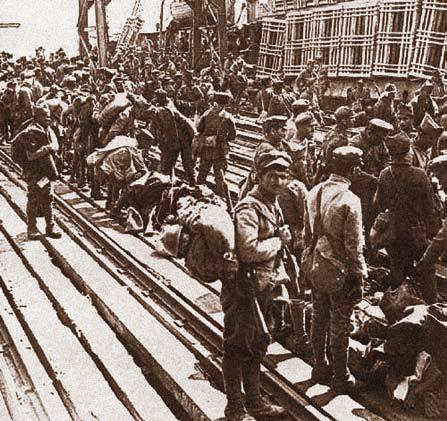
The wave of brutal violence that swept across the western coast immediately after the withdrawal of the Greek army was followed by the systematic uprooting of the Greek populations in central Asia Minor and the Pontians’ dramatic attempt to avoid deportation according to the population exchange treaty. The expatriate Greeks in eastern Thrace managed to take refuge to northern Greece after crossing the River Evros.
The “Agreement with relation to the Exchange of Populations between Greece and Turkey” signed in Lausanne (30 January 1923) legitimised what had already happened, thus crushing the refugees’ repatriation dream. despite the fact that the much disliked by the refugees mandatory population exchange blatantly violated several fundamental human rights, it seemed to have had been the only feasible solution for Greece.
The exact number of refugees that reached Greece remains unclear, while the 1928 census recorded about 1,200,000 refugees. However, their initial number must had been much larger; one should take into account their high mortality rate, as a result of disease and poor living standards and the low birth rate due to the composition of the refugees’ population; furthermore, many of them migrated to other countries.
The reception, treatment and restitution of the refugees from Asia Minor was a mission of huge dimensions, which directly affected Mid-War Greece in a large variety of ways. The impoverished refugees that overwhelmed the country made the weakened Greek state face unprecedented responsibilities. The memorandum establishing the Refugee Restitution Committee was signed in 29 September 1923.
The Committee was primarily interested in agricultural restitution, which could be achieved much faster, and also urban settlement. The refugees’ treatment and assimilation was not only a national duty, it was a matter of political prevention.
The refugees’ incorporation into the Greek society was not particularly easy, as a huge gap between the natives and the newcomers was created in all aspects of economic and political life. The presence of the refugees created a severely competitive climate with regard to business and land ownership, whereas the refugees’ political views favouring Venizelos placed them on one of the two extreme ends of the political conflict that lead to national disunion.
From Smyrna in Ionia to Nea Smyrni in Attica
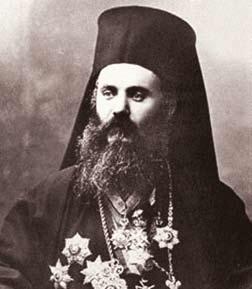
Chrysostomos of Smyrna
The national martyr Chrysostomos Kalaphatis, Bishop of Smyrna during the period 1910-1922, was born at Triglia, Propontis, in 1867. He studied at the Theological School of Chalki (1884-1891) and served as archdeacon of the Bishop of Mytilene Konstantinos Valiadis, who later became the Ecumenical Patriarch Constantine V (1897). Immediately after his election, Constantine V ordained Chrysostomos great protosyncellus of the Ecumenical Throne. In 1902, Chrysostomos was ordained bishop of Drama (1902-1910) by the Patriarch Joachim III. His struggle against the Bulgarian propaganda and his political activity disturbed the Sublime Porte, who demanded his immediate suspension.
While at Smyrna, Chrysostomos continued his
national struggle. The Turkish authorities succeeded in having him removed from the Metropolis of Smyrna (1914), to which Chrysostomos returned after the Armistice of Moudros (1918). During the period of the Greek administration of Smyrna (19191922), Chrysostomos had doubtlessly become the leader par excellence of the Smyrnian Hellenism. He supported the Asia Minor Defence movement that aimed at the establishment of an autonomous state in Ionia. When the Asia Minor front collapsed (August 1922) and the Greek army and authorities left Smyrna, Chrysostomos remained at his post.
Despite the intense exhortation by both the British and the French consul, the heroic bishop did not abandon his metropolis and, eventually, shared the fate of his flock’s members.
Chrysostomos’ mission in Smyrna
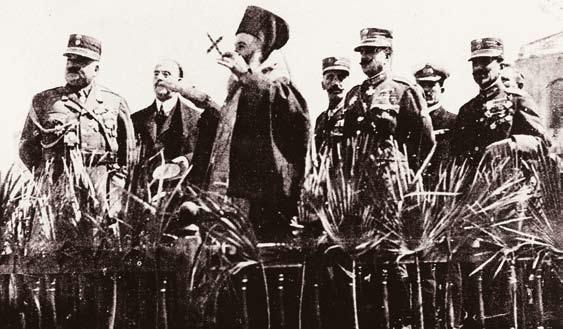
From 1910, when he was ordained bishop of Smyrna, until his martyrdom, Chrysostomos fulfilled a multifaceted mission including charity, cultural activity and social work. He was particularly interested in advancing Smyrna’s youth through education and sports. He created a solid foundation for the development of several educational institutions, revived the sports clubs
Apollon and Panionios, had the metropolitan
Chrysostomos, the Bishop of Smyrna gives blessing to men from Asia Minor who joined the Greek force, in the presence of General Leonidas Paraskevopoulos and Aristeidis Stergiadis, the Greek Commissioner at Smyrna.
mansion, the Evangelical School and the Omireio School for Girls erected and created a journal of religious content named Ieros Polykarpos (= Sacred Polycarpus). During the Greek government, Chrysostomos organised commons and had several hundreds of refugees treated. Furthermore, he had created “The Salvation Army” out of volunteers, who would seek and gather Greek refugees in hiding.
The bishop’s death
The Turkish atrocities against the Greeks in Smyrna culminated with the martyrdom of Chrysostomos in 27 August 1922. The hierarch had spent the previous days treating refugees from the surrounding regions in the courtyard of the metropolitan temple of Saint Photina. In 27 August, he was summoned by the provost marshal Salih Zeki. The Turkish official made Chrysostomos order the Christian population to remain at their homes and hand over any weapons in their possession. In the evening of the same day, he was summoned again; this time by the major Nuredin Pasha, who officially accused the bishop of
being a traitor to the Ottoman Empire.
As the bishop was making to leave the command post, Nuredin appeared on the balcony to shout at the crowd gathered in front of the building that Chrysostomos was theirs to hear, thus causing the murderous assault on the bishop by the aggravated mob. Besides Chrysostomos, several Smyrnian hierarchs and priests were assassinated. Christos Solominidis maintains that 347 out of the 459 priests in the Smyrna prefecture were brutally butchered. The Greek Church has declared Chrysostomos of Smyrna a saint.
Smyrma: the renowned metropolis on file, September 1922.
The sudden rise in the Greek population by 18% drastically altered the urbanisation processes. By 1927, about 60% of the refugees originating from urban centres had settled in the three largest cities of Greece: Athens, Piraeus and Salonica. The zoning policy adopted by the Refugee Restitution Committee drastically differentiated the urban development of the Greek capital. Immediately after 1922, Athens and Piraeus were encircled by refuge settlements that were eventually amalgamated in a unified architectural complex. The policy of the various organisations for urban restitution conduced to dividing the refugee population in wealthy and poor, as the home acquirement process was directly associated to their financial capacity. In 1927, about 71% of the refugees were living in settlements. Most refuge families in Athens had bought or rented houses through their own financial means, while
many others lived in huts and hovels, within unorganised settlements.
The establishment of Nea Smyrni constitutes a special case, as it was designed for refugees originating from middle- and upper-class social strata; furthermore, it was built after the upheaval that characterised the first years of the refugees’ settlement had subsided; most importantly, however, it was incorporated into the city plan from as early as its foundation. The refugees, who were appointed lots in the area of Nea Smyrni, originated primarily from the Ionian coast: 23% from Smyrna, 17% from Adrammytion, Aivali, Phocaia, Moschonisia, Vourla, Tsesmes and Ephesus, 12% from Pontus, 10% from southern Asia Minor, 9% from Constantinople, 9% from Thrace and 8% from central Asia Minor. The local (non-refuge) population, which was concentrated in the settlement of Pharos, was about 12%.
The remains of the famous Sporting Club on the Smyrnian Quais after the great fire.
From Smyrna in Ionia to Nea Smyrni in Attica
ερί αναγνωρίσεως
αντιπροσώπων της τέως κοινότητος και εκκλη
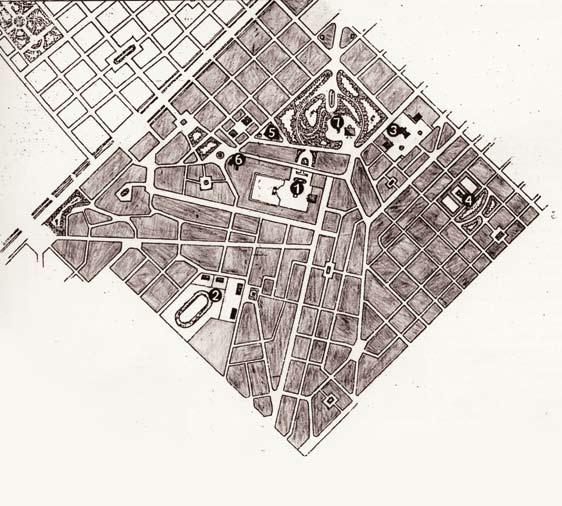
προάστιο της Νέας Σμύρνης. Με αριθμούς σημειώνεται η θέση των: 1. εμπορικό τμήμα (καταστήματα, λέσχη, γραφεία),
2. εκπαιδευτικό-αθλητικό τμήμα (σχολεία, βοτανικός κήπος, στάδιο, βιβλιοθήκη),
ο δεύτερος κοινοτικός απολογισμός (19351936) αναφέρει ότι το σύνολο των εσόδων της κοινότητας νέας σμύρνης ήταν 1.831.209 δραχμές. τα έσοδα αυτά προέρχονταν από φόρους μεταβίβασης (64.178), σφαζομένων ζώων (101.656), εγχώριων προϊόντων (647.385), επιτηδεύματος (3.857) και οικοδομών (16.086), τέλη πεζοδρομίου-οικοδομών (239.522) και καθαριότητας (33.610) και έσοδα από άμεσους εράνους (63.138), ενώ υπήρχε και υπόλοιπο χρήσεως ύψους 701.737 από το έτος 1934-1935. τ α έξοδα ανήλθαν στο ποσό των 2.204.056 δραχμών και περιλάμβαναν έξοδα παραστάσεως κοινοτάρχη (12.431), μισθούς γραμματέως (36.000), δακτυλογράφου (11.601), κλητήρα (24.000) και επόπτη (3.467), ενοίκιο κοινοτικού
γραφείου (19.200), δαπάνες για τη διαμόρφωση της οδού Έντεν, δηλαδή της σημερινής ελευθερίου Βενιζέλου, (53.156) και της οδού αγίας φωτεινής, καθώς και
υπηρεσία τ υ.Δ. κ . (20.000), για δενδροφύτευση (53.524), για την εγκατάσταση
ηλεκτροφωτισμού (588.346), για
τέλη (5.188), για διάφορα μικροέργα (98.385). επίσης, δαπανήθηκαν διάφορα ποσά ως αντίτιμο βενζίνης (33.081), εισφορά αεροπλάνου (25.000), αποζημιώσεις για την κατεδάφιση παραπηγμάτων (10.000), για την
αγορά καταβρεχτήρα (220.684), την περισυλλογή απορριμμάτων (76.052), για την αμοιβή μηχανικού (26.750) και την αγορά χωροβάτη (13.500). παράλληλα, η κοινότητα νέας σμύρνης
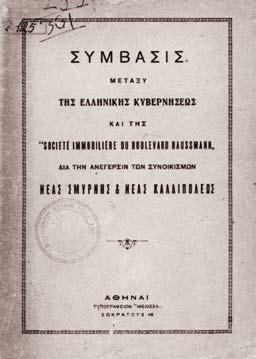
Société Immobilière du Boulevard Haussmann
κ ολώνιας, ν κ υριακίδης, ε υάγγελος η λιού,
κοκόνογλου και πέτρος καπρανίδης, ο οποίος ήταν και ο πρώτος πρόεδρος του ομίλου. σύντομα προστέθηκαν οι γεώργιος Βαϊνδηρλής,
ρέρρας, Δημήτρης, γιώργος και Χρήστος Βου -
ρέκας, ν. Βερυκοκάκης, Δημήτριος γεώργας, ορ.
καρούσος κ.ά. το 1929 πραγματοποιήθηκε
Chapter IV
CHAPTER IV
Nea Smyrni during the 1920s and 1930s
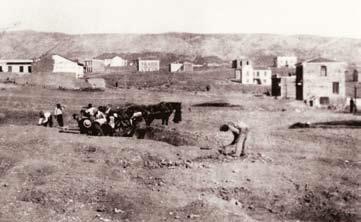
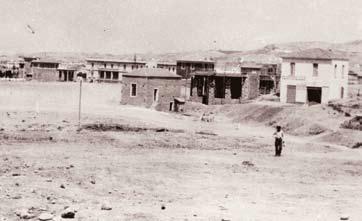
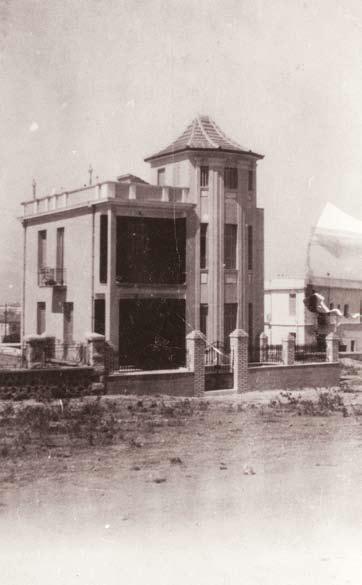
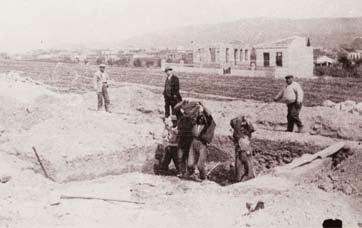
The refugees’ settlement in the area of Nea Smyrni
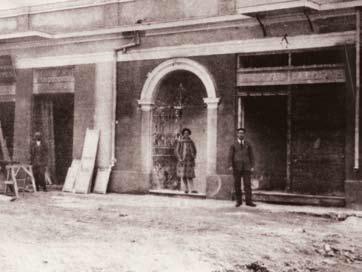
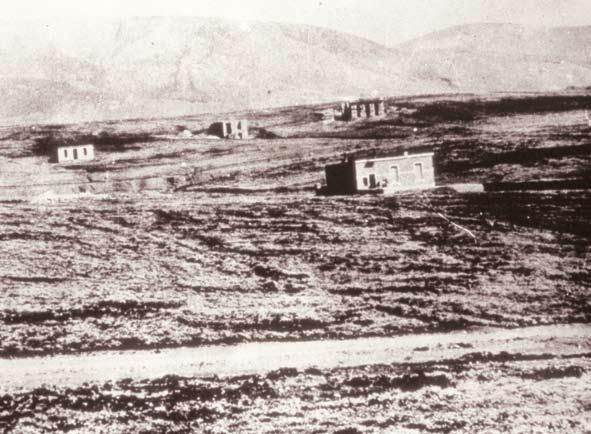
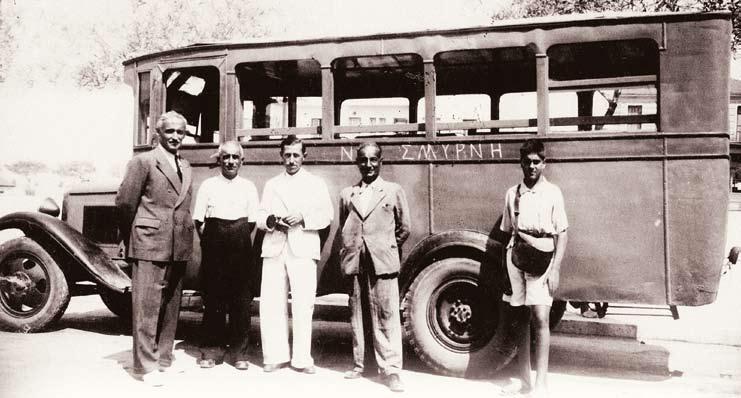
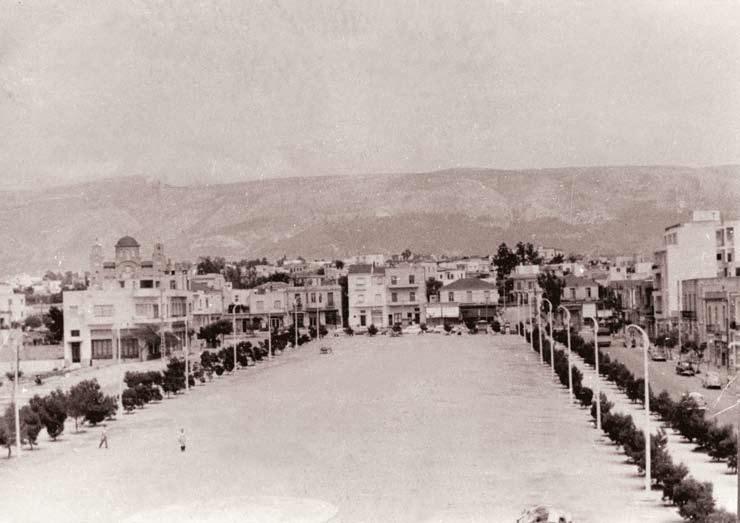
Shortly after their settlement in Greece, the refugees began attempting to reconstruct their old communal institutions. This was particularly so for the populations originating from the coastal urban centres of western Asia Minor, who felt that they should be treated in a different manner than the rest of the refugees. The cosmopolitan, educated and until recently wealthy Smyrnians sought to preserve their prominence in their new homeland by establishing themselves in a distinctictively differentiated space. Nea Smyrni constitutes one of the very few examples all over Greece of a refuge settlement established within the city plan, i.e. in an urban area. The procedures for the foundation of an urban refuge settlement for the Smyrnians and the choice of the appropriate place for it were pushed forward by the systematic
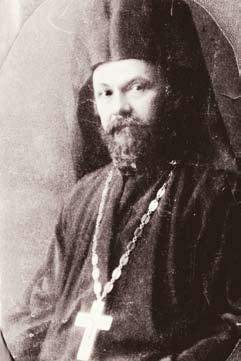
activity of the restless Basileios Papadopoulos, Archdeacon of the Metropolis of Smyrna during 1914-1922 and later Bishop of Phlorina-Almopia and Eordaia. In November 1922, Papadopoulos was appointed Suffragan Bishop of Smyrna by the Ecumenical Patriarchate. The leading role played by Papadopoulos in the restitution of his flock, the members of which had been reduced to homeless refugees, demonstrates the fact that the Greek Orthodox communities of Asia Minor had managed to transfer the social and communal hierarchy in their new homeland to a relatively large degree.
The royal decree “On the acknowledgement of representatives of the former Community and Eparchy of Smyrna” that was issued in August 1923, revived, although temporarily, the Community of Smyrna by recognising the Suffragan diocese
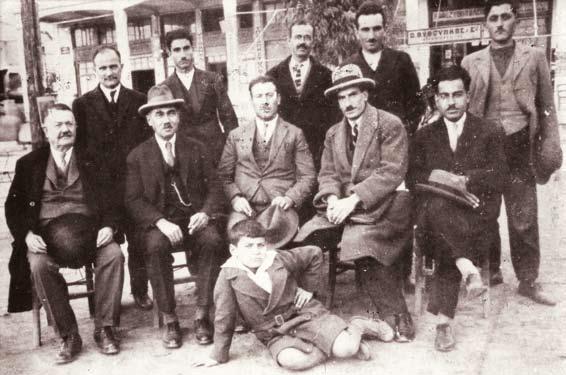
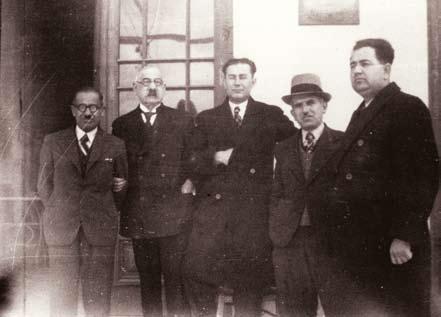
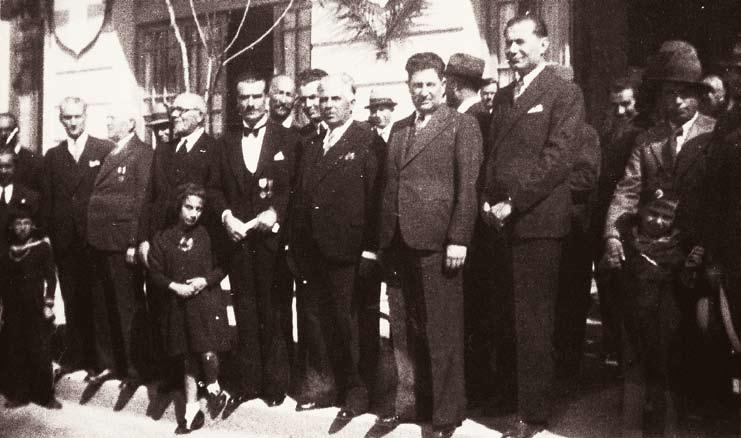
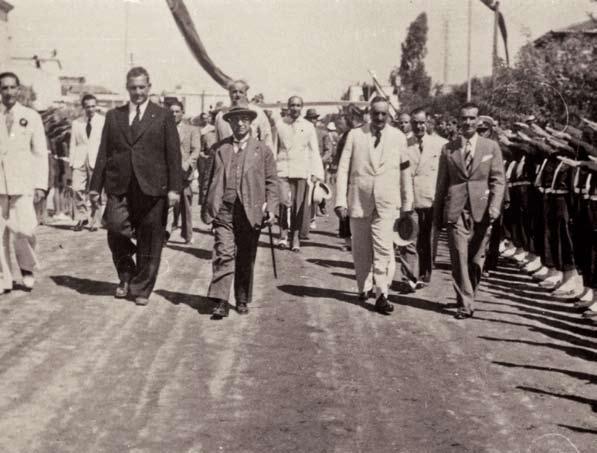
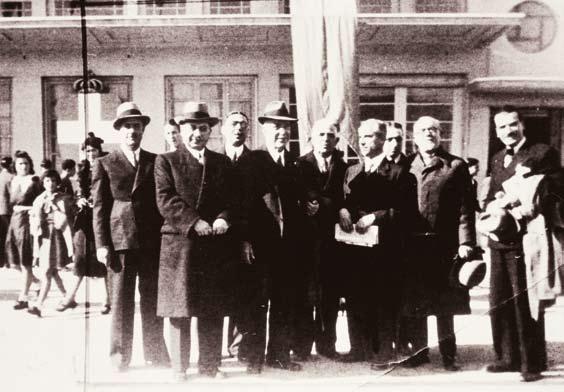
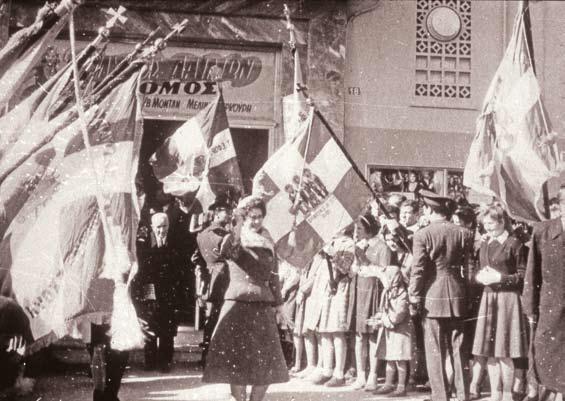
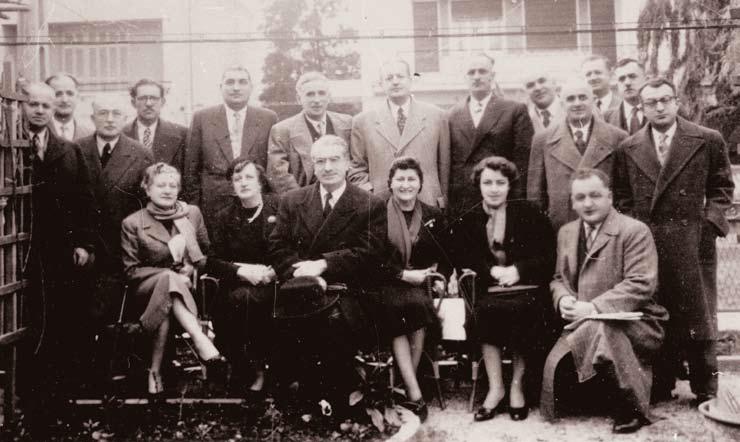
Athanasios Karyllos and other members of the Community of Nea Smyni in front of the Evangelical School on the occasion of the celebration of the Three Hierarchs feast, 1938.
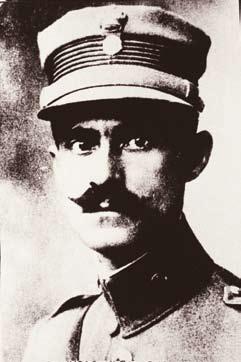
of Smyrna, the d imogerontia (= Assembly of the Elderly) and the Central Committee of the Smyrnians. Colonel Nikolaos Plastiras played a significant role in the settlement’s foundation and development. As one of the institutors of the revolutionary government formed after the military rebellion of 1922, Plastiras directed plenty of his activity towards the treatment and accommodation of the thousands of refugees from Asia Minor.
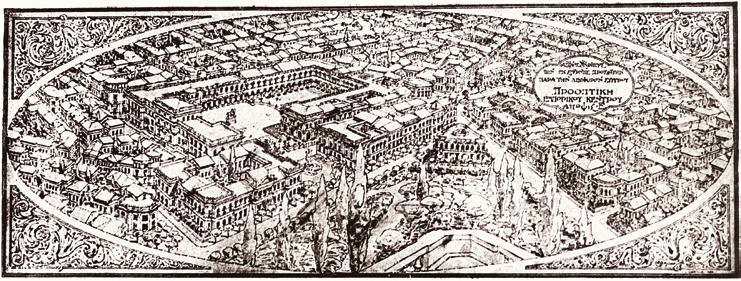
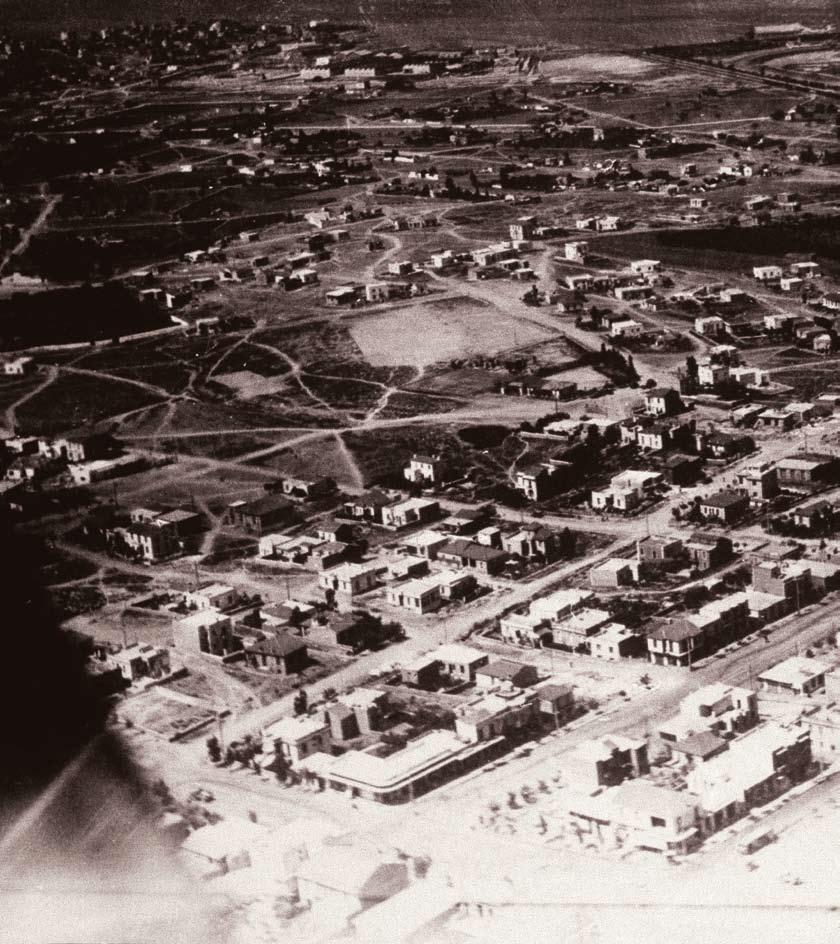
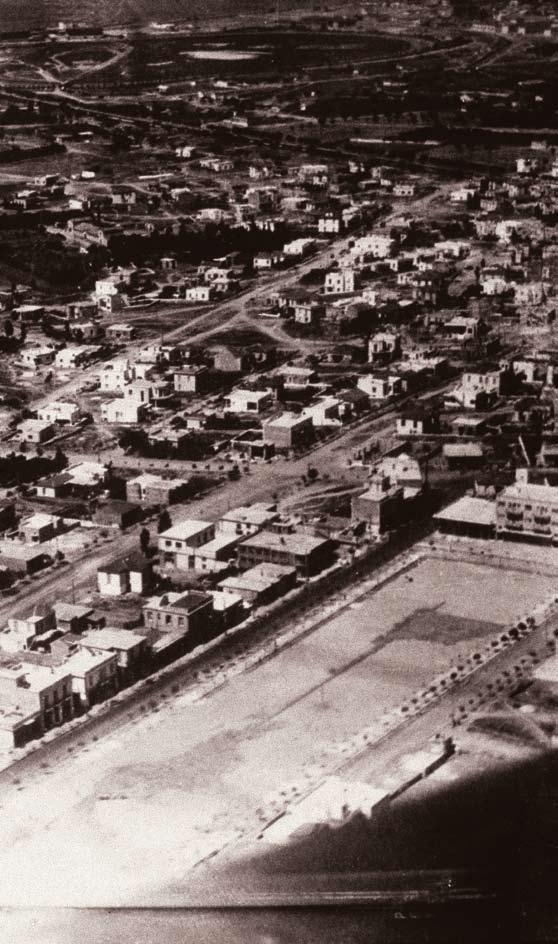
Before the initiation of the settlement’s construction, a detailed plan was designed by the architect Petros Kalligas, who included plenty of open spaces, squares and parks. Thus, the mostly uncultivated fields along the Syngrou Avenue were going to be converted to exploitable building plots.
The settlement’s foundation
After a recommendation by the Ministry of Agriculture, the refugees began establishing building co-operatives. In the area of Nea Smyrni, fourteen such unions had been founded. As a result of the suffragan bishop’s systematic effort, they
Nea Smyrni during the 1920s and 1930s
were consolidated under the Union of Building Co-operatives “The Community of Nea Smyrni”.
The first expropriation included the area defined by dardanellion Street to the east, Aigaiou Street to north, Sophouli (former Propontidos) Street to the south and Syngrou Avenue to the west. The ground was particularly uneven in this area, as it was run through by several brooks and streams. This land was divided among 2,400 families. The second expropriation, which took place during the early 1930s, included areas stretching to the south of the initial habitation nucleus, namely the section defined by Sophouli Street to the north and Nazliou (former Apostolou Pavlou), Kyprou and Pamphylias Streets to the south; also, the section defined by d ardanellion Street to the west and Efxeinou Pontou to the east. The land attached to the Nea Smyrni settlement via the second expropriation was divided in 2,200 building plots.
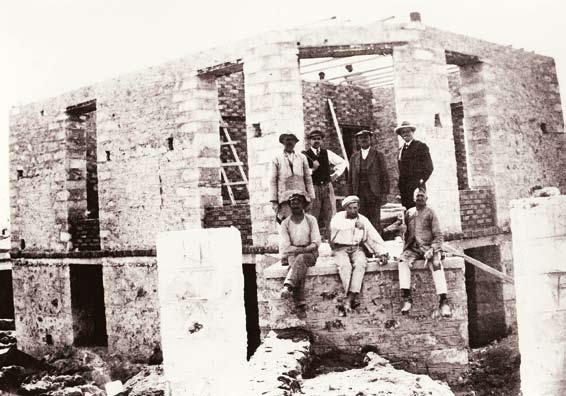
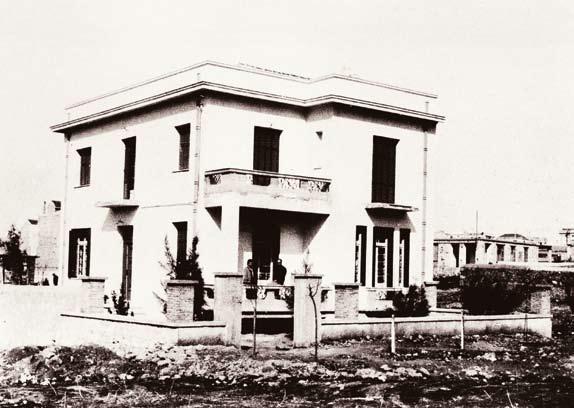
No systematic building activity was undertaken prior to 1929. By then, only 100 houses, most of them single-storeyed structures of modest dimensions, had been erected; their construction had been funded by the refugees themselves.
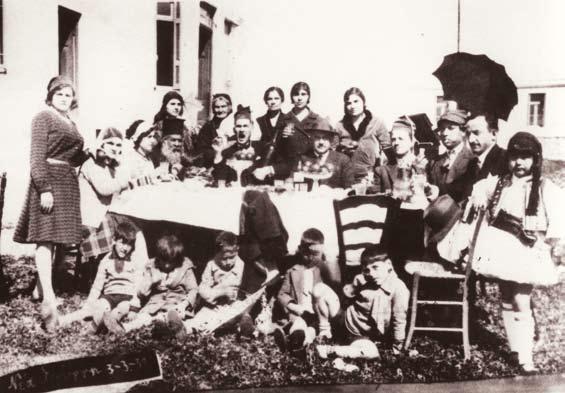
Ash Monday in Tzorbatzoglou’s house on Patriarhou Grigoriou tou Pemptou 12 Street, 1930.
1930.
According to Antonis Pantazis, the most eminent researcher of Nea Smyrni’s history, only two families lived in Nea Smyrni in 1926; this number had risen to 17 and 36 in 1927 and 1928 respectively.
As one would have expected, the systematic building activity at Nea Smyrni was initiated in 1930, when political things had settled and the Liberals’ government was able to effectively implement its refugee restitution program. Life at the Nea Smyrni settlement during the first decade was not particularly easy, as there was no water supply. Electricity was provided by electric generators that the refugees had had installed by means of their own funds.
The society that settled Nea Smyrni bore the cultural characteristics of its original Smyrnian counterpart; a typical example of its acticity was the foundation of Saint Photina from as early as 1924. Indeed, the Greek Orthodox communities of Asia Minor were structured around the Church. Communal authorities, educational institutions and charity organisations depended directly on the bishop, who, in most cases, presided over the relevant committees and councils.
The fact that the Neosmyrniotans developed a communal conscience from very early is reflected in the foundation of several clubs and associations, as well as the appearance of local newspapers immediately after the establishment of the settlement. The first local newspaper was Nea Smyrni , which was being published for almost a year by Stavros Koukoutsakis and Angelos Konstantileris. It was revived in 1930 by Koukoutsakis and remained in circulation until Koukoutsakis’ death in 1968.
In 1927 the Union of Bourgeois Refugees of Nea Smyrni was established; the society’s name illustrates the settlement’s social composition, as well as the settlers’ keenness to preserve and enhance it. At about the same time, the Association of Nea Smyrni Settlers was founded; its objectives included the location of a building society to undertake Nea Smyrni’s homogeneous construction. A few years later the Central Club of Nea Smyrni, the Association of Nea Smyrni Land Owners “The d efence” (= I Amyna), the Society “Nea Smyrni”, the Association of Ano Nea Smyrni Land Owners and the Society of Beneficial Works were established.
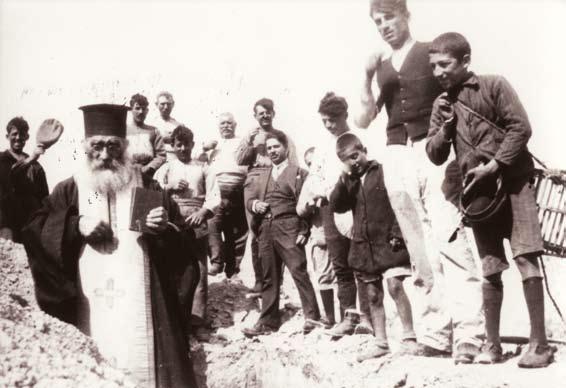
Christian blessing of house foundation in Nea Smyrni, early 1930s.
Nea Smyrni during the 1920s and 1930s
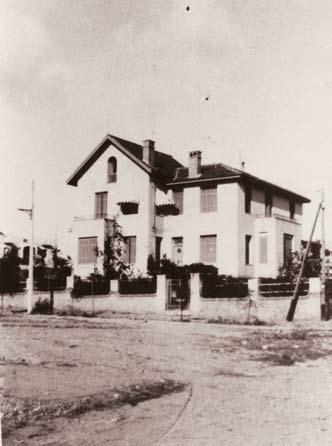
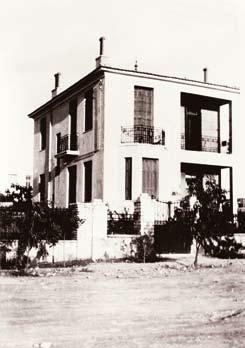
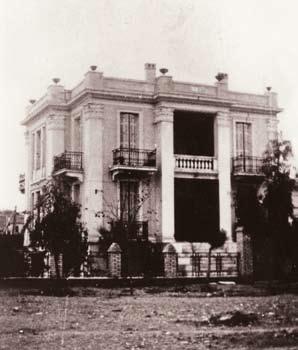
S. Katakouzinos’ house on the corner of Agias Photinis and Eleftheriou Venizelou Streets.
O.
Michalidis’
1936.
Damaskinos’ house on Eleftheriou Venizelou Avenue, 1936.
house on Strofi Neas Smyrnis.
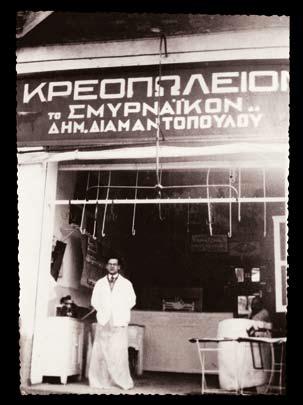
“Smyrnaikon”, the butcher’s shop of Dimitrios Diamantopoulos on Eleftheriou Venizelou Avenue.
The Central Square, 1937.
1937.
Estia (Club) of Nea Smyrni
The Nea Smyrni Club was founded in June 1930 on the initiative of the members of the Union of Bourgeois Refugees of Nea Smyrni. Among its founders were Athanasios Karyllos, the lawyer Sotirios Gounaris, the bankers Michail Platanis and Angelos Kechagias, the tailor Nikolaos Baloglou, Ioannis Dimitriadis and Prodromos Apostolidis. Its primary objective was the immediate satisfaction of the settlers’ needs.
In 1938, the Club’s presidency was undertaken by the active Panos Chaldezos, who regenerated the association by systematically promoting its goals. One year later, the Club was named “Estia of Nea Smyrni”, whereas its objectives were expanded through the inclusion of charity works, educational and social activities, as well as the
salvation, collection, study and enhancement of material associated with the Greek element of Asia Minor, Constantinople, Pontus and Thrace. This multifaceted activity was maintained throughout the following decades. Nowadays, Estia is viewed as a highly significant cultural organisation as far as the preservation of the memories from the Greek homelands outside the modern borders of Greece is concerned. Estia’s contribution during the difficult period of the German Occupation and the first post-war years is also noteworthy.
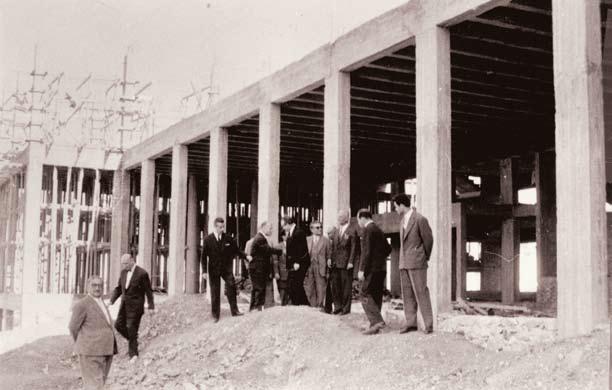
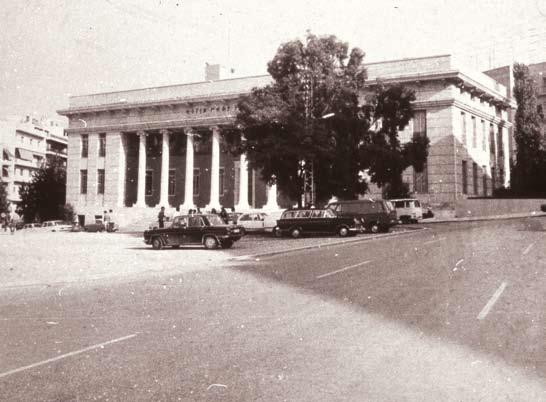
After its establishment, Estia was relocated many times, until its impressive megaron on the Chrysostomos Smyrnis Square was erected during the 1960s.
The Estia megaron in Nea Smyrni.
The foundation of the Community of Nea Smyrni (1934)
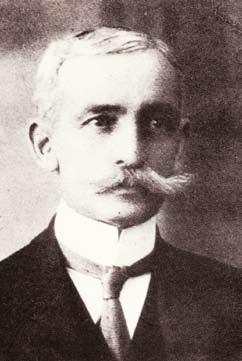
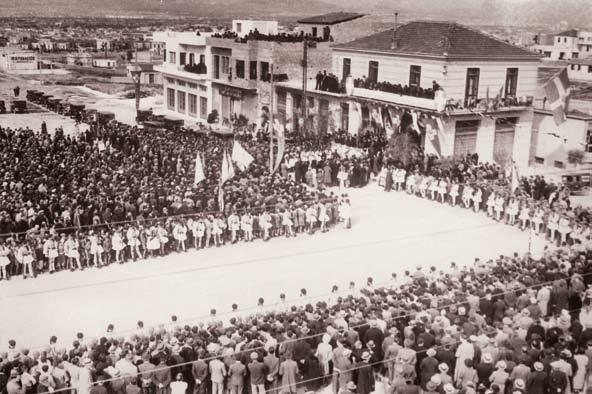
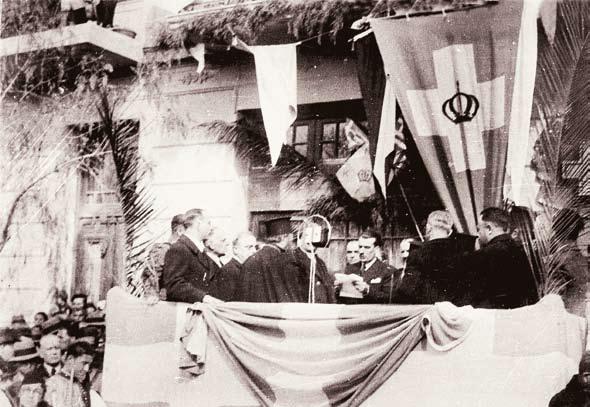
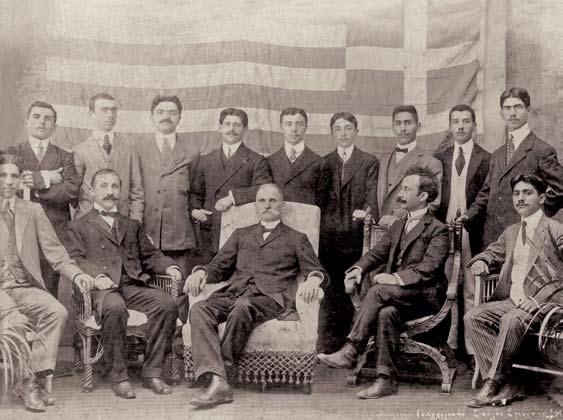
According to the census that took place on 5 October 1933, the population of Nea Smyrni had risen to 1,109. Consequently, the settlement of Nea Smyrni was officially declared a community by the presidential decree issued on January 1934; subsequently, the Neosmyrniotans took part in the civic elections that were held during the following month. Three combinations, all of them Liberal in regard to their ideology, participated in this electoral debate. The active Athanasios Karyllos became the first president of the Community of Nea Smyrni. The community’s function was wellorganised and systematic from as early as its first years. The personal experience of the people who manned its administrative organisations, as well as the collective experience gained during the dimogerontia period created a sence of communal life and provided the necessary conditions for organised activity.
The beginnings of education - The Evangelical School of Nea Smyrni
One of the community’s most fundamental interests was the development of education. The local authorities of Nea Smyrni together with the Greek government worked systematically towards the enrichment of educational resources. Thus, several private schools, institutes for foreign languages, a department of the Athens Conservatoire and other centres for knowledge and culture were soon established at Nea Smyrni.
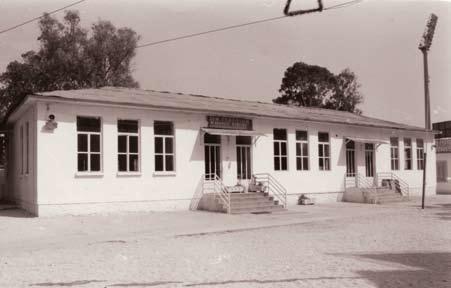
Although the intentions of the Greek government and the Community of Nea Smyrni were good, the available financial resources were particularly limited. Consequently, Nea Smyrni’s first primary school was established in a shanty located on the corner of Palaiologou and defteras Maiou Streets during 1929. d espite the large number of the students, no teacher had been initially appointed. Two teachers were appointed
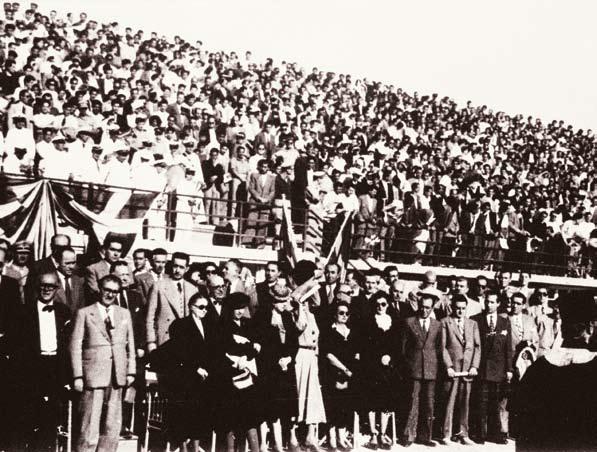
The Community of Nea Smyrni welcomes George II on the occasion of Estia’s foundation, 23 April 1939.
during the course of 1929, whereas d imitrios Phanourakis was hired in the following year. In 1935, the school was moved to a rented building on the corner of Omirou and Gordiou Streets, where it remained until 1960. This is when it was relocated to a new building situated near the Panionios stadium (Korai Street).
d ue to its small size, the 1st Primary School could not fulfill the educational needs of the increasingly large population of the Community of Nea Smyrni. As a result of Athanasios Karyllos’ continuous pleas, a decree granting permission to establish a second primary school in Nea Smyrni was voted in 1935. Thus, the 2nd Primary School of Nea Smyrni was inaugurated two years later. d uring its first year, the institution, a twoclass school, boasted four teachers and 450 students.
In 1934, a department of the Gymnasium of Kallithea was founded; the school was housed in a building situated on the corner of Ionias and Nymphaiou Streets, which had been rented by
Nea Smyrni during the 1920s and 1930s
the active Association of Parents, Sponsors and Philomuses of Nea Smyrni, a society of cultural character. The gymnasium, temporarily directed by Basileios Evrygenis, had three classes and fifteen teachers. As it did not provide the complete circle of secondary education studies, it was failing to efficiently satisfy the Neosmyrniotans’ needs.
As a result of a presidential decree issued on 31 July 1934, the Mixed Gymnasium of Nea Smyrni was founded. Classes began on 18 January 1935; the school, directed by Ioannis Papagiannopoulos, boasted 244 students. This number had risen to 1,000 by the end of the following decade, while during the school year 1946-1947, i.e. the last year of the institution’s function as a mixed gymnasium, the students’ population included 1,152 members.
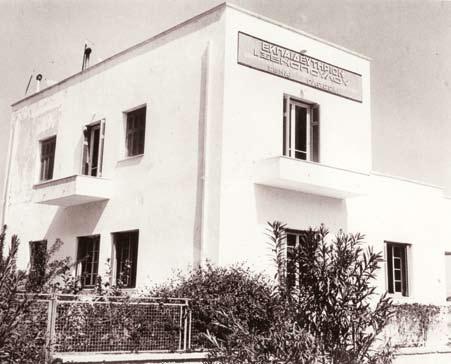
The members of the Association of Parents, Sponsors and Philomuses of Nea Smyrni, the dentist Konstantinos Tsapopoulos, the teacher Basileios Evrygenis and others wished to name the new
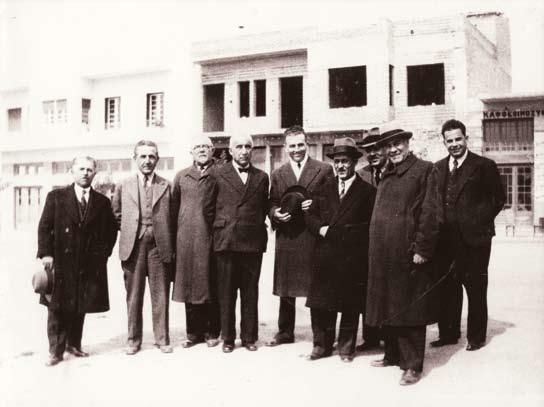
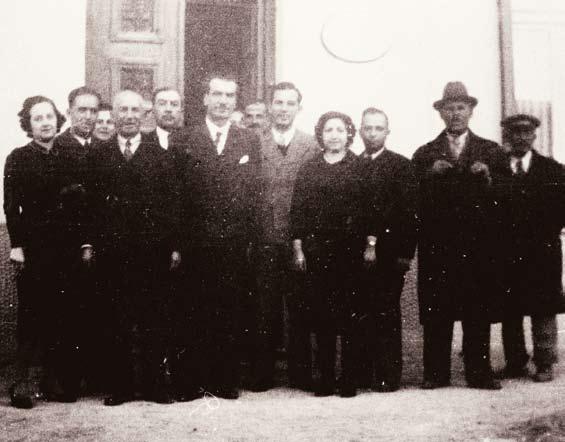
Athanasios Karyllos and the staff members of the Nea Smyrni Community outside their office on the corner of Eikostis Pemptis Martiou and Palaiologou Streets, February 1939.
school “Evangelical School”, so as to commemorate the famous school that had been established in Smyrna since the early 18th century. Nevertheless, providing such a name for the new school proved problematic, as the law did not allow public secondary schools to establish their own names. The issue was eventually arranged by means of a special parliamentary decree issued on 6 April 1935.
The new school’s inauguration ceremony took place on 7 April 1935, within a highly emotional climate; after the traditional benediction ceremony, the director Ioannis Papadopoulos gave a panygerical speech. The inscription “Evangelical School of Smyrna 1717-1934” that was placed on the school’s facade, underlined the advanced cultural background of the refugees, as well as their objectives. Moreover, it constituted a highly eloquent means of associating the old
fatherland with the new homeland in the youth’s minds. The refugee population embraced the new Evangelical School so much that two years after its foundation the students’ number had risen significantly; thus, an extension of the initial building was deemed necessary.
The Nea Smyrni Gymnasium for Girls was founded in 1946; consequently, the Evangelical School became a boys’ school similarly to its Smyrnian predecessor. In 1943, the Evangelical School of Nea Smyrni was divided in a classical and a practical department. The Prototype Gymnasium “The Evangelical School” was founded in 1971. At the same time the Nea Smyrni Gymnasium for Boys was established. Today, the institution has evolved to the Experimental Gymnasium and Unified Lyceum “Evangelical School of Smyrna”.
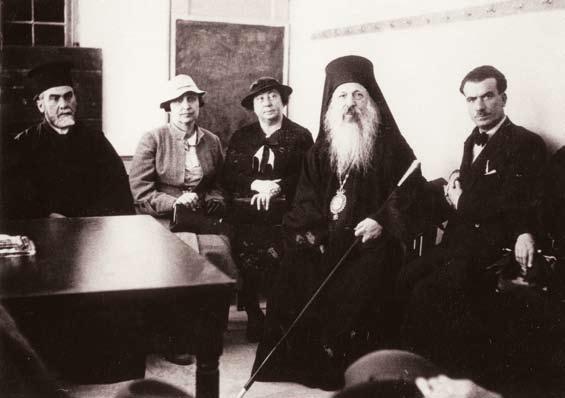
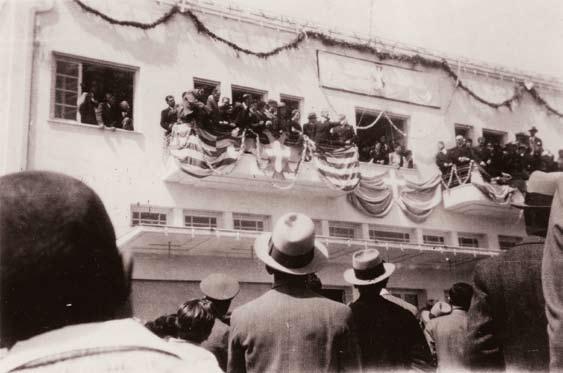
The ministers Kostas Kotzias and Alexandros Koryzis visit Nea Smyrni, April 1937.
Nea Smyrni during the 1920s and 1930s
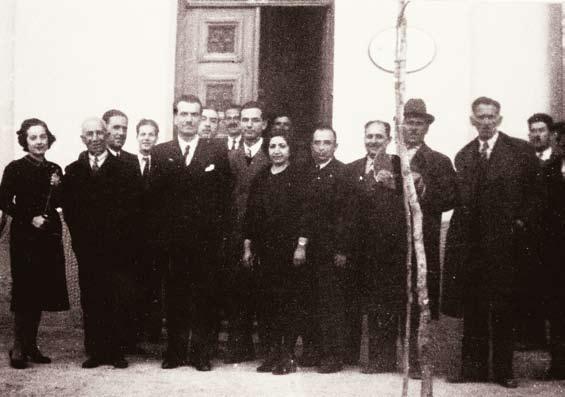
Eminent Neosmyrniotans in front of the Community’s offices on the corner of Eikostis Pemptis Martiou and Eleftheriou Venizelou Streets celebrating the Greek National Day of 25th March, 1939.
1939.
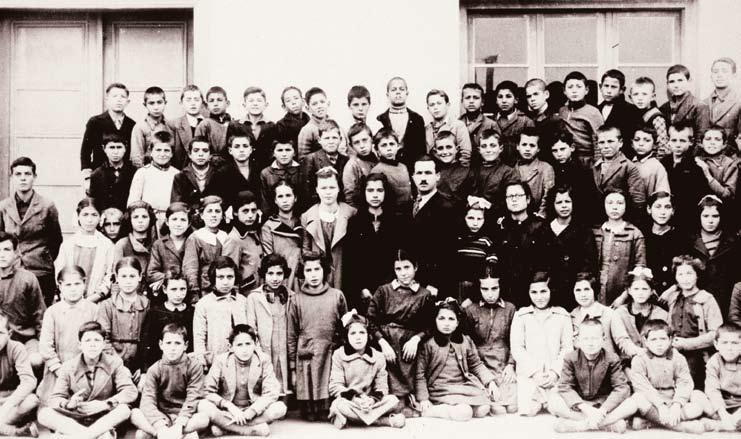
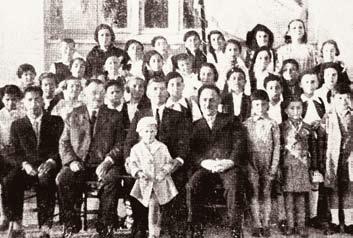
Students of the 1st Primary School of Nea Smyrni with Nikos Sokos, the institution’s director, 1936.
N. Daskalaki with her daughter at Loutra, 1930.
1930.
The Evangelical School of Smyrna
As a result of the Greeks’ financial advancement, the 17th century witnessed the establishment of several Greek schools by communities and individuals in various cities of the Ottoman Empire. Besides the renowned Great School of the Nation (= Megali tou Genous Scholi) established immediately after the sack of Constantinople (1453), significant educational institutions appeared in several urban centres: the Patmian School, the School of Zois Kaplanis at Ioannina, the schools at Kydonies, Dimitsana, Chios, Bucharest, the Academy of Iasi and others.
In the beginning of the 18th century, Patriarch Gabriel sent Adamantios Rysios, one of the most eminent educators of his time and grandfather of Adamantios Korais, to Smyrna, in order to educate his homeland’s youth. In 1708, that is when Rysios settled in Smyrna, Christ’s School was founded; this
was Smyrna’s first Greek educational institution. In 1733, the monk Ierotheos Dendrinos and the prokritoi (= Greek political leaders during the Ottoman period) Pantoleon Sevastopoulos, Georgios Omiros and Georgios Vitalis refounded the school, which would develop into the Evangelical School. At the same time, the creation of the school’s library was initiated; it was initially based on Grigorios Kontaris’ book collection.
After Sevastopoulos’ suggestion, Christ’s School became an autonomous institution under the protection of Great Britain through a sponsion system. The name “Evangelical School” prevailed during the early 19th century. Despite its autonomy, the Evangelical School did not remain unaffected by the various social, economic and political developments; thus, its history may be divided in six periods:
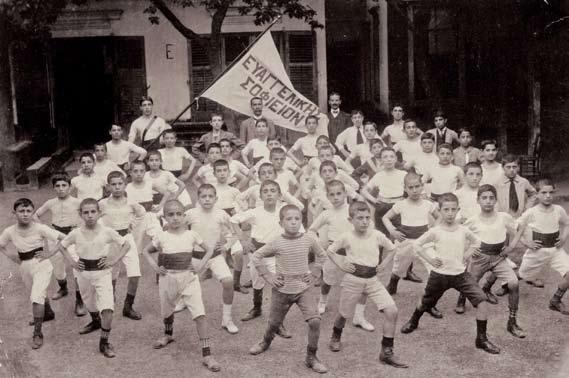
The “Sophieion” of the renowned Evangelical School, gymnastics.
1st period (1717-1778)
During this period, the school included several students that would later become distinguished scholars, such as the future Patriarch Neophytus, the monks Gerasimos and Agapios, i.e. the founders of the Dimitsana School, and Adamantios Korais. The end of this period coincided with the large fire that broke out on 24 June 1778 and destroyed several Smyrnian buildings, among which the Evangelical School.
2nd period (1779-1821)
After the school’s destruction, the businessman Ioannis Kanas sponsored its reconstruction at a new location, which would be preserved until the 1922 catastrophe. The School’s second period, which lasted until the breakout of the Greek Revolt in 1821, included its endistancement from the neoteristic scholars following the Enlightenment’s creeds. Moreover, it was during this period that the Evangelical School would lose some of its prestige, as it was continuing with a simple and outdated curriculum. The philosopher Theophilos Kairis, an eminent scholar from the island of Andros, was summoned to restore the institution’s prestige by teaching philosophy and mathematics. The recovery was impressive and immediate.
3rd period (1824-1842)
The Evangelical School’s function was initiated once more in 1824, that is when the general turmoil caused by the Greek Revolt had subsided. Four years later, Abramios Omirolis, a man of progressive mentality, was appointed director of the School. The new director reformed the Evangelical School completely.
4th period (1843-1860)
In 1843, the Evangelical School was divided to a three-class Hellenic (intermediate) school and a four-class gymnasium. During the course of the 4th period, the School was officially characterised a gymnasium and Georgios Chrysovergis, its then director, acquired the title of gymnasiarch.
5th
period (1861-1914)
In 1861, the Evangelical School’s direction was undertaken by Konstantinos Ksanthopoulos from Trebizond. During his tenure, the School’s organisation was completed, whereas its graduates obtained in 1862 the privilege to enrol in the University of Athens without taking any examinations. Ten years later, an annex was erected in the Agia Aikaterini district, as a result of the large number of students that were exceeding 1,200. During this period, the School’s library boasted about 35,000 volumes, as well as an extended collection of rare manuscripts; moreover, an archaeological museum containing more than 3,000 items (ceramics, inscriptions, statues etc) and a significant coin collection was created.
6th
period (1915-1922)
The Evangelical School’s function during the institution’s last phase underwent several upheavals, their main cause being the strife between the principal and the ephors. The severe fire that consumed the largest section of Smyrna in 1922, burned down the School’s buildings, while its staff and students had to abandon their homes and become refugees.
The Hellenic College of P. D. Neslichanidis, 1950s.
Private education at Nea Smyrni during the Mid-war period
Besides public schools, the following private educational institutions were established in Nea Smyrni during the 1930s:
The Hellenic College of P.D. Neslichanidis
The Smyrnian Panagiotis Neslichanidis, former director of the Orphanage and the American Relief and Baxter Schools at Smyrna, established a six-class primary school in his building plot on Smyrnis (current Plastira) Street.
Neslichanidis’ school offered, among others, music and French lessons. The wide variety of classes is rather impressive, particularly when set against the difficulties that the Neosmyrniotans were facing on a daily basis at that time, as water and electricity supply had not been secured yet. Although a primary school, the Hellenic College’s curriculum was clearly based on the Smyrnian schools’ curricula.
The Ionic School of Eleni Manega
The Ionic School was founded in 1932 by Eleni
Manega and first functioned during the school year 1933-1934, that is when the 1st Primary School of Nea Smyrni and Neslichanidis’ Hellenic College had already been established.
Ksenopoulos School
The third private school of Nea Smyrni, the function of which was initiated in 1936, had been established by Ioakeim Ksenopoulos. during its first year, the Ksenopoulos School boasted 50 students.
Social care at Mid-War Nea Smyrni
As soon as they settled in their new home, the refugees of Nea Smyrni were keen in developing welfare and social care organisations, which, together with their renowned diligence, illustrated their hope for a brighter future; this was so, despite the fact that a brighter future seemed quite distant at that time. Thus, several orphanages were established at Nea Smyrni, the most significant being the Iosifogleian Orphanage, the Asylum of Saint Andrew and the National Shelter (= Ethniki Stegi).
The Iosiphogleian Orphanage was established during the 1920s by Charalambos Iosiphoglou, a banker and businessman from Asia Minor.
The institution’s function was initiated in 1932. The Asylum of Saint Andrew had originally been established in 1926 at Ambelokipoi as a single-class primary school and orphanage for orphaned girls originating from Asia Minor. Four years later, it was relocated to Nea Smyrni.
The National Shelter, a foundation for poor girls, was established as an orphanage for refugees in 1922 by the Association for Woman’s Rights.
Anna Papadimitriou was appointed director of the newly established foundation. during 1934, the National Shelter housed 108 girls aged 7-15. The foundation operated as an orphanage until 1988; nowadays, the building accommodates a nursery and day-care centre, as well as various cultural events.
Iosiphogleian Orphanage
Charalambos Iosiphoglou had the Iosiphogleian Orphanage built in a plot measuring 8,415 square metres that had been offered by the Greek State, to provide shelter to the orphaned refugees. The
building’s construction was completed in 1929 and the orphanage’s function was initiated three years later.
In 1941, the Orphanage was commandeered by the Germans; after the end of the German Occupation, the institution functioned once more as an orphanage for boys accommodating the children of the Greek fighters that had been killed during the war and later as a Child-city (= Paidoupoli). In 1951, Iosiphoglou’s building accommodated the Household and Vocational School “Saint Barbara”, which was founded in 1949 as “Paidoupoli-Vocational School ‘Saint Barbara’” In 1983 the institution acquired the name “Special Vocational School ‘Saint Barbara’”, whereas its educational section was enriched by several new objects, such as pottery making, woodcraft and metal working; moreover, the school started accepting outside students, both girls and boys, as well. Unfortunately, all classes had to cease in 1995, due to insufficient funds. The adolescent girls’ accommodation programme, on the other hand, continues until the present day.
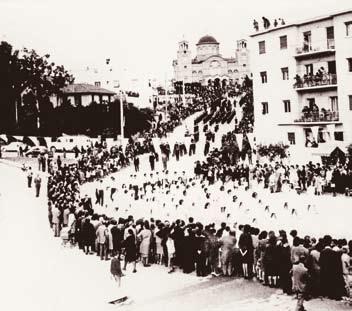
Students of the Evangelical School in Saint Photina’s litany, May 1964.
Nea Smyrni during the 1920s and 1930s
Saint Photina
As one would expect, the Nea Smyrni refugees’ very first concern was the erection of a church.
This was so, as religion constituted an integral part of both the individual as well as the collective identities of the refugees from Asia Minor. In 1924, the Union of Building Co-operatives
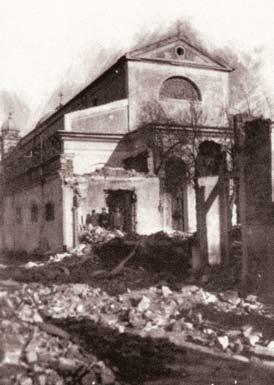
“The Community of Nea Smyrni” proposed the construction of a temple commemorating the Smyrnian church of Saint Photina, which was burnt down during the 1922 catastrophe.
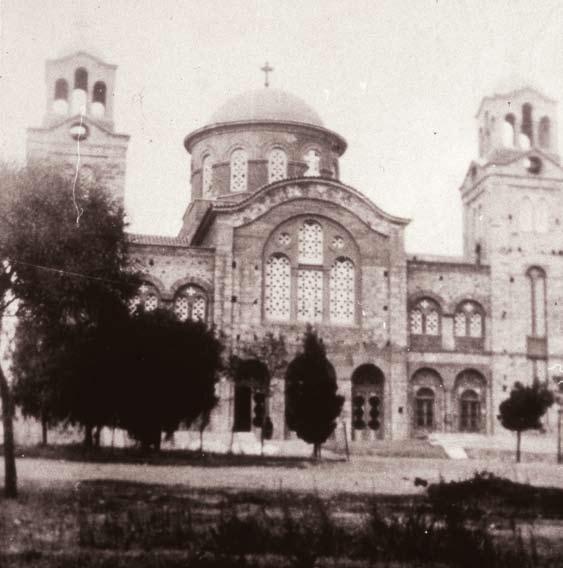
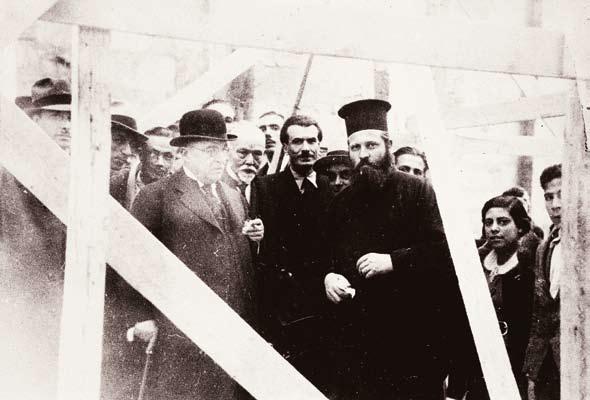
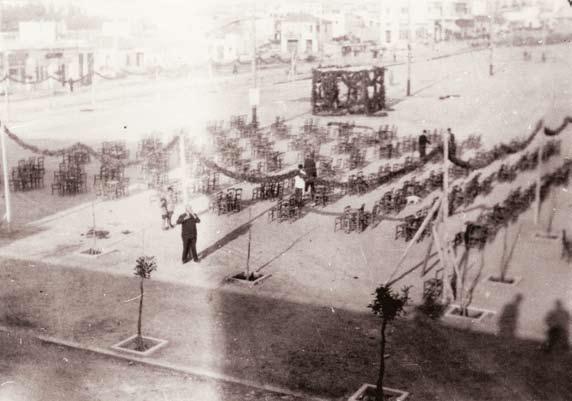
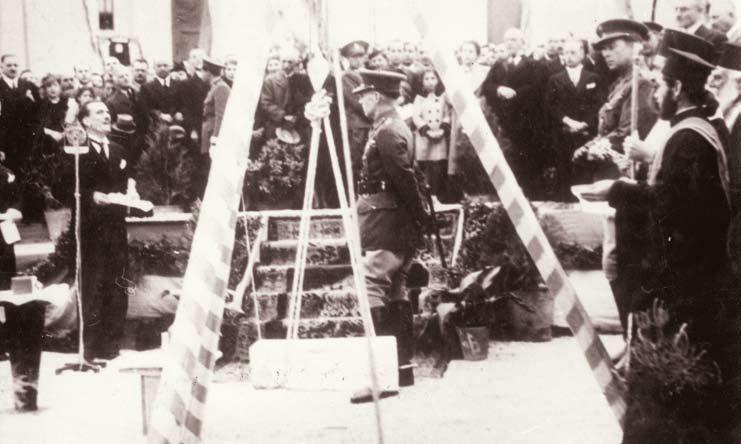
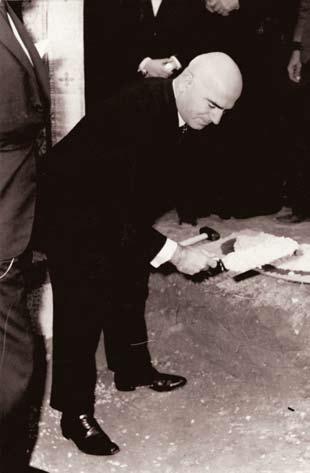
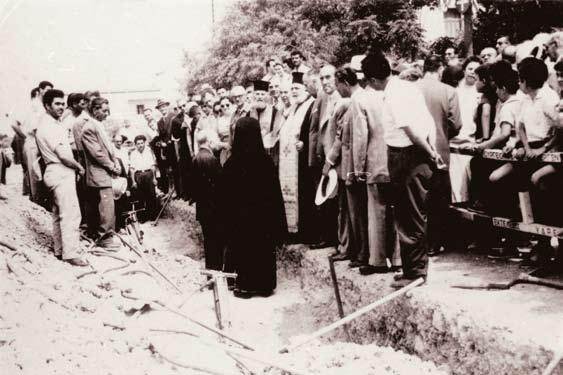
This suggestion was approved by Apostolos Orphanidis, Minister of Hygiene, Welfare and Custody at that time; subsequently, the ceremony of the temple’s symbolic foundation took place on 10 October 1924; it was attended by the President of the Greek Republic Pavlos Kountouriotis, the President of the Greek Government Georgios Kondylis, the Archbishop of Athens Chrysostomos, the Mayor of Athens and many others. d espite
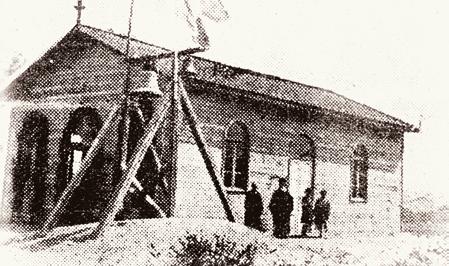
the ceremony’s grandeur, the construction of the temple would take many years, due to insufficient funds. It was not before 1929, that the refugees managed to build a small, wooden hut at the same spot, where the foundation stone had been set five years earlier. The first priest of Saint Photina was father Kyrillos delov, a refugee from Smyrna.
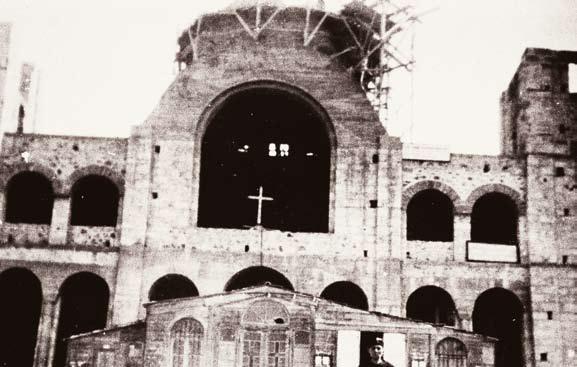
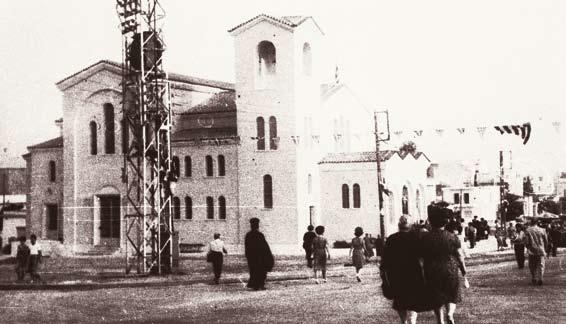
The wooden church was not large enough to meet the needs of the increasing population of Nea Smyrni. In 1934, 520,000 drachmas were allocated for the construction of a temple, the plan of which had been prepared by the architect A. d emiris. The largest section of this fund was covered by the Ministry of Welfare, whereas the rest of the money was collected through donations and fund-raising activities. By the end of 1937, the temple’ construction had advanced considerably: the foundations had been set and the side walls had been erected. As a result of the work’s intensification, the small wooden church was demolished and the newly built temple
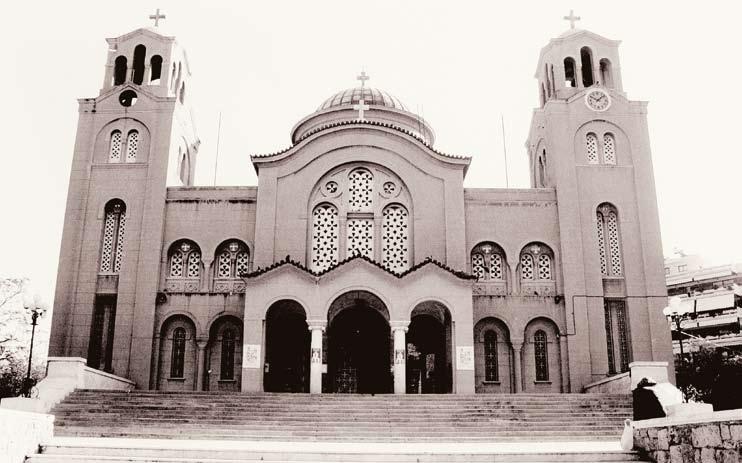
Contemporary view of the Neosmyrniotan church of Saint Photina, the cathedral of the homonymous Diocese.
was inaugurated on 16 April 1938. during the course of the same year, Saint Photina of Nea Smyrni was declared a metropolitan church. The building was completed two years later. Panygerical vespers and a litany of holy relics were performed within a strongly emotional atmosphere, just one day before Greece entered World War II (28 October 1940).
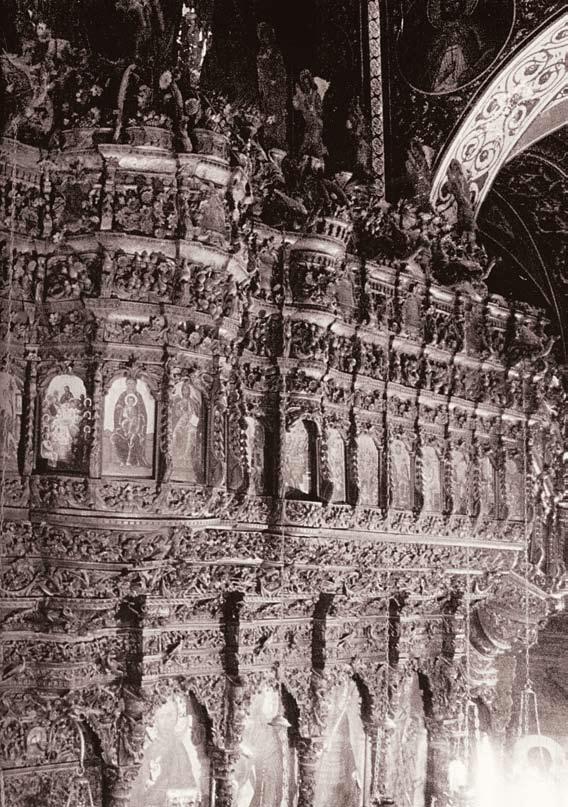
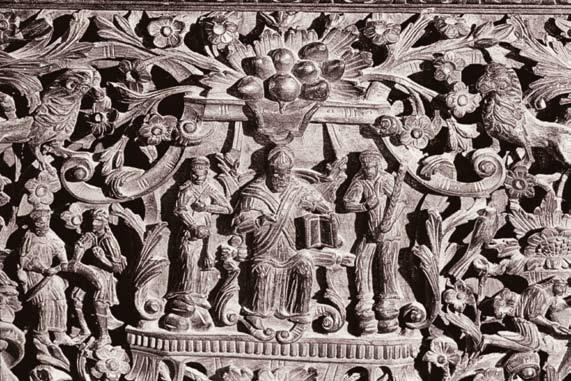
The German Occupation and the Civil War did not allow the church’s completion. d espite various attempts undertaken by the relevant councils, its interior remained undecorated and its exterior walls unplastered. Nevertheless, the most pleasant development –a miracle according to some– had already occurred: in 1938, the wooden iconostasis, episcopal throne and pulpit of the Smyrnian church dedicated to Saint John the divine were discovered almost intact among the building’s ruins in the district of Apano Machalas. Subsequently, the items were shipped to Piraeus and eventually placed in the church of Saint Photina, Nea Smyrni.
The church of Saint Paraskevi
Nea Smyrni during the 1920s and 1930s
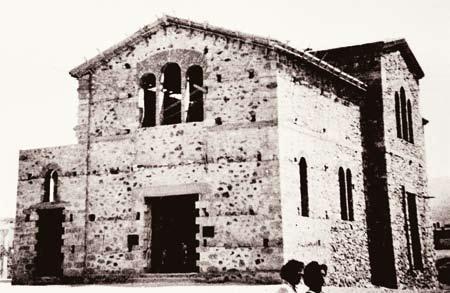
Immediately after the erection of the Saint Photina hut-like church in 1929, father Kyrillos delov had a small private church and a multi-purpose hall built in a plot on Eleftheriou Venizelou Avenue (between Kasamba and Sophouli Streets). This is where delov placed the two icons he had managed to rescue from the church of Saint Paraskevi at Smyrna. After delov’s death (18 February 1931), the small temple and nearby hall were attached to the Community of Nea Smyrni.
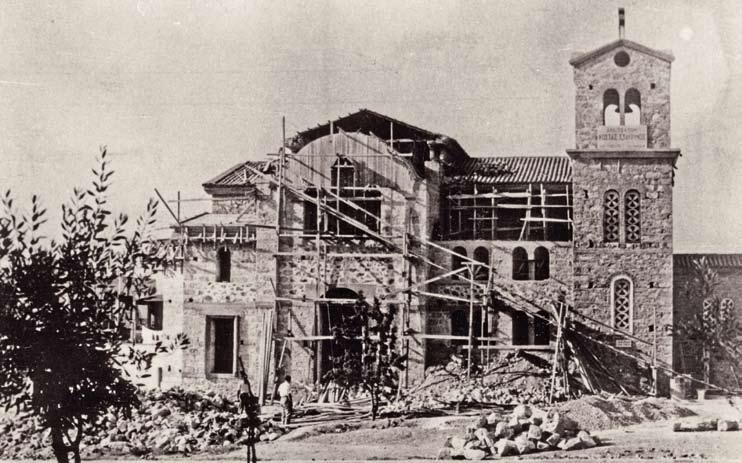
The increasing number of the Neosmyrniotan population and the area’s general development made the construction of a larger temple imperative. The foundation stone of the new church was set on 6 January 1940; the temple was dedicated to Saint Paraskevi and Saint John the divine, in order to commemorate the homonymous Smyrnian churches. The inauguration ceremony took place in 4 November 1962.
The Neosmyrniotan church of Saint Paraskevi under construction, 1959.
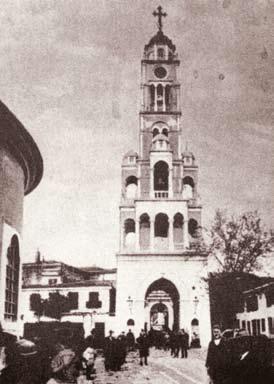
The church of Saint Photina in Smyrna
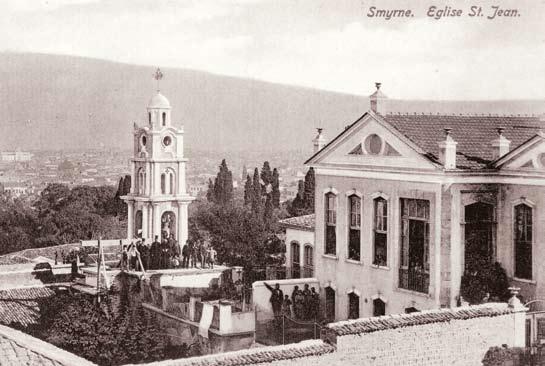
The French traveller Vital Cuinet maintains that Smyrna included thirteen Christian-Orthodox temples at about the end of the 19th century; one of the oldest examples was the church of Saint Photina.
The date of its initial construction remains unclear. The building was largely rebuilt while the future Patriarch Gregory V served as Bishop of Smyrna. The temple featured three apses and three aisles. It had been dedicated to Saint
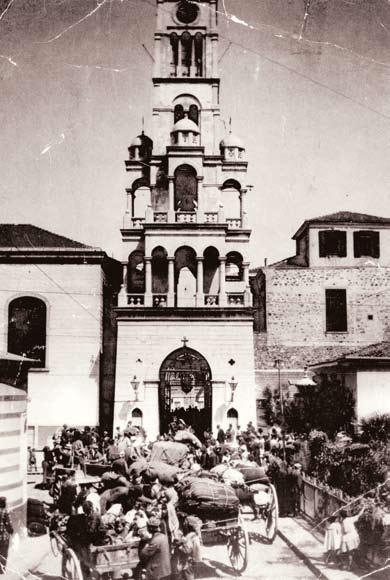
Photina, while the chapels in the northern and southern aisles had been established in honour of Saint Nicholas and Saint Athanasius respectively. The most widely known feature of Saint Photina was its bell tower, which had been erected in 1856. The edifice, designed by the architect Ks. Latris and structured in five levels, was the tallest building in Smyrna. Its principal bell, a gift from Prince Nicholas Romanov, weighted over four tons.
The widely known bell tower of the Saint Photina church in Smyrna.
Sports at Nea Smyrni during the 1920s and 1930s
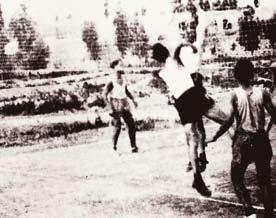
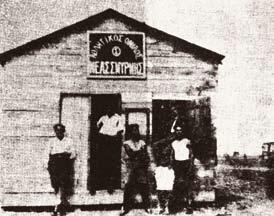
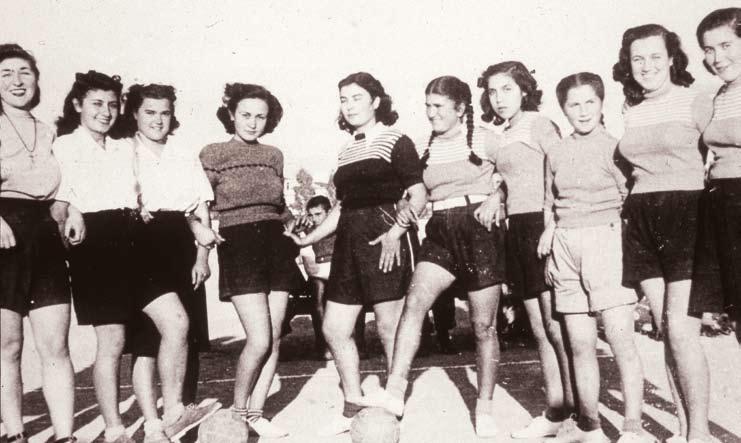
Athletic activity at Nea Smyrni was initiated almost immediately, as an elementary athletic club had appeared from as early as the mid-1920s, when the new suburb included no more than 100 households. It was based on Nikolaos Sachinis’ property on the corner of Chrysostomou and Kadmou Milisiou Streets. In 1928, the club acquired the name “Athletic Club of Nea Smyrni” (ACNS) and was relocated to an area near the Asylum of Saint Andrew, where Panionios’ stadium is currently situated. Zinon Michailidis was the prime mover in ACNS’ establishment and organisation. In 1929, ACNS was officially founded; the appellation “Milon” was added to its title in 1958.
In 1934, ACNS’ facilities welcomed the Tennis Club of Nea Smyrni (TCNS). The changing-rooms were mere wooden sheds. One year later, ACNS was included in the Hellenic Association of Amateur Athletics (HAAA) and participated in the National
Tennis Games with six athletes. The first Communal Games of Nea Smyrni took place in 1937; most of the athletes that took part in this event belonged to the Athletic Club of Nea Smyrni.
The community’s revived interest in athletics encouraged the members of the Panionian (Panionios) Gymnastic Club to ask permission to relocate the club from the Panathenaic Stadium in Athens to Nea Smyrni. As the Neosmyrniotans were particularly keen in emphasising their connection with their lost homeland, the Community of Nea Smyrni supported Panionios’ plea.
The construction of the Panionios stadium was initiated in June 1938, near the Asylum of Saint Andrew; the inauguration ceremony took place two years later. Subsequently, ACNS was moved in a building plot on the corner of Korai and Megalou Basileiou Streets, where its closed gym would be erected thirty years later. The Tennis Club of Nea Smyrni was initially located next to the stream and eventually moved to a court to the south-east of Panionios’ stadium.
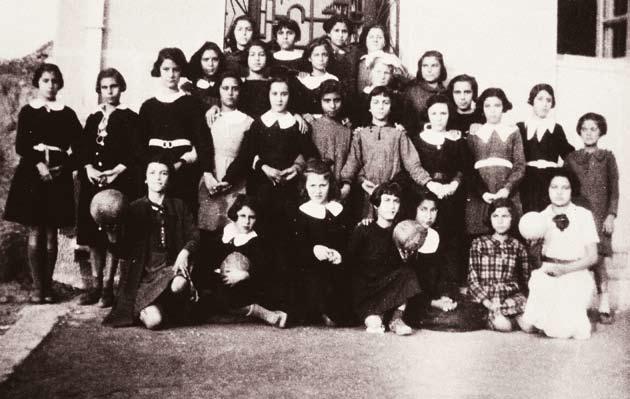
Members of the Athletic Club of Nea Smyrni (ACNS) female volley team, 1930s.
Nea Smyrni during the 1920s and 1930s
Panionian (Panionios) Gymnastic Club of Smyrna
The town of Smyrna had neither a gym, nor a sports club prior to 1890. The athletic activities associated with private schools were amateurish and disorganised. The very first Smyrnian sport clubs, Orpheus and Apollo, were created during the early 1890s. Their character was not exclusively athletic, as they were generally associated with a large variety of cultural activities with special emphasis on literature and music. A few years later, a number of Orpheus’ members abandoned the club and established a new one, Gymnasium, of purely athletic character.
Despite the dichotomy, the members of Orpheus were quite close to those of Gymnasium. In October 1898, i.e. a few months after the 2nd Panionian Games, Orpheus and Gymnasium were united to form the Panionian Gymnastic Club of Smyrna. Besides athletics, the new club organised concerts, poetry contests, art exhibitions and numerous lectures. The first president of Panionios was the active Dimitrios Dallas.
The athletes of the Panionian Gymnastic Club of Smyrna achieved several distinctions in sporting events in Asia Minor and Greece. Of particular significance in Panionios’ history were the medals that Georgios Saridakis and G. Isigonis won in the 1906 Olympic Games that were held in Athens (Intercalated Games).
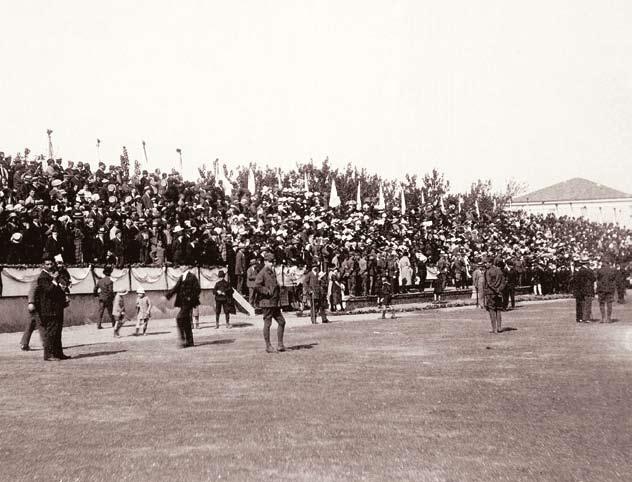
Panionios’ contribution to the development of sports in Asia Minor and the consequent close interrelations among the Greek populations, together with its important cultural and social activity urged the Bishop Chrysostomos to support the club fully. He managed to have a large building plot measuring 105,000 square metres next to the Greek cemetery given to Panionios, in order to have a stadium constructed. The latter was inaugurated with the Panionian Games of 1912. Panionios’ stadium in Smyrna became a strong symbol of Hellenism, as, besides sporting events, it accommodated several celebrations of patriotic character.
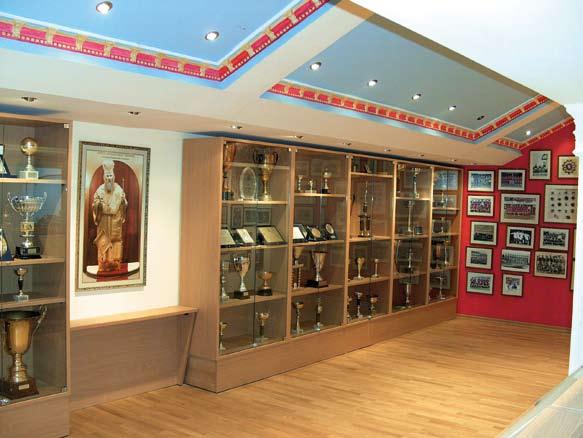
Interior view of Panionios’ stadium in Nea Smyrni.
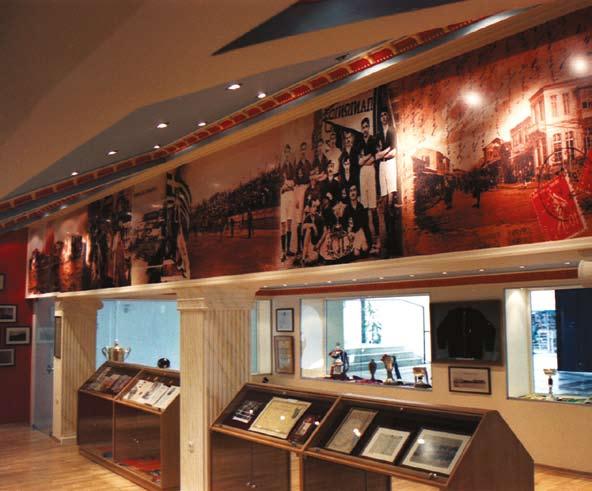
The bust of Dimitrios Dallas, the first president of Panionios in Greece, in the stadium’s vestibule, in front of the entrance to the museum.
After the tragic events that took place in August 1922, most of the athletes and members of the Panionian Gymnastic Club abandoned Smyrna as refugees, whereas 25 of them did not manage to escape; among the latter were the heroic Bishop Chrysostomos, the elder Nikolaos Tsourouktsoglou and the great champion Nikolaos Andreadakis.
The revival of Panionios in Athens was instigated by the restless Dimitrios Dallas, who managed to gather around him all of the club’s members, who had made it to Greece, by declaring that “Panionios is an idea, and ideas do not perish”. At the beginning, the Panionian Gymnastic Club of Smyrna was housed at the Panathenaic Stadium, where they organised the 11th Panionian Games; eleven athletic associations and about 244 athletes took part in this event.
In 1937, the distinguished athlete Dimitros Karabatis undertook Panionios’ presidency. During
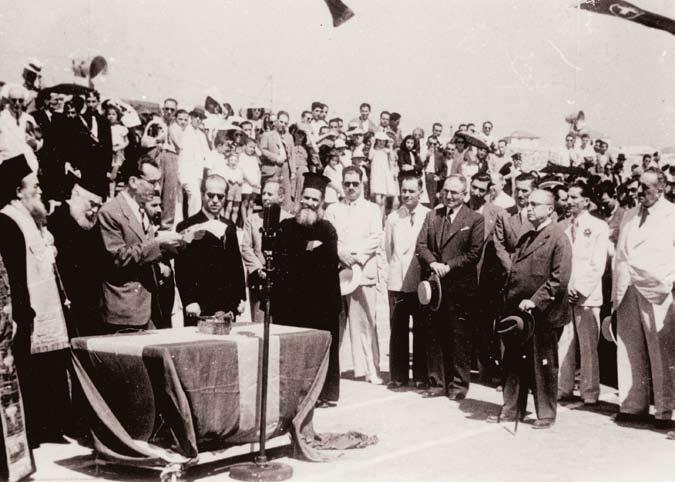
the same year, Karabatis together with the rest of the Directors’ Board’s members approached Athanasios Karyllos, the president of the Nea Smyrni Community, and asked permission to relocate their club to Nea Smyrni. At the same time they requested financial support from Konstantinos Kotzias, Governor of the Capital. The Community accepted Karabatis’ proposal, while Kotzias promised 1,000,000 drachmas and had had the plans for Panionios’ stadium prepared according to the topographical plan of Nea Smyrni, which allowed space for a gymnasium in the area of the Asylum of Saint Andrew. The ceremony of the stadium’s symbolic foundation took place on 9 June 1938, within a celebrational atmosphere, whereas the foundation stone of its peribolos-wall was set on 19 May 1939 by Ioannis Metaxas himself. The stadium, stretching over an area measuring 18,300 square metres, was inaugurated on 15 September 1940.
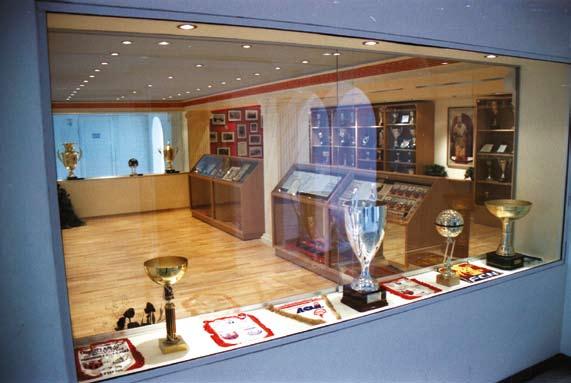
Dimitros Karabatis, one of Panionios’ legendary athletes and the club’s president since 1937. This bust is to be found in the entrance-hall of the stadium’s museum.
Chapter V
CHAPTER V
World War II, German Occupation and Resistance in Nea Smyrni
Nea Smyrni and World War II
The impressive development of Nea Smyrni during the 1920s and 1930s was abruptly interrupted, as a result of Wold War II’s breakout. When the city of Athens was occupied by the German army, at about the end of April 1941, the various projects associated with electricity and water supply, drainage, road construction etc, had not been completed.
As the Community of Nea Smyrni had been established only a few years earlier, its institutions and organisations were not yet effective. Nevertheless, the Neosmyrniotans’ contribution to the 1940 war was considerable. Many of them fought in the Greek-Italian front, whereas those who stayed behind made every effort to provide the soldiers with adequate supplies.
German Occupation and Resistance in Nea Smyrni
As soon as the Germans arrived at Nea Smyrni, i.e. in April 1941, they occupied several locations throughout the city, such as the Alsos Park, the precinct of Saint Photina and Panionios’ stadium, in order to accommodate their soldiers. The Iosiphogleian Orphanage, the Hellenic College of Neslichanidis and the Blue Cross Clinique were used as military hospitals by the Italians. Various private houses and public buildings along Syngrou Avenue and Aigaiou Street and in the districts of Alsos, Chrysaki and Agia Photini were commandeered. An Italian check point was situated on the Nea Smyrni turn, whereas anti-aircraft guns were stationed near the cemetery and the dexameni district.
As the Germans had cut off most food supplies,
Neosmyrniotans with packs of supplies for the Greek soldiers in the Albanian front.
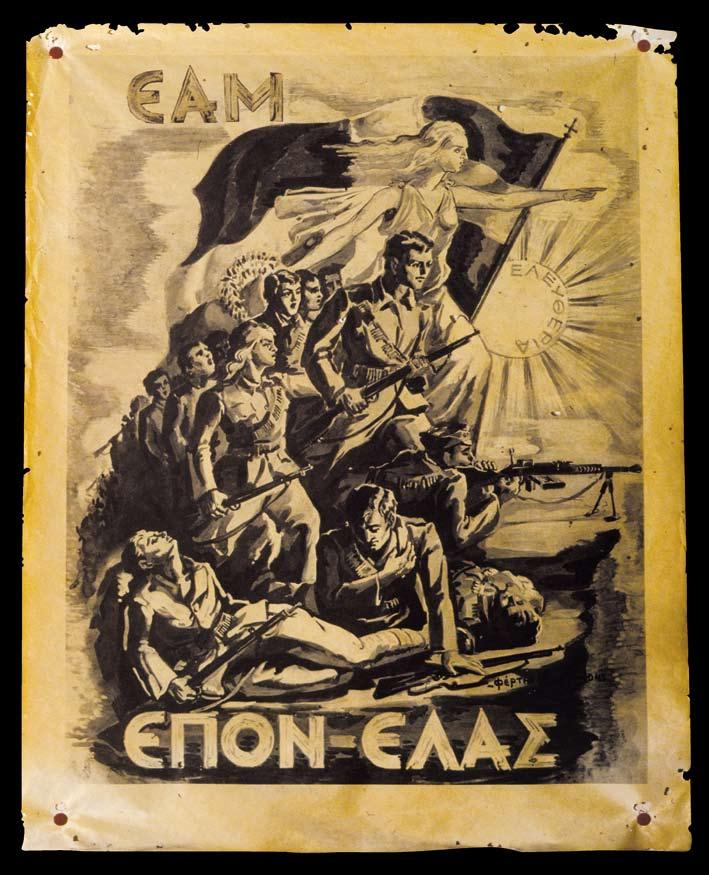
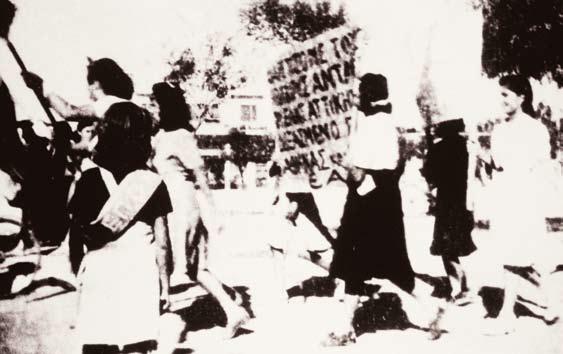
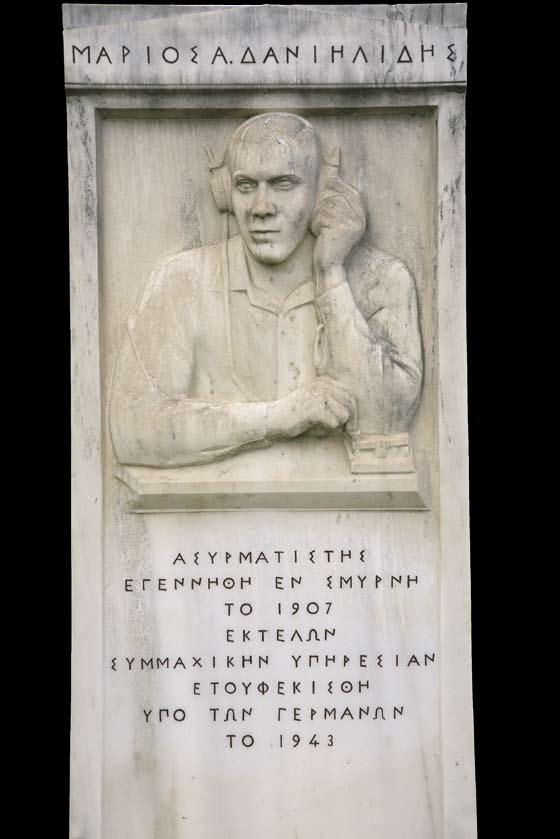
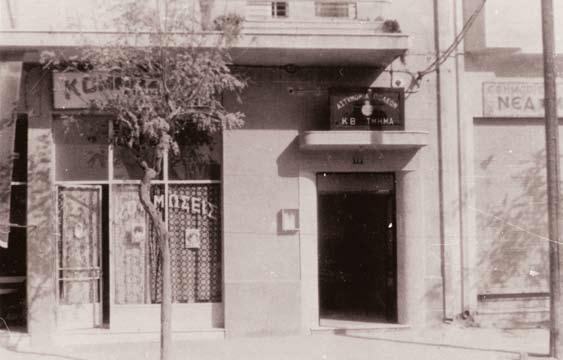
the population of Athens suffered severe malnutrition. The harsh winter of 1941 witnessed several deaths from hunger and extremely cold weather. The local authorities of Nea Smyrni were particularly busy trying to come up with measures to protect the orphaned children and methods to collect the dead bodies off the streets, in order to bury them. Lack of supplies and medicine, as well as the gene-ral climate of terror urged Athenians to undertake resistance action, at the beginning sporadic and personal and later more organised and systematic. The very first organised resistance activities at Nea Smyrni occurred during the summer of 1941. This is also when the first Nea Smyrni office of the Central Base Organisation (KOB = Kentriki Organosi Basis) was established by dimitris Chatzigeorgiadis, Maro Stamou and Omiros Kounoupiotis. KOB was attached to the Greek Communist Party (KKE = Kommounistiko Komma Elladas). At the same time, the initial nucleus of the Confederation of Greek Communist Youths (OKNE = Omospondia Kommounistikon Neolaion Ellados) was formed by Omiros Kounoupiotis, Iraklis Tsiklitiras, Petros Chatzipetros and Angelos Margaritis, who later became a member of the National Republican Greek League (EdES = Ethnikos dimokratikos Ellinikos Syndesmos). The National Liberation Front (εAM = Ethniko Apeleftherotiko Metopo) was formed on 27 September 1941. EAM’s activity in Nea Smyrni had been organised according to the area’s districts: Chrysaki, Agios Sostis, Tatavla, Agia Paraskevi, Panionios.
Illegal press was distributed through Petros Parelis, who had a duplicator hidden in his house, on the corner of Vryoulon and dorylaiou Streets. Analogous activity had been undertaken by Thymios Sismanis, Gerasimos Milas, Giorgos Efstathopoulos, Michalis danias, Kostas Veropoulos, Michalis Ladas, Giorgos Mazokopos, Byron Anastasiadis, Iraklis Tsiklitiras and others.
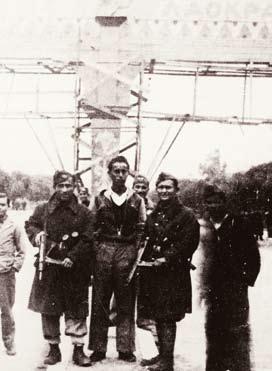
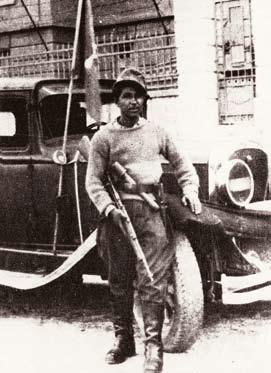
In May 1942 the first Nea Smyrni group of the National People’s Liberation Army (εLAS = Ellinikos Laikos Apeleftherotikos Stratos) was founded. Among its first members were: Kostas Oikonomou,
World War II, German Occupation and Resistance in Nea Smyrni
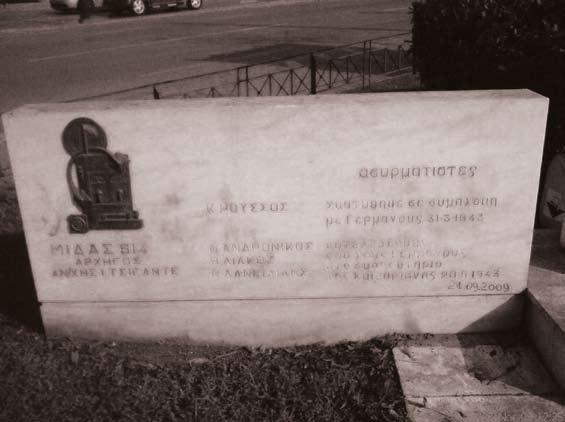
Georgios Stephanidis, Georgios Pantelopoulos, Miltiadis Tzannis, Angelos Tsikmoglou, Giannis Kyriakidis, 2nd captain of the ELAS of Nea Smyrni, Christos Leventeas and Nikos Balanos. By the spring of 1943 the ELAS of Nea Smyrni had included more than 100 members, whereas this number had risen to 1,340 during the organisation’s apogee. Other Neosmyrniotan resistance organisations were Midas 614 of I. Tsigante, Plouton and delphoi. Moreover, several organisations associated with social care and welfare had appeared, the most important being National Solidarity (= Ethniki Allilengyi), which covered most of the Athenian capital. Its contribution to the establishment and maintenance of the Urgent Relief Shelter (= Katafygio Epeigousis Perithalpseos) of the Attica-Boeotia Medical Association, the Child-City (= Paidoupoli) and the Popular Committee (= Laiki Epitropi) of Nea Smyrni.
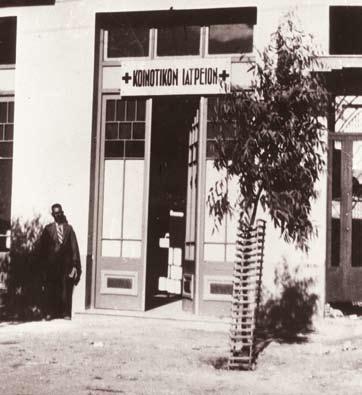
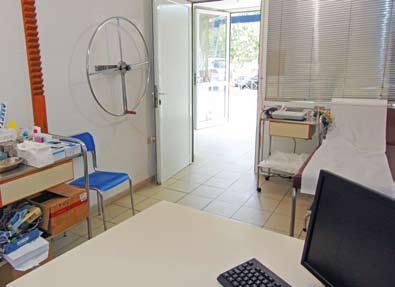
The Urgent Relief Shelter, a medical practice on Eleftheriou Venizelou Avenue, had been founded by the Medical Association of Attica-Boeotia in 1941, and was largely funded by the Community of Nea Smyrni. The National Solidarity and the Red Cross provided the Shelter with human resources and medical supplies respectively.
The Child-City’s objective was the protection and care of Nea Smyrni’s orphaned children, as most of the town’s orphanages had been commandeered by the Germans. G. Papazachariou and N. Kakridis proposed that the orphans would be placed in foster families. The Child-City of Nea Smyrni included 25 foster families that relieved more than 300 children.
The establishment of the Nea Smyrni Popular Committee should be viewed as part of EAM’s initiative to create survival committees throughout Athens. Special attention was paid to health issues, since almost all medical professionals were involved in this movement. The Committee’s action culminated in the foundation of a department of the Greek Red Cross and the creation of an associated hospital on the corner of Sophouli and Korai Streets, in 1944.
Spyros Alevizos
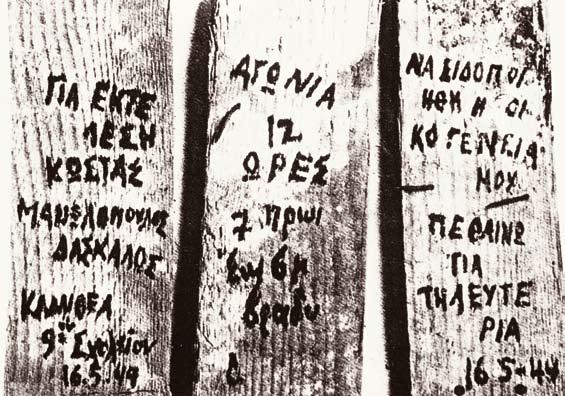
Spyros Alevizos was the founder of the society “Pharos” (= O Pharos), which was established in 1932. This was at a time, when Pharos, i.e. the district that had been accommodating the local population before the arrival of the refugees, was outside the limits of the city-plan. Three times did Alevizos urge the society’s members to take action against the demolition of the refuge houses that had been erected at Pharos with no official permit. Moreover,
though the systematic application of pressure on the municipal authority, Alevizos managed to have medicine distributed by the club. That was a truly remarkable achievement, as no pharmacies were to be founding in the area. Alevizos struggled to have Pharos included in the city-plan; this happened as early as 1937. During the German Occupation, Spyros Alevizos organised the resistance movement at Pharos.
The first radio of Μidas 614 is stationed at Nea Smyrni
The Giannakeas family assumed the major responsibility of hiding the first radio of Ioannis Tsigante’s resistance organisation, Midas 614, in their home on 15 Dodekanisou Street. Besides the radio in the Giannakeas house, Midas 614 had established two more radios in the Athenian centre. The Giannakeas radio operated for eight months, that is until 31 March 1943, when the Germans located it. The operator Kostas Rousos was killed, while defending the station. Mathaios Andronikos, the
other operator, was arrested in the following day, whereas the Giannakeas family was arrested and imprisoned.
A few weeks later, the operations of Midas 614 ceased, as a result of Tsigante’s death on 10 April 1943. The German secret service invaded the organisation’s headquarters and confiscated its equipment. The operators Th. Liakos and the Neosmyrniotan Marios Daniilidis were arrested, sentenced to death and executed in May 1943.
World War II, German Occupation and Resistance in Nea Smyrni
German blockades at Nea Smyrni
– The Pharos blockade
The resistance organisations’ action was very effective in certain areas; this, of course, does not mean that it was impossible for the Germans to carry out arrests, blockades and other acts of violence. However, in areas, where a large part of the population belonged to ELAS, German oppression would meet significant resistance. Nea Smyrni was among these areas. The first Nazi and Security Battalion attack that was intercepted by the Neosmyrniotan fighters took place on 5 January 1994 and aimed at the arrest of seventeen ELAS fighters (1st Pharos blockade). The heroic Spyros Alevizos, the commander the Pharos sector of ELAS, was killed while defending his home on the corner of Artakis and Vasileos Georgiou Streets. The largest blockade of Nea Smyrni took place in the Pharos district, on 9 August 1944. About 3,000 civilians were arrested, while 114 were killed. The third blockade occurred at Kato (= Lower) Nea Smyrni on 16 August 1944.
Dead Neosmyrniotan fighters
The community of Nea Smyrni paid a heavy blood toll, as a result of its struggle against the German oppressors. Several Neosmyrniotans were arrested and subsequently executed, others were murdered on the spot, while many were sent to the concentration camp of Chaidari, or those in Germany and Poland. Many of them managed to escape and return to their homeland, so as to continue their anti-Nazi struggle. Those who did not make it, have been honoured by the Municipality of Nea Smyrni by means of the monument commemorating their historical sacrifice, which has been erected at Pharos.
The first Neosmyrniotan hero was Miltos Zapheiriou, who was killed at Palaio Phaliro. In the blockade of January 1944 at Pharos more than 45 people were arrested, whereas Spyros Alevizos was killed on the spot. Furthermore, the blockade of August 1944 resulted in the execution of 70 resistance fighters. Finally, several Neosmyrniotans were killed during the German withdrawal and the dekemvriana.
Burial monument honouring the dead of Pharos, September 1944.
Liberation and the Civil War
The Nazi’s withdrawal from Athens encouraged the acknowledgement and legalisation of the resistance organisations, which set up offices in most Athenian districts. The Nea Smyrni EAM office was located on Athanasios Karyllos Square. When the new government ordered the guerrillas’ disarmament, EAM and ELAS did not obey. Subsequently, four communist ministers quit in protest, EAM declared a general strike and bloody rallies followed by severe battles took place in several Athenian regions. This turmoil occurred during the course of december 1944 (dekemvriana) and constitutes the initiating act of the Greek Civil War. At Nea Smyrni, where EAM was quite powerful, several armed conflicts took place in the area surrounding the Iosiphogleian Orphanage and at Vourlopotamos. Ioannis Mangriotis, who had been appointed mayor of Nea Smyrni in August 1944 by the Minister of Internal Affairs, was shot by a sharpshooter on 20 december 1944. Mangriotis was replaced by Antonios Zapheiridis, vicepresident of the Municipal Committee. domestic warfare subsided two months later, when the Varkiza Agreement was signed (12 February 1945); the agreement dictated the full disarmament and dissolution of EAM-ELAS.
Local Self-government during the German Occupation – Nea Smyrni develops to a municipality
When the German Occupation of Athens was initiated, president of the Nea Smyrni Community was Athanasios Karyllos, who preserved his position until August 1942; this is when the Germans replaced him with Ioannis Mangriotis, the Community’s vice-president. Although the true reasons for this development remain unclear, the official explanations for this change was that Athanasios Karyllos was inefficient and had misused communal funds. As this allegation was eventu-
ally proven invalid, the Germans’ decision should be most probably attributed to Karyllos’ objection to hand them the official list of the Nea Smyrni Community members. He did so, as he was afraid that the Nazis would use this list to recruit workers for their factories in Germany.
The municipal archives from that period demonstrate the Community’s idleness, as it undertook only a limited range of activities, such as the financial support of various organisations and the resolution of financial differences between its members; moreover, the removal of dead bodies from the streets and the construction of antiaircraft trenches. On the other hand, the major projects, the funds for which had been approved before the war’s breakout, had been indefinitely postponed.
The community was promoted to a municipality in January 1943, after the October 1940 census maintaining that the population of Nea Smyrni had risen to 15,114 was validated. d espite this development, the local authorities’ activities were not altered significantly. At the beginning, the newly-founded Municipality of Nea Smyrni was included in the newly-established Capital Municipality, along with five more municipalities and two communities. Nea Smyrni was administered by ten municipal commissioners presided by Ioannis Mangriotis. After the Capital Municipality was broken up, i.e. in 1943, Ioannis Mangriotis was appointed Mayor of Nea Smyrni; he retained this position until his death on 20 december 1944.
Nea Smyrni could not possibly remain unaffected by the general upheaval that occurred after the Liberation. As a matter of fact, the frequent alteration of mayors was a very common phenomenon until 1951. It should be emphasised, however, that none of these officials had been elected to their positions.
The organisation Greek Solidarity contributed considerably towards the various problems the Neosmyrniotan society was facing after the Civil War. Particular attention was paid to the effective
replacement of the officials that had been appointed by the Germans. On 19 November 1944, the members of the Popular Committee occupied the town-hall, so as to be able to co-exist with Ioannis Mangriotis with regard to the municipality’s administration. Subsequently, the Neosmyrniotans decided viva voce to replace Mangriotis with Ioannis Papagiannopoulos.
After the Varkiza Agreement and EAM’s withdrawal, Papagiannopoulos, a mayor elected by the Popular Committee, had to be removed. Thus,
Athanasios Karyllos became once more Mayor of Nea Smyrni. He retained this position until 1946, when he was replaced by the dentist Petros Perimenis, who was appointed by the Tsaldaris government together with an eighteen-member council. In April 1949, Perimenis was replaced by his predecessor, Athanasios Karyllos, who remained Mayor of Nea Smyrni until 10 August 1950. This is when he was succeeded by Ioannis Nasopoulos, who preserved his post until the first post-war election was held, i.e. on 15 April 1951.
The mayor of Nea Smyrni Athanasios Karyllos in the ceremony celebrating the end of the war, May 1945.
World War II, German Occupation and Resistance in Nea Smyrni
ασφαλτόστρωση οδών, διαμορφώθηκαν οι πλατείες σκατζουράκη, φάρου, Βασ. κωνσταντίνου, αγίας παρασκευής,
όπως και η κεντρική πλατεία, ενώ συντηρήθηκαν και επισκευάστηκαν τα αντιπλημμυρικά έργα, καθώς και τα δίκτυα φωτισμού και ύδρευσης. παράλληλα προκηρύχθηκαν
τα έργα
αυτά, όμως, τα οποία έγιναν με πίστωση 1.000.000
The new municipal authority in the garden of the town-hall, which was located on the corner of Palaiologou and Eikostis Pemptis Martiou Streets, February 1955.
CHAPTER VI
Nea Smyrni during the 1950s and 1960s
Nea Smyrni grows
The 1950s witnessed an extended internal migration wave, as large sections of the countryside population gathered in the Greek urban centres. As one would expect, the largest numbers of migrants arrived in Athens, thus crowding the Athenian Municipality and the surrounding areas. Within a few years, the population of Attica had increased dramatically and fundamental changes had occurred in all aspects of life. due to its close proximity to Athens and its association with Syngrou Avenue, one of the largest Athenian traffic arteries, the Municipality of Nea Smyrni received several newcomers. Meeting their needs in combination with the new architectural trends altered Nea Smyrni’s physiognomy considerably. The small neighbour-
hoods were dissolved into a more or less uniform complex, thus reshaping social structures and gradually undermining the natural environment. According to official censuses, the population of Nea Smyrni had reached 22,074 in 1951, 32,856 in 1961 and 42,512 in 1971. This growth resulted to the town’s extension to the east and the south, i.e. in the districts of Loutra, Pharos, Vourlopotamos and the cemetery area. By 1960, the Municipality of Nea Smyrni had stretched to occupy the area defined by its current borders. The principal problems that demanded immediate solution during the 1950s and the 1960s included road construction, lighting, cleaning, effective transportation, drainage and water supply.
Smyrni during the1950s and 1960s
The tenure of Athanasios Karyllos as Mayor of Nea Smyrni (1951-1959)
The municipal elections of April 1951 were won by Athanasios Karyllos. After the turbulence that characterised the 1940s had subsided, the re-οrganisation and further development of the Nea Smyrni Municipality demanded significant funds. Consequently, the municipal authority resorted to borrowing and undertaking infrastructure projects in common with the neighbouring municipalities. These projects included the construction of school buildings and roads. Within this framework, the completion of the 2nd Primary School’s construction was celebrated as a major event; the building was inaugurated by King Paul and Queen Frederica on 20 September 1954. Furthermore, several minor projects, such as road construction, lightings and water supply were undertaken by the Municipality of Nea Smyrni.
d espite the huge financial problems that the
Municipality was facing, Athanasios Karyllos was re-elected Mayor of Nea Smyrni in November 1954. Although the financial situation of the Municipality of Nea Smyrni during the mid-1950s was very bad, significant works were realised in almost all sectors. The Municipality’s effort to increase its income led to the decision to establish a recreation centre in Alsos. More funds were collected through the tax imposed on the bus tickets of the Nea Smyrni lines. This money allowed the Municipality to improve its road network and arrange the enhancement of its mass transportation system.
Furthermore, this quadrennium witnessed the municipal authority’s systematic efforts in the fields of education and recreation. The extension of the 2nd Primary School was completed, whereas a number of halls were added to the buildings accommodating the 3rd and 4th Primary Schools; moreover, the expropriation process in regards to an allotment for the construction of a gymnasium was initiated, Estia’s financial support continued, while municipal funds were offered to poor stu-
Frederica and Paul at the 3rd Primary School of Nea Smyrni inauguration ceremony, June 1953.
Nea
The building that has been accommodating the Leontian Lyceum since September 1962, when the institution’s move to Nea Smyrni was completed.
1st Gymnasium of Nea Smyrni on Korai Street, 1965.
dents, in order to pay for their fees and books. In 1957, the Municipality of Nea Smyrni established a philharmonic band.
The Municipality’s attempts to promote culture and education were significantly supported by Nea Smyrni’s great benefactor, the Smyrnian ship-owner Aristotelis Onassis. On 22 July 1957, the foundation ceremony of the Mercantile Marine Engineering School “Smyrna” took place at Estia of Nea Smyrni. The school’s construction was sponsored by Onassis and Konstantinos Konialidis, also a ship-owner, while the building plot, located on Eikostis Pemptis Martiou Street, had been offered by the Municipality of Nea Smyrni.
The tenure of Petros Perimenis as Mayor of Nea Smyrni (1959-1964)
Petros Perimenis won the third post-war municipal elections, which took place in April 1958. Things looked brighter for the Municipality as far as economy was concerned, as income had increased through levying various taxes. The new authority’s first technical programme was practically a continuation of the previous one: the water supply and electricity networks were expanded,
Nea Smyrni during the1950s and 1960s
small bridges and roads were constructed, parks and gardens were fenced and flood control works were undertaken. One of the Municipality’s most significant achievements during 1959 was the partial expropriation of the Chrysaki Estate, in order to establish the Leontian Lyceum.
The decision taken by the Municipal Council on 20 October 1959 was typical of their concern in respect to uncontrolled construction, as the new house types did not allow proper ventilation and lighting; the decision concerned the building terms in the Pharos district. Nea Smyrni, originally a ‘garden-city’, was about to become a densely populated megapolis. The division of large building plots in smaller ones and the systematic building construction had considerably reduced open spaces that could be used as parks and recreation areas. Consequently, the Municipal Council decided to alter the building terms: no more than 70% of the building plot could be built over, whereas the remaining 30% should be covered with parterres.
despite these concerns, more Neosmyrniotan districts were included in the city plan. d ense building construction is directly related to the significant increase of the town’s population, as
The construction of the Estia megaron.
more than 10,000 newcomers settled in Nea Smyrni during the 1950s. These originated mainly from Constantinople and Pontus. The Municipality’s bad finances led to borrowing money from various governmental bodies, in order to have school buildings erected or repaired and continue with electricity and water supply works.
The lack of adequate school buildings was a matter of great concern for all members of the Neosmyrniotan society, who demanded from the local authorities to have more schools constructed. Nevertheless, the erection of more school buildings reduced considerably the available open spaces.
Financial
crisis and alteration of municipal authorities (1963-1964)
On 22 d ecember 1963, the Instance Criminal Court of Athens suspended Petros Perimenis due to misconduct that caused a serious financial damage to the Municipality of Nea Smyrni. Subsequently, the Attica Prefect replaced Perimenis with Athanasios Karyllos. despite the significant financial problems, the members of the Municipal
Council were willing to work hard, while leaving their differences aside, in order to improve the situation. Through several appeals to the Ministry of Finance and by taking advantage of the credits offered by the Unemployment Organisation and the State, they managed to realise several projects aiming at the satisfaction of the Neosmyrniotans’ immediate needs.
After several fruitless sessions and votes, the councillors elected Christos Katramopoulos as Mayor of Nea Smyrni on 26 April 1964. Katramopoulos remained in this post only for a few months, that is until the July 1964 elections; these were won by Athanasios Papathanasiou.
The tenure of Athanasios Papathanasiou as Mayor of Nea Smyrni (1964-1967)
The fourth post-war municipal elections, which took place on 5 July 1964, were won by the pharmacist Athanasios Papathanasiou. The new municipal authority followed the policy of the previous one as far as the treatment of Nea Smyrni’s financial problems was concerned. The very first task was the collection of all debts. The municipal
Blessing ceremony inaugurating the construction of the central drainage pipe in the junction of Lampsakou, Plastira and Megalou Alexandrou Streets, 5 May 1960.
The statue of the heroic bishop Chrysostomos of Smyrna, which was created by Thanasis Apartis during the early 1960s.
Nea Smyrni during the1950s and 1960s
services were effectively re-organised and the systematic collection of taxes, fees and contributions was initiated. Consequently, the anticipated cost for the 1965 technical programme was more than 12,000,000 drachmas, while that of the previous year’s programme did not exceed 3,900,000.
In May 1965, the Municipal Council re-adressed the issue of allowing the increase of the buildings’ height, as limited development in regard to height was generally considered anti-social and uneconomic. The associated decision was based on, among others, the rapid increase of Nea Smyrni’s population and the demand for more work spaces; moreover, it was maintained that the elevated lifestyle level that people living in block of flats could enjoy, would bring about cultural and social advancement. Thus, the construction of three-, four- and five-storeyed buildings was eventually allowed. The buildings’ height was determined by the width of the street next to them: the wider the street, the taller the building.
Furthermore, more funds were allocated to infrastructure works: roads were constructed and/ or tarmaced, squares and parks were created or reconstructed, flood control works were undertaken and the electricity and water supply net-
works were repaired. Moreover, the Municipality of Nea Smyrni offered financial support to various clubs and athletic associations, as well as people from the poorer classes. Cultural, intellectual and economic development was gradually intensified, thus promoting Nea Smyrni to one of the most popular Athenian suburbs.
Furthermore, one of the most important political concerns of the Municipal Council during that period was the nation-wide persecution of municipal officials by prefects. The relevant discussions reflect the Greek society’s division in regard to whether and how the Local Self-government authorities could take a stand on issues of purely political character. On 21 October 1966 the councillor Charalambos Bechlivanidis was arrested and led to the police station. Subsequently, Bechlivanidis was beaten, although no charges were pressed. As the majority of councillors opposed strongly to this act, the Municipal Council decided to issue a protest decree.
This event may be viewed as the symbolic beginning of a new era, during which nationwide political developments had become major subjects in the Municipal Council meetings. The numerous concerns in regard to the proper
The 22nd Nea Smyrni Police Department in the Central Square, on Eikostis Pemptis Martiou Street. Notice the of buiding accommodating the newspaper Nea Smyrni of S. Koukoutselis to its right, 1970.
function of democratic institutions were clearly demonstrated in the discussions that have been recorded in the proceedings of the Municipal Council sessions.
The dictatorship period
The abolition of democratic institutions by the military junta of 21 April 1967 did not affect Nea Smyrni as much as it did other regions. That the Mayor Athanasios Papathanasiou was not replaced constituted a surprising exception during that period. Moreover, the Municipality continued its programmed infrastructure works. From as early as 1969, the municipal authority had put together a technical programme that reflected its effort to satisfy the citizens of Nea Smyrni, who demanded more road and building construction works. during the following years, the Municipality focused on a large variety of infrastructure works, the enhancement of parks and squares and the support of cultural and athletic associations.
In February 1972, the Minister of Internal Affairs had Athanasios Papathanasiou removed from his post and replaced by Aristeidis Stymphaliadis.
Nea Smyrni during the1950s and 1960s
The reasons for Papathanasiou’s displacement were never made clear. At the end of 1972, Stymphaliadis was replaced by Ioannis Kambalouris. Stymphaliadis’ removal should most probably be attributed to his inefficiency as far as financial management was concerned.
The technical programme for 1973 demonstrates the financial difficulties that the Municipality was once more experiencing: infrastructure works included only road construction and/ or repair and the enhancement of the municipal park. Similarly to his predecessors, Kambalouris’ tenure was remarkably short. In February 1973, he was replaced by Ioakeim Rokas, who remained Mayor of Nea Smyrni until junta’s fall. Again, no official explanation for this change was offered. Infrastructure works continued, whereas many of the funds allocated to the support of various cultural and athletic associations were significantly reduced.
After the dictatorship’s demise in July 1974, the Mayor of Nea Smyrni and the members of the Municipal Council handed their resignations to the new prefect. Their decision to resign was the result of the new government’s declarations concerning the replacement of all Local Self-government officials.
The BP petrol station on Eikostis Pemptis Martiou Street, on Karyllou Square, early 1970s.
15,7% των ψήφων. τέλος, ο συνδυασμός συνεργασίας πα.σο.κ . και κ κ ε. με επικεφαλής τον πρόεδρο του σωματείου ελλήνων ηθοποιών Βασίλη μεσολογγίτη λαμβάνει το 14,7%, ενώ ο κεντρώος αριστείδης μπακαμήτσος 14% και ο αντώνης πανταζής 8,6%.
του σπύρου κωτσάκη (κ κ ε.), που έλαβε 14,5%, και
του αντ. πανταζή (6,3%). στον δεύτερο γύρο των
εκλογών (22/10/1978) ο Χαρ. μπεχλιβανίδης, που υποστηρίχθηκε από το κ κ ε εσ. και το πα σο κ .,
καθώς και
στους νεοσμυρνιώτες που χάθηκαν αγωνιζό
μενοι εναντίον των γερμανών
κατά τον Β΄ π αγκόσμιο πό
λεμο (ηρώο
CHAPTER VII
The Municipality of Nea Smyrni during the period 1975-1998
Nea Smyrni after the restoration of democracy
αfter the junta’s fall and Ioakeim Rokas’ voluntary resignation, Georgios Arvanitis was appointed Mayor of Nea Smyrni; moreover, the elected members of the pre-junta Municipal Council returned to their posts. Arvanitis’ tenure lasted until the first postdictatorship municipal elections. Until then, the Municipal Council worked systematically towards the solution of the municipality’s various problems and the effective continuation of all pending projects. One of their most significant tasks was the preparation of a technical programme based on a significantly li-mited budget, as the government had announced cutbacks in funds. Nevertheless, the programme they eventually came up with illustrated the local authorities’ interest to establish the basis for Nea Smyrni’s long-term development. The most important features included the expansion
of the electricity and water supply networks, the creation of a drainage network and the recovery of several open spaces, which were being exploited by civilians. The 1975 elections were won by the centre-left Charalambos Bechlivanidis, a former member of the Municipal Council. Bechlivanidis’ combination won the next four elections (1978, 1982, 1986 and 1990) as well. Thus, Bechivanidis’ tenure as Mayor of Nea Smyrni lasted almost twenty years.
The tenure of Charalambos Bechlivanidis as Mayor of Nea Smyrni (1975-1993)
The second half of the 1970s witnessed a significant increase in the population of Nea Smyrni: the 1971 census had recorder 42,512 Neosmyrniotans;
The section of Eleftheriou Venizelou Avenue near the Central Square before its reconstruction due to the installation of the tram rails.
ten years later this number had risen to 67,408. This rapid increase was mainly due to the relocation of Athenians from the city centre to less crowded suburbs. This development brought about a significant rise in land’s value, as well as a notable differentiation in the Neosmyrniotan population’s social compination.
The technical service was re-organised and subsequently engaged in preparing a series of operations associated with the extension and conservation of the road network, the creation of squares and small parks, the provision of new equipment and, in general, the realisation of se-veral infrastructure projects. during Bechlivanidis’ long tenure, the Municipality of Nea Smyrni took the lead in several technical matters related to infrastructure development. Particular attention was paid to the completion of the electricity supply network, the creation and enhancement of squares, the upgrading of cleaning services and the construction of sports halls. Furthermore, the modification of the city plan according to the increased population’s needs was initiated. It was extended to include the districts of Mytilineika and degleri.
despite the several immediate needs that had to be satisfied, the Municipal Council did not overlook the numerous cultural and athletic associations that required its support. Thus, funds were allocated on a regular basis to the historical clubs and associations that had contributed to Nea Smyrni’s cultural and athletic advancement.
The impressive technical programme of 1977 reflects the local authorities’ systematic activity towards the Municipality’s effective development. Both the scheduled projects and the allocated funds differ considerably from their 1975 and 1976 equivalents.
The second post-dictatorship municipal elections, which took place in October 1978, were won by Charalambos Bechlivanidis. While his first quadrennium’s most significant feature was the Municipality’s improved finances and the realisation of basic infrastructure projects, the following
The Municipality of Nea Smyrni during the 1975-2018
years were characterised by the cultural promotion of Nea Smyrni, which was gradually attracting distinguished Athenians, mainly artists, intellectuals and politicians.
Nea Smyrni had already been established as one of the most appealing Athenian suburbs, thus attracting important business activity. Although the presence of businesses would provide Nea Smyrni with significant funds, the Municipality did not grant permission to many of them, as they were expected to cause various problems to the locals.
As far as technical works were concerned, the implementation of the Municipality’s projects continued; similarly to the previous period, special attention was paid to the cleaning services. Furthermore, the fundamental subject of expanding the drainage network was re-introduced after many years. It should be emphasised that an effective drainage system had become an immediate necessity, due to the rapidly increasing number of Nea Smyrni’s population.
The 1981 census recorded 67,408 Neosmyrniotans. despite the local authority’s systematic effort to secure its ownership rights over several plots, this led to the increase of the buildings’ height and the restriction of open spaces. Consequently, the members of the Municipal Council resorted to the creation of squares, small parks, playgrounds and recreation centres. Besides satisfying the citizens’ daily needs, their primary purpose was the development of a social policy through recreation, sports and cultural activities. Hence, the Municipal Council supported systematically all athletic and cultural clubs and associations.
The municipal elections of October 1982 were won, once more, by Bechlivanidis. The third postdictatorship quadrennium was characterised by the municipal authority’s attempts to complete all on-going infrastructure projects and an increase in the funds allocated to social policies through the erection of school buildings and the establishment of day-nurseries and centres providing services for the elderly citizens. Moreover, construction works
included public gardens and the much needed expansion of the drainage network. An important issue that required immediate attention was the rapidly increasing traffic. In March 1983, a number of councillors formed the Technical Committee, its principal objective being the identification and recording of all problems associated with traffic.
In July 1983, the Municipal Council decided to buy a number of Panionios’ stocks. d uring that period, it was very common for Greek football associations to become anonymous companies and have their capital converted in stocks, in order to increase their income. The Municipal Council manage to concentrate enough stocks to effectively control Panionios. Another decision taken unanimously by the city council concerned the establishment of an Old People’s Centre (καPI = Kentro Anoihtis Perithalpsis Ilikiomenon). As far as infrastructure works were concerned, the drainage network was further expanded and a number of roads were converted to pedestrian precincts. Special attention was paid to the expansion of the municipal cemetery, in order to cover the Neo-smyrniotans’ needs effectively.
The fact that Nea Smyrni had become a cultural centre of city-wide significance, just like once had Smyrna, is reflected on the several requests made by various refugees’ associations asking permission to erect commemorative monuments there.
The municipal elections that took place in October 1986 were won by Bechlivanidis’ combination. From as early as the beginning of the new quadrennium, the local authority seemed particularly keen in supporting educational institutions. At that time, Nea Smyrni boasted eleven kindergartens, fifteen primary schools, six gymnasiums, five lyceums, a technical-vocational lyceum, a technical-vocational school and the Evangelical School. In order to provide more school buildings and/ or repair the already existing ones, the Municipality of Nea Smyrni co-operated with the School Buildings Organisation.
The infrastructure projects that were undertaken
included road and pedestrian precinct construction. Moreover, new playgrounds were constructed, several squares were enhanced, day-nurseries and KAPIs were established and all municipal sports halls were upgraded. Additionally, the Municipal Council prepared a thorough technical programme associated with the development of all aspects of municipal services (cleaning services, road construction, drainage, water and electricity supply, education, sports, cultural activity, social care) for the next five years. Many sections of this programme were realised through funds provided by the European Union.
during the last phase of Bechlivanidis’ tenure, which began after the 1990 municipal elections, several projects were completed, while many others were initiated, such as the erection of a church, a school and a boarding house for the Asylum of Saint Andrew. Furthermore, the transfer of all municipal services to the new town-hall was one of the most significant events during 1992.
The following years witnessed the initiation of several infrastructure projects aiming at Nea Smyrni’s continuous improvement. The local authority scheduled works associated with the extension and maintenance of the electricity supply and drainage networks, the enhancement of the traffic network and the improvement of the flood control system.
About a year prior to the completion of his fifth period of tenure as Mayor of Nea Smyrni, Charalambos Bechlivanidis was accused of financial misconduct and, consequently, removed from his post (2 August 1993). He was temporarily replaced by Georgios Siotropos, his great political rival. As the allegation was proven invalid in court, a triumphant Bechlivanidis returned to his post on 24 May 1994.
In 1994 the historical period associated with Bechlivanidis’ twenty year-long tenure was completed for the Municipality of Nea Smyrni, which had managed to meet the multifaceted challenges of the restorative post-junta era. Of course, many problems remained to be solved. These were
The Municipality of Nea Smyrni during the 1975-2018
mostly associated with the remarkable population increase and consequent multiplication of the Neosmyrniotans’ needs. The town had become a cultural centre of inter-city value, a true symbol for the Asia Minor refugees and their descendants. As it was attracting thousands of Athenians, Nea Smyrni grew considerably and eventually stopped being a garden-city. despite these developments, it remained one of the greenest Athenian suburbs.
The tenure of Georgios Siotropos as Mayor of Nea Smyrni (1995-1998)
The sixth post-dictatorship municipal elections, which took place in October 1994, were won by Georgios Siotropos, a former councillor and president of Panionios.
One of the first projects undertaken by the new authority included the creation of a photo-archive and a gallery, both of which were accommodated in the National Shelter’s building, the construction of a day-nursery and the establishment of a station for consultation, prevention and primary care. Moreover, a large series of infrastructure projects was scheduled; these included the construction of underground parking lots, the conversion of several roads to pedestrian precincts, as well as the maintenance and extension of the traffic, electricity supply
and drainage networks. The flood control system was improved and the cleaning services considerably upgraded. Furthermore, the Municipal Council purchased two small coaches in order to cover the needs of Neosmyrniotans living in remote areas.
In 1996 the Municipality of Nea Smyrni participated in the inter-municipal company entitled “Peripheral Gas distributing Company of Central Attica SA”. Its objectives included the preparation and realisation of projects associated with the construction, function and exploitation of gas distributing networks within the participating municipalities. Moreover, the Municipality of Nea Smyrni participated in the inter-municipal company “Attic Tram SA” as a founding partner. Special attention was paid to the restoration of school buildings and athletic facilities and the provision of the various municipal services with the appropriate equipment. A large section of the funds reserved for the promotion of athletic activity was offered to Panionios.
The Municipality of Nea Smyrni exploited se-veral European Union programmes to have restoration projects prepared for several buildings in Nea Smyrni, as well as the Central Square. Furthermore, many projects associated with flood and traffic control, as well as cleaning were realised. Lastly, the Municipal Police of Nea Smyrni was established, efficiently staffed and amply equipped.
The Municipal Pool.
καρούμπας (κ.κ.ε.-Δη.κ.κι.) 7%, ο ανεξάρτητος Δ. κωνσταντόπουλος 6,5% και ο γ κιτσάτης (εξωκοι-
10,8%, του γ κωνσταντινίδη (κ κ ε.) 7% και του γ καρούμπα (Δη κ κι.)
ο γ. κουτελάκης με 54%. στις δημοτικές εκλογές του 2002 επανεξελέγη δήμαρχος
κατά σειρά, με νέο φωτισμό, οι δρόμοι μ. αλεξάνδρου, αγίου πολυκάρπου, ν πλαστήρα (από μ αλεξάνδρου έως ραιδεστού), ραιδεστού, Βάρνης, πλατεία Άνοιξης, κυδωνιών, Βυζαντίου (από Χρ. σμύρνης έως ομήρου), σπαθάρη, αδραμυττίου (από κοραή έως μ. αλεξάνδρου), πλατεία σταδίου (άνω τμήμα), αρτάκης (από πλατεία σκατζουράκη
ρας, η Άλκηστις πρωτοψάλτη κ.ά. τέλος, κατά τα τελευταία τέσσερα χρόνια δημιουργήθηκαν
έξι φεστιβάλ (ταινιών μικρού μήκους, ντοκιμαντέρ, κουκλοθεάτρου, μουσικής τζαζ, stand up comedy, θεάτρου σκιών) με τη συνεργασία σημαντικών φορέων,
για ενήλικες
και παιδιά με ποικίλη θεματολογία (χορός, μπαλέτο, ζωγραφική, αρμόνιο, κιθάρα, πιάνο, ορθοφωνία, θέατρο, αγιογραφία, φωτογραφία, αργυροχρυσοχοΐα κ.ά.). τ α επιμορφωτικά
προγράμματα, που περιλαμβάνουν πλέον 17 διαφορετικά τμήματα-ειδικότητες, παρακολουθούνται από περισσότερους από 1.000 δημότες και κάτοικους της ν έας σ μύρνης. ε πιπλέον κάθε καλοκαίρι, αμέσως μετά τη λήξη
Alfredo
CHAPTER VIIι
Nea Smyrni in the 21st century
The tenure of Georgios Koutelakis as Mayor of Nea Smyrni (1999-2006)
The 1998 municipal elections were won by Georgios Koutelakis’ combination. The significant contribution of Koutelakis’ authority during the period 1998-2002 was greatly acknowledged by the Neosmyrniotans, who re-elected him in the elections of October 2002.
The new authority’s primary task was to handle effectively the many financial problems that burdened the Municipality of Nea Smyrni. The systematic efforts they undertook bore fruits immediately: the various debts from the previous years, i.e. a total amount of more than two billion drachmas, were paid off during the period 19992000. With the Municipality’s financial strength restored, the Council scheduled a series of projects, the first one being the enhancement of cleaning services, in order to improve the living conditions at Nea Smyrni. As the Municipality was a founding
partner of Attic Tram SA, the councillors considered the possibility of having trams going through the city as an opportunity for significant development. Therefore, they managed to have tram lines running along Nea Smyrni’s main traffic artery, i.e. Eleftheriou Venizelou Avenue; this was despite the fact that the initial plan was to have the lines running along Syngrou Avenue.
The contribution of Koutelakis’ authority included several infrastructure projects, which were undertaken in collaboration with governmental organisations; thus, several roads were tarmaced and many streets converted to pedestrian precincts; the electricity supply and drainage networks were considerably expanded; several projects were planned for the refurbishment of squares, parks, gardens and playgrounds, the most important being the still on-going recreation of Alsos.
In regard to the salvage and restoration of historical buildings, the Municipality purchased Villa Vernikos, in order to convert it to a multi-purpose cultural hall. Together with the Ministry for the Environment, Physical Planning and Public Works, the Municipality of Nea Smyrni had twelve neoclassical buildings on Syngrou Avenue, the Iosiphogleian Orphanage included, officially characterised as preservable. In 2004 the Municipality purchased the historical cinemas “Sporting” and “Phillip”, so as to prevent their demolition. Today they have been thoroughly restored and function regularly as cinemas, a remarkable achievement of the local authority.
d uring Koutelakis’ tenure five kindergartens were established and the school complexes on Efxeinou Pontou Street and in the Papastratou district were constructed, while new halls were added to almost all existing school buildings. As far as social relief was concerned, the Municipal Council paid particular attention to the care of the elderly citizens. Three new KAPIs were established, whereas the municipal programme “Help at home” providing care and medical treatment to helpless
Neosmyrniotans was revived. Moreover, the Municipal Medical Centre was relocated to a central building, so as to be more easily accessible. Besides education and social care, the Municipality of Nea Smyrni was very active in the field of sports. In 2001, the Organisation of Youth and Sports was founded; its first activities included the construction of fifteen open basketball and volleyball courts in the schools’ precincts. In 2005 the 1st Municipal Sports Centre was inaugurated; during the same year the Municipal Swimming Pool was renovated and a 5x5 football pitch was constructed on the corner of Raidestou and Alikarnassou Streets. Additionally, several athletic events and training programmes were organised. during the tenure of Georgios Koutelakis, Nea Smyrni was established as one of the most beautiful Athenian suburbs. Moreover, Koutelakis’ bold decisions managed to improve the Municipality’s finances considerably and create a solid basis for future development. One of these decisions concerned the disentanglement of the Municipality from Panionios’ administration, which had proven a time- and money-consuming task, as the local authority had ended up with more than 80% of the athletic association’s stocks. Furthermore, the Cultural Organisation of the Municipality of Nea Smyrni was revived; it includes departments of music, dance, theatre, photography, art etc. Moreover, the institution is organising multiple cultural events on an annual basis.
Koutelakis’ second period was characterised by the municipal authority’s systematic attempt to effectively employ funds from the European Union towards the realisation of fundamental projects. As a modern city’s needs include social and environmental care, the Municipality managed to obtain a relatively large number of unbuilt plots, in order to create gardens, parks and squares. Nea Smyrni had always constituted a largely domestic area. In order to preserve its character, the members of the Municipal Council tried to identify ways to control commercial activity.
Nea Smyrni in the 21st century
In February 18, 2010, ten days before the completion of his third tenure, Koutelakis resigned as Mayor of Nea Smyrni, as a result of his involvement in an embezzlement scam associated with Panionios’ administration. According to his official statement, the reason for doing so was Koutelakis’ wish to leave Nea Smyrni and its citizens out his own legal issues. In late d ecember 2010, the Athens Court of Appeal, considering that there was not any deception, serious negligence or earning of money, declared him innocent of all allegations.
Nea Smyrni today: the tenure of Stavros Tzoulakis as Mayor of Nea Smyrni (2010-2018)
After Koutelakis’ resignation and until the next municipal elections, Stavros Tzoulakis, d eputy Mayor for Education and, also, a man with great experience in municipal affairs, served as Mayor of Nea Smyrni. A few months later, Tzoulakis was officially elected Mayor of Nea Smyrni in the municipal elections that took place in November 2010. The next municipal elections (May 2014) were also won
Tzoulakis’ primary objective was the continuation of the effective operation in all municipal departments and services, an achievement evidenced by the significant financial surplus that his predecessor had endowed the Municipality with. despite the problems that arose in the last three years of the previous municipal authority, as well as the difficulties due to the Greek economic crisis, the Municipality of Nea Smyrni, during 20102018, managed not only to maintain the economic surplus of the past years, but also to increase it significantly: in 2014 the aforementioned surplus was 8,000,000 euros, while four years later it had reached 11,614,133. This increase should be attributed to wise management, as well as effective prioritising of the various needs; thus, the Municipality managed to retain all its activities and refrain from either increasing the municipal taxes, or resorting to borrowing funds.
As Tzoulakis’ tenure coincided with the culmination of the Greek crisis, the Municipality of Nea Smyrni put special emphasis on its social welfare policies, in order to support the poor
by Tzoulakis, who became Mayor of Nea Smyrni for the second time.
Christmas at the Central Square of Nea Smyrni, December 2009.
View of the refurbished Chrysostomou Smyrnis Square.
Nea Smyrni in the 21st century
Chapter VΙΙΙ
Remodelling the central Omirou Street, 2018.
Neosmyrniotans. These policies are being implemented through the existing administrative structures, as well as the creation of new ones. The main structure, essentially the centre for organising and monitoring all municipal programmes is the Social Service, an organisation that has so far served more than 10,000 citizens. The most recent projects include, among others, the Social Grocery Store (since 2013), the Social Soup Kitchen, the Help at Home programme, the Social Welfare Bureau (since 2015) and the Community Centre (since 2016). Moreover, from as early as the first period of his tenure, Tzoulakis exempted all financially weak households from municipal taxes.
Besides social welfare, Tzoulakis’ authority has been particularly active in the fields of culture, education and sport by exploiting, strengthening and expanding all existing infrastructure. The Municipality of Nea Smyrni spends 1,700,000 euros per year on schools, i.e. around 220 euros per
student, as the total number of children attending primary and secondary schools in Nea Smyrna has exceeded 7,500. The Municipality’s activities in the field of education are carried out by means of long-term planning; these activities include the construction of school facilities, as well as the replanning of their use. In 2018, 10 new halls were added to the school complex on Nikomedias Street, as well as a new indoor gym; the project’s total budget was 1,800,000 euros.
As culture has been one of the main municipal interest areas during for several decades, Tzoulakis’ authority has been particularly interested in promoting it from as early as the beginning of its tenure. This is implemented through the activity of the Nea Smyrni Culture and Sport Organisation, which takes place in: a) the Municipal Library, b) the digital Museum of Smyrna and Nea Smyrni, c) the Arts Centre “Galaxias” and d) the open-air theatre in the Park with a capacity of 2,000, which
was refurbished in 2018. The most important event organised by the Nea Smyrni Culture and Sport Organisation on an annual basis is Ionikes Giortes (Ionian Festival). For almost two decades, each September, Ionikes Giortes has been taking place in the Park and attracting several visitors/ viewers, as it constitutes one of the largest and most popular Athenian festivals.
Being closely associated to sports, the Municipality of Nea Smyrni organises several programmes for citizens of all ages, children, adults, the elderly and the disabled. The organisation responsible for these programmes is the Sports and Youth Bureau; the venues accommodating the municipal sports programmes are the municipal sports centres, three in number, the Park open-air gym and the Municipal Indoor Swimming Pool. The inauguration of the 3rd Municipal Sports Centre, which is accommodated in a building on Venizelou Avenue, took place in February 2010.
Besides the activities mentioned above, the Municipality of Nea Smyrni, during the period 20102018, undertook several major projects associated with road construction, road signs and lighting, as well as anti-flood protection; moreover, the Mu -
nicipality has been particularly active in power saving through its participation in European programmes, has reinforced the cleaning service and has made numerous interventions in the city’s infrastructure aiming both at aesthetic upgrading and improving the life quality of its citizens. The plans include the environmental improvement of various areas, the refurbishment of many buildings, the enhancement of several roads and pedestrian streets, as well as a large variety of new activities aiming at the facilitation of the citizens’ daily needs. A typical example of this policy is the project, designed in 2016, for the enhancement of the Loutra region, which includes traffic regulations, the micro-climatic improvement of all open areas and the enrichment of the existing vegetation by planting trees and plants. Also characteristic is the refurbishment of the Karyllou Square and Park, as well as their physical connection to the refurbished Nea Smyrni Park and the pedestrianised Central Square. Furthermore, the remodelling of two of Nea Smyrni’s most central roads, i.e. Omirou and Palaiologou streets, which is currently under construction, aims at the regulation of traffic and the provision of ample parking spaces.
The new playground next to the Saint Paraskevi church.
Nea Smyrni in the 21st century
κωνσταντίνος καβαφάκης αλέξανδρος, παραιτείται το 1935 Χατζηπέτρου
κοκοτόπουλος κορνήλιος, ως αντικαταστάτης του π. κουτσουκέλη
να ορκιστεί
κουτσουκέλης παναγιώτης, παραιτείται στις 03.10.1947
μαλκότσης σωκράτης, αρνείται να
ορκιστεί
παυλίδης νικόλαος, παραιτείται τον 08.1947
σοφιανός νικόλαος
σπανός ναούμ τασόπουλος νικόλαος, παύεται
Βάρδας γεώργιος, παραιτείται
γαροφαλίδης κωνσταντίνος γεωργιάδης ιωάννης κατραμόπουλος Χρήστος
κεχαγιάς Άγγελος
κοντορούσης Δημήτριος
ιωάννης, παύεται στις 28.06.1949
ιωάννης, παραιτείται το 1953
στεργιανός Δημήτριος, παραιτείται
κατραμόπουλος Χρήστος
πανάς πάρις
αργυροπούλου Ίντα-Χρυσηίς
περιμένης πέτρος
κιτσικοπούλου
πέτρος
από 04.06.1959
έως 24.03.1964
(θάνατος περιμένη)
κατραμόπουλος Χρήστος αντικαταστάτης
Δημάρχου νέας
εκλογές (ιούλιος 1964)
καρύλλος αθανάσιος,
Θεοδόσιος
κερδεμελίδης νικόλαος, παραιτείται στις 22.03.1963
αρμάος αντώνιος, παραιτείται τον 12.1959
μαντζώρος ιωάννης στράδης σόλων
καρδαράς ιωάννης
μακρή Άννα κουφός γεώργιος
Βαρκαρόλης ιωάννης, ως αντικαταστάτης του α αρμάου
γενεράλης αλέξανδρος, ως αντικαταστάτης του Χ. μπεχλιβανίδη
καλκάνης
16.02.1974
αργυρόπουλος αχιλλέας, διορισμένος στις 29.12.1972
ιορδάνου νικόλαος, διορισμένος στις 29.12.1972
μπατάγιας Δημήτριος, διορισμένος το 1973
σκλιβάγκου γεωργία, διορισμένη το 1973
τσακίρης νικόλαος, διορισμένος το 1973
Χρήστου γεώργιος, διορισμένος στις 16.02.1974
γρανίτσας Βασίλειος, διορισμένος στις 16.02.1974
παπαδόπουλος γαβριήλ, διορισμένος στις 16.02.1974
Θωμαΐς γαρύφαλλος ερμής
Διζικιρίκης Βασίλειος
τσιμπικούκης πλάτων, ως αντικαταστάτης του θανόντος α παππά
μπεχλιβανίδης Χαράλαμπος
ελευθεριάδης γεώργιος
τσαμασίρος προκόπιος
ευσταθιάδης ερωτόκριτος
μιχαήλ-μιχάλης αλκαίος
Δήμαρχος
μπεχλιβανίδης Χαράλαμπος
γρηγοριάδης Χρήστος
Ψωμιάδης εμμανουήλ, παραιτείται το 1981
Βουλγαράκης αλέξανδρος
κατσέλης πέλος, πεθαίνει στις
30.08.1981
αβαγιανός ιγνάτιος
μοίρα-παπαθανασοπούλου ασπασία
Ζάννου ελισάβετ (Έλλη)
κουτσαυτάκης κωνσταντίνος
αποστολίδης παναγιώτης
καταλειφός Θεόφιλος
καρδαράς νικόλαος
νεφελούδης παύλος, παραιτείται το 1979
γαβριηλίδης ιωάννης
Χαρίσης Δημήτριος
ρομπόλας κωνσταντίνος
αναστασιάδης σωτήριος
Θανασάς Θεόδωρος
παπαθανασίου αθανάσιος, παραιτείται τον 01.1979
ευθυμίου λεωνίδας αρμάου αντώνιος
γεωργαράκου σοφία, παραιτείται τον 01.1979
κουτσουρέλης γεώργιος αραγιάννης αχιλλέας
Δαβάκη Χρυσάνθη-νιόβη
αγαδάκος Θεοδόσιος
περιμένης μιλτιάδης, ως αντικαταστάτης του
γεώργιος
αργυροπούλου-καραμπεροπούλου Βασιλική
τσαπικούνης Δημήτριος
ιακωβάκη-αλβανού μαρίνα
Βαρακαρόλης πέτρος, παραιτείται το 1986
ατσίδης νικόλαος, σκοτώνεται στις 21.09.1984
ραμπαούνης σταύρος αρώνης Άρης, ως αντικαταστάτης του ν ατσίδη
μπιώτης Βάιος, ως αντικαταστάτης του π. Βαρακαρόλη
Akurgal, E., Ancient civilizations and ruins of Turkey: from prehistoric times until the end of the Roman Empire, Istanbul 1978
Akurgal, E., Alt Smyrna, Ankara 1983
Cadoux, C. J., Ancient Smyrna: a history of the city from the earliest times to 324 AD, Oxford 1938
Emlyn-Jones, C.J., The Ionians and Hellenism; a study of the cultural achievement of early Greek inhabitants of Asia Minor, London 1980
Housepian-dopkin, M., Smyrna 1922. The Destruction of a city, Kent 1966
Osborne, R., Demos: the discovery of classical Attica, Cambridge 1985
Traill, J. S., Demos and trittys: epigraphical and topographical studies in the organisation of Attica, Toronto 1986
Whitehead, d., The demes of Attica 508/7, a political and social study, Princeton 1986
Acknowledgments
during the preparation of the present edition, the Mayor of Nea Smyrni assigned the task of collecting the necessary evidence to Evangelos Chadjatourian, Michalis Christakis, Dimitris Pantazis and Kostas Stavropoulos. A number of people have contributed to text editing and the collection of photographs; thus, we wish to thank:
-Michalis Christakis, General Secretary of the Municipality of Nea Smyrni
-Klairi Deligianni, deputy Municipal Councillor, Head of Press & Public Relations Office
-Kostas Stavropoulos, Special Associate of the Mayor
-Eirini Moustakaria, Journalist, Municipality of Nea Smyrni Press Office
-Konstantina Vassalou, Photographer, Municipality of Nea Smyrni Press Office
-Zacharenia Darentzaki, Publisher of dimosiographos tis Neas Smyrnis