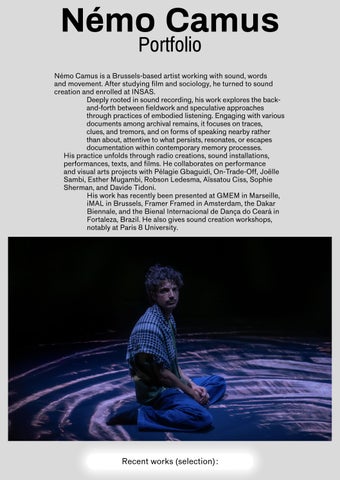
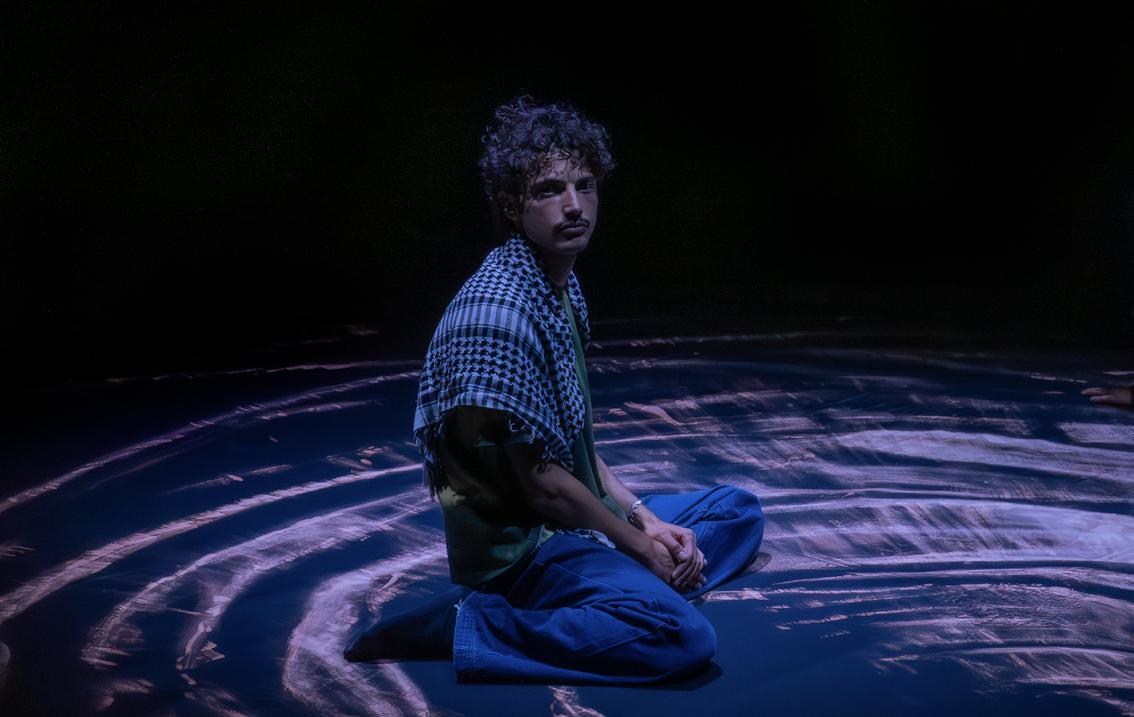
Némo Camus is a Brussels-based artist working with sound, words and movement. After studying film and sociology, he turned to sound creation and enrolled at INSAS.
Deeply rooted in sound recording, his work explores the backand-forth between fieldwork and speculative approaches through practices of embodied listening. Engaging with various documents among archival remains, it focuses on traces, clues, and tremors, and on forms of speaking nearby rather than about, attentive to what persists, resonates, or escapes documentation within contemporary memory processes. His practice unfolds through radio creations, sound installations, performances, texts, and films. He collaborates on performance and visual arts projects with Pélagie Gbaguidi, On-Trade-Off, Joëlle Sambi, Esther Mugambi, Robson Ledesma, Aïssatou Ciss, Sophie Sherman, and Davide Tidoni.
His work has recently been presented at GMEM in Marseille, iMAL in Brussels, Framer Framed in Amsterdam, the Dakar Biennale, and the Bienal Internacional de Dança do Ceará in Fortaleza, Brazil. He also gives sound creation workshops, notably at Paris 8 University.
2026, Stories from Riotinto
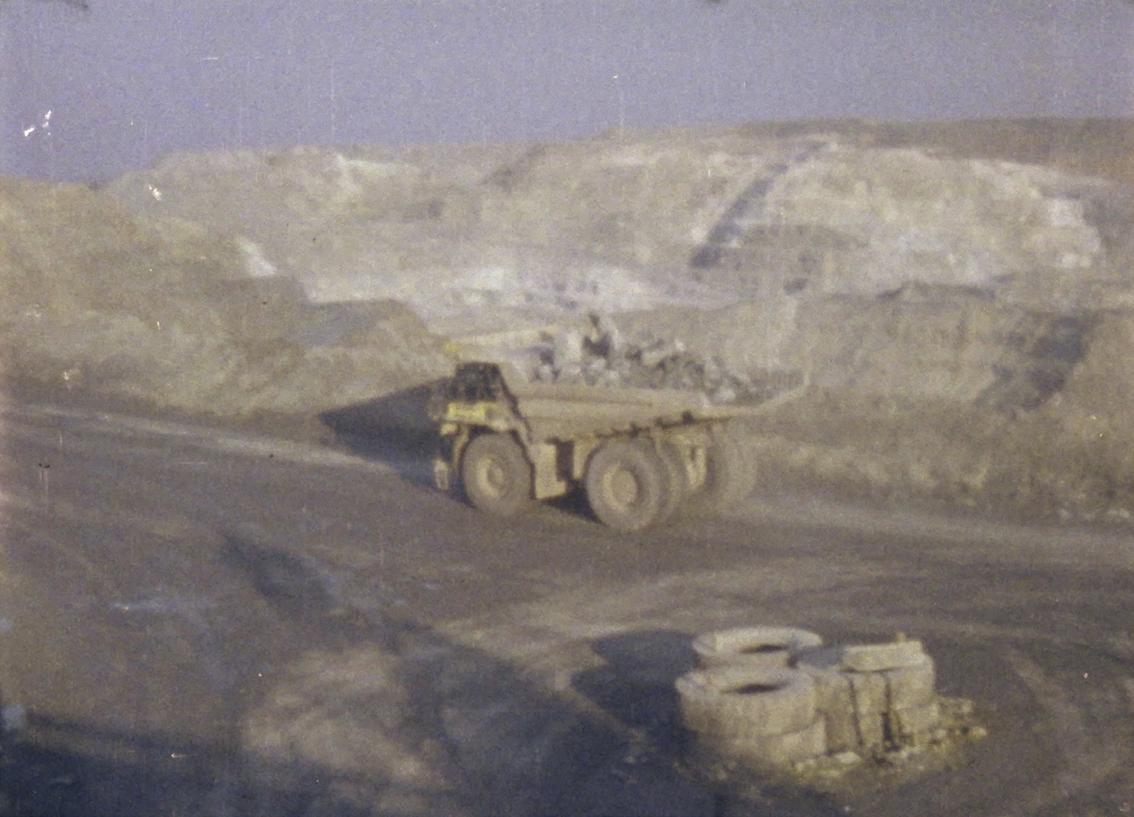
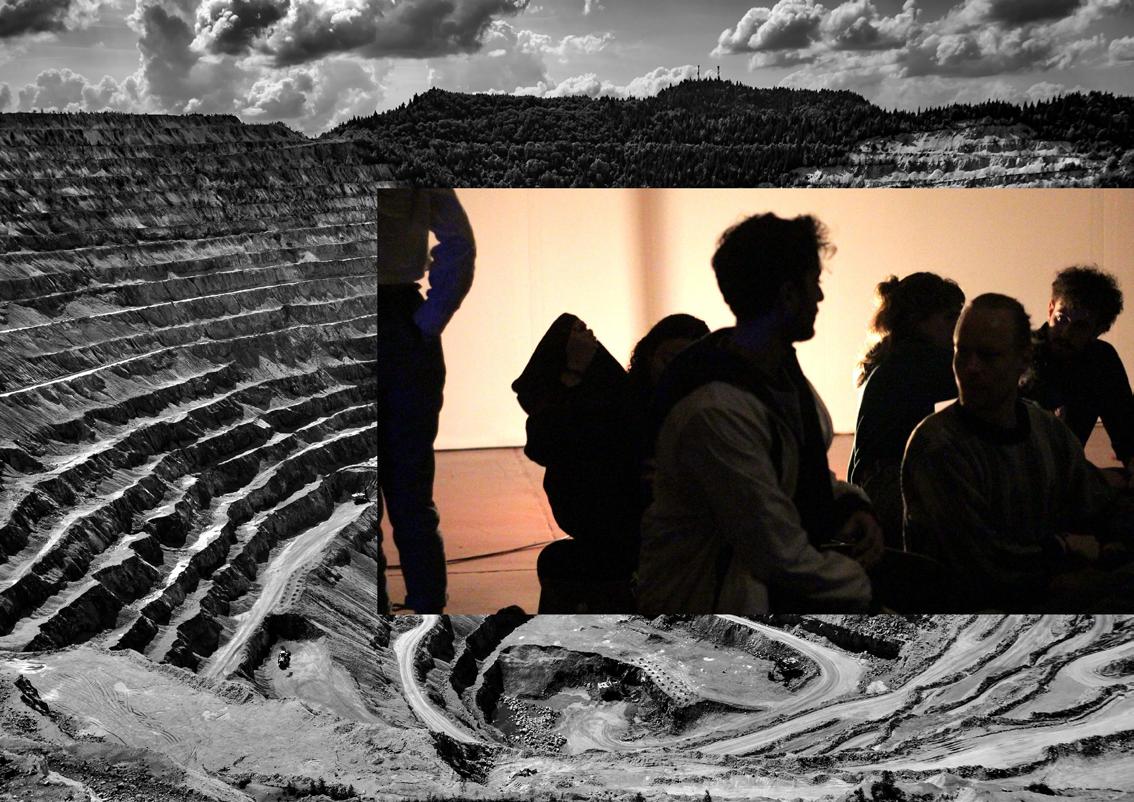
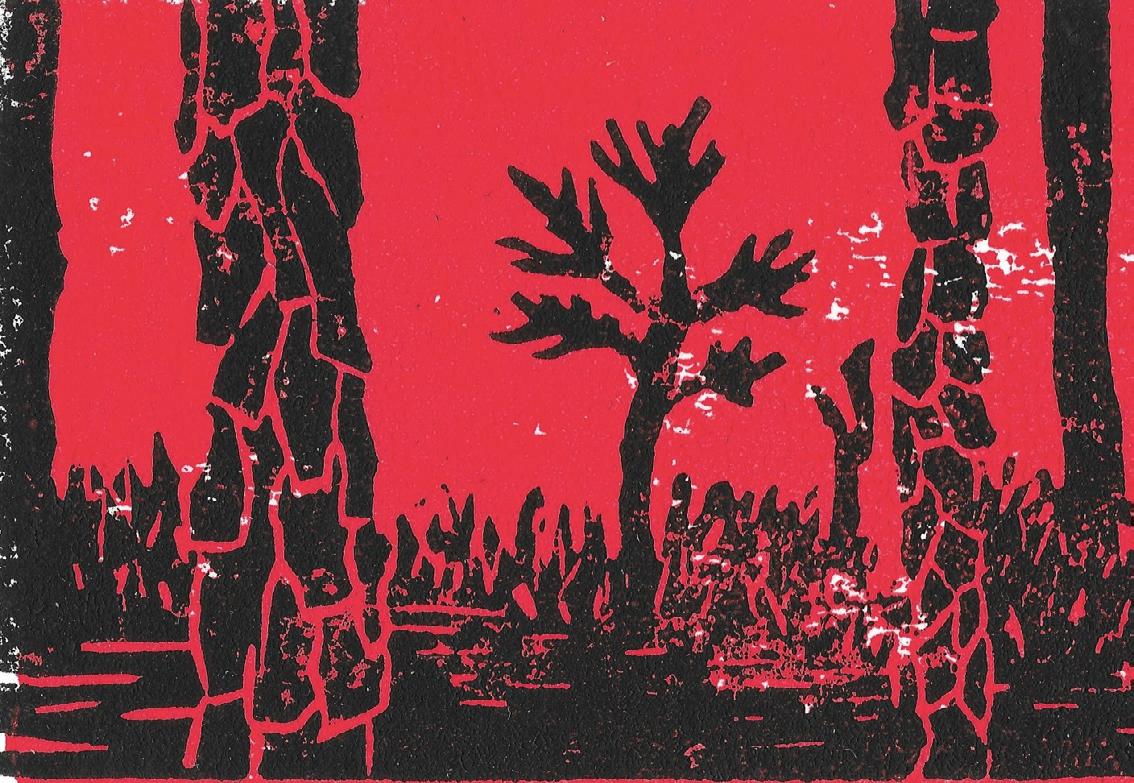
Stories from Riotinto is an experimental documentary shot on Super 8 that explores the mining landscape of Riotinto, in Andalusia, shaped by more than two millennia of exploitation. The film traces the marks left by the Romans, British industrialization, and the contemporary Atalaya Mining company. Behind the site’s spectacular, Mars-like beauty, social and environmental violences emerge, notably the 1889 workers’ massacre.
Between memory, ruin, and tourist revalorization, Stories from Riotinto questions the transformation of the territory and the living world. Through a sensitive visual and sound approach, the film treats the landscape as a living archive of struggles and human and geological metamorphoses.
Research, writing, and direction : Némo Camus
With the support of Scam and Grotta AiR
2026, Investigating MUOS
film installation (in development)
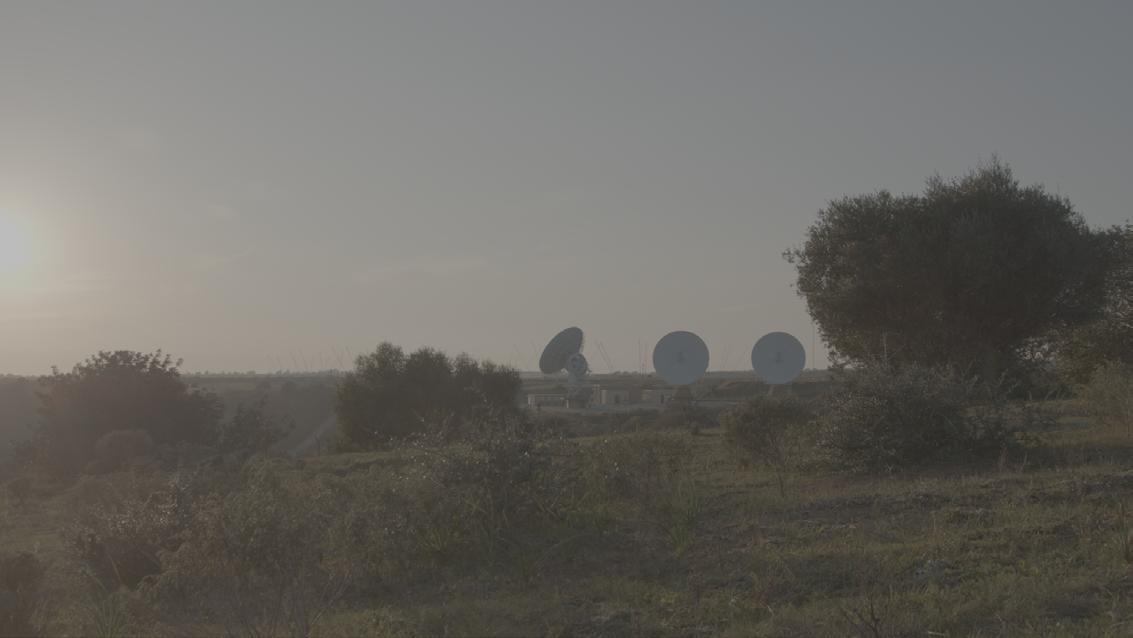
Investigating MUOS is an audio and visual exploration of the MUOS telecommunications structures located at the US Navy military base in Niscemi, Sicily. MUOS (Mobile User Objective System) are geostationary telecommunications satellites that enable US Navy units to communicate with anyone using the same network anywhere on the planet. This system is 10 times faster than the UFO system it replaces. The four ground stations, each serving one of the four active satellites in the MUOS constellation, are located in Australia, the United States, Hawaii, and Italy. This project is a critique of this system from an anti-military perspective and focuses in particular on the impact of the transmission of such waves on the environment, the landscape, and the inhabitants of the nature reserve in which it is located. The work questions the invisible effects of this technology on the territory.
Research, writing, sound and direction : Némo Camus & Davide Tidoni Image : Diego Pascal Panarello
film, 14 min.
Filmed in 16mm, the water was here offers a poetic and sensitive portrait of the Marais Wiels in Brussels, a marsh formed after the water table was broken during excavation work for a real estate project.
This speculative documentary unfolds as a narrative experiment that reflects on the magical character of liminal and urban spaces. It questions the ways in which we see and hear this place, seeking to create a connection between the land and its inhabitants, as if they were a single body. The work explores the relationship between the landscape, the beings that inhabit it, and the subtle magic that permeates it.
awarded by the Best Short film Prize at RISC Festival 2025 (Marseille)
Link : https://vimeo.com/1085831964 password : festival
Direction : Némo Camus & Sophie Sherman / Image : Sophie Sherman
Sound and voice-over text : Némo Camus / Voice-over : Odette Alves
Mixing : Jean-Noël Boissé / Color grading : Jean Minetto / Credits : Clément Hostein
Responsable technique : Diego Certuche
Technical manager : Stefanie Bodien / Production : GSARA
2024, Dona Lourdès
dance/performance, 55’
The sound of an unknown language, the exoticism of colours, a painting like a family photo in a museum in Rio de Janeiro… These are some of the many clues and traces that prompted Némo Camus to imagine a creation somewhere between a homage, a biographical narrative and a poetic reflection on cultural, racial and family heritage, inspired by the story of his Brazilian grandmother: “Dona Lourdès”. Lourdès de Oliveira was born to a black woman of humble origins and an upperclass white man who chose not to acknowledge her. She played the role of Mira in the 1959 film “Orfeu Negro”, forever embodying the image of a multi-ethnic Carioca beauty. With the help of Brazilian performer Robson Ledesma, Camus conducted a series of interviews with her, exploring the tension between classical dance and samba. However, the material eludes us; the gaze becomes blurred. How can we inherit a family history comprised of myths, distance, difference, and admiration? What can we ask of this history, imbued to this day with the ghosts of Brazilian culture fabricated in Europe?
Concept and text : Némo Camus / Collaboration and performance : Robson Ledesma
Production : atelier 210 / Co-production : Charleroi danse, atelier 210, Ateliers de Paris / Support : La Bellone, kunstencentrum BUDA, Maison des Cultures de Saint-Gilles, Pianofabriek, Théâtre Varia, Center Wallonie-Bruxelles, Montévidéo
2023, Matière (noir, blanc, bleu)
sound performance, 50’
Designed as a nocturnal immersion combining field recordings, testimonials, sound creation, and live readings, Matière (noir, blanc, bleu) seeks to shake up our ambiguities by giving substance to what is invisible to us: our connected lives depend on the labor of men and women who extract the minerals that make up our digital tools.
Némo Camus focuses here on mining in the Democratic Republic of Congo, known for its rich deposits of metals and rare earths—copper, tin, cassiterite, cobalt, and coltan, to which lithium, nicknamed white gold, has now been added. The extraction of this metal, which is essential for the manufacture of electric batteries, contributes to the devastation of the land and the exploitation of bodies—particularly in Manono, the capital of Tanganyika province, where one of the world’s largest lithium reserves is located.
Matière (noir, blanc, bleu) is also the site of a reflective exploration of the documentary gesture and the implications of an approach taken from a white, Western position: who “takes” sounds, “collects” stories? Is there such a thing as sound extractivism? And if so, how can it be thwarted?
Conception, composition and recordings : Némo Camus / Writing & live readings : Joëlle Sambi, Esther Mugambi, Aïssatou Ciss, Pamela Tulizo, Maya Mihindou / Set design : Justine Jaladis
Mixing & spatialization : Éric Morel / Logistics, transport RDC : Emmanuel Longo Masengo & Ilunga Wa Ngoy Ilus
Production : Le Bruit et la fureur & deuxtempstroismouvements / Co-production : Écolo ; Bureau International Jeunesse ; iMAL ; GMEM / Supporters : Ateliers Picha, la Bellone, the Institute for Colonial Culture, Phonurgia Nova
2023, Honneurs au gibier
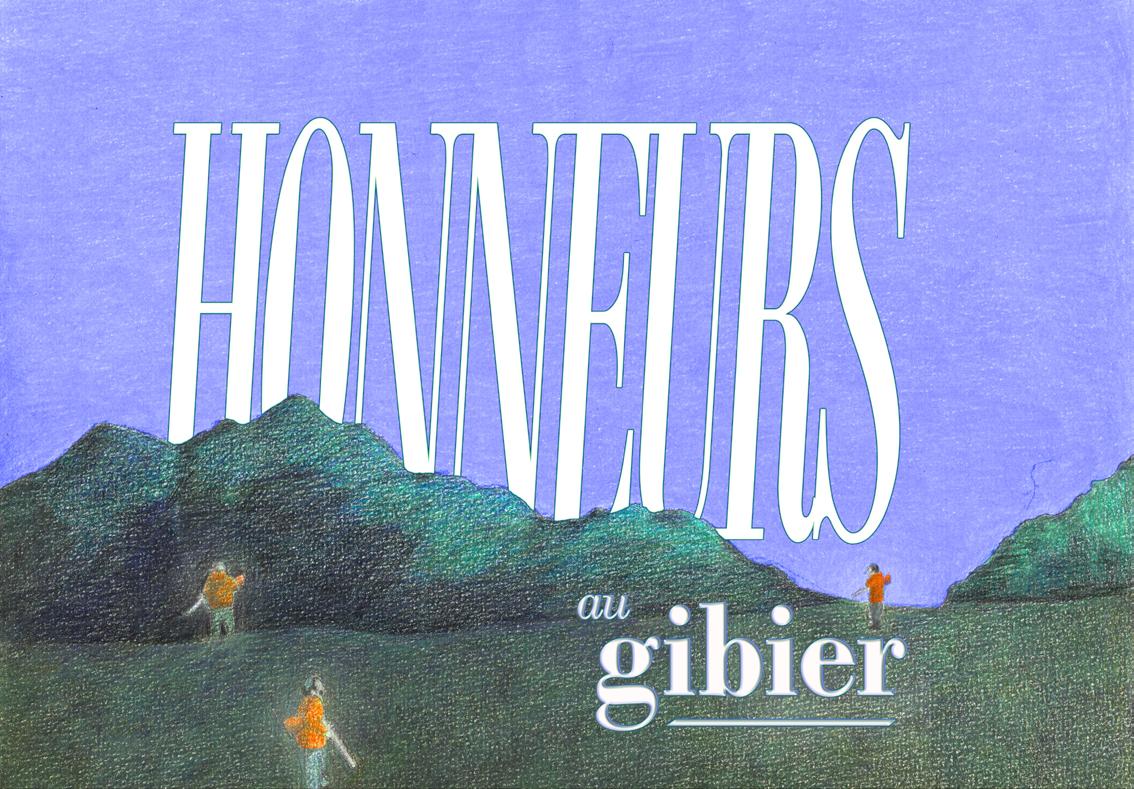
When the first corpse of a wild boar killed by the African Swine Fever virus was found on Belgian soil in 2018, life changed for Guy and the hunters of Breux. This small French village of 300 inhabitants, close to the Belgian border, is part of the “white zone”. In this territory, the French state orders local hunters to eradicate the wild boar population to limit the risk of the virus spreading.
“We’ve gone from hunters to killers,” Guy laments.
From the story of his nightmares to the unprecedented stalking of wild boar, Honneurs au gibier unfolds a documentary framework that takes poetic and aural detours into notions of borders, animality, predation and death…
Direction, sound recording, writing & editing : Némo Camus / With the voice of Janick Pierard
Production : deux temps trois mouvements / Supporters : Atelier de Création Sonore et Radiophonique, le Corridor, Fonds d’Aide à la Création Radiophonique de la Fédération Wallonie-Bruxelles, Ministère de la Culture français
awarded by the Best Documentary Prize at Brussels Podcast Festival 2023
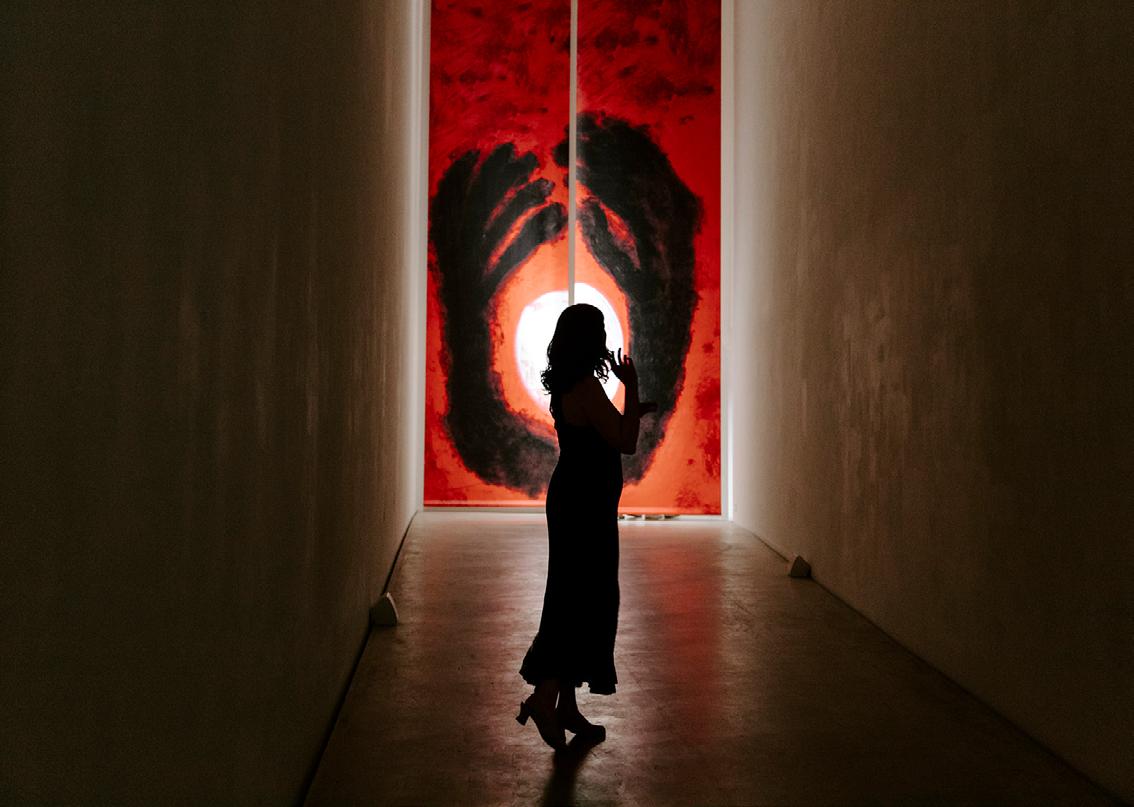
We are a new sun is a collaboration with visual artist Pélagie Gbaguidi for the OnTrade-Off collective’s Charging Myths exhibition at the z33 museum in Hasselt. This eponymous poem, written by Gbaguidi, then translated and recorded in six languages (French, English, Flemish, Arabic, Lingala, Mandarin), was then set to music and space by Némo Camus in the form of a 5-channel sound installation. It accompanies Gbaguidi’s pictorial work Hunger and addresses the issue of the toxicity of mining.
The Charging Myths’ exhibition was presented at Z33, Hassaelt (BE) and at Framer Framed, Amsterdam (NL).
radio piece, 15’
Somewhere on Basse Terre are the sounds of the agricultural labor of the men and women who supply bananas to Western markets.
From the 1970s to the mid-1990s, chlordecone, a pesticide responsible for the ferocious poisoning of the soil, water and bodies of Guadeloupe and Martinique, was spread here. From the nocturnal polyphony of the hylodes frogs suddenly emerges a call to emerge from the great night: Difé, difé limanité ki la, difé!
Illustration : Lélia Gruber / Self-production Composed for the 8th issue of Jef Klak magazine, “Terre de feu”. Selected in the Sound
https://www.jefklak.org/dife/
Creation category of the 2021 Toulouse Environmental Film Festival.
2020, Histoire de ma cité
radio piece, 51’
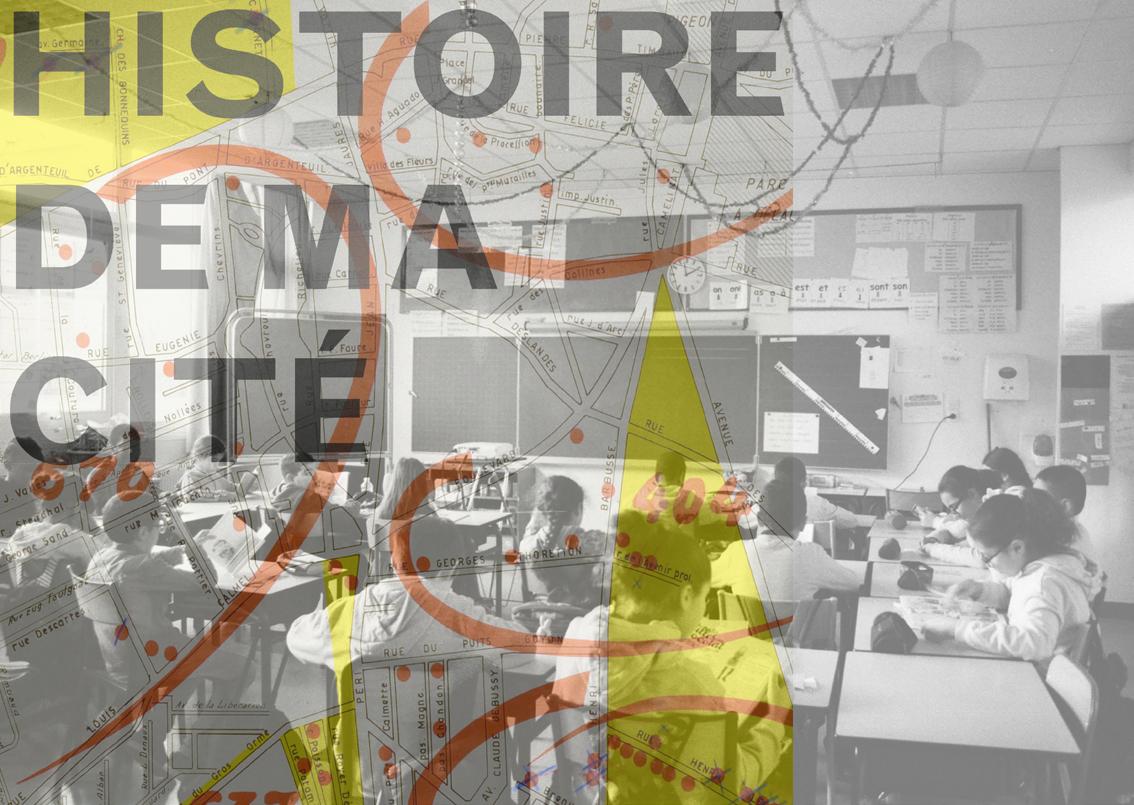
55 years and 1.7 km separate the childhood in Gennevilliers of Salah, Ali, Mohamed and Zohra, who grew up in the transit housing estate of Le Port, from that of Yousra, Hugo and Sana, who are now growing up in Le Luth.
By looking at each other, these two generations evoke childhood and its enchantments, sketching out the collective memory of this piece of suburbia marked by French colonial history.
Based on a collection of texts entitled “Vivre en cité de transit”, written in 1983 by pupils from the CM2 class at the Ecole du Port, Esther and Némo went to meet pupils from the Ecole Diderot in the Cité du Luth in Gennevilliers today.
This is how the play unfolds: children, most of them from an immigrant background that goes beyond the Maghreb, look at and speak about the transit housing estates built 50 years ago, just a few hundred meters from the HLMs where they grew up.
Direction, sound recording & editing : Esther Laurent-Baroux & Némo Camus Mixing : Martin Fauret / Production : DUUU* Radio
https://duuuradio.fr/archive/histoire-de-ma-cite
awarded at the Longueur d’ondes Festival 2020 (Brest)