Chapter 1
Threatening the Muscogee World
Before American expansion, Muscogee towns organized life through river systems, seasonal cycles, and relationships among humans, animals, and water. European traders and later American officials increasingly challenged this system through trade dependency, treaties, and the introduction of private property. The chapter opens with my visit to Horseshoe Bend with Moore cousins descended from a Muscogee ancestor and a Scots trader, where searching for graves and allotments initiates my investigation into how our family became tied to this land.
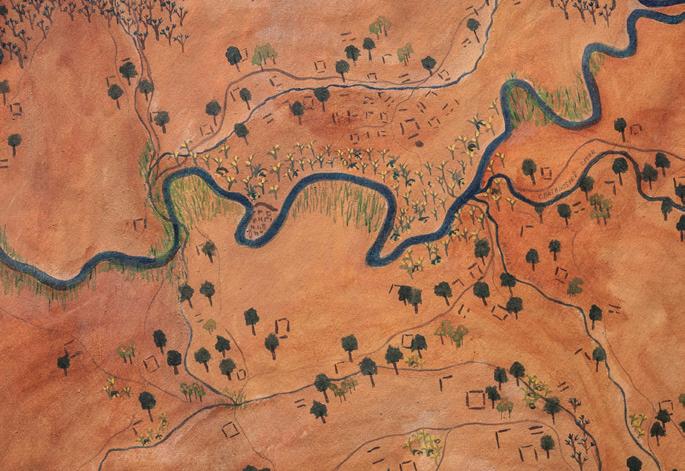
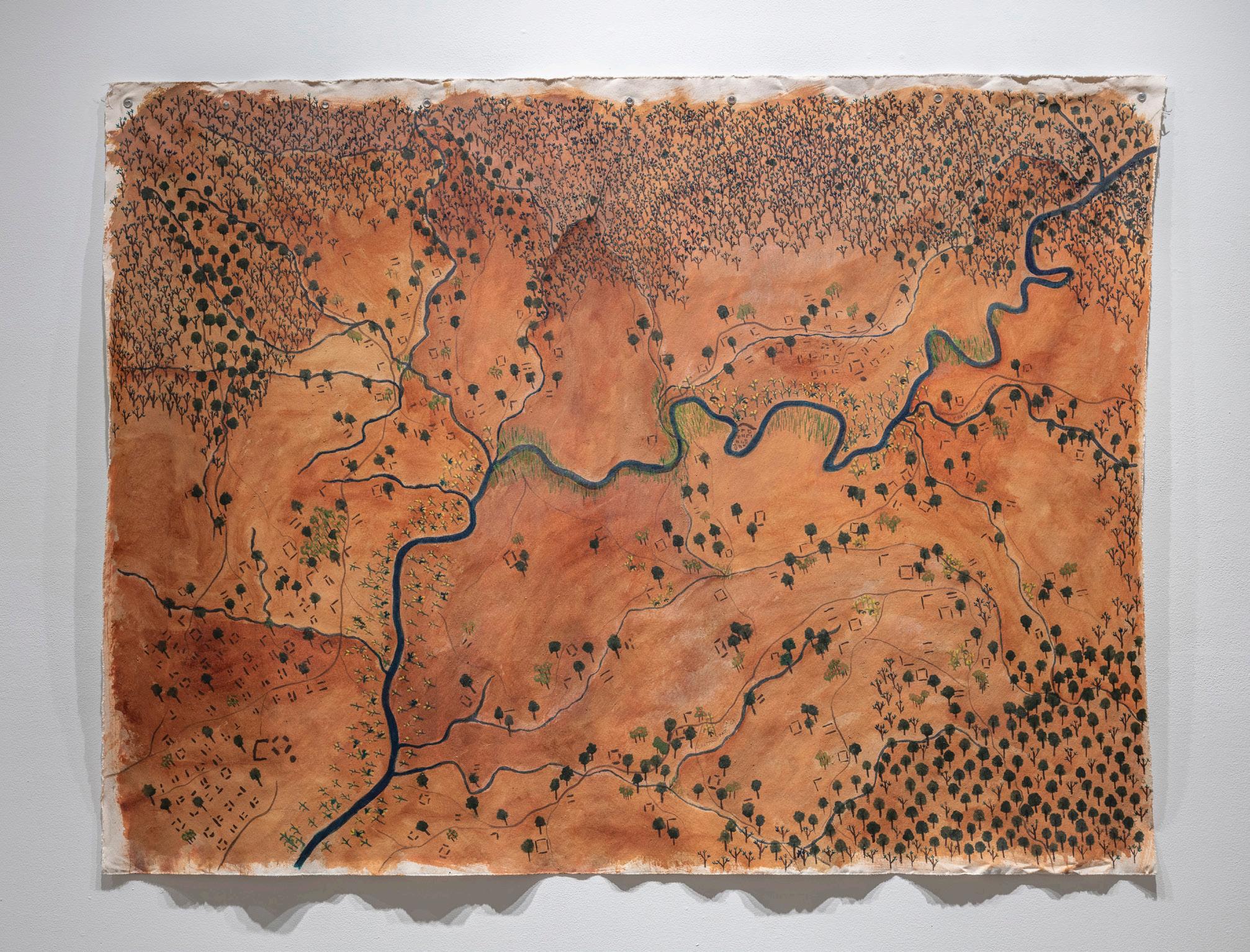
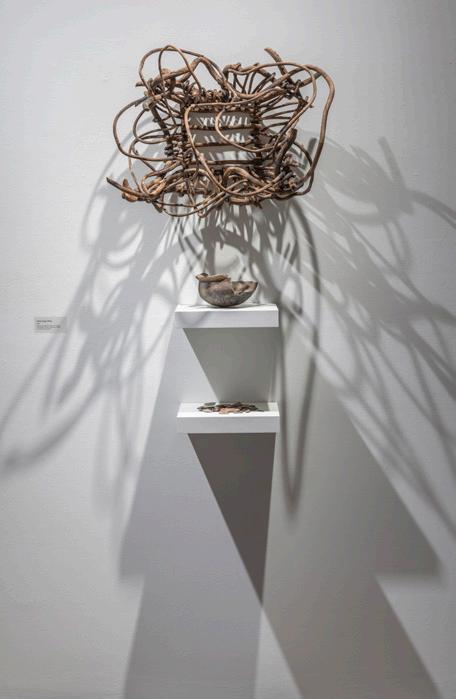
In the studio I respond to this history through works made with clay gathered near Moore’s Creek. A map painting traces Muscogee towns and communal land use along the Tallapoosa River, while a sculpture of a kudzu basket casts shadows across the archaeological landscape, suggesting how colonial narratives obscure earlier Indigenous presence.
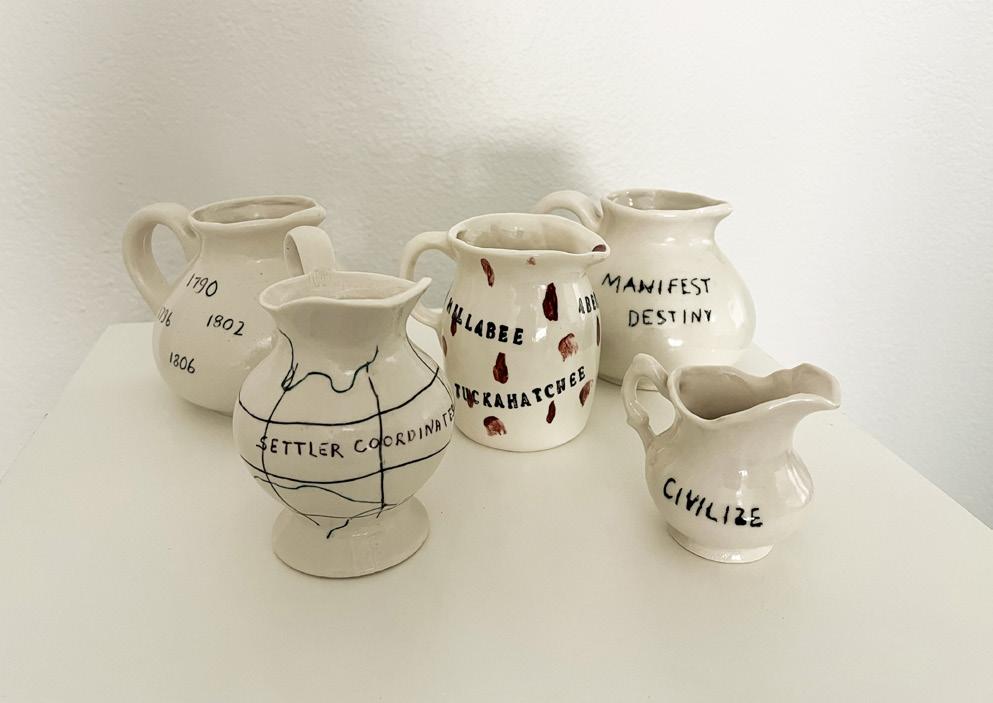
De Jure Shatter, 2025.
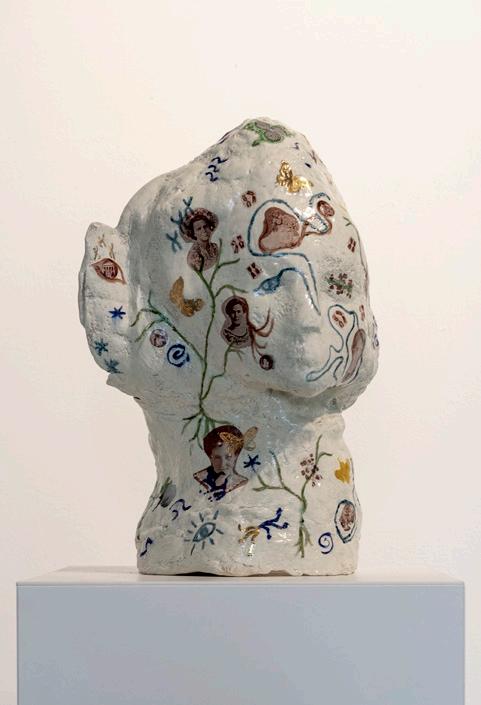
Roots (The Matriarchy), 2019. What Kudzu Hides, 2025.
Gridded, 2025.
Chapter 2 Grid Rupture
The Treaty of Fort Jackson forced the Muscogee to cede more than twenty-two million acres to the United States, after which federal surveyors imposed the rectangular grid of townships and sections. This survey system converted communal land into saleable property, enabling the rapid expansion of plantation agriculture.
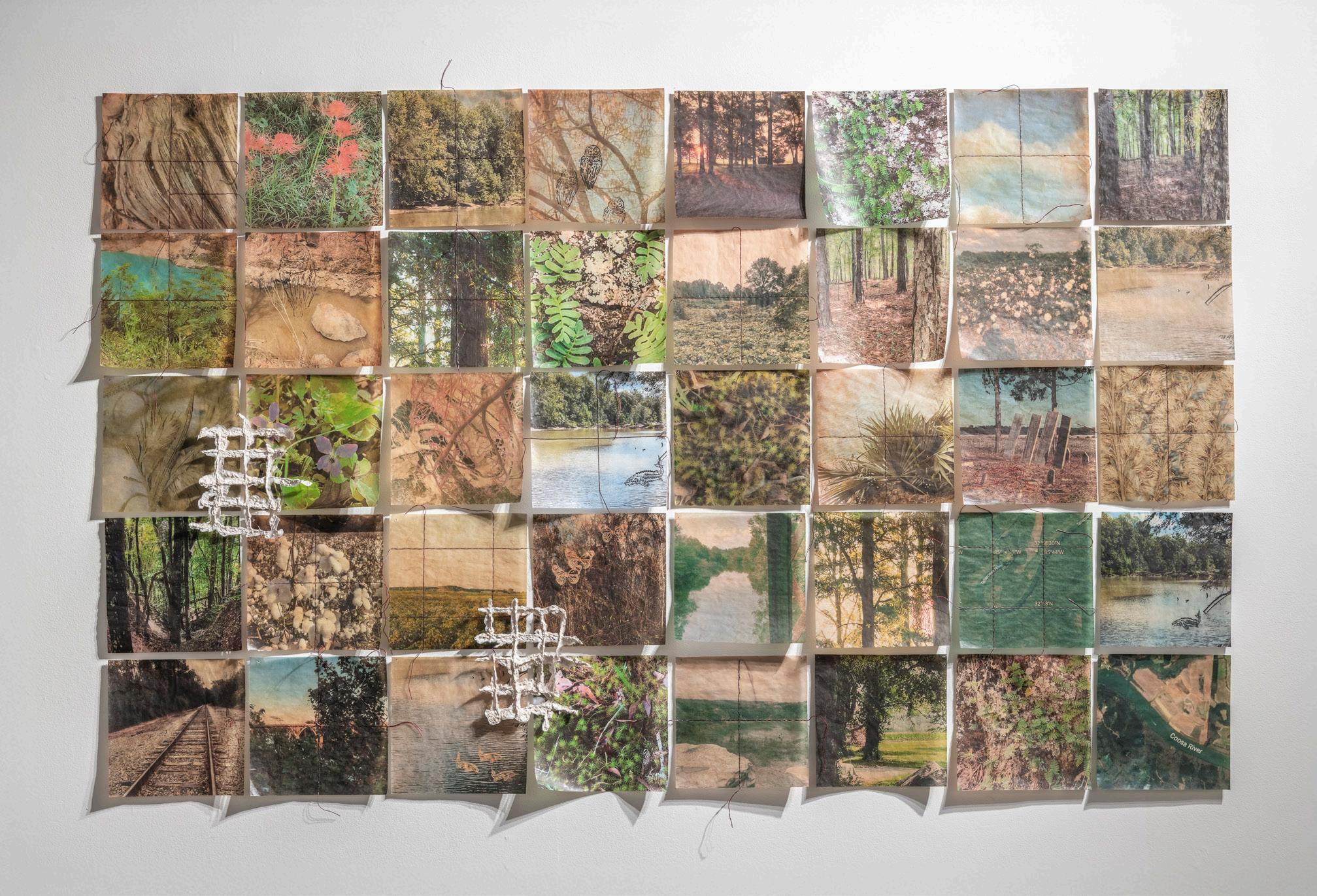
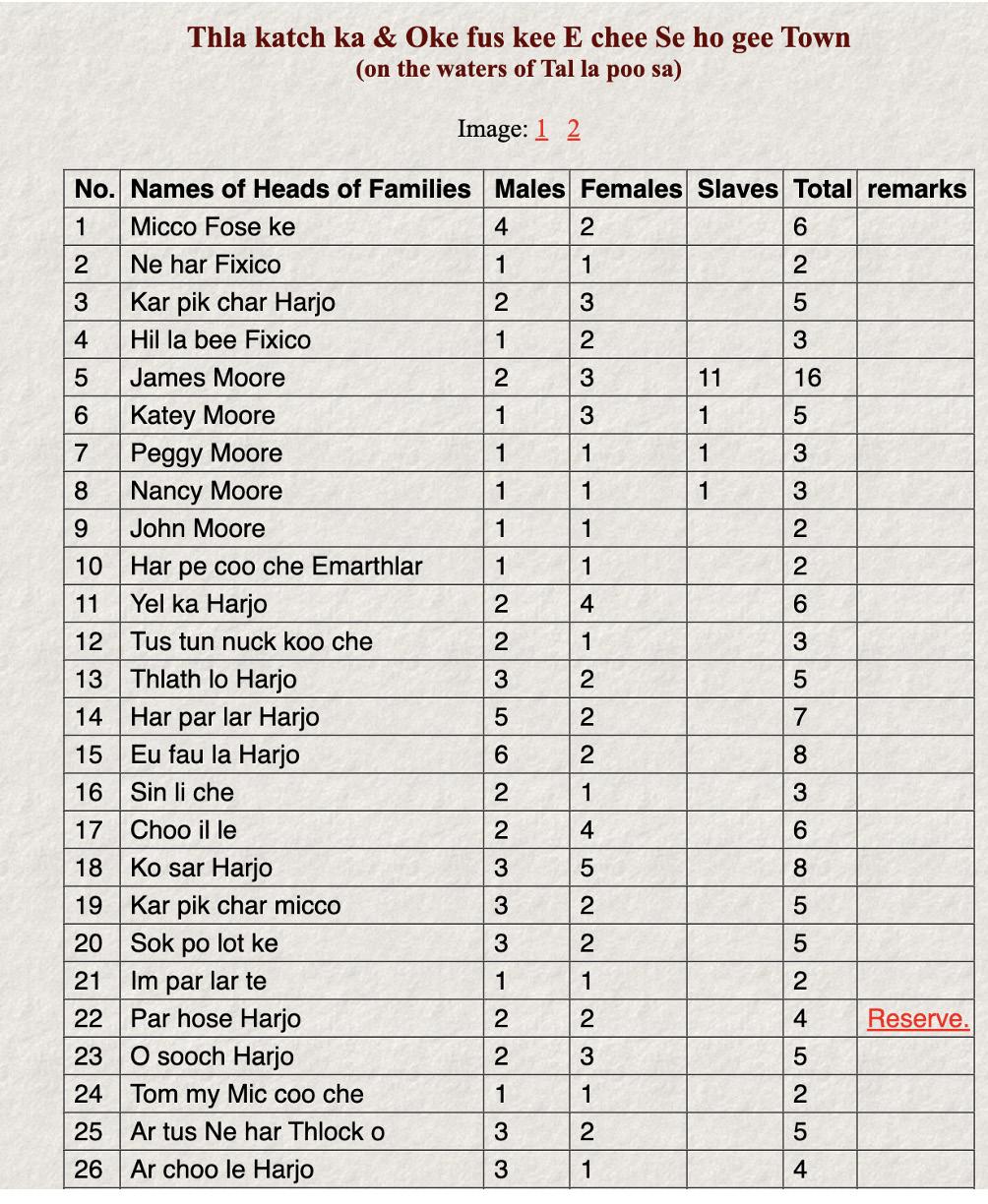
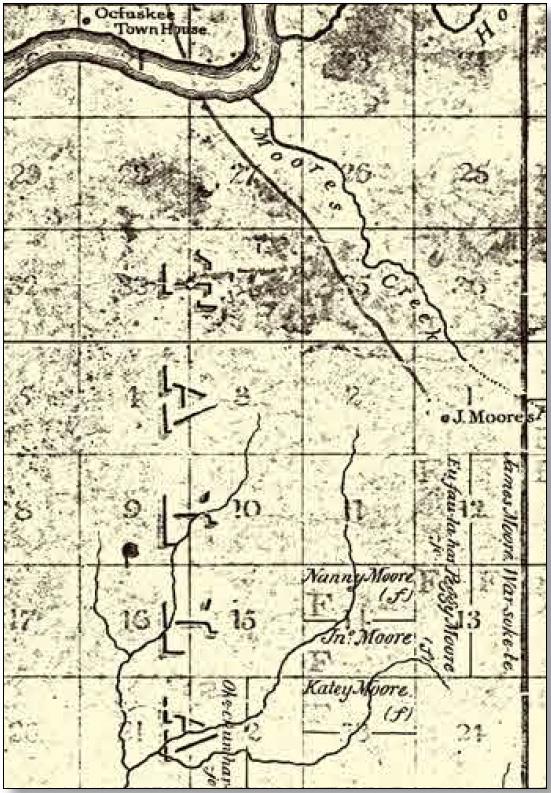
Encountering our ancestors’ names in the census of Creek towns and the allotment records reveals how this transformation entered my own family history. The chapter opens with the visual language of the survey itself and closes with my beeswax-infused photographic works that overlay family landscapes with the grid, exposing the tension between geometric order and the organic terrain of the river valley.
2b
2c
Moore Census, archival document.
Moore Family Allotments, archival document.
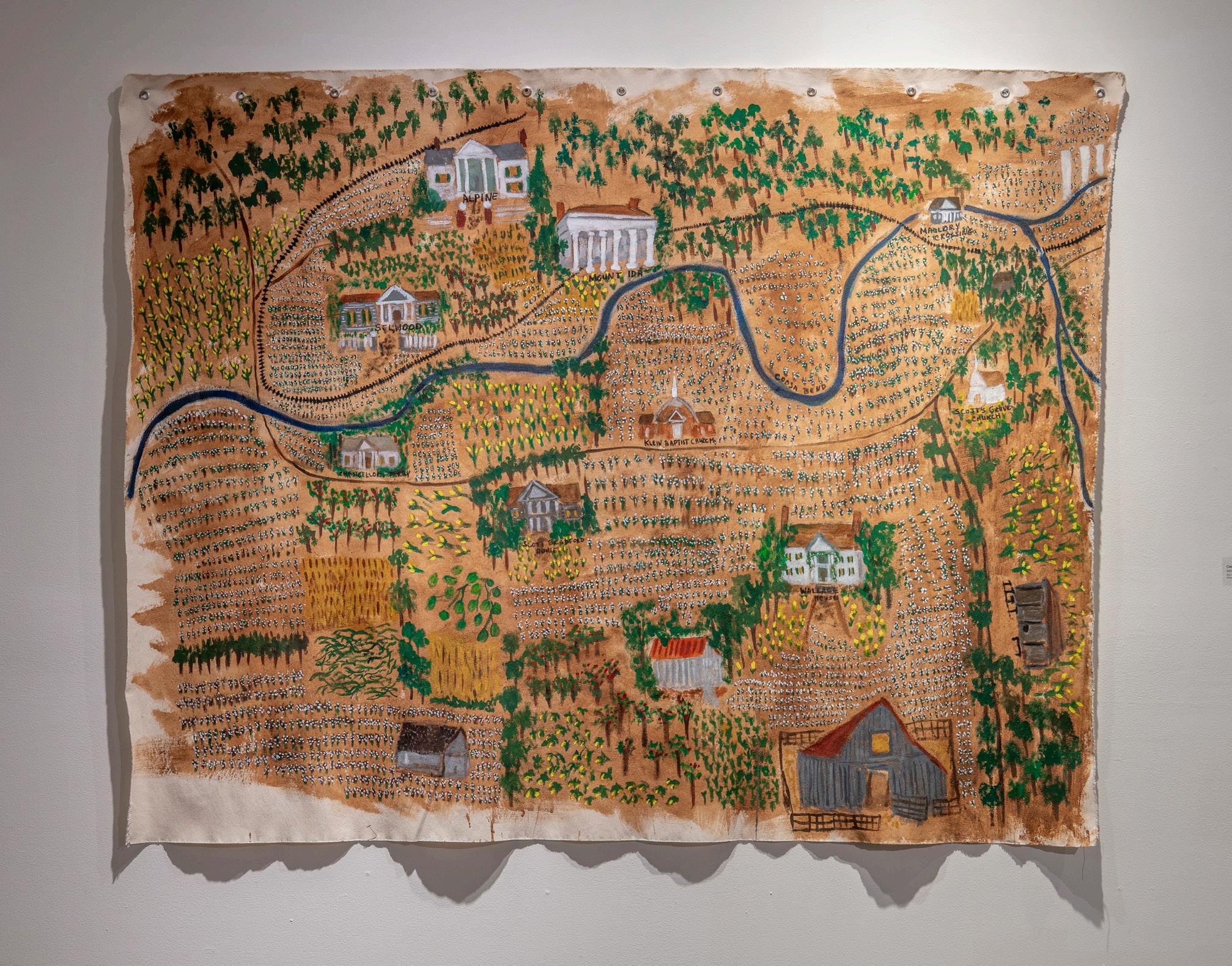
Coosa Bend, 2021.
Chapter 3
Coosa Bend & Embodied Inheritance
Planter families along the Coosa River consolidated land and power through intermarriage and inheritance, embedding slavery and cotton production within both regional economics and domestic life. My family entered this network through marriage alliances that tied the Wallace House to neighboring plantations.
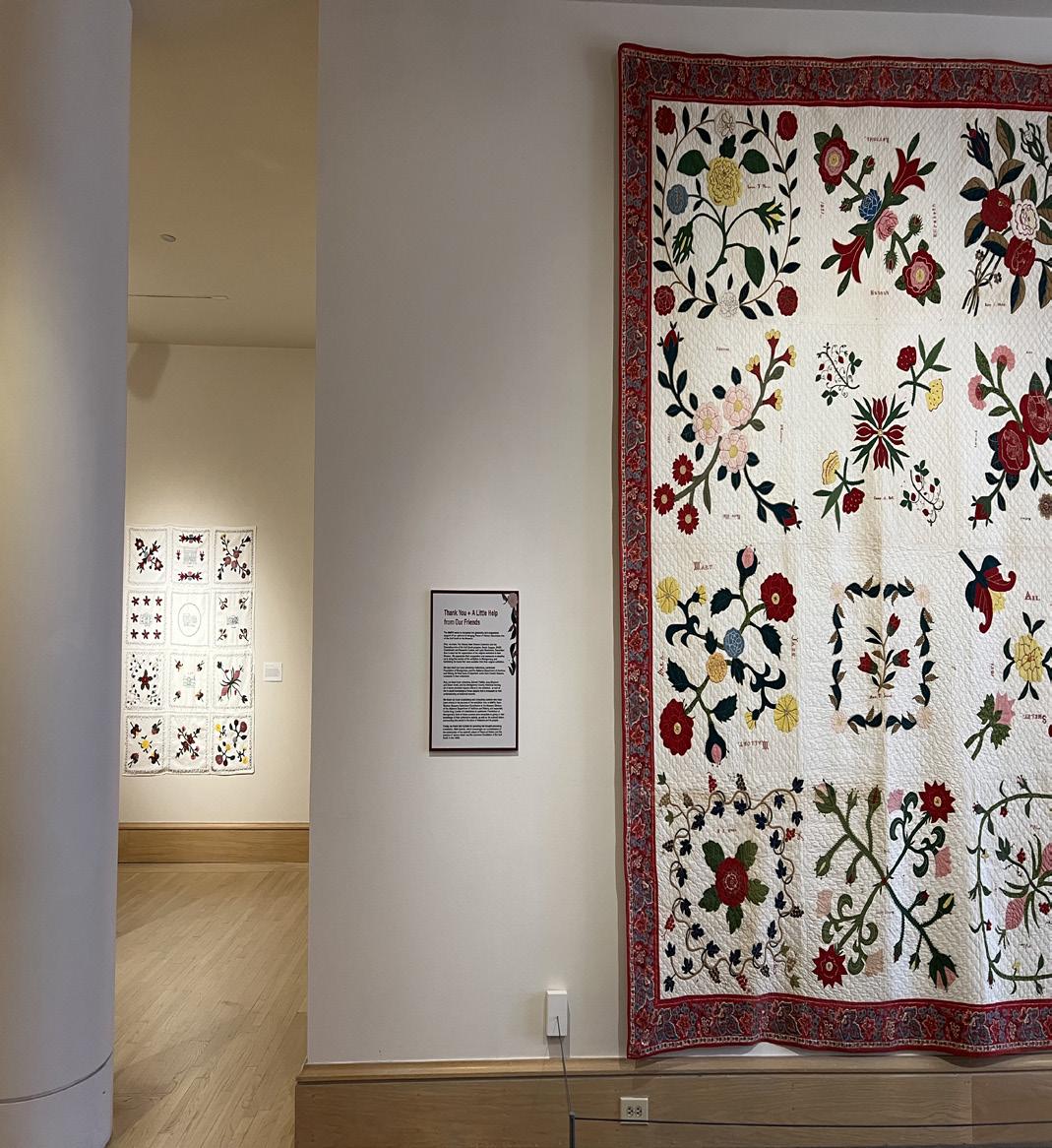
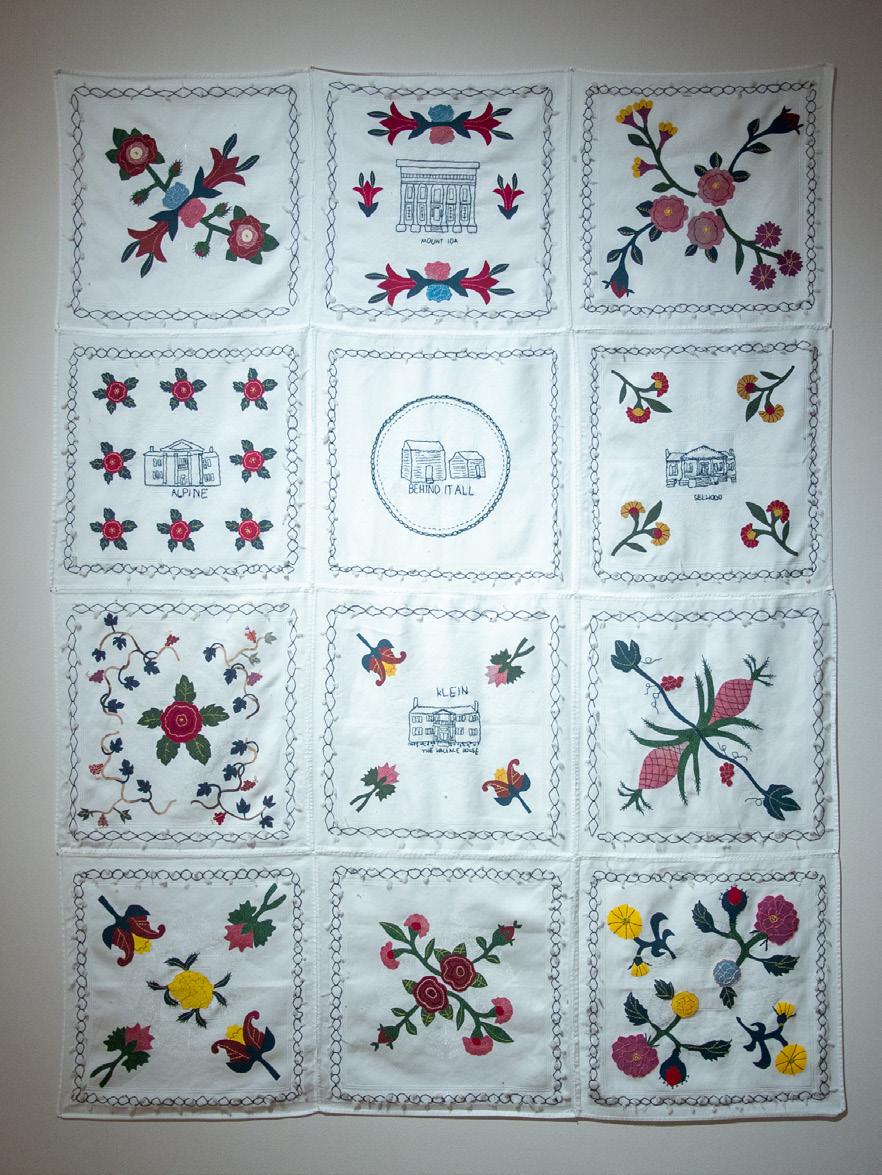
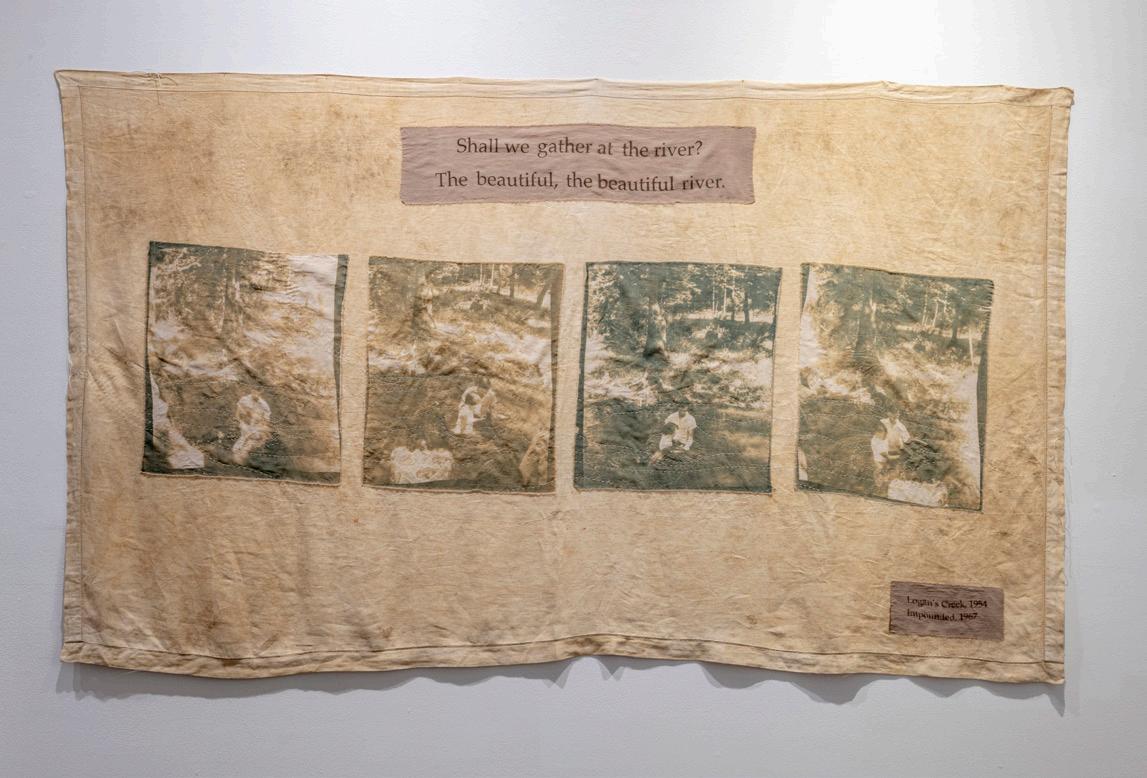
Childhood memories of summers at the Wallace House, baptism in Logan’s Creek and arrowheads found after rain, anchor the chapter in lived experience. Artworks reinterpret these memories: a soil-based map of the Coosa Bend overlays the plantation network onto the land itself, while a reworked version of the historic Mount Ida quilt reveals the enslaved labor underlying the domestic craft traditions of planter women.
Mt. Ida Quilt with Mt. Ida Reconsidered, 2022.
Mount Ida Reconsidered, 2021.
3b
3c
Chapter 3 Coosa Bend & Embodied Inheritance
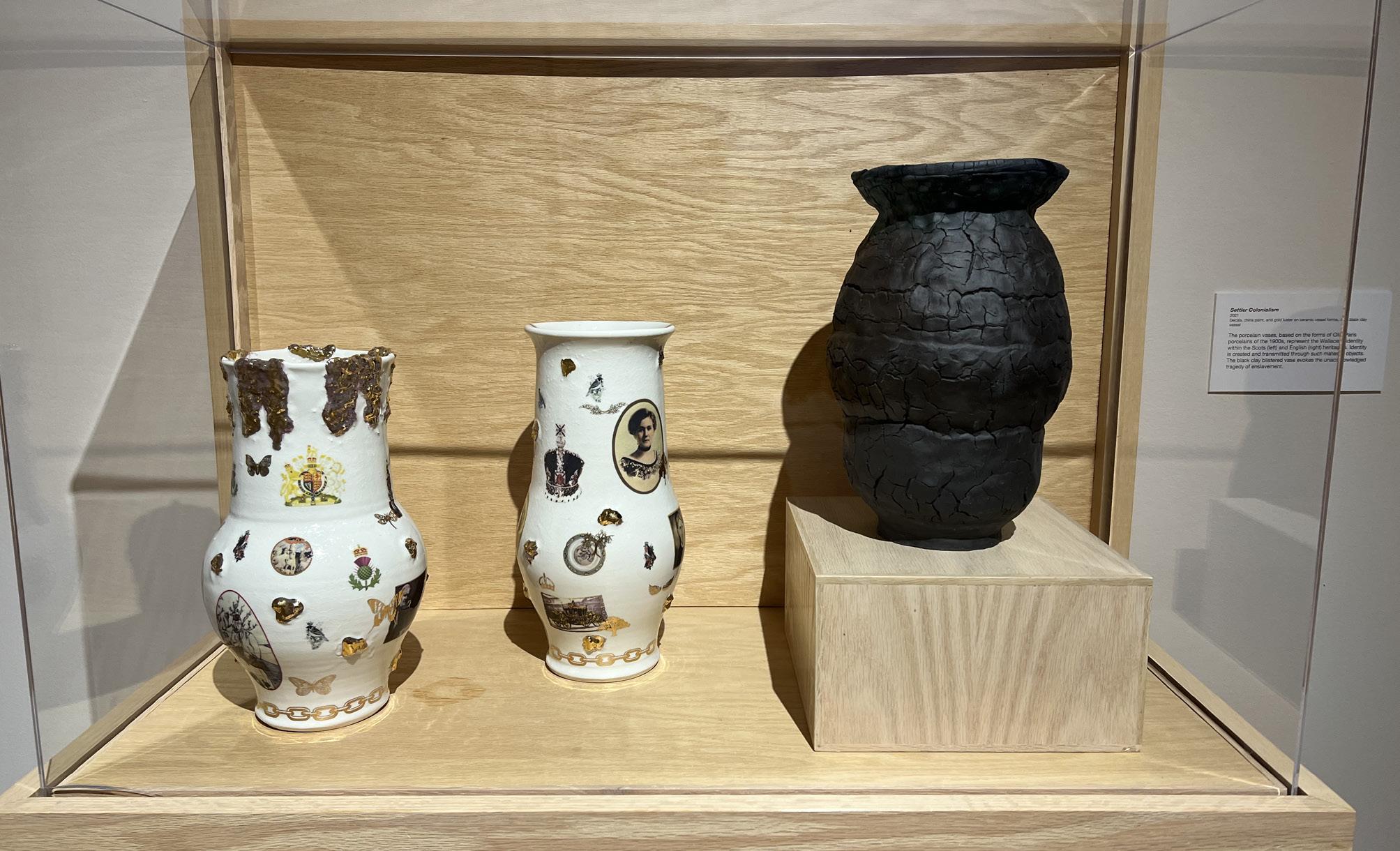
Settler Colonialism, 2021.
Logan’s Creek, 1954, 2025.
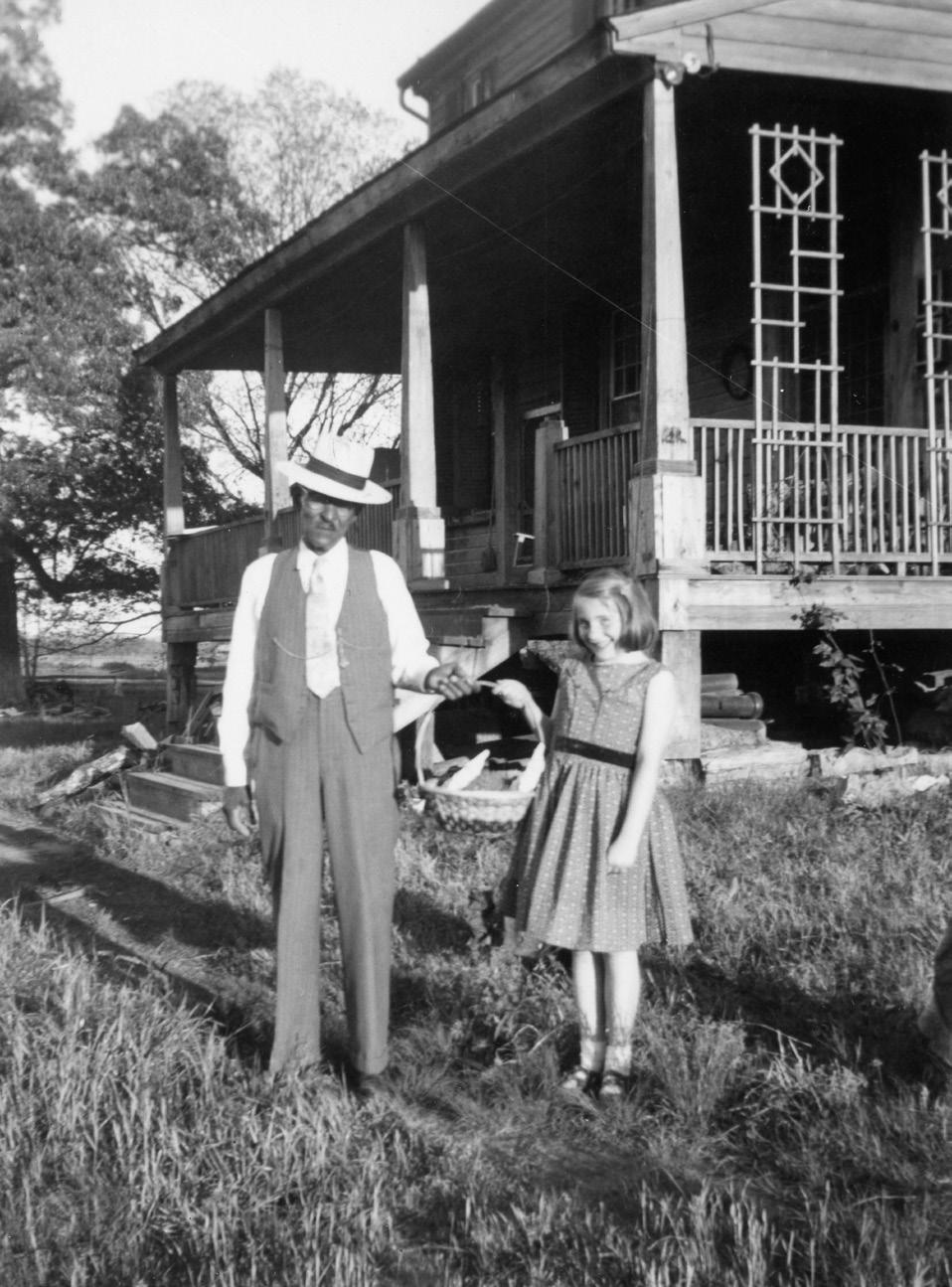
John Mallory and Nell Wallace Harrell, family photograph, ca. 1941.
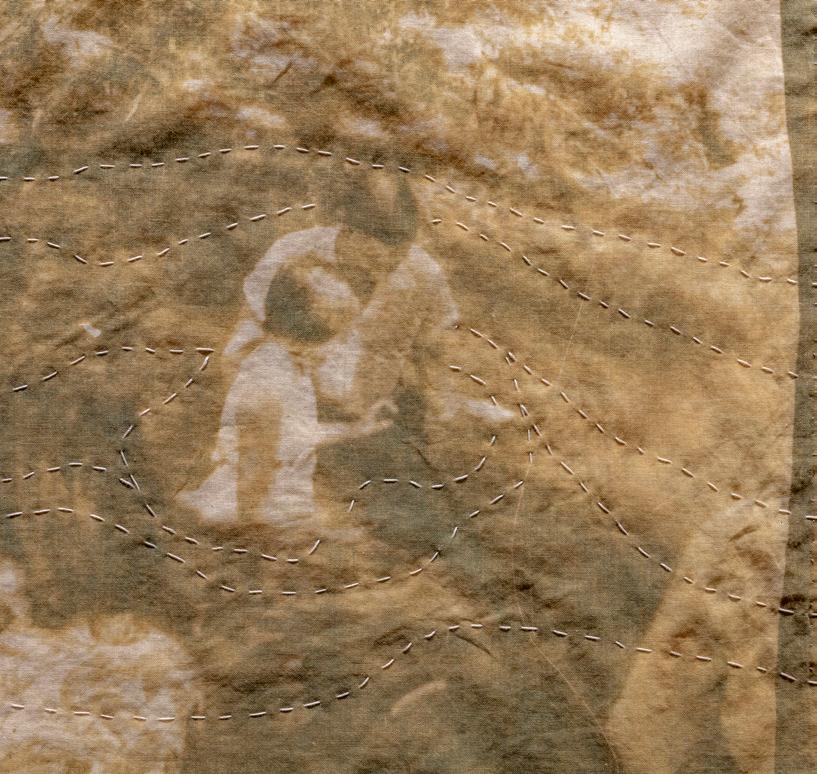
Logan’s Creek, 1954, detail, 2025.
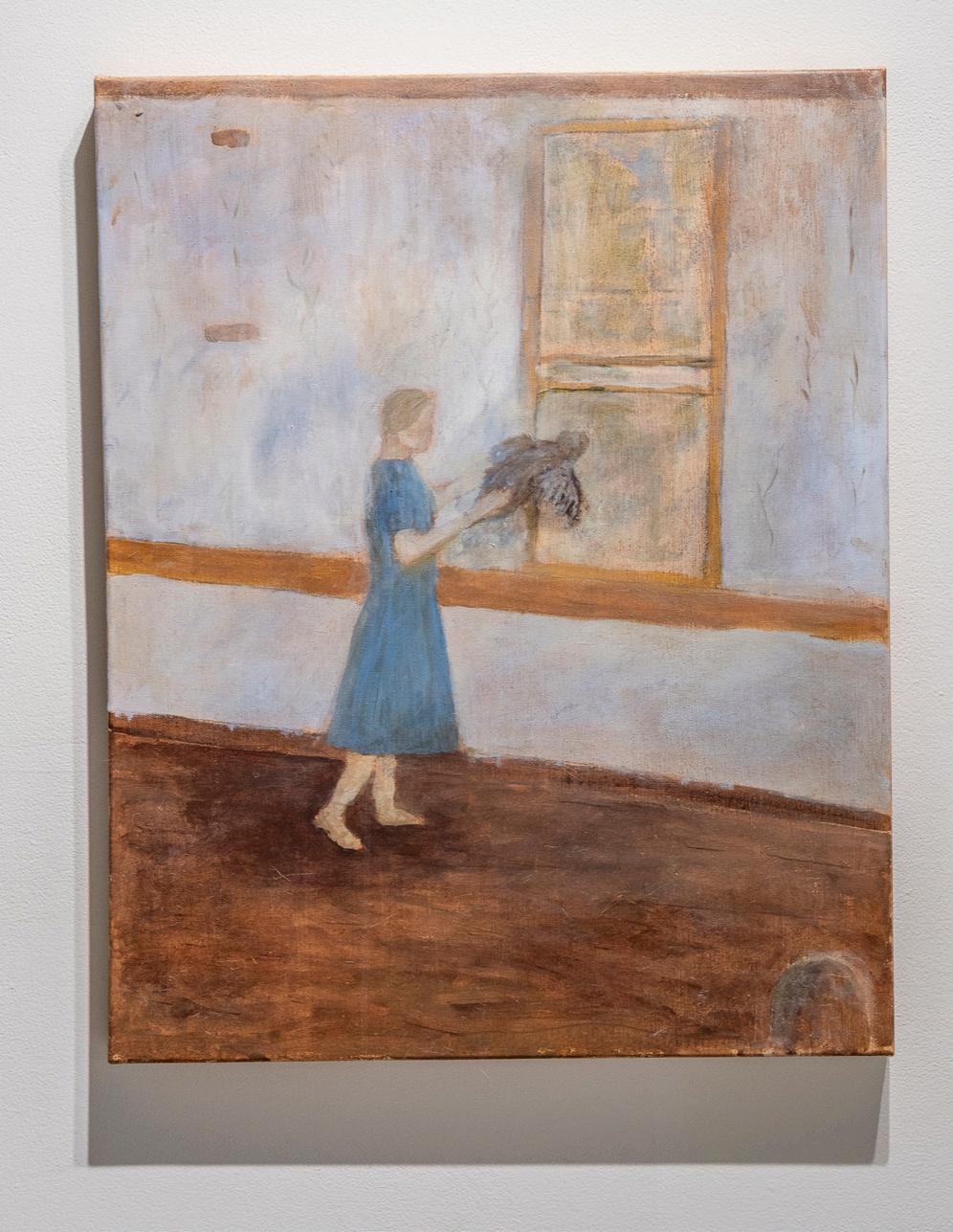
Matriarchial Lineage: Grandmother and the Owl, 2025.
3e
3g
3h 3f
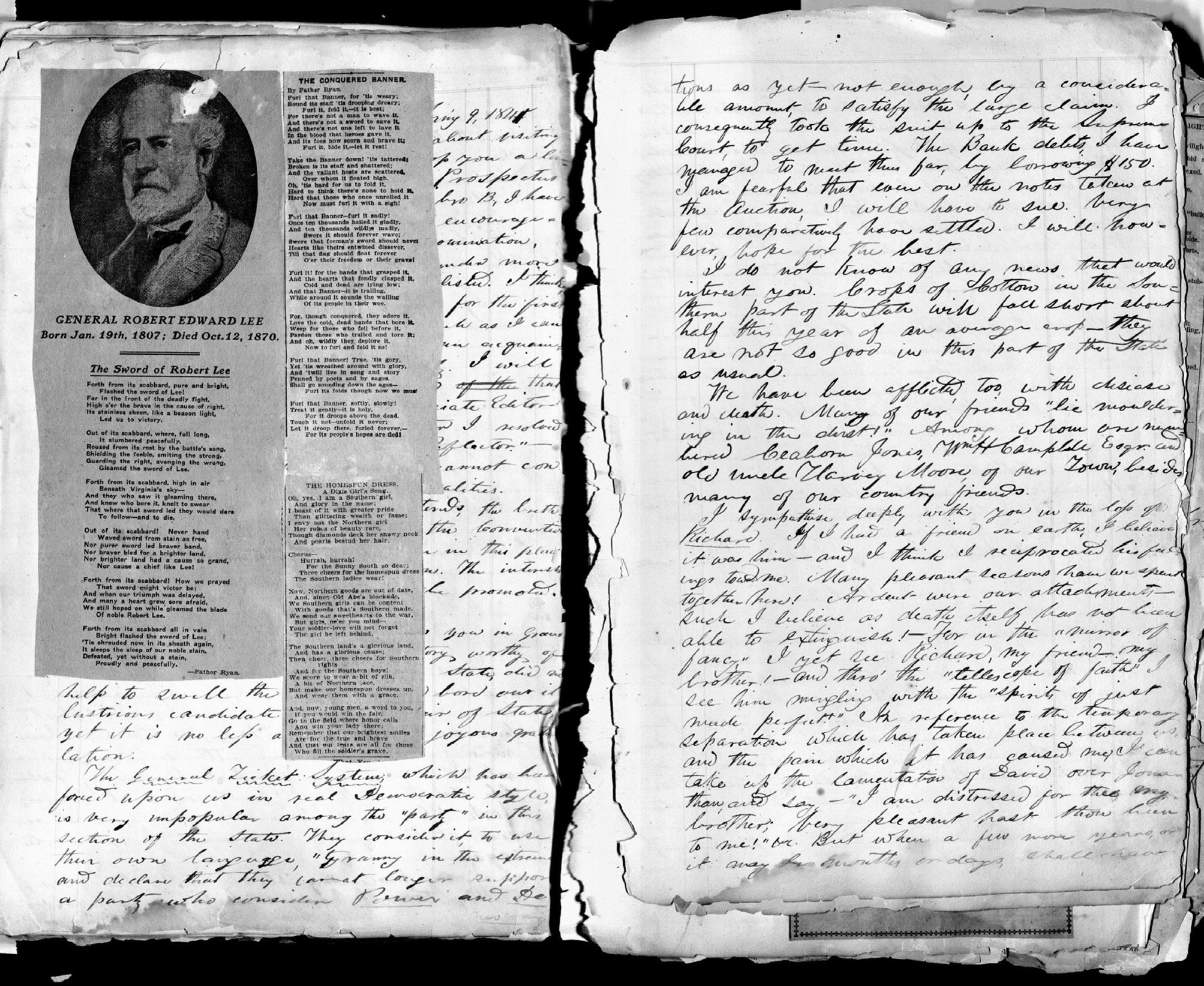
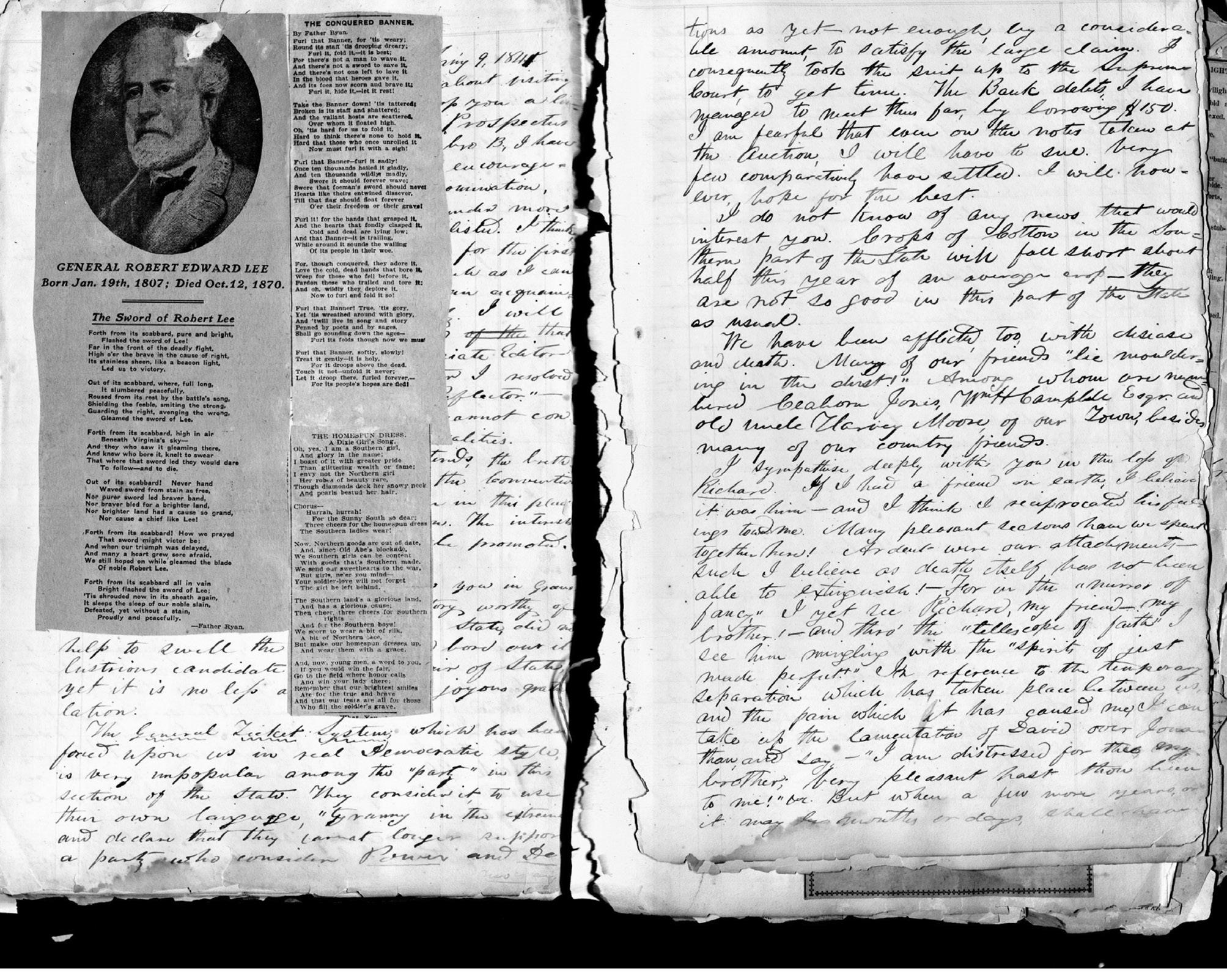
Page from My Great-grandmother’s Scrapbook, archival.
Chapter 4
Religion and Lost Cause Memory
Southern Protestant theology and Confederate ideology fused to create a moral framework that justified slavery and preserved the plantation order after defeat. My ancestor Samuel Henderson, a minister and Baptist newspaper editor, promoted this worldview through sermons and publications supporting the Confederacy.
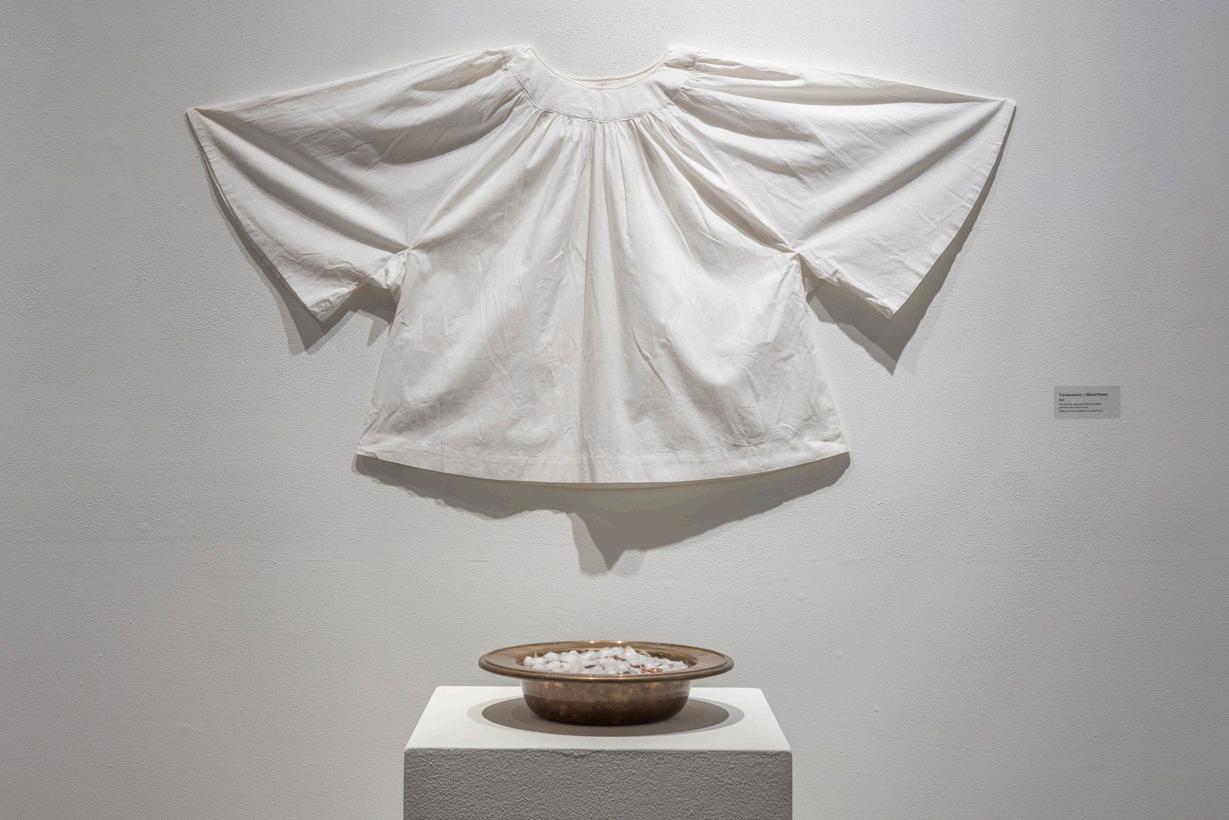
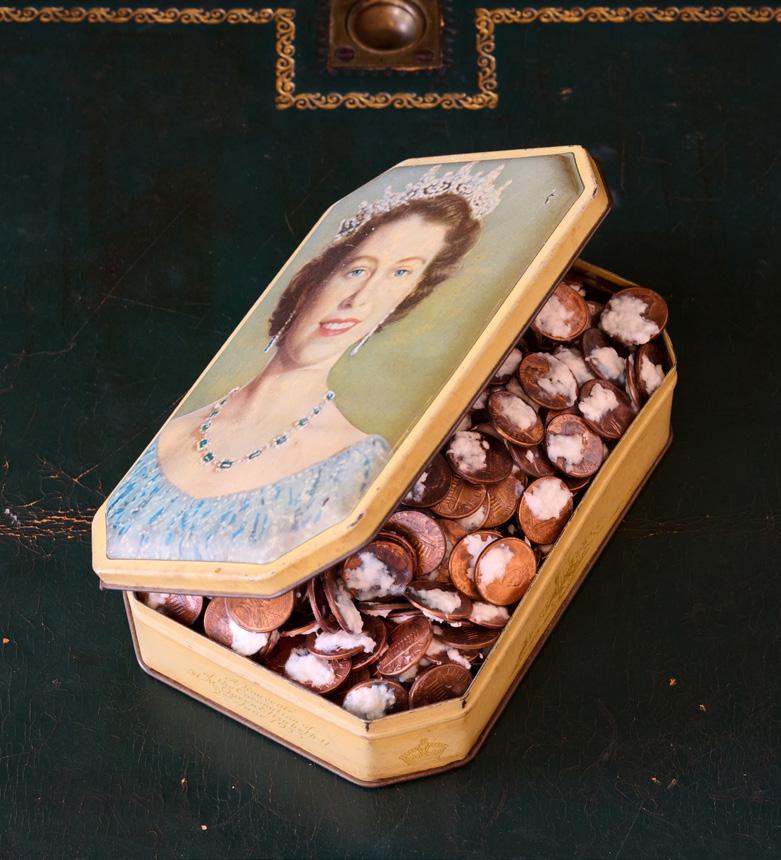
Family memory absorbed these ideas through stories, rituals, and artifacts. My great-grandmother’s scrapbook, in which newspaper clippings about Confederate leaders, Confederate money, and household advice cover her father’s handwritten sermon notes, becomes a central object of investigation. In the artwork Witness, a page from this scrapbook is transformed through cyanotype, allowing the hidden sermon texts to emerge faintly beneath the domestic surface. Cotton covered pennies in a collection plate address the justification of enslavement through religion. Cyanotype images of my own baptism in a creek flowing into the Coosa River bring the idea full circle.
Transmutation Blood Money, 2021.
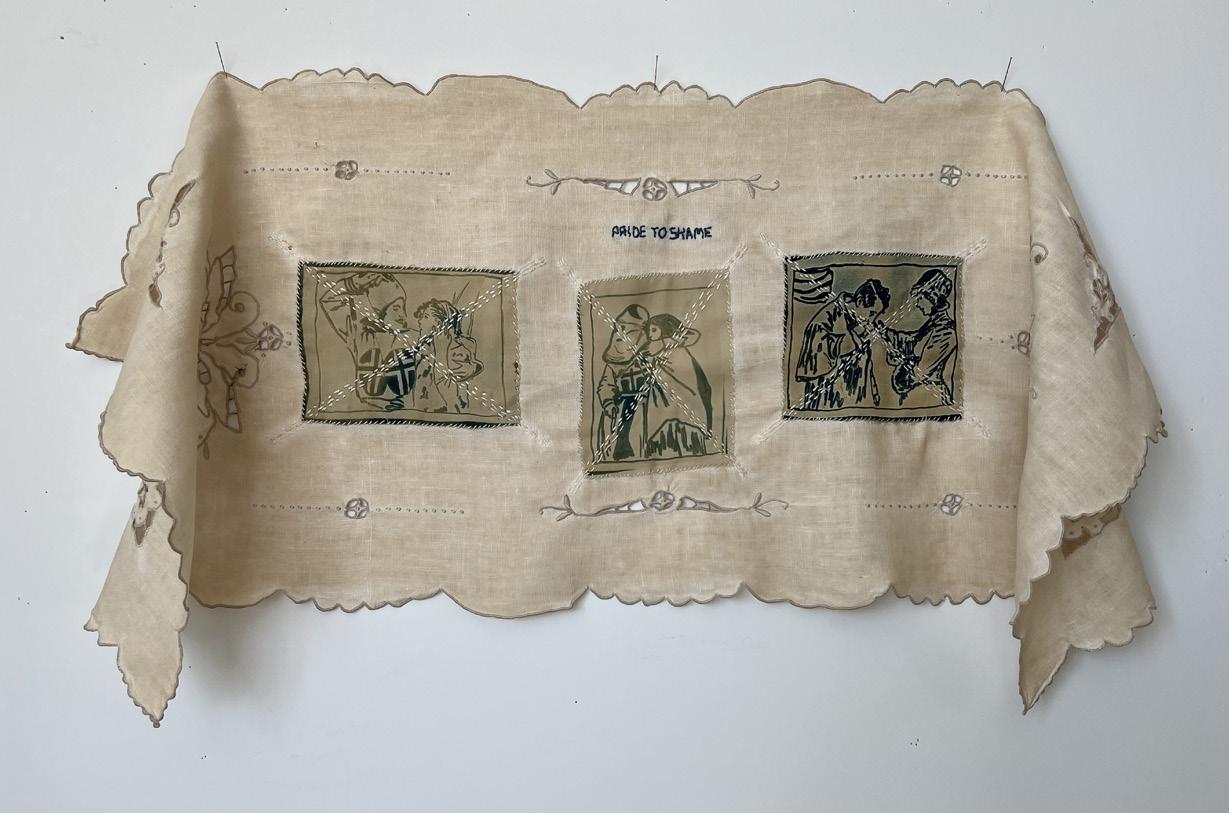
Pride to Shame, 2021.
4b
4c
Bird, 2025.
Caged
Chapter 5
Enslavement, Emancipation, and Sharecropping
The plantation economy depended on enslaved labor. Archival records reveal individuals enslaved by my family, including Lucy Wallace Baker, a midwife whose work extended across generations, and Albert Baker, who later purchased land after emancipation.
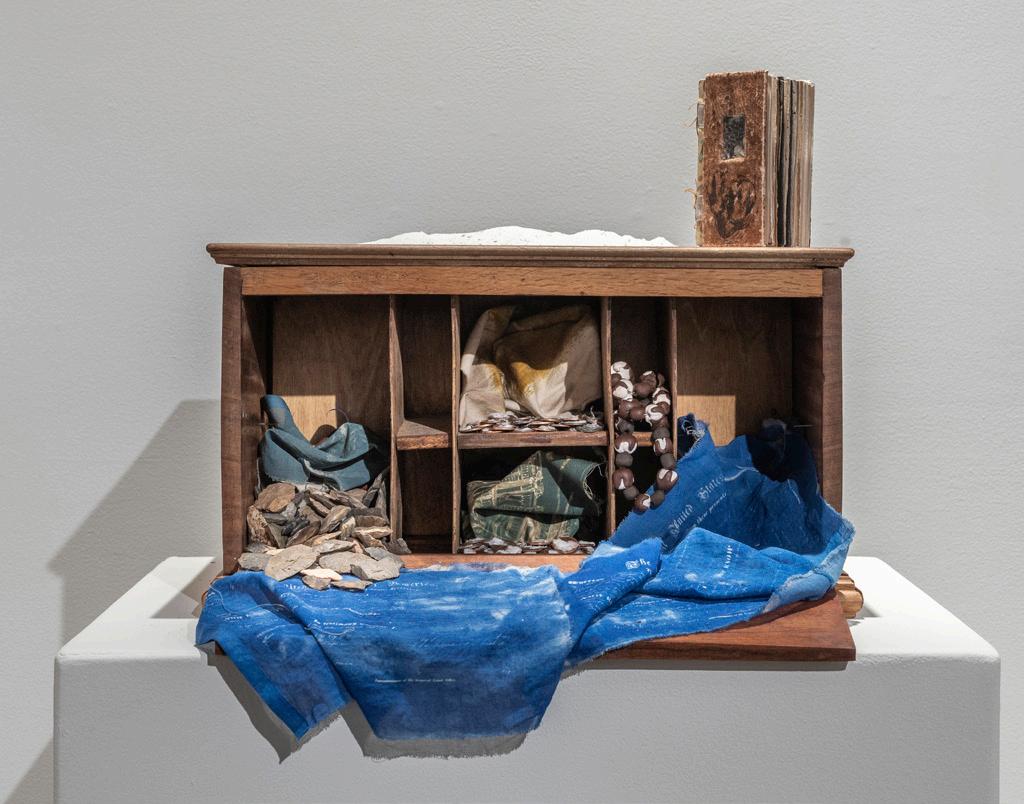
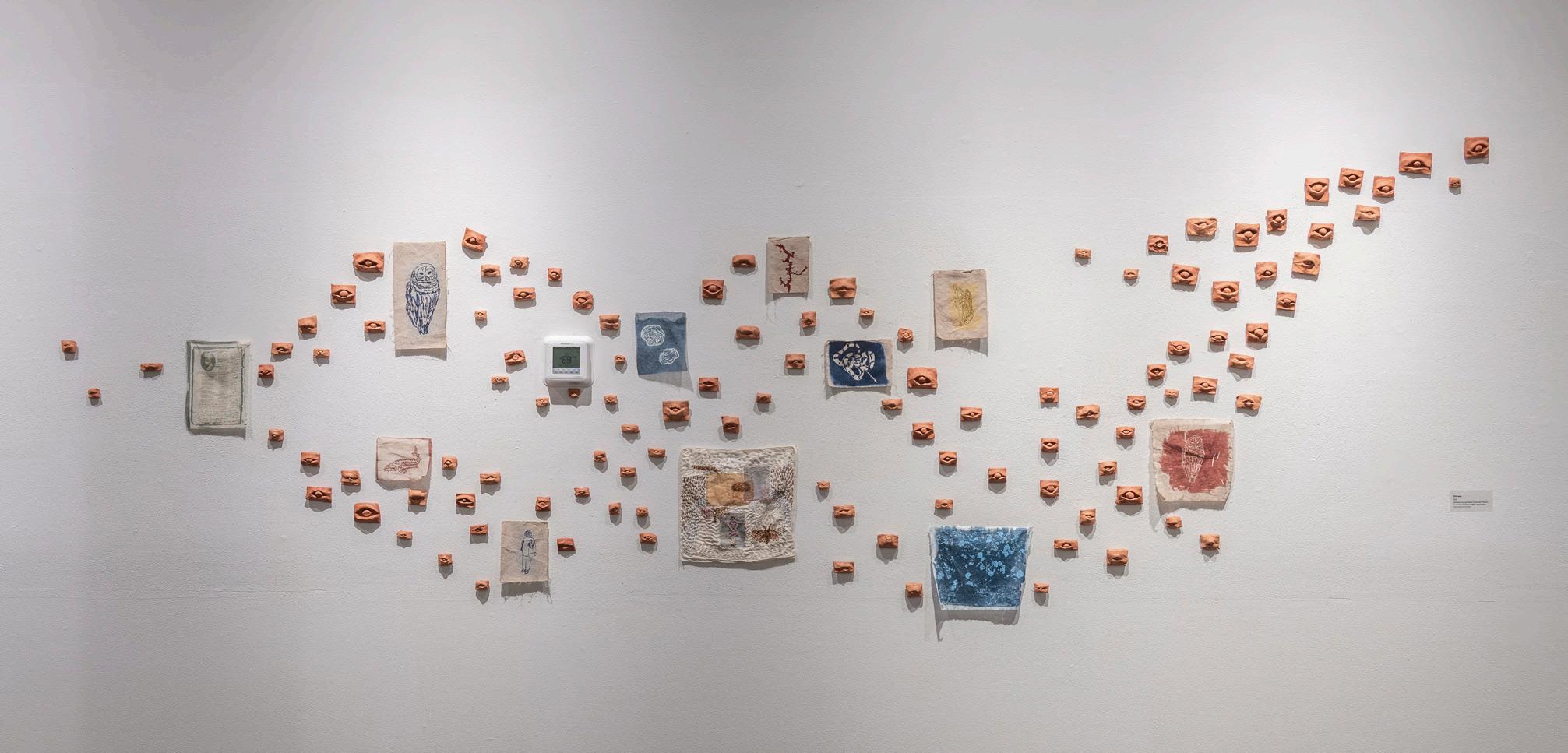
Writing the sentence “my family owned people” becomes a turning point in the narrative. In response, the artwork Witness inscribes the known names of enslaved individuals onto the backs of ceramic eyes in gold, transforming the archive of ownership into a counter-memorial. Other works combine cotton, land patents, and archaeological fragments to visualize the intertwined histories of Indigenous displacement and plantation slavery.
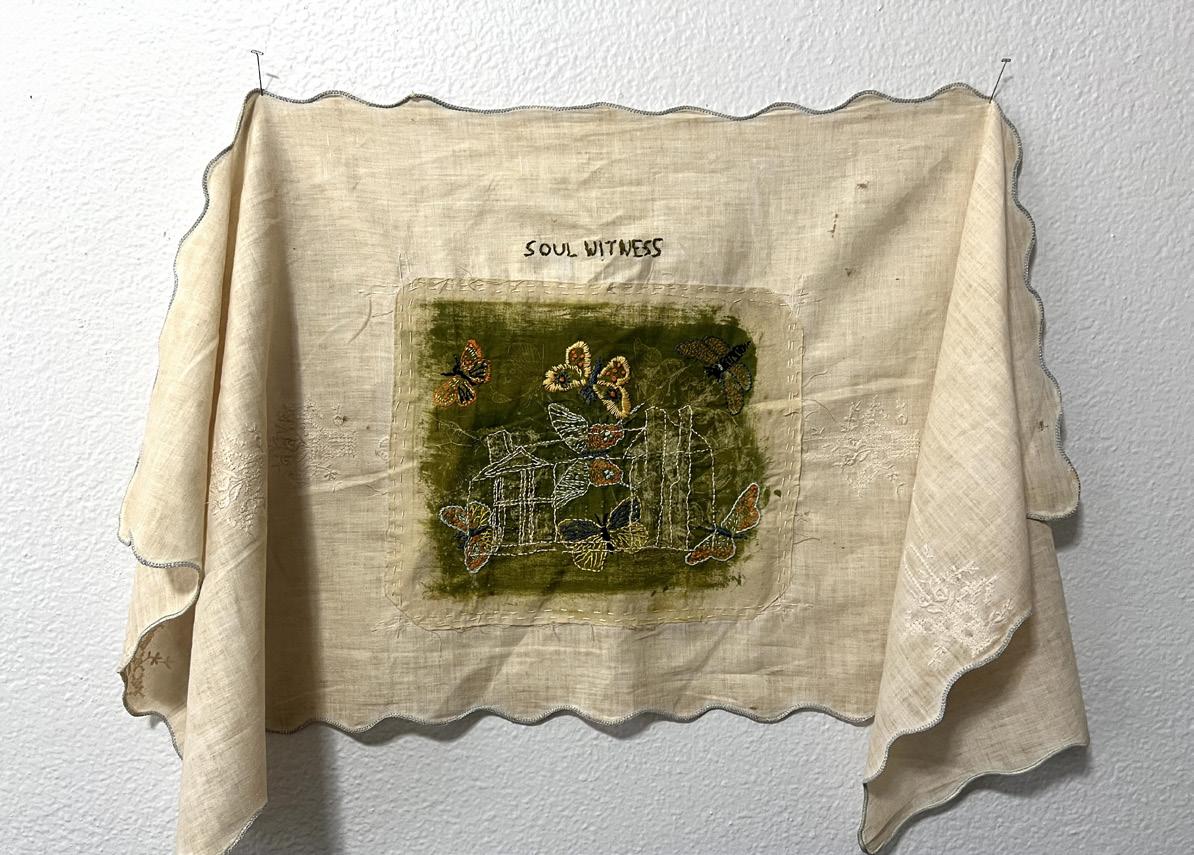
Soul Witness, 2021.
Cotton Economy, 2025.
5b 5c
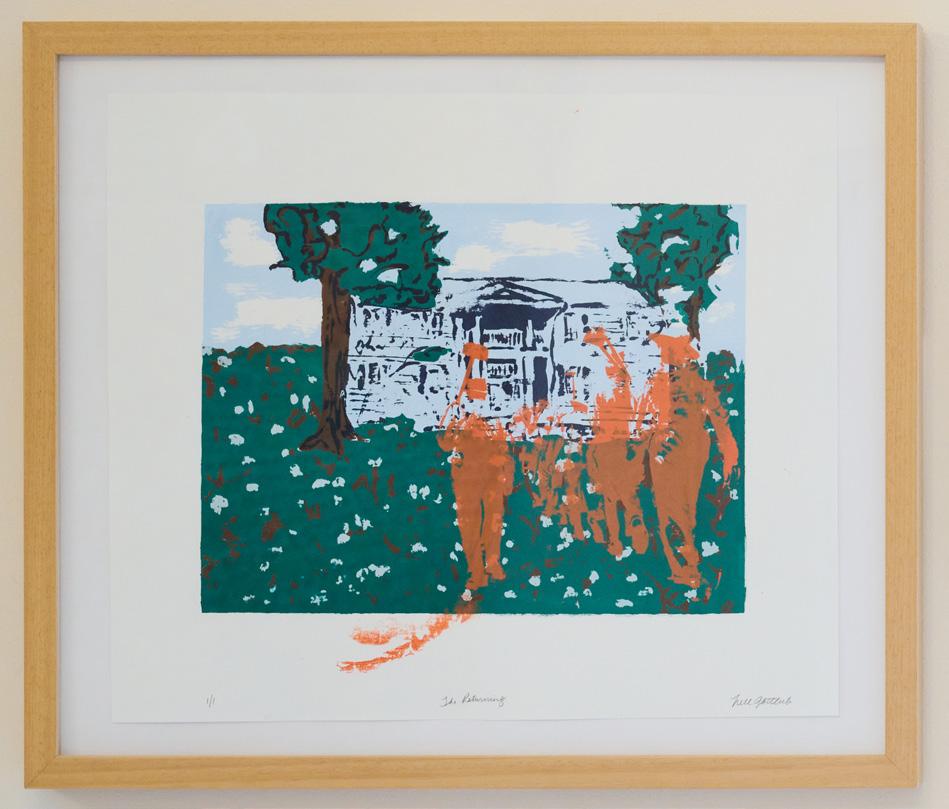
The Returning, 2018.
The Crown, 2021.
Cotton Hoers, 2022.
5d
5e
5f
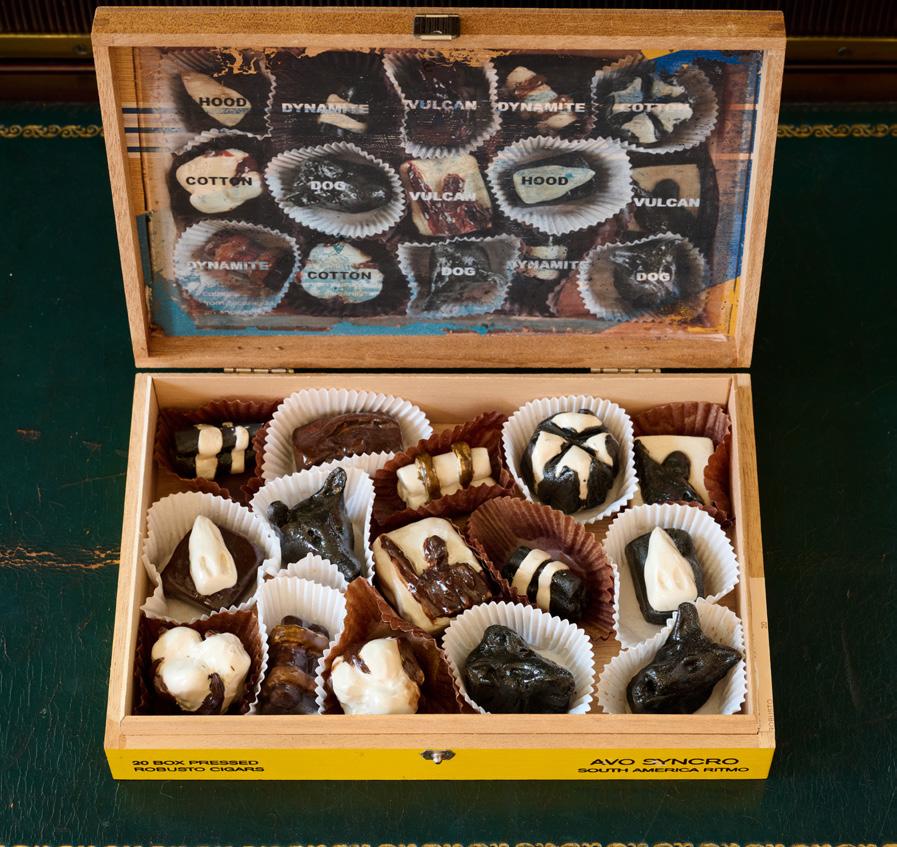
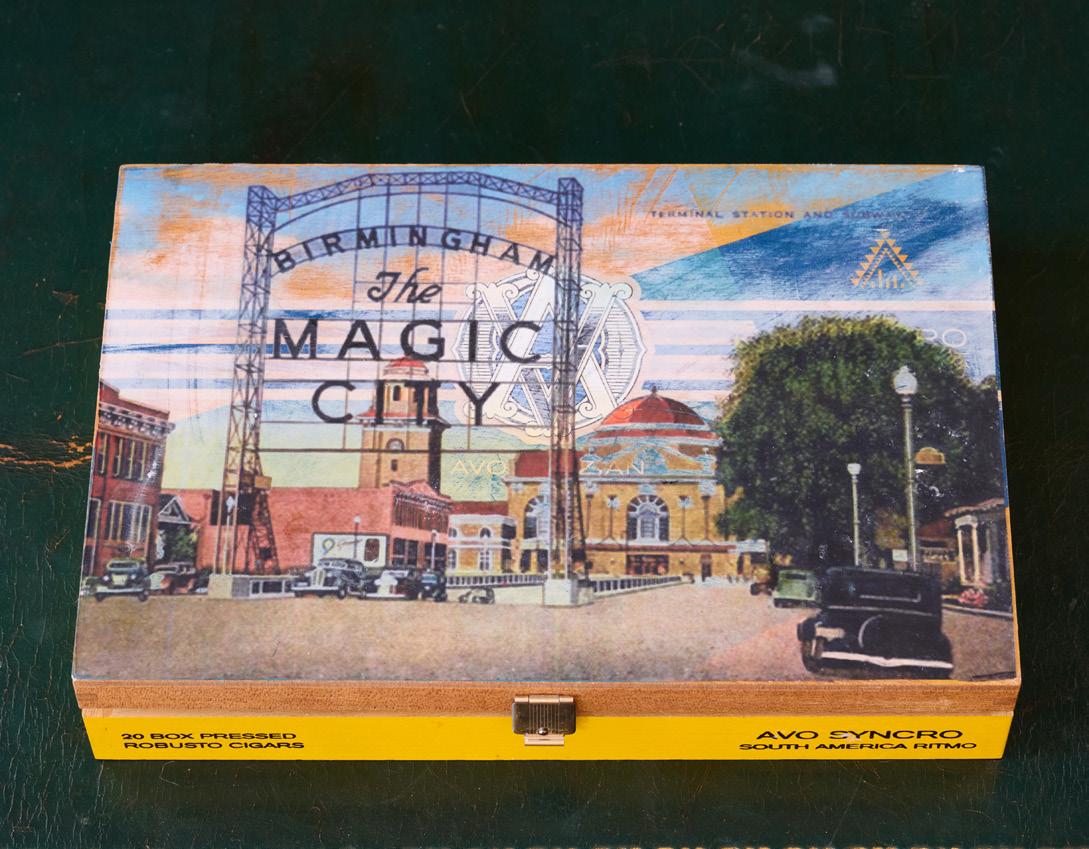
Jim Crow Chocolates (open), 2017. Jim Crow Chocolates (closed), 2017.
Witness, 2025. 5g 5h
5i
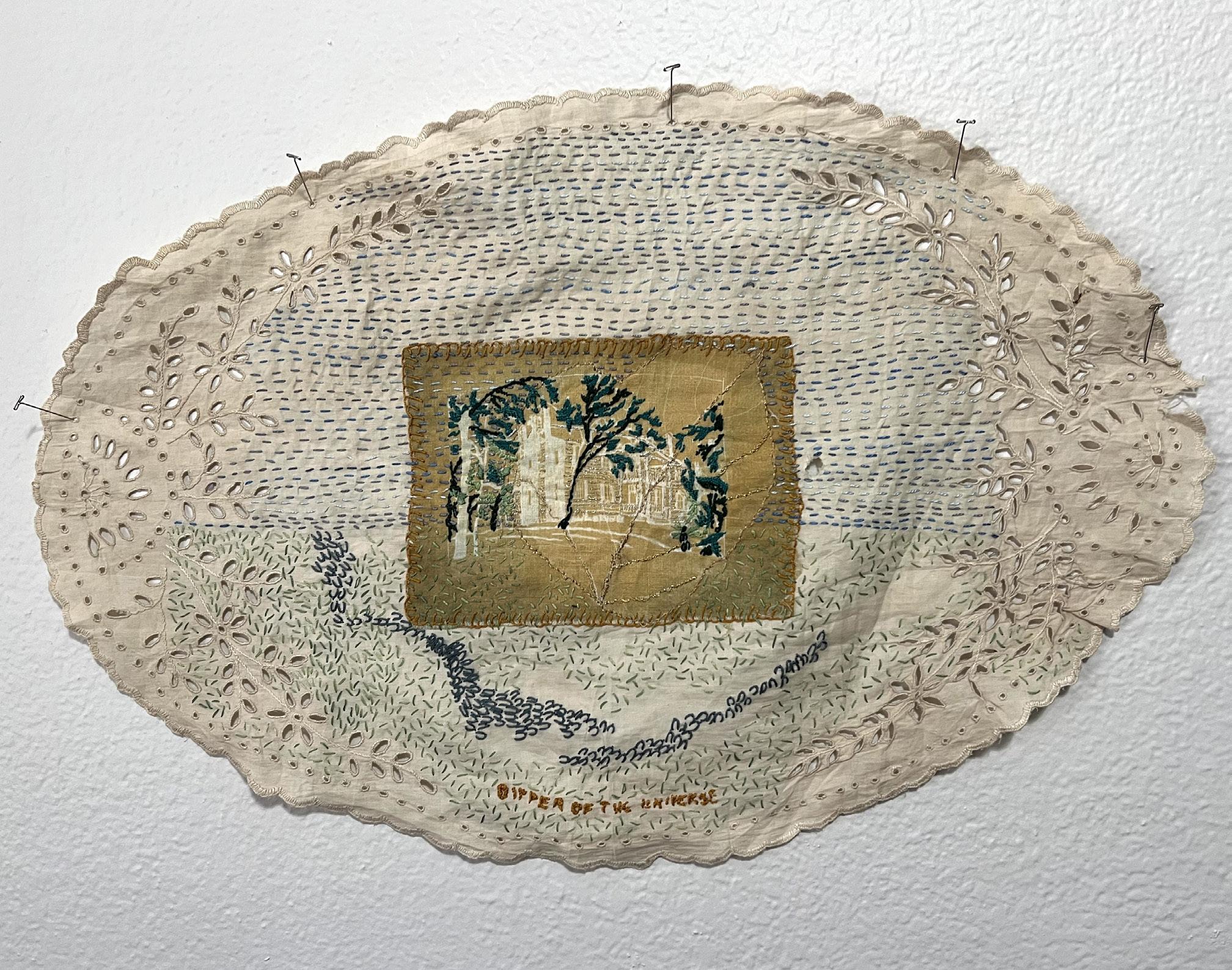
Dipper of the Universe, 2022.
Chapter 6
Monoculture, Erosion, and Environmental Loss
Cotton agriculture reshaped the southern landscape through monoculture and soil exhaustion. Federal programs later introduced kudzu for erosion control, while twentieth-century timber farming replaced diverse ecosystems with uniform pine plantations. The chapter links these ecological transformations to the extractive logic of plantation agriculture.
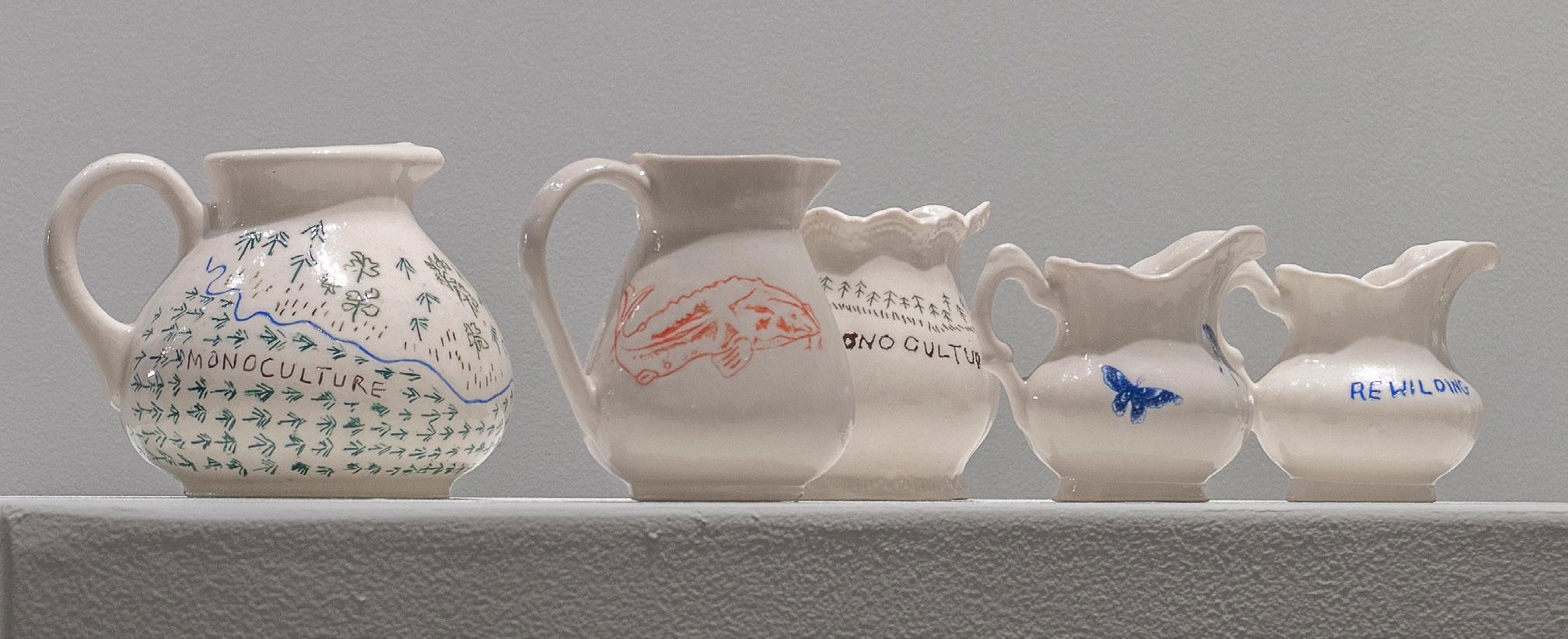
Artworks respond materially to this landscape: rows of trees cover pitchers, paper casts made from cotton fibers into form of plants, and silk ecoprinted with kudzu leaves
Monoculture, 2025.
6b
Shatter Zone, 2025.
Chapter 7
Dams and the Industrial River
Hydroelectric dams built across the Tallapoosa and Coosa Rivers promised progress by “putting loafing streams to work.” Reservoirs submerged towns, altered ecosystems, and transformed rivers into engineered systems serving industrial development.
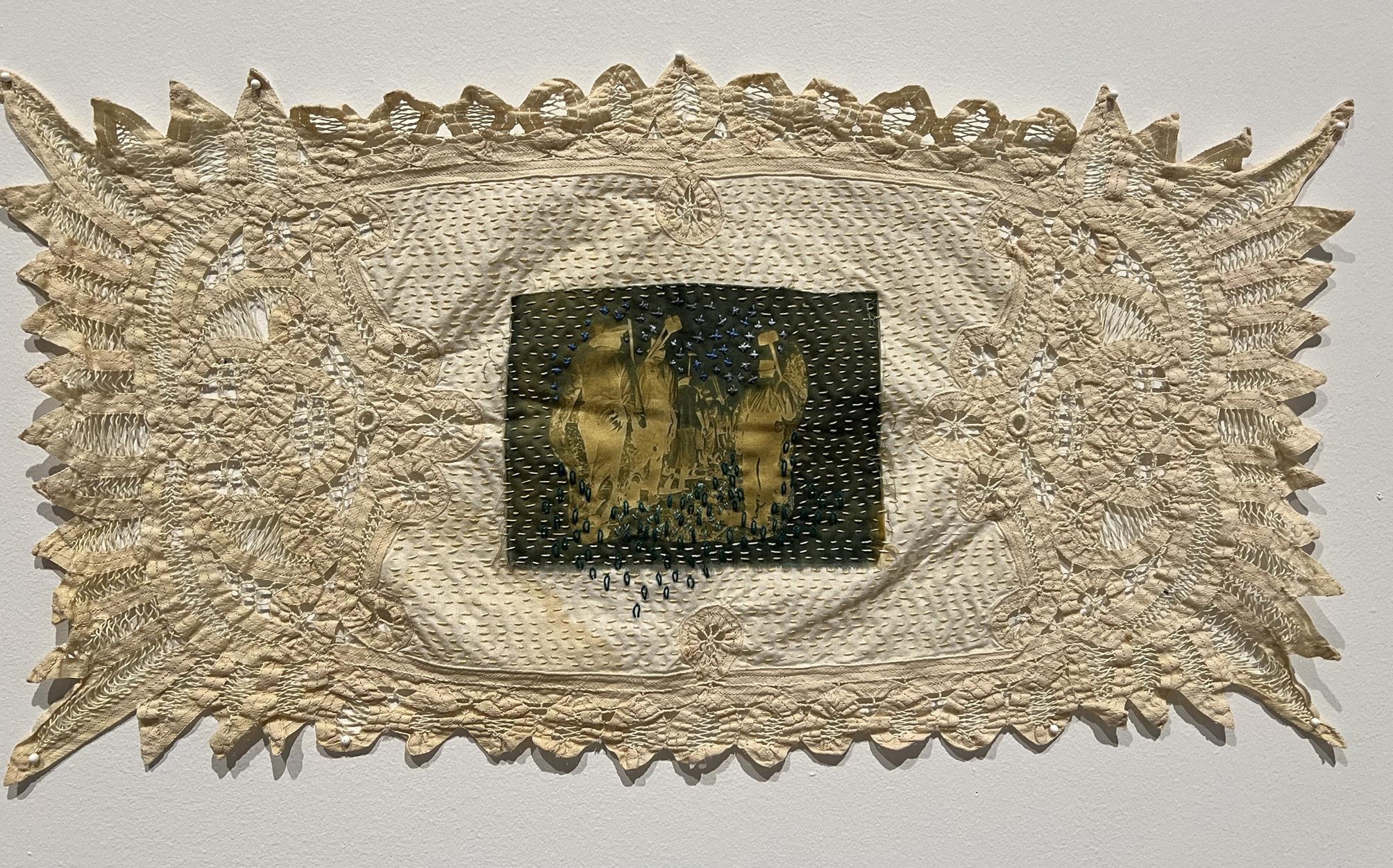
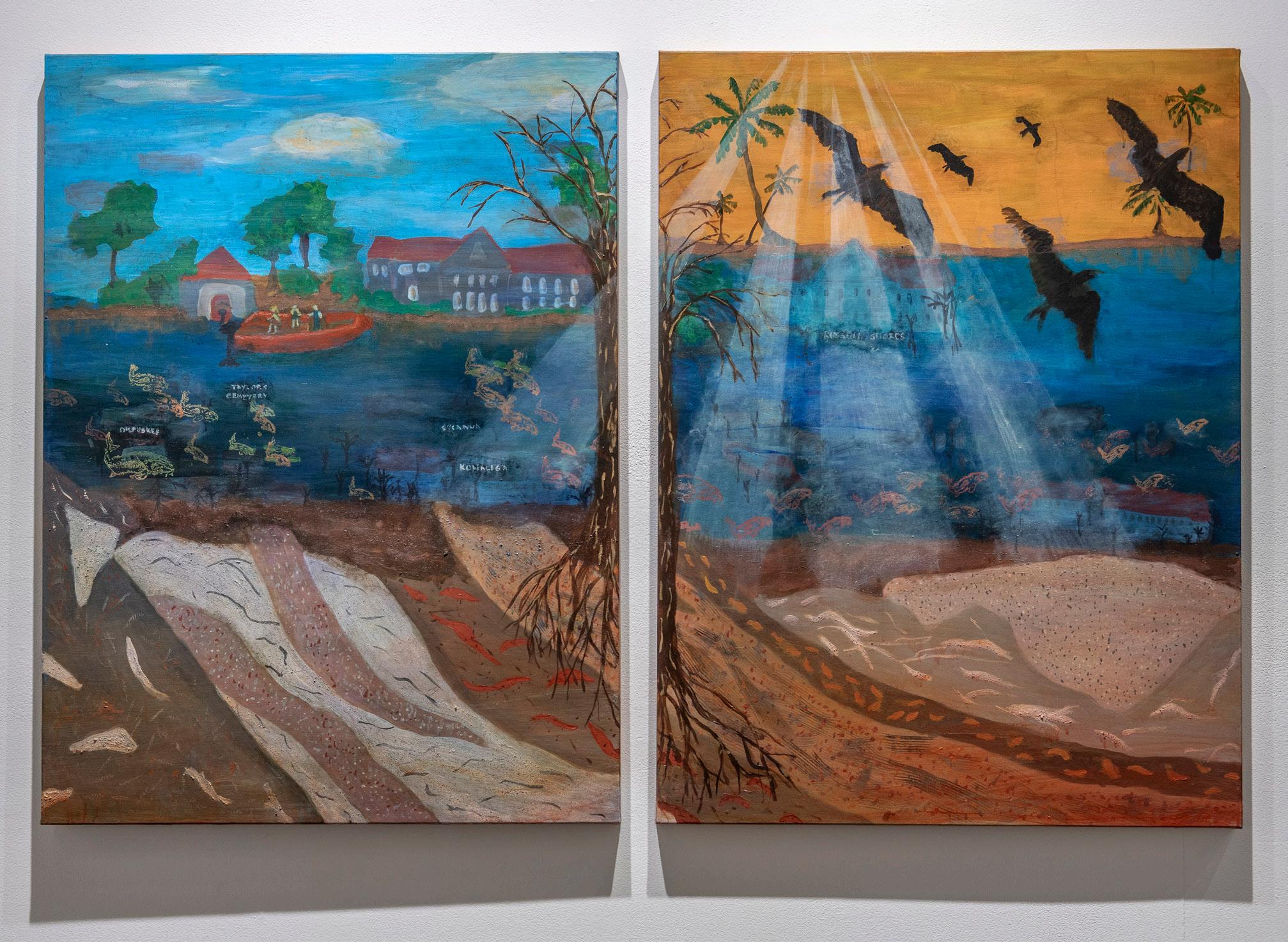
Returning decades later, I encounter Logan’s Creek, the site of my childhood swimming hole and baptism, now backed up by the waters of Lay Lake (See Image 3-G). The artwork Shattered Time: Lake Martin examines what disappeared beneath the reservoirs and maps the ecological losses that followed.
Ritual Vessel, 2019.
Chapter 8
Personal Reckoning
Research into family archives and the inheritance of the Wallace House forces a confrontation with the material legacy of slavery and land dispossession embedded in the landscape. New relationships with descendants of those once enslaved there collapse the distance between past and present.
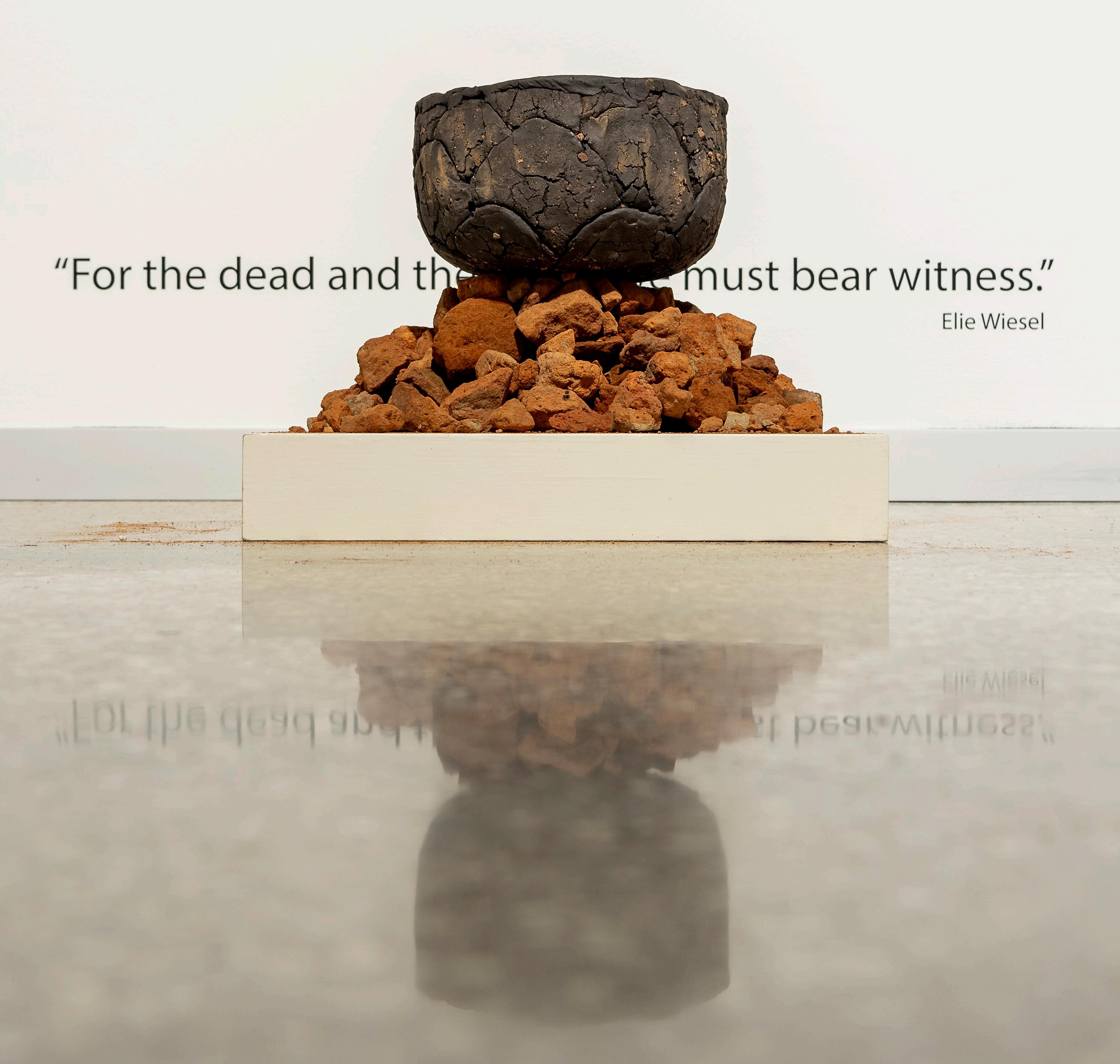
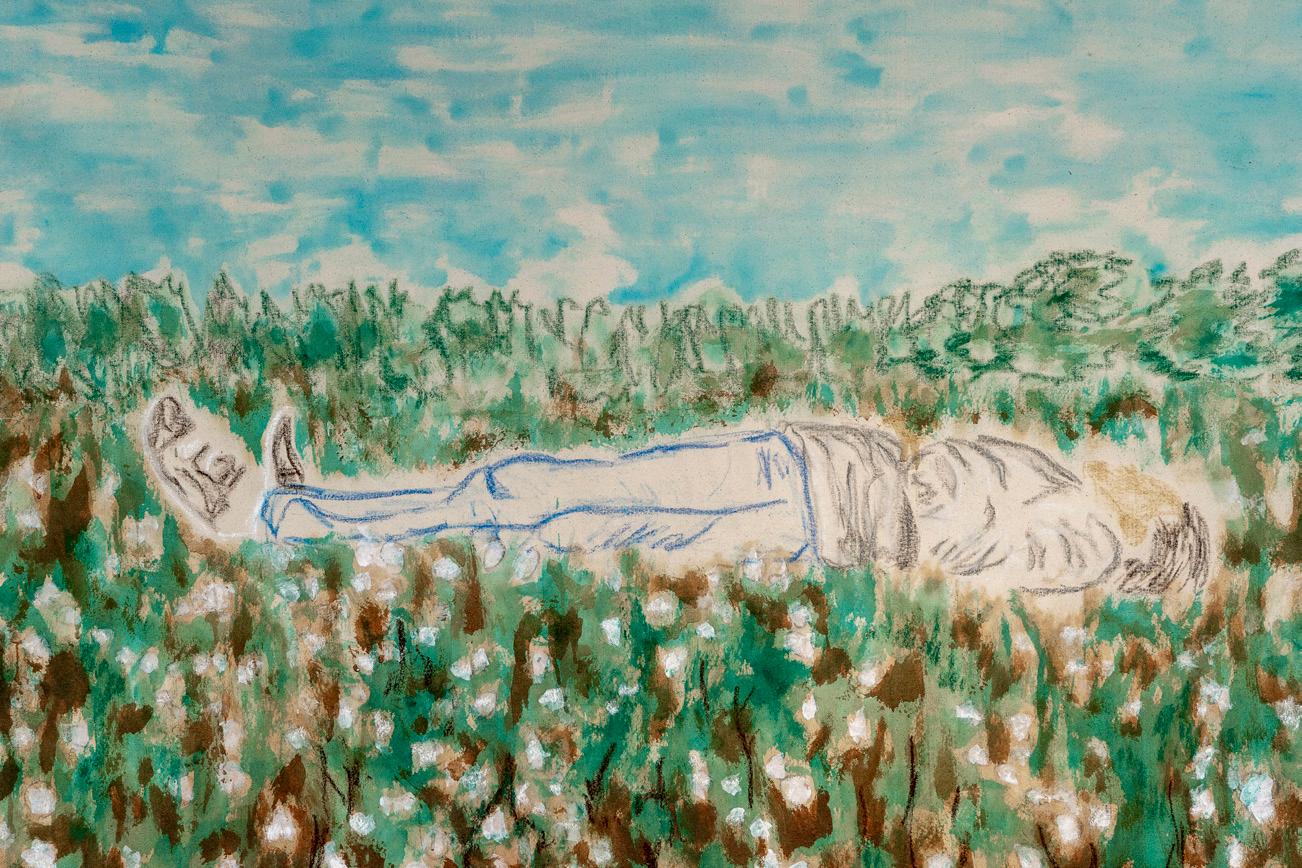
When I made the clay vessel that incorporated bits of brick made by the hands of the enslaved, my heart broke open as my own hands touched those shards. I saw myself as the colonizer, lying on top of a cotton field.
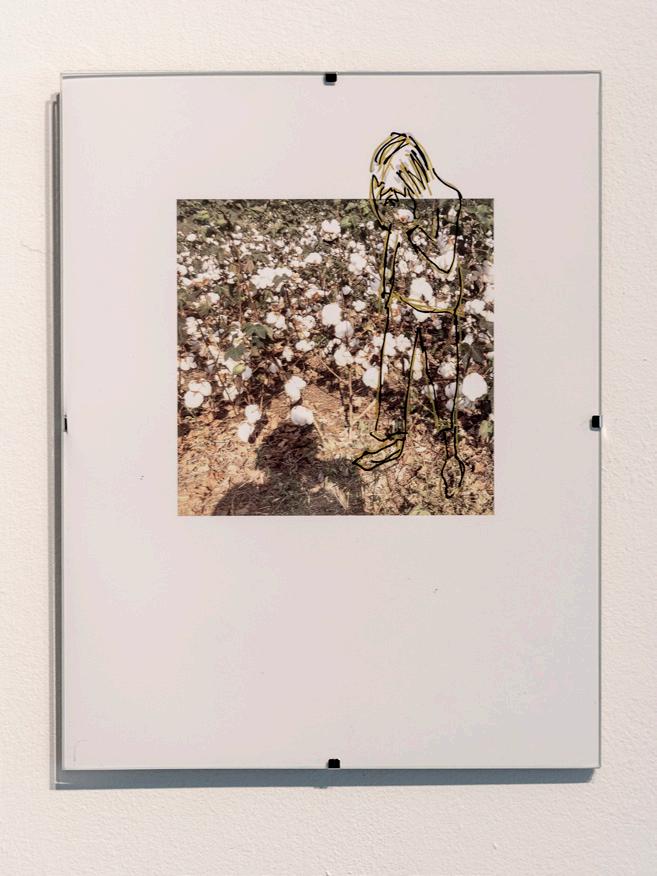
Self Portrait in Cotton, 2020. Place Witness, 2021.
8b
8c
Image details
Chapter 1
1a The Tallapoosa from Okfuskee to Tuckabatchee, 2025. Acrylic paint and Tallapoosa County roadside clay beside Moore’s Creek on unstretched canvas. Photographer Nash Baker. Exhibitions: Gadsden Museum of Art, Gadsden, AL, 2025.
1b De Jure Shatter, 2025. Porcelain slip, underglaze. Photographer Nell Gottlieb. Pitchers from Meander 2: Braided Time exhibited at the Montgomery Museum of Fine Arts, Montgomery AL, 2022.
1c Roots (The Matriarchy), 2019. Porcelain clay, decals, china paint. Photographer Nash Baker. Exhibitions: The Community Artists’ Collective, Houston TX, 2025.
1d What Kudzu Hides, 2025. Kudzu basket made by Andrew McCall and purchased in Marengo County, torched with map gas, Native American artifacts from GMA Private Collection. Photographer Nash Baker. Exhibitions: Gadsden Museum of Art, Gadsden, AL, 2025.
Chapter 2
2a Entangled Spaces: Gridded, 2025. Ink jet print on tea-stained paper, thread, acrylic paint, beeswax, cotton paper pulp cast on fishline. Photographer Nash Baker. Exhibitions: Gadsden Museum of Art, Gadsden, AL, 2025
2b Moore Census, archival document.
2c Moore Family Allotments, archival document.
Chapter 3
3a Coosa Bend, 2021. Acrylic paint and dirt from the Wallace grounds. Photographer Nash Baker. Exhibitions: Montgomery Museum of Fine Arts, Montgomery AL, 2022; Gadsden Museum of Art, Gadsden, AL, 2025.
3b Mount Ida Quilt with Mount Ida Reconsidered, 2022. Installation shot with historic quilt completed in 1851 and now in the Alabama Museum and Archives. Photographer Nell Gottlieb. Exhibitions: Montgomery Museum of Fine Arts, Montgomery AL, 2022.
3c Mount Ida Reconsidered, 2021.Cotton fabric, thread and cotton fiber. Photographer Nell Gottlieb. Exhibitions: Montgomery Museum of Fine Arts, Montgomery AL, 2022
3d Settler Colonialism, 2021. Porcelain and black clays, decals, and gold luster. Houston artists Garry Osan and Jeff Forster created the raw vases. Photographer Nell Gottlieb. Exhibitions: Montgomery Museum of Fine Arts, Montgomery AL, 2022.
3e John Mallory and Nell Wallace Harrell, family photograph, ca. 1951.
3f Matriarchial Lineage: Grandmother and the Owl, 2025. Acrylic paint and dirt pigment from the Wallace grounds on stretched canvas. Photographer Nash Baker. Exhibitions: Gadsden Museum of Art, Gadsden, AL, 2025.
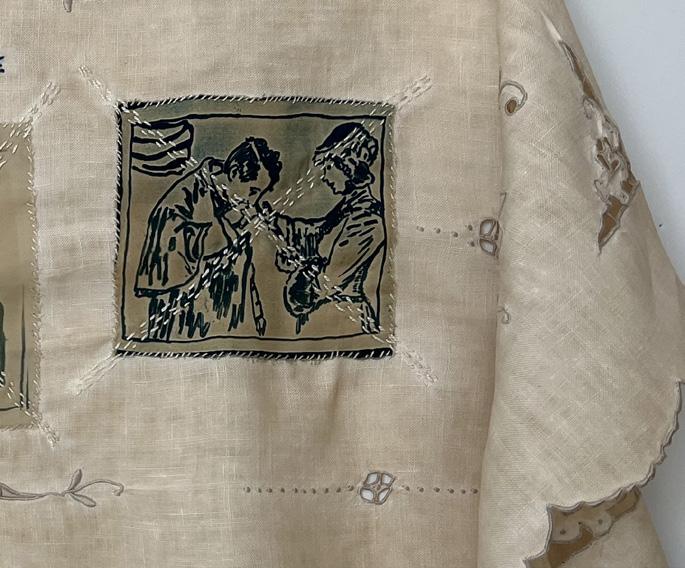
3g Logan’s Creek, 1954, 2025. Cyanotypes and stitching on a vintage table cloth stained from the silt/water of the Lay Lake backwater impounding and erasing Logan Creek, the baptismal site. Original photographs by the artist’s mother, Erin Wallace Harrell, taken in 1954. Photographer Nash Baker. Exhibitions: Gadsden Museum of Art, Gadsden, AL, 2025; Arts Revive, Selma AL, 2026.
3h Logan’s Creek, 1954, detail, 2025. Cyanotypes and stitching on a vintage table cloth stained from the silt/water of the Lay Lake backwater impounding and erasing Logan Creek, the baptismal site. Original photographs by the artist’s mother, Erin Wallace Harrell, taken in 1954. Photographer Nash Baker. Exhibitions: Gadsden Museum of Art, Gadsden, AL, 2025; Arts Revive, Selma AL, 2026.
Chapter 4
4a Page from My Great-grandmother’s Scrapbook, Archival. Scanned by Nell Gottlieb.
4b Transmutation Blood Money, 2021. Found choir robe and collection plate, pennies with cotton fiber. Photographer Nash Baker. Exhibitions: San Angelo Museum of Fine Arts, 2021; Montgomery Museum of Fine Arts, Montgomery AL, 2022; Gadsden Museum of Art, Gadsden, AL, 2025
4c Pride to Shame, 2021. Cyanotype, cotton thread on found vintage linen. Photographer Casey Woods. Exhibitions: Neill-Cochran House Museum, Austin TX, 2022.
Chapter 5
5a Caged Bird, 2025. Burlap, thread, cotton, and found metal object. Photographer Nash Baker. Exhibitions: Gadsden Museum of Art, Gadsden, AL, 2025.
5b Soul Witness, 2021-2025. Anthotype on cotton and cotton thread on found vintage linen. Photographer Nell Gottlieb. Exhibitions: Arts Revive, Selma AL, 2026.
5c The Settler Economy, 2025. Found tabletop desk, Gant Quarry marble dust, artist book, pennies with cotton linter, polymer clay, cyanotype images of land patents on organza, and Native American artifacts from GMA Private Collection. Photographer Nash Baker. Exhibitions: Gadsden Museum of Art, Gadsden AL, 2025.
5d International Relations/Planter’s Tin Box, 2021. Pennies, cotton linter, and found tin box. Photographer Casey Woods. Exhibitions: Neill-Cochran House Museum, Austin TX, 2022.
5e The Returning, 2018. Silkscreen on cotton rag paper, AP. Photographer Casey Woods. Exhibitions: Neill-Cochran House Museum, Austin TX, 2022.
5f Cotton Hoers, 2024. Cyanotype, cotton, and cotton thread on found vintage linen. Photographer Nell Gottlieb. Exhibitions: Glassell School of Art, Museum of Fine Arts Houston, Houston TX, 2025.
5g Jim Crow Chocolates (open), 2017. Ceramic “chocolates” in the shapes of hoods, cotton bolls, dynamite, and Vulcan (symbol of Birmingham), found box and paper candy cups. Photographer Casey Woods. Exhibitions: Neill-Cochran House Museum, Austin TX, 2022; Houston Center for Contemporary Craft, Houston TX, 2018.
5h Jim Crow Chocolates (closed), 2017. Found box with a decaled image of a Birmingham postcard. Photographer Casey Woods. Exhibitions: Neill-Cochran House Museum,2022; Austin TX; Houston Center for Contemporary Craft, Houston TX, 2018.
5i Witness, 2025. Terracotta clay with names of enslaved Wallaces on reverse, cyanotype and solar fast on fabric, and handstitched cotton handkerchief. Photographer Nash Baker. Exhibitions: Gadsden Museum of Art, Gadsden AL, 2025.
Chapter 6
6a Dipper of the Universe, 2022. Cyanotype on cotton and cotton thread on found vintage linen. Photographer Nell Gottlieb. Exhibitions: Arts Revive, Selma AL, 2026.
6b Monoculture, 2025. Porcelain slip and underglaze. Detail from Meander 2: Braided Time. Photographer Nash Baker. Exhibitions: Montgomery Museum of Fine Arts, Montgomery AL, 2022.
Chapter 7.
7a Shattered Time: Lake Martin, 2025. Acrylic paint and Tallapoosa River silt on stretched canvas. Photographer Nash Baker. Exhibitions: Gadsden Museum of Art, Gadsden AL, 2025.
Chapter 8
8a Ritual Vessel, 2019. Black clay with crushed brick made by people enslaved at the Wallace plantation resting on broken brick from plantation. Photographer Nash Baker. Exhibitions: Montgomery Museum of Fine Arts, Montgomery AL, 2022; Glassell School of Art, Museum of Fine Arts Houston, Houston TX, 2019.
8b Self Portrait in Cotton, 2020. Gouache, oil pastel, and plantation dirt on unstretched canvas. Photographed by Nash Baker. Exhibitions: Neill-Cochran House Museum, Austin TX, 2022; Community Artists’ Collective, Houston TX, 2020.
8c Place Witness, 2021. Digital ink jet print photograph by Nell Gottlieb with acrylic ink drawing. Photographer Nash Baker. Exhibitions: Community Artists’ Collective, Houston TX, 2020.
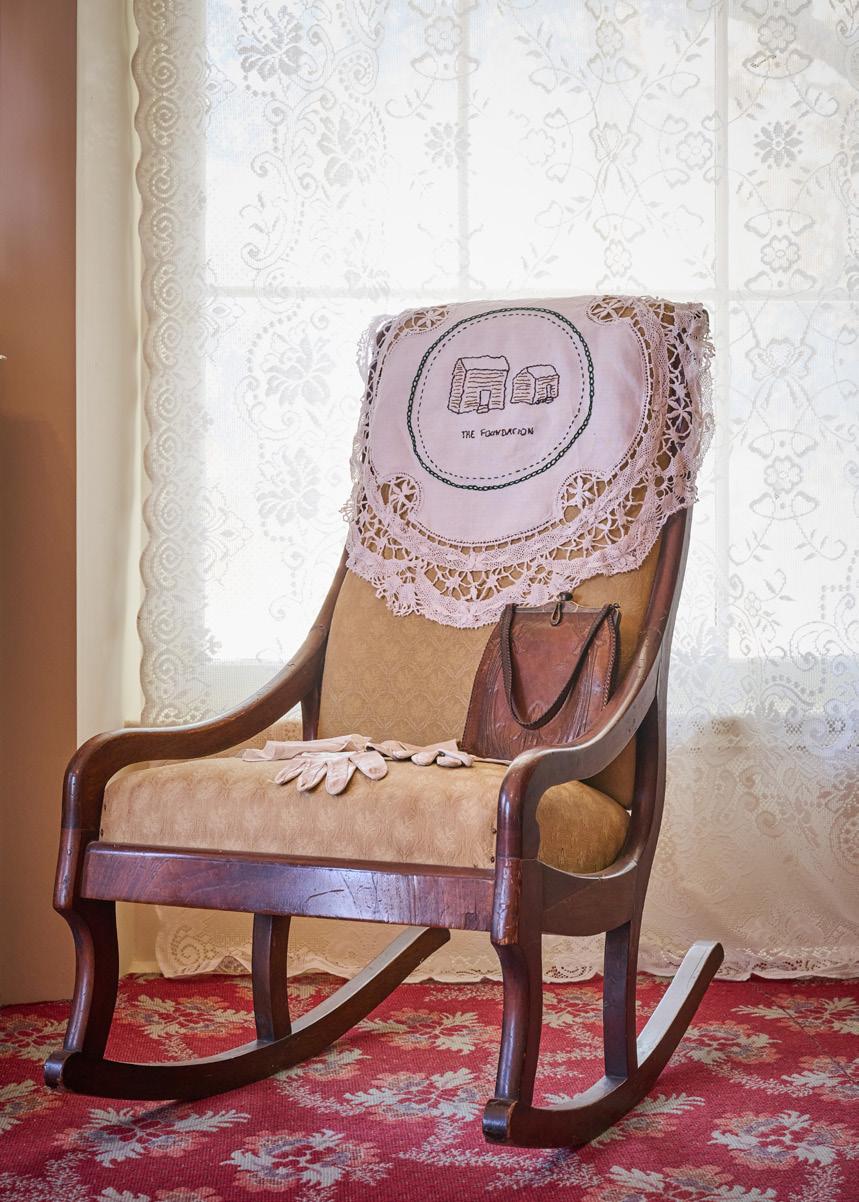
8d The Foundation, 2022. Cotton thread on a found vintage linen, installed with museum artifacts. Photographer Casey Woods. Exhibitions: Neill-Cochran House Museum, Austin TX, 2022.
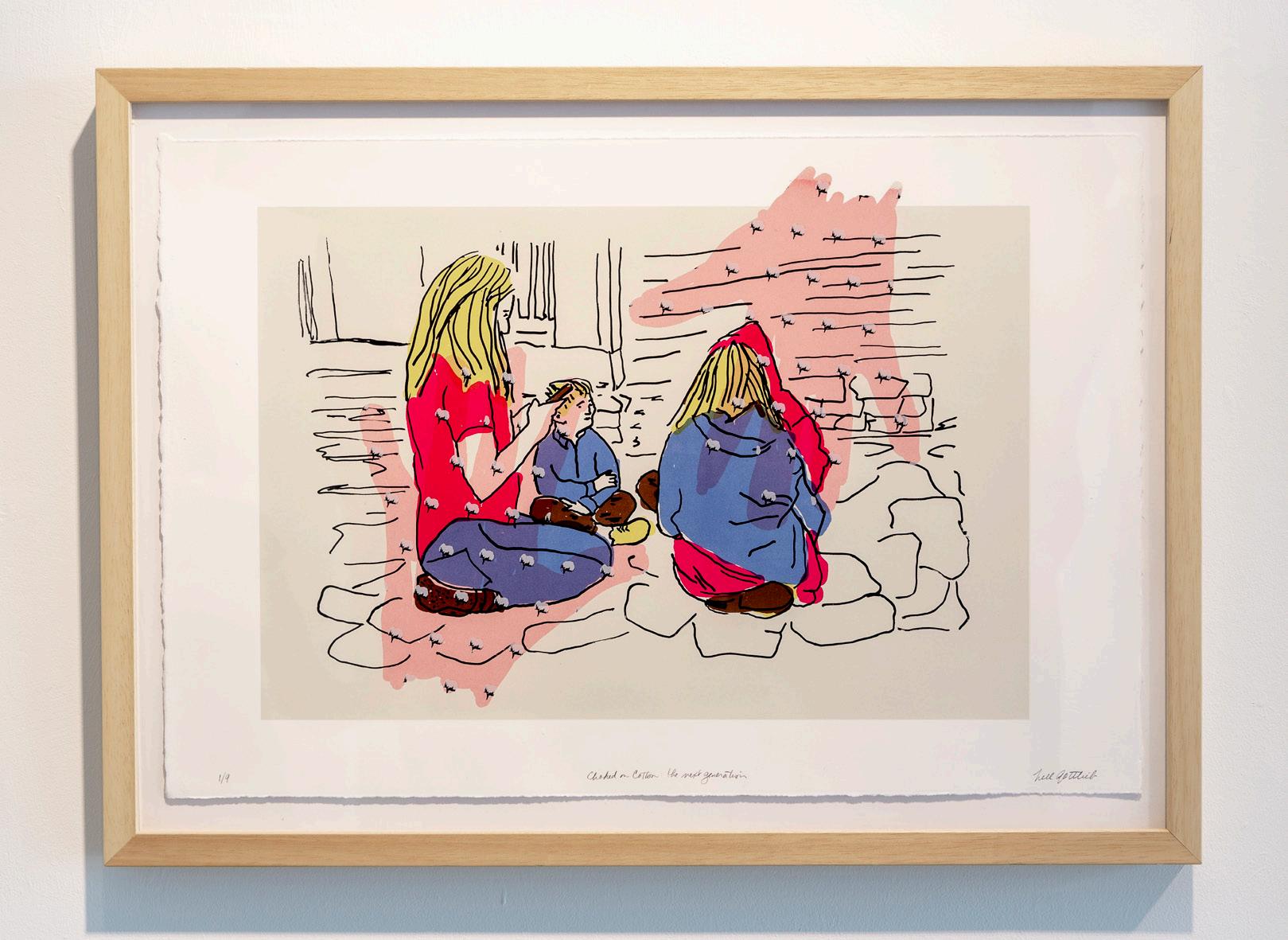
8e Choked on Cotton: the Next Generation, 2020.Silkscreen on cotton rag paper. Photographer Nash Baker. Exhibitions: Community Artists’ Collective, Houston TX, 2020.
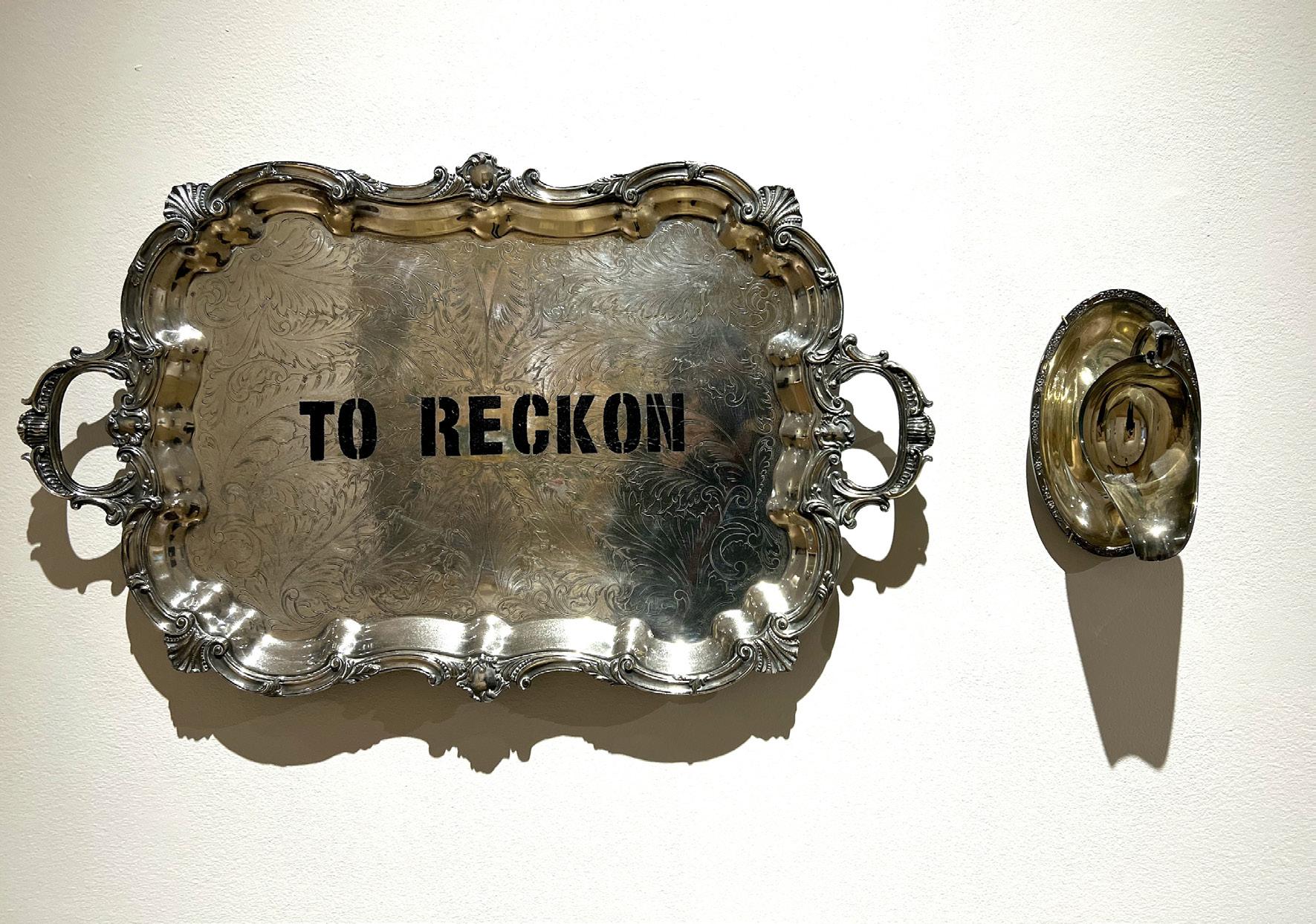
8f To Reckon, 2021. Acrylic stencil on found silverplate. Photographer Nell Gottlieb. Exhibitions: Montgomery Museum of Fine Arts, Montgomery AL, 2022
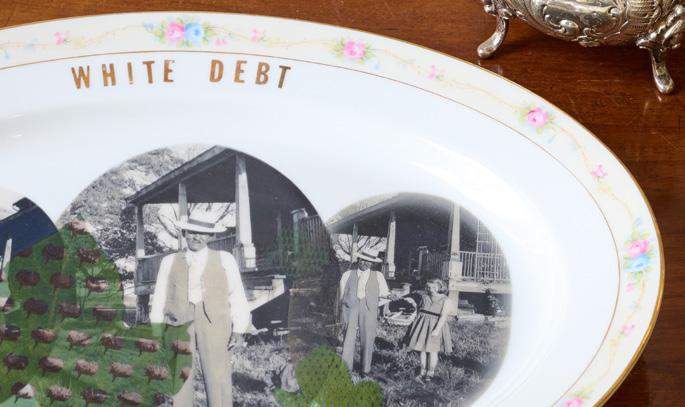
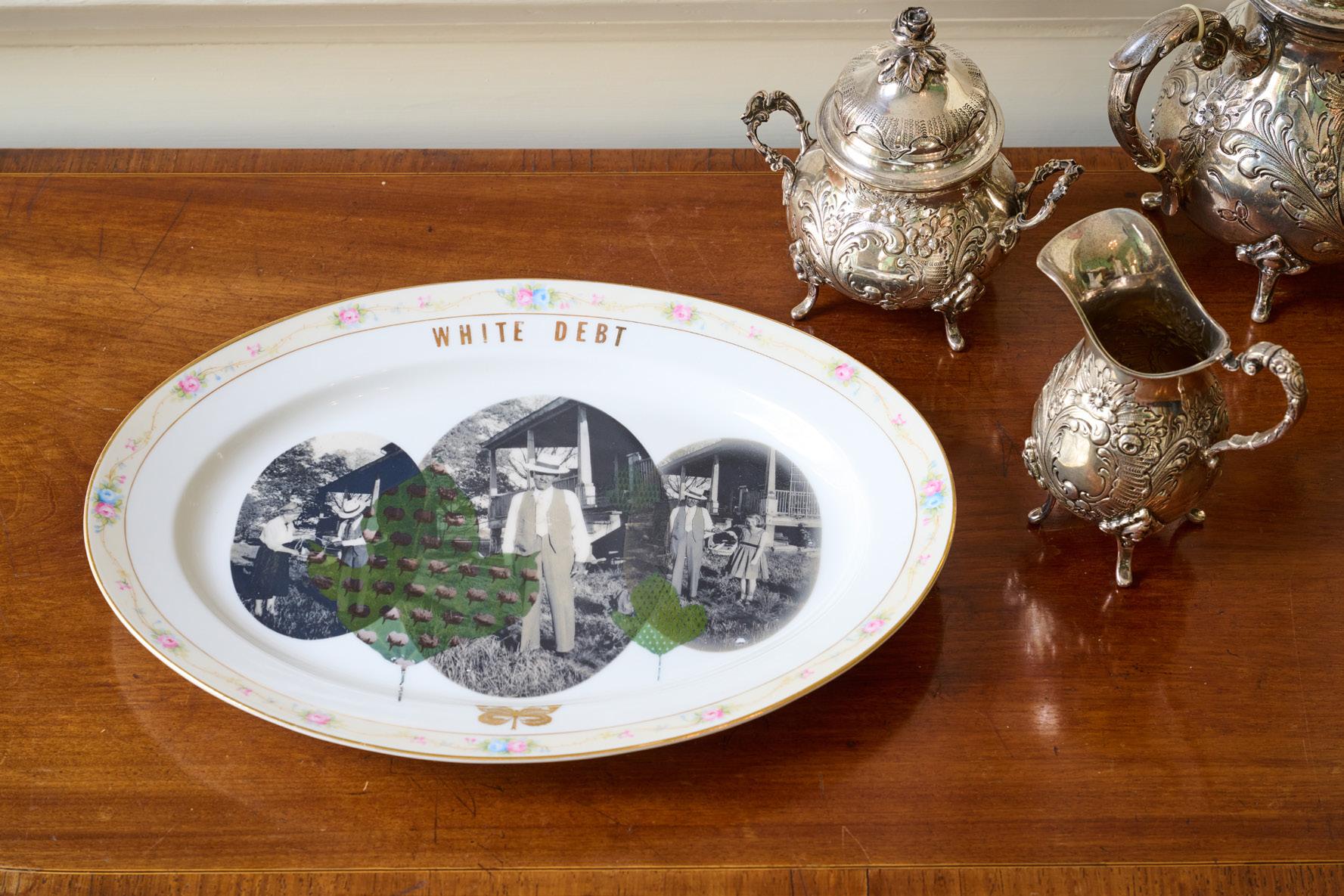
8g White Debt, 2017. Decals on found china. Photographer Casey Woods. Exhibitions: Neill-Cochran House Museum, Austin TX, 2022; Williams Tower Gallery, Houston TX, 2017.
Chapter 9
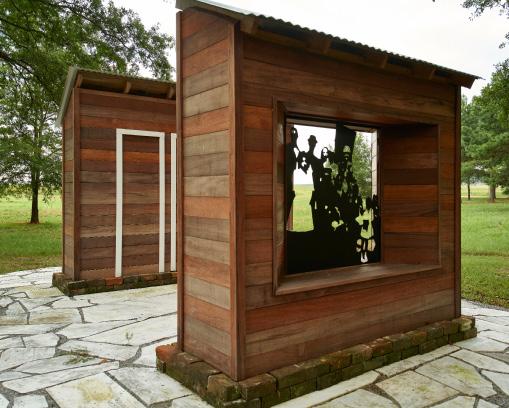
9a Bearing Witness: Praise House by Tony M. Bingham, 2022. Photographer Hector Sanchez. Exhibition: Site specific sculpture at the Wallace House.
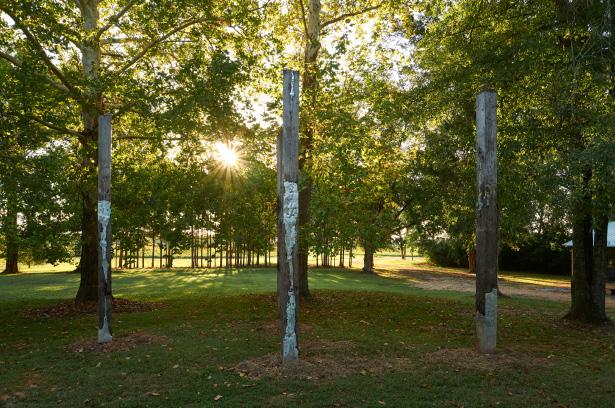
9b With Love, For Grief by Elizabeth M. Webb, 2023. Photographer Hector Sanchez. Exhibition: Site specific sculpture at the Wallace House.
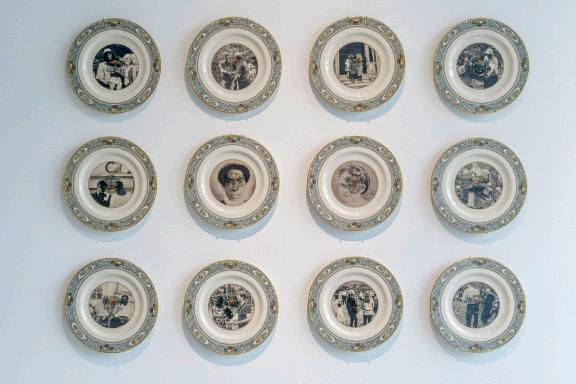
9c The Harvest, 2020. Decals on found “Autumn by Lenox” china. Photographer Nash Baker. Exhibitions: Neill-Cochran House Museum, Austin TX, 2022; Community Artists’ Collective, Houston TX, 2020.