THE FUTURE INSIGHT
STRATEGIC PLAN 2025–2030
Goal 1
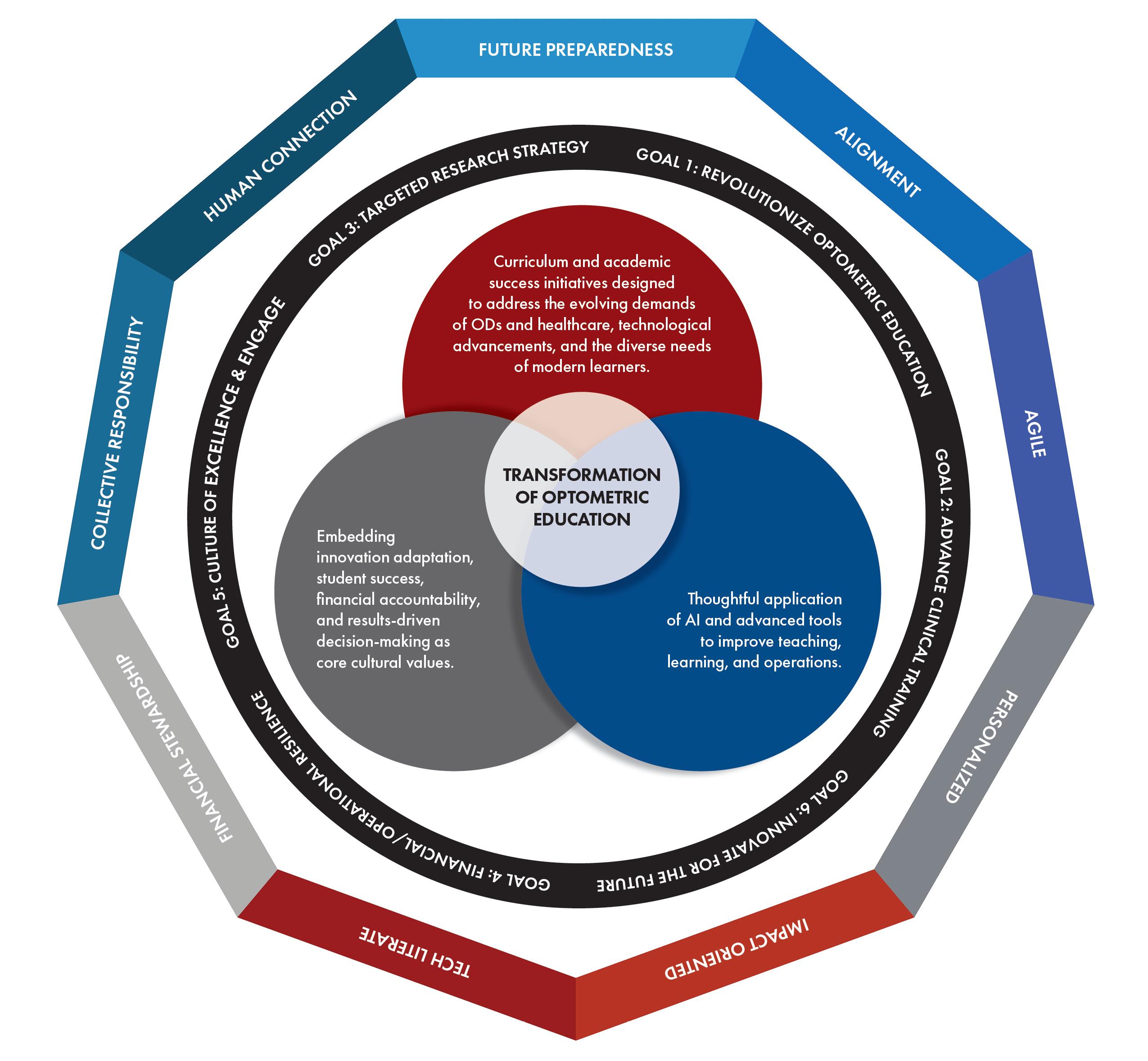
Revolutionize optometric education by integrating the curriculum, learning outcomes, and student support to foster meaningful educational experiences and professional success.
NECO will be driven by a student-centric ethos that prioritizes an inclusive, supportive, and meaningful educational experience, enabling students to realize their full potential. We will remain highly adaptable while making thoughtful, evidence-based decisions that consider with equal importance the educational value to the curriculum as well as the personal and professional well-being of our students.
Through continuous improvement and engagement with student feedback and performance measures, we will ensure that all students feel valued, prepared for future success, and delighted with their educational experience. The actions we take to achieve specific objectives will largely fall under two broad categories: didactic/clinical curriculum innovation and student support services.
OBJECTIVES
1. Foster a culture of support and student-centricity across all levels of NECO, where each department and individual is committed to prioritizing student success and responsiveness to student needs, well-being, and academic/personal growth.
2. Enhance current and develop additional modes of support based on student needs, emphasizing well-being, performance, satisfaction, and retention.
3. Implement national board success strategies to improve first-time and ultimate pass rates.
4. Increase data-driven decision-making in the student learning process to elevate student outcomes and to create more personalized learning experiences.
5. Enable more effective and creative instruction by elevating the amount and quality of professional development and support in teaching and learning available to faculty.
Specific initiatives and tactics to achieve these objectives are understandably overlapping and intertwined. As such, they are organized into themes below, with tags denoting which objectives each tactic is aligned with:
Cognitive Load Management
TACTIC 1: Ensure a reasonable and healthy cognitive load for students across all facets of the curriculum to optimize student learning by conducting an in-depth analysis of the cognitive load NECO’s curriculum demands of students at all stages of the educational journey and make adjustments to enhance student learning.
Expanded scope of practice and advances in clinical technology have increased the content required of an optometric curriculum. Compounded by difficulty reducing existing content and inconsistencies in instructional organization, today’s students face a curriculum requiring increasingly higher cognitive load demands. An analysis of both intrinsic and extrinsic factors contributing to cognitive load is essential to understand what we are asking of NECO students and to identify possible areas of opportunity to recommend adjustments.
ALIGNED STRATEGIC OBJECTIVES (SO)
SO1, SO3, SO4, SO5
RECOMMENDED TIMELINE
Two years, beginning Fall 2025
KPIs (Key Performance Indicators)
• Completion of analysis for all semesters of the curriculum
• Curriculum review: Recommendations to curriculum committee concerning credit hours, number of courses per semester, and sequencing
• Course presentation: Recommendations to improve standardization across the curriculum where appropriate
TACTIC 2: Explore different course models, technologies and delivery methods to optimize efficiency, effectiveness, and performance.
A cognitive load analysis is expected to highlight areas in need of improvement. While content adjustments may play a role, the solution will likely require enhanced coordination of teaching methodologies, the adoption of new approaches (such as asynchronous learning), and improved course content organization.
ALIGNED STRATEGIC OBJECTIVES
SO1, SO3, SO4, SO5
RECOMMENDED TIMELINE
Three years, beginning Fall 2026
KPIs
• Curriculum changes: The number of changes approved by the curriculum committee concerning credit hours, number of courses per semester and sequencing
• Course presentation: Changes across the curriculum with the goal of improving standardization across the curriculum where appropriate
TACTIC 3: Enhanced use of Canvas throughout the curriculum to create more uniformity and consistency in the student experience. Promote more active learning, engagement, and formative assessment.
Canvas, NECO’s state-of-the-art learning management system (LMS), serves as the central hub for all courses. However, it is currently underutilized, and inconsistencies across courses create unnecessary cognitive load for students. Streamlining and optimizing the use of Canvas is a logical first step toward reducing this burden and enhancing the overall learning experience.
ALIGNED STRATEGIC OBJECTIVES
SO1, SO3, SO5
RECOMMENDED TIMELINE
Three years, beginning Fall 2025
KPIs
• Trainings and manuals: Number of trainings and manuals developed to teach basic and advanced features of Canvas
• Faculty engagement: Number of faculty that attend Canvas trainings and manuals
• Faculty adoption rate: Number of faculty that utilize basic (100%) and advanced features of Canvas (50% year one; 75% year two; 100% year three)
Culture of Student Support
Foster a culture of support and student-centricity across all levels of NECO, where every department and individual are committed to prioritizing student success and responsiveness to student needs, well-being, and academic and personal growth. Promote a positive, student-centered environment where students are supported and engaged, and wellness is prioritized.
TACTIC 1: Invest in professional development and training to equip staff and faculty with the skills needed to support all students effectively. Every NECO employee should be approachable and capable of recognizing obstacles to student success, while communicating with sensitivity and care. Training will focus on key areas such as mental health awareness, inclusive practices, and addressing diverse learning needs to ensure all students thrive.
ALIGNED STRATEGIC OBJECTIVES
SO2, SO3, SO5, SO6
RECOMMENDED TIMELINE
Three years, beginning Fall 2025
KPIs
• Establish a training plan and timeline that includes professional development for staff and faculty at all levels, including information on triaging mental health through the proper channels
• Employee participation rates for training and other initiatives
• Percentage of faculty and staff who feel well-informed about student support and success resources & processes
• Student survey data assessing culture, support, and services
TACTIC 2: Foster meaningful interactions between students, faculty, and staff. Deliberate opportunities for engagement outside the classroom will strengthen relationships, build empathy, and enhance mentorship, ultimately improving academic support. Additionally, implement effective communication strategies to increase awareness and accountability for student support across NECO to create opportunities for growth in every aspect of institutional operations.
ALIGNED STRATEGIC OBJECTIVES
SO2, SO3, SO5
RECOMMENDED TIMELINE
Three years, beginning Fall 2025
KPIs
• Completion of communications and event strategy including touch points and continual assessment
• Number of events, plus student and employment participation in events, and continuous assessment of events
• Student satisfaction rates, especially around communication and culture of support and likelihood to recommend NECO to other students
TACTIC 3: Embed Student Success and Support in position descriptions, syllabi, work plans and performance reviews, where appropriate.
Job descriptions, work plans, course descriptions, learning outcomes, and performance reviews express the values most important to an organization and help create shared expectations. By embedding a commitment to student success and satisfaction in the process, NECO signals that everyone, at every level of the organization, is encouraged and expected to contribute to the success of our students.
ALIGNED STRATEGIC OBJECTIVES
SO2, SO3
RECOMMENDED TIMELINE
Two years, beginning Fall 2025 and ongoing
KPIs
• Annual student satisfaction survey and graduating student surveys with a focus on students’ overall experience at NECO and their likelihood of recommending the program to other students
• Measurement across courses, reviews, and other areas
Enhanced Support for Today’s Student
TACTIC 1: Undertake a thorough review of current organizational structure, skills, staffing, and resource allocation to assess alignment with strategic student support goals.
NECO is committed to recruiting and retaining highly qualified students by fostering an environment that supports their well-being, academic success, and professional growth. We will enhance existing support systems and develop new initiatives tailored to student needs, with a strong focus on satisfaction, retention, and performance. Recognizing the demands of both didactic education and clinical training, we will prioritize resources that promote mental and physical well-being, build resilience, and prepare students for the challenges of real-world practice.
ALIGNED STRATEGIC OBJECTIVES
SO2, SO3, SO4, SO5
RECOMMENDED TIMELINE
Ongoing
KPIs
• Full review of support structure for students, and relevant changes implemented
• Continuous review of student needs and support balanced against staffing structure
• Engagement with student support services, including advising, tutoring, etc., and student feedback on the effectiveness and satisfaction of services offered
• Annual student satisfaction survey and graduating student surveys with a focus on students’ overall experience at NECO and their likelihood of recommending the program to other students
TACTIC 2: Implement a mandatory remediation program to support at-risk and struggling students. It is crucial to identify challenges and provide tailored strategies for success to reduce the number of first- and second-year students with low GPAs. This requires dedicated time and expertise but can lead to meaningful improvements in student outcomes.
ALIGNED STRATEGIC OBJECTIVES
SO2, SO3, SO5
RECOMMENDED TIMELINE
2025-2026
KPIs
• First-Year Retention Rate: achieve 94% or greater retention rate annually
• Track year-over-year grade point averages for the first-year class (end of fall and end of first year)
• Target average first-year cumulative GPA of 3.1 or above
• Monitor and analyze course-specific performance for individual students and cohorts, including reviewing midterm and final exam grades and final term grades
• Increase required engagement with support services and track engagement with success offerings such as advising, tutoring, and review sessions
• Annual student satisfaction survey and graduating student surveys with a focus on students’ overall experience at NECO and their likelihood of recommending the program to other students
TACTIC 3: Regularly assess student satisfaction, identify areas for improvement, and take action to enhance the student experience. Conducting frequent satisfaction surveys allows students to voice their opinions, which not only boosts their sense of being heard but also provide valuable data to inform decision-making and drive service improvements.
ALIGNED STRATEGIC OBJECTIVES
SO2, SO3
RECOMMENDED TIMELINE
Starting Fall 2025 and ongoing
KPIs
• Annual student satisfaction survey with a focus on students’ overall experience at NECO and their likelihood of recommending the program to other students
• Ensure there are multiple formal and informal ways for students to share feedback and ask questions, including student town halls, meetings, and check-ins
• Collaboration with the student council and class leadership
• Event and item-specific surveys
TACTIC 1: Develop an academic success course series starting within the first month of matriculation to assist students in NECO course performance and national board performance.
To improve first-time and ultimate pass rates on national boards, NECO will implement a comprehensive success strategy that begins at the start of a student’s academic journey. Within the first month of matriculation, students will engage in an ongoing course series designed to foster a culture of success throughout their time at NECO. This series will deliver timely and relevant content, including study strategies, time management, test-taking techniques, wellness, and ultimately, board-specific preparation. By equipping students with these essential skills, this initiative will not only support their academic success at NECO but also enhance their performance on national board exams.
National Board Success Strategy
ALIGNED STRATEGIC OBJECTIVES
SO3, SO4
RECOMMENDED TIMELINE
Currently ongoing
KPIs
• Course participation, outcomes, and feedback
• Term and cumulative GPAs for first-year students
• Achieve first to second year student retention rate of 94% or greater
• NBEO pass rates at or above the national average on all sections
TACTIC 2: Enhance instructor awareness of board resources and matrices by analyzing current courses for alignment with exam content and item-writing approaches.
Leverage the wealth of information provided by the national boards to improve course delivery and better prepare students for the exam.
ALIGNED STRATEGIC OBJECTIVES
SO3, SO4
RECOMMENDED TIMELINE
Currently ongoing
KPIs
• 100% of faculty using item mapping in assessment administration software
• 100% of faculty performing course, item and assessment analysis for improvement
Better Data for Better Decisions
TACTIC 1: Revamp course surveys to collect more reliable data for course improvement.
Enhance data-driven decision-making in the student learning process to improve outcomes and create more personalized learning experiences. Constructive and meaningful student feedback is essential for continuous course improvement. However, the current evaluation template is too limited and no longer aligns with evolving teaching methodologies and the challenges students face. A revised evaluation approach will provide deeper insights, enabling more informed decisions about course development and instructional strategies.
ALIGNED STRATEGIC OBJECTIVES
SO1, SO5, SO6
RECOMMENDED TIMELINE
Ongoing and continual
KPI
• Completion and adoption of revised course survey
TACTIC 2: Improve course outcomes/learning objectives to allow for more reliable tracking of student achievement and mapping to board exams.
Coordination and alignment of course outcomes and learning objectives as they relate to professional standards for the OD degree and mapping to board exams will allow for improved assessment on effectiveness of more specific aspects of our curriculum leading to modifications when warranted.
ALIGNED STRATEGIC OBJECTIVES
SO4, SO5, SO6
RECOMMENDED TIMELINE
Two years beginning Fall 2027
KPIs
• Revision of course learning objectives where necessary
• Mapping of course learning objectives to professional standards and NBEO outline for all courses
TACTIC 3: Enhanced Learning Data
This initiative focuses on improving the collection, analysis, and use of learning data to better understand student performance and inform curriculum improvements. Enhanced data will allow NECO to create actionable insights that drive instructional effectiveness and support personalized feedback for students.
Primary focus will be on exploring additional data metrics that can be collected and acted upon during the student learning experience such as multiple formative assessments throughout the course. Frequent and timely assessment of student performance and engagement across courses will allow for quicker and improved identification of students that would benefit from support services.
ALIGNED STRATEGIC OBJECTIVES
SO2, SO3, SO4, SO5, SO6
RECOMMENDED TIMELINE
Staged rollout, beginning Fall 2025
KPIs
• Number of courses using formative assessments beyond midterm and final exams
• System for collecting, organizing, analyzing and sharing student achievement data
• Number of students identified and contacted that may require early intervention
TACTIC 4: Develop robust reports for tracking student progress and performance within and across courses.
Deliberately improving the coordination of tracking student performance and engagement across courses will lead to pattern recognition and further enhance the identification of students who may benefit from support services. Ensuring access and distribution of these reports to key personnel will further advance communication, understanding and identification of those students who require support to improve the likelihood of educational and professional success.
ALIGNED STRATEGIC OBJECTIVES
SO2, SO3, SO5, SO6
RECOMMENDED TIMELINE
One year beginning Fall 2025
KPIs
• Identify the person to lead the effort of data collection
• Development of accessible and digestible academic performance report for each student
Effective & Creative Instruction
TACTIC 1: (Re)launch of the Center for Teaching and Learning (CTL)
We will enable more effective and creative instruction by elevating the amount and quality of professional development and support in teaching and learning available to faculty by relaunching the CTL with enhanced resources to focus on faculty training and support, and on improving teaching effectiveness. NECO’s commitment to asynchronous course delivery has led to the hiring of personnel with expertise in course development and pedagogy, achieving critical mass for a dedicated teaching and learning center. To ensure a balanced approach that prioritizes both teaching effectiveness and student satisfaction, additional members should be considered. Establishing a mission statement and clear goals will guide the team’s efforts in assessing current practices, fostering discussions, making recommendations, and providing training to enhance instruction.
ALIGNED STRATEGIC OBJECTIVES
SO1, SO4, SO5, SO6
RECOMMENDED TIMELINE
Ongoing and continual
KPIs
• The number of high-quality faculty trainings offered by the CTL (goal of 3-4 for the first year)
• Faculty attendance and reviews of trainings
TACTIC 2: Develop an application process to provide internal educational grants and sponsor faculty interested in and willing to experiment with new pedagogical approaches and/or technologies.
Similar to NECO’s process for evaluating internal grants to sponsor research, develop a parallel but separate process managed by the Center for Teaching and Learning and in conjunction with PLT and Clinical Council (for review and approval) that encourages faculty to submit educational research grants specifically to experiment with new teaching approaches and technology within our didactic and clinical programs.
ALIGNED STRATEGIC OBJECTIVES
SO6
RECOMMENDED TIMELINE
2025 and continual
KPIs
• Number of funding proposals (estimate 3-4 per year) approved
• Number of successfully completed projects
• Number of publications or presentations resulting from projects
TACTIC 3: Refine educational expectations for faculty and support staff to standardize course preparation, course roll out and organization.
Lack of standardization among courses in terms of organization and preterm/term roll out can lead to increased cognitive load, decreased student satisfaction and be an obstacle to effective teaching. Working with faculty, a new set of expectations will be created, communicated and implemented to increase efficiency and effectiveness while minimizing confusion among all those involved.
ALIGNED STRATEGIC OBJECTIVES
SO1, SO2, SO3, SO5, SO6
RECOMMENDED TIMELINE
Ongoing and continual
KPIs
• Development of course expectation guideline handbook
• Adoption rate of course expectations outlined in handbook
TACTIC 4: Re-evaluate, expand, and invigorate the elective offerings by developing a new strategic approach that considers the role electives play in our curriculum with an emphasis on asynchronous courses that focus on advanced topics in eye care including emerging technologies to further clinical practice.
Our current elective strategy was developed to allow faculty to deliver courses on eye and vision topics not currently contained within our curriculum. A new strategy will be developed that is largely asynchronous to increase availability and focuses on advanced topics in eye care including emerging technology and how it may influence the delivery of care.
ALIGNED STRATEGIC OBJECTIVES
SO1, SO2, SO3, SO5
RECOMMENDED TIMELINE
Beginning Fall 2026
KPIs
• Proposals submitted and approved by curriculum committee for elective strategy
• Development of at least 5 new electives over the next four years
Goal 2
Advance clinical training and patient-centered care by leveraging new technologies and expanding experiential learning opportunities to educate clinicians who combine clinical and technical excellence with the highest standards of compassionate care for all communities.
As part of our strategic commitment to excellence in eye care, we aim to advance clinical education, patient care, and health advocacy by training optometrists through a holistic approach. Our goal is to equip students with the skills to leverage advanced technologies for precise diagnostics while staying rooted in patient-centered care, compassion, and professionalism. By doing so, we will foster a new generation of optometrists who are not only clinically skilled but also guided by empathy, healthcare equity, and ethical practice.
OBJECTIVES
1. Continuous integration of clinical training with academic coursework to ensure NECO’s curriculum evolves in step with the latest advancements in optometry practice and broader healthcare trends.
2. Continue to develop world-class clinical learning environments that strike the balance between student development, the patient experience and outcomes, and excellence in practice management.
3. Provide faculty with access to the latest in best clinical practices, effective clinical teaching strategies, and technological tools, while offering students regular, constructive feedback and data-driven insights to help them continuously enhance performance in clinical teaching and learning.
4. Emphasize patient care, cultural sensitivity and empathy by developing and implementing clinical protocols that prioritize patient safety, human connection, effective communication, and consistency in care.
5. Advance optometry practice by incorporating the latest technologies into academic student training and clinical care, and by creating opportunities for merging clinical research into patient care.
6. Leverage NECO’s expansive clinical network to expose students to a wide range of patient populations, helping them develop the cultural competency and clinical flexibility necessary to provide high-quality care across different communities while emphasizing the importance of interdisciplinary collaboration to prepare students to work alongside healthcare professionals from various disciplines.
7. Continue to position NECO as a leader in advocacy for community health and health equity by training all students in community health, actively promoting initiatives that address social determinants of health and reduce health disparities, emphasizing interprofessional collaborative practice, and teaching culturally safe optometric care.
Specific initiatives and tactics to achieve these objectives are understandably overlapping and intertwined. As such, they are organized into themes below, with tags denoting which objectives each tactic is aligned with:
Enhance NECO’s Clinical Training Program and Clinical Learning Environments
TACTIC 1: Clinic Training Center (CTC) Renovation and Relocation to Beacon Street campus.
Expand and enhance NECO’s Clinical Training Center to bridge the gap between theory and practice, providing students with hands-on experience in diagnostics, technical procedures, and simulated patient interactions in a supervised setting. Our approach will be current-focused, future-prepared, and aligned with board exam standards, ensuring that NECO students:
• Master the latest equipment and standards of care.
• Gain experience with advanced technologies, including AI-driven diagnostics, telemedicine, and emerging clinical innovations that enhance efficiency, diagnosis and patient access.
• Develop the confidence and proficiency needed to excel in clinical practice and on board exams.
ALIGNED STRATEGIC OBJECTIVES
SO1, SO2, SO5
RECOMMENDED TIMELINE
July 2024 – September 2025
KPIs
• Completion of new Clinic Training Center (CTC) at NECO’s Beacon campus, on-time and on-budget
• Student and faculty satisfaction with new CTC
• Student preparedness for patient care
• NECO Board Pass rates
TACTIC 2: Refocus the cross-representative task force of didactic and clinical faculty to develop action plans that better synchronize classroom learning with clinical training.
Explore how best to integrate and align didactic education in the classroom, clinical training in a controlled environment (CTC) and actual patient care in a clinical practice to hone students’ clinical judgment, diagnostic abilities, and communication skills. Incorporate simulation-based training into the curriculum to prepare students for clinical rotations by ensuring they have developed core competencies and clinical judgment before encountering real patients.
ALIGNED STRATEGIC OBJECTIVES
SO1, SO2
RECOMMENDED TIMELINE
July 2025 forward
KPIs
• Percentage of courses incorporating clinical simulation training to ensure alignment with actual patient care
• Student performance improvement rates in clinical assessments and board exam sections related to clinical integration
• Number of interdepartmental collaborations between clinical and didactic faculty
• Number of implemented curriculum or clinical training improvements based on committee recommendations
• Incorporation of patient communication and empathy training into clinical coursework
TACTIC 3: Commonwealth Clinic Expansion
Develop a comprehensive 10-year facilities strategy for the NECO Center for Eye Care at Commonwealth to maximize space and lane utilization based on patient demand and student training requirements, enhance patient care and reduce wait times for appointments, optimize lease agreements, and enhance operational efficiency. This plan will support academic growth, foster industry partnerships, and position the center for long-term sustainability, profitability, and innovation.
ALIGNED STRATEGIC OBJECTIVES
SO2, SO5
RECOMMENDED TIMELINE
Now through September 2026
KPIs
• Completion of Commonwealth renovation and expansion, on-budget and on-schedule
• Student and faculty satisfaction scores regarding clinical training at Commonwealth
• Increase in PC2 and PC3 training sessions at Commonwealth
• Percentage increase in patient encounters and revenue at Commonwealth
• Increase in patient satisfaction at Commonwealth
• Reduction in patient wait times for appointments
TACTIC 4: Roslindale Long-Term Plan
NECO’s long-term sublease agreement with the Greater Roslindale Health Organization (GRHO) ends March 31, 2028. Develop a comprehensive, 10-year strategy with GRHO that establishes a pathway for continuing to serve the Roslindale community and expanding patient care access, while providing clinical training in primary care optometry for second-year and third-year students, and to a lesser degree fourth-year students.
ALIGNED STRATEGIC OBJECTIVES
SO2, SO5
RECOMMENDED TIMELINE
Now through December 2025
KPIs
• Meeting with Roslindale leadership team to discuss next steps after contract ends
• New long-term agreement with Roslindale
TACTIC 5: A roadmap to OWN NECO’s owned clinic(s)
NECO relies entirely on partnerships and lease agreements for its mission-critical clinical learning spaces. While this has allowed us to develop a comprehensive and expansive clinical network, we recognize purchasing rather than leasing clinic space provides greater control, flexibility, financial stability, and long-term value for NECO. We will continue to explore opportunities for buying commercial real estate that could be converted into an eye clinic, tailoring the learning environment to the needs of our clinical training programs and the communities we serve.
ALIGNED STRATEGIC OBJECTIVES
SO2
RECOMMENDED TIMELINE
Now until we identify the appropriate space
KPIs
• Number of potential spaces (real estate) reviewed
• Roadmap to owning and developing a clinic
Advance Optometric Practice Through Technology Integration & Clinical Research
TACTIC 1: Technology Integration in Clinical Education and Care Delivery
Incorporate emerging technologies like tele-optometry, AI, and mobile health applications into both teaching and patient care to enable students to gain firsthand experience in these areas through clinical rotations and research collaborations.
ALIGNED STRATEGIC OBJECTIVES
SO1, SO3, SO5
RECOMMENDED TIMELINE
January 2026
KPIs
• Faculty participation rates in workshops and training on new diagnostic equipment
• Number of faculty training sessions focused on integration of new clinical methodologies
• Percentage of students trained in AI and mobile health applications
• Student satisfaction and confidence with use of the latest diagnostic equipment
TACTIC 2: Expand industry-funded, evidence-based clinical research
Increase externally funded specialized clinical research projects in key areas of interest, as informed by the overall research strategy. Identify opportunities for students to actively participate in research initiatives that further their understanding of the relationship between evidence-based research and patient care.
ALIGNED STRATEGIC OBJECTIVES
SO5
RECOMMENDED TIMELINE
Now and ongoing
KPIs
• Number of research projects funded
• Industry-sponsored research revenue
• Increase in student participation in clinical research projects
Assessment and Standardization of Clinical Training
To ensure a consistent and high-quality clinical training experience, as required by accrediting standards, several key initiatives will be implemented. Given NECO’s distributed clinical network, this tactic aims to standardize the aggregate clinical training experience students receive across all sites (meaning all sites may not be the same, but students will overall receive a consistent and high-quality clinical training experience).
TACTIC 1: Assessment and Standardization of the Clinical Training experience across sites, focusing on number and type of patient encounters and quality of preceptor training and mentorship.
ALIGNED STRATEGIC OBJECTIVES
SO1, SO2, SO3, SO4, SO5, SO6, SO7
RECOMMENDED TIMELINE
Now and ongoing
KPIs
• Student satisfaction with clinical training sites across the network
• Student satisfaction with preceptors across the network
• Number of external sites visited annually
Leverage Relationships with Community Health Centers
TACTIC 1: Continue to leverage NECO’s relationships with Community Health Centers
NECO’s strong partnerships with Community Health Centers (CHCs) provide unparalleled opportunities for students to gain experience in diverse clinical settings. These relationships offer access to a broad patient population with varied eye care needs, including underserved and at-risk communities. Through this exposure, students develop a deeper understanding of social determinants of health, enhance their clinical adaptability, and strengthen their ability to provide compassionate, patient-centered care. This experience gives NECO graduates a distinct advantage, equipping them to meet the evolving demands of modern optometry with both technical expertise and a commitment to health equity. We will focus on the following areas:
• Optimize portfolio CHCs to balance student educational requirements with the needs of the health center, diversity of clinical experience, and access by student to the location of the site.
• Maximize financial offset CHCs provide to NECO.
• Further develop rotations and coursework for optometry students to collaborate with peers from other health disciplines.
• Integrate spectrum of training from cultural competency to cultural safety, focused on social determinants of health, diverse patient groups, implicit bias and technology access in healthcare.
• Provide opportunities for students to engage in health policy, advocacy, and to learn how optometrists can influence policy to improve access to care and reduce health disparities.
• Align training of Clinical Directors to focus on student clinical training, and best practices in care delivery.
• Continue to negotiate best pricing for ophthalmic equipment in health centers.
ALIGNED STRATEGIC OBJECTIVES
SO6, SO7
RECOMMENDED TIMELINE
Now and ongoing
KPIs
• Increase in revenue offset provided to NECO by CHC sites
• CHC satisfaction rates with NECO as a partner for providing eye care
• Student evaluation of preceptors in the CHC network
• Number of NECO-led initiatives sited at the State level addressing social determinants of health and healthcare policy
Goal 3
Develop a thoughtful research strategy that leverages NECO’s strengths while acknowledging its limitations, fostering educational opportunities for students to explore how evidence-based research enhances patient care.
Research is a core component of NECO’s mission. A wellarticulated research strategy should build upon NECO’s existing strengths—such as our existing faculty expertise, state-of-the-art clinical facilities, agile research environment— while also recognizing current limitations in infrastructure, funding, and staffing. Such a plan must support our efforts to recruit, retain, and develop world-class faculty researchers, foster a positive institutional reputation, create robust educational opportunities for our students, and produce discoveries that advance patient care.
NECO remains committed to thoughtfully creating a research strategic plan that aligns with and supports the institution’s broader strategic objectives; however, we believe the best way to do this is to convene a group after the Director of Research returns from sabbatical in May 2025. Accordingly, we have presented one tactic with the understanding that a plan will be forthcoming in the Summer of 2025.
TACTIC 1: Establish a working group consisting of key research faculty and administrators to develop a robust, data-informed research strategy for NECO.
This group will coordinate the collection of relevant financial and operational data, engage stakeholders, and draft actionable recommendations to guide institutional decision-making over the next five years.
The working group will be guided by five key objectives:
1. Gather Comprehensive Financial & Operational Data
• Review current and historical data on research programs—both animal and human research, including expenditures, revenues, allocated faculty FTEs, and associated overhead.
• Identify gaps in funding streams, potential inefficiencies, and opportunities to reallocate resources for greater impact.
• Examine the cost-effectiveness and outcomes of our graduate programs to determine their value for the institution and students.
2. Explore Shifts in External Funding Policies
• Monitor changes in federal administration and evaluate their impact on NIH/NEI priorities and future funding opportunities, as well as research directions.
• Explore alternative funding sources, including industry partnerships, philanthropic contributions, and international collaborations, to diversify NECO’s research revenue streams.
3. Evaluate Institutional Infrastructure
• Consider current laboratory spaces, equipment, and administrative support to determine if they adequately support existing and emerging research areas.
4. Identify Opportunities for Faculty Development and Collaboration
• Identify faculty needs for professional development and mentorship.
• Develop clear pathways for hiring and retaining top tier funded researchers and build on NECO’s reputation for excellence.
5. Integrate Student Education and Research
• Align research priorities with graduate program goals to enhance student learning experiences and ensure strong mentorship.
• Evaluate how student engagement in research contributes to program quality, institutional reputation, and overall mission fulfillment.
RECOMMENDED TIMELINE Summer 2025
Goal 4
Ensure long-term financial sustainability, operational excellence and future-preparedness by optimizing resource allocation, enhancing efficiency, and driving strategic growth.
NECO’s long-term financial sustainability is dependent on our ability to strategically manage and optimize our program portfolio, ensuring we attract a diverse student base while preparing graduates for success as practicing optometrists. Higher education faces a critical challenge: the rising operating costs of its traditional delivery model are outpacing revenue growth, placing significant strain on institutions and their stakeholders. These costs, driven by factors such as infrastructure, technology, compliance, and personnel, directly impact tuition rates, which remain the primary source of funding at NECO.
Given our high-cost structure and the limitations of economies of scale as a small, independent academic institution, our path to financial resilience lies in clear differentiation. NECO must define its strategic priorities explicitly, determining where to invest for maximum impact and where to scale back or discontinue initiatives. This will allow us to prioritize essential programs while controlling costs across academic offerings, administration, and facilities.
To achieve this, we will implement rigorous program assessments, fully understanding the revenue streams, cost structures, and overall institutional impact of each program, whether profitable or not. Resource allocation decisions will prioritize future growth and financial sustainability over historical precedence. Program evaluations will follow a multi-criteria assessment model, recognizing that not all programs will meet every standard. Rooted in a student-first philosophy, this model will include:
• Clear cost-benefit analysis: Evaluating the true cost of delivering each program in relation to its financial return and educational impact.
• Efficient resource allocation: Prioritizing investments that drive long-term sustainability and student success while controlling unnecessary expenditures.
• Strategic scaling: Identifying areas where we can streamline operations and reduce delivery costs without compromising the quality of education.
• Program differentiation: Ensuring that each program offers distinct value to students and aligns with NECO’s mission to prepare optometrists for the evolving healthcare landscape.
OBJECTIVES
1. Manage NECO’s financial resources and budget allocation in a thoughtful, accountable, and impactful-driven manner, consistent with the goals set forth in this strategic plan, and to our overarching commitment to the long-term financial sustainability of NECO.
2. Establish a pathway for funding new exploratory opportunities that have the potential to strengthen our position as a leader in optometric education.
3. Leverage NECO’s investment in flexible online learning to launch a wider range of revenue-generating academic and continuing education programs to attract new and non-traditional students and practitioners interested in degree, certificate and professional education training.
4. Elevate fundraising, particularly unrestricted giving and student scholarship support, as a key driver for revenue diversification and as an institutional imperative for securing the long-term financial health of NECO.
5. Reevaluate and optimize the instructional cost model for delivering the academic experience, ensuring that a greater proportion of tuition revenue is directed toward teaching and clinical training.
6. Focus on reducing administrative inefficiencies, while leveraging innovation—such as AI and emerging technologies—to create sustainable solutions that improve educational delivery and reduce overall costs, allowing us to control tuition growth.
7. Pursue beneficial relationships and collaborations between NECO and public or private entities that positively influence our long-term cost model and financial strength, our ability to expand our market and programs through diversification and increased competitiveness, and adapt to changing demographic, political and economic realities.
Specific initiatives and tactics to achieve these objectives are understandably overlapping and intertwined. As such, they are organized into themes below, with tags denoting which objectives each tactic is aligned with:
Manage NECO’s Financial, Physical, & Human Resources with Transparency, Accountability, and Strategic Focus
TACTIC 1: Establish a minimum net operating income (NOI) threshold of 6% to 8%, excluding investment income.
NECO will establish a minimum NOI threshold of 6% to 8% to ensure we continue to generate sufficient revenue from core operations (tuition, fees, patient care revenue, donations, grants, etc.) to cover essential operating expenses, to reduce the need for debt to fund capital, and to re-invest in the organization for long term growth. This also provides a cushion for unforeseen financial challenges, such as economic downturns, unexpected costs, and enrollment shifts. The 6% to 8% NOI target will serve as the benchmark for operational effectiveness and force us to continually focus on improving cost management, optimizing resource allocation, and increasing revenues to achieve this goal.
ALIGNED STRATEGIC OBJECTIVES
SO1, SO5
RECOMMENDED TIMELINE
Ongoing
KPI
• Meeting or exceeding threshold on an annual basis
TACTIC 2: Enrollment Management and Risk Assessment
Develop a long-term, comprehensive Enrollment Management and Risk Assessment Plan to help mitigate the risks associated with changing demographics, increased competition, reliance on international students, geopolitical factors, and market volatility. By proactively addressing these challenges, NECO seeks to stabilize its revenue stream, ensure enrollment targets are met, and maintain academic excellence.
ALIGNED STRATEGIC OBJECTIVES
SO1, SO3
RECOMMENDED TIMELINE
April 2025 – December 2025
KPIs
• Total Enrollment Number compared to target projections
• Yield Rate changes
• Retention Rate changes
• Enrollment Trends by Program showing enrollment growth or decline in each program
• International Student Percentage of enrolled students from international backgrounds to monitor diversification and risk exposure
• Discount Rate required to meet incoming class targets
• Market Share in Key Demographics identifying enrollment trends in underrepresented or highgrowth demographic groups
• Geopolitical & Risk Assessment of external risk factors (e.g., visa policy changes, global economic conditions) affecting enrollment
TACTIC 3: Institutional Margin & Impact Analysis for all Programs
To make informed decisions about program sustainability and prioritize resources effectively, it is essential to conduct a comprehensive institutional margin analysis across all programs. This analysis will help us determine the true cost of each program, its impact to our students and student recruitment, as well as including faculty time, administrative overhead, and other institutional expenses, enabling us to assess whether programs should be continued, expanded, or in some cases, phased out.
ALIGNED STRATEGIC OBJECTIVES
SO1, SO5
RECOMMENDED TIMELINE
November 2024 – December 2025
• Complete Analysis by major programs by calendar year end
• Identify Recruitment Impact of Each Program
• Decision Outcomes from Margin Analysis: Number of programs recommended for expansion, restructuring, or discontinuation
Establish Spending Policy to Draw Against the Unrestricted Portion of NECO’s
Endowment Portfolio to Fund
TACTIC 1: Prudently begin to utilize the unrestricted portion of the endowment to foster innovation initiatives specifically aimed at reducing costs and/or generating incremental revenue. These will be one-time, time-limited initiatives and will be kept separate from operational budgets to prevent structural spending.
To ensure these efforts drive impactful innovation meeting specific unmet needs with measurable outcomes, all proposals will undergo a rigorous vetting process. Each initiative must demonstrate clear goals, defined project plans, resource requirements and a direct impact on cost reduction or revenue growth. Guardrails will be in place to ensure proposals are well-structured and aligned with institutional priorities. Innovation funds used for this purpose will be separated from operational budgets in order to reduce the risk of structural spending.
The vetting process for innovation initiatives funded by the unrestricted portion of the endowment will ensure that proposals are strategic, impactful, and financially responsible. Key elements include:
1. Proposal Submission & Initial Review
• Structured Proposal Format: All initiatives must be submitted using a standardized template detailing objectives, expected impact, budget, and timeline.
• Eligibility Criteria: Proposals must align with institutional priorities, demonstrate potential for cost savings or revenue growth, and be non-recurring.
2. Strategic & Financial Evaluation
• Alignment with Institutional Goals: Assess how the initiative supports cost reduction, revenue generation, or long-term sustainability.
• Financial Impact Analysis: Conduct a cost-benefit analysis, including projected savings, potential revenue, and risks.
• Operational Feasibility: Evaluate whether the initiative is achievable within the proposed time frame and resources, including people and their availability.
3. Risk Assessment & Safeguards
• Risk Identification: Examine potential financial, operational, and reputational risks.
• Mitigation Strategies: Require contingency plans and risk management measures for high-risk proposals.
4. Approval & Governance
• Transformational Initiatives Oversight Committee (TIOC): Positions the use of these funds as a driver of meaningful change. This committee will include a cross section of faculty and staff, and include all members of PLT.
• The FABA Committee of the Board of Trustees will review and approve annual allocations based on recommendations put forth by the TIOC.
5. Implementation & Monitoring
• Milestone-Based Funding: Funds may be disbursed in phases, contingent on progress and measurable impact.
• Performance Metrics & KPIs: Define success metrics (e.g., cost savings, revenue impact, efficiency improvements).
6. Reporting & Accountability
• Regular Progress Reports: Require periodic updates to the committee and Board of Trustees.
• Post-Implementation Assessment: Conduct a formal review of outcomes against projected benefits.
This process ensures that only well-structured, high-impact initiatives receive funding while maintaining financial responsibility and accountability.
ALIGNED
STRATEGIC OBJECTIVES
SO1, SO2
RECOMMENDED TIMELINE
FY 2026 program launch (Continuation of program to be determined based on impact)
KPIs
• ROI on Innovation Investments: Percentage of cost savings or incremental revenue generated relative to the funds invested
• Success Rate of Funded Initiatives: Percentage of approved initiatives that meet or exceed their stated goals (cost reduction, revenue generation)
• Time to Measurable Impact: Average time from project launch to demonstrable financial or operational benefits
• Percentage of Funds Allocated to High-Impact Projects: Share of the $250,000 invested in initiatives with the highest projected return or strategic value
• Sustainability of Impact: Percentage of initiatives that continue to generate cost savings or revenue beyond the initial funding period
Leverage NECO’s Investment in Flexible Online Learning to Launch a Wider Range of Revenue-Generating Academic and Continuing Education Programs
These programs will be designed to attract new and non-traditional students and practitioners interested in degree, certificate, and professional education training.
TACTIC 1: Designate NECO’s Continuing Education Program as a profit center with the goal of generating $250,000 in net revenue annually by FY2026.
ALIGNED STRATEGIC OBJECTIVES
SO1, SO3
RECOMMENDED TIMELINE
May 2025 through FY2026
KPIs
• Number of CE courses delivered online
• Participation rate of online CE courses
• Satisfaction rate with online CE courses
• CE Revenue growth on an annual basis
TACTIC 2: Conduct a market analysis in the following potential program areas to assess their viability, relevance, demand and potential revenue opportunities, while remaining open to others that may emerge from this market study.
1. Geriatric Vision & Wellness Care Certificate Program: Tailored for allied health workers who care for elderly populations. Conduct a market analysis to assess demand, identify target audiences (B2B with home health and assisted living organizations, and potentially B2C), and refine the program’s scope. Use findings to design a 6–9
credit curriculum addressing key topics such as vision changes, ocular disease, mental health, and fall prevention. Position the program for scalability with potential expansion into specialized certificates (e.g., assistive technology, vision rehabilitation, and dry eye management).
2. Leadership and Management in Medical/Optometry Education Certificate Program: Tailored for healthcare education professionals looking to develop leadership skills tailored to the complexities of operating a medical or optometry school. Conduct a market analysis to evaluate interest among current and aspiring mid-level academic administrators and faculty transitioning to administration roles. Use the findings to develop a nine-credit curriculum emphasizing strategic planning, educational innovation, team leadership, faculty management, program development, budgeting, regulation, and compliance. Position the program as a standalone certificate with the option to apply credits toward a full master’s degree, increasing its appeal and long-term value.
3. Accelerated OD Program: Tailored for students interested in completing their OD degree requirements in three years instead of four. Conduct a market analysis to assess demand and identify potential barriers or motivators for students in the US, UK, and Canada. Use insights to structure a rigorous, high-quality curriculum tailored to attract academically driven candidates. Consider partnership with Northeastern University.
ALIGNED STRATEGIC OBJECTIVES
SO3
RECOMMENDED TIMELINE
May 2025 through December 2025
KPIs
• Completion of Market Analysis
• Outcome: Clear roadmap for how NECO will monetize its investment in online, flexible learning through new programs
Elevate Fundraising
TACTIC 1: Capital Campaign
NECO’s Development Director will conduct a feasibility analysis for a capital campaign to evaluate whether the campaign is viable at $3 million, $5 million, or $10 million over three years, and to maximize its chances of success. This analysis involves assessing internal readiness, donor capacity, and external conditions to ensure that the campaign’s goals are realistic and achievable.
ALIGNED STRATEGIC OBJECTIVES
SO4
RECOMMENDED TIMELINE
Capital Plan Feasibility Study, May 2025 through December 2025
KPIs
• Completion of Feasibility Study
• Documented Capital Plan for Fundraising Strategy
TACTIC 2: Double Annual Contribution Revenue by 2030
Set a goal to raise annual fundraising revenue by at least 15% each year, aiming for contributions to reach $2.5 million annually by 2030. Increase giving by the constituents closest to NECO by developing, testing and deploying a Trustee, Corporator and Alumni Board giving plan, that may include give-get minimums, fundraising participation rates and volunteer fundraising expectations. Increase current living planned giving commitments (19) to the Foster Namias Legacy Giving Society by 100% by FY27 and cumulative to 300% by FY30.
ALIGNED STRATEGIC OBJECTIVES
SO4
RECOMMENDED TIMELINE
FY2025 through FY2030
KPI
• Increase contribution revenue by15% annually
TACTIC 3: Increase Alumni Participation Rate to 8% by FY2030
Alumni participation rates are a critical metric in fundraising as they directly influence an institution’s ability to secure funding, build community engagement, and foster long-term financial sustainability. We will establish a target for alumni participation rates, aiming to surpass the national undergraduate standard of 8% by 2030, by increasing engagement and outreach efforts. NECO’s current alumni participation rate is less than 3%.
ALIGNED STRATEGIC OBJECTIVES
SO4
RECOMMENDED TIMELINE
FY2025 through FY2030
KPI
• Increase alumni participation rate by 1% annually
Explore Strategic Partnerships and Collaborative Opportunities
Actively explore mutually beneficial relationships with public and private entities to enhance NECO’s financial sustainability, expand programs and market reach, introduce economies of scale, and strengthen competitiveness. These efforts aim to support long-term success by adapting to evolving demographic, political, and economic trends while ensuring alignment with NECO’s mission and values.
TACTIC 1: Identify Potential Partners
Explore partnerships with government agencies, healthcare providers, and nonprofit organizations that align with NECO’s mission. These may include public health programs, education initiatives, or research collaborations. Identify private sector companies in healthcare, education, and technology that offer opportunities for co-branded initiatives, sponsorships, or joint ventures. Explore alliances with other academic institutions for joint programs, interprofessional education, housing, clinical education, research projects, and/or student exchange programs.
ALIGNED STRATEGIC OBJECTIVES
SO6
RECOMMENDED TIMELINE
FY2025 through FY2030
KPIs
• Number of meetings between the executive team and potential partners
• Number of new partnership agreements resulting from these meetings
TACTIC 2: Develop a Partnership Framework
Develop a partnership framework for evaluating potential partnerships focused on mutually beneficial opportunities including expanding programs, improving financial sustainability, sharing resources, and increasing market reach.
ALIGNED STRATEGIC OBJECTIVES
SO6
RECOMMENDED TIMELINE
FY2025
KPI
• Creation of Partnership Development Framework
Goal 5
Foster a culture of excellence and engagement by cultivating a community of passionate and engaged faculty and staff dedicated to student success, fiscal responsibility, and transformative education.
Culture and people are the backbone of NECO’s 20252030 strategic plan. Employees enable alignment with our top-level goals, foster a productive and innovative work environment, and ensure NECO is adaptable, resilient, and positioned for long-term success. We need a strong, positive culture and the right people, with the right skills, in the right roles, to execute on this plan.
To cultivate a culture of skilled, engaged individuals focused on student success, impactful innovation, and responsible financial management, NECO will align all efforts with the institution’s strategic goals and core mission.
OBJECTIVES
1. A well-designed recruitment strategy to attract highly qualified candidates who possess the necessary skills, experience, and cultural fit to contribute effectively to the strategic goals of NECO, and who can adapt to changing needs and priorities.
2. Robust retention strategy that fosters work-life balance, supports professional growth, and prioritizes employee satisfaction and well-being, while aligning with our core commitment to student academic success and the financial resilience of NECO.
3. A welcoming and inclusive environment where all employees and students feel welcome, respected, and valued.
4. 62% of our total revenue is used to fund salary and benefit expenses, which comprise ~75% of our total operating expenses. Workforce assessment and planning will be conducted to ensure employees are in roles that leverage their strengths and align with NECO’s current
needs and future goals, as well as with the college and clinic operating schedules. It’s important that we continually adapt, allowing for the thoughtful redistribution of responsibilities to best support the institution’s direction. This will improve efficiency, reduce redundancy, enhance satisfaction, align with strategic goals, and help prevent burnout, while ensuring the continued success and sustainability of NECO.
5. Foster a positive, supportive work environment that prioritizes employee well-being and engagement to enhance productivity, job satisfaction, organizational performance, and retention.
6. Cultivate an organizational culture that fosters shared responsibility for student success, impactful innovation with measurable results, and prudent financial management and assessment at every level of the organization.
7. Foster a culture of continuous improvement and innovation, encouraging data-driven decision-making to enhance NECO’s performance. Set clear expectations with employees regarding NECO’s commitment to embrace technology and AI as part of what we do to ensure we remain at the forefront of academic and operational excellence.
Specific initiatives and tactics to achieve these objectives are understandably overlapping and intertwined. As such, they are organized into themes below, with tags denoting which objectives each tactic is aligned with.
Talent Acquisition, Workforce Planning, and Organizational Alignment
NECO will develop and implement targeted recruitment campaigns designed to attract highly qualified candidates who align with our values and culture. These efforts will be complemented by structured onboarding programs that immerse new employees in NECO’s mission, inclusivity, and strategic goals, fostering a sense of belonging from day one of joining NECO as an employee. Additionally, we will conduct role evaluations and workload analyses across the organization to optimize resource allocation, leverage data and analytics to enable NECO to identify talent gaps, refine recruitment strategies, and ensure continuity in key roles.
TACTIC 1: Develop and implement targeted recruitment campaigns to attract highly qualified faculty and staff candidates.
To attract highly qualified faculty and staff, NECO will implement a targeted recruitment strategy that leverages professional networks, academic associations, and optometryfocused industry publications to reach potential candidates.
We will develop clear and compelling job descriptions that highlight the unique opportunities offered at a small, specialized optometry school, emphasizing close student interaction, clinical practice involvement, and opportunities for professional development. We will streamline the application process to ensure a quick, transparent, and candidate-friendly experience.
ALIGNED STRATEGIC OBJECTIVES
SO1
RECOMMENDED TIMELINE
Ongoing
KPIs
• Time to fill rate for key faculty and staff positions
• Percentage of new hires meeting high performance standards at Year One
• Employee satisfaction rates with human resources as hiring partners
TACTIC 2: Create structured onboarding/offboarding programs.
We will create comprehensive and structured onboarding and offboarding programs that reflect NECO’s commitment to inclusivity, belonging, and alignment with the strategic plan.
• The onboarding process will ensure that new employees understand and embrace the institution’s values, culture, and strategic goals from day one, fostering a sense of connection and commitment.
• The offboarding program will ensure a smooth and respectful transition for departing employees, including clear and coordinated processes for terminating access to systems, returning equipment, and finalizing transition plans. This approach will help maintain continuity, safeguard sensitive information, and provide departing employees with a positive experience.
ALIGNED STRATEGIC OBJECTIVES
SO1, SO2
RECOMMENDED TIMELINE
Ongoing
KPI
• Employee Satisfaction rates for onboarding and offboarding
TACTIC 3: Staffing and Role Alignment Assessment
Conduct a comprehensive review of employee staffing (faculty, clinical, and administrative staff) and skill levels across
the institution to ensure roles are aligned and resources are distributed efficiently for maximum organizational effectiveness based on current and future strategic goals. This review will focus on achieving a balanced workload for both faculty and staff, ensuring that no one is overworked or underutilized. It will include a gap analysis to identify areas where additional expertise is needed, such as emerging disciplines and high demand courses and clinical expertise, and will assess the alignment of faculty teaching loads, clinical responsibilities, and non-teaching duties with institutional priorities.
Additionally, the analysis will consider the unique demands of the academic year and adjust work schedules accordingly, such as adjusting staffing during the summer months when demand is lower, or revising work schedules based on program needs. We will evaluate retirements, departures, and sabbaticals to anticipate staffing needs and ensure talent pipelines and succession planning are in place. The review will also look at reducing overhead costs by ensuring human resources are allocated where they are needed most, particularly in core teaching areas. This process will align hiring decisions with the institution’s long-term educational goals and strategic plan, ensuring that the right number and type of employees are in place to support NECO’s vision for 2025-2030.
ALIGNED STRATEGIC OBJECTIVES
SO1, SO2, SO4
RECOMMENDED TIMELINE
July 2025 – June 2026
KPIs
• Percentage of faculty with 1.0 FTE work plans, and established benchmarks for didactic and clinical teaching
• Percentage reduction in staffing inefficiencies, such as duplicated roles or administrative overhead, measured annually
• Reduction in burn out as reported by employees
• Number of identified skill gaps filled through hiring, training, or role adjustments
Employee Well-Being, Inclusion, and Belonging
TACTIC 1: Establish an Employee Well-Being and Satisfaction Council to work with Human Resources.
Establish an Employee Well-Being and Satisfaction Council to collaborate with HR to improve wellness and engagement, institutional communication, recognition and appreciation,
training and professional development, and to build initiatives to support the physical, mental, and emotional well-being of employees.
ALIGNED
STRATEGIC OBJECTIVES
SO2, SO5
RECOMMENDED TIMELINE
Launch group in May 2025
KPIs
• Establish council
• Faculty and staff satisfaction rates
• Turnover rates compared to historical trends
• Number and attendance of wellness programs
TACTIC 2: Establish a committee to work with Human Resource in evaluating and refining remote work policies.
NECO understands remote work continues to evolve across all sectors post-pandemic while remaining an important tool for recruiting and retaining employees. This committee will focus on continually assessing the guidelines around remote work expectations, such as communication protocols, work hours, performance metrics, data security, and how best to manage teams across different locations. Equally important is the need to strengthen relationships and maintain a cohesive organizational culture to ensure remote work does not inadvertently disadvantage the experience of any group or our students, aligns with evolving industry practices and trends, and makes certain NECO remains competitive in attracting top talent.
ALIGNED STRATEGIC OBJECTIVES
SO2, SO5
RECOMMENDED TIMELINE
Launch group in May 2025
KPIs
• Percentage of employees satisfied with remote work policies
• Annual benchmarking of remote work policies against industry standards
• Percentage of employees utilizing flexible working hours or non-traditional schedules
• Number of security incidents related to remote work (e.g., data breaches or policy violations)
• Performance measures of remote employees compared to in-office employees
TACTIC 3: Continue to promote inclusion and belonging as deeply held institutional values, while ensuring NECO remains legally compliant.
• Conduct a DEI audit/vulnerability assessment to ensure compliance.
• Ensure policies align with anti-discrimination laws and support merit-based practices.
• Stay the course in creating an inclusive, diverse, vibrant culture at NECO.
• Foster an environment that encourages the open expression of diverse perspectives, and tolerance/forgiveness for unintentional mistakes.
• Engagement and transparency with the community.
ALIGNED STRATEGIC OBJECTIVES
SO3
RECOMMENDED TIMELINE
Ongoing
KPIs
• Completion of assessment
• Employee participation rates in training and initiatives
• Satisfaction levels among employees regarding institutional inclusivity
• Number of employee-driven inclusion and engagement indicatives
Organizational Culture to Achieve NECO’s 2025-2030 Strategic Plan
The implementation and success of this plan requires us to cultivate an organizational culture that fosters shared responsibility for student success across all academic and clinical programs, drives impactful innovation with measurable results, and ensures prudent financial management and assessment at every level of the organization.
TACTIC 1: Cultivate a Culture of Digital Literacy and Innovation
To foster a culture of continuous learning and technological advancement, NECO will invest in comprehensive training programs that empower faculty and staff with the digital tools and technologies needed to enhance the operational efficiency of the institution (embedded in other goal areas). Please note the investment in these tools are identified throughout other goal areas of this strategic plan. This cultural shift will encourage collaboration and innovation across departments, aligning technology with the institution’s goals of improving the student experience and operational outcomes. By creating a shared understanding of the role of technology in enhancing our work, we build a forwardthinking environment that is adaptable and resilient.
ALIGNED STRATEGIC OBJECTIVES
SO6, S07
RECOMMENDED TIMELINE
May 2025 – forward
KPIs
• Percentage of faculty and staff proficient in using key digital tools and technologies
• Participation rates in training programs for digital literacy
TACTIC 2: Cultivate a unified vision of student-centered success, patient satisfaction, and resource stewardship
NECO will develop a unified vision that underscores the collective responsibility of all employees for enhancing the student and patient experience, driving continuous operational improvement, and managing resources responsibly. Training and development programs will be offered to employees to highlight the importance of their roles in creating an environ-
ment where students thrive, and institutional resources are handled with care and foresight. By embedding this vision into NECO’s culture, we will foster a shared sense of purpose and accountability, ensuring that every team member understands their contribution to the institution’s broader mission.
ALIGNED STRATEGIC OBJECTIVES
SO6, S07
RECOMMENDED TIMELINE
May 2025 – forward
KPIs
• Employee awareness and understanding of the unified vision for student success and patient satisfaction
• Percentage of employees who can articulate key aspects of resource management and stewardship
TACTIC 3: Build a culture of transparency and trust in resource allocation.
We will foster a culture of transparency and trust by clearly communicating the methods used to allocate resources and evaluate program costs and impact. Everyone should feel comfortable asking questions, reviewing budgets within their respective areas, and analyzing results in a respectful and constructive manner as part of our shared commitment to openness and accountability.
It is important that these efforts be seen as a collective responsibility to support NECO’s strategic goals and commitment to long term financial resilience, rather than causing frustration or misunderstanding. By involving faculty and staff in understanding and shaping these processes, we will strengthen collaboration, enhance institutional effectiveness, and ensure long-term sustainability.
ALIGNED STRATEGIC OBJECTIVES
SO6, S07
RECOMMENDED TIMELINE
May 2025 – forward
KPIs
• Percentage of faculty and staff who feel wellinformed about resource allocation methods and processes
• Trust levels among employees regarding resource distribution and decision-making
TACTIC 4: Foster a Culture of Strategic Thinking and Continuous Improvement
NECO will prioritize evidence-based decision-making over traditional approaches driven by institutional history or individual program passions. This shift in thinking will cultivate a culture that values strategic planning, continuous improvement, and accountability at all levels. By encouraging faculty, staff, and leadership to embrace data-driven insights and a mindset focused on sustained growth, we will create an environment where thoughtful, long-term decisions are made for the benefit of NECO students as our top priority.
ALIGNED STRATEGIC OBJECTIVES
SO6, S06
RECOMMENDED TIMELINE
May 2025 – forward
KPIs
• Number of faculty and staff involved in strategic planning sessions and continuous improvement initiatives
• Percentage of decisions made at all levels of the institution that are based on data and strategic analysis
• Number of process improvements or initiatives focused on sustained growth
Goal 6
Innovate for the Future of Optometry: Optometric education faces unprecedented challenges, from shifting demographics to the increasing costs of traditional education models. We will explore new approaches to affordability, accessibility, agility, and technological integration to keep NECO at the cutting edge.
NECO will establish itself as a leader in optometric education by taking a strategic, coordinated approach to technology that drives ongoing advancement in educational outcomes, operational efficiency, and institutional effectiveness. Guided by a human-centered approach, we will foster a culture of forward-thinking innovation that prioritizes solutions to the most pressing challenges in optometric education while seizing opportunities aligned with our vision for growth and impact We will employ sound, reliable methods for evaluating and implementing technologies that align with our strategic goals while balancing the needs and autonomy of individual departments. By thoughtfully integrating emerging technologies and data-driven approaches, we will enhance the educational experience, improve clinical training and practice, and streamline operations across the college.
OBJECTIVES
1. Foster a culture of curiosity, experimentation, and continuous improvement, fueling innovation and inspiring transformative breakthroughs across the organization.
2. Champion technology as a critical enabler of strategic goals, innovation, and long-term success, unlocking new possibilities and shaping the organization’s future.
3. Adopt a more strategic and coordinated approach to technology adoption, implementation, and management that balances institutional priorities with the needs of individual departments.
4. Enable and improve data-driven decision-making and insight across the college by taking steps to build an agile, scalable, and interoperable data infrastructure.
5. Explore, test, and implement cutting-edge innovations and technologies that elevate student success, enhance patient care, empower employees, and drive operational excellence across the organization.
6. Explore, test, and implement breakthrough innovations and technologies that lower institutional costs, creating a more affordable and sustainable future for education.
Specific initiatives and tactics to achieve these objectives are understandably overlapping and intertwined. As such, they are organized into themes below, with tags denoting which objectives each tactic is aligned with:
Coordinated IT Strategy
By adopting a more structured and coordinated approach to technology adoption, implementation, and management, NECO will balance institutional priorities with the needs of individual departments. We propose an inclusive implementation of structured processes that align technology adoption/ use with strategic priorities, fostering greater coordination across the institution. It also elevates IT to the role of strategic partner, helping demonstrate its role in addressing challenges, enhancing efficiency, and reducing costs.
TACTIC 1: IT Leadership: Recruit a Chief Information Officer (CIO) to Support Institutional Strategy
To enhance coordination and strategic alignment of IT initiatives across NECO, we recommend recruiting a CIO (redefinition of existing position) responsible for ensuring that technology decisions effectively support the institution’s educational, clinical, and operational priorities. This individual will provide technical expertise, strategic awareness, and cohesiveness to inform decision-making at the institutional level. The CIO will:
• Emphasize the critical role of technology in advancing NECO’s mission and strategic planning
• Provide a clear IT perspective on institutional priorities and help ensure technology projects align with broader goals
• Facilitate communication of key IT performance metrics, project progress, and relevant updates to leadership and stakeholders
• Strengthen coordination across departments, fostering a collaborative and transparent approach to technology that prevents siloed solutions
This new role will serve as an essential bridge between IT and institutional priorities, ensuring that technology decisions are well-informed, clearly communicated, and effectively implemented.
ALIGNED STRATEGIC OBJECTIVES
SO1, SO2, SO3
RECOMMENDED TIMELINE
Spring 2025
KPIs
• CIO hired
• IT Satisfaction Rate: Surveyed feedback from faculty and staff on the effectiveness of IT in ensuring projects undergo comprehensive review, testing, implementation, and seamless integration for optimal effectiveness
TACTIC 2: Roadmap
Develop a dedicated roadmap outlining short-, medium-, and long-term goals for technology implementation to ensure investments are purpose-driven and aligned with NECO’s broader objectives. The effort would begin with a landscape analysis of NECO’s internal IT infrastructure and data systems to assess the current state of our technology and data architecture and identify pain points and opportunities.
ALIGNED STRATEGIC OBJECTIVES
SO2, SO3, SO4
RECOMMENDED TIMELINE
Initiate discovery immediately with a finalized roadmap published by September 2025.
KPIs
• IT Roadmap Completion: Formal publication of the IT roadmap by September 2025
• Roadmap Implementation Rate: Percentage of road map milestones completed on schedule
• Technology Alignment: Percentage of technology initiatives that directly support NECO’s strategic plan
TACTIC 3: Formal Processes
Establish a process and framework whereby IT is engaged throughout the entire process of evaluating and acquiring new technology and reviewing existing solutions, focusing on the needs of the vendor and the client while allowing NECO IT to ensure interoperability, future compatibility, and alignment with NECO’s mission. This effort would also include implementing enhanced tracking, communication, and project management practices to improve technology initiatives’ transparency, accountability, and resource efficiency. It would also include a structured change management program to manage the human impact of digital transformation at NECO, including training programs, release schedules, communication strategies, and support mechanisms.
ALIGNED STRATEGIC OBJECTIVES
SO3, SO4, SO5, SO6
RECOMMENDED TIMELINE
Following appointment of Tactic 1 with full implementation within 8 months
KPIs
• Technology Acquisition Compliance: Percentage of new technology acquisitions that follow the formalized IT review process
• Standardized IT Review Process Implemented: Confirmation that IT governance processes are in place and followed
• Project Completion Rate: Percentage of IT projects delivered on time and within budget
TACTIC 4: Quarterly Meetings
Implement quarterly meetings between IT and individual departments, including clinical administration to discuss technology needs and share strategic priorities. By adopting a customer-centric approach and prioritizing collaboration, transparency, and open communication, IT can showcase its value and position itself as a strategic planning partner. We need a deeper understanding of each department’s challenges and goals, ensuring technology initiatives align with college-wide and departmental goals.
ALIGNED STRATEGIC OBJECTIVES
SO2, SO3, SO4
RECOMMENDED TIMELINE
Immediate
KPIs
• Quarterly IT Meetings Held: Number of quarterly meetings conducted as scheduled
• Attendance Rate: Percentage of key department representatives who attend meetings consistently
• Actionable Insights Implemented: Percentage of department-raised IT concerns that result in new projects or process improvements
TACTIC 5: IT Advisory Group
Establish a technology advisory group with cross-functional representatives from faculty, IT, administration, and students. Duties and scope of the steering committee include:
• Recommending priorities and providing guidance surrounding technology needs and projects to ensure alignment with institutional goals
• Providing insight and feedback on potential and executed IT projects
• Help to socialize new initiatives and projects with stakeholders
• Not as formal as a traditional committee; emphasis placed on dialogue and communication
• Serve as ambassadors to the community surrounding the importance of technology and technology projects to NECO’s long-term success
ALIGNED STRATEGIC OBJECTIVES
SO1, SO2, SO3, SO4
RECOMMENDED TIMELINE
Committee formation would occur following Tactic 1
KPIs
• IT Advisory Group Formation: Establishment of a cross-functional advisory group with documented objectives
• Meeting Frequency & Attendance: Percentage of scheduled advisory group meetings conducted
• Advisory Group Recommendations Implemented: Number of advisory group proposals incorporated into IT strategy
TACTIC 6: Data Governance and Policy Steering Committee
Establish a Data Governance and Policy Steering Committee to ensure NECO’s data is managed securely, ethically, and effectively to support compliance, security, privacy, operational excellence, and data-driven innovation. This committee will oversee the development of data policies and frameworks that enable informed decision-making while addressing risks and fostering a culture of data stewardship across the organization. It would have cross-functional representatives from faculty, staff, and students. Duties and scope of the steering committee include:
• Recommend a long-term plan for formalizing processes and policies surrounding data architecture, governance, security, privacy, and analytics across NECO.
• Recommend a long-term plan for formalizing processes, policies, and expectations surrounding knowledge management at NECO.
• Facilitate the development of ongoing management of AI use and governance policies at NECO.
• Regularly review the implementation and effectiveness of data governance initiatives.
• Review and help communicate results of annual audit of policies and systems designed to ensure compliance and best practice.
• Promote organizational understanding of data governance principles and the value of data.
ALIGNED STRATEGIC OBJECTIVES
SO1, SO2, SO3, SO4
RECOMMENDED TIMELINE
Immediate
KPIs
• Data Governance Framework Adoption: Completion and approval of formalized data governance policies
• Data Security Compliance: Percentage of IT systems audited for compliance with internal and external security standards
• Policy Updates Implemented: Number of new or revised data policies approved annually
• Data Accessibility Improvement: Reduction in time required for faculty and administrators to retrieve and analyze institutional data
• AI & Compliance Audits Completed: Number of annual audits conducted to ensure adherence to AI governance, security, and compliance regulations
Purposeful Innovation to Solve NECO’s Most Pressing Challenges
Fostering a culture of innovation is essential to driving continuous improvement and advancing our mission. A culture that values curiosity, experimentation, and creativity empower individuals to think boldly, embrace change, and collaboratively solve complex challenges. By promoting an environment where innovative ideas are encouraged and supported, we create opportunities to explore new approaches in education, research, and operations. This culture enhances our ability to adapt to evolving demands and positions NECO as a leader in shaping the future of optometric education.
TACTIC 1: Expand the Center for Innovation (Center) to also include internal projects
Expand the Center for Innovation to focus also on internal innovation, wherein it serves as a hub for advancing, coordinating, and embedding innovative practices across NECO. The Center will leverage NECO’s unique position as a small institution with limited resources to create an agile, lean, and highly effective model for exploring innovation in education, clinical practice, research, and administrative operations. The primary goal is to drive innovation while maintaining a costefficient structure that maximizes the impact of limited resources.
Potential Services/Programs:
• Provide more formal structure and resources to internal innovation projects by offering training, support, and opportunities for collaboration
• Actively evaluate the impact of various innovation projects across NECO, communicating the results and making recommendations to leadership as to their continuation
• Actively explore and pilot new technologies and methods for potential application at NECO
• Sponsor various events to promote a culture of innovation, continuous improvement, curiosity, and experimentation
ALIGNED STRATEGIC OBJECTIVES
SO1, SO3, SO4, SO5, SO6
RECOMMENDED TIMELINE
Internal projects reviewed beginning FY2026
KPIs
• Number of Internal Innovation Projects submitted for review by Committee
• Number of Internal Innovation Projects approved and funded
• Impact of Innovation Projects: Assesses project out comes through faculty, staff, and student feedback, as well as performance metrics tied to project goals
• Innovation Impact Relative to Cost: Evaluation of cost-effectiveness by measuring improvements or efficiencies generated per dollar spent
TACTIC 2: External Funding
Establish a structured approach to securing external funding by identifying and pursuing grants, partnerships, and philanthropic opportunities that align with the Center for Innovation’s mission. Develop compelling proposals highlighting the Center’s initiatives in educational innovation, technology integration, and research. Build relationships with key stakeholders, including government agencies, foundations, and industry leaders, to create a sustainable pipeline of funding that supports the Center’s growth and impact.
ALIGNED STRATEGIC OBJECTIVES
SO1, SO3, SO4, SO5, SO6
RECOMMENDED TIMELINE
Implement following the relaunch of the Center for Innovation
KPIs
• Number of Grant Proposals Submitted: The Center for Innovation will apply for no less than three grants per year
• Total External Funding Secured: The total annual dollar amount of external funding obtained by the Center for Innovation will exceed $25,000 for the first full year of operation
• Year-Over-Year Funding Growth: The Center for Innovation will realize a 10% increase in external funding year-over-year for the duration of the strategic plan
TACTIC 3: Show-and-Tell
Integrate an “Innovation Showcase” event into the Industry Collaborative to highlight projects being done by faculty, staff, and students. It would also include specific roundtable discussions surrounding new and emerging technologies to promote awareness and collaboration. Doing so will provide more variety to the Industry Collaborative, promote more participation among faculty, staff, and students, and offer opportunities for more collaboration with industry, all of which elevate NECO’s reputation and help promote a culture of innovation. Could be expanded into an annual “Innovation Week,” featuring workshops, guest speakers, hackathons, and showcases of NECO’s innovative projects.
ALIGNED STRATEGIC OBJECTIVES
SO1, SO5, SO6
RECOMMENDED TIMELINE 2025/2026 Industry Collaborative
KPIs
• Number of innovation projects shared during the annual Industry Collaborative Meeting
• Satisfaction rate of industry collaborative participants
TACTIC 4: Explore Opportunities to Embed Innovation in Performance Reviews
This tactic involves thoughtfully exploring ways to encourage and promote innovation in NECO employees’ daily work through the performance review process. Performance reviews reflect the values most important to an organization and help establish shared expectations. By considering how innovation might be integrated into these reviews, NECO signals its commitment to fostering a culture where everyone, at every level of the organization, feels encouraged to think creatively and experiment with new ideas.
The emphasis would be on understanding how employees have approached innovation and what they have learned from their efforts, rather than solely focusing on the success of specific initiatives. For example, performance reviews could include optional questions such as, “Over the past year, where did you attempt to innovate? What processes, systems, or methodologies did you try to improve? How did it go and what did you learn? How did this contribute to your overall growth and development?”
This exploratory approach ensures that innovation is introduced in a way that supports growth, avoids becoming overly prescriptive, and creates a positive and inspiring framework for professional development. By starting with a pilot or consultation process, NECO can gather feedback and ensure the approach aligns with its culture and desired outcomes.
ALIGNED STRATEGIC OBJECTIVES
SO1, SO2, SO5, SO6
RECOMMENDED TIMELINE
Pilot during performance review cycle and iterate thereafter.
KPIs
• Employee Feedback: Evaluation of whether employees find the discussions useful for fostering creativity and growth
• Supervisor Feedback: Evaluation of whether super visors find the discussions useful for fostering creativity and growth
• Number of Employees Identifying New Innovation Goals in Reviews: Tracking of how many employees set innovation-related goals for the future
• Organizational Perception of Innovation Culture: Assesses changes in how employees perceive NECO’s commitment to innovation through ongoing climate surveys
Continually Innovating Towards An Agile Campus
NECO’s primary mission and responsibility lies in preparing and educating future optometrists, and while the goals and initiatives discussed above help enable better teaching and learning, we are also recommending tactics with a more direct application.
TACTIC 1: Expand efforts to develop and evaluate innovative courses and learning experiences.
Continue to design, test, and iterate on new educational formats and pedagogies, integrating cutting-edge tools and methods to enhance student engagement and outcomes. These efforts will include continuation of the work to develop online, hybrid courses, and blended learning, as well as simulations and other new and evidence-based approaches.
ALIGNED STRATEGIC OBJECTIVES
SO1, SO2, SO5, SO6
RECOMMENDED TIMELINE Continuing
KPIs
• Student Satisfaction: Online courses will achieve student course evaluation scores at or above the institutional average
• Academic Performance: Student outcomes in redeveloped courses will meet or exceed those of previous course versions, as measured bypass rates and overall grade distribution
• Course Development: NECO will launch a minimum of two incremental online courses per year
TACTIC 2: Personalized (Agile) Learning Pathways
NECO will begin exploring systems and processes that allow students to customize their educational experiences based on career goals and learning needs. This includes offering modular content, adaptive learning technologies, and tailored mentorship to support individual aspirations.
ALIGNED STRATEGIC OBJECTIVES
SO1, SO2, SO3, SO4, SO5, SO6
RECOMMENDED TIMELINE
Begin exploration effort in 2026
KPIs
• Adoption Rate: Percentage of students who actively use introduced tools and technologies promoting personalized learning pathways
• Student Performance Improvement: Comparison of student performance before and after engaging with personalized learning tools (e.g., NBEO scores, GPA, skills assessments)
• Student Satisfaction: Student feedback on perception of personalization, engagement, and support
• Efficiency: Time and resources required to develop and implement personalized learning options
TACTIC 3: AI for Teaching & Learning
NECO will continue to integrate Artificial Intelligence into teaching and learning processes, leveraging AI tools to support learning, automate routine instructional tasks, and enhance faculty effectiveness. This tactic also includes faculty development to ensure AI is used ethically and effectively in the classroom.
ALIGNED STRATEGIC OBJECTIVES
SO1, SO2, SO4, SO5, SO6
RECOMMENDED TIMELINE
Continuing
KPIs
• Student Engagement with AI Tools: Percentage of students using AI-driven learning support, such as tutoring or adaptive learning platforms
• Student Satisfaction with AI-Enhanced Learning: Survey results on perceived value and effectiveness of AI-powered learning tools
• Faculty Participation in AI Training: Percentage of faculty who complete AI-related professional development sessions
• Courses Utilizing AI Tools: Percentage of courses incorporating AI for teaching, assessment, or student support
IN CONCLUSION
As we embark on this next chapter together, I am filled with pride in what we’ve accomplished and excitement for what lies ahead.
The Future InSight strategic plan reflects not only our aspirations, but the collective voice and commitment of our community—faculty, staff, students, alumni, and partners—who believe deeply in NECO’s mission and potential to transform optometric education.
We have charted an ambitious course, one grounded in purpose, energized by innovation, and guided by compassion. Together, we will navigate the complexities of our changing world, champion excellence in optometric education and care, and continue to change the way people see the world.
Thank you for your partnership, your passion, and your belief in NECO. Together, we will shape the future of optometry.
With deepest appreciation,
Howard Purcell, OD, FAAO, Dipl. President & CEO New England College of Optometry