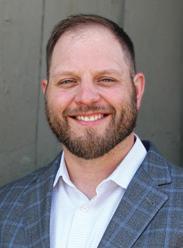
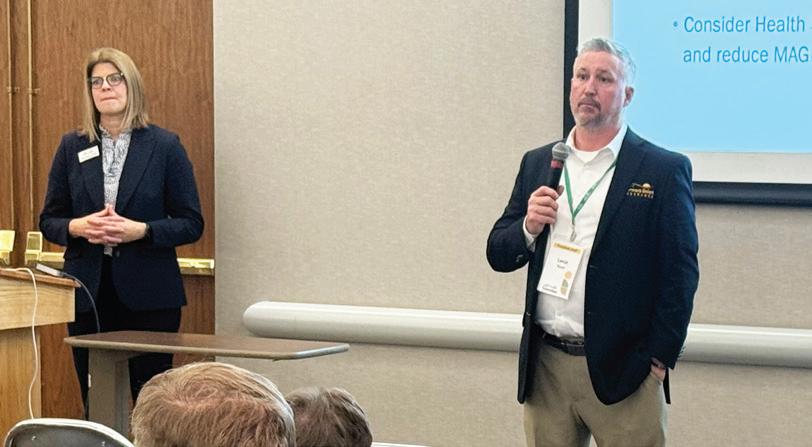
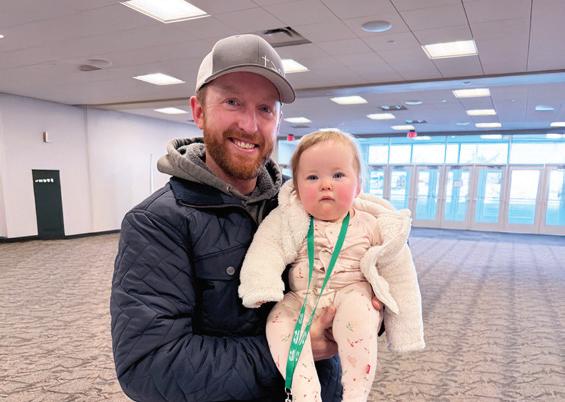
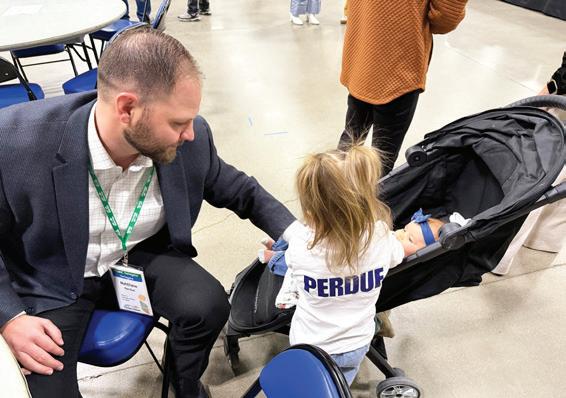
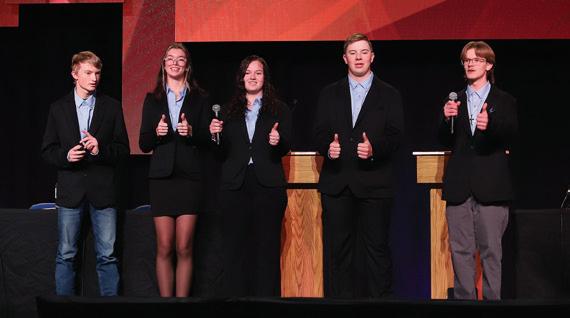
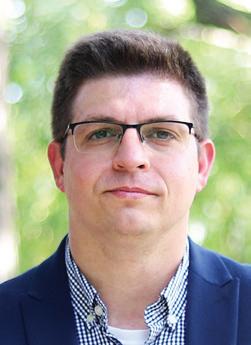
I was born and raised in North Dakota. I graduated high school in Minot and lived mostly in Williston since 1997. My wife Christi Huber was born and raised in the Trenton area. I have two bonus daughters who have graduated college in recent years. I have been an agent in Grenora for five years. Prior to becoming an agent, I spent 15 years in the car business and nine years selling in the oilfield industry. Both were uniquely different and challenging, and I enjoyed them. COVID turned that upside down with uncertainty. Now, I'm doing what I love — selling and servicing the needs of the local people and community that I call home.
I've been a North Dakota high school sports official for the past 17 years. I don’t just look at Grenora and Williston as being my community, but this whole upper corner of the state. I have met some very wonderful people over the years. Many relationships fostered in many different capacities. Those relationships naturally created a big network for me to serve. The relationships you create while working in sales, providing services for the community you live in, is what makes this job very satisfying.
Additionally, I serve on the Grenora Community Club board, and I'm a member of the Williston
Board of Realtors. I love sports and being at the lake on a boat. I recently got hooked on pickleball and started playing some tournaments and only hurt myself twice! Farmers Union is a wonderful company to work with and aligns with everything that is important to me, and that’s giving back and supporting your community and state.
Perdue elected at 99th
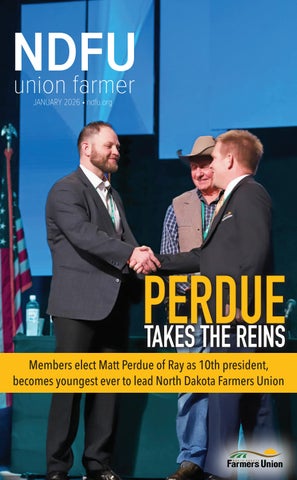
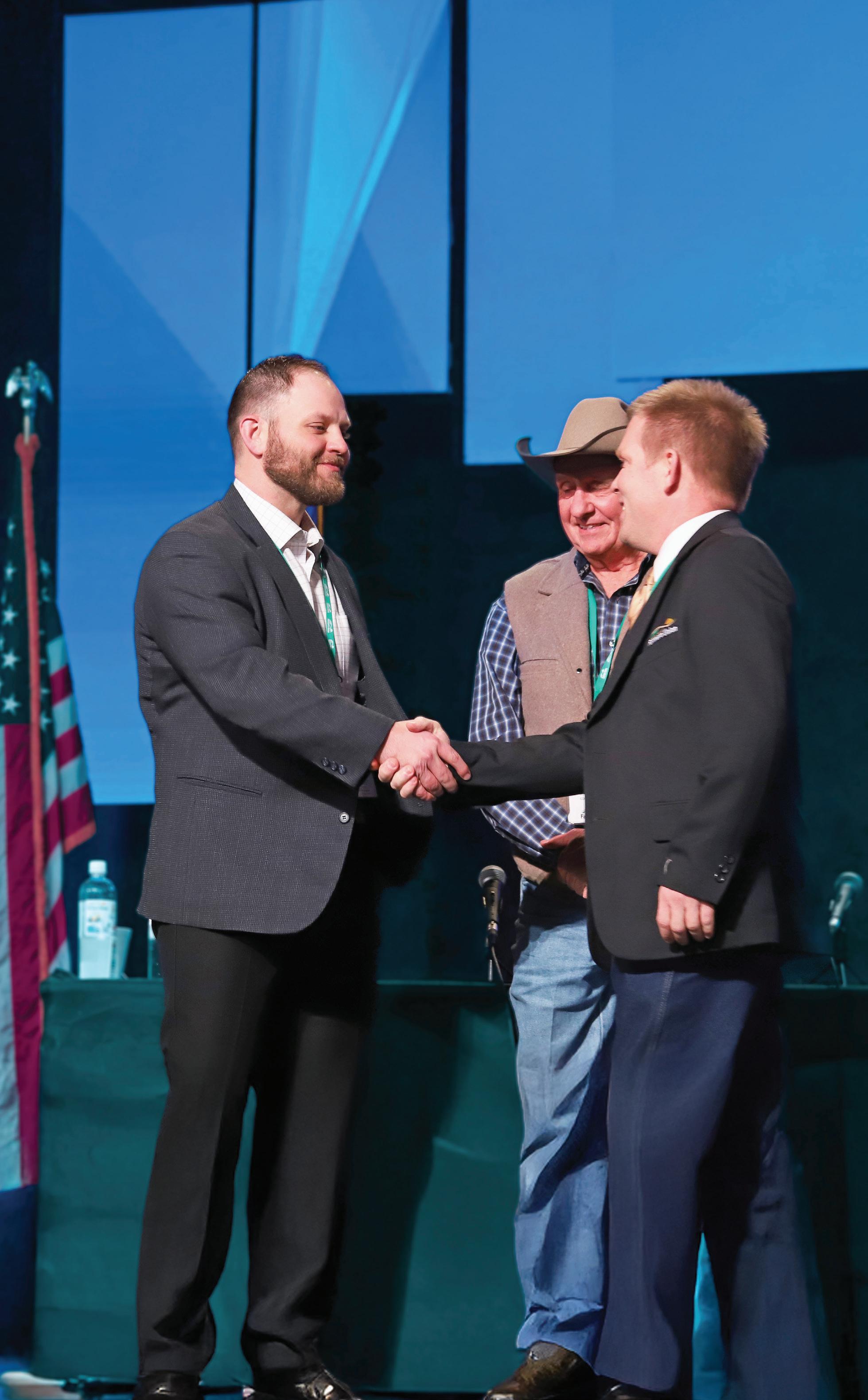
The election of a new state president capped off North Dakota Farmers Union’s 99th annual state convention Dec. 12-13 in Bismarck. Matt Perdue, a farmer from Ray, was elected to lead the state’s largest general farm organization. He is just the tenth person to hold that leadership position and the youngest at 33 years of age.
Perdue previously worked at NDFU and National Farmers Union, where he advocated for family farmers and ranchers. Former NDFU President Mark Watne did not seek reelection to the post.
Over the two-day event, more than 600 members enjoyed speakers, breakout sessions, a tailgate party, youth activities and more. In policy debate, Farmers Union delegates adopted their 2026 Program of Policy & Action and four special orders of business. Those orders focused on completing a comprehensive farm bill, strengthening rural health systems, restoring predictable and rules-based trade policy, and extending Affordable Care Act premium tax credits.
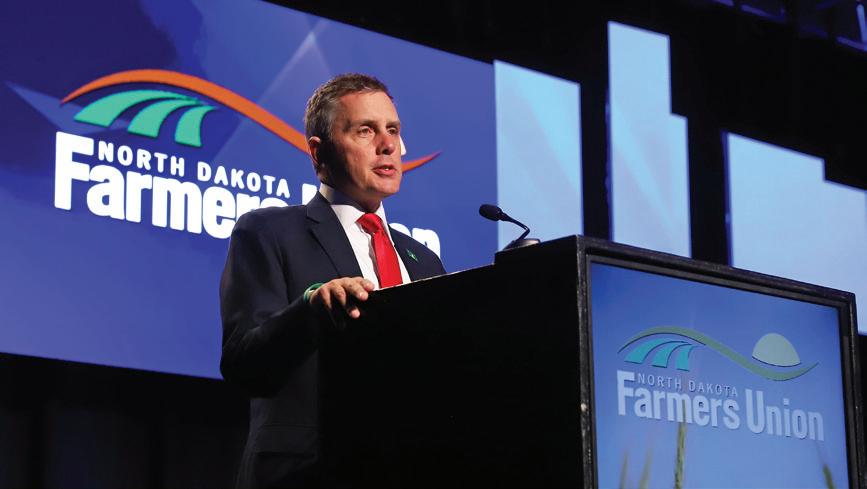
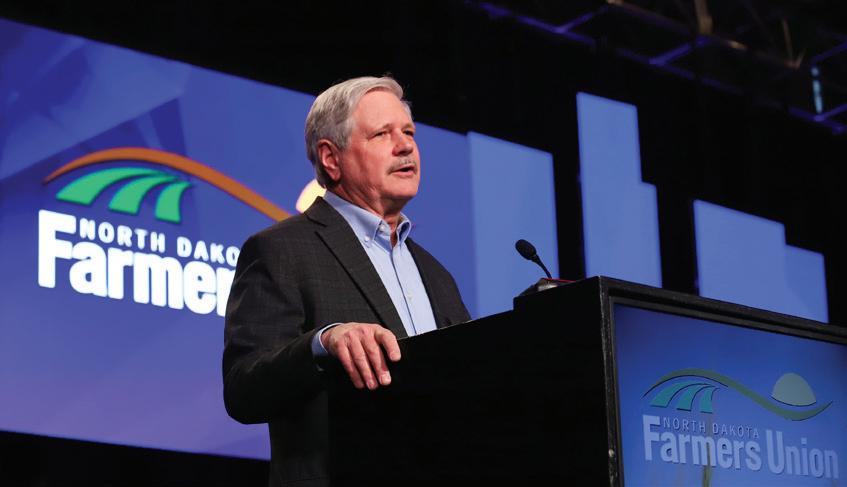
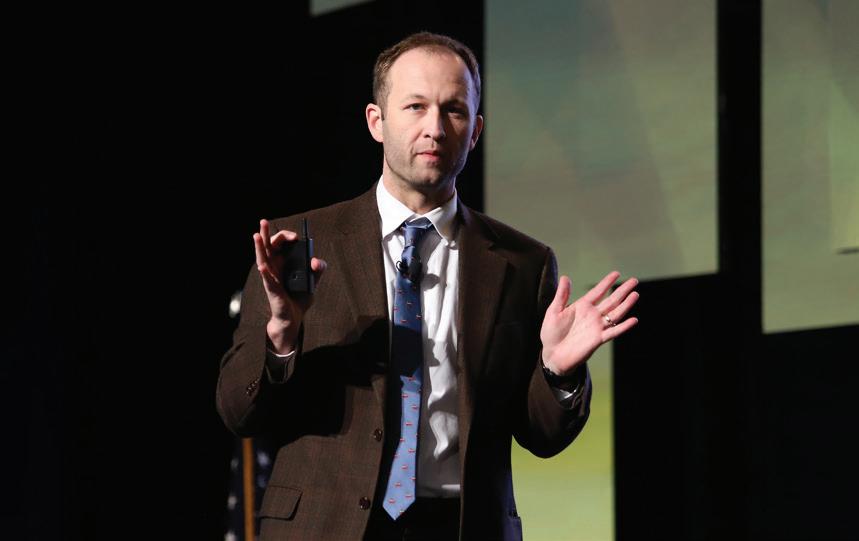
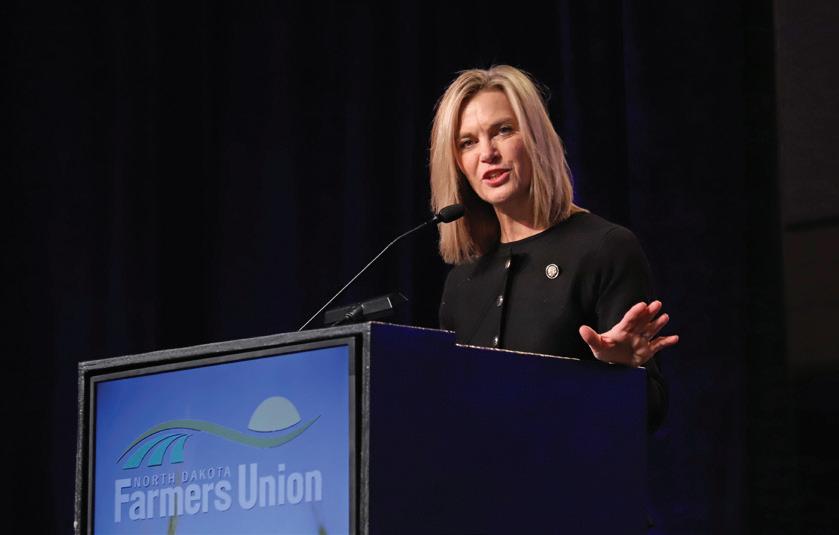
Speakers included National Farmers Union President Rob Larew, Gov. Kelly Armstrong, Rep. Julie Fedorchak, Sen. John Hoeven, geopolitical analyst Jacob Shapiro,
constitutional expert Jon Bouker, and Miss North Dakota 2025 Kennedy DeLap.
The Agraria Mutual Group (dba Farmers Union Insurance Company) also held its 82nd annual meeting in conjunction with the NDFU state convention.
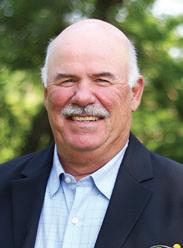
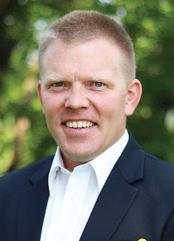
In other elections, Bob Kuylen of South Heart was reelected as vice president. Jon Iverson of Langdon was reelected District 1 director for Benson, Cavalier, Grand Forks, Nelson, Pembina, Ramsey, Towner and Walsh counties. Tyler Stafslien of Makoti was reelected to the District 3 seat. That district encompasses the counties of Burke, Divide, Mountrail, Renville and Williams counties. Dave Berger of Center was elected to the District 5 seat. District 5 comprises a nine-county area: Burleigh, Emmons, Grant, McLean, Mercer, Morton, Oliver, Sheridan and Sioux counties. Former director Wes Niederman of Elgin did not seek reelection. Ben Vig of Sharon was elected District 7 director for Barnes, Cass, Griggs, Ransom, Richland, Sargent, Steele and Traill counties.
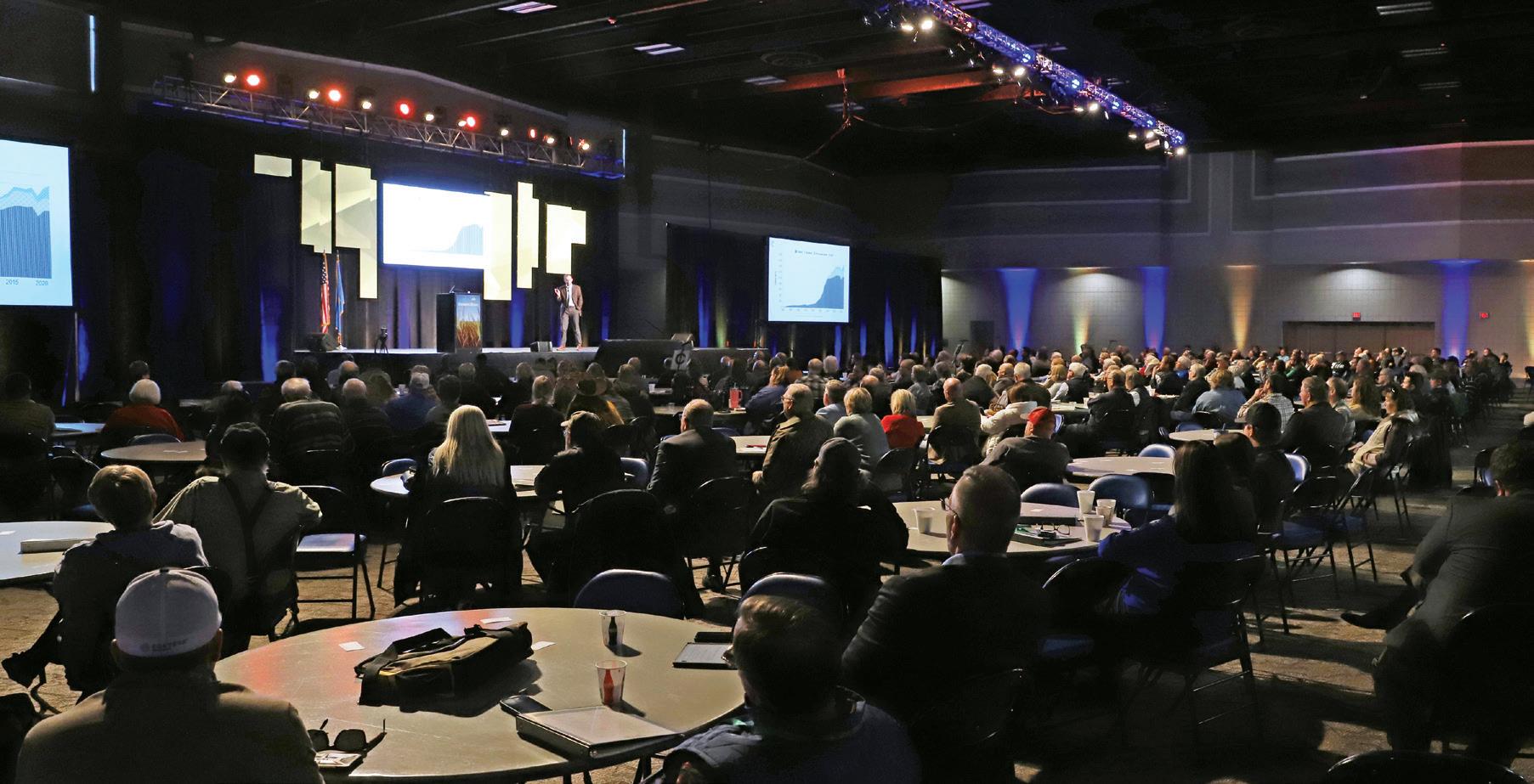
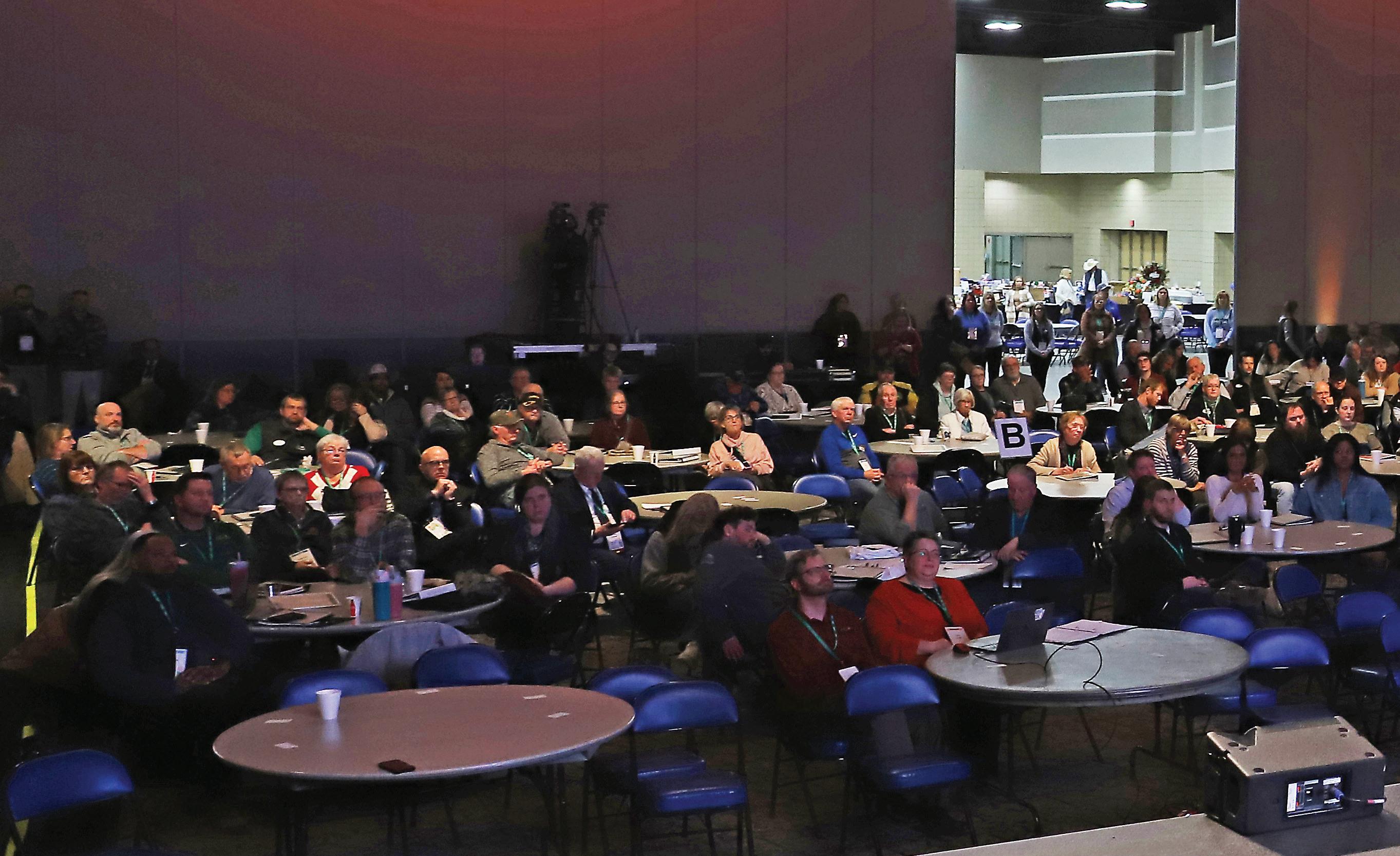
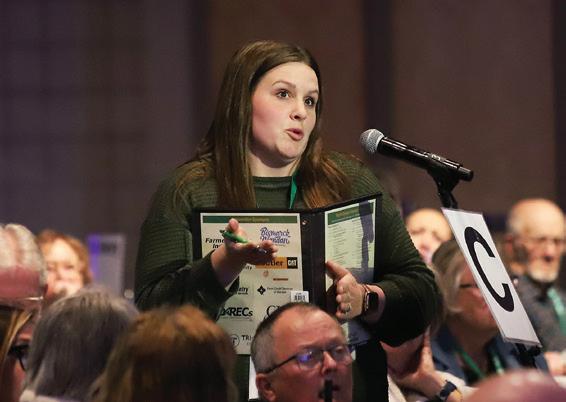
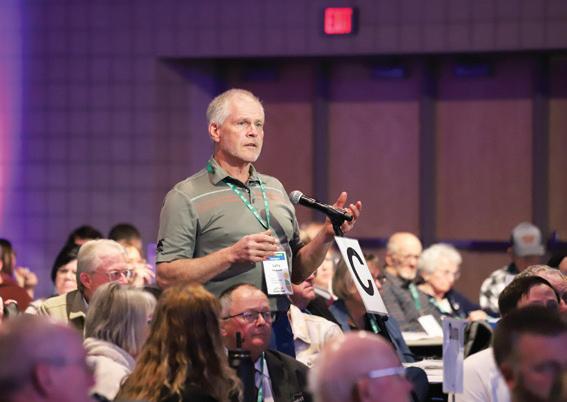
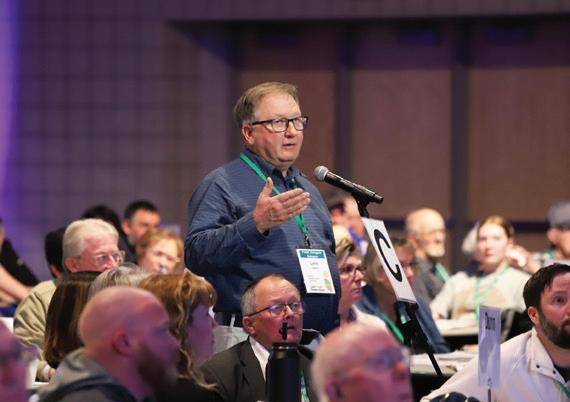
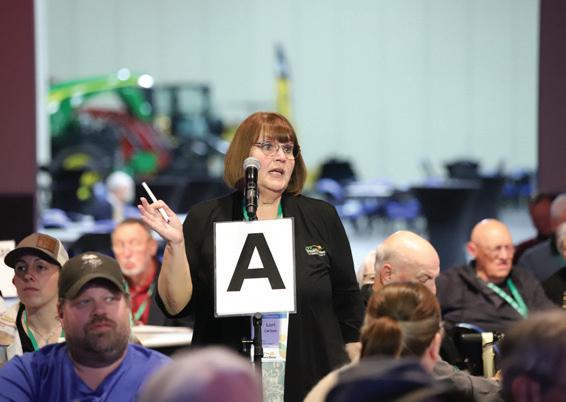
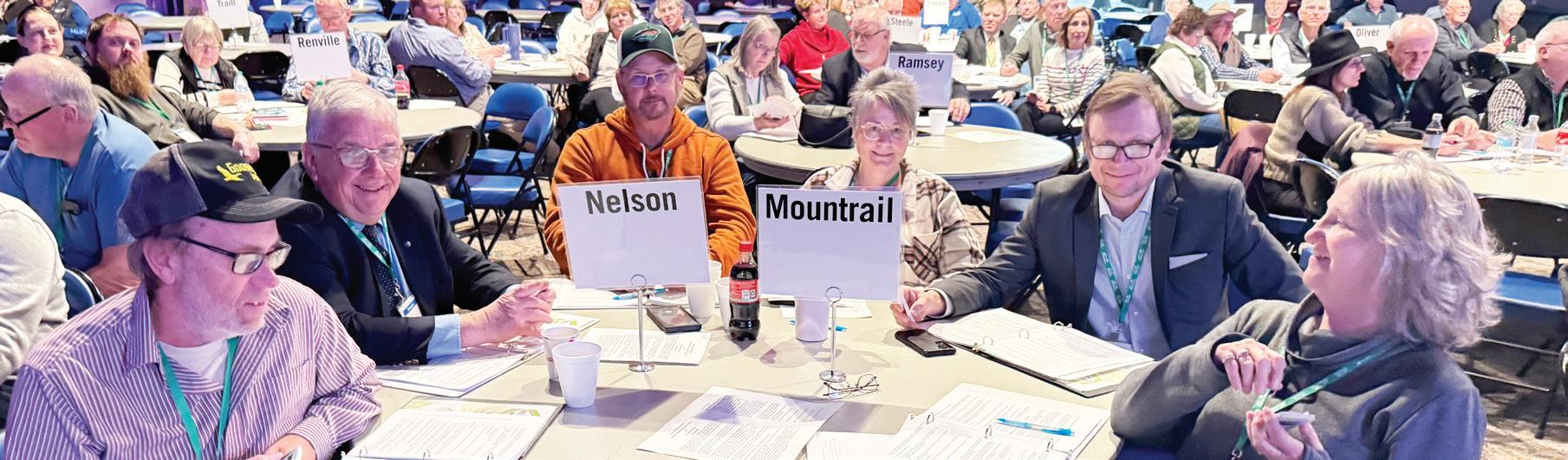
NDFU welcomed more than 600 members to its 99th annual convention Dec. 12-13 at the Bismarck Event Center.
BERGER
STAFSLIEN
IVERSON VIG
KUYLEN
PERDUE
A message from the president
I am honored to serve as the tenth president of North Dakota Farmers Union. I enter this role at a difficult time for family farmers and ranchers. Our prices are low, costs are high and futures are far too uncertain.
It is in the challenging times that the strength of our organization shines through. Thanks to past president Mark Watne and all our past and present leaders, NDFU is the strongest farm organization in North Dakota. We have a large and devoted membership base, incredible financial resources, and an excellent staff. We have a responsibility to leverage that strength to help you overcome the challenges you face
on your operation.
Each day I have this job, I will ask myself a simple question: How can we create more value for our members? NDFU’s mission directs us to create value through legislation, cooperation, education and risk management. If we keep those pillars at the core of our focus, I have no doubt we will build a better future for the next generation.
Thank you for trusting me to lead this great organization. I do not take that responsibility lightly. I also recognize that there is little any one person can accomplish alone. I am ready to take on the hard work ahead. I hope you will join me.
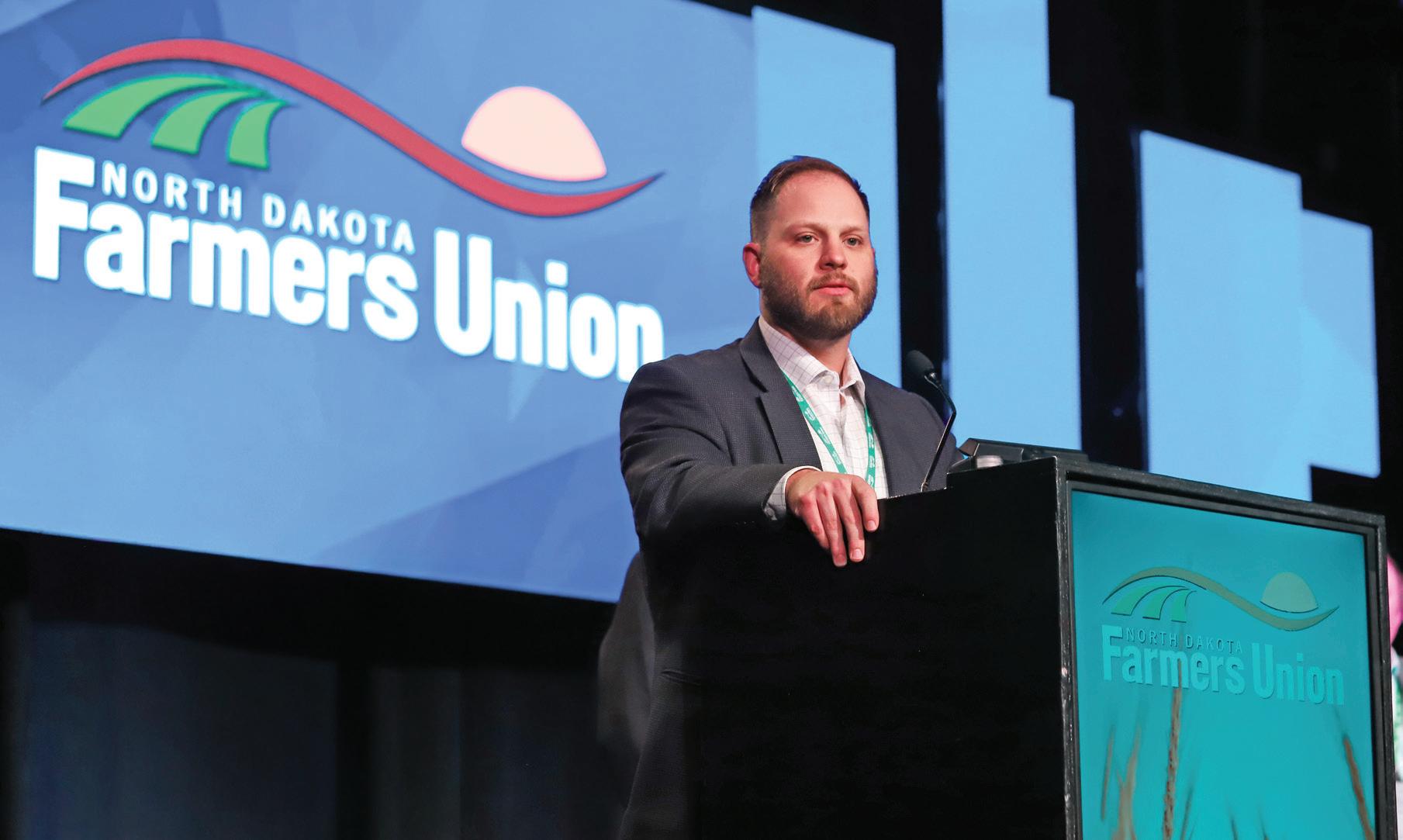
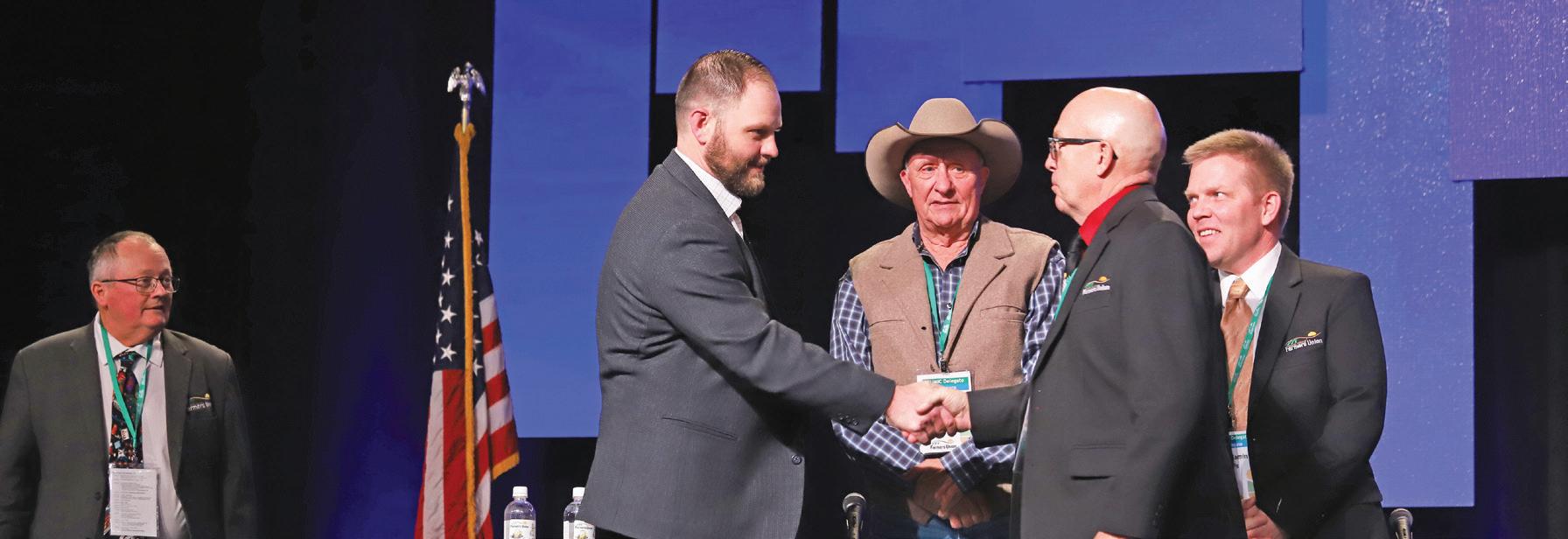
Newly elected NDFU President Matt Perdue gives an acceptance speech on Saturday of the convention.
NORTH DAKOTA DELEGATES TO THE NATIONAL FARMERS UNION CONVENTION
March 7-9 in New Orleans
DISTRICT 1: Julie Gemmill (Fordville), Dee Decimus Holmes and Stephen Holmes (Grand Forks), John Kelly (Pekin), Cate Kratochvil (Lankin), Christopher Lundeby (Osnabrock), Sheila Rude (Tolna), Jeanna Smaaladen (Grand Forks).
DISTRICT 2: Mary Blumhagen (Bismarck), Bob and DeAnne Finken (Douglas), April Marquart (Anamoose), Tia Nesson (Douglas), Phil Neubauer (Bottineau), Isaac Sherven (Ryder), David Teigen (Rugby).
DISTRICT 3: Doug and Sharri Cvancara (Wildrose), Lacey Ethen (Sherwood), Patty Jensen (Tioga), Trever Jensen (Kenmare), Jarrett Keith (Sherwood) Steve and Jerri Keith (Sherwood).
DISTRICT 4: Mary Fischer (Bowman), Tim Fischer (Bowman), Aaron and Cindy Krauter (West Fargo), Bob Kuylen (South Heart), Clifford Mayer (Dickinson), Lenci Sickler (Gladstone), Shane Sickler (Gladstone).
DISTRICT 5: Dave Berger (Center), Roxann Bloom (Ryder), Bailie Grainer (Huff), Bill Kershaw (Menoken), Wes Niederman (Elgin), Claire Ryberg (Menoken), Hanna Ryberg (Menoken), Miles Tomac (Mandan).
DISTRICT 6: Lori Blocker (Ashley), Lori Carlson (Spiritwood), Lynn Haro (LaMoure), Josh Heinrich (Adrian), Mike Huebner (Jamestown), Carmen Rath Wald (Napoleon), Mary Schlosser (Edgeley).
DISTRICT 7: Bob Bruns (Valley City), Jim Dotzenrod (Wyndmere), Mark and Michelle Watne (Fargo), Wyatt Sundquist (Forman), Dalton Wiest (Barney), Ben and Megan Vig (Sharon).
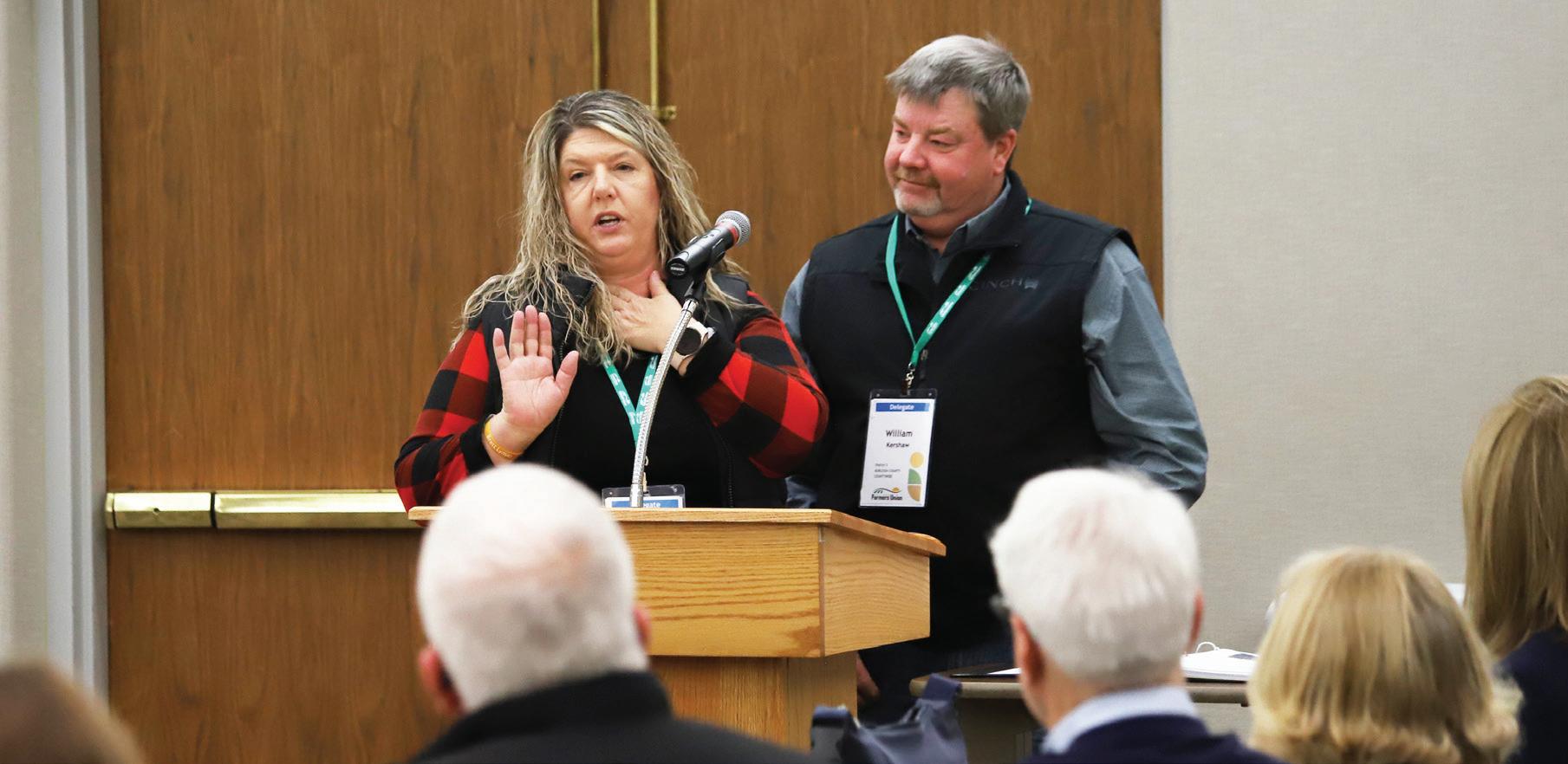
Karen and Bill Kershaw of Menoken give a nomination speech during the District 5 caucus to be a delegate to the National Farmers Union convention March 7-9 in New Orleans.
NDFU delegates pass four special orders
Each year, delegates at North Dakota Farmers Union’s annual convention conclude the Policy and Action debate by passing special orders of business. These documents address specific, timely issues and highlight strong priorities for NDFU’s advocacy work. This year, delegates to the convention passed four special orders dealing with the Farm Bill, trade, affordable health care and rural health.
FAMILY FARMING AND THE FARM BILL
The continued failure to enact a comprehensive, long-term Farm Bill, relying instead on repeated short-term extensions has created continued uncertainty for farmers, ranchers and rural communities. Several programs have lapsed or face funding interruptions because they lack a permanent budget baseline beyond FY2023. While Congress acted in 2025 through H.R. 1 to strengthen portions of the farm safety net, including higher reference prices, additional ARC and PLC flexibility, and improved crop insurance, these vital but piecemeal adjustments did not constitute a full Farm Bill and failed to address the systemic weakness in the farm economy.
Many critical programs remain unfunded or expired, including agricultural research programs, beginning farmer development, local and regional food systems, organic certification cost-share, rural development, energy programs, and specialty crop support. These unfunded programs, while representing a relatively small budget allocation, provide important benefits to family farmers, rural communities, and emerging agricultural sectors.
The lack of a comprehensive, long-term Farm Bill undermines producer confidence, disrupts multi-year conservation planning, limits access to credit for beginning farmers, and forces agricultural producers to make critical business decisions without knowing what support programs will be available beyond the current crop year.
We urge Congress to enact a complete, long-term Farm Bill that provides certainty and
stability for family farmers and ranchers:
• To ensure support is directed to family farmers and ranchers, not large corporate operations.
• Establishing permanent disaster assistance programs that are need based.
• Strengthening risk management options for livestock and forage producers.
• Reauthorizing the farm credit title to ensure access to capital for beginning farmers.
• Implementing and funding agricultural research programs.
• Supporting voluntary, farmer-driven conservation programs with adequate funding.
• Funding for beginning farmers, sustainable agriculture, local food programs, rural development, and specialty crops.
• We oppose attempt to weaken existing payment limitations or means testing.
• Recouples the Supplemental Nutrition Assistance Program (SNAP) with the Farm Bill, as these essential programs directly support rural and local economies.
Thank you to the following convention sponsors:
AgCountry Farm Credit Services of Mandan Butler Machinery of Fargo First Community Credit Union
FAMILY FARMING AND TRADE
North Dakota agriculture is the cornerstone of the state’s economy and is heavily dependent on international trade. Yet, producers are facing mounting economic pressure, driven by trade disruptions, with parallels to the 1980s farm crisis. Due to rising input costs, declining commodity prices, and the erosion of key export markets stemming from unilateral tariffs and ongoing trade disputes agriculture is struggling. North Dakota is a national leader in the production of exportdependent crops, with roughly 70 percent of soybeans and nearly half of Hard Red Spring wheat marketed internationally.
The 2025 trade war has significantly disrupted global commodity flows and reduced demand for U.S. products. China had halted U.S. soybean purchases amid tariff escalation, imposed tariff costs of roughly $2 per bushel despite U.S. soybeans being priced below global competitors, and shifted sourcing to Brazil and Argentina, a structural loss of market share that may be impossible to recover. Export sales for Hard Red Spring wheat are down for the 2025–26 marketing year, and continued tariff threats and trade instability are encouraging buyers to seek non-U.S. suppliers, posing long-term risks for all U.S. wheat classes.
These trade disruptions are compounded by escalating input costs driven in part by tariffs on imported farm inputs, further squeezing farm margins. Fertilizer now accounts for nearly 30 percent of operating expenses, tariffs on pesticides and herbicides exceed 20 percent, and tariffs on tractors, machinery, and parts have increased substantially.
North Dakota Farmers Union urges immediate action to restore predictable, rulesbased trade policy and mitigate the damage to the farm economy, including:
• Immediately eliminating retaliatory tariffs that reduce competitiveness of U.S. agricultural exports.
• Restoring and expanding market access for soybeans, wheat, and other key commodities.
• An evaluation of and subsequent reduction or elimination of tariff-driven costs on essential farm inputs.
• Instituting predictable trade policy safeguards with congressional oversight of executive branch tariff actions.
We support trade policies that strengthen, not undermine, family farmers and ranchers and ensure U.S. agriculture remains competitive in global markets.
NORTH DAKOTA FARMERS UNION STATE CONVENTION SPONSOR
Special orders continued
FAMILY FARMING AND AFFORDABLE HEALTH CARE
Access to local, high-quality health care is essential to the economic stability of family farmers, ranchers, and rural communities. Affordable and comprehensive health insurance provides that access. Because many farmers and ranchers are self-employed, they rely on the Affordable Care Act (ACA) marketplace for coverage. The scheduled expiration of enhanced ACA premium tax credits at the end of 2025 threatens to significantly increase health insurance costs for North Dakota farm and ranch families.
The enhanced ACA premium tax credits have improved affordability and limited the share of income households must spend on health insurance premiums. Their expiration would likely reduce enrollment, increase the number of uninsured rural residents, and further destabilize an already strained insurance market. For many farm and ranch families operating as small businesses, these credits have made the difference between having coverage and going uninsured. While premium tax credits help offset costs of insurance, they do not address the underlying drivers of increasing health care prices. Lack of transparency, increasing costs and utilization
of prescription drugs, financial stress of rural health providers, and growing consolidation among insurers and providers continue to push health care costs higher and limit choices for rural patients.
North Dakota Farmers Union calls on Congress to extend the enhanced ACA premium tax credits before the end of 2025 to prevent sharp premium increases and maintain access to affordable, comprehensive health insurance coverage for family farmers, ranchers, and rural residents.
Furthermore, we support legislation that improves cost transparency, tackles prescription drug costs, support rural providers, and addresses consolidation within the health care system to stabilize the health insurance marketplace and bring down costs so that farmers, ranchers and rural communities have access to affordable and comprehensive health care.
The health and economic security of the North Dakota agriculture community depend on timely action to preserve affordable health insurance options and address the systemic factors driving unsustainable cost increases.
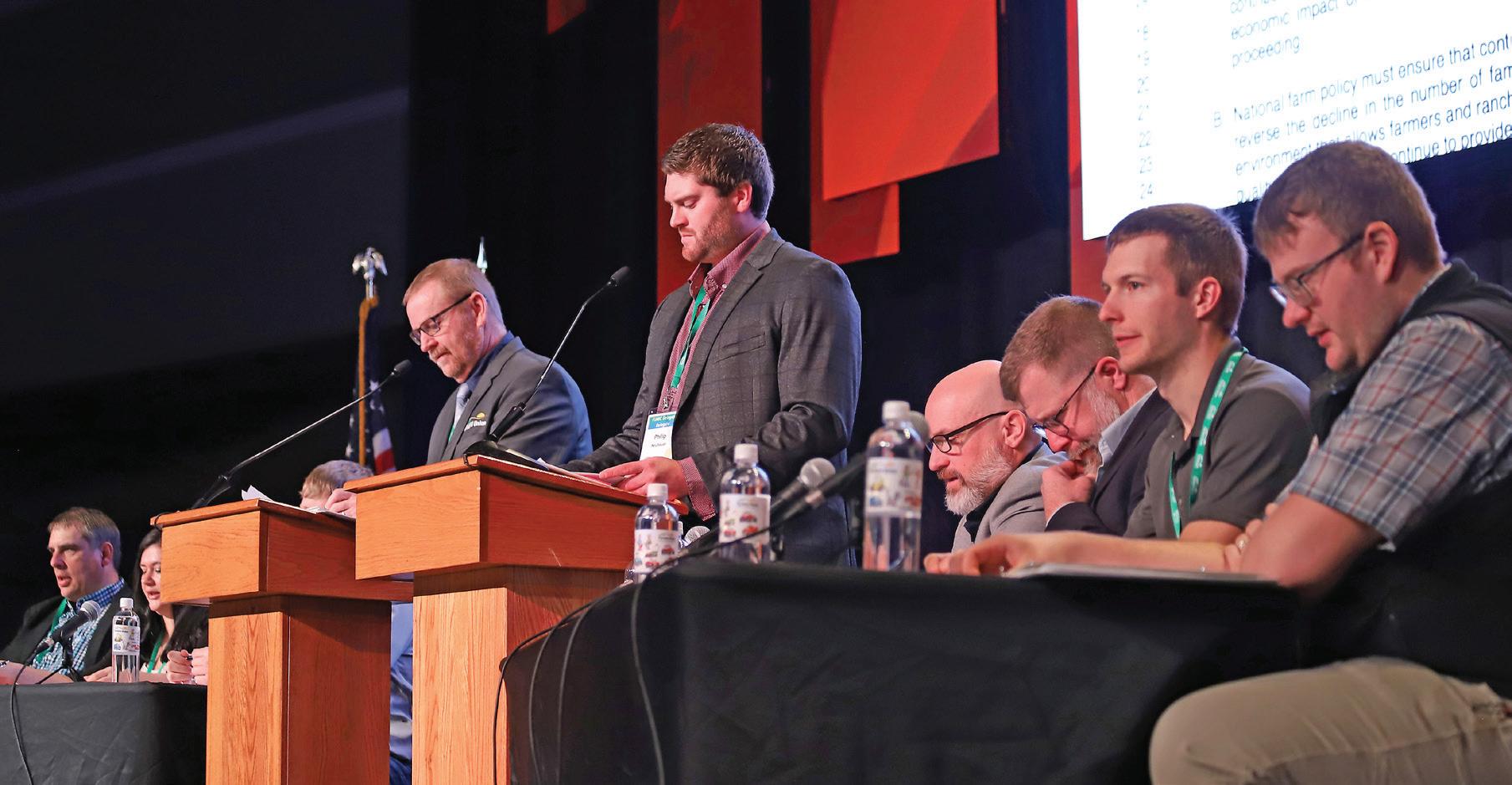
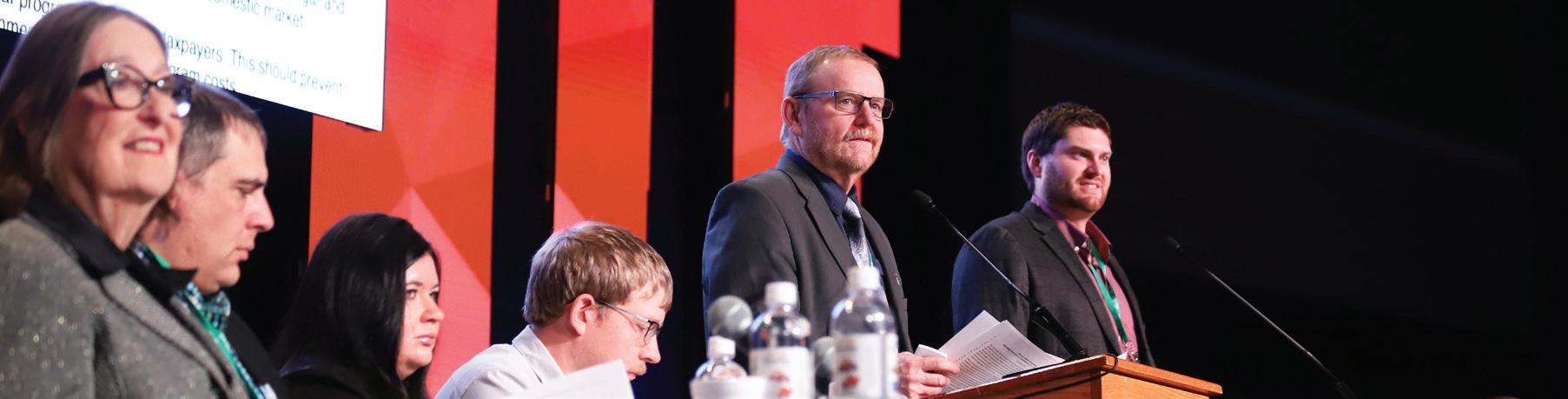
NDFU President Mark Watne and Chairman Phillip Neubauer lead the Policy and Action debate.
FAMILY FARMING AND RURAL HEALTH
North Dakota is expected to receive at least $500 million over five years through the federal Rural Health Transformation Program (RHTP), authorized in the One Big Beautiful Bill Act (H.R. 1 Section 71401). The North Dakota Department of Health and Human Services (NDHHS) has implemented an application process with funding awards expected by December 31, 2025.
A special legislative session will be held in early 2026 to authorize acceptance and distribution of the federal funds. The session will primarily focus on implementation and compliance with RFTP requirements, with limited opportunity for broader policy amendments.
Federal funds must be directed to measurable improvements in rural health access, quality, outcomes, and efficiency. Eligible uses include rural workforce recruitment and retention, preventive and primary care expansion, telehealth and health data infrastructure, chronic disease management, and clinical training. Federal rules limit spending on new facility construction and general provider reimbursement. In-state awards, distribution and monitoring will be the responsibly of the NDHHS.
North Dakota Farmers Union supports efforts to strengthen rural health systems and we will work to ensure that federal investments improve access, workforce capacity, and longterm sustainability in rural communities.
We urge the State of North Dakota through the legislature and NDHHS to:
• Address agricultural community needs, including emergency services, mental health, prenatal care, and telehealth.
• Prioritize rural and underserved communities in fund distribution, particularly areas lacking basic emergency services or experiencing severe provider shortages.
• Establish clear definitions of "rural" to ensure funds intended for truly remote areas not be redirected to regional centers with adequate health infrastructure.
• Support community-based solutions that empower local health systems rather than consolidate services in regional centers.
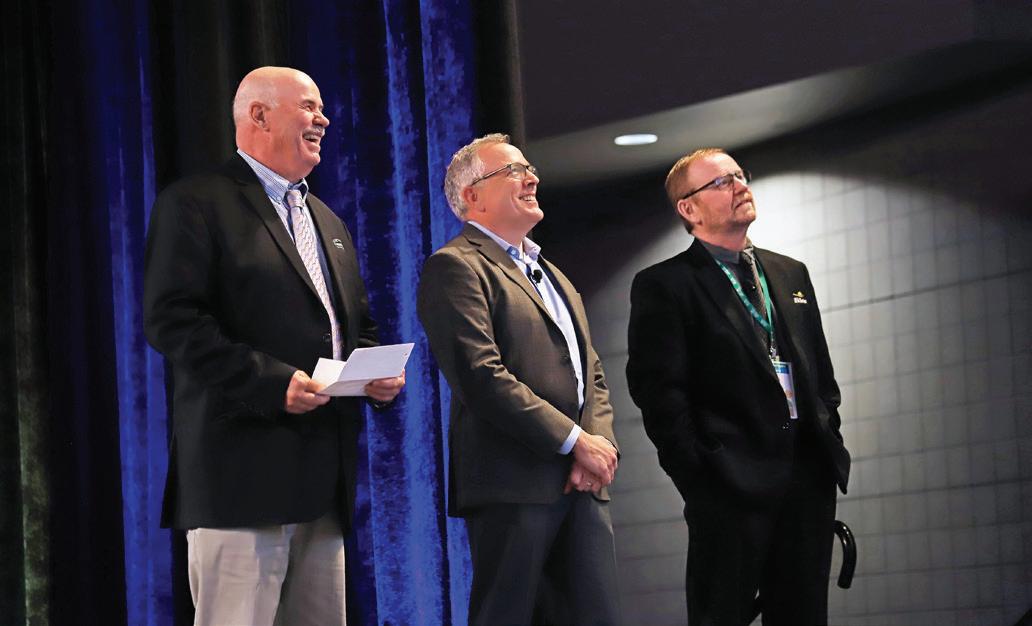
NDFU Vice President Bob Kuylen, National Farmers Union President Rob Larew and Mark Watne watch a historical tribute video to Mark prior to his president's report.
TOP LEFT: Mark's parents, Janice and Gene Watne of Velva, were in attendance.
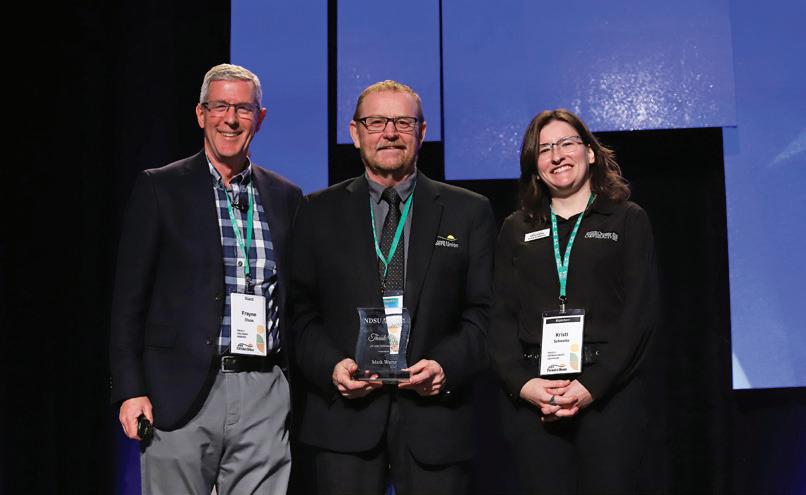
TOP RIGHT: Mark was honored for his many years of service on the Quentin Burdick Center for Cooperatives advisory board. With him is director Frayne Olson and assistant director Kristi Schweiss.
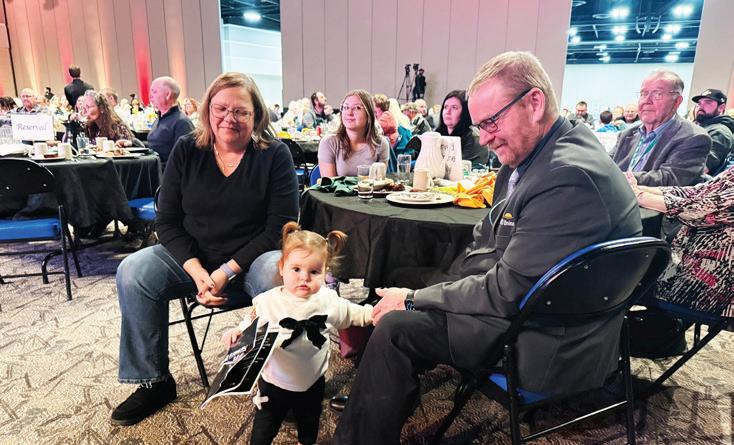
AT LEFT: Mark and his wife Michelle play with their granddaughter during the Torchbearer ceremony.
Watne gives final President's Report to 99th state convention
BY PAM MUSLAND, NDFU
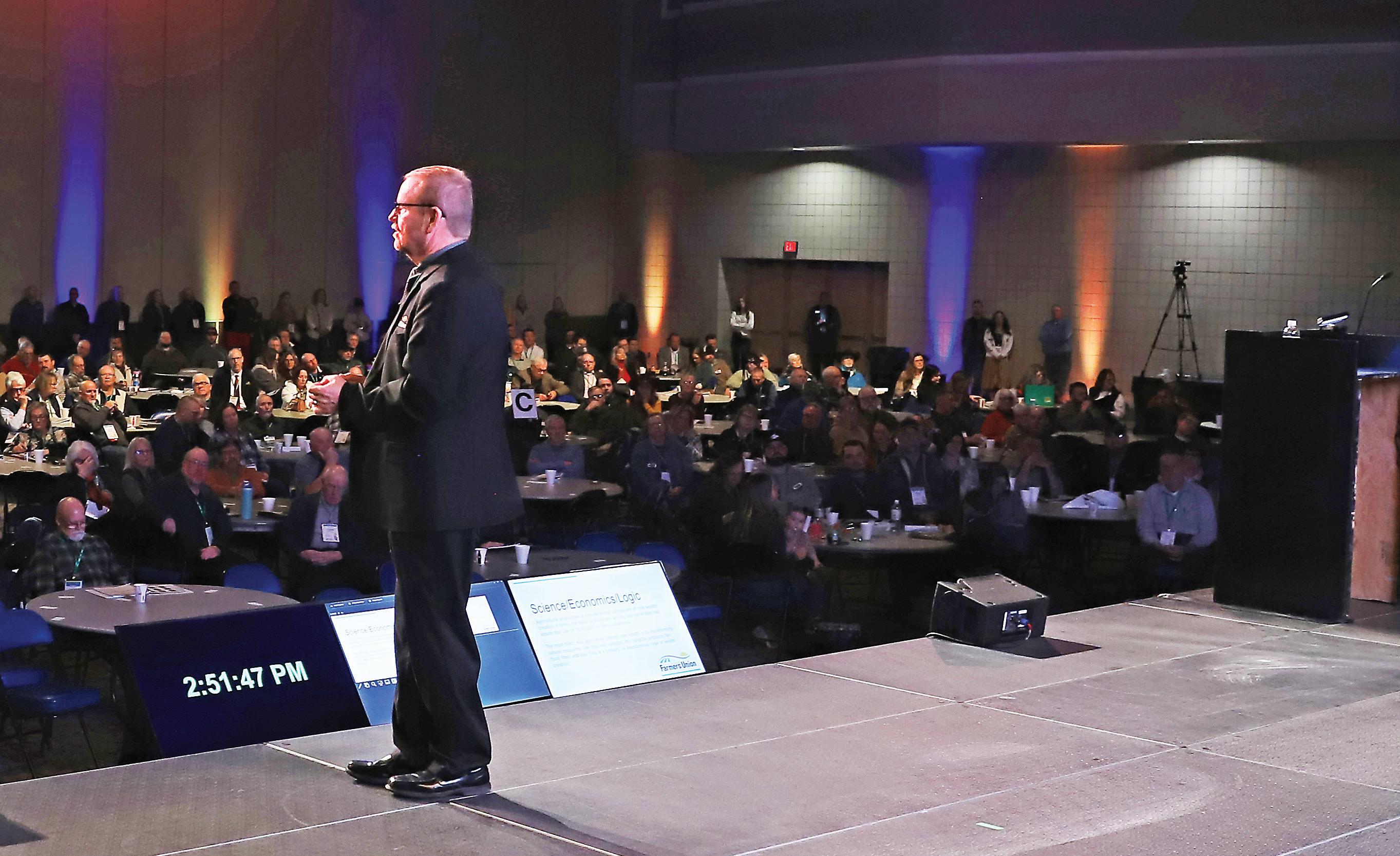
In his last address as NDFU president, Mark Watne challenged members to continue to build the organization through grassroots involvement. “This has never been about me, about one person. It’s about an organization,” he said. “It takes, in a grassroots organization, each and every one of us to participate… otherwise we will not be successful.”
He reflected on goals he set as president that were grounded in NDFU’s mission statement. Although deliberately unattainable, Watne felt the goals had been enhanced. He cited NDFU’s balance sheet, which has seen equity grow almost three times in 12 years, thanks to “a lot of vision, a lot of leadership, a lot of people still in this room – past presidents, past boards. That’s huge to me, because the president will spend the vast majority of their time worried about having enough money to be able to have enough people to do what you ask us to do.”
Balance, competitive collaboration, science/ economics/logic, community, integrity/ discipline, focus, respect, and influence were themes he emphasized in his speech for moving the organization forward. He encouraged members to dispel “the
extremes” and find middle ground in politics. “If you believe the solution to everything we do is somebody has to win and somebody has to lose, you don’t believe in a Farmers Union society. I believe we’re working for everyone to win. Sometimes that means we’re going to do things we may not like or may not support, but it’s in the interest of society as a whole. We go forward with a strategy that’s balanced.”
Watne reminded members that agriculture is a huge asset in generating new wealth. “The most direct way to create new wealth is the transforming of natural resources from land, sunlight, seeds. Don’t let people take the value of what you do, away from you. We cannot let people define us. It’s time for us to define who we are.”
“We live in a world of critics,” he continued. “The success of this organization is the strength of the grassroots and your willingness to step up and play an active role in what it takes to get things done. You have to become a doer. We need you.”
“I just couldn’t imagine it (12 years) would go by so quickly,” he concluded. “But I couldn’t have enjoyed my life hardly anymore. I really, really, really am honored to have been able to serve you folks in this capacity.”
NDFU President Mark Watne gives his final President's Report.
DeLap keynotes Torchbearer Ceremony
Miss North Dakota Kennedy DeLap was the keynote speaker at the Torchbearer Ceremony on Saturday night.
Honored during the ceremony were 12 winners of the Torchbearer Award, the highest honor that can be achieved in North Dakota Farmers Union’s youth program.
DeLap spoke about her journey to being named Miss North Dakota in 2025 and her desire to see more empathy in the world. She encouraged all of the Torchbearers to follow their dreams and never give up.
The Torchbearer Award recognizes students for their involvement in Farmers Union’s youth education program and requires five years of senior class work (grades 7-12) to enhance
communication, leadership and teamwork skills, along with business knowledge of cooperatives.
As Torchbearers, youths pledge with a courageous heart to practice tolerance and brotherhood for all, and to help “light the way to a peaceful world.”
2025 Torchbearer Class
BARNES – Carter Hass and Matthew Holm, both of Valley City. EMMONS – Rose Baumgartner of Strasburg. HETTINGER – Samantha Greff of Mott. MCLEAN – Chase Cowdrey of Garrison, Maggie Jennings of Washburn. MCKENZIE – Danica Degenstein of Watford City, Rylan Scofield of Arnegard. PIERCE – Carter Teigen of Rugby. SIOUX – Emily Carry Moccasin of Selfridge. WILLIAMS –Bridger Cvancara of Wildrose, Myia Knox of Ray.
Miss North Dakota Kennedy DeLap was the keynote speaker at the Torchbearer Ceremony on Saturday night. DeLap works as a photojournalist for North Dakota Living magazine.
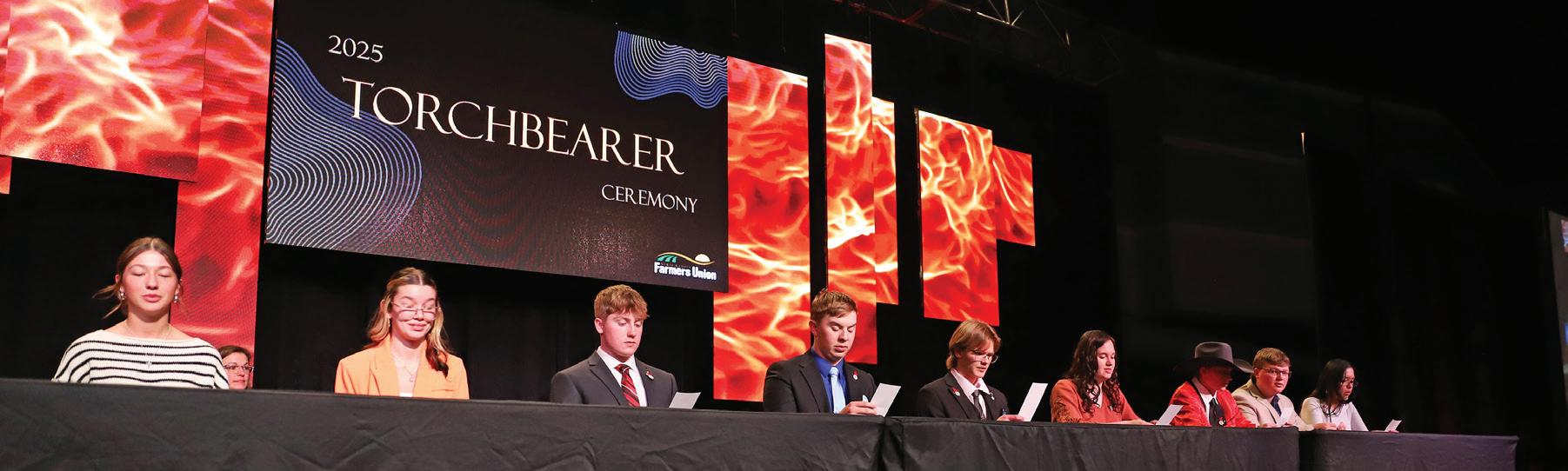
The 2025 Torchbearer Class recites their pledge.
2025 TORCHBEARER CLASS
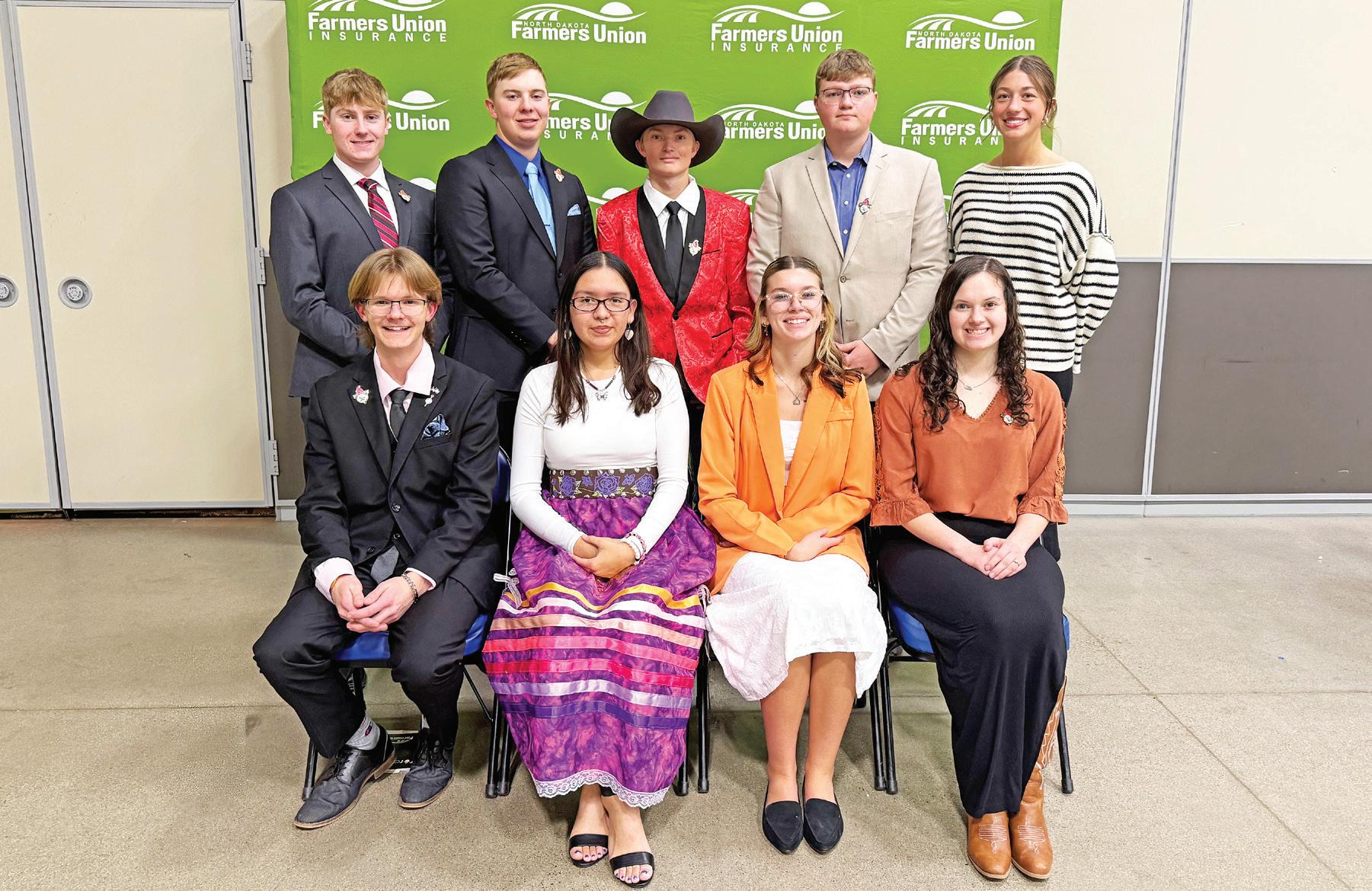
The 2025 Torchbearer Award winners were honored on Saturday of the NDFU state convention. In back, from left, Carter Teigen of Rugby, Matthew Holm of Valley City, Rylan Scofield of Arnegard, Bridger Cvancara of Wildrose and Maggie Jennings of Washburn. In front are Carter Hass of Valley City, Emily Carry Mocassin of Selfridge, Danica Degenstein of Watford City and Rose Baumgartner of Strasburg. NOT PICTURED: Bryant Bohl of Wildrose, Myia Knox of Ray and Chase Cowdrey of Garrison.
Cvancara, Holm win Bergman Scholarship
Bridger Cvancara of Wildrose and Matthew Holm of Valley City are the 2025 recipients of the $2,000 Bergman Scholarship.
The scholarship was established by Alan Bergman, past president of NDFU. To be eligible, applicants must be current Torchbearers and have at least a 2.50 GPA. The recipients were selected by a panel that evaluates each applicant’s responses to essay questions that relate to Farmers Union, rural issues and personal leadership skills. To learn more, go to NDFU.org.
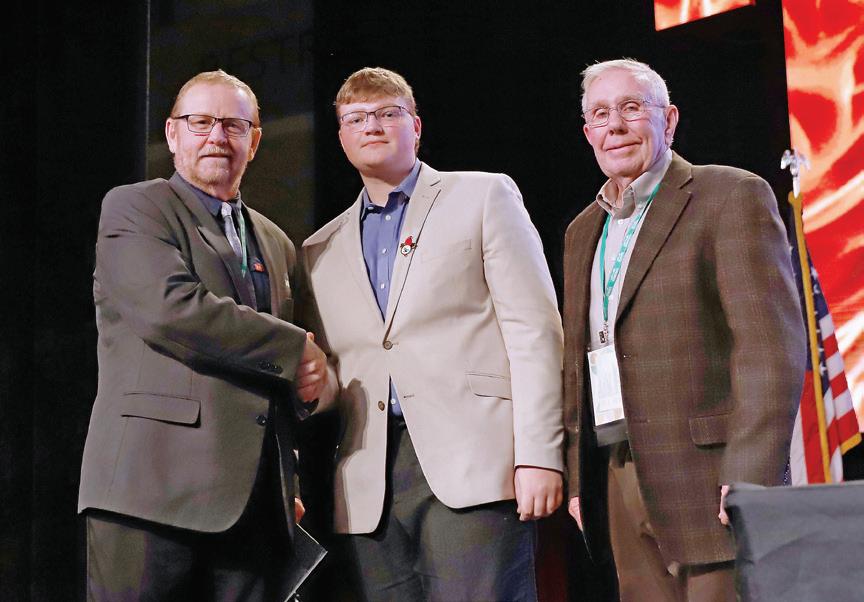
Bridger Cvancara (left picture) and Matthew Holm (right picture) stand with former NDFU President Alan Bergman (at right) and NDFU President Mark Watne.
How about 50-for-50?
Going strong since 1976, Foster County president Charles Linderman has yet to miss a N.D. Farmers Union convention
BY CHRIS AARHUS, NDFU
Every December, Farmers Union families pack the halls of state convention, eager to come together for fellowship and to live out the mission of the grassroots. For many families, it’s an event they don’t want to miss.
On the Linderman farm, there are no exceptions when it comes to attendance. When NDFU’s 99th annual convention kicked off Dec. 12-13 in Bismarck, it marked the 50th consecutive state convention for Charles Linderman of Carrington. He attended his first NDFU state convention in 1976 at the Bismarck Civic Center.
“I put it on my calendar as soon as I find out the dates,” he said. “Everything else works around that.”
He remembers his first convention, in which President Stanley Moore presided in only his second year on the job.
“There were more people at that convention because there were more farmers then,” he said. “I think I was the only one from Foster County. I remember people from Eddy County inviting me out to dinner.”
Charles and his wife Ellen have long been regulars at Farmers Union events, with Ellen having served on NDFU’s board of directors. Charles is the longtime president of Foster County Farmers Union.
Growing up in a Farmers Union family, Charles recalled his mother being an officer in the local and his father being committed to co-ops.
“We always went to Farmers Union meetings,” he said. “I’m old enough to remember when we didn’t have dial telephones, you’d have to tell the number to the operator. There are two numbers I heard my dad say so many times that I still remember
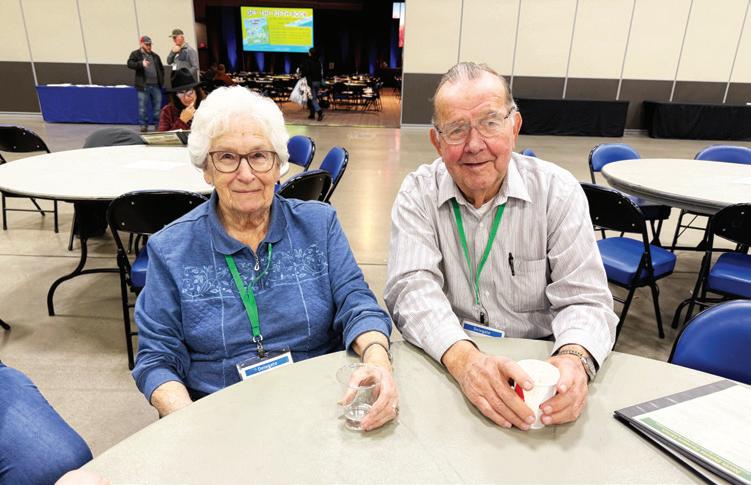
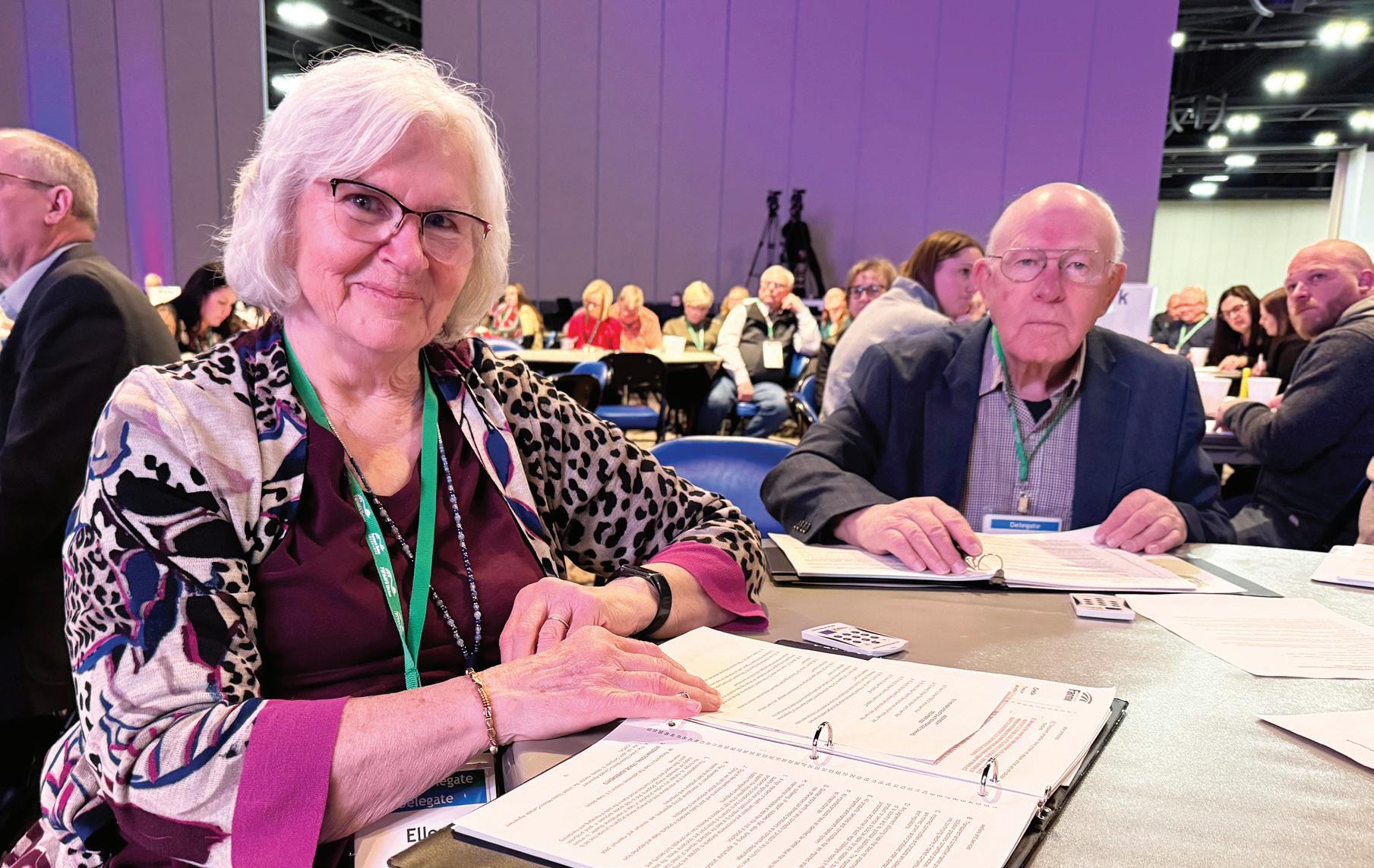
Ellen and Charles Linderman are dedicated Farmers Union members. Foster County's longtime president, Charles recently celebrated his 50th consecutive NDFU state convention. Ellen spent 12 years on the NDFU Board of Directors.
NDSU hosts educational breakouts
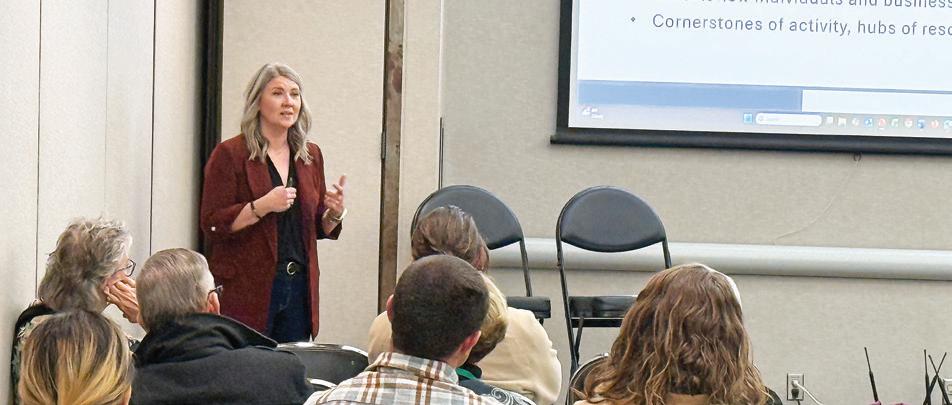
Erin Oban of
Schools talks about the benefits of public education in North Dakota and how they can be best equipped with the knowledge and skills to be productive citizens.
Farmers Union Insurance's
questions on the latest changes to the Affordable Care Act and how they affect health insurance premiums. At his
them. One was my grandma Linderman, because my dad would call to check up on her in the evening, and that was 192J. The other was 222W, and that was the Farmers Union Oil Co.”
Charles started his faithful attendance as an adult by going to Wyard Local meetings, where he volunteered to be a delegate to the state convention in 1976. At the time, he said the major policy discussion surrounded the Garrison Diversion and the McClusky Canal, a project to bring Missouri River water east.
“It seemed like it was a long, drug-out policy discussion every year for several years,” he said.
Another significant convention Charles recalls came in 1997, when a devastating winter storm came through North Dakota and shut down all travel. It was a special year, as Robert Carlson was running for NDFU president to succeed Alan Bergman at the convention in Fargo. Though he wasn’t able to attend, Carlson was elected.
“I had come down the day before convention, and Ellen was going to come but we didn’t want to take the kids out of school any longer than we had to,” he said. “By the next day, we had a blizzard going on. We still had the convention, but not everyone was there. That was the only time in all of those 50 years that
anything like that really happened.”
The Lindermans have never wavered on their attendance — certainly not when their youngest daughter was only seven weeks old.
“You get a lot of attention when you bring a seven-week-old to convention,” he joked.
Charles said he appreciates NDFU’s respectful, grassroots approach to policy.
“People voice different opinions and when it’s all over, everybody is still friends,” he said. “Because we’re here to support family farms and cooperatives, so we might differ on the details of how to get there. But when it’s all over, there’s no hard feelings.”
North Dakotans for Public
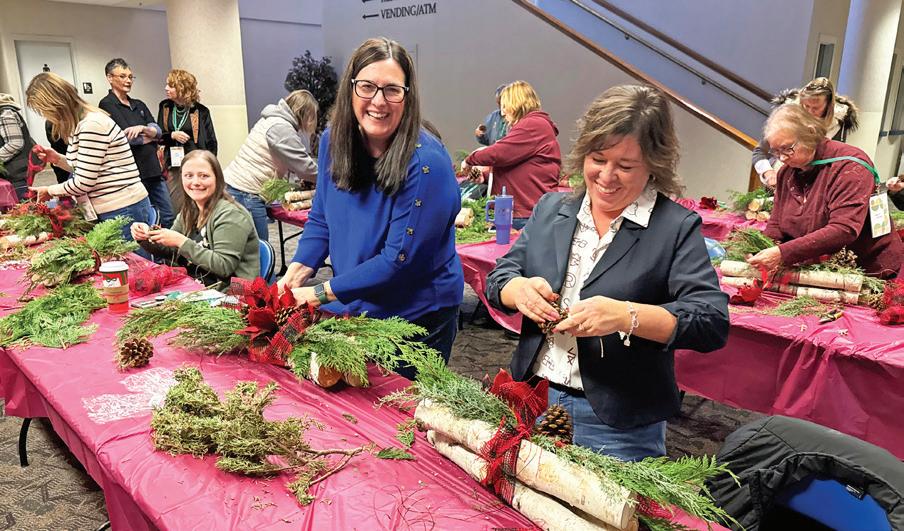
NDFU members enjoyed a Christmas Craft session, led by the Mandan business Beyond the Blooms.
Lance Boyer answers
left is Farmers Union Insurance Chief Legal Officer Kristi Schlosser Carlson.
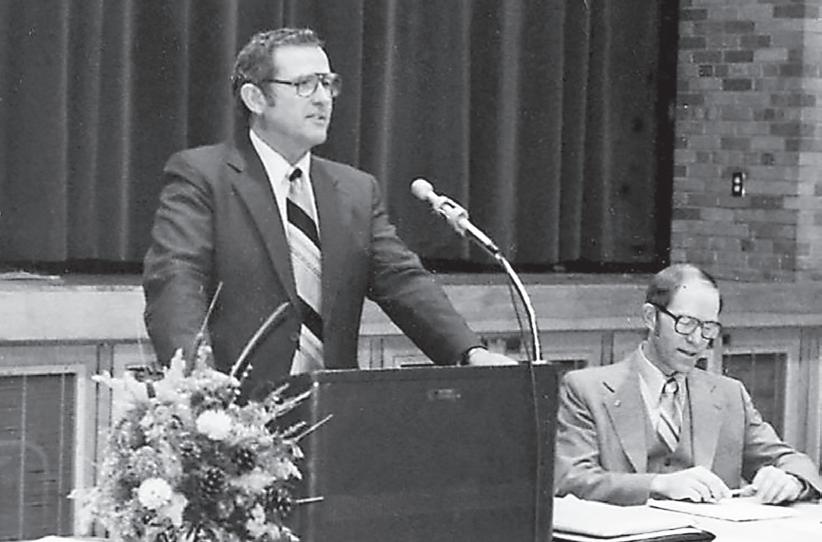
Foster County Farmers Union president Charles Linderman, right, listens to NDFU Vice President Gaylord Olson at a meeting in 1982.
SNAPSHOTS FROM CONVENTION
NDFU presidential candidate Shelly Ziesch of Pettibone campaigns to members during the District 6 caucus.
NDFU presidential candidate Matt Perdue campaigns to members during the District 1 caucus.
Governor Kelly Armstrong welcomed members to the 99th annual state convention.
Sen. John Hoeven provided an update to members about ag legislation at the federal level.
Geopolitical analyst Jacob Shapiro provided an overview of the political landscape.
Rep. Julie Fedorchak spoke to members about what her team is doing for agriculture.
GO ONLINE
Former U.S. Sen. Byron Dorgan had a video address for NDFU members. For that and other speeches, log onto NDFU's Youtube channel @NDFarmersUnion.
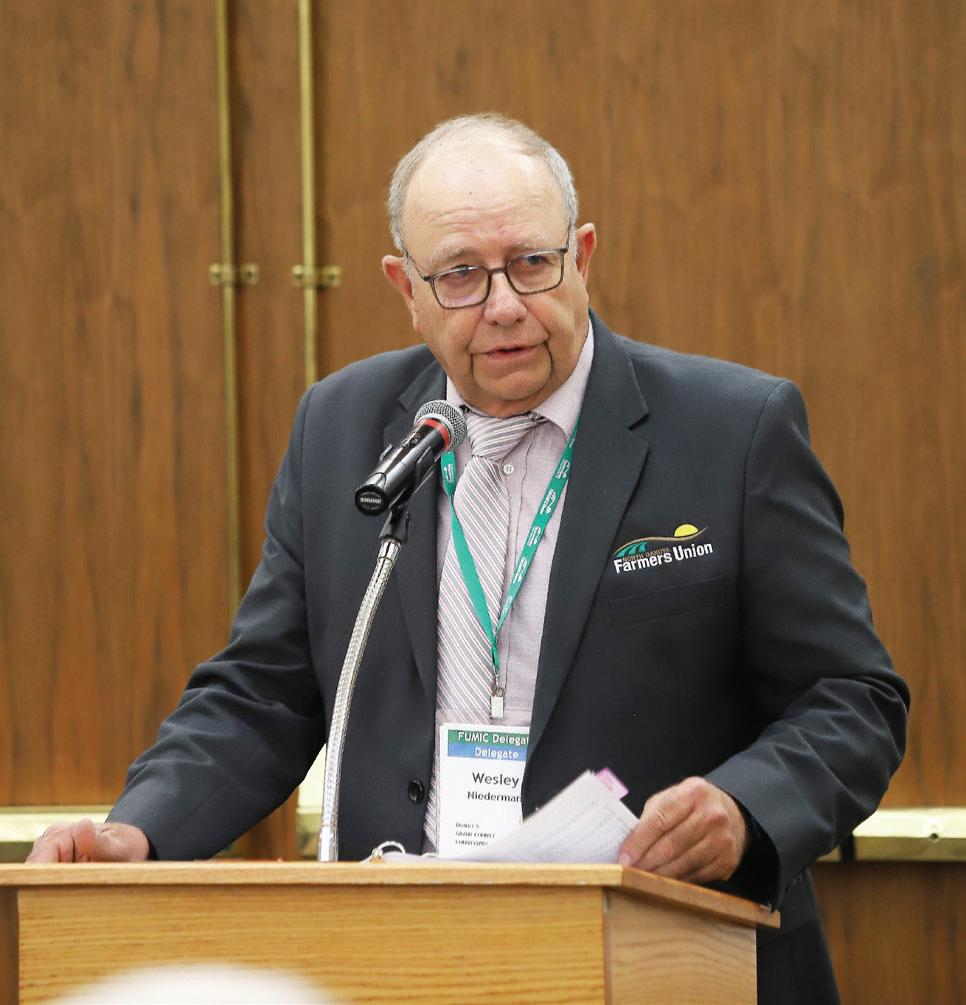
AT LEFT: District 5 Director Wes Niederman of Elgin runs his caucus for the final time. Niederman retired from the NDFU Board of Directors.
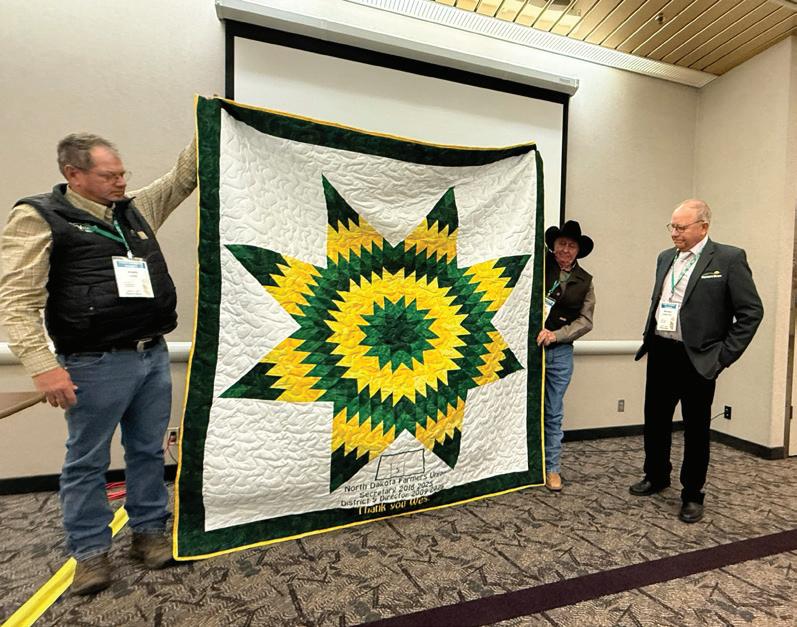
TOP: Allen Lund (left), Dave Berger and Bill Kershaw (not pictured) presented Wes (far right) with this quilt to thank him for his service.
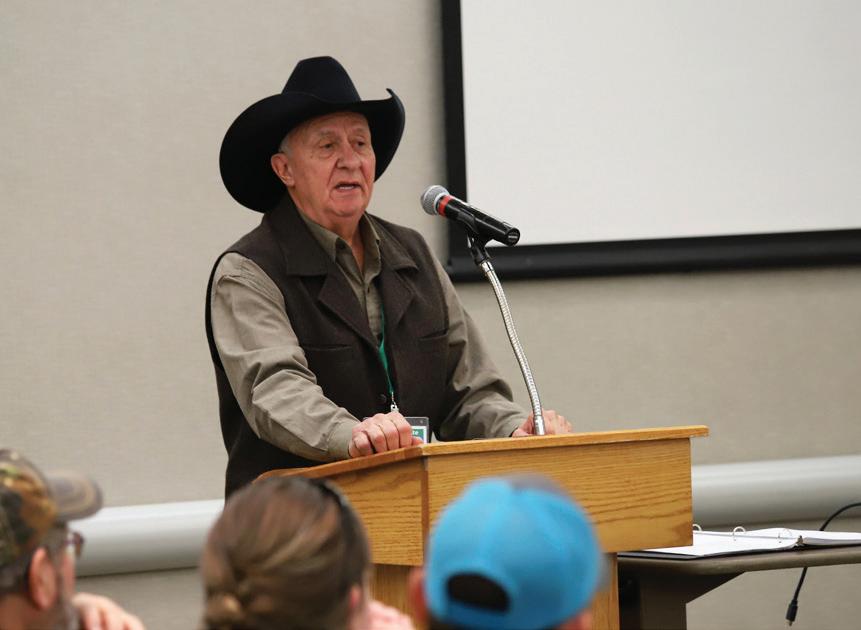
Dave Berger of Center gives his candidate speech to the District 5 caucus. Berger was elected to a two-year term.
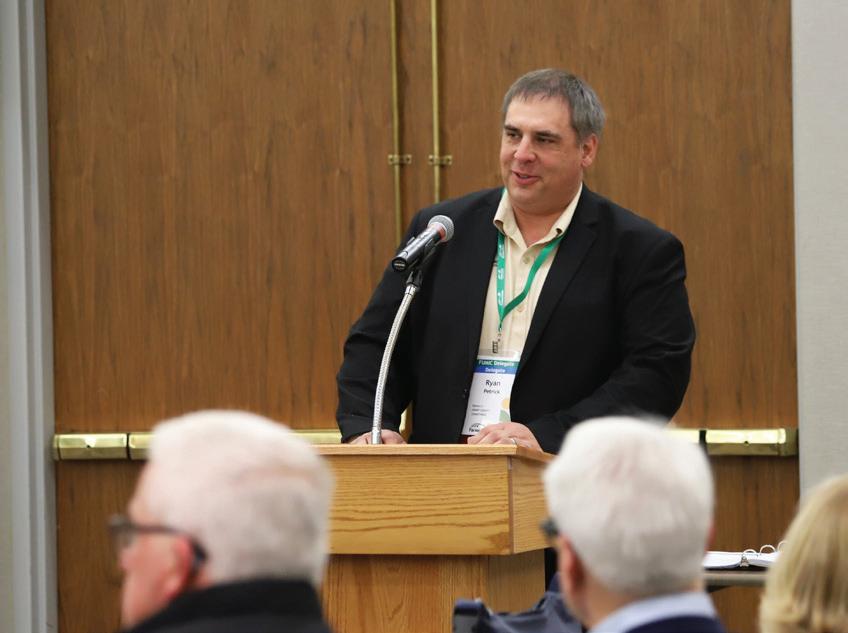
Ryan Petrick of Elgin also ran for the open District 5 Director seat.
Jon Bouker speaks about constitutional law to NDFU members.
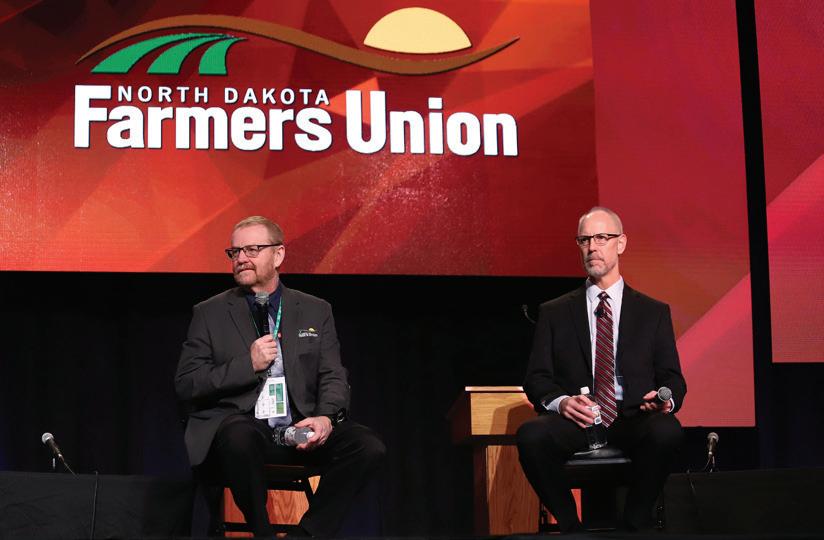
NDFU President Mark Watne and Farmers Union Insurance CEO Mark Anderson host a question and answer session for members.
Let's get together!
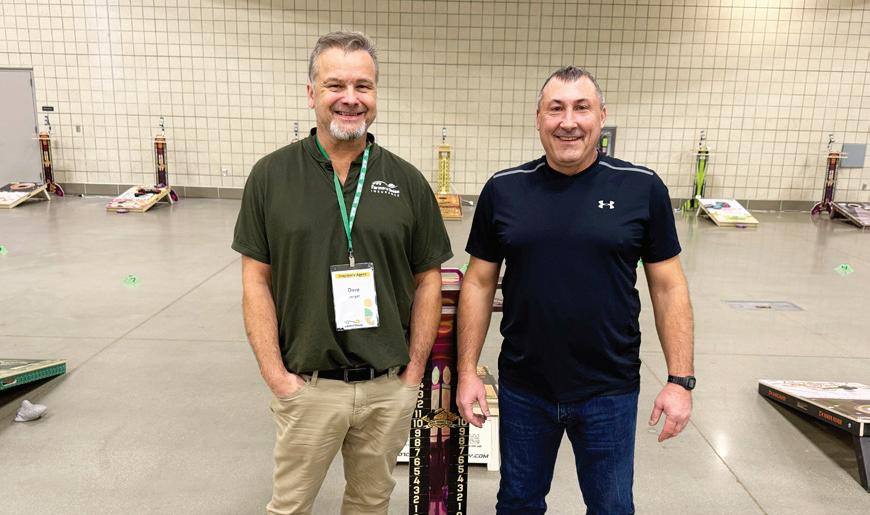
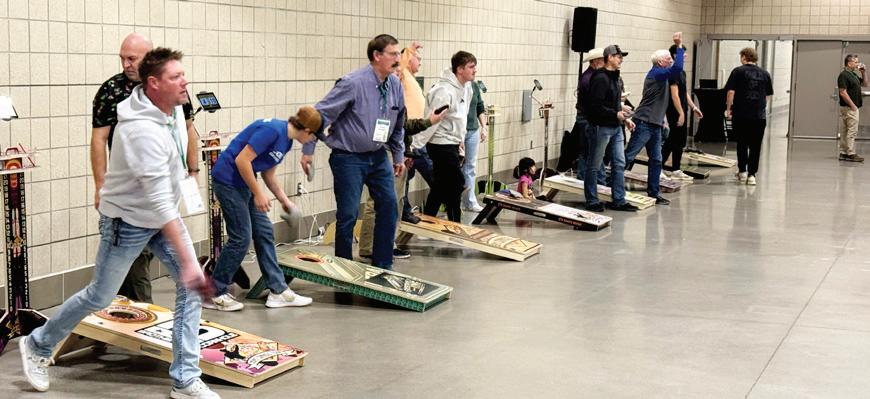
Farmers Union Insurance agents Dave Berger of Mandan and Dave Beck of Bismarck won the cornhold competition. Joesi Klein and Luke Gader took second and Justin Mertens and Nate Thorsrud finished third.
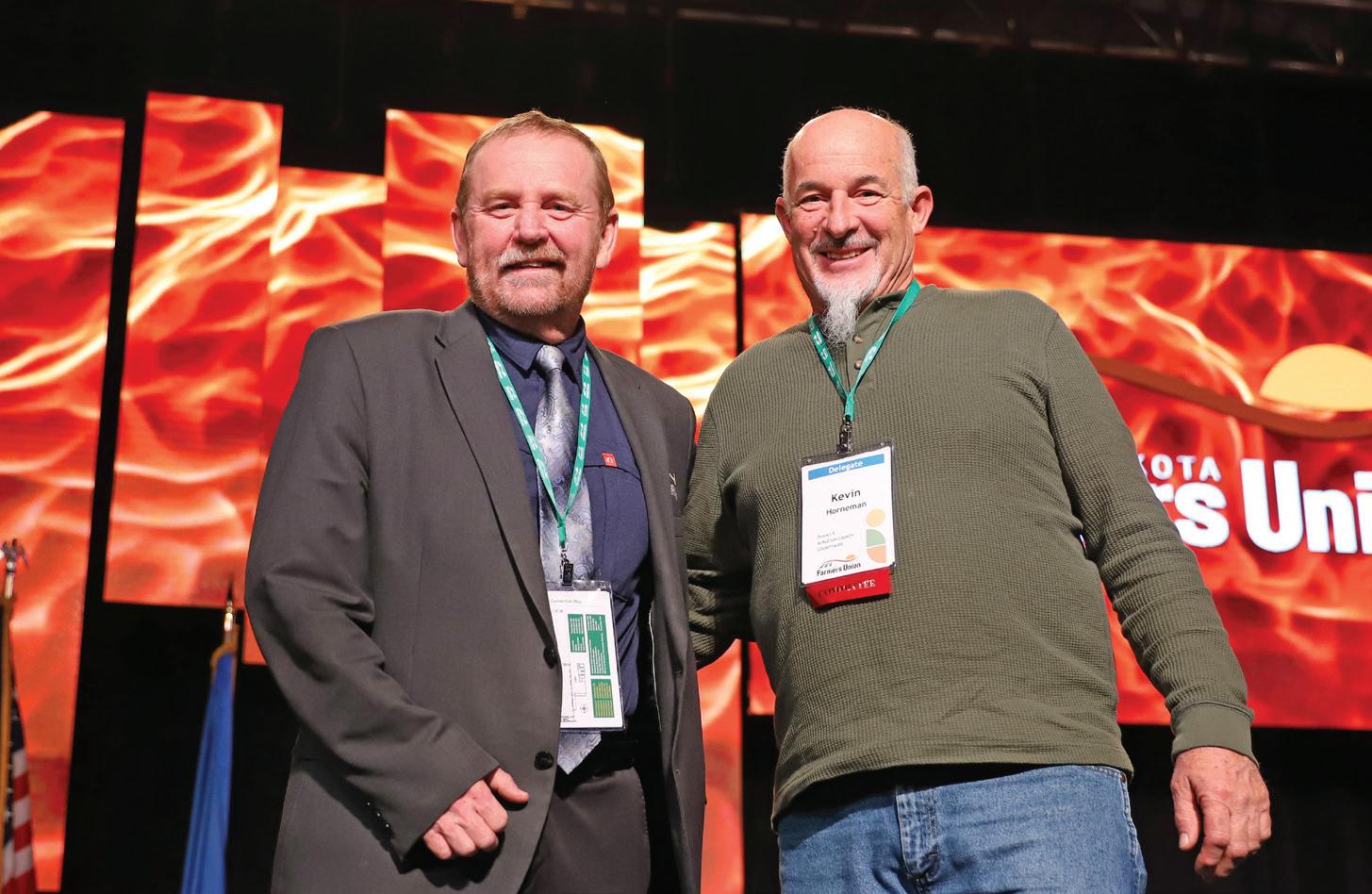
Kevin Horneman of Regan, right, was the grand prize winner, taking home a check for $4,000!
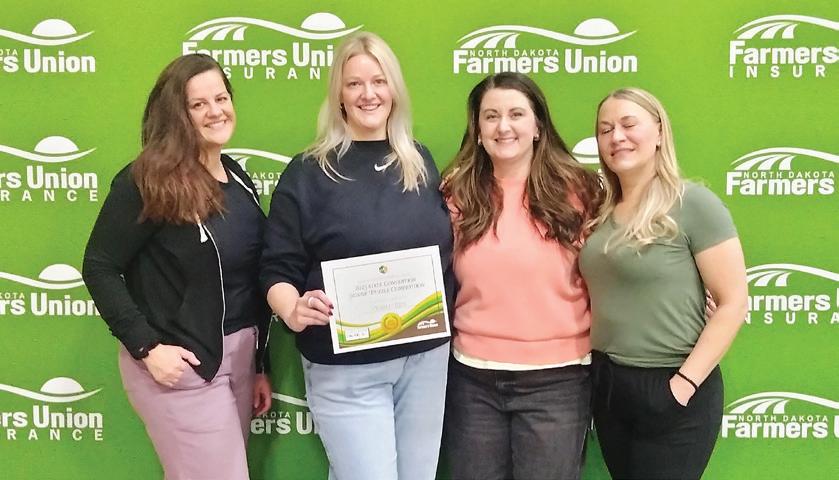
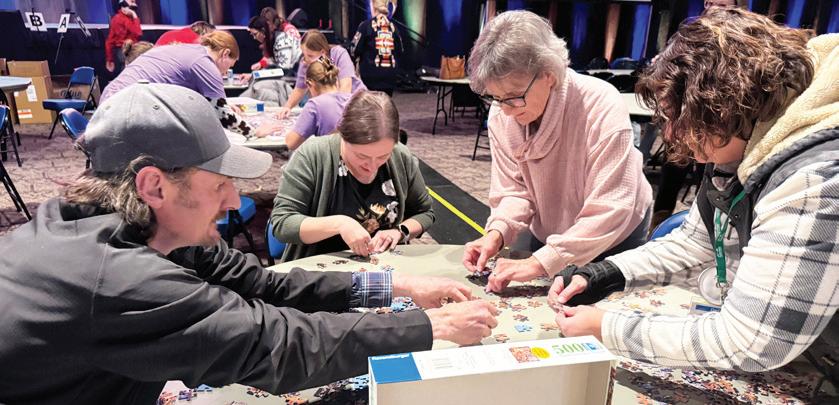
Erin Musland, Cally Musland, Ariana Barnick and Leslie Pearcy won the puzzle competition, finishing in 66 minutes, 8 seconds. Taking second was Wendy Berger, Tara Kiemele, Allie Ereth and Taylor Borowisz. Megan Vig, Mara Vig, Karl Jodock and Alyssa Jodock finished third.
announced county winners of
EPIC
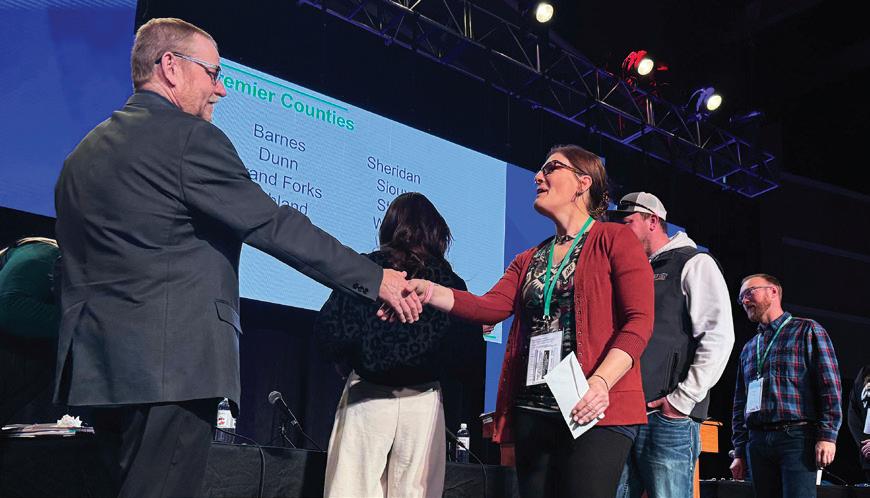
NDFU handed out awards designating its Premier counties. Winners this year are Barnes, Dunn, Grand Forks, Richland, Sargent, Sheridan, Sioux, Stark, Walsh, Ward and Wells.
NDFU
its
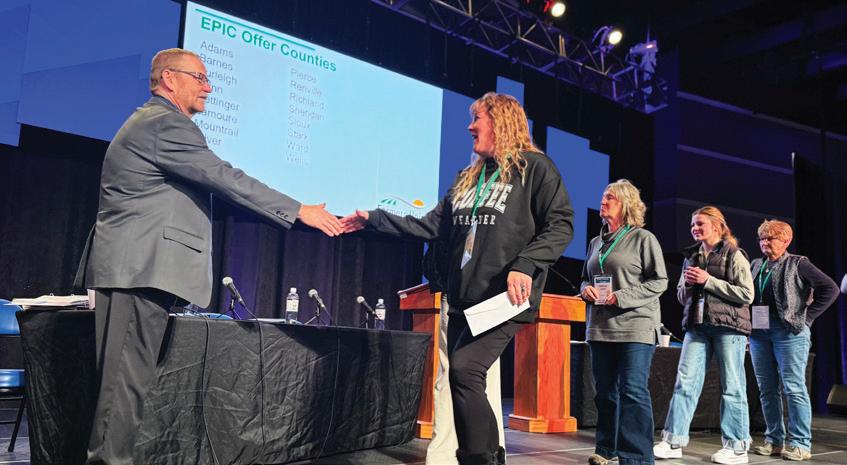
offer. Winning this year are Adams, Barnes, Burleigh, Dunn, Hettinger, LaMoure, Mountrail, Oliver, Pierce, Renville, Richland, Sheridan, Sioux, Stark, Ward and Wells.
Policy in action!
Camp Farmers Union
for a summer of adventure
kids who love adventure, like making crafts, laugh loud & often, enjoy playing sports,
reward lasting friendships unforgettable memories
Kick off your boots and jump into summer fun at Farmers Union Camp!
james river heart butte
June 8-11 .......... Junior 1
June 16-20 ...... Senior 1
June 23-26.......Junior 2
June 29-July 2 . Junior 3
July 6-10 ......... Senior 2
July 13-16 ........ Junior 4
July 20-23 ....... Junior 5
July 27-31 ....... Senior 3
June 9-12 ......... Junior 1
June 15-19....... Senior 1
June 22-25 .......Junior 2
June 30-July 3 Junior 3
July 7-11........... Senior 2
July 14-17 ........ Junior 4
July 21-24........ Junior 5
July 28-Aug 1 . Senior 3
The youth's grade needs to have been the last completed grade. Pricing shown is early bird pricing. After May 15, the price will increase by $24.
Double cropping? Brazil continues to break crop production records
Double and triple cropping? It’s no wonder Brazil’s crop production seems to have no limits.
Brazil’s steadily increasing production of corn and soybeans in the global marketplace was an important topic at the 2025 CHS annual meeting in early December at the Minneapolis Convention Center.
One of the ways in which Brazil continues to output so much production is through double and triple cropping, meaning many of Brazil’s farmers are growing crops year-round. In fact, it’s not uncommon for a planter to follow right behind a combine, taking advantage of climate that allows for a summer soy crop and winter corn crop.
In the first education session about global trading shifts, Marcela Marini — a senior analyst for Brazilian-based Rabobank — said some farmers even use a short third season to grow a cover crop in areas with irrigation. She added that the soil in Brazil is not near as fertile as in the United States, so farmers typically use even more fertilizer and chemical than their American counterparts.
FROM THE EDITOR’S DESK
That session, along with a breakout titled, “Brazil and Its Rise to Power” from John Griffith of CHS, also focused on how its strong relationship with China — which buys 80% of Brazil’s soybeans — has led to Brazilian officials needing to think about the country’s own diversification, namely for domestic consumption.
Marini pointed out that Brazil does not have oil reserves like the United States, so the country treats biofuels with the utmost importance, already doing E27 with a move to E30 set for next year. She added that some cars are approved for E100.
Griffith outlined Brazil’s history with biofuels,
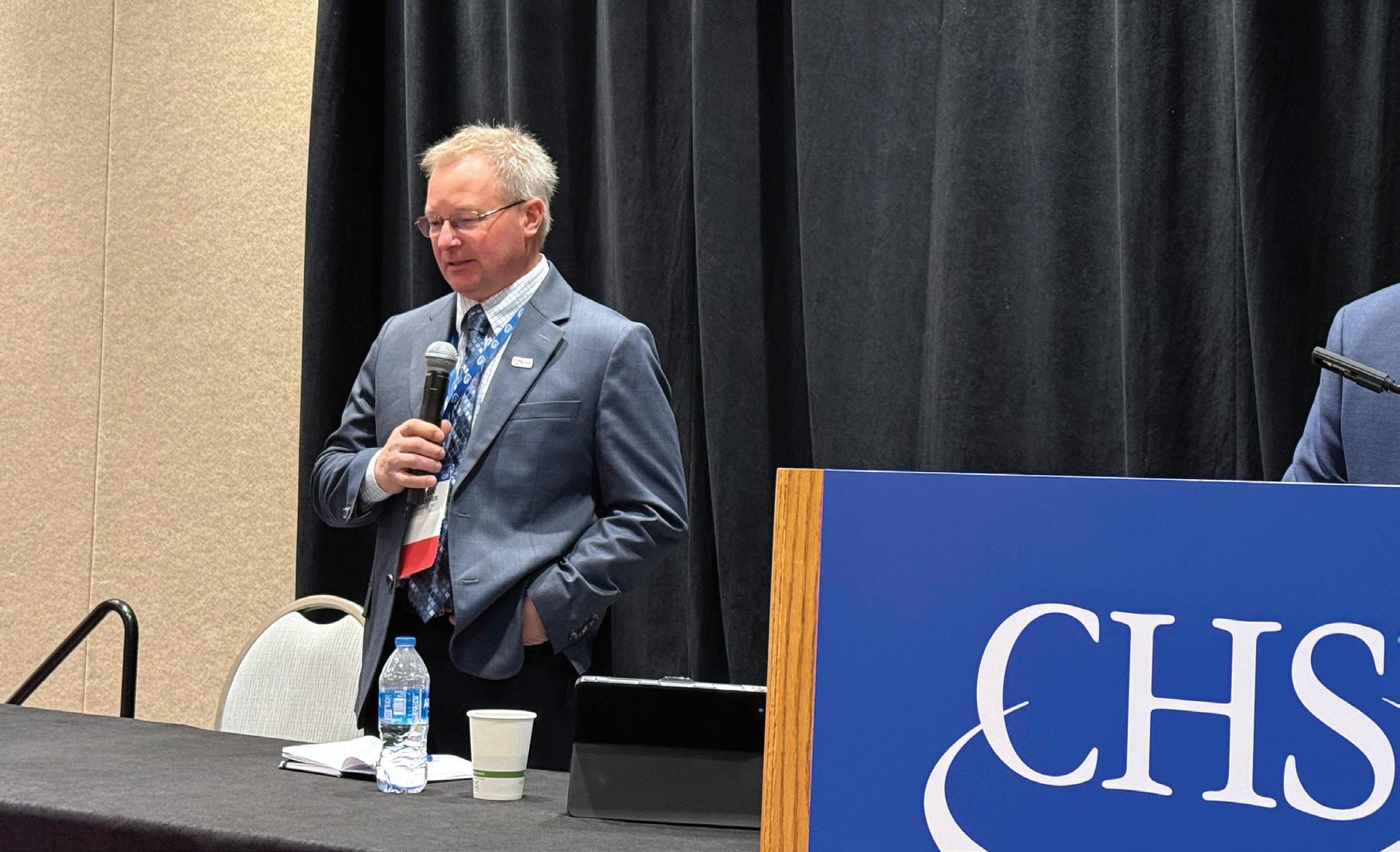
Kevin Throener of Cogswell was reelected to the CHS Board of Directors.
which started with an investment in the 1930s and grew to ethanol from sugar cane in the 1970s. Brazil continues to increase its ethanol demand. However, since Brazilian farmers “can’t touch” the impressive corn yield of American farmers (180 bushels peracre average to 100 for Brazil), it needs more acreage to meet demand.
Unlike with the United States where there is no notable new acreage, Brazil is expected to bring 50 million acres online to expand its production — mostly from converting pastureland but some from deforestation (new laws and restrictions on deforestation have gone into effect). To put that into perspective, imagine adding more than half of the U.S. production of soybeans or corn to an already oversupplied global marketplace. Griffith said it best — the world doesn’t need this extra acreage, but it’s going to get it from Brazil regardless.
FARM A.I.
Another breakout focused on the use of artificial intelligence on the farm, particularly in tasks from crop scouting (weed/pest identification) to searching for parts to do your own repairs via ChatGPT.
Concerns that were addressed during the breakout were about the loss of jobs and lack of guardrails. Daniel McCann, CEO of Precision AI, said crop scouting using a drone will give agronomists an ability to see what parts of the field need to be addressed, as opposed to spraying the entire field. He said it will allow agronomists to be more efficient, with an ability to go image by image rather than walking an entire field. He added that images of a field are simply data and likened the whole process to
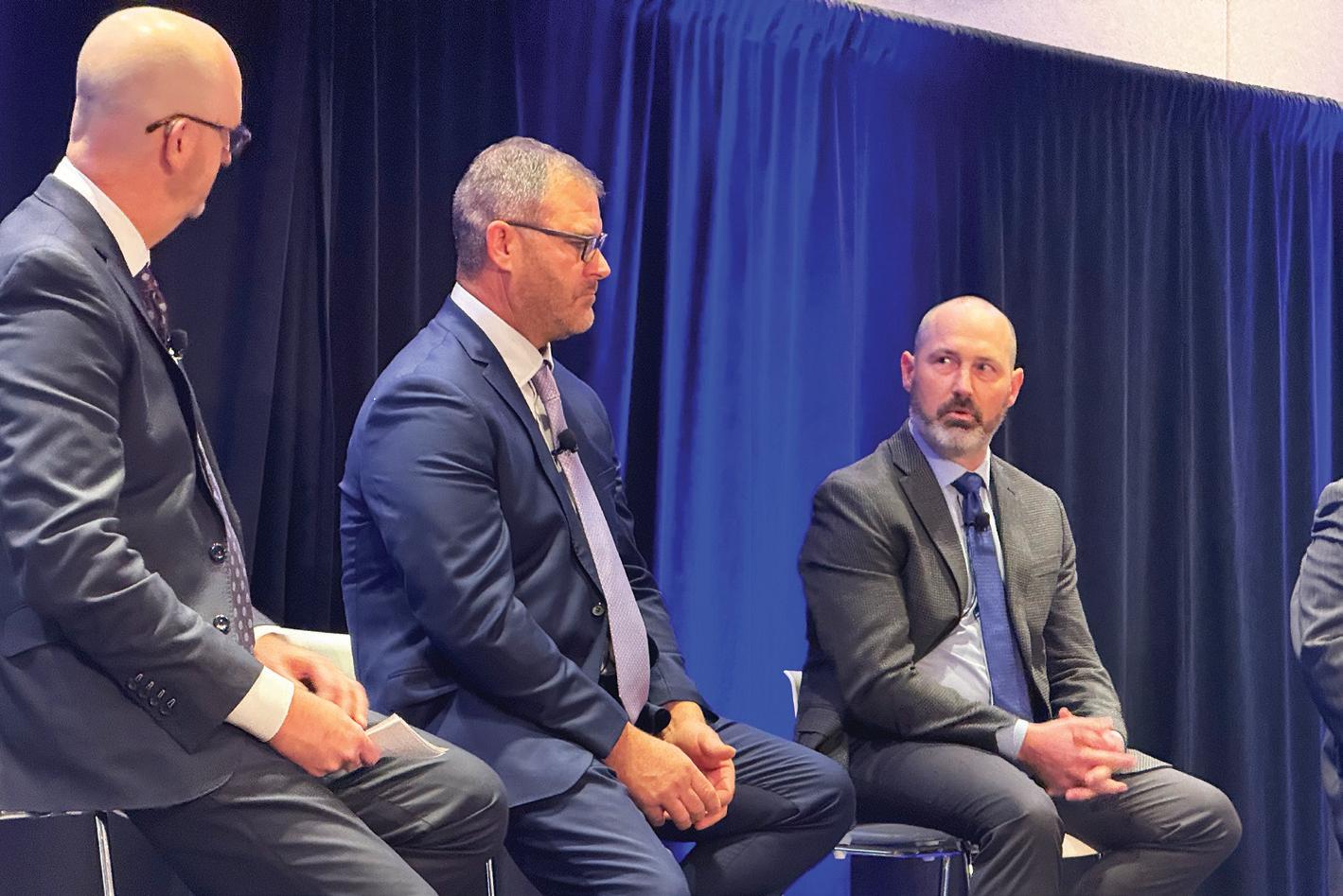
Jeremy Barth (right) of Tri-Energy Cooperative of Bismarck talks about what it takes to have success as a retailer during the "Winning with C-stores" breakout at the CHS annual meeting in early December at the Minneapolis Convention Center. Listening at left is CHS Executive Vice President of Energy Darin Hunhoff and Sioux Valley Cooperative (S.D.) CEO Jared Landmark.
a good meal, in which good ingredients and a good chef are both required. On their own, it is not the same.
McCann added that concerns over who will own the data will need to be figured out So, what’s next? AI’s ability to problemsolve is really the near-term benefit for producers, adding that bigger-picture items like autonomous tractors are farther away than people think, because of the labor problem: “Who’s gonna dig out the tractor when it gets itself stuck in the mud?”
McCann said one day, you might be able to tell your drone to scout a field. It might identify a problem and tell you what it is. You would then instruct the drone to order the required chemical. Once it arrives, the drone would spray the crop.
Other future benefits could include using AI cattle scales that can identify disease and provide a full nutrition profile for each cow. Another is the ability for a simple phone app to tell you whether you should irrigate parts of a field based on need (recent weather conditions, soil health, etc.). Another presenter said these additional tools should be available to both small and large farmers, and that it likely won’t fall victim to gatekeeping from large corporations.
ELECTION
Congrats to CHS Director Kevin Throener of Cogswell, who was reelected to his post, alongside directors Jon Erickson of Minot and Trent Sherven of Ryder.
Chris Aarhus is the editor of the Union Farmer, NDFU’s monthly magazine. He can be reached at caarhus@ndfu.org.
POLICY HOPPER
FROM NORTH DAKOTA FARMERS UNION
Navigating record prices, trade in livestock markets
The U.S. beef and cattle industry is riding a wave of record-high prices that continued into 2025, driven by the tightest cattle supplies in generations. While producers have welcomed historically strong returns, the trade picture reveals a complex story of shrinking exports, surging imports and controversial policy decisions that have created uncertainty for America's ranchers and farmers.1
TRADE UNDER PRESSURE
According to USDA and U.S. Meat Export Federation data, U.S. beef exports declined 9.5% in volume and 9% in value through the first three quarters of 2025 compared to the previous year.2 September beef exports hit a five-year low of just 80,835 metric tons, down 22% year-over-year, while imports surged 16% higher.3 This shift has created a trade gap of roughly 2.6 billion pounds, significantly wider than the 2014-2015 cycle peak.
While Japan and South Korea remained the top export destinations, accounting for nearly 47% of total export value through late 2025, exports were up nearly 10% year-over-year.4 However, the China market saw exports decline 11% in 2024, largely due to high U.S. prices and a sluggish Chinese economy. Additionally, China did not renew registrations for more than 415 U.S. beef establishments in 2025, making them ineligible to export, representing a significant market loss.5
The flip side of America's cattle shortage has been an unprecedented increase in beef imports due to domestic shortages. Much of the imported beef serves the ground beef market, a critical component as domestic lean beef supplies have tightened. The surge in beef imports is directly tied to domestic production challenges and short supply.
According to USDA data, total U.S. beef imports for 2024 reached approximately 4.6 billion pounds, up 24.4% from 2023. The
annual 2025 forecast is 5.3 billion pounds, which, if realized, would be a year-over-year increase of 15 percent.6 Australia is the top beef import source to the U.S. for the first time since 2016, with imports surging 69.4% year-overyear, and anticipated to increase another 21% in 2025. Canada dropped to second place but still maintains a 22% share of imports.7
ARGENTINA IMPORT CONTROVERSY
In October 2025, the Trump administration ignited a firestorm with plans to quadruple Argentine beef imports to 80,000 metric tons annually. The president offered the proposal to lower consumer beef prices and support an ally. The administration also dropped a 10% reciprocal tariff on Argentine beef. The announcement drew swift reaction from agriculture groups and in livestock markets. The announcement had immediate market consequences, live cattle futures broke sharply lower, experiencing limit-down trading sessions. While futures have since recovered somewhat, the episode created significant volatility during a critical marketing period for cow-calf producers.
Industry analysts however concluded that the change represents less than 1% of total U.S. beef consumption. Lean beef from Argentina supplements the ground-beef market.8
MARKET IMPACT
Despite the political turmoil, fundamentals have remained remarkably strong through 2025. Mid-December 2025 live cattle futures were trading around $227 per cwt, up nearly 20% compared to a year earlier, though down from August and September record highs. Feeder cattle markets have shown even more dramatic gains, with prices around $340-$350 per cwt in December 2025, up more than 31% year-over-year.9
February 17, 2026
LOOKING AHEAD
The cattle industry enters 2026 with the U.S. herd remaining near 94.2 million head—the lowest in 75 years. While 2025 saw steps toward herd growth, the process has been slow.10 Consequently, the 2025 calf crop estimated at 33.1 million head, was the smallest
SOURCES
Join us for the 4th annual Evolution Ag Summit! North Dakota Farmers Union is hosting a one-day event that will address how food production, processing and supply chains are adapting to the growing demand for transparency and information about where our food comes from
in over 80 years, ensuring that supply will remain tight throughout 2026.11
Going forward, the primary challenge for cattle producers is navigating a volatile trade and policy landscape, while deciding to expand herds or take advantage of strong prices.
— NDFU Government Relations Team
1Why Beef Prices Are Higher Than Ever (and shoppers are finally resisting) Sept. 18, 2025 National Public Radio https://www.npr.org/2025/09/18/nx-s1-5534424/beef-prices-record-high-cost
2Reaffirms record-setting carcass weights and updated price forecasts for 2026 USDA Economic Research Service (ERS), Livestock, Dairy, and Poultry Outlook: December 2025 (LDP-M-378) 3Livestock and Meat International Trade Data USDA Economic Research Service December 5, 2025 https://ers.usda.gov/data-products/livestock-and-meat-international-trade-data 4World Agricultural Supply and Demand Estimates (WASDE) June 2025 and September 2025 reports. USDA Economic Research Service.
5Where’s The Beef? U.S. Beef Left Out of China Trade Framework Dec. 7, 2025 Drovers https://www.drovers.com/news/ag-policy/wheres-beef-u-s-beef-left-out-china-trade-framework 6Livestock, Dairy and Poultry Outlook: December 2025 USDA Economic Research Service https://www.ers.usda.gov/publications/pub-details?pubid=113593
7Imported Mean Passed for Entry in the U.S. by County USDA Agricultural Marketing Service, December 12, 2025 https://www.ams.usda.gov/mnreports/lswimpe.pdf
8Trump to Quadruple Argentine Beef Imports While US Ranchers Fume October 24, 2024 Reuters https://www.reuters.com/world/americas/ trump-quadrupling-argentina-beef-tariff-rate-quota-80000-metric-tons-2025-10-23/ 9Cattle Futures Lower Ahead of USDA’s On Feed Numbers December 18, 2025 Brownfield https://www.brownfieldagnews.com/market-news/ cattle-futures-lower-ahead-of-usdas-on-feed-numbers/ 10Little Indication of Heifer Retention in 2025 December 8, 2025 Darrell Peel, Cattle Range https://www.cattlerange.com/articles/2025/12/little-indication-of-heifer-retention-in-2025/ 11An Inside Look at The Volatile Cattle Markets and the Slow Process of Rebuilding December 10, 2025 Oklahoma State University https://extension.okstate.edu/articles/2025/beef-pricesupdate.html
CLASSIFIEDS
Ads must be submitted through the online form at www.ndfu.org. Click “Classifieds” at the very bottom of ndfu.org and fill out the online form. Ads must be re-submitted each month. No exceptions! Deadline is the 15th of every month. Limit 75 words. MEMBERSHIP DUES MUST BE CURRENT!
FARM
FOR SALE
1965 MASSY HARRIS TRACTOR with dual loader, bucket with grapple fork, 3-point hitch, good tires. $3500; Super A IH tractor, good paint, tires overhauled, magneto and new carburetor, parade ready, $3100; Double 9 Rouse mower, New Holland heads, new sickles, field ready $7900; 9 ft. 456 New Holland mower reconditioned $4600; IH 490 30 ft disc., needs work, $1500; PTO driven Win power generator on a cart. Can deliver any of these items. 701400-5742, Gerald Miller, Mandan.
8N FORD TRACTOR. 3 Pt, like new rear tires, 12 volt, New battery, alternator and gas tank. $1800; Farmhand F25 Loader Frame and Control. No attachments. $150; Dual 340 Loader Frame. $100. 701-523-5562, Dale Klug, Bowman.
15-30 MCCORMICK TRACTOR, make offer. 1 new tire T245-75R-load range E; 2 cream separators; 4-wheel steel running gear; 1 covered wagon running gear; 1905 all metal JD hand operated corn sheller, like new, has paint and serial number. larryn@westriv.com. 701-548-8020, Larry Nagel, Shields.
SNOWBLOWER, MK Martin Select rear mount, 8 ft., 540 shaft, hydraulic chute, not used the last three years, like new. $4,500; JD1028E, walk behind, electric start, like new, approx. 4 hours, $1,000. 701-626-1012, Gerald Holte, Voltaire.
1996 R72 GLEANER COMBINE, one owner, 30 ft Model 600 Draper Header, 30 ft Model 400 Straight Header, 400 pickup Header with Rake-up, Dual Front Wheels, well maintained, always stored inside. Will sell headers separate if desired. 701-370-1574, Ken Weaver, Munich.
SNOWBLOWER/BALES, Hanson PTO 78 in. Snowblower, 3 pt $1,200; 70 in alfalfa bales net wrapped $50; Oats bales net wrapped $45; Wheat straw bales conventional combine $30. 701-391-1852, Marc Sundquist, Baldwin.
HOE DRILL, IH 7200 hoe drill 28 ft for parts $750; IH 263 inline 6 out of a 403 combine in good condition $500; A few 403 parts; 880 IH chopper with 2 row corn head with 30" spacing and 5 ft hay head $750; Melroe 5-14 plow and packer $400; Used 5 ft and 5 ½ ft steel T posts, $2.50 each; Two JD 6601 combines, one for parts; Several 350 and 5.7 chevy motors, $250 each; 2 chisel plows 12 ft; Leave message, will return call. 701-269-6216, Jerry Miller, Streeter.
SNOWBLOWER, Farm King 600, 5ft, three point hitch. In good condition. 701-467-3381, John Melin, Kenmare.
FLEX HEAD, 2010 635F Flex Head w/ Crary Air Bar, New Transmission and Reel Bushings; 1981 GMC 7000 Tandem Truck, runs good; JD 2014 DB60; 36 JD Pro-Series XP Meters with Mini Hoppers/Trimble True Count Air Clutches/ Seed Tub Sensor Wire Harnesses 3 control boxes/Air tanks to run clutches for 3 row shutoff; Trimble Wiring/Hoses. 36+ Steel Closing Wheels & Dry Rate Controller. 701-321-5711, John Kempf, Ashley.
WANTED
RACTOR TIRE CHAINS, 18.4 x 34 tractor tire chains or chains that can be modified to fit. 701-391-7152, Tim Hager, Valley City.
PLOW, Oliver pull-type four bottom plow. 701340-4132, Raymond Kopp, Des Lacs.
TRACTOR TIRES, 13.30 or 14.30 with or without rims. Call or test. 701-230-2284, Joel Schneider, Devils Lake.
TRACTORS, IH 806 on up; JD 4520-6030s; MM 950s on up. Olivers 1900s on up. Acs 175 on up. 701-628-2130, Jerry Lumley, Stanley.
FOR SALE
BOOKS, Nutrition and Nostalgia of a Century 1989 cookbook reprinted in 2012 Portal ND; Vintage People's Book Club book; 1945 Behold your King by Florence Bauer and 1912 Duruy's General History of the World, books Vol. I, II, IV by Edwin Grosvenor; STAMPS, 1982 Definitive Mint set, Item 830 color booklet with stamps and embossed envelopes. Call or text for prices. 701-720-0517, Penny McCormack, Des Lacs.
ANTIQUE TRUNK from the early 1900s in good condition. 701-430-3348, Jack Vadnie, Clifford.
TIRES, four Good Year all season tires. 275-55R20, 42,000 miles on them. All to go, $80. 701-830-2436, Gary Hoffman, Ashley.
SOLAR PANEL SETUP, complete, used for running an electric motor for pumping water. May have other uses. Included: trailer, solar panels, 4 batteries and electric motor. All in good condition. $2500. 701-202-0400, Ron Monzelowsky, Bismarck.
RIM/TIRE, from a 2024 Toyota Camry, 225/55R17. $80. 701-891-8566, Ken Koch, Mandan.
SADDLE, made in Halliday, N.D., 15" seat $600; Chinks, belts, wallets, cell phone cases, knife sheaths, holsters, etc; One nylon driving harness $175; Silver spotted Black show saddle w/ Tapaderos, USA made, $15" seat, $1800; Saddle pads & halters in good shape. 701-2021174, Chip Liebel, Mandan.
2016 SILVERADO LT 3500 DUALLY, crew cab, eight foot box, four wheel drive. The color is summit white and the cloth interior is grey. Aluminum factory wheels with Toyo tires with roughly 12,000 miles. Duramax engine and Allison automatic trans. No fifth wheel. Purchased new and great condition. 57,00 miles on truck. $45.000. 701-226-8766, John Albrecht, Mandan.
ANVILS, downsizing my anvil collection, 6 to choose from sizes ranging from 80# to 190#, all in very good at condition. I also have some large sized porcelain signs that I will be selling, call me for pictures and prices. 701-220-5746, Val Ganje, Bismarck.
1965 CHRYSLER NEWPORT, 2 Door Hardtop Black with Red Interior, no rust, kept inside all original. $6500 OBO. 701-370-1574, Ken Weaver, Munich.
2 WAY BASE AND REPEATER STATION, Kenwood, new only used a few times; Antique fireplace brass spark screen; Snowmobile Racing Trophies; Movie screen can show like pictures/ films; RCA portable DVD player with screen, new only used a few times; Antique metal bed; Men’s Corduroy winter long coat, tan, size 42, sheep pil fur lining; Winter long coat, brown, smooth calf leather outside, pictures for both coats. 701-263-1206, Lathan Romsos, Bottineau.
WANTED
.22 LR PUMP, Coast to Coast, Sears, Montgomery Ward, etc., (store branded), nothing fancy but functional. 701-340-3684, Joel Bohm, Mohall.
COLLECTIBLES, Signs, Advertising. My son and I are looking for things to add to our collection. Old Signs, Farm Related, Gas & Oil, Advertising, Highway Signs, Railroad related items, License plates, oil cans, barber/salon items. Old items w/ small town advertising-mirrors, thermometers. Paying cash and will travel. Text/Call anytime. Would love to visit with you. Or stop and visit me along I-94. 701-701-989-0495, Bryan Behm, Medina.
PRAIRIE DOG HUNTERS to hunt on my land. Make reservations now. larryn@westriv.com. 701-548-8020, Larry Nagel, Shields.
OLD STUFF, ND marble reflective road signs, Highway patrol door signs or any sign that has the Indian head logo. ND license plates, ND picked arrowheads, advertising signs, old gas pumps, oil cans, old animal traps, old metal toys, old marbles. also buying Red Wing crocks, silver dollars, small town metal trade tokens. Willing to travel to your location to see or buy other interesting items. Please call. 701-2205746, Val Ganje, Bismarck.
MILITARY ITEMS, WWI and WWII German, Japanese and American Military Items: Uniforms, Hats, Helmets, Medals, Badges, Patches, Flags, Knives, Bayonets, Daggers, Swords, Leather Flight Jackets, Guns, Lugers Etc., and WWII North Dakota 164th Infantry Regiment Items. Email jgrindahl@gmail.com or call/text. 701-200-7125, John Grindahl, Fargo.
Classifieds by mail, fax, phone or email will not be accepted.
MISCELLANEOUS
Simons gives Agraria update at convention
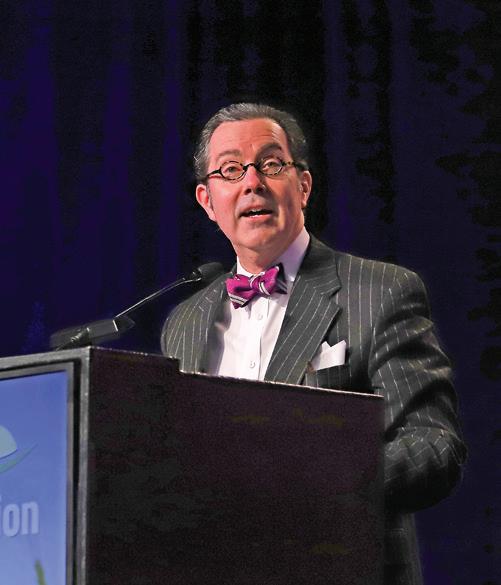
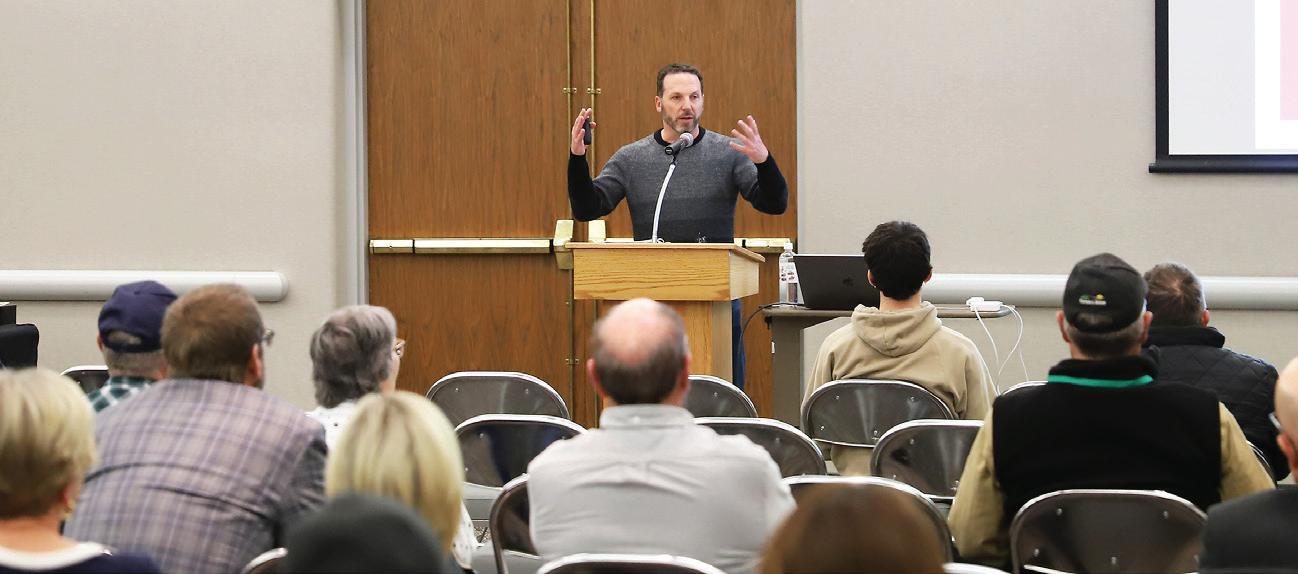
Founding Farmers Restaurant Group co-owner Dan Simons delivers the annual Agraria update at NDFU's 99th state convention in Bismarck. Dan shared comprehensive insights into Founding Farmers’ performance and growth, including the latest Founding Farmers in Alexandria, Va., the continued expansion of Founding Farmers Co. Catering & Events, and some of the work happening at the new Culinary Barn production center. He also talked about goals for 2026.