On These Sides of the Metro: Proud Communities Embrace Growth, Boundless Opportunity Amidst Unprecedented Suburban Sprawl by Tyler Dahlgren, NCSA Communications Manager ................................... 4
The Heart of the School: Leading Where It Matters Most by Shelly Leyden, NAESP President ............................................................... 6
A Decade of Happy Trails: NPSA, Ambassador Program Near 10 Years of Advocacy by Tyler Dahlgren, NCSA Communications Manager ................................... 8
The Heart of Schuyler: Student Entrepreneurs Bring Empty Hospital Gift Shop Back to Life by Tyler Dahlgren, NCSA Communications Manager .................................. 10
Participation in School Activities...Give a Little Encouragement by Marc Kaminski, NSASSP President ........................................................... 14
ADA + Digital Media: Your ESU Can Help by Dr. Larianne Polk, ESUCC Executive Director .......................................... 16
Behind the Scenes of a Reunification Drill: NCSA’s Day in Grand Island by Tyler Dahlgren, NCSA Communications Manager .................................. 18
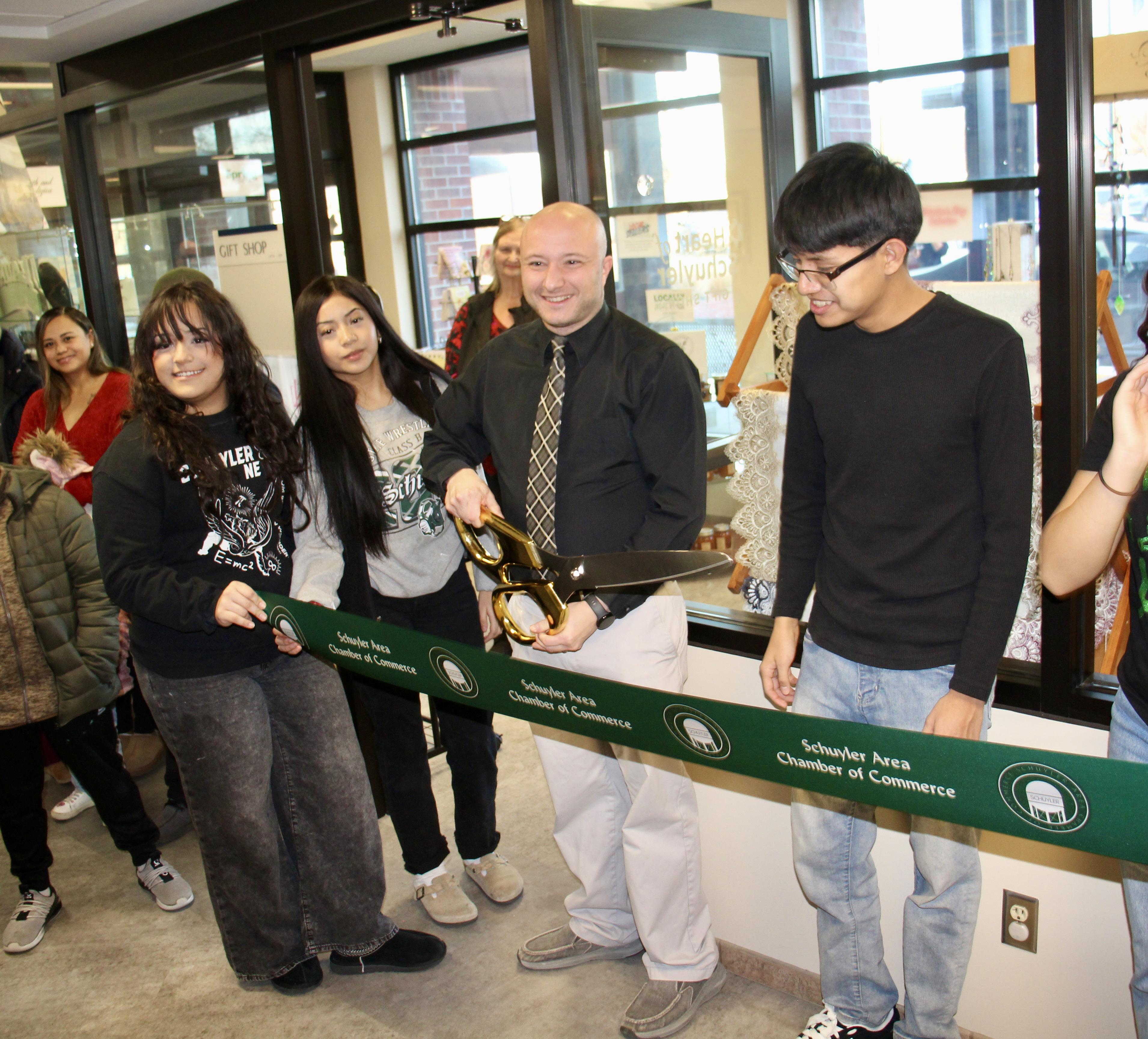
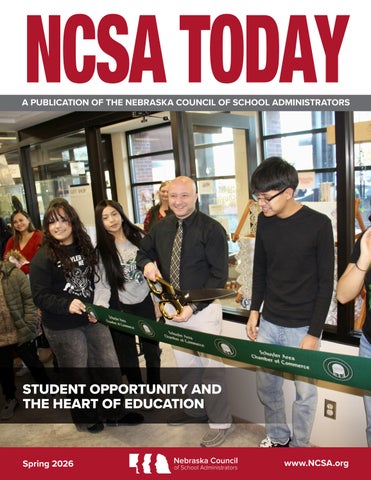
Schuyler Central High School business teacher Grant Torpin (holding the scissors) prepares to cut the ribbon, officially signaling the opening of the Heart of Schuyler Gift Shop inside the CHI Health hospital in Schuyler. NPSA featured the student-launched business in mid-February.
The mission of the Nebraska Council of School Administrators (NCSA) is to be an effective leader for quality education and to enhance the professionalism of its members. NCSA Today is a benefit of membership in the Nebraska Council of School Administrators, 440 South 13th Street, Suite A, Lincoln, NE 68508. Telephone 402.476.8055 or 800.793.6272. Fax 402.476.7740.
Annual membership dues are $435 (active members), $125 (associate members), or $50 (student members). NCSA Today is published quarterly. Copyright ©2026 by NCSA. All rights reserved.
NCSA EXECUTIVE BOARD 2025-2026
Chair – Dr. Chris Prososki
Vice Chair – Dr. Chip Kay
Past Chair – Dr. Dan Schnoes
NASA Representatives
President – Dr. Dawn Lewis
President Elect – Dr. Heather Nebesniak
Past President – Dr. Chris Prososki
NASBO Representatives
President – Stacy Rodriguez
President Elect – Dr. Chris Loofe
Past President – Dr. Chip Kay
NAESP Representatives
President – Shelly Leyden
President Elect – Chance Waggoner
Past President – Dr. Amber Johnson
NASES Representatives
President - Jason Hippen
President Elect - Wendy Craig
Past President - Amy Kroll
NSASSP Representatives
President – Marc Kaminski
President Elect – Dr. Jay Dostal
Past President – Brian Fleischman
NCSA STAFF
Dr. Michael S. Dulaney Executive Director/Lobbyist
Dr. Troy Loeffelholz Associate Executive Director
Amy Poggenklass Finance and Membership Director
Tyler Dahlgren Communications Manager
Abbey Beardsley Event Manager
Jen Sylvester Executive Administrative Assistant
Brenda Petsch Administrative Assistant
The opinions expressed in NCSA Today or by its authors do not necessarily reflect the positions of the Nebraska Council of School Administrators.
By Tyler Dahlgren, NCSA Communications Manager
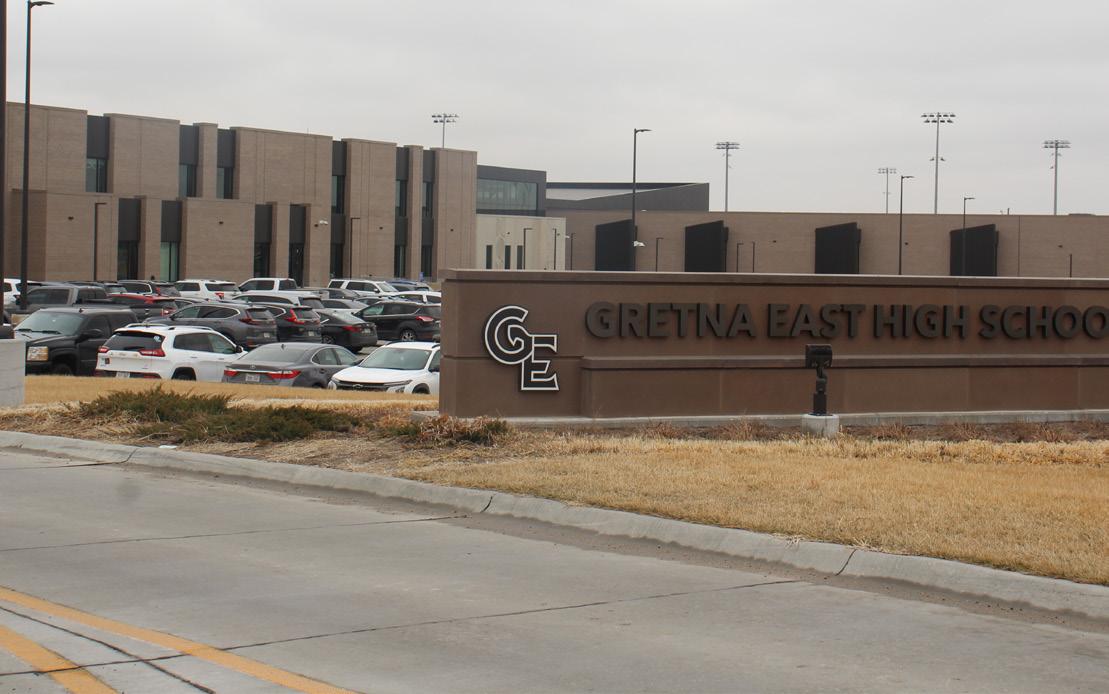
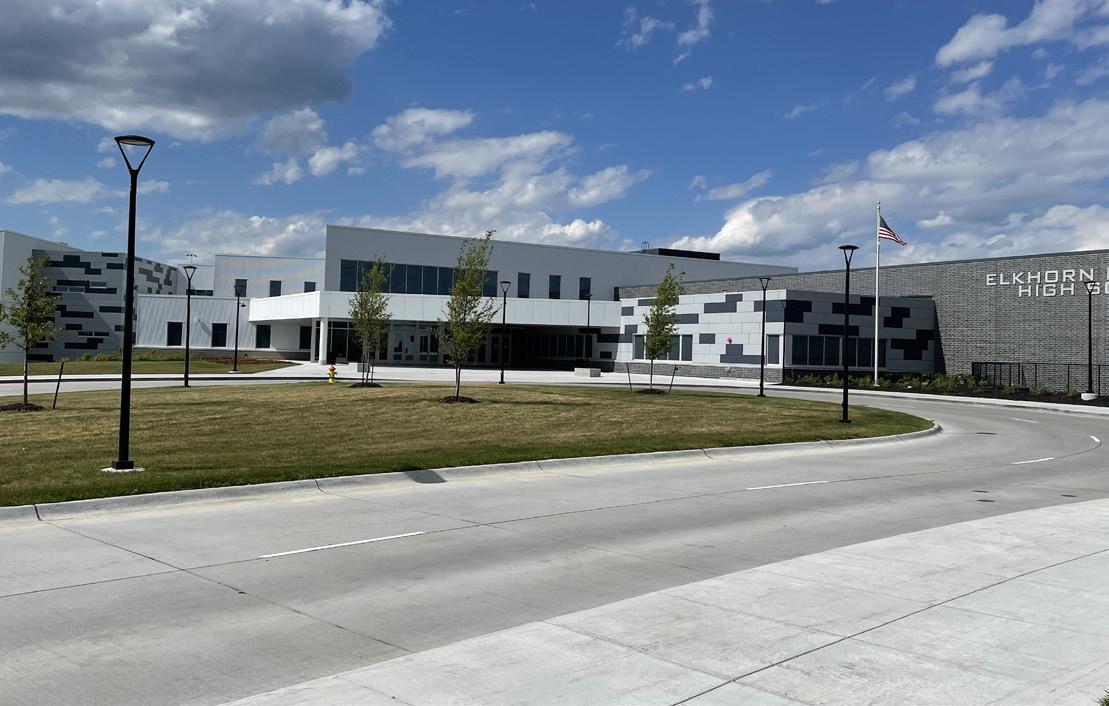
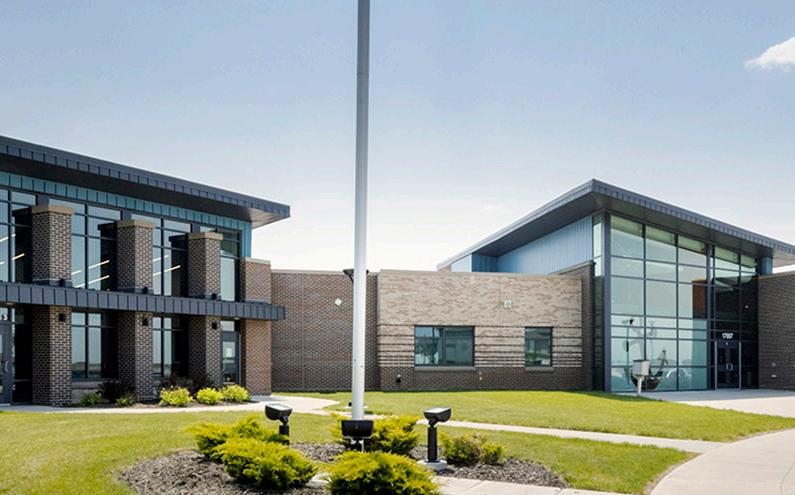
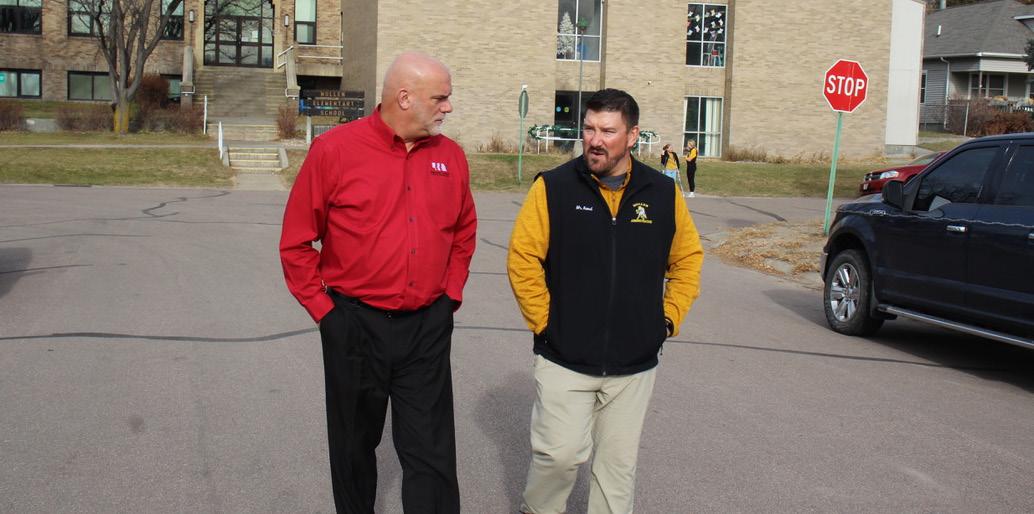
Dr. Aaron Plas, Dr. Bary Habrock, and Travis Lightle sat down for lunch in a downtown Elkhorn barbecue joint recently. In charge of three of the fastest-growing school districts in Nebraska, the three superintendents had plenty to talk about.
On this side of the Metro, life moves fast, and Bennington, Elkhorn, and Gretna have become the gold standard for managing suburban sprawl and unprecedented population booms while clinging to traditions and cultures that, for many years, defined what were once small towns.
Passing a school bond is no stroll in the park, but for these three surging districts, it has become an art form, born out of necessity. So what’s the blueprint? We asked the trio of superintendents and hit record. Theirs is a story of radical transparency, land banking, and a friendship forged over shared experiences and BBQ at Boyd & Charlie’s.
In most places, a 1% increase in enrollment points to a busy year. These leaders are dealing with growth rates that annually top 7% and beyond.
"I don’t know when I signed up for this job if I knew what was to come," said Habrock, who is in his ninth year as superintendent of Elkhorn Public Schools. "But I understood the growth of the community pretty well, and we’ve had to be flexible with really over four decades of growth."
In Bennington, the numbers are equally staggering. Plas points to 3,600 available lots currently in the pipeline. There’s pressure, sure, but Plas tries to see it as a privilege.
"We’re constantly trying to figure out how to operate the next year with so many more students than we had the previous year," Plas said. "When you are building buildings and setting up systems, you’re having a generational impact. We don’t take that lightly."
If there were a "Nebraska Playbook" for bond success, the first rule would be pretty simple: Trust is the only currency that matters.
"Transparency is the cornerstone of trust," said Habrock. "The way this works is you bring your needs to the community and they vote ’em up or down. You have to look ’em in the eye, tell ’em the truth, and answer their questions as candidly as you can."
And behind that trust, there must be some element of financial wizardry. Bennington recently passed a $112 million bond for its second high school with a "0.0 cent" tax rate increase. By strategically retiring old debt as new bonds are issued, they keep the levy stable.
"Our community has consistently supported efforts to reduce debt," Plas noted, which creates a "buy-in" loop where voters feel like valued, invested partners rather than ATMs.
Lightle, who transitioned from a Gretna fifth-grade teacher to superintendent over a 20-year span, adds that communication must be modern. Coming out of the pandemic, GPS overhauled its digital presence.
"Our story was being told on social media without us, and it wasn’t always positive," Lightle said. "We decided to take control of it. If you have a question and you can’t find the answer, call, but you should be able to find it somewhere."
Perhaps the most impressive feat of these three districts is their foresight in land acquisition. They are competing with commercial developers for flat ground, and they are playing the long game, banking land for building projects that are a decade or two from breaking ground.
"Our board has always been out ahead," Lightle said. "We currently own land for two more elementaries and another high school and a middle school. I’ve always said that I like building, I like projects, I like construction. That stuff has never scared me."
In Elkhorn, the strategy is even more defensive as the district nears build-out on its south side.
"If you don't get it now, you won't get it ever," Habrock said, noting that while his predecessors might have passed a bond and then gone shopping for land, that isn't an option anymore. "I’ve got money in my pocket and I promised delivery of a new school. Buying land is kind of an under the gun type of thing. We’ve had to be more proactive in securing sites ahead of bond issues."
This foresight requires superintendents to become amateur civil engineers. Plas joked that his expertise has shifted from pedagogy to plumbing.
"You learn a lot about city infrastructure,” said Plas, who came to Bennington from Lakeview Community Schools in 2023. “I’ve never cared where the sewer lines were before. Now I know exactly where they’re running. That’s where the homes are going to show up."
When a district grows from one high school to two, like Gretna has, or even from two to three, like in Elkhorn, the "one-town, one-team" identity inevitably fractures. Managing this "pruning and regenerating," as Habrock calls it, is the most delicate part of the job. The key, he explained, is equitable talent distribution.
"It was more difficult going from the Antlers to the Storm than it was from the Storm to the Wolves," Habrock reflected on Elkhorn’s expansion, which has included 12 successful bonds since 1992. "We’ve been really purposeful about dividing our talent and our experience when we open new schools. You don’t want to be robbing Peter to pay Paul. You want to have not one successful high school, but three."
Not too long ago, Bennington was a little town off Highway 36, completely separate from Omaha. The Badgers competed in Class C, and the old high school (now the administrative offices) was located right across from Main Street. An influx of new families has helped cement a new, unified identity. They’re building a future they can be just as proud of as they are of their past.
"Almost all of our patrons move here for the school district," Plas said. "So many people are new that everybody is looking to lay down their roots together. It helps us create one big family."
While their students might be rivals on the turf, the three superintendents serve as a private support network. That’s the neat thing about this profession, said Habrock, who, like Plas, started his career in education teaching in Centennial Public Schools.
“We’re willing to help each other, though the circumstances of each community are somewhat unique,” Habrock said. “Most of us go to schools that are longstanding and have been in existence for many, many years. And a few of us have the unique experience of being able to start new schools and the challenges that are embedded in that. And of course, we want to rely on each other to make sure that we share lessons learned and success stories.”
"Travis has been a great resource for me," says Plas. "Especially on the opening of the second high school. He helped us through what that could look like."
Continued on page 6...
By Shelly Leyden, NAESP President
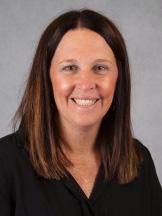
Elementary leadership requires courage, the courage to make difficult decisions, to have hard conversations, and to stand firm when what is right is not always easy. Principals are often asked to navigate competing priorities, limited resources, and heightened expectations while maintaining clarity of purpose. In these moments, strong leaders anchor themselves in their “why”: ensuring that every child receives the support, instruction, and care they deserve. Courageous leadership means advocating for students even when it is uncomfortable, and protecting the integrity of teaching and learning in every decision made.
Another defining element of elementary principalship is the ability to see both the individual child and the system as a whole. We analyze data while understanding the story behind the numbers. We design systems that support teachers while recognizing that no two classrooms, and no two students, are the same. This balance between structure and flexibility allows schools to function effectively while remaining responsive to the needs of children and families.
Elementary principals are also stewards of culture. The values we model: kindness, consistency, accountability, and optimism, become the values lived out in classrooms and hallways. Culture is built in everyday moments: how we greet students in the morning, how we support teachers during challenging times, and how we respond when mistakes are made. A strong school culture does not happen by accident; it is intentionally cultivated through trust, transparency, and shared purpose.
In a profession that often measures success through test scores and benchmarks, elementary principals understand that growth is broader and deeper than any single metric. We celebrate academic gains, but we also celebrate resilience, perseverance, and joy. We know that a child who feels safe, seen, and valued is a child who is ready to learn. Our leadership ensures that schools remain places where children are encouraged to take risks, ask questions, and discover who they are becoming.
Finally, elementary principals lead with hope. Even on the most challenging days, we believe in the potential of our students, our teachers, and our schools. We envision what is possible and work tirelessly to bring that vision to life. Through collaboration, reflection, and unwavering commitment, elementary principals continue to shape the future: one decision, one relationship, and one child at a time.
This is the work of elementary leadership. It is complex, demanding, and deeply human. And it is work worth celebrating. ■
Likewise, Lightle calls on Plas’ proficiency when dealing with anything financial-focused.
"He’s quickly becoming a leader in the state in that area,” Lightle said. “He’s usually one of the first phone calls that I make."
All three noted the role a school board plays in a successful bond proposal. Boards are similar to a referee, Lightle explained, in that stakeholders might not even notice them when everything’s running smoothly.
“I’ve always believed that when the community has trust in its school board, and the school board has trust in the superintendent, and the superintendent has trust in the
from page 5)
principals, and the principals have trust in the teachers, and the teachers have trust in the students, that’s what makes the school ecosystem go,” said Plas. “If there’s a break anywhere in that chain, things become a lot harder for everybody.”
When Lightle landed in Gretna a little more than two decades ago, the district had just three schools in operation. Ten buildings later, that seems hard to fathom. But it’s true, and there are no signs of the sprawl slowing anytime soon.
Here on these sides of the Metro, things move fast.
"As long as we stay true to what’s made us great,” Lightle said, “our people, relationships, and putting kids first, we’ll continue to thrive.” ■


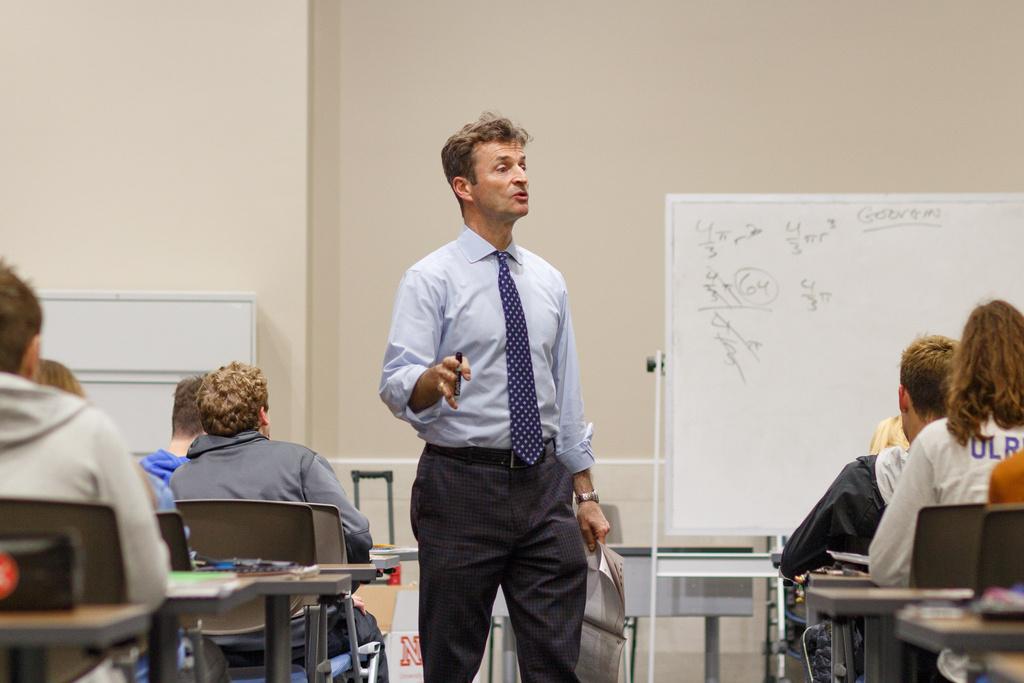


John Baylor, Founder/Instructor




By Tyler Dahlgren, NCSA Communications Manager
sandwiched in the middle. There are stories we published back at the start that feel like yesterday. This school year, we’ve featured people, communities, and programs that I’m sure I’ll still remember another 10 years down the road.
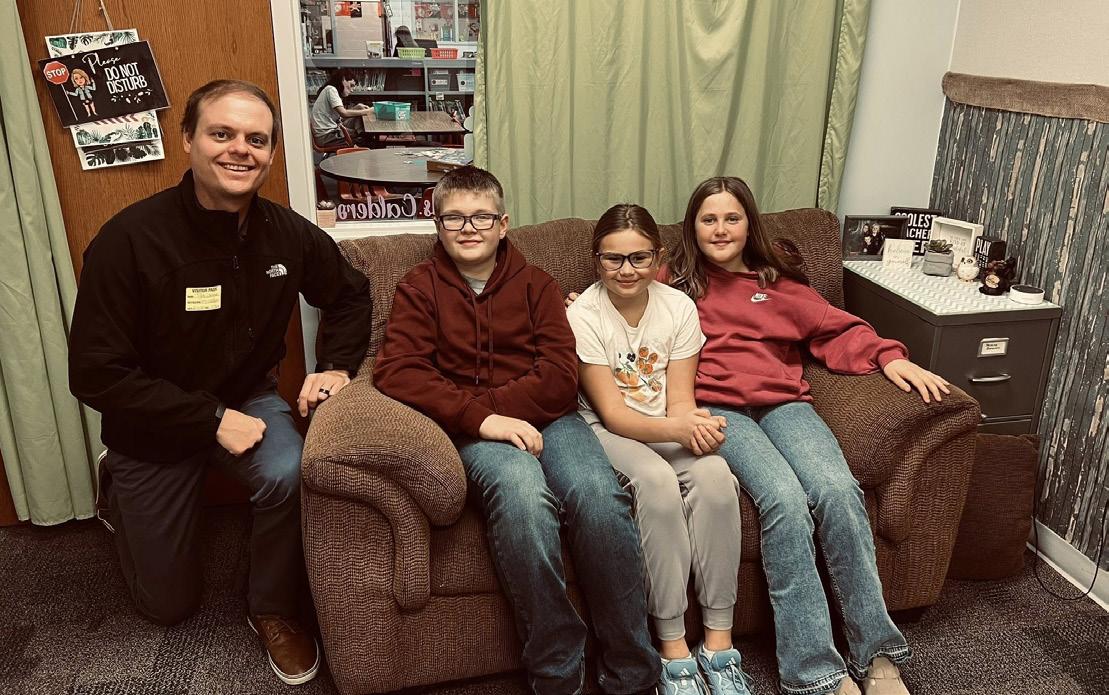
Like Karsyn Soto, a third-grader in Aurora whose spirit and determination rub off on everyone around her. Or the student entrepreneurs from Schuyler Central High School who brought a vacant gift shop in their local hospital back to life. And how about a recent trip to Stromsburg to see an embryo implanted in one of Cross County’s cattle? That was the first time I’d ever worn muck boots out on an assignment. Speaking of student entrepreneurship, we can’t forget the kids from Arnold, who run a graphic design firm, manage a commercial-grade greenhouse, and manufacture products that are street corners and county roads all across Custer County. Talk about leaving a mark.
Hello from the road, and hello from Year 10!
It’s been just about a decade since NCSA launched its Ambassador Program and the accompanying Nebraska Public School Advantage, and we’ve been celebrating with our busiest school year yet. A lot can happen in the span of 10 years, and it certainly has. Since 2016, I’ve gone out on nearly 400 school visits and written nearly 500 feature stories highlighting some of the most amazing things happening in Nebraska’s public schools.
I’ve been to new places, seen some really neat things, and learned more about this profession from you, our NCSA members, than I ever thought possible. For that, I am grateful. Grateful to all of you for letting me into your schools (we’ve been to 200 different districts and counting!), and grateful for the opportunity to work alongside our NCSA Ambassador, Kevin Wingard, and the three ambassadors who came before him (Dr. Cinde Wendell, Dr. Keith Rohwer, and Kyle McGowan).
Kevin and I have logged thousands of miles in the search for powerful stories. In Nebraska, you don’t have to look far or wide for those. I can’t count a single time that I’ve walked out of a school not thrilled to share what I’d seen that day with our readers.
Ten years pass by quickly, even with a global pandemic
And that was just February alone. What we’ve seen out on the road is a wave of innovation, resourcefulness, plenty of triumphs, and pure heart. It’s an honor to tell those stories–YOUR stories–and we’re thrilled to be right here in your corner, full steam ahead.
Keep the story leads coming. Invite us to your buildings. Let us shine a little light on the people who make your school districts special.
Some days may seem ordinary, but your work never is.
Thanks for having us all these years, and here’s to 10 more! ■
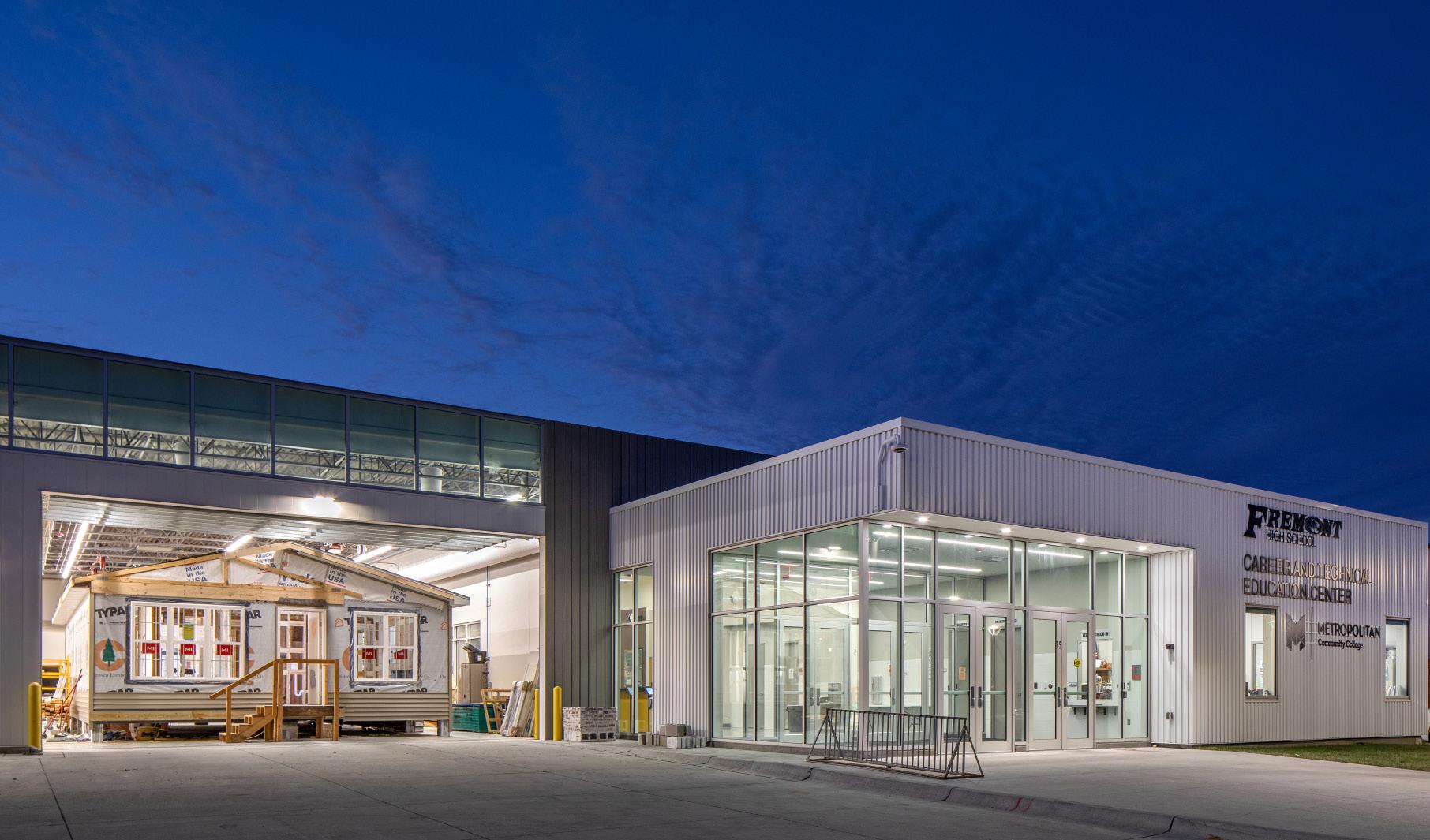
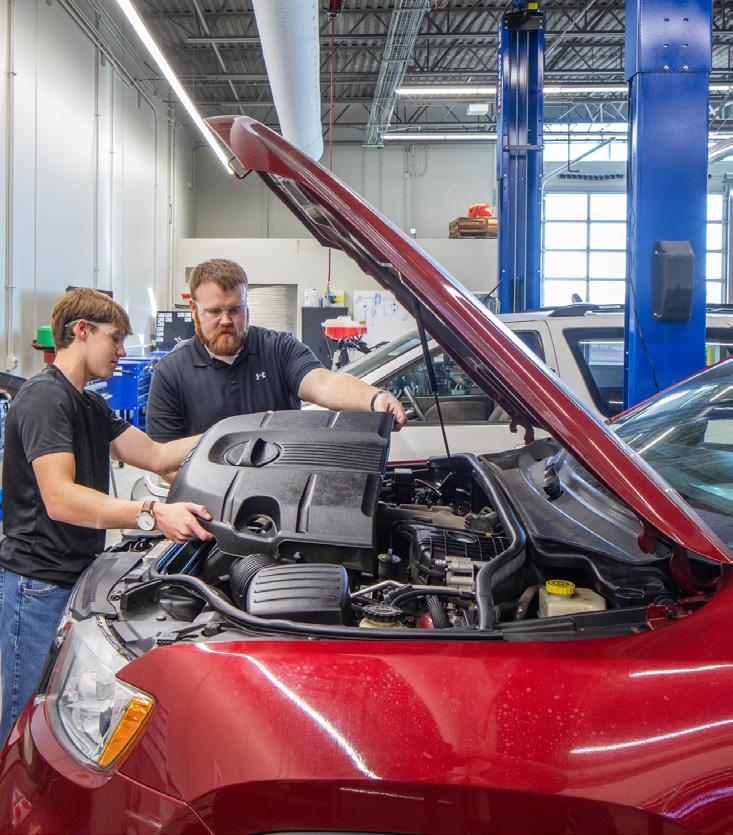
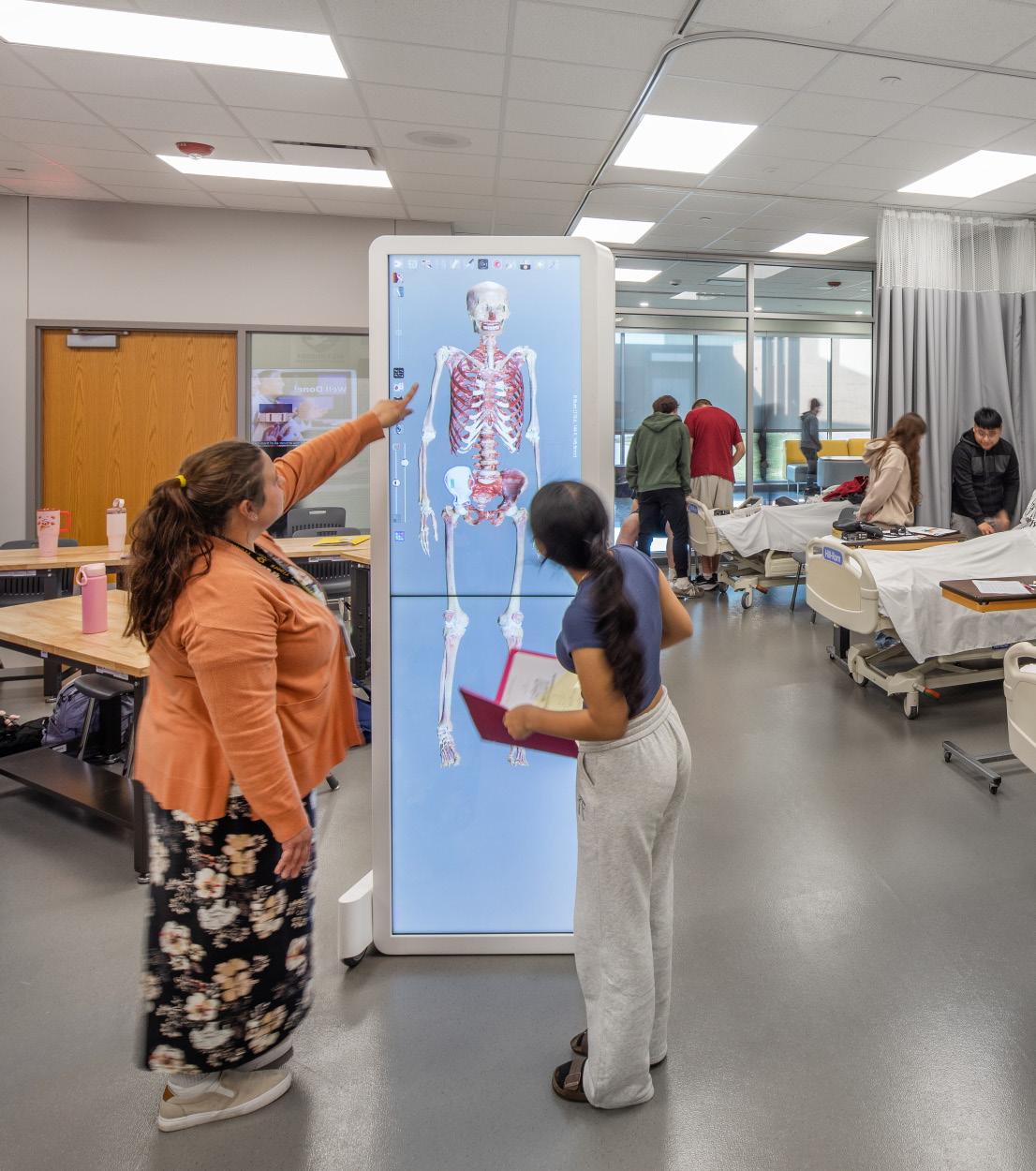
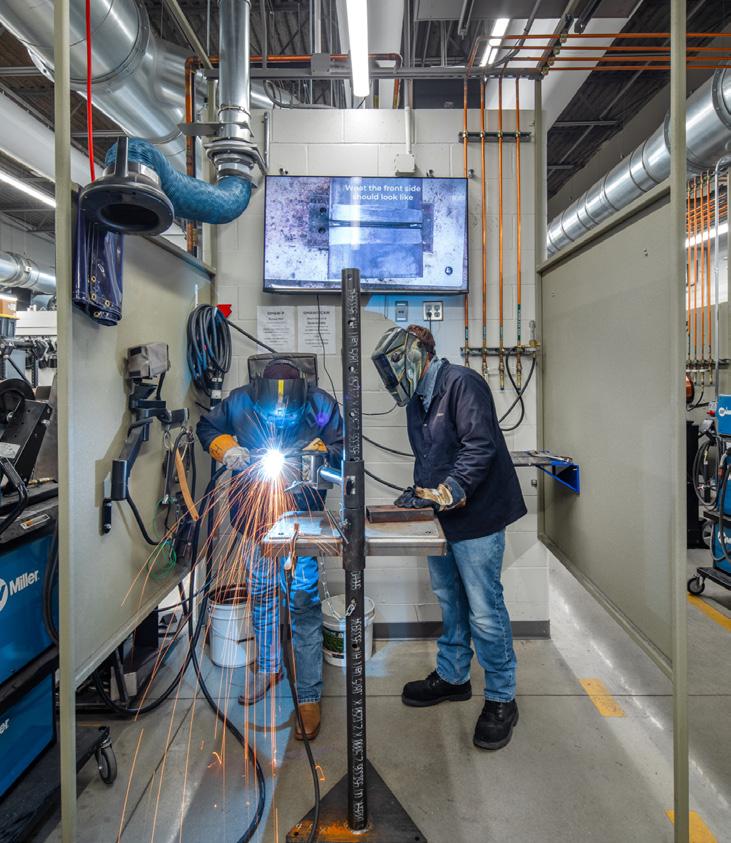
BVH creates Career and Technical Education environments that turn learning into real-world opportunity. Through hands-on spaces and strong community partnerships, our designs help students graduate career-ready while strengthening the workforce and vitality of the communities they serve.
Learn more about our projects, design process and K-12 team members.

By Tyler Dahlgren, NCSA Communications Manager
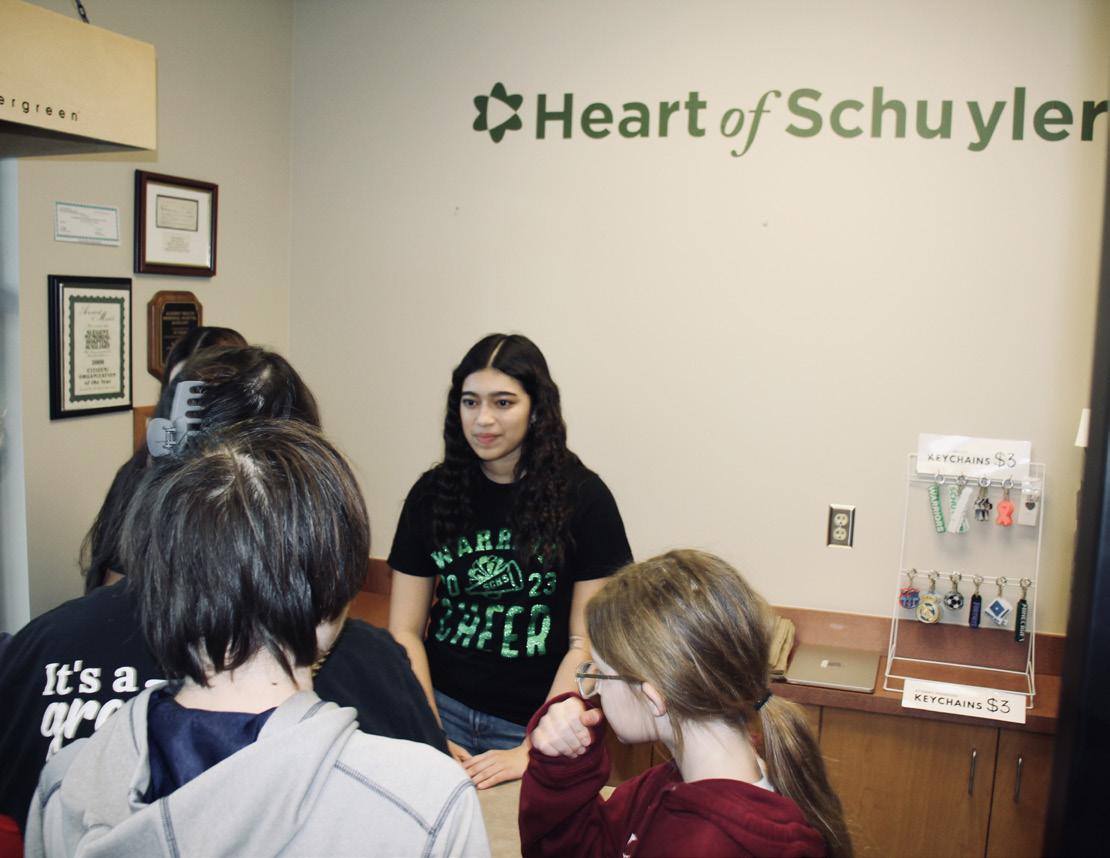
The small retail space near the head of the lobby at CHI Health Schuyler has sat mostly vacant for a handful of years, its bare shelves collecting little more than sunlight and dust.
To most passersby, the room looked exactly like what it was. Grant Torpin, however, saw more than a vacant hospital gift shop. The Schuyler Central High School business teacher saw an opportunity.
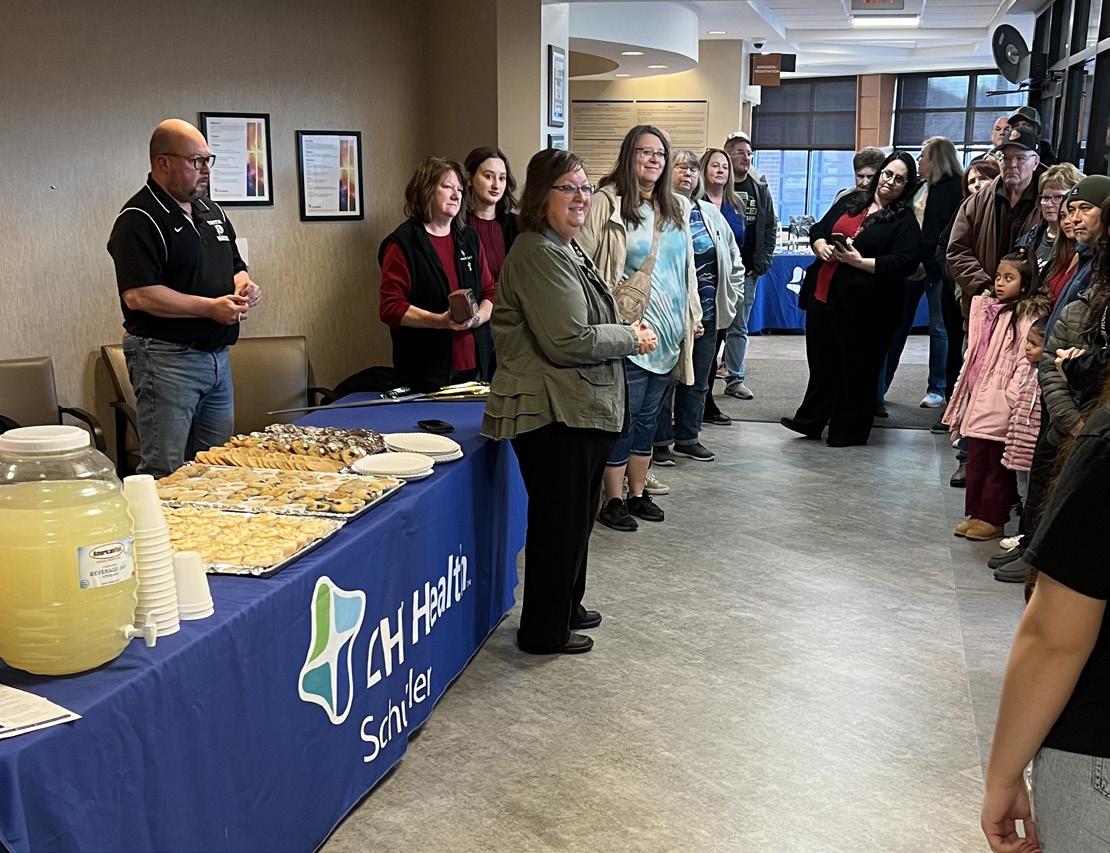
On a late Friday afternoon in early February, that silence broke, replaced by the hum of a crowded lobby, the rhythmic "thwack" of a ribbon-cutting ceremony, and the energetic chatter of high school entrepreneurs thrilled to share the transformed space with the community.
Welcome to The Heart of Schuyler Gift Shop. It isn't just a place to buy a handcrafted trinket or a jar of locally-made salsa, although one surely can. The small store is a living laboratory for student entrepreneurship, and a bridge between the city’s youth and its healthcare cornerstone.
Torpin is no stranger to big ideas. The former principal and longtime business educator prefers them, actually. Torpin had seen a limited version of this model a decade ago in Omaha. That single student-run display in a hospital left an impression.
When he arrived in Schuyler and saw a hospital gift shop that hadn’t recovered from the blow of the pandemic, he got one of those big ideas.
"I thought if they could do a display, why couldn’t we do a whole store?" Torpin said. "That room was a completely blank space less than a month ago. Not a single thing on the shelves. It was blank."
With the overwhelming support of his principal and the hospital administration, Torpin turned the project over to his students. This wasn't going to be a simulation or a textbook exercise. It was going to be the real deal in a "go, go, go" environment, and Torpin’s students held the keys.
"I told them when they signed up for this class, ‘We’re going to do something different," Torpin relayed to the students. "It’s not a class. It’s a business at this point."
Students happily assumed the heavy lifting. That didn’t surprise Torpin. He knew these students were go-getters. Still, the journey from an empty room to a grand opening was a crash course in market research and logistics.
To find their footing and get the ball rolling, the students didn't just guess what people wanted. No, they became fullon market researchers. They traveled to Omaha and Fremont, touring established hospital gift shops and interviewing staff to understand what sells in this type of clinical environment.
"We brainstormed, and then we visited a lot of shops," said sophomore Gabriela Quezada. "We saw what they sold and we asked them questions. Being able to have this experience will help us if we want to open our own business. We’ll be able to know what the steps are to get there."
For senior Joarcy Sanchez, the project offered a rare level of autonomy, a chance for him and his peers to stake a claim in something that could be around for years to come.
"We had control of what we were going to sell and what we weren't going to sell," he explained. "We started with nothing, and now we have something really nice. It’s a final product we all can be proud of."
The inventory they curated reflects the "Heart" in the shop's name. By sourcing items locally and reaching out to community entrepreneurs, the students ensured that every dollar spent
in the shop circulates back into the Schuyler economy. The shelves now boast local crafts, snacks, and "Schuyler" branded apparel.
On opening night, customers perused the retail as “oohs” and “aahs” spilled into the hospital lobby, where a large group gathered over treats (baked by students) and lemonade.
“We’re really proud of the kids,” said assistant principal Josh McPhillips. “They’ve really taken ownership of it. They’re just running with it and it’s really exciting to see them take the lessons they’re learning in school and applying them to the real world.”
The partnership between Schuyler Community Schools and CHI Health is more than a real estate agreement. In a town like Schuyler, where the community is described by leaders as tight-knit and genuine, intersections like this only bolster that rich culture.
Claudia Lanuza, Executive Assistant and Foundation Coordinator at CHI Health Schuyler, sees the shop’s reopening as a win for staff and patients alike.
"We have patients whose loved ones want to give them a little gift," Lanuza said. "And for our employees, they’re working all day and don't have the chance to stop at other places. It’s a one-stop shop for them."
Lanuza notes that the students brought more than inventory to the hospital. They brought a "renovation and fresh ideas" that the space desperately needed.
"They’ve been great,” Lanuza said. “They come in here, they’re energized, and they’re ready. They just go for it, and that’s exactly what we needed. Somebody who’s willing to come and just get it done without hesitating.
For the school district, the gift shop is another flagship for the focus they’ve placed on work-based learning. Dr. Bret Schroder, superintendent of Schuyler Community Schools, views the project as a blueprint for the future.
"This is hugely rewarding," Dr. Schroder said with a big smile. "We have students taking an opportunity with an empty space and creating an economic partnership that didn't necessarily exist before. I’m excited to see what we as a school district learn from this experience. How can we take those lessons and create more partnerships? That’s fun to think about, and it’s going to be fun to explore."
The Heart of Schuyler Gift Shop is a full-fledged business, and it will have to be staffed as such.
While entrepreneurship students manned the registers after
the ribbon-cutting ceremony, Torpin shared that the shop will eventually be a training ground for students in the school’s "21plus" program. An experience such as that can be monumental, specifically for a student who is preparing to graduate and needs real-world experience.
At Schuyler Central, student opportunity has rocketed to the forefront.
“Our CT department is exploding right now with interest, and we have sixty members who joined our new FBLA club just this year,” said Torpin. “Our classes are full, and this is just one more opportunity for them to do something real.”
The impact of the project has not gone unnoticed by the town's economic leaders. Audra Jedlicka, Director of the Schuyler Chamber of Commerce, has visited the classroom and walked away impressed. She was in attendance for the ribbon-cutting ceremony, and the gift shop’s quick transformation wasn’t too much of a surprise, given the character of the students behind it.
"I’ve spoken to their classes before, and they were throwing questions at me that were already above level," Jedlicka said. "Having this experience, knowing maybe somebody’s going to get the bug and come back and open something permanent on their own, that is really exciting."
As the gift shop filled with its first wave of hustle, bustle, and long lines, the sense of pride among the students was palpable.
Continued on page 12...
(Continued from page 11)
This store is part of their legacy now, a mark they’ll proudly leave on a community that always supports them.
"That’s really cool to think about," Sanchez said. "I hope it really does inspire the community to start up similar things in the future."
Dr. David Cunningham, SCHS principal, points to the students as the defining factor of the project’s success.
“We have great kids,” Cunningham continued. “I love going to work every day and seeing the kids and the exciting things they do every day. It’s fun to be a part of it. There’s a lot of pride in the school system and throughout the entire community, and it’s just great being along for the ride.”
Dr. Schroder was quick to echo Cunningham’s sentiment.
"I wish the average person that has not been to Schuyler recently could come and see the kind of kids we have, visit our schools and see the respect they have for each other and for their teachers and their community." added Schroder.
"What we have here in Schuyler is what a lot of communities wish they had. We’re lucky to have amazing kids to work with."
Among the many attendees was Schuyler Community Schools

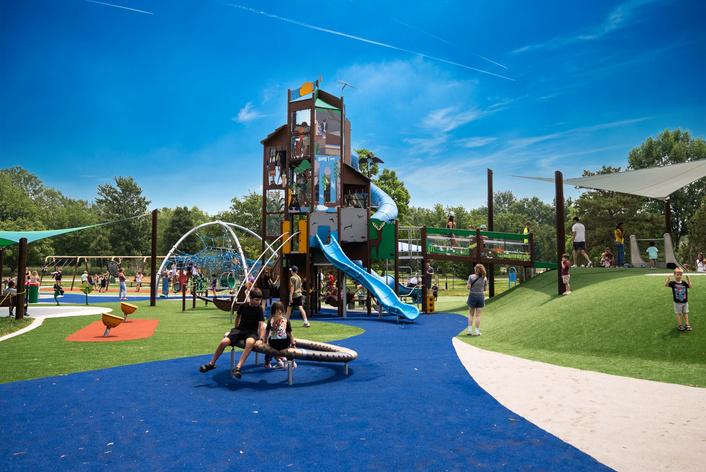
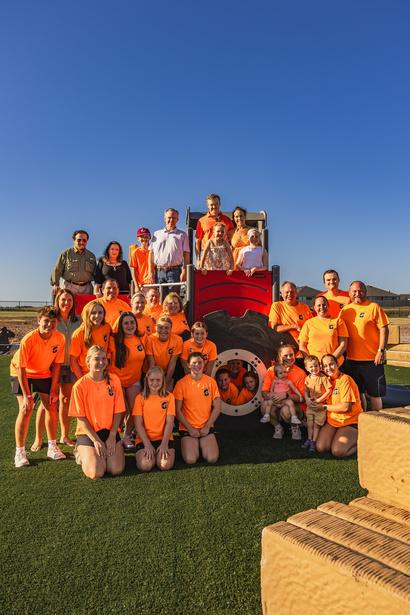
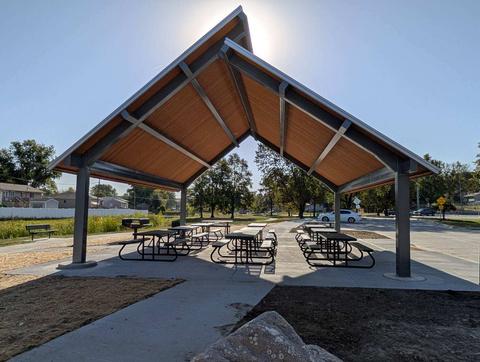
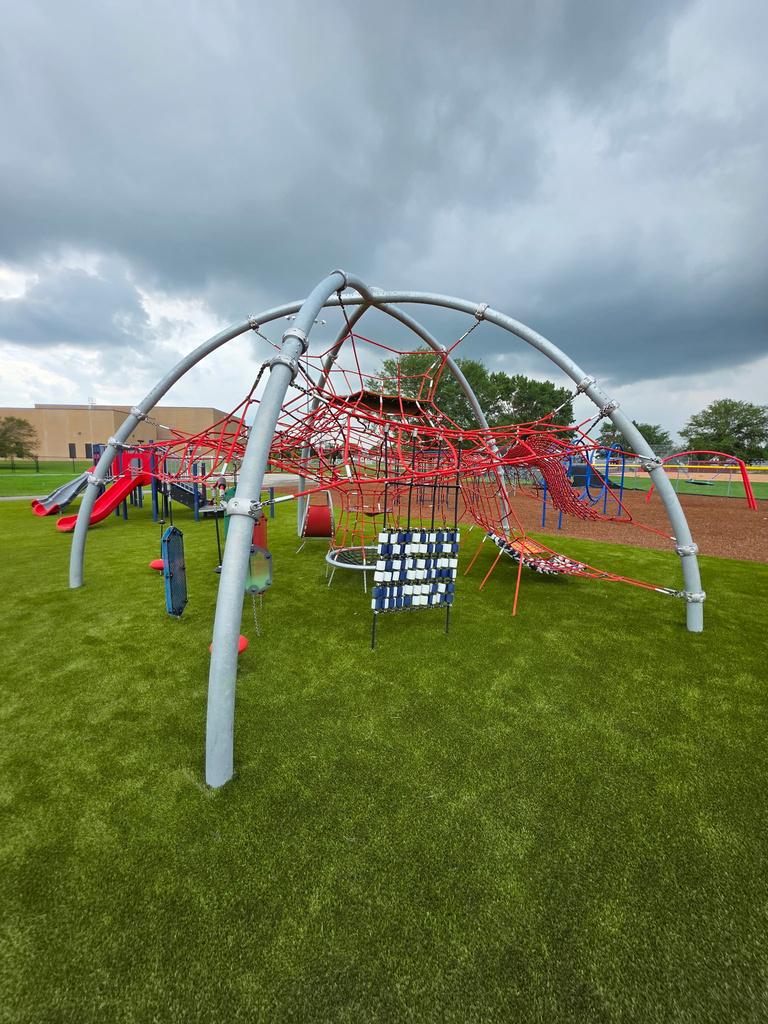
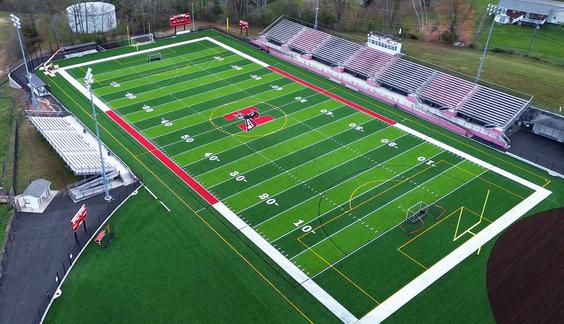
We design and develop outdoor recreation spaces where communities gather to compete, celebrate, and play
Specializing in playgrounds, splash pads, sports equipment, scoreboards, sports turf, lighting, bleachers, shelters, and more

Board of Education president Richard Brabec, who pointed to the kind of family engagement playing out in front of him, something the district is continuously striving for.
“This is a wonderful thing,” Brabec said. “Anytime you can engage students in activities like this where entrepreneurship is involved, that’s a great thing. These types of projects help bring the whole community together.”
The Heart of Schuyler Gift Shop came together in an extraordinarily short amount of time. On opening night, the group finally exhaled. They soaked it all in.





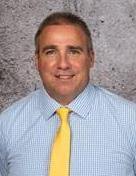
By Marc Kaminski, NSASSP President
School administrators are often immersed in the daily demands of the academic school year, continuously seeking strategies to improve student achievement and academic growth. In that pursuit, it can be easy to overlook one of the most effective and researchsupported tools for student success: intentional encouragement. This goes beyond brief praise or general motivational comments. It involves actively guiding students toward meaningful engagement opportunities that extend beyond the classroom setting.
Activities are frequently described as extensions of the classroom because they reinforce critical skills such as collaboration, responsibility, time management, and, most importantly, perseverance. Providing and encouraging students to participate in athletics, fine arts, organizations, clubs, or any other extracurricular activities provides structured opportunities to develop important life skills. Research consistently shows that students who are involved in school activities demonstrate improved academic performance, stronger attendance patterns, and high aspirations for postsecondary education. By intentionally promoting involvement, schools can create additional pathways for students' growth and long-term success.
School activities provide valuable opportunities for students to develop skills that extend well beyond the classroom. Through participation, students learn the importance of teamwork, individual accountability, shared responsibility, and healthy competition. They also gain a deeper appreciation for diversity and build a stronger sense of school culture and community. In addition to these benefits, involvement in school activities can positively impact academic performance. When students are encouraged to participate, they often develop greater pride in their work and a stronger understanding of the importance of quality effort. Participation also helps improve communication skills and build stronger relationships. It’s simple, research shows that students who are involved in school activities tend to experience greater overall success… It’s proven!
Make it a priority within your school administrative team to foster genuine school pride by offering as many opportunities as possible for students across your school district. When students feel connected and involved, it fosters a positive school culture while also motivating them to push themselves academically. Participation encourages greater accountability in the classroom and reinforces the lessons teachers work hard to deliver. These experiences also allow students to apply academic skills in real-world settings, making them an essential part of well-rounded education. Districts across the great state of Nebraska have seen tremendous success by simply encouraging involvement, yet this powerful and simple strategy can sometimes be overshadowed by the emphasis on assessments and instructional tools as the sole path to academic achievement.
"By intentionally promoting involvement, schools can create additional pathways for students' growth and long-term success."
I firmly believe that nearly every form of student involvement in school activities has a positive effect on learning and the development of essential life skills. At times, the greatest impact doesn't come from the newest instructional materials or resources, but from opportunities that extend beyond the classroom walls. Research consistently shows that participation in school activities is linked to improved attendance, higher academic achievement, and increased aspirations for continued education.
What are the social benefits? Well, they are equally significant. Through involvement in activities, students collaborate, communicate, and build relationships that foster lasting life skills. They learn to share ideas, compete with integrity, set goals, and work as part of a team. In many ways, these experiences mirror qualities that we try to build in high-level academic learning classrooms - engagement, critical thinking, accountability, and perseverance.
As a school leader, simply showing encouragement and making participation in activities a valued part of your school culture can have a profound impact. Not only does it support students’ academic growth, but it also demonstrates a commitment to developing well-rounded individuals. Seek ways to create and support activities that align with your district’s vision and connect with the community. These extensions of the classroom foster meaningful experiences and generate a ripple effect of
“Seek ways to create and support activities that align with your district's vision and connect with the community.”
Marc Kaminski
positive outcomes throughout your school. In my experience, schools that excel in extracurricular activities often see strong academic performance as well - the two go hand in hand. Make it a priority to encourage your students to get involved. It truly matters! ■

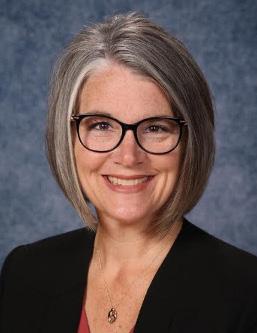
By Dr. Larianne Polk, ESUCC Executive Director
Nebraska’s ESUs can help districts meet the new ADA expectations for digital media without turning it into an overwhelming, last-minute scramble. Most districts recognize digital accessibility matters, but it is commonly pushed down the list as staffing shortages, budget cycles, and day-to-day needs take priority.
In April 2024, the United States Department of Justice finalized an ADA Title II rule that sets a clear expectation for state and local governments, including public schools: web content and mobile apps must conform to WCAG 2.1 Level AA. Compliance dates are based on population. Public entities serving a total population of 50,000 or more persons must comply by April 24, 2026, and public entities serving a total population of 0 to 49,999 persons must comply by April 26, 2027. The Department’s own guidance emphasizes that creating and maintaining accessible content takes planning, and that accessibility is something public entities will need to sustain over time, not complete once and forget.
Don’t underestimate what “digital media” includes. It is not only the homepage. It includes board materials, forms, handbooks, calendars, job postings, and the steady stream of documents and videos schools publish every week. In Nebraska, many of the items schools are required to post on their websites are document-heavy and highly visible, which makes them smart starting points. Examples include board minutes, annual budget and financial reports, Title IX information, superintendent contracts and related postings, the behavioral awareness point of contact, and parental involvement policy. As you inventory and prioritize content, these required postings are a smart place to start because they are both important to the public and often published as PDFs or scans that can create barriers if they are not prepared correctly.
This is where ESUs or ESUCC can bring immediate value. The most helpful support is not handing staff a technical standard and hoping it spreads, but training people in practical, everyday steps that make content accessible from the start. Because nearly every staff member creates digital content, accessibility cannot sit with one department. ESUs and ESUCC can deliver
role-based training for office staff, communicators, and district leaders, along with shared tools and templates that make accessible publishing the default and reduce both risk and rework.
The bottom line is simple. The work needs to be underway now, aligned to the April 2026 and April 2027 compliance dates, and treated as an ongoing operating practice. Your ESU can help you start with the most important public content, make steady progress, and avoid a last-minute rush that is harder on staff and harder to sustain.
To support districts in this work, ESUCC has created a practical accessibility resource for Nebraska schools: esucc-brisk.my.canva.site/nebraska-esucc-accessibility-site, developed by Andrew Easton, ESUCC Chief Learning Officer. ■

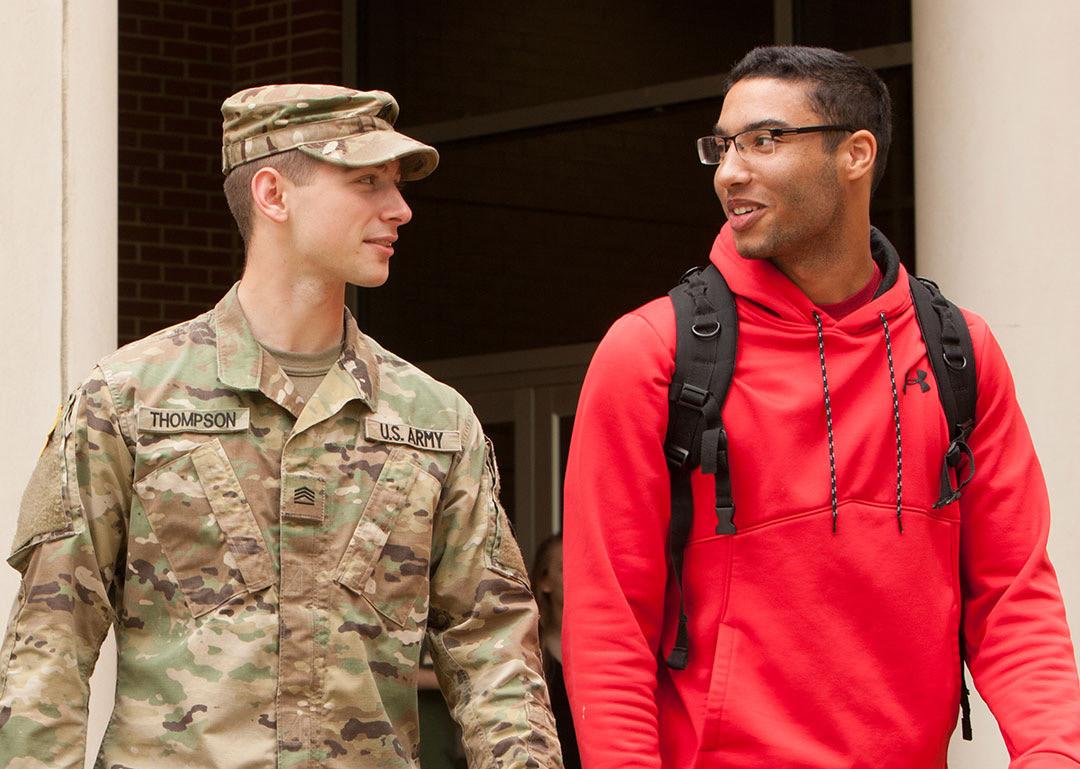
is calling • Over 50 Career Fields including Aviation, Healthcare, Engineering, and Technology • Federal Tuition + State Tuition Assistance - covers 100% of tuition at Nebraska State Universities • Up to $20,000 Bonuses
By Tyler Dahlgren, NCSA Communications Manager
Five miles separate Seedling Mile Elementary and Grand Island Senior High, a 10-minute bus ride that Lee Jacobsen used for one final rundown before the district held a large-scale school reunification drill.
The first of its kind for GIPS, the drill was a carefully coordinated practicum, a live-action stress test of a five-year safety evolution. As an intruder moved through the halls, the gears of a well-developed logistical machine began to grind, moving "students" (played by staff) from a state of crisis at their school to a state of recovery miles away at Grand Island Senior High (GISH).
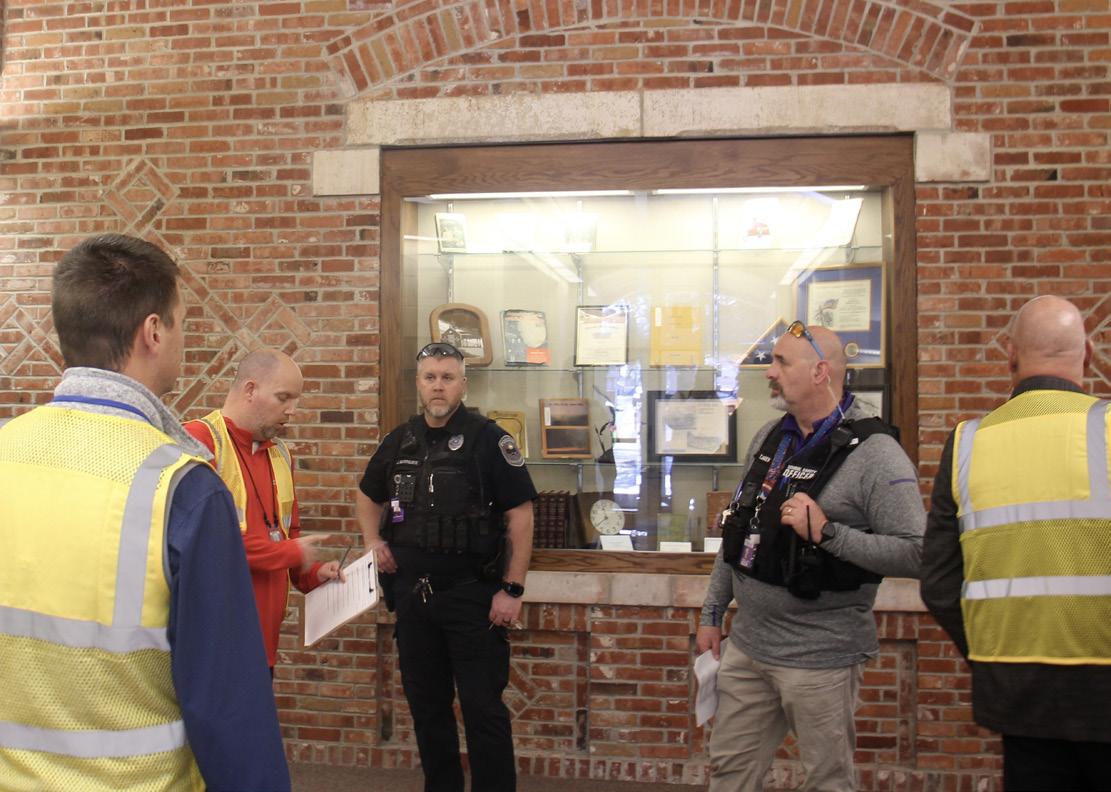
The drill began outside of GISH, where staff tasked with roleplaying as parents and students joined a group of observers from places like Lincoln, Kearney, and Norfolk before boarding a school bus and departing for Seedling Mile, a historic building on the eastern outskirts of town that closed after the 2024/25 school year. There, they were greeted by several officers from the Grand Island Police Department. The school went into lockdown, and the drill commenced.
The goal, to move an entire school population across town and reunite every child with the correct guardian while ensuring 100% data integrity and physical security, was reached. The
day was detail-oriented, given that Jacobsen has spent more than half a decade building toward this moment. While the district has always had plans on paper, Jacobsen’s philosophy is rooted in the "human factor."
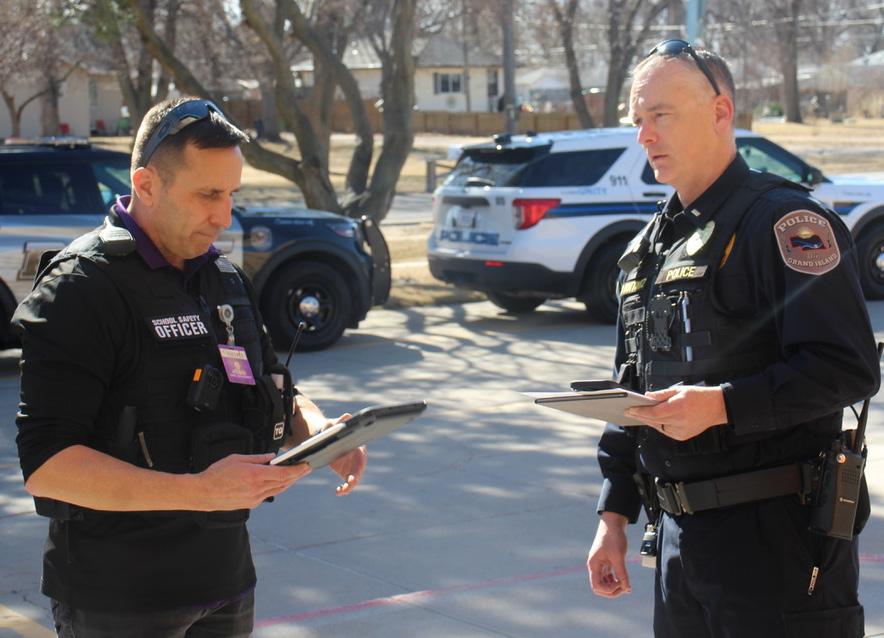
"Recovery starts when the crisis begins," said Jacobsen, a former law enforcement officer who transitioned to GIPS Safety Coordinator in 2019. “In the real world, when you factor the human element into anything, things change from what’s written down. We’ve upgraded our Standard Response Protocol (SRP), making sure we fine-tune our evacuation drills so that when we evacuate, we have an assembly area where all of our students are accounted for physically and medically.”
The drill served as a beta test for both human intuition and the Synergy Education Platform, a digital tool designed to streamline the process of checking students out to their parents that GIPS started using this year.
“Technology was a double-edged sword,” said Jacobsen. “While the app provided good real-time updates, ‘talk-to-type’ errors in Google Chat created confusing instructions for staff. We are now emphasizing the need for physical backups, such as ‘Go-Kits’ with pens, clipboards and paper rosters.”
The drill was not a solitary effort, but a prime example of inter-agency cooperation. Jacobsen said the district’s strong relationships with the GIPD and the Grand Island Emergency Center are intentionally maintained, and communication lines are always open.
"It can just be a phone call away, and that's always better," Jacobsen said of his relationship with the GIPD.
This collaboration extends to a Rule 10 committee, where community stakeholders like the Red Cross and Salvation Army provide input to ensure the school’s plan aligns with the city’s broader emergency capabilities.
The simulation didn't end with a "clear" signal at the elementary school. Instead, the drill entered its most complex phase: the evacuation. Participants were loaded onto buses and transported across the city to Grand Island Senior High, the designated reunification site.
Observers on the bus saw firsthand the tension, even in a simulation, of moving people through a city during an
emergency. For Jacobsen, this transit period is a critical window for communication. One of his most innovative strategies involves the "15-minute rule" for older students.
"We ask that they give us 15 minutes before they use their phones to text," Jacobsen explained. "When they text their parents, we want them to say first: 'I am okay.' If I’m a parent and I get that text, it makes me feel a lot better."
This redirected use of technology turns a potential distraction into a tool for community-wide de-escalation. Once at GISH, the Standard Reunification Method (SRM) took center stage. The process is a triple-check system designed to prevent the nightmare scenario of a student being released to an unauthorized person.
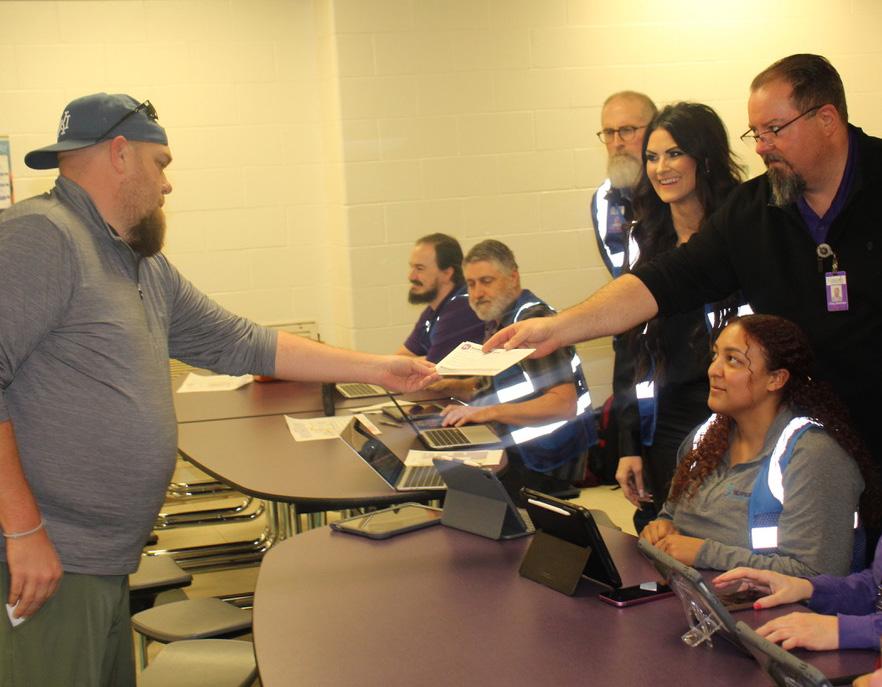
Greeters were stationed at the entrance to manage the influx of anxious "parents." The checkers were tasked with the verification of IDs against the school’s digital database. The reunifiers served as the final link, bringing students from the holding area (the gym) to the parents in a controlled environment.
“We learned that the reunification wait can feel like an eternity for a child,” said Jacobsen. “Our updated plan includes providing water, snacks, and covering gym windows to shield students from the distress of arriving parents.”
Ultimately, the drill was a success. ID verification was 100% accurate, and staff received a 4.8/5 rating for professionalism. However, the simulation did exactly what Jacobsen hoped it would by revealing the cracks that only appear under pressure. One of the most significant learning opportunities arose from a "Double Check-out" bug discovered in the Synergy software.
The system allowed a student to be released twice without a "Hard Stop" alert.
"Technology is wonderful until you don't have technology anymore," Jacobsen said, emphasizing that while digital tools are the primary engine, "pen to paper works every single time."
Perhaps the most poignant moment of the drill involved a simulated medical emergency. A scenario was thrown in where a student was "injured" and diverted to a hospital. In the chaos, the parent of that student reached the reunification gym before the staff realized the child wasn't there. This led to a new "Silent Trigger" protocol, using radio codes to discreetly move parents of injured students to a private crisis room before they ever enter the public staging area, shielding them and other parents from unnecessary trauma.
For Jacobsen and the safety team at GIPS, February 12th was not the finish line. In fact, it was the baseline. The district is already looking toward the next five years, with a heavy focus being placed on language access (there are 19 different language groups within the district) and threat assessment (integrating safety within MTSS).
At the end of the day, the staff was equally exhausted and empowered. Everyone, from the IT & Data Team to the Crisis Response Team to the building administration, succeeded in their role.
“Everybody did wonderful,” he said. "We haven't made it upstairs yet to perfection, but we’re going to try to get there."
The reunification drill proved that while you can't predict every crisis, you can certainly out-train the chaos. ■
It has never been more important to effectively communicate your school’s value to your community.
IS YOUR SCHOOL READY?
Better engage and educate parents and the community
Enhance support and efforts for funding/bonding
Leverage your website as a communication hub
Harness the power of storytelling to promote your mission, values, and outcomes You know the good work you’re doing.
Apr. 16-17
Apr. 23-24
June 24-26
July 29-31
Aug. 6
Aug. 13
Sept. 10-11
Sept. 16
Sept. 23-24
Sept. 29-30
October 6-7
October 27
October 28
Nov. 18-20
Dec. 1-2
Dec. 9
Jan. 30
NASES Spring Workshop – Embassy Suites – La Vista
NASBO State Convention – Embassy Suites – Lincoln
Educators Academy for Legislative Advocacy – NCSA Office – Lincoln
Administrators’ Days 2026 – YCC North – Kearney
Business Manager Training – NCSA Office – Lincoln or Virtual
Preparing for Student Legal Issues – NCSA Office – Lincoln or Virtual
NASES Fall Conference – Embassy Suites – Lincoln
School Law – NCSA Office – Lincoln or Virtual
Educator’s Academy for Legislative Advocacy – NCSA Office – Lincoln
Labor Relations – Embassy Suites – Lincoln
Heartland School Safety and Security Summit – Embassy Suites – Lincoln
Nebraska Fall Ed Tech Conference – Cornhusker Hotel – Lincoln
Emerging Superintendents – NCSA Office – Lincoln
State Education Conference – CHI Convention Center – Omaha
State Principals Conference – Cornhusker Marriott Hotel – Lincoln
Legislative Preview – NCSA Office – Lincoln or Virtual
Emerging Administrators – NCSA Office – Lincoln
*Region meeting dates can be found on the NCSA website.
NAESP – July 13-15, 2026 – Orlando, FL
AASA – Feb. 25-27, 2027 – Atlanta, GA
ASBO – October 14-16, 2026 – Pittsburgh, PA
American Fidelity
Wayne Ryan
wayne.ryan@americanfidelity.com 3100 SW Huntoon, #102 Topeka, KS 66604 (800) 365-1167 americanfidelity.com
BCDM Architects
Amy Johnston
ajohnston@bcdm.net
1015 N. 98th Street, Ste. 300 Omaha, NE 68114 402.391.2211 bcdm.net
Boyd Jones Construction
Mark Reckmeyer mreckmeyer@boydjones.biz 950 So. 10th Street, Ste. 100 Omaha, NE 68108 402-553-1804 boydjones.biz
BVH Architecture
Cleveland Reeves creeves@bvh.com Lincoln/Omaha/Denver 402-475-4551 bvh.com
Capturing Kids' Hearts
Gabby Jones 1199 Haywood Drive College Station, TX 77845 (402) 660-8553 gabby.jones@capturingkidshearts.org
Cheever Construction
Britt Kurtzer bkurtzer@cheeverconstruction.com 3425 North 44th Street Lincoln, Nebraska 68504 402-477-6745 cheeverconstruction.com
D.A. Davidson & Co.
Paul Grieger pgrieger@dadco.com 450 Regency Parkway, Ste. 400 Omaha, NE 68114 402-392-7986 dadavidson.com
Diode Technologies
Scott Pulverenti Scott.pulverenti@diodetech.net 242 SW 31st Street Lincoln, NE 68522 402-793-5124 diodetech.net
Clark & Enersen
Steve Miller
steve.miller@clarkenersen.com 1010 Lincoln Mall, Ste. #200 Lincoln, NE 68508 402-477-9291 clarkenersen.com
CMBA Architects
Troy Keilig
keilig.t@cmbaarchitects.com 208 N Pine St, Ste 301 Grand Island, NE 68801 308-384-4444 cmbaarchitects.com
Crouch Recreation, Inc.
Eric Crouch nicole@crouchrec.com 1309 S 204th Street #330 Elkhorn, Ne 68022 402-496-2669 crouchrec.com
Kordica Communications
Annette Eyman, APR
Annette_Eyman@Kordica.com 222 S. 15th Street, Suite 221 N. Omaha, NE 68102 402-690-6992 kordica.com
Modern Images
Bradley Cooper
brad@champshots.com 13436 So. 217th Street Gretna, NE 68028 402-991-7786 misportsphotography.com
Piper Sandler & Company
Scott Keene
Scott.Keene@psc.com
2900 South 70th Street, Ste. 310 Lincoln, NE 68506 402-325-1199 pipersandler.com
DLR Group
Vanessa Schutte vschutte@dlrgroup.com 6457 Frances Street, Ste. 200 Omaha, NE 68106 402-393-4100 dlrgroup.com
ESUCC
Larianne Polk lpolk@esucc.org 6949 So. 110th Street Omaha, NE 68128 402-597-4866 esucc.org
Facility Advocates
Dave Raymond draymond@facilityadvocates.com 3837 South 149th Street, Suite #102 Omaha, NE 68144 402-206-8777 facilityadvocates.com
Just Right Reader
Dr. Hope Swearingen hope.swearingen@justrightreader.com 909 Lake Carolyn Parkway Irving, TX 75039 402-927-4785 justrightreader.com
Renaissance
Mark Kessler
Mark.Kessler@renaissance.com 2911 Peach Street Wisconsin Rapids, WI 55494 800-338-4204 ext. 4712 renaissance.com
National Insurance Services
Megan Ware mware@nisbenefits.com 11205 Wright Circle, Suite 104 Omaha, NE 68144 402-506-2170 nisbenefits.com
Nebraska Army National Guard
Melisa Ventre melisa.m.ventre.mil@army.mil 200 N 33rd Street Lincoln, NE 68503 402-430-2383 nationalguard.com/nebraska
Nebraska Liquid Asset Fund
Riley Hunter riley.hunter@pfmam.com 440 So. 13th Street Lincoln, NE 68508 402-705-0350 nlafpool.org
Northland Securities, Inc.
Tobin Buchanan tbuchanan@northlandsecurities.com 1620 Dodge Street, Ste. 1104 Omaha, NE 68197 402-598-1218 northlandsecurities.com
Omnify
Andrea Howard andrea@omnifybenefits.com 3400 Plantation Dr Lincoln NE 68516 402-323-1803 omnifybenefits.com
John Baylor john@ontocollege.com P.O. Box 30792 Lincoln, NE 68503 402-475-7737 ontocollege.com
Software Unlimited, Inc.
Corey Atkinson caa@su-inc.com
5015 S. Broadband Lane Sioux Falls, SD 57108 605-361-2073 su.inc.com
TeamMates Mentoring Program
DeMoine Adams dadams@teammates.org 121 S. 13th St. Lincoln, NE 68508 teammates.org
Grand Canyon University
Shane Keck
shane.keck@gcu.edu 3300 W. Camelback Road Phoenix, AZ 85017
1-800-800-9776 ext. 2473562 gcu.edu
Navitas, LLC
Shane Alexander
salexander@navitas.us.com 4816 S. 167th Street Omaha, NE 68135 402-360-3135 navitas.us.com
Trane
Matt Foertsch mfoertsch@trane.com 11937 Portal Road, Ste. 100 LaVista, NE 68128 402-596-8000 tranetechnologies.com
UNANIMOUS
Matt O'Gorman matt@beunanimous.com
8600 Executive Woods, Ste. 300 Lincoln, NE 68512 402-423-5447
University of Nebraska High School
Michael Bomberger mbomberger@nebraska.edu
1500 U St., Ste 200 P.O. Box 880633 Lincoln, NE 68588-0633 402-472-1922 highschool.nebraska.edu
440 S 13th Street, Suite A • Lincoln, NE 68508 RETURN SERVICE REQUESTED