National Professional Sports and Entertainment Safety and Security Forum
FEBRUARY 23-24, 2026 | UNC Charlotte
AGENDA AVAILABLE ONLINE – Register now to secure your spot!
THE FORUM is an event focused on addressing key safety and security challenges facing the professional sports and entertainment industry and sharing best practices for continuous improvement. The threat environment surrounding high-profile sport and entertainment events is continually evolving. Discussing current issues and exploring solutions in a forum environment will help those in attendance enhance safety and security plans and operations.
Moderated Breakout Discussions
• Staff Training and Development
• Fan Behavior
• Communications
Who You’ll Meet
• Perimeter Security
• Severe Weather Planning
• Command Center Operations
Connect with leaders keeping sports and entertainment events safe, including:
• Safety, security, operations, event and facility managers
• Local and state law enforcement
• Emergency managers, fire, HAZMAT and EMS
• Guest services and government officials











ABOUT NCS4
ESTABLISHED IN 2006, the National Center for Spectator Sports Safety and Security (NCS4) is the nation’s only academic center devoted to the study and practice of spectator sports safety and security. The NCS4’s strategic priorities are guided by a National Advisory Board and industry Advisory Committees.
The NCS4 collaborates with professional associations, government agencies, academic entities, and the private sector to provide training, resources, and networking opportunities.
MISSION��
We support the sports and entertainment industries through innovative research, training, and outreach programs. Our mission is realized by working closely with a diverse group of organizations and subject matter experts to better understand the threat environment, identify vulnerabilities, communicate risk-mitigation techniques, and close capability gaps.
VISION��
We will be a leading partner with government, private sector, and sports and entertainment organizations to create and deliver critical resources for enhancing safety and security.
The NCS4 is located in the Trent Lott National Center at The University of Southern Mississippi (USM), a top-tier (R1) Carnegie classified institution for its very high research activity. The Center is partially funded by grants from the Department of Homeland Security (DHS) and Federal Emergency Management Agency (FEMA).
As reports of harassment and stalking of athletes escalate at all levels of sport, cooperative efforts are emerging to combat bad actors.
PRESS PLAY
The world of esports presents different security challenges than more traditional sporting events. Learn why.
Collaboration between public and private sectors is paramount when planning safety and security operations for a new sports and entertainment district.
Ten public safety capabilities as 2026 brings unprecedented overlapping events in the U.S.
A NOTE FROM THE EXECUTIVE DIRECTOR
Dr. Stacey A. Hall
GREETINGS, FELLOW SAFETY AND SECURITY PROFESSIONALS!
We are excited to present our Fall/Winter edition of the Gameday Security magazine. This issue addresses the growing concern of athlete harassment and stalking, security challenges within the esports industry, publicprivate sector collaboration in security planning for a new sports and entertainment district, and preparing public safety for a surge in large-scale events. I hope you enjoy the articles included in this edition.
The NCS4 mission is to support the sports and entertainment industries through training and education, research, and outreach programs. The NCS4 continues to be a significant resource in helping advance safety and security practices, and I would like to share our impact and progress on some items since the summer, including:
• The 2025 Annual Conference in San Antonio, TX, was a tremendous success and a sold-out event with the most attendees in conference history.
• The Professional Sports and Entertainment Safety and Security Forum will be held in Charlotte, NC, on February 23-24, 2026. Check out the agenda here.
• Over 60,000 people have been trained through the DHS/FEMA/TEEX national training program. Eight courses are available, covering topics such as risk management, incident management, crisis communications, evacuation planning, crowd management, and staff training and development.
• The NCS4 was awarded a DHS Competitive Training Grant to deliver training to multiagency teams responsible for safety and security at FIFA host sites, the LA Olympics, and other special events over the next three years.
• The NCS4 eLearning suite consists of four courses, including frontline staff foundational skills, crowd management, venue staff training - security awareness, and the senior leader course in sports and entertainment security. There are currently over 4,000 learners registered in the learning platform. Check out NCS4LEARN for more information.
• The Certified Sport Security Professional (CSSP) program continues to grow. The certification is for professionals currently serving in the sports security industry or for individuals planning a career transition to the sports and special event security industry. Check out the application process here.
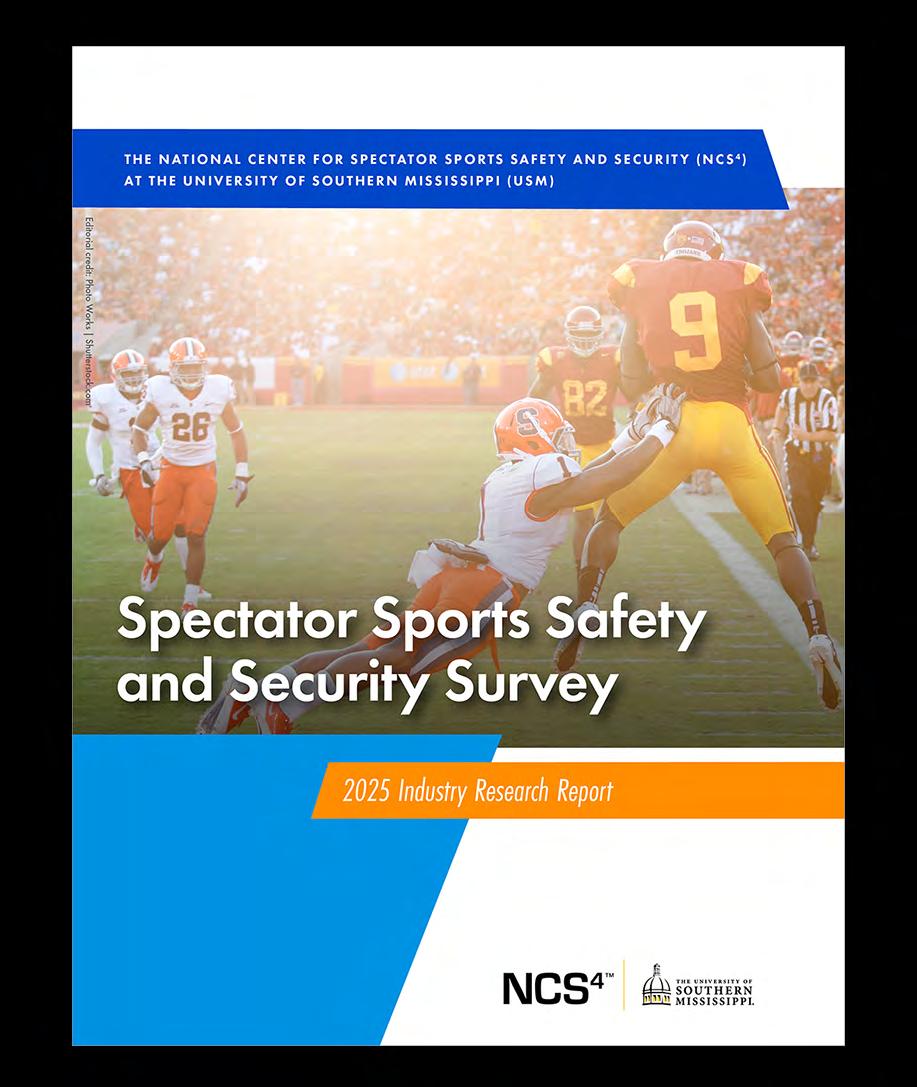
• The 2025 Spectator Sport Safety and Security Industry Research Report is now available, highlighting spectator perceptions of security practices, technologies, and emerging threats. Access the report here.
• A new research seminar, ‘Artificial Intelligence: Theoretical Framework and Events Industry Application in Sports Venues,’ can be accessed here
• The Handbook of Sport Security, edited by Dr. Stacey Hall, was published by Routledge, a Taylor and Francis Group. More information can be found here
• The NCS4 staff and research affiliates presented at local, national, and international conferences, workshops, and academic classes. Additionally, they have contributed to peer-reviewed journal articles, professional publications, and webinars.
• The 2025 Sport and Entertainment Technology Alliance members include Accredit Solutions, AirSight, Aluma, Axis Communications, BEST Crowd Management, Databuoy, Esri, inOrbit, NVIDIA, Raven Controls, Red Ball Drills®, S2 Global, Titan HST, Xtract One, and 24/7 Software.
• The 17th Annual Conference and Exhibition is scheduled for June 23-25, 2026, at the JW Marriott Desert Springs Resort and Spa in Palm Desert, CA. Registration is now open. The NCS4 will also be celebrating its 20th anniversary!
It is the season for giving thanks, and the NCS4 team is grateful for our partnerships with professional associations, government agencies, solution providers, and academic entities. We also appreciate the support of our membership base. The National Advisory Board, Advisory Committees, and Technology Alliance continue to be instrumental in shaping our strategic priorities to address the challenges and needs of our industry.
The NCS4 team wishes you and your loved ones peace and happiness during the holiday season.��
Kind Regards,

Stacey A. Hall, Ph.D. NCS4 Executive Director and Professor of Sport Management
NCS4 TEAM NCS4 LEARN
EXECUTIVE LEADERSHIP TEAM
Dr. Stacey A. Hall
Executive Director and Professor of Sport Management
Lauren Cranford Director of Operations
Dr. Brandon Allen Director of Research and Associate Professor of Sport Management
MANAGEMENT TEAM
Michael Broadus Curriculum Manager
Anthony Palazzolo Manager of Marketing and Business Development
Sara Priebe Event and Membership Manager
Jonathan Ruffin Instructional Design Specialist
Tymika Rushing Business Affairs Manager
Jonathan Stanford Training Manager
Roger Swartz Senior Training Manager
Lauren Villarreal Training Manager
STUDENT ASSOCIATES
Kate Largen Graduate Assistant
Olukola Olukunle Graduate Assistant
Peyton Phillips Graduate Assistant
Nishit Thapa Web Developer
Professional Development at Your Fingertips

NCS4 LEARN provides eLearning professional development opportunities for all staff levels, including frontline staff, supervisory, and leadership. Organizations can enroll and monitor their teams in asynchronous and customizable learning experiences. The course catalog currently includes the following:
• Frontline Staff Foundational Skills – introduces frontline staff members to the skills necessary for providing guests with a safe and enjoyable experience.
• Venue Staff Training: Security Awareness – enhances safety and security awareness among venue and event staff, providing a foundational understanding of safety and security principles for your organization to build upon.
• Crowd Manager Fundamentals – provides a foundational understanding of safety and security principles for frontline venue and event staff with role-specific add-ons (i.e., guest services, parking management, concessions, ticket-takers).
• Senior Leader Course: Sports and Entertainment Security – covers security leadership fundamentals in business management, emergency management, planning considerations, legal and regulatory guidance, crowd management, and security procedures.
Please visit the website or contact us at NCS4Learn@usm.edu if you have any questions or would like to inquire about bulk registration.

Scan the QR code or visit our website to learn more.
NCS4.USM.EDU/ELEARNING
2025 SPORTS AND ENTERTAINMENT TECHNOLOGY ALLIANCE MEMBERS
THANK YOU TO OUR 2025 SPORTS AND ENTERTAINMENT TECHNOLOGY ALLIANCE MEMBERS
THE SPORTS AND ENTERTAINMENT TECHNOLOGY ALLIANCE is a consortium of individuals and organizations committed to spectator safety and security excellence through innovation. Members work alongside practitioners and the NCS4 to explore how people, processes and technologies can best contribute to safety and securit y challenges in a meaningful way.
THE SPORTS AND ENTERTAINMENT TECHNOLOGY ALLIANCE is a consortium of individuals and organizations committed to spectator safety and security excellence through innovation. Members work alongside practitioners and the NCS4 to explore how people, processes and technologies can best contribute to safety and security challenges in a meaningful way.









UAS & Drone Pilot Detection
THREAT CONTROL
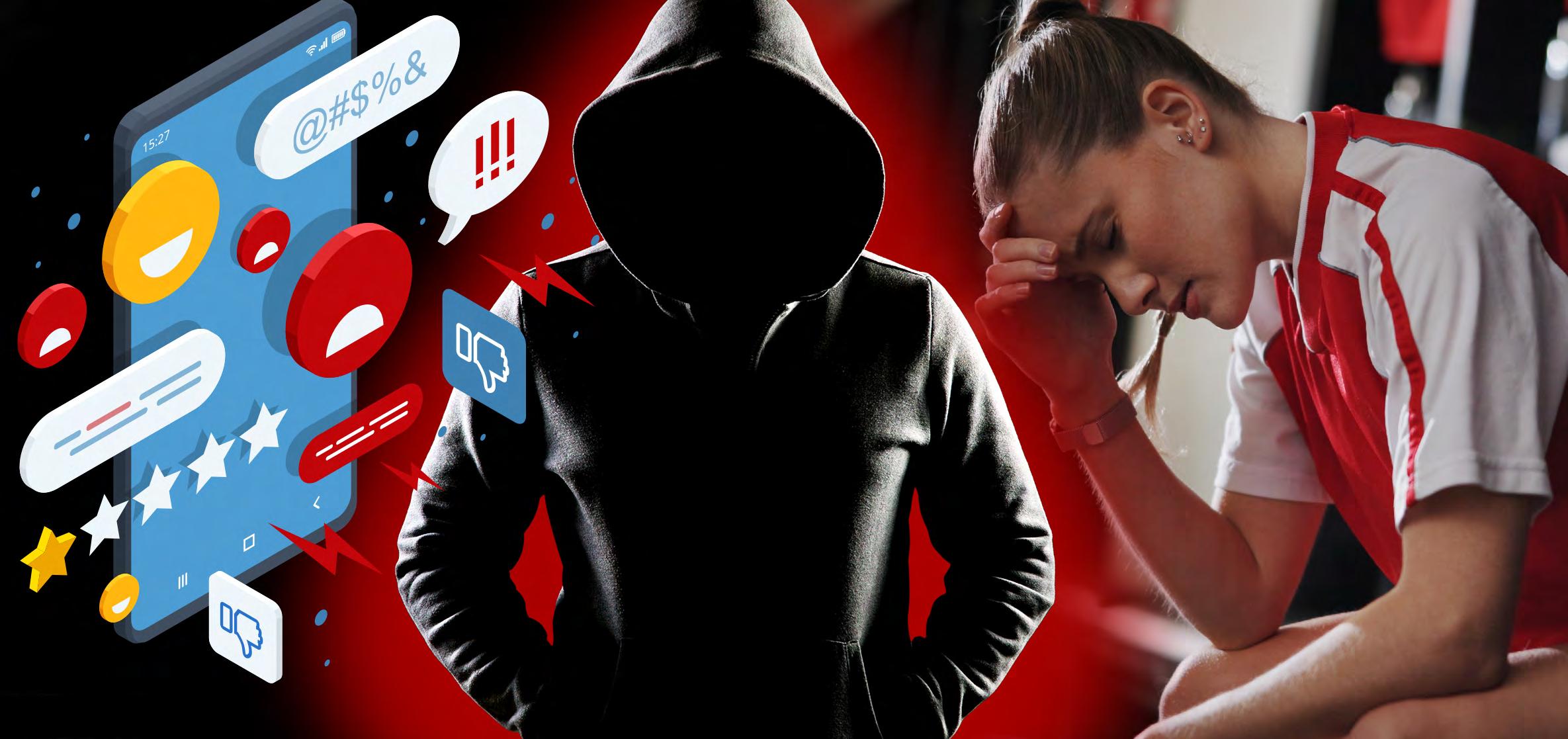
As reports of harassment and stalking of athletes escalate at all levels of sport, cooperative efforts are emerging to combat bad actors.
By Michael Popke
ATHLETE HARASSMENT AND STALKING, unfortunately, has been happening for a long time. Remember the stabbing of tennis star Monica Seles in 1993 by a fan of her biggest rival? But there’s no question there’s been an uptick in this kind of activity in recent years.
TheAthletic.com reports that “[s]ince 2020, there have been at least 52 reported or alleged stalking incidents in which athletes or coaches were targeted. Female (29) and male (17) athletes were involved, and some female athletes were allegedly targeted by multiple individuals.”
RECEPTION SPONSOR
There is more access to athletes across a broad spectrum, and it’s a small percentage of people that really take advantage of that and create a lot of problems.
PRESENTING SPONSOR AWARDS LUNCHEON
TODD SANDSTEDT
The legalization of sports betting in nearly 40 states, combined with the easy access social media provides to athletes at all levels of play have contributed to what sports security expert Todd Sandstedt calls a “reach-out-and-touch” fan mindset.
“There is more access to athletes across a broad spectrum,” says Sandstedt, a former FBI special agent and now managing director of SecureSport, a Colorado-based consulting firm that works with professional and collegiate sports teams on a variety of security issues. “And it’s a small percentage of people that really take advantage of that and create a lot of problems.”
Problems like these:
• In July, FanDuel Sportsbook banned an online bettor who heckled 28-year-old Olympic gold medal sprinter Gabby Thomas during a Grand Slam Event in Philadelphia. After Thomas came in fourth in a 100-meter race, the bettor posted on social media that he “made Gabby lose by heckling. And it made my parlay win.”
• Retired All-Pro Los Angeles Rams defensive lineman Aaron Donald earlier this year secured a longterm restraining order against a woman, the 34-year-old accused of stalking him and his family since 2020. According to reports, Donald “had never met the woman [and] alleged she bombarded him with messages — including one that he interpreted as threatening the life of his young son — and attempted to send balloons and packages to his children.”

• British tennis pro Katie Boulter, 28, was hounded by online death threats and other despicable comments after she lost a tie-breaker in a 2025 French Open match that Boulter eventually went on to win. The messages included “Hope you get cancer” and “Go to hell, I lost money my mother sent me.”
“I don’t know if it’s the fact that you’ve got fans with skin in the game now, or if increased regulation and oversight is leading to the detection of these threats and harassing messages,” says Carla Varriale, a partner at Segal McCambridge and chair of the New York City-based law firm’s Sports, Recreation & Entertainment practice group. “I think what we’re seeing might be a confluence of factors.”
One of those factors, notes security consultant Matthew Wein, creator and editor of the “Secure Stakes” newsletter, which focuses on how sports gambling impacts homeland security, is an enhanced sense of fan entitlement. He points to unruly fan behavior at September’s Ryder Cup at Bethpage Black Golf Course at Bethpage State Park in Farmingdale, NY. Irish golfer Rory McIlroy and other members of the European team (and their families) were targets of consistent insults from U.S. fans. PGA of America even added more security at the event, and some fans were ejected for their actions.
We’re seeing a convergence of the digital and physical worlds. In my experience, threats in the digital space are always designed to have effects in the real world.”
MATTHEW WEIN
Wein Strategy Lab
“There seems to be more of a comfort level with being overzealous as a fan — and even crossing the line from overzealous to something that goes far beyond that,” says Wein, who is also founder and CEO of the security consulting firm Wein Strategy Lab. “We’re seeing a convergence of the digital and physical worlds. A lot of threats start in the digital space, with email, direct messages and social media platforms, Venmo requests, or text messages. But in my experience, threats in the digital space are always designed to have effects in the real world.”
GABBY THOMAS –- Editorial credit: Victor Veltor | Shutterstock.com

I like the fact that we’re thinking about this through a wider lens. It intersects with tort law, and it’s also a cybercrime and a cyber harassment issue with regulatory challenges.
CARLA VARRIALE-BARKER Segal McCambridge
‘THINKING ABOUT THIS THROUGH A WIDER LENS’
Certainly, one of the biggest factors contributing to athlete harassment and stalking is sports betting.
As Gameday Security reported in the Summer 2025 issue, the NCAA released an alarming analysis of online harassment in college sports last fall. That report indicated that 12% of all social media abuse of student-athletes, coaches, and officials taking place during championships in several sports was related to sports betting. Only online abuse of a sexual nature was more prevalent (18%).
For that study, the NCAA partnered with London-based data science company Signify Group and the firm’s Threat Matrix service (powered by artificial intelligence) to monitor public comments targeting the online profiles of participants in seven Division I NCAA championships and the College Football Playoff National Championship across 2023 and 2024.
Recently, the NCAA released new data from Signify that indicates betting-related abuse of student-athletes dropped slightly, but the percentage of online sexual harassment increased. The NCAA is also now collaborating with mobile payment service Venmo to help curb bettor harassment of student-athletes. The protections include establishment of a hotline to report potential cases of abuse and identify types of sports-related harassment on Venmo, a best-practices guide to help student-athletes stay safe on the platform, and user education efforts to inform bettors about repercussions of harassing athletes.
“An ounce of education and deterrence is worth a pound of cure,” Varriale says. “I think the
answer at this point is to take action with the really significant online abuse and also educate athletes, sports officials, and the general public about its harmful effects.”
Varriale was one of three experts on a panel titled “When the Game Turns Toxic: Confronting Social Media Harassment in Sports” at the American Bar Association’s “Forum on Entertainment & Sports Industries Events” in Las Vegas in October. Also on the panel were Signify CEO Jonathan Hirschler and Lindsay Brandon, director of safeguarding for the Women’s Tennis Association (whose players are among the most frequent targets of online harassment). The panel explored the legal, regulatory, and organizational tools available to respond to online abuse in sports — including platform accountability, player protection policies, and emerging cybercrime enforcement — and identify what’s driving it.
“It’s a new topic [for the ABA forum],” Varriale says. “I like the fact that we’re thinking about this through a wider lens. It intersects with tort law — which is preventing foreseeable or intentional conduct that harms another person — and it’s also a cybercrime and a cyber harassment issue with regulatory challenges. How do we make and enforce rules to protect against this sort of behavior and enhance player well-being? How does it interfere or intersect with the new proliferation of bettors? Are we creating bad bettors? And if we have bad bettors, what do we do with them? This is an emerging issue, for sure.”
“It’s not at epidemic levels,” Sandstedt adds, referring to the rise in athlete harassment and stalking. “But it is a problem that leagues and
KATIE BOULTER | Editorial credit: Jimmie48 Photography | Shutterstock.com
institutions are facing, and there are additional apparatuses available to help combat it — and not only from a law enforcement perspective. There is a lot of priority being placed on mental health throughout the professional leagues, and colleges and universities. And that is creating a more comfortable realm for athletes to report and discuss this issue. But it is still a drain and can have a debilitating effect on an athlete.”
Reporting, of course, can be a challenge. As recently as 2019, less than one-third of all stalking victims (not only athletes) reported their situations to law enforcement officials, according to a study published in 2022 by the U.S. Department of Justice.
Such technology advances as AI now allow for better collection and tracking of incidents, Varriale and Sandstedt say.
“But at the end of the day,” Sandstedt notes, “the data is only as good as the reporting. So there is continued encouragement of athletes and staff officials to report this type of activity. I don’t want to say there’s a reluctance, but it’s maybe not a priority for some of them to report that someone was harassing them online. They just kind of dismiss it. But sports organizations are trying to say, ‘Hey, don’t dismiss it. Let’s hear about it, and then we’ll deal with it, and you can move on.’”
AN INDEPENDENT INFORMATION SHARING HUB?
This summer, Wein wrote an article in his “Secure Stakes” newsletter titled “From Isolation to Coordination.” In it, he proposed an independent information-sharing hub that would serve as a repository of available technologies, problem-solving strategies, and best practices related to combating athlete harassment and stalking.
“Like in the national security world before 9/11, there are silos preventing broader information sharing,” Wein wrote, referring to the sports industry. “The sports ecosystem needs this information to improve threat detection and mitigation. A solution to help solve part of this problem is an information-sharing hub involving sports leagues, teams, sportsbooks, and other stakeholders. This hub would help address not just betting irregularities, but also online harms and physical threats, while offering leagues a degree of strategic oversight and reputational risk mitigation. The effort would demonstrate that leagues value integrity and community safety, not just revenue, and would create a scalable, collaborative model.”
“So many of the policy discussions after 9/11 centered around agencies that were not sharing information,” Wein says now. “The FBI had certain bits of information, the CIA had certain bits of information, the military had certain bits of information, but no one was talking to
each other. And so no one was able to put the full picture together to stop the attack before it happened, even though all that information existed within the federal government.”
Ideally, the network Wein envisions would be funded by major professional sports leagues, the NCAA, and sportsbooks. “I definitely think it could work, but it does not seem like there is a ton of interest in it at this moment,” he admits.
Sandstedt says he sees the potential for an independent information-sharing hub like Wein suggests: “There are methods by which some of this information is being captured, but any additional apparatus would be welcome. If a person is involved in harassing one particular athlete, coach, or staff member, they may be doing it to others, and it would be good to know that information.”
“I think there needs to be multilateral efforts rather than pulling one giant lever to fix the problem,” Wein adds. “I think it will take smaller pushes and pulls on multiple levers.”
“Even if harassment or stalking doesn’t get to the level of a threat to life, something that triggers an immediate law enforcement reaction is still unacceptable,” Sandstedt concludes. “That’s why the reporting element is so important, so that other tools can then be available to help stop this behavior.” l


Scan the QR code or visit our website to view the Best Practices. ncs4.usm.edu/resources/best-practices


PRESS PLAY
The world of esports presents different security challenges than more traditional sporting events. Here’s why.
By Michael Popke
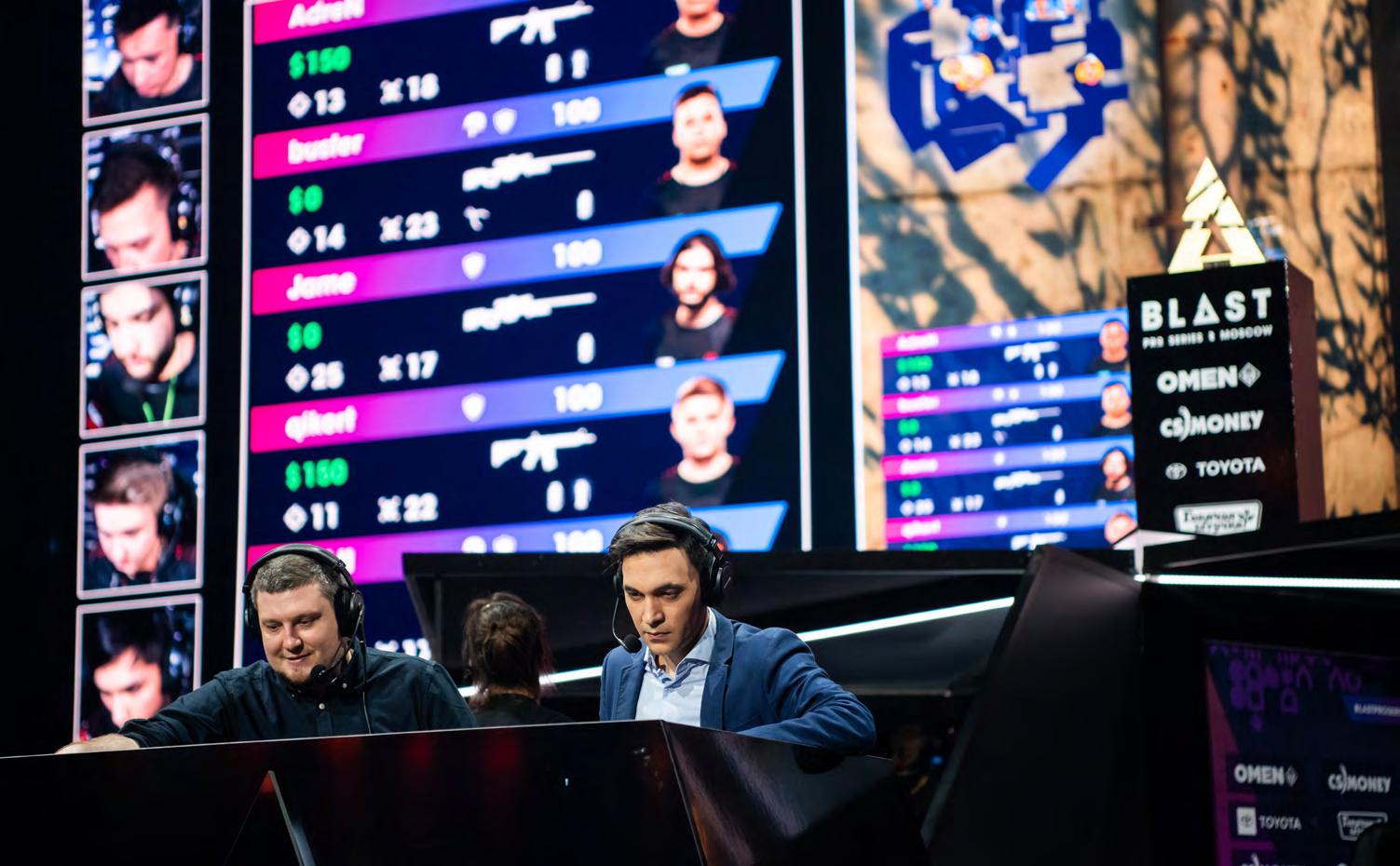
MORE THAN A DECADE HAS PASSED SINCE BOSTON POLICE thwarted an alleged plot by two Iowa men armed with an AR-15 rifle, a 12-gauge shotgun and a hunting knife who made online threats to wreak havoc at the 2015 Pokémon World Championships held in the city’s Hynes Convention Center. But that incident — in which James Sumbo and Kevin Norton were each charged with unlawful weapons possession and sentenced to two years in prison followed by two years of probation — still comes up when discussing the need for enhanced security at esports events.
“We clearly dodged a bullet, no pun intended,” says Don McGowan, who at the time was chief legal officer for The Pokémon Company International and is now principal of Extreme Grownup Services, a consulting firm in Seattle dedicated to “guiding brands through the complex world of children’s entertainment.”
In traditional sports, you have a divide between player and spectator, a wall. That wall is very nebulous and vague in esports, so the line is blurred between players and fandom.
ARIC MUTCHNICK
“But we had to smarten up. After 2015, handling security [at Pokémon] became my responsibility. As you can probably imagine, that’s a responsibility that weighed fairly heavily, because I was in charge of the security for a room full of children from around the world. That’s the most target-rich environment I can imagine.”
“It was a wakeup call,” adds Aric Mutchnick, president and CEO of Experior Group Inc., a Virginia-based security management consulting firm, as well as the inventor of Red Ball Drills®, which are discreet live exercises designed to improve security protocols at just about any kind of event or venue.
Now Mutchnick is working with the National Center for Spectator Sports Safety and Security to help security
officials better understand the burgeoning esports industry and how esports events — some of which can bring in as many as 20,000 spectators, as did the 2019 Fortnite World Cup Finals at Arthur Ashe Stadium in Flushing Meadows, NY — differ from traditional sporting events.
“In traditional sports, you have a divide between player and spectator,” Mutchnick says. “There’s a wall: You are here, and the other person is there. That wall is very nebulous and vague in esports, because you’ll have people who sometimes compete but maybe also just want to show up and roleplay. So the line is blurred between players and fandom.”
Much of that fandom often resides in online chats and forums, which can lead to incidents of cyberbullying, swatting and doxxing.
“Swatting and doxxing kind of started in esports,” Mutchnick says. “Swatting started because one player wanted to screw with another player, so he called the police, and they showed up at his door. That’s why I think understanding the esports community — and the security and dynamics of how it works — is critical.”
AN ESPORTS PRIMER
In the past 15 years or so, competitive gaming has emerged as a viable sport in a $1.7 billion global market, anchored by cool arenas designed specifically for high-end battles and a rabid fan base. That said, large esports events more frequently are held at convention centers, with several dozen (or even a couple hundred) parent volunteers staffing them. It’s often likely that online influencers will show up at highprofile competitions, and it’s vital to understand that each esports community has its own culture.

“The populations of people who will play in a Pokémon event and a Fortnite event will usually be two completely different groups of people. You might get one or two people who cross over; those are never the ones who win, because there’s a part of this that requires you to choose a lane and dedicate yourself to it,” McGowan says. “The humans involved are very different, and in fact, are often very different as humans.”
For example, Pokémon events are packed with children under 12 years old — which is not the case at Fortnite events, because that game is rated T for Teen. As such, each group of participants (and fans) poses a different set of risks, according to McGowan. Pokémon also attracts a higher percentage of participants who are on the autism spectrum. Therefore, if event organizers or volunteers need to speak with a nonverbal Pokémon player in the case of an emergency, that player’s reaction could be much different than someone participating in a different esports event.
Of course, Pokémon and Fortnite are just two popular esports games. Other top games include Madden NFL, Call of Duty, Rocket League, Overwatch, League of Legends and Halo. Events typically are run by gaming companies and serve as a form of marketing, says McGowan, who also spent nearly four years as general counsel for video game developer Bungie Inc. before creating Extreme Grownup Services, and players and teams are sponsored by a variety of companies — including tech, beverage, apparel, and snack brands.
You’re dealing with a bunch of people in a room who aren’t super well-adjusted and who often don’t integrate in large groups. And, in particular, they also tend to be very gunfriendly.
DON MCGOWAN Extreme Grownup Services
As with Pokémon and Fortnite, those other games all have their own cultures, some of which have fanbases rooted in the alt-right, according to McGowan, who admits that sometimes “you’re dealing with a bunch of people in a room who aren’t super well-adjusted and who often don’t integrate in large groups. And, in particular, they also tend to be very gun-friendly.”
That’s why consistent safety and security training, especially for event organizers and volunteers, is so crucial.
Enter Mutchnick and his Red Ball Drills, which can significantly improve security at esports events by creating tailored, culture-specific protocols and response processes through live scenariobased exercises, he says. The drills use real-world situations — a missing child, influencer-driven crowd surges, mental health incidents, or even an active shooter — customized to the unique environments of that particular type of esports event.
Here’s how it works: A member of the Red Ball Drills team approaches a security team member and produces an inflatable red ball, similar in color and texture to a common kickball or playground ball but smaller — like a grapefruit. The ball acts as an engagement tool to indicate that the exercise has begun, as the facilitator presents the staffer or volunteer with a scenario and invites discussion about how to respond.
“It’s not a solutions-based exercise, and there’s no ‘gotcha’ element. Rather, it’s an empowerment exercise,” Mutchnick says, adding that the Red Ball Drills concept has been in place across a broad range of industries for several years. “The Red Ball Drills simply are facilitating conversations about processes that lead to improvements in policies and procedures.”
At one event, Mutchnick recalls, he and his team ran a scenario in which a young neurodivergent Pokémon player lost a game and began banging his head on the table because he didn’t know how to control his emotions. Based on an actual incident at a previous event, that drill underscores the difference between security protocol at a traditional sporting event vs. an esports event.
“A traditional security team would take that as some sort of violent reaction, because [the player] got up and flipped the table over,” Mutchnick says, recalling the original incident. “The violent reaction, not toward anyone else, was more self-harm and property damage. But instead of security understanding that he was on the spectrum, they treated him as somebody who was a threat and tackled him to the ground. After this happened, someone asked us, ‘Hey, can you run a Red Ball Drill for somebody on the spectrum having a violent episode to see how we walk through it?’”
All volunteers are informed prior to the event about the potential of being involved in a Red Ball Drill, and the drills (which are based on proprietary methodology) have led to the development of
event-specific protocols, including setting up quiet rooms for participants to seek some respite and adapting “Code Adam” procedures for a missing child, Mutchnick says.
‘THIS IS REALLY DIFFERENT’
In addition to implementing Red Ball Drills at esports events, McGowan (who is a member of the Red Ball Drills Advisory Board), also suggests other esports-related safety and security measures that include acknowledging open-carry laws in states hosting esports events and developing robust access-control strategies during events.
“Where are you going to have the event? Because if you’re going to have the event in an opencarry state, you better have a venue that’s allowed to turn away people with guns,” he says. “How the hell is security going to know the difference between a good-guy-dad-with-a-gun and somebody else with a gun?”
Also be aware of adult-child dynamics at events with younger participants, McGowan adds.
“I’ll use a Pokémon event as an example, but this isn’t unique to Pokémon events,” he says. “You have a bunch of people standing around not playing. Well, if you’re security, what’s the first thing you’re looking for? People who look like they’re excessively interested in something. So you’ve got about 700 grown-ups just standing around, really watching these tables full of children. Of course, it’s all their parents, but you don’t know who’s Mom and who’s Dad.”
McGowan’s advice to avoid that situation is to develop an accesscontrol strategy ahead of the event. “Can we control access to various spaces in the room, such that if I see an adult standing right behind a child, I know it’s that kid’s parent?” he asks. “You need to get with the actual people who are contracted to do security for the event and discuss that.”
In other words, esports events need more than simply one or two individuals wearing a socalled “security hat” to oversee security and safety protocol.
“When I’ve worked with security groups, the guard companies are like, ‘This is really different.’ And I’m like, ‘Yeah, man, the challenges are different. This is why we’re here, so that we can help you and work together,’” Mutchnick says. “I think NCS4 can bring some of the foundational knowledge that esports events need, especially since they attract tens of thousands of spectators. A lot of people don’t understand the scope of esports events yet.”
For those who don’t, there’s no better time than now to begin finding out more, according to McGowan: “If I were speaking to my old colleagues [in the esports events world] today, I would say, ‘You guys need to take this very seriously, because someday you’re going to have a problem. The day you have that problem, you don’t want to have to say you cut costs on security.” l
Editorial credit: Roman Kosolapov | Shutterstock.com

THANK YOU FOR YOUR COOPERATION
Collaboration between the public and private sectors is paramount when planning safety and security operations for a new sports and entertainment district.
By Michael Popke
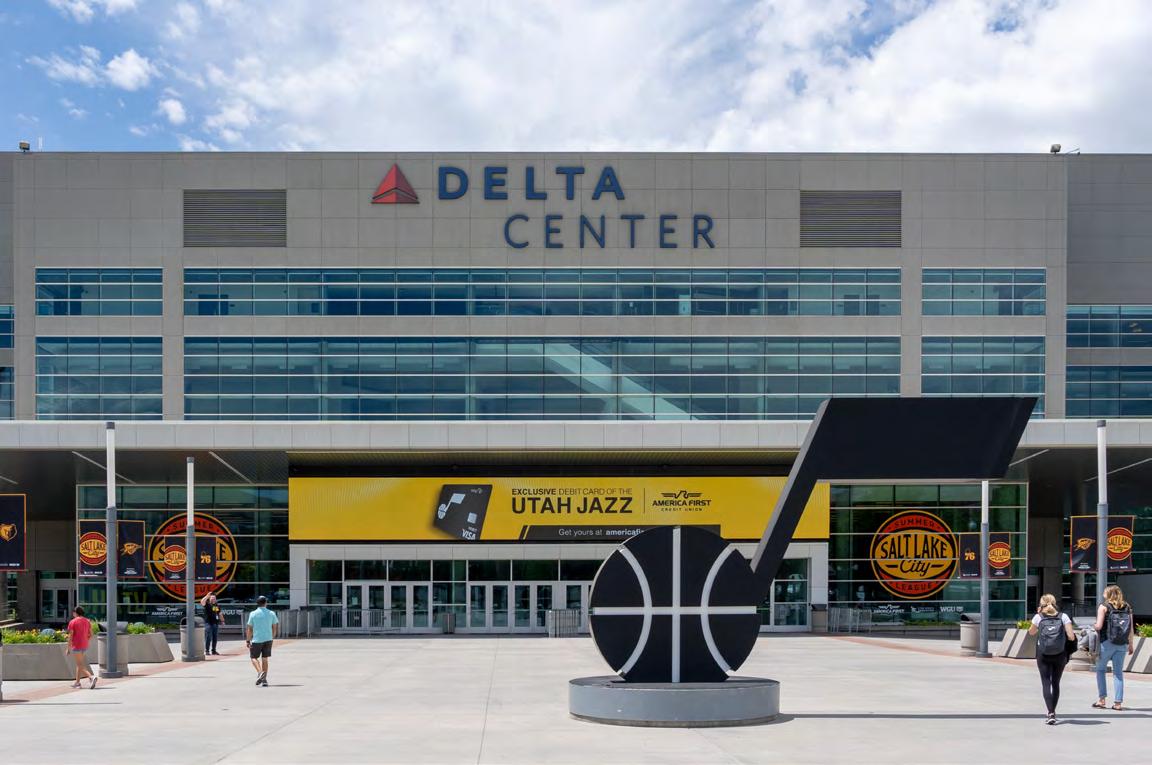
CONCERT NIGHTS AT THE DELTA CENTER IN SALT LAKE CITY THESE DAYS require even more security planning than usual. That’s because the arena is undergoing major renovations as a focal point of the new $4 billion mixed-use Sports, Entertainment, Culture, and Convention District in the city’s downtown. Which means construction crews are a regular presence in the building.
“I have to be able to get [the crews] out of the building and run the show correctly without interfering with the artist or any of the acts that are coming into the building,” says Blake Paris, senior vice president of safety and experience for the Smith Entertainment Group (SEG), the district’s developer. “Everyone has to understand what that looks like and understand that this is going to be forever fluid, based on what construction workers are working on that week.”
I’ve never seen a statewide event with everybody from law enforcement to the private sector coming together like this to better prepare themselves for incidents.
BLAKE PARIS Smith Entertainment Group
It’s also critical to keep the general public out of construction zones, including prohibiting access to a giant crane outside the arena that is being used for the construction of a sevenstory parking garage.
This access-control example, which played out in real time the day Gameday Security spoke with Paris, is just a microcosm how SEG along with a team of law enforcement officials and other public- and private-sector partners are navigating a massive project that will take several years to complete.
In addition to the Delta Center renovations, significant construction is taking place at the adjacent Salt Palace Convention Center, with plans also calling for new public spaces, retail and dining establishments, and a 6,000-seat music venue in partnership with Live Nation. Funding for the project is coming from a combination of public funds from a
0.5% sales tax increase and private investment from SEG. (SEG owns the Utah Jazz NBA franchise and the NHL’s upstart Utah Mammoth, both of which play home games at the Delta Center.)
Generally speaking, the expectation is that the new district will bring more people to downtown Salt Lake City — underscoring the need for enhanced safety and security strategies, as well as even stronger communication between all invested parties.
TOP PRIORITIES
Within his role overseeing everything security for SEG, Paris has short-term and long-term objectives. The short-term focus revolves around onsite construction and includes addressing threats of the general public somehow accessing restricted spaces and getting injured while also ensuring the overall safety of the impacted buildings and the events they host.
“The other [focus] is long term,” he says. “What do the things that we’re building out look like, and what do I need to have in place to safeguard these spaces? How do I do it in the timeframe that I have? What are the conversations that I need to be having with the chief of police or the commissioner of the Utah Department of Public Safety or the state Legislature? What will be the regulations for the district? How will we staff it? What will we allow the public to do in those spaces? Are we going to allow picketing and protesting inside those spaces?”
The questions might seem endless, but Paris is not on his own when seeking the answers.
“I’ve been lucky within my career that I’ve worked and run security for basically every type of sports and entertainment facility that you can think of,” Paris says, citing major arenas and entertainment districts from coast to coast. “I already had a good handle on what it would take to operate these different types of spaces, so I just used my past experience and said, ‘Here are the relationships and partnerships that I think are most important for us from a safety and security perspective.’”
Among the most significant of those security-related partnerships is with local law enforcement.
“One thing we pride ourselves on in Utah is the ability we have to collaborate and communicate. I’d like to think that we’re known for having people with different perspectives and different interests be able to sit down and solve difficult problems,” says Salt Lake City Police Chief Brian Redd, whose department will have a new substation located in the downtown district. “I can tell you that one of our highest priorities is collaborating well with the private sector in Salt Lake City.”
Prior to joining the Salt Lake City Police Department, Redd spent two years tracking inside threats for the compliance division of investment banking firm Goldman Sachs, which has a large presence in Salt Lake City.
“It was interesting sitting on the side of Goldman Sachs, hearing from them how impactful public safety and good relationships with the city’s police department are,” Redd says. “That’s helped me be very committed to our private sector partners, making sure that we’re doing everything we can as a police department to support them and their efforts to build our economy here in Utah.”
THE UTAH SECURITY ALLIANCE
Both Redd and Paris emphasize that ongoing communication has been — and will continue to be — one of the most vital factors in ensuring the success of Salt Lake City’s new Sports, Entertainment, Culture, and Convention District from a safety and security perspective.
Enter the Utah Security Alliance, an entity Paris created involving local, state, and federal law enforcement agencies and several private-sector companies from around the state. On Nov. 17, SEG, the Jazz, the Mammoth, and Salt Lake Citybased security systems provider Stone Security hosted a meeting at the Delta Center for public and private sector leaders “to explore how the Utah Security Alliance can be leveraged, with discussions on best practices, new technology and collaboration with law enforcement,” according to a flyer for the event.
One thing we pride ourselves on in Utah is the ability to collaborate and communicate. I’d like to think that we’re known for having people with different interests be able to sit down and solve difficult problems.
BRIAN REDD
Salt Lake City Police Department
Police chiefs and security directors from throughout the state were invited to attend what Paris and Redd believe is a first-of-its-kind event.
“I’ve never seen a statewide event with everybody from law enforcement to the private sector coming together like this to better prepare themselves for incidents,” Paris says, adding that the Utah Security Alliance evolved from a downtown-focused security alliance that Paris also created. “I looked at that and said, ‘Why are we pigeonholing ourselves as we’re growing as a state? Why are we not looking to expand it, to get more people involved?”
Redd believes the new sports and entertainment district is propelling the alliance’s impact, and he gives Paris and his team major credit.
“This is a something SEG was very instrumental in pulling together, and I think it is an example of getting out in front and building that trust between the private sector and law enforcement,” Redd says, recalling the struggles he encountered in attempting to work with the private sector on cybercrime threats in 2012 in his role as chief of the State Bureau of Investigation in the Utah Department of Public Safety. “Back then, it felt like, in many ways, law enforcement was reaching out to the private sector. SEG has been very active in reaching out to law enforcement and pulling us all together. Having a private sector partner that understands security, that understands the importance of partnerships, that understands all of these things makes it really easy to accelerate these partnerships. I think this is very innovative, and I think we’re at the forefront of it.”
UNIVERSAL APPLICATIONS
Salt Lake City’s security infrastructure will be immensely tested over the next decade. Redd says that as many as five million people are expected to visit the city in 2027 between April and October, when The Church of Jesus Christ of Latter-day Saints holds an open house at Salt Lake Temple. The building was dedicated in 1893 and has been undergoing major renovations — including seismic upgrades and structural reinforcement — since 2019.
In the Delta Center itself, the initial phase of renovations that began in April during the NBA and NHL off-seasons is now complete. Those improvements include what SEG officials say is a one-ofa-kind riser seating system custom-designed for the arena to improve sightlines for both hockey and basketball games. That alone is likely to bring more fans into the building and the burgeoning district.
Salt Lake City also has emerged as a favorite location for a future Major League Baseball expansion team, which could arrive in the early 2030s. And, of course, Utah’s capital city will host the Winter Olympics in 2034, 32 years after hosting the 2002 Games (which took place less than six months after 9/11).
But what’s happening in Salt Lake City is bigger than any one city or a single state.
“I think the biggest thing that I’m trying to get across, both in this article as well as within our Utah Security Alliance, is [the value of] proactiveness and proactive communication — understanding that
we’re no longer a siloed industry, that we have to be a lot more open based on the different technologies that exist to push information,” Paris says. “So the more that we can share, the more that we can be proactive, the better off that we’re going to be as a whole within this industry.”
Indeed, the safety and security strategies in place for Salt Lake City’s Sports, Entertainment, Culture, and Convention District can be universally implemented, he adds.
“It applies across the board in the safety and security world,” Paris says. “If you have something going on that you have questions about, or you need help with, or you just want feedback from like partners, ask the question. That way we can give feedback and provide information that you might not know, or provide technologies that you might not have seen. The more that we can do those things within our verticals, the better off we are going to be as far as safeguarding and securing different spaces and events.”
“A crisis is not the time to get to know your private sector partners or your law enforcement partners, depending on which side you sit,” Redd adds. “The time is now to be communicating and coordinating and collaborating — before an incident occurs.” l






Editorial credit: JHVEPhoto | Shutterstock.com
Preparing Public Safety for a Surge in Large-Scale Events

BY MARK CAMILLO
U.S. Secret Service, Retired; Olympic Coordinator: 2002 Salt Lake City Winter Olympics; Distinguished Lecturer: John Jay College of Criminal Justice (2015-2017)
INTRODUCTION
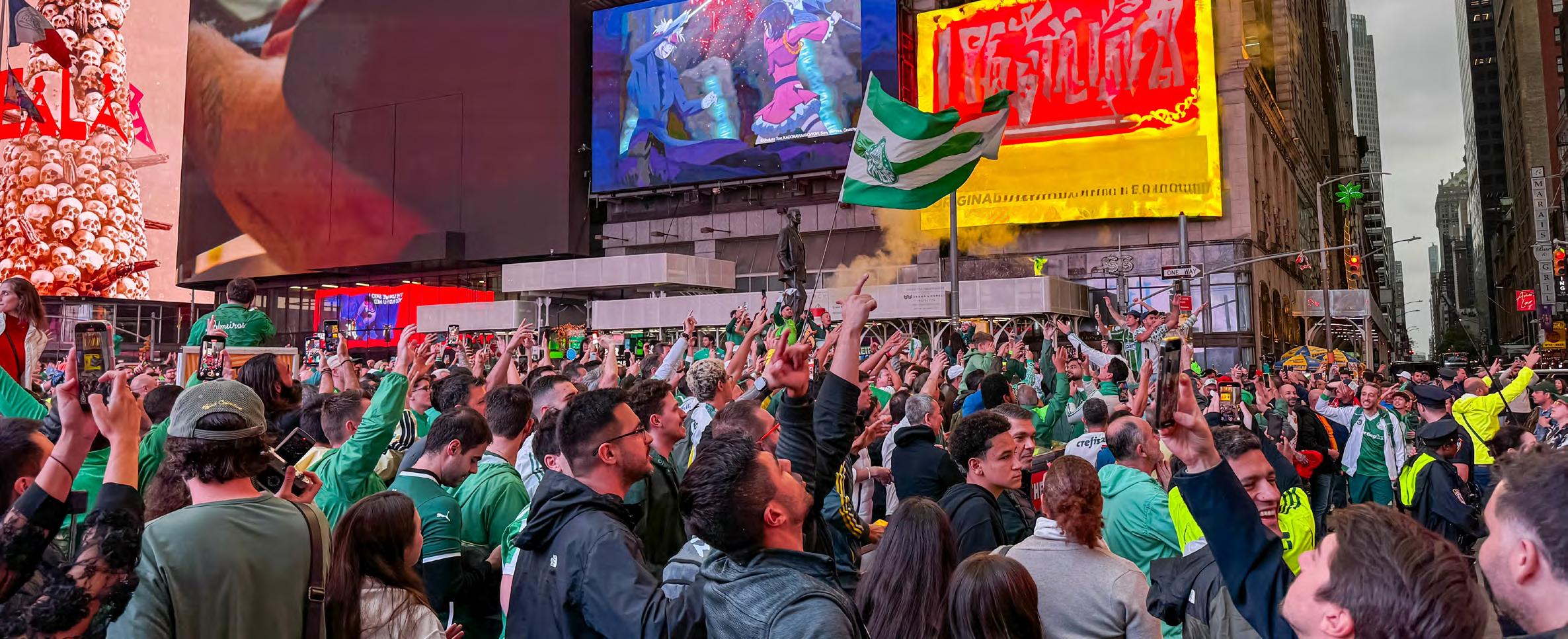
The USA is very acquainted with hosting large-scale events. It often requires dedicated pre-planning by all partners and stakeholders to ensure that risks are mitigated and resources are identified with sufficient time to ensure that personnel and equipment are properly allocated. In view of the 2026 special event calendar, many scheduled events will require back-to-back coverage, while others will have overlapping coverage. What makes 2026 unique is the convergence of large-scale sporting and celebratory events, which, if not planned in concert, could create gaps in coverage and availability of key public safety resources.
Learning from Past Large-Scale Events
Security, crisis management, and contingency planning for events of national significance have been planned in close coordination since 1998. Under a presidential decision directive, the U.S. Secret Service, FBI, and FEMA have been tasked with taking separate but complementary lead roles in planning and executing comprehensive antiterrorism plans tailored to events deemed of National significance, hence potential terrorist targets. For decades, leading up to the present day, this triad of U.S. Government agencies has continued to plan, design, and implement anti-terrorism operational plans for events designated as National Special Security Events, commonly referred to as ‘NSSEs’. A methodical process, worked through an inter-governmental working group, leads to this designation, with hopefully adequate time to address the elements of preparation, prevention, response, and recovery. However, to avoid planning in a vacuum, the proven success in planning events of national significance lies in quickly partnering with state and local agencies that have responsibilities and duties directly tied to the same event.
The approach to effectively designing and managing large-scale events has matured in many ways. Notable is the Special Event Assessment Rating (SEAR) system. The SEAR system has created an opportunity for state and some local governmental agencies to formally submit their respective events for SEAR level consideration. To be clear, SEAR levels (1-5) are associated solely with Federal support. Once voluntarily submitted, DHS applies risk-based methodologies to determine the appropriate SEAR level. Submitting early may increase an event’s level of Federal support. Assets deployed can translate into significant savings to state and local public safety agencies. SEAR 1 and 2 examples in the past have included the NFL Super Bowl and the Kentucky Derby.
Large-Scale Events on the Horizon
Events with historical significance, a long duration, national/international media coverage, and a mass-gathering setting generally garner the attention and support of both NSSEs and SEAR ratings at levels 1 and 2. When examining the 2026 North American event calendar, a quick analysis of scheduled major large-scale events reveals that, in many cases, there is schedule overlap. Consider Pennsylvania, for example, with its 2026 scheduled 250th Anniversary celebrations, an MLB AllStar Game, and a FIFA World Cup match all occurring in Philadelphia on or near July 4th. The year begins with the NFL Draft in Pittsburgh, followed by a series of celebratory events marking the 250th anniversary across the state, which continue through the calendar to July 4th.
Capabilities Unique to Public Safety
1
Counter Surveillance
When examining the terrorist attack cycle, after a target selection, there is predictably an initial surveillance and rehearsal before execution. It is therefore essential to establish a hostile surveillance detection element, also known as a surveillance detection element/team, that monitors for observers displaying an unusual interest in the venue beforehand. Venue operators may not have the financial ability to hire a third-party vendor, but they may be prepared to employ off-duty, trained officers. Other resources include DHS courses, which are conducted either in-person or online. This counter-terrorism element is part of the layered security plan and may make the difference in identifying threat actors and disrupting an attack in advance of the scheduled event.
2 3
Civil Disturbance Teams
Currently, large-scale or special events attract well-wishers and sometimes groups who wish to exploit the media attention. The private sector can manage crowds, but lacks the authority to control them, especially when there appears to be an attempt to disrupt the event or inflict damage on the hosting venues. The more prepared law enforcement is for a quick reaction, the better the chances are that protests will remain lawful and not escalate into civil disturbances. Venue managers will prove to be a valuable source of information regarding a particular team or an event that may bring social or geopolitical controversies along with it.
Special Services
Every day, we encounter more situations that require a tactical solution. Emergency services engaged in the planning process early increase the chances of a staged presence. Venues recognize the importance of emergency/tactical units training in their environment ahead of an event and should be approached for availability to conduct walk-throughs and exercises. They would rather your first time in the venue not be because of an emergency. Reaction time to an event that exceeds the standard law enforcement (LE) coverage can be significantly reduced when units and equipment are staged, and assigned officers are familiar with the areas where they may need to deploy.
4
Explosives/Incendiary Device Detection
We are in a day and age now that requires our collective experience in addressing threats from Improvised Explosive Devices (IEDs) and Improvised Incendiary Devices (IIDs). The IED threat is omnipresent in sporting venues, which is currently countered with front-of-house security screening on game day and back-of-house product screening, i.e., X-ray machines that ‘clear’ any products, materials, and goods before they are permitted inside the venue
5
perimeter. K-9 teams are a precious commodity and can be quickly exhausted when their assignments overlap with large-scale events. It’s true that some venues contract with certified K-9 explosives and weapons detection providers, but they may be logistically and resourcechallenged with multiple requests for coverage. Venues are well-advised to engage with public safety early in the planning process to have adequate coverage.
FIFA matches bring a history of smoke grenades. Tossing a smoke ball or grenade onto the soccer pitch is a feasible scenario. These may seem harmless, but that’s far from the case. Commercially available hand-carried ‘smoke bombs’ emit pyrotechnic smoke and residue that may cause breathing problems when inhaled. When near an ignited smoke device, there is a high risk of patrons or players being physically affected. Fire/HAZMAT teams staged in proximity to the seats and pitch provide an immediate response when and if needed. A plan to extinguish detonated fireworks, such as these, should be part of a comprehensive security plan and can best be addressed on the scene by qualified public safety professionals.
Worth pursuing is engaging Explosive Ordnance Disposal (EOD) planners in a discussion about an EOD dog’s ability to detect materials contained within a carried smoke bomb. Having EOD K-9 teams move among entering patrons may prove productive in identifying and confiscating devices before patrons enter a stadium.
Ingress/Egress Considerations
The recent history of dangers associated with spectators exiting public venues is taken seriously by venue operators, but not always understood by public safety counterparts. The threats include both crowds of spectators anxious to exit the venue, resulting in surge pressure at the conclusion of a sporting or entertainment event, and threat actors who opt to forgo attempting to enter a venue and position themselves immediately outside the exit gates. This situation was exemplified at the Ariana Grande concert at the Manchester Arena in 2017. Conversely, ticketholders may line up early to get to their seats and join fellow fans and supporters. This ‘crowd loading’ creates a large stationary target before the gates open. Predictable behavior such as this can capture the attention of a threat actor during their preattack surveillance.
Security screening at public venues has historically not included areas between entrance gates. Assigning uniformed officers outside the gates will, at the very least, provide a deterrent to a threat actor looking for unprotected entrances. This is also where counter (hostile) surveillance becomes a critical element in the layered security plan. When considering the possibility of a crowd crush occurring, engaging the Fire Marshal early in the process may produce a collaborative plan that mitigates choke points, such as escalators, where crowd momentum can cause pushing that results in people tumbling down an escalator or stairs. The National Fire Protection Association (NFPA) Life Safety Code 101 provides guidance on methods to protect workers and patrons. Early involvement of a fire marshal can make a significant difference in ensuring a venue’s occupants can safely exit.
6
Crisis Response
A critical element in a comprehensive security plan is ensuring that public assets are positioned to respond quickly to instances that exceed the capabilities of venue security personnel. Pre-deploying uniformed LE officers near the physical screening operations allows security screeners to quickly alert LE to a suspicious or illegal item. The physical presence of LE officers at the entrances alone may even deter a threat actor from attempting to gain entry. FIFA matches historically have experienced pyrotechnics, usually in the form of smoke balls or flares. These items are easily acquired at licensed fireworks stores and can be carried in a pocket or a permitted-size bag. Once detonated, they may cause a fire hazard if near flammable materials and could cause coughing and shortness of breath if inhaled. As
previously noted in capability #4, EMTs must be prepared to respond if spectators or even players are affected by the igniting of one of these fireworks.
Intelligence and Situational Awareness
Actionable intelligence is primarily a tool generated by LE agencies. There should be no assumption that venue security personnel have any advance knowledge of credible threats to an event and/or associated venue(s). Today, because of collaborative efforts between federal/ state and local LE agencies, domestic/global terrorism and targeted violence are routinely reviewed and analyzed, then applied to scheduled large-scale events. Foreign terrorist organizations (FTOs) are known to target events with the intention of inspiring radicalization. Their goal is to reach out to sympathizers and like-minded radicals with the objective of causing death and disruption. Law enforcement agencies can make a difference in assisting venue security management by sharing relevant threats and trends. This is not about access to classified intelligence, nor is there an expectation that venue managers will be privy to the classified space. Proactive fusion centers establish Business Operations Centers that facilitate engagement with the private security sector, increasing information sharing and mutual situational awareness. Venue security managers will enhance their security plan when given enough time to operationally adjust. They are also ready to share lessons learned from similar past events. What they may lack is an understanding of how geopolitical flashpoints or criminality, which often follow high-profile events, may impact their operational security plan.
8
9 7
Vehicle Threats
Large-scale events attract high attendance numbers. The ingress and egress processes create attractive targets for those who wish to inflict death and serious injury without the need to enter the event site. Malicious actors learn from previous incidents, which necessitates LE to also learn from the same incidents. The frequency of vehicle ramming incidents is alarming. The spike is also troubling when analyzing the ramming incidents over the last 25 years. This threat requires anti-ramming infrastructure to be temporarily positioned ahead of scheduled events. A valuable resource is the CISA Vehicle Incident Prevention & Mitigation Guide 2024
Mobile barriers are both effective and available from reputable vendors and can be acquired through purchase or lease. Grants may serve as a funding source for states, cities, and counties that wish to stockpile and deploy resources as needed. This may be a more cost-effective solution when an anti-ramming perimeter is required, but only for a limited period. Jersey barriers are a reliable ‘go-to’ but require heavy equipment for placement. Today’s mobile barriers can be positioned quickly and removed in a short time to reopen streets that have been temporarily closed for large-scale or special events. Another method that often requires public safety’s assistance is the use of large vehicles, such as trucks and buses, to block streets and close roads. Having this support in place ahead of the scheduled event may eliminate the need for mobile barriers if agreed to by the venue.
Countering Unauthorized Drones (UAS)
Over the past decade, we have witnessed the proliferation of personally owned unmanned aerial systems, commonly referred to as drones. Their popularity has unfortunately encroached on the airspace during outdoor events. Those who deal with this emerging threat to outdoor events refer to some amateur operators as the ‘clueless and careless’ who have no malicious intent, but somehow think it’s okay to ‘buzz the stadium’ during a game or concert. The Federal Aviation Administration (FAA) has had a system in place for many years, allowing large public gatherings to apply for a Temporary Flight Restriction (TFR) once they meet the specified criteria. The FAA also has a Law Enforcement Assistance Program (LEAP) that works directly with entities, including those involved in security operations for the Super Bowl and FIFA World Cup 2026. This applies to manned and unmanned aircraft. Only the FAA can grant
approval under special circumstances, i.e., safety and security needs. This type of request should be coordinated closely with state and local authorities.
Regarding drones, the amateur operator may not even be aware of a TFR. With over 1.5 million FAA-registered recreational flyers to date, this is an emerging threat that cannot be overstated. Drones flying over or into the venue, causing disruptions, damage, and injuries if they crash, must be addressed when creating a security plan for large-scale events. Those interested in criminal mischief or acts of terrorism must be factored into this persistent threat.
Detecting, tracking, and identifying unauthorized drones is not a simple task. Mitigating this potential threat is even more complex. Recently, the White House has begun messaging that funds will be available to all the states and may include permitting local LE to possess the capability to detect and even jam a drone/operator signal.
Currently, only select Federal agencies can operate a detect/deter/mitigate system at a large-scale event. With the FIFA World Cup being a 39-day tournament, it is extremely unlikely that a stadium can accomplish this coverage without public safety assistance and coordination.
10
Interoperable Communications Platforms
Having real-time awareness of situations, both internal and external to a venue, is key to a coordinated response. Any communication plan that excludes the key stakeholders is destined to create confusion and misunderstanding, which may result in a delayed response. Public safety has the capability in many jurisdictions to set up a mobile command post near a venue hosting a large-scale event. With enough time and coordination, both venue operators and their public safety counterparts can staff both internal venue security centers and external mobile command posts.
Not planning to provide a representative from the respective organizations will present a challenge down the road, especially when large-scale events are occurring simultaneously. It’s the lack of immediate, reliable information during an escalating situation that causes response resources to be deployed slowly or not at all. A ‘hand-off’ from venue security to LE, Fire, or EMS can be efficiently accomplished if all organizational representatives are aware of the incident and have a communication link to their respective organizations.
CONCLUSION
This article discusses ten key elements of a comprehensive security plan that involves public safety in providing venue security countermeasures. Host venues have effective resources, although they are limited. Contracted vendors, such as event security screeners, may also be challenged to cover overlapping events with their largely part-time workforce. Public safety agencies will be equally challenged with this unique situation and must engage now to learn what the needs will be on ‘game-day’ and begin the process of preparing their respective workforces for the huge demand that will be placed upon them. The expertise of public safety is unrivaled. We cannot afford the risk caused by not providing adequate coverage due to simply not having enough time in advance to plan.
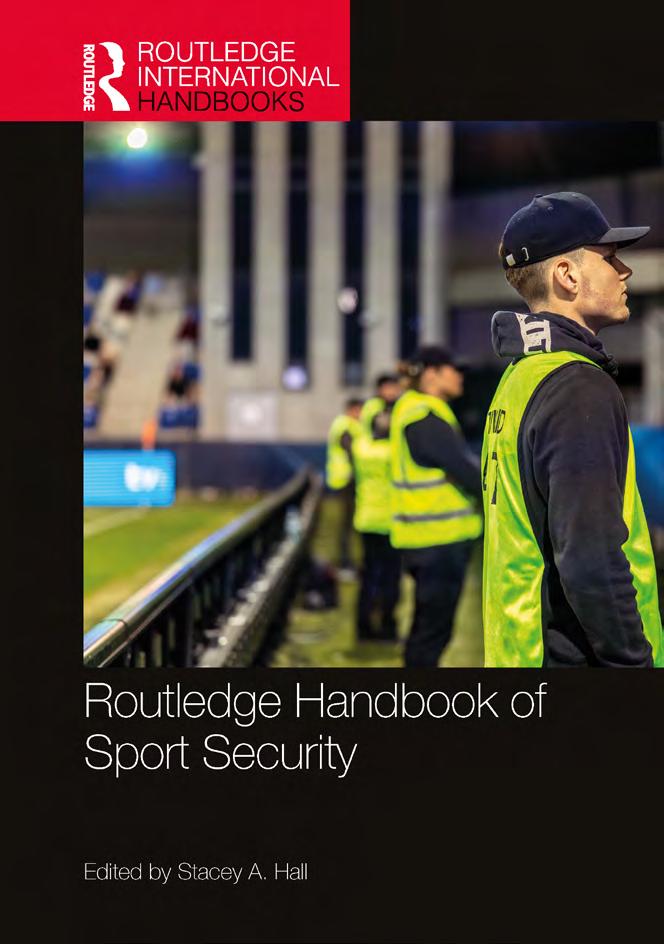
Sep 2025: 536pp 28 B/W illustrations Hb: 978-1-032-64123-2 eBook: 978-1-032-64130-0
For more information visit: www.routledge.com/9781032641232
Routledge Handbook of Sport Security
Edited By Stacey A. Hall
This book provides an in-depth analysis of security issues and concerns in contemporary sport. Featuring the work of leading researchers and practitioners from around the world, it offers practical, evidence-based commentary and guidance.
Drawing on the latest research evidence, the book examines the multiple stakeholders, agencies, and organizations involved in providing a safe space for spectators, participants, staff, organizations, communities, and sponsors. It considers the coordination of private and public entities in the sports security ecosystem, including facility management, event management, law enforcement, emergency management, emergency medical services, and state/federal government partners, as well as the private sector organizations providing support services. The book also offers a comprehensive analysis of key issues and debates in contemporary sport security, including terrorism, cybersecurity, spectator violence, planning and assessment guidance for sport venues and events of all sizes, management and policy considerations for leaders and decision-makers, and the lessons learned from critical incidents. It introduces the core principles of research methods in sport security and looks ahead at the future developments in this rapidly changing field
This is essential reading for any advanced student, researcher, practitioner, or policy-maker with an interest in sport studies, security studies, event studies, criminal justice, management, or public policy.
TABLE OF CONTENTS:
Part I: Introduction and Key Players
1. The Sport Security Landscape, 2. Security Partners P Part II: Issues
3. Sports as Soft Targets: The Terrorist Threat and Counterterrorism Considerations, 4. Perception of Risk and Terrorism: Impact on Elite Sporting Events, 5. Spectator Violence: Causes, Concerns, and Considerations, 6. Hooliganism - Origination, Trends, and Strategies for Securing Soccer Stadia, 7. Managing Large Crowds: The Application of Science, Tools, and Applied Strategies, 8. Hostile Vehicle Mitigation Planning for Sports Venues and Open-Access Events, 9. Bombing Prevention Planning for Sports and Special Events, 10. Severe Weather Impact on Sports and Preparedness Measures, 11. The Threat of Illegal Drones to Sports, 12. Cybersecurity Issues and Rules for Sports Organizations, 13. The Intersection of Human Trafficking and Large-Scale Events, 14. Sporting Events and Crime: A Meta Analysis
P Part III: Planning and Assessment
15. Securing International Sports Events, 16. Securing Professional Sports, 17. Securing College Sports, 18. Securing Youth Sports, 19. Sports Travel and Tourism Security, 20. Event Risk Assessment and Management, 21. The Importance of Information and Intelligence Sharing in Securing Sports, 22. Human Resource Needs and Professional Development, 23. Enhancing Preparedness Through Exercises, 24. Situational Crime Prevention (SCP) Application in Sports
P Part IV: Management and Policy
25. Emergency Response and Recovery Considerations for Sporting Events, 26. Integrating a Victim-Centred Approach into Emergency Management and Sports Security, 27. Evacuation and Protective Actions, 28. Crisis Management and Business Continuity, 29. Crisis and Risk Communications in Sport: Navigating the Complex Terrain, 30. Legal Considerations for Sport Venue Owners and Operators, 31. Negligent Security Litigation: Preparing for the Unexpected, 32. The Economic Impact of Securing Sports, 33. Balancing Security and the Guest Experience, 34. Ensuring Live Events are Accessible, Inclusive, and Safe For All, 35. Reframing Sport Venue Security: The CommunityDriven Approach
P Part V: Conclusion
36. Critical Perspectives on Sport and Security, 37. Research Methods in Sport Safety and Security, 38. Sport Security Technology Trends and Solutions, 39. Lessons Learned from Security Incidents at Sports Venues and Events, 40. Sport Security Best Practices, Guidelines, and Resources: A Global Review

Scan the QR code to order your book or visit: www.routledge.com/9781032641232

NEW PROTOCOLS WITH SHOWSTOP PROCEDURE

THE PINK BOWS FOUNDATION
was founded in March 2025 by the Dubiski family in memory of their daughter, Madison Dubiski, age 23, who was one of ten young people who died at Travis Scott’s Astroworld concert. The Foundation’s mission is to prevent future tragedies, so no other family suffers a preventable loss.
Supported by Sir Paul McCartney, the non-profit organization is dedicated to making events safer. Its flagship activity is promoting the internationally accredited Showstop Procedure training and campaigning to get it established as a global standard.
The Foundation works closely with Dr. Mark Hamilton and Mr. Steve Allen who drew on decades of crowd safety expertise to create the first and only one-day, internationally accredited Showstop Procedure course. Both Mark and Steve served as expert witnesses in the Astroworld trial, where the Houston Police Department concluded all ten deaths and related injuries were preventable.
The Showstop Procedure is a proven emergency intervention measure that has been successfully implemented multiple times worldwide, with consistently positive outcomes. The
course is designed for those who manage or oversee public safety with strategic, tactical, or operational roles at events. It encompasses the planning and implementation of a proven architecture to enable immediate intervention to stop a live performance if there is a credible threat to life safety, such as an active shooter, crowd-related issues, structural failure, mass public disorder, inclement weather, fire, or terrorism.
The Showstop Procedure course is CPD accredited and internationally accredited by Highfield. The International Institute of Risk and Safety Management (IIRSM) has also approved the course. The Global Crowd Management Association, Event Safety Alliance Canada, Event Safety Alliance USA, UK Crowd Management Association (UKCMA), YouRope, and the Australian Security Industry Association Limited (ASIAL) all support the Foundation and recognize the need for a global standard in Showstop Procedure. It has also received support from artists including Sir Paul McCartney and Jim Kerr.
The first Showstop Procedure courses were hosted in the U.S. in March 2025 and in the UK in April 2025, with leading event professionals in
attendance, including those from the Glastonbury Festival, F1, crowd management companies, promoters, stadium and arena managers, and law enforcement. In 2025, sold-out courses were hosted in the U.S., Canada, England, Scotland, Ireland, Europe, Australia, and the Middle East, culminating in a December course at London’s iconic Wembley Stadium. In its first nine months, over 550 event professionals from multiple continents have completed the training.
There is a longstanding issue across global events, with a ‘blind spot’ in this role regarding competence, formal training, and accreditation. Astroworld joined this tragic list, where the inability to stop the show effectively was identified as the biggest issue in a range of historical fatal incidents at live events, which the Showstop Procedure course addresses.
The Pink Bows Foundation will join the NCS4 community in 2026, sharing details on this new and important Showstop Procedure and making training available across the U.S.
LEARN MORE
DHS/FEMA Approved Training Workshops
SPORT AND SPECIAL EVENT RISK MANAGEMENT AND PLANNING AWR-167
Building capabilities for multi-agency collaboration, intact teams are immersed in a collaborative environment incorporating basic concepts relative to planning, risk assessment, training, exercising plans, and recovery/ business continuity through scenario-based training modules.
SPORT AND SPECIAL EVENT STAFF TRAINING AND DEVELOPMENT MGT-304
This DHS/FEMA-funded course brings together first responders, government, and commercial facilities personnel to improve safety and security training and development programs. The overall goal for this training is to provide tools and methodologies for training and developing staff assigned to and responsible for public safety at sporting and special events.
SPORTS AND SPECIAL EVENTS INCIDENT MANAGEMENT MGT-404
Develops athletic department staffs, facility management personnel, campus public safety personnel, emergency response supervisors, and others involved in sports and special event management to better prepare for, manage, and recover from incidents that could occur during a sporting event or other special event.
SPORT AND SPECIAL EVENT EVACUATION AND PROTECTIVE ACTIONS MGT-412
Prepares venue operators, first responders, emergency managers, promoters, local government, and third-party service providers to effectively collaborate on evacuation and protective action planning. The course supports participants in creating plans with actionable decision criteria that can be adapted for almost any event.
ENHANCED SPORTS AND SPECIAL EVENTS INCIDENT MANAGEMENT MGT-440
Prepares emergency responders, as well as event management personnel, concessionaires, athletic department personnel, and chief executives who would be involved in the preparation for and response to a large-scale incident during sporting or special events.
SPORT AND SPECIAL EVENT ENHANCED RISK MANAGEMENT AND ASSESSMENT MGT-466
Provides participants with tools and methodologies for conducting venue and event-specific risk assessments. In this course, participants will analyze risk and utilize assessment outputs to determine risk mitigation options and their effectiveness.
SPORT AND SPECIAL EVENT PUBLIC INFORMATION AND EMERGENCY NOTIFICATION MGT-467
Prepares participants to identify and navigate the sport and special event communication landscape before, during, and after an incident. This interdisciplinary course brings planners, operators, communication, government, public safety, marketing, and public relations professionals together to prepare and/or enhance venue and event communication programs.
CROWD MANAGEMENT FOR SPORT AND SPECIAL EVENTS MGT-475
Prepares venue operators, first responders, event planners, promoters, local government, and other public safety agencies to address crowd management by exploring effective planning considerations, crowd dynamics, queueing strategies, and strategies for ensuring public order. The course content is scalable and applicable to all sports and special events regardless of venue size, capacity, or type of event.


CERTIFIED SPORT SECURITY PROFESSIONAL (CSSP)

OVERVIEW
The NCS4 is the only organization that offers a certification recognizing expertise in sport security management. Earning the Certified Sport Security Professional (CSSP) designation sets you apart from other professionals and highlights your dedication to remaining current with industry trends. Professionals in the sports security industry need to have a firm grasp of public safety measures and understand how to apply those measures in the unique environments created by sports venues and events. The CSSP certification validates expertise in the following domains:
•Business and Facility Management
•Emergency Planning
•Emergency Management
•Legal and Regulatory
•Crowd Management
•Security Principles and Practice
The CSSP certification is awarded to individuals who meet experience, education, and professional reference criteria and pass an exam relevant to sports safety and security management. It is maintained through ongoing continuing education and industry contribution requirements every three years.
TARGET AUDIENCE
•Venue/Event Security Directors/Managers
•Venue/Event Operations Directors/Managers
•Law Enforcement
•Emergency Managers
•Private Security Practitioners
•Fire/HAZMAT
•EMS
•Other Sports Safety and Security Leaders
For more information, contact: CertificationSupport@usm.edu
BENEFITS
•Expand security knowledge and experience
•Strengthen relationships with peers
•Broaden career opportunities
•Demonstrate a commitment to professional development
IMPORTANT LINKS
•CSSP Application Process
• Senior Leader Course: Sports and Entertainment Security
•See the CSSP Candidate Handbook for eligibility, application, exam preparation, and recertification details.
The CSSP exam is offered with no testing fee at the NCS4 National Sports Safety and Security Conference annually.
Scan the QR code or visit our website to learn more.

SPECTATOR INSIGHTS
THIS STUDY gauged U.S. sport spectators’ perceptions of safety and security practices at sporting events attended, including their awareness of security measures, safety and security concerns while planning to attend an event, and their willingness to embrace technological solutions to mitigate threats. The survey consisted of 57 questions related to demographics, attendance habits, perceptions of safety and security measures, safety and security concerns, fan behavior, and the use of artificial intelligence in sport security. Participants included individuals 18 years or older (n=728) who had attended a live professional or collegiate sporting event within the last year. l

ncs4.usm.edu/research/industry-reports/