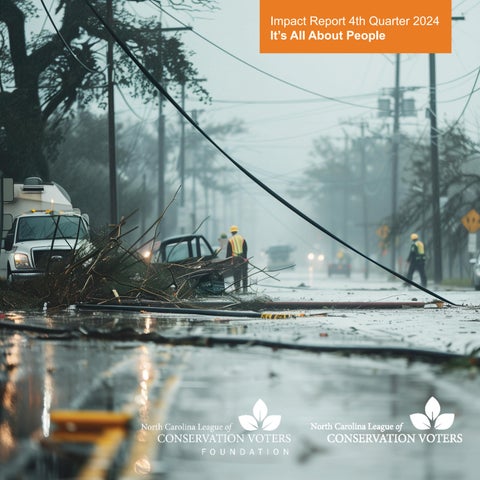
Impact Report 4th Quarter 2024 It’s All About People


It’s All About People
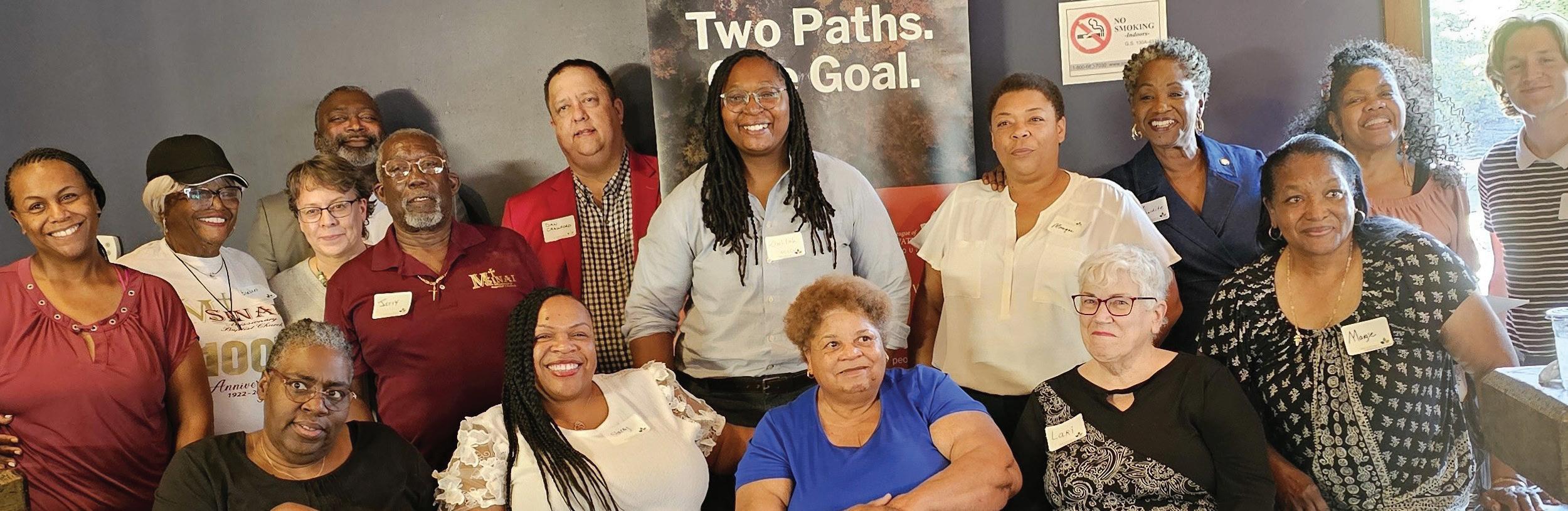
With your help, our sister organizations take two paths to one goal.
1.The NC League of Conservation Voters (NCLCV) works with policy makers.
2. The NC League of Conservation Voters Foundation (NCLCVF) works with community members - especially those in underserved communities.
Our goal is to empower both to work toward a healthier environment, a stronger economy, and a more inclusive democracy.
As you look over our Impact Report, keep in mind that every election, every voter turned out, every bill passed, every home weatherized, every phone call made, every postcard or email sent, every gathering attended is about making sure every person has clean air, clean water, clean energy, a safe environment, and fair treatment.
Everything we do - it’s all about people.
What a year! Super important elections and then Helene.
With your help, we raised more money, spent more money, and did a lot of good work in partnership with our fellow organizations, which collectively achieved significant and meaningful results. One indication of how much our work was valued was that Governor Stein included our Executive Director, Carrie Clark on the transition team for the Department of Environmental Quality leadership (along with Rep. Chuck McGrady, Tom Wooten/Farm Bureau, Hawley Truax/EDF, and Brian Buzby/NC Conservation Network). Environmental Quality – we’re learning how critical that is.
A Winning Strategy
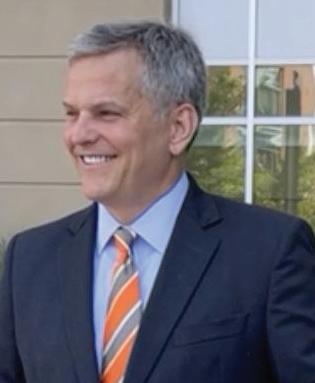
Our number one priority was electing Josh Stein as Governor, and your votes and your support made that possible. Our next priority was breaking the supermajority in one chamber, and you made that possible, too. Through our Conservation Votes PAC, you made it possible for us to raise and spend over $3.4M. We sent 750,000 pieces of mail to voters, knocked on almost 170,000 doors in Mecklenburg County alone, and invested more than $1.6 million to create digital ads in the Governor’s race and legislative races. We targeted 10 races and won 7. Thank you!
The effects of climate change may have been low on the public’s list of priorities when making their decisions about voting, but we are all learning our lessons.
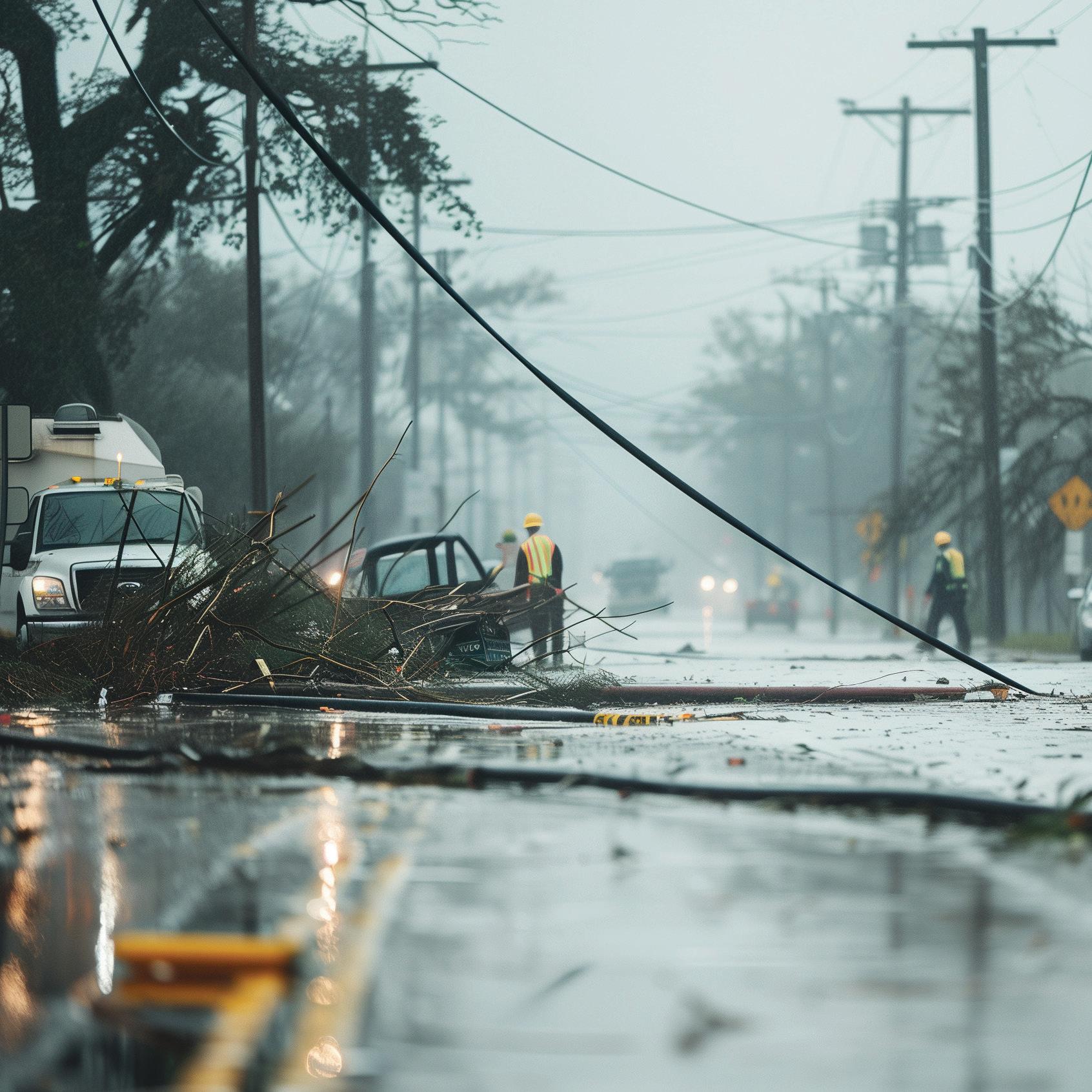
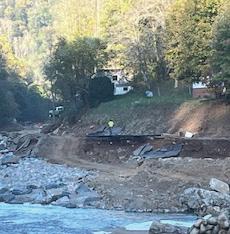
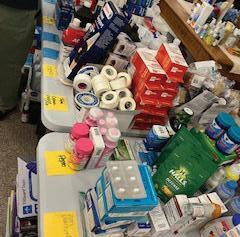
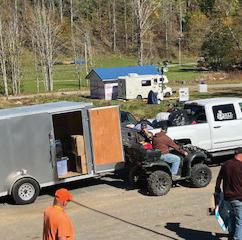
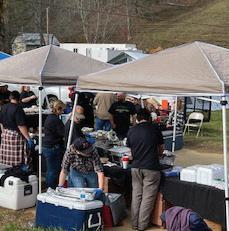
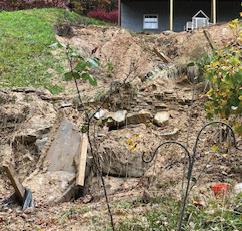
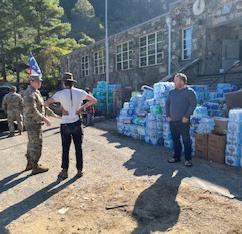
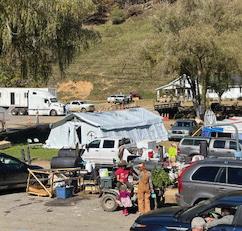
So many people were affected by Helene. One of our staff, Robin Smith, and her family lived through Helene and the aftermath. No electricity. No water. No internet access. Blocked roads. Serious health problems with little access to medical services.
Robin has spent more than 20 years at NCLCV doing deep, important work on policy, and in the face of the aftermath of Helene and her community’s struggles, her state’s troubles, her nation’s troubles, her policy focus has become resiliency – for all of us.
“The help my campaign received from NCLCV was critical to our win, which was critical to breaking the Republican supermajority. The support gave my team the space we needed to focus on hurricane recovery when the storm hit, and I’m so grateful for their investment in such a crucial race.” Rep. Lindsey Prather (D-Buncombe County)
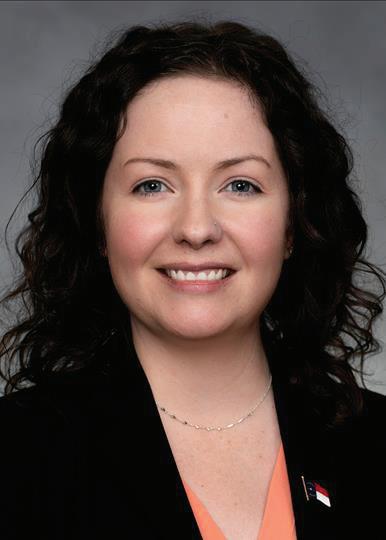
“I had to think hard about what a resilient community is…
If you google it, you get: A “climate resilient community” is a community that is able to prepare for, adapt to, and recover from the impacts of climate change, including extreme weather events, by taking proactive measures to mitigate risks and maintain its functionality even when facing climaterelated challenges; essentially, it is a community that can “bounce back” from climate disruptions and continue to thrive.
To me a resilient community is one where, instead of fleeing, people run towards the impact to help. I’m so very proud to be part of Yancey County, everyone chipped in to do what they could, even the children, it was like nothing I had ever witnessed in my life. It means being kind, staying optimistic even when things are at their worst and doing whatever it takes to recover. The people and organizations that came to help restored my faith, not only in my community, but in humanity. Folks giving freely of their time, resources and most importantly their compassion.” Robin Smith

Helpful Materials for the folks of North Carolina
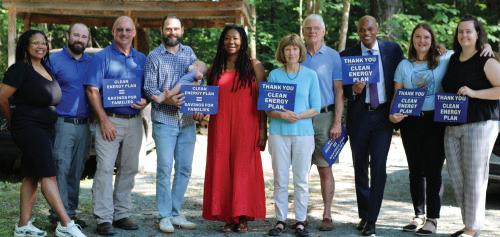
Our Inflation Reduction Act (IRA) Toolkit website, www.energyfundsforall.org, has had major success, with over 10,000 unique users to date. We have dramatically expanded this Toolkit work into providing direct individual assistance to low-income folks looking to apply for programming. We offer assistance for every program listed, and will connect folks to resources outside of IRA funds, like help for rent or for roof replacements.
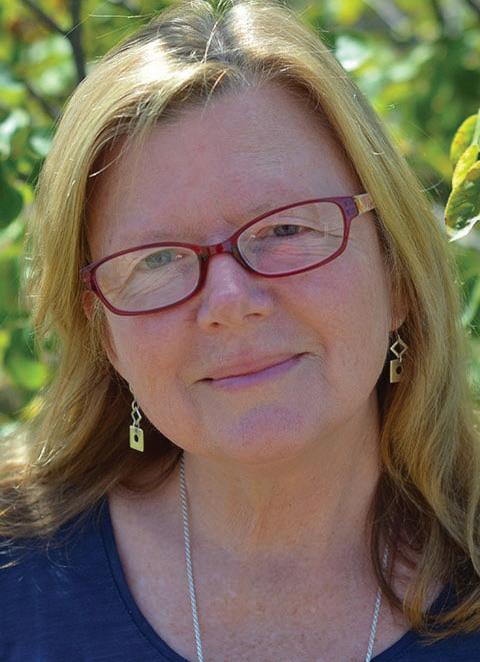
“We had a wonderful experience with Meech and NCLCV at our Front Porch Ribbon Cutting. NCLCV helped us celebrate our heat pump water heater, plug-in hybrid car and charger, all supported by the Inflation Reduction Act. Finding solutions to climate change is very important to us. NCLCV helped us tell our story and spread the word.” Vickie Atkinson
We have been working with multiple folks in Eastern NC and Western NC to weatherize their homes and prepare them to apply for the Home Energy Rebates in 2025. We specifically focus our help on small towns. For instance, in Eastern NC, we have focused on Princeville, Ayden, Winterville, and Kinston.
We are working to educate and engage communities and partners across the state, and hosted or participated in a number of events this quarter.
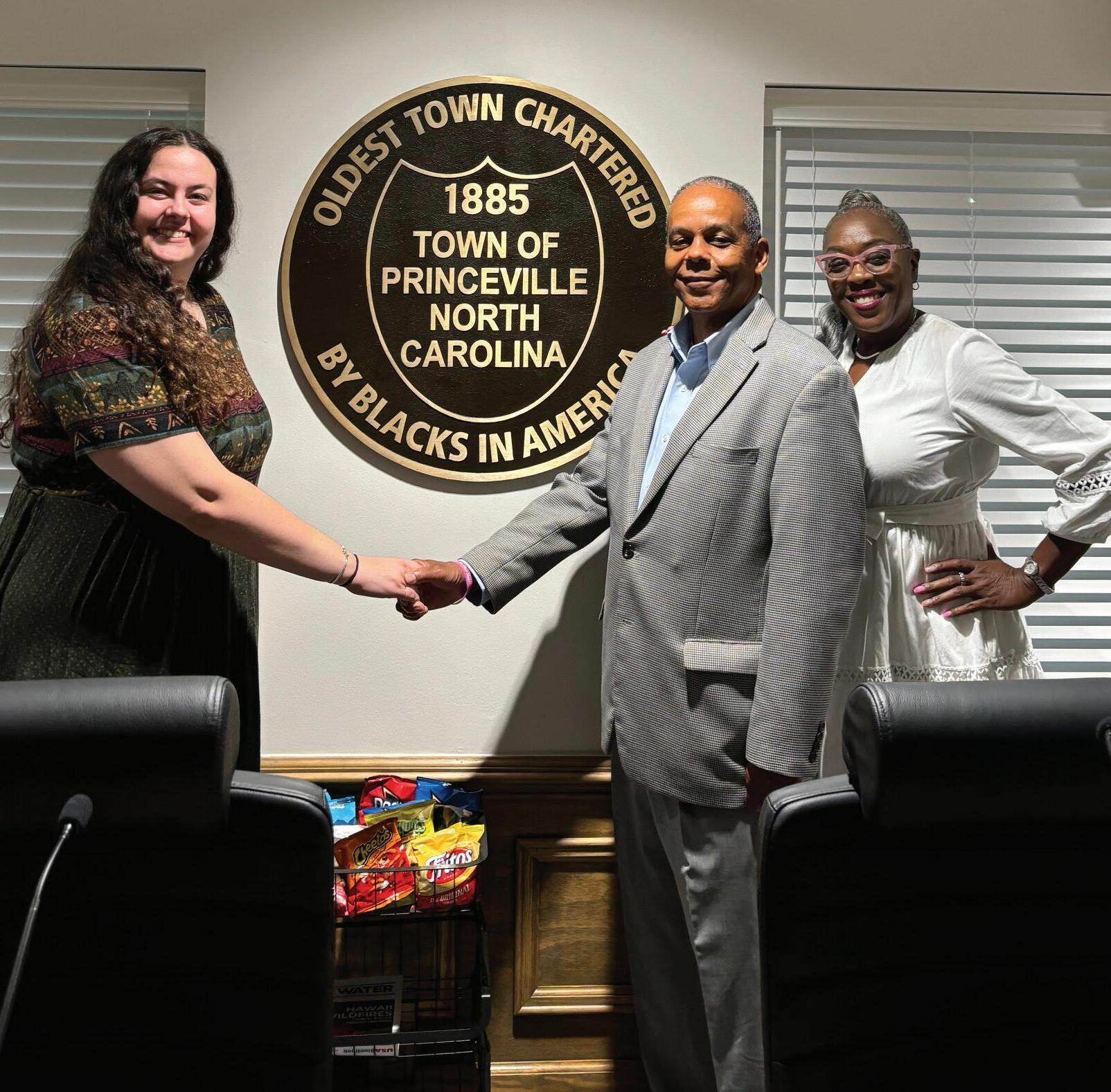
“As a retiree living on a fixed income, the rising cost of natural gas posed significant concerns for my household budget. Over the years, the need to find economic solutions became increasingly pressing. The rising cost of energy had a direct impact on my household budget. With limited income sources, every increase in utility bills would force me to reconsider essential expenses such as food and healthcare for the family. My monthly energy bills would fluctuate dramatically, making it difficult to manage finances effectively. After getting my home weatherized, I have seen a significant drop in my electric bill. Before weatherizing my home I was using natural gas to heat my home. Now my gas bill is less than $20 a month for two appliances in my home. I am relieved that I was able to have my home weatherized under the Weatherization Assistance Program where my home became more energyefficient, leading to reduced dependency on natural gas and lowering overall consumption– and it also aligns with environmental values. This comes at an opportune time as the cost of natural gas continues to rise. By transitioning to alternative energy sources, I can stabilize my energy costs and protect myself from unpredictable market fluctuations that threaten my financial security.” Mayor Bobbie Jones
Team Work
Our advocacy efforts around the development of Inflation Reduction Act programs at the state level have included the Home Energy Rebates, the Training for Residential Energy Contractors program, and the Greenhouse Gas Reduction Fund. We wrote and led a sign-on letter for over 30 of our partners and have engaged with the NC Department of Environmental Quality multiple times to reiterate our feedback and workshop potential solutions for barriers in low-income communities. We also hosted a training course for interested folks to provide public comments on the Home Energy Rebates, where we had over 50 attendees and generated great talking points.
We need you more than ever
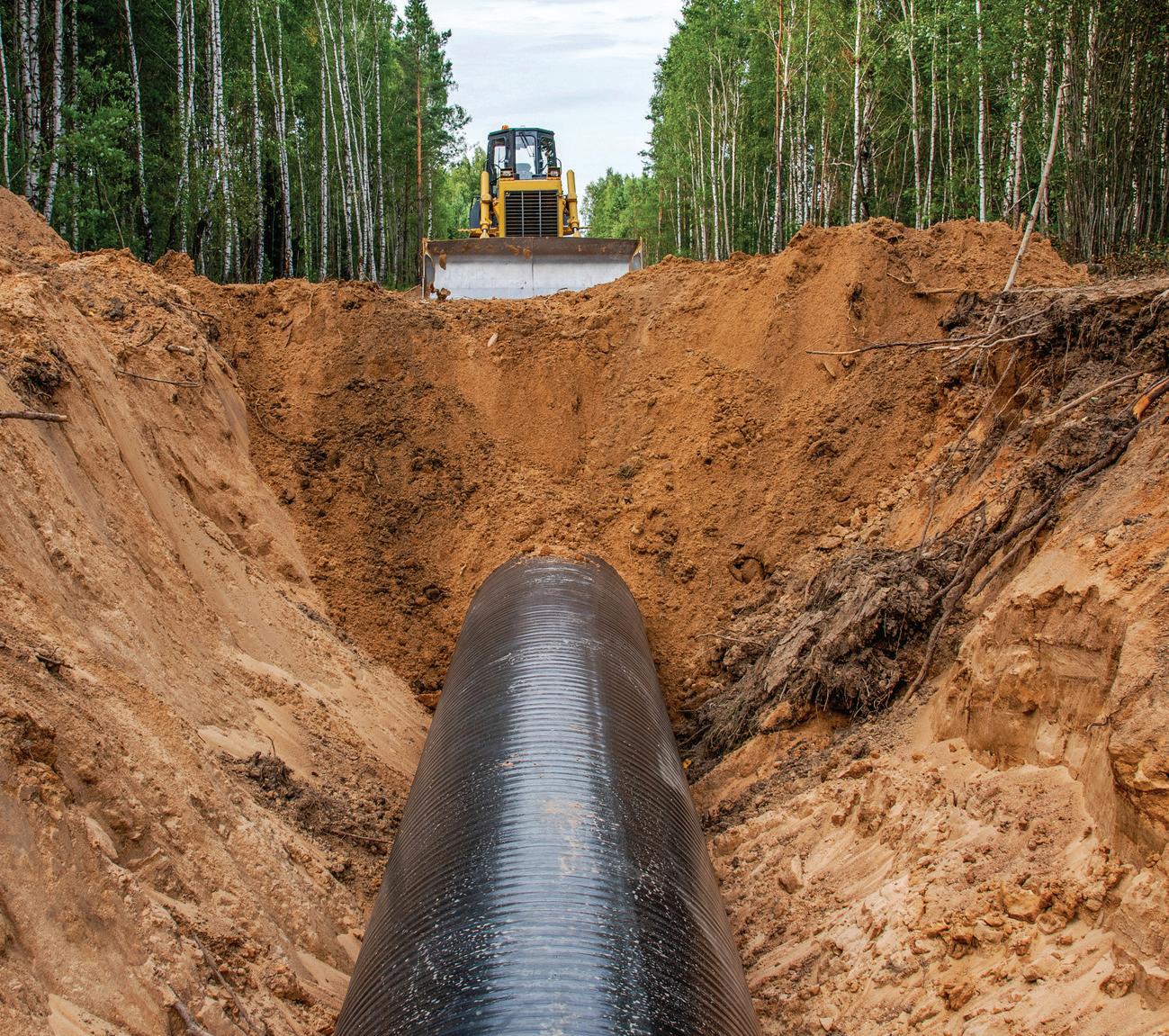
As of November 5, 2024: The Carbon Plan has been approved by these NC regulators. This is not good news.
This means North Carolina will see the development of over 9 GW of methane gas plants, with a strong possibility of additional pipelines coming to the region.
We co-hosted two pipeline educational sessions in Lexington and Kernersville with 7 Directions of Service, an Indigenous-led organization working in the Piedmont. We have also been providing technical assistance for pipeline information and are planning 2025 scenarios in coalition with folks from North Carolina and Virginia. NCLCV has also gotten our legislators involved, with over 20 legislators signing our joint letter to oppose the Transco pipeline expansion.
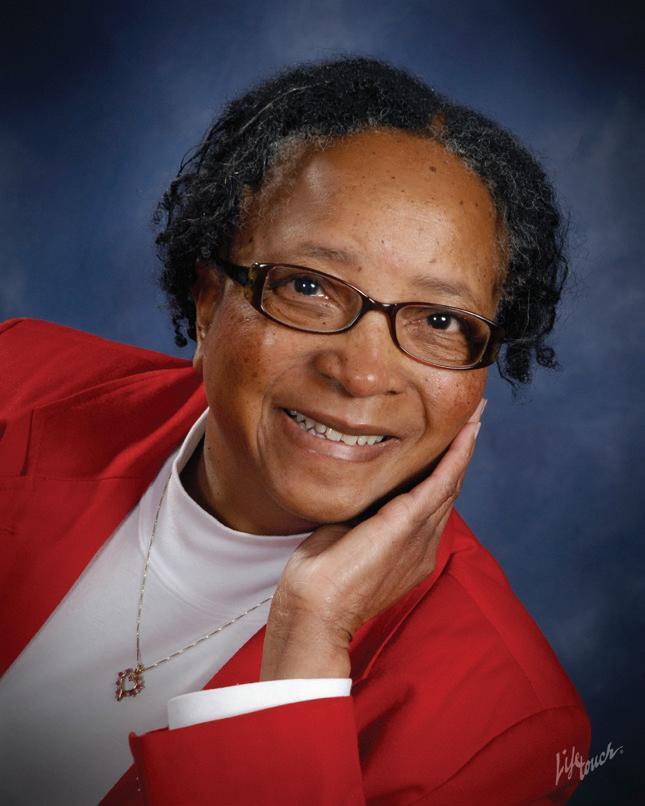
“I’ve lived in this community for over twenty years, and it breaks my heart to see neighbors struggling to keep their lights on. The Utility Commission’s failure to stop these constant price hikes feels like a betrayal. Families like mine shouldn’t have to choose between paying for heat or putting food on the table." – Ernestine Ledbetter, Raleigh Resident
PowerUp NC in Communities
Since spring, PowerUp had been doing extensive outreach and organizing around the North Carolina Utility Commission’s (NCUC) decision on Duke Energy’s Carbon Plan. Unfortunately, the NCUC released their decision earlier than expected, burying the new decision in election-related news.
PowerUp NC had worked to keep the pressure on commission members to protect North Carolina from Duke Energy’s harmful carbon plan. They door knocked the neighborhoods of NCUC Chair Charlotte Mitchell, and NCUC member and former NCLCV board member Karen Kemerait. They ran a postcard campaign with images and slogans that urged the members to vote in favor of the public interest. They gathered 370 postcards with messages from community members, and from NCUC members’ neighbors. They sent those postcards directly to commission members’ homes. Throughout the campaign, PowerUp NC worked with Beacon Media to highlight the commission’s lack of transparency and their abysmal record of engaging impacted communities. Still the Utilities Commission members voted in favor of Duke Energy rather than the people they serve.
We won’t stop fighting for the people of North Carolina.
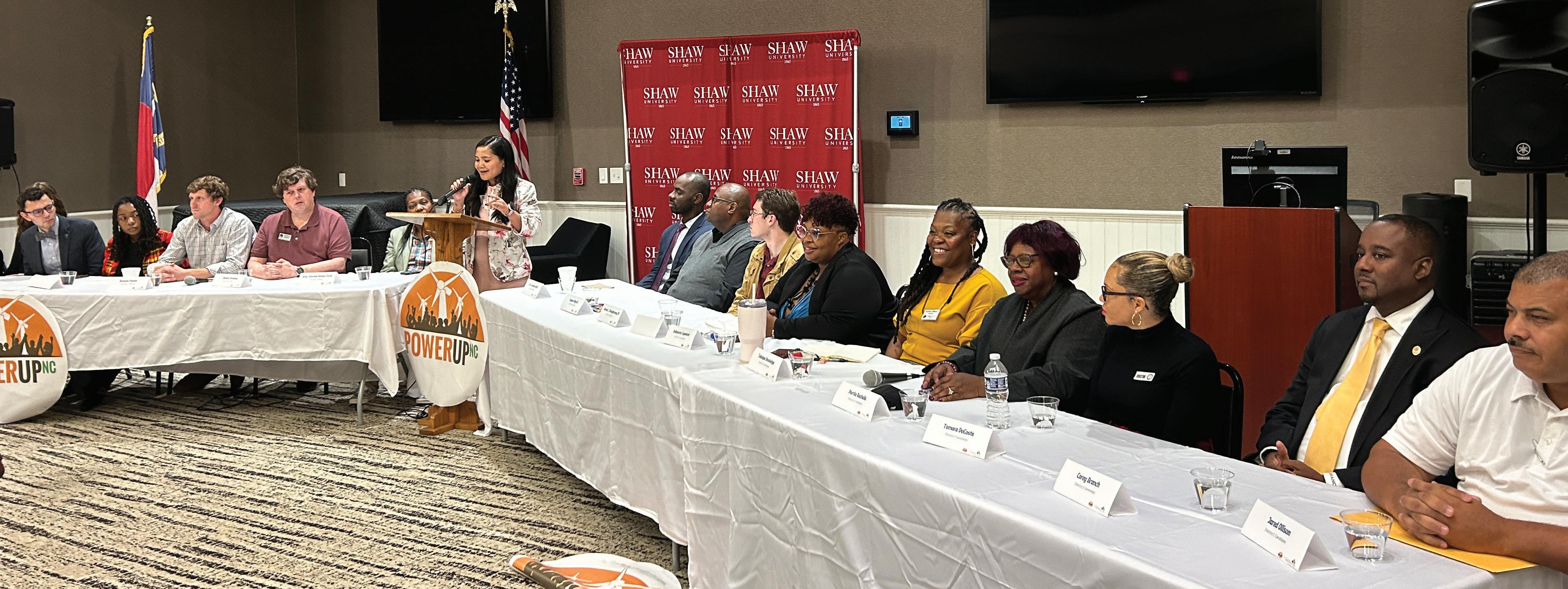
PowerUp Raleigh hosted their third municipal candidates’ forum in Raleigh in partnership with Shaw University, the NC A. Philip Randolph Institute, and the Raleigh-based local organization, Orchid Bloom.
The goal of the forum was to ensure that Raleigh voters had an opportunity to hear directly from their candidates on a variety of issues they care about in a collegial setting that would lend to a clear understanding of the candidates’ positions.
PowerUp NC’s Fayetteville team continues working with community leaders and residents in Eccles Park to restore their community back to a safe and livable environment. The community was built in a flood zone and residents are facing issues with extensive damage to their homes as well as health issues. The team has been working directly with city staff to support fundraising on behalf of Eccles Park to address the issue and is exploring Inflation Reduction Act funding for Eccles Park that NCLCV board member Anne Harvey at the Southern Coalition for Social Justice helped to identify.
Winston-Salem PowerUp is working with Solarize the Triad, a community-based group-purchasing program for solar energy, battery storage, and other clean energy technologies. PowerUp’s role is outreach to low- and moderate-income neighborhoods and educating residents on the value of adding solar panels to their homes.
PowerUp Winston-Salem is also working in partnership with 7 Directions of Service, an Indigenous-led organization formed to oppose the MVP Southgate Extension pipeline proposed to run east of Winston Salem, Davidson County and the Triad.
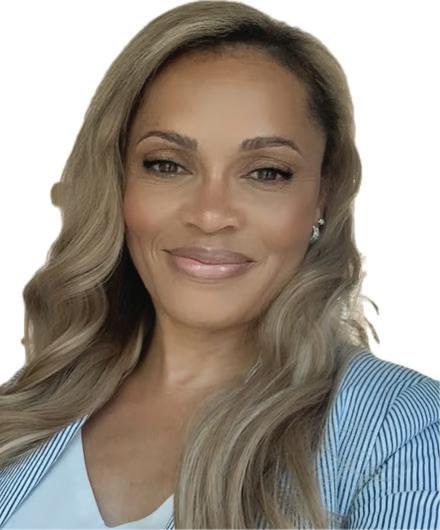
"Of all the forums we’ve been to, this was the most organized, with the best questions and format." Candidate
Tomara DeCosta
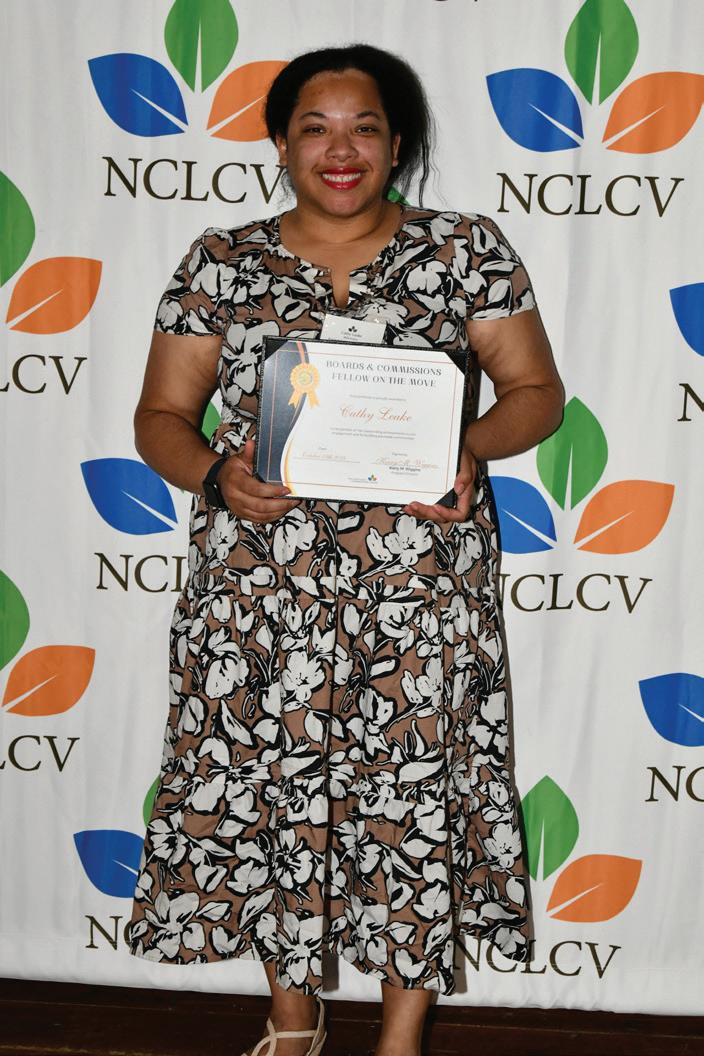
Catha Leake “The Boards and Commissions Fellowship Program has helped me become more equipped to be on a board. I always wanted to find ways to make my voice heard in the community in an impactful way. I love finding ways to challenge myself and grow and the program did just that.”
Empowering Boards & Commissions for Democracy
While our Boards and Commissions program was just started in 2022, it already serves 17 counties and has had 27 graduates appointed to boards or commissions and one elected to public office.
Power the Vote NC, our nonpartisan voter engagement program, is also growing. It now covers more than 10 counties. The team registered over 36,000 people and made Get Out The Vote (GOTV) outreach to over 800,000 voters. They also added a new strategy called site-based vote tripling, where team members met folks where they were –barbershops, shopping centers, bus stations and more and encouraged them to vote and to encourage at least two others to get out and vote.
“My name is Jonathan Norflet, and I serve as the GOTV Coordinator with Power the Vote NC, a project of the North Carolina League of Conservation Voters Foundation (NCLCVF). I want to take a moment to share a powerful testimonial from a historic project my team and I had the privilege to lead in 2024—Site-Based Vote Tripling.
This initiative was groundbreaking because it redefined how we engage voters. Unlike traditional door-to-door GOTV efforts, Site-Based Vote Tripling allowed us to meet voters where they shop, work, and go to school.
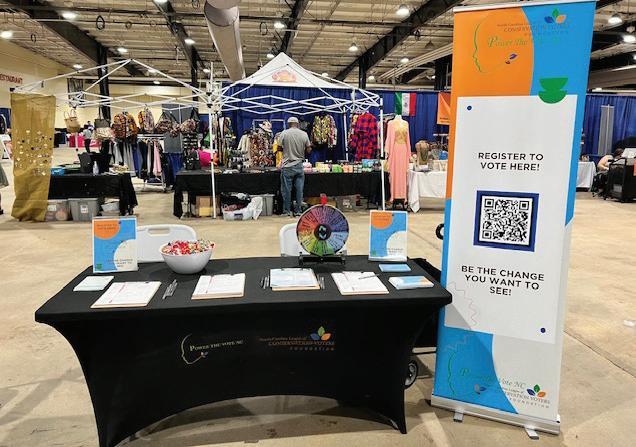
Across five offices in North Carolina, our dedicated teams reached over 500,000 voter contacts, ensuring that communities had the information they needed to participate in the electoral process.
We set up tables in high-traffic locations, community events, and workplaces, mobilizing up to 50 team members per office. While the project had its challenges, our teams overcame them with determination, ensuring that voters not only received key election details but also encouraged their friends and family to vote.
One of the most impactful aspects of this initiative was providing voters with access to essential election resources—many of whom had never seen a sample ballot or knew where to find accurate election information. Through this project, we empowered communities by giving them a direct link to these tools, ensuring they were informed and engaged in the democratic process.
This effort was more than just voter outreach—it was about amplifying voices that often go unheard. We believe that no one should feel left behind, and every voter should know that their voice matters.”
None of this would have been possible without your support. You care. You take action. You donate. Think of all the lives, all the people you are helping. Thank you!
We need you more than ever!