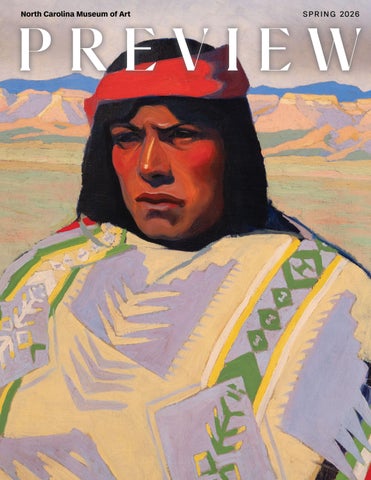
PREV IEW
PREVIEW
MANAGING EDITOR
Laura Napolitano
DESIGNER
Dan Ruccia
PHOTOGRAPHER
Christopher Ciccone
CONTRIBUTORS
Cameron Allison, Jason Blyskal, Bekah Boyer, Laura Finan, Moses T. A. Greene, Miles Hall, Molly Hull, Sabrina Hurtado, Courtney Klemens, Kayla Miles, Lizzie Newton, Philip Pledger, Sean Sabye, Bryanne Shepard, Jill Taylor, Janis Treiber, Oliver Wagner, and Jeffrey Yelverton
Preview is published by the NCMA four times a year.
The North Carolina Museum of Art is a division of the Department of Natural and Cultural Resources, Pamela B. Cashwell, secretary.
The exhibitions and programs featured in Preview rely on support from people and organizations who value the Museum and its work. Please consider donating to the NCMArts Fund at qrco.de/ncmaartsdonation.

WHAT’S TO COME!
We are currently reimagining our campuses through exciting renovation and construction projects Here’s the latest.
raleigh Construction began November 10 with site delineation and mobilization. Over the next several months, building demolition continues and major site work begins. The rain garden adjacent to the pond in the Park is complete but still behind fencing.
winston-salem The buildings and campus are now closed to the public, with construction beginning in August 2026. Exhibitions and programs return this spring at NCMA Winston-Salem Downtown (see pages 12–13). For up-to-date news and answers to frequently asked questions, please visit ncartmuseum.org/ncma-campus-renovations-and-updates
From the Director
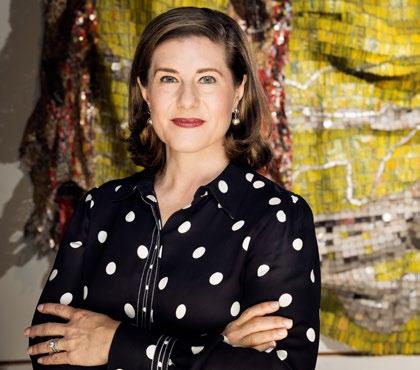
Dear Friends,
In 2026 an array of stories and perspectives coalesce and commingle across NCMA galleries and outdoor spaces, inviting you, our wonderful community members, to experience the vitality of the arts in myriad ways. In particular, this spring’s offerings consider how art has been used to capture and contemplate our nation’s history, and I encourage you to sample our full range of programming detailed in this latest edition of Preview.
In this year of our country’s 250th anniversary, we present Knowing the West, a new exhibition traveling to Raleigh from organizing institution Crystal Bridges Museum of American Art (pages 2–5), which opens on May 2 and celebrates the overlapping, occasionally divergent histories of the American West. Knowing the West expands upon familiar narratives of the region, placing artwork by makers and artists from numerous cultures and communities in conversation. Earlier in the season, our fanfavorite Art in Bloom festival returns, taking inspiration from the zodiac for this year’s theme, Written in the Stars (6–8). Join us from March 18–22 to locate your star sign among over 40 outof-this-world floral arrangements by artists from North Carolina and beyond.
In the Museum Park, transformational changes are taking place, including the construction of a bridge that improves access to one of our most popular outdoor attractions (page 9). With the continued closure of the Joseph M. Bryan, Jr., Theater in the Museum Park, the NCMA’s Performing Arts and Film Department
is pioneering multisensory performances designed to activate encounters with visual art (10–11). We are excited to inaugurate a new space in downtown Winston-Salem later this year, where we will present programs and exhibitions while the primary campus undergoes exciting renovations (12–13). For those interested in uncovering more stories from within the Museum, we share an account of our collaborations across the NC Department of Natural and Cultural Resources (14–16), an announcement of a new publication a decade in the making (17), and a curator’s insights into the African Arts Gallery (18–19).
During this season emblematic of new beginnings, I remain enthusiastic about the multiple forthcoming endeavors we have committed to as an institution. As we launch a new strategic plan for 2026–30 and watch capital projects reshape our campuses, the NCMA remains intent on presenting a vibrant slate of exhibitions, performances, workshops, film screenings, and lectures (pages 20–23) for all to enjoy. May we treat each interaction with art, nature, and people as a chance to feed our curiosity, ignite our imagination, and expand our interests and compassion in the year ahead.
With appreciation and my best,
Valerie Hillings
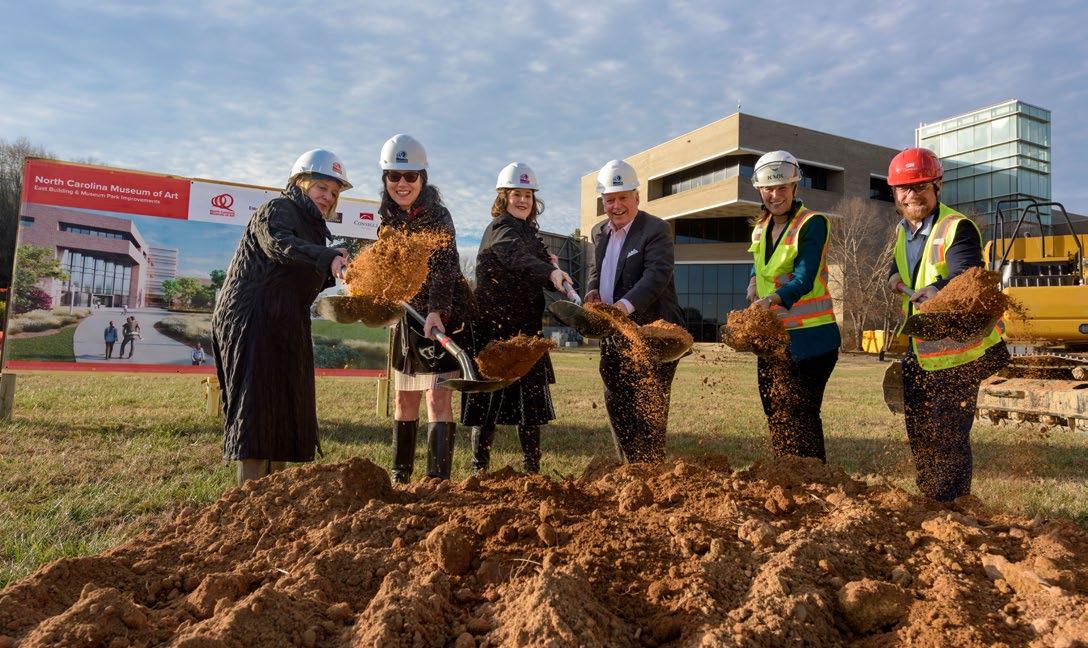
Diane Bastian, president, NCMA Foundation Board of Directors; Pamela B. Cashwell, secretary, DNCR; Valerie Hillings, director and CEO, NCMA; John Davis III, chair, NCMA Board of Trustees; Kristen M. Hess, AIA, LEED AP, principal and CEO, HH Architecture; and John Blakey, regional director, Raleigh-Durham, Consigli; at the capital projects groundbreaking in Raleigh.
HHOW DO YOU KNOW THE WEST?
lauren applebaum
Jim and Betty Becher Curator of American Art
ow do you know the West? What does the West mean to you? How has artistic production shaped your perception of the West? These are some of the questions asked by co-curators Mindy N. Besaw and Jami C. Powell (Osage) in Knowing the West: Visual Legacies of the American West, which opens at the NCMA on May 2. Organized by Crystal Bridges Museum of American Art, this exhibition invites visitors into a sweeping reconsideration of what the West has meant—and continues to mean—to communities across generations. It reframes the West not as a fixed place or mythic frontier but as a shifting cultural construct shaped by countless makers, histories, and lived experiences. Supported by a team of curatorial contributors and advisors, the exhibition embraces multiple perspectives, fostering dialogues across disciplines, media, and cultures.
Spanning the late 18th to early 20th centuries, a dazzling array of objects, artworks, and cultural belongings, from paintings and basketry to textiles, pottery,
sculpture, beadwork, saddles, and prints, are thoughtfully displayed in ways that resist long-standing hierarchies of culture and medium. Created by makers and artists from multiple cultures and communities, including white, Black, Hispanic, Asian American, and a wide range of distinct Native nations, the works also emphasize female artistic production, underscoring that we all know the West differently.
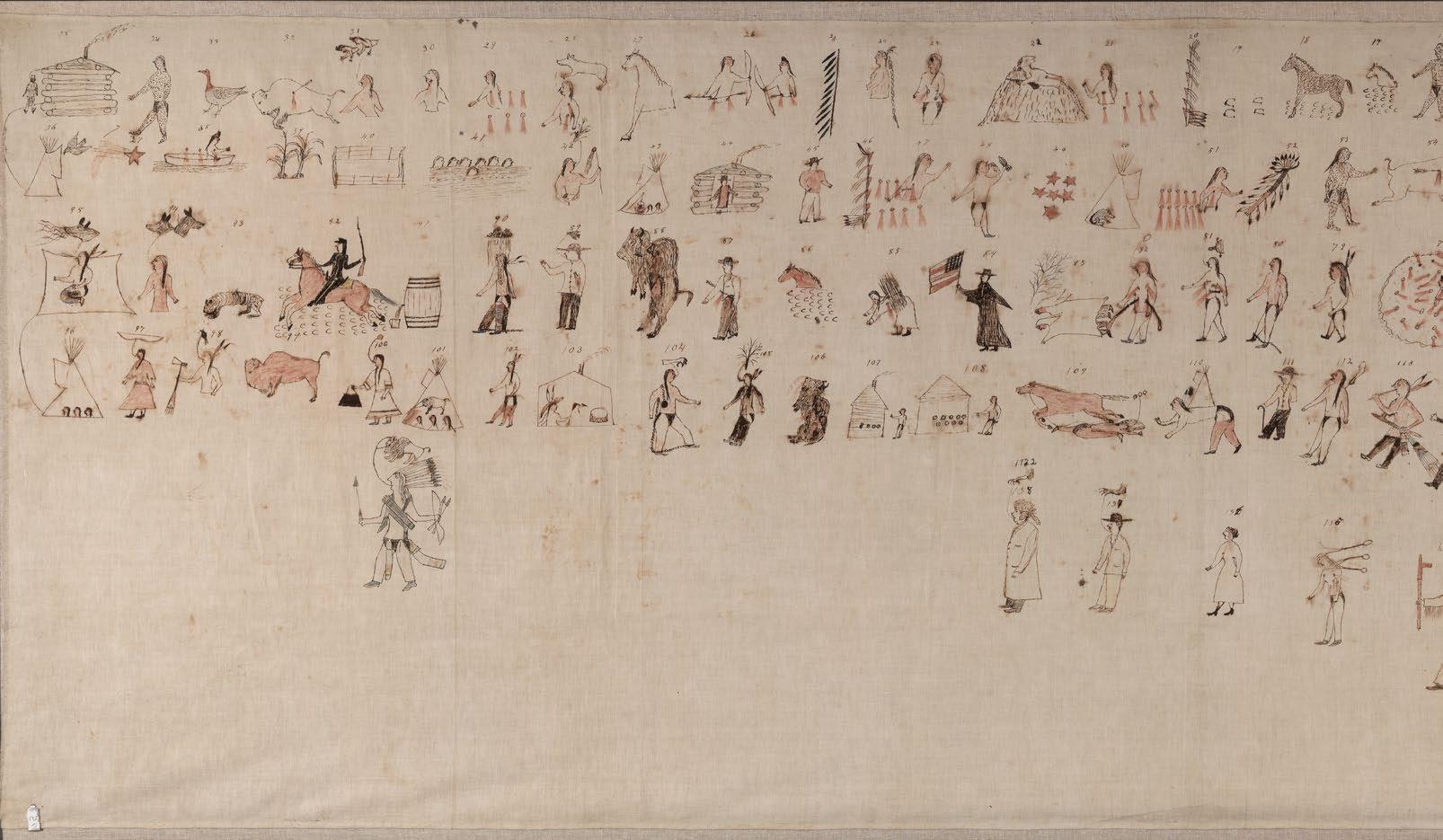
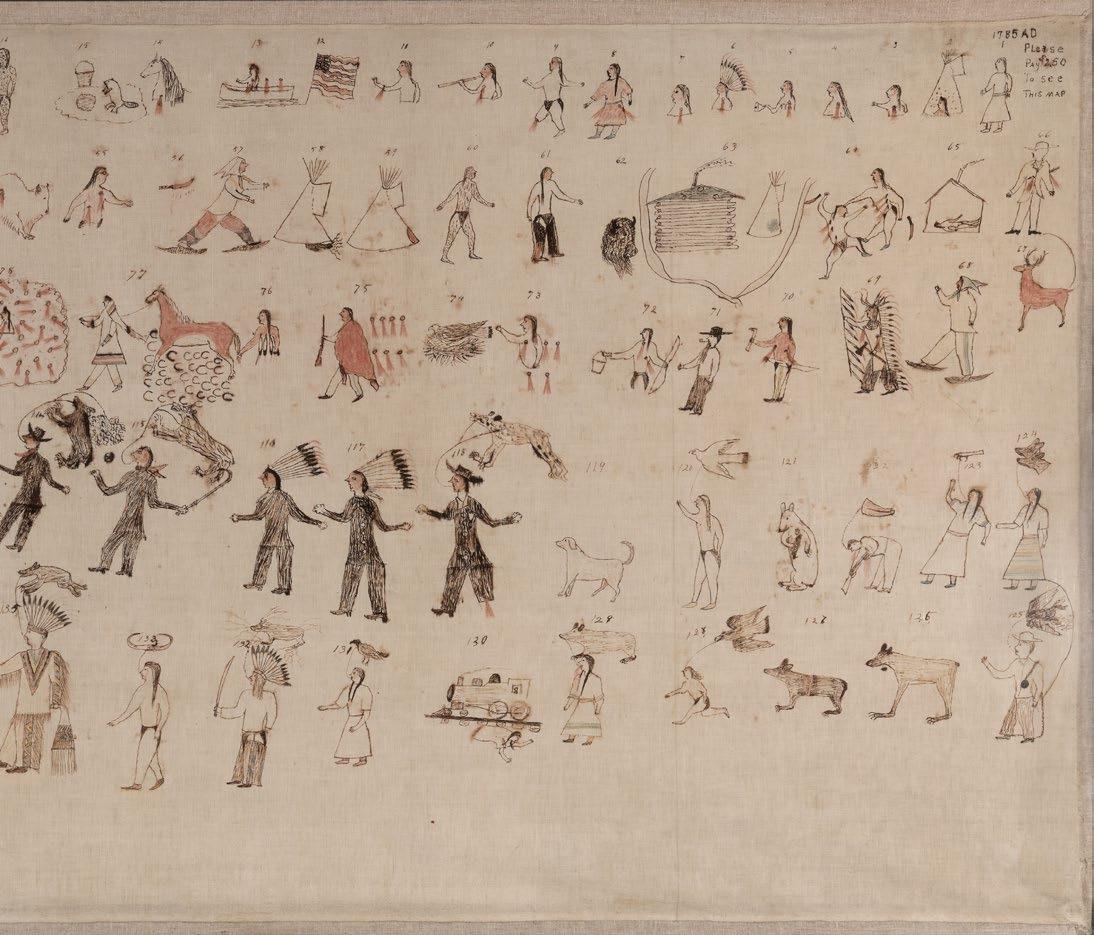
The exhibition begins with a powerful point of orientation: a winter count (above left) by the Hunkpapa Lakota artist He Nupa Wanica (Joseph No Two Horns, 1852–1942). Winter counts are meant to record time and mark memorable historical events. Created in 1922, this painting on muslin chronicles more than 130 years of events significant to Joseph No Two Horns’s community, with each year symbolized in a single image. It records everything from epidemics and severe winters to celebrations and global events such as World War I. Spanning 1785 to 1922, this Lakota winter count establishes the
historical framework of the exhibition as a whole while offering an important starting point that centers Indigenous ways of knowing.
A section exploring the theme of authority asks whose stories of the West have been amplified and whose have been overlooked. Expertise and authority are recognized and honored uniquely in different communities, and this section confronts the ongoing power and presence of Euro-American images of the West while celebrating the skill, artistry, and knowledge of women artists from across cultures. The question of when, where, and by whom the West was invented is explored through stories of cultural exchange and artistic influence. For example, a wedding outfit created around 1900 by an Osage maker shares with viewers the rich and complex entanglements between different cultures in the West. Military jackets were given by the US government to Osage leaders in the 19th century during diplomatic visits and treaty negotiations. Initially symbols of colonial power, they
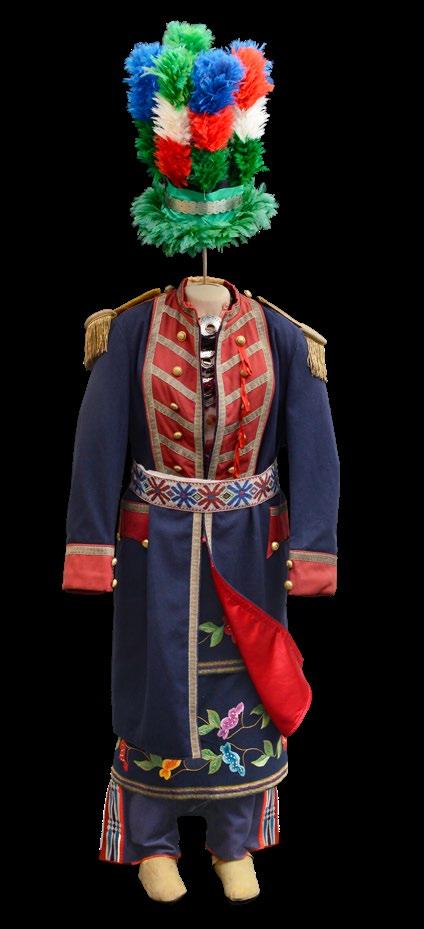
were repurposed around the turn of the 20th century by Osage women, who tailored them, adding ribbons, beadwork, and embroidery, for ceremonial uses like weddings (above right).
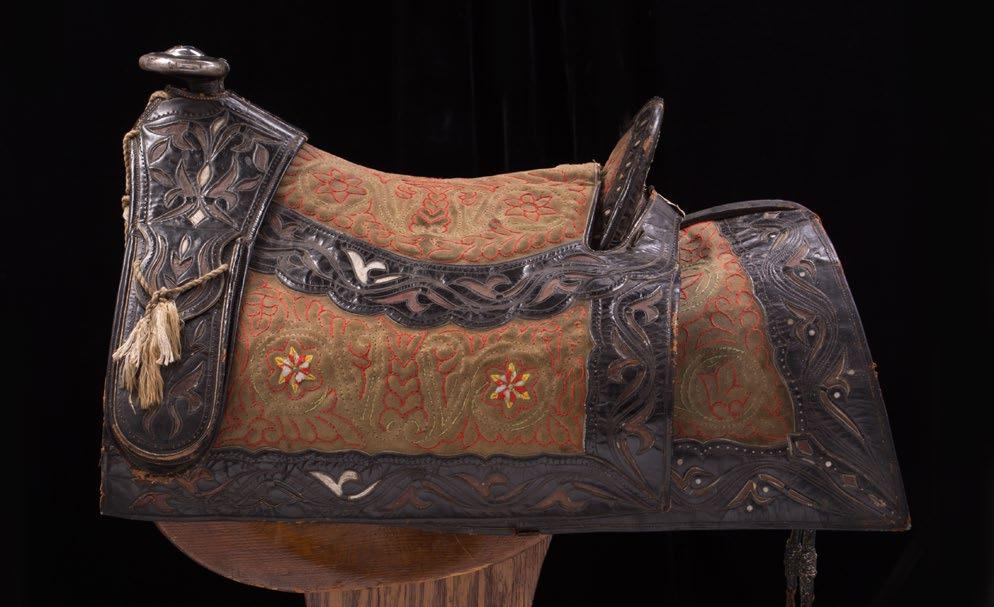
Other galleries highlight the diversity of makers shaping Western narratives. Works by Black artists such as Grafton Tyler Brown reveal how African American individuals contributed to the evolving visual culture of the West. Photographs and stories of Black cowboys underscore the long and ongoing presence of Black cowboy culture. Material culture also reveals the region’s intercultural exchanges: Mexican and vaquero saddles (p. 4) displayed alongside Crow, Diné, and Lakota examples illuminate the spread of techniques, aesthetics, and technologies across borders.
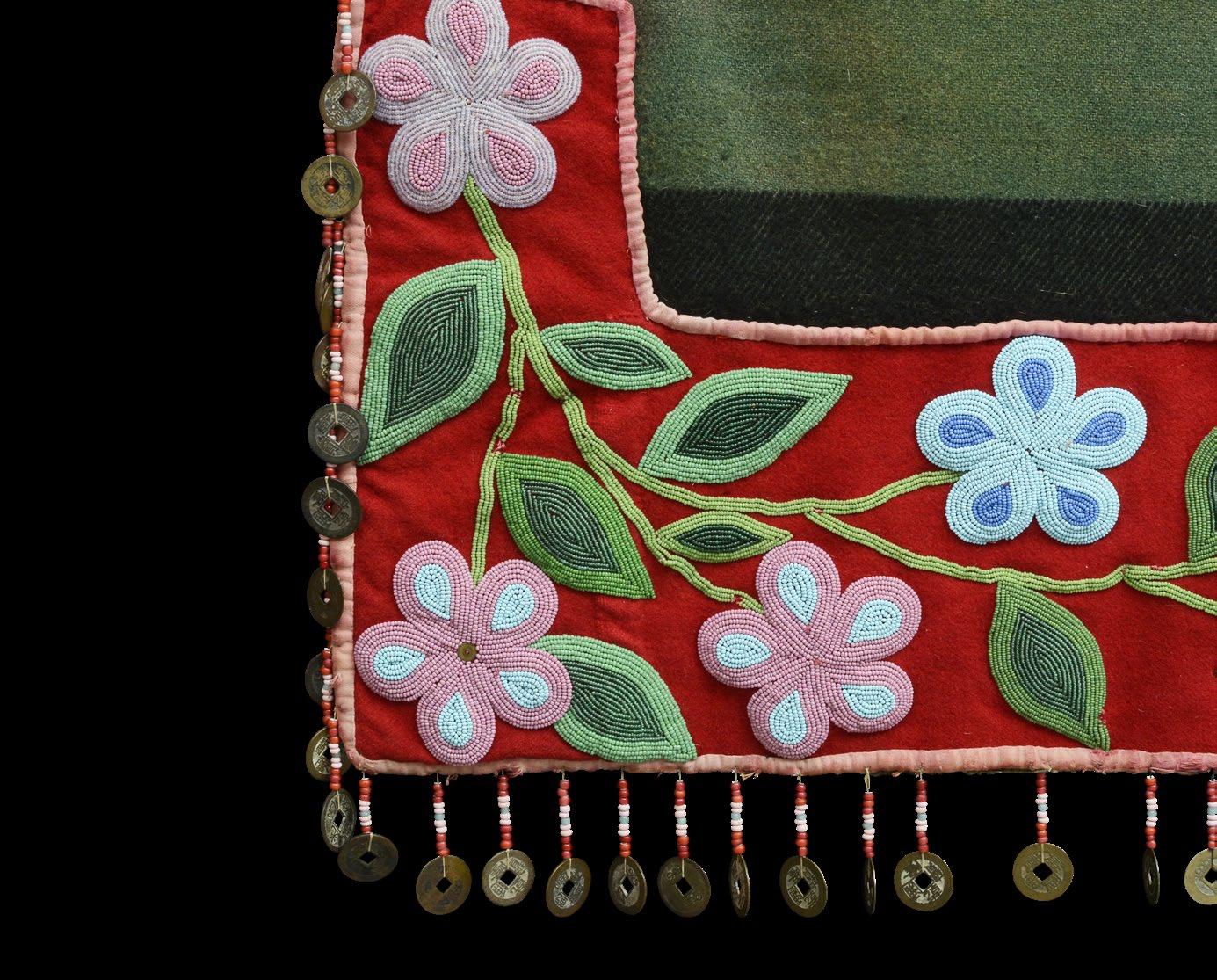
Another section explores the theme of persistence, evident in works that demonstrate innovation, adaptability, and resilience. A Nez Perce wool saddle blanket (p. 5) illustrates the established exchange of materials between European settlers
and Native peoples. Glass beads came from Italy and Czechoslovakia and were disseminated in trade, becoming a common material used to decorate Native American belongings. No longer used as currency, Chinese coins made their way to North America as ballast in the hulls of ships carrying imports from Asia. Designed to make a jingling sound as the horse moved, these coins speak to both the global trade of goods as well as the influx of Chinese immigrants, many of whom worked in gold mines and railroad construction.
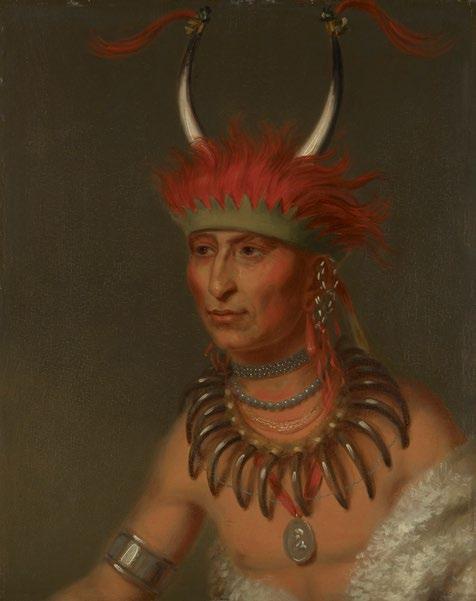
The role of art in nation building makes up the final theme. Many works in this section speak to instances of diplomacy both among different tribal nations and between Native leaders and the US government. Charles Bird King, for instance, painted numerous portraits of Native leaders during their diplomatic visits to Washington, DC, where they made efforts to negotiate peace, sovereignty, and land rights for their nations. In Shaumonekusse, Oto Half Chief (Husband of Eagle of Delight) (above right), the sitter wears a bisonhorn headdress and bear-claw necklace, reflecting his power and status within his tribe. Also around his neck is a presidential peace medal—a calculated diplomatic gift from government officials pushing to expand white usurpation and settlement of tribal lands.
Native nation building is reinforced by treasured belongings such as cradleboards, emphasizing the significant
material investments that families— especially mothers—made to foster cultural continuity and the transfer of knowledge across generations. The Kiowa cradleboards in this section were communal projects and feature intricate beadwork and fine materials that express family pride, kinship ties, and the immense value of children in Kiowa communities.
Throughout the installation, interactive stations, art-making activities, multimedia components, and community voices encourage reflection and conversation, ensuring that the exhibition becomes not only a space for looking but also for learning and unlearning. Ultimately, Knowing the West reveals both a place and an idea built on overlapping stories of resilience, creativity, conflict, exchange, and persistence. By placing different makers in dialogue and questioning long-held assumptions, the exhibition offers a more honest and expansive vision of a West that has always been, and continues to be, profoundly diverse.
top left Artist once known (Mexican), Caballero Saddle (detail), 1820–50, wood, rawhide, leather, glove leather, chamois, fabric, silver, and cotton thread, H. 21 × D. 19 × W. 21 in., National Cowboy & Western Heritage Museum, 2018.20
top right Charles Bird King, Shaumonekusse, Oto Half Chief (Husband of Eagle of Delight), circa 1822, oil on panel, 18 × 141/2 in., Crystal Bridges Museum of American Art, Bentonville, Arkansas, 2010.87; Photography by Amon Carter Museum of American Art opposite Artist once known (Nimiipuu [Nez Perce]), Saddle Blanket (large detail), circa 1885, wool, glass beads, Chinese coins, 40 × 48 in. (sight), National Cowboy & Western Heritage Museum, 1983.06.12 page 2 Joseph No Two Horns (He Nupa Wanica) (Hunkpapa Lakota/Teton Sioux), Winter Count circa 1922, depicting the years 1785–1922, ink, watercolors, and crayon on muslin, 96 × 36 in., Private collection; Jo Anderson, Omaha, Nebraska page 3 Artist once known (Osage), Wedding Outfit, circa 1900, wool, glass beads, leather, dress: 45 × 28 in.; hat: 131/2 × 91/4 in., National Cowboy & Western Heritage Museum; Museum purchase with funds provided by Carol Dickinson, 2008.08A
In 2026 the US commemorates 250 years since the signing of the Declaration of Independence. In the years since, our country has undergone many changes and faced many challenges. The presentation of Knowing the West at the NCMA is part of the Department of Natural and Cultural Resource’s statewide program of events that reflect upon the country’s founding ideals. Learn more at america250.nc.gov.
MAY 2–AUGUST 9, 2026
East Building, Level B, Meymandi Exhibition Gallery
TICKETS
Reserve at ncartmuseum.org free for Members
$20 Adults
$17 Seniors age 65 and older
$12 Students (ages 7–22) free for children 6 and under
Questions about ticketing? Email help@ncartmuseum.org
Knowing the West is organized by Crystal Bridges Museum of American Art, Bentonville, Arkansas, and co-curated by Mindy N. Besaw and Jami C. Powell with influence and input from a curatorial advisory council.
In Raleigh additional support is made possible, in part, by the North Carolina Department of Natural and Cultural Resources; the North Carolina Museum of Art Foundation, Inc.; Two D ots Studio; and the William R. Kenan Jr. Endowment for Educational Exhibitions. Research for this exhibition was made possible by Ann and Jim Goodnight/The Andrew W. Mellon Foundation Fund for Curatorial and Conservation Research and Travel.
EXHIBITION - RELATED EVENTS
Exhibition After Hours
Thursday, April 30, 7:30–10 pm free
Join us for a special edition of NCMA After Hours as we celebrate the opening of Knowing the West. Explore the exhibition, enjoy music, and take part in hands-on creative experiences inspired by the stories and artists featured.
Member Preview Day
Friday, May 1, 10 am–5 pm free for members
Members receive access to the exhibition a day before it opens to the public. Enjoy the show without the crowds and take advantage of the member discount in the Exhibition Store.
Knowing the West Community Day
Saturday, May 23, 10 am–5 pm free
Join us for a community day featuring free admission to Knowing the West.
Western North Carolina Art and Craft Showcase
Saturday, May 23, 11 am–4 pm free
This one-day market in East Building celebrates the traditions and contemporary practices of craft artists from Western North Carolina, alongside makers from across the state. Featured are ceramics, textiles, woodwork, jewelry, prints, and more.
Astrological Artifice
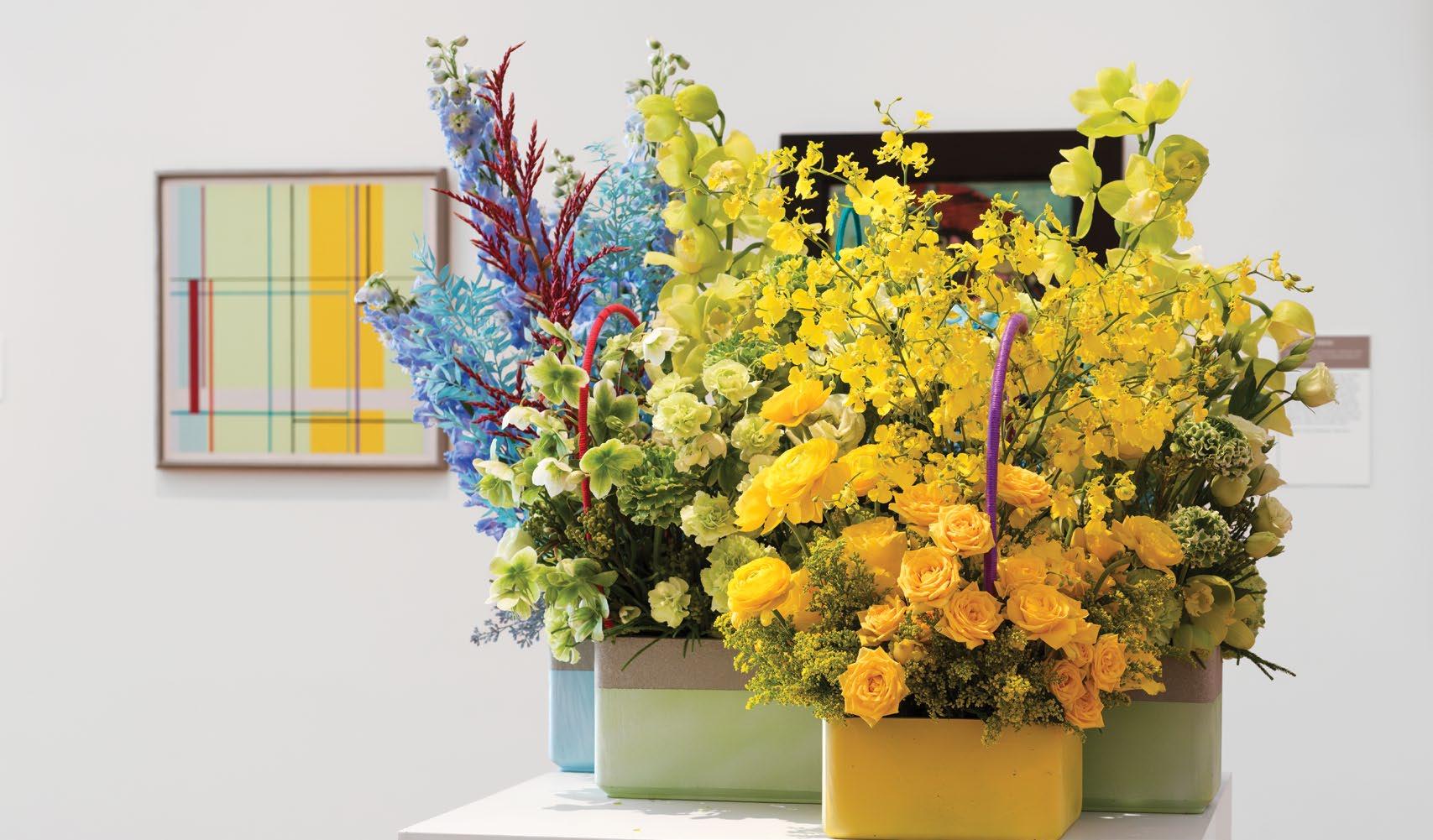
The twelfth edition of Art in Bloom, the Museum’s fundraising festival of art and flowers, returns to the NCMA’s West Building from Wednesday, March 18, to Sunday, March 22. This year’s theme is Written in the Stars, and we have for you a constellation of programs, dining options, and retail offerings in addition to stellar floral arrangements evoking art in the People’s Collection and large, blooming installations inspired by the zodiac.
Art in Bloom is made possible through the generosity of Presenting Sponsor PNC. Proceeds from this fundraiser support the North Carolina Museum of Art.
TICKETS
$50, Members $45 free for children 6 and under ncartmuseum.org/artinbloom
Related events ticketed separately ENTRY TIMES
(Doors close 90 minutes after last ticket time)
Wednesday, March 18, 10 am–3 pm
Thursday, March 19, 10 am–5 pm
Friday, March 20, 11 am–7 pm
Saturday, March 21, sensory-friendly hour, 9–10 am
Saturday, March 21, 10 am–7 pm
Sunday, March 22, 10 am–5 pm
East Building closes at 5 pm all days
RELATED EVENTS
Zoe Webster Art in Bloom Floral Demonstration
Wednesday, March 18, noon–1:30 pm
Ticketed
Share the beautiful and quirky world of Jennifer Wood and Francisco Garcia, owners of Once Gathered, as they demonstrate making an arrangement with the same materials and end at completely different results. Sponsored by Raleigh Fine Arts Society
Art in Bloom Starry Night Designer Reception
Wednesday, March 18, 6:30–9 pm
Ticketed
Make a toast to your star sign and meet this year’s designers at the Starry Night Party. This event features premium floralinspired refreshments and one-night-only floral decor. Attire: cocktail or themed.
Containers That WOW All Year Long: Gardening Demonstration with Brie Arthur
Thursday, March 19, noon–1:30 pm
Ticketed
Join local bestselling author and horticulturist Brie Arthur for an engaging journey into the art of container gardening! Learn how to design, plant, and care for containers that bring beauty, productivity, and year-round interest to any space. Sponsored by Raleigh Fine Arts Society
Art in Bloom Sensory Journey through Flowers
Thursday, March 19, 10 am–12:30 pm
free with registration
Join Blossom Betty’s to explore a floral arrangement through the engagement of the senses. This event is designed to provide an opportunity to learn for individuals with intellectual and/or developmental disabilities. Sponsored by Raleigh Fine Arts Society
Art in Bloom Studio Workshop: Flower Vase Painting
Saturday, March 21, 1–4 pm
Ticketed
In this workshop participants are guided through the underglaze painting process on a vase form they select from one-of-kind pieces made by NCSU Crafts Center students and staff. All supplies and post-workshop firing provided. Sponsored by Raleigh Fine Arts Society
retail FLOWERS IN GLASS
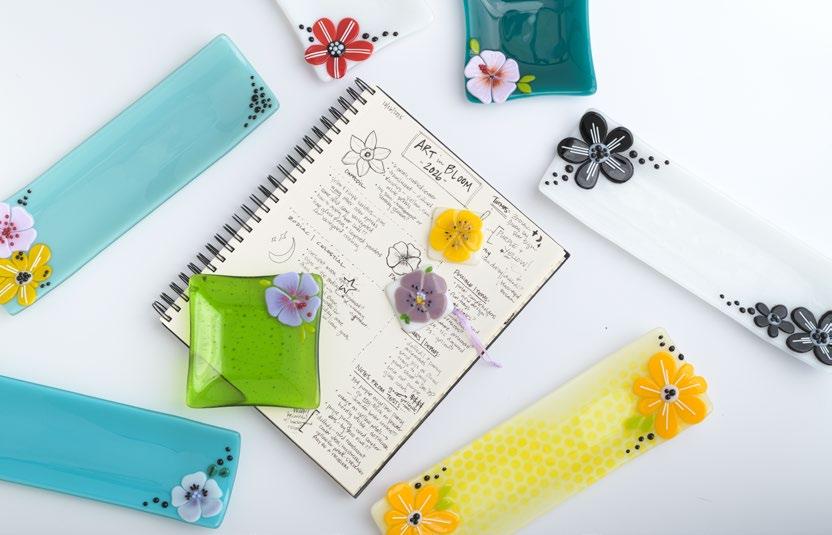
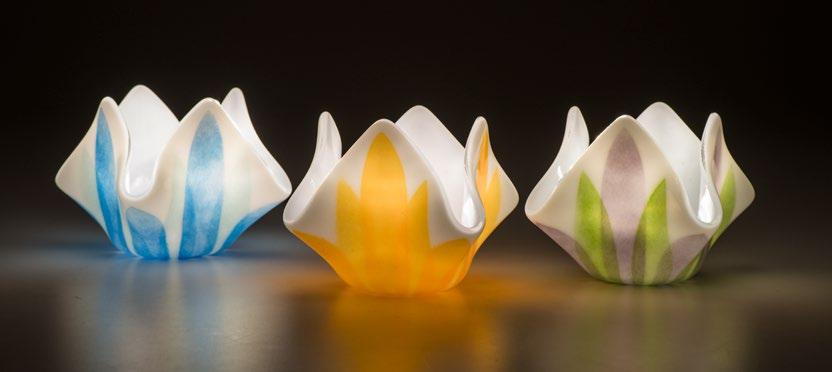
Each year, Art in Bloom highlights the creative dialogue between art and the natural world, an ideal showcase for local artists whose works embody that spirit. For Art in Bloom 2026, the Museum Store is proud to feature Melanie Stoer, the creative force behind Melsie Glass. Her one-of-a-kind glass pieces are rooted in the energy, color, and calm of North Carolina’s landscape.
Stoer’s artistry spans design, craft, photography, and visual storytelling, bringing a spark of elevated yet effortless beauty to each object she creates. Whether displayed, used for entertaining, or worn as a personal accent, her glass offers a sense of casual elegance that feels right at home with our retail mission to feature artists inspired by nature, creativity, and community. Each piece of Melsie Glass captures both the joyful movement and soothing serenity of flowers, aligning perfectly with the spirit of Art in Bloom.
West Building
Opens at 10 am Wednesday, Thursday, Saturday, and Sunday Opens at 11 am Friday
dining
TWELVE SIGNS, TWELVE MOMENTS
As the vernal equinox ushers in longer days and the promise of spring, the Museum invites guests to experience a feast unlike any other. In honor of Art in Bloom, Catering Works Executive Chef Rich Carter has designed a twelve-course tasting dinner inspired by this year’s theme, the zodiac.
Just as the stars mark the passage of time, so, too, does food tell a story of beginnings, transformations, and endings. The culinary journey begins with Aries, the fiery spark of spring, and culminates with Pisces, whose dreamlike energy closes the cycle. Guided by the four classical elements—fire, earth, air, and water— each constellation finds expression in flavor, with artfully inspired libations enhancing the experience and echoing the character of the stars.
This dinner is more than a meal; it’s a celebration of renewal, balance, and imagination.
Chef’s Table: Zodiac Dinner
Friday, March 13, 6–9 pm
Prepaid reservations
Prepaid reservation includes anytime voucher to Art in Bloom floral installations March 18–22.
dining during the festival
Bloom and Bite
Wednesday–Friday, March 18–20, 10:30 am–3 pm
Price of purchase, reservations only
A themed menu is offered during lunch service each day.
Art of Tea in Bloom
Saturday–Sunday, March 21–22
Prepaid reservations only (new this year)
Enjoy floral-inspired small bites and sip on hot tea or coffee. Prepaid reservation includes access to floral installations.
Art in Bloom: Celestial Garden Dinner
Friday–Saturday, March 20–21, 5–7:30 pm
Prepaid reservation includes access to floral installations before or after dining; galleries close at 8:30 pm.
New for 2026, NCMA Café is pleased to offer a special fixed-price dinner menu on Friday and Saturday evenings.
In addition to events requiring reservations, the NCMA offers quick-service grab-and-go options, coffee drinks, and cocktails in West Building’s lobby each day, coinciding with Art in Bloom hours. Selfservice grab-and-go items are for sale in East Building’s Education Gallery/ Lobby as well.
Creating Connections in the Museum Park
rachel woods
Director of Museum Park
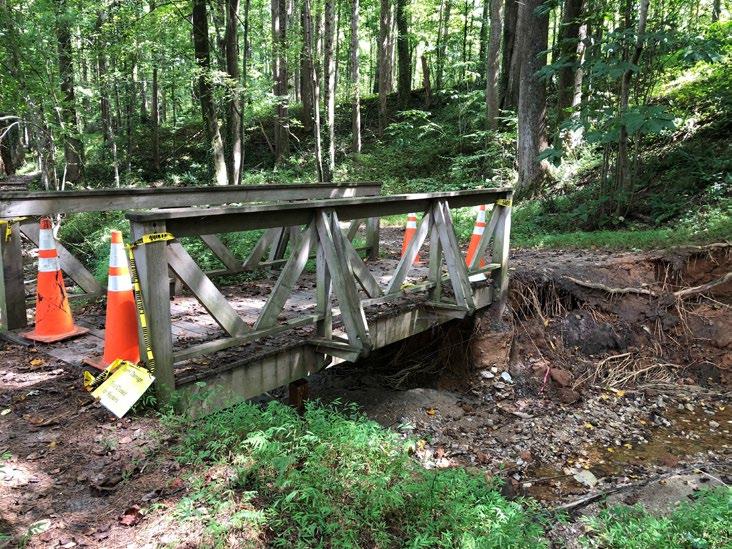
As part of the first phase of stream restoration in the Museum Park, a bridge over the unnamed tributary is being replaced to improve access to natural areas and reestablish a direct connection to one of the Park’s most popular installations, Cloud Chamber for the Trees and Sky by Chris Drury. The wooden bridge that previously crossed the stream in this location was critically damaged in 2018 by storm surge during Hurricane Florence.
This bridge placement is an integral component of the Park’s trail system. Its loss has impacted pedestrian circulation and limited access to Cloud Chamber. The updated bridge is designed to better meet the Park’s current visitation rate and immerse visitors in nature by providing improved opportunities to view the stream and forest habitats.
The new bridge is constructed from Corten steel with a poured concrete walking surface for increased longevity and durability in this dynamic environment. The bridge crossing location, along with the modified structural abutments, are positioned outside the water channel to reduce future conflicts between this infrastructure and the restored stream during storms. This will significantly improve its long-term viability and allow the stream to flow unimpeded by the bridge. The Museum is grateful for the generous support provided by more than 30 donors to make this work possible.
The new bridge over the unnamed tributary in the Jane B. Preyer Preserve reconnects the Woodland Trail and Lower Meadow Trail to provide a direct connection between the Museum galleries and Cloud Chamber. Construction work is scheduled to be completed in April. Plan a crossing the next time you visit the Park.
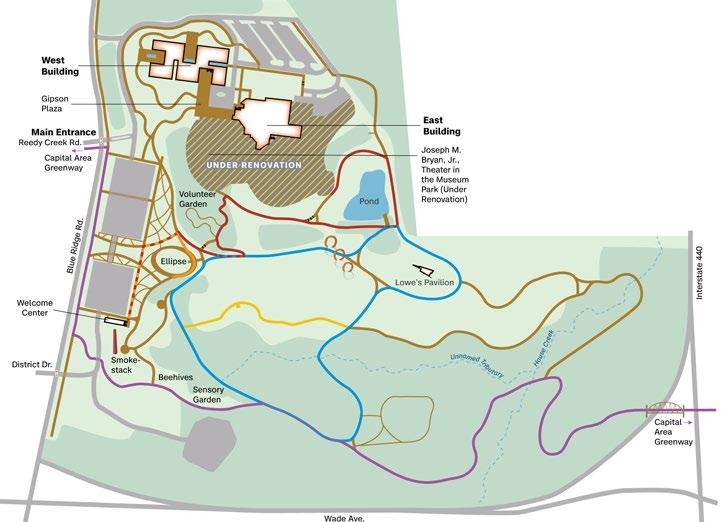
Drawing of Contech Connector pedestrian truss bridge; project engineer: Wetherill Engineering Inc.
Damaged wooden bridge constructed as an Eagle Scout project in 2003;
Photo: Rachel Woods
Beyond the Frame
Performing Arts at the NCMA
karen kelly Senior Editor
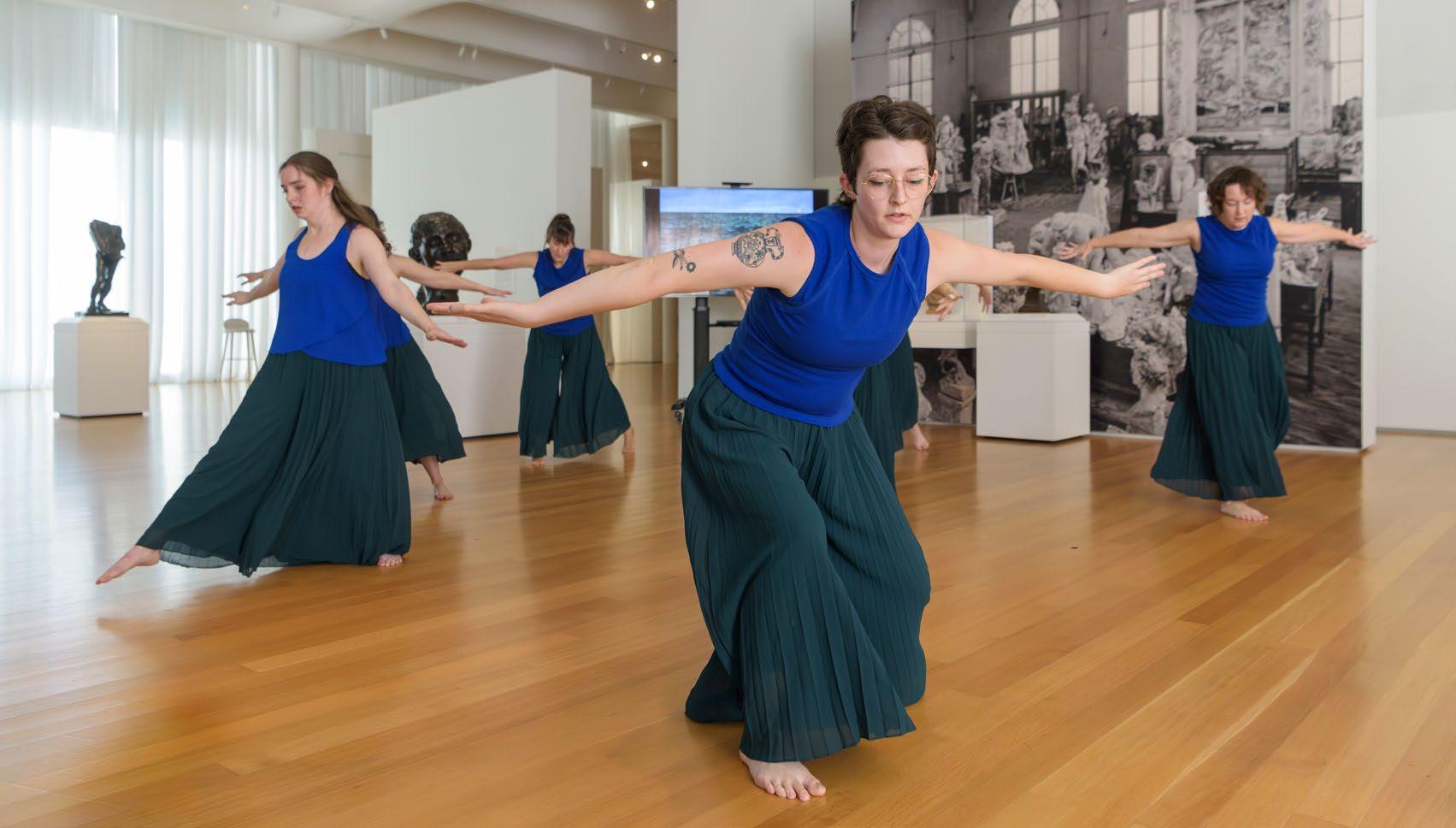
Moses T. Alexander Greene is fascinated by how dance, spoken word, music, film, theater, even the culinary arts, can respond to visual art. “Not to compete with it or upstage it, but to extend a visitor’s experience with a work of art.” In short, to enliven it.
When the “live arts come into conversation with the timeless works in our People’s Collection,” he says, “we can create new entry points for understanding.”
The Museum’s director of performing arts and film is passionate about bringing more of what he calls “live arts” into the galleries and Park. When he arrived five years ago, the NCMA was already well known for its lively outdoor concerts and movie nights—plus its distinctive indoor film noir series. The Museum had worked hard for decades to establish itself as a popular venue for the performing arts and
to screen films as independent works of art. These dynamic, standalone events can be considered as part of the performing arts the Museum traditionally offers. “Yes, they are live events, but they typically don’t directly engage with artworks in the collection or in a special exhibition.”
Live arts, on the other hand, are inspired by, speak to, and interpret a work of art. A live artistic interchange in the gallery extends the here-and-now experience of the artwork by inviting the visitors in, opening their minds to how the arts can interplay.
For example when a multiage modern dance company choreographs a work in response to a contemporary painting created with fishhooks (as Raleigh’s Rainbow Dance Company did recently), the reactions are palpable: “The dancers were like the waves in the painting,” one visitor
remarked. “But also the people were carried to new land over those waves,” another shared.
Dancers, musicians, and poets can create a dynamic conversation with a sculpture or multimedia work that might otherwise appear static on a wall or behind a plexiglass case.
“It’s not about saturating every gallery with sound or movement simultaneously; it’s not about creating noise,” Greene says. “It’s about curating innovative artistic experiences that offer multisensory pathways into the NCMA’s historical artworks and exhibitions. The language of the live arts can deepen the engagement of our visitors.”
A live-art encounter, Greene further clarifies, doesn’t always have to be live. It can be a documentary film shown alongside an Egungun costume in the
African Arts Gallery, for example: a video of Egungun masquerades being danced in a Nigerian village that sets in motion an otherwise still work of ceremonial art.
“As we’re learning more about neurodivergence in both young and old, we’re learning about the need for sensoryfriendly programming,” says Greene. “We can anchor that programming in music, dance, and performances.”
The goal is not to replace a wall label but “to intensify its impact,” he says. Greene hopes NCMA visitors will look forward to this kind of multiarts engagement on a regular basis. “In the museum of the 21st century, what was once the unexpected can become the expected, and in the meantime garner new audiences.”
UPCOMING EVENTS
The Art of Harmony:
Pairing Music and Art across Centuries
Sunday, March 8, 1:30–3:30 pm Ticketed
Join Gregory Harrington for a live performance linking classical music with the NCMA’s European paintings to illuminate the ties among sound, heritage, and visual art. Support provided by the Mann Family Foundation.
still. moving Captain’s Watch by Helen Frankenthaler as Interpreted by Amy Beasley
Saturday, March 14, 11 am and 1 pm free
Members are also encouraged to visit ncartmuseum.org to mark their calendars for future Live Arts Saturdays.
word artist and playwright Dasan Ahanu illuminate resilience as a living inheritance: embodied, spoken, remembered, and continually renewed. Support provided by the Mann Family Foundation.
in motion. in time.
“The Partial Figure/The Body Complete”
Saturday, April 4, 11 am and 1 pm free
Created in dialogue with the exhibition
Partial Figure, this performance by choreographer Killian Manning explores how fragments, gestures, and glimpses of the body can evoke a fuller emotional and narrative truth. Support provided by Dawn F. Lipson.
Montie Nelson
Saturday, March 14, 11 am and 2 pm free
Atlanta-based singer-songwriter Montie Nelson weaves heartfelt stories of everyday beauty in an intimate acoustic performance.
Mallarmé Music
Saturday, April 4, 11 am and 2 pm free
Mallarmé Music is a flexible collective of professional musicians based in Durham, NC, whose mission is to enrich the lives of the community through outstanding chamber music performance.
Smitha K. Prasad
Movement meets masterpieces from the People’s Collection as dancers interpret form, story, and silence in the Museum galleries. Support provided by Dawn F. Lipson.
What We Carried, What We Keep: A Freedom Seder on Living Resilience
Sunday, March 29, 6 pm free with registration
Through a powerful artistic dialogue, Jerusalem-based choreographer and dancer Elad Schechter and Durham-based spoken
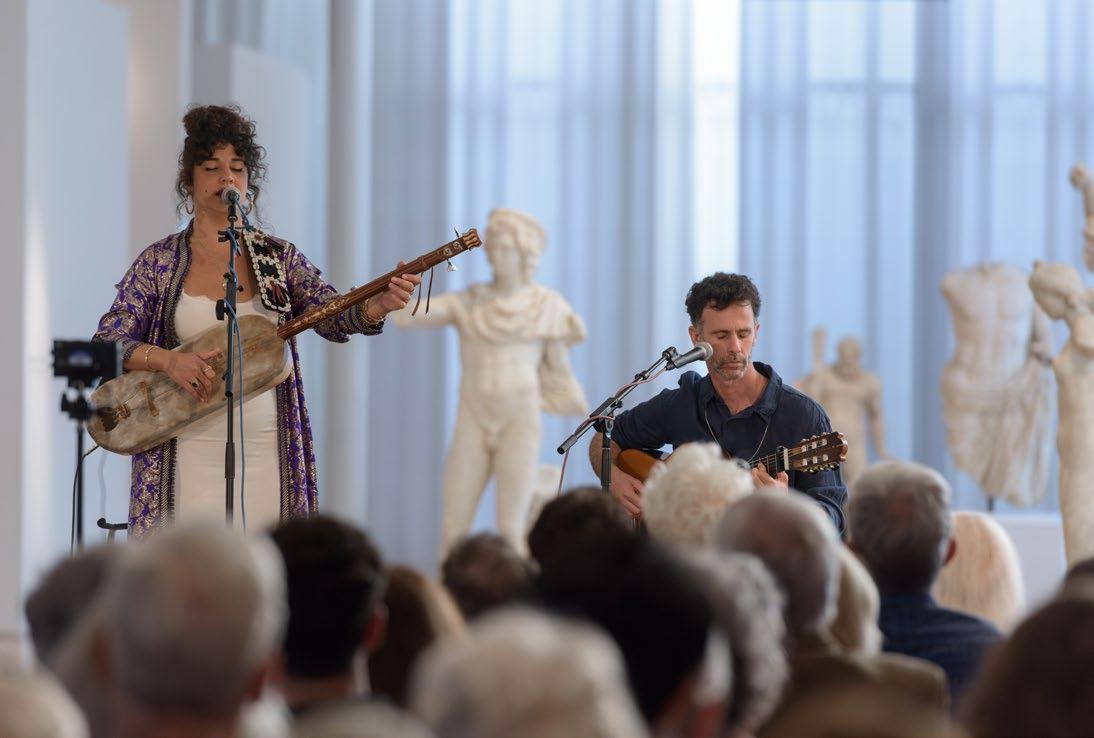
Trio Sefardi
Friday, April 24, 1–2 pm free
Trio Sefardi plays Sephardic songs from the Balkans, Turkey, and North Africa. Set in the Devotion Gallery, the program also includes songs from the spring holidays of Purim and Passover.
notes on view
Join us for a pop-up music series featuring live performances that respond to and resonate with artworks on display.
Sunday, April 26, noon and 3 pm free
Smitha K. Prasad showcases the rich, intricate rhythms and melodies of Carnatic music—the classical vocal tradition of South India.
Thomas Hinds
Saturday, May 16, 11 am and 2 pm free
Folk-rock troubadour Thomas Hinds presents a mix of original songs that speak to the struggles of life, love, and finding oneself
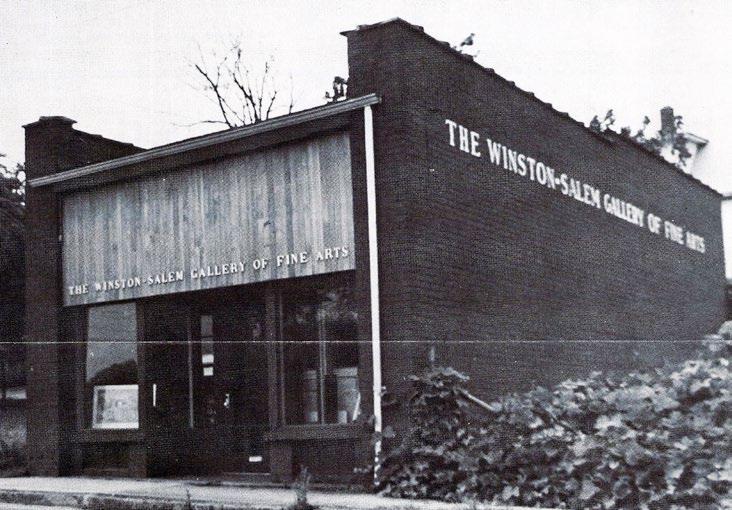
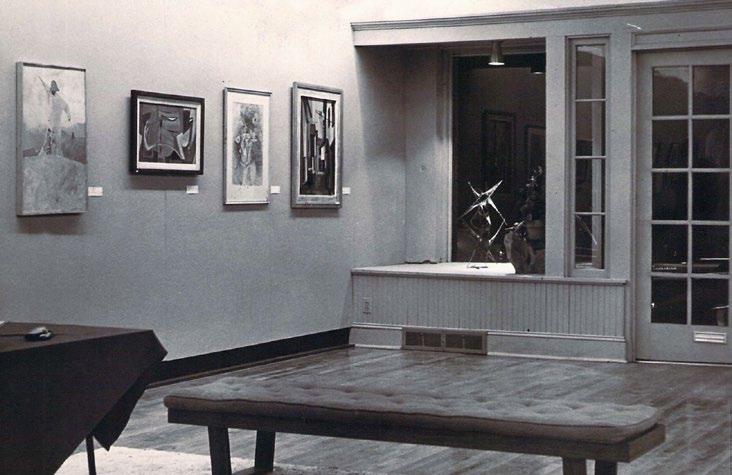
What is now the North Carolina Museum of Art, WinstonSalem, began in 1956 as a community-led gallery in the downtown business district. As the Winston-Salem Gallery of Fine Art, the organization was one of the first in the city to exhibit new works by Southern artists. Its focus became sharper in the mid-sixties, and its name changed to the Contemporary Art Gallery. From its perch on Trade Street, the gallery set its sights on becoming a premier resource for the city, artists, and collectors.
When industrialist James G. Hanes passed away in 1972, he left his estate in the western part of Winston-Salem to the gallery While the gift meant the end of the gallery’s presence downtown, it set the course for the creation of the Southeastern Center for Contemporary Art (SECCA). Supported by the city’s philanthropists and corporations, SECCA became a major voice in the contemporary art world, known for identifying and platforming the best emerging artists from the region. In 2007 SECCA joined the NCMA within the Department of Natural and Cultural Resources.
In 2023, on the heels of a historic $15 million appropriation from the North Carolina State Assembly, the organization started its next chapter. SECCA became NCMA Winston-Salem, and it began the design process for capital projects that will affect almost every part of the buildings and grounds, making them more accessible, sustainable, and flexible.
NCMA WINSTONSALEM GOES BACK TO ITS ROOTS
william j. carpenter Executive Director, NCMA Winston-Salem
The Hanes House will gain a new commercial kitchen, with a café and additional indoor and outdoor seating. The rear patio will be enlarged and equipped with accessible pathways. A new elevator and chair lift will make all the levels of the galleries and house easy to reach. We’ll renovate one of the original bedrooms of the Hanes House to be an apartment and studio for visiting art ists, and we’ll enhance the basement studio for our new artist-inresidence program.
The gallery building will be getting new zinc siding; an enlarged, accessible entrance; more bathrooms; an outdoor performance area; and new HVAC, security, and fire suppression systems. We’ll convert a second-floor gallery to an educational program space and add room for a retail shop. These upgrades will enable us to exhibit objects from the People’s Collection in Raleigh, meaning greater access to that state asset for more North Carolinians. We’re building a truly 21st-century facility for Winston-Salem and the state, one that celebrates the institution’s and city’s important roles in the cultural history of North Carolina, while providing valuable opportunities to experience the art of our times.
Work on the capital projects requires us to close the WinstonSalem campus for two years, beginning in January 2026. To make sure we remain in service to our mission and the people of North Carolina, we have decided to take the institution back to its roots
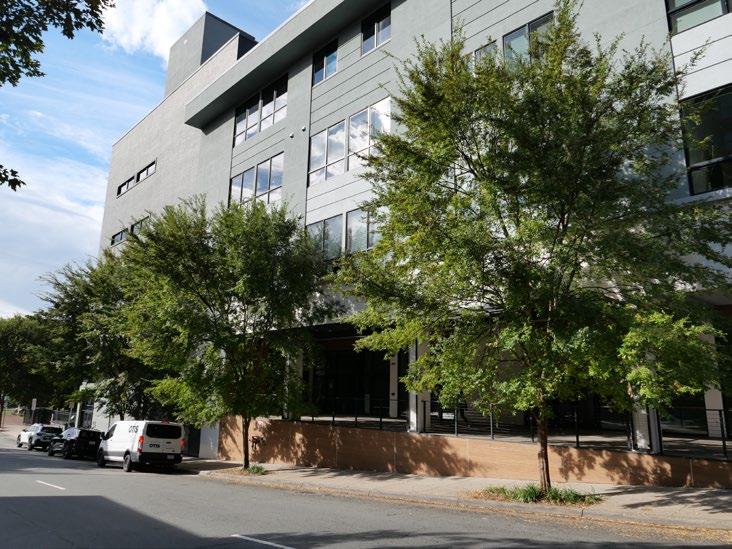
this spring by opening NCMA Winston-Salem Downtown, an orig inal cultural space where visitors can interact with art and artists, connect over new ideas, and participate in a new art ecosystem. The space, located on the busy corner of 4th and Marshall streets, will feature rotating exhibitions from talented emerging artists with ties to North Carolina, new and continuing programs explor ing contemporary art and culture, and plenty of places to sit back with friends or get a little work done.
NCMA Winston-Salem Downtown will be a place for cultural exchange, where visitors are encouraged to reflect on and bridge differences and to appreciate art as a catalyst for change. The space and programs will be shaped by the Museum’s staff expertise and resources in order to offer educational experiences, curated retail, and social interaction. This is a long-term commit ment to the cultural and creative life of our state and region and an investment in ideas, relationships, and roots. It’s a home for contemporary art from our area, where visitors can participate actively, living alongside art and letting it shape how they relate to each other.
Look for us in downtown Winston-Salem this spring!
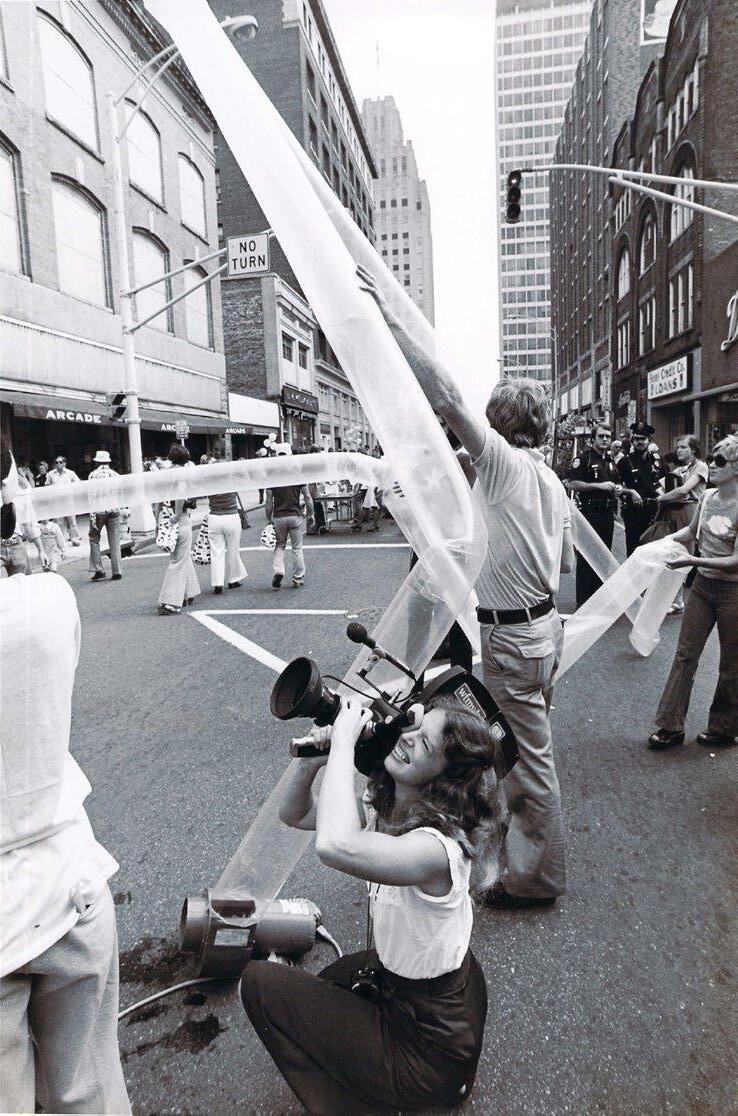
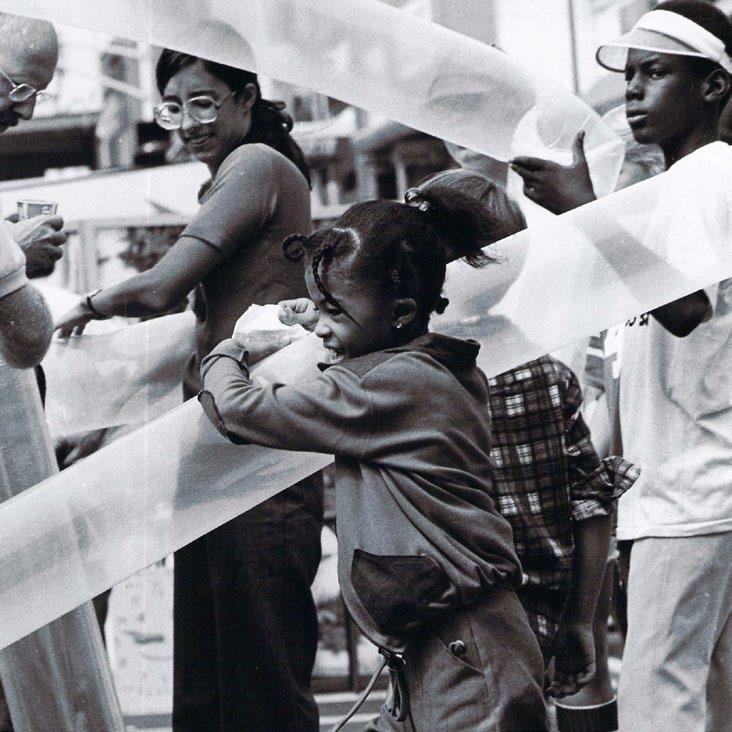
above and right Archival photographs of SECCA-sponsored programs held in downtown Winston-Salem in the 1980s.
bottom Site of the new NCMA Winston-Salem Downtown
opposite Period photographs of the exterior and interior of the Winston-Salem Gallery of Fine Arts
NANOTYRANNUS GETS ITS PICTURE TAKEN
sean sabye Marketing Copywriter
Although the NCMA’s conservation team regularly handles and preserves ancient objects and artwork from around the world, opportunities to support research into prehistoric, previously living materials are few and far between. For this reason Conservation Technician Marianne Schmeisser jumped at the chance to work with the paleontology team at the North Carolina Museum of Natural Sciences (NCMNS) on elemental analyses of fossils central to their Dueling Dinosaurs exhibition, which features a working paleontology lab. This partnership spanning the arts and sciences may seem unconventional, but a deeper look at the technologies and methodologies employed across disciplines reveals the common threads that unite outwardly different approaches to conservation.
Conversations regarding collaboration began as a result of the public-facing nature of the SECU DinoLab at the NCMNS. In anticipation of creating the Conservation Science Center at the NCMA— an exhibition space designed to provide behind-the-scenes experiences of art conservation—Schmeisser and her team took a trip to the NCMNS to gather ideas about how to approach their yearslong renovation project. Learning about the NCMA’s chemical mapping capabilities during this visit, SECU DinoLab Manager Eric Lund and his colleagues became interested in what they could glean from a tour of the NCMA conservation lab.
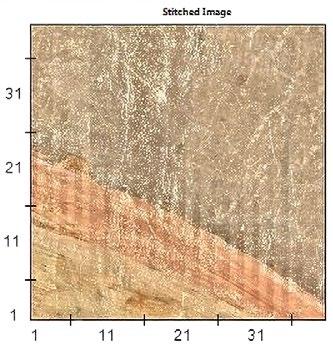
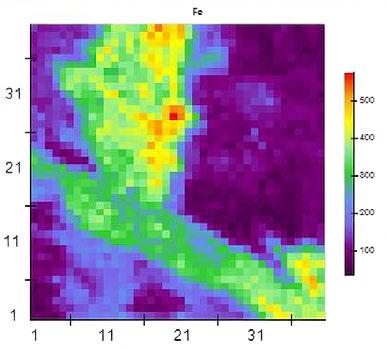
“When they visited,” said Schmeisser, “we were able to show some of the early technical examinations we’d done on our British portraits.” Using a portable X-ray fluorescence (pXRF) machine, the art conservators had created maps detailing the chemical composition of various painted surfaces. The pXRF machine had allowed them to do so noninvasively, meaning the device did not have to physically touch the paintings to create data about their makeup.
Lund, along with Assistant Lab Manager Dr. Jennifer Anné, saw the value in applying this imaging technique to their Dueling Dinosaurs research, which also involves processing highly delicate objects. While the pXRF machine was “designed specifically to analyze artwork and cultural artifacts,” according to Schmeisser, it can also be used to survey organic matter, helping to distinguish between tissue and bone when examining fossils. Because the NCMA is the only entity under the umbrella of the North Carolina Department of Natural and Cultural Resources (DNCR) with access to a pXRF machine, Schmeisser, Lund, and Anné devised a plan to work together on scans of the NCMNS’s Triceratops and Nanotyrannus fossils.
With a device as sophisticated as the pXRF machine, one might assume that moving the equipment from one museum to another would be the most taxing step toward obtaining dinosaur fossil scans. However, Schmeisser explained that “transporting the instrument was actually the easiest part of the process.” Lund described the size of the pXRF machine by comparing it to a “toaster on a tripod.” The more daunting task, said Schmeisser, was “finding safe and secure places to put the tripod feet while still being able to get within one centimeter of the fossils’
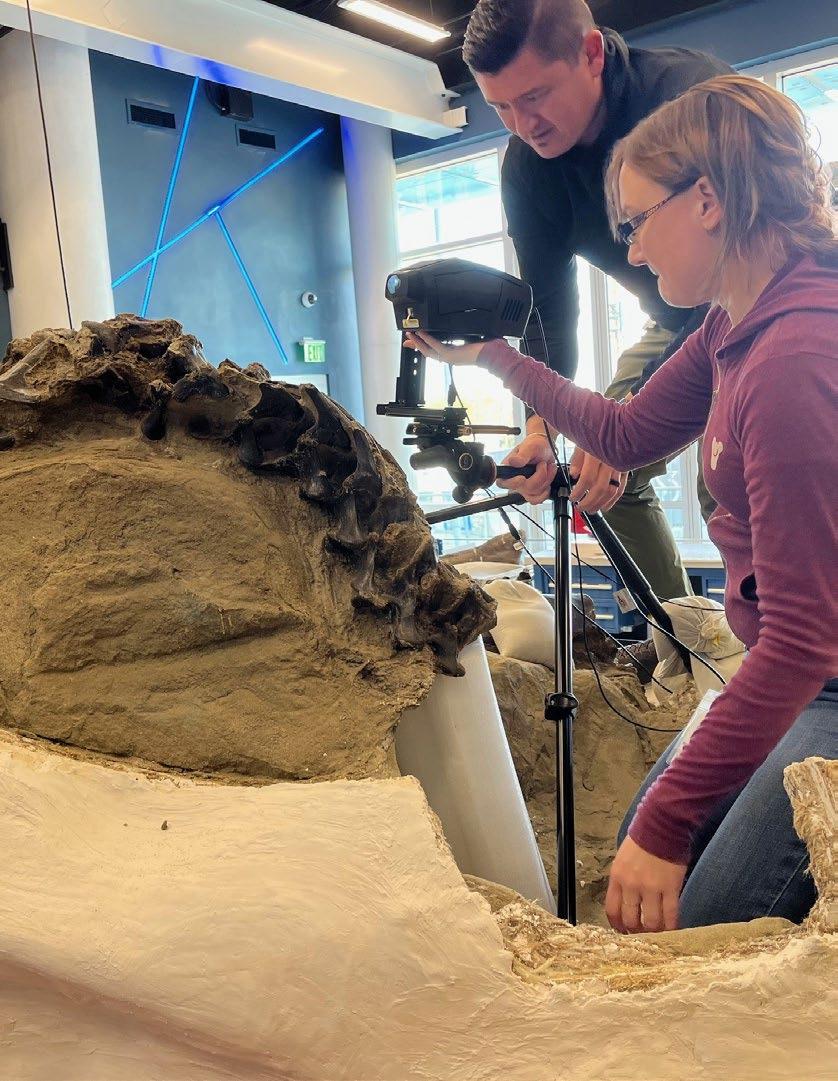
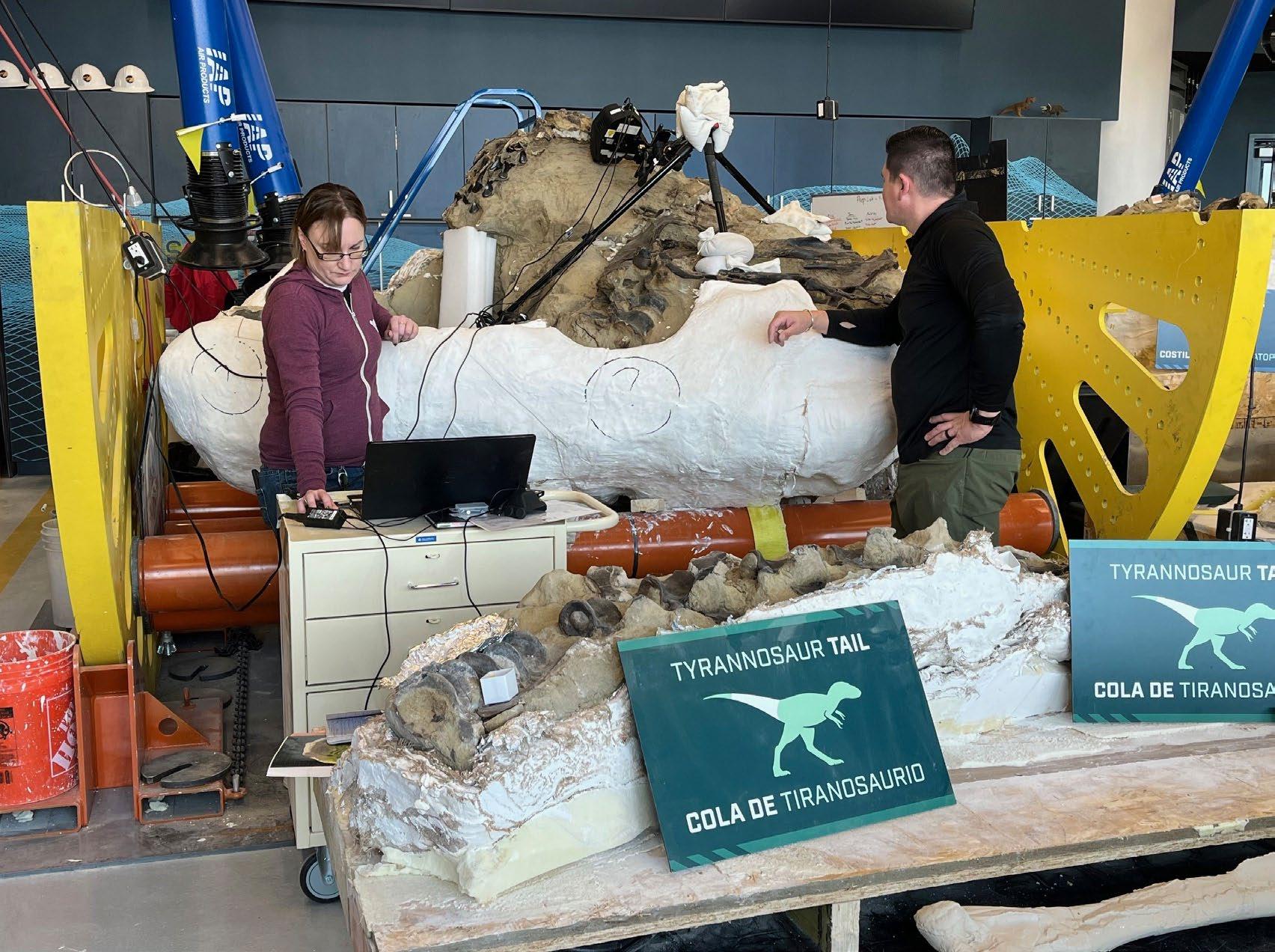
Marianne Schmeisser (right) and Eric Lund (left) position the pXRF machine over the Nanotyrannus fossil; Photo: Jennifer Anné
below The graphic results from a pXRF mapping scan of Portrait of a Woman by an artist from the circle of Marcus Gheeraerts. On the left is a composite image of a small canvas segment that the NCMA conservation team hoped to study in detail The heat map on the right indicates the relative concentration of iron across the same painted area. The variation in iron content suggests that there was a tear through that part of the canvas and an iron-based pigment or material was used to patch and fill the damage.
opposite Marianne Schmeisser (left) and Eric Lund (right) take a pXRF scan of the Nanotyrannus fossil; Photo: Jennifer Anné
above
surfaces.” The team had to think creatively, assembling stable platforms that allowed Schmeisser to operate the pXRF machine without damaging any of the specimens. “Most of the time was spent trying to figure out tricky geometry and positioning,” said Schmeisser. Anné likened the experience to a corporate “team-building exercise,” requiring a certain level of mutual trust. After a day of coordinated effort, they successfully generated data that clarified the chemical composition of specific areas of the fossils and how they had changed over time.
Upon reflecting on the advantages of collaborating across segments of DNCR, all parties emphasized not only the amount of enjoyment they derived from the project but also the ways that continued cooperation can positively impact each museum’s offerings. “The experiences that we share across institutions leads to more information that is then shared with the public,” said Schmeisser, “be it published data, label text, or exhibitions.” Anné understands these partnerships as opportunities “to explain that paleontology isn’t all about rocks. Rather, it involves chemistry and other processes, much like art conservation.” Schmeisser echoed this sentiment, describing how discoveries born from such work “show that we’re working institutions, not just stagnant repositories for things.” Lund said that everyone benefits, “including visitors, when we work across departments.”
Lund and Anné plan on enlisting Schmeisser’s assistance again in the near future. Assessing the collected fossil data in conjunction with scans of modern equivalents—like animal bones—the DinoLab team’s research continues to evolve, necessitating further elemental analyses using the NCMA’s pXRF machine.
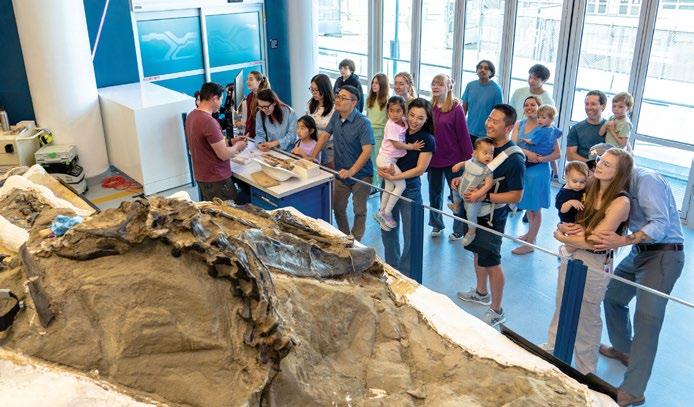
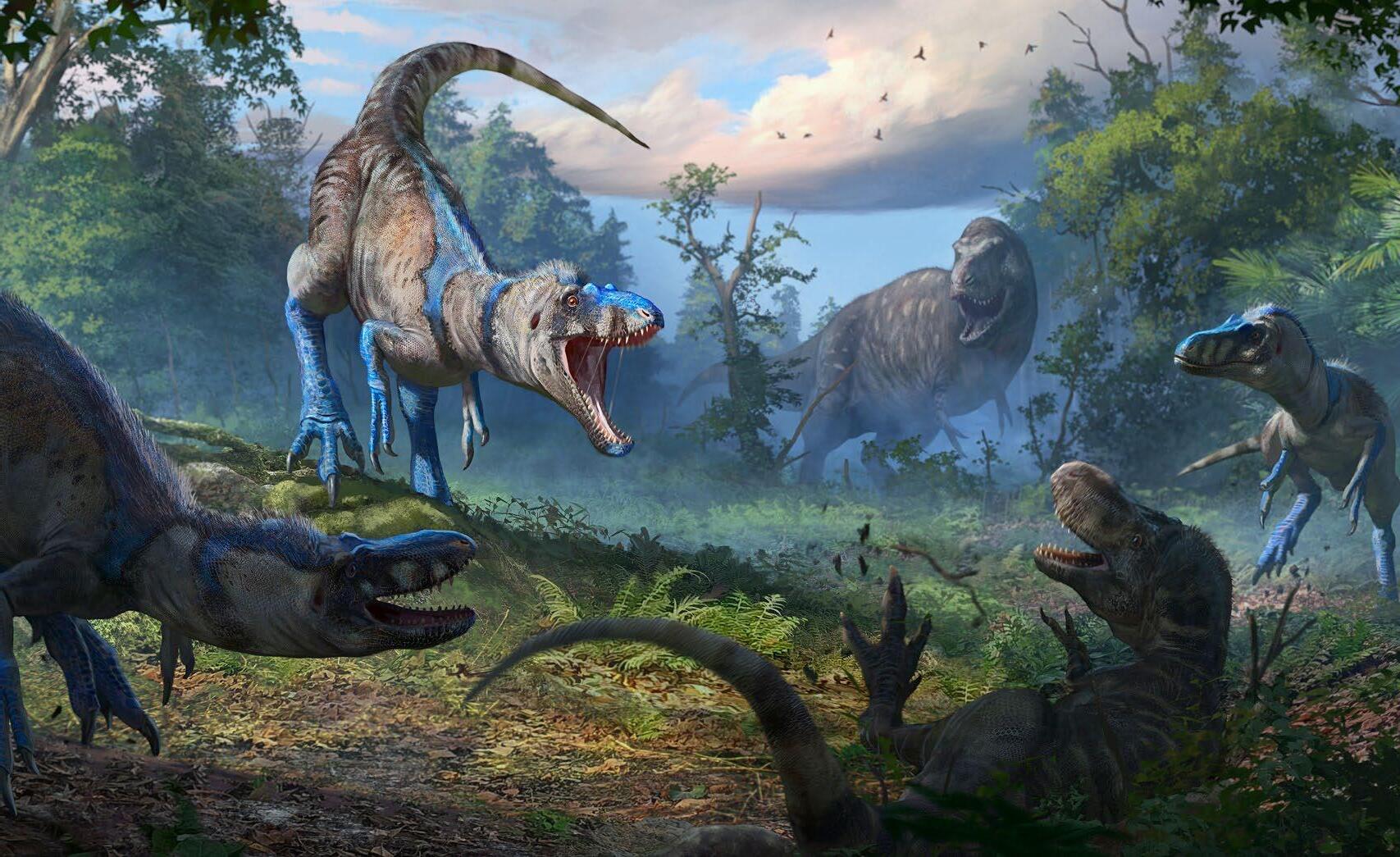
Illustration: Anthony Hutchings; © Friends of the NC Museum of Natural Sciences
Access a live video feed of the DinoLab, learn more about the story behind Dueling Dinosaurs, and plan your trip to the free exhibition by visiting duelingdinosaurs.org
Photo: Courtesy of the North Carolina
Museum of Natural Sciences
Partial Figure
Through August 23, 2026 East Building, Level B, Gallery 1 (Julian T. Baker Jr. Gallery) and 2 (Allen G. Thomas Jr. Gallery) free
EmotivE Evocations
the current exhibition Partial Figure focuses on works from the People’s Collection to demonstrate artists’ enduring fascination with the emotions and ambiguities that the human figure can evoke. This sense of intrigue and emotional resonance is often amplified when the human figure is only revealed in part. Partial Figure examines what the artists have chosen to reveal as well as what they omit.
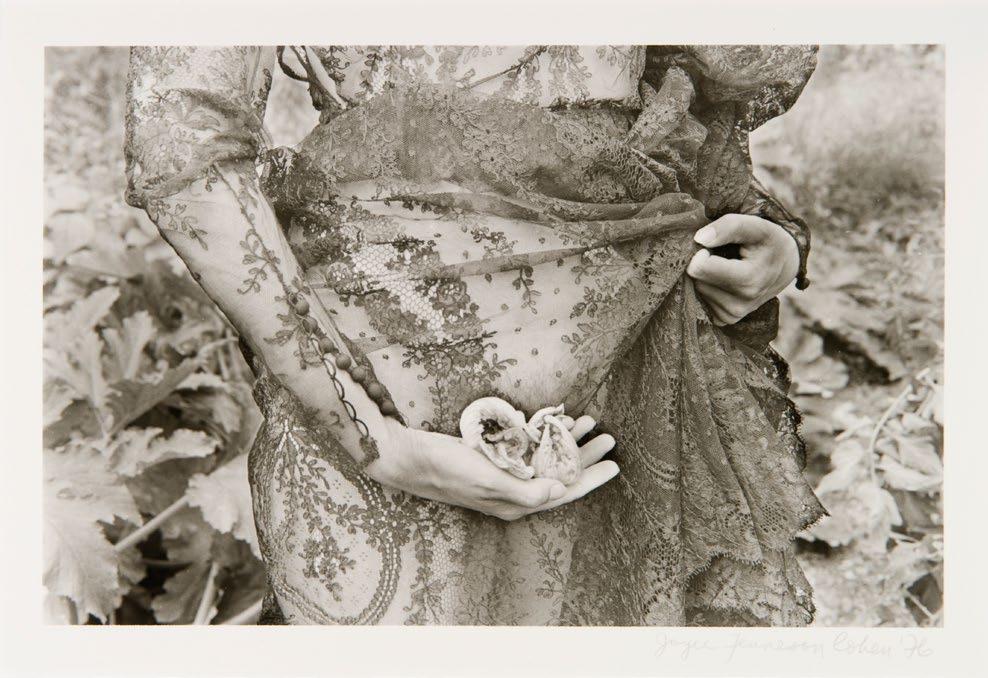
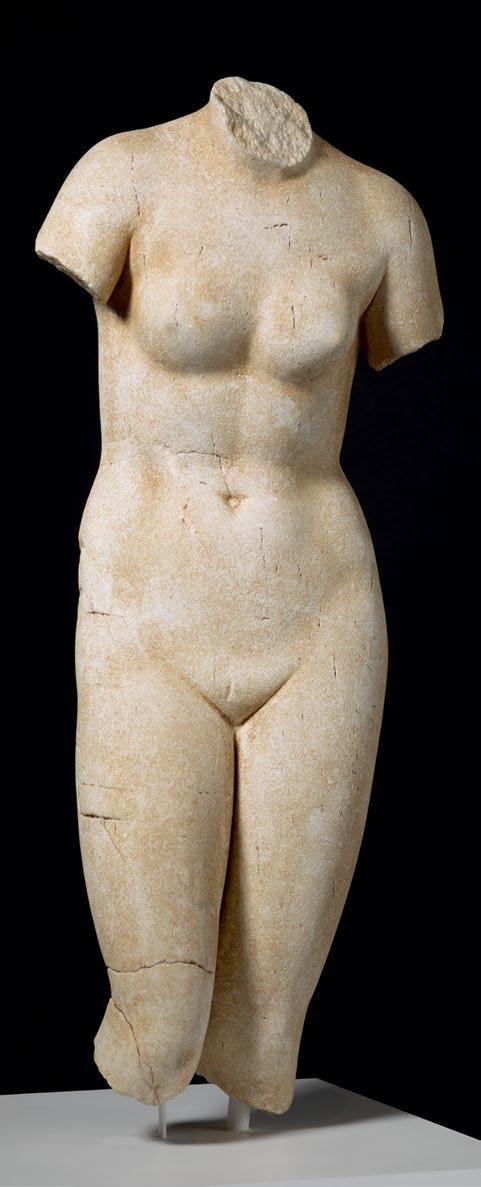
Objects explore multiple mediums and artistic styles, including influential sculptural examples from ancient Greece and 19th-century French artist Auguste Rodin, works on paper by Edgar Degas and Pablo Picasso, and photographs by Eudora Welty, Joyce Tenneson, and Barbara Morgan.
The show is guest curated by Kate Weseley-Jones, former NCMA intern in European art, under the supervision of Michele Frederick, curator of European art and provenance research.
publication
Ancient Greek, Roman, and Italian Ar t
Calling all palaeophiles! This spring the NCMA publishes its first catalogue entirely dedicated to the material culture of the various civilizations and cultures in ancient Greece and Italy and of the Roman Empire. Curator of Ancient Collections Caroline Rocheleau collaborated with NCMA objects conservator Corey Smith Riley and a group of scholar-experts who examined, researched, and uncovered valuable new insights about the collection over a period of ten years.
This stunning sculpture features in both Partial Figure and our newest catalogue. Greek, Torso of Aphrodite (Medici Type), Late Hellenistic Period–Imperial Period, circa 1st century bce–2nd century ce, marble, H. 351/2 × W. 133/4 × D. 9 in., Purchased with funds from the North Carolina State Art Society (Robert F. Phifer Bequest) in memory of Katherine Pendelton Arrington
Entries on individual artifacts are presented chronologically to showcase the interconnectedness of the cultures. Each features a fascinating discussion with fullcolor illustrations and contextual images. The book, the third in the Museum’s series of systematic catalogues, will be available for purchase in the Museum Store in late spring 2026.
Joyce Tenneson, Self-Portrait: Close-Up of Hands, 1976, gelatin silver print, 55/8 × 83/4 in., Purchased with funds from the North Carolina State Art Society (Robert F. Phifer Bequest) new
Insights into the African Arts Gallery
The NCMA’s African Arts Gallery is a truly dynamic environment that invites sustained engagement, discovery, and reflection. Within approximately 4,500 square feet, visitors encounter a remarkable breadth of artistic expression, ranging from masks, sculptures, and textiles to paintings and photography. The gallery showcases an array of materials, like cloth, bronze, iron, wood, ivory, and other natural substances, demonstrating the diversity of African artistic traditions. Audiovisual installations further enliven the space by offering footage of masquerade performances, commentary from contemporary artists, and reflections on challenging histories. Contemporary works, including commissions, are positioned alongside historical pieces, underscoring the ongoing vitality and evolving nature of African art.
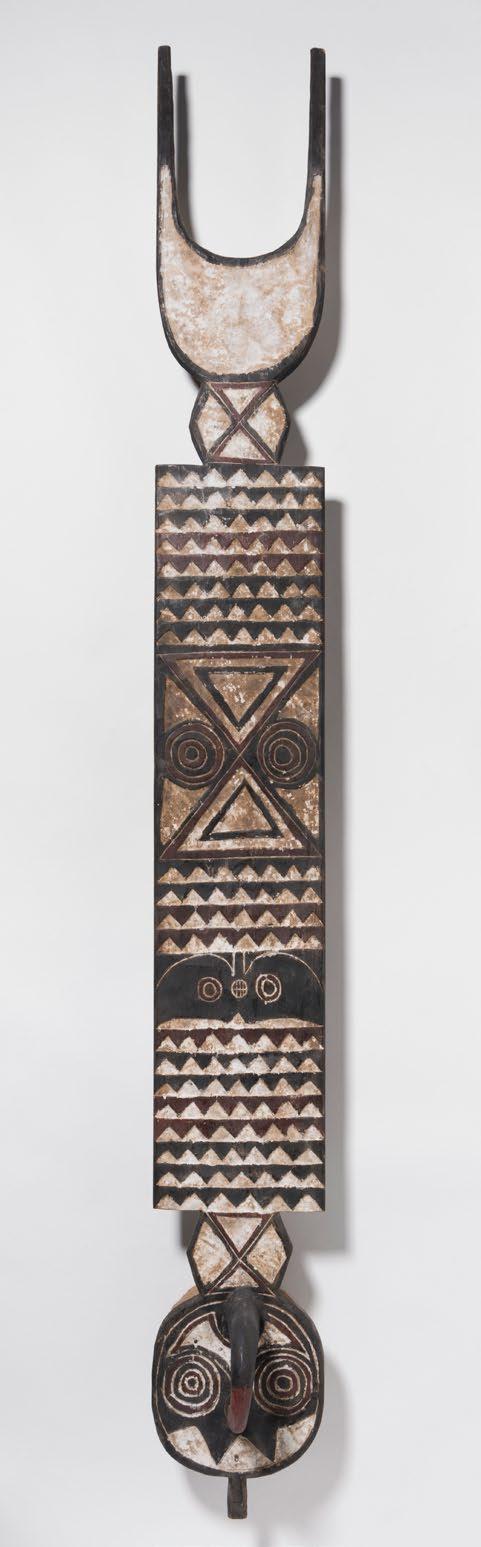
As the assistant curator of African art, I am committed to sustaining and expanding the gallery’s vibrant energy. One of the ways I pursue this is by juxtaposing contemporary artworks with selections from the Museum’s historical African art collection. Among my favorite pairings has been André Leon Gray’s Black Magic (It’s Fantastic), which I showed alongside a Nwantantay (Plank Mask) by a Bwa artist. Displayed together, the works created a powerful visual dialogue. Their shared plank-like forms and black, white, and red palette evoked a resonance that bridged temporal, geographic, and cultural boundaries.
This dynamism is made possible through collaboration with many NCMA colleagues. The conservation, registration, art services, exhibition design, interpretation, and editorial teams all contribute essential expertise behind the scenes.
tashae smith Assistant Curator of African Art
A Dynamic Space
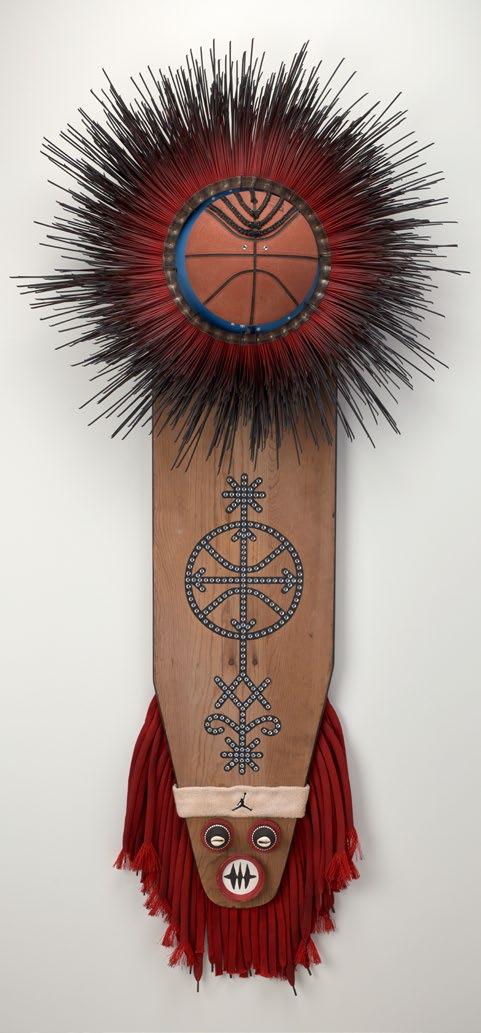
right Bwa artist, Nwantantay (Plank Mask), mid20th century, wood and pigment, H. 85 × W. 10 × D. 91/2 in., Gift of Rhonda Morgan Wilkerson, PhD above André Leon Gray, Black Magic (It’s Fantastic) 2005, acrylic, rhinestones, basketball, braided synthetic hair, street sweeper brush, shoelaces, headband, miniature clay pots, wood, and cowrie shells on wood ironing board, H. 67 × W. 31 × D. 91/2 in., Purchased with funds from the Friends of African and African American Art, and with additional funds provided by North Carolina Mutual Life Insurance Company
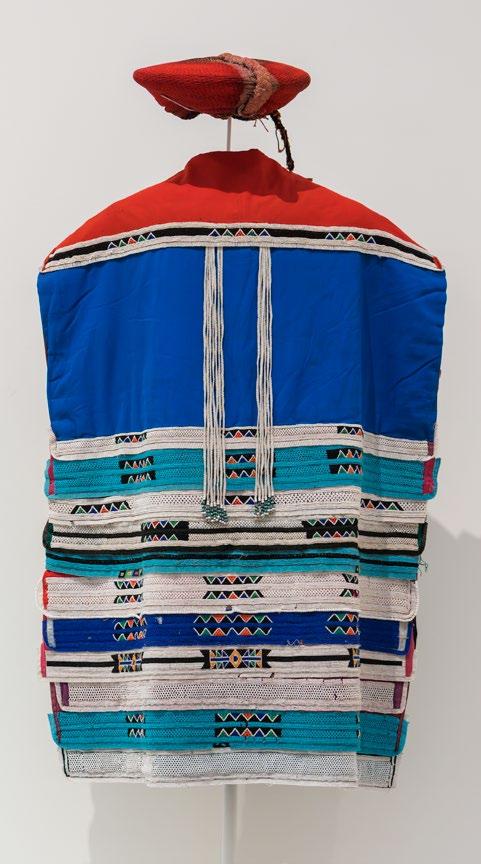
One of the major annual efforts that brings these groups together is the rotation of light-sensitive objects, such as textiles and photographs, which are particularly vulnerable to light exposure. Regular rotation ensures that these works receive necessary periods of rest, allowing the Museum to uphold best practices in collections care. During our most recent rotation, for instance, an Isocholo (Married Woman’s Headdress) and Isikoti (Wedding Day Cape), both created by Zulu artists, were exchanged for similar examples. Because the collection includes multiple iterations of certain objects, especially textiles, we are able to protect fragile materials while still presenting visitors with meaningful cultural variety.
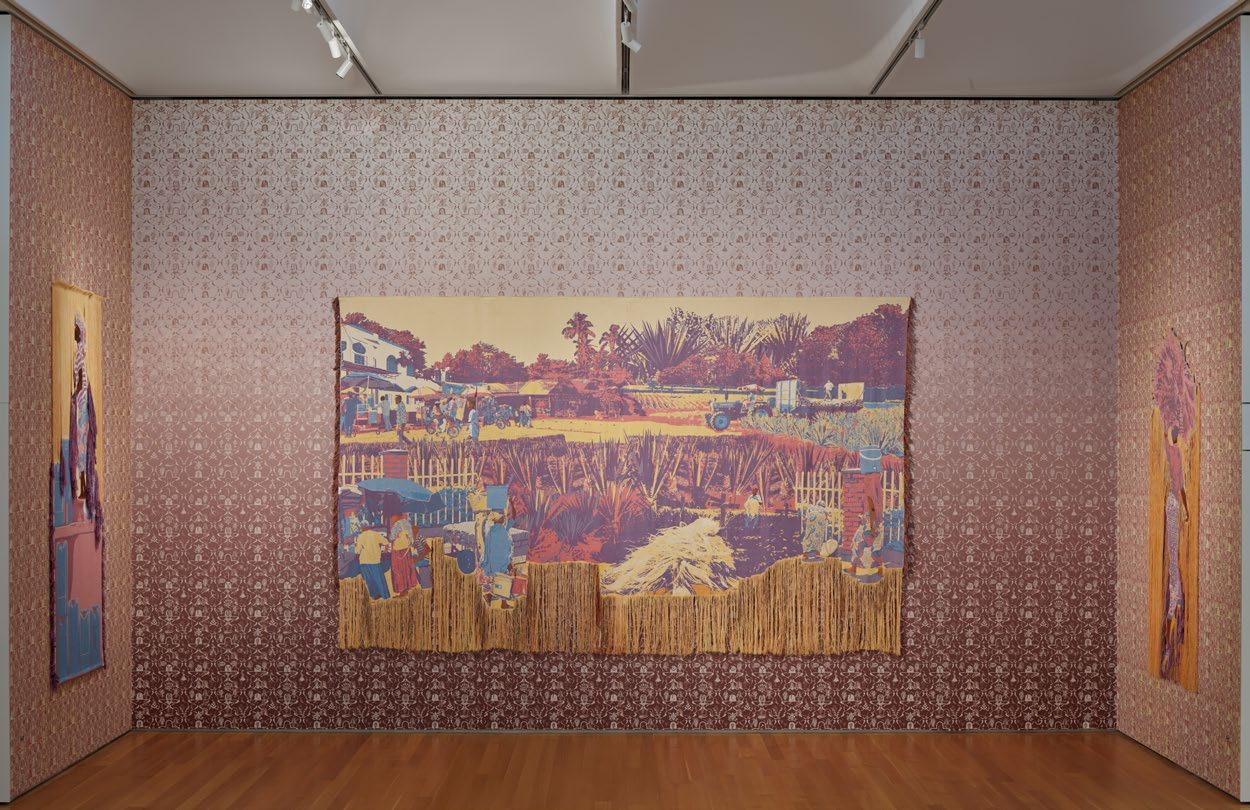
External collaborators, particularly commissioned artists and donors, also play a role in keeping the gallery and collection dynamic. Our current commission, She Weaves White Gold by Malaika Temba, exemplifies this impact. Through custom wallpaper and jacquard-woven textiles, Temba narrates the history of sisal, a fiber native to southern Mexico that was introduced to Tanzania by German colonizers in the late 19th century. In Temba’s work, sisal, often referred to as white gold, becomes a metaphor for resilience, interdependence, and the communities forged through its cultivation. Commissions such
as this expand the conversations within the gallery, introducing new artistic voices and perspectives.
Donors, too, help to shape the gallery’s evolution and the African arts collection. Recently, the NCMA received an extraordinary gift of 59 objects from longtime docent and collector Rhonda Wilkerson. The collection includes headrests from South and East Africa, masks from West Africa, and significant ceremonial pieces. Among these are an Iroke Ifá (Divination Tapper) and an Opon Ifá (Divination Tray), both of which have been displayed at the NCMA since 2010. Their transition into the People’s Collection ensures that they will continue to illuminate the centrality of Ifá divination within Yorùbá culture.
The African Arts Gallery continues to grow, evolve, and inspire through the combined efforts of artists, donors, and Museum staff. Together, they create a living space where art and innovation converse and where each visit offers something new to see. I want visitors to continue to experience this dynamism, whether by encountering specific cultural objects, engaging with a new commission, or pausing to reflect on the stories embedded in the art. The gallery invites not only observation but connection, and I encourage everyone to step into this space to witness its vibrancy.
top Malaika Temba, She Weaves White Gold, 2025, jacquard-woven fabric and acrylic paint, dimensions variable, Commissioned by the North Carolina Museum of Art
bottom These objects recently replaced two similar textiles during the annual rotation of light-sensitive objects. Zulu artist, Isocholo (Married Woman’s Headdress), mid-20th century, fiber, fabric, and ochre pigment, H. 11/2 in., Diam. 19 in., Gift of Julianna Simmons; Zulu artist, Isikoti (Wedding Day Cape), 1960s, fabric, thread, and beads, 40 × 35 in., Gift of Julianna Simmons
MY NCMA
The Museum offers many types of accessibility accommodations for events and tours. To find out what is available or request an accommodation, contact Accessibility Coordinator Molly Hull, mhull@ncartmuseum.org. Please note that requests require a minimum two-week notice.
SPRING E VENT S
The events in My NCMA represent a selection of programs taking place at the Museum in March, April, and May. Watch for email newsletters and go to ncartmuseum.org/programs for details and to find more programs.
MEMBER EVENTS
2026 Collectors Cabinet Dinner: Collecting American Art
Tuesday, April 14, 6–9 pm
By invitation to Collectors Cabinet members
Lisa Dennison, executive vice president and chairman of the Americas, Sotheby’s, shares her perspective on the global art market. Look for your invitation in the mail in March. RSVP by March 30.
Interested in joining the Museum or upgrading your membership level, which brings invitations to member-only events like this? Email membership@ncartmuseum.org or call 919-664-6754 to learn more.
ADULT PROGRAMMING
Tickets, registration, and additional events: ncartmuseum.org/adultprograms
Weinberg Lecture of Egyptology
Sunday, March 1, 2–3:30 pm free with registration
Kara Cooney, professor of Egyptian art and architecture at UCLA, discusses her book Recycling for Death, a 15-year study of the social, economic, and religious significance of coffin reuse during the Ramesside and early Third Intermediate periods.
Sculpture Meditation with Meg Stein
Thursday, March 12, Saturday, May 9, 10 am–noon
Ticketed
Engage in hands-on sculpting while practicing embodied meditation, fostering relaxation and artistic expression. Led by sculptor and certified mindfulness instructor Meg Stein, this workshop invites participants into deeper self-connection.
Introduction to Stained Glass with Jason Blyskal
Saturday, March 14, noon–4 pm
Ticketed
Add some color to your windows! In this introductory class, each participant learns the basic principles of working with stained glass using the copper-foil method. Students select a spring-inspired design template and create their very own suncatcher.
Drawing Meditation with Maureen
O’Neill
Saturday, March 28, April 18, 10 am–noon
Ticketed
In this workshop with artist Maureen O’Neill, participants use guided drawing techniques to connect with the present moment. Experience the healing and creative power of intuitive mark making. No art experience needed.
The Science of Sound with Jason Mullinax
Sunday, April 5, 1–4 pm
Ticketed
Dive deeper into the science of sound! Participants learn the fundamentals of how sound and music work to enhance the stories we tell and engage in handson experiments to get the most variety out of unconventional instruments.
Journaling Meditation with Alexa Ingersoll
Thursday, April 9, 10 am–noon
Ticketed
Participants are introduced to the benefits of building a journaling practice as they explore journaling as a tool for selfdiscovery and creativity. Students experience a guided meditation followed by journaling and intuitive art activities.
Virtual Sensory Journey through Art
Thursday, April 9, 7–8 pm free with registration
Join Alex Brown, director of programs and audience engagement at the NCMA W-S, for a virtual sensory journey inspired by Alison Saar’s Tippy Toes. Participants use the senses of touch, taste, sound, and smell; paired with audio description.
Art Trivia Night
Thursday, April 23, 5:30–8 pm free with registration
Calling all art snobs! Join us for an entertaining evening featuring art-inspired trivia questions, gallery tours, and community building. Bring a team of up to four people for a chance to win some fun prizes.
Photo: Jason Blyskal
Mother’s Day Tea
Saturday, May 9, 10:30 am–3:30 pm
Prepaid reservations required
This afternoon tea experience features a fixed price menu that includes savory canapés, finger sandwiches, and inspired pâtisserie. Premium teas or coffee included.
Mother’s Day Brunch
Sunday, May 10, 10:30 am–3 pm
Price of purchase
Celebrate with a memorable Mother’s Day brunch. Enjoy an exclusive chef-curated brunch menu featuring special dishes crafted for the occasion.
Language Café with Raleigh Sister Cities
Thursday, May 14, 5:30–8 pm free
Interested in learning a new language? Join us for an evening of cultural immersion! In partnership with Raleigh Sister Cities, language ambassadors answer your questions and start you on your language-learning journey with a beginnerfriendly approach.
MINDFUL MUSEUM
Tickets, registration, and additional events: ncartmuseum.org/mindfulprograms
Spring Slow Art Appreciation
Wednesday, March 11, 6–7 pm
free with registration
Slow art is a practice to mindfully observe and communally appreciate art. Participants are guided through a brief centering practice followed by an intentional observation and discussion of a single work from our collection.
Spring Meditative Moments with Art
Wednesday, April 15, 6–7 pm
Ticketed
Drawing on works in our collection and qualities of the spring season, we inspire you to turn deeper within. An intentional observation of art is followed by a guided meditation to create opportunities for calm and self-reflection.
Spring Singing Bowl Sound Bath
Wednesday, May 20, 6–7 pm
Ticketed
Enjoy a restorative sound bath in the peaceful setting of our galleries. Sound baths are a meditative practice that use resonant instruments to calm the nervous system, decrease stress, and enhance rest.
PERFORMING ARTS AND FILM
Tickets, registration, and additional events: ncartmuseum.org/pafprograms. Find the live arts listings on pages 10–11.
Emerald Strings
with Gregory Harrington
Friday, March 6, 6–8 pm
Ticketed
Led by acclaimed violinist Gregory Harrington, Emerald Strings returns after their sold-out 2025 concert with a blend of traditional and contemporary Irish music that brings Ireland’s story to life.
ncma sacred song series
Persian Nowruz Celebration
Saturday, March 28, 3:30 pm
Ticketed
Celebrate spring with an immersive evening of Persian music and dance as Iranian artists from across North America showcase original works inspired by Iran’s diverse folk traditions.
Busk and Bloom:
A Spring Buskers Day Celebration
Saturday, April 4, 1–5 pm
free
Enjoy an afternoon of live performances at Buskers Day, where local street performers share their talents throughout the Ann and Jim Goodnight Museum Park.
Yom HaShoah Concert
Sunday, April 12, 1 pm
free with registration
Join us for a moving Holocaust remembrance program featuring music that honors loss, resilience, and the human spirit.
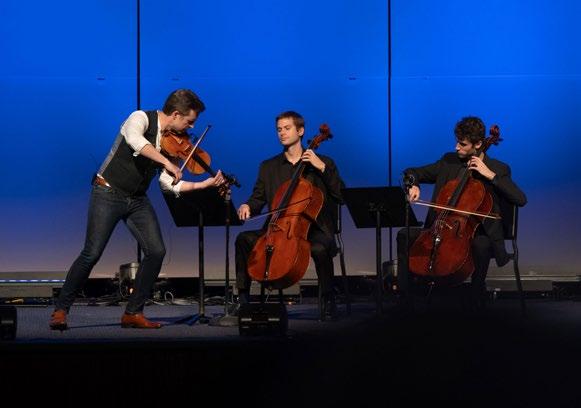
ncma sacred song series
Nefesh Mountain’s Storytellers
Sunday, May 3, 4 pm
Ticketed
Enjoy a profound afternoon of heartfelt Jewish music and hear tales from the road with Doni Zasloff and Eric Lindberg, founding members of progressive bluegrass band Nefesh Mountain.
Shakespeare in the Park Thursday, April 23 free
A new take on a classic tradition. Encounter live vignettes from the Bard’s most renowned plays performed throughout the Museum Park by local high school and community theater groups.
Film
jewish film series
All about the Levkoviches (2024) Thursday, March 12, 7 pm
Ticketed
A generous but stubborn elderly boxing coach gets along with everyone except his son, whom he reconnects with after his wife’s death. Dir. Ádám Breier
the people’s collection film series
Rivers and Tides (2001)
Friday, March 27, 8 pm
Ticketed
This documentary explores artist Andy Goldsworthy’s striking ephemeral sculptures created from natural materials. The evening’s program includes a talk with Rachel Woods, director of the Museum
Emerald Strings; Image: Courtesy of the artist
Park, about the NCMA’s restoration projects. Dir. Thomas Riedelsheimer
jewish film series
Shttl (2022)
Thursday, April 16, 7 pm
Ticketed
On the eve of Nazi Germany’s 1941 invasion of Soviet Ukraine, a young filmmaker returns to his Yiddish village on the Polish border with a plan to run away with his true love. Dir. Ady Walter
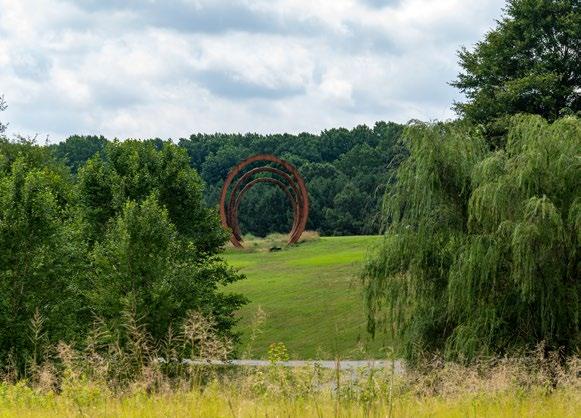
PARK TOURS 2.0
Our Park tours are getting a makeover. Sign up for thematic walks that offer fresh perspectives.
Mindfulness in Nature
Saturday, April 18, 9–10:30 am free with registration
Join us for a guided walk that focuses on the healing power of nature. Connect with the natural world, yourself, and each other through guided meditation and sensory explorations that promote calm and restoration.
Science and Sustainability
Saturday, May 16, 9–10:30 am free with registration
Join us for a guided walk that focuses on the plants, animals, and sustainable design features of the Museum Park. You will explore the natural world around you, learn about biology and ecology, and more.
Save the date for Park Tour: Art and Sculpture on Saturday, June 20, 9–10:30 am
the people’s collection film series
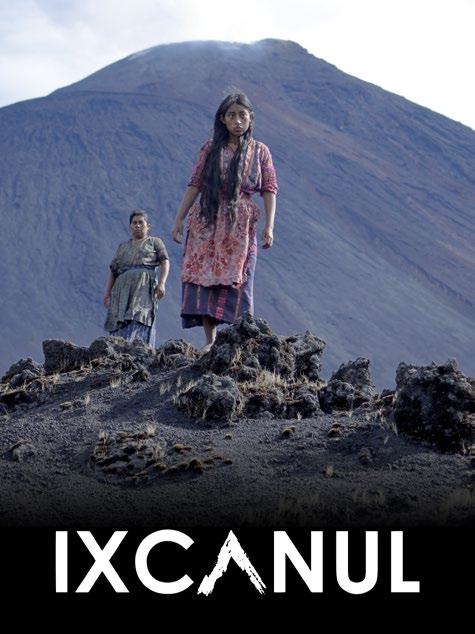
Ixcanul (2015)
Friday, April 24, 8 pm
Ticketed
On the slopes of an active volcano in Guatemala, a marriage is arranged for 17-yearold María by her Kaqchikel parents. Join us before the film for a discussion with curator Ángel González López. Dir. Jayro Bustamante
family movie night
James and the Giant Peach (1996)
Saturday, May 2, 6 pm
Ticketed
James, an orphan forced to live with his two cruel aunts, discovers family among a group of anthropomorphic insects living in a giant peach. Dir. Henry Selick
PARK
Tickets, registration, and additional events: ncartmuseum.org/parkprograms
Adaptive Tai Chi in the Park: Mindful Movement for Everyone
Thursday, April 2, May 7, June 4, 6–7 pm
free with registration
The ancient Chinese martial art of Tai Chi combines slow and gentle movements with focused attention. During this accessible class, participants are guided through visually and vocally descriptive cues and have the option to sit or stand throughout.
Spring Service Project in the Park
Saturday, April 11, 9–11 am
free with registration
Help steward the Museum Park by supporting staff in their restoration initiatives. After a brief introduction, volunteers plant native species around the Park to increase biodiversity and provide habitat for wildlife.
Garden Bites Tour
Saturday, April 25, 2–4 pm
Prepaid reservations
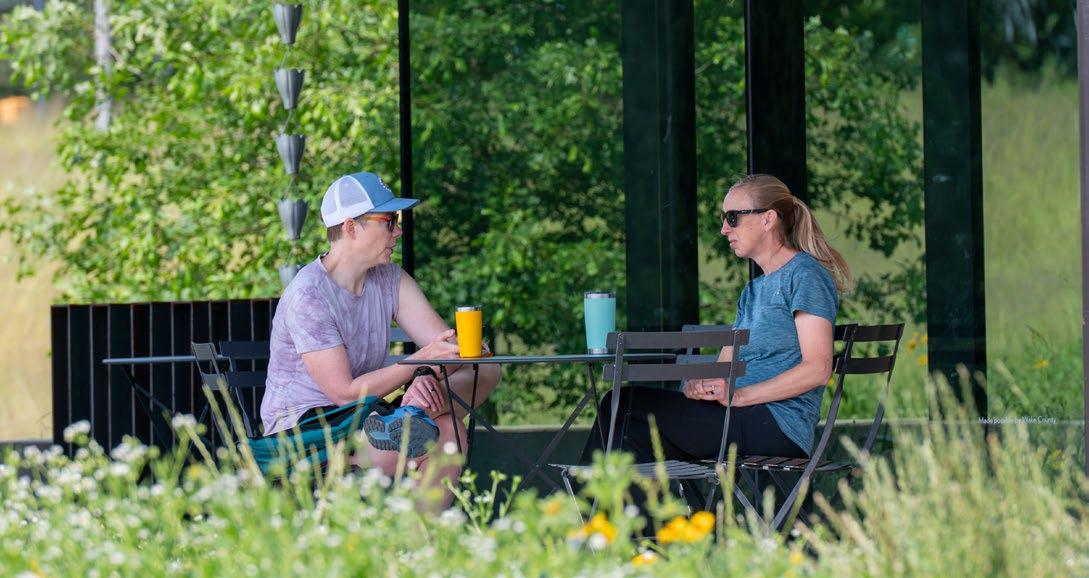
This guided experience combines scenic exploration, local history, and delicious bites. Learn about key locations, explore their cultural and environmental impact, and enjoy small plates and drinks crafted
with ingredients sourced directly from the Park.
Spring Full Moon Walk
Friday, May 1, 8–9:30 pm
free with registration
Join us for an after-hours walk in the Museum Park. Enjoy our seasonal guided moonlit walk to experience nature and art at night. Wear comfortable shoes and dress appropriately for the weather. Ages 16 and up.
FAMILIES
Tickets, registration, and additional events: ncartmuseum.org/familyprograms
What’s in the Box?
Wednesday, March 11, April 1, May 6, 10–11 am
Wednesday, May 6, 2–3 pm
Ticketed
Meet a work of art, enjoy movement and play, and get your creative juices flowing in this artful workshop for 3- to 5-year-olds and their caregivers.
NCMA to Go Activity Kits
Saturday, March 14, May 9, 10 am–noon free with registration
Get creative with NCMA art and artists at home! Reserve an activity kit with materials for a complete hands-on project plus written instructions. Kits are designed for all ages. In English and Spanish.
Image: Courtesy of Kino Lorber
Artful Story Time
Wednesday, March 25, April 15, May 20, 10:30–11 am free with registration
Story time with an artful twist! Come look, listen, and move as we make connections with original works of art and children’s books. Rotating featured readers means there’s always a new perspective to enjoy.
Pop-Up Art
Sunday, March 29, April 19, noon–3 pm free
Enjoy the fun of drop-in art-making activities for all ages popping up across the Museum galleries and Museum Park. Check ncartmuseum.org for specific activities and locations.
Family Studio
Saturday, May 16, 10 am–noon or 1–3 pm
Ticketed
Guided by expert artists, look closely at original works of art and find inspiration to create your own projects during these studio workshops. Best for families with children ages 5 to 11.
TEENS AND COLLEGE
Get involved with art and community at the NCMA through programming, artist workshops, conversations, and opportunities to share your own creativity.
Interested in learning more about the Teen Arts Council or the College Advisory Panel? Keep up-to-date with all happenings on our Teens and College programs web pages.
Tickets, registration, and additional events: ncartmuseum.org/teencollegeprograms
Teens Sketch the Galleries
Saturday, March 7, April 4, May 2, noon–2 pm
free with registration
Spend time sketching with other teens in the galleries. Bring a pencil and your sketchbook and follow prompts or find your favorite sketching spot with a friend. For ages 13–18.
College Workshop: Custom Shoes
with Dearr Bella Designs
Saturday, March 28, 1–4:30 pm
Ticketed
Explore the basics of custom shoe art with Raleigh-based artist Bella Dearr. This workshop covers how to prepare your shoes, paint them, and seal your work for durability. For students 17+.
College Night: Seeing Red
Friday, April 10, 5–9 pm
free with registration
College Night is the NCMA’s biggest college event of the year, bringing together students from across NC. This year’s theme draws inspiration from Seeing Red and includes music, performances, art activities, and tours by our student guides.
Macrame Plant Hangers for Teens
Saturday, May 30, 2–4 pm
Ticketed
Enjoy the spring season with a hands-on macrame workshop with The Plondering. Bring your friends to create a plant hanger and learn the basics of macrame. For ages 13–18.
TOURS
The NCMA offers free private tours of the People’s Collection to school, youth, and adult groups. To select and request the right tour for you, visit us at ncartmuseum.org/visit/tours
Public Tours
*Every Thursday, Saturday, and Sunday, 1 pm free
These tours of the People’s Collection are great for first-time visitors, as an afterlunch treat, or if you’re curious about the 5,000+ years of art and culture on constant rotation in the NCMA galleries.
Art on the Dot
*Saturdays and Sundays, 11 am, 11:45 am, 12:30 pm free
Join a docent in the galleries for a bite-size tour experience. Engage with about three works of art over 30 minutes. Join for one or stay for all three!
*No tours take place during Art in Bloom, March 18–22.
Family-Friendly Tours
Saturdays, March 7, April 11, May 2, 10:30–11 am free with registration
Find new favorites alongside old friends on these playful tours. Tours are 30 minutes long and are best for kids ages 5–11 with their adult companions.
EDUCATORS
Additional information: learn.ncartmuseum.org
Spring Teacher Tuesday: Special Exhibition Access for Educators
Tuesday, May 12, 4–7 pm free with registration
Educators enjoy exclusive access to Knowing the West: Visual Legacies of the American West. This is a self-guided program; tickets are limited and are available on the hour at 4, 5, or 6 pm
Supporter Spotlight
DR. GERHARD L. WEINBERG
In 2025 Dr. Weinberg generously offered his wonderful collection of Egyptian artifacts to the Museum. These objects are currently undergoing research and will become part of the People’s Collection in the near future.
Growing up in Germany in the 1930s, I was happy to visit my great-uncle Georg and his wife, El. I noticed that they owned many works of art by painters whose names I recognized from visits to the art museum in Hanover, and they also had a collection of Egyptian antiquities. When in the United States from September 1940 on, I repeatedly visited them in their new home in a suburb of New York City.
I began to borrow and read books about Egypt from the Albany public library, and when I enrolled in the New York State Teachers College (now Albany State University), I included ancient history in my preparation for teaching. The GI Bill enabled me to earn a PhD and go into college instead of high school teaching, but my interest in ancient Egypt continued.
It was in the 1970s that I began to purchase Egyptian antiquities and continued to do so until 2014. When I moved from Michigan to UNC–Chapel Hill in 1974, I was told about the NCMA and began to visit, and then I joined. I found the collection very interesting and was favorably impressed by its small but excellent Egyptian holdings.
My views about the future of my collection were greatly influenced by the reality that both while teaching at the university and in retirement, most of the cash I spent in the process of collecting came directly or indirectly from the state of North Carolina. It therefore seemed obvious to me that the state’s taxpayers were the people who ought to be able to see and enjoy something their taxes had paid for.
COLLECTION AND PROVENANCE RESEARCH
caroline rocheleau
Director of Research and Curator of Ancient Collections
Realized during Dr. Weinberg’s lifetime, this gift of Egyptian antiquities (and his Egyptological library) to the NCMA is transformative. Not only will it more than quadruple the Museum’s ancient Egyptian collection but it will also enhance current thematic groupings in the gallery and provide new topics of discussion and discovery.
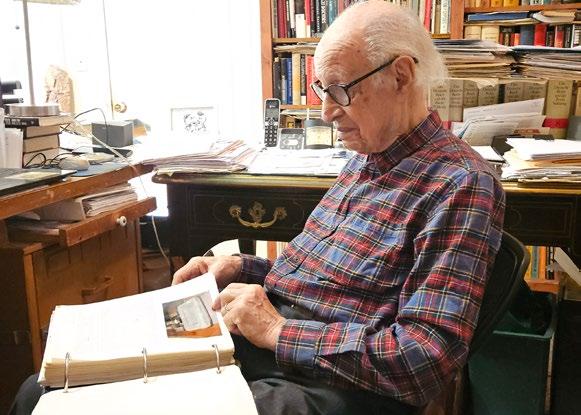
A rather remarkable item in this donation is not an antiquity: it is what the registrars, librarians, and I affectionately call “The Binder.” This binder—an actual two-inch three-ring binder—contains a running list of all the objects in the Weinberg collection and, for each of them, a wealth of information regarding date and place of purchase, documentation provided by the dealer (such as a previous owner or a published reference), remarks by consulting Egyptologists, and comparative materials either mentioned by the dealer or gathered during Dr. Weinberg’s own research. The Binder offers a starting point for collection and provenance research, which must be conducted before any artifact or work of art can be proposed to the Collections Committee for review and approval, and accessioned into the People’s Collection. A rare gift, indeed.
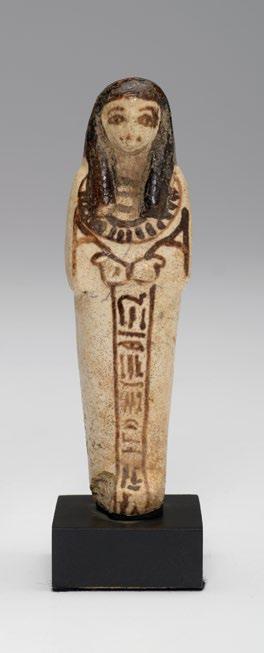
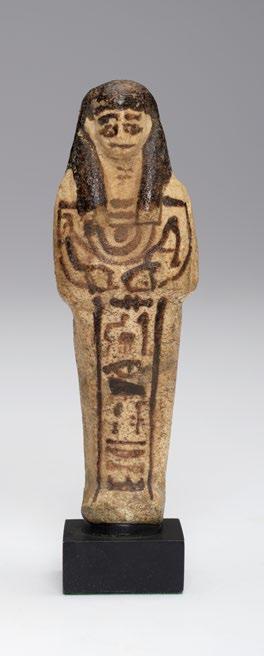
The viceroy of Kush, also known as the king’s son of Kush, was an important position during the New Kingdom (1550–1069 bce), when Egypt occupied Nubia, the region south of its border and home to the Kingdom of Kush. As the viceroy Hori I was in charge of the administration of Kush and reported directly to the pharaoh. His wife, Khayt, was a chantress (temple musician) of Mehyt, a leonine goddess that may have Nubian origins. Visitors will have a chance to see the shabtis (magic servant statuettes) of Hori and Khayt in a special section of Ancient Nubia: Excavating Treasures of the Nile at the NCMA in fall 2026.
Dr. Weinberg and his collection binder, February 7, 2025; Photo: Caroline Rocheleau
Egyptian, Shabtis of the Viceroy of Kush Hori I (right) and the Chantress of Mehyt, Khayt (left), New Kingdom, Dynasty 19, reign of King Siptah (circa 1194–1188 bce), faience, Hori: H. 43/16 × W. 13/8 × D. 15/16 in., Khayt: H. 415/16 × W. 13/16 × D. 1 in., Weinberg collection
You Make It POSSIBLE
Art has the unique ability to uplift, surprise, challenge, and transform. Your support plays a vital role in ensuring that free access to the People’s Collection opens doors to untold wonder, curiosity, and creativity for all.
Every day, our dedicated staff finds new ways to present centuries of art—and now, we’re Reimagining the Possible in the Museum’s first major comprehensive fundraising campaign in a decade. This campaign focuses on campus upgrades and innovative programs to create spaces that are incubators of outreach, connection, and engagement.
Since the campaign’s public launch in June 2025, we’ve made broad strides in our effort to create authentic and welcoming experiences and to engage all one hundred North Carolina counties. Notably, we're opening a downtown art space in Winston-Salem and expanding innovative programs to enrich the lives of K–12 students across the state.
You can add momentum to this historic effort with a donation today to support campus upgrades, education, programming, operations, and more. We are grateful for your participation and contributions. Every gift matters, and every gift will be put to work right away to advance our mission and the arts in North Carolina!

Give online and learn more at ncartmuseum.org/campaign
Plan Your Visit
HOURS
GALLERIES, STORES, NCMA CAFÉ
Wednesday–Sunday, 10 am–5 pm
ANN AND JIM GOODNIGHT MUSEUM P ARK
Daily, dawn to dusk
WELCOME CENTER
March: Saturday–Sunday, 10 am–5 pm April–May: Wednesday–Sunday, 10 am–5 pm (weather permitting)
TICKETS
Admission to the People’s Collection is free. Members receive free admission to ticketed exhibitions.
For exhibition, performance, and program tickets, go to ncartmuseum.org
VISITOR EXPERIENCE
help@ncartmuseum.org | (919) 715-5923
Please contact us via email during open hours for the quickest response.
ACCESSIBILITY
The Museum seeks to make a welcoming space for all. Visit ncartmuseum.org /accessibility for details about on-site accommodations and more information.
NC Museum of Art Foundation
New on Circa—the NCMA Blog
Explore the latest NCMA stories and updates in-depth on Circa, our regularly updated Museum blog.
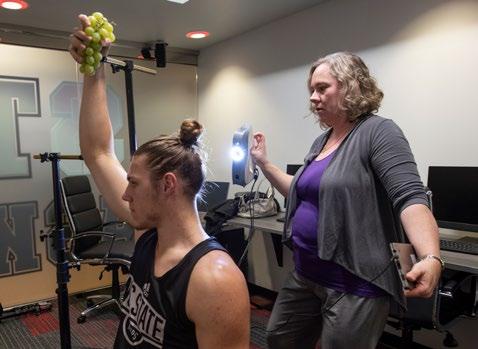
A Statue’s Connection to North Carolina Basketball
In celebration of this year’s college basketball season, we reflect on the Bacchus Conservation Project and the Museum’s somewhat unconventional partnership with NCSU Athletics.
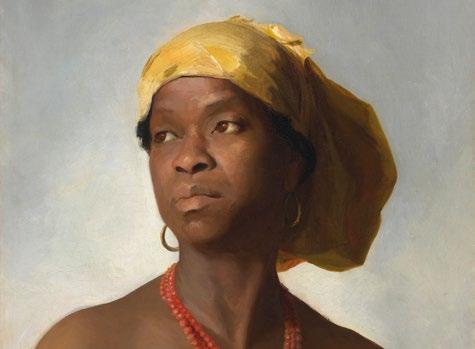
Recent Acquisitions and More on View in European Galleries
This Winter
Learn about the significance of Louise Faulque’s Study Head of a Woman and two other works now on view in West Building.
Louise Faulque, Study Head of a Woman (detail), 1884, oil on canvas, 22 × 181/8 in., Purchased with funds from the North Carolina State Art Society (Robert F. Phifer Bequest)
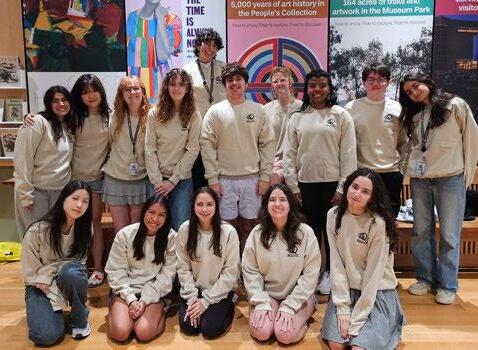
“For Teens by Teens”: A Conversation with Teen Arts Council Co-Lead Elise Kohli Elise Kohli delves into her experience as a member of the Teen Arts Council, the current council’s guiding principles, and the care that goes into planning and executing council programs.
Photo: Courtesy of Sabrina Hurtado