

Photo Contest: Sailing Team
By Jessica Chen

By Jessica Chen
16 By Jared
T. Miller
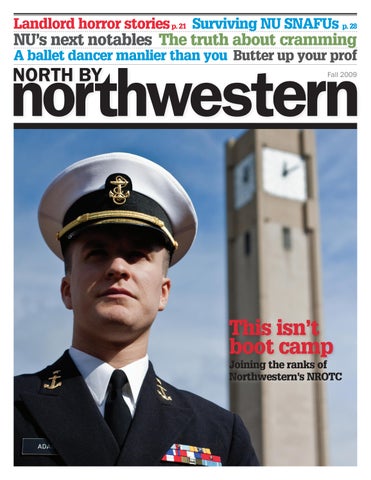
Service in Northwestern’s Naval ROTC is more than it seems: one writer’s journey.

By
Sarah Collins
Is the university doing all it should for off-campus students living in substandard housing?
Editor-in-chief: Megan Friedman
Director of Operations: Ralitza Todorova
Director of Talent: Melissa Tussing
Director of Marketing: Max Brawer
Business Managers: Deeya Burman and Jierong Pan
North by Northwestern Magazine
Managing Editor: Vi-An Nguyen
Front of Book Editor: Jessica K. Chou
Back of Book Editor: Jamie Wiebe
Assistant Managing Editor: Aubrey Blanche
Design Editor: Alan Boccadoro
Assistant Design Editor: Sisi Wei
NorthbyNorthwestern.com
Executive Editor: Kayleigh Roberts
Assistant Managing Editors: Nick Castele, Matthew Leib and Amanda Litman
Webmaster: Geoff Hill
News: Mike Elsen-Rooney and Nadya Ivanova
Features: Alex Campbell Opinion: Caleb Melby
Entertainment: Monica Kim Sports: Nathan Lipkin
Politics: Matthew Connolly Life & Style: Sally Slater
Writing: Dan Camponovo Multimedia: Sisi Wei
Photo: John Meguerian Video: Jared T. Miller
Assistant Editors: Kaitlyn Jahelka, Lorraine K. Lee, Natalie Marks, Alexandra Baum, Lana Birbrair, Vanessa Dopker, Maura Brannigan, Hallie Busta, Francis D’Hondt, Max Groner, Sourav Bhowmick, Matt Zeitlin, Alex Freeman, Tom Schroeder, Max Brawer, Sean Kane, Hayley Altabef, Emily Chow, Ryan Reid, Blake Sobczak, Katherine Tang, Noreen Nasir, Katey Rusch
By Jaimie Hwang
For students who are paying their own way through college, the price of a Northwestern education cuts a little deeper.
28 Burned down your dorm room? Slept through your final? Sixteen Northwestern SNAFUs and how to survive them

I have a Northwestern toothbrush too. Though, it was made for me by my dentist so it’s not “official.”
Grandma Lucy use to say “can’t never did anything but poop in the bed”.
i think they kissed is my fav eposode is it yours say yesw or no over the next few days
dearcarly I love icarly I liked it when I saw the fred videos and it was funny and icarly goes to Japan I am a 3th grader and my name is michelle
Go, go gadget-dildo! you have definitely danced on the keg pole more than once. and not for irony’s sake. come on now.
I am happy for you that you are back in your cocoon of political purity in Chicago.
Don’t touch me. Don’t lick me.
do you have a myspaces I do? GOODBYE! P.S. Will you be my friend because I do not have know friend.
[On a Politics section Article]: Why does NBN always have to put some political twist into every stupid thing they publish?
Fuck that Gopher, Willie! FUCK HIM!!!
There are nine fans in the stands! Go home!
Why the hell is there a half-naked chick on the field twirling a baton? She doesn’t belong there. Get her off the field.
What does “first down” mean?
What are you doing? We pay you $50,000 a year to catch that!
Hurry up and win. I want to go to the parking lot and drink more.
Whatever happens in the student section… just forget about it.
Redefining the buzzwords of Fall Quarter. By Alicia Capetillo
Shuttle Tracker \’sh etl ‘trak•er\ n.
1 GPS tracking system launched to ease transportation for students who rely on Northwestern shuttles. 2 Another reason to bitch about the unreliable shuttles: It’s 8:38 and raining and Shuttle Tracker said the bus would be here at 8:30. Fucking Shuttle Tracker!
Jamba Juice \’jäm•bä joos\ n.
1 Chain of restaurants offering healthy smoothie options, now located on campus in Norris Student Center. 2 Recently-closed Freshëns’s hotter, looser half cousin from California.
Enigma Café \i•'nig•me ka'f a\ n.
1 The newest addition to Evanston’s wide array of cafés, located in the space once occupied by Café Ambrosia. 2 A sour and constant reminder of the late-night, casual, vanilla-honeylatte-making café that once was.
The Great Room \ðe grat room\ n.
1 The newest addition to the nuCuisine family. 2 Late-night café offering pub food and a social setting to those too lazy/tired/prematurely inebriated to make it all the way south to Burger King.
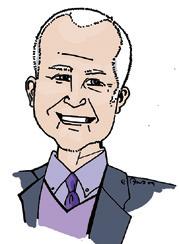
Morton Owen Schapiro \’môrtn ow•en she•pi(e)r•o\ (also “Morty”) n. 1 Former president of Williams College, currently serving as Northwestern University’s 16th president. 2 Eloquent, charismatic teddy bear who looks damn good in purple. More Morty ➼

Forehead
eyes
North by Northwestern asked
face-reading expert Naomi Tickle, author of You Can Read a Face Like a Book, to take a long, hard look at President Schapiro.
North by Northwestern’s Web section editors each got one question to get our new president talking.
News: What one story would you most want to see on NBN during your presidency?
MS: Nobel Prize winner from the Northwestern faculty.
Features: Sum up your life in six words.
MS: Four words, that’s not my whole life, but “He loves his students.”
Life & Style: What’s the craziest thing you did as an undergrad at Hofstra?
MS: I don’t remember. [laughs] That’s pretty telling, isn’t it?
Entertainment: Who would play you in your biopic?
MS: I don’t know, Richard Dreyfuss or something. He’s a great actor, much cooler and better looking than I am. It’s not going to be Richard Gere.
Sports: What is the one thing you hope to change about NU athletics?
MS: I want men’s basketball to go to the NCAA tournament.
Politics: What do you think about the Amethyst Initiative [a movement by colleges to lower the drinking age to 18]?
MS: We all know prohibition doesn’t work, but…if you look at the data and see how many more people would be predicted to die in alcohol-related vehicular accidents if they lowered the drinking age from 21 to 18, I don’t think it’s worth it. So I do not plan to support it, but I do think our campuses would be safer if we had an 18-year-old drinking age.

Insomnia got you down? Dr. Ramadevi Gourineni, a sleep specialist at Northwestern Memorial Hospital, can help you get more shut-eye.
1. Don’t lie in bed for hours willing yourself to fall asleep. This only increases frustration and makes it harder to relax. Find a quiet place for a calming activity–anything that won’t stimulate your brain, like reading a boring book.
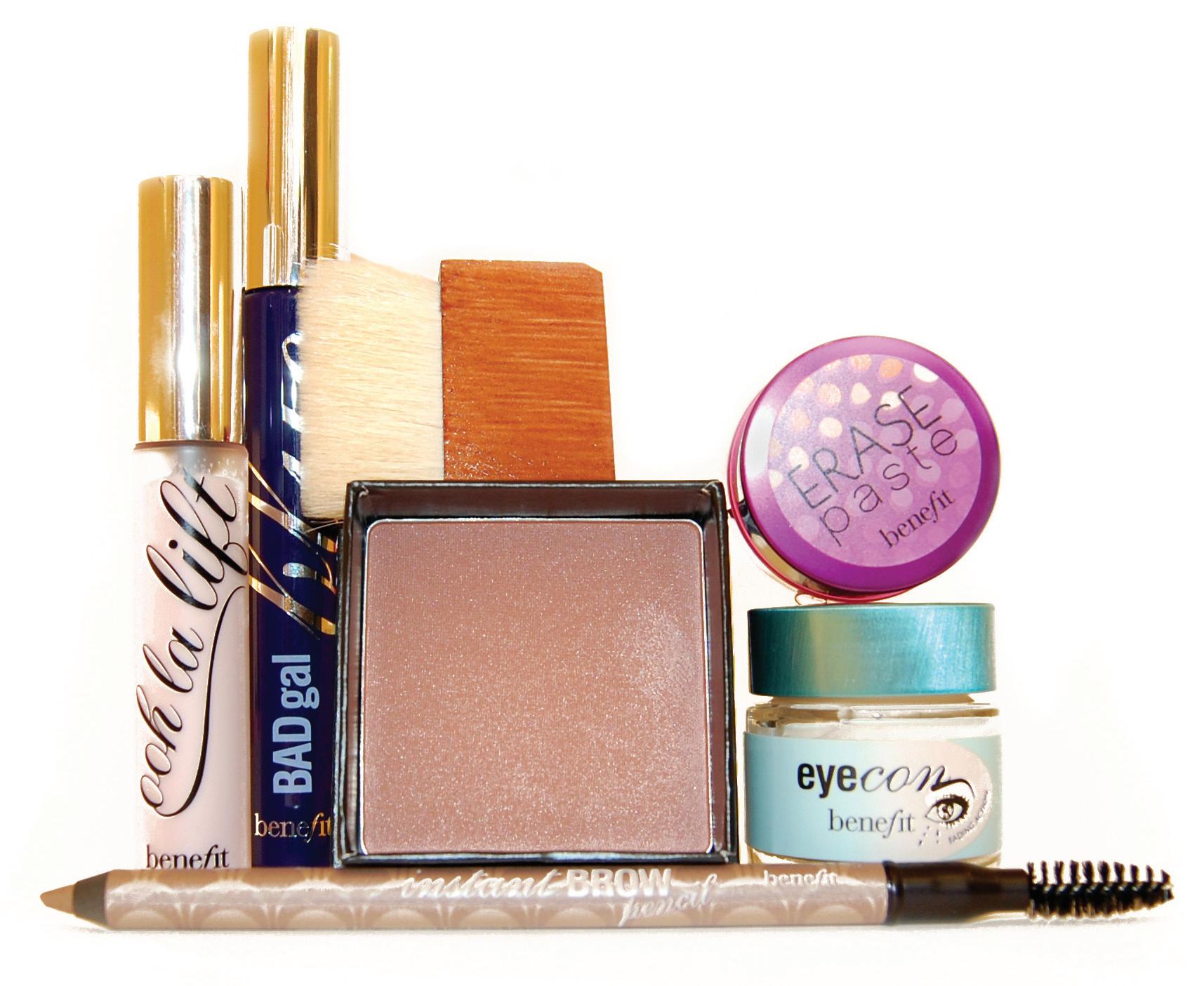
We’d all love to erase the effects of a late night. Although we can’t help you with hangovers, regretful hook-ups or homework mishaps, we can show you how to fake your mood the next morning. North by Northwestern talked to Kate Vincent, assistant boutique proprietor at Evanston’s Benefit Cosmetics, about simple ways to perk up your look.
1. Groom your brows. Keeping eyebrows trimmed, plucked, waxed and shaped “makes the eye appear larger and opens up the face,” says Kimberly Slater, a Benefit aesthetician.
2. Apply eye cream. “This is key,” Vincent says. “No matter your age or skin type, eye cream is essential because it increases circulation and adds moisture to prevent future wrinkles.” Use your ring finger to daub the cream around your eye. Vincent used Benefit eyecon eye cream, $30.
3. Firm the skin surrounding the eye by using a product such as Benefit’s ooh la lift cream, $22. Use your ring finger to tap the cream all over your closed eye. This plumps up the skin around your eyes, making them appear more open.
4. Apply a yellow-based under-eye concealer. Yellow hides blue bags under your eyes. The product Vincent recommends, Benefit’s erase paste, $34, contains caffeine. Tap the cream onto your skin and let it absorb.
5. Shape your brows with a brow pencil such as Benefit’s high brow pencil, $20. Make a “v” under the arch of the brow and use your finger to blend. “This opens everything up,” Vincent says.
6. Apply blush or bronzer to your cheeks, such as dallas, $28. Use a blush brush to spread the powder along your cheekbones, the side of your face and even the bridge of your nose.
7. Wear blue mascara. “The blue brightens the whites of your eyes,” Vincent says. Try Benefit BADgal blue mascara, $19. —Sarah Davidson
2. Set aside 30 minutes before bedtime to wind down. It takes time to transition from an awakened state to a relaxed one.
3. Limit caffeine intake near the end of the day. You may be tempted to cap off dinner with a Norbucks latte, but coffee should be reserved for the morning hours. Caffeine has a long half-life and will continue to stimulate your body during bedtime. It’s also advisable to only drink between one to three cups each morning.
4. Work out during the day, but not within four hours of sleeping. Exercising near bedtime will raise the metabolic rate of the body, making it harder to relax.
5. Avoid activities like watching TV or using a computer before sleeping. These can be very stimulating for most people. —Katie Wells
According to Northwestern’s registered dietitian Megan Campbell, sometimes water, Gatorade or tea can be just as effective as an energy drink, without the risk of negative effects. “Hydration is important for fatigue,” says Campbell. Shel also recommends having regular meals every three to four hours and maintaining a normal sleep schedule. She attributes the rush some people get from energy drinks to the overload of vitamin B often found in the drinks. “Some of it is just a placebo effect,” says Campbell. —Julia Haskins

How Northwestern’s small investment in women’s lacrosse coach Kelly Amonte Hiller netted big returns. By Stephen Boyle
Kelly Amonte Hiller never wanted to leave home.
She was a nationally recognized lacrosse player when she graduated from high school, but she wanted to stay close to Hingham, Mass. like her brother Tony Amonte, a silver medalist hockey player who attended Boston University.
Instead, Amonte Hiller took a risk. She went to
Legacy building
the school 400 miles away that offered her the best combination of academic and athletic opportunity: The University of Maryland.
By the end of that adventure, Amonte Hiller was a four-time lacrosse All-American and a two-time NCAA Division I Lacrosse Player of the Year. Her senior year, she was the ACC Female Athlete of the Year.
But she still didn’t want to leave home.
After college, Amonte Hiller took assistant coaching jobs close to her hometown—first at Brown, then the University of Massachusetts, and finally Boston University. That trend changed in 2002. Northwestern lacrosse was on the brink of varsity status after 10 years as a club level team. The athletic department wanted Amonte Hiller to be the program’s new director, but her husband Scott had one more year of law school in the Boston area.
“I knew if I took the job at Northwestern I would have to leave him too, so I really didn’t even want to go on the interview,” Amonte Hiller admits.
But her husband, an assistant coach at Harvard at the time, wouldn’t let his wife pass up the chance. So Amonte Hiller took another risk. She took the interview, and the job.
Lacrosse’s rise from club sport to varsity. By Josh Sim
1982-1992 - A successful tenure of Northwestern lacrosse, with five NCAA tournament appearances and many All-American award honors for players. Northwestern demoted the program to club status in 1993 due to budget restraints.
2000 - Coach Kelly Amonte Hiller is hired to revive the program.
2001 - The last year as a club team. In her inaugural season as head coach, Amonte Hiller leads the Wildcats to a 19-1 record, winning the WCLL title before moving into the NCAA.
2002-2003 - Northwestern goes an abysmal 5-10. An encouraging season as NCAA newcomers, they have never seen another losing season since then.
“I just felt like the package that would be Northwestern lacrosse was just too easy to sell for me,” she says. “I knew that we could be successful; I just really believed it.”
She was right. In 158 games Amonte Hiller has picked up 134 wins; her team is the defending national champions for the fifth year in a row.
Four national championship banners hang on a wall in Amonte Hiller’s Patten Gym office. There isn’t room for a 2009 flag, but she promises to make some.
“We know that those championships are in the past,” she says. “There’s no sense dwelling on that because that was yesterday.”
And Amonte Hiller never focuses on what’s happened in the past.
“She’s always looking for you to do better than you did the day before,” says lacrosse player Shannon Smith, a Weinberg sophomore.
Northwestern got lucky. They hired a coach who had never been more than a second assistant. They hired a coach with no office experience. They hired the head of a dynasty.
“Even though now it seems like, ‘How’d they get me?’ At that time I was a proven player, but really not a proven coach,” says Amonte Hiller. “They took a little bit of a risk on me.”
Now, Amonte Hiller’s husband is a volunteer assistant coach at Northwestern University. Her 3-year-old daughter Harlee comes to practice almost as much as Smith, Harlee’s favorite player.
Kelly Amonte Hiller is home.
2004 - They make NCAA in just three years, at 15-3, but bow out in the quarterfinals.
2005 - Northwestern captures the first of five championships, undefeated with a record of 21-0. In minor news, the team causes a scandal at the White House by wearing flip-flops to a ceremony.
2006-2009 - Northwestern becomes a powerhouse. In their five championship seasons, Northwestern goes a total of 106-3.
2010 - The team looks for a re-re-re-re-repeat at the sixth championship, despite replacing two-time Tewaarton Trophy winner Hannah Nielsen and two-time NCAA Tournament MVP Hilary Bowen.
Rocky's got nothing on this...dancer?
Take a look at what Hupy can do and see if you can match up to this dancer.
2 5 6 pull-ups sit-ups push-ups minutes to run a mile daily workout hours feet average vertical jump 30 400 infinite
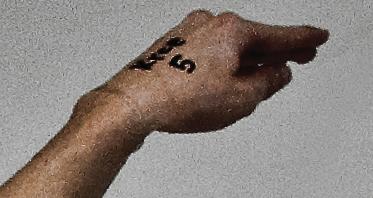

AS ALL THE ATHLETES WALKEd into the room, Rex Hupy noticed one thing – he was probably the smallest one there. Football, soccer, lacrosse and hockey players filed in, determined to win a high school push-up contest. Hupy, a 5-foot-8 ballet dancer at 135 pounds, was not the early favorite. But Hupy can easily do 400 push-ups nonstop.
dancers’ strength and toughness are often underestimated; few consider their talent “manly.”
“All the bones in my right ankle are out of place right now,” the freshman says. “I’ve broken my back in five places, torn my shoulder, broken my toes, broken my ankle, had shin splints, tendonitis and a sprained neck.” —Nathan Lipkin
“I like

to take an afternoon and watch half a season of It’s Always Sunny in Philadelphia.”
Communication sophomore Sean Bos
“I talkdefinitely to my sister.”
“I eat.”
Weinberg sophomore Gabby Ahlzadeh

“I kick trees. It’s especially gratifying in the fall when you get to see all the leaves fall.”
Weinberg sophomore Derek
Weinberg senior Heidi Schroeder
“Nap, and try to make it go away.”
Weinberg junior Brittainy Brown
Suen
“I’ve started play- ing ping pong, so I practice to get better.”
Weinberg junior
Alleliah Nuguid

Breaking out your Wellies
Blowing off homework to watch Hulu
Filtering listserv messages straight to trash
Getting carded after turning 21
Squeaking by the bouncer when he knows you’re not 21
Two words: Class canceled
Crunchy leaves on Sheridan
Whole Foods’ apple cider
Sunday night karaoke at Hundo for what might be the last time
Waking up before your alarm on a crisp morning
Cutting your toenails when you haven’t cut them in a really long time
The uniform enthusiasm that sweeps over a class when it starts to snow
Starbucks Pumpkin Spice Lattes

Since we know Reading Week is a blatant misnomer, here’s what cramming does (and doesn’t) do for you. By Amina Elahi
Many of us have the tendency to study right before tests–cram the night before, dump the contents of our brains onto the page and then forget it all. But what happens when it comes to the next exam?
Dr. Ken Paller, director of Northwestern’s Cognitive Neuroscience program, suggests the “spacing effect.” “If you space your practice, then you’re going to be able to perhaps remember for a longer time,” he says. So when you need to remember information after a test—like when learning a foreign language—the “spacing effect” can mean three A’s instead of one.
While all-nighters occasionally pay off, they’re not always the best choice. Dr. Paller is currently researching sleep’s effect on memory encoding and retention. Evidence shows that a good night’s sleep after studying can lead to better encoding of information. In particular, studies suggest slow-wave sleep helps the brain encode factual information, according to Dr. Paul Reber, a Northwestern psychology professor specializing in memory research.
“What sleep seems to do is magically strengthen the things you learn when you’re awake,” he says.
Even better, experiments show that if you study in the same state as you’ll be in while taking the test, or at least in a similar environment, you may remember more. That means your external state, like the room you studied in, or your internal state, like your mood
or energy level. Dr. Steven Franconeri, a cognitive psychology professor, says that this is especially true in the short term.
“When you’re encoding the information, you’re automatically making associations between those words and whatever else is going on in the world around you,” he says. “When those same cues are present when you’re trying to remember the information, it’ll help you bring that information back up again.”
Sadly, when it comes to studying, there is no miracle strategy to improve your ability to learn. Most experts agree that spacing out studying over a period of time with few distractions will be most beneficial.
But if all else fails, you could always break into Kresge to cram all night in the same desk where you’ll be taking your test the next day.
1.
Make connections between various source materials (e.g., texts, notes, etc.) and your everyday life. Simply memorizing is less useful than making inferences and building coherence across course concepts, says David Rapp, learning sciences professor. This ties in with the Method of Loci, which is used to memorize things in chronological order. To memorize a list of words, take a familiar procedure (say, your morning routine) and link each word to each step. Try to create a story to go with each step as well. By making unfamiliar words relatable, you can recall things you probably wouldn’t otherwise.
To memorize large portions of meaningless information, Franconeri suggests chunking data. Find “chunks,” or sets of numbers, that you can give meaning to. This way, you’re effectively remembering fewer things — even though you’re really memorizing tons. For example, a runner learned Pi by finding sets of numbers and syncing them with track race times. It’s key that you chunk them in a meaningful way. “You want to make it so if you remember one thing, you remember all three,” Franconeri says.
Study in groups, and question the other members of your groups. Discussions of this type help build concrete knowledge about course concepts. —A.E.
Who cares if you lost a night of sleep? What matters is your good test grade, right? “If you cram, you actually have really good retention right afterward,” says Dr. Reber. “So if you did pull an all-nighter and cram, you’d probably do really well the next morning.”
So cramming can work for a one-time testing of specific information. But if you need to remember it later (say, for a final), odds are you’ll have to learn everything again. Dr. Paller says that people end up forgetting most of what they learn; the only question is how long it takes for that to happen. —A.E.
Northwestern professor Gary Alan Fine wrote a book about the food industry—but don't read it before lunch. By Nick Castele
A prim restaurant patron presumptuously demands an enigmatic “special omelet” not on the menu. Later, the patron devours an omelet stuffed with sausage that—unknown to him—has been soaked in urine.
“Oh, he loved it. Compliments to the chef,” recalls a cook in Gary Alan Fine’s Kitchens: The Culture of Restaurant Work. In the mid-90s, the Northwestern sociology professor spent a year and a half in cooking school and at four restaurants in the Twin Cities. He recorded the often-bizarre lifestyle of the American cook.
The book’s been republished this year, probably to coincide with the rise of the mass media chef: Emeril Lagasse, Anthony Bourdain, Wolfgang Puck.
But Fine isn’t studying the nation’s topmost chefs. Instead, he wheedles out the stories of the middle men, the Midwestern cooks.
Fine quotes liberally from interviews with kitchen workers. His exhaustive study oozes with enough first-hand accounts of pranks and mishaps to make a customer retch, or at least seriously reconsider swallowing. A busy restaurant serves French toast off the floor. Bored cooks play catch with a steak to kill time.
Kitchens jumps between the absurd and the academic. A tale of pants-less cooks precedes sentences like “Laughter is provoked by conversational mechanisms, grounded in shared

Sure, fall quarter in Europe sounds rather chipper: conversing in a familiar tongue on Fleet Street, basking in the sun in Rome, chomping on Parisian gourmet. But three brave rovers gladly ditched comfort to check out some roads less traveled. By Sisi Tang
Grace Graham, Weinberg senior
Location: Quito, Ecuador
Reason: Ecuador contains pretty much every ecosystem imaginable, and lets you see the problems facing a small developing nation.
First Impressions: Our program is in Quito, a city in the mountains. I take classes with guest lecturers who are in the field fighting big, extractive corporations and leading grassroots movements for sustainability within their own communities.

understandings of the production of talk.” Fine’s book entertains as it enlightens.
It also whispers a tacit moral: Appreciate your cooks. They sweat unseen and forgotten while servers reap the glory and the tips. They’d never ask for your praise, but they’d sure like to hear it.
Kana Yoo, Communication junior
Location: New Zealand
Reason: I knew nothing of New Zealand besides it being home to the Lord of the Rings, Flight of the Conchords and a whole lot of sheep.
First Impressions: New Zealand is known for its extreme activities. Since being here, I’ve gone zorbing, skydiving, bungee jumping and canyon swinging. And here, they don’t take as many safety precautions because suing isn’t as common as in the U.S. I guess if I had to sum up my NZ experience in one sentence, I would say, “I am in love!”
Erin Bishop, SESP junior
Location: Ghana
Reason: I wanted to go somewhere one would consider less developed.
First Impressions: Something that has been a hard to adjust to is being noticed literally everywhere you go. A group of us will be walking down the street and we will hear people scream “mzungu,” which means “white person,” at us. Each day, the village children will come running out of the bushes yelling “mzungu” and asking for candy and pens.
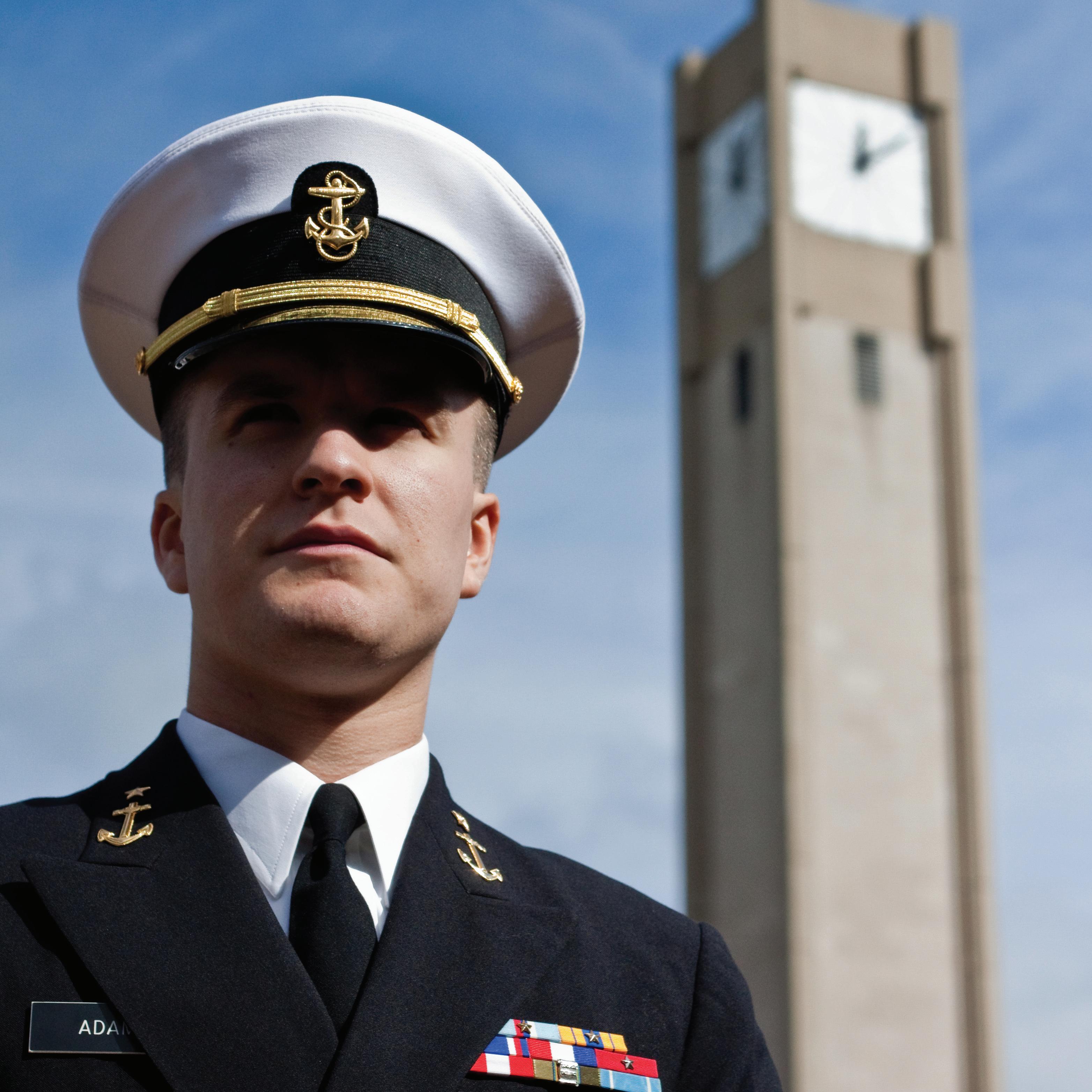
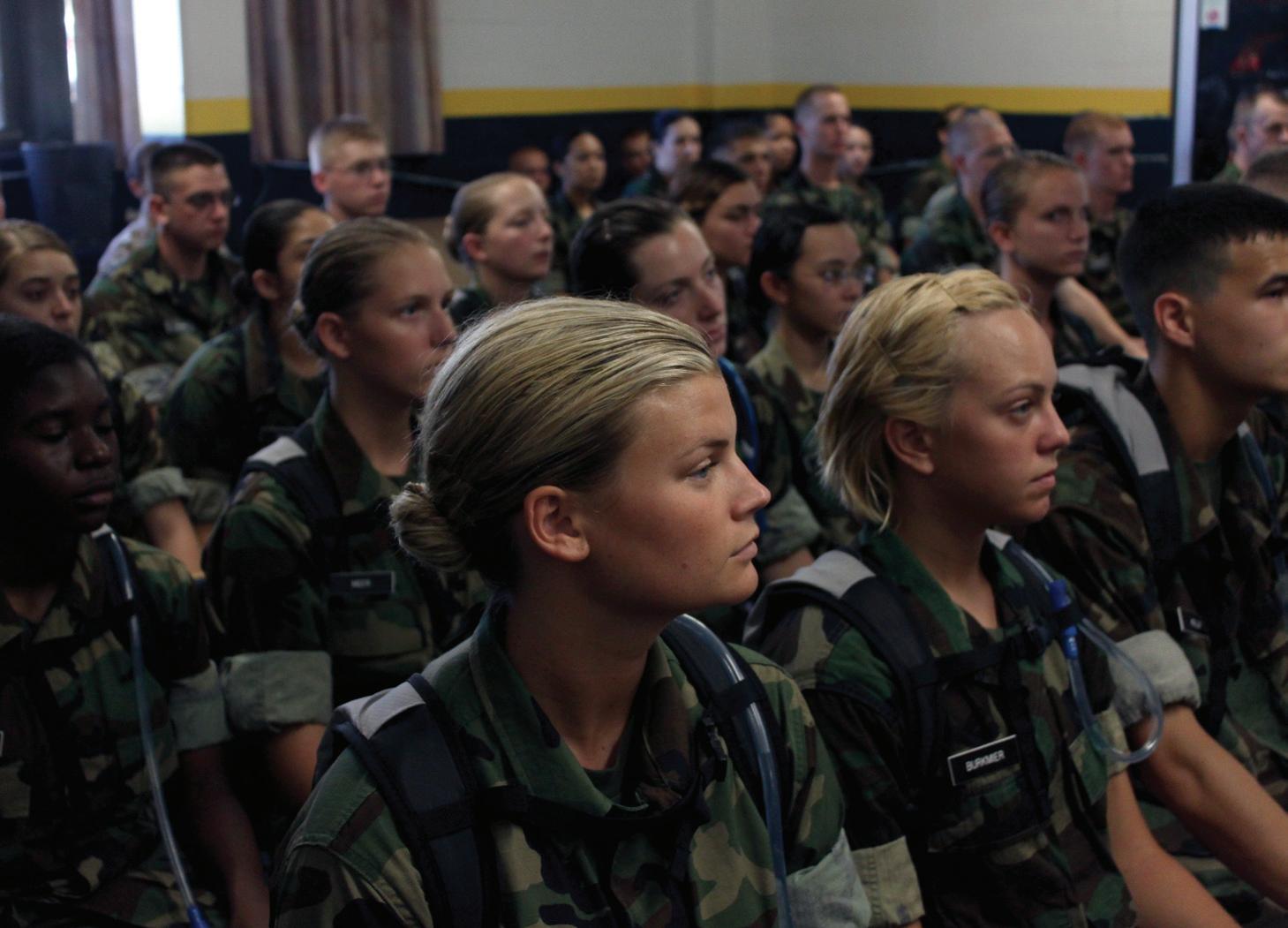
One writer temporarily joined the ranks of the Northwestern Naval Reserve Officers Training Corps. He got yelled at and couldn’t keep up with their fitness training, but he learned one thing: joining the NROTC is as much a gift as a sacrifice.
Written and photographed by Jared T. Miller

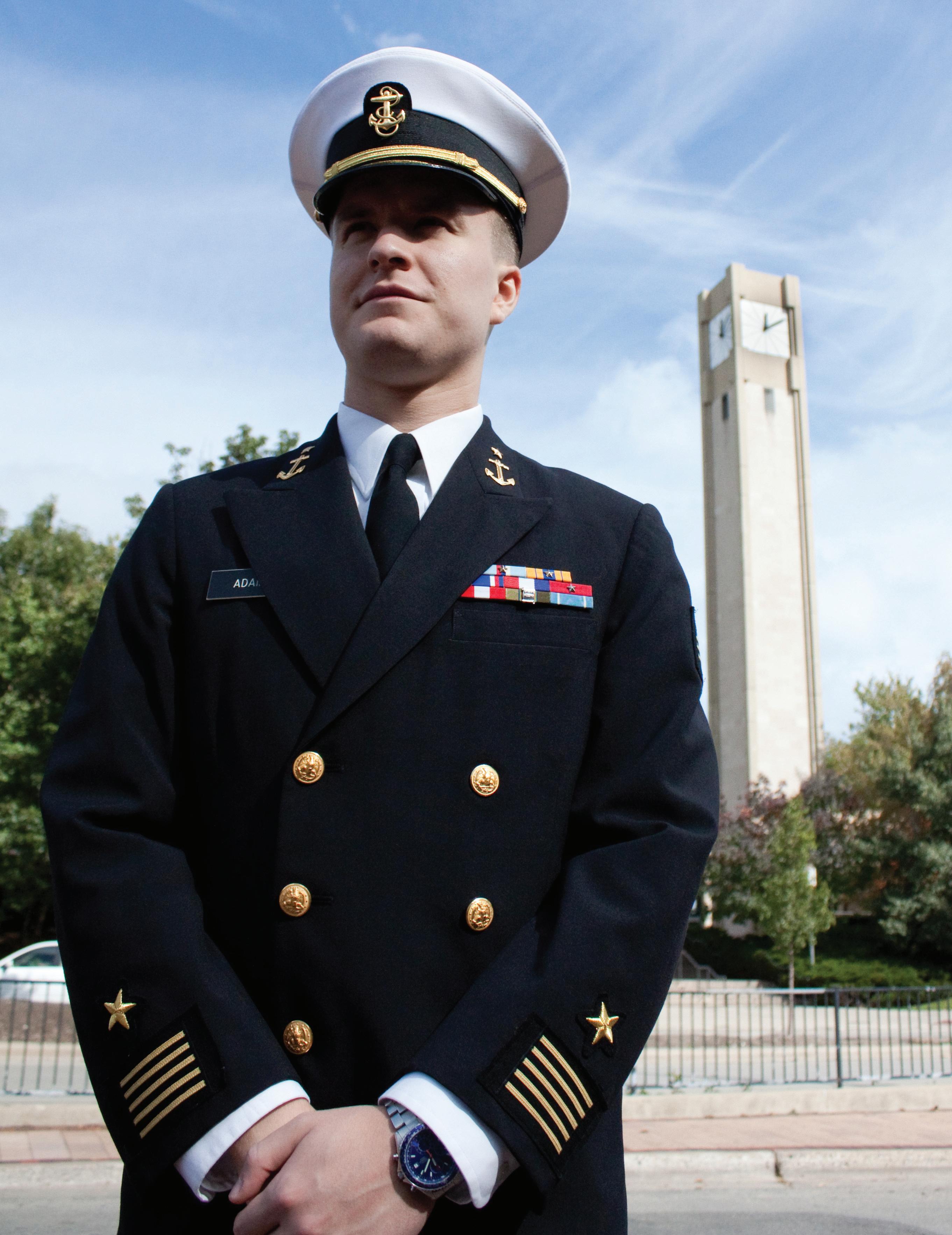
Northwestern’s was one of the original six NROTC programs established in the United States in 1926.
ound off,” a voice yelled from up ahead.
I kept my eyes focused on the yellow NAVY shirt bouncing up and down in front of me as we ran and let the others do the yelling. I didn’t want to break rank.
“Sound off!” came the voice a second time, louder and more urgent than before. I cocked my head towards the platoon commander. He was yelling at me. As I looked down my row of first-year NROTC students from Northwestern, all I could see was stolid faces, echoing the rhyming military chants, or “jodies,” their superiors barked at them.
We jogged along the river leading to the marina, passing by a group of naval officers as we climbed the hill back to the barracks, panting in the August heat. I was visiting the Great Lakes Naval Base, the sprawling military campus that you’ll find if you follow Sheridan Road to its logical end, dozens of miles north of Northwestern.
This was my third day at Freshman Orientation–an immersive introduction to NROTC life for both myself and the students around me. “O-Week,” as they called it, was punctuating a relaxing summer. Early morning wake-up calls and strict discipline were already changing them from a disparate group of pre-frosh into a cohesive unit.
But any references I made to Full Metal Jacket were quickly dismissed; this wasn’t boot camp, the drill instructors said. And as I would learn from conversations with Northwestern’s midshipmen, the instructors were mostly right. But as we filed back into the barracks, ending my attempt at getting in military shape, I realized this was only the beginning for the students around me. They’d be pushing their limits for the next four years; I had been struggling to finish their “motivational run,” the easiest one of the week.
northwestern ’ s nrotc unit is admittedly small, numbering 17 students in total after a few drop outs. At Northwestern, students participating in the program have their tuition completely reimbursed by the federal government, in exchange for submitting to the program’s standards and serving a four-year tour of duty in the Navy after graduation.
O-Week was their first taste of physical stress and military discipline. Morning runs and exercises began before sunrise, and the time-consuming joys of summer life—like showering, eating and getting dressed—had to be pared down to fit the week’s carefully budgeted schedule.
“The intent is definitely to introduce a type of stress they haven’t experienced before,” says Lieutenant Steven Stashwick, an assistant professor of Naval Science.
It wasn’t exactly basic training, and it wasn’t intended to be—these students were headed to Evanston, not Fort Evans. But it was intense. The day I arrived, the freshmen (now called “midshipmen”) had just finished their first physical fitness assessment, which began at 5:30 a.m. They were walking between lectures on military courtesies and scheduled breaks in a slightly stilted manner, likely having as much to do with lack of sleep as much as fear of falling out of line.
And they were stripped of the ability to refer to themselves as, well, themselves. Every answer to an officer came in third person. “This midshipman isn’t sure” became a common response to the commanding officers’ questions that often caught the freshmen by surprise.
The commanding officers were determined to help the students find their limits—often by pushing them uncomfortably close to the breaking point—thus giving them an idea of what they’re really capable of.
“ i was like, scared out of my mind,” admits Griffin Kelly, an energetic McCormick
freshman with an athletic build. “That first day was pretty bad, but then it just started easing up.”
Instructors are easier on the yelling and the discipline back on campus, but Keg nights aren’t exactly in the cards for most NROTC freshmen. Naval Science classes take place two or three days a week at 7:30 in the morning. At the beginning of fall quarter, the midshipmen march at 6:30 a.m. on Tuesdays and Thursdays, during their morning drill practices, and have a Tuesday afternoon “Lab,” which might include physical fitness training or a guest speaker. Wednesday mornings are for 6 a.m. physical training (PT)—those in good enough shape to pass the regular physical assessments only have to go once a week. Stragglers must be there three times a week. And all midshipmen are expected to be 15 minutes early to everything and dressed properly.
“Those first two days, I wanted to shoot myself. I’m just like, ‘If it’s like this, I’m probably going to cry, and drop out of school or something,” says Kelly about balancing NROTC life with the first few days of classes. He’s already got some catching up to do. He describes his course load, which has him in classrooms from 7:30 a.m. to 3 p.m. each day (and that’s after PT), as “not fun.”
Save for the “I Want You” Uncle Sam poster on his door sign, his dorm room looks like any other. But as we enter his room, the dividing line between NROTC students and other freshmen becomes clearer.
“What the fuck are you wearing that for?” his roommate asks lazily, observing the pleated khakis Kelly was wearing as he focused on the rest of the uniform laying out on his bed. He met his roommate while living in Japan—one of the many places he’s lived due to his father’s career moves. He was born in dallas, where his dad was stationed before he finished his term of service, and where he saw his father’s final flight as a naval aviator at the age of 4.
“It kind of left an impression on my mind,” says Kelly, who has ambitions to be
The commanding officers were determined to help the students find their limits—often by pushing them uncomfortably close to the breaking point—thus giving them an idea of what they’re really capable of.
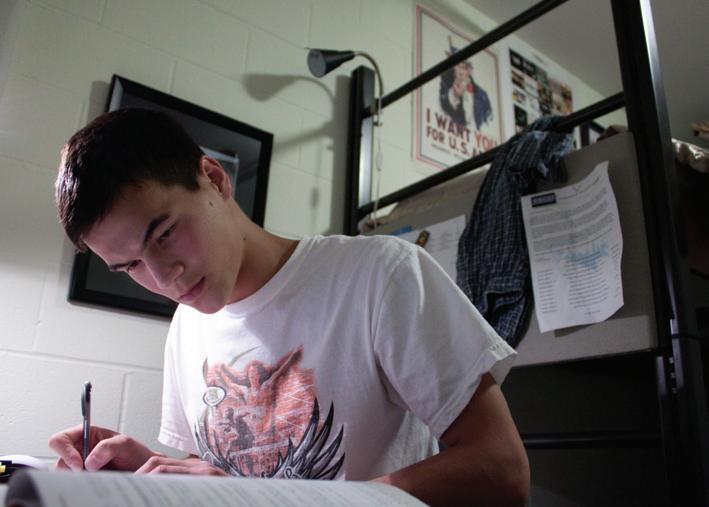

a pilot as well. His uncle also went through the NROTC program at the University of Chicago and his grandfather served in World War II as a Navy corpsman. Every summer, his family takes a trip to Pensacola, Fla., where his father went to flight school. Throughout his youth abroad, there was always a military base nearby—in Japan, he used to frequent military bases to get his hands on American food when Japan’s fare didn’t satisfy.
“I guess now that I look back on it, I guess it makes sense why I picked this direction,” Kelly says. “Everything in my life has revolved around the military.”
“ kelly is always ahead i don ’ t know how he does it, but he does,” says Joseph Figueroa, a Weinberg freshman in the NROTC program, about how his fellow midshipman is able to stay on top of classes. Figueroa lives a few doors down from Kelly on the same floor in Elder—but the similarities end there.
Figueroa’s family has a vastly different relationship with the military. His father entered the armed forces in 1971—the last year of the Vietnam draft—as a “draft-motivated volunteer.” That meant that instead of serving on the front lines, he decided
to tack on an extra two years of service in exchange for the chance to become a pilot, and was stationed in Thailand instead.
Figueroa’s half-brother had a career in Special Operations as a sniper, but was left with post-traumatic stress disorder. “I guess he did some stuff that he regretted or whatever,” says Figueroa, conceding that he might one day have to do the same. “And yet I’m still here at Northwestern, putting on my Navy uniform.” His mother is still getting used to the thought of her son joining the NROTC.
Signing up for the NROTC was a late decision for him (he didn’t think he’d get into Northwestern in the first place). That means he won’t be receiving any compensation for this year’s tuition.
“I have no obligation to do this,” laughs Figueroa, who often gets puzzled looks when he admits he doesn’t get a scholarship for participating. “That scares people.”
It’s not the patriotism that drove Figueroa to join (though he says he enjoys defending the right for people to question why the hell he joined). He says he wants to push himself to “experience the road less traveled.” He respects the strength of character the military teaches. Figueroa says his father, the first man in his family
to receive a high school diploma, is a “hard guy,” but admires the self-discipline his father embodies.
And he’s already seen returns on his decision to join. He’s improving on his physical training, and he’s taught himself to iron the night before “inspections,” when the commanding officers make sure uniforms are up to standard.
“A lot of people are like, ‘Really? You want to join the military? You’re the guy that wants to wear sweatpants to classes,’” Figueroa says. “I represent not only myself, but I represent my family, the Navy, Northwestern—I represent these people and I want to be able to show people that I represent them correctly.”
He’ll be representing the institution for quite a while. He has dreams to be a doctor, setting his sights on the Navy’s competitive medical program. That means devoting at least the next 12 years of his life to his country–four in NROTC, four on a tour of duty and the remainder spent training as a doctor and completing four years of service in the Navy reserves.
“That’s a huge chunk of my life,” Figueroa says with a wry smile. “But hey, you do it because you want to do it, not because the money tells you to do it.”
it ’ s hard to find a more visible midshipman on campus than Weinberg senior Luke Adams. He’s made a name for himself that doesn’t quite fit the military stereotype. I first met him unknowingly two years ago when a rapper named “Eljay” took the stage at Bill’s Blues Bar. He performed “I Felta Thi,” an upbeat mockery of Northwestern’s sorority rush.
He’s also been Northwestern’s third party candidate for ASG—a campaign that included as many heartfelt campaign pledges as whimsical stunts, like when he trucked a giant papier-mâché dollar sign up Sheridan Road to protest the excesses of student government.
But both the rapping and the politicking represent Adams’ interest in performing in front of peers. He’s been performing in plays since grade school, and released an Eljay album on iTunes last year. His inclination toward the spotlight makes sense—he’s the Northwestern NROTC’s Battalion Commander.
“It’s not like the only thing I can do after the navy is be on Deadliest Catch or [be] some kind of oceanographer or something,” says Adams, explaining the self-disciplinary benefits of the NROTC lifestyle, among others. “The most important thing is going to be the leadership.”
Adams is the highestranked midshipman on campus. He acts as the liaison between the Unit staff and the midshipmen, passing down orders and schedules, and as an advocate for the midshipmen, bringing any concerns to the officers. He occasionally speaks in front of the Naval Science Lab, an opportunity he considers his favorite part.
Adams has a pragmatic set of reasons for joining the NROTC. He appreciates the
fact that he’ll graduate without any debt, and likes knowing he’ll have a job once he graduates—he saw corporate headhunters offer a position to his sister when her tour of duty ended. (She graduated from Northwestern’s NROTC program in 2000 and is currently a Lieutenant Commander; she denied the job offer in order to do intelligence work in Hawaii.)
He says he draws a sense of discipline from the military that extends into daily life. He gave me an obsessive rundown of his morning schedule–in and out of a shower in five minutes, downstairs to the dining room by half past the hour and eating breakfast while he waits for exactly five minutes as the coffee machine brews his morning caffeine fix.
Still, he says that NROTC life hasn’t prevented him from living his college life “to the fullest,” and pledged Sigma Chi as a sophomore at the urging of a few fellow midshipman. He describes inertia when explaining he’d probably do fewer extracurricular activities if he weren’t in NROTC. “If I’m at rest, I’m going to tend to stay at rest,” he says.
“I have no obligation to do this,” laughs Figueroa, who often gets puzzled looks when he admits he doesn’t get a scholarship for participating.
“That scares people.”

“In a lot of cases, joining a group begins to define who you are,” says R. Scott Tindale, a professor of psychology at Loyola University. “In some senses, groups can be very good at reducing uncertainty.”
After seeing the freshmen answer their commanding officers rigidly, still on edge from a week of discipline and early morning exercise, this was certainly a change of pace. The group was becoming closer, helping each other prepare the sails and working as a team to steer the sailboats between docks in the harbor.
Tindale cites the power of a collective identity as an important motivator for joining a group like the NROTC. When the identity of a group becomes most important, he says, differences of background temporarily fall by the wayside—like how joining a military unit promotes cohesion over individualism.
“You want to care about this group,” says Tindale, regarding the mindset of a new member. “You want this group to succeed because it’s part of who you are.”
For the midshipmen, the NROTC will serve to shape who they are. Kelly’s always wanted to be a pilot for the Navy. And even for Figueroa, the rules that define his days also help define what he hopes to get from his college experience.
the last day i spent at the base during O-Week was a welcome break for the freshmen. It was the beginning of “sail week,” the last part of orientation during which they’d be out on Lake Michigan, maneuvering boats around the sheltered marina and learning the basics of sailing.
Gone were the days of referring to oneself as “this midshipman.” The navy’s khaki uniforms were swapped out for bathing suits, athletic shorts and fluorescent life jackets. Laughter echoed off of the walls of the harbor from the midshipmen still not totally sure how to handle the rigging of their ships.
“I kind of decided I’d rather work towards disciplining myself and teaching myself that these are my priorities, this is what I need to get done,” Figueroa says. “You want to become the best that you can become.”
figueroa laughs as he glances at the uniform laid out on his bed for the next day’s inspection. We were talking about the typical “college experience,” and how (if?) being in the NROTC limits that experience for freshmen entering the program. He talks about the merits of a less-disciplined lifestyle—like the one most of Northwestern’s freshman class is experiencing—and immediately realized the irony that he signed himself up for conformity, care of the U.S. Navy.
“But you know, this is being myself,” says Figueroa, satisfied. As we walk out the door to Elder, he pauses for a moment.
“I mean, I could quit this year—I could quit tomorrow. Who knows?” he says. “But I’d always be able to look back and say ‘Hey, I was in the navy for three weeks.’”
We both laugh.
“It’s all about the experience, man.”
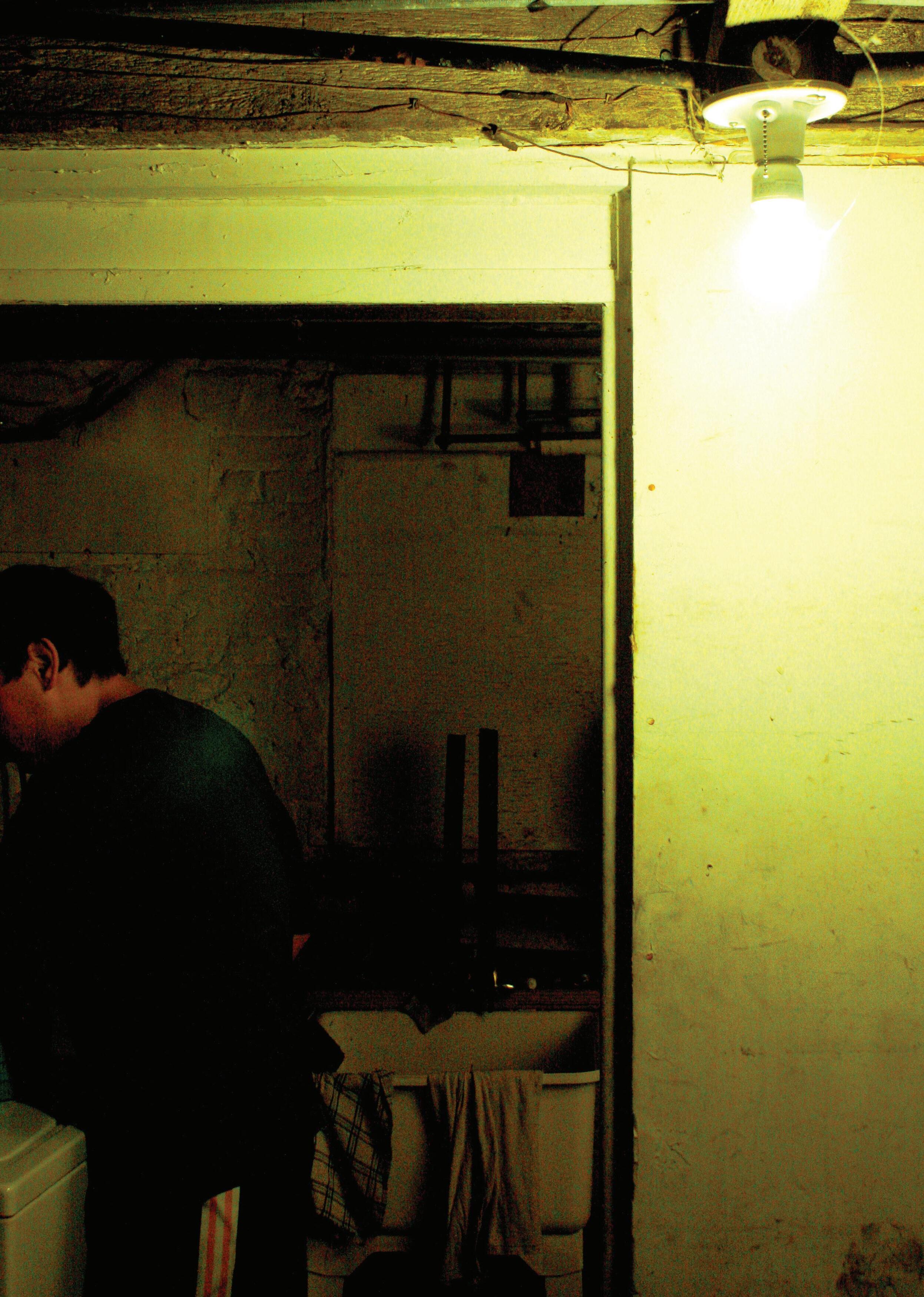
Some Evanston landlords aren’t keeping properties up to code, leaving some student tenants to live in squalor. What’s a little university to do?
By Sarah Collins
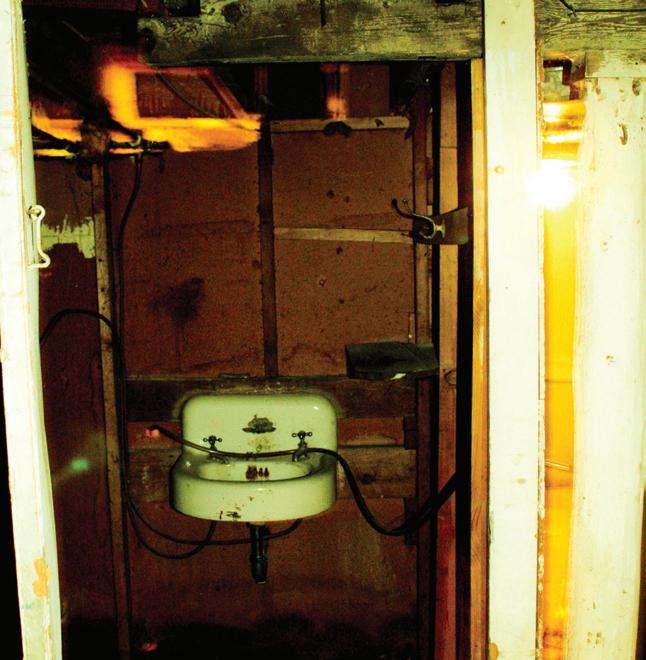
It didn ’ t occur to me to be worried about the maggots until it got warm. My house was giant and drafty, so I tried not to think about bugs unless they were bigger than my hand. But then the smells started coming.
They’d seep through the ceiling a little more every time the sun came out. When we were sure there was something dead up there, we emailed our landlord. Then we called him. Then we told him every time he dropped by. The carcass is probably still up there.
Better dead than alive though.
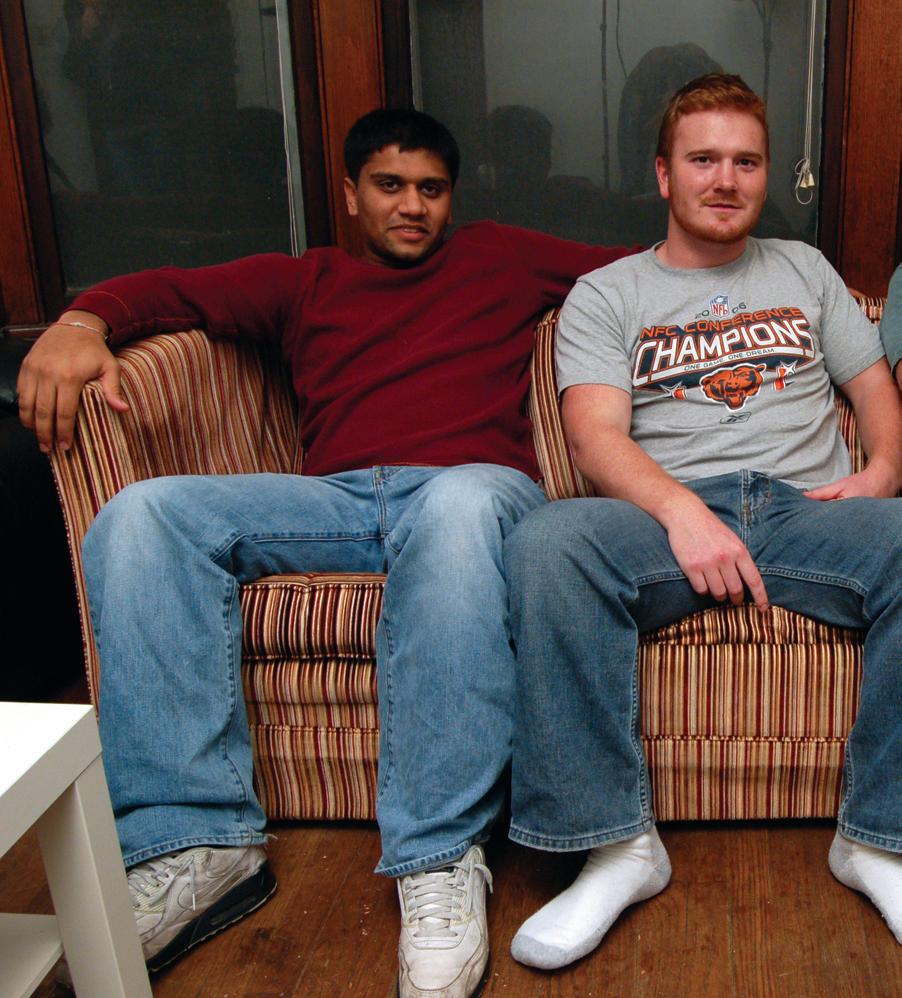
“I always thought I was going to wake up one day and there’d be a big-ass raccoon on the floor curled up in my room,” says Weinberg senior Luke Bonucci. “I had a hole in my wall that was just a vent that they didn’t have a cover for, and there was a raccoon that lived inside that vent. I could hear it walking along; I could hear its claws on the metal inside the vent.” So he put his dresser in front of the hole. If one of the raccoons living in the walls got too noisy, he’d smack the wall, sending it scurrying to someone else’s room.
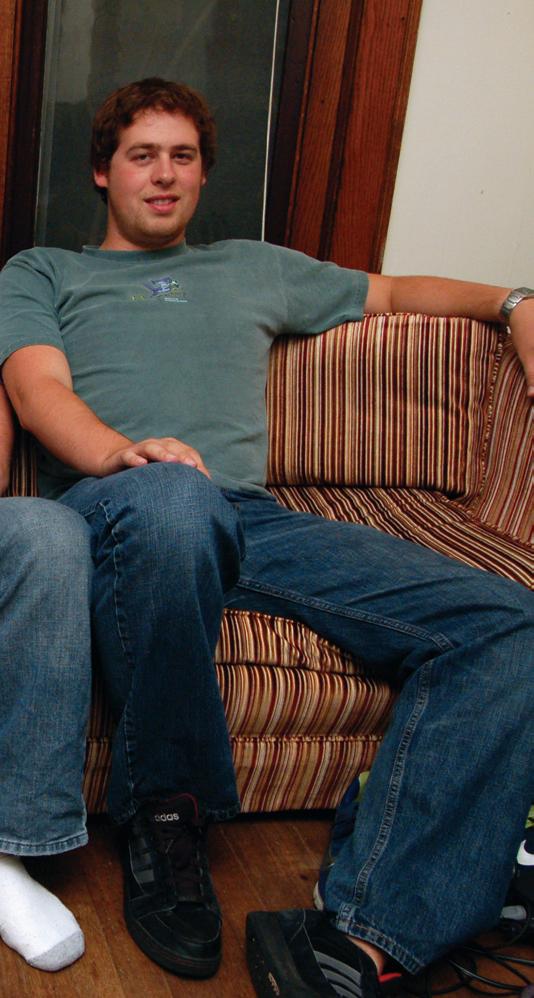
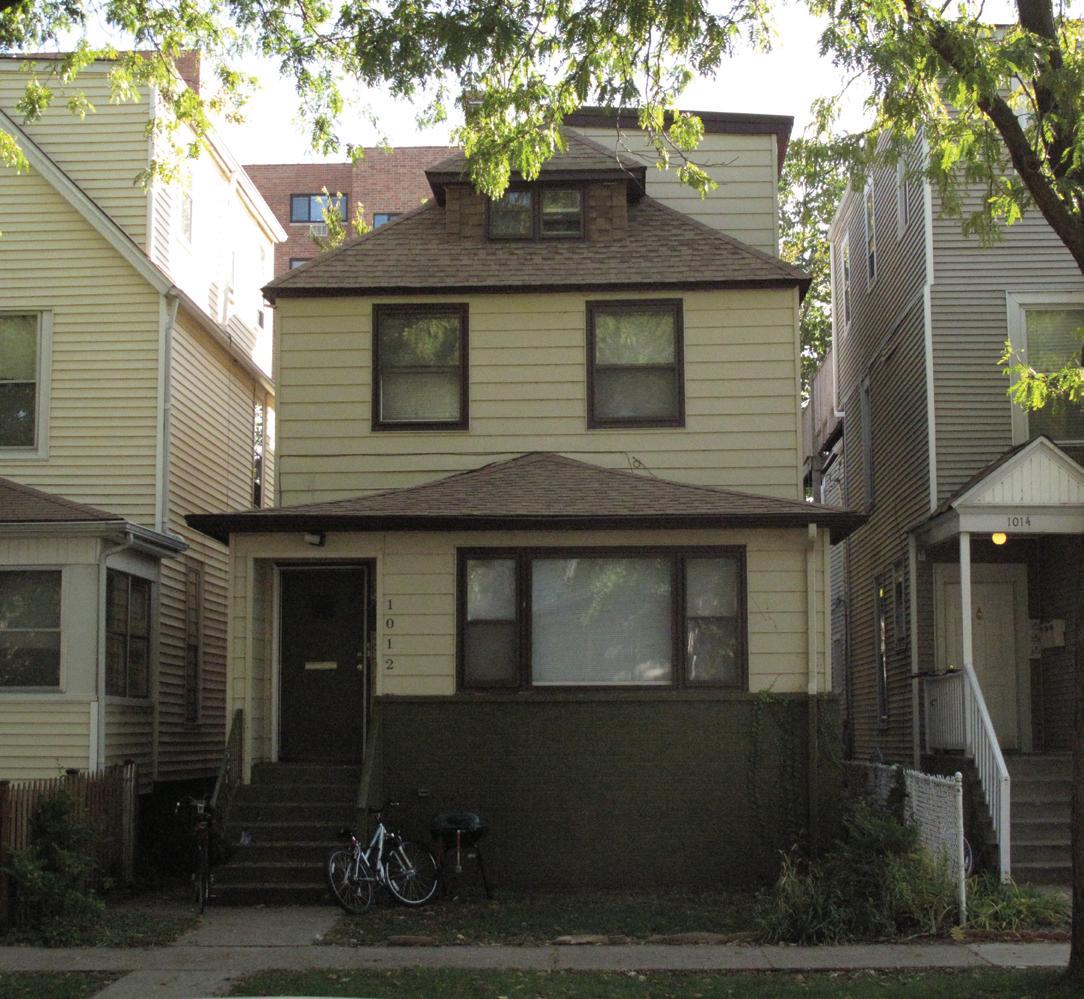
“As long as I can remember being in that house I can remember there being raccoons in the ceiling,” says Bonucci’s roommate Rob Baroch, a McCormick senior. Seven roommates lived in that three-story house, 1012 Garnett Place, last year.
“They hung out over the shower,” says McCormick senior Jeremy Nudell, another roommate. “You’d take a shower and they would stampede across the ceiling. And they’d scratch at your ceiling when you were sleeping. It became really disturbing after a while.”
The roommates called the landlord. And the maintenance man, and anyone else whose responsibility it was to remove the family of raccoons from their walls. They were told it was no big deal–it’s just mice. “Even though we saw a family of raccoons walking into a hole in the roof,” Bonucci says. “We saw it.”
They couldn’t get rid of them, so they named them all “Coon-coon” and learned to live with them. “It was co-habitation,” Bonucci says. “We were just upset that they didn’t have to pay rent.”
When the living room filled with flies near the end of the year, they didn’t even bother calling the landlord. Bonucci took
care of it himself. “I took out a can of Raid, and I was standing in the middle of the room just turning around in circles spraying Raid everywhere, and they were just dropping. It brought a whole new meaning to that phrase.” They figured they were better off leaving the landlord out of it.
“The last half of our lease we just tried to avoid them,” says Baroch, “because anytime you dealt with them it would just cause more problems than it solved.”
my landlord andy was great with the small stuff, like repairing busted pipes and
According to the 1012 Garnett roommates, the previous tenants left furniture stacked to the ceilings, moldy food in the refrigerator and dirt everywhere. But the landlord left the house in disrepair.
istration to educate students on holding landlords accountable. “They need to know that they have rights and that landlords have responsibilities to keep the property up to standards.”
That’s not something the guys from 1012 Garnett knew when their heating broke and they were studying in their coats. “You could see our breath inside, in the TV room,” Bonucci says. It took a week and a half before anyone came to fix it.
Too often, students bear with substandard living conditions because we don’t know our rights. Landlords take advantage,
broken dishwashers. But anytime we tried to get him to improve the quality of living he tried to raise the rent. Take the windows. They were drafty enough that bluebottle flies could work their way in the sides, and a few of them didn’t have screens. Andy said if we wanted new windows we would have to pay for them. We didn’t argue because we didn’t know that there’s an Evanston ordinance that requires all windows to have screens during the summer. He was counting on our ignorance.
“Students should not live like that,” says 5th Ward alderman delores Holmes, whose ward encompasses the majority of off-campus students in Evanston. She’s been working, along with neighbors, students, ASG and Northwestern admin-
and we become the victims.
Stacy Uchida, a Weinberg senior, says students are willing to live in bad conditions for a simple reason. “We don’t have much choice,” she says. “Where else are you going to live?”
“ there is a lot of drinking and then a lot of vandalizing of the property,” Nancy Gabriel, the property manager for 1012 Garnett, wrote in an e-mail. “Once students threw a couch out the window and lit it on fire. Another time, they manufactured alcohol in the basement.”
d’Arienzo says it’s this behavior that causes landlords to have higher expectations and more codes for student renters. “They’re trying to maintain as much of a
sense of order as they can,” he says.
Unfortunately, that also means landlords often treat student tenants with less respect than they would normal ones. According to the 1012 Garnett roommates, the previous tenants left furniture stacked to the ceilings, moldy food in the refrigerator and dirt everywhere. But the landlord left the house in disrepair and the guys weren’t able to move into the house until a week after their lease started. A cleaning crew wasn’t sent until a week after that.
The city of Evanston’s Web site has a long list of regulations and restrictions
out, but they’ll find them somewhere else to live first. Students need to know their rights in order to get the help they need.
So where do you turn for help—the university?
looking for information about off-campus living at Northwestern? Try contacting the university’s off-campus housing department and you’ll probably end up on the phone with Joseph Hunter, a part-time Weinberg student and administrative assistant for the department of Graduate Housing.
“As far as off-campus housing goes, we
on how landlords must keep up their properties, including requiring that “the interior of every structure…be free from any accumulation of rubbish or garbage”— something that the 1012 Garnett landlord ignored and the tenants put up with. Landlords just need someone to enforce those laws–even when students are the tenants. Students may not be ideal neighbors, but they still have rights.
Jeff Murphy, the assistant director of Evanston’s Property Standards division, worries that students don’t report landlord violations because they’re afraid they’ll be evicted. “If a student contacts us they’re not going to end up on the street at the end of the day,” Murphy says. The property standards division might ask students to move
don’t even touch it,” Hunter says. “Nobody on campus does.”
Turns out there is no department of off-campus housing. Just a Web site that tells students to check Craigslist and keep parties quiet. To get a copy of the TenantLandlord Ordinance, Evanston’s official document of renter’s rights, students are told to come by the office. And according to Hunter, no one stops in to pick up the ordinance. Which is good, because he doesn’t have any to hand out.
If anyone does call with a landlord problem, they’re turned away. “We pretty much have a template down that there’s nothing we can do for them,” Hunter says.
Mark d’Arienzo, the associate director for University Housing Administration,
says that it has never been university policy to “hold the hands” of students as they transition from residence halls to off-campus housing. He knows there are problems when students move off campus. It’s just not his job to fix them.
“Students living in the residence halls receive a lot of information regarding how to go about doing things on campus,” says Virginia Koch, senior assistant director of Residential Life. “But there’s not a lot of education done on what to do after you move off-campus. It’s really part of their learning curve to figure out what types of services are available.”
All the Northwestern officials interviewed knew they needed to provide more help to off-campus students. They just didn’t know how. Even their advice for students is divided. Lucile Krasnow, Northwestern’s special assistant for community relations, advises students not to settle for less than their rights, but is quick to change the subject to off-campus parties. D’Arienzo’s first advice is to “Be nice to your neighbors.”
Northwestern has always taken a limited role in helping students moving offcampus compared to other schools. Loyola University in Chicago works closely with students, providing off-campus information sessions and hosting housing fairs, where students can find apartments and meet potential landlords. They also give students incentive to stay on campus.
“We have about 15 apartment-style halls for our sophomore, junior and senior students,” says Michelle Lata, assistant director for Resident Services at Loyola. The apartments are similar to Northwestern’s sought-after Kemper suites, equipped with personal kitchens and bathrooms. “What we want to do is transition them from a more first year, traditional setting to something that’s a little more independent,” Lata says.
It’s working. “I like my on-campus apartment much, much, much better than my freshman dorm,” says Liz Hegarty, a Loyola sophomore. “I’m still extremely close to campus without living absolutely next to 50 people and having no privacy.”
Koch knows that singles and apartments are popular, but says they’re not possible (Kemper only holds 177). If more Northwestern students wanted to stay on campus–in any dorm–they’d be out of luck. “There physically isn’t a bed for every student at Northwestern,” D’Arienzo says.
There is no department of off-campus housing at Northwestern. Just a Web site that tells students to check Craigslist and keep parties quiet. If anyone does call the school with a landlord problem, they’re turned away.
Some students must live off campus, and then must deal with slumlords on their own.
It wasn ’ t always like this. a few years ago the university cared enough about students moving off campus to provide apartment listings. Murphy’s office regularly received calls from the university asking if Evanston buildings were up to code. Then the focus shifted.
“This decree was passed down from on high that we were no longer going to post off-campus housing,” Hunter says.
But while the university had decided to ignore off-campus students, ASG stepped up.
“I’ve definitely heard stories about students who have put up with lower property standards because they’re worried about getting kicked out of their property,” says Weinberg senior Jilian López, director of ASG’s External Relations. “They’re not sure whether to talk to their landlord or to talk
to the city or to talk to the university or who to talk to. You shouldn’t have to live without heat when it’s freezing outside.”
Instead of hoping students would figure out the housing game for themselves, ASG’s External Relations Committee decided to do something. They started with the Off-Campus Housing Evaluations, a Web site where students could rank their apartment and their landlord, letting future tenants know about potential problems. If students consistently used the site to rate and research apartments, landlords would have to meet student demands or risk bad ratings. The site gives students a way to regulate landlords without resorting to the city or the school.
But this spring ASG has something even bigger planned. “We want to make it a one-stop shop for students looking to move off-campus,” López says. ASG is looking to build, with Northwestern, a Web site that
The city of Evanston requires landlords to uphold certain standards on their properties. Here are a few highlights. Is your landlord following the rules?
Weeds and grass must be maintained no higher than eight inches.
● Exterior and interior structure surfaces must be kept clean and free from graffiti.
● Premises, including parkways and vacant land, must have grass or other forms of
● approved ground cover.
would house all of the information students need to move into an apartment. How to recycle, when to take out the trash, what to do on vacation and who to call when your landlord isn’t doing his or her job, all on one easily searchable page. The interactive components, like the off-campus housing evaluations, will be posted on ASG’s Web site. “It’s a good temporary solution, until we can afford to have a real off-campus housing office,” López says.
Because of the size of the project and the necessary webspace, ASG has enlisted Krasnow and Burgie Howard, the interim dean of students. They’ll work together to compile all of the information students need and create a Web site where they can find it. They hope that once students know what to do, landlords will stop taking advantage of students’ lack of housing knowledge.
“There are lots of student situations that have been difficult, messy, disappointing,” Krasnow says. “I have sympathy for students who are in substandard housing, probably for too much money.”
the guys from 1012 garnett don ’ t live there anymore. They thought about it, but when the landlord tried to raise the rent by 10 percent they found a similar house farther north. The heat works, and so far there haven’t been any signs of raccoons. (And the best part? No slumlord.)
Furniture placed on the exterior of a building must be constructed for exterior use, made out of mate-
● rials that are water and weather-proof and resistant to rot, mildew, mold, decay and insect infestation. Buildings must have approved address numbers placed plainly legible and visible from the alley as
● well as the street.
● for ventilation purposes must be supplied with approved tight fitting insect screens of no less than 16 mesh per inch.
●
From April 1 through November 1, every door, window and other outside opening utilized or required
Tires cannot be discarded, abandoned, kept or stored on the exterior of any premises.
None of the guys mentioned nostalgia for the dorms, and there’s no reason to. With a basic understanding of tenant rights and a little stubbornness, students can get their house in the condition they want. The proposed off-campus housing Web site will help, but knowing when to put a foot down is more important.
“Don’t be afraid to be demanding of the landlord,” Murphy says. “They are making a lot of money on these properties and you shouldn’t be intimidated by them.”
A look at the lives and sacrifices of the students who earn their degrees not just by passing tests but by paying their own tuition bills, too.
By Jaimie Hwang
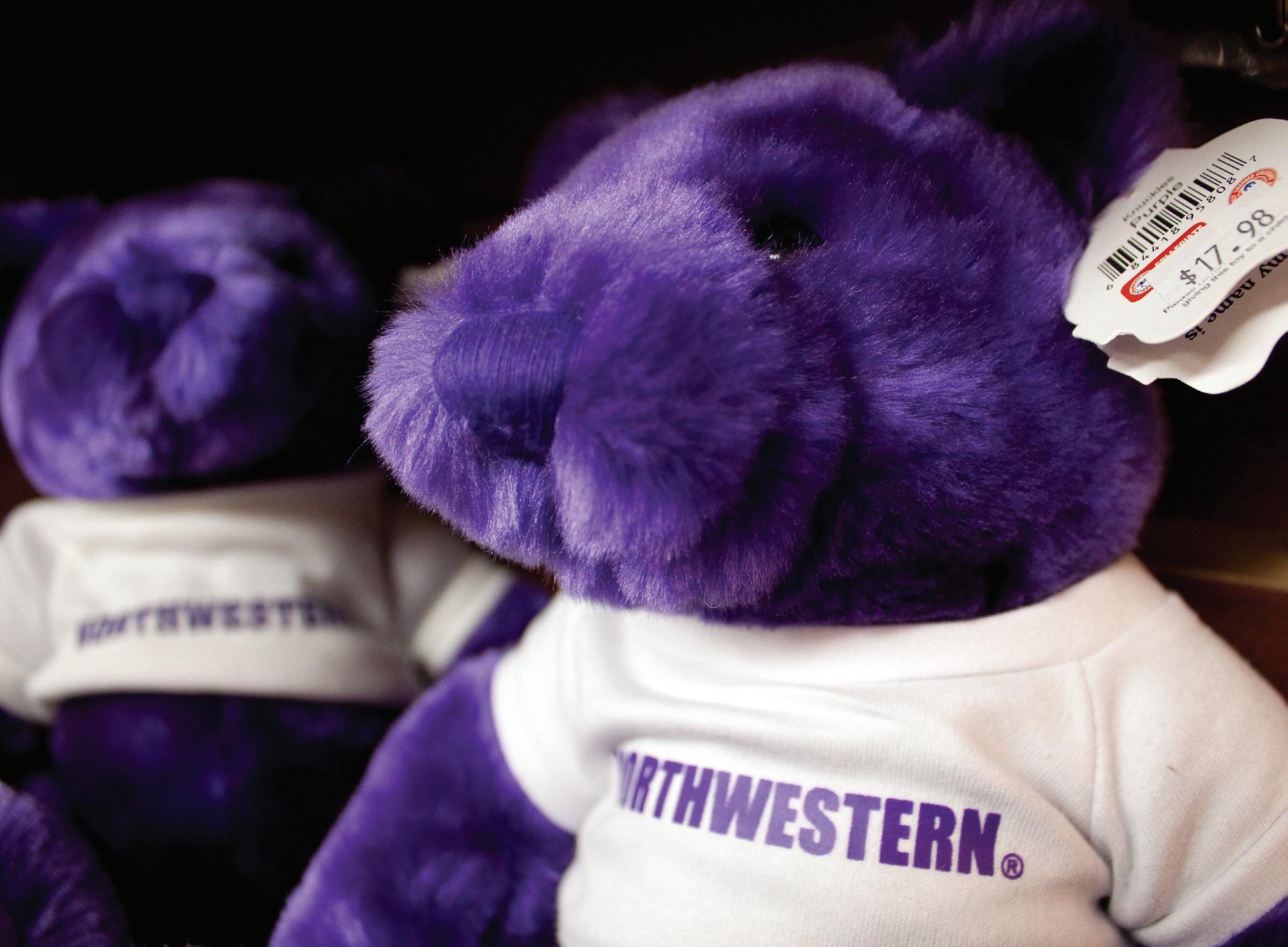
Northwestern purple spills from the windows of Beck’s Book Store in downtown Evanston. Racks of t-shirts and collegiate wear clutter the walls of Norris Bookstore. There is no mistaking which college is nearby with all the Wildcat paraphernalia on display in our swanky suburb. during the week of freshman move-in, flocks of eager students and their parents stock up on Northwestern gear. It’s a sign of pride, a symbol of achievement and ownership. I got in! This is my school.
Attending Northwestern was Weinberg freshman Marina Mason’s dream. Reclined in the corner of a sofa in Tech, Mason seems initially reserved, unconsciously playing with a loose wave of her morel strands. The St. Louis native eventually mentions how thrilled she is to have been accepted into her number one college, and her mannerisms loosen up as she offers a smile. But for someone as passionate about her school as Mason is, there is an item of clothing missing from her closet.
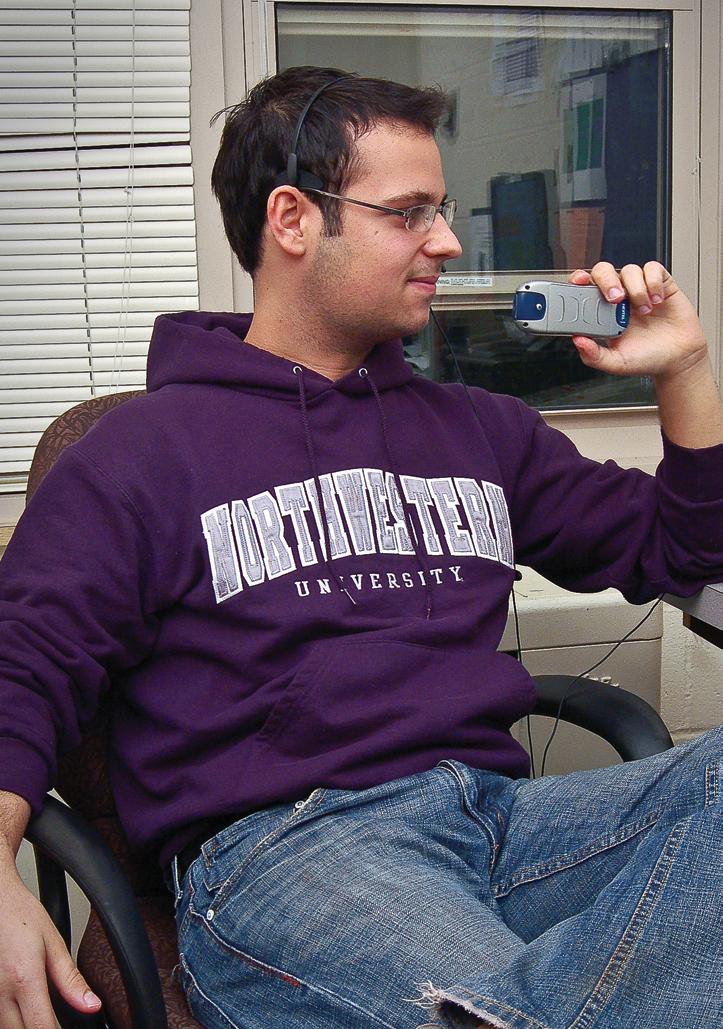
“I really want a Northwestern hoodie,” she says. “But I just can’t afford it right now.”
“It definitely puts the value of a great school’s education more into perspective,” Marrone says. “I think most students take it for granted.”
mason has to pay for college by herself, without parental support. And for this school year 2009-2010, Northwestern’s annual tuition and fees alone cost $38,461. With room and board at $11,703 and books and personal expenses totaling around $4,000, splurging on a $40 sweatshirt isn’t about restraint—it’s simply impossible.
Today, more than half of all college students have a job, according to the U.S. department of Education. With the financial burden of college affecting rising numbers of students across the nation, working to pay for eduction is becoming more of a requirement. But financial strain aside, what do the students who are shouldering these hefty payments go through?
For the 2008-2009 academic year, Northwestern gave out $78 million of its own funds for student assistance. Of the 2,078 full-time freshmen enrolled in Northwestern this fall, 1,095 applied for need-based financial aid. Mason is one of the 841 students judged to have need.
“The school covers my full tuition and part of my room and board,” Mason says. “I only need to come up with about $9,000 a year and I have work study and loans.”
But Mason is no stranger to juggling long hours at multiple jobs. She started working at the age of 15, listing Best Buy, Mcdonald’s and Avenue clothing store among her employers. As a freshman, her schedule is already packed. She’ll be working as a teacher’s assistant in the America Reads program at Lincolnwood Elementary School in Evanston as her work study position. “I’m also in marching band,” she says. “I play the flute, and we have practice practically every day. I’m actually about to head to practice soon.”
Mason doesn’t remember a time when she wasn’t paying for her own things. And because she’s always saving up for a goal, she tends to be a budget shopper. But she asserts that it doesn’t make her feel inferior. In fact, she feels more appreciative of what she has— including her time at Northwestern.
“When I finally buy something I’ve saved up for, I feel really proud,” Mason says. “I think, I totally own this. I have finally aced this.”
megan dunham feels the same grateful ownership over her education.
“I take better advantage of my time and the resources offered to me at Northwestern,” says the McCormick junior. “I just appreciate being at this school more.”
dunham appears gracious and warm, perched on
the edge of her chair in her sorority’s kitchen. She cradles a steaming cup of liquid, and though outwardly serene, she’s got a lot on her mind. Her parents told her that if she wanted to attend Northwestern, she would have to pay for her last two years herself.
“I just took out a $40,000 Sallie Mae loan last week,” says dunham, glancing sourly down into her mug of hot chocolate. “It was really the worst day of my life.”
Sallie Mae is the largest college student loan company in the United States. The student private loan requires a $110 interest payment every month during school, but even these monthly interest bills are financially straining for dunham, who doesn’t even qualify for work study.
“It’s really frustrating not getting work study,” she says. “I understand Northwestern’s financial aid has certain cut-offs but they are looking at my parents’ salaries. I’m only making $6,000 a year and I’m going to have to pay $50,000!”
Northwestern determines financial aid by looking at both the College Scholarship Service (CSS) Financial Aid PROFILE and the Free Application for Federal Student Aid (FAFSA). According to Northwestern University Office of Undergraduate Admission, the amount of financial aid offered is the difference between Northwestern’s sticker price and the amount that parents can contribute.
The oldest of three children, dunham understands why she has to pay for college herself. Although she considers her family to be well-off, covering 12 consecutive years of college tuition changes the story. So, to make ends meet during the school year, dunham spent her past summer working two jobs, putting in 60 hour weeks.
“I worked my ass off this entire summer,” Dunham says. “I worked at a pizza joint, and I was doing manual labor at a sewage plant.”
Summers in sewage aren’t her only sacrifice, though. One of her biggest regrets is that she won’t be studying abroad because her chemical engineering schedule leaves only her summer quarters free, during which she needs to work to save up for the school year.
“If my parents could really afford to help me out, they would. In the meantime, it’s on me.”
most northwestern students don ’ t bear the brunt of their college finances. “I feel like I’m one of the few people who is paying for college myself,” says Dunham with just a slight tinge of bitterness. “There are a lot of really wealthy people here at Northwestern.”
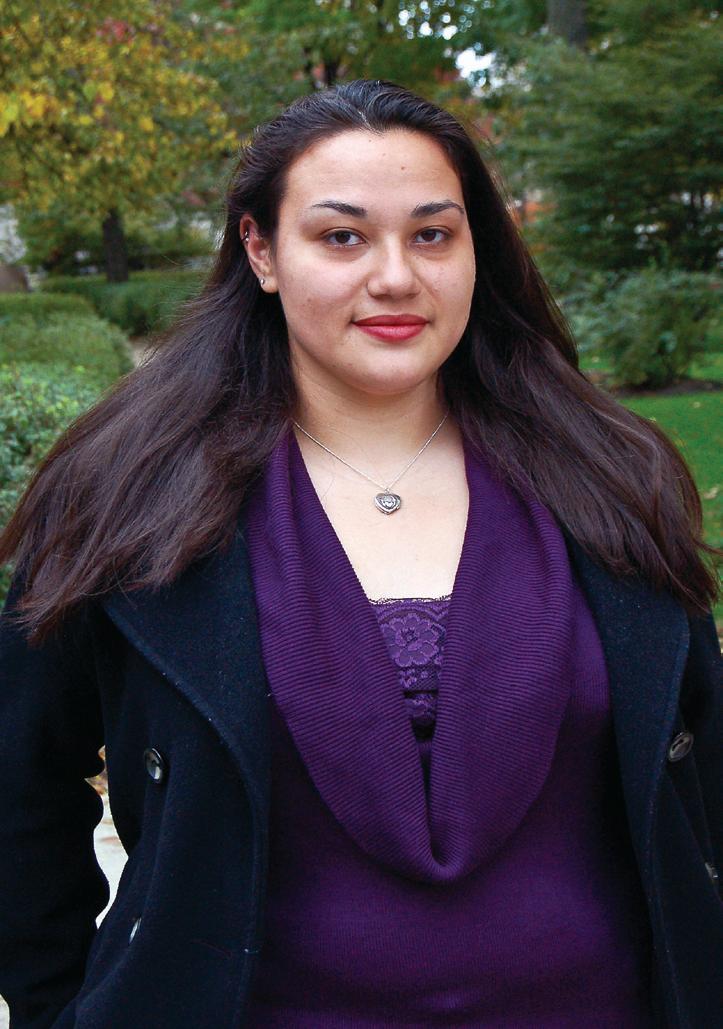
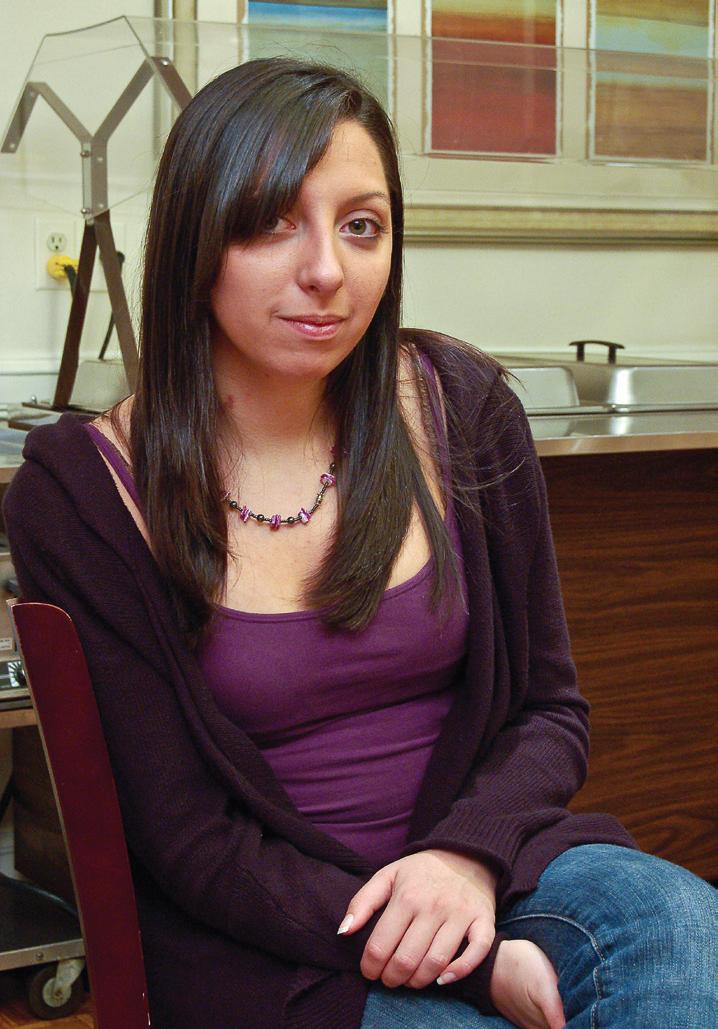
“I feel like I’m one of the few people who is paying for college myself,” says Dunham with just a slight tinge of bitterness. “There are a lot of really wealthy people here at Northwestern.”
Stephen Chao is a Weinberg junior studying biology. Having attended private school in California his entire life, Chao correctly assumed that his parents would continue to pay for college.
“My parents pay full tuition and they paid my older sister’s full tuition too,” Chao says simply. “When I was deciding on which school to go to, my parents told me that money shouldn’t be a factor in my decision. I know that my parents will pay for med school also.” Free of financial stresses, he spends summers seeking research opportunities on campus.
And while Chao spends his hours in the lab, other students work grittier jobs.
McCormick senior John Marrone is a dispatcher for SafeRide, Northwestern’s safety transportation service which is available seven days a week during the academic year when classes are in session. He works most days of the week and his work hours usually run from 8 p.m. to 2:30 a.m.
“It gets a little tiring,” he says. “And it probably interferes with school a little bit too, but I gotta do it so I do. It’s either that or not go here, which I was so blessed to be able to do in the first place.”
Krishan K. Batra, M.d., a distinguished Fellow of the American Psychiatric Association, says it’s a challenge to balance work and study. “If overworked and overstressed, you don’t get enough time for relaxation and
socialization. This will deprive you of some growth.”
“Working definitely has its drawbacks, like less time for social events, schoolwork and less of a chance to join extracurricular clubs,” Marrone says. He occasionally skips some of his morning classes because he is too tired from work.
“But it definitely puts the value of a great school’s education more into perspective,” Marrone says. “I think most students take it for granted.”
chao has a hard time fathoming the lifestyle of juggling both work and school. He feels lucky that his parents are funding all of his academic pursuits.
“I imagine that most parents would pay a portion of their kid’s college if they could,” Chao speculates. “It just seems astounding to fund your way through a private school. If I were to be on my own right now, I’m certain that I’d need to change the way I live drastically.”
But there is something to be said about full ownership rights; more than just getting in to Northwestern, more than just graduating. It’s about earning your degree and your college experience twice over: working for the grades, and working for the tuition bills.
“Those who struggle to make it learn the hardships of life,” Batra says. “They have robustness, greater selfreliance and higher self-esteem. Psychologically and mentally they may have the strength to achieve it all.”
How to handle the little scrapes and screw-ups of life at NU
Your room’s fiery demise can unfold in two ways: Northwestern will blame you or they won’t. If your Macbook Pro spontaneously combusts, the university can’t reprimand you. If the flames weren’t your fault, Associate Director of University Housing and Administration
Mark D’Arienzo says the university can probably offer you housing elsewhere on campus at no cost. Granted only your room explodes.
“If Foster-Walker burned to the ground, I usually don’t have 500 spaces lying around,” D’Arienzo says.
But let’s say someone left a Yankee Candle burning after some sexual healing. If Residential Life finds out you had contraband items (George Foreman grills, Christmas lights, dynamite, etc.), you’ll be removed from university housing.
But before you set up camp outside CVS, attempt to recover your possessions. Consult Daddy before buying another IKEA futon, because some home owners’ insurance policies extend to a student’s dorm room at no additional cost, according to Leland Roth, assistant director of the Office of Risk Management.
But the burden of proof lies on you. “Detailed digital pictures and detailed inventory are very beneficial in assisting a person in making a recovery after a fire loss,” says Roth. He suggests “keeping a copy of your belongings back at home or online” as a reference for your
Rest assured, getting locked in an academic building after hours is unlikely. In most buildings, exit doors are equipped with panic hardware which release the locks when someone from inside tries to get out.
personal insurance company, just in case.
But don’t expect the school to have sympathy over your torched stuff. “The University bears no responsibility for the loss or theft of or damage to personal property of students,” states the student handbook, rather cruelly.
In more serious cases, like if you intended to start the fire, aggravated arson is a Class X felony. Incarceration without probation must be served for at least six years upon conviction. — Alanna Autler
You’ve had the nightmare: after a night of cramming you wake up to your alarm, only to realize you should have been in Kresge for your final an hour ago. So what if that becomes reality?
The rules are the same across Northwestern’s six schools. When it comes to skipping finals, each case will be looked at individually and seriously.
“There is not a one-size-fits-all answer if a student misses a final exam. The instructor in the course would evaluate the circumstances and decide if the student is eligible to take a makeup test or if an F for the final test should be factored into the final grade,” says Medill Senior Director of Undergraduate Education Michele Bitoun.
So how do you know if you’ll be excused?
“If there is evidence that skipping or sleeping through finals was a complete accident, then we will make every effort to accommodate a student,” says Richard Weimer, assistant dean for undergraduate affairs at Weinberg. “But if it is not the consequence of an accident, the approach will be different.”
But some spots on campus require a bit more attentiveness. University Library can be as crowded as Keg Mondays during midterms and if you’re locked in after closing, you won’t be able to get out. What happens if you’ve drifted to sleep after five hours of Orgo alone in the stacks?
Library security performs a sweep of the building after closing every night to check for stragglers. But, if you’ve managed to go unnoticed, a call to University Police should be your first step.
“There would be some conversation with that person as to why they were in the building after closing,” says University Deputy Chief of Police Daniel McAleer. “Depending on the answers given, the officer may need to take further action.” If you’re vandalizing property, stealing or doing anything suspicious, you’re probably in for some “further action.”
Punishments range from being sent to the school for discipline to being arrested. However, the severity of the crime and your cooperation are always taken into account. Bookworms will most likely be let off the hook, but officers will be a bit more peeved over students just getting rowdy in Reference. — Alexandra Sifferlin
As a general rule of thumb, if missing a final was out of your control, re-taking the test will be possible. However, if the circumstances were in your control, you’ll probably get an F on the test. No guarantees, though-each case is subject to its own treatment. No matter what, you will be at the mercy of your teacher. — A.S.
If you get sick during finals week, you may be putting more than your health in the hands of Health Service. They must also decide whether your illness is grave enough to excuse you from your finals, according to Weinberg Assistant Dean for Undergraduate Studies Richard Weimer. Health Service records the names of students it has deemed medically excused and passes the list to the schools. If you’re on the list, you’ll receive a grade of incomplete, and permission from your school to make up any exams you missed, Weimer says. Will a common cold cut it? Don’t stake your grades on it. — Mike Elsen-Rooney
It’s Friday night and you’re blasting music in your room when you hear someone knock at your door. It’s your CA, and he’s demanding to be let in. What are your rights and how much can a CA do--really?
Virginia Koch, Senior Assistant Director Residential Life, says you’re required to comply with CAs “acting in the scope of their duties.” Okay, what does THAT mean?
Koch says that while the Northwestern student handbook states that each student has the right to “protection against unlawful searches and seizures,” residence hall rules state that CAs can enter and inspect rooms for health, fire safety, during an emergency, to protect life or property from imminent
danger or to provide repair or maintenance services.
However, if the CA deems no emergency or imminent threat to health or safety present, they cannot enter without your consent or a search warrant. Essentially, it’s up to the CA’s discretion whether or not they have the right to enter your room, so you’ll have to open up or risk facing greater punishments.
What if you refuse to let him in? At a minimum, the CA will document the situation and may call an Area Coordinator or University Police for back up if they feel it necessary. From then on, your sanctions will be decided on a case-bycase basis by Residential Life.
When a CA enters a room based on
You got caught on North Beach
Got in on a dare to swim in the lakefill after hours or climb a rooftop? Trespassers beware – if you’re caught, the consequences can be as extreme as getting arrested.
“The officers always have the discretion to utilize physical arrest or citations for matters depending on the circumstances,” says University Deputy Chief of Police Daniel McAleer. “They can also utilize referrals to judicial affairs and student affairs.”
McAleer says the station often receives calls from neighbors during the summer when they see students swimming in the lake without a lifeguard, as many residents have seen tragedies result from this.
You drown at SPAC
While the Office of Risk Management assures us that no student has ever drowned at SPAC, that doesn’t mean it won’t happen in the future -- although
“They’re very sensitive to those types of things,” he says. “So if they see someone swimming at 12 or 1 o’ clock in the morning, they’ll call us, and we will take action.”
Still determined to hop that fence? McAleer says that if a student trespasses in a building, the officer will also look at whether there’s been damage to the building or whether other illegal activities are going on. He added that police aren’t always the only ones taking action.
“Does someone want to sign complaints against them? Did they damage that property? Sometimes it’s not just university police making the decision, it’s the actual victim,” he says. — L.K.L.
we sure as hell hope it doesn’t. But what if all of a sudden you don’t make it out of the pool after a rowdy game of Marco Polo?
If the lifeguards are on duty (as they are from 6 a.m. to 2 p.m. and 5:30 to 10 p.m. Monday to Thursday, and until 9 p.m. on Friday) and they don’t save you due to negligence, then it is the school’s responsibility and the family
CA. Open up.
suspicion of alcohol, you’ll be asked to bring any booze into the open (including empty bottles). “The CAs can only report alcohol or other policy violations in plain
sight,” Koch says. Still want to hide the booze? Your non-compliance will be taken into account later when you’re on the stand. -—
Lorraine K. Lee
You slipped on an icy sidewalk
If your nervous system is still intact, whip out your BlackBerry. “The student should report the fall to the police immediately,” says Leland Roth, assistant director of the Office of Risk Management.
The police can then send Emergency Medical Services your way, because Northwestern’s Health Services won’t be able to help. “Health Services does not provide clinical care,” says Laura Stuart, a Health Services administrator, unless you’re covered by Northwestern student insurance.
But you should still know your rights. Wondering if you can sue the school for your damages?
has the right to sue.
If it really is the school’s fault, you have a pretty good case for pain, suffering and other damages. The school would also have to cover any medical expenses and, in the case of death, funeral expenses.
However, if you’re in the pool without lifeguards present, then you’re trespassing (since swimming is never
“[You] can sue anybody…. but you have a zero chance of winning,” says Evanston attorney Robert Pantoga. However, if you fall on a random street in Evanston, “nobody’s responsible to clean up that ice.”
But he adds that a more viable case would involve a student tripping between university buildings; Facilities Management is liable to plow the snow on that private property. Otherwise, it seems paralyzing yourself on Sheridan is just counterintuitive—unfortunately, nobody is responsible for your clumsiness. Just save yourself the lawsuit and take a cab to the Keg. — A.A.
allowed without lifeguards present); thus, the university maintains no liability. If you want to get money for getting hurt, do it while you follow the rules. No matter what, the first step, according to Evanston attorney Robert Pantoga, is to consult a personal injury lawyer and begin to determine the exact circumstances of death and whether there is a case to try. —Amanda Litman
Indecisive? Here how to transfer schools during junior year.
It’s not impossible, but it’s “very difficult,” according to Dorina Aguilar Rasmussen, Medill’s assistant director of student life. Before juniors can even think about transferring, they need to take Medill’s intro course, Journalism 201-1. Your grade in the class is considered in your transfer application.
According to the Weinberg Web site, “If you transfer to Weinberg after your freshman year, then you do not have to take any freshman seminars.” Beyond that, you’ll have to check with the department you want to transfer into.
“It’s definitely possible, but it would be very difficult to graduate on time,” says Assistant Dean for Admission and Student Affairs Linda Garton. Only those who transfer soon enough to begin music classes their junior year have been successful at graduating on time. It’s easier to transfer to a Bachelor of the Arts degree, as it’s more like a liberal arts degree modeled after Weinberg majors. The Bachelor of Music Degree (BM), on the other hand, is a “degree that’s intense music study,” and nearly impossible to fit in two years.
“Anything’s possible, but...it’s relatively rare,” says Assistant Dean Joe Holtgreive. Students do transfer in during their junior years--but they’ve usually already started taking engineering classes before turning in transfer paperwork. Students who transfer during their junior year and have not taken many engineering classes will add on about a year and a half to two years before they can graduate.
Transferring into SESP is “certainly possible,” says Susan Olson, assistant dean for student affairs at SESP. Scheduling the required practicum, which is a junior year quarter-long internship that takes the place of classes, can be tricky. “In some instances, a junior might do some classes during the summer and do the practicum during the year, and graduate on time.”
“Transferring from Weinberg into the School of Communication will be the smoothest transition, says Sally Ewing, assistant dean for advising and student affairs, as students will probably have gotten several distros under their belt. However, RTVF doesn’t take transfers after the first quarter of junior year, and there’s a waiting list for theatre majors. — L.K.L.
You’re homeless for winter break
Your parents call to tell you that they’ll be jetting off to Bali for the holidays. They ask you to stay at your dorm for winter break and before you can reply that this is impossible, they hang up. Should you wander the streets for three weeks? Unfortunately, the university has no services for students in this situation. Because the Residential Life staff leaves for the break, you’re out on your own.
Interim Dean of Students Burgwell Howard advises students to make arrangements with friends or family
that you have in the area. The university helps international students find a place to stay with alumni or an Evanston family.
Not foreign but still can’t fly home to Florida? You’ll just have to invite yourself to your roommate’s house for the break. — N.A.
It’s Saturday night and you’re cruising the Evanston bars. Your friend hands you a Long Island Iced Tea. You take it from her, but due to your butter fingers and the condensation on the glass, it slips and shatters on the floor.
What happens next? Hundo manager Tom Connors says they wouldn’t make you pay for it, but “we would check that the person wasn’t too intoxicated; if they were, we would ask them to leave.” If it’s more than a glass, and the destruction is deliberate, he’ll bounce you. “We would either call the
police if they didn’t want to cooperate or we ask them leave and get their information,” Connors says. “We would ban them.”
Bat 17 owner Jim Hurley says that he would remove people or ask them to pay on a situation-by-situation basis. Hurley also commented on the rarity of such occasions. But if you throw a chair, both Hurley and Connors will throw you out.
Stay classy, Northwestern. We all want to enjoy ourselves, but not at the expense of broken glass or our dignity.
— Noah Aldonas
You got libelled on CollegeACB.com
You have three options:
1.) Let it be.
2.) Ask the site to remove the comment. There’s a “report” button at the bottom of every post, which allows you to state your reasons why you want to take down the message. Problem is, you can’t access this button unless you are registered, and you can’t register with a @u.northwestern.edu email address, so you have to email the site at collegeacb@gmail.com to ask for a separate form.
The site, in its terms of use, prohibits “posts that are sexist, homophobic, racist or otherwise harassing or intentionally harmful to specific people,” among other things. My roommate and I put the site’s enforcement of this policy to the test: he called me a “sorostitute” and a “slut” in a comment, and I told the site I had been defamed. Two days later, the site removed the comment. There’s hope yet, sorostitutes.
3.) Take legal action. Under the Communications Decency Act of 1996,
the site itself is not legally responsible for any of the content that its users post, unless it can be shown that the operators of the site were involved in the creation of that content. In other words, you can’t sue the site for defaming you.
Another possible route would be to sue the site for violating its own policy by refusing to remove a commentbut you would run into complications because the policy is meant as a “contract” between the site and the poster, and you are a third party, whose standing in this “contract” is unclear. Finally, you could ask the site (nicely, or with a court order) to provide you the IP address of the poster. Once you find who wrote it, you can sue for libel. This strategy is still young, and has fared differently in different states. According to Student Press Law Center Legal Consultant Mike Hiestand, judges are only human -- thus, the more outrageous the comment, the more likely the judge will be sympathetic.
— M.E.R.
If mom and dad pull the purse strings out from under you, are you really as screwed as you think?
Kind of. The government doesn’t base financial aid off of whether your parents want to pay for your education, but rather if they are able. If they’ve paid until now, you’re in a sticky position.
But first, beg your parents to fill out the FAFSA. Even if your parents refuse to pay for college, they’ll need to provide financial information so the government can assess your financial need. You might qualify for need-based aid or a loan–but you won’t know unless you fill out the forms. Once you’ve determined how much aid you will receive, it’s on you to cover the rest.
You can also consider hiring an attorney and petitioning the court to have your parents’ parental rights terminated on the grounds that they are refusing to support you. This is tricky -- it would require that your family has stopped giving you any money and communicating with you for at least a year. It’s considered abandonment and you can gain status as an independent.
Once an independent, you can file
for financial aid under your own income.
Because you’re probably not bringing in the big bucks with your job at Jamba, you’ll get much more substantial aid.
You’re also considered independent if you are 24, married, a veteran, an orphan, a ward of the state, or have legal dependents other than a spouse.
And desperate times, desperate measures. Consider transferring to a cheaper school--pretty much anywhere other than Northwestern.
Don’t forget that there are always outside scholarships available. If your parents stopped paying because you came out of the closet, many scholarship exist specifically for LGBT students. If your parents close the checking account because you’re a Republican, there are (shockingly enough) scholarships for that too. — A.L.
Your roommate is a celeb
Over the summer, Nick Jonas was seen touring campus to see if he wants to be a Wildcat. What if a celeb was your roommate?
There are clearly economic benefits. If you don’t mind shamelessly exploiting the person you live with, you’d have the access the paparazzi dream about. For candid shots of less-then-reputable behavior, photographers can make anywhere from $30,000 to $500,000. Selling a photo of Nick Jonas fresh out of the shower would rake in enough cash to cover a few years worth of cab rides to the Deuce.
Beyond photos, a Jonas Brothers autograph sells for anywhere from $5 to $60 on eBay.
While there’s no official university policy on celebrities on campus, it’s a safe bet that you won’t really be able to sell their photos (or their underwear--and if you do happen to take those suckers without your roommate’s permission, that’s theft). However if you’re the lucky guy who’s living with a JoBro, you’ve definitely hit the roommate-story jackpot--it’d be even better than if your roommate’s dad’s life was like a box of chocolates. — A.L.
If you’re called in for academic dishonesty, start being frank, says Mark Sheldon, Assistant Dean for Academic Integrity and Advising in Weinberg. If he decides you aren’t being straight, you’d be in violation of the academic integrity guidelines. “That’s two simultaneous violations,” he says.
Northwestern’s system is unusual because deans in each undergraduate school rule on cheating cases rather than professors. The process starts when professors report their evidence to a dean of the school that the class is in, and a dean of your school.
The first dean will review the evidence, then meet with you—this is where you make your case or ‘fess up. The dean then decides if you violated the academic integrity policy of the class’s school (each school has slightly different policy). Finally, the dean of your school decides on a sanction.
Sanctions range in severity from a letter of reprimand to expulsion. You can appeal the decision to a board of faculty and students, and eventually to the provost. But beware: deans will sus-
pend or expel even a first-time offender if the offense is serious enough.
Professors still have some discretion in each case—they decide what to report and how to deal with your grade. Both Sheldon and McCormick Associate Dean Steve Carr say there aren’t blanket rules about which offenses result in which punishments—and Sheldon noted that mitigating circumstances in the student’s life and handling of the case change the calculation.
One warning: Law schools and some medical schools ask for your disciplinary record. Northwestern will disclose any violation that resulted in a suspension or above. “It’s a sad event,” says Sheldon, but punishments are meant to encourage, and most students who come back from suspensions are “doing fine.” — M.E.R.
American society is trained to ignore it, but we can’t ignore depression and we can’t ignore suicide. So what resources are available to you if your roommate commits suicide? Is it true that you will get straight A’s for the rest of the year?
“If a student is suffering real difficulty [from the suicide of a roommate], we tell them to start with CAPS, and his or her Area Coordinator is also a re-
source or anyone on the Residential Life staff,” says interim Dean of Students Burgwell Howard.
What about the GPA boost after the death of a roommate? “There’s always that myth, but that’s never been the case at any of the schools I have worked at,” he says.
That doesn’t mean the university isn’t understanding. “Sometimes if a student is unable to focus this could be a sign of post-traumatic stress,” Howard says. There are options for students suffering from this stress: Students may request a leave of absence, or see if they qualify to take incompletes in their classes or withdraw for the quarter after speaking with advisers and deans.
If you or someone you know is suicidal, you should immediately dial 911. — N.A.
stuff to do people to see things to check out
The class of ‘87 boasts Stephen Colbert, but Northwestern’s next big stars are your classmates. By
Kevin Sullivan
next Zach Braff: Chris Poole and Pat Bishop
Communication seniors Chris Poole and Pat Bishop aren’t making a kids’ movie. Their screenplay for Running Fox, a Studio 22 production, depicts a group of fifth graders and a running joke about checking for signs of rape. Yeah, not exactly Disney Channel fodder.
Macabre humor is Poole and Bishop’s signature, a tone they share with ‘97 alum Zach Braff, who made his premiere with the Studio 22 absurdist comedy, Lionel on a Sun Day
Running Fox is about a boy named Henry, his fascination with Native American culture, and the lesson he learns at the end. “It’s just the wrong lesson, because it justifies being a serial killer,” Bishop says. “It’s an anti-moral story.” Poole says his childhood in rural Iowa inspired much of the film.
What do the two think of Braff? “I mean, we both do go to Northwestern and are interested in filmmaking,” Poole says. “I feel like we could fight him if it came to that.”
Like ‘95 alum Andrew Bird took a classical violin education and turned it into contemporary music, Bienen senior Benjamin Zoll, a jazz studies major on trombone, takes his musical training and applies it to electronica and hip-hop.
“I feel if you understand the music at its core elements better, then you can manipulate those elements to create a better overall track,” Zoll says.
Known as “Ink” as a producer, Zoll began creating hip-hop tracks during his senior year of high school. “I can create any sort of music or style that I want, and I can, depending how much effort I want to put on a particular track, make exactly the way I want,” Zoll says.
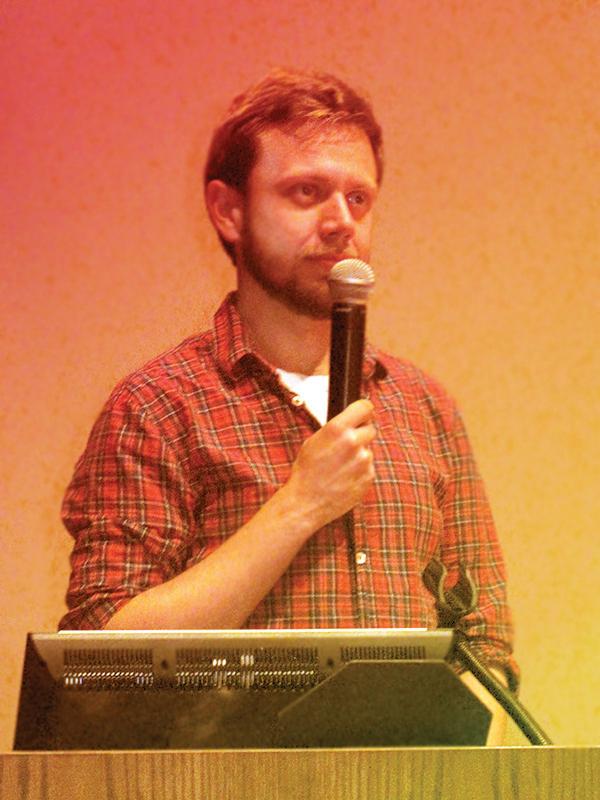
In his first weeks as a freshman, Communication senior Tim McGovern saw the comedy troupe he would one day lead. “I remember I was so impressed by Mee-Ow. The second I saw them I was like, ‘This is what I have to do,’” he says. Thus began a busy comedy career at Northwest ern, just as ‘87 alum Colbert had when he transferred to Northwestern as a junior. McGovern also joined the Titanic Players as a sophomore. This year, he’s a head writer for Waa-Mu, something that translates to his future plans. “I’d love to be a writer/performer. That would be the most optimal thing because I like doing both pretty much equally,” he says.
What does McGovern think of Colbert? “He’s the kind of performer I want to be, or hope I am, but there is no way of really knowing that,” he says.
He even had a run-in with Colbert himself. In 2006 when His Truthiness was Grand Marshall of the homecoming parade, then-freshman McGovern shouted “I love you, Mr. Noblet!” to which Colbert responded “Right back at ya!” A reporter ran over to ask what he meant, not knowing that Chuck Noblet is Colbert’s character from TV series Strangers with Candy

Zoll also plays the guitar and piano as well as jazz trombone. Andrew Bird also had a taste for jazz: he led several jazz-inspired groups.
Zoll has worked with artists from all over the country, and is currently collaborating with Northwestern rapper Jordan Looney, or J.Loonz.
As a part of her nonfiction creative writing sequence, Communication senior Jen D’Angelo met with one of her professors to discuss her writing style. Her professor complimented the humor in her pieces, but something concerned him. Alongside the humor, there was an undeniable sadness.
This dichotomy has become D’Angelo’s signature at the Northwestern comedy scene. “That is the kind of thing I’m really drawn to in terms of what I like to write,” D’Angelo says.
Although she considers herself more of a writer than a performer, D’Angelo has established quite a hefty résumé on the improv circuit at Northwestern, joining the Titanic Players as a freshman and Mee-Ow as junior.
Her work with the renowned improv group Mee-Ow, a credit she shares with ‘82 alum and comedienne Julia Louis-Dreyfus, incited ambitions to end up working in a writer’s room someday. “Mee-Ow worked so well together…and I think being in a writer’s room is very similar because it’s all these people getting together to make each other laugh and get really good material on the air,” she says.


Communication senior Olurotimi Akinosho, or Rotimi, is known for musical talent — his band, Rotimi and the Rainmakers, jammed alongside The Decemberists and N.E.R.D. last year on Dillo Day. What you might not know is that his threads make music too.
Describe your personal style.
I like tight-fit, urban to an extent but still classy, coordinated and just me.
On the East Coast, I like a lot of what Jay-Z [wears]; the classy, sophisticated look but still with street cred. Because I’m part of the hip hop culture, my style is more urban. But at the same time, when I do pop songs, I feel like my style can hit that market as well. My style is like my music, it has a huge range.
What do you wear to class? What do you party in?
To class I wear sweats. It’s cold outside, so I just wear some Northwestern sweats and call it a day, but I still got the Tims, I still got the Yankee hat on. To go out, it’s a variety of things. I like Ed Hardy shirts, and I like polos and a class look.
And the hat?
I wear a Yankees hat cause that’s where I’m from and every city I go, I want them to respect that fact–that New York boy’s in the building. And it’s fashionable.
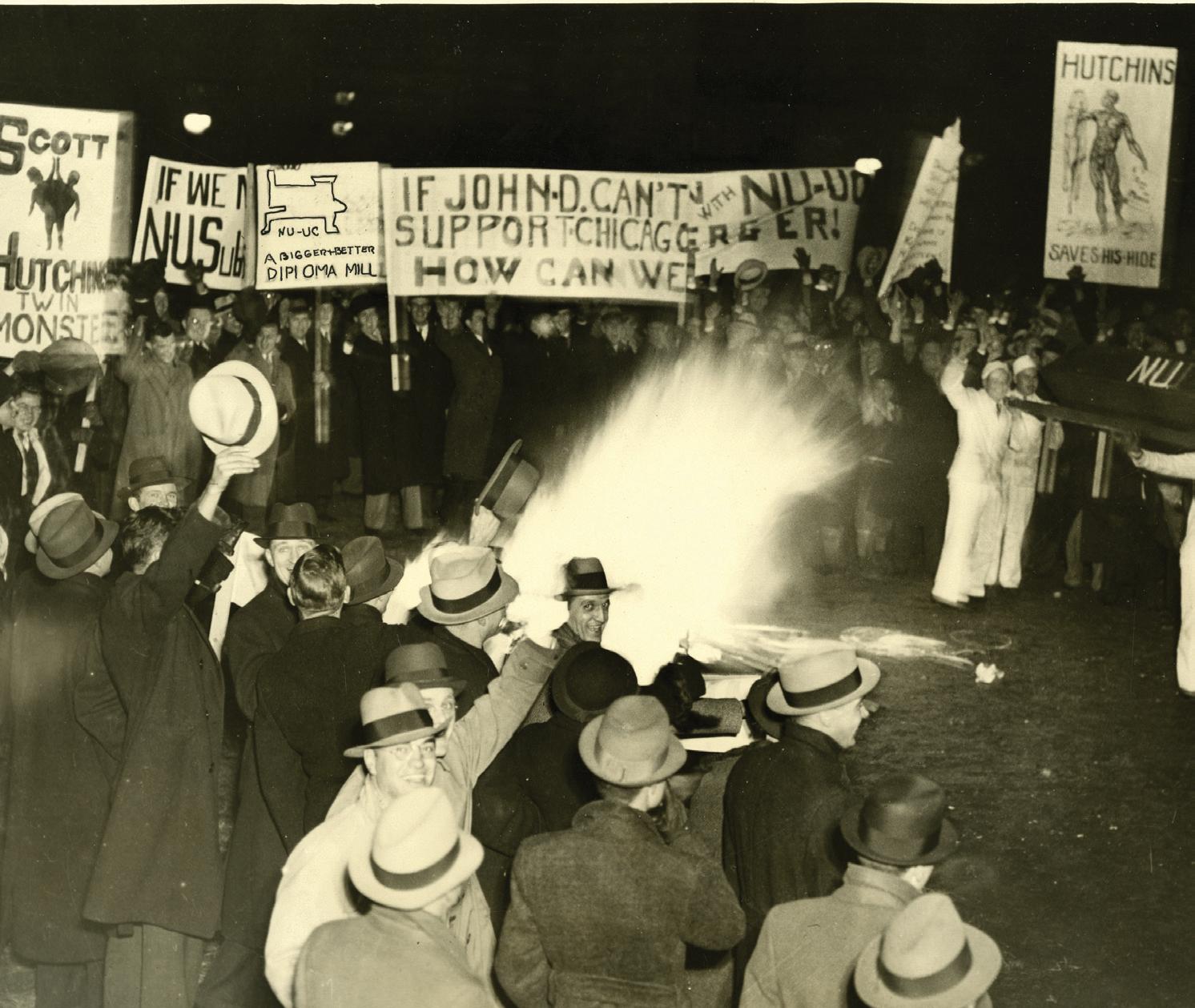
Over 158 years Northwestern has baffled, antagonized and otherwise annoyed its neighboring Chicago-area schools. Here are the highlights. By
Of all the educational institutions in and around Chicago, Northwestern has probably interacted most with its Bible-brained Methodist cousin, Evanston’s Garrett Biblical Institute. The schools have always striven for amicable, collaborative relations, but sometimes prank-loving students get in the way. On May 31, 1912, the Chicago Tribune reported 50 Northwestern students had seized six biblical students from Heck Hall, a Garrett dorm, and hurried them down to the lake.
“Then,” the paper reported, “the luckless ones were thrown in and thoroughly ‘ducked’ before they were allowed to wade from the water.” Giving the ‘Bibs’ a bath, as the act was known, usually took place in autumn when “the collegians think it a good time for eluding the police [and] capturing a few theological students.” For better or for worse, the forced baptisms of the 1910s have fallen by the wayside as a Northwestern tradition.
Matthew Leib
The Great Depression made for tough times, it but was also cause for great innovation. Out of the era sprang the game Monopoly, the car radio and the idea to merge Northwestern and the University of Chicago into a super-university spanning the Chicago shoreline. In June 1933, U of C President Robert Hutchins hatched the plan to Northwestern’s thenPresident Walter Dill Scott, who liked the idea. The proposed union would have created the “Universities of Chicago,” a three-headed behemoth of higher education with undergraduate studies portioned to Evanston, graduate work to Hyde Park, and professional education to Northwestern’s downtown campus. Referred to as the “Special Committee on an Important Problem,” the planned merger was kept a secret until December 1933. When finally made public, the news outraged Evanstonians and Northwestern students, who responded by burning effigies of Presidents Scott and Hutchins. While the plan was abandoned in February 1934, President Scott remained convinced that “the merger will become a reality at some future date.” For the sake of Willie the Wildcat, please, no.
This private college was founded by a religious group in the mid-19th century and is located in mid-sized city in Chicago’s suburbs. That’s right – Go North Western College Cardinals! From 1864 to 1926, North Western College in Naperville shared its compass-inspired name with our university.
The confusion apparently didn’t reach a tipping point until 1925, when a May 12 editorial in North Western College’s newspaper decried: “There have probably been hundreds of incorrectly written news articles, giving the university credit for victories or defeats of our athletic teams, our glee clubs and other organizations.” It also mentioned an instance during which North Western College received a $17,000 check intended for our school. This “endless confusion” prompted the paper to suggest the name North Central College, which the school adopted a year later and still bears today. No word on when Northeastern will decide to follow suit.
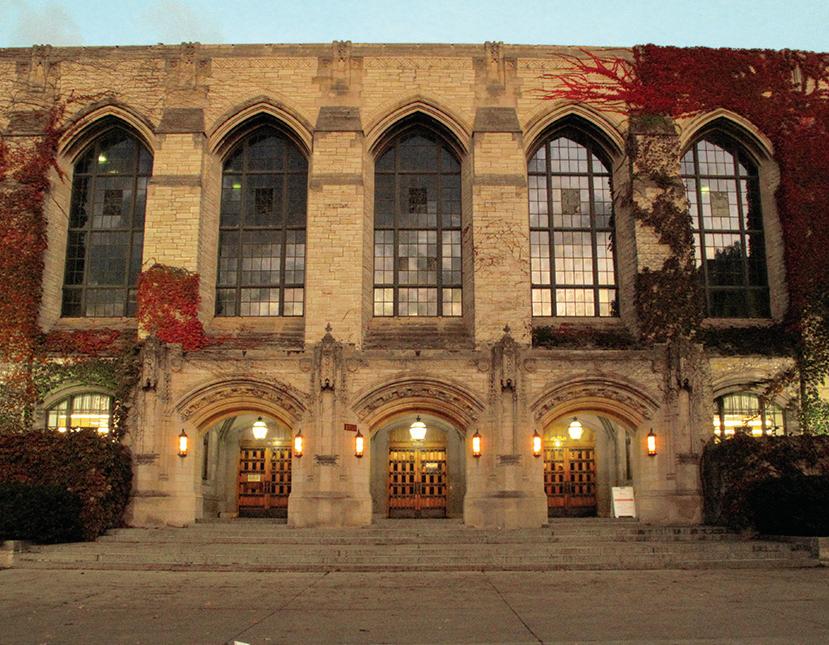
Nestled in the fluorescent concrete maze that is the Main library, Deering is a haven of relative calm and beauty. T.W. Koch, Northwestern’s chief librarian when Deering was built, was determined that the library be as welcoming and functional as possible, despite a tight budget. He wanted to create a living memorial for the late Charles Deering, one of Northwestern’s principal benefactors.
Koch approved a Gothic design for the library, even though it was more expensive than other architectural styles. Deering Library’s open feeling is partly due to its budget-conscious design: Fewer separate rooms meant lower costs for construction and maintenance. After the library opened in 1933, Koch was constantly frustrated as books disappeared. One such theft occurred in 1962, when an eighty-pound Shakespeare bust went missing. Four years later the bust reappeared. —Hannah Green
The varsity cross country team pounds the pavement every day. Here are their tips on how to get started. By Sally Slater
Kaminski (SESP sophomore)
Favorite Running Song: “Fighter” by Christina Aguilera
Favorite Evanston Route:
For a beautiful view of Lake Michigan and downtown Chicago, run south along the path by the Lakefill.
Advice for a beginner:
“Lay out your goals ahead of time, look at the big picture. Start off comfortably and build until you reach your goals. Everyone has to start somewhere…enjoy running and be smart to let your body adjust.”
Favorite Running Song:
“Born To Be Wild” by Steppenwolf
Favorite Evanston Route:
Run up north by the Baha’i Temple for a stunning view of architectural beauty and Lake Michigan.
Advice for a beginner:
How she got started:
“I decided to give it a try my freshman year of high school. I fell in love with the feeling of competing and racing. The best thing about cross country is the team atmosphere. I never would have stuck with it if it hadn’t have been for my teammates; nothing can describe the things that happen to a team when you run 10 miles together every Saturday.”
How she got started: “I started out in high school to stay in shape for basketball - and I love[d] seeing improvement and the feeling of going fast and passing people!”
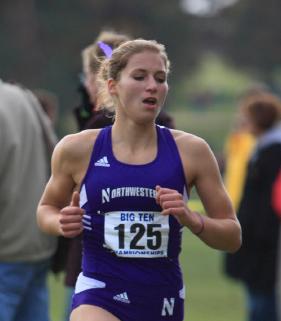
“Just have fun with it and enjoy the routes you’re doing. If you’d like to get more competitive, there’s always room for improvement of your techniques - but don’t start out [focusing] on mileage with exact heart rates. Also, get good shoes!”
If you want to ride every wintry day, The Pony Shop owner Lou Kuhn recommends a pair of studded winter tires. They provide better traction, so you won’t slip when you’re braving the weather. Anne Barnes, marketing manager at Turin Bicycle, also recommends small LEDs that you attach to either the front or rear of your bike. Adding fenders or using tires with a reflective sidewall will help keep you safe and visible.
You’ve got a tricked-out bike and a hot biking outfit, but can you store your new investment outdoors? Unfortunately, Barnes says, “We advise our customers to store their bike indoors if possible.” But if that isn’t an option, she recommends covering it with a tarp. Kuhn agrees, saying, “Use an oilbased heavy chain [lubricant] if you’re going to ride during the winter, or even if you are storing the bike outside.”
The Midnight Running Club prowls Evanston at night
Don’t let the name scare you off – the Midnight Running Club is a friendly bunch. Founder and Weinberg senior Kate Bell started taking her residents on midnight runs while she was a CA at Shepard Residential College. “I thought it would be a great way to show freshman Evanston at night,” she says. The midnight runs continue under the leadership of Weinberg sophomore Katherine Dearing. The club meets every Wednesday in the Shepard lobby at 11:55 p.m. As primarily a social group, they maintain a measured nine-to-ten-minute mile pace –the ideal rate to chat while jogging! At the moment, all of the members are Shepardites, but Dearing insists all are welcome. Two to four miles later, the Blood Runners return home, where bystanders can hear the final cries of the infamous Shepard call-and-response “Blood Chant.”
Leader: What do we want?
Group: BLOOD!
Leader: What do we do?
Group: KILL!
Leader: What do we want?
Group: BLOOD!
Leader: What do we do?
Group: KILL!
All: BLOOD! KILL! BLOOD! KILL!
Make yourself comfortable while riding. Barnes says, “If you’re not comfortable, your mind is more concerned about getting warm than arriving safely.” Barnes recommends thermal tights, gloves and jackets that incorporate waterproof GORETEX fabric. Wear a fleece lining and a hat underneath your helmet for warmth, especially if you bought a ventilated helmet. —Amanda Lerner
Forget about that guy at the frat party. Here’s how to nail that internship. By
Drew Gannon
The cruel joke of college is that after the four best years of your life, you are swiftly issued a diploma and a slap in the face welcoming you to the real world.
University Career Services is often underutilized by Northwestern students who miss out on free career advice. UCS’s Rachel Garson, assistant director of internships, and Wesley Thorne, assistant director for business, share a few gems on how to get a job.
Instead of applying for as many jobs as you can, decide which ones really fit you and your aspirations, and concentrate your efforts on them. “A lot of students play the numbers game when it comes to searching for a job or internship. They’d rather put a large quantity of applications out, whereas their focus should be on the quality of the applications,” Garson says.
Liken your résumé to the food pyramid. Your chances of getting a job are based on how well your portions of academics, extracurricular involvement and work experience fit into the chart. “Most every employer that I’ve ever worked with has indicated a very string preference for candidates who are well balanced, who have performed well, accomplished things within their organizations, as well as some practical experience,” Thorne says.
1 Dress professionally. Even though your employer can’t see you, you’ll feel more professional and self aware in a suit than in your PJs.
2 Talk in front of a mirror. You’ll have a better idea of how you’re being perceived if you can watch your own behavior.
3 Smile. Your voice actually sounds different when you smile than when you don’t, and you want to share your best personality traits through your tone.

On Gilmore Girls, Rory obsessively researches her internship boss before her first day on the job. While Rory’s approach is borderline stalking, the point is that research is essential for a successful job search. “Do basic things like researching the company website, but also understand the values, mission and vision of the company. Read industry journals for the knowledge of what’s going on in this industry and what contributions this employer is making in their field,” Thorne says.
College is a synonym for casual. In your job search, however, casual cannot exist— not even business casual. There are three steps to dressing the part for a potential job: 1. Buy a suit. 2. Wear a suit. 3. Love a suit. “To make a strong positive first impression, I would wear a suit to a career fair, an information session and to an interview,” Garson says. “I would definitely encourage that students bring back some of the formality to the job search.”
The costume shop used synthetic fur to create both the overcoat and hat. “It was kind of a simplified, contemporary take on period garments. The show itself is a contemporized take on Buffalo Bill, written almost a hundred years after,” Floyd says.
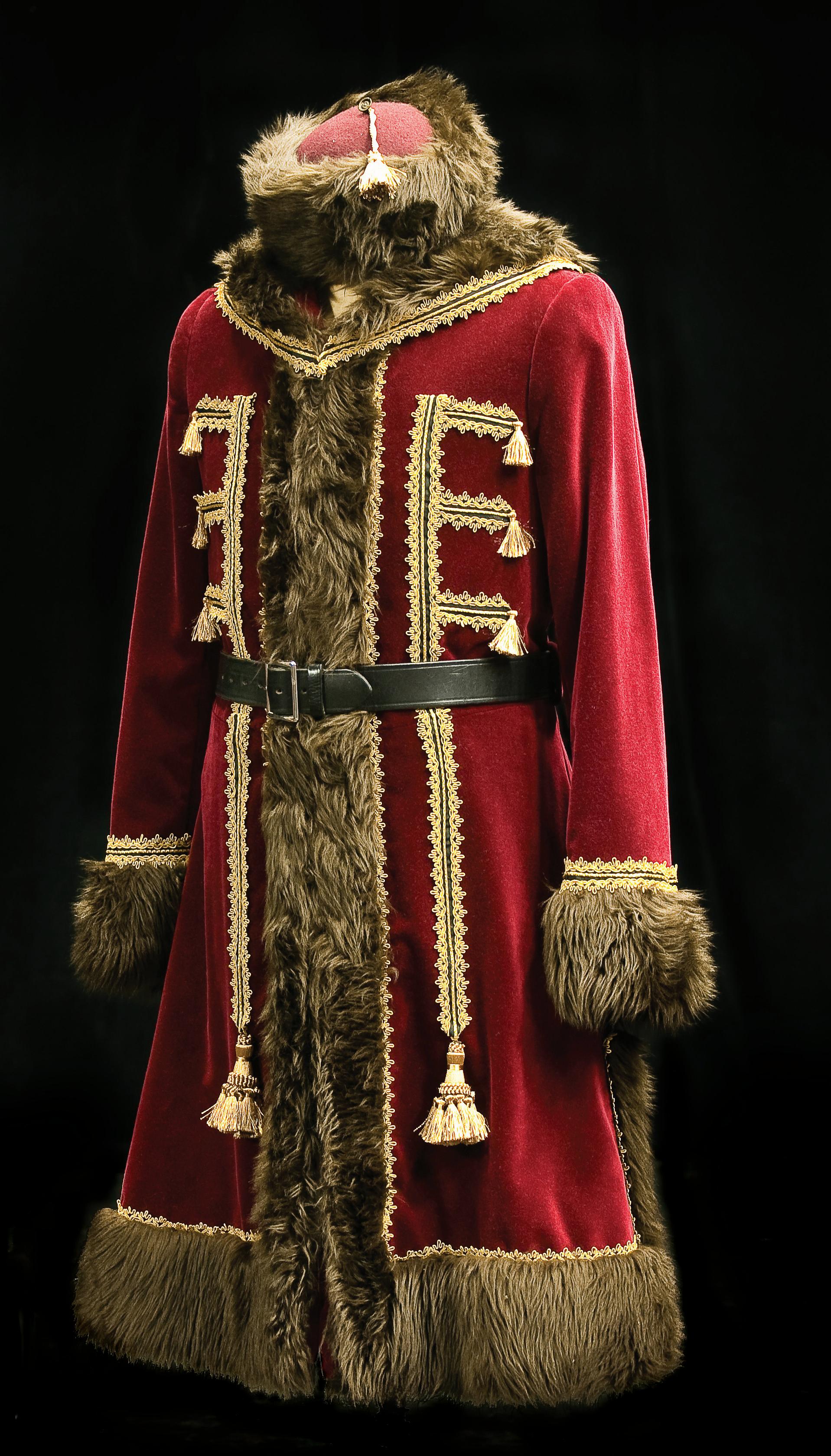

Floyd based these costumes on a photograph of an elderly Native American man wearing a buffalo hide. He originally planned to use actual buffalo hide for the costumes, but the cost prevented it. Instead the material was pieced together from a leather rug, oiled canvas and painter’s canvas before being stitched and painted. The props feature actual cow horns inserted into the base.
While studying towards an anthropology degree at the University of South Alabama, Jeremy Floyd discovered the costume shop.
He hasn’t looked back since -- nine years later, the 29-year-old graduate student studies costume design at Northwestern.
“I’m an artist, but I’m an artist that works in conjunction with others,” Floyd says.
He uses each script as a jumping-off point that helps him and the director; dramaturge; scenic, lighting and sound directors determine what story they want to tell. “We all speak with visual images as much as we do with words -- often more,” says Floyd.
“I start by drawing my research to try and find what it is in my research that excites me. Everything else is really about executing what you’ve already found,” Floyd says.
Floyd’s designs are subject to change at a moments notice: Once after seeing an actress in her costume during rehearsal, Floyd realized his design did not work. He completed a new costume by the following day. “Every designer has to be willing to adjust. There are too many variables that come into play and can cause a complete disaster,” Floyd says.
Although Floyd doesn’t rule out the possibility of working in film or television at some point in his career, he plans to remain in Chicago after graduation and pursue work in the city’s vibrant theater scene.
“There’s a form of expression that happens on stage that can never happen in a film, because with a film the audience is actually removed from the living, breathing art itself. There’s also the spontaneity and uncertainly of live theater. It could go wrong at any moment and that is what’s exciting about it,” Floyd says.
Floyd designed this coat to be worn by the Buffalo Bill Cody character in the Theatre and Interpretation Center’s production of Arthur Kopit’s Indians in November 2008. Floyd based the coat and its cut on an actual garment worn by Cody. The costume shop used new leather to create the coat but physically distressed the material by hand and with paint to create a more worn-in look.

Snack carefully–these three pantry staples pose a bigger threat than you might think, according to Holistic Health Counselor Helaine Bass.
Convenience comes with a price. “Constant chemicals outweigh any nutritional value,” Bass says. Chemicals such as glyceryl monostearate, apocarotenal and artificial flavoring are found in this signature Kraft item. “These chemicals are so foreign to the body – it’s not like the body knows how to metabolize them,” Bass says.
A better option? Melt your favorite kind of ➽ cheese onto Melba toast. It takes about the same amount of time in the microwave.
Nothing is quicker…or scarier. Hidden in the ingredients is monosodium glutamate (MSG) or, as Bass puts it, “a poison.” According to the FDA, MSG can cause headaches, chest pain, shortness of breath, nausea, weakness, heart palpitations and other scary shit.
A better option? Dr. McDougall’s Light Sodium ➽ Chicken Noodle Soup, also found at many convenience stores near campus.
The problem with chips? Once you pop, you can’t stop. “If a person could just eat the normal amount, [potato chips] are not the worst thing,” Bass says. “The problem with potato chips is you can’t just eat one.”
A better option? Taro chips, which are made ➽ from a root vegetables instead of white potatoes. —Emily Liftman


There’s not always time to grab a healthy meal between classes (no, Sbarro’s sausage stromboli does not count), so you might have to munch in the classroom. Here’s what you can easily nibble in lecture when you’re not scribbling down notes.
Subs or flatbread
Pita, hummus, cheese and grapes
Peach, grapefruit, pineapple, etc.
Pretzels & wasabi, tofu sticks & hot pot sauce
It’s easy to sneak a sandwich in the back of the room. This traditional American lunch is convenient, quick and far from messy. If you don’t have the time to make your own, there’s a wide variety of sandwiches, subs and flatbreads at 7-Eleven for $2.99 to $3.99.
A slightly different take on classroom dining, this spread is well-balanced and convenient. If you have a choice, wheat pitas have more fiber and less sodium than white pitas, and some cheeses (Swiss and cheddar) have light or low-fat options. Cosi offers shareable appetizers: hummus with bread and cucumbers at $6.49 and brie, bread and fruit for $7.29.
Jewel and 7-Eleven sell Del Monte fruit cups for about $3 each, and they have an exotic selection without sacrificing freshness. There’s no sticky cleanup — all you need is a fork, and the cup won’t get crushed and lost in your backpack. Or stop by Einstein’s on your way to class and grab a fresh fruit cup for $2.99.
These interesting combos cost $1.99 at Whole Foods. While they might seem too bite-sized for a full meal in class, they pack more dip than necessary in a small container, so if you have other dipping crackers lying around, you can make good use of one package. —Bettina Chang
You might pay for that 3 a.m. Whopper with more than a stomachache. According to a recent Northwestern study, late-night eating is correlated with weight gain. Researchers found that mice that ate normally had a 20 percent increase in body weight while those who ate when they would have been sleeping gained 48 percent.
But Sharon Fleming, Ph.D, Professor of Nutritional Sciences and Toxicology at the University of California Berkeley, says those late-night BK runs are all about energy balance. Consuming more energy than we use creates a positive energy balance, which results in increasing body fat. Using more energy than we consume shrinks fat stores in the body. Fleming argues that it doesn’t matter what type of food a person is consuming or when — if the balance is negative they will lose weight. Our advice? Visit BK Lounge judiciously. —Kate Sheridan

As far as cheap vices go, coffee is right up there with sex. But coffee requires a little more equipment than fornication (usually). Build your coffee starter’s kit with Evanston’s finest caffeinated products.
By Vi-An Nguyen
1. 8-cup French Press ($16.99, Cost Plus World Market) “French press” sounds like a sex position, but this contraption is actually the easiest way to brew the best-tasting tea or coffee.
2. Torani Peppermint Syrup ($6.99, Cost Plus World Market) Make holiday lattes last all year long. 3. Ghirardelli Sweet Ground Chocolate ($4.99, Whole Foods) For a mocha, add a half cup
We tallied up the brewing abilities of five staple Evanston cafés. By
Lizzie Schiffman
Unicorn Cafe
1723 Sherman Avenue
The slightly-cramped Unicorn Café provides an inviting escape. Their collection of loose teas more than makes up for solid, but not stellar, coffee.
french press coffee, half cup milk, three or four tablespoons of ground chocolate and sugar to taste.
4. Bodum milk frother ($24.99, Cost Plus World Market) With one of these, your mouth will be frothing, too. Use it in our mocha recipe for extra creaminess.
5. Capresso Cool Touch Coffee Grinder ($19.99, Cost Plus World Market) Grind your own
Tree Café
1100 Davis Street
Wild Tree Café’s coffee gets bonus points for dishing their tasty coffee out in big cups. If you’re itching to pick a fight with a vegan, this is not the place. You’ll probably end up with a healing crystal wedged somewhere it shouldn’t be.
1621 Chicago Avenue
This kitschy coffee house brews a decent cup o’ joe, but their specialty drink selection really rocks. Check out their variety of flavors.
joe tomorrow morning and thank us later.
6. Mug ($6.99, Cost Plus World Market) The ideal shape for latte art and pinky-out sipping.
7. Nissan Spill Resistant Tumbler ($24.00, Peet’s Coffee & Tea) Drinking from the attached cup takes the edge off a 9 a.m. discussion section.
8. Spoon ($3.99, Cost Plus World Market) Better than the flatware stolen from Allison.
The Brothers K
500 Main Street
The Brothers K’s beans come from the Metropolis Coffee Company, a local business that distributes organically grown free-trade coffee. The staff is quick to provide recommendations.
and Vail
922 Noyes Street
Oh, the plight of the caffeine-addicted north campus student. Take comfort in Linz and Vail, a gelato shop on Noyes that serves espresso so good I savored it instead of masking it with milk.
A
After two weeks at Northwestern, Henri Lauzière hasn’t had time to decorate. Five rows of wall-length shelves and two dozen books line the first-time assistant professor’s office. A handsome desk houses a phone and a few sheets of paper pertaining to his first course at Northwestern, a seminar called The Arabian Peninsula in the 20th Century.
Lauzière, 35, is an expert in Islamic movements in the Middle East and North Africa. He earned his Ph.d at Georgetown
Birbrair
Newbie professor Henri Lauzière struggles with a strange language when he stands behind the lectern. By Lana
University researching the Salafi movement, a form of Islamic extremism. Hired as part of an effort to enhance Middle Eastern studies at Northwestern, Lauzière impressed the history department with his innovative research and linguistic abilities, strengthened by a year spent in Qatar at the end of his Ph.d studies.
But before he could work on his Arabic, Lauzière first had to learn English. Though a Canadian citizen, Lauzière is from Francophone Quebec City, where English is taught but rarely mastered. He continued his graduate studies in Western Canada.

When Lauzière arrived at Simon Fraser University in Vancouver, he attended a meeting for TAs whose first language was not English. “When I said I was from Canada, everybody started laughing and waited for me to say where I was really from,” Lauzière says. “It did not occur to them that you could be born and raised in Canada and barely speak any English.”
Facing his first class at Northwestern, Lauzière is open about how new he is, asking his students if it’s normal to keep them in class for three hours on the first day. (He doesn’t.) He speaks a foreigner’s English – musically accented but occasionally too formal, an English peppered with words like “pedagogical” and “inculcate.” discussion sections stress him out, a result of his “annoying French background,” where professors lecture at students and rarely hear questions. “If you want me to just talk for three hours, at least I’ll prepare. It might be boring, but I can prepare,” he says. “But discussion is something else. You put one brick there, but the student has to put another, and together we build something, we build a wall, we end up constructing something. But if the students say nothing, what do you do?”
classroom’s magic happens behind the scenes when the TAs spring into action.
Yes, they can tell when you haven’t done the reading. Facebooking during lecture? They notice. And no, they won’t tell you what questions are on the exam.
But TAs are on our side. Recently undergraduates themselves, TAs understand us better than we do them. “I remember that going to these sections was like jabbing hot pokers in my eyes,” says Ariel Zellman, a fourth-year Ph.D student in political science. “We’re not quite at the point in the Ivory Tower where we’re supposed to be looking down at the ants below.”
Though we resent trudging to Tech for 9 a.m. discussion sections, TAs devote themselves to making time count. Many spend up to 20 hours a week preparing for sections, which they juggle with their own coursework and academic responsibilities. They craft careful lesson plans and grade endless essays.
But just as we never stop being students, they never stop being TAs. “I could be going to the bathroom or in downtown Chicago in a CVS, I’m always a TA,” says Monique King, a third-year Ph.D student studying communication sciences and disorders. “I’m never seen as a student with my own goals and responsibilities.”
Though TAs are students first, teaching has its perks, namely seeing students improve. “Teaching is so rewarding in ways that I think scholarly work is not apparently,” says Maha Jafri, a third-year in the English department. “Scholarly work is a lot of trial and error, ups and downs, and for a lot of it there are no tangible results immediately.”
And their advice? Don’t haggle over grades unless you’re certain. TAs compare grades with each other to ensure consistency, so low grades are rarely mistakes, and you will earn more respect if you worry about concepts instead of half-points. —Lana Birbrair

You’re not in high school anymore. Don’t be afraid to be the
teacher’s pet.
By Kayleigh Roberts
This quarter, you will be the perfect student. This professor is going to love you in a completely appropriate and recommendation-friendly way. You raise your hand and participate at every opportunity. The only problem? You might just be sabotaging yourself in your overthe-top attempts to win your prof over.
“You can tell the bullshitters from those who aren’t,” says Medill professor Eric Ferkenhoff.
Conventional wisdom tells us that to stand out, we need to be seen and heard. In a lecture hall setting, this often translates to “see my hand fly up and hear me share my opinion.” But simple things—like politeness, passion and respect—can leave a lasting (and positive) impression.
You may think of them as your professors’ bitches, but your teachers’ assistants often wield power over you – like what grade you’ll get in the class. Political Science TA Marissa Brookes shared some vital tips for winning your TA’s favor.
For RTVF professor Scott Curtis, starting out on the right foot means remembering not to call him by his first name before graduation. For Curtis, winning a professor over is all about manners and earnestness. He advises students to resist the urge to contribute for the sake of contributing and to keep their fellow classmates in mind during group discussions.
“You don’t want anyone who dominates or who is just talking to hear themselves talk,” he says. “Politeness means recognizing other people, and if you find that other people aren’t contributing as much, then maybe you need to back off just a little bit. … Not thinking just in terms of ‘me and the instructor,’ but in terms of ‘me and the rest of the people around me.’”
“Sometimes, at the beginning of the school year, you stand up and everyone is just looking at you and it’s really weird,” Brookes says. “I love when a student is an ice breaker. Just raise your hand and be the person to say something, anything. Ice breakers are the best. Your TA will think, ‘Thank god I’m not the only one talking. Thank god so and so raised their hand and saved me.’”
English professor Frances Paden agrees that thinking in terms of the classroom collective and making contributions that encourage contributions from others makes teachers happy.
“When students are generous and intelligent with both the text and their classmates, they’ll probably see me smile,” she says.
If you hold back in discussion, how are you ever going to stand out to that professor you admire so much? Ferkenhoff says passion will make you shine even if you aren’t the discussion leader. Passion also translates to a higher grade – not because professors show favoritism toward the passionate, but because the passionate produce better work. The reverse, however, also holds true.
“Medill is such an elite school,” he says. “It’s filled with students who are so bright, so smart, so deserving of being here, and the person who doesn’t care and doesn’t want to put in that effort – that doesn’t put them on my bad side, that doesn’t mean they’re going to be graded down, but it comes across. If they don’t care, that shows up in the reporting and the writing and therefore it reflects on their grade.”
Curtis advocates taking advantage of office hours to convey real passion to a professor. This doesn’t mean inventing an excuse to stop by or asking questions to which you already know the answer. Curtis says the students who stand out are those who use office hours as a forum to discuss ideas.
“The students I remember most and the students I’ve helped the most are the ones who have come to my office hours and talked with me,” he says. “Office hours can be a good way to really forge a bond with a professor outside of the lecture hall.”
“Sometimes the reading is so boring that you’d rather have leprosy than do it. But reading five or ten pages is better than reading nothing,” Brookes says. “Ideally, I want you to read all 300 pages, but even reading three pages gives you an edge over people in section. Once I had a section where people were literally guessing what the chapter was about. I broke down laughing. At least read something.”
“The most important thing is mutual respect,” Brookes says. “Not in that creepy authority way, but we know you’re busy. We’re busy too. Just understand that your TA is as busy as you are – or more. If you want your TA to write a recommendation for study abroad, give them at least two weeks. Your TA will love it; it shows that you’re mature.”
—Kayleigh Roberts
You don’t have to look like a newbie your first time at a bar… that isn’t the Keg. To aid in your understanding, we break down your choices. By Ryan Gallagher
A. Country of origin: Germany
B. Fermentation temperature: 45 to 55 degrees Fahrenheit
C. Yeast characteristics: Bottom fermenting. Brewers use yeasts that ferment in the wort at the bottom of the vat.
d. Color: Tend to be a lighter yellow in color
E. Flavor: Clean and crisp. You won’t taste the bitter hops as much as you would in an ale.
F. Average alcohol content: 2 to 5 percent
G. Common lagers: Bud Light, Coors Light, Heinekein, Corona, Miller High Life, Amstel Light, Busch, Keystone Light
H. Sub-genres:
A. Country of origin: Britain
B. Fermentation temperature: 60 to 75 degrees Fahrenheit
C. Yeast characteristics: Top fermenting. Brewers use yeasts in ales that ferment in the wort at the top of the vat.
d. Color: Usually darker in appearance than a lager, sometimes amber-colored or darker.
E. Flavor: Complex, rich, and somewhat bitter. Some brewers even add hints of fruit.
F. Average alcohol content: 4 to 7 percent
G. Sub-genres:
1. Pale ale: Bitter and a sweet, hoppy flavor.
*Examples: Bass Ale, Dogfish IPA, Budweiser Pale Ale
2. Brown ale: Nutty and sweet. Known for going down smoothly
*Examples: Newcastle Brown Ale, Sierra Nevada Brown Ale, Goose Island Nut Brown
3. Stout ale: Roasted coffee flavors. Often sweet.
*Examples: Guinness, Russian Imperial Stout, Goose Island Oatmeal Stout
*Pilsner/Pale lager: Light but somewhat bitter. People used to differentiate between a pilsner and a pale lager, but now brewers seem to use the terms interchangeably. Today, just think of it as a “premium” lager. Examples: Beck’s, Stella Artois, Pilsner Urquell
4. Bitter ale: Rich in hop flavor with some bitterness.
*Examples: Goose Island Honker’s Ale
5. Amber ale: Bitter but smooth. Amber in color.
*Examples: Budweiser American Ale
When it comes to parties, the Titanic Players know how to wing it. By Alex Freeman
Think of a party like your very own improv show: every new conversation is a new skit, and you have to act on your feet. The Titanic Players, long-form improv group and counterpart to Mee-Ow, divulged personal tips, suggestions and strategies it has accrued over their years at Northwestern. Weinberg senior Kati Skelton and Communication juniors Marie Semla, Emily Anderson and Danielle Calvert sat down after one of their shows to pass on their knowledge.
To attract a stranger’s attention: Semla suggests walking to the iPod and blatantly blasting the gangsta rap. Make sure he notices.
To do something: If the party ain’t bumpin’, inject a little gambling to get the adrenaline rush back. The Titanic Players suggest Horse
Races. To play, take the jacks (your four horses) out of the deck and line them up on the table. Put eight cards face down perpendicular to your horses and place bets in numbers of sips. Flip over the remaining deck one card at a time. For each suit that comes up, the corresponding jack moves one space up closer to the finish line. The winner gets to dole out however many sips he bet, and the losers have to drink their bets.
To sidestep your ex: Semla discovered one way out: “Hide behind tall people. It works really well. You can follow them out unnoticed.”
To escape a scary conversation: Stuck in small talk hell? Calvert suggests saying something awful and racist and walking away.
To make a boring person more exciting: People love to talk about themselves. Anderson asks very specific questions to make an interesting line of conversation. For example: “What would you name a three-legged cat?”
Some last advice from the improv masters: don’t talk about your major, where you live or where you’re from: everyone does that. Calvert mentions one other topic to avoid: “Don’t talk about Star Wars. It doesn’t work out too well.”
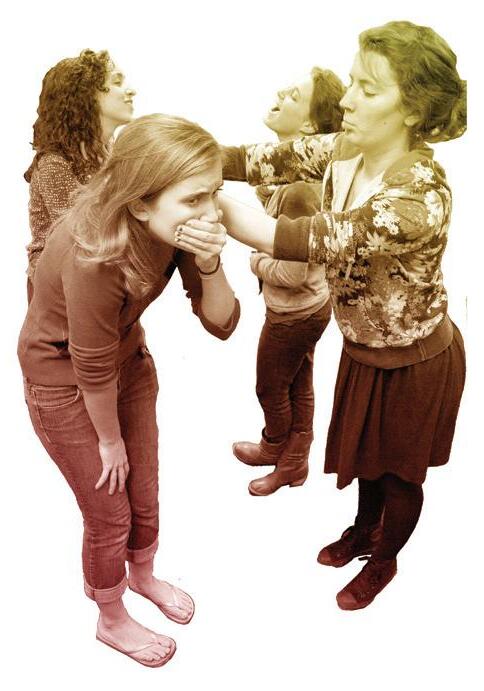
By Dan Camponovo
This is my rock. There are many like it, but this one is mine. That one’s mine, too. All of these, actually. I like to think everybody owns a little piece of this campus. We should, after what we pay in tuition, at least. Everybody’s got that one area, that one bench in the Shakespeare Garden or that particular study corral in 4 East that has their name written all over it. For me, it’s the Lakefill rocks, right at the southeast strip of the Lakefill, where the rocks still face east toward the lake but begin to curve a little south and out of the corner of your eye you can see the light pollution from the city. I’ve lived in the same house in Mechanicsburg, Pennsylvania for 17 years now. When I was four years old my family decided to install a pool in the backyard. The construction process was long and grueling, but after a few weeks we had the finished project. All the neighborhood kids would come over to swim and it was everything we hoped it would be.
deafened by the sound of the waterfall. The two quickly begin to hate the house, the waterfall and each other, and they fight constantly and their relationship nearly falls apart. Then one day, over breakfast coffee, the man looks up from the paper and asks his wife, “Do you hear that?” The wife looks up and asks, “Hear what?”
If it’s around 11:30 p.m. and I’m nowhere to be found, odds are I’m probably at the Lakefill rocks. Last year I would go almost every week and sit, staring out at the darkness, the total blackness where night meets water, or if I was in the mood the beautiful oranges and yellows of the city to the south, the waves crashing on the rocks below me, loud, deafening sometimes, spraying outward and upward, inward, sitting, thinking about everything and nothing all at once, a hodgepodge mishmash of thoughts rushing through my brain, or sometimes, blissful serenity. Just sitting and thinking, or not thinking.
I remember the first few weeks after they installed the pool I didn’t sleep a wink. I could hear it from my bedroom window, the new, unfamiliar sounds of the miniature waves crashing off of the walls, the steady flow of the water that should have been tranquil but irked me to no end. I complained to my parents about it but they told me it’d get better with time.
I remember hearing a parable when I was little: A man and a woman, madly in love, build their dream house by a scenic waterfall. They move in, only to be

The man smiles and says, “Exactly.”
They had grown to accept the sound of the waterfall into their lives. Eventually the noise of the pool waves disappeared, too, when I wasn’t actively listening for them, but from that day I could always pick them out and hone in on them from my bedroom window when I wanted to. I could ignore or generate smooth ocean waves at basically the flip of a switch. Instant tranquility.

The rocks give me the duality I have in my bedroom back home. They’re where I go when I’m feeling homesick, or maybe more accurately, when I haven’t called in three weeks and feel obligated to be homesick. Sitting on the Lakefill, looking at the old love notes or inside jokes painted on the rock faces, staring out at the vast blank canvas of the lake or the city to the south that will be my home for the next three years, awash with feeling and emotion, the sound of the waves crashing and dying around me tonight – or silence. Beautiful, beautiful silence.
Sometimes it takes a trip across the globe to appreciate what you have at home. By Tracy Fuad

I’d been traveling through the Middle East all summer: two months in the Kurdish region of northern Iraq, where my dad grew up and grandfather still lives, then three weeks in Turkey.
On this particular day, I was touring Cappadocia, a region in central Turkey where the population has lived in caves for centuries, tunneling into the earth, 10 stories deep. The four of us had exhausted ourselves exploring underground cities and hiking through valleys.
I hadn’t expected to see anyone from Northwestern all summer long. But traveling with three other Northwestern students to obscure cities in a faraway country had revived something in me. The four of us had never met on campus, but when we met in Turkey, we were something of a force. We were Mexican, American, Pakistani and Kurdish. We spoke twice as many languages, and everywhere we went, the Turks were fascinated with our diversity. As the four of us fell asleep the night before in a small hotel room built into a cave, I thought about where I was and who I was with, and it felt like it might have been a dream.
I’d bought a bus ticket to Istanbul in a last-minute decision, and was accordingly unprepared for the 12 hour ride ahead. I didn’t have an iPod or a book. I hadn’t had a cell phone in weeks, and the only things in my bag were a sour Turkish yogurt drink and my almost-full Moleskine.
It wasn’t until I actually stepped on the bus that I questioned my decision to take a 12-hour overnight trip to Istanbul by myself. The motor coach was packed with Turkish families that spilled into the aisles, and I lingered on the stairs, wondering where I’d sit, anxiously waving goodbye to the North-
western students I’d been traveling with. Though I had met the three of them only a few days earlier, parting ways made me suddenly aware of being alone.
On the bus, when a wrinkled woman made room for me in the seat beside her, relocating a small boy to another relative’s already crowded lap, I realized how tired I was. I protested, but not too strongly, already feeling the soreness starting to spread in my legs from the day’s efforts.
Later, I woke up to a woman beside me shaking my wrist, feeling a disquieting blankness before remembering — Turkey, traveling, alone. Twelve-hour bus-ride. I sat up. The women said something I didn’t understand and gestured towards the window.
Outside, the landscape was drenched in red. The sandstone towers were achingly pink and seemed to be melting back into the earth in the permeating redness. In the darkening sky above, the sun was a heavy piece of fruit, blurring my eyes in brightness as I watched it dip below the horizon.
The woman and her family and all the families were silent and transfixed, and I took out my Moleskine. The reddest thing I’ve ever seen, I scrawled.
I was silenced, too, and I sat still and let the light bleed into memory. In the penetrating light our faces were translucent, revealing the blood beating beneath, and I felt for the first time the wayward pull towards home.
Back at Northwestern, life is lovely and full of the familiar comforts I’d missed. I can strike up a conversation with anyone – in English. I haven’t run into a squat toilet yet, and I have a working cell phone at my convenience. I’ve also yet to see a sunset so red, or a moment so immersive. But I know all that is not as foreign as it seems. One of the best days of all my faraway months was spent with Northwestern students. So though I know I’ll be back, for the miscommunication and strange experiences and sunsets, I am happier than ever to be here.



By Jamie Wiebe
Silence your neighbors: My neighbors hold late-night cookouts in their backyard. Fine and dandy for them, I’m sure, but I work at 9 a.m. and appreciate sleep. Enter Ambiance ($0.99), an amped-up white noise generator. I usually select a calming thunderstorm, but their massive library of sounds appeals to anyone. Want to fall asleep listening to a distant revolutionary battle? Someone brushing their teeth? A womb? Go for it.
Skip the line: Thanks to Northwestern’s love for Chipotle, the line stretches out the door by 5 p.m. But now, equipped with Chipotle Mobile Ordering (free), I no longer wait. From the comfort of my couch, I build the perfect burrito. Then, bike to Chipotle and grab my food. Done.
Eliminate stress: It’s a little sadistic, but download Pocket God ($0.99). You’ll have free reign of a tiny island inhabited by pygmies. Feed them coconuts. Teach them to fish. Enjoy the ways the to kill them: Pygmies eaten by sharks, thrown in a volcano, thrown in a grave and revived as zombies.
Tuesday
Northwestern: Stay home and tune into Northwestern v. NC State men’s basketball game. Watch at 6 p.m. CT on ESPNU.
Evanston: If you’re a jazz musician or a blues lover, go to Bill’s Blues (1029 Davis St.) for Blues Jam at 8:30 p.m. Free admission for musicians and guests.

Schedule your homework: The iPhone boasts an impressive cadre of personal organizers, but iProcrastinate (free) dominates when it comes to managing all the assignments that come with your classes. You can divide homework by priority level – so you skip that reading when there’s a five-page essay due.

Wednesday
Evanston: One bite of pizza at Burt’s Place and you’ll never need to go anywhere else. 8541 N. Ferris Ave., Morton Grove.
Chicago: Everybody needs a little German in them. Visit Chicago’s Christkindlmarket this week from 11 a.m. to 8 p.m. Free. (www.christkindlmarket.com)
Thursday
Northwestern: Watch the women’s basketball team play Clemson at home at 7 p.m., Welsh-Ryan Arena. Evanston: Skip the theater district for Rogers Park’s own Side Project Theatre. (www.thesideproject.net)
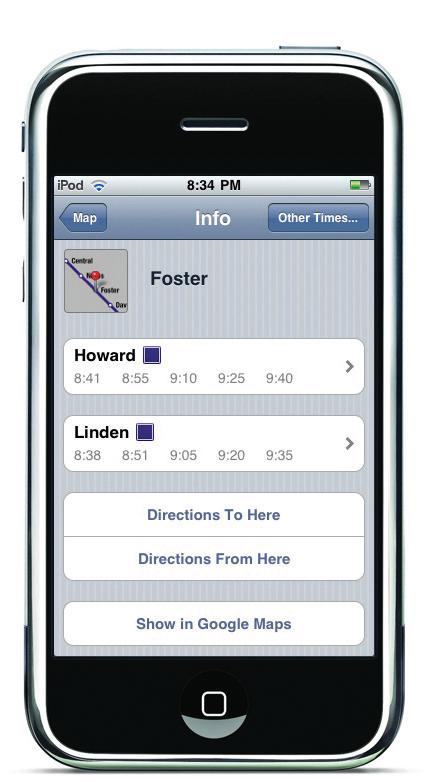
Travel downtown: I fell in love with the iTrans series of iPhone apps during a stay in New York City. iTrans NYC got me to work on time and home from LaGuardia. iTrans CTA ($1.99) helps out with handy time charts and simple directions to any location in the CTA system.
Friday
Northwestern: See Inglourious Basterds at 7 p.m. and 10 p.m. in the McCormick Auditorium (Norris). $3. Chicago: See the Neo-Futurists’ Too Much Light Makes the Baby Go Blind at The Neo-Futurarium, 5153 N. Ashland. $9 plus the number you roll on a die.
Saturday
Evanston: Check out a new restaurant on the Evanston scene: The Cellar at 820 Clark St. Chicago: Run off stress at the 2009 Santa Shuffle 5k. (www.santashuffle5k.com) —Hallie Busta