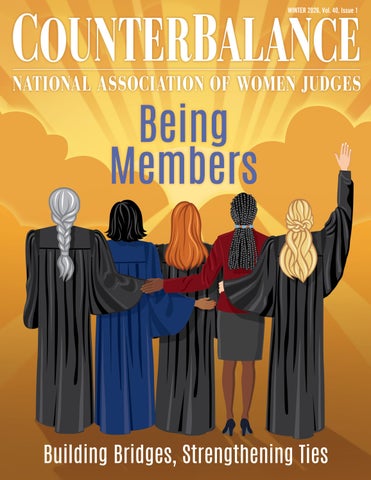
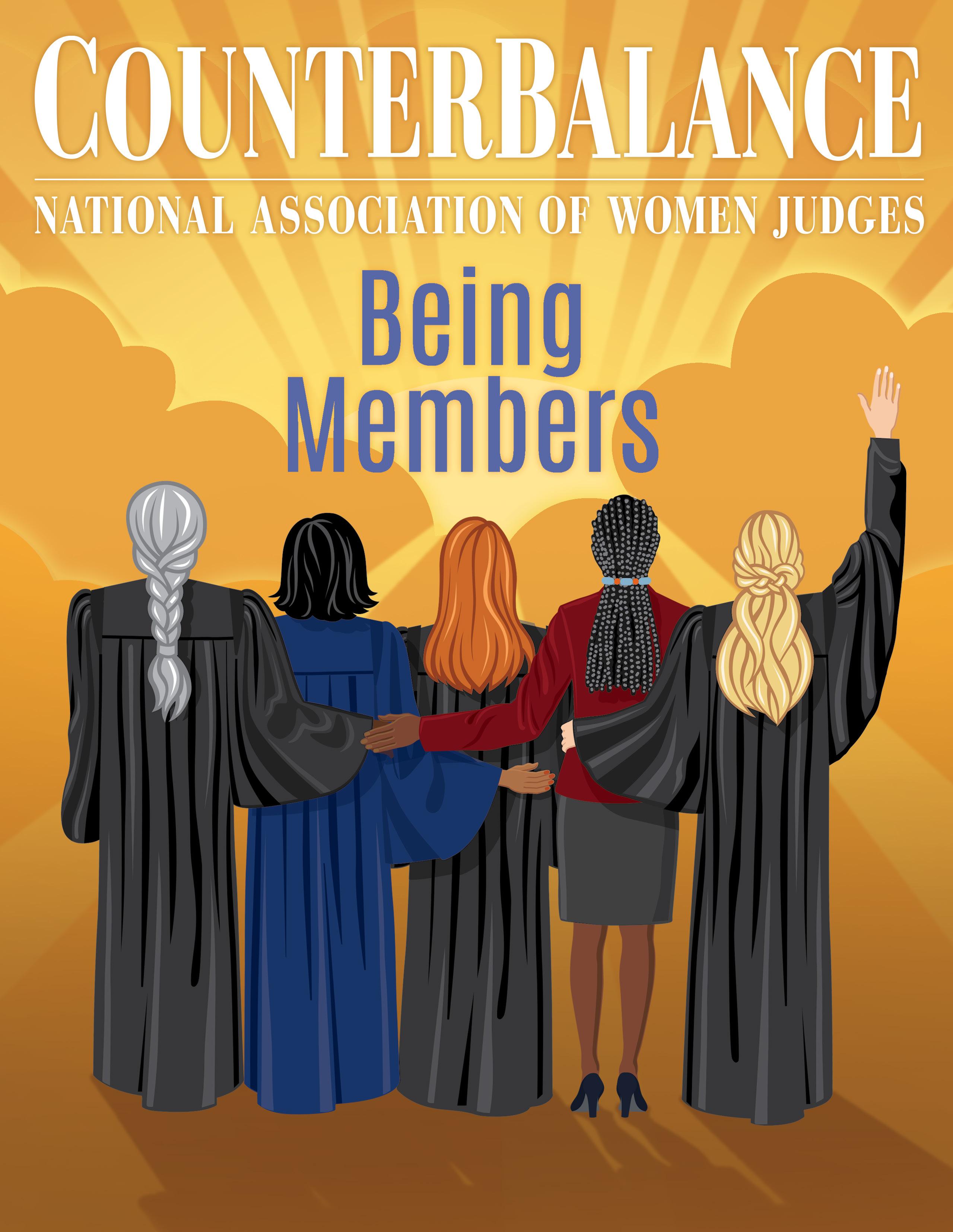
Building Bridges, Strengthening Ties
MISSION
MISSION
NAWJ’s
NAWJ’s
BOARD
PRESIDENT
Hon. Pamela Washington
Anchorage District Court (Ret.)
PRESIDENT-ELECT
Hon. Heather Welch
Marion Superior Court (Ret.)
IMMEDIATE PAST PRESIDENT
Hon. Michelle M. Rick Michigan Court of Appeals
VICE-PRESIDENT DISTRICTS
Hon. Amy Blake Massachusetts Appeals Court
TREASURER
Hon. Karen Donohue
King County Superior Court
FINANCE COMMITTEE CHAIR
Hon. Mary Margaret Rowlands
Summit County Common Pleas Court
SECRETARY
Hon. Leslie A. Stroth
Bronx County Hall of Justice
INTERNATIONAL DIRECTOR
Hon. Bernadette D’Souza
Civil District Court in New Orleans
ABA DELEGATE
Hon. Marcella Holland
Circuit Court for Baltimore City
PROJECTS COMMITTEE CHAIR
Hon. Carmen Velasquez
Supreme Court of New York
RESOURCE BOARD LIAISON
David Horrigan
Relativity
STAFF
EXECUTIVE DIRECTOR
Laurie Hein Denham, CAE
DIRECTOR OF DEVELOPMENT
Francie Teer, CFRE
OPERATIONS
Brian Gorg
MEMBERSHIP COORDINATOR
Janelle Mihoc
FINANCE
Megan Collie

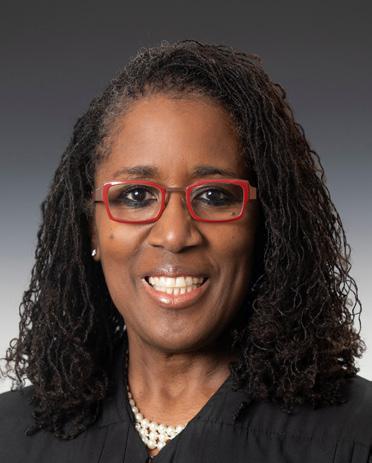
Building Bridges, Strengthening Ties
uilding bridges and strengthening ties begins with a secure foundation. Every bridge that lasts is built on something stable and rests on something solid—clear purpose, shared values, and a commitment to stand together. For us, that foundation is our mission. It is what we stand for, what we strive to advance, and why this organization exists. And like every strong structure, that foundation is supported by individual building stones—each member bringing strength, perspective, and presence. When even one stone is missing or disengaged, the bridge is weaker. When each stone is placed with intention, the bridge holds—and carries others safely forward.
A good member shows up—not all the time and not in every way, but with intention. Showing up might mean attending a program, joining a committee call, mentoring a newer member, sharing an idea, or simply reaching out to another member to say, “How can I support you?” Sometimes showing up is visible; sometimes it is quiet. Either way, presence matters. When members engage, even in small ways, the organization comes alive.
Membership is more than paying dues or checking a renewal box. It’s about connection. It’s about belonging. It’s about being part of something bigger than ourselves.
As we focus on membership in this issue of Counterbalance, I invite you to reflect for a moment—no judgment, just honesty. Am I the kind of member I would be glad to welcome into this organization? It is a question worth asking not only at renewal time, but throughout our membership journey, as our roles, responsibilities, and capacity evolve.
Membership is more than paying dues or checking a renewal box. It’s about connection. It’s about belonging. It’s about being part of something bigger than ourselves. It’s about investing—not just financially, but personally—in an organization committed to strengthening the judiciary, supporting one another, and advancing justice in meaningful and lasting ways.
So, what does make a good member?
A good member is curious and open— curious about the work we do and open to perspectives that may differ from their own. Our organization is strongest when we listen generously, learn continuously, and engage thoughtfully with one another. Growth rarely happens in comfort, and our willingness to engage across differences is part of what gives this community its depth and credibility.
A good member also understands that this organization is not “they.” It’s us. There is no separate group carrying the mission forward while everyone else watches. Every program, every initiative, every opportunity to make an impact exists because members choose to contribute their time, talent, and insight. Whether that contribution is highly visible or behind the scenes, it matters.
A good member supports the mission beyond personal benefit. While professional development, networking, and education are valuable benefits of membership, they are not the destination. The destination is impact. It is advancing justice, supporting women in the judiciary and legal profession, and strengthening public trust in our courts. A good member asks not only, “What do I gain?”
We want your ideas, your energy, and your commitment to this shared work.
Dues help keep the lights on. Members give this organization its life and purpose.
but also, “What can I contribute?”
And yes, let me say this plainly—we don’t just want your dues. We want you.
We want your voice in conversations that shape our direction. We want your experience and perspective informed by your courtroom, your community, and your lived reality. We want your leadership, whether it comes with a title or simply with a willingness to help when help is needed. We want your ideas, your energy, and your commitment to this shared work. Dues help keep the lights on. Members give this organization its life and purpose.
It is also important to acknowledge that membership looks different in different seasons. Some seasons allow for deep involvement and leadership. Other seasons require us to step back and focus on professional demands, family responsibilities, or personal well-being. Being a good member does not mean doing everything. It means staying connected. It means remaining committed to the mission and to one another, even when your capacity changes.
Our organization is only as strong as the collective engagement of its members. When you participate, you shape our direction. When you lead, you inspire others. When you stay connected, you help ensure that this community remains vibrant, relevant, and responsive to the challenges facing our profession and our society.
Strong bridges are not built all at once. They are strengthened over time—through consistency, trust, and care. They endure because people continue to invest in them, maintain them, and rely on them. In the same way, this organization is strengthened by members who remain engaged over time, who continue to believe in its purpose, and who support one another across differences, distances, and demands.
Let’s be the bridges- strong enough to support one another—and wide enough to carry this work forward for those who will come after us.
Thank you for being part of this community. Thank you for showing up in the ways you can. And thank you for helping strengthen the ties that hold us together.
Hon. Pamela Washington President
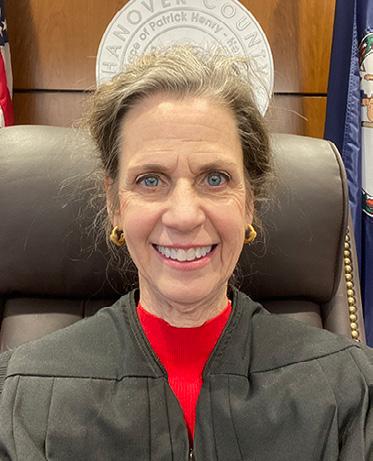
Welcome to the First issue of Counterbalance 2026!
he focus of this issue is the theme of President Washington’s tenure – Membership. We are so fortunate to have her serve as President and remind all of us of the importance to reach out to others and provide a sense of belonging, inclusion and not exclusion. President Washington experienced a diverse path in which she found herself a “rare bird” and it was fortunate that she found NAWJ as place of support. Many of us may have had similar
experiences which make her words not only thoughtful but inspiring.
The article by the Honorable Ann Breen Greco is a must read. There is an entire generation that found themselves isolated during COVID. Many were alone during a formative period of their lives. This isolation has manifested itself in depression and elevated suicide rates. “Remembering Jacob” is a salute to his mother Amanda Simmons and her efforts to end child abuse in institutions.
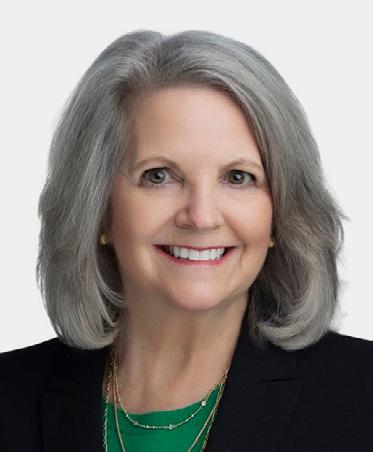
We thank the many volunteers for their time and resources to providing education and connection within the judicial community and opportunities for those in their local communities.
Also included is an article announcing the Retired/Senior Judges Committee new initiative. Retired Judge Joan Churchill outlines the many opportunities for continued engagement for our retired judges. This is an excellent program which will permit NAWJ to continue to tap into the history and resources of our retired members.
Finally, for those of you that were unable to attend the Annual Conference in Boston – please read the article by the Honorable Amy Blake detailing the many wonderful experiences including a reception at the historic courthouse.
Hon. Victoria A.B. Willis
Vice-President Publications
ver the past year, our Districts held nine Color of Justice programs, two Women in Prison programs, and two MentorJet programs. In addition to the Annual Conference in Boston and Midyear Meeting in Ann Arbor, we hosted eight webinars for a total of twenty-three programs impacting nearly 2,000 individuals. We thank the many volunteers for their time and resources to providing education and connection within the judicial community and opportunities for those in their local communities.
This was also a year of collaboration with several partner organizations. We worked with the National Judicial College and Federal Bar Association to issue a statement on judicial security, We held joint webinars with the National Association of Women Lawyers and the Academy of Court Appointed Neutrals and co-sponsored a half day online conference with the Williams Institute at the UCLA School of Law on current legal topics affecting the LBGTQ community.
In keeping with Judge Washington’s focus on membership this year, we have added new initiatives to provide greater engagement for members. These initiatives came from last year’s membership survey, and your input was invaluable. We will be hosting bimonthly Zoom gatherings by bench to allow members to discuss issues related to their specific courts. The first meeting will be in February with
members on the Federal bench. We will pilot the first Regional Meeting hosted by District 10 in Minneapolis, MN June 5-6. And we will launch a New Judges Seminar prior to the start of the Annual Conference for judges who have been on the bench 1-5 years. Details regarding all three initiatives will be provided soon.
Looking ahead, we invite you to mark your calendars for upcoming events: our Midyear Meeting Alaska Cruise, May 17 – 24th, (click to register), and our 2026 Annual Conference, October 15-17 at the Roosevelt Hotel in New Orleans, LA. Looking farther ahead, the 2027 Annual Conference will be October 7-9 at the Marriott Hotel in Salt Lake City, Utah.
These events and initiatives would not be possible without our dedicated team, Megan Collie, Brian Gorg, Janelle Mihoc, and Francie Teer. I am grateful for their dedication to serving our members and larger community.
Thank you for being part of NAWJ and I encourage you to invite your colleagues. Your support will help us accomplish even more in the coming year!

Laurie Hein Denham, CAE Executive Director
n keeping with President Washington’s theme, I began to think about what do we mean by membership? Webster’s definition of membership is “the state or status of being a member.” It then defines member as “one of the individuals composing a group.” Not particularly helpful when pondering what membership means but it does provide some insight. Membership is the instrumental element of a whole –without it – the whole does not

exist. So, in essence, being a member of NAWJ is instrumental to the existence of NAWJ.
When you are born, you become a member of a family – good or bad you have no choice – as the saying goes you can pick your friends but not your relatives. As you mature, you may play sports, engage in dance, join a club of interest, take music lessons that result in your participation in an ensemble, a choir, an orchestra or a band. And like all of that, becoming a judge is a form of joining another group.
We are all very fortunate in our
careers – as being a judge is an honored profession. We have worked diligently to attain this recognition, and this work was for the most part solo. Once we attain the position, we are thrust into a world without any frame of reference – nothing truly prepares you for the weight of being a judge. Not only the time commitment, but the everlasting impact your decisions make on the lives of others. We move

from being an advocate for a specific point of view to seeing the whole.
Most of us began our judicial career trying to sort out a lot of ancillary issues first – where do I park, where is the bathroom, which courtroom am I in, what is on my docket, how do I manage the docket, what is the process after the decision is rendered, etc. Because like all of us, we had yet to observe the backstage of the role of the judge. The paperwork, the research, the daily procedural matters that must be addressed after everyone leaves the courtroom. And
some may have been fortunate to have a mentor or friend to help with these issues, but even in guidance, we eventually forge our own approach and philosophy.
If you have read this far you may be wondering where this article is headed, and I will let you know now. Membership in NAWJ affords each and everyone of us with a family – a group of
educational opportunities but also the rare ability to connect with others and to share and learn and grow in a safe environment.
For me, the personal interactions with others, the shared conversations and concerns, and the support that I have gotten following meetings has left me thankful for this organization and each of its members. I stay in
equally dedicated souls who unlike relatives, will not critique but will support you. You can be a member and take advantage of the offerings online, but you will be missing the most valuable asset – the personal connections.
While each state may have its own unique judicial system –people are universal. There are difficult people everywhere. The challenges of coordinating staff on limited resources, and cases that still haunt us – trouble us – worry us – we all experience these things. During my time in NAWJ, the meetings not only provide exemplary formal
contact and check on my fellow members and they check on me. We are “all in this together.” So yes, I joined this group because I wanted to be a member and in so doing, hope that I have given back to the other members and to the organization of NAWJ.
Hon. Victoria A.B. Willis Vice-President Publications 15th Judicial Circuit
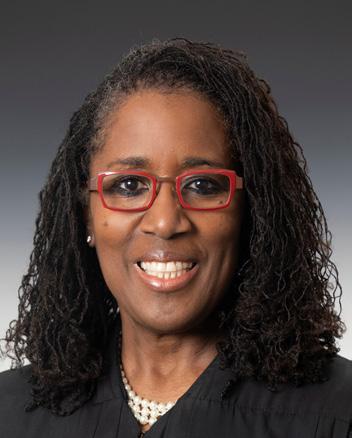
Finding Belonging, Leadership,
here is a moment in The Wizard of Oz when Dorothy opens the door from her black-and-white world into full color. Everything is unfamiliar—brilliant, overwhelming, and beautiful—and she stands there

alone. I found myself standing at that same doorway—alone, too— when I stepped onto the bench.
I was born in New Orleans in 1962, a city rich with culture, history, and contradiction. It shaped my earliest
Hon. Pamela Washington Anchorage District Court
understanding of community, resilience, and voice. But in 1975, my family moved across the country to Anchorage, Alaska—a move that set me on a path that would forever change my life.
It was my first time on an airplane. My first time seeing snow. My first time witnessing the sun shining at midnight.
It was also the first time I was exposed to the word “minority” at a gut level and understood, for the first time, that I was one.
Alaska was a brand-new world. Its vastness was breathtaking, its beauty undeniable. But it was also where I learned to navigate spaces where I was often the only Black person in the room—where doing life in my skin would be different, and where “firsts” were not abstract ideas but lived experience.
eventually onto the bench. In 2010, I was appointed to the bench in Alaska by Governor Sean Parnell. In the time leading up to my appointment, the previous six openings on the Alaska trial court bench had been filled by white men. Each time a woman applied, there was speculation about whether this appointment would finally shift the pattern. When my name was forwarded as one of four finalists, my race was added to the conversation.
By the time I walked into my interview with the governor, I knew the elephant was already in the room.
it did not weaken my candidacy—it clarified it. I wanted to acknowledge reality so I could confidently lay out why I was, on the merits, the best choice. My qualifications, experience, and readiness to serve deserved to stand on their own.
When I was appointed, the weight of being the first did not disappear—it intensified. The robe carried expectation from every direction. I felt the responsibility not only to serve justice faithfully, but to prove—repeatedly—that the appointment was earned. That kind of pressure is exhausting when carried alone.
I learned early how to observe before speaking, how to read a room before entering it, and how to carry myself with both confidence and caution. In many spaces, I was not only the only Black person—but also one of very few women. Alaska taught me resilience, adaptability, and the quiet strength that comes from learning how to stand alone without becoming hardened by it.
I also knew he was under pressure. The daily news had reported on the pattern of judicial appointments, and public scrutiny was growing. What was less visible—but just as real—was the pressure I felt. I decided to address the racial dynamic directly, so it would not linger unspoken.
I said, “If you appoint me, naysayers will swear the only reason I was appointed is because I am a Black woman. If you do
Yet even then, I was not entirely alone. Women judges in Alaska— who were themselves navigating a judiciary shaped by white men— encouraged me. They understood the scrutiny, the unspoken rules, and the resilience required to persist. They reminded me that I belonged—not because I was exceptional, but because I was qualified, capable, and chosen. Their support softened the sharpest edges of isolation.
Leadership, and Purpose in NAWJ
not appoint me, supporters will swear the only reason you did not appoint me is because I am a Black woman.”
Still, I needed more. I needed a place beyond my jurisdiction—a broader community where my questions, fears, and aspirations could breathe.
Those early lessons followed me into adulthood, into the law, and
That dynamic had always played a role in my advancement. Naming
I thought again of Dorothy— standing in Oz, far from home,
trying to make sense of unfamiliar rules. Courage carried her forward, but courage alone did not give her direction.
Another image surfaced—one grounded not in fiction, but in American history. I thought of Ruby Bridges, the little girl from New Orleans who walked to her firstgrade classroom at William Frantz Elementary School, surrounded by hostility, escorted by U.S. Marshals, only to find herself alone after students were withdrawn and teachers refused to teach.
What sustains me most about Ruby’s story is not only her courage, but the teacher who came all the way from Boston to teach her—creating safety, dignity, and possibility inside that classroom.
As a new judge, I needed that teacher.
I found her—in NAWJ.
In NAWJ, there were judges who looked like me. That mattered more than I can fully explain. There is something deeply affirming about seeing your face reflected in others—about knowing you
are not an anomaly, but part of a continuum. Representation, in that sense, was not symbolic. It was sustaining.
What I found in NAWJ was a vibrant tapestry of women judges— each bringing her own background, triumphs, and challenges. I was welcomed into a community where rich diversity was not just welcomed—it was celebrated.
NAWJ conferences were refreshing—life-giving in ways I did not know I needed. Gathering felt less like a professional obligation and more like a family reunion. There is nothing quite like letting your hair down, relaxing, laughing, and enjoying the company of other judges who understood when it was time to carry the robe—and when it was time to set it aside.
Those colleagues became family friends. NAWJ nourished not only my professional growth, but my spirit.
Like the Emerald City in Dorothy’s journey, NAWJ was the place where I came to understand that I already possessed everything I needed and it was necessary for me to show up
fully as myself- boldly and unafraid. It offered clarity, companionship, and confirmation at a time when all three were crucial.
Through NAWJ, I came to understand that my presence on the bench was not only about representation, but about responsibility—that I stood on Ruby Bridges’ shoulders, and that I would, in turn, bear the weight of women who would one day stand on mine.
Today, when I reflect on my journey—from a little girl leaving New Orleans for Alaska, to a young woman learning how to exist “an only one” in the room, to the first African American woman appointed to Alaska’s judiciary—I am certain of this truth: NAWJ was essential to my becoming.
I often think of Ruby. She walked into a classroom alone, until one teacher chose to stand with her. NAWJ has been that teacher for me: present, steady, and committed to ensuring that those who walk first do not walk alone.
NAWJ is home—my home—and for me, there is no place like it.
Author’s Note
Several years after my appointment, I ran into the governor’s wife. She shared that appointing me to the bench was one of the best decisions he made as governor. I teared up—grateful, not just for the affirmation, but for the reminder that integrity, excellence, and perseverance matter.
I am deeply honored to serve as the 46th President of the National Association of Women Judges. This essay is offered in gratitude—to the women judges of Alaska who encouraged me when the path felt narrow, and to NAWJ for creating a space where learning, leadership, and belonging coexist. If you have ever felt isolated or unseen, know this: you are not meant to walk alone. At NAWJ, we walk with you.

All three of them are activists for an end to these child abuse institutions. Their work supported Paris Hilton’s advocacy which was instrumental in the passage of federal legislation known as the Stop Institutional Child Abuse Act, officially signed into law on Christmas Eve, December 24, 2024.
Now Amanda Simmons has suffered an unbearable loss. Her only child, Jacob Alexander Dacierno, born January 30, 2005, in Mountain View, California, passed away suddenly on the morning of August 12, 2025, in Salt Lake City, Utah, at just 20 years old. He is described as “a bright light lost too soon.”
for shop classes, which quickly became his passion.
In adolescence, Jacob began facing depression—a battle that persisted despite every available form of treatment. On the day before his death, he suffered a severe depressive episode. Then, in the early hours of Tuesday, August 12, he tragically lost his battle and took his own life. Even in death, Jacob continued to give. He donated heart valves to someone in critical need.
When Jacob learned, shortly prior to his death, that his mother was to receive the Jack Berman Award of Achievement to be presented by the California Lawyers Association’s New Lawyer Section, he expressed his pride in her work. The award
Continued on page 12
or those of us who were in the American Bar Association’s House of Delegates meeting in 2023 we will never forget Amanda Simmons and her colleagues, Chelsea Maldonado and Caroline Cole. Each of them gave an impassioned presentation about the abuse they suffered at institutions and each received a standing ovation.
Despite entering the world two months premature and spending his first month in the NICU, Jacob quickly demonstrated exceptional coordination and creativity. He thrived in structured environments. During the COVID-19 shutdown, he excelled as a straight-A student. But when schools reopened, he struggled to adjust—except

Hon. Ann Breen Greco Independent Administrative Judiciary Professional
Cataloging Opportunities for Retired Judges to Advance the Independence of the Judiciary to Preserve the Rule of Law
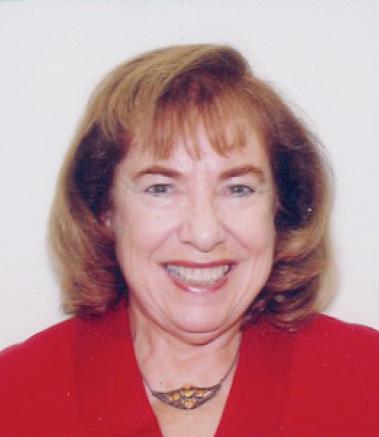
By Joan Churchill, Chair, Retired/Senior Judges Committee

he Retired Judges Committee is engaged in an exciting new initiative to further our core missions of promoting the independence of the judiciary, an important component of protecting the rule of law. With NAWJ’S large membership of retired judges, NAWJ presents a resource of former judges potentially interested in joining, in their individual capacity, advocacy efforts that seek support from retired or former judges. In response to a request from the NAWJ Judicial Independence Committee, our Retired Judges Committee formed a Subcommittee on Amici Briefs and Public Statements in Defense of the Rule of Law
and Judicial Independence, to design a structure for an information exchange through which advocacy groups defending the Rule of Law and Judicial independence can provide information to retired NAWJ members who may be interested in learning of advocacy opportunities that they might wish to support by Amici briefs and public statements in their personal capacity.
The Subcommittee is the process, on the one hand, of identifying retired NAWJ members potentially interested in learning of particular advocacy opportunities that they might wish to join in their personal capacity, while,
on the other hand is seeking to identify groups or individuals engaged in advocacy on behalf of the judiciary who are seeking support from former judges. It is understood that this effort does not and will not involve any endorsement by NAWJ and must remain nonpartisan and a matter of personal choice.
The Subcommittee has set as its next focus: identifying those former and retired judges who are NAWJ members, who wish to be advised of proposed amicus briefs and other actions directed at upholding the rule of law and preserving judicial independence, so they may decide whether they wish to participate individually in them.
The Subcommittee also plans to contact groups or individuals, engaged in such efforts, to request that they let us know of their specific efforts for which they seek support, so we can inform our retired members of the opportunities to sign on to efforts, in their individual capacity, in which they may be interested.
Subcommittee members are aware, so far, of the following individuals and groups currently engaged in such
efforts:
•Judge Nancy Gertner (Ret) and
•Justice Peggy Quince (Ret) –both NAWJ members
•Judge Michael Luttig (Ret)
•Attorney Paul Kiesel, under the banner Speak Up for Justice, which is focused on judicial safety in the face of threats to judges and their families,
•The Round Table of former Immigration Judges, organized by Immigration Judge Jeffrey Chase (Ret), focused on immigration cases and initiatives.
The membership at large is invited to notify our Subcommittee of any additional advocacy activities which might be appropriate for interested retired judges to join in their personal capacity.
Meanwhile, the Subcommittee plans to focus on creating a list of our member retired judges who wish to be informed of opportunities to join amici briefs or op eds, or other statements of support for the courts of which we become aware, so they can be informed of the specific topics and may choose whether to sign on to any in their personal capacity.
Remembering Jacob
Continued from page 10
honors the legacy of Jack Berman and recognizes young lawyers who have made outstanding contributions to the public, the judiciary, or the profession. At a Joint Section ceremony on September 12, 2025, she was given this award in recognition of her extraordinary impact on the profession.
Since her appearance at the House in 2023, Amanda has been active with both the ABA’s Judicial Division and the National Association of Women Judges, making presentations, moderating panels, and writing articles. She is one of the few “lived experience” attorneys publicly advocating against institutionalized abuse. She is a powerful advocate for the rights of vulnerable youth.
As Amanda mourns the loss of her beloved Jacob, the ABA’s Judicial Division and NAWJ offer her support and a commitment to continue the need for mental health work to focus on suicide prevention to honor Jacob’s memory, his gentle spirit, perseverance, and final act of love through organ donation. In his memory, the NAWJ has made a donation to the Utah Humane Society.
Massachusetts Appeals Court Vice-President Districts
John Adams
Saturday night Gala
Hon. Amy Blake

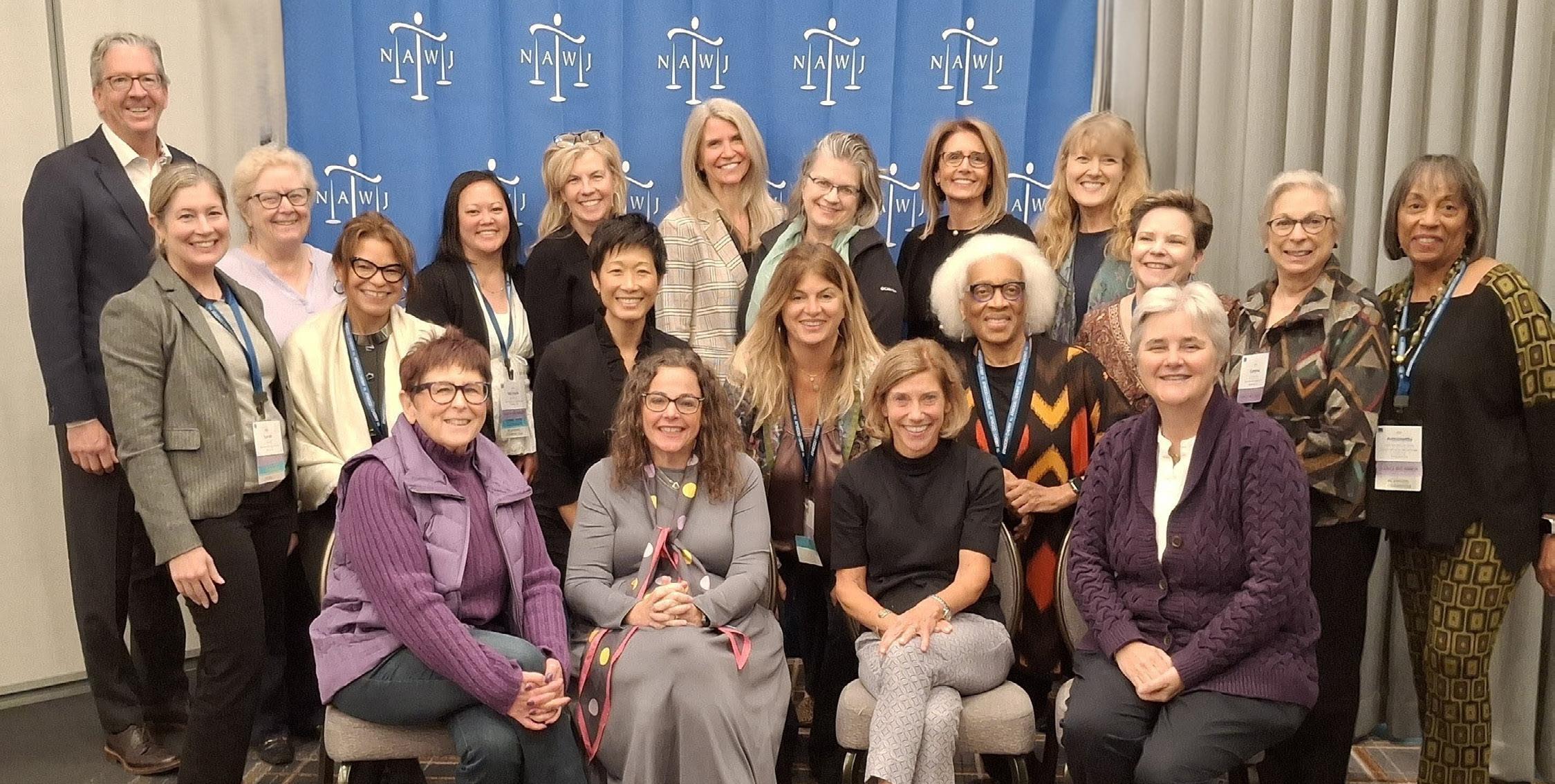
2024-2025 NAWJ Board of Directors
Judge Esther Salas and Anita Hill
of ourselves and each other. Their remarks served as both an inspiration and a call to action for a healthier, more connected judicial community.
A Passion for Justice Guided by Reason
Professor Anita Hill delivered a compelling reflection on the rule of law and the enduring power of women to shape it. Drawing on history, she highlighted how women—often underestimated or overlooked—have advanced justice through courage, persistence, and moral clarity. Professor Hill underscored that the rule of law is strongest when it reflects the voices and experiences of all people, and she urged us to recognize the transformative impact women have had, and continue to have, in safeguarding democratic principles. Her
remarks offered both a clear-eyed look at past struggles and an inspiring vision of what women can achieve when they insist on fairness, accountability, and equality under the law.
SCOTUS: A Year in Review
And a conference favorite: Dean Erwin Chemerinsky, joined by Professor Francesca Procaccini, offered a clear and incisive analysis of recent Supreme Court rulings, highlighting their profound implications for constitutional interpretation and the balance of power within the three branches of government. They explained how the Court’s decisions are reshaping longstanding doctrines and influencing issues ranging from individual rights to the role of federal agencies, and the everincreasing use of the shadow docket. These legal luminaries
emphasized the importance of understanding not only the legal reasoning behind the rulings but also their real-world impact on communities and democratic institutions. Their remarks provided a grounded, accessible roadmap for navigating the Court’s evolving jurisprudence and what it signals for the future of constitutional law.
Celebrating Excellence and Leadership
A highlight of the conference was the annual awards ceremony, where NAWJ recognized exceptional judges and allies whose contributions have strengthened the judiciary, advanced gender equity, and enhanced access to justice. The awardees included: the Honorable Dana Fabe (ret.) who received the Joan Dempsey Klein Honoree of the Year Award,
the Honorable Kathy King who received the Justice Vaino Spencer Leadership Award, the Honorable Amy Lyn Blake who received the Norma Wikler Excellence in Service Award, Attorney Elaine Epstein who received the Florence K. Murray Award, and Attorney David Horrigan who received the Mattie Belle Davis Award. The honorees' stories served as powerful reminders of the impact individual judges can have on their communities and the legal system as a whole.
Strengthening Professional Connection and Mentorship
One of the hallmarks of the NAWJ conference is its strong sense of community. This year was no exception. Throughout the conference, judges from all jurisdictions—state, federal, military, administrative, tribal, and international—built lasting personal and professional relationships and shared their experiences with candor, humor, and generosity.
Networking receptions and mentoring sessions fostered meaningful conversation and support. Many attendees commented that the opportunities to exchange ideas with colleagues from across the country reinvigorated their dedication to judicial service and reminded them that they are part of a wide, supportive network committed to fairness and integrity.
Learning
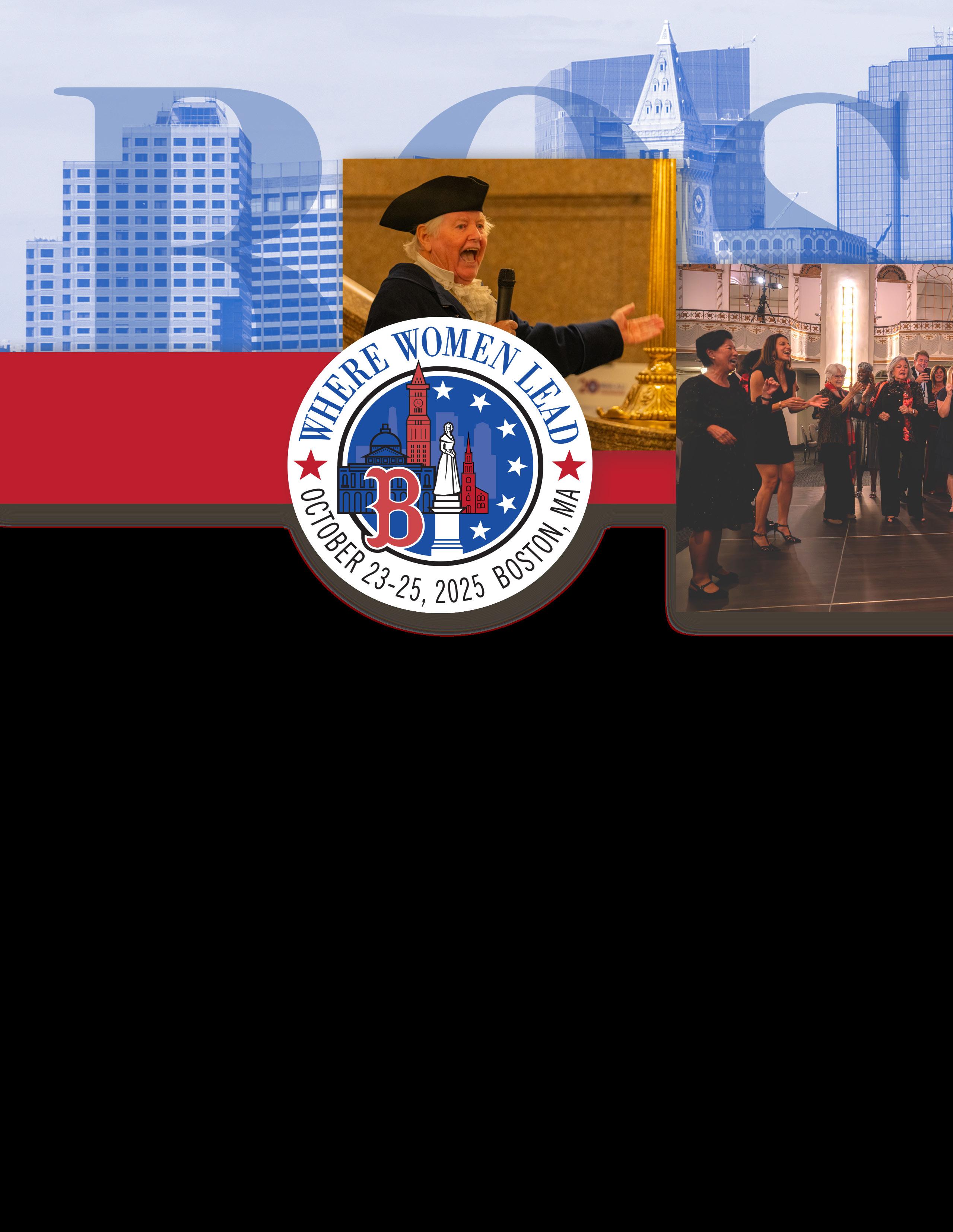
From Boston’s Legacy Boston, with its rich legal history and renowned academic institutions, proved an inspiring setting for the 2025 conference. With time built into the schedule to explore, attendees experienced Boston’s hospitality, vibrant neighborhoods, and historic venues.
Attendees even stepped back in time for a meet and greet with John Adams himself!
These experiences offered a deeper understanding of the city’s foundational role in advancing democratic principles and civil rights.
Looking Ahead: A Vision for the Judiciary’s Future
As the conference concluded, a resounding theme emerged: the judiciary must remain dynamic, transparent, and accessible. The conversations held over these three days made clear that judges carry immense responsibility not only to interpret and uphold the law but also to ensure that the courts remain trusted institutions capable of meeting the needs of a changing society.
The discussions in Boston reaffirmed NAWJ’s commitment to:
• Advancing gender equity within the judiciary and across the legal profession
• Championing access to justice for all communities
• Supporting the development and well-being of women judges
• Embracing innovation while safeguarding due process and judicial ethics
• Strengthening ties among judges across jurisdictions and backgrounds
Closing With Gratitude
The planning committee extends its deepest appreciation to the sponsors, committee chairs and members, speakers, moderators, and volunteers whose hard work made the conference both enriching and memorable. Special thanks are due to the judges who devoted their time to preparing panels, to the law students and lawyers who assisted with programming, and to the many participants who brought their passion, expertise, and insight into every conversation. And we could not have done it without the exceptional staff of NAWJ: Laurie, Brian, Francie, and Janelle!
Finally, we thank every attendee for your presence, your contributions, and your continued dedication to a judiciary that embodies fairness, integrity, and inclusion.
As we look ahead to the 2026 NAWJ Annual Conference in New Orleans, we carry forward the energy and inspiration generated in Boston. Together, we remain committed to a future in which justice is not only delivered—but delivered equitably, thoughtfully, and with unwavering respect for the dignity of every person.
Making a lasting effect on the judicial landscape.
Hon. Rachel Pickering, Kansas Court of Appeals
hen we stop and reflect on the career paths that we have taken, we may remember how each path, such as to the bar or bench, had its own challenges and rewards. And yet, we recall most of all that no path was completed alone. For example, there are the legal and judicial trailblazers who paved the way for us. By carving out positions, their historic “firsts” in turn created opportunities for many who followed. We also have had the good fortune of being surrounded by family and
“Many roads,
friends. Their encouragement along with others’ guidance no doubt supported our endeavors. And last, aiding in our pursuits are the local and national associations. One such bar association is the National Association of Women Judges.
NAWJ was formed in part by women judges who realized that sharing their similar experiences would help others navigate their own careers with success. NAWJ members come from across the United States, Puerto Rico, and the Virgin Islands, with differing backgrounds, ages, and judicial experiences. Indeed,
NAWJ’s website showcases the phrase, “Many Roads, Many Destinations.”
In a broad sense, this phrase describes the members that make up NAWJ. We are on own paths that will take us to various destinations. Yet despite our varied interests, as NAWJ members, we come together to share our knowledge, experiences, and talents with each other and our communities. Several examples come to mind.
NAWJ members serve as mentors.
With NAWJ, we are able to give back to both the legal profession and our communities. Through establishing different types of mentorships, NAWJ inspires us to inspire others. That is, members can mentor through NAWJ programs such as “MentorJet,”
the “Color of Justice,“ and “From Bench to Bar.“
“MentorJet” is a “speed mentoring” networking program. Through this mentoring setting, high school and college students are able to have one-on-one access to judges and lawyers. The mentors answer the students’ questions about college and law school. The mentors also encourage the students to consider legal and judicial careers. Likewise, the “Color of Justice” program works with educating the youth about the law and possible legal and judicial careers.
NAWJ members also serve as mentors for attorneys aspiring to the bench. For many of us, we had not considered seeking a judicial position until it was suggested by others. Because of this, we can easily connect with attorneys who are still at the beginning stages of considering a judicial position.
One such mentoring opportunity is the “From Bench to Bar” program. Here, members advise, discuss how they came to serve on the bench, and encourage the lawyers to consider judicial careers. The program is also meant to improve transparency and accessibility for aspiring judges by shedding light on the judicial appointment process and local and state elections.
A professional development webinar, “Pathways to the Administrative Judiciary: Many Roads, Many Destinations” is another example. Featuring federal and state administrative judges, this presentation provides advice to lawyers and law students considering an administrative judge as a career. The presenters also identify the essential skills associated with the administrative judiciary and summarize the variety of federal and state administrative tribunals and jurisdictions.
NAWJ helps us build public trust and confidence in the courts.
NAWJ also has been instrumental in the “Informed Voter-Fair Judges Project.”
NAWJ’s Judicial Independence Committee worked to create an Emmy award-winning civic education project. Designed to provide general educational information about our judicial
system, this program discusses our independent and impartial judiciary and the judicial selection process. As an added benefit, NAWJ members are able to work with other judicial and legal organizations for this noteworthy community outreach.
There are also a number of NAWJ programs serving own towns and cities, including supporting the Afghan women judges whose lives were affected by the 2021 regime change. It was NAWJ members’ work with the Afghan judges and the Informed Voter Project that recently received national recognition. In August 2025, the ABA awarded NAWJ with the prestigious The Justice and Rule of Law Award for its “positive national impact on the justice system and preserving the rule of law.”
The journeys we take as judges.
Unlike the pathways that took us through completing law school and in our practice as attorneys, this career shift to the bench is quite different. Certainly, much is demanded from us. The responsibilities associated with our judicial positions cannot be understated. Even so, due to our strengths: smarts, experiences, and unique qualities, we are able to meet these expectations. And in turn we are rewarded with insights into both the law and ourselves
as judges. It is these insights that are the basis for NAWJ’s important and recent initiative - preparing and assisting new judges. A group of members have formed a committee focused on sharing members’ expertise and providing valuable bench resources.
Besides offering professional development, new members are invited to attend a “new members orientation” remote meeting. This quarterly orientation provides its newest members with information regarding NAWJ, its leadership, and the various ways to be involved. New members also learn about the many programs and opportunities within NAWJ that are available.
NAWJ keeps us current.
Without having to leave your chambers, NAWJ webinars keep us up-to-date on the latest legal trends. NAWJ offers its members access to webinars that focus on interesting, relevant issues. Members also have access to past recorded events. So, despite how busy our schedules are, we don’t have to miss past webinars. The timely webinar topics include judicial security, legal research and the use of Generative AI, juvenile justice, the latest on jury trials, e.g., jury selection, and access to justice.
So
many benefits come with attending NAWJ conferences.
Attending a NAWJ conference allows us to discuss and exchanges ideas with judges from various states and jurisdictions. Further, because conferences can foster connections, many friendships are borne at NAWJ conferences.
Additionally, the sharp speakers and panels offered at NAWJ conferences are another way members stay current. Each conference strives to present well-known national speakers along with local judges, attorneys, and legal scholars. As with the webinars, the conferences focus on providing topical programs.
The conference agendas also provide time for attendees to explore the host city. A variety of cities have hosted NAWJ’s conferences: San Diego (2024 annual), and Boston (2025 annual). NAWJ’s May 2026 midyear conference will be in Vancouver, followed by an Alaskan cruise. This year, the 2026 annual conference will be held in a city known for its food, music, and history - the great city of New Orleans.
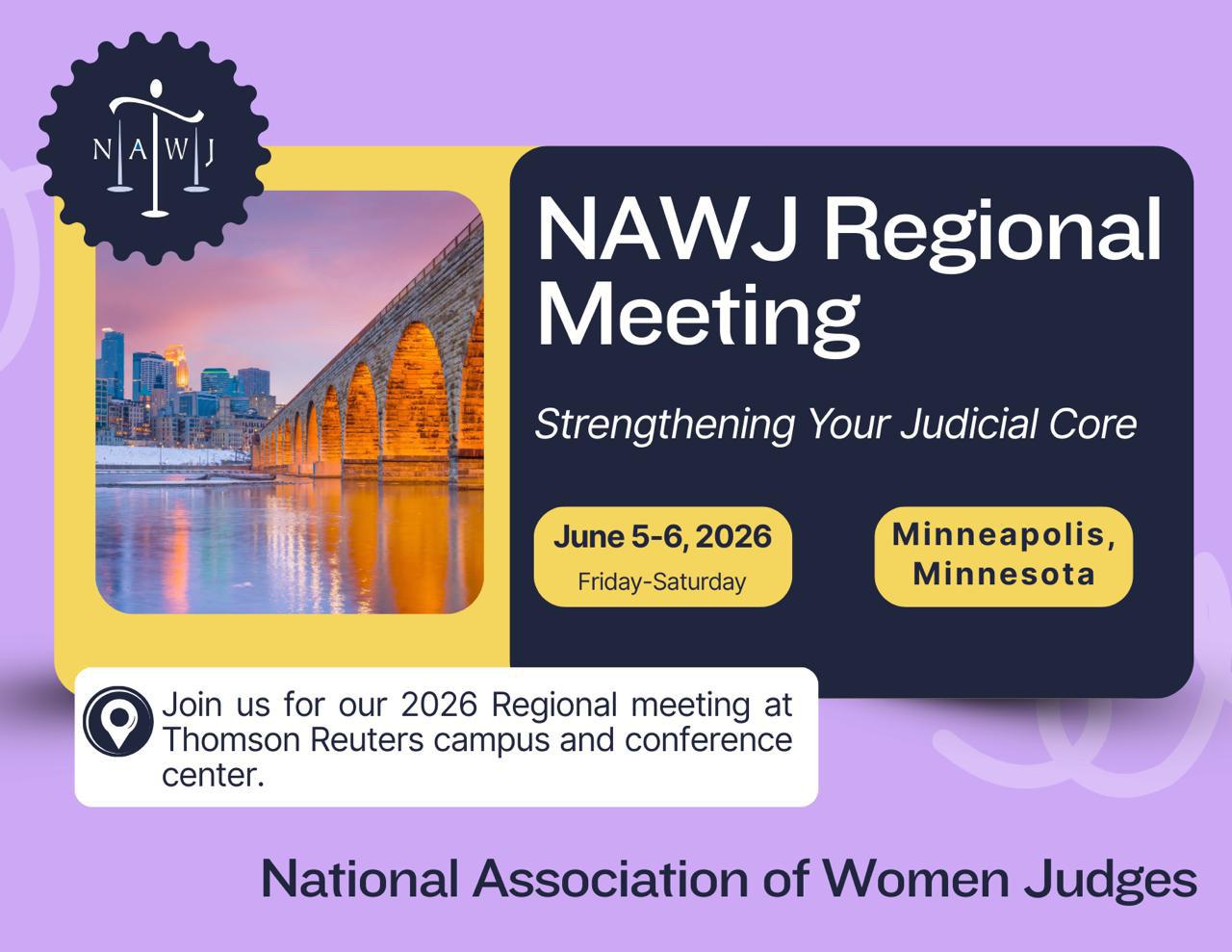
NAWJ is facilitating an inaugural regional conference on June 5 and 6, 2026. All members, especially those from Districts 7 (Michigan, Ohio, and West Virginia), 8 (Illinois, Indiana, and Kentucky), 9 (Iowa, Missouri, and Wisconsin), and 10 (Kansas, Nebraska, Minnesota, South Dakota, and North Dakota) will be able to gather at the Thomson Reuters conference center located in Eagan, MN - not far from the Minneapolis-St. Paul International Airport. With “Strengthening Your Judicial Core“ as the conference theme, many will come away feeling recharged and reconnected.
Last, members are able to participate in international conferences that promote global dialogue and collaboration. Due to NAWJ’s relationship with the International Association of Women Judges (IAWJ), members attend the biennial international conferences hosted by IAWJ. For instance, in May 2023, NAWJ represented the United States held in Marrakech, Morocco. And last year, members attended the IAWJ conference held in Cape Town, South Africa.
Enhance your leadership skills with NAWJ.
include volunteering to lead a committee, a district, a state chair within a district, or assist with a conference. With the multiple NAWJ community outreach programs, members can lead a “From Bar to Bench“ program with the local bar or chair a “MentorJet” program within a high school or college. Even better, beyond these programs, your creativity and leadership can develop new NAWJ initiatives.
Partnering with NAWJ.
To end with a personal note, during my first year as a judge, I became a NAWJ member due to a gifted membership. Soon after taking the bench, I learned that a member in my district had presented me with a NAWJ membership. At the time I thought this was a generous gift. Now, I see that the membership gift was both generous and wise.
Overall, NAWJ serves as an important partner for judges and aspiring attorneys. Through mentorship, education, and community engagement, NAWJ enhances both our and our communities’ development. By fostering these connections, NAWJ is making a lasting effect on the judicial landscape.
This June will be another way for members to meet within their districts and foster friendshipsjust as NAWJ is envisioned to do.
As a national organization, NAWJ provides us with a platform to lead and sharpen our leadership skills. Many examples
NAWJ’s Re-entry Conference in Maryland
In 2007, Judge Brenda Murray, former President of the National Association of Women Judges and inspired by Judge Dana Fabe’s Alaskan re-entry project, launched the first Women Moving Forward Conference1 at the Maryland Correctional Institution for Women (MCIW). Judge Murray had established a book club at the prison, and now called on all her contacts to plan and fund a conference for women who were on the cusp of release. She and Judge Cathy H. Serrette, Director of NAWJ District 4 at the time, recruited federal and state trial judges, academics from the University of Maryland and the Maryland law schools, members of the Maryland Commission for

Women, the Women’s Bar Association, churches and other organizations that worked with incarcerated women. Essential to the project was the support of Warden Brenda Shell, and every warden since its inception, and their remarkable staff.
The Women Moving Forward (WMF) steering committee designed the conference to give the MCIW women the experience of a professional conference and information to help support their successful return to the community. The all-day conference includes plenary speakers and workshops, and a catered lunch with beautiful floral
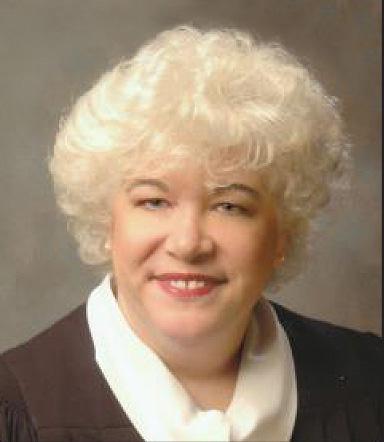
Judge Julia B. Weatherly Senior Judge, Circuit Court for Prince George’s County, MD NAWJ Former District 4 Director
centerpieces donated by a local garden club. There are conference bags and glossy programs. And no conference is complete without swag bags with filled with donated personal items.
The keynote speakers over the years have included a variety of successful returning citizens who have obtained notable success following their release, including Maryland’s Supreme Court’s Chief Justice, Robert Bell, one of the defendants charged at a local civil rights sit-in and the named petitioner in an appeal that went to the US Supreme Court. The workshops have covered many topics important to the women’s preparation to return home. Topics have included: employment acquisition and retention, financial advice, reunification and connection with family, navigating the healthcare system and obtaining treatment for addictions, wellness
The post conference report includes:
• Characteristics of the MCIW attendees, such as marital status; whether they have children; where they expect to live following release; age and race
• Evaluations of the workshops and presenters
• Conference feedback, which has included suggestions to improve the conference by increasing the times for the workshops, and providing an expansive list of topic ideas for future conferences.
When asked what they had learned that day, MCIW 2025 attendees stated:
• “Don’t be ashamed of where you’ve been, it was a stepping stone.”
• “Being a convicted felon doesn’t define you.”
• “How to manage my credit and finances.”
• “Job reentry- what to expect, how to prepare, how to be successful.”
• “That it is ok to go slow with re-entry.”
• “Helpful connections to resources once I’m released.”
• “Mental health growth and how to handle my everyday challenges.”
• “Don’t be afraid to admit I need help and to ask for it.”
• “Journaling helps release stress.”
• “Be careful what I speak. Speak positive.”
• “Everyone has their own journey.”
MCIW attendees were also asked how they would use the information provided at the conference.
• “Always reflect back to my handouts and notes.”
• “Use the information daily and pass what I’ve learned to others to help them. Just be honest and you can get more help when you open up. Be calm.”
• “Everything I heard today is locked away in my mental map so I stay true to my direction and be a greater version of self upon release.”
• “Get into some type of therapy; save my money; get a job.”
• “Stay focused, stay positive, find work I love so I will have a better chance for success.”

support such as meditation and journaling, obtaining education and training, trauma informed care, handling parole and probation obligations, and accessing resources while incarcerated to establish a viable re-entry plan.
While new steering committee members are welcomed each year, some of our steering committee have been with us from the very start. We are particularly lucky to have an excellent evaluator and statistician, Dr. Shawn Flower from Choice Research Associates, who prepares and evaluates feedback based on a conference evaluation form
completed by the MCIW attendees as well as the volunteers and presenters. The evaluations give us valuable insight into the conference experience as well as ideas for future conferences.
Women Moving Forward not only provides a positive experience for the women at MCIW who are returning to their communities. The conference also gives Maryland judges and other professionals the opportunity to show that we recognize the challenges for formerly incarcerated women and support their success. The day spent sitting next to the women at lunch and in
the workshops, and talking to them about their plans for the future is time well spent. For me, it has given insight into my considerations when presiding over criminal trials, and particularly during sentencings. While it is a part of the criminal justice process, it is a unique and rewarding experience, and very different from a view from the bench.
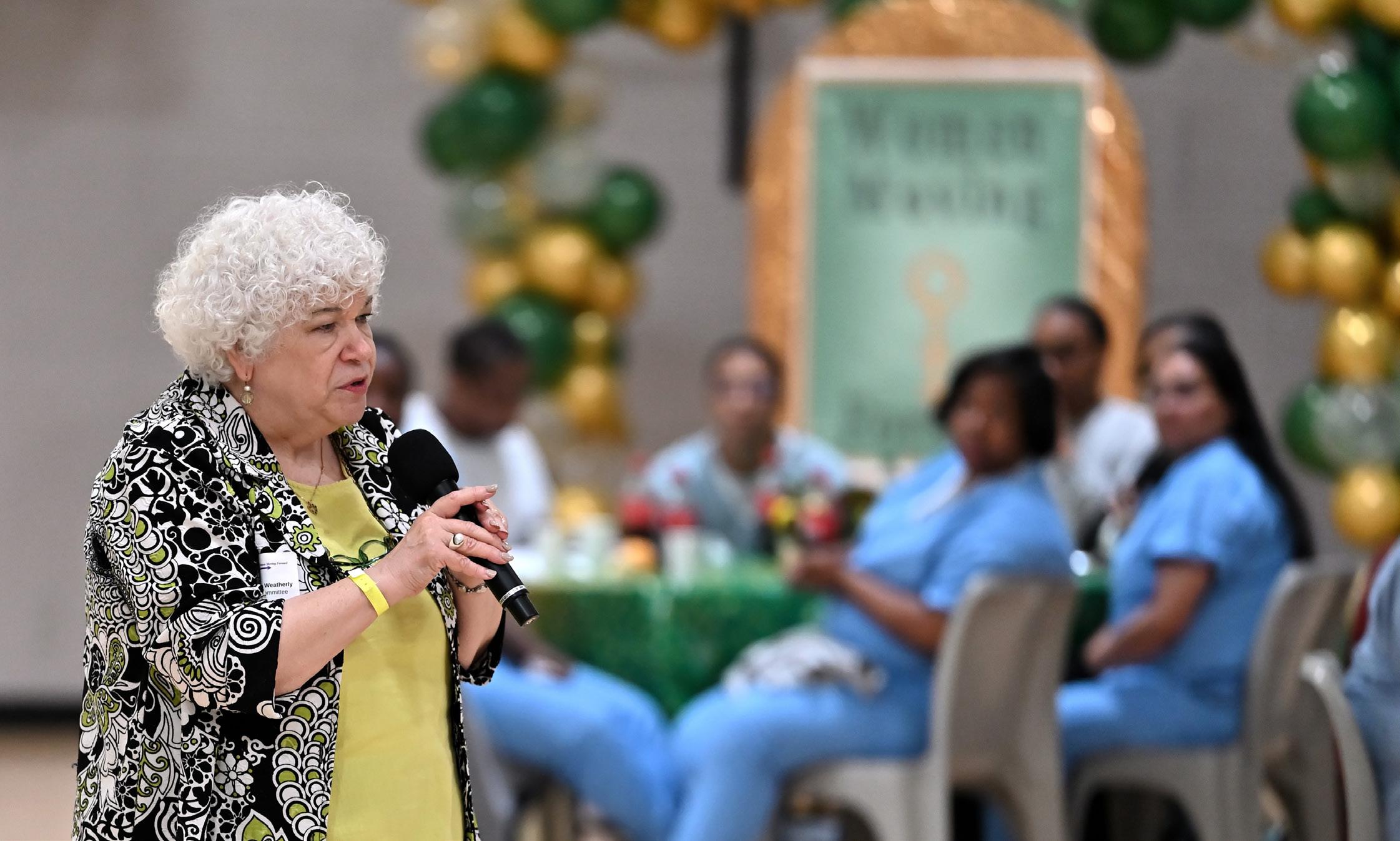
Judge Weatherly presenting to MSIW women
BOARD OF DIRECTORS
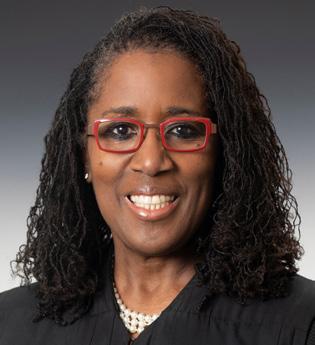
PRESIDENT
Hon. Pamela Washington
Anchorage District Court (Ret.)
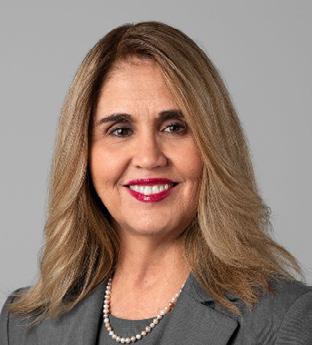
PRESIDENT-ELECT
Hon. Heather Welch
Marion Superior Court (Ret.)
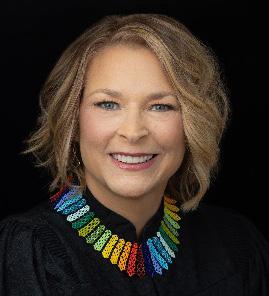
IMMEDIATE PAST PRESIDENT
Hon. Michelle M. Rick
Michigan Court of Appeals
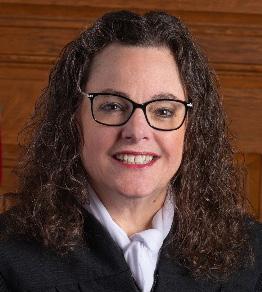
VICE-PRESIDENT DISTRICTS
Hon. Amy Blake
Massachusetts Appeals Court
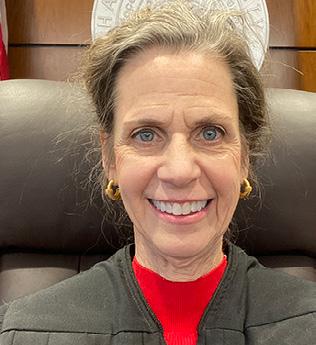
VICE-PRESIDENT PUBLICATIONS
Hon. Victoria Willis
15th Judicial Circuit
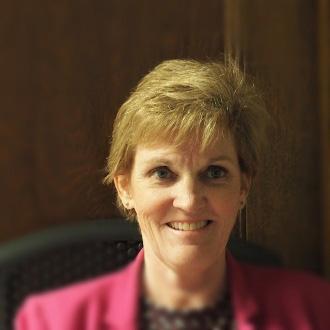
TREASURER
Hon. Karen Donohue
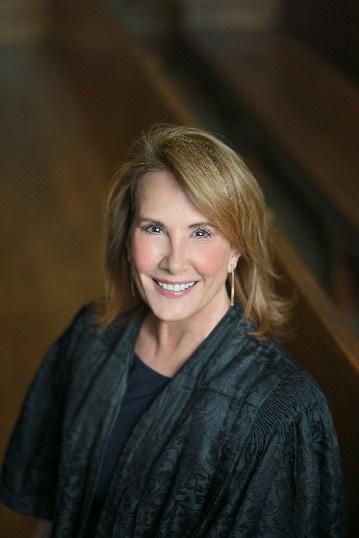
King County Superior Court
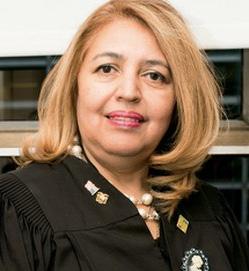
PROJECTS COMMITTEE CHAIR
Hon. Carmen Velasquez Supreme Court of New York
FINANCE COMMITTEE CHAIR
Hon. Mary Margaret Rowlands
Summit County Common Pleas Court
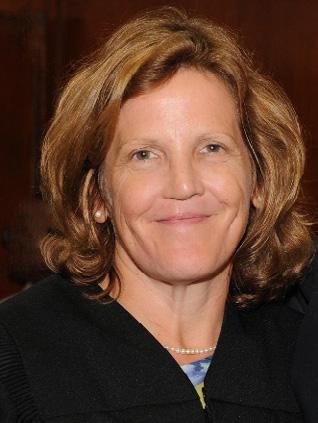
Hon. Leslie A. Stroth Bronx County Hall of Justice
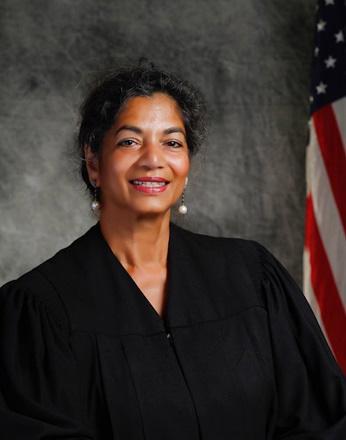
INTERNATIONAL DIRECTOR
Civil District Court in New Orleans

RESOURCE BOARD LIAISON
INTERNATIONAL DIRECTOR
Hon. Bernadette D’Souza
Orleans Parish Civil District Court
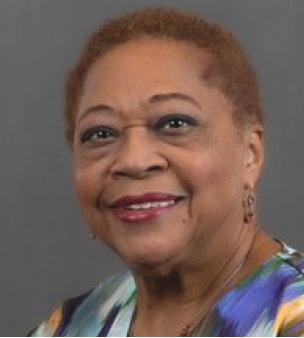
ABA DELEGATE
Hon. Marcella Holland Circuit Court for Baltimore City
DISTRICT DIRECTORS
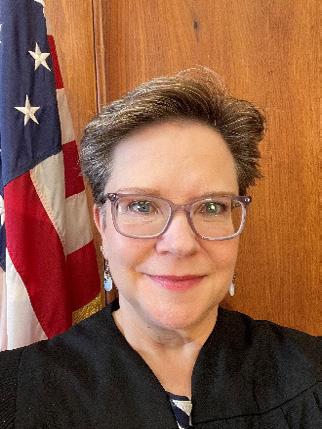
DISTRICT 1 CO-DIRECTOR
(ME, MA, NH, PR, RI)
Hon. Lee Peterson
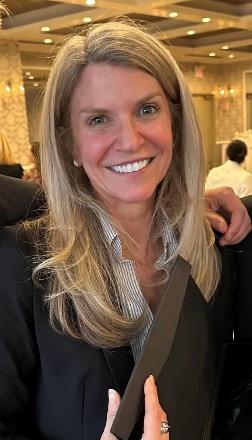
Norfolk County Probate and Family Court
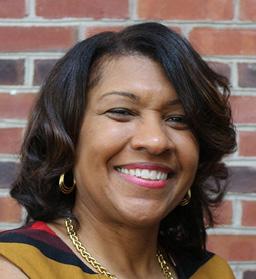
DISTRICT 3 DIRECTOR (DE, NJ, PA, VI)
Hon. Lisa James-Beavers New Jersey Superior Court
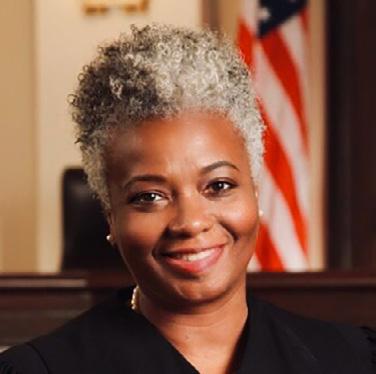
DISTRICT 6 DIRECTOR (AL, LA, MS, TN)
Hon. Sandra C. Jenkins
Louisiana Court of Appeal, Fourth Circuit
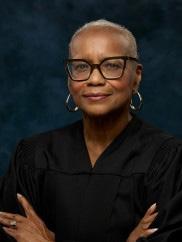
DISTRICT 8 DIRECTOR (IL, IN, KY)
Hon. Pamela Saindon Circuit Court of Cook County
DISTRICT 1 CO-DIRECTOR (ME, MA, NH, PR, RI)
Hon. Debra Squires-Lee Massachusetts Superior Court
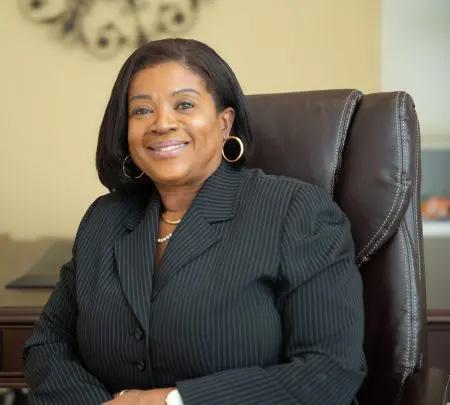
DISTRICT 4 DIRECTOR (DC, MD, VA)
Hon. Francine L. Applewhite U.S. Dept. of Labor, Office of Administrative Judges (Ret.)
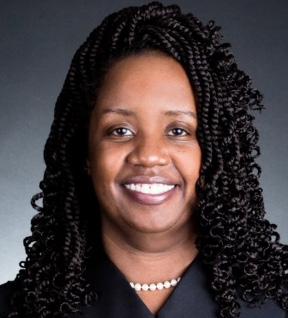
DISTRICT 7 CO-DIRECTOR (MI, OH, WV)
Hon. Miriam Perry 15th District Court, Michigan
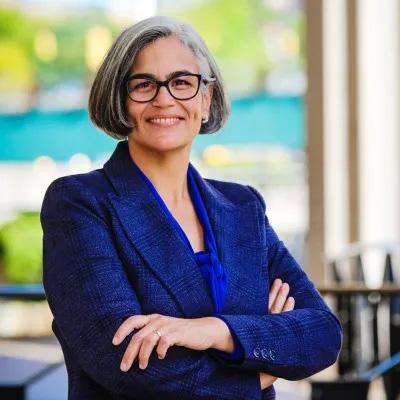
DISTRICT 2 (CT, NY, VT)
Hon. Yadhira Gonzalez-Taylor Bronx Criminal Court
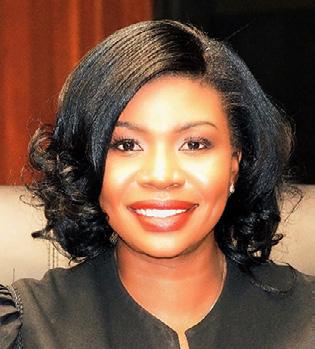
DISTRICT 5 DIRECTOR (FL, GA, NC, SC)
Hon. Tonia Cutchin North Carolina Judicial Branch
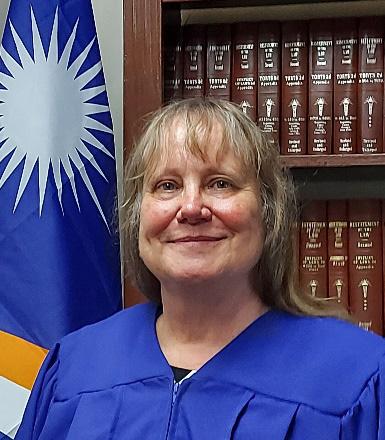
DISTRICT 7 CO-DIRECTOR (MI, OH, WV)
Hon. Linda Murnane United States Air Force, Retired
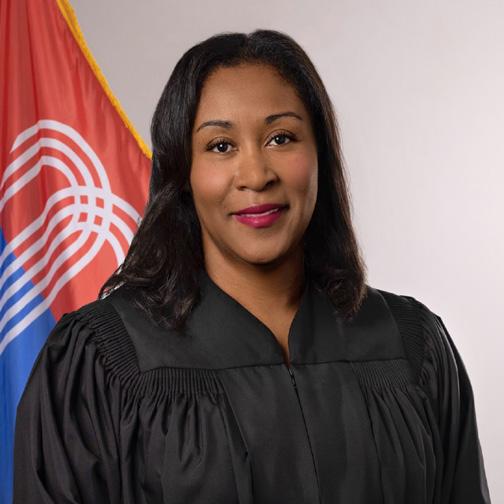
DISTRICT 9 DIRECTOR (IA, MO, WI)
Judge Shayla Lewis Kansas City Municipal Court
DISTRICT 10 DIRECTOR (KS, MN, NE, ND, SD)
Hon. Rachel Pickering Kansas Court of Appeals

DISTRICT 11 DIRECTOR
(AR, OK, TX)
Hon. Susan Criss
District Court, Bell County
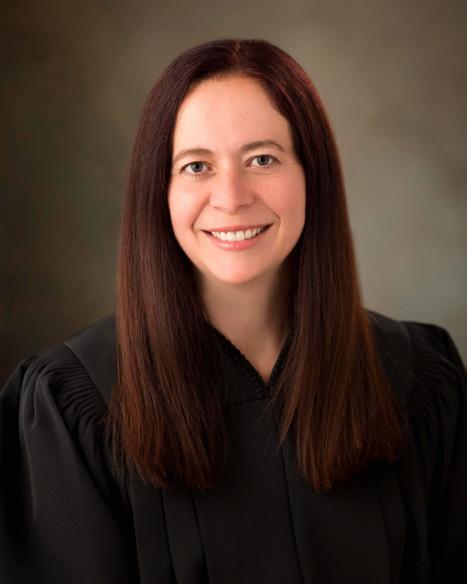
DISTRICT 12 DIRECTOR
Utah District Court

DISTRICT 13 DIRECTOR (AK, AS, GU, HI, ID, MT, OR, WA)
Hon. Bride Seifert
Homer Superior Court
NAWJ LANDMARK SPONSORS



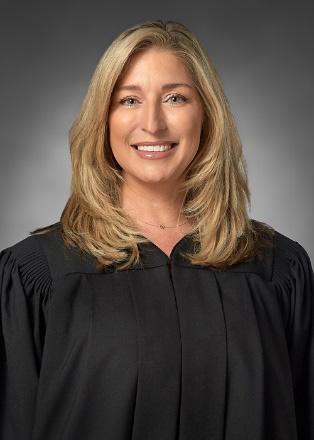
DISTRICT 14 DIRECTOR
Hon. Renee Stackhouse San Diego Superior Court
LANDMARK SPONSORS
The Honorable Mary Becnel
Cummins-Levenstein Family Foundation
CONTRIBUTING BENCH
Kathleen Albanese
Leslie Alden
Francine Applewhite
Patrice Ball-Reed
Mary Jean Barnes
Victor Bianchini
Anna Blackburne-Rigsby
Rachael Campbell
Carole Chiamp
Joan Churchill
Toni Clarke



Ironwall by Incogni JAMS LexisNexis Lieff, Cabraser, Heimann & Bernstein, LLP Relativity
Thomson Reuters
White & Case LLP
Linda Davis
Mary Davis
Gail Dekreon
Laurie Denham
Mary Donelan
Karen Donohue
Elaine Epstein
Dana Fabe
Julie Frantz
Catherine Gallagher
Mary Grilli
Marcella Holland
Barbara J.R. Jones
Kathy King
Judith Kline
Cindy Lederman
Barbara Levenson
Lisa Martin
Catherine Mauzy
Judith McConnell
McFarland PLLC
Pennie McLaughlin
Susan Moiseev
Linda Murnane
Brenda Murray
Nicole Perdue
Michelle Rick
Terrie Roberts
Ellen Rosenblum
Mary Margaret Rowlands
Vanessa Ruiz
Karen Sage
Maria Salas Mendoza
Kitty Schild
Mary Schroeder
RESOURCE BOARD
Nicole Erb, Esq. (Co-Chair), White & Case
Bride Seifert
Bea Ann Smith
Leslie Stroth
Siobhan Teare
Elizabeth Teixeira
The Luv u Project
Mary Vasaly
Vinson & Elkins LLP
Lisa Walsh
Sarah London, Esq. (Co-Chair), Lieff Cabraser Heimann & Bernstein
Rachel Baumer, Thomson Reuters
Hon. Mary Becnel, Retired
Bridget DiRico, Ironwall by Incogni
David Horrigan, Esq., Relativity
Ericka Lehman, LexisNexis
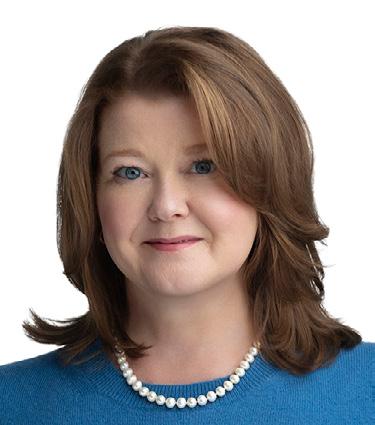

Dear Members,
Pamela Washington
Julia Weatherly
Elizabeth Welch
Heather Welch
Bonnie Wheaton
Elizabeth White
Mary White
Victoria Willis
Ann Yahner
Thomas Leighton, Thomson Reuters
Richard Levenstein, Cummins-Levenstein Charitable Foundation, Inc.
Kelly McNabb, Lieff Cabraser Heimann & Bernstein
Elaine Metlin, Esq., Retired
Renee Spertzel, JAMS
Cathy Winter-Palmer, Retired
Ron Zayas, Ironwall by Incogni
It is an honor to work with NAWJ’s Resource Board. They are essential partners and allies, connected to our mission and – to use Judge Washington’s metaphor- build bridges for our leadership and members.
Please join me in expressing deep gratitude to members of our Resource Board. Across the legal landscape, they are “thought leaders”, protectors and practitioners. Let’s continue to find ways to work together.
We welcome the following new members of NAWJ:
Ms. Rabab Aljebury, University of Detroit Mercy Law, Dearborn, MI
Hon. Marika R. Athens, Alaska Court System, Anchorage, AK
JULY 1, 2025 - DECEMBER 31, 2025
Ms. Renee E. Beeker, National Family Court Watch Project, Milford, MI
Hon. Lauren C. Boucher Lakin, U.S. Department Of Labor, Philadelphia, PA
Ms. Mary B. Brown, Dickerson Karacsonyi Law Group, Las Vegas, NV
Hon. Elaine M. Buckley, Massachusetts Superior Court, Duxbury, MA
Hon. Rebecca L. Buitendorp, Porter County Circuit Court, Valparaiso, IN
Hon. Kristen Buxton, Massachusetts Superior Court, Ipswich, MA
Hon. Monica Cary, King County Superior Court, Kent, WA
Ms. Claudia C. Conner, Oklahoma City Municipal Court, Oklahoma City, OK
Hon. Jacob James Cunningham, Oakland County Circuit Court, Pontiac, MI
Hon. Melissa B. DeBerry, Civil Court Of The City Of New York County Of Queens, New York, NY
Hon. Louise M. DiMatteo, Arlington Circuit Court, Arlington, VA
Hon. Bonnie Dumanis, San Diego Superior Court, San Diego, CA
Mr. Chad D. Engelhardt, Goethel Engelhardt, PLLC, Ann Arbor, MI
Ms. Jennifer A. Engelhardt, Goethel Engelhardt, PLLC, Ann Arbor, MI
Hon. Gillian Feiner, Massachusetts Superior Court, Belmont, MA
Hon. Ilene P. Fern, NYS Court Of Claims, Oceanside, NY
Hon. Jami L. Ferrara, San Diego (CA) Superior Court, San Diego, CA
Hon. Diane Cabo Freniere, Massachusetts Superior Court, Wellesley, MA
Hon. Frances M. Giordano, Essex Probate and Family Court, Salem, MA
Hon. Karen Gwynn, Hackensack Municipal Court, Hackensack, NJ
Hon. Holly Hansen, U.S. Social Security Administration, Baton Rouge, LA
Ms. Jennie Harding, Loyola University Chicago School Of Law, Chicago, IL
Hon. Jaime Hawk, King County Superior Court, Seattle, WA
Dr. Margaret Fagans Haynes, County Of Bergen, Hackensack, NJ
Ms. Anita F. Hill, Brandeis University, Waltham, MA
Hon. Deirdre H. Hill, Los Angeles Superior Court, Los Angeles, CA
Hon. Adrienne Hinnant-Johnson, 36th District Court - State Of Michigan, Detroit, MI
Hon. Debra Jensen, Second District Juvenile Court, Ogden, UT
Hon. Maria Jhai, Los Angeles Superior Court, Los Angeles, CA
Hon. Angela Kaake, King County Superior Court, Seattle, WA
Hon. Amy L. Karangekis, Superior Court/ Massachusetts, Southwick, MA
Ms. Laila Kassis, Kirkland & Ellis LLP, Forest Hills, NY
Ms. Jackie R. Kaz, Trial Court Of Massachusetts-Administrative Office Of The Juvenile Court, Feeding Hills, MA
Hon. Helene Kazanjian, Massachusetts Superior Court, Wellesley, MA
Hon. Daniel S. Korobkin, Michigan Court Of Appeals, Lansing, MI
Hon. Heather C. Leslie, US Department Of Labor, Covington, LAMs. C. Tricia Liu, Massachusetts School Of Law, Weston, MA
Hon. Melissa A. Long, Rhode Island Supreme Court, Providence, RI
Ms. Emmalee Maguire, Michigan State University, East Lansing, MI
Hon. Jihan S. Maloney, San Diego Superior Court, San Diego, CA
Hon. Rebecca Michaels, Massachusetts District Court, Amherst, MA
Hon. Catherine V. Monro, Pima County Superior Court, Tucson, AZ
Ms. Rotrica S. Neal, Allstate Insurance Company, Baltimore, MD
Mr. Harry Patel, H P P S LLC /HPPS ADR Dispute Resolution Advocacy, Houston, TX
Hon. Elizabeth Rania Rampersad, King County Superior Court, Bellevue, WA
Hon. Christina Rankin, Alaska Court System, Anchorage, AK
Hon. Jeannie M. Rhinehart, Middlesex County Juvenile Court, Framingham, MA
Hon. David L. Roghair, Alaska Court System, Barrow, AK
Hon. Donna Roth, 295th Civil District Court, Houston, TX
Hon. Averil B. Rothrock, King County Superior Court, Washington State, Seattle, WA
Hon. Catherine Schaewe, NY Court Of Claims, Vestal, NY
Mrs. Uniqua S. Smith, Thurgood Marshall School Of Law, Spring, TX
Hon. Paul Smyth, Massachusetts Appeals Court, Boston, MA
Hon. Nicole Taylor, Dallas County Civil Court At Law No. 5, Dallas, TX
Hon. Elizabeth T. Teixeira, Massachusetts Probate and Family Court, Boston, MA
Hon. Wendy B. Vitter, U.S. District Court Eastern Of Louisiana, New Orleans, LA
Hon. Emily Briscoe Welter, Ohio Unemployment Compensation Review Commission, Worthington, OH
Hon. Ericka J. Wiley, Los Angeles Superior Court, Santa Monica, CA
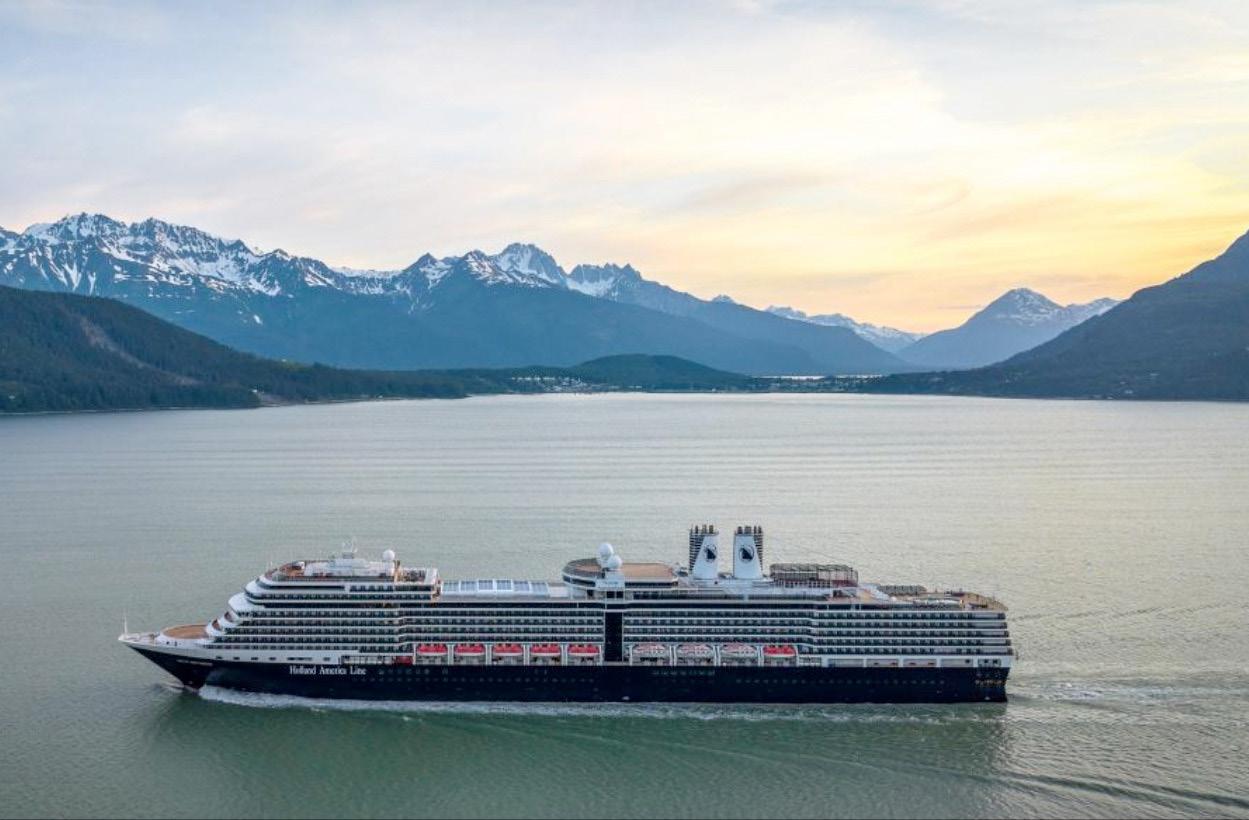
The 2026 Midyear Meeting kicks off with a Welcome reception and gathering in beautiful Vancouver, B.C. on May 16, 2026, before the cruise.
The Holland America Nieuw Amsterdam departs on May 17 for a 7 day excursion along the scenic Alaskan coastline, stopping at multiple ports of call along the way.
For meeting and accommodation information go to meeting info
Learn more about the Holland America Alaska Glacier Discovery cruise here Bon voyage!