NATALIA ZULETA ARNEDO
natzul52@hotmail.com
+39 3519023953
Turin, Italy
05 Feb 1999
ABOUT ME
I consider myself a creative person, with great skills for design and graphic representation of architecture and interior design. I am interested in the development of architectural projects involving innovation and sustainability focusing on the quality of life and wellness of people. My personality is empathetic and I am in disposition to help others. I always try to be meticulous at work and have communication skills, willing to lead and listen when working in groups. I am looking forward to continuing to learn to widen my vision and perspective on my career and other fields of knowledge.
EDUCATION
Naska Digital | Colombia: Architectural Visualization & Marketing 2024 2017-2020 2020 2021-2024
Politecnico di Torino | Turin: MSc in Architecture for Sustainability
Universidad de los Andes | Colombia: Finanza per le imprese sostenibili
Pontificia Universidad Javeriana | Colombia: Bachelor of Architecture
EXPERIENCE
2023 Cohesion Studio| Turin, Italy
Internship in architectural and interior design
2019 2016 Pratt University | New York
Workshop: Centros Urbanos ( Urban Centres New York PUJ)
Urban research about how the community appropriates urban space to generate identity and how the market of real estate transforms the landscape.
Construtecnia LTDA/ Viaggio Apartamentos y Hoteles| Colombia
Internship
LANGUAGES
Spanish
English
Italian German French Mother Language
B2 Fluent | Toefl IBT
B2 Fluent | Academic certificate
B2 Fluent | Deutsches Schprachdiplom
B1 Basic | DELF
SKILLS
Design and digital visualization
Mastery of AutoCAD and Revit
Management of Twinmotion and Enscape 3D Rendering programs
Handling Rhinoceros, Grasshopper and Sketchup
Advanced knowledge of digital visualization in 3DMax
Good command of photo editing software (Abobe Photoshop)
Centro María Cano
Capacitación y apoyo para la mujer
Desing and rendering concept
Riverside house
Scuola Media
Felice Maritano
Green Building Design
CENTRO MARÍA CANO Capacitación y apoyo para la mujer
In Bogotá, the social well-being of women is affected by different circumstances, which have consequences of great impact on society. Most of them involve problematic conditions such as domestic violence, lack of medical care, lack of job opportunities, and an adverse cultural environment produced by the lack of education.
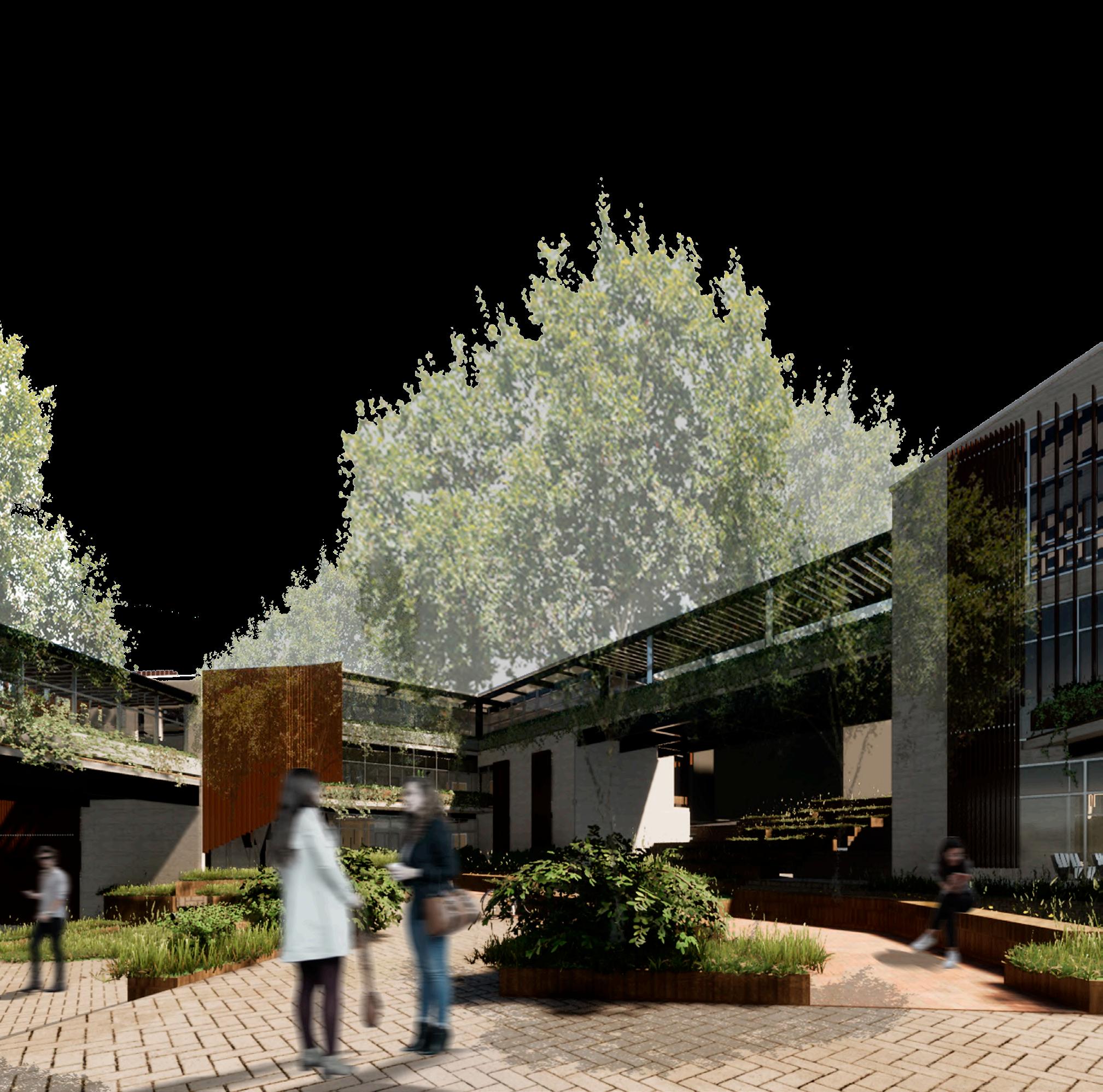
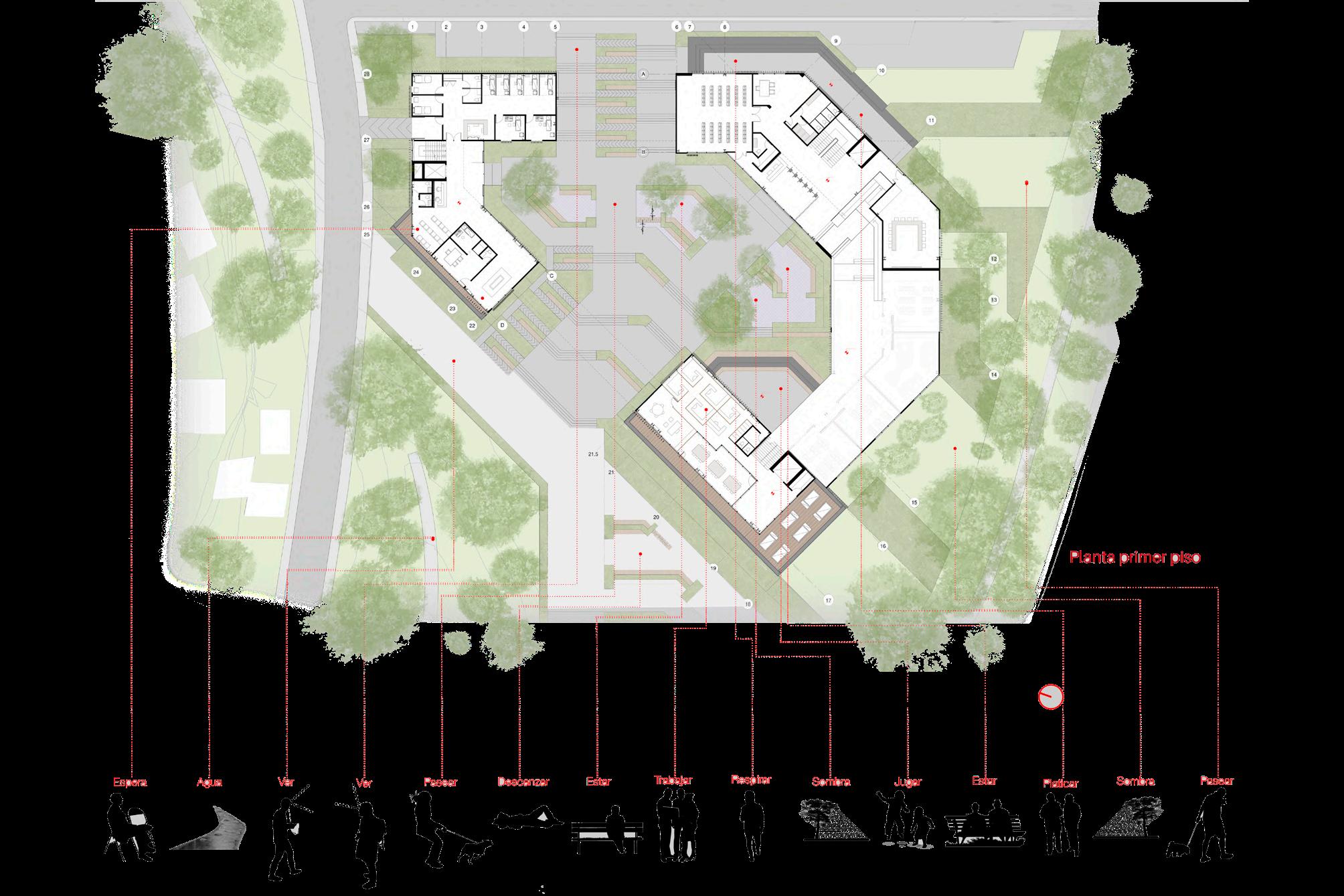
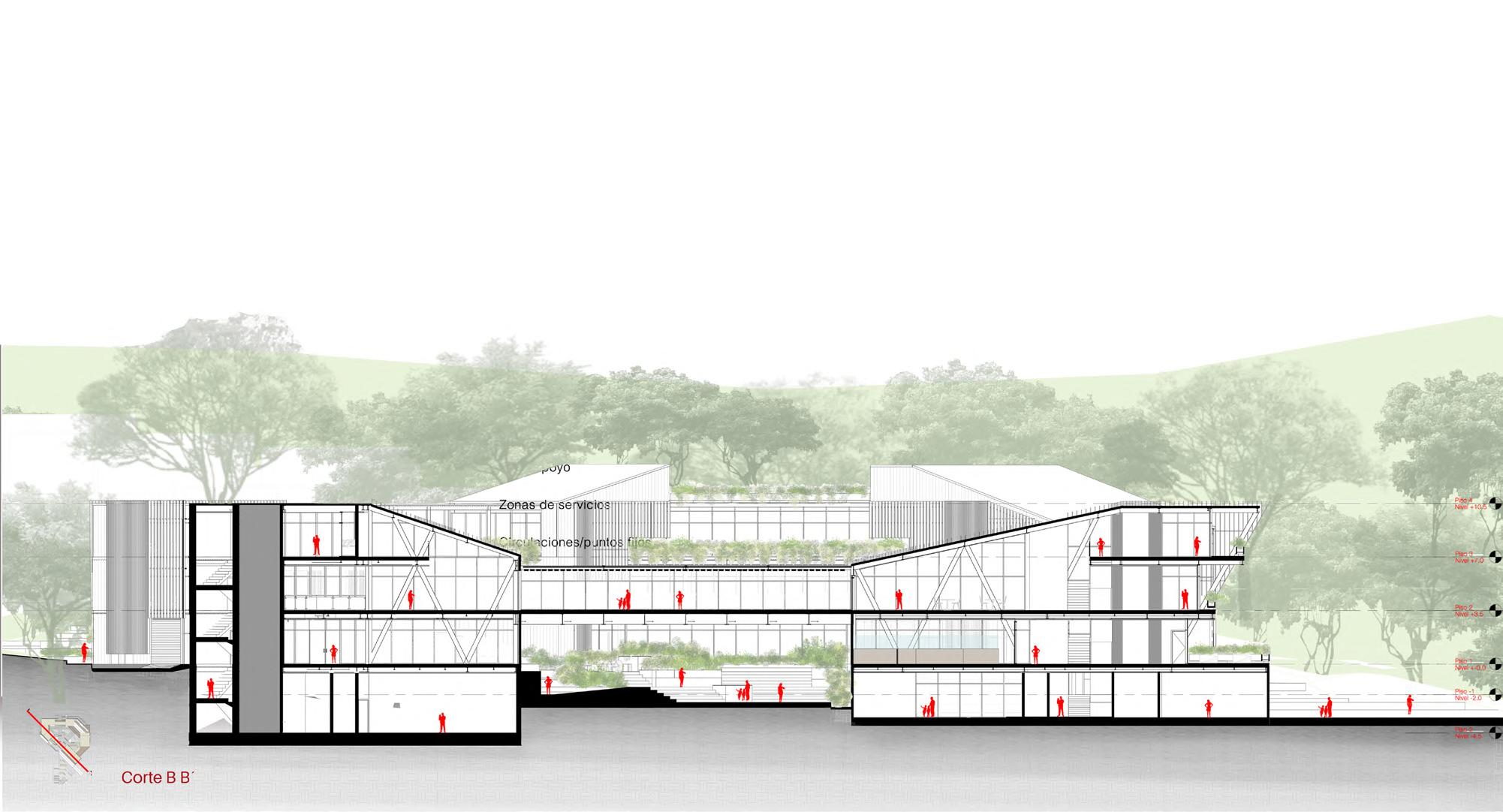
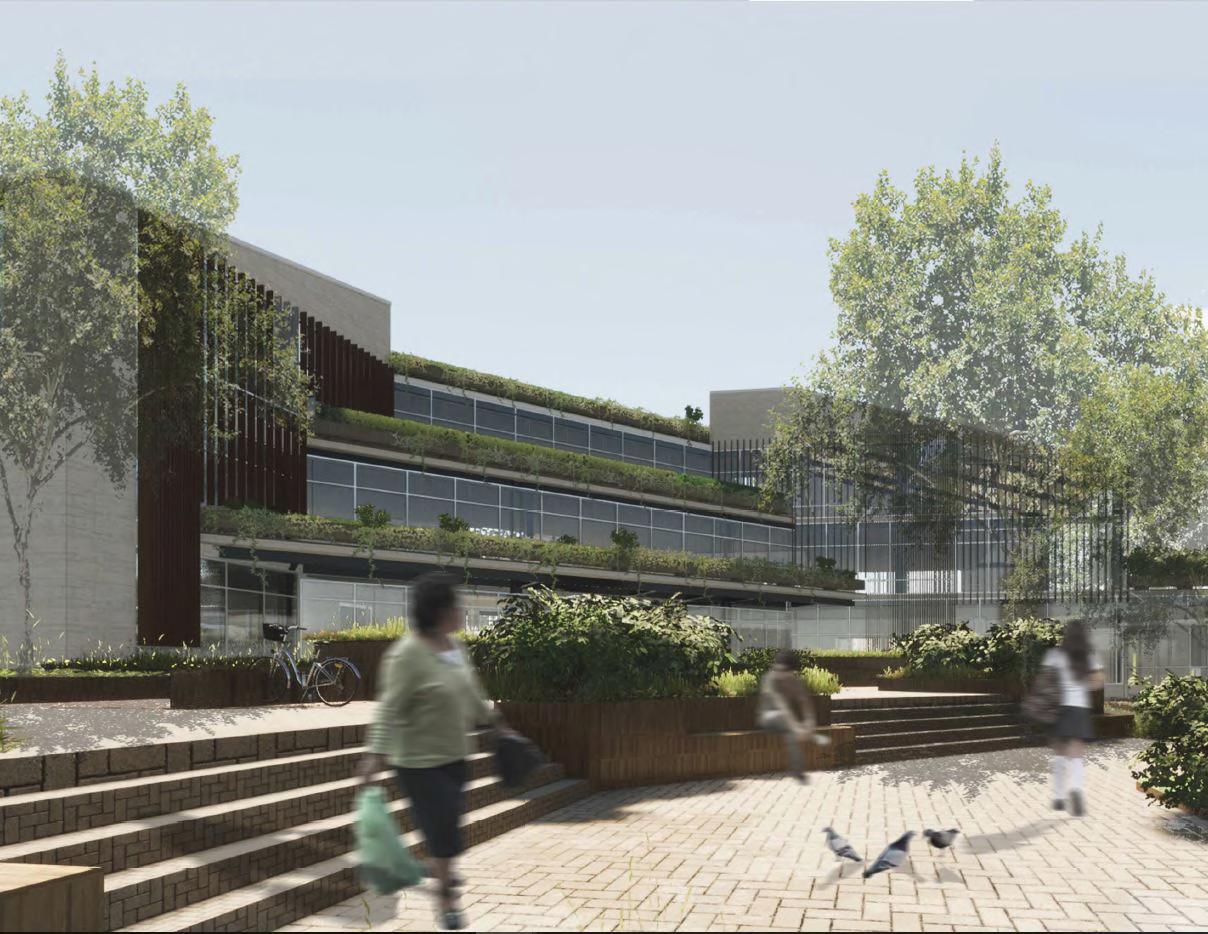
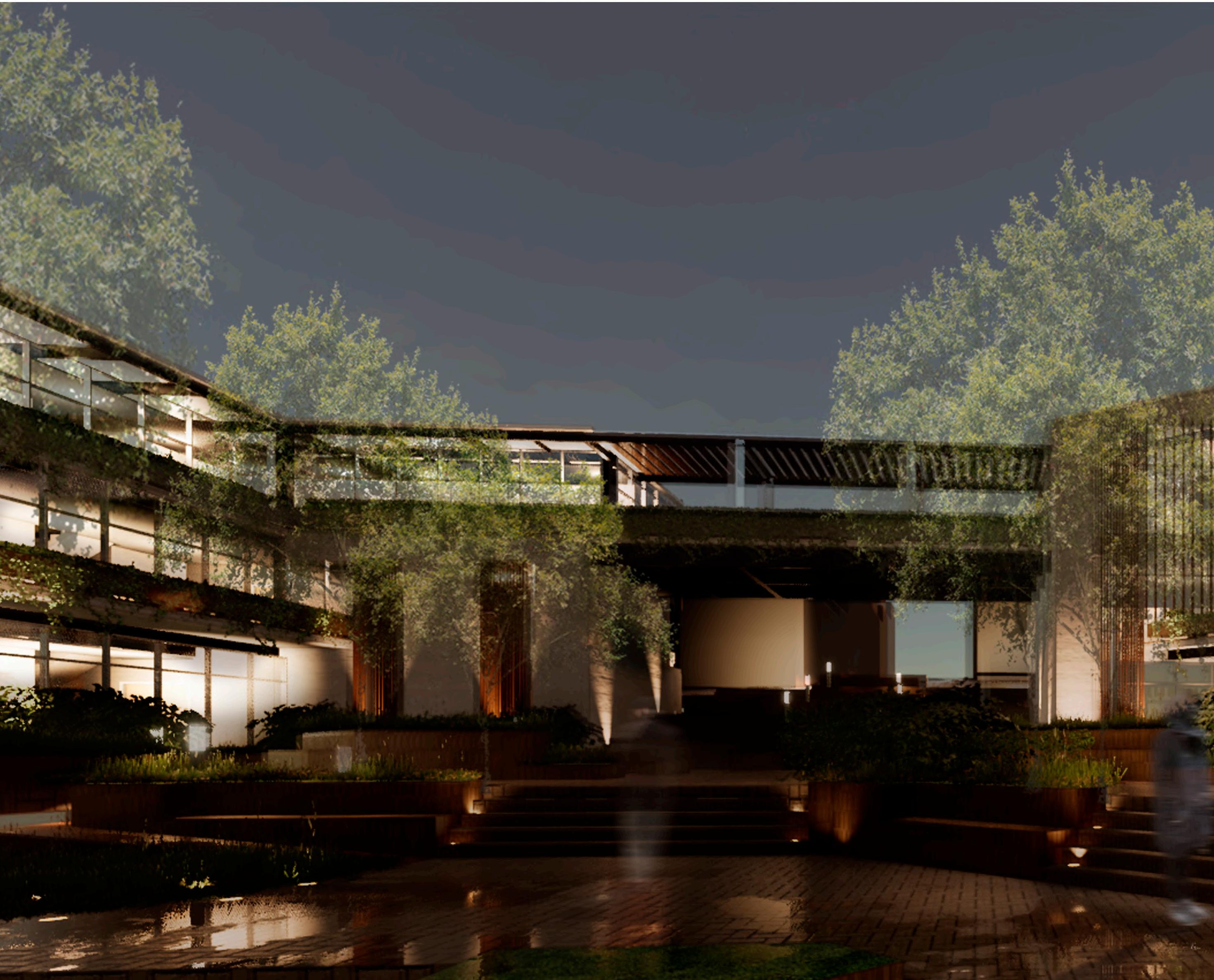
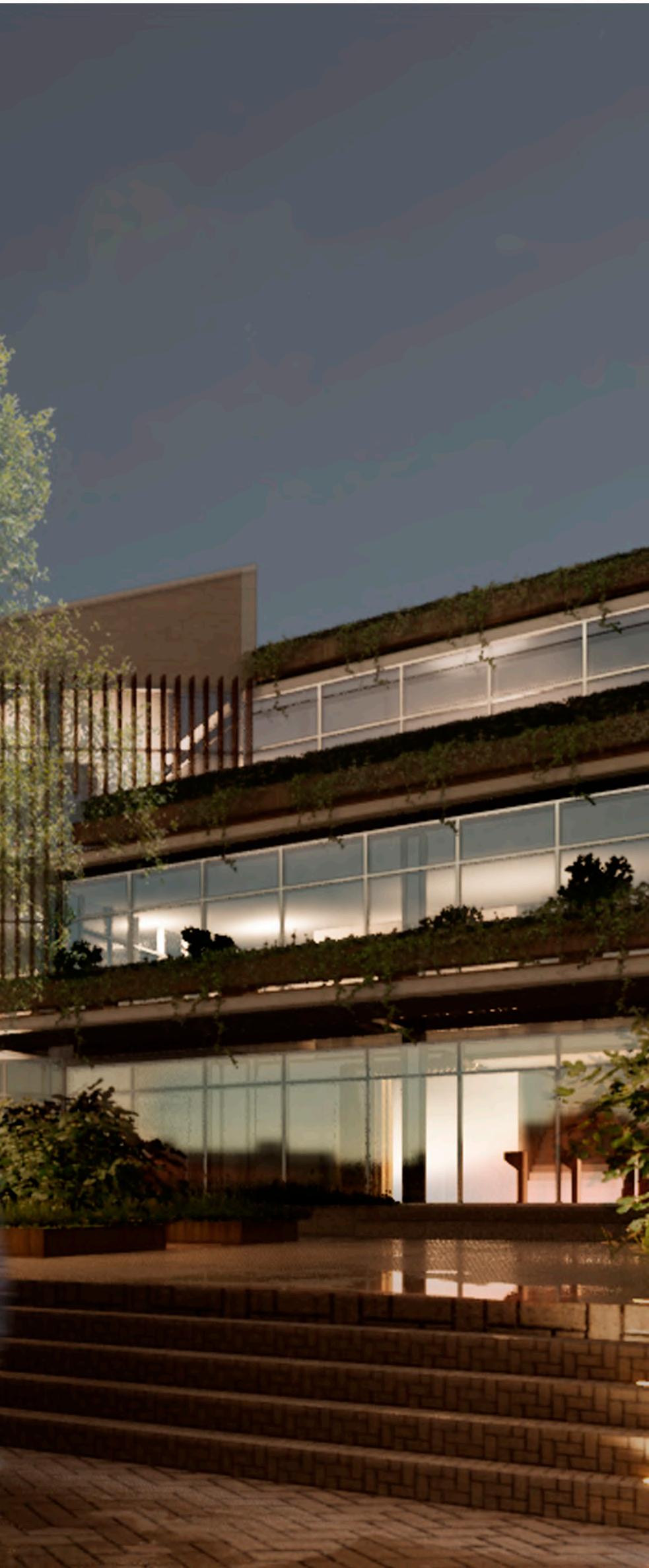
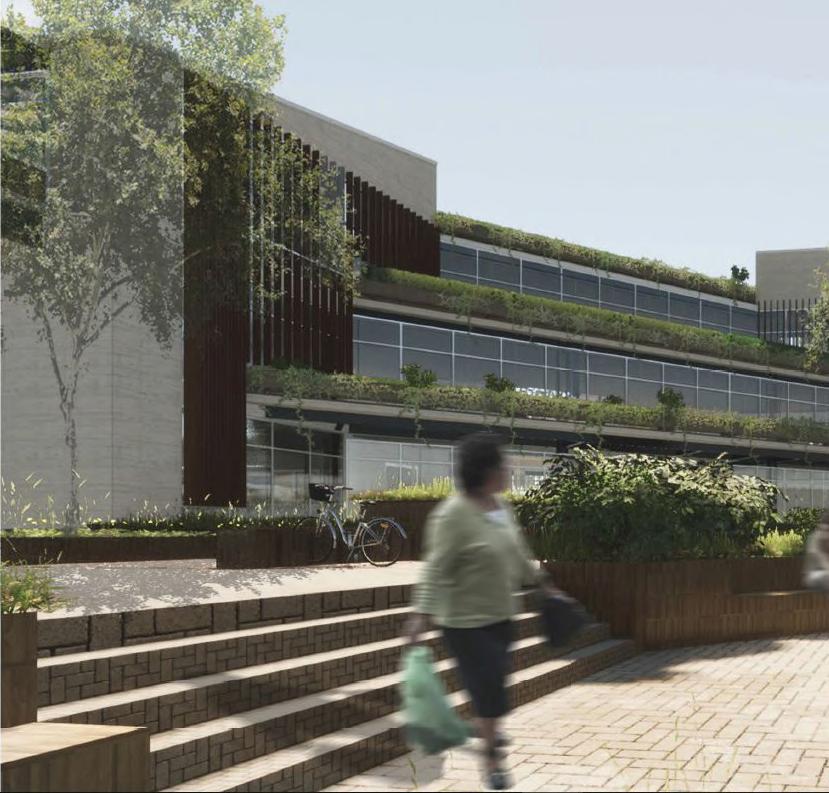
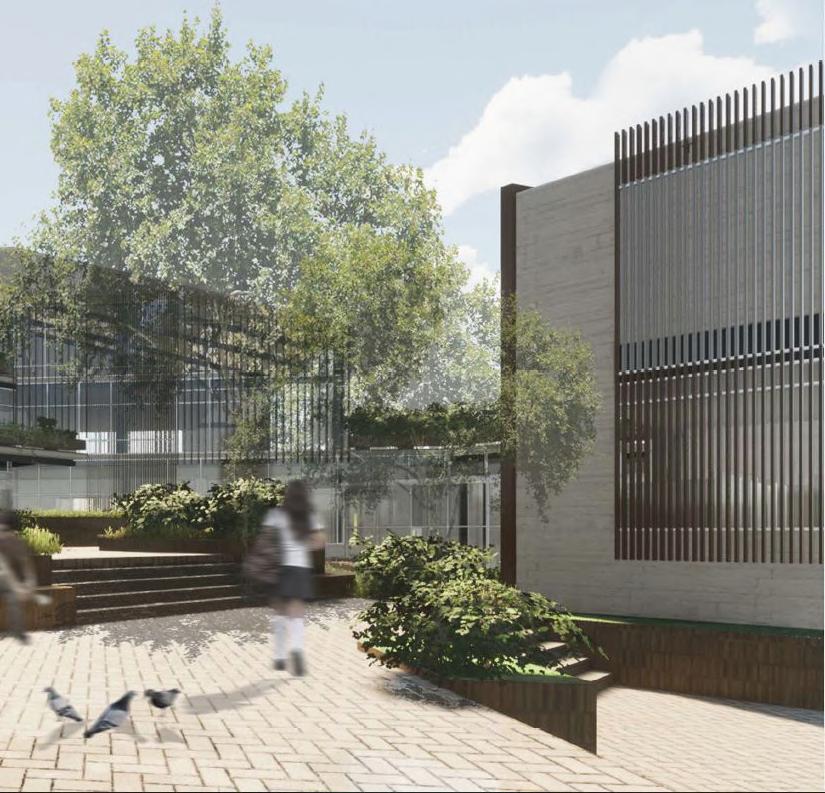
The María Cano Women’s Support and Capacitation Center, located in Lourdes, is a hybrid building, since the facility itself forms and shapes the public space. For placing the project, a strategic space is sought where relationships, both urban and environmental, allow the development of a building of a high range of influence and scale. The presence of water flows generates the axes that define the visuals of the project.
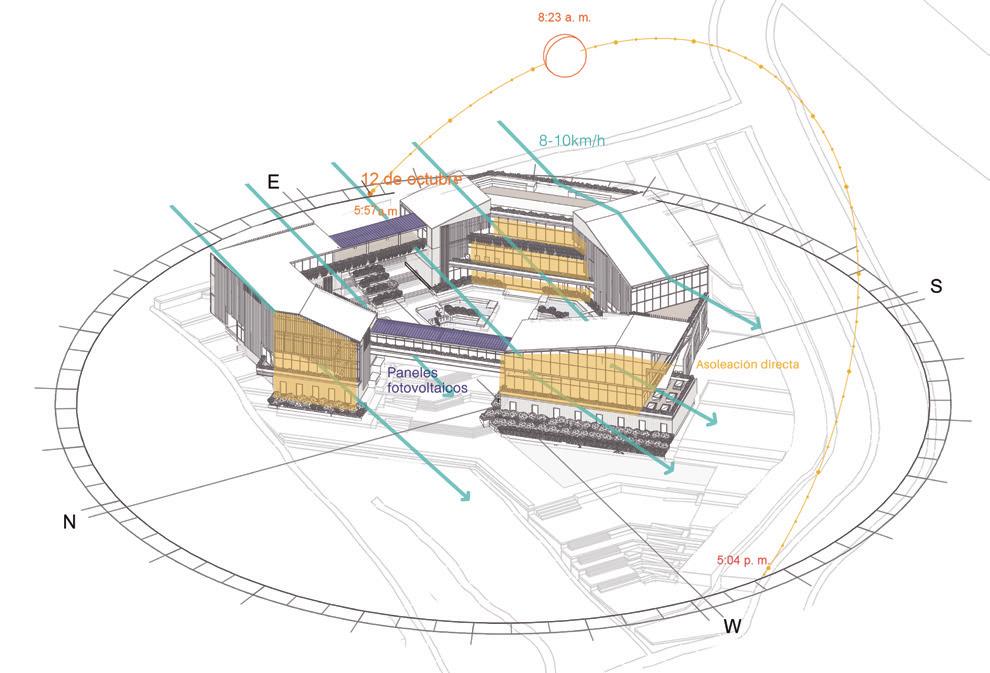
Sunlight and wind
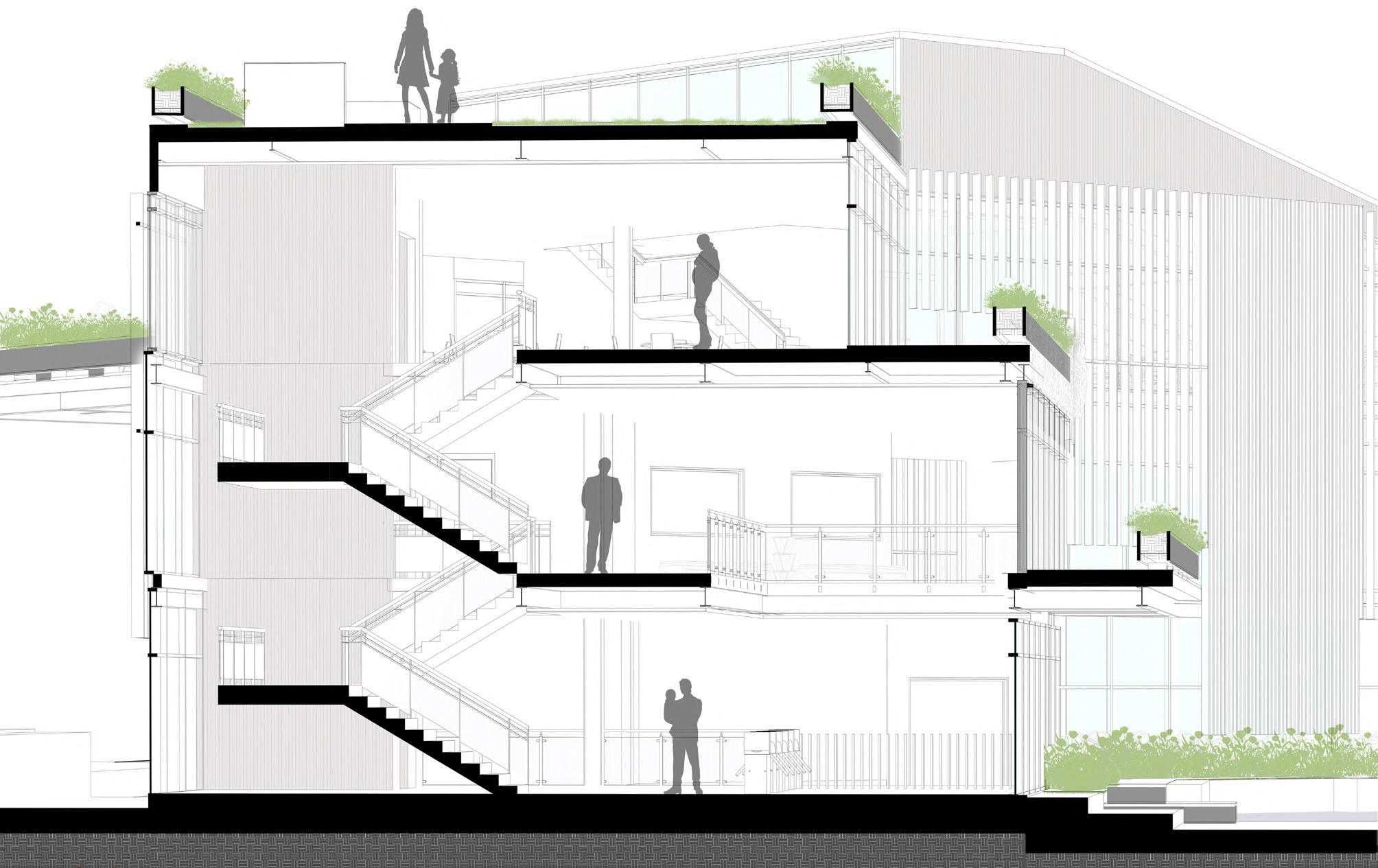
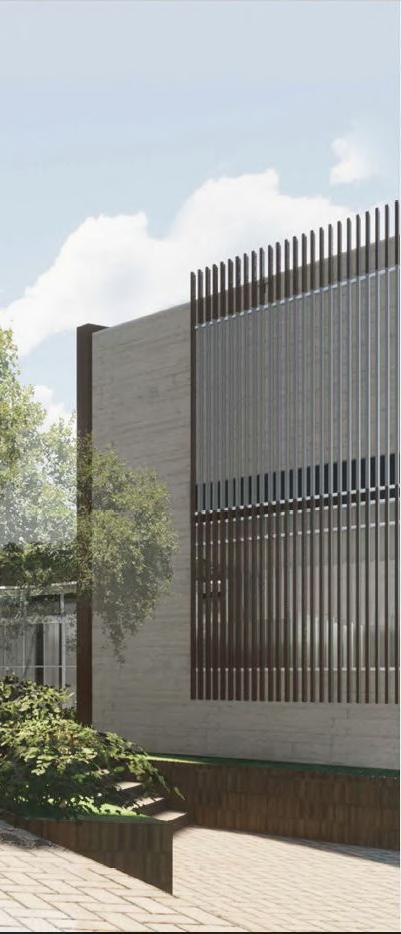
The building receives sunlight from different angles responding to the specific needs of temperature and illumination. Spaces needing less lighting use a system of louvers at short and medium distances. A system of curtain walls is implemented for spaces that do not have direct exposure to the sunlight but require adequate illumination, in which double glassing with metal ions is used to reduce the u-value.
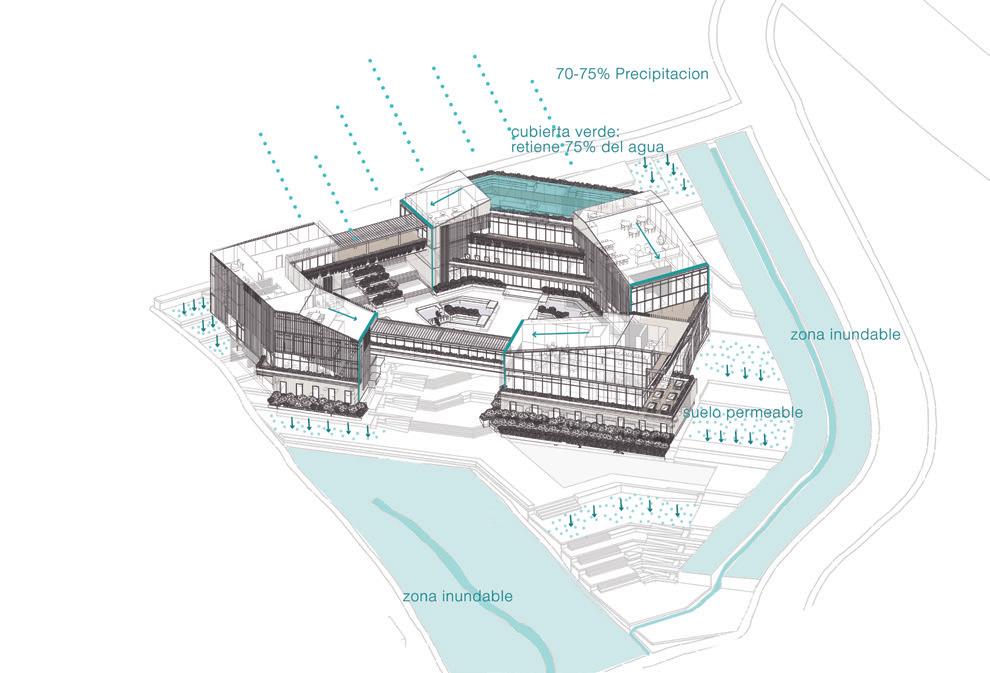
Water control
Since the project is located in a hilly place with a high slope, the water management of the project is divided by the intern system of water supply provided by collecting rainwater and the evacuation system which consist in conducting the extra amount of water along the slopes being filtered by SUDS and arriving to the river’s flow.
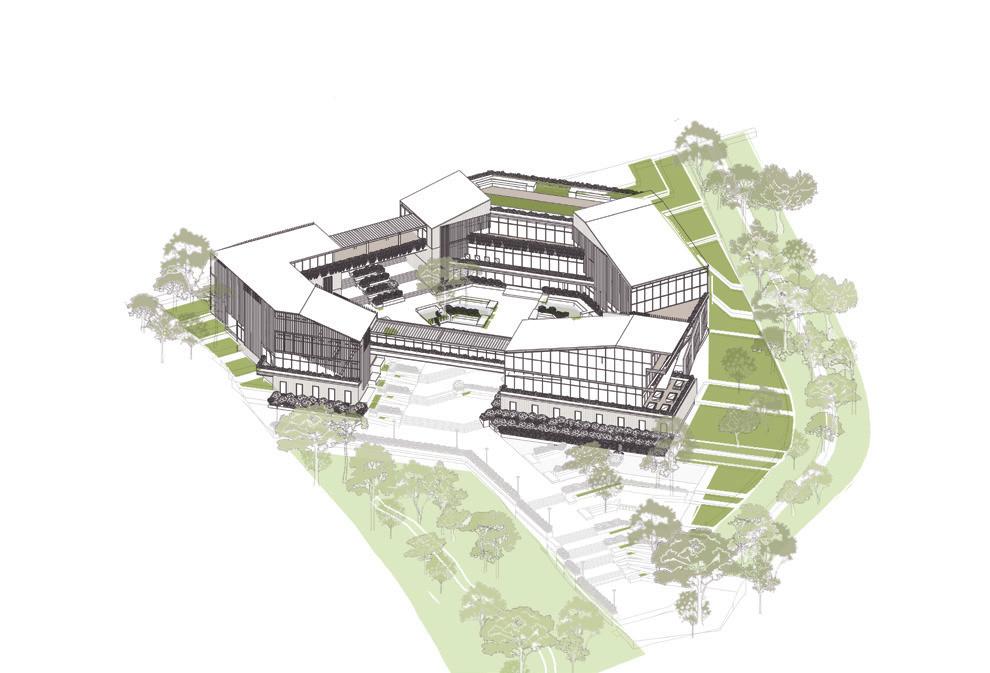
Green strategy
An urban acupuncture strategy is developed through the architecture, since the relationship of a significant facility with public space, generates a sense of belonging and a transformation of the sector
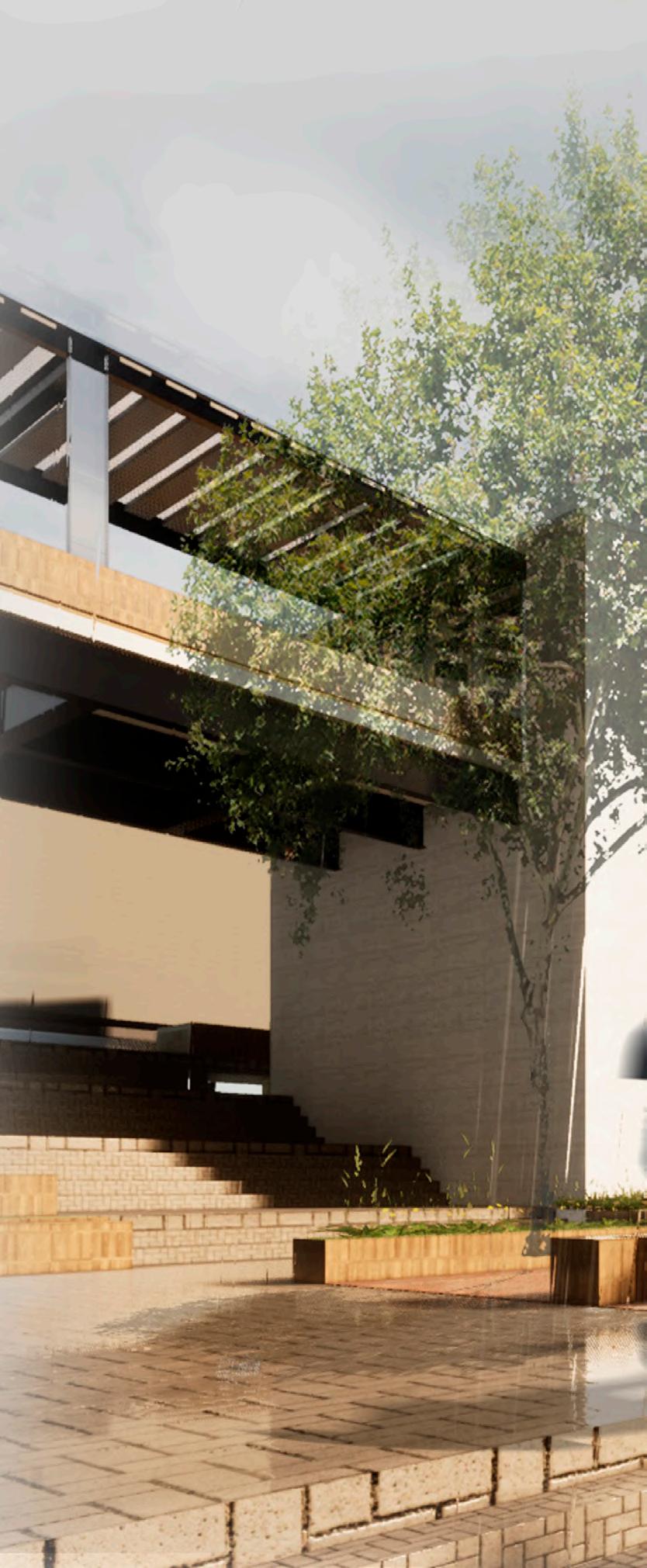
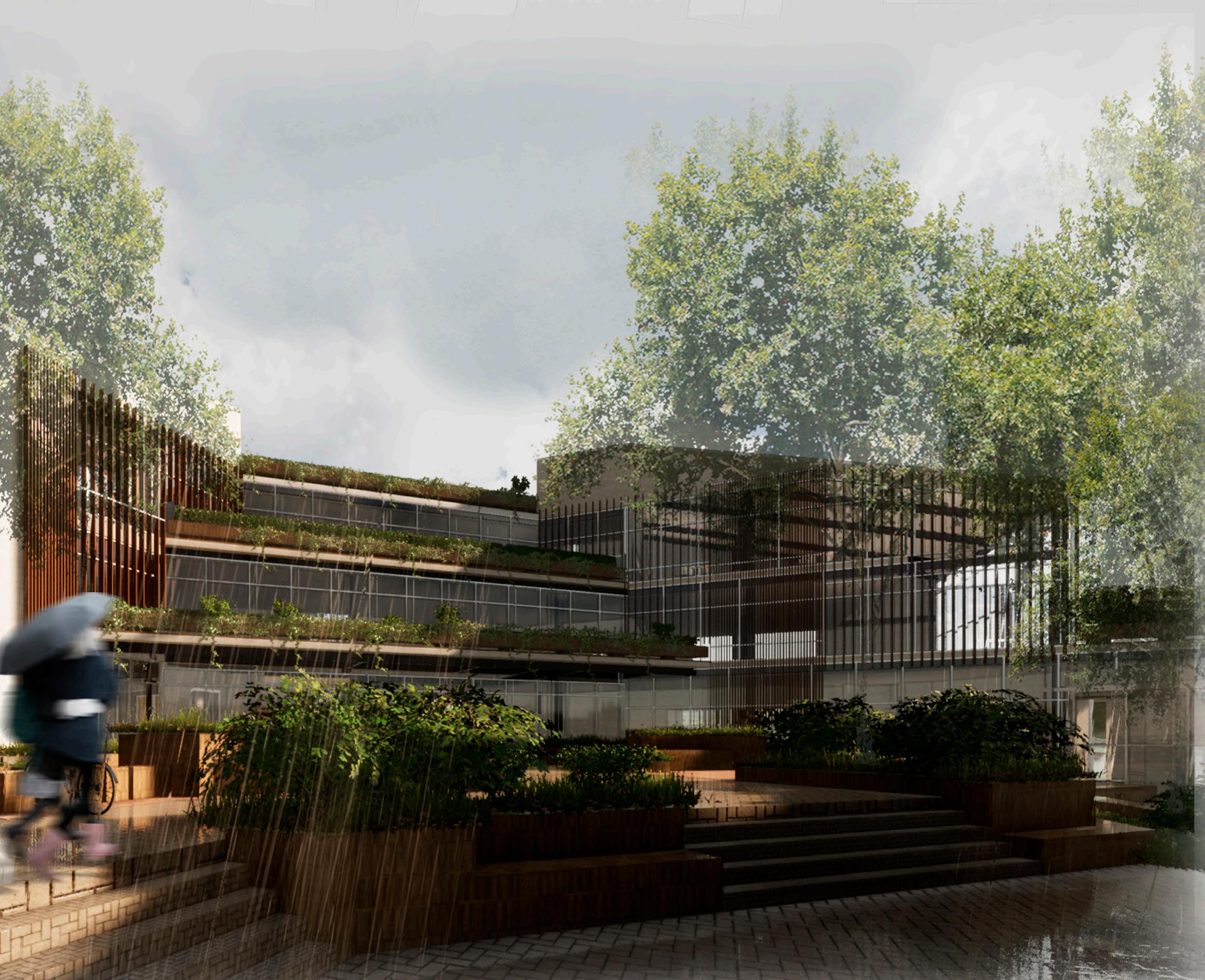
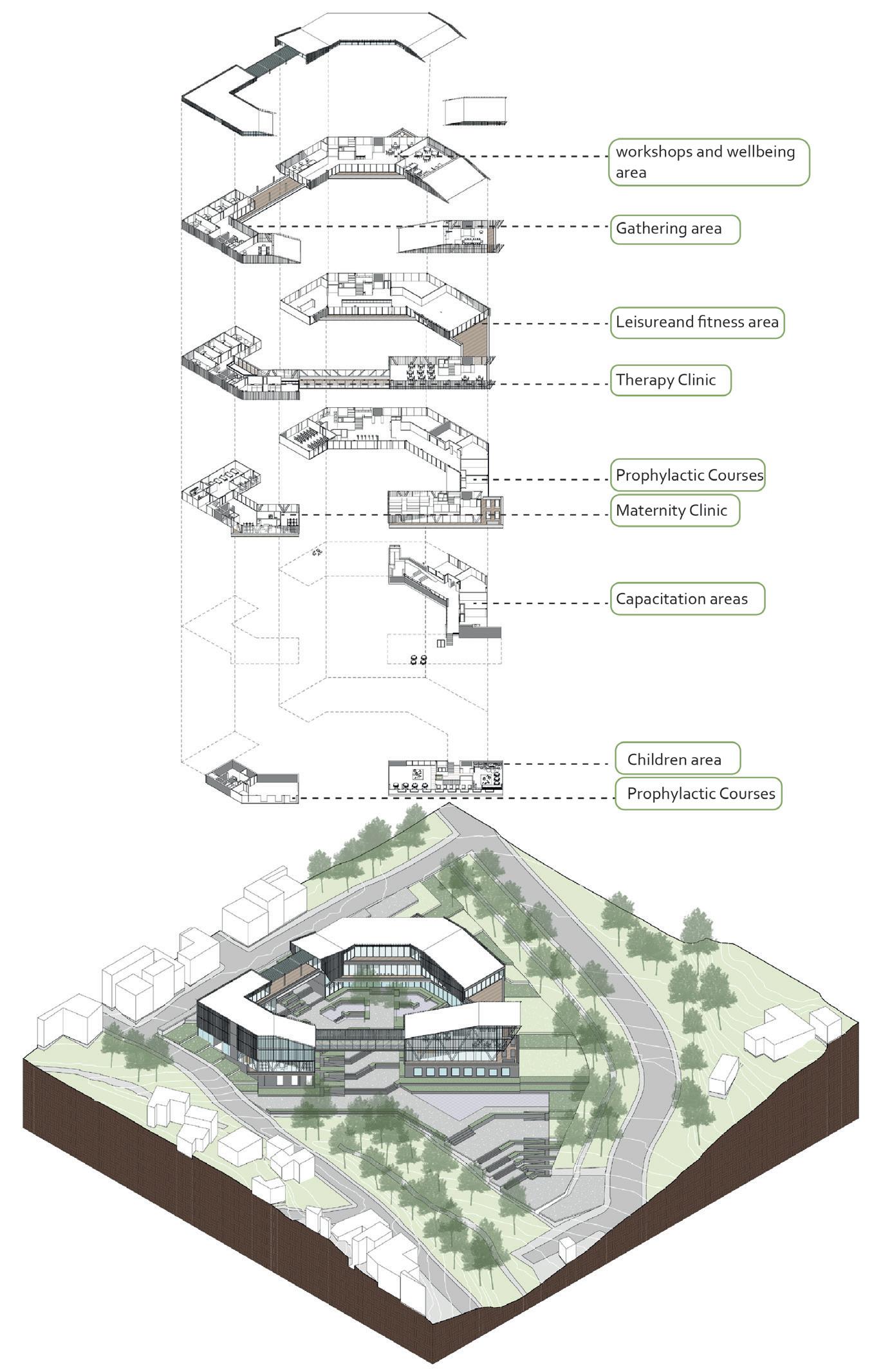
The project seeks to empower, value and provide tools for an integral development for women in a vulnerable state. This is achieved through education both on issues related to motherhood, as well as capacitations for their personal development. The program arises as a result of the research carried out, and its objective is to develop optimal spaces for specific activities. Therefore, the equipment is made up of 2 main themes, training and support, which are articulated with shared uses and open spaces.
Different spaces are proposed for the conformation of the activities defined within the program of each one of the venues, which respond both to the conditions of the place, as well as to the needs of the population and the activities proposed for the project.
RIVERSIDE HOUSE
Architectural Visualization & marketing
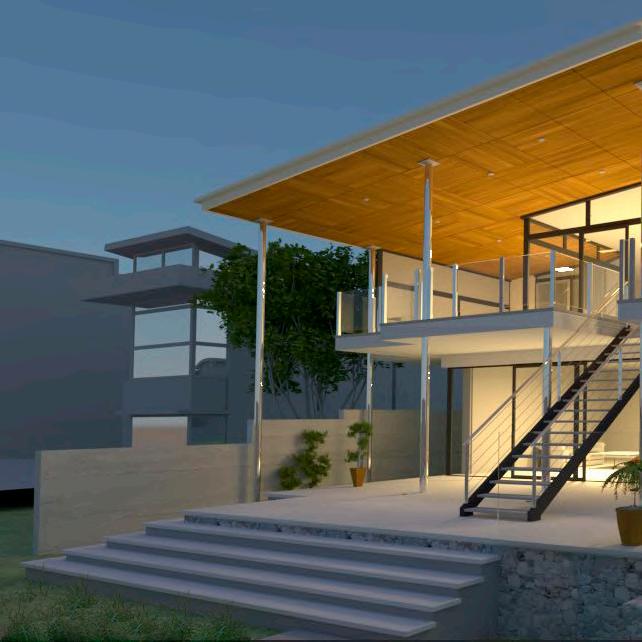
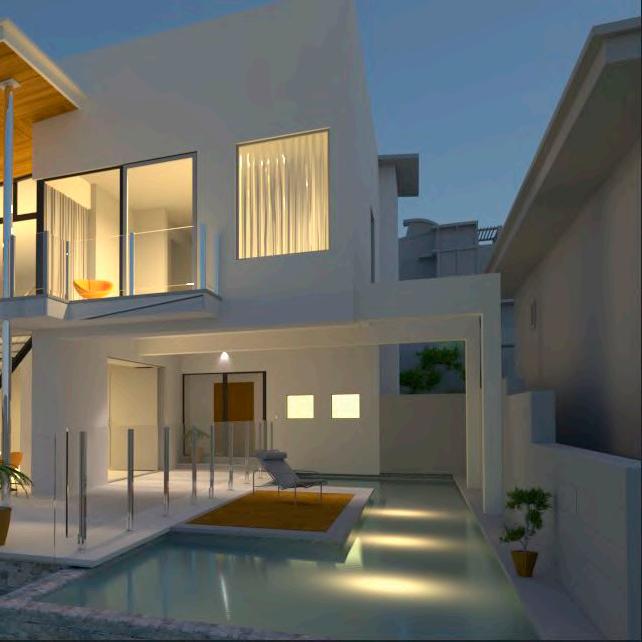
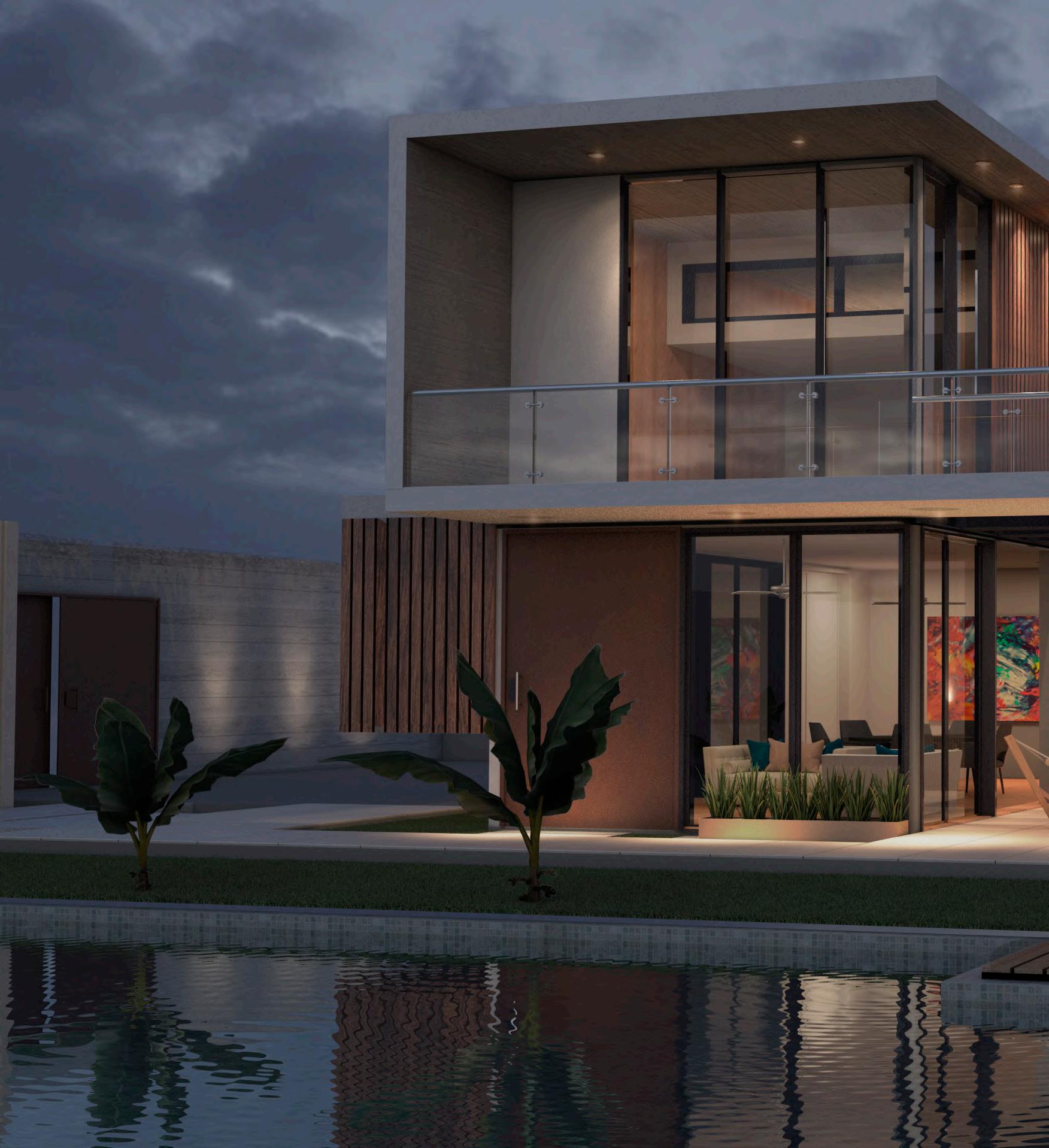
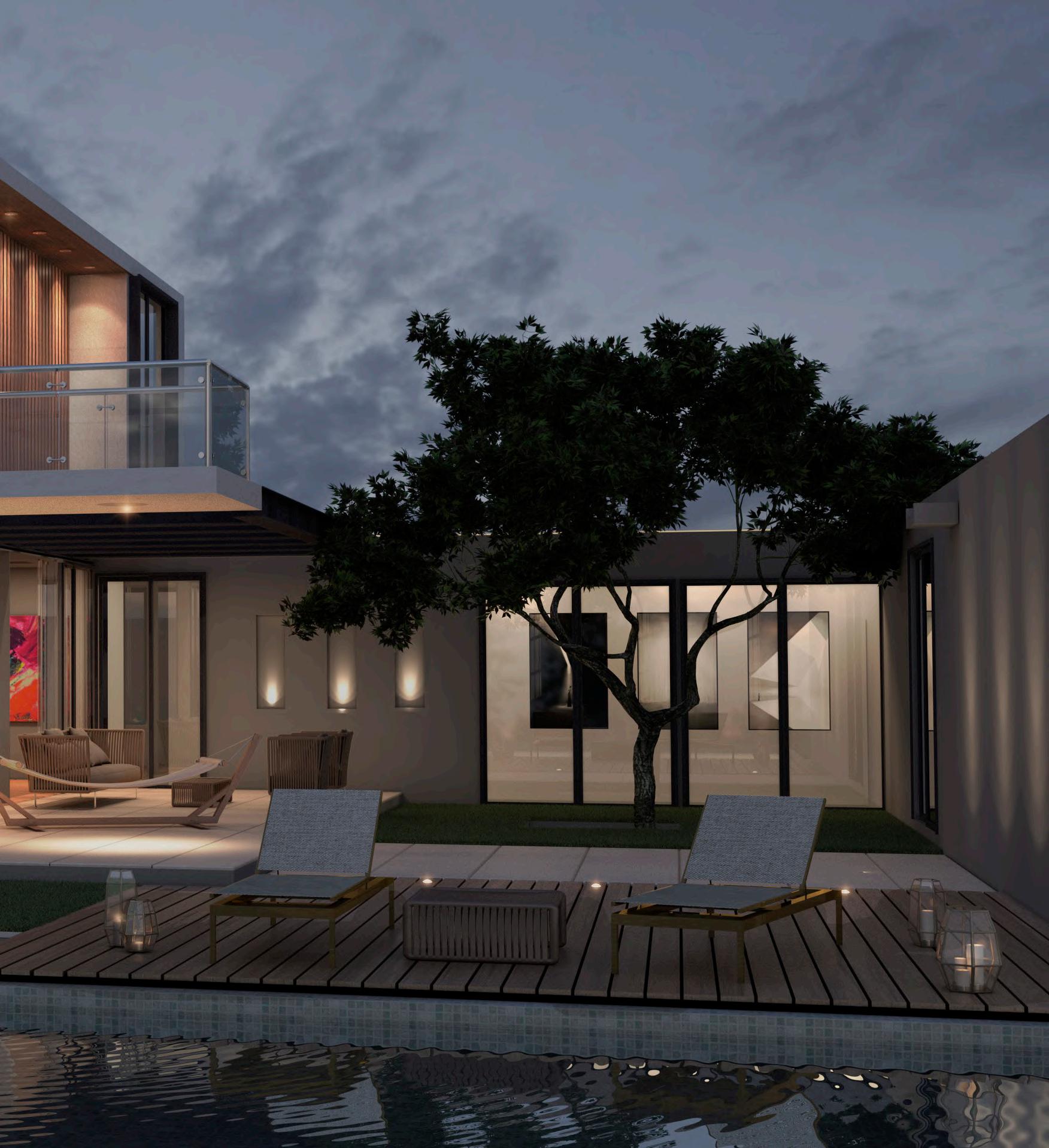
Casa del Rio is a sculptural housing structure that represents elegance and sobriety.
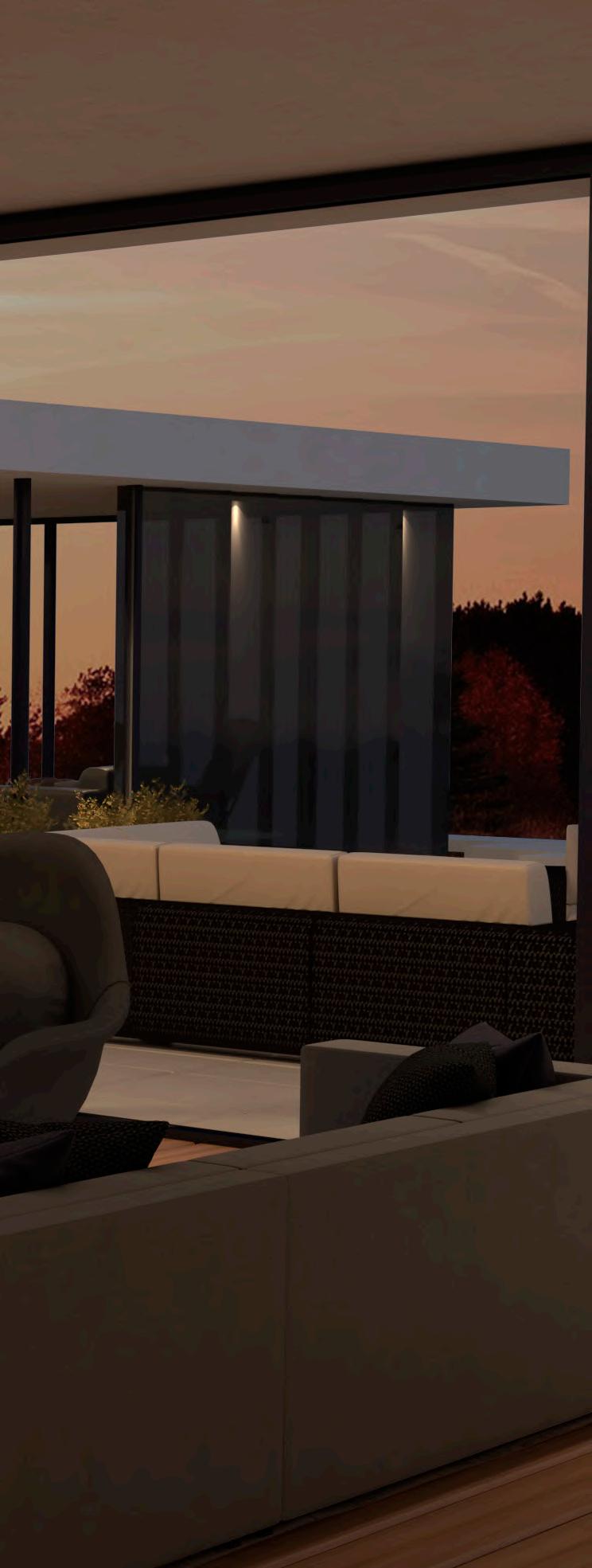
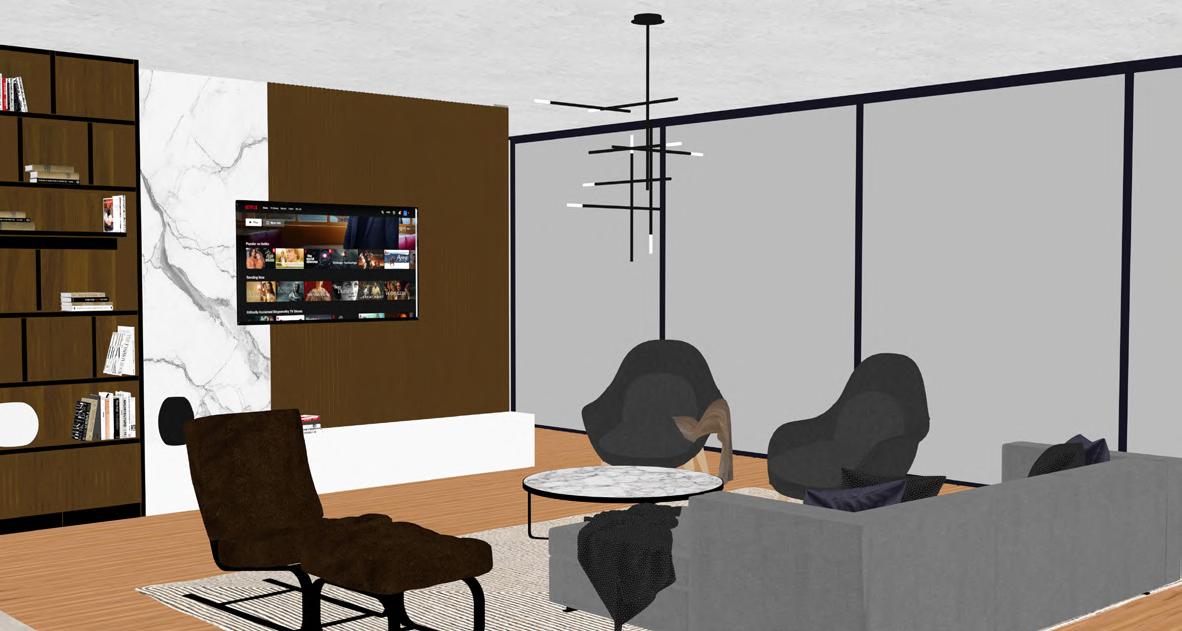
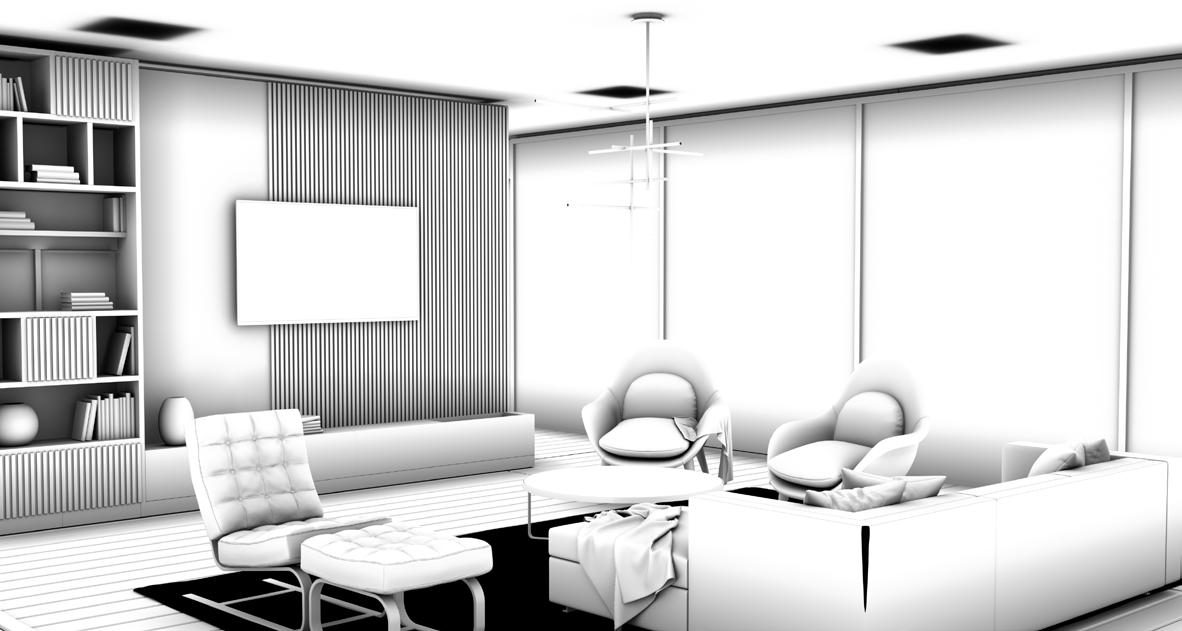
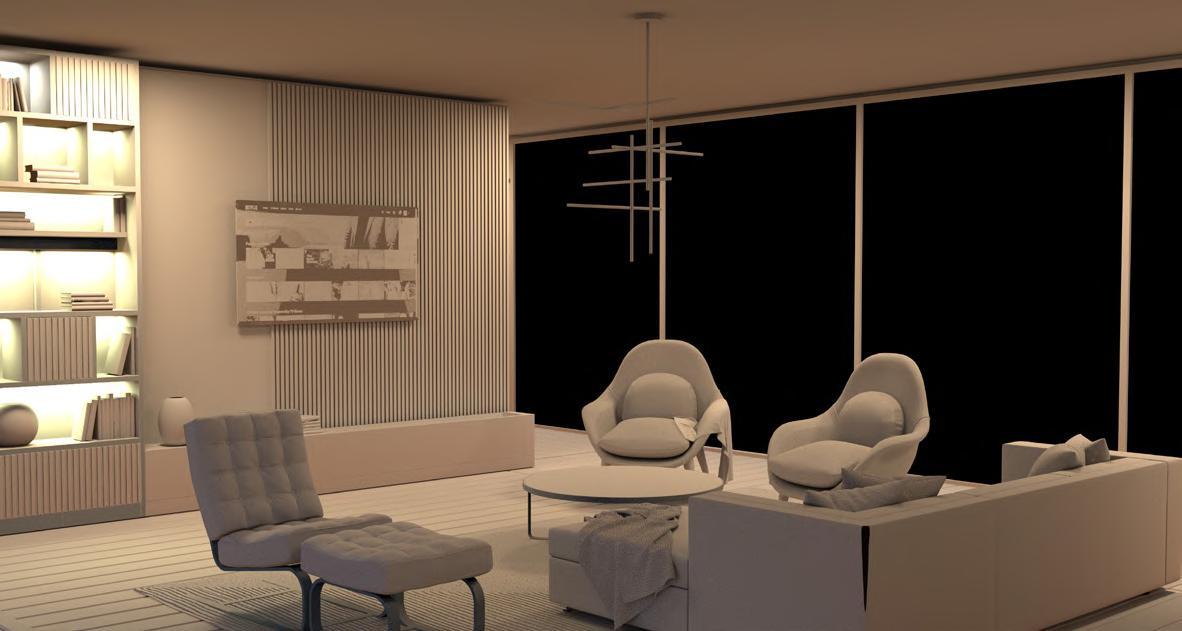
The present images, work of the architect Natalia Zuleta Arnedo, provide a new visualization of the ambitious project carried out by Three Sixty Architecture called Riverside House. This is a luxurious family home originally located in Hagley Park, New Zealand, adjacent to the River Avon.
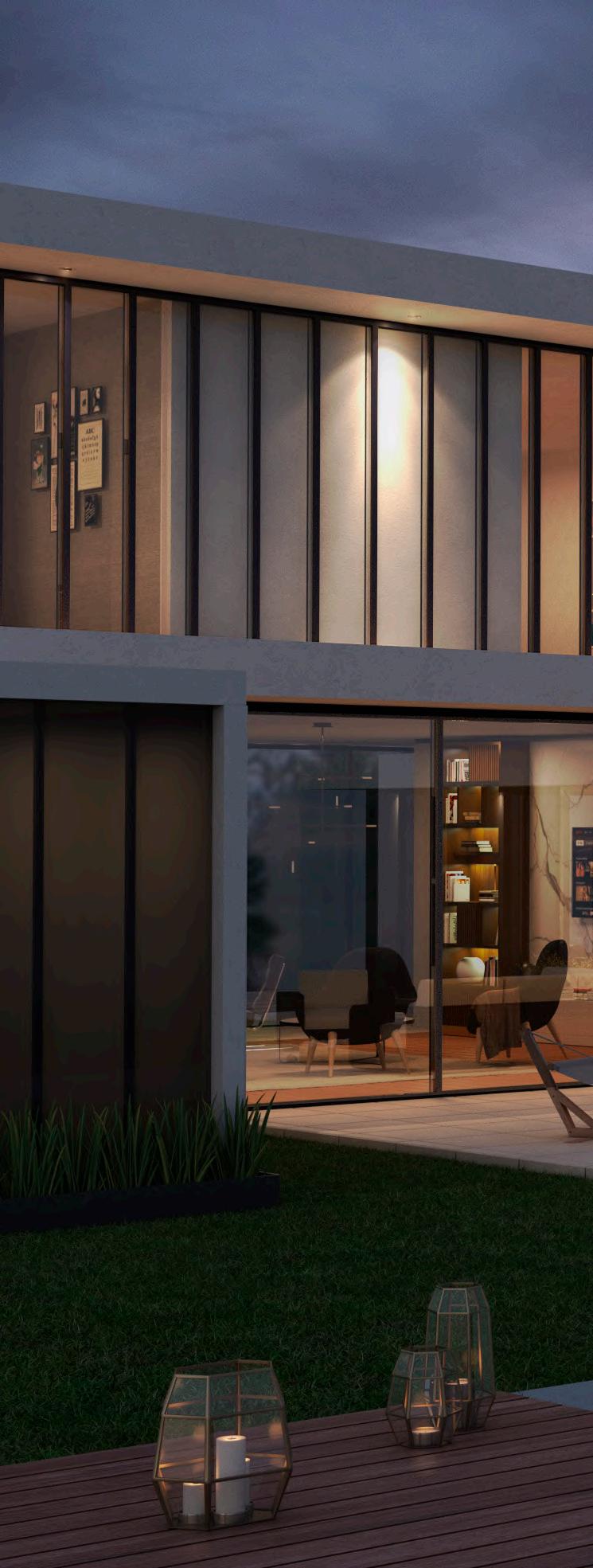
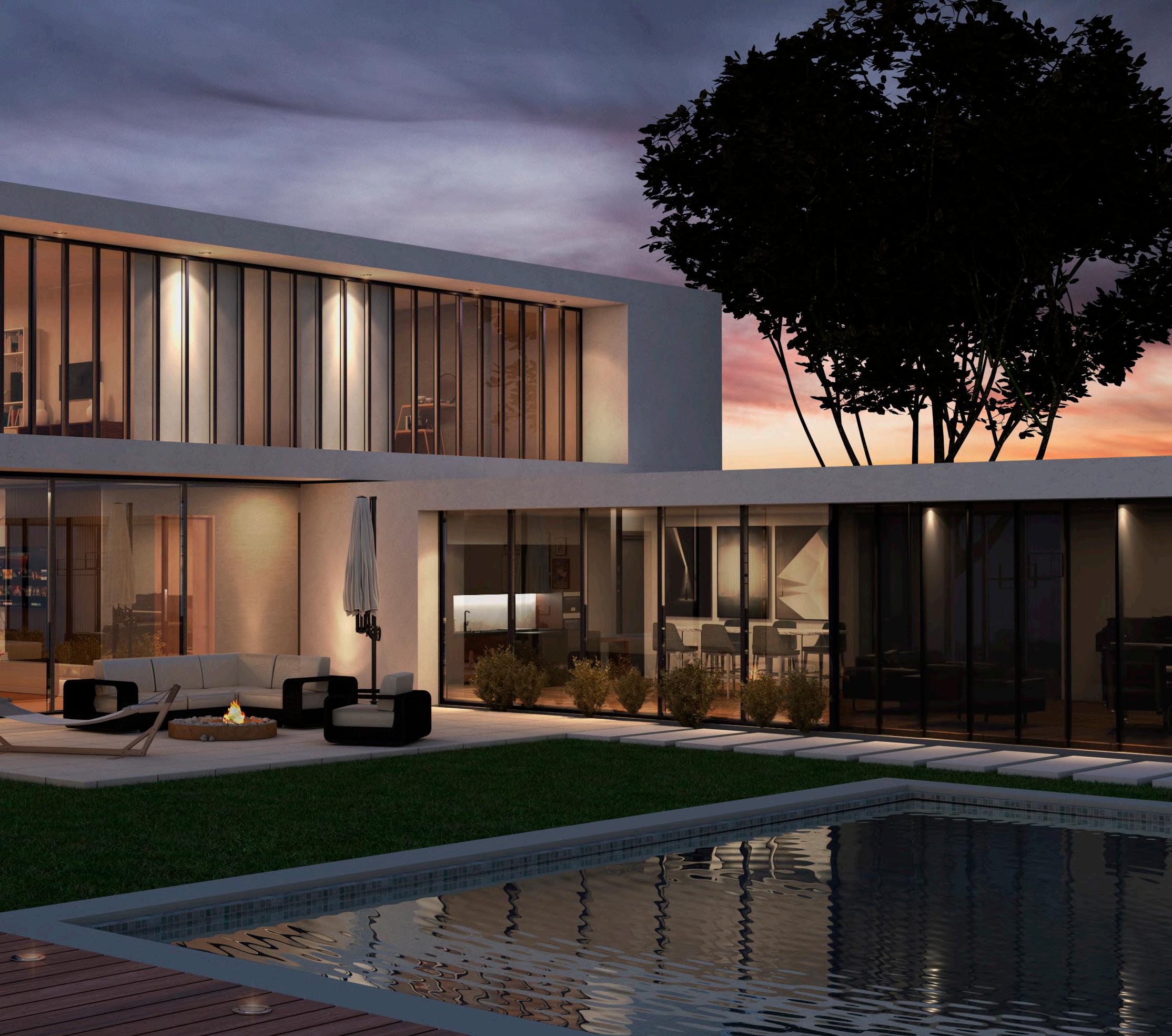
The proposal aims to generate rest and relaxation environments from sober tones and visual amplitude towards the landscape. It is located in a context of temperate climate which allows for a duality in terms of hardness and permeability from volumes with a heavy appearance combined with transparent spaces as a result of the large windows that the structure has.
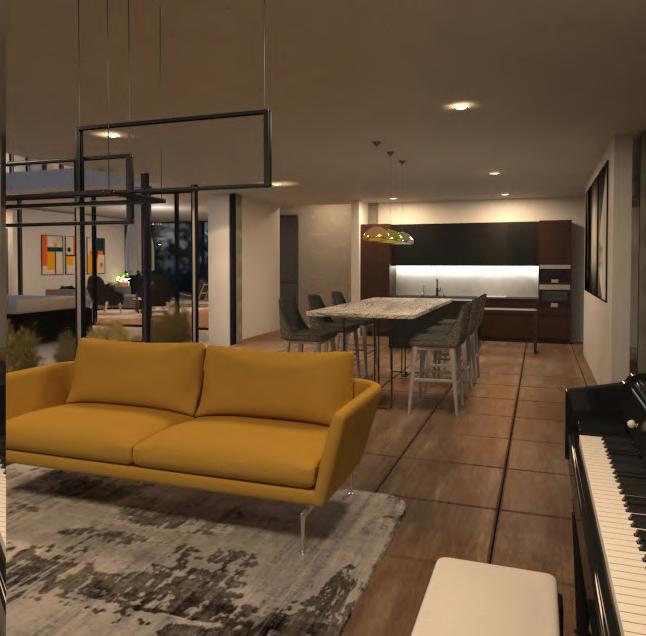
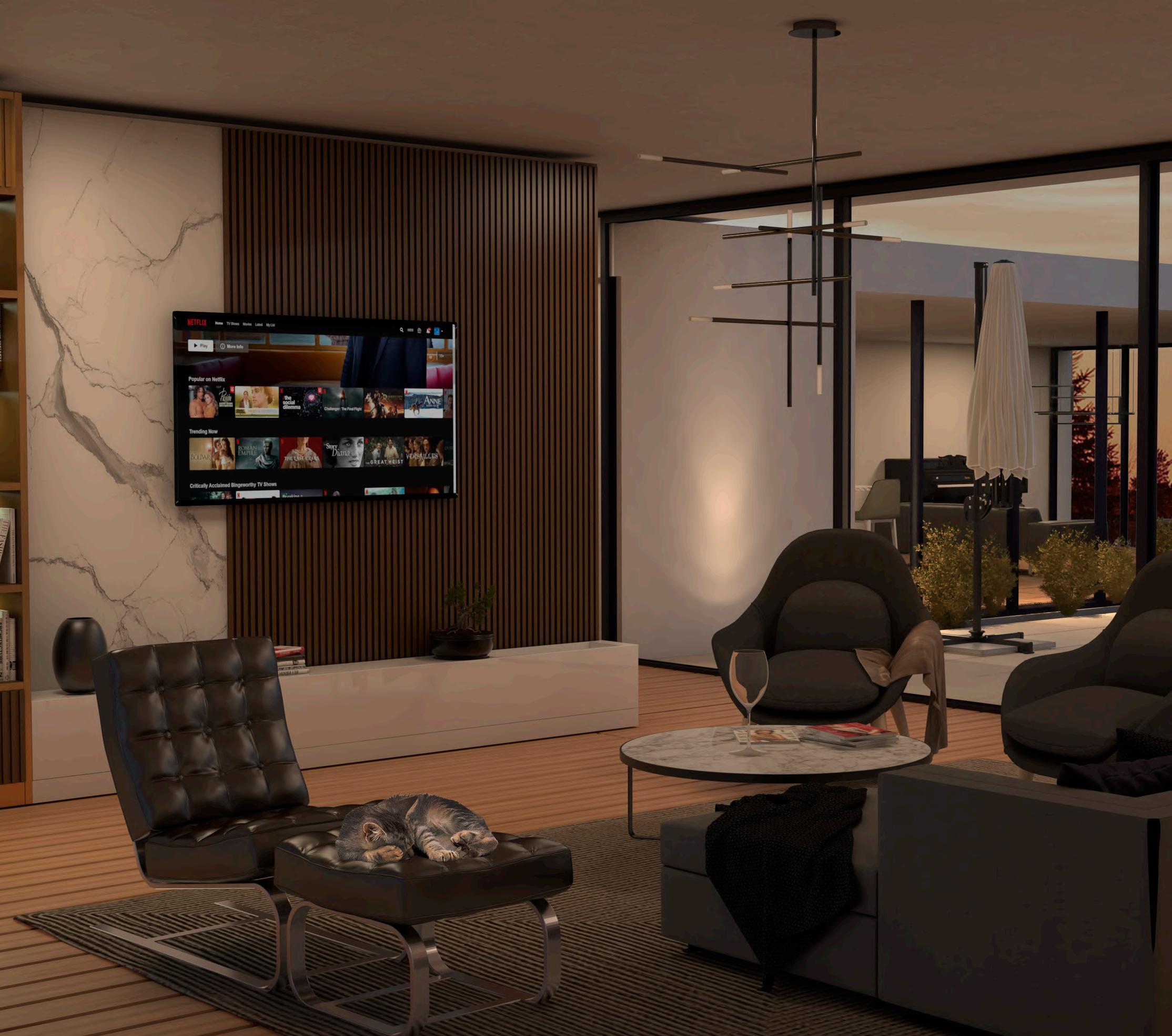
The interior of the house has different spaces in which the feeling of amplitude is generated, thanks to its layout and the use of continuous windows that provide great views to the outside. The internal spaces handle an aesthetic of elegance and comfort using a palette of earth colors that provides warmth to the environment, contrasting the cold colors used on the façade.
The layout of the spaces and the materials used in the project play with the conditions of the place, providing a cool environment in the morning but at the same time, collecting heat throughout the day to create a cozy and comfortable environment during cool nights. The predominant materials in the project are concrete, wood and steel.
GREEN BUILDING DESIGN
Scuola Media Felice Maritano
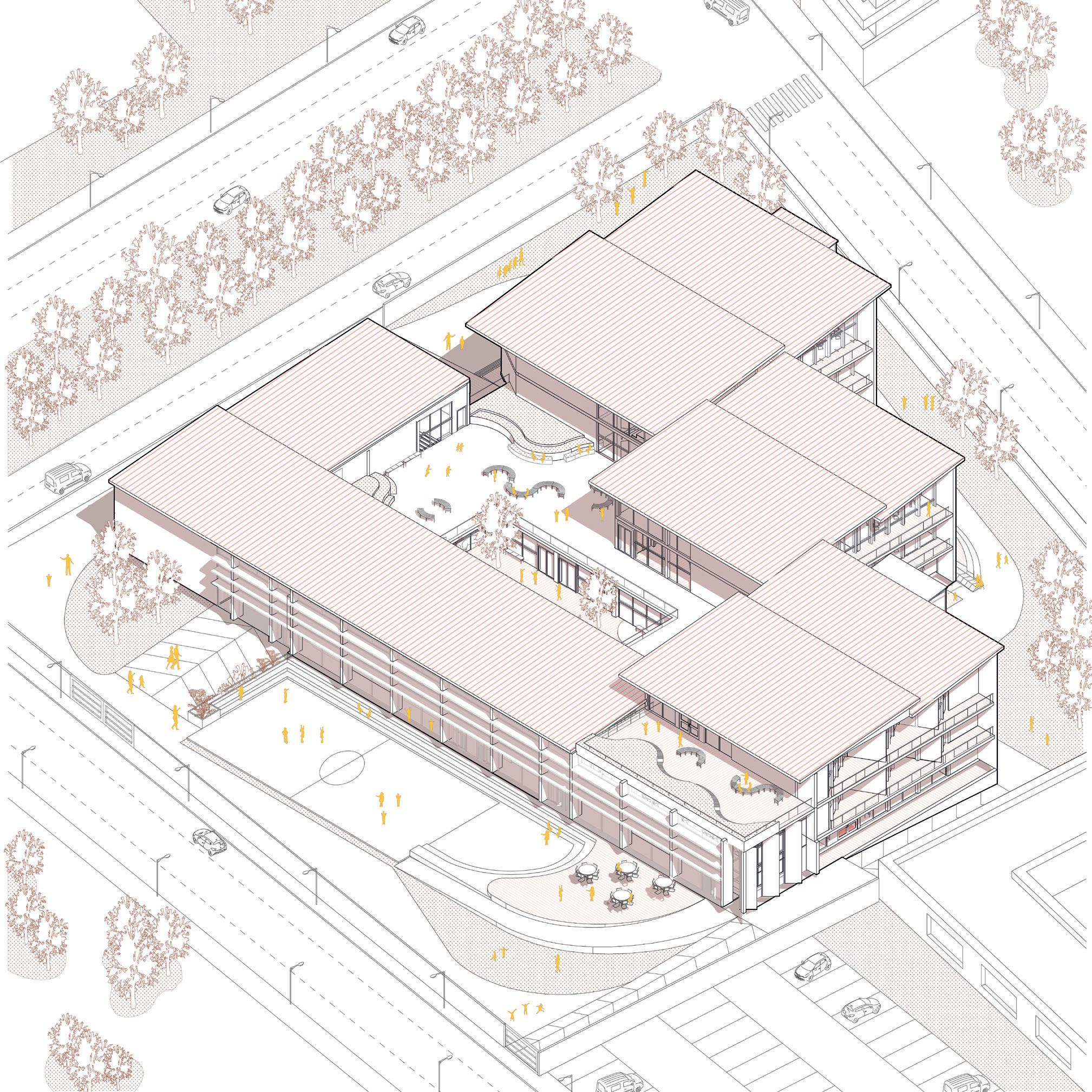
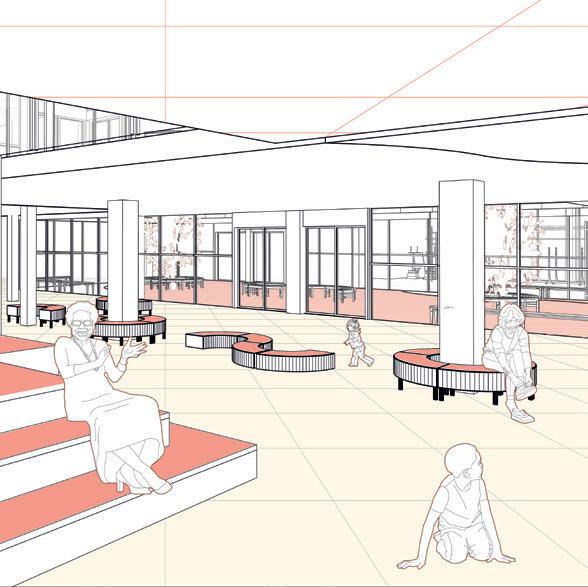
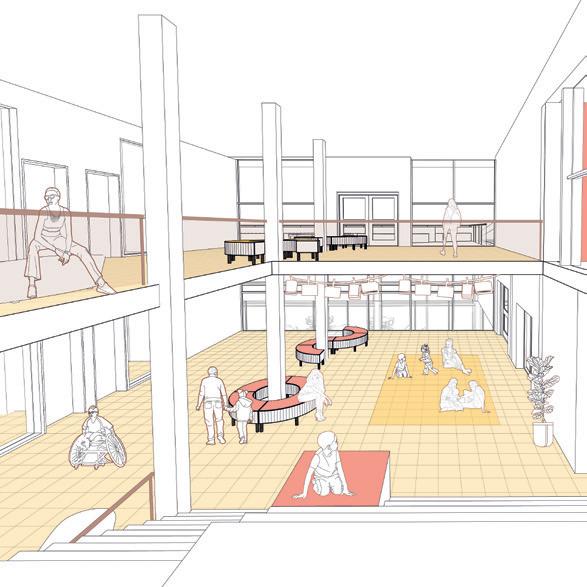
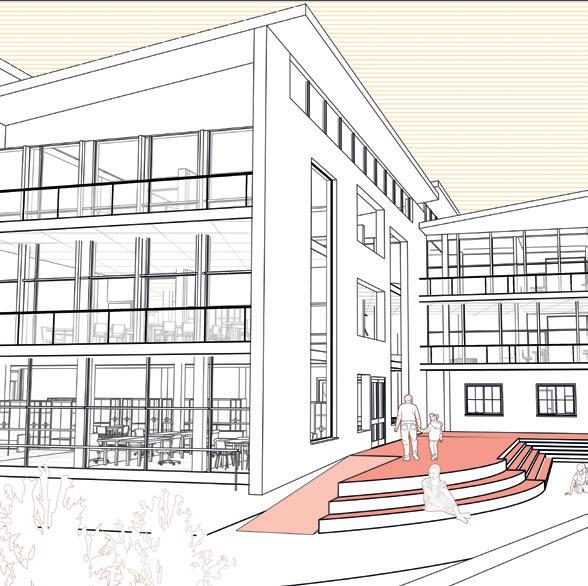
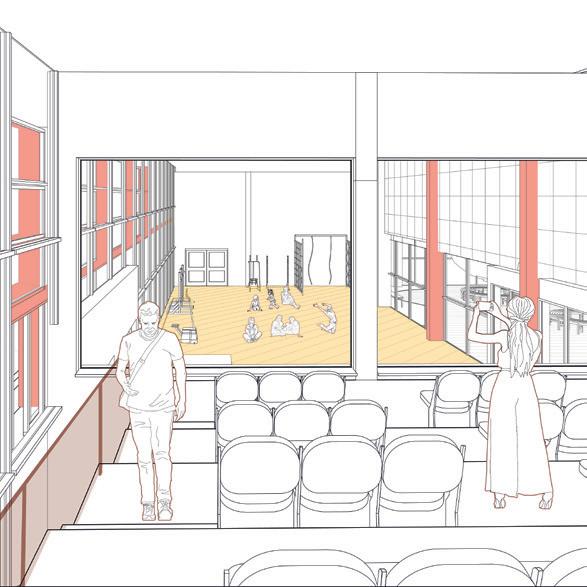
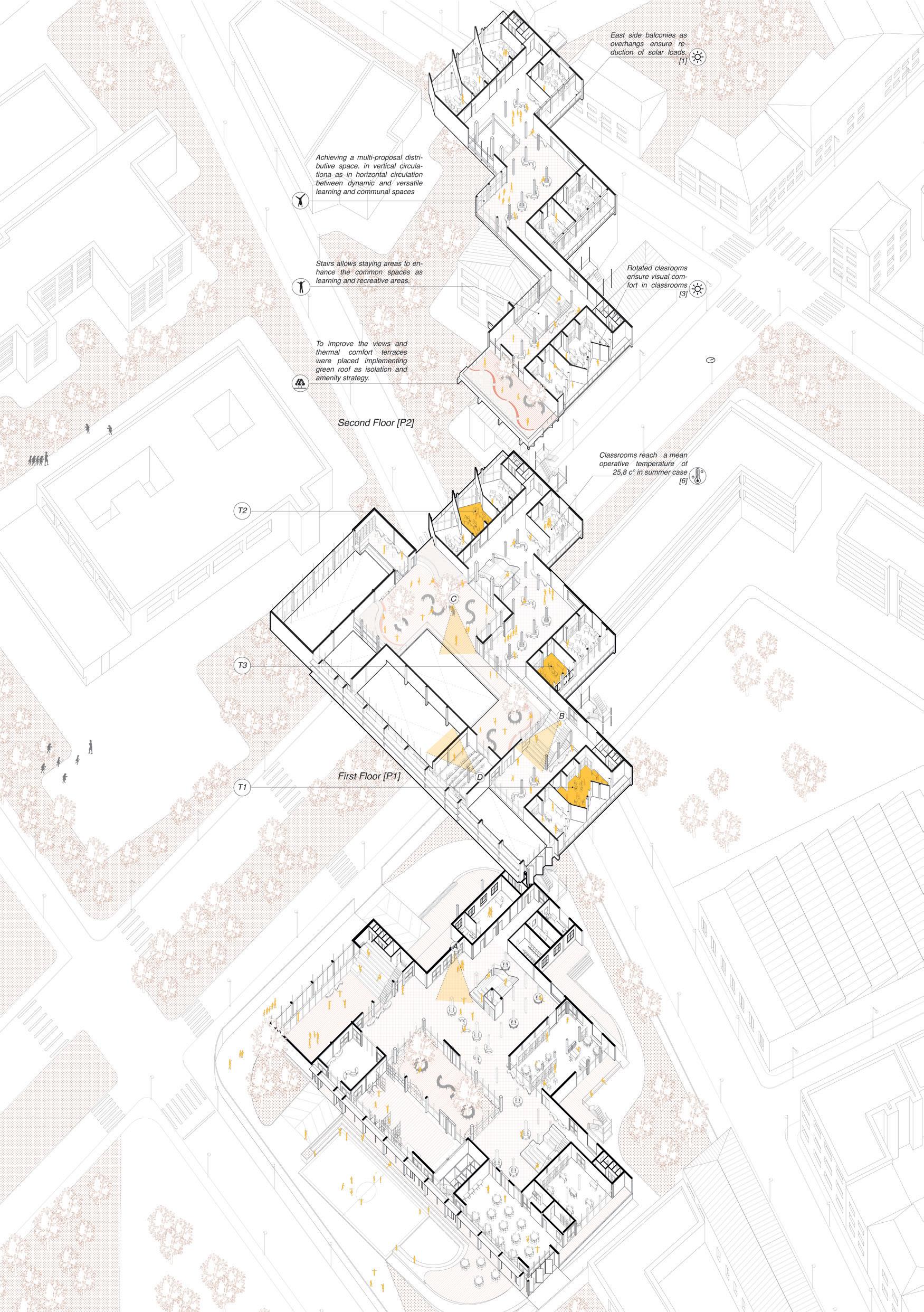
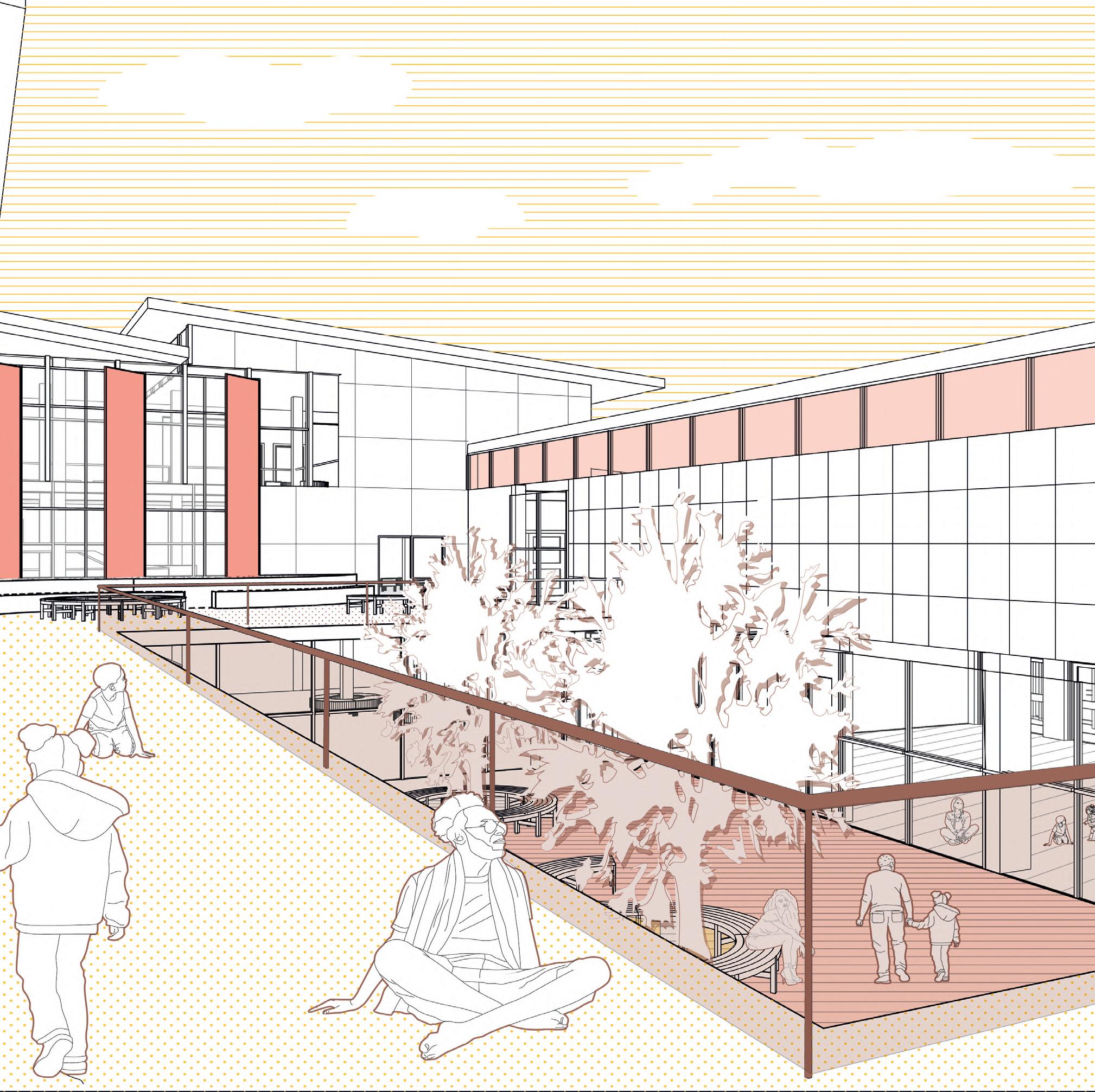
The general aim of the retrofitting project is to improve and enhance the experience of the users through the redesigning of the school building distribution and its plot, in terms of orientation, organization of spaces and views. Equally important is boosting the indoor environment in terms of thermal comfort, energy consumption and pedagogical experience.
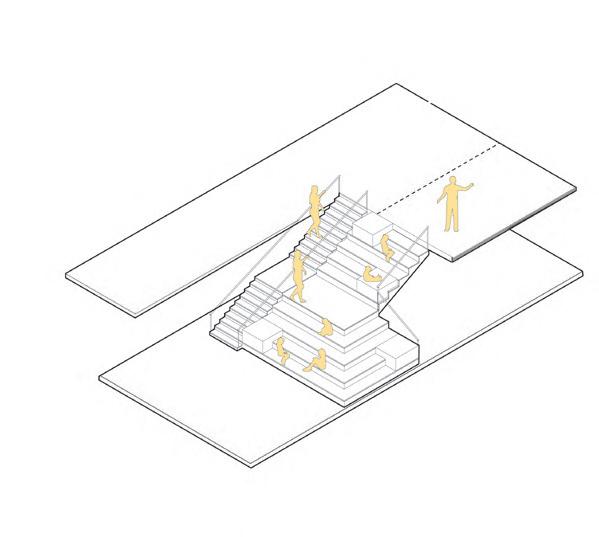
To achieve a multi-proposal distributive space, the vertical circulation was modified by changing the composition of the stairs, these ones were enlarged in the transversal direction and extrude to allow a wider hallway and better circulation across the building. The stairs also allow staying areas to enhance the comon spaces as learning and recreative areas.
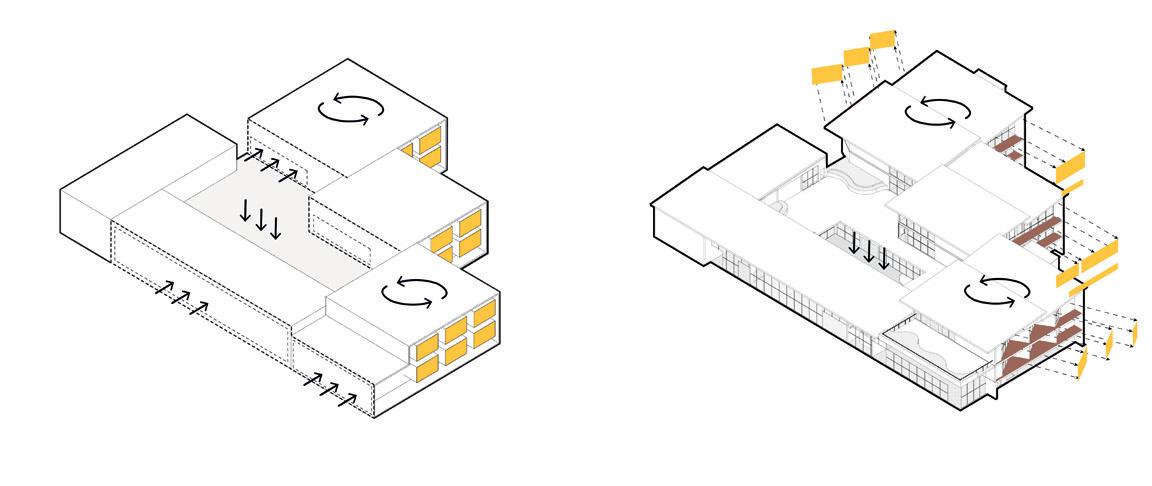
Adition and subtraction of spaces Buffer spaces and classrooms re-orientation
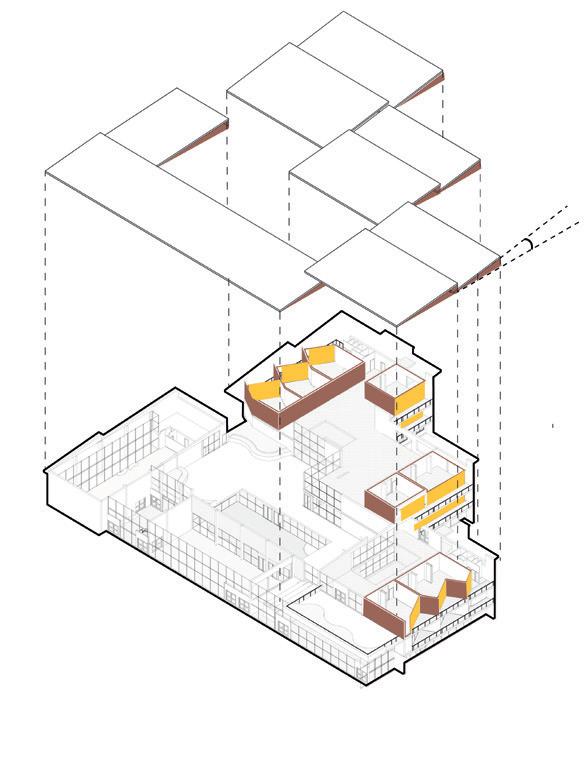
North side angled roof and classrooms typology
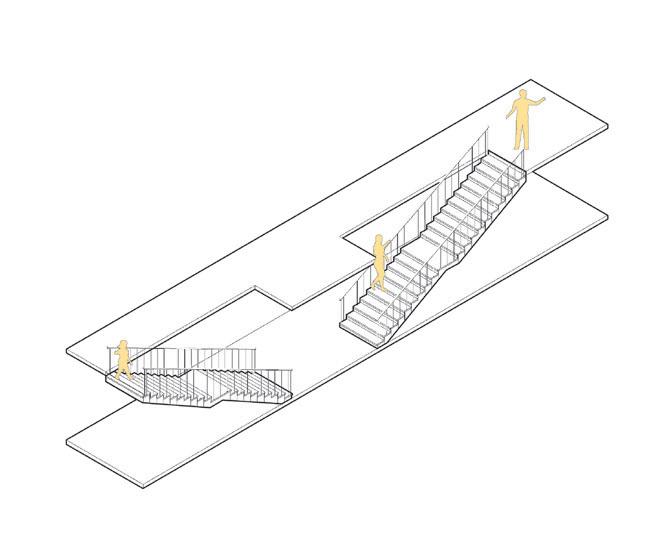
Re-designing the distribution and the vertical circulation
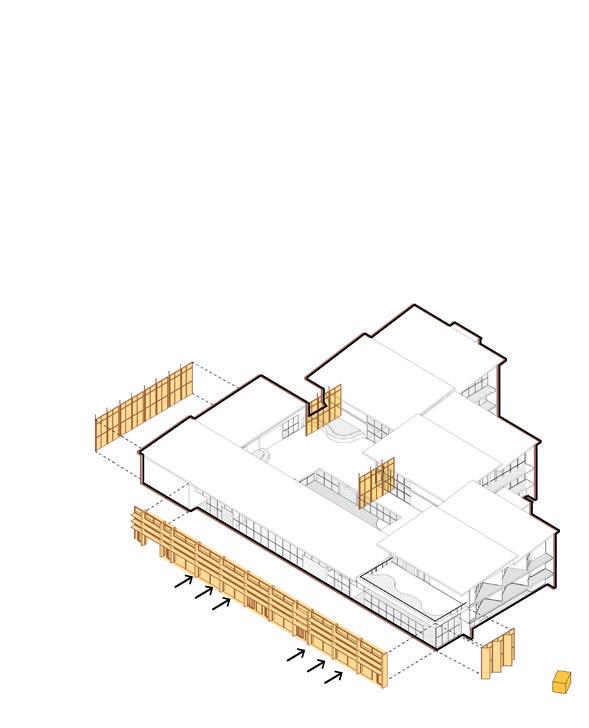
Aditional envelop glass shading device
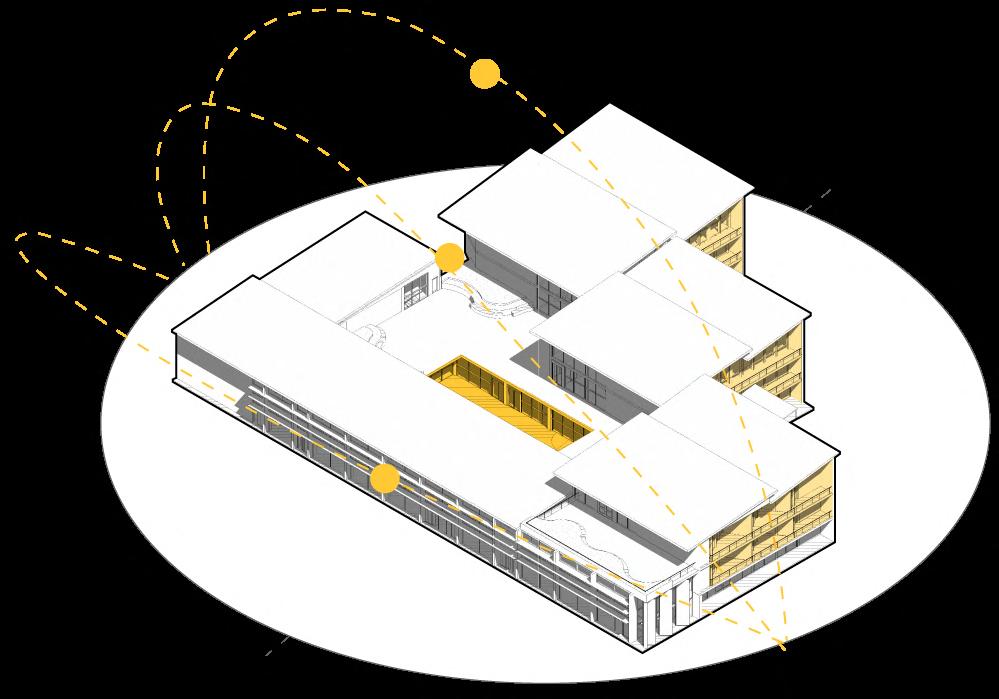
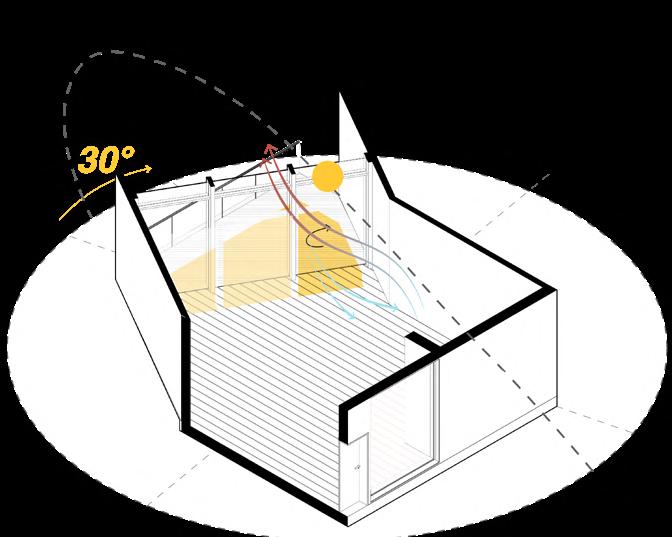
Orientation [Sun path]
The school have originally located the classrooms facing west and east, By rotation of the classrooms 30° to the north diffuse light is reached
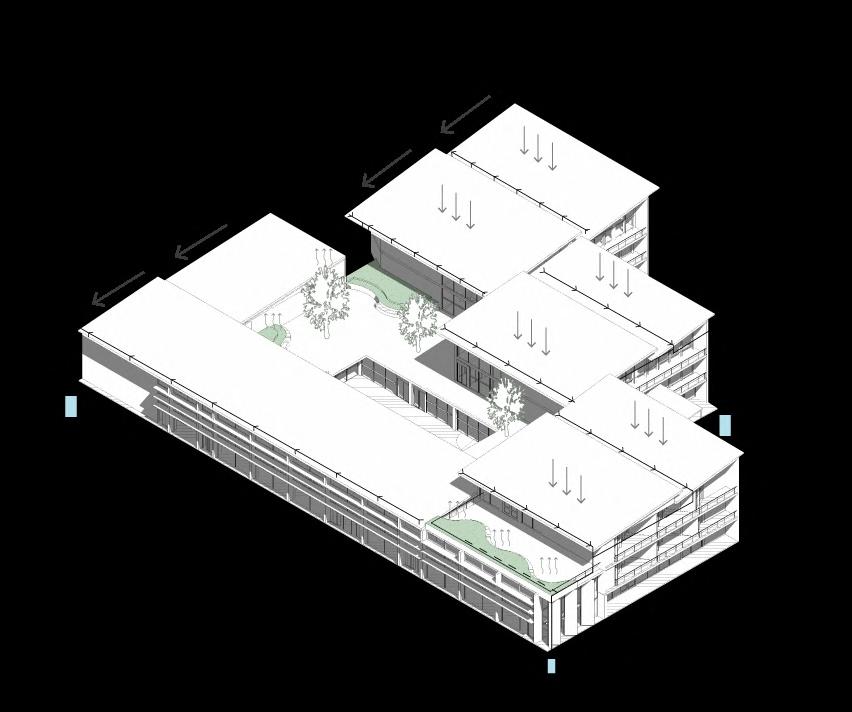
Greenery and water recolection
Terraces were placed at first and second floor improving slab insolation and enhencing outdoor space as amenity and distributive space.
Angled roof allows better management of rain water to be collected and re used in green areas.
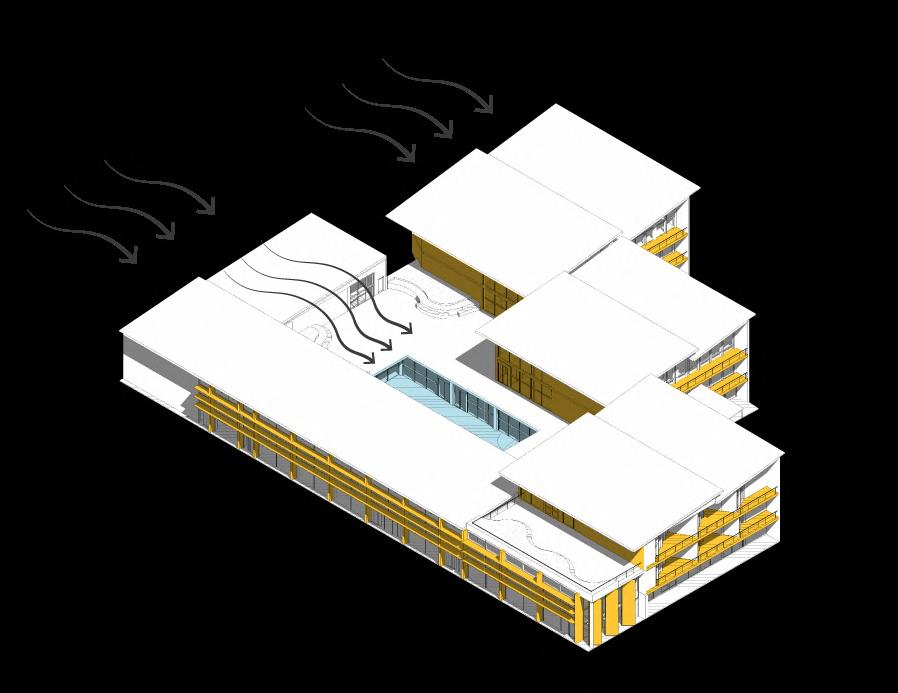
Prevalent winds and evelope strategy
Prevalent winds coming from north west direction. Patio in ground floor enriches the ground floor atmosphere improving natural illumination and ventilation to common areas.
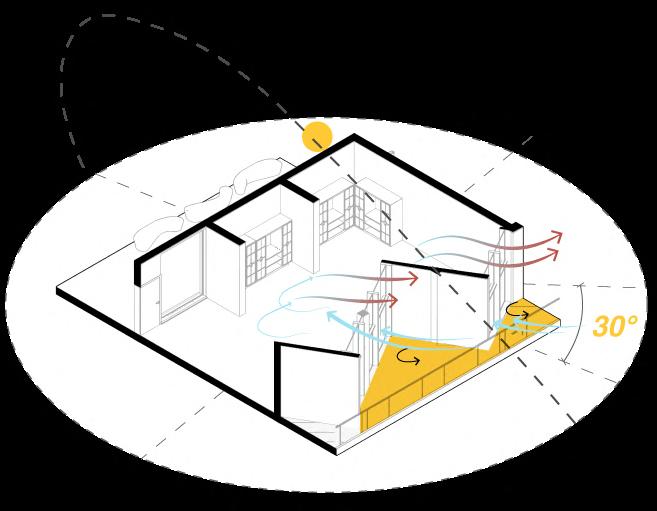
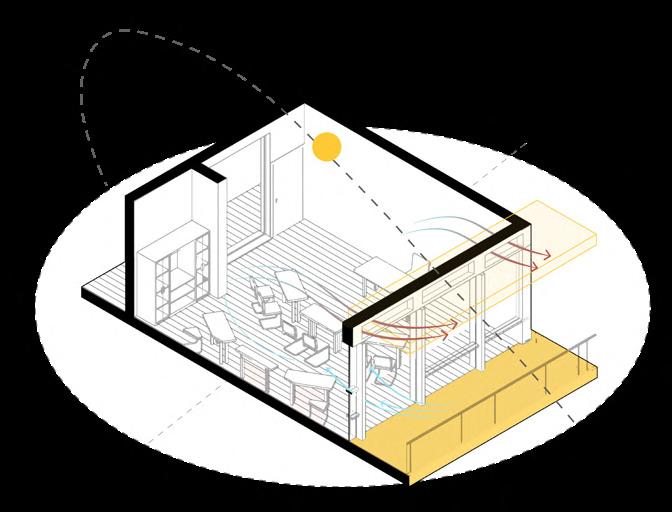
Decreasing solar loads through classrooms design (Typology 1)
The overall design for classrooms count with balconies as overhangs of 1.9 mts large for all clasrooms typology and the new shape of the room rotation creates a 4 mts extension as a vertical fin for typology T1 and T2
Indoor air quality (IAQ) and indoor thermal comfort improved (Typology 2)
Openings designed to reach 12,3 volume change per hour in summer cases
Allow a correct Indoor air quality and improve the indoor temperature
Rotation of the classrooms 30° to the north (Typology 3)
Improve classrooms illumination and pedagogical experience
Afford continued windows
Avoid sun incidence
Avoid external additional shading devices
Diffuse light from north is reached and risk of glare is avoided.
RE-THINKING THE CASCINA Architecture, Society and Territory
The aim of the project is to restructure and reuse existing infrastructures in order to establish a connection between Missaglia and the neighboring municipalities of the province regarding the development level and quantity of pre-existing infrastructure, amount of services offered, closest physical connection between Missaglia and its context.
As a connector element, it was determined to develop a project that will function towards an existing phenomenon (constant aging population) in a local and provincial level regarding residential proposals and services for the community in the center of the city as a response to an unplanned urban spread.
To achieve the goal, the creation of spaces for exchange and interaction between the productive/ working community and the elderly community regarding the three sustainable aspects, social, economical, and environmental was designed.
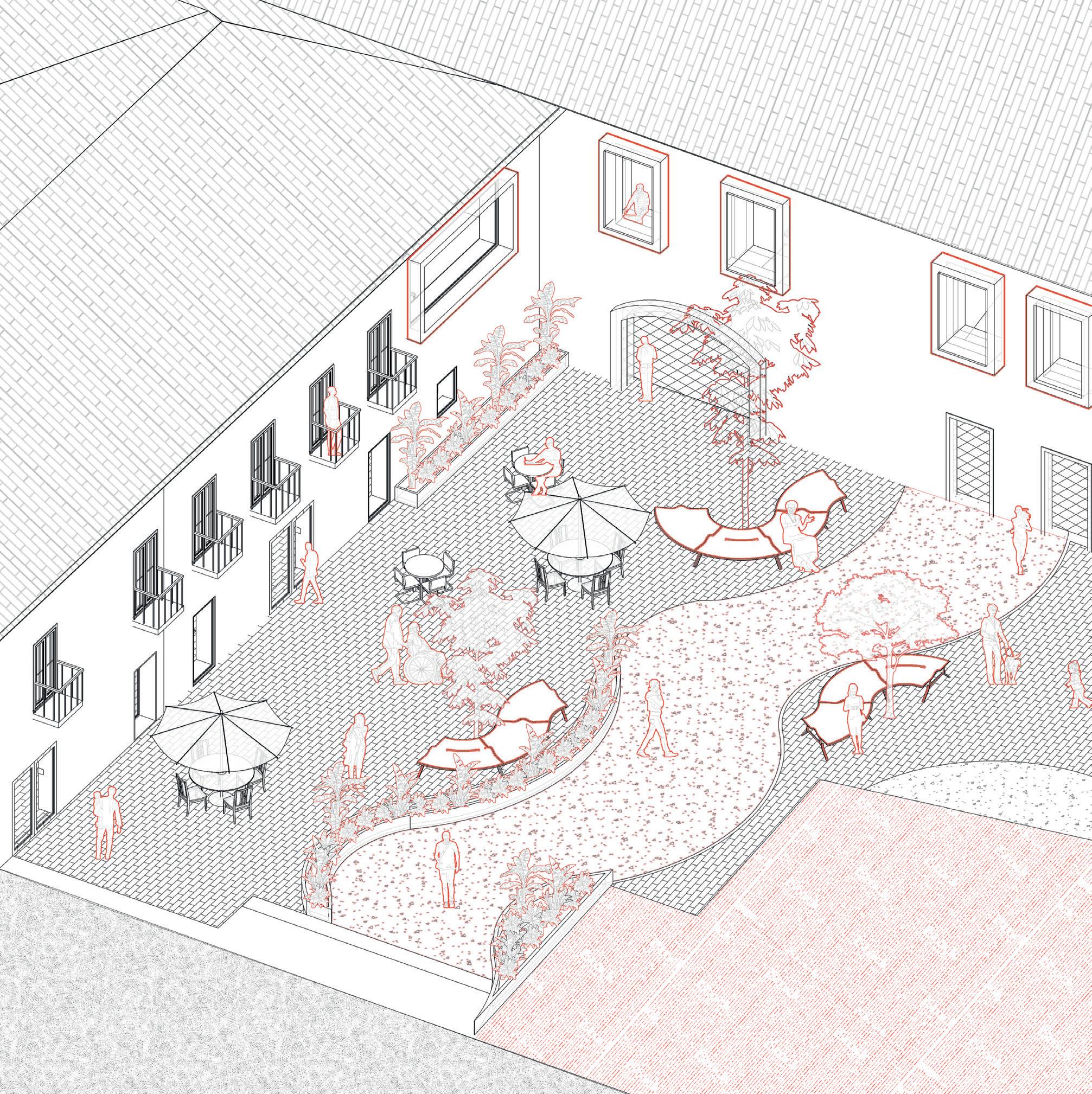
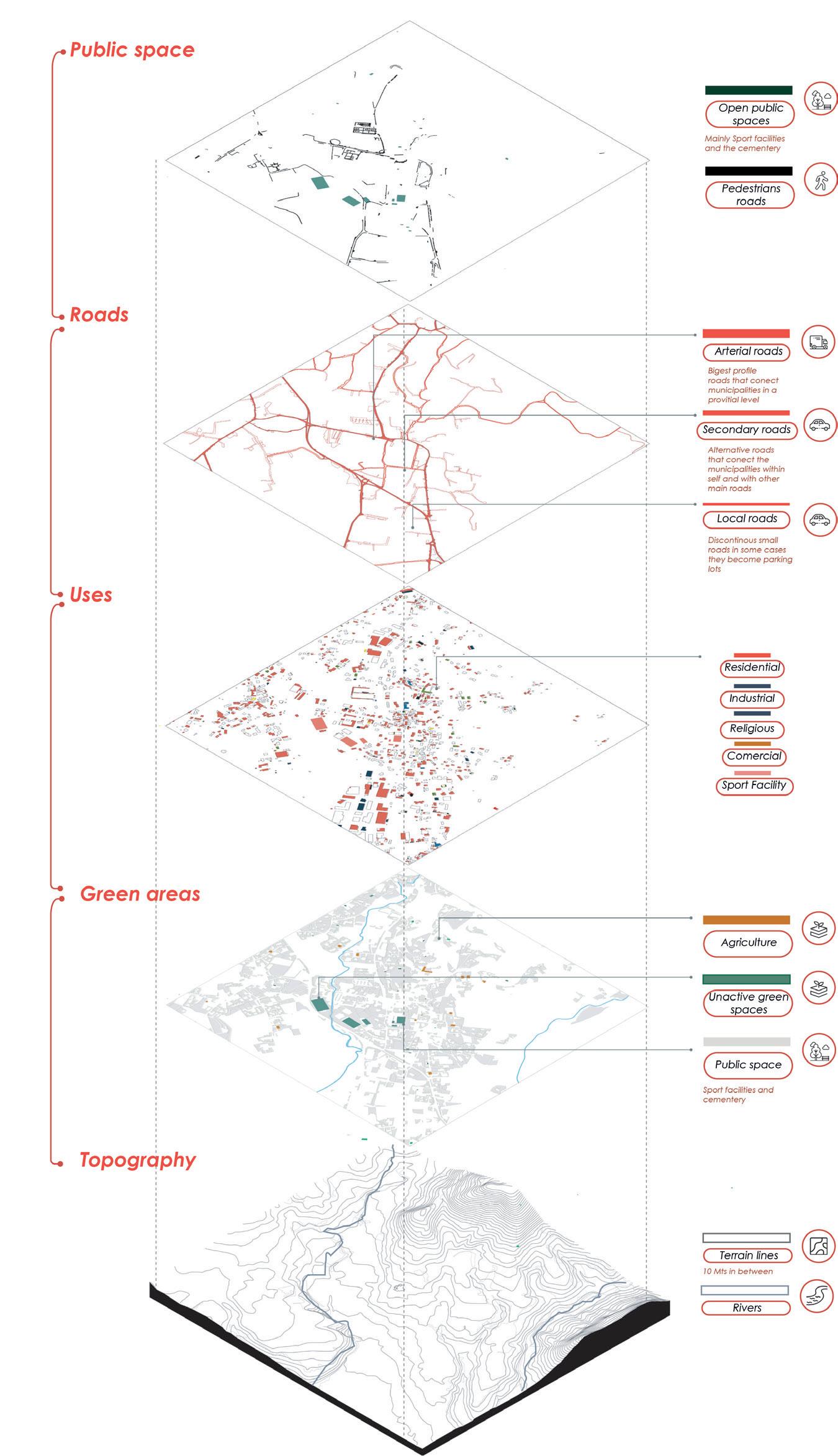
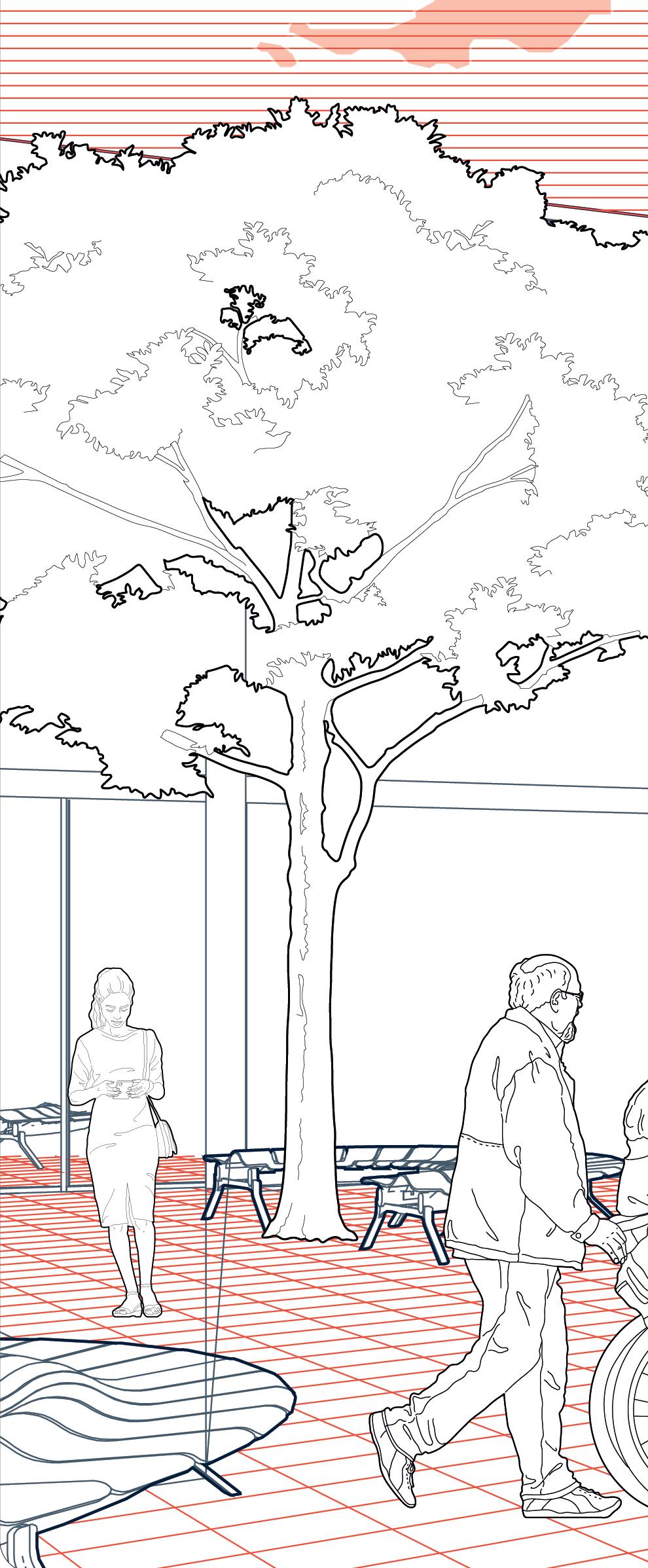
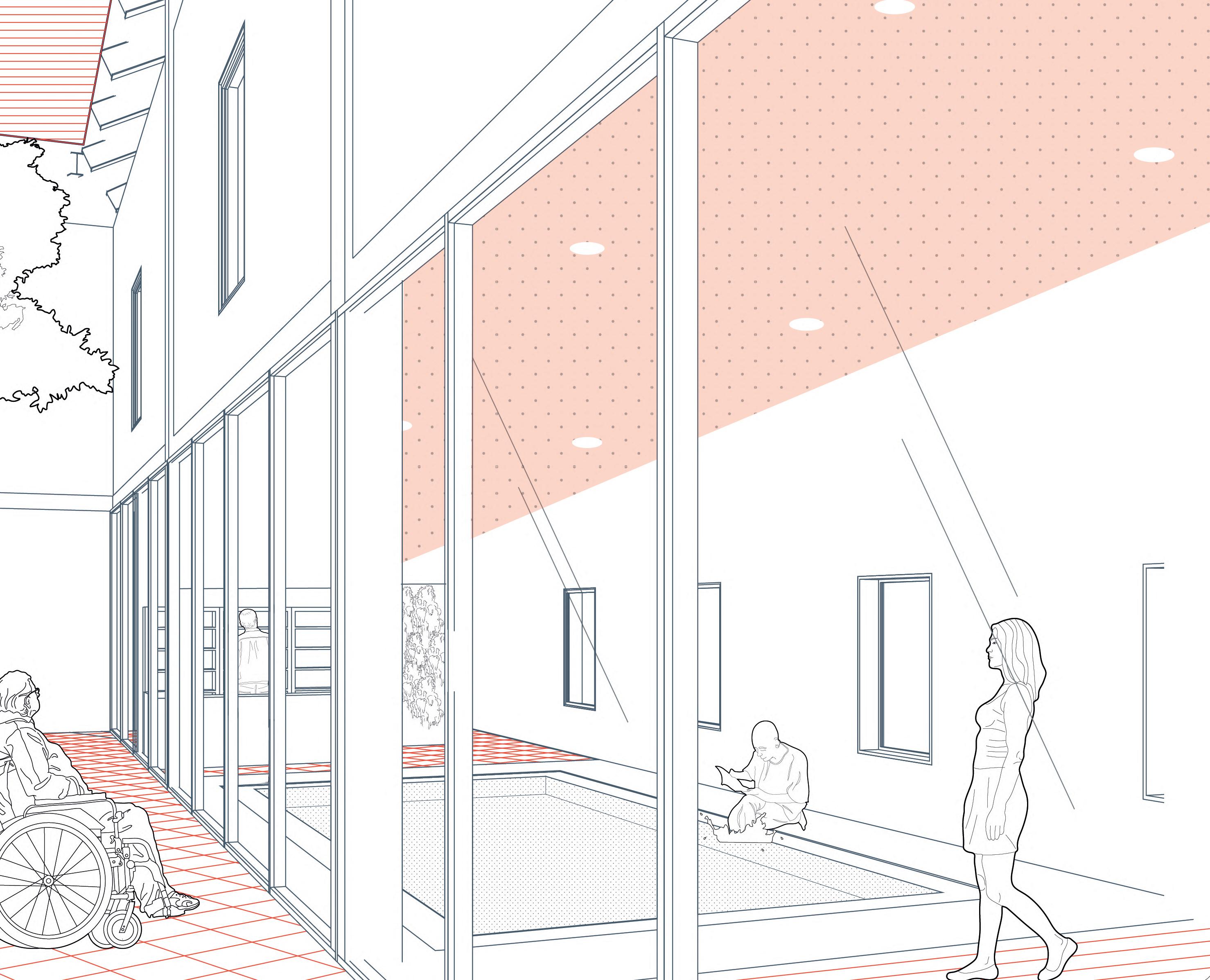
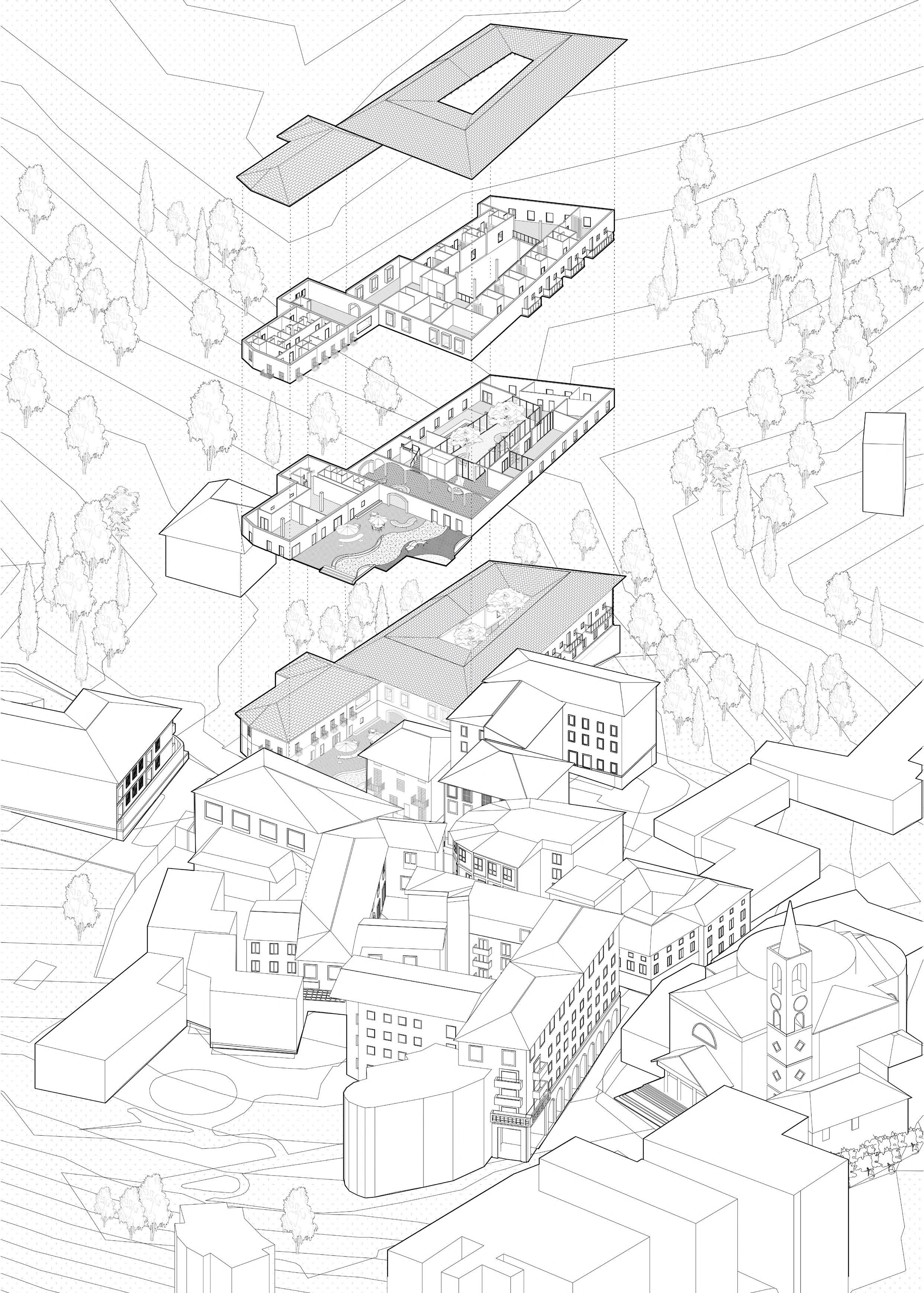
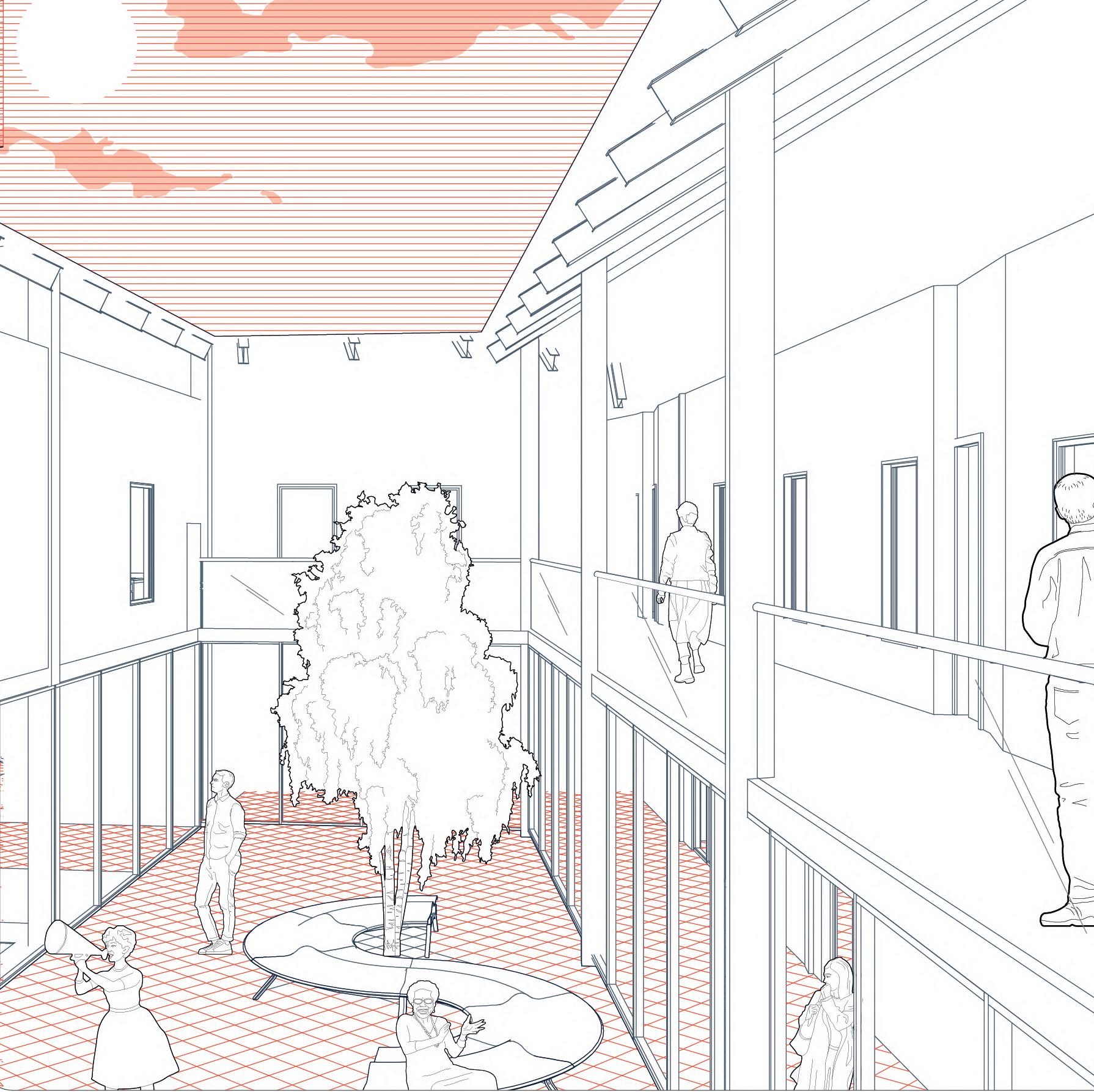
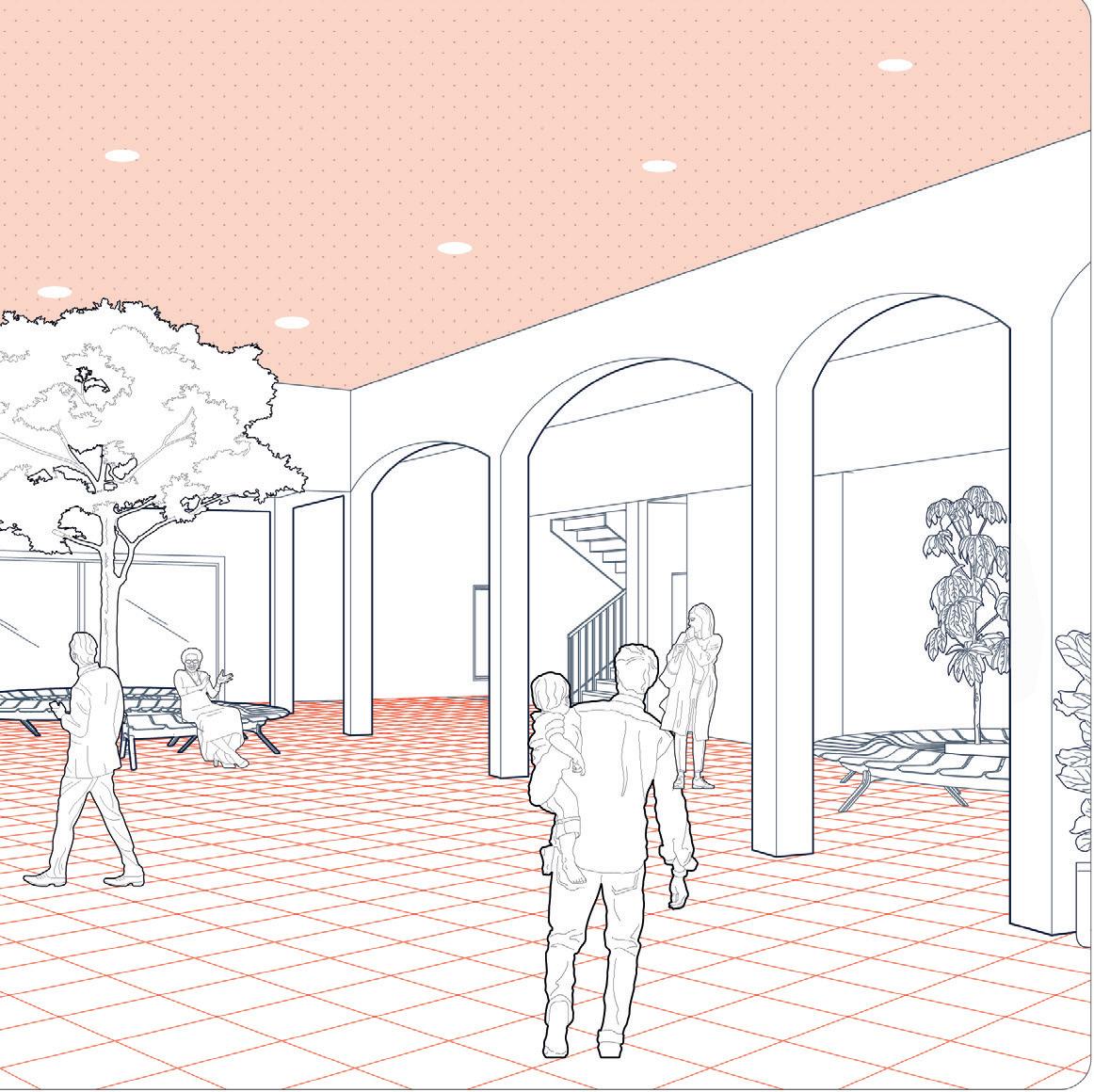
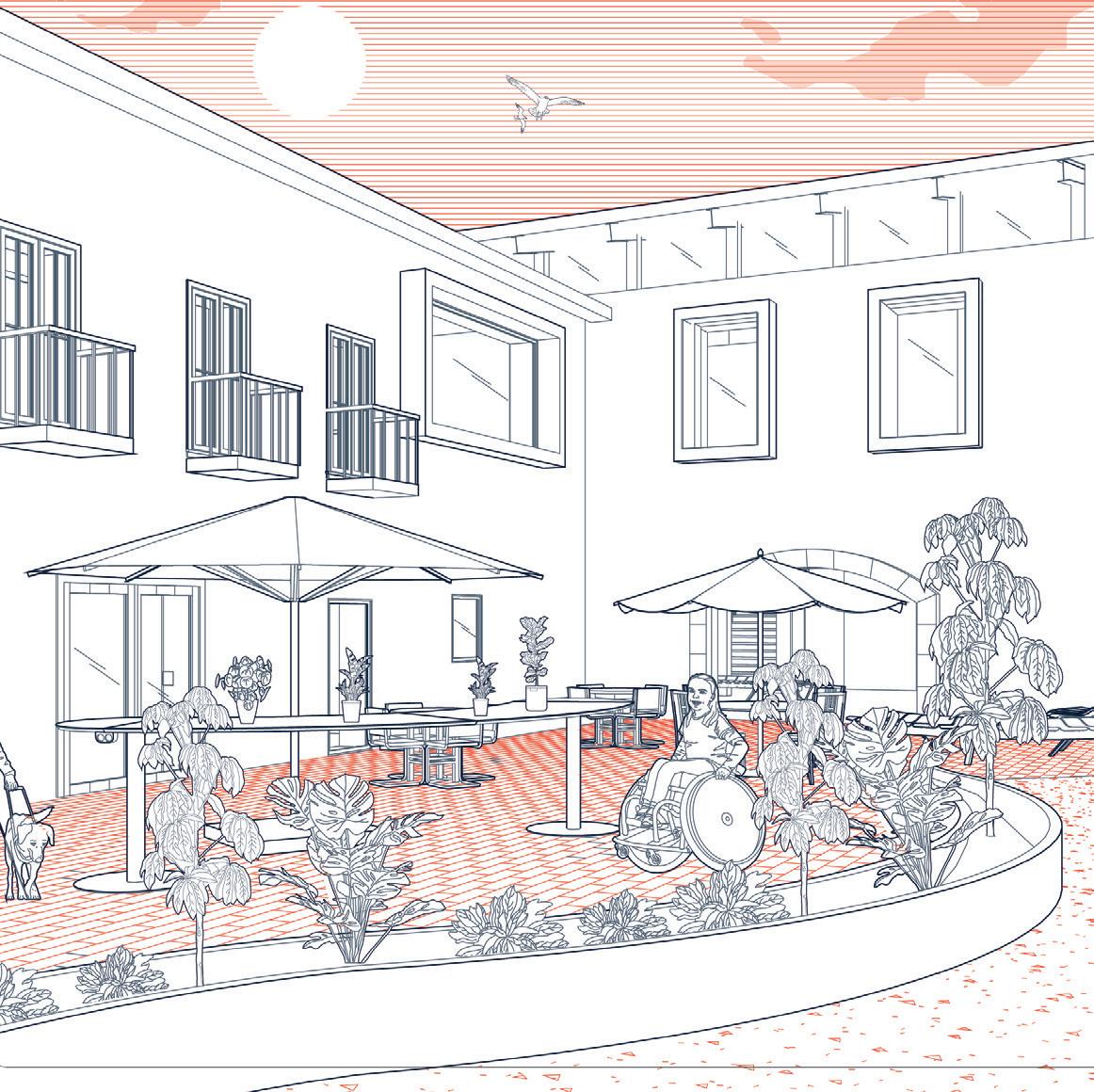
The architectural program directly integrates a residential project for the elderly population and commercial and recreational uses for the whole community. For this reason the circulations and spaces are thought for all people including those with reduced mobility managing careful transitions from main public areas to private ones. However, one of the main challenges was to work with the hilly topography that shapes the center of the town.
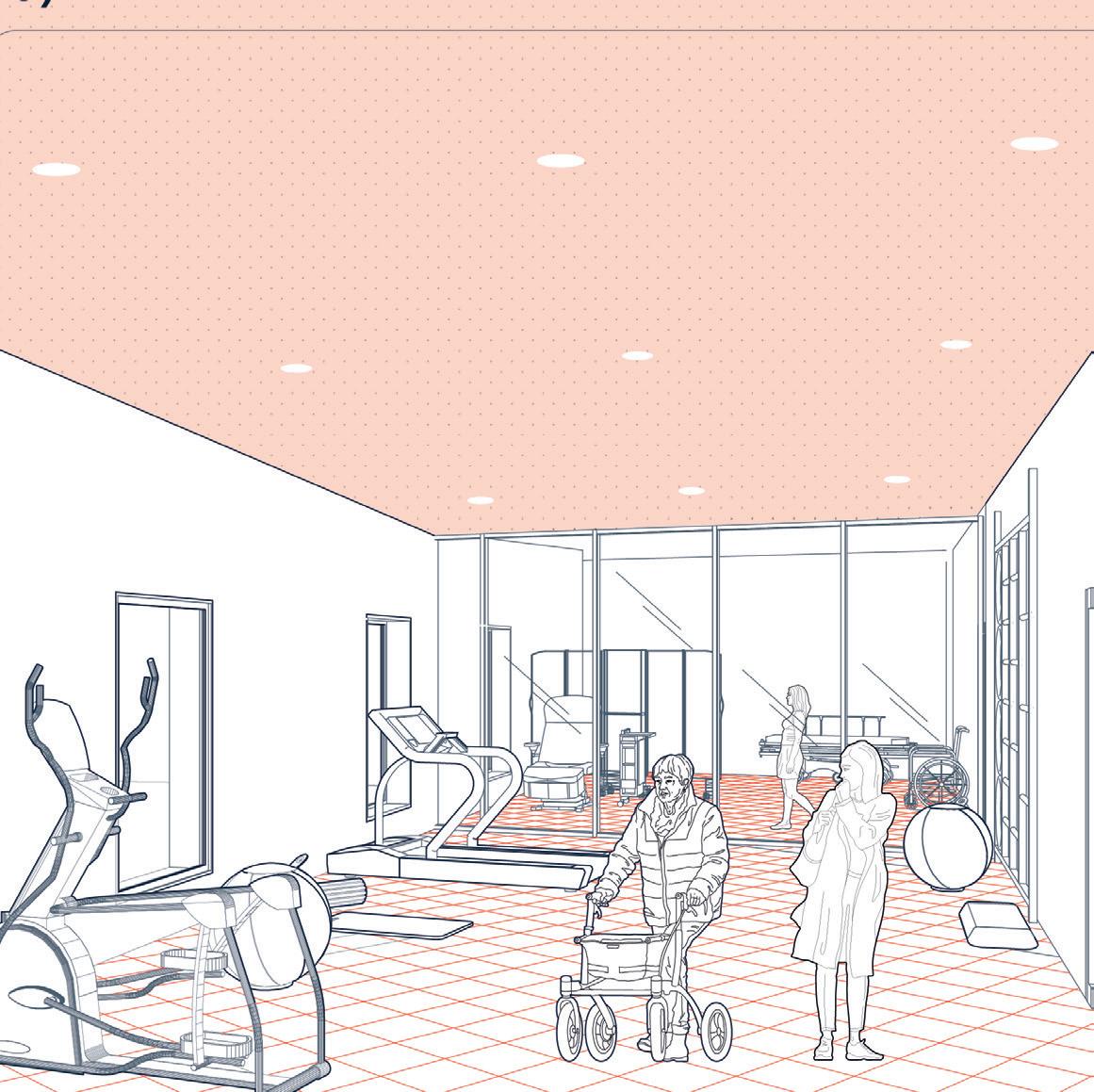
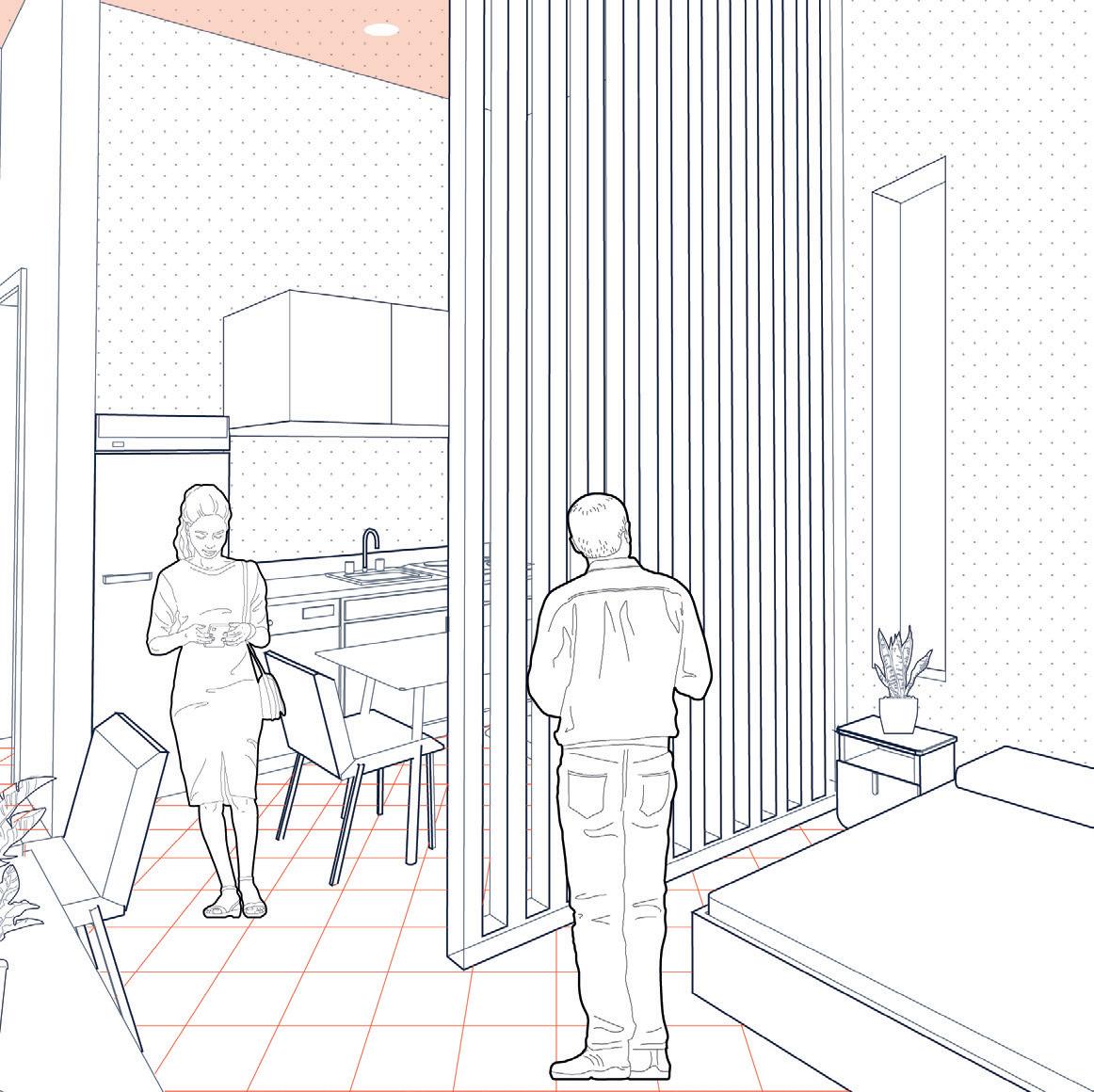
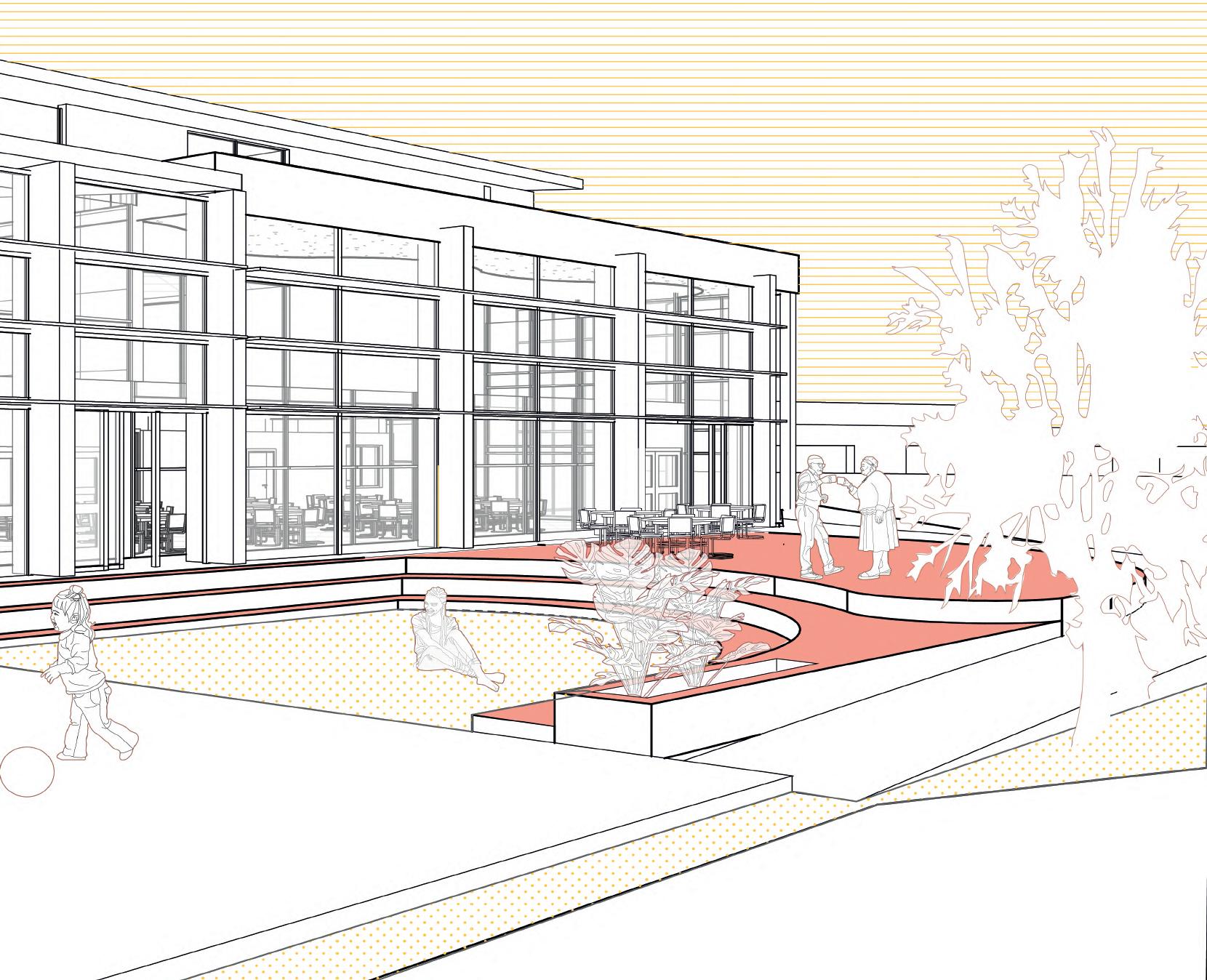
For the Cascina, the main footprint and structure were maintained, however, implementing new uses according to the architectural program. For the new building the implementation of residential areas that interact with communal spaces was crucial in the design, allowing private life to co- exist with services for other inhabitants of the community. Finally, one of the main aims of the project is the creation of effective public space for the community, in this case the design proposed different qualities of public space, such as the main public square, the inside lobby and the inner patio with a more private character.
BEYOND BIGNESS Parametric Design
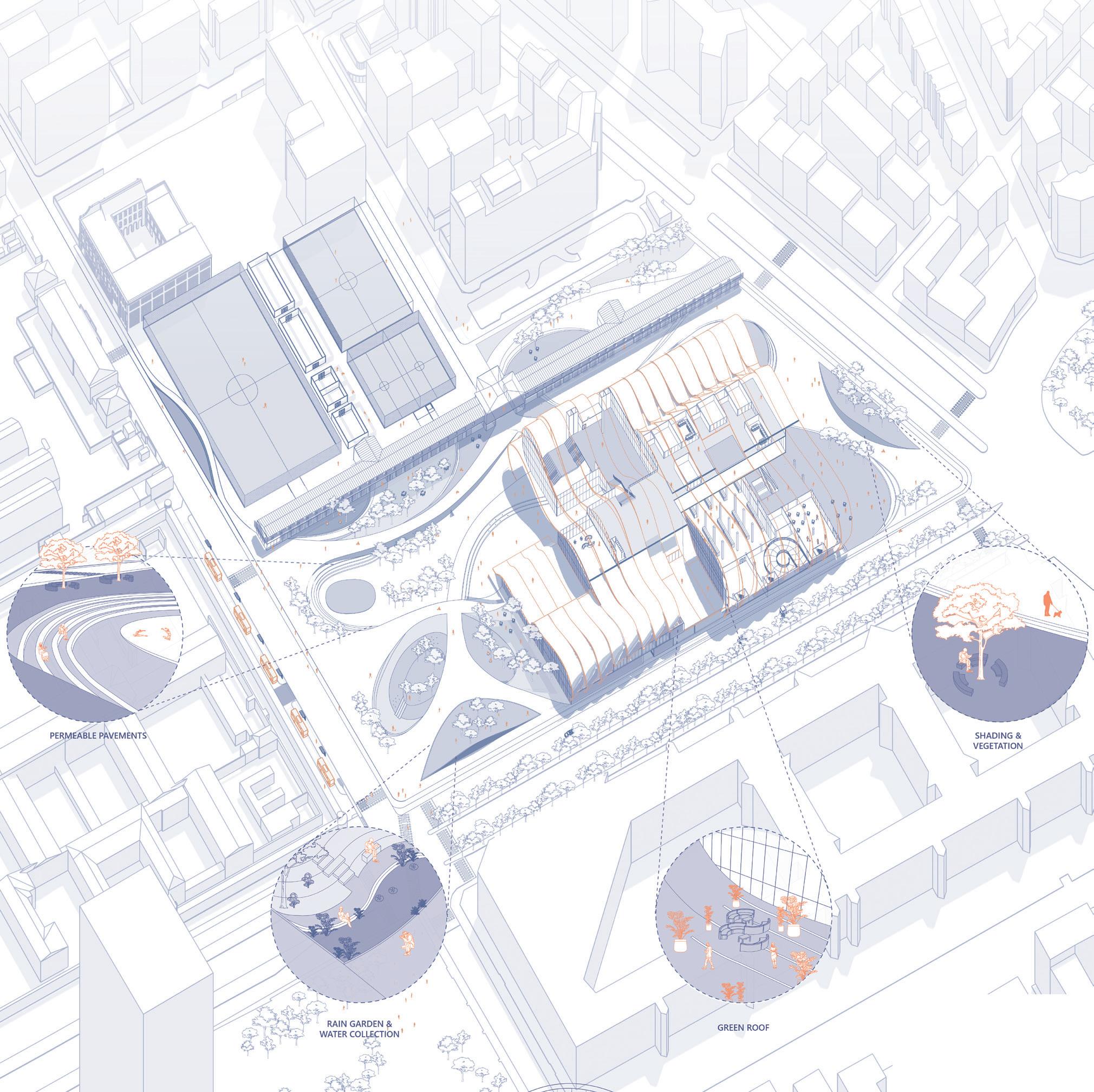
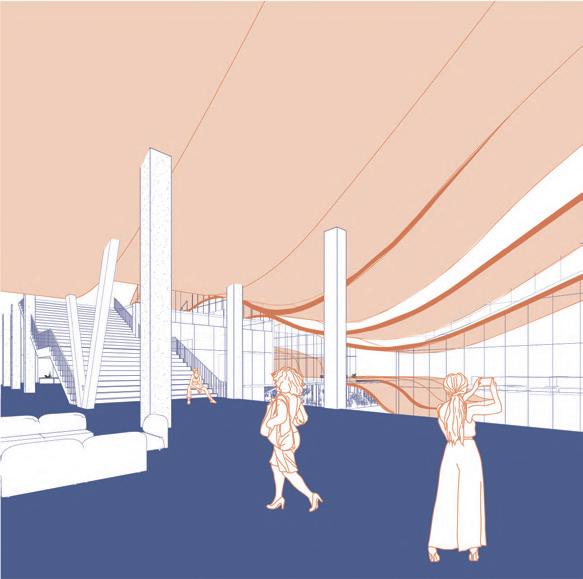
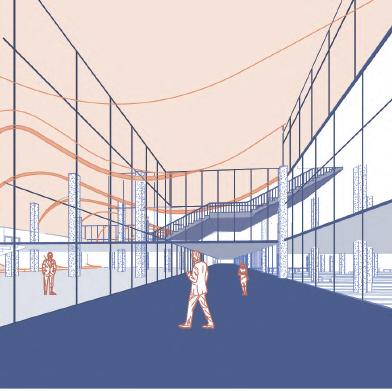
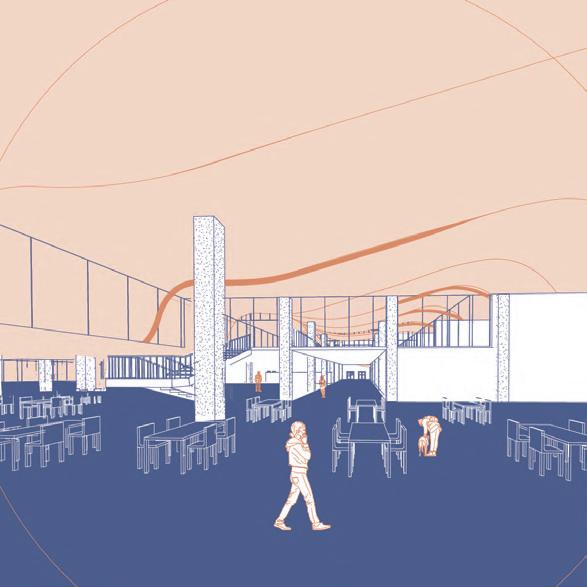
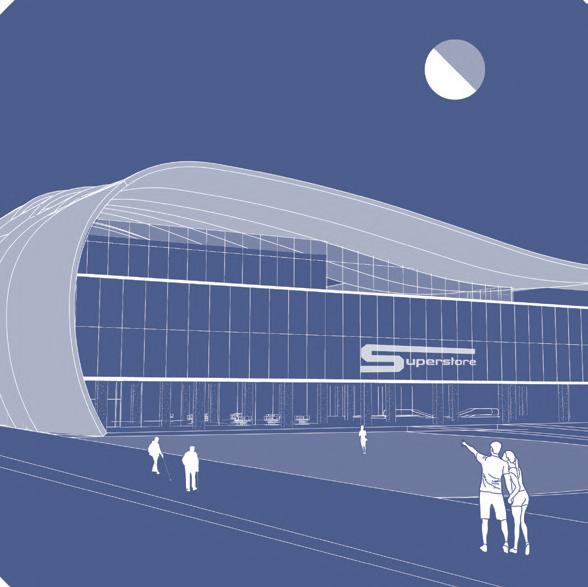
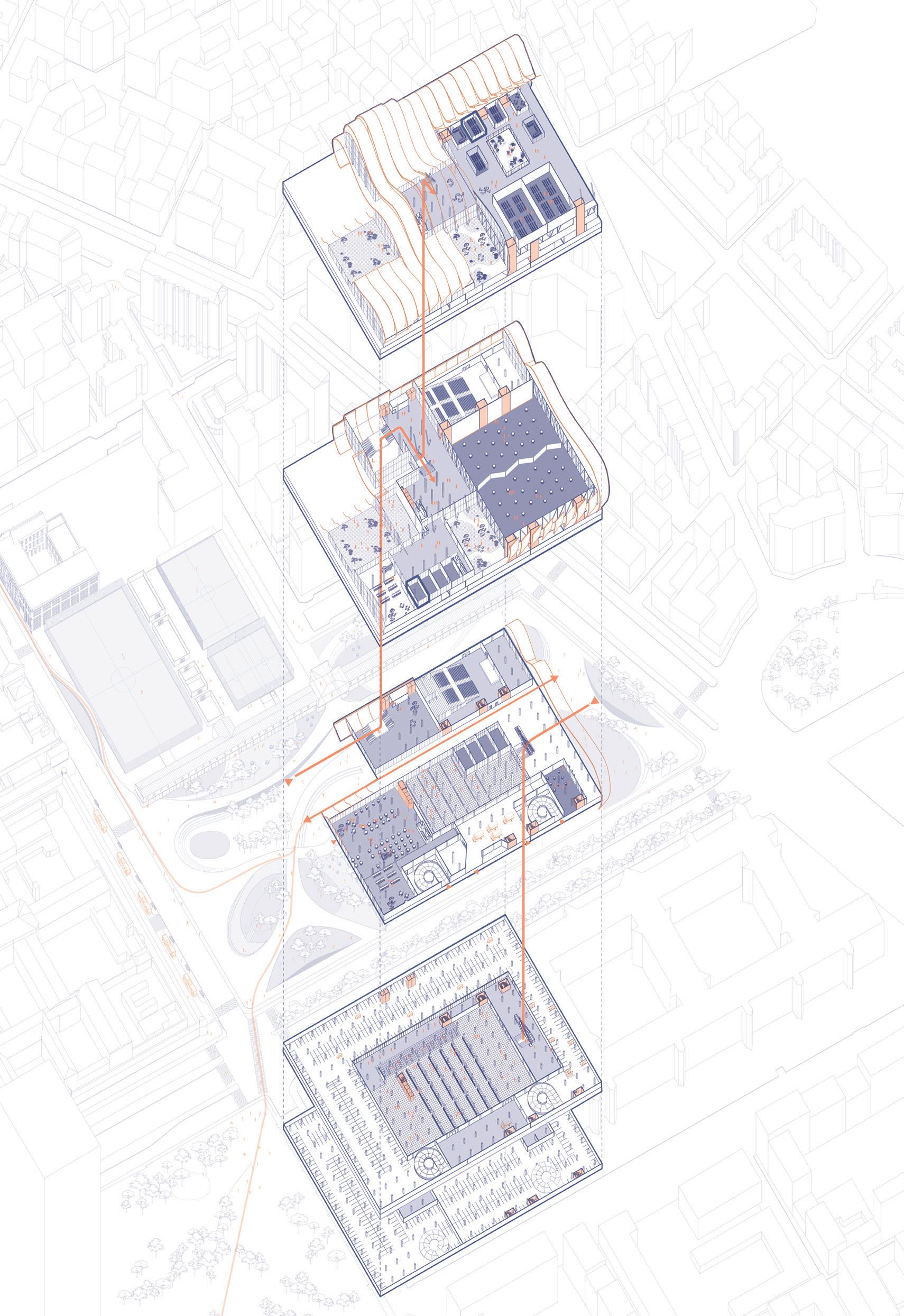
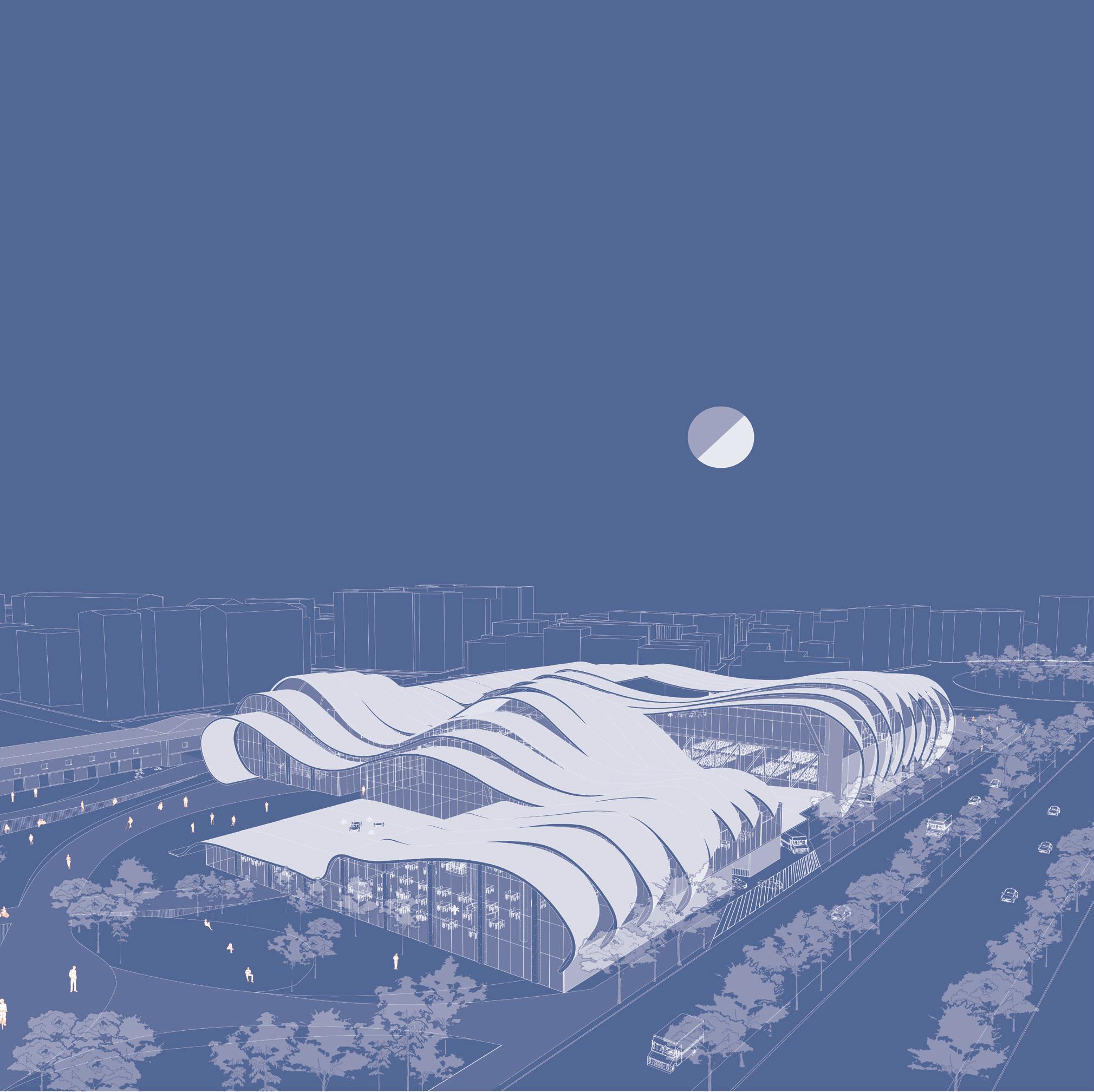
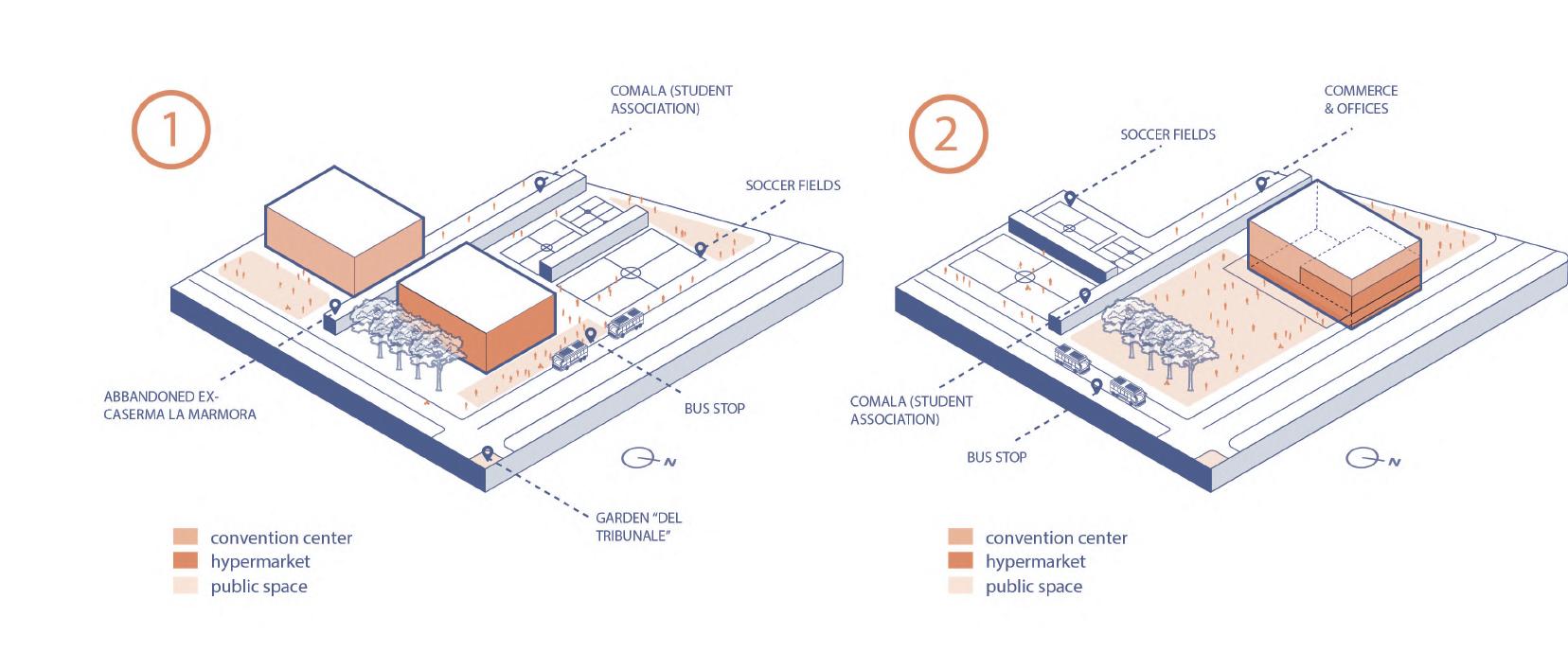
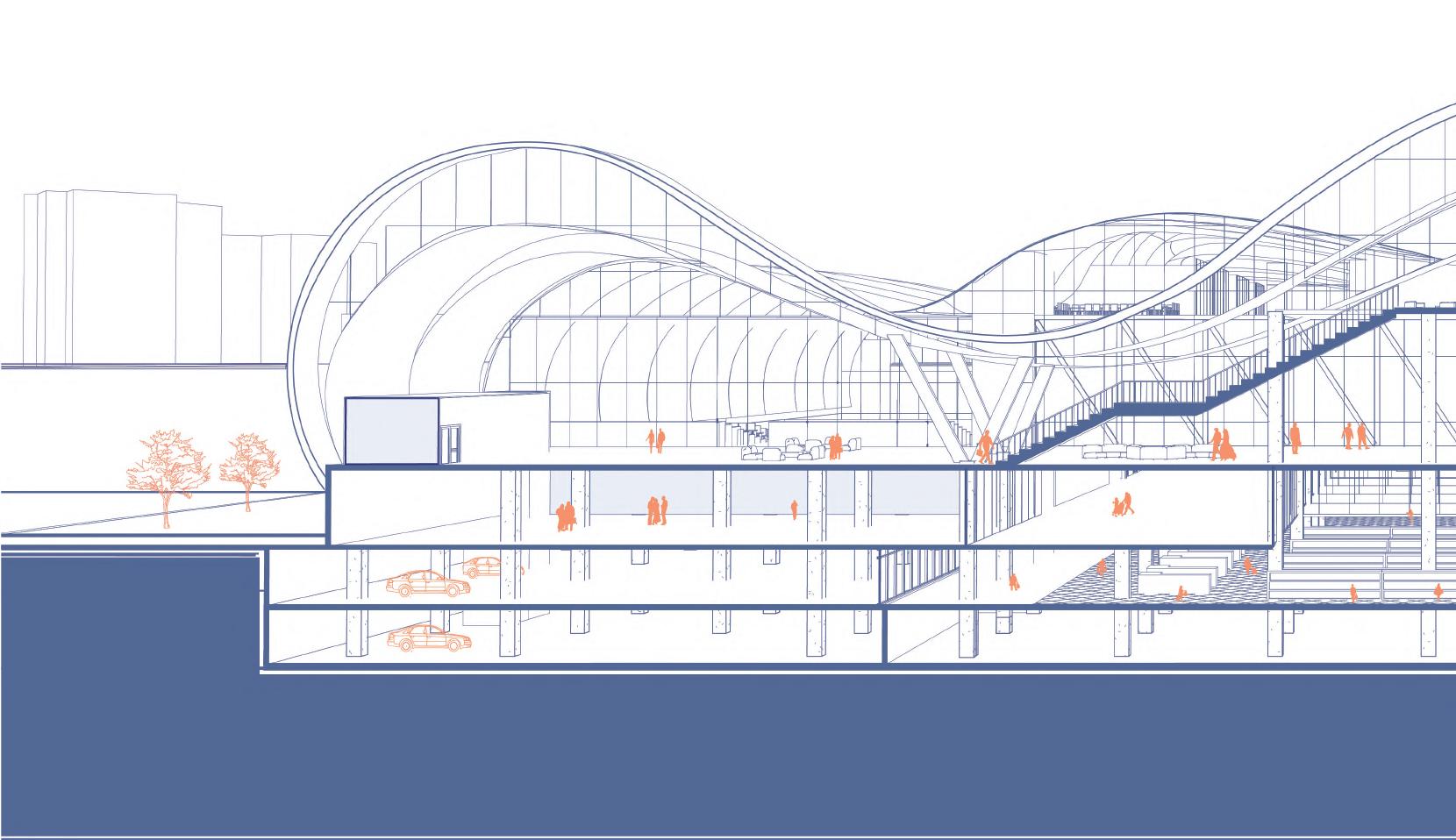
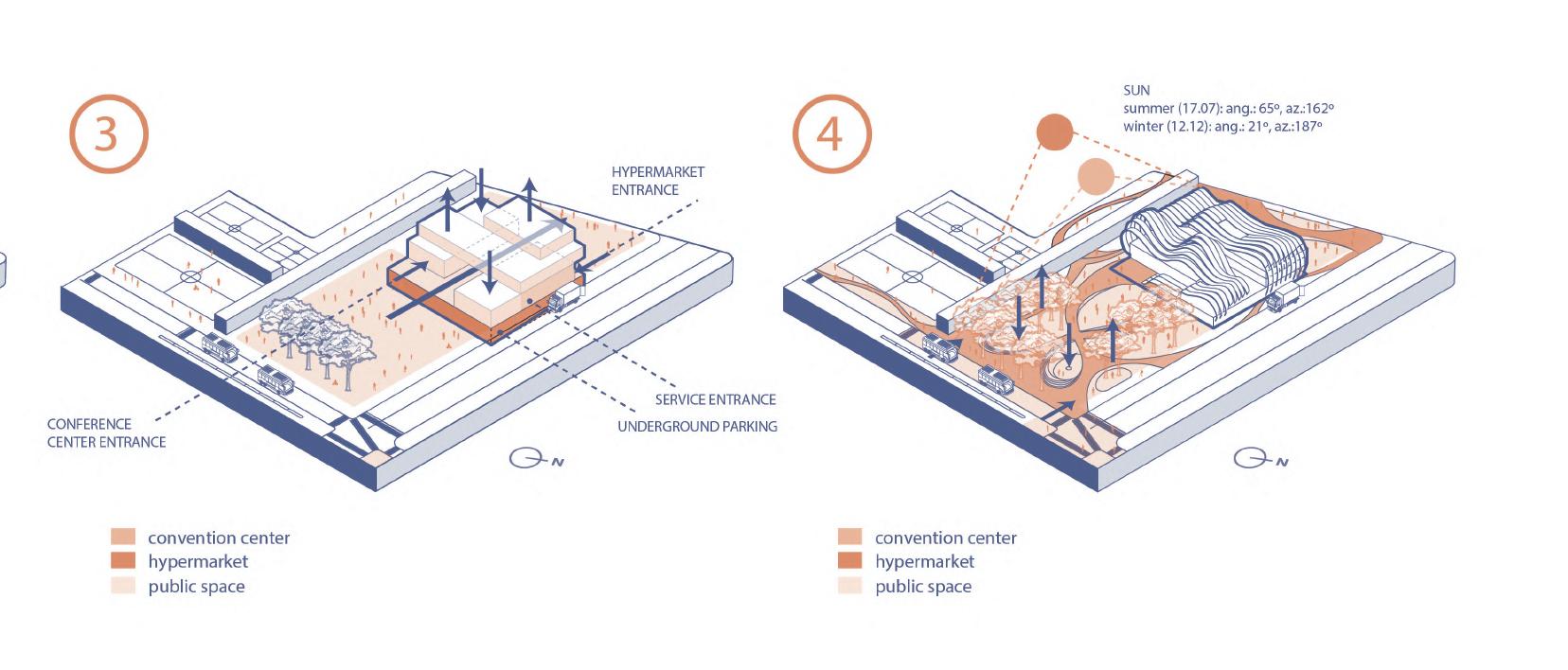
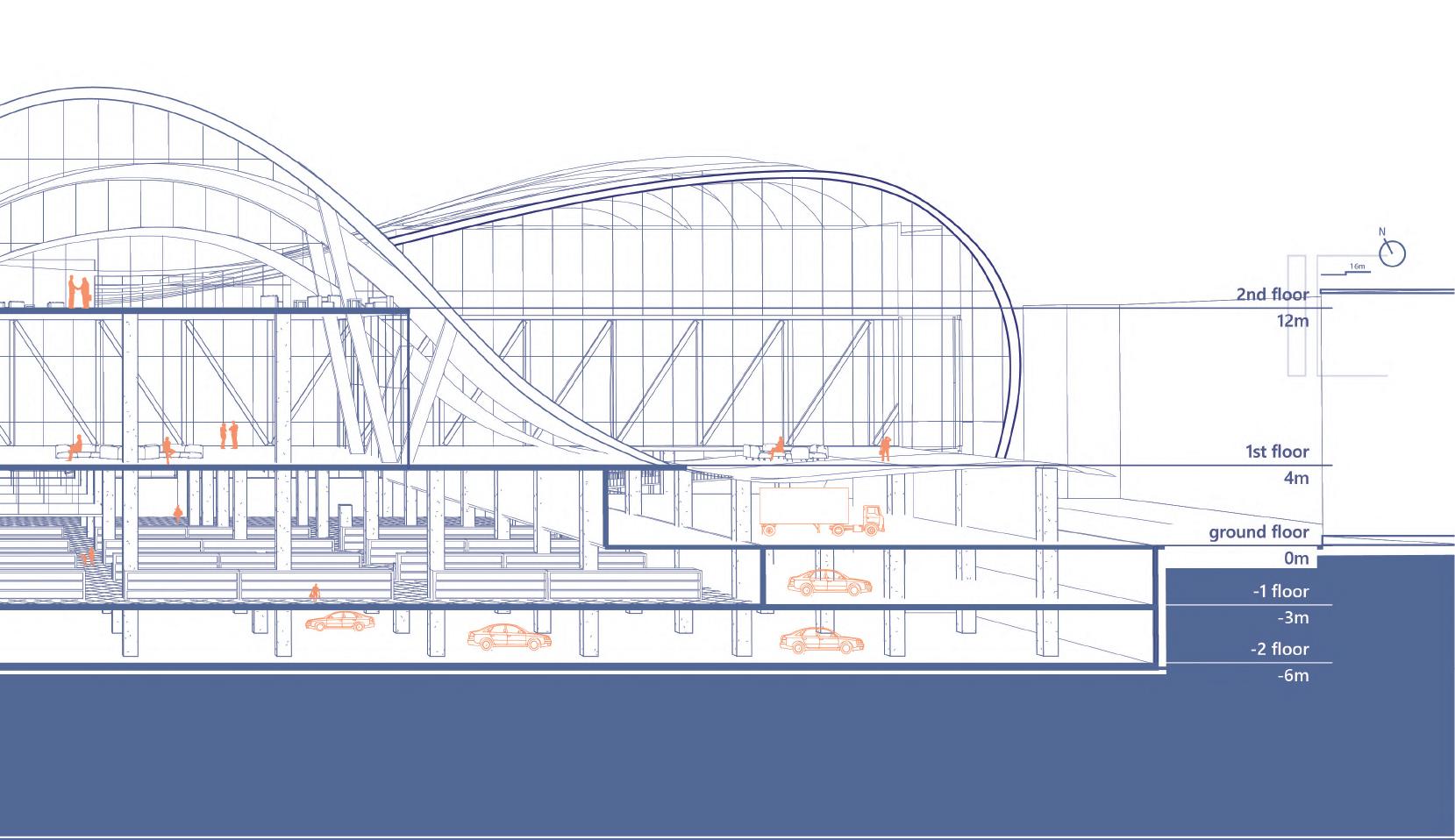
In Turin, one of the most important axes of the city will be found along the spina 2 which generates different flows due to the proximity of a variety of activities around the area. The project, whose main functions will be a hypermarket and a convention center, concentrates itself in a big area surrounded by nodes such as the porta susa station, tand the Politecnico di Torino. The parameters taken into account for designing the buildings and the landscape were obtained from flows and intensities given by the uses, actors and the current occupied areas from the site.
To understand the bigness of the buildings it was necessary to analyze how the functions should be placed in relation to the site. Some of the current uses were relocated according to their intensities in relation with the flows and the access to the site.
In this way, it was decided to combine both main uses of the project (hypermarket and convention center) to give the amount of public space deserved and needed in this area of the city.
PERSONAL PROJECTS
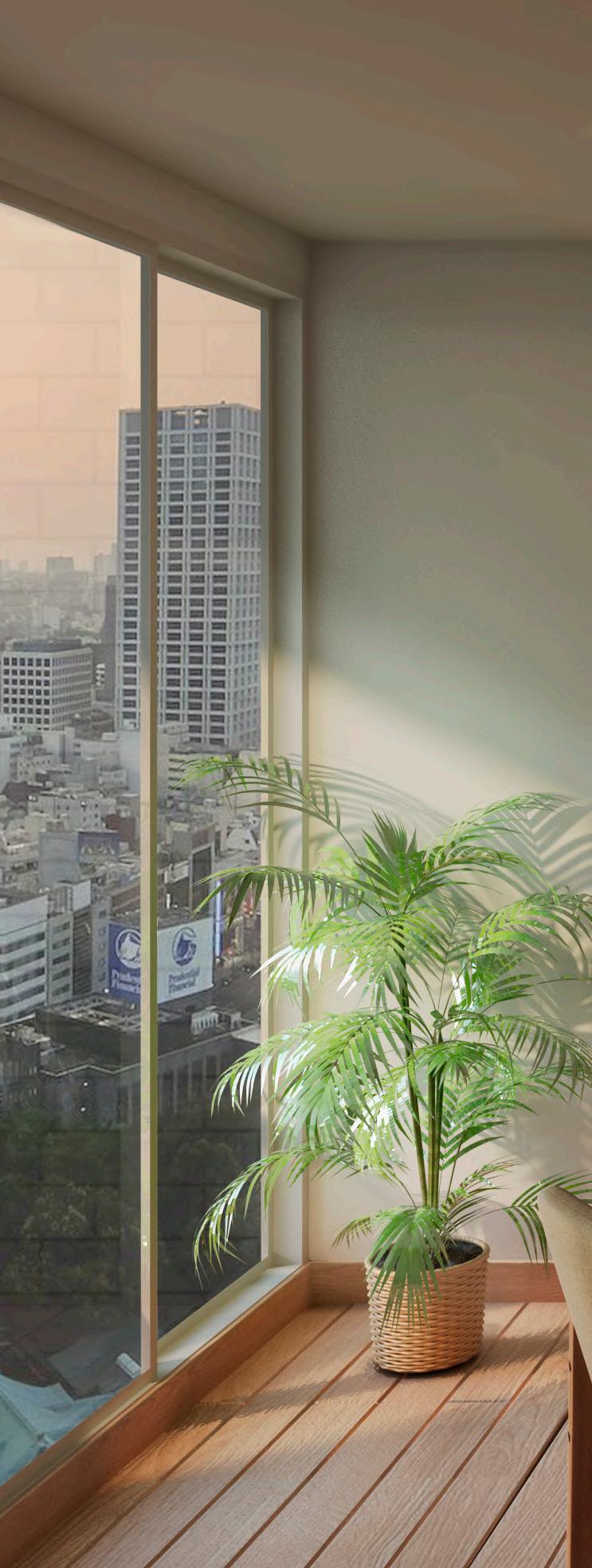
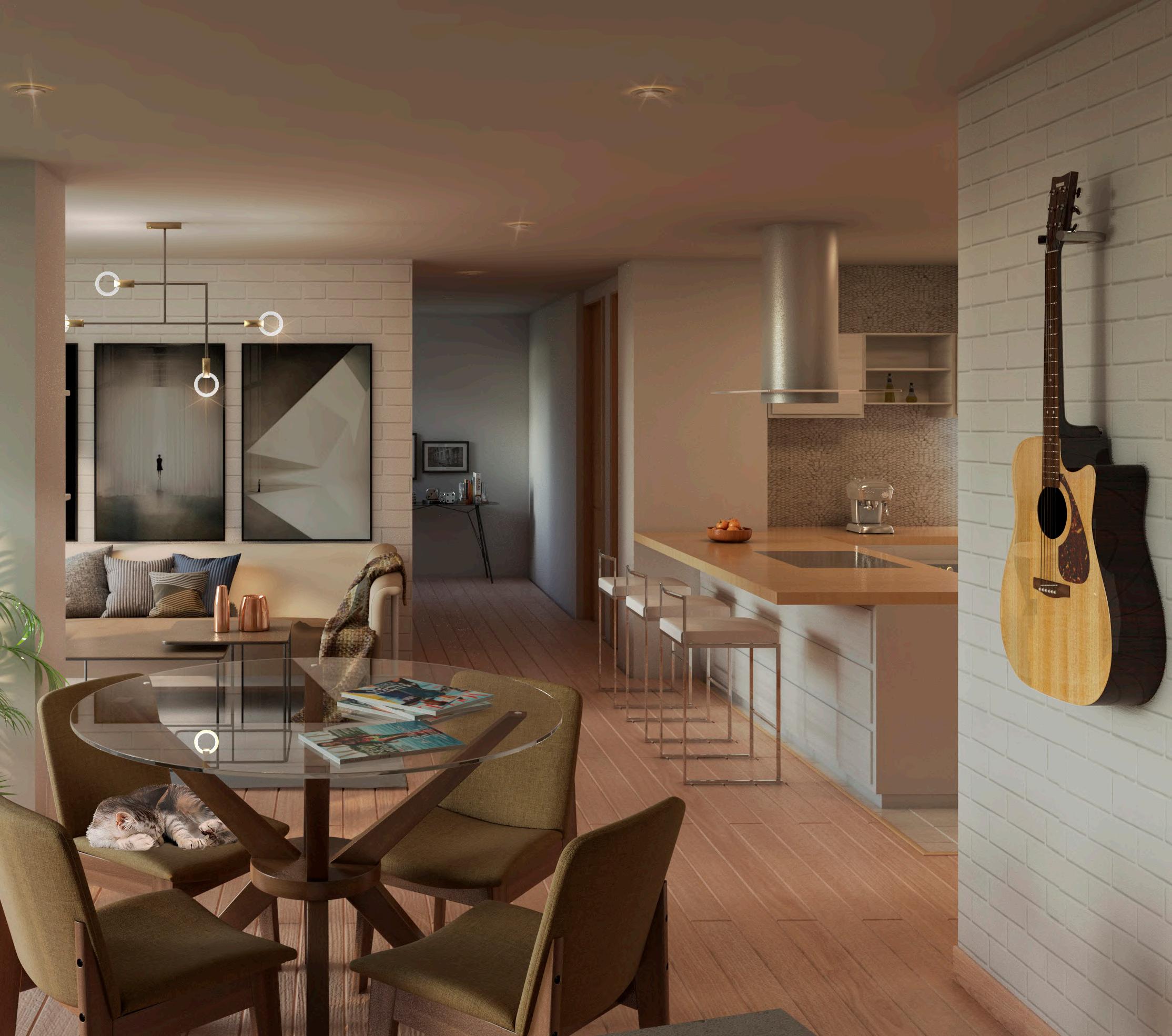
Rendering
The last section of this portfolio is dedicated to the projects related to activities that I personally enjoy as a hobby but also help to enrich my experience as an architect in the design and visual field.
This work is developed through my career not as projects but more as an experimental way of finding a style of expression to represent spaces and architecture through visual techniques and tools involving digital visualization through realistic renders.