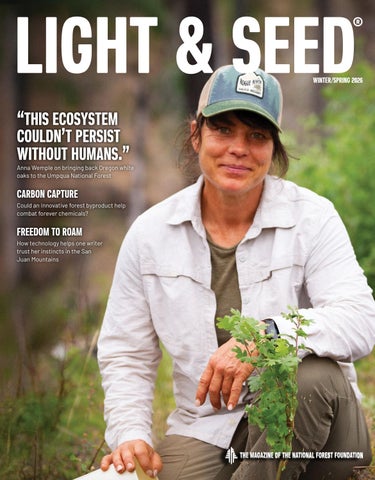
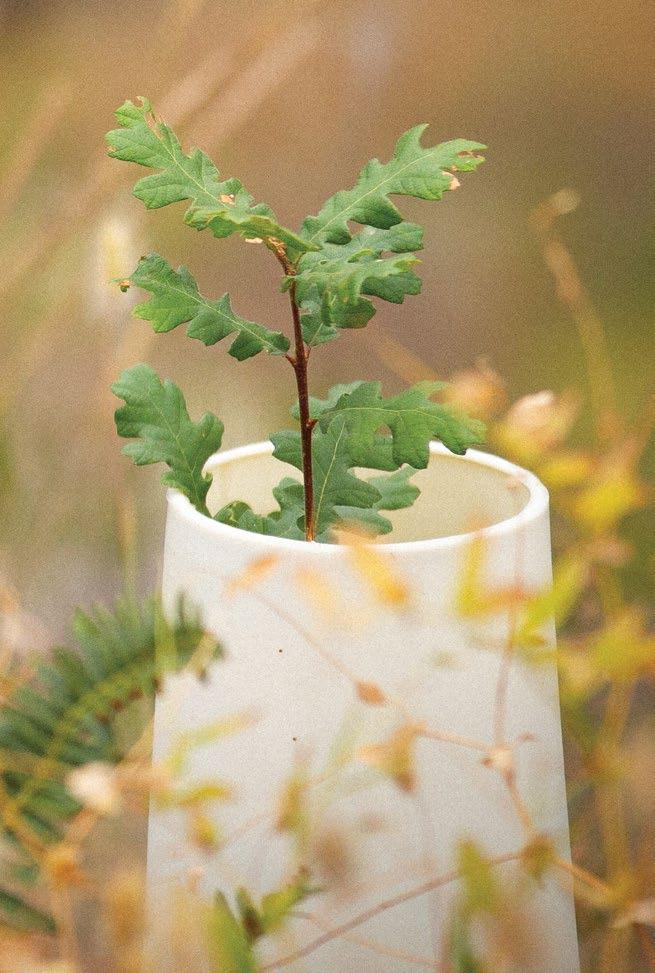
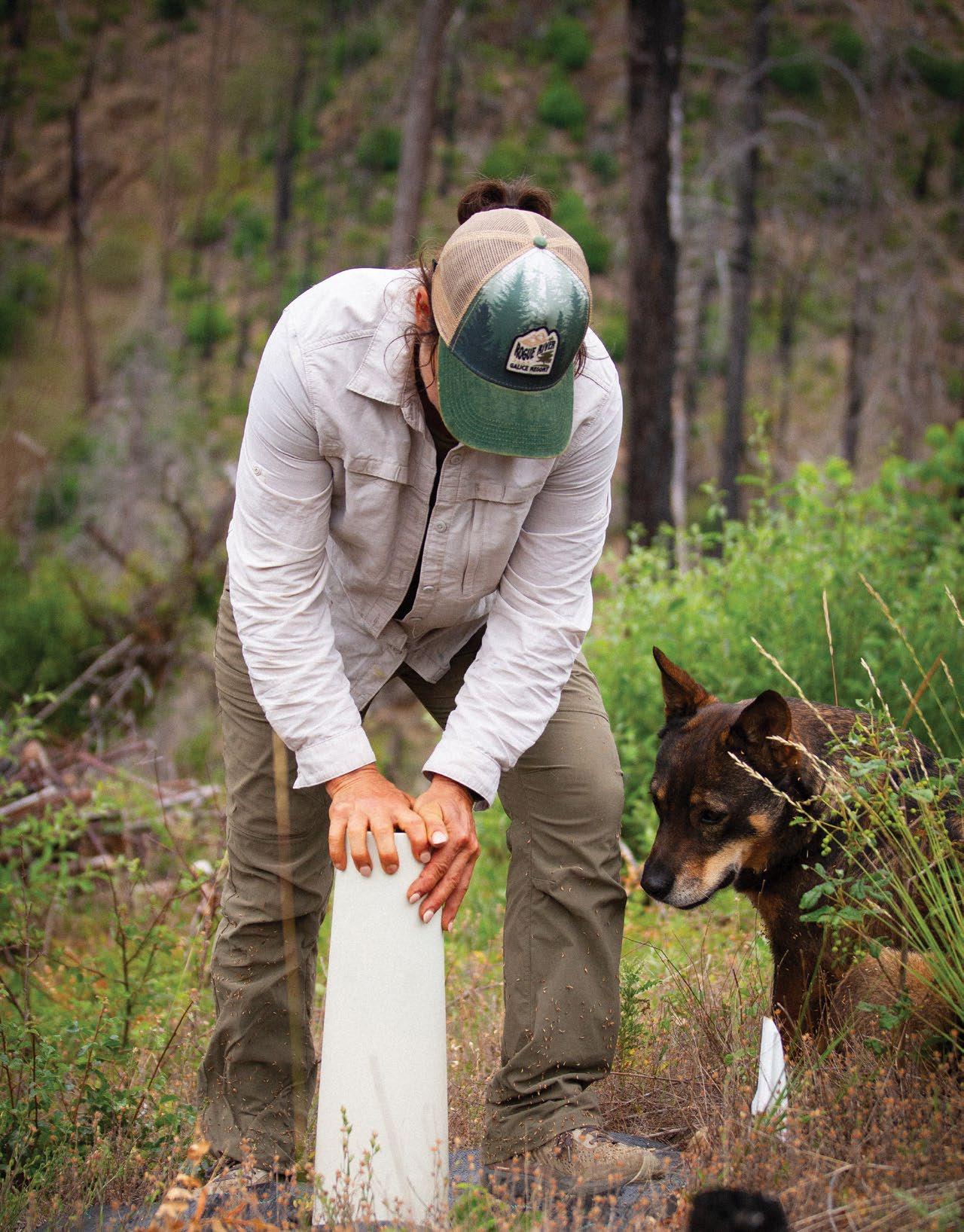
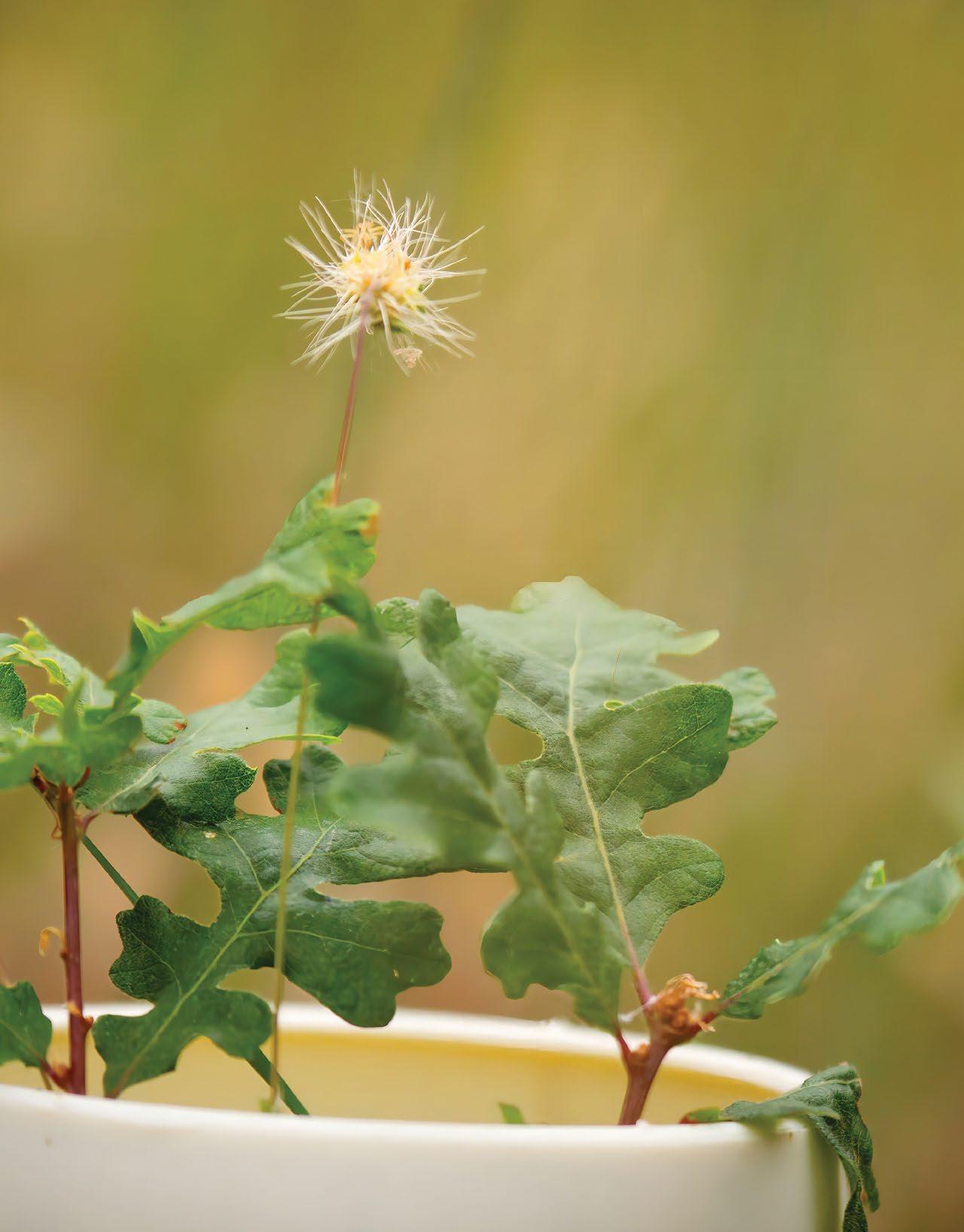
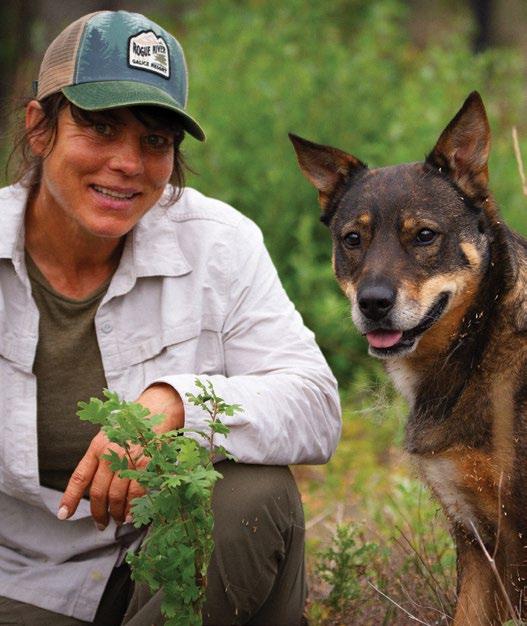
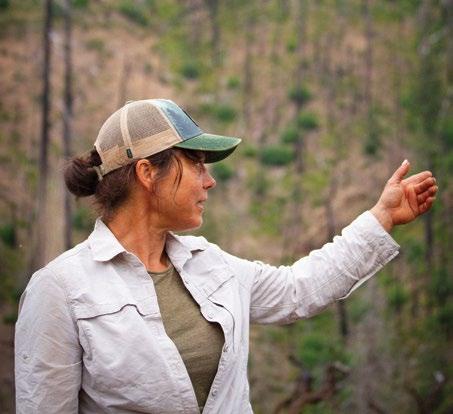
Anna Wemple on bringing back Oregon white oaks to the Umpqua National Forest
CARBON CAPTURE
Could an innovative forest byproduct help combat forever chemicals?
FREEDOM TO ROAM
How technology helps one writer trust her instincts in the San Juan Mountains
SEED OF AN IDEA
Science labs and testing grounds. Field stations and monitoring systems. Data archives and tool kits. Our forests are not only crucial sites of innovative research, they also hold the solutions for our future.
As much as they support science, our wild spaces rely on it for their future health. Above all, they depend on people with the willpower to make positive change. The mycologist rethinking wildfire mitigation. The scientist seeking naturebased ways to purify water. The forest geneticist rehabilitating important tree species.
In this issue of Light & Seed® , we look at innovators who are finding groundbreaking solutions to our most pressing challenges. Through their work, we envision a world where caring for forests is second nature.
Photo by Kellon Spencer
CONNECTIONS
Want to dig deeper into the content? Visit nationalforests.org/connections to listen, watch, and read more about the articles in this issue.
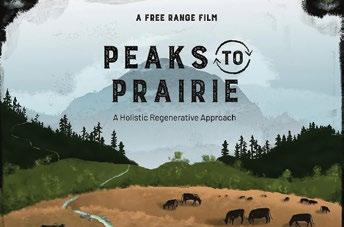
The new short documentary “Peaks to Prairies,” streaming on Youtube, highlights nature-based climate solutions, including the innovative work of Boulder Mushroom. On page 10, we speak with the company’s founder, Zach Hedstrom, about how mushrooms can help manage wood waste from wildfiremitigation thinning.
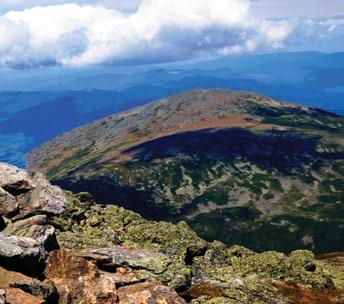
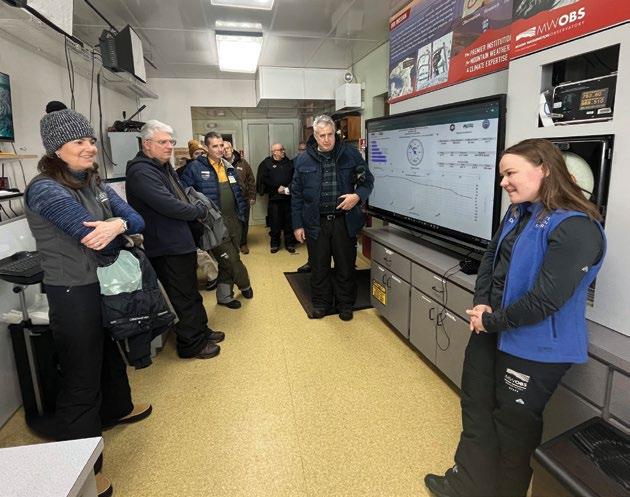
For a year, filmmaker Jacqueline Goss followed the staff at the Mount Washington Observatory, a nonprofit research station in New Hampshire known for having the worst weather in the world. Her resulting film, “The Observers,” streaming on Vimeo, provides insight into the station’s important work, as does our interview with weather observer Amy Cotter on page 12.
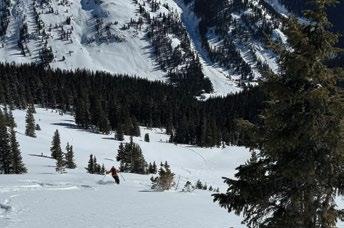
National Forests are filled with exciting winter adventures, as writer Heather Hansman embraces in her essay on page 14. Check out the NFF’s online guide on how to make the most of this season.
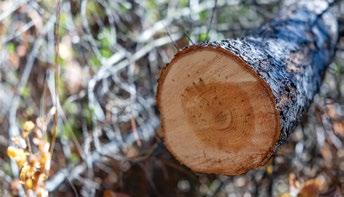
Dive into the science behind forest thinning, discussed on page 32, in the NFF’s online resource “How Cutting Down Trees Can Improve Forest Health.”
Take a virtual tour of the Forest Products Lab, which is experimenting with using natural forest byproducts towards water purification, a burgeoning application examined in the story “Forest Filter,” on page 18.
Watch “Oregon’s Oaks: A Vanishing Legacy,” a short documentary by the Yamhill Watershed Stewardship Fund, to learn more about why restoring oak habitats is crucial for the environmental and cultural health of the Pacific Northwest. The NFF, in partnership with the Forest Service, is leading the charge on this reforestation, an effort highlighted in “Banking on Biodiversity” on page 24.
Led by Songlin Fei, quoted in “Heard In The Woods” on page 30, the Institute for Digital Forestry at Purdue University is developing digital solutions for the next generation of forest managers. Discover how drones, mapping systems, and mobile apps are revolutionizing forestry for the information age.
Photo by Dave Walsh
Photo by Ryan McGinely
Photo by Lance Troxel
Photo by Emily Lord
Photo by Heather Hansman
Cover photo by Lance Troxel
Photo by Lance Troxel
Photo by Boulder Mushroom
Photo by the University of North Carolina at Greensboro.
Technical Terrain
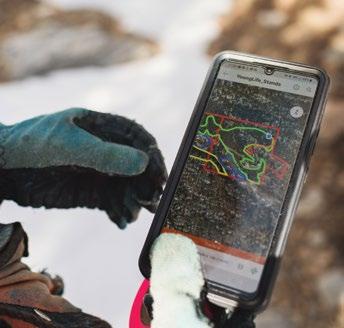
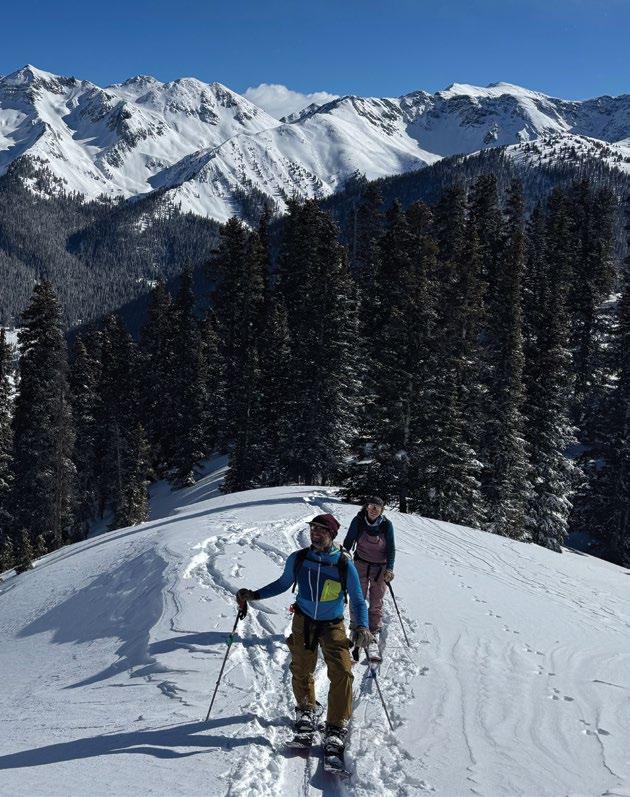
For two decades, writer Heather Hansman relied on others to navigate while backcountry skiing on Colorado’s San Juan National Forest, convinced that a mapping app would detract from her experience. But after being led adrift one blustery day, she decided it was time to take control.
Once she introduced the app to her adventures, Hansman was surprised to find she already had a deep understanding of the terrain. The tool simply gave her the confidence to trust her instincts.
In the essay “Mobile Movement,” Hansman charts her transformation. She writes, “I started to trust myself more, and in turn, pay more attention.”
Read the full story on page 14.
Photo by Heather Hansman
In a Bind
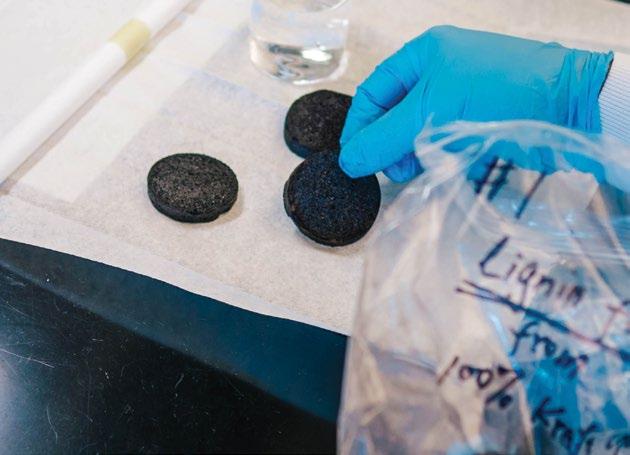
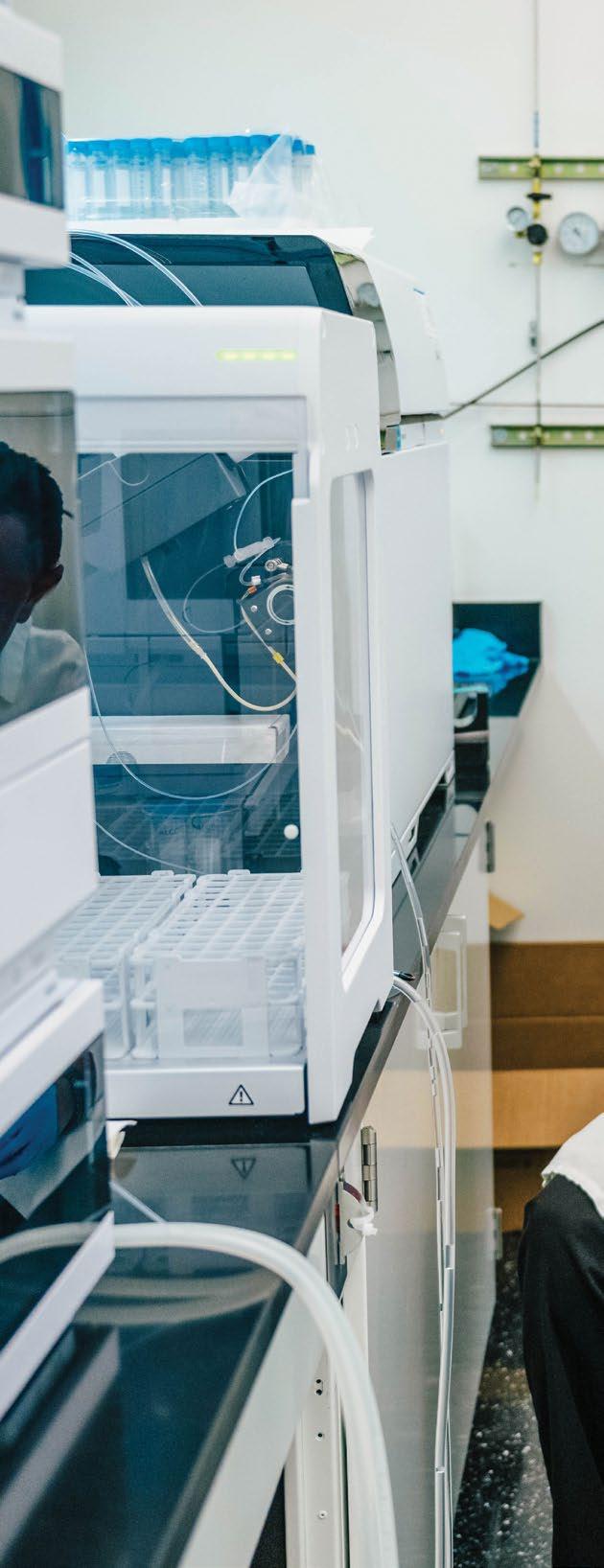
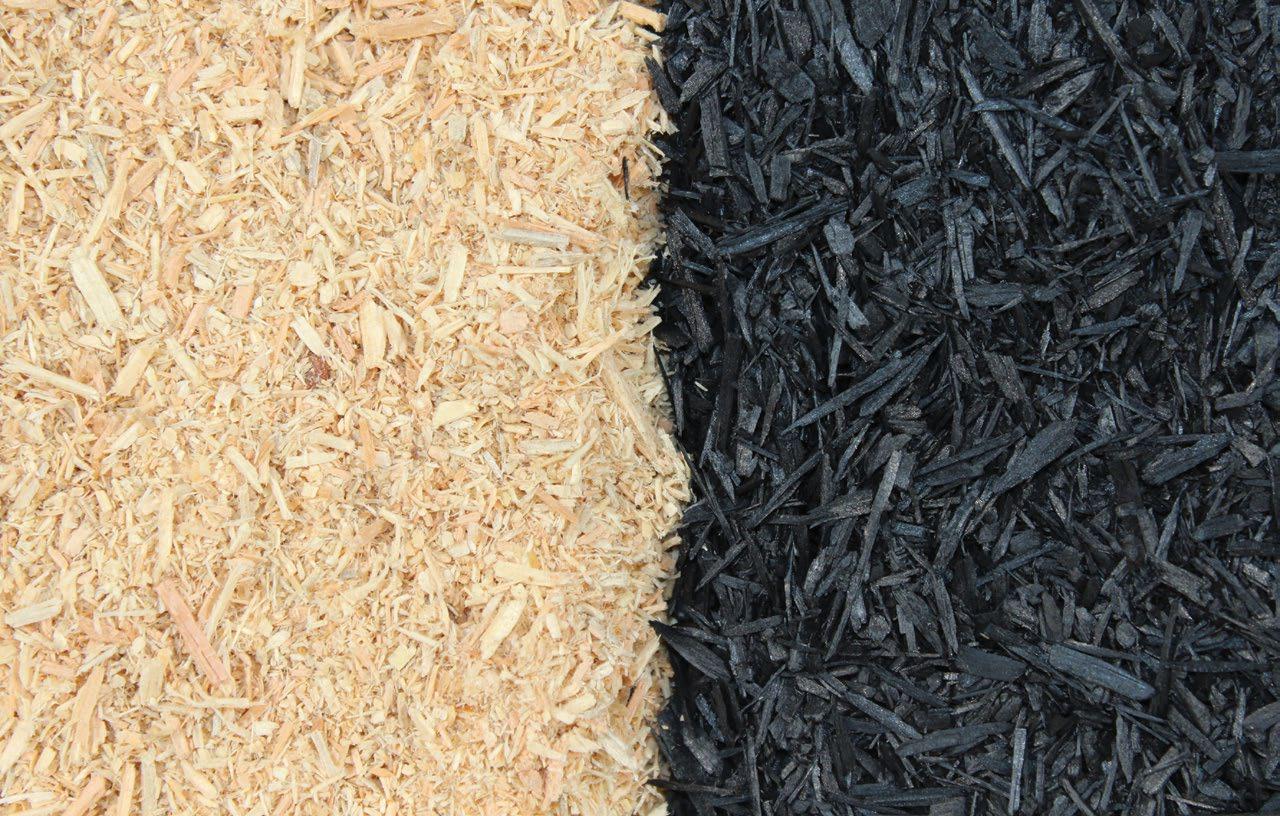
In recent years, researchers have been looking for breakthroughs in the application of biochar, a charcoal-like substance made from forest biomass. One promising use? Removing lead and mercury, as well as PFAS, a group of pollutants known as “forever chemicals,” from water.
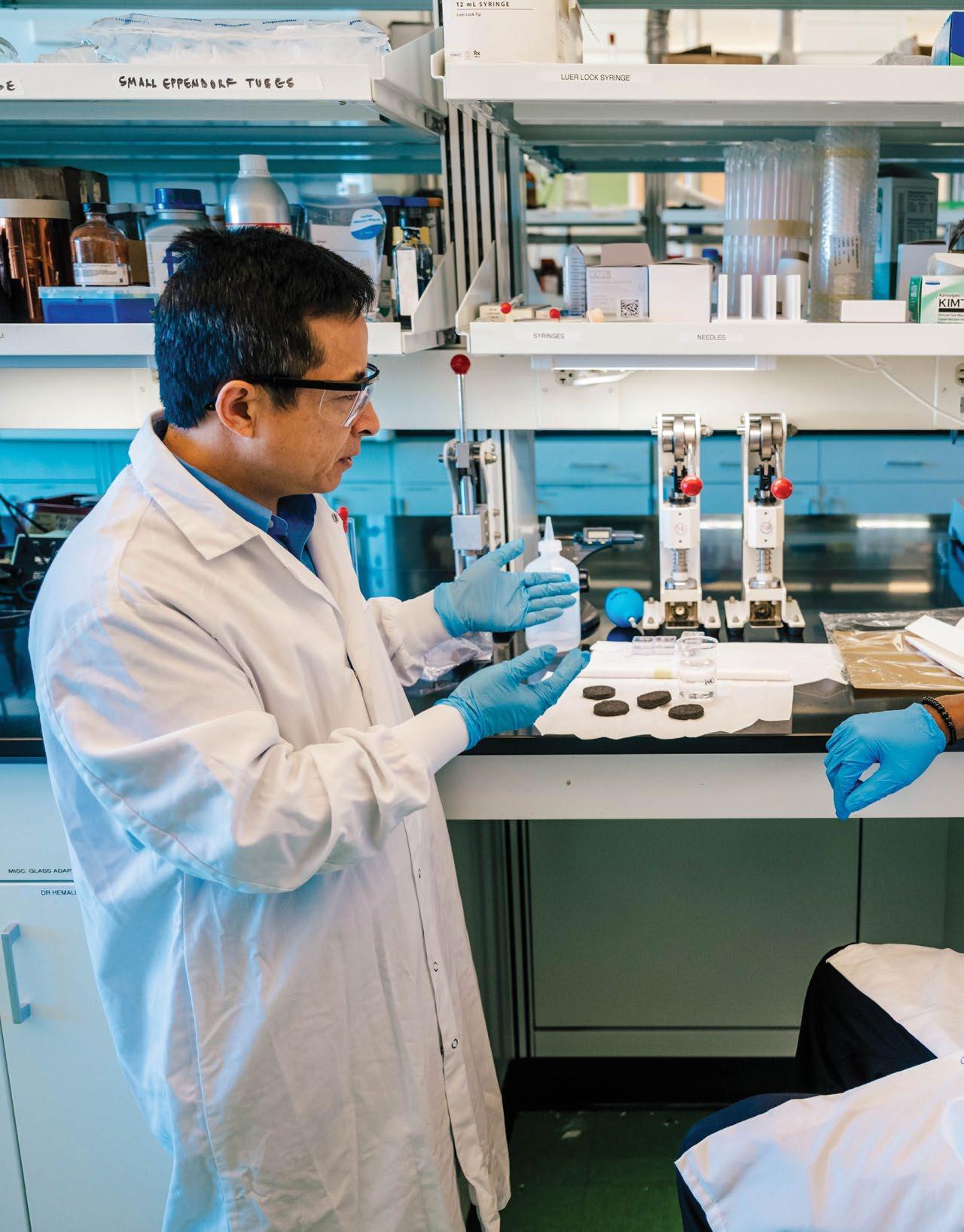
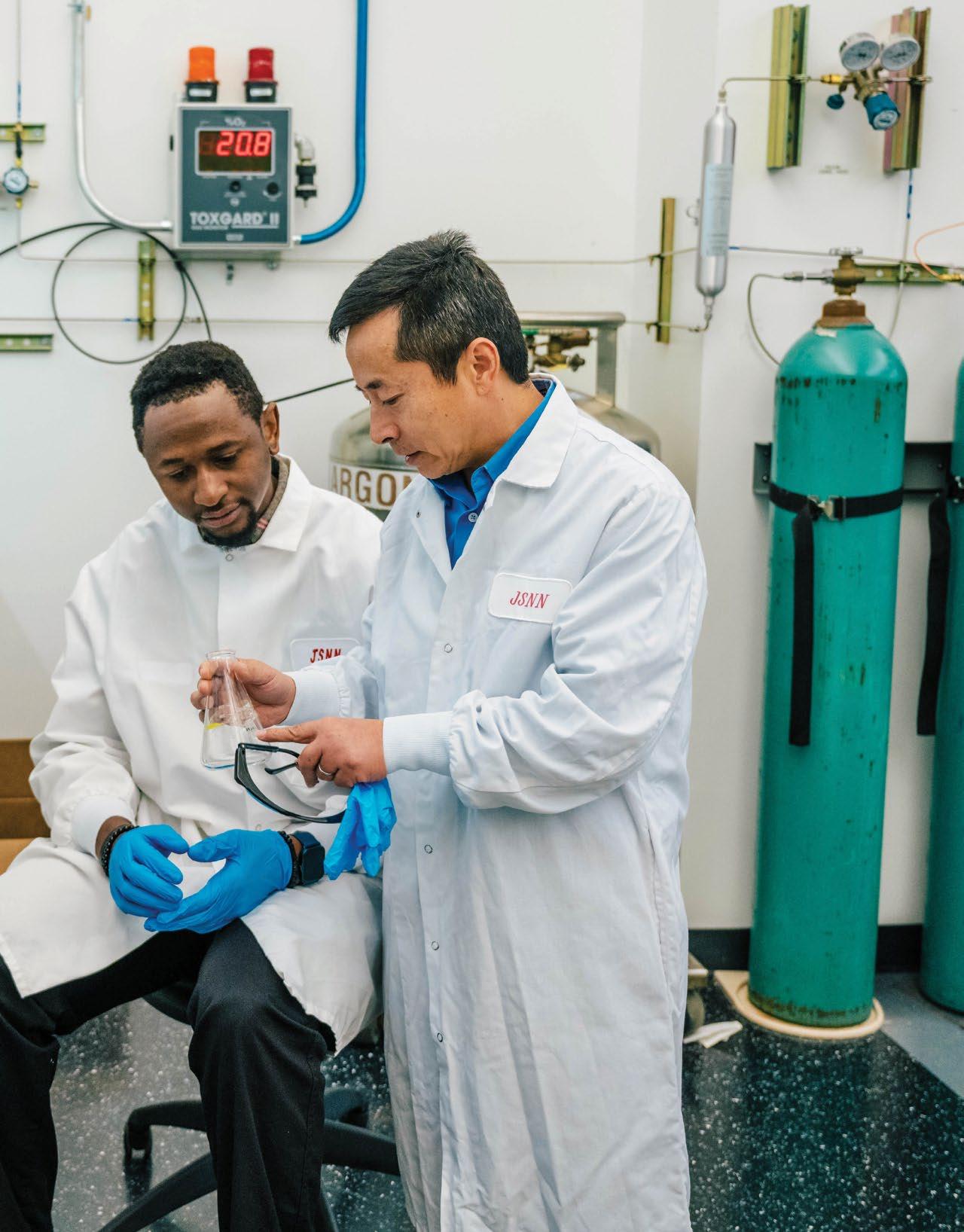
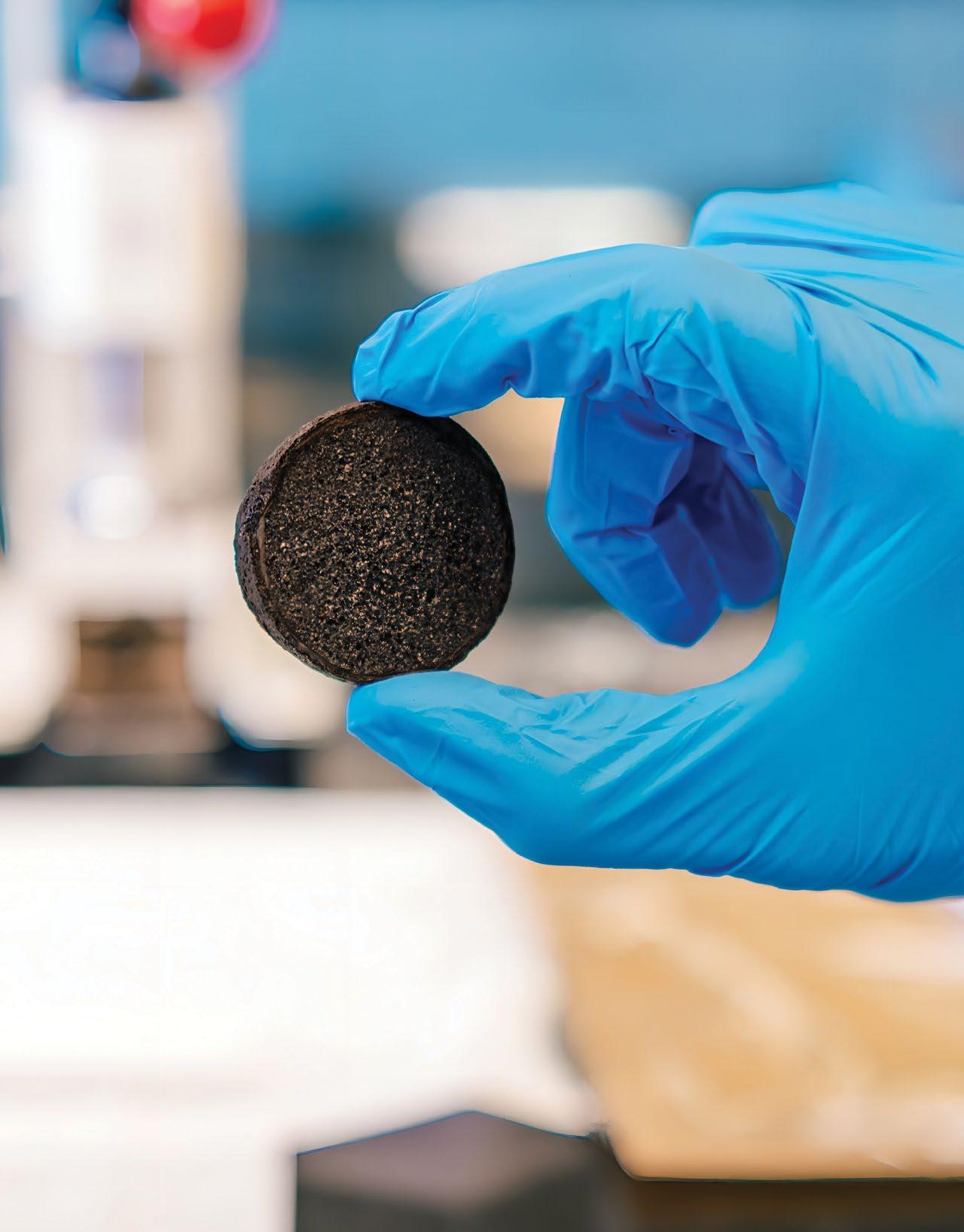
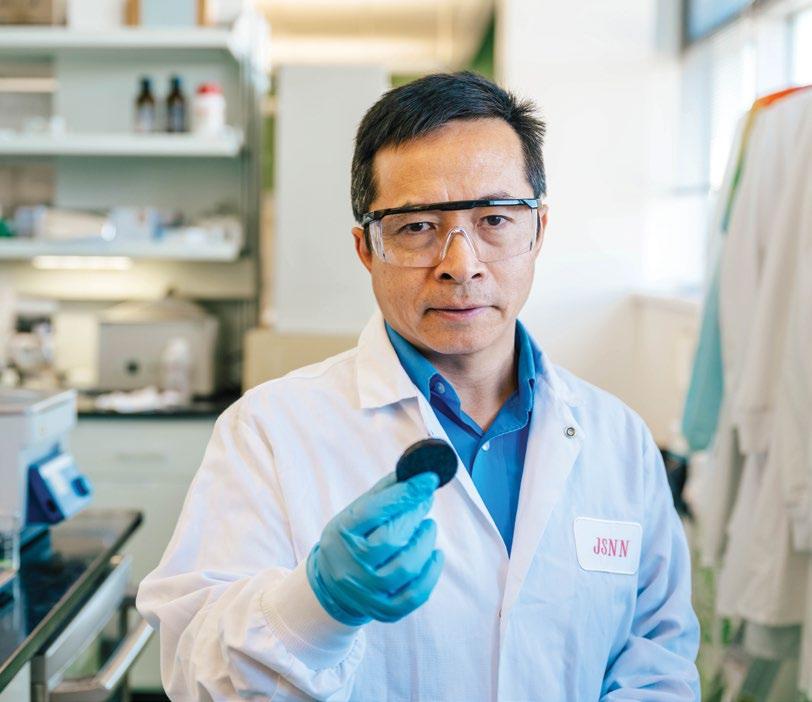
In “Forest Filter,” writer Christina Nunez charts how scientists have been testing biochar’s ability to purify water. At the University of North Carolina at Greensboro, Professor Jianjun Wei, pictured here, has achieved promising levels of mercury removal using biochar panels.
These panels, which are essentially large pieces of biochar treated with sodium carbonate and sulphur, ”provide a big advantage” over the standard powdered form because they’re reusable, says Wei. “After it absorbs all the mercury, we can easily get the panel back.”
Read the full story on page 18.
Photo by the University of North Carolina at Greensboro
Genetic Guardians
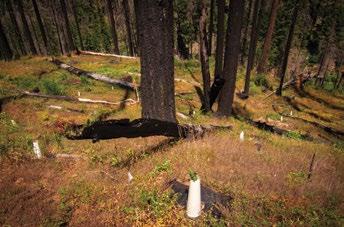
In the last few decades, as much as 98 percent of Oregon’s oak habitats have been lost. The decline is the result of many factors, one of which being the increasing frequency and severity of wildfires. The Umpqua National Forest has endured three in recent years, including the Jack Fire in 2021, which scorched nearly 25,000 acres.
On one of its burn scars, the National Forest Foundation developed an orchard grown from acorns chosen by Forest Service scientists for their genetic diversity. For the story “Banking on Biodiversity,” writer Tim Neville heads to the Umpqua to examine what the “living seed bank” could mean for the future of the white oak.
Read the full story on page 24.
Photo by Lance Troxel
FIGHTING FIRE WITH FUNGI
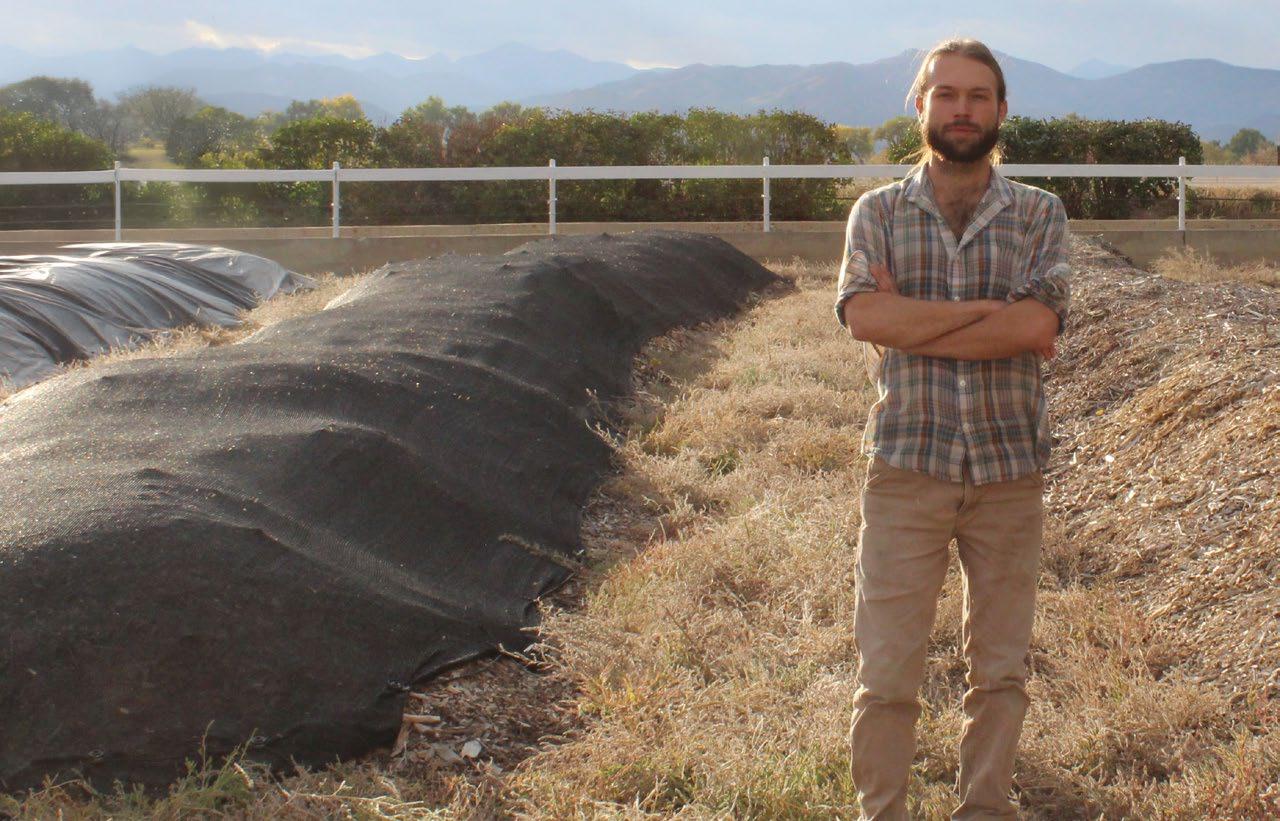
The mushrooms that Zach Hedstrom cultures in his facility have the potential to support wildfire mitigation.
INTERVIEW BY ERIN VIVID RILEY
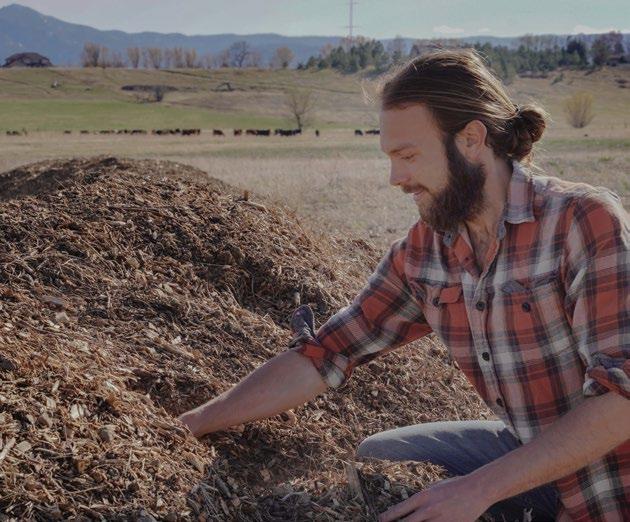
Growing up in the fungi-filled forests near Boulder, Zach Hedstrom joined the Colorado Mycological Society to better understand “this whole world underfoot that we don’t get to see.” Later, while working at an organic farm, he watched as oyster mushrooms were added to wood chips to quicken their decomposition. Hedstrom saw an opportunity to turn his fascination into a cause, and launched Boulder Mushroom in 2020.
What began as a humble research project is now a multifaceted mycology center, with a mushroom farm and spawn-producing facilities. The company’s ascent came at a time when forestry and fire-mitigation experts were contending with managing wood waste from large-scale thinning efforts, which itself can act as fuel if it doesn’t decompose fast enough.
On Colorado’s Front Range, the National Forest Foundation and its partners have identified 600,000 acres in need of treatment—an area roughly double the size of Nashville— as part of its wildfire mitigation work on the Pike-San Isabel National Forest. That creates a lot of debris that’s cumbersome to dispose of. “Fungal inoculation is
a natural and cost-effective solution in an area where there’s already a bottleneck,” says Hedstrom. We spoke to the mycologist about the innovate solution and it’s potential agrescale.
How did Boulder Mushroom get its start?
The company started out of a cabin on a tiny square of private land surrounded by the Arapaho-Roosevelt National Forest. I’d go out to find fungi to culture into spawn, which is essentially the root-like structure. A few years later, I began applying this spawn to forest biomass to transform it into soil, which is our current focus at Boulder Mushroom.
Zach Hedstrom at his mushroom farm in Boulder, Colorado. Photo by Boulder Mushroom
How do you turn a mushroom into a natural recycler?
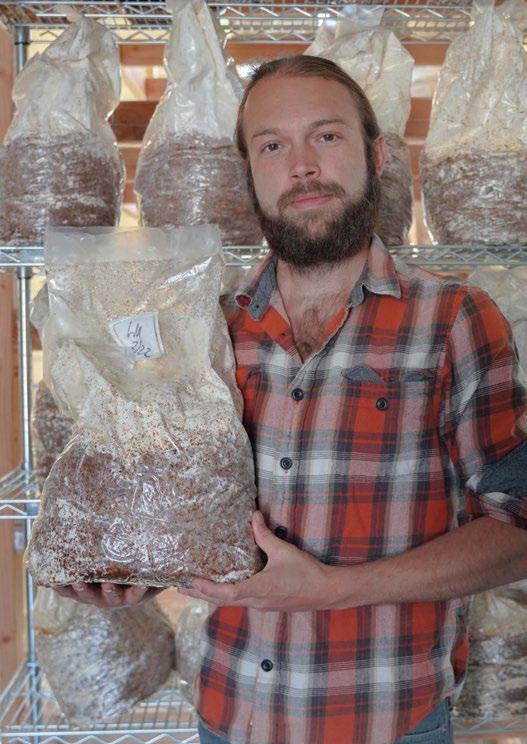
Let’s say we find a mushroom growing on a pine tree. Once we’ve confirmed it’s performing decomposition, we regrow that type of mushroom in a sterile location, preserve its genetics, and expand its mycelium, the root-like structure that secretes the enzymes that cause decomposition. From this, we develop a liquid slurry that can be sprayed onto pine wood waste to speed up its breakdown.
How does this solution help mitigate wildfires?
In Colorado and across the west, forestry groups and agencies are actively thinning dense stands of trees to remove the main fuel source of large wildfires. The leftover wood is often processed into chips that are spread across the forest floor or left in slash piles to be removed by controlled burns.
In this arid climate, it can take a very long time, often more than 50 years, for decomposition to happen on its own. In our trials of four-inch chip depths, we’re seeing biomass turn into a humus within 16 to 24 months. The mycelial matting also catches and holds moisture, reducing the risk of waste becoming fuel for wildfires as it breaks down.
“In our trials of four-inch chip depths, we’re seeing biomass turn into a humus within 16 to 24 months.”
What are you working on now?
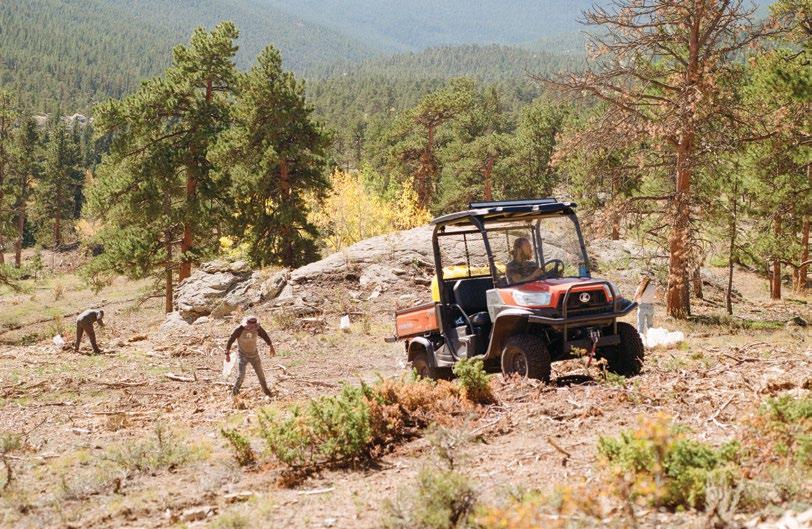
We’re currently brewing large tanks of native fungi at our Boulder facility that can be applied over large areas using equipment that’s already out there. Off-road vehicles with tanks that are used to apply herbicides, for example, are also effective at applying the inoculants.
What’s the biggest challenge facing your growth?
Scaling the technology’s application. We first partnered with local agricultural partners to transform farm biomass into a soil amendment, which piqued the interest of forestry agencies. We’re now working with a number of local partners to take what’s already standard practice within forestry and fire mitigation and cater these strategies to that, and hope to work with federal agencies in the future.
Follow Boulder Mushroom on Instagram at @boulder_mushroom.
Buy your own at-home fungi growing kit from Boulder Mushroom’s online shop at bouldermushroom.com.
Hedstrom holding a bag of mycelium slurry. Photo by Boulder Mushroom
GROWTH FORECAST
At Mount Washington Observatory, Amy Cotter monitors some of the country’s worst weather to help guide decisions toward a better climate future.
INTERVIEW BY ERIN VIVID RILEY
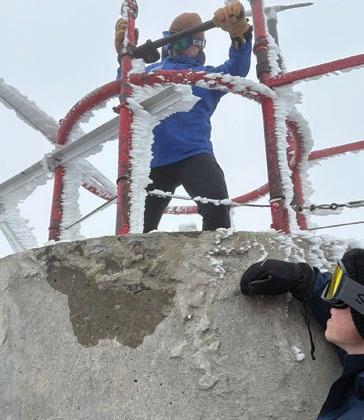
In June 2025, Amy Cotter was monitoring wind speed on the 6,288-foot summit of Mount Washington when she noticed unusually high numbers for a summer day. Cotter and her colleagues gathered in the observatory’s weather room, watching as the anemometers clocked 124 miles per hour, breaking records. “The anticipation was so exciting,” says Cotter, a weather observer and education specialist at Mount Washington Observatory.
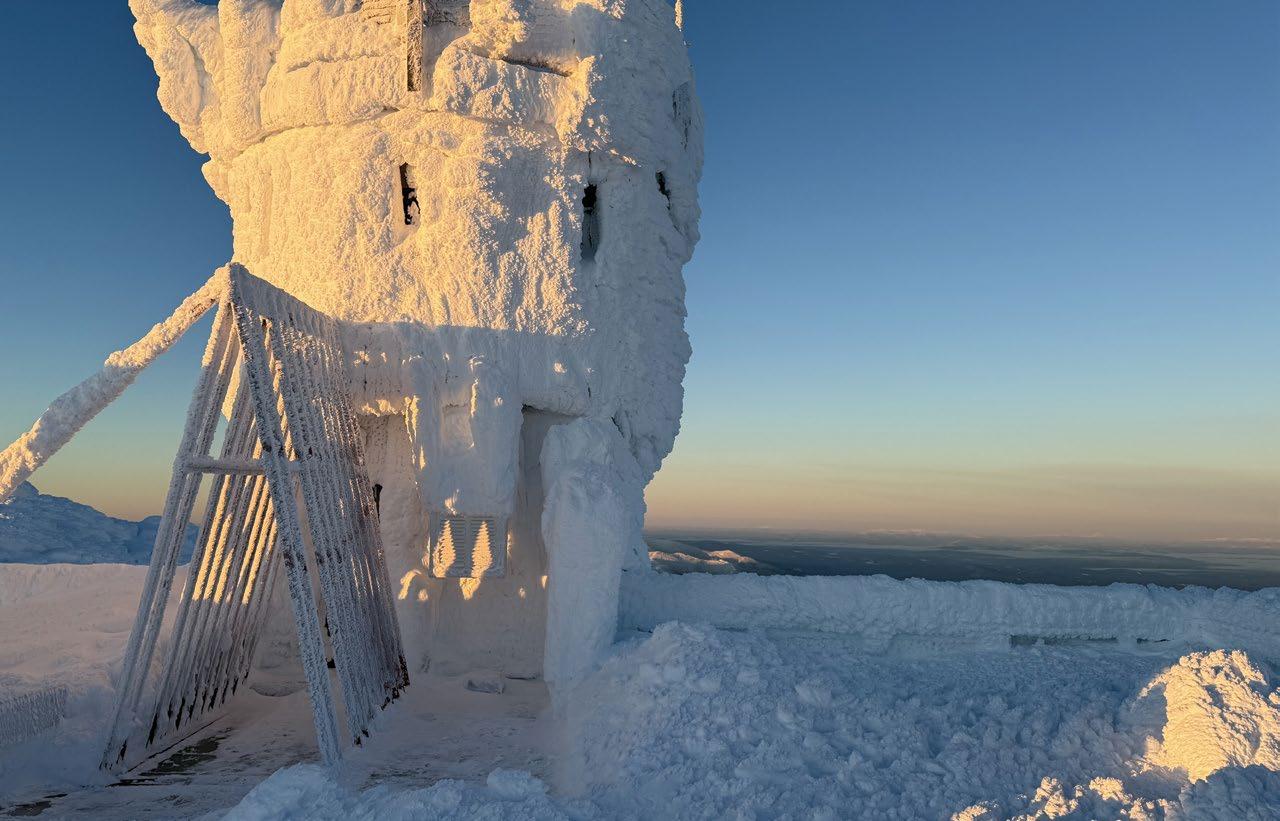
Most weather nerds know of Mount Washington, encircled by New Hampshire’s White Mountain National Forest, as home to the world’s worst weather. Although its elevation isn’t comparable to mountains out West, the fact that it’s the tallest point within a nearly 800-mile radius means it’s exposed to a lot of weather. “There are no buffers,” says Cotter, who adds that the topography of the White Mountains creates a funneling effect, channeling those winds to the observatory.
The Observatory has maintained a weather station on the summit since 1932, creating a valuable long-term record for climate studies. We spoke to Cotter about why keeping
its weather-monitoring technology cutting-edge is crucial in the face of a changing climate.
What does a typical day look like for you?
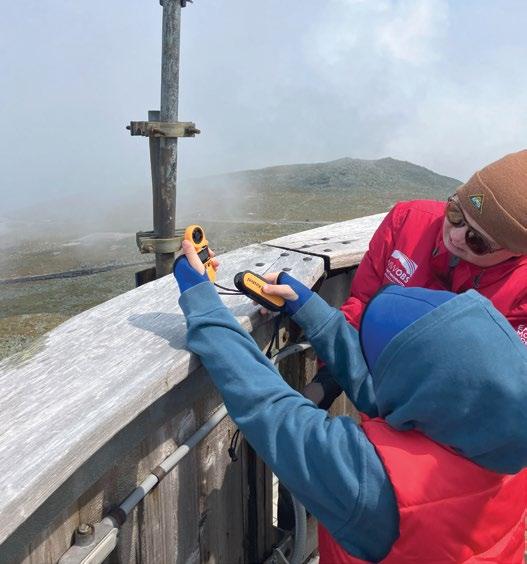
I’m usually one of two daytime observers conducting hourly weather observations, from using instruments to measure wind speed and pressure to using our eyes to gauge visibility or cloud cover. Those observations are sent to the National Weather Service and, of course, stored in our over 90-year-old climate data set. We’re also doing a lot of forecasting for various entities, including public radio. As an education specialist, I also do lots of distance-learning programs.
Mount Washington Observatory after a snow storm. Photo byf Mount Washington Observatory
Why is the science behind Mount Washington’s weather unique?
Along with Mount Washington’s prominence and topography, it’s how the country’s storms behave. Because of atmospheric dynamics and the west-to-east direction of the jet stream, a lot of storms across the country are funneled through the northeast. Combine that with the fact that Mount Washington is the tallest point in 800 miles in any direction and the funneling effect of the White’s topography, and we get a whole lot of storms directed our way.
What recent technological advancements have impacted your work?
Our network of weather stations can withstand intense cold, high precipitation volume, icing, and hurricane-force winds. But they rely on solar power, so if we have long stretches of bad weather, it can prevent transmission and create gaps in the data. But a recent half-milliondollar grant means we can update existing stations so that they run for up to 30 days without sunlight, as well as add more stations.
Why was this investment so important?
The more accurate data we have, the better our forecasts. Many industries rely on these predictions to function,
“A recent half-million-dollar grant means we can update existing stations so that they run for up to 30 days without sunlight, as well as add more stations.”
from agriculture and conservation to tourism. Beyond that, data provided by the observatory helps inform big policy decisions in the face of a shifting world.
How do you spend your time off the summit?
I spend a lot of my time trail running on the White Mountain National Forest, especially on the Bondcliff Trail, which traces all three mountains that make up the Bonds. The views are absolutely breathtaking.
Follow Mount Washington Observatory on Instagram @mwobs.
Visit the observatory’s weather station and museum, located at the Sherman Adams Visitor Center in Mount Washington State Park. Between mid-May to mid-October, you can reach the summit of New England’s highest peak via car, train, or on foot.
Cotter teaching a visiting student how to read wind speed using an anemometer. Photo by Mount Washington Observatory
Cotter hosting visitors at the observatory. Photo by Mount Washington Observatory
MOBILE MOVEMENT
How mapping apps helped me learn the snowy peaks of Colorado’s San Juan National Forest— and navigate confidently through them.
BY HEATHER HANSMAN
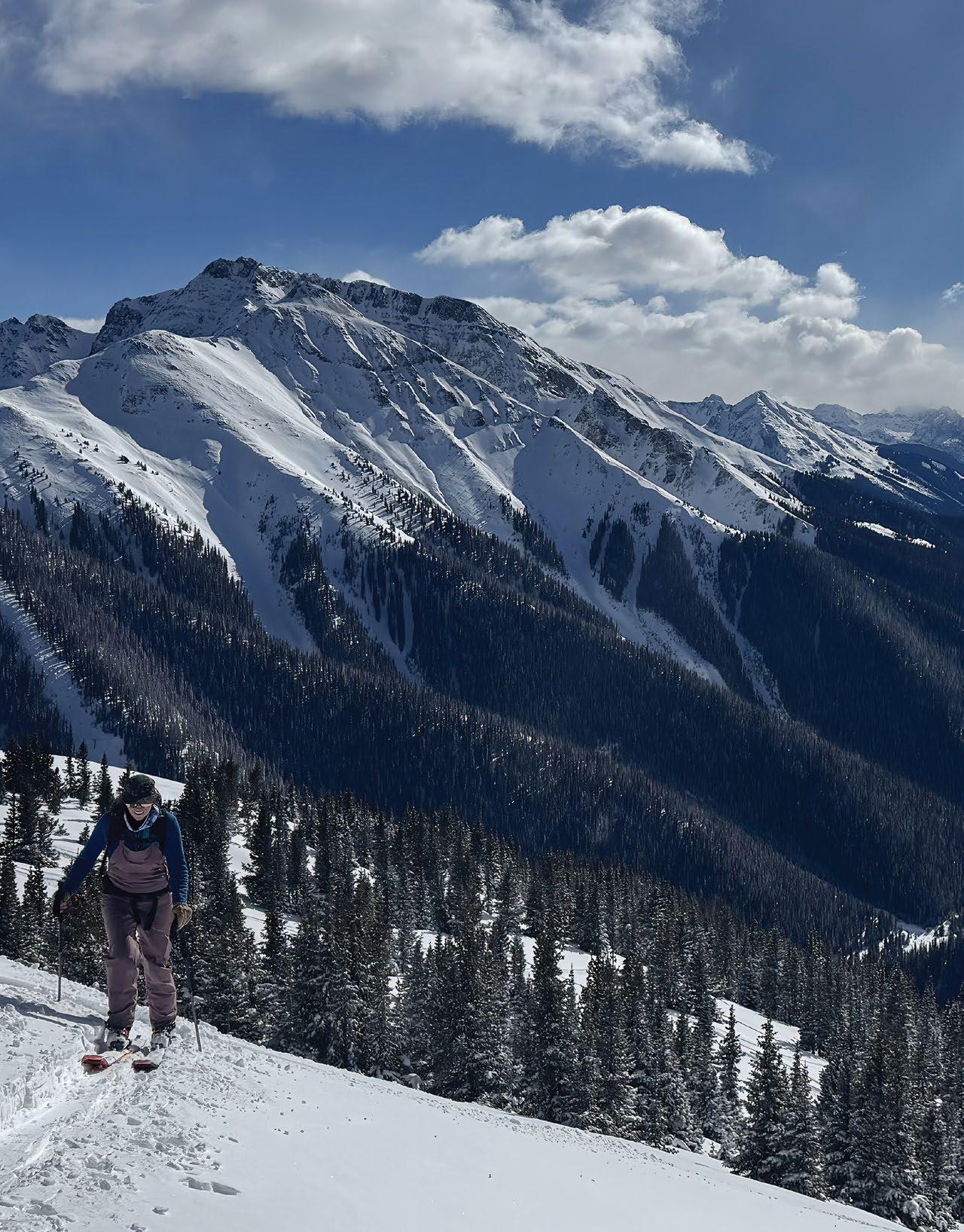
Writer Heather Hansman skinning up at Prospect Gulch, near Silverton, Colorado.
Photo by Heather Hansman
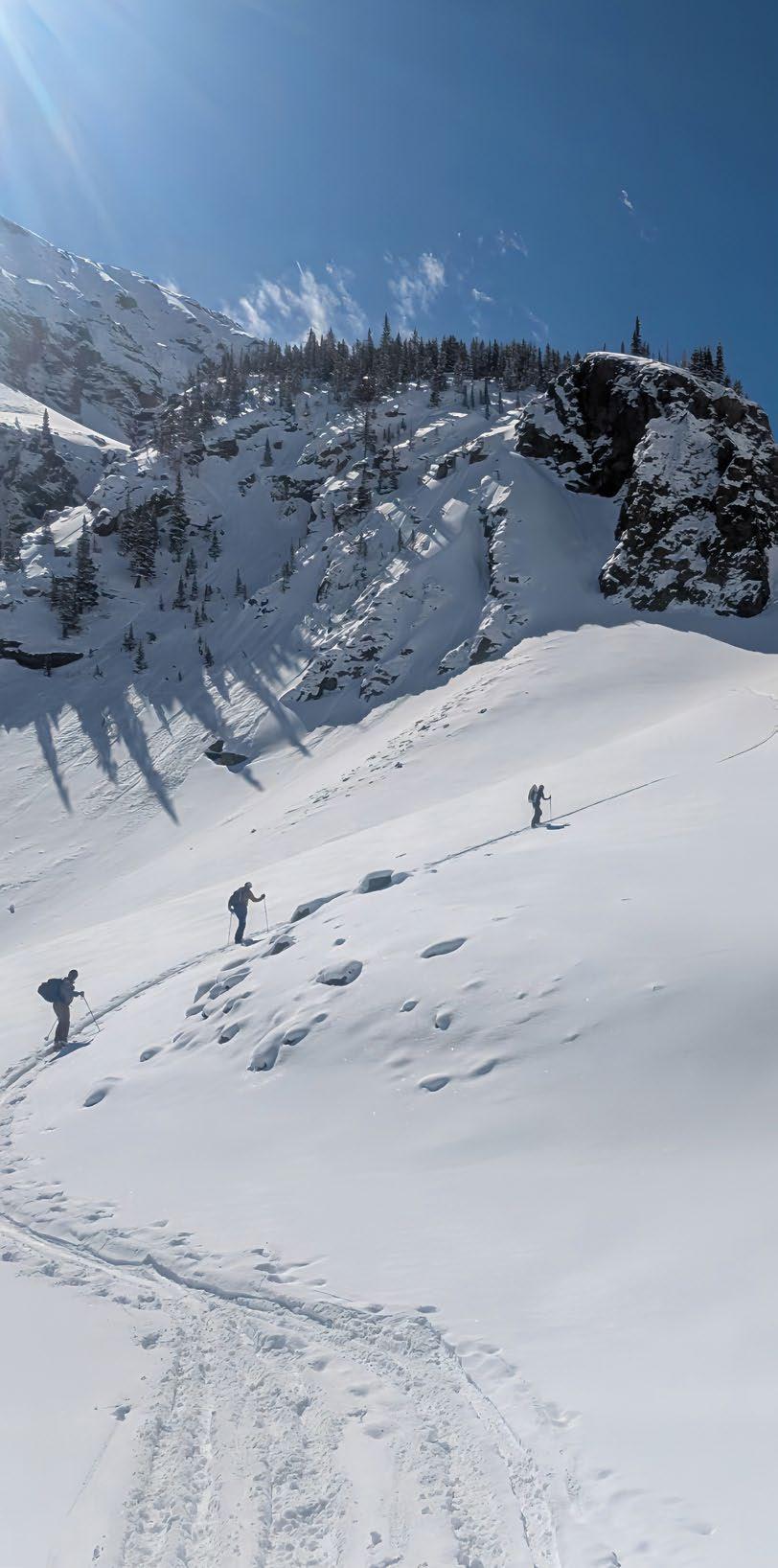
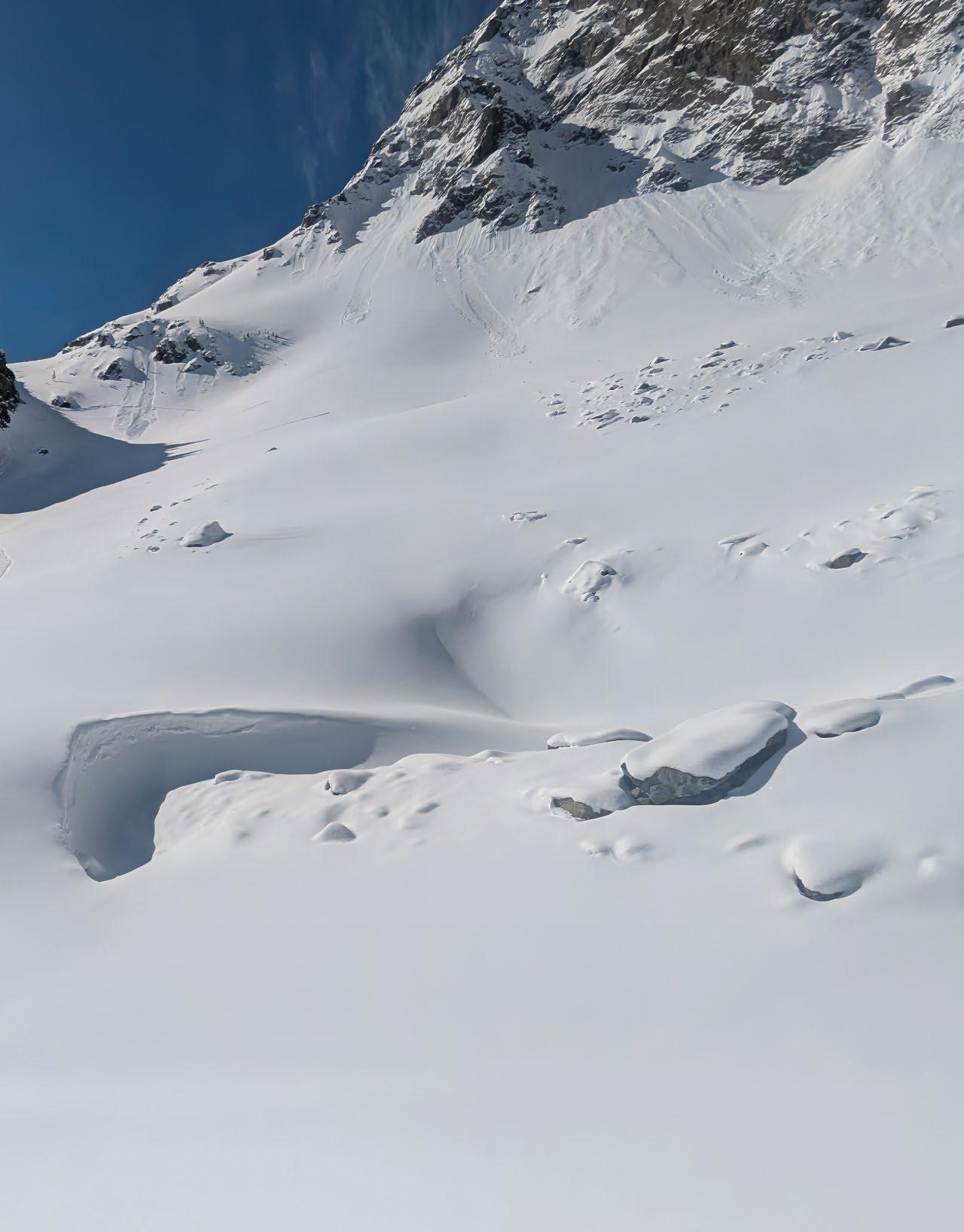
Trico Peak is off the west side of Red Mountain Pass, the snake of a road that splits the high peaks of the San Juan National Forest. In the winter, it’s a wide wedge of snow, with ski lines spilling off its shoulder—a treasure trove of adventure for any backcountry skier.
For a long time, Trico scared me. In winter, snow erases any semblance of a trail. Sometimes, someone will have come through ahead of you and broken a trail, but it can be unwise to assume they’re headed where you are, or that they’re smarter than you.
Part of navigating the winter backcountry is finding your own route, carving a line into a blank canvas. It can feel limitless if you work within the bounds of slope angle and gravity. But it can also feel overwhelming.
I have been a backcountry skier for the better part of two decades. I love the methodical grind of getting uphill on my skis and the weightless float of coming down. I love learning the way a snowpack stacks up over a season and knowing the silence of winter forests. But for a long time, there was one piece that kept eluding and intimidating me: navigation.
Reading maps, especially when I was off trail, felt intimidating. I found it hard to track where I was, unsure of the markers. It made my brain feel scrambly. It came with too much pressure. I feared steering myself and others wrong and putting us in jeopardy. So I ceded control to friends, even though it felt like I was missing out on better understanding a landscape and my place in it.
Over time, I noticed those friends started to move away from paper maps to apps. They’d pull out their phones and point us toward a route or reorient us toward a ridgeline. It felt, at first, like they were using an artificial cheat code instead of really understanding where we were or should go.
Plus, my phone felt like it was too present in every other part of my life. The backcountry was somewhere I could get away from constant connectivity. Those apps felt antithetical to why I like being outside: in my body, paying attention.
But as my navigation skills fell even further behind, I started to wonder about my calculus. What was I losing by avoiding the responsibility? What was I missing out on by restricting what tools I could use? Was this really where I needed to be puritanical?
Hansman on Red Mountain Pass in the San Juan Mountains.
Photo by Heather Hansman
“As we trudged back up a drainage, below where we wanted to be, I thought, “I could do better. Why was I giving my power to him?”
It came to a head on a stormy early season day. A friend’s husband, who was new to backcountry skiing but confident in technology, led us out into the forest on our skis. He was sure, he said, of where we were going. But he read his map wrong, in part because he wasn’t used to moving through the terrain. He took us down a creek bed instead of up toward a peak. In the soupy storm, I knew in my body that we were going the wrong way.
As we trudged back up a drainage, below where we wanted to be, I thought, “I could do better. Why was I giving my power to him?”
It became my new year’s resolution: Stop being the follower, learn to lead. So in January, I downloaded the mapping app Gaia and started messing around with it, zooming in on places I wanted to explore from my living room couch.
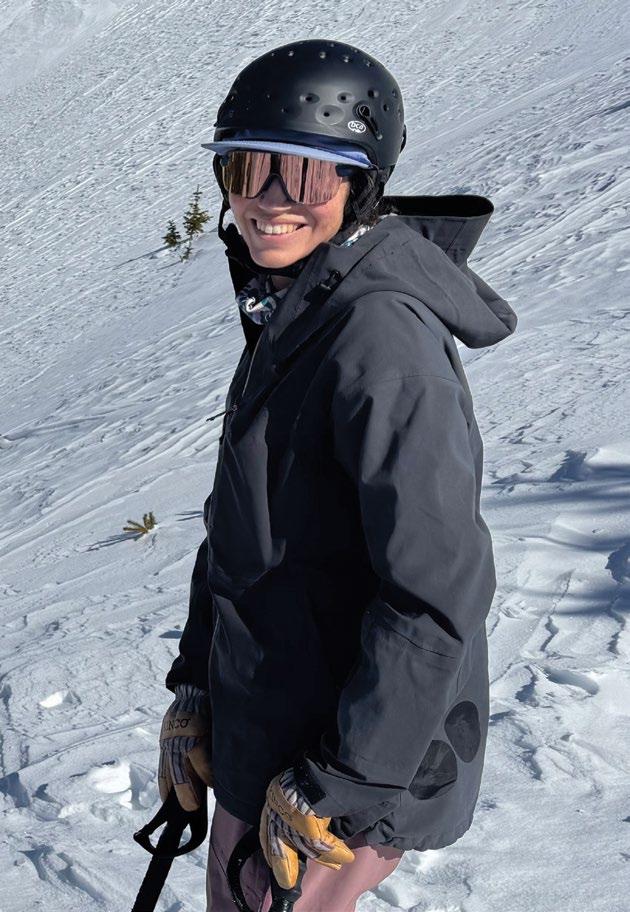
With the help of mapping apps, Hansman is able to trust her instincts more. Photo by Heather Hansman
“In the past, I’d have to come back to the same place multiple times to understand where I was and how it fit into the broader geography. Now, I was locating myself within it.”
Once on the mountain, I began tracking where I was going, tracing routes, and trying to match what I was seeing on the screen to the topography in front of me.
I started to understand how the dips and rolls correlated with the maps. I began to see where it might be smart to head uphill or dangerous to come down. I learned how to add layers, like slope angle, so I could stay out of hazardous terrain and see what was above me. I began to understand how the pieces of terrain fit together, how the valleys and notches rolled into one another.
In the past, I’d have to come back to the same place multiple times to understand where I was and how it fit into the broader geography. Now, I was locating myself within it.
One frosty morning, up on a wide shoulder of a gentle peak, my intuition surprised me. “It looks like that face in front of us is steep. I think we should head left so we’re not underneath it,” I said to my friends. I consulted the app to confirm the path that had formed in my mind, and found that the fog that had clouded so much of my confidence prior had lifted, revealing long sight lines.
Now, I pop my phone out of my pocket more than I probably should. My fingers get cold, and my battery has died at inconvenient times. There are downsides, but my mapping app has shown me that I know how to move in the backcountry. That, sometimes, I just need a little reassurance.
When I could verify where I was, I started to trust myself more, and in turn, pay more attention. When I’m not as worried about where I’m going, my mind can wander to the forest’s quiet details, taking in the wintry breeze, the birds circling the ridge, the way the snow feels under my skis.
Now, when I look at the shoulder of Trico, I don’t see 13,000-plus feet of uncertainty. I see the slopes I can climb, the chutes I can ski down, and the way I can keep myself safe in between. Even more, I see a path to being in my own body.
Sign up for a certified avalanche training course at Avalanche.org, which features instruction on how to navigate by app.
Heather Hansman is the author of Downriver and Powder Days. She lives in the mountains of southwest Colorado where she’s at work on a book about women outside.
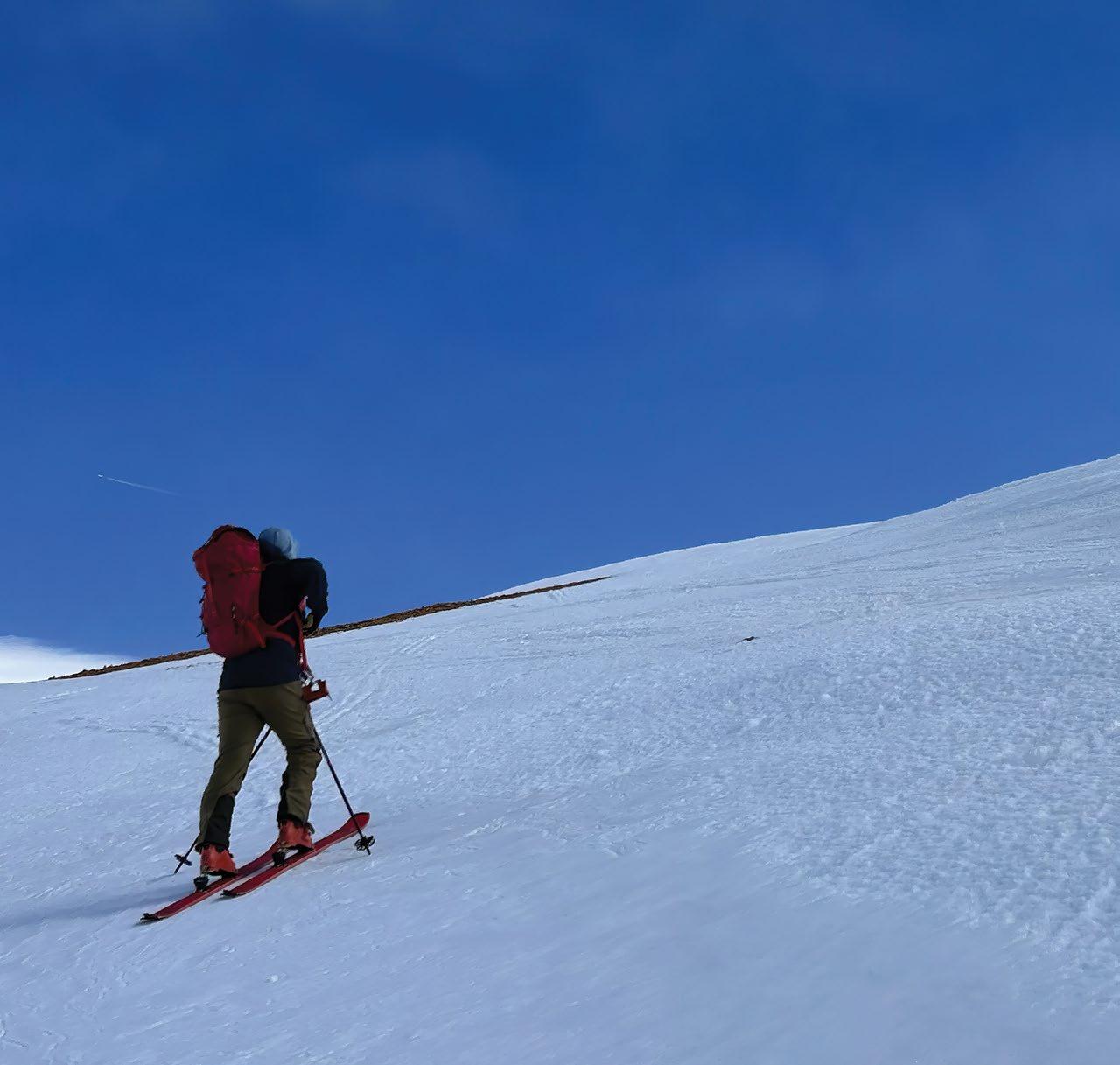
Hansman now leads friends through the backcountry. Photo by Heather Hansman
FOREST FILTER
How a materials derived from wood waste could remove pollutants, including “forever chemicals,” from water
BY CHRISTINA NUNEZ
Virginia’s mighty Shenandoah River forms from the confluence of its South and North Forks, which flow through the George WashingtonJefferson National Forest. For two decades the chemical company DuPont dumped mercury waste into the South Fork from its Waynesboro facility. Over 100 miles of river and thousands of acres of floodplain and riparian habitat were affected.
A decade ago, scientists tried a variety of approaches to cleanup, including applying a form of charcoal called biochar to the soil on the banks, where it could bind to mercury and keep it from washing into the river. According to a 2023 study published in the journal Toxics, the treatment reduced concentrations by a factor of about 200.
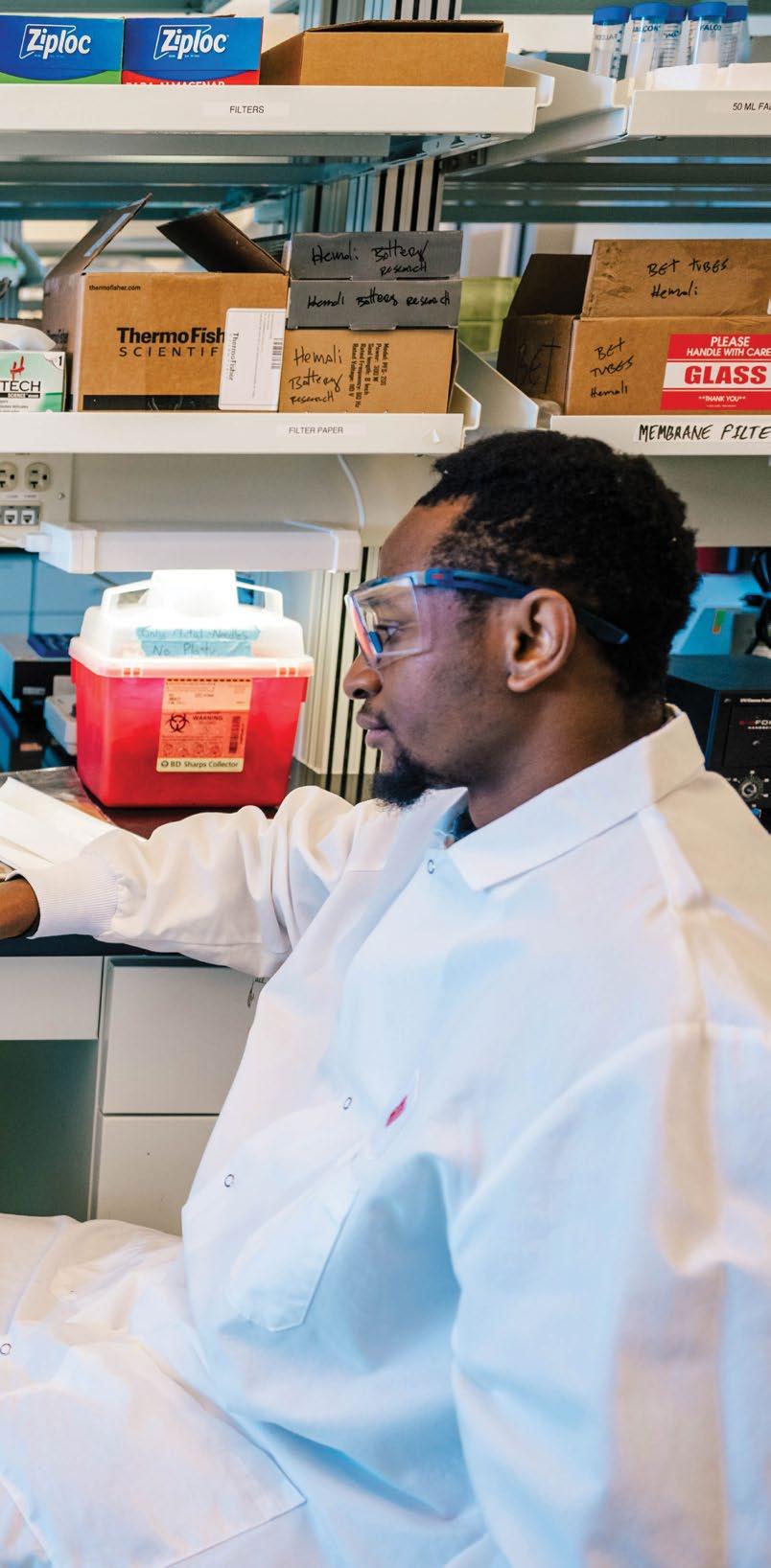
Professor Jianjun Wei and his PhD student, Sherif Bukari, analyze a treated water sample at the University of North Carolina at Greensboro.
Photo by the University of North Carolina at Greensboro
“Now, researchers have begun testing charcoal to help clean larger water sources, such as rivers and storm runoff—but with a twist.”
Biochar, which is organic matter heated with low oxygen in a special furnace until it becomes similar to charcoal, has been used to enrich depleted agricultural soils for centuries.
Its porous structure provides a large surface area for both nutrients and contaminants to bind to. But the simple technology has been getting renewed attention for its potential to address a range of environmental challenges, from removing contaminants to storing carbon.
The substance’s ability to purify water is established— household water-cleaning pitchers use a processed charcoal powder known as activated carbon. Now, researchers have begun testing charcoal to help clean larger water sources, such as rivers and storm runoff—with a twist.
Instead of conventional activated carbon, which is sometimes made from coal, the idea is to use the potentially more sustainable alternative of biochar, made from biomass waste such as wood—a material the
U.S. currently has a surplus of. The Forest Service has recognized the need to remove over 600 million tons of biomass from National Forests to reduce fire risk.
According to Jeremy Yan, a research chemist with the agency’s Forest Products Laboratory (FPL), some of that wood will become timber for industry, but a “significant portion,” he said, has no market. “Piling and burning this material in place is not a favorable option due to high costs and emissions,” he said. “One emerging solution is making biochar from [that] biomass.”
Scientists at FPL have been experimenting with making biochar from wood chips and waste wood through different processes over the last decade. Several active FPL research projects are evaluating biochar for making fire-resistant building materials, adding nutrients to soil, and removing toxins from the environment.
One such category of toxins is per- and polyfluoroalkyl substances, or PFAS, which have been linked to health problems including cancer, higher cholesterol, and lower
Biochar is created from heating organic matter with low oxygen. Photo by the University of North Carolina at Greensboro
Instead of powder, scientists at the University of North Carolina at Greensboro are testing the efficacy of biochar panels.
Photo by the University of North Carolina at Greensboro
“Research has pointed to biochar’s ability to capture PFAS, which are nicknamed “forever chemicals” for their tendency to linger in the environment.”
birth weights. These chemicals are a particularly sticky environmental problem. In addition to being long-lived, they are everywhere: the name refers to a group of thousands of chemicals that have leached into soil and water. Nearly half the country’s tap water has been found to have one or more PFAS in it.
The same properties that make biochar useful as a soil supplement also make it a magnet for toxins. Research has pointed to biochar’s ability to capture PFAS, which are nicknamed “forever chemicals” for their tendency to linger in the environment.
But biochar’s tremendous flexibility and variety also make it a research challenge: there is no one-size-fits-all approach. Many variables, from how it’s processed to how it’s applied, can affect the results.
At the University of North Carolina at Greensboro, Professor Jianjun Wei is about halfway through a two-year FPL grant project to test modified wood-based biochar for removing mercury and PFAS from water. In the first phase, Wei studied the effectiveness of biochar panels enhanced with sodium carbonate and sulfur. The initial results, he said, are exciting: The biochar removed at least 96 percent of mercury at varying concentrations.
Biochar is often pulverized so that it can be scattered over soil. But FPL is investigating panels—effectively, a big piece of biochar—which Wei noted ”provides a big advantage” over a powder. “We just put the panel block itself into the water,” he said. “Then, after it absorbs all the mercury, we can easily get the panel back.” In the case of mercury, the metal could be rinsed out and disposed of, and the panel reused.
In the next phase of Wei’s project, set to be complete by July 2026, he will design a version of biochar that is modified to target PFAS. That experiment will be more complex, he said, because, unlike mercury, PFAS comprises many different toxins—some 15,000, according to the EPA. Adding to the complexity, detecting PFAS in water can be difficult at low concentrations, and some PFAS are harder to separate from water than others.
More research on effective types of biochar and their applications towards PFAs is required, but according to Pia Ramos, an environmental engineer for the consulting firm GSI Environmental, there’s a lot of promise.
When she was a postdoctoral research scientist in the U.S. Department of Agriculture’s Agricultural Water Efficiency and Salinity Research Unit, Ramos conducted experiments on commercial biochars’ ability to remove
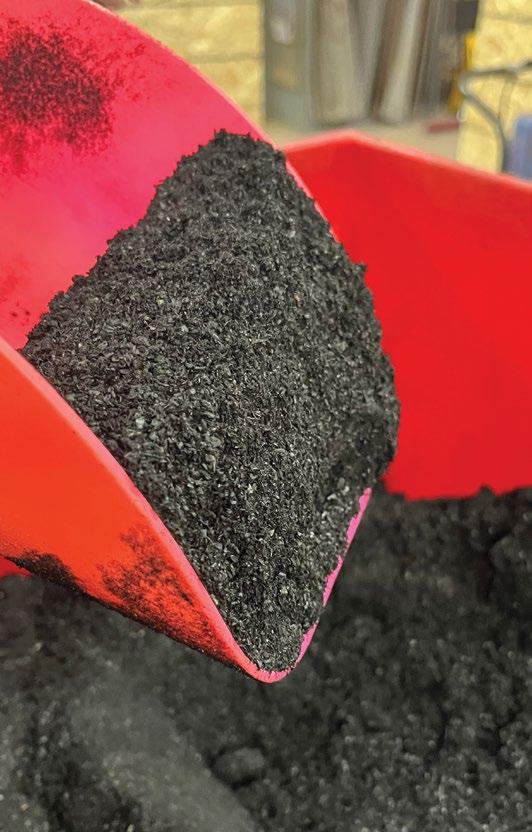
The U.S. has a surplus of biomass waste that can be processed at scale.
Photo by the University of North Carolina at Greensboro
PFAS. The results, published in the journal Biochar in March 2025, found that the materials could indeed remove five types of PFAS with varying degrees of success.
Given the volumes of water that would need to be treated, both for agricultural and household use, Ramos said, “You need something that is the cheapest that it can be. I think that’s why biochar is pretty attractive.”
Ramos’s study highlighted one commercial product commonly used for improving soil health, called Rogue biochar, and found that it removed 86 to 98 percent of a subset of PFAS, depending on the type.
Oregon Biochar Solutions, which makes Rogue, has several trials in the works, but “until it has been proven with full-scale testing, we cannot say it is an effective treatment [for PFAS],” said Karl Strahl, the company’s chief operating officer. “Lab testing is showing promising results, though,” adds Strahl, referencing the results of Ramos’s study.
Strahl said that his company has been seeing more curiosity about toxin removal. “We are getting into the very early days of the early adoption of biochar,” he said. “It’s not mass market yet, but there is a high level of interest.”
Take advantage of the Forest Products Laboratory’s wood identification program, a free service that allows members of the public to send in wood samples to learn about their genus.
Christina Nunez is a writer and editor who covers science, technology, and innovation.
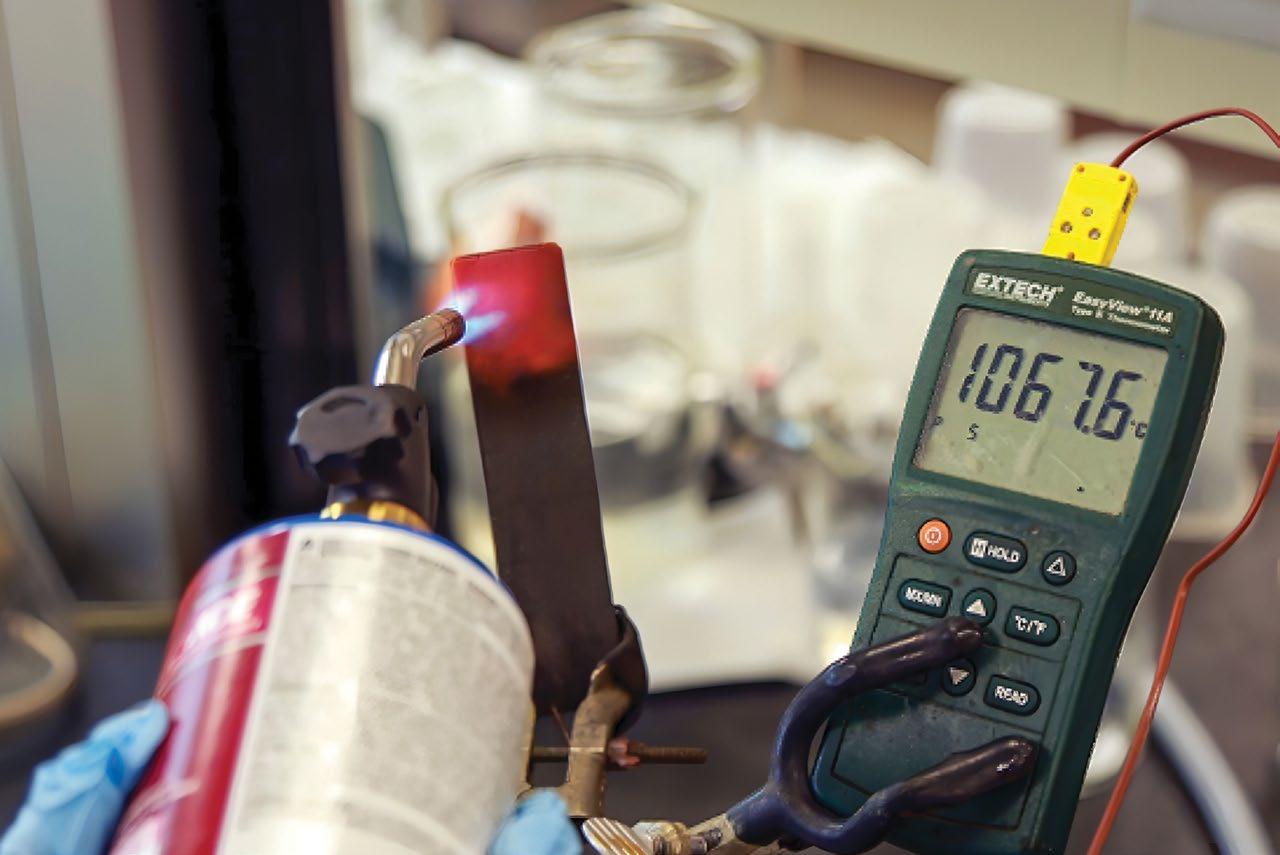
Reading the temperature of a treated piece of biochar. Photo by the University of North Carolina at Greensboro
BANKING ON BIODIVERSITY
A genetic conservation project in Umpqua National Forest may hold clues to the survival of the Oregon white oak.
BY TIM NEVILLE
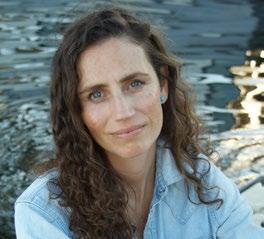
About 80 miles south of Eugene, Oregon, Anna Wemple pilots her pickup down a dirt road and over a bridge that spans the frothy North Umpqua River. She parks. Soon, we’re hiking up a steep hillside tangled with red capped raspberries, bracken ferns, and patches of poison oak. An immature bald eagle coasts by on the cool morning air.
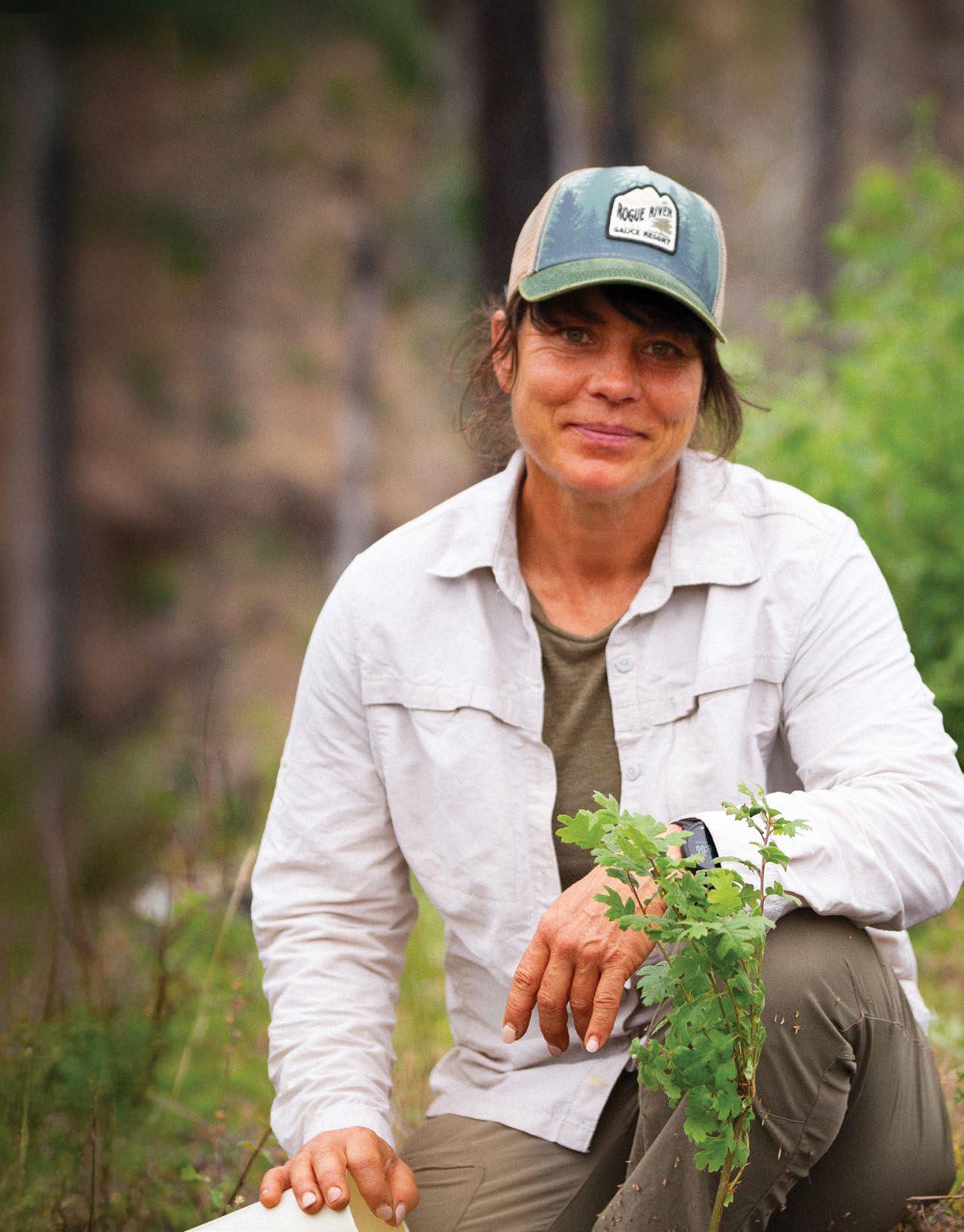
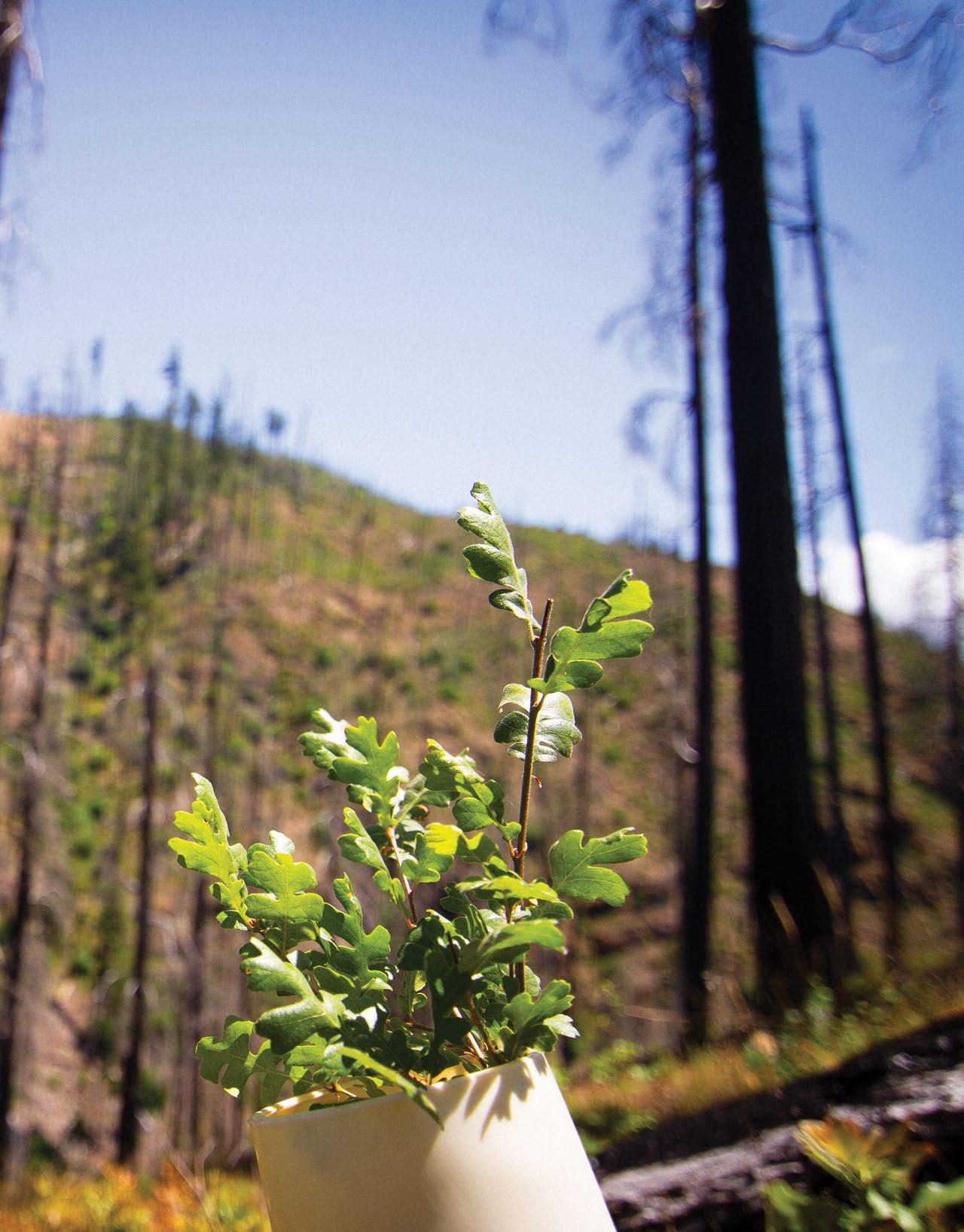
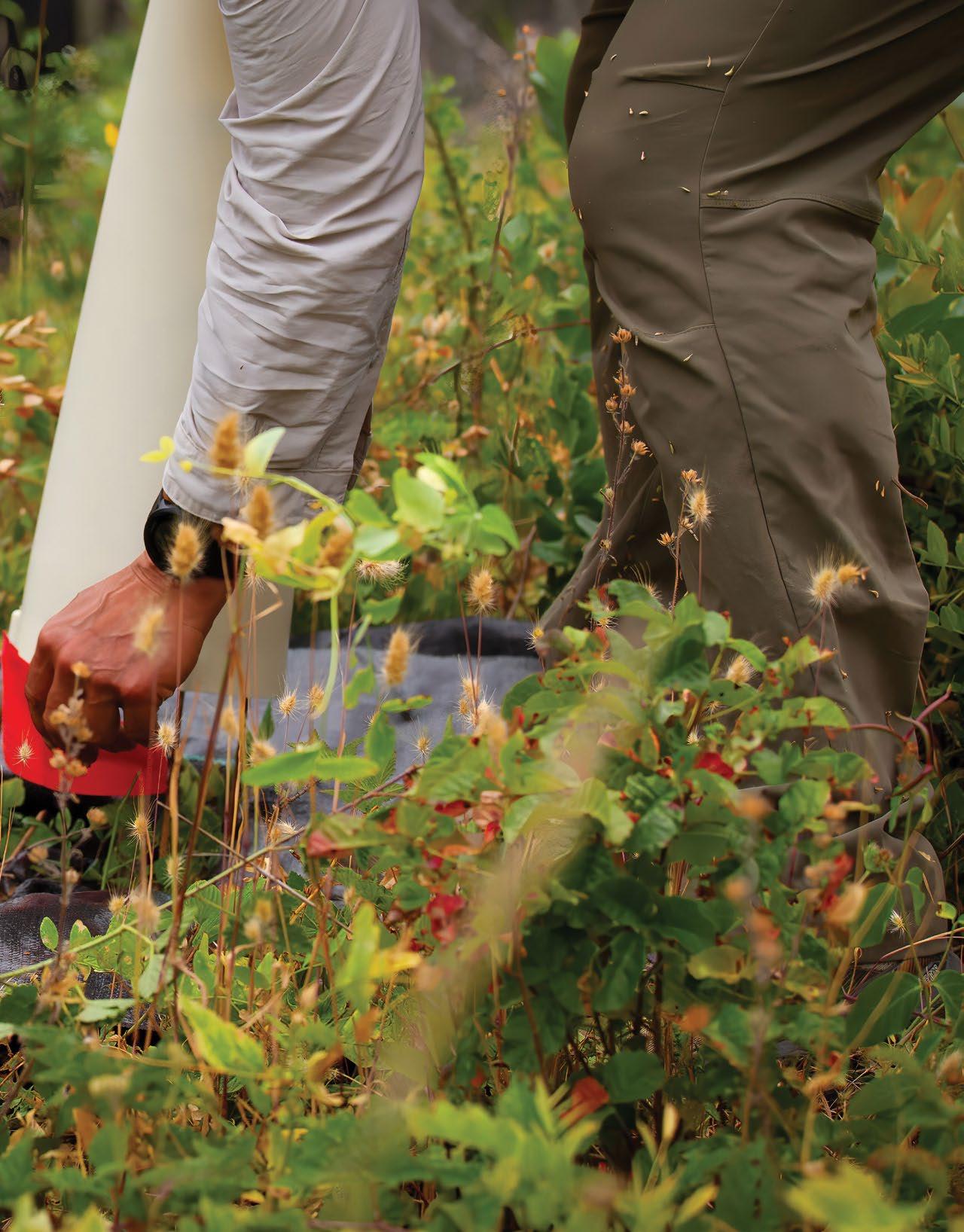
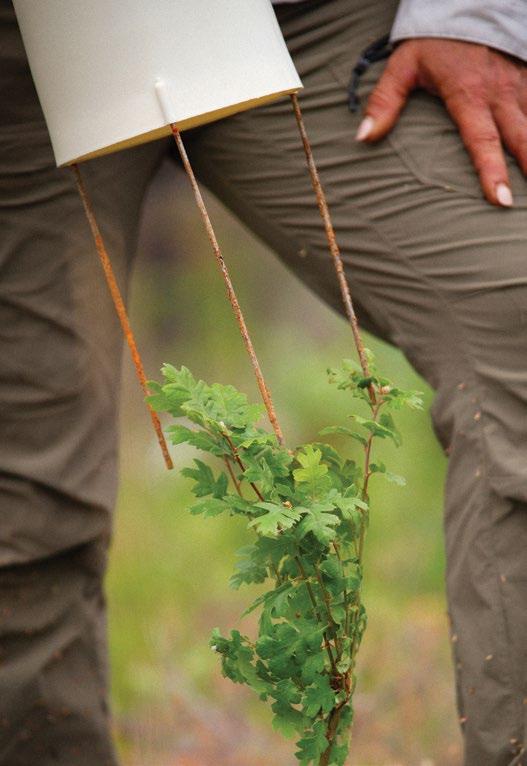
A short distance later, Wemple stops to inspect a delicate sapling protruding from a protective plastic cone. “These guys are doing really good,” she says, delighted. Dozens of them pepper the hillside in a grid pattern planted roughly 20 feet apart. “This is fantastic,” she says. “I’m so glad to see them alive.”
Wemple is the National Forest Foundation’s coordinator for reforestation efforts happening on this section of the 983,000-acre Umpqua National Forest, Oregon’s eighth largest. It is an Endor of life, with more than 60 mammal species, 236 types of birds, and hundreds of miles of cold, clear rivers that provide habitat for salmon, steelhead, and sea-run cutthroat trout.
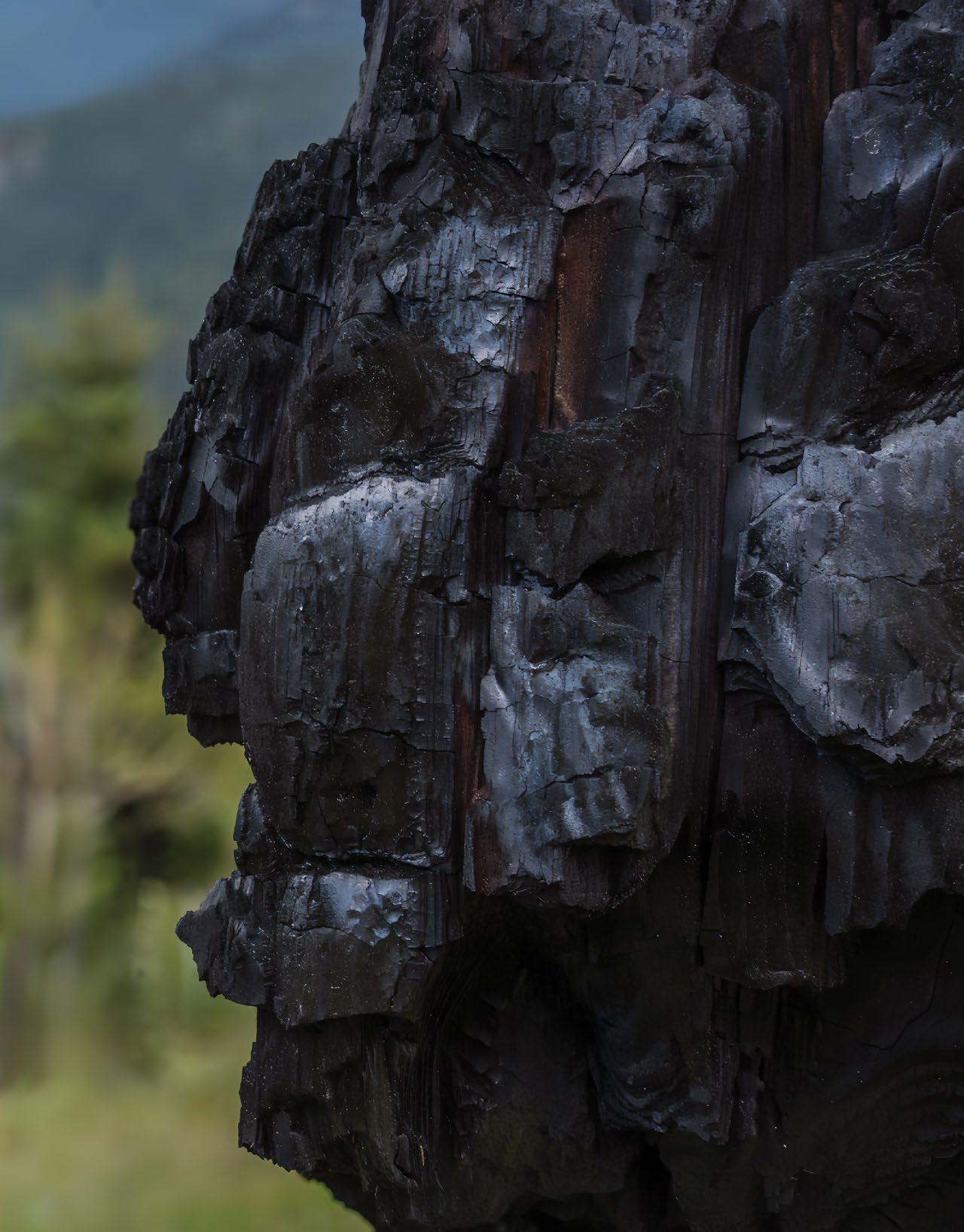
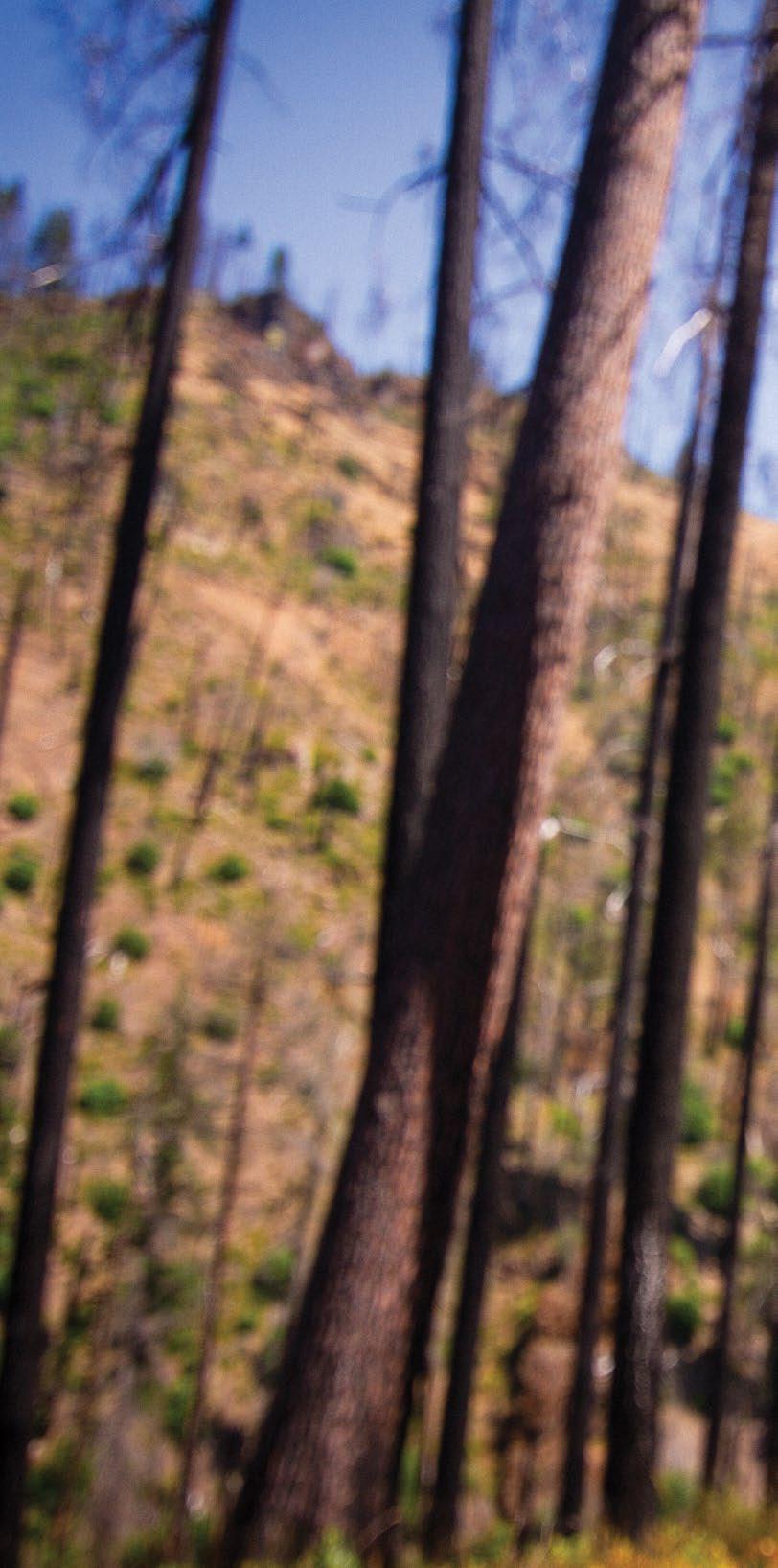
Over the past two decades, however, at least three wildfires have ripped through this particular swatch of the Umpqua. The last one, the humancaused Jack Fire in 2021, scorched nearly 25,000 acres.
Anna Wemple installs a tree sentry shelter to protect the seedlings as they grow. Photo by Lance Troxel
Wemple motions across the landscape where she’s organized the replanting of 5,000 trees in this burn scar, which had been dominated by Douglas firs in recent decades. But these saplings are different and special. They’re all Oregon white oaks, a native species with rounded lobed leaves and furrowed bark that historically ranged from southern British Columbia to northern California.
“The populations that grow in southwestern Oregon represent the core of the species range and contain some of its healthiest and most genetically diverse stands. They’re in trouble, though. Today, as much as 98 percent of the tree’s range has vanished because of wildfire, a changing climate, and encroachment by species economically suited for timber.
“The oak habitat co-evolved with humans over many thousands of years and it developed into the most biodiverse habitat in our region,” Wemple says. “This ecosystem couldn’t persist without humans.”
For eons, Native Americans managed the oak savannah with low intensity burning to flush out wildlife for hunting. Today, land managers are restoring oak habitat by planting oak seedlings within burn scars such as this one. Each of the saplings—500 in all—in this 11-acre orchard were grown using acorns chosen from various stands around Oregon by scientists looking to capture a rich swatch of genetic variation within the species. This grove is a living seed bank. Some of the trees grown from this next generation of acorns may prove to be more drought resistant. Others may thrive in certain soils. All of them will produce seeds that will be used in future reforestation efforts.
“
Each of the saplings...were grown using acorns chosen from various stands around Oregon by scientists looking to capture a rich swatch of genetic variation.”
Two additional orchards, one in the Rogue River-Siskiyou National Forest and one in the Willamette National Forest, create redundancy in case a wildfire wipes one out. A bigger overarching goal is to slow the oak’s long, postcolonial slide into oblivion.
Wemple is perfect for this mission. She’s the daughter of two early members of the Hoedads, that merry band of tree planters that sprang out of Eugene in the 1970s. Wemple spent her formative years bouncing around the Pacific Northwest working on forests and estimates her two hands have sunk at least half a million trees into the Earth. Her dad planted a million. Her goal is to plant a million, too.
The hard work, the community, the greater sense of purpose: It all sustains her like so much sap. It did come with a price, though. She has spent so much time being outside that to this day she struggles to sleep in a hotel. Even so, this white oak mission is hardly hers.
“She made it a reality, though,” says Bryan Reatini, a geneticist with the Forest Service.
An Oregon white oak sapling. Photo by Lance Troxel
Wemple has organized the planting of 5,000 trees in this burn scar.
Photo by Lance Troxel
“By ensuring that the seeds are genetically diverse, we can give our restoration activities the best chance of success.”
The orchard in the Umpqua is one of three aimed at oak restoration in National Forests across Oregon. Photo by Lance Troxel
Reatini, who has worked closely with Wemple on the Umpqua site, says the idea of making a concerted effort to preserve the genetic diversity of Oregon white oaks has evolved over time but it owes much of its existence to his predecessor, Scott Kolpack, who is now a Forest Service geneticist in California. Kolpack has studied genetic variation in cedars and firs and how those genes translate into wood stiffness or resilience to disease, among other topics.
When he turned his attention to the Oregon white oak, he began to curate a robust set of acorns with the Forest Service’s Dorena Genetic Resource Center, the agency’s epicenter for applied genetics in the Pacific Northwest. The acorns could preserve the diversity of the species. The saplings at our feet came from that work.
“We’re helping the folks that are planting trees and managing existing stands to make sure they have the support they need,” Reatini says. “By ensuring that the seeds are genetically diverse, we can give our restoration activities the best chance of success.”
That wasn’t a sure thing. In the summer of 2024, Reatini took over the white oak project as Kolpack assumed his
new position. The handover meant Reatini was now in charge of finding the sites, the funding, and the means to get the white oaks actually planted. He found the perfect partner in the National Forest Foundation and specifically in Wemple, who had already been working to reforest vast portions of the Jack Fire burn.
Wemple and I stand on a sooty fallen fir and gaze over the rugged terrain. She wows me with tidbits about the oaks themselves. Almost 200 years ago, botanist David Douglas—the Douglas in Douglas fir—named the tree the Garry oak after his friend Nicholas Garry, a deputy governor for the Hudson’s Bay Company, the commercial enterprise that started in 1670 that played a significant role in the development of the Columbia River Basin. I discover how they grow slowly, getting up to five feet thick over half a millennium. I learn how the oaks can support 200 different species of wildlife, like black-tailed deer, woodpeckers, butterflies, and bluebirds.
Wemple and I make our way back to the truck. On the way I stop next to a sapling and run my fingers over its leaves. I ask her why this particular project is meaningful to her. “These oaks support so much life,” she said. “I feel a deep obligation to do what we can to restore it.”
Support the efforts on the Umpqua by contributing to the National Forest Foundation’s holistic reforestation program, a partnership with the Forest Service. The agency estimates that four million acres of reforestation is needed on National Forests—an area larger than the state of Connecticut—and with your help, the NFF is helping meet that critical demand.
Tim Neville is a contributing editor at Outside magazine who lives in Bend, Oregon. He keeps a mental list of favorite trees from around the world that he’s been lucky enough to sit under.
Wemple estimates that she has planted at least half a million trees so far.
Photo by Lance Troxel
HEARD IN THE WOODS
“There is a massive reservoir of unexplored biodiversity—countless microbial species living inside the world’s trees that we’ve never documented…Some of these microbes could hold keys to promoting tree growth, conferring disease resistance, or producing useful compounds we haven’t discovered yet.”
Jonathan Gewirtzman, Doctoral Candidate, Yale School of the Environment, as quoted in Yale School of the Environment News
“Sustainability without innovation is impossible and innovation without sustainability would be ruinous.”
“With digital technology, my colleagues and I can study every tree, from root to canopy. We [can] conduct field mapping of wildfire risks at a scale that provides critical and actionable information.”
Songlin Fei, Director, Purdue University Institute for Digital Forestry, as quoted in Sustainable Brands
“Earlier in my career the narrative was all about restoring past baselines, and then, as I got more independent in my research, I realized that’s impossible…we have to be a little more inventive.”
Sarah Dalrymple, Conservation Ecologist, Liverpool John Moores University, as quoted in The Guardian
Stockholm Declaration on Chemistry for the Future
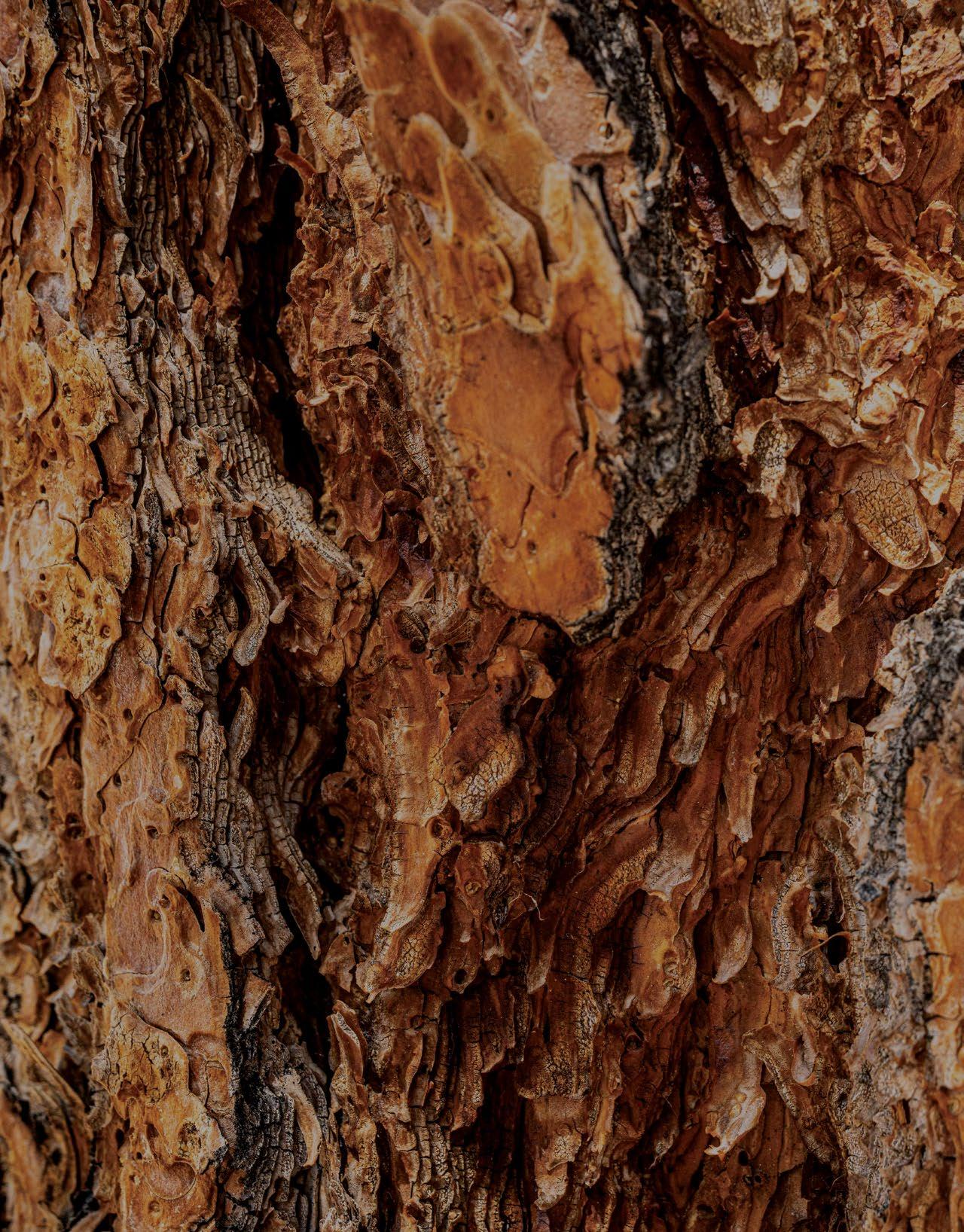
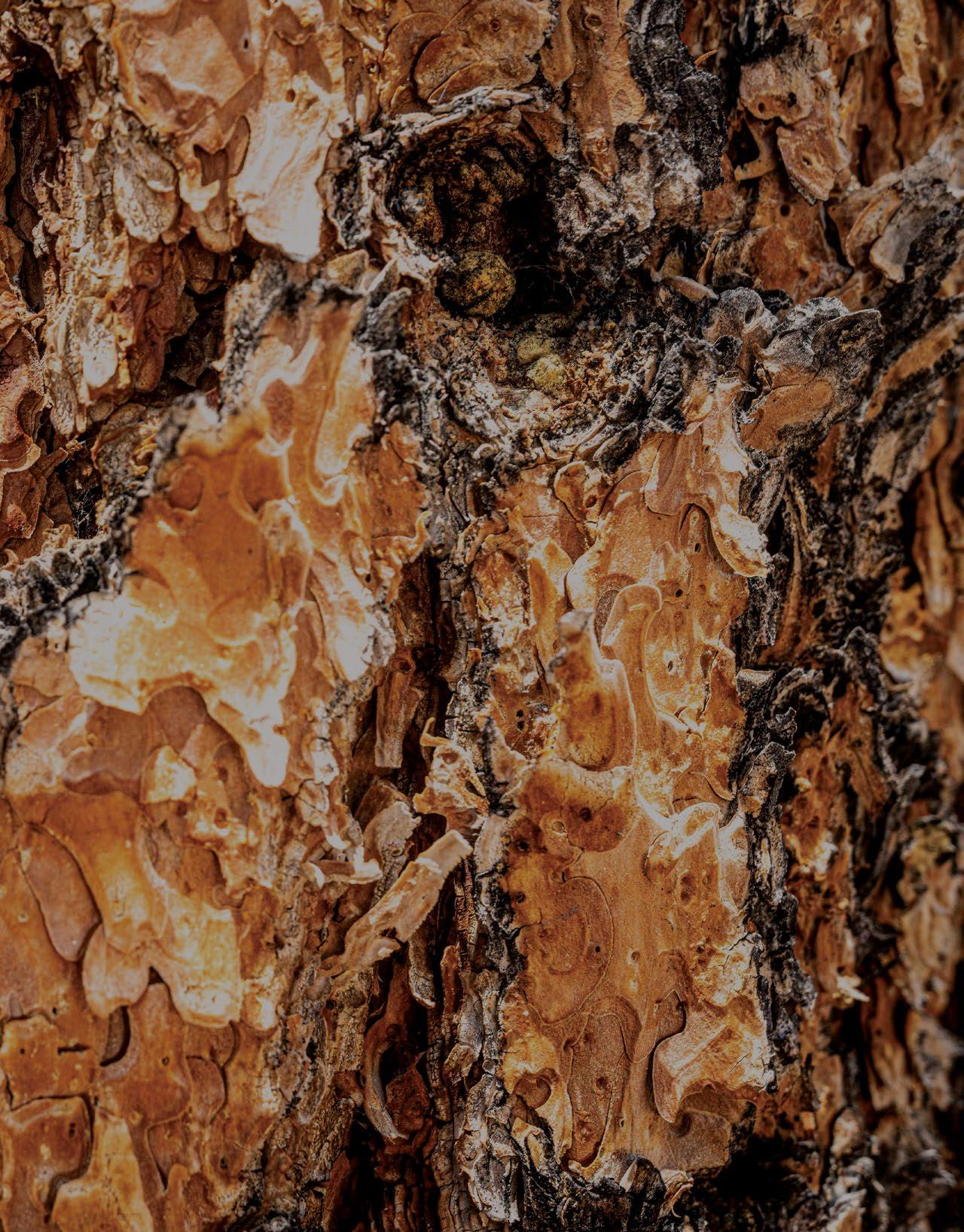
Close up look at a ponderosa pine on Utah’s Dixie National Forest.
Photo by Preston Keres, courtesy of the U.S. Forest Service
“[Citizen science is] taking science out of the ivory tower and putting it in our hands... so [we] can advance science too. Anyone who wants to be outdoors can contribute.”
Lindsay Wancour, Project Creation Senior Manager, American Association for the Advancement of Science, as quoted on aaas.org
“There is so much we don’t know. We have to accept that we can’t build a new forest…we just have to let the forest change. And we need a diversity of forestry approaches to help it to adapt.”
Tony D’Amato, Forestry Program Director, University of Vermont Rubenstein School of Environment and Natural Resources, as quoted in University of Vermont News
“There’s no ecosystem, however urbanized, that cannot benefit from more data.”
Gregg Treinish, Founder and Executive Director, Adventure Scientists, as quoted in World Economic Forum
“By adding avalanche forecasts and alerts to [an] app, we’re making it easier than ever for people to access essential safety information right from their phones.”
Ethan Greene, Director, Colorado Avalanche Information Center, as quoted on Rocky Mountain PBS
“When we are talking about sustainable raw materials, nothing can compete with forest products.”
Mojgan Nejad, Associate Professor, Michigan State University Green Bioproducts Department of Forestry, as quoted in Michigan State University News
THINNING THE FOREST FOR THE TREES
Timber mills play a critical role in reducing the cost of forest health projects and protecting communities from wildfire.
BY CAROLYN BUCKNALL
Beneath the soaring heights of mature sugar pines, throngs of midstory trees struggle to reach the sun. Where light does reach the forest floor, it illuminates tangled brush. A hiker might see beauty in this unkempt version of the Sierras. A forester sees an ecosystem in distress.
The dense forests we know today are the result of a century of land managers suppressing fires that burned smaller trees, and left behind larger ones. Without these low intensity burns, crowded stands lack the space to grow into healthy, mature forests that can withstand severe flames. The National Forest Foundation and our partners are removing the built-up vegetation that fuel megafires, but project costs hinder work from occurring at the pace and scale needed to protect communities. Timber mills offer a simple, if surprising, solution. By selling thinned materials to a mill, the NFF can recoup
part of the cost of removing those materials—reducing the overall cost of forest health projects and increasing the number of acres we restore.
There are still plenty of barriers to mills supporting costeffective thinning broadly. Many areas that need thinning are too remote to supply timber lines. When facilities are nearby, they may not be equipped to process smaller logs, and what they do process can be challenging to sell in a market that has dwindled over time.
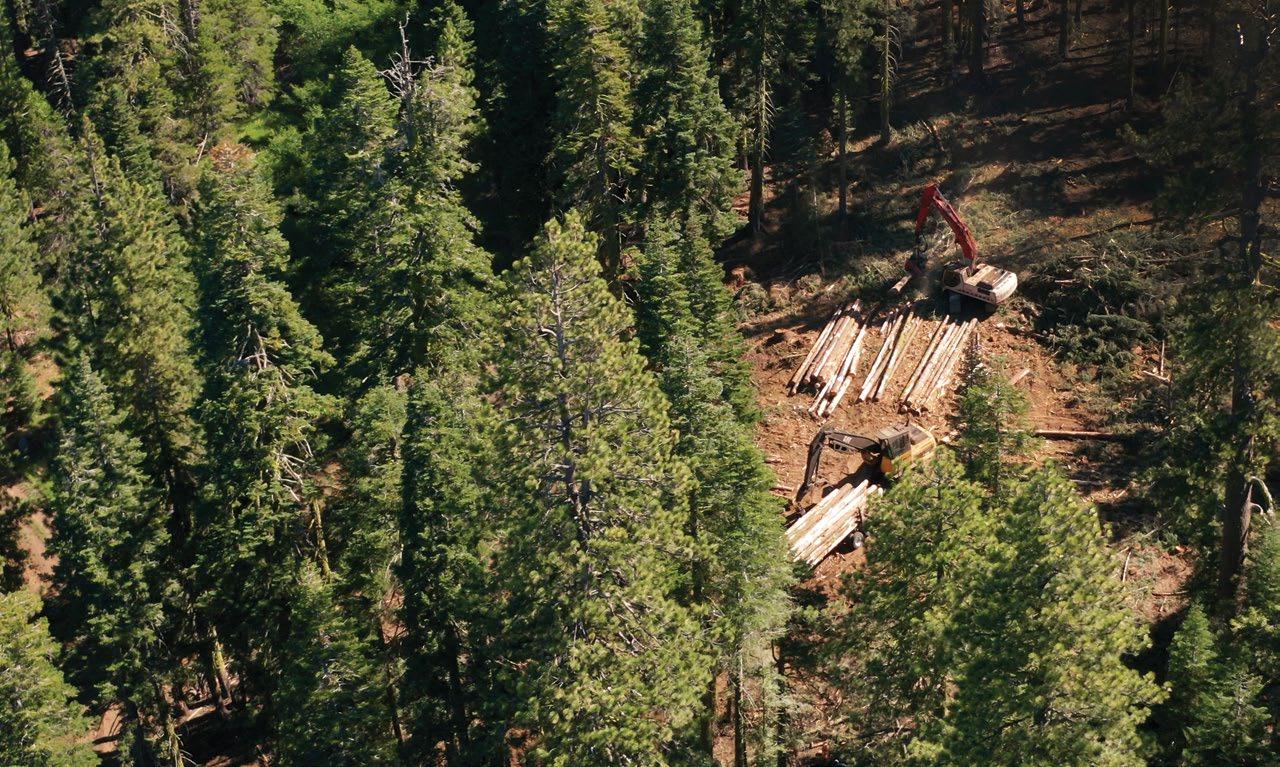
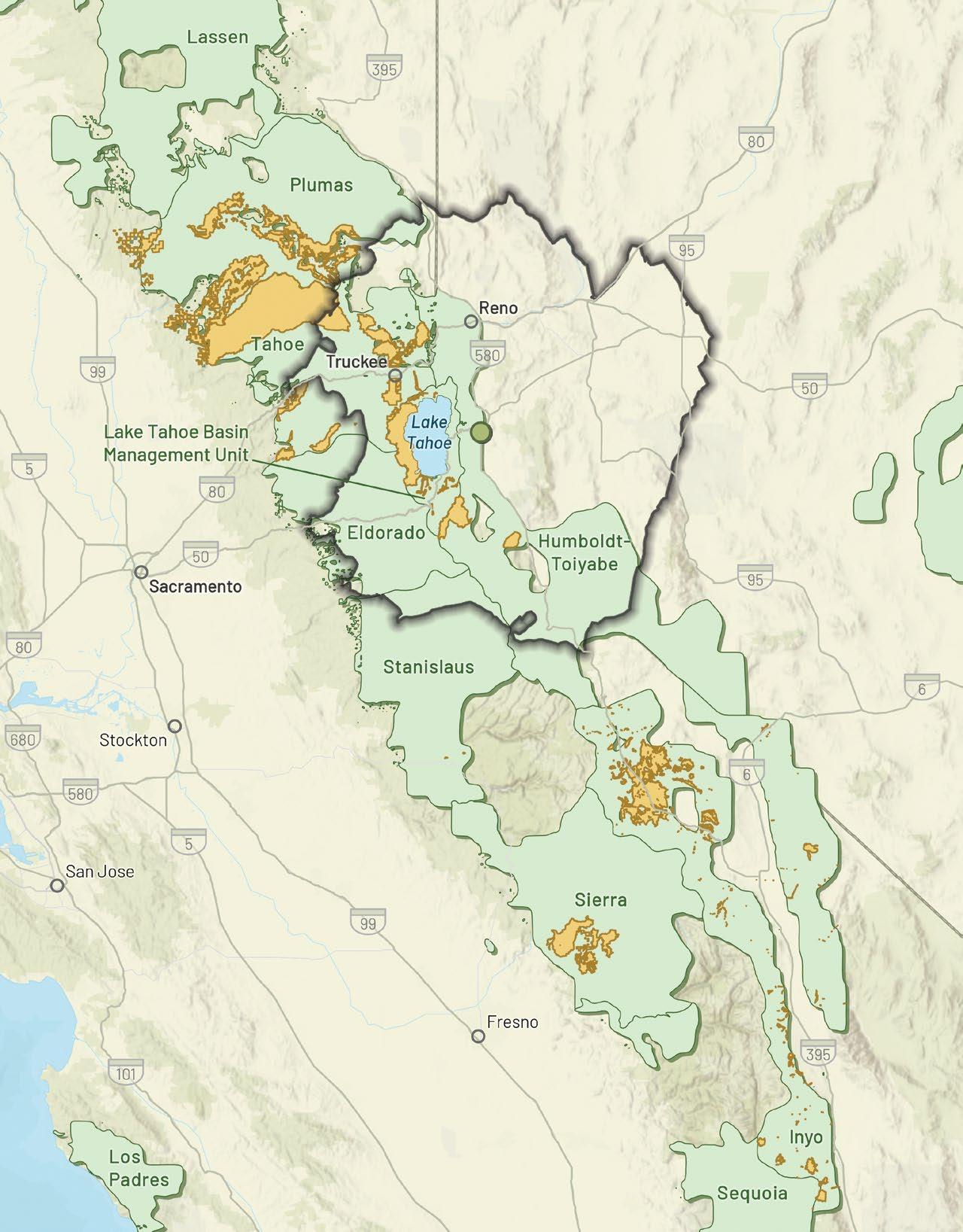
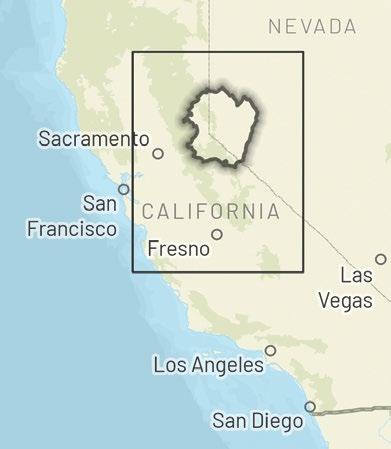
But on the shores of Lake Tahoe, conservation and timber interests are building positive momentum toward a shared goal: healthier forests for future generations. In 2022, Tahoe Forest Products opened the first new mill in the area to salvage timber from recent fires. Now, they are retooling to process smaller logs coming from NFF projects on the Tahoe, Humboldt-Toiyabe, and Inyo National Forests. The partnership is a small but powerful example of innovation supporting economies, communities, and healthy forests.
Open the fold-out to learn more.
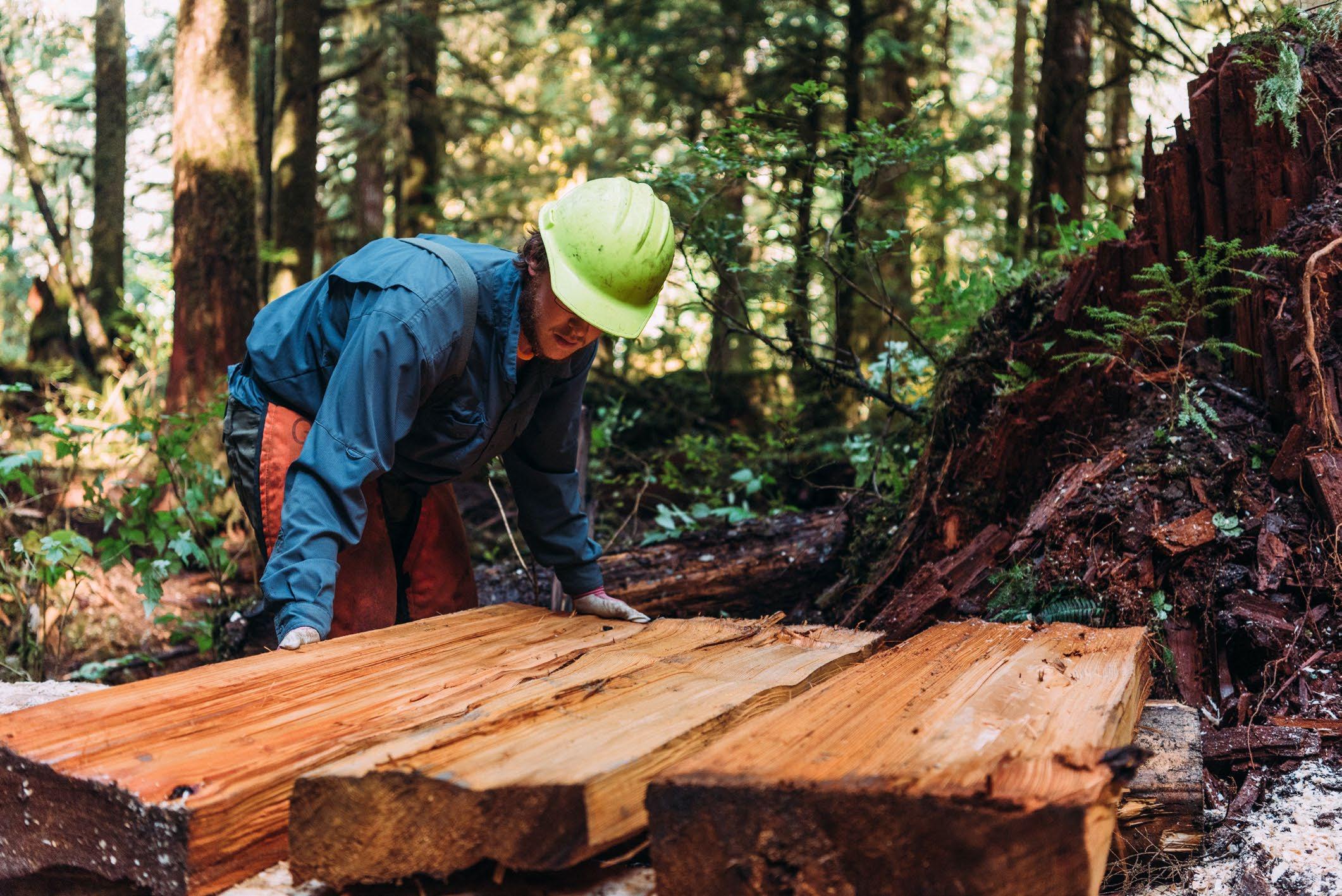
NFF crews thin a dense stand of trees on the Tahoe National Forest.
Photo by Ryan Fitzhenry
National Forest Foundation
27 Fort Missoula Rd. Ste 3 Missoula, Montana 59804
No unauthorized reproduction of this material is allowed.
Light & Seed ®
Editor-in-Chief: Hannah Featherman
Editor: Erin Vivid Riley
Writers: Carolyn Bucknall, Heather Hansman, Christina Nunez, Tim Neville, Erin Vivid Riley
Designer: Shanthony Art & Design
Why We Print
At the National Forest Foundation, we believe forests and grasslands are as vital to all communities as clean air and water. Through Light & Seed ®, we aim to share stories that connect you to the incredible lands of the U.S. National Forest System.
Sustainable Printing
Light & Seed ® is printed on recycled paper made of 30% post-consumer content. This FSC-certified paper ensures the highest environmental and social standards have been followed throughout the process of wood sourcing, paper manufacturing, and print production. More at fsc.org.
Questions and Feedback
We’d love to hear from you. Reach our team at marketingandcommunications@ nationalforests.org.
Photos by Lance Troxel, Mount Washington Observatory, Boulder Mushroom, and University of North Carolina at Greensboro.
acres in the U.S. are at risk from wildfire. That is the size of Texas and Alaska combined!
Forest thinning is one of the most important tools land managers have to reduce the frequency and intensity of wildfires.
BENEFITS OF THINNING SUPPORTING
HABITAT
ENSURING RECREATION OPPORTUNITIES
Thinning projects also support local economies by supplying the raw material for sustainable wood products.
SAWLOGS
GREATER THAN 9" Dimensional
PULPWOOD
BETWEEN 5"- 9"
LESS THAN 5"
Oriented Strand Board
Paper Pulp Wood Fuel Pellets
The majority of wood the NFF removes from our forest health projects is pulpwood and slash, allowing the remaining trees to have space to thrive.
“The single biggest challenge to increasing the pace and scale of forest restoration work in Tahoe is the lack of a viable place to take the excess fuel in our forest.”
John Jones, Chair, Tahoe Fund Forest Health Board Committee, as quoted in NEWS4
The NFF and our partners are currently treating 315,000 acres in competitive hauling distance of Tahoe Forest Products.
By selling thinned materials to a mill, the NFF can:
reduce the cost of our forest health projects
increase the number of acres we restore
Tahoe Forest Products is the closest mill in the region for 1.2 million additional acres of forest health projects.
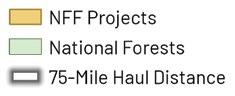
Map data: Cities: Esri; U.S. Department of Commerce, Census Bureau; U.S. Department of Commerce (DOC), National Oceanic and Atmospheric Administration (NOAA), National Ocean Service (NOS), National Geodetic Survey (NGS). Roads: U.S. Census Bureau (USCB), CC BY 4.0 License. Haul Distance: ArcGIS Pro Network Analysis Service Area Layer, Trucking Distance. Lake Tahoe: USGS, Esri. National Forests: USDA Forest Service. Basemap: Esri, Maxar, Airbus DS, USGS, NGA, NASA, CGIAR, N Robinson, NCEAS, NLS, OS, NMA, Geodatastyrelsen, Rijkswaterstaat, GSA, Geoland, FEMA, Intermap, and the GIS user community.